Categories B2B

What Is the 80/20 Rule? How the Pareto Principle Will Supercharge Your Productivity

If you’re sitting at your desk staring at your to-do list and you have no idea where you should start, you need to apply the Pareto Principle, otherwise known as the 80/20 Rule.

The Pareto Principle, or the 80/20 Rule, is a common principle used across various industries and businesses to help determine the highest priority tasks that yield the most impact.  When you’ve identified the high-impact tasks, you’re guaranteed to increase your productivity and your profits.

Download our complete workplace productivity guide here.

In the early 1900s, Vilfredo Pareto recognized this occurrence when studying Italy’s wealth distribution.  Pareto observed that 80% of Italy’s land was owned by only 20% of the population.  Pareto also noticed this same 80/20 occurrence in other things, like the productivity of the pea plants in his garden.

It is important to understand the 80/20 Rule is not a mathematical formula. Instead, it is an observation explaining the correlation between effort and outcome. If only 20% of your task list is deemed a high priority and those high priority tasks yield the highest return, why not spend your time and effort there? 

Examples of the Pareto Principle

In business, for instance, this means 80% of your profits come from 20% of your sales.  So, it would help if you focus your energy on those clients who make up the 20% of your highest sales.

If you’re a marketer, you may have noticed that 20% of your marketing messages account for 80% of your campaign results. Or, if you’re working on a major marketing project, you might see that 20% of your initial efforts are responsible for 80% of the final outcome.

If you’re a financial advisor, you might have noticed that 80% of your business profits derive from 20% of your clients.  It might be best to work on maintaining the relationship with those particular clients.

The Pareto Principle doesn’t just apply to overall outcome observations, though.

Instead, the 80/20 Rule can be applied to nearly every part of your workday to help maximize efforts and productivity.

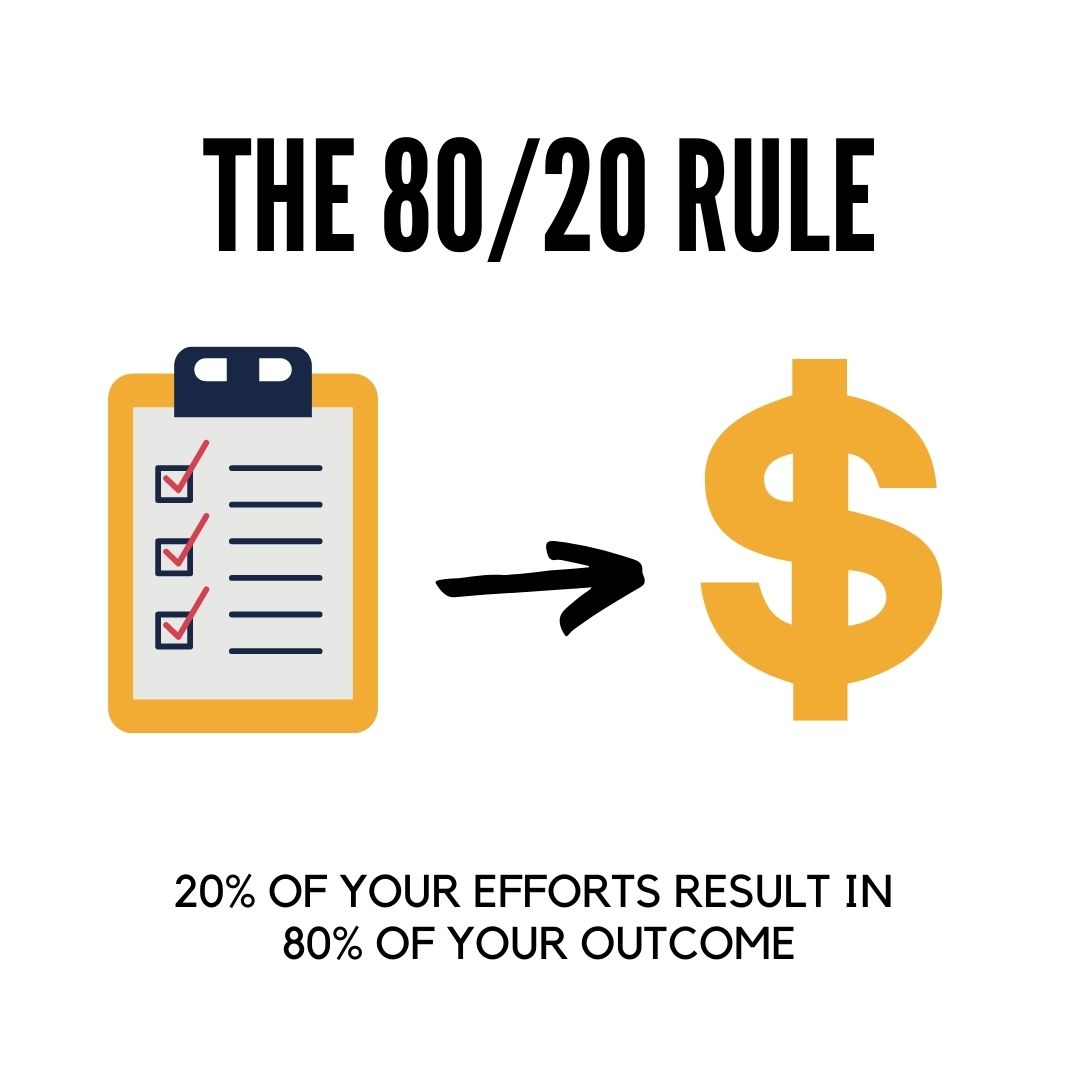
The 80/20 Rule: 20 percent of your efforts result in 80 percent of your outcome.

How to Use the 80/20 Rule to Your Advantage

According to the 80/20 Rule, 20% of your efforts produce 80% of your results.

If you think about the Pareto Principle in terms of productivity, it doesn’t necessarily mean you should only work 20% of the time or go into the office one day of the week.

It is essential to note the Pareto Principle does not suggest you work less.

Instead, when applying the 80/20 Rule to your workday, the Pareto Principle can help you identify the tasks you need to focus on to maximize your time and results.

In other words: work harder on the tasks that matter the most and don’t sweat the small stuff.

How to Apply the 80/20 Rule to Maximize Productivity

If you are in charge of a team or overseeing a project, using the Pareto Principle can help you identify your team’s high-priority tasks.  The 80/20 Rule assumes that even if your team spends an equal amount of time on each task on the to-do list, only two of those tasks will carry the bulk of the results for the project.

So, to apply the Pareto Principle, you’ll need to make a list of all tasks that need to be done to complete the project. Make sure you include everything on this task list.  After making a list, consider which tasks will have the most significant impact on the project to give the highest results.  Some tasks may seem small, but sometimes the smaller tasks have the most significant effect.

Delegate these high-impact tasks to your team and worry about the other tasks later.

You can apply the same concept to your own to-do list. Identify which tasks will yield maximum results and focus your efforts there.

How to Apply the Pareto Principle to Make Business Decisions

The 80/20 Rule can help you make tough business decisions, too. Maybe you have a list of projects for several different clients, but you’re running short on time. If the 80/20 Rule is true, you’ll want to focus your time and efforts on pleasing and developing solid relationships with the 20% of your clients who yield the most results for you (read: profits).

This isn’t to say you should be unprofessional and disrespect your other clients. But, if you’re feeling overwhelmed or tight on time, it might be helpful to recognize where you’re receiving the most of your results and dedicate your time and effort to those clients.

The Pareto Principle can also help you think about business problems and potential solutions.  To apply the Pareto Principle to help you solve your problem, think of all the possible solutions, and work backward. You’ll want to work on the two best solutions that solve your problem.

Avoiding the Pitfalls of the Pareto Principle

Like all principles, the Pareto Principle has a few drawbacks. 

It’s important to remember that the 80/20 Rule is not about reducing your workload. Instead, the Pareto Principle helps you identify the most critical, high-impact tasks on your to-do list.  Don’t neglect the small tasks, unimportant tasks, though.  Eventually, those small tasks will become important if you let them sit too long.

The 80/20 Rule might help you identify which of your employees are producing the most work if you’re managing a team.  Looking at the 20% of employees that complete 80% of the work doesn’t necessarily mean you should fire everyone else.  Instead, use the findings of the Pareto Rule to delegate tasks to your team fairly. 

Encourage your team to collaborate on high-priority tasks.  Or assign different jobs to different people and check in with everyone to ensure they feel responsible for their part of the equation.   Your employees will be encouraged to work harder if they know they’re contributing to the biggest piece of the rewards—not just the minor details.

Understanding the Pareto Principle

Remember, the numbers 20% and 80% are not exact statistics, just estimations and observations.  The point of the 80/20 Rule isn’t the numbers.  The point is everything in business is not created equal.  There are a few things that are weighted with a far greater reward compared to other things.

Spend your time working on tasks or working with clients that will yield the highest results.  Applying the Pareto Principle to your business makes you more likely to increase your profits while cutting back on wasted time and efforts.

Editor’s note: This post was originally published in [Month Year] and has been updated for comprehensiveness.
Take me to Projects

Categories B2B

51 Stats from NetLine’s 2022 Consumption Report Every B2B Marketer Should Know

All told, our 2022 Content Consumption Report ended up being a whopping 65 pages. While that’s quite exciting from a productivity point-of-view, some folks might be scared off by the sheer size of it.

We get that.

So, in taking our own research to heart and knowing that Cheat Sheet consumption was up 56% last year, we wanted to highlight some of the most important stats and takeaways from our sixth annual report. 

Key Learnings From NetLine’s 2022 Consumption Report

There’s more than 15 individual sections inside the sixth annual report that segment the data within a number of NetLine’s specific job parameters. We’ll get to some of the different slices of data in a moment, but for now, let’s start with some of the most impactful takeaways.

Flagship Stats From the 2022 Report

  1. NetLine delivered 4.6 million first-party registrations across our platform in 2021, a 9% increase YOY.
  2. Since 2019, NetLine has observed a 33% increase in total registrations, clearly indicating how important content marketing has become post-pandemic.
  3. eBooks were 4.8x more likely to be requested compared to White Papers.
  4. “Pandemic” was the #1 Keyword Rank across all content titles.
  5. The 5 Most Active Job Areas: IT, Executives, Education, Engineering, & HR.
  6. Senior VPs were the fastest to consume content, while Owners were the slowest.
  7. 90% of all registrations came during the work week.
  8. eBooks represented more than 43.3% of all registrations.
  9. Webinar promotion increased by 69.8%.
  10. The 10 most requested content types accounted for more than 87% of all requests.
  11. The Spring and early Summer (Q2) saw an incredible swell in demand for content, post-the-most-stringent-COVID restrictions. This is staggering, considering Q2 2020 accounted for the least amount of engagements. Conversely, Q4 2020 accounted for 43% of the most active days for Content Consumption. 2021? 21%.
  12. Desktop consumption represented nearly 93% of engagements.
  13. More than 25% of Technology Job Areas consumed 10 or more assets, while Marketing Job Areas, start out as eager consumers, (representing nearly 8% of the audience consuming a second piece of content), but peter out as they reach the 10th asset (4.4%)
  14. Information Technology professionals were the most active Job Area audience in 2021, representing 28% of all registrations.

By Job Area

NetLine’s Job Area analysis hones in on the specific consumption trends of the B2B professional within the individual disciplines their roles demand.

  1. Manufacturing/Production/Operations were the smallest Job Area audience in the Top 10, accounting for only 2.42% of all registrations.
  2. The Executive job area (13.12% of the total audience) had a sizable gain in demand, topping it’s 2020 totals by 19.41%.
  3. Conversely, Marketing (4.17% of total audience) saw a 4.07% drop in consumption by job area.
  4. With the introduction of the COVID-19 vaccines in 2021, professionals working in Biotech job areas were quite busy to start the year, requesting 25.9% more content than the prior year.

By Job Function

NetLine’s Job Function analysis looks at a B2B professional’s given role and which assets they request.

  1. IT Systems Management professionals were the most active Job Function, accounting for 12.6% of total registrations. 
  2. It’s remarkable to see this group at the top of the pile considering that this job function saw a 26.83% dip in overall consumption.
  3. Faculty job functions had the largest loss in total consumption (-30.76%).
  4. Executive Senior Management, however, had the greatest gain in consumption (+116%).

By Industry

This one should be self-explanatory. By Industry assess the consumption habits of users at the Industry level.

  1. 75% of all Industries saw a Job Area increase in consumption.
  2. Computers & Technology was king once again, representing 17.86% of all registrations from this group.
  3. Construction represented 3.57% of all registrations, good for number 10 in the Top 10.
  4. Of the 24 industries NetLine tracks, all but two groups (Advertising/Marketing -6.09%, Agriculture -12.07%) had more registrations in 2021 than in 2020.
  5. Much like the Job Area chart, consumption from the Biotech field saw the greatest YOY gains (+22.42%). 
  6. As the world faced a shipping crisis, Manufacturing (+12.86%) and Transportation and Logistics (+12.15%) each saw significant increases in B2B content consumption.
  7. Healthcare/Medical (+15.7%), Manufacturing (+12.86%), Education (+9.11%), Finance (+7.96%), and Computers and Technology (+7.10%) also all saw sizeable gains, as well.

By Sub-Industry

We know that Industry analysis can be a bit broad at times. That’s why we dig further to get more specific about the kind of work users are doing.

  1. Can you guess which sub-industry was the top performer? You guessed it: Information Technology at 7.58%!
  2. Service Industry professionals accounted for 3.23% of all registrations, good enough for fourth on the Top 10 list.
  3. YOY, this sub-industry saw a 10.42% growth in overall registrations, as professionals in this field raced to keep up with the breakneck pace and overwhelming demand placed on them and their colleagues.
  4. Consumption at the local levels of Government rose 62.52%.
  5. As supply chains tightened, Manufacturing had a 12.86% increase while Transportation and Logistics also saw a sizeable 12.15% increase.

By Job Level

Job Level analysis gives you an idea of where inside an organization your content is being consumed and requested.

  1. 40% of all consumption stemmed from C-Level, Managers, and Directors.
  2. Directors consumed 27.8% more content YOY while Individual Contributors accounted for 25.5% of all registrations.

The Consumption Gap and Consumption Times

The Consumption Gap is the time between the moment content is requested and the moment it’s opened for consumption.

    1. The average time for professionals to consume content rose by 3.6, increasing from 29.7 hours in 2020 to 33.3 in 2021.
    2. In 2020, the average time between a user’s first registration and their second was 16+ days. In 2021, it was 13+, meaning there was a 3+ day improvement—a 19% acceleration.
    3. Hypothetically, consumption can increase infinitely. B2B professionals, on the other hand, have a finite amount of time to dedicate to consumption. Therefore, as registration volume grows, the more likely it is that the consumption gap will widen.
    4. EVPs shaved nearly 4 hours off their 2020 consumption time.
    5. Supervisors had the greatest improvement, reducing their 2020 consumption time by more than 7 hours. 
    6. And while VPs saw their consumption time grow by nearly 5 hours, they were the Job Level most likely to consume their requests first.
    7. When it came to additional consumption, Consultants were the first group to come back for more, clocking in at 8.71 days between first and second request. 
    8. VPs were on the other side of the spectrum, as they took more than three weeks (22.37 days) before returning for another asset.

C-Level Observations

No matter who you are, what you’re writing about, or how you’re trying to position it, everyone wants the attention of the C-Suite.

  1. The C-Level represented 14.8% of NetLine’s total audience in 2021—a 15.8% jump in volume.
  2. Historically, when C-Level consumption rises then consumption from Directors and Managers dips. In 2021, this was not the case. Managers upped their overall consumption by 3% while Directors upped their registration by 27.82%, the second-largest YOY jump behind Individual Contributors.

Buyer-Level Intent Findings

Discovering “who” a prospect really is—and whether they’re actually a potential customer—has been a mystery to B2B Marketers and Sales professionals for years.

  1. Content consumption is directly driving investments within the next 12 months. The more your audience consumes, the more likely they are to be closing in on a purchase decision.
  2. Buyer-Level Intent Data: ~31% of professionals expect to invest in the next 12 months; 15% expect to invest in the next 6 months.
  3. Of this ~31%, 55% expect to invest in the next 6-12 months, 26% expect to invest in the next 3-6 months, and 19% expect to invest in the next 3 months.
  4. White Paper registrations are a greater indication that a user is in a late stage of a purchasing decision.
  5. Professionals registering for Webinars are 29% more likely to have a purchase decision within six months of registering for the content vs. any other content format.

Get More From NetLine’s 2022 Report

There’s a ton of actionable information that we’ve taken out of this report but there’s still so much more that we couldn’t include. Uncover everything else that you’re missing and more by downloading our sixth annual Content Consumption Report!

Categories B2B

12 Essential YouTube Advertising Statistics for 2022

YouTube is the internet’s second largest search engine, meaning that advertisers have significant potential when it comes to reaching audiences and driving conversions.

In this post, discover essential YouTube advertising statistics you need to know in 2022.

→ Free Templates: How to Use YouTube for Business [Download Now]

YouTube Advertising Reach Statistics

  • YouTube advertising revenues reached 7.34 Billion USD in Q2 of 2022, a 5% YoY increase. (Statista, 2022)
  • YouTube ads have the potential reach of 2.56 billion users, or roughly 1 in 3 people on Earth. (Hootsuite, 2022)

  • YouTube ads reach more than three quarters of adults aged 18+, and more than 90% of adults in a total of 14 countries. (Hootsuite, 2022)
  • YouTube’s biggest advertising audience is males between 25 and 34. (Hootsuite, 2022)
  • The cost of YouTube ads can vary and can cost between $0.10 and $0.30. (HubSpot, 2022)

YouTube Advertising Statistics

  • Apple Inc. and Disney were the top spending advertisers on YouTube in 2021. (Statista, 2021)
  • 63% of people say they bought from a brand after viewing an ad on YouTube. (Think With Google, 2022)
  • YouTube ads with strong CTAs have shown to increase the likelihood of short-term sales by 30%. (Think With Google, 2022)
  • Audio is the No. 1 lift multiplier for effective YouTube ads. (Think With Google, 2022)
  • The attention, branding, connection, direction (ABCD) YouTube ad strategy delivers a 30% lift in short-term sales and a 17% lift in customer lifetime value. (Think With Google, 2022)
  • Testing different YouTube ads can lead to greater success, as advertisers who tested different YouTube ads and used the most effective result saw a 60% higher ad recall. (Think With Google, 2021)
  • Using YouTube’s native product feed tool to showcase your products alongside your ads can drive on average over 60% more conversions. (Google, 2021)

Ready to start filming?

As shown above, advertising on YouTube has the potential to reach large audiences and drive high ROI. To reap these benefits, create a marketing strategy for the platform and, as they say, lights, camera, action!

New call-to-action

Categories B2B

5 Myths Marketers Got Wrong About Gen Z, According to Data & Our Gen Z Intern

To be honest, Gen Z can feel like foreign territory to all. Even myself, born in 2001. Although I’m smack in the middle of the TikTok, middle-part wearing generation, I don’t always fully understand the trends we start, stop, or totally cancel.

Even though I’m no genius when it comes to how to market to our generation, I can tell you it’s pretty obvious when marketers try too hard to sell to us. It often feels too forced and fake.

That’s why I’m here to help! Let me debunk a few myths and predictions marketers might have made about our wild generation so that you can find the right ways to grab our attention and keep us engaged. Let’s dive right into some of those incorrect thoughts, debunk them with data from our State of Consumer Trends Survey, and discuss tips for what you can do instead.

Download Now: 2022 State of U.S. Consumer Trends Report

5 Gen Z Myths, Debunked

1. “Gen Z is obsessed with fast fashion.”

It’s easy to see SHEIN or Princess Polly hauls on TikTok or Instagram and think these represent our generation. Of course, these online retailers do have a grasp on our generation to some extent, but what grabs our attention are retail resale sites. For example, 90% of Depop’s users are younger than 26.

Today, Gen Zers are purchasing this apparel, but in a much less harmful way, being that resale clothing is second-hand.

Instead of getting caught up in cheap prices and deals, Gen Z, more than any other generation, considers the brand’s ethics and its stance on social issues. You don’t just need to take my word for it. we surveyed over 100 Gen Zers and found that how a brand approaches social responsibility has a real impact on Gen Z purchase decisions.

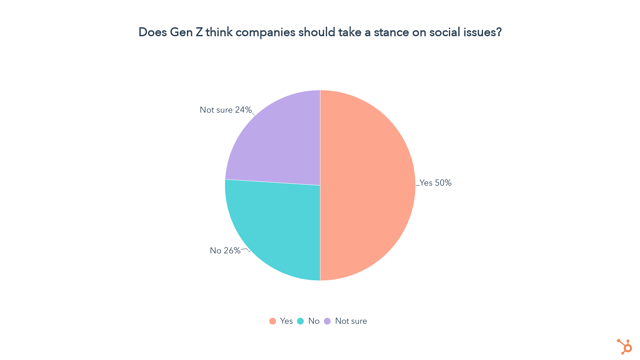
does gen z think companies should take a stance on social issues

And, when we asked whether companies should take a stance on social issues, 50% of Gen Z said they should. As a marketer, this means that, if you haven’t already, you need to prioritize this for Gen Z and even younger millennial audiences.

I also urge you not to think of social issues as a broad term that is often thrown around without any substance to back it up. Instead, break it down into specific issues that you can actually fight with tangible results. And, just to help you out even more, here is where to start:

When we asked Gen Zers who want companies to take a stance on which issues are most important to them, racial justice was by far the top issue (69%), followed by LGBTQ+ rights (50%), gender inequality (46%), and climate change (42%).

2. “Data privacy and security are irrelevant for Gen Z.”

I get why many people believe this one. Gen Z is known for being glued to their phones, which obviously comes with the risk of unsecured and unrestricted data.

Furthermore, we are the TikTok generation, and – as many of us know — TikTok has had its share of privacy concerns. And yes, we may come across as irresponsible at times, especially when it comes to social media (the milk crate challenge was not the best idea); but don’t underestimate us.

As the first generation born into a technology-based world, we’ve seen the realities of a digital space more than any other generation, so data security and safety are naturally top of mind.

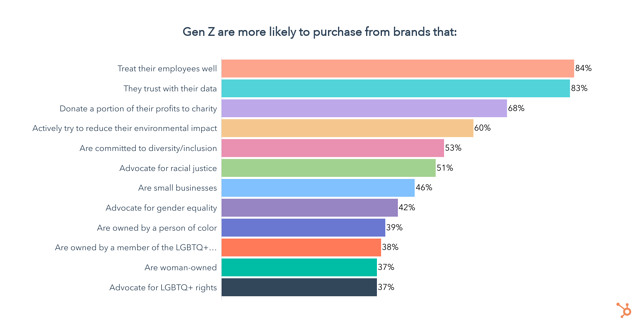
Gen z is more likely to purchase from brands that do these things.

As you can see in the graph above, Gen Z purchase decisions are strongly influenced by whether or not they can trust a company with their data (as it is the second highest ranked consideration before purchase, at 83%).

The data above means that, as a marketer, you need to convey data privacy to our generation and can’t just assume we don’t care about these criteria. Assure us that we aren’t being scammed or exploited. We may not always prioritize it over experience and entertainment (as seen with our usage of TikTok), but don’t believe that you can do anything with our data, and we won’t mind.

3. “TikTok is The Best Way to Reach Gen Z”

TikTok is a great space for Gen Z; it offers a genuine feel to the content that no other app provides. This style is quite attractive for some of our shorter attention spans and busy schedules. In fact, TikTok is the app Gen Z uses most often. Despite this, surprisingly (or not), it’s not our favorite social media platform.

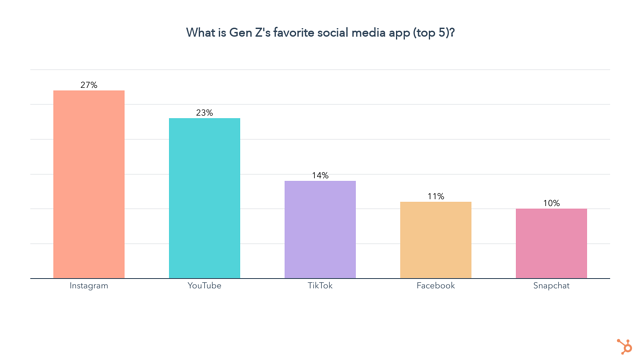
When we asked Gen Z their favorite social media app, Instagram and YouTube easily took the cake, with TikTok placing third, as seen in the graph below.

Gen z's favorite social platform

From your perspective as a marketer, this means that even though a significant effort should still definitely be made to generate TikTok content, don’t forget about our trusty old friend Instagram – even for Gen Z.

There are many reasons why Gen Z shies away from directly buying on TikTok. These include the concern for data privacy previously mentioned and just wanting to use that space for the sake of connection and entertainment rather than advertisements and purchasing.

So, If you plan to sell directly through social media, Instagram definitely should be your go-to (as 28% of Gen Z saying they bought something directly in a social media app in the past three months).

HubSpot’s recent Instagram Marketing Report goes into more detail on why the app presents such an opportunity for social marketing and selling, so don’t lose sight of it!

4. “Put a product in front of Gen Z, and they’ll buy it.”

Even though we do gravitate towards TikTok-style content, that doesn’t mean we’re receptive to just any type of short-form videos, including those that market products.

Before making a purchase via social media, we need to be made to feel like we found the product on our own. We don’t want to feel forced into any decision, especially when it comes from a clear advertisement that we can’t relate to.

To persuade Gen Z, brands must prioritize making entertaining content that feels authentic to grab our attention. Then, once they have our genuine interest, they can more easily slip in their product rather, than getting yet another eye roll from us.

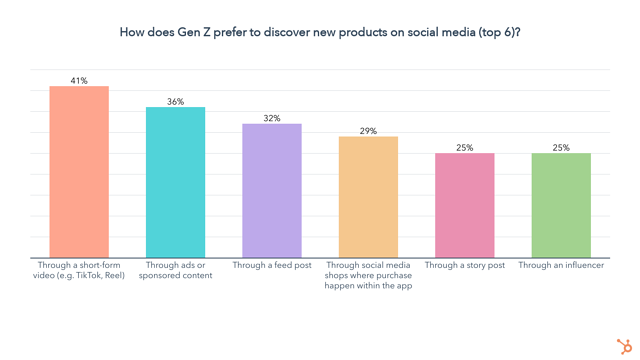
how gen z discovers new products

As this graph above shows, the top way we prefer to discover a new product is through TikTok, Reel, or other short-form video formats, where the product is shown but not imposed on us. In a world where we are often made to feel powerless, we strongly value a sense of autonomy and agency– help us feel empowered through your actions.

5. “Word of mouth is a great way to reach Gen Z.”

Yeah, I know this may seem contradictory as we really like to talk but hear me out. As just outlined, Gen Z is stressed: we feel out of control, doomed, and like the weight of the world lies on our shoulders.

With that comes a unique sense of camaraderie and connection among us. As a result, Gen Zs trust other Gen Zs as they are also going through the same shared emotions. And, what better way to unify than via social media?

We have turned social media and online communities into our modern-day version of word of mouth. Therefore, we even trust influencers’ recommendations more than those from our friends and family.

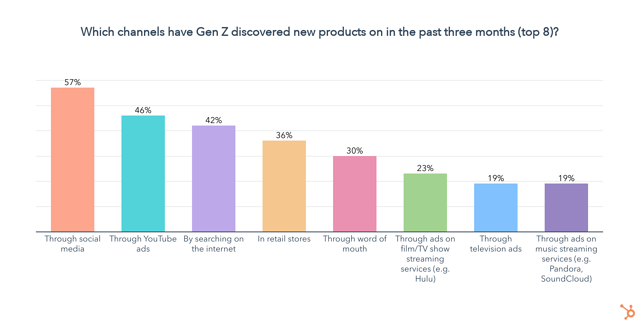
top Gen Z channels

This graph above helps emphasize that your marketing focus should be on connecting with Gen Z in the spaces we feel comfortable: social media. Sorry, Mom and Dad, but you don’t have much influence over us anymore.  

More Resources for Marketing to Your Target Audience

Now that we’ve explored and debunk some of the biggest Gen Z myths and predictions, you might be wanting to learn even more about the generation and how they shop. Here’s a quick list of more data-driven resources that we hope you enjoy:

And for a detailed deep dive into all of our consumer trends data survey (including insights not on the blog), download the free report below.

New Call-to-action

Categories B2B

What’s TikTok’s Attribution Manager & How Can Advertisers Use It?

TikTok just announced a new feature in its Ads Manager platform, which allows advertisers to customize their attribution window for better tracking and performance.

Download Now: 2022 State of U.S. Consumer Trends Report

Let’s break down how the attribution manager works, how to access it, and the benefits of using it.

Breaking Down Key Attribution Terms

Before we get into this new TikTok feature, let’s first get a refresher on some key terms:

AttributionA reporting strategy that allows advertisers to know the path users are taking after clicking or viewing an ad.

Attribution window – The time between when a user clicks or views an ad and when they convert.

Conversion The desired action taken by a targeted user, such as visiting a website or making a purchase.

Now that we have the basics down, let’s dive into TikTok’s new attribution manager.

Understanding TikTok’s Attribution Manager

When it comes to ad campaigns, no two are the same. The goal for one may be to increase purchases for a particular product while for another, it may be to raise brand awareness.

Brands may also have contrasting conversion journeys based on their industries.

With that in mind, TikTok introduced customized attribution windows to enable advertisers – those using the TikTok Pixel or Web Events API – to more accurately track performance and assess campaign results.

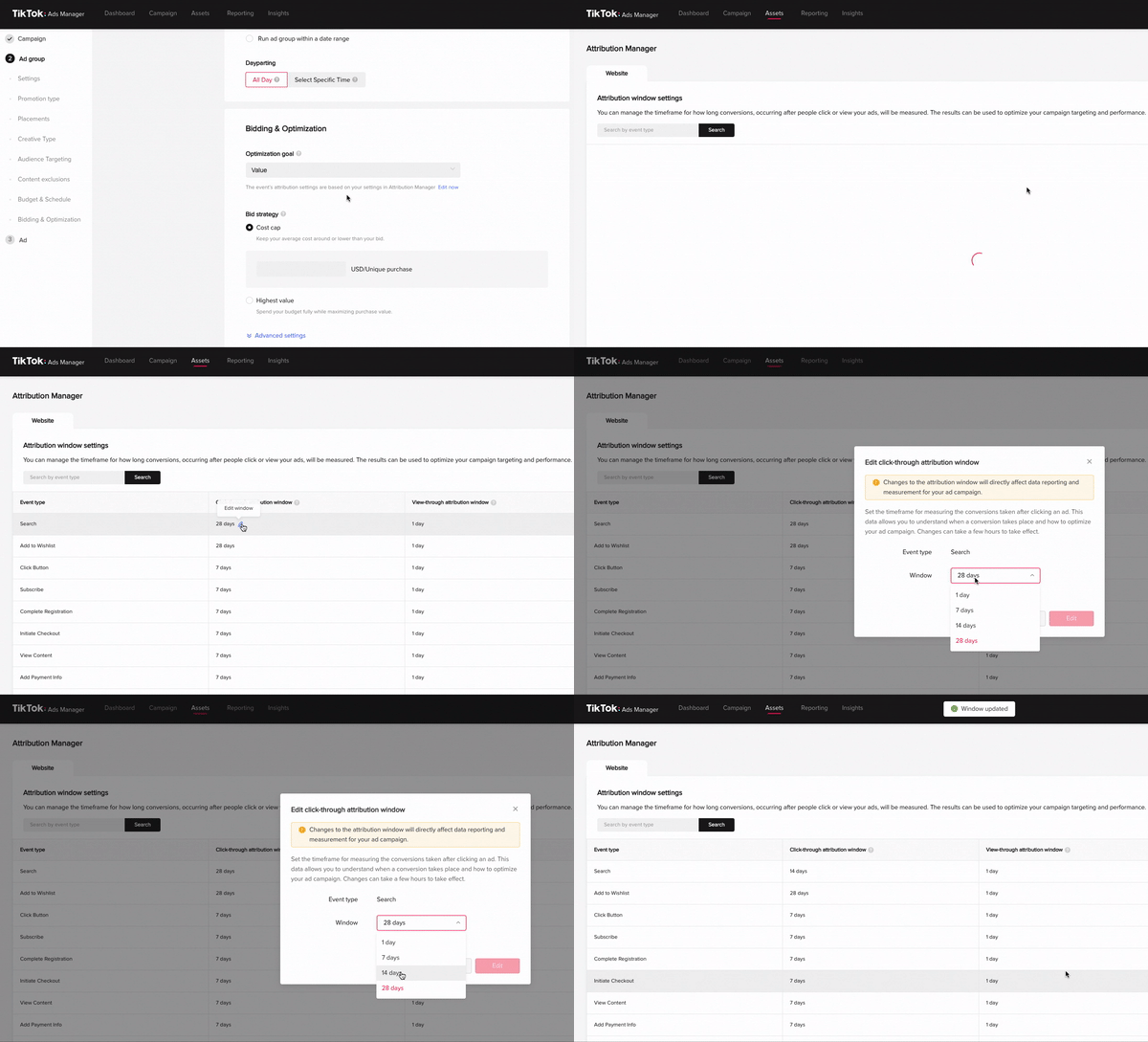
tiktok attribution manager

Image Source

The default setting is a seven-day click and one-day view window. This means that a user must convert within seven days of clicking an ad or 24 hours of viewing an ad for the conversion to register within TikTok’s ad manager.

Advertisers can now set different windows:

  • 1, 7, 14, 28 days for clickthrough attribution
  • Off, 1, 7 days for viewthrough attribution

When is it valuable to pick a one-day versus 28-day attribution window? It all depends on the goals of your campaign, the industry you’re in, and expected user consideration periods.

Say you’re a B2B software company with an ad campaign to convert free users into premium users. One-day conversions are probably unlikely given the product. However, a 28-day one seems more realistic given that their particular industry deals with longer consideration periods.

A jewelry brand, on the other hand, may opt for a 24-hour attribution window when running a sale.

Pro-tip: Want to sync your ads manager with your CRM? Try Leadsbridge.

How to Access TikTok’s Attribution Manager

Now that you understand how it works, here’s how to access this feature within TikTok’s Ads Manager.

  1. Login to TikTok for Business.

  2. Navigate to “Assets.”

  3. Click on “Events.”

  4. Narrow down to “Web Events.”

  5. Select “Attribution Manager.”

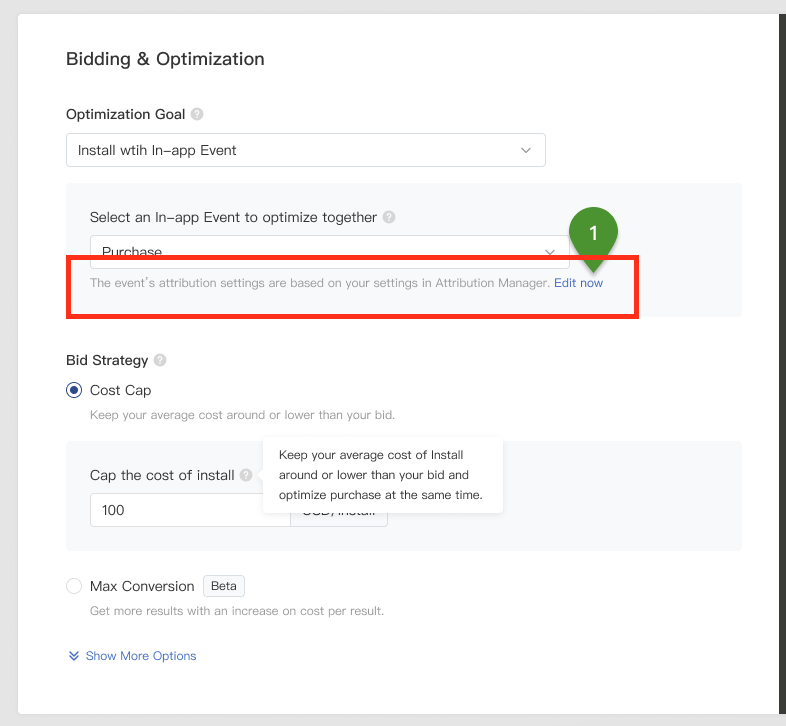
You will also see the option to customize your attribution window when creating a campaign. It should show up under the “Bidding and Optimization” section.

tiktok attribution manager

Image Source

This great addition to TikTok’s Ads Manager will arm advertisers with more reliable data to understand their audience and leverage these insights into action.

New Call-to-action

Categories B2B

How to Promote Your YouTube Channel [+ Tips from HubSpot’s YouTube Team]

In the early days of YouTube, there weren’t a whole lot of YouTubers or brands creating content on the platform, so it was much easier for content creators to stand out. Fast forward to 2022, and there are now roughly 15 million active content creators on YouTube pumping out 500 hundred hours of content every minute.

With that in mind, you’re probably wondering how to promote your YouTube channel so that it stands out above the rest. And how much will promotion cost? Fortunately, there are many tools, tips, and tricks you can use to promote your YouTube channel without having to spend a lot of money — or any money at all.

In this blog, we’ll explore some of my favorite, no-cost methods to promote a YouTube channel.

→ Free Templates: How to Use YouTube for Business [Download Now]

  1. Create compelling content.
  2. Use keywords in your headlines, descriptions, and tags.
  3. Use hashtags.
  4. Customize your thumbnails.
  5. Post regularly.
  6. Promote your channel on social media.
  7. Promote your channel on forums.
  8. Build a community.
  9. Run a contest.
  10. Cross-promote your videos on YouTube.
  11. Collaborate with other creators.
  12. Create playlists for your YouTube videos.
  13. Embed your YouTube videos.
  14. Livestream.
  15. Add a YouTube widget to your website.

How to Promote Your YouTube Channel for Free

I have my own YouTube channel where I talk about anime, and when I first got started I definitely did not have money to spend on expensive ads or pricey tools to grow my channel. So, I did a lot of the following to find my audience, and I saw growth pretty quickly:

1. Create compelling content.

There are many tactics you can use to attract viewers to your channel, but none of these tactics can make up for lackluster content. The fact is no one wants to get invested in content that isn’t good.

A major key to attracting an audience and encouraging them to subscribe is to create compelling content that will keep them coming back for more.

Pro-Tip: Look at other established content creators in your niche for inspiration. What do you enjoy most about their videos, and what would you do differently? Use your answers to help you figure out the kind of content you want to make.

2. Use keywords in your headlines, descriptions, and tags.

Hundreds of thousands of videos are uploaded to YouTube every day. To ensure your videos reach your target audience, you need to incorporate keywords into your headlines, descriptions, and tags.

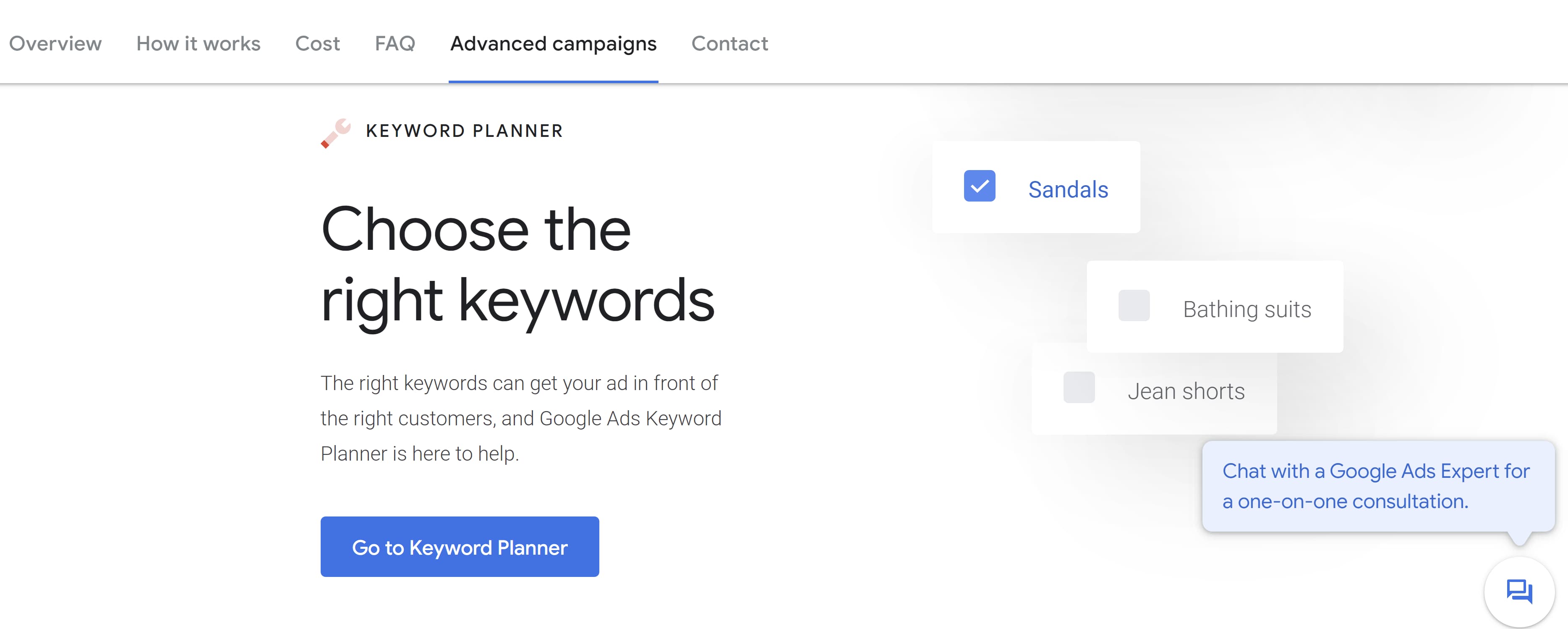
There are free tools like Google Keyword Planner, which can be accessed from your Google Ads dashboard. Don’t worry — you don’t have to run ads to use it. All you need is a Google account.

Google Keyword Planner can be used to promote your YouTube channelImage source

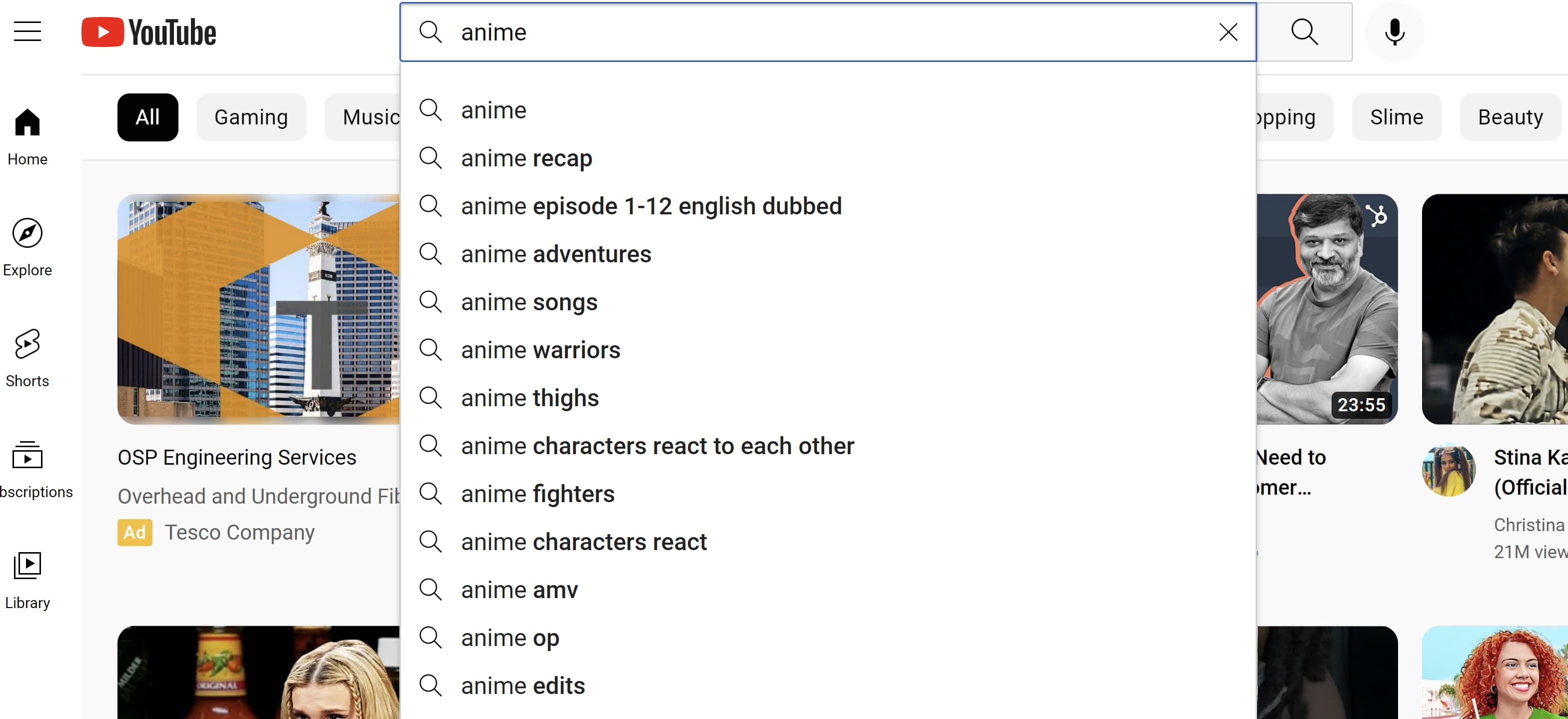
Pro-Tip: One of the simplest ways to find the right keywords without using any tools is to enter your video’s topic in the YouTube search bar, and use the autosuggest to find words and phrases you should incorporate into your content.

yt autosuggestImage source

3. Use hashtags.

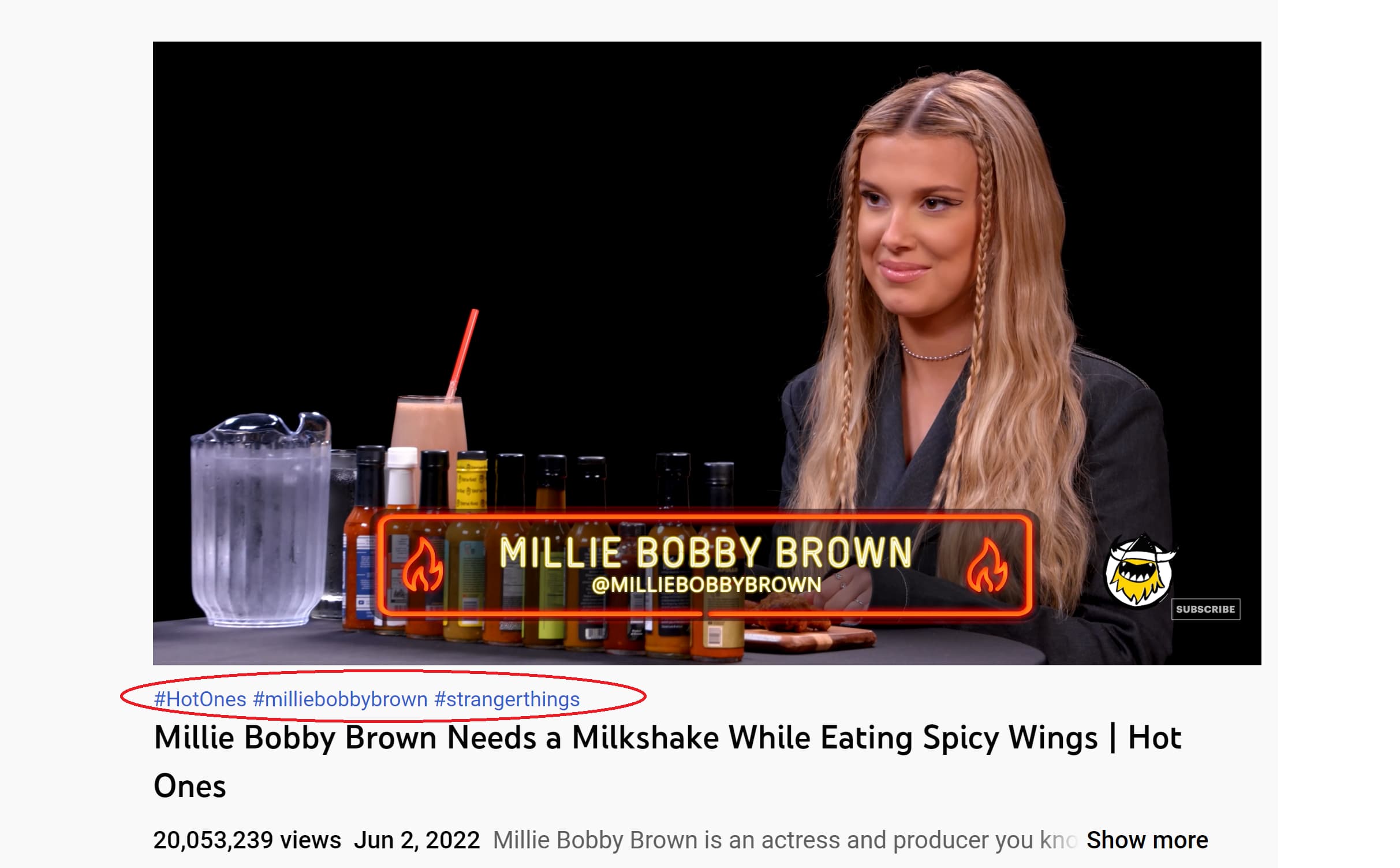
You can also use the keywords you found to create hashtags for your videos’ titles and descriptions. Your video’s content may also inspire ideas for a hashtag. For example, maybe you interviewed a popular guest on your channel — that guest’s name can be used as a hashtag to attract their fans to your content.

Hashtags are used to promote a YouTube channelImage source

Pro-Tip: Look at other YouTubers in your niche to see what hashtags they are using so you can find the right ones for your content.

4. Customize your thumbnails.

The thumbnail of your video serves as your video’s first impression — and we all know you never get a second chance at a first impression. To grab viewers’ attention, create a unique, eye-catching thumbnail that will compel them to click on your content.

YouTube thumbnails that stand out typically include a combination of the following:

  • High-quality images
  • A face (humans naturally focus on faces when it comes to photos)
  • Bright contrasting colors
  • Action shots
  • Bold text of no more than six words

Pro-Tip: For my own YouTube videos, I use Canva’s free YouTube thumbnail tool. With Canva, the thumbnail templates are already the proper dimensions and there are tons of fun stickers, bold fonts, colors, and background images to choose from. Plus, I can upload my own images from my phone or computer to the template.

This thumbnail is used to promote a YouTube channel

5. Post regularly.

Consistency is important when attracting potential subscribers to your channel. When you post frequently and consistently you’ll gain credibility with your audience because they know you’ll always keep the good content coming. To start, try posting a new video every two weeks and eventually work your way to once or twice a week.

Pro-Tip: You can also use YouTube Analytics to track the days and times your audience interacts with your content the most. For example, if you notice your videos get the most views when posted on Saturdays at 12 p.m., you’re going to want to have videos posted around that time to get the most engagement.

6. Promote your channel on social media.

The news director of a TV station I worked for would always say this about promoting content: “If it’s not on social media, then it doesn’t exist.” Keep this in mind when promoting your YouTube channel.

You can put out amazing content, have the perfect thumbnail, and use all the right keywords — but if you don’t promote your content on social media, you’re losing out on a potentially huge audience.

To attract anime fans to my channel, I started a Twitter account and started using the #anitwt and #AnimeAfterDarkCH hashtags whenever I tweeted about my videos. “Anitwt” is short for “Anime Twitter,” and is used to help anime fans connect with other fans on the platform.

#AnimeAfterDarkCH is a hashtag used for a weekly Twitter space geared toward Black anime fans. Now when I check my YouTube analytics, I often notice about 80% of my views come from Twitter users.

HubSpot’s Senior Manager of Marketing Essie Acolatse also suggests creating videos to cross-promote on different platforms.

“Make shorter bite size versions as teasers for other platforms. These teasers should fit the best video format for that platform, and should be engaging enough to make the viewer want more,” she said. “It’s often times hard to get people to leave the platform they’re already on, but taking advantage of your other social platforms can help drive views to your channel.”

Pro-Tip: Use social media to follow and connect with content creators, figureheads, and other prominent people in your niche. This will help you find online communities that correspond with your niche and can help expose your channel to the right audience.

7. Promote your channel on forums.

Online forums like Reddit are great places to promote your channel. Just remember that many forums have “no promotions” policies — but you can get around them with a little bit of tact. Make sure that you’re contributing value to the conversation and that your posts don’t come off too much like advertisements.

For example, let’s say you’re a fashion YouTuber and you notice a Reddit forum discussing thrift store fashion — a topic you’ve covered on your channel. Instead of replying with “Hey, check out my YouTube channel about fashion.” You can say:

“That’s a really cool perspective! I love thrifting and actually made a YouTube video with some great tips on how to find the best items at thrift stores. You can check it out if you’re looking for advice.”

Then you would link to your specific video.

Pro-Tip: Be an active contributor to these forums even when you don’t have new content to promote. Doing this adds value to the conversation and shows that you’re trying to be helpful instead of just plugging your channel.

8. Build a community.

Use your YouTube to establish yourself as an authoritative voice in your niche and to create a space for people with shared interests. The most effective (and free) way to do this is to simply engage with your audience. Reply to comments by sharing more valuable information.

Some YouTubers will even shout out new subscribers in their videos. You can also ask commenters for suggestions on your next topic and give them some recognition for contributing.

Pro-Tip: If you have more than 500 subscribers, you can take advantage of YouTube’s “Community” feature. This feature allows creators to engage with their audience between uploads via status updates, polls, and GIFs.

9. Run a contest.

Running a contest is an effective way to attract new subscribers, but you’ll want to make sure the contest attracts people who are genuinely interested in your niche and not just the prize.

To do this, make sure the prize is something connected to your topic. For instance, if I were to run a contest to attract anime fans, a good prize would be free anime merchandise or a gift card to anime clothing retailer Atsuko.

Pro-Tip: Be sure to promote your contest on social media and in online forums whenever possible.

10. Cross-promote your videos on YouTube.

In every YouTube video I post, I always take advantage of the platform’s “cards” feature. This feature allows you to promote a video across different videos on your platform. This works by posting a small icon at the corner of your video that links to another video or playlist. You can set the duration for how long you want the card to appear. Below is an example of what a card looks like:

YouTube's cards feature is used to promote a YouTube channelImage source

Another way to cross-promote your videos is to include an end screen. Have you ever watched a YouTube video and saw clickable ads for other videos appear in the final 10 seconds? That’s an end screen, and it encourages viewers to explore more of your content and subscribe.

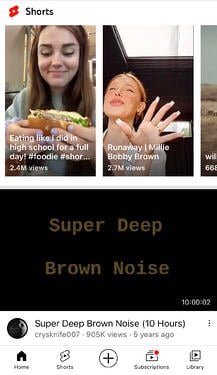
Acolatse also suggests using YouTube Shorts.

“Those bite size video versions for other platforms can also be used as YT shorts,” she said. “YT is investing a lot of money into shorts and because that feed reaches a different audience, it’s a great way to boost engagement on your overall channel. Make sure these shorts hook viewers in within the first couple of seconds and make them very compelling.”

YouTube's end screen feature is used to promote a YouTube channelImage source

Pro-Tip: Whenever I upload a new video, I always use cards and the end screen to link back to my previous video. This can give your older content a second life and a chance to gain new views.

11. Collaborate with other creators.

This is another form of cross-promotion that is helpful to all parties involved and can help expand your reach. For a successful collaboration, find a YouTuber whose audience overlaps with yours.

For example, if you’re a fitness expert, you can collaborate with a content creator who also focuses on exercise or nutrition. Once you know who you want to work with, reach out to that person, and you two can plan on how you’re going to make a unique video for both of your channels.

“This is one of the best organic ways to grow. Their audience will get a chance to see you and your audience can see them,” Acolatse said. “Creating content with other creators that have a similar niche and following size as you can help you get additional views on your content.”

Pro-Tip: Now is the time to use the connections you’ve made on social media to scope out the best collaborator.

12. Create playlists for your YouTube videos.

The more videos you create, the harder it will be for viewers to navigate your channel. Creating playlists organizes your content into specific categories, and allows viewers to binge your work. Playlists will help viewers find the relevant content they are looking for on your channel, and they’ll be more likely to subscribe when they finish binge-watching your videos.

Pro-Tip: Keep in mind your playlists when creating content. Ask yourself how you’d categorize the video and what playlist it would fit into.

13. Embed your YouTube videos.

If you have a blog or website, embedding your YouTube videos in your blog content or product page is a great way to boost conversions and attract subscribers to your channel. Having an article or webpage connected to your video can also help it rank higher in search engine results.

Pro-Tip: Make sure to use keywords in your blog or webpage’s content as well to help people find your site and, in turn, your YouTube video.

14. Livestream.

With the rise in popularity of livestream platforms like Twitch, livestreaming content is a trend that doesn’t seem to be going anywhere. TikTok, Instagram, and Facebook have all incorporated live-streams into their platforms — and YouTube is no different. Some ways you can use YouTube Live include:

  • Q&As
  • Webinars
  • Live tutorials
  • Product demonstrations

Gamers will often livestream themselves playing the latest video games and artists will sometimes livestream themselves completing a project.

Pro-Tip: Don’t be too concerned about perfection when it comes to your livestream. One of the biggest draw-ins of livestreams is that no one knows what’s going to happen live. It all just adds to the fun and creates a more personal relationship with your followers.

15. Add a YouTube widget to your website.

By adding a YouTube widget to the footer or sidebar of your website, anyone who visits your site will be able to see and engage with your videos. This can turn site clicks into views for your content. It will also encourage interested visitors to subscribe to your channel.

Pro-Tip: Many website-hosting platforms have their own free YouTube widgets you can easily embed onto your website.

Promoting your YouTube channel doesn’t have to be a financial liability. As you can see, there are many ways to expand your audience reach, find your niche, and promote your content without spending a dime. Now that you have some free promotional ideas, you’re ready to craft the perfect marketing plan to grow your channel.

New call-to-action

Categories B2B

Twitter Topics: How to Use It & What Marketers Need to Know

Twitter Topics makes it easier for Twitter users to sift through the roughly half billion tweets published daily and find content related to their interests. 

As a marketer, Twitter Topics can help you stay focused on audiences in your industry that fit your customer profile and join in on conversations that make the most sense for you to join. 

→ Free Download: Social Media Calendar Template [Access Now]

In this post, we’ll discuss everything you need to know about the platform’s native feature, including: 

With Twitter Topics, you can follow topics as well as people that often tweet about relevant topics.

When Twitter launched the feature in 2019, it said Topics was meant to shift the platform towards conversation and away from one-off comments by influencers and celebrities: “Previously, all of the work was on you to figure out the best way to keep up with what’s happening by following certain accounts, searching for it, or looking in the Explore tab for the latest. Now, you have the option of seeing the most relevant and interesting Tweets about what you care about with a single tap, and the conversation will come to you.”

Even though Topics was primarily meant to help individual users get the most out of their experience, it can also help brands build awareness and a following on the platform. For example, posting about topics relevant to your business can expose your tweets to people who follow those topics. 

As a marketer, you can leverage the tool in a few specific ways. But, first, we’ll go over the basics of using the feature.

How to Use Twitter Topics

Twitter often suggests Topics based on your account activity, and you’ll natively come across them in your Home timeline. You can click Follow to see related tweets if it suggests a topic of interest. 

The second way to access Twitter Topics is to navigate to your feed and click More, then Topics.

If you haven’t followed any topics before, you’ll see a welcome message explaining the feature. If you already follow Topics, they’ll appear here. 

Twitter Topics dashboard

If you click Follow some Topics, you’ll see a list of the most popular Twitter Topics, like “Entertainment,” with plus signs next to them that you can click to follow. 

Twitter Topic follow options

Clicking on the plus sign will also display a drop-down menu of more niche but related topics. 

When you follow Topics, your Twitter feed will show posts algorithmically pulled in from your Topic preferences. To follow more Topics, you can simply return to the Topics page and click “Follow more topics.”

Some tweets in your feed will sometimes offer a “See more about this Topic” pop-up, which includes a call to action to follow a related topic. 

How Twitter Topics show up in Twitter feed.

Image Source

You can also search and follow a Topic using Twitter’s search bar, as seen in the photo below:

How to unfollow Twitter Topics directly from Twitter feeds

Image Source

To unfollow Topics, return to the Topics page, click Follow more Topics, find the Topic you’ve followed, and click unfollow.

Unfollow a topic from Twitter Topics dashboard

Four Ways Marketers Can Leverage Twitter Topics

As mentioned above, there are several ways for marketers to leverage Twitter Topics. We’ll discuss these below. 

1. To follow topics related to your industry to stay informed.

Following Topics related to your industry helps you stay on top of trends that are important to your customers and might impact your business. 

The more up-to-date you are on current events and conversations, the more you’ll know about your audience’s delights, habits, work-life, and pain points. And, having this information helps you keep your buyer personas up to date. 

In addition, when you know what your market competitors are talking about, you’ll get a glimpse into possible future innovations, trends, or challenges that you should look out for, helping you stay on top of industry trends instead of falling behind.

2. To discover and follow accounts or thought leaders in your industry.

Topics helps you discover thought leaders and brands that often discuss insights and ideas about your field. 

If you monitor the Topics you follow and notice similar accounts or people having conversations, it can well serve you to check out their profile to get a sense of the content they share. By doing this, you’ll also discover trends and insights in your industry, and their content may also teach you how to optimize your Tweets so you can get in on the conversation.

3. To create content or tweets related to trendy Topics in your industry.

If there’s a Topic that’s currently buzzy that strongly relates to your business, jump in on the conversation. 

If users of one of the Topics you follow are talking about a common pain point that your product or service solves, posting about that pain point can help you draw your audience’s attention and educate them about how you can solve their needs.

4. To discover trending hashtags and optimize your own tweets with them.

Hashtags are one of the best ways to optimize your tweets and use popular keywords to gain visibility on the platform. 

You can leverage Twitter Topics to discover trending hashtags related to your brands’ offerings and use them in your own tweets to generate brand awareness and position yourself as a source of authority.

Embracing Trendy Topics on Twitter

Twitter is a solid platform for topical and trend-based discussions. Topics will help you zone in on what people are talking about on the platform so you can join in on the conversation with relevant insight and conversation. 

social media content calendar

Categories B2B

18 Best B2B Website Examples & How to Design a Great B2B Website

The right B2B website makes all the difference when it comes to converting visitors into buyers. In this post, we’ll share the best B2B website examples we’ve ever seen, then dive into three tips for building your site.

By the end, you’ll be able to create a site that drives conversions and keeps buyers coming back. Let’s get started.

Learn how to redesign your website with this free guide.

With a host of great B2B website examples out there, we’ve curated a list of sites that stand out.

1. Blake Envelopes

b2b website examples: blake envelopes

Are envelopes exciting? Not really, but you wouldn’t know it from the Blake Envelope website. The colors are vibrant, the envelopes are everywhere, and the site manages to convey a sense of movement that makes you want to click through and see exactly what they have to offer. That’s exactly what you want from a B2B website.

2. Pixelgradeb2b website examples: pixelgrade

Pixelgrade makes it clear up front what they’re about: Offering simple WordPress themes to help anyone get their website up and running quickly. There’s no extraneous information here — they state their value proposition and offer a direct link to browse the themes they offer.

3. Reputation Squad

b2b website examples: reputation squad

Reputation management is key to online success for organizations. If companies can’t see what customers are saying about them, they could miss critical opportunities to improve.

Reputation Squad helps companies track their reputation online with a responsive monitoring system. Scrolling through their website gives the feeling they’re operating in the future; backgrounds move and shift as you head down the page and the content is set up in a way that’s easy to view, read, and contextualize.

4. Evernote

b2b website examples: evernote

Evernote isn’t new to the B2B space, but their site continues to make it abundantly clear what they’re good at: Taming your work and organizing your life by making it easy for you to take notes and keep schedules. Even more telling is their aim to help you “remember everything”, which suggests this isn’t just a single-function solution but a multipronged performance tool.

5. Dropbox

b2b website examples: dropbox

The five “S’s” here quickly communicate what Dropbox is all about. Not only can you store and sync files but easily share them and even add eSignatures. That’s it. That’s the value proposition. No fancy graphics, no beating around the bush — just getting straight to the point about how they can help.

6. Shepper

b2b website examples: shepper

Shepper is all about collecting data. And not just any data — the data you tell them you need to collect and analyze. This could be product or advertising information, or data about the overall customer experience. No matter what data you need or where it’s stored worldwide, Shepper can help.

7. HubSpot

b2b website examples: hubspot

We’ll admit it. We’re also pretty great at this B2B stuff. We’re also modest — you’ll notice HubSpot isn’t first on the list — but our site makes it clear what we offer: An easy-to-use CRM than can streamline your current processes and revolutionize the way you work. With both free and premium options, you’re in good hands with HubSpot.

8. Orbital Sidekick

b2b website examples: orbital sidekick

Orbital Sidekick delivers information from space to help government and commercial organizations meet their goals around environmental, social, and governance objectives. Using what’s known as “hyperspectral analysis” from a fleet of satellites, Orbital Sidekick gives companies the data they need to make decisions on-demand.

9. Trello

b2b website examples: trello

Trello is a collaboration tool designed to streamline operations. Given the increasing number of these tools on the market — and the fact that some hinder more than help — Trello makes it clear that no matter where or how teams prefer to work, the solution can help teams move forward.

10. Hootsuite

b2b website examples: hootsuite

Hootsuite’s tagline is simple: “Social is your superpower”. Combined with an image of a woman seemingly taking off into the air and backed by familiar social images and icons, it’s clear right away that Hootsuite is all about helping you get the most of your social media channels.

11. Yapstone

b2b website examples: yapstone

It’s a funny name with a great B2B angle: Local payment for global businesses. Not only does this tagline provide a sense of confidence and familiarity, but also manages to simultaneously suggest that Yapstone can help businesses anywhere power their payment platform.

12. Grammarly

b2b website examples: grammarly

Grammarly cuts right to the chase to showcase what it does best: Detecting and correcting grammar and spelling mistakes. An animated image takes users through a quick demonstration of what Grammarly has to offer, making it clear what users will get when they download and install the app.

13. Acme

b2b website examples: acme

Acme automates industrial warehouse operations. The sepia tones of its website combined with warehouse images and a clear message about what Acme does leave no room for misinterpretation. If you’re their target audience, you’ll click through. If not, you’ll leave.

14. Mailchimp

b2b website examples: mailchimp

Email platform Mailchimp is well-known for its work in marketing emails, and its website makes it clear that the goal of the platform is to grow both business audience and revenues with the help of automated tools and expert advice. With the goal of outperforming your last campaign, it’s a solid pitch for B2B sales.

15. Packlane

b2b website examples: packlane

Consumers don’t just want great products. They want great packaging that is interesting to look at, fun to open, and (ideally) environmentally sustainable. Packlane lets companies create custom packaging and boxes that best suit their products, and provides instant quoting to help companies quickly make a decision.

16. HireLevel

b2b website examples: hirelevel

Aside from making a great pun (higher level — get it?), HireLevel also does a great job of clearly defining what they do. Need a job? They can help. Looking to improve workplace management? They’ve got services to bridge the gap.

17. Netbase Quid

b2b website examples: netbase quid

Netbase Quid is all about consumer and market intelligence. The seven colored tabs on the homepage make it clear exactly how they can help, from tracking brand health to delivering trend analytics to improving crisis management.

18. Square

b2b website examples: square

Square is a payment platform that immediately prompt customers to get started as a first step to entering the site. It’s the first — and nearly only — thing a visitor encounters upon landing on the home page. That information allows Square to offer customers what feels like a much more customized web experience.

1. Make your website about the customer — not about you.

After reviewing hundreds of B2B websites across every major industry, we found only a handful that purposefully invite customers into a conversation. To do that, suppliers need to stop talking so much about themselves.

Rather, they should provide customers with an opportunity to share something about who they are and what they’re looking to do.

Really, it’s no different than common courtesy at a cocktail party. No one wants to be stuck talking to the person droning on about who they are and what they do. Yet that’s precisely what the vast majority of B2B websites do.

Not only is that kind of self-centered approach disengaging, but it also leaves the buyer wondering, “Do they even know who I am? Or what I actually do?” Or worse, “Do they even care?” It’s impersonal at best, and off-putting at worst — fostering questions rather than connections, and distance rather than assistance.

That said, we found a handful of websites that do, in fact, actively invite customers to engage on their terms. One example is vAuto.com. A division of Cox Automotive, vAuto sells enterprise software to auto dealers around world. Among those dealers are both used and new car sellers, along with wholesalers — some franchise-based, and some independent.

b2b website example: vauto

Those distinctions matter — not only for finding the appropriate vAuto solution, but they help to identify how that customer thinks about themselves.

vAuto has designed the front page of its website to allow buyers to self-identify along the dimensions most important to them, prior to going any deeper. The customer’s first choice upon landing at vauto.com is declaring, “I manage new vehicles,” “I manage used vehicles,” “I buy wholesale,” or “I manage reconditioning.”

Notice that even the pronouns are specifically chosen to position the website as a learning and buying tool for customers, rather than a broadcasting tool for the supplier.

Questions to ask yourself:

  • How do our customers define themselves?
  • In their minds, which aspects of their identity most affect the way they look at suppliers like us?

2. Emphasize your customers’ outcomes.

Just as the best websites invite customers into a conversation, they also guide buyers to supplier solutions using the language of customer outcomes — rather than supplier capabilities.

The best companies take the time to understand the specific business objectives customers are seeking to achieve, then organize their sites using language immediately recognizable to customers along those particular outcomes. That way, customers don’t have to translate.

Here’s another place where vAuto excels. The company employs actual customer-articulated business problems as the organizing framework for diving deeper into their broad solution set. It organizes this information around headings like, “Show me how to beat the competition,” and, “Show me to source more profitably.”

At every step, the goal is to make online learning and buying as easy and as resonant as possible — all through an easy-to-follow path of breadcrumbs leading directly to vAuto’s unique solutions.

Questions to ask yourself:

  • What help are customers seeking from a supplier in your category?
  • What specific language would best resonate with your customers to describe that help?

3. Help customers do what they are on your site to do.

Finally, the best websites identify and then facilitate the specific tasks that customers come to your website to complete.

Take something like a cost calculator embedded directly into a website. A tool like that enables customers to independently calculate the costs of (in)action, rather than relying on sales reps to make the case for change. It’s a simple, practical idea, but it’s deployed with single-minded purpose: to allow the buyer to easily progress along the journey, while remaining in her preferred channel of choice.

Questions to ask yourself:

  • What specific buying tasks are your customers coming to your website to complete?
  • How easy is it to find support for those tasks on your site right now?

Building a Better B2B Website

There’s a great deal to be learned from the handful of world-class websites we found. When it comes to building a better B2B site, it’s all about giving buyers an easy entry point, communicating your solutions in language they understand, and making it simple for them to do what they want to do.

Not sure where to get started? Check out the examples above for inspiration and then grab HubSpot’s free ultimate workbook for redesigning your B2B site.

Editor’s note: This post was originally published in January 2018 and has been updated for comprehensiveness.    

Blog - Website Redesign Workbook Guide [List-Based]

Categories B2B

The 15 Best Free Portfolio Websites for Creating an Impressive Digital Portfolio

Whether you’re a UX designer, freelance writer, or photographer, an impressive online portfolio is critical for impressing potential clients and landing future jobs.

But crafting a good digital portfolio can feel like a daunting task, especially when you aren’t even sure which website you should use to create one. Here, we’ve created a list of the best portfolio websites for designers, freelancers, and photographers to ensure you can showcase your best work in any industry.

→ Download Now: 12 Resume Templates [Free Download]

Examples of your work one could display in an online portfolio include:

  • Photographs
  • Writing samples
  • Case studies
  • Spreadsheets
  • Lesson plans

What you include in your online portfolio varies depending on your field and expertise. So to better help you choose a portfolio builder for your needs, let’s dive into some of our favorite portfolio websites to help you make your own, according to your needs.

Best Free Portfolio Websites for Freelance Writers

1. Journo Portfolio

online portfolio websites: journo portfolio best for freelance writers

Image Source

You can easily create a sleek, modern digital portfolio on Journo Portfolio. The site offers nine distinct themes, and adding an article is as easy as pasting a URL and clicking add — the site takes care of incorporating the title, publication, date, content, and image. Features include integrating with Google Analytics or using Journo’s built-in analytics tools to measure visitors. Additionally, your site is automatically mobile-ready.

You can also blog straight from the platform, which could be helpful if you want to showcase freelance work and your current blog in one place. Journo lets you create multiple pages with a Contact Me or About Me page and your freelance portfolio.

Pros

  • Live preview editor
  • Built-in analytics plus Google Analytics integration
  • Pre-built themes
  • Subscribe and contact forms
  • Mobile-friendly

Cons

  • Free plan limits you to 10 articles max
  • For unlimited articles, you’ll need to pay $5-$10 per month

2. Muck Rack

online portfolio websites: muck rack for freelance writers

Image Source

Muck Rack is a free media database that helps connect journalists with PR professionals, so if you use the site, you’ll have good opportunities to network and receive PR pitches. You can even include topics you don’t want to cover, filtering out unfit pitches.

Additionally, for true ease of use, Muck Rack creates and maintains your portfolio for you by automatically compiling articles and social media profiles. Once it’s finished, you have the option to customize your bio or choose to spotlight certain pieces.

Muck Rack also offers a news alerts system, which enables you to track stories or tweets about a company, brand, or specific story angle. With their news alerts system, you can see when other journalists share information or publish stories related to your work, which will help you stay on top of trends.

Pros

  • Ideal for journalists
  • Auto-updates profile
  • News alerts system for tracking stories and trends
  • Allows you to build media lists easily

Cons

  • Some formatting issues when uploading content from Excel
  • Doesn’t integrate with other reporting and monitoring tools

3. WordPress

online portfolio: WordPress portfolio for freelance writers

Image Source

WordPress, a major content management platform, lets you create a free blog with a separate portfolio page. While not explicitly geared towards freelance writers, WordPress offers over 100 free themes to craft a unique blog and showcase your work. This is a good option for you if you want complete creative control over your portfolio.

You might also choose to use WordPress if you want to showcase your writing and other skills. Suppose you want a page for writing or photography, for instance. In that case, WordPress offers a variety of themes and is flexible enough to enable you to demonstrate various pieces of creative work.

Pros

  • Ideal for bloggers
  • Can create portfolio page separate from blog
  • 100+ free themes available
  • Comes with SSL certificate and JetPack features for improving website performance

Cons

  • Free plan shows ads
  • Limited storage at 3 GB

4. Clippings.me

online portfolio websites: clippsings.me for freelance writers

Image Source

Clippings.me is a site with a simplified approach to sharing your best articles, collateral, or other types of marketing materials.

You can upload your PDFs, links, and related multimedia to Clippings.me to create a sharp-looking portfolio that specific categories of your choosing can categorize. You can even use social links on your page for other professionals to reach you more easily.

In addition to uploading and maintaining your own portfolio, you can browse through other freelancers’ pages to network and potentially gain prospective clients or collaborators.

Pros

  • Designed intuitively for writers — by writers
  • Ideal for beginner or experienced writers looking to expand their careers
  • Offers a journalism directory

Cons

  • Can only feature up to 10 articles under the free plan

Best Free Portfolio Websites for Designers

5. Behance

online portfolio: Behance portfolio for designers

Image Source

With millions of UX/UI designers, artists, and photographers on the site, Behance is one of the most widely-used online portfolio websites. It’s also straightforward to use — you can organize your work based on the project, list projects under construction, and ask followers for feedback. Additionally, the site allows you to link your portfolio to your social media accounts.

Behance’s massive digital community makes it an excellent option to get your name out there, particularly since recruiters and interviewers peruse the site to find talent. However, Behance displays the number of people who have viewed and liked your work, which can be more advantageous — but riskier — than a more straightforward website portfolio.

Pros

  • Ideal for creatives who don’t have time to create their own standalone portfolio site
  • Can get feedback from followers
  • Includes social proof in terms of views and likes on portfolio site

Cons

  • Limited design and feature options on free plan
  • The display of views and likes can be risky if not enough people see or appreciate a project

6. Adobe Portfolio

online portfolio: Adobe portfolio for designers

Image Source

If you already have a Creative Cloud membership, then Adobe Portfolio is an excellent option to create a single-page website or a full gallery of your work. With Adobe Portfolio, you can set up a sleek and customized portfolio in minutes, and each of the platform’s themes are automatically optimized for any device.

Additionally, Adobe Portfolio offers the ability to integrate with Behance and Adobe Lightroom to import your projects for greater visibility.

Pros

  • Option to create multi- or single-page website
  • Offers 18 responsive themes
  • Integrations with Behance and Adobe Lightroom

Cons

  • Only free if you have Creative Cloud membership

7. Fabrik

online portfolio websites: fabrik for designers

Image Source

Fabrik is the portfolio platform for creatives. Designers can organize their projects without touching any code with unique website styling and technology. This enables users to upload their portfolios easily and even supports blogging capabilities.

Fabrik’s themes are intuitive and made adaptable to your project content needs. This flexibility lets users experiment with multiple layouts designed to compliment media formats needed, whether it’s graphic design, fashion, or more. With straightforward configurations, the Fabrik portfolio is an easy choice to build and maintain your portfolio across all devices.

Pros

  • Ideal for creative designers of various specialties
  • Allows an unlimited number of blog posts
  • Responsive customer support

Cons

  • Have to integrate other functionalities like ecommerce or other third-party extensions externally

8. Crevado

online portfolio: crevado portfolio for designers

Image Source

One of the most straightforward free portfolio websites, Crevado lets you use a simple drag-and-drop tool to upload your projects and rearrange them on the screen for true ease of use. The site is also automatically optimized for any device, so your portfolio can be viewed on a smartphone, tablet, or desktop.

Crevado also has secure hosting and SSL certification, so your portfolio site remains secure. You can customize your design to suit your preferences without writing any code. Best of all, you can sell your work online thanks to the platform’s integrations with PayPal and Fotomoto.

The only downside is that free users can’t remove the link to Crevado in their website footer. You’ll have to upgrade to a pro account to do so.

Pros

  • Drag-and-drop interface
  • Responsive designs
  • Secure hosting and SSL certification
  • PayPal and Fotomoto integrations allow you to sell work

Cons

  • Free plan shows Crevado link in website footer

9. Pixpa

online portfolio websites: pixpa for designers

Image Source

Pixpa is an all-in-one, DIY website building platform designed to empower creative professionals, freelance writers, and business owners by helping them build feature-rich, professional websites without touching a single line of code.

Pixpa offers a range of modern, mobile-friendly, and responsive templates which can be fully customized using the easy-to-use visual editor and drag-and-drop page builder. Rich features, including blogging tools, built-in SEO and marketing tools, social media integrations, multiple gallery options, ecommerce functionality, make Pixpa the perfect portfolio-building platform for writers and creative professionals. The full-fledged blogging platform powered by an intuitive and versatile WYSIWYG editor, allows you to create, edit, schedule, and publish blog posts, all in one place.

Pros

  • Beginner-friendly, no-code website building platform
  • Extensive SEO tools allow you to add custom tags and metadata
  • SSL security on all websites
  • 24×7 customer support through email and live chat

Cons

  • No built-in options for purchasing custom domain names

10. Dunked

online portfolio websites: dunked for designers

Image Source

Dunked is a platform built with designers and creatives in mind. With over 100,000 users, this online portfolio builder lets you share your talents on a stylish and simplistic website.

Dunked’s gallery of professionally designed templates are crafted to complement your creativity and focus on your work. Choose the best meant for your aesthetic and switch between themes when they suit you.

Upload images or multimedia from sites like YouTube, Vimeo, Flickr, SoundCloud, then drag and drop until the website looks exactly how you want.

Pros

  • Ideal for designers and other creative professionals
  • All templates full responsive and retina-display ready
  • Click-and-drag simply website editing tool to customize your portfolio

Cons

  • HTML and CSS knowledge necessary for more extensive customization
  • Can’t support case studies or blog posts

Best Free Portfolio Websites for Photographers

11. Flickr

online portfolio: Flickr portfolio for photographers

Image Source

Undoubtedly one of the most well-known portfolio sites with billions of photos and millions of members, Flickr is a good site to share your own work, connect with other photographers, and find inspiration for future projects.

However, Flickr’s community-oriented platform can make it difficult to showcase your best work and appear professional — particularly since the site is used to share images with friends and family. For this reason, many designers also suggest creating a more polished portfolio website and then linking to that website from Flickr.

Pros

  • Ideal for photographers just starting out
  • Great to connect with others and find inspiration

Cons

  • Limited to GIF, PNG, and JPEG photo formats
  • Limited to 1,000 photos on free plan

12. Portfoliobox

online portfolio: Portfoliobox portfolio for photographers

Image Source

Portfoliobox is a website builder specifically designed for photographers, and it’s a good option for crafting a professional-looking responsive gallery of your best work.

Portfoliobox offers an ecommerce link that allows you to sell your prints or other artwork directly from the site (without paying any commission). With the free plan, you can create a blog further to attract visitors and potential customers to your site.

Best of all, Portfoliobox doesn’t make you use a standard theme — instead, you can integrate any style for any page to cultivate a unique, one-of-a-kind website. With more than one million users, it’s a good option for professional and novice photographers.

Pros

  • Ideal for photographers at any skill level
  • Can sell prints on this site commission-free
  • Can use different styles for every page

Cons

  • No drag-and-drop functionality
  • Limited customization options for ecommerce

13. Krop

online portfolio websites: krop for photographers

Image Source

Krop is a creative industry portfolio hosting website used by the most talented candidates at all experience levels and the globe’s most respected creative brands.

With Krop’s software, creatives can spend less time editing and formatting and more on their own projects. Curating portfolio albums is done quickly, and the software offers powerful customizations for personal brandings like logos, color palettes, and more.

This site also serves as a job board, helping professionals network with one another across the globe. Users can strategically place themselves in front of respected creative brands and find work at all experience levels, too.

Pros

  • Ideal for creative professionals such as photographers, illustrators, or animators
  • Password protection for individual albums to share with clients privately
  • Unlimited storage for multimedia
  • No HTML or CSS knowledge is necessary

Cons

  • The majority of job postings are limited to the United States

14. YouPic

online portfolio: YouPic portfolio for photographers

Image Source

YouPic’s users include famous photographers like Joel Meyerowitz and Julia Fullerton-Batten. Another site specifically designed for photographers, YouPic, enables you to craft a free stunning portfolio to showcase your work. It also allows you to buy prints from other photographers or sell your own to earn additional income.

Additionally, the site offers interactive courses to improve your photography skills and a Pinterest-style “Explore” page that lets you check out famous photographs, new artwork, and stories to inspire your gallery. And most interesting to note, YouPic allows users to copyright their photos on the blockchain, and it’s the first decentralized photography platform. That means YouPic is one of the few platforms that won’t take any rights or ownership of your work.

Pros

  • Can sell prints on this site commission-free
  • Can copyright photos on blockchain
  • Doesn’t take any rights or ownership of your work

Cons

  • Premium membership is required for YouPic to promote your work

15. Format

online portfolio websites: format for photographers

Image Source

Format is a portfolio website for photographers looking to create and curate their own digital gallery or store. Built with tools to help you build a professional website, it offers solutions for supporting a photography business, plus cloud storage to protect your work.

Format has a suite of templates made to fit any aesthetic. It’s designed to serve particular professional situations best, such as for wedding photography or to showcase your artworks. It can also change how viewers navigate your work, from gallery formats to more interactive scrolling or slideshow options.

Pros

  • Ideal for professional photographers
  • Can support high-quality photos
  • Can integrate online stores with no fees for sales

Cons

  • The interface comes with a learning curve, but users don’t have to worry about code

Creating Your Online Portfolio

An online portfolio provides evidence of your work and skills, which can set you apart from other candidates or professionals in your field. Using any of the tools above, you can create a free portfolio in no time. What are you waiting for?

Editor’s note: This post was originally published in April 2019 and has been updated for comprehensiveness.

New Call-to-action

Categories B2B

21 Examples of Successful Co-Branding Partnerships (And Why They’re So Effective)

Everyone has loyalties to their favorite brands, but there’s a good chance your favorite products result from two separate brands working together.

One of my own beloved childhood memories was a product of co-branding: Betty Crocker partnered with Hershey’s to include chocolate syrup in its signature brownie recipe.

Click here to download a detailed guide and free templates for getting started  with co-marketing.

There’s something brilliant about that co-branded product: It’s a fun way to marry two classic brands into one delicious experience for fans of baking and chocolate alike. In fact, these brands still create new co-branded products to this day.

Co-branding can be an effective way to build business, boost awareness, and break into new markets, and for a partnership to truly work, it has to be a win-win for all players in the game. Both audiences need to find value — like chocolate-loving fans of Betty Crocker and Hershey’s.

There are a ton of great examples of co-branding partnerships out there. To show you what makes them so successful, we’ve curated a list of examples of great co-branding partnerships to inspire you.

Featured Resource: Free Co-Marketing Templates

Co-Marketing planning template on excel

Looking to ramp up your co-branding program? Download HubSpot’s Co-Marketing Kit + Templates to learn more about co-branding best practices and build out your process with universal, customizable templates.

1. GoPro & Red Bull

Co-Branding Campaign: Stratos

GoPro doesn’t just sell portable cameras, and Red Bull doesn’t just sell energy drinks. Instead, both have established themselves as lifestyle brands — in particular, a lifestyle that’s action-packed, adventurous, fearless, and usually pretty extreme. These shared values make them a perfect pairing for co-branding campaigns, especially those surrounding action sports.

To make the partnership work, GoPro equips athletes and adventurers from around the world with the tools and funding to capture things like races, stunts, and action sport events on video — from the athlete’s perspective. At the same time, Red Bull uses its experience and reputation to run and sponsor these events.

“GoPro camera technology is allowing us to complement the programming by delivering new athlete perspectives that have never been seen before,” said Sean Eggert, Red Bull’s director of sports marketing. The collaboration allows exclusive GoPro content to enhance both companies’ growth.

Why the Stratos Co-Branding Campaign Works

While GoPro and Red Bull have collaborated on many events and projects together, perhaps the biggest collaboration stunt they’ve done was “Stratos,” in which Felix Baumgartner jumped from a space pod more than 24 miles above Earth’s surface with a GoPro strapped to his person. Not only did Baumgartner set three world records that day, but he also embodied the value of reimagining human potential that define both GoPro and Red Bull.

2. Rachel Comey, Victor Glemaud, Sandy Liang, Nili Lotan & Target

Co-branding Campaign: High-End Fashion

Anyone who’s designer-conscious knows high fashion and Target aren’t exactly the same caliber regarding quality. Dresses by designers like Sandy Liang go for around $600, whereas dresses sold by Target go for more like $35 a pair. See what I mean?

But that discrepancy in pricing is exactly why these designers and Target brand decided to partner with one another. To support its brand positioning as trendy and fashionable, Target has paired with high-end fashion designers Rachel Comey, Victor Glemaud, Sandy Liang, and Nili Lotan to offer exclusive branded items for a limited time.

Co-Branding Partnership Business Examples: rachel comey anfd target

Image Source

Why Target Co-Branding Campaign Works

In this exchange, the high-end designers can expose their name to a new generation of potential consumers, who will increasingly aspire to own more pieces from those high-end collections while furthering the idea that Target can be a store to find fashion-forward clothing.

3. Joybird & Sherwin-Williams

Co-branding Campaign: Being Boldly Original

The Joybird home lifestyle brand and paint company Sherwin-Williams did a co-branding campaign when they partnered together to curate an eclectic collection of home furnishings and color palettes.

Together, the two brands created an exclusive product line of paints and room design inspiration that helped customers easily select paint colors to complement their furniture choices.

co-branding campaign best examples: joybird and sherwin-williams

Image Source

Why the Sherwin-Williams Co-branding Campaign Works

These two businesses saw the opportunity to run a campaign that exposed their product and copywriting to brand new audiences. This intersection of target demographics could have brought in new business for each other and could have paved the way for future co-branding collaborations if proven mutually beneficial.

4. Casper & West Elm

Co-branding Campaign: Test a Casper Mattress

You may have already heard of Casper — an online mattress and bedding brand selling mattresses in a box.

Enter West Elm, a high-end furniture company. Casper and West Elm partnered so shoppers could try out the comfy mattress before purchasing — and so West Elm could advertise its chic bedroom furniture.

Co-Branding Partnership Business Examples: welm elm & casper

Image Source

Why the West Elm Co-branding Campaign Works

This is another example of a mutually beneficial co-branding partnership. It helps both brands appeal to a broader group of shoppers — after all, Casper doesn’t sell furniture, and West Elm doesn’t sell mattresses. It also provides shoppers with options — to try a mattress before buying or to feel what it would be like sleeping in a bed frame.

5. Kanye & Adidas

Co-branding Campaign: Yeezy

Kanye West, best known for his Grammy-winning rap albums, partnered with Adidas to develop a high-end footwear line called Yeezy. The combination of Kanye’s personal brand and Adidas’ growing streetwear segment has made for robust company earnings and brand growth since it was introduced.

Co-Branding Partnership Business Examples: adidas kanye

Image Source

Why the West Elm Co-branding Campaign Works

Kanye’s celebrity appeal benefits Adidas by creating buzz around its apparel, and the athletic-wear brand gives Kanye a well-established platform to build his high-end clothing line. One of the strongest draws of Yeezy — and most notably its shoes — is its exclusivity: Kanye’s celebrity status, extremely scarce roll-outs, and the high price tag make the lucky few to own Yeezy sneakers feel a little famous by association.

Adidas’ co-branding relationship with Kanye and the resulting cult-like Yeezy following led to a stellar year for the company: in 2019, Adidas’ net income climbed 19.5% to $1.9 billion.

6. BMW & Louis Vuitton

Co-branding Campaign: The Art of Travel

Car manufacturer BMW and designer Louis Vuitton may not be the most obvious pairings. But if you think about it, they have a few important things in common. If you focus on Louis Vuitton’s signature luggage lines, they’re both in the business of travel. They both value luxury. And finally, they’re both well-known, traditional brands that are known for high-quality craftsmanship.

Co-Branding Partnership Business Examples: BMW LV

Image Source

These shared values are exactly why this co-branding campaign makes so much sense. In their partnership, BMW created a sports car model called the BMW i8, while Louis Vuitton designed an exclusive, four-piece set of suitcases and bags that fit perfectly into the car’s rear parcel shelf.

Although the four-piece luggage set goes for a whopping $20,000, the price is right for the target customer, as the BMW i8 starts at $135,700. A price like that kind of makes that luggage set seem like a drop in the bucket.

Not only does the luggage fit perfectly size-wise, but its design and appearance fit perfectly with BMW’s image: sleek, masculine, and high-quality. Turns out both the luggage and some parts of the car’s interior use carbon fiber, strong-yet-light composite material.

Why the Louis Vuitton Co-branding Campaign Works

Both brands knew their target market desired luxury and meticulous craftsmanship. By selling complimentary high-quality products, the brands successfully garnered attention from respective loyal customers.

7. Starbucks & Spotify

Co-branding Campaign: First-of-Its-Kind Music Ecosystem

Starbucks scaled up a premium coffee shop experience into a massive global brand, using music to create an ambiance around its coffee. Spotify, a music streaming platform, has powered almost 25 billion hours of listening worldwide. Starbucks and Spotify forged an innovative co-branding partnership to build a “music ecosystem”, offering artists greater access to Starbucks consumers and giving Starbuck access to Spotify’s expansive discography.

Co-Branding Partnership Business Examples: starbucks spotify

Image Source

Why the Spotify Co-branding Campaign Works

Through the initiative, Starbucks employees get a Spotify premium subscription, with which they can curate playlists (that patrons can access through the Starbucks Mobile App) to play throughout the day in the shop. This music ecosystem is designed to expand the coffeehouse environment that Starbucks is known for while giving artists greater exposure to Starbucks customers.

The “musical-ecosystem” partnership is mutually beneficial, allowing the companies to reach the other’s audience without sacrificing their brand.

8. Apple & MasterCard

Co-branding Campaign: Apple Pay

Sometimes, co-branding partnerships aren’t just cool projects between two companies — they actually have practical value when the companies work together.

Co-branding partnership between Apple and MasterCard on Apple Pay

Image Source

When Apple released the Apple Pay app, the brand effectively changed how people perform transactions. This app allows people to store their credit or debit card data on their phone, so they can use them without physically having the card with them. But for this app to succeed, it needs credit card companies to integrate with this technology. By the same token, credit card companies also face more competition themselves if they aren’t compatible with the latest consumer purchasing tool.

Why the Mastercard Co-branding Campaign Works

To get out ahead of its competition, MasterCard became the first credit card company to allow its users to store their credit and debit cards on Apple Pay. MasterCard not only showed support of a major consumer tech developer in this partnership — it evolved along with its own customers in how they choose to make purchases at the counter.

9. Airbnb & Flipboard

Co-branding Campaign: Experiences

You’ve probably heard of Airbnb, the room-sharing application that allows you to find convenient lodging hosted by real people. But its newest partner, Flipboard, might not have been on your radar until now.

Flipboard is a news aggregator that collects news and topical content that users are sharing on social media, and allows you to “flip” through the material much like a social media feed. Well, Airbnb recently teamed up with Flipboard to create Experiences, which serve Airbnb users with lifestyle content tailored to their interests and shared by people with similar interests as the reader.

Co-branding partnership between Airbnb and Flipboard on Experiences

Image Source

Why the Flipboard Co-branding Campaign Works

The ongoing campaign recently led to another co-created product called Trips, which allows Airbnb users to connect with hosts with common interests and actually book these experiences when traveling. This partnership is an impressive example of how businesses can connect their customers with information that caters to their individual interests and drive product usage as a result.

10. Uber & Spotify

Co-branding Campaign: Soundtrack for Your Ride

Music-streaming app Spotify partnered with ride-hailing app Uber to create “a soundtrack for your ride.” This is a great example of a co-branding partnership between two very different products with similar goals— to earn more users.

Co-Branding Partnership Business Examples: uber spotify

Image Source

When riders are waiting for an Uber ride, they’re prompted to connect with Spotify and become the DJ of their trip. Users can choose from their own playlists to determine what they’ll listen to.

Why the Spotify Co-branding Campaign Works

This smart co-branding partnership helps fans of Uber and Spotify alike enjoy better experiences thanks to the app. And they might be more interested in picking Uber and Spotify over competitors knowing they can enjoy their next ride listening to their favorite tunes.

11. Levi’s & Pinterest

Co-branding Campaign: Styled by Levi’s

Levi Strauss & Co. — one of the world’s oldest and most recognized jean brands — recently joined forces with Pinterest, a social platform where users pin posts they like to their user profiles.

Co-Branding Partnership Business Examples: levis pinterest

Image Source

People often turn to Pinterest for fashion inspiration, making a co-branding partnership with Levi’s a natural partnership. Styled by Levi’s is a new initiative between Pinterest and Levi’s offers a “personalized styling experience,” or style insights tailored to each user’s tastes and preferences.

Why the Pinterest Co-branding Campaign Works

The partnership offers an authentic and individualized brand relationship, which is difficult to come by in an increasingly digital environment. Pinterest offers Levi’s a leading social platform with millions of users interested in visual offerings, and Levi’s meets these needs with digital personalization and visual-focused boards.

12. BuzzFeed & Best Friends Animal Society

Co-branding Campaign: Emma Watson + Kittens

Some co-branding campaigns are more complicated than others. This example from BuzzFeed and Best Friends Animal Society is one of the simplest ones—and it shows that a great co-branding effort doesn’t have to take months of planning or millions of dollars.

For this campaign, Best Friends Animal Society wanted to leverage BuzzFeed’s readership of over 200 million people.

To do this, they partnered with the folks at BuzzFeed to set up and publish an article called, “We Interviewed Emma Watson While She Played With Kittens And It Was Absolutely Adorable,” which you can read here.

The article is exactly what it sounds like: Harry Potter and Beauty and the Beast star Emma Watson answered fans’ questions while she played with cute kittens.

co-branding partnerships: buzzfeed best friends animal society

Image Source

Why the Best Friends Animal Society Co-branding Campaign Works

The article ends with a CTA advertising that the kittens featured in the video are, in fact, adoptable — a win-win for both partners by using celebrity to garner attention for clicks while providing more exposure for animals in need of new homes and donations.

13. CoverGirl & Lucasfilm

Co-branding Campaign: Light Side and Dark Side Makeup

Whenever a new installment of the beloved “Star Wars” series is released in theaters, it causes global pandemonium. The release of “Star Wars: Episode VII The Force Awakens” in 2015 was no exception. The series’ parent company, Lucasfilm, partnered with CoverGirl to capture a broader audience to get new and old fans excited about the movie’s release.

Co-Branding Partnership Business Examples: lucasfilms covergirl

Image Source

You might be wondering, “What do “Star Wars” and makeup have in common?” And the cleverness of this partnership is evident in the answer.

In the past, space-age action movies were almost exclusively advertised and targeted toward men and boys. But in this day and age, that’s nonsense — because people of all genders can be interested in space exploration and makeup contouring alike.

The line was designed by famed makeup artist Pat McGrath, and it features two styles: the Light Side and the Dark Side, which loyal “Star Wars” fans will recognize as the sides of good and evil in the movies.

Why the Lucasfilm Co-branding Campaign Works

This co-branding partnership was a win for both brands. Lucasfilm captured more attention and got CoverGirl shoppers (many of whom are young women) excited about the film’s release. And CoverGirl hopped on the “Star Wars” advertising bandwagon that took over the internet, stores, and TV leading up to the film’s release.

14. Amazon & American Express

Co-branding Campaign: Amazon Business American Express Card

Ecommerce giant Amazon is a global enterprise with millions of users and almost two million businesses that sell on their platform. Amazon is looking to improve the way small businesses sell on their platform, so they’ve partnered with American Express on a co-branded credit card.

Co-Branding Partnership Business Examples: amex amazon

Image Source

Why the American Express Co-branding Campaign Works

The card helped users buy goods and services and provide enhanced data insights on their purchasing activity. American Express and Amazon share a commitment to help small businesses grow in the U.S. and by combining their efforts, the two companies had the opportunity to enhance their performance while building brand trust.

15. UNICEF & Target

Co-branding Campaign: Kid Power

If you have the chance to partner for a not-for-profit cause, it can pay off in multiple ways.

Target partnered with UNICEF on a campaign called Kid Power, which committed Target to one of UNICEF’s sustainable development goals (SDGs). The retailer sold kid-friendly fitness trackers encouraging the wearer to complete various fitness activities, which ultimately helped deliver food packets to underprivileged children worldwide.

Co-branding partnership between UNICEF and Target on Kid Power Bands

Image Source

Why the Target Co-branding Campaign Works

By selling this fun, inexpensive fitness product, Target encourages children to embrace a healthy lifestyle and uses kids’ successes to supply underserved communities with the necessary resources. It’s an ongoing partnership that generates awareness of global malnutrition, helps UNICEF meet its demanding SDGs, and opens up Target to a demographic of families they might otherwise have had access to.

16. Nike & Apple

Co-branding Campaign: Nike+

Athletic brand Nike and technology giant Apple have been working together since the early 2000s, when the first line of iPods was released.

The co-branding partnership started as a way to bring music from Apple to Nike customers’ workouts using the power of technology: Nike+iPod created fitness trackers, sneakers, and clothing that tracked activity while connecting people to their tunes.

Co-Branding Partnership Business Examples: Nike+ shoe, iPhone, and iPod

Image Source

The partnership has since evolved to become Nike+ — which uses activity tracking technology built into athletic clothing and gear to sync with Apple iPhone apps to track and record workout data. Tracking transmitters can be built into shoes, armbands, and even basketballs to measure time, distance, heart rate, and calories burned.

Why the Apple Co-branding Campaign Works

It’s a genius co-branding move that helps both parties provide a better experience to customers — and with the popularity of fitness tracking technology, Nike+ is ahead of the curve by making it easy for athletes to track while they play.

17. Bonne Belle & Dr. Pepper

Co-branding Campaign: Flavored Lip Balm

Dr. Pepper-flavored lip balm. I mean, it’s genius.

bonne-belle-dr-pepper.jpg

Image Source

Bonne Belle first debuted Lip Smacker, the world’s first flavored lip balm, in 1973, starting with flavors like strawberry, lemon, and green apple. Just two years later in 1975, the brand forged its first flavor partnership with the timeless Dr. Pepper brand. The result? A lip balm flavor that’s been famous for decades among teenage girls.

If you think the connection between lip balm and Dr. Pepper is a little thin, consider the copy on one of their vintage ads: “It’s the super shiny lip gloss with lip-smacking flavor… just like the world’s most original soft drink.” And later, “From Bonne Belle of course: the cosmetics company that understands your taste.”

Why the Dr. Pepper Co-branding Campaign Works

While you don’t think of flavor and cosmetics, this campaign works because overlapping target demographic consumers can get excited to try an affordable and fun product like Dr. Pepper lip gloss with ease.

Most Surprising Brand Partnerships

Every so often, we hear about a brand partnership that we think doesn’t make any sense — but it leads to a few incredibly memorable, unexpected campaigns. If you want to broaden your horizons of who you should partner with, check out these surprising co-marketing successes.

18. Burger King & McDonald’s

Co-branding Campaign: A Day Without a Whopper

Yes. You read that right: Burger King and McDonald’s — two of the fiercest fast—food industry opponents— joined together for a co-marketing campaign in 2019. And, while we don’t encourage competing brands to do this — the campaign was for an amazing cause.

At the time, McDonald’s was donating $2 to childhood cancer charities for every Big Mac purchased. So, Burger King worked with the competing fast-food chain to host “A Day Without a Whopper.”

For one day, Burger Kings across Argentina and other countries took the Whopper off their menu in an effort to encourage people to buy a Big Mac from McDonald’s instead.

The Burger King King and Ronald McDonald hold hands in solidarity for the Day Without a Big Mac Campaign

Image Source

Why the McDonald’s Co-branding Campaign Works

Although there were some criticisms of the campaign, because it confused Burger King customers, it was an amazing example of two competing brands that worked together to help a charity. Because of how they partnered up for a good cause, audiences loved the campaign and buzzed about it all over the web.

19. Warby Parker & Arby’s

Co-branding Campaign: The WArby Collection

Warby Parker is known for selling affordable glasses at stores across the U.S. and through nearly fully virtual fitting platforms. Arby’s is a restaurant chain known for its slogan, “We have the meat!”

Looking at the two companies, there’s not much that they have in common. But, this didn’t stop them from creating a co-branded April Fools Day campaign in 2018.

For the campaign, the two brands played up the one major thing they had in common — the fact that the word “Arby” was part of both their names.

On April Fool’s Day, Warby Parker visitors could buy Arby’s themed fashion items, which were part of the cleverly-named WArby Collection.

According to Nylon, items visitors could buy included a WArby’s T-shirt, baseball cap, and tote bag (which also said, “Nice To Meat You” on it). They could also buy a pack of sandwich-themed microfiber cloths and glasses with a raw beef pattern.

Co-Branding Partnership Business Examples: warby parker arby's

Image Source

Meanwhile, Arby’s offered food with boxes that had the WArby’s logo on it as well as onion rings with a box that read “Onion Ring Monocle.”

co-branding partnership examples: arby's and warby parker

Image Source

Why the Arby’s Co-branding Campaign Works

This campaign shows that you don’t necessarily need a matching audience demographic or a partner in a similar industry to create a campaign that catches a large audience’s attention. Sometimes all you need is a sense of humor and creativity.

20. Taco Bell & Doritos

Co-branding Campaign: Doritos Locos Tacos

When the Doritos Locos Taco was first introduced, it quickly became one of the fast food industry’s most popular and widely recognized items. Frito-Lay took Taco Bell’s crunchy taco recipe and gave the Locos Taco its special, signature twist: a Doritos shell. The two companies wanted to keep the shell as close to the original cheesy chips as possible, using the original corn masa recipe and coating it in that distinctive nacho cheese dust.

examples of co-branding partnerships: taco bell doritos

Image Source

The taco was an immediate and explosive success: Taco Bell sold an estimated 1 billion units the first year it was introduced.

Why the Doritos Co-branding Campaign Works

Taco Bell and Frito Lay advertised the Doritos Locos Taco by wrapping the taco in a classic Doritos bag, reflecting the co-branding partnership and appealing to both brands’ audiences. The Doritos Locos Taco’s extraordinary success is yet another example of why co-branding can boost reach and sales for both brands.

21. Tim and Eric & Purple

Co-branding Campaign: Purple Boys

Tim and Eric (a.k.a. Tim Heidecker and Eric Wareheim) are the comedic duo behind Adult Swim shows like Tim and Eric Awesome Show, Great Job!, Check It Out! with Dr. Steve Brule, Tim & Eric’s Bedtime Stories, and Beef House.

Meanwhile, Purple, the company and HubSpot customer known for the popular Purple Mattress, often launches unique advertising campaigns which have caught the eye of millennial and Gen-Z demographics.

It makes sense for a company to team up with celebrities who can promote their product, Tim and Eric’s comedic style is incredibly random and unique. Although they’re pretty hilarious, as a marketer, you might wonder how this type of comedy style translates into a mattress marketing campaign that actually generates revenue.

While you might think Tim and Eric had dull down their iconic routine to sell Purple products, this is actually quite far from the truth. In a video series called The Purple Boys, they actually amped up their bizarre antics.

The storyline of Purple Boys episodes often relate to a sleep-related pain point, such as the “Sunday Scaries.” Although the script and special effects are incredibly random, the episodes almost always end with the Purple Boys supplying a sleep-deprived character with a Purple mattress.

To give you a visual of what this off-the-wall comedy series looks like, check out this episode that centers around a sleepy character named Joe Dunder:

Why the Purple Co-branding Campaign Works

Although hiring actors is technically more of a sponsorship than a partnership, this large-scale campaign benefits both parties. While Tim and Eric could spread awareness of their comedy to Purple audiences, Tim and Eric fans might watch these videos for entertainment and learn about Purple’s products along the way.

Creating a Great Co-Marketing Campaign

Although you might not have the budget of the brands noted above, you can take note of them regarding their creativity, level of storytelling, and how they pooled their resources to connect their separate brands in a mutually beneficial way.

As you search for the best co-marketing partner for your brand and build a winning campaign, we hope you find some inspiration for your next stellar launch.

Editor’s Note: This article was originally published in September 2020 and has been updated for comprehensiveness.

New Call-to-Action