Categories B2B

How to Use the Goal Seek Excel Function (With Pictures)

Goal-seeking helps you calculate backwards from an end goal. It’s a powerful way to understand how you should best allocate resources. If you use Excel to evaluate data, here’s how to plan ahead with the Goal Seek Excel function.

Download 10 Excel Templates for Marketers [Free Kit]

To use the Goal Seek function in Excel:

Let’s run through that with a simple example.

I want to bring in 130 new customers. But I don’t know how many visits I’ll need to reach my goal.

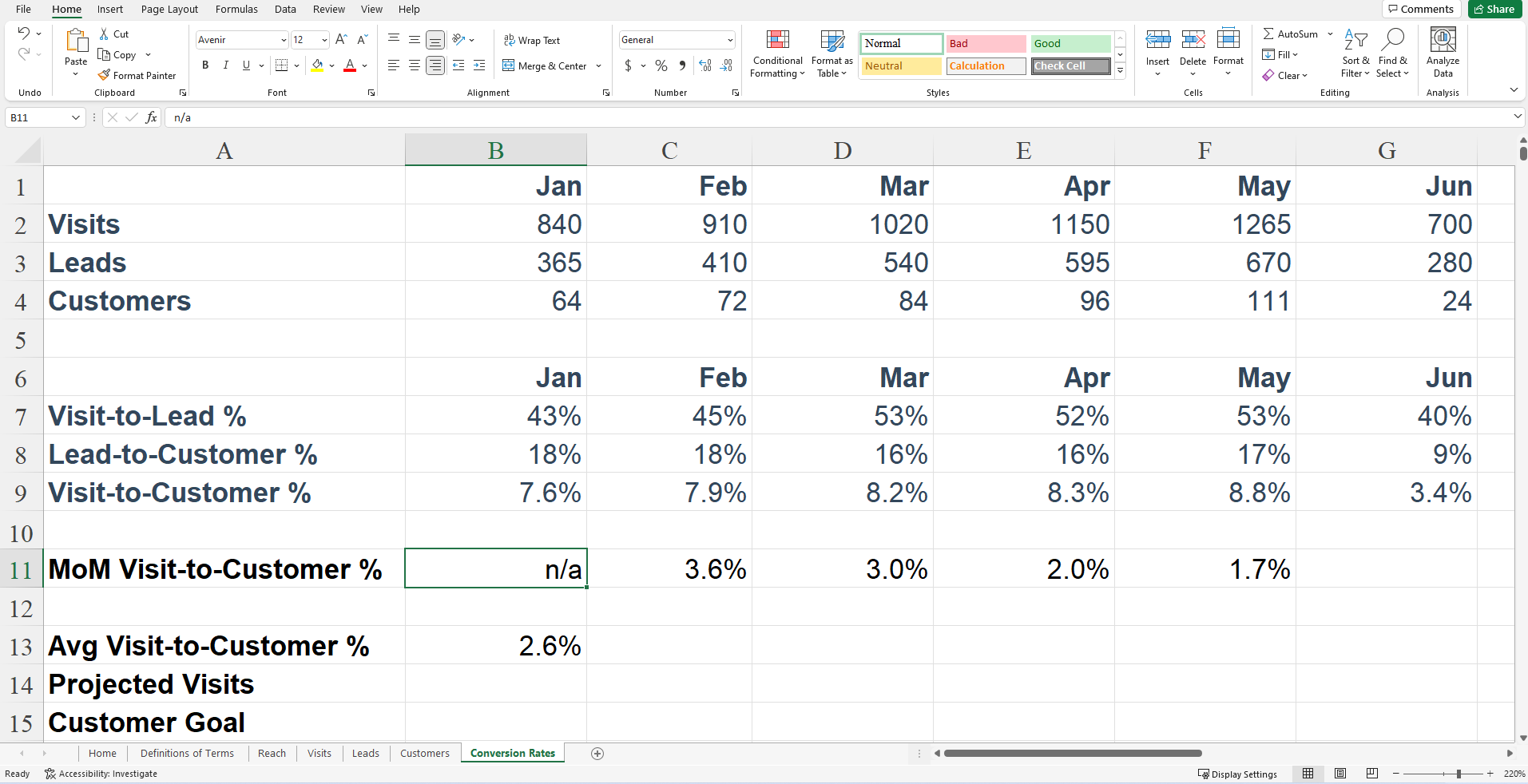
Before doing the Goal Seek analysis, I organize my data to find the average MoM visit-to-customer percentage.

How To Use Goal Seek In Excel

Step 1: Select the cell with the output you want to change

In this case, I’ll select the customer goal.

How To Use Goal Seek In Excel: Step 1 select the cell with the output you want to change

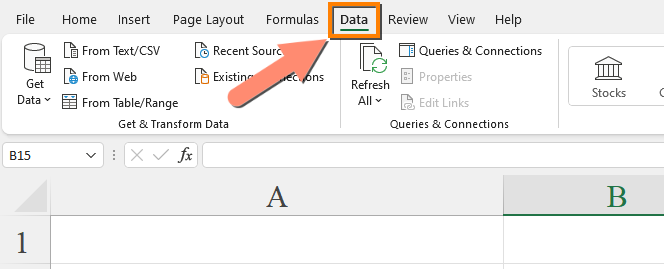
Step 2: Navigate to the “Data” tab

How To Use Goal Seek In Excel: Step 2 navigate to the data tab

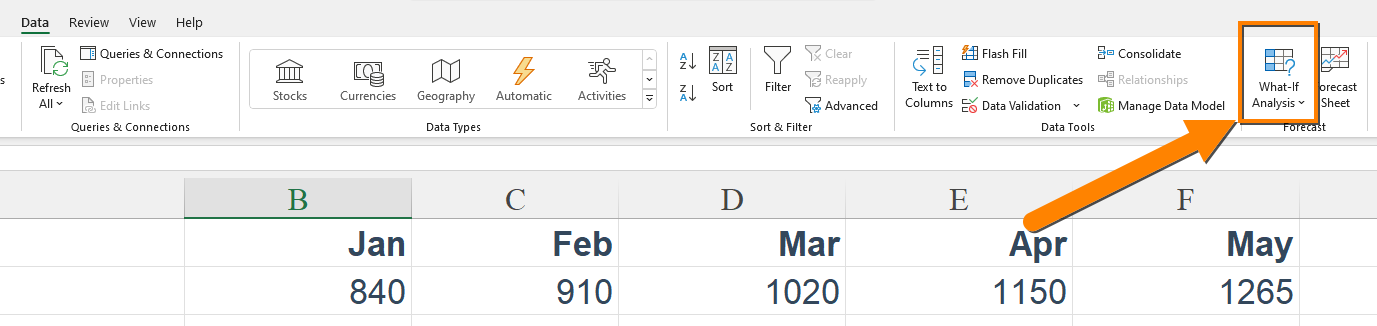
Step 3: Select “What-if Analysis”

How To Use Goal Seek In Excel: step 3 select what if analysis

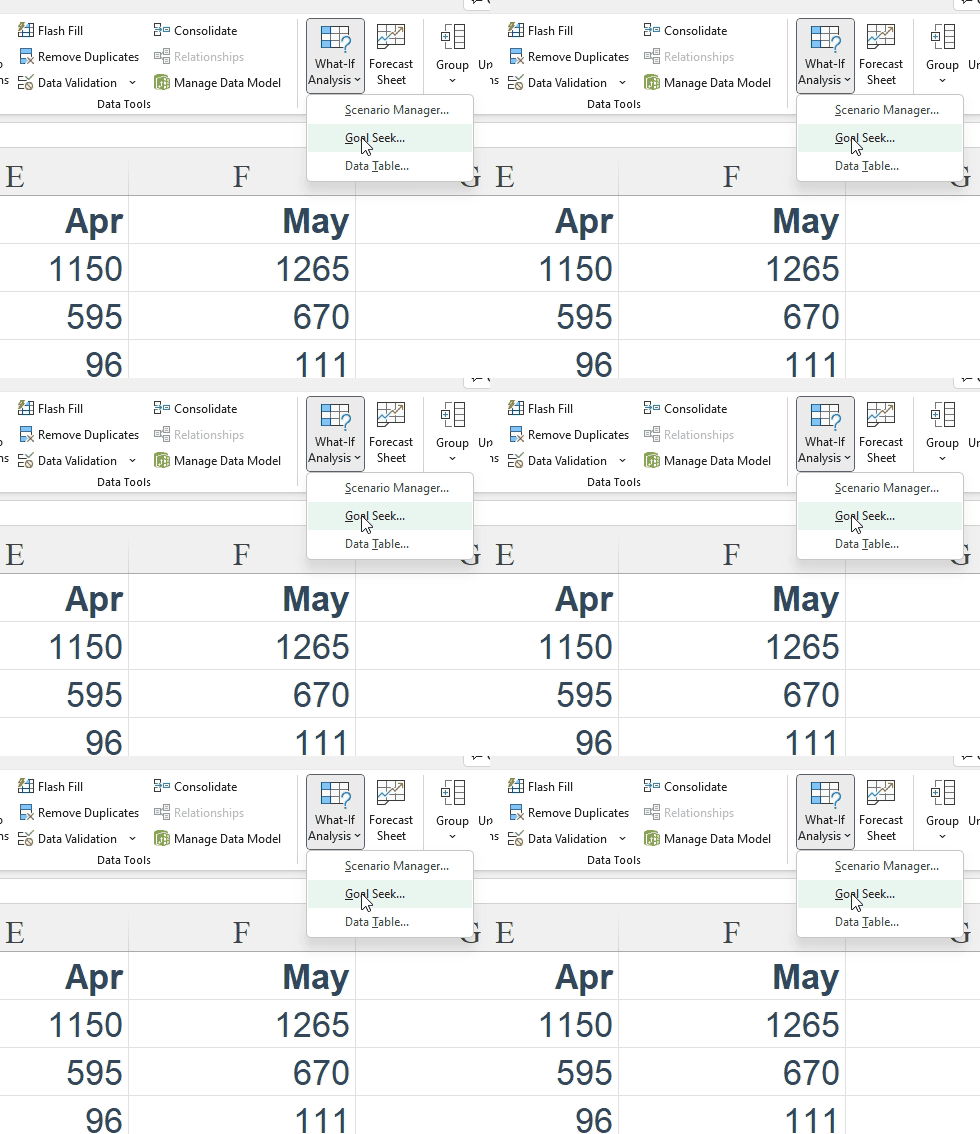
Step 4: Click “Goal Seek”

How To Use Goal Seek In Excel: step 4 click goal seek

Pro Tip: You can also get here with the Goal Seek Excel shortcut. Press Alt + A on your keyboard, followed by key W, then G.

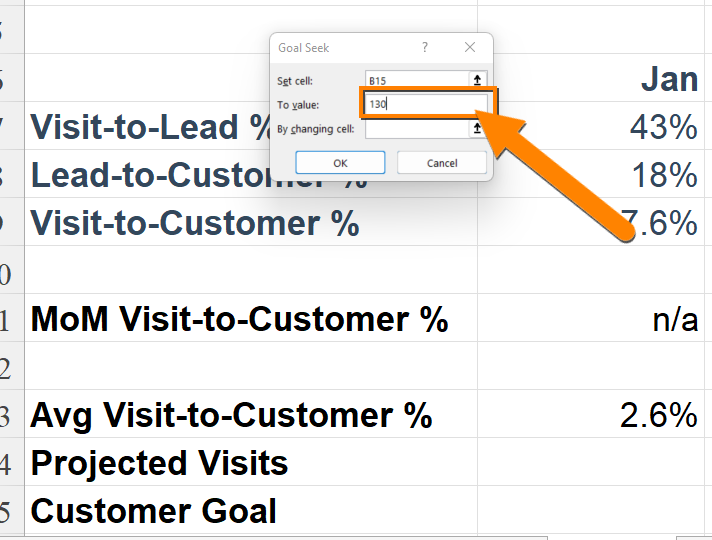
Step 5: Type the number you want to hit into the “To value” field

My goal is 130 customers, so I’ll type in that number.

How To Use Goal Seek In Excel:  step 5add a number to the to value fie/d

Step 6: Select the variable you want to change in the “By changing cell” box

I’m changing Projected Visits so I’ll place the cursor in the “By changing cell” box, then scroll down to select the corresponding cell.

How To Use Goal Seek In Excel:  step 6select the variable to change

Step 7: Click “OK” to see the Goal Seek analysis

How To Use Goal Seek In Excel: step 7click ok to perform the goal seek analysis

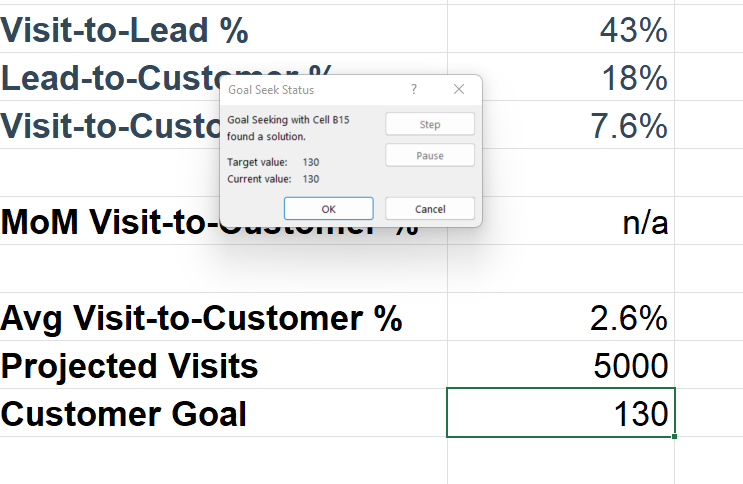
Voila! I find that to get 130 customers, I need to attract 5000 visits.

a complete goal seek analysis in excel

Use the Goal Seek Function In Excel for Smarter Marketing Insights

Take control of the variables that seem out of your control with the Goal Seek function. You’ll gain respect within your company for predicting your needs and hitting your goals.

You’ll also be ready if the unexpected happens. And you’ll know how to make informed decisions or tweak your strategy with your new what-if analysis skills.

Editor’s note: This post was originally published in [Month Year] and has been updated for comprehensiveness.

excel marketing templates

Categories B2B

UX vs. UI: What’s the Difference?

UX and UI are two terms that are often mentioned in the same sentence, but that doesn’t mean they are interchangeable. UX and UI are so often conflated that you could come across a job posting for a UX Designer where the job description mistakenly outlines the responsibilities of a UI Designer and vice versa.
 
Although UX and UI are distinct practices, they overlap and complement each other. For this reason, it can be confusing to understand what makes them different and how they work together to create a great product.

Download Our Free UX Research & Testing Kit

UX and UI are two disciplines that work hand in hand to create a product, service, or website that is delightful and intuitive for customers to use.
User Interface (UI) relates to the aesthetic properties of a digital product, including the look, feel, and design of all the elements a user can interface with. Meanwhile,
User Experience (UX) is more big-picture and conceptual. UX considers a user’s journey in engaging with your product, how it solves their problem, and how it makes them feel. UX without UI is like an engine without the car surrounding it. You need both to get where you want to go.
 
To further understand the difference between UX and UI, let’s start with an example: YouTube.

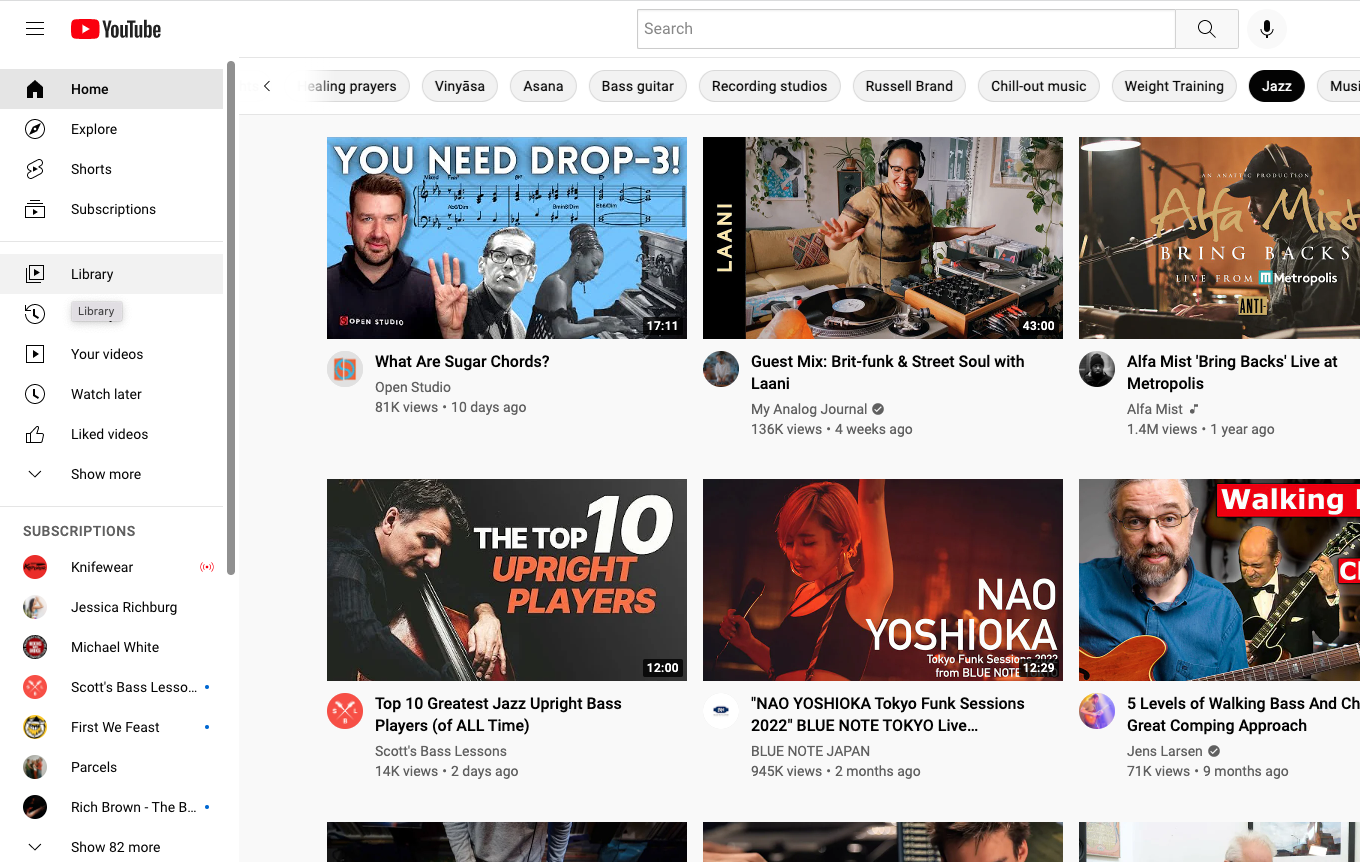
UX and UI example using the Youtube homepage

Take a look at the YouTube home page. All the visual elements on the page are the work of a UI designer. That includes the search bar at the top, the choice of fonts and colors, the spacing between videos, the branding, the “Subscriptions” bar to the left, and anything else you can see or interact with on the page. The aesthetic choices that make up the look and feel of the page and the way in which information is presented are encompassed by UI. However, when we consider what information to display in the first place and how the product works when you interact with the UI, we begin to enter the realm of UX.
 
Imagine every YouTube video you click loads slowly. Imagine you search “cats” and nothing comes up. Imagine you can’t search by username, so it’s hard for you to find that girl who sang an acoustic rendition of your favorite Lizzo song.
The above outcomes result in a poor user experience (UX). If the product doesn’t offer the solution you are expecting, then there is a UX designer somewhere with her work cut out for her.
 
Cognitive scientist Don Norman, who first
coined the term UX in the 1990s, and Jakob Nielsen, co-founder of the
Nielsen Norman Group, explains the
difference between UX versus UI this way:
 
“Consider a website with movie reviews. Even if the UI for finding a film is perfect, the UX will be poor for a user who wants information about a small independent release if the underlying database only contains movies from the major studios.”
 
In this example (and in all good products), UX and UI come together to create a hollisictally enjoyable experience. Even the most beautiful UI imaginable can’t be appreciated if the product doesn’t function the way the user wants.
Let’s define UX and UI in more detail now, to further clarify the difference between the two.
 
 
While UI is visual, UX is conceptual and is focused on developing and improving a user’s journey to solve a problem.
A UX designer is responsible for all aspects of a user’s interaction — this means a UX designer is not solely responsible for the technology behind a product. They’re responsible for how a user interacts with a company both on and offline, including customer service and other facets.
 
Essentially, a UX designer must answer the question: “How can my company’s product best meet our user’s needs?”
 
Now, what’s left for a UI designer to do?
 
 
Have you ever visited a website and thought, “Wow, this company is cool and has a great product, but what sold me was their website’s intuitive and sleek layout?”
That’s largely due to their UI designer. 
 
Now that we’ve explored UX and UI separately, let’s see how they function collaboratively.

How do UX and UI work together?

Let’s say your company wants to develop a running app, so your CEO hires a UX designer. The UX designer is first going to conduct research into competitors’ apps and your user’s pain points.
 
With this information, she will decide on the core features of the app (“must monitor heart rate and mileage”) and explore
user personas in-depth to create a site map and initial prototype.
 
From there, a UX designer will create wireframes, which they will test, refine, and convert into mockups. Then, the UX designer will conduct research and refine the product for the market. Throughout all stages, the UX designer is focused on the structure and value of the product and how that product is or isn’t meeting the user’s needs.
 
Towards the end of development, a UI designer will then take control over the app’s appearance, including on-screen forms, images, buttons, links, and icons.
The primary difference between UX and UI is their goals: a UX designer is focused on the users’ entire journey in using a product to solve their problem or meet their needs. This includes anything that might motivate or frustrate them, why they would or wouldn’t enjoy the product, and what the product needs to include to make for a pleasant experience.
 
A UI designer is given those constraints — she’s told what the app must include and exclude, and how it’s going to work. Using those constraints as a guideline, she designs an interface that is intuitive to use and materializes all of the users’ needs on the screen.
 
You can’t create an exceptional product without both UX and UI. Without a UX designer, YouTube would appear beautiful and appealing but completely unusable. And, without a UI designer, YouTube would be a great idea in theory but would be difficult and confusing to navigate on the screen.
 
Editor’s note: This post was originally published in June 2018 and has been updated for comprehensiveness.
ux templates
{{slideInCta(‘4bf6af99-b34d-4c32-bac3-5950cf96059d’)}

Categories B2B

Decision Trees: A Simple Tool to Make Radically Better Decisions

Have you ever made a high-stakes decision? If yes, did you contemplate for some time before landing on the “right” decision — and even then, still felt unsure about the best course of action?

In cases like those, you might need a decision tree. It’s more formal than a chat with a friend or a pros-and-cons list.

Here, we’ll show you how to create a decision tree and analyze risk versus reward. We’ll also look at a few examples so you can see how other marketers have used decision trees to become better decision makers.

→ Access Now: 8 Business Flowchart Templates [Free Tool]

Table of Contents

What is a decision tree?

Decision Tree Analysis

How to Create a Decision Tree

How to Create a Decision Tree in Excel

Decision Tree Examples

When it comes to marketing, decision-making can feel particularly risky. What is my colleague is so attached to a new product, she doesn’t want to mention any of its shortcomings? What if my marketing team doesn’t mind office growth, but they haven’t considered how it will affect our strategy long-term?

The visual element of a decision tree helps you include more potential actions and outcomes than you might’ve if you just talked about it, mitigating risks of unforeseen consequences.

Plus, the diagram allows you to include smaller details and create a step-by-step plan, so once you choose your path, it’s already laid out for you to follow.

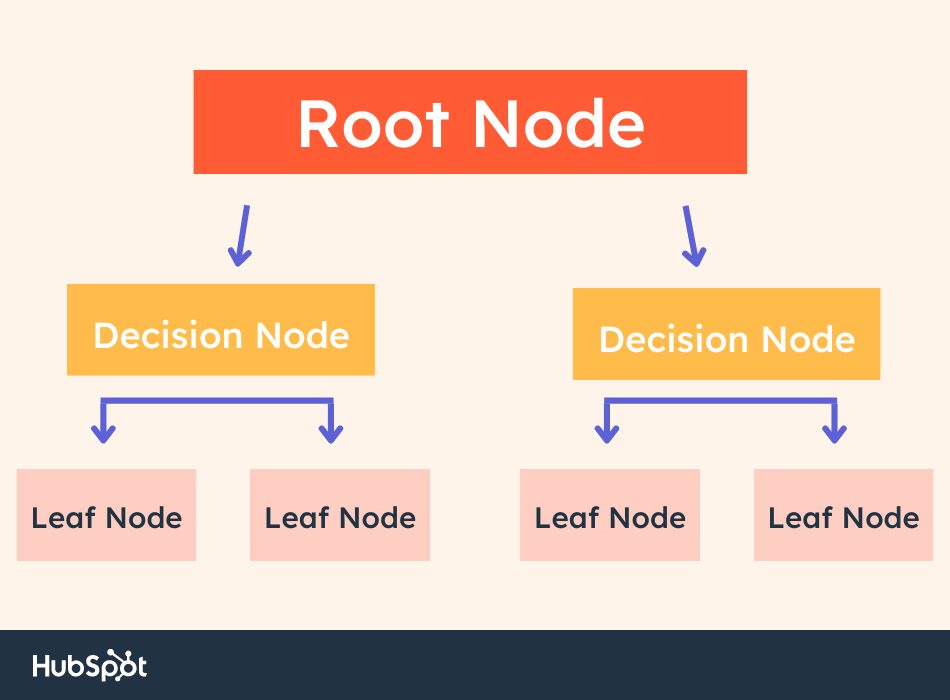
Decision TreeA decision tree contains four elements: the root node, decision nodes, leaf nodes, and branches that connect them together.
  • The root node is where the tree starts. It’s the big issue or decision you are addressing.
  • As the name suggests, the decision nodes represent a decision in your tree. They are possible avenues to “solve” your main problem.
  • The lead nodes represent possible outcomes of a decision. For instance, if you’re deciding where to eat for lunch, a potential decision node is eat a hamburger at McDonald’s. A corresponding leaf node could be: Save money by spending less than $5.
  • Branches are the arrows that connect each element in a decision tree. Follow the branches to understand the risks and rewards of each decision.

Now let’s explore how to read and analyze the decisions in the tree.

Decision Tree Analysis [Example]

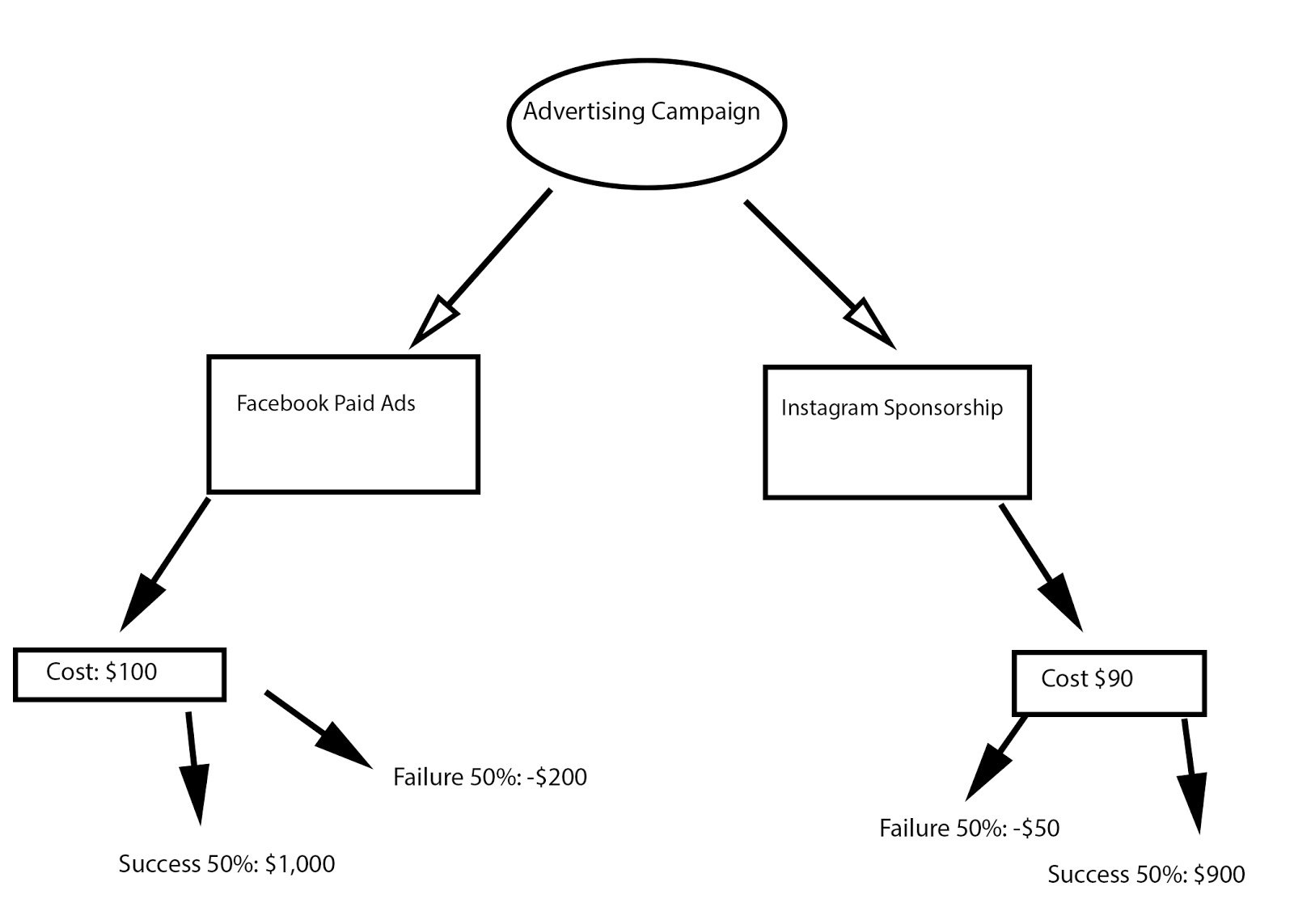
Let’s say you’re deciding where to advertise your new campaign:

  1. On Facebook, using paid ads, or
  2. On Instagram, using influencer sponsorships.

For the sake of simplicity, we’ll assume both options appeal to your ideal demographic and make sense for your brand.

Here’s a preliminary decision tree you’d draw for your advertising campaign:

As you can see, you want to put your ultimate objective at the top — in this case, Advertising Campaign is the decision you need to make.

Next, you’ll need to draw arrows (your branches) to each potential action you could take (your leaves).

For our example, you only have two initial actions to take: Facebook Paid Ads, or Instagram Sponsorships. However, your tree might include multiple alternative options depending on the objective.

Now, you’ll want to draw branches and leaves to compare costs. If this were the final step, the decision would be obvious: Instagram costs $10 less, so you’d likely choose that.

However, that isn’t the final step. You need to figure out the odds for success versus failure. Depending on the complexity of your objective, you might examine existing data in the industry or from prior projects at your company, your team’s capabilities, budget, time-requirements, and predicted outcomes. You might also consider external circumstances that could affect success.

Evaluating Risk Versus Reward

In the Advertising Campaign example, there’s a 50% chance of success or failure for both Facebook and Instagram. If you succeed with Facebook, your ROI is around $1,000. If you fail, you risk losing $200.

Instagram, on the other hand, has an ROI of $900. If you fail, you risk losing $50.

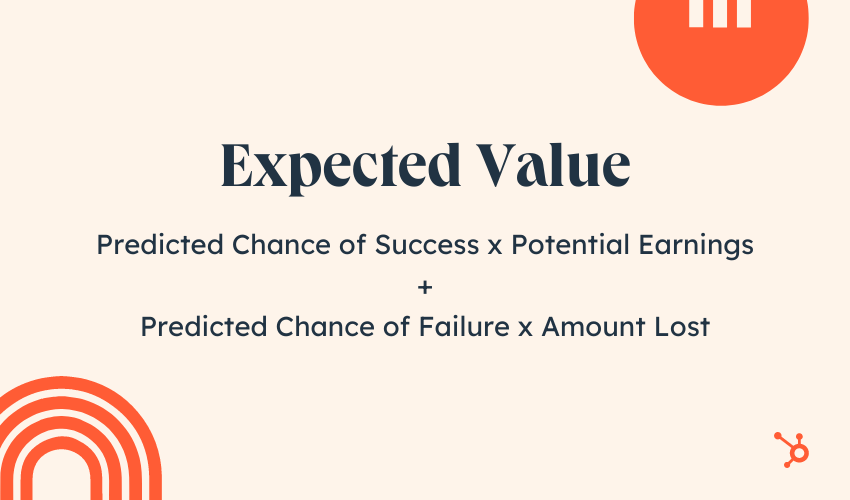
To evaluate risk versus reward, you need to find out Expected Value for both avenues. Here’s how you’d figure out your Expected Value:

  • Take your predicted success (50%) and multiply it by the potential amount of money earned ($1000 for Facebook). That’s 500.
  • Then, take your predicted chance of failure (50%) and multiply it by the amount of money lost (-$200 for Facebook). That’s -100.
  • Add those two numbers together. Using this formula, you’ll see Facebook’s Expected Value is 400, while Instagram’s Expected Value is 425.

Expected Value

With this predictive information, you should be able to make a better, more confident decision — in this case, it looks like Instagram is a better option. Even though Facebook has a higher ROI, Instagram has a higher Expected Value, and you risk losing less money.

How to Create a Decision Tree

You can create a decision tree using the following steps. Remember: once you complete your tree, you can begin analyzing each decision to find the best course of action. 

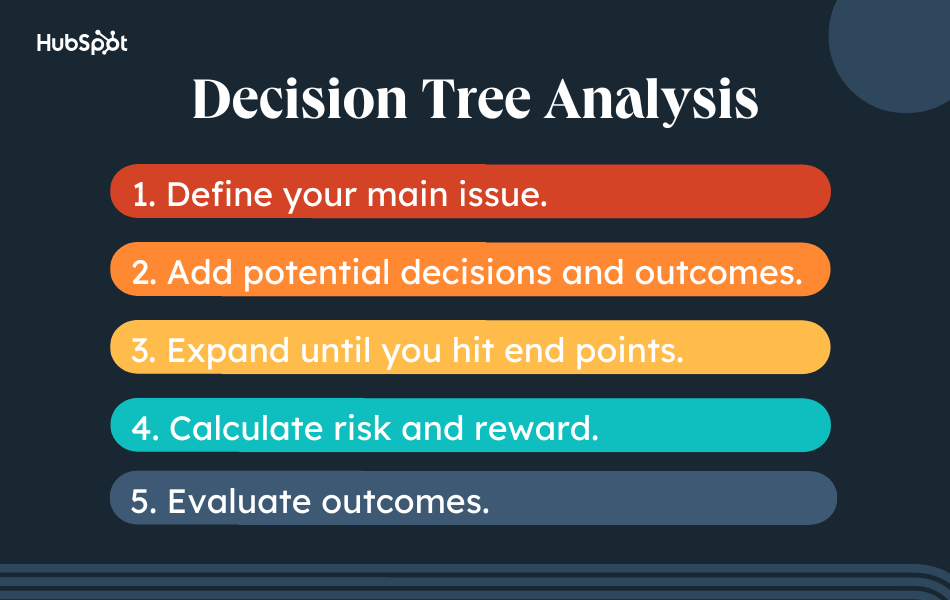
DEcision Tree Analysis

1. Define your main idea or question.

The first step is identifying your root node. This is the main issue, question, or idea you want to explore. Write your root node at the top of your flowchart.

2. Add potential decisions and outcomes.

Next, expand your tree by adding potential decisions. Connect these decisions to the root node with branches. From here, write the obvious and potential outcomes of each decision.

3. Expand until you hit end points.

Remember to flesh out each decision in your tree. Each decision should eventually hit an end point, ensuring all outcomes rise to the surface. In other words, there’s no room for surprises.

4. Calculate risk and reward.

Now it’s time to crunch the numbers.

The most effective decision trees incorporate quantitative data. This allows you to calculate the expected value of each decision. The most common data is monetary. 

5. Evaluate outcomes.

The last step is evaluating outcomes. In this step, you are determining which decision is most ideal based on the amount of risk you’re willing to take. Remember, the highest-value decision may not be the best course of action. Why? Although it comes with a high reward, it may also bring a high level of risk.

It’s up to you — and your team — to determine the best outcome based on your budget, timeline, and other factors.

While the Advertising Campaign example had qualitative numbers to use as indicators of risk versus reward, your decision tree might be more subjective.

For instance, perhaps you’re deciding whether your small startup should merge with a bigger company. In this case, there could be math involved, but your decision tree might also include more quantitative questions, like: Does this company represent our brand values? Yes/No. Do our customers benefit from the merge? Yes/No.

To clarify this point, let’s take a look at some diverse decision tree examples.

Decision Tree Examples

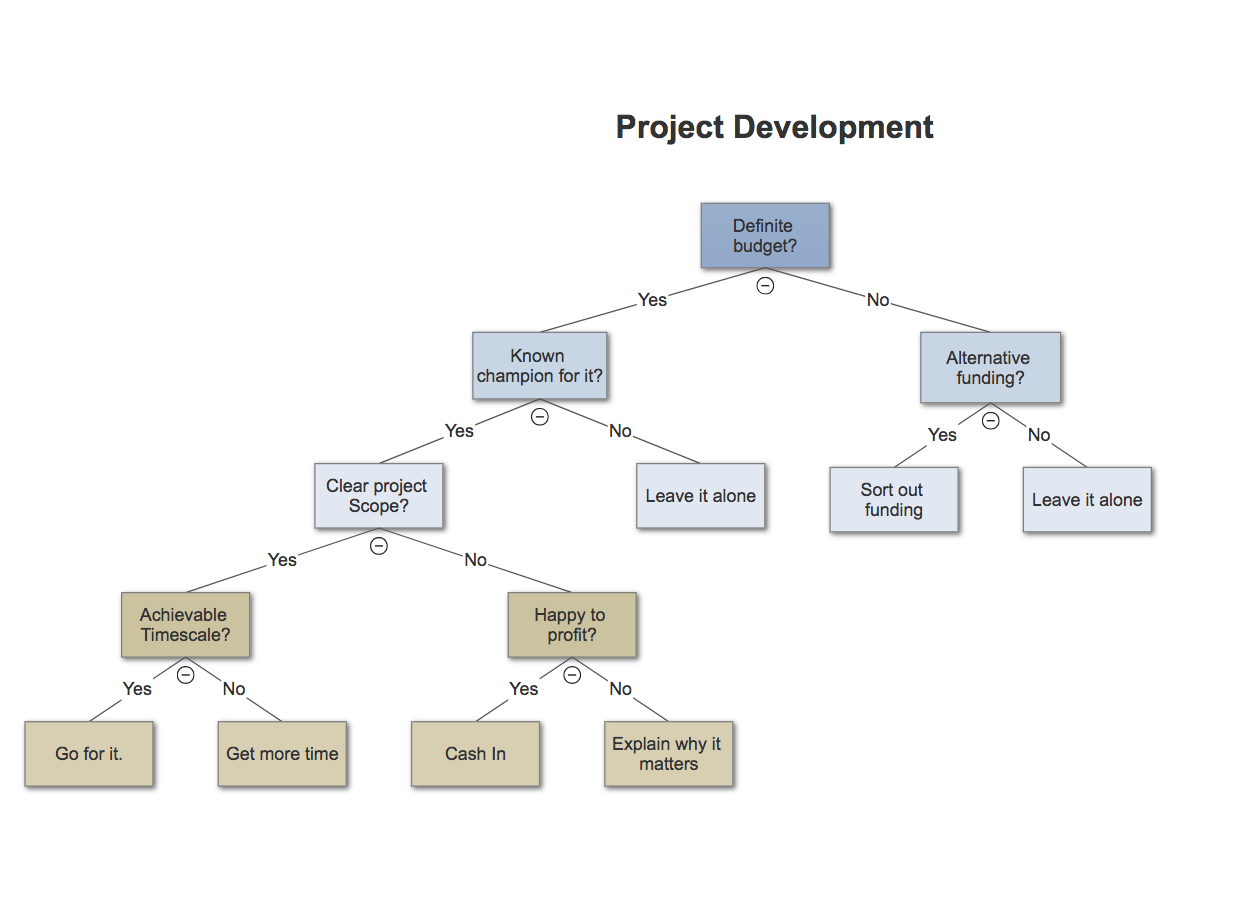
The following example is from SmartDraw, a free flowchart maker:

Example One: Project Development

Here’s another example from Become a Certified Project Manager blog:

Example 2: Office Growth

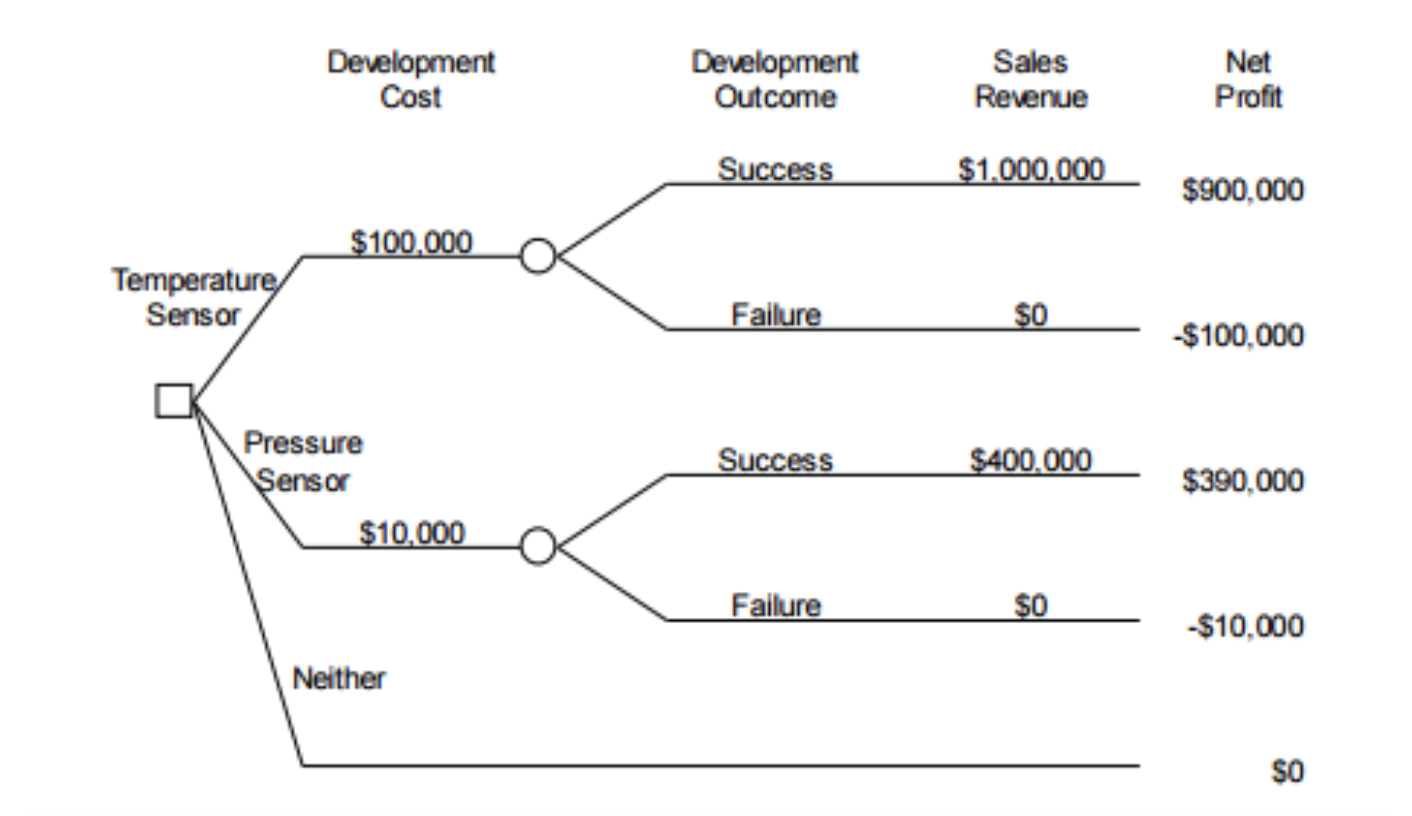
Here’s an example from Statistics How To:

Example 3: Develop a New Product

To see more examples or use software to build your own decision tree, check out some of these resources:

Back to You

Remember, one of the best perks of a decision tree is its flexibility. By visualizing different paths you might take, you might find a course of action you hadn’t considered before, or decide to merge paths to optimize your results.

New Call-to-action

Categories B2B

How to Start a Podcast on Spotify for Free

If you’re reading this, you’ve likely found a topic you could talk about for hours — and now you’re ready to launch a podcast.

The good news: Spotify is becoming a go-to destination for podcasts. In 2021, Spotify listeners spent 78% more time listening to podcasts than the year before.

Even better news: it’s relatively easy to start a podcast on Spotify — no fancy equipment or advanced skills required.

➝ Free Guide: How to Start a Podcast

Here, we’ll cover everything you need to know about podcasting on Spotify, and how to upload your next episode to the platform.

How to Meet Spotify’s Podcast Requirements

The first step to starting a podcast on Spotify is making sure you meet its podcast requirements. Here’s a quick rundown.

Your podcast should have:

  • A title along with relevant details (i.e., category and primary language).
  • Cover art in a 1:1 ratio and PNG, JPEG, or TIFF format. The higher the resolution, the better.
  • A high bitrate MP3 format (128 kbps+) or MP4 with AAC-LC.
  • Episodes that do not exceed 12 hours.

Once you meet the conditions in this checklist, you’re officially ready to upload your podcast to Spotify. Check out the steps below.

1. Create a Spotify account.

Unsurprisingly, you’ll need a Spotify account to upload your podcast to the platform. If you’re new to Spotify, use this form to sign up.

2. Choose a podcast hosting platform.

Despite being a hot spot for podcasts, you can’t actually host your podcast on Spotify. That’s right: Spotify only provides access to podcasts that are hosted elsewhere.

That said, Spotify has its own hosting platform — Anchor.fm — that enables you to record, edit, and share a podcast to Spotify in one location. It also offers plenty of analytics to better understand your audience.

Of course, there are plenty of other hosting platforms — both free and premium — to choose from, most notably Buzzsprout, Podbean, and Castos. Remember not all hosting sites are created equal, so pay close attention to the amount of storage and analytics each one provides.

3. Copy your RSS feed link.

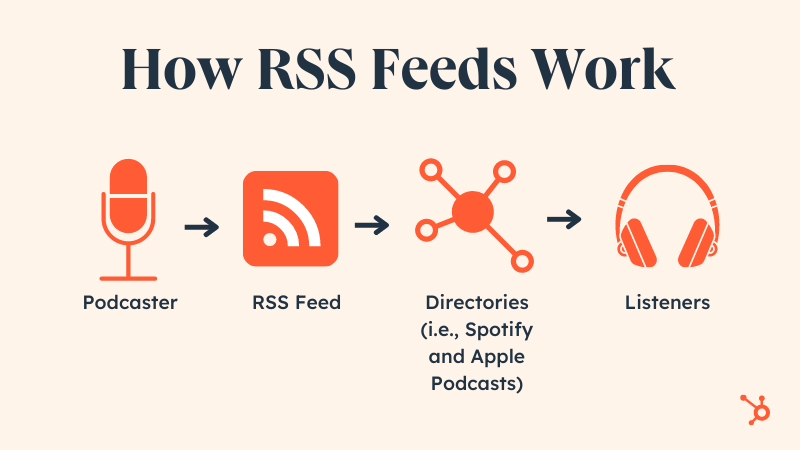
After uploading your podcast to a hosting platform, the next step is to copy the RSS feed link. You can think of your RSS feed as the address for your podcast. And, like an address, there is only one RSS feed per podcast.

RSS Feeds Podcasts

4. Open Spotify for Podcasters.

Next, open Spotify for Podcasters and log in with your Spotify account. Then, hit “Get Started.”

Spotify for PodcastersThen, paste your RSS feed link into the text box. Hit “Next.”
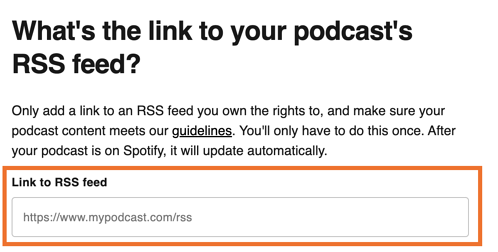
how to start a podcast on spotify: Link RSS Feed

Once you submit the RSS link, Spotify will verify that you own the podcast. What does this look like? Typically, Spotify will send you a code via email to verify. More than likely, this is the same email you use to log into your hosting site.

5. Add your podcast info.

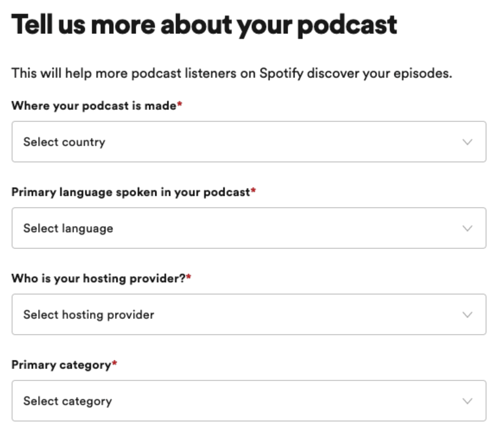
Once verified, the next step is to add essential information about your podcast— including where it’s made, its primary language, your hosting provider, and its primary category.

Starting a podcast on spotify: adding podcast detailsOnce you select a primary category, you can select three corresponding sub-categories. This is especially helpful if you’re podcast spans multiple topics or genres.
After filling out the form, hit “Next.”

6. Review and submit your podcast.

The final step is reviewing the information you filled out in the previous step. Once you’re happy, hit “Submit.”

After submitting your podcast, the Spotify team will review your info and then push your podcast live. Expect this process to take a few hours. It’s also worth noting that Spotify does not alert you when it goes live, so keep an eye out for your new episode.

Back to You

In six easy steps, you can share your podcast on one of the biggest podcasting platforms today. Once your podcast goes live, remember to share it far and wide. Make this a regular practice with each episode to boost your listenership.

New Call-to-action

Categories B2B

Best 12 Finance Podcasts To Get Your Money Right in 2022

If you’re looking for some great finance podcasts to listen to in 2022, you’ve come to the right place.

In this article, we will share with you a list of the best finance podcasts available.

Download Now: Business Startup Kit [Free Templates]

Whether you’re just getting started in your financial journey or you’re looking for some new tips and tricks, these podcasts will help you out.

Best for Learning About The Economy: Planet Money

planet money best finance podcastNPR’s Planet Money describes itself as a show where listeners can learn about the economy from a friend – at a bar.

While the economy may seem like a boring topic to many, Planet Money makes it interesting by doing deep dives on who it impacts and how – everything from inflation to fast food delivery to crypto and city building.

What’s more, the show takes a global approach, tackling all countries and the economic issues they face.

Although this isn’t the show to teach you how to manage your 401K, you will learn how a lot about where the economy is and where it’s headed – which is valuable knowledge for long-term investments.

Standout episodes:

  • Buy Now, Pay Dearly
  • No Such Thing as a Free Return
  • Of Oligarchs, Oil, and Rubles

Best for Beginners: Brown Ambition

brown ambition best finance podcastIf you are new to the financial literacy game, you’ve probably heard of The Budgenista. She is a well-known finance educator and author with a large social media following and a frequent daytime TV show guest.

She, along with her co-host Mandi Woodruff, another personal finance expert, started a podcast so you can get their advice every week.

They cover traditional finance topics like retirement accounts, debt management, and loans while also tackling current events, such as rising inflation and the pandemic.

Brown Ambition is perfect for those who don’t know where to start to manage their finances as well as those who have the basics down but still want to do more.

Standout episodes:

  • Why I-Bonds are Suddenly a Sexy Investment
  • Juggling Your Business with a 9-5
  • Can you buy your way to an early retirement?

Best for Seasoned Investors: Invest Like The Best

invest like the best best finance podcastOne of my favorite ways to learn is by listening to experts. This finance podcast leverages this by bringing in investment leaders from all sectors to offer advice and share their journey with listeners.

What’s great about this podcast is that it doesn’t just focus on standard investments like 401Ks, stocks, and bonds – they also discuss artificial intelligence, ecommerce, NFTs, gaming, and more.

This show is for business-driven folks who want to learn how to diversify their income streams and scale their businesses.

Standout episodes:

  • Factories of The Future
  • The Past, Present and Future of Digital Infrastructure
  • The Art of Software Buyouts

Best for Building a Millionaire Mindset: Manifesting Money

manifesting money best finane podcastManifesting Money is a show that focuses on the psychological, spiritual, and emotional side of making money.

It’s all about attracting and retaining money to build long-term wealth.

The show tackles everything from breaking harmful generational beliefs around money to getting out of financial hardship.

This podcast is ideal for those who not only want to get their money right but also their mind.

Standout episodes:

  • Releasing Your Emotional Attachment to Money
  • Step-by-Step Process of Getting Through Financial Hardship
  • Is Your Family Blocking Your Financial Blessings?

Best For Beginners: Clever Girls Know

clever girls know best finance podcastCreated for women by women, this podcast is an extension of the Clever Girl Finance brand, which is personal finance media and education platform in the U.S.

From personal success stories to pop culture lessons to expert tips, Clever Girls Know has a little bit of everything in its podcast. This is what makes the podcast exciting – every week, you get something fresh and different.

Standout episodes:

  • The Parallels between Your Health/Diet and Your Finances
  • The Good, The Bad, and the Backlash of Saving $100K
  • How Stephanie Increased Her Income, Then Identified & Addressed Her Money Trauma

Best For Side Hustlers: Yo Quiero Dinero

yo quiero dinero best finance podcastsWe can’t talk money without talking about generational disparities stemming from race, gender, and sexual orientation. Yo Quiero Dinero tackles this and more.

Led by a Latina woman, Yo Quiero Dinero helps its listeners tap into their potential by offering the steps needed to succeed in entrepreneurship while navigating real-life challenges.

From the path to investing as a first gen to the mental health impact of pursuing financial independence, this podcast is a well-rounded podcast that teaches about money and beyond.

Standout episodes:

  • How to Manage Wealth Guilt
  • Why Entrepreneurship is Emancipation for Women of Color
  • Taxes and Accounting for Side Hustlers

Best For Parents: Parents Making Profits

parents making profits best finance podcastsAre you a parent struggling to balance family and business? Then, this podcast is for you.

Parents Making Profits is all about ways to earn money while balancing raising a family.

The best part? It’s led by two Dadpreneurs who practice what they preach – so, you know you’re getting advice from those who understand exactly what you’re going through and how to tackle those challenges.

Standout episodes:

  • How to Get PR without a Publicist
  • Who is more helpful when starting your business: Strangers or Friends/Family?
  • 4 Tips for You to be an Effective ParentPreneur

Best for Short-and-Sweet Tips: Nerd Wallet’s Smart Money

smart money best finance podcastsNerd Wallet has already established itself in the blogging space as a reputable. financial education platform. In 2017, they expanded into the audio space by launching “Smart Money.”

Compared to most podcasts which usually range between 45 minutes to an hour, Nerd Wallet is short and sweet, with most episodes around 20 to 30 minutes.

These bite-sized episodes cover everything from leveraging credit card points to vetting mortgage lenders. They also do “nerdy deep dives” into niche industries like child care and weightlifting.

Standout episodes:

  • When Travel Insurance is Worth It and Buying an Electric Car
  • Why File Your Taxes Early and Tapping Your Home’s Equity
  • Small Business Inflation and Sign-Up Bonuses

Best for Beginners: Money Please

money please best finance podcastsMoney conversations can get complicated very quickly. Think of Money Please as your go-to friend for all things finances who can give you the scoop and offer advice without shaming or judging you.

The host, Berna Anat, regularly brings in experts to help listeners go from a fear of money to a love of personal finance.

Standout episodes:

  • How Do I Avoid the Budgeting Guilt Cycle?
  • Is It Too Late to Become Part of the CryptoClub?
  • Financial Feminism

Best for Those Seeking Early Retirement: Choose FI

choose FI best finance podcastsEver watch those “I’m retired at 30” videos and wished that was you? Then, start listening to Choose FI.

This podcast focuses on reaching financial independence (FI) early by exploring tactics used by those who have achieved it. They tackle debt management, tax hacks, passive income streams, real estate, free travel, and more.

Standout episodes:

  • SWOT Analysis for Financial Independence
  • The Art of the Career Pivot
  • $1K 100 Ways

Best For Novice Investors: Coffee and Coin

coffee and coin best finance podcastsSome of the best conversations are had while drinking a cup of coffee.

This podcast aims to do just that: Real, honest conversations about money. From where to invest to how to double your earning potential.

Although the podcast was created with women in mind, anyone can benefit from listening to this podcast.

Standout episodes:

  • Investing Strategies: How Erique Leveraged Automation to Turbo Charge Her Net Worth
  • Why Compound Interest Is Your New Best Friend
  • Bad Pocket Business Plans: What They Are & Why You Need One

Best For Real Estate Investors: On the Market

on the market best finance podcastsWant to keep up with the real estate market but don’t have the time to keep up with the news? That’s where On The Market comes in.

This podcast serves as your one-stop shop to learn and get updates on everything related to the market.

From crash predictors to recession investments to interest rates, real estate enthusiasts are sure to stay ahead of the curve.

Standout episodes:

  • What to Invest in During a Recession
  • The Not-So-Scary Way to Start Buying Real Estate in 2022
  • Host vs. Hotels: Is there still room in the short-term rental market?

Whether you’re new to personal finance or you’re a seasoned investor, there’s a financial podcast in this list for you.

Apply for a job, keep track of important information, and prepare for an  interview with the help of this free job seekers kit.

Categories B2B

Flexible Schedules: The Pros, Cons, & Surprising Outcomes

I’m willing to bet we’ve all felt stifled by the rigid 9-to-5 work schedule — especially on our productivity both in and out of the office.

For many workers, a flexible schedule is the answer. This types of schedule allows you to work when you’re most productive and gives you the autonomy you need to create an ideal work-life balance, however that looks to you.

Download Now: How to Move Your Company Online

Here, we’ll cover what a flexible work schedule looks like and explore its pros. cons, and surprising outcomes.

It’s important to remember that flex hours doesn’t equate to less hours. In fact, as you’ll read later, employees actually clock in more hours working from home. Further, there is still structure to this type of schedule: employees must work a certain number of hours, or come up with an alternative agreement with their employer regarding office hours versus remote time.

There’s plenty of science to suggest flexible work schedules are critical for happier, more productive employees and a more successful company overall.

For instance, a recent study by Qualtrics found a whopping 93% of employees feel the way they work has “fundamentally and forever” changed since the pandemic, with the most favorable changes being flexible schedules.

According to the same study, 43% of employees feel their work-life balance has increased over the past two years, along with their overall happiness and job satisfaction.

Of course, there are pros and cons to flexible schedules, just like there are pros and cons to a rigid nine-to-five job. But, since flexible schedules are becoming more typical nowadays, we’ve compiled a list of everything good, bad, and surprising about implementing flexible work hours at your office. Take a look:

1. You can adapt your schedule to fit family needs.

If you make your own hours, you can ensure those hours adapt to your family and social life demands. For instance, we have parents at HubSpot who make their hours fit around their children’s daycare schedules: they work early in the morning, take a break in the afternoon to pick up their kids, and then resume work later in the evening.

Or, perhaps your flex schedule is less rigid than that — maybe you just want time to see your son’s soccer games, or your sister’s graduation, and you need flexibility to manipulate your work schedule without taking time off.

Emily MacIntyre, HubSpot’s former Marketing Team Development Manager, agrees that there are pros and cons to flexible schedules in regards to parenting.

She tells me, “There are often in-office events after work that I have to miss out on, because I need to be home. But I get to see my daughter, and spend time with her each night, so it’s a trade-off.”

Ultimately, a flexible schedule can go a long way towards maintaining a healthy work-life balance and protecting important relationships in your life.

2. You can indulge in self-care.

It might sound strange, but having the option to occasionally put your personal needs before work can help you find more joy throughout your day.

Self-care can be anything from a noon cycling class to finding time to meditate in the park — anything activity that makes you feel better able to tackle your responsibilities with a clear mind.

3. Your employees can pursue passions outside of work.

Unfortunately, your employee’s passions can’t always fit outside a nine-to-five work schedule. Sometimes that poetry class starts at four, and other times your hiking group leaves at noon on a Friday.

There are a few reasons it’s important to give employees the freedom to pursue other passions. First, passion can encourage innovative ideas. The more well-rounded your employees are, the more likely they are to apply unconventional solutions to your company’s problems.

Also, as previously mentioned, happier employees are more productive. And, lastly, if your employees can find outlets outside of work to pursue their passions, they’re less likely to feel unsatisfied in their current role.

4. Your employees can work whenever they’re most productive.

For me, personally, this is the single most important benefit to flexible schedules: I work insanely well in the mornings. On some mornings, it feels like I can finish two-weeks worth of work before noon. But then, three or four p.m. strikes, it becomes a struggle to even write a grocery list.

On the other hand, one of my coworkers does best when he can come into the office around 10 a.m., and then work, head-down, later into the night.

Tony Schwartz, author of The Way We’re Working Isn’t Working, writes about the importance of working like a sprinter. He says it’s important to work intensely and distraction-free for a period of time, but equally critical to take regular renewal breaks to recover from that intense work period.

Ultimately, your employees aren’t all going to be productive at the exact same time. Flexibility allows them to become better workers — they will get everything accomplished during the hours they want, and they won’t feel burnt out from sitting at their desks during times they are unproductive.

5. Your employees can avoid rush hour.

Recently, the average one-way commute in the US increased to a new high of 27.6 minutes. That’s almost five hours a week wasted.

Another study found employee happiness decreases as commute times increase. Ultimately, a long commute can drive employees to search for companies closer to home or with different hours.

An easy way to improve employee satisfaction is to allow commuters the option to avoid traffic by leaving even just thirty minutes later. It can also positively impact your employee’s level of energy and productivity.

6. You give employees a sense of autonomy.

People like control over their schedules — it enables them to feel fully in charge of their work and personal lives, and makes them feel like their company trusts them.

HubSpot’s Culture Code recognizes the importance of autonomy, saying, “Results matter more than the number of hours we work. Results matter more than where we produce them.” And, referring to the Economist graph we mentioned earlier, we can see it’s true — people are more productive even when they work fewer hours, so why not let people choose whichever time they need to commit to deliver the best results?

Siobhán McGinty, a Senior Team Manager in HubSpot’s Dublin office, says her flexible schedule gives her the opportunity to “live my best life. I enjoy getting up at 7 a.m., clearing my emails, enjoying my coffee and getting some work out of the way early on in the day. I also enjoy taking two hours off in the middle of the day to go to the gym, or do yoga, or — if it’s pay day — get a massage.”

7. You can recruit and retain better talent.

Flexible schedules have been shown to increase employee productivity and overall morale. Ultimately, you can use the benefits of a flexible schedule as a selling point for hiring better talent.

Offering flexible schedules is a good way for your company to attract talent and stand out from competitors in the industry, particularly as flex hours and remote work rise in popularity and employees begin to expect it from their next job.

We’ve covered seven different ways flexible schedules can benefit both employers and employees. But like any work arrangement, there are also some downsides to consider before committing to becoming a flexible workplace. Here are a few risks associated with flexible schedules.

1. It’s more difficult for you to arrange meetings with your team.

If everyone has different schedules, figuring out everyone’s availability can get tricky — for instance, perhaps you can’t have any nine a.m. meetings because three people on your team don’t arrive until 10 a.m. This gets even harder if your team works around the globe, or if you need to schedule meetings with clients who work the traditional nine-to-five.

2. Lines between work and life blur more drastically.

Maybe you’re working from home and your roommate asks you to go to a cycling class at noon, and suddenly it’s three p.m. and you’ve still got a ton of work to do. Or maybe your kids interrupt meetings and calls with pleas for trips to the pool.

Whatever the case, life intervenes more drastically when you’re working flexible hours, particularly if you’re working remote. Plus, if all the people in your life work nine-to-five, they might try to pressure you into plans that are inconvenient for your schedule, since you “make your own schedule anyway.” Drawing boundaries between personal life and work can get difficult.

Besides having a tough time getting into work mode when you’re tempted by your personal life, it’s also often challenging to shut off “work mode” when you can technically work whenever you want. Maybe it’s eight p.m. and you simply can’t relax when your desk, and all those piles of work, is within view.

During such instances, it’s important you separate work from the rest of your life as much as possible, even creating a physical boundary by closing your office door when you leave.

3. You won’t find much structure at home.

If you’re working remote, there’s very little structure. With that freedom to take breaks, you might suddenly find you’re getting very little done.

Working remotely often requires more focus and discipline than working in an office. You’ll need to set your own rigid structure and stick to it, or you might risk your performance sliding as you take more TV breaks or spend precious productivity hours folding laundry.

4. It can be difficult to create a bonded team.

If you’ve got a team that works from wherever, whenever, it can be hard to pencil in time to develop organic, authentic relationships between your team members. It just doesn’t happen as naturally as it would if everyone sat beside one another 9 to 5 and digressed into talks about the latest Bachelorette episode.

One way to counteract this is to plan fun corporate team-building activities, but you might still need to work with everyone’s flex hours or remote time.

Siobhán McGinty admits remote work in particular can get lonely. Here’s what she suggest: “To overcome that, I set up virtual ‘water cooler chats’ with people on the team if I have 15-30 mins between meetings. It also helps to maintain rapport.”

She also says she “practiced” going remote by initially working from home a few days a week, and eventually working her way up to full-time remote, and admits while rewarding, it’s also difficult.

Flexible Schedules: The Surprising

We’ve explored some pros and cons of a flexible schedule for employees and employers, but there are some additional surprising facts you should know when deciding if flexible schedules is right for you and your company.

1. The more flexible your employees’ schedules are, the longer they’ll work.

If you’re worried about employees taking advantage of flexible hours and working an hour a day before hitting the beach, don’t be — a recent report by Owl Labs found that 55% of respondents say they work more hours remotely than at the physical office.

One explanation for this is known as the gift exchange theory, which is the idea that you’re grateful when your employer gives you a flexible schedule and you see it as a gift, which you feel obligated to repay by working harder and longer. You want to prove you deserve the flexible schedule, so you push yourself to work over eight hours a day.

2. Flex hours make your employees happier — and their children.

A study conducted by the American Sociological Review found workers with flex hours slept better, felt healthier, and were less stressed than their nine-to-five counterparts. Overall, the group with flex hours felt happier than the group with a rigid schedule.

But, most surprisingly, as noted by the New York Times, is “the effects even cascaded down to employees’ children, who reported less volatility around their own daily stresses; adolescents saw the quality of their sleep improve.”

Happiness is contagious — and so is stress — so it makes sense parents with lower levels of stress and higher levels of happiness were able to spread those emotions to their children.

3. Remote workers are taking less sick days.

For many remote workers, a sick day is just another day. A recent report found two-thirds of US workers feel remote work adds pressure to work through sickness. Another report suggests workers feel obliged to clock in remotely, even if they’re ill.

Of course, not taking breaks — whether sick or not — can quickly lead to exhaustion and stress. In fact, remote work is not a “cure” for employee burnout. In fact, a 2021 study found those who work virtually are more likely to say burnout has worsened over the years (38%) than are those working on site (28%).

Final Thoughts

Ultimately, providing flexible schedules for employees won’t work for every company or every department.

For instance, if your employees work in the services industry and often speak both on the phone and in-person with clients, perhaps you need them to maintain a nine-to-five schedule.

Hopefully, weighing these pros and cons will help you make the best decision for your team, or even brainstorm alternative ways to combat some of the negative consequences of a traditional work schedule.

remote sales

Categories B2B

The 5 Best Cities for Black Entrepreneurs

Welcome to Breaking the Blueprint — a blog series that dives into the unique business challenges and opportunities of underrepresented business owners and entrepreneurs. Learn how they’ve grown or scaled their businesses, explored entrepreneurial ventures within their companies, or created side hustles, and how their stories can inspire and inform your own success.

White-owned businesses receive an average of $18,500 in outside equity at funding, compared to just $500 for Black-owned businesses.

On top of that, it can also be challenging for Black entrepreneurs to find mentorship, resources, and even community with other business owners with their shared experiences.

Thankfully, there are cities where Black entrepreneurs, past, present, and future, thrive and have access to the resources and support they need. Read on to discover five of the top cities for Black entrepreneurs.

Learn More About HubSpot's Community to Amplify Black Professionals

Top Cities for Black Entrepreneurs

1. Washington, D.C.

Sometimes called the Chocolate City, Washington D.C. was the first majority Black major city in the United States in 1957.

Its Black population has lessened since then, but LendingTree ranks it the second-best city for Black Entrepreneurs, with 8,649 of its 111,872 businesses being Black-owned with an average revenue of 95,230 (according to IncFile).

Black entrepreneurs in the city have access to various programs, resources, and support, like the Greater Washington DC Black Chamber of Commerce, Black Owned Small Business Expo, and the Washington Area Community Investment Fund.

It’s also home to HBCU Howard University, where HubSpot has made significant investments in helping students with entrepreneurial interests develop their skills, some of whom might be interested in working for a new business venture.

2. Houston, Texas

Houston, Texas, is the birthplace of Beyoncé and Megan Thee Stallion, two famous Black women with successful entrepreneurial ventures.

Almost four thousand of over 111,041 businesses in the city are Black-owned, but the city makes up for it in its offerings. For example:

The Black Marketing Initiative brings Black entrepreneurs through a training, mentoring, and networking program to help them succeed.

3. Atlanta, Georgia

Dubbed the Black Mecca, Atlanta is home to famous Black entrepreneurs like Rick Ross and Cardi B. In a city of 113,110 businesses, 7,539 (6.75%) are Black-owned, meaning that there is a community of Black entrepreneurs that already live there.

Atlanta also has ample resources and opportunities for Black business owners, like the Atlanta Black Chambers, the University of Georgia Office of Small Business Development’s Multicultural Business Division, and events like WeBuyBlack that champion Black-owned businesses and their products.

Morehouse College and Spelman College, two HBCUs, are also in the city, so recent business and entrepreneurship graduates eager to learn and make an impact are likely open to advancement opportunities.

4. Charlotte, North Carolina

Charlotte, North Carolina’s biggest city, is home to the Mecklenburg Investment Company, the first Black financed and occupied building in the city. When it first opened it housed numerous Black businesses, and the area around the building became known as Black Wall Street as businesses prospered.

With such a rich history of Black entrepreneurship, Charlotte is worth considering for entrepreneurs looking to establish roots and grow their businesses — 14,000 Black entrepreneurs have already done so.

Organizations like the North Carolina Black Entrepreneurship Council and Black Business Owners of Charlotte offer support, community, advice, and representation from those with similar experiences. The city is also home to BLCKTECHLT, a business that assists startups in bringing their ideas to market, helping with branding, funding, finding resources, and mentoring opportunities.

5. Richmond, Virginia

The Jackson Ward Neighborhood of Richmond, VA, is one of the first Black Wall Street communities. Richmond’s Maggie Lena Walker was the first African-American woman to charter a bank and serve as bank president.

This entrepreneurial community is still prevalent and thriving, and LendingTree has ranked it third in its list of best cities for Black entrepreneurs, with 7% of businesses in the city being Black-owned and a 79.54% startup survival rate for the state of Virginia.

Entrepreneurs in Richmond will also find support and community in the Northern Virginia Black Chamber of Commerce, Virginia Black Business Expo, BLCK Street Conference, and the Jackson Ward Collective, which connects Black entrepreneurs with the resources they need to achieve their goals.

Black Community Support Can Help Black Entrepreneurs Thrive

One of the essential things for Black entrepreneurs is having community support from people with shared experiences. Take stock of what is most important to you as you start your new venture — all of the cities on this list have a lot to offer and might just be the birthplace of your successful business.

black at inbound

Categories B2B

Inflation-Based Price Changes? Here’s How & How Not to Address it in Your Messaging

Inflation has been a big topic of conversation in recent months, with the cost of just about everything going up. From gas to groceries to household goods.

Download Now: Free State of Marketing Report [Updated for 2022]

As a result, many companies are notifying customers of price increases. If that sounds like your company, keep reading to learn how to address price changes and key things to avoid.

How to Address Price Changes

1. Be truthful.

A 2022 survey by Gartner revealed that nearly 40% of consumers want detailed and honest explanations for price hikes.

Specifically, they want clarity – no jargon, blame, or redirection.

In recent years, consumers have asked for more transparency from brands. Back in 2017, a report by Nosto (formerly Stackla) revealed that authenticity is one of the main factors impacting consumers’ purchasing decisions.

This authenticity builds trust, which is key to maintaining customer loyalty. In fact, a 2022 Edelman report shows that trust ranks above product quality, convenience, and reputation. Brand trust is even more important than consumers’ interest in the product.

With this in mind, being truthful about the reasons for the price changes is key in preserve that delicate customer relationship.

2. Share proactive steps to manage pricing.

In the same Gartner study, respondents revealed that they want brands to share the practical steps they’re taking to minimize the pressure on customers and avoid future price hikes.

This can look like reexamining packaging strategies, adjusting to smaller profit margins, and offering more sales and discounts.

According to the study, nearly 40% believe companies should be absorbing some or all of the inflation-induced costs instead of passing them to customers through price increases.

The more active the company seems in remedying this situation, the more loyal customers will be.

3. Personalize your message.

Receiving notification of a price increase is difficult news to get. Brands should soften that delivery by personalizing their message.

This means no mass email. Instead, send an email to each customer that addresses them by name. For both small and large businesses, this is easy to accomplish using personalization tokens available on email marketing platforms.

Another way to personalize this message is by making the sender a representative from the company, instead of a generic email address like “[email protected].”

Seeing a message signed by the CEO or someone from the executive team will add a personal touch that shows care to the customers.

4. Notify as early as possible.

The earlier you can notify your customers of a price increase, the better.

Think about it from this perspective: If you were renting a home, how would you feel knowing that in a couple of days, your rent was going up? That would probably be jarring and make you question renewing your lease.

A general rule of thumb is to notify them at least one month in advance. This way, they can take advantage of current prices or make the proper adjustments.

However, how early you notify your customers will vary greatly on the type of product or service you offer.

What to Avoid During Price Increase Notifications

1. Sending generic emails.

While it’s always important to personalize all communications with your customers, it’s crucial when delivering not-so-great news like this.

If you’re a very small business, perhaps notifying your customers by phone is a manageable approach. For larger companies, a personalized email is a way to go.

No one wants to feel like a number. So, take the time to add those special touches that will make your customers feel valued.

2. Not offering follow-up options.

When announcing a price change, you may have a few customers who have questions and concerns.

It’s important to prepare for this and have a plan in place to address them. Your customer service team should know how these changes will impact the customers, when the changes go into effect, and any other relevant details.

In addition, give your customers a way to reach out to your brand. Perhaps it’s a dedicated phone line, email address, or chat.

3. Not notifying your employees.

Once the price change has been confirmed, it’s important that you first notify your employees.

This is especially important for customer-facing roles, as they should have the most updated information on your products and/or services. You wouldn’t want any miscommunication surrounding price, which could greatly impact your relationship with a customer.

Prioritize notifying your customer-facing employees and working your way internally before notifying your customers. This will ensure that everyone is on the same page and knows how to proceed during customer interactions.

Price Change Notification Structure

Here’s a breakdown of the structure to use when announcing a price increase:

  • Announce the price increase.
  • Provide the context and reason for the increase.
  • Emphasize the continued value you plan on providing.
  • Thank the customer for their support.
  • Offer next steps for follow-up questions and concerns. 

Want to see this in a template?

Dear [Customer Name],

We are reaching out to let you know that starting [effective date], the cost of [product or service] will increase [new price or percentage].

We have been working hard to avoid any pricing changes. However, due to inflation, [reason #2], and [reason #3], we’ve had to increase our prices to keep up with the quality of service we strive to provide.

We thank you for your continued support and look forward to keeping your business.

Please reach out to us via [contact information] if you have any questions or concerns regarding this update.

Thank you,

[name]

As many brands grapple with inflation, this playbook will you With notifying your customers in a way that shows care and transparency.

New Call-to-action

Categories B2B

Is the Potential Recession Already Impacting Consumer Spending Habits? [New Data + Takeaways for Marketers]

If you’ve watched the news recently, it seems that the possibility of a recession has captured everyone’s attention.

Americans have already seen signs like the inflation of rent, gas prices, groceries, and other necessities that pre-existing wages can’t meet. But, still, some experts say that we could still avert a recession – and if we don’t – a recession might not last as long as 2008’s.

With all these changes and newsbites in mind, business decision-makers might wonder how their potential customers are reacting. And, if their spending habits could be changing in the near future as a result?

Download Now: 2022 State of U.S. Consumer Trends Report

While we don’t know if we’ll head into a recession, this post aims to help brands and marketers prepare to continue to meet consumers where they are – even in uncertain times.

To give readers insight on how spending behaviors are or could be shifting, we surveyed more than 200 U.S. consumers across all age groups.

Before we dive in, we’ll briefly explain the concept of a recession:

Recessions are a normal part of the business cycle and can be induced by global economic shocks, changes in consumer confidence, and other large-scale economic changes.

But this year, in particular, there are a select few factors that have spurred concern about a potential recession, although one still hasn’t been declared or confirmed.

For more on the cause of recessions and why some are concerned about them happening in the near future, check out this helpful post from our partners at The Hustle.

How Consumer Spending Habits Could be Changing

We conducted a Glimpse survey of U.S. consumers to understand how they spend their money and how financial uncertainties like recession could affect them. Here’s how they responded to our questions:

1. How has the news of a potential US recession impacted your spending habits?

how how has the potential us recession impacted your spending habits new survey data: majority spending less

Although a recession is not yet certain, most respondents are purchasing less and spending money more concisely than they were in previous months.

Rising costs of goods and services often cause consumers to become more cautious in frivolous spending, and we’re sure Americans are feeling the effects arise quickly.

As a marketer or brand leader, now might be a good time to consider discounts, sales, deals, or freemium marketing. While people are potentially tightening their wallets, they still might purchase items, services or experiences that are affordable or provide bang for their buck.

How Spending Could Change In a Recession

When thinking about consumer spending behavior, it’s often contingent on outside factors, and news of immense changes in the economy is worth looking into. Below is the distribution of varying consumer decisions and how they’d respond to financial uncertainty or a potential recession in the future.

2. If a recession is declared, how will your home budget change in the first three months of this new financial era?

how could spending change due to recession: majority will somewhat decrease their home budget

Unsurprisingly, most consumers polled (64%) say they’d decrease or continue to decrease their home budget if a recession was declared.

As of June, inflation hit 9.1%, a historic new peak by the Federal Reserve. But, wages aren’t moving to match these increasingly fast changes. Naturally, the public is already looking for ways to avoid breaking the bank — by reducing their budgets.

If you market B2C brands, or products that would be used specifically in the home, this is important to keep in mind if financial uncertainty continues. While you shouldn’t panic and change your whole marketing strategy over just one small survey, you might want to consider strategies like marketing your most affordable, discounted, or essential products over higher-priced or luxury items.

3. During uncertain financial times, what did you spend the most money on?

We also asked consumers to reflect on their purchasing behavior in previous economic eras with the question, “During uncertain financial times (such as past recessions or during the COVID-19 pandemic), what did you spend the most money on?”

during uncertain financial times survey polling indicates that consumers spend money on basic necessities and less on pleasure

When surveyed, the most prominent goods consumers have bought in uncertain times are typically considered basic necessities.

  • Essential Groceries and Food
  • Rent, Mortgage, Housing Bills
  • Essential Personal Care Products
  • Medication and Healthcare

The data reflects a shift to self-preservation and less on shopping for pleasure or taking on risks comes as no surprise. By eliminating costs for leisure or entertainment, people can ensure their families are taken care of before taking their dollar to do things like start a business, take a stroll to the movies, or invest in an unpredictable market.

The good news? This doesn’t necessarily mean there will be a complete pause in retail, entertainment, or other non-essential services. More than 10% still plan to invest in digital or online entertainment, around 7% would still invest in restaurants and bar outings – as well as education and academics, and over 16% would invest in clothing and apparel, So, unlike the pandemic, we probably won’t see entire economies close up completely for months at a time.

How an Upcoming Recession Could Differ from 2008

There are a few key differences between this recession and that of 2008, mainly in the factors that caused it and its projected duration.

According to Morgan Stanley, the possible recession would be largely pandemic-induced and credit-driven.

COVID-related fiscal and monetary stimulus contributed to inflation and drove speculation in financial assets. This is very different from the Great Recession of 2008.

The 2008 recession was due to debt-related excesses built up in housing infrastructure, which took the economy nearly a decade to absorb. By contrast, excess liquidity, not debt, is the most likely catalyst for a recession today.

Due to the difference in causes, experts at IMF predict a new recession could be short and shallow.

Key Takeaways for Businesses in 2022

As marketers, we’re not experts in financial markets and shouldn’t be seen as a source for investment, HR, and legal advice. And, no one ever knows for certain if or when there will be a recession.

It’s also to keep in mind that, while the results above can certainly help you navigate how to market your brand, they’re just a portion of one small survey and a brief look into the eyes of consumers. Before making any major decisions about your marketing department, spend, or business, you absolutely should do your research, analyze multiple data points, and consult experts in your industry.

While your decisions should be based on a deep dive of data, the survey results above do show that marketers should be cautious about how their efforts might need to pivot with changing consumer needs or trends.

Here are a few takeaways to keep in mind.

  • A recession today might not be the same as 2008. While consumers likely will tighten budgets and look for products that offer the most value or necessity for their dollar, they might not be in detrimental financial conditions. They could still be persuaded to buy a great product that’s marketed to them in the coming months.
  • Market your product’s affordability, value, and/or necessity: As consumers and businesses tighten their budgets, making sales, retaining customers, and persuading people to buy non-essential products will be more difficult. Make sure you are marketing that your product has added value or importance, other than being flashy, trendy, or cool.
  • Marketers might want to explore more cost-effective strategies. (Think reducing excess ad spend and focusing on organic social, SEO, or email marketing instead.)

Remember, financial uncertainties – and even recessions – are common. And while it might become more challenging to win customers in the coming months, business and consumers will still keep moving (and making purchases) even as we wait for the cycle to run its course.

New Call-to-action

Categories B2B

9 Common Mistakes Marketers Make on TikTok & How to Avoid Them

Are you finally giving TikTok a shot? If you’re new to the app, there are a few mistakes you’ll want to avoid at all costs.

Free Ebook: The Marketer's Guide to TikTok for Business [Download Now]

While some can apply to any social media platform, most are specific to TikTok and its audience.

1. You’re not joining trends.

When I think of TikTok, trending sounds and challenges immediately come to mind. That’s what the platform’s known for, after all.

In fact, many see TikTok as the fun, unfiltered, uninhibited friend to the more uptight, polished Instagram.

With this in mind, succeeding on the platform does mean using special effects, dubbing trending sounds, adding popular music, and taking part in challenges and dances.

Of course, it’s essential that you set brand guardrails to ensure you don’t participate in anything that may hurt your credibility. In addition, not every trend will align with your messaging or brand values – in that case, skip it.

There’s another trend coming right around the corner.

2. You’re not watching TikTok videos.

How can you thrive in an environment you don’t understand? The TikTok space has a very specific energy to it and to step into it, you should take time ingesting first.

Once you get a sense of what’s successful on the platform, you can start playing around with your own content – experimenting with topics and styles to see what your target audience responds to.

However, the work doesn’t stop there. You should always be scrolling on TikTok as long as you’re on the platform. It’s how you:

  • Get inspiration for future videos.
  • Discover trends.
  • Gain insights from competitors.

3. You’re not getting to the point.

There’s nothing worse than watching a video, waiting for the hook, and it never comes.

On TikTok, your video can only be up to three minutes. However, you only have a few seconds to convince viewers to stop scrolling and watch your content.

Here are a few ways to maximize your video:

  • Start talking immediately – The first few seconds are key, don’t let them go by without any sound or movement happening.
  • Have an engaging caption – This will give viewers a clear understanding of what your video’s about and what they can gain from watching it.
  • Use a trending sound – If a sound is going viral, you won’t have to work as hard to maintain your audience’s attention. They already know what to expect and are anticipating what your unique take is.

4. You’re uploading landscape videos.

Similar to Instagram, TikTok is a vertical-first app.

This means that to show up correctly, videos should be 1080 by 1920 pixels. If your video is landscape, its size will be reduced and bordered with thick, black lines that are not aesthetically pleasing.

This not only hurts the quality of your video but also how viewers perceive it.

5. You’re ignoring your comment section.

Social media is all about building a community. That’s no different on TikTok.

Your comment section is currently one of the only ways to engage your audience, as the platform still offers limited community-building features.

As a result, your comment section is where your audience will likely ask questions, share their thoughts on your videos, and tag their friends. Take that opportunity to connect with them, start conversations, and encourage them to take the desired action.

6. You’re using a business account.

If this were any other social platform, not having a business account would be a huge mistake. On TikTok, there are actually some downsides to having a business account – specifically for small businesses.

The main one is that you may not have access to trending music and sounds, which is an important component of increasing your brand reach.

While the business account does offer data insights, the inability to use trending sounds is a major roadblock toward success on the platform.

As a result, small businesses should focus on building and testing on a personal account before transitioning to a business account.

7. Your content is inaccessible.

In 2019, a Verizon study found that most mobile viewers watch videos without sound. Without captions, your videos are missing a key part of the story.

However, the most important reason to have content is to make it accessible to all users, including those who are deaf or hard of hearing.

Placing captions is a simple but effective way to ensure you not only increase viewership but also ensure inclusivity.

8. You’re overselling and undersharing.

This may be a symptom of taking yourself too seriously on a notoriously unserious platform. Or rather of not understanding the platform you’re on.

Regardless of the core reason, posting sale-heavy content is unlikely to draw in your audience on TikTok. This audience is known for wanting relatable content that appeals to them and their daily life.

While the occasional promotion is definitely welcome, making it the core of your content is not the best strategy. Instead, pivot to creating content that highlights the lifestyle of your target user.

Be inspired by their challenges, pain points, and interactions. Then use that to feed your creativity. You’ll find that your content will be more aligned with your audience and will likely perform better.

9. You’re posting sporadically.

If you want to build momentum on any social platform, you have to follow a consistent publishing schedule.

This is key for several reasons:

  • When viewers land on your profile, they can explore your content and have a clear idea of what your brand is about.
  • The more you post, the more insights you can gain from your viewers.
  • A regular publishing schedule can build a strong follower base, as they know what to expect from you and the type of content you’ll share.

Blog - Content Mapping Template