Categories B2B

AI citation tracking: How to track (and grow) AI engine citations

AI search engine citation tracking helps measure brand visibility and authority in AI-powered search results. As AI-powered search experiences reshape how people discover information, evaluate vendors, and build shortlists, visibility inside AI answers is no longer a vanity metric. If AI engines aren’t citing your brand, you’re missing influence at the exact moment buyers are forming opinions.

Get Started with HubSpot's AEO Tool

According to HubSpot’s State of Marketing Report, which surveyed more than 1,500 marketers, brand awareness is one of the top marketing priorities through 2026, alongside increasing conversion rates, closing more deals, driving revenue, and strengthening customer relationships.

In an AI-search world, those goals are more interconnected than ever. Why? Because a growing share of brand discovery now happens inside AEO tools and within Google’s AI Overviews (AIO). Users increasingly rely on AI-driven responses to answer informational queries, compare service providers, and explore products before they ever click through to a website.

AI citation tracking allows you to measure where, how, and why AI engines reference your brand, content, and expertise in generated answers so you can shape your AI strategy and turn AI visibility into growth. Tools like HubSpot AEO track brand visibility, citation frequency, and share of voice across major answer engines and then give teams the recommendations necessary to take action.

In this guide, I break down what AI citations actually are, how they differ from mentions, how to track them, and how to grow your presence inside AI-generated answers.

Table of Contents

What are AI citations?

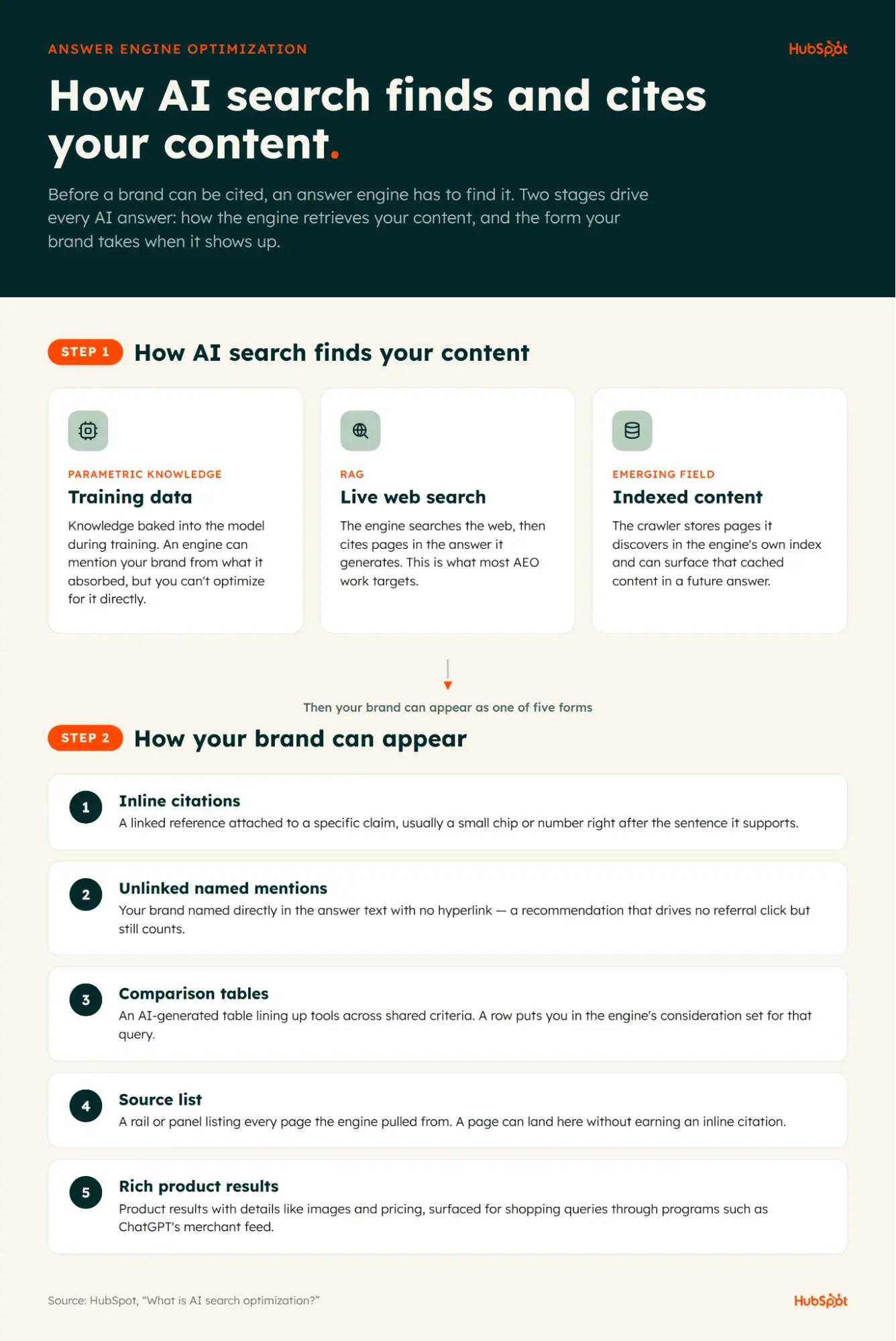
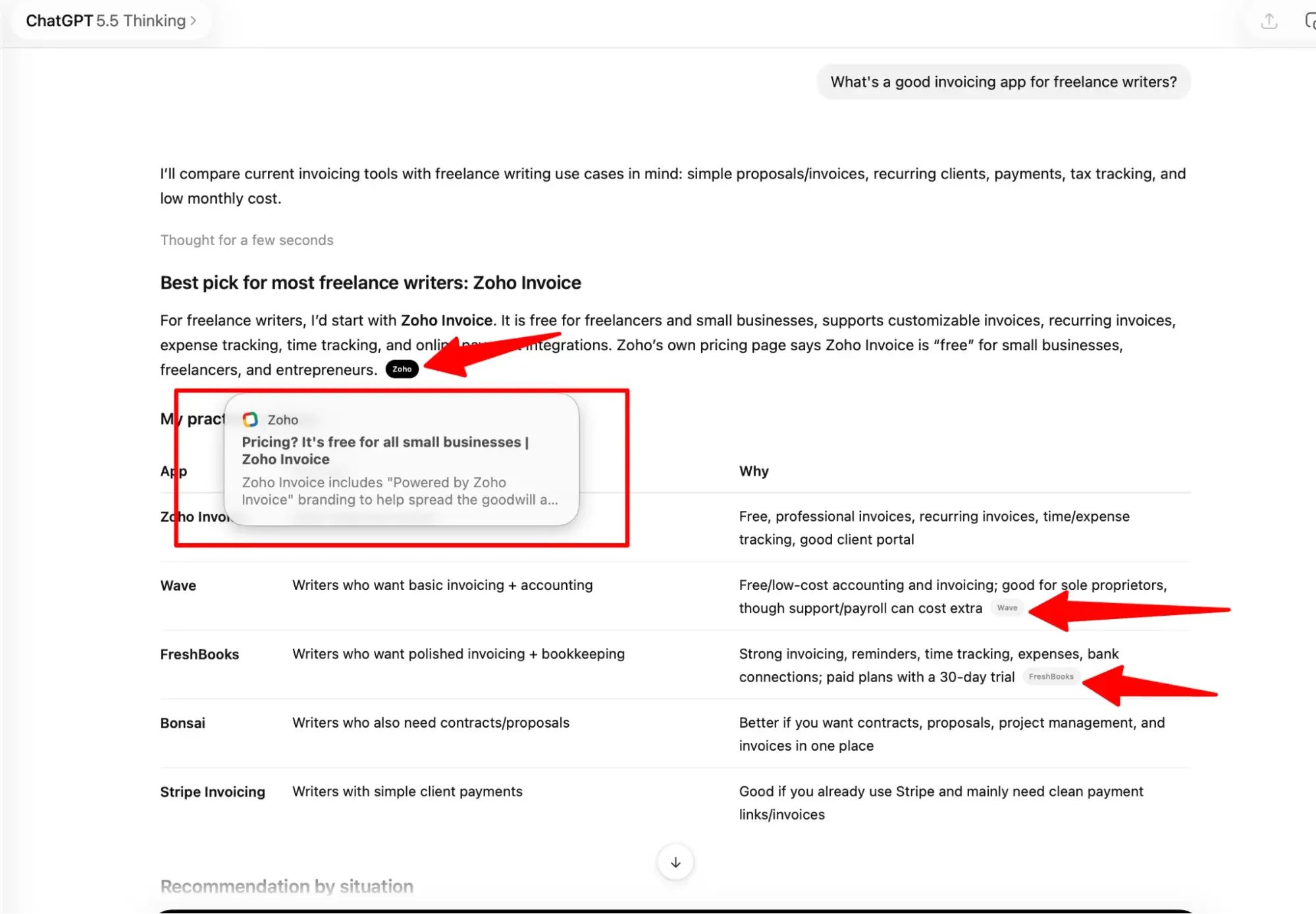
An AI citation occurs when an AI engine explicitly references your website as a source for its response. That typically includes a link to your content on platforms such as ChatGPT, Perplexity AI, or Google AI Overviews (AIO).

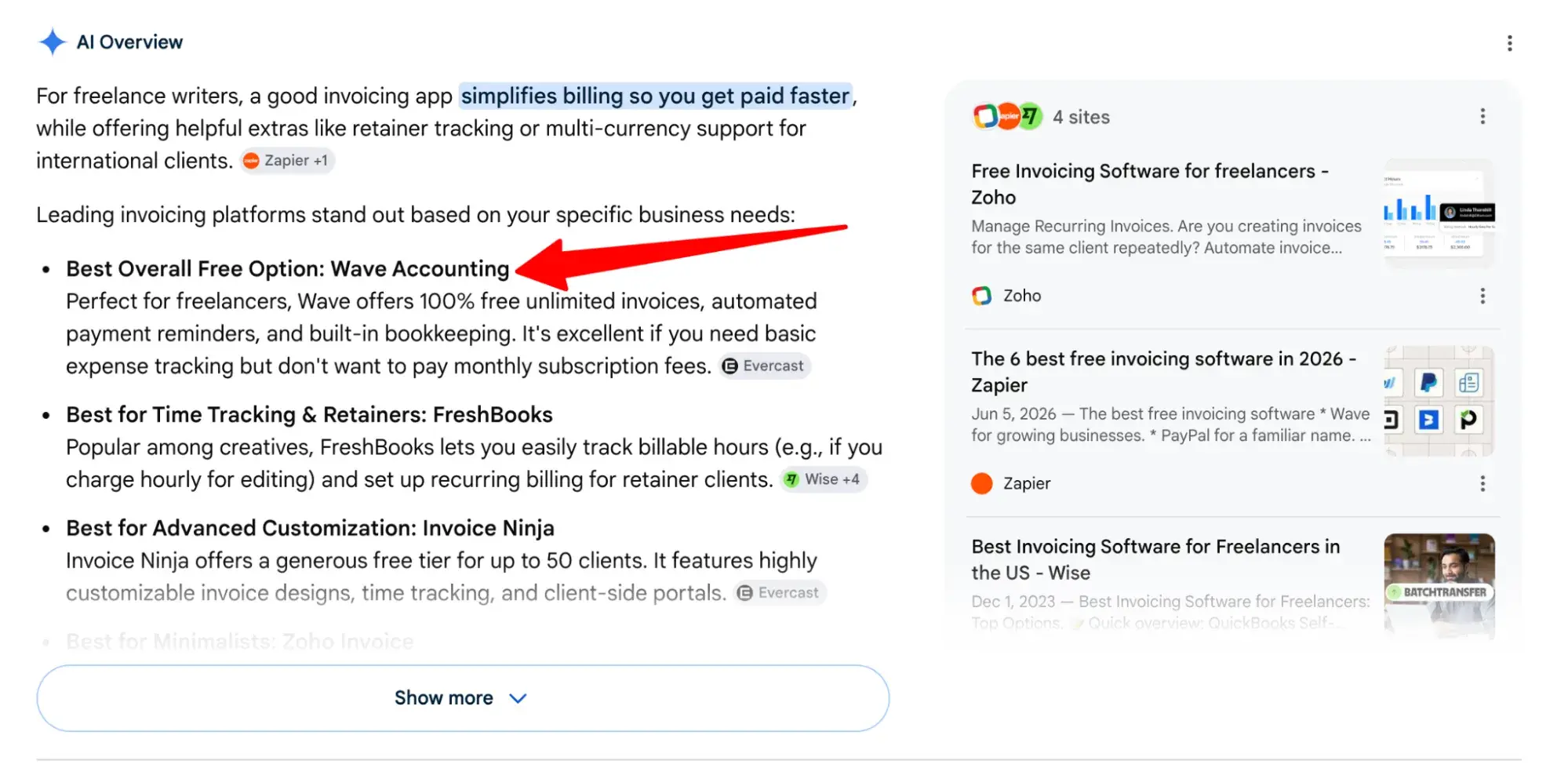
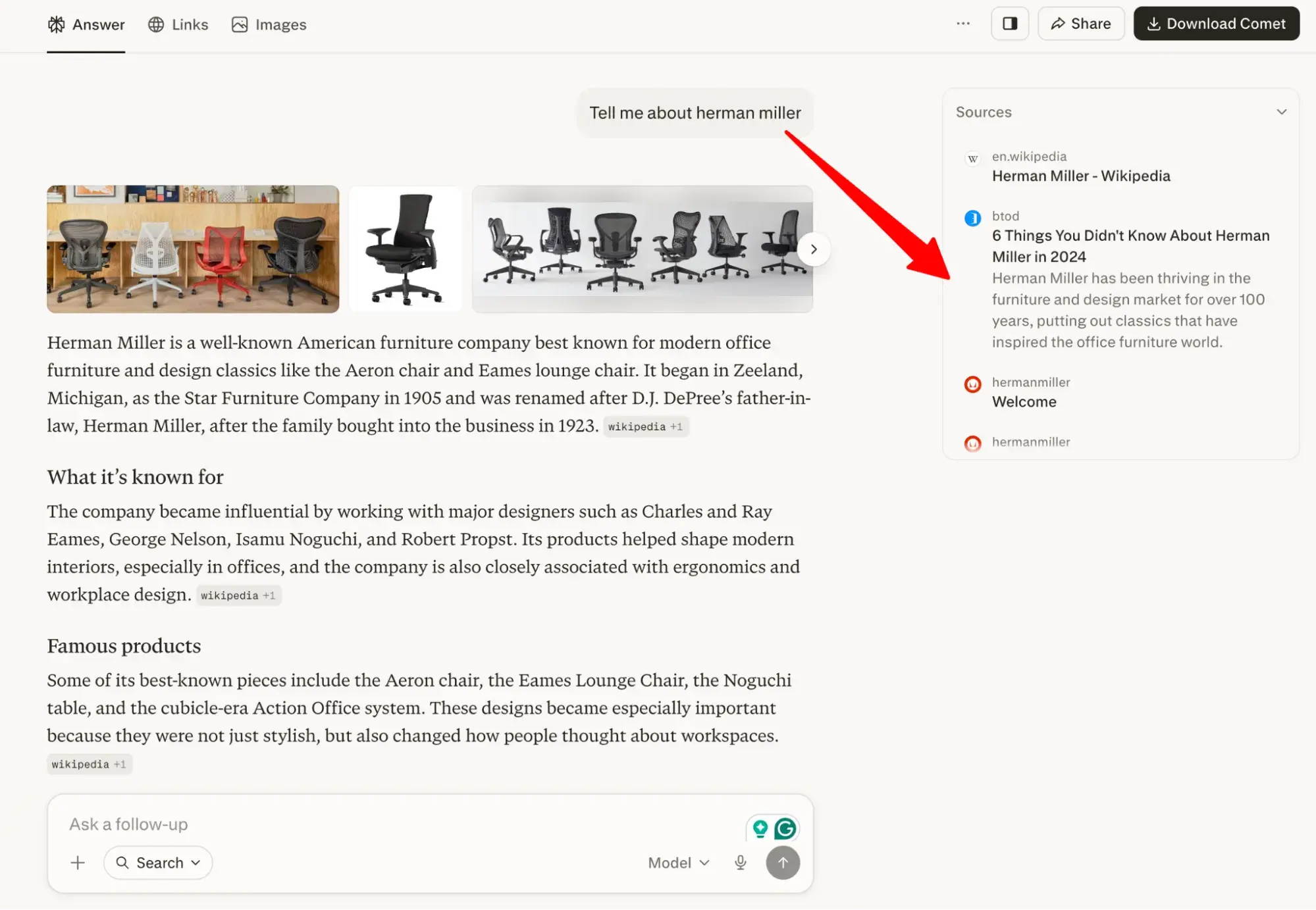
There are two types of citations — those that appear in a sidebar and those within the response. Here’s what both types of AI citations look like in Google’s AIO:

how to track ai search engine citations using manual analysis. the screenshot from google’s ai overviews with an arrow pointing to two types of citations.

When AI cites your content, it signals that your website contributed directly to the answer it generated. That’s the clearest indicator of content authority within AI-generated search experiences.

What counts as an AI mention vs an AI citation?

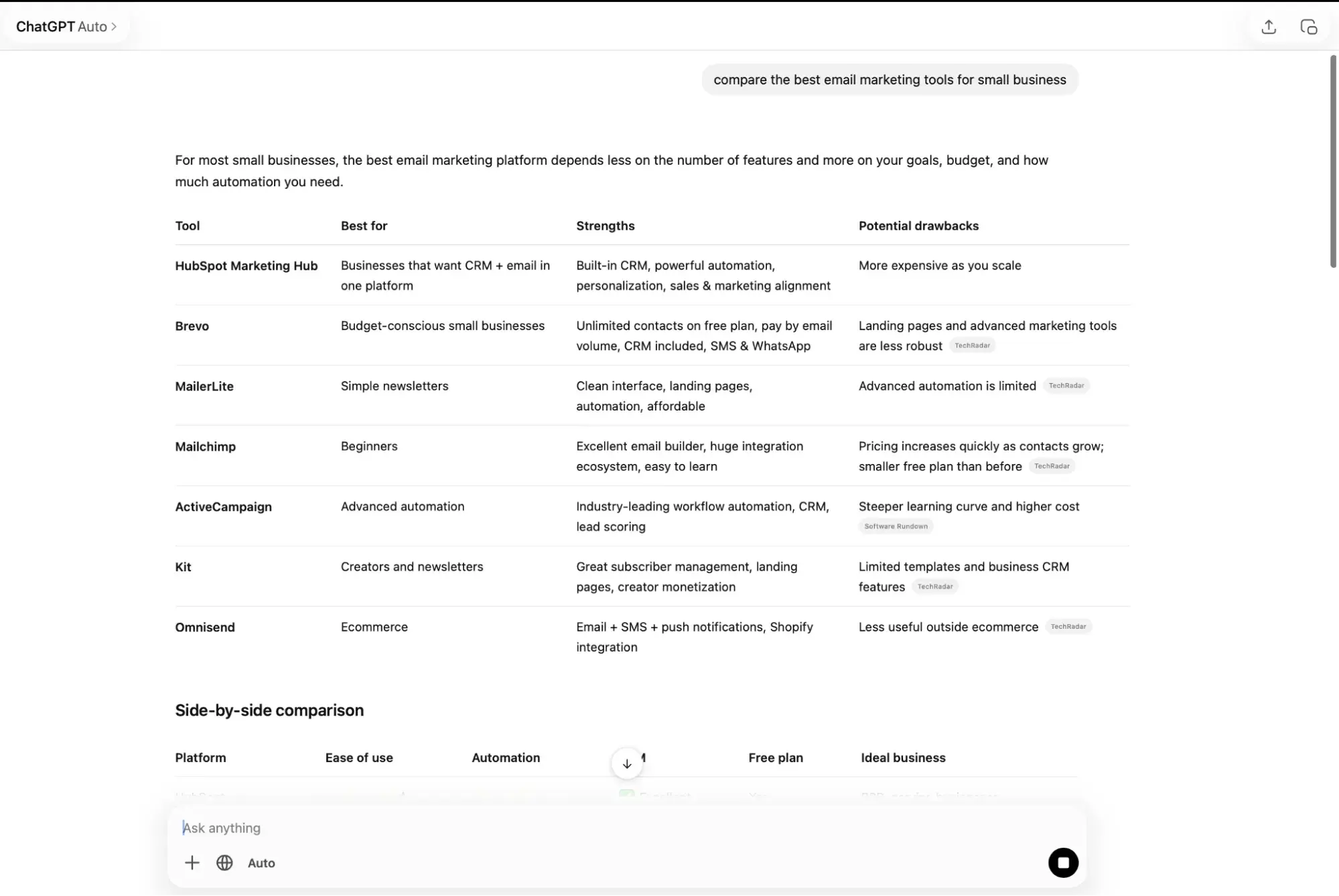
An AI mention refers to a brand or piece of content referenced in an AI answer without a direct link. For example, an AI response might list your company among “top providers” or “recommended tools” in a category. Your brand appears in the narrative, but there’s no linked URL or formal source attribution. Here’s what AI mentions look like in ChatGPT:

how to track ai search engine citations using manual analysis. screenshot from chatgpt shows mentions of crm tools but no links, helping people see that mentions do not include links, unlike citations.

The main difference between mentions and citations: Mentions are conversational visibility. Citations are sourced authority.

Both mentions and citations are helpful, but they serve different strategic purposes. Mentions help you understand whether your brand is present in AI-driven discussions. Citations help you understand whether your content is influencing those discussions.

ai citation tracking, graphic that explains ai mentions vs ai citations

How to Track AI Engine Citations

The challenge with AI citations is measurement. AI visibility isn’t as straightforward as traditional SEO tracking, but there are some things you can do to get an idea about how your site is performing. Tracking AI citations requires logging citations and mentions by engine, keyword, and date. Here’s what you can do.

Manually search your most important keywords.

One of the simplest ways to start is to manually search for your priority keywords on AI-driven platforms like ChatGPT, Perplexity AI, and Google AI Overviews. Run informational queries, comparison-based searches, and “best of” prompts that mirror real buyer behavior. Check whether AI overviews:

  • Mention your brand
  • Cite your website as a source
  • Show competitors instead

Tip: If competitors appear where you think you should be, then you’ve identified a potential opportunity. You can then look at what competitors are doing and develop a plan to replace their citations with yours.

Although manual searches are easy, they are extremely limited. AI results are highly personalized based on user history, context, and even phrasing, so your own usage of the tool you’re searching in will influence output. Two users can see different answers to the same query; the results are not static.

Most importantly, you can’t realistically test every relevant query variation yourself. Manual searches are useful for directional insight, but they’re not scalable or reliable enough for comprehensive tracking.

Look for parameters in URLs.

When AI engines send traffic to your site, they often include identifiable referral parameters in the URL. These parameters don’t tell you how many times an AI engine cited your content, but they do confirm that a citation generated a click. For example, links generated by ChatGPT frequently include:

?utm_source=chatgpt.com

By monitoring these parameters in your analytics platform, like Google Analytics 4 (GA4), you can attribute visits to different types of AI agents. Here’s what a URL looks like if a user visits it from ChatGPT:

how to track ai search engine citations using url parameters. screenshot from a website cited by chatgpt shows how you can see evidence of chatgpt citations within the url parameter.

Source

Similarly, traffic from Google AI Overviews often includes a #text= fragment in the URL. That indicates the user clicked a cited source in an AI Overview, and Google is highlighting the specific passage it referenced. Here’s what the #text=fragment looks like:

how to track ai search engine citations using url parameters. screenshot from a website cited by google’s ai overviews shows how you can see evidence of google’s ai overviews citations within the url parameter.

Source

Track traffic using Google Analytics.

Inside Google Analytics 4 (GA4), you can monitor referral traffic from AI systems. Use GA4 and GSC to estimate AI-driven traffic using event parameters and CTR analysis. Here’s how to use GA4:

Reports → Acquisition → Traffic Acquisition

how to track ai search engine citations using google analytics 4. annotated screenshot shows the steps someone must take to identify ai traffic referrals.

From there, filter by:

  • Session source/medium
  • Referral domain (e.g., chatgpt.com, perplexity.ai)

You can also create comparison segments specifically for AI traffic sources. That allows you to analyze engagement metrics such as:

  • Engagement rate
  • Conversions
  • Assisted conversions
  • Revenue

While this approach won’t tell you how often AI responses cite your content, it does show whether citations are driving meaningful traffic. If referral visits from AI systems are increasing — especially for high-intent pages — it’s a strong indicator that your citation footprint is growing for commercially relevant queries.

Set up custom dashboards that isolate AI referral domains over time

For teams that need a scalable, client-ready way to monitor AI citation impact, a dedicated dashboard in Looker Studio is a practical option.

Here’s what mine looks like:

screenshot from my looker studio report showing how i track visits from ai citations

You can build a dashboard that includes:

  • Sessions from AI referral domains
  • Engagement rate
  • Conversions and revenue
  • Assisted conversions
  • Landing pages receiving AI traffic
  • Month-over-month AEO trend comparisons

Using regex filters on the Session source / medium dimension makes this easy to scale. Instead of manually checking GA4 each time, your dashboard becomes a live AI visibility panel that updates automatically.

This approach doesn’t measure raw citation frequency inside AI engines, but it does measure impact. If AI-driven sessions are increasing over time, particularly for high-intent or educational content, it’s a strong signal that your citation footprint is growing.

Pro Tip: Kyle Rushton McGregor, my favorite GA4 specialist, makes setting up custom AI Looker Studio dashboards really easy with his tutorial.

Free benchmarking tools: Use HubSpot AEO Grader for ad-hoc visibility checks.

If you want a quick, directional snapshot of how your brand (and competitor brands) are performing, HubSpot AEO Grader provides a baseline assessment of AI visibility and citation opportunities. It helps you evaluate how well your site is performing in AI systems.

Because it’s free, teams can evaluate competitor domains without adding software cost. That makes it useful for side-by-side comparisons, helping you identify structural or content gaps that may explain why competitors are earning more AI visibility than you.

However, it’s important to understand the limitations. AEO Grader does not track live AI citations the way dedicated tools like HubSpot AEO do (see the next section for more on these types of AEO tools). It doesn’t monitor citation frequency across queries, citation share over time, or alert you to citation errors. Instead, it provides a static evaluation based on your site’s current structure and content signals.

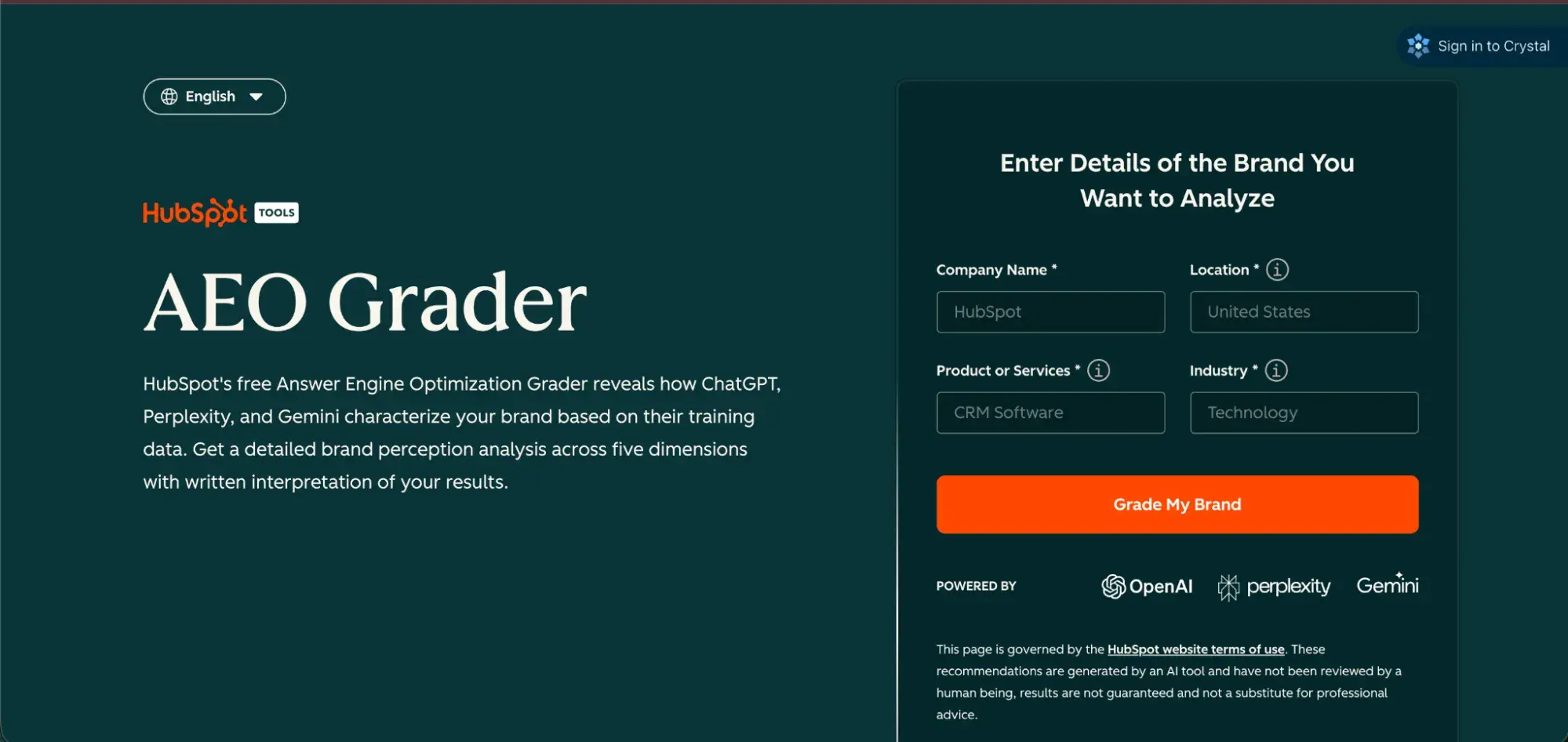
As a free tool, AEO Grader relies heavily on manual interpretation. The tool still requires manual interpretation of competitor scores, patterns, and likely performance implications. Here’s a view of what AEO Grader looks like:

how to track ai search engine citations using free aeo tools like aeo grader. screenshot from the ai search grader provides an idea of how brands are performing with ai citations.

Use tracking tools.

Manual checks and analytics give you partial visibility. Dedicated AI citation-tracking platforms provide a more systematic approach. Tools like HubSpot AEO are designed specifically to measure how often AI engines cite your content.

screenshot from hubspot aeo shows how graphs are tracking ai citations.

Rather than relying solely on referral traffic, they monitor AI responses at scale, track citation frequency across keywords, and benchmark your citation share against competitors.

That gives teams visibility into impression-level presence, not just clicks to the site. Visibility matters because many AI searches don’t result in clicks, so measuring clicks alone won’t give you the full picture of your influence. That provides clarity on:

  • Which pages are earning citations
  • Which queries trigger them
  • Where competitors are outperforming you
  • How your citation share changes over time

How to Close the Citation Gap With Your Content

Closing the mention-citation gap involves updating and optimizing content to earn more AI citations. Here are five AEO best practices for increasing your chances of earning a citation:

Create definitive, source-worthy content.

AI engines prioritize content written for Search Generative Experiences (SGE). That means the content appears authoritative, complete, and trustworthy. Pages that comprehensively answer a question (with clear structure and supporting evidence) are more likely to be cited as sources.

How to do it

  • Build in-depth guides that fully answer a query, not just skim it
  • Include original data, statistics, or expert commentary
  • Cite reputable third-party sources to strengthen credibility
  • Use clear headings that mirror common search phrasing
  • Keep content updated to maintain relevance

Creating the level of depth required to rank well and earn citations and mentions in AI likely requires more than just good writing. You need strong writing workflows, including research, editing, structured content systems, and well-placed product or service promotion.

Tools like Breeze accelerate research, surface related questions, and support content planning that’s extraction-friendly directly within your workflow.

Content Hub helps teams operationalize templates, briefs, and reusable content patterns that make answers clearer, more structured, and easier for AI systems to extract at scale.

Visibility doesn’t stop at publication. Marketing Hub allows teams to orchestrate cross-channel promotion and nurturing around answer-ready content. Its SEO tools help identify high-intent informational queries, content gaps, and structural optimizations that support both traditional SEO and AEO, which increasingly overlap.

Optimize for Informational Query Intent

AI citations most frequently appear in informational queries, such as “what is,” “how to,” “best,” “comparison,” and “why” searches, which help shape buyer education. Effective citation-focused content directly addresses these query types.

How to do it

  • Identify high-volume informational keywords or prompts in your category
  • Create dedicated pages that directly answer those questions
  • Structure content with concise, quotable definitions
  • Add comparison tables for “best” and “vs” queries
  • Ensure early paragraphs clearly summarize the answer

Improve content structure for AI parsing.

AI systems extract and synthesize content. Clear formatting and structure make it easier for models to understand and reference your page.

How to do it

  • Use descriptive H2 and H3 headings
  • Add FAQ sections with direct answers under each question
  • Use bullet points and numbered lists for clarity
  • Implement structured data (FAQ, HowTo, Article schema)
  • Keep paragraphs concise and focused

Build topical authority, not just isolated pages.

AI engines are more likely to cite brands that demonstrate depth across a topic cluster, not just a single well-written article.

How to do it

  • Create interconnected content hubs around core themes
  • Internally link related articles strategically
  • Publish supporting subtopics that reinforce expertise
  • Maintain consistent terminology across content
  • Update older posts to align with your authority narrative

Strengthen off-site signals & brand associations.

AI models learn associations from across the web. Strong third-party references increase the likelihood that your brand is surfaced or cited.

How to do it

  • Contribute thought leadership to reputable industry publications
  • Earn mentions in listicles and “top provider” roundups
  • Publish original research that others will reference
  • Encourage partners and customers to reference your brand publicly
  • Maintain consistent brand positioning across platforms

What are the best tools for tracking AI search citations?

AI citation tracking is still an emerging category, which means different tools serve different purposes. Some are purpose-built for AI citation monitoring. Others provide supporting signals. The right choice depends on your business size, reporting needs, and level of sophistication. Here are four strong options:

Xfunnel

screenshot from the xfunnel tool showing analytical graphs with “citation analysis” in the left-hand menu.

Source

Xfunnel is purpose-built for tracking AI engine citations at scale. It monitors how often your brand and URLs are cited across AI systems and benchmarks your citation share against competitors.

Unlike analytics-based tracking (which only shows traffic after a click), Xfunnel focuses on citation visibility itself, including:

  • Citation frequency across defined query sets
  • Competitive citation share
  • Displacement events
  • Trends over time

That makes it ideal for growth teams, B2B companies, and agencies that need structured reporting on AI visibility. If AI search is strategically important to your revenue model, this is the most complete solution in the market right now.

Best for: Dedicated AI citation tracking and competitive share

HubSpot AEO

aeo citation tracking, hubspot aeo tool

HubSpot AEO is purpose-built for tracking and improving how a brand appears across major answer engines, including ChatGPT, Perplexity, and Gemini. Unlike analytics-based tracking, HubSpot AEO monitors AI responses directly. It measures citation frequency, brand visibility, and competitive share of voice across a defined set of prompts.

HubSpot AEO centralizes AI citation tracking in a single dashboard so performance can be monitored consistently over time and connected to content strategy and business outcomes. It’s available within HubSpot Marketing Hub Pro and Enterprise, or can be purchased as a standalone tool without an existing HubSpot subscription.

Best for: Connecting AI citation tracking to content action

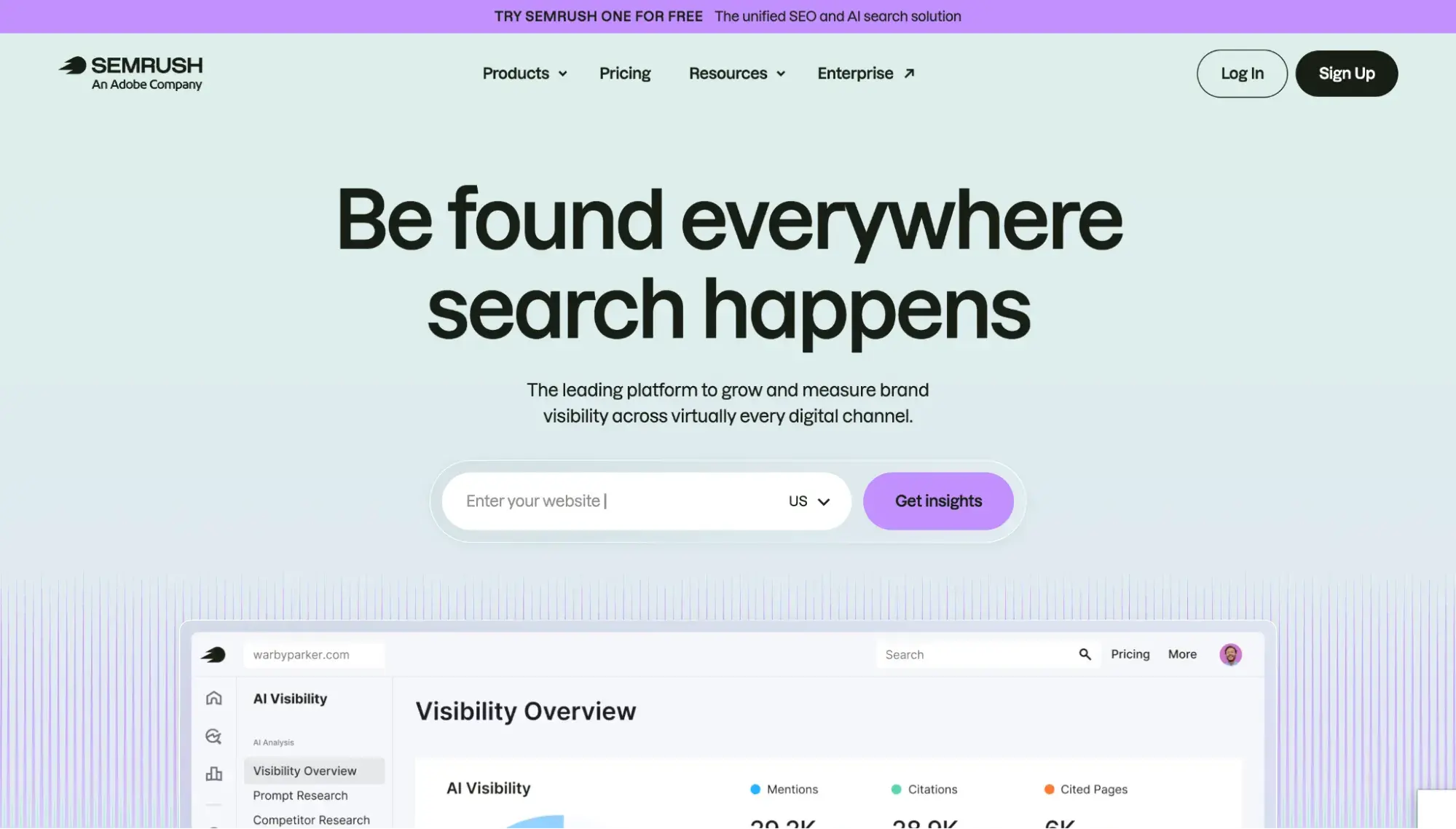
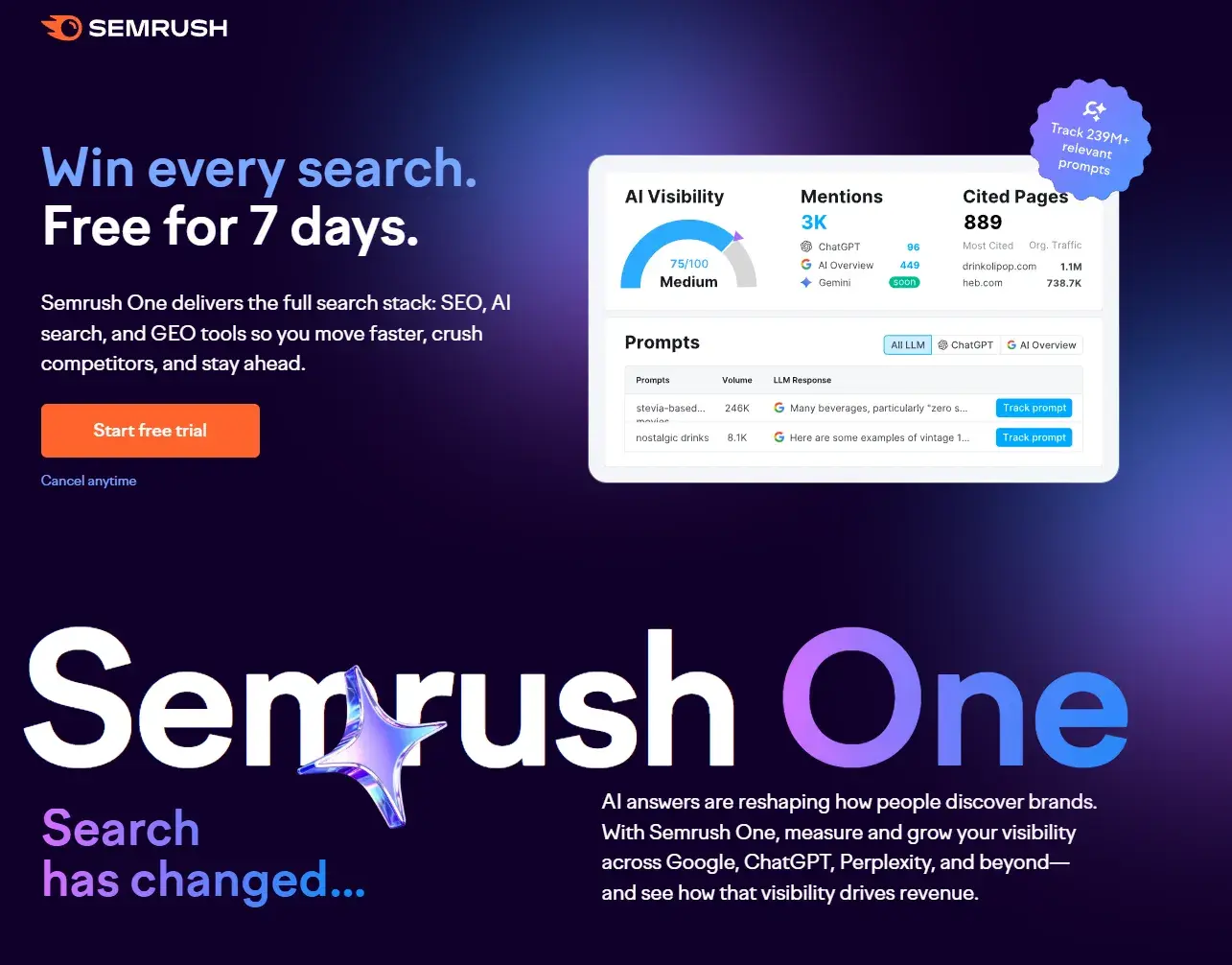
Semrush One

screenshot from semrush’s ai visibility overview.

Source

Semrush is one of the longest-standing SEO platforms in the industry and is well-placed for AI SEO tracking. While it’s not a pure AI-powered citation-tracking tool like Xfunnel, Semrush is increasingly incorporating AI search visibility insights into its broader platform. It allows you to:

  • Monitor keyword performance shifts that may correlate with AI Overviews
  • Track branded and non-branded visibility changes
  • Identify competitor content gaining traction
  • Analyze content gaps at scale

For mid-sized to enterprise teams already embedded in Semrush, it’s a practical way to layer AI search monitoring into existing workflows. It won’t give you granular citation frequency across AI engines, but it does provide broader visibility signals that help contextualize AI performance within your overall search strategy.

I’ve personally used Semrush for years across technical SEO, keyword research, competitor analysis, and content strategy. I started using the AI tools and found the recommendations were good and aligned with the ones I was giving my clients.

Best for: Established SEO teams expanding into AI tracking

AEO Grader

screenshot from aeo grader shows how easy it is to get started and grade your brand in ai search.

AEO Grader is a free tool that evaluates a site’s optimization for answer engines and AI-driven search environments.

It assesses structural and content factors that influence the likelihood of AI citation, such as clarity, schema usage, and answer formatting. Because it’s free, you can also run competitor domains through it for quick side-by-side comparisons.

That said, AEO Grader is not a tracking platform. It doesn’t monitor live citations or measure citation share over time. Instead, it provides a static snapshot of readiness.

I personally use AEO Grader as part of audit workflows and in pitch scenarios. It’s a fast way to assess how a prospect’s site is performing in AI visibility and to identify obvious optimization gaps.

Best for: Quick diagnostics and benchmarking

Frequently Asked Questions About Tracking AI Search Engine Citations

How often should we refresh AI citation and mention tracking?

At a minimum, review AI citation and mention tracking monthly. AI search environments evolve quickly: models update, competitors publish new content, and citation patterns shift as authority signals change. A monthly review helps you identify trends, displacement events, and emerging query opportunities before they affect the pipeline.

Should we separate AI-influenced traffic from organic in reports?

Yes, segment AI-influenced traffic from traditional organic search in your reporting. While some AI traffic may technically fall under organic channels, its user behavior, intent patterns, and conversion pathways can differ significantly from standard blue-link search traffic. For my clients, AI traffic converts at around 7% compared to around 1% of organic traffic.

What is the best way to prioritize content for citations vs mentions?

If your goal is authority and influence, prioritize citation-ready content first. Informational, high-trust assets, such as guides, definitions, comparisons, and research-backed articles, are more likely to earn citations because AI engines rely on them as sources.

Mentions, on the other hand, are often influenced by brand authority and third-party signals. If you’re earlier in your growth journey, investing in thought leadership, digital PR, and brand positioning can increase conversational visibility. Ideally, your strategy should balance both authoritative content to earn citations and brand-building efforts to expand mention presence.

How do we handle privacy and consent when adding tracking parameters?

If you’re using UTM parameters or tracking referral sources from AI systems, you’re typically working with standard analytics practices. However, you should ensure your cookie consent mechanisms and privacy policies clearly explain how tracking data is collected and processed.

AI Citation Tracking Is the New Frontline of Brand Visibility

AI citation tracking is a visibility metric for the AI-search era. Mentions show whether your brand is part of the conversation. Citations show whether your content is shaping it.

To track effectively, you need layered measurement: manual checks for context, analytics for traffic impact, dashboards for trend monitoring, and dedicated tools for citation share and competitive displacement.

Tools like HubSpot AEO can help teams connect AI visibility data to traffic, engagement, and reporting workflows. Integrating citation insights into a broader analytics stack makes them easier to act on.

In my experience, a monthly review cadence is the minimum required to keep AI visibility reporting useful. More frequent check-ins can help catch shifts earlier, but even a simple baseline from a free tool like AEO Grader can help brands increase AI-related citations and mentions.

I noticed that the Brief asks for factor-based H3s in this section, but the current structure is method-based. It works, but if stricter brief alignment is needed, the H3s could be reframed around inputs like query set coverage, referral visibility, analytics segmentation, dashboard reporting, and dedicated citation platforms.


Categories B2B

Generative engine optimization KPIs that actually matter for marketing teams

Generative AI is changing how people discover brands, products, and information. Because it disrupts the buyer journey, it requires new metrics, specifically GEO KPIs, that accurately reflect performance within these AI engines.

With Google AI Overviews appearing in over 20% of searches, marketing leaders are now being asked new questions by executives: Are we showing up in AI answers? Are we being cited? Or are AI engines recommending our competitors?

Get Started with HubSpot's AEO Tool

As search behavior shifts, traditional SEO KPIs alone can no longer explain visibility or downstream revenue impact.

This guide breaks down the GEO KPIs that actually matter, how to measure GEO success, and how to connect AI visibility to business outcomes using tools that marketing teams already trust, including HubSpot AEO.

Why GEO KPIs Matter Now

As generative AI becomes a primary decision layer in the buyer journey, generative engine optimization (GEO) KPIs become important performance indicators. According to OpenAI, nearly half of all ChatGPT usage falls into the “Asking” category, where users rely on AI for advice, evaluation, and guidance rather than simple task execution.

For many users — 61% of them — these “asks” are product recommendations. This means brand preference is influenced by AI-generated answers, often before a prospect visits a website.

Traditional marketing KPIs don’t capture this layer of visibility. Without understanding where and how often a brand appears in AI answers, it can be challenging to create a strategy to regain or maintain that influence.

From my experience, maintaining visibility inside AI-answers engines is fragile without a deliberate GEO strategy. After a targeted content update on my own site, I saw my content begin surfacing ahead of long-established industry publishers in AI-generated answers within 96 hours — without any corresponding jump in traditional search rankings.

If I had been tracking SEO metrics alone, I would have missed that change entirely. GEO KPIs exist to pinpoint these shifts before they translate into lost authority or, worse, downstream revenue impact.

Generative Engine Optimization KPIs to Track

The metrics below reflect how AI search behaves in the real world and give teams a clearer, more honest way to evaluate how their brands appear in AI-generated answers. Key metrics for measuring GEO success include AI citation frequency, answer inclusion rate, entity authority signals, AI referral traffic, AI share of voice, and AI-driven leads.

To understand which GEO KPIs and metrics actually hold up, I spoke with Kristina Frunze, founder of WebView SEO, in a recorded interview for the Found in AI podcast.

1. AI Citation Frequency

AI citation frequency tracks how often a brand is named directly in AI-generated answers across large language models (LLMs). Direct brand mentions are the most reliable signal that an AI engine recognizes and recalls a brand.

What the Experts Say: Frunze told me, “For the purpose of AI citations, at the moment, direct brand mentions are the best way to track it. The tools are evolving, and they’re not 100% accurate, but this is what we can rely on right now.”

How I use the metric: I use citation frequency as a baseline trust signal. If a brand isn’t being named at all, no amount of traffic or conversion optimization matters yet. But since I have a sense of where a brand should appear, I can track changes over time.

For a brand that already appears inside AI answers, I track changes in citations after content updates to see whether AI engines recognize the brand as a legitimate source or cite it more often.

How to track: Monitor direct mentions of a brand in AI-generated answers using tools like HubSpot AEO, XFunnel, Addlly AI, or Superlines. Track changes over time after content updates to see whether AI models increasingly recognize and cite the brand.

Pro tip: Use HubSpot SEO Marketing Software to align cited pages with topic clusters and internal linking. A strong topical structure increases the likelihood that AI systems will consistently associate your brand with specific subjects.

2. AI Answer Inclusion Rate

AI answer inclusion rate measures how often a brand appears anywhere in an AI-generated response, even when no direct citation or link is provided. This generative engine optimization metric captures presence and relevance, not attribution alone.

What the Experts Say: Frunze explained, “If you just look at your AI citations, you’re missing the bigger picture.” She explained that metrics, like AI answer inclusion rate, help brands understand “what their competitors are doing and how they stand against them in LLM search.”

How I use the metric: I use the inclusion rate to assess whether AI models consider a brand part of the conversation. Inclusion without citation often indicates early-stage authority, which can later translate into citations as content clarity improves.

How to track: Capture all instances where the brand appears in AI responses, whether or not it’s cited, using multi-platform monitoring tools. Compare inclusion trends over time and across competitors to understand early-stage visibility and relevance.

Pro Tip: HubSpot AEO‘s Brand Visibility Dashboard tracks how often your brand appears in AI-generated answers, including instances where the brand is present but not directly cited. Track inclusion trends alongside assisted conversions in HubSpot analytics to understand how early-stage AI presence is influencing downstream pipeline activity.


3. Entity Authority Signals

Entity authority signals measure how consistently AI engines associate a brand with specific topics, attributes, and use cases. These associations are reflected in underlying knowledge graphs and reinforced through:

  • Structured data
  • Third-party mentions
  • Consistent brand positioning across the web

What the Experts Say: “With AI SEO, links don’t matter as long as your brand is actually mentioned on communities, third-party websites, and directories,” Frunze said. “Getting your brand spoken about and getting it right is very important.”

How I use the metric: I treat entity authority as an off-site credibility layer. When I conduct AI visibility audits, I note where a brand is mentioned, whether the information is accurate, and whether AI-generated descriptions align with how the company positions itself.

This means I spend significant time measuring social KPIs and monitoring how users discuss a brand. One-off mentions on platforms like Reddit and Quora can appear in AI-generated answers, but it is important to understand where those comments come from and how they impact a brand’s perception.

How to track: Audit structured data, third-party mentions, and consistent brand positioning across web sources using social listening and entity-tracking tools. Measure how often AI associates the brand with specific topics, attributes, and use cases.

Pro tip: Use HubSpot’s Social Inbox to monitor brand mentions, conversations, and sentiment across social platforms in one place — and pair it with HubSpot AEO‘s Sentiment Analysis to see how those external signals are influencing how AI engines actually describe your brand. Keeping a close eye on where and how a brand is talked about helps reinforce consistent entity signals across the web.

4. AI Referral Traffic

AI referral traffic tracks sessions originating from AI platforms and passes referral data into analytics and CRM systems. While under-reported, this metric provides directional insight into how AI visibility translates into site engagement.

What the Experts Say: Frunze told me, “AI traffic is the easiest to track because it feels familiar, but there’s a lot of uncertainty because not all elements pass the proper parameters. You’re not always getting the full picture.”

How I use the metric: Direct referral traffic from AI platforms is relatively easy to spot when it’s clearly labeled as coming from tools like ChatGPT or Perplexity. In practice, though, not all AI-driven sessions provide clean referral data.

Because of that, I treat AI referral traffic as a supporting signal rather than a success metric in its own right. I look at it alongside assisted conversions and branded search lift to understand its true influence, rather than expecting clean last-click attribution.

How to track: Use CRM and analytics platforms (e.g., HubSpot, GA4) to identify sessions coming from AI tools like ChatGPT or Perplexity. Because not all AI traffic passes proper referral data, treat this as a directional metric alongside assisted conversions and branded search lift.

Pro tip: Create custom source groupings in HubSpot reporting to isolate known AI referrers and evaluate their influence across the full funnel. Pair this with HubSpot AEO’s Prompt Tracking to understand which prompts are driving citations. This gives teams a leading indicator of where AI referral traffic is likely to come from before it shows up in analytics.

5. AI Share of Voice (AI SoV)

AI Share of Voice measures how often a brand appears relative to competitors across a defined set of prompts. Marketing teams typically track this in two ways:

  • Entity-based share of voice. Measures whether a brand appears at all in an AI-generated answer.
  • Citation-based share of voice. Tracks how often a brand is explicitly cited or referenced.

Together, these views show which brands’ AI engines trust and rely on to generate an answer.

What the Experts Say: “AI share of voice shows how many times you come up versus your competitors for the prompts,” Frunze explained. “It helps put things in perspective.”

How I use the metric: This is the first GEO KPI I look at when diagnosing AI visibility. If competitors dominate AI responses to high-intent prompts, it usually indicates that the brand I’m working with has positioning or authority gaps.

How to track: Compare a brand’s presence versus competitors across a defined set of AI prompts using tools like XFunnel or Superlines. Track both entity-based and citation-based appearances to understand relative AI trust and authority.

Pro tip: Use XFunnel to measure AI visibility and share of voice across LLMs. Pair this data with KPI dashboards to contextualize AI exposure alongside pipeline and revenue metrics.

6. AI-Driven Leads

AI-driven leads measure conversions influenced by AI discovery, particularly for bottom-of-funnel queries such as competitor comparisons, alternatives, and integrations. This metric is most valuable for understanding how AI visibility appears in the pipeline, as these interactions typically come from buyers who are close to making a purchase decision.

What the Experts Say: Frunze mentioned, “The content that drives AI leads the most is bottom-of-funnel content. These prompts usually come from people already evaluating options and are past the awareness stage.”

How I use the metric: I use AI-driven leads to understand whether GEO work is contributing to revenue, not just visibility. I review form fills and deal creation alongside high-intent pages like comparisons, alternatives, and integrations.

Within those forms, I look for explicit references to ChatGPT, Perplexity, or Gemini. Sometimes, I ask customers where they first heard about the brand.

How to track: Connect AI referral data with lead tracking in the CRM to quantify conversions originating from AI interactions. Use UTM parameters or platform-specific identifiers to measure downstream impact on pipeline and revenue.

Pro tip: Track AI-influenced form fills and deal creation inside HubSpot CRM to understand how generative search contributes to the pipeline, even when attribution isn’t linear. Use HubSpot AEO’s Recommendations feature to prioritize which visibility gaps to close first. Each recommendation includes a full content brief tied to the bottom-of-funnel prompts most likely to drive AI-referred leads.

Quick Overview: SEO KPIs vs GEO KPIs

Best Tools to Monitor GEO KPIs Across AI Platforms

1. HubSpot AEO

geo kpis, hubspot aeo recommendations

HubSpot AEO tracks and improves how a brand appears across major answer engines, including ChatGPT, Perplexity, and Gemini. HubSpot AEO directly measures core GEO KPIs, from citation frequency and AI share of voice to prompt-level prominence and sentiment.

Unlike tools that focus on a single metric or require stitching together data from multiple sources, HubSpot AEO centralizes GEO measurement in a single dashboard. This makes it possible to track performance consistently over time and connect visibility shifts directly to content and strategy changes.

Key Features:

  • Brand visibility dashboard. Tracks answer inclusion rate across answer engines, showing how often the brand appears in AI-generated answers for priority prompts and how that score shifts over time
  • Competitor analysis. Powers AI share of voice measurement, showing relative presence versus competitors across the same prompt set, so teams can identify where they’re gaining or losing ground
  • Prompt tracking and suggestions. Monitors answer prominence and positioning at the prompt level, including which prompts cite the brand, which cite competitors instead, and where the brand is completely absent.
  • Citation analysis. Surfaces which domains, content types, and source channels AI engines are pulling from when answering prompts in the category
  • Sentiment analysis. Measures how positively or negatively the brand is described in AI-generated responses on a scale from -100% to +100%, giving teams an early signal of entity authority issues alongside visibility gaps
  • Recommendations. Turns visibility and citation data into a prioritized action plan, with full content briefs for each recommendation so teams know exactly what to create or change to move the needle on GEO KPIs

Best for:

  • Marketing teams that need a single dashboard to track GEO KPIs consistently over time
  • Brands that want to connect AI visibility to pipeline and revenue outcomes without managing multiple tools
  • Teams reporting AI performance to leadership who need clear, comparable data across answer engines

Pricing: Available in Marketing Hub Pro and Enterprise, or as a dedicated tool for $50/month without a HubSpot subscription.

What I like: Most GEO KPI tracking requires a combination of manual testing, spreadsheet tracking, and disconnected tools. HubSpot AEO brings the core metrics into one place so teams can monitor performance consistently rather than episodically. The centralized dashboard makes it significantly easier to show directional movement over time and connect AI visibility to pipeline outcomes.

2. XFunnel

best tools to measure generative engine optimization kpis: xfunnel

XFunnel measures how brands appear in AI-generated responses from large language models by analyzing AI share of voice, citations, and entity mentions. Instead of relying on traffic as a proxy, this shows how AI engines actually surface and describe brands in response to real user prompts. XFunnel helps teams answer questions traditional analytics can’t, like:

  • Which brands are being named most often for high-intent prompts?
  • Are we included at all, or consistently excluded?
  • When we do appear, are we cited, summarized, or just listed?

Most GEO KPIs require direct observation of AI responses. Xfunnel does that at scale. It gives marketing teams a way to move beyond anecdotal testing and understand competitive positioning inside AI search in a repeatable, measurable way.

Best for:

  • Marketing teams tracking AI share of voice and competitive visibility.
  • Brands operating in crowded categories where being “on the list” matters.
  • Leaders who need to explain AI performance without relying on traffic alone.

Pricing: Pricing varies based on usage, prompt volume, and reporting depth.

What I like: XFunnel focuses on answer-level visibility, not just referral traffic. That aligns with how generative search works today: influence often occurs without a click.

I also like that it separates entity-based visibility from citation-based visibility, which maps directly to the GEO KPIs teams need to report on.

Seeing how often competitors appear — and in what context — makes it easier to prioritize content updates and address authority gaps.

3. HubSpot’s AEO Grader

best tools to measure generative engine optimization kpis: hubspot aeo grader

HubSpot’s AEO Grader is a free tool that evaluates how well a site is structured for AI and answer engines. It focuses on foundational elements — such as schema implementation, page structure, and content clarity — that influence how AI systems interpret and surface information.

The AEO Grader helps surface structural gaps that directly affect GEO KPIs. For teams just getting started, it provides a fast way to identify technical and structural blockers before investing in deeper optimization work.

Best for:

  • Teams auditing AI readiness without committing to new tooling.
  • Marketers validating whether schema and structure are implemented correctly.
  • Organizations that want to identify technical and structural blockers before investing in deeper AEO optimization work.

4. HubSpot’s SEO Marketing Software

best tools to measure geo kpis: hubspot seo tools

HubSpot’s SEO Marketing Software helps teams plan and measure content performance through topic clustering, on-page recommendations, and integrated performance reporting.

While built for traditional search, the same signals matter for AI engines. Topic clusters reinforce entity authority by clarifying what a brand is about and which pages should be treated as primary sources, while on-page recommendations support clear structure and semantic alignment.

Best for:

  • Teams that want SEO and GEO measurement in one platform.
  • Marketing leaders who need to tie content performance to the pipeline and revenue.
  • Organizations standardizing content structure and topical authority across teams.

What I like: I like that HubSpot’s SEO Marketing Software doesn’t live in a vacuum. Instead of pulling SEO data from one tool, AI visibility from another, and revenue data from a third, HubSpot allows teams to connect content performance to pipeline outcomes in a single system.

I also find topic clustering especially useful for GEO because it forces teams to be explicit about core themes, which is what AI engines reward when deciding which sources to trust.

5. HubSpot’s Content Hub

best tools to measure geo kpis: hubspot content hub

HubSpot’s Content Hub is a CMS designed to help teams create, manage, and optimize content with built-in SEO guidance and support for structured, schema-ready publishing. It allows marketers to standardize how content is written, organized, and maintained across the site.

For GEO, structure matters as much as substance, because AI engines rely on clearly organized content to understand what a page is about and when it should be reused in an answer.

Content Hub supports this by encouraging clean page structure. Teams can implement the schema and structured data that help AI engines interpret key information more accurately.

What I like: Content Hub makes it easier to operationalize effective content writing habits at scale. Instead of relying on individual writers to remember schema rules or formatting best practices, the CMS itself nudges teams toward consistency.

Best for:

  • Teams publishing content for both humans and AI systems.
  • Organizations standardizing content structure across multiple contributors.
  • Marketers who want schema-ready content without custom development work.

6. Addlly AI

best tools to measure generative engine optimization kpis: addlly ai

Source

Addlly AI is a platform that combines GEO auditing with AI-driven optimization to show how brands appear in AI-generated responses across multiple large language models. It tracks citations, mentions, and AI share of voice, giving teams a clear view of where their content is being surfaced or ignored by generative engines.

Addlly AI GEO Agent goes beyond reporting by helping teams take action: It identifies visibility gaps, generates AI-optimized content, and structures information in a way that increases the likelihood of being cited by AI. Teams can see not just whether they appear, but how they appear — summarized, cited, or listed — across different AI platforms.

Best for:

  • Marketing teams that want end-to-end AI visibility tracking and optimization.
  • Brands operating in competitive categories where being cited or summarized matters.
  • Teams that want to move beyond traffic-based metrics to understand real AI-driven influence.

Pricing: Flexible, based on audit depth, prompt volume, and AI content generation usage.

What I like: Addlly integrates diagnostics and execution, so teams don’t just get a snapshot of visibility — they get the tools to improve it. It also separates entity mentions from citations, which aligns perfectly with the GEO KPIs teams need to measure. Seeing where competitors appear and in what context makes prioritizing content updates much more strategic.

7. Superlines

best tools to measure geo kpis: superlines

Superlines is an AI search intelligence platform that measures how brands appear in generative AI responses across platforms like ChatGPT, Perplexity, Gemini, Claude, and more. It focuses on answer-level visibility, tracking brand mentions, citations, sentiment, and competitive share of voice in real user-facing AI outputs.

Rather than relying on search traffic or generic rankings, Superlines gives teams direct observation of AI responses, showing exactly where and how a brand is included or excluded. This makes it possible to benchmark against competitors, identify content authority gaps, and prioritize updates strategically.

Best for:

  • Marketing teams tracking AI share of voice and multi-platform visibility.
  • Brands in highly competitive categories where answer-level inclusion matters.
  • Teams that need a measurable way to show AI influence without relying on clicks.

Pricing: Based on platform coverage, reporting frequency, and team scale.

What I like: Superlines emphasizes real, user-facing AI visibility instead of indirect metrics. It captures multi-platform AI outputs at scale, giving teams repeatable insights for competitive positioning. Its combination of citation and context tracking maps directly to GEO KPIs that matter for reporting.

Common GEO Measurement Challenges and How to Solve Them

As teams adopt generative engine optimization, they often run into measurement challenges that don’t exist in traditional SEO. Many of these issues stem from how AI platforms surface answers, limit attribution, and distribute influence across channels.

Below are the most common GEO measurement challenges, followed by practical ways to address them based on real-world experience.

1. Limited AI Referral Data

The challenge: Many AI platforms suppress or delay referral data, making it difficult to attribute website sessions or conversions to a specific AI source within analytics and CRM systems.

My experience: In analytics dashboards, I’ve repeatedly seen what appear to be “ghost” referrals — sessions that lead to sign-ups, form fills, or deals, but aren’t tied to a clear referring engine. The engagement is real, but the source attribution is incomplete.

How to solve it: The goal is to understand influence, not just clicks. Instead of relying solely on referral data, look for additional signals. That includes:

  • Reviewing form responses for mentions of ChatGPT, Perplexity, or Gemini.
  • Asking prospects directly how they first heard about the brand.
  • Monitoring citations or mentions in places that don’t surface cleanly in analytics.

2. KPI Overload

The challenge: GEO introduces a wide range of potential metrics, and tracking too many at once can create KPI reporting noise that obscures meaningful insights.

My experience: I’ve seen teams struggle when they try to monitor every possible GEO KPI simultaneously. Reporting becomes harder to explain, and optimization efforts lose focus.

How to solve it: I recommend choosing one or two KPIs that the team can actively influence in the near term. The remaining metrics can stay on the back burner. I’ve found that building a deep understanding of a small set of signals creates far more progress than shallow tracking across dozens of indicators.

3. Tool Fragmentation

The challenge: GEO data is often spread across SEO platforms, AI visibility tools, analytics software, and CRM systems, making it difficult to form a cohesive view of performance.

My experience: I’ve seen teams invest in GEO tools that don’t deliver actionable insights. Not every platform that claims to measure AI visibility is worth the investment.

How to solve it: The most effective approach is to combine answer-level visibility tools with centralized reporting. Xfunnel is useful here because it focuses on how brands appear inside AI-generated answers, rather than relying on traffic proxies. Pairing that insight with HubSpot reporting reduces fragmentation and increases confidence in the data.

4. Executive Skepticism

The challenge: Leadership teams may question GEO metrics because they lack familiar benchmarks and long-established reporting standards.

My experience: As a fractional content strategist working with C-suite leaders, I’ve encountered skepticism around whether GEO is worth the effort. Some leaders lean heavily on the idea that “good SEO is good GEO,” and many leaders are hesitant to adjust existing processes.

How to solve it: Competitive framing helps. Tracking AI share of voice for a short period and comparing it against competitors quickly shows where influence is being gained or lost inside AI-generated answers. Once leaders see that gap, the value of GEO metrics becomes much easier to justify.

5. Measuring Influence Without Clicks

The challenge: AI-generated answers don’t always result in immediate website visits, making traditional traffic-based performance indicators incomplete.

My experience: I’ve seen GEO improvements show up well before any noticeable lift in sessions or before traditional ranking catches up. If teams rely only on clicks, they risk missing early indicators of impact.

How to solve it: Look beyond last-click attribution and monitor branded search lift, assisted conversions, and downstream deal creation over time. GEO influence often appears later in the funnel, not always at the moment of discovery.

Frequently Asked Questions About GEO KPIs

How often should you report GEO KPIs to executives?

Monthly reporting works best for GEO KPIs because it allows teams to identify directional trends without overreacting to short-term volatility in AI-generated answers. AI visibility can fluctuate week to week as models refresh, prompts shift, or competitors publish new content, so a monthly cadence helps smooth out noise and surface meaningful movement.

Quarterly reviews are where GEO KPIs should be tied back to pipeline, revenue, and competitive positioning. Framing GEO performance alongside existing business reviews helps normalize it within the growth conversation rather than treating it as a standalone experiment.

What is the simplest way to tag AI-referral traffic in analytics and CRM?

The simplest approach is to start with custom source groupings inside HubSpot that capture known AI referrers such as ChatGPT, Perplexity, and Gemini. While not all AI platforms pass clean referral data, grouping what is visible creates a baseline signal.

From there, campaign parameters and CRM fields can help fill in gaps. For example, adding a short “How did you hear about us?” field to high-intent forms often surfaces AI discovery even when analytics does not. Over time, these signals combine to form a clearer picture of AI influence across the funnel.

How do you prioritize content updates to improve GEO KPIs?

The highest-impact updates usually start with prompt-level visibility, not page-level performance. Prioritize content tied to prompts where competitors already appear in AI-generated answers, especially for comparison, alternative, or evaluation-style queries.

From there, look for gaps, such as unclear positioning, outdated language, weak structure, or missing context that would help an AI engine understand why the brand belongs in the answer. Updating those pages with stronger differentiation and better structure tends to produce faster GEO gains than publishing entirely new content from scratch.

When should you consider new GEO KPIs versus optimizing existing ones?

New GEO KPIs should only be introduced when existing metrics no longer explain what’s happening. If current KPIs still help answer questions about visibility, competition, and revenue influence, adding more metrics usually creates confusion rather than clarity.

New KPIs should serve strategy, not expand dashboards.

Turning GEO KPIs Into a Competitive Advantage

Generative engine optimization KPIs give marketing teams visibility into a part of the buyer journey that traditional analytics can’t fully explain. By tracking citations, entity authority, prompt inclusion, and AI-driven influence, teams gain a clearer picture of how their brand performs inside modern search experiences.

From what I’ve seen, the teams that win with GEO measurement are the ones that integrate AI visibility into existing systems, rather than treating it as a side experiment. Tools such as HubSpot AEO enable that integration without adding unnecessary complexity.

As AI-powered discovery becomes the default, GEO KPIs won’t be optional. They’ll be how confident marketing leaders explain performance, defend strategy, and prove impact, even when the click never comes.

Editor’s note: This post was originally published in January 2025 and has been updated for comprehensiveness.

Categories B2B

AEO metrics every marketer should track in 2026

AEO metrics every marketer should track in 2026

Answer engine optimization (AEO) is a marketing strategy designed to help brands appear more consistently and accurately within AI-driven answer engines such as ChatGPT, Perplexity, and Copilot.

Get Started with HubSpot's AEO Tool

According to Adobe Express, 77% of Americans have used ChatGPT as a search tool. Although Google still owns a large share of traditional search, it’s becoming clearer that discovery no longer happens in a single place.

The challenge is that AI answer engines don’t function like traditional search engines. They’re probabilistic in nature and don’t rely on fixed rankings or predictable clicks. This means marketers need to rethink how content performance is measured. That starts with understanding which AEO metrics actually reflect visibility and influence in AI-driven discovery. Tools like HubSpot AEO can help teams track metrics like visibility, share of voice, and citations consistently.

This guide explains what AEO metrics are, how they differ from SEO KPIs, and which AEO metrics matter most in 2026.

Table of Contents

What are AEO metrics, and how do they differ from SEO KPIs?

AEO metrics measure how often, prominently, and accurately a brand appears in AI-generated responses across large language models (LLMs) and answer engines.

Answers cite multiple sources, paraphrase content, or recommend brands, often without linking directly to a website. As a result, AEO metrics focus on presence and impact. These metrics track:

  • Brand inclusion and prominence in AI-generated answers, rather than page rank.
  • Variable citation order and weighting.
  • Influence over evaluation and conversion, even without direct clicks.
  • Downstream impact, such as increased branded search, assisted conversions, or sales acceleration.

SEO KPIs, by contrast, are anchored to rankings, clicks, and page-level traffic. Traditional search engines return a list of links in response to a user’s query, which makes content performance relatively straightforward to measure based on position hierarchy and click-through rates.

Contrary to popular belief, SEO is still incredibly important for discovery. AEO helps teams target an additional discovery where decisions are already happening.

For leadership teams already tracking SEO outcomes and other marketing metrics, AEO metrics build on those foundations by extending measurement into AI-driven discovery and decision-making.

Read: HubSpot’s overview of the SEO metrics that matter most to leaders provides a useful baseline for marketers to track and plan their content marketing efforts.

AEO Metrics You Should Track

Many marketers are asking, ‘How can I measure AEO success when links to sources don’t always exist?” The answer is to measure influence across prompts and AI-generated answers, not just clicks. AEO metrics serve as performance indicators marketers can use to inform their AI search optimization strategies. Below are the AEO success metrics marketers should prioritize.

1. Brand Inclusion Rate in AI-Generated Answers

Brand inclusion rate measures how frequently a brand is mentioned, cited, or referenced in AI-generated responses for relevant prompts and topics. This metric addresses a foundational AEO question: Is the brand present when AI engines respond to buyer questions? Inclusion can occur through:

  • Direct citations with a link
  • Paraphrased references
  • Brand-name recommendations without links

What I use this metric for: As a fractional content strategist with a focus on AI search optimization, I find it helpful to establish a baseline for a brand’s inclusion rate before optimizing AI search visibility strategies.

With the right AEO strategy, a brand should see its inclusion rate increase over time. If inclusion decreases, it indicates the AI search optimization strategy should be revisited.

Best for: Early-stage AEO programs and executive-level visibility reporting.

HubSpot Pro Tip: HubSpot AEO‘s Brand Visibility Dashboard makes it easy to monitor brand inclusion rate across ChatGPT, Perplexity, and Gemini. It tracks how often your brand appears in AI-generated answers for your priority prompts and how that score changes over time as you implement optimizations.

2. Citation Frequency and Source Attribution

Citation frequency tracks how often a brand’s owned content is used or cited as a source in AI-generated answers. This metric answers the question, “How many times did the model say ‘according to X’ or link back to us?”

Citation frequency reflects:

  • Explicit links
  • Named references
  • Source call-outs

Answer engines rely on authoritative, structured sources when generating responses. A high citation frequency is a clue that an answer engine considers a brand a source with topical authority.

What I use this metric for: I use citation frequency to identify and prioritize updates to pages that should be performing better in AI-generated answers. If a blog post was previously included in an answer but is no longer visible, I review the content for freshness and authority.

Best for: Content strategists and SEO teams optimizing for topical authority signals.

HubSpot Pro Tip: HubSpot AEO‘s Citation Analysis surfaces which domains, content types, and source channels AI engines are pulling from for prompts in your category. This makes it possible to track citation frequency and identify which pages or content types are earning the most AI citations over time.

3. AI Share of Voice (AI SoV)

AI share of voice measures how often a brand appears in AI-generated answers compared to competitors for a defined set of prompts, topics, or buying-stage questions. The formula to calculate this metric is simple:

AI Share of Voice = (Number of brand citations ÷ Total citations) × 100

Rather than evaluating visibility in isolation, this shows relative presence across answer engines and helps teams understand whether they are gaining or losing ground over time.

Because AI engines are probabilistic, AI share of voice is not a deterministic metric. Measuring AI SoV consistently over time allows teams to establish a more reliable average and understand true visibility trends.

What I use this metric for: I find this metric to be especially useful for leadership reporting because it translates AEO signals — citations, mentions, and prominence — into a single competitive view.

Best for: Competitive benchmarking and executive-level reporting.

Expert Commentary: I updated a single content piece using the FSA framework (freshness, structure, and authority) to track how AI SoV changed over 24 hours. Within that timeframe, AI SoV jumped from 25% to 63.16%, then settled at 43.25%. The average AI SoV for the tracked prompt is around 40%.

aeo metrics, screenshot of ai sov case study

Source

This case study demonstrates that AI SoV is not static and that metrics can be volatile. Determining the average AI SoV provides a more complete overview than a snapshot from a single prompt. With this metric, marketers understand where they’re losing influence in their answers and inform where they need to focus their AI search-optimization efforts.

HubSpot Pro Tip: HubSpot AEO’s Competitor Analysis tracks share of voice relative to competitors across the same prompt set. It shows how a brand’s relative presence shifts over time and where competitors are being cited instead of your brand.

4. Answer Prominence and Positioning

Answer prominence evaluates where and how a brand appears within an AI-generated response. This includes whether the brand is positioned as a primary recommendation, supporting option, or secondary mention.

Unlike rankings, prominence reflects narrative weight. Brands positioned at the top of the recommendation list, framed positively, or referenced repeatedly, exert greater influence on user perception, even without clicks.

What I use this metric for: This metric is especially useful for prompts such as “Recommend a…” or “What’s the best…”. When evaluating a brand’s positioning in AI-generated answers, I assess its position on a recommendation list. Prominence aligns closely with perceived trust and expertise.

Best for: Competitive analysis and category leadership tracking.

HubSpot Pro Tip: HubSpot AEO‘s Prompt Tracking lets teams monitor answer prominence at the individual prompt level. It shows whether the brand appears as a primary recommendation, supporting option, or is absent entirely for each tracked query.

5. Sentiment and Framing Within AI Responses

AI engines like ChatGPT do not simply list brands. Instead, they describe them. Tracking sentiment helps identify misalignment between brand positioning and AI interpretation.

Marketers can track sentiment by noting whether AI-generated mentions frame the brand positively, neutrally, or negatively. Pay attention to the descriptors, qualifiers, and contextual language the AI engine uses to talk about the brand.

What I use this metric for: When tracking sentiment and framing, I document the language AI engines use to describe a brand and its competitors in a spreadsheet. If a brand’s summary reflects the same positioning language as on landing pages and use-case content, I know the strategy is working.

Best for: Brand and product marketing alignment.

HubSpot Pro Tip: HubSpot AEO includes a Sentiment Analysis feature that measures how positively or negatively your brand is described in AI-generated responses on a scale from -100% to +100%. Use it to track sentiment drift after product launches, messaging changes, or shifts in third-party coverage rather than relying on manual spot checks.

6. AI-Assisted Engagement Signals

AI-assisted engagement tracks downstream behaviors influenced by AI exposure, including increases in branded search, direct traffic, demo requests, and assisted conversions.

Even when AI engines don’t send referral traffic, they often help influence evaluation paths. This sometimes looks like users researching options using tools like ChatGPT or Gemini, then searching for the brand directly in Google.

What I use this metric for: I’ve found the most reliable way to track AI-assisted engagement signals is to review Google Search Console, GA4, and other websites and digital marketing analytics tools. In many cases, an increase in branded keyword searches can be traced back to exposure in AI-generated answers.

I also like to pair quantitative data with qualitative feedback. Asking prospects how they heard about a product or service can give direct confirmation. If a lead says, “ChatGPT recommended the brand,” that’s the most truthful indicator that an AEO strategy works.

Best for: Growth and revenue teams reporting impact beyond clicks.

HubSpot Pro Tip: HubSpot’s Content Hub allows users to monitor and track content performance. These metrics help marketers understand visibility, both in AI answer engines and across the customer journey.

7. Content Reuse and Paraphrase Detection

Content reuse measures how often AI engines paraphrase or summarize a brand’s content without direct citation.

While harder to track, reuse indicates that content is being absorbed into AI-generated knowledge graphs. This reflects semantic authority and the strength of training signals.

What I use this metric for: I’ve found that the more a model trusts a brand, the more often it repeats their content word-for-word in related prompts. When this begins to occur, it indicates that the brand is building strong entity authority.

Best for: Advanced AEO programs.

HubSpot Pro Tip: Content reuse is inherently harder to track and often requires manual monitoring and qualitative analysis when there is no dedicated tooling. Pair paraphrase detection with entity-level optimization and structured data to improve consistency and reuse in AI-generated answers.

AEO Tracking and Dashboard Tools

AEO measurement works best when visibility data and downstream signals are tracked together. The tools below support scalable AEO KPI tracking and provide deeper coverage of HubSpot tools that connect AEO insights to content and performance reporting.

1. HubSpot AEO

aeo metrics, hubspot aeo dashboard

HubSpot AEO monitors and optimizes brand presence across leading answer engines, including ChatGPT, Perplexity, and Gemini. For marketing teams establishing an AEO practice, it provides direct measurement of the core indicators identified in this guide — from brand inclusion and AI share of voice to citation frequency and prompt-level sentiment.

HubSpot AEO centralizes measurement within a single dashboard, rather than relying on manual probe queries or fragmented visibility signals. This allows teams to track performance trends consistently and link visibility shifts directly to content and strategy updates.

Pricing: HubSpot AEO is available within Marketing Hub Pro and Enterprise, or as a standalone tool for $50/month.

What I like: Most AEO measurements require a combination of manual testing and spreadsheet tracking. HubSpot AEO consolidates core metrics—inclusion, share of voice, prominence, sentiment, and citations—into a unified view. This enables teams to monitor performance consistently rather than episodically. For marketers reporting AEO impact to leadership, a centralized dashboard makes it significantly easier to demonstrate directional progress over time.

2. XFunnel

aeo metrics, xfunnel

Source

XFunnel is a platform that measures AI search visibility, including brand inclusion, citation frequency, and overall AI search performance across multiple AI engines. It allows teams to test how brands surface in AI-generated answers for specific prompts and topics, rather than relying on assumptions or one-off checks.

AEO performance is inherently probabilistic, and the same prompt can generate different answers across models, sessions, or time periods. XFunnel enables users to easily repeat testing across a consistent prompt set, making AI visibility measurable rather than anecdotal.

XFunnel also helps validate whether schema, entity signals, and content structure are being recognized and reused by AI engines.

Pricing: Contact directly for a pricing quote.

What I like: XFunnel’s prompt-level tracking makes changes in AEO visibility observable over time. Instead of relying on screenshots or isolated examples, it enables teams to monitor relative movement and patterns, making it easier to link optimization work to measurable shifts in AI-generated responses.

3. HubSpot AEO Grader

aeo metrics,hubspot aeo grader

Source

HubSpot’s AEO Grader is a diagnostic tool that evaluates a site’s readiness for answer engine optimization.

AEO performance often breaks down at the technical and structural level. The grader helps surface whether foundational signals, such as schema markup, content structure, and accessibility, are in place and functioning as intended. This makes it easier to identify gaps that may prevent AI engines from accurately interpreting or reusing content.

What I like: The AEO Grader is a good starting point. It provides a clear snapshot of whether the fundamentals are in place before teams invest time in deeper AEO testing or content updates. I also like that it frames AEO readiness in concrete, fixable terms rather than abstract recommendations.

4. HubSpot’s SEO Marketing Software

aeo metrics, hubspot seo marketing software

Source

HubSpot’s SEO Marketing Software lives inside Marketing Hub and supports content optimization, performance tracking, and technical SEO recommendations across a site’s pages.

While these tools are designed for traditional SEO, several core capabilities directly support a brand’s AEO efforts. Structured content guidance, internal linking recommendations, and ongoing performance analysis all help reinforce the authority and clarity AI engines rely on when generating answers.

For teams already investing in SEO, HubSpot’s SEO Marketing Software provides a practical way to extend existing workflows into AEI measurement without introducing a separate system.

What I like: These tools integrate optimization and performance tracking into a single place. Instead of treating AEO as a separate initiative, teams can strengthen the underlying signals that support both traditional search and AI search visibility. It also makes AEO progress easier to explain to stakeholders who are already familiar with SEO reporting.

5. HubSpot’s Content Hub and AI Content Generator

aeo metrics, hubspot content hub

Source

HubSpot Content Hub is a CMS that provides SEO suggestions during content creation, helping teams publish pages that are structured, optimized, and easier to maintain over time. While SEO and AEO are different initiatives, AI search visibility depends heavily on how content is structured, not just what it says.

Paired with HubSpot’s AI Content Generator, Content Hub supports schema-ready publishing and structured content workflows that improve how AI engines interpret, categorize, and reuse information. When content is consistently formatted and enriched with structured data, AI engines are more likely to surface it accurately in generated answers.

What I like: I appreciate that Content Hub provides structure to the writing process. Instead of retrofitting schema or formatting after the fact, teams can create content with AEO built in. That reduces technical debt and makes it easier to maintain consistency as content scales

6. Google Search Console

aeo metrics, google search console

Source

Google Search Console is a free analytics tool that provides visibility into how a site performs in Google Search, including impressions, clicks, queries, and indexing status. While Google Search Console does not track AI-generated answers directly, it plays an important role in measuring the downstream impact of AEO efforts.

Increases in branded search queries, impressions, and clicks often follow exposure in AI answer engines, especially when users evaluate options in tools like ChatGPT or Gemini and then search for a brand by name.

What I like: I use Search Console as a signal check, not a source of truth for AEO. When reviewed alongside AEO metrics, changes in branded and high-intent query patterns help identify which prompts are influencing real user behavior.

I also find it especially useful for surfacing high-intent queries that reflect downstream impact from AI-driven discovery and for connecting AEO work to metrics leadership teams already recognize.

7. Manual Tracking and Qualitative Review

Manual tracking involves reviewing AI-generated answers directly and documenting patterns that tools don’t consistently capture. These patterns include content reuse, paraphrasing, and the specific language AI engines use to describe brands.

What I do: I use spreadsheets to track recurring prompts, brand mentions, reused language, and framing patterns over time. While this approach is manual, it provides understanding and clarity where tooling falls short. It also helps validate whether AEO strategies are influencing how AI engines describe and recommend a brand, without relying on guesswork.

How to Set Up Attribution for AEO Metrics

Measuring AEO performance is only useful if it is linked to real business outcomes, and setting up attribution for AEO requires a different mindset than traditional SEO reporting. Rather than seeking direct referrals, teams should focus on how AI-driven discovery influences downstream behavior. Here’s how.

Step 1: Define AEO-assisted conversions.

Begin by defining which conversion events are plausibly influenced by AI-driven discovery. These are rarely net-new actions and more often signal evaluation already in progress.

Look for:

  • Increases in branded search
  • Pricing page visits
  • Demo requests
  • Sales conversations that reference third-party recommendations.

HubSpot Pro Tip: In HubSpot, these AEO-assisted conversion events can be defined and reviewed alongside existing lifecycle stages, making it easier to align AI-driven influence with revenue-relevant actions.

Step 2: Segment AI-influenced traffic.

AI platforms rarely provide clean referral data, making segmentation critical. Use custom channels, assisted attribution, or campaign tagging where possible to group downstream behaviors that follow AI exposure.

HubSpot Pro Tip: Teams using HubSpot often create custom channels or views to group AI-influenced traffic, enabling consistent downstream behavior review even when direct referrer data is missing.

Step 3: Align AEO metrics with existing attribution models.

AEO should complement, not disrupt, existing attribution frameworks. Use blended or multi-touch models to account for influence earlier in the buyer journey. This approach avoids defaulting to last-click logic, which consistently undervalues AI-influenced discovery.

HubSpot Pro Tip: HubSpot’s attribution reporting supports multi-touch and blended models. This can help account for AI-driven discovery earlier in the buyer journey without falling back on last-click bias.

Step 4: Report AEO alongside SEO and demand metrics.

AEO metrics are most effective when reported alongside SEO, demand generation, and pipeline metrics. When treated as an upstream influence layer, AEO helps explain changes in branded demand and deal quality without positioning it as a standalone revenue metric.

HubSpot Pro Tip: Reporting AEO metrics in HubSpot dashboards enables teams to contextualize AI visibility alongside SEO performance, demand generation, and pipeline data that leadership already monitors.

Frequently Asked Questions About AEO Metrics

How often should we update our AEO metrics and content?

Most teams benefit from reviewing AEO metrics monthly and updating core content quarterly. Monthly reviews help identify shifts in brand inclusion, citation frequency, and share of voice across AI engines, while quarterly updates allow teams to respond to meaningful trends rather than day-to-day variance.

In high-volatility categories, such as AI tools, fintech, or healthcare, more frequent prompt testing and content refreshes may be necessary to stay competitive.

How do we label and track AI referrals in analytics?

To track AI referrals in analytics, teams should rely on a combination of custom source definitions, assisted-conversion reporting, and branded or high-intent query analysis in tools such as Google Search Console and GA4.

Tracking these signals together helps identify downstream behavior influenced by AI-driven discovery, even when direct attribution is unavailable.

What is a good baseline for AEO visibility?

A practical AEO baseline starts with measuring brand inclusion rate and citation frequency across a defined prompt set tied to core use cases and buying-stage questions. From there, teams can establish an average AI share of voice across those prompts and track changes in prominence and sentiment over time. Most teams find that consistent inclusion across priority prompts — even at a modest rate — provides enough signal to identify optimization opportunities and report directional progress to leadership.

Does AEO replace SEO?

AEO does not replace SEO. SEO establishes crawlability, structure, and authority, all of which AI engines rely on when generating answers. AEO extends measurement beyond rankings and clicks to capture how that authority is interpreted, summarized, and surfaced within AI-driven discovery and evaluation workflows.

What if we see no direct clicks from AEO?

A lack of direct clicks does not mean AEO isn’t working. Many AEO outcomes show up as assisted signals, such as increased branded search, higher-intent queries, or shorter sales cycles.

In AI-driven discovery, influence often happens before a user ever visits a website, which is why AEO metrics should be evaluated alongside demand and pipeline indicators, not in isolation.

Turning AEO Metrics Into Actionable Insight

AEO metrics are designed to measure visibility and influence in AI-driven discovery, where traditional rankings and referral paths don’t always apply. By tracking answer engine optimization metrics, marketing teams can report impact beyond rankings and traffic.

Tools like HubSpot AEO, HubSpot’s SEO Tools, Content Hub, AEO Grader, and XFunnel make AEO tracking more accessible and actionable. When paired with clear attribution models, these metrics help teams connect AI visibility to real business outcomes with greater confidence and consistency.

Categories B2B

AEO Strategy for B2B: 9 Tactics to Increase B2B Answer Engine Visibility

Research shows that 32% of buyers discover new B2B vendors using generative AI chatbots. This is why an answer engine optimization (AEO) strategy for B2B businesses is essential. AI-driven answer engines help buyers discover, evaluate, and shortlist vendors. The same research found that buyers start with an average of 7.6 potential vendors and narrow this to 3.5 before making their final decision.

Get Started with HubSpot's AEO Tool

For B2B brands, this change introduces a new visibility challenge: if their expertise isn’t surfaced, summarized, or cited by answer engines, they risk disappearing from the earliest — and most influential — stages of the buying journey. Tools like HubSpot AEO make it possible to see exactly where your brand stands across major answer engines, how competitors compare, and what to do about it.

This guide covers what answer engine optimization means for complex B2B sales cycles, where AEO tactics overlap with SEO, and the practical tactics B2B teams must prioritize for AEO-driven visibility — visibility that influences buying committees and turns early discovery into measurable pipeline impact.

Table of Contents

What is AEO for B2B?

AEO for B2B is the practice of creating and structuring content so AI-powered answer engines can accurately understand, summarize, and cite expertise when B2B buyers ask questions.

Unlike B2C, B2B buying involves:

  • Long sales cycles.
  • Multiple stakeholders.
  • Buying committees.
  • Varied information needs.

A strong B2B AEO strategy ensures a brand shows up consistently and addresses the needs of every stakeholder.

With AEO for B2B, AI systems surface a B2B brand’s expertise at every stage of the decision process.

Why B2B Companies Need an AEO Strategy

B2B marketers have distinct reasons to prioritize AEO — reasons that go beyond general digital visibility. The following four explain why, with supporting data and field observations.

B2B buyer research is shifting from search engines to AI-powered answers.

B2B buyers are increasingly using generative AI tools to research problems, explore solution categories, and identify potential vendors.

As mentioned in the introduction, studies show that 32% of buyers discover new B2B vendors using generative AI chatbots; other top sources for discovery include web search (SEO, which is strongly related to AEO) and word of mouth.

Infographic from Responsive shows how impactful AEO strategy for B2B is because almost a third of buyers are using AEO to discover vendors.

Source

A significant portion of buyers are using generative AI, and that percentage is likely to grow. Another 33% of buyers use web search. For those using Google, that means AI Overviews — where citations are essential for top-of-SERP visibility.

The takeaway: If a B2B brand’s site isn’t available in generative AI chatbots, where 32% of prospects are discovering vendors, that brand could miss out on almost a third of opportunities.

AI is accelerating early-stage B2B decision-making.

Generative AI enables buyers to compare vendors and validate decisions with minimal touchpoints — in some cases, a vendor switch is completed within 15 minutes based on pricing criteria alone.

In his article, “AI tools are rewriting the B2B buying process in real time,” Constantine von Hoffman explains how generative AI is compressing buying cycles, even for large, committee-driven organizations.

He notes that “stakeholders can rely on AI-generated shortlists built around specified criteria, shifting the onus to vendors to maintain explicit, searchable and accessible content — especially pricing — on their websites.”

Hoffman interviewed Chris Penn, Co-founder and Chief Data Scientist at TrustInsight.AI. Penn provided an example where generative AI summaries helped him switch from his current vendor to a new one. Penn said he asked Gemini Deep Research to identify five new providers for a current SaaS vendor that had recently raised its prices. Within minutes, the AI had done the work, provided the shortlist, and Penn switched his vendor.

Research from 6sense confirms that AEO and generative AI compress the research phase.

Their research found that B2B buyer cycles are shortening across all regions except Europe. In some regions, the B2B buying cycle is reduced by up to two months.

the table shows the b2b buyer cycle and how its reduced. this supports the idea that a b2b aeo strategy is key.

Source

I’m seeing high conversion rates from AI referral traffic for my clients.

Here’s an example: my client, a B2B catering company, converts 7.12% of their AI referral traffic and 1.37% of their traditional SEO traffic.

Here’s why I think this happens:

  • AI agents send highly targeted, high-intent traffic because they’ve already interpreted the user’s needs, constraints, and context before recommending a site.
  • Traditional SEO inevitably attracts unqualified traffic because ranking relies on broad, informational content that serves early-stage, ambiguous searches, not just conversion-ready users.

A caveat: AI search also includes broad informational content, but users aren’t clicking through to the website to review it. If they’re searching for informational search on AI search tools, then they’re getting their answer within the tool, leaving the clicks only for the bottom funnel click — the one that really matters.

AI answers shape trust, authority, and category leadership early.

AEO shapes perception early, particularly through AI Overviews within Google search.

AI search systems prioritize content that is clear, structured, and authoritative, often delivering “zero-click” answers that buyers consume without visiting a website.

A citation or reference inside an AI-generated answer matters more for visibility than ranking first on a SERP.

Here’s a real-world example:

screenshot from google shows why an aeo strategy for b2b is key. for searches, vendors are showing up in ai overviews above ads and organic listings.

As seen in the previous screenshot, a search for “best crm for small business” returns HubSpot at the top of the SERPs, followed by four sponsored advertisements and, finally, the first organic listing, which is also HubSpot.

The AI overview is clear: “HubSpot CRM is widely considered the best overall CRM for small business…”

Without clicking a link, prospects are already forming an impression of vendors.

In my research, I’ve seen brands with solid SEO foundations lose narrative control to competitors who have leveraged structured content, relevance, schema, and explicit expertise signals to rank in AI Overviews without traditional SEO rankings. The most influential tactic is relevance, and I cover that in detail later.

The takeaway: An AEO strategy for B2B increases the likelihood that a brand’s expertise appears in Google’s AI Overviews and generative AI search experiences. That early visibility shapes how buying committees form shortlists and determines whether a brand is considered at all.


AI will always generate an answer about a B2B brand, even if the information is wrong.

Generative AI systems are designed to respond, and they respond with conviction every single time. When authoritative, up-to-date content isn’t available, answer engines will still synthesize a response using whatever signals they can find: forum posts, outdated blog content, Reddit threads, or anecdotal experiences.

The result is that AEO systems can produce inaccurate, incomplete, or biased information, with the same level of confidence as verified facts.

A common real-world example is pricing.

I’ve already seen cases where AI-generated answers cited my client’s pricing pulled from a Reddit thread. The price was incorrect, but my client didn’t want to list their pricing on their website — a decision I don’t agree with.

The AI didn’t distinguish between an anecdote and an official source; it simply filled the gap and answered the question. It didn’t make any comment on the source’s reliability.

It’s scary.

I’ve had to redact the details, but here’s what AI Mode replied:

ai mode reply vat

The information provided is incorrect by 195%. AI quotes a cost 195% lower than it should be, which could lead to unqualified traffic and enquiries from people who can’t afford the service.

I’m not the only one experiencing this; there are numerous threads from business owners dealing with incorrect citations, including this Google support thread.

The takeaway: If a B2B brand doesn’t control the source material, it doesn’t control the answer. An effective AEO strategy ensures that accurate, structured, and authoritative content exists for AI systems to reference, reducing the risk that misinformation, competitor narratives, or one-off complaints define a brand in early-stage buyer research.

9 AEO Strategies for B2B

An effective AEO strategy requires a deliberate approach to understanding buyer intent, structuring information for AI consumption, and ensuring a B2B brand’s expertise is consistently accessible across generative search experiences.

The following nine strategies outline how B2B teams can build answer-ready content that improves AI visibility, supports complex buying journeys, and strengthens early-stage influence.

Note: Some of these strategies will feel familiar. Many SEO best practices carry over directly to AEO, and experienced SEO specialists should take comfort in knowing that their existing skills provide a strong foundation for success in AI-driven search.

aeo strategy for b2b checklist

Follow every SEO best practice.

Following every SEO best practice is foundational to AEO success because search engines and AI answer systems both rely on well-structured, relevant, and authoritative content to understand and surface information.

Search engine optimization specialists established the foundations of SEO, and these foundations translate to AEO.

Even as AI reshapes discovery, the fundamentals of organic search optimization continue to determine whether a brand’s content is visible, credible, and findable in the first place.

Objective SEO best practices include things like:

  • Technical performance, like indexed pages, site speed, and mobile responsiveness
  • Keyword research aligned to intent
  • Optimized on-page elements like meta titles, headings, and structured content
  • High-quality backlinks from relevant publications
  • Clear site architecture that makes it easier for both traditional bots and AI systems to extract meaningful answers from a brand’s content.

B2B teams looking for support with their B2B SEO strategy can start with these HubSpot resources:

For B2B marketing teams managing SEO and AEO in one place, HubSpot’s SEO Tools is a suite of tools within Marketing Hub that helps surface and address technical and on-page gaps — including viewing SEO recommendations, analyzing performance, and understanding SEO recommendations. HubSpot AEO is available in Marketing Hub Pro and Enterprise, or as a dedicated tool you can purchase on its own without a HubSpot subscription.

Pro tip: For those completely new to AEO and SEO, or who feel they don’t have all the foundations down, an excellent resource is Learning SEO by Aleya Solis. It’s a comprehensive roadmap that takes readers from beginner SEO to pro. Working through this resource provides everything B2B marketing teams need for the best SEO and AEO.

Know your target audience.

A foundational element of any B2B AEO strategy is understanding who to optimize for — and that starts with identifying the target audience.

In B2B, this means investing in B2B market research and audience analysis to anticipate the questions, priorities, and information needs of the various stakeholders involved in a purchase.

Knowing the audience informs everything from how B2B marketing teams structure content to which topics they prioritize for answer engine visibility. Understanding the target audience helps B2B marketers tailor messaging and solutions to their specific problems and criteria, rather than guessing what buyers might care about.

Research shows that a deep understanding of the market significantly improves conversion rates. In HubSpot’s 2026 State of Marketing report, 93% of marketers say personalization improves leads and purchases.

personalization strategy

Personalization isn’t possible without a clear picture of who the audience is and what they need.

The takeaway: B2B marketers must map B2B buyer journeys and outline who the target audiences are, what the ideal client profile (ICP) looks like, and, importantly, what each person needs. In B2B marketing, there are always complex buying committees with multiple people each requiring targeted messaging. The MEDDPICC methodology can help structure this process.

Pro tip: B2B marketers can create buyer persona documents quickly and easily using HubSpot’s Make My Persona. It’s a buyer persona generator that guides teams through creating an ICP document that the entire team can refer to.

screenshot from google shows that b2b aeo strategy is separate from traditional seo because sites rank in ai tools, but do not have traditional blue links.

HubSpot’s Make My Persona is a free buyer persona generator that guides B2B marketing teams through building an ICP document — informed by customer service conversations or prospect surveys — and generates a downloadable PDF to share across the team.

Get relevant.

In a B2B AEO strategy, being relevant means aligning content directly with the real problems and solutions buyers face — covering every use case and decision criterion across different roles and stages of the buying journey. Relevance has always been a core signal in B2B search marketing; in AEO, its impact is amplified.

AEO provides a unique opportunity for brands — even smaller ones — to secure top-of-SERP visibility without competing for rank one in traditional SEO.

Here’s a real example: a search for “digital marketing agencies for manufacturing companies” returns the following results.

screenshot of bird marketings targeted manufacturing service page, demonstrating effective aeo strategy for b2b.

Bird Marketing, KOMarketing, and Weidert Group are not listed on the first page of Google. Bird Marketing appears on page three, and KOMarketing and Weidert Group do not appear in the first five pages.

In this instance, these brands have considered their ideal client and their services, and created relevant landing pages with relevant content to help them rank.

Here’s a peek at Bird Marketing’s page:

Screenshot of Bird Marketings targeted manufacturing service page, demonstrating effective AEO strategy for B2B.

The page is heavily targeted at the manufacturing audience, using traditional SEO tactics (such as optimized headers) to ensure that both AI and traditional crawlers can understand and index its content.

Pro tip: Earning the attention of every decision maker requires creating relevant content for each stakeholder’s unique problems and interests.

The table below outlines seven stakeholders typically involved in evaluating digital marketing services, their primary problems, and the messaging most likely to resonate with each.

The takeaway: In AEO, relevance determines whether a brand appears at all. By creating content that directly addresses the real problems, use cases, and decision criteria of every stakeholder in the buying committee, B2B brands can gain prominent visibility in AI-driven search results, sometimes without needing to rank first in traditional organic search. HubSpot AEO makes it easier to identify where those visibility gaps exist, showing which prompts your brand is missing from and where competitors are showing up instead.

Create content.

Content creation is central to any B2B AEO strategy. The reality of AEO is simple: if the content doesn’t exist, AI can’t surface it — or it will satisfy a prompt using whatever sources it can find, including Reddit threads, outdated blog posts, third-party opinions, or, in the worst case, a completely incorrect answer.

The AI has found whatever source that’s even vaguely related to the question and cited it.

If a B2B brand’s site doesn’t clearly explain its positioning, B2B pricing, use cases, or differentiation, that brand loses control of the narrative early in the buying process. Or worse, competitors capture that visibility, shaping shortlists before the brand is even considered.

B2B marketers need to create a content plan that:

  • Covers the full range of buyer questions, from early-stage education to late-stage evaluation and validation
  • Addresses every key stakeholder involved in the buying committee, with content tailored to their specific problems and decision criteria
  • Makes core information explicit and easy to extract, including pricing, use cases, differentiators, integrations, and limitations
  • Prioritizes accuracy, clarity, and first-hand expertise over promotional language
  • Uses consistent terminology and definitions across pages to reduce AI misinterpretation
  • Uses clear headings, summaries, lists, and tables for AI consumption
  • Undergoes regular review and updates, so AI systems don’t rely on outdated or incorrect information

Content creation is a significant undertaking. Fortunately, tools like HubSpot’s Content Hub make it more manageable.

HubSpot’s Content Hub is a CMS that helps B2B marketing teams create and manage content that’s both search- and AI-ready. With its AI writer, it offers built-in SEO suggestions, supports structured schema-ready content, and helps teams maintain consistency at scale.

Pro tip: Breeze Copilot is HubSpot’s AI Agent that supports AEO efforts by helping B2B marketing teams draft, expand, and refine content aligned to buyer questions, while keeping messaging grounded in a brand’s tone of voice. Breeze Copilot accelerates content creation at scale.

Structure content for AI crawlers, not just human reading.

Structuring content for AI crawlers means organizing information so it can be easily parsed, extracted, and summarized by AI systems, while remaining clear and useful for human readers.

Unlike traditional content, which can rely on narrative flow or persuasion, AI-ready content prioritizes clarity, hierarchy, and explicit answers. Well-structured content reduces ambiguity and increases the likelihood that AI systems accurately surface a B2B brand’s expertise in generative answers.

For B2B marketing teams with established SEO practices, this style of writing should already feel familiar.

In practice, structuring content for AI means presenting information in predictable, machine-readable formats such as clear headings, concise definitions, lists, tables, and summaries. These formats help AI models identify what a page is about, which questions it answers, and which facts can be confidently reused.

In my experience, these structures aren’t new — but AEO has made me far more deliberate about seeking opportunities to replace paragraphs with structured elements.

Use schema.

Schema is a standardized format for structured data added to a webpage’s HTML that helps search engines and AI systems understand the context of the content, whether it’s referencing FAQs, an image on a page, or an entity, like a person who wrote an article.

In search, schema provides explicit context about entities, relationships, and page purpose (such as products, services, FAQs, reviews, or organizations). This makes it easier for search engines to index content accurately and for AI-driven systems to extract, summarize, and surface reliable information in features like rich results, AI Overviews, and generative answers.

While schema has long supported traditional SEO, its impact on AI visibility is now becoming clearer, particularly for Google’s AI Overviews, where structured data helps models prioritize pages with good schema.

Molly Nogami and Ben Tannenbaum tested the role of schema in AI Overviews visibility in a controlled experiment, evaluating the impact of strong, weak, and absent schema implementations.

Their Search Engine Land study found that pages with well-implemented schema consistently appeared in AI Overviews and performed best in traditional search results. In contrast, pages with poorly implemented schema — or no schema at all — failed to appear entirely.

The takeaway: The quality and accuracy of schema implementation matter. When schema is applied correctly, it gives AI systems clear signals about what a brand’s content represents — reducing ambiguity and increasing the likelihood that those pages are selected, summarized, and cited in AI-generated answers.

Define and manage B2B brand entities.

In AEO, managing entities means clearly defining who a brand is, what it does, and how key concepts, products, and people relate to one another across its content. AI systems rely on entities and their relationships to build understanding and determine authority.

When entities are consistently named, described, and connected, answer engines can more confidently surface and cite a brand.

HubSpot does this particularly well through the use of semantic triples, a structure that clearly defines relationships in the form of:

  • Subject
  • Object
  • Predicate

For example:

  • Vague description: HubSpot offers powerful tools to help businesses grow and improve their marketing efforts.
  • Explicit, entity-driven description: HubSpot is a CRM platform that provides marketing automation, sales enablement, and customer service tools for B2B companies. It’s used by marketing and revenue teams to manage leads, track customer interactions, and measure pipeline performance across the full buyer journey.

This clarity helps AI systems understand not just keywords but meaning — who the expert is, what they’re authoritative on, and how concepts relate to one another.

The takeaway: By clearly defining a brand’s entities and relationships in a way AI systems can understand, B2B brands improve both how often and how accurately the brand appears in generative search results.

Pro Tip: Schema and schema graphs are key to defining entities.

Demonstrate expertise and authority explicitly.

Explicitly demonstrating expertise and authority is critical for B2B AEO because AI systems don’t infer credibility the way humans do; they rely on clear, machine-readable signals. That means B2B brands must be deliberate about stating what they know, what they do, and why they’re qualified to speak on a topic, using consistent language and structured explanations rather than implied authority or marketing claims.

When a brand’s content and overall digital presence explicitly and consistently define its expertise and authority, B2B brands reduce ambiguity and increase the likelihood that AI systems treat the brand as a reliable source.

Referring back to the Bird Marketing example on relevant landing pages and content, Bird also maintains consistency across its digital footprint. On third-party sites, such as Semrush’s agency partner, their expertise is tagged as “manufacturing.” No doubt, these consistent messages across domains helped them secure the feature in AI Overview.

screenshot showing how bird marketing maintains consistent messaging as part of an aeo strategy for b2b.

Source

Measure and iterate based on AI visibility.

Measuring what’s working and iterating on it is perhaps the most important component of any B2B AEO strategy.

AEO requires a new set of tracking and measurement goals focused on AI visibility, citations, and influence — not just clicks or SEO metrics.

To do this effectively, B2B teams need to establish dedicated AEO metrics to assess the strategy’s performance. These insights make it possible to identify gaps, refine content, and iterate with confidence.

Let’s dig into measuring B2B AEO strategy next.

How to Measure the Success of a B2B AEO Strategy

Although there is some crossover between SEO and AEO tactics, measuring AEO requires expanding beyond traditional SEO metrics.

The AEO metrics below help B2B teams objectively assess whether an AEO strategy is driving real impact.

This section covers the key metrics, why each matters, and includes real AEO reporting examples. For more information on how to construct reports and measure AEO success, read: How to create an SEO report [+ benefits, best practices, and examples]

Traffic

Although AI-driven experiences can reduce clicks, there will still be clicks from AI referrals, and traffic numbers remain a baseline indicator of discovery and relevance.

Unlike tracking visibility (more on that later), traffic is a tangible, quantitative metric that B2B marketing teams can track and tie to real business impact.

screenshot from an aeo report shows how aeo strategy for b2b has impacted traffic.

The previous screenshot shows traffic just from AI sources for one client. The increases are notable:

  • In January 2025, traffic increased by 40% compared to January 2024.
  • In January 2026, traffic increased by 257% compared to January 2025.

Pro tip: Enhance reporting by reviewing the pages people land on. This information is redacted in the screenshot, but reviewing it is crucial for identifying which pages and topics are driving the clicks.

Conversions

Conversions show whether AI-influenced visibility is translating into action. B2B marketing teams should track form fills, demo requests, and content downloads associated with AEO-optimized pages. In B2B, assisted conversions are especially important, as AEO often influences early-stage consideration rather than last-click behavior.

screenshot from an aeo report shows how aeo strategy for b2b has impacted conversions.

Revenue

Revenue connects AEO to business outcomes. Attribute pipeline and closed-won deals back to pages and topics that support AI discovery, especially comparison, solution, and pricing content. Over time, strong AEO performance should correlate with higher-quality inbound leads and shorter sales cycles.

Brand sentiment

Brand sentiment reflects how a brand is represented in AI-generated answers. Review AI summaries and citations to assess tone, accuracy, and positioning. Positive, consistent representation indicates that answer engines are pulling from authoritative, well-structured content that the brand controls. HubSpot AEO includes a Sentiment Analysis feature that measures how positively or negatively a brand is described in AI-generated responses. This gives teams an early signal of perception problems to address, not just visibility gaps to close.

screenshot from an aeo grader shows how aeo strategy for b2b influences brand sentiment.

HubSpot’s AEO Grader is a diagnostic tool that assigns a score to a brand’s AEO presence, assessing AI search visibility, brand gaps, and how well a site is positioned for answer engine optimization.

Visibility

Visibility measures whether — and how often — a brand appears in AI-generated answers, summaries, and recommendations. This includes presence in AI Overviews, citations, and LLM responses across key queries. Visibility tracking helps B2B marketing teams understand the competitive share of voice in generative search. HubSpot AEO‘s Brand Visibility Dashboard and Competitor Analysis give B2B teams a single view of how their brand performs across ChatGPT, Perplexity, and Gemini, including which prompts cite competitors and where the brand is completely absent.

Pro tip: HubSpot AEO is built on the technology developed by XFunnel, a team HubSpot acquired, which measures LLM visibility and AI-driven search performance. As an AEO testing option, it enables B2B marketing teams to see which content is surfaced by generative engines and assess whether schema markup is working effectively.

screenshot from xfunnel shows how marketers can measure their aeo strategy for b2b.

Frequently Asked Questions About AEO Strategy for B2B

Should we replace SEO with AEO?

No, AEO should not replace SEO. AEO builds on SEO, and strong SEO foundations remain essential for AEO’s success.

How often should we update AEO-focused pages?

High-impact AEO pages should be reviewed whenever key information changes — pricing, features, positioning, or category definitions — and when a topic area evolves significantly. As a general rule, a quarterly audit of top-performing AEO pages helps ensure AI systems don’t surface outdated information.

How do we get cited by AI systems if we are new to the category?

New brands can earn AI citations by focusing on relevance and targeting specific buyer questions, use cases, and decision criteria rather than broad category terms. By publishing tightly scoped, well-structured content that addresses clearly defined problems for a specific audience, AI systems are more likely to surface and reuse that content, even without established brand recognition.

What page types should we prioritize first for B2B AEO?

Prioritize pages likely to generate revenue from visitors, such as product and service pages. Then, build out the content with use cases, FAQs, comparisons, and more.

How do we avoid sounding biased in competitive content?

Focus on objective criteria, transparent trade-offs, and fair comparisons rather than promotional language, as AI systems are more likely to surface balanced, credible content in generative answers.

Building a Future-Proof AEO Strategy for B2B

Answer engine optimization is no longer optional for B2B brands as buyers increasingly rely on generative answers to research, compare, and shortlist vendors. HubSpot AEO gives B2B teams the visibility to see exactly where their brand stands across major answer engines, how competitors compare, and a clear action plan for what to do next.

Tools like HubSpot’s Content Hub and Breeze make it easier to operationalize AEO at scale by helping teams create, structure, and assess content that AI systems can actually understand and surface. As answer engines continue to evolve, the brands that invest now in clear, relevant, and authoritative content will be the ones shaping buyer decisions tomorrow.

Categories B2B

The Signal Drop: 7.2M & Climbing?

Welcome to The Signal Drop: your bite-sized transmission from the frontlines of the B2B universe to help you take action and drive results.

This series distills the most important insights from NetLine’s 2026 State of B2B Content Consumption and Demand Report, filtered through Luna’s Lens.

Our resident astronaut and B2B expert orbits above the noise to zero in on what actually matters. She’s been floating through millions of data points, tracking shifts in demand, engagement, and intent—so you don’t have to.

Strap in, fellow explorer. Luna’s found something you don’t want to miss.


The Drop

Demand is up 57.6% since 2021! 

The Signal 

7.2 million fully-permitted, first-party registrations in 2025. 
Yes, that’s an 8.6% dip from 2024, but don’t let this fool you. There is still plenty of highly qualified traffic coming through the gated doors.  

Why This Matters 

The market is recalibrating. It’s kind of like when Pluto was recategorized as a dwarf planet. Things change!

The good news is that gated content demand remains structurally stronger than it was four years ago. Why? Well, because every visit that actually goes beyond the search bar matters more every day.  

What’s on Luna’s Radar 

There’s plenty here to keep us busy. But keep on target, Explorer. Here’s what the radar’s revealed.

  • Quality over quantity is the real MVP: That slight dip in registrations? Not a warning siren—it’s the market leveling up. Fewer leads aren’t indicative of a market that’s losing steam. What it really means is that the folks who actually want to consume your content are the ones taking the time to register for a gated asset. Think precision over noise. 
  • Metrics are more than just numbers on a screen: I’m an astronaut, which means I am quite familiar with fancy dashboards and screens. Open rates and clicks are cute (and necessary to a certain extent!), but the real Taumoeba (any Project Hail Mary heads here?) is in intent and engagement depth. Those who stick around are telling you exactly what they want. Listen. 
  • Gates aren’t a one-size-fits-all spacesuit: There’s nothing worse than a flight suit that’s not tailored just for you. Put yourself in the space boots of your ICP. If you requested and downloaded a gated asset, and after opening it, you realized it was not anything close to what you had hoped it would be, you’d be pretty disappointed. Don’t do the same thing your audience and potential prospects.

Not every asset your team creates needs to be behind a gate.

Sure, I’d like to have it in my solar system, but I want you to succeed! Be strategic. Test.

Yes, Infographics and eBooks are outstanding formats that do well in the NetLine system. But just make sure your gated content is actually capturing data that matters—first-party data is your rocket fuel here.  

Looking Through the Telescope 

  • Every Ounce Counts: 
    When you’re packing a spaceship for launch, every ounce and inch is measured against what else could be in it’s place. Everything must matter! In this regard ask your team which assets are bringing in qualified traffic and which are just taking up space debris? Don’t be afraid to scrub the launch and begin again. 
  • Double down on high-engagement formats: 
    You may need top-of-funnel stuff to bring users into your gravitational pull, but interactive assets like infographics, webinars, or anything that keeps your audience orbiting longer? Those are your hits. 
  • Track ROI by lead quality, not volume: 
    That 7.2M figure? It only counts if it fuels real business lift. Don’t get lost in the numbers game. 
      

Your Mission Checklist 

  • Revisit your content strategy with engagement as your North Star, not vanity metrics.  
  • Prioritize gated assets that actually align with what your buyer is looking for. Don’t gate for gate’s sake.  
  • Leverage first-party registration data to personalize follow-ups and nurture campaigns. Turn those clicks into real conversations, not cosmic noise.

The 2026 content universe is all about smarter engagement. 

Less noise, more signal—and if you focus on the leads that truly matter, you’re already light-years ahead of the competition.

Don’t forget, cadet, there’s plenty more to be discovered amongst the stars…oh, and also, the 2026 State of B2B Content Consumption and Demand Report!

Categories B2B

The future of generative engine optimization: How 5 GEO trends reshape loop and inbound marketing

GEO has found its place in the search landscape, and it’s reasonable to think that the future of generative engine optimization is guaranteed. According to Datos’s State of Search report, Q4-2025 saw some interesting changes. For the first time, AI tools had a consistent 1.31% to 1.34% of visits in the U.S. In previous quarters and reports, traffic to AI tools was growing. This stability in traffic suggests that AI search tools may have found their place in the wider search landscape. Free AEO Grader: See Your Brand's Visibility in Answer Engines [Free Tool]

GEO is forcing a fundamental shift in how marketers think about inbound and loop marketing. As marketing channels multiply with AI search, Reddit, and new social media platforms, there’s a greater emphasis on cross-channel marketing. Marketers face the challenge of getting their content in front of audiences on every platform for every type of search. The struggles are especially prominent in GEO because it’s a new channel. While GEO builds on SEO principles, it also operates with some nuance. A channel with its own mechanics, signals, and reporting.

This guide will explore the future of generative engine optimization. Learn what’s changing right now, which generative engine optimization trends matter most, and how marketing teams can adapt with practical frameworks and tools designed for an AI-first search landscape.

Table of Contents

We’re in the future of GEO now.

Generative engine optimization (GEO) is no longer a forward-looking experiment. It’s already influencing how customers and prospects are discovering brands. AI tools have become a core part of how people research. Buyers are using large language models (LLMs) to shortlist vendors, compare options, understand technical concepts, and validate decisions before ever visiting a website.

At the same time, marketing teams are under pressure to produce the kind of structured, comprehensive content that generative engines prefer. AI copilots like HubSpot Breeze AI are increasingly being used to draft, expand, and refine content so it aligns with how LLMs interpret and synthesize information.

In practice, this means generative engines are shaping perception earlier in the journey. If a brand isn’t present — or isn’t accurately represented — inside those AI-generated answers, it’s invisible during critical evaluation moments, even if the SEO fundamentals are strong.

Why?

Because AI-generated answers frequently appear above sponsored placements and organic listings.

Plus, AI responses don’t simply summarize web pages. They answer long-tail, nuanced queries with contextual recommendations, filtering out noise and selecting the brands that best match a user’s specific intent. The goal for marketers is not to have their websites filtered out for the most relevant searches, and HubSpot’s Loop Marketing framework can help them do this.

Relevance, content structure, clarity of answers, authority signals, and consistency across the web and on a brand’s own site all play a role in determining whether generative engines choose to include — or exclude — a brand.

Taken together, these shifts signal a clear reality: GEO is not replacing SEO, but it is redefining where influence happens. Visibility now occurs inside answers, not just on websites.

Here’s a comparison table showing the key differences between SEO and GEO.

What forward-thinking marketers and SEOs predicted is now supported by evidence. The data leaves little doubt that generative engines are shaping the future of search (and inbound visibility).

HubSpot surveyed over 1,500 global marketers for its State of Marketing report. Marketers reported that while overall search traffic may be declining, 58% said AI referral traffic has significantly higher intent, with visitors arriving much further along in the buyer journey than traditional organic users.

I have found that AI referral traffic is significantly more likely to convert. One of my B2B clients illustrates this shift clearly. Their AI-driven referral traffic converts at 7.12%, compared to 1.37% from traditional organic search.

By the time a user clicks through to a website from an AI-generated response, they’re much closer to making a decision. Casual or exploratory queries are often resolved directly within the AI interface, whether that’s Google AI Mode, Claude, or ChatGPT, so clicks tend to happen only when a user is ready to evaluate options or take action.

As a result, AI referral traffic reflects deeper intent, more specific needs, and a higher likelihood to convert once it reaches a site.

The Future of Generative Engine Optimization

Here’s what’s changing and why it matters for GEO.

AI answers fulfill the discovery layer.

Generative answers are no longer a secondary feature in search; they’re increasingly the starting point.

Search generative experiences (SGE) such as Google AI Overviews and conversational tools like ChatGPT, Perplexity, and Claude now sit between users and the open web, shaping how information is discovered, interpreted, and acted on.

Rather than scanning search engine result pages (SERPs) and reading multiple articles to find answers, users are asking complex questions and receiving synthesized responses that significantly reduce research time.

The data supports this shift. Research shows that 60% of Google searches now end without a click, signaling that many informational needs are being fully satisfied directly on the results page or within AI-generated answers.

At the same time, click-through rates on informational queries continue to decline even as impressions and average positions remain stable, indicating that visibility alone no longer guarantees engagement.

Here’s an example where this is prominent:

screenshot from google search console (gsc) shows the potential future of generative engine optimization. it will likely continue to fulfill search intent for some pages, meaning clicks are still dropping even though the average position has improved.

This website shows an improving average position in SERPs, yet clicks are decreasing. Further analysis shows that much of the content is top-funnel content; many pages that lost significant clicks include words like “what is,” “how long,” and “how to.”

In B2B specifically, AI as a discovery tool is growing. According to Inside the Buyer’s Mind, a Responsive report, 32% of B2B buyers report using generative AI chatbots to help inform purchasing decisions, often before visiting a vendor’s site. In practice, this means discovery is happening inside AI systems.

High-intent traffic is replacing high-volume traffic.

As a result of discovery and research taking place within AI, prospects arrive at websites later in the buyer journey already informed and ready to convert.

AI referrals tend to occur only when AI can’t resolve a query, and these queries tend to be decision-oriented needs such as vendor evaluation, pricing validation, or next steps.

Schema influences AI crawlers and maps entities.

Generative engines don’t rank pages based on keywords and links; they attempt to understand entities, relationships, and meaning across the web.

Structured data plays a critical role in that process. Schema has been shown to help pages gain visibility in AI systems like AI Overviews. In theory, schema should help AI systems identify what a page is about, how concepts relate to one another, and when a source is authoritative enough to be referenced in an AI-generated answer.

Early schema testing by Molly Nogami and Ben Tannenbaum found that a page with well-implemented schema surfaced in AI-generated results and also performed best in traditional search. By contrast, pages with weak or missing schema did not appear in AI Overviews at all.

Here’s what the well-implemented schema looked like in Google Search Console (GSC):

screenshot from google search console (gsc) shows that a well-implemented schema is helping websites rank in ai overviews. well-implemented schema will likely be helpful in the future of generative engine optimization.

Source

In practice, this aligns with what many SEO and content teams are already observing. Content that is easy for machines to interpret through structured headings, explicit answers, and schema markup is more likely to be reused by generative systems. Schema isn’t just a technical enhancement anymore; it’s becoming a foundational layer for GEO, enabling AI crawlers to accurately map who a company is, what they offer, and when their content deserves to be included in synthesized answers.

Citations and visibility replace clicks.

In generative engine optimization, marketers can’t measure clicks because searchers aren’t clicking through to websites to reach search results; instead, brand references and citations are metrics that replace visibility.

Both are, to some degree, vanity metrics, because they’re difficult to tie to business objectives. Visibility doesn’t make a sale within a session, but it does build awareness; the same was true for top-funnel SEO content.

Because of this, measurement is evolving. Instead of focusing solely on sessions and conversions, teams are beginning to track inclusion in AI answers, citation frequency, and competitive presence. Platforms like xfunnel help quantify these signals, giving marketers a clearer view of how their brand performs across generative engines.

Third-party credibility is key.

Generative engines place significant weight on how others describe a brand. It’s not just about how a marketing team presents its own brand. AI systems synthesize information from reviews, analyst commentary, media coverage, directories, forums, and social platforms to form a consistent understanding of who a brand is and what it’s known for.

When external sources describe a company in the same way, it reinforces expertise and category leadership. It becomes much easier for generative models to confidently recommend that brand.

This is especially true for “best,” “top,” or comparison-style queries.

Generative engines rarely rely on first-party claims for these prompts, instead prioritizing third-party validation to avoid bias. If industry publications, customer reviews, and peer discussions consistently position a brand as a leader, AI systems are far more likely to surface it in synthesized recommendations.

To validate whether this external positioning is actually influencing AI visibility, teams can benchmark their presence using tools like HubSpot AEO Grader, which evaluates how consistently a brand is recognized and represented across AI-generated results.

The takeaway: Step three of the Loop marketing playbook is key. Brands must work with other credible, relevant third-party websites to amplify reach and bring content to new audiences searching on AI, which relies on third-party validation.

Here’s an example where a directory provides AI Overviews with the clarity it needs to recommend a marketing agency, even when the agency itself isn’t ranking in traditional SEO results.

Bird Marketing is a digital marketing agency specializing in manufacturing marketing. They created highly targeted, relevant landing pages on their website. Alongside that, trust is built through a third-party site, Semrush Agency Partners, tagging their expertise in manufacturing. This consistent message across domains helped Bird secure the feature in AI Overview.

screenshot from google shows that a geo strategy is separate from traditional seo because sites rank in ai tools, but do not have traditional blue links.

GEO Trends You Can Act on Now

These AI trends focus on what teams can implement today to improve visibility, credibility, and performance in generative search.

Create brand guidelines for third-party alignment.

How others describe a brand matters as much as how a brand describes itself. Generative engines synthesize information from across the web, including media coverage, directories, reviews, partner sites, and social platforms, to form a consistent understanding of what a product or service is and when it should be recommended.

Every brand should already have brand guidelines for third-party alignment, but GEO highlights the importance of consistency.

How to get started:

  • Document core positioning. Clearly define what the product or service does, who it’s for, and the primary problems it solves in plain, repeatable language.
  • Standardize category and use-case language. Specify how the brand should be categorized (e.g., “B2B SEO platform” vs. “marketing software”) and which industries, audiences, or scenarios it serves best.
  • Create an approved description set. Develop short and long descriptions that partners, directories, and PR teams can reuse to avoid variation and drift.
  • Align owned content first. Ensure the company’s website, blog, and landing pages use the same terminology before extending guidelines externally.
  • Share guidelines with partners and platforms. Provide consistent descriptions to directories, review sites, affiliates, and technology partners so third-party mentions reinforce the same narrative.
  • Audit third-party mentions regularly. Review how the brand is described across the web and correct inconsistencies that could confuse AI systems.

Pro tip: Brand consistency rarely results in sudden visibility spikes or dramatic movement. It works quietly in the background over time. One practical way to assess brands consistently is with HubSpot’s AEO Grader, which allows marketers to test how well their site supports both AEO and GEO, including brand signals, content structure, and AI accessibility.

Use it to monitor:

  • AEO efforts overall
  • Brand recognition
  • Market score
  • Presence quality
  • Brand sentiment
  • Share of voice

screenshot from an aeo grader shows marketers how their site is improving in geo and what they can do to maintain and improve visibility in the future.

Format content and employ semantic triples.

Schema helps pages gain visibility in AI search tools like AI Overviews, and it’s reasonable to conclude this is due to the clarity and structure it provides.

When marketers and SEOs upload content to their website, they can easily add structured elements with some on-page considerations.

The table below features formatting options, what they are, and why they matter for GEO:

I don’t think any company needs to revisit its entire website and add structured elements like bullet points and tables, but SEO and marketing teams can start thinking about structure for future marketing content pieces.

In practice, many teams are using AI assistants like HubSpot Breeze AI to generate first drafts that already follow these structural patterns, making it easier to scale well-formatted, AI-readable content without sacrificing clarity or consistency.

In addition to this, content marketers can become more definitive in the way they write. At HubSpot, one thing we do is use semantic triples, which follow a simple structure:

  • Subject
  • Predicate
  • Object

An example is: HubSpot is a CRM platform.

Using this format, the content clearly expresses the relationships for AI systems to interpret, summarize, and reuse in generated answers.

future of generative engine optimization, semantic triples

Need more support? Read:

Query Fan Out and Structured FAQs

Query fan out describes how a single user question expands into many related follow-up questions as people (and AI systems) seek clarity, validation, and next steps. One query rarely exists in isolation. For example, a search in an AI tool for “What is enterprise SEO?” quickly fans out into cost, tools, risks, timelines, comparisons, implementation, and who it’s for.

In some AI search tools, like Sigma Chat, users can see the follow-ups and query fan out:

screenshot from ai tool shows how query fan-out may be helpful to secure future visibility in generative engine optimization.

See how the recommended follow-up questions have already been researched and included in the original answer? This is because AI search tools don’t retrieve one answer; they try to map the full question around a topic to provide a comprehensive answer. Content that only answers a narrow slice may rank or be cited occasionally, but content that demonstrates broad, structured coverage is far more likely to be trusted, summarized, and reused in AI-generated responses.

This is where FAQs become strategic.

Marketers can use FAQ-style content to present their website and brand as a comprehensive knowledge base, worthy of citation.

There are two main ways to handle FAQs:

  1. Creating unique articles or pages to comprehensively cover the answer to a question.
  2. Adding FAQs to the bottom of the page, either in H3 and body text, or within accordions or FAQ modules.

FAQs deserve their own dedicated article when:

  • The answer requires depth, nuance, or examples, not a paragraph or two.
  • The query fan-out is large enough that answering everything in-line would overwhelm a core page.
  • Marketers want the page to stand on its own as a reference that AI systems can cite.

Examples of FAQs that deserve a page:

  • How to do X
  • How does X differ from Y?
  • Is X better than Y?
  • What factors affect X?

An FAQ module within a page works best when:

  • The questions are supportive, not primary (clarifying objections, edge cases, or logistics).
  • Answers are concise and directly tied to the page’s main intent.
  • The goal is to reduce friction or uncertainty rather than capture a new query set.

Examples of FAQs that support a page:

  • “How quickly can we see results?”
  • “Do you offer month-to-month contracts?”

Schema

Schema markup is structured data added to a site’s HTML that helps AI crawlers understand what the content is about, who it belongs to, and how different entities relate to one another. In a GEO context, schema isn’t about earning rich results — it’s about reducing ambiguity so generative engines can confidently extract, summarize, and cite the content. As stated in the study aforementioned, when implemented properly, schema increases a brand’s chances of future-proofing GEO visibility.

Important: Adding schema is technical, and I’ve written an in-depth article on GEO schema here. This article goes into the technical details, including examples of schema, and how to manage schema with a schema graph. It’s technical, but it’s very comprehensive and will get anyone started.

For this article, I’m going to provide some steps for getting started:

  1. Learn the basics before implementing anything. SEO professionals should familiarize themselves with common schema types like Organization, Person, Article, Product, and Service on schema.org.
  2. Audit what the company already has. Check whether the site is already using schema and identify gaps, inconsistencies, or orphaned entities using schema validation tools. If using plugins like Yoast for WordPress, or HubSpot’s Content Hub, schema might be automatically added, putting the site in a better place than expected.
  3. Align with the developer early. Schema works best when implemented at the template level, so collaborate with the company developer to agree on where and how structured data should be injected across page types.
  4. Use AI tools to generate a starting point. Tools like ChatGPT can help SEOs draft an initial JSON-LD schema for key entities. Treat this as a starting point because an AI-generated schema is often valid but not meaningful. Review and refine schema to ensure accuracy and alignment with the actual content.
  5. Start with high-impact pages. Implement schema on core pages first, such as the homepage, about page, key service or product pages, and top-performing content, before scaling sitewide.
  6. Validate and iterate. Test the schema using Google’s Rich Results Test and schema validators, then monitor how the brand appears in AI-generated answers over time.

Pro tip: HubSpot’s Content Hub is a CMS that surfaces SEO and GEO recommendations directly within the writing experience. As content marketers create content with the AI content writer, it flags relevant tactics to improve the chances of visibility not only in traditional search but also across AI-driven discovery and answer engines.

Frequently Asked Questions About the Future of Generative Engine Optimization

How is GEO different from SEO in day-to-day work?

GEO shifts daily focus away from ranking mechanics and toward whether the content can be understood, trusted, and reused by AI systems. Practically, this means more time spent on entity clarity, question coverage, internal consistency, source-worthiness, and content structure. There’s less onus on individual keywords or SERP positions.

When should you create an llm.txt or ai.txt file?

Developers should create an llm.txt or ai.txt file as soon as they’re ready. Some platforms, like WordPress and Yoast, make setting up llms.txt very easy, and it dynamically updates like a sitemap. At the moment, llms.txt and ai.txt files are extremely experimental. They’re proposed ideas for helping AI crawlers, not a universally accepted tactic.

How do you measure “reference rate” in practice?

Reference rate is measured by observing how often your brand, content, or concepts appear in AI-generated answers across platforms such as ChatGPT, Perplexity, and Google’s AI surfaces. In practice, this involves a mix of prompt testing, brand-mention tracking, citation monitoring, and comparing inclusion frequency across competitors for the same question sets, rather than relying on a single metric.

Tools like xfunnel can help operationalize this by tracking brand inclusion, citation trends, and competitive share across LLM-driven search environments. HubSpot’s free AEO Grader provides an overview of how a site is appearing in AI search and recommendations to improve.

Should SMBs invest in GEO now or wait?

Most SMBs shouldn’t treat GEO as a separate investment yet, but they shouldn’t ignore it either. The smartest move is to enhance traditional SEO strategies with the work that moves the needle for GEO. For example, use schema, structure content well, and get consistent across the web.

Do you need GEO services or a course to get started?

No — most teams can get started by strengthening SEO fundamentals they already control: content structure, topical coverage, technical accessibility, and clarity of positioning. GEO services or courses only become valuable once you’ve hit limits internally or need to systematize and scale what you’re already doing, not as a prerequisite for participation.

What Actually Matters Next for the Future of GEO

The future of GEO isn’t about chasing new hacks or abandoning SEO; it’s about doubling down on tactics that help pages rank in traditional SEO and in generative search experiences, including clear entities, comprehensive question coverage, structured answers, and technically accessible content across a website.

If it feels overwhelming, know that GEO is an SEO enhancement and platforms like HubSpot have years of experience in search engine optimization, which puts them in great stead to support brands as they embrace GEO.

Want a hand earning GEO visibility? Try HubSpot’s Content Hub. HubSpot’s Content Hub offers SEO and GEO suggestions where relevant. It also makes light work of schema implementation.

Categories B2B

8 Ways to Elevate Your Brand as a Creator or Entrepreneur (& Close the Pay Gap)

While many are still skeptical, the global creator economy is expected to reach $1.18 trillion USD by 2032. And for minority creators and entrepreneurs from underrepresented groups, this moment is especially significant.

Free Kit: How to Build a Brand [Download Now]

The digital age has created endless avenues for self-expression, connection, and community among niche audiences. It’s brought to light pain points and business opportunities that previously flew under the radar, and no one is better equipped to help fill them than creators from those very groups.

elevate your brand as a creator or entrepreneur from a minority background; pay gap with white counterparts

Becoming a successful content creator is hard for anyone, but it’s particularly difficult for minority creators, who studies confirm make on average 50% less than their white counterparts.

Branding can help close this gap.

Today, the question isn’t whether you belong in the space — you absolutely do. Instead, it’s how you build a brand with real authority, a loyal audience, and a business that’ll grow in a tough environment. In this article, we’ll share eight actionable tips to help you do just that.

Table of Contents


The State of the Creator Economy

The creator economy is growing fast, no doubt. HubSpot research found 89% of companies worked with a content creator or influencer in 2025, and 77% plan to invest more in influencer marketing this year.

However, despite the prominence, about 96% of creators still earn less than $100K annually. That’s a big gap between those who make a sustainable income and those who don’t.

Forbes contributor Jason Davis argues that this is because the industry has matured and brands are consolidating their investments to “proven” influencers. In other words, wealth is concentrated among fewer creators.

“Early stages reward experimentation and specialization,” he explains. “When search engines emerged, Archie and Ask Jeeves held the traffic, [but] Google took market share and was rewarded through integration, scale, and disciplined execution. The creator economy has reached that same point.”

elevate your brand as a creator or entrepreneur from a minority background; most popular creator monetization methods

There are now more than 200 million creators worldwide, and the highest earners aren’t just posting more; they’re diversifying across 5 or more revenue streams. In fact, according to Circle, only 22% of creators report earning from affiliate revenue, while only 18% earning from sponsorships.

  • 88% monetize through paid memberships
  • 53% sell courses
  • 51% offer coaching or services
  • 37% sell digital products
  • 22% generate affiliate revenue
  • 18% earn from sponsorships

Below are some strategies you can use to grow your brand (and overcome pay gaps) with all of this in mind.

How to Elevate Your Brand as a Minority Creator

1. Lead with your unique authority

Niche finds your audience and identity can open doors, but authority is what keeps them open and scales your brand beyond novelty.

Many marginalized entrepreneurs are encouraged (and even expected) to center their personal story or background, but without clear expertise in their niche, that attention rarely converts into sustained opportunity. Plus, you don’t want your identity to turn into a “gimmick.”

When faced with potential bias, your brand has to communicate value quickly and unmistakably. And the more specific your niche or focus, the more recognizable and in-demand you become.

The key is to go narrow enough that no one can replicate what you bring to the table. Make brands and audiences feel like they don’t just want to work with you — they have to.

Use your platforms to showcase what you do best:

  • The problems you’ve solved
  • The outcomes you’ve driven (include data, proof points, case studies, testimonials, before and afters)
  • The tools you use to get there
  • The lessons you learned

Speak on the topics where you have unique experience and genuine passion.

Now, that doesn’t mean you have to ignore or water down your identity, of course. Your identity is part of what makes you you, but treat it as context that deepens your perspective and makes your insight distinct, rather than the foundation of your value. Over time, this shift moves your brand from being interesting to being indispensable.

Goldie Chan has done an amazing job of this.

elevate your brand as a creator or entrepreneur from a minority background; goldie chan leading with expertise on linkedin

An author, speaker, and LinkedIn Top Voice on personal branding, Chan leaves no stone unturned when it comes to sharing what got her there. Her profile headline and bio detail her qualifications and achievements, including founding an agency, working with Fortune 500 companies, and leading social strategy for both startups and organizations as big as Nerdist.

elevate your brand as a creator or entrepreneur from a minority background; goldie chan leading with expertise in linkedin bio

2. Find your bold point of view

There’s an old saying that if two people always agree, one of them is not needed. To a degree, the same rings true in the creator economy. If you’re just saying or sharing the same things as everyone else, why would anyone choose you over others?

Give them what they can’t get anywhere else.

Find your sharp point of view; your bold opinion, beliefs, or strategy that challenges norms and reframes how people think about a relatable problem, hot topic, or industry. That’s what gets you cited, quoted, invited, and remembered.

For example, instead of just sharing what you’ve experienced, articulate what most people are getting wrong and what you’ve done differently instead.

The difference looks like this:

  • ❌ “My journey as a ___”
  • ✅ “Why most companies fail at ___ — and what actually works”

But don’t think you have to go ruffling feathers just for the sake of standing out.

My friend and Marketing & Brand Speaker, Chirag Nijjer, explains, “People hear ‘bold point of view’ and assume it needs to be complex or contrarian. It doesn’t. The most powerful point of view is simply the lens you apply to everything you do.”

elevate your brand as a creator or entrepreneur from a minority background; chirag nijjer on developing your “bold” pov

Nijjer’s is a question that came from studying how brands survive massive periods of change — “What is the story you wish to tell?”

“Starbucks nearly lost itself in 2008 chasing speed and competitors until Howard Schultz returned and redirected investment into things like ergonomic seating and smaller machines,” Nijjer continues.

“Choices like that only made sense going back to their narrative and ‘story’ of being a third place. That one question is the POV I run every keynote, every video, and every consulting engagement from.”

He also argues that the same discipline applies to any creator building something that needs to last. What story do you want to tell with your personal brand?


3. Build & own your distribution

Research once found that 42% of YouTube creators would lose more than $50,000 annually if their account access were revoked. In other words, YouTube wields significant power over its audience and its earning potential.

That’s why owned distribution is one of the most important assets you can build. The most resilient brands don’t depend solely on social platforms or third-party visibility, which leaves them vulnerable to algorithm changes, shifting priorities, or exclusion from key networks.

Rather, they build direct relationships with their audience so they can maintain control over their cadence, messaging, pricing, and more.

How can you do this?

  • Start collecting emails early. (HubSpot Marketing Hub can help you here.)
  • Use social media as a discovery layer — not your foundation. Backup your content on a website or app you control.
  • Prioritize platforms where your audience actively engages, not just scrolls. Have conversations. Listen. Ask and answer questions.
  • Optimize for shareability among peers, not virality among strangers.

When you own your distribution, you reduce dependence on gatekeepers and create a more stable, scalable path to growth.

4. Productize/monetize your knowledge early

Part of successful content marketing is sharing valuable information, but that doesn’t mean you should give it all away for free.

Many creators find themselves sharing insights, advice, or expertise without capturing the full value of that knowledge for far too long, and it can lead to burnout and undercompensation. Productizing that knowledge early on lets you scale your impact and income without necessarily increasing your workload. Productization can take many forms.

Some of the most popular and effective are:

  • Online courses (Self-hosted or on Udemy, Skillshare, Teachable)
  • Workshops
  • Templates
  • Books (digital or print)
  • Content Subscriptions/Memberships (i.e., Patreon, Substack, or HubSpot Content Hub)
  • Newsletters

For a real-world example, look at creator Bianca Byers, aka Bianca Bee. Byers is a seasoned media professional who has worked for E!, The Oprah Winfrey Network, TMZ, VH1, FOX networks, and Paramount Pictures, among others. She has turned her expertise into three books, a YouTube talk show, a cosmetic line, and her own brand and media collaborations.

She explains, “Working in the television industry for over a decade taught me to never rely on a single stream of income. Rather, I’m deliberate about growing my personal brand alongside my day job, creating additional revenue from channels I own and turning my voice into tangible products that genuinely serve my audience.”

My advice to creators is to monetize your knowledge early in a way that feels aligned, and not to be afraid to build multiple streams under one brand umbrella. When your vision is clear, your audience will follow. You do not have to choose between a career and entrepreneurship. You can do both, and one can elevate the other.”

elevate your brand as a creator or entrepreneur from a minority background; bianca byers on creator vision

Nijjer agrees. He shared, “Most creators wait for some imaginary threshold before they charge for what they know, but at the same time, they’re training their market to expect their expertise for free. I packaged the same brand research from my videos into a keynote years before anyone told me I was ‘ready’.”

That keynote opened doors for Nijjer to platforms like Adobe, Shopify, and the History Channel.

But what should you productize exactly? If people keep asking you the same question, the answer can likely be a product.

“The knowledge I share in my keynote is the same knowledge behind my Instagram content and my TV commentary, echoes Nijjer.

“What changed was the packaging and method of sharing the information. Some people want to learn via social media, and that’s low effort, so it’s free. Others want personal guidance and tons of resources, which cost money. So, they become paid resources. Start putting your expertise into containers people can buy early— like a talk, a workshop, or a paid framework. That packaging is what teaches the market to value you as not just an expert but a product.”

Overall, you want to make it easy for people to pay you without asking how and charge for the value you truly bring.

5. Be selective about visibility

Momentum is built by saying yes to the right things, but not everything. Before any panel, partnership, or feature opportunity, ask yourself:

  • Does this grow my authority or just my awareness?
  • Do I control my narrative in this context?
  • Will it lead to tangible outcomes, such as audience growth, partnerships, or revenue?
  • Is this relevant or valuable to my existing audience?

Opportunities that position you well, in rooms where you want to be known, are worth pursuing. The ones that don‘t compound? It’s ok to pass, regardless of how they’re packaged.

Ariel Gonzalez, a HubSpot Content Marketing Manager and “Magical Marketer,” agrees. “It’s tempting to say yes to every opportunity that comes your way, especially when you’re early in your brand-building journey,” she shared with me.

elevate your brand as a creator or entrepreneur from a minority background; ariel gonzalez on goal clarity

“I began investing in my visibility on LinkedIn shortly after being laid off. Since then, I’ve been creating content, elevating my brand, and participating in several speaking engagements, including The Latino AI Summit — but not every opportunity will be the right one for you. Gaining visibility for visibility’s sake puts you in a reactive position, leaving others to define your brand instead of you.

Get clear on what you want your brand to represent, what your goals are, and what success looks like for you, then let that clarity guide every yes and every no.”

Collaborate laterally (not just upward)

Traditional networking advice often says to build relationships with people who have more power or influence. But for many growing entrepreneurs, especially those from marginalized groups, lateral collaboration (working with peers at a similar stage) can be more accessible and more effective.

These kinds of relationships are built on mutual respect, trust, shared experiences, and aligned goals. They allow you tap into common audiences, co-create valuable assets, and grow together without relying on hierarchical validation.

Whether it’s co-hosting events, creating collaborative content (like Half-Pakistani, LGBTQ+ creators Taha Arshad and Shehzad Ali Khan in the video above), or launching shared products, these partnerships can accelerate growth while reinforcing community-based support systems rather than competition.

This matters strategically, too: Micro-creators with 10,000–100,000 followers consistently deliver higher engagement per dollar than larger accounts. This is also the group marketers reported the most success with in our survey. This bodes well for peer-to-peer collaboration, being both community-building and smart business.

6. Apply for grants and programs for minority creators

Access to support programs and capital is a big roadblock for new ventures, especially for minority creators. Grants and minority-focused funds aren’t quite as common as they were a few years ago, but they are still out there. Here are a few you can look into:

  • NALAC Fund for the Arts: The only national grant program exclusively supporting Latinx/é artists, cultural practitioners, and arts organizations in the U.S. and Puerto Rico. Since its founding, NALAC has awarded over 1,300 grants totaling more than $8 million.
  • The Diverse Books Mentorship Program: Powered by We Need Diverse Books, this program connects Black children’s book writers with publishing industry professionals for one-on-one mentorship, networking support, and craft development. Ideal for creators building in books and written content.
  • Pinterest Inclusion Fund: Are you an avid Pinterest creator? Pinterest’s inclusion fund aims to elevate the creations of historically marginalized communities through financial and educational support. In addition to a cash grant, participants can join a six-week program on how to succeed on Pinterest, supported by monetization opportunities and more.
  • Brown Girl Angels: Brown Girl Angels is a global collective of South Asian female angel investors, venture capitalists, and founders. Members invest in companies across all verticals that are raising seed to series A rounds and have at least one South Asian female founder. They also provide educational content, networking events, and more to help “brown girl” founders learn and grow their businesses.
  • Cartier Women’s Initiative (CWI): Celebrating its 20th anniversary in 2026, the Cartier Women’s Initiative is an international entrepreneurship program empowering women impact entrepreneurs driving social and environmental change by providing financial, social, and talent support to grow their businesses and build their leadership skills. Each year, it awards three grants ($30,000-100,000), along with human and social capital through a one-year fellowship, and lifetime access to the 800+ members of the CWI community.
  • The Creative Collective — Founded by Imani Ellis in New York City, this community and creative agency is built for multicultural creatives. They provide job listings and networking opportunities, including their flagship event, CultureCon.
  • LinkedIn Creator Accelerator Program: LinkedIn offers a six-week program, where ambitious participants can witness their visions and innovations come to life. The select group gains access to multiple opportunities to amplify their voices on social media channels and a $15,000 grant. While not specific to underrepresented communities, the program has expanded to India, Brazil, and the U.K., showing the platform’s commitment to globalization. This is ideal for aspiring B2B entrepreneurs, creators, and influencers.
  • Inclusive Media Initiative: This program by Pixability helps connect brands with diverse creators and drive measurable and sustainable equity through media opportunities.
  • Famous Amos Ingredients for Success (FIS) Entrepreneurs Initiative: IFS, in partnership with the US Black Chambers Incorporated (USBC), was founded in 2020. It creates pathways for early-stage Black business owners to thrive by providing $150,000 capital awards, mentorship, networking, and educational resources to three winners.
  • HerSuiteSpot: a membership-based leadership network for ambitious women building influence, income, and investable businesses. Members get access to leadership development education, coaching, real-time business support, grants and funding opportunities, as well as workshops, media features, and more. The organization’s HerRise Microgrant also gives $1000 to under-resourced women-led businesses each month.

Looking for more? Check out our article, “Top Business Grants for Underrepresented Startup Founders.” There is also a host of federal grants available through the Minority Business Development Agency.

7. Align with brands that promote and prioritize inclusion

While in 2025, federal acts led some brands to scrap their diversity, equity, and inclusion (DEI) programs and initiatives, a meaningful group of others held firm and actively built creator programs around it. According to Morning Consult’s 2025 tracking data, brands that maintained their DEI commitments even saw net buzz scores rise 3.2 points year-over-year.

That matters for you as a minority creator, not just because they’ll advocate for you, but also because where you choose to partner is part of your brand. Furthermore, these partnerships tend to be more collaborative, more equitable, and more likely to position you as a long-term partner rather than a diversity checkbox.

Depending on your niche, here are a few partners you can consider.

Ulta Beauty

Ulta Beauty has become one of the most visible examples of a brand that didn’t blink as federal regulations changed. The beauty retailer maintained the BIPOC-founded requirement for its MUSE Accelerator, which offers eight early-stage beauty brand founders from underrepresented communities a 10-week curriculum covering brand strategy, supply chain, and retail readiness.

elevate your brand as a creator or entrepreneur from a minority background; ulta prioritizes partnering with minority communities

Each participant also receives $50,000 in funding with an additional $10,000 award in partnership with the Fifteen Percent Pledge. If you’re a beauty-focused creator or entrepreneur, this is one of the most substantive programs available.

HubSpot

HubSpot’s creator program partners with podcasters, video creators, and media builders whose content reaches business audiences.

elevate your brand as a creator or entrepreneur from a minority background; hubspot prioritizes partnering with minority communities

What sets our program apart is its selection criteria: HubSpot evaluates creators based on alignment with its core audience, production quality, host talent, social reach, and as well as our belonging goals. That last criterion is intentional and structural, not performative. If you’re a creator in business, marketing, entrepreneurship, or careers, this is worth exploring.

Spotify

Spotify has arguably built one of the most substantive inclusion frameworks in media for creators specifically. Started in 2022, its Creator Equity Fund had a slow start, but now quietly backs multiple active programs that can benefit marginalized groups like:

  • Frequency: Spotlights and amplifies Black artists and podcasters on the platform;
  • EQUAL: Spotlights the same for women creators globally
  • NextGen: Funds scholarships, equipment, and curriculum at HBCUs, including Spelman College, Howard University, Hampton University, and North Carolina A&T. It was specifically created to build the next generation of diverse audio creators.
  • Open Doors Fund: UK Initiative that provides essential resources to sustain spaces where young people gather, create, and engage in artistic expression, especially in underserved communities.

Spotify reaffirmed all of these programs in its 2024 Equity & Impact Report. So, if you’re building a podcast, audio, or music (or aspire to), Spotify is worth looking to for partnership and amplification opportunities.

8. Protect your narrative as you grow

As your brand gains visibility, media and audiences may try to reduce you to a single narrative.

This is especially common for entrepreneurs from marginalized backgrounds, whose work may be reduced to identity-driven narratives rather than recognized for its full scope.

Stay vigilant to keep your brand from being flattened.

This means consistently publishing content that demonstrates depth, range, and strategic thinking — not just personal experience. It also means addressing misalignment when it occurs, rather than allowing others to define your narrative for you.

“Every collaboration, every press feature, every stage you stand on is someone else framing your story for their audience,” explains Nijjer.

“I study brands that have survived decades of change, and the ones that lost their way almost always did so by letting external forces dictate their identity while growing. So I treat my own narrative the same way: Every opportunity gets filtered through the question of whether it reinforces the story I‘m building or dilutes it. That discipline means saying no to things that look good on paper, and it’s one of the hardest skills a creator can develop. Your story matters the most.

Pro Tip: Nijjer tells every creator he works with to create what he calls a “confidence document.”

“Sit down and write out your key stories, your origin, your turning points, your thesis, in the exact language you’d want someone else to use when they talk about you. Then tell those stories so consistently, in your content, on stages, in interviews, that the language becomes automatic for the people around you.”

“That‘s how you build what I call ‘Brand Echos,’ where your audience starts repeating your ideas back in your words. You don’t protect your narrative by playing defense. You protect it by being so clear and so repetitive that nobody has to guess what you’re about. “

FAQs about elevating your brand as a minority creator

What is the biggest challenge for marginalized entrepreneurs?

Access to capital, networks, and equitable pay remain the most persistent barriers for creators and entrepreneurs from underrepresented backgrounds.

Studies show minority creators earn significantly less than their white counterparts — more specifically: Black influencers earn 34.04% less, South Asian influencers earn 30.70% less, East Asian influencers earn 38.40% less, and Southeast Asian influencers earn 57.22% less.

On top of that, algorithmic bias and increasingly concentrated brand spending mean minority creators often have to work harder for visibility. That‘s why building owned distribution, diversifying revenue streams, and aligning with inclusive partners aren’t just nice-to-haves — they’re strategic necessities.

Why is personal branding important for underrepresented founders?

Building a personal brand helps bypass traditional gatekeepers, build trust directly with audiences, and create independent revenue streams. Even if you don’t necessarily have the same exposure or resources, your reputation and credibility speak for you.

What’s the fastest way to grow a brand today?

There’s no single playbook, but the creators growing fastest right now share a few things in common. The creators winning are those who lead with a specific, credible point of view; show up consistently on the platforms where their audience actually engages (not just scrolls); and monetize early rather than waiting until they feel “ready.”

Lateral collaboration with peer creators can also accelerate growth faster than chasing top-down validation, especially in the early stages.

Build the brand you want to see in the world

The creator economy has never been more accessible, but it’s also more competitive. For minority creators and entrepreneurs, that duality is palpable. The barriers are real, but so is the opportunity.

The eight strategies in this article aren‘t about working around a system that can be unforgiving to marginalized groups, but about building something more durable than that system: a brand with genuine authority, an audience you own, and a business model that doesn’t depend on any single platform, gatekeeper, or trend cycle.

Brands that have maintained their diversity commitments into 2025 have seen net buzz metrics rise 3.2 points year-over-year per Morning Consult, showing the market is rewarding inclusion, not retreating from it. And regardless of the hurdles, that‘s the environment you’re building in.

The creators who will win the next decade aren‘t just the loudest or the most followed. They’re the ones who are clear about what they stand for, most careful about where they go, and most careful about protecting the story they’re telling.

You already have a perspective no one else can replicate. Now it’s time to build the brand to match it.

Welcome to Breaking the Blueprint — a HubSpot series dedicated to the unique challenges and experiences of minority-owned businesses and professionals from underrepresented backgrounds in the United States. Explore topics and stories that nurture these differentiators, elevate careers, help entrepreneurs grow their businesses, and, overall, foster the success of marginalized groups in a modern market.

Categories B2B

The 48-Hour Rule: Adapting to the New Speed of B2B Content Consumption

Back in 2017, NetLine’s GM David Fortino, then serving as SVP of Audience, offered a piece of advice that was a bit ahead of its time.

Leads generated by long-form content need time to digest your content. Suggest that your sales team wait 48 hours before contacting to ensure that the prospect is well-informed enough to have an educated discussion.”

He was right in 2017. He’s more right now.

The 48-Hour Rule

In 2025, the average B2B professional waited 47.7 hours between requesting a piece of content and actually opening it—a 9.2-hour increase year over year, and a 23.9% jump from 2024. We call this period between request and open (download) the Consumption Gap.

This number, as reported in our 2026 State of B2B Content Consumption and Demand Report,  represents the widest Consumption Gap NetLine has ever measured in ten years of tracking this behavior.

Truly, the 48-Hour Rule has officially arrived.

A Number That Doesn’t Mean What You Think It Means

While I may have new requests and ideas for each edition of our reports, the Consumption Gap is the only stat that holds my curiosity throughout the year.

So, when I saw 2025’s average, I had to check my math again. And then another three times. Yup. 47.7 hours.

“Wow,” I thought. “People aren’t going to like this.”

Your immediate gut reaction is probably quite similar to mine: “There’s no way that’s real. There has to be a mistake in here somewhere.” Nope. It’s correct. 

The other natural reaction is to think that something is broken. But here is how we should actually be interpreting this: This year’s figure is the closest we’ve gotten to truly understanding what is happening with B2B professionals and their relationship with content consumption.

Disinterest Vs. Delay

The Consumption Gap measures delay. What it does not measure is disinterest. And there’s a tremendous difference between a buyer who doesn’t care and a buyer who cares deeply but hasn’t gotten there yet.

To understand why this gap keeps widening, you have to look at what’s happening around it.

Since 2021, the Consumption Gap has expanded 43.2%. Over that same period, demand for gated content grew 57.6%. These aren’t opposing forces. They are two outcomes of the same underlying reality: buyers want the content…they’re just busier, more distracted, and more overwhelmed than ever before.

The culprit isn’t apathy. It’s a lack of urgency, and urgency, unlike interest, can’t be manufactured.

Which means your content can’t manufacture urgency for a buyer who doesn’t have it yet. But it can do something more valuable: it can make sure that when urgency does arrive (and it will), you’re already in the room.

That’s what the rest of this data is really telling you.

The Two-Clock Problem

Photo by iSawRed on Unsplash

Everyone wants their leads to progress as quickly as possible. The problem with this is that your timeline is not their timeline. This simple framework should give an idea as to why.

Clock One starts at registration.

It is in this moment that brand recall is at its peak. They’ve seen the title, they’ve seen your logo (note: if your logo is NOT on the cover of your gated content, fix this immediately), and they’ve thought enough about it to hit submit.

This is the perfect time to go for it, right? Not quite.

Should you reach out? YES! But how you reach out requires tact and finesse.

This is your window to acknowledge their registration, to say hello, and simply let them know you’re paying attention—without demanding anything from them. That’s it.

This is where Jay Baer’s bartender analogy applies: “We’re here when you are ready.”

We’ve written about this before, but here is a practical acknowledgment that asks nothing. Something like: “Thanks for grabbing this—I’ll check back in a few days to hear what you thought. In the meantime, if you have questions, I’m here.”

Once you hit send, give them 48 hours. Catch their eye, then leave them alone.

Clock Two begins when the download occurs.

Once the 48-hour window has elapsed, most buyers will have consumed your content, your follow-up has context, and the conversation has a fighting chance.

This is when the real conversation becomes possible—when they’ve had time to form opinions, identify questions, and understand whether your content speaks to their situation.

Your reps should be reaching out with greater context and supporting content. The goal isn’t to pitch. It’s to begin building a relationship and to better understand the priorities, challenges, and timelines of the registrant. What you learn here shapes everything that comes next.

Clock Three is reality.

This is the clock that hangs in your office, running quietly in the background of everything else from the moment of first registration until the day a deal closes or dies. It’s not something you set or trigger. It just runs.

Confuse the first two clocks, and you’ve either gone completely silent when a light touch would have landed beautifully, or you’ve pushed for a discovery call when someone is still on the first paragraph. Neither outcome serves you or your buyer—and neither outcome moves Clock Three in your favor.

Format Type Is Quite the Tell

Not every registration is created equal, and the format your buyer chose is one of the clearest signals of where they are. However, it varies dramatically by content format, with each variation carrying real intent signals that most B2B programs are leaving on the table.

Consider the delta between formats most and least associated with a buying decision:

More Likely to Lead to a Buying Decision

  • Trend Reports: 22.0 hours
  • Playbooks: 20.6 hours
  • Case Studies: 28.7 hours
  • Infographics: 30.0 hours
  • Newsletters: 54.4 hours

Less Likely to Lead to a Buying Decision

  • Cheat Sheets: 64.0 hours
  • Book Summaries: 69.5 hours
  • Checklists: 53.8 hours
  • Tips and Tricks Guides: 51.2 hours
  • Templates: 37.6 hours

The formats most strongly correlated with near-term purchase intent—Playbooks and Trend Reports especially—are the ones being consumed quickest. When someone registers for a Playbook and opens it within 20 hours, that’s not a passive registration. That’s urgency. That’s a buyer who wanted the answer fast because they have a problem to solve now

Conversely, a Cheat Sheet sitting in an inbox for 64 hours is telling you something different. The interest may very well be real. But the urgency is non-existent. This is someone you should certainly nurture and keep tabs on, but realistically, don’t expect anything within the next two quarters.

Your follow-up cadence should reflect this. 

  • A Playbook registrant deserves your attention sooner and with more pointed follow-up. 
  • An eBook registrant (46.4-hour average) needs more breathing room and a more educational nurture sequence. 

Treating them identically is one of the more common and costly mistakes in B2B demand generation.

The AI Connection

Here’s something the 2026 Report surfaced that should give every B2B marketer pause: the trendlines for AI-related content demand and the Consumption Gap are strikingly similar.

Both began their steepest climb in 2022. 

Both accelerated sharply through 2024 and 2025. 

In 2025, AI-related content accounted for 21.1% of all demand on NetLine—1.5 million registrations, a 28.5% increase over the prior year. At the same time, the Consumption Gap hit its all-time high of 47.7 hours.

Is AI causing the Gap to widen? Not directly. But it’s a symptom of the same condition. 

AI tools, search overviews, and social platforms are now answering questions directly, routing fewer people to the original source—and in the process, compressing how B2B professionals interact with information. They’re consuming more, faster, in more fragmented ways. And when they do find content worth committing to, they register for it… and then they come back to it when they can.

That’s not a bad signal. It’s an informed one.

As we’ve written about before, the disappearance of the easy click doesn’t mean the disappearance of interest. It means the bar for capturing real engagement has gotten higher. And gated content—content someone specifically requests, specifically for themselves—remains one of the strongest proof points that a human being actually wants what you’re offering.

The Job Level Data Doesn’t Lie

Let’s start with the number that will cause some heartburn in your sales org.

In 2025, C-level professionals had a Consumption Gap of 48.3 hours. It’s not much, but that is greater than the global average. 

Owners sat at 59.0 hours. Supervisors at 56.2 hours. The Consumption Gap for VPs and Senior Directors ballooned by 43% and 50% YOY, respectively. 

To put it simply, the people with the most decision-making authority—the ones marketers desperately want to reach, and sellers desperately want to speak to—are the ones taking the longest to consume what they’ve requested.

So, what about the flip side?

The job levels consuming content fastest in 2025 were Executive VPs (31.4 hrs), Senior VPs (31.7 hrs), and Directors (39.5 hrs). And while VPs saw a 43% delay increase, they still beat the global average at 45.6 hours.

Let’s consider who those people are in the context of a buying committee. They’re not typically the final signature, but they’re almost always the ones building the internal case, vetting the vendors, and deciding who makes the shortlist. They’re moving faster because they have to. The pressure is on them to come to the C-suite with a recommendation, not a question.

The fastest consumers are signaling their intent through speed, often becoming your most important allies in the early stages of a purchase decision. A Senior VP who opens your Playbook in 31 hours isn’t casually browsing. They’ve made a conscious choice and are simultaneously sending a signal.

The strategic implication is straightforward, even if the execution isn’t: your nurture programs need to account for both. Engage the fast movers quickly and substantively; they’re doing the legwork. Give the C-suite the patience and the proof points they’ll need when the moment finally comes. Because when it does, they won’t be slow at all.

The Consumption Gap Across Industries

While this information may not be in the 2026 Report, the granularity of this industry-level data reveals where buyers are most and least pressed for time.

The fastest consumers, per industry, tend to be in Biotech and Pharmaceuticals (28.1 hours). Agriculture (36.8 hours) and Aerospace/Aviation (41.4 hours) also run faster than average. On the other end, Contractor-heavy segments, Government (51.6 hours), Corporate Services (53.0 hours), and Advertising/Marketing (48.9 hours) sit well above the 47.7-hour average.

If your ICP is heavily concentrated in one of these slower-consuming industries, the 48-Hour Rule isn’t just a best practice—it’s genuinely the floor. Give them more time. Earn more of their patience.

The Registration Is the Signal, Not the Starting Gun


Photo by Atik sulianami on Unsplash

Perhaps the most important reframe in all of this: a registration is research in motion, not a transaction in progress.

The 2026 Report found that nearly half of B2B professionals (45.9%) expect to make a purchase decision within the next 12 months—a 17.7% improvement from 2024. But near-term purchase intent (within 3 months) dropped 15.7% year over year. Mid-range intent, the 6–12 month window, surged 78.6%.

Buyers aren’t saying no. They’re saying not yet.

That reality is only reinforced by Dreamdata’s research, which puts the average B2B customer journey at 211 days and 76 touches before a deal is closed. LLMs and AI overviews may be compressing the time it takes to go from zero to working knowledge on any subject—but there are still far too many variables, stakeholders, and competing priorities in play to expect decisions to move quickly.

All of this means your job right now isn’t to rush users to a decision they’re not ready to make. Your job is to be so consistently present, so genuinely useful, and so clearly attuned to what they’re actually going through, that when the moment does arrive, you’re the obvious choice.

The 48-Hour Rule is the first step toward getting that right. Wait for the gap to close before you try to bridge it.

Ready to dive deeper? Access the full 2026 State of B2B Content Consumption and Demand Report.

Categories B2B

The Real AI Race Isn’t About Models or Data. It’s About Context.

Every company I talk to right now is convinced they have an AI problem.

Their AI writes emails nobody responds to. It researches accounts and surfaces leads the sales team already closed six months ago. Finger-numbing sessions copying and pasting between tools generate content that sounds exactly like what every competitor is publishing. Leaders invest in tool after tool, run training session after training session, and still find themselves staring at the same question: why isn’t AI actually moving the needle?

Here’s what you’re not being told. The problem is not your model. The problem is not your data. The problem is context: the specific knowledge of your business, your customers and what they need right now, and how your team actually works. It is also the hardest problem to solve, and the one the industry has been slowest to address.

Context is the Infrastructure, Not the Feature

Here is the distinction that I think is getting lost. Data is what happened. Context provides meaning around real events, what they mean, why they matter, and what to do about it. Context is not a feature; it is necessary infrastructure.

Your CRM has a record that a deal closed eighteen months ago. That is data. Context is knowing the deal closed because your champion switched companies, the pricing had to be adjusted three times before it landed, and that customer now refers several new deals a year and hates being contacted by automation. A human who worked that account knows all of this. Almost no AI does, because almost no platform is built to capture it.

This is the gap. Not a model gap. Not a data gap. A context gap. And it is the problem HubSpot is solving with the Agentic Customer Platform. When Yamini introduced our Agentic Customer Platform earlier this year, she described the foundation underneath it: one place where all your customer data and business context lives, available to your team and your AI agents at the moment they need it.

The best infrastructure is invisible. It runs in the background, stays current as your business changes, and doesn’t make your team repeat themselves. That is the standard AI should be held to, and almost never meets.

The Hidden Cost of Context Gaps

There is a cost your team pays every single day that does not show up in your AI budget. We call it the briefing tax: the time and repetition required to give AI enough background to produce something useful.

You explain your brand voice before you ask it to write. You paste in the account history before you ask it to research. You describe your pricing structure, your competitor landscape, your customer profile, before every meaningful task. And the next day, you do it again. It does not learn your business. The real cost isn’t the hours your team loses to re-briefing AI, it’s the opportunity cost: the insights AI could have surfaced if it actually knew your business.

The briefing tax is just the daily friction. The harder problem is the one you don’t see: what happens to context over time. Your competitive positioning changes. Your ideal customer profile shifts. Your playbook gets updated. Your AI does not know any of that. It is not that it forgot. It has memory of the conversation. It just has no connection to the business behind it.

For GTM teams, this looks like AI that is confidently wrong. A project changes, your team adjusts, but AI keeps drawing on outdated context. Outputs start to sound off. Recommendations no longer fit your goals.

When your AI isn’t connected to the full picture, it can never develop the complete, dynamic knowledge it needs to create genuine value. It stays a tool. It never becomes a trusted teammate.

Growth Teams Need Their Own Context

Not all context is created equal. Personal AI tools like ChatGPT are building personal context: your preferences, your conversation history, your communication style. Enterprise tools like Glean are building organizational context: your documents, wikis, and institutional knowledge. At HubSpot, we are building Growth Context: The rich, high-quality, and precise understanding AI needs to drive outcomes across marketing, sales, and customer success.

This isn’t a concept. We’re building real infrastructure that will mean we’ll both capture and maintain this context for customers, while also giving them the ability to self-manage. We view Growth Context as having five dimensions:

  • Business context is everything about what you do, how you compete, and what makes you worth buying. Your product positioning, your differentiation, your pricing rationale, your brand voice. This is the context that makes AI sound like your company instead of sounding like every other company. your category. Capturing it requires more than uploading a brand doc. It requires a system that structures that knowledge and applies it automatically across every interaction.
  • Team context is how your people actually work. Your sales methodology, your qualifying criteria, your escalation paths. Not the version that lives in your onboarding documents, but the version your best reps actually use. This is what separates an AI that follows a script from one that exercises real judgment. This kind of context does not live in any CRM field. It lives in call recordings, deal notes, and the patterns only visible across thousands of interactions.
  • Process context is what your workflows look like in practice. What triggers a handoff. What makes a deal high priority. How your campaigns are built and what success looks like for each one. This is what allows AI to take action, not just provide information. Building this into AI requires understanding your actual workflows, not just describing them, so the system can act on them rather than reference them.
  • Customer context is the accumulated history of your relationships. What each account has bought, why they bought it, what their goals are, where friction has occurred, what the next logical conversation should be. This is what makes outreach feel like a conversation instead of a cold call. This is the hardest category to maintain because it changes constantly. Keeping this current automatically, across every touchpoint, is the infrastructure problem most platforms have not solved.
  • Network context is the one dimension of Growth Context that no individual company can build alone. HubSpot works with more than 280,000 companies. That means we see broad trends in how teams go to market, how campaigns perform, and how customers buy, at a scale no individual company could replicate on its own. That collective intelligence becomes a layer of Growth Context available to every company on the platform, shaping what your AI recommends before you have ever run a single campaign.

What the Right Questions Look Like

If you are evaluating AI for your team, the questions that actually matter are not about the model. Models are increasingly commoditized. The right questions are about context.

  • Can it capture and act on the full picture? Not just the structured and unstructured data in your CRM, but the reasoning, judgment, and institutional knowledge that typically lives in people’s heads.
  • Is context maintained automatically? Or does your team have to keep it current manually, turning a platform investment into a maintenance burden?
  • Is it built for growth specifically? Or is it a general-purpose knowledge layer that happens to include some customer data?
  • Does it compound over time? Or does it require constant reinvestment to stay relevant?

Answer “no” to any of these, and your AI isn’t working with your business, it operates on a version of your business that no longer exists.

That is the real AI race. The companies that get Growth Context right do not just use AI better. They get further ahead every time they use it.

Categories B2B

AEO strategy for SaaS: 6 tactics that convert prospects into trials

An AEO strategy for SaaS won’t stray too far away from a good SEO strategy, but some tactics benefit AI search more than others, and it helps to know what these are. We all know that AI has shifted how brands earn visibility, and how visibility doesn’t equal clicks. But for SaaS, the way buyers conduct discovery and evaluation has changed disproportionately. Free AEO Grader: See How You Rank on AI Search Results

It’s no longer enough to rank well in search results; the product, brand expertise, and differentiation need to be understood and surfaced accurately by AI-driven systems, especially during the buyer’s discovery and consideration phases.

In this guide, I share how SaaS teams can optimize for AEO. I’ve included why AEO strategy matters for SaaS, which strategies to prioritize, how to track success, and the tools that make AEO strategy easier.

Table of Contents

Why AEO Is Important for SaaS Companies.

AI-driven answer engines now play a central role in how SaaS buyers discover and evaluate software. Responsive’s research, Inside the Buyer’s Mind, shows that B2B buyers begin vendor discovery using generative AI chatbots 32% of the time, compared to 33% via traditional web search.

When SaaS is isolated, the shift is far more pronounced. For SaaS buyers specifically, 56% now start their vendor research on generative AI tools.

SaaS brands are disproportionately at risk of missing out on opportunities if their brand doesn’t show up in AI search.

Responsive’s study shows the importance of AEO strategy for SaaS. The table shows that SaaS has the highest number of buyers using AEO to discover SaaS vendors.

Source

Unlike traditional search results, answer engines don’t simply rank pages. They summarize expertise from the website or knowledge base, compare options, and surface recommendations directly to the searcher and all within the AI interface.

The consequence: If a brand isn’t cited in AI-driven search results, potential buyers miss the brand as they‘re forming a shortlist of vendors; companies are out of the race at the earliest stage and won’t even make it to an evaluation or trial.

AEO strategy for SaaS companies.

The strategies below represent the areas SaaS teams should double down on for AEO. Each one supports traditional search performance, but more importantly, they increase the likelihood of being surfaced, referenced, and trusted by answer engines at high-intent moments in the buying journey.

1. Optimize for early-stage visibility that feeds evaluation.

To show up during learning and exploration queries, SaaS teams need to focus on how answer engines interpret and associate products with problems, use cases, and outcomes.

At a practical level, this means:

  • Clearly defining the category and use cases so AI tools can associate the product with the right problems and buyer needs.
  • Publishing explanatory content that answers “what is,” “how does,” and “when should you use” questions in plain, unambiguous language
  • Using consistent terminology and positioning across core pages, documentation, and supporting content
  • Structuring content for extraction with clear headings, short paragraphs, and direct answers that can be summarized by AI systems (more on this next)

AI-driven answer engines are most suitable for buyers who are learning, exploring, and sense-checking options before formal evaluation begins.

If a brand isn’t visible at this stage, it’s unlikely to make a buyer’s shortlist.

Research from McKinsey shows that 70% of AI-powered search users still ask top-of-funnel questions to learn about a category, brand, product, or service.

Screenshot from Google SERPs shows the AI Overviews with smaller SaaS brands mentioned, thanks to their AEO strategy for SaaS that focused on relevance.

Source

These early queries shape how AI search engines frame the market, which vendors they associate with specific use cases, and which products are repeatedly surfaced as “relevant” as the SaaS customer lifecycle progresses.

For SaaS buyers, this matters because vendor lists are formed early. Buyers typically start with a long list of potential solutions and around eight vendors, according to Responsive’s research, before narrowing it down to three or four for deeper evaluation.

Optimizing for early-stage AEO visibility means the product is clearly associated with the right problems, use cases, and outcomes in AI-generated answers. That early exposure increases the likelihood that a brand is carried forward into evaluation-stage queries, where shortlists and trial decisions are made.

Why I like this tactic: It’s important to consider early-stage visibility and understand its role in the marketing funnel. Informational content used to drive hundreds or thousands of clicks to websites, but with AI Overviews dominating the top of Google, many of those questions are answered directly in the SERP, often removing the need to click at all.

Looking through the lens of SEO and click metrics, it would be easy to conclude that marketers should deprioritize top-of-funnel efforts, but this isn’t the case for SaaS AEO, because AEO metrics tell a different story.

Measuring visibility, citation, and inclusion in AI-generated answers tells a different story. Early-stage content becomes a critical input into how buyers discover, recognize, and advance brands throughout the buyer journey — from evaluation to trials and retained customers.

2. Optimize for evaluation-stage questions, not just problem awareness.

Once buyers understand a problem, focus shifts from education to evaluation. At this stage, buyers compare options and validate fit.

SaaS teams need to address this need in a way that serves the AEO search. Similar to informational searches, many evaluation queries will be answered within AI with no click to the brand‘s site. Without visibility at this stage, a product is unlikely to make a buyer’s shortlist.

To optimize for evaluation-stage questions:

  • Keep the site updated with information such as pricing, features, and integrations.
  • Have indexed and crawlable content about implementation effort, pricing, and knowledge bases to ensure the brand appears for every type of relevant use case or customer query.
  • Create targeted landing pages that clearly communicate the product’s value proposition and the audiences it serves best.

Important note: Evaluation-stage questions that go unanswered by a brand will be answered by someone else, and that content may not accurately reflect the product’s positioning. For example, if SaaS pricing is kept hidden, AEO systems cannot paraphrase accurate information and will pull from any available source instead.

Why I like this tactic: Evaluation-stage visibility is one of the few areas where brands can directly influence whether a product makes the shortlist.

3. Get serious about PR, third-party validation, and credibility signals.

AI-driven answer engines place significant weight on third-party sources when evaluating which SaaS products to surface, compare, and recommend. While first-party content helps establish relevance, credibility is often inferred through independent validation.

How to do it:

  • Invest in consistent PR coverage across reputable industry publications.
  • Actively manage review platforms (e.g., G2, Capterra, Gartner Peer Insights) with accurate positioning and up-to-date proof points.
  • Secure partner mentions that reinforce a product’s use cases and integrations.
  • Ensure consistency across third-party sources in naming, category definitions, and value propositions.

When multiple independent sources describe a SaaS product in similar terms, AI systems gain confidence in summarizing and positioning the brand. PR coverage, analyst insights, reviews, and partner content help answer engines validate claims, resolve ambiguity, and assess trustworthiness.

This is especially important for comparison, “best for,” and alternative-style questions, where answer engines are less likely to rely on first-party messaging alone. SaaS brands with strong third-party footprints are more frequently cited and more consistently included in AI-generated evaluations.

In fact, a brand can gain visibility in AIO without ranking well (or even at all) in traditional Google search results.

Here’s an example search term: “best crm for dental practices.”

screenshot from google serps shows the ai overviews with smaller saas brands mentioned, thanks to their aeo strategy for saas that focused on relevance.

CareStack has a prominent position in AIO, but it’s mid-page two in traditional results.

Why I like this tactic: I consistently see AI tools rely on third-party sources when buyers are comparing options. It’s always been this way. “Best for” type queries were always reserved (mostly) for third-party credibility in traditional SEO, and it makes sense. Google wanted to prioritize unbiased sources.

4. Get hyper-targeted.

AEO rewards specificity. People increasingly use AI tools to ask detailed, context-rich questions; queries are becoming less generic and more situational. Instead of searching for broad categories, buyers now ask for recommendations tailored to their industry, role, constraints, or use case.

When faced with a highly specific query, broadly positioned SaaS content becomes less competitive because it doesn’t provide enough contextual signal.

Hyper-targeted content—focused on a defined audience, industry, role, or scenario—is far more likely to be surfaced, summarized, and recommended when buyers ask niche or contextual questions.

How to do it:

  • Create industry- or niche-specific pages (e.g., “CRM for dental practices,” “ERP for construction firms”)
  • Align content to real buyer language, including how specific audiences describe their problems and workflows.
  • Address context-heavy queries, such as compliance requirements, integrations, or operational constraints unique to a segment.
  • Avoid generic positioning in favor of clear statements about who the product is designed for—and who it isn’t
  • Reinforce targeting across pages, documentation, PR, and third-party listings so AI systems see consistent signals.

Relevance is the main reason why niche queries surface even smaller vendors in AI Overviews.

Going back to CareStack, in the earlier “best CRM for dental practices” example, CareStack appears prominently in AI-driven answers despite not ranking on page one in traditional search results. The product’s clear alignment with a specific audience makes it a strong match for the query, even without top organic rankings.

Why I like this tactic: Relevance and specificity are the most reliable ways to win visibility in AI-driven search. For SaaS teams, hyper-targeting doesn’t just increase exposure—it creates clearer positioning and a much stronger path to conversion. When buyers repeatedly see a product described as built for their exact use case or industry, it reduces friction, increases confidence, and makes the leap from discovery to trial far more likely.

5. Structure content so AI can extract, summarize, and cite it

Content that is clearly structured and easy to interpret is more likely to be summarized.

How to do it:

  • Use explicit question-and-answer formatting for key queries buyers ask, using question-based headings with direct answers following.
  • Define entities clearly, including what the product is, who it’s for, and how it differs from alternatives.
  • Keep explanations concise and direct, especially for definitions, features, and use cases.
  • Use consistent terminology across pages to avoid confusing AI systems
  • Break content into scannable sections with clear headings and logical hierarchy
  • Avoid burying key information deep in long-form copy or overly narrative sections

When information is easy for AI systems to summarize accurately, the brand is more likely to be cited during discovery and evaluation queries, increasing visibility at moments that influence shortlisting and trials.

Why I like this tactic: Well-structured content has always been important. It matters generally; it certainly matters for SEO, but some further attention on providing clarity for AEO doesn’t hurt.

One example of making an extra effort to provide clarity is through semantic triples, a tactic HubSpot uses. With semantic triples, writers define relationships between subjects, objects, and predicates. For example, “HubSpot’s AEO grader is a tool that AEO specialists use to review brand sentiment in AI search tools.”

6. Implement a well-structured schema.

A schema is a standardized format for structured data added to a webpage’s HTML. It helps search engines understand what a page represents by adding structure to the data. For AI systems, it adds or reinforces content without overwhelming the frontend or, therefore, the reader.

How to do it:

  • Implement schema types aligned to page intent, such as FAQ, Product, SoftwareApplication, Review, Organization, and Article
  • Ensure schema reflects visible on-page content, avoiding mismatches or over-markup
  • Define entities consistently, including product names, brands, authors, and organizations
  • Use schema to clarify relationships, such as who created content, what a product does, and how it’s reviewed

Schema has long supported traditional SEO, but its role in AI visibility is becoming much clearer — particularly for Google’s AI Overviews.

Molly Nogami and Ben Tannenbaum evaluated the visibility impact of strong, weak, and absent schema implementations. Their findings showed that pages with well-implemented schema consistently appeared in AI Overviews and also performed best in traditional search results. Pages with poorly implemented schema — or no schema at all — failed to appear in AI Overviews.

Why I like this tactic: I’ve loved implementing schema for years. Sometimes, brands can see the results of the schema within search in days. For example, if review schema is used on a SaaS product, review stars appear next to the organic listing. I’ve secured knowledge panels for myself and clients thanks to schema.

AEO for SaaS: Ways to track success.

Tracking AEO success requires a mindset shift. Brands are no longer getting the clicks and impressions that SEO provided. Instead, the metrics need to cover AI visibility, brand uplift, and, importantly, revenue.

Inclusion and Visibility in AI Answers

Before AI-driven discovery can influence trials or revenue, a brand needs to appear in the answers buyers actually see. Inclusion and visibility in AI-generated results are foundational indicators of whether an AEO strategy is working.

Unlike traditional rankings, AI visibility is about presence, positioning, and context. Being cited, summarized, or referenced in an answer often matters more than a page’s ranking in organic results.

To track this effectively:

  • Monitor priority discovery and evaluation queries across AI Overviews and generative tools
  • Record when the brand, product, or pages are cited or mentioned, even without a clickable link
  • Track how AI describes the product, including category placement, use cases, and qualifiers
  • Compare visibility across query types, such as awareness, comparison, and “best for” questions
  • Look for consistency over time, rather than one-off appearances

Important note: I don’t think visibility is enough on its own, because it doesn’t always translate into sales. Visibility must be tracked alongside conversions and revenue. I get into that next.

Trial Signups Influenced by AI Referrals

Trial signups are the clearest signal that discovery has turned into intent. If AEO is working for the business, it will show up here, as a last-click source, but also as an influence that nudged buyers toward starting a trial once they’ve been exposed to the product in AI-driven answers.

To understand how AEO contributes to trial volume, teams can:

Monitor Referral Traffic from AI Tools

Identify sessions and trial starts coming from sources such as ChatGPT, Perplexity, and Gemini. Teams can set up tracking like this in GA4 using events. Record conversions like a button click, requesting a trial, or a form submission from people who came to the site via AI.

Form submissions are automatically recorded in GA4, but must be enabled first. To turn on form fills:

Visit GA4 > Click “Admin” (the cog in the bottom left) > Data Streams > Click your website.

This should open “web stream details” and “Enhanced Measurement,” as shown in the following screenshot. Toggle on all desired measurements to begin tracking.

aeo strategy google search

Once done, these events will show in the events report.

Pro tip: Once set up, teams can create real-time dashboards in Google Looker Studio to monitor success with a filtered view that includes only AEO traffic.

Use Assisted-Conversion Reporting

AI-driven discovery rarely results in an immediate conversion. In most SaaS journeys, buyers encounter a product in an AI-generated response early on. Then, they continue researching elsewhere and only convert later through branded search, direct traffic, or another channel. This is why AI should be treated as an assist, not a last-click source.

Instead of expecting AI traffic to convert in isolation, track how AI-driven sessions contribute to conversions over time using multi-touch attribution and audience analysis.

In GA4, one of the easiest ways to do this is with the segment overlap report. This allows teams to compare users who arrived via an AI source with users who eventually converted, showing how often the two groups overlap.

To apply this in practice:

  • Create a segment for AI-driven sessions, using source or medium filters that capture traffic from tools like ChatGPT, Perplexity, and Gemini
  • Create a second segment for converters, such as users who completed a trial signup or form submission
  • Use the segment overlap view to identify users who first arrived via AI but converted later through another channel

This approach helps surface AEO’s real contribution. Even when AI isn’t the final touchpoint, overlap analysis shows whether AI-driven discovery is introducing qualified users who convert later — often through more traditional channels.

Branded Demand Lift

When a brand appears in an AI-generated answer, prospects may return later by searching for the brand directly, navigating to the site, or looking up product-specific terms once interest has been established.

Because AI tools often answer early questions without a click, branded demand becomes a gauge of influence. It shows that a brand has been recognized, remembered, and carried forward into the next stage of the buying journey.

To track branded demand lift effectively:

  • Monitor branded search growth in Google Search Console and GA4.
  • Watch product-specific query volume, such as feature names, integrations, or “{product} pricing” searches.

For SaaS teams, branded demand lift helps bridge the attribution gap created by AI search.

Pro Tip: In theory, the brand will show up for any branded search. Look for searches that include the brand name and competitors, and see if there’s anything there that can inspire content, like “the differences between,” “alternatives,” or content around how the brand handles certain features compared to competitors.

Trial-to-Paid Conversion Rate for AI-Influenced Users

Trial volume doesn’t tell the full story. Sales and monthly or annual recurring revenue matter most in SaaS. The real quantifier of AEO effectiveness is whether AI-influenced users convert into paying customers.

To measure this effectively:

  • Segment users who interacted with AI-driven touchpoints, even if AI wasn’t the final conversion source. Teams may need to manage this internally by asking customers during their onboarding whether they interacted with AI during their buyer journey.
  • Track trial-to-paid conversion rates for this group and compare them to organic search, paid media, and outbound-led trials
  • Analyze time-to-conversion, not just conversion rate, to account for longer evaluation cycles.
  • Tie conversions back to revenue, including deal size and expansion potential.

Customer Lifetime Value for AI-Influenced Users

For SaaS companies, the long-term value of a customer matters. Tracking customer lifetime value (CLV) for AI-influenced users helps determine whether AEO is attracting better-fit customers rather than just more trials.

To measure this effectively:

  • Use the segmented customers from above.
  • Track retention and churn rates for AI-influenced cohorts versus other acquisition channels.
  • Compare expansion metrics, such as upgrades, add-ons, or seat growth.
  • Measure revenue over time, not just initial contract value.

Best AEO Tools for SaaS Marketing Teams

Xfunnel

 XFunnel dashboard shows how AEO specialists can measure their AEO strategy for SaaS. Each AI tool has a line on a graph showing the percentage of brand visibility.

Source

XFunnel is a platform for measuring AI search visibility and performance across large language models and AI-driven answer engines. It tracks how often a brand, product, or content is surfaced, cited, or referenced across AI environments, including tools like ChatGPT, Google AI Overviews/AI Mode, Gemini, Perplexity, Claude, and others.

Xfunnel provides AEO specialists with insights into sentiment, citation context, share of voice, and competitive positioning to help teams understand where they are visible and where gaps remain.

Why I like it: XFunnel Measure is purpose-built to measure visibility inside AI answers. It helps SaaS marketing teams understand where they’re showing up in AI-generated results, how they’re described, who sees them, and where visibility can be improved.

AEO Grader

aeo grader showing how saas marketing teams can measure the success of their aeo strategy.

HubSpot’s AEO Grader evaluates visibility, sentiment, and consistency in AI-generated answers to highlight gaps that could limit discovery or misrepresent positioning. AEO Grader looks at how AI systems interpret a brand: what it is associated with, how it’s described, and whether the content is structured clearly enough to be extracted and cited.

AEO Grader:

  • Assesses brand visibility across AI search tools and LLMs
  • Highlights sentiment and positioning issues in AI-generated answers
  • Flags inconsistencies in messaging or entity understanding
  • Identifies opportunities to improve clarity, structure, and extractability

Why I like it: AEO Grader is quick and easy to use. It’s common to assume that if content is ranking well and the messaging is right on the site, then that will translate to AI results, but that’s not always the case. AEO grader makes AI visibility tangible, giving SaaS teams a faster way to spot misalignment before it affects evaluation, trials, or pipeline.

Semrush

semrush one page; an aeo tool that helps measure aeo strategies for saas.

Source

Semrush One is an all-in-one SEO and AEO platform that supports keyword research, competitive analysis, site audits, SEO rank tracking, content optimization, AI visibility, prompt monitoring, and more.

It is an expensive tool and starts at $199/month.

Why I like it: I’ve used Semrush for a long time, and overall, I think the AEO prompt tracking and AEO improvement recommendations are really good. I found the tool’s recommendations aligned with my own ideas.

Google Analytics 4

GA4 is the source of first-party truth. While it doesn’t directly measure AI visibility, it shows what actually happens on a site after AI-driven discovery — trial starts, form submissions, assisted conversions, and revenue events.

For SaaS teams, GA4 is best used to understand how AI-influenced users behave, convert, and progress through the funnel compared to users from organic search, paid media, or outbound.

Every business should use GA4, and it’s free!

Why I like it: GA4 keeps AEO grounded in reality. It shows the real business outcomes such as assisted trials, branded demand, better-qualified users, and stronger conversion paths. AEO specialists must tie AEO efforts to real business results.

Frequently Asked Questions About AEOf or SaaS.

How is AEO different from SEO for SaaS?

SEO focuses on blue link rankings, clicks, and traffic. In modern-day search, SEO targets middle- to bottom-of-funnel keywords. In contrast, AEO targets top-of-funnel keywords, surfacing them in AI channels where discovery occurs, summarization, and citations in AI-generated answers.

Should we create separate competitor comparison pages?

SaaS companies should consider creating separate pages for competitor comparisons. Dedicated comparison and alternatives pages give AI systems clear, extractable context for evaluation-stage queries. Since AI often prioritizes third-party validation for queries like this, influencing third-party publications positively where possible strengthens evaluation-stage visibility.

How do we allow AI bots without hurting site performance?

Unless a rule is added to prevent AI bots from crawling the site, they will be automatically allowed to crawl based on the rules set in the robots.txt file. It’s unclear how much AI agents pay attention to robots.txt, but some agents, like ChatGPT, have suggested they respect the disallow directives.

How do we connect AEO traffic to trials and the pipeline?

Treat AI as both an assist channel and a last-click source. Use GA4 assisted-conversion reporting, segment overlap analysis, and signals like branded demand and trial-to-paid conversion rates.

How often should we update pricing and integrations for AEO?

SaaS companies should update pricing and integrations as soon as changes occur. Fresh, accurate pricing and integration data increase the likelihood that content is trusted and cited during evaluation.

Getting Started

AEO is already shaping the SaaS industry and how buyers search, discover, evaluate, and shortlist products. The teams winning today are the ones that adapt their SEO foundations for AI-driven discovery, double down on evaluation-stage visibility, invest in third-party credibility, structure content for extraction, and measure success through trials, pipeline, and revenue.

If there’s one takeaway, it’s this: AEO only works when it’s operationalized. That means pairing visibility tools like XFunnel with diagnostics like HubSpot’s AEO Grader, grounding decisions in first-party data from GA4, and continuously aligning content, PR, and positioning to how buyers actually search and decide.