Categories B2B

The B2B SaaS Sales Funnel: How Your Brand Can Optimize It to Boost Conversions

An effective B2B SaaS sales funnel is critical for your brand to drive conversions. But 68% of companies say they haven’t attempted to evaluate the impact of their sales funnel and 79% say that marketing leads are never converted.

The result is a growing need for in-depth sales funnel optimization: Companies need to consider how current funnels are performing, where they need to improve, and what steps they can take to achieve this goal.

Free Download: Sales Plan Template

In this piece, we’ll dig into B2B SaaS sales funnel basics and explore five ways your brand can optimize this approach.

B2B Sales Funnel

While the stages of the SaaS sales funnel mirror those of less specialized sales approaches, the specifics of each stage differ. Let’s take a closer look at each.

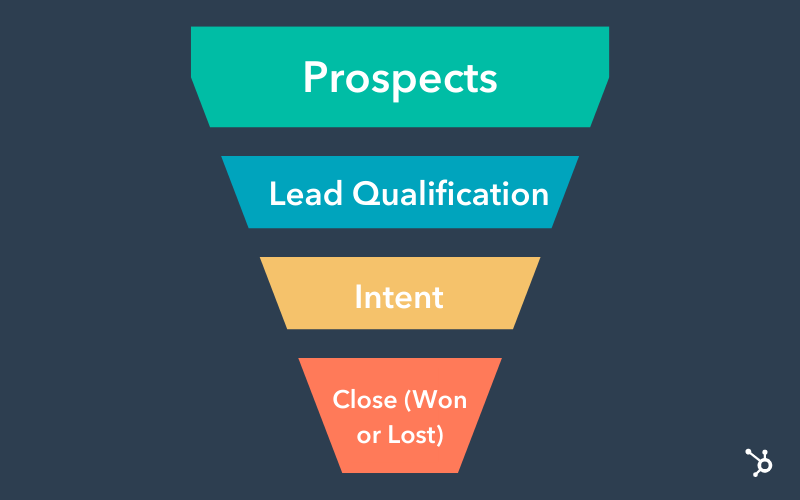
Prospects

The prospects stage is the most general and involves broadly identifying potential prospects from the market at large. The goal here isn’t to make a sale on day one but rather to raise awareness of your brand to help potential customers understand that you don’t just deliver a product, you deliver a service that’s continually supported over time.

This stage of the funnel is also known as TOFU, or Top of the Funnel.

Lead Qualification

The next stage in the SaaS sales funnel is sales qualifaciton. This focuses on vetting leads obtained in the first stage: Are they interested in your SaaS solutions? Do they have the budget and decision-making authority to purchase your product? Qualified leads help sales teams boost win rates; unqualified leads can waste time for marketers, sales teams, and customers themselves.

Intent

Intent speaks to the portion of the funnel which sees leads activity looking to learn more about your SaaS solution and draft an agreement. In this stage, your sales teams are looking to connect more deeply with prospects and answer any questions they have, ASAP.

Both lead qualification and intent fall into the middle of the funnel, or MOFU.

Close (Won or Lost)

The last stage of the sales funnel is closing. Also known as BOFU or bottom of the funnel, closing isn’t always a win — your team could almost close the deal and find themselves frustrated at the last moment.

It’s also worth noting that closing in SaaS sales isn’t an end state but rather the beginning of a relationship. Ideally, your sales team wants to negotiate an agreement that sees customers purchase initial services and come back for contract extensions time and time again.

Ready to start optimizing your SaaS sales funnel? Here are eight ways to improve.

1. Boost Awareness with TOFU

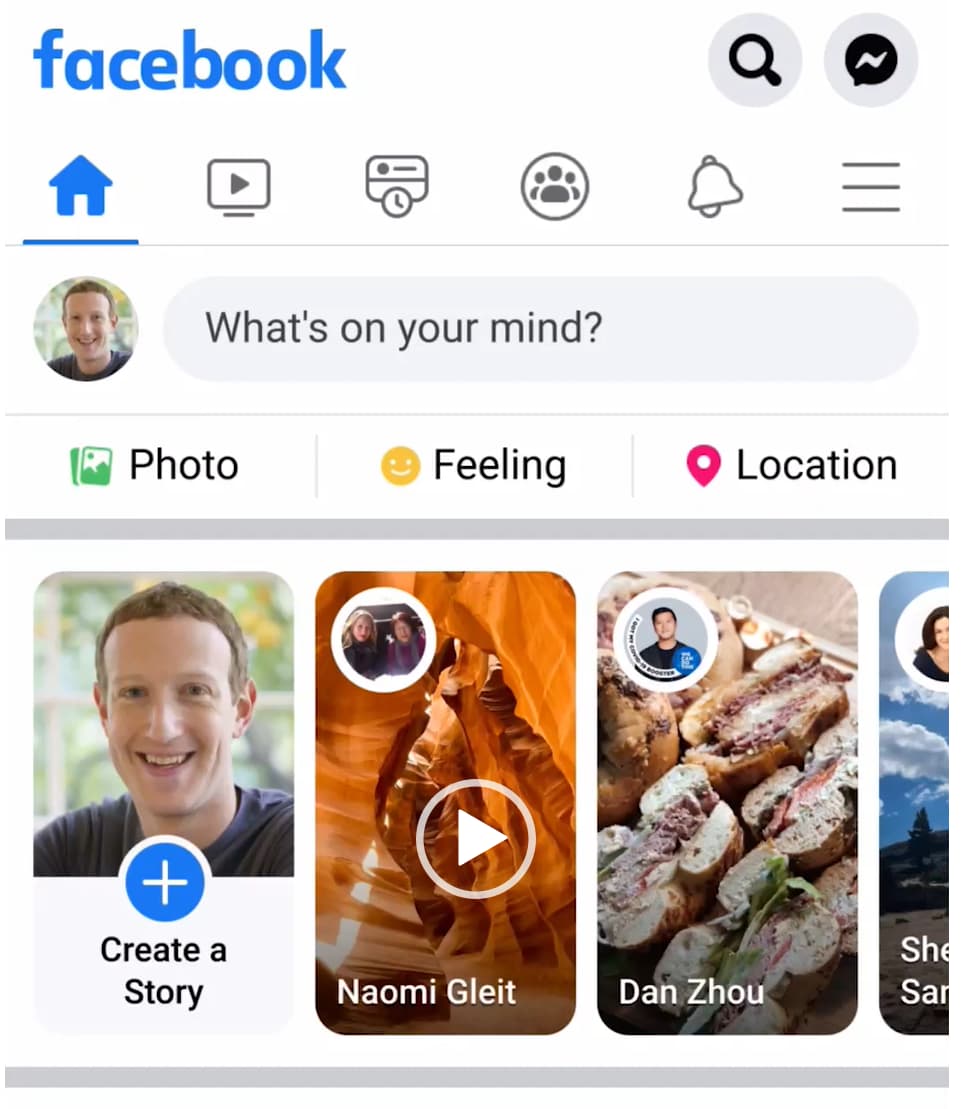
TOFU content is designed to promote awareness of what your product can do and encourage prospective buyers to get in touch. Consider the example below of Adobe’s Creative Cloud on Facebook. The company offers a slick video along with a link to on-demand video content that dives into the use of 3D art tools — which Adobe just happens to sell — and how they’re impacting automotive design.

Other TOFU approaches include how-to guides, tutorials, and multichannel social media campaigns.

2. Optimize Your Content

Content optimization takes place within 3 specific content generation tactics: utilizing a multi-channel messaging strategy, improving thought leadership positioning, and segmenting the content’s delivery.

The goal here is to connect with potential customers and give them a more in-depth look at what your brand does and what sets it apart from the competition.

3. Target the Most Valuable Leads

The first tier of funnel optimization suggests that marketers focus on targeting the most valuable leads by examining how customers sought the information to begin with. Value propositions that resonate with select groups will facilitate the differentiation of these targets. This can be the most effective when exemplified by website design, management, and optimization.

4. Qualify Leads

On average, only 27% of B2B inquiries are qualified before they are given to the sales team. This is a problem since unqualified leads are far less likely to drive conversion. As a result, it’s worth taking the time to ensure leads have the intent and authority to make purchasing decisions.

5. Improve Lead Nurturing

Now the spotlight moves to lead nurturing. Here, the goal is to engage with potential customers and provide answers to whatever questions they may have. The better your nurturing efforts, the more likely you’ll be able to close the deal and drive SaaS revenue.

6. Make the Most of MOFU

Middle of the Funnel efforts focus on intent. This goes beyond lead nurturing to dive into the details of conversion. From a SaaS perspective, this means working with B2B leads to determine their specific needs and design offerings that best align with their budget and business goals.

The more specific your team can get in discovering key pain points and potential remedies, the better your MOFU efforts.

7. Close the Deal and Keep Them Coming Back

Now it’s time to close the deal. This means presenting leads with a finished contract and service-level agreement (SLA) along with negotiating the length of the contract term. Depending on your SaaS model, you may offer a free trial or the option to cancel without penalty for the first few months.

While the best bet here is a long-term (one year or more) contract, B2B leaders may be reluctant to sign on the line for that long. No matter what the term length turns out to be, however, the underlying rule remains the same: Focus on over-delivering to exceed expectations to ensure businesses keep coming back.

Worth noting? Even lost deals offer a valuable lesson. Rather than simply chalking the experience up to bad luck, it’s a good idea to hold a team debrief to discover where sales funnel processes worked as intended and where improvements could be made.

8. Measure Success

Once you have optimized to this point, on average, 20% of your leads will have converted into sales. This number is even more important when you realize only 32% of organizations have actually identified their marketing funnels.

As a result, it’s critical to measure both current and historic success rates to see if you’re heading in the right direction. If not, it’s a good idea to assess your B2B SaaS sales funnel approach and make changes as needed.

Facilitating Funnel Functions

The concept behind the sales funnel is straightforward: Capture broad leads at the top and then refine these leads at each step to drive conversion.

In practice, however, funneling can be both time- and resource-intensive, especially for B2B SaaS connections. With an approach that targets valuable leads, highlights your ongoing value proposition, and quantifies success over time, your brand can boost funnel function and win more long-term deals.

Editor’s note: This post was originally published in August 2011 and has been updated for comprehensiveness.

sales plan

Categories B2B

29 Companies With Really Catchy Slogans & Brand Taglines

Keep it simple, stupid.

We don’t mean to offend you — this is just an example of a great slogan that also bears the truth of the power of succinctness in advertising. It’s incredibly difficult to be succinct, and it’s especially difficult to express a complex emotional concept in just a couple of words — which is exactly what slogans and taglines do.

Free Download: Slogan Writing Guide and Examples

That’s why we have a lot of respect for the brands that have done it right. These are the companies that have figured out how to convey their value propositions to their buyer personas in just one, short sentence — and a quippy one, at that.

So if you’re looking to get a little slogan inspiration of your own, take a look at some of our favorite company slogans and taglines from both past and present. But before we get into specific examples, let’s quickly go over what a slogan is, how it differs from a tagline, and what makes these branded one-liners stand out.

What Is a Slogan?

In business, a slogan is “a catchphrase or small group of words that are combined in a special way to identify a product or company,” according to Entrepreneur.com’s small business encyclopedia.

In many ways, they’re like mini-mission statements.

Companies have slogans for the same reason they have logos: advertising. While logos are visual representations of a brand, slogans are audible representations of a brand. Both formats grab consumers’ attention more readily than a company’s name or product might. Plus, they’re simpler to understand and remember.

The goal? To leave a key brand message in consumers’ minds so that, if they remember nothing else from an advertisement, they’ll remember the slogan.

What Makes a Great Slogan?

According to HowStuffWorks, a great slogan has most, or all, of the following characteristics:

1. It’s memorable.

Is the slogan quickly recognizable? Will people only have to spend a second or two thinking about it? A brief but strong few words can go a long way in advertisements, videos, posters, business cards, swag, and other places.

2. It includes a key benefit.

Ever heard the marketing advice, “Sell the sizzle, not the steak”? It means sell the benefits, not the features — which applies perfectly to slogans. A great slogan makes a company or product’s benefits clear to the audience.

3. It differentiates the brand.

Does your light beer have the fullest flavor? Or maybe the fewest calories? What is it about your product or brand that sets it apart from competitors? (Check out our essential branding guide here.)

4. It imparts positive feelings about the brand.

The best taglines use words that are upbeat. For example, Reese’s Peanut Butter Cups’ slogan, “Two great tastes that taste great together,” gives the audience good feelings about Reese’s, whereas a slogan like Lea & Perrins’, “Steak sauce only a cow could hate,” uses negative words. We could argue that the former leaves a better impression on the audience.

Slogan vs. Tagline

Although both “slogan” and “tagline” tend to be used interchangeably, they actually serve two different purposes.

As we mentioned in Entrepreneur.com’s definition above, a slogan identifies a product or company. So does a tagline, for that matter. Where these terms differ is in how they position a company in its industry.

  • A slogan encompasses a company’s mission, what it stands for, and even how it’s helping customers in the individual campaigns the company might run. Slogans can therefore be longer than taglines, as you’ll see in the list below.
  • A tagline is a catchy quip that evokes an image of your brand in the minds of your customers. Taglines enable people to make lighthearted associations with your business: “When I see [tagline], I think [company].”
Featured Resource: 60 Slogan Writing Tips & Examples

brand slogans

Download the Free Guide

Taglines are more often next to the company’s logo on official advertisements and are dedicated more specifically to brand awareness than slogans. Slogans carry a brand’s values and promises as the company grows and evolves, and can be promoted under an overarching company tagline.

Your organization doesn’t have to develop both a slogan and a tagline — it might succeed with just a solid, recognizable tagline. But as you develop new products and identify new types of customers, you might find your brand launching a campaign that is primed for its own slogan.

Now that we’ve covered what a slogan is and what makes one great, here are examples of some of the best brand slogans of all time.

When you want a brand slogan you want to make sure they are memorable and that they bring your brand to life. The right slogan will have key words that encapsulate what your brand is so that consumers will always have it in the back of their heads. Below we have listed some business slogans that range from fast food, cars, essential items, pet essentials, etc. to show that a good slogan encapsulates being concise, catchy, and classic.

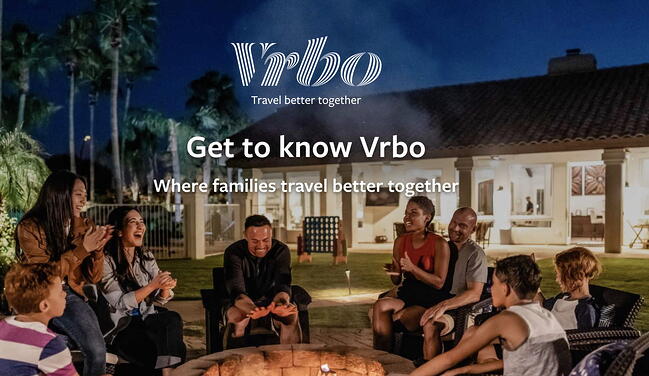
1. VRBO: Where Families Travel Better Together
What is a slogan example: VRBOImage Source

Vacation rental company VRBO has successfully carved out a family-friendly niche within the hospitality sector. Their slogan and corresponding tagline ‘Travel Better Together’ work to drive their mission: to find every family a space to relax, reconnect and enjoy their time together.

VRBO’s tagline is not only catchy, but its focus on families sets them apart from the competition in the vacation rental space.

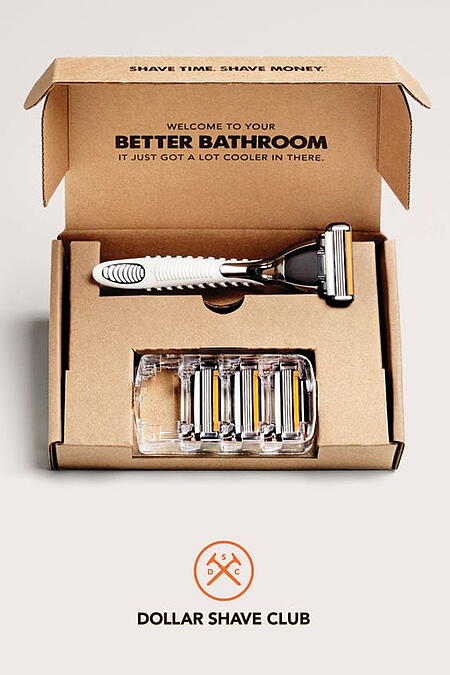
2. Dollar Shave Club: “Shave Time. Shave Money.”
Dollar Shave ClubImage Source

The folks at Dollar Shave Club have made their way onto quite a few of our lists here on the blog, and it’s safe to say that when it comes to marketing and advertising, this brand’s team knows what it’s doing. And its slogan — “Shave Time. Shave Money.” — is an excellent reflection of their expertise.

This little quip cleverly incorporates two of the service’s benefits: cost and convenience. It’s punny, to the point, and it perfectly represents the overall tone of the brand.

3. MasterCard: “There are some things money can’t buy. For everything else, there’s MasterCard.”
Catchy Business Slogans and Taglines Slogans: MastercardImage Source

MasterCard’s two-sentence slogan was created in 1997 as a part of an award-winning advertising campaign that ran in 98 countries and 46 languages. The very first iteration of the campaign was a TV commercial that aired in 1997: “A dad takes his son to a baseball game and pays for a hot dog and a drink, but the conversation between the two is priceless,” wrote Avi Dan for Forbes.

“In a sense, ‘Priceless’ became a viral, social campaign years before there was a social media,” Dan explained. Today, “Priceless” is widely considered MasterCard’s tagline — borne out of the longer mission-focused slogan stated above.

One key to this campaign’s success? Each commercial elicits an emotional response from the audience. That first TV commercial might remind you of sports games you went to with your dad, for example. Each advertisement attempted to trigger a different memory or feeling. “You have to create a cultural phenomenon and then constantly nurture it to keep it fresh,” MasterCard CMO Raja Rajamannar told Dan. And nostalgia marketing like that can be a powerful tool.

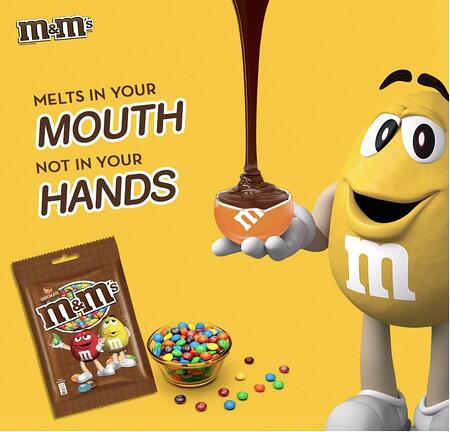
4. M&M: “Melts in Your Mouth, Not in Your Hands”
Catchy Business Slogans and Taglines Slogans: M&M'sImage Source

Here’s one brand that didn’t need much time before realizing its core value proposition. At the end of the day, chocolate is chocolate. How can one piece of chocolate truly stand out from another? By bringing in the convenience factor, of course.

This particular example highlights the importance of finding something that makes your brand different from the others — in this case, the hard shell that keeps chocolate from melting all over you.

5. De Beers: “A Diamond is Forever”

Business slogan example: DeBeersImage Source

Diamonds aren’t worth much inherently. In fact, a diamond is worth at least 50% less than you paid for it the moment you left the jewelry store. So how did they become the symbol of wealth, power, and romance they are in America today? It was all because of a brilliant, multifaceted marketing strategy designed and executed by ad agency N.W. Ayer in the early 1900s for their client, De Beers.

The four, iconic words “A Diamond is Forever” have appeared in every single De Beers advertisement since 1948, and AdAge named it the best slogan of the century in 1999. It perfectly captures the sentiment De Beers was going for: that a diamond, like your relationship, is eternal. It also helped discourage people from ever reselling their diamonds. (Mass reselling would disrupt the market and reveal the alarmingly low intrinsic value of the stones themselves.) Brilliant.

6. Meow Mix: “Tastes So Good, Cats Ask for It by Name”
Catchy Business Slogans and Taglines Slogans: Meow MixImage Source

Meow meow meow meow … who remembers this catchy tune sung by cats, for cats, in Meow Mix’s television commercials? The brand released a simple but telling slogan: “Tastes So Good, Cats Ask For It By Name.”

This slogan plays off the fact that every time a cat meows, s/he is actually asking for Meow Mix. It was not only clever, but it also successfully planted Meow Mix as a standout brand in a cluttered market.

7. The U.S. Marine Corps: “Semper Fi”

Semper Fi, short for “Semper Fidelis,” is Latin for “always faithful” or “always loyal.” The saying has long been the official motto of the U.S. Marine Corps and is used to represent them in public appearances and the Marines’ official seal.

What makes “Semper Fi” a great slogan for the Marines? It reveals the Marines’ defining characteristics in the armed forces — faithfulness and loyalty. It’s also a memorable proverb that explains why this organization can be counted on by the public.

8. Allstate: “You’re in Good Hands With Allstate”
Catchy Business Slogans and Taglines Slogans: AllstateImage Source

If there’s one thing people want from an insurance company, it’s reliability. Who wouldn’t be put at ease after hearing “You’re in good hands wiht Allstate?” It’s worked so well the slogan has been in service for nearly six decades.

Davis Ellis came up with slogan in 1950 after his daughter had a health scare. Remembering how being told “JoAnn (his daughter) is in good hands with Dr. Keyser” relieved his anxiety, Ellis was inspired to use the phrase in an ad campaign. Variations of this phrase have been used in the company slogan ever since.

9. Ronseal: “It Does Exactly What It Says on the Tin.”
Catchy Business Slogans and Taglines Slogans: RonsealImage Source

Ronseal is a wood stain and dye manufacturer from the United Kingdom, and its 20-year-old slogan is perfect for the humble message the company is known for.

Ronseal’s slogan doesn’t go above and beyond. It doesn’t make lofty promises to its customers. It simply endorses a functional product. So why is this slogan so catchy? Because its lack of volume actually speaks volumes to its audience. Too many companies try to break through the noise of their competitors by being so loud and ambitious, they forget what they stood for in the first place. Ronseal saw true value in basic reliability and founded a slogan that allowed the company to stay right where its customers like it.

10. The Mosaic Company: “We Help the World Grow the Food It Needs”
Catchy Business Slogans and Taglines Slogans: MosaicImage Source

The Mosaic Company’s slogan also happens to be its mission statement, which guarantees that this fertilizer maker’s brand strategy aligns with the company’s main interests.

Something all slogans should strive to do is look past the needs of the company, or even its users, and describe how the product or service helps the community. In this way, “We Help the World Grow the Food It Needs” is a heavy slogan that expresses not just what The Mosaic Company wants for its customers, but also what it wants for the public.

11. Pitney Bowes: “We Power Transactions That Drive Commerce”
what is a slogan example: Pitney BowesImage Source

Pitney Bowes, the mailing and shipping software provider, has a slogan that follows a similar theme as The Mosaic Company in the section above: It’s focused not on the end user, but on the industry.

Pitney Bowes’ slogan shows us that its products don’t just help businesses track and deliver merchandise — it makes the entire ecommerce community more efficient. It’s a good strategy, considering the alternative. How lame would the company’s slogan be if it were “We Power Transactions That Serve Our Clients’ Bottom Line”?

Taglines

When creating your brand tagline you want to have a tagline that explains the essence of the value you provide to your customer using one to two sentences. A tagline is a great way to understand what your business does for your customers. The right tagline will be concise yet brings out the essence of what the business is. Below we have listed some business taglines that encapsulate being concise while telling the value of the business.

12. Target: “Expect More. Pay Less.”
What is a slogan example: TargetImage Source

Target has been using its tagline since 1994 and the brand has developed a dedicated following ever since. Its stores and branding makes people feel like it’s cut above the competition.

This tagline embodies the experience of shopping at Target. From home goods to toiletries to clothing — it all can be found at Target and for a great price without feeling like low budget store.

13. Verizon: “5G Built Right”
Catchy Business Slogans and Taglines Slogans: VerizonImage Source

Here’s another brand that took its time coming up with something that truly resonated with its audience. Verizon’s previous slogan “Can you hear me now” was created in 2002 under the umbrella of the tagline, “We never stop working for you.” Now with Verizon has switched things up with “5G Built Right” to mark themselves as the first to launch a 5G network .

While Verizon was founded in 1983, it continued to battle against various phone companies like AT&T and T-Mobile, still two of its strongest competitors. But what makes Verizon stand out? No matter where you are, you have service. You may not have the greatest texting options, or the best cell phone options, but you will always have service.

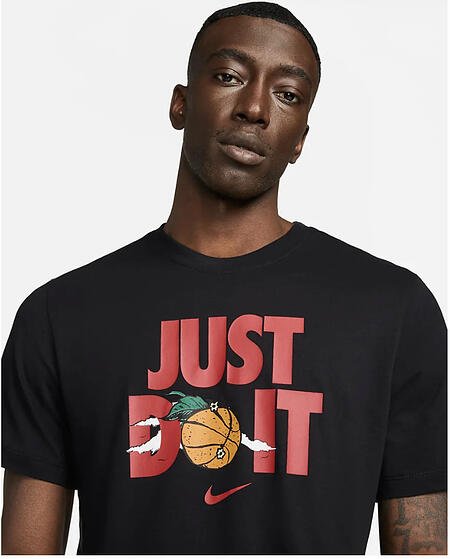
14. Nike: “Just Do It”
Best brand tagline examples: NikeImage Source

Now, for the more well-known Nike message. “Just Do It” hovers over every product and event Nike creates or sponsors, and that’s exactly what makes it the company’s official tagline.

It didn’t take long for Nike’s message to resonate. The brand became more than just athletic apparel — it began to embody a state of mind. It encourages you to think that you don’t have to be an athlete to be in shape or tackle an obstacle. If you want to do it, just do it. That’s all it takes.

But it’s unlikely Kennedy + Weiden, the agency behind this tagline, knew from the start that Nike would brand itself in this way. In fact, Nike’s product used to cater almost exclusively to marathon runners, which are among the most hardcore athletes out there. The “Just Do It” campaign widened the funnel, and it’s proof positive that some brands need to take their time coming up with a tagline that reflects their message and resonates with their target audience

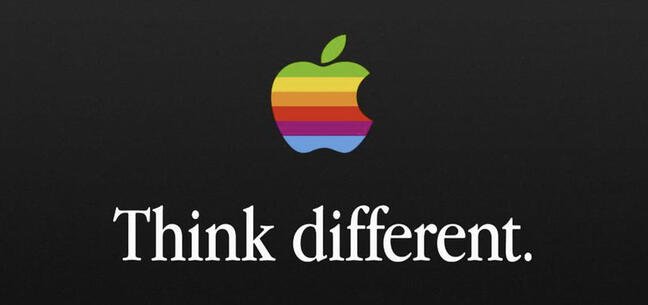
15. Apple: “Think Different.”
Best brand tagline examples: AppleImage Source

This tagline was first released in the Apple commercial called “Here’s to the Crazy Ones, Think Different” — a tribute to all the time-honored visionaries who challenged the status quo and changed the world. The phrase itself is a bold nod to IBM’s campaign “Think IBM,” which was used at the time to advertise its ThinkPad.

Soon after, the tagline “Think Different” accompanied Apple advertisements all over the place, even though Apple hadn’t released any significant new products at the time. All of a sudden, people began to realize that Apple wasn’t just any old computer; it was so powerful and so simple to use that it made the average computer user feel innovative and tech-savvy.

According to Forbes, Apple’s stock price tripled within a year of the commercial’s release. Although the tagline has been since retired, many Apple users still feel a sense of entitlement for being among those who “think different.”

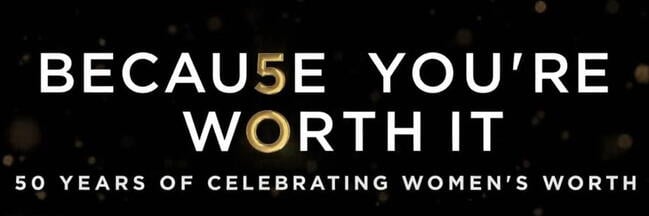
16. L’Oréal: “Because You’re Worth It”
Best brand tagline examples: L'OrealImage Source

Who doesn’t want to feel like they’re worth it? The folks at L’Oréal worked with the theory that women wear makeup in order to make themselves appear “beautiful” so they feel desirable, wanted, and worth it. The tagline isn’t about the product — it’s about the image the product can get you. This message allowed L’Oréal to push its brand further than just utility so as to give the entire concept of makeup a much more powerful message.

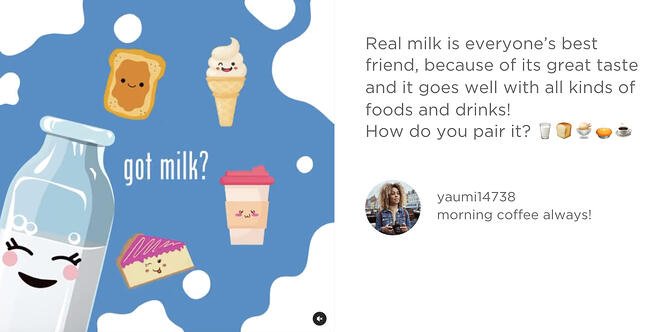
17. California Milk Processor Board: “Got Milk?”
Best brand tagline examples Got MilkImage Source

While most people are familiar with the “Got Milk?” campaign, not everyone remembers that it was launched by the California Milk Processor Board (CMPB). What’s interesting about this campaign is that it was initially launched to combat the rapid increase in fast food and soft beverages: The CMPB wanted people to revert to milk as their drink of choice in order to sustain a healthier life. The campaign was meant to bring some life to a “boring” product, ad executives told TIME Magazine.

The simple words “Got Milk?” scribbled above celebrities, animals, and children with milk mustaches, which ran from 2003 until 2014 — making this campaign one of the longest-lasting ever. The CMPB wasn’t determined to make its brand known with this one — it was determined to infiltrate the idea of drinking milk across the nation. And these two simple words sure as heck did.

18. BMW: “Sheer Driving Pleasure”

Best brand tagline examples: BMWImage Source

BMW sells cars all over the world, but in North America, it was known for a long time by its tagline, “The Ultimate Driving Machine.” This phrase was created in the 1970s by a relatively unknown ad agency named Ammirati & Puris and was, according to BMW’s blog, directed at Baby Boomers who were “out of college, making money and ready to spend their hard-earned dollars. What better way to reflect your success than on a premium automobile?”

The newer tagline, “Sheer Driving Pleasure,” is intended to reinforce the message that its cars’ biggest selling point is that they are performance vehicles that are thrilling to drive. That message is an emotional one and one that consumers can buy into to pay the high price point.

19. Tesco: “Every Little Helps”
Best brand tagline examples: TESCOImage Source

“Every little helps” is the kind of catchy tagline that can make sense in many different contexts — and it’s flexible enough to fit in with any one of Tesco’s messages. It can refer to value, quality, service, and even environmental responsibility — which the company practices by addressing the impacts of their operations and supply chain.

It’s also, as Naresh Ramchandani wrote for The Guardian, “perhaps the most ingeniously modest” slogan or tagline ever written. Tesco markets itself as a brand for the people, and a flexible, modest far-reaching slogan like this one reflects that beautifully.

20. Bounty: “The Quicker Picker Upper”
Best brand tagline examples: Bounty

Image Source

Bounty paper towels, made by Procter & Gamble, has used its catchy tagline “The Quicker Picker Upper” for almost 50 years now. If it sounds like one of those sing-songy play on words you learned as a kid, that’s because it is one: The tagline uses what’s called consonance — a poetic device characterized by the repetition of the same consonant two or more times in short succession (think: “pitter patter”).

Over the years, Bounty has moved away from this tagline in full, replacing “Quicker” with other adjectives, depending on the brand’s current marketing campaign — like “The Quilted Picker Upper” and “The Clean Picker Upper.” Although the brand is branching out into other campaigns, they’ve kept the theme of their original, catchy tagline.

21. Lay’s: “Betcha Can’t Eat Just One.”
Best brand tagline examples: LaysImage Source

Seriously, who here has ever had just one chip? While this tagline might stand true for other snack companies, Lay’s was clever to pick up on it straight away. The company tapped into our truly human incapability to ignore crispy, salty goodness when it’s staring us in the face. Carbs, what a tangled web you weave.

But seriously, notice how the emphasis isn’t on the taste of the product. There are plenty of other delicious chips out there. But what Lay’s was able to bring forth with its tagline is that totally human, uncontrollable nature of snacking until the cows come home.

22. Audi: “Vorsprung durch technik” (“Advancement Through Technology”)

Best brand tagline examples: AudiImage Source

“Vorsprung durch technik” has been Audi’s main German tagline everywhere in the world since 1971 (except for the United States, where the slogan is “Truth in Engineering”). While the phrase has been translated in several ways, the online dictionary LEO translates “Vorsprung” as “advance” or “lead” as in “distance, amount by which someone is ahead in a competition.” Audi roughly translates it as: “Advancement through technology.”

The first-generation Audio 80 (B1 series) was launched a year after the tagline in 1972, and the new car was a brilliant reflection of that tagline with many impressive new technical features. It was throughout the 1970s that the Audi brand established itself as an innovative car manufacturer, such as with the five-cylinder engine (1976), turbocharging (1979), and the quattro four-wheel drive (1980). This is still reflective of the Audi brand today.

23. Dunkin’: “America Runs on Dunkin”
Best brand tagline examples: DunkinImage Source

In April 2006, Dunkin’ Donuts launched the most significant repositioning effort in the company’s history by unveiling a brand new, multi-million dollar advertising campaign under the tagline “America Runs on Dunkin.” The campaign revolves around Dunkin’ Donuts coffee keeping busy Americans fueled while they are on the go.

“The new campaign is a fun and often quirky celebration of life, showing Americans embracing their work, their play and everything in between — accompanied every step of the way by Dunkin’ Donuts,” read the official press release from the campaign’s official launch.

Ten years later, what the folks at Dunkin Donuts’ realized they were missing was their celebration of and honoring their actual customers. That’s why, in 2016, they launched the “Keep On” campaign, which they call their modern interpretation of the ten-year tagline.

“It’s the idea that we’re your partner in crime, or we’re like your wingman, your buddy in your daily struggle and we give you the positive energy through both food and beverage but also emotionally, we believe in you and we believe in the consumer,” said Chris D’Amico, SVP and Group Creative Director at Hill Holiday.

Fun fact: Dunkin’ Donuts rebranded itself — and named itself Dunkin’ in 2018 while releasing new packaging in 2019. One store in Pasadena, California is called, simply, Dunkin’.

24. McDonald’s: “I’m Lovin’ It”
Best brand tagline examples: McDonaldsImage Source

The “I’m Lovin’ It” campaign was launched way back in 2003 and still stands strong today. This is a great example of a tagline that resonates with the brand’s target audience. McDonald’s food might not be your healthiest choice, but being healthy isn’t the benefit McDonald’s is promising — it’s that you’ll love the taste and the convenience.

Fun fact: The jingle’s infamous hook — “ba da ba ba ba” — was originally sung by Justin Timberlake.

25. The New York Times: “All the News That’s Fit to Print”
Best brand tagline examples: NYTImage Source

This one is my personal favorite. The tagline was created in the late 1890s as a movement of opposition against other news publications printing lurid journalism. The New York Times didn’t stand for sensationalism. Instead, it focused on important facts and stories that would educate its audience. It literally deemed its content all the real “news fit to print.”

This helped the paper become more than just a news outlet, but a company that paved the way for credible news. The company didn’t force a tagline upon people when it first was founded, but rather, it created one in a time where it was needed most.

26. General Electric: “Imagination at Work”
Best brand tagline examples: GEImage Source

You may remember General Electric’s former tagline, “We Bring Good Things to Life,” which was initiated in 1979. Although this tagline was well-known and well-received, the new tagline — “Imagination at Work” — shows how a company’s internal culture can revolutionize how they see their own brand.

“‘Imagination at Work’ began as an internal theme at GE,” recalled Tim McCleary, GE’s manager of corporate identity. When Jeff Immelt became CEO of GE in 2001, he announced that his goal was to reconnect with GE’s roots as a company defined by innovation.

This culture and theme resulted in a rebranding with the new tagline “Imagination at Work,” which embodies the idea that imagination inspires the human initiative to thrive at what we do.

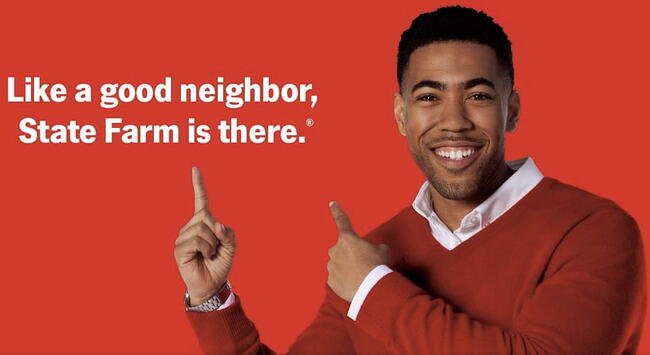
27. State Farm: “Like a good neighbor, State Farm is there.”
Best brand tagline examples: State FarmImage Source

The insurance company State Farm has a number of taglines, including “Get to a better State” and “No one serves you better than State Farm.” Additionally, the company updated its tagline to “We’re here to help life go right.”

But State Farm’s most famous tagline is the jingle, “Like a good neighbor, State Farm is there,” which you’re likely familiar with if you live in the United States and watch television.

These words emphasize State Farm’s “community-first” value proposition — which sets it apart from the huge, bureaucratic feel of most insurance companies. And it quickly establishes a close relationship with the consumer.

Often, customers need insurance when they least expect it — and in those situations, State Farm is responding in friendly, neighborly language.

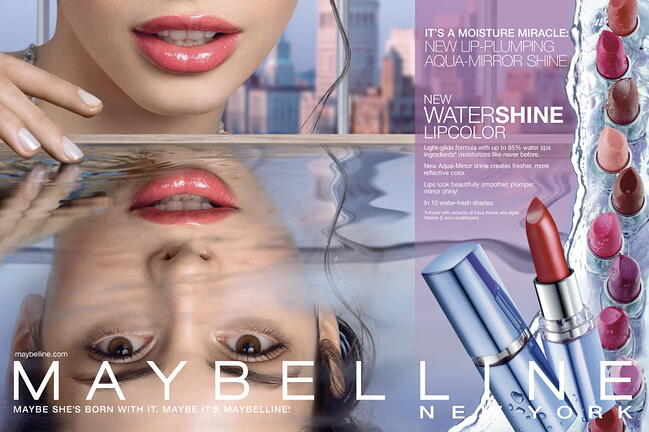
28. Maybelline: “Maybe she’s born with it. Maybe it’s Maybelline.”
Best brand tagline examples: MaybellineImage Source

Can you sing this jingle in your head? Maybelline’s former tagline, created in the 1990s, is one of the most famous in the world. It makes you think of glossy magazine pages featuring strong, beautiful women with long lashes staring straight down the lens. It’s that confidence that Maybelline’s makeup brand is all about — specifically, the transformation into a confident woman through makeup.

Maybelline changed its tagline to “Make IT Happen” in February 2016, inspiring women to “express their beauty in their own way.” Despite this change, the former tagline remains powerful and ubiquitous, especially among the many generations that grew up with it.

29. The U.S. Marine Corps: “The Few. The Proud. The Marines.”
Best brand tagline examples: MarinesImage Source

While “Semper Fi” is one the U.S. Marine Corps’ most coveted slogans (or, more officially, mottos), it has had a handful of top-notch recruiting taglines over the decades as well. These include “First to fight” starting in World War I, to “We’re looking for a few good men” from the 1980s.

However, we’d argue that “The Few. The Proud. The Marines.” is among the best organization taglines out there.

This tagline “underscores the high caliber of those who join and serve their country as Marines,” said Maj. Gen. Richard T. Tryon, former commanding general of Marine Corps Recruiting Command. In 2007, it even earned a spot on Madison Avenue’s Advertising Walk of Fame.

A catchy slogan and tagline will make a difference in your business.

Now that you have delved into some classic and catchy slogans and taglines, it’s time to set your business up for success. Remember a slogan and a tagline are similar but a slogan is used to sell an item whereas a tagline brings awareness to the item while being concise, catchy, and classic. Both are essential when making sure your business will remain in the minds of consumers.

Editor’s note: This post was originally published in July 2020 and has been updated for comprehensiveness.
Free Resource: How to Reach & Engage Your Audience on Facebook

Categories B2B

12 Best Social Media Marketing Courses to Take Online [Free & Paid]

Taking a social media marketing course will help you level-up your existing skills or jumpstart a career in marketing management. And this is a good time: According to the Bureau of Labor Statistics, a 10% rate of job growth is expected for marketing managers from 2020 to 2030.

To help you stand out from your competition in the hiring process, as well as feel entirely confident in your ability to perform in your social media role, you’ll want to take a social media course.

Click Here to Take HubSpot Academy's Social Media Marketing Certification  Course

In this blog post, we’ll cover some of the best social media marketing courses that are available today.

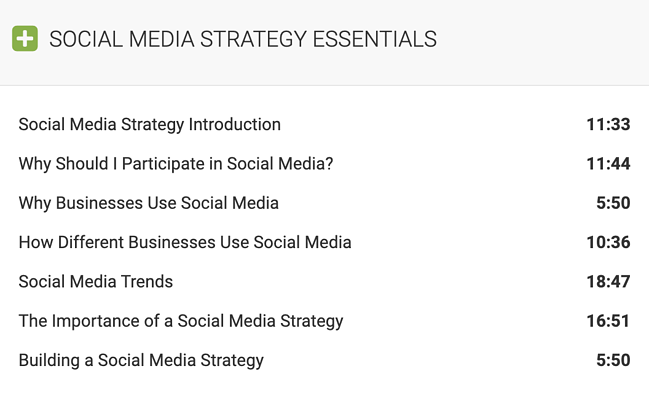
1. Social Media Certification by HubSpot

hubspot academy social media certification

Creator: HubSpot

Platform: HubSpot Academy

Price: Free

Skill Level: Intermediate

One-Sentence Summary: Learn how to create an inbound social media marketing strategy.

HubSpot’s social media certification course is a robust program designed to help you attract customers and partners, and build brand loyalty. Because social media is the key to inbound marketing, this course ties in the two concepts seamlessly.

The course is flexible enough so that you can work on it on your time. It covers essential topics such as measuring ROI, extending reach, social media content creation, and social listening. You might also select to take specific lessons within the HubSpot Academy course — for instance, this one on Social Media Advertising.

You’ll learn:

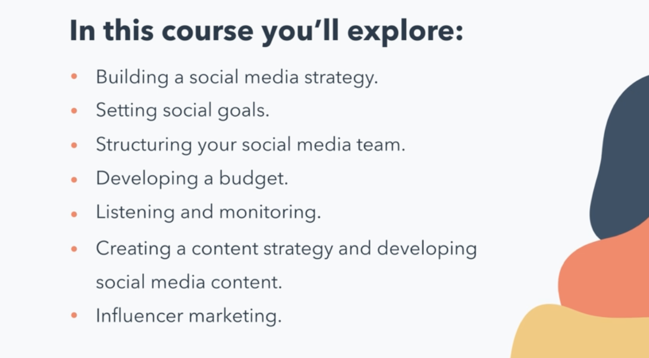
  • How to develop a social media marketing strategy to generate brand awareness for your business
  • How to use social media listening to find out what works best for your followers
  • How to extend your reach on social and leverage influencers to attract new audiences
  • How to get the most out of your social media investments

Recommended for:

Because this course immediately jumps into social media strategy, we recommend it for new social media marketing managers who’ve recently been promoted from a junior-level role. Some experience in social media is recommended.

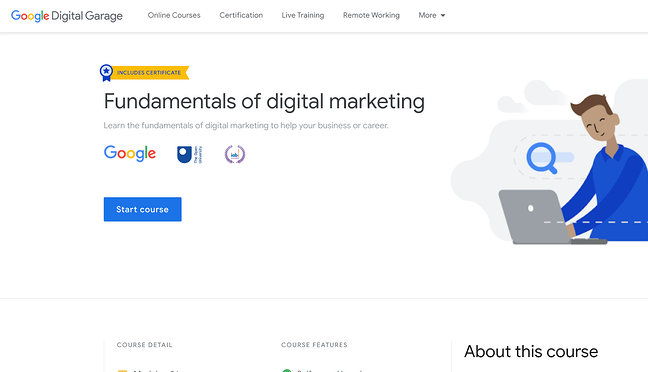
2. Fundamentals of Digital Marketing by Google

social media marketing course: google

Creator: Google

Platform: Google Digital Garage

Price: Free

Skill Level: Beginner

One-Sentence Summary: Better understand digital marketing basics across a wide variety of disciplines, including social media marketing.

Google’s digital marketing certification has over 300,000 students and includes two social media modules to jumpstart your social media marketing knowledge. It also provides digital marketing courses in mobile marketing, SEO, content marketing, and web optimization.

The courses explain paid and organic search and teach you how to develop search-engine-optimized web pages.

Learning how to optimize pages for search on a popular search engine (for free) sounds like a win-win. At the completion of the course, you’ll receive a digital certificate you can add to your LinkedIn profile and resume.

You’ll learn:

  • How to master a wide array of digital marketing basics, such as search optimization, content marketing, and local marketing
  • How to get started with social media if you’ve never done it before
  • How to set goals for your chosen social media platforms
  • How to create a sustainable long-term social strategy

Recommended for:

Because this course covers everything related to digital marketing, it’s recommended for true beginners who’ve never been in marketing before and who’d like to learn a bit of everything (including social media marketing).

3. PPC University by WordStream

social media marketing course: ppc university

Creator: WordStream

Platform: WordStream

Price: Free

Skill Level: Intermediate

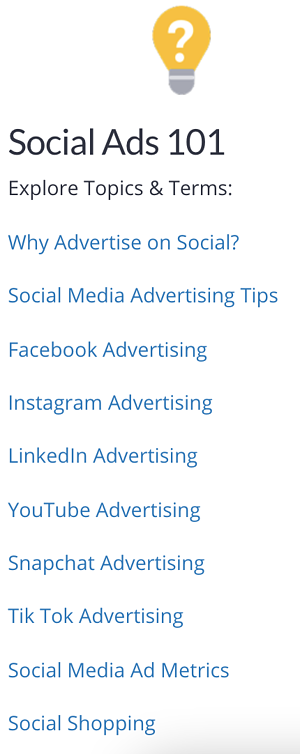
One-Sentence Summary: Learn about social ads on the major platforms including Instagram, Facebook, YouTube, Snapchat, Tik Tok, and LinkedIn.

WordStream offers the necessary educational resources to develop a strong understanding of social media advertisements. This includes social media ads on a variety of platforms such as Instagram, Facebook, YouTube, Snapchat, Tik Tok, and LinkedIn.

There’s also information about why and how to advertise on social media, as well as education around best practices while advertising across these platforms.

Lastly, you’ll learn about social media ad metrics and social shopping — this way, you can effectively measure your success as well as reach your audience when and where they’re ready to make a purchase.

You’ll learn:

  • How to get started with pay-per-click marketing across a wide variety of platforms, including social media
  • How to create a social ad strategy for your preferred platform
  • Why you should invest in social media ads
  • How to measure your success with ad metrics

Recommended for:

We recommend this course for social media marketing managers who are interested in launching a paid ads strategy on social media. It’s also a great fit for you if you prefer to learn at your own pace by reading written guides (as opposed to watching videos).

4. Social Media Specialization by Northwestern University

social media marketing course: northwestern

Creator: Northwestern University

Platform: Coursera

Price: Free

Skill Level: Beginner

One-Sentence Summary: Learn everything you need to get started in social media marketing.

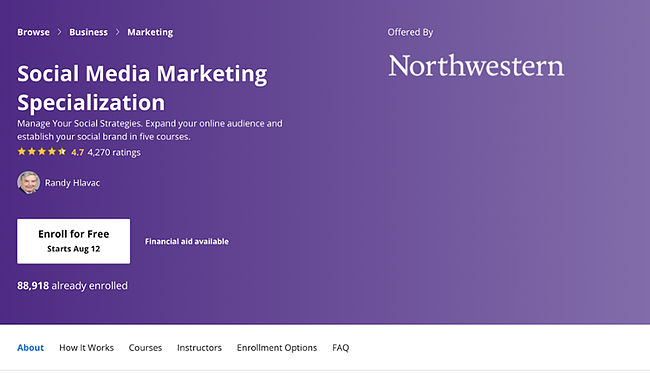
Coursera is a great educational resource for beginners and those who are new to the world of social media marketing. This course by Northwestern University teaches you the social strategies you need to expand your reach and grow your followers. It touches upon social listening and lead nurturing, which most other courses don’t touch upon. This is important because lead nurturing is often associated with email marketing, but it can also be done (and should be done) over social media.

You’ll learn:

  • What social media is
  • Why you need to create a social listening strategy
  • How to implement nurturing strategies in your social media marketing

Recommended for:

Because of its focus on lead nurturing and its foundational modules, we recommend this course for non-marketing professionals and early-stage founders who are interested in starting a social media strategy to grow their customer base.

5. Online Advertising & Social Media by the University of Maryland

social media marketing course: uc davis

Creator: University of Maryland

Platform: edX

Price: Free

Skill Level: Intermediate

One-Sentence Summary: Learn about online advertising, sentiment analysis, and social network analysis.

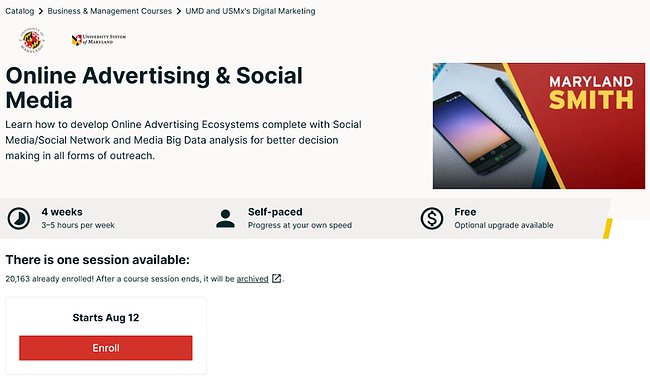
On edX, you can pick classes that suit your interests and save classes to refer to later. There is a variety of business topics you can take classes on. This course from the University of Maryland focuses on online advertising, and specifically on social media advertising.

Plus, it includes in instruction on data analysis so that you can make informed decisions when refining your social strategy over time.

You’ll learn:

  • Which platforms you can advertise on
  • How to measure the success of your campaigns
  • How to analyze your chosen social media networks
  • How to delve into Big Data for your social efforts

Recommended for:

We recommend this course for social media marketers who’d like to launch an advertising strategy. In addition, we recommend it for new social media analysts who need a strong foundation in social data analysis.

6. Social Media Marketing Course by Acadium

social media marketing course: acadium

Creator: Acadium

Platform: Acadium

Price: Free

Skill Level: Beginner

One-Sentence Summary: Get a full understanding of social media marketing while developing real-world experience in an apprenticeship.

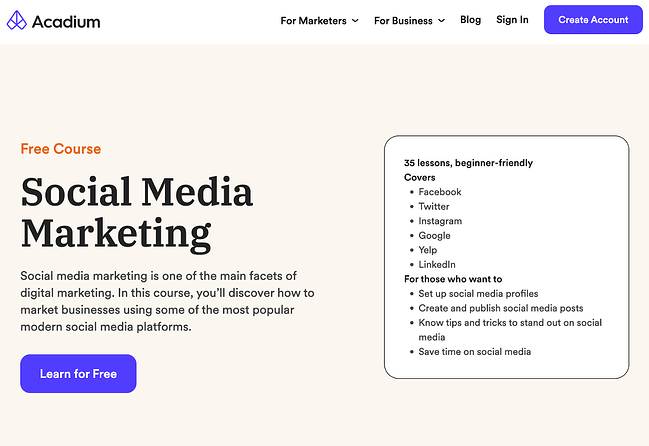
Acadium is an apprenticeship and mentorship program — there are a number of lessons within the social media marketing course that you can take before, after, or during your apprenticeship.

The courses offered cover an array of social media marketing topics, including how to set up profiles on your chosen platforms and how to save time as you scale your social media efforts.

You’ll learn:

  • How to get started with the most popular social media platforms, including Facebook, Twitter, and Instagram
  • How to publish posts
  • How to stand out from your competitors

Recommended for:

We recommend this course for true beginners who not only need a foundation of social media marketing in general, but also mentorship from Acadium’s group of mentors. Because it offers highly basic knowledge, we don’t recommend it for current marketers or social media managers.

7. Digital Marketing 101 by Boot Camp Institute

social media 101, social media marketing course by boot camp digital

Creator: Boot Camp Institute

Platform: Boot Camp Digital

Price: $197/year or $97/month

Skill Level: Beginner

One-Sentence Summary: Learn about digital marketing and work through a comprehensive section on social media marketing and strategy.

Digital Marketing 101 by Boot Camp Institute is an impactful, video-led training that takes you on a deep dive into the basics of digital marketing and using it for social media. This is beginner-level training and can be completed in six hours.

Boot Camp’s clientele includes Nike, NASA, GE, and Georgia-Pacific, and the platform gives buyers unlimited one-year access once purchased. It provides a digital marketing template, ROI information, benchmarking, and a bonus-free digital tools course.

You’ll learn:

  • How to get started with digital marketing across a variety of mediums and channels
  • Why you should create a social media strategy
  • Which social media trends to keep an eye on

Recommended for:

Because of its generalist approach, we recommend it for non-marketing professionals who’d like to learn all digital marketing strategies, including social media marketing.

8. Fundamentals of Digital Marketing, Social Media, and E-Commerce by The Wharton School

Fundamentals of Digital Marketing, Social Media, and E-Commerce wharton university of pennsylvania social media marketing course

Creator: The Wharton School, University of Pennsylvania

Platform: edX

Price: $585

Skill Level: Intermediate

One-Sentence Summary: Marketing course designed for business professionals.

Wharton’s course is considered an intermediate dive into the intersection of digital marketing, social media marketing, and ecommerce. It’s a self-paced, six-week class that requires three hours of your time each week.

This course is structured specifically for marketing professionals, small business owners, and consumers who want to know social media techniques. You’ll learn how to produce marketing campaigns that are effective for your business.

Note: This course is offered in live cohorts. You’ll need to wait for enrollment to open.

You’ll learn:

  • How to use demographics and behaviors to create a digital strategy
  • How to interact with customers and potential buyers across multiple channels
  • How to leverage tools and tactics to power-up your digital marketing
  • How to delve into new media platforms, including social media

Recommended for:

While this is a foundational course, we recommend it for experienced business professionals who’d like to expand their skill set to include marketing skills and tactics.

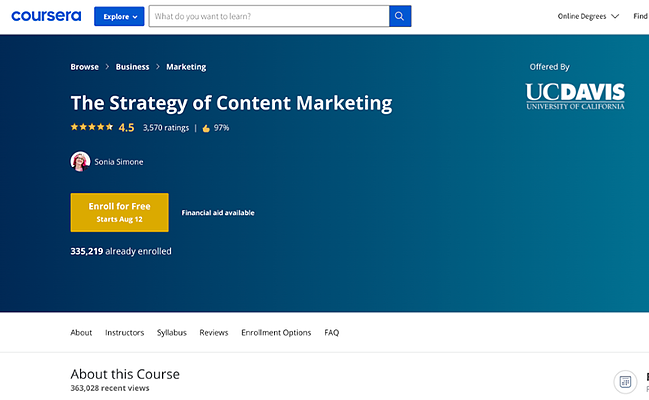
9. The Strategy of Content Marketing by University of California, Davis

social media marketing course: uc davis

Creator: University of California, Davis

Platform: Coursera

Price: Free

Skill Level: Intermediate

One-Sentence Summary: Learn about the power of integrating your content marketing and social media marketing strategies.

Social media marketing is a type of content marketing, and this course can help you weave both into a more comprehensive strategy. In this online class offered by the University of California, Davis, you’ll learn how to create a content marketing strategy and develop an understanding of the ecosystem surrounding that strategy. Ample time will also be spent working on strategic writing and framing.

The different types of content marketing will be reviewed, along with how they’re integral to social media marketing. There are five weeks worth of material paired with videos, exercises, readings, and quizzes.

You’ll learn:

  • What the content marketing ecosystem is
  • How to use the “7A Framework” to power-up your content
  • How to tailor your content to each phase of the buyer’s journey

Recommended for:

We recommend this course for social media marketers who’d like to approach social media marketing with a content-centric perspective.

10. Social Media Marketing Masterclass by Mark Timberlake and Philomena Timberlake

Social Media Marketing Masterclass

Creator: Mark Timberlake and Philomena Timberlake

Platform: Udemy

Price: $129.99 one-time fee or $16.58/mo

Skill Level: Beginner

One-Sentence Summary: Learn how to build a social media marketing strategy and schedule for your unique business.

Rather than a complete level one course in social media, this offering is a masterclass on the subject, uniquely centered around ethical digital marketing techniques.

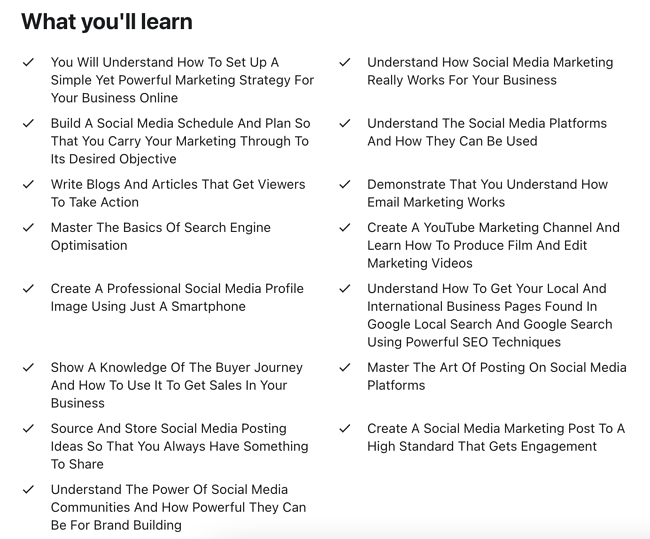
You’ll learn how to set up a powerful marketing strategy and a schedule that aligns with accomplishing business goals.

You’ll also dive into how social media marketing integrates with your business, email marketing, and building an online community. This course can be completed in 20 hours, and gives you a certificate of completion at its end.

You’ll learn:

  • How to create actionable content on your website and social media
  • How to leverage social media communities to increase brand awareness
  • Which social media platforms you can use to market your business
  • How to use your phone for social media photography

Recommended for:

This masterclass doesn’t cover just social media marketing, but SEO and blogging. For that reason, we recommend it for new marketers who’d like to expand their skill set as they dive into their new role.

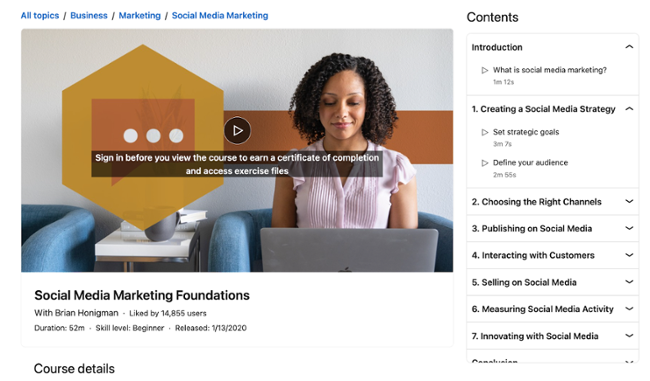
11. Social Media Marketing Foundations by Brian Honigman

social media marketing course: linkedin learning

Creator: Brian Honigman

Platform: LinkedIn Learning

Price: Free

Skill Level: Beginner

One-Sentence Summary: Learn the foundations of social media marketing, with a focus on audience targeting and business-to-customer interaction.

This foundational course by Brian Honigman, a marketing consultant, offers similar content to the other beginner-level courses on this list, with a special focus on interacting with customers through your business’ preferred social networks. It also includes instruction on using social media for sales and experimenting with your techniques.

You’ll learn:

  • What social media marketing is
  • How to use social media for customer interactions
  • How to attribute metrics to business results

Recommended for:

We recommend this course for marketing professionals, salespeople, and service professionals who want to take a customer-centric approach to your company’s social media strategy.

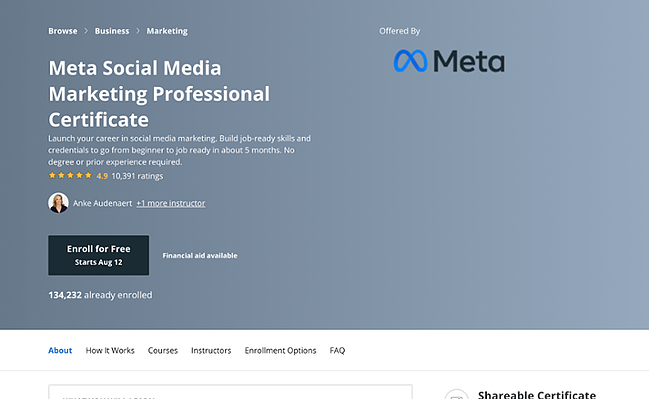
12. Social Media Marketing Professional Certificate by Meta

social media marketing course: meta

Creator: Meta (FKA Facebook)

Platform: Coursera

Price: Free

Skill Level: Beginner

One-Sentence Summary: Learn about social media marketing and advertising techniques from Meta.

Meta’s social media marketing certificate includes the essentials you need to jumpstart your social media marketing knowledge, with added coursework on advertising. It also offers a Meta-centric approach, so if you know you’d like to advertise on Facebook and Instagram, this is the right course for you.

You’ll learn:

  • How to create a social media management strategy
  • How to begin social media advertising on Meta’s platforms
  • How to measure the results from your efforts

Recommended for:

We recommend this course for professionals who want to get foundational knowledge in social media marketing and who know they’ll be investing into Meta’s social media platforms.

Find Your Ideal Social Media Marketing Course

Social media marketing can be extremely powerful when done right — and understanding how to apply the most effective and up-to-date strategies will help you stand out from other social media marketers and strategists so you can propel your career.

So, identity the right course for your experience level, budget, and goals — then get started learning.

Editor’s note: This post was originally published in November 2019 and has been updated for comprehensiveness.

Get certified in social media by HubSpot Academy!


Categories B2B

The 12 Best Cover Letter Examples: What They Got Right

Fun is not something typically associated with writing a cover letter. However, with a few tweaks, writing one doesn’t have to be a burden.

The cover letter examples below demonstrate that it is possible to have a little fun with your job search — and maybe even make yourself a better candidate in the process.

→ Click here to access 5 free cover letter templates [Free Download]

It may be true that only 35% of recruiters admit that cover letters do not materially influence the hiring process for them, but that doesn’t mean yours has to contribute to that statistic. In fact, it might be that cover letters are deemed insignificant because so few of them stand out. Here’s an opportunity for you to exercise your creativity at the earliest stage of the recruitment process.

Personalization, after all, goes beyond replacing the title and company name in each letter you send to recruiters.

What’s on a cover letter?

Before you can get started writing your cover letter, there are a few components you must have.

Greeting: A simple, but pleasant greeting to address the recruiter or hiring manager.

Opener: Write a catchy introduction that explains why you’re interested in the role.

Summary of Skills/Qualifications: This is the heart of your cover letter. It outlines your relevant experience and why you’d be a great fit for the role. You can highlight special skills, experiences, professional achievements, or education to help make your case.

Closing: In this paragraph, provide a call-to-action by expressing interest in an interview. Provide your contact information and sign-off.

What does a cover letter look like?

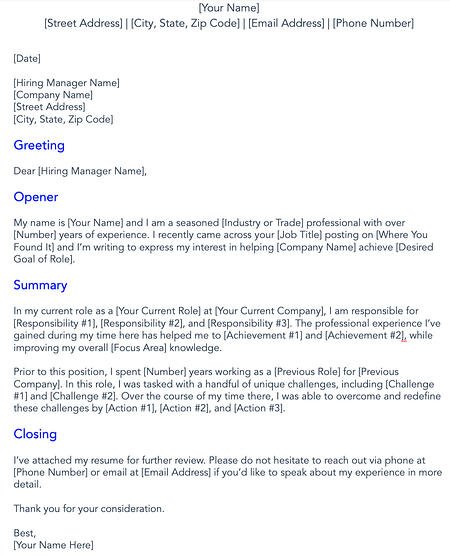
In addition to showing off your skills and qualifications, cover letters give you the opportunity to present a clear, concise, and compelling writing sample that shows off your personality and ability to convey ideas. Check out our template below to see how you should organize the content of your cover letter.

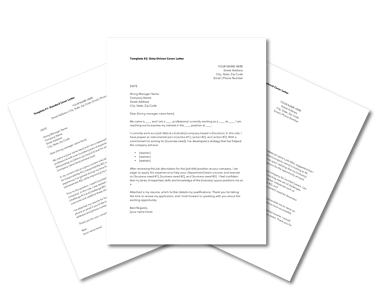
HubSpot Cover Letter TemplateWhat does that look like in practice, and how can you make your cover letter stand out? We found six examples from job seekers who decided to do things a bit differently.

By the way — We’re hiring.

Note: Some of these cover letters contain real company names and NSFW language that we’ve covered up.

Best Cover Letter Examples

Featured Resource: 5 Free Cover Letter Templates

Cover-Letter-Templates

Download our collection of 5 professional cover letter templates to help you summarize your professional journey and land your dream job – whether it’s at your first or fifth company.

1. The Cover Letter That Explains ‘Why,’ Not Just ‘How’

We’ve already covered the importance of addressing how you’ll best execute a certain role in your cover letter. But there’s another question you might want to answer: Why the heck do you want to work here?

The Muse, a career guidance site, says that it’s often best to lead with the why — especially if it makes a good story. We advise against blathering on and on, but a brief tale that illuminates your desire to work for that particular employer can really make you stand out.

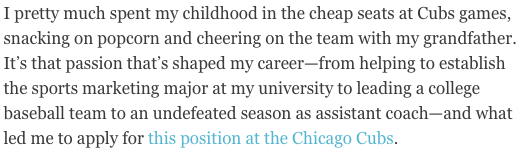
cover letter that explains "why" with a story about a childhood experience with the chicago cubs

Image Source

Here’s another instance of the power of personalization. The author of this cover letter clearly has a passion for this prospective employer — the Chicago Cubs — and if she’s lying about it, well, that probably would eventually be revealed in an interview.

Make sure your story is nonfiction and relatable according to each job. While we love a good tale of childhood baseball games, an introduction like this one probably wouldn’t be fitting in a cover letter for, say, a software company. But a story of how the hours you spent playing with DOS games as a kid led to your passion for coding? Sure, we’d find that fitting.

If you’re really passionate about a particular job opening, think about where that deep interest is rooted. Then, tell your hiring manager about it in a few sentences.

Why This Is A Great Cover Letter

This example demonstrates how effective personalization can be. The writer is passionate about the employer, drawing from her own childhood experience to communicate her enthusiasm.

2. The ‘We’re Meant for Each Other’ Cover Letter

This cover letter example is a special one because it was submitted to us here at HubSpot. What does the letter do well? It makes a connection with us before we’ve even met the letter’s author.

We're meant for each other cover letter submitted to HubSpot

“Content Marketing Certified” indicates the applicant has taken the content marketing certification course in our HubSpot Academy (you can take the same course here). Our “records” indicate he/she did indeed give an interview with us before — and was a HubSpot customer.

The cover letter sang references to a relationship we didn’t even know we had with the candidate.

The letter ends with a charming pitch for why, despite him/her not getting hired previously, our interests complement each other this time around.

(Yes, the applicant was hired).

Why This Is A Great Cover Letter

This cover letter example does an excellent job of building rapport with the employer. Despite not getting hired for previous roles they applied for at HubSpot, the writer conveys exactly why they are right for this role.

3. The Cover Letter with H.E.A.R.T.

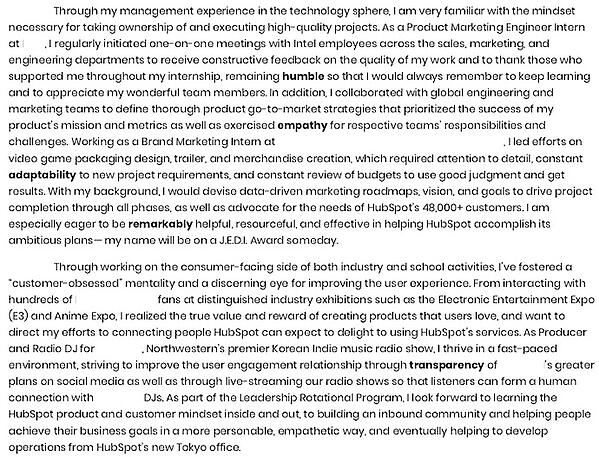
HubSpot has a lot of H.E.A.R.T. — Humble, Empathetic, Adaptable, Remarkable, Transparent. Our Culture Code is the foundation of the company’s culture, the driving force behind our mission to help millions grow better, and serves as the scaffolding for our hiring practices. Recruiters at HubSpot look for applicants that demonstrate how they embody the Culture Code and job description, paying extra attention to cover letters that are super custom to HubSpot.

In another HubSpot submission, a HubSpot applicant writes about how she found out about HubSpot, why she likes the company, and how her professional experience aligns with H.E.A.R.T.

cover letter that details experience according to hubspot values: humble, empathy, adaptability, remarkable, and transparent.


Why This Is A Great Cover Letter

HubSpot’s recruiting team was impressed with her dedication to the company and how she went beyond what was asked for by linking her portfolio in her closing paragraph.

Short Cover Letter Examples

4. The Short-and-Sweet Cover Letter

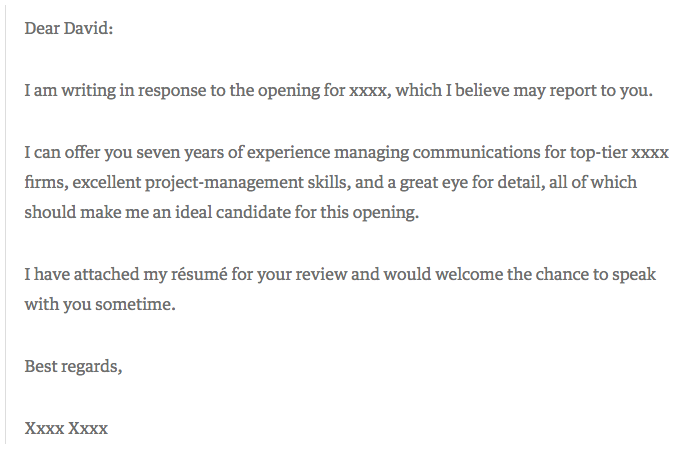
In 2009, David Silverman penned an article for Harvard Business Review titled, “The Best Cover Letter I Ever Received.” That letter contained three complete sentences, as follows:

Short and sweet cover letter example with only three sentences

Image Source

One might argue that this particular letter is less than outstanding. It’s brief, to say the least, and the author doesn’t go into a ton of detail about what makes him or her qualified for the job in question. But that’s what Silverman likes about it — the fact that the applicant only included the pieces of information that would matter the most to the recipient.

“The writer of this letter took the time to think through what would be relevant to me,” writes Silverman. “Instead of scattering lots of facts in hopes that one was relevant, the candidate offered up an opinion as to which experiences I should focus on.”

When you apply for a job, start by determining two things:

  • Who might oversee the role — that’s often included in the description, under “reports to.” Address your letter to that individual.
  • Figure out what problems this role is meant to solve for that person. Then, concisely phrase in your cover letter how and why your experience can and will resolve those problems.

Why This Is A Great Cover Letter

The key to this standout cover letter is research — by looking into who you’ll be reporting to and learning more about that person’s leadership style, you’ll be better prepared to tailor your cover letter to focus on how you provide solutions for them.

5. The Short Story

Basha Coleman began her cover letter with a short story. The goal of this short story is two-fold:

  • Detail the experience she already has with the organization.
  • Stand out to the hiring team.

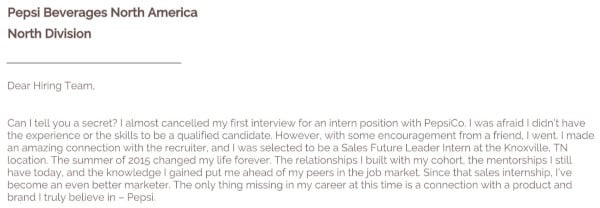
short cover letter example from basha coleman that starts with a short story about her existing experience with pepsi

You’ll notice that her short story follows a typical narrative arc: It has a conflict/obstacle, a turning point, and a positive outcome, all created with a goal to emphasize a theme or point. In this case, Coleman is emphasizing her existing affinity with the brand and her triumphs within the program so that she can continue on her career path.

Why This Is A Great Cover Letter

Like the second example in our list, this cover letter does an excellent job of conveying the applicant’s existing affinity for the brand. If you are applying to a company you love, don’t be shy about showing it and explaining why.

6. The Bare Bones Cover Letter

In today’s job market, cover letters aren’t always necessary. Even though many recruiters won’t ask for or even read them, cover letters can still be effective and convey personality to a reader. Writing a strong cover letter can help you better convey your interest in the position and company.

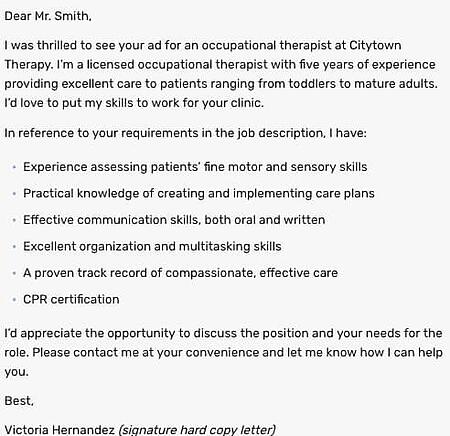
This template from The Balance Careers puts together the essential components of a short cover letter: excitement about the position, your qualifications, and a call-to-action for the recruiter to follow up with you. Combining these central aspects in a well-written, compelling narrative will go a long way in convincing readers to hire you.

short cover letter example with summarized bullet points

Image Source


Why This Is A Great Cover Letter

This letter is organized and concise. The inclusion of bullet points to highlight key skills and help the recruiter skim the document is a nice touch.

7. The Breezy Follow-Up

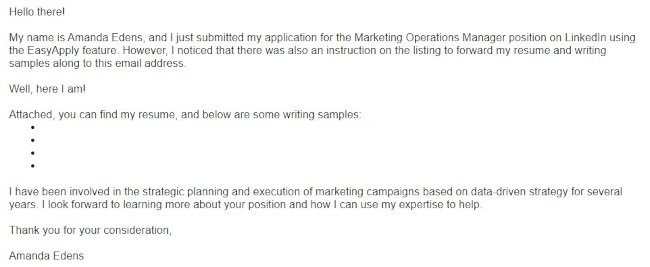
In this cover letter, Amanda Edens is following the instructions the hiring manager gave by forwarding an email with resume and writing samples attached.

short cover letter example from Amanda Edens with bullet points and breezy languageEdens knows that the body of the email is prime real estate to get the hiring manager’s attention, but she also doesn’t want to overwhelm the recipient with too much information since a cover letter was not requested. This short cover letter is the result. You’ll notice that she uses casual and breezy language to convey personality and enthusiasm, and she keeps her paragraphs succinct.

Why This Is A Great Cover Letter

Not only does Amanda provide links to relevant writing samples that are live on the web, but she also closes with a strong final paragraph that:

  • Summarizes the expertise she has relevant to the posting
  • Emphasizes that she doesn’t want to simply get a job but rather help the organization accomplish their goals
  • The reader gets everything they need in an organized and thoughtful manner.

8. The Administrative Assistant Cover Letter

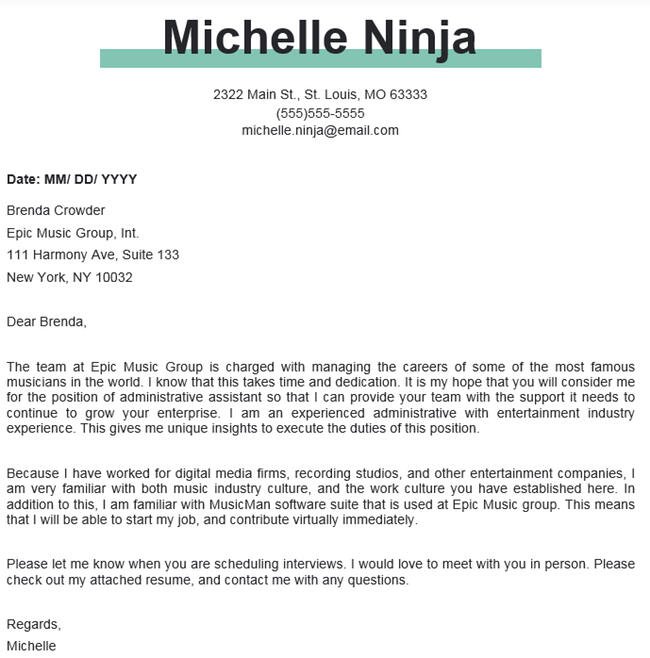
In this cover letter the candidate, Brenda, plays up her prior music industry experience to build a connection with Epic Music Group. If you have specific industry experience for the role you are applying for, be sure to highlight that.

Cover Letter Example: Admin Cover Letter

Image Source

It’s clear that she’s passionate about not only the music industry, but Epic as a whole. She’s done so much research on the company that she knows what software programs they use, and happens to be proficient in it to help convey value to the hiring manager.

This example further illustrates the importance of research. Make sure you understand the culture of the company to which you’re applying before you send a completely unfiltered cover letter — if you don’t, there’s a good chance it’ll completely miss the mark.

Why This Is A Great Cover Letter

In just three short paragraphs, the applicant uses their company research to drive home why they are the perfect fit for the role — emphasizing industry experience as well as software knowledge specific to the company. All of this communicates that she’d be able to start with very few hiccups getting up to speed.

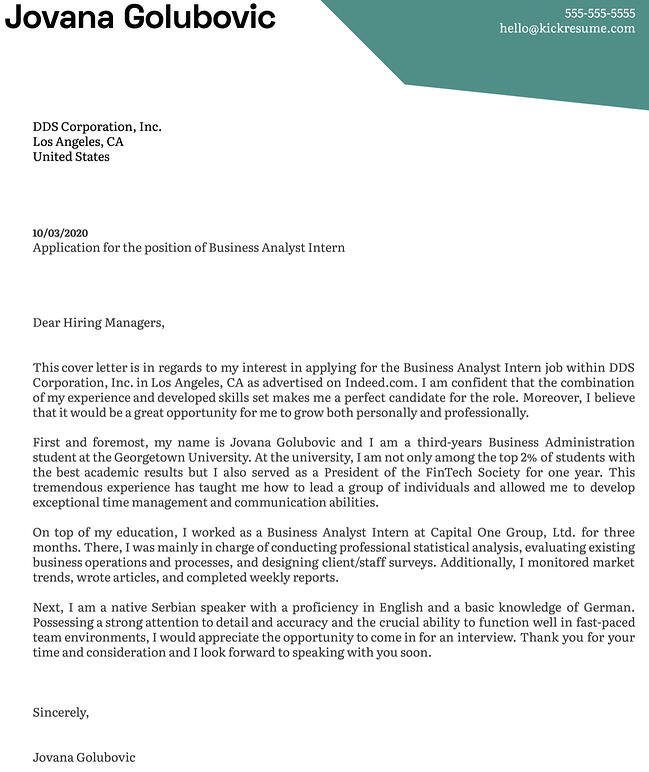
9. The Internship Cover Letter

Maybe you’re just getting started in your career and looking to land the right internship to gain experience in your field. In this case, you’ll need to highlight more of your educational background and transferable skills since you won’t have as much professional experience to highlight.

Cover Letter Examples: Internship Cover LetterImage Source

The cover letter above is a great example of how to emphasize your skills and accomplishments when applying to internships or entry-level positions. A few things the applicant does well:

  • Highlights relevant extracurriculars and affinity networks. In this case, the applicant is applying to a business analyst position, so mentioning their involvement in a FinTech group makes sense.
  • Previous internships in relevant fields: Our applicant points out that they’ve previously interned as a Business Analyst at another firm. Pointing out that they’ve done the role previously will help make their case for fit.
  • Highlight other useful skills: This applicant is fluent in both English and German. If an international company or an organization needs bi-lingual support, knowing multiple languages is an asset.

Why This Is A Great Cover Letter

This cover letter example illustrates how you can leverage your education and background to get the gig even when you don’t have much working experience. Highlighting previous internships or experience in related fields can go a long way in convincing hiring managers you’re the perfect candidate for the role.

Creative Cover Letter Examples

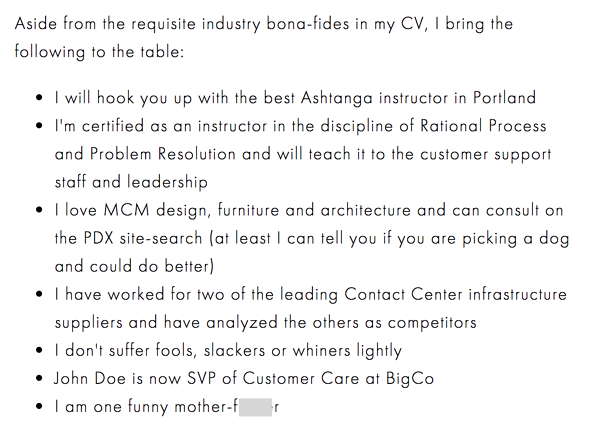
10. The Brutally Honest Cover Letter

Then, there are the occasions when your future boss might appreciate honesty — in its purest form. Livestream CEO Jesse Hertzberg, by his own admission, is one of those people, which might be why he called this example “the best cover letter” (which he received while he was with Squarespace):

Brutally honest cover letter example

Image Source

As Hertzberg says in the blog post elaborating on this excerpt — it’s not appropriate for every job or company. But if you happen to be sure that the corporate culture of this prospective employer gets a kick out of a complete lack of filter, then there’s a chance that the hiring manager might appreciate your candor.

“Remember that I’m reading these all day long,” Hertzberg writes. “You need to quickly convince me I should keep reading. You need to stand out.”

Why This Is A Great Cover Letter

The applicant did their research on the company’s culture and executed this cover letter flawlessly. It’s funny and shows off the applicant’s personality all while demonstrating why they are a good fit for the role.

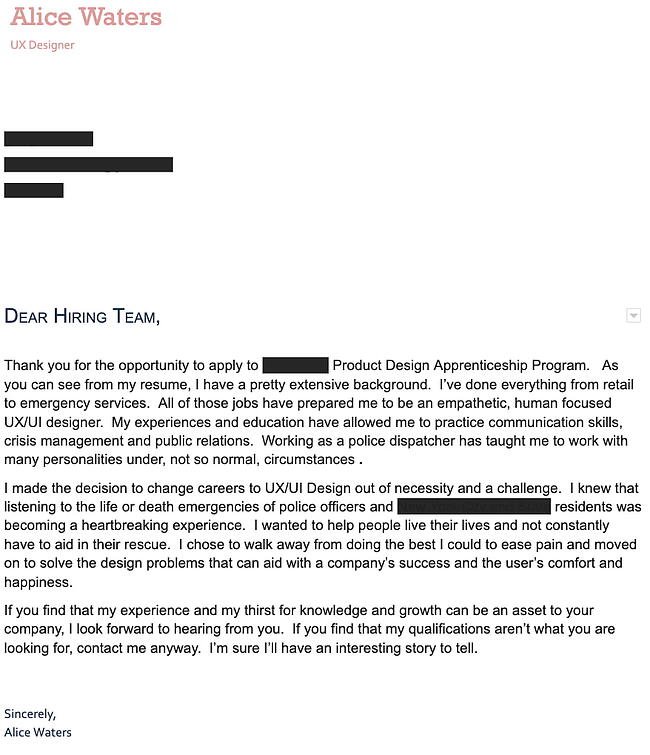
11. The Pivot Cover Letter

Making a career switch? Your cover letter can be an excellent opportunity for you to explain the reasoning behind your career change and how your transferable skills qualify you for the role.

Cover Letter Example: Creative Pivot Cover LetterIn this cover letter example, the applicant is pivoting to a career in UX. Not only does she make the case for why she should be hired, she shows the recruiter by using a simple, but effective design scheme that shows off her skills. It’s clean but effective.

Since the role she is applying for is more visual, it’s important to both show and tell why you’re a good fit.

Why This Is A Great Cover Letter

This cover letter strikes the perfect balance between creativity and simplicity in design while putting the applicant’s career change into context. The copy is clean, with a creative font choice that isn’t distracting from the content, but still demonstrates the applicant’s knack for design.

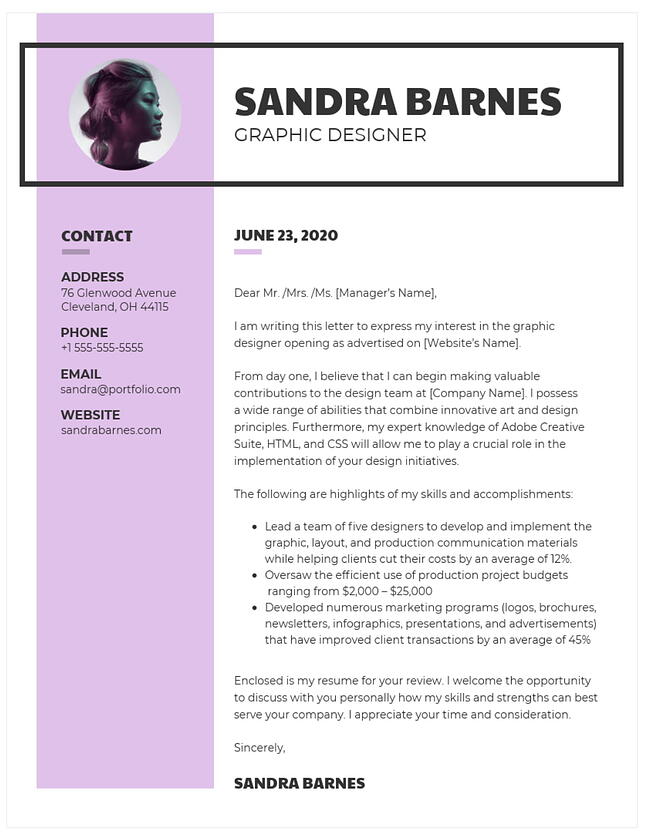
12. The Graphic Design Cover Letter

When applying for more creative roles, the design of your cover letter can say just as much as the words on the page. Take the graphic designer letter example below.

Cover Letter Examples: Grpahic DesignImage Source

It’s got so much going for it:

  • Pop of color
  • Clean layout
  • Interesting fonts

In addition to the style elements, this example also doesn’t skimp on the key skills recruiters are looking for. Using metrics, the applicant demonstrates their value and why they would be a great fit.

Why This Is A Great Cover Letter

This cover letter thoroughly conveys the applicant’s skills and qualifications using a variety of visual elements and by emphasizing their greatest achievements.

Take Cover

We’d like to add another stage to the job search: experimentation.

In today’s competitive landscape, it’s so easy to feel defeated, less-than-good-enough, or like giving up your job search. But don’t let the process become so monotonous. Have fun discovering the qualitative data we’ve discussed here — then, have even more by getting creative with your cover letter composition.

We certainly can’t guarantee that every prospective employer will respond positively — or at all — to even the most unique, compelling cover letter. But the one that’s right for you will. That’s why it’s important not to copy these examples. That defeats the purpose of personalization.

Editor’s note: This post was originally published in October 2020 and has been updated for comprehensiveness.

Professional Cover Letter Templates

Categories B2B

9 SMART Social Media Marketing Goals For You to Set in 2022

Social media matters for brand success. But it’s not enough to simply have a social presence; instead, businesses need social media marketing goals that help them attain specific outcomes in the short-term and keep users engaged over time.

Statistics tell the tale of social impact: 77 percent of social media marketers say that their efforts have been somewhat to very effective in 2022, 79 percent of companies are buying ad space on Facebook and the same number plan to keep investing in Twitter Spaces.

Download your free marketing goal-setting template here. 

Ready to take your social media marketing to the next level? Here are nine goals to help your brand get noticed.

Social Media Marketing Goals for 2022

While you don’t need to meet every social media marketing goal listed to succeed, these objectives offer a solid starting point for a measurable marketing increase.

Goal 1: Increasing brand awareness

Goal 2: Driving website traffic

Goal 3 Getting more leads

Goal 4: Boosting user engagement

Goal 5: Improving customer service

Goal 6: Enhancing brand reputation

Goal 7: Creating more conversations

Goal 8: Understanding your customers

Goal 9: Tracking your mentions

Goal 1: Increasing Brand Awareness

Increasing brand awareness is all about getting the message out to potential customers. In practice, this means more than just posting content to social media — it’s about posting content to social media sites where it will be seen by your target audience.

Potential KPIs and metrics:

  • Total number of social channel followers
  • How many users are interacting with your content daily/weekly/monthly
  • Volume of shares, mentions, and retweets

Goal 2: Driving Website Traffic

Getting more traffic to your website from social media sources can help boost lead generation and sales conversion. Here, social analytics tools are useful for measuring key social metrics and how many unique visitors are viewing your site.

Potential KPIs and metrics:

  • Number of visitors referred from social media sites
  • Percentage of overall traffic from social media
  • Bounce rate of social traffic (how many users visit but don’t stay)

Goal 3: Getting More Leads

More leads mean more opportunities for sales. And while getting leads is typically part of the larger sales funnel process, social media offers a way to start collecting basic lead information.

Potential KPIs and metrics:

  • Contact information such as email addresses provided by customers
  • Downloads of content assets from social media links
  • Participation in social media events such as polls or contests

Goal 4: Boosting User Engagement

User engagement with your social posts is measured by actions such as comments, likes, and shares, and helps give a sense of how well your social media marketing is working to drive user interest.

Potential KPIs and metrics:

  • Post engagement rate — how many users interact with a post
  • Share rate — how many users choose to share your content
  • Time-based engagement — how many users share your content over a specific time period

Goal 5: Improving Customer Service

Customers come for the product or service but stay for your customer service. As a result, it’s worth evaluating your ability to ensure customer satisfaction via social channels.

Potential KPIs and metrics:

  • How quickly you respond to customer messages
  • The number of complaints or concerns received via social media
  • Overall satisfaction with your service, often measured using an email or social survey

Goal 6: Enhancing Brand Reputation

If customers don’t trust your brand, they won’t buy what you’re selling. And social media makes it easier than ever for customers to share exactly what they’re thinking — good or bad — about your brand, making effective reputation management critical.

Potential KPIs and metrics:

  • Mentions — how often is your brand mentioned in any social media posts?
  • Hashtags — what are people saying about your brand with relevant hashtags related to your product or service?
  • Sentiment — what is the overall user sentiment toward your brand? Good? Bad? Impartial?

Goal 7: Creating More Conversations

Social media is, well — social. This means it’s a place for conversation and interaction, and if your brand can get in on the action, so much the better for your sales.

Potential KPIs and metrics:

  • Number of users making posts on your Facebook page or in your Twitter chats
  • Number of daily active users on platforms such as Slack
  • Number of reviews for your products or services on social platforms

Goal 8: Understanding Your Customers

The more you know about your customers, the better. By understanding what they’re looking for, what they want to avoid, and how they want brands to treat them, your team can better tailor marketing and sales messages to your target audience.

Potential KPIs and metrics:

  • The kinds of posts do your customers comment on
  • Their most common pain points (from mentions and hashtags)
  • Their expectations in terms of brand response time and marketing content

Goal 9: Tracking Your Mentions

This goal expands mention monitoring from customers to the press: Where is your brand getting noticed by industry publications or thought leaders (or is it getting mentioned at all?)

Potential KPIs and metrics:

  • The number of users who saw your PR campaign
  • Questions about your product or service from industry leaders or journals
  • Coverage from social media influencers

Social Media SMART Goals

It’s always good to be smart, but when it comes to social media it’s even better to be SMART.

Jokes aside, SMART is a goal-setting acronym that makes it easier to meet intended targets. SMART stands for:

S — Specific

M — Measurable

A — Attainable

R — Relevant

T — Time-bound

If your goals meet SMART criteria, you’re more likely to see success. And when it comes to social media, SMART goals are essential to help brands master this medium.

Why? Because social media is constantly changing. From what consumers want to how they interact with brands to what they’re saying online, social media is never static. SMART goals give companies the ability to better manage the ever-evolving nature of social media discourse and the interaction between marketing impressions and overall reach.

If you’re feeling overwhelmed, don’t worry: We’ve got you covered with our SMART marketing goals template. Get it here.

SMART marketing goals guide

Social Media SMART Goals Examples

Now, let’s take each of our nine social media marketing goals above and apply the SMART framework.

SMART Goal 1: Increasing Brand Awareness

Specific: We want to increase brand awareness by creating and posting new content twice per week.

Measurable: Our goal is a 5% increase in our total number of social media followers.

Attainable: Our followers increased by 2% last month when we began posting content more frequently.

Relevant: Increasing brand awareness will help drive more interest in our products and services.

Time-bound: One month.

SMART Goal 2: Driving Website Traffic

Specific: We want to drive more traffic to our website by increasing the number of referrals from social media sites.

Measurable: Our goal is a 10% increase in traffic from social media sites.

Attainable: Targeted content publishing last month saw a 3% increase in traffic from social sites.

Relevant: More website traffic means more users browsing our products and services.

Time-bound: Six months.

SMART Goal 3: Getting More Leads

Specific: We want to get more leads from social media sites by creating content that encourages users to share their contact information.

Measurable: Our goal is to generate 10 new leads per week.

Attainable: Previous efforts at engaging content have increased the total number of users subscribed to our newsletter.

Relevant: More leads means more opportunities to find prospective buyers.

Time-bound: Four weeks.

SMART Goal 4: Boosting User Engagement

Specific: We want to increase the number of users that interact with our social media posts by creating more compelling content.

Measurable: Our goal is 30 shares per week.

Attainable: Our last engagement campaign saw a measurable increase in post comments.

Relevant: Increased user engagement leads to more hashtags and mentions and in turn drives more website traffic.

Time-bound: Two months.

SMART Goal 5: Improving Customer Service

Specific: We want to improve social customer service by ensuring that customers receive timely and relevant answers to their questions.

Measurable: Our goal is to reduce customer waiting time for responses by 20%.

Attainable: Leveraging social media marketing apps helped us streamline the messaging process.

Relevant: Improved customer service means higher satisfaction and increased consumer loyalty.

Time-bound: Three weeks.

SMART Goal 6: Enhancing Brand Reputation

Specific: We want to enhance brand reputation by better understanding customer sentiment.

Measurable: Our goal is to increase positive brand mentions by 30%.

Attainable: Analysis of customer hashtags helped pinpoint key areas of frustration.

Relevant: Better brand reputation means increased customer trust and leads to more reliable conversion rates.

Time-bound: Four months.

SMART Goal 7: Creating More Conversations

Specific: We want to create more conversations by increasing our total number of followers on Facebook.

Measurable: Our goal is to boost the total number of Facebook followers by 5%.

Attainable: Efforts to engage our Twitter community resulted in a 10% boost to conversations over time.

Relevant: More conversations means more brand mentions — and potential referrals.

Time-bound: Two months.

SMART Goal 8: Understanding Your Customers

Specific: We want to gain a better understanding of customers to better align with their expectations by evaluating the types of posts they comment on.

Measurable: Our goal is to collect and analyze customer data to discover key trends.

Attainable: Evaluation of customer pain points provided insight into what they didn’t like about our social presence.

Relevant: Better knowledge of customer preferences helps tailor content to meet their needs.

Time-bound: One month.

SMART Goal 9: Tracking Your Mentions

Specific: We want to track the number of mentions by both journalists and influencers.

Measurable: Our goal is to increase the total number of press mentions by 25%.

Attainable: Previous PR efforts have led to increased press interest.

Relevant: Mentions in the press or by influencers can drive both social and website traffic.

Time-bound: During the length of the PR campaign.

Get SMART for Social Media Success

SMART social media marketing goals offer the dual benefit of short-term impact and long-term gain.

While it requires some legwork to ensure you’ve got a solid goal format, you can streamline the process with HubSpot’s SMART goal template — pair it with any of our nine social media goals to help your brand track key social metrics get noticed for all the right reasons.

Editor’s Note: This article was originally published in October 2016 and has been updated for comprehensiveness.
New Call to action

Categories B2B

Facebook is Redesigning its News Feed: What Marketers Need to Know

Back in July, Mark Zuckerberg announced a change to Facebook’s news feed — it’s been split in two! Facebook now has a Home tab and a Feeds tab. The Home tab includes content recommended to users based on their actions on the app. The Feeds tab shows content from people, pages, and groups the user is following.

Zuckerburg said the goal is to make it easier for Facebook users to see their favorite content and make new discoveries. It’s also meant to keep Facebook competitive with TikTok. TikTok’s For You page also shows recommended content from across its platform based on what algorithms think a user wants to see. The Following page only shows content from pages the user already follows.

But what does it mean for marketers who relied on Facebook’s news feed to find and maintain an audience? Here’s what marketers need to know about the new tabs.

Download Now: Social Media Trends in 2022 [Free Report]

Facebook’s Home Tab

The Home tab is the first feed users see when they open the app. Like the Feeds tab, Home will have content the user is already following (posts from friends and family, for example), but the feed will prioritize recommended content from the app’s discovery feature.

“This system takes into account thousands of signals to help cut through the clutter and rank content in the order we think you will find most valuable,” Meta said in a press release. “We’re investing in AI to best serve recommended content in this ranked experience.”

Facebook HomeImage source

Content prioritized in the Home tab will include Reels and Stories. To get your marketing content on the home page so your brand can reach new consumers, you should leverage short-form video content like Reels.

During our own social media marketing survey, 85% of the 310 marketers surveyed said short-form videos were among the most effective tactics in their social media campaigns. So next time you post a Reel to Instagram and the app asks if you’d like to automatically share it on Facebook, the answer should be yes.

Another way to end up on the Home tab is to leverage livestreams. In that same survey, 69% of marketers mentioned livestream videos as one of the most effective methods in their campaigns, and 72% of respondents said livestreams are effective overall. Livestream opportunities can include live Q&As, webinars, and workshops.

Facebook’s Feeds Tab

As I mentioned, the Feeds tab shows content from pages, groups, and communities the user is already following. There is no content from the app’s discovery feature — however, ads will still be shown on Feeds. Therefore, investing in Facebook Ads can help your brand’s content get on the Feeds tab and expand your brand’s reach there as well.

However, delighting the audience you already have should be your focus when it comes to Feeds. Notice that Feeds is separated into different sections — All, Favorites, Friends, Groups, and Pages. To stay top of mind for your audience, your company should have content in as many sections as possible, particularly All, Favorites, and Groups.

Facebook Feeds 3Image source

Marketers should create Facebook groups that appeal to their audience’s interests. A great example of a Facebook group is Instant Pot Community. The group was started by the multicooker brand Instant Pot and is a space for Instant Pot users to share recipes, ask questions, and discuss their products. The group has over 3 million users.

9 of The Best Facebook Groups We’ve Ever Seen-5-1

To get your content to the All and Favorites sections, regularly post engaging content like short-form videos, livestreams, polls, and statuses. By keeping a consistent stream of quality content, your brand will appear in the All section regularly. If your content is compelling and includes CTAs telling users to add your brand’s page to their Favorites, you’ll have content in that section as well.

Meta’s change to Facebook’s feed means marketers will have to adjust their social media campaigns on the app, but the adjustment doesn’t have to be difficult. Leverage short-form videos like Reels, find livestream opportunities, invest in ads, and work to foster community — and that will keep your audience engaged whether they’re on the Home tab or Feeds tab.

New call-to-action

Categories B2B

Offline Marketing: Should You Leverage It in a Post-Pandemic World?

Since the start of the pandemic, marketing strategies have relied heavily on online tactics —leveraging tools like social media, email, and digital ads. But what about marketing outside of the digital space, otherwise known as offline marketing?

Is there still value in marketing via billboards, print ads, and broadcast commercials? In a post-pandemic world, whenever that may be, there’s a chance offline marketing could make a comeback.

Here’s what marketers need to know about offline marketing and how it can be leveraged.

→ Download Now: Free Marketing Plan Template

What is offline marketing?

5 Offline Marketing Strategies You Should Use

Business Cards

Community Engagement

Event Hosting

Press Releases

Free Workshops


So why should your company still incorporate offline marketing into its strategy, especially in the digital age?

One reason is that it’s tangible and allows marketers to physically reach their target audience in a way that online marketing can’t. You can hand out flyers, put up posters, and send direct mail to people’s homes. Sometimes, physical items relating to your brand can leave a more lasting impression.

For example, the local Papa John’s in my neighborhood has a deal with my apartment complex. Whenever a new tenant moves in, they get a Papa John’s magnet and menu inside their welcome gift bag. Both the magnet and menu have the local restaurant’s number and hours.

I didn’t know of any other pizza places in the area, so I pinned the items to my fridge, and every time I was craving pizza I would call that particular Papa John’s location.

Offline marketing can also create a personal connection with your audience. For example, you can sponsor and host fun, engaging local and in-store events that let you connect with your consumers in person.

But most importantly, the best marketing strategies combine both online and offline marketing to reach an audience through as many channels as possible. For example, let’s say your company hosts an in-store event to connect with customers offline. That offline marketing strategy can also be used to create online content via video highlights of the event.

Another factor to consider is that online channels may not be available to everyone in your market, such as older consumers who are less likely to be tech-savvy — so offline marketing with business cards or pamphlets will make your brand more accessible to that demographic.

5 Offline Marketing Strategies You Should Use

Here are a few offline marketing strategies you can use to reach your target market:

Business Cards

Business cards are a tried and true offline marketing method. A business card with a distinct design can set your business apart from competitors and reflect your brand’s values and mission. Make sure everyone in your company has their own business cards to give away at any time —you never know when they might run into a prospective client.

You may be tempted to try online business card generators to save a little money. While those can save money, you’re better off opting for local designers or print shops to create cards that are truly unique to your business. That way, you can customize the layout, color, texture, font, and more.

Pro Tip: Use a color other than the usual white for your business cards, and make sure every card has the same logo, font style, and colors for a unique but uniform look as well as brand consistency.

Community Engagement

Offline marketing lets you create a more personal connection with your audience — especially if you incorporate community engagement in your strategy. Using your platform and resources to help others within your community can increase brand awareness and solidify your brand’s reputation for being responsible.

An excellent example is the annual Stuff the Bus event hosted by First Coast News, a TV news station in Jacksonville, Florida. Every summer right before back-to-school season, First Coast News partners with United Way of Northeast Florida to raise money and school supplies to be donated to local schools. The event helps the station establish itself as an integral part of the community it broadcasts to.

Pro Tip: Carefully consider the organization or service you involve in this strategy to ensure it aligns with your company’s values and image.

Event Hosting

Event hosting is a great way to market your brand offline because events can promote outreach as well as opportunities to network. You’ll have the chance to engage with potential clients in person and connect with potential business partners or collaborators.

One example is RDC World’s annual DreamCon anime convention in Arlington, Texas. RDC World is a group of content creators who gained a huge following on YouTube making viral skits geared toward Black anime and comic book fans. To meet its fans in person and to provide other content creators a chance to network, RDC World started DreamCon.

The con attracts more guests each year and has grown to include appearances from celebrities, voice actors, and other viral content creators. The convention, as well as RDCWorld, is now a staple among Black anime fans.

Pro Tip: To get the most out of your event, incorporate digital marketing tactics like live streams and short-form videos for platforms like TikTok and Instagram.

Press Releases

A simple but effective way to boost brand awareness is to send press releases to local journalists in your community. Make a point to build relationships with them and get them interested in your brand. Once you find the contact information for your local journalists and publishers, start sending press releases that advertise your brand and any upcoming events you are hosting such as conventions, workshops, or fundraisers.

Pro Tip: Invite the press to special meet-and-greets and tours of your business to build an offline connection.

Free Workshops

You want consumers to know your brand is made up of experts in its field — one way to do that is by offering free workshops. A workshop can be in the form of a TV or radio appearance where you present valuable information while expanding your reach. You can also write regular columns for your local newspaper or magazine that give tips and advice pertaining to your market.

This marketing tactic builds trust with your audience. If they know you’re an expert in your space, then they’ll trust that your products or services are top-notch as well.

Pro Tip: When handing out flyers or other offline marketing materials, make sure to include a section with useful tips regarding your industry.

Digital marketing isn’t going anywhere anytime soon, but offline marketing should still be a part of your strategy to meet your audience wherever they are. In a post-pandemic world where more people will drive past billboards or look for workshops to improve their craft, you’ll want to be the brand that catches their eye.

New Call-to-action

Categories B2B

What Are Agile Metrics?

Agile marketing focuses on creating high-value deliverables by working in short bursts to achieve goals. An agile marketing process is also constantly iterated to ensure productivity and efficiency.

Measuring the success of an agile marketing process is critical as it helps monitor processes and ensures everything is on track — this is where agile metrics come in.

In this post, we’ll discuss:

→ Free Download: Free Marketing Reporting Templates [Access Now]

What are agile metrics?

Agile metrics is a tool that helps marketing teams measure the progress and productivity of marketing activities, stay on track, and address roadblocks. Agile metrics are most effective when tailored to the specific needs of individual projects.

You can use agile metrics at both the team level and individual level. At the team level, they help assess the overall health of marketing activities and identify potential bottlenecks. At the individual level, they can help identify areas of improvement for each team member based on their progress.

Importance of Agile Metrics

Agile metrics are important because they help track progress and identify areas for improvement.

Agile metrics also:

  • Increase productivity by providing visuals of project timelines so stakeholders can understand what comes next.
  • Build accountability and transparency between stakeholders because everyone knows what’s expected of them and their teams.
  • Improve communication between team members because agile metrics give specific insight into project progress so people can begin conversations based on metrics and data.
  • Help managers and leaders identify risks and potential problems early on from historical agile metrics data, helping them correct processes and save time.

Types of Agile Metrics

There are three main types of agile metrics, and we’ll outline them below.

  1. Scrum Metrics: A Scrum is a process where work is done in sprints to quickly deliver small projects that make up larger projects over time. Scrum metrics analyze sprint effectiveness and show how much work was completed during a given sprint.
  2. Kanban Metrics: Kanban processes use visual cues to track progress over time. It usually is based on a project board that is divided into columns that represent stages in a workflow. Kanban metrics help you understand workflow effectiveness, organize and prioritize work, and the amount of time invested to obtain results.
  3. Lean Metrics: Lean processes help decrease the amount of time it takes from when a task or project is requested to when teams complete it. Lean metrics measure productivity and quality of work output, helping get rid of activities that don’t benefit outcomes or getting work done quickly.

Key Agile Metrics

Below we’ll go over some of the most common agile metrics.

1. Sprint Burndown Chart

Type of Agile Metric: Scrum

A sprint burndown chart shows the work that remains and has already been completed in a designated sprint. It also shows the amount of work that has been completed over time.

Sprint burndown charts provide a visual for this data and can predict a team’s likelihood to complete their work in the time available.

types of agile metrics: sprint burndown chart

Image Source 

2. Cumulative Flow Diagram

Type of Agile Metric: Kanban

The cumulative flow diagram is a graphical representation of work in progress. Specifically, it displays the work already completed, the work currently in progress, and tasks that have yet to begin. The diagram helps you visualize how stable your process is and helps you identify problem areas to address.

types of agile metrics: cumulative flow diagram

Image Source

3. Cycle Time Diagram

Type of Agile Metric: Kanban

A cycle time diagram displays the amount of time it takes to complete a task. It helps you identify areas where your process can be updated and streamlined for future productivity and understand the effects of the strategies you implement.

As your overall goal is likely to have a shorter cycle time across all projects, the diagram will help you understand the length and identify areas for improvement. Cycle time is a smaller section of the lead time metric, which we’ll discuss below.

4. Lead Time

Type of Agile Metrics: Kanban

Lead time is the time it takes for a task to be completed from start to finish. It builds off of the cycle time metric but adds on the amount of time between when a task or project was requested to when it was started.

types of agile metrics: lead time

Image Source

For example, you could use the lead time metric to analyze how much time it takes from when a new marketing copy is requested to when it is delivered.

5. Velocity Chart

Type of Agile Metric: Scrum

Velocity is the rate at which a team can deliver work during a sprint. It measures how fast teams complete a task and identifies whether they are on track to meet deadlines. It can also predict a team’s future abilities, helping ensure you don’t commit to a timeline you can’t achieve.

types of agile metrics: velocity chart

Image Source

A lower velocity means it takes teams more time to complete a task, so it could be worthwhile to identify areas you can streamline to speed up the process.

6. Burn Up Chart

Type of Agile Metric: Scrum

A burn-up chart tracks progress over time. The graph features two lines, one that displays the projected amount of work and another that shows actual work completed.

types of agile metrics: burn up chat

Image Source

This metric helps you compare expectations to how much work is delivered, which can help you understand team efficiencies and identify areas for improvement.

The right agile metric helps you and your teams stay productive and focused.

Choosing an agile metric depends on the specific needs of your marketing activities. Once you choose one, you’ll get a bigger picture of your team’s productivity and marketing processes, helping you identify roadblocks, optimize your strategies, and meet your business goals.

 marketing reporting templates

Categories B2B

How to Create an HTML Form That Sends You an Email

Have you ever set up a form on your site, only to forget to check the entries that were submitted? Creating an HTML form that sends an email after submission is one of the simplest and most effective ways of resolving this issue.

Here, we’re going to walk you through how to create a form that sends an email to you, as well as the customer, to ensure the form was received.

Convert anonymous visitors into leads. Try HubSpot Forms free.

Ideally, browsers would allow you to route form submissions directly to an email address. However, the reason they don’t is that emailing directly from an HTML web form would reveal the visitor’s email address, making the user vulnerable to malicious activities, such as phishing.

Adding a mailto: address to the form can be a potential way to circumvent this challenge. This option activates the default mail client on the user’s computer, prompting them to send the form over email. The web browser sends a request to the email service provider, not to the specified address.

There are a few problems with the mailto: option. For example, it isn’t 100% compatible with all browsers, it isn’t very user-friendly, and it’s impossible to control the formatting of the data when the form is sent by the browser.

Beyond that, a warning message will pop up when the user goes to submit the form, letting them know that the information they’re about to send will not be encrypted for privacy.

Below, we go over a few options for creating an HTML form that emails you when a new entry is submitted.

The option you choose depends on how you work and what platform you’re using. This is to say that things are a little different if the plan is to use a mix of HTML and different scripts. Below, we go over the different options available.

Method 1: Create an Email Send Form Using HTML (Not Recommended)

Using just HTML? From starting fresh, here is a sample code for use:

See the Pen How to Create an HTML Form That Sends You an Email by HubSpot (@hubspot) on CodePen.

This code will create a form that asks for the contact’s name, message, and includes a submit button (not visible in CodePen). Note that this code is basic — it won’t look super snazzy. For a more beautiful one, you’ll have to add some more lines of code specific to your needs.

While you can use just basic HTML, this isn’t the ideal option. This form doesn’t directly send to email addresses, but rather opens an email client or tool window to submit the form. This can spook the user out of submitting the form at all.

So, what HTML code allows you to send form submissions directly to an email address?

To make the form work with your email server and send it to a mailbox, PHP is the answer — let’s explore that option now.

Method 2: Create an Email Send Form Using PHP (Advanced)

To create a form subscribers can contact you with, the PHP script is going to be your best friend. I know, another acronym. This one stands for Hypertext Preprocessor, and this language collaborates with HTML to process the form.

Before jumping into the process, let’s break down a few form basics.

A webform has two sides: The front-end, seen in the browser by visitors, and a backend script running on the server.

The visitor’s web browser uses HTML code to display the form. When the form is submitted, the browser sends the information to the backend using the link mentioned in the “action” attribute of the form tag, sending the form data to that URL.

For example: <form action=https://yourwebsite.com/myform-processor.php>.

The server then passes the data to the script specified in the action URL — myform-processor.php in this case. Using this data, the backend script can create a database of form submissions, direct the user to another page (e.g. payment), and send an email.

There are other scripting languages you can use in the backend programming, like Ruby, Perl, or ASP for Windows. However, PHP is the most popular and is used by almost all web hosting service providers.

If you’re creating a form from scratch, here are the steps you can take.

Step 1: Use PHP to create a page.

For this step, you’ll need to have access to your website’s cPanel on your hosting platform.

When you’re creating a webpage, instead of using the “.html” extension, type “.php” instead. This is similar to what happens when you save an image as “jpg” versus “png”.

By doing this, the server will know to host the PHP you write. Instead of saving the empty HTML page as such, save it as something like this: “subscriberform.php”. After your page is created and saved, you’ll then be able to create the form.

Step 2: Make the form using code.

In this step, you’ll write the code to create the form.

If you’re not sure how to create forms in HTML, check out HTML Dog’s resource for a primer on the basics.

The following code is what’s needed for a basic form:

Because this is similar to the HTML-only write-up, these lines will also create a name for the form and an area for subscribers to type a custom message and send it to you.

An important difference is the action=”subscriberform.php” part. This portion of code is what will make the page send the form when submitted. Recall that in the first example, that wasn’t an option.

Step 3: Make the form send an email.

After you create the form and add all the proper fixings depending on your design preferences, it’s time to create the email portion.

For this, you’re going to scroll to the beginning of the page (the very beginning, even before defining the HTML Doctype). To enable sending data in the email, we have to add code that will process the data. Copy this code or create something similar:

Everything inside the first and last lines will tell the webpage to make these functions perform as PHP. This code also checks to see if a subscriber uses the form. From there, it checks to see if the form was sent.

Further breaking it down, “mail” sends the completed form as an email to “[email protected],” and the subject line is what follows. In the next line, you can write a copy of the email message inside the quotes, to be sent from whichever email address you choose.

Once the form is submitted, the page sends the data to itself. If the data has been successfully sent, the page sends it as an email. The browser then loads the page’s HTML — the form included.

With that, you have the basic code you need to create the form.

Note that this is just one way to do this — alternatively, you can also create a form using a builder, and then embed it onto your website.

Method 3: Create an Email Send Form Using a Form Builder

If you’re not using WordPress to build your website and are not coding-savvy, you may be at a loss as to how you can create a form, especially if your CMS doesn’t offer a drag-and-drop page editor.

(Hot tip: A drag-and-drop editor can make it much easier and simpler to create an email-sending form. Try CMS Hub — it’s 100% free.)

Each of the below tools allows you to build a form that sends an email without any coding needed from you. The best part is that you don’t need to change content management systems if you don’t want to. Instead, you can embed the form onto your website using each tool’s embed code.

1. HubSpot: Best Email Form Builder Overall

email send form builder: hubspot

HubSpot includes a form builder in the free tier of all of its products. Because HubSpot already has your email, it will automatically send you a message when a new entry is submitted.

HubSpot’s form builder is linked with other tools in the platform, including Marketing Hub and CMS Hub, and doesn’t require any previous technical knowledge. If you want to extend the form to include marketing capabilities, you can do so as well.

For example, you can build custom forms that connect to your contacts list. You can also customize those forms and trigger automatic emails based on the completion of your forms. Note that the latter requires a premium upgrade.

If you want to learn how to receive an email after a form submission, take a look at our Knowledge Base article.

2. Forms.io: Best Quick Email Form Builder

email send form builder: forms.io

Forms.io allows you to quickly create a form in its drag-and-drop interface, then embed it on your site using HTML embed code. You’ll receive an alert or notification, and you can then manage responses in the tool’s backend. It’s free for 10 users, but if your company will need more seats, you can have access for $14.99/month.

3. Jotform: Best Email for Builder for Multiple Forms

email send form builder: jotform

If you expect that you’ll need more than one form, Jotform is a great choice. It gives you several options for embedding forms on your website: JavaScript, iFrame, or the entire source code of the form. You also have the option of creating a lightbox or popup form.

Jotform is free with its branding. Pricing starts at $24/month.

Check out more form builder tools here.

Method 4: Create an Email Send Form Using a Plugin

If you’re running a WordPress website, we have good news: You have a plethora of form builder plugins available to you, most of which come at the excellent cost of free. These tools will all send an email upon receiving a submission.

1. HubSpot Form Plugin: Best for Lead Generation

email send form builder plugin: hubspotIf you’re planning to use your form as a lead generation tool, then we highly recommend using the HubSpot form plugin. It links directly to your HubSpot account, allowing you to use it in conjunction with HubSpot CRM, Marketing Hub, Sales Hub, and more.

2. WPForms: Best for Embedding Anywhere

email send form builder plugin: wpforms

WPForms is a drag-and-drop form builder that allows you to configure it to email you upon receiving a submission. You can also embed the form anywhere on your site, including the sidebar and footer.

3. ARForms

email send form builder plugin: arforms

ARForms allows you to receive email notifications based on conditions you’ve set, but you can also get email notifications for all submissions. You can also integrate it with other tools in your tech stack, including HubSpot, PayPal, and Google Sheets.

The Perks of HTML Forms that Send Emails

Whether you want to convert more visitors to leads, collect information for your sales team, or create more loyal brand advocates, forms are imperative to an inbound strategy. If you don’t have a form on your website, you could be missing out on more leads, higher conversions, and happier long-term customers.

The problem is that it’s easy to forget checking the responses, and even easier to get submissions but have no searchable record of them. Forms that send an email back to you keeps information in your inbox for reference and ease.

Editor’s note: This post was originally published in December 2019 and has been updated for comprehensiveness.

New Call-to-action

Categories B2B

How to Write a Video Script [Template + Video]

Videos tell a story. Whether you’re writing an original video script or using a video script template, your script is essential to that story.

And videos are powerful selling tools. 92% of marketers say that video is central to their marketing strategy.

→ Access Now: Video Marketing Starter Pack [Free Kit]

But creating videos can be intimidating. It’s complicated whether you’re a writer, marketer, or movie producer. There are many steps to planning, editing, and producing videos and each step is important.

Writing an effective video script can mean the difference between video success and failure. This post will show you how to write an effective script for your videos. Are you ready to get started?

Even the most basic video will be better with a video script. Creating a video is complex. Most video projects include:

  • Lighting
  • Sound
  • Sets
  • Cast and crew
  • Equipment

Each of these elements can be tricky to execute, and when they combine, it’s easy for mistakes to happen.

But your script will include details that make the process run smoothly. A video script is vital to help your team prepare for and organize the video-making process.

Plus you and your team will be more confident and produce a better video with a comprehensive script.

1. Choose your target audience.

Any marketing project is better with the right buyer persona. This is especially true with video.

Because videos often take more time and investment than an online ad or blog, it’s important that your video speaks to a specific audience.

So, before you start developing characters or a brief for your video, you need to figure out who your video is for. Your target audience for your video script can impact:

  • The length and format of your video
  • Where you post your video
  • Setting, costume, and lighting

If your video is for brand awareness, you may be broadcasting to a large and diverse audience. But what if you’re introducing a product or feature? In that case, you’ll want to focus your audience on the buyers that are most likely to feel the pain point your product solves.

If your video is for employee or customer retention, you might want a different approach. You’ll want to review data, reviews, and testimonials before you begin your script brief. This will help you create the story and dialogue that your audience will respond to.

2. Set a goal for your video script.

Videos are usually team projects. Without a single focus, every person could come to the video with their own idea of what it’s about. As the project continues, this can turn a simple video into a convoluted mess.

That’s why it’s important to start your video script by just thinking about your goal. So, before you jump into a storyline, character, or setting, figure out the why.

Why are you making this video?

Do you want to teach people about your product? Are you introducing a new pricing structure? Are you trying to expand into a new niche?

If you’re not sure about your goal, think about the problem you’re hoping this video will solve.

For example, say you’re struggling with conversions for a new product.

  • Is it because you’re breaking into a new niche? A product video on the right social media platform for this niche might be right.
  • Do users need better instructions? You might want to add a product tour or instructional video to your website.
  • Are you getting good reviews? You may want to partner with influencers to build a reputation for this product.

Don’t jump into your video script without deciding on a single goal.

Then, use your goal to set the metrics you’ll use to measure the video’s performance once it goes live.

3. Choose the main character for your video.

Video marketing helps you show your viewers what your product can do instead of telling them. And characters are essential to storytelling.

Choosing the main character for your video before you begin your script will help you focus on telling a story, not just selling an idea. This will help your audience connect and engage with your video.

You may already know that your main character is your ideal customer or your CEO. They could be a celebrity, a cartoon of your product, or a narrator who speaks in your brand voice.

But if not, before you start writing your video script, decide who will be the focus of your video.

If you don’t know who your main character is, go back to your goal and target audience. Think about who your buyer persona wants to hear from as they reach that stage of their journey.

Next, outline your main character. You can use the habits, quirks, and voice of your main character to paint a picture for your audience that helps them remember and relate to your video.

Once you’ve figured out your main character you can decide how they relate to your product. Do you want to talk about their back story? Are you going to talk about a specific experience they had and how your product helped?

4. Create a brief.

Creating a brief allows you and your team to document the answers to the most important project questions. This helps everyone involved understand the who, what, when, where, and why of your video.

Say you’re three-quarters of the way through the editing process. If your boss or colleague wants to completely redo half of your video, that’s a huge problem.

Challenges like this can impact your budget, timing, and campaigns. But with a brief, you can refer to the goals and project plan your team mapped out together, and say, “Actually, that’s not what we agreed to.”

Then, you can move forward.

Focus on your goals, topic, and takeaways in your brief.

A brief doesn’t have to be fancy, nor does it have to follow a specific formula. But there are several key questions it should include to craft an effective video script.

  • What’s the video topic? (The more specific, the better. For example, if you’re in the house painting business, you might choose a topic like, “buying the right paint brush”).
  • What are the key takeaways of the video? What should viewers learn from watching it?
  • What’s our call-to-action? What do we want viewers to do after they’ve finished watching the video?

You can easily create a brief in Google Docs to serve as a living, breathing template that you revise over time – and that your team can collaborate on.

5. Use your brief to write an outline.

Once you’ve picked a topic and written a brief, it’s time to start constructing your video script. We recommend starting with an outline to give structure to your video script. This way, you can break your video into subtopics and decide how your dialogue (or monologue) will progress.

Are you basing your video script on a blog?

You can’t just rewrite a blog post and call it a day – there’s a specific way to write a blog-based script so that it shapes an effective video. Alicia Collins can teach you a bit more in the video below (and yes, we wrote a script for it).

Like Alicia says in the video above, a video script shouldn’t simply regurgitate the blog post word-for-word. Blog posts are ideally written to be conversational. But there are pauses and verbal explanations you’ll need to add to your speech patterns that you wouldn’t have without your script.

But, using the blog post’s subsections is a helpful starting point when figuring out how your script will progress from one section to the next.

Are you writing an original video script?

Start with a well-structured outline. Many video scripts follow a three-part structure that includes:

  • An introduction and hook to draw viewers into your video
  • A problem, pain point, or question comes up
  • A conclusion and resolution of the problem, including a call-to-action

This is a basic video script structure, but there are many ways you can go as you outline your story. This structure will help you write a script that covers the details that make your video believable and useful to your audience.

As you create your outline, think about where natural transitions happen.

For example, say you’re writing a video script about the life of a new product. You might outline your script with the steps a business might take to launch a product, including:

  • Coming up with the idea
  • Doing market research
  • Designing the new product
  • Producing a test product
  • Editing the product for mass production
  • Audience testing
  • Marketing and sales strategies
  • Product launch

Your primary goal is to engage your target audience with a situation they can connect with. This can help them understand how the challenges you share in your video relate to the problems they want to solve in their own lives.

6. Start writing your script, section by section.

Your video script doesn’t have to be fancy. You’re not trying to submit this script for any awards – its purpose is strictly functional. A good script makes it easy for the people on camera to get their messages across while sounding and acting naturally.

Write conversationally.

Writing a script isn’t the same as writing a college paper or marketing research report. You want to write the script how you want the video subject to speak.

Saying, “I’m gonna create a video after reading this blog post” on camera will read much better than, “I am going to create a video after reading this blog post.” Keep sentences short and crisp and try to avoid compound sentences.

Make it thorough.

A script doesn’t just include dialogue. If your video will require multiple shots, characters, or scenes, include these details. Be sure to include any necessary information about the set or stage actions, such as a wardrobe change.

Basically, you want the script to be thorough enough that you could hand it off to someone else to shoot, and they’d understand it.

Write for the audience and the platform.

Make sure you’re keeping your script conversational for the people you’re trying to connect with – and infuse humor, tone, and inflection accordingly.

For example, if you’re writing a short-form video for Facebook, you might want to consider keeping your script choppier with sentence fragments. But if you’re producing a long-form explainer video for your website, make sure you’re as thorough as possible.

Script every single word.

It’s understandable to think you can just jot down the main bullet points for a script, and then just wing it on camera, especially if you know your subject matter.

This approach makes it tough to communicate a message as clearly and concisely as possible and it usually results in a lot of redos.

So, we suggest scripting every last word. Doing this will keep you organized during filming and save you loads of time later.

7. Edit your video script.

Writing is tough, and it’s easy to get stuck if you expect your video script to be perfect on your first draft. It’s worth doing two to three rounds of edits to cut any unnecessary words in your writing.

These are a few more tips for editing your script so that the video script can make your final video shine.

Give yourself a break.

Step away from your script after you write it, and don’t go back until you can look at it from a fresh perspective.

Check for transitions.

Dialogue and actions will move your story forward. So, look for moments in your script that feel abrupt or awkward. Then, add details that will help your viewers understand what is happening.

Cut the extras.

Great writing and interesting dialogue will be bad for your video if they don’t advance your story. Edit out these parts and save them for a later project if you think they can be useful.

8. Do a verbal run-through off-camera.

Now that you know how to write a script, it’s time for a table read. This is the part where you practice bringing your script to life on camera.

Why practice? Because some words look great on paper, but once you read them aloud, they just don’t sound right. Reading your video script out loud can help you make the language more conversational and your sentences shorter.

You can read your script aloud while editing, but the table read is where you really get to fine-tune the tone. It’s when you can nix anything that sounds too proper, improper, robotic, or otherwise inappropriate for the message you want to convey.

Check out this video for a fun example of a table read:

Video Script Template

Writing a script from scratch is way harder than starting with an example.

This video marketing starter pack includes a free video script template. Take a look at this HubSpot video below.

Next, check out how we’ve used HubSpot’s video script template below to include the elements described throughout this blog post.

Video script template example: HubSpot video script template

Download the template and get started today.

Video Script Example

There are many different ways to write a video script. Usually, the format you use will depend on the length and complexity of your video. Adding columns can help you organize crucial information like:

  • Dialogue by scene
  • Run time
  • Effect and audio cues

Besides the video script template above, the examples below are other ways you can approach your video script.

Single column script:

Video script template example: Single column script

Two-column video script

Video script template example: Two-column script

Four-column script:

Video script template example: Four-column script

Image Source

1. Create a powerful beginning.

You have more viewers during the first 10% of your video than at any other time. So, your top goal when writing a video script is to hook viewers at the beginning so that they keep watching until the end.

Use the first few lines to introduce the main character or narrator and what the audience is going to learn by the end of the video. You can offer in-depth details later in your video.

For example, if you’re teaching viewers how to optimize their blog for SEO, your introduction might be:

“Hi there! I’m [narrator’s name] from [company], and in the next [length of video] minutes, I’m gonna teach you how to get your blog ranking on Google.”

And don’t forget that some viewers will be watching your video without sound. Viewers who are silently scanning your social media or website will still need to quickly understand what your video is about.

2. Be concise.

When it comes to marketing, shorter videos tend to be more compelling than longer videos. In fact, 68% of people said they’d rather learn about new products and services through a “short video,” according to a survey by Wyzowl.

To make short videos, you need a short script. Don’t write a script any longer than two pages. If you can keep it to one page, even better.

The result is a video that’s succinct, engaging, and allows for a simple editing process.

3. Write in short paragraphs.

Time is important when you’re writing a script. If you’re reading at an average pace, you’ll cover about two words per second.

Short paragraphs make it easier to understand the timing of your script as you write and edit it. They also make it easier to use a teleprompter.

So, try to keep your paragraphs to 3-4 sentences at most.

4. Support any B-roll with the proper callouts in your main narrative.

If your video will transition from a person speaking in front of a camera to a close-up shot of your product or a demonstration, write these cues into your script.

This way, anyone who reads it knows to introduce these things to the viewer.

What is B-roll?

These secondary shots are often referred to as B-roll, which take place while the person continues to speak off-screen. B-roll is one of the main differences between a blog post and a video script.

For example, if a blog post reads, “take a look at the graph below,” it’s clearly referring to a graph embedded below that sentence. This phrasing won’t work on camera.

Instead, your video script might read, “in the graph you see here” – while you show the graph on-screen.

Give cues to your characters or narrator.

These written exceptions help cue your talent to take certain unspoken actions while reciting the script. It’s also a good idea to add open loops so that your audience has an idea of what is coming next. This will make them more willing to wait through a section that they mind not find engaging.

5. Use graphics to make your video stand out.

Visual cues are important to add to your script. Graphics help you make your dialogue easier for viewers to understand and remember.

Options for graphics you can add to your videos include:

  • Photos
  • Animations
  • Infographics
  • Moving text

It can be tempting to add visuals just for the cool factor. But every image you add should offer value to your viewers. And if you think about these visuals as you write your script they will feel more natural in your final video.

6. Add some variety to your script.

Writing video scripts is fun, so make sure that the fun shows. As you write and edit your script, try new things to spice up your dialogue, visuals, and structure.

These are a few ideas that can help you add something new to your script writing.

Create backstories for your characters.

For example, say your main character is talking about finding a better toothbrush. If her back story is that she was a cookie-loving pastry chef who’s prone to cavities, sharing her back story lets your audience know what inspired her when she was first starting out.

Use opposites.

Opposites are a popular concept in improv acting, and they can help when you’re adding variety to your script.

For example, say your script features two ambitious characters. One could be ambitious because they got poor grades in high school and they want to prove themself. The other is ambitious because they have always performed well in school and they want that to continue. These different motivations will help make their conversations more interesting.

Get inspired.

Films, videos, books, and pictures can all help you create a more vivid world for your video script. You can apply your inspiration directly to the scenes you write or use it for motivation when you’re feeling stuck.

Think visually.

Another way to add variety is to step back and look at the big picture. Writing an outline of your script on notecards, or using a card for each scene can help you get a sense of where your script may need some work.

7. Plan to repurpose your video content.

While a great final video is your ultimate goal, you’ll also want to plan for the future as you write your script.

Most marketing videos won’t just post to a single platform – your team will share clips on social media, in email, and during presentations.

So, it’s smart to plan for repurposing. As you write, think about moments in your script that could be engaging on their own.

Even if you’re writing a script for a short video, try to write with quick clips in mind. For example, if you’re creating a two-minute video, plan to pull out a few five-second clips.

Use your video script to create incredible videos.

A video script can be a quick outline or a carefully written work of genius. Either way, it will form the foundation of your video and have a major impact on your results.

When you’re scripting you can let your creativity run wild, test new ideas, and push boundaries. Use these steps, tips, and templates to invent and experiment. Get to work and help your business soar.

Editor’s note: This post was originally published in May 2019 and has been updated for comprehensiveness.

Discover videos, templates, tips, and other resources dedicated to helping you  launch an effective video marketing strategy.