Categories B2B

Coming Soon: Act Like a Leader, Think Like a Leader

It’s almost here…

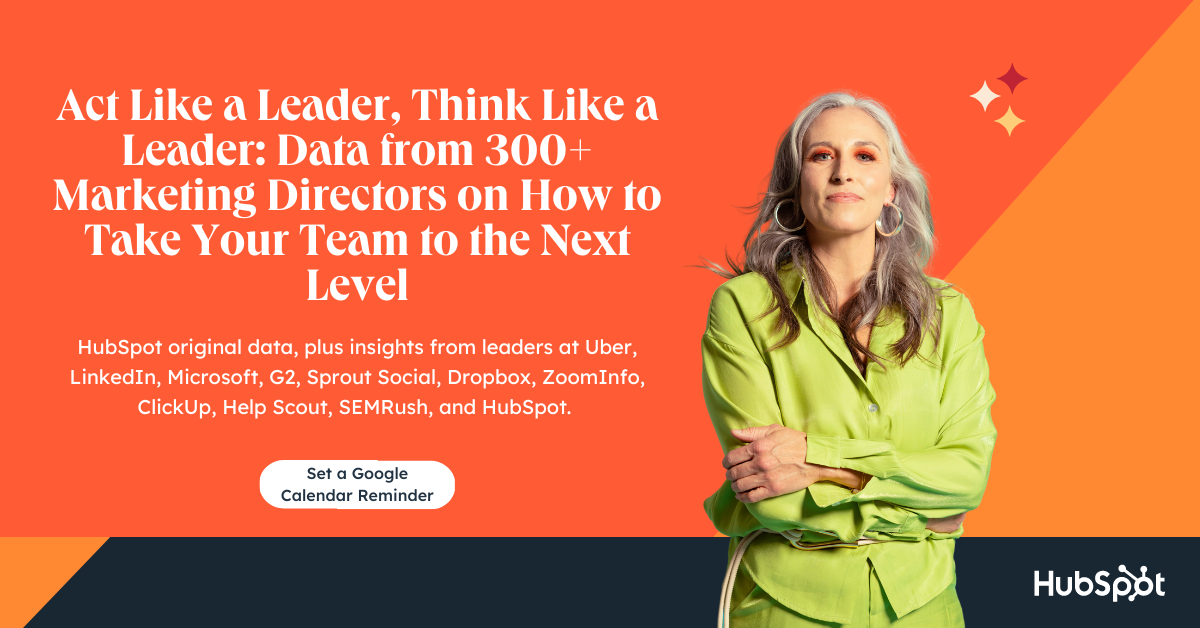
Thanks for your interest in our upcoming Executive Leadership Report and its corresponding pillar, “Act Like a Leader, Think Like a Leader: Data from 300+ Marketing Directors on How to Take Your Team to the Next Level“.

If you’ve arrived on this page, we know our content so far has made you eager to see the full report. Check back on this same page on November 1, 2022, for our full report and corresponding blog posts.

We hope you enjoy what we’ve got in store for you! 

Worried you’ll forget? Click here or below to set a Google Calendar reminder that will notify you when the report is live.

Act like a leader CTA

Curious what’s in store? Here are a few topics we’ve got coming for you: 

  • What Help Scout’s VP of Brand Considers When Promoting Individual Contributors & People Managers [+ How These Promotions Differ]
  • The Top 8 Marketing Challenges Expect to Face in 2023 [HubSpot Data + Expert Tips from Sprout Social, Microsoft, and ZoomInfo]
  • The Top Goals of Marketing Leaders in 2023 [New Data + Expert Insights from Uber, Dropbox, and ClickUp]
  • How to Get Buy-In from Some of the Top Marketing Leaders: 3 Execs Discuss What KPIs Matter to Them 
  • Which SEO Metrics Matter Most, According to Semrush’s VP of Brand Marketing
  • Neil Patel’s 5 Solutions to Marketers’ Biggest Challenges in Five Minutes or Less [YouTube] 
  • … And more! 

leaders youll hear from

We’ll also send this content out in our Marketing Blog Newsletters, so be sure to subscribe to the HubSpot Marketing Blog by clicking the banner below and never miss a beat!

hubspot marketing blog

Categories B2B

6 Small Businesses That Are Killing It On TikTok [+ How They Did It]

For many brands, TikTok is a scary, unknown place. What do you post? How do you use the trending sounds? I’ve rounded up small businesses that have generated thousands of likes and followers on their TikTok profiles alone.

Free Ebook: The Marketer's Guide to TikTok for Business [Download Now]

In this article, we not only list successful small businesses on TikTok with a breakdown of their strategies but also hear from some directly on what influenced their success.

Note: In this article, we define small businesses as those with one to 25 employees.

1. POPFLEX

Founded by influencer and content creator Cassey Ho, POPFLEX has amassed 2.5 million likes and 116K followers since first posting in May 2020.

What’s the key to its success? Leveraging Ho’s loyal community and telling honest stories.

@popflexactive Time for a gym bag upgrade? Meet the all-in-one Valentina Duffle 💐
#dufflebag
#duffle
#functionalfashion
#blogilates
#bags
#gymbag
#ShowOffLandOFrost
♬ Classical Music – Classical Music

Ho grew in popularity on YouTube as a fitness instructor sharing pilates workouts and advice, hence the name @blogilates. After years of success, Ho launched the apparel brand, POPFLEX.

“It’s such a huge benefit to work with a social media personality like Cassey, who already has not only a fanbase but a loyal community that she has built trust with,” says Lexi King, PopFlex’s social media lead. “We are an extension of that at POPFLEX.”

Knowing that these two brands are deeply connected, King says they focused on sharing the behind-the-scenes journey of building and growing POPFLEX.

“…People love seeing the ‘why’ and the process behind our products,” says King, “it makes the brand relationship less transactional and more of a relationship.”

She says that instead of selling a product, they walk viewers through finding solutions to their most pressing problems. On TikTok, each account feeds the other, creating what King calls an ecosystem.

“If you happen to be scrolling TikTok and come across Blogilates’ video promoting a product, that will likely lead you to check out POPFLEX where you can then see the product on different bodies through our try-on videos or see more of the functionality behind the product,” she says.” It’s about creating an ecosystem of content, it’s like telling one big story.”

In addition to storytelling and leveraging their founder, King shares that the brand invests in building relationships with diverse content creators, through partnerships and gifting.

“Seeing our products promoted on external influencer/creator accounts helps build our awareness and trust with the consumer while also giving our customer real, raw, and unpaid reviews,” says King on gifting products to influencers.

Unlike many other brands on TikTok, POPFLEX doesn’t only rely on trending dances to gain traction.

“Doing trendy dance moves doesn’t always need to be your answer to increasing your reach,” says King. “You can find a unique way to utilize a trending audio to push your product and educate your audience about your brand.”

She continues, “In fact, being different and interpreting trends in unique ways has been some of our best performing content.”

If there’s one piece of advice King could offer other small businesses, it’s this: Succeeding on TikTok involves trial and error.

“You have to find what brings your audience in, weeding through what works and what doesn’t,” says King. “The only way to figure that out is by posting and by not being afraid to test new things — new creators, posting at different times, new angles, trends versus storytelling, etc.”

2. Faces Cosmetics

While some brands steer away from pushing their products on TikTok, others find great success in doubling down on this strategy. Faces Cosmetics is one of them.

About 90% of the TikTok videos this brand posts on TikTok are directly related to its product, specifically the quality, performance, and durability.

The reason this strategy works so well is that in just a few seconds, the video addresses user pain points and shows how the product solves them – all while leveraging trending sounds.

@facescosmetics And it’s latex free 😜 Secure those lashes baby!
#makeup
#mua
#lashes
#facescosmetics
#lashessecured
♬ original sound – IT GIRL 💕

Here’s another tactic that’s worked exceptionally well for Faces Cosmetics on TikTok: Building up a story surrounding the product, hooking in viewers, then revealing the truth at the end.

While this may sound like a risky approach, it’s one that brought the brand 3.1 million views in a single video and a host of new customers.

For instance, in the video posted below, the brand’s founder posed as a content creator trying a new product that’s been making its rounds on social media. Spoiler alert: It’s her product.

@facescosmetics I wish i knew about this sooner omg!
#lashes
#makeup
#ulta
#facescosmetics
#lashessecured
♬ original sound – Faces Cosmetics

She tries it on, addresses common customer pain points with this product line, then ends the video with the big reveal and a restock announcement.

The takeaway here is to tell stories that will resonate with your audience.

3. Hoodjabi

With over 125K followers and 4.3 million likes, all of Hoodjabi’s viral content has one thing in common: great use of a trending sound.

@hoodjabishop A lifechanging experience 🥹🥹
#hoodjabishop
#modestfashion
#hijabessentials
#hoodiehijab
♬ The sound of love – Mandy & Boots- Viral 🔈Creator

Although every video features Hoodjabi products, they don’t focus on the products themselves. Instead, they focus on lifestyle – always in a funny, engaging way. 

So, how do they do it? I spoke to Hoodjabi founder Kady Meite. In addition to her humor, she attributes her TikTok success to her understanding of the app. 

“Because I personally use TikTok every day, studying the app comes easy,” she said. “Whenever I hear an audio, based on the wording of the song or theme of the trend, I automatically think ‘How can this apply to my brand?’”

Whether it’s for building brand awareness, promoting products, or community building, Meite says there’s always a way to leverage a trend.

“Way too often, I see other small businesses get stuck on views and why certain videos they worked so hard on aren’t getting any traction,” she says. “Once you click that ‘post’ button, you should be working on new content, generating ideas, or producing.”

Meite recommends that small businesses focus instead on posting as much as possible to get their name out there. She believes virality is driven mostly by consistency.

“ It has nothing to do with hashtags or certain times of the day,” said Meite. “Just post and post consistently – the right audience will find you.”

She adds that on a platform like TikTok, reusing and recycling old content is welcome – including photos. 

“TikTok loves photo dumps with the right caption, trending audio, and great brand pictures,” Meite says. 

For small businesses with limited time and resources, this is great news. You don’t have to start from scratch every time, a new trend offers an opportunity to turn old content into your next viral video. 

If there’s one lesson to take away from Hoodjabi, it’s this: Take time to understand how the platform works, don’t agonize over views, and focus on creating content that will resonate with your audience.

4. Bobbie Goods

TikTok accounts like Bobbie Goods show us that simplicity can go a long way on social media.

What once was a drawing account from an artist evolved into a brand selling coloring books, stickers, and more.

What’s most interesting here is noting how the content in this account shifted once it became a brand. In the early days, the videos had little focus, allowing viewers to simply enjoy the drawings as they came alive on screen.

Over time, the brand started incorporating more behind-the-scenes content, from packing orders to creating new products.

@bobbiegoods add eco friendly gift wrapping to your next order! available now in my shop ☺️ @noissueco
#noissuepackaging
#fyp
#packingorders
#smallbusiness
#etsy
♬ Real Love Baby – Father John Misty

Another interesting note? Bobbie Goods doesn’t rely on trending sounds to make or break their content, showing once again that there are multiple roads leading to success on TikTok.

5. Omsom

Food brand Omsom isn’t just on TikTok to promote its products. After perusing just a few videos, you’ll find that there’s an emphasis on celebrating Asian, and specifically Vietnamese, culture.

Omsom invites its viewers to gain knowledge of the history behind Vietnamese cuisine as well as challenge longstanding myths related to Asian foods.

@weareomsom PSA: there are no proven harms of consuming MSG!!!
#msg
#asiancuisine
#asianfood
#immigrantstories
#stigma
♬ original sound – Omsom

But that’s not all you’ll find scrolling down their profile.

Omsom also shares tons of food recipes, behind-the-scenes content from the founders, and relatable lifestyle content.

@weareomsom

The Omsom team has HAD IT with these red flags 🤣🚩

♬ Whatcha Say – Jason Derulo

Having this content mix ensures they appeal to a range of buyer personas, from Vietnamese consumers looking for a taste of home to curious eaters.

6. SplayTray

When your product is as good as SplayTray’s, there’s no fancy strategy needed (although that never hurts).

On TikTok, all it takes is finding the right trending sounds to show off your product’s most impressive features.

Take this video below, which earned nearly 270K views.

@splaytray

You definitely need it.

♬ THE SOUND WE DONT REALLY NEED – Skeetersbedtimestories

The audio overlay – a conversation between two friends resisting the temptation to make a purchase – mixed with a simple video compilation made for a straightforward product demo that speaks for itself.

So, when in doubt, keep it simple.

There you have it – 6 brands using completely different strategies and killing it on TikTok. Whether you’re a small, midsize or large business, there’s a piece of advice in here for every TikTok marketer.
Blog - Content Mapping Template

Categories B2B

What Is a Social-Led Brand? [+ How to Become One]

Social media is the top-used channel among marketers and is an ever-evolving space for brands, businesses, and creators to be part of.

As a result, social-led brands have become more popular, as consumers expect relevancy and trendy conversations on social media. In this post, we’ll explain what a social-led brand is and what it takes to become one.

Download Now: Social Media Trends in 2022 [Free Report]

What is a social-led brand?

A social-led brand uses everything about its social media presence, from assets to tone, in all of its marketing and branding efforts. Essentially it is led by how it acts on social media channels. For example, a brand with a humorous voice on social media maintains that same voice on billboards.

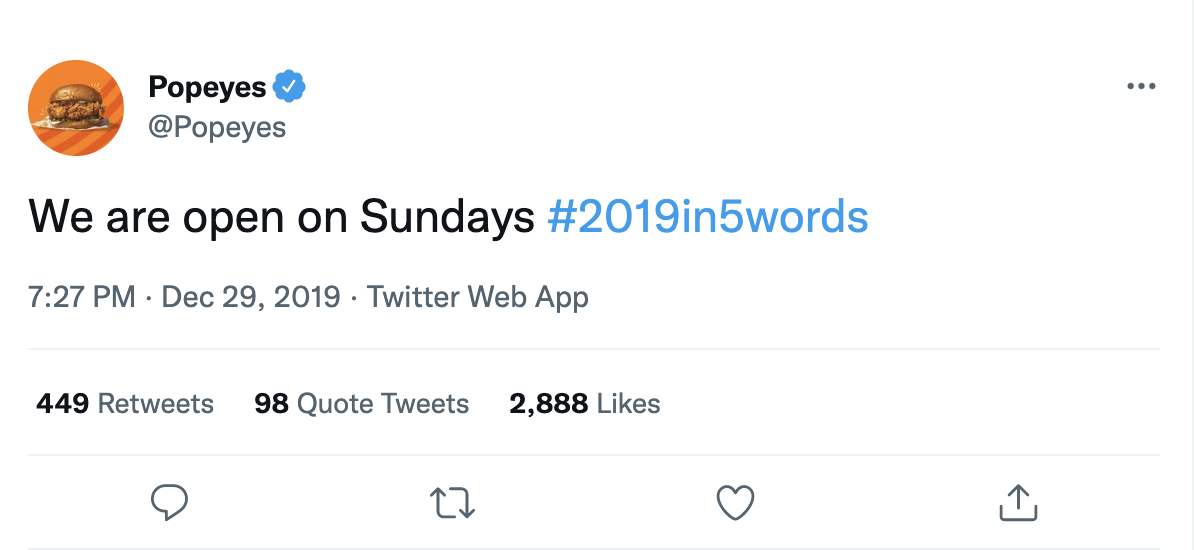
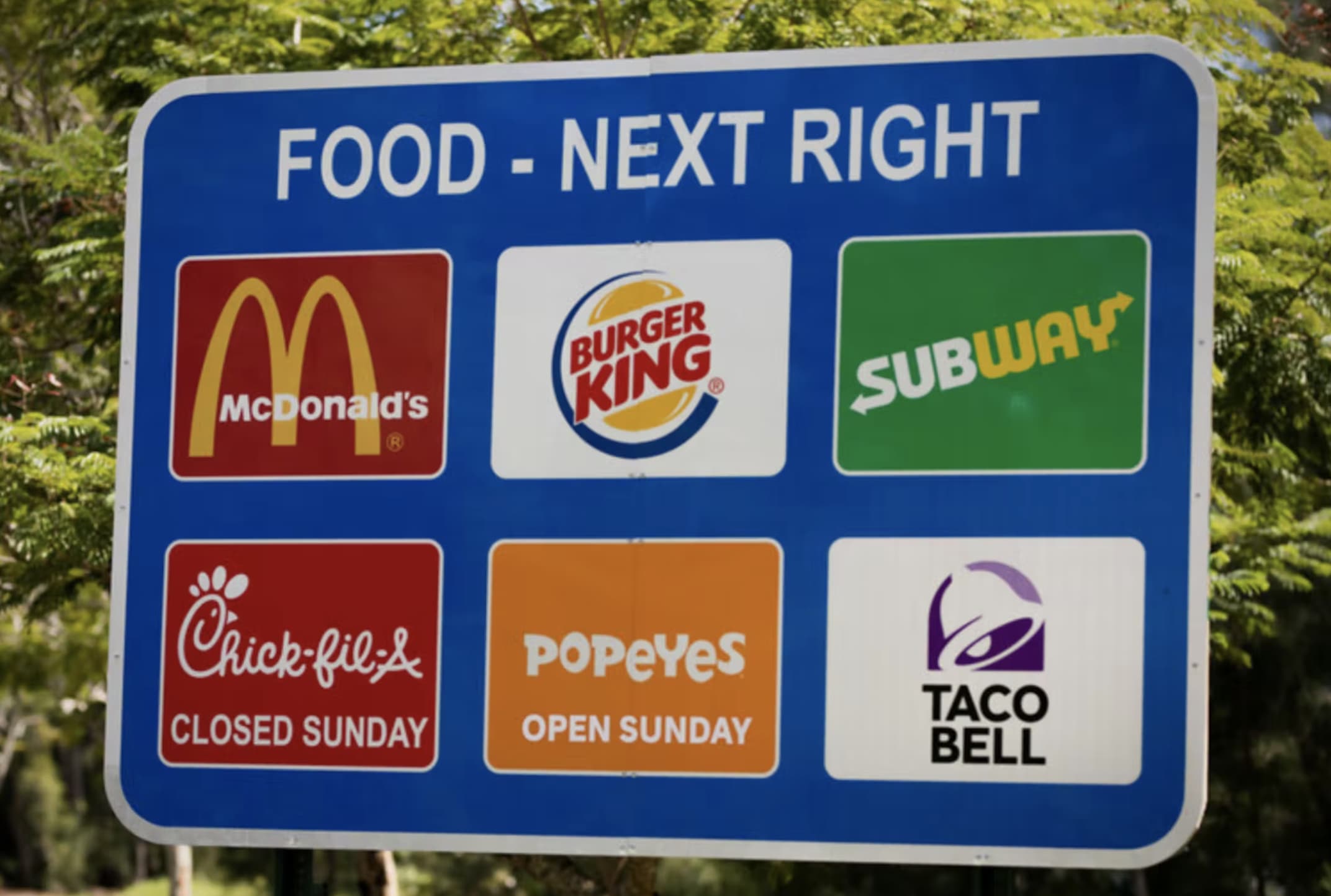
Popeyes is a great example of this, especially when it comes to its who-has-the-better-sandwich feud with Chick-fil-A. Popeyes says they have a leg up in flavor and also in the fact that they’re open on Sundays when Chick-fil-A is closed. It made a joke about its open hours on Twitter (shown below),

social-led brands example: popeyes

Image Source

And maintained the same humor in a highway road sign.

social-led brands example: popeyes

Image Source

Social-led brands are also tuned in to current conversations and trends on social media and use them in their own marketing, like using a trending meme to promote a product.

These brands also learn what customers expect from brands and businesses they like on social media. For example, social commerce is rising in popularity as customers shop on the channels they use. A social-led brand would recognize this and might make an Instagram Shop so its followers can visit its page and make a purchase without leaving the app.

Overall, two things make up a social-led brand: its social media voice that it carries to different channels and leveraging current and buzzy trends.

How to Become a Social-Led Brand

The most essential characteristic of a social-led brand is cohesiveness.

The branding and messaging you use originates from your social media accounts and are consistent on and off social media, from Instagram captions to email newsletters to physical mailers.

As mentioned above, social-led brands also know what’s buzzy at any given moment. You’ll know what people are discussing, what they’re excited about, and what’s driving clicks and engagement. You’ll also participate in conversations in a timely manner, not weeks after a meme has run its course.

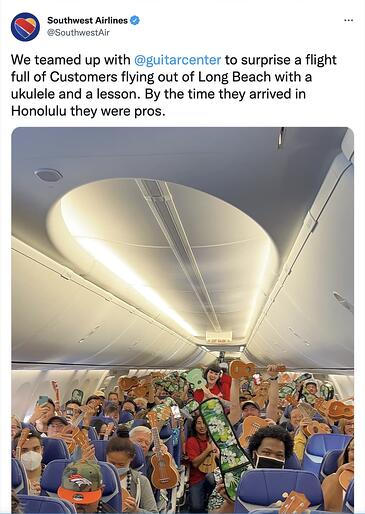
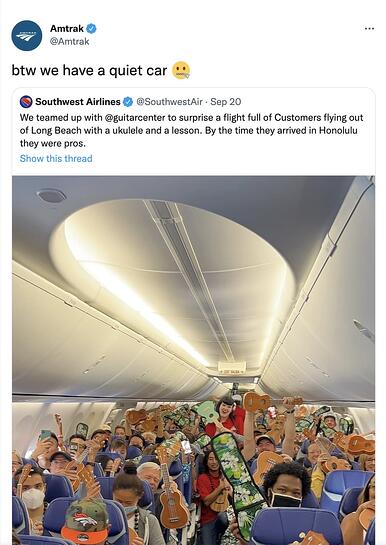
Southwest Airlines recently tweeted about passengers on a flight who were given a free ukulele and treated to an in-air lesson. People on Twitter immediately began talking about how they wouldn’t want that to happen on their flight, like Jon Ostrower, who said he likens the situation to giving his kids glitter.

social-led brands example: southwest airlines

Image Source

Amtrak was tapped into the conversation and reminded everyone that its trains have a quiet car that is always free from the disruption of a ukulele lesson.

social-led brands example: amtrak

Image Source

Social-Led Brands Leave Longer Lasting Impressions

Culturally relevant brands are more popular with consumers and leave long-lasting impressions, so being a social-led brand positions you for success.

When you can tap into trending topics, have conversations, and share content consumers enjoy, you’re more likely to attract interested customers, inspire purchases, and build brand loyalty.

New call-to-action

Categories B2B

How to Collab Post on Instagram as a Brand or Creator [Steps + Tips]

Wondering how Instagram’s new Collab feature works? We’ve got you covered.

New Data: Instagram Engagement Report [2022 Version]

In this post, we’ll dive into how this new feature works, the benefits for brands, and the steps to use it. Plus, get a few tips on how to leverage it.

What is a collab post on Instagram?

In the Fall of 2021, Instagram announced the “Collabs” feature, which allows an feed post to live on two users’ profiles.

Here’s how it works: User 1 will create the post and invite User 2 to be a collaborator. Once User 2 accepts, the post will live on both users’ profiles. They will both share ownership of the post as well as the engagement (likes, shares, comments).

Currently, Collabs is only available in the feed and on Reels. That means that you can’t add a collaborator on Stories, the Shop tab, or anywhere else.

Why use an Instagram Collab post?

For influencers and brands, the Collabs feature is a huge opportunity.

collab post on instagram example

Businesses work with influencers to reach audiences they normally wouldn’t, i.e. discoverability.

This feature allows them to land directly on their target audience’s feed without having to do more work. They can also track performance much easier – no need to wait for influencers to send a report, they can look at the analytics directly.

Lastly, when two users share a post, they remove the risk of competition with both fighting for engagement.

From the content creator’s perspective, this feature not only allows for more transparency but also makes it easier to share product recommendations.

How to Create an Instagram Collab Post

  1. Click the “+” sign to create a new feed or Reel post.

    how to create a collab post on instagram step 1

  2. Create a feed post or Reel then tap “Next.”

    how to create a collab post on instagram step 2

  3. Once the editing is done, tap “Tag People.”

    how to create a collab post on instagram step 3

  4. Tap on “Invite collaborator.”

    how to create a collab post on instagram step 4

  5. Search for the collaborator’s account and add them.

    how to create a collab post on instagram step 5

  6. Wait for them to accept. Once they do, the post will be shared with their followers and they’ll be listed as co-author.

how to create a collab post on instagram step 6

From the invitee’s perspective, they’ll receive a notification about being tagged on a post and will have to review the request.

how to create a collab post on instagram: how to accept invite

Note: If your request is denied, the invitee will still be tagged in your post but will not be listed as a co-author and it will not show up on their feed.

Tips for Making Instagram Collab Posts

If you’re ready to get started using this feature, here are some ideas and tips on using collabs:

  • Use collabs for:
    • Giveaway winner notifications
    • Influencer partnerships
    • Follower shoutouts, i.e. user-generated content
    • Co-marketing campaigns
  • Make sure you have a pre-existing relationship with the users you invite to collaborate.
  • Only collaborate with creators whose audiences align with your ideal user persona.
    Improve your website with effective technical SEO. Start by conducting this  audit.  

Categories B2B

Firefox Eliminates URL Tracking Parameters: What Marketers Should Know

In June 2022, Mozilla Firefox 102 was released with a feature that strips query parameters from URLs that track users as they navigate the web. The feature is called “Query Parameter Stripping,” and the purpose is to protect the privacy of users who don’t want to be trailed online.

Now that Firefox has given its users the ability to strip query parameters, here’s what marketers need to know.

Download Now: Free State of Marketing Report [Updated for 2022]

What are query parameters?

Query parameters are a set of texts that are automatically added to the end of a URL to pass on data. These parameters identify specific content or actions based on the data being passed.

Query parameters appear as a “?” followed by a series of text. To add multiple parameters, an “&” is added in between each branch. For instance: www.example.com/?branch&product

To better understand what a query parameter is, let’s use the link to this HubSpot blog post about using video to humanize your brand. The link to this blog post is:

https://blog.hubspot.com/marketing/video-marketing-tips-from-wistia

However, if I were to click on this same link on Facebook, the URL would appear as:

https://blog.hubspot.com/marketing/video-marketing-tips-from-wistia?fbclid=IwAR3NRxcZoMVwLND43N-5xVwa3VvYiL0xrq_Cfc5uiPPdk5qIPKZ9vBqPFCI

Everything after the “?” doesn’t make a difference in terms of where the URL takes you but it provides Facebook (and for the sake of transparency, HubSpot) information about who’s clicking, what they’re clicking, and why.

How do query parameters help marketers?

The information from query parameters helps marketers optimize their company’s websites to create a more user-friendly experience. Essentially query parameters play a significant role in evaluating the touchpoints consumers encounter online on their path to purchase (attributions).

Query parameters also help track content performance across different platforms — they also help companies figure out the right ads to have on their websites to boost ad revenue.

How will this affect marketers going forward?

For now, the feature is a setting that has to be manually activated by the Firefox user. Once activated, any significant navigation event — like opening a new window or tab, clicking links, or redirects between URLs — will result in the removal of query parameters from the destination URL.

This could impact attributions for sites like Facebook, HubSpot, and other websites using query parameters in the sense that some attributions may not be reflected accurately.

Going forward, marketers using query parameters should be aware that users of Firefox 102 and beyond may not accurately reflect attributions.

Marketers should also be prepared for the possibility that Mozilla could make Query Parameter Stripping a default setting in the future. Preparation could be using other methods to track user behavior. Another method would be to gather data through website audits to optimize the usefulness of your site to consumers.

New Call-to-action

Categories B2B

TikTok’s Tests New Search Features: What We Know Right Now

TikTok, like many social platforms, often rolls out new features to improve the app experience and offer new opportunities for creators and users.

It recently launched a feature that calls into question whether, in the future, the app will require its own unique SEO strategy. Let’s discuss this.

Free Ebook: The Marketer's Guide to TikTok for Business [Download Now]

TikTok’s New Search Feature

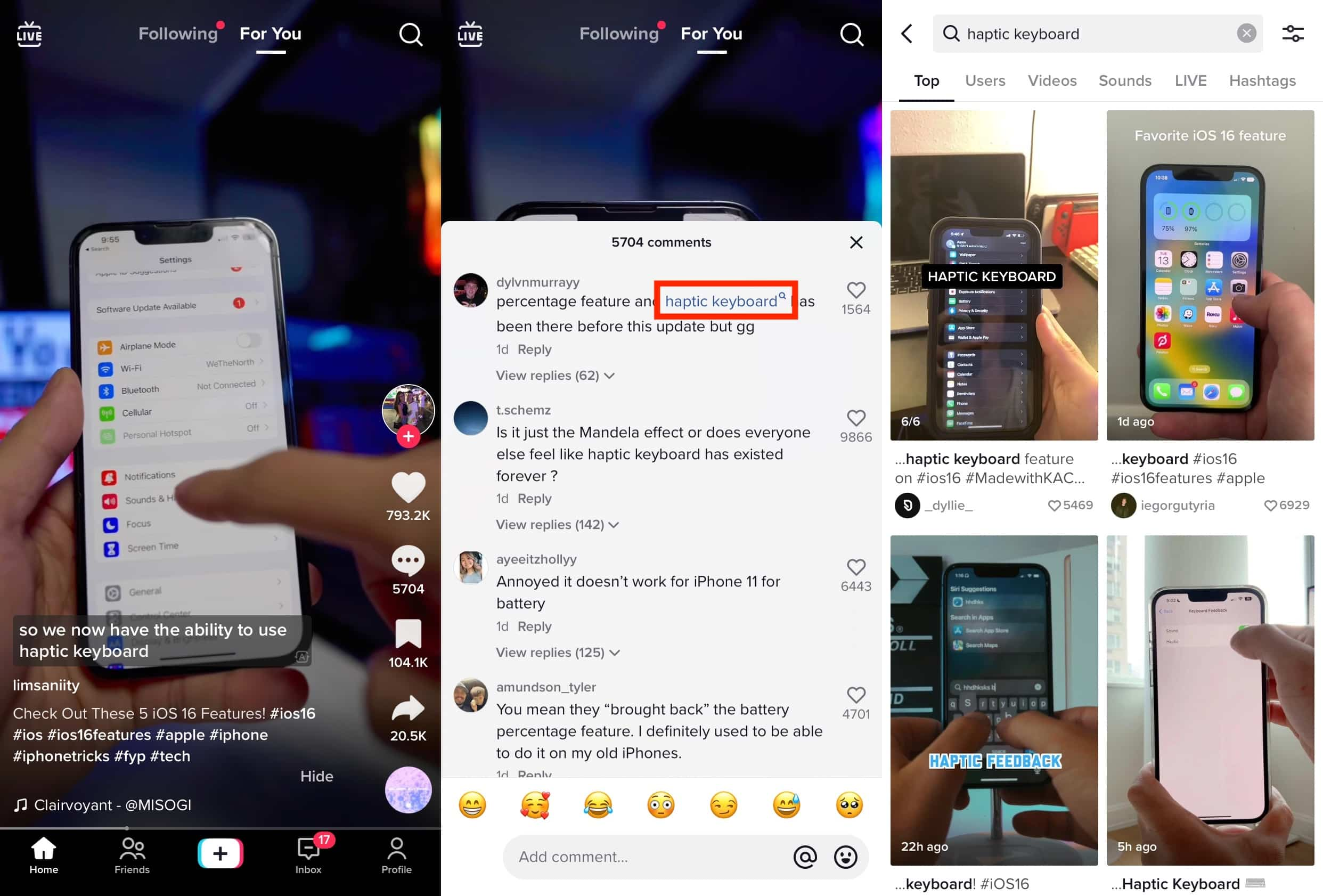
TikTok’s new search feature is primarily seen in comment sections, where keywords are hyperlinked next to a magnifying glass icon. Pressing on the linked keyword brings you to a discovery page of videos related to the keyword.

For example, Steven Lim made a video sharing new need-to-know features of iOS 16. A user left a comment about one of the features Lim mentioned, haptic keyboard, and it’s hyperlinked and leads to a larger selection of videos about haptic keywords.

tiktok seo example

Image Source

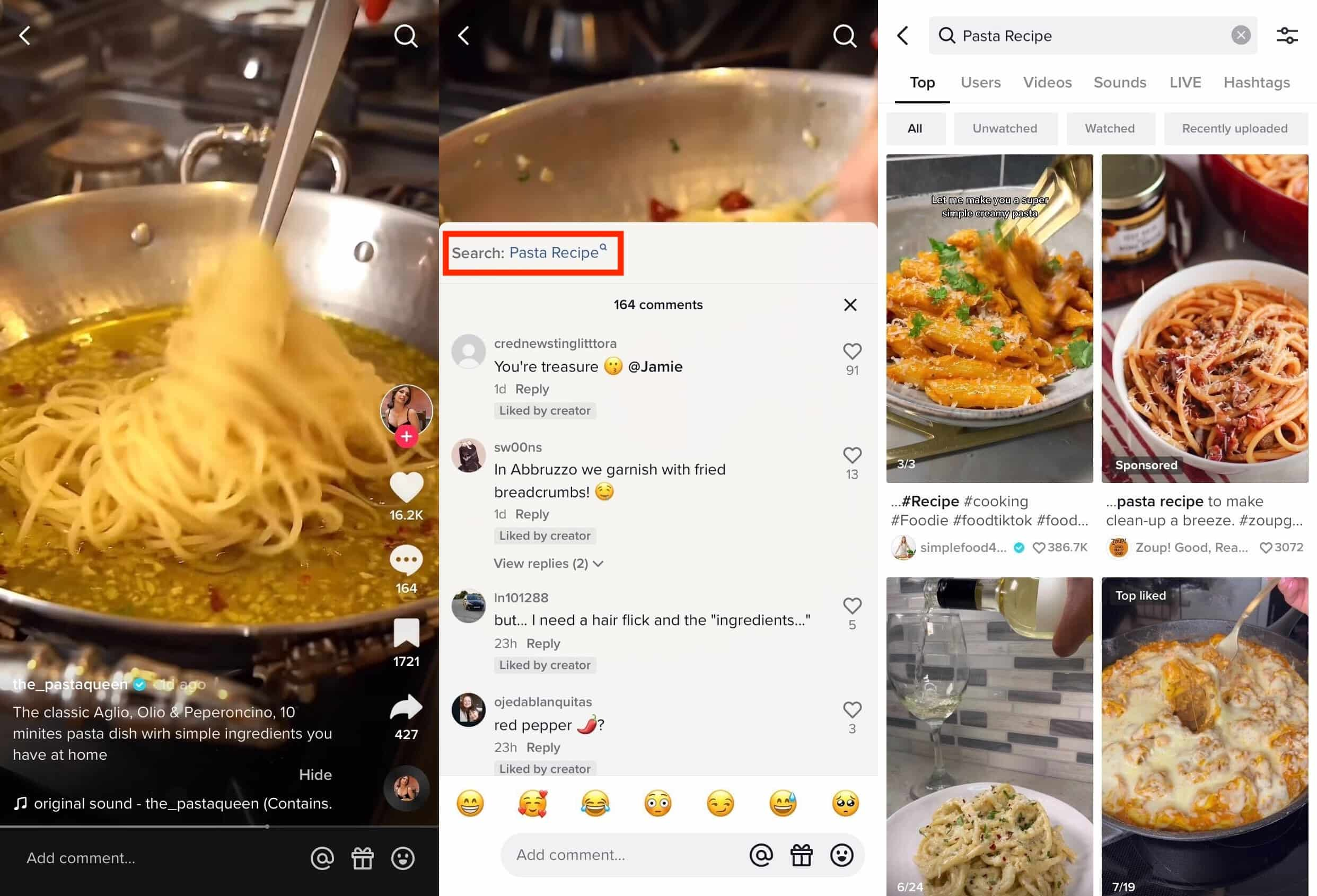
Hyperlinked keywords can also appear at the top of comment sections, and clicking on them leads to a selection of videos on the same topic. The Pasta Queen shares authentic Italian recipes on her account, and the comment section of a recent video is headed by a hyperlinked “pasta recipe” keyword.

tiktok search optimization example

Image Source

The feature is currently available as part of a limited run test and, according to TechCrunch, TikTok has not yet made an official comment.

What’s the potential with this feature?

The feature comes at a critical time for TikTok’s impact in the search world, as Google has recently acknowledged the platform’s impact on its Search product.

Prabhakar Raghavan, Google’s Senior Vice President of Google Knowledge and Information, said that 40% of young people go to TikTok or Instagram when looking for a place to eat, as opposed to Google Maps or Search. This means that users, albeit part of a specific generation, favor the content on TikTok when finding answers to their questions.

As mentioned above, TikTok has not made official comments on how to use the new feature. But, if rolled out officially, it will likely have significant power for creators looking to build a following and brand awareness, and for those using the app for discovery.

For creators, brands, and businesses, we can assume that the new search feature gathers context for videos from keywords in comments, hashtags in captions, and actual video content (on-screen text and voice). In the future, it would make sense that a TikTok SEO strategy would involve optimizing videos with related keywords to help hyperlinked keywords appear in comments, in comment section headers, and to help videos appear in relevant queries.

For TikTok users, SEO on TikTok would mean that the app would become a more powerful search engine as searching for keywords or clicking on hyperlinked keywords would bring them to a library of snackable content that will answer their specific questions.

Blog - Content Mapping Template

Categories B2B

3 Reasons So Many Business Strategies Fail (And How To Succeed), According to the Strategy Hacker

Do you remember when you were introduced to long-division in grade school? You found yourself needing multiple steps to solve a single problem. It probably seemed like a very daunting and impossible task before your math teacher showed you a hack that broke down your seemingly endless series of steps into only a few.

The same can be said about business. Initially, we all have to go through “long-division” level processes, procedures, and series of daily tasks. These might include entering a new marketplace, testing out new messaging and branding, pushing for new profit margins, or onboarding new clients.

But we can convert the long-division within our business into short-division, making our efforts much simpler and more manageable.

How, you may ask? Through the power of strategy.

I’ve had plenty of experience helping companies scale — in fact, I’ve launched over 35 brands and generated over $175 million in revenue for clients worldwide, and I currently host the Webby-nominated top 100 marketing podcast iDigress, which provides actionable insights to help businesses grow.

Here, I’m going to walk you through the three reasons many business strategies fail — and how you can succeed.

→ Download Now: Free Business Plan Template

Why do so many business strategies fail?

When you have the right business strategy or series of strategies in place working for you, it will have you screaming “I have the power” like He-Man.

But if everyone supposedly has a business strategy in place already, why are 65% of businesses still failing during the first ten years, according to the U.S. Bureau of Labor Statistics?

The culprit for most business strategies failing comes down to the 3 Cs: complexity, confusion, and complications.

They are slowed down by trying to implement complex processes. The roadmap, messaging, and foundation upon which the business strategy is built are confusing. The business can’t act decisively because the strategy is overly complicated.

The three primary reasons your business strategy probably isn’t working:  

  1. It’s undeniably not working for you, but you refuse to change it.
  2. No one understands it and therefore cannot execute it properly.
  3. You’re doing a ton of tactics and calling it a “strategy” when it’s not.

So now that we’ve addressed the elephant, how do we get rid of it?

Piece by piece.

There are three components necessary in creating a successful business strategy that can serve as our “short-division” hacks to growing our business: simple, sustainable, and scalable.

We will expand on how to incorporate these three components into developing business strategies that do work while also including episode references throughout from the Strategy Hacker’s podcast iDigress, which is part of the HubSpot Podcast Network.

How to Create a Successful Business Strategy, According to the Strategy Hacker

1. Start simple. 

The quickest route to success is a straight line. A straight line, in its purest form, is simple. We must embrace and integrate the power of simplicity within our business strategy.

An easy way to do this is by simplifying the structures, systems, and steps involved in creating and executing your strategy so that everyone can understand it.

For example, let’s imagine your current process for determining how marketing is performing is by reviewing a series of reports. This takes a ton of time and energy, and the people who review the reports don’t always understand the terms or references included in the report. To make matters worse — even after all of that, you still aren’t sure about why things aren’t working.

When you simplify and streamline your processes, the time it takes to understand, make decisions, identify weaknesses, amplify strengths, delegate tasks, and execute is significantly shorter.

By incorporating a higher level of simplicity within your business, things naturally become more effortless. Look at all the areas where the team spends the most time. Maybe you have friction points in using expensive, ineffective software or creating multiple reports that no one understands.

troy sandidge tips on business growth

Instead of keeping things as is because “we’ve always done it this way” or “this process worked in the early days,” allow yourself to get basic with everything.

Simplifications lead to making smarter decisions. Create S.M.A.R.T. (specific, measurable, achievable, relevant, and time-bound) goals using a unique set of criteria to ensure your objectives are attainable within a specific time frame.

Additionally, many business strategies don’t work because business leaders haven’t removed unnecessary roadblocks. These might include too many audience profiles, too much data, too much busy work that doesn’t produce results, or too weak of a brand positioning.

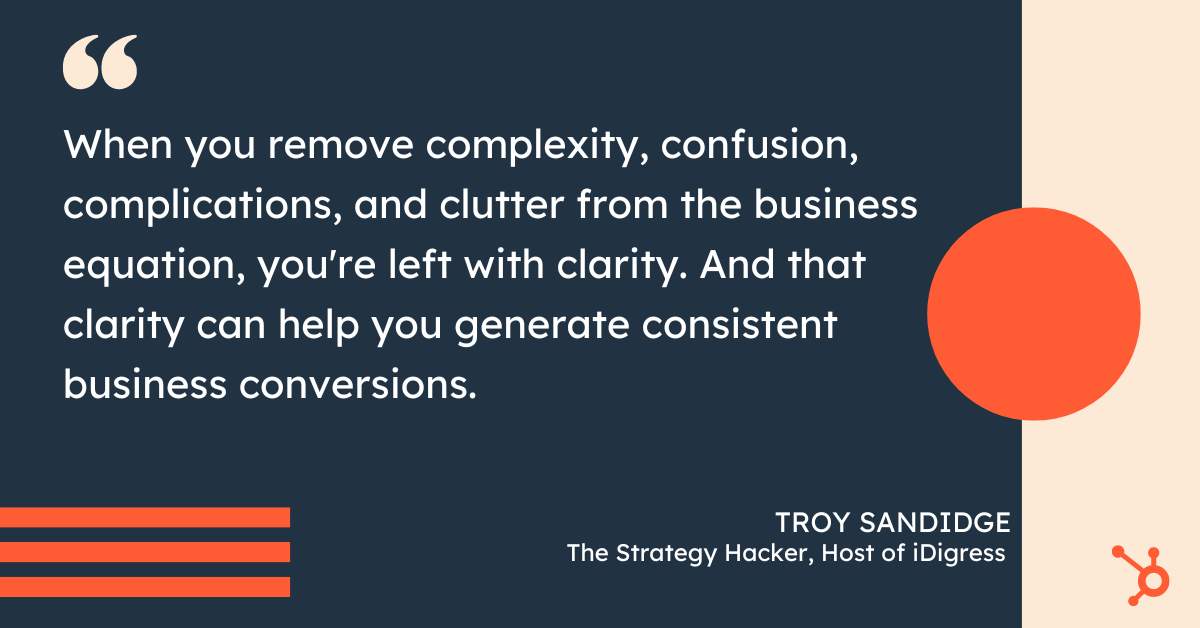
When you remove complexity, confusion, complications, and clutter from the business equation, you’re left with clarity. And that clarity can help you generate consistent business conversions.

Clarity is a powerful thing to have, but how do we align clarity into a solid business strategy? Below are a list of some episodes that can help:

2. Focus on sustainability. 

The most efficient business strategies are the ones that don’t just work today but continue to work tomorrow, next week, and even six months from now.

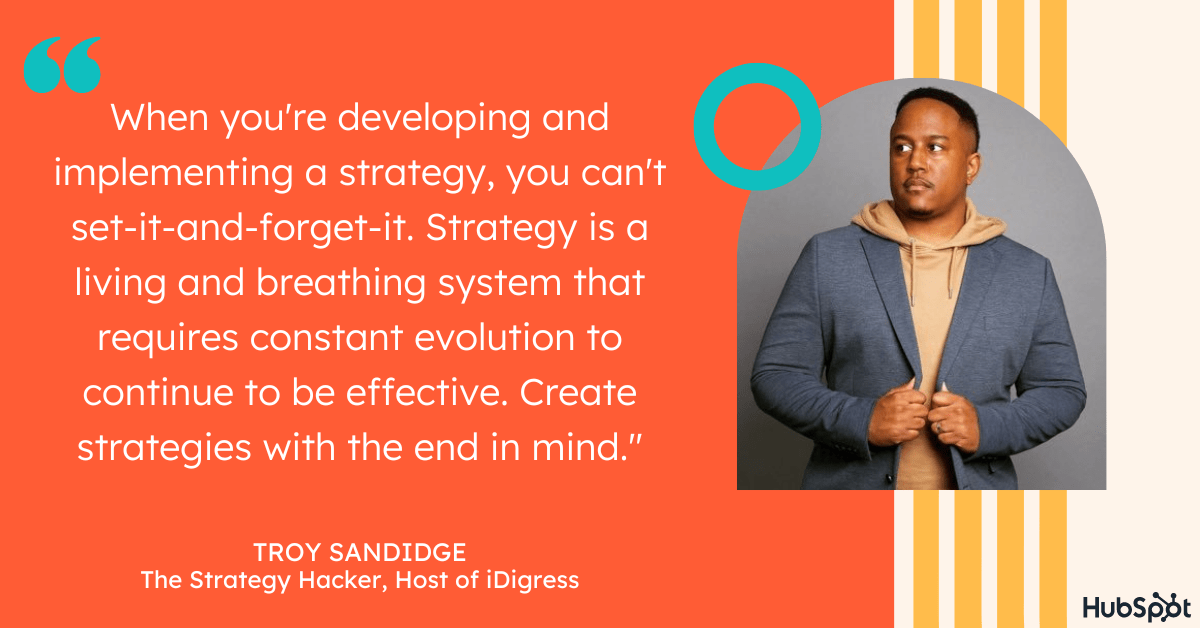
When you’re developing and implementing a strategy, you can’t set-it-and-forget-it. Strategy is a living and breathing system that requires constant evolution to continue to be effective. Create strategies with the end in mind.

The friction you typically hear from many businesses struggling to develop and enable true strategy is that they are always busy, and always in “go-mode.” They would rather execute blindly out of the need to do something, instead of strategically planning out their moves — which leads to a higher chance of success.

Sometimes, it’s not that your efforts won’t work. It’s understanding the bigger picture of what efforts are most essential to focus on right now to position yourself for true sustainability first, and then scaling second.

You can’t scale if you aren’t stable, and some business leaders’ full of zeal forget that.

When was the last time you looked at your customer journey through the eyes of your ideal customer? Is your journey optimized and systemized to give the right value at every stage? Are your marketing, branding, SEO, and selling initiatives in alignment with where you are in your business right now?

troy sandidge tips on business strategy

Some businesses’ customer journeys and initiatives are stuck on awareness mode when they need to switch to sales, acquisition, and conversions mode. So which mode are you? Ep 34 of iDigress shares a 5-point customer journey blueprint that can be modified to fit your current business situation and address all of these questions:

  1. Awareness
  2. Interest/Attention
  3. Conversions
  4. Relationship Building
  5. Advocacy

Sustainability requires a certain mindset and level of tenacity accompanied by patience, poise, and persistence.

3. Ensure your strategy is scalable. 

Consistency is key for sustainability, but in order to scale one must be willing to fail. Unlike sustainability, scalability requires a different focus, and a little more risk tolerance.

When you’re evolving your business strategy to pursue next-level growth, your mindset has to expand to see infinite possibilities.

You will need to identify, isolate, and innovate. For instance, you’ll want to:

  • Identify your ideal customer profile, what’s working, and what’s not working
  • Isolate the best opportunity for next-level growth
  • Innovate your offerings to meet the additional needs of the consumer  

The business strategies that generate the most money and continue to work are designed as living, breathing plans of action that can be expanded to handle high-level growth and capacity.

In order for your business to scale effectively, you must have a clear path on what you need to do to make that leap in growth. Ep 48 of iDigress reflected on the four lessons Kieran Flanagan, SVP of Marketing at HubSpot, attributes to HubSpot reaching one billion in ARR and the business, marketing, and mental approach necessary to start achieving disruptive growth in your specific marketplace.

Scaling business growth is all about leveraging strategies that can scale to generate consistent revenue growth without adding a ton of extra costs. This keeps your profit margins high.

Any campaign, business, or movement that scaled quickly in a very sustainable way probably…

  • was easy to identify, understand, and share
  • was attractive to the eyes, heart, and soul
  • was so social it transcended audiences, countries, and languages
  • was there at the right time, and used the right platform and distribution methods

One way to improve your odds of scaling astronomically, which we discuss in Ep 44 of iDigress, is by embracing the E.A.S.T. framework with your efforts. Here’s how it works:

  • Step 1. Make it Easy
  • Step 2. Make it Attractive
  • Step 3. Make it Social
  • Step 4. Make it Timely

Applying E.A.S.T. may seem very simple in scope. However, many still fail to implement this framework successfully when it comes to marketing, branding, sales, and communication.

Strategy serves as the pen and paper to create the story you want for your business.

With strategy, you can map out the business you want to build, remove anything you don’t like, and add anything that you desire to create the organization you want. But it’s not instantaneous. It takes time. Yes — even with “short-division” hacks.

It all builds on top of each other. Simplicity lays the foundation for sustainability, which lays the runway for scalability — and, all the while, you can use strategy as your guiding light to help you navigate as you continue to level up.

Business Plan Template

Categories B2B

The AI Advantage: Three Ways to Supercharge Lead Generation, According to ZoomInfo

Marketing is about reaching people. But far too often, marketers spend their time performing repetitive, robotic tasks that could be better handled by software.

Artificial intelligence (AI) is poised to substantially change this. According to research from McKinsey, the marketing and sales sectors have the largest possible benefit from implementing AI-based solutions in the coming years, with up to $2.6 trillion in increased value.

Here are three ways modern marketers are using artificial intelligence (AI) tools to create more effective lead generation strategies and get them back to what they do best: Connecting with people.

Download Now: Free State of Marketing Report [Updated for 2022]

How to Leverage AI for Lead Generation

Artificial intelligence makes marketers more efficient by shortening the time it takes to move from research to outreach. AI tools can be trained to spot patterns and draw conclusions that might otherwise need a human expert to spotlight.

1. Create Ideal Customer Profiles (ICPs) that match your biggest wins.

When your sales team wins a deal, the next logical move is to go after similar accounts. But replicating that ideal customer and tracking down best-fit, lookalike prospects can be a slog. AI software can dramatically speed up this process by analyzing closed-won (and closed-lost) opportunities and generating a profile that can be matched against your contact database for strong lookalikes.

For example, say your sales team just closed on a medium-sized business in the SaaS industry that has 50+ salespeople, uses Salesforce, and is located on the East Coast. AI can take these attributes (and others) to create a target list of lookalike accounts.

This process works for buying committee members, too. If most of your customer buying committees consist of marketing directors at enterprise-sized companies who use Marketo, AI can identify that trend and provide you with a dynamic list of prospects who fit the criteria of an ideal buyer.

To accomplish this, you need the right tech at your disposal. Tools like ZoomInfo’s RevOS platform, with its database of over 100 million company records, can automatically analyze your past deals, identify similarities between them, build your buyer persona, provide a list of lookalikes, and create a targeted account universe.

If you’re already a ZoomInfo customer, click here to get 20% off HubSpot products.

Automated demographic, firmographic, and technographic data all play a part in drawing your absolute best-fit accounts — which means you can spend time crafting a compelling message instead of conducting research.

2. Personalize your campaigns with up-to-date data.

Professionals who run account-based marketing campaigns know that one size definitely does not fit all. How can they cover all the angles of a large buying committee without spending too much time trying to qualify their prospective leads?

The answer is buying signals. With a modern, AI-driven marketing platform, marketers can be alerted when a target account has significant changes that might inform, alter, or elevate their ABM approach:

  • A prospect gets a new round of investment: They’re likely to be greenlighting budgets for new or upgraded tools, so tailor your ABM campaigns accordingly.
  • A new executive is hired, or an internal champion gets promoted: Now’s the time to strike with an ABM campaign that targets a new leader who is likely reassessing their team’s contract.
  • A target account visits your website: With real-time insight into the companies visiting your site and which pages they landed on, you can quickly send a targeted message while you’re still top of mind.

There are dozens of different types of buying signals that can inspire personalization.

For example, Rocks & Gold sends real-time alerts of B2B companies in buying mode based on their history of hiring dynamics. This includes when a prospect, customer, or stale deal:

  • Starts growing or decreasing in company size
  • Makes leadership changes
  • Announces a new fundraising round

This type of insight gives you a competitive advantage by helping you customize your message to speak directly to the circumstances that make them a good fit right now.

3. Use intent data that illuminates the last mile of prospect interest.

You know which accounts you’d like to target. You have the campaigns that will resonate with their buying committee. But timing is everything — are they ready to hear your value proposition right now?

Intent data answers that question. By using AI-driven systems that can match corporate IP addresses and user profiles to web data, marketers can be aware when a prospect is actively in the market.

How does it work? Say a prospect account visits your website and downloads your marketing content on a pretty predictable but relatively rare basis. As the second quarter is coming to a close, that company is suddenly filling out lots of forms and engaging with your how-to videos. An AI-powered intent data system connects those dots — and elevates the significance.

On top of that, it connects the dots outside of your website. Say your company sells project management software. Intent data can track which companies are searching for terms like “project management vendors” or “project management software free trial” and consuming content on external websites — including your competitors.

If a current customer is searching these terms, it could be an indication of future churn and you can get ahead of the problem. If it’s an ideal prospect, it indicates a level of interest in making a purchase and enables you to target them with relevant content.

There are many tools that track and monitor intent-based keywords in HubSpot’s partner ecosystem. Benefits include:

  • Market clarity: Gain a clearer understanding of whom to target and how or when to engage with them
  • Efficiency: Increase ROI by reducing wasted time and effort pursuing bad-fit prospects
  • Impact: Quickly increase leads and ABM effectiveness

AI Marketing Tools & Software

There are hundreds of AI vendors, each with unique tools and technology to help make your marketing efforts easier, faster, and more successful. Here are a few we’d recommend:

1. Personalize your website experiences with Justuno

According to Forrester, 56% of marketers strongly agree that personalized content is key to ABM success. Justuno empowers marketers to convert more website traffic through personalized pop-ups and onsite messaging that is customized to speak to the unique visitor’s interests and priorities.

2. End-to-end content engagement with Paperflite

According to the Marketing AI Institute, the top use case for Marketing AI is analyzing existing online content for gaps and opportunities. That’s exactly what Paperflite does. Paperflite centralizes and curates all of your marketing and sales content into a single interface, and provides recommendations to surface the right content for the right opportunity.

3. Manage email replies for B2B sales and marketing with LeadGnome

As your company grows, manually managing email replies becomes daunting — at a certain point you need AI to scale your business. LeadGnome automates email reply management, which helps increase open and deliverability rates so you can engage customers faster.

Marketing is part art and part science. Using AI to eliminate the drudgery and cut down on the guesswork gives marketers the ability to bring their A-game to every campaign.

With AI-driven marketing tools, your next campaign can use the science of cutting-edge technology, while your reps tackle the part that only a seasoned marketer can supply: the art of connecting with people.

New Call-to-action

Categories B2B

Drip Marketing: Everything You Need to Know [+ 3 Examples]

Consumers in every market are constantly receiving a barrage of texts, emails, and ads from different companies trying to get their attention — so how can your brand stand out and stay top-of-mind? One way is via drip marketing.

Drip marketing helps marketers maintain constant contact with both current and prospective customers by constantly reminding them of available products, services, and special offers. But what is drip marketing, and how can it benefit your business? Here’s all you need to know plus a few examples.

Download Now: Free State of Marketing Report [Updated for 2022]

In the early days of drip marketing, paper mail and flyers were mailed to recipients on a marketing list or after they made initial contact with the business. Of course, as marketing adapted to the digital age, drip marketing in the form of social media and email marketing became more popular.

Now you know what drip marketing is, but how does it work? Furthermore, how can you company use it to its advantage? Here’s what you need to know.

How does drip marketing work?

The way drip marketing works depends on the medium being used. The three most common mediums are email, social media, and direct mail.

Email Drip Marketing

Email drip marketing typically begins with an online form a prospect or customer fills out. Once the form is completed, that person is entered into an autoresponder program that will send automated emails from that point forward.

The emails can be personalized with the contact’s name and specific mentions of the action they took. For example, “Hi Jane! Thank you for signing up to receive our weekly marketing newsletter.”

Social Media Drip Marketing

Social media’s role in drip marketing is becoming more and more common in a digital world. With this form of drip marketing, social media accounts are consistently updated with texts, photos, or videos surrounding a particular marketing effort.

For example, a social media account for a TV network might market for a particular show premiere by releasing behind the scenes clips, photos, or graphics to build audience excitement.

Direct Mail Drip Marketing

Direct mail has long been used in drip marketing efforts, and has seen many updates over the years in the form of software and digital printing. These advancements have made direct mail more automated, personalized, and easier to manage.

No matter the method used, a common trend in drip marketing is the “Law of 29.” This unwritten rule in marketing says most prospective customers will not buy something until they have seen an ad for it at least 29 times. While 29 may be a bit too specific, the point remains that a key to generating lead generation is staying top-of-mind for potential customers by continuously creating points of connection.

Examples of Drip Marketing

Now that you know how drip marketing works, here are a few examples to help inspire your next campaign.

Disney+ Email Campaign

To keep subscribers in the loop of the latest releases on the streaming app, Disney+ releases frequent email updates — including a weekly “What to watch this week” message. In this email, Disney+ reminds fans that its latest Marvel series, “Ms. Marvel,” is currently streaming and that its season finally is airing that week. It also highlights behind-the-scenes content of the show.

Marvel Drip (1)

Many companies and networks are dabbling in the world of streaming services. So this method of drip marketing is especially useful for Disney+ because it helps the service stay top-of-mind ahead of competitors like Hulu and Netflix.

Stranger Things’ Twitter Updates/h3>

Ahead of the premiere of the second part of Stranger Things’ fourth season on Netflix, the show’s Twitter account regularly shared posts to remind fans. Finally, on the day of the premiere, the account shared a clip of one of the character’s, fan favorite Eddie Munson, performing an epic guitar solo with the words “Now Streaming” in bold letters.

The video clip was compelling enough to go viral with more than 30,000 retweets and 120,000 likes.

New York Times Email to Win Back Customers

Not only is drip marketing effective for generating new leads, it can also win back old ones. Sometimes customers may invest in a product or service only to stop returning later.

In my case, I was subscribed to the New York Times, but I eventually ended my subscription to cut down on my monthly fees. However, I still get updates from the New York Times, including the special offer below to subscribe for just $1 a week.

NYT

Drip marketing is an excellent tactic to keep current customers in the know of your business’ products and services. It can also convince new prospects to commit to buying from your company. Finally, you can also win back old customers by keeping in constant contact with them. Now that you have a solid grasp of drip marketing and its uses, you’re ready to plan your next campaign.

New Call-to-action

Categories B2B

How Neuromarketing Can Revolutionize the Marketing Industry [+Examples]

Traditional metrics (like clicks, shares, and scroll times) can tell you a lot about campaign performance, but they can’t measure how customers feel about your brand. That’s where neuromarketing comes in. As a supplement to more standard marketing performance metrics, neuromarketing can help you analyze the emotional response to your campaigns.

Neuromarketing tells us what colors, pictures, music, or messages resonate the most with audiences. Your team can use this data to identify customers’ ad preferences.

Take a deep dive into how neuromarketing works for popular brands.

Click here to download our free introductory ebook on marketing psychology.

Let’s turn to P&G for a real-world example of neuromarketing at work.

In partnership with marketing firm Dentsu Data Labs, P&G designed an experiment to find mobile ads that emotionally resonated with their audience. During testing, the company worked with Sticky, a webcam eye-tracking tool by Tobii Pro, to measure engagement of on-the-go users.

What they found was intriguing — the time spent watching video ads on social media was not equal to the time they spent focusing on the ads. Social platforms’ impressions and watch rates did not correlate with real customers’ engagement.

Moreover, Sticky detected which video ad details triggered a desire to interact with the brand. Eye tracking data became actionable insights, highlighting content P&G should change to retain audience attention.

The big takeaway: Knowing what the brain actually resonates with is more important than knowing what people say they like or how much time they spend watching ads.

To grab your customer’s attention, make them feel something and compel them to act. Marketers need to focus more on neuroscience and less on web metrics and in-person interviews.

Neuromarketing Research

Neuromarketing research commonly uses either brain-scanning technology or physiological measurements to assess consumers’ subconscious preferences. This can help inform advertising, product development, or marketing materials.

Neuromarketing is typically done through brain scanning — either with fMRI or EEG technology — or physiological tracking, including eye movement measurements, facial coding, or body temperature and heart rate measurements.

fMRI and EEG technology have different strengths.

“Normally we use EEG to measure dynamic stimuli, like video, TV shows, commercials, online user experience. In such cases, it is interesting to see the brain responding moment-to-moment,” Dr. Roeland Dietvorst, Lead Behavioral Scientist at NN Investment Partners, told the Neuromarketing Science and Business Association. “We use fMRI mainly for static stimuli, like packaging design, campaign slogans, pay-offs, outdoor messaging.”

Measuring physiological tracking is typically much easier to do. Many tools are available in the marketplace, including FaceReader by Noldus, which measures facial expressions, or the eye-tracking software mentioned above.

However, even though leveraging neuroscience to inform your marketing strategy is an exciting opportunity, the tactic still seems more suited for a time when Black Mirror storylines are a reality.

In fact, people often ask, “Is neuromarketing even ethical?”

Below, let’s dive into that question.

Neuromarketing Ethics

While neuromarketing aims to determine how consumers respond to brands or campaigns – a rather innocuous study – not everyone is convinced that it’s ethical.

The book “Towards Ethical Neuromarketing 2.0 Based on Artificial Intelligence” addresses ethical issues such as, “Will algorithms predict future behavior?” and “Is neuromarketing immoral?”

In and of itself, neuromarketing isn’t unethical. However, companies must hold themselves to a high standard of ethics when studying their consumers.

For instance, brands shouldn’t intentionally promote anything harmful, deceptive, or illegal. Additionally, you shouldn’t study minors to figure out how to get them hooked on a product.

Neuromarketing should be used to create effective ads and eliminate ads that just don’t work, and that’s all.

The main ethical questioning has more to do with your product or service and less with how you market it. If you’re ever in doubt, ask yourself if the product or service is good for the customer.

In actuality, neuromarketing has already permeated the content space.

Advertising agency BBDO collaborates with Immersion to use smartwatch biometrics — including heart rate — to predict the success of their ads. One of Immersion’s studies correctly identified which BBDO’s ad would produce the largest sales bumps with an impressive 83% accuracy.

To help you envision a world where neuromarketing is widespread, here are eight practical ways you can refine your marketing efforts with the help of neuroscience

1. Brands can tell more compelling stories.

In 2019, Renault released the newest version of their CLIO hatchbacks. To celebrate, the company released a commercial to highlight the car’s 30 years in development. The ad followed the love story of a lesbian couple that also took place over 30 years.

The world split into two camps. Haters were sure that the couple’s story had nothing to do with Renault as a brand. Other marketers praised the campaign for its boldness, originality, and the strong emotions evoked.

Neuromarketing settled the argument. The video ad reached very high likeability and brand recognition compared to other commercials, according to Alpha.One’s EEG and eye-tracking study.

“From 31 participants in our EEG and Eye-tracking study who viewed the commercial in a large reel of other commercials, 30 correctly identified the commercial as belonging to Renault,“ wrote Dietvorst on LinkedIn.

The audience’s emotional response peaked when the couple expressed happiness and affection. They developed compassion, becoming invested in love story’s ups and downs.

The audience’s emotional response to this ad suggests that telling great stories — chock-full of conflict, surprise, and emotion — triggers the release of oxytocin, the empathy chemical. You emotionally engage your audience and, ultimately, make them care about your brand.

Pro tip: When creating ad copy, develop stories about overcoming adversity and how that journey changes people to trigger an emotional response.

2. Businesses can focus on ads that boost sales.

Bolletje, a food company that makes healthy cereal, created two TV ads promoting the same product to the same audience. Yet, two campaigns brought drastically different results — one generating 250% higher sales.


The company sent questionnaires about both campaigns to figure out why the skinny jeans ad led to more sales. Surprisingly, the result showed almost identical numbers of likeability, brand recognition, and overall grade.Neuromarketing examples: Bolletje questionnaire results.

Image Source

So what caused a 250% sales difference? A neuromarketing study using fMRI technology explains.

Eye-tracking and MRI technologies detected the specter of emotions the two ads aroused. As it turned out, the ad featuring aqua yoga elicited negative emotions. Viewers felt disgust, danger, and fear, which distracted them from the product.

Meanwhile, the ad featuring skinny jeans activated positive emotions like value, surprise, and expectations.

Pro tip: Before launching your next campaign, make sure it evokes positive emotions like sympathy, trust, value, or compassion. This prevents negative associations with your brand.

3. Companies can host more engaging conferences.

At a major global conference in Houston, Immersion Neuroscience put INBands on attendees and measured their immersion during certain presentations. They discovered that concise, energetic talks generated the most emotional engagement.

On the other hand, longer talks needed to revolve around a strong narrative, or they couldn’t hold an audience’s attention. Additionally, they realized the brain responds well to multimedia-heavy presentations due to the high variety of stimuli.

What we like: Tracking attendees’ emotional engagement during presentations can help companies refine their conferences by cutting out boring talks. Instead, provide attendees with relevant, compelling presentations.

4. Brands can design more effective ads.

The main goal of neuromarketing is to gain insight into what would make an ad more effective. That includes where ads are placed.

For instance, a recent neuroscience study revealed that positioning of display ads influences buying decisions regarding high- and low-calorie foods.

In a nutshell, researchers asked 57 participants to rate food images that appeared on the center, top, bottom, left, or right side of the screen.

Participants evaluated the desire to eat and buy, their liking, and willingness to pay for each image.

The study results uncovered that a banner for high-calorie food is more likely to draw attention and conversion if placed on the bottom right side. In contrast, ads for low-calorie food are most effective when placed on the top left side.

Pro tip: Leverage neuromarketing to find the ads that resonate most and where to place them.

5. Brands can sell more by using FOMO.

The fear of missing out, otherwise known as loss aversion, is a widely used tactic in marketing and sales.

In fact, 62% of consumers in a study from peer-reviewed publication Science were more likely to gamble their money than lose any money.

Here’s the scenario consumers were given.

If you were given $50, would you rather:

  • Keep $30.
  • Gamble it, with a 50/50 chance of keeping or losing the whole $50.

When the experimenter posed that question to the subjects, 43% of the subjects chose to gamble.

Then the options were changed to:

  • Lose $20.
  • Gamble, with a 50/50 chance of keeping or losing the whole $50.

With that slight change, there was a 44% jump in the number of people who gambled.

When more studies were done like this, 100% of subjects gambled more when the other choice was framed as a loss.

A 2021 study from University College London also revealed that urgent language leads to sales. Phrases such as “The #Sale is ON!” and “Only a few left in stock” on Facebook ads increased overall memory for advertisement information. In contrast, ads with no FOMO triggers performed worse.

The neuromarketing takeaway is that framing will greatly impact people’s behavior. And people are loss averse.

Pro tip: You can implement this method by changing the language of your ads. If you can pose the outcome of not buying your product or service as a loss, then you can sell more.

6. Brands can ensure their packaging is effective.

Brands might consider using neuromarketing to measure viewers’ emotional reactions to different packaging designs and determine which packaging option evokes the highest level of position emotion and engagement.

Let’s see how Alpro, a Belgium company that markets plant-based milk products, applied neuromarketing to build barista-preferred packaging. Working with neuroscience company Alpha.One, Alpro leveraged eye-tracking to measure engagement.

A change in color scheme and adding a cup with latte art led to a 3.6% growth in logo recognition. These slight changes held the audience’s attention more than the previous packaging.Neuromarketing examples: Alpha.One uses eye-tracking and heatmaps to assess which of Alpro's milk packaging evokes more emotional responses.

Image Source

What we like: Small changes in color and more straightforward communication through images can evoke a better reaction from the target audience and result in a sales boost.

7. Businesses can determine the right price for a product or service.

Pricing is all about psychology.

For instance, University of Florida marketing professors Chris Janiszewski and Dan Uy wanted to evaluate whether consumers will truly evaluate a product as more fairly priced if it’s $19.95 rather than an even $20. They conducted a range of experiments and found peoplecreate mental measuring sticks that run in increments away from any opening bid, and the size of the increments depends on the opening bid.”

Or, put another way: If you see a product priced at $19.95, you might wish it was $19.75 or $19.50, but you’ll be thinking in terms of nickels and dimes. However, if you see a product priced to the nearest full dollar — such as an even $20 — you instead might wish it was priced at $19 or $18, moving the range further away from the actual price.

Pro tip: Rely on neuromarketing to evaluate consumers’ subconscious reactions and determine the right pricing. Just asking a focus group if your product is priced fairly, can lead to groupthink and obscure the truth. (Check out the Lays pricing study below for more.)

8. Brands can evaluate website performance.

That’s exactly what Taskworld did to boost its site conversion rate by 40%.

To figure out if the site was effective, Shiv Sharma, Marketing Consultant at Taskworld, used heatmaps to see where new visitors clicked when signing up. What fields are they struggling to fill out? What question in the sign-up form causes leads to drop off?

Neuromarketing examples: Taskworld applied a heat map to spot drawbacks in the sign-up form.

Image Source

Thanks to heatmaps, Sharma discovered crucial glitches in the sign-up form that took only five minutes to fix. Those minor changes increased their website conversion by 40%.

Companies that Use Neuromarketing

Some world-known brands tested out neuromarketing years ago, ranging as far back as 2009. However, we’ve compiled a list of new neuromarketing case studies so you can gain insights and learn from each of these examples.

1. Frito-Lay

Frito-Lay worked with Neurensics, a neuro market research company, to understand the impact of a price increase of 0.25 Turkish Lira on Lays chips in Turkey. The prime question: Would a price change lead to a decrease in revenue?

To find out, Neurensics used both an EEG to study brain responses to the updated price and a standard questionnaire. The results showcased that what people say can strikingly differ from what people actually think, proving that buying decisions are often made unconsciously.

First, participants answered questions about the likelihood that they would buy a bag of chips after the price increase. Second, the same group answered the “expensive” or “cheap” questions about the same Lays products while an EEG device measured brain activity.

The difference in results of the two methods was staggering. According to the traditional questionnaire, Lays should have lost 33% in revenue. The EEG results showed only a 9% drop in sales.

Once applied, parent company PepsiCo experienced only a 7% loss in revenue from the price change.

Pro tip: Asking people for their opinion on prices, packaging, or ads can lead to incorrect predictions. Instead, you can rely on neuroscience and unconscious behavior to measure changes.

2. Philips

Philips wanted to select packaging for an ultra-light iron that appealed most to buyers and increased purchases. They designed two visuals with left and right hands holding the iron.

With Neurensics, Philips tested out both visuals to determine which one caused a positive emotional response.

Neuromarketing examples: Philips iron packaging — two examples to examine with fMRI.Image Source

The fMRI study showed that participants found the left-handed packaging disgusting and dangerous. The familiar, right-handed image activated attention, trust, and the same level of expectations. But why?

The Neurensics team explains this phenomenon as a mental simulation: “An unconscious process where the brain simulates using the product or experiencing a situation.”

An iron held with the left hand is a more difficult mental simulation to conjure when 90% of the population is right-handed. This leads to feelings of disgust.

With this new information, Philips pivoted to the packaging with the right hand holding the iron.

3. Steereo and Spotify

Can you use neuroscience to predict the next record-breaking song? Steereo, a platform that plays new music exclusively for rideshare drivers, posed this question to Immersion.

Immersion tracked subtle changes in listeners’ heartbeats to gauge emotional responses to music. The study accurately predicted hit songs with 92% accuracy.

They also estimated the numbers of super fans and followers for those songs on Spotify with 67% accuracy.

Compare this to traditional survey analysis of songs’ likeability, which resulted in no correlation to real hits.

Use Neuromarketing in Your Business

We live in an age of data overload where you can measure almost anything. But Google Analytics will never be able to accurately gauge the most important element of your marketing campaign — its ability to make your audience feel something.

Fortunately, the neuromarketing space is rapidly evolving, and this technology is becoming more affordable and practical for marketers today, leading to its mainstream use tomorrow.

Editor’s note: This post was originally published in January 2019 and has been updated for comprehensiveness.

Click here to download our free introductory ebook on marketing psychology.