Categories B2B

10 Essential Job Search Strategies to Help Land Your Next Big Gig

A job hunt is a time-consuming process. It usually takes a few weeks, if not months to land a job. If you want to cut the time to hire and explore all your career opportunities, it’s worth following a job search strategy.

Free Kit: Everything You Need for Your Job Search

Here’s a selection of tried and tested methods along with the tools that will help you put your best foot forward.

Table of Contents

Ten Effective Job Search Strategies

Job Search Strategy Tips

Helpful Tools

Your job search strategy should be about quality, not quantity

Ten Effective Job Search Strategies

1. Build an online portfolio or an “About me” page.

While online portfolios are a standard among designers and software developers, they’re great for other professionals, too. For example, if you’re a copywriter, you can add some of your best writing. Or, if you’re a video editor, you can share links to the clips you’ve produced.

If you can’t showcase your work, don’t worry. You can always create an “About me” page instead. Write a short description of who you are, what skills and experience you have, and where you want your career to head. Add your CV, or, better yet, a short recording where you encourage potential employers to reach out.

Tip: Make sure your portfolio is easily searchable. If you’ve designed a number of interfaces, consider categorizing them via industry, device type, etc.

2. Try to predict the interview questions.

Preparation is key if you want to get that dream job you’ve applied for. While reading about the company is a good starting point, go beyond it. Take a look at the role description and try to predict the questions that might come up during the interview. Write them all down, along with the answers. This way it will be easier for you to avoid surprises, at least to some extent.

You can also look at what people say on forums like Reddit or Glassdoor. They share their experience with different companies and even mention the interview questions that they got.

Tip: Make sure your list includes:

  • generic questions, like “What is your biggest strength?”
  • role-specific questions, like “What are the three things about our website that need changing?”

3. Share your knowledge on LinkedIn.

Wouldn’t it be great, if instead of looking for a job, the right opportunity “knocked on your door”? This scenario is possible, with enough exposure. Use LinkedIn to share your knowledge and experience. Talk about your successes and failures. If you do it regularly, people will start noticing you. You might even become an industry expert. Eventually, all you’ll have to do is let the LinkedIn community know you’re searching for a new challenge, and opportunities will fly your way.

job search strategy tips, share your knowledge on LinkedIn like Kirsten Lamb

Image Source

Tip: You can try two approaches. Write your own posts and invite others to join the discussion. Comment on other people’s posts. Remember to do it regularly.

4. Define your expectations.

This might seem like a basic job search strategy tip, but it’s a crucial one. Before you start applying for jobs, you need to know what you want. Are you interested in a full-time, part-time, or freelance role? Are you happy to be office-based, or is working remotely your preferred option?

It’s also worth figuring out the type of company you’d like to be part of. Are you keener on a corporation, a start-up, or maybe a non-profit? Is there a specific industry you like?

Answering all these questions will help you narrow down your search and make it more effective.

Tip: After you’ve defined what you’re looking for, spread the word among friends and your professional network. Make it easy for others to check if a job they come across fits your expectations. It’s a good idea to send them a bulleted list that summarizes the key information. Include the job position you’re looking for, years of experience, skills, and the industry you want to work in.

5. Network whenever possible.

This goes beyond the standard “network at conferences and job fairs” advice.

For example, if you work at a large company, mingle with people from other departments. Or, suppose you’re part of a Slack community and see that a content writer is looking for quotes from subject matter experts like you for an upcoming article. Reach out and offer them five minutes of your time. Not only will they remember you. The piece they’re writing might also be read by a future employer.

Yes, this is a long-term job search strategy. You might not get a job offer from these new connections today or even in a year or so. Yet, it’s worth giving a try, as it doesn’t put pressure on anyone.

Another reason to network? A study at over 200 companies found that 27% of all their employees came from referral programs.

Tip: Say ‘yes’ to opportunities, even if they don’t directly lead to a job offer. The goal is to gain more exposure and be remembered – both at your current company and outside of it.

6. Contact companies directly.

Don’t make applying via job boards your only job search strategy. Instead, contact companies directly. Find the hiring manager’s email, and send your CV along with a cover letter, if required. They should be more incentivized to get back to you, as, if you get hired, they’ll be able to skip the recruiter’s hefty fees.

Tip: Visit the company’s career website, find the job ad you’re interested in, and check who’s hiring. If the name is not there, check if the same ad is on LinkedIn. Usually, it includes the name of the hiring manager. Use a tool like hunter.io to get their email, and get in touch.

7. Create a timeline and reward yourself.

The job hunt is a long process. If you find it overwhelming, then split it into smaller tasks, and assign a deadline for each. Your to-do-list could include:

  • Creating a CV
  • Listing companies to work for
  • Writing down job boards to check out
  • Updating your LinkedIn profile, etc.

Whenever you complete a task, give yourself a little reward, like a bar of chocolate or lunch with friends.

Tip: Get as granular as you like, especially if large tasks overwhelm you. Smaller ones are faster to complete, and ticking them off your list will boost your motivation.

8. Pay attention to job title variations.

Recruiters use a variety of terms to describe the same type of job opening. When you start searching online, use the most common titles related to your target role. For example, if you’re applying for a content writer role, start off with a simple “Content Writer” search. Here are some other terms that might bring up relevant results:

Content Specialist

Copywriter

Content Manager

Content Marketer

Content Marketing Specialist

Write down all the possible job title variations to find more opportunities that fit your profile.

Tip: Use quotation marks in search engines. This will draw up exact matches for the role you’re looking for, making it easier to find fitting offers.

job search strategy tips, use quotation marks to get relevant results

Image Source

9. Personalize your outreach message (and keep it short).

Sending an email or a message on LinkedIn can be a good way to bypass the standard application process. To get it right, refer to something company- or role-specific in your message. Do so in the first paragraph, or write it in bold text.

Also, keep your message short. LinkedIn shares that the shorter the InMail, the higher the open rates. Write enough to spark interest and link to your website, portfolio, and/or calendar.

job search strategy tips, keep your LinkedIn outreach under 400 charactersImage Source

Tip: Check if there’s something you and the hiring manager have in common. For example, if your prospective employer shared a skydiving photo on their Twitter profile and you’re an avid skydiver yourself, refer to it in your message. You will definitely stand out.

10. Think of yourself as your own sales manager.

If you’re struggling to “sell” yourself, think of your job search as a sales campaign. Before you start applying for jobs or spreading the word in your network, ask yourself:

  • What’s your unique value proposition?
  • Whom are you selling yourself to (i.e., your hiring manager persona)?
  • What goals will hiring you help them achieve?

Tip: If you need that “extra layer” of distancing, picture yourself as a Hollywood actor. How would your imaginary agent pitch you? Write down anything that comes to mind. This can help you build your job search strategy around your strengths and keep insecurities under control.

Job Search Strategy Tips

Here’s a list of job search strategy tips that you can start implementing right away.

  • Reach out between Tuesday and Thursday. Avoid applying on Friday and through the weekend.
  • The best months to look for a new job are January and February as managers already have new hiring budgets.
  • Prepare a list of questions you’d like to ask the HR Manager during the interview.
  • Continuously build your LinkedIn network, and stay in touch with them by commenting on their posts.
  • Create a 30-second elevator pitch that includes who you are, what you do, and why someone should hire you.
  • Research online forums, like Quora and Reddit, to get tips on how to land a job at your dream company.
  • Always follow up after applying for a job and ask for feedback.
  • Practice patience. Some methods, like networking, will take weeks, if not months to pay off.


Helpful Tools

Here’s a selection of tools and templates that will help you in your job search.

22 Free Job-Seeking Templates from HubSpot

Use this free, downloadable job search kit to kick start your new career. It comes with everything you need for a smooth transition:

  • Five resignation letter templates
  • Five cover letter templates
  • 12 customizable, reader-friendly resume templates for marketing, sales, and customer service professionals.

job-search-strategy-tools-hubspot

Download Now

Jobscan

To make your CV pitch perfect, run it via Jobscan, an Applicant Tracking System (ATS) checker. It will assess how your hard skills, soft skills, and industry buzzwords compare with what you’ve included in your resume. It will also check your formatting and the tone of voice you use. Based on the feedback, you’ll be able to optimize your CV to boost your chances of getting hired.job search strategy, use a tool like Jobscan to optimize your CV

Image Source

Hunter.io

After finding a company you’d like to work for, you can use Hunter.io to get the hiring manager’s email. All the emails are verified, so you don’t have to worry your message will bounce. It’s free to use for up to 25 searches a month.

hunter-job-search-template

Image Source

Your job search strategy should be about quality, not quantity

It can be tempting to send your CV to as many companies as possible to boost your chances of getting hired. Still, such an approach could result in quite the opposite.

Before you start your search, define your career objectives. Once you’re clear on what kind of job you’re looking for, focus on the offers that tick most of these boxes. Also, tailor your approach to each company that you’re talking to. This will tell them that you’ve given the job opening some thought.

Follow these job search strategy tips to optimize your job search efforts, and find the perfect work opportunity.

Apply for a job, keep track of important information, and prepare for an  interview with the help of this free job seekers kit.

Categories B2B

The Top 6 Search Engines, Ranked by Popularity

Oftentimes, marketers focus heavily on Google when vying for traffic.

It makes sense considering Google is undoubtedly the most popular search engine, with over 80% of the search market share. But that popularity makes it the most challenging search engine on which to rank highly. You might be missing critical opportunities for traffic if you neglect the other search engines.

→ Download Now: SEO Starter Pack [Free Kit]

Here, we’re going to explore the top six search engines worldwide, so you can discuss some other potential traffic sources in your next SEO meeting.

Note: To compile our list, we looked at the worldwide market share of search engines on desktop and mobile from August 2021 to August 2022.

1. Google

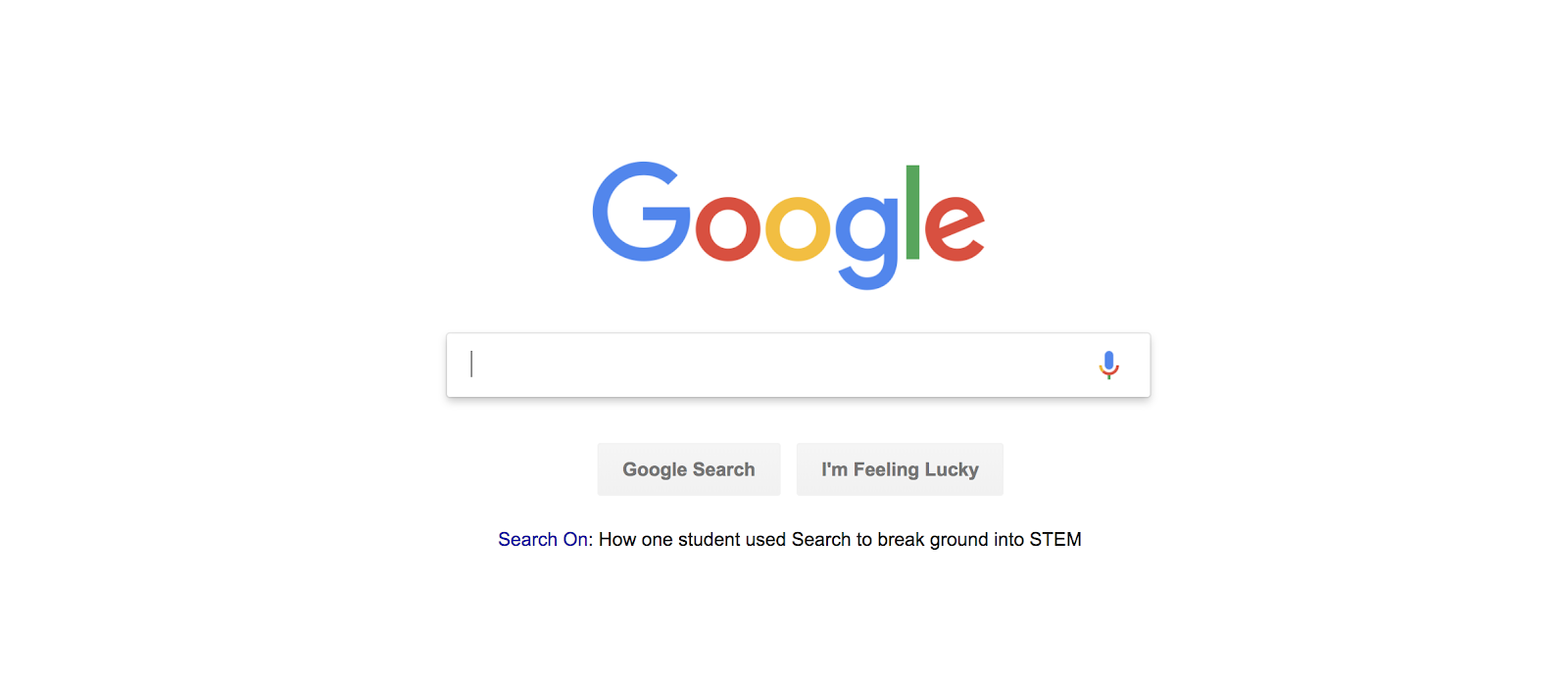
top search engines: Google homepage

Image Source

With over 80% of the search market share, Google is undoubtedly the most popular search engine. Additionally, Google captures almost 95% of mobile traffic. The large traffic potential makes Google a viable option when aiming to capture organic or paid search — the downside, of course, is almost everyone is competing for the same traffic.

Also keep in mind Google’s algorithm, like featured snippets, aims to fulfill users’ needs directly on Google, so they don’t need to click any links. These features , and Google’s popularity, might make it hard for you to capture the website traffic you want.

2. Bing

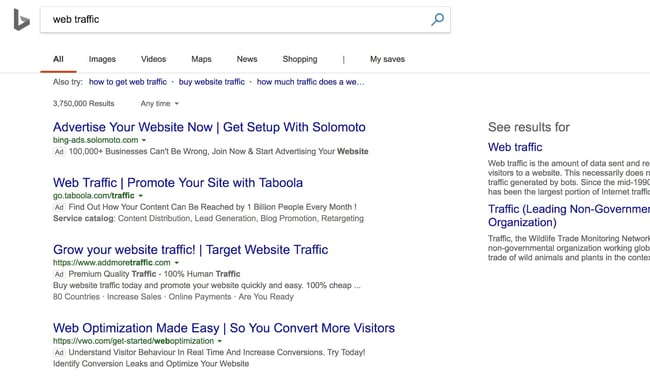
top search engines: bing search page

Image Source

Bing, Google’s biggest contender, rakes in 15% of U.S. searches and also powers Yahoo, the U.S.’s third biggest search engine. Bing’s search pages look remarkably similar to Google’s, with the same categories and a similar white background, with blue links and green URLs. However, Bing additionally offers “Rewards“, a program that gives you points when you search or shop on the engine, and then allows you to redeem those points for gift cards, nonprofit donations, and more.

3. Yahoo!

top search engines: yahoo! home page

Image Source

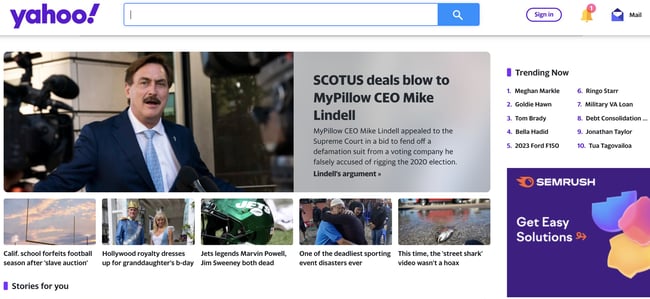
Admittedly not the sleekest search engine interface, Yahoo! still manages to capture third place in our list, with just under 3% of the worldwide market share. Yahoo! is powered by Bing, so search results are incredibly similar between the two search engines. However, it’s still an important search engine in its own right, with over 600 million total monthly users.

4. Yandex

top search engines: Yandex search home pageImage Source

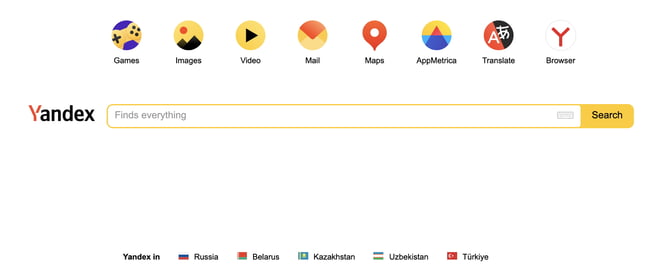
Russian search engine Yandex has roughly 2% of worldwide market share. However, it is the most widely used search engine in its home country, with Google holding the number two spot. If you do business globally and are looking to reach Russian customers, there are a few things to keep in mind.

For example, Yandex has a number of quality indicators or badges it can display alongside search results. One of the most prominent is the site quality index or SQI which indicates how useful your site is to users.

Yandex regions webmaster tools guideImage Source

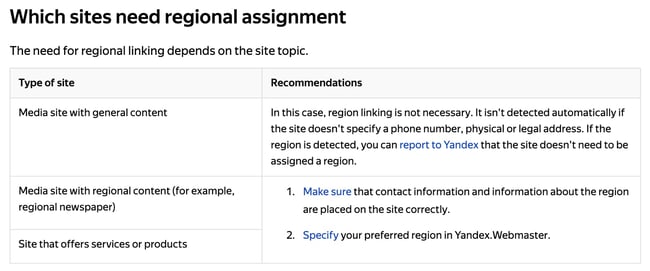
Like Google, Yandex also takes into consideration whether or not a user’s query has local intent and will display regional dependent results. To account for this, you’ll need to go into Yandex’s webmaster tools and set a site region.

5. DuckDuckGo

top search engines: DuckDuckGo home page

Image Source

If you’re uneasy about targeted ads or don’t want your search data stored, you might want to try DuckDuckGo, which touts itself as “The search engine that doesn’t track you”. It doesn’t track, collect, or store any information, so you’re safe to search for shoes without feeling bombarded by subsequent Macy’s Shoes ads. It’s worth noting there are still ads on DuckDuckGo — just not personalized ones.

Additionally, DuckDuckGo has a clean interface and only one search page, making it easier to navigate than other search engines. With an average of 94,758,414 daily direct searches as of September 2022, it’s slowly gaining steam in the search market.

6. Baidu

top search engines: Baidu home pageImage Source

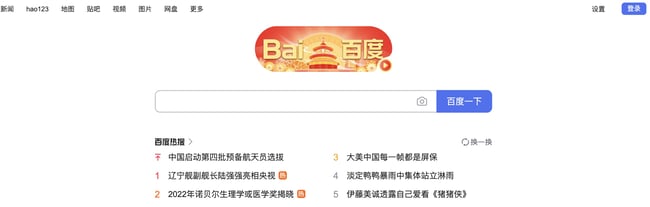
Baidu is China’s largest search engine, capturing over 63% of China’s search market. The search engine looks similar to Google (besides being in Mandarin), with a white background, blue links, and green URLs. Like Google, Baidu aims to incorporate more rich features in the SERPs.

If you have an interest in appealing to the Asian market, Baidu is a good option to consider. However, the search engine censors certain images and blocks pro-democracy websites, so if you’re comparing search results, you’ll find a more comprehensive results list on Google.

Emerging Search Engine Trends

The top search engines may have another competitor vying for user business in the near future as Ahrefs has announced they are working on a search engine of their own. Currently in beta, Yep, is unique from other platforms as it shares 90% of its ad revenue with content creators. With this model, Yep aims to encourage more people to share their knowledge and high-quality content.

Google is also working to prioritize good content with their 2022 Helpful Content Update. HubSpot’s Head of SEO Content Aja Frost says the update has huge implications for the industry.

“First, Google is sending a strong signal that content written by humans is preferable to content by computers. (Ironic, given virtually all of the SERPs are algorithmized.)”

Frost also points out that this update should encourage SEOs to take a more comprehensive approach to site performance.

“This update is also reinforcing the idea that your domain is one entity, and content on one part of your website will impact the performance of another part of your website,” Frost explains. “With this in mind, SEOs should be looking at their site as a whole—not isolated sets of pages.”

Think Beyond Google

Ultimately, it’s essential to consider alternative traffic opportunities besides Google when creating an SEO strategy. By diversifying your sources, you’re more likely to capture the first page on SERPs, and you’re in a better position to find a truly ideal target audience.

This article was originally published in September 2018 and has been updated for comprehensiveness.

marketing

 
Click here to get everything you need to get your website ranking in search.

Categories B2B

28 Best About Us & About Me Page Examples (+10 Templates)

The “about” section of your website should include your mission, purpose, and who’s on your team. The right about us or about me template can help you expertly lay out your vision. That’s why our team gathered five templates to help you build the perfect about page. 

→ Download Now: About Us Pages Guide [Free Lookbook]

This post includes best practices for crafting a stellar about page. You’ll explore:
Featured Resource: Our 29 Favorite ‘About Us’ Pages

about us pages examples

Download the guide to review what we love about these amazing ‘About Us’ page examples, plus a few tips about how to make one of your own.

What makes a good about page?

A remarkable about page is genuine, approachable, and distinguished. It should give the visitor a glimpse into what working with you might be like. You can include personal interests, stories, and photos that convey the unique story of your business. You may also include information about who’s on your team and what their roles are. 

About pages are personal to you and your company, so the structure of your about page will vary based on what you want to highlight. However, you’ll start with the same writing process. 

Let’s explore the set-by-step guide to building your about page.


1. Establish a mission statement.

Your about page can and will be more comprehensive than a single mission statement. However, to draw people in, you need to succinctly state your goal in the industry up front. 

What is your business here to do? Why should your website visitors care? This information will give the reader something to remember about your company long after they leave your website.

2. Outline your company story.

Every business has a story to tell. Even if you’re running a start-up with a short history, you’ll want to share your company’s origin. Talk about how you got to where you are today on your about page. 

Pro tip: Isolate the milestones before your company’s founding, and use them to give readers some backstory on your current venture.

3. Reveal how you’ve evolved.

There’s no shame in admitting how your business strategy — or even your way of thinking — has changed since you began. In fact, these evolutions can improve the story you tell to website visitors.

About pages are perfect spaces to talk about where you started, how you’ve grown, and the ideals that have helped your organization mature. Use these moments to show people that you’re always ready to change and adapt to the needs of your industry.

4. State your “aha!” moment.

Every good company was founded on an idea — something the current marketplace might not yet offer. What was your idea? 

Use this “Aha!” moment as a pivot point when telling your company story. What was a challenge you faced while developing your company? How did this challenge or discovery shape what you are today?

5. Explain who you serve.

As much as you want as many eyeballs on your about page as possible, you won’t do business with every single website visitor. That’s why you must identify and mention your core customer. 

Your about page should explain who your business is dedicated to helping. This allows prospects to identify if your service is aligned with their needs.

6. Explain what you’re offering them.

Companies often generalize their offering in the website copy, making it hard to understand what the customer is actually paying for. In a sentence or two, explain exactly what a potential customer will gain from your business. This succinct summary will keep visitors on your website for longer and get them interested in learning more.

Pro tip: Sometimes, businesses are afraid that in-depth explanations of their products aren’t interesting enough or will sound unappealing in writing. And that’s a fair concern. Start by explaining what problem your offering solves. Then, link to a page with more information. 

7. Cite examples of clients you’ve served.

Got some loyal customers in your portfolio? Use your about page to let the world know who already benefits from your work. Consider naming your most successful clients and linking to a case study.

Knowing about your company’s past successes can influence your prospects’ purchasing decisions. They can envision their future success through the stories of your best customers.

8. Describe your values.

Customers want to be treated like human beings. For that to happen, they need to feel that they’re being served by human beings. When finishing your about page, describe who you are as a person or a team. What’s your company culture like? What bigger picture in life drives your business? 

Pro tip: Remember, future employees are a secondary audience of your company’s about page. This is another reason describing your personal values is a good idea. The key to your job candidates’ hearts is to show them you have one too.

Keep in mind a secondary audience of your company’s About page consists of your future employees. This is another reason describing your personal values is a good idea — the key to your job candidates’ hearts is to show them you have one too.

About Us Page Template & Examples

About Us Template

You can create an About Us template for your company website easily. We lay out the standard “about us” page below.
about me template, HubSpot recommendations

No matter your business, your about page should include the following elements. 

  • A mission statement. This describes the purpose of your business as it relates to the industry or market you serve.
  • A vision statement. The future of your business is outlined in this section.
  • Your values. Core values help the reader connect with you and your business on a personal level.
  • A target market summary. Your site visitors want to know that they’re in the right place and that your company can help them.
  • A brief company history. In addition to piquing your visitors’ interest, a brief company history can help the press describe your business accurately.

After you write a draft, you can use one of HubSpot’s done-for-you website templates to create your about page’s layout. These website templates can be installed and customized in minutes.

Done-For-You About Us Page Templates

While the copy is an important element of your about page, you’ll also want to showcase your brand story and identity to the world. These “about us” page templates create a compelling, customizable user-experience.

1. Touraza Template (WordPress)

If you want something with a little flavor, the Touraza template is a tasteful choice. With the “meet the team” section near the top, geometric designs, and striking typography, you’ll be able to showcase the humans behind your brand.

About us page template, touraza

2. Logan Template (Shopify)

This template makes use of large images in a modern layout to break up the ample white space. The result: A clean and enjoyable reading experience.

The top of the page puts the brand story (or other introductory text) first, supported by a large image that speaks for itself. The pops of color can be customized to your brand style, drawing emphasis to the most important elements you want to highlight.

About us page template, logan

3. Munchies Template (WordPress)

This theme from Automattic is great for small businesses with a brief company history. You can start by explaining your mission concisely, then jump right into important links.
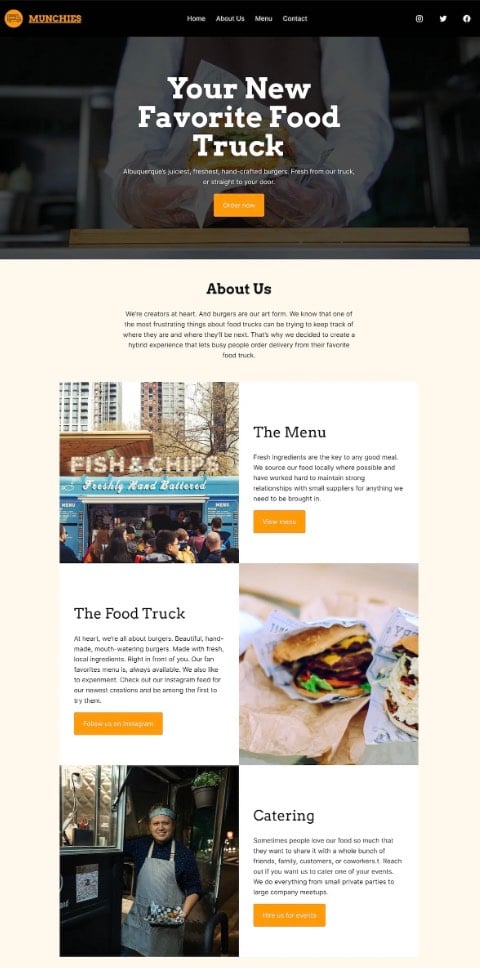
about us template, munchies theme

4. Mobirise Template (WordPress)

This visually compelling page allows you to evenly disperse information. Your webpage visitors won’t be scared off by a giant wall of text. 

Instead, you can briefly describe your history at the top of the page. Three icons allow you to lay out your most important values. Plus, the page also features a carousel, so you can include headshots and titles for your teammates. 
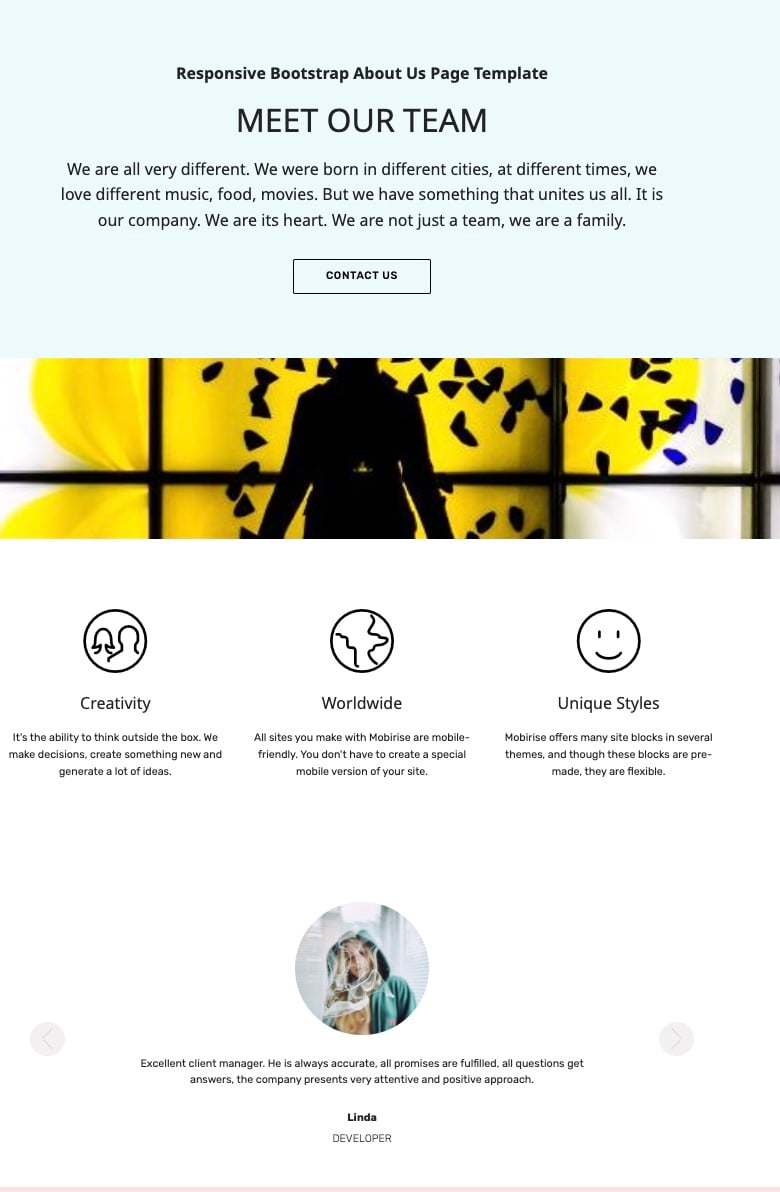
about us template, mobirise theme

Best About Us Page Examples

1. Yellow Leaf Hammocks

Good stories humanize your brand, providing context and meaning for your offering. What’s more, good stories are sticky — which means people are more likely to connect with them and pass them on.

Yellow Leaf Hammocks tells users about its product by describing how the hammocks empower artisan weavers and their families. The company breaks down different pieces of the story into sections that combine words and easily digestible graphics.
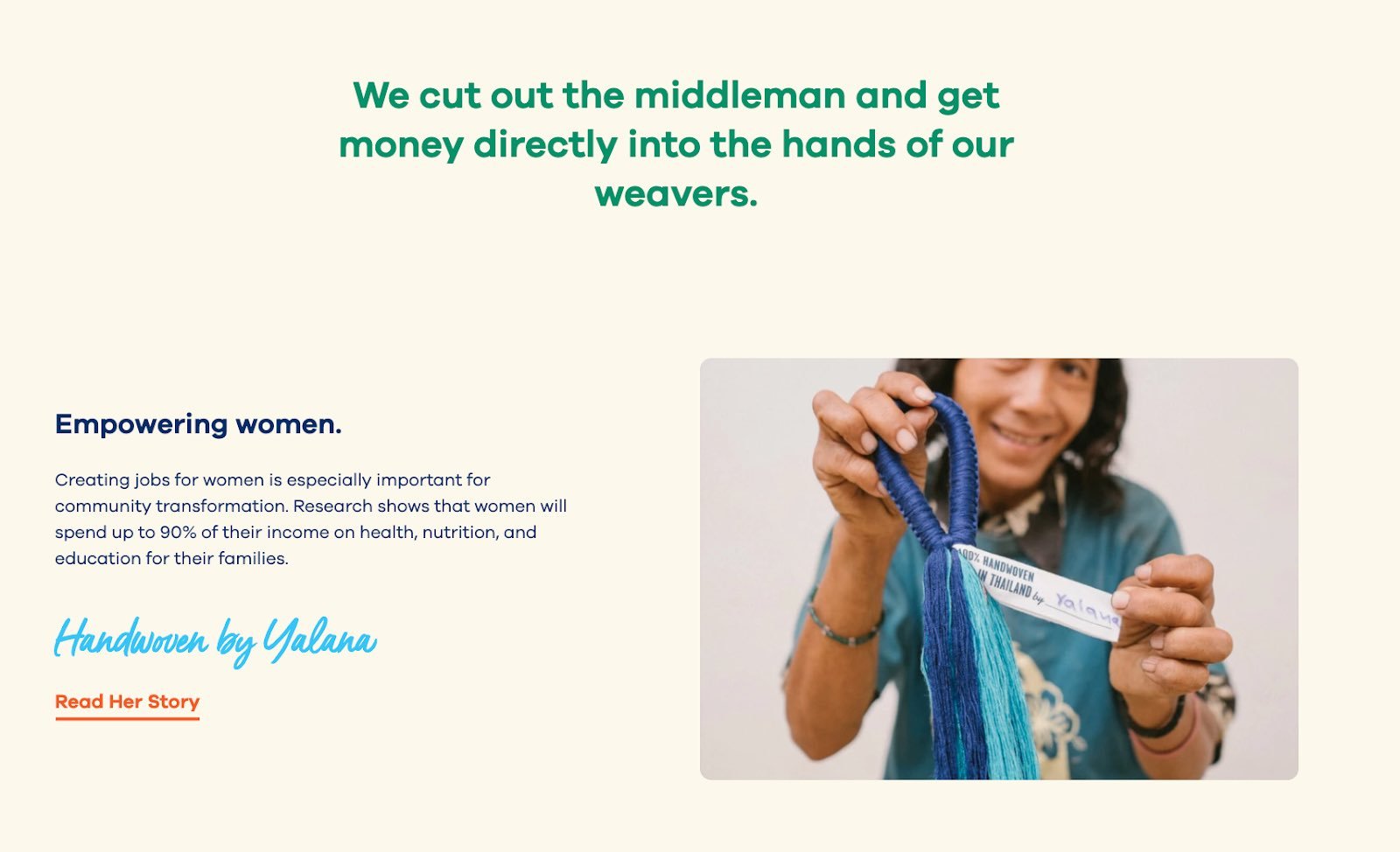
About Us template example, yellow leaf hammocks

Pro tip: Put your storytelling skills to work on your about us page. Using descriptive and emotive copy and gorgeous graphics, an about us page with a story works harder for your business than a generic one.

2. Eight Hour Day

People tend to think that about us pages have to sound formal to gain credibility and trust. But most people find it easier to trust real human beings, rather than a description that sounds like it came from an automaton. Keep your about page us page friendly and real.

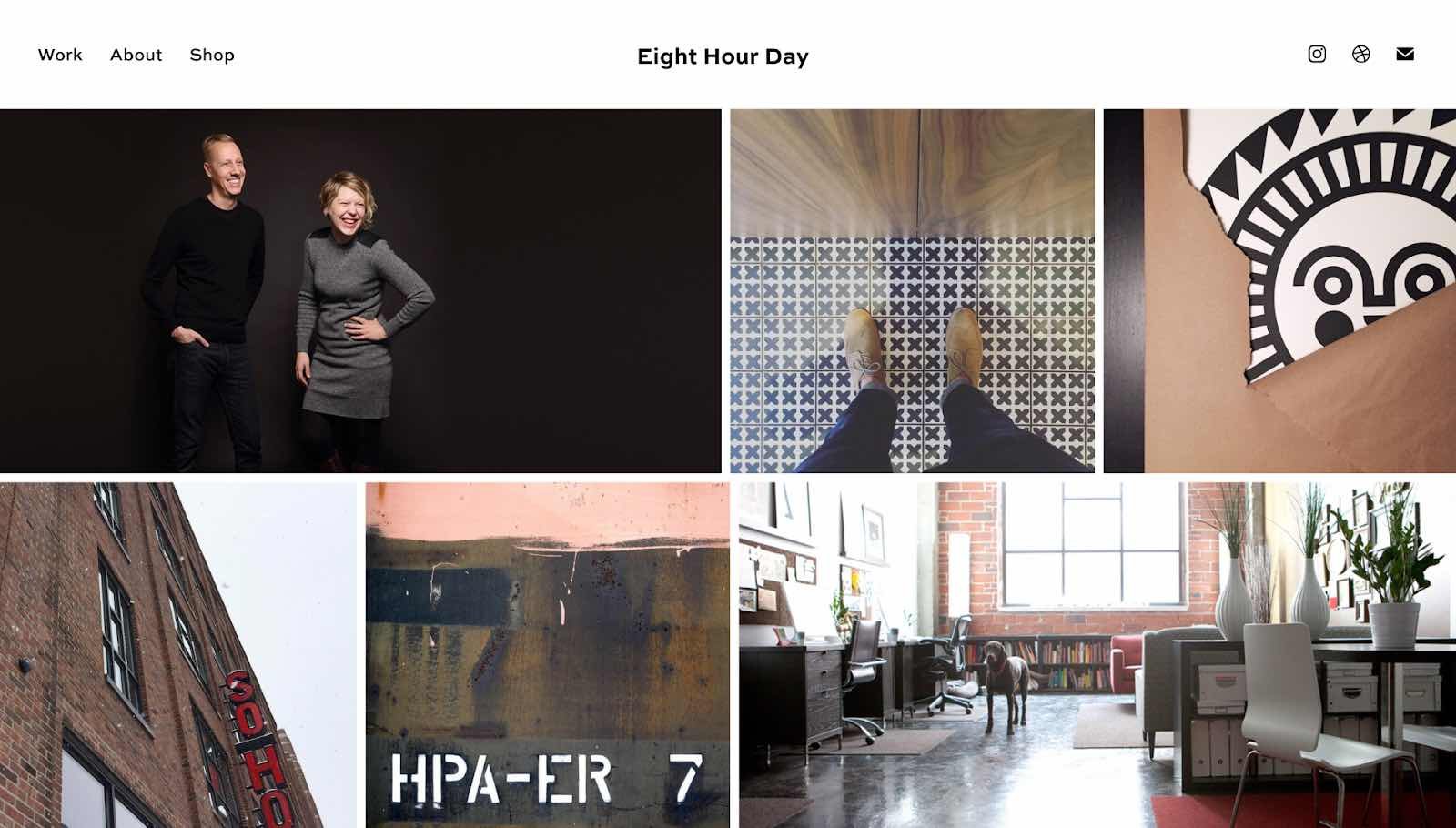
Take inspiration from Eight Hour Day. This brand showcases the people behind the company and humanizes its brand.
About Us template example, eight hour day

What we love: Introducing the founders with inviting photos on this about us page drives home the point that Nathan and Katie are — as they so astutely put it — “two individuals with a passion for creativity — creativity makes us happy.”

3. Apptopia

People want to know what your business does and how it can help them. After all, if people can’t figure out what you do, how will they know they need your product or service?

So, skip the industry lingo — that’s what Apptopia does on its About Us page. The startup’s simple but polished language effectively communicates the company’s offering while still allowing the Average Joe to understand it.
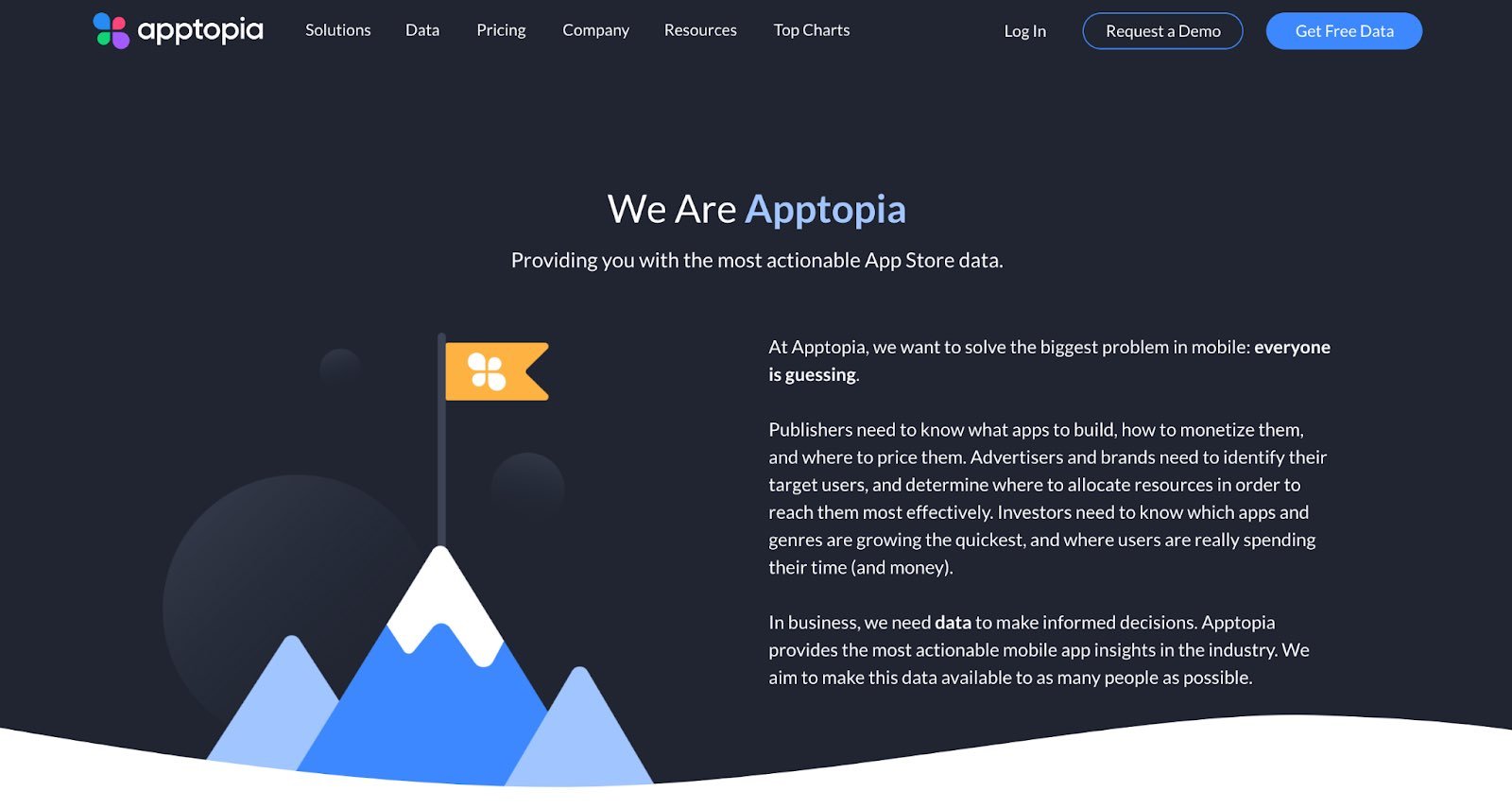
About page example, apptopia

What we love: Apptopia uses short and punchy sentences to explain complex products and ideas in a way that isn’t patronizing. The copy on this About Us page leads with empathy.

4. Moz

Instead of following the classic about us script, try something different. Take Moz, for example. A lot has happened since it was founded in 2004, so the company chose to share those milestones using a fun, clean design. 

Moz’s about us page incorporates clear headers, concise blurbs, and little graphics to break up the text.
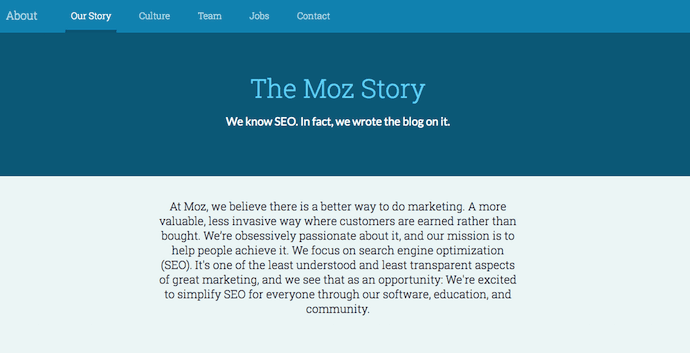
about us example, moz

What we love: Take note of the humble references to how Moz received funding, how it switched its brand positioning — and most importantly, how it switched back to its original model. This speaks volumes about the value honesty and humility can play to your customers.

5. Yokel Local

On its about page, Yokel Local spotlights its clients, its story and mission, and the team behind the brand. This last element is key because Yokel Local knows that its “vibe” wins over prospective clients. After all, when you hire an agency, you’re hiring its people. And people have personalities.
about us example, Yokel Local

What we love: Because “Yokel Local” is a bit of a kooky name that gives people pause, the company pokes fun at it by providing the definition. This then leads to photos of the team at work (and at play), the agency’s story, its mission and values, and the people who make the magic happen. This magic is included all over the about page as its employees make goofy faces, wear ugly Christmas sweaters, and work/play hard.
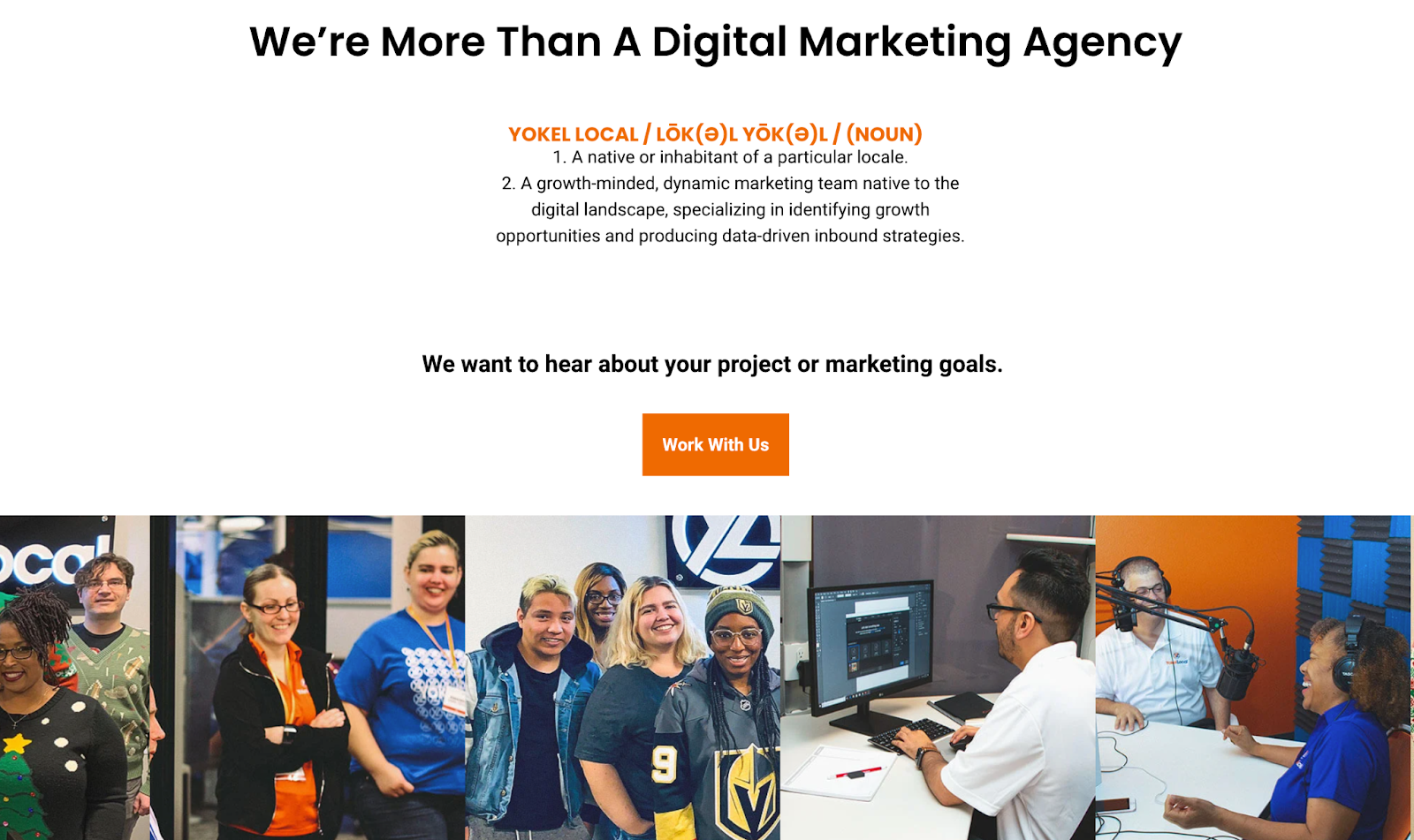
About us example, yokel local, definition.

6. Nike

Nike began on the campus of the University of Oregon at the hand of the college’s track coach, Bill Bowerman. Even though he no longer works at the company, one of his beloved quotes still brands the bottom of Nike’s about us page below: “If you have a body, you are an athlete.”

This bold sentence, referenced by the asterisked “Athlete” in the words right above it, sheds important light on Nike’s audience. The brand may be big today, but Nike is all about the rising stars — whom the company depends on, according to the rest of its about us page, to “expand human potential.”

What we love: Nike clearly knows its audience and makes its mission obvious to them as soon as they land on the about us page. There’s no question that the visitor is in the right place and understands exactly what Nike has set out to do.
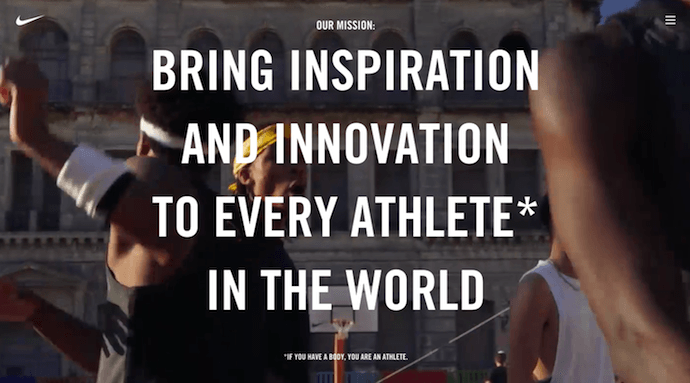
about us example, nike, bringing inspiration and innovation to every athlete in the world

7. Bulldog Skincare

The best about us pages are infused with color, have personality, and stay true to a company’s unique brand voice. Let’s take a look at Bulldog, a men’s skincare brand. 

The about us page is pithy and leads with an adorable bulldog — fitting the name and the brand. It also states the purpose of the products — to help customers from waking up with the (admittedly adorable) wrinkly face you see when you visit Bulldog’s website.
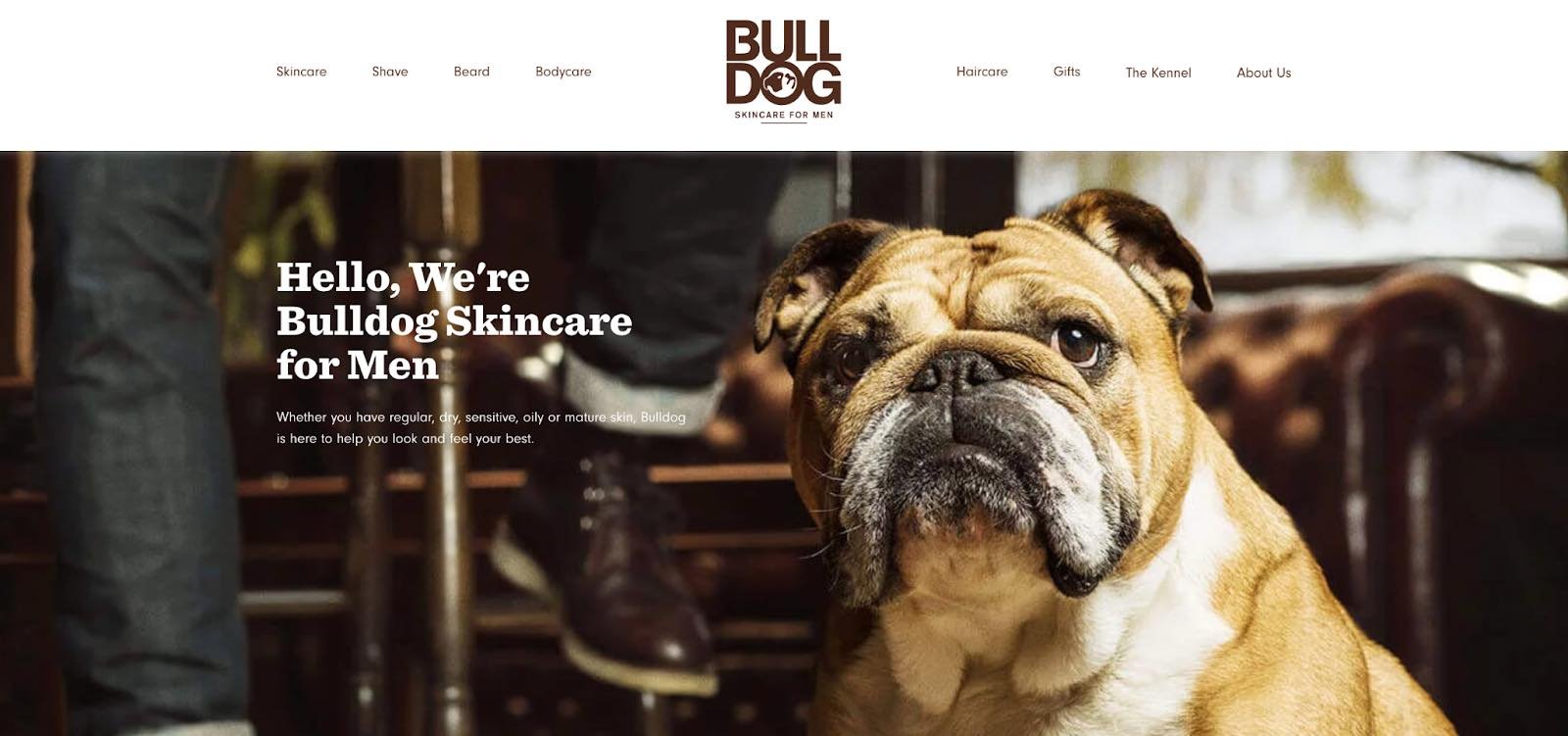
About us example, bulldog

What we love: Bulldog isn’t afraid to have fun with its brand. That bit of humor makes this about us page anything but typical. It primes visitors for a story in a way that makes them immediately feel connected to Bulldog’s mission and vision.

8. Doomtree

Made up of talented artists with thriving solo careers, Doomtree brings these musicians together to work on creative projects as a crew. The group “started as a mess of friends in Minneapolis, fooling around after school, trying to make music without reading the manual.” 

As soon as you arrive on Doomtree’s About Us page, you’re greeted with big, bold photos of those friends.

About Us Page Examples: Doomtree

As you scroll down, users are treated to even more interaction with the crew’s events and music tracks. That makes sense because it gives visitors an instant sample of Doomtree’s product.

About Us Page Examples: doomtree events

Pro tip: Find ways to use multimedia elements. One minute of video is worth 1.8 million words, according to Forrester Research’s Dr. James McQuivey. Consider combining your unique story with audio and visuals like in the example above.

9. Below the Fold

Below the Fold is a company committed to “sharing news stories you aren’t hearing anywhere else.” With that in mind, the big headline on the about page introduces the company’s purpose. Further down, you’ll find four core values, how the business generates revenue and more details about the team behind the scenes.

What we love: This page gets straight to the point about what Below the Fold is, who it serves, and why it exists. The simple design lacks color, embellishments, and sensational imagery so the reader can focus on what the company has to say — a direct nod to the mission statement.
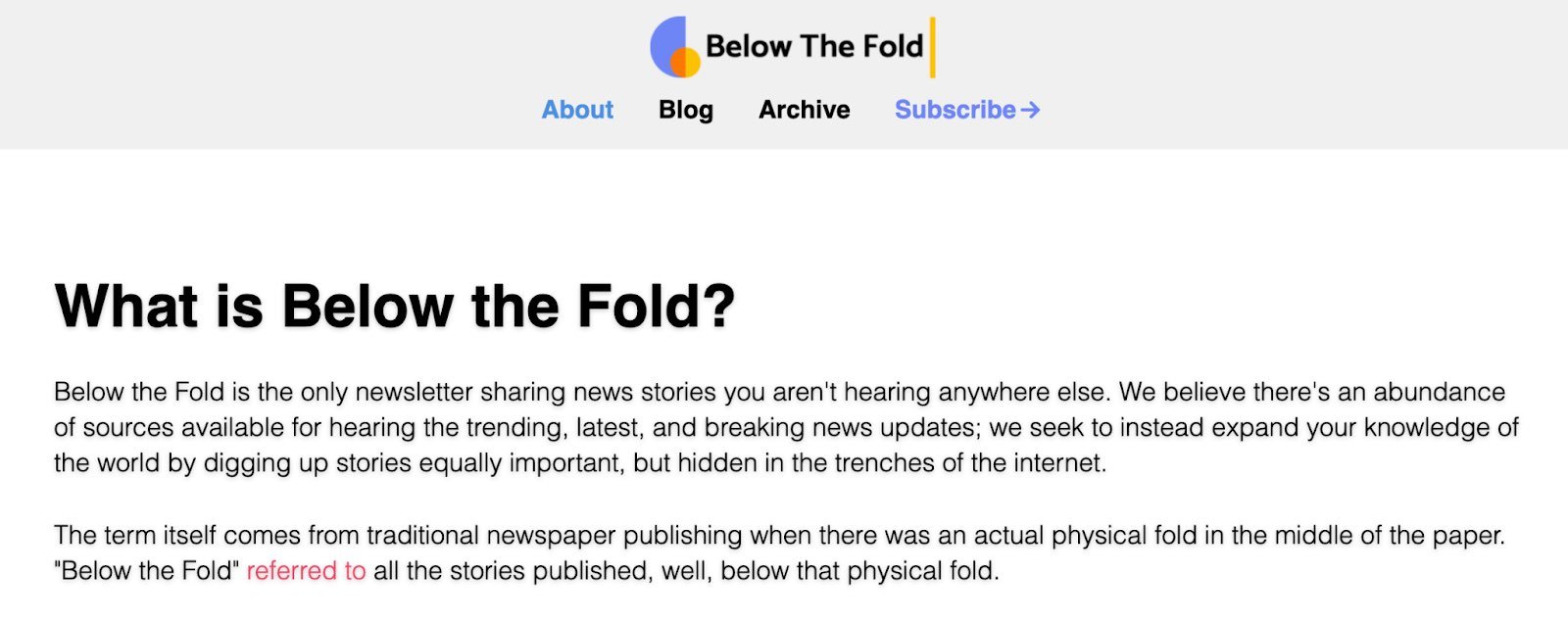
about us example, Below the Fold

10. Ceros

Ceros’ About Us page is interactive and engaging. As you scroll, the images move across the page with punchy designs. Additionally, Ceros’ uses these images of its impressive, unique office space to further personalize the page.

What we love: Ceros keeps the text on the page short-and-sweet, with powerful statements like “we exist to unlock creativity”. The culture section further demonstrates Ceros’ playful brand voice, with core values like “we wear our chicken suits”.
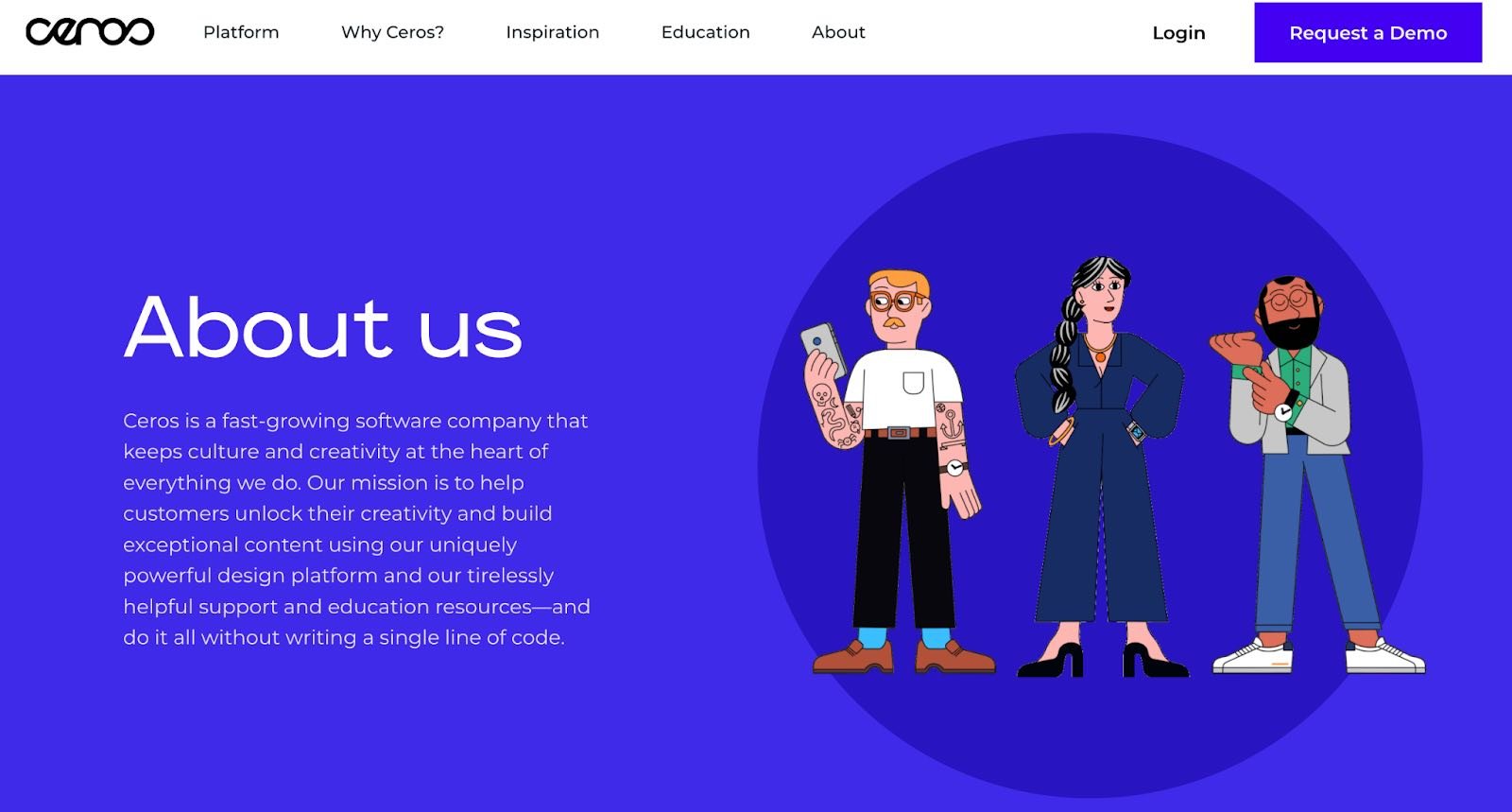
about us example, ceros

11. Marketive

Marketive’s about us page leads with a solid value statement: “Got a solid product? We tell your target audience that you exist.”

Additionally, Marketive’s About Us page displays original designs rather than photos to support the text. This makes the page compelling to scroll through.

What we love: The interactive milestone calendar at the bottom is especially impressive. It authentically represents some humble beginnings (including two unsuccessful startups that inspired present-day Marketive) and features a fun scroll element.

about us page example, Marketive

12. Sweet Loren’s

Start-to-finish, Sweet Loren’s about us page is playful, engaging, and colorful. The page starts with a 60-second video and even incorporates cookie dough-scooping gifs. As you scroll, you’ll move through some of Sweet Loren’s impressive values, including inclusivity and refusing to compromise.

What we love: Sweet Loren’s yummy products are last on the page, ensuring you’re fully primed to purchase only after learning about Sweet Loren’s mission.
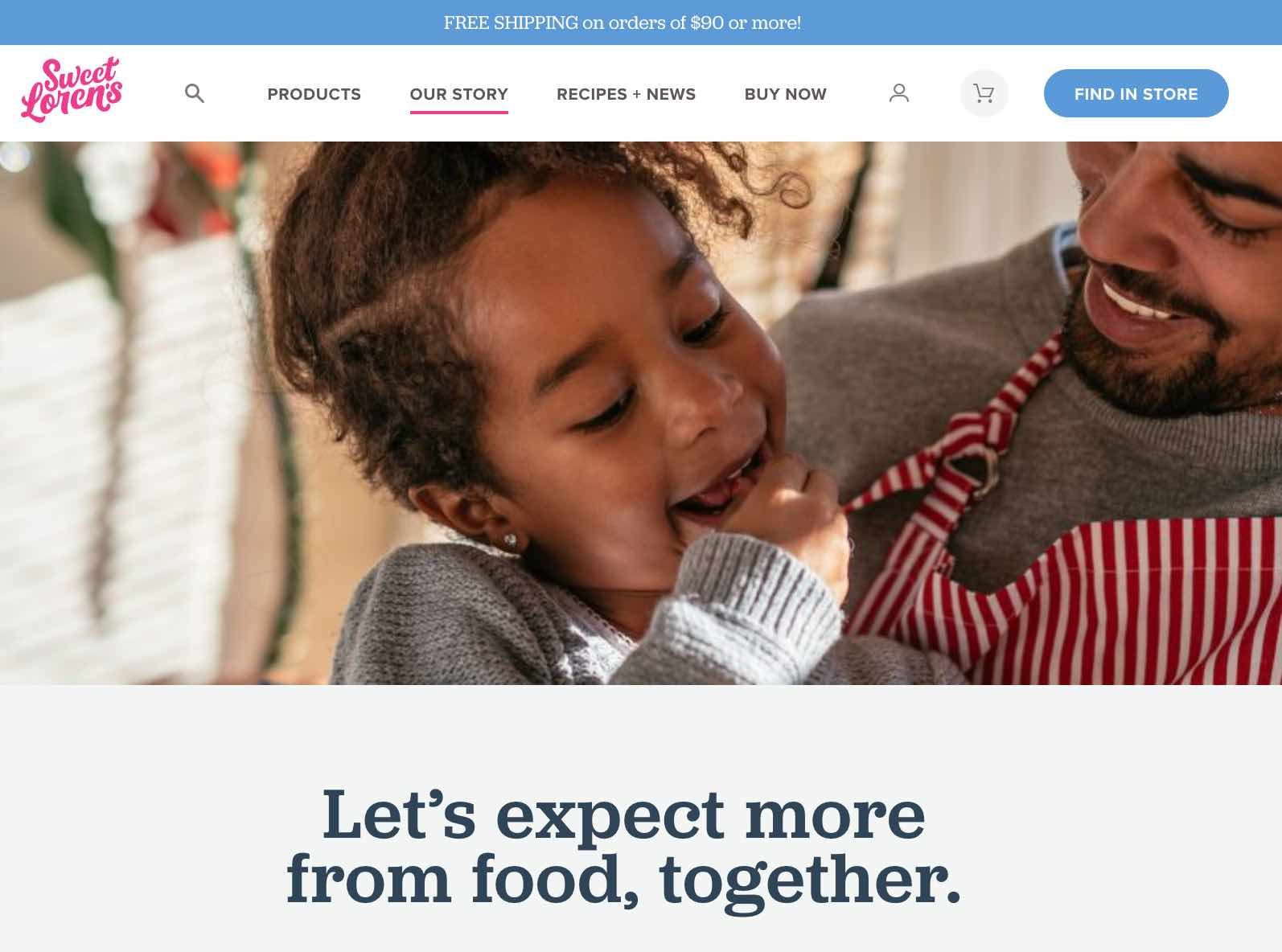
about us page example, Sweet Loren's

13. TalEx

TalEx began when two women left a major recruiting firm to build their own. TalEx has since seen unprecedented growth at 4,900% in the three years. The company’s about page captures this history and more. 

What we love: The company’s emphasis on social responsibility takes up nearly half the page, making this core value clear. The statement explains TalEx’s commitment to donate 5% of its annual net profit to philanthropic organizations. People who visit the website know immediately that giving back is important to the team at TalEx.

about us page example, TalEx

14. LoveBug Probiotics

LoveBug Probiotics’ page effectively includes all the information you’d need on the company to make an informed purchasing decision. That includes how the founder came up with the idea, her personal ties to the vision, and the science behind her probiotic.

While the products are science-backed, the About Us page doesn’t confuse visitors with difficult-to-understand facts. Instead, the page is simple, straightforward, and helpful.

What we love: This about us page features an image of the founder’s four young children wearing “Chief Fun Officer”, “Chief Giggle Officer”, “Chief Silly Officer” and “Chief Humor Officer” t-shirts. There aren’t many pages with cuter introductions than that.
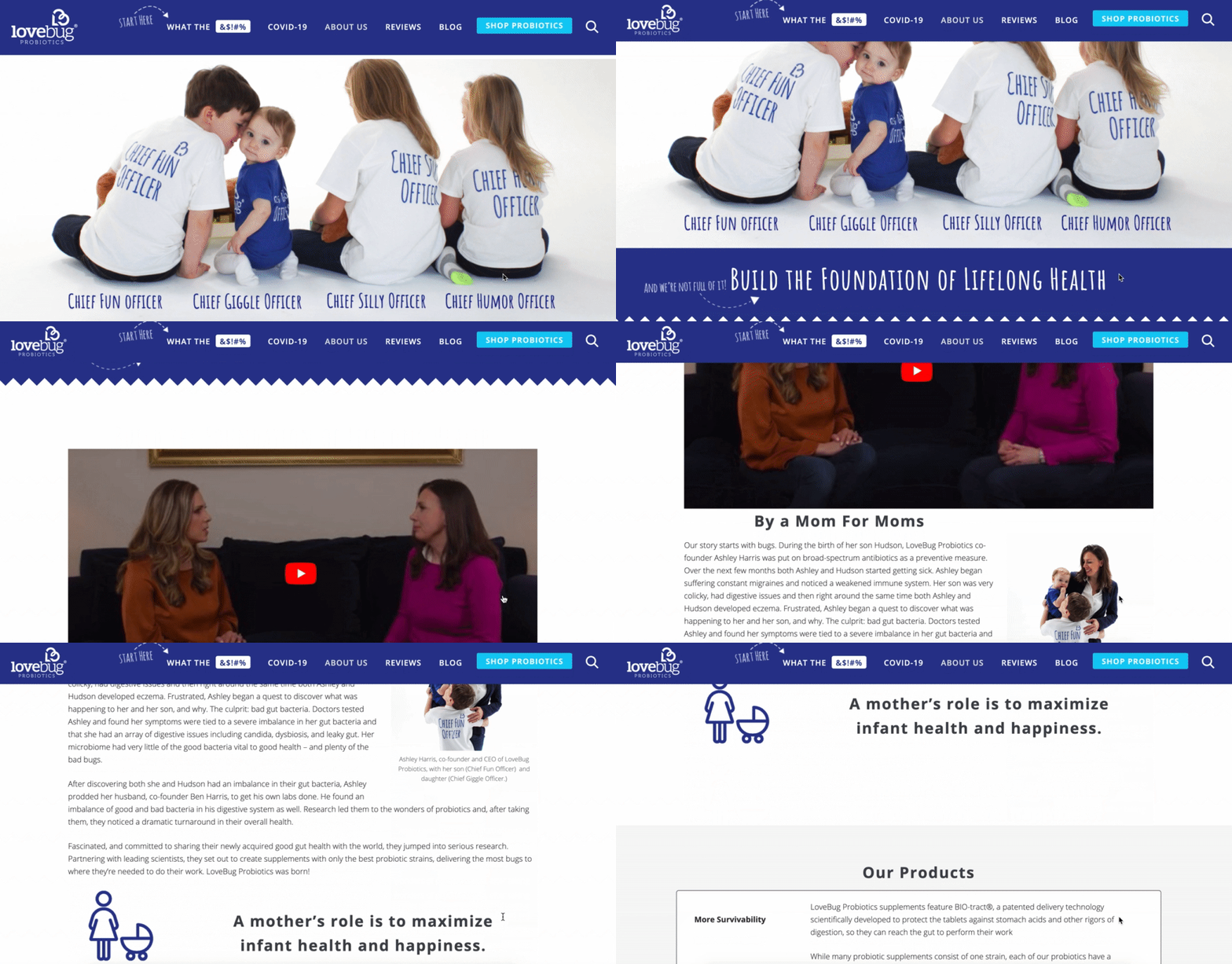
About us example, lovebug

15. Brown and Coconut

Sometimes, simpler is better — as is the case with Brown and Coconut. This about us page features a photo of the two co-founders alongside a few paragraphs of text outlining the brand’s vision.

Brown and Coconut’s About page uses no-fuss language to describe the business.

What we love: Rather than ending with a CTA directing visitors to its products, the co-founders instead choose to include a CTA to follow the business on Instagram, promoting a more effective, long-term lead generation strategy that starts with brand awareness.
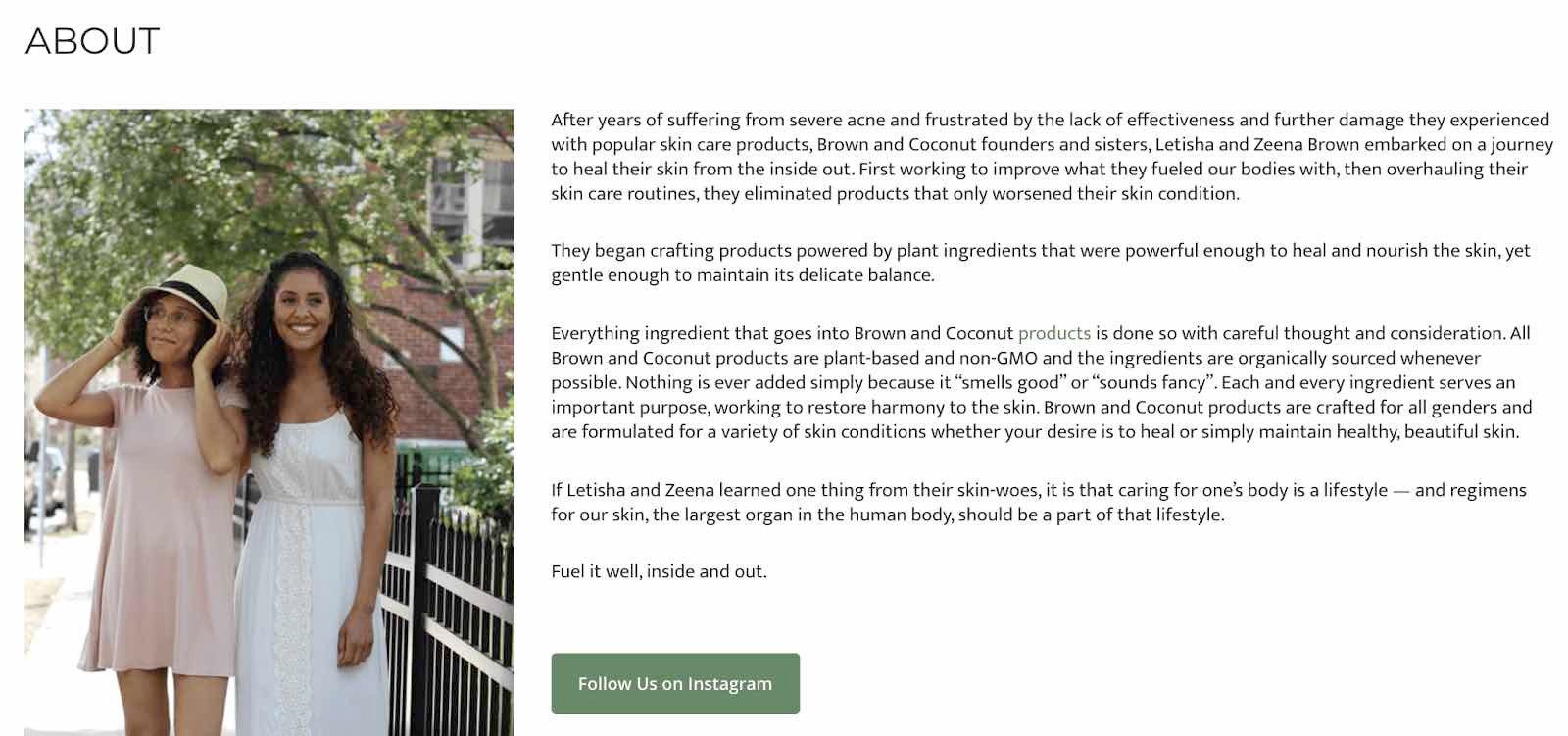
about us example, brown and coconut

16. Kuno Creative

Kuno Creative’s page effectively focuses on what makes the company different: its people. While the first paragraph describes the origin of the digital marketing agency, the majority of the page is taken up by black-and-white headshots of all its employees along with descriptions of each member.

What we love: If you’re unsure what you want to include on your about us page, consider taking note of how Kuno Creative focuses on its people, rather than its product. This offers a great way to humanize your brand.
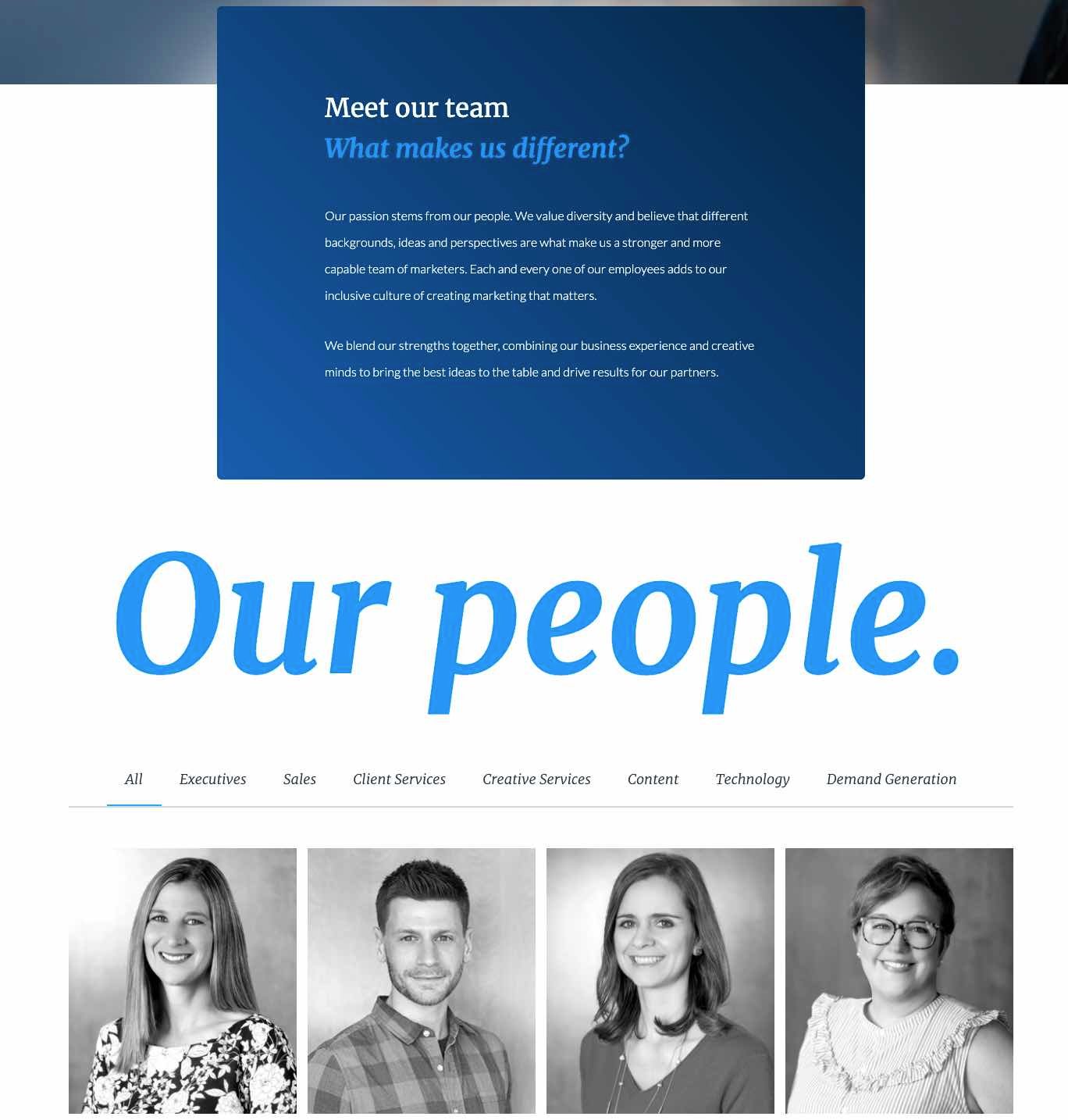
about us example, kuno creative

About Me Page Templates & Examples

About Me Template

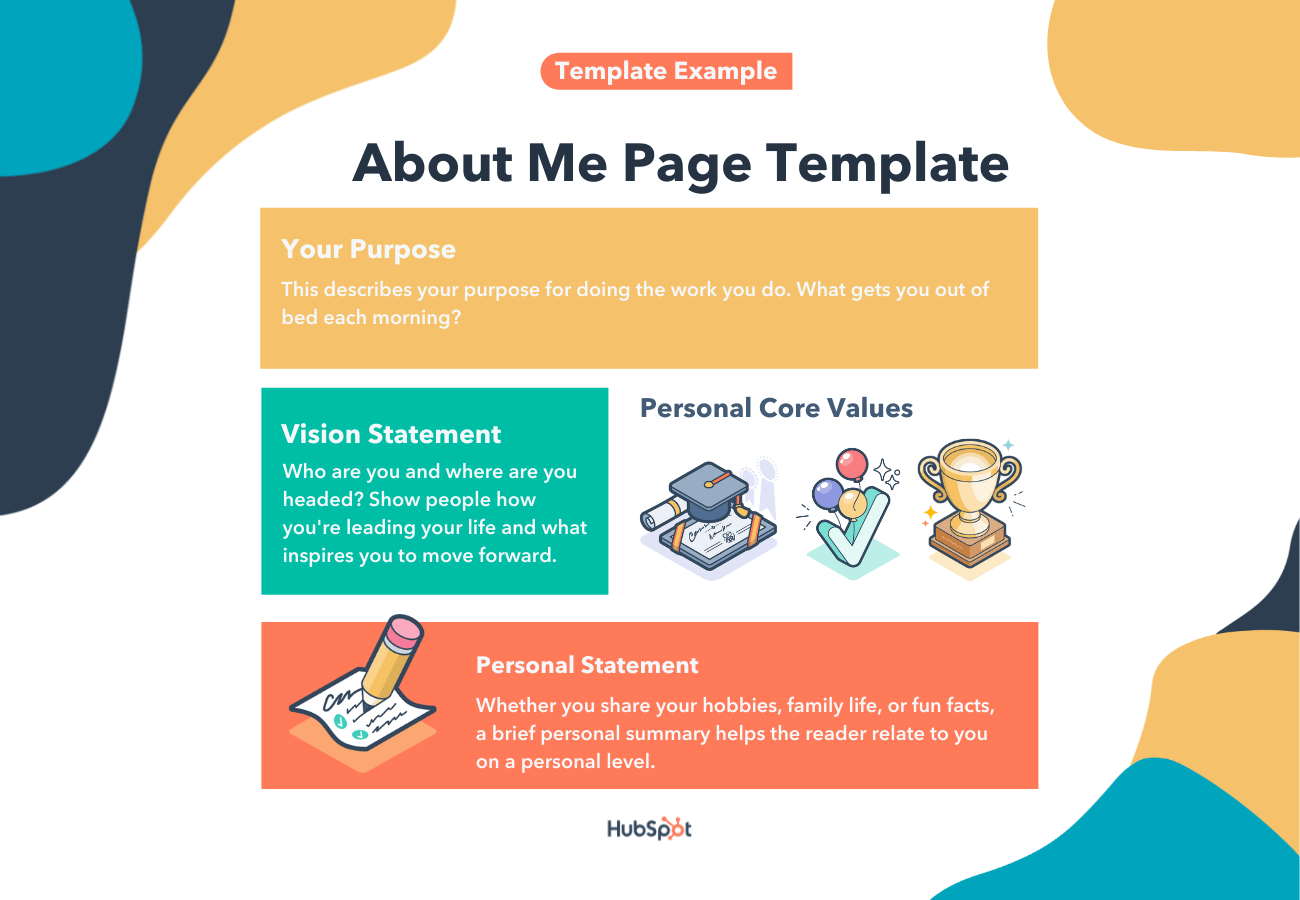
About me pages vary in detail, but most great pages include a few standard elements. You can see a suggested template from HubSpot below.
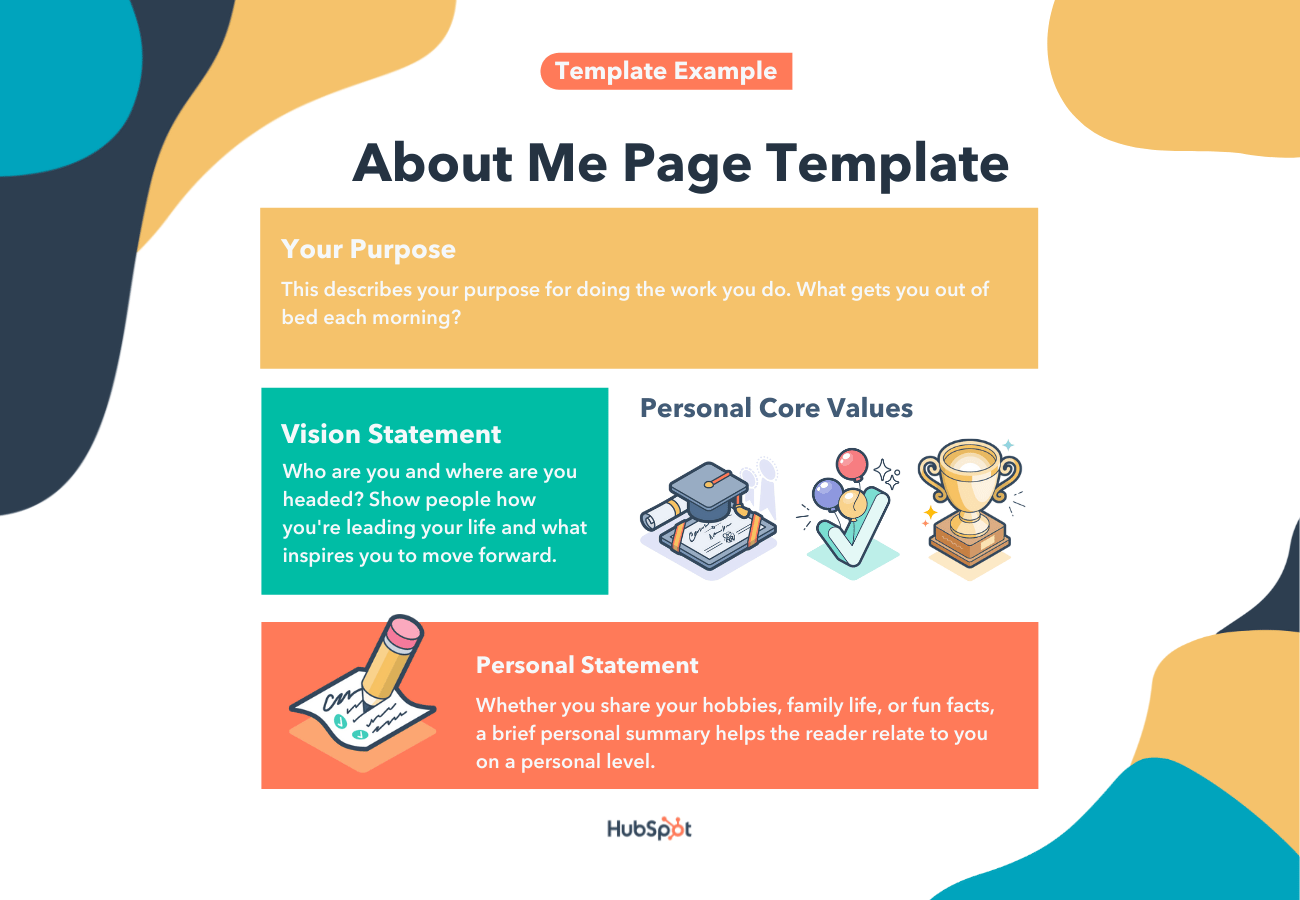
about me template, Hubspot

Make sure you include the following information on your page. 

  • Your purpose. This describes your purpose for doing the work you do. What gets you out of bed each morning? Try using the Ikigai map for guidance here.
  • A vision statement. Who are you and where are you headed? Believe it or not, people are looking to you for leadership in some way. Show them how you’re leading your life and what inspires you to move forward.
  • Your core values. Personal core values help the reader connect with you and find common ground.
  • A brief personal statement. Whether you share your hobbies, family life, or fun facts, a brief personal summary helps the reader relate to you on a personal level.

Next, you’ll see these elements in action in the examples below.

Done-For-You About Me Page Templates

1. Coax Template (WordPress)

The Coax template allows the typography and copy to take center stage. This text-centric approach highlights your personal accomplishments and sells your services. Consider laying out content like a resume with big subheads on the left and descriptive text on the right.

Plus, this template is powered by Elementor, a page builder that makes customization easy. 
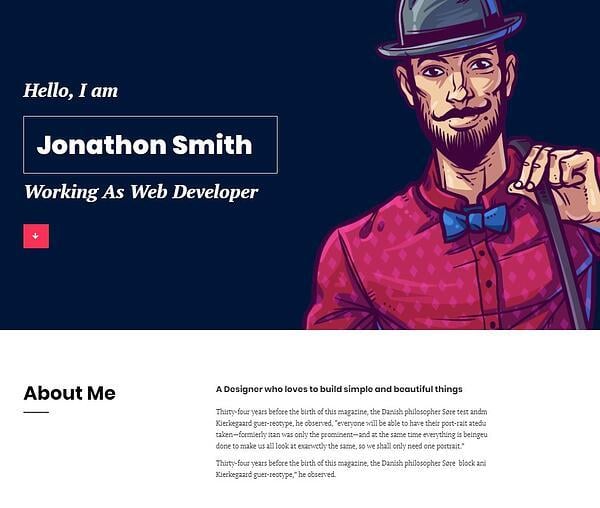
about me template, Coax

2. One Page Portfolio Template 

Instead of a wall of text, this about me page is neatly divided into separate sections. The text at the top of the page allows you to describe your mission and background. 

The icons in the next section call attention to three specific services you provide. Further down the page, you can explain those services in greater detail. You can also include photos to show what you can do.
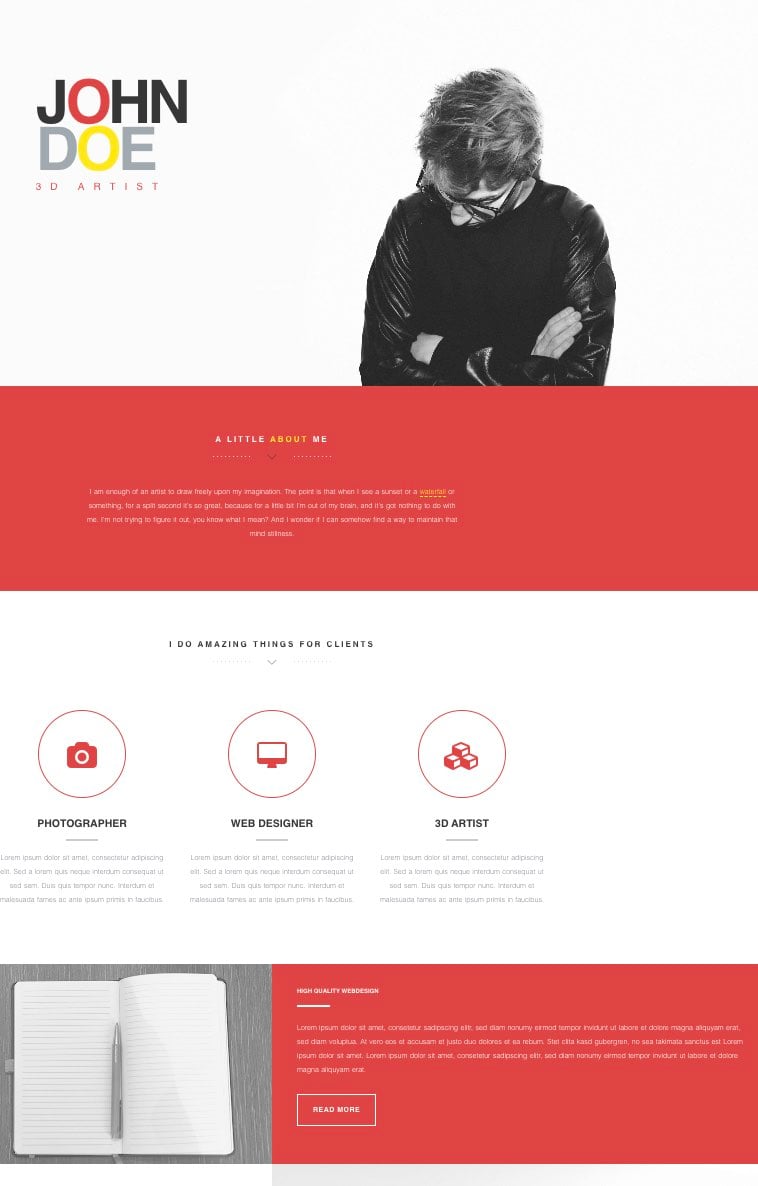
about-me-template-portfolio

3. Beckham Template

Your about me page should provide a highlight of your accomplishments, as well as an overview of your service. This template can help you put your best foot forward. 

The Beckham template includes a suggested place to link your resume, as well as sections to show off previously completed projects.
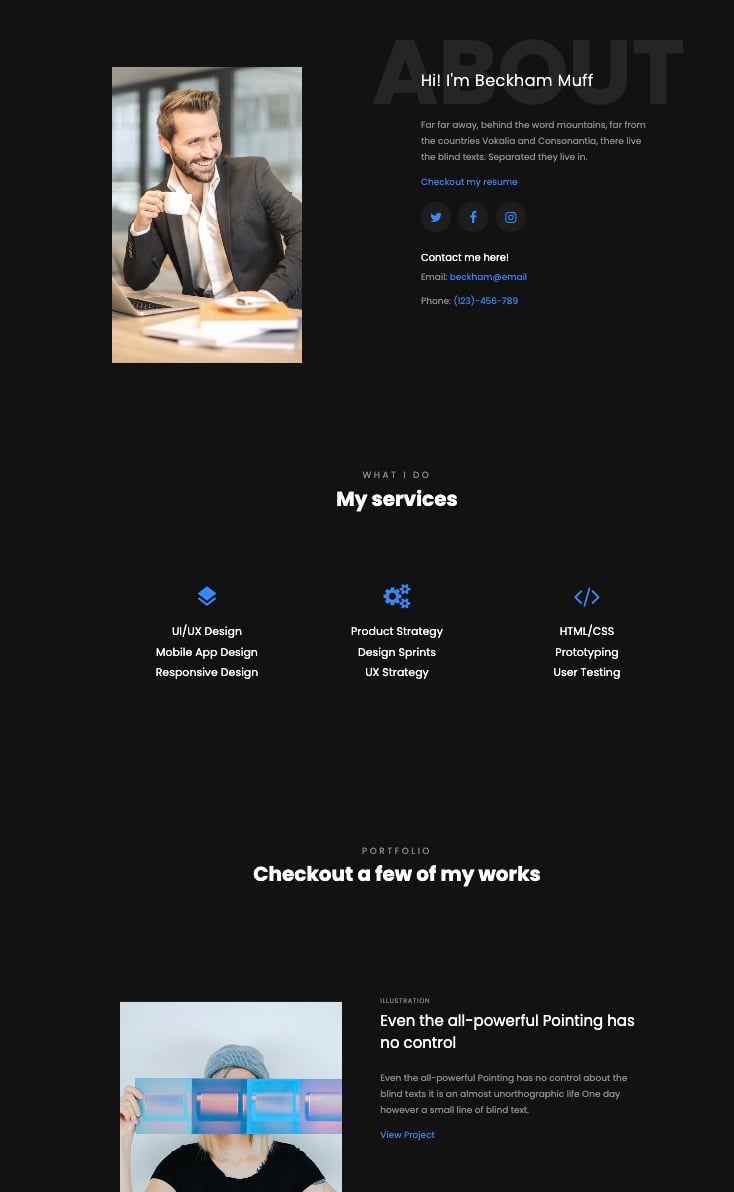
about-me-template-beckhamWhat we love: Near the bottom of the page, you can show off important numbers. That includes how many clients you have, how many projects you’ve completed, and how much coffee you drank.

about me template example, beckham data points

4. Calvin Template

For personal websites, consider placing your contact information front and center. Your visitors shouldn’t have to search to see how they can reach out. 

The Calvin template makes integrating your contact information and personal story seamless. This template leads with email and phone numbers. Then, you can lay out the services you provide, before including links to your work.
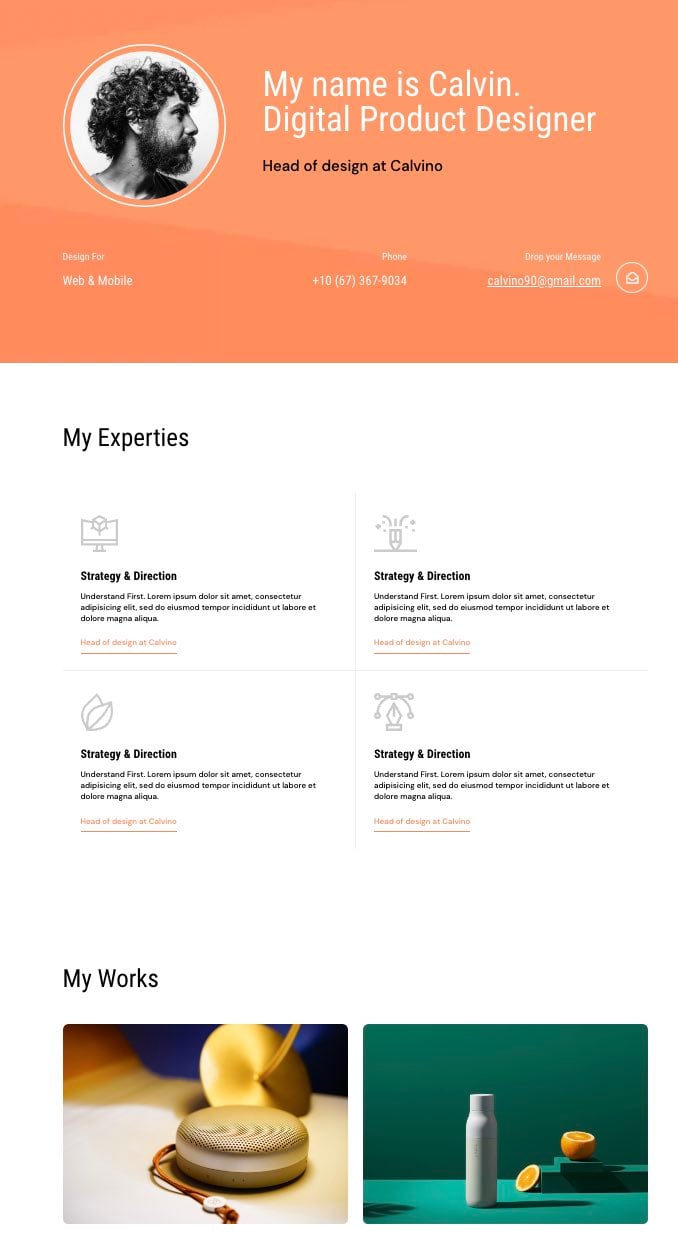
about me template, calvin template

Best About Me Page Examples

1. Joe Payton

The style and tone of your about page should match the services you provide. Let’s look at Joe Payton’s website as an example. 

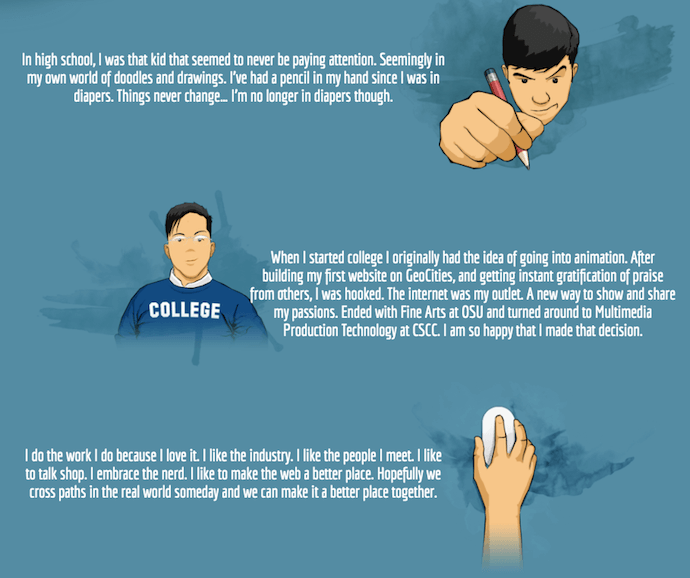
Not only does Joe’s illustrative self-portrait give him a personal brand that customers will remember, but it also demonstrates his expertise as a designer and animator. His website visitors can learn what he does in an easily digestible way.
about me example, joe payton

What we love: Joe freely expresses his values as a creative professional on a well-organized page. He tells a story that guides the reader through each section, without having them scroll endlessly to the bottom of the page.

2. Kero One

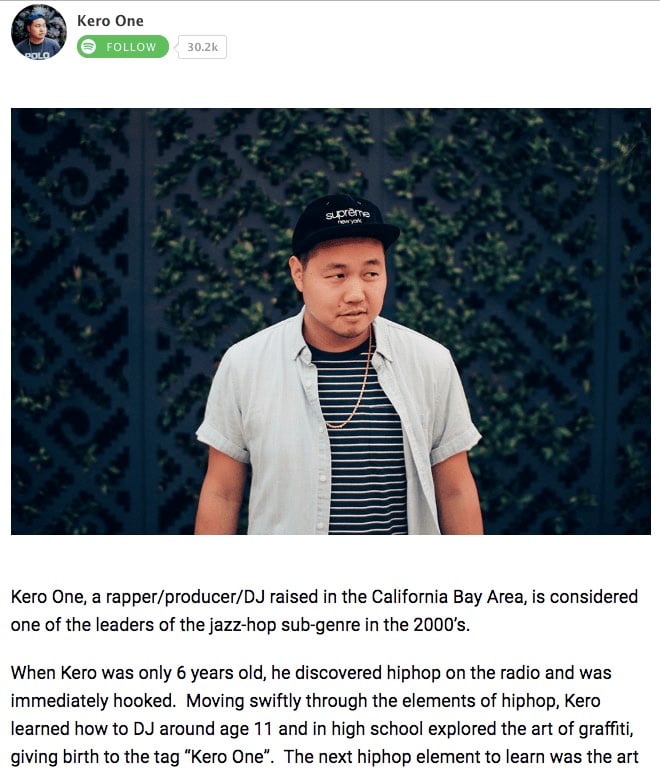
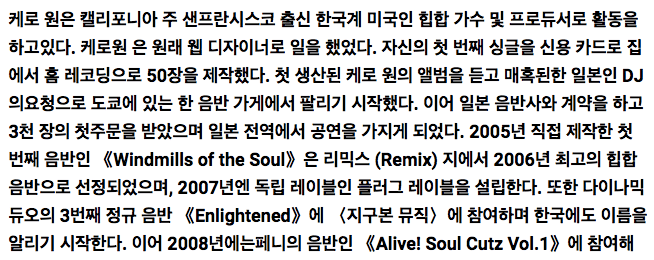
Kero One is a hip-hop artist and DJ from San Francisco. His About Me page carries a valuable lesson to personal brands that cater to more than one audience — especially if those audiences speak different languages.

Kero One’s about me page tells his story in English, Japanese, Korean, and Chinese. Including these East Asian languages helps Kero One connect with listeners in these different communities. 

Pro tip: If your services are global or your offerings come in multiple languages, consider having your about me page in several languages.
About me page, Kero One in english

About me page, Kero One, korean

3. Aja Frost

Alright, we might be biased in highlighting this professional, as Aja is our very own Director of English Growth at HubSpot. Nonetheless, the ingenuity she brings to the company isn’t lost on her website’s About Me page.

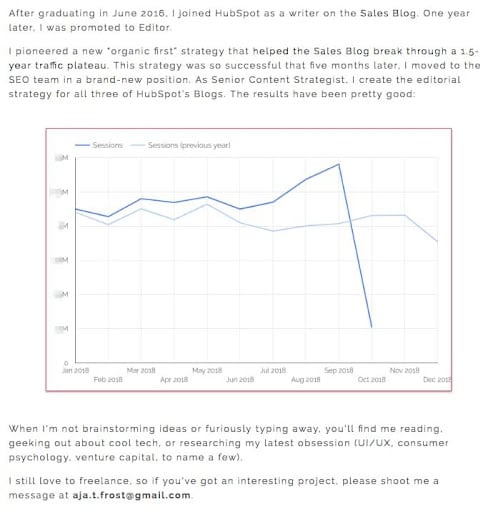
Being a data-driven professional, Aja knows her clients are looking for more than her writing skills — they want to see how her content has performed. With that in mind, her About Me page tells a story of her career growth, which peaks — no pun intended — at an impressive line graph showing the result of an SEO strategy she implemented for the HubSpot Blog.
about-me-example-aja

What we love: Aja understands the value of being personable even in a digital space like an About Me page. She closes out her about page with a personal note on what she does in her spare time — a great way to humanize yourself in the eyes of your potential customers.

4. Madison Butler

Madison Butler is an HR change-maker “committed to deconstructing the status quo and rebuilding corporate America, one organization at a time.” She does this through her DEI work and her advocacy.

Her about page, which doubles as the site’s homepage, calls this out at the very top in one bold statement: “I’m here to ensure organizations know how to make space for everyone.”

What we love: Madison’s About page is effective because it stays true to her mission while being simple, effective, and to the point. The second sentence in the headline, “you belong here,” underscores the inclusivity of Butler’s mission and work.
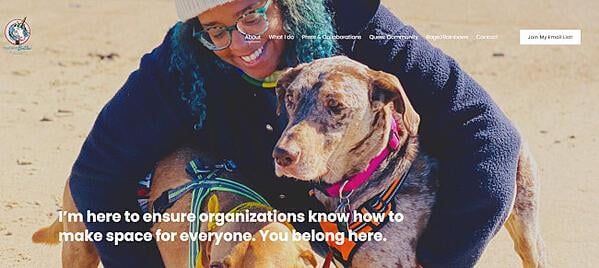
About me example, Madison Butler

5. Sara Dietschy

This professional YouTube content creator has an eclectic collection of videos related to technology and culture and expresses that diversity all over her About Me page.

In addition to the vibrant self-portrait at the top of the page, Sara’s first sentence tells you just how many people subscribe to her channel: 780,000. This is an important number to know for her potential video advertisers and collaborators who want to know how much exposure they’d get by working with her or advertising on her channel.

About me example, Sara Dietschy

What we love: The colored tiles lining the page — starting with the red one, as shown above  — segment her work by the types of projects she’s worked on. This helps the reader navigate the page and understand what’s important for them to know.

6. ShaDrena

ShaDrena is a graphic artist whose mission is to “visually build creative rebellious brands beyond a logo.” In three sections — about, bio, and random facts — the audience gets the full ShaDrena experience, which is more than just design. It’s also about voice and personality. 

As a self-described “creative hustler,” “rule-breaker,” and “designer of dope brands,” the language ShaDrena uses on her site comes across as edgy and authentic.

What we love: ShaDrena’s about page is counterintuitive to what someone might expect from a graphic artist. Most of the content is presented in black, white, and gray which puts all the focus on the composition of her design.
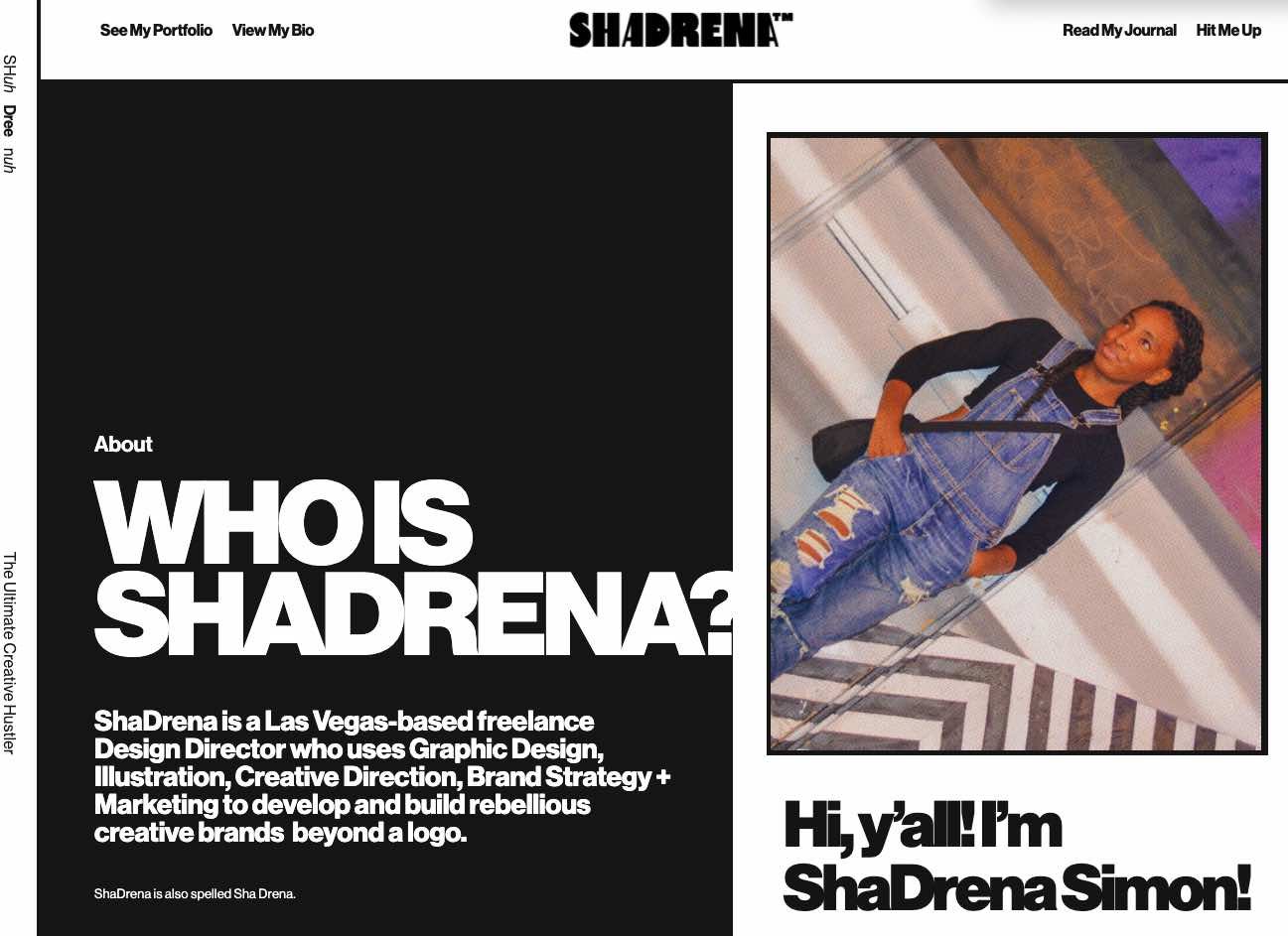
About me example, ShaDrena

7. Marc Ensign

On his about page, Marc Ensign takes his work seriously without taking himself too seriously. Marketers know there’s value to keeping a casual tone in the content they create, but to attract customers, you need to prove you have discipline and integrity. This often proves to be a tough balance to get right.

What we love: Marc Ensign nails the balance between friendly and formal with a confident opening statement. This not only draws the reader in but also establishes Marc as a relatable partner to work with.
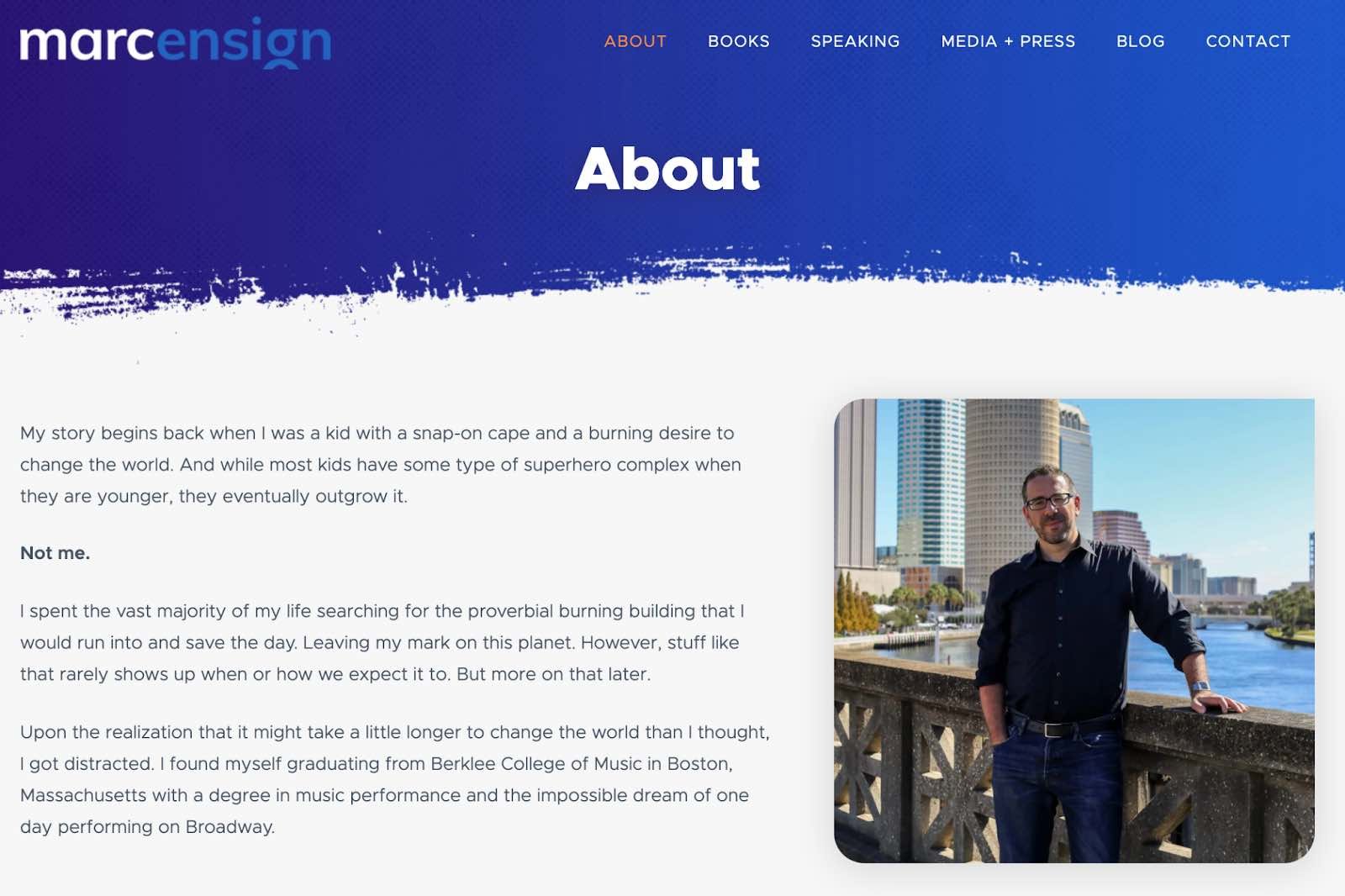
about me example, Marc Ensign

8. Miracle Inameti-Archibong

With an excellent design that emphasizes her copy, Miracle Inameti-Archibong’s site is a masterclass on how to do a one-page website well. The content is presented with large clear images, cool and bold colors, dynamic angles and blocks, and simple typography.

About me example, Miracle Inameti-Archibong

What we love: Miracle’s about me section spans over a decade but is laid out in just four sentences. The reader can easily understand her career span without being overwhelmed with too much information.

9. Haley Shapley

Haley is a freelance writer and editor who uses a single-page format for her website to showcase her personality, writing samples, and professional services. The site also features a very cool animated video effect in the background, creating a sense of space and movement.
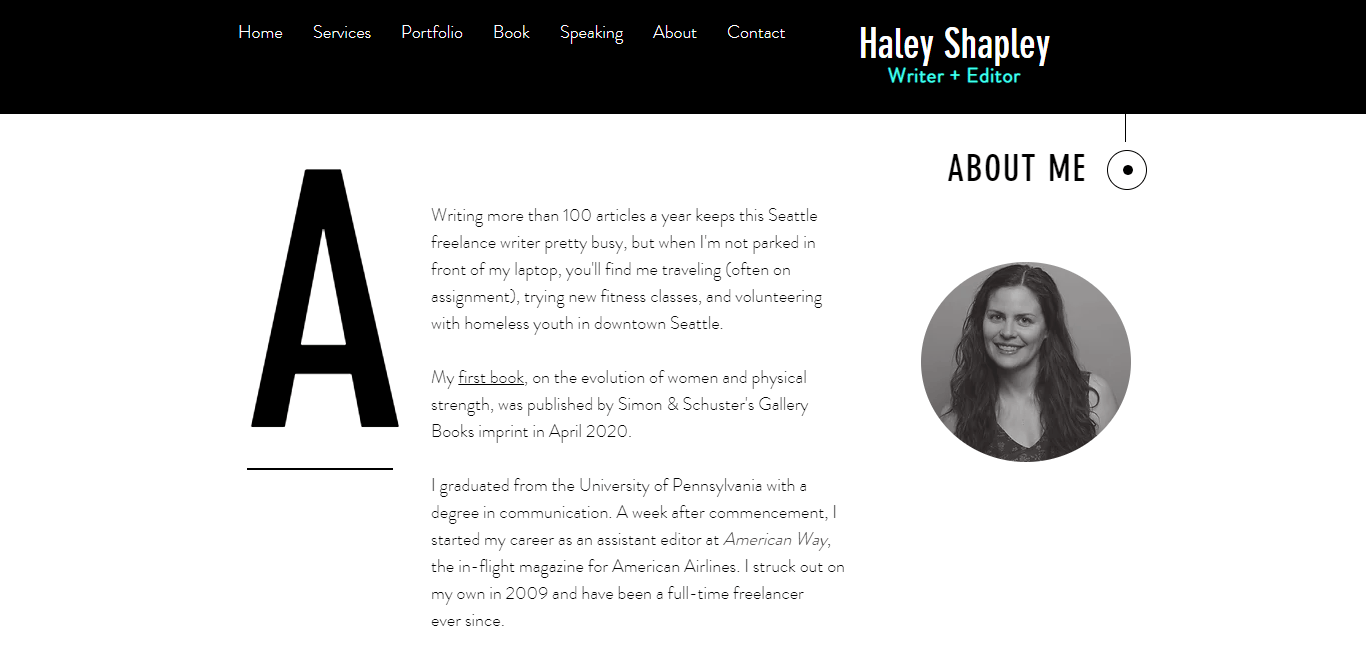
About me example, Haley ShapleyWhat we love: Haley leads with an important number: She can write over 100 articles a year. Starting with an impressive data point helps show her level of experience.

10. Amy Blaschka

Amy Blaschka’s portfolio features plenty of white space, balanced out with a bright blue header that really pops, and orange buttons for conversion actions (i.e. “Let’s talk”). Additionally, her use of video to explain what she does helps her stand out in a crowded space.
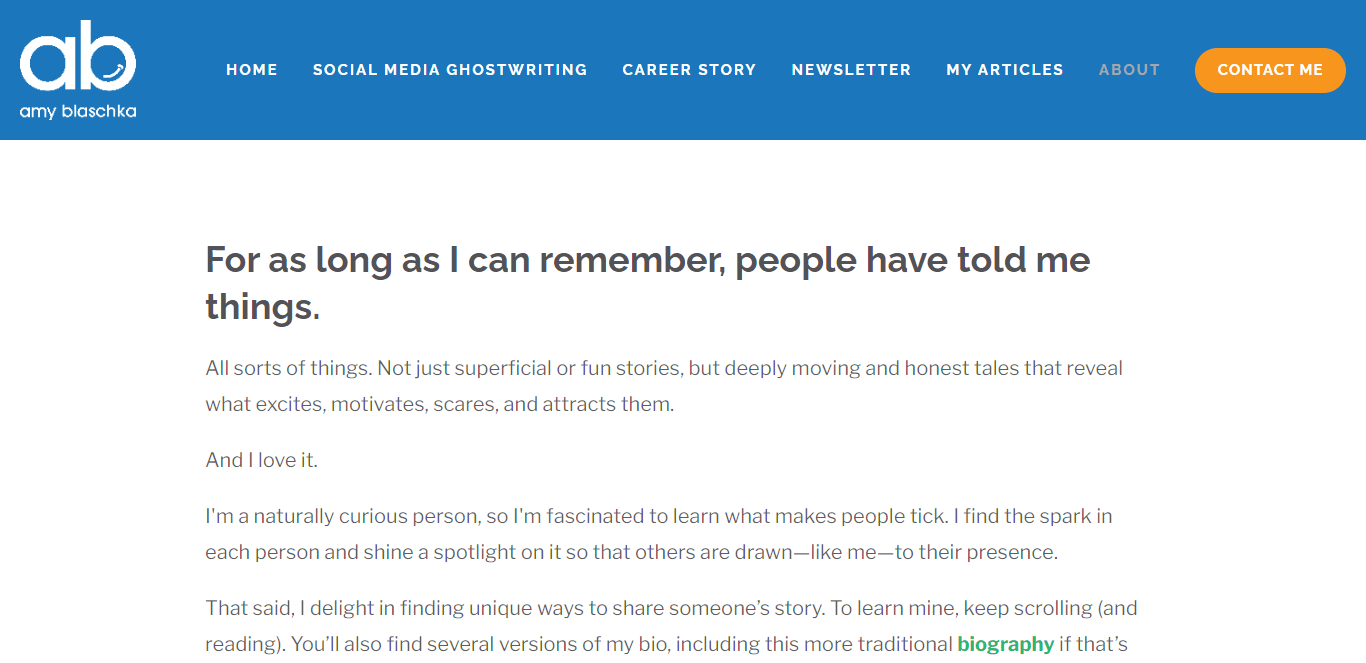
about me example Amy Blaschka

What we love: To showcase her creativity and individuality, Amy has a list of bullet points of things she loves and things she doesn’t love. She also provides website visitors with three (yes, three!) different versions of her bio: a short one (under 75 words), one that’s a bit longer (under 150 words), and her full bio which takes up an entire page.

By doing this, she’s demonstrating her talent for crafting messaging and educating prospective customers on who she is. Very sneaky, Amy!

11. Cathy Derus

Cathy Derus’ site features bold images and crisp text.  The site also highlights Cathy’s appearances in major media outlets and publications, like Entrepreneur and Cosmopolitan.
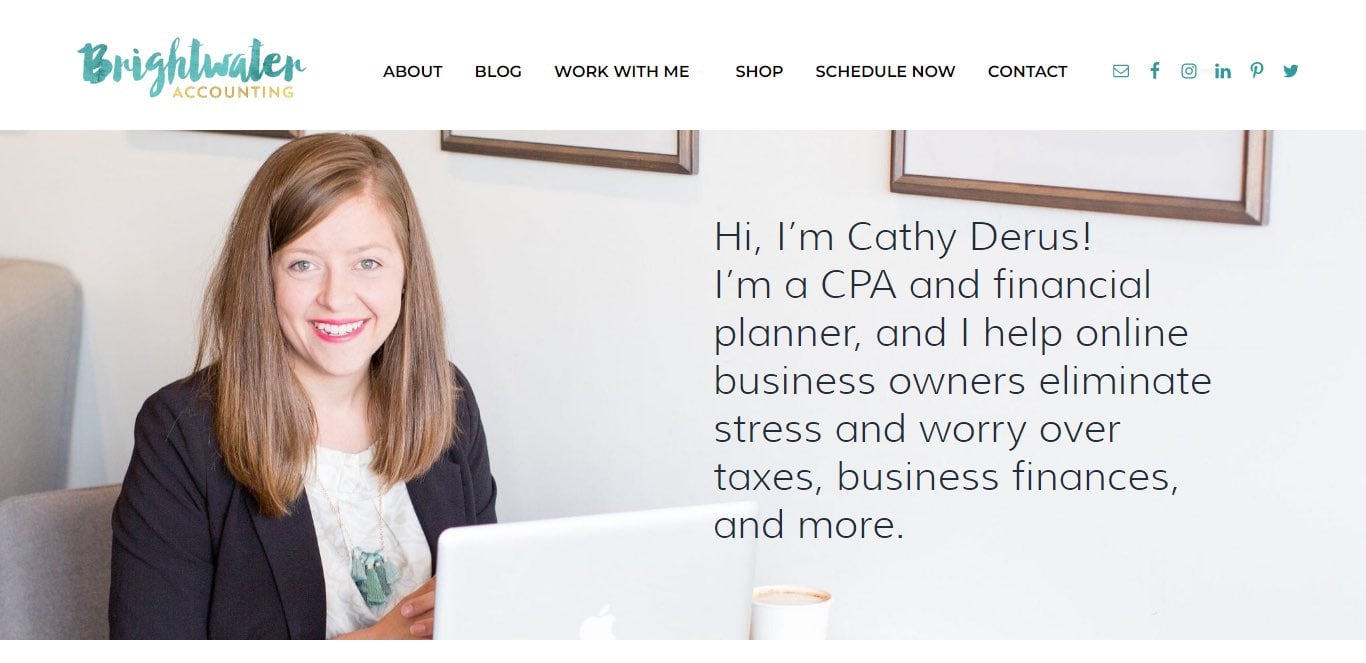
About me template, Cathy DerusWhat we love: Cathy’s about section features a full-page image of Cathy on her laptop, with a brief text introduction directly to the right of her. Instead of breaking up the image with text, Cathy overlays the text on the actual image, so website visitors get the feeling they are actually in her office with her. This is a great way to build credibility.

12. Matt Gray

Matt is a serial entrepreneur who now manages a portfolio of “soulful businesses”. His website is designed to promote the paid courses he’s developed for entrepreneurs and the 1:1 coaching he provides to those looking for a more personalized touch. 

Matt’s site provides plenty of content to help visitors understand who he is and what he does. The focus of the site is very simple: to get visitors to convert by signing up for his email newsletter.
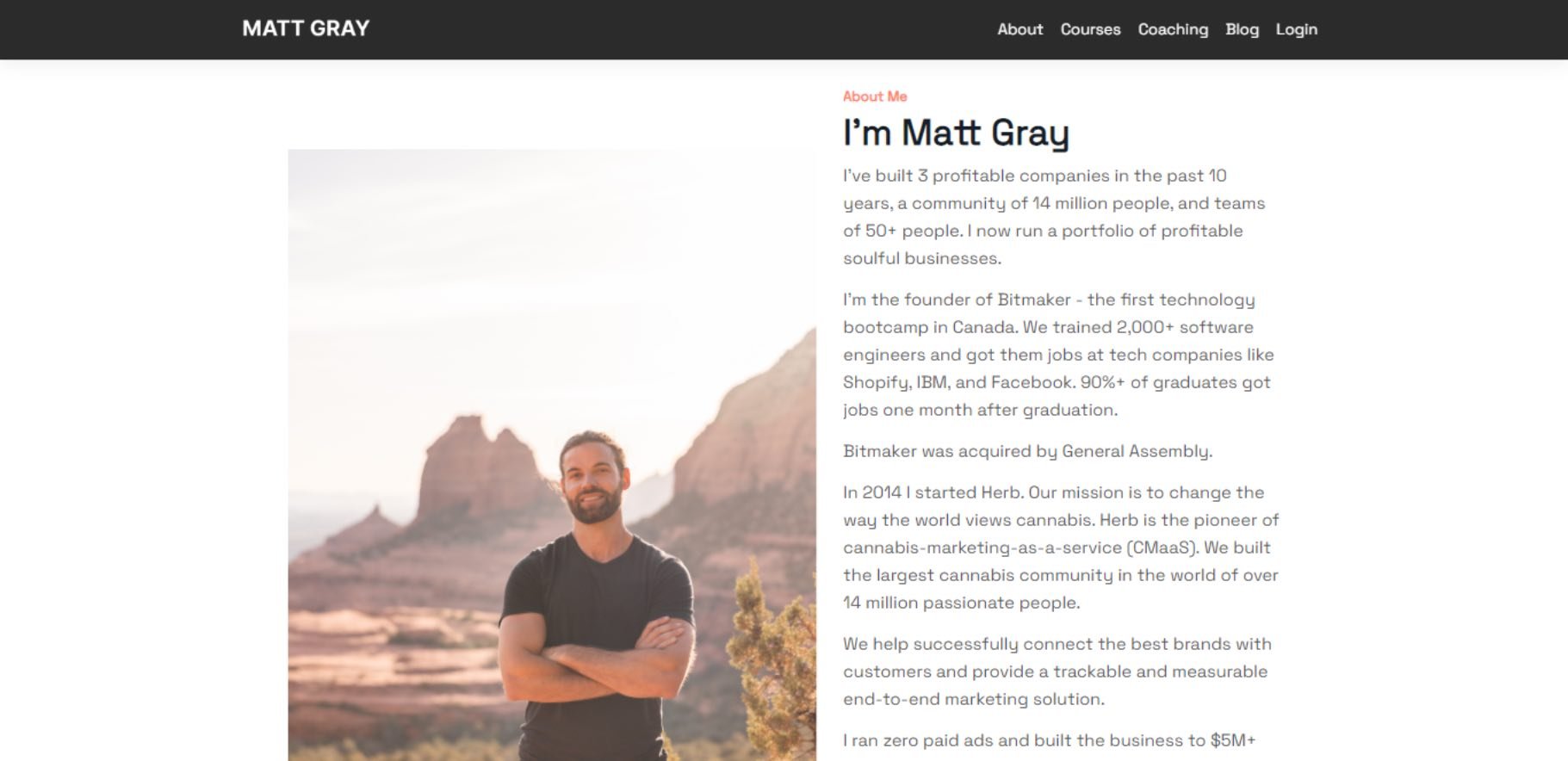
about me example, Matt Gray What we love: Below the bio section, Matt breaks down his offerings in a simple 1-2-3 format, providing something for everybody. Lower on the page, visitors find a mailing list sign-up form with a commitment of what subscribers will receive by signing up.

Tell the World All About You

Now that you’ve seen examples, it’s time to build your own about page. With a good story to tell, creative copy, humility, and digestible visuals, you’re on your way to an eye-catching user experience.

You’ll be standing out from a sea of about us and about me pages in no time. So, tell us, What makes you different? We’re eager to learn more…about you.

Editor’s note: This post was originally published in October 2020 and has been updated for comprehensiveness.
New Call-to-action

Categories B2B

6 Spooky Marketing Campaigns Just in Time for Halloween

Spooky season is officially upon us. It’s a fun time for consumers and an even better time for brands that get to be playful with their audience.

Learn how to run more impactful, measurable marketing campaigns.

Below, you’ll find examples of Halloween marketing campaigns, from ad spots and seasonal products to social media posts and influencer campaigns.

1. Twix

It’s hard to think of Halloween without thinking of chocolate.

Since 2012, Twix has delivered ad campaigns focused on the left and right sides of their chocolate bars.

For Halloween, they continue with the same theme – except this one comes with a twist (or should I say Twix?).

In this commercial, young adults dressed in costumes sit in a circle in front of an Ouija board, a device used to communicate with ghosts, spirits, and other supernatural beings.

As they play, a gust of wind blows through the room, and before they know it, the “spirit” has taken a bite of a Twix bar. Everyone starts screaming and the ending shot reads, “The spirits have decided. Left or right, either is a good decision.”

This is a great example of how a brand can tweak an existing campaign and give it a holiday twist.

2. Disney Parks & TikTok

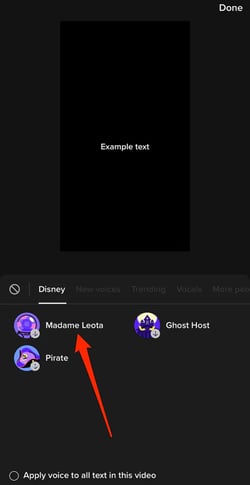
On TikTok, text-to-speech is a popular feature used by a lot of creators. Voices can range from standard American accents to popular characters and serve to add more depth(or fun) to videos.

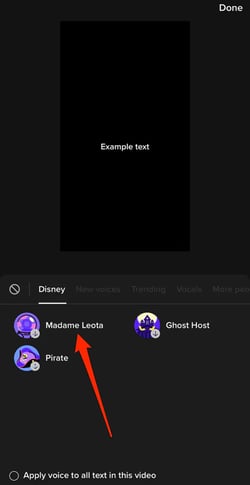
To celebrate Halloween, Disney Parks recently announced a collaboration with TikTok, in which three characters from Disney’s theme parks can voice videos on the platform.

disney parks and tiktok text-to-speech halloween campaign

Image Source

When we say “Meet your audience where they’re at,” this is what we mean. This partnership is a great play for Disney, as they presumably attempt to reel in a younger crowd and garner interest in their parks.

While they could go with flashy ads, this approach is subtle, as it is embedded into a process users are naturally engaging in.

3. Vegan Treats

Wondering just how early you can start marketing your seasonal products? For Halloween, you can start as early as September.

Although Spooky Season doesn’t officially start ‘till October 1st, the start of fall is a great time to start introducing Halloween-themed products and services.

Take Vegan Treats. On September 7, they started sharing product images all relating to Halloween, starting things off with a skull cake.

Image Source

The earlier you can start the better. It gives your audience time to review your offers and decide if they want to purchase. If you wait until the week of Halloween to start, it’ll already be too late.

4. Elysian Brewing

During Halloween, you’ll find some of the most unlikely brands pair up. That’s because holidays allow businesses to branch out in a way that feels natural and fluid.

Take this co-branding campaign between Elysian Brewing, USA Network, and Syfy.

To kick off trick-or-treat time, this beer company released a limited batch of beers for Halloween, “A Killer Wit Beer.”

“Just like Chucky is synonymous with Halloween, Elysian’s pumpkin beers have become synonymous with the season. Seeing Chucky’s iconic, freckled face on our cans feels like a match made in… ah… hell,” said Joe Bisacca, co-founder of Elysian Brewing, in a statement.

Collaborations like these can be key for new audience growth and can work well during holidays when strategies and goals are more likely to align.

5. Heinz

Although the concept of a vegetarian vampire during Halloween doesn’t sound very interesting, Heinz found a way to make it work.

Enlisting the help of content creator and TikTok influencer E.J. Marcus, Heinz released a campaign to promote its annual Halloween-themed ketchup, dubbed “tomato blood.”

The multi-channel campaign included an ad spot during AMC’s “Interview with the Vampire,” a partnership with Six Flags to offer branded menu items, and QR-code-scannable billboards.

Where does Marcus come in? He takes on the role of a vampire who’s learned to resist his thirst for humans and instead sustain himself with Heinz’s tomato blood. The ad seems to appeal to Gen-Z, given the ambassador they’ve chosen and the purpose-driven character he embodies.

One takeaway here is that there isn’t only one way to success. If you have the resources for a multi-pronged approach, don’t be afraid to do it. Even unsuccessful campaigns teach you about your audience and what they’re looking for – so it’s always a win for your team.

6. Target

On TikTok, Target leans heavily on user-generated content. They understand that perfect curation – à la Instagram – isn’t the key to success on this app.

So, they partner with influencers and content creators who can share authentic content using Target products. During Halloween, the strategy remains the same.

@target doesn’t matter if it’s 105 degrees, we ride at dawn 🧙‍♀️ @Dalia Elizabeth
♬ Halloween ・ cute horror song – PeriTune

One of their latest posts features creator Dalia Elizabeth who invites viewers to go Halloween shopping with her at Target. Viewers follow along as she walks the aisles and looks through Halloween decorations.

It’s simple but for TikTok, it might be exactly the right approach.

These diverse examples highlight the many ways you can approach the holiday while still staying true to your brand. 
New Call-to-action


Categories B2B

Why Recruiters Are Reaching Out To Candidates Directly & How to Access This Hidden Job Market

If you’re struggling to get in front of hiring managers, it could be because recruiters are shifting away from traditional methods to find candidates.

Free Kit: Everything You Need for Your Job Search

In this article, we’ll cover the causes behind this shift and how job seekers can meet recruiters where they are.

The Hidden Job Market

In 2021, employers everywhere experienced the Great Resignation, a phenomenon in which employees quit their jobs in droves. This means many things: There are a lot of openings now due to the mass quitting and the job market is more competitive because there are more job seekers.

In a TikTok video, career coach and former recruiter J.T. O’Donnell argues that the reason many job seekers are struggling to find desirable positions is that there’s a shortage of them. What’s out there, she says, is the undesirable jobs that people quit in 2021.

@j.t.odonnell @j.t.odonnell How I predict job layoffs.
#edutok
#careertiktok
#layoff
#recession
#jobs
#jobsearch
#jobsearchtips
#learnontiktok
#careeradvice
#career
#joblife
#worklife
#linkedin
#resume
♬ original sound – J.T. O’Donnell

Now, they’re looking for better benefits, higher salaries, hybrid/remote work, and better work/life balance.

This is where the hidden job market comes in, job roles that are filled through internal candidates, referrals, or recruits.

Recruiters like O’Donnell and Stacey Perkins argue that recruiters are no longer posting on public job boards for certain roles, as that can cost a lot of money and resources. Instead, they’re reaching out directly to candidates they believe will be well suited for the role.

“That’s all happening right now as part of the Great Restructuring of 2022,” said O’Donnell in a video shared on TikTok.

She continues, “And people don’t realize that and get frustrated and feel bad about themselves like ‘What’s wrong with me?’ There’s nothing wrong with you. You just don’t know the new rules to career success and jobs.”

This begs the question: Where are they finding them and how can job seekers make themselves more visible? We’ll tackle that in the next section.

How to Access the Hidden Job Market

1. Optimize your LinkedIn profile.

Many recruiters are contacting desired candidates on this social network, even if those candidates are currently not seeking new opportunities.

Those who are open to new opportunities have optimized LinkedIn profiles that allow recruiters to find them quickly.

The thing is, if your profile isn’t optimized for the job you’re seeking, recruiters won’t find you when conducting searches.

Here are some tips to improve your profile:

  • Keep your headline specific and concise – Don’t crowd your headline with a bunch of keywords. Stick to the title that aligns with your desired role.
  • Add a descriptive bio – In your bio, you have the space to boast about your skills and show off your personality. Take advantage!
  • Have a profile and banner image – Both should be complementary and tell viewers something about you.
  • Add interesting projects to your Featured section – So many tools within LinkedIn are underutilized, including this one. If applicable, take a few projects from your portfolio and add them here so they’re easily scannable.

2. Expand your network.

When looking for a new job, often the best place to turn to is your network.

They’re the ones who can refer you to jobs within the hidden market and make recommendations. If you’re struggling to build your network, here are ways to get started:

  • Attend conferences and industry events.
  • Be active on social media and engage with colleagues.
  • Join professional groups and/or associations to build a community. E.g. “Black Marketers in Texas” or “National Marketing Association”

3. Reach out to recruiters and companies directly.

Why wait for recruiters to find you? Instead, consider reaching out to hiring managers directly if you feel your skills would be a good fit for their team.

Even if you don’t see a job posting, you may have a dream company in mind. If so, don’t be afraid to be proactive and reach out to them. Share your interest in the company, your skills, and how you feel you could add value to the company.

Even if they don’t have any openings currently, doing this will make a strong impression and may land you your next gig once they do have room.

4. Subscribe to news alerts.

When you sign up for news alerts, you can stay up to date with companies, where they’re headed, and when they’re hiring – even if they haven’t yet announced it.

For instance, say a company announces they’re expanding to the East Coast and will open up offices in New York. That tells you that if they haven’t started already, they will soon start hiring.

From there, you can reach out to the company and pitch yourself.

Setting up a Google Alert is easy:

  • Head to this page.
  • Type in the term and/or company you want to receive alerts on.
  • Set parameters around how often you want to receive alerts, which regions they should come from, and where they should be delivered.

In this competitive job market, job seekers have to go above and beyond to secure the positions they want. These tips should help you access the hidden job market and get in front of the recruiters you want.

Apply for a job, keep track of important information, and prepare for an  interview with the help of this free job seekers kit.

Categories B2B

24 Reddit Stats and Facts to Know in 2022

Since it launched in 2005, Reddit has remained a mystery to many marketers. Reddit is a user-influenced platform that embraces discussion and community engagement over content creation or branding. Its difference in focus makes Reddit vastly different from other networks — like Facebook or Instagram — where brands naturally find their niche.

In the past few years, however, Reddit’s attempted to gain more attention from brands by introducing several advertising offerings. The platform also launched features such as video streaming and video hosting, enabling the platform to evolve from the text-based format it’s known for.

The platform is also thriving with Gen-Z and millennial audiences that might be using that platform to make purchasing decisions later in life. Though we don’t encourage you to put all your money into Reddit ads or a community manager to build subreddits just yet, there are still ways businesses and brands can use Reddit to their advantage if they choose to.

One way is to host “Ask Me Anything” posts (also known as an AMA) to build community and trust with your audience. Another way is to start subreddits about specific topics relevant to your brand, similar to Facebook groups.

Download Now: Free State of Marketing Report [Updated for 2022]

Reddit Statistics

To keep you informed and help you make strategic social media decisions, here’s a list of 24 helpful and intriguing Reddit stats related to the company, its user base, and what it takes to engage audiences on the platform.

General Stats

  • Reddit has over 430 million active monthly users. (EarthWeb)
  • Reddit is the fifth most visited website in the U.S. (SemRush)
  • Reddit is valued at over $10 billion. (The New York Times)
  • Reddit was founded in 2005 and acquired by Condé Nast in 2006. (Crunchbase)

Demographics

  • The majority of Reddit users (63.8%) are male. (Statista)
  • 47.13% of Reddit users are found in the U.S. (similarweb)
  • 36% of U.S. Reddit users are between the ages of 18 and 29 years old.
  • Gen Z makes up 26% of Reddit Users. (Reddit Blog)

User Behavior

  • As of 2021, there are 2.8 million subreddits on the platform. (Orbelo)
  • Reddit has 52 million daily users. (The Wall Street Journal)
  • Reddit users spend close to 24 minutes a day on the platform. (Insider Intelligence)
  • Users spend significantly less time on Reddit than on other platforms like TikTok, Instagram, and Twitter — but that’s because Reddit is more of an information and education platform than a video and entertainment platform. (Insider Intelligence)
  • 51% of Gen-Z users say they’re attracted to the platform’s user-driven features, such as subreddits, comments, and upvotes. (Reddit Blog)
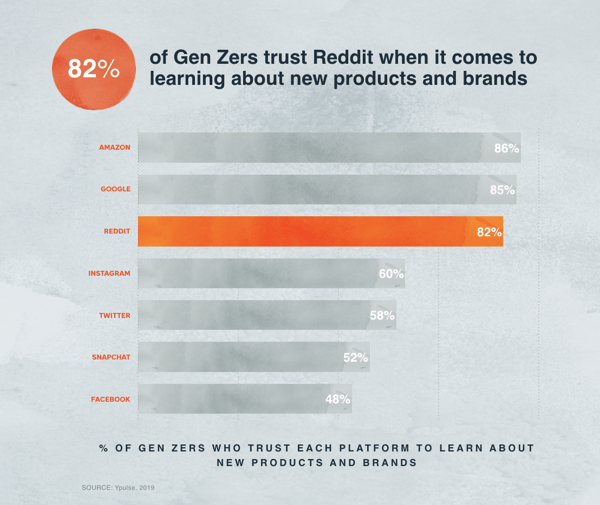
  • 82% of Gen-Z people trust Reddit when learning more about products. (Reddit Blog)
Reddit says Gen Z trusts reddit when it comes to product research

Source: Reddit Blog

Videos on Reddit

  • As of 2018, Reddit users consumed more than 1.4 billion videos on the platform per month. (Variety)
  • In 2018, video viewing time grew by 38%: Total users went from viewing 400,000 hours of natively hosted video every day to more than 13 million hours of video monthly. (Reddit Blog)
  • In 2018, three of Reddit’s five highest-performing posts included videos, while one had a photo. (Reddit Blog)

Engaging Content and Hot Topics

  • The top four subreddits as of 2022 are /r/announcements, /r/funny, /r/AskReddit, and /r/gaming. (OneUp)
  • In 2021 the most popular “Ask Me Anything” (AMA) post with over 90,000 upvotes was I’m a lobster diver who recently survived being inside a whale.” (Statista)
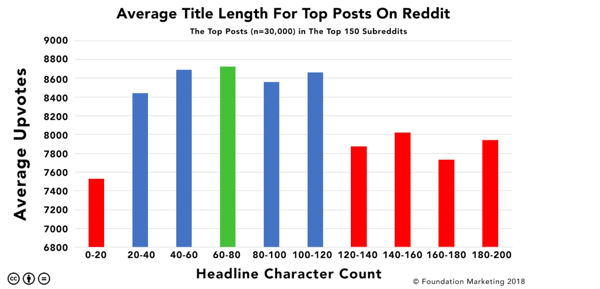
  • In a 2019 study of 60,000 Reddit posts, those between 60 and 80 characters get 8,600 upvotes. (Foundation Inc.)
  • The study also found that posts under 120 characters get more upvotes than posts above the character count. (Foundation inc.)

Foundation Inc. Average Title Length of top posts on Reddit

Source: Foundation Inc.

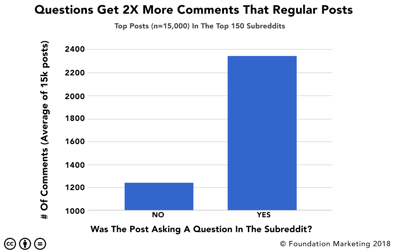
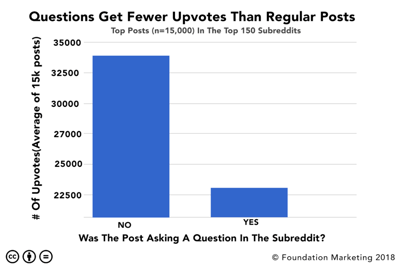
  • Posts with questions generate twice as many comments as posts without them. But, oppositely, posts without questions get more upvotes than posts with them. (Foundation Inc.)
  • In 2019, important topics of discussion included beauty, weddings, and self-care, a shift from 2018’s hot topics, noted below. (Reddit)
  • One of Reddit’s most popular topics is technology. In 2018, Reddit reported that all of its tech-related subreddits combined received more than 27 million unique monthly visitors and 284 monthly views. (Reddit Blog)

Chart showing questions get 2x more comments on Reddit from Foundation Inc.
Questions get fewer upvotes on reddit chart from foundation inc.

Source: Foundation Inc.

Takeaways from Reddit Stats

If you’re a marketer in a field related to consumer products, especially technology, you might not want to count out Reddit just yet. As we’ve learned from the stats above, young people, especially in Gen Z, are using and trusting the platform as a source for product research.

If your company has a lot of excellent video content, you may want to incorporate Reddit into your next marketing strategy. Remember, Reddit users consumed more than 1.4 billion videos monthly in 2018.

Online video, especially in a mobile format, is being embraced much more heavily than in the past. Because of this, it might be worth exploring the idea of a Reddit video strategy if you ever have extra time or resources available.

If you’re interested in testing out content on Reddit but don’t know where to start, it can be helpful to get inspiration from brands who’ve already succeeded there. In this post, you can check out a few great examples.

New Call-to-action

Categories B2B

8 Innovative & Inspiring Examples of Augmented Reality in Marketing

The Augmented reality, virtual reality, and mixed reality market size worldwide is expected to jump by more than 220 billion USD between 2021 and 2028. Tim Cook, Apple’s CEO, has said that AR will one day be as important in our everyday lives as “eating three meals a day.” 

AR has also made its way into different industries, including marketing. In fact, many people use AR experiences from brands every day without even realizing it, like picture and video filters on social media. 

If you’re wondering how AR plays into marketing, this post will look at eight companies that have used AR in innovative and inspiring ways that you can use to brainstorm and execute your own strategy. Unlock tips, systems & recommended resources to stay ahead of the tech curve.

Augmented Reality Examples

Augmented Reality for Product Marketing

1. Pokémon GO

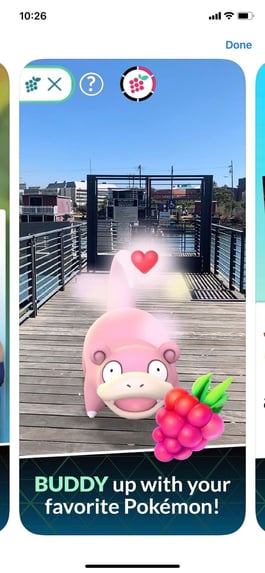
Pokemon GO took the world by storm in 2016, and it is one of the most notable AR experiences. 

pokemon go

Image Source

In the app, users get notified of eligible Pokémon in their area and receive directions to find and catch them. When they come across a Pokémon, the character is superimposed over the real-life location of the app user — an AR experience. 

The game is built around catching the available Pokémon before anyone else can, which is why, when the app first came out, people would gather in groups to try to be the first to capture the character.

2. Home Depot

Decorating a home isn’t easy — how do you know if you’ll actually like the yellow paint that looks beautiful online but might be too bright in your bathroom? What if that coffee table doesn’t fit in your living room as you’d hoped?

In 2015, Home Depot released its Project Color app, which uses patent technology to show users what a paint color will look like in their home. The AR technology considers lighting, objects, and shadows in the room, so you can see how that yellow shade will look in real life. If you don’t trust your judgment, you can also share images from the app on social media to get a friend’s opinion.

Home Depot isn’t the only home furniture store to use AR to create value for their users — IKEA has similar AR technology built into its app.

3. IKEA

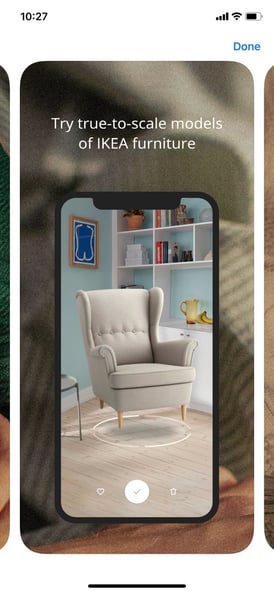
IKEA uses AR to help shoppers test and visualize products in their own space before making a purchase. 

It offers multiple tools for customer needs, like the IKEA Place app that superimposes to-scale models of furniture in real-life rooms or the IKEA home planner that helps people build furniture sets, like kitchen cabinets, to ensure they’re satisfied before placing an order. 

ikea-1

Image Source

4. Sephora

There’s a reason many people don’t buy makeup products online — it’s impossible to know if you’ll like the lip color or foundation coverage if you don’t try it on in-store. Sephora understands this struggle and is known for allowing in-store visitors to test products on themselves before buying them, but not everyone may be comfortable doing so. 

For those not as comfortable, it offers an in-store virtual try-on kiosk where visitors can see how products look on themselves to ensure they’re satisfied.

5. StubHub

Augmented reality enables you to visualize and interact with a space — two critical functions when choosing how much you’re willing to pay for a stadium seat.

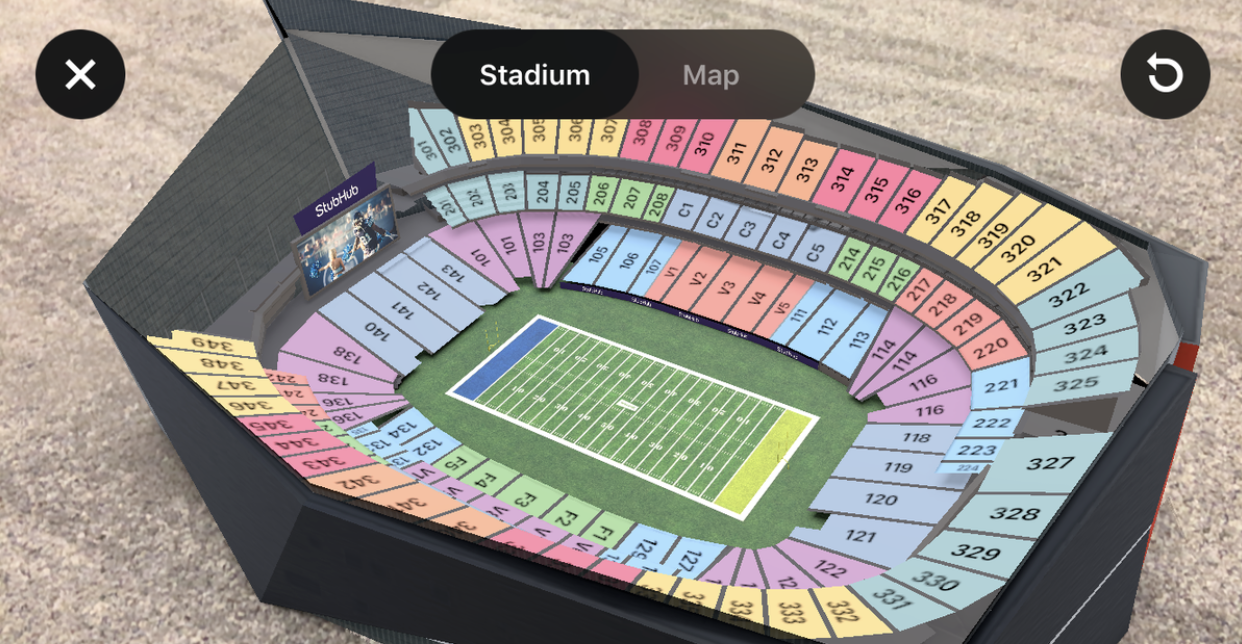
For Super Bowl LII, StubHub introduced an AR feature on their mobile app that allowed ticket buyers to see a virtual 3D model of the U.S. Bank Stadium and nearby parking garages and concession stands. This enabled potential buyers to visualize their full experience before purchasing and minimized the risk of paying for a subpar seat.

StubHub’s reliance on AR solved a common customer problem — as StubHub CTO Matt Swann points out, “We’re solving for real pain points, not just tech for the sake of tech. For many people, it’s not an event you just show up for; it’s kind of a bucket list item.”

For out-of-towners, the ability to virtually compare different seat locations adds comfort for hesitant buyers.

6. Social Media Filters

Filters are AR features that social media users use daily on different apps, from TikTok to Instagram to Snapchat. Over 250 million people use an AR feature on Snapchat every day, and creators on the platform have built over 2.5 million AR lenses. 

With filters, users simply take a picture of themselves or something of interest, and a filter is superimposed over the image, whether it’s a funny pair of sunglasses or changing the color scheme of a scenery.

AR and Experiential Marketing

7. Netflix

To market season four of Stranger Things, Netflix launched an in-person experiential marketing and AR experience called the Stranger Things Experience. Fans visit an in-person location and participate in an immersive experience related to the show, where they play games with AR features that help them feel like they are in the Stranger Things world.

In the past, Netflix has advertised other Stranger Things seasons with AR experiences like Instagram filters that place users within the universe, all from the comfort of their homes. 

8. Pepsi

In 2014, Pepsi installed AR technology in a London bus shelter, making it appear like a lion, UFOs, flying saucers, and other objects were headed straight for Londoners.

The production showcased Pepsi’s playful personality and provided the audience with an exceptional experience. Afterward, a video of the bus shelter’s AR technology attracted over six million views on YouTube — making it one of YouTube’s most viewed advertising campaigns.

Pepsi’s campaign highlights the effectiveness of AR when a company truly knows its audience. Pepsi didn’t need to use AR to advertise its products — instead, it trusted its consumers to appreciate the surreal experience and naturally share the story with friends, creating buzz around the brand.

The State of AR in Marketing

While incorporating AR into marketing is still new, marketers can still note how these brands creatively incorporated technology into their marketing strategies. 

Ultimately, as the media landscape changes and technology gets more advanced, marketers at businesses of different sizes might have more opportunities to implement technology. And, when they do, they’ll need to think creatively and innovatively about how they invest in it.

Stay Current on Emerging Tech

 
Guide Stay Current on Emerging Tech

Categories B2B

6 Spooky Marketing Campaigns Just in Time for Halloween

Spooky season is officially upon us. It’s a fun time for consumers and an even better time for brands that get to be playful with their audience.

Learn how to run more impactful, measurable marketing campaigns.

Below, you’ll find examples of Halloween marketing campaigns, from ad spots and seasonal products to social media posts and influencer campaigns.

1. Twix

It’s hard to think of Halloween without thinking of chocolate.

Since 2012, Twix has delivered ad campaigns focused on the left and right sides of their chocolate bars.

For Halloween, they continue with the same theme – except this one comes with a twist (or should I say Twix?).

In this commercial, young adults dressed in costumes sit in a circle in front of an Ouija board, a device used to communicate with ghosts, spirits, and other supernatural beings.

As they play, a gust of wind blows through the room, and before they know it, the “spirit” has taken a bite of a Twix bar. Everyone starts screaming and the ending shot reads, “The spirits have decided. Left or right, either is a good decision.”

This is a great example of how a brand can tweak an existing campaign and give it a holiday twist.

2. Disney Parks & TikTok

On TikTok, text-to-speech is a popular feature used by a lot of creators. Voices can range from standard American accents to popular characters and serve to add more depth(or fun) to videos.

To celebrate Halloween, Disney Parks recently announced a collaboration with TikTok, in which three characters from Disney’s theme parks can voice videos on the platform.

disney parks and tiktok text-to-speech halloween campaign

Image Source

When we say “Meet your audience where they’re at,” this is what we mean. This partnership is a great play for Disney, as they presumably attempt to reel in a younger crowd and garner interest in their parks.

While they could go with flashy ads, this approach is subtle, as it is embedded into a process users are naturally engaging in.

3. Vegan Treats

Wondering just how early you can start marketing your seasonal products? For Halloween, you can start as early as September.

Although Spooky Season doesn’t officially start ‘till October 1st, the start of fall is a great time to start introducing Halloween-themed products and services.

Take Vegan Treats. On September 7, they started sharing product images all relating to Halloween, starting things off with a skull cake.

Image Source

The earlier you can start the better. It gives your audience time to review your offers and decide if they want to purchase. If you wait until the week of Halloween to start, it’ll already be too late.

4. Elysian Brewing

During Halloween, you’ll find some of the most unlikely brands pair up. That’s because holidays allow businesses to branch out in a way that feels natural and fluid.

Take this co-branding campaign between Elysian Brewing, USA Network, and Syfy.

To kick off trick-or-treat time, this beer company released a limited batch of beers for Halloween, “A Killer Wit Beer.”

“Just like Chucky is synonymous with Halloween, Elysian’s pumpkin beers have become synonymous with the season. Seeing Chucky’s iconic, freckled face on our cans feels like a match made in… ah… hell,” said Joe Bisacca, co-founder of Elysian Brewing, in a statement.

Collaborations like these can be key for new audience growth and can work well during holidays when strategies and goals are more likely to align.

5. Heinz

Although the concept of a vegetarian vampire during Halloween doesn’t sound very interesting, Heinz found a way to make it work.

Enlisting the help of content creator and TikTok influencer E.J. Marcus, Heinz released a campaign to promote its annual Halloween-themed ketchup, dubbed “tomato blood.”

The multi-channel campaign included an ad spot during AMC’s “Interview with the Vampire,” a partnership with Six Flags to offer branded menu items, and QR-code-scannable billboards.

Where does Marcus come in? He takes on the role of a vampire who’s learned to resist his thirst for humans and instead sustain himself with Heinz’s tomato blood. The ad seems to appeal to Gen-Z, given the ambassador they’ve chosen and the purpose-driven character he embodies.

One takeaway here is that there isn’t only one way to success. If you have the resources for a multi-pronged approach, don’t be afraid to do it. Even unsuccessful campaigns teach you about your audience and what they’re looking for – so it’s always a win for your team.

6. Target

On TikTok, Target leans heavily on user-generated content. They understand that perfect curation – à la Instagram – isn’t the key to success on this app.

So, they partner with influencers and content creators who can share authentic content using Target products. During Halloween, the strategy remains the same.

@target doesn’t matter if it’s 105 degrees, we ride at dawn 🧙‍♀️ @Dalia Elizabeth
♬ Halloween ・ cute horror song – PeriTune

One of their latest posts features creator Dalia Elizabeth who invites viewers to go Halloween shopping with her at Target. Viewers follow along as she walks the aisles and looks through Halloween decorations.

It’s simple but for TikTok, it might be exactly the right approach.

These diverse examples highlight the many ways you can approach the holiday while still staying true to your brand. 
New Call-to-action


Categories B2B

What Help Scout’s VP of Brand Considers When Promoting Individual Contributors & People Managers [+ How These Promotions Differ]

There are plenty of perks to getting promoted. Beyond a salary increase, a promotion typically means more influence on your team, more autonomy, and more control over your day-to-day tasks.

But to get promoted, you need to do more than just perform well in your current role. You also need to demonstrate new skills that will help you succeed in the next role.

Whether you’re an individual contributor (IC) or people manager looking to get promoted, you’re in luck. Here, I spoke with Help Scout’s VP of Brand, Kristen Bryant Smith, to learn what she looks for when promoting both ICs and people managers.

In this post, you’ll learn:

Let’s dive in.

Coming Soon: Act Like a Leader, Think Like a Leader [Click Here to Add to Google Calendar]

How to Get Promoted as an Individual Contributor or People Manager in 2023 

Skills All Marketers Should Focus on for Career Growth, According to Help Scout’s VP of Brand

To start, I asked Smith about the skills all marketers should develop to stand out in their roles.

I’d expected the standard list — strong communication skills, expertise with analytics, or creativity and problem-solving — but Smith started with something else.

Storytelling.

As she puts it, “I think storytelling happens on many different levels. It happens with the way you tell the story of your company’s product or services. It happens at the brand level, when you’re expressing what your company offers to the world. But it’s also important to be a good storyteller as an individual so that you can express the level of impact you’re making on the team.”

She adds, “Storytelling matters when you’re writing a blog post or creating a campaign, but it also matters when it comes to reporting on the impact of those efforts.”

This makes sense. To get promoted, your manager needs to express to leadership why you’re deserving and prepared for the next role. And, to help your manager do this, you need to be able to tell the story of your own impact on the team, and organization at large.

The stories you tell when it comes to your projects matters. Consider, for instance, the difference between telling your team, “Our marketing campaign generated 300 net-new leads”, versus telling them, “Our marketing campaign successfully generated 300 net-new leads. More leads means more prospective buyers. Our previous campaign back in July only generated 100 new leads. This demonstrates tremendous growth on our team when it comes to how our campaigns impact revenue.”

See the difference? Storytelling helps you showcase your awareness for larger company goals, and puts your projects into the context of business impact.

Beyond storytelling, Smith also told me, “Another skill that matters is being able to connect the dots as a collaborator. It’s easy to focus on the content of what you’re communicating, but you can set yourself apart by being someone who adds contextual knowledge and listens to others across the business.”

She continues, “Being a cross-department translator makes you invaluable, because you’re the one who is opening up the doorways that people can walk through more easily. You’re a guide for everyone else on the team.”

It should be noted, it’s undeniably easier to be a connector at a company that values transparency and enables each employee to have insights into other team’s objectives and processes. But, if it’s possible at your organization, becoming that translator shows leadership that you’re committed to helping your entire organization reach its goals — not just your own.

Next, let’s jump into some factors you should consider if you’re hoping to get promoted in an IC role.

(P.S. Already a Help Scout customer? Click here for 20% off eligible HubSpot products, or sign up for free.) 

The Factors That Matter to Get Promoted as an Individual Contributor

There are two factors Smith believes are important for getting promoted as an IC:

  • Being able to set realistic goals and hit them.
  • Being consistent.

First, let’s focus on being able to set realistic goals and hit them.

Smith told me, “I am far more impressed by someone who sets and hits an achievable goal than someone who sets and misses a far-reaching, not-so-attainable goal. If you don’t hit that big goal, you don’t learn as much as you do when you hit and exceed a more reasonable target. You instead are faced with figuring out if your tactics underperformed or if your targets were off. With more realistic numbers you can establish an informed baseline and hold yourself more accountable.”

Of course, setting goals isn’t as easy as it sounds, particularly if you’re launching a new marketing initiative and don’t have historical metrics to refer back to.

Smith recognizes the challenge of setting realistic goals, but believes it’s a muscle that can be developed over time. As she puts it, “Trying to put numbers on everything is hard — especially when big numbers often feel more inspiring. Get comfortable with quantifying things regardless of their size. Seeing those numbers change over time is how you’ll tell the story of your impact.”

vp of brand kristen smith talks about the difficulty of setting realistic goals-1

Additionally, as an IC you’ll want to show initiative by reflecting and learning from your goals — whether you hit them or not. You want to be someone who raises their hand and says, “I know we hit our goal. But what was it like to get there? What did we learn?”

As Smith puts it, “As an IC, you need to recognize the power and agency you have over even the smaller-scope items without waiting for your manager to tell you.”

And, equally important for IC promotions: Consistency.

Smith says, “When I think about the ICs I’ve promoted, I think about the people who are very reliable. You know if they’re tasked with something that it will get done and they will deliver. You also know they’ll communicate with you if things go awry and provide updates along the way. Consistent communication and on-time delivery are huge factors to consider when promoting at the IC-level.”

How to Coach These Skills in Your IC

Managers can help coach their direct reports and teach them how to refine their goals in ways that feel reasonable.

Encouraging reflection can help when you’re trying to teach your direct report how to set more realistic goals.

For instance, when you sit down with your employee, you might say, “How can we apply the learnings from this project moving forward?” or “I know you didn’t hit your goals for this campaign. If you could do it again, how might you alter your goals to make them more manageable?”

In terms of consistency, positive reinforcement is key. Recognize when your IC is delivering strong results on a consistent basis, so they know it’s being noticed.

And if they’re not consistent, have conversations to uncover why they’re not meeting deadlines. Is there a lack of communication or other process inefficiencies that is leading to these inconsistencies? If not, perhaps your IC needs more training so she can become more efficient at her job and deliver the right materials more frequently.

Next, let’s explore what you need to develop to get promoted on the manager-level.

The Factors That Matter to Get Promoted as a People Manager

Being a good manager requires empathy, strong listening and communication skills, and the ability to provide strong, clear feedback.

But beyond that, there are four factors Smith looks for when considering whether her people managers are excelling in their roles and ready for the next step. These include:

  • An ability to navigate ambiguity and translate it effectively.
  • Providing role clarity to each of your direct reports.
  • Thinking on longer timelines.
  • Demonstrating empathy.

One of the biggest factors, in Smith’s opinion, of a strong people manager is someone who can effectively navigate ambiguity and translate it so they’re not passing ambiguity down to their team.

As she puts it, “It’s your job to translate ambiguous information into something that is actionable and helpful. You’re a filter for your team. They need to look to you to get answers — not more questions.”

She adds, “Good managers can come in and hear the loose, longer-term themes from the executive team, and then translate them into strong quarterly plans for their team.”

In her opinion, that’s why hierarchy should exist in the first place: So people can think on different timelines. The executive team needs to look one year or even five years out, but director-level needs to focus on quarter over quarter.

Which leads me to my next point: If hierarchies exist so people can think on different timelines, then it makes sense that people manager growth happens when you can demonstrate you’re officially thinking on a new, longer timeline.

For instance, as a people manager, rather than saying, “I’m working on this project, and it’s going really well,” you could say, “I’m working on this project right now, but I really think we need to start thinking about other similar projects a couple of months from now.”

“Initiative is huge,” Smith told me. “You need to suggest new plans, and tie them back to business outcomes. How can you hear the context of what’s going on across the business — what the sales team is excited about, what’s coming from the product roadmap — and use it to prioritize what you have control over? That’s what sets people apart and starts to move them up the ladder.”

help scout vp of brand on why initiative mattersAnother critical trait of a people manager who is ready for a promotion? Being able to provide role clarity.

Smith says, “Your direct reports deserve to know how your expectations vary from project to project. How do you ensure they understand how they’re being measured with each project they take on?”

There’s nothing worse than starting a new experiment or project and realizing your manager has no idea how she’ll measure your success. To demonstrate you’re ready for a director-level, you need to show you can pivot with your employees as their roles shift while clearly communicating your expectations of them no matter the context.

And, finally, Smith emphasizes — how you treat people matters. “You need to be able to hear 360-feedback and make sure your actions line up with your company’s values,” She says. “You need to be an empathetic leader and adjust things accordingly if your employee is struggling or dealing with something outside of work. No matter what, I’m never going to promote someone who creates a toxic environment for their team.”

How to Measure These Factors in Your People Managers

While this is all well and good, it can be incredibly difficult to define and measure these factors in your people managers. On a daily basis, how do you know they’re translating ambiguity effectively? And how can you ensure they’re providing role clarity, or being an empathetic leader?

Let’s start with measuring their ability to translate ambiguity. For Smith, it’s simple: How much back-and-forth is required during quarterly planning?

She told me, “If the [back-and-forth] loop of communication to get alignment with your directors is small, then it’s because your director knows how to effectively translate what you’re asking into direct actions for their team.”

In short: If your director can sit in leadership meetings and take those larger-picture goals and distill them into actionable, specific plans for her team — then she’s good at distilling ambiguity. If not, then she might need more coaching or development before she’s ready for a promotion.

Skip-levels and employee feedback surveys are additional opportunities to learn how the managers on your team are performing. Ultimately, these surveys can help you discover whether your managers are leading with clear guidelines and empathy.

Finally, let’s explore what leaders get wrong when they consider promoting both ICs and people managers.

What Leaders Get Wrong When Thinking About Promoting ICs or People Managers

A promotion doesn’t just mean an employee is performing well in their role. It also means they’re ready and able to take on more responsibility beyond their current role.

Smith provides an example for this. She told me recently, her team was defining the difference between a content writer and a content lead. They determined a content writer is a role in which everything the writer creates is planned by someone else. Alternatively, a content lead is someone who starts to plan out additional content that will perform well with the intended audience.

“As a manager, it’s important to understand what an expanded role means. It’s not just, ‘You checked off everything you were supposed to do this quarter … So I guess you’re getting promoted’,” Smith says with a laugh. “It’s more about defining what the next role means.”

Additionally, it’s vital as a leader you understand what your team loses when you promote a senior individual contributor to a people manager. As Smith puts it, “When you’re evaluating the jump [between IC and people manager], you might assume that what the senior IC is doing will remain the same, but it shouldn’t. They shouldn’t be required to write the same amount of posts, for instance, when they become a people manager. So how are you setting expectations around that shift?”

She adds, “People who are really great senior ICs are raising the bar of quality for whatever program they’re owning — but having a great quality bar doesn’t make you a great people manager. So what are we doing as managers to develop out the people management skills?”

Ultimately, getting promoted isn’t something that happens overnight. Ideally, you can leverage these tips — along with having effective career growth conversations with your manager — to begin demonstrating your readiness today.

New call-to-action

Categories B2B

5 Trending Topics Brands Leveraged in 2022 [+ How They Did It]

As we head toward the end of 2022, it’s time to look back at examples of brands that have successfully “newsjacked” a trend.

Download Now: Free State of Marketing Report [Updated for 2022]

In this article, we’ll cover some of the top trending topics of the year and the brands that took them on.

1. Popeyes

In late September, artist Rihanna announced via Instagram that she would be performing at the Superbowl.

The image, which confirmed earlier speculations of the singer’s participation, quickly made its rounds.

Wasting no time, Popeyes then shared its own version of the popular image just one day later.

Popeyes is one of the few brands that executed this newsjacking correctly (and legally). Many brands wanting to jump on this news took a great legal risk.

Instead of following Popeyes lead, which replicated Rihanna’s image with its own product and hand model, many simply Photoshopped their products into the artist’s hands.

This could be considered copyright infringement, as the recreation of the image in this way is considered derivative work and requires explicit authorization from the copyright holder.

Secondly, it can also violate the artist’s right of publicity, as their likeness is used in a manner they have not agreed to.

Is this likely to escalate? Probably not as it serves as additional publicity for the NFL and Rihanna. However, in another case, it could. The legal consequences are simply not worth the temporary boost in reach or engagement.

The key takeaway here is that when newsjacking, it’s still important to review the trend before jumping in to ensure you’re not putting your brand at risk.

2. Lay’s

The reality TV competition show Big Brother isn’t where you’d expect to see Lay’s advertisement. But when one contestant showed a love for Lay’s chips, the brand started shouting out the contest on its Twitter account.

Brands leverage trending topics: lay's food brand

This particular contestant, and subsequent winner Taylor Hale, become one of the most popular faces of the franchise due to the bullying she faced in the house. With many Americans rallying around her to show their support, Lay’s also joined in.

Judging by Lay’s recent Tweets, their posts on Hale earned them over 50x more engagement than they typically get on the platform.

Once Hale was announced as the winner, the brand also contacted her – seemingly for a potential partnership.

This is a great example of how a brand can leverage a seemingly trivial situation and turn it into something special.

3. LEGO

Remember when Wordle has us all agonizing over five-letter words? Well, LEGO capitalized on that buzz and joined in – in LEGO fashion, of course.

Something like this is so simple yet can be incredibly effective. Because the point of newsjacking isn’t necessarily to get sales, but instead to increase your reach, get engagement, and connect with your audience.

When you think of it this way, it’s much easier to leverage.

4. Norwegian Cruise Line

The conversation around NFTs started gaining steam in January 2021 and peaked one year later in January of this year, according to Google Trends,

Since then, brands have been scrambling to both understand what it is and how they can use NFTs for marketing.

NCL took the leap by leveraging the buzz around NFTs to announce its new cruise line. They released a collection of six NFT art pieces available for auction that depict the new cruise line at sea.

how brands leverage trending topics in 2022: norwegian cruise line NFTs

Image Source

According to a press release, the winner of the auction will also win a room on one of the ship’s inaugural voyages.

5. K18

BeReal has made a big splash this year as the better, more authentic version of Instagram.

As a quick refresher, the concept behind BeReal is simple: At some point every day, users are prompted to share a picture of themselves in real-time using both front and back cameras.

There are no pre-taken pictures allowed and once you miss the two-minute countdown, that’s it.

The idea is quite interesting and has garnered the attention of many consumers as well as brands.

The thing is, many brands are still unsure how to use the platform. Not K18 though.

Joining brands like Chipotle, E.L.F, and Rare Beauty, K18 is one of the few brands that are exploring this platform.

Image Source

Because spontaneity is required, it makes it difficult for brands to add structure to their BeReal strategy. However, K18 has taken this as an opportunity to build community and take users behind the scenes.

The takeaway here is that not every platform will allow the same approach. Having some flexibility will give you more room to explore these trends as they come.

Trends come and go – the key is knowing which ones to join and which ones to skip. However, when done right, they can earn you a stronger community, more engagement, and more reach.

New Call-to-action