Categories B2B

The Best Ads We’ve Seen on TikTok + Why They Made Us Tap the Link

Believe it or not, TikTok users aren’t opposed to ads — they just have high expectations for them. The most successful ones are quirky, creative, and entertaining — almost a reflection of the platform itself.

When brands take the time to understand TikTok, it becomes much easier to develop concepts, jump on trends, leverage effects and audio, and, ultimately, connect with an audience.

Free Ebook: The Marketer's Guide to TikTok for Business [Download Now]

So, to help you hit the right note, we’ve compiled a list of the best ads on TikTok to inspire your next campaign.

1. DoorDash

“I want to show you how I was able to afford AirPod Pros in 48 hours starting with nothing.” 

An enticing hook within the first few seconds? Check. However, there’s much more going on here.

First, the message. Notice how DoorDash positions itself as a side gig. It even points out how you can make more money in less time. This message is clearly enticing to its audience of young adults who want the latest gadgets without committing to a full-time job.

Second, the delivery. The ad uses a Gen Z narrator to appeal to a similar demographic. On top of that, he uses a popular effect on TikTok, known as green screen, allowing him to demonstrate how easy it is to sign up for DoorDash. When you combine all these tactics, you get a video that looks and feels authentic to the platform.

To recreate the same magic, focus on conveying a message that speaks to your audience and leverage platform-specific tactics — like effects, music, and audio — to deliver it in an authentic and engaging way.

2. HelloFresh

There’s nothing worse than watching an ad that feels scripted or forced. One way to get around this is by filming a vlog-style video, like this one from HelloFresh:

HubSpot Video


Out of the gate, the narrator grabs your attention by mentioning a common pain point: spending too much at the grocery store. So, she tries a meal kit. We follow along as she unboxes the ingredients, chops up the vegetables, and savors the end result. 

Her final verdict? Surprise, surprise — she’s happy with HelloFresh (“We definitely recommend this! It’s easier, cheaper, and you get to try new delicious meals every week!”). But, more importantly, her recommendation feels personal, almost like an endorsement from a trusty friend. Because we walked in her shoes, sort of speak, the review feels sincere.

3. Crumbl Cookies

This ad is like candy for the eyes. It uses bright colors, upbeat music, and slow-motion shots of ooey-gooey cookies. The icing on the cake (or cookie?) is its use of humor.

The message is simple: you deserve to celebrate the sweet things in life. However, if you didn’t have a victory today, Crumbl Cookies has you covered with a list of unspectacular achievements, such as: “Your team won the big game. Your team tried to win the big game. You didn’t even know there was a big game.”

HubSpot Video

This is a good reminder for brands to lean into humor, show a personality, and refine their brand voice. Tiktok is quirky by nature, and marketers find success when they’re willing to get creative and silly.

4. Kung Fu Tea

Hashtags play a major role on TikTok. They help users find relevant videos and connect with those who share the same interests. For marketers, they can also boost a post’s visibility and reach.

Kung Fu Tea’s #BobaChallenge is the perfect example of a brand harnessing the power of hashtags. The challenge is simple: try to stab a straw in your boba cup with your eyes closed. Silly? A little, but also highly engaging, simple to execute, and effective at creating genuine reactions. As a result, the #BobaChallenge went viral, racking up thousands of likes and shares.

If you want to run a hashtag challenge, take a page from Kung Fu Tea and keep it simple, inclusive, and, most importantly, fun.

5. Clearly

Here’s another example of a hashtag challenge — with a twist. This one leverages TikTok influencers.

Clearly, an eyewear company, kicked things off with a branded hashtag (#ClearlyTransform) along with a challenge: show us your best look with your favorite pair of glasses. The overall message was to encourage people to feel confident while wearing glasses.

To spread this message even further, Clearly partnered with five high-profile creators including TikTok star Leenda Dong, who completed the challenge and shared it with her 17 million followers.

@yoleendadong
#ad ✨ Super spy vibes ✨ with my @Clearly frames 😉 Join the
#clearlytransform hashtag challenge to show off your glasses.
#clearlypartner
♬ Crystal Clear – Clearly

Clearly understands the importance of user-generated content. It gave participants creative freedom to interpret the challenge in their own way instead of forcing a message or pushing its branding.

Plus, by partnering with TikTok influencers, the challenge generated 241,000+ video submissions, 32.7 million engagements, and 12,000 new followers over six days.

6. CoverGirl

The best ads on TikTok don’t feel like ads. Let me explain.

For context, makeup tutorials are wildly popular on TikTok. In the example below, CoverGirl leans into this category by recreating a makeup tutorial using its new foundation. The video shows a makeup enthusiast applying the foundation and hyping up the results. The audience is getting value by seeing the product “in action” and learning a few tips from the narrator.

At first watch, you think the video is from a regular TikTok user instead of a brand — which is exactly by design. Because it looks natural on the platform, users are less likely to scroll past. In short, it strikes the perfect balance between providing value without being too sales-y.

@covergirl

Get Easy Breezy Glowy Skin with COVERGIRL’s Clean Fresh Collection

♬ Promoted Music – covergirl

Back to You

We hope these brands have inspired you to think outside of the box and get creative. It’s helpful to remember that TikTok is a fun, entertaining platform, making it necessary to match that energy in your marketing.

Blog - Content Mapping Template

Categories B2B

11 New Instagram Features Marketers Should Be Using in 2022

To keep up with TikTok, Instagram is constantly rolling out new features to benefit both brands and creators. It seems like every time I log into Instagram, I’m met with several new tools and features to create, organize, and promote my content.

If you’re like me and need help keeping track of all these changes, here’s a breakdown of 11 new features you should integrate into your 2022 Instagram marketing strategy.Download Now: Free Instagram for Business Kit + Templates

11 New Instagram Features Marketers Should Be Using in 2022

1. Reels Template

According to Instagram, 91% of active Instagram users watch videos on the app weekly — so Reels is a tool marketers should leverage if they aren’t already. If creating Instagram Reels seems daunting, then the app’s new Reels Template feature could be what you need to make more videos faster.

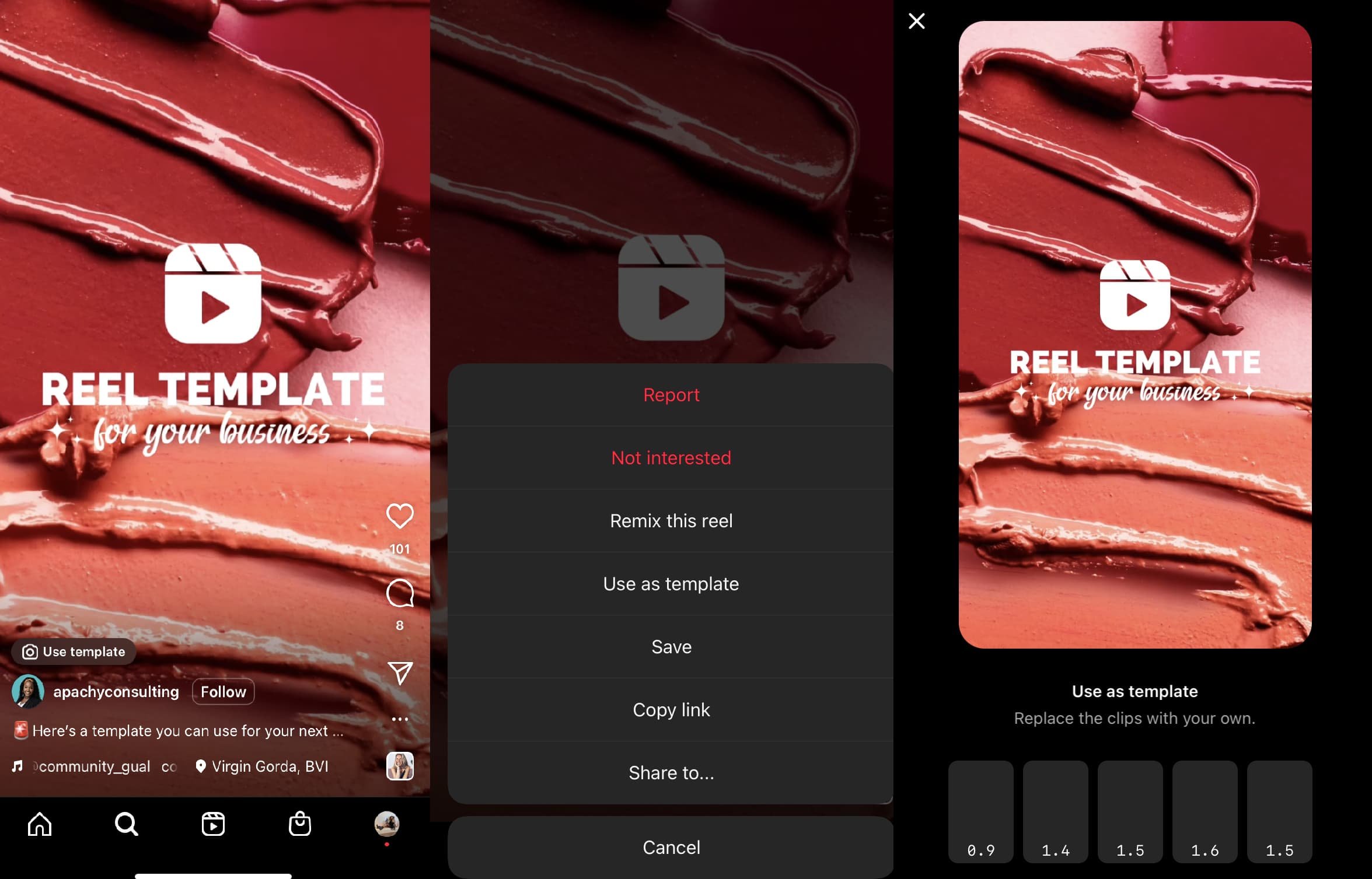
Reels templates are pre-built templates anyone can use to make Reels quicker and more efficiently. To access a template, find an Instagram Reel you want to use as a template. The Reel must have music and at least three clips. Once you find the video you want, follow these steps:

  • Step 1: Tap the three dots on the button right of the Reel you want to use.
  • Step 2: Tap Use As Template.
  • Step 3: Tap Add Media at the bottom and select the photos and video clips you want to use in your Reel. These images will replace the ones in the original Reel.
  • Step 4: Click Done or Next, preview your Reel and share when you’re satisfied with the result.

Instagram template

2. Dual Camera

Instagram’s new dual camera feature allows users to record content with their back-facing camera at the same time as their front-facing camera. The image from the back-facing camera will take up most of the screen, while the front-facing image will appear in a small window to the side. The dual feature is only available when recording Reels.

Girl uses dual camera feature to film baby duckImage source

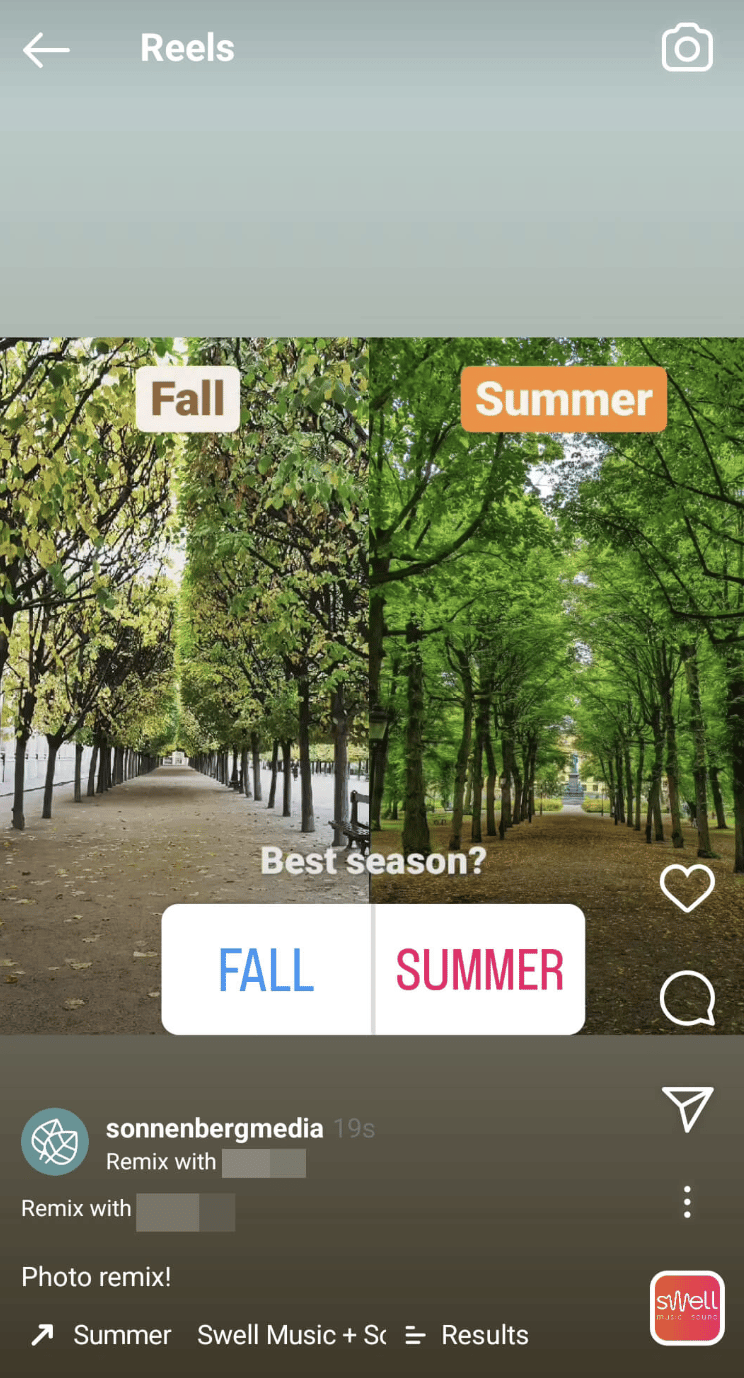
3. Remix Photos

Since 2021, Instagram users have been able to remix Reels to create their own content, collaborate with creators, or react to a video. Now, the remix feature can be applied to Instagram photos as well. The best way I can describe the remix feature is that it’s similar to TikTok’s “Duet” feature, which allows users to attach their photo or video to someone else’s.

On Instagram, you can attach your video or image to someone else’s Reel or photo and upload it as a Reel. You can also add stickers, polls, and text to further “remix” the content.

Remixed photo of fallen leavesImage source

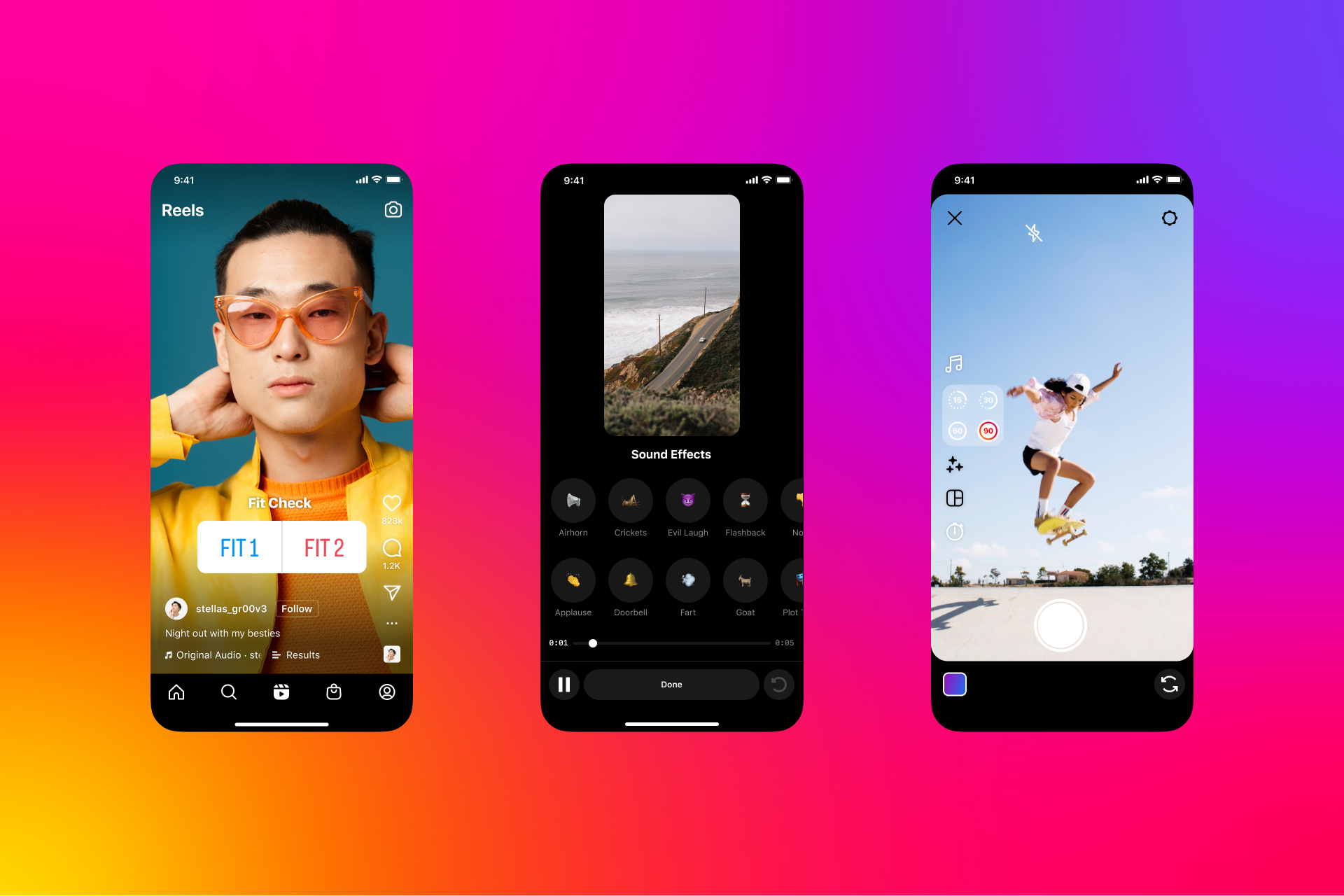
4. Interactive Stickers

Many of the interactive stickers that have been available on Instagram Stories are now available for Reels. Marketers and content creators can use the following stickers in their Reels to engage their audience:

  • Poll: Get your followers’ opinions or have them vote on what your next bit of content should be.
  • Quiz: Test your audience’s knowledge or use this feature to teach them something new.
  • Emoji Slider: Allow viewers to show how your content or a specific topic makes them feel.

Instagram interactive stickersImage source


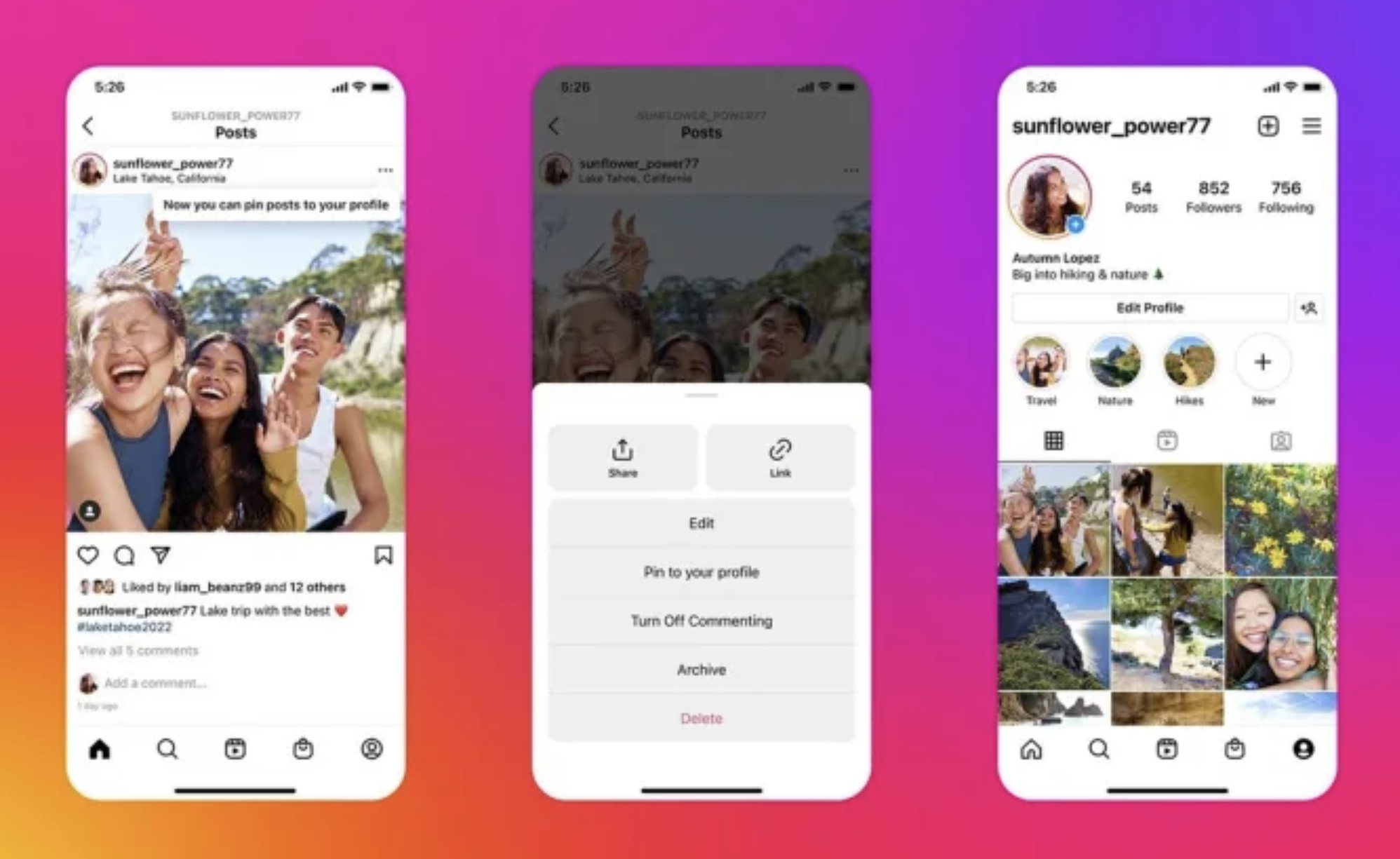
5. Grid Pinning

Have a piece of content you don’t want lost in your grid? You can pin it to the top of your profile using Instagram’s grid pinning feature. To do this, select the Reel or photo you wish to pin. In the top right corner of the post, tap the three dots and “Pin to your profile.” Afterward, your post will appear at the top of your grid.

The pinning feature is excellent for:

  • Bringing attention to an ongoing promotion
  • Showcasing an event
  • Highlighting your most popular content.

ig pinning

Image source

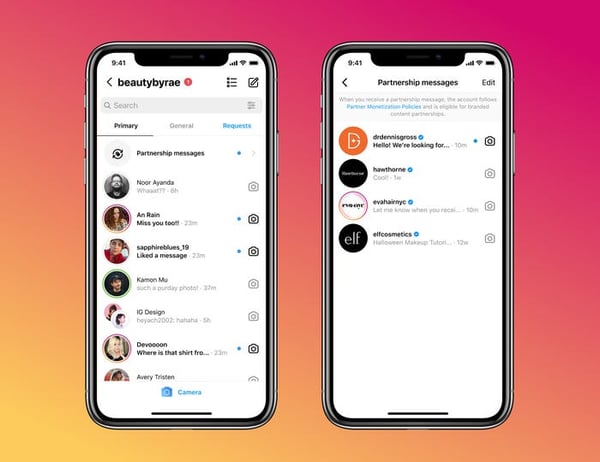
6. Partnership Inbox

Partnership Inbox

Image Source

Gone are the days of missed opportunities because of a busy inbox. Now, brands and creators can quickly find and manage their communications in one location — partnership messages.

Partnership messages have their own sub-folder in the Direct Messages tab. These messages skip the request folder and get priority placement — making it easier than ever to find and manage branded content partnerships.

7. Find Creators

Find Creators tab

Image Source

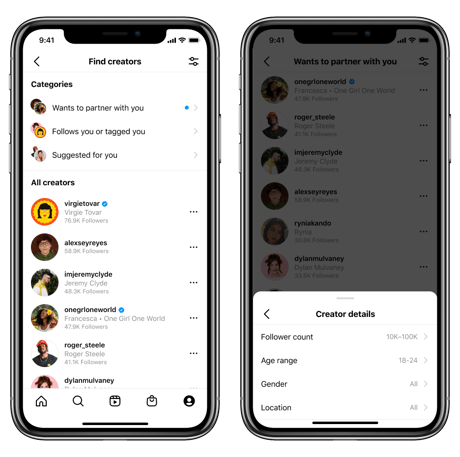
Instagram is officially playing matchmaker with a new suite of tools to help brands and creators connect.

Let’s start on the creator side — users can add brands to a preferred brand list. When a brand searches for creators to partner with, those who have the brand on their list will appear at the top of the search results. This makes it easier for brands to find creators who already show an interest.

Brands can also filter creators by follower count, age, gender, and location — which Instagram believes will help brands “organize shortlists to easily manage multiple campaigns.”

This feature is only available to creator accounts and business accounts.


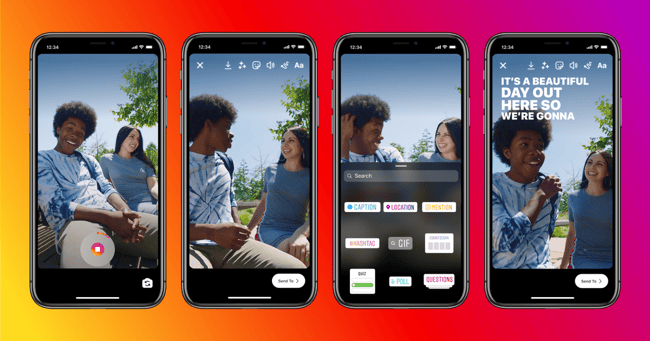
8. Auto-Captions for Reels and Stories

Screenshot of auto-captions of Instagram reels and stories

Image Source

Instagram’s captions sticker was initially only available for stories, but the app has recently expanded it to Reels. This feature automatically converts what someone says in a video into text so that users can watch without sound.

Now, audiences can engage with your videos — with or without sound. This feature also takes a big step in making Instagram content more accessible.

9. Calendar Tool

Screenshot of Instagram's calendar tool

Image Source

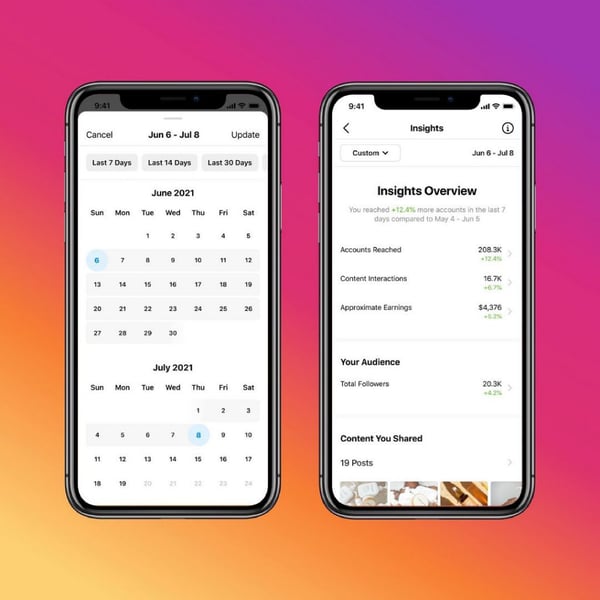
Here’s some exciting news if you have a business profile — Instagram is planning to double the data tracking period within Instagram Insights from 30 to 60 days.

Social media marketers can finally ditch the third-party apps that provide a more extended tracking period. Instead, this information will be readily available within Insights. This is an excellent example of Instagram listening to feedback from users requesting such an upgrade for months.

10. Subscriptions

Instagram Subscriptions

Image Source

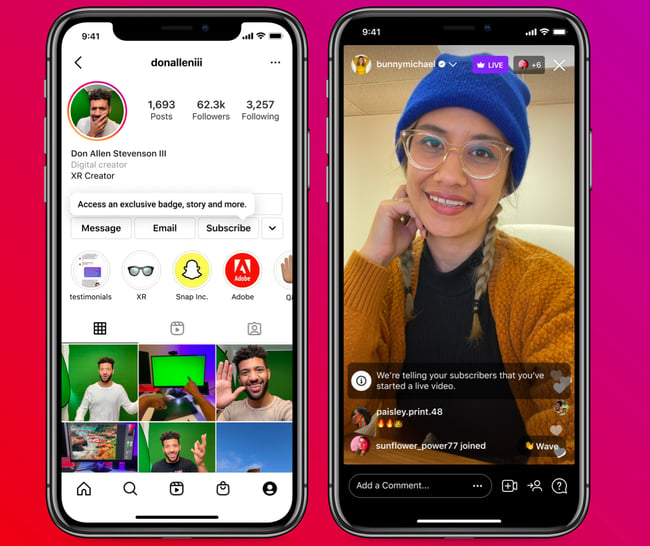
Instagram launched Subscriptions just this year – a feature allowing creators to charge a monthly subscription fee for exclusive content and benefits.

With Subscriptions, creators set a monthly subscription price of their choice, and a subscribe button will appear on their profile. They can offer a range of benefits to subscribers — like exclusive livestreams and Stories.

The feature is part of a more significant effort to help creators make a living on its platform – an incentive for creators to stay on it. This feature also enables creators to develop deeper connections with their followers.

This new feature comes after Twitter announced a similar subscription model — Twitter Blue — so it’s safe to say more platforms will likely add subscription-based features to attract creators.

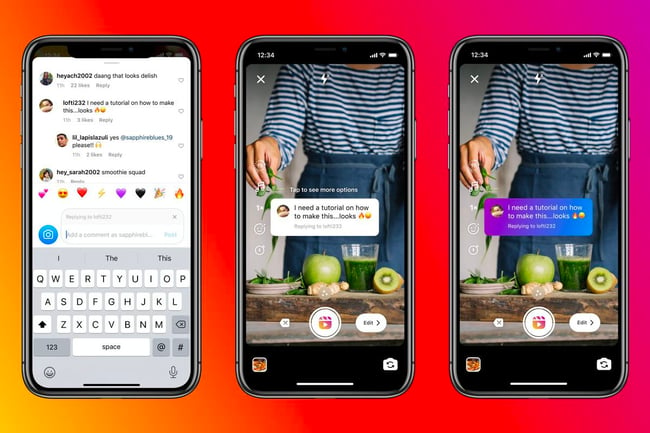
11. Visual Replies on Reels

Visual Replies Reels

Image Source

Another TikTok-inspired feature to hit Instagram is visual replies, which means users can comment on Reels — with another Reel.

If you create short-form videos on Instagram Reels, you can now make comments, similar to TikTok’s reply function. It’s a highly engaging and interactive way to engage with followers and leads — and vice-versa.

Final Thoughts

Instagram has become one of the world’s most popular social media platforms. However, the platform isn’t just growing – it’s also evolving. And Instagram will continue to evolve as long as apps like TikTok continue to change the game for online video marketing. It only makes sense that your social media marketing strategy also changes to leverage these new features.

New Call-to-action

Categories B2B

What is Data Deduplication? A Plain-English Guide

As a marketer, you likely deal with data in some form on a regular basis. So, how is data deduplication relevant to you?

With so much critical information saved on our computer systems, we’ve learned to backup data regularly — including our email inboxes, Word documents, photos, and entire folders of old work. It’s typically a ton of data.

Since we usually backup and save our data on auto-pilot, we might not realize just how much has been re-copied and re-saved. Over time, our data storage becomes unnecessarily burdened with redundant copies of data, costing money as data requirements grow and processing time slows down. This is where data deduplication comes in.

Download 10 Excel Templates for Marketers [Free Kit]

Andrew Le, an IT Helpdesk Technician at HubSpot, further explains the importance of data deduplication for a business looking to grow — “[Data deduplication] really improves scaling and efficiency when pulling data from one source. If you have lots of the same data in different spaces, your entire system can be slowed down.”

So, you might be wondering, “How does data deduplication actually work?” Let’s dive into it.

How does data deduplication work?

The data deduplication process might seem intimidating, but it’s actually simpler than it sounds. You can use data deduplication software when you backup your computer. Additionally, some marketing automation software, like HubSpot, might have a deduplication feature to keep track of your marketing contacts.

To ensure you’re optimizing your data backup storage, here’s a list of the best data deduplication software you can use to minimize unnecessary data copies.

Data Deduplication Software

1. HubSpot’s Deduplication Feature

Best for: Any business.

If you use HubSpot’s CRM to manage your contacts, you’ll be impressed to find out you can also use HubSpot’s machine learning-powered deduplication feature to keep your contact database clean. HubSpot contacts can be deduplicated by a user token set with a cookie in their web browser or email address — additionally, contacts, companies, deals, and tickets can be deduplicated using a unique object ID.

2. Dedupely

Best for: A dedicated deduplication platform that integrates with your CRM.

Dedupely finds and merges duplicate data automatically, saving you time and headaches and improving trust and alignment across your company.

If your company stores a lot of data, it’s important to begin the data deduplication process. By using software, you can simply automate this process.

3. Barracuda Backup Deduplication

Best for: Users of Barracuda security solutions.

With a 9.1 user rating out of 10 on TrustRadius, Barracuda Backup is a good option, offering a robust, secure, fully-integrated data deduplication solution. Their tool can help your business reduce bandwidth requirements and backup costs. Additionally, Barracuda is a good option if your business needs to protect multiple sites, since its cloud storage technology helps distributed networks stay protected.

4. Avamar

Best for: Remote-work companies and enterprises.

Avamar, a solution from Dell EMC, provides variable-length deduplication, which reduces backup time by only storing unique daily changes while simultaneously maintaining daily backups. Avamar is an efficient, secure option and is particularly useful for virtual environments, remote offices, and enterprise applications.

5. HPE StoreOnce

Best for: Any business.

HPE StoreOnce, a solution from Hewlett-Packard Enterprise, offers disk-based backup, deduplication, and secure long-term data storage. Their deduplication software is equipped for virtual backup machines in small remote offices, and equally capable of handling high-performance dedicated applications for larger businesses. Ultimately, this is an impressive tool to help you keep your data secure and efficient as you scale-up.

6. Exagrid EX Series

Best for: Faster, more efficient backups.

Exagrid implements a highly efficient approach to data deduplication that allows six times the backup performance, and up to 20 times the restore and VM boot performance. With Exagrid, you can backup your data straight onto a disk without inline deduplication processing, enabling a shorter backup window.

7. Insycle

Best for: A full data storage and automation solution.

One of G2’s high-performers and a HubSpot App Partner, Insycle is a complete customer data management solution that makes it simple for companies to manage, automate, and maintain clean customer databases. It drives efficiency, betters reporting, aligns teams, and improves trust in data.

Cut down on excess data with data deduplication.

Don’t get me wrong, data backups are crucial to keep your company’s assets safe. However, if unmoinitored, automatic backups can lead to bloated storage and poor performance from your servers. Luckily, it’s easy to deduplicate excess data with the right tools to keep your software and business running smoothly.

Editor’s note: This post was originally published in April 2019 and has been updated for comprehensiveness.

excel marketing templates

Categories B2B

6+ Tips for Reducing Job Search Anxiety

Are you feeling anxious about your job search? You’re not alone. The competition for jobs is fierce and the search can be grueling.

Free Kit: Everything You Need for Your Job Search

In this article, we’ll cover the warning signs that you may be experiencing job search anxiety and the ways to reduce it.

Job Search Anxiety Warning Signs

It’s important to know the difference between the frustration and nerves that happen during any job search and the anxiety that can impact your mental health.

Here are some warning signs that you may be experiencing job search anxiety:

  • Difficulty getting out of bed and/or focusing
  • Increased irritability
  • Disinterest in usual hobbies
  • Feelings of helplessness and/or worthlessness
  • Cluttered and/or dirty space
  • Procrastination

It’s important to note that these feelings can arise for anyone during the job search process. It becomes a more important issue once it persists and impacts your ability to live your daily life, as you used to.

In the next section, we’ll cover ways to reduce your anxiety and regain control over your job search.

How to Deal with Job Search Anxiety

  1. Follow a routine.

When you have a full-time (or even part-time) job, you’re expected to stick to a schedule. That can be 9 a.m. to 5 p.m., 10 a.m. to 7 p.m., or something else. The point is, you stick to those hours.

When it comes to searching for a new job, treat that as your job. This means working for a set number of hours, taking regular breaks, and clocking out at the end of the day.

The issue many job seekers face during the job hunt is that it bleeds into their everyday lives. Just as it’s important to have work/life balance, it’s key that you follow a routine that allows you to disconnect.

This will ensure you have time to nurture yourself outside of “work” through socializing, hobbies, and more.

2. Fit in small wins in your schedule.

When you’re looking for a job, you’re not just looking. You’re sending emails, researching companies and hiring managers, reaching out to your network, making new connections, and more.

It can be overwhelming and that can translate into anxiety.

As you tackle your tasks throughout the day, fit in some wins that will keep you motivated. This can be related or unrelated to your job search, like:

  • Reading a chapter from a new book.
  • Connecting with someone in your industry on LinkedIn
  • Getting to a new level on Duolingo.

Whatever it is that you can accomplish and brings you joy, fit it into your schedule.

Pro-tip: Schedule it whenever you tend to experience slumps in your day. The boost of energy you’ll get is arguably better than any cup of coffee.

3. Remember that it’s not personal.

Looking for a new job means facing rejection.

Although it’s hard to keep this in mind, there are so many factors and variables – outside of your control – that impact the candidates hiring managers consider for a role. As such, just because you were rejected, doesn’t mean the team didn’t like you.

Catch yourself when you think or say things like “What am I doing wrong?” Instead, take every interaction with companies as an opportunity to learn.

It can also help to remember that every “no” gets you one step closer to your “yes.”

4. Don’t put all your eggs in one basket.

When you find an opportunity that seemingly aligns with what you’re looking for, it’s easy to get excited and start to fantasize about it.

Say you get to the third round of an interview process. You may stop interviewing elsewhere because you have faith that this one will work out. Resist that urge.

As mentioned before, there are countless factors that influence hiring managers’ decisions. Don’t commit to one company unless they’ve committed to you via a job offer.

Operating with flexibility and adaptability will allow you to stay motivated despite the disappointment that can come with job searching.

5. Destress every day.

Once you’ve clocked out for the day, it’s important to participate in activities that will destress your nervous system and re-energize you.

While you may be tempted to go on social media, don’t. Often, we end up distracting ourselves with stimuli from binge-watching Netflix or scrolling on TikTok rather than relaxing.

Here are some better alternatives:

  • Go for a walk, run, or bike ride in nature.
  • Listen to music or a podcast.
  • Color or read a book.
  • Catch up with friends and family.
  • Meditate.
  • Complete a puzzle or sudoku.
  • Play board games.

6. Switch up your strategy.

If your current strategy still has you feeling anxious, switch something up.

For example, maybe sitting at home all day isn’t productive for you. Perhaps, you’ll work better at a coffee shop or in a park.

Not getting much traction with your resume? Try hiring a resume writer or having a colleague review it.

It’s common to feel stuck during the job search, which can lead to anxiety. Adapting your strategy can help ease some of this and make you feel empowered during your process.

7. Ask for help.

If you find yourself still struggling and don’t know where to go next, reach out for help.

Job search anxiety is incredibly common and you shouldn’t face it alone. Consider reaching out to a therapist who can help you discover new ways of experiencing this journey.

Within your own community, reach out to friends and family. While they won’t always understand what you’re going through, they can offer the support you need.

Apply for a job, keep track of important information, and prepare for an  interview with the help of this free job seekers kit.

Categories B2B

Should Marketers Use Pop-Up Forms? A Comprehensive Analysis

As inbound marketers, we care about creating frictionless experiences for our website visitors that will also generate leads. Most of the time we can do both but in the case of pop-up forms, conflict does emerge.

Easily create mobile-optimized pop-up forms. Get started with HubSpot’s form  builder.

Over the past few years, pop-up forms have re-emerged as a popular marketing tactic for promoting content, driving blog subscriptions, growing email lists, and fueling lead generation. The question is, do pop-up form work? We’ll cover that and more below.

What is a pop-up form?

A pop-up form is a window that appears while a user browses a website. It can be triggered by a number of actions, including interactions with an element on the page, scrolling, and inactivity.

Pop-ups have become so prevalent that back in 2016, Google weighed in to announce it would start penalizing websites using, what they call, “intrusive interstitials.”

But here’s the thing: not all pop-ups are bad. When executed well, they can be part of a healthy inbound strategy.

However, because of the intrusive and disruptive nature of pop-ups, marketers should be careful of when and how they appear as well as the type of content they present. In other words, context.

When they’re appropriate context mixed in with added value, pop-up forms can enhance website visitors’ experience and boost conversion rates.

Pop-ups come in many shapes and sizes, but here’s a graphic that depicts the most common ones you might see on a web page:

types of pop-up: welcome mat, overlay modal, top banner, slide-in box

Let’s dive a little deeper into these pop-up formats:

1. Welcome Mats

These are full-screen pop-ups that slide above the page content.

The biggest advantage to using a welcome mat pop-up form is that ig brings the offer front and center. Consider doing this if the offer is highly relevant to your content and important to your strategy.

Otherwise, a welcome mat pop-up may be a little too intrusive, as it may not be what users expect when landing on this page.

2. Overlay Modals

As close to the traditional pop-up as you can get, these are center-screen pop-ups that appear on top of page content. do pop-up forms work: overlay modal example

Unlike the welcome mat, overlays don’t block the rest of the content from being shown, but the user will have to click out of the pop-up to continue what they’re doing. While some users do feel that overlay modals are intrusive, they often have high conversion rates if the offer is compelling.

3. On-Click Pop-Ups

An on-click pop-up is a specific type of overlay modal that pops up with a form when a user clicks a call-to-action or other page element.

type of pop-up form: on-click pop ups

They’re perfect for when an in-line form would clutter the page but you want to decrease friction to a particular offer. The UX tends to be easy, which reduces friction on the conversion path.

4. Gamified Coupons

Another type of overlay modal, gamified coupons will let you play a game for a discount or prize of some kind in exchange for the users’ information.

They often come in the form of a prize wheel or scratch-off ticket and are best for fun ecommerce store brands (since the coupon can then be applied at checkout).

5. Top Banners

Also known as sticky bars, these are small banners that manifest as a bar at the very top of the page, asking the user to take action on something.

types of pop up forms: top banners

They are typically a more permanent conversion element than other types of pop-up and are best used for broad offers such as newsletter subscriptions, coupons, or even general announcements.

6. Slide-In Boxes

Slide-ins are small boxes that slide in from the side/bottom of the page, similar to an overlay modal but with less obtrusive behavior. types of pop-ups: slide in pop up

These are great for presenting offers as the user is scrolling through the content of the page.

Pop-Up Triggers

Among the most popular pop-up triggers are:

  • Page entrance: Pop-up appears when the visitor first gets to the page. These can be considered disruptive but can be used effectively with less-intrusive formats such as the top banner.
  • Page scroll: Pop-up appears when the visitor scrolls to a certain point on the page. These are great for long-form content when you don’t want to embed CTAs in the content.
  • Element interaction: Pop-up appears when the visitor clicks on or hovers over a specific element. These are highly effective since the user took a specific action with the intent to convert.
  • Time on page: Pop-up appears when the visitor has been on the page for a specific amount of time.
  • Exit intent: Exit intent pop-ups appear when the visitor scrolls towards the top of the page to leave. Consider it a last-ditch effort to capture their attention before they leave.
  • Inactivity: Pop-up appears when the user has not taken action on the website in a while.

Now that we know a little more about pop-up forms, let’s get back to the core question: Should marketers be using them? Let’s dig in.

Do pop-up forms work?

I’ll answer this one right off the bat: The answer is yes. Pop-up forms do work, and this is the main reason so many marketers are using them.

In 2019, research conducted by Sumo found that the top performing 10% of pop-up forms convert at a whopping 9.3%.

In 2021, Klaviyo analyzed over 80,000 businesses using its software and found that overlay modal pop-up forms convert at 3.2% and slide-out pop-ups at 2.2%.

To dig into why some pop-up forms perform better than others, we surveyed 100 consumers to learn about their habits.

50% of respondents say what draws them most to a form is a clear indication of what they’ll receive for completing it. I.e. the offer.

The length of the form along with an engaging description will also play an important role in the conversion rate. In fact, 50% of respondents say a pop-up form’s length can cause them to abandon it.

The longer the form, the higher the odds they’ll disengage. 20% say they’ll abandon a form if they feel they’re asked invasive questions.

Although this can vary by form, it’s much easier for users to offer a name and an email than it is to give a phone number and home address.

Knowing which questions to ask is key to how well the pop-up form converts.

Find below additional tips on creating effective pop-up forms.

4 Tips for Crafting High-Converting Pop-Up Forms

1. Offer something relevant and valuable.

The problem with most pop-ups is they get in the way of the visitor’s experience on a website, rather than enhance it.

This is likely because the offer in the pop-up is either not valuable to the visitor or isn’t relevant.

To boost engagement with your pop-up, make sure you follow these steps:

  • Understand your persona and what they’re expecting from this page.
  • Know which offers will align best with their needs.
  • Ensure the offer lines up with the content of the page

For example, if I were writing a blog post on social media, I would offer a free ebook on the same topic – as seen below.
pop-up form example

Image Source

In this example, the article is all about growing an audience on TikTok as a brand. The pop-up offer aligns perfectly by offering readers a free TikTok growth checklist.

While an offer on social media statistics could work, the conversion rate would likely be much lower as it doesn’t directly target their current needs.

2. Think about the way people engage with your pages.

Another common mistake marketers make with pop-ups is having them appear at the wrong time, which adds to the annoyance factor. ‘

Be strategic about the timing and trigger of your pop-ups. Think about the way that visitors interact with certain types of pages on your site.

For instance, when someone engages with a blog post, they do so by scrolling down the page as they read the content. If you want to catch your visitors while they’re most engaged, then you should customize your pop-up to appear when someone has scrolled halfway down the page.

Similarly, you might find that people who stay on your product or pricing pages for more than 30 seconds are highly engaged because they’re taking the time to read through and consider their options.

In this scenario, you could use a time-based pop-up that appears when a visitor has been on the page for a specific number of seconds.do pop up forms work example

To better understand exactly how your visitors engage with different pages on your site, try looking into Google Analytics data, such as bounce rate and average time on page.

Better yet, use a tool like HotJar or Crazy Egg to record users on your site to build heat maps of where they click and scroll. This will give you a better sense of how people engage with your content.

In addition, consider the tool you’re using to build your form. A tool like Typeform will help you create branded and customizable forms that match your brand identity and will increase conversions.

3. Use language that’s specific, actionable, and human.

Most pop-up forms have a fairly basic layout. You get a headline, some body copy, and maybe an image. In other words, you don’t have a lot of real estate to work with.

This means it’s super important to nail the copy on your pop-up form. In order to do that make sure your copy is specific, actionable, and human:

  • Specific: Specify exactly what a visitor is going to get if they click on your pop-up. Don’t tell them it’s a guide; tell them it’s a 10-page guide with actionable tips. Don’t encourage them to join your email list; ask if they want to stay updated on industry news and trends.
  • Actionable: Let visitors know exactly what you’d like them to do. Instead of “Click Here,” try “Download our Free Guide,” or better yet, “Get my Free Guide.” Craft a compelling call-to-action that will inspire your visitors to take action.
  • Human: Remind visitors that there’s a real person behind the pop-up form. Use colloquial language to make your forms friendly. Instead of “Join our email list,” try “Mind if we email you twice a week?”

4. Don’t ruin the mobile experience.

When building out your pop-up forms, it’s critical that you consider mobile. With most consumers accessing the internet from their smartphones nowadays, that could be a costly oversight.

To ensure a user-friendly mobile experience and avoid being penalized by Google, be sure to exclude your pop-up forms for mobile, or use pop-ups that don’t take up the entire screen of the page on mobile devices.

Most pop-up tools already offer this type of functionality, but if what you’re currently using doesn’t, you may need to find a new solution.

Editor’s note: This post was originally published in October 2016 and has been updated for comprehensiveness.

New Call-to-action

Categories B2B

What Is An ESP? Everything You Need to Know About Email Service Providers

Research has shown that it takes around eight touchpoints to make a sale. This can be daunting for any salesperson as follow-ups take time and effort. This is one of the many reasons that email marketing is such an efficient strategy.

Having the ability to contact your prospects or your current customers in a relatively unintrusive way (especially compared to phone calls), is essential to increasing your sales, customer engagement, and retention. These emails keep you top of mind with customers and improve brand awareness.

Download our free Excel planning template to strategically organize your email  marketing.

While it may seem simple enough to use your regular email system in the beginning when business is small and clients and prospects are few and far between, the thought of sending individual emails to people when you have a large contact list is time-consuming and unnecessary. In order to handle the volume of emails you’ll be sending out, you need to enlist the help of an email service provider (ESP).

Email Service Providers

An email service provider is software that allows you to send email campaigns to a list of subscribers. It is a set of tools for email marketing that stores email addresses and sends emails. However, depending on your needs, ESP companies offer a variety of different functionalities to help you achieve your goals.

Some of these can include:

  • Email and marketing automation
  • Lead capture forms
  • A/B testing for email subject lines and email content
  • Website tracking
  • Audience Segmentation

While there are a number of options to choose from, you’ll want to research ESPs before committing to one. Look for a program that has:

  1. A mobile-friendly design: 85% of users say that smartphones are their primary device for checking email. This means that if you want your customers and prospects to get the most out of your marketing efforts, every email you send must be suitable for mobile.
  2. Email templates: Options are great when you are designing your email campaigns. There should be several ready-made templates to choose from and have the option to get design support from a professional when you need something different.
  3. Integrations with other systems: Chances are you work in a number of software programs to complete your work. An ESP should integrate with CRM and CMS systems, project management programs, and more.
  4. Email series capabilities: These automated programs ensure new subscribers are nurtured and that you can design automated campaigns based on what activities your users engage in.

ESP Companies

When looking for an ESP, remember that price and functionality will differ. Decide what you need out of your email service provider then look for one that best fits your needs. Here is a list of some of the most popular ESPs:

HubSpot Email Hosting Tool

  • Price: Free

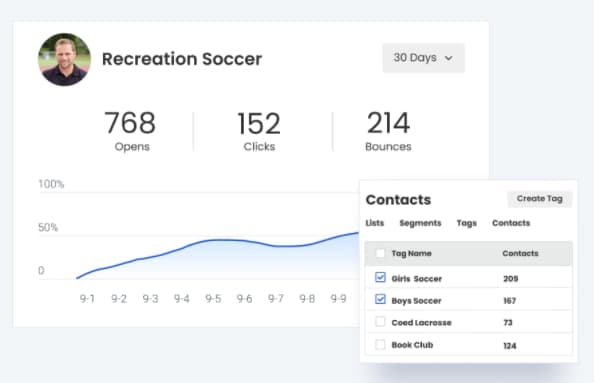
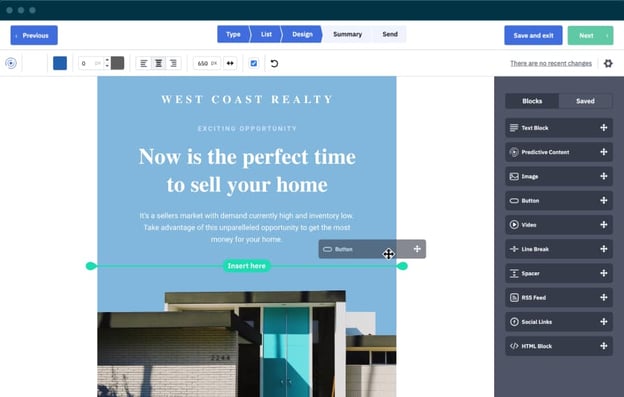
HubSpot Email Service ProviderHubSpot’s free email hosting tool lets you quickly send personalized emails to your contacts that are beautifully designed with an easy drag-and-drop interface.
Mailchimp

Mailchimp email service provider

Image Source

Mailchimp’s free starter version has basic functionality that allows you send custom emails to up to 2,000 contacts. For more advanced options like email and landing page templates or advanced segmentation, you’ll need to upgrade to a more advanced plan.

Constant Contact

Constant Contact Email service provider

Image Source

Constant Contact offers email service for small businesses looking to grow their lists. In addition to email functionality, Constant Contact integrates with social media ads for a holistic approach to reaching your audience.

ActiveCampaign

ActiveCampaign email service provider

Image Source

ActiveCampaign is an email service provider focused on customer retention. This platform offers features specifically for ecommerce, B2B, and B2C businesses.

Campaign Monitor

Campaign Monitor email service provider

Image Source

For those looking for extensive template options, Campaign Monitor could be a great platform to start with. This platform’s template builder makes creating custom, on-brand emails quick and easy.

ConvertKit

ConvertKit email service provider

Image Source

ConvertKit is a popular platform for content creators and small business owners. In addition to email service, ConvertKit offers landing pages, integrates with most popular website builders and CRMs, and is fully customizable.

Sendinblue

Sendinblue email service provider

Image Source

Sendinblue’s email marketing tools help make personalized emails easy to make. Users can create unlimited lists and groups for easy segmentation.

Once you’ve determined what functions you need in order to reach your marketing goals, and how many contacts you have or are looking to collect, you can decide on the right ESP for your business.

email planning

Categories B2B

The Top Traffic, Conversion, & Lead Trends in Q3: Data & Takeaways from 120,000+ Businesses

When it comes to Q4, Halloween isn’t the only spooky thing haunting marketers.

In fact, the most intimidating part of Q4 is the pressure to end the year with great results, while also taking on immense annual planning to start the new year off right.

And, on top of the normal stressors of Q4, businesses are also dealing with concerns about inflation, uncertain economies, and how a potential recession could impact their bottom line.

As you enter an uncertain Q4, it will be helpful to gather all the hard data you need to make decisions, including research on how industries like your own have performed in the past few months. This data not only gives you insights into how you’re performing against the competition today, but it can also help you create actionable strategies that could enable you to transition from one successful year to another.

In this post, we’ll highlight how more than 120,000 businesses are performing when it comes to traffic, leads, conversion rates, and email engagement. With this data in mind, we’ll also highlight which takeaways you should bring with you during Q4 planning.

About this Data: These insights are based on data aggregated from 130,000+ HubSpot customers globally between July 2021 and September 2022. Because the data is aggregated from HubSpot customers’ businesses, please keep in mind that the performance of individual businesses, including HubSpot’s, might differ based on their own markets, customer base, industry, geography, stage and/or other factors.

Download Now: Free State of Marketing Report [Updated for 2022]

Q3 Performance Trends from 120,000+ Companies

Overall, Q3 might have been susceptible to seasonality in both B2B and B2C industries with frequent QoQ performance metrics dips. When looking at the overall YoY numbers, it’s also possible that current themes, such as economic uncertainty, could slightly be impacting stats.

However, while some metrics and industries are seeing bigger dips, others are still making strides – hinting that there might not be a major cause for industry-wide concerns.

Below is an interactive infographic that allows you to toggle between overall YoY and MoM trends. Keep reading for a breakdown of how these industries are performing based on each key metric.


Web Traffic and Conversions

Most industries are seeing a web traffic decrease.

In Q3 2022, web traffic was down 7% compared to Q2 2022 and 10% compared to Q3 2021 (sample size = 142,308).

Industries hit the hardest by this slump were Financial Activities – which saw a 14% YoY drop despite only having a 2% QoQ decrease – as well as Professional & Business Services which saw drops of 6% QoQ and 8% YoY. Manufacturing also saw an 8% YoY dip with a 4% QoQ drop, hinting that business-facing companies might be struggling more with seasonality and traffic growth in current times.

While some industries that are more heavily B2C saw drops, they aren’t as comparable to those mentioned above. Additionally, Leisure and Hospitality is likely benefiting from post-COVID reopenings and travel as it saw a small QoQ dip of 3% but a 5% YoY boost in traffic.

Industry

QOQ

YOY

Sample size

All

-7%

-10%

142,308

Construction

-4%

-6%

1,379

Education and Health Services

-3%

-7%

3,613

Financial Activities

-2%

-14%

4,032

Leisure and Hospitality

-3%

+5%

1,104

Manufacturing

-4%

-8%

4,410

Professional and Business Services

-6%

-8%

12,872

Technology, Information and Media

-6%

-5%

14,673

Trade, Transportation and Utilities

-8%

-4%

3,404

If you saw drops in web traffic in Q3, you don’t necessarily need to panic. Be sure to compare this with the previous quarter, historical data, or industry-wide as this might just be seasonality or an industry-trend-related theme.

If you believe you’re in the midst of seasonally low traffic or a low-traffic time in your industry, this doesn’t mean you should stop and accept defeat. In fact, seasons with lower web visitors or general industry slowdown could be great for taking on site or traffic optimization projects that you wanted to avoid during times of high traffic or sales. Things you could explore might include:

  • Website user experience testing.
  • Website maintenance or migrations.
  • Larger SEO projects, like historically updating old pages instead of churning new pages.
  • Website redesigns or design-oriented tests.

The good news? Web conversions are bouncing back from previous months

Website conversion rates in Q3 2022 were up 2% compared to Q2 2022 and up 8% compared to Q3 2021 (sample size = 122,426).

Unlike the traffic trends above, the most noticeable industry spikes were in

  • Professional and Business Services (+20% YoY)
  • Financial Activities (+15% YoY)
  • Education and Health Services (+13% YoY)

While this is likely due in part to traffic dips, as conversions are calculated based on traffic compared to the number of conversions), it shows that prospects are still interested in learning about products that are in these industries and that those who end up on their sites might be better, more serious leads, than those who visited in times of high traffic.

One of the two industries that saw either a QoQ or YoY loss was Leisure and Hospitality, which saw a 3% drop from quarter to quarter. However, the industry is still bouncing back from previous COVID-impacted years with a 7% increase in conversions YoY, hinting that companies in this space might just be dealing with seasonality and less travel in Q3 as people often focus their vacation time on the Q2 summer months or Q4 holiday travel.

Something seasonal could also be happening in the Trade, Transportation, and Utilities industry, which saw a dip of 5% in Q3, likely due to less demand in the late summer to early fall months, but is still seeing 2% growth annually.

Industry

QOQ

YOY

Sample size

All

+2%

+8%

122,426

Construction

+5%

+1%

1,154

Education and Health Services

+5%

+13%

3,285

Financial Activities

+8%

+15%

3,512

Leisure and Hospitality

-3%

+7%

943

Manufacturing

+6%

+8%

3,887

Professional and Business Services

+1%

+20%

11,328

Technology, Information and Media

+9%

+11%

13,534

Trade, Transportation and Utilities

-5%

+2%

2,947

Although you might be seeing higher web conversions due to lower traffic, this could still be helpful in your long-term strategy as you can potentially determine where your biggest sources of conversions are coming from on your site and optimize for them. This way, when your site traffic heightens, your pages will be primed for lead generation and clicks.

If you’re seeing lower conversion rates, keep in mind that these are quite difficult to keep high all year – for any company. Essentially, most companies, especially B2B or those in more niche industries, will have high points and low points each year.

However, if you feel like conversions are unusually low for your industry, now might be a good time to investigate and ask yourself questions like:

  • When did these dips start?
  • Is there a logical reason visitors might be less interested in our site or offers? (such as seasonality, the current economy, current trends, etc.)
  • Are our offers, deals, or sales enough to persuade customers?
  • Did we make a change to a high-converting page that caused problems?
  • Is one of our high-converting offers or pages getting “stale” and in need of a refresh?

By answering questions like those above, you can determine what the best course of action is, or at least test out strategies that will give you more information about why the conversion dips might be happening.

Marketing Email

Over the past year or so, more email marketers and email experience experts have encouraged a less is more approach to combat continuing inbox clutter and disengagement from overwhelmed subscribers. And, in the summer months, we saw email marketing benefit from fewer email sends.

However, it seems as though Q3 was not a spectacular time for email marketing.

Despite seeing a 4% YoY and 3% QoQ dip in email sends, the average email marketers still dealt with whopping 17% and 14% YoY drops in opens and open rate respectively.

Metric

QOQ

YOY

Sample size

Email sends

-3%

-4%

138,855

Email opens

-4%

-17%

138,863

Email open rate

-2%

-14%

136,697

Because companies have been sending fewer emails each quarter and still seeing dips in opens and open rates, it might be time for them to think more transformatively about their email scheduling, the value of every email they send, and how they’ll get subscribers to keep opening their messages.  

Inbound Leads

Ultimately, marketers want high traffic, conversion, and email engagement because these things can bring them inbound leads who could very well become customers. So, let’s take a look at how these marketing efforts paid off in Q3.

In Q3 2022, inbound leads were down 2% compared to Q2 2022 and up 2% compared to Q3 2021. Although there wasn’t much major movement overall, a few industries saw some big changes.

While Leisure and Hospitality and Professional & Business Services saw dips quarter over quarter, each saw a 13% increase of YoY leads, hinting that their quarterly drops could’ve been due to seasonality.

One substantial drop happened in the Construction industry, which saw an 8% YoY dip despite only enduring a 1% decrease quarter over quarter. In our previous summer report, we oppositely saw construction see a YoY increase in July. This likely hints that seasonality, as well as potential cost-saving initiatives could be impacting the industry. However, while seasonality is to be expected, we’ll need to watch further to confirm whether or not Q3’s YoY dip could be a result of economic impact, or just fewer people making home or building alterations or improvements than they did during the COVID-19 era.

Industry

QOQ

YOY

Sample size

All

-2%

+2%

128,522

Construction

-1%

-8%

1,323

Education and Health Services

+3%

+4%

3,609

Financial Activities

+6%

+1%

3,838

Leisure and Hospitality

-6%

+13%

1,034

Manufacturing

+1%

No change

4,264

Professional & Business Services

-3%

+13%

12,529

Technology, Information and Media

+2%

+6%

14,524

Trade, Transportation and Utilities

-8%

-3%

3,215

The good news is that this dip shouldn’t alarm everyone, especially during times of financial uncertainty when you might expect lead numbers to dip a lot more.

If you’re seeing a rise, do your best to figure out what’s triggering it and embrace it. For example, if you’re in the travel industry and anticipate a rise in holiday travel, now is a great time to start planning holiday lead-gen or marketing campaigns.

Meanwhile, if you’re in a field like construction, and seeing some more significant slowdowns due to the economy or the approaching winter season, ask yourself, “How can I be there for my prospects or customers – even if I’m not providing the exact same services or pricing I had in the summer months or during the pandemic?”

Takeaways for Marketers and Businesses

While Q3 seemed to feel the weight of seasonality and potentially ongoing economic trends, this doesn’t necessarily mean that you can end Q4 on a positive note.

Even if it’s harder to gain deals, sales, conversions, or leads, you can still spend this time focusing on things like:

  • Larger web traffic initiatives, such as SEO or CRO.
  • Retention and Customer Experience improvement tactics.
  • Catering your email sends and messaging around your subscribers.
  • Continuing to ask yourself, “How can I be there for my customer – even as times change?”

Even if you don’t see wildly high ROI or year-over-year growth at the end of Q4, these tactics will set you, your customers, and your audiences up for an excellent and hopeful start to a new year.

To look back on how trends have changed since the summer of 2022, check out this post.

New Call-to-action

Categories B2B

10 Best Mobile Friendliness Tests [+ What Does it Mean to be Mobile Friendly?]

Nobody wants to sit there pinching, poking, and squinting at their phone just to view your website. So it should come as no shock that 50% of people will use a business less often if their site isn’t mobile friendly, according to Google.

But how can you be sure that your website is mobile friendly? Sure, you could check it on your own smartphone. But what about the hundreds of other kinds of phones and tablets that your visitors are using?

How strong is your website? Grade it using HubSpot's free Website Grader.

Today we’ll cover a selection of mobile friendliness tests that will give you clear answers and actionable tips. For each test, we’ll put our own site through the wringer, so you can make an apples-to-apples comparison of the results. Then we’ll take a look at what it means to be mobile friendly and how it can impact your SEO. But first… what even is a mobile friendliness test?

A good mobile friendliness test will look at a wide range of factors. These include technical factors such as:

  • Site speed
  • CSS and Javascript use
  • Plugins like Flash or Java

They’ll also include usability factors like:

  • Is the text readable without zooming?
  • Does the content fit the screen without scrolling sideways?
  • Are links and buttons easily clickable?

But while most mobile tests will consider the same factors, not all of them will give you the same results. That’s why we’ve assembled a list of the 10 best mobile friendliness tests to consider.

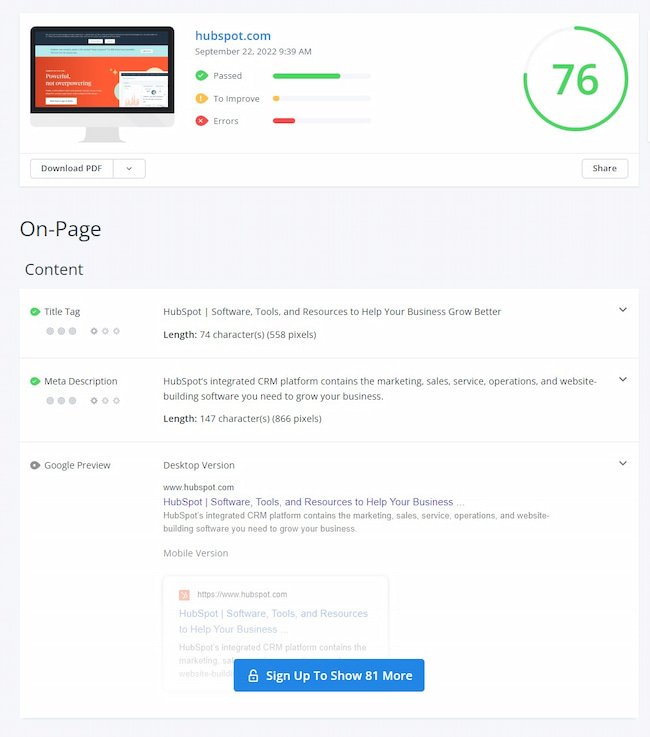
1. Website Grader

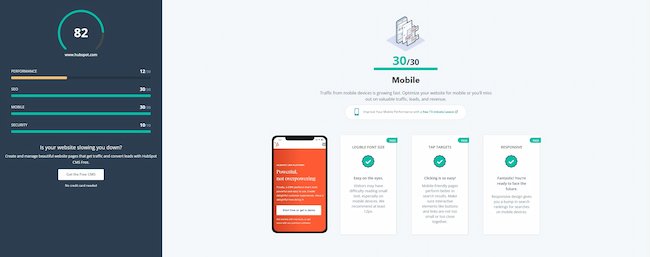
Website Grader mobile friendliness test results

Get Your Grade Right Now

Website Grader is HubSpot’s own test, powered by data straight from Google Lighthouse. It offers a 30-point assessment of factors that affect your mobile friendliness. Then it shows you easy-to-understand recommendations to improve your site.

Not sure what the recommendations mean? Click through into free video lessons on how to optimize a responsive website for mobile.

What stands out:

  • Also grades your website’s performance, SEO, and security at the same time.

Offers actionable tips: Yes

Cost: Free

2. Google Mobile Friendliness Test

Google passing mobile friendliness test results

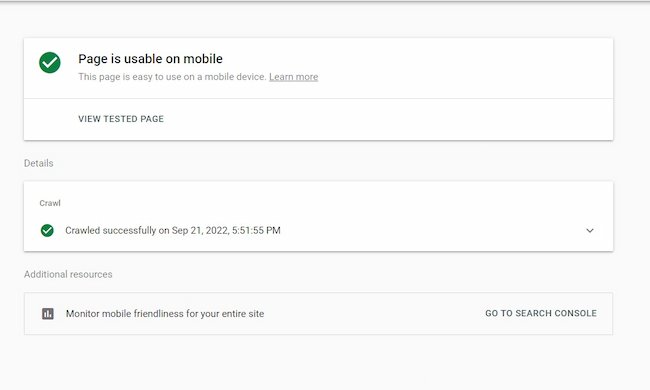
Instead of a grade scale, like some other tools, Google’s mobile test offers a simple pass/fail. Either your “page is usable on mobile” or your “page isn’t usable on mobile.”

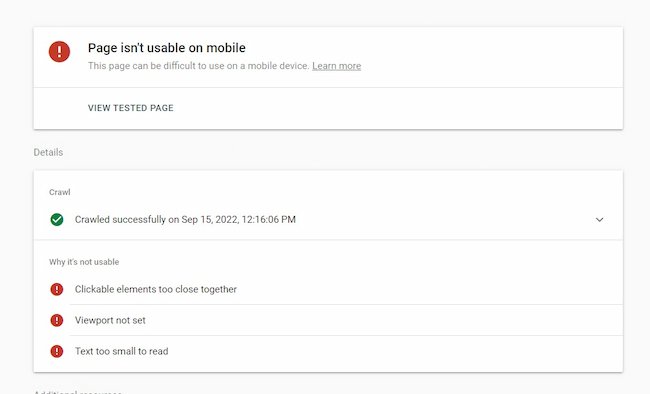
If it isn’t, you’ll see a list of reasons why it failed. (We’ve included a screenshot below of the results from a failing website. Their URL has been hidden to protect the innocent.)

Google failing mobile friendliness test results

The one downside of Google’s Mobile Friendliness tool is that it only tests individual pages and not your website as a whole.

What stands out:

  • Clicking on the reasons for failure will show you a screenshot of the affected area.

Offers actionable tips: Yes

Cost: Free

3. Page Speed Insights

Page Speed Insights mobile friendliness test results

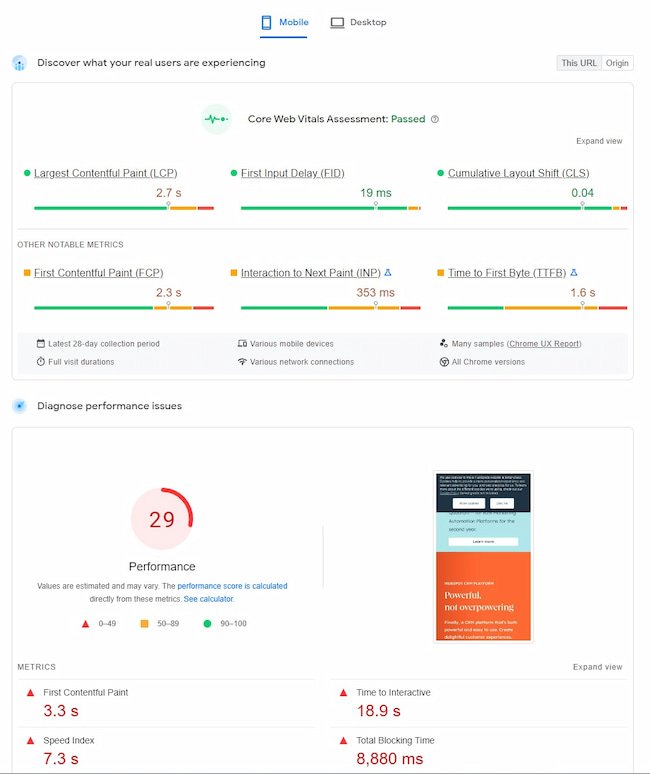
Google’s Page Speed Insights is like the bigger, stronger cousin to their Mobile Friendliness Test.

Instead of a simple pass/fail, you’ll get individual ratings on various performance metrics that have a direct impact on your user experience. The upshot to this is that you’ll get a much more in-depth understanding of your website’s performance. The downside is that if you don’t already understand these terms, you’ll have some studying to do.

This makes Page Speed Insights ideal for sites that are supported by a web developer or dev team.

What stands out:

  • Provides a detailed list of diagnostics and actionable improvement opportunities, along with an estimate of potential time savings.

Offers actionable tips: Yes

Cost: Free

4. MobiReady

MobiReady mobile friendliness test results

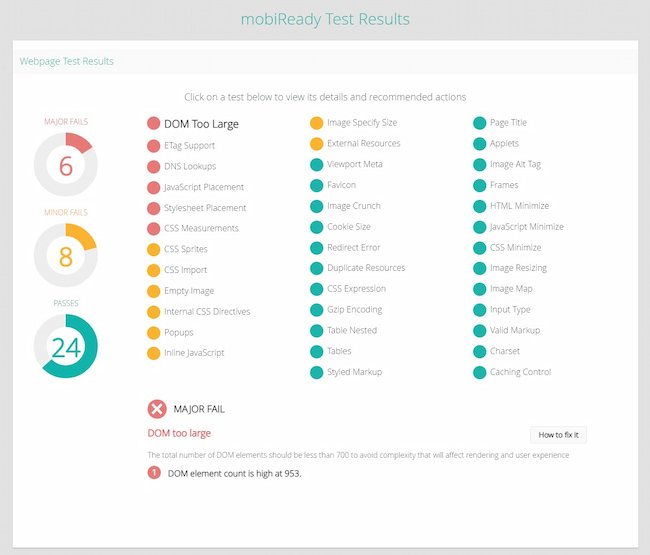
MobiReady starts by offering interactive visualizations of how your site looks on various devices. Beneath that it gives you a score between 1-5, and compares that to the scores of the top 1,000 Alexa sites for context.

Underneath all of that, you’ll get a list of results, both good and bad, that explains the what, why, and where to find these issues.

What stands out:

  • Any failing results include a link that points towards how to fix it.

Offers actionable tips: Yes

Cost: Free

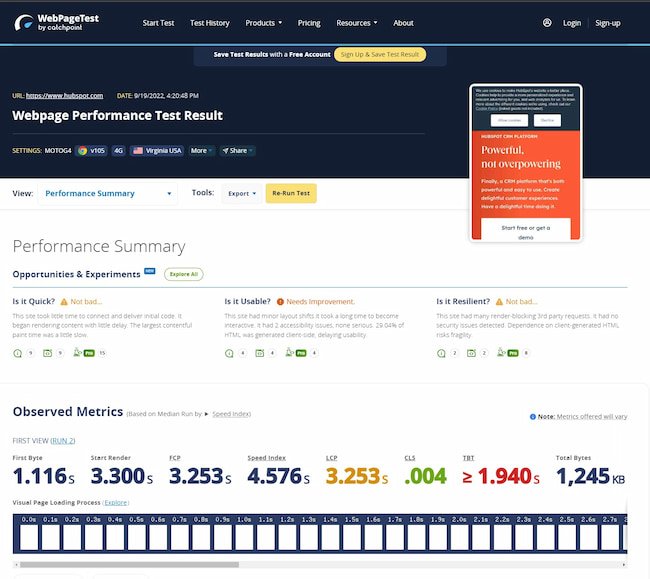
5. WebPage Test

WebPage Test mobile friendliness test results

WebPageTest’s results start with simple summaries that are easy to understand, even if you’re less technically inclined. For those with more dev skills, clicking on these results will take you on a deep dive into your performance issues and related tips.

After that, you can switch to one of 14 different categories of results, including your core web vitals, content, and image analysis.

What stands out:

  • See how your page loads as a filmstrip, short video, or waterfall of processes.

Offers actionable tips: Yes

Cost: Free

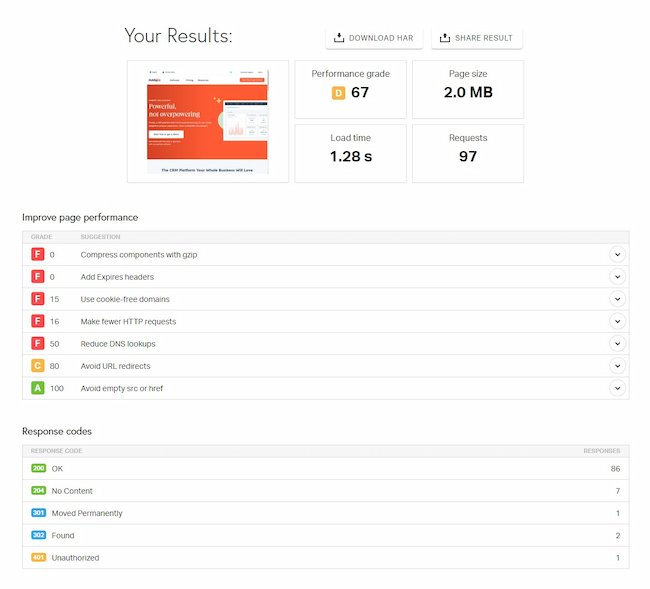
6. Pingdom

Pingdom mobile friendliness test results

Pingdom provides you with both a letter grade, as well as a score from 1-100. Beneath that, you’ll get a short list of performance improvement recommendations. Clicking on them will reveal plain-language explanations for your problems.

These explanations won’t turn a novice into an expert, but they provide a good place to start.

What stands out:

  • Allows you to choose the geographic region of your test. (For example, North America, Europe, Asia, etc.)

Offers actionable tips: Yes

Cost: Free

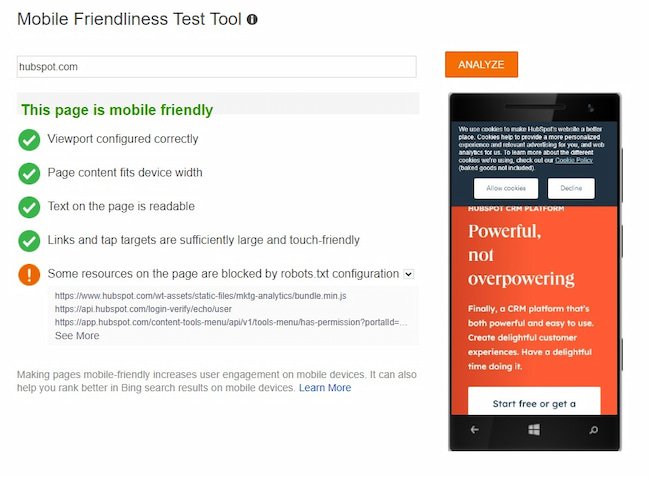
7. Bing Mobile Friendliness Test

Bing mobile friendliness test results

Bing’s Mobile Friendliness Test is a fast and simple tool that’s good for a quick check-in.

Just like Google’s Mobile Friendliness Test, Bing’s tool gives you a simple pass/fail, along with a list of reasons why. Unlike Google’s test, many of Bing’s reasons don’t come with any explanation.

What stands out:

  • Shows a simple rendering of what your site would look like on a mobile device.

Offers actionable tips: Kind of

Cost: Free

8. SiteChecker

SiteChecker mobile friendliness test results

SiteChecker gives a grade on a scale of 100, and a wealth of information about your site’s performance. And while they call it a Mobile Friendliness Test, you’ll get a large list of improvement recommendations for both desktop and mobile.

You’ll see suggestions for content, coding, linking, social media, and more. And for each issue, you’ll find a “how to fix” button that provides info on why it matters and what to do.

What stands out:

  • Also provides a detailed accounting of your site’s CSS and Javascript files.

Offers actionable tips: Yes

Cost: Free with 7-day trial

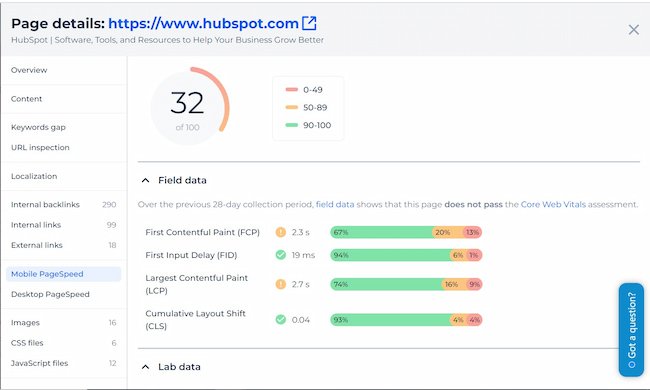
9. WooRank

WooRank mobile friendliness test results

WooRank is a marketing SaaS that’s known for its SEO extensions and plugins. Their website scoring tool will analyze the performance of your site, including its mobile friendliness.

In a matter of seconds, they’ll give you a score between 1-100; however, you’ll need to sign up for their service to see the reasons behind it. This makes WooRank’s test a good option for those who are already in the market for a suite of SEO tools.

What stands out:

  • If you sign up for an account, your results are connected to the rest of their tools.

Offers actionable tips: Upon signup

Cost: Freemium

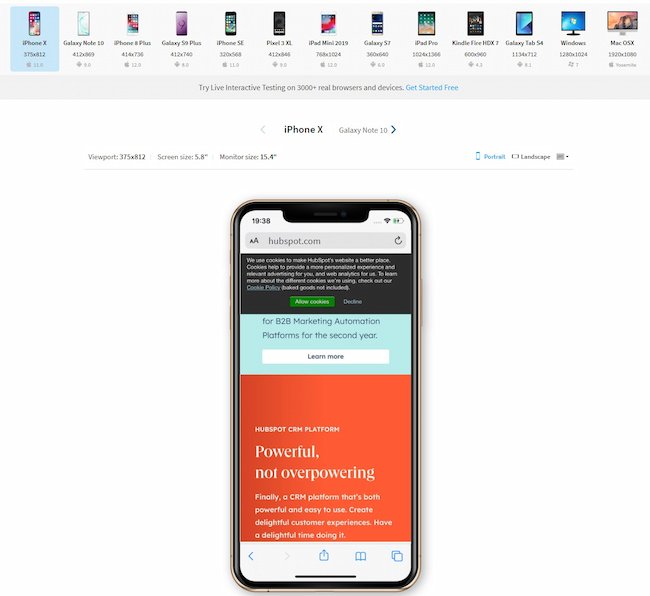
10. BrowserStack

BrowserStack responsive design test

BrowserStack’s tool is different from the others on this list, in that it’s actually a responsive design test. (We’ll explain more about the difference later on.) So while it won’t give you a grade, or a list of improvements, it will let you see how your site renders on over a dozen different devices.

We’re including it in this list because it’s extremely useful when used in tandem with another mobile friendliness test. Your visitors will judge your site on how it looks, just as much as they will on how it works.

What stands out:

  • Paid accounts can also run interactive testing on over 3,000 different browsers and devices.

Offers actionable tips: No

Cost: Free

What does it mean to be mobile friendly?

“Mobile friendly” means that your website (or app) looks good and performs well on a smartphone or tablet. Many factors contribute to mobile friendliness, but they all boil down to a good user experience.

To be considered mobile friendly, your site needs to be fast, simple, and easy to use no matter what device the reader is using.

Does mobile friendliness affect SEO?

Yes, mobile friendliness absolutely does affect your SEO. In a rare bit of transparency, Google announced in 2015 that they would be “boosting the ranking of mobile-friendly pages on mobile search results.”

That’s a big deal, considering that 64% of searches are done on a mobile device, according to research by Sistrix.

But what about desktop searches? Does mobile friendliness affect them? That’s a little less clear; however, in 2018 Google signaled its intent to switch to mobile-first indexing. That’s a fancy way of saying that Google would be considering your mobile version first when choosing what to index.

And while indexing and ranking are not the same things, we know that Google only maintains one index. That means it’s reasonable to assume your mobile friendliness may potentially influence how well you rank in desktop searches.

Is responsive the same thing as mobile friendly?

Responsive design is a great way to be mobile friendly, but they’re not the same thing. Think of mobile friendliness as the goal, and responsive design as the way to get there.

Responsiveness means that your website automatically adapts to whatever device the reader is using. The text and images will scale to fit the size. The layout will rearrange to suit the screen. And whether a visitor arrives on a smartphone, desktop, tablet, or even an e-reader, they’ll still find a quality user experience.

Don’t let a bad mobile experience put you in a pinch

As you can see from the screenshots, the scores that you receive can vary wildly. Because of this, it’s important not to get too hung up on chasing a number. Use your grade as a guide, but focus on the improvements, and work toward a great mobile experience for your visitors.

Improve your website with effective technical SEO. Start by conducting this  audit.  

Categories B2B

What is Comparative Advertising? [+ Examples]

Comparative advertising is a marketing tactic which helps to drive brand awareness by comparing their product or service to a competitor.

When executed correctly, comparative ads can successfully convince consumers to do business with one brand over another. But, this strategy requires care and attention, especially as companies may find themselves in the middle of a lawsuit.

Download Now: Free Ad Campaign Planning Kit

In this post, we’ll delve deeper what comparative advertising is, give real-life business examples, explain the legality of using the strategy, and present pros and cons that you can use to make the best decision for your business.

 
With
half of US adult internet users stating that advertising helps them to discover and find products or services that interest them, getting your brand messaging right is crucial. Through messaging, like comparative advertising, you can communicate the value of your product or service to your audience.
 
Since the
1960s and ’70s, companies have used comparative ads to directly or indirectly mention a competitor. Comparative ads give customers a direct point of comparison between two companies, as they can view products and assess features all at once, rather than needing to seek out information from multiple sources.
 
While these types of ads present a tone that sways in favor of the brand producing the advert, consumers are only presented with factual information since false claims about competitors may not be made due to legal implications.
There is no set template for comparative advertisements; they can be digital or print, videos or images, humorous or serious.
 
However, many businesses take advantage of social media marketing, especially since over
4.65 billion people now actively use social media.

Why Is Comparative Advertising Effective (Comparative Advertising Examples)

Below we’ll go over some real-life examples of comparative advertising to help you understand the practice.

Popeyes

Popeyes is an American fast-food chain that serves fried chicken. Chick-fil-A is their direct industry competitor, well known for being closed on Sundays.
Popeyes capitalized on this and created a comparative advertisement that emphasized that their restaurant is open on Sundays, especially while Chick-fil-A takes a day off. The video is shown below.

Why this example works:

Popeyes recognized that consumers were frustrated with Chick-fil-A being closed on the last day of the week. By calling out their major rival (particularly as they were closed on National Sandwich Day), Popeyes were able to emphasize their value proposition and say ‘come and have a chicken sandwich every day of the week’.

Sprint

Verizon, a cellular provider, used the same actor as the face of their commercials for nine years. Sprint, an industry competitor, poached the actor in 2016 and used his switch to their service to take a unique approach to comparative advertising.

Why this example works:

Sprint essentially says, if a long-time, loyal Verizon actor can switch to Sprint, why can’t you change as well? The business positions itself as a qualified competitor by saying that their cell phone service has a 1% difference in coverage than Verizon.

Cocoon by Sealy

Casper is a well-known mattress brand that has managed to garner significant hype and recognizability for its products.
Cocoon by Sealy, a direct competitor, uses comparative advertising in search engine result pages (SERPs) to target Casper’s intended audience. The company placed a paid ad in a SERP for the term Casper mattress (shown below), with the headline “Don’t Buy the Hype, Shop Cocoon & Save Hundreds.”

comparative advertising example: sealy

Why this example works:

Cocoon claims that its competitor is only a competitor because people buy for the name-brand hype. If a curious consumer clicks on the ad, they learn that Cocoon offers mattresses that are conducive to peaceful sleep and are affordable (displayed in the image below). By saying ‘hey, we’re giving you a better sleep experience for less, Cocoon are able to emphasize the value of the product to visitors.
Using Google Ads is also an effective way to allow an audience to learn more about the company since this type of ad
increases brand awareness by up to 80%.

Comparative advertising example: sealy

Adidas

Adidas is a well-known sports apparel brand that is only outshined by Nike. Adidas created a comparative video (shown below) that features a person running in the desert wearing Nike shoes.

Why this example works:

Runners know outdoor terrains are challenging to run in. Still, the most impressive thing in the video is that the cameraman carrying a 50-pound camera can keep up with the runner because he’s wearing Adidas shoes – a powerful way to showcase the quality of their product.

Kroger

Kroger is a grocery store chain that took out a full-page comparative advertisement against a local competitor (Publix) in a Tennessee newspaper.
The advertisement, shown in the image below, features two long receipts from both stores that are the same length, but costs were cheaper, and savings were higher at Kroger.

Comparative advertising example: kroger

Why this example works:

Through this comparison, the brand essentially says that, even if you buy the same products, Kroger offers lower prices, savings, and additional perks that consumers cannot find at Publix. In terms of the vehicle used,
82% of consumers trust print advertising, making it an effective way to enhance the brand’s credibility.

Bounty

Bounty is a paper towel brand that created a comparative ad (below) to display the benefits of using their paper towels versus the leading generic brand.

Comparative advertising example: bounty

Why this example works:

While they don’t explicitly name a competitor, they make a dig at whoever it may be by calling them the “ordinary brand” because they can’t clean up messes as well as Bounty can. Essentially, they’re positioning themselves as a premium alternative to their rivals.
While all of these businesses used comparative advertising, it’s essential to understand that it’s only that — comparative. Each company believes it is the best option, but they say that through comparison, not false or misleading claims.
However, given that the line can be vague, many countries have laws that dictate how comparative ads can and can’t be used.

Comparative Advertising Law

Below, we’ll discuss the comparative advertising laws from three different countries and the explicit language they use to explain what advertisers are allowed to do.

United States Comparative Advertising Law

The U.S.’s Federal Trade Commission (FTC) protects consumers from being deceived, defrauded, and manipulated by businesses. It also protects companies from unfair practices and activities of competitors.
The FTC
ruled on comparative advertising and said, “Comparative advertising, when truthful and nondeceptive, is a source of important information to consumers and assists them in making rational purchase decisions. Comparative advertising encourages product improvement and innovation, and can lead to lower prices in the marketplace.”
In brief, the FTC supports comparative advertising, as it benefits consumers by giving a well-rounded view of product offerings. What they don’t tolerate is advertising that disparages competitors and is deceptive as a means to get consumers to do business with one company over another. Companies can use the FTC ruling to file claims if they feel as though they are being discredited.

Australia Comparative Advertising Law

The
Australian Competition and Consumer Commission says that “Businesses may use comparative advertising to directly promote the superiority of their products over another.” Like U.S. law, businesses must follow general advertising best-practices of not being deceptive or misleading in an attempt to entice consumers to do business with them.

Hong Kong Comparative Advertising Law

Hong Kong has no specific legislation intended to limit comparative advertising. Still, the Trade Descriptions Ordinance
prohibits false trade descriptions and misleading or incomplete information advertisements, and the Association of Accredited Advertising Agencies of Hong Kong
has the authority to investigate instances of violation.
All in all, regardless of your location, it’s important to understand the laws and regulations of comparative advertisements, so you don’t find yourself in the middle of a lawsuit.

Comparative Advertising Pros and Cons

The reality of choosing to use comparative advertising is up to your individual business needs.
Suppose you have an industry competitor that owns most of the market share. In that case, comparative advertising can be beneficial as you’re letting your target market know that there are other options out there. If you’re a new business, comparative advertising can also help generate brand awareness.
However, if you’re unable to support your claims of superiority and your advertisements seem more berating than comparative, you can stand to lose business. Overall, as mentioned above, the decision to use comparative advertising depends on your goals.
We’ve compiled a list of comparative advertising pros and cons that will help you make a comprehensive decision about whether you should opt to use the strategy.

Pros

Explicit product emphasis.

Comparative advertising specifically focuses on a single product or feature that makes you better than a competitor. You’re saying ‘hey, look how valuable this is in solving your pain points.’
Even if you don’t sway your audience, they are still becoming aware of its direct specifications, benefits, and features.

You’ll raise awareness of your business.

Comparative marketing can help you raise awareness for your business, especially if you’re new to the industry or a small business standing up to a competitor.
Mentioning their name gives you exposure to their market share and an entirely new audience that may be ready to make the switch to your product or service.
 

You’ll gain new followers and attract new clients.

Comparative advertising can help you gain new followers and attract new clients, primarily when these ads are widely distributed and placed in high-volume consumer traffic areas.
For example, many businesses in the United States create humorous comparative advertisements to share during the Super Bowl because they know the event has a significant viewership In 2022 alone, over
208 million people tuned in.

You’ll teach consumers about what is important.

As comparative ads focus on a specific feature or experience that comes with a product or service, you’re informing consumers about the factors they should keep in mind when making purchasing decisions.

You’re showing them ‘look at benefits of this product’ rather than simply relying on the brand name for value.

Cons

You may lose integrity and look bad to your audience.

Suppose your advertisements don’t align with your countries comparative advertising rules and are flat-out disparaging of your competitors. In that case, your ads may have a negative effect on your target audience.
In addition, even if you follow the laws, some people just don’t appreciate ads that pit two companies against each other. It’s best to first understand your target audience – something that less than
40% of marketers do – yet it’s a crucial aspect in producing successful advertisements.

It can create brand name confusion.

Just as comparative ads can generate brand awareness, they can also cause confusion.
Mentions of multiple competitors in the same ad can lead consumers to become confused about which business offers the features they prefer or which company is the best option to meet their needs.

You can face legal action.

As mentioned above, many countries have laws protecting consumers and other businesses from comparative ads.

You need to produce your ad with the utmost care and attention, otherwise, you may face legal action from your competitors. If you’re a big name brand, publications will likely report on it, which can also negatively impact your reputation.

Comparative Advertising Can Help Your Business Grow

Should you opt to use it as part of your business’ marketing strategy, be mindful of comparative advertising laws in your country, ensure that you’re providing benefit to the consumer, and that you’re not simply disparaging your competitor and claiming superiority.
 
If done successfully, you can stand to raise significant brand awareness, drive revenue, and even capture a higher portion of your industry
market share and position yourself as an industry leader.
Improve your website with effective technical SEO. Start by conducting this  audit.  

Categories B2B

7 Soft Skills You Need to Achieve Career Growth

Is there someone (or hopefully, several someones) at your company who it seems like everyone wants to work with?

Perhaps it’s someone with amazing soft skills which get them pulled into brainstorms. Or maybe they’re the go-to consultant for some of the most impactful business issues. Or maybe it just seems like everyone on your team really, really likes them.

Download Now: 5 Free Skill Development Templates

Soft skills have the power to grow your career in the same way hard skills and talent can. But what exactly are soft skills? And why are they so important to growing your career? Keep reading to find out, or use the links below to jump to a section.

What are soft skills?

How to Acquire Soft Skills

The 7 Soft Skills

Soft skills can be taught, but they’re not as straightforward as hard skills which are the specific qualities that can be clearly defined, measured, and taught for success in a job.

With hard skills, you can learn advanced techniques and methods that yield measurable results. They can even be tied directly to the business’s bottom line.

But when it comes to soft skills — things like small talk, empathy, and flexibility — they’re not an exact science, but they’re just as impactful.

You need hard skills to land a job, but you need soft skills to progress in your career. So we’ve rounded up a list of the soft skills most critical to building a successful career — and how you can acquire them.

How to Acquire Soft Skills

Soft skills are unlike hard skills in that they require situational awareness to know when to use which skill. When you’re hired for an accounting job, you know that most days you’ll need to the do hard skills you learned in school like mathematical formulas, bookkeeping, and probably some work in a spreadsheet application. However, it’s not as cut and dry when you’ll use soft skills because they are dependent upon intangible factors.

This is why acquiring soft skills is so unique. Practice is the best way to acquire soft skills and demonstrate them effectively. And you might be wondering, “How can I highlight soft skills in my role?” The answer is simple — having a genuine concern for others is the main ingredient to strengthening your soft skills and growing your career.

Listen to your coworkers and leaders to understand their success, challenges, opportunities, and concerns. Then see if there are any skills, experiences, advice, or resources you can offer.

Practice doing this in your meetings, one-on-ones, and even on your lunch break with the team. You’ll be surprised by how quickly you acquire these soft skills and grow your career.

Here are seven soft skills and examples that will help you make an impact on your coworkers and your career.

7 Soft Skills You Need to Achieve Career Growth

soft skill examples

1. Emotional Intelligence

Emotional intelligence is the ability to recognize and manage your emotions and the emotions of others. It’s made up of five key elements:

  • Self-awareness
  • Self-regulation
  • Motivation
  • Empathy
  • Social skill

You can read more about the specifics of the attributes of emotional intelligence in this blog post if you want to learn more, but in the context of the workplace, emotional intelligence boils to a few key abilities:

  • Can you recognize and regulate your emotions and reactions in the workplace?
  • Can you build rapport and positive relationships with other people?
  • Can you empathize with others?
  • Can you give — and receive — effective, constructive feedback?

It might not sound like the most important skill for job growth and success, but in some cases, it is. In an analysis of new employees who didn’t meet expectations during the first 18 months on the job, 23% failed due to low emotional intelligence. (Take this quiz to rate your emotional intelligence and identify areas where you can improve.)

2. Team Player Attitude

The ability to play well with others is a soft skill you’ve been working on — unknowingly — since your first day of pre-school or daycare. You might not have known it when you were fighting over blocks or figuring out the rules of a made-up game, but you were actually preparing for a lifetime of workplace collaboration.

Whether you’re an individual contributor or a people manager, you have to work with other people — in meetings, in brainstorms, and on various cross-functional projects within your company. A positive, can-do attitude when it comes to working with others is essential to team harmony, which means you need to be able to run an effective and inclusive meeting, be open to new ideas, and work respectfully with others.

Read our guide to running better meetings for all personality types here, and brush up on these rapport-building questions to get to know and work well with any team member you encounter.

3. Growth Mindset

In any job, no matter what the role, you’ll encounter roadblocks, disappointments, and other situations that might frustrate you. A soft skill that’s critical to your ability to persevere is having a growth mindset — a term psychologist Carol Dweck coined to refer to a frame of thinking that reflects viewing your abilities, talents, and intelligence as skills you can grow and improve upon.

Someone with a growth mindset might look at a failure to meet a quarterly goal as an opportunity to identify their strengths and weaknesses to tackle the next quarter’s goal. A person with a fixed mindset, however, might say to themselves, “I’m not good at blogging,” and let that negative outlook — without any belief in the capability of improvement — impact their next quarter’s success, too.

Watch Dweck’s TED Talk to learn more about the growth mindset here — and try to find places in your daily correspondence or reflections where you can reframe your outlook by viewing a challenge or setback as a way you can grow.

4. Openness to Feedback

This is part of emotional intelligence, but especially when it comes to the workplace, being open and able to receive development feedback is critical to success at a job — especially a new job.

Think about it: Constructive feedback helps you do the best job you can, and if you take it personally or react defensively, you aren’t able to hear the feedback and adapt it to your current strategy.

The key to giving and receiving feedback is to come into the conversation from a place of kindness: You aren’t receiving constructive feedback because that person hates you personally, it’s because they want you to be the best you can be. You should be chomping at the bit to receive feedback that can help you more effectively hit your goals.

If you don’t feel comfortable with feedback yet, try immersion therapy — make feedback a part of your daily to-do list. Ask for feedback from more people you work with to get immediate help honing your skill set — and to help make it easier to take.

5. Adaptability

No matter what your role, and no matter what your industry, the ability to adapt to change — and a positive attitude about change — go a long way toward growing a successful career.

Whether it’s a seat shuffle or a huge company pivot, nobody likes a complainer. It’s important not only to accept change as a fact of life in the constantly-evolving business world, but as an opportunity to try out new strategies for thriving in environments of change (remember the growth mindset?).

If you don’t feel comfortable with frequent changes, either on your team or at your company, write down your feelings and reactions, instead of immediately voicing them. By laying out how you feel and why you feel a certain way, you’ll be able to distinguish legitimate concerns from complaints that might not need to be discussed with your team.

6. Active Listening

You probably can tell the difference between when someone is hearing words you’re saying and when they’re actively listening to what you’re saying. If someone is typing while you’re presenting at a meeting, or they’re giving you that slack-jawed look, they probably aren’t really hearing what you’re saying.

Active listeners, meanwhile, pay close attention to meeting presenters, offer up clarifying questions or responses, and refer back to notes in future discussions. They don’t need things repeated to them because they heard them the first time — making active listeners not only respectful colleagues, but more effective workers, too.

If you think you could stand to improve your active listening skills, challenge yourself not to look at your various devices during meetings — instead to focus completely on speakers, and take notes by hand if needed (which is proven to help with memory retention).

7. Work Ethic

You can’t succeed in a role without being willing to put in the time, effort, and elbow grease to hit your goals, and company leaders and hiring managers are looking for people who will put in the extra legwork to succeed without being asked.

If you want to get a new job or get promoted, it’s essential that you hone your work ethic — so quit bellyaching and put in the extra time you need to succeed. Or, if excelling means learning new skills or tools, dedicate time to learning those outside of work hours so you can make your time in the office as effectively as possible.

What weaves all of these soft skills together is a positive attitude. It might sound cheesy, but believing that there’s a positive outcome in any and all challenging situations will help you navigate the day-to-day of your job while making other people really want to work with you. These soft skills are harder to teach, but the payoff might be even bigger, so make sure you’re investing time and effort into auditing and improving your soft skill set.

Editor’s note: This post was originally published in November 2017 and has been updated for comprehensiveness.

New Call-to-action