Categories B2B

SERP Features and the Most Important to Leverage

Marketers looking to increase their brand visibility should consider how Google crawls their websites. They have to think beyond the product and consider how prospects search for it — and the solution lies with a proper understanding of SEO and SERP features.

Since 97% of people learn more about a local company online than anywhere else, marketers must ensure that prospects can find them conveniently — and Google has features to help you do that. In this post, we’ll discuss how SERP features can help and the most important ones to leverage.

→ Download Now: SEO Starter Pack [Free Kit]

These features appear on search engines like Google and provide a more unique and easy-to-interpret search result than your typical list of website links. And depending on the buyer persona you’re trying to reach, your business can leverage Google’s features to help attract more traffic to your website.

1. Featured Snippets

Best for: Quickly providing the most helpful steps or sentences for a search query.

most important serp features: featured snippets

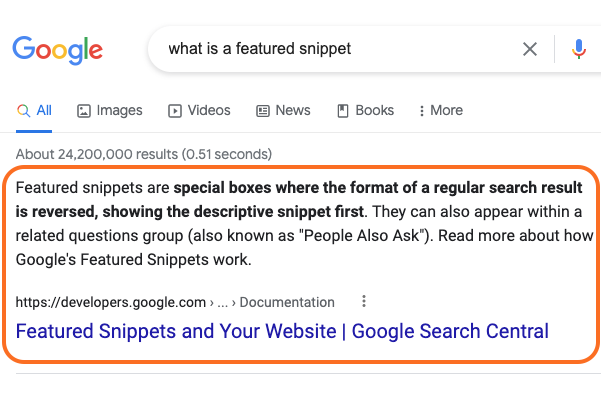
Featured snippets are boxes that appear as the “first” search result, or as many call it, “position zero” before the actual organic results.

Google will take the most relevant portion of text from a domain and place it above the link, typically with a featured image presented alongside. It provides a more concise answer to a search query without clicking through.

2. Image Packs

Best for: Providing visual search results like images or GIFs without going to Google Images.

most important serp features: image packs

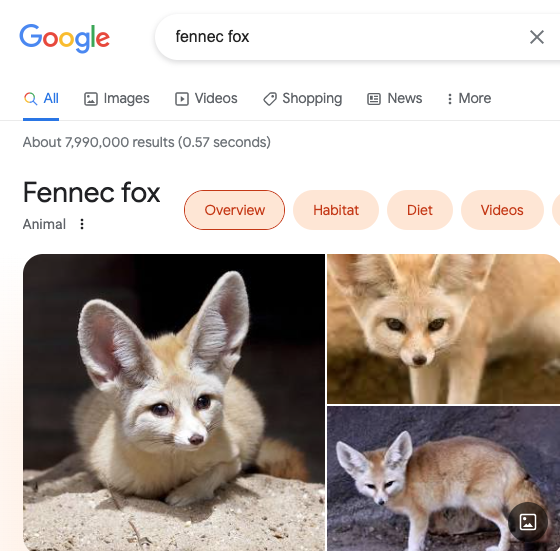
Image packs are search results that provide an array of pictures or GIFs for a more comprehensive search query.

Businesses can achieve a spot in an image pack by designing creative graphics or original photos with descriptive alt text to match relevant search inquiries better. Alt text is a major factor determining whether your image or video appears in the SERP and how highly it appears, so be descriptive with your photos or collateral.

3. Knowledge Panels

Best for: Briefly summarizing information on a topic based on Google’s understanding without going too far into details.

most important serp features: knowledge panels

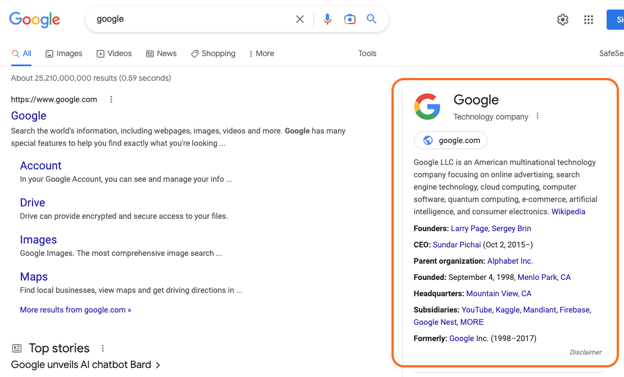
Knowledge panels are boxes of information that typically appear to the right of traditional search results in Google. They usually display information about a person, place, business, or other entity with relevant background underneath.

A business can benefit from publishing information on an “About Us” page on its website. For Google to index and display relevant data for better visibility, include details like the CEO, location, and contact information.

4. Local Packs

Best for: Local businesses to target nearby prospects in Google Maps.

most important serp features: local packs

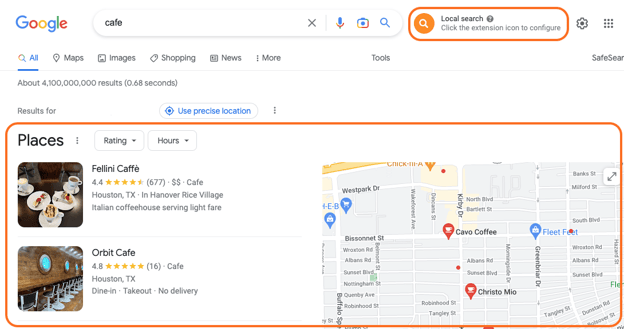
Local packs are a SERP feature that usually highlight information about physical locations, combined with Google Maps interactive platform.

Local packs are extremely useful for small or brick-and-mortar businesses. By providing a full, indexable address and possibly good customer reviews, you’re more likely to be highlighted in this section.

5. “People Also Ask” Boxes

Best for: Quickly answering related questions to a user’s original search query.

most important serp features: people also ask boxes

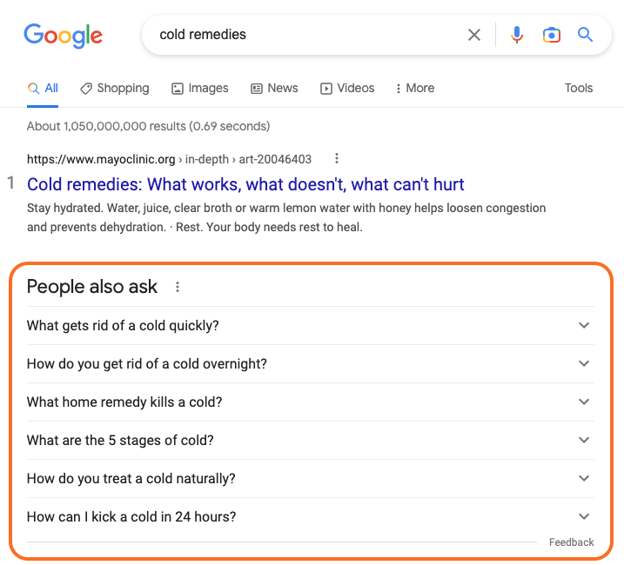
Unlike other SERP features, “People also ask” (PAA) suggestions come after one or two organic search results to offer additional or adjacent information. They serve as quick FAQ sections and can expand when clicked.

If your website answers a big question that your target audience is looking for, try to include additional information in a frequently asked question section of your own, or throughout any articles or posts you publish.

6. Rich Snippets

Best for: Provide enhanced results in an effort to provide more engaging and useful information.

most important serp features: rich snippets

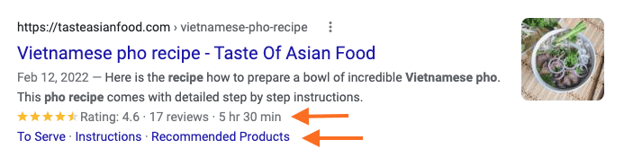
Rich snippets are self-explanatory — they provide richer information than a typical meta description in the SERPs.

This can efficiently display stock product inventory and product review ratings without a prospect having to scroll through your entire catalog. It can also help them find exactly what they’re looking for at the beginning of their search.

7. Sitelinks

Best for: Find shortcuts to save users time and help them navigate a site domain faster.

most important serp features: sitelinks

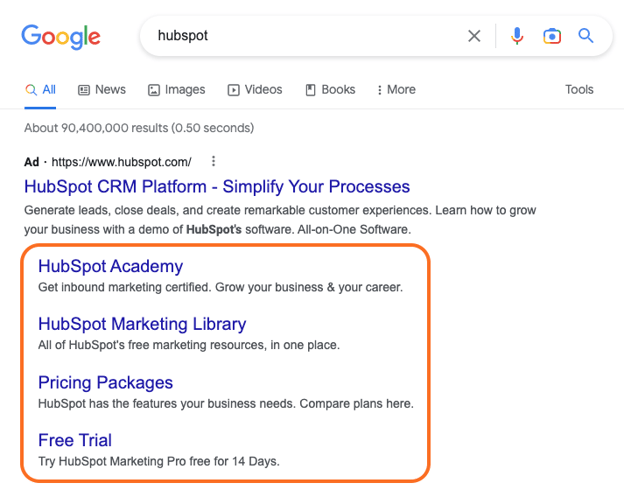
Sitelinks are a SERP feature that displays multiple links from the same domain or home page of a business. By clearly defining where users can find categorized information they’re looking for, you’ll better your chance of scoring this snippet and providing a better user experience.

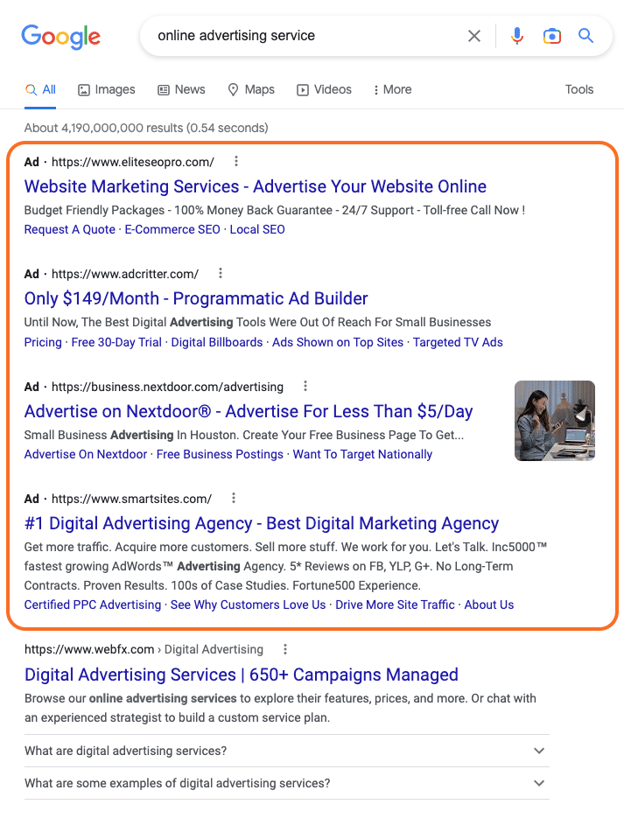
8. Top and Bottom Ads

Best for: Reach target markets based on search queries that align with a service or product.

most important serp features analysis: top and bottom ads

Top and bottom ads are an inorganic way for businesses to gain visibility through Google Ads.

These ads pop up before the first organic search results and at the bottom of the page results before you go to page two. Businesses pay to run ad campaigns targeting specific demographics and keywords to fit their niche.

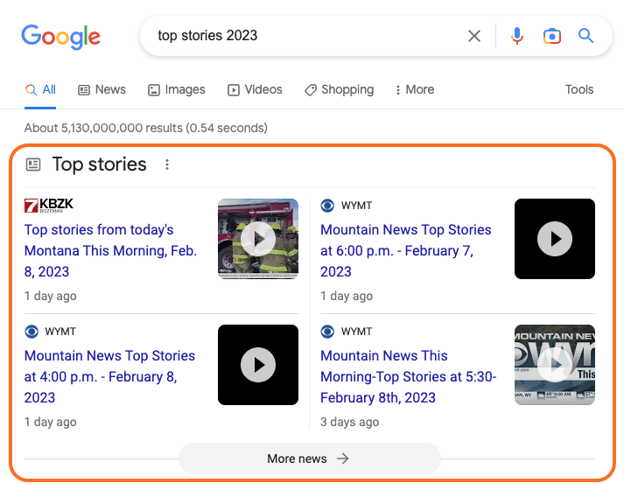
9. Top Stories

Best for: Sharing breaking global, local, or niche news topics.

most important serp features analysis: top stories

Top stories are a SERP feature highlighting trending or most recent news stories or headlines from various sources. They display linked headlines for users to navigate directly to the news story.

For businesses that strive to be industry thought leaders, posting the latest news or trending topics onto a dedicated blog, podcast, or video network can be a great way to gain attention from an audience invested in that market.

Pro Tip: Make sure to use good judgment and provide information based on facts. It’s better to report on something grounded in data and respect than to release false information and potentially biased statements.

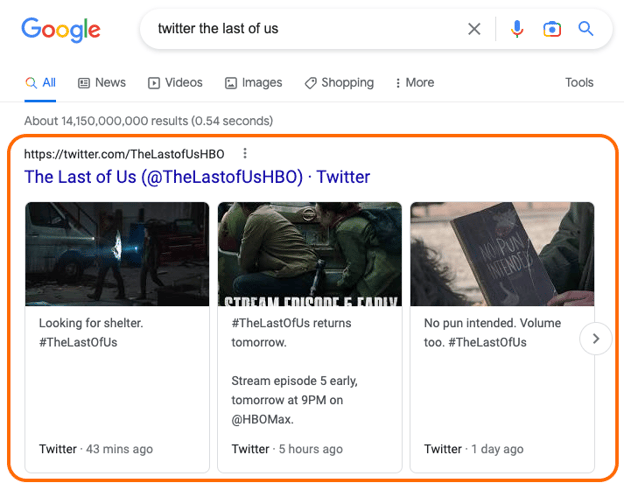
10. Twitter Cards

Best for: Sharing popular or trending quotes, images, videos, or tweets from the Twitter platform.

most important serp features analysis: twitter cards

Twitter cards are just that — a carousel of popular or trending tweets. It can either be centered on a specific topic or by account.

In social media strategy planning, it’s essential to leverage different channels, especially the ones where your target audience spends the most time. Businesses can chime in on what’s going on and even incorporate the buzz into their meme marketing for a chance to gain retweets and followers.

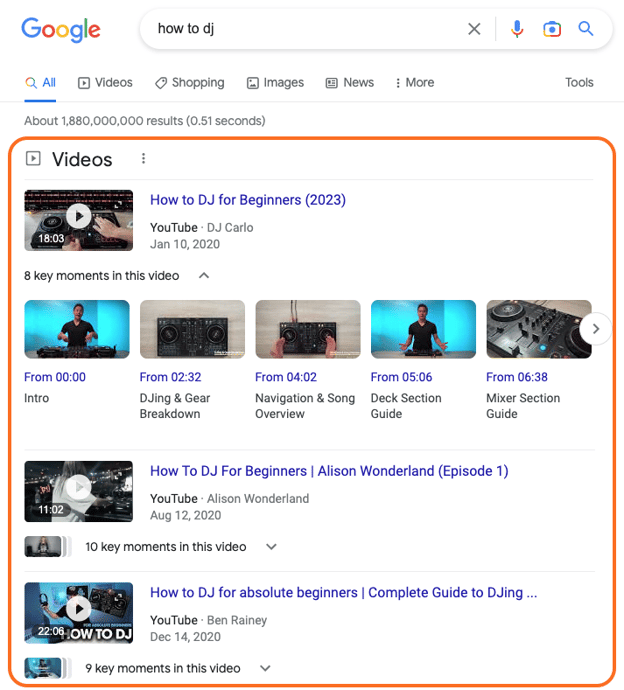
11. Video Carousels

Best for: Showcasing video content that can improve conversions or sales.

most important serp features analysis: video carousels

Video carousels are an array of relevant Youtube video search results, often optimized with segmented parts.

Businesses can share “how-to” videos about their products or services and provide customers with solutions to issues that might not warrant a call to customer support. This can include instructional guides, showcasing multipurpose features, or providing tips and best practices to make their experience with your business more enjoyable.

Use SERP Features to Your Advantage

Optimizing how your business uses Google can tremendously help get the visibility your brand needs. If you’re trying to leverage any of the SERP features we’ve shared, I’d recommend focusing on knowledge packs, local packs, rich snippets, and top and bottom ads to better position yourself from the competition.

marketing

Categories B2B

What is Branding? Understanding its Importance in 2023

Contrary to popular belief, companies don’t sell products. They sell experiences, feelings, and ideologies. Businesses with amazing brands like Coca-Cola know exactly what experience they want customers to have when they make (or consider) a purchase.

Being able to control the purchasing experience at this level is the power of branding at work. 

Download Now: Free Brand Building Guide

This branding guide will help you create and manage a strong brand that’ll entice customers to admire, remember, and prefer your business over the competition. So, keep reading or use the links below to jump ahead to find what you need.

Brands are an effective way for companies to communicate their vision. A brand clarifies what a company stands for and why. A brand also refers to the overall experience a person has when interacting with a business — as a shopper, customer, social media follower, or mere passerby.

In a nutshell, branding is the process of researching, developing, and applying a distinctive feature or set of features to your organization so that consumers can begin to associate your brand with your products or services.

Branding is in social media captions, billboard color palettes, and the materials brands use for their packaging. Companies that create strong brands know that their brand identity needs to live everywhere. They know their names extend far beyond the label and can entice consumers to choose their products out of a lineup of options.

For example, the Coca-Cola brand has one of the most recognizable logos around the world. The classic red and white lettering, vibrant artwork, and distinctive font have captured buyers’ attention for over a century.
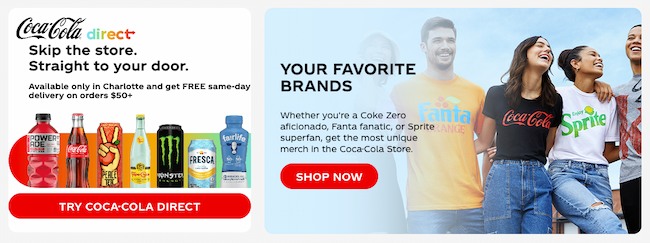
Branding example: Coca-Cola

Image Source

Having stood the test of time, the Coca-Cola brand is a testament to the power of consistent, successful branding that consumers have come to love.

That said, branding is an iterative process and requires getting in touch with the heart of your customers and your business. However, it’s not exactly the same as marketing. 

Next, we take a look at the similarities and differences between branding and marketing.

Branding vs. Marketing

While it’s easy to combine branding and marketing into one discipline, they’re quite distinct. It’s also common to hear branding and marketing compared in terms of priorities. The truth is, they are both essential to a successful business and must work in harmony for a business to grow.

Put simply, branding is the identity of a company, and marketing includes the tactics and strategies which communicate that vision.
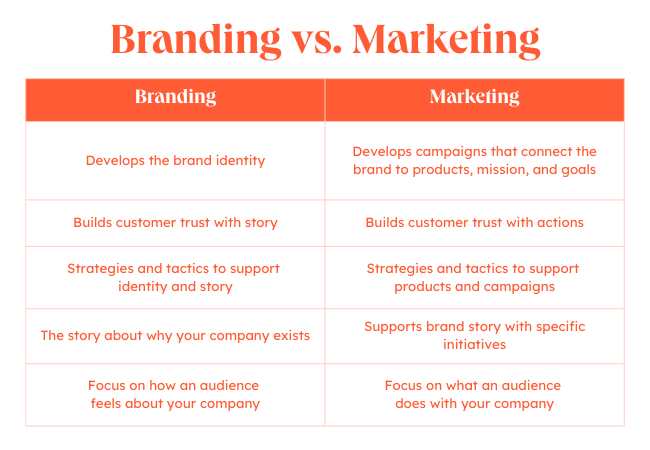
Branding vs. Marketing graphic

As a business grows, both branding and marketing get more complex. This growth often means that both areas of a business will develop strategies and tactics to support different goals. In branding, these actions usually support the business’s story and identity. In marketing, these actions usually amplify a company’s products, customers, or other initiatives in order to drive sales.

Branding is important for a variety of reasons — and we’ll go through them below.

Other benefits of branding include:

1. Influencing purchasing decisions.

Branding can be the deciding factor for consumers when they make a purchase decision. In fact, a 2021 Razorfish study found that 82% of surveyed consumers buy from brands that stand for a greater mission or purpose. Around 67% say the brands they buy from make them a better person.

2. Creates an identity for your business.

A brand extends beyond a company’s product or service. Branding gives your business an identity. It gives consumers something to relate to and connect with beyond the product or service they’re actually purchasing.

3. Helps customers remember your business.

Branding makes your business memorable. It’s the face of your company and helps consumers distinguish your business across every medium.

4. Boosts advertising and marketing.

Branding supports your marketing and advertising efforts. It helps your promotion pack that extra punch with added recognition and impact.

5. Builds employee support.

Branding brings your employees pride. When you brand your company, you’re not only giving your business identity, you’re also creating a reputable, highly-regarded workplace. Strong branding brings in strong employees.

Brand Strategy Guide

It’s true, branding is creative work. It’s also a team effort, and there are many stakeholders who should be involved in the process. Everyone has an opinion, and navigating useful feedback and changes can make branding a challenge.

But you don’t have to invent your brand without help — these templates can help you create a powerful brand. To show you how a template can improve the branding process, let’s walk through a few examples next.
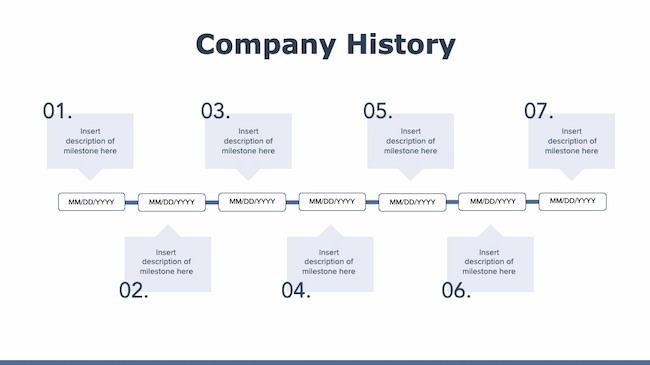
Brand strategy templates from HubSpot


  • Company Profile Templates: This resource can help you pull together the story of how your company began and how you plan to position yourself in the market. This makes it easier to refine your brand identity and strategy.
  • Company Culture Code Template: The culture of your business and your brand should be intrinsically connected. This useful template makes it easier for your team to hone the core of your unique culture so you can impart that knowledge into your brand.
  • Value Statement Templates: These templates can help you refine the value your company offers to customers. It includes over 30 pages of useful prompts and visual tools to hone your messaging.


Here’s how you can create a brand — or begin the process of rebranding your business.

There’s a lot that goes into a brand, and there’s a lot to consider when building a strong one. So, grab a notebook and jot down ideas as you move through this section. Recognize that branding is an iterative process. This means you might be repeating some of these steps as you brainstorm and build your brand.

Want to build an effective, measurable brand? Download our free guide on how to build a brand.

1. Determine your target audience.

Branding leads to awareness, recognition, trust, and revenue. We’ve talked about that. But let’s take a step back and understand where those stem from: consumers. And not just any consumers — your target audience and customers. 70% of consumers say that they want a personalized experience. But how can you offer that experience if you don’t have a clear idea of who they are?

If your brand doesn’t resonate with your audience, it won’t lead to that awareness, recognition, trust, and revenue. That’s where target market research comes in.

Before pressing pen to paper (or cursor to digital document), you must understand to whom your branding will be speaking. Who does your product serve? Who is your ideal customer? Why did you create your business in the first place?

What you learn about your target market and buyer personas will influence your branding decisions down the line, so make this step your first priority.
Branding templates: Buyer Persona

Download our free Persona Templates to easily organize your target audience research and strengthen your marketing.

2. Establish your mission statement.

Let’s return to a question I asked in the last step: Why did you create your business? Answering this will help you build your mission statement. This statement defines your purpose and passion as an organization.

Before you can craft a brand that your audience recognizes, values, and trusts, you must be able to show what your business has to give. Then, every part of your brand (logo, tagline, imagery, voice, and personality) can reflect that mission and vision.

Your mission statement is a building block of your brand manifesto. It encompasses why your organization exists and why people should care about your brand.
Branding templates: Mission statement

Download these free mission statement examples and templates and learn the ins and outs of two of the most valuable strategic planning elements for businesses.

3. Define your unique values, qualities, and benefits.

There are probably lots of businesses in your industry and niche. It’s easy to focus on your competition (and there’s a time and place for competitive analysis), but, for now, let’s focus on you.

What’s one thing that your business has that no one else can mimic (er, legally)? Your brand.

Because of that, you must make sure that your brand is made from and inspired by elements that are solely yours: the values, benefits, and qualities that make your company unique.

Take a moment to jot down a list of what sets your business apart from others. I’m not talking about product features (like appearance, components, or capabilities). I’m referring to how your products or services improve lives and contribute to success.

Real-Life Brand Example: Tower 28 Beauty

You may have heard of Tower 28; they’re a beauty company that went viral on TikTok in 2021. I order their skincare products for two reasons:

  • They steer clear of harmful ingredients, and
  • I trust and respect the brand (and it’s gorgeous.)

On their website, they’ve clearly and simply outlined their unique values and benefits as part of their overall brand. This makes it easy for customers like me to trust their products and choose them over competitors.
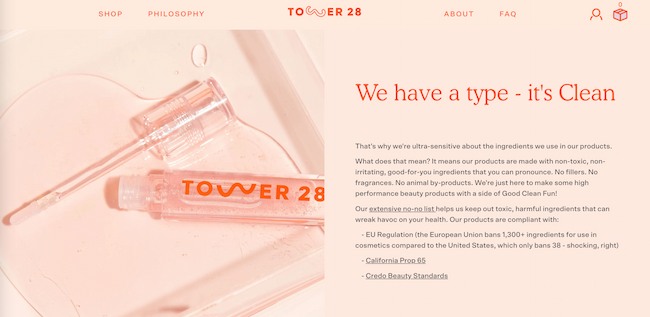
Branding example: Tower 28 Beauty

4. Create your visual assets.

At this point, you should understand your target audience, your mission statement, and the unique qualities that make up your business.

Can you say with confidence that you’ve finished these steps? If your answer is yes, it’s time to move on to one of the more exciting parts of branding — the visual design. We’re talking about your logo, color palette, typography (fonts), iconography, and other visual components.
Brand style guide

As you create these elements, build a set of brand guidelines (or a brand style guide) to govern the composition and use of your visual assets. This will ensure that whoever uses your new branding does so accurately and consistently. Check out these examples of brand style guides for some inspiration.

Note: Design can be just as intimidating as it is exciting. Consider hiring a professional with logo and identity design experience or starting with a few helpful design templates.

Take your brand to the next level with these free templates for creating a brand style guide.

5. Find your brand voice.

Next, consider the voice of your brand. What would your brand sound like if you had a conversation with it, or if it texted you?

How you communicate with your target market is also considered part of your branding. You want to define a brand voice that connects and resonates with your audience — otherwise, they probably won’t pay attention. Because of that, don’t hesitate to return to step one to get familiar with to whom you’re speaking.

From your advertising campaigns and Instagram captions to your blog posts and brand story, your tone must be consistent.

So, give your audience a chance to get familiar with your brand and learn to recognize the sound of your voice. Better yet, create a fun, entertaining voice, and your customers will look forward to your social media and email updates.

Real-Life Brand Example: MailChimp

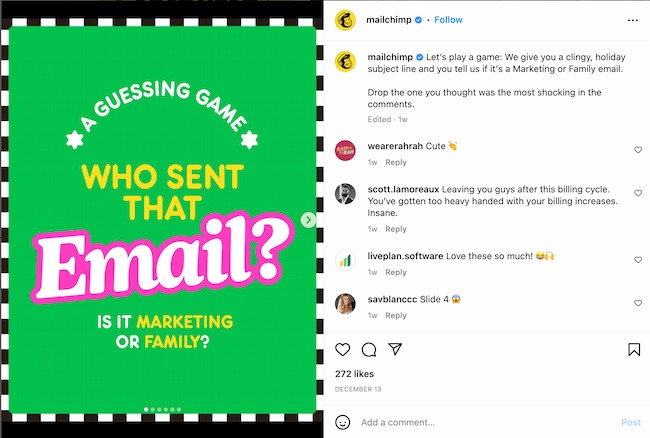
MailChimp is a great example of a brand that speaks with a clear, consistent tone. When I used their free plan for my small business, I always chuckled when receiving their emails and scanning their Instagram feed.
Branding example: MailChimp

From its web copy to its social media posts, MailChimp has a clear brand voice that’s personable, fun, and accessible. It can be hard to explain the technical parts of a software product (like A/B testing), but MailChimp has finessed that, too.

6. Put your branding to work.

Your brand only works if you do. Once you finish designing and creating your new brand (or rebrand) integrate it throughout every inch of your business. Pay extra attention to make sure that it’s displayed anywhere your business touches customers. Here are a handful of tips for applying your brand across your organization.

Want to build an effective, measurable brand? Download our free guide on how to build a brand.

How to Brand Your Business by Channel

1. Website

50% of consumers think that website design is crucial for a business brand. So, splash your logo, color palette, and typography across your website. Don’t use anything but your predefined assets in your brand guidelines.

Your website is a major part of your company identity — if it doesn’t reflect your brand, it will only create a jarring customer experience. Also, be sure that all web copy, calls-to-action, and product descriptions speak with your brand voice.
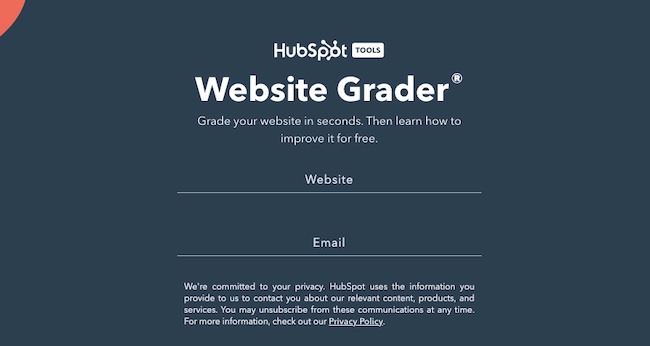
Branding templates: Website design evaluation

Try this website grader for a free evaluation of your website, with tips on how to make improvements.

2. Social Media

Increasing brand awareness is a top goal for social marketers, according to 2022 research. All profile photos, cover art, and branded imagery should reflect your brand. Consider putting your logo as your profile photo. This will make it easier for customers to recognize your business. As with your website, be sure all profile information, posts, and captions show off your brand voice.

3. Packaging

If you have a physical products business, your product is probably the most tangible way that customers interact with your brand. For that reason, your packaging should highlight your new branding — in its design, colors, size, and feel.

Real-Life Brand Example: Chobani

I love Chobani yogurt (confession: I’m eating it right now). Their branding immediately tells me that they produce authentic, healthy Greek yogurt. That’s one of the main reasons I buy Chobani. It makes its yogurt packaging with recyclable paper cups — an intentional decision that supports the overall experience they’ve paired with purchasing and eating the Chobani brand.

4. Advertising

Advertisements (digital and print) are often used to establish brand awareness and introduce consumers to your brand. In fact, according to HubSpot research, 33% of marketers use paid ads to increase brand awareness.

Because of this, it’s critical that they display your branding. In fact, your branding should make the ad creation process easier. With your brand style guide, you already know how your ads should appear and what type of copy to write.

Featured resource: Best advertising examples

5. Sales and Customer Service

A brand is only as powerful as the people behind it, and if your people aren’t putting your brand to work, it won’t work for you. Moreover, your brand applies to more than your marketing.

Inform your sales and customer service folks of your brand guidelines and tell them to use them, especially when they engage directly with customers. Whether they’re sharing a branded product demo or answering customer questions, encourage them to use your logo, tagline, imagery, and brand voice.

Check out these examples of small business branding for more inspiration.

Branding Terms to Know

Here are some other brand-related buzzwords you should know. They show the importance and value of branding your business.

Brand Awareness

Brand awareness refers to how familiar the general public and your target audience are with your brand. High brand awareness leads to brands being referred to as “trending,” “buzzworthy,” or “popular.” Brand awareness is important because consumers can’t consider purchasing from your brand if they’re not aware of it.

👉🏼 Strong branding makes your business known.

Brand Extension

Brand extensions are when companies “extend” their brand to develop new products in new industries and markets. Consider Honda lawnmowers or Martha Stewart bedding. Brand extensions allow companies (or individuals) to leverage brand awareness and equity to create more revenue streams and diversify product lines.

👉🏼 Strong branding brings in more money.

Brand Identity

Brand identity is the personality of your business and the promise you make to your customers. It’s what you want your customers to walk away with after they interact with your brand. Your brand identity is typically composed of your values, how you communicate your product or service, and what you want people to feel when they interact with it.

👉🏼 Strong branding gives your business more than a name.

Brand Management

Brand management refers to the process of creating and maintaining your brand. It includes managing the tangible elements of your brand (style guide, packaging, color palette) and the intangible elements (how it’s perceived by your target audience and customer base). Your brand is a living, breathing asset, and it should be managed as such.

👉🏼 Strong branding requires consistent upkeep.

Brand Recognition

Brand recognition is how well a consumer (ideally in your target audience) can recognize and identify your brand without seeing your business name — through your logo, tagline, jingle, packaging, or advertising. This concept goes hand-in-hand with brand recall, which is the ability to think of a brand without any visual or auditory identifiers.

👉🏼 Strong branding keeps your business top-of-mind.

Brand Trust

Brand trust refers to how strongly customers and consumers believe in your brand. Do you deliver on your marketing promises? Do your salespeople and customer service go above and beyond? These things can create trust among your customers, which is important in a world where a mere 14% of people feel confident in large businesses.

👉🏼 Strong branding builds trust with your customers.

Brand Valuation

Brand valuation is the commercial valuation of your brand derived from consumer perception, recognition, and trust. This concept goes hand-in-hand with brand equity. A powerful brand can make your business invaluable to investors, shareholders, and potential buyers.

👉🏼 Strong branding increases your business’s value.

1. Treat your brand like a person.

To best wrap your head around the branding process, think of your brand as a person. Your brand should have an identity (who it is), personality (how it behaves), and experience (how it’s remembered).

Ask yourself these questions about your brand:

  • How would your brand introduce itself?
  • If it had to describe its appearance, how would it do so?
  • How would your brand talk about your products or services? Would it be serious and professional, or would it be humorous and edgy?
  • What would someone say about your brand after “meeting” it for the first time? What are a few sentences they’d use to describe it?

The purpose of branding is to create relationships with your customers. The easiest way to do this is to treat your brand as a person and understand that you want your customers to do the same.

Featured resources:

2. Prioritize consistency.

88% of consumers are looking for authenticity from the brands they support. Consistency is essential for branding because it builds trust and shows customers that your values are authentic. Without it, you could accidentally undermine your brand and confuse your customers.

Recognizable, valuable brands focus on consistency — and they reap the benefits. So, make your brand a unified presence across mediums and platforms. This makes it easy for your customers to get familiar with, recognize, and come to prefer your brand over time. Brand guidelines can help with this initiative.

Take a look at this post for consistent brand examples and ideas.

3. Build and follow a brand strategy.

A brand strategy is more than your brand guidelines. It’s a plan with specific, long-term goals that your team can achieve as your brand evolves. These goals typically revolve around your brand’s purpose, emotion, flexibility, competitive awareness, and employee involvement.

Remember how I said that branding is a continuous process? There’s a lot that goes into it. A brand strategy can help you turn that process into a well-oiled practice that keeps your brand moving toward success and recognition.

4. Don’t let inspiration turn into imitation.

Competitive analysis is important. Not only does it educate you on where your competition stands and how they are excelling, but it can also give you ideas on how you can improve or further set apart your brand.

But be careful to not fall into an imitation trap. Keep your competitive research limited and focus on what your organization brings to the table. Just because a competitor (or two) has branded their company in a certain way doesn’t mean that you have to follow suit. New, unique, provocative brands are memorable brands.

5. Use branding to hire.

Strong branding makes your employees proud. I know I’m proud to be part of HubSpot. Leverage your branding to attract talented people. If hiring is a strong initiative for your organization, dedicate some of your resources to employer branding.

Employer branding is how you market your company to job seekers and current employees. If you’re publicly proud of your organization, others will be, too.

Ready, Set, Brand

Branding is your organization’s name, logo, color palette, voice, and imagery. It’s also more. It’s that intangible feeling your customers have when they interact with your brand. You know, that experience we talked about in the beginning.

That’s how powerhouse brands deviate from all the others. The tangible components contribute to this — a gorgeous logo, a clever tagline, an authentic manifesto, and a clear brand voice — but truly strong brands thrive when they focus on the big picture of their brand. Get to the heart and soul of your target audience and your organization, and a successful brand will follow.

Editor’s Note: This article was originally published in March 2021 and has been updated for comprehensiveness.
brand consistency

Categories B2B

How to Write a Listicle [+ Examples and Ideas]

We’ve all been there. You click on a listicle that touts amazing insights and simple tips, only to be presented with worthless clickbait. Listicles often have a bad reputation for being low-quality and providing little value to their readers.

→ Download Now: 6 Free Blog Post Templates

However, when done right, a listicle can get both clicks and share helpful insights. These well-written listicles can play an important role in your content strategy.

In fact, this post about listicles is primarily a list post itself. Here, we’re going to dive into what a listicle is, how to write a high-quality article, and listicle ideas to help you generate engaging content for your readers.

What is a listicle?

Simply put, a listicle is an article written in list format. Each list item will typically include a few sentences or multiple paragraphs to educate or delight readers. For example, you might read a fun listicle, like “The Top 10 Movies of 2020,” or a more informational one, like “7 Steps to Build a Website.”

1. Make sure your content makes sense in list format.

Before you begin writing your listicle, research to ensure your topic fits into a list format.

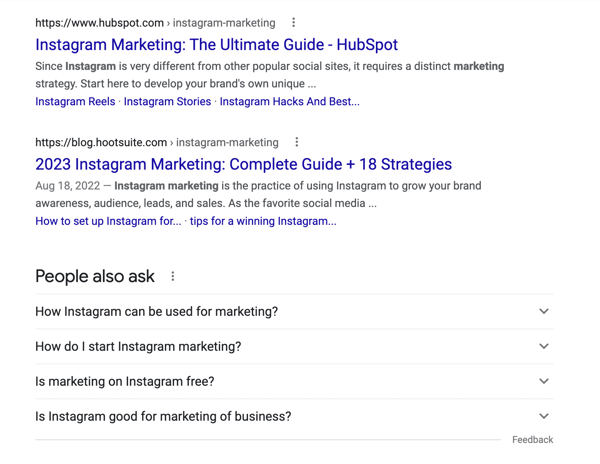
If you search for your intended keyword and find most marketers are creating “Ultimate Guides” on the topic, it’s better to avoid a listicle format.

Google Search results for Instagram marketing

For instance, perhaps you need to write about “Instagram Marketing.”

While you’d initially planned on titling the piece “10 Best Instagram Marketing Tips,” your research has uncovered plenty of other angles you’d like to include, such as “why Instagram marketing is important” and “how to create compelling content on Instagram.”

These sections might fit better in an “Ultimate Guide to Instagram Marketing” instead of a listicle.

If you choose to create a listicle, each list item must match the topic. To create a high-quality listicle, your content must be consistent and parallel.

If you’re writing a list of best practices, you should only have best practices in your list — sneaking examples will confuse your audience.

Remember: You can always create another listicle for examples later on.

2. Include valuable takeaways — no fluff!

The most significant indicator of a lousy list post is one that contains a ton of fluff and no tangible, valuable takeaways for the reader. Here’s an example of what we mean:

3 Ways to Improve Your Social Media Marketing

  1. Be unique! Do something to stand out from your competitors.
  2. Take risks. Try out-of-the-box ideas.
  3. Measure results! Use your analytics to tell you what’s working.

What a fantastic list post! I’ve learned absolutely nothing. Of course, you should do all these things in your social media marketing. But it needs to tell you how to do them.

Your listicle should give readers more than just a list of things to do and expect them to figure out how to do them themselves. It should also include valuable content that tells readers how to do each step.

An excellent list post nixes the fluff and concretely explains each item in detail. Not every tip will be new to your reader.

However, if they walk away thinking, “Well, I already put numbers 3, 4, and 6 into practice, but I can’t believe I’ve been missing out on numbers 1, 2, and 5!” — then you’ve probably got yourself a high-quality list.

Some listicles are meant to be more fun, but you can still include valuable takeaways. For example, the “Top Ten Best Ads of 2020” can be primarily visual, but it’s still essential you include advice your readers can use to create better ads for themselves.

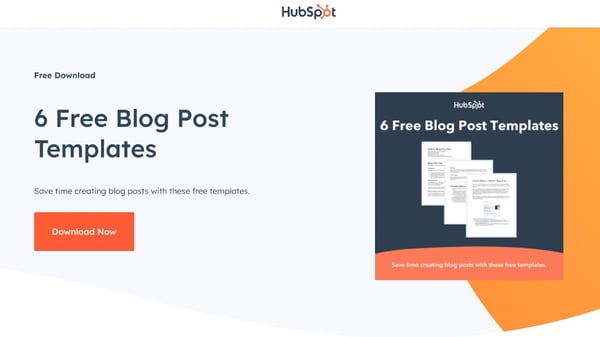
Featured Resource: Listicle Blog Post Template

how to write a listicle template

3. Link to more in-depth information when necessary.

One of the ways you can add value is to direct readers to other resources when necessary.

Great list posts are comprehensive, so they can get long and unwieldy. If this is the case, consider pointing your readers to another place for more in-depth information.

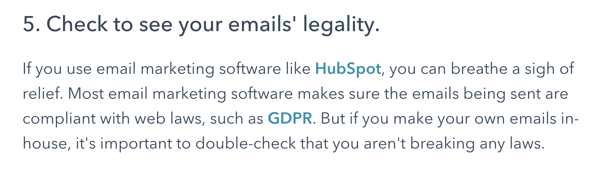
For example, we recently wrote a list post entitled “Email Deliverability: 5 Quick & Effective Ways to Increase It.” The last tip in the list was “Check to see your emails’ legality” and mentioned GDPR, which could be a blog post in itself. In fact, it already is.

Giving our readers enough information for that section to be truly helpful would have involved copying and pasting the entirety of our GDPR post into our listicle. That wouldn’t have been the most beneficial choice (and also might’ve hurt our SEO).

Instead, we explained the tip in a moderate amount of detail and then directed readers to the other post where they could find more in-depth information if they needed it.

how to write a listicle link to more in-depth information

Image Source

Feel free to do this in your own listicles. If you have to link to an external resource because you haven’t written the post yourself — excellent.

You’ve just passed off some link love, and you also now have another article idea for your blogging backlog.

4. Explain list items using relatable examples.

Sometimes one of the best ways to adequately explain a point on your list is to use an example to support it. Of course, real examples are ideal, but sometimes even a hypothetical one works just as great.

When selecting or creating an example, keep it as relatable as possible to your readers. This can be tricky if your blog’s audience comprises a variety of readers from different industries or businesses (like ours). The key here is to keep your examples general so everyone can relate.

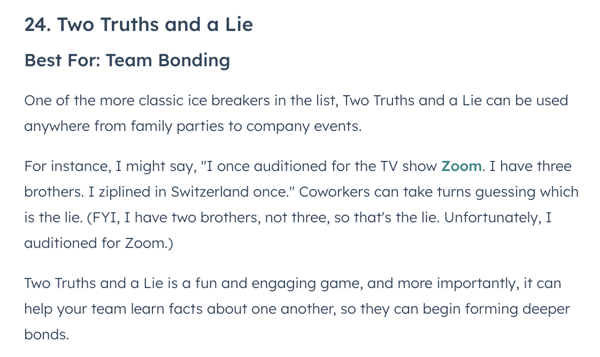
For instance, in HubSpot’s listicle “17 Fun (Not Cheesy) Ice Breaker Games Your Employees Will Enjoy,” item 24 (Two Truths and a Lie) needed clarification for readers who haven’t played the game before.

To illustrate the game, I provided a personal example using a hypothetical example:

using relatable examples to illustrate listicle

Image Source

Ideally, most readers will find this example helpful for understanding the game’s premise and how it works. Plus, it makes the content more interesting to read.

5. Number your items.

This is an easy one. If you’re writing a listicle — especially when you use a number in the title of your list post — number your list items.

This is particularly important when you have a long list because readers want to gauge their progress as they’re reading through the list (i.e., “only halfway to go” or “I’m almost done!”).

Readers may also like to reference particular points on a list later or share them with others.

Being able to refer to a specific number rather than saying, “I think it’s near the bottom of the list” or “It’s the fourth bullet point down” is a much more user-friendly experience for your blog audience.

Make things easy for your readers.

6. Include an appropriate number of list items.

While talking about numbers, let’s clear up some misconceptions about them. Listicle writers believe you should choose a number before writing your list and ensure you have enough points to fit that number.

We disagree.

Sitting down and saying you’re going to write a list of 14 items makes no sense. What if only 11 solid, valuable items make up the list? Should you come up with three lower-quality items to achieve your goal of 14?

Just be comprehensive. For example, this very listicle how-to post includes ten steps for writing a listicle because that’s how many I thought were individually valuable and indicative of a high-quality list post for this particular subject.

Originally I had brainstormed 11, but as I started writing, I cut one out because it wasn’t that different from another point, and they could easily be represented as one.

As we mentioned before, listicles can quickly become unwieldy. So when you start drafting your listicle, decide how granular you want to make your topic. This will help make your list more manageable. The title you craft can also help you stay focused.

For example, if you work for a plumbing company and want to write a listicle about how you can unclog a drain. You might stick to “The Top 4 Ways to Unclog a Drain,” rather than writing a long list post covering “The 50 Different Ways to Unclog a Drain.”

Furthermore, conduct tests and research to glean some best practices for your list posts. An internal study of our blog revealed that posts for which the title indicated six items or fewer didn’t perform as well as when the title indicated the list contained seven or more items.

The lesson? While we sometimes still write lists posts containing six or fewer items, we don’t include the number in the title for those posts. We might try to title it “Why Every Marketer Needs a CRM” instead of “3 Reasons Every Marketer Needs a CRM.”

7. Use category buckets for longer lists.

When we published “34 Millennial Stats That Marketers Need to Know,” we broke up the statistics into five sections:

  • “General Stats and Market Opportunities.”
  • “Social Media & Digital Habits.”
  • “Behaviors and Financial Factors.”
  • “Education and Work.”
  • And “Political and Societal Views.”
  • If some of our readers don’t care about the average millennial’s financial situation, they can quickly scan the post and avoid that section. Perfect!

If some of our readers don’t care about the average millennial’s financial situation, they can quickly scan the post and avoid that section. Perfect!

If your listicle seems long or unruly, consider breaking it into subcategories to help readers scan for what they’re looking for and feel more relaxed at first glance.

8. Logically order each step.

Like any other post you write, your list should flow and tell a story. How you do this will depend on the subject and contents of your list, but here are some great organizational structures to choose from:

  • Alphabetical (great for glossaries).
  • Chronological (great for step-by-step guides).,
  • Popularity/importance, like most to least or least to most (great for top 10/20/50 lists).

Another best practice is to emphasize your strongest points at the beginning, middle, and end of your list to keep readers engaged throughout the article.

When I sat down and brainstormed this list, it was just that — a brainstormed list. It was unorganized and all over the place. I rearranged the furniture once I’d identified all the points I wanted to include.

Sometimes your list points will practically arrange themselves (e.g., “5 Steps to Do X”), and sometimes there won’t be as obvious a story (e.g., “20 Ways to Do Y”). Just put the time into figuring it out and ordering your items as logically as possible.

9. Make sure your listicle is consistent.

I’m not as strict about this one as some listicle purists, but your listicle should have a consistent and parallel look. Failing to do so only confuses readers.

Here are some helpful guidelines to consider:

  • Try to keep sections similar in length.
  • Use the same header style to highlight your list items, and make sure they stand out.
  • Make sure your list item headers are written in a parallel fashion (i.e., if it’s a list of action items, each should be led with a verb).
  • Finally, use images and bullet points to break up text when appropriate.

10. Have a clear and catchy title.

As we mentioned at the beginning of this post, one of the reasons people have always loved listicles is because they know exactly what — and how much — they’ll get out of them.

There is no guesswork involved, and your expectations are very clear for your readers. Make sure your title epitomizes that.

A compelling listicle title should accomplish three things to entice readers actually to read the post:

  1. Capture the readers’ attention
  2. Clearly indicate the value or what the reader will learn
  3. Suggest how much they will learn with a number.

For example, consider this post, “5 Steps to Create an Outstanding Marketing Plan [Free Templates].” Do you wonder what this post will be about? Not at all.

You know that you’ll learn how to create a marketing plan (in 5 steps), and you’ll have templates if you need help.

Listicle Examples

As marketers, we’re often tasked with writing about drier topics to educate our viewers and attract leads. A listicle can help the reader scan for the information they need and feel less overwhelmed by the amount of content.

Let’s explore a few examples to inspire you.

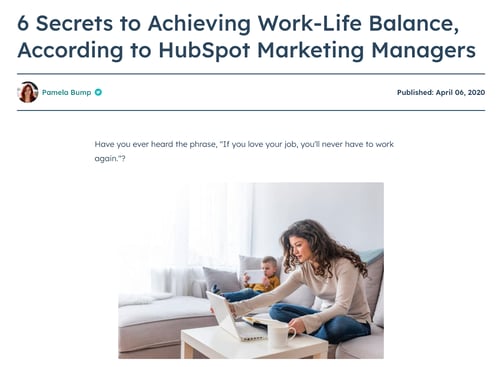
1. HubSpot’s “6 Secrets to Achieving Work-Life Balance, According to HubSpot Marketing Managers

listicle, tips for achieving work/life balance

Image Source

This post from HubSpot explores how you can achieve work/life balance, so you can be your best self every day.

What we love: This post includes plenty of quotes from marketing managers explaining their secrets. Quotes are a great way to provide value to your readers.

2. Buzzfeed’s “24 Of The Most Anticipated LGBTQ+ Books Of 2023

listicle, book releases on Buzzfeed

Image Source

When it comes to book reviews, Buzzfeed knows the right formula. The site creates listicles of both recent releases, as well as titles that will be hitting shelves soon.

What we love: Each item on this list includes a release date for the book, as well as a summary. The listicle also links to where readers can order the book.

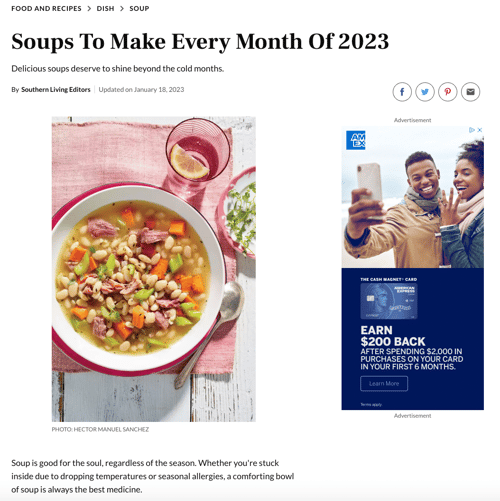
3. Southern Living’s “Soups To Make Every Month Of 2023

listicle, soups by the month on southern living

Image Source

When it comes to cooking, what’s in season changes every month. Southern Living blends the best of a cooking calendar and a listicle for this collection of soup recipes.

What we love: This list makes use of clever organization, ordering recipes by month. And with 12 recipes highlighted, this listicle is easy to digest.

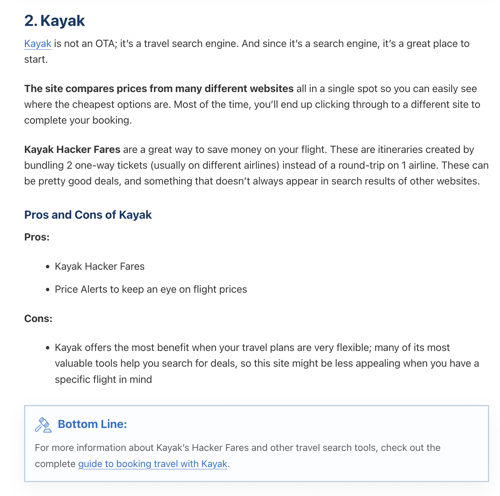
4. UpgradedPoints’ “The 12 Best Websites for Booking Flights at the Cheapest Prices

listicle, cheap airfare sites

Image Source

UpgradedPoints created a listicle to help travelers save on their next vacation. This article gathers sites that offer flight discounts, including a list of pros and cons for each.

What we love: At the end of each list item, the author includes a “hot tip” that can help readers save even more. By using icons and distinct colors with this text, this tidbit draws readers in.

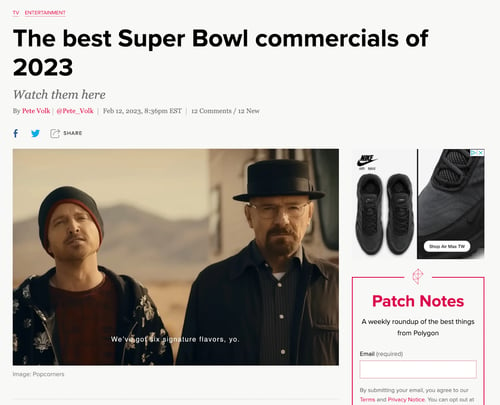
5. Polygon’s “The Best Super Bowl Commercials of 2023

listicle, superbowl ads

Image Source

Whether or not you watched the big game, everyone at the office will be talking about the commercials. Polygon gathers the ads everyone will be discussing in this article.

What we love: It’s not enough to describe the ad. People need to see it. This post breaks up chunks of text with videos of the ads themselves.

Now that we’ve explored some examples, let’s dive into some ideas you can use to create yours.

Listicle Ideas

Finally, let’s explore some listicle ideas to help your marketing team brainstorm highly engaging content for your readers.

We’ll explore a few more tactical pieces you might write for an ecommerce, B2C, or B2B company, but we’ll also dive into some fun, “trendier” ideas if you work for a publication looking to expand your reach.

Listicle Ideas For Ecommerce or B2C Companies

  • 14 Essential Ways to Build a Timeless Wardrobe
  • How to Apply Black Lipstick in Three Easy Steps
  • 20 Things You’ll Need in Your First Apartment
  • 13 Things You Should Know Before Buying a Sofa
  • The 7 Best Sustainable Furniture Companies

Listicle Ideas For B2B Companies

  • How to Choose a CRM in 4 Easy Steps
  • The 11 Best Website Builders
  • 5 Steps to Creating a Marketing Playbook
  • 3 Steps to Create a Better About Us Page
  • 7 Communication Channels Your Team Needs in 2023
  • 12 Marketers Tell Us Their Favorite Marketing Campaigns of 2023

Listicle Ideas For Publications Looking to Trend Online

  • How to Make These 3 Meals With Only 5 Ingredients
  • 10 Cool Gadgets You’ll Definitely Need This Summer
  • 7 Hilarious Videos Trending on YouTube Right Now
  • How to Become an Entrepreneur, According to 11 Successful Ones
  • If You’re a Leader, You Need to Accept Some Harsh Truths. These Seven CEOs Explain Why.

There you have it! Remember that listicles should serve the same purpose as any other marketing content — to attract the right audience to your products or services.

Sit down with your team and brainstorm challenges your readers might be facing, and then decide whether that challenge can be solved with a step-by-step guide or a list of tools (that includes yours).

Now, you’re well on your way to having more listicles in your content strategy. Happy planning!

Categories B2B

Meta Is Ending Its Reels Play Bonus Program: What That Means for Creators

Welcome to HubSpot Marketing News! Tap in for campaign deep dives, the latest marketing industry news, and tried-and-true insights from HubSpot’s media team.

Last week, Meta announced plans to pause Reels Play Bonus payments — a monetization program that paid creators monthly based on the number of views their Reels received.

While the program is on pause, Meta will focus on advertising within Reels with the hopes of developing a revenue share model which is currently being tested on Facebook.

The program launched in late 2021 to incentivize Instagram and Facebook users to share short-form video content. Since its inception, creators report being offered between $100 to $35,000 to post Reels. Meta will continue honoring Reels bonus payments for those currently participating in the program for the next 30 days.

Will the end of this program be a devastating blow to creators on Facebook and Instagram? Not necessarily.

While the bonus payments were a nice incentive, there likely weren’t many creators who relied on them for regular income. During the duration of the program, creators were confused about how payment rates were determined and saw a large variance in payments from month to month. Some creators even expressed concerns that their reach decreased after enrolling in the program.

With this program on hiatus, Meta will likely push creators to consider other monetization strategies including its paid subscription features on Instagram and Facebook.

The end of the Reels Play Bonus program coincides with other major announcements from Meta including the introduction of Meta Verified and Instagram broadcast channels, and the end of live Instagram shopping.

Marketing Snippets

The latest marketing news and strategy insights.

Silicon Valley Bank collapse: how companies like Roku, Etsy, and Pinterest have been impacted.

Group Black submitted a $400 million bid to acquire Vice Media.

Netflix is pivoting its ad strategy after its Microsoft partnership gets off to a slow start.

Reddit is rolling out a separate feed for native videos.

Utah introduces possible social media restrictions for users under 18.

Efficiency tips: make your marketing more efficient in challenging business environments.

New call-to-action

Categories B2B

How to Generate Leads on Social Media

According to HubSpot research, 77% of social media marketers say their marketing specialty has been somewhat to very effective for their company this year. With 4.70 billion worldwide users, social media is a force to be reckoned with.

Our phones might as well become extensions of our hands — from blasting off spur-of-the-moment tweets to perusing Instagram for makeup inspiration, social media is a dominant force in our lives that spans generations. That’s why businesses need to tune into social media for lead generation.

How can you leverage social media in your business’ favor and turn it into a force for lead generation?

Download Now: The 2023 State of Social Media Trends [Free Report]

In this post, we’ll cover the following topics:

  • What is social media lead generation
  • Why businesses generate social media leads
  • How to generate social media leads

The platforms mentioned above are just a few examples of the social media channels people frequent to share content, catch up with friends, read up on the latest news, gather inspiration, or simply browse.

A quality social media lead is one that will provide useful information and engage with your business. While useful information varies, it generally includes name, occupation, and email address.

Why Businesses Generate Social Media Leads

Why turn to social media to generate leads? Social media is pervasive — it has become interwoven into our daily lives. According to Pew Research Center, 7 in 10 Americans use social media.

With the vast majority of people on social media, it would be imprudent for brands to overlook it as a bountiful and rich source for generating leads.

Pew social media chart

Image Source

Both B2B and B2C marketers can implement a wide range of strategies to capture leads.

Social media helps businesses enhance lead generation efforts by increasing brand awareness, fostering engagement, and driving website traffic.

Factors That Boosts Social Media Lead Generation

Brand Awareness

Increasing your brand awareness is key to reaching your target audience. It is the foundation of acquiring a customer audience and helping them learn more about your products and services with authentic, informative, and engaging content.

Social media is excellent for building brand awareness and showcasing your brand’s ethos. According to HubSpot research, content that reflects your brand’s values and showcases your products/services have the highest ROI on Instagram.

Engagement

Sharing relevant and high quality content leads to increased engagement with your audience. Engagement is key to retaining loyal customers who can vouch for your brand.

Website Traffic

Social media presents a great opportunity to drive website traffic. With content offers, you can bring visitors to your website.

How to Generate Social Media Leads

Generating leads on social media can take form in a number of ways.

In this section, we highlight the best strategies overall, then dive into targeted strategies for specific social media platforms: Instagram, Facebook, YouTube TikTok, LinkedIn, and Twitter.

Best Strategies Overall

1. Optimize your social media pages.

Your profile is what people click on when they are intrigued and want to learn more, upon viewing your content. Your profile can also be the first thing people see. It is critical to get your profile in shape.

This means the following:

  • Providing clear contact information: Make it easy for people to get in touch with your business. This can include an email, phone number, or link to a contact page on your website.
  • Include a clear CTA, or multiple CTAs: Be strategic about your CTAs, and update them as your business needs change. CTAs can include signing up for a demo or newsletter, booking a consultation, or a link to shop

2. Create engaging content.

Once again, creating relevant and high-quality content will pique customers’ interest. In the algorithm-driven world of social media, creating content that stands out is especially important.

To create compelling content, mapping out user personas can help you better understand the audiences you’re trying to reach and the content that would attract them.

Understanding different content formats will help your business’ content strategy.

A HubSpot study found that short-form videos is the top social media format used by 54% of social media marketers, followed by live streaming, live audio chatrooms, and user-generated content.

It also doesn’t hurt to take risks. Being creative can lead to great payoffs. Keeping track of your different social campaigns can seem daunting, but HubSpot’s Social Media Management Software helps you run all your social campaigns from one place.

3. Create targeted ads.

Paid social media advertising can help your business generate more leads. By leveraging paid ads, you can create offers targeted to your audience’s interests. Your business can be hyper-specific about who your ads are served to.

A Mailchimp ad served on Instagram

As Mailchimp demonstrated, ads are a good opportunity to flex your creative muscle. Advertising can complement your organic lead generation efforts — they don’t have to be mutually exclusive.

4. Design a compelling landing page.

You’ve done all the hard, strenuous work to get someone to click on your CTA. Good job.

Don’t waste your efforts with a lackluster landing page. A good landing page should be user-friendly and contain a clear path. HubSpot’s free Landing Page Builder can help you seamlessly create a landing page designed to convert.

Targeted Strategies for Leads on Top Social Platforms

Each social media platform is different and has its unique quirks. People use different platforms for different reasons, and there is even preference for one platform over another based on generation.

For example, TikTok is overwhelmingly favored by Gen Z while Instagram is favored by Millennials. In this section, we highlight some strategies tailored to each social media platform.

Instagram Leads

Instagram started primarily as a photo sharing app in 2010. But times have changed. Instagram has since expanded to support more features: reels, stories, and shop, to name a few.

The social media platform is also where people interact with businesses — according to Instagram, 90 percent of Instagram users follow a business.

Here are some tips:

  • Use reels. Reels are all the rage. 82% post video content on the platform and the content formats they use most are video-based, according to HubSpot’s research.
  • Prioritize visuals. First impressions matter. When someone scans your page, the content you’ve posted will appear in a grid format. Unlike Twitter, which is primarily text-based, Instagram is a primarily visual platform.
  • Leverage Instagram Shop for instant revenue. While leads are key to moving the sales process along for prospects, Instagram Shoppable posts allow you to send serious buyers directly to product landing pages or your own social media shop where they can convert immediately.
  • Explore Ads. There are numerous advertising options for almost all Instagram content formats including in-feed posts, Stories, Reels or live video. If you have an advertising budget and a large following on Instagram, you might want to explore if any are right for you.

Facebook Leads

Facebook was founded in 2004, fresh off the heels of the MySpace era. Despite being around for a while, it hasn’t sunk to the grave like its predecessor. In fact, it is still quite robust, with 1.96 billion daily active users as of Q1 2022.

Here are some tips:

  • Post shareable content. The share button is a highly useful feature to get your content in front of a wider audience. Sharing links to enticing content like an interesting blog post will not only promote sharing, but also lead people directly to your site.
  • Go live. Creating Facebook Live Videos is a great way to engage your audience and give them an opportunity to react in real time.

Need ideas for Facebook posts? We have a handy guide.

YouTube Leads

Videos are not going anywhere. YouTube ​​generates over 1.7 billion unique monthly visitors. Videos about seemingly anything, from cooking tutorials to music videos, can be found on YouTube.

Here are some tips:

  • Create a branded YouTube channel. Creating a branded YouTube channel helps you consolidate your content and grow subscribers.
  • Incorporate links to your videos. Embedding relevant links to your videos, like a link to your product, helps your audience find what they’re looking for.

TikTok Leads

TikTok has quickly established itself as the social media platform to watch. From 2020 to 2021, TikTok was the most downloaded app.

It has also proven to be effective for commerce — two out of three users are likely to buy something on TikTok while using the app.

Here are some tips:

  • Partner with influencers. Influencers run rampant on TikTok — why not work with them? These partnerships can bring more eyeballs to your page.
  • Be versatile with your content. TikTok trends are ever-evolving. Because of the extremely fast-paced nature of the platform, it is important to be versatile, observing trends and adjusting your content accordingly.

LinkedIn Leads

LinkedIn has more than 830 million active users in 200 countries and regions worldwide. The most professional of all social media platforms, LinkedIn is a great source for generating leads for B2B marketers.

Interestingly enough, the best days to post on LinkedIn are Saturdays and Sundays, according to HubSpot research.

Here are some tips:

  • Create a standout page. Your business needs a page that regularly shares insightful and thought-provoking content that sparks conversations.
  • Join groups. Groups are a great way for you to connect with customers. Though LinkedIn is a professional social media platform, it is still a place for community and connections.

LinkedIn’s VP of Marketing offers more tips on how to generate leads on the site.

Twitter Leads

23 percent of adults in the U.S. use Twitter. Of all the major social media platforms, Twitter is the wordiest. It has garnered a reputation for being the place for opinions and public meltdowns.

Here are some tips:

  • Create clever content. Twitter is a wordy platform, which means it is a great opportunity to let your brand’s witty and pithy side shine.
  • Leverage Twitter Spaces. Twitter Spaces is a fairly new feature that enables you to have live audio conversations on the app. It is a smart way to engage your audience.

For additional ideas of platforms you could leverage for lead generation and tips on how to boost your presence on each, check out our Ultimate Guide to Social Media Marketing, and stay tuned for our State of Social Media Report, coming in February.

Social Media Lead Generation Tools

HubSpot Marketing Hub

HubSpot Marketing Hub

Image Source 

HubSpot Marketing Hub is a comprehensive platform with social media management software that helps you create and execute social media campaigns, keep track of social mentions, and report on social media marketing ROI.

These tools help with lead generation efforts by automating processes so you can focus on strategy and content creation. The Marketing Hub also integrates with HubSpot’s CRM.

Pricing: There are free and paid tiers. The paid tier ranges from $45 to $3,600 per month.

ProProfs Quiz Maker

ProProfs Quiz Maker

Image Source

Quiz marketing can help capture leads from websites and social platforms. You can customize quizzes and optimize them for social sharing.

The platform also contains lead forms and reports to analyze results. ProProfs Quiz Maker also integrates with HubSpot.

Pricing: ProProfs Quiz Maker offers a free tier. The paid tier ranges from $20 to $200 per month.

Stay Competitive by Harnessing Social Media for Leads

Social media has taken the world by storm. It is ever-changing and multifaceted, which can make navigating how to generate leads a challenge.

Now that you’ve learned more about lead generation across these platforms, HubSpot’s guide below can help demystify the additional complexities of social media and make the most of it.

New call-to-action

Categories B2B

Conversational AI: What It Is and How To Use It

ChatGPT has skyrocketed in popularity — it grew to 1M users in just five days.

ChatGPT is a conversational AI, and its celebrity comes at a time when many businesses are adopting similar time-saving tools into their marketing processes.

This post will go over everything you need to know about conversational AI, including:

Free Guide: How to Use AI in Content Marketing [Download Now]

At its core, it applies artificial intelligence and machine learning. Common examples of conversational AI are virtual assistants and chatbots.

Conversational AI vs. Chatbots

Conversational AI and chatbots are often discussed together, so knowing how they relate is important.

Chatbots are an application of conversational AI, but not all chatbots use conversational AI. Most chatbots are rule-based, where they’re preprogrammed with specific canned responses and scripts and can’t handle more complex conversations.

AI chatbots can handle multiple types of conversations and topics and use data to give the most accurate response.

How does conversational AI work?

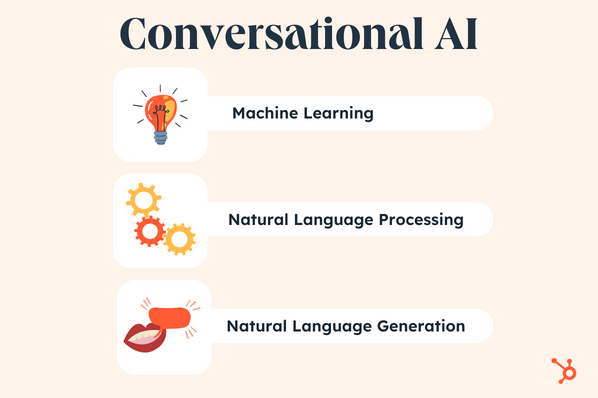
Conversational AI exists through machine learning, natural language processing (NLP), and natural language generation (NLG).

how does conversational AI work?

Machine learning is how a conversational AI tool gets its intelligence. It begins with human input, where someone feeds a machine a unique data set to learn from. It studies the data, understands connections, and eventually becomes ready to have real conversations with real humans.

Natural language processing is the machine’s ability to recognize words and phrases from conversations with humans because of the original data it learned from. The tool then uses NLG to develop the best possible responses to human queries.

Conversational AI only gets better and more accurate over time as it continuously learns from every conversation.

The overall process is this:

  1. Input is received as text or audio (spoken words or general sounds).
  2. The machine analyzes the input with natural language processing to uncover what the input means and what a response could include.
  3. Once the input is understood, conversational AI brings a user the best and most accurate information (NLG).

Machines use data from every conversation to build knowledge and generate more accurate responses.

Examples of Conversational AI

A common marketing application of conversational AI is content generation tools that research topics online and create content outputs like blog posts, emails, and even ad copy.

HubSpot’s content assistant is a great example of a tool that uses generative AI to help marketers create written content.

You can simply tell HubSpot what you’d like to write about, and the content assistant can do things like:

  • Generate a list of blog topics your audience cares about
  • Create an outline to kickstart your writing process
  • Write crisp and compelling copy optimized for your readers and search engines.

The AI content assistant natively integrates with your favorite HubSpot features.

Another application is text-to-speech tools that convert text to natural-sounding speech, improving accessibility for people using assistive technologies. Social listening and monitoring tools also use NLP to understand the tone and intent of online conversations to understand how people feel about your brand.

HR and recruiting tools also scan through resumes and cover letters for keywords and phrases to identify ideal candidates for job postings.

Other applications are smart home devices, like Google Home, and virtual assistants like Apple’s Siri.

To stay on the cutting edge of a growing market, check out HubSpot’s playlist, The Business of AI, which features shows that discuss future business applications of AI.

Benefits of Conversational AI

With these examples in mind, what benefits can conversational AI bring to a business?

1. Conversational AI can save time.

Conversational AI can take charge of conversations with consumers and bring relevant results, helping teams focus on more pressing issues that require a human touch.

Conversational AI can also process large amounts of data points and bring insights and answers to business teams quickly, helping make data-driven decisions and freeing up the burden of data processing.

2. Conversational AI gives data-driven insights

The data that conversational AI tools collect can be helpful resources for businesses to learn about consumers and what they want, whether it’s commonly asked questions that can be used to update a FAQ page or to learn more about how people talk about you online.

3. Conversational AI can drive purchases.

Conversational AI tools can use NLP to understand customer queries, learn needs and pain points, and generate product or service recommendations that inspire purchases.

4. Conversational AI can find best-fit customers.

Conversational AI can sort through many data points to help you find ideal customers.

5. Conversational AI can conduct brand monitoring.

As mentioned above, conversational AI can analyze what people say about your business online and scan for common phrases and keywords to understand brand sentiment. This is a significant time saver, as marketers can spend less time sorting through hundreds of conversations and interactions.

This is where there are drawbacks to conversational AI, as nothing can mimic the importance of human understanding.

Challenges of Conversational AI

Conversational AI is an exciting front for marketers, but it’s always important to understand the entire picture, as there are two sides to every coin.

The most significant way brands can go wrong with adopting conversational AI is if it takes over functions that can still benefit from human monitoring and interaction.

For example, a tool can monitor online conversations, but a human can pick up on subtleties that a machine can’t. An HR tool can sift through job applications for specific keywords and phrases to find best-fit candidates, but a human reviewer can tell when a candidate has the commensurate experience that makes them a great fit, even if their resume doesn’t contain target keywords.

Some additional challenges of conversational AI include:

  • Language Input: Dialects, slang, and even background noise can impact a machine’s ability to process language input.
  • Privacy: Conversational tools store and collect data to improve its processes, but security or data breaches can cause safety concerns if consumers’ personal information is exposed.
  • Human and Cultural Development: Machine learning must continuously progress to learn alongside human cultural development, whether general cultural knowledge or something more specific like showtimes for a newly released movie.

Conversational AI Statistics

AI is an ever developing field. If you’re on the fence about adopting it or simply looking to learn more about the field, here are some vital statistics to know.

  • The global conversational AI market size is projected to reach $32 billion by 2023. (Allied Market Research)
  • Digital voice ecommerce is expected to triple to an $80 billion industry by 2023. (Juniper Research)
  • The number of digital voice assistants will reach 8.4 billion units by 2023. (Statista)
  • eMarketer predicts that 126 million US adults will use voice assistants at least once per month. (eMarketer)
  • 1 in 5 consumers uses live chat or in-app chat daily. (Vonage)
  • 62% of marketers report using artificial intelligence in their marketing strategies. (Statista)
  • Marketers that use automation in their roles are more likely to report an effective marketing strategy than those that don’t. (HubSpot Blog Research)
  • In 2021, natural language processing was the most popular type of AI adoption for businesses. (Stanford University AII)
  • The top performing AI systems estimate sentiment correctly 9 out of 10 times. (Stanford University AII)
  • Abductive language inference is drawing the most plausible conclusions with limited information. The human baseline for accuracy is 92.90% and AI systems is 91.87%. (Stanford University AII)
  • While AI use has increased, there have been no significant increases in mitigation of AI risks since 2019. (McKinsey)
  • 15% of Americans are more excited than concerned about the impact of artificial intelligence and 46% express an equal amount of concern and excitement. (Pew Research Center)

New Call-to-action

Categories B2B

Ecommerce Conversion Rates Across Industries (And How to Raise Yours)

Ecommerce conversion rates are the ultimate top-line metric for online store owners. With this data, you can see if the changes you make to your site positively or negatively impact how many visitors become customers.

Download Now: Ecommerce Conversion Rate Calculator

Although crucial, there’s often confusion around what’s considered a reasonable conversion rate. Before you evaluate if your ecommerce conversion rate is good or bad, you must evaluate how your performance measures against your industry’s standard.

In this article, you’ll learn the ins and outs of ecommerce conversion rates, conversion rate benchmarks across industries, and how you can improve your results. Let’s dig in.

For example, suppose 30 out of 1,000 visitors to your online shop made purchases.

To calculate your ecommerce CVR, take the total number of people who completed checkout (30) and divide that by the total number of site visitors in the same time frame (1,000). In this case, your ecommerce CVR would be 30/1000 = 0.03 = 3%.

Today, many ecommerce retailers sell across multiple platforms. You’ll need to aggregate your site visits and conversions in one place.

You can leverage a tracking spreadsheet or find a technology solution to keep a pulse on your performance across platforms.

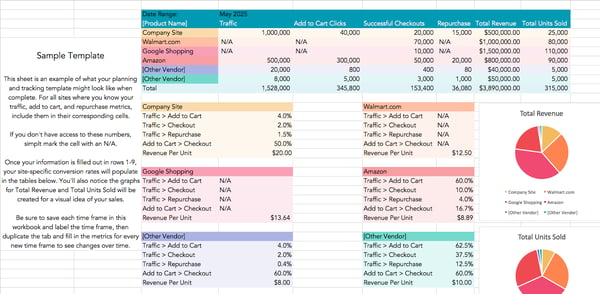
We’ve put together a free ecommerce conversion rate tracker that you can download here, along with an ecommerce marketing and sales plan template in our Ecommerce Planning Kit.

Featured Resource: Ecommerce Conversion Rate Tracker

Why is your ecommerce conversion rate important?

Your ecommerce conversion rate is crucial to the success of your online shop.

For example, you could bring in 50,000 views per month to your website through ads. If the user experience on your website is poor or your product descriptions aren’t effectively communicating value, you might only end up with a small percentage of that traffic converting into customers.

Ecommerce CVR is also a valuable metric to track over time to see how the improvements you’re making to your website, product categorizations, product descriptions, checkout process, or any other aspects of your online store are actually impacting your business’s bottom line.

What’s a good ecommerce conversion rate?

Don’t compare your ecommerce CVR to an overall benchmark that aggregates CVRs across industries. CVRs vary wildly across ecommerce sectors. Try to find conversion rates for your category or industry to use as a benchmark.

Looking at numbers isn’t all you need to do. Conduct a cost-benefit analysis and ensure that you make more money than you spend by selling your products online. From there, focus your time on optimizing your site beyond where it currently stands.

If you have one category of items with an excellent conversion rate, you can also aim to bring all categories up to that standard. With that approach, you can count on the CVR benchmark reflecting your specific target persona, not anyone else’s.

If you’re starting from scratch, see below for industry-specific benchmarks backed by recent research.

Ecommerce Conversion Rate Benchmarks by Industry

The numbers below come from IRP Commerce, which constantly collects data across many industries and ShippyPro. The numbers were most recently updated in December 2022.

  • Agriculture: 0.62% – 1.41%
  • Arts and Crafts: 3.84% – 4.07%
  • Baby and Child: 0.87% – 1.43%
  • Cars and Motorcycling: 1.35% – 0.65%
  • Electrical and Commercial Equipment: 2.49% – 1.31%
  • Fashion, Clothing, and Accessories: 1.01% – 2.20%
  • Food and Drink: 1.00% – 2.01%
  • Health and Wellbeing: 1.87% – 4.20%
  • Home Accessories and Giftware: 1.55% – 2.34%
  • Kitchen and Home Appliances: 1.72% – 3.00%
  • Pet Care: 2.53% – 2.20%
  • Sports and Recreation: 1.18 – 1.62%

1. Put explainer videos on your product pages.

It can be challenging to get a sense of sizing, fit, and material quality from photos. Video tends to demonstrate more detail. Add videos that show your product from various angles and allow people to see them in action.

You’ll also want to account for the increasing number of people who prefer to consume video over text.

2. Give your visitors a clearer set of product images.

There’s nothing more frustrating than wanting to look at the small details of the item you’re considering buying online only to find out that you can’t zoom in.

Your ecommerce site should include images of your product from different angles and allow prospective buyers to zoom in on the product images. Doing so allows these potential customers to have a more accurate sense of your product before purchase.

3. Tighten your copy.

Ensure your product descriptions are grammatically correct, easy to understand, and properly structured. It’s vital to keep your ideal buyer in mind as you write your product description.

In some cases, retailers may have a couple of identical products that are differentiated only by size. While the product specifications should reflect the different product dimensions, it’s okay to leave the copy describing the product’s use as is.

On the other hand, if you’re selling something like body care products, you might write an entirely new copy to describe who each product is suitable for, the different sensory elements of the product, and the look and feel of each.

At a baseline, always include product measurements, material specifications, warranty information, and any other information that would be crucial for buying your product. With this information, you won’t lose a prospective customer who is wondering about a key detail.

4. Add a chat feature to your website.

You simply can’t answer every question that anyone will ever have in your product description. However, since you want to do everything you can to convince someone to buy your product while they’re already on your site, consider chat as another avenue.

Chat can be a powerful tool for bridging the gap between your product descriptions and the information an individual needs to buy.

Customers can ask questions about your brand, shipping policies, and anything else non-product-specific without leaving the web page of the product they’re close to buying.

5. Test different call-to-action (CTA) placements, options, and wording.

Altering your CTAs is a classic method of optimizing a website’s conversion rate. Switching up the copy within your CTAs, the options people have for the next place they can go, or the prominence of those CTAs can be low-effort, high-impact ways to encourage people to buy.

Studies have found that while the majority of CTA tests don’t produce statistically significant results, the ones that do create enormous impact, with on-page conversion lifts averaging 49%.

You won’t know what conversion rates you’ll see until you start experimenting with each little aspect of your site.

6. Add social proof with stellar customer reviews.

It’s becoming increasingly easy for companies with cheap, low-quality products to deliver comparable on-site experiences and images. This convinces buyers that their products are the same as the others in the market, just less expensive.

However, the one element that’s hard to fake is customer reviews. Allow your customers to leave reviews of your products to prove their quality. If you’ve got great reviews, consider moving them higher on the product pages. Social proof can positively impact prospective customers’ buying decisions.

If you don’t have a solution that allows customers to leave reviews automatically, collect quotes from people who’ve bought from you before. Add several to each of your product descriptions.

Remember that you can always run A/B tests by tweaking your testimonial’s design and placement. You’ll soon find out what works best.

7. Offer free shipping.

We’ll admit that offering free shipping isn’t the cheapest option. However, the ROI can be enormous. Many people choose to go to a local store when it’s significantly cheaper to drive 15 minutes than pay $5-10 for shipping.

Free shipping reduces the perceived barriers to ordering something online. That means that you likely end up with more people making purchases. The revenue from those additional customers may compensate for the losses incurred by paying for their shipping.

You can also set a minimum purchase amount before free shipping applies to an order. You’ll incentivize your customers to spend a little more on products to avoid paying the shipping costs.

8. Tweak your checkout process.

You can make dozens of small changes to the user experience of your checkout process. Two of our favorites are eliminating unnecessary fields and adding a progress bar.

While collecting additional information about your buyers during the checkout process is tempting, additional questions lengthen the amount of time it takes to buy. Many people might not be that patient.

Progress bars can have two advantages.

  • First, they can reduce buyers’ concern that they don’t have the time to complete the checkout process at the moment.
  • Second, they give people a sense of accomplishment after each step they’ve completed, building positive momentum toward completing their purchase.

9. Allow guest checkout.

Allowing people to create an account makes sense for repeat buyers. But if you require people to make an account to make their first purchase, you may lose potential customers. Additionally, some people are averse to saving personal information online.

Trustpilot reports that requiring account creation at checkout is the second-biggest reason why people abandon carts, coming in just below having to pay for shipping.

Those who become repeat buyers will create an account eventually if they feel comfortable saving their information. In the meantime, don’t add extra steps to the checkout process for people ready to buy.

10. Add additional payment options.

A study from the Merchant Payments Ecosystem revealed that 50% of consumers would end a transaction if they couldn’t find their preferred payment method.

Consider running a survey to understand your customers’ preferred payment methods and add the one that’s most convenient for them.

By meeting your customers where they are, you’re potentially removing a nuisance (i.e., walking to another room to get a different credit card) or a complete blocker (i.e., not having access to any of the available payment methods). You’ll also create an easier user experience.

Improve your conversion rates.

By tracking relevant website metrics, you can discover what your current conversion rate is.

Find the right tools to help optimize your conversion rate. Then, experiment to see what yields results.

ecommerce planning template

Categories B2B

NetLine Academy Has Landed to Better Educate B2B Demand Generation Marketers

No one likes being lost. 

Knowing where to look, where to go, and what to do, gives people a level of comfort that’s often necessary to simply have the confidence to get things done. 

It’s this basic need that led us to create something to support B2B professionals in their quest to continue to level up.

Introducing NetLine Academy

Today, we are pleased to debut NetLine Academy; a collection of self-paced learning modules aimed to support B2B demand generation marketers gain an expert-level understanding of NetLine’s Portal. 

Academy will empower professionals to gain confidence with demand gen best practices, improve their knowledgebase, and build a greater community around others who have also become NetLine certified. 

Why We Built NetLine Academy

As the #1 Buyer Engagement Platform, NetLine’s reach includes virtually every B2B buyer imaginable. Of these B2B buyers, each professional works in a given industry, with a specific job function, at a certain job level, within a different company size. 

That’s a lot of job parameters.

All told, this equates to 37M+ different filtering variations within our Portalclearly, a resource dedicated to educating our clients, prospects, and peers was sorely missed.

Our hope is that by educating today’s B2B marketer more completely, they’ll be able to make more effective decisions tomorrow.

What B2B Professionals Will Find in NetLine Academy

Academy will teach B2B demand generation marketers how to leverage each permutation relevant to a given campaign, empowering them to work swiftly and independently. 

This will be accomplished through a core group of foundational certification courses, ranging from NetLine basics to more advanced features of the Portal.

The end of each module will ask users to recall specific elements of the lesson’s information. B2B marketers, agencies, and media companies can achieve their first certification, NetLine Cadet, within 30 minutes or less. 

NetLine Academy’s content includes a mix of resources, including:

  • Videos
  • Flip cards
  • How-To Guides
  • Interactive Portal Stills
  • Quizzes

Who is NetLine Academy Built For?

Academy was designed with B2B marketers, agencies, and media companies in mind.

“NetLine Academy is a tremendous resource for B2B marketers to level up their Portal demand generation campaign execution skills,” NetLine Client Services VP Melissa Becht said. “By taking time to learn NetLine through and through, our customers will truly be in the driver’s seat when it comes to shaping the outcomes they seek from our platform.” 

Essentially, if you’re charged with improving your company’s demand gen program or simply want to learn how to get the best CPL for your lead generation campaigns, NetLine Academy is the ultimate resource for you. By taking control of your knowledge, demand generation professionals like you can position themselves for success, enabling greater efficiencies in less time. 

The NetLine Portal offers many options to our users, which can admittedly be quite a lot to first-time, or heck, even long-time users. Knowing this, NetLine Academy equips users with the tools necessary to become a NetLine Portal expert. 

Why You Should Become NetLine Certified

By becoming a NetLine Certified Lead Generation Expert, you’ll gain:

  • Foundational content syndication skills 
  • Expertise in building, managing, and optimizing campaigns within the NetLine Portal
  • Marketing professional upskills (by adding NetLine to your toolbelt)

Upon completion, users earn a NetLine Cadet certificate and companion badge, which can be added to LinkedIn profiles. Certifications are available on an individual and/or team-wide basis. 

You don’t need to be a current customer to receive the benefits of being certified. In fact, NetLine Academy has been designed to offer foundational demand generation skills regardless of a user’s knowledge or adoption of the NetLine Portal.   

Become NetLine Certified Today!

Given the breadth of NetLine’s offerings, we expect Academy to play a pivotal role in shaping the performance of our client’s knowledge base and campaign executions moving forward.

NetLine is committed to continuing investment in training for its customers. The company intends to release additional modules, courses, and resources for the Academy later in Q2 2023. Additionally, NetLine expects to release additional certifications geared towards more advanced topics throughout the year.  

Ready to become Cadet certified? Academy is waiting for you!

Categories B2B

30 Best Bots for Marketers in 2023

A marketer’s job can feel never-ending, especially when you have multiple daily tasks and campaigns to manage independently. Whether you have to guide a team, communicate with customers, or run a campaign — your to-do list can be exhausting.

Fortunately, there’s a way to automate some of your tasks — bots!

Here’s a list of bot software you can use to automate parts of the marketing process, so you can spend less time on repetitive tasks and more time running your business.

Free Guide: How to Use AI in Content Marketing [Download Now]

Best Facebook Messenger Chatbots

Here are the best chatbots available for Facebook messenger.

1. Boletia

Boletia is a customer support tool that allows event planners to streamline their businesses. With Boletia, you can automate your ticket sales and make the purchasing process effortless for your customers.

The Facebook integration lets you buy and sell event tickets through Facebook Messenger.

Platforms: Messenger

Functions: Customer Support

Price: Free

Language: Spanish

Creenshot of the official website for Boletia, a Facebook Messenger bot.Image source

2. BrighterMonday Uganda

BrighterMonday is an online job search tool that helps jobseekers in Uganda find relevant local employment opportunities.

The BrighterMonday Messenger integration allows you to speed up your job search by asking the BrighterMonday chatbot on Messenger.

Platforms: Messenger

Functions: HR

Price: Free

Language: English

Screenshot of BrighterMonday, a Facebook Messenger botImage source

3. Dashbot.io

Dashbot.io is a bot analytics platform that helps bot developers increase user engagement. Dashbot.io gathers information about your bot to help you create better, more discoverable bots.

The Dashbot.io chatbot is a conversational bot directory that allows you to discover unique bots you’ve never heard of via Facebook Messenger.

Platforms: Messenger, Slack, Kik, Web

Functions: Analytics

Price: Paid

Language: English

Screenshot of dashbot, a bot available on multiple platforms

Image source

4. Faqbot

Faqbot is an automated 24-hour customer and sales support bot for answering frequently asked questions. The few seconds it takes to set it up will allow Faqbot to help your customers while you get some rest.

The Facebook integration lets you turn your static FAQ page into a streamlined conversation via Facebook Messenger.

Platforms: Messenger

Functions: Customer Support

Price: Paid

Language: English

faqbotImage source

5. GoHire

GoHire is an online recruitment and branding tool that streamlines hiring and outsourcing talent. GoHire makes managing candidates and scheduling interviews fast and simple – no paperwork or confusing spreadsheets.

The integrations allow you to communicate directly with recruiters and job candidates via Messenger, SMS, and web chat.

Platforms: Messenger, SMS, Web

Functions: HR

Price: Free

Language: English

Screenshot of GoHire, a bot that's available on multiple platformsImage source

Best Discord Bot

This bot below is excellent for elevating your Discord activity. 

6. MEE6

MEE6 is a Discord bot that offers a suite of features to enhance your Discord server. With MEE6, you can stay on top of internet trends, create custom commands, automate processes, and more.

Platforms: Discord

Functions: Communication

Price: Free

Language: English

Screenshot of MEE6, a bot that enhances your Discord serverImage source

Best Marketing Chat Bots

Need advice ahead of your next marketing campaign? Need a way to schedule your ads automatically? These bots can provide the solutions you need.

7. About Chatbots

About Chatbots is a community for chatbot developers on Facebook to share information. FB Messenger Chatbots is a great marketing tool for bot developers who want to promote their Messenger chatbot.

You can also connect with About Chatbots on Facebook to get regular updates via Messenger from the Facebook chatbot community.

Platforms: Messenger

Functions: Marketing

Price: Free

Language: English

Screenshot of AboutChatbots, a bot available in Facebook MessengerImage source

8. Opesta

Opesta is a Facebook Messenger program for building your marketing bots. Opesta is easy to use and has everything you need to generate leads, follow up and deliver your products, and you don’t need coding skills to make it work.

The Opesta Messenger integration allows you to build your marketing chatbot for Facebook Messenger.

Platforms: Messenger

Functions: Marketing

Price: Free

Language: English

Logo of Opesta botImage source

9. Revealbot

Reveal is a marketing automation tool for Facebook ads. Save time planning and scheduling your ads; provide the rules and let Reveal do all the work.

The Slack integration lets you get notifications and access your Instagram and Facebook campaigns in Slack.

Platforms: Slack

Functions: Marketing

Price: Free

Language: English

Screenshot of Revealbot, a marketing bot for SlackImage source

10. Surveybot

Surveybot is a marketing tool for creating and distributing fun, informal surveys to your customers and audience. You don’t need any coding skills – anyone can use Surveybot.

All you have to do is let Surveychat guide you through the survey-building process via Facebook Messenger.

Platforms: Messenger

Functions: Marketing

Price: Paid

Language: English

SurveybotImage source

11. Brand24

Brand24 is a marketing app that lets you see what people say about your brand to take advantage of new sales opportunities. Charts and feeds are available for analysis of brand mentions.

The Slack integration saves you time and enhances collaboration by allowing you to quickly assign tasks to the right people so you can take care of issues before they become big problems.

Platforms: Slack

Functions: Marketing

Price: Paid

Language: English

Screenshot of Brand24 bot on SlackImage source

12. Brandfolder

Brandfolder is a digital brand asset management platform that lets you monitor how various brand assets are used. Having all your brand assets in one location makes it easier to manage them.

The Slack integration puts all brand asset activity in one channel for easy collaboration and monitoring.

Platforms: Slack

Functions: Marketing

Price: Free

Language: English

Screenshot of Brandfolder, a bot for SlackImage source

13. Autopilot

Autopilot is an app that allows you to personalize and automate your customer experience, giving you more time to focus on other aspects of business without sacrificing customer satisfaction.

The Slack integration lets you automate messages to your team regarding your customer experience.

Platforms: Slack

Functions: Marketing

Price: Free

Language: English

autopilotImage Source

14. ChatKwik

ChatKwik is a conversational marketing software that works with Slack to keep customer conversations organized to serve your customers better. The Slack integration lets you directly chat with customers in your Slack channel.

It also lets you learn where new prospects come from and generate more leads.

Platforms: Slack

Functions: Marketing

Price: Free

Language: English

Screenshot of ChatKwik, a bot for SlackImage source

15. Customer.io

Customer.io is a messaging automation tool that allows you to craft and easily send out awesome messages to your customers. From personalization to segmentation, Customer.io has any device you need to connect with your customers truly.

The Slack integration lets your team receive notifications about your customers’ activity.

Platforms: Slack

Functions: Marketing

Price: Free

Language: English

Screenshot of customer.io, a bot for SlackImage source

16. GetResponse

GetResponse is a comprehensive online marketing platform that can streamline your online marketing efforts and help you grow your business.

The Slack integration lets you customize notifications for different marketing metrics and channels so that you stay ahead of the game.

Platforms: Slack

Functions: Marketing

Price: Free

Language: English

Screenshot of GetResponse, a bot for SlackImage source

Best HR Chat Bots

Managing a team can be difficult, so here are some bots that can help keep your team motivated and on track.

17. HeyTaco

Show your coworkers how much you appreciate them with HeyTaco. HeyTaco is a fun way to celebrate your team members and inspire productivity with friendly competition.

The Slack and Discord integrations allow you to give your team praise and recognition without leaving Slack or Discord.

Platforms: Slack, Microsoft Teams

Functions: Communication

Price: Paid

Language: English

Screenshot of Heytaco, a bot that's available in Slack and Microsoft TeamsImage source

18. Breezy

Breezy HR streamlines hiring and onboarding new people to your team. Use Breezy HR to discover, vet, and hire candidates that suit your company’s culture without wasting time or getting lost in paperwork.

The Slack integration allows you to rate candidates, view available positions, and get HR updates in Slack.

Platforms: Slack

Functions: HR

Price: Paid

Language: English

Screenshot of Breezy, a bot for SlackImage source

19. Sage HR

Sage HR is an HR tool that automates attendance tracking and employee leave scheduling. Sage HR is convenient, straightforward, and fast. The Slack integration lets you track your team’s time off and absence requests via Slack.

Platforms: Slack

Functions: HR

Price: Paid

Language: English

Screenshot of Sage HR, a bot for SlackImage source

20. Calamari

No more HR scheduling complications; Calamari is an HR tool that manages team attendance, sick days, vacations, and work-related travel.

It takes zero effort. The Calamari-Slack integration allows you to request time off, clock in, clock out and check presence without leaving Slack.

Platforms: Slack

Functions: HR

Price: Free

Language: English, French, German, Polish, Spanish

Screenshot of Calamari, a bot for SlackImage source

21. ChiefOnboarding

Give new hires a warm and comprehensive welcome to their new team with the ChiefOnboarding Slack app. ChiefOnboarding simplifies the onboarding experience and is a great help for new hires.

The Slack integration enables you to get reminders, tasks, and tips from ChiefOnboarding via Slack.

Platforms: Slack

Functions: HR

Price: Paid

Language: English

Screenshot of ChiefOnboarding, a bot for SlackImage Source

22. Fortay

Fortay is a new analytics Slack bot that helps you keep your team on track. Fortay uses AI to assess employee engagement and analyze team culture in real time. This integration lets you learn about your coworkers and make your team happy without leaving Slack.

Platforms: Slack

Functions: HR

Price: Free

Language: English

Screenshot of Fortay, a bot for SlackImage source

23. Icebreakers

Get to know your coworkers with Icebreakers, an HR chatbot for building team culture. Icebreakers is a fun and modern way to make your team comfortable and invigorated.

Installing Icebreakers only takes a few seconds, and then you can exchange enjoyable getting-to-know-you questions and answers with your Slack team.

Platforms: Slack

Functions: HR

Price: Free

Language: English

Screenshot of Icebreakers, a bot for SlackImage Source

24. Karma

Make your workplace more fun and more productive with Karma. Karma is a team management and analytics bot that tracks your team’s accomplishments and performance while promoting friendly competition. The Slack integration lets you view your team performance stats and reward high-achieving coworkers.

Platforms: Slack, Microsoft Teams, Telegram

Functions: HR

Price: Paid

Language: English

Screenshot of Karma, a bot for SlackImage Source

25. Zenefits

Zenefits is a comprehensive digital HR platform for small to medium-sized businesses. Zenefits streamlines weeks of accumulated repetitive administrative tasks and handles team requests for you. Zenefits is so friendly you might start thinking it’s a human.

The Slack integration allows you to enjoy the perks of Zenefits right in your Slack channel.

Platforms: Slack

Functions: HR

Price: Paid

Language: English

Screenshot of Zenefits, a bot for SlackImage source

26. Charlie

Charlie is HR software that streamlines your HR processes by organizing employee data into one convenient location. Whether you need to track employee time off, quickly onboard new employees, or grow and develop your team, Charlie has all the necessary resources.

Platforms: Slack

Functions: HR

Price: Free

Language: English

Screenshot of Charlie, a bot for SlackImage Source

27. Donut

Donut is an HR application that fosters trust among your team and onboarding new employees faster so everyone works better together. The Slack integration lets you sort pairings based on different customizable factors for optimal rapport-building.

Platforms: Slack

Functions: HR

Price: Free

Language: English

Screenshot of Donut, a bot for SlackImage source

28. Duuoo

Duuoo is a performance management software that allows you to continuously manage employee performance so you can proactively address any issues that may arise. The Slack integration uses notifications to help you keep track of meetings and agreements in your Slack channel.

Platforms: Slack

Functions: HR

Price: Free

Language: English

duuooImage source

29. Geekbot

Geekbot is a bot that allows you to have effective meetings without everyone being physically present. The Slack integration lets you stay updated quickly on the status of various tasks that different teams handle.

Platforms: Slack

Functions: HR

Price: Paid

Language: English

Screenshot of Geekbot, a bot for SlackImage source

30. Koan

Koan is an application meant to help strengthen the bonds within your team. This app will help build your team with features like goal-setting and reflection.

The Slack integration lets you manage all your Koan data without leaving Slack and keep your team updated.

Platforms: Slack

Functions: HR

Price: Paid

Language: English

Screenshot of Koan, a bot for SlackImage source

You can focus on strategizing and executing your next marketing campaign by delegating certain tasks to automated bots. Maybe it isn’t such a scary idea to let the robots take over sometimes.

New Call-to-action

Categories B2B

How to Make Your Marketing Work Harder for You During Challenging Times

Stuck in a rut with your targeting strategy? We get it — it’s easy to stick with what you know. But if you don’t adapt and evolve, you could lose out on budget, headcount, and your goals.

We know that times are tough, but that doesn’t mean you can’t achieve efficient growth and boost your sales. In fact, in the face of a challenging economy, it’s even more important to make your marketing work harder for you. To do so, you and your team need to be hyper-targeted and personalize your marketing efforts.

Here, we’ll explore five ways you can make your marketing work harder for you.

Free Access: Strategic Account Planning Template

How to Make Your Marketing Work Harder for You

Your strategy should involve tailoring marketing and sales efforts to the specific needs and preferences of individual accounts. This can include creating customized content, developing personalized marketing campaigns, and tailoring sales pitches to the specific needs and interests of each target account.

Throwing spaghetti at the wall won’t cut it anymore. To run efficient campaigns, you need to analyze current lead quality, sources, and channels to find where they all overlap. That’s where ABM comes in — it allows companies to operate ongoing and future campaigns with better precision and automation at scale, and achieve targeted results and maximized ROI at every stage of the funnel.

Here’s how to get it done.

1. Fine-tune your lead scoring.

Oldie but goodie, right?

Many marketers still use the spray-and-pray method for acquiring leads. But in today’s climate, a more nuanced approach is needed. Enter ‘ABMified’ lead scoring. Traditional lead scoring has led to highly-engaged but poor-fit leads, leaving sales teams unhappy. You want to ensure that you’re targeting the right leads who fit your ideal customer profile (ICP) from your target account list (TAL).

To attract and convert the right leads, you need to prioritize fit over engagement in your lead scoring. By targeting your TAL and pushing them to become MQLs faster, you can achieve better results and grow your customer base with ease.

 2. Pay attention to quality over quantity.

Can anyone on your team name the top three lead sources that consistently produce the highest volume of quality accounts? If not, this task should be a priority.

It can be challenging to identify where your high-quality leads come from when you use more than one platform to identify target accounts. If you narrow your focus by managing and optimizing your advertising strategies from one platform, you can save time, streamline your efforts, and see results faster.

3. Identify low-risk channels that work.

Which channels does your current strategy rely on the most? Are they free or at a minimal cost?

From social media to email marketing to PPC advertising, it’s important to use the right channels to reach your target audience where they’re most active. This includes search engine optimization (SEO).

By optimizing your website for search engines, you’ll increase the likelihood of appearing in front of your target audience when they search for keywords related to your products or services. Make note of which channels require the most resources to reach, build, and maintain audiences to save on budget.

4. Reach peak performance.

Notice where your list of high quality channels overlaps with your list of high investment channels. Where does it align? And where does it mis-align?

You’ll want to maximize your advertising investments by reallocating budgets to higher-performing channels based on cross-channel performance data.

5. Boost spend on select channels only.

Now that you know exactly which channels are worth investing in, you can confidently execute account-based advertising to engage your targeted audiences. Putting those both together will help you optimize campaign ROI and conversion rates, driving near-term impact and creating bigger results from the top of the funnel down.

If you want to go pro with this strategy, you can also automate your MQLs. Lead generation experts use account based platforms, like RollWorks, to implement the following ‘Auto-MQL’ steps:

  • Identify titles from your Target Account List (TAL) that best fit your goals
  • Create minimum activity criteria that will qualify a lead as an MQL among the previously identified target paid channels
  • Set up automated lead scoring that takes these two factors into account

And just like that, you’ve got a fully automated and ABMified marketing strategy that will identify and nurture the highest possible ROI leads!

The results should be almost immediate.

Blending ABM with Lead Generation is Vital

Blending ABM with demand and lead generation isn’t just a good idea — it’s essential for success in today’s challenging business environment. By taking a more targeted approach to your “one to many” programs and combining it with a higher volume of qualified leads, you can achieve quick and impactful wins.

As we move towards smaller, more versatile teams, demand generators will need to have at least a basic understanding of ABM. This approach is not only more efficient, but it also serves the unique challenges facing modern businesses. So, if you want to achieve mastery and drive growth, it’s time to embrace a more targeted approach that blends ABM with demand and lead generation.

account plan template