Categories B2B

5 Blogging Trends to Leverage in 2023, According to HubSpot Leaders

A key to a successful marketing blog strategy is to keep a pulse on the latest blogging trends. However, that can be difficult if you’re a marketer with several different responsibilities and platforms to manage. Fortunately, I spoke to a few of the blog leaders at HubSpot to get their recommendations on the right blogging trends to leverage in 2023.

From custom graphics to original data and unique content, these blogging trends can help boost your blog’s traffic and conversions.

Download Now: The State of Media & Content Planning in 2022 [Free Data Report]

5 Blogging Trends Marketers Should Leverage

Here are five trends our blog leaders say marketers should incorporate into their blogging strategy.

Custom Graphics

I spoke to HubSpot Blog Manager Clint Fontanella, who says custom graphics are becoming increasingly popular in marketing blogs.

“It doesn’t seem like you can just talk the talk and have great written content alone,” he said. “You need to accompany it with a compelling visual that’s unique and unlike what your competitors are offering. HubSpot has been doing this a lot with its developer content.”

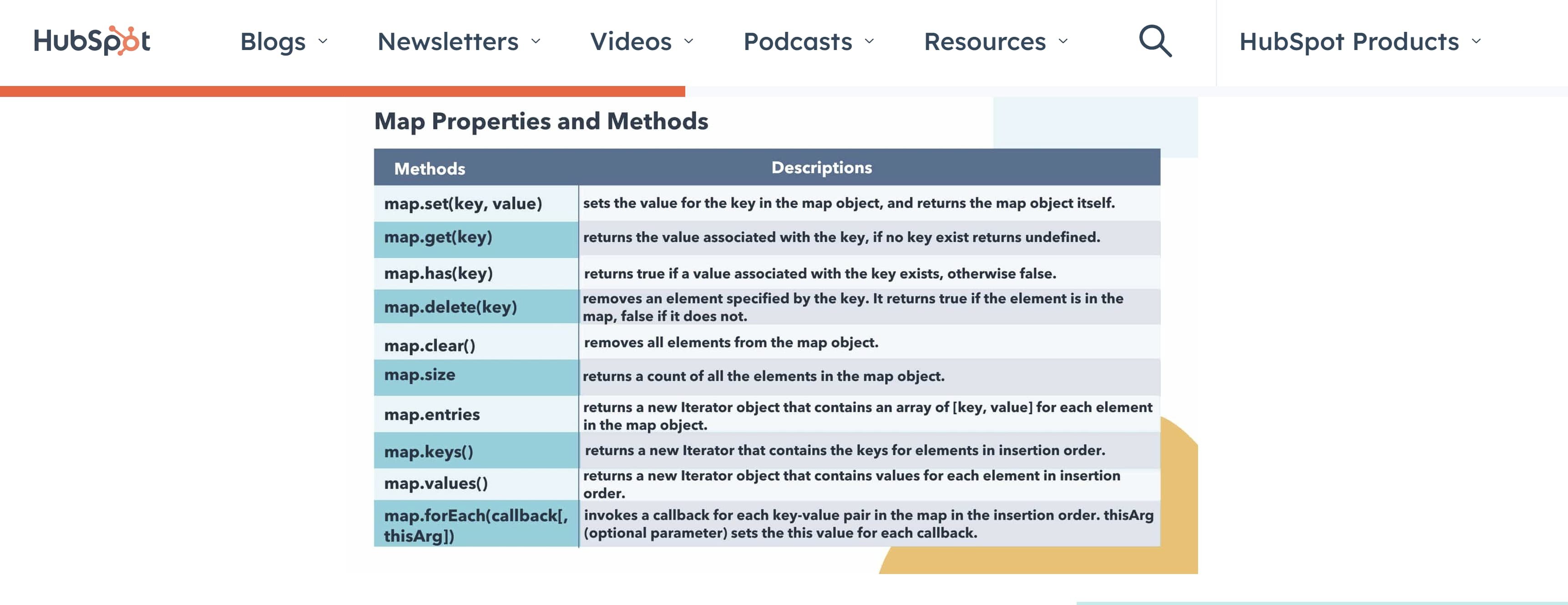
He pointed to one of our own blog posts as an example. The post “How to Use Map in JavaScript” uses several custom HubSpot graphics to illustrate different types of code and how they work.

Screenshot of a custom graphic showing how to use certain types of code.

If you’re not much of a graphic designer — don’t worry! Many online tools like Canva Canva make designing custom graphics simple for even novice designers. Even better, many of Canva’s tools are free!

Interactive Content

Interactive elements allow visitors to engage with your blog in a way that goes beyond just reading it. It gives a more fun and immersive experience that makes your content stand out.

“I definitely have seen this. We actually piloted this type of content when I managed the Service Blog,” Fontanella said. “The best performing one was a ‘Do you know your customers?‘ quiz, but my favorite was a ‘Which customer service rep from The Office are you?’ quiz. We didn’t do much with it in the past, but interactive content is something we are definitely looking at for the future.”

Screenshot of an answer from our "The Office" quiz, featuring an image of Clark Green.

Quizzes are a great type of interactive content because they can serve multiple purposes. For example, you can use them to grow your email list by adding a sign-up form to the quiz. You can also use a quiz to educate users about a product or service you want them to purchase, boosting conversions.

Other forms of interactive content include, but are not limited to:

Legitimacy

One of the most important blogging trends marketers will need to leverage in 2023 is legitimacy — in other words, ensuring your content has valuable and educational components, accordion to HubSpot Managing Editor Jay Fuchs.

“Successful marketing blogging is the art of making your readers see the educational element of your content so clearly that they forget about the promotional one — and that fact is becoming increasingly reflected in both reader preferences and how Google ranks content,” he said.

Fuchs says the key to projecting legitimacy in your blog is ensuring your writing is specific, accurate, and actionable.

“Try to make sure the points you make are supported by meaningful context, detailed examples, thoughtful advice, or perspective on why they matter —all backed by a professional, confident tone,” he said. “Even if you’re not an authority on a particular subject, you need to sound like one — and do what you can to provide the same kind of value that an expert on that topic would offer.”

You can add legitimacy to your post by quoting experts, sourcing data from reputable sources, citing peer-reviewed sources, using relevant examples, or including images to illustrate your point.

Original Data

Another way to add legitimacy to your blog content is to include original data. Original data helps reinforce the information you’re stating in your content. It helps solidify to your audience that your content is factual and backed by research.

“Original data is a massive asset for any blog to have at its disposal — a trend reflected in how well our content that references original HubSpot research like our Sales Strategy and Consumer Trends reports have performed,” said Fuchs.

You can gather original data via surveys, performance analytics, polls, and focus groups.

There are a variety of tools available to help you gather data for your next post, such as:

  • Mention, a social listening tool that can give insight into what audiences are saying about your brand or agency
  • Google Trends, a website that analyzes different trending topics across several regions and languages
  • Google Forms, which is a free online tool for creating surveys

Another great perk to including original data is that it can boost traffic to your blog, according to HubSpot Marketing Blog Editor Martina Bretous.

“While you can always refer to third-party studies, creating original data will help you stand out in your industry,” she said. “Not only will you gain credibility with your audience, but this data will also help your discoverability, as other publications will likely reference yours.”

However, that doesn’t mean you should disregard the importance of third-party data when you need it.

“Original research like that often isn’t accessible for many bloggers, but incorporating data into your content is still incredibly valuable — for both SEO and educational purposes,” Fuchs said. “So even if your organization doesn’t have the resources to generate original data, you shouldn’t skimp on including facts and hard numbers in your blogs. Third-party data is still a big help when putting together effective blog content.”

If you cannot gather original data, remember that data and statistics from reputable sources can be just as valuable. Just make sure to fact-check any information before including it in your content.

Original Topics

Regarding originality, blog content centered around original or niche topics is another trend marketers should consider.

“Original and niche content has never been more important for setting yourself apart from the internet noise,” said HubSpot Senior Manager of Content Meg Prater. “It’s not enough to write organic-only content just to rank. It’s crucial to set yourself apart with high-quality quotes, media, original data, and authoritative insight in order to provide value in the crowded content space.”

This trend will require creativity and social listening, but it’s worth it. For example, one of my favorite pieces I’ve written had to do with Gen Alpha and the future of marketing. The topic was unique and required much research on my part — and it ended up being one of our top-performing blog posts!

Blogging trends are constantly changing, especially in the world of marketing. Thankfully, you’ll be able to get ahead of the curve with the above tips from blog leaders at HubSpot. Which trends do you plan on leveraging in the coming year?

content planning in 2022

Categories B2B

Why Your Digital Product Isn’t Selling — and How to Fix That [Expert Insights]

You’ve created a digital product, put it up on your website and announced it to your audience. But despite the hard work you poured into bringing your online course, ebook, or other digital product to life, it’s not selling. 

When you’re in this situation, it’s tempting to give up. To throw your arms in the air and declare, “nobody wants my product — it was all a waste of time.” That’s the easier option. 

But you created your digital product for a reason. Perhaps you wanted to add a new income stream to your business so you could stop trading time for money. Or maybe you wanted to create a new way for people to work with you at a more affordable price point than your services. 

As the host of Imperfect Action podcast, which is part of the Hubspot Podcast Network, I regularly have listeners write in, asking me why I think nobody is buying their digital product. And in my work as a digital product launch strategist, I’ve helped dozens of clients turn around products that weren’t selling. Most of the time, they’ve been just a few tweaks away from a highly profitable product.

I’ve also been in this sticky situation a few times myself. I’ve had some huge digital product wins — selling $20,000 worth of a $20 Canva template, over $1 million worth of a $197 guide, and $400,000 worth of a $2,000 course. But before each of these success stories came many mistakes and lessons. Using the same strategies I’m sharing in this article, I’ve rescued my own products that weren’t selling and turned them around.

Whether you’ve created a low-ticket digital product or one in the thousands of dollars, these are the most common reasons why it isn’t selling — and how to fix that. 

→ Click here to download our free guide to digital marketing fundamentals  [Download Now].

5 Reasons Your Digital Product Isn’t Selling [+ Solutions]

Reason #1: Your audience doesn’t see the value in your product.

Five years ago, I built a digital product that flopped. My audience kept asking me questions about marketing their businesses on Instagram, so I created an online course about Instagram marketing. Desperate to make it the most valuable course possible, I stuffed it full of content and information. I knew it was valuable, but hardly anyone bought it. 

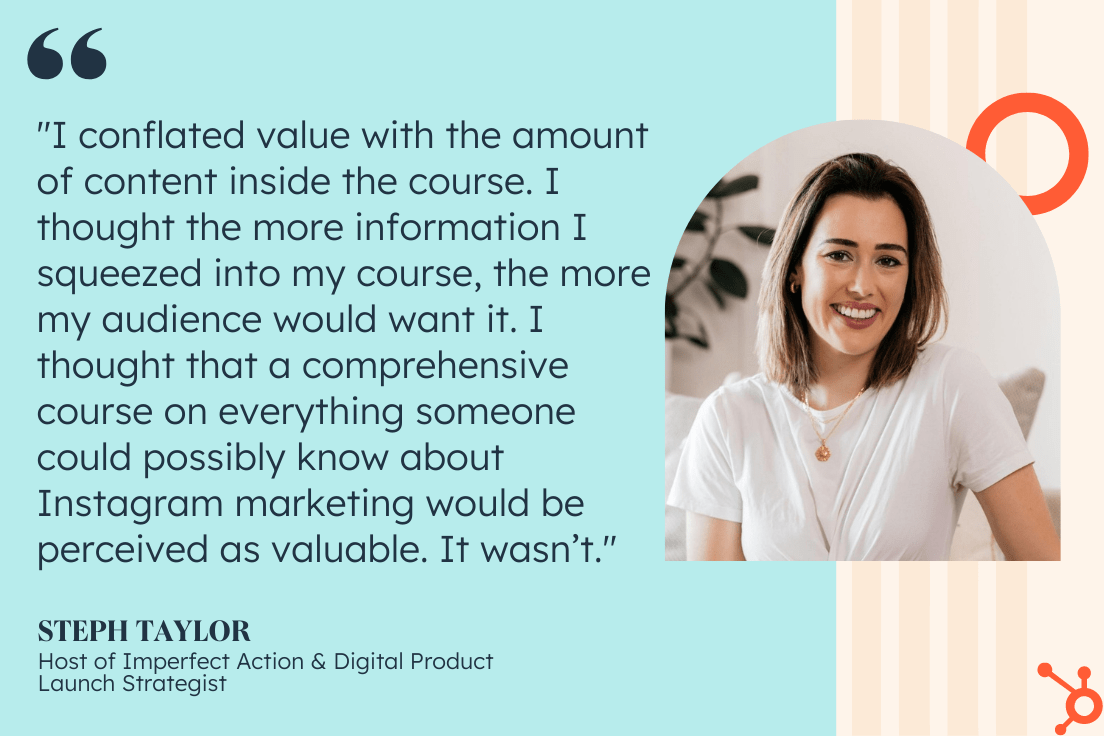
That’s because I conflated value with the amount of content inside the course. I thought the more information I squeezed into my course, the more my audience would want it. I thought that a comprehensive course on everything someone could possibly know about Instagram marketing would be perceived as valuable. It wasn’t. 

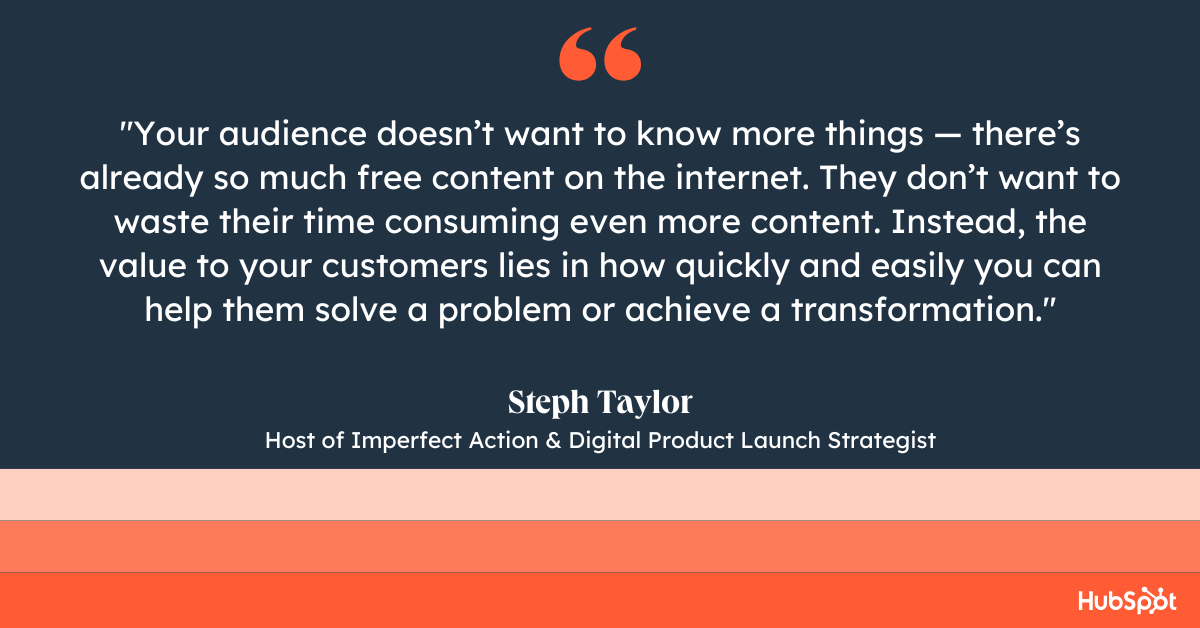
If you know your product is bursting with value, but you keep hearing “I can’t afford it,” or “I don’t need it,” chances are your audience doesn’t see the same value you do. Usually, that’s because your audience doesn’t want to know more things — there’s already so much free content on the internet. They don’t want to waste their time consuming even more content. Instead, the value to your customers lies in how quickly and easily you can help them solve a problem or achieve a transformation. 

steph taylor on her digital product mistakes

How to fix it: 

  1. Identify the outcome of your digital product — that is, the problem your customers will solve, or the transformation they will achieve.
  2. Tweak your marketing and messaging so it positions your product as the vehicle to achieve this outcome, rather than being a “comprehensive” guide.

If you’re struggling to show the value in your digital product, the below podcast episodes will help: 

Reason #2: It’s not the right offer for your audience. 

As a podcaster, I kept getting asked, “Steph, how do I launch a podcast?”. After walking several friends through the process, I decided to turn it into a digital product. I thought a group program format would work best as I could help several students at the same time. But when I launched it to my email list, only two people signed up. 

Confused, I surveyed my audience to find out why they didn’t buy. The answers were clear: They didn’t want to launch a podcast in a group program format. They couldn’t commit to attending live calls. They wanted to launch their show in fewer than eight weeks, or they wanted to work through it in their own time, over the next six months. 

If your product isn’t selling, it could be that your assumptions about what your customers want were wrong. The good news is that once you find out where you went wrong, a few tweaks to your product can lead to loads of sales. I took my audience’s feedback on board, turned the group program outline into a self-paced guide, and launched it again. A year later, that product has sold more than 3,800 copies.

How to fix it:

  1. Send your audience a non-buyer survey to find out why they aren’t buying your digital product. You’ll be amazed at what you learn from the question, “Why didn’t you buy?”
  2. If several people give you similar feedback, it’s a sign that you need to either tweak your product, or change the way you’ve positioned it. 

steph taylor on why your digital product isnt selling

Reason #3: They don’t trust that it’ll work for them.

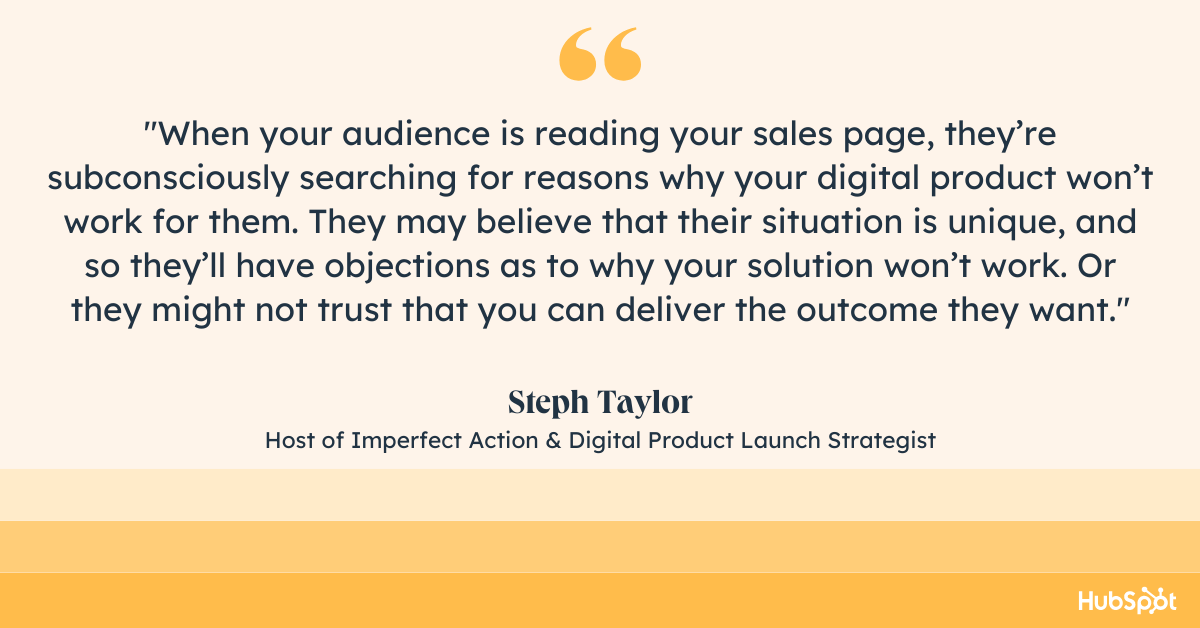
When your audience is reading your sales page, they’re subconsciously searching for reasons why your digital product won’t work for them. They may believe that their situation is unique, and so they’ll have objections as to why your solution won’t work. Or they might not trust that you can deliver the outcome they want. 

Getting your audience to know you, like you, and trust you enough to buy from you can take a while. Content marketing is the key to this. I’ve had strangers come up to me and tell me they feel like I’m their friend, because they’ve listened to my podcast so much. And sharing social proof (like testimonials and case studies) helps to build trust and overcome objections about why it won’t work for them. 

How to fix it: 

  1. Collect and share social proof from your customers and clients. Ensure that it’s not just about the outcome they achieved, but also tells the story of where they were before they bought your digital product. 
  2. Think of all the reasons a potential buyer would think that it won’t work for them. Show them why it will work for them with real-life examples on your sales page. Listen to episode 529 of Imperfect Action to learn how to write a million dollar sales page.
  3. Start regularly sharing content online. It doesn’t matter whether you start a podcast or a TikTok account, as long as you’re showing up consistently in one place. In episode 559 of Imperfect Action, I coach a student through the process of identifying what content topics will be most effective for her digital product launch.

steph taylor on digital product launches

Reason #4: They don’t know about it.

One of my online courses was consistently getting fewer sales than any of my other products, and I couldn’t figure out why. When I surveyed my email list, I was shocked. More than 75% of my subscribers didn’t even know the course existed. No wonder they weren’t buying it! 

“Build it and they will come,” doesn’t apply to digital products. You could have the most valuable course with perfect messaging and powerful social proof, and still not hit your sales goals because you’re simply not getting it in front of enough people. It might be because you don’t have enough people in your audience yet, or it might be that you’re not promoting it enough online. 

How to fix it: 

  1. Review your website analytics. How many people are visiting your digital product sales page? 
  2. Commit to promoting your product more, and get creative with it. Could you interview past customers about their experience? Could you give your audience 24 hours to test drive the first module? 

Reason #5: There’s no reason why they should buy it right now.

A human tendency is to procrastinate things that evoke negative emotions. Buying your digital product likely brings up negative feelings in your potential customers, too. Spending money on something — no matter how much they want it — might feel painful, and so they’ll delay the pain for as long as possible.

Aside from the pain of spending money, your digital product likely evokes other negative feelings. A workout guide requires them to set their alarm a whole hour earlier and get up while it’s still dark outside. My guide for starting a podcast might bring up a customer’s fear of being judged. So someone will put off buying it until the reasons to act right now outweigh the reasons not to. 

How to fix it:

  1. If your product is available to buy at any time, consider whether the “doors open” and “doors closed” model could work for your business, where you launch it a few times per year rather than allowing purchases at any time. 
  2. Alternatively, consider other limited-time incentives, such as bonuses, to help make your prospect’s decision easier.  

I’m a big proponent of the live launch model as a way to encourage your prospects to buy now, rather than put it off. These are some podcast episodes to help you better understand how that could work for you: 

By creating your digital product and putting it out into the world, you’ve already conquered the hard part. Now you begin the fun part: Understanding why it’s not selling, making changes, and measuring the impact of those changes. You might need to work through more than one of the above strategies before you see measurable results. 

Think of it as an experiment where each tweak you make brings you one step closer to the winning formula. 

New Call-to-action

Categories B2B

7 Dos and Don’ts of Attending or Hosting Twitter Spaces

With new social media platforms and features popping up every day, ever wonder about the etiquette you should follow?

Download Now: Social Media Trends in 2022 [Free Report]

In this article, we’ll be covering Twitter Spaces etiquette for attendees, hosts, and speakers.

Twitter Spaces Etiquette for Attendees

1. Listen more than you speak.

On Twitter Spaces, everyone has a role to play. The host is there to set the tone and guide the conversation. Speakers are chosen to share their knowledge. Moderators are there to ensure the space remains safe.

As an attendee, your role is to listen and participate upon request.

Too often, attendees will show up to a Twitter Space, ask to speak, then monopolize the entire conversation. This is considered inappropriate and can be deemed disrespectful to the speakers already designated in the Space.

A good rule of thumb is to listen at least 80% of the time and contribute 20% of the time. However, that can vary depending on the topic, the host, and the Space.

With this in mind, allow the host of the Space to set the expectations for that particular session.

2. Stay on task.

If you are chosen to share your thoughts, make sure your comments are relevant to the topic.

Every time you speak during a Space, you have the ability to move the conversation forward or derail it. One trick to make sure you stay on topic is to write notes for the key points you want to address.

When you veer off-topic, not only does it lower your chances of being chosen again to speak but it can also confuse incoming listeners.

On that same note, Twitter Spaces usually run for one hour or less. With this in mind, attendees should keep their comments concise and to the point.

3. Don’t interrupt others.

If you’re invited as a speaker on a Twitter Space, it’s key that you are considerate of others.

Just as you wouldn’t interrupt a co-worker during a Zoom presentation, you shouldn’t interrupt another speaker during a Twitter Space event.

The only time you should jump in is if something’s going wrong — say someone forgot to mute or unmute themselves, loud noises, etc. In that case, you can quickly notify the involved party and reset the conversation.

Twitter Spaces Etiquette for Hosts and Moderators

1. Make sure your background is quiet.

As the host of a Twitter Spaces event, it’s important that your listeners hear you clearly and you’re able to guide the conversation. This will require you to prepare your environment.

Before you start the event, make sure you’re in a quiet room. This will make sure loud noises don’t come through the microphone as you engage your listeners.

Secondly, limit distractions by turning off your devices and notifying your roommates.

2. Welcome listeners.

As a host, you set the tone for the entire event. The first step is welcoming your listeners to the event.

Start by introducing yourself and telling them the agenda for the event. You can also thank users for joining, shouting them out by username.

As people trickle in, you can repeat these key points until you’re ready to officially start.

3. Introduce speakers.

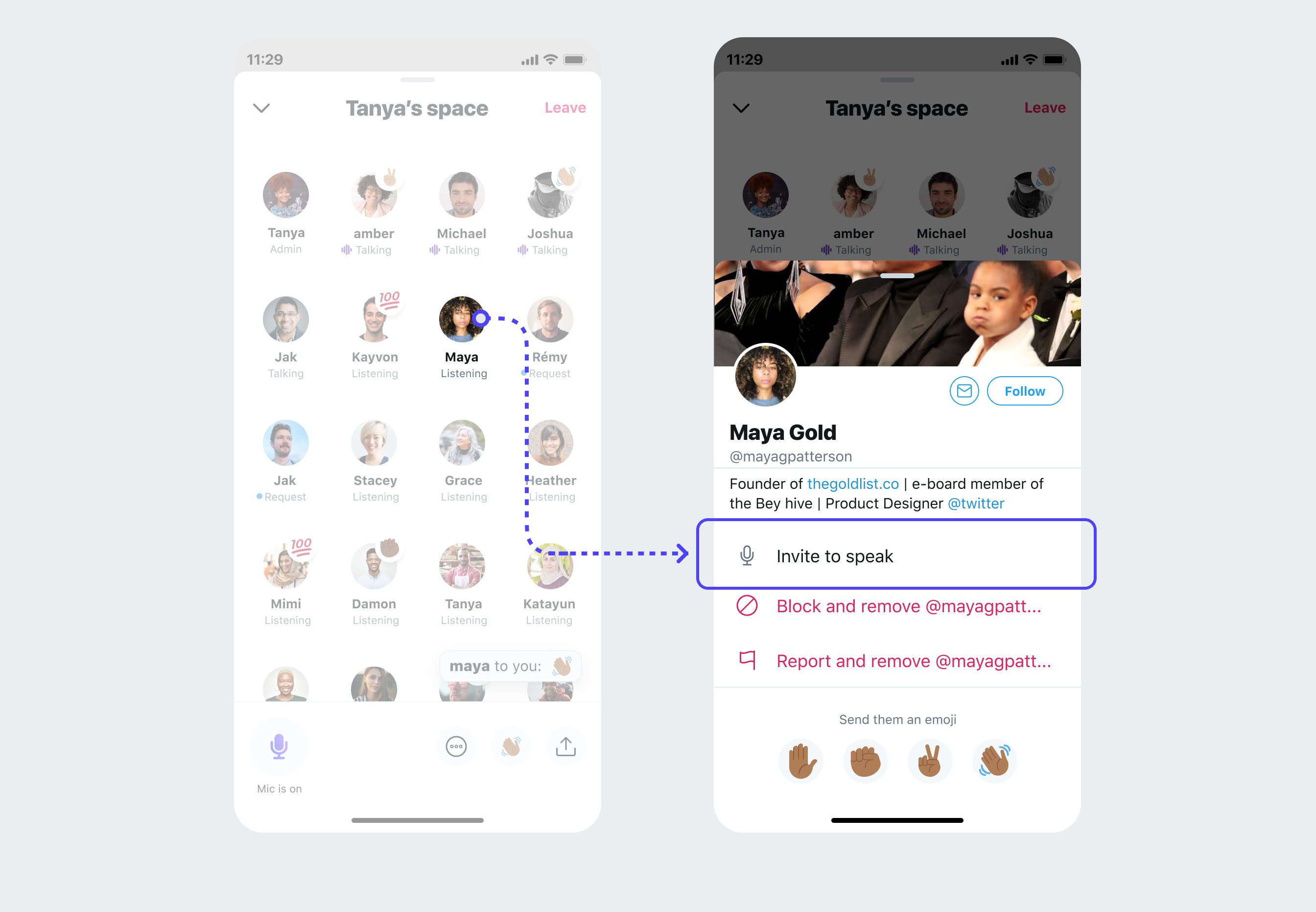
twitter spaces

Image Source

If you were attending a webinar, you’d want to know who the presenters are, right? The same concept applies to Twitter Spaces.

Once you’re ready to start the event, share a 30-second short bio on each speaker.

While some listeners may be familiar with your speakers, others may not. Short bios will help listeners understand the value each speaker brings to the conversation.

4. Stay on topic.

This etiquette tip applies to attendees but even more to hosts and speakers.

When attendees join your event, they’re expecting you to cover a particular topic. While it’s normal for conversations to cover unplanned topics, as a host, it’s your responsibility to bring it back around.

For instance, say your event is on email marketing tips and you spend half of the time covering social media. Even if the advice is valuable, it’s not what listeners signed up for. And as a result, it’s not relevant information.

To maintain your audience’s trust and keep them coming back for more, it’s vital that you stick to the agenda.

Now that you have all of these etiquette tips, you’re ready to take on Twitter Spaces.

New call-to-action

Categories B2B

Nostalgic Websites: What 32 Popular Sites Used to Look Like

It’s no secret that website design trends (and best practices) have changed dramatically since the internet’s debut. Reflecting on nostalgic websites and comparing them to their present-day counterparts is an excellent way to understand why updating your site is so necessary

Free Workbook: How to Plan a Successful Website Redesign

With the help of the Wayback Machine, we can see what our favorite websites looked like in years past.  Whether you’re planning a website redesign and could use some inspiration, or you’d enjoy reflecting on nostalgic websites, we’ve rounded up 32 sites to peruse.

1) Google

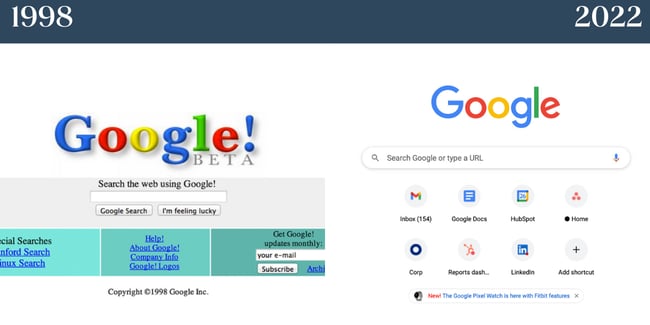
Nostalgic websites: Image shows Google homepage from 1998 side by side with 2022 Google homepage.

While Google essentially maintains its branding with its colorful logo and whitespace on the homepage, there are other aspects of the site that look entirely different today. In the 1990s, Google had unique offerings underneath the search bar. Today, the company leans into creating a personalized homepage for users by bookmarking their frequently visited websites.

2) Apple

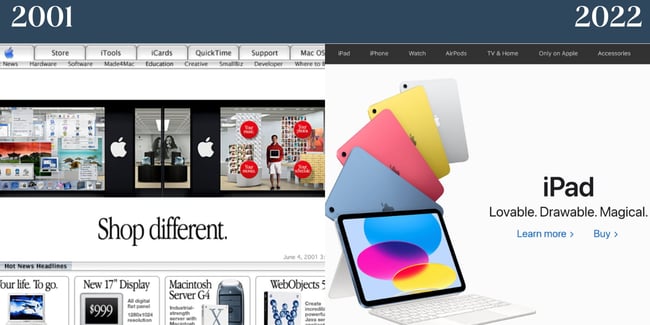
Nostalgic websites: Apple. Image shows 2001 Apple homepage and 2022 homepage.

Apple always takes a product-centric approach to its homepage. Even in 2001, you’ll notice that the company’s items were the website’s primary focus. In 2022, Apple chooses to keep branding minimal yet distinctive. It features just one product to make the center focus of the homepage. The current homepage is also a testament to compelling copy; in just three adjectives, Apple paints a complete picture of why you should get an iPad.

3) Microsoft

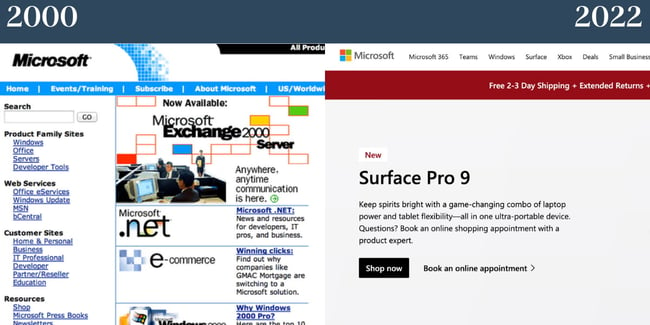
Nostalgic websites: Microsoft's homepage in the 2000s and 2022 are compared.

In 2000, Microsoft’s website was clunky and over-complicated. The abundance of words on the website and lack of whitespace made for an overwhelming user experience. Today, Microsoft’s site takes a cue from Apple and centers on its products. The site, as a result, is less dizzying and more digestible for visitors.

4) Mashable

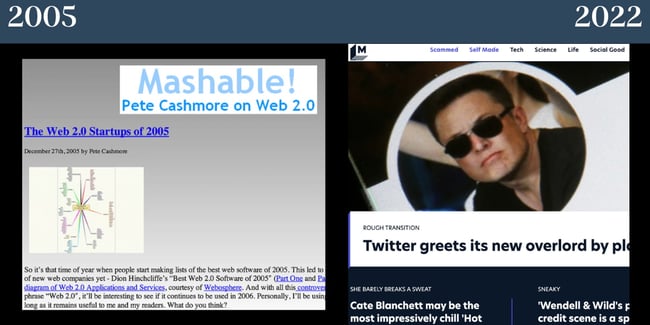
Nostalgic websites: Mashable in 2005 compared to Mashable homepage in 2022.

Once upon a time, Mashable had a gradient background — not to mention a serious lack of imagery. Now, the site balances visuals with text. The company branding also no longer takes center stage and focuses on featured stories.

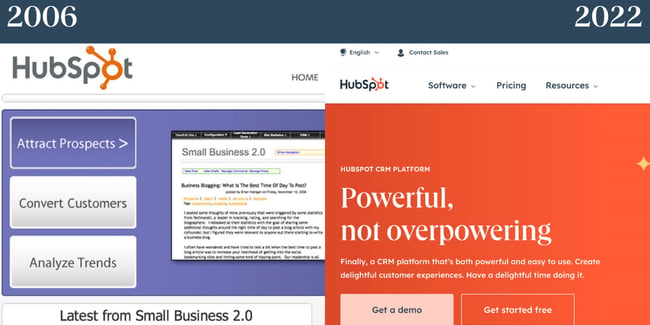
5) HubSpot

Nostalgic websites: HubSpot in 2006 is shown next to HubSpot's homepage in 2022.

In 2006, the tech and marketing world was focused heavily on surviving and succeeding in a web 2.0 world. Small businesses were popping up worldwide, and HubSpot’s website was focused on showing how the product could add value for these companies. Today, HubSpot still caters to small businesses but also medium and enterprise corporations. Now, our website focuses more on the product and features a lot more color than it initially did.

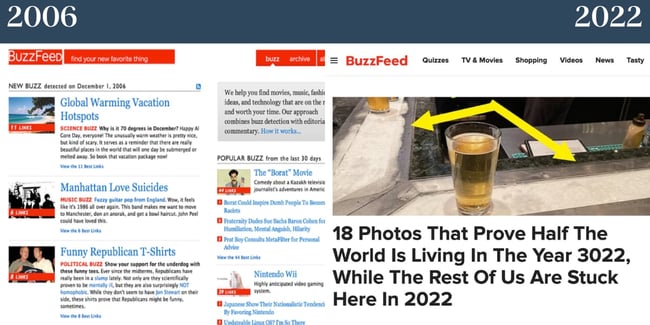
6) BuzzFeed

Nostalgic websites: Buzzfeed's homepage in 2006 is compared to 2022's. Both feature text, but 2006 features significantly more.

BuzzFeed was created to help users find their favorite things, including movies, music, fashion, ideas, and technology. The site still achieves this with a more visual and interactive approach. Today, the website balances images and text more seamlessly, but the site’s overall feel is still intact.

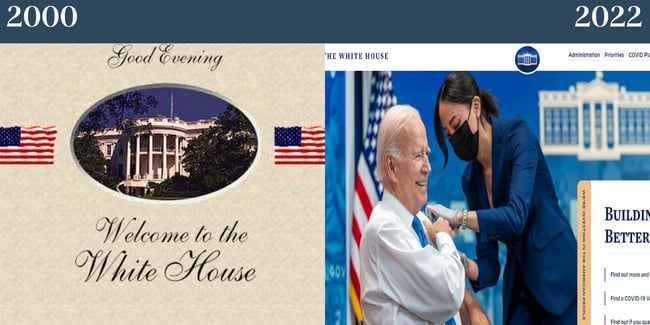
7) The White House

Nostalgic websites: The White House homepage in 2000 compared to 2022. In 2000 you see a picture of the whitehouse itself and in 2022 you see President Biden getting his coronavirus vaccine.

In 2000, Bill Clinton was the President of the United States, Al Gore was Vice President, and the White House’s website had a very different look and feel. Then, the website featured a Declaration of Independence-esque script font and didn’t emphasize imagery — or storytelling, considering the text just welcomed visitors to the page. When you visit the site today, you’ll notice a large image and copy that focuses on current initiatives. We also love how the refreshed site focuses on accessibility with options to change the text contrast and size. 

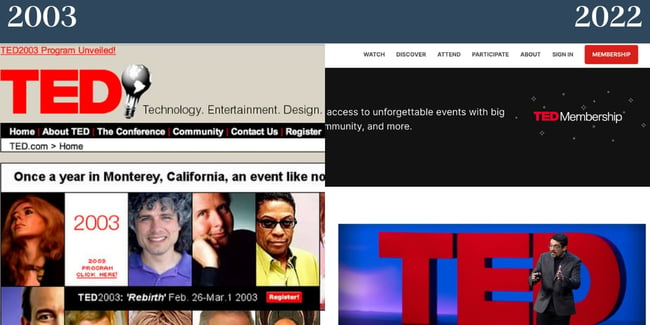
8) TED

Nostalgic websites: TED. Left features early 2000s website homepage and right side features 2022. There are more images in 2003 than there are on the 2022 homepage.

Though TED’s 2003 website still looks outdated by today’s standards, it was ahead of its time, with most of the homepage featuring visual content. In 2022, their site still features various images but also balances copy — and there’s only one main image above the fold. The site’s overall feel today is less cramped and overwhelming than it was in years past.

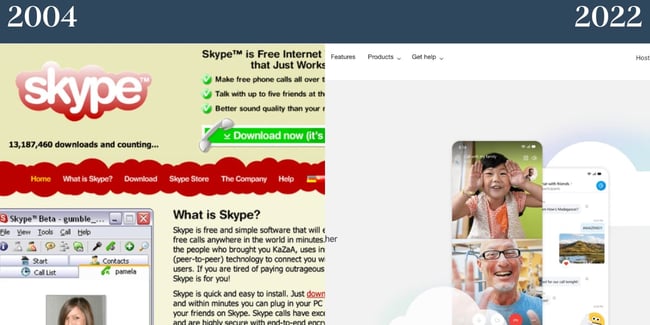
9) Skype

Nostalgic websites: Skype. Left shows the old website homepage and the right side shows the present.

In the early 2000s, Skype’s homepage featured several colors and lacked hierarchy. (And who knew the video call platform once had a red logo?) Today, Microsoft owns Skype, and the latter takes a cue from the larger organization’s look and feel. The site features whitespace, excellent visual hierarchy, and offers a compelling image of the product in action.

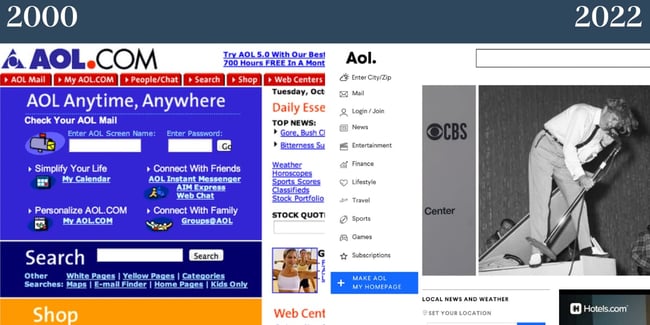
10) AOL

Nostalgic websites: AOL. Left side shows AOL in 2000, right side shows AOL in 2022.

In 2000, AOL’s site had a variety of colors that weren’t cohesive, ultimately making the site appear messy. Today, the site features enough whitespace to balance the amount of copy and imagery it has. We’re also fond of the site’s new font, as it’s visually appealing and easy to read.

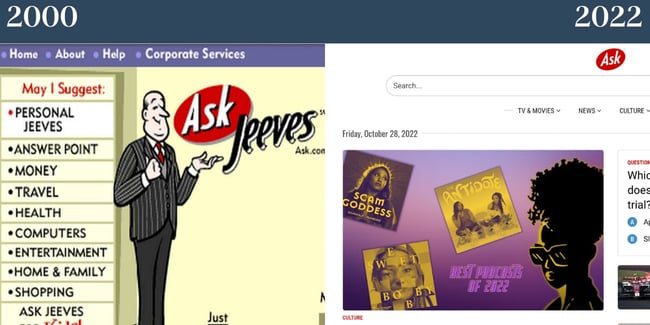
11) Ask

Nostalgic websites: ASK. On the left it shows the site before the rebrand and on the right you'll see the site after.

Ask Jeeves rebranded as Ask. In 2000, the site lacked whitespace and featured a character — part of the site’s unique branding. Since dropping the second half of the name, there’s no longer a character on the site’s homepage. Today, the site looks much more like a news or publication site than a platform to ask questions and get quick answers.

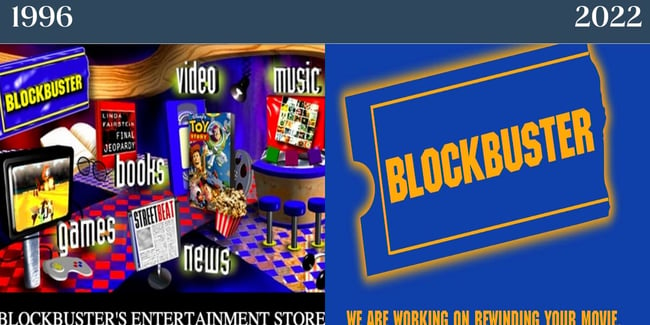
12) Blockbuster

Nostalgic websites: Blockbuster. Left: shows the website in the 1990s during the company's prime. The right shows the website now, in 2022.

Remember the good old days of going to Blockbuster to pick out your movie and grab a few snacks? We sure do. What Blockbuster’s 1996 site lacked in hierarchy, it made up for in personality. Today, Blockbuster’s site is out of commission — and features a cheeky note that the company is working on rewinding your movie.

13) Coca-Cola

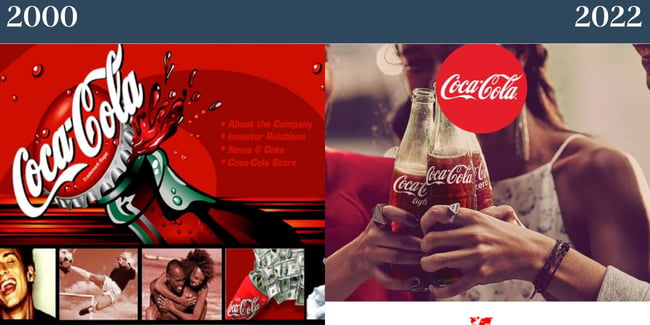
Nostalgic websites: Coca Cola. Left features their site from 2000 which is remarkably ahead of its time. The right features the site from 2022.

We’ll give it to Coca-Cola: Their branding is timeless. Coca-Cola’s website from 2000 doesn’t look too shabby compared to many of the outdated websites on this list.  The brand understood the importance of visual content and simplicity in 2000, and they still do today. In 2022, their site focuses more on imagery and features less red than in the past, but it still feels cohesive with the rest of their branding.

14) Pepsi

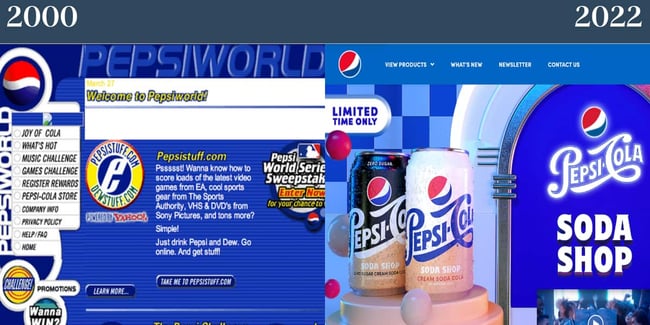
Nostalgic website: Pepsi. Website on the left is from the 2000s, the website on the right is the homepage from 2022.

Pepsi’s site in 2000 was cluttered, lacked visual hierarchy, and had too much going on. Today, we’re huge fans of Pepsi’s nostalgic homepage. It features a font that’s easy to read, plus the site doesn’t feel too cluttered. The company has also since moved its menu to the top of the page and cut back on how many tabs there are which is much better from a user experience standpoint. 

15) Macy’s

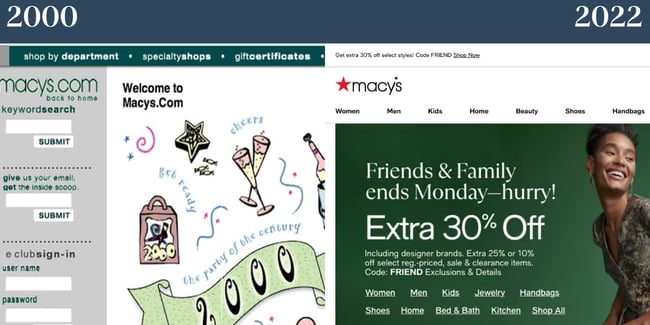
Nostalgic websites: Macy's. Left side shows Macy's from 2000 and the right side shows Macy's in 2022.

While Macy’s 2000 website doesn’t conform to today’s standards, we appreciate how cohesive the colors are. Interestingly, products aren’t at the forefront of Macy’s nostalgic site. Today, however, the Macy’s website tells an extremely different story. The website has a neatly organized menu and excellent visual hierarchy.

16) Amazon

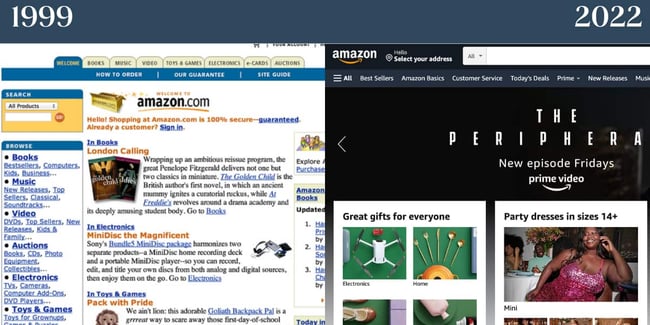
Nostalgic websites: Amazon. Image to the left shows the site in 1999 and image to the right shows Amazon in 2022.

In 1999, Amazon’s website was highly text-heavy, making it dizzying to look at. The vertical menu was also cluttered and difficult to digest. Today, Amazon’s menu appears on the top of the page, and the site seems significantly less overwhelming despite the fact that it still advertises various products. 

17) Yahoo

Nostalgic websites: Yahoo. On the left is the homepage in the 1990s, on the right is the homepage now.
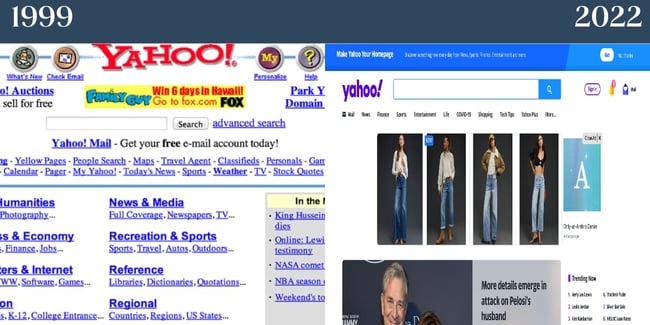
In 1999, Yahoo’s website focused mainly on text and featured no imagery. Today, a very different story is told when you visit the platform’s site. Because Yahoo is a news site, there are images to accompany every story, plus a summary of what you can expect when you read the piece. We’re also a fan of the trending column on the right side of the site, as it makes it easy for users to understand what’s in the news at a glance.

18) Tumblr

Nostalgic websites: Tumblr. Site on the left is from 2007 when the platform was in its infancy, the right shows the homepage now.

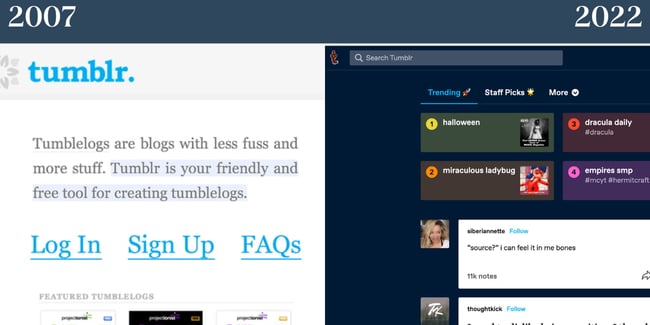
In its infancy, Tumblr referred to blogs as Tumblelogs and had a text-centric website. Today, if you visit Tumblr while not logged in, you’ll see a mock dashboard that shows visitors what theirs could look like if they create an account. Today’s Tumblr site is also significantly more image-focused.

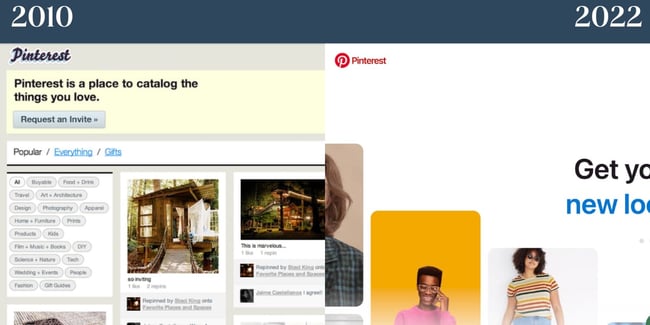
19) PinterestNostalgic websites: Pinterest. Left side shows Pinterest in 2010 when it debuted, the right side shows Pinterest in 2022.

Remember when Pinterest was invite-only? As you can see from the screengrab of the 2010 Pinterest site, the platform had a completely different logo and a less sleek appearance. If you visit Pinterest today, you can create an account instantly — no request necessary. In addition, the platform features a live image that changes yet loads quickly. The copy is simple yet compelling.

20) Reddit

nostalgic-websites-REDDIT

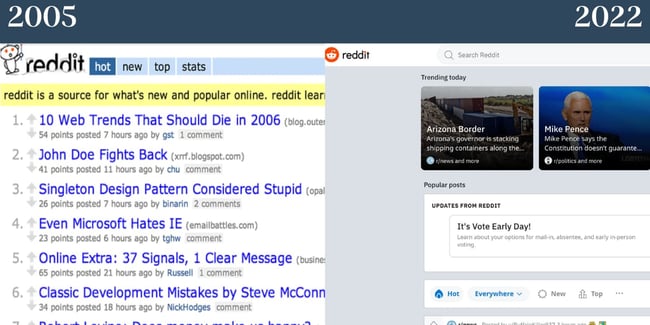
In 2005, Reddit was all about text. Reddit is still more text-focused than most modern sites. However, it does feature a balance of images. We like how the font Reddit uses today is still semi-nostalgic but is easier to read than it has been in the past. The site is also more visually compelling as it appears more like a news site.

21) Barnes & Noble

Nostalgic websites: Barnes and Noble. Left features B&N's older website, the right side features Barnes and Noble's site today.

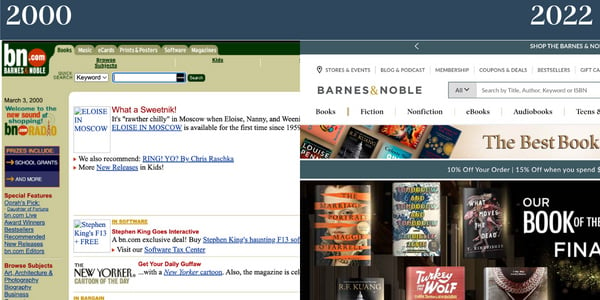
You’re probably starting to notice a theme at this point: The websites of years past were text-focused. Barnes & Noble is no exception. In 2000, the bookseller had a dense, visually unappealing vertical menu. The images took a long time to load — if they did. There’s also a lack of visual hierarchy, so it’s difficult for visitors to decide where to look. Today, the company’s site is significantly more digestible. It balances whitespace with imagery and text, and the designers cleaned the menu up.

22) Dunkin’

Nostalgic websites: Dunkin. The left features an early 2000s version of the website's homepage, and 2022 shows the present version in 2022.

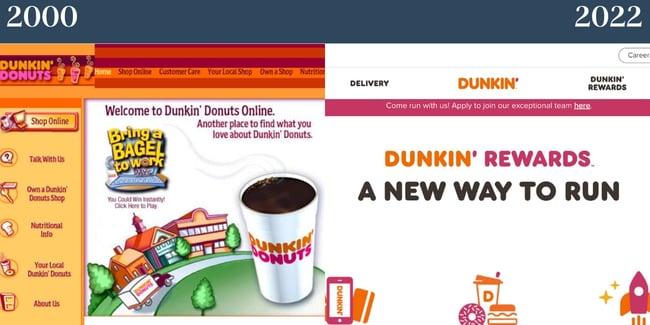
We’ll hand it to Dunkin’: They’ve stayed true to their signature color scheme for decades. This screengrab from their site in the 2000s is one of our favorites on this list. It’s shockingly minimalistic and features an image that wasn’t standard for the time. Today, Dunkin’ has plenty of whitespace, features cohesive branding, and balances graphics with the copy. The website also has an easy-to-follow menu and includes the company’s striking pink and orange colors. 

23) Starbucks

Nostalgic websites: Starbucks in 2000 versus Starbucks in 2022. In the 2000 version, the images do not load.

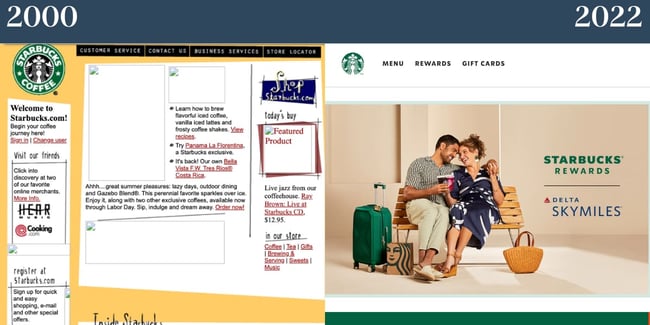
In 2000, Starbucks got a few things right: Their menu is straightforward, and they featured images on their site, though they didn’t load. (Psst: These plugins can help ensure your content loads quickly if you have a “heavy” page so your website avoids a similar fate.) You’ll also notice their consistent logo. In 2022, Starbucks effortlessly offers a pop of color on its site without overwhelming visitors. The site features Starbucks’ signature font and includes an image promoting a recent collaboration with another company. The image itself also feels on-brand. We also want to call out Starbucks’ sparse yet effective navigation at the top of the page.

24) Walmart

Nostalgic websites: Walmart. The past version of the Walmart website is shown next to its 2022 counterpart.

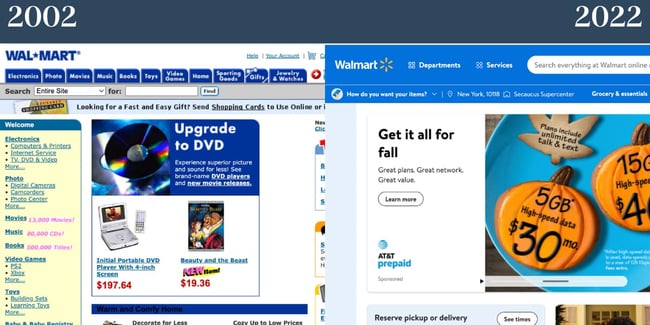
For its time, Walmart’s site in 2002 was quite successful. It featured images and text which still dominate the website today. In addition, it had a better visual hierarchy than some of the other examples we’ve investigated. Similar to Dunkin’, one thing that Walmart does incredibly well is translating its famous color scheme to its site. In 2022, Walmart’s website has plenty of imagery and concise copy that enhances the graphics.

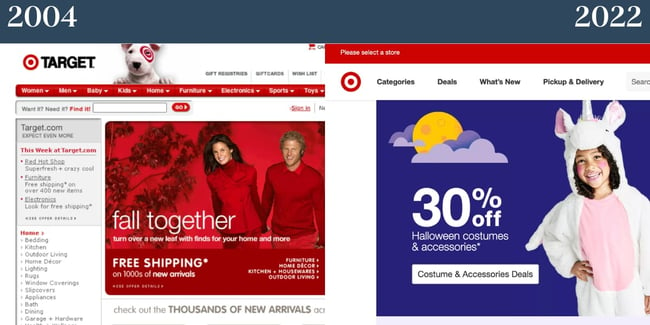
25) Target

Nostalgic websites: Target. On the left you see Target's site in 2004 and 2022 on the right.

There are also plenty of things Target got right in 2004. For one, the brand used its well-known color scheme. The site features images, too, and its branding is still largely the same. In 2022, Target’s site puts a much larger emphasis on visuals than it does on text. The branding is minimal yet effective, and the site features a simple menu that expands when visitors click on it. 

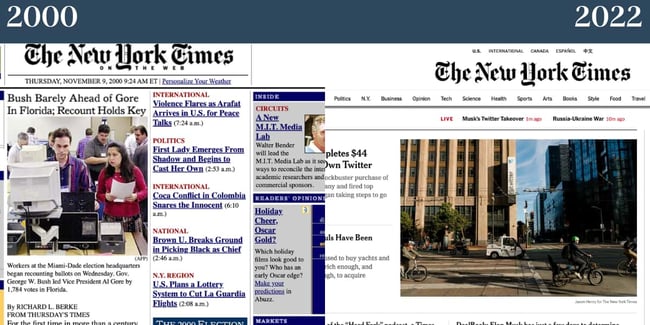
26) The New York Times 

Nostalgic websites: NYTimes. On the left, the NYTimes from 2000 and on the right, its 2022 counterpart. Both resemble a physical newspaper.

We’re impressed: While New York Times has reworked its website since 2000, the website is remarkably similar. Even in 2000, figuring out where to direct attention was easy. The New York Times scores major points because its 2022 website resembles a newspaper. It features visual hierarchy, balances images with copy well, and we like how the font is distinctive yet easy to read. 

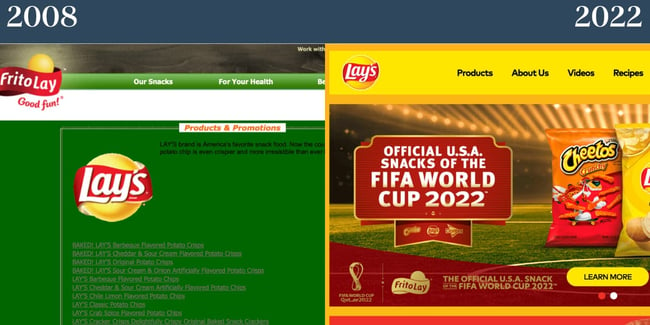
27) Lay’s

Nostalgic websites: Lay's. Left features an image of the 2008 site and the right features an image of the 2022 site. The left has green background and poor text contrast the right features Lay's well-known yellow color.

In 2008, Lay’s website was green and featured very poor text color contrast. This makes it difficult for people to read the copy. Luckily, Lay’s has since reworked its site. Today, it’s still colorful but features better contrast. You’ll also notice the site has plenty of Lay’s illustrious yellow. The 2022 site seems far more on-brand than it has in the past. 

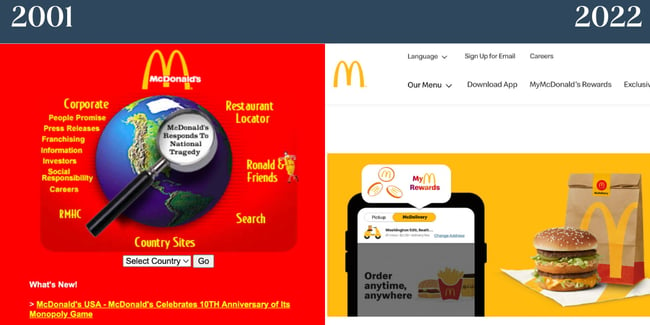
28) McDonald’s

Nostalgic websites: McDonald's. The left image is from 2001 and features a red background and yellow text. The right image is McDonald's present homepage.

In 2001, McDonald’s website featured a red background and yellow text, which wasn’t exactly optimal for readers. Now, McDonald’s site is minimalist. It features few colors aside from the brand’s distinct yellow and offers a variety of options for visitors to select from on the menu section. However, the menu isn’t overwhelming because the rest of the website is so straightforward. The brand also taps its signature font for the 2022 website. 

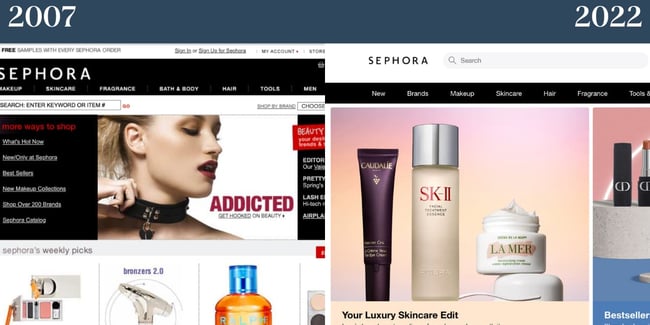
29) Sephora

Nostalgic Websites: Sephora. The image on the left is Sephora's website in the early 2000s and the right is from 2022.

Sephora’s website in the early 2000s featured a balance of images and text. For its time, it was an example of a compelling website design. Today, the site adheres to modern web design trends. It has large images that are visually appealing and includes  straightforward copy. 

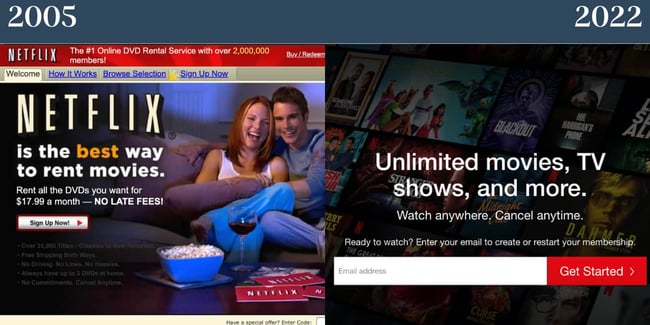
30) Netflix

Nostalgic websites: Netflix. On the left is the 2005 homepage and on the right is the 2022 homepage.

In 2005, Netflix featured an image-focused homepage, which is quite different from today. In 2022, copy is the star of the show on Netflix’s homepage. The company also cleverly places a call to action at the center, so you’ll provide your email address and get started. In both 2004 and 2022, the main focus of the homepage was a call to action, which is noteworthy. We like the image in the background, which the text overlays as it features shows and movies you can enjoy with a Netflix subscription.

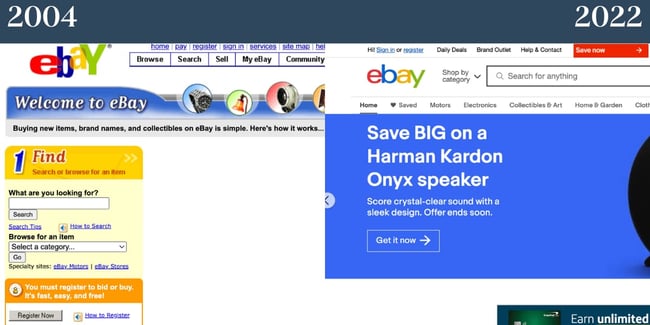
31) eBay

Nostalgic websites: eBay. On the left is eBay's homepage in 2004 and on the right is eBay's homepage in 2022.

In the early 2000s, there was a lack of hierarchy on eBay’s site, which made it tricky for visitors to understand where to begin. This is also detrimental from a user experience standpoint. That has since changed, however. In 2022, eBay has a carousel above the fold on its site. It features a few products and promotions the company is currently offering. The site also features more whitespace than in the past, and the menu is paired back by comparison.

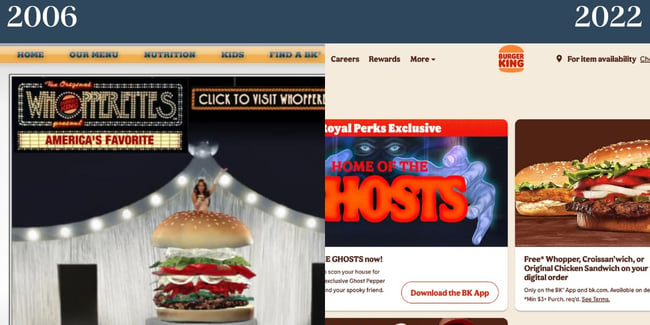
32) Burger King

Nostalgic websites: Burger King. The left side of the image shows the nostalgic homepage from 2006 and the right side of the image shows the 2022 update.

In 2006, Burger King did feature a primary image on their site. The menu was also at the top of the site, but the font was difficult to read. In 2022, Today, Burger King features a neutral background and keeps the focus on its imagery. Copy is sparse yet effective. In addition, the company uses a font that offers a pop of personality yet is readable.

Take Site Redesign Inspiration from These Nostalgic Websites

If you’re seeking inspiration for your site redesign, look at these nostalgic websites to get an idea of how you can rework your landing page. These nostalgic websites prove that by using your unique branding, balancing images and text, and including a clear visual hierarchy, your site will look great for years to come.

Editor’s note: This post was originally published in April 2014 and has been updated for comprehensiveness. 
Blog - Website Redesign Workbook Guide [List-Based]

Categories B2B

9 Black Friday Marketing Strategies for 2022

The holiday season is around the corner, so it’s time for marketers everywhere to gear up for Black Friday. From optimizing your website to launching outstanding deals and giveaways — there’s a lot that marketers need to account for. If you’re unsure what to do, here are nine marketing strategies that will wow your customers and boost your company’s revenue.

What is Black Friday?

Best Black Friday Marketing Ideas

  1. Incorporate social media commerce.
  2. Leverage email marketing.
  3. Optimize your website for shopping.
  4. Audit product pages.
  5. Give longtime customers irresistible deals.
  6. Follow up with customers after Black Friday.
  7. Provide minimum spend rewards.
  8. Create a sense of urgency.
  9. Create a holiday marketing calendar.

Black Friday Marketing Tips

→ Download Now: Free Marketing Plan Template

What is Black Friday?

Black Friday is the Friday after Thanksgiving in the United States and marks the start of the holiday shopping season. It’s also when many companies (including your competitors) begin rolling out numerous deals and discounts on products.

To stay competitive, your company must prepare a marketing strategy to boost revenue and delight customers.

Best Black Friday Marketing Ideas

Below are nine Black Friday marketing ideas you should consider for 2022.

1. Incorporate social media commerce.

Social media is now becoming where consumers make purchases and learn more about products and brands. In 2020, social media commerce earned $26.97 billion in sales, which is expected to double to $56.17 billion by 2023. So why not incorporate social commerce into your Black Friday marketing strategy?

To do this, connect your online store with platforms like Facebook, Instagram, and YouTube — which all provide avenues for users to make purchases. You can also run social media-exclusive Black Friday deals on these platforms, like Buy-1-Get-1 free deals.

What We Like: Not only will you generate more revenue online, but you will also draw new social media followers to your brand.

2. Leverage email marketing.

Ahead of Black Friday, start building an email list of potential customers to keep them informed of upcoming Black Friday deals. One way to do this is via pop-up forms, like the one below, that collect email addresses.

thredup-promoImage source

Make sure to offer an incentive. For example, offer the customer 30% off their next purchase just for signing up for the email list. Once you have your email list together, you can start sending personalized content based on the customer’s needs. According to an eMarketer survey, customized emails have an ROI of 122%.

What We Like: By leveraging email marketing and personalized email content, you can encourage customers to stay subscribed long after Black Friday passes.

3. Optimize your website for shopping.

No one likes to wait for a slow website to finish uploading, especially on Black Friday when great deals are at stake. Ideally, you’ll want your website to load fully within one to four seconds because the time frame has a 12% to 30% conversion rate. The longer your site and its pages take to load, the more likely users will lose patience and abandon their purchases.

You also want to optimize your website to avoid crashes or outages from the high volume of Black Friday shoppers.

What We Like: Not only will optimizing your website improve conversion rates and avoid Black Friday mishaps, but it will also improve your website’s overall functionality — which is essential year-round.

4. Audit product pages.

Visitors to your site will spend most of their time browsing your product pages, looking for the items they want. So, you’ll need to audit those pages to ensure they provide a pleasant and efficient shopping experience. In your audit, make sure to:

  • Update product descriptions with sensory words to describe the product and SEO keywords to boost it in SERPs.
  • Group your products based on the recipient and purpose. For example, “Gifts for Kids” or “Home Decor.”
  • Include 6-8 product photos from different angles, so customers get a clear picture of what the product looks like.

What We Like: Auditing your product pages helps improve your customers’ experiences on your site. And similar to optimizing your website — these changes are essential all year-round.

5. Give longtime customers irresistible deals.

Show your longtime customers that you appreciate their commitment to your brand by offering exclusive deals. Be it giveaways, discounts, or BOGO, rewarding your customers for being longtime patrons will incentivize them to keep coming back long after Black Friday.

What We Like: Giving exclusive discounts and giveaways can help you clear your inventory in preparation for the new year.

6. Provide minimum spend rewards.

Another way to encourage customers to spend is by offering minimum spend rewards. Every time customers spend over a certain amount, and they receive a reward. The reward could be a percentage off their purchase, free shipping, a coupon code, or a gift.

What We Like: Minimum spend rewards can incentivize customers to spend more and serve as a “thank you” for their trust in the company.

7. Create a sense of urgency.

Urging consumers to act quickly is an excellent way to boost Black Friday sales. One Entrepreneur Marcus Taylor said building a sense of urgency helped him to increase sales by 332%. There are several ways to entice consumers into acting immediately, including:

  • Flash sales that only a few hours or just one day.
  • Showing when an item is low in stock
  • Using time-sensitive language like “last chance,” “today only,” or “now.”

What We Like: Marketers can promote flash sales via email or hold pop-up social media contests to get shoppers excited and ready to purchase.

8. Follow up with customers after Black Friday.

Just because Black Friday is over doesn’t mean the marketing stops. Reach out to customers via email and ask about their shopping experience. Are they satisfied with their purchase? You can also recommend other products based on their bought items or get them excited for Cyber Monday deals.

What We Like: This is an excellent opportunity to send personalized emails asking for honest feedback or recommending other products.

9. Create a holiday marketing calendar.

Of course, the key to any marketing strategy is to be organized. Create a holiday calendar to keep track of your Black Friday marketing strategies. You may even need separate calendars for different marketing channels, such as social media or email.

What We Like: Running other sales and discounts through various marketing channels can feel overwhelming. By creating at least one marketing calendar, you’ll be able to keep track of your strategies and progress confidently.

Black Friday Marketing Tips

No matter what strategies you choose to use this year, always remember to do the following:

  • Stay organized and create one or more calendars to keep track of your Black Friday strategies.
  • Ensure your website and product pages are optimized to handle high traffic from holiday shoppers.
  • Leverage social media and email marketing to stay top-of-mind with your customers.

Black Friday doesn’t have to be a stressful time of year for your business. By implementing any of the above strategies, you’ll be able to boost revenue and delight your customers ahead of the holidays.

Blog - Content Mapping Template

Categories B2B

What to Do if Your Email is Hacked (+ Sample Messages To Send)

If you’ve received an email from someone claiming to have hacked your account, don’t panic. It’s important to stay calm and take the necessary steps to protect yourself and your data.

This blog post will provide sample emails you can send to your contacts after being hacked. We will also share tips on protecting yourself from future hacking attempts.

Free Download: 30 Follow-Up Email Templates

What To Do if Your Email is Hacked

You can’t always tell if you were hacked immediately. Some hackers may send corrupted emails to your contacts without leaving a trail.

Other times, filter settings might catch suspicious messages and automatically place them in “Spam” or “Trash,” so you never even see them.

Luckily, there are a few signs to watch out for if you suspect someone has hacked your account:

  • You receive strange or unsolicited emails from someone with your own name or a third-party name. Look for blurred images, poor grammar, and strange email addresses.
  • People you know tell you they’ve received unusual emails from you. They’ll likely delete them immediately, so don’t be surprised if no one has any to show you.
  • Your password stops working out of nowhere. One day, you just can’t log into your account anymore.
  • You see unexpected activity on your account, such as new contacts or messages you didn’t write.

If all signs point to hacking, keep calm. Hacking is a hassle, but it’s nothing you can’t resolve in a few steps.

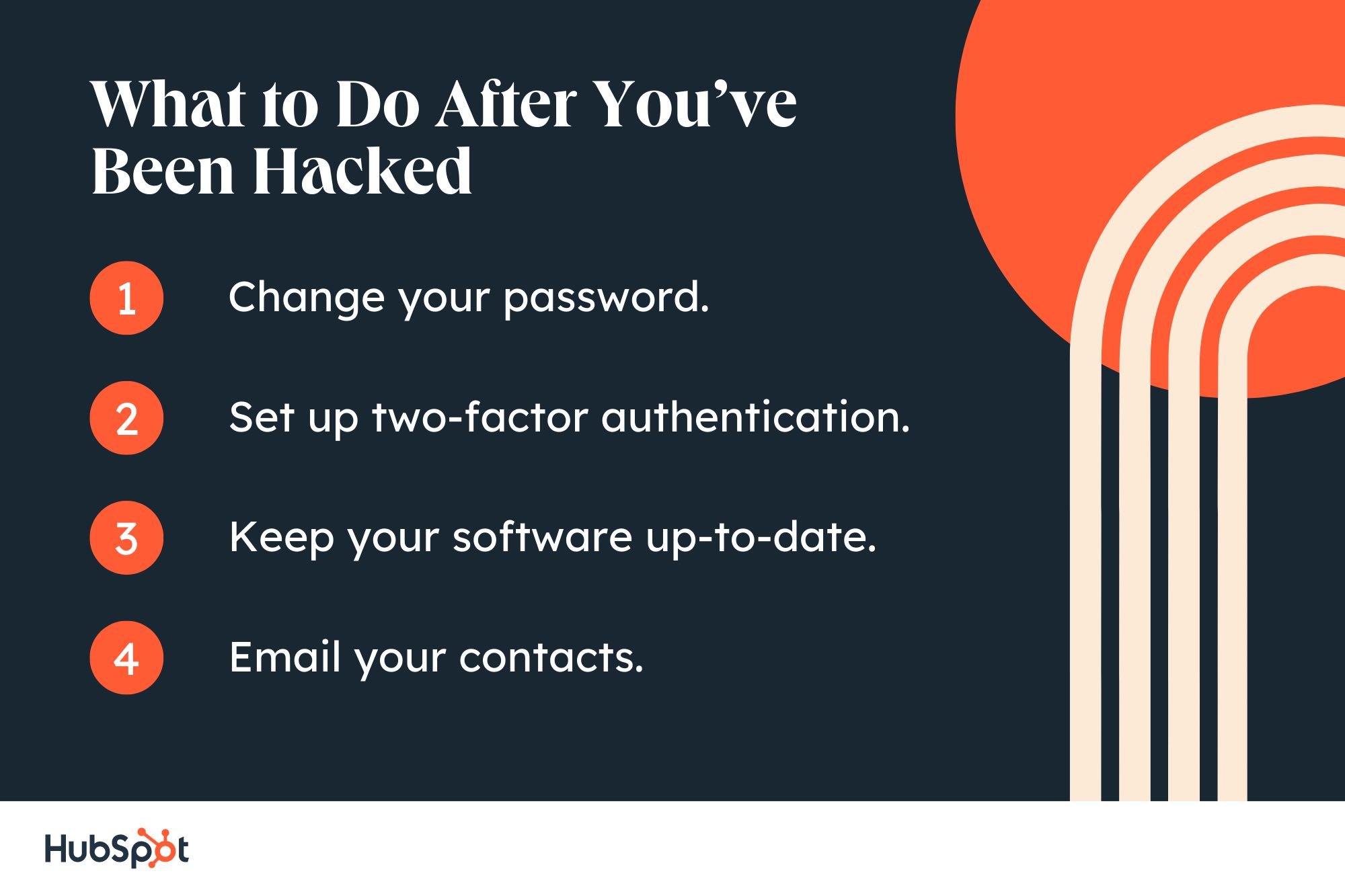
Steps to Follow After You’ve Been Hacked

hacked email next-steps: changes your password, set up two-factor authentication, keep your software up-to-date, and email your contacts.

1. Change your password.

If you think someone’s hacked your email, the first thing you should do is change your password. It might seem obvious, but it’s an effective way to stop the hacker from further accessing your account.

2. Set up two-factor authentication.

After you’ve changed your password, we recommend enabling two-factor authentication (if it’s not already enabled). Two-factor authentication adds an extra layer of security to your account by requiring you to enter a code from a second device when you sign in.

If you’re unsure how to change your password or enable two-factor authentication, contact your email provider for help.

3. Keep your software up-to-date.

Another way to protect yourself from hackers is to ensure that your software is always up-to-date. This includes your operating system, web browser, antivirus software, and any other programs you use.

Outdated software can have security vulnerabilities that hackers can exploit to gain access to your account. Keeping your software up-to-date can help close these security holes and make it harder for hackers to get into your account.

4. Email your contacts.

Once you’ve changed your password and enabled two-factor authentication, email your contacts, letting them know someone hacked your account. They’ll know to be cautious of any emails they received from you.

Doing this as soon as possible ensures they remain on high alert and protect them from future attacks.

Sample Letters for Hacked Email

Messages in this situation serve two purposes: to inform people of what happened and to provide directions on how to protect themselves. Being brief and apologetic will allow them to quickly turn their attention to the necessary steps, such as remaining vigilant.

Use the templates below if you ever are hacked.

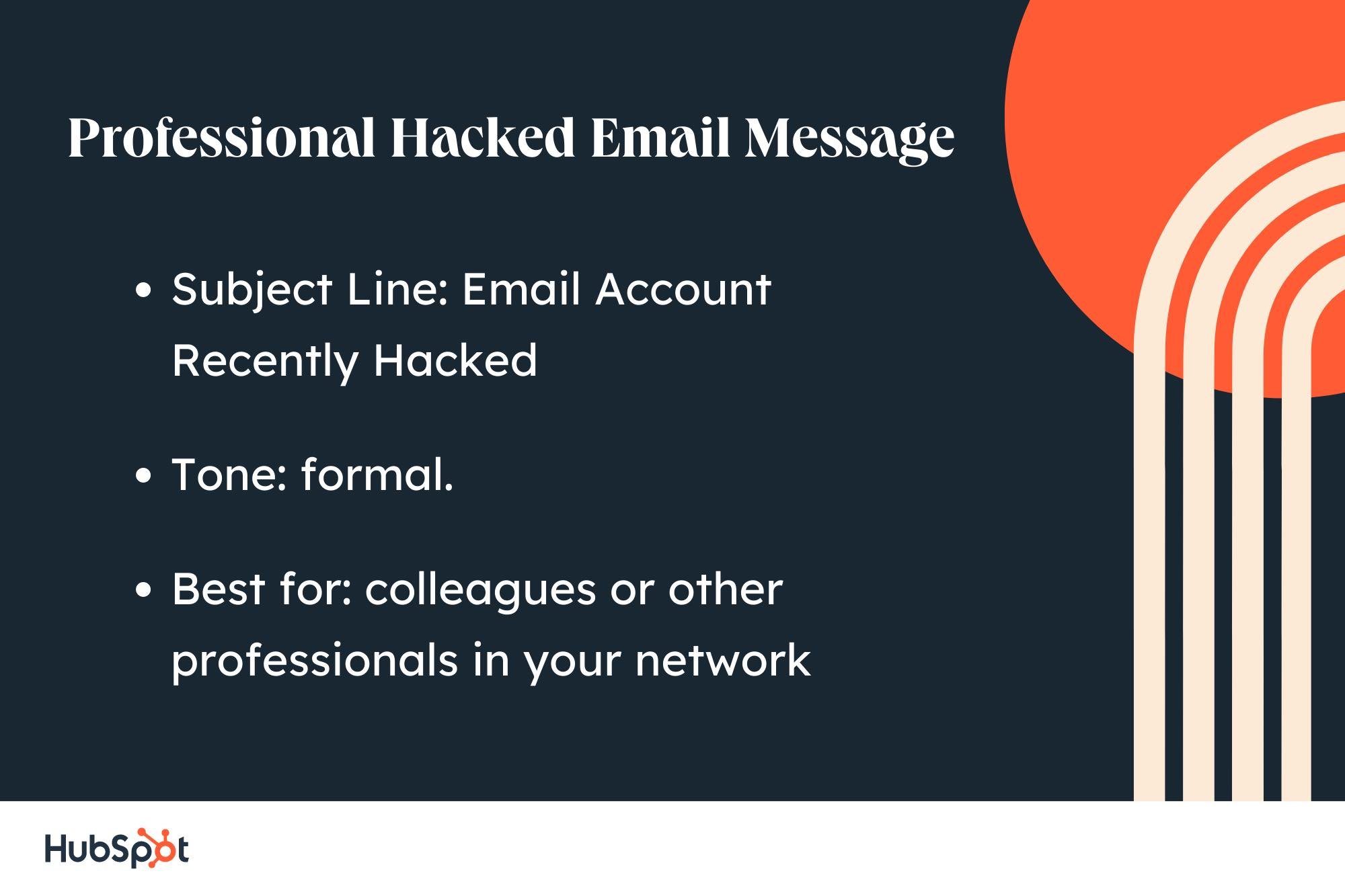
1. Hello, This is [Your Name], and I’m writing to let you know that my email account was hacked.

sample letter for hacked email: subject line, email account recently hacked; tone, formal; best for colleagues.

Hi [Recipient Name],

I wanted to let you know that my email account was recently hacked. I’ve changed my password and taken steps to secure my account, but I wanted to warn you in case you received any suspicious emails from me.

If you received any suspicious messages, please delete them, and do not click on any links.

I’m sorry for the inconvenience. Thank you for understanding.

Take care,

[Your Name]

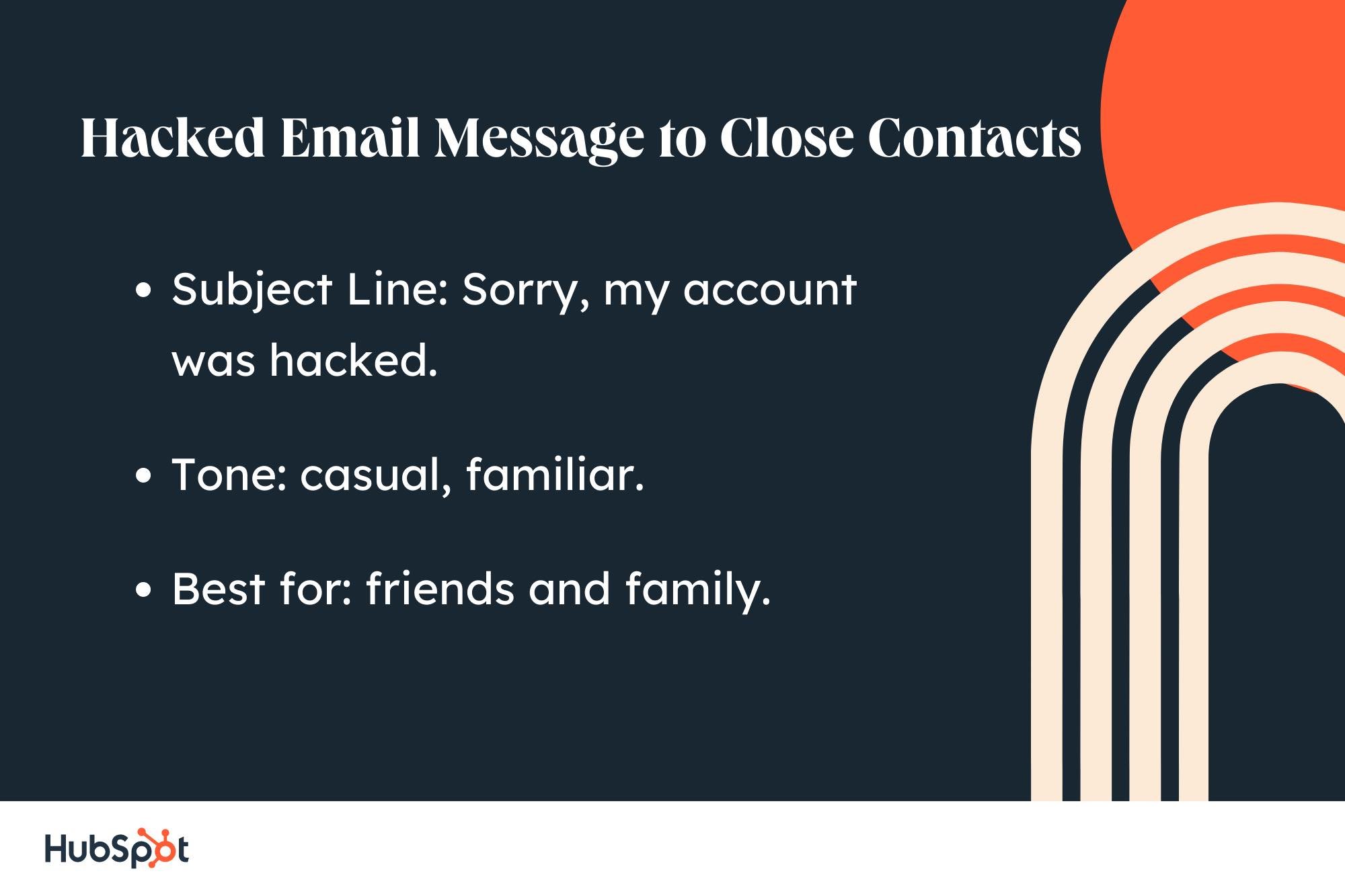
2. Sorry, my account was hacked.

sorry my account was hacked; tone, casual, familiar; best for friends and family.

Hey [Recipient Name],

If you got any weird emails from me over the past few days, I’m sorry. My account was hacked, but I’ve since changed my password and added two-factor authentication.

Delete any suspicious emails you’ve received, and don’t click on any links.

Sorry about this, and thanks for bearing with me.

[Your Name]

3. Hey, it’s [Your Name] ― I got hacked.

sample letter for hacked email: subject line, Hey, it’s [Your Name] ― I got hacked; tone, professional; best for acquaintances.

Hi [Recipient Name],

Today, I discovered that someone had hacked my email and social media accounts. Any unwanted emails and messages you’ve received are spam — many of my contacts have gotten spam emails from my account.

My apologies for any inconvenience this may have caused you. I have taken steps to ensure that it won’t happen again.

Thanks for your patience!

[Your Name]

4. Sorry [Recipient Name], I was hacked.

 sample letter for hacked email: subject line, Sorry [Recipient Name], I was hacked; tone, professional, apologetic; best for acquaintances and new contacts.

Hello,

I apologize for any unwanted emails you might have received in the last [timeframe]. My email account was hacked around [date], and spam messages were sent to my contacts, including you.

I’d never voluntarily sent this out to anyone, so I’m sorry if it made a wrong impression. Rest assured, I’ve secured everything already, so things should be secure moving forward.

Thanks for understanding,

[Your Name]

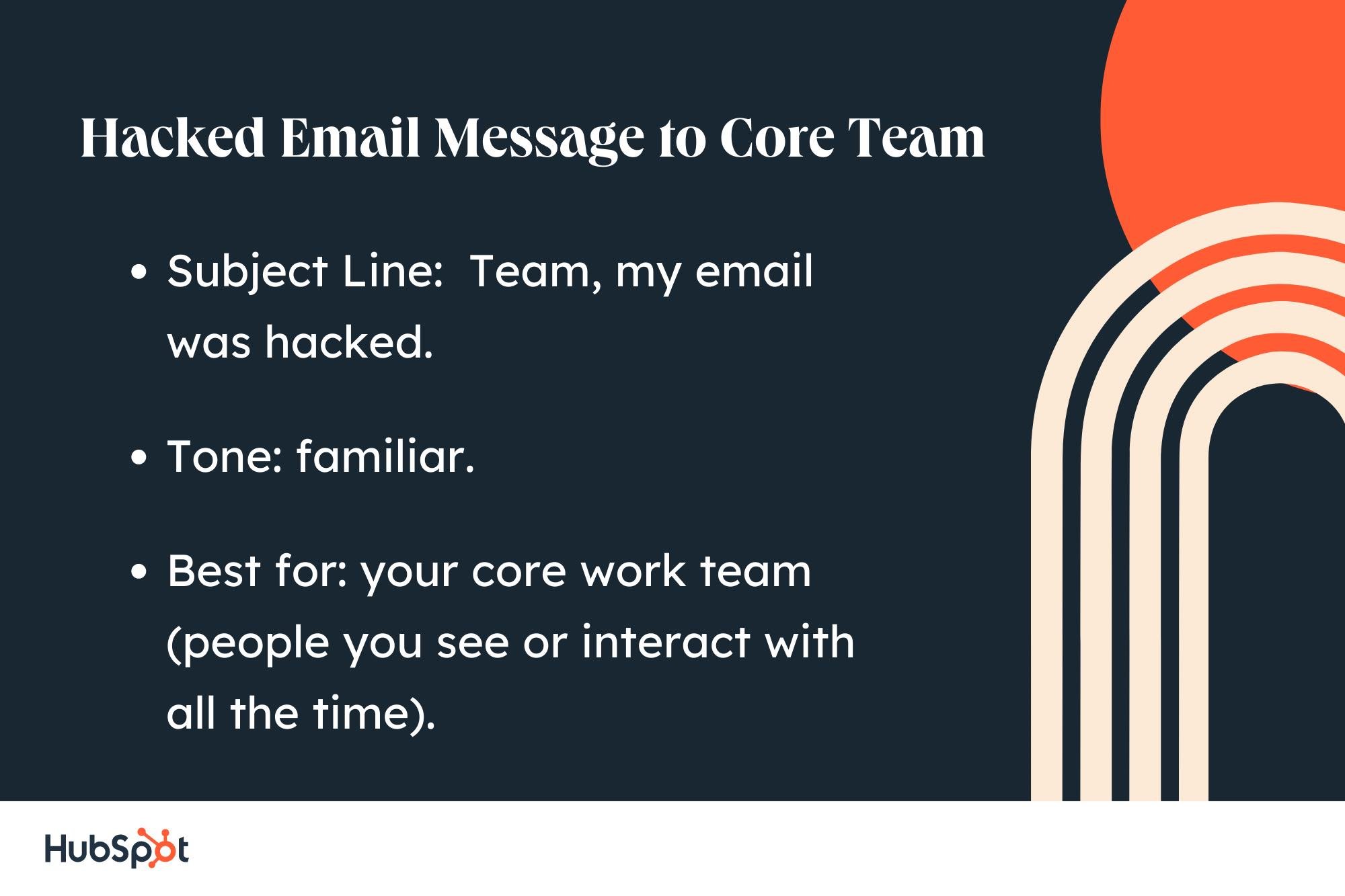
5. Team, my email was hacked.

sample letter for hacked email: subject line, Team, my email was hacked; tone, familiar; best for your core work team.

Hey Team,

I got hacked on [date], and I think spam messages have been going out [timeframe]. Sorry about that — I just noticed it and took the necessary steps to fix everything on my end.

Keep an eye out for anything suspicious, and ‌let me know if you continue getting any strange messages.

Thanks,

[Your Name]

Stay protected with HubSpot

Getting hacked is never fun, but it doesn’t have to be the end of the world. By taking some simple steps, you can quickly get your account back under your control. Plus, you can help protect yourself and your contacts from future attacks.

At HubSpot, your security and safety are paramount. Our CRM platform for front office teams ensures the privacy of the data you entrust to us. Check out our site to learn more about how we keep you protected.

Free Resource: How to Reach & Engage Your Audience on Facebook

Categories B2B

The Best B2B Lead Gen Campaigns for Every Channel

As a marketer, you’re always on the hunt for more leads. However, building the best lead generation strategy involves an in-depth understanding of tried-and-tested channels. Then, you’ll need to find the most effective combination of tactics for your unique goals.

In this post, you’ll gain insights into each major channel for B2B lead generation, including social media, PPC, blogging, and email. Best of all, you’ll learn effective strategies and impressive real-world examples for each.

Table of Contents

What is B2B lead generation?

B2B lead generation is the process of bringing prospective customers to your organization. These leads should be potential buyers who would benefit from your business’ product or service.

The types of leads generated vary by campaign and marketing platform. Disciplined B2B marketers understand the different dynamics, budgets, and expectations typical of each lead generation channel.

Learn more about B2B lead generation in the video below.

Social Media Marketing Strategies

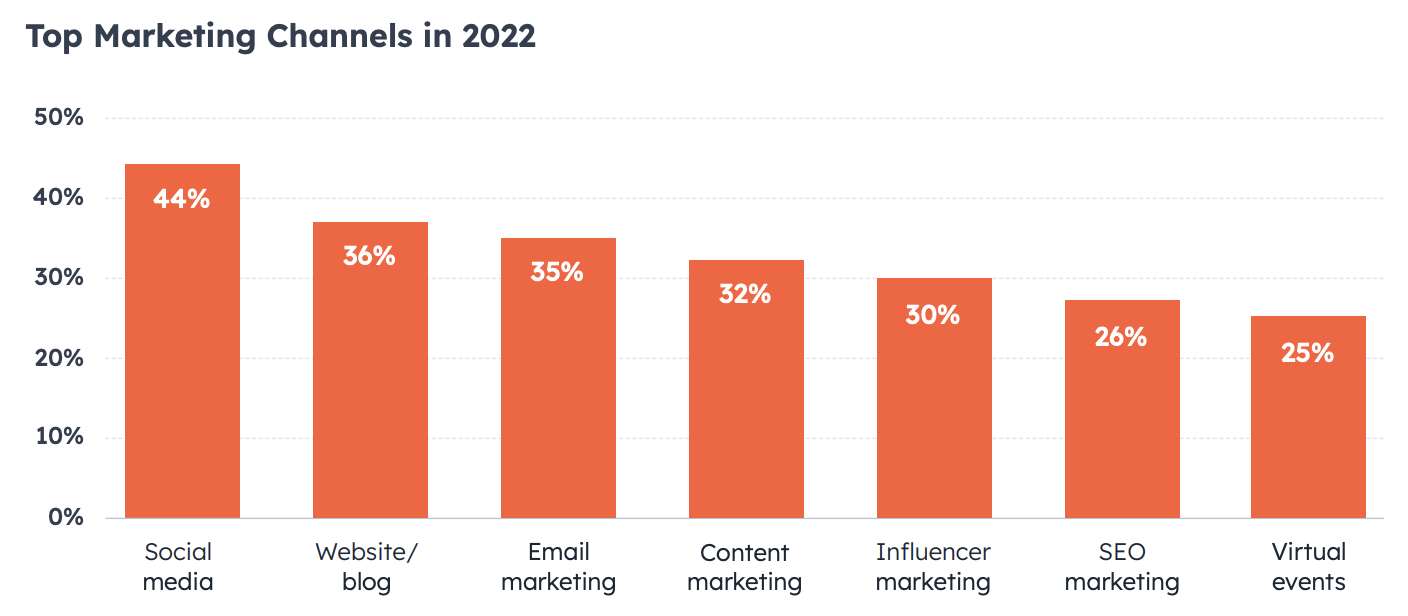
Social media is a critical component of B2B marketing. Social media marketing is typically less expensive than traditional advertising costs and offers broad mileage. In fact, 44% of marketers identified social media as their top channel for acquiring new customers, according to 2022 HubSpot Research.

best b2b lead generation, top marketing channels

Image Source

Here’s how your team can perfect your social media strategy.

What is the conversion rate of social media?

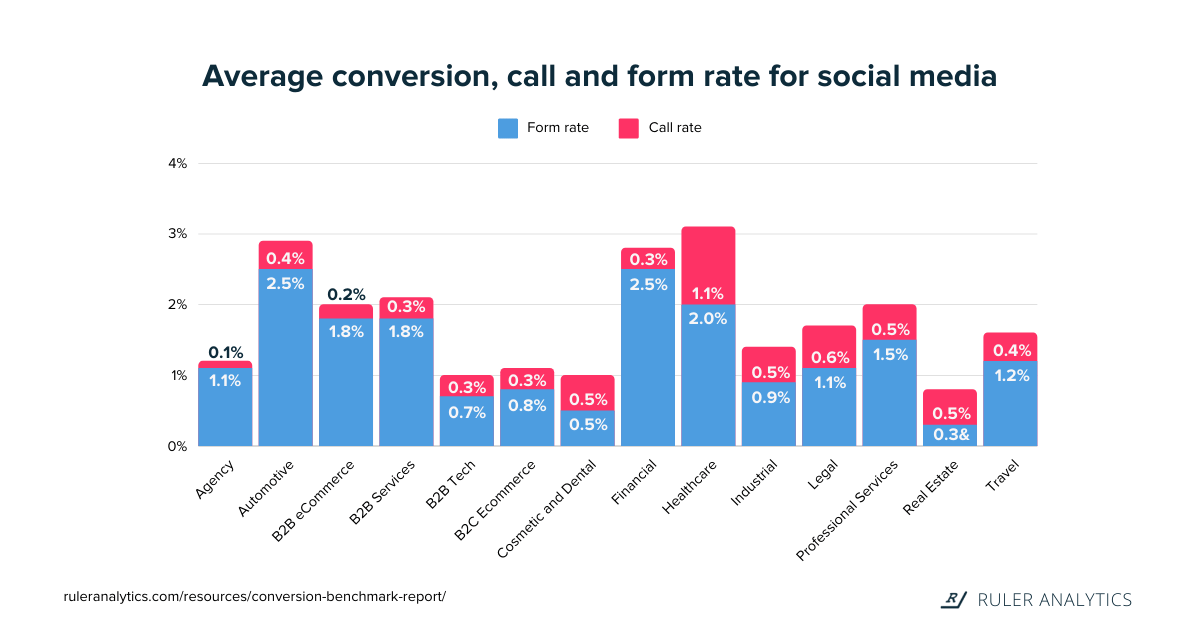
While there’s no single answer for B2B social media conversion rates, there are some calculated assumptions you can use to gauge efficacy. For B2B companies, social media conversion rates fall around 1.55% on average, according to 2021 research from Ruler Analytics.

Best B2B Lead Generation Strategies Rule Analytics Conversion Rates

Image Source

While social media is an important means of generating leads, these platforms have a lower conversion rate compared to other B2B digital channels. Ruler Analytics found that social media had the lowest average conversion rate for B2B companies when compared to paid marketing, organic search, email marketing, and referrals.

Remember: Social media is an important channel for top-of-the-funnel awareness. Even if you see higher conversion rates elsewhere, social media can keep your brand top-of-mind for potential buyers.

To increase conversion rates, focus on promoting helpful content behind lead capture forms. For example, you might promote a downloadable ebook to capture quality leads with an initial offer.

There are two main channels you should focus on:

  • LinkedIn Ads.
  • Facebook Lead Ad.

Let’s dive into each of these primary B2B social media channels now.

LinkedIn Ads

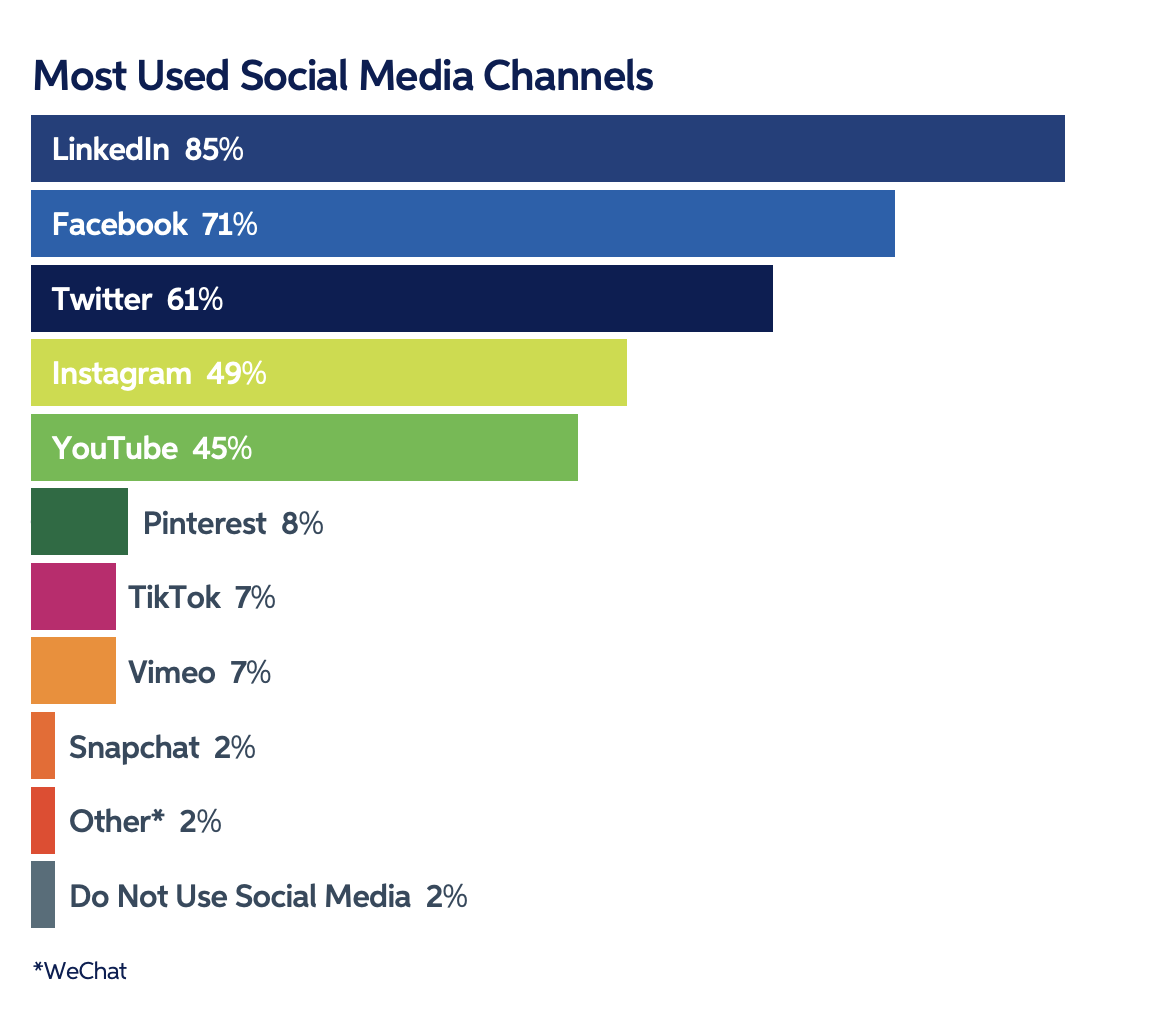
It’s no surprise that LinkedIn, the go-to B2B social network, has above-the-board figures when it comes to social media conversion. LinkedIn is the top social media platform for B2B marketers, so it’s a viable channel to pursue.

social media platform usage b2b lead generation best practices

Image Source

However, investing your energy in a channel with high engagement rates doesn’t automatically guarantee success. On LinkedIn, you must:

  • Target your audience based on buyer persona.
  • Make sure your ads have a newsworthy, topical angle.
  • Continuously test CTAs, images, and copy.

Pro tip: LinkedIn can be a helpful platform to display social proof. Consider sharing testimonials or case studies. Potential customers can then see which brands in their network you’ve already helped with your offering.

You can learn more about the nitty-gritty of LinkedIn Ad strategies from this LinkedIn-HubSpot 2-week free course.

Facebook Lead Ads

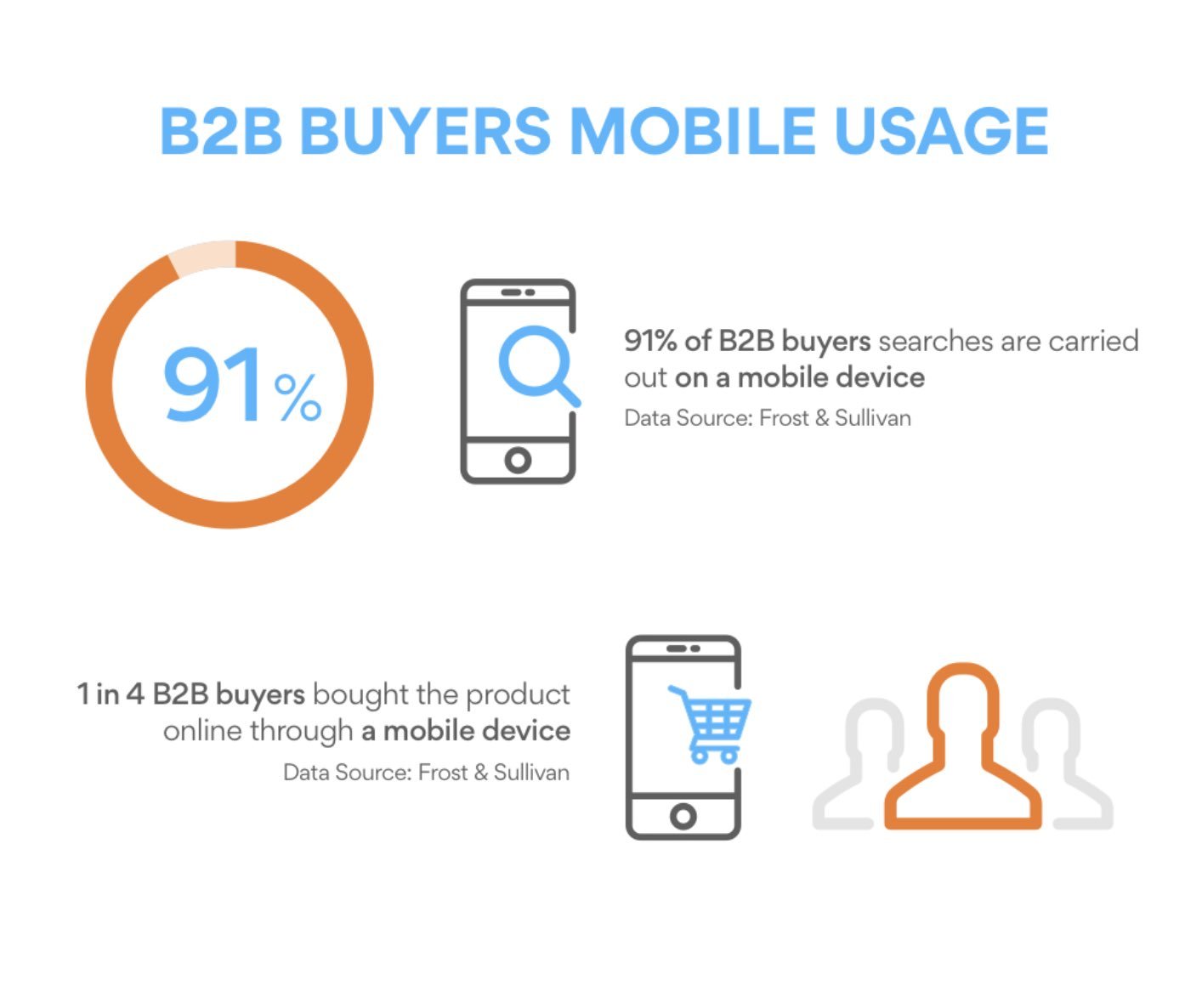
Ninety-one  percent of B2B buyer searches are carried out on a mobile device, according to 2022 research from Frost & Sullivan. Using Facebook lead ads in your marketing strategy can help you navigate the shift to mobile.

B2B lead generation mobile usage percentage, Frost and Sullivan

Image Source

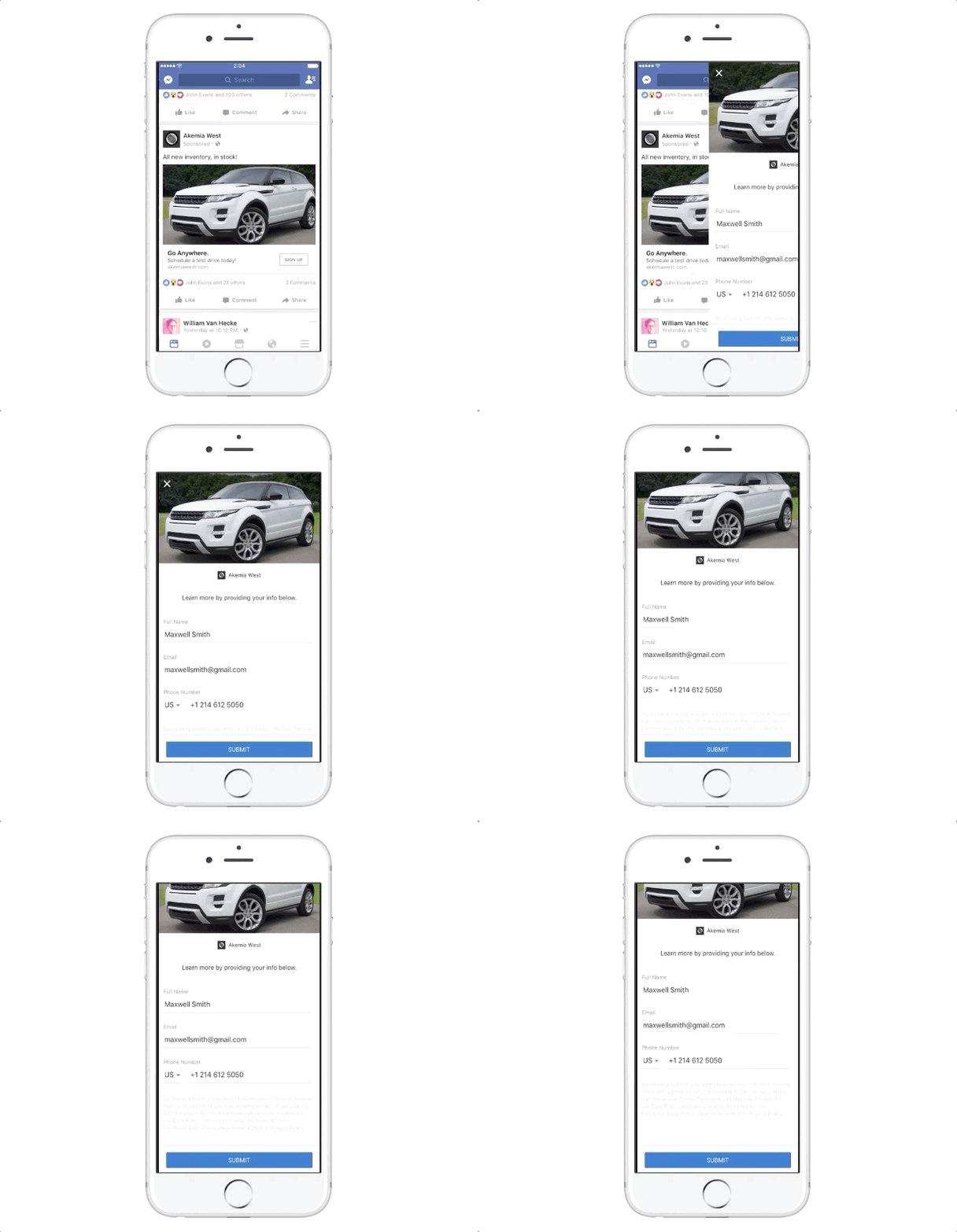
Facebook lead ads allow your prospects to sign up for offers inside a mobile interface. These ads also allow you to generate leads generation inside the world’s largest social media channel.

Designed to be both targeted to your audience and highly customizable, Meta launched this service in 2015. Customers can now sign up for your offer in just two taps, without leaving the social network.

B2B lead generation best practices, Facebook Lead Ad example

Image Source

Remember: Facebook lead ads aren’t designed to replace your landing pages. While Facebook Lead Ad helps you capture leads inside Facebook, your landing pages are still necessary for capturing leads from organic search and PPC.

For more details, check out this step-by-step procedure on how to create Facebook Lead Ads.

Tip for Running Great Social Media Lead Generation Campaigns

Case 1. Using Scarcity and Exclusivity

Virgin Active South Africa used scarcity (a limited-time offer) to increase the value of their offer. Their slogan — “Is summer ready for you?” — rings of seasonality. The question, along with the related offer, is only for the summer season.

What we like: In addition to seasonal messaging, the accompanying image emphasizes summer fun. The key messages and CTAs are also clearly highlighted.

B2B lead generation best practices, Virgin Active Facebook Lead Ad example

Image Source

Case 2. Giving Before You Get

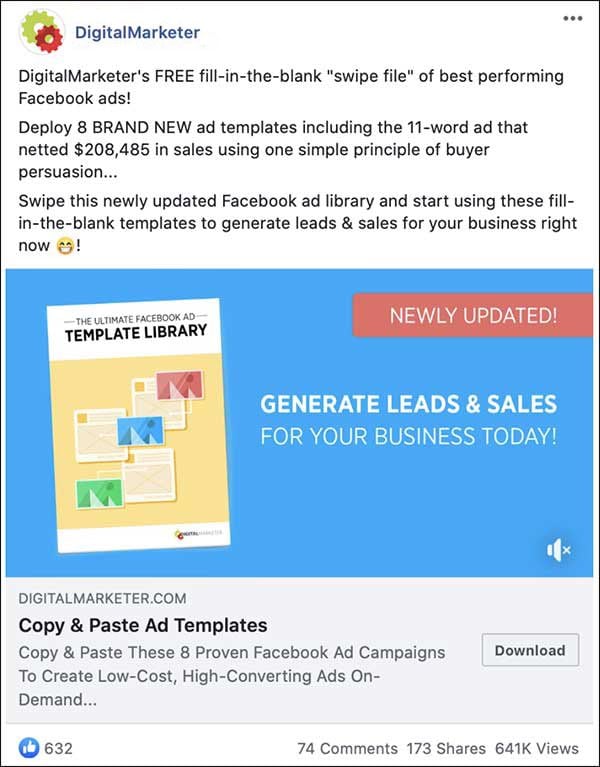
DigitalMarketer doesn’t sell — it gives something valuable away for free. That’s a compelling deal. By creating a clear value proposition, leads are more likely to share information with DigitalMarketer.

Their image amplifies the message and the CTA is clear but subtle. DigitalMarketer hooks leads through the law of reciprocity, which makes users feel they should return the favor through a later engagement.

DigitalMarketer Top Performing Facebook Lead Ad B2B Lead Generation Best Practices

Image Source

What we love: Digital Marketer’s copy emphasizes how templates can both save time and generate sales. Find ways to demonstrate your value ad to entice leads to your offering.  

Case 3. Finding the Right CTA

Your call-to-action should be enticing and tell readers exactly what will happen when they click. The phrase “Book Now” creates a sense of urgency. The viewer feels like they should book their ticket for the Van Gogh event before time runs out.

best b2b lead generation example, Van Gogh Sacramento

Image Source

What we love: This ad describes the art installation in the text and shows the experience visually. The viewer can picture the experience in their head when they click “Book Now.”

PPC Lead Generation Strategies

Pay-per-click (PPC) lead generation campaigns focus on a wide range of paid advertising platforms — the most popular being Google AdWords and Display Network. However, you’ll find a wide range of PPC lead generation options outside of Google, including:

  • B2B review directories or comparison sites.
  • Trade media display ads.
  • Social media advertising.
  • Affiliate marketing.

What is the conversion rate in PPC lead generation?

Adwords conversion rates fall around 2.41% for B2B companies, according to 2021 data from WordStream. Meanwhile, display conversion is averaged at 0.77%. However, rates vary depending on your industry.

It’s important to know your industry benchmarks. A good starting point is to ask each PPC vendor for their average conversion ratio across the board. This lets you evaluate your campaign results better.

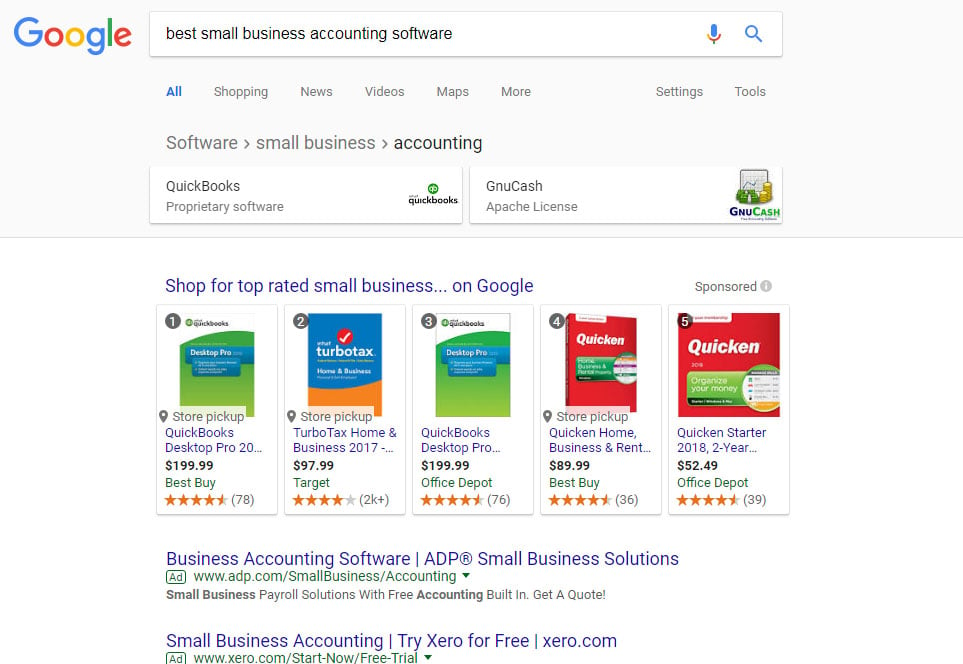
Should PPC replace organic marketing? No — they complement each other. For instance, many high-value keyword searches have only PPC ads above the fold like this.

B2B lead generation best practices Google search for “best small business accounting software”

In other words, even if you have a good organic ranking, it may be buried under PPC ads.

An Example of an Efficient PPC Lead Generation Channel

Among the PPC platforms mentioned above, B2B review directories and comparison sites can provide a uniquely fresh lead source. Other PPC channels are likely already saturated by big players in your space, the ones with deep pockets.

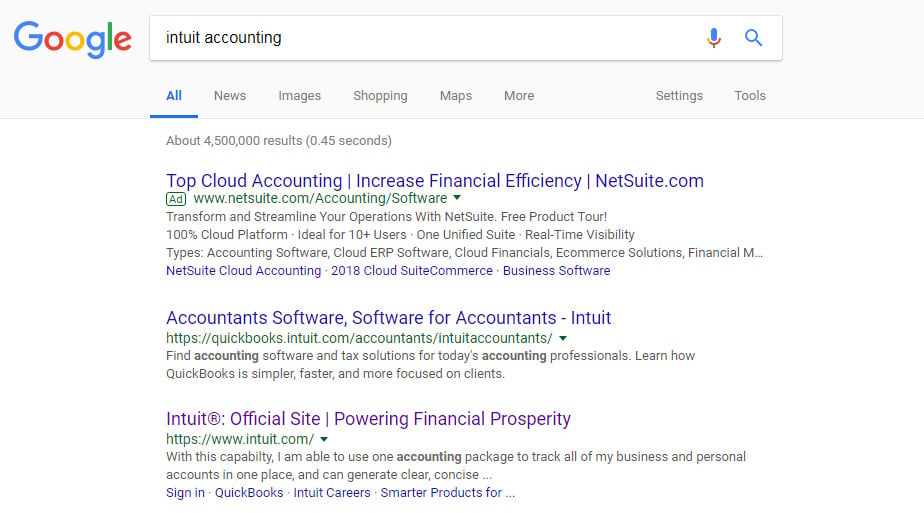
For instance, in SaaS, a highly competitive industry across verticals, AdWords bidding is highly competitive. To win, you’ll need to target a lot of relevant keywords. Sometimes competitors even bid for keywords against your own brand — like this example, where Netsuite ranks higher for “Intuit Accounting.”

B2B lead generation best practices Google search for “intuit accounting”

For many SaaS startups and SMBs, having another lead source like B2B review sites provides the option to meet and even surpass monthly lead quotas.

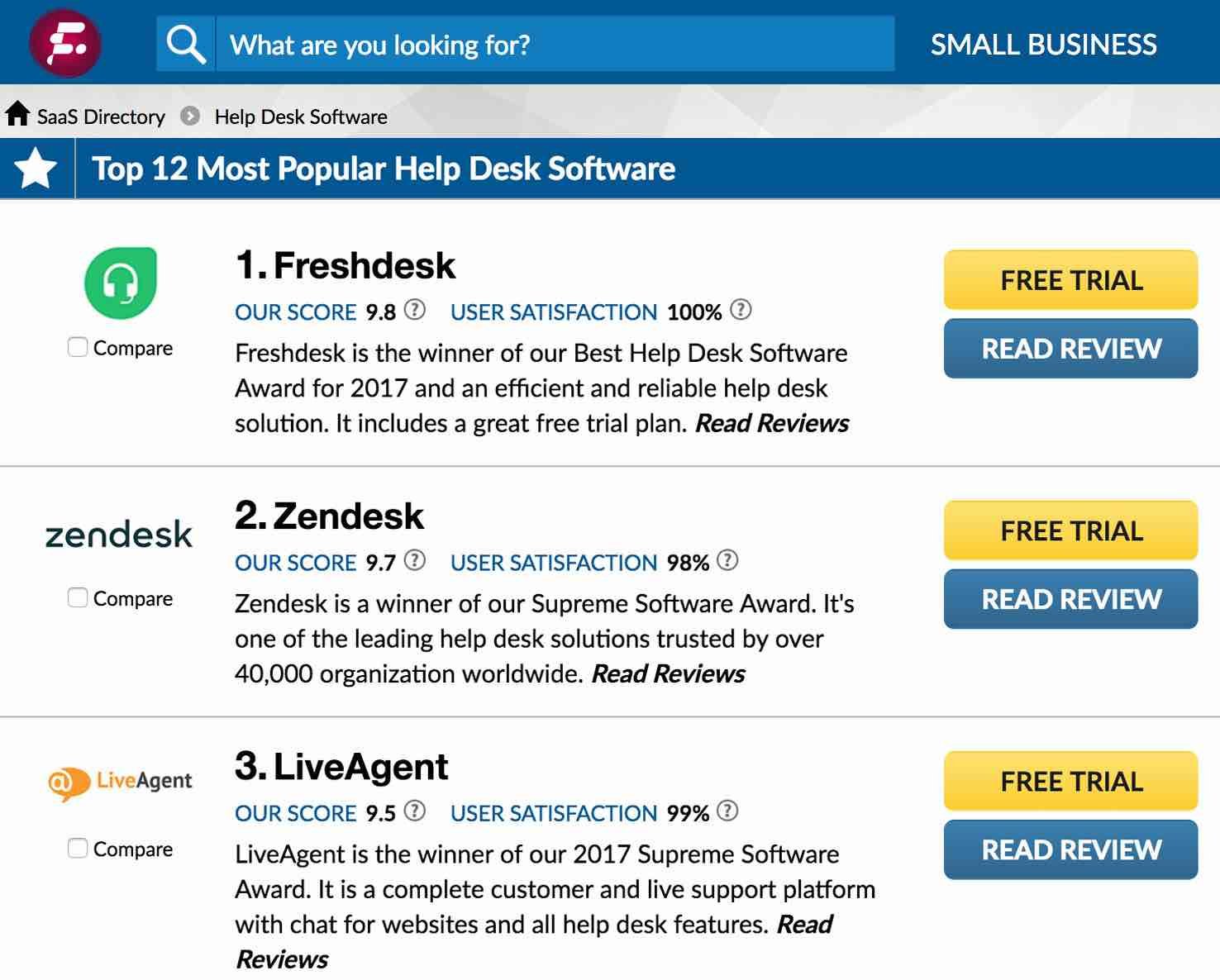
Let’s take a closer look at which popular marketing tools are used for lead generation by such sites. For example, here’s what FinancesOnline, one of the top software review platforms, offers:

  1. Lead generation campaigns: The review site can link directly to a vendor’s sign-up landing page, encouraging people who read your review to try out your free trial next. These campaigns can generate as much as a 24% conversion rate.
  2. Premium placement: In an increasingly commodified SaaS category, like a CRM where features are more standardized than unique, being included in a premium placement can make or break your sales opportunity. You have a much higher chance of attracting new leads if you’re listed among the most popular solutions, as prospects will usually only try out a few products. Make sure you get on such a list, because your competitors are probably already there.
  3. Industry awards: When buyers are comparing your product to your closest competitors, having your product stand out thanks to a featured quality award can have a critical impact on your sales. FinancesOnline, like many other review platforms, can give your product an edge with such awards.

B2B lead generation best practices FinancesOnline SaaS directory help desk software

Image Source

Look for a third-party online marketplace in your industry, and get in touch with these intermediaries to ensure your product is listed.

Blogging Lead Generation Strategies

Blogging is at the core of content marketing. This strategy focuses on creating content that is interesting or valuable to your defined audience. The goal is to attract and sustain online engagement for leads down the road.

A lot has been said about the benefits of business blogging. Let’s reiterate the major benefits.

  1. You can drive traffic to your website. With the right SEO planning, your blog gives you search presence, linking you to keywords relevant to prospects. Every blog post you write is one additional indexed page that helps get your content on Google.
  2. You can convert traffic to leads. A well-placed CTA in a compelling blog post can direct prospects to your landing page for leads.
  3. You can gain repeat business. A blog can delight existing customers with fresh content for repeat business or referrals.

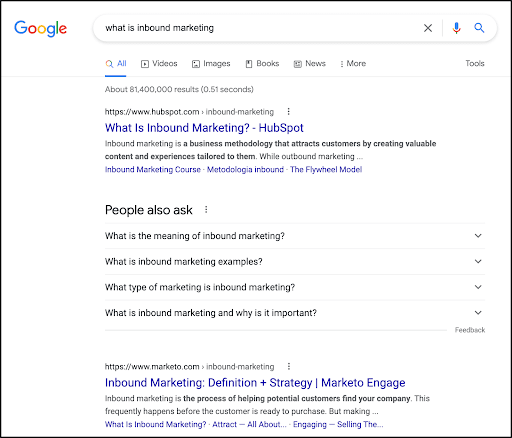
Blogging also establishes niche authority and places prospects within your sphere of influence. Blogging is a large part of the HubSpot Strategy. Just search “inbound marketing” or its derivatives, and you’ll come across HubSpot consistently.

B2B lead generation best practices Google search “what is inbound marketing”

How effective is blogging in the long run? At HubSpot, about 90% of the leads our marketing team generates each month come from blog posts that were published many months — or sometimes years — ago.

Which content types drive lead generation?

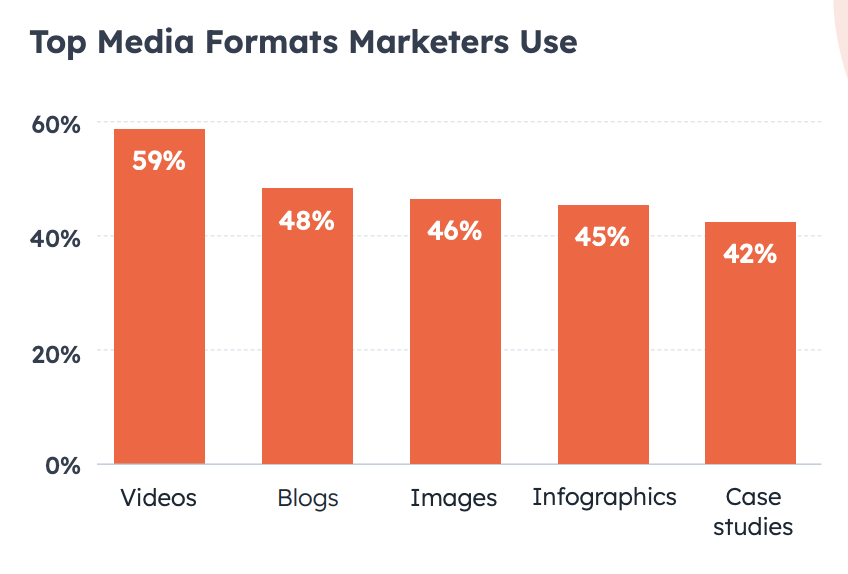
If you’re planning on just writing a blog or only working with video, you’re out of luck. Robust content marketing strategies use a variety of formats to engage their audiences. Video, blogs, and images are among the top media that marketers use.

Best B2B lead generation, top media formats marketers use

Image Source

When building your content marketing strategy, consider including the following content.

  1. Authoritative posts are blog posts about subjects you’re an expert in. Readers should leave understanding with a better understanding of the topic at hand.
  2. Solid opinion pieces can help you spread brand awareness. However, this shouldn’t just be your ideas and thoughts. Persuading option pieces are backed by data and research.
  3. Original research is commissioned for industry consumption. Focus on questions that have yet to be answered or data sets that need a refresh.
  4. How-tos provide tips and tutorials to address prospects’ problems. By the end, they’ll have their issue resolved and you to thank.
  5. Trending content can help you capitalize on popular topics. Have any headlines and trends been related to your business? Consider a blog post that connects the dots.
  6. Infographics turn information into digestible visual bits for easy consumption. Encourage your audience to share these images where applicable.
  7. Videos on the upswing in content marketing. In fact, 72% of prospects prefer to watch a video over reading about a product. If your company does not have video talent in-house, consider contracting a team to help you produce this content.

Remember: These content types are most effective when they align with your marketing goals. In short, the hard work is still on you — you have to develop topics that are lead magnets to your audience.

Examples of Great B2B Blogging Campaigns

Case 1: Running Your Blog Like a Media Pro

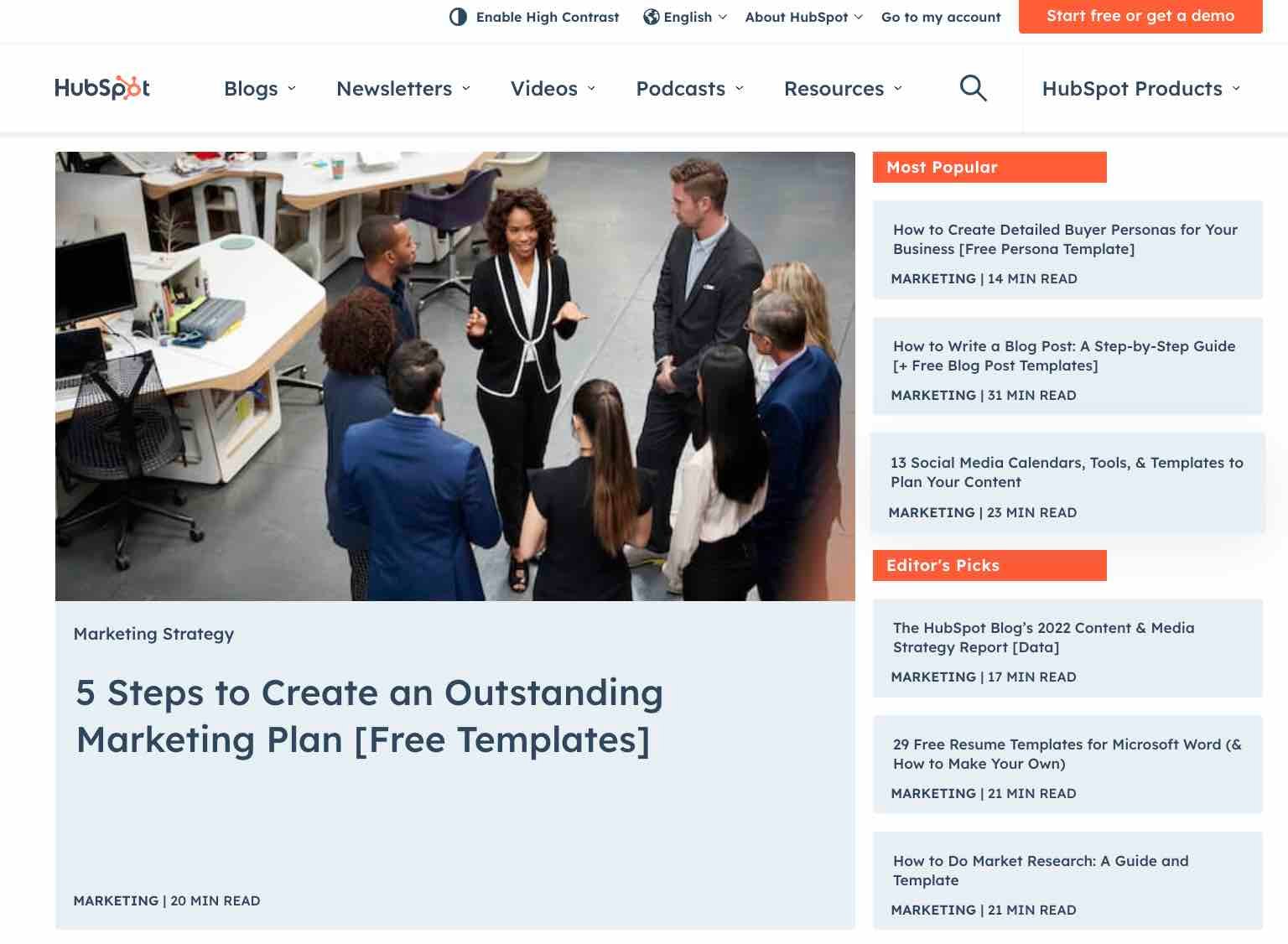
HubSpot is influential when it comes to inbound marketing. But it didn’t happen by accident — HubSpot’s marketing team works hard to run its blog as a media site with a full editorial calendar.

HubSpot’s blog publishes tips, listicles, ideas, inspiration, insights, reports, ebooks, white papers, videos, and more. All of this content relates to inbound methodology across its niche segments in marketing, sales, website, and service. The blog even outperforms entrenched business media like Forbes and CNN Money in SERPs about inbound marketing.

B2B lead generation best practices HubSpot blog

Image Source

Case 2: Knowing Your Audience

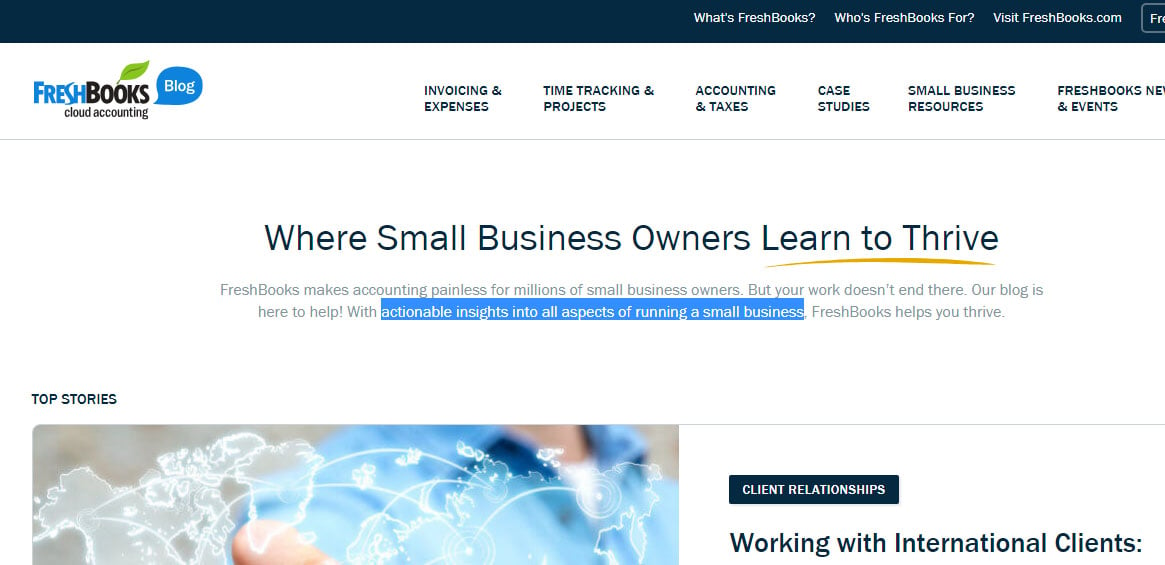
FreshBooks is clear about its target audience. In fact, the first step to having great content is to know your audience (your “Ideal Customer” personas). For FreshBooks, this means delivering “actionable insights into all aspects of running a small business.”

B2B lead generation best practices FreshBooks blog

Image Source

Case 3: Leveraging Thought Leaders

Have any die-hard supporters or thought leaders in your base? Have them put their insights and opinions about your industry in your blog posts.

Your thought leader should be writing regular posts to leverage SEO and brand association, both of which can result in more leads down the road.

Email Marketing Lead Generation Strategies

Email is often the bridge between marketing automation and CRM, two cloud solutions most widely used by marketers today. The email opt-in is still the starting point of lead generation and email marketing is the core of lead nurturing.

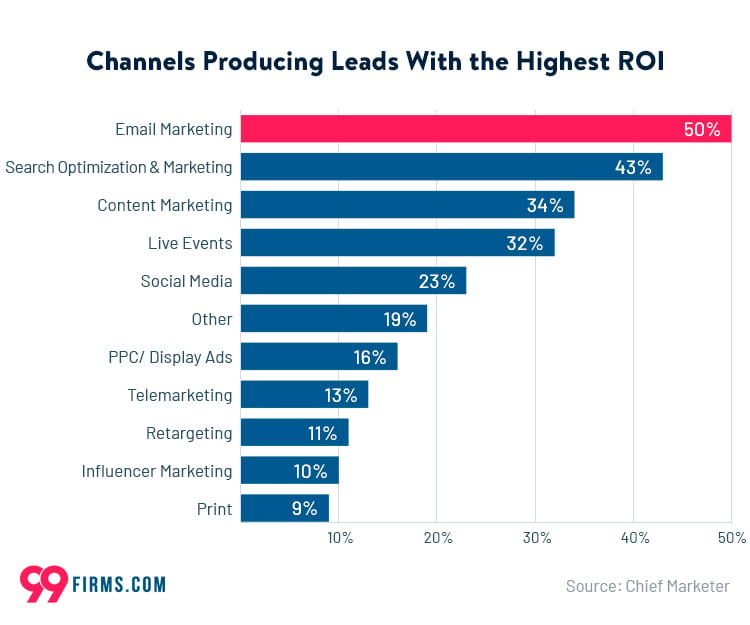
How does email marketing hold up today? Actually, it was the best B2B digital marketing channel in 2019, according to a Statista study. 99Firms released its B2B Marketing Statistics report, which showed email marketing is right at the top of digital channels driving leads and revenues for U.S. B2B marketers in 2022.

channels producing leads with the highest roi b2b lead generation

Image Source

The advent of automated lead scoring, predictive analytics, and AI algorithms only reinforces email marketing with laser-focused, personalized touches, and real-time delivery. In short, email marketing is still one of your best tools to engage intent signals, distribute content, and deliver pitches.

What is the conversion rate of email marketing?

You’re looking at two variables when it comes to email marketing:

  • Open rate.
  • Click-through rate (CTR).

A GetResponse study puts the overall email open rate average at 82.20% and CTR at 21.69%. The report further divided the figures by location, with North America at a 23.53% open rate and 3.86% CTR.

By industry, internet marketing has a 14.97% open rate and 1.66% CTR, as of 2022.

Meanwhile, Marketing Insider Group puts email marketing conversion into another perspective: You earn $44 for every dollar spent on email marketing. The consensus is, yes, email marketing has one of the highest conversion rates, corroborating the DemandWave findings above.

Which factors influence email marketing conversion?

It takes creativity to brainstorm your content or offer, but with that aside, email marketing is more of a science. You can measure it, analyze it, and improve it. Here are the key factors that affect your email marketing conversion rates:

  1. Value offers. You must have a lead magnet to attract email sign-ups, whether it’s value content, freebies, deals, or anything that is interesting to your audience.
  2. Landing pages. Optimize these pages by having a clear offer of your lead magnet, compelling CTA, permission, and appealing visuals.
  3. Email subject lines. Keep your subjects short, crisp, and compelling with clear benefits to the recipient.
  4. Segmentation. Split your list into sublists for more targeted messages, which will allow you to increase your open and click-through rates.
  5. Analytics. Run analytics to do regular clean-up of your lists and update it as necessary based on past recipient actions.

Examples of Great B2B Email Marketing Campaigns

Case 1: Storytelling

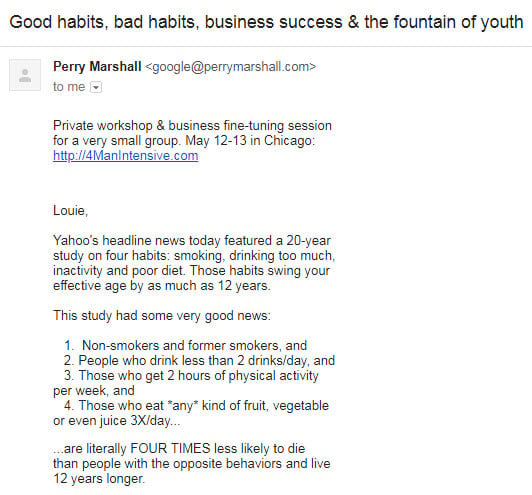
At its core, email marketing is about your message, and here’s where your skill in storytelling can weave magic into a bland topic like a business workshop, captivating the prospect’s interest. 

Perry Marshall, the best-selling author of Ultimate Guide to Google AdWords, is a master of storytelling. He can hook seemingly unrelated subjects together, all leading to his value offer.

Perry Marshall good and bad habits, b2b lead generation storytelling best practices

Case 2: Use of Humor/Allegory

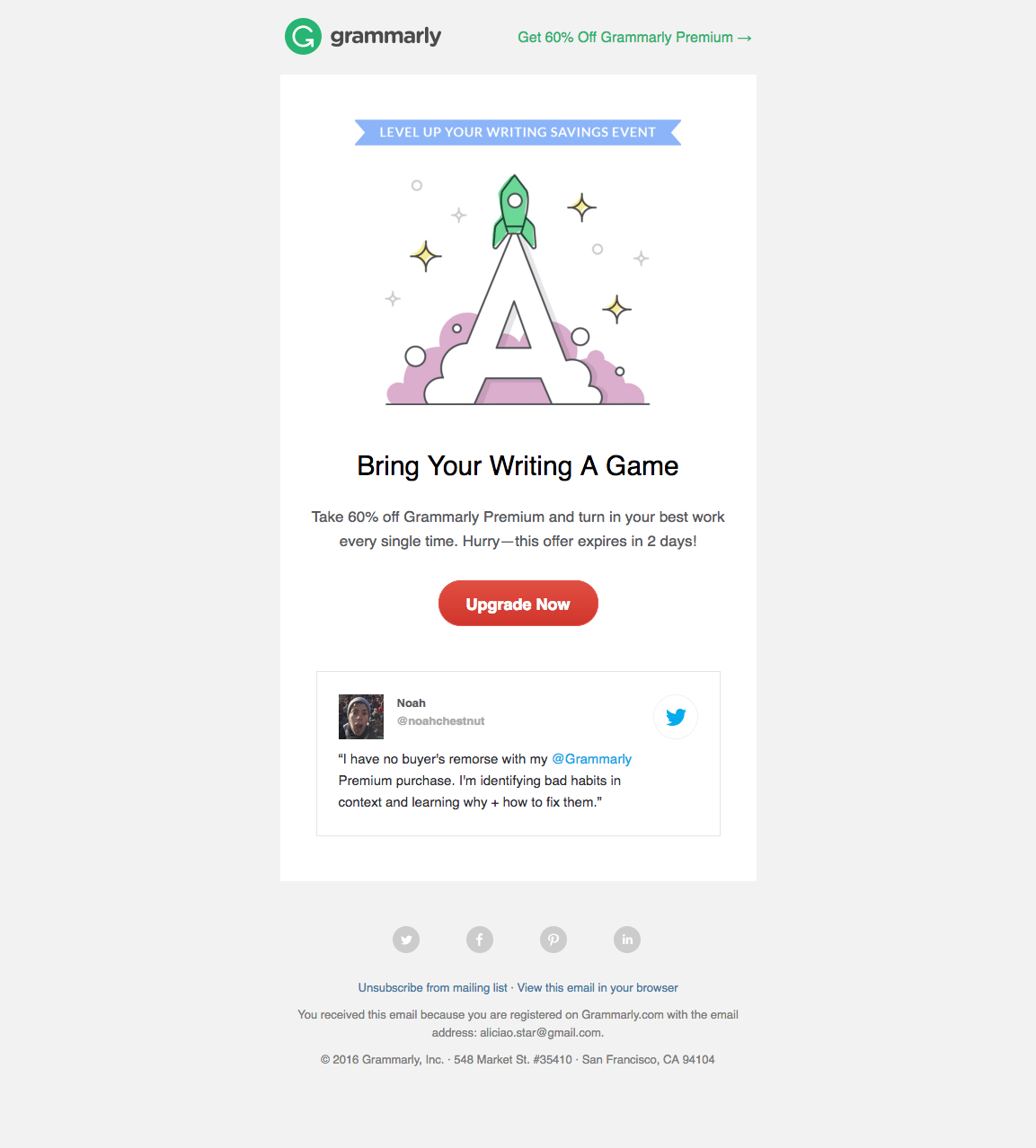
Email marketing favors the clever, and this message from Grammarly is a great example. To emphasize the benefit of spell-checking software, the email visually alludes to the alphabet. By turning the “A” into rocket exhaust, the brand emphasizes the importance and adventure of your grammar journey.  Grammarly is witty and helps engage readers for those few critical seconds.

grammarly level up your writing email b2b best practices lead generation

Image Source

Remember: The use of humor is tricky and can backfire if executed poorly. Make sure any humor or allegory is something everyone can understand.

Case #3: Housekeeping

Email marketing isn’t all about the welcome — some goodbyes are in order, too. Cleaning up your list is one step toward qualifying leads for higher conversions down the funnel. 

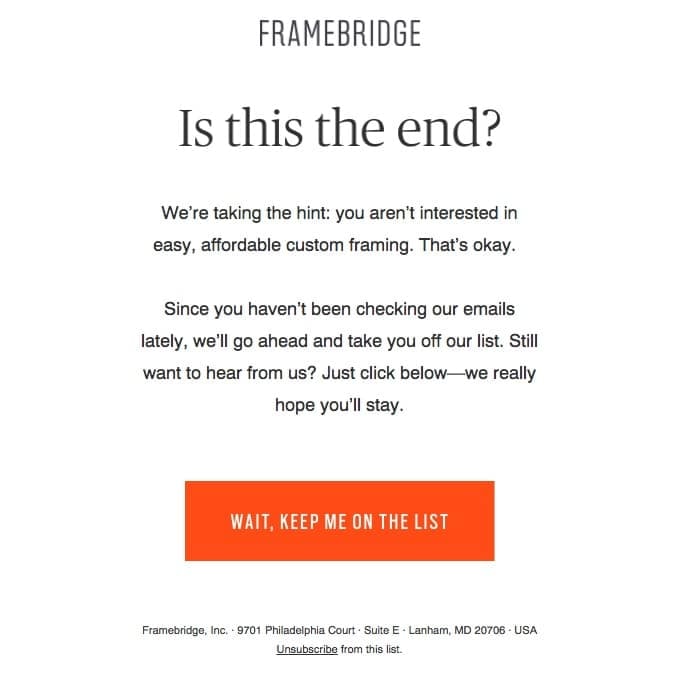
Framebridge makes sure its list is updated by sorting out inactive subscribers.

ReEngageEmailSubscribers b2b lead generation best practices

Image Source

Pro tip: Breakup emails like the one above are a great way to reengage folks on your list and clean out inactive emails.

The 10 Best Lead Generation Strategies

In this post, we’ve shared best practices for different types of lead generation. Below are best practices that work across channels. Put these best practices into action, and maximize your lead generation.

1. Target the right audience.

Know your buyer personas. In B2B, your audience could be different people in different departments. Often, you don’t have a single audience, but micro-audiences with varying interests and pain points.

2. Create lead magnets.

Develop content or offers that pique the interest of your target audience. The best lead magnets use NLP techniques in marketing, such as, clear, tangible benefit, urgency, exclusivity, social proof, authority, and immediate gratification.

3. Explore new lead channels.

Search, social media, and top media sites are unsurprisingly crowded with high-value sponsorships. You can, however, discover unique PPC channels and similar third-party marketplaces for your industry. Because these sites cater to your customers, they tend to have higher conversion rates and dominate high-value general organic search keywords.

4. Capture the right information.

The rule of thumb is to get only the most basic customer data at the initial stage (e.g., name and email address) and, as you work the lead down the pipeline, ask for a little more data.

5. Score, sort, and segment leads.

Not all leads are valuable and not all have the same value. Based on your metrics, run a lead scoring tool to sort leads into proper segments. This will let you target your micro-audiences with personalized messages and offers. Today’s marketing automation software, like HubSpot, are very powerful and can automate this important process.

6. Blog consistently.

Regularly posting content improves your SEO, authority, brand awareness, industry stickiness, and, generally, your web presence.

7. Integrate organic and PPC.

These two marketing channels complement each other. When executed together, they can fill in the gaps. For example, you can run paid search for any organic keywords for which you’re not ranking highly.

8. Benchmark your conversion rates.

Don’t be content with seeing your rates improve month-to-month or year-to-year. Compare them with the competition. That’s the true picture of your business’ competitiveness.

9. Automate. 

The best marketing automation will put your lead generation into a workflow. The software can then capture leads from your campaign, score them, nurture them throughout the lead pipeline, and qualify them. Then, your leads will be ready for your sales team.

10. Go mobile. 

Mobile marketing is the next battlefield for B2B leads. More business buyers are using their smartphones in the purchase journey. Make sure your forms, emails, websites, and ads are optimized for mobile.

Those are some of the best B2B lead generation campaigns and techniques at your fingertips. Apply or reapply these time-tested techniques and share with us how much they improve your lead volume.

Categories B2B

10 Form Conversion Optimization Tips to Generate Better Leads

So you’ve created an amazing landing page to promote a special offer. You’ll need form conversion to turn your hard work into leads.

Where you place your forms, how they’re designed, and the language in your call-to-action all shape your visitor experience. Get these elements right, and you can grow your lists.  

Download Now: Free 8-Week Conversion Rate Optimization Planner

This post explores how you can optimize your forms to gather high-quality leads. You’ll learn the following:

A “good” conversion rate falls between 2% to 5%, according to CRO platform company Adoric. However, Hubspot research from 2020 found that only 22% of companies were satisfied with their conversion rates. Email collection forms were the most successful method for converting customers, with a 15% conversion rate in 2020.

10 Tips to Optimize Form Conversion

If you want to transform your underperforming lead-generation forms, you’ll need to give both your webpage and the form itself a refresh. Start with these 10 tips to optimize form conversion.

1. Move your form above the fold.

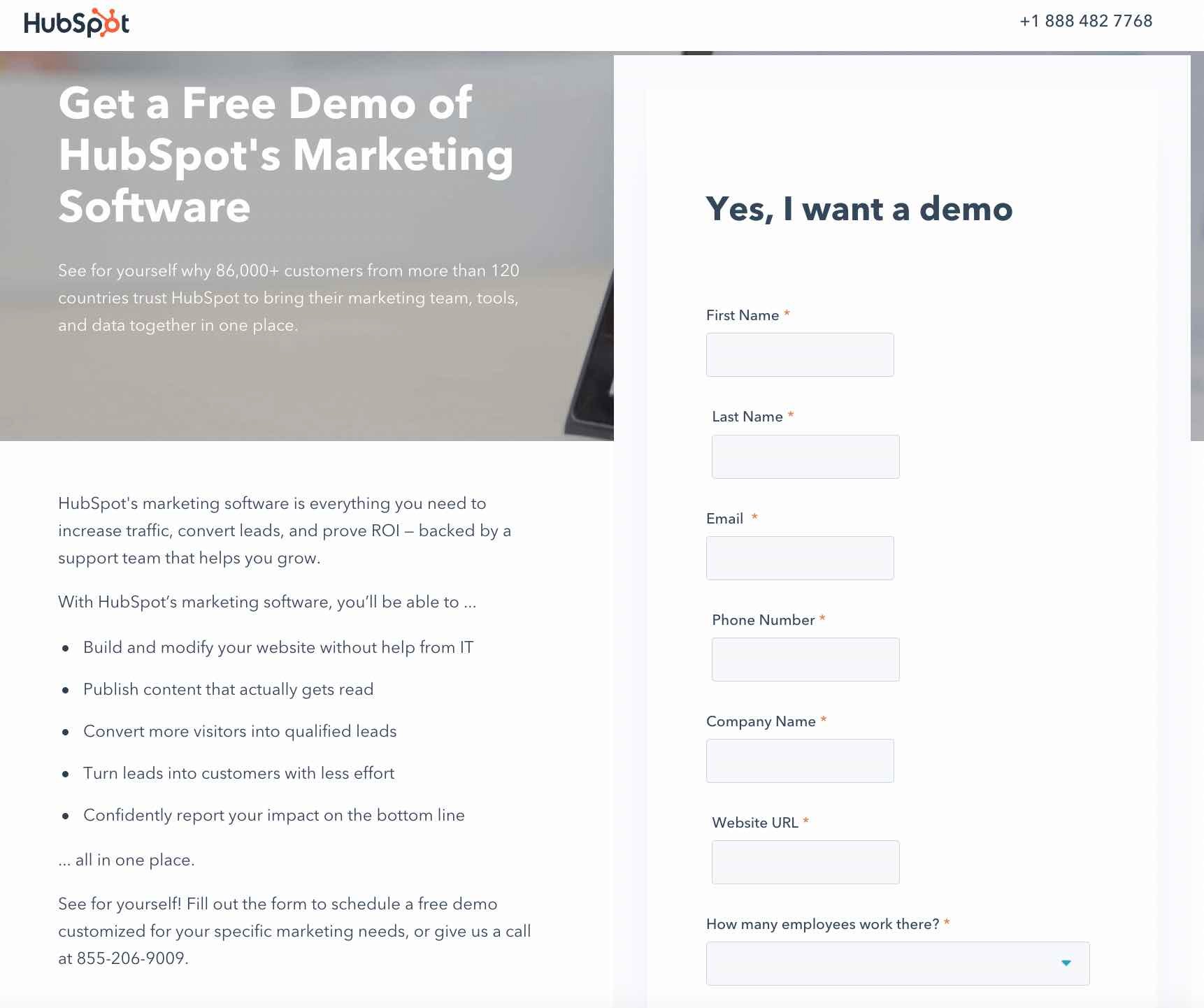
Conversion forms should be above the fold on your landing page. That means visitors shouldn’t have to scroll down the page to see your form. There’s no need to search to find your offer. Doing this removes friction from your lead generation process.

For example, visitors on the landing page below instantly know they’ll need to fill out the free demo form.

form conversion, Hubspot, example above the foldImage Source

2. Make your form headline a call-to-action.

Encourage visitors to complete your form by making your headline a call-to-action. This tells your visitors exactly what they will get once they sign up.

For example, the form below starts with the call-to-action, “Start Your Free Trial Now.” This call to action is then repeated in the button at the bottom of the form, reinforcing the message.

Form conversion, Hubspot, example of headline as call-to-action

Image Source

If you’re unsure of what to include in your form headline, consider the following.

  • Get Your Free [OFFER]
  • Sign Up for [OFFER]
  • Register for [WEBINAR/EVENT] Now!
  • Yes, I Want This [OFFER]
  • Download the [OFFER]
  • Claim Your [OFFER]
  • Save Your Seat at [WEBINAR/EVENT]

3. Include the right number of fields.

When it comes to creating your form fields, use the Goldilocks method: Try to find the number that’s just right.

A long form will overwhelm people and dissuade them from filling it out. However, shorter forms can generate a high number of submissions, but your leads may be low quality. You’ll want to find the perfect number of fields to get high-quality leads without scaring prospects away.

conversion form best practices, The Hustle short form

Image Source

The length of your form depends on two factors.

  • The offers stage in your buying cycle. If you’re giving away a free checklist or infographic, you might only want to collect first name, last name, and email. However, more substantial lead magnets, like an ebook or whitepaper, indicate the prospects are further along the research process. In these cases, ask for more detailed information.
  • How many leads you generate. If your sales team has many leads to sift through, add more fields to your forms so your reps can better qualify each lead, and identify those worth calling. While more fields may produce fewer leads, these leads are often better.

conversion form best practices, Twilio Long Form

Image Source

4. Make the required form fields noticeable.

If you’re still wary about your form length, determine which information is a must-have vs. a nice-to-have.

For example, fleet safety software company Nauto built the form below to get sales-qualified leads. Besides the regular form fields, they have required fields for job title, company fleet size, and primary vehicle type.

form conversion optimization using required fieldsImage Source

This compulsory information leads to fewer, but better, leads. Put another way, their sales reps will effectively use their time to close these leads.

You can typically denote required fields with an asterisk (*). Optional fields will not have an asterisk.

5. Hide previously completed fields.

For first-time visitors, HubSpot’s conversion forms are long. We get a lot of leads, so we need extra form fields to determine the lead quality. This allows us to correctly rotate the leads to the right reps.

However, we only show these extra fields to first-time visitors. Notice the difference in the form?

form conversion optimization using required fieldsImage Source

We did this by enabling smart form fields. Smart form fields can allow you to get your contacts’ information the first time they sign up to receive an offer.

The best part? They create a better user experience for visitors because you can generate questions specific to a set of your audience.

6. Edit your submit button.

After studying the landing pages of over 40,000 HubSpot customers, we found buttons labeled “Submit” had lower conversion rates. Meaning, the default text of your submission button will cause missed opportunities.

Your submit button offers a final chance to convince visitors to fill out those last few fields. To get better conversions from this button, customize the text based on your offer.

Here are some examples.

  • Download This eBook
  • Sign Me Up for a Demo
  • Show Me This Presentation
  • Claim Your Coupon
  • Save Your Seat

These calls-to-action are all more enticing than “submit.”

7. Do an A/B test to choose your CTA color.

Randomly choosing a CTA color is not ideal. An A/B test can help you make an informed decision.

Early on, Performable ran a test using green and red CTA buttons. What did they find? Conversion rates for the red button were 21% more than the green button.

form color optimizationImage Source

Pro tip: Understanding color psychology is a great first step to picking a CTA color. However, if you want to really find out what color resonates, consider using A/B tests to find the color with the highest conversion rates.

8. Guarantee the privacy of your visitors.

The laws of the United States, European Union, Canada, and Australia require you to link to your privacy policy. Besides allaying the fear of hesitant visitors, a privacy policy makes you seem trustworthy. This can increase your conversions.

In your form, you can link to your privacy policy before the submission button while including a snippet. Here’s how this looks on our forms.

Lead-capture form with privacy policyImage Source

If you don’t know what should go on your privacy page, get some ideas from HubSpot’s privacy policy. People want to know how we’ll use their contact information, making this page one of the most visited on our site.

9. Use the right form layout.

Choosing the right form layout involves knowledge of human behavior. The best forms create a frictionless experience for potential leads. Here’s how you can optimize your form’s layout.

  • Place form labels above the corresponding input fields.
  • Do not separate a form into more than one column.
  • Only ask one question per row.
  • Match the size of input fields to the expected length of the answer.

Let’s apply these best practices to the form below.

Form without vital optimization elementsImage Source

The input field lengths are ideal for both first and last names. However, the email field is not optimized, as most professional emails aren’t that lengthy.

10. Consider multi-page forms.

Perhaps you need to gather more user data to find qualified leads. A lengthy, single-page form may scare off potential prospects. You can instead create a form with multiple pages to break up the user experience.

Let’s look at the form below as an example.

lead-capture form in steps

Image Source

The first page asks simply for the visitor’s name. The second page gathers the person’s contact information, and the third gathers information about the person’s business. The final page asks for the size of the company.

Each page of the form asks for more information than the last. However, by creating multiple, easy steps, the visitor isn’t overwhelmed by the amount of information they need to share.

Getting Started with Form Conversion

Simply asking for information isn’t enough. Your forms have to create a frictionless user experience to create leads. You’ll also need compelling offers bolstered by top-notch design and the right message.

Becoming a form conversion expert will take time. Remember: Increasing your conversion rate will involve trial and error. Experiment with different messaging and placements to see what works. Make note of the best practices that work specifically for your organization.

Get the 8-Week CRO Planner

Categories B2B

20 Questions to Ask When Creating Buyer Personas [Free Template]

Knowing your customers is a crucial component of successful inbound marketing. Get started with buyer persona questions that can help you understand customers’ mindsets.

We’ve gathered 20 questions that can help you identify your audience. After you explore the answers, use this free buyer persona template to share your findings with the rest of your company. 

Remember: you’ll need a content marketing strategy to reach your buyer personas. Find out how with HubSpot Academy’s free content marketing training resource page.

Download our free buyer persona template here to learn how to create buyer personas for your business.

buyer-persona-templates-graphic-1Download Now

Questions About Their Personal Background

1. Describe your personal demographics.

Collecting demographic information is a great place to begin drafting your personas. These questions paint a clearer, more personal picture of your customer. 

Understand what communities they are a part of, and how those identities impact their interaction with your brand.

What to Look for in the Answer

Are they married? What’s their annual household income? Where do they live? What are their cultural and racial backgrounds? What is their gender identity? How old are they? Do they have children?

2. Describe your career path.

Having an idea of your client’s background tells you a lot about the type of information that they consume and the problems that they can face regarding their work. This can be especially helpful if you sell a B2B product. 

What to Look for in the Answer

How did they end up where they are today? Has their career track been pretty traditional, or did they switch from another industry?

3. Describe your educational background.

Get specific here. “Boston University” is better than “liberal arts college.” Where a person went to school can impact their worldview. That includes both the size of the college, their major, and the location of the school. 

What to Look for in the Answer

What level of education did they complete? Which schools did they attend, and what did they study? 

Questions About Their Company

4. What is the size of your company?

Keep an eye out for specific details about the company. The size of a business impacts how many people use your product, as well as the way they use your offering. Understanding the amount of revenue can help you set appropriate pricing. 

Knowing details about your persona’s company, like the number of employees, will help you when you’re building the fields for your landing page forms.

What to Look for in the Answer

How many people work at the company? How much revenue does the company generate? How many customers does the company serve? 

5. In which industry or industries does your company work?

The answer to this question isn’t the department in which your buyer persona works. Your buyer persona’s industry is the type of service they deliver to their clients, and knowing this can help you measure your business’s impact in the markets you’re targeting.

Depending on the challenges your buyer persona faces, it might also be worth getting information on the industries your client’s business serves, not just the actual service they provide. 

For example, if your buyer persona provides renewable energy plans for hospitals. They are in the environmental services industry for education and medical customers. 

What to Look for in the Answer

What sector do potential buyers work in? Are they in a broad industry like healthcare or insurance? Are they in a more niche market? 

Questions About Their Role

6. What is your job role? Your title?

The importance of your buyer persona’s job depends on the product or service you’re selling.

If you’re a B2C company, you may simply consider this information as another way to better understand the nuances of your persona’s life.

If you’re a B2B company, this piece of information becomes more crucial. Is your persona at a managerial or director level, and well versed in the intricacies of your industry? They’ll need less education than someone at an introductory level, who may need to loop in other decision-makers before making purchasing decisions.

What to Look for in the Answer

How long have they had this role and title? Are they an individual contributor, or do they manage other people? 

7. To whom do you report? Who reports to you?

If you have a B2B offering, knowing your buyers’ seniority levels is especially important. This information can help your sales team understand who prospects might be.

For B2C companies, your users’ seniority level can give you insight into their lifestyles. Do people spend most of their time in the office? Are they often in meetings? That will impact when and where they use your product. 

What to Look for in the Answer

How senior is your buyer? How many people work for them? Where are they in the larger organization? 

8. Which skills are required to do your job?

If they were hiring someone to replace them and had to write a job description of what’s required, what would it say? Understanding your buyer’s skillsets can help you understand the level of training they need when using your product. 

Or perhaps, your product is intended to supplement a skill they lack. Knowing where their strengths are can help you focus your product development efforts. 

What to Look for in the Answer

What are the ideal skills for this job, and how good is your persona at each of them? Where did they learn these skills? Did they learn them on the job, at a previous job, or by taking a course?

9. What does a typical day look like?

This should include both the tasks they do for their job, as well as what happens during the day outside their job. Knowing your personas’ schedules can help you understand when they use your offering. That holds true for both B2B and B2C products. 

What to Look for in the Answer

For their time in the office, look for the following.

  • What time do they get to work and what time do they leave? 
  • What do they do when they’re most productive? 
  • What’s their “busy work” look like?

For time spent outside of the office, take note of the following.

  • Are they spending more time at work or at home? 
  • Where would they rather be? 
  • What do they like to do for fun? 
  • Who are the people in their life that matter most? 
  • What kind of car do they drive? 
  • Which TV shows do they watch? 
  • Heck, what outfit are they wearing? Get personal here.

10. How is your job measured?

You should know what metrics will make your user successful, and what they might be worried about when it comes to “hitting their numbers.” This can help your marketing team identify which features to highlight. 

What to Look for in the Answer

Which metric(s) is your persona responsible for? Which numbers or charts or waterfall graphs do they look at every day?

11. What knowledge and tools do you use in your job?

Understanding what products they love (and hate) to use can help you identify commonalities in your own product (and adjust your positioning accordingly). You can also understand how your product integrates with their pre-existing tech stack.

What to Look for in the Answer

Which applications and tools do buyers use every single day? Every week? How much do they like these existing tools? 

Questions About Buyer Goals

12. What are you responsible for?

This goes beyond the metrics they’re measured on. Your team should know what their primary job responsibilities are. With this knowledge, you can better explain how your offering makes buyers’ lives easier. 

You can also identify ways to help your persona achieve their goals and overcome their challenges.

What to Look for in the Answer

What’s their primary goal at work? What about their secondary goal? What are their daily responsibilities? Quarterly responsibilities? Annual responsabilities? 

13. What are your biggest challenges?

You’re in business because you’re solving a problem for your target audience. How does that problem affect their day-to-day life? Go into detail, and focus on the nuances that illustrate how that problem makes them feel.

For example, let’s say your company sells personal tax software directly to consumers. One of your personas may be a first-time tax preparer. What are the pain points of first-time tax preparers? They’re probably intimidated by the prospect of doing their taxes by themselves for the first time, overwhelmed by a tax code they don’t understand, and confused about where to start. These pain points differ from those of a seasoned tax preparer.

Try coming up with real quotes to refer to these challenges. For example, “It’s been difficult getting company-wide adoption of new technologies in the past,” or “I don’t have time to train new employees on a million different databases and platforms.”

What to Look for in the Answer

What are the different challenges for demographics? How do pain points vary by seniority and experience level? How do these challenges affect their daily life? 

14. What does it mean to be successful in your role?

Companies that take the time to understand what makes their personas successful will likely enjoy more effective communications from both the sales and marketing teams.

What to Look for in the Answer

What can you do to make your personas look good? What features of your product already help them achieve their goals?

Questions About How Buyers Learn

15. How do you learn new information for your job?

If you’re going to market and sell to these personas, you need to understand how they consume information. Dive into their required upskilling at work, as well as the professional development your buyer individual sought. Your goal should be to best understand their learning style. 

What to Look for in the Answer

Do they go online, prefer to learn in person, or pick up newspapers and magazines? If they’re online learners, do they visit social networks? To Google? Which sources do they trust the most — friends, family, coworkers, or industry experts?

16. Which associations and social networks do you participate in?

You should already be investing time and resources in social media marketing. Identify the associations and social networks where your buyers spend their time. Then, you can prioritize which accounts to create and which conversations to participate in.

What to Look for in the Answer

What in-person or community-based gatherings do buyers attend? How are these gatherings promoted? What do they learn from these events?

What social media platforms do your buyers prefer? How much time do they spend on these platforms? What platform features do they actually use? 

17. Which publications or blogs do you read?

To piece together a typical day in their life, figure out where they regularly go to stay informed. If you know how they prefer to gather information, you can make yourself present in those spots. The next step is to establish credibility in those communities.

What to Look for in the Answer

What magazines or news outlets do they read? Are there blogs they frequent? Which trusted thought leaders do they turn to? 

Questions About Their Shopping Preferences

18. Describe a recent purchase.

You should understand your buyers’ evaluation process when making a purchase. How do they decide what they buy?

If you can anticipate the objections your persona will have, you can be prepared for them in the sales process. You will also be able to educate them in your marketing collateral to help allay fears right away. 

What to Look for in the Answer

Why did you consider a purchase, what was the evaluation process, and how did you decide to purchase that product or service?

Is this their first time purchasing a product or service of your kind? If not, what caused them to switch products or services? What might make them reticent to buy from providers in your industry? 

19. Do you use the internet to research vendors or products? If yes, how do you search for information?

These questions will help you determine which sources of information your buyer trusts. This can help you identify what type of reviews you would like to elicit. You can also plan your marketing collateral appropriately. 

What to Look for in the Answer

Which avenues are they using to find new information? Do they search online, look at review websites, ask their friends and family, or do something else?

20. How do you prefer to interact with vendors?

You should know the best ways to get in touch with potential buyers. From there, you can understand how they want to interact with you — as well as how frequently. The experience of purchasing your product should align with your persona’s expectations. 

What to Look for in the Answer

What should their sales experience feel like? Is it consultative? How much time do they expect to spend with a salesperson? Do they anticipate an in-person meeting, or would they rather conduct the sales process online or over the phone?

What’s next?

Once you’ve gone through this exercise and worked out any lingering questions about what makes your persona tick, browse through some stock imagery and find an actual picture to associate with your persona. Going through this exercise forces you to clarify an image of your target audience in your entire organization’s mind that will help keep your messaging consistent.

Another useful exercise is to practice being able to identify your buyer persona so you can tailor your communications. How will you know when you’re talking to this persona? Is it their job title? 

Once you’ve established not only who your persona is, but also how you can identify them when you encounter one or another, your employees will be able to maintain a consistent voice that is still customized to each person they talk to.

Then, use our free, downloadable persona template to organize the information you’ve gathered about your persona. Share these slides with the rest of your company so everyone can benefit from the research you’ve done and develop an in-depth understanding of the person (or people) they’re targeting every day at work.

Want to learn about some of the best real buyer personas? Check out seven companies with awesome buyer personas.

Blog - Buyer Persona Template [Updated]

 
free buyer persona creation template

Categories B2B

The Job Search Process: 10 Tips on How to Land Your Dream Job (+3 Resume Examples)

The job search process can feel daunting. Every step of the process — from finding relevant opportunities to interviewing — is a major time investment. However, an organized to-do list can keep you on track.

In this post, you’ll learn the essential steps for an organized job search and tips to help you land your dream gig. Let’s get started.

Free Kit: Everything You Need for Your Job Search

Table of Contents

10 Essential Steps for Your Job Search Process

Without a roadmap, finding a new job can be overwhelming. This to-do list guides you through the essential steps of any job hunt.

1. Start with your mindset.

Job hunting begins with your mindset. The right attitude can help you approach the process with resilience.

Be prepared to wait for the right opportunity. Don’t be upset if you haven’t secured a new job within a couple of weeks. The average duration of unemployment is five and a half months, according to 2022 data from the U.S. Bureau of Labor Statistics. In fact, just moving from an interview to an offer takes 23.8 days on average.

However, timeframes heavily depend on the industry, your experience, and the urgency to fill a role. For example, a government role will have a longer time to hire than many corporations.

Another reminder: don’t take “no” personally. Any job seeker inevitably faces rejection — direct and indirect. Sometimes, you don’t hear back on your application. Other times, you receive a direct refusal with a concise explanation of why you didn’t make the cut.

Don’t let small losses set you back. Set yourself up for success, and keep trying.

2. Set your job search parameters.

Don’t just apply to every job you see. List what positions you’re interested in and start searching from there.

Think of what skills you’ve already acquired. Do you want to pursue the same role or explore a new career path or industry? Ask yourself what you’re passionate about and what you would like to do long-term. Reflect on your thoughts by writing them down.

If you’re looking to stay in your industry, consider your experience. Focus on positions that align with your expertise. Knowing what you’re good at will help you tailor your CV and secure a new job faster.

Pro tip: Create an ideal job description that details your desired responsibilities, location, and benefits. This outline can help keep you focused.

3. Understand your field.

Industry research can help you tackle your job search with updated knowledge. You should find out the education requirements, level of experience, and responsibilities associated with your desired roles.

You’ll also discover which qualities and skills employers are looking for in your field. That can help you showcase your competitive edge in resumes and cover letters.

Pro tip: Open any job board — Indeed, Glassdoor, Tech Ladies — enter the job name, and analyze the job descriptions of five open vacancies. Then you can decide whether the future job resonates with your interests.

4. Know your worth.

How much money would you like to earn within a year? It’s important to know if your expectations correlate with the job market.

Analyze the market averages using Indeed or Glassdoor’s salary calculator. You can then gauge the average yearly salary based on your role and location.

Glassdoor’s salary calculator can help you during the job search processImage Source

You can also reach out to people in similar positions and ask what salary range you should expect for a certain position. Tap your network, or find relevant people on LinkedIn.

Lastly, turn to Google. Many companies conduct compensation research so you can get a more accurate salary range for your industry.

Remember: Compensation isn’t just salary. Decide what benefits and bonuses your ideal package includes. For instance, you might be looking for comprehensive healthcare coverage or a 401K package. Understand which benefits are on your need-to-have list.

5. Review your social media accounts.

You’ll want to impress recruiters with your first-class LinkedIn profile. Here’s what recruiters look at when scrolling through your page:

  • How you represent yourself — your headline and the about section.
  • An appealing photo and a cover image also play a role. Use a neutral cover image or write a short message.
  • Detailed work experience. Highlight achievements in your previous positions: show numbers and your impact.
  • Certificates.
  • Skill endorsement and feedback. Ask friends and colleagues to endorse your skills.
  • Your activity. Keep your profile active — post, like, and comment on relevant stories.

While recruiters spend most of their time on LinkedIn, you’ll want to clean up your social media presence on other platforms. Make sure your posts are office-friendly.

Pro tip: Google your name in an incognito web browser to see how your social media profiles may appear to recruiters that search your name.

6. Polish your resume and application materials.

Work smarter, not harder. Instead of pure volume, focus on building custom applications for the roles you’re most interested in. A well-tailored resume and cover letter will have better results than a generic approach.

Start with your resume. You can use a resume builder to create a professional. Hubspot offers free templates to help you get started. For creative roles, consider designing your resume using Canva or VistaCreate’s templates.

When writing a cover letter, write directly to the recruiter or hiring manager. If you can find the person’s name, be sure to address them specifically.

Job search process: choose a resume template with VistaCreateImage Source

Pro tip: Create one document with all of your professional experience and accomplishments. Then, paste relevant bullet points into a resume template. That allows you to take a customized approach for every company, without re-writing your job experience for each application.

7. Upskill while waiting.

Are you missing one or two required skills? While applying for jobs, enroll in free online courses to help fill these gaps. You can then show recruiters that you’re eager to learn new skills.

HubSpot Academy offers a wide range of digital marketing courses for entry-level and professionals for free.

Udemy and Coursera are also reputable online learning platforms that offer paid and free courses. Sessions are made by industry leaders from Meta, IBM, Google, and other top companies. You can also find courses created by universities like Yale, Cambridge, and Oxford.

8. Prepare for the interview process.

Instead of cramming the night before, start preparing for interviews while you apply for jobs. That way, you’ll always be prepared to provide evidence of your skills.

Start with these common interview questions:

LinkedIn’s course on “Expert Tips for Answering Common Interview Questions” is another great way to prepare. The course takes job seekers through commonly-asked interview questions and offers tips on how to answer correctly. Plus, you’ll learn how to negotiate your salary.

You can also role-play interviews with friends or sign up for an interview prep service to help polish your skills.

9. Research potential employers.

Can you see yourself working at a certain company? Diving into organizations’ histories and cultures can help you assess your fit. Start by investigating companies’ LinkedIn profiles. Then read reviews from employees on Glassdoor and Indeed.

If you’re applying for a startup, research founders and see what their past experiences look like. A first-time founder isn’t necessarily a red flag. Look for those who have experience in different roles and managerial positions. They’re more likely to understand how to drive a company’s growth.

Pro tip: Networking can also be a powerful tool. Reach out to people from the company, preferably in the department you’re applying to, and ask for their insights. Make a list of questions beforehand to keep your conversation focused.

This can all help you understand if a company aligns with your needs and what hiccups you might expect.

10. Prepare a “thank you” email.

After an interview, you can also stand out by sending a customized thank you email to your recruiter.

The best approach is to share your true emotions and experiences of the interview. Specify what part of the interview got you excited. Also, highlight your unique value.

You should also express gratitude to anyone you networked with during the interview process. That person may endorse you to the recruiter.


10 Job Search Tips

Now that you’ve structured your job search process, here are 10 more tips to help you get hired.

1. Analyze your personality type to understand yourself better.

Complete the 16Personalities MBTI test or the DISC test as a tool for self-reflection. These tests can help unveil your core strengths and weaknesses. Results often come with suggestions for career paths suited to your personality type.

Job search process steps: learn your personality typeImage Source

2. Leverage the STAR method when answering recruiters’ questions.

Ace the interview with the STAR method (Situation, Task, Action, Results). Recruiters want you to back up your intangible skills, like leadership, with examples. Getting familiar with the STAR method in advance will give you leverage during an interview.

3. Include external links in your resume to bolster your skills.

You should always include your LinkedIn on your resume. Depending on the role, other supplemental links may be appropriate.

For example, a graphic designer should include a link to their Behance profile. For content writers, create a spreadsheet, and list all your published articles on it. Use GitHub to showcase your tech skills.

4. Master your English speaking skills.

Worried about your language skills? Take quick courses to master the interview process for an English-as-a-second-language job seeker.

Want to nail a tech interview with flawless English? Play with Interview Warmup by Google to practice key questions and get feedback from the AI assistant. Choose your field and start practicing.

Job search process tips:  Use Interview Warmup by Google to practice key questions and get feedback from the AI assistantImage Source

5. Network with industry peers.

Join online communities relevant to your job. Reach out to industry professionals for advice. This can be especially helpful if you’re trying to land your first job in a field.

6. Be bold and dedicated.

On LinkedIn, you can find fantastic examples of how folks with close to zero experience landed their first jobs in sales, marketing, or tech. The key is to focus on transferable skillsets. Be bold about your abilities, while demonstrating a dedication to learning new skills.

We love the story of how a bus driver with no college degree nailed an SDR position proving himself out of 350+ applicants.

7. Know where to seek niche jobs.

Want to join a startup or a high-end enterprise company? Considering only remote positions? Many job boards specialize in these types of positions. Here are some sites to consider:

8. Put yourself in the spotlight on LinkedIn.

Be active on LinkedIn. Start posting every day. Share your experience. Build new connections.

Pro tip: Allocate 1-2 hours daily to build your LinkedIn presence. If you’re active on LinkedIn and bring value to the industry, job offers will flow into your inbox.

9. Get everything ready for the interview.

The day before the interview, allocate dedicated preparation time. This is essential for both in-person meetings and online calls.

For online interviews, start by checking your internet connection. Charge your laptop and smartphone the night before. Be sure to test that your microphone and headset work properly.

For offline interviews, decide what clothes you want to wear, and iron them. Be sure to research how long the commute is to the interview location. Get enough sleep and have breakfast to look energetic.

10. Find ways to lower stress.

The interview process can be the most stressful part of the job search. Five minutes before an interview, take deep breaths and calm your mind. Hold a Superman pose for a minute to fuel confidence.

Smile and get ready for introductions. Prepare answers or topics for two-minute of small talk.

3 Resume Examples

Different positions require customized CVs. Let’s break down best practices for resumes related to different roles.

Digital Marketing Resume

digital marketing resume example best practicesImage Source

In digital marketing, it’s essential to demonstrate your impact on business metrics. Candidates should briefly outline what they’ve accomplished strategically and what results they’ve achieved.

Your resume should focus on impact. Include numbers where possible. Let’s say you increased the home page conversion rate in your last role. Here are two ways you could write that bullet point.

  • Lackluster: Improved homepage conversion rate.
  • Specific and impactful: Enhanced homepage conversion rate by 27% through A/B testing CTAs and layouts.

Your summary section can also pique a recruiter’s interest. Provide a concise description of your work history, mentioning your biggest achievements. See a sample summary below.

  • Digital marketing specialist with 5 years of experience implementing SEO and content marketing strategies. Helped grow Twilio Blog to 358,000+ monthly organic traffic within 2.5 years. Managed a team of 10 freelance writers and link-builders. Experienced with Google Search Console, Google Tag Manager, Google Analytics, HubSpot, copywriting, and editing.

Tech Resume

tech resume example best practicesImage Source

This resume paints a complete picture of the candidate’s technical skills and business acumen. Recruiters can see examples of their work at the candidate’s GitHub link. Plus, the resume links the candidates’ accomplishments to revenue impact.

Pro Tip: Include all relevant certificates and training. This shows your eagerness to learn and upskill.

Internship Resume

internship resume example best practicesImage Source

Internship resumes should be customized for each internship program. Candidates should include related projects they’ve worked on in class or personally. You can also highlight relevant acquired skills, completed courses, and certificates.

In a nutshell, internship resumes should reflect proactivity, willingness to learn, and an immediate contribution to the company.

Starting Your Job Search

Landing your dream job takes a thoughtful job search, tailored application materials, and the right attitude. Invest time into researching your ideal work environment and positions. After investing in preparation, you’ll be well on your way to your next career opportunity.

Apply for a job, keep track of important information, and prepare for an  interview with the help of this free job seekers kit.