Categories B2B

How to Identify a Brand Character for Your Company

When it comes to branding, one of the most important aspects is creating a brand character. This is the personality that represents your company. It can be helpful to think of this as an actor who plays your company’s role in all marketing materials and communications.

But how do you identify what this character should be? And once you’ve identified it, how do you design it?

In this article, we’ll explore these questions and provide some examples of well-designed brand characters.

Download Now: Free Brand Building Guide

What is a brand character?

A brand character is the personality of your company. It’s how you want people to perceive your business, and it should be reflected in everything from your marketing materials to the way you answer customer service calls.

Your brand character should be consistent across all channels and unique to your company. It’s important to avoid generic characters, as these will be forgettable. A bland brand character won’t help you stand out from the competition.

Think of your brand character as the actor who plays the role of your company. They should be able to embody all the values and attributes that you want people to associate with your business.

Brand Character Examples

Brand characters are not a one-size-fits-all marketing tool. You can choose cartoon characters, anthropomorphized animals or objects, or even fictional people. If you’re stumped on where to start, we’ve pulled a variety of brand characters to get your creativity flowing.

1. Flo from Progressive

Progressive brand character example Flo

Image Source

Flo is a great example of how effective a fictional person can be as a brand character. She’s highly recognizable and always communicates the perks of using Progressive over other insurance companies.

Flo has more than 70,000 followers on Twitter, demonstrating the character’s reach beyond traditional commercials.

2. GEICO’s Gecko

Geico brand character example Gecko

Image Source

Not to be left out, fellow insurance company GEICO’s quirky gecko character also has a following of its own. Is he Australian or British? No one knows for sure, but we do know we can save on car insurance by switching to GEICO.

To play up the character’s popularity, GEICO even facilitates Q&As with him via social media, getting the public to engage with the brand in a fun way.

3. Reddit’s Snoo

Reddit brand character example Snoo

Image Source

Reddit’s Snoo alien character can be found throughout its website and even has its own thread. The genderless and colorless alien has come to represent the company and its target audience: everyone.

Reddit appeals to everyone and serves as a forum where users from any background can share news, their hobbies, and other types of content and host discussions on just about any topic. It’s the internet’s hub for “everyday people” (plus aliens, of course), and Snoo reflects that.

4. Twitter’s Larry the Bird

Twitter brand character example Larry the Bird

Image Source

It seems fitting that a site named Twitter would choose a bird for its brand character. Larry the Bird was named after basketball great Larry Bird, as co-founder Biz Stone is a Celtics fan. While small, this little blue bird is synonymous with Twitter without having to see the brand name spelled out.

The bird logo is versatile. It’s used not only on website branding but seamlessly tucked into the corner of every individual’s tweet. It’s ubiquitous but not intrusive.

Brand Character vs. Brand Personality

It’s important to understand the difference between a brand character and a brand personality. A brand character is a specific person that you create to represent your brand. A brand personality, on the other hand, is your brand’s overall tone and feel.

Your brand character should embody your brand’s personality in its own unique way. They should share the same values and attributes as your brand but also have their own distinct personality.

Qualities of Brand Character

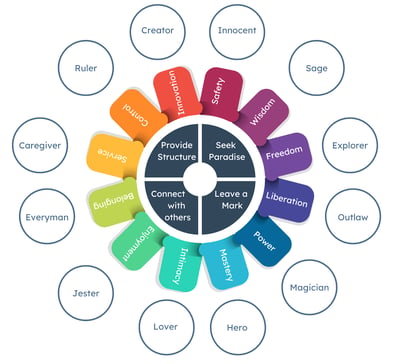
Brand character flywheel

Image Source

When you’re designing your brand character, there are certain qualities that they should possess. These qualities will be unique to your company, but some examples include:

  • Friendliness. Your brand character should be someone that people would want to interact with. They should be approachable and easy to talk to.
  • Trustworthiness. People should feel like they can trust your brand character. They should feel like they can rely on them for accurate information.
  • Expertise. Your brand character should be an expert in their field. They should be someone that people can go to for advice and guidance.
  • Enthusiasm. Your brand character should be enthusiastic about your products or services. They should be passionate and excited, and they should show that in their interactions with customers.

These are just a few examples of qualities that your brand character could possess. It’s important to choose qualities that are of value to your company and that you want people to associate with your brand.

Identifying a Brand Character for Your Company

Creating a brand character can be a fun and rewarding process. It allows you to really think about what makes your brand unique and what personality you want it to have. It’s also a great way to get your team involved in the branding process.

If you’re not sure where to start, there are a few key questions you can ask yourself to help identify your brand character.

  • What does my brand stand for?
  • What is my brand’s personality?
  • What are my brand’s core values?
  • How does my brand want to be perceived by the public?
  • What kind of feeling do I want my customers to have when they interact with my brand?

Answering these questions will give you a better understanding of the type of character you should be creating for your brand.

1. Choose the values of your brand character.

Once you answer these questions, you’ll need to decide what values and attributes you want your character to embody. These should be based on your company’s mission and brand identity. Once you’ve decided on these, you can start brainstorming what kind of personality would best represent your company.

2. Design your brand character.

Once you’ve identified your brand character, you can start thinking about how you want to bring them to life. This is where you’ll need to get creative. You can use illustrations, animations, or even photographs to help represent your brand character. The important thing is that they are visually appealing and recognizable.

3. Implement your brand character.

Your brand character should be included in all of your marketing and advertising materials. They should be featured prominently on your website, social media accounts, and printed collateral.

Make sure that everyone on your team is aware of your brand character so that they can use them consistently across all channels.

Benefits of Brand Character

Building a brand character has many benefits for your company. You’ll be able to create a familiar face for potential customers to associate with your company. Other advantages of brand characters include:

  • Helping build an emotional connection with your audience. If your character goes on a journey, your emotionally-invested audience goes along with them.
  • Making your brand more relatable. Your audience may be able to see themselves or their challenges in your brand character.
  • Helping customers remember your brand. They may remember your character’s catchphrase or design.
  • Differentiating your brand from competitors. Other companies may provide a similar service, but your brand character belongs to you alone.

Including a Brand Character in Your Marketing Plan

If you’re looking for a way to make your brand more memorable and relatable, consider creating a brand character.

You’ll be able to connect with your audience on an emotional level and increase customer loyalty. When done correctly, brand characters can be a valuable asset to your marketing plan.

Editor’s Note: This post was originally published in August 2018 and has been updated for comprehensiveness.

brand consistency

Categories B2B

10 Events and Conferences for LGBTQ+ Entrepreneurs

Welcome to Breaking the Blueprint — a blog series that dives into the unique business challenges and opportunities of underrepresented business owners and entrepreneurs. Learn how they’ve grown or scaled their businesses, explored entrepreneurial ventures within their companies, or created side hustles, and how their stories can inspire and inform your own success.

LGBTQ+ people often face higher rates of isolation and discrimination, meaning that this community can especially benefit from gatherings that foster support and connection.

This is especially true for LGBTQ+ entrepreneurs and professionals, as finding opportunities to learn from people who share similar life experiences can be challenging.

In this post, we’ve curated a list of annual events and conferences for LGBTQ+ entrepreneurs and professionals. Whether you’re seeking mentorship, training from experts, or just some old-fashioned socializing with like-minded business owners, these events are made for you. While most have already taken place for 2022, keep your eyes peeled for the 2023 dates.

Events and Conferences for LGBTQ+ Professionals

1. Lesbians Who Tech & Allies Summit

Despite the name, the annual Lesbians Who Tech & Allies Summit is inclusive of all techies, centering LGBTQ women, women of color, and non-binary leaders. The ninth summit was in October in San Francisco, with in-person and virtual options.

Their summits feature networking and mentorship opportunities, career fairs, leaders and celebrity speeches, parties, and educational sessions. While much of the content is geared toward the tech world, many sessions focus on broader topics like leadership, diversity, politics, and advocacy, which may appeal to any LGBTQ entrepreneur.

2. Out & Equal Summit

The Out & Equal Summit has been held for over 20 years, creating a place for LGBTQ+ professionals and allies to learn how to create more inclusive workspaces. The latest was in October 2022 in Las Vegas, with a digital livestream option.

This conference is intended for any professional interested in LGBTQ+ workplace equality — especially executives, HR and DEI experts, Employee Resource Group leaders and members, and more. In addition to hosting learning sessions and keynote speeches, this event provides attendees with networking opportunities, workshops, and social events.

3. NLGCC International Business & Leadership Conference

The NLGCC, or the National LGBT Chamber of Commerce, is the only organization that offers a certification for LGBTQ-owned businesses (Certified LGBT Business Enterprise®).

It also provides business owners with networking and business opportunities year-round — and at their annual conference. Despite being U.S.-based, their International Business & Leadership Conference claims to be “the largest LGBT business event on the planet.”

In addition to networking and keynote speeches, attendees get access to leadership programming, speeches, B2B bootcamps, expos, matchmaker meetings between suppliers and companies, and more. The 2022 event was in Las Vegas in August.

4. Out Leadership Summit

This organization aims to drive equality and advocate for inclusion in business. They have several talent development programs for emerging leaders, women, and board-level executives.

Out Leadership also hosts yearly summits worldwide to unite leaders and business owners. The 2023 US summit will be on May 15 in New York in partnership with Lambda Legal.

5. StartOut Chapter Events or National Awards

StartOut exists to support LGBTQ entrepreneurs and accelerate their businesses. The organization has chapters in several major cities, such as Austin, Chicago, San Francisco, and New York, where local LGBTQ+ business owners can connect and attend frequent educational and social events.

StartOut also puts on a national gala, the StartOut Awards, which celebrates LGBTQ entrepreneurs and is an ideal opportunity to socialize and network with peers. The 2022 event took place in October in New York City.

6. The ROMBA Conference

Reaching Out MBA’s annual ROMBA Conference is a massive event for LGBTQ+ business students and post-MBA professionals.

The conference features social receptions, career fairs, panels, workshops, and competitions. LGBTQ+ entrepreneurs with business backgrounds can utilize this event for professional development, networking, and recruiting talent. The 2022 conference was in October in Washington, D.C.

7. Out Professionals Events

This organization for LGBTQ+ professionals hosts virtual events, but if you’re fortunate enough to live in a city with a chapter, you can attend local events and connect with other entrepreneurs.

Cities such as Houston, Philadelphia, San Diego, and Washington, D.C. have Out Professionals chapters and host monthly in-person events to help LGBTQ+ people build their careers and network. The organization is expanding and seeking more cities where people want to start chapters.  

Industry-Specific LGBTQ+ Conferences

We included Lesbians Who Tech & Allies in this general list since technology touches nearly everything these days, and its sessions appeal to a broad range of professionals.

However, there are also many smaller, industry-specific LGBTQ+ events and conferences. If you want to network, socialize, and learn with your peers in your field, see if your industry has something specifically for LGBTQ people. Here are just a few of the ones out there:

  • The NLGJA (The Association of LGBTQ Journalists) annual convention for those in journalism
  • The Midwest LGBTQ+ Health Symposium for those in medicine and healthcare
  • NAGLREP’s yearly convention for LGBTQ real estate professionals

Local LGBTQ Events

Chamber of Commerce

Some cities, regions, and states have their own LGBTQ chambers of commerce, where LGBTQ-owned businesses and allies can become members.

This not only links LGBTQ entrepreneurs with an affirming local business community, but it makes them visible to those seeking to patronize LGBTQ-friendly businesses. These local chambers frequently host community events, from social and networking opportunities to business training sessions. The NLGCC has a list of local affiliated chambers nationwide; check to see if there’s one in your area, and scope out their website for upcoming events.  

Local Pride Festivals

Every year, more cities, counties, and regions host annual Pride celebrations. While you’ll typically find parades and marches, many Pride events also feature festivals with booths for rent. Entrepreneurs often use this opportunity to sell goods, create a local presence, or promote their business with freebies or giveaways. If your area has a Pride celebration, consider renting a booth.

Get Ready to Mingle

LGBTQ+ professionals have many opportunities available to connect with and learn from other entrepreneurs at events. All of the summits on this list are valuable opportunities to learn and grow — select one that speaks most to your needs and get ready to mingle.

Categories B2B

Are Seasonality & the Economy Impacting Marketers in Q4? [Traffic & Conversion Data from 150K+ Companies]

This time each year, nature – as well as marketing – slows down as we head into colder seasons.

As we enter Q4, marketing departments are preparing for a slowdown in business that comes as people tune out towards the end of the year.

But, while seasonal change is expected and inevitable, this year’s economic shifts might cause some marketers to worry that this year could bring a flurry of poor numbers.

As you see dips or bumps in early Q4, you might wonder, “Is my marketing department experiencing seasonality or an impact of outside events, or are our numbers solely based on the work we’ve been doing?”

To help you gather evidence that proves or disproves the possibility of outside impacts in Q4, here’s a look at how businesses across industries entered the first month of it in October.

About this Data: These insights are based on data aggregated from 158,000+ HubSpot customers globally between July 2021 and October 2022. Because the data is aggregated from HubSpot customers’ businesses, please keep in mind that the performance of individual businesses, including HubSpot’s, might differ based on their markets, customer base, industry, geography, stage, and/or other factors.

Download Now: Free State of Marketing Report [Updated for 2022]

How Marketing Metrics Are Shifting (or Staying the Same) in Early Q4

To learn how metrics were shifting, we looked at data from sample sizes of 120,000+ businesses.

Overall, we’re seeing that most inbound marketing metrics are down year-over-year. Luckily, the good news is that one major, hard-to-win metric, website conversion rate, is trending upward.


When looking month-over-month, numbers seem to be flatter with a mixed bag of small increases and decreases, which could hint that we’re heading into a seasonal time of slow growth, or starting to see some sluggishness due to the economic climate.


Below, I’ll break down each key marketing metric and walk through what we’ve seen across industries in Q4 so far.

Q4 Web Traffic So Far

Month-over-month, we see that fall and winter seasonality hasn’t harmed websites quite yet with most industries seeing flat, low-change in traffic. Only Technology, Information and Media (up 2% MoM) as well as Trade, Transportation and Utilities (up nearly 3%) saw any real change.

While seasonality might not be impacting the industries below, year-over-year data shows significant dips in traffic across industries (a theme we’ve seen throughout the last few months). Professional and Business Services (down 10%) saw the most significant annual loss, while Leisure and Hospitality saw the reverse with a nearly 7% YoY increase.

Industry

MoM

YoY

Sample size

All

1.30%

-10.80%

145,150

Construction

-1.21%

-5.39%

1,405

Education and Health Services

-0.42%

-3.74%

3,659

Financial Activities

1.32%

-11.12%

4,084

Leisure and Hospitality

-1.31%

6.99%

1,114

Manufacturing

-0.19%

-6.43%

4,463

Professional and Business Services

-0.55%

-9.65%

12,999

Technology, Information and Media

2.32%

-4.62%

14,934

Trade, Transportation and Utilities

2.92%

-5.58%

3,480

Why is this happening? Are we continuing to see solid annual traffic drops? We can’t be certain, but a few things that could be causing impacts are:

  • More and more, audiences spend time discovering and even shopping for products on social media directly – no longer relying on standalone company sites.
  • In 2021, many regions were still at least partially quarantined due to COVID-19. While the pandemic continues, most of the world’s lightened precautions, enabling economies to re-open and allowing more people to go out and spend less time surfing the web.
  • Search engines get more and more competitive daily as hundreds of sites aim to rank for the same keywords as their competitors. More competition directly impacts search traffic and, today, search result pages are more saturated than ever..

Website Conversions Grow Despite Traffic Dips

While traffic seems to be a tad sluggish in October, we’re seeing significant YoY gains (+10.95%) overall with Technology, Information and Media leading the pack (+22.1%) and only Trade, Transportation and Utilities, and Construction seeing decreases.

Across the board, we’re seeing a very slight MoM decrease overall, except for Technology, Information and Media which saw a large increase and Trade which saw the greatest decrease (aligning with slow tech business growth reports we’ve seen all over the news.)

Industry

MoM

YoY

Sample size

All

-1.76%

10.95%

124,836

Construction

-5.36%

-5.36%

1,166

Education and Health Services

2.26%

19.35%

3,316

Financial Activities

-4.59%

7.47%

3,542

Leisure and Hospitality

5.00%

9.70%

939

Manufacturing

-6.27%

12.95%

3,905

Professional and Business Services

0.31%

15.41%

11,451

Technology, Information and Media

17.27%

22.10%

13,504

Trade, Transportation and Utilities

-8.41%

-4.39%

2,984

Inbound Leads Stay Fairly Flat… Except in a Few Key Industries

In October, Inbound Leads were a mixed bag. However, the evidence of both positive and negative seasonality patterns become more obvious when looking at this metric.

Month-over-month, inbound leads remained flat with an overall 0.65% decrease. Manufacturing (-6.48%), as well as Transportation and Utilities (-5.6%), saw the biggest dips. Meanwhile, Construction (-8.75%) and Trade, Transportation and Utilities (9.82%) saw significant YoY losses.

Where did inbound leads grow? Technology, Information and Media saw a sizable MoM and YoY increase of 5.22% each. Additionally, inbound leads overall saw a small annual increase with Education and Health Services (16.76%) and Leisure and Hospitality (17.15%) seeing the greatest gains. These boosts contributed to year-over-year growth of 1.63% for overall industries.

Industry

MoM

YoY

Sample size

All

-0.65%

1.63%

132,820

Construction

-4.48%

-8.75%

1,345

Education and Health Services

1.70%

16.76%

3,636

Financial Activities

-2.80%

-1.97%

3,876

Leisure and Hospitality

2.74%

17.15%

1,031

Manufacturing

-6.48%

4.31%

4,287

Professional and Business Services

0.15%

8.02%

12,648

Technology, Information and Media

5.22%

5.22%

14,592

Trade, Transportation and Utilities

-5.61%

-9.82%

3,251

What can we make of this data?

While we can expect year-over-year conversion rate growth with web traffic going down annually, some of the substantial losses and gains are due to more than just web traffic. A few potential impacts could be:

  • Products or services sold within manufacturing, trade, transportation, and utilities can be quite expensive or impacted by inflation. As people tighten their budgets with conflicting economic news, high-priced industries could be seeing some sluggish lead generation as people might only be focusing on just the products or services they need.
  • Seasonality is likely beginning to take effect as people begin to focus more on experiences driven by education, media, and holiday travel, while putting other industries on the back burner.
  • As we keep seeing news of career changes, recession-based company shifts, and the continuing pandemic, people might be more fixated on Education and Health Services industries than in previous quarters, leading to nearly-17% annual lead growth.

Are Marketing Emails Struggling to Be Seen?

In our previous reports, we noted that while marketers have been sending fewer emails – likely to meet the needs of today’s subscribers with heavily cluttered inboxes – they’re still seeing opens and open rates dip.

It’s tricky to guess what the problem could be, but as the HubSpot Blog’s former email manager, one suspicion I have is that email inboxes are far too saturated and competitive these days.

Metric

MoM

YoY

Sample size

Email sends

1.42%

-1.97%

141,791

Email opens

-1.14%

-15.85%

141,791

Email open rate

-2.19%

-13.71%

141,769

Ultimately, if your email isn’t seen in an inbox no one will open it. And, if you’re sending emails with great content, but non-competitive, non-eye-catching subject lines, your readers might not click into them.

Odds are, your subscriber subscribes to many other emails related to your industry. And, because of this, they compare you to competitors sending similar content with similar goals each day. This is why it’s so important for your brand’s emails to seem as interesting, unique, and eye-catching as possible – without looking too desperate.

To learn more about how to boost your open rate and opens, check out this helpful post.

Further Reading

When it comes to key marketing metrics, keeping a pulse on how the business world and your industry are doing can help you determine when and how to get ahead of competition.

For even more helpful data, check out our previous reports, plus a few additional research studies, as you plan your strategies for Q4 and beyond.

Lastly, be sure to check out our free, downloadable 2022 State of Marketing Report below – with data and tips from experts across the global marketing industry.

New Call-to-action

Categories B2B

How SKIMMS, Liquid Death, and Other Brands Made Age-Old Products Feel New, Exciting, and Different

Let’s face it — there’s always another brand out there that makes a product similar to yours. Chances are that there are quite a few brands that make products or services similar to yours.

It’s also likely that new brands and businesses will pop up in the future with similar products. With this in mind, how do new brands compete in such saturated and competitive markets, so much so that they become market leaders in their niche?

In this post, we’ll discuss how three brands, SKIMS, Liquid Death, and Dollar Shave Club, introduced old but new products to market and achieved significant success.

→ Download Now: Free Product Marketing Kit [Free Templates]

Revitalizing Old Products: How Skims, Liquid Death, and Dollar Shave Club Achieved Their Success

Making “old” products come alive in new and exciting ways revolves around audiences, their needs, and how you can make what you offer them more exciting than their available options.

Doing this falls on new, unique branding that speaks to their desires and a product that positions you above your competition.

Let’s discuss three brands that excelled at this.

1. SKIMS Made Shapewear Exciting

SKIMS, founded by Kim Kardashian, is a shapewear brand.

Shapewear had been around for centuries when SKIMS launched in 2019, yet it was able to make a significant splash and repeatedly sell out of a product that many of its customers likely already had on their shelves.

skims

Image Source

This success happened because SKIMS listened to its audience’s desires and built the brand around that, specifically regarding size and shade inclusivity. People who didn’t see themselves represented by other brands now had an opportunity to find what they were looking for in a new product.

It was also able to generate hype, excitement, and purchases through its marketing tactics, specifically the drop campaign model, where a limited number of products were released as capsule collections, so not everyone in line to buy one could. Those who aren’t successful are more likely to return and keep trying until they can make a purchase, keeping SKIMS top of mind.

It’s also undeniable that SKIM’s success with the drop model was learned from Kardashian’s sister Kylie Jenner and her Kylie Lip Kits that repeatedly sold out products with a drop model.

2. Liquid Death Created Hype and Excitement For Water

Liquid Death sells canned still and sparkling water. For those with consistent access to water, it’s an everyday product.

Despite only being water, Liquid Death raised $23 million in series B funding, has grown to be sold in 60,000 stores across the U.S., and holds its place as the top-selling still water on Amazon.

Liquid Death’s success is based on its unique and humorous branding. More specifically, Liquid Death’s water cannot actually cause death; it does the opposite.

liquiddeath

Image Source

The name is also more reminiscent of an alcoholic beverage or energy drink, like Monster or Red Bull, that claim to give people the energy boosts of a mythical creature or 1,000-pound animal. It also comes in a can instead of a plastic bottle, which mirrors the experience of drinking a can of beer or an energy drink.

The brand succeeded through its unique branding, unlike any other water brand, as well as the fun and unique experience that comes from drinking an everyday necessity from a can affixed with a name reminiscent of heavy metal and extreme energy.

3. Dollar Shave Club Re-invigorated Razors With Convenience

Shaving razors have been around forever, and there are multiple market competitors, like Gillette, Venus, Shick, Billie — the list goes on.

However, since Dollar Shave Club launched in 2011, it has risen in the ranks and has a community of loyal subscribers that use its products despite the multitude of other brands that offer the same thing.

dollar shave

Image Source

It was able to achieve success because it revitalized the market with new prices and increased convenience. In its early days, customers could pay as little as $1 to get razors delivered to their homes monthly.

They didn’t have to pay higher prices for another brand or remember to go to the store and ask someone to unlock the cosmetics locker; it would just be in their mail every month when they needed it.

Over to You

Many of the products we use daily are offered by other brands, but we have favorites.

For SKIMS, Liquid Death, and Dollar Shave Club, competitors exist, but their unique approaches to marketing and branding (and having a high-quality product) have helped them become household favorites for their users, and their practices are worth learning from.

Product Marketing Kit

Categories B2B

The 13 Best Blogging Platforms for 2022 (& How to Pick One)

Companies that blog get 55% more visitors than businesses that don’t. But to get that increased traffic, you need the best blogging platform for your needs and goals.

Publishing blog content offers many benefits. Blogging can help you establish authority in an industry. It can drive brand awareness, share company news, and better convert website traffic into leads.

Build your website with HubSpot's Free CMS Software

But the wrong platform can also limit your returns. It can restrict your ability to gather leads, improve SEO, monetize your blog, and more.

There are many great choices for blogs that come at little or no cost, with a ton of valuable features that can bring you results for your efforts. To find the best platform for your new blog, keep reading or jump to the section you’re looking for.

What is the best blogging platform for you?

Building a blog takes time and dedication. It’s a long-term investment, and that includes the platform you use to create it.

This means that no matter how great a blog platform is, it needs to be right for you. It’s challenging to move a blog to a new site after it gets going, so the better you prepare before you start blogging, the more likely you are to have lasting results.

So, before we cover the most popular choices, let’s talk about what you need in a platform for your blog.

If you’re just starting out, you’ll want a platform that’s easy to set up and use. If you don’t have coding experience, it’s important to find a platform for your blog that doesn’t need you to code. Developing a blog isn’t simple, and you’ll have more than enough to do without adding new skills to your to-do list.

Next, you’ll want to do some big-picture thinking about the type of blog you want to make. This means drawing inspiration from the blogs you admire. It’s a good idea to create a list of layouts and features you like, and take note of blog tools you may need as your blog grows.

Below are a few questions you’ll want to ask yourself to prepare:

  • Do you plan to monetize your blog with a newsletter now or in the future?
  • Is a multimedia experience with lots of images and videos your goal?
  • Are you starting a blog to build SEO for your small business site?
  • Or are you hoping it can build your reputation as a thought leader?
  • What skills do you need to learn to build your blog?
  • How many of those skills can a blogging platform help with?

Once you have a clear plan for your blog, you’re ready to choose the best blogging platform for you.

How to Choose a Blogging Platform

For many, choosing a blog platform starts with cost. Some of the best blog software is free. So, check what plans each provider offers and how many tiers there are. Then look into their primary and unique features. Pay special attention to the value that out-of-the-box features offer in comparison to add-ons.
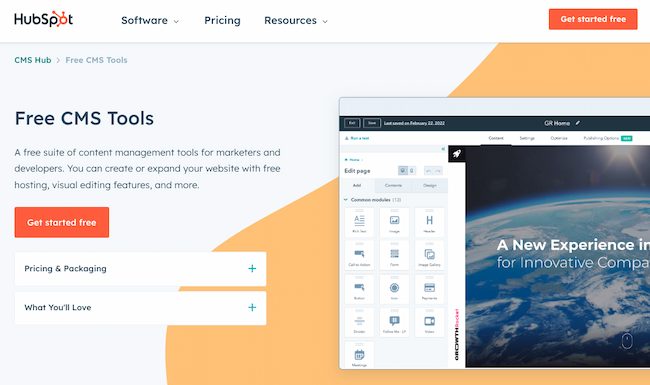
Blog software, free, examples: HubSpot CMS

But what you’re willing and able to pay is just the first of many important decisions. Let’s take a look at some other features you might need for your blog. This can help you compare different blogging platforms.

Themes and Templates

Themes and templates allow you to customize a blog quickly and easily. When looking at different blogging platforms, check out their selection of themes and templates.
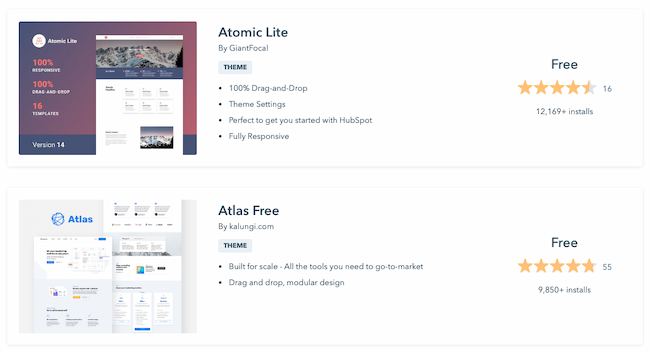
Blog template examples: HubSpot

Ask yourself:

  • Do they have a lot of templates for blogging specifically?
  • Do they have a variety of free and premium templates and themes?
  • Can you edit the themes and templates to create a truly customized look for your site?
  • Do you want to create your blog from scratch instead of a predesigned theme?

These are just a few questions that can help you choose a platform with the design and customization options you need.

There’s also a strong chance that you’ll fall in love with a blog theme and want to start building your blog right away. But if you’re blogging for your business, it’s about more than aesthetics.

Content Editor

The content editor is the core of every blogging platform. As a blogger, you might be working with this editor every day, so make sure you pick a platform with an editor you like.

Think about ease of use. You want to be able to set up a blog and start adding content to it quickly. And you should be able to get a sense of the functionality and flexibility of the tool.

To test this, you may want to create a complex blog draft. Be sure to add internal links, videos, and different images. Anything you think you might want to include in your final blog should be ready to test on each platform.

As you start comparing platforms you’ll start to get stuck on specific details. It can help to break your list of desired features into must-haves and nice-to-haves.

For example, maybe your editor must have drag-and-drop functionality and an auto-save feature. But it’d be nice to have the option to preview how your post looks on different devices.

Finding the Best Blogging Platform for SEO

Another important factor is how a blogging platform’s capabilities align with your goals and needs. For example, if you need to boost your visibility in SERPs, you’ll need a platform with built-in SEO tools.

Optimizing your content for search is essential to driving traffic to your blog. According to a Backlinko study, sites listed on the first SERP in Google get 27% of all clicks for a keyword or phrase.

It’s well-established that blogging can improve SEO if it’s a useful resource for your customers. But SEO takes time to learn if you’re just beginning your content marketing journey.

On-page SEO, off-page SEO, and technical SEO are all important strategies that take time and effort to learn.

SEO Features and Tools

So, to get on that first page, you ideally want a platform with built-in tools to help you optimize your content.

Many blogging platforms offer plugins or add-ons to help with SEO. But the features that will be most useful to you will depend on your current know-how. For example, some platforms can help you build a site map or manage your blog URLs.

Many SEO techniques are repetitive processes full of details. So, it’s also ideal to have a platform for your blog that can remind you to optimize for search as you build each blog. For example, HubSpot SEO software offers on-page tips like reminding you to add alt text to blog images.
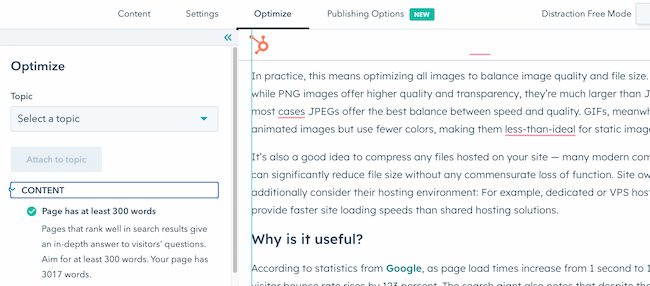
Best blogging platform for SEO example: HubSpot CMS

If a platform doesn’t have this type of advanced functionality, then check if you can install a third-party SEO tool. Otherwise, you’ll have to get up to speed on SEO best practices and make sure to add them to your blog.

Extensions and Integrations

No blogging platform can offer every single feature every single blogger wants out of the box. Besides, your blogging needs and goals will likely change over time as your audience grows or strategy shifts.

That’s why it’s important to choose a blogging platform that offers extensions or integrations with third-party tools. Platforms with an ecosystem of apps will be able to scale with you over time. This helps make sure that you don’t have to migrate to a more flexible alternative in the future.

Now that you know some features to consider in your selection process, let’s take a look at some of the best blogging platforms on the market.

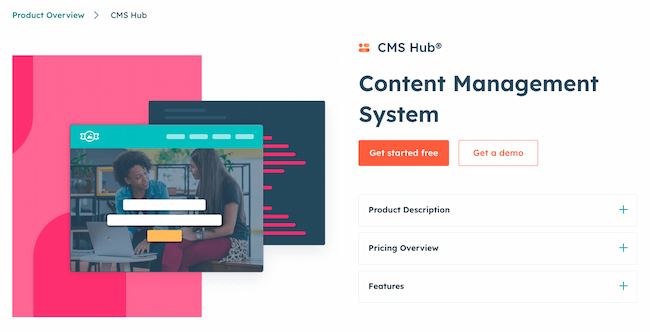
1. CMS Hub

Best For: Marketers and Developers

Best blogging platform: HubSpot CMS Hub

Blog Software Cost: Free, With Premium Options

CMS Hub Ideal Users

What sets CMS Hub apart from other blogging platforms is that it’s ideal for both developers and marketers. It has the tools, technologies, and workflows that developers need to build a CRM-powered blog. At the same time, it offers a great user experience for marketers with easy access to features that drive conversions.

CMS Hub Pros

The biggest advantage of this free blog software is that it’s powerful but still easy to use. You can start by choosing a pre-designed theme or building your own custom theme with the drag-and-drop website builder. CMS Hub includes free web hosting and it’s easy to connect a custom domain.

Then, using HubSpot’s blog editor and built-in SEO tools, you can create blog posts with CTAs, forms, and other interactive elements.

You can even create multi-language variations of your blog posts and run A/B tests on them to reach a global audience. Before you publish, you can preview how your posts and pages look on different types of devices.

Once you’re ready to start promoting, you can connect your blog to your social media accounts. That way, you can automatically share new blog posts on your social networks in the same place that you wrote them.

As you publish more content, you can analyze your blog performance. This can help you understand what topics and types of content are resonating with your readers. That’s because CMS Hub is part of HubSpot’s CRM platform.

CMS Hub Cons

Since CMS Hub is an all-in-one solution for marketers and developers, it has lots of rich functionality and a ton of attractive themes. This is a good thing for most bloggers and G2 gives HubSpot a 4.5/5 rating with almost 1400 reviews.

But, if you’re an individual or small business just starting to blog, then you may not have the time or expertise to leverage the full power of the CMS Hub. In that case, you might be better off with a simpler alternative to start.

CMS Hub Website Example

Below you can take a look at this company’s feature-rich blog built on the CMS Hub.
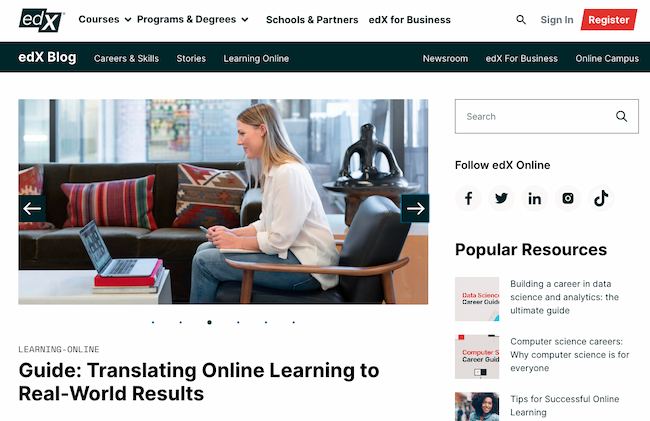
What is the best blogging platform example: HubSpot CMS Hub and EdX

CMS Hub Key Takeaways

  • Meets the needs of both developers and marketers
  • Fully-integrated CRM to streamline sales and marketing processes
  • Built-in multi-lingual support, SEO recommendations, and more

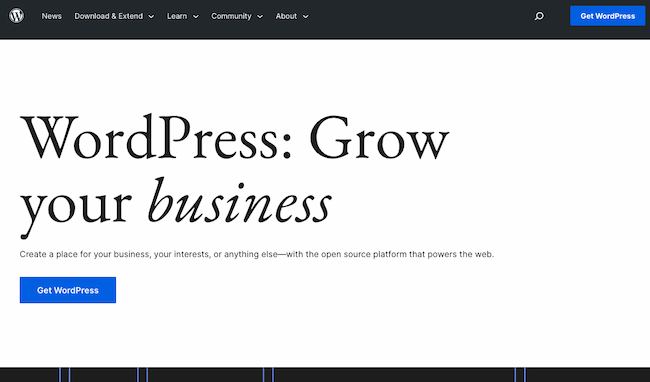
2. WordPress

Best For: Themes and Plugins

Best blogging platform: WordPress

Blog Software Cost: Free, With Premium Options

WordPress Ideal Users

Creating and managing a blog on WordPress could mean more maintenance than other platforms, but it will offer the extensibility and content management features publishers and other businesses need to create a complex blog.

WordPress Pros

WordPress was originally created as a blogging platform and it has a 4.4/5 rating on G2 with over 8,000 reviews. Though it has evolved into a multi-purpose content management system, it still has many features and themes for blogging.

WordPress enables you to not only purchase a custom domain and download one of 3,500+ themes specifically designed for blogs — it also lets you add social media buttons, forms, affiliate links, and other features with plugins.

The customization options are virtually limitless with the 60,000+ free plugins available.

WordPress Cons

You will have to make sure your theme and plugins are compatible and up-to-date. Otherwise, they can disrupt the user experience or break your site. Other maintenance tasks like finding and fixing broken links, updating the core software, and optimizing your database will also be your responsibility. This can be difficult for site owners who don’t have the time or technical expertise to regularly maintain their sites.

WordPress Blog Example

Tech Crunch, one of the largest and most popular technology news blogs, is powered by WordPress. Take a look at this WordPress website example below.
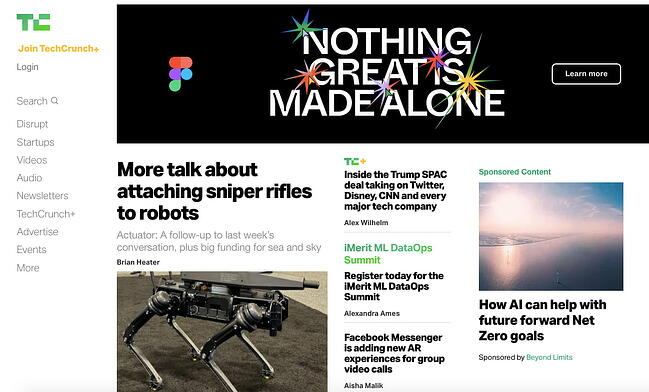
Best blogging platform examples: WordPress and TechCrunch

WordPress Key Takeaways

  • Ideal for publishers and others who want to extend the platform with plugins
  • Over 3,500 free blogging themes
  • Website maintenance can be time-consuming

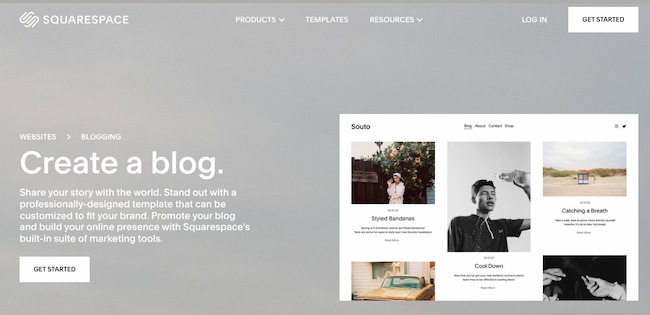
3. Squarespace

Best For: Design

Best blogging platform: Squarespace

Blog Software Cost: Paid, With Plans From $16-65 per Month

Squarespace Ideal Users

Squarespace is an ideal blogging platform for businesses and individuals creating image-rich content. It also has a 4.4 rating on G2. With Squarespace’s award-winning designer templates and integrations with Getty Images, Unsplash, and Google AMP, you can create visual content that’s engaging and shareable.

Squarespace Pros

While Squarespace only offers about 140 templates, they are all mobile-optimized and fully customizable so you can create a blog that looks the way you want it to. Once you’ve designed your pages, you can use Squarespace’s blogging and SEO tools to create and optimize your content.

Finally, after publishing your blog posts, you can connect your social media accounts to easily promote them. Then use the built-in analytics tool to learn where your traffic is coming from, what your visitors are looking for, and how they’re interacting with your content.

Squarespace Cons

Squarespace offers even more features, from audio file support to newsletter signup forms, but ultimately it’s limited in functionality. That’s because it supports around 30 extensions, so you’re mostly limited to the features Squarespace offers out-of-the-box.

Since they lack some features that bloggers need — like an auto-save feature, for example — Squarespace isn’t the ideal platform for everyone.

Squarespace Blog Example

Squarespace does allow some bloggers to create beautiful sites, like this lifestyle blog below.
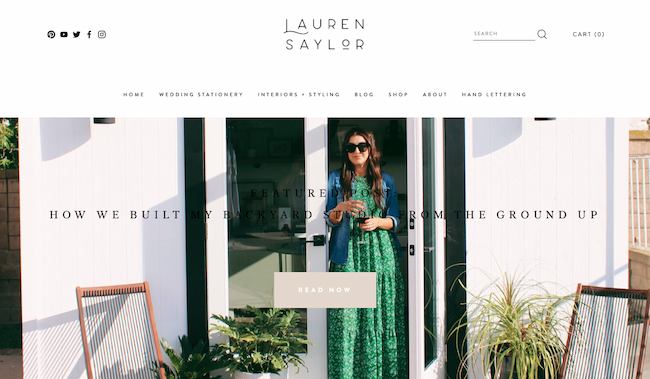
Best blogging platform example: Squarespace, Lauren Saylor

Squarespace Key Takeaways

  • Best suited for individuals and brands who want to customize a blog to their personal style
  • Small but high-quality selection of templates
  • Limited to features and few extensions that Squarespace offers

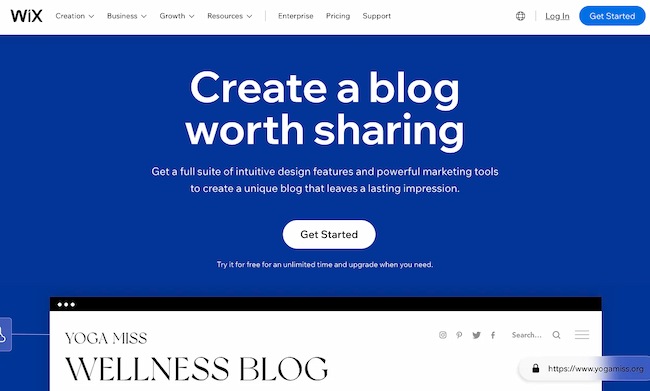
4. Wix

Best For: Beginners

Best blogging platform examples: Wix

Blog Software Cost: Paid, With Plans From $16-59 per Month

Wix Ideal Users

Wix is a popular blogging platform for beginners who are looking for hosting and blogging tools in one place and who prioritize speed and design over functionality.

Wix Pros

Wix has a 4.2 G2 rating and gives you two choices for creating your blog within the Wix Editor. You can start by choosing from over 800 pre-designed templates that any blogger can use, whether you own a retail business or run a food review website. You can also use Wix ADI by filling out a quick questionnaire to have a blog created for you.

Then you can begin writing and editing posts on desktop or mobile, embed Wix’s stock photos and videos or your own media, and organize them into topics.

Once you’re done writing, you can configure your SEO settings to boost your organic reach, push your content to your subscribers with Wix’s email tool, and share them through your social media accounts. You can further foster a sense of community among your readers by letting them become members.

Wix Cons

While Wix is more versatile than other hosted website builders, it lacks customization options and content management features, particularly when comparing Wix vs. WordPress or another CMS.

For example, to add more advanced elements to the page, like music or maps, you’ll have to add HTML code. This process can be intimidating for beginners.

Wix Blog Example

Take a look at this Wix blogger’s site below for an example of a stylish but relatively simple blog.
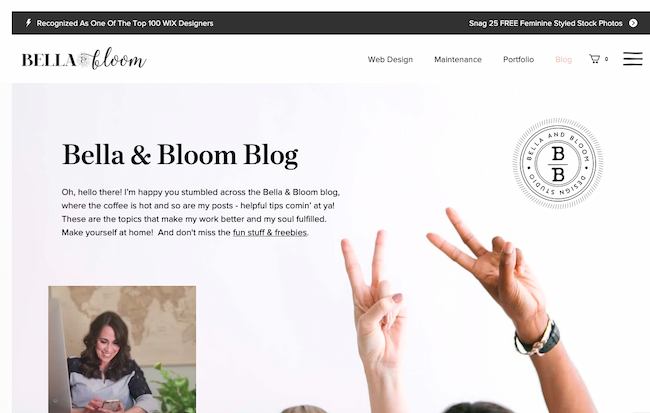
Best blogging platform example: Wix and Bella & Bloom

Wix Key Takeaways

  • Ideal for bloggers who prioritize speed and design over functionality
  • Can use pre-designed templates or start from scratch
  • Editor lacks drag-and-drop functionality

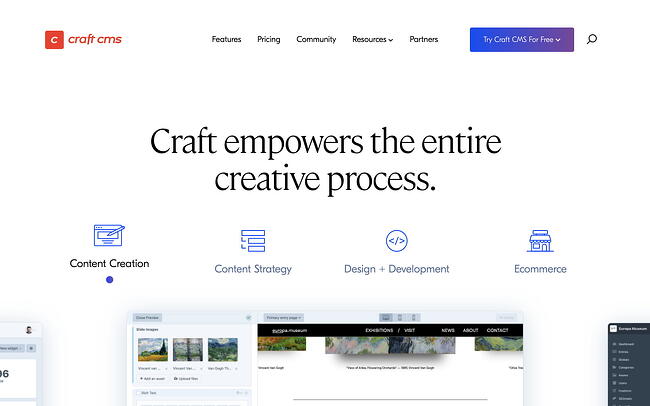
5. Craft CMS

Best For: Customization

Best blogging platform: Craft CMS

Blog Software Cost: Free, With Premium Options

Craft CMS Ideal Users

Craft CMS is a blogging platform designed for developers, designers, and web professionals.

Craft CMS Pros

With Craft’s personalized content modeling, powerful templating, and the option to edit your source code, you can completely control the appearance and functionality of your site — if you have the necessary experience.

Craft CMS also offers an image editor, collaboration tools, and a localization feature that can translate your content to specific languages. You can now also manage multiple blogs from within a single Craft install. To analyze your content’s performance, you can integrate Craft CMS’ dashboard with Google Analytics. This blog platform has a 4.1 G2 rating.

Craft CMS Blog Example

If you have the web development experience to fully leverage the power of Craft CMS, you’ll be able to create a complex blog with custom post types, like this travel blog below.
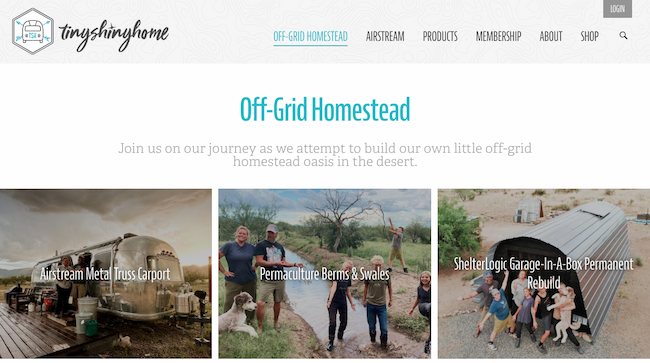
Best blogging platform example: Craft CMS and Tiny Shiny Home

Craft CMS Key Takeaways

  • Advanced functionality including personalized content modeling and localization feature
  • Free version for single admin accounts
  • Requires some web development experience

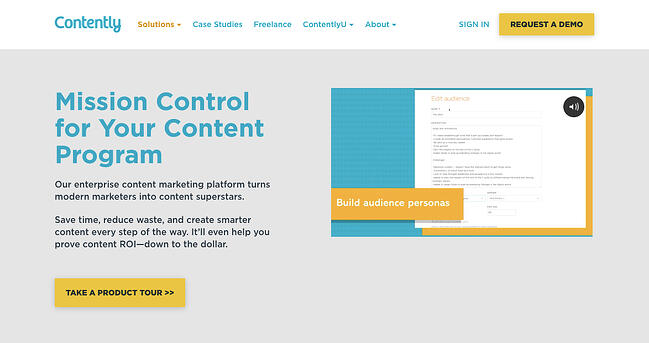
6. Contently

Best For: Enterprises

Best blogging platform: Contently

Blog Software Cost: Paid, With Quote-Based Pricing

Contently Ideal Users

Contently is a robust blogging platform that’s ideal for enterprise companies with large budgets but few internal editorial resources. It has a 4.5/5 G2 rating with just over 80 reviews.

Contently Pros

Contently allows you to manage your entire content creation process in one place. You can create and visualize your editorial strategy with their customizable production calendar tool or organize your blog posts with their tagging tool. It can also help you effectively collaborate with your team on projects by leveraging their advanced workflow tools. You can even pay for Contently’s well-vetted freelancers to write some of this content for you.

Before publishing your content, Contently’s smart content review tools will ensure your content is aligned with your brand, optimized for search, and legally compliant. Finally, to refine your content strategy, Contently enables you to compare your content’s performance against industry benchmarks, quantify its ROI, and measure its performance by topic, format, and sources directly in your dashboard.

Contently Cons

The biggest drawback of Contently is that it’s beyond many small businesses’ and individuals’ budgets. Contently can be expensive and could be a better fit for enterprise companies.

They offer quote-based pricing that varies for each client. Their costs factor in editing, strategy, and help from their content creators, as well as visual assets.

Contently Blog Example

The Royal Bank of Canada, one of North America’s largest banks, uses Contently to streamline content creation across 14 marketing departments. Check out its blog below.
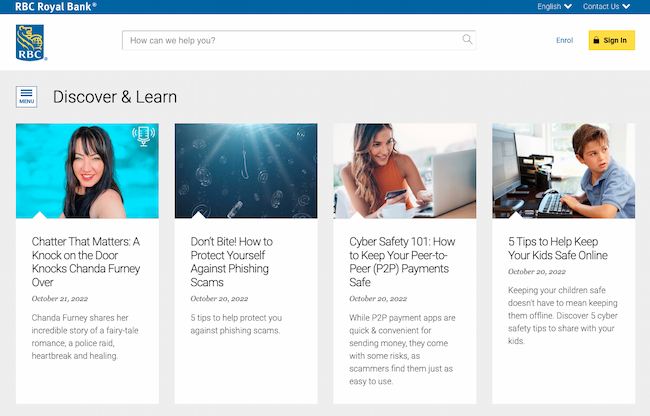
Best blogging platform example: Contently and RBC Royal Bank

Contently Key Takeaways

  • Can manage the entire content creation process
  • Deep-dive analytics
  • Pricing is mainly for enterprise companies

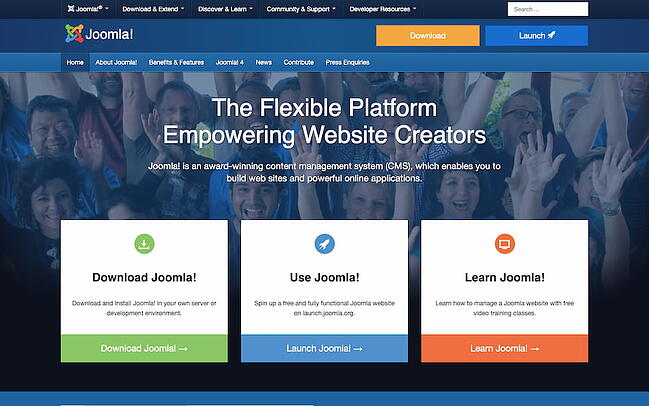
7. Joomla

Best For: Community Building

Best blogging platform: Joomla

Blog Software Cost: Paid, With Plans From $8-33 per Month

Joomla Ideal Users

Joomla is an open-source CMS with advanced content and user management features built directly into the platform. This makes it an excellent choice for creating community-centric blogs.

Joomla Pros

Joomla offers rich built-in functionality as well as thousands of extensions. For example, Joomla allows you to create custom post types, manage hundreds of users, and publish content in multiple languages right out of the box.

It also offers some great extensions for blogging. EasyBlog by StackIdeas, for example, has a much cleaner drag-and-drop editor than Joomla’s built-in editor. You can also enable star ratings on your blog and automatically publish posts to your social media platforms with this extension. Joomla’s G2 rating is 4/5.

Joomla Cons

Because of its robust built-in functionality, Joomla does have a steeper learning curve than a CMS so it’ll take more time to set up. It also offers a smaller selection of themes and extensions, which can limit your customization options.

Joomla Blog Example

Below is an example of a Joomla blog built with EasyBlog.
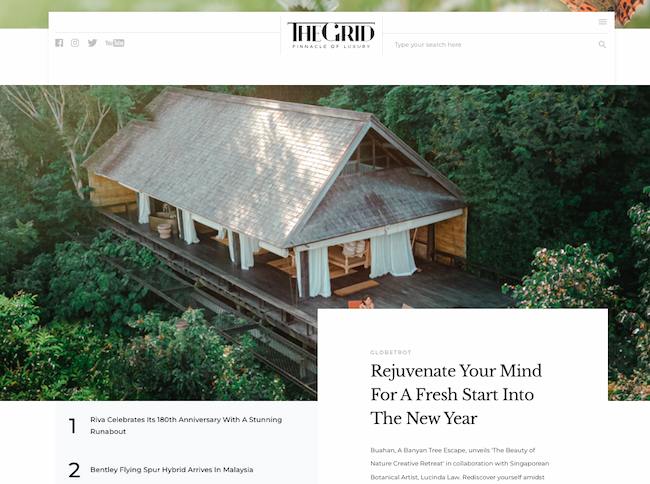
Best blogging platform example: Joomla and The Grid

Joomla Key Takeaways

  • Advanced content management features
  • Steep learning curve due to robust built-in functionality
  • May need a blogging extension

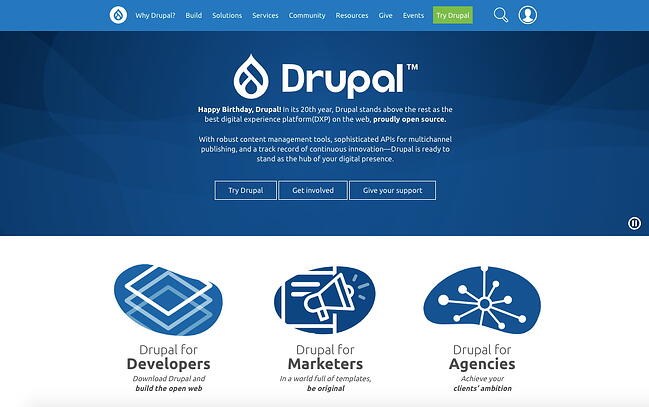
8. Drupal

Best For: Advanced Bloggers

Best blogging platform: Drupal

Blog Software Cost: Free, Open-Source Software

Drupal Ideal Users

Drupal is a highly flexible open-source CMS that’s best suited for advanced users, as well as enterprise companies, with complex blogging needs who are looking for a self-hosted solution. It has a G2 rating of 3.8.

Drupal Pros

Drupal has hundreds of out-of-the-box features and modules. If you know how to use them or have the time to learn, then Drupal will give you more power than other open-source platforms.

Specifically, Drupal supports a wide selection of content types, page templates, blocks, and more for creating and managing content. It also has advanced user permissions so you can give site admins, content editors, and other stakeholders personalized access to specific content. This — along with its multilingual capabilities, Layout Builder, and other modules — will allow you to create and manage large, complex blogs.

Drupal Cons

If you don’t know how to use Drupal’s out-of-the-box features and modules, and you don’t have the time to learn, they can be confusing and hinder your blogging efforts. In that case, you might be better off with a simpler platform.

Drupal Blog Example

Below is a Drupal blog that features add-ons and modules.
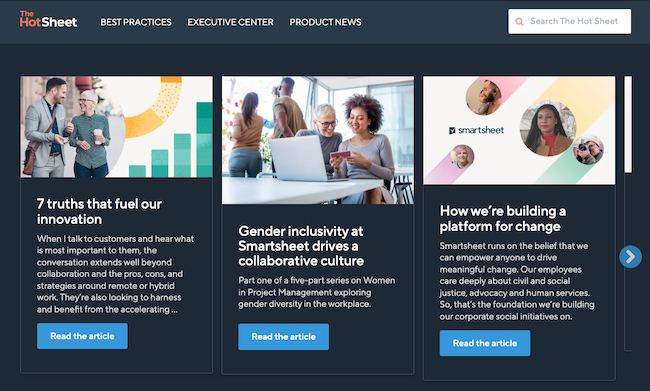
Best blogging platform example: Drupal and SmartSheet

Drupal Key Takeaways

  • Best suited for technical users with complex blogging needs
  • Powerful content management features
  • Advanced user permissions

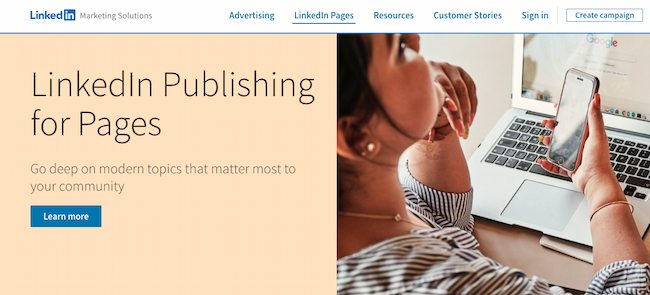
9. LinkedIn

Best For: Thought Leadership

Best blogging platform: LinkedIn

Blog Software Cost: Free

LinkedIn Ideal Users

LinkedIn lets users directly share blog posts, helping users reach some of the 875M people on the platform. This gives businesses with new blogs an audience for thought leadership and to drive site traffic.

LinkedIn Pros

LinkedIn is an excellent choice for blogging to build brand awareness and drive site traffic. It’s also a valuable tool to develop thought leadership. The built-in audience on LinkedIn can help generate conversations about your content that can boost growth.

It’s also an excellent choice to supplement an on-site blog. Creating a LinkedIn blog can help you create insightful content specifically for niche users. This can build industry awareness of your brand and products. It can also help your blog generate more authority.

LinkedIn Cons

Because LinkedIn blogs live on their platform, you won’t get the SEO benefits of an on-site blog. It will also be important to optimize your blogs for search on their platform as well as search engines. Without this investment, it’s possible that only your current connections will see your content.

You also may want to look for another platform if you’re blogging for lead generation. Blogs are a great way to collect new contacts for your newsletter and sales team. But blogging on LinkedIn can mean a longer journey to your lead generation forms, which can decrease conversion.

LinkedIn Blog Example

These blog examples are from the COO of L’Oréal and the Chief Customer and Commercial Officer at Coca-Cola. They show how this platform can build awareness and engagement for brand initiatives.

Best blogging platform example: LinkedIn and L’Oreal

LinkedIn Key Takeaways

  • A good pick for new thought leaders
  • Easy-to-use interface
  • Offers potential access to a large and immediate audience

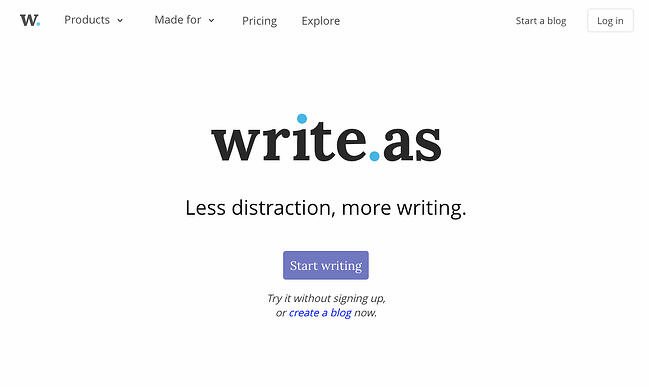
10. Write.as

Best For: Privacy

Best blogging platform: Write.as

Blog Software Cost: Free, With Premium Options

Write.as Ideal Users

Write.as is a lightweight blogging platform that’s ideal for individuals looking to create simple blogs with minimal design. It’s popular with its user base, with a 4.4 rating and almost 30 reviews on G2.

Write.as Pros

Offering a stripped-down editor with nothing but an auto-save feature, Write.as offers the experience of writing in a virtual journal. This makes it another of the best blogging platforms for writers. Write.as is also free to use and doesn’t support ads.

Teams can also use it like Google Docs to share updates, proposals, and works-in-progress (for a monthly subscription).

Write.as Cons

Write.as does require you to use Markdown, a syntax that uses special characters to format text. For example, you’d type in asterisks to create bullet points, hashtags to create headers, and [Link] to add a link.

The syntax isn’t difficult to learn, but it might take some practice. If you’d prefer to simply click a button to create bullet lists or add hyperlinks, then you’ll be better off with another blogging platform.

Write.as Blog Example

Check out an example of a writing blog below.

Best blogging platform example: Write.as and Imaginary Gardens

Write.as Key Takeaways

  • Best for individuals who want a minimalist interface and design
  • Requires you to learn and use Markdown syntax
  • Free version is ad-free

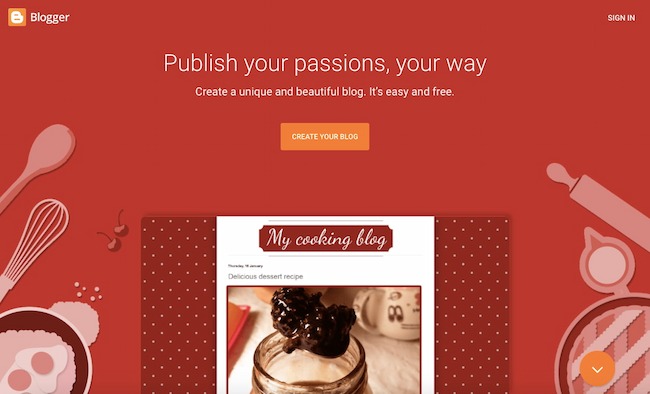
11. Blogger

Best For: Lifestyle Bloggers

Best blogging platform: Blogger

Blog Software Cost: Free

Blogger Ideal Users

Blogger is a free platform designed for newbie bloggers. While it lacks many content management features, Blogger is more feature-rich than most free blogging platforms. For that reason, Blogger is perfect for individuals looking to create blogs as a hobby.

Blogger Pros

The biggest advantage of Blogger is how easy it is to create and customize a relatively basic blog.

To get started, you just need to create an account with Google, choose a template, and get publishing. You can purchase a custom domain, optimize your SEO settings, connect your blog to Google Analytics, optimize your posts with Adsense, and even edit the HTML and CSS of your site — but you won’t be able to do much beyond that.

Blogger Cons

To get a better sense of the platform’s limitations, you can compare Blogger vs. WordPress or another CMS. With Blogger, you can’t install plugins to extend the functionality of your site. You can’t create different content types, like portfolio pages. And you can’t change the default display of your content from reverse-chronological order to, say, your most popular posts.

In short, if you need the content management features and customization options of a CMS, then look into alternatives to Blogger.

Blogger Blog Example

Take a look at this personal blog below for an example.
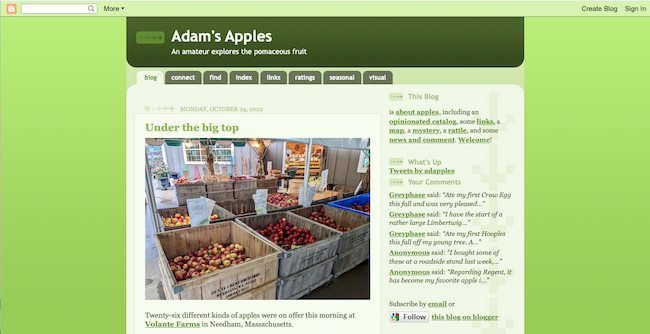
Best blogging platform example: Blogger and Adam’s Apples

Key Takeaways

  • Best for lifestyle bloggers
  • More feature-rich than other free blogging platforms
  • Can’t create custom post types or change the display of posts

12. Medium

Best For: Writers

Best blogging platform for writers: Medium

Blog Software Cost: Free, With Premium Options

Medium Ideal Users

Medium is often called the best blogging platform for writers. It gives businesses a chance to build a blog and connect with a wide range of industry-specific users. Storytelling is popular on Medium, and many businesses use this to their advantage to build a blog audience.

Medium Pros

This blogging platform is easy to use and publish content.

Another pro is Medium’s readership. The site also features a reader recommendation engine that can generate an audience for new blogs. Since on-site blogs can often take six months or more to generate traffic, a site like Medium can be an attractive alternative.

Medium also has community publications. Each user on the platform can create up to seven publications. Users can also submit blogs to Medium publications to build a larger audience. For example, the Towards Data Science publication has over 645,000 followers.

If you’re just starting out, Medium publications can help draw attention and followers to your new blog. This blogging platform can also complement a website blog, and some businesses republish their onsite blog content here without worrying about penalties.

Medium Cons

Like LinkedIn, a Medium blog won’t help you get the SEO benefits of an on-site blog. It also has a large community that can favor trends or long-time members over newcomers. While you can use Medium to generate traffic for an on-site blog, it may present a duplicate content risk if you don’t properly set up your website.

Medium Blog Example

Both businesses and government agencies use Medium to promote their brand content.
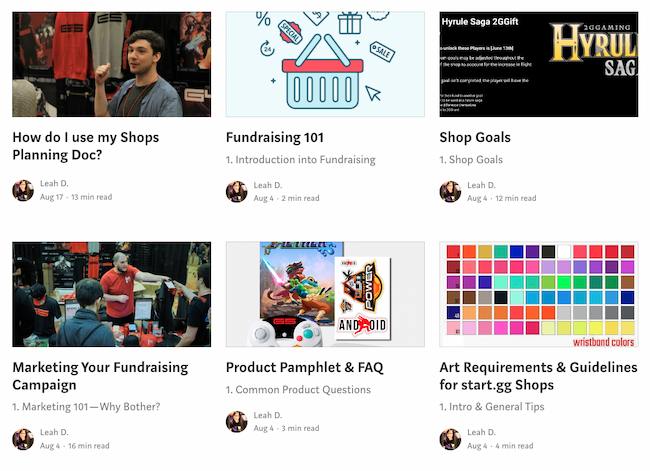
Best blogging platform example: Medium and GG Shops

Medium Key Takeaways

  • Ideal for writers and others who want to connect with an existing audience
  • Clean and simple interface
  • Less likely to offer the SEO and lead generation benefits of an on-site blog

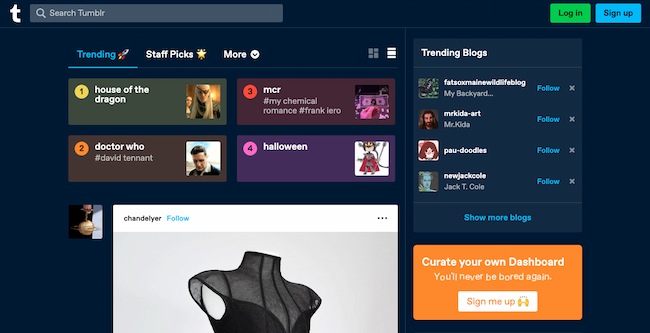
13. Tumblr

Best For: Multimedia

Best blogging platform: Tumblr

Blog Software Cost: Free

Ideal Users

Tumblr appeals to personal bloggers and brands alike. While bloggers might be able to use this as their only platform, brands tend to use it as one platform among many to show their personality.

Tumblr Pros

Tumblr combines the power of blogging and social networking in one highly-visual publishing platform.

Tumblr offers everything you need to create a professional-looking site. You can select from hundreds of free and premium themes and add multiple pages, sidebars, social sharing buttons, comment sections, and more. You can also buy a custom domain name from a domain name registrar rather than use the free subdomain: yourusername.tumblr.com. If you have HTML coding skills, you can further customize your site.

When you’re satisfied with your site’s design, you can start creating and publishing multimedia post types. Featuring photos, GIFs, links, chat dialogue, audio files, and video in your content makes it more engaging, memorable, and shareable.

Since other users can easily like, reply, and reblog your posts on their Tumblr as well as their other social accounts, right from their dashboard, this is an excellent platform for engaging and fostering an online community.

Tumblr Cons

There are restrictions on the site that can frustrate users. For example, you can only schedule (or “queue”) 50 posts in a day, which might limit your ability to plan and execute a long-term content strategy. You can also only upload videos under 500MB and only track 20 tags at a time. Furthermore, your site can be suspended at any time if you’re found in violation of Tumblr’s community guidelines.

Tumblr Blog Example

Vogue has a highly visual and multimedia-rich site on Tumblr. Check it out below.
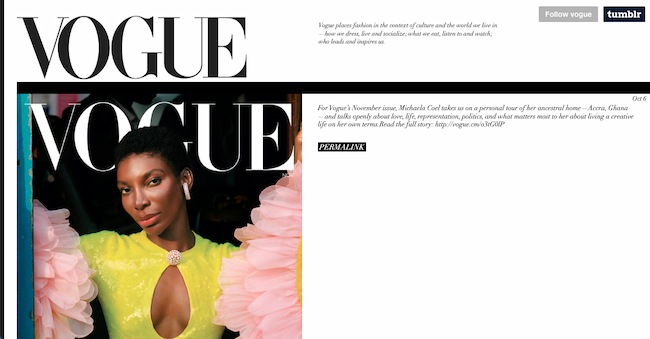
Best blogging platform example: Tumblr and Vogue

Key Takeaways

  • Ideal for publishing multimedia posts
  • Restrictions on what you post, when, and how often
  • Ideal for individuals and brands to engage with followers

Get Started Blogging

Once you figure out your blogging goals and needs, you can choose the right blogging platform. With a little focus, you can find a tool with the functionality and flexibility you’re looking for.

Whichever platform you decide on should combine ease of use and power to propel your business. So get choosing and start blogging to reap the SEO and traffic benefits.

Editor’s note: This post was originally published in April 2019 and has been updated for comprehensiveness.
cms

Categories B2B

YouTube Analytics: The 15 Metrics That Actually Matter

Some of us marketers have an unhealthy obsession with YouTube analytics — we track too many of them. Maybe we think we can prove any video marketing campaign is producing results if there’s an eye-catching percentage by its name. But, deep down, we all know that some metrics are more revealing than others.

There are a ton of KPIs we can look at that provide minimal insights. Fortunately, though, we created this guide to help you navigate YouTube Analytics and measure the metrics that actually matter. It’ll save you from drowning in the sea of analytics that most marketers only have a lifebuoy in, helping you not only stay afloat but swim safely to land.

→ Free Templates: How to Use YouTube for Business [Download Now]

Read on to learn about the YouTube metrics that actually matter, and how they’ll enhance your video strategy.

YouTube Analytics: The 15 Metrics That Actually Matter

1. Watch Time

Youtube Analytics Metrics: Watch Time

Watch time is the total amount of minutes viewers have spent watching your videos. It’s a key metric because YouTube elevates videos and channels with higher watch times in their search results and recommendations section. YouTube does this because the more watch time a video has, the more engaging their algorithm presumes it is.

In the Watch time report, you can see the amount of watch time your videos have accumulated. You can also rank each of your videos by watch time and group your videos by themes, styles, and lengths to determine your most engaging types of videos.

How to find Watch time in YouTube Studio:

Analytics > Overview > Watch Time

2. Average Percentage Viewed

Youtube Analytics Metrics: Average Percentage Viewed

Average percentage viewed is the percent of each video the average viewer watched. It measures your video’s ability to hold viewers’ attention for its entirety. And when YouTube realizes your videos can hold people’s attention, they’ll reward it with higher search and recommendation rankings. You can find this metric in your watch time report.

How to find Average Percentage Viewed in YouTube Studio:

Analytics > Overview > Watch time > See More > Content > Watch time > More Metrics > Overview > Average percentage viewed

3. Average View Duration

Youtube Analytics Metrics: Average View Duration

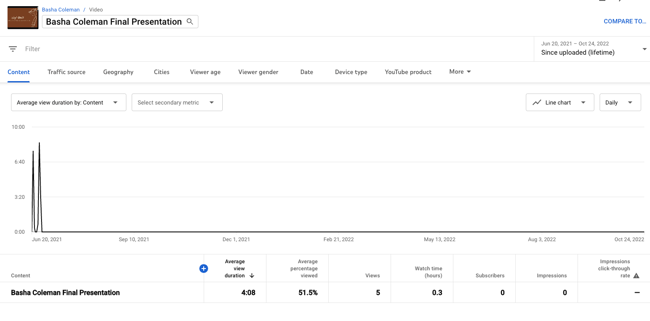
Average view duration is the total watch time of your video divided by the total number of video plays, including replays. This metric measures your video’s ability to engage viewers. If your video can’t engage viewers, they’ll bounce from your video quickly, leaving you with an unimpressive average view duration. But if your video can engage viewers, your average view duration and total watch time will increase at the same time, boosting your search and recommendations rankings. You can also find this metric in your watch time report.

How to find Average View Duration in YouTube Studio:

Analytics > See More > Watch time > More Metrics > Overview > Average view duration

4. Audience Retention

Youtube Analytics Metrics: Audience Retention

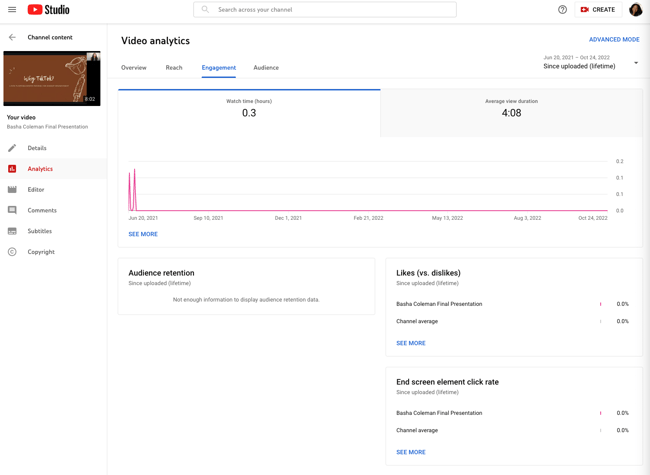
Audience retention shows you the percentage of viewers who watch and leave your video at every single moment of the video. YouTube elevates videos with high audience retention in their search rankings and suggestions because these videos can effectively capture viewers’ attention.

Audience retention can also inform your future video strategy. The most engaging parts of your video could be your next best video topics. And watching your video during steep dips of engagement will tell you what might be boring your viewers, allowing you to scrap those elements from current and future videos.

When you have enough data to generate YouTube’s audience retention report, there will be two graphs: the absolute retention curve and the relative retention curve. The absolute retention curve shows you how well your videos retain viewers. And the relative retention shows you how well one of your videos retains viewers compared to all other YouTube videos of similar length.

Youtube Analytics Metrics: Audience Retention Report Example

Image Source

How to find Audience Retention in YouTube Studio:

Analytics > Engagement > Audience retention

5. Re-watches

Re-watches are the amount of times viewers re-watch certain parts of your video. If a lot of people are re-watching a specific part of your video, then they’re probably interested in the topic your video is covering during that moment. These topics can be fodder for your future video strategy. You can find this data in the absolute audience retention graph. Re-watches are usually indicated by rising curves in the graph.

Image Source


How to find Rewatches in YouTube Studio:

Analytics > Engagement > Audience retention > Absolute audience retention

6. Engagement

Youtube Analytics Metrics: Engagement

Comments, shares, likes, and dislikes provide marketers with a lot of valuable qualitative data.

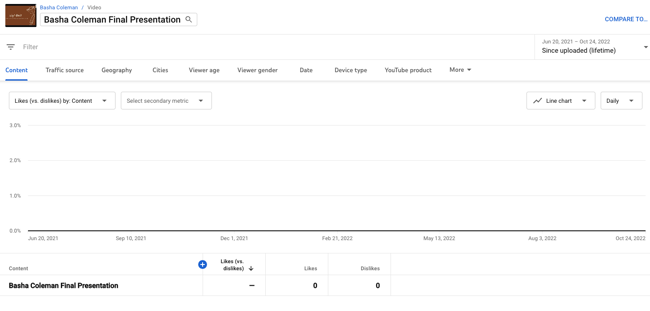
Comments can paint a clear picture of your video’s emotional effect on viewers. Shares can gauge how much viewers value your content and brand — since people share content that confirms their ideal self-persona, people who share your video are publicly displaying that they trust and support your brand. Likes and dislikes can help you determine what video topics work best with your particular audience. You can find your videos’ engagement metrics in YouTube’s Interactions Report.

How to find Engagement in YouTube Studio:

Analytics > Engagement > Likes (vs. dislikes) > See More

7. Impressions Click-Through Rate

Youtube Analytics Metrics: Impressions Click-Through Rate

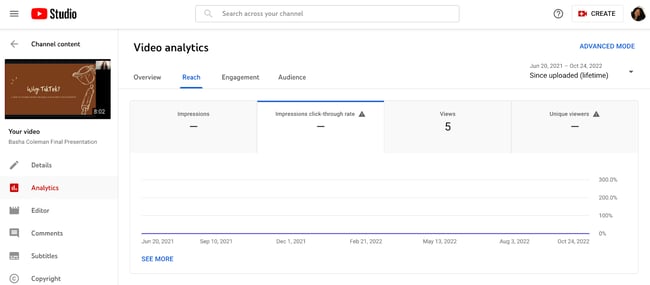
Impressions click-through rate measures your video’s ability to prompt people to watch your video after seeing it on their homepage, recommendation section, or trending section. A high click-through rate means your title was compelling and your video’s topic resonates with a lot of relevant audiences on YouTube.

A common trend for impression click-through rates is that they usually spike immediately after you release your video — your subscribers will see the video at the top of their home page and probably click on it. But once your video spreads beyond your core audience, your click-through rate will decline and then stay at a stable rate.

You can also couple this metric with average percentage viewed and average view duration to see if people actually watch your video after they click on it. A high click-through rate is great, but if people are leaving right at the beginning of your video, your title or thumbnail could be misleading. Preparing viewers for what’s to come is crucial because if your title or thumbnail is inaccurate, they’ll feel deceived and lose trust in your brand.

A low click-through rate but high engagement could mean that the video has a small yet specific audience that is enamored by the content.

How to find Engagement in YouTube Studio:

Analytics > Reach > Impressions click-through rate

Youtube Analytics Metrics: Engagement

Image Source

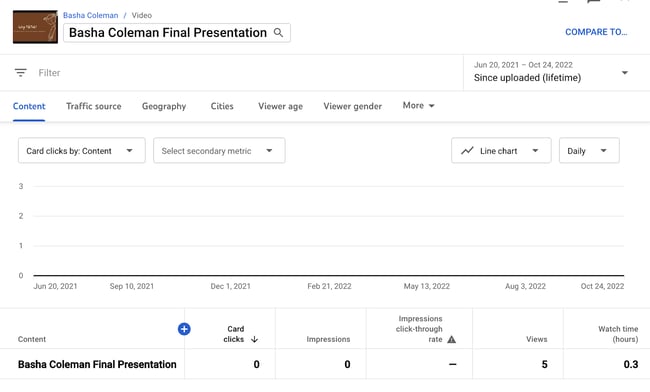
8. Card Clicks

Youtube Analytics Metrics: Card Clicks

Cards are slide-in panels that encourage people to take a desired action during a video like watch another video, subscribe to a channel, or click through to a different website. Each of your cards’ click-through rate tells you which action your viewers prefer to take while watching your videos. This can help you place the most engaging card in each of your videos, potentially boosting your watch time, subscriber growth, or website traffic.

Analyzing card clicks can also help you uncover the optimal timing, placement, and duration of your cards in future videos.

How to find Card Clicks in YouTube Studio:

Analytics > Reach > See More > Impressions by: Content > More Metrics > Cards > Card Clicks

Youtube Analytics Metrics: Card Clicks Report Example

Image Source

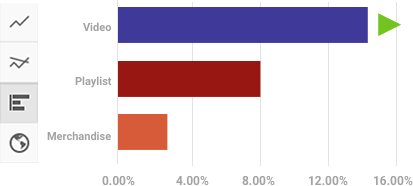
9. Playlist Engagement

Playlists are a great way to organize your videos in a digestible way. It helps your viewers easily consume videos about their favorite topics and prompts them to keep watching, which racks up watch time for your channel.

You can uncover your playlist engagement by analyzing two metrics in YouTube’s Playlist Report: views per playlist start and average time in playlist. Views per playlist start is the average number of video views your playlists gather, and average time in playlist is the average amount of time that viewers viewed the videos in your playlist. If these two metrics are underperforming, try starting your playlist with videos that have the highest retention rate.

How to find Playlist Engagement in YouTube Studio:

Analytics > Engagement > See More > Watch Time > More Metrics > Playlists

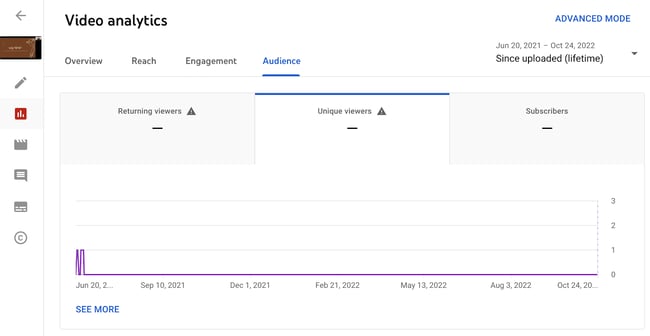
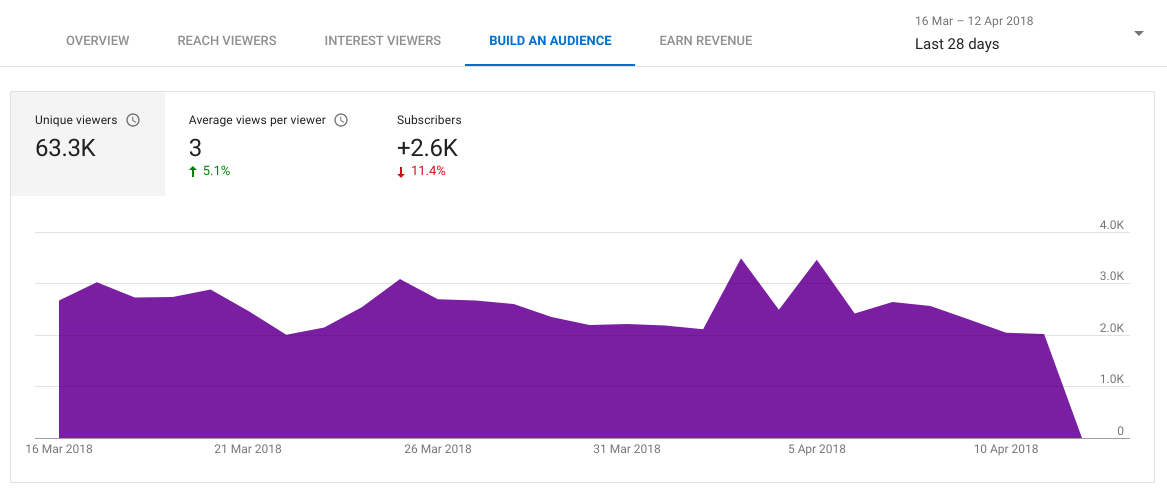
10. Unique Viewers

Youtube Analytics Metrics: Unique Viewers

Unique viewers is the estimated number of individuals who watch your videos over a certain period of time. This metric really helps you understand the actual size of your audience.

You can also use this metric to gauge your subscriber’s engagement with your videos. If your unique viewers are lower than your subscriber count, then your subscribers aren’t watching as much of your video as they could be. To get them to be more active, ask them to set up notifications for your new videos. You can find this metric under the Reach Views and Audience tab in YouTube Studio.

How to find Playlist Unique Viewers in YouTube Studio:

Analytics > Audience > Unique viewers

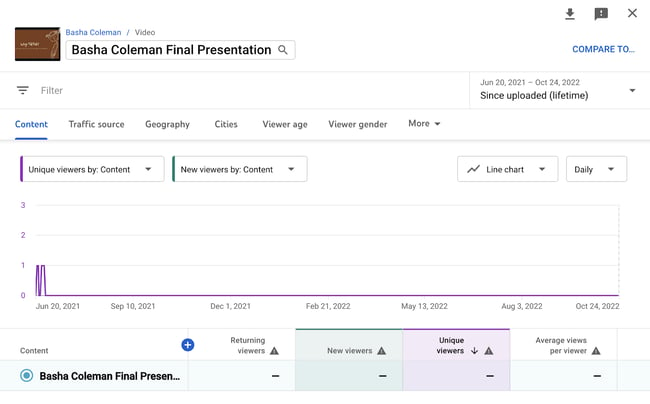
11. Views Per Unique ViewersYoutube Analytics Metrics: Views Per Unique Viewers

Views per unique viewers is the amount of times the average viewer watches your video. This metric tells you if people can’t get enough of your video and keep rewatching it. Video topics with a lot of views per unique viewers could also be your most popular content topics, and if you cover them more, you could generate more views, watch time, and subscribers.

How to find Playlist Unique Viewers in YouTube Studio:

Analytics > Audience > Unique viewers > See More > Average views per viewer

Youtube Analytics Metrics: Views Per Unique User

Image Source

12. Who’s Watching Your Videos

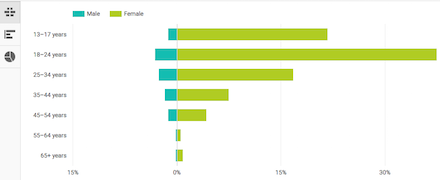
In YouTube’s demographics report, you can see the different types of people who watch your videos, segmented by age, gender, and geography. This data tells you who your most engaged audience is and who your target audience should actually be. You can take the opposite approach with this data too. If you’re not reaching the audience you want, try pivoting your video strategy and cover topics that would attract them.

How to find Demographics in YouTube Studio:

Analytics > Audience > Age and Gender

Youtube Analytics Metrics: Demographics Report Example

Image Source

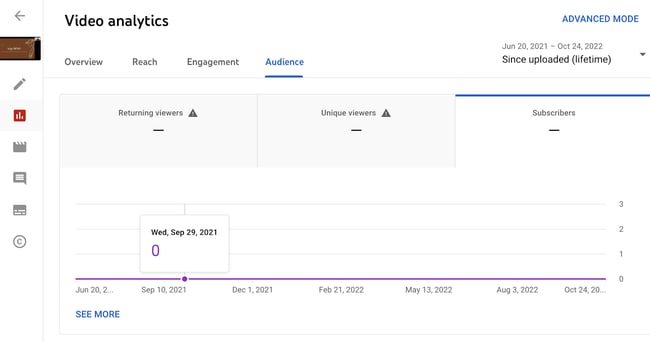
13. Subscriber Growth

Youtube Analytics Metrics: Subscribers

Subscribers are your most loyal fans. They’ve made a public commitment to your brand, content, and values. And they’re most likely to be your evangelists too. Subscribers are also important to your channel because YouTube will send them notifications about your new videos and feature them on their homepage. This means they’ll see your videos more frequently, which will help generate more views. Subscribers also watch twice as much video as non-subscribers, so the more subscribers you have, the more watch time your videos will collect.

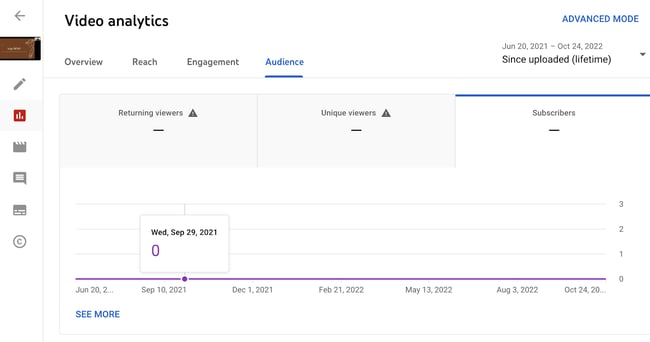
YouTube’s Subscribers Report will show you which videos, locations, and time periods gain and lose subscribers. This data will tell you what video topics resonate with your subscribers and where to target new subscribers. And by prioritizing your subscribers’ needs, you’ll create videos that they crave, increase your watch time, and boost your search rankings.

How to find Subscribers in YouTube Studio:

Analytics > Audience > Subscribers

14. Traffic Sources

Youtube Analytics Metrics: Traffic Sources

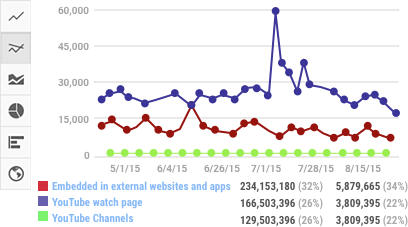
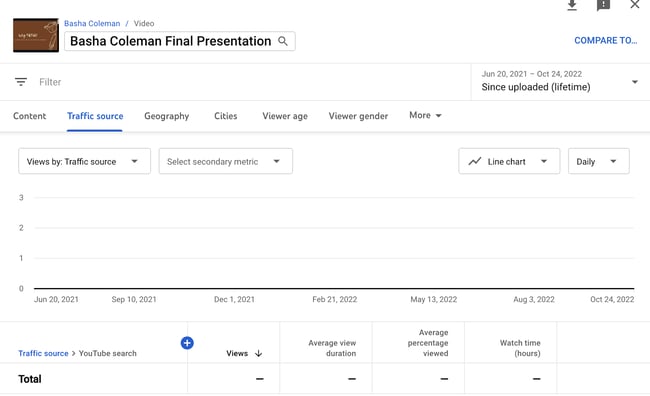
External referrals like social media or sites that embed your videos and YouTube referrals like search, the recommended section, and the homepage are all traffic sources. The Traffic Sources report shows you how viewers found your videos and what sources rack up the most views and watch time. You can use this data to better optimize your video promotion strategy.

How to find Traffic Sources in YouTube Studio:

Analytics > Audience > Subscribers > See More > Traffic Source

Youtube Analytics Metrics: Traffic Sources Examples

Image Source

15. Keywords

Youtube Analytics Metrics: Keywords

In YouTube’s Reach Report, which is under the Traffic Sources Report, you can see the most popular queries guiding viewers to your videos. If these queries are slightly different from your video’s topic, consider updating your video to fill these content gaps and add the keywords to your metadata. If there’s a stark difference, consider making a new video about these popular queries.

How to find Keywords in YouTube Studio:

Analytics > Reach > YouTube Search terms


Editor’s note: This post was originally published in July 2018 and has been updated for comprehensiveness.

Featured Resource, YouTube for Business Kit: 18 Free YouTube Templates, 18 design, planning, and video description templates for YouTube. Download for Free

New call-to-action

Categories B2B

Why the Creator Economy is a Huge Opportunity for Marketers, According to Joe Pulizzi [+ New Data]

Over the last 18 months, the creator economy has been all the rage — and it’s proven to be incredibly lucrative. In fact, as of 2022, the creator economy’s market size is estimated at $104.2 billion.

The creator economy is made up of bloggers, podcasters, YouTubers, newsletter writers, TikTok and Instagram influencers, and others who are trying to build real businesses by creating and distributing valuable and entertaining content.

Think of these content creators as little media companies.

Many of these content creators work with bigger brands rather than sell their own products or services. If you’re a marketer whose interested in working with content creators to expand your audience reach, keep reading — we’ll dive into everything you need to know when working with a content creator, backed by data.

(Alternatively, you can also take a look at the complete Business of Creators report we at the Tilt created in partnership with HubSpot by downloading it here.)

To start, let’s explore what we know about content creators.

Free Report: The State of the Creator Economy in 2022

The Creator Economy: A Content Creator’s Interests, Challenges, Revenue Streams, & More [New Data]

Who are content creators?

Although many like to focus on the “content creation” part, content creators are individuals who are also entrepreneurs and business owners. I like to refer to them as content entrepreneurs who:

  • Deliver consistent information to a group of people with plans to build a loyal audience and then monetize that audience over time.
  • Create content to build a long-term, successful business (not as a hobby).
  • Begin primarily on one channel (e.g. as a podcaster, a blogger, a YouTuber) and then diversify into many channels.
  • Generate revenue from their audience in multiple ways, including sponsorship, subscription, courses, speaking, consulting, and even products and services.

Take Jimmy Donaldson, aka MrBeast. Jimmy started creating YouTube videos about 10 years ago. After years of testing and trials, Jimmy found a regular schedule of videos after three years and began to build a following.

By 2016, he had 30,000 subscribers. The next year he hit one million subs.

Today, he makes more than 54 million dollars a year, launching products such as MrBeast Burger and a thriving snacks business called Feastables.

Although MrBeast may be an outlier, the model is simple: Build an audience on one platform, create a strong differentiation area, and consistently publish over time. Once an audience is built, then the creator monetizes the platform with diverse revenue streams. It’s the combination of being a content creator and an entrepreneur that makes the model work.

Whether that platform is a podcast, a blog, a book, an Instagram series, or a YouTube show (like MrBeast), the model works the same. It happened at Morning Brew. It happened for the Hustle. It’s happening everywhere all over the world.

Why the Creator Economy is Booming

Today, anyone with just a smartphone can become a content creator. There are no barriers to entry in becoming a content entrepreneur.

But that doesn’t mean it’s easy. On average, it takes a full-time content creator 17 months just to break even. Just think if Jimmy Donaldson quit after two years and a handful of YouTube videos?

The creator must deliver consistently over a long period of time just to start to build an audience that can be monetized.

Why do content creators choose this kind of business?

Although some of these businesses look like side hustles, about 40% of content creators have built financially sustainable businesses (i.e. they are supporting themselves or others). Of the content creators we surveyed, the average individual has been creating and monetizing their content for at least three years.
how many content creators are earning enough money to be supported new data

These entrepreneurs want to make money — but it’s more than that. 80% of content creators do it because they enjoy it. Although it’s challenging, it’s a fun business … one that can be done at almost any location on the planet with minimal expenses.

In actuality, content creators may be some of the most satisfied with their chosen profession out of anyone. A full 96% of creators say they do not regret their decision to become creators.

Of all the reasons to become content creators, one in three do it because they can be their own boss. The next three highest reasons include:

  • the enjoyment of the work
  • the ability to pursue a passion
  • flexible work hours

which benefits matter most to content creators

What are the key challenges for content creators?

The key challenges are two-fold. First, the creator must find what we call a content tilt. The content tilt is an area of differentiation where the content creator can actually break through all the informational clutter and gain attention.

Simply put, is the content different enough and targeting a niche enough audience where the possibility exists to be an expert?

Ann Reardon, known as the baking queen of Sydney, Australia, started a video blog in 2011 where she discussed step-by-step food recipes. Food is one of the most competitive content areas. How does someone break through with minimal resources?

Ann decided to do something different to stand out. Every week she created videos on “impossible dessert creations”. At that time, no one was doing that, and she quickly gained a following.

Today, she is a successful content entrepreneur with five million YouTube subscribers and a best-selling book.

The second challenge is consistency. I’ve been working in the content marketing industry for over 20 years. The sheer majority of programs fail because they stop. The content program (a blog, a podcast, a YouTube series) typically gets canceled before the business can build any kind of regular audience.

joe pulizzi quote on why content programs fail

We launched Content Marketing Institute in 2007. It took 22 months of regular blog posting to get to 10,000 email subscribers. We delivered consistently, five days per week, and built a loyal and trusting audience. In 2011 we hit a million dollars in revenue. By 2015 we were a $10 million dollar company.

To be successful, content creators can’t stop. If you stop, even for a day, you give your audience an opportunity to look elsewhere for their information. Sadly, you might never get that audience back.

How do content creators make money?

Almost 60% of content creators have a coaching or consulting practice. For this category of content, consulting is “low-hanging fruit” revenue.

But it doesn’t stop there. Content creators seek to diversify revenue streams as quickly as possible, adding revenue lines such as:

  • Affiliate revenue
  • Online courses and memberships
  • Speaking fees
  • Sponsored content
  • Advertising and sponsorships on their emails and podcasts

which business strategy is most profitable for content creators

According to our report, nearly seven out of 10 content creators are not satisfied with their revenue streams. So, even though the creator economy industry is growing, most creators have a long way to go.

How much time do they spend actually creating content?

For a content entrepreneur to be successful, they can’t focus on creating content all the time. content creators spend about 45% of their time creating their content, and then about 20% promoting and distributing their content.

The other 35% of the time they are working on the business, including marketing and sales, operations, and administration. As a content creator becomes more experienced, they begin to spend less time creating content and more time monetizing their content.

what do content creators spend their time doing

How do content creators initially fund their businesses?

As we discussed, it usually takes about a year and half or more just to break even.

Content creators need to support themselves and their families over that time, or treat the business as a “side hustle” until the business becomes profitable.

Funding generally comes from a variety of sources, including personal savings, credit cards, loans from family members and (per the term “side hustle”) income from another job.

Now that we’ve covered what we know about content creators, let’s discuss why you should care.

Why Marketers Should Care About Content Creators

As a marketing professional in a small-to-medium-sized business, you wear many hats. You probably create vast amounts of content yourself. The problem is, you can’t focus on only doing that. That’s where it becomes valuable to work with a content creator in your industry.

These creators have engaged, loyal followings, so working with a content creator enables you to reach new audiences quickly. And the good news is that the majority of content creators are extremely open to working with brands, helping you reach your audience through their channels in exchange for money or other benefits.

These partnerships could look as basic as you sponsoring their email or podcast — or as complex as a joint research project or ebook.

How Marketers Can Start Working with Content Creators

First off, you’ll want to develop a list of creators that reach your target audience. Do some qualitative research with your audience to find out what they are reading, listening to, or watching. Additionally, you might leverage tools that can help you identify content creators in your niche, such as podcast directories for podcasts.

Next, I’d advise you to start with a list of five to ten creators. Consider all the different platforms, including Instagram, TikTok, newsletters, books, and even a streaming service like Twitch.

Once you have the list, make sure those creators align with your company mission and brand values. This is critically important. Just look at Adidas and their relationship with Kanye West. This was a billion dollar partnership and the program worked spectacularly, but Adidas was affected by everything that Kanye said or did outside their program. Basically, when you partner with a creator, you get the entire package, good or bad. So vet your list to only the creators that make sense.

Once that is complete, test out a partnership with one or two. It makes sense to start simply by sponsoring a creator project or running an advertisement in one of their offerings. How did it go? What were the results? Is it really the correct audience for what you are trying to do?

A few years back, we were interested in partnering with a creator on an event. Before we did that, we attended multiple events run by this creator. We even sponsored one. When the results came back positive, we decided to create a formal partnership.

Once you’ve identified, vetted, and tested a program with the creator, you’ll want to develop a partnership agreement. Here’s a good example of one.

Generally, a partnership agreement includes the expectations of both parties, the timeline, the budget, promotional efforts, approvals and permissions, and any legal documents necessary. Best advice? Plan for the effort NOT to work. Make sure you put an easy out (for both sides) into the agreement if things go south. If it works, fantastic, but best to plan for the worst.

Consider Acquiring the Creator’s Business

The good news is that this method can be used for an extra opportunity: Acquiring the creator’s business.

Let’s face it, creating compelling content and building a loyal audience is extremely difficult. Hopefully, if you’ve done your homework, you’ve identified a number of creators who have already done the heavy lifting. So if your partnership and test projects have passed with flying colors, you may be interested in the next step.

According to The Tilt, 20% of creators are actively looking to sell their content business. In many cases, they’ve done the hard work and want to be compensated a bit more. If you have a budget set aside for something like this, it could be a match made in heaven.

While at Content Marketing Institute, we needed a west-coast technology event and an awards program. Instead of investing six figures and waiting two-to-three years for us to organically grow these, we went out and purchased both.

If this is in your wheelhouse, use the same process as above to vet your creators. At the same time, meet with whoever owns the M&A budget in your organization and talk through the opportunities.

Although these types of deals are becoming more ordinary, this is still a new muscle for most organizations. Simply put, marketers think organic growth instead of acquisition growth. Although this is changing, the process is still new to most.

Start Engaging with Creators

If you are new to the creator economy, working with content creators will take some time. There is some added pressure because most organizations today realize the opportunities and are committing resources to this area.

That said, at minimum, start engaging with the creators in your industry. Listen to their podcasts. Read their newsletters. Watch their YouTube channels. That may be enough for now. The opportunities will come.

Download the 2022 Business of Creators Report.

Categories B2B

A Crisis of Disconnection: Three Workplace Trends Slowing Business Growth [New Data]

This post is a part of The Crisis of Disconnection, a thought leadership series examining the latest research and insights to uncover how businesses can meet their growth goals, even amidst unprecedented changes to the way we work.

It’s no secret that reaching customers has become more challenging in recent years. Interested in going a few steps further to develop meaningful, lasting relationships? That’s an even taller order. To sustain business growth during trying times, many of us are realizing we need to reimagine how we attract, engage, and delight the communities we serve.

Until recently, it’s been equally tricky to pinpoint a root cause for what feels like an uphill battle. The struggle, as they say, is real.

Get HubSpot's Free CRM Now

When we zoomed out, we discovered that disconnection is widespread across internal systems, among cross-functional teams, and — increasingly — between brands and their customers.

Yamini Rangan, Chief Executive Officer at HubSpot, sums up the Crisis of Disconnection best:

Quote from Yamini Rangon CEO of HubSpot discussing disconnection in the workplace

How did this evolution come to our attention? We’re glad you asked!

Research we’ve conducted over the last year has helped us bring these trends to light, and we’re eager to share our top findings. After all, overcoming The Crisis of Disconnection starts with understanding the challenges ahead. Let’s start with some high-level commentary on growth, or what’s top of mind for most in our current macroeconomic climate.

Growth Challenges Are on the Rise

Are times tough for most small businesses? All signs point to yes.

The economy is on a rollercoaster ride, the stock market is giving new meaning to the word “volatile,” geo-political conflicts are escalating, and a global pandemic may have more unprecedented times in store. And that’s just the tip of the iceberg. Tried-and-true methods for effective lead generation and organizational growth are becoming less and less reliable.

HubSpot’s Research Team found that 63% of businesses agree that growth strategies they used in the past are less effective than they used to be. Other top concerns for businesses right now include:

  • Increasing expenses
  • Increasing costs to reach customers and prospects
  • Slowing growth
 

While growth challenges can be attributed to many factors, the heart of the problem stems from the same place: a lack of connection. New chasms between proliferating systems (leading to disconnected data), siloed teams (leading to internal friction), and companies and their customers (leading to disjointed experiences) are forcing businesses to evolve existing strategies and rethink their growth playbooks:

Statistics displaying workplace trends and growth challenges

  • A mere 22% of businesses report excellent data connectedness.
  • Only 49% of U.S. workers feel their teams are working effectively in a hybrid environment.
  • 64% of businesses agree that sales engagement is struggling more now than pre-pandemic.

Looking for a silver lining? The challenges we’re facing can pave the way for us to reconnect — with each other and our customers — in new ways. To understand how early adopters are (re)connecting the dots, let’s take a look at the main drivers behind The Crisis of Disconnection, starting with the biggest pain point for scaling businesses (and the first of three emerging workplace trends threatening sustainable business growth).

What’s Driving Disconnection?

1. Internal systems are disconnected.

When COVID-19 first broke out, we shifted many of our daily activities from in-person to online. We did it out of necessity, both personally and professionally. Now, as companies embrace increasingly digital ways of working on a permanent basis, streamlining systems to increase efficiency, decrease friction, and accelerate connectivity is more important than ever.

Spoiler alert — achieving that aim is proving to be easier said than done. Disconnected systems are the #1 pain point for companies in our market.

According to our research:

  • 74% of businesses report they need to switch between many different tools to get their jobs done. (Fun fact: the average growing company uses 242 SaaS tools).
  • While 65% of businesses have invested in creating stronger connections among their systems in the past 12 months, only 26% currently have all their tools seamlessly integrated or built into one core platform that would truly enable those stronger connections.
  • “High data quality” is the #1 desired feature of a new CRM platform.
  • 77% of marketers say that data is important to their overall marketing strategy (to help them reach their target audience, understand which marketing strategies are most effective, and create more effective content), but only 19% have access to “very high-quality data.”

So what does this mean, in practical terms? Teams are spending more time finding, consolidating, and verifying data from various point solutions than they are on enhancing the end-to-end customer experience.

To enable teams to do their best work, businesses must first acknowledge that the status quo isn’t cutting it. For business owners, proliferating point solutions can make managing total cost of ownership a bear. For senior leaders, manual/complex reporting can eat up time ideally spent on analysis and action. For individual contributors, constant context-switching between tools can lead to productivity loss at best and burnout at worst.

The path to sustainable growth — and more connected customer experiences — starts with a streamlined tech stack and centralized customer data. When teams are aligned around a single source of truth, everyone — including your customer — wins.

2. People are working in silos post-pandemic.

Remember life pre-pandemic? We were in the office five days a week, regularly chatting with co-workers and likely complaining about having to commute into the office. Those days feel like a lifetime ago, with 81% of businesses believing that the global pandemic has fundamentally changed the way we live and work.

If you’ve tried leading an annual kickoff on a Zoom call, you know connecting and collaborating across teams has fundamentally changed. With many organizations shifting to either a hybrid or entirely remote workforce, it’s no longer always possible to swing by someone’s desk for a quick conversation. In our post-pandemic world, 81% of businesses believe it’s imperative that we find new ways to connect with one another.

According to our 2022 Hybrid Work Report:

hybrid work statistics displaying workplace trends and importance of connectivity

The stats don’t stop there, either. Only 31% of marketers and 23% of sales professionals report strong sales and marketing alignment at their organizations, with a lack of effective communication, visibility across teams, and complete data on customers all factoring into this sentiment. While 55% of marketers and 45% of sales professionals say alignment became more important in 2022, neither go-to-market team says they’re working in lockstep. 

Think the tides will turn when more employees are called back to the office? This may not happen — particularly if employees have anything to say about it. HubSpot research reveals that 36% of employees would rather visit the dentist once a month than work in the office five days a week.

Employers don’t have it easy either, with employees simultaneously vocalizing their need for connection and expressing their desire for remote/flexible work environments. If your people are a big part of your value proposition, it’s just about impossible to overstate the importance of building bridges between siloed teams and facilitating communication across geographic lines.

3. Connecting with customers has never been harder.

Disconnected systems and people are clearly two impediments to rocketship growth, but how is our “new normal” affecting the way we connect with customers?

Research consistently shows that customer experience is critical to an organization’s short and long-term success. 57% of businesses measure customer satisfaction as a way to track performance, making it the most commonly used performance metric.

So how’s it going out there on the sales floor? 31% of sales professionals say building trust and rapport with prospects became more crucial in 2022 vs. 2021, but it’s getting harder — and more expensive. Recent sales engagement data backs this up:

sales and remote selling data

  • 46% of salespeople say remote selling is less effective than in-person sales (and 68% of companies are doing at least some remote selling in 2022).
  • 49% of businesses say that Customer Acquisition Cost (CAC) has increased in the past year.

With approximately one in four companies citing a lack of depth in relationships with customers as one of their top challenges this year, it’s clear that the strategies we’ve all relied on in the past won’t carry us into the future. This isn’t to say that all old methods are now obsolete — it simply means that modern-day challenges require modern-day solutions. To win in this new world, we need new go-to-market strategies, new ways to think about our technology choices, and ultimately some new playbooks that don’t exist today.

Feeling overwhelmed by the task at hand? Take heart in these words from Jon Dick, Senior Vice President of Marketing at HubSpot:

quote from Jon Dick SVP of Marketing at Hubspot reassuring SMBs are resolute, there is a solution to crisis of disconnectionalt text - quote from Jon Dick SVP of Marketing at Hubspot reassuring SMBs are resolute, there is a solution to crisis of disconnection

Next Up: The Crisis of Disconnection and Your Business

First, there was The Great Resignation. Then, there was “quiet quitting.” Now, there’s The Crisis of Disconnection, driven by rapidly growing gaps between data and systems, cross-functional teams, and companies and their customers.

You’ve seen the research. You might [already] be living the experience. So what does The Crisis of Disconnection mean for you and your business, exactly? In the next installment of this three-part series, we’ll analyze the consequences of being disconnected, and how those might manifest in your cost of doing business, customer experience, and growth trajectory.

crm software free

Categories B2B

4 Things Content Marketers Can Learn From HubSpot’s Creators

The creator economy is changing marketing in various ways, and keeping up can be challenging for content marketers unfamiliar with this relatively new landscape.

Fortunately, HubSpot invests in creators and keeps a pulse on the latest content creation trends. I spoke to creators in HubSpot’s Creator Program and asked for their advice on how marketing professionals can adapt to the creator economy.

Free Report: The State of the Creator Economy in 2022

Lessons Content Marketers Can Learn from HubSpot’s Creators

Here’s what HubSpot’s creators say about how marketers can thrive in the creator economy.

Create Valuable Content

“When creating content, you have to keep your ideal audience in mind,” John Lee Dumas of the podcast Entrepreneurs on Fire said. “What challenges, questions, or struggles are they facing right now? Every piece of content you create should aim to help them get a quick win or aid them in overcoming a challenge, question, or struggle.”

To understand what’s valuable to your audience, create buyer personas based on data and research. Buyer personas represent your ideal customers and include information such as their age, habits, problems, occupations, and more.

Buyer personas will help you create content that suits the need of your target audience and will help ensure your work aligns with your vision.

Another key to creating valuable content is not to get hung up on algorithms. While it’s okay to keep social algorithms in mind regarding the visibility of your content — algorithms are not your target audience.

“Create for your audience, not the algorithms,” said HubSpot’s Director of New Media Kyle Denhoff. “Provide news, education, and information that is helpful for your niche.”

Be Consistent

The only way to get better at content creation is to keep doing it consistently, but that’s not the only reason consistency is essential. Consistency also builds trust with your audience.

“Your audience will continue coming back to you for advice and guidance when they know, like, and trust you. And the fastest way to build knowing, liking, and trust is to be consistent,” Dumas said. “If you’re not providing them with answers, they’ll find them someplace else.”

Consistency looks different for everyone. Some content creators post every day, some post once a week, and some once a month. It’s up to you how often you put out content, but whatever you decide — it has to be regularly.

“Publish every day or every week,” Denhoff said. “Select the day and time that you release your content. Help your audience build a habit.

Create for Community

“The creator economy is pushing marketing to a 100% community-first approach,” said Troy Sandidge of iDigress. “The community has always been important, and with its increasing popularity and valuation of $13.7 billion last year, it is expected to rise exponentially.”

This community-first approach stems from platforms like Twitch and Discord rising in popularity and becoming spaces where people with similar interests can come together and connect.

“Instead of focusing on personal personas, marketers will be focusing on community personas and trends and also find overlapping micro-influencers within identified communities to help drive their marketing initiatives,” Sandidge said. “For marketers to win in the creator economy, they must create for the community and connection, and command attention for consistent conversions.”

To create relevant community-based content, revisit those buyer personas I mentioned earlier. Conduct research and gather data to determine what platforms your target audience uses and what communities they are a part of. From there, you’ll be able to create helpful content for that community. You can also find creators and influencers within the community to introduce your brand to their audience.

Make Multipurpose Content

Of course, creating fresh content regularly can be daunting, but there’s a way to work around that obstacle — make content that serves multiple purposes!

“One of my best pieces of advice is first to take the time to understand why you’re creating content and who exactly you are creating that content for,” said John Jantsch, host of Duct Tape Marketing. “Then create every piece of content with the idea that it is going to have multiple uses.”

This can mean creating a TikTok video that can be repurposed for Instagram Reels or adding an image to a podcast recording and uploading it to YouTube. You can also take snippets from your Twitch livestream and upload them to YouTube Shorts.

“For example, we will do a webinar that turns into a podcast that turns into a blog post that turns into multiple social media posts,” Jantsch said. “This allows us to plug our content into the channels that people like to use. Ultimately meeting our audience wherever they are without feeling burnt out or overwhelmed as a creator.”

In short, to set yourself up for success in the creator economy, you should create valuable, community-focused, and consistent content. Now that you have these principles, you’re ready to craft or refine your content marketing strategy.

Download the 2022 Business of Creators Report.

Categories B2B

What HubSpot’s Highest Performing Blog Posts Have in Common & Why These Elements Work

Wondering what elements make up a successful blog post? We reviewed our top 8 blog posts on the Marketing Blog in 2022.

→ Download Now: 6 Free Blog Post Templates

Traffic-wise, each of these posts has received over 500,000 organic views since publishing and earns at least 40,000 views monthly.

Let’s see what they have in common and what marketers can learn from them.

1. Eye-Catching Headlines

What you’ll notice with all of our top-performing posts is that they have an attention-grabbing headline.

Some of the components of an eye-catching headline are:

  • Numbers
  • Action verbs
  • Descriptive adjectives

In 2013, Moz ran a study that found that articles with numbers in the headlines outperformed those that didn’t. Our data suggests that the same is still true nearly a decade later.

All but one of our top-performing posts features numbers, at the beginning of the headline. One reason why numbers are effective is that they set expectations. Blog posts can be a bit overwhelming and when you add a number in your post, it removes some uncertainty and lets the reader know exactly what they’ll get.

2. Descriptive Intros

When a user lands on your blog post, the first thing they’ll likely read is your introduction.

Your intro should cover three areas:

  • Who this article is for or about
  • What will be covered in the article
  • Why the reader should care

Your intro can also be a good place to present a new piece of data or an anecdote that leads into your topic. You can also present a situation or a question that invites the reader to keep reading.

For instance, the 20 of the Best Professional Bio Examples We’ve Ever Seen [+ Templates] post starts by posing a question: “Be honest, does your professional bio make a statement?

hubspot's highest performing posts: descriptive intros

From there, the writer outlines a common challenge that many readers have likely experienced and then highlights the importance of a professional bio.

There are so many ways to approach an intro but as long as it covers those three Ws and has an empathetic lens, it will surely keep your readers engaged.

3. Comprehensive Listicles

In 2020, a study by one blogger found that 41% of the top Medium articles in 2020 were listicles. Similarly, our top 8 performing blog posts from this year are also listicles.

Listicles are great because they are inherently scannable. The reader can quickly navigate to the section(s) they’re most interested in.

These listicles are also very comprehensive, serving as a detailed guide that readers can bookmark for future use.

Take the “445 Best Instagram Captions for 2022: Good, Cool, Funny, & Cute” blog post. When it was originally published, the article did not feature 445 examples. However, with every update, we consider the SERPs and how they will fare against competitors.

From there, we decide what content updates will be most valuable for readers. For this post, in particular, that meant adding more captions to make the post more comprehensive.

4. Table of Content

When you have a lengthy blog post, one of the best elements you can add to the page is a table of contents with jump links. A jump link is a link that, when clicked, will take the user straight to a section on the page.

However, a table of content can be just as valuable as a short post for readers who are looking for specific information.

In the 445 Best Instagram Captions for 2022: Good, Cool, Funny, & Cute article, the table of contents section is broken down by category.

hubspot's highest performing posts: table of content

5. Featured Snippets

A featured snippet is a Google search feature in which an excerpt from a website is shown at the top of the SERP if it matches the search query.

Image Source

Because a featured snippet will appear at the top of the page, it leads to more clicks – making it a coveted feature that every website wants. But to gain a featured snippet for a particular query, your webpage has to be optimized and beat out other web pages.

Although this can happen organically, bloggers can optimize sections on their page to increase their chances, such as:

  • Schema markup
  • Headings and paragraph tags
  • Paragraphs that are 50 to 60 words long

6. Scannable Sections

Another common element in all of our top-performing posts is an emphasis on scannability.

Every post features short paragraphs and bullet points – and that’s not by chance, it’s by design.

Image Source

We know readers often scan blog posts to find the most relevant information. Large text blocks can be visually intimidating and lead to high bounce rates. To prevent this, we opt for bite-size paragraphs that work on both desktop and mobile.

7. Visual and Interactive Elements

With so many distractions at our fingertips, it’s not enough to have a blog post with just words. The more interactive and visually rich elements you can add to your post, the more engaged your readers will be.

This can range from video embeds, jump links, and images to quizzes and polls.

In addition to increasing engagement, these elements also help to break up the visual monotony of written text. They give the readers something new to see, read, and engage with.

There you have it – seven elements that have contributed to the success of our top-performing posts. Although every reader is different, these are universal elements that will provide a better user experience and higher engagement rate.