Categories B2B

30 Fashion Brands That Marketers Can Learn From on Instagram

Between carefully curated photos, expertly targeted ads, and decisive adoption of Instagram stories, no other B2C industry has thrived on Instagram, much like the beauty and apparel industry.

Some of the best clothing brands on Instagram are masters of consumer engagement, and businesses from any industry could learn something from these inspirational feeds. In this post, we’ve compiled a list of 30 clothing brands — both big and small — crushing the game. For a deeper dive into how to build a presence on Instagram, check out our complete guide to Instagram marketing.

30 of the Best Clothing Brands to Follow on Instagram

1. Telfar @telfar

Telfar is a luxury brand well known for its bags and clothing. Like many brands on the list, it uses Instagram to share information about its products paired with high-quality product photos, videos, and user-generated content.

best instagram clothing brands: telfar

Image Source

2. J.Crew @jcrew

J.Crew has mastered the art of follower engagement on Instagram. Its vibrant feed inspires followers, whether via daily updated Stories, in-feed product announcements, or style inspo.

3. Anthropologie @anthropologie

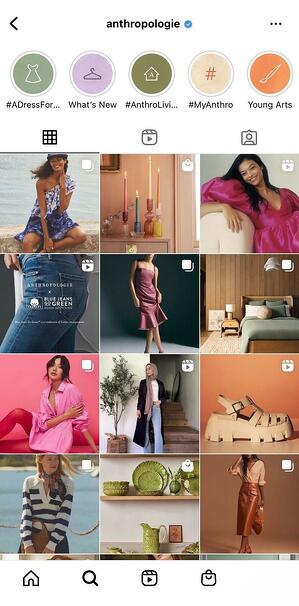
With colorful images of its bright and patterned styles, Anthropologie’s feed is a visual smorgasbord of inspiration.

instagram clothing brands: anthropologie

Image Source

4. Girlfriend Collective @girlfriend

Girlfriend Collective experienced explosive social media growth after advertising a free leggings promotion. Its feed engages customers with stunning product photography of its minimal styles and funny memes related to its products.

best instagram clothing brands: girlfriend collective

Image Source

5. BRKLN Bloke @brklynbloke

Brkln Bloke is a Brooklyn-based streetwear brand that has mastered the art of sharing its products in the wild, helping followers get styling inspiration for their purchases.

best instagram clothing brands: brklnbloke

Image Source

6.Nike @nike

The behemoth athletic brand has enthusiastically embraced video content and regularly shares clips with its impressive 263 Million followers. Its feed features a motivational mix of professional athletes and everyday people, which directly aligns with its brand mission that Nike is for everyone.

7. Paloma Wool @palomawool

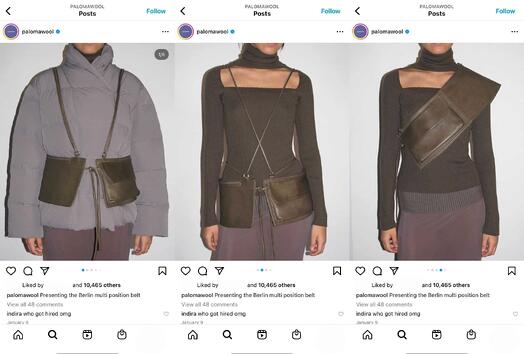
>In the image below, Paloma Wool shares a carousel of photos showing audiences different ways to wear one of its products, the Berlin multi-position belt. This gives wearers and audiences inspiration for how to use the product and can also inspire a new purchase if someone sees a style they like.

best instagram clothing brands: paloma wool

Image Source

8. Kate Spade @katespadeny

Despite being a well-established label, Kate Spade’s Instagram has a distinct personal touch that sets it apart from similar brands. Its profile features outfit pictures, snaps from around New York, and behind-the-scenes shots of the design process at the Kate Spade Studio.

9. Hermoza @the_hermoza

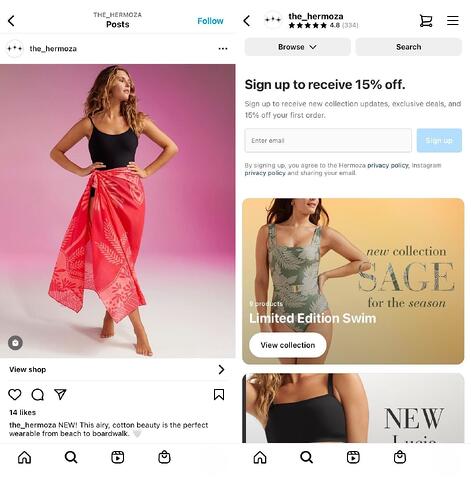
Hermoza leverages one of Instagram’s impactful native features — shoppable posts and a storefront. Each post has a “View Shop” CTA, and clicking on it leads audiences to an Instagram storefront where they can discover more products or even make a purchase without leaving the app.

best instagram clothing brands: hermoza

Image Source

10. House of Sunny @houseofsunny

House of Sunny’s approach to Instagram is worth replicating as it ensures followers always have a source for inspiration for using its products. It specifically calls attention to styling opportunities with a permanent Story Highlight called “As Seen On,” where people can click through a series of UGC to discover unique ways to style its clothing.

Image Source

11. Eileen Fisher @eileenfisherny

Eileen Fisher emphasizes its quality materials and environmentally friendly production processes on Instagram, and landing on its profile brings you to three pinned posts displaying the lifecycle of the products it uses and how it champions sustainability.

12. Sandy Liang @sandyliang

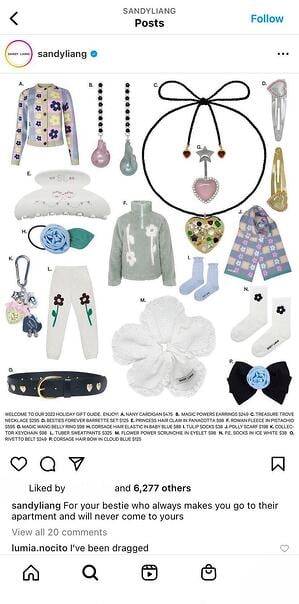
Sandy Liang is well known for creating unique versions of everyday staples. On Instagram, the brand shares lookbooks for its clothing and accessories, giving followers inspiration for what and how to wear its products. The image below is a lookbook giving inspo on what to wear when visiting a friend.

best instagram clothing brands: sandyliang

Image Source

13. Asos @asos

British online fashion retailer ASOS updates its feed regularly with colorful and bold product features. It stands out from the crowd with a video-first Instagram strategy, only rarely sharing still photos, allowing followers to interact and engage with content.

14. Aerie @aerie

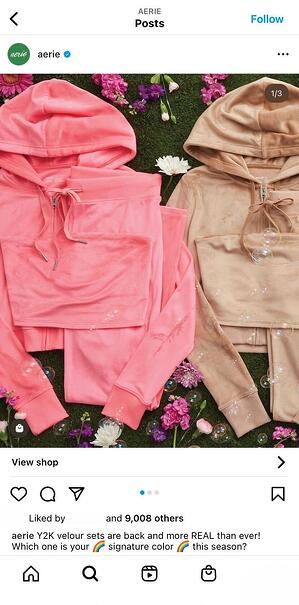
Scrolling through Aerie’s Instagram feed is like taking a tropical beach getaway. The lingerie and bathing suit brand has been applauded for its commitment to unretouched photos in its print ads, and it continues this effort on its Instagram, creating a cohesive brand image.

best instagram clothing brands: aerie

Image Source

15. Ziran @theziran

Ziran merges ancient Chinese techniques, luxury fashion, and sustainable practices to create its clothing brand. On its Instagram, behind-the-scenes content about how the brand came to be, gives people a glimpse into the people and processes that bring their favorite brand to life.

best instagram clothing brands: ziran

Image Source

16. Aime Leon Dore @aimeleondore

Aime Leon Dore shares product announcements in videos that align with the product’s intended use. For example, the video below announces an upcoming collaboration with Woolrich, a brand well-known for its durability. The video features models in activities that might cause wear and tear to everyday products, but not those from the Aime Leon Dore x Woolrich collab.

17. Lisa Says Gah @lisasaysgah

It often uses Instagram for restock announcements so its followers know when their favorite products are available for purchase again. Doing this also helps drive more followers to the platform, as people will see Instagram as a way to get the most up-to-date information on their favorite brand.

best instagram clothing brands: lisa says gah

Image Source

18. Tach @tach_clothing

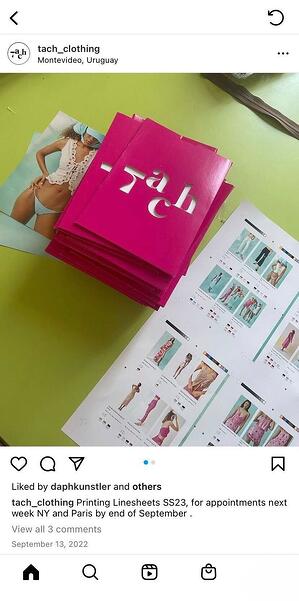
>Tach uses Instagram to share exciting behind-the-scenes content. The image below is a sneak peek into its line sheets, which are usually only used as a sales tool to present products to buyers. Audiences are let in on its behind-the-scenes activity, which can be exciting.

best instagram clothing brands: tach clothing

Image Source

>19. Fossil @fossil

If you like photos of neatly organized items, then Fossil’s Instagram is for you. The accessories brand curates an impressive feed of food, fashion, and celebrities like James Phelps, generating audience excitement if they recognize their favorite actor.

20. Everlane @everlane

Everlane’s account has no shortage of beautiful product imagery, but it also features photos of customers wearing its clothes, inspiring travel photography, and tips on food and art destinations worldwide, giving audiences a well-rounded experience on its profile.

best instagram clothing brands: everlane

Image Source

>21. Bode @bode

>Bode is well known for its quilted jackets and one-of-a-kind clothing items. On Instagram, it shares videos explaining the background and inspiration for its collections, giving followers insight into the brand, its values, and what it stands for.

22. Teva @teva

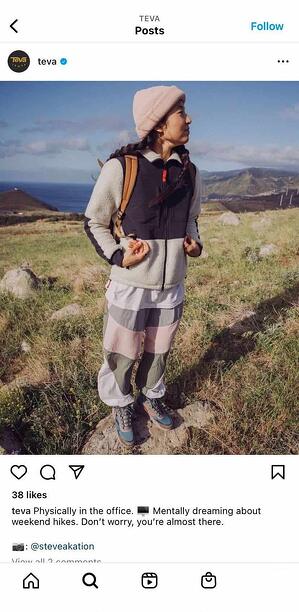
Teva’s Instagram feed is proof that it’s possible to give your brand a modern update without losing the spirit of what made you successful in the first place. Its feed includes user-generated content of its shoes out in the wild and sleek product photos highlighting new styles.

best instagram clothing brands: teva

Image Source

23. Zara @zara

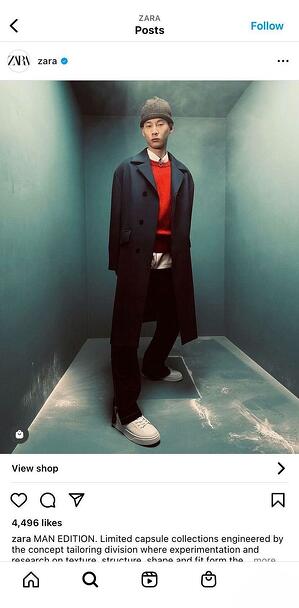
Zara has made a name for itself by emulating the marketing of luxury brands, and its Instagram feed is no exception. Its account looks like a high-fashion magazine, with professional editorial shots of its varied clothing styles.

zara

Image Source

24. Fjällräven @fjallravenofficial

The Instagram feed for Swedish outdoor apparel brand Fjällräven is less about its products and more about the adventurous spirit that has defined the company for almost 60 years.

best instagram clothing brands: fjallraven

Image Source

25. Madewell @madewell

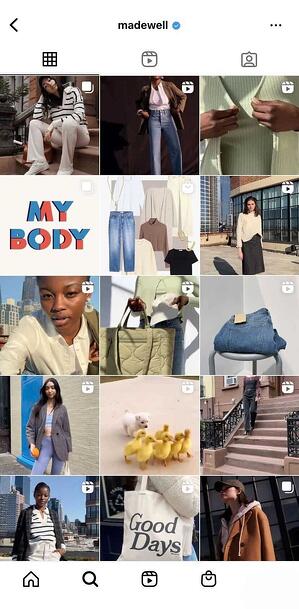
Apparel brand Madewell is known for its relaxed, classic styles, and its Instagram clearly reflects this aesthetic. With bright sunny images of its latest products and collaborations, its feed is a fashion lover’s delight.

best instagram clothing brands: madewell

Image Source

26. The Row @therow

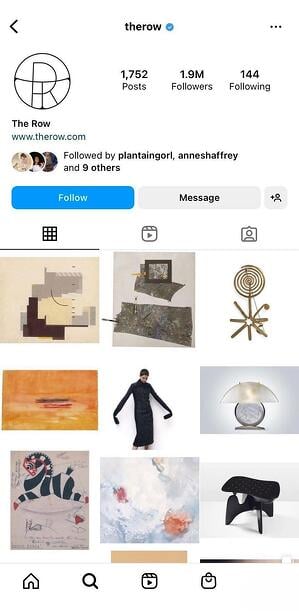
Another account that focuses less on its products and more on visual inspiration, The Row features vintage photos of art, architecture, and fashion — only occasionally sharing images and actual products — where they share a brand aesthetic that is bigger than just what it sells.

best instagram clothing brands: the row

Image Source

27. Santos by Monica @santosbymonica

Santos by Monica’s Instagram grid is eye-catching as every post uses the same color scheme and creates a pleasing browsing experience, building a cohesive brand identity and helping people develop brand recognizability for its specific color schemes and hues.

santosbymonica

Image Source

28. Carhartt WIP @carharttwip

Carhartt Work In Progress announces sales on its Instagram profile, a valuable way to ensure your different audiences are aware of your brand promotions. For example, if your Instagram followers aren’t subscribed to your mailing list, they won’t receive your newsletter announcing the sale, but they’ll see it in their feed.

Categories B2B

Inside Rihanna’s Super Bowl Halftime Show Marketing Engine

Welcome to HubSpot Marketing News! Tap in for campaign deep dives, the latest marketing industry news, and tried-and-true insights from HubSpot’s media team.

Rihanna is no stranger to good marketing.

In the late 2010s, she made the transition from recording artist to billionaire mogul with the growth of her Fenty-label brands. Her portfolio of businesses includes:

  • Fenty Beauty: a cosmetic brand that quickly gained popularity for its shade range and inclusivity.
  • Fenty Skin: the skin and body care counterpart to Fenty Beauty.
  • Savage X Fenty: a lingerie subscription brand that now includes lounge and activewear.

Rihanna’s business ventures and music career were largely siloed — until now.

Back in September, it was announced Rihanna would be headlining the Super Bowl LVII halftime show, signaling her return to music after a six-year hiatus. As kickoff approaches, we’re seeing Rihanna use her family of brands to promote the upcoming performance.

The Fenty Marketing Engine

This week on the Fenty Beauty social media accounts, the brand shared an ASMR football-themed video to promote the upcoming halftime show. This came a few weeks after the brand offered a collection of football-themed products in its Showstopp’r line.

@fentybeauty

That #FENTYGAMEFACE never fumbles! 💯🏈 Start the play with a layer of #HYDRAVIZOR to tackle any SPF worries 🌞 Then, touchdown on #PROFILTRFOUNDATION for that fresh AF, soft matte flex 💪🏿💪🏾💪🏽 #GAMEDAY is just 6 days away, so re-up on the essentials now to prep for the big day at the 🔗 in bio, @sephora, @sephoracanada, and #sephoraxkohls 🏆

♬ original sound – Fenty Beauty

In January, Savage X Fenty launched a Game Day collection of halftime show-inspired pieces and hosted pop-ups to sell the merch in Los Angeles and Phoenix.

Over the past few years, Rihanna’s brands have caused major shifts in their respective industries.

The wide range of shades offered by Fenty Beauty made other makeup brands increase their shade ranges to remain competitive, and ushered in a new generation of celebrity beauty product lines.

The annual Savage X Fenty fashion show is known for featuring models of all body types and backgrounds, which is a far cry from Victoria’s Secret fashion shows of the 90s and 2000s and may have inspired the latter company’s rebrand to focus on inclusion.

The Fenty marketing engine is effective. With an entire Fenty ecosystem of businesses ready to offer marketing support, the next phase of Rihanna’s music career could signal a shift in how recording artists promote their music.

Marketing Snippets

The latest marketing news and strategy insights.

Google and Microsoft announced plans to add AI functionality to their search engines.

Twitter announces plans to offer advertising revenue sharing to Twitter Blue subscribers.

Social platforms to watch: what the data tells us about which platforms to invest in.

YouTube’s ad revenue sees an 8% year-over-year drop.

Video marketing: the latest data to help you get the most out of your video marketing efforts in 2023.

Content creation tools: a list of must-have tools for creating content in 2023.

New call-to-action

Categories B2B

The Top 11 Search Engines, Ranked by Popularity

Oftentimes, marketers focus heavily on Google when vying for traffic. This makes sense considering Google is undoubtedly the most popular search engine, with over 80% of the search market share.

→ Download Now: SEO Starter Pack [Free Kit]

But that popularity makes it the most challenging search engine on which to rank highly. You’re missing critical opportunities for traffic if you neglect other search engines.

Here, we’re going to explore the top 11 search engines worldwide, so you can discuss some other potential traffic sources in your next SEO meeting.

Note: To compile our list, we looked at the worldwide market share of search engines on desktop and mobile from November 2021 to November 2022.

1. Google

top search engines: Google homepage

Image Source

With over 80% of the search market share, Google is undoubtedly the most popular search engine. Additionally, Google captures almost 95% of mobile traffic.

The large traffic potential makes Google a viable option when aiming to capture organic or paid search. The downside, of course, is almost everyone is competing for the same traffic.

Also keep in mind Google’s algorithm, like featured snippets, aims to fulfill users’ needs directly on Google, so they don’t need to click any links. These features, and Google’s popularity, might make it hard for you to capture the website traffic you want.

2. Bing

top search engines: bing search page

Image Source

Bing, Google’s biggest contender, rakes in 15% of U.S. searches. This engine also powers Yahoo, the U.S.’s third-biggest search engine.

Bing’s search pages look remarkably similar to Google’s, with the same categories and a similar white background, with blue links and green URLs.

However, Bing additionally offers “Rewards,” a program that gives you points when you search or shop on the engine. You can then redeem those points for gift cards, nonprofit donations, and more.

3. Yahoo!

Top search engines, Yahoo! Homepage.

Image Source

Admittedly not the sleekest search engine interface, Yahoo! still manages to capture third place in our list, with just under 3% of the worldwide market share.

Yahoo! is powered by Bing, so search results are incredibly similar between the two search engines. However, it’s still an important search engine in its own right, with over 600 million total monthly users.

4. Yandex

top search engines: Yandex search home pageImage Source

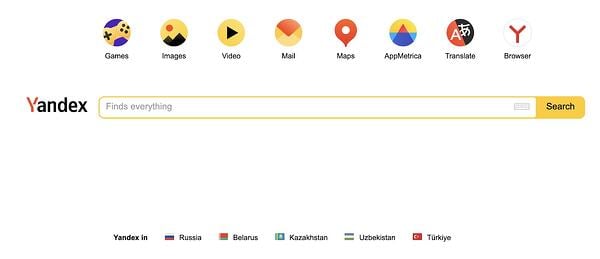
Russian search engine Yandex has roughly 2% of the worldwide market share. However, it is the most widely used search engine in its home country, with Google holding the number two spot. If you do business globally and are looking to reach Russian customers, there are a few things to keep in mind.

For example, Yandex has many quality indicators or badges it can display alongside search results. One of the most prominent is the site quality index or SQI which indicates how useful your site is to users.

Yandex regions webmaster tools guideImage Source

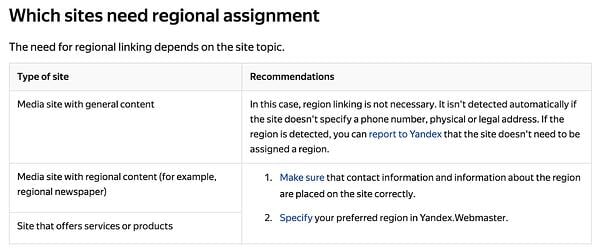
Like Google, Yandex also takes into consideration whether or not a user’s query has local intent and will display regional-dependent results. To account for this, you’ll need to go into Yandex’s webmaster tools and set a site region.

5. DuckDuckGo

top search engines: DuckDuckGo home page

Image Source

If you’re uneasy about targeted ads or don’t want your search data stored, you might want to try DuckDuckGo, which touts itself as “The search engine that doesn’t track you.”

DuckDuckGo doesn’t track, collect, or store any information, so you’re safe to search for shoes without feeling bombarded by subsequent Macy’s ads. It’s worth noting there are still ads on DuckDuckGo — just not personalized ones.

Additionally, DuckDuckGo has a clean interface and only one search page, making it easier to navigate than other search engines. With an average of 94,758,414 daily direct searches as of September 2022, it’s slowly gaining steam in the search market.

6. Baidu

top search engines: Baidu home pageImage Source

Baidu is China’s largest search engine, capturing over 63% of China’s search market. The search engine looks similar to Google (besides being in Mandarin), with a white background, blue links, and green URLs. Like Google, Baidu aims to incorporate more rich features in the SERPs.

If you have an interest in appealing to the Asian market, Baidu is a good option to consider.

However, the search engine censors certain images and blocks pro-democracy websites. If you’re comparing search results, you’ll find a more comprehensive results list on Google.

7. Ask.com

Top search engines, Ask.com homepage.

Image Source

Ask.com, formerly known as Ask Jeeves, is a search engine designed to answer questions. According to Ask.com, its mission is to “enable curious people to find the information they need.”

The interface of Ask.com is similar to Yahoo’s interface. However, unlike Yahoo, which is powered by Bing, Ask.com is its own standalone search engine. Ask.com sees most of its traffic from users located in the United States (51.8% of its traffic, to be exact.)

8. Naver

Top search engines, Naver homepage.

Image Source

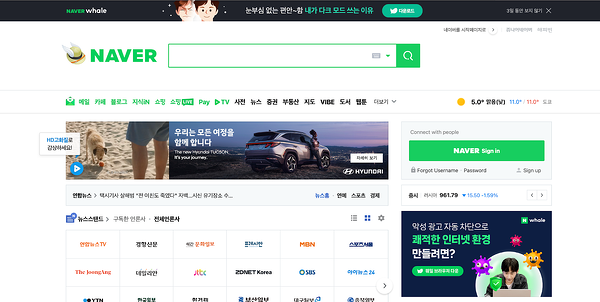
Naver is South Korea’s second most popular search engine, claiming 28.81% of the search engine market. Naver’s interface is entirely in Korean, and there is no English version of the website.

However, Naver is more than a simple search engine. Users of the website can access news content, search suggestions, and more.

Naver is a localized search engine, meaning it does not crawl and catalog the entire Internet. If you’re targeting the South Korean market with your content, make sure your SEO matches the criteria of South Korea’s second most popular search engine.

9. Ecosia

Top search engines, Ecosia homepage.

Image Source

Ecosia is “the search engine that plants trees.” For every search a user makes with Ecosia (either the webpage or its free browser extension), Ecosia will plant trees in vulnerable areas with the profit the company makes from its searches. To date, Ecosia has funded 146 million trees.

Ecosia is growing in popularity, but it is especially popular in Germany where the company is based. Worldwide, Ecosia has gained 0.11% of the search engine market share. Like Yahoo!, Ecosia is powered by Bing.

10. AOL

Top search engines, AOL homepage.

Image Source

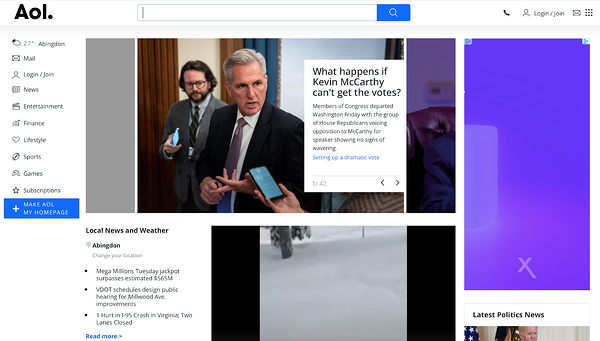
AOL, formerly known as America Online, is both an online media company and a search engine. The interface of the website features a search bar and national news articles, along with local news and weather.

Most of AOL’s traffic is generated from the United States, 86.38% to be exact.

11. Internet Archive

Top search engines, Internet Archive homepage.

Image Source

Internet Archive is a different kind of search engine. As its name implies, Internet Archive is a free archive of books, movies, software, music, websites, etc.

Instead of attempting to rank in this search engine like bloggers would try to do for other search engines, users can sign up for a free account and can upload their content to the archives.

Most of Internet Archive’s audience is located in the United States. However, the search engine is gaining popularity in other countries, such as Great Britain and India.

Emerging Search Engine Trends

The top search engines may have another competitor vying for user business in the near future, as Arel=”noopener” target=”_blank” hrefs has announced they are working on a search engine of their own.

Currently in beta, Yep, is unique from other platforms as it shares 90% of its ad revenue with content creators. With this model, Yep aims to encourage more people to share their knowledge and high-quality content.

Google is also working to prioritize good content with their 2022 Helpful Content Update. HubSpot’s Head of SEO Content Aja Frost says the update has huge implications for the industry.

“First, Google is sending a strong signal that content written by humans is preferable to content by computers. (Ironic, given virtually all of the SERPs are algorithmized.)”

Frost also points out that this update should encourage SEOs to take a more comprehensive approach to site performance.

“This update is also reinforcing the idea that your domain is one entity, and content on one part of your website will impact the performance of another part of your website,” Frost explains. “With this in mind, SEOs should be looking at their site as a whole — not isolated sets of pages.”

Think Beyond Google

Ultimately, it’s essential to consider alternative traffic opportunities besides Google when creating an SEO strategy.

By diversifying your sources, you’re more likely to capture the first page on SERPs, and you’re in a better position to find a truly ideal target audience.

This article was originally published in September 2018 and has been updated for comprehensiveness.

marketing

Categories B2B

20 Best Buyer Persona Questions to Ask Customers [Free Template]

Knowing your customers is a crucial component of successful inbound marketing. Get started with buyer persona questions that can help you understand customers’ mindsets.

Download Our Free Buyer Persona Guide + Templates 

We’ve gathered the best questions that can help you identify your audience. After you explore the answers, use this free buyer persona template to share your findings with the rest of your company. But first, let’s review the goals and benefits of carrying out buyer personal interviews. 

The Goal of Buyer Persona Interview Questions

A buyer persona (or user persona) is a fictionalized representation of your target customer. But how do you know who that is unless you ask the right questions?

That’s where buyer persona interviews and surveys come in. Before creating your ideal buyer persona, it’s essential to choose a subsect of your existing customer base and deploy surveys that will help you understand their background and goals. You can also use a market research service, such as Qualtrics, to run panels and interviews with neutral participants.

Once you’ve decided whom you’re going to survey, you can use user persona questions to uncover the following information:

  • Demographics such as their age, education, occupation, and income

  • Psychographics such as their habits, beliefs, behaviors, and preferences (like shopping preferences)

This type of information can be endlessly beneficial to businesses and brands looking to convert more leads, personalize the customer experience, and improve their bottom line.

The Benefits of User Persona Surveys & Interviews

If you think you can guess at your ideal customer’s demographic and psychographic information, you may be right — after all, most of us are a buyer persona to another brand and can generally guess at the qualities of our customers.

However, if you’re looking to systematically convert more leads, then it’s essential to carry out formal persona interviews. Only then can you create a buyer persona profile that accurately depicts your typical customer.

These are only a few of the benefits of persona surveys:

Convert More Leads

Knowing your customers’ typical challenges and needs is key to appropriately targeting them and converting them. When you uncover your target audience’s descriptors and habits through persona interviews, you can more accurately target your sales and marketing campaigns to the users most likely to buy from you.

Personalize the Customer Experience

Personalizing the customer experience is one of the best ways to capture customers’ business and keep it for the long term. If they feel like you’re speaking directly to them, they’ll be more likely to buy from you. Get to know them first through persona interviews, and you’ll be able to make them feel like they’re the only customer you serve.

Improve the Bottom Line

When you convert more leads, you improve the ROI of your marketing campaigns and sales efforts. When you personalize the customer experience, you’re more likely to retain customers and increase repeat sales. These results improve the bottom line at your company, proving the effectiveness of your marketing and sales efforts.

Remember: you’ll need a content marketing strategy to reach your buyer personas. Find out how with HubSpot Academy’s free content marketing training resource page.

Download our free buyer persona template here to learn how to create buyer personas for your business.

buyer-persona-templates-graphic-1Download Now

Questions About Their Personal Background

1. Describe your personal demographics.

Collecting demographic information is a great place to begin drafting your personas. These questions paint a clearer, more personal picture of your customer.

Understand what communities they are a part of, and how those identities impact their interaction with your brand.

What to Look for in the Answer

Are they married? What’s their annual household income? Where do they live? What are their cultural and racial backgrounds? What is their gender identity? How old are they? Do they have children?

2. Describe your career path.

Having an idea of your client’s background tells you a lot about the type of information that they consume and the problems that they can face regarding their work. This can be especially helpful if you sell a B2B product.

What to Look for in the Answer

How did they end up where they are today? Has their career track been pretty traditional, or did they switch from another industry?

3. Describe your educational background.

Get specific here. “Boston University” is better than “liberal arts college.” Where a person went to school can impact their worldview. That includes both the size of the college, their major, and the location of the school.

What to Look for in the Answer

What level of education did they complete? Which schools did they attend, and what did they study?

Questions About Their Company

4. What is the size of your company?

Keep an eye out for specific details about the company. The size of a business impacts how many people use your product, as well as the way they use your offering. Understanding the amount of revenue can help you set appropriate pricing.

Knowing details about your persona’s company, like the number of employees, will help you when you’re building the fields for your landing page forms.

What to Look for in the Answer

How many people work at the company? How much revenue does the company generate? How many customers does the company serve?

5. In which industry or industries does your company work?

The answer to this question isn’t the department in which your buyer persona works. Your buyer persona’s industry is the type of service they deliver to their clients, and knowing this can help you measure your business’s impact in the markets you’re targeting.

Depending on the challenges your buyer persona faces, it might also be worth getting information on the industries your client’s business serves, not just the actual service they provide.

For example, if your buyer persona provides renewable energy plans for hospitals. They are in the environmental services industry for education and medical customers.

What to Look for in the Answer

What sector do potential buyers work in? Are they in a broad industry like healthcare or insurance? Are they in a more niche market?

Questions About Their Role

6. What is your job role? Your title?

The importance of your buyer persona’s job depends on the product or service you’re selling.

If you’re a B2C company, you may simply consider this information as another way to better understand the nuances of your persona’s life.

If you’re a B2B company, this piece of information becomes more crucial. Is your persona at a managerial or director level, and well versed in the intricacies of your industry? They’ll need less education than someone at an introductory level, who may need to loop in other decision-makers before making purchasing decisions.

What to Look for in the Answer

How long have they had this role and title? Are they an individual contributor, or do they manage other people?

7. To whom do you report? Who reports to you?

If you have a B2B offering, knowing your buyers’ seniority levels is especially important. This information can help your sales team understand who prospects might be.

For B2C companies, your users’ seniority level can give you insight into their lifestyles. Do people spend most of their time in the office? Are they often in meetings? That will impact when and where they use your product.

What to Look for in the Answer

How senior is your buyer? How many people work for them? Where are they in the larger organization?

8. Which skills are required to do your job?

If they were hiring someone to replace them and had to write a job description of what’s required, what would it say? Understanding your buyer’s skillsets can help you understand the level of training they need when using your product.

Or perhaps, your product is intended to supplement a skill they lack. Knowing where their strengths are can help you focus your product development efforts.

What to Look for in the Answer

What are the ideal skills for this job, and how good is your persona at each of them? Where did they learn these skills? Did they learn them on the job, at a previous job, or by taking a course?

9. What does a typical day look like?

This should include both the tasks they do for their job, as well as what happens during the day outside their job. Knowing your personas’ schedules can help you understand when they use your offering. That holds true for both B2B and B2C products.

What to Look for in the Answer

For their time in the office, look for the following.

  • What time do they get to work and what time do they leave?
  • What do they do when they’re most productive?
  • What’s their “busy work” look like?

For time spent outside of the office, take note of the following.

  • Are they spending more time at work or at home?
  • Where would they rather be?
  • What do they like to do for fun?
  • Who are the people in their life that matter most?
  • What kind of car do they drive?
  • Which TV shows do they watch?
  • Heck, what outfit are they wearing? Get personal here.

10. How is your job measured?

You should know what metrics will make your user successful, and what they might be worried about when it comes to “hitting their numbers.” This can help your marketing team identify which features to highlight.

What to Look for in the Answer

Which metric(s) is your persona responsible for? Which numbers or charts or waterfall graphs do they look at every day?

11. What knowledge and tools do you use in your job?

Understanding what products they love (and hate) to use can help you identify commonalities in your own product (and adjust your positioning accordingly). You can also understand how your product integrates with their pre-existing tech stack.

What to Look for in the Answer

Which applications and tools do buyers use every single day? Every week? How much do they like these existing tools?

Questions About Buyer Goals

12. What are you responsible for?

This goes beyond the metrics they’re measured on. Your team should know what their primary job responsibilities are. With this knowledge, you can better explain how your offering makes buyers’ lives easier.

You can also identify ways to help your persona achieve their goals and overcome their challenges.

What to Look for in the Answer

What’s their primary goal at work? What about their secondary goal? What are their daily responsibilities? Quarterly responsibilities? Annual responsabilities?

13. What are your biggest challenges?

You’re in business because you’re solving a problem for your target audience. How does that problem affect their day-to-day life? Go into detail, and focus on the nuances that illustrate how that problem makes them feel.

For example, let’s say your company sells personal tax software directly to consumers. One of your personas may be a first-time tax preparer. What are the pain points of first-time tax preparers? They’re probably intimidated by the prospect of doing their taxes by themselves for the first time, overwhelmed by a tax code they don’t understand, and confused about where to start. These pain points differ from those of a seasoned tax preparer.

Try coming up with real quotes to refer to these challenges. For example, “It’s been difficult getting company-wide adoption of new technologies in the past,” or “I don’t have time to train new employees on a million different databases and platforms.”

What to Look for in the Answer

What are the different challenges for demographics? How do pain points vary by seniority and experience level? How do these challenges affect their daily life?

14. What does it mean to be successful in your role?

Companies that take the time to understand what makes their personas successful will likely enjoy more effective communications from both the sales and marketing teams.

What to Look for in the Answer

What can you do to make your personas look good? What features of your product already help them achieve their goals?

Questions About How Buyers Learn

15. How do you learn new information for your job?

If you’re going to market and sell to these personas, you need to understand how they consume information. Dive into their required upskilling at work, as well as the professional development your buyer individual sought. Your goal should be to best understand their learning style.

What to Look for in the Answer

Do they go online, prefer to learn in person, or pick up newspapers and magazines? If they’re online learners, do they visit social networks? To Google? Which sources do they trust the most — friends, family, coworkers, or industry experts?

16. Which associations and social networks do you participate in?

You should already be investing time and resources in social media marketing. Identify the associations and social networks where your buyers spend their time. Then, you can prioritize which accounts to create and which conversations to participate in.

What to Look for in the Answer

What in-person or community-based gatherings do buyers attend? How are these gatherings promoted? What do they learn from these events?

What social media platforms do your buyers prefer? How much time do they spend on these platforms? What platform features do they actually use?

17. Which publications or blogs do you read?

To piece together a typical day in their life, figure out where they regularly go to stay informed. If you know how they prefer to gather information, you can make yourself present in those spots. The next step is to establish credibility in those communities.

What to Look for in the Answer

What magazines or news outlets do they read? Are there blogs they frequent? Which trusted thought leaders do they turn to?

Questions About Their Shopping Preferences

18. Describe a recent purchase.

You should understand your buyers’ evaluation process when making a purchase. How do they decide what they buy?

If you can anticipate the objections your persona will have, you can be prepared for them in the sales process. You will also be able to educate them in your marketing collateral to help allay fears right away.

What to Look for in the Answer

Why did you consider a purchase, what was the evaluation process, and how did you decide to purchase that product or service?

Is this their first time purchasing a product or service of your kind? If not, what caused them to switch products or services? What might make them reticent to buy from providers in your industry?

19. Do you use the internet to research vendors or products? If yes, how do you search for information?

These questions will help you determine which sources of information your buyer trusts. This can help you identify what type of reviews you would like to elicit. You can also plan your marketing collateral appropriately.

What to Look for in the Answer

Which avenues are they using to find new information? Do they search online, look at review websites, ask their friends and family, or do something else?

20. How do you prefer to interact with vendors?

You should know the best ways to get in touch with potential buyers. From there, you can understand how they want to interact with you — as well as how frequently. The experience of purchasing your product should align with your persona’s expectations.

What to Look for in the Answer

What should their sales experience feel like? Is it consultative? How much time do they expect to spend with a salesperson? Do they anticipate an in-person meeting, or would they rather conduct the sales process online or over the phone?

What’s next?

Once you’ve gone through this exercise and worked out any lingering questions about what makes your persona tick, browse through some stock imagery and find an actual picture to associate with your persona. Going through this exercise forces you to clarify an image of your target audience in your entire organization’s mind that will help keep your messaging consistent.

Another useful exercise is to practice being able to identify your buyer persona so you can tailor your communications. How will you know when you’re talking to this persona? Is it their job title?

Once you’ve established not only who your persona is, but also how you can identify them when you encounter one or another, your employees will be able to maintain a consistent voice that is still customized to each person they talk to.

Then, use our free, downloadable persona template to organize the information you’ve gathered about your persona. Share these slides with the rest of your company so everyone can benefit from the research you’ve done and develop an in-depth understanding of the person (or people) they’re targeting every day at work.

Blog - Buyer Persona Template [Updated]

Categories B2B

Product Attributes: What Marketers Need to Know

I’m a huge homebody who prefers the ease of shopping online from home. However, the problem with buying items online is that I can’t try on, measure, or get a good feel for the product until it arrives at my door. So, before deciding to purchase, I always check the item’s product attributes to ensure it’s right for me.

Product attributes play an essential role in the decision-making process for buyers. They’re also crucial for marketers when promoting or advertising a product. Read on to learn more about product attributes, their importance, and how to incorporate them into your marketing strategy.

→ Download Now: Free Product Marketing Kit [Free Templates]

What are product attributes?

Product Attributes vs. Product Benefits

Why You Need Product Attributes

Product Attributes Examples

Use product attributes in your marketing strategy.

Product attributes fall into two categories: tangible and intangible. Tangible attributes are physical attributes that the senses can perceive, such as color, shape, size, and texture. Intangible attributes are characteristics that can’t be perceived by seeing or holding the product.

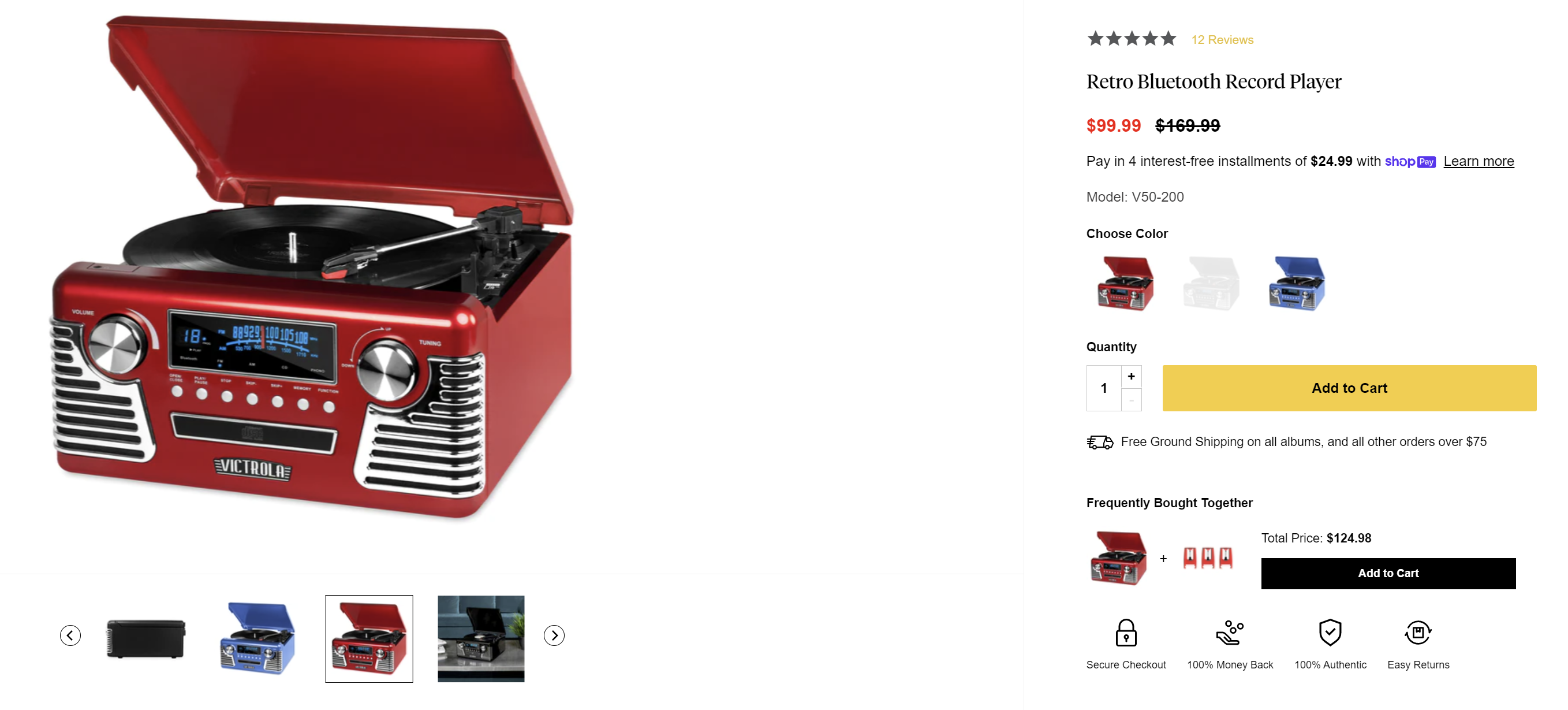
For example, take a look at this Victrola record player system.

The tangible product attributes of Victrola record player system includes it's red color and retro design.Image source

Tangible attributes of this record player include its red color and retro-inspired design. Intangible attributes would be Bluetooth capability and recording software allowing buyers to convert vinyl to MP3.

Product Attributes vs. Product Benefits

While product attributes describe the products, product benefits describe what customers stand to gain from the product. For instance, let’s go back to the record player example.

As I said earlier, a product attribute of the record player is its Bluetooth capability. A product benefit is that this capability allows users to stream their favorite music wirelessly.

Why You Need Product Attributes

Including product attributes helps consumers get a feel for your product and what it can do for them. Attributes also influence the potential buyer’s decision and allow them to properly weigh their options when looking for a product that suits their needs.

Helpful product attributes can improve the customer experience by making their decision process more manageable.

Product attributes are also necessary because they can boost your brand’s discoverability online. Marketers can and should incorporate keywords into product attribute descriptions so people searching these terms are more likely to find your product.

Product Attributes Examples

Below are a few tangible and intangible product attributes from several companies and brands.

1. Quality

Quality is a critical product attribute to include in your marketing because consumers want products they trust will work. Product reviews, manufacturing data, and the use of durable materials are just some ways you can demonstrate a product’s quality.

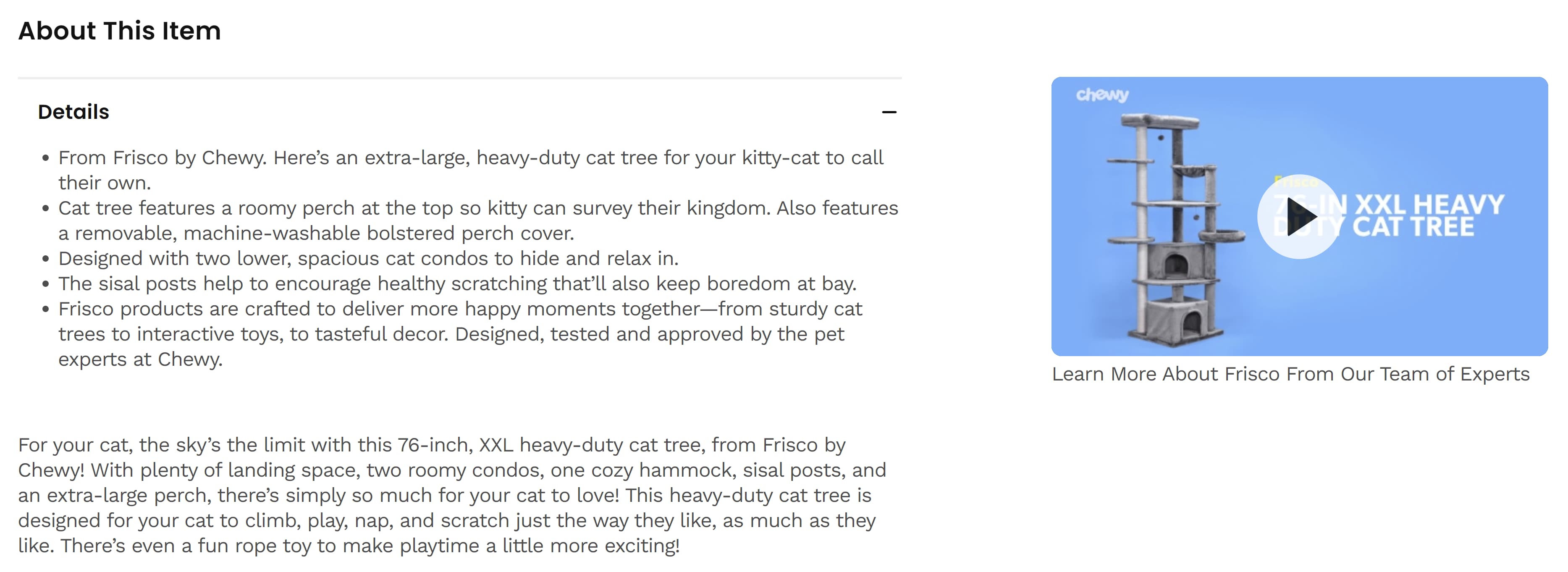
An example of a quality product attribute can be seen in this cat tree made by FRISCO. The cat tree is described as a “heavy-duty tree” made with sisal posts and is “designed for your cat to climb, play, nap, and scratch just the way they like, as much as they like.”

Best for: When your target consumers want a long-lasting, durable product or a high-quality customer experience.

Screenshot of the product attributes of a cat tree.Image source

2. Design

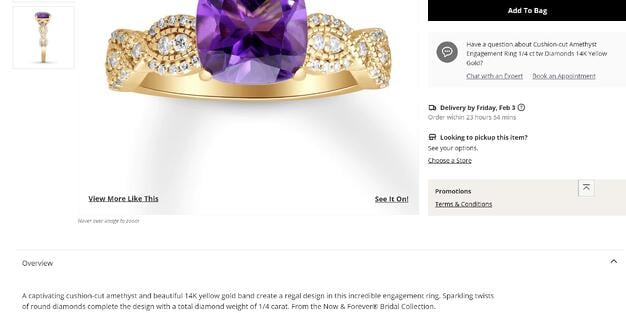
Design refers to the product’s appearance. For example, the amethyst engagement ring below comprises a cushion-cut amethyst, a 14K yellow gold band, and “sparkling twists of round diamonds” for a “regal design.”

Best for: When aesthetics and style are a core value for your consumers. It’s also a great opportunity to optimize for keywords. For example, the ring’s description includes key search words such as “cushion-cut,” “amethyst,” and “yellow gold band.”

Screenshot of the product attributes of an amethyst ring.Image source

3. Price

Price is an excellent attribute to include in your product’s description, especially if you’re emphasizing how much a consumer can get at a cost-effective rate. For instance, Canva mentions it offers free use of its design tools and lists all the things users can access at zero costs.

Best for: When your product is available at a lower price point than your competitors or if your product is available in budget-friendly options.

Screenshot of the product attributes of Canva's pricing tiers.Image source

4. Verification and Safety

Again, consumers need assurance that your product is trustworthy, credible, and safe. One way to prove those points is to include verification and safety attributes. Philly’s Phinest Roofing, a Philadelphia-based roofing company, proves its credibility by emphasizing the 40 years it’s been in business and its status as a certified roofing company. It even has the company’s license number features on its website for potential customers to verify.

Best for: If safety and reliability are top concerns for your target audience.

Screenshot of the product attributes of a Philadelphia roofing company.Image source

5. Marketing Claims

Marketing claims are product attributes that reference your product’s performance, and they can be in the form of statistics or data. To generate an accurate and compelling marketing claim, brands invest in research groups and customer surveys.

An example of a marketing claim is Lysol promoting that its products kill 99.9% of germs.

Best for: Showing how your product outperforms competitors or highlighting its effectiveness.

Screenshot of the product attributes of Lysol wipesImage source

Use product attributes in your marketing strategy.

Product attributes help consumers make confident and informed decisions about their purchases. They also contribute to an easier and more enjoyable customer experience.

Most importantly, they build trust in your brand and help to ensure you’re marketing your products to the right people. To better market your product and delight your customers, include product attributes in your strategy.

Product Marketing Kit


Categories B2B

14 Best Screen Recorders to Use for Collaboration

For your team, screen recorders can be used for several reasons — from creating tutorials for your website to recording a recurring tech issue to sending your marketing team a quick note instead of an email.

Plus, we can’t forget about product demos and training videos that can be used by many departments on your team, from marketing to sales to customer service.

Below, let’s learn about the best free and paid screen recording options for your company — whether you work at a small business or enterprise company.

→ Download Now: Free Business Plan Template

What is the best screen recorder?

What’s considered the best will depend on what you need. Are you using it for work? For fun? Will you be live streaming on another platform? Once you’ve figured out your use cases, it will be easier to choose a screen recording tool.

Other qualities you should take into account include:

  • Cost
  • User interface and ease of use
  • Built-in editing tools
  • Sound quality

While we can’t definitively tell you which screen recorder is best for you, we’ve come up with a list of some of our top choices.

Best Screen Recorder Tools Overall

1. Loom

Price: Starter Plan, free; BusinessPlan, $12.50/user/month; Enterprise, contact for pricing

Best for: Work communication

Pros:

  • Background noise suppression
  • Viewer insights
  • Can create a team workspace for storing and sharing videos
  • Integrates with Slack, Jira, Dropbox, GitLab, and more

Cons:

  • 5 minute recording limit with Starter Plan
  • Limited editing features

Loom is one of the best screen recorders on the market for Mac, Windows, and iOS.

You can easily record your whole screen or a partial screen and narrate using your microphone. At HubSpot, we’ve been known to use it to disseminate information to our marketing team.

When you’re done recording, it offers easy editing capabilities, allowing you to trim the video or add a call-to-action (CTA) and custom thumbnail.

To share your video, you can instantly share with a link and even add a password for extra privacy. Loom’s easy-to-use platform and privacy features make it an excellent choice for workplace communication.

Overall, this is a great choice because it’s quick, easy to use, and offers everything you’d need.

2. Screencastify

Price: Free; Starter, $7/user/month; Pro $10/user/month

Best for: Tutorial videos

Pros:

  • Easy to use for newbies
  • All videos are saved in Google Drive for easy access
  • Ability to add interactive questions to check for information retention

Cons:

  • For chrome devices and browsers only
  • Limited editing capabilities

best screen recorders: Screencastify Image Source

Screencastify is a Google Chrome screen recorder that is best used for creating tutorial videos.

With its free version, you can easily record up to five minutes per video of your screen and webcam, add annotations, trim your videos, and export to Google Drive or publish to YouTube.

The paid versions offer some more bells and whistles, most notably the unlimited recording length, and priority support.

Other features include narration, offline recording, the ability to instantly share via Google Drive, and direct upload capabilities.

The easy annotations and customizable screen options make it an excellent choice for tutorial videos.

3. OBS Studio

Price: Free
Best for: Professional live streaming

Pros:

  • Easy to customize
  • Great for streaming on platforms like Twitch or YouTube
  • Offers several premade scenes

Cons:

  • No ability to use multiple screen transitions between takes

  • High learning curve

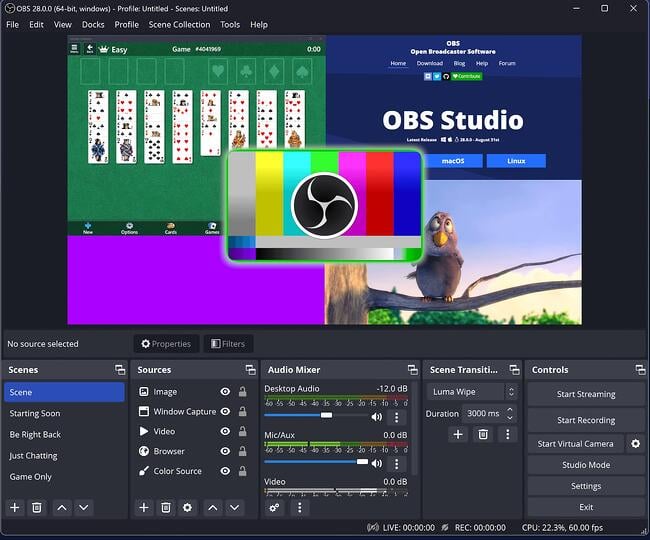
best screen recorder: OBS studio recorder Image Source

Open Broadcaster Software (OBS) is a screen recording software mainly used for live streaming on platforms like Twitch and YouTube.

When you begin recording, you can choose what part of the screen you want to capture and will have access to an audio mixer. The audio mixer will allow for professional sound quality.

With OBS, you can record an unlimited amount of scenes, switching seamlessly with custom transitions.

Additionally, this software offers a streamlined settings panel so you have a variety of configuration options for your broadcast or recording.

The customizability makes it one of the best screen recorders.

4. RecordScreen.io

Price: Free

Best for: No frills videos

Pros:

  • No time limits
  • Easy to use
  • No watermarks

Cons:

  • No built-in converter
  • Requires internet connection
  • No additional video formats

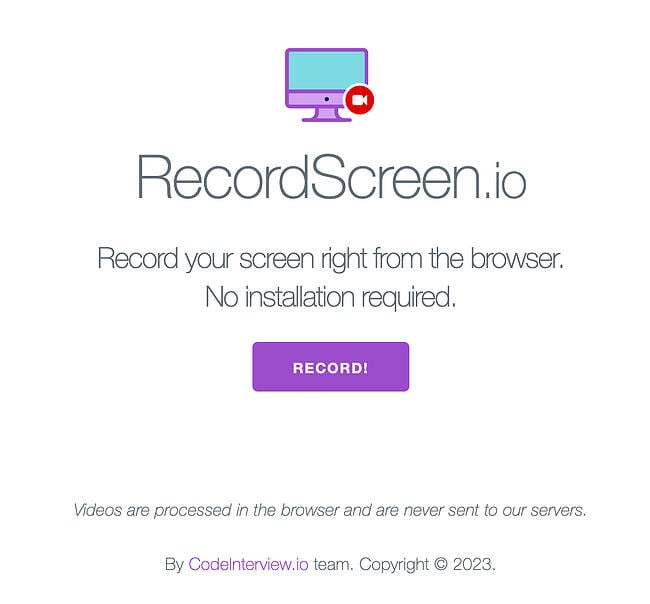
best screen recorder: Record Screeen ioImage Source

If you want an absolutely zero-frills, easy-to-use option, RecordScreen.io is one of the best options.

All you need to do is go to the site and click Record. Then, you’ll choose whether to record the webcam and screen or just the screen.

When you’re finished, all you have to do is download the video.


5. CloudApp

Price: Free; Individual, $9.95/month; Team, $8/user per month; Enterprise, contact for pricing

Best for: Enterprise recording communication

Pros:

  • Ability to annotate screenshots
  • Easy to share files with a simple link
  • Can customize your content with logos and other features

Cons:

  • File size could be improved
  • Limited editing features

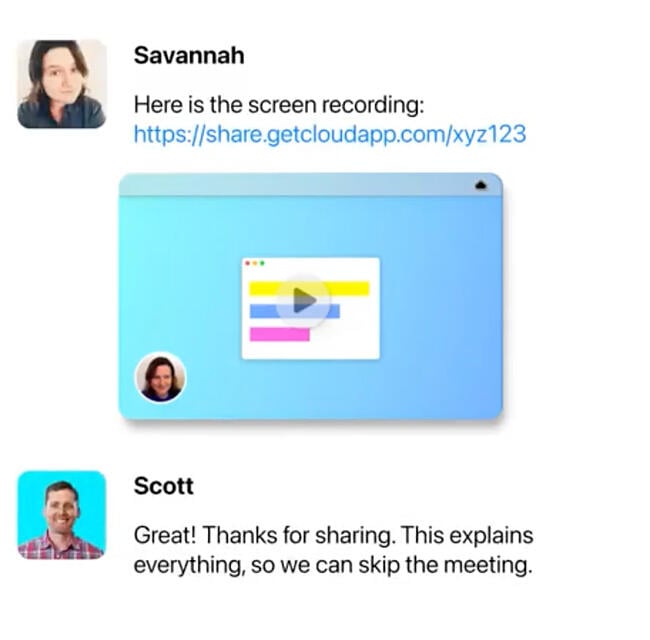
best screen recorder: CloudApp

Image Source

CloudApp is a great option for the enterprise company in need of screen recording capabilities.

However, it still offers lightweight versions for smaller teams. With the free version, you can create short videos with annotations, GIFs, and basic editing capabilities.

Still, you’ll have to pay for the more robust enterprise tool. With paid versions, you’ll have access to custom branding, management, and support tools that the other plans don’t have.

Additionally, CloudApp offers analytics and insights into who views your content and from where.

These robust enterprise capabilities make it an excellent option for larger companies.

6. TinyTake

Price: Basic, free; Standard, $29.95/year; Plus, $59.95/year; Jumbo, $99.95/year

Best for: Annotated videos

Pros:

  • Simple interface
  • Uses minimal RAM resources

Cons:

  • Very limited capabilities on the free version
best screen recorder: TinyTakeImage Source

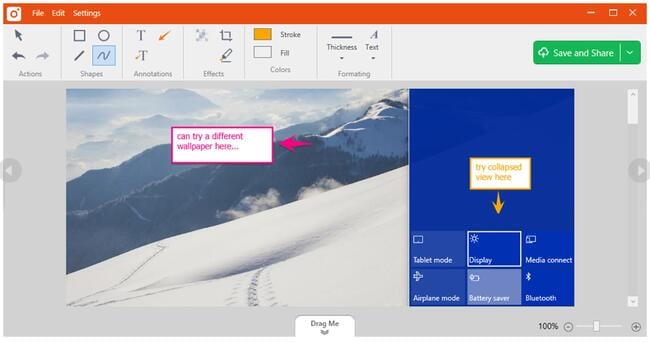
TinyTake is another screen recording option for Windows and Mac users.

When you begin recording your screen, you can capture images, videos, and presentations. Additionally, you can add comments and annotations.

In fact, the annotation toolset is one of the most unique features. You can easily add text, highlight, draw arrows, or blur parts of your screen for privacy. This tool is a convenient way to annotate product reviews or demos.

To get the most out of this product, you’ll want to buy a paid version. The biggest difference in the free and paid versions is the recording limit and annotation capabilities.

7. Camtasia

Price: Individual, $299 one-time fee, install on two machines per user; Business, $239 – 299 depending on the size of your team

Best for: Professional videos

Pros:

  • Robust editing features
  • Helpful tutorials and website support available
  • Supports multiple media formats

Cons:

  • Expensive compared to other options

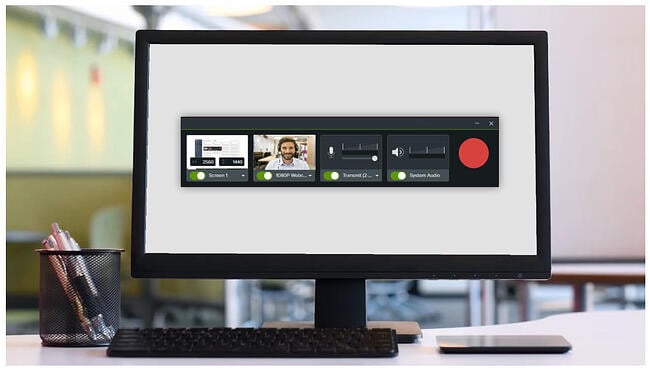
best screen recorder: Camtasia

Image Source

Camtasia is a screen recording option for Mac and Windows users that are looking to create professional-looking videos such as webinars, explainer videos, or knowledge base videos.

With this software, you can record your screen and audio, add effects including text and transitions, and instantly upload your video to YouTube, Vimeo, or Screencast.

Additionally, this software offers features including music and audio from its royalty-free music and sound effects, catchy titles and annotations, quizzes for interactivity, and animated transitions.

The built-in video editing tool is what sets it apart from other screen recording software, giving this software the ability to create more put-together videos for your team.

8. SnagIt

Price: Individual, $62.99 one-time fee, install on two machines per user; Business, $31.99 – 62.99 depending on the size of your team; Education, $22.46 – $37.99 depending on the size of your team

Best for: Visual instruction videos

Pros:

  • Has a built-in Gif maker
  • Can create and share custom templates
  • Can export files to cloud storage

Cons:

  • One of the pricier options on this list
best screen recorder: SnagItImage Source

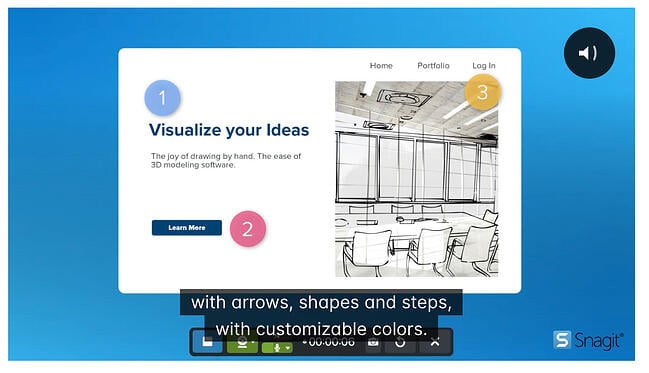
With this option, your team can easily create instructional videos that are customizable.

Before you begin, you can choose to create a video from templates, images, or record a new video.

Once you capture the process, you can markup the screenshots or talk through the process and add in visual instructions including custom how-to guides or tutorials.

Additionally, SnagIt offers other customizable options. You can easily move objects around on your screen capture, rearrange buttons, or even delete and edit text.

Plus, the step tool allows you to quickly document a process and workflow with a series of numbers.

The customizable tools are built with step-by-step instructional videos in mind.

9. Droplr

Price: Pro, $6/month per user; Teams, starting at $79/month per user; Enterprise, custom pricing

Best for: Remote collaboration

Pros:

  • Team file sharing and cloud storage
  • Easy to use screen capture and recording

Cons:

  • No free option
  • Limited file formats for export

best screen recorder: DroplrImage Source

Droplr is a screencast tool that is best used for remote collaboration.

When you capture a screenshot or record your screen, you can explain your thoughts by adding messages with the text field.

Additionally, there’s also a privacy feature so you can blur sensitive information to keep your content safe.

However, one of the best tools is that your videos can be branded, with customizable short links using your company domain, adding a company logo, and using your own branding images for professionalism.

Overall, the advanced annotation feature makes this a great option for remote teams to get their jobs done faster.

10. OneScreen

Price: OneScreen Hype, $10/month; OneScreen Annotate, $100 Perpetual License

Best for: Collaboration and video conferencing

Pros:

  • Works in browser so no download required

  • Built-in whiteboard tools

  • Customer support available

Cons:

  • Participant limit for Hype may be prohibitive for larger teams

Image Source

OneScreen is a browser-based video conferencing tool companies can use to collaborate, meet, train, or present.

One of its most basic capabilities is the screen sharing and recording function, so your team can record any meeting right in the browser, no download required.

Additionally, there are robust annotation and whiteboard tools your team can utilize.

While OneScreen works well with enterprise companies who need video conferencing hardware and software, it also offers more affordable software for smaller companies.

11. Clip by ClickUp

Price: Free Forever; $5/mo. for Unlimited, $12/mo. for Business; Business Plus $19/mo

Best for:Productivity and work management

Pros:

  • Free training and 24-hour support
  • Create tasks from your recordings
  • Easy share links, no downloads required

Cons:

  • Unnecessary if you don’t also need project management software

best screen recorder: ClickUpImage Source

ClickUp is a powerful productivity tool that includes task management, goal tracking, dashboards, 15+ views, and hundreds of features that can be customized for any work need.

ClickUp offers a free in-app screen recording tool,Clip, that allows you to capture your entire screen, app window, or your browser tab, and add voice messages over your recordings directly from your microphone.

Once your recordings are ready, you can share them with anyone via a link that plays in any browser, or view them instantly after recording, no downloads required.

Additionally, it allows you to create a task from your recording, add a description, and assign team members so everyone knows the full context and what to do next. Sometimes it’s more effective to show than tell, especially if you’re a visual learner.

12. Vmaker

Price: Lite Plan, Free; Starter Plan, $7/month; Teams Plan, $10/month; Enterprise Plan, contact for additional pricing

Best for: Sales prospecting

Pros:

  • Intuitive interface
  • Plenty of customization options
  • 4k recording capabilities

Cons:

  • Free version has a limited video length

best screen recorder: VmakerImage Source

Vmaker is an easy-to-use screen recorder that is best used for sales prospecting. Vmaker comes with Gmail and Hubspot integration that enables users to send personalized video emails from their Gmail and Hubspot accounts.

Vmaker offers highly useful branding features that allow you to customize subdomains, logos, and add a custom CTA to improve your brand visibility and response rates.

With the free version, you can record up to seven minutes per video at 720p resolution along with an inbuilt video editor that provides you with all the basic editing features.

The paid version offers advanced features and capabilities including 4K recording, pro video editing tools, unlimited recording times, and more.

Overall, Vmaker’s ease of usability and features make it an ideal tool for marketers, sales professionals, and any content creators looking to personalize their communication.

Best screen recorder for mac

13. Screencast-O-Matic

Price: Free; Deluxe, $41.65/month billed yearly; Premier, $64/month billed yearly; Max, $10/month billed yearly; lower rates for educators

Best for: Quick tutorial videos

Pro:

  • Comes with royalty-free music for use
  • Easy to use drag and drop interface
  • Unlimited videos

Cons:

  • Only exports images as PNG files

best screen recorder for Mac: ScreencastOmaticImage Source

Screencast-O-Matic is another easy-to-use screen recorder that supports webcam and screen recordings.

With its free version, you can add stock music and captions to your recording, narrate from your microphone, and trim your video.

With the paid version, you’ll get more advanced animation and editing tools. For example, you can even draw on your screen while recording. Plus, you’ll have access to more music and overlay effects.

Additionally, one of the newest features is the stock library full of videos and images you can add to your recordings.

If you’re looking for a no-frills experience, the free version of Screencast-O-Matic is a great option. However, the paid options still offer advanced capabilities.

Best Screen Recorder for PC

14. Bandicam

Price: Free download or $39 one-time license fee

Best for: Webinar recordings

Pros:

  • Excellent sound quality
  • Easy user interface
  • Uses a low amount of RAM

Cons:

  • Free version has limited capabilities
  • Editing requires other software

best screen recorder for PC: bandicamImage Source

Another lightweight screen recorder is Bandicam. This is a software for Windows users making it possible to capture anything on your PC screen as high-quality video.

With Bandicam, you can record webinars, games, meetings, or Skype calls. Then, you can even add narration after the video is recorded.

Additionally, features such as real-time drawing and branding make it a competitive option.

The high-definition recordings and customizable narration options make it great for webinar recordings.

An important thing to note is that the free version places a watermark on videos, so you’ll have to be a paid user to create branded videos.

Simplify Your Workflow With Screen Recorders

Whether you need to record a message for your team, a product demo, or a webinar, you’ll have to use a screen recording software. While most easy-to-use, free options can be used for your needs, there are also more robust tools for larger companies.

Editor’s note: This article was originally published in January 2020 and has been updated for comprehensiveness.

Business Plan Template


Categories B2B

How the Nike and Tiffany & Co. Collaboration Was Overshadowed by AI

Welcome to HubSpot Marketing News! Tap in for campaign deep dives, the latest marketing industry news, and tried-and-true insights from HubSpot’s media team.

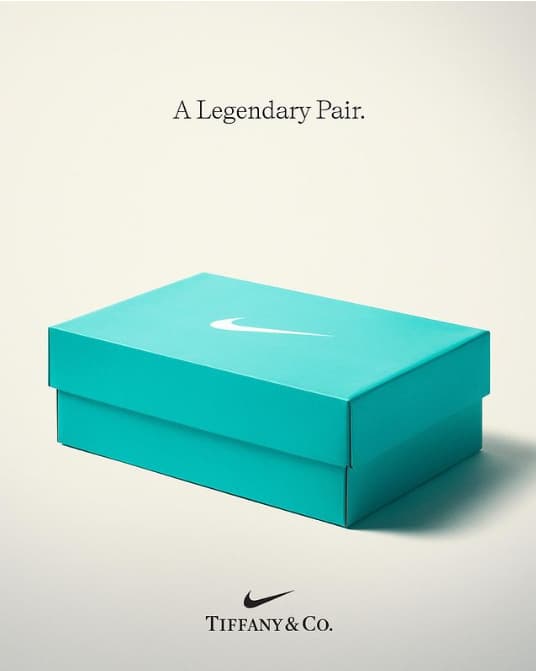
On January 29, the official Instagram accounts for Nike and Tiffany & Co. teased a collaboration between the two legendary brands depicting a Nike shoe box in the classic Tiffany Blue® hue.

The initial reaction on social media was optimistic, with users expressing excitement for what’s to come when the collection drops on March 7.

Nike and Tiffany & Co. collaboration announcementImage Source

The hero product of the collaboration is a limited-edition black suede Air Force 1 shoe with a Tiffany Blue® swoosh. In addition to the shoes, the collection includes a sterling silver cleaning brush (mistaken for a toothbrush), a co-branded shoe horn, Tiffany Blue® shoelaces with a dubrae, and a whistle.

When details of the collaboration’s products went public, reactions skewed negatively.

Fans of Tiffany & Co. felt the collaboration was mismatched. A comment on one of the brand’s promotional posts read, “What happened to your brand???? This is so cheap and tacky.”

Nike x Tiffany & Co. shoe collaboration

Image Source

Meanwhile, Nike customers seemed disappointed in the shoe variation and left comments such as:

“Lazy slapping of some Tiffany blue or swapping logos is now considered ‘legendary?’”

“I like the box more than the shoes.”

After the initial announcement, AI-generated images of what the collaboration could have looked like began circulating the internet, with some consumers feeling underwhelmed by the real product in comparison.

While the work of both the Nike and Tiffany & Co. teams can’t be replaced by AI, this scenario signals a phenomenon that may become more common as artificial intelligence gains traction.

With renderings and creative images available at the press of a button, brands will be faced with the challenge of continuing to innovate while managing consumer expectations.

Marketing Snippets

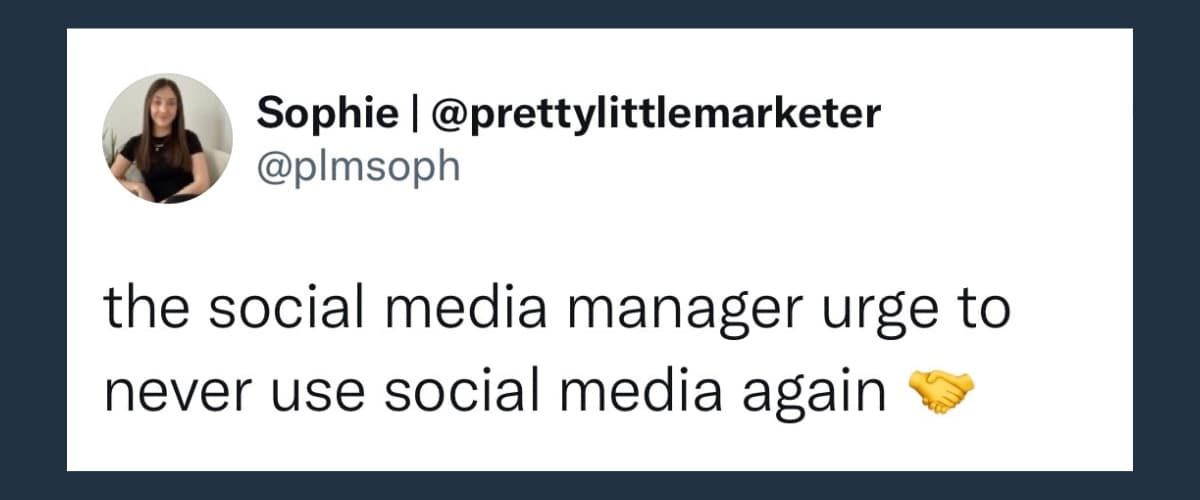
graphic that reads "the social media manager urge to never use social media again"Image Source

The latest marketing news and strategy insights.

How Spotify is shifting its podcast strategy.

Super Bowl Advertising: how the USA Today Ad Meter became the gold standard for measuring success.

The first union for advertisers has been established. What does this mean for marketers?

LinkedIn is offering a new suite of creator tools. 

Substack is rolling out a new private subscription feature.

How Buzzfeed is integrating ChatGPT into its content strategy.

New call-to-action

Categories B2B

What Video Marketers Should Know in 2023, According to Wyzowl Research

It’s well established that video has been one of the breakout trends in the marketing world for the past decade.

→ Access Now: Video Marketing Starter Pack [Free Kit]

But what’s happening in video marketing right now? And how does its growth and success stand up to the twists and turns of a global pandemic?

At Wyzowl, we’ve released an annual State of Video Marketing survey every year since 2015, charting usage, spend, channels, and opinions among video marketers and consumers.

We recently released our ninth State of Video Marketing report. During that time, usage, spend, and reported ROI have crept slowly upward – from an already high starting point.

But this year’s results suggest that, far from reaching saturation point, video marketing is actually continuing to grow in popularity – and achieving better results for marketers than ever.

Our research suggests:

  • Video remains a key priority for business with its use as a marketing tool, and its perceived importance by marketers, reaching an all-time high.
  • Marketers feel more positive about video’s return on investment than at any point since 2015, as they report an unprecedented level of influence on KPIs such as traffic, leads, sales, and audience understanding.
  • More marketers credited video with increasing dwell time, traffic, leads, sales, and reduced support queries than in ANY of our annual surveys since 2015, – while an all-time high number of marketers (92%) told us they get a good ROI on video content, up from 87% in 2022.
  • Driving all of this is the fact that consumers continue to use video as an integral part of their journey with brands. They expect to see video content from brands – and use it as a key part of their research and purchasing decisions.

About the Survey

Wyzowl’s State of Video Marketing Survey is an annual report, now in its ninth iteration. Every year, we ask a range of questions — many of them the same from year to year — to evaluate how the video marketing landscape is changing and growing.

This time around, our survey was taken by a sample of 528 unique respondents consisting of professional marketers and consumers, only around 8% of whom were Wyzowl customers.

You can check out the full report — with plenty more data points — and get a downloadable version by visiting Wyzowl’s State of Video Marketing 2023 page.

Key Findings

91% of businesses use video as a marketing tool – an all-time high since we started tracking this data and a significant jump from previous years.

The usage of video isn’t the only data point that’s higher in 2023 than ever.

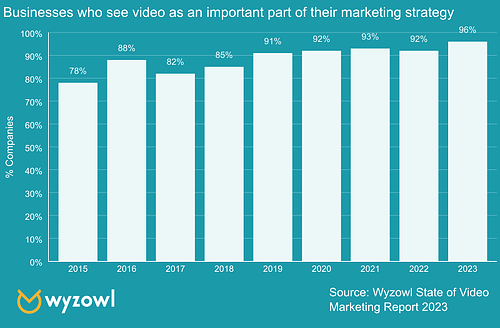
96% — more marketers than at any point in the past nine years — told us they see video as an ‘important part’ of their marketing strategy.

And perhaps most strikingly, 92% of video marketers reported that video gives them a positive ROI – you guessed it, another all-time high.

This could well be attributed to an ever-increasing understanding of how to use video, as well as how to track and quantify its impact.

Digging into the specifics of what marketers have achieved using video, more marketers than ever before told us they’ve generated leads using video.

87% of marketers feel that video has a direct, positive impact on sales – another all-time high.

And 96% of marketers agree that videos have helped increase user understanding of their product or service.

This figure has never dropped below 93% since 2015, but this year’s data represents the highest figure in five years.

In terms of the metrics that marketers feel really matter to them when determining video marketing success, the number of video views remains the most popular at 63%.

This is followed by:

  • Audience engagement (61%)
  • Leads/click throughs (56%)
  • Brand awareness (43%)
  • Customer retention (42%)
  • Bottom line sales (26%)

More than one in 10 marketers still say they don’t track video ROI at all.

Looking Ahead

All the signs suggest that usage and spend are on course to continue their growth in 2022.

For a start, 70% of the marketers who don’t currently use video as a marketing tool, told us they plan to start in 2023.

Add that to the 99% of current video marketers who told us they’ll continue using video in 2023, and the 96% who told us they plan to either maintain or increase their video marketing budget, you’ll see that there’s potential for these figures to continue increasing when we revisit this survey in a year.

The net result of this is, of course, that we can all expect to see more noise and competition for audience attention in the coming 12 months.

But while oversaturation is a challenge, it isn’t an insurmountable one. It simply raises the bar in terms of content quality. Your videos will need to be well-planned, and very well-executed.

The Big Opportunities for Video Marketing in 2022

The good news is that despite the noise and competition – big opportunities remain.

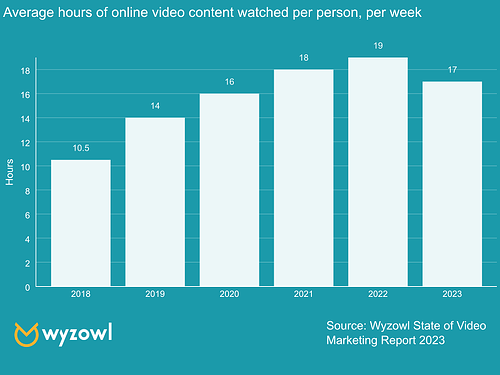
It’s notable that audiences continue to watch more videos. Our data suggests the amount of online video watched per week, per person, has almost doubled since 2018 – although it did see a fall this year.

And what about where they watch it? Unsurprisingly, YouTube is the most widely-used platform — used by 90% of video marketers.

But some of the lesser-used video tactics also seem to reap real results for video marketers.

This year we asked people to tell us the purposes of the videos they’d created – what specific goals were they looking to achieve, and how were they planning to use them?

The most widely created types of videos were those to be used on social media.

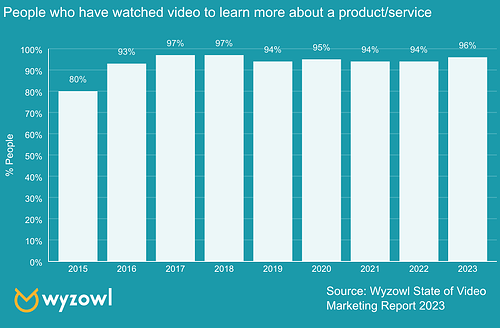
Explainer videos have seen tremendous success. As well as being the second most common ‘goal’ of a marketing video, an overwhelming majority of people (96%) report watching explainer videos to learn more about a product, with 89% being swayed to make a purchase.

The product doesn’t have to be physical, either. 79% of people say they’ve been convinced to purchase an app or piece of software because of a video.

This means that, on top of everything else, video’s ability to inform purchase decisions is also at an all-time high.

To Sum Up

The rise of video as a marketing tool seems inexorable.

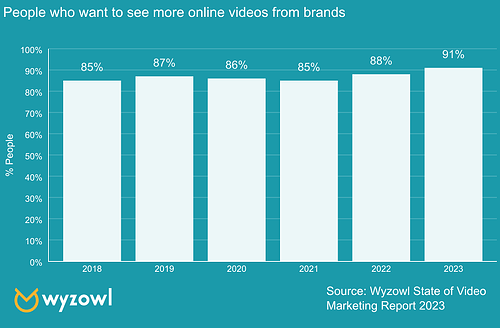
More than nine out of 10 people report wanting to see more videos from brands in 2023 – another data point that’s higher than ever – making video an excellent tool for lead generation and brand awareness.

Video has quickly become a non-negotiable thing for audiences looking to explore and make purchases.

Video looks set to continue its ten-year overnight success story into the coming decade.

These stats paint a picture of a media type that’s almost universally popular among both marketers and their audiences, helping achieve a number of incredibly important goals.

Editor’s note: This post was originally published in January 2018 and has been updated to reflect the latest data.

Discover videos, templates, tips, and other resources dedicated to helping you  launch an effective video marketing strategy. 

Categories B2B

Social Media Platforms Marketers Should Watch in 2023

When you visit the App Store or Google Play and search “social media,” there are hundreds of apps to choose from. But, as the pool of social platforms grows, will any of them really change the game for marketers this year?

In our Social Media Trends Survey, we asked 1,000+ social media marketers about the social media platforms they’ll use in 2023, and we’ve compiled the data for you to discover below.

Download Now: The State of Social Media Trends [Free Report]

2023 Social Media Trends

The hottest social media trends in 2023 are short-form video and live streaming. Short-form video was also the top format social media marketers use, and it has the highest ROI. This isn’t a surprise, as platforms like TikTok are only growing in popularity as time goes on.

Understanding what other marketers are doing and leveraging social media trends early on gives you the time to pick up on what works, setting you ahead of competitors that wait to see how a format works and performs before using it themselves.

To help you stay on the cutting edge of social media, we’ve compiled a list of key platforms and features you should have on your radar this year — they’ve all jumped in usage and user base.

Social Media Platforms Marketers Should Watch in 2023

Social media platform usage among social media marketers in the U.S. changed from 2021 to 2022. Specifically, the use of Instagram (+35% YoY), TikTok (+15% YoY), and Facebook (+12% YoY).

graph displaying usage of social media platforms by marketers1. Instagram

Instagram is the platform social media marketers expect to grow the most in 2023, and they say it has the most accurate algorithm and offers brands the best potential to grow their audience.

graph displaying the social media platforms with biggest potential to grow in 2023Instagram will also grow with first-time users, with 36% of social media marketers not using it yet planning to try it out in 2023.

Increased investments in Instagram are in line with the trend of social selling, as marketers say the app offers the best ROI for selling products directly on an app, and consumers say it has the best in-app shopping experience.

2. TikTok

As mentioned, short-form video is one of the most popular, top-performing, and highest ROI trends. Given this, it’s no surprise that TikTok usage has increased YoY as it caters to short-form videos. Marketers reported that TikTok offers the second-highest potential to grow audiences in 2023.

TikTok is a great platform for reaching Gen Z, as our consumer trends survey found that 62% of the generation uses TikTok, and it’s also the platform it spends the most time on.

graph displaying the social media platform gen z uses most3. Facebook

Data shows that Facebook usage significantly increased in 2022, so it’s worth watching in 2023. Especially so given that the top trend for 2023 is investing in social media communities, and Facebook is the best platform for doing so.

graph displaying social media platforms best for building community4. Live Audio Platforms

Live audio chat rooms are the media format gaining the most steam in 2023, and 23% of marketers are planning to leverage them for the first time this year. Among social media marketers as a whole, Facebook Live Audio is the most popular platform (12% say they’ve invested in it).

Facebook Live Audio is also the most popular live audio platform leveraged by social media marketers who already use live audio, followed by Twitter Spaces.

This makes sense, as 80% of Gen Z consumers, a demographic steadily growing into its purchasing power, enjoy audio content because they can express their individuality and explore different sides of their personalities.

What Platforms Are Losing Steam?

According to the data, the platform with the most significant drop in usage is Twitter, with a -17% YoY change. Twitch has fallen in use, too (-30% YoY), but it had the second-lowest investment among social media marketers in 2021.

Platforms like Clubhouse and Twitter Spaces rose in popularity in 2020 during the beginning of the pandemic, but they have slowed in their growth and usage as other live audio platforms have grown.

For example, Clubhouse was one of the top emerging platforms/features that social media marketers noted investing in in our 2022 Social Media Trends Report, but the 2023 report found that, among all social media marketers, Clubhouse is 5th on the list in terms of investments.

How To Determine Which Social Media Platforms Are Worth the Investment

Marketers determine which social media platforms are worth investing in based on their potential for lead generation, audience reach, and the potential to drive traffic to your website.

A platform’s potential for building an active social media community around a brand is high on the list this year, which aligns with 90% of social media marketers saying that building an active social media community is crucial to a successful strategy in 2023.

Should you follow the social media trends of 2023?

Consumer behavior changes quickly in the digital space, and businesses that adapt to social media trends can see success.

If you keep an eye on this kind of marketing research and tailor it to your target audience, you can craft a stellar social media plan that drives awareness and shows your brand in a creative light.

Remember, every trend won’t work to achieve your goals, so don’t venture into this new social media landscape without the most up-to-date data.

Editor’s note: This post was originally published in July 2019 and has been updated for comprehensiveness.

New call-to-action

Categories B2B

Facebook Engagement: Everything You Need to Know [+ Research]

Facebook engagement is something marketers shouldn’t overlook when crafting a social media strategy. Facebook engagement can expand organic reach and place your brand higher in Facebook’s News Feed. Your brand can also reach your audience’s extended network through likes, comments, and shares.

But what is Facebook engagement, and how can you boost your brand’s engagement to reach a broader audience? Here’s everything marketers need to know.

Download Now: The State of Social Media Trends [Free Report]

What is Facebook engagement?

How to Increase Facebook Engagement

1. Post interesting, entertaining, and valuable content.
2. Post when your audience is most active.
3. Post consistently.
4. Ask questions.
5. Respond to followers.
6. Use Facebook Reels.
7. Go live.
8. Focus on User Generated Content (UGC).
9. Create engaging Facebook Stories.
10. Add a Call-to-Action button.

If you’re a page admin, you can track Facebook engagement by viewing engagement metrics under Page Insights. According to Meta, Page Insights is a tool for brands, businesses, and public figures to:

  • Learn what posts their audiences engage with
  • Track total likes and other metrics to see what audiences like and why
  • See the page’s total reach and analyze how many people saw/engaged with the post

However, you can also measure engagement by using a simple formula. Just take the number of engaged users, divide it by the total page reach, and multiply the result by 100.

So, let’s say your Facebook post received 10 likes, 5 comments, and 5 shares. If that post reached 1,000 people, your engagement rate would be 2%. According to recent research, the median engagement rate on Facebook is 0.07%.

Marketers should aim for at least a 5% engagement rate to build an authentic community on the platform and remain competitive in their market.

How to Increase Facebook Engagement

Now you know how to track and measure engagement. Now, let’s explore the ways you can boost your Facebook engagement.

1. Post interesting, entertaining, and valuable content.

Your audience will not want to interact with your content if it always reads like a sales pitch. Instead, opt to create educational, helpful, and entertaining content. For example, outdoor clothing and equipment company L.L. Bean often posts fun educational videos such as “Skiing Tips for Beginners” to delight users. The video below shows viewers how to get comfortable on cross-country skis quickly.

A how-to video about skiing boosts Facebook engagement for L.L. Bean.Image source

This video may inspire consumers to start skiing and turn to L.L. Bean for the necessary equipment.

What We Like: Educational videos like this help brands to be seen as an authoritative, expert voice in their market. Even better, it allows brands to show their products in use without coming across as an ad.

2. Post when your audience is most active.

Page Insights has a tab called “When Your Fans are Online.” The tab shows when your followers are most active on your page. Once you find out when they’re most active, you can start scheduling your posts to upload when they’re likely to get the most engagement.

What We Like: The feature takes some guesswork out of finding the most optimal time to post, and you can be sure your best posts won’t go to waste by uploading them too soon or too late.

3. Post consistently.

No one wants to engage with a dead account. To show your account is active, post consistently to boost your engagement — but how often should you post content to Facebook? We recommend posting two to five times per week and no more than once a day.

Facebook prioritizes fresh content and doesn’t want to overload someone’s feed with just one company. When you post too often, especially more than once a day, you’ll diminish your ROI — and your posts will get less engagement.

Pro Tip: If your posts are consistently bringing in high engagement, then you can test out posting more frequently. As long as your audience shows a great deal of interest in your content, Facebook will prioritize your page in its News Feed.

4. Ask questions.

Questions encourage users to comment, and more comments lead to high engagement. You can ask users to leave a comment about their favorite product from your brand. You can also ask them why they started following you or why they like your company. You can even ask users what kind of content they’d like to see from you, and then give them what they want.

On its Facebook page, Burger King asked users to name their sourdough starter.

Burger King asks its Facebook followers to name a product to generate more Facebook engagement.

Pro Tip: Include a video, an eye-catching graphic, or a poll to make your questions stand out on users’ News Feeds.

5. Respond to followers.

Social media users love to know there is an actual human behind a brand’s account who sees and appreciates their interaction. Be sure to answer questions, thank followers for their interactions, and be a source of information when a follower needs help understanding a product or service.

Hot Topic's Facebook page answers a question by a follower.

What We Like: Responding to comments helps brands build a stronger bond with their followers, and they’ll want to engage with your content more — especially if they know there is someone behind the account who can answer questions.

6. Use Facebook Reels.

Use Reels to start a challenge, give a behind-the-scenes look at your brand, or educate your audience.

Facebook Reels are steadily increasing in popularity among users.According to Meta, over 140 billion Reels are played daily across Facebook apps as of October 2022. That’s a more than 50% increase from May 2022.

Pro Tip: Always film your Reels vertically. And if you don’t always have time to create a new Reel from scratch, repurpose your Instagram Reels to upload on Facebook.

7. Go live.

Facebook Live videos receive the highest engagement on the platform, so it helps to include live broadcasts in your social media strategy. Facebook Live can be used to:

  • Host live Q&As
  • Host live fundraisers
  • Broadcast breaking news
  • Give a behind-the-scenes tour of the company and processes

For example, Pinky Ma’s Cakes, Cookies & Candy hosted a Facebook Live showing viewers how to make cupcake bouquets.

Two business owners show their followers how to make a cupcake bouquet via Facebook Live.

What We Like: Facebook Live allows viewers and hosts to communicate in real-time, which builds trust between brands and followers.

8. Focus on User Generated Content (UGC).

You can encourage followers to send in photos or videos of themselves using your product for a chance to be featured on your platform. For instance, accessory brand Cluse encouraged followers to submit pictures of themselves wearing the brand’s watches to be featured on Cluse’s lookbook page. All followers had to do was include #Cluse in their posts.

Though the campaign took place on Instagram, the same can be done on Facebook.

A screenshot of Cluse's lookbook page on their website featuring user-generated content. Image source

What We Like: Audience’s like to feel like they’re a part of the conversation, and user-generated content does exactly that and encourages participation.

9. Create engaging Facebook Stories.

With over 300 million people watching Facebook Stories each day, Facebook Stories is an excellent opportunity to connect with your audience and boost engagement. In fact, we found that 70% of consumers prefer Facebook Stories over Snapchat and Instagram stories.

One way you can use Facebook Stories is to make important announcements. In the example below, the punk band Dropkick Murphys used Facebook Stories to announce an upcoming festival performance.

You can also add links to your Instagram stories. In the same example, the band included a link to the festival where their followers can purchase tickets.

A screenshot of Dropkick Murphys Facebook story showing their upcoming festival performance.

Pro Tip: Include links to your website or product to encourage your audience to purchase.

10. Add a Call-to-Action button.

A call-to-action button can generate engagement beyond likes, comments, and shares. Add a CTA button to:

  • Book an appointment.
  • Contact your business through Facebook messenger.
  • Join your Facebook group.
  • Shop on your website.

In the example below, Ipsy’s Facebook page includes a call-to-action button encouraging followers to sign up for their monthly subscription service.

Screenshot of Ipsy's CTA button on Facebook.

What We Like: Not only does a CTA button boost engagement, but it can also generate more leads by encouraging your audience to take action.

Over 200 million businesses use Facebook, so making your brand stand out on the platform can seem daunting. However, you’ll be able to find and delight your audience on Facebook by using the above tactics to boost engagement. The more engagement your page gets, the more Facebook will push your content to the right people.

New call-to-action