Categories B2B

AI avatars are already here, and these are the trends I’m most bullish on

As the founder of AI newsletter Mindstream, I’m constantly thinking about scale, especially when it comes to content. For me, video was the bottleneck. I wanted to show up consistently, but I didn’t want to spend hours filming, editing, or setting up gear. That’s what led me to explore AI avatars.

Download Now: Free AI Agents Guide

At first, avatars were just an experimental shortcut for businesses. But over time, they became something more: a flexible way to keep things personal without needing to be physically present. Today, savvy teams are already leveraging avatars.

Here are six high-impact ways I’ve seen businesses leverage avatars, along with tools that make it easy to get started.

6 Ways Businesses Are Leveraging AI Avatars

1. Short-form Content Creation at Scale

Creating video used to be slow and frustrating, especially for small businesses with cash-strapped teams. It took forever to film, edit, subtitle, and polish something enough to actually post it. Now, AI avatars are changing the game.

Now, you can write a script and let the tools do the rest. I’ve tested Argil, which is specifically built for short-form creators. Once the avatar is in place, it adds captions automatically and even suggests relevant B-roll based on the topic. I noticed the tool still needed reviewing and tweaking, but I didn’t need to start from scratch.

I believe this shift will make daily video publishing possible for teams of any size. What used to take hours now takes ten minutes, without compromising quality. And because it’s scalable, you can show up way more consistently, even without a dedicated video producer.

ai video generator argil

Source

2. Localized and Translated Content for Global Reach

Translation and localization are also where I see avatars making huge strides. For example, most people know YouTuber Mr. Beast for his over-the-top videos, but what I find equally fascinating is his distribution model. Only around 30% of his audience speaks English, while the rest is made possible through translated content.

AI avatars now allow for native-quality lip syncing in multiple languages. I’ve seen HeyGen do this, and the fidelity is honestly mind-blowing. The avatar’s lips and voice match perfectly with the new language.

Avatars open up international audiences without the need to re-record anything, making it an essential strategy for any content-focused business that wants to expand globally.

ai avatar translator heygen

Source

3. Scalable Sales Outreach and Customer Service

Another use case I’m personally excited about is using AI avatars in outbound sales. If you’ve ever received a Loom from someone scrolling your LinkedIn and pitching you something generic, you know how forgettable that feels. But when you integrate AI avatar tools like Tavus with AI research agents like Clay, which can scrape LinkedIn profiles, you can do much better.

With just a name and a few data points, I can generate a tailored video that says, “Hey Sarah, I saw you work at Acme Corp and recently posted about AI coaching. I think you’ll find this demo useful.”

It’s fast, it’s scalable, and it lands better than any cold email I’ve ever sent.

ai research agent clay

Source

4. Personalized Welcome Videos in Email Marketing

Imagine someone joins my newsletter and 30 minutes later they receive a video that looks like you recorded it just for them: “Hey Matt, thanks for signing up to Mindstream. Here’s what you can expect.”

Even when people know it’s AI, the gesture still feels personal, and that’s what makes it effective.

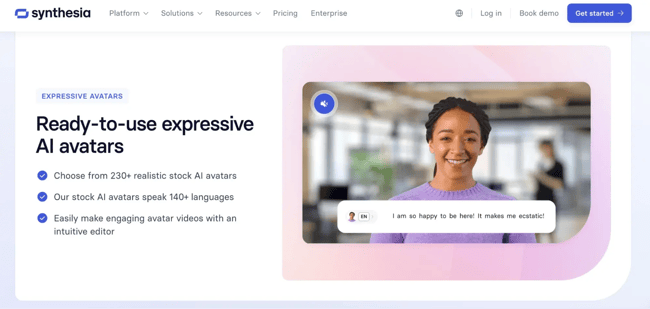
Tools like Synthesia, which integrate directly with CRM platforms like HubSpot, make it easy to automate videos that are personalized with names, company details, and other contextual client information. As a result, you’re able to deliver human-feeling onboarding at scale, without stepping in front of a camera.

ai avatar generator synthesia

Source

5. Virtual Influencers and Brand Ambassadors

The virtual influencer space is wild — and honestly, one of the areas I’m most curious about.

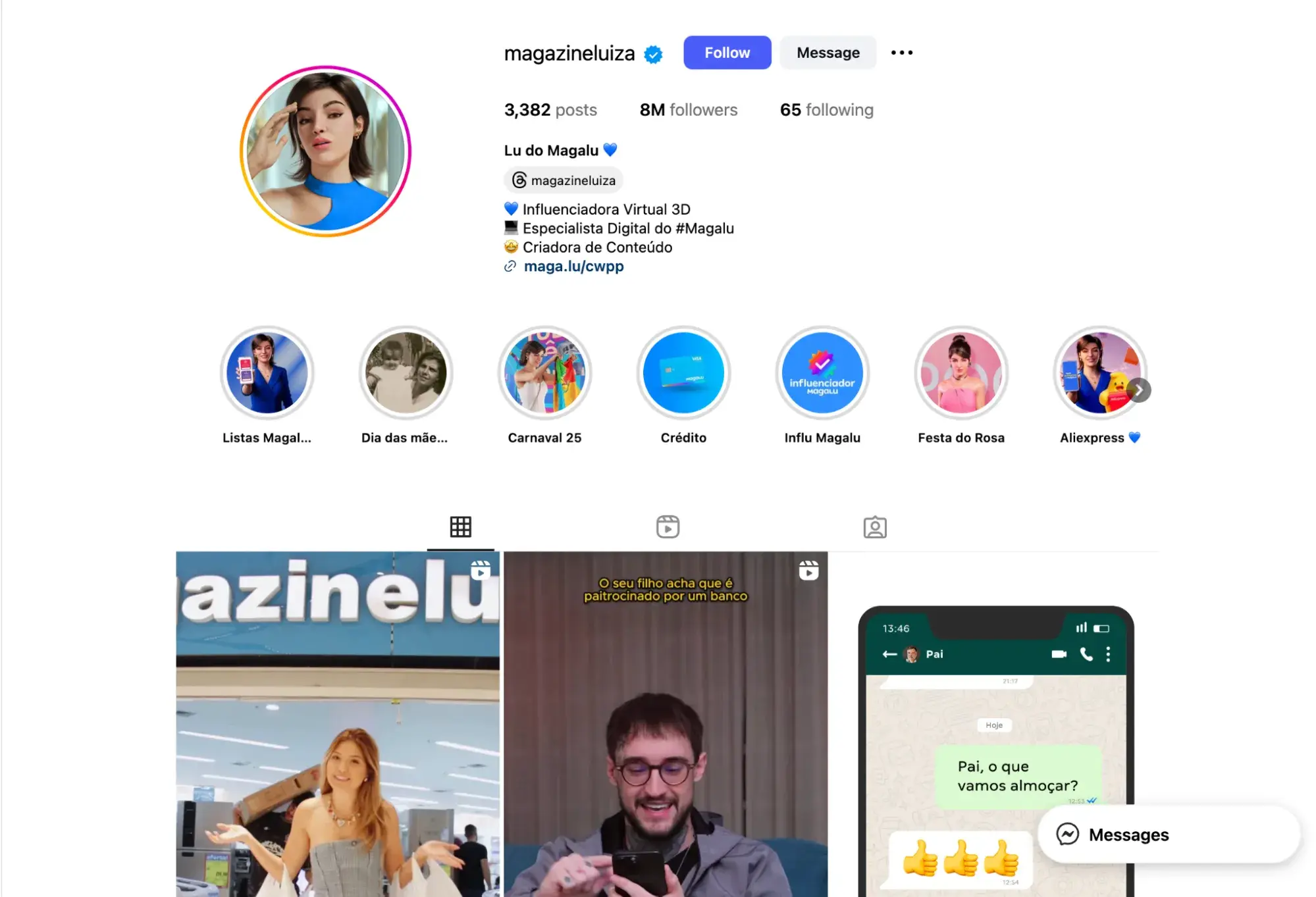
You may have heard of Lil Miquela, a fully synthetic Instagram influencer who reportedly makes $10 million a year from brand deals. What struck me wasn’t just her popularity; it was the potential for brands to create permanent, programmable spokespeople.

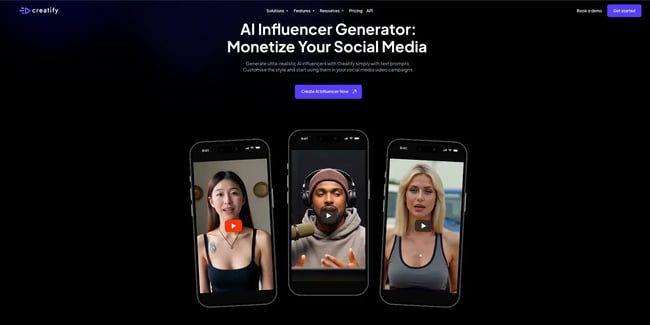
With tools like Arcads and Creatify AI, businesses can now build these digital personalities themselves. And, it doesn’t have to be high-fashion or ultra-polished. A friend of mine is building a coaching platform where the avatar represents them across all brand touchpoints, from social posts to appointment booking to onboarding content.

It’s like spinning up a creative team overnight. And because it’s all synthetic, it scales effortlessly.

ai influencer generator creatify

Source

6. Internal Communication and Training

Not all avatar use cases are public-facing. I’ve seen business leaders use avatars for internal updates and briefings as well. Rather than writing a Slack post or a lengthy doc, they can generate a quick video summarizing weekly priorities, news, or metrics.

This is particularly helpful for distributed teams. It adds a personal tone and saves time without requiring anyone to go on camera. I’ve also seen teams use avatars to enable employee onboarding, product explainers, or even internal compliance training.

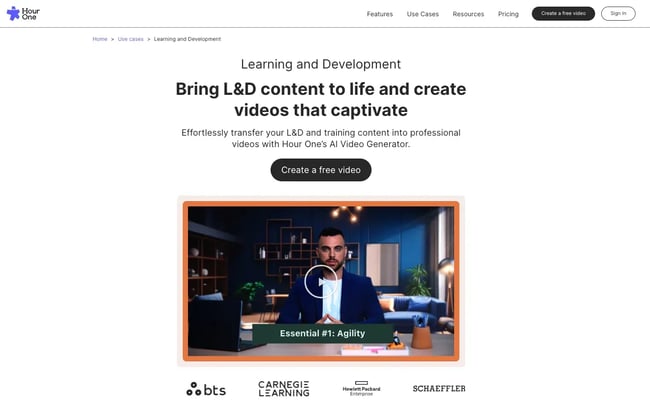
Tools like Colossyan and Hour One are worth exploring here. Both offer features designed for structured, scripted video content — ideal for training, learning and development, or announcements — and support slide integration, multilingual output, and team-based video production.

ai avatar hour one

Source

AI avatars help you scale for a fraction of the cost.

When I started following AI avatars, I didn’t expect them to become a core part of how businesses scale video. But over time, I’ve seen how they can empower transformative video strategies. These tools help teams stay consistent, keep a human tone, and remove the bottlenecks that used to slow them down.

People still write the scripts. They still shape the message. But the execution? That’s handled. And for any business that wants to do the same, AI avatars are the key.

To learn more about AI avatars and how you can use them to improve your business, check out the full episode of The Next Wave below:

Categories B2B

The essential SEO tutorial for thriving in the age of AI-driven search

You want to learn about search engine optimization (SEO), but where do you start? We were all SEO beginners once, so take heart: There’s lots to learn, but I’ve got plenty of expert advice and a step-by-step guide to get you started.

→ Download Now: SEO Starter Pack [Free Kit]

We’ll cover basic SEO vocabulary, review a step-by-step SEO tutorial to get your strategy started, and take a deep dive into AI. Throughout, I’ll include tips from HubSpot SEO pro Victor Pan and SEOFOMO newsletter founder Aleyda Solís.

Let’s dive in.

Table of Contents

SEO Basics

To understand where we’re headed, let’s first take a quick look back. The traditional SEO playbook focuses on targeting keywords, climbing search rankings, driving traffic, and converting that traffic into leads or sales. Here’s how it works.

Key Words to Know

Understanding the foundational SEO vocabulary is important. Let’s dive into a few key terms:

  • Search Engine Optimization optimizes your website to provide the high-quality information searchers look for. Good SEO also helps you rank higher in search results for specific keywords. That gets you in front of a bigger audience.
  • On-page SEO improves search rankings. On-page elements include keywords used in your content or back-end elements like site structure.
  • Off-page SEO focuses on actions that improve your search engine rankings outside your website, like backlinks from other websites.
  • Link building involves getting to your content on other high-quality websites. That builds authority and credibility.
  • SERPs (Search Engine Result Pages) are the results page you see when you conduct a search on Google or another search engine.
  • White-hat SEO tactics align with accepted and recognized best practices. If you follow these tactics, your site will rank.
  • Black-hat SEO continues the good cowboy versus bad cowboy metaphor. These tactics manipulate search engine algorithms to rank websites higher in SERPs through unethical means.
  • E-E-A-T stands for experience, expertise, authoritativeness, and trust. It’s part of Google’s search quality rater guidelines and one of the factors Google uses to determine a page’s relevance and authority.
  • Keywords are phrases users type into a search engine to find content.
  • Keyword research involves finding search terms that relate to your business to help you inform your website pages and content.
  • Organic/organic results are any results in SERP that are unpaid and appear because of a page’s relevance to the search query.
  • Organic traffic is traffic that comes from organic results.
  • Ranking factors are elements that impact where your site may fall in search results, like your page authority.
  • A search intent is why a user conducts a search.

1. Content SEO: Write great content.

My number one tip for content SEO is simple: Write really good content. Savvy SEO strategists know what people are searching for and have genuinely helpful content to address those needs. A shoddy post stuffed with keywords won’t compel people to stick around.

2. Technical SEO: Improve the technical elements of your website.

Even the best content on the internet won’t get any readers if Google can’t find it. That’s why technical SEO matters. The goal here is to set a strong technical foundation so that Google and other search engines can easily find and crawl your website so that it shows up in search results.

Technical SEO can seem complicated if you don’t have a lot of technical experience. Don’t try to do everything at once. A good CMS — like, ahem, HubSpot — takes care of the more technical aspects so you don’t have to. Go deeper into technical SEO with our technical SEO guide.

3. Sharing and backlinking: Make sure that users can find your website.

Because your content is great, people want to share it. Congratulations! Now let’s talk about how to build those backlinks.

HubSpot’s Victor Pan says to ask yourself, “Why do people want to share what you created?”

He identifies three simple answers to that question:

  • “One, you’re super local, so it’s very relevant. You might even be the only person talking about it.”
  • “Two, you could have data or a perspective that only your site can share, because of access that you have,” like original research or other proprietary data.
  • And lastly, “your content triggers an emotional response.”

Pro tip: Don’t waste money buying backlinks. Google has clearly stated that “no one can buy better PageRank.” Since links contribute to PageRank, purchasing backlinks is ineffective and risks penalties.

We’ve got a complete guide on backlinking when you’re ready to give it a shot.

4. Keep an eye on AI.

Sundar Pichai, the CEO of Google, calls AI-driven search “the next chapter of search,” and he believes it’s here to stay. So, how is the search trend shifting now?

Consider this: When someone has a problem, they might turn to ChatGPT for answers. If your brand is discovered there, they can learn about your products or services entirely within that session — without even visiting your website!

The overall value of AI search-based discovery is rising, too. A single visitor arriving through an AI-powered search platform is estimated to be 4.4 times more valuable than one from conventional organic search.

So, by the time someone lands on your website after exploring your brand via ChatGPT or similar platforms, they’re already well-informed and far more likely to convert.

So today, you’re not just looking to drive traffic to your website. You also need to appear prominently on AI-powered platforms.

You can learn more about generative engine optimization (GEO) to stay on the cutting edge.

5. Optimize for AIOs.

Google’s AI Overviews are now a part of the search experience. When you type in a query, an AI-generated answer appears with helpful links. If you show up in AIOs, people are exposed to your brand and services. That’s true even if searchers don’t click through.

If your brand has a long history and high SEO rankings, you’re probably already getting cited by and benefiting from AIOs. But, if you’re new to the space, you’ll have to adapt your strategy.

I recommend focusing on longtail, bottom-of-the-funnel keywords related to your offering. There will be less competition for these queries, so you’re more likely to be cited in the AIO. Beyond that, your keywords will address a specific pain point tied to your offering.

The people searching for that long phrase are already in need of what you sell. So, you’re primed to show up in front of potential buyers.

6. Understand vector embedding

Vector space models help search engines show more accurate and relevant results.

Imagine each web page or document as a dot on a giant graph. This graph has many dimensions, and each dimension represents a different word (like “SEO,” “content,” or “ranking”).

If two web pages use similar words, the dots that represent them will be close together. If they use very different words, the dots will be farther apart.

By measuring the distance between these dots, search engines can figure out which pages are more similar to each other and which ones are most relevant to what someone searched for. This approach enhances search accuracy, delivering more relevant results to users.

As a result, simply targeting specific keywords is becoming less effective. Data and context matter more.

Search Engine Journal calls this shift semantic drift. If you notice a drop in search traffic, it may be because your content’s vector no longer matches the evolving vector of user search intent. Understanding how vectors work can help you stay relevant.

How to Learn SEO

Learning SEO is a big task, and because SEO best practices change over time, international SEO consultant Aleyda Solís “highly, highly recommends that you don’t go to a single source.” It’s why on her own site, LearningSEO.io, she’s compiled guides and information from many different resources.

Solís offers this pro tip: “See what works for you within your context,” because even if the information is accurate, “it might not be right for your circumstances.”

Here are a few ways you can do that.

1. Read and watch reliable resources.

There are a lot of educational resources out there to read and watch that will help you build your knowledge of SEO. Here are some of my recommendations.

Google still has a little more than 90% of the search market worldwide, so add its Search Central Blog and Search Quality Rater Guidelines to your list.

AI-powered search engines are a fast-growing segment of the search landscape, so if you want to see how AI perceives your website and brand, take HubSpot’s AI Search Grader tool for a spin (it’s pretty cool).

2. Take free courses.

If you benefit from structured and guided learning, an SEO course is another option to build on your SEO skills. A bonus is that many courses offer certificates upon completion. These are some high-quality options:

3. Stay on top of the trends.

Especially with the advent of AI-powered search, SEO changes and evolves on a sometimes daily basis. Algorithms get updated, new trends surface, and consumer behaviors change.

For example, in December 2022, Google added an E for experience to the old E-A-T guidelines. Experience ensures that content is helpful, relevant, and created by someone with experience in the subject at hand. (And, it’s a key differentiator between computers and humans, as AI-generated content scrambles to get a robotic foot in the door.)

One of the most important factors in becoming an SEO expert is staying on top of the trends so you can pivot when major industry shifts happen. We cover changes in the SEO landscape on the HubSpot Blog, and Google also maintains a running list of major updates that can impact your SEO success.

4. Know how AI works.

Artificial intelligence is reshaping SEO and how content is discovered. So, I recommend staying on top of AI trends and knowing how search algorithms are shifting in response.

Personally, I find Semrush’s content valuable. Their 2025 AI research has been especially interesting. (For example, did you know that 89% of information cited by ChatGPT comes from sources that rank 21 or lower?)

Search Engine Journal has been another critical resource as I navigate the shift.

5. Study your competitors.

Learning from your competitors is a great way to understand the keys to their success.

Pan suggests looking at websites that are doing well and seeing what other pages they link to, so that when you’re “thinking about creating content, it’s not just a single piece of content you’re creating, but the whole journey that a user might go through.” Your content should cover a natural progression of topics.

You can conduct a competitor analysis to uncover new keywords, where competitors get backlinks (also called inbound links) from, and other new opportunities to capitalize on.

Featured resource: Our free Competitive Analysis Templates help you conduct a thorough analysis of competitors in your niche, and this step-by-step guide walks you through how to use the template for an SEO competitive analysis.

6. Learn by doing.

I’ve always found that I’ve learned best by doing. So, I recommend taking an experimental approach to the process.

If you already have a website, you can practice by doing a competitor analysis and updating your current strategy based on your findings. If you don’t have a website, consider building one, implementing your new SEO knowledge, and monitoring metrics.

One of the best things about SEO is that a wide variety of tools are available to help you along every step of the way.

7. Use SEO tools.

Considering the breadth and depth of the internet, it would be a nightmare to do some of the essential SEO functions by hand — this is where SEO tools come in to save the day. They’ve saved me significant time and energy and quickly brought me the results I’m looking for.

Here’s a list of tools I recommend:

  • HubSpot’s SEO Marketing Software offers SEO recommendations to improve your site, optimize page content, and measure ROI.
  • AI Search Grader, another HubSpot tool, analyzes how visible your brand is to AI search engines.
  • Our Website Grader scores your site based on factors like mobile friendliness and SEO optimization.
  • Google’s Search Console can help you measure your site traffic and fix SEO performance issues.
  • Google Analytics helps you view important metrics to understand your SEO efforts, like the measure of organic vs non-organic traffic.
  • Ahrefs is a favorite of HubSpot bloggers. It helps you conduct keyword research and track important stats like search volume and CTR.
  • Jasper is an AI writing assistant that can help write SEO-optimized blog posts with target keywords.

Once you’re more fluent in the vocabulary of SEO, it’s time to jump in and get hands-on. Since I’ve promised you the shortest SEO tutorial ever, I’ve broken it down into three very broad categories for beginners: content, technical, and sharing.

As you get more familiar and comfortable with SEO, you can build out strategies in each of these categories using the links I’ve provided below.

Building an SEO Strategy: Step-by-Step Tutorial

Building an SEO strategy can feel overwhelming if you’re just getting started. This tutorial will guide you through the process until it becomes second nature.

1. Understand search intent.

You can have the perfect blog post — well-written, informative, and genuinely interesting. But, if no one is searching for the key term, no one will find your content. Knowing your search intent helps you connect with your audience and create content that’s actually valuable.

So, think: Who is your audience, and what do they need to know? How does your offering solve a real pain point, and what content would communicate that message?

Answers to these questions translate into keywords. You can try to capture these queries throughout your content.

The focus on relevant, helpful information will also help you add E-E-A-T elements to your post. Google uses these guidelines to establish your page authority. In short, spammy content will lag, while genuinely helpful posts rise to the top.

Focus on creating concise, factual, and well-structured content that delivers real value. Learn more about SEO writing to see how you can get it right.

2. Run a competitor analysis.

In SEO, the ultimate goal is to secure a top spot on the first page. That mindshare can help you appear in AIOs and end up in front of organic searchers. Competitors stand between you and that number one ranking. So, I always start with a competitor analysis.

I start by creating a spreadsheet and listing the sites that are already on the first page. I note their title phrases and content structure. This helps me understand what’s working and identify opportunities to improve my own content. I can then see if there are fresher angles to feature, newer trends to include, or elements competitors are missing that I can capture.

My ultimate goal is to understand what my content needs to be the most helpful and comprehensive.

Pro tip: Check out these free competitive analysis templates to help you conduct a thorough analysis of competitors in your niche.

3. Improve your own on-page SEO.

When tackling on-page SEO, I think about user behavior and experience. What elements can I add that people could click on to learn more? What elements would make my site frustrating or unusable that would drive people away?

These elements often relate to on-page SEO. Here are some elements to keep an eye on:

  • The title tag appears in search results and browser tabs. It should be 50-60 characters and include your primary keyword.
  • The meta description offers a brief summary of the page content that appears below the title in search results. I try to make this text descriptive, without including in-the-weeds business details. I want people to click on the page and then learn about the service/product being offered.
  • Post headers (H1, H2, H3, etc.) structure your content hierarchically. Headeing levels make your posts easy to read — both for search engines and for humans.
  • URL structure should be clean, descriptive, and include relevant keywords. Avoid long URLs with unnecessary parameters or numbers.
  • Internal links to other pages on your site can help distribute page authority and guide users through your content.
  • Image alt text makes images visible for screen readers and search engines. It should be concise and include relevant keywords when natural.

Pro tip: User engagement metrics are increasingly recognized as important ranking factors. So, content design has become essential. Try adding elements like how-to videos and interactive tools to enhance user engagement and provide extra value on your page.

Working With WordPress

WordPress is one of the most common content management systems for websites. It’s also what I’ve primarily worked with throughout my career. I’ve found the Yoast SEO plugin to be essential in getting these sites to rank. It’s where I craft my SEO titles, slugs, alt tags, headings, URL structure, and meta descriptions.

SEO tutorial - title, slug and meta description

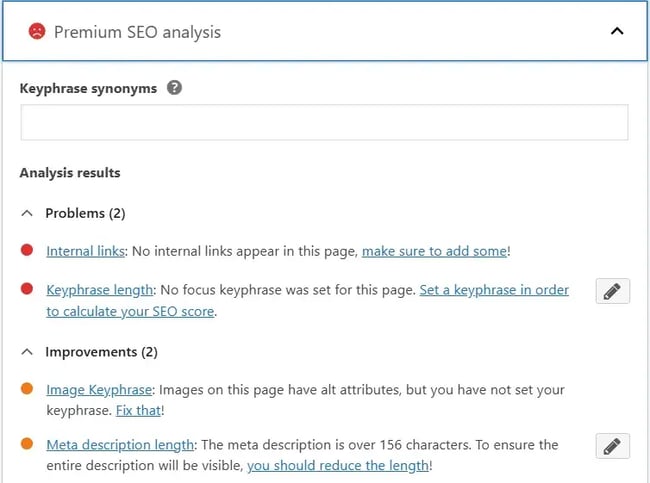
The Yoast plug-in also guides me through the recommended word count. With the premium SEO analysis, I can also get SEO improvement suggestions for the text itself.

For example, I can see that I haven’t included any internal links or targeted specific keyphrases in the content. I’m also alerted that my subheaders don’t exactly reflect the content in the body. So, I have to use the right keywords to have a much higher chance of ranking on the SERP.

seo tutorial - yoast seo analysis

The plugin also gives me valuable feedback on what’s working well. After all, who doesn’t appreciate recognition when they’re doing things right?

SEO tutorial - Yoast SEO checklist

Optimizing for AI

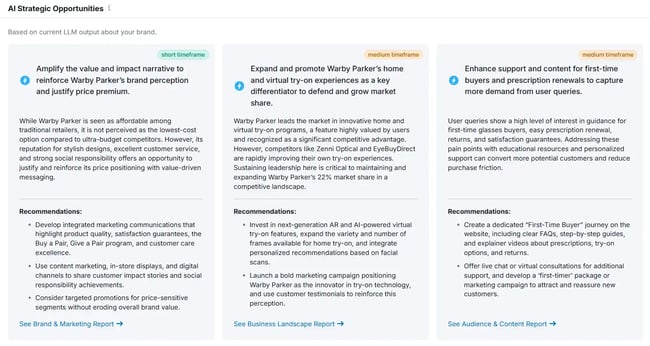
Now that we’re also optimizing content for AI platforms, understanding strategic AI opportunities has become increasingly valuable. I’ve found that Semrush AI Toolkit does the job.

SEO tutorial - Semrush AI toolkit

I like that Semrush offers both short-term and medium-term action plans. For instance, in the medium term, they suggest incorporating clear FAQs, explainer videos, and detailed step-by-step guides. These tactics answer a huge question: Is the user getting enough value from your page?

seo tutorial - semrush ai toolkit

If the answer is yes (and users spend more time engaging with my content), your content sends a strong positive signal to search engines.

4. Dive deep into technical SEO.

When ranking sites, search engines rely heavily on structured data, page speed, mobile-friendliness, and crawlability. So, having a solid grasp on technical SEO is essential to dominating search. Here are some elements you need to know:

  • XML sitemaps list all important pages on your website for search engines to discover and crawl. It should be submitted to Google Search Console and updated regularly as content changes.
  • Page loading speed, or how quickly your page loads for users, impacts search. You want your site to load quickly for a better user experience. I improve my site’s loading speed by reducing image sizes, cleaning up code, and enabling browser caching.
  • Schema markups provide additional context to web crawlers by labeling specific pieces of information. This data helps Google’s web crawlers understand the content and the sections within it. I like to think of the crawlers as readers who are skimming my blog. They want an overview of the article I will cover and the breakdown of the subtopics within the piece.
  • Mobile-first indexing means that Google uses the mobile version of content for indexing and ranking. Your mobile site should have the same content and functionality as your desktop version.
  • Server response codes are HTTP status codes that indicate whether web requests were successful (200), redirected (301/302), or failed (404/500). Proper code implementation ensures search engines understand page status correctly.
  • Voice search optimization involves incorporating natural language and question-based keywords that match how people speak. This can help you rank when people ask a question to Alexa, Siri, or Google Home.

I recommend going deeper into technical SEO with our technical SEO guide. It also takes you through crawlability, indexability, renderability, rankability, and clickability.

5. Think local.

Don’t overlook local SEO! It’s especially powerful when someone searches for “near me” and your business appears at the top. There’s no better marketing than being right there when potential customers are actively looking.

If you have a storefront, you want to have it listed on Google, so it can show up on Google Maps, driving visibility and foot traffic.

Here are some tips to keep in mind for local SEO:

  • Add local keywords. Incorporate city or neighborhood-specific terms into your meta tags, descriptions, and website content.
  • Build local backlinks. Collaborate with local businesses or sponsor events to earn high-quality backlinks and improve local search visibility.
  • Use Google My Business. Create and verify your listing to appear in local searches and Google Maps. Ensure all business details (address, phone number, hours, and services) are accurate.
  • Encourage reviews. Ask happy customers to leave reviews on Google. The better your ranking is, the higher is the chance that you get visited by customers.

6. Consider media richness.

Rich media includes audio, graphics, video, polls, or other interactive features. Think like a user: Do you want to read a 4,000-word block of text, or do you want animations or graphics to help break that up? By structuring this data in the backend, you can optimize your content to make it more appealing in the SERPs.

7. Build historical optimization into your strategy.

When I work on SEO for a site with a large content library, I often find that some of the content is outdated. But that doesn’t mean it’s useless.

At a previous job, I reorganized and rewrote event recaps that were no longer serving their original purpose. Because each event centered around a specific topic or theme, it was easy enough to update the titles, headings, and images. I also updated statistics, the content itself, and the publish date.

It didn’t happen overnight, but those pages crept back up in Google’s rankings once they became relevant to our audience again.

Another way to optimize older content is to add more examples and make sure any existing examples are still correct. Double-check links and anything else that may have changed, like step-by-step instructions.

SEO basics still matter in 2025.

Today’s SEO landscape involves making helpful content for humans while optimizing for AI. If your website isn’t technically sound, you risk being overlooked, no matter how good your content is. Avoid slow load times, missing schema markup, or poor indexing.

Remember, persistence is key. SEO is a long-term game. You won’t see real results overnight. Think of it as a marathon, not a sprint; success comes from endurance, not speed.

Editor’s note: This post was originally published in March 2013 and has been updated for comprehensiveness.

Categories B2B

Here’s how to prove marketing’s pipeline value & revenue impact to your CFO

Chief Financial Officers (CFOs) are wired to want proof, not promises. While we marketers light up at impressions, and engagement — excuse the stars in my eyes — CFOs focus on revenue, risk, and return.

→ Free Download: Free Marketing Reporting Templates [Access Now]

This clash of professional love languages can create friction in budget conversations, performance reviews, and board meetings.

I’ve experienced this tension too many times to count, over the years. My teams knew that sales couldn’t have closed without our marketing, but with so many touchpoints and an evolving data climate, it became increasingly difficult to prove.

Thankfully, we’ve found our ways. This guide will share exactly how to use automated attribution reporting to show finance the metrics they want, bridge the communication gap between departments, and ultimately win the budget you deserve.

Table of Contents

Why does pipeline influence reporting matter?

Simply put, pipeline value attribution matters because it shows why you’re worth the investment. I mean, if a business is spending more than it’s making with any effort, it isn’t financially wise, right? That’s why CFOs need to see the numbers.

But why is it especially important for marketing to prove its value?

As any seasoned marketer will tell you, marketing is often seen as a money pit. Small businesses often assign marketing tasks to existing team members, or worse, they’re the first to be ignored when faced with a tight budget.

In fact, Marketing Week’s Career & Salary Survey last year found that close to half of brands view marketing as a “cost” rather than an “investment.”

I’d argue this is because many marketing mediums can’t be tracked accurately. For instance, if someone sees a paid ad for one of your in-person events, attends, and then follows your blog for a month before contacting sales, what channel gets the credit?

With so many different, intersecting touchpoints, it’s notoriously difficult to attribute credit where it belongs.

To be honest, as a marketer, it’s exhausting, but smart attribution reporting can help mitigate these issues and get us our due and dollars from financial leaders.

Now, I know what you’re thinking: “How do I show marketing’s impact to the CFO? How do I prove marketing drives revenue? How do I get budget approved?” That all starts with understanding what metrics and attribution models CFOs want to see.

What metrics do CFOs actually care about?

Traditional Marketing Metrics

CFO-Focused Revenue Metrics

MQLs

Qualified pipeline sourced

Website traffic

Revenue contribution by channel

CTR / Engagement rate

Marketing ROI (MROI)

Impressions / Reach

CAC and CAC Payback Period

Email open rate

Customer Lifetime Value (CLV)

Social shares

Pipeline velocity (conversion speed)

Attribution clicks only

Multi-touch revenue attribution

We marketers get pretty excited about likes and views, but those will likely leave your finance folks unimpressed.

CFOs prioritize financial efficiency and scalability, not just volume or exposure. Many marketing teams focus on performance indicators like MQLs, website traffic, or engagement rates, but CFOs prioritize metrics that directly relate to bottom-line outcomes.

As Todd Morris, InMarket CEO, explains, “CFOs have all these measures that matter [to them], and unfortunately, marketers don’t always have an aligned sense of what those same metrics are for them….CFOs [will] appreciate the beautiful commercial… but they’re going to want to know, ‘for every dollar I invested, what did I get back?’”

marketing-revenue-value

In other words, marketers need to learn how to speak CFO. Here are eight finance-approved metrics to showcase in your marketing ROI reporting:

  • Marketing-sourced revenue: This measures how much revenue was directly generated by marketing campaigns and programs. It’s the clearest signal that marketing is not just a cost center, but a revenue engine.
  • Marketing-influenced pipeline: This tracks how much pipeline value marketing contributed to through activities such as nurturing, retargeting, or event promotion. CFOs appreciate this metric when paired with a sourced pipeline to show broader impact.
  • Revenue per lead: Calculating the average revenue generated per lead provides a straightforward efficiency metric. It helps finance compare marketing’s performance against other acquisition channels.
  • Marketing ROI (MROI): MROI is the ratio of revenue generated to the cost of marketing. For CFOs, it’s a crucial efficiency metric that demonstrates whether investments are producing returns.
  • CAC (Customer Acquisition Cost) payback period: This metric reveals how long it takes for revenue from a customer to cover the cost of acquiring them. A short payback period signifies high marketing efficiency, which CFOs value in budgeting decisions.
  • LTV:CAC ratio: The ratio of customer lifetime value (LTV) to acquisition cost. A healthy ratio (typically 3:1 or greater) signals sustainable growth and scalable marketing.
  • Pipeline velocity: This measures how quickly leads move through the pipeline. Faster velocity means a quicker return on marketing spend, which finance leaders find valuable.
  • Forecast accuracy vs actuals: Marketing teams that can forecast pipeline and revenue accurately demonstrate maturity, reliability, and strategic alignment. CFOs see this as a sign of operational discipline.

Pro tip: Need some help determining your marketing budget to begin with? Check out the steps outlined in our article, “Revenue Marketing: What It Is and Why It Matters

Which attribution models do CFOs prefer?

Next, it’s important to understand attribution models. There is a wide variety of attribution models that assign credit to different marketing touchpoints.

This affects how they demonstrate ROI, handle channel conflict, address long sales cycles or multi-year deals, and ultimately what information is communicated to CFOs.

marketing-revenue-value marketing metrics vs cfo metrics

Here’s a breakdown of the most common:

  • First-touch attribution: This model gives 100% of the credit to the first marketing interaction. While useful for understanding initial awareness drivers, CFOs often dismiss it because it ignores the nurturing and decision-making phases. It also doesn’t speak to long sales cycles.
  • Last-touch attribution: This assigns all credit to the final interaction before conversion. Like first-touch, it oversimplifies the buyer journey and is rarely sufficient for financial evaluation.
  • Multi-touch attribution: Multi-touch attribution takes into account every channel and touchpoint that a customer interacted with before converting. This is a great solution for addressing channel conflict because it evaluates and weighs touchpoints differently as well as provides insight into how they worked together to influence a customer.
  • Linear attribution: This distributes credit equally across all touchpoints. It provides a balanced view but doesn’t account for varying influence levels of each touchpoint, which limits strategic value.
  • Time-decay attribution: More credit is given to interactions closer to the conversion. This model is useful for long sales cycles, highlighting the final nudges that convert prospects. CFOs value its logical progression, but it also may minimize the influence of early marketing touches.
  • W-shaped attribution: This gives heavier weight to three key moments: first interaction, lead conversion, and opportunity creation. It aligns well with sales stages and is favored by finance for its structure.
  • Custom attribution: Custom models assign weights based on actual revenue impact and business logic. When built collaboratively with finance and RevOps, these models are the most CFO-friendly and suitable for board-level reporting.

sample w-shaped attribution report

Source

Regardless of which model you choose, remember: CFOs tend to care less about which campaign touched a lead first and more about how marketing influences revenue outcomes across the entire buying journey.

This speaks to the importance of your work from awareness to sale, rather than just focusing on first impressions.

How to Show Marketing’s Impact to the CFO Step-by-Step

1. Choose your attribution model.

With everything we discussed earlier, determine which attribution model would be best for your needs. Not sure? Ask your financial leadership flat out what is most important to them.

2. Set up your attribution reporting.

Attribution reporting is complicated. Manual spreadsheets and one-off presentations lack credibility with their room for human error and are difficult to scale.

Thankfully, there are many tools to help make it easier these days. In fact, with HubSpot’s Marketing Hub you can even automate your attribution report to do things like:

  • Tie marketing activities directly to closed revenue deals
  • Attribute influence across first, lead-creating, and deal-creating touchpoints
  • Integrate with CRM for accurate, real-time reporting
  • Offer multi-touch views that align with actual buying behavior

This automated attribution creates a consistent system CFOs can rely on and trust — a foundational step in earning their confidence. Plus, it just streamlines your workflow.

Glints, a tech career development company in Southeast Asia, improved its reporting efficiency and increased lead conversion rate by 40% by using HubSpot.

2. Create visuals of marketing’s revenue impact.

Visuals are powerful. They make it easier to digest complicated information and are more engaging and memorable than just numbers on a report. That said, take the time to create board-ready visualizations of your data (i.e. charts, graphs, pie charts).

Some popular graphs you may want to include in your report:

  • Campaigns with highest sourced revenue
  • Marketing-attributed revenue quarter over quarter
  • CAC trends and MROI breakdowns by channel
  • Pipeline movement and velocity

Providing these dashboards in a CFO-friendly layout (clear, concise, and data-rich) builds confidence that marketing is accountable and aligned with company goals.

Pro tip: In Marketing Hub, our native dashboards often help accomplish this without any additional work. Just pull up what you need and screencap. If you’re feeling extra creative, you can also use Canva to create custom visuals.

3. Preempt CFO concerns with finance-ready narratives.

Even with the numbers to back you up, there are bound to be some skeptics who still need convincing.

When presenting your reports to your CFO, anticipate objections and have data-driven answers ready. Here’s how you can respond to some of the most common concerns and questions:

CFO Concern

Marketing Response

“You can’t prove ROI.”

“Here’s our sourced pipeline over 3 quarters via HubSpot attribution.”

“What about long sales cycles?”

“We track touchpoints across the entire lifecycle using multi-touch attribution.”

“Channel conflicts?”

“We report both first and W-shaped influence to show shared impact.”

“Offline events?”

“We log event attendance and sales follow-up in CRM for attribution.”

“Dark funnel?”

“We’re tracking anonymous activity via intent tools and matching CRM entries.”

This kind of preparation makes marketing a strategic partner in growth conversations.

How to Handle Long Sales Cycles and Multi-year Deals in Pipeline Value Reporting

B2B deals can sometimes stretch over 12, 18, or even 24 months. That doesn’t mean marketing’s influence disappears, of course — but it does require some even more thoughtful modeling.

Multi-touch attribution is my personal favorite as it acknowledges every touchpoint that went into a deal while drawing attention to the most impactful.

For instance, the New Breed marketing team used HubSpot’s multi-touch attribution reporting tools to prove a 79.8% increase in attribution to their blog posts and 88.4% increase in attribution to marketing emails.

With this proof of ROI thanks to HubSpot, they were able to increase their marketing headcount by 33.3% and their budget by 71.2% the following year.

Time-decay attribution is another good option. This model can highlight sustained influence and late-stage nudges. You can pair this with CRM data, including:

  • Lead source and original campaign
  • Opportunity creation date
  • Sales cycle duration
  • Close date and revenue value

Segment attribution by product tier, vertical, or persona can also be used to create granular stories. Whichever you choose, these breakdowns help CFOs see where marketing investments are working overtime, even if they don’t convert immediately.

Addressing Dark Funnel and Offline Attribution

The modern funnel includes touchpoints you can’t always track in a standard analytics suite. Marketers are getting less access to browsing and private data, and heck, some interactions happen without ever knowing (i.e., word of mouth).

You’re basically in the dark — hence the name “dark funnel.” CFOs want to see that you’re still acknowledging and accounting for these. So, what can you do?

  • Log offline events manually within your CRM.
  • Use UTM parameters and call tracking to bridge gaps between online and offline.
  • Document ABM outreach, dinner invites, podcast appearances—anything that impacts buying behavior.

When CRM and attribution tools can’t cover everything, build custom fields and reporting views that combine qualitative input (from sales) with quantifiable data (from campaigns).

Secure your marketing budget with buy-in.

The smartest marketing teams don’t just generate leads — they generate revenue and can prove it. By implementing automated attribution reporting, visualizing impact through board-ready dashboards, and aligning narratives with finance language, you reposition marketing as a revenue engine.

HubSpot makes this transition seamless, with attribution tools, CRM integration, and transparent reporting that CFOs trust.

Ready to prove marketing’s revenue impact? Start with Attribution Reporting in HubSpot

Categories B2B

Buyer persona essentials: My top tips & examples to inspire yours

As I was scrolling on Facebook today, I noticed two ads. One was offering me 20% off at a store that I’ve never heard of before. It felt completely random, in a “did you send this message to the right person?” kind of way.

Download Our Free Buyer Persona Guide + Templates 

The other ad felt like it was looking me dead in the eye. It was for an SEO software that I already use, beckoning me to join an upcoming webinar with the text “Get your website traffic back.” As an SEO writer, webinars like this are like catnip to me. It wasn’t an accident, either: this company understands my segment of their audience.

Bullseye marketing like this is the result of buyer personas. As a consumer, I appreciate the investment the company made in understanding me. As a marketer, I know that their marketing dollars would be gambled on guesswork without it.

I’ve created eight buyer persona examples that illustrate the best practices and uses. Let me show you the how and why behind their design (and even sample ads generated with each one!) to get your gears spinning for your own persona creation.

In this article, I’ll share my framework and eight original examples.

Table of Contents

What is a buyer persona?

A buyer persona (aka a customer or user persona) is a fictional representation of your ideal customer. Marketing, support, and sales teams use this to interact with customers in a way that makes them feel instantly understood.

Creating personas starts with deep research on both your existing and potential customers. Take customer data and market research, then add details like the buyers’ demographics, pain points, motivations, expectations, and constraints.

Companies have specific personas for specific products and customer segments. This is natural, given that every segment will have unique priorities, goals, challenges, and even demographics. For example, let‘s say I’m an ideal customer for the clothing brand Patagonia. Marketers would need two separate personas to sell me a winter puffer jacket in the winter versus a pair of summer shorts because my needs and motivations would be different.

So, how does persona-based marketing feel to the customer? Jake Victor, a copywriter and growth strategist, perfectly summarizes how persona-focused marketing makes people feel like “this is for me.”

buyer persona explanation from marketer jake victor

Source

I‘ve designed strategic marketing campaigns for online businesses, government offices, and nonprofits. If there’s one important thing I‘ve learned, it’s this: The most effective marketing is done by brands that are obsessed with knowing their audience. Let’s look at how you can become that brand.

Why Buyer Personas Are Essential to Your Business Growth

Sure, buyer personas help companies create personalized campaigns. But the value of these fictional profiles goes far beyond that. Here‘s why they’re powerful for long-term growth.

1. Brand Positioning

When you think of healthy fast food, what brand comes to mind? For many, it’s Subway. Or what about a relaxing night in at home? Netflix. Looking to refresh your living room? IKEA.

These brands have earned a reputation as the go-to solution for specific pain points thanks to their successful positioning. Nail this for your brand, and your marketing team can more easily:

  • Write compelling copy and content that makes them feel seen and understood.
  • Design user experiences tailored to specific aspirations and challenges.
  • Craft relatable campaigns to stress buyers’ pain points.

Strong brand positioning relies on understanding exactly who you’re positioning for. That’s where buyer personas come in. This clarity on positioning needs will guide you in designing a customer journey.

hubspot’s brand positioning framework

Source

2. Customer Journey

Marketers work extremely hard (and spend millions of dollars) trying to convince customers to think of their brand a certain way. These efforts sometimes stick: like Subway telling us to “eat fresh” in the early 2000s.

But no matter how catchy a campaign is, marketing will always stand in the shadow of the lived user experience. Like Subway patrons learning there‘s so much sugar in Subway’s bread that it isn’t legally classified as bread in some countries.

Brands can’t dictate what consumers will think of them. Instead, marketers have to follow the journey that the customer takes when forming an opinion of them, and optimize these touchpoints for success.

3. Cross-Functional Alignment

I‘ve seen marketing teams pour hours of work into their buyer personas only to have other departments completely ignore the finished product. What causes this? Sometimes, the wider team doesn’t see the value. Other times, the marketing team worked in a silo and missed the mark.

Alignment — specifically, early alignment — between teams pays off. Sales, marketing, product, and customer success teams should collaborate to create personas that are both accurate and useful for all parties.

HubSpot’s buyer persona templates are designed for cross-team use and have marketing messaging built directly into a select number of templates:

Free HubSpot persona templates

Source

Convinced about the impact? Let me share my recipe for building in-depth personas.

How to Create Buyer Personas: An Actionable Playbook

Here’s what I do to keep generalizations and assumptions at the gate and create nuanced buyer personas based on hands-on market research.

1. Collect quantitative and qualitative data about customers.

The first step is the most critical link in the chain: collecting customer data. A generic snapshot of your target customers isn’t enough to move the needle on sales. Instead of assuming details about your target buyers, use analytics tools and conduct qualitative research to dig deeper into customer behavior.

A combination of quantitative and qualitative data will explain what buyers want and why they want something. Ben Pines, the Director of Content at Wordtune, shares why this holistic approach is so essential:

“You need to go beyond demographics. Buyer personas help me think and feel like my buyers. Without understanding who these people are, their needs and wants, you have no way of going beyond the obvious marketing moves,” Pines shared.

Let me show you how you can collect this data.

Use analytics tools for quantitative data.

Analytics tools will tell you how customers behave across different interactions with your brand. You can use tools like Google Analytics and Tag Manager to create custom tags and stay on top of these interactions.

Then, document everything in a CRM tool like HubSpot. You can start by monitoring behavioral metrics like:

  • The user journey. Where do customers first find you? What sequence of pages do they visit?
  • Micro-conversions. What conversion milestones did they complete, like signing up for a newsletter?
  • Event tracking. What actions did they take, like clicking on buttons or submitting forms?

Buyer persona analytics

Source

You can also combine this data with heatmaps (visual representation of user interactions) and session replays (recording behavior in every session) to identify the most engaging areas and see where users drop off. This is a good way to create different customer cohorts and analyze their behavior over time.

Focusing on demographic data alone is an outdated approach. Instead, you should focus more on understanding customer behavior. I’ve noticed that behavioral data is an intimidating topic for some marketers — this guide will help make segmentation straightforward (exciting, even!).

Conduct user research for qualitative data.

Based on the quantitative data you’ve collected, you can create a few hypotheses to critically understand buyer motivations and behaviors. I always found this to be the most exciting part of the research process because it reveals facts about your target customers that you could never find through guesswork.

You can create surveys, schedule user interviews, or leverage social listening to gather insights from buyers. The survey and interview methods will involve a set of questions specific to your hypotheses.

For example, if your hypothesis says, “Persona A is likely to use our product for the Z use case,” then your interview/survey questions will dissect Persona A’s problems related to that use case.

Ask questions about challenges, expectations, jobs to be done, and current workflows related to that use case. Alternatively, you can monitor brand mentions for your competitors or analyze content for specific keywords to collect inputs from social media.

My advice: Comb through your customer reviews in search of your most detailed positive AND negative reviews. I recommend that you reach out to these customers and ask them to share their thoughts on a one-on-one call. Ask open-ended questions and encourage them to share their ideas, all while an AI assistant is creating a transcript of the conversation. This is a goldmine of insight for your marketing personas.

2. Study the data and gather insights from each team.

Once you’ve gathered customer data, the next step is to analyze it for patterns and meaningful insights about buyer preferences and behavior.

This step is essentially about organizing the data into different parameters for defining your buyer personas. This analysis will reveal trends and patterns to take you from a broad understanding of your customers to a more nuanced view.

Here are some key parameters to categorize your research:

  • Buying intent and budget. What’s their budget and level of urgency to solve the problem?
  • Company type. What’s the company size and growth stage they represent?
  • Primary motivations. Why should they buy from you over other brands?
  • Major pain points. What’s keeping them up at night that you can solve?
  • Jobs-to-be-done. What do they want to achieve using your solution?
  • Role or work profile. What position do they work in?

Each parameter will come together to convey a complete story about your persona. You can analyze audience research collectively with different stakeholders to collect multiple perspectives. For example, how your marketing team looks at the data will differ significantly from your product or design team’s perspective.

These varying perspectives will give you a 360-degree view of your user experience.

Use ChatGPT for deep research.

ChatGPT can be a powerful strategic partner on this task for you, but only if it has enough context. I recommend doing deep research to help you deepen ChatGPT‘s understanding of your business, ideal customer, and product or service. ChatGPT’s memory was recently upgraded, and it will remember the details uncovered in the deep research phase and will give you highly customized output.

HubSpot deep research ChatGPT prompts

3. Define your use cases and solutions for each segment.

Now that you‘ve categorized buyers into different groups mapped to their main characteristics, it’s time to explain how your product/service fits into the picture.

Identify your core value propositions for each segment and tailor to their use cases and pain points. Dig deeper into how you can tackle buyers‘ challenges and highlight the particular benefits of your product/service. I’ll show you eight examples of this below.

4. Document your personas using a tool or template.

Once you‘ve done all the legwork to collect and organize your audience research data, you can start documenting your personas. In the past, I’ve used tools like Notion or a simple Google Docs file to record all the insights about my personas and make them as detailed as I want.

But now, I‘ve switched to HubSpot’s Make My Persona tool, as it lets me make these personas visually appealing.

A bit about this tool: It collects different insights about your buyers to create a neat persona document like the one below. You can easily customize this and add more sections to include in-depth information. It’s an easy solution to visualize all the details and share your personas via a link or a file.

free hubspot buyer persona generator

Source

5. Create a workflow to update personas regularly.

Your buyers’ needs and expectations are constantly evolving. So, the final step in my process is making a workflow to consistently review these buyer personas and update them based on market shifts.

I speak with customers from every segment to understand how their priorities have changed and what they expect from our brand. These conversations, paired with customer data from analytics tools, can reveal new trends and shifts in customer behavior that you didn’t know before.

This new information can help you fine-tune buyer personas to reflect current customer needs. Save this guide to create (or refresh) your buyer personas and get a pulse of your target audience. It‘s easy to document your personas with HubSpot’s free buyer persona maker. Get started here.

8 Buyer Persona Examples to Inspire Yours

How does all of this look in practice? I’ve made eight buyer persona examples to demonstrate. These are all fictional personas that I created for real companies to help bring these tips and best practices to life.

For fun, I‘m also dropping each persona into ChatGPT-4o to see what kind of Instagram ad would be generated (inspired by HubSpot CMO Kipp Bodnar’s experimentation).

P.S. If you like the style of these examples, you can use my exact template for each one — they’re all free! I used the prompts included in the templates and ChatGPT to build out different personas for each product or service.

1. Trello Taylor

Trello Taylor, Buyer persona example made with the free HubSpot builder

Source

Trello is a card-based task management system. It solves emotional needs for its users: they’re feeling overwhelmed, disorganized, and frazzled. I created the fictional Trello Taylor persona using the free HubSpot Persona Generator to represent this user. This persona summary acknowledges the emotional state that Taylor is in: They’ve tried lots of products, and feel like nothing has been right for their role.

What I Like

If you look closely at Taylor’s goals and objectives, you learn that Taylor is motivated by both extrinsic and intrinsic forces.

Of course, they want their team to meet deadlines, but they‘re also hoping to be promoted in the company. Underlying motives are often overlooked in personas. Knowing a customer’s long-term interests shows a sophisticated understanding of your target market and will generate more targeted marketing campaigns.

You’ll also notice that this persona has an about section. This type of summary isn’t essential for every persona, but here, it helps us better contextualize the daily struggles of Trello Taylor. This directly ties to a selling point of the software, which makes it a small but impactful detail.

Here’s a target Instagram ad that ChatGPT created based on this persona. What do you think?

ChatGPT-generated ad based on buyer persona

Source

2. Grammarly Gabriel

grammarly gabriel, buyer persona example made with a free hubspot template

Source

Grammarly is a writing aid that helps catch typos and even rewords your sentences to improve tone, clarity, and efficiency. My fictional persona, Grammarly Gabriel, is an ambitious college student who‘s applying to internships. He customizes his resume and cover letter for each position, and he’s nervous that small typos are going to slip through the cracks.

What I Like

I love how specific these challenges are: It tells a story that positions the product as a perfect solution for this buyer. The more specific marketing personas are, the more targeted the marketing efforts can be. This is reflected in the ad that ChatGPT generated:

chatgpt-generated grammarly ad targeting a specific marketing persona

Source

3. Woobles Whitney

woobles whitney, customer persona example made with a free hubspot template

Source

The Woobles is a crochet kit company that has reverse-engineered the crochet process. Instead of shopping for balls of yarn and deciding what to make, users pick out which end product they want and buy a kit that has those exact materials inside.

My fictional persona, Woobles Whitney, is a mother who lets her child pick out which Woobles kit they like. Then, Whitney crochets it for them and their child plays with it while telling everyone “my mom made this for me!” (inspired by my sister and her daughter).

What I Like

This is another emotions-focused persona. It doesn’t get into age or demographic information (though that can certainly be added). As a marketer, I feel this type of persona makes my job of creating highly targeted content effortless.

It features “real quotes” from customers, which you can get from social media, focus groups, product reviews, or one-on-one outreach. I also like that it works for both new and existing customers. But you might be thinking, isn‘t this too niche for a customer persona? This isn’t necessarily a description of the typical Woobles user.

Remember: This isn’t the only persona that The Woobles will have. This persona represents one of many customer segments, and can be used for specific marketing campaigns, like their Care Bears or Minecraft collections.

ChatGPT-generated ad based on customer persona

Source

4. Italy Imani

Italy Imani, Marketing persona example made with a free HubSpot template

Source

Have you ever heard that rumor that you can buy a house in Italy for $1? It’s real — and many flexible workers, like my fictional character Italy Imani, have considered this dream. But if the 2003 blockbuster hit Under the Tuscan Sun is to be believed, not everyone can thrive when relocating to a crumbling Italian villa.

What I Like

I like how Italy Imani‘s buyer persona focuses on her personal characteristics and priorities. It shares a story about Imani’s personal and work life to communicate her motives and expose marketing opportunities. The story also focuses on qualities she’s looking for in a new community. An effective marketing campaign would emphasize those values in its messaging.

ChatGPT-generated ad based on buyer persona-1

Source

5. Tofurky Teddy

tofurky teddy, customer persona example made with a free hubspot template

Source

Tofurky is a plant-based turkey alternative, one often associated with Thanksgiving here in the US. My fictional customer, Tofurky Teddy, has recently become a vegetarian, but she doesn‘t want to miss out on the community and joy of a shared Thanksgiving meal. She’s taking a Tofurky roast and hopes that her family will try it.

Tofurky roasts taste delicious. But when one sits next to a real turkey, it kind of looks like a softball covered in gravy. Teddy will wear a smile and sport a good sense of humor while trying to convince people to take a slice.

When I read the Tofurky website and see playful copywriting like “good gracious Tofurky bodacious,” I’m convinced they know the jest that comes with their product.

What I Like

Creating this persona example was easy for me: Every Thanksgiving and Christmas dinner, I‘m a real-life Teddy. The first time I brought a Tofurkey to Thanksgiving, I stood next to it and presented it like I was an infomercial host. After all, the roast is a meal that’s meant to be shared. But not everyone at the dinner table (like my family of hunters) will be a part of the customer base.

What I like about this persona template is the marketing messaging — it ties the customer insight directly to content strategy. Every persona will ultimately be used to create content marketing campaigns, and building marketing ideas into the template creates a seamless handoff between teams.

chatgpt-generated ad based on marketing persona

Source

6. Hoka Hank

hoka hank, marketing persona example made with the free hubspot builder

Source

Hoka is a trail running shoe that‘s designed with a thick, cushioned sole. I’m familiar with the brand, but I thought Hokas were only for intense marathon runners.

Then, I saw an ad that showed people running around their neighborhood together, advertising that they were “engineered for your everyday miles,” and the brand felt instantly more welcoming. Hoka wants to welcome my fictional persona, Hoka Hank (an unsure new runner), into their community.

What I Like

I like that this persona is less focused on data-driven insights and more focused on behaviors and factors that influence Hank’s shopping habits.

Some running shoes would be overly focused on specs, and that would be appropriate for advanced runners. But a new runner is buying a shoe to fill an emotional need, and they wonder if they’ll be laughed at or welcomed by the community.

Since HubSpot’s Make My Persona tool is customizable, I removed some of the persona data areas and added the sections “Emotional Drivers” and “Who Influences Shopping Decisions.”

ChatGPT-generated ad based on audience persona

Source

7. Loom Leonard

loom leonard, buyer persona example made with a free hubspot template

Source

Loom is video software that allows users to narrate and record their screen, radically improving remote communication (if you‘re not already familiar, you’ll thank me later for introducing you).

I created the fictional Loom Leonard in honor of one of the biggest target users for Loom: a sales representative. This sales rep works in a global market and needs to connect with prospects across time zones.

What I Like

I like that this customer persona template goes beyond just a job title and location — we get into Leonard‘s personal life. Some personal details, like motives for saving time, are strategic insights for Loom to identify. They illustrate Leonard’s current state and desired outcomes. It also highlights the pain points that Loom can stress when positioning its solution.

chatgpt-generated ad based on buyer persona.

Source

8. IUP Isabella (Negative Persona)

IUP Isabella, Buyer persona example made with a free HubSpot template

Source

As a last example, let’s look at a negative persona. This type of profile focuses on the type of person you don’t want to attract with your marketing.

The word “negative” might sound harsh, but this persona doesn‘t diminish the character in a single way. It’s simply a recognition of the misalignment between the organization and potential customers.

My alma mater, Indiana University of Pennsylvania (IUP), is opening a medical school with hopes of treating rural Pennsylvania’s healthcare crisis. My fictional persona, IUP Isabella, represents the type of student that recruitment doesn’t want to apply to the program.

What I Like

I like how IUP Isabella’s interest in technology, both on a personal and professional level, is represented in different areas of her persona.

It‘s obvious that the detailed description of her goals is directly opposed to the mission of the medical school. IUP doesn’t just want any premed students: their ideal customer is a student who wants to serve the rural community post-graduation.

Even though it feels unnatural to focus on the unideal person for a product or service, reverse-engineering this process provides valuable insights and makes the vision of your ideal customer even clearer.

My advice: If you‘re struggling with creating positive personas, start with a negative persona. Focusing on the inverse of your goal is the fastest way to get unstuck (I’ve found this applies to most areas of marketing).

Make buyer personas work for you

A persona is about more than just age range, education level, and basic behavioral information. With the right research and development, these personas can provide insightful depth and guide your overall growth strategy, impacting every aspect of the customer experience.

All great marketers are obsessed with buyer personas, and I hope that obsession was contagious for you today.

Categories B2B

How to scale your hypergrowth marketing team from 5 to 25 people using this template

In times of chaos, marketing team structure is often overlooked, but for companies in hypergrowth, this can be a recipe for disaster.

→ Download Now: The Illustrated Guide to Org Charts [Free Guide + Templates]

The lean marketing team that got a business off the ground is not the same team that will help it scale. Trust — as a serial marketing team of one, I’ve experienced the fallout firsthand.

Failing to evolve your marketing team during hypergrowth can lead to overwhelm, poor quality work, and missed goals, but how exactly do you structure it for growth?

The template shared in this article will help you scale from five to 25 people without losing speed, clarity, or impact. Each scaling phase is triggered by revenue milestones and comes with hiring priorities, role evolution, and structure recommendations.

Table of Contents

Why Structure Matters in Hypergrowth

At hypergrowth speeds — where companies double yearly and headcount scales rapidly — the right marketing team structure is crucial to preserving momentum.

A recent McKinsey survey found that nearly 67% of organizations report being overly complex and inefficient. In other words, poor roles and structure have led to slower decisions, redundancy, and reduced velocity.

But why is that? In my experience, much of it comes back to workload and productivity. More ambitious goals often mean bigger and a higher volume of tasks to tackle. Your labor and roles need to reflect these goals.

For example, if you want to increase your content output, you need more content creators and strategists. If you’re launching a product, you’ll need a product marketing manager to do it right.

Piling more work on team members with already full plates will only lead to burnout and even employee churn. (Again, I’ve seen this firsthand.)

Co-founder of Stage 2 Capital and former HubSpotter Mark Roberge echoes this, saying:

“We have a long conversation with our founders out of the gate about their five-year scale plan and do a bottom-up analysis to understand the realistic inputs…That‘s a critical strategic decision that determines everything — how many reps you’ll hire, how many support people, how many engineers, how much property.”

Talent is a resource, and if you don’t get the resources needed to get a job done, don’t be surprised if it doesn’t happen.

Marketing Hiring Plan Template

According to Stripe, hypergrowth teams typically restructure every 6–9 months to stay aligned with business growth.

Elad Gil, an entrepreneur, operating executive, and investor/advisor to the company, supports this idea, saying organizations can sustain 3x growth as team complexity increases by implementing the right organizational design.

That said, a marketing organization that’s scaling up will need a new, hypergrowth-friendly team structure. The template below walks through three phases on the journey to a team of 25:

  1. Foundation
  2. Specialization
  3. Scale

We’ll discuss what marketing roles you need at each phase, associated metrics, when you should hire specialists, and overall outline an effective marketing organization structure for rapid growth. The best hiring sequence will ultimately vary from company to company, but these suggestions are a great place to start.

comparison chart showcasing the differences of a marketing team in each stage of hypergrowth

Phase 1: Foundation (5–10 People)

marketing team structure at 5-10  people showing content manager, vp of marketing, demand generation manager, paid media specialist, etc.

As a company reaches $5–15M in annual recurring revenue (ARR) and acquires over 100 customers, the first phase of team building begins.

This stage is all about establishing the core marketing functions and setting up foundational tools and processes. A big part of this is hiring generalists with wide skill sets who can wear different hats if needed.

Learn more about the skills all marketers should have in our article, “20 Technical Skills Every Marketer Needs.”

While the priority of some roles will depend on the nature of your product and business, others are universal. The actual job titles may change, but here are the roles I’d recommend at this phase:

VP or Director of Marketing

This role leads strategy, manages early hires, and aligns the team with business goals. They also tend to be the marketing decision-maker and the one held accountable for hitting metrics.

Efficiency metrics: Return on marketing investment (ROMI), Customer Acquisition Cost (CAC), marketing-sourced pipeline, Marketing Efficiency Ratio (MER)

Content Marketing Manager

They own content creation and SEO. They may create a variety of content themselves (i.e., blog articles, emails, landing pages, videos) or manage the production by others.

Efficiency metrics: Publishing frequency, organic traffic growth, content-attributed MQLs, first-30-day page traffic

Resources:

Demand Generation Manager

This role oversees acquisition and pipeline generation. They’re focused on getting conversions and leads to sales.

Efficiency metrics: MQLs, SQLs, cost per acquisition (CPA), marketing-sourced pipeline, payback period

Graphic Designer

They create visual content, including website materials, social media, and premium content, among other things.

Efficiency metrics: Campaign consistency rate, turnaround time per asset, engagement uplift (CTR, social shares), brand adherence audits

Paid Media Specialist

They manage advertising and paid social.

Efficiency metrics: Impressions, CTR, CPC, CPA, ROAS (return on ad spend)

Resources:

(Optional) Marketing Operations Manager

They manage automation and reporting systems. This would include working with tools like HubSpot.

Efficiency metrics: Marketing Efficiency Ratio (MER), campaign setup time, funnel conversion rates, data accuracy score

(Optional) Product Marketing Manager

They focus on messaging and positioning.

Efficiency metrics: Sales enablement usage, win rate uplift, sales cycle reduction, product-qualified leads

Resources:

(Optional) Event or Field Marketing Manager

They support in-person events, which may be especially helpful for B2B organizations.

Efficiency metrics: Leads generated per event, CPL, event attendance rate, pipeline sourced from events

Resources:

(Optional) Marketing Analyst

They monitor, measure, and report on performance.

Efficiency metrics: Dashboard refresh cadence, attribution model coverage, forecast accuracy, data insights generated

(Optional) Marketing Coordinator

They assist with a variety of executional needs.

Efficiency metrics: Task completion rate, campaign support accuracy, coordination turnaround time

During this phase, your marketing team structure is best if it remains flat, with all team members reporting directly to the marketing leader. With fewer people on the team, this hierarchy helps avoid confusion in decision-making and aids in collaboration.

Pro tip: Gil recommends leaders initially “allocate functional areas based in part on who has the time and skill set to focus on and make that area succeed.” This doesn’t mean they’re stuck in that area forever. “Remember, nothing needs to be permanent,” Gil continued.

At my last employer, I saw one teammate jump from web development to account management, marketing, sales, then back to web over a decade — and I’m sure there are other departments I’m missing. It gave me whiplash to watch, but I see why it happened.

For new and smaller businesses, phase one is just about getting a running start. Leaders need reliable people they know can set things up for success and prove the concept before investing fully.

That’s also why the people filling your phase one roles should be generalists. As marketing generalists, each team member will be able to quickly adapt to shifting priorities and help build traction across core channels.

Need a graphic in a crunch, but your designer is busy with your website? The demand gen manager has time to help. Generalists are agile, and agility is key when scaling in hypergrowth.

Tools needed: CRM system like HubSpot, email marketing software to manage contacts and nurture leads, and CMS to publish content online or manage your website. Role-specific tools like the Adobe Suite or Canva.

HubSpot can also help you automate tasks and track your efficiency metrics.

Daniel Foulkes Leon, Senior Marketing Operations Manager at CoachHub, a HR tech company based in Germany, explains how HubSpot helped his team scale during hypergrowth and secure $330 million in financing.

marketing-team-structure-coachhub

Source

“In twelve months, [our team had] grown from 250 to around 1,000 employees,” says Daniel. “We needed to find some quite elaborate ways to prioritize the work and automation….HubSpot gives us tools that we don’t use in separate universes, but rather together. And everyone benefits from that.”

Expected impact: Establish a functioning funnel, create foundational processes, and generate early pipeline traction.

Can’t I use AI to fill these marketing roles?

AI can help support some of these roles, of course, but it isn’t foolproof. At every phase, you need humans refining and reviewing anything sourced from artificial intelligence, especially generated content.

What about remote talent?

In my experience, it’s smart to opt for local or in-office team members when you’re just starting to build your marketing team and strategy.

Remote work comes with its own set of challenges, like navigating time zone differences, feeling disconnected, and maintaining productivity. Don’t make this phase even more complicated than it already is. Keep things in-office until they’re less in flux.

Phase 2: Specialization (11–17 People)

marketing team structure at 10-17 people showing marketing coordinator, director of demand gen, seo specialist, etc.

Once a company surpasses $15M ARR and serves over 500 customers, it enters a new market with larger competitors. This means marketing must become more sophisticated and often complex to attract attention.

With this in mind, phase two introduces specialization and a layer of management. Specialization usually takes place based on department or channel ownership to improve performance tracking, enable focus, and support repeatable growth.

New potential roles may include:

Director of Demand Generation

This role oversees both paid and inbound efforts focused on driving conversions and sales. They’ll also likely manage the demand generation manager.

Efficiency metrics: Leads generated, task completion rate, campaign support accuracy, coordination turnaround time

SEO Specialist

Your content manager handled SEO in phase one, but as you grow, you need more advanced knowledge and skills to see improved visibility and site performance in search engines. That’s where this hire comes in.

Efficiency metrics: Task completion rate, campaign support accuracy, coordination turnaround time, and organic traffic.

Email Marketing Manager

This is another responsibility that grows out of the content marketing manager’s responsibilities. It’s focused on lead nurturing and communications via lifecycle campaigns and retention.

Efficiency metrics: Number of email campaigns launched, email open/conversion rate, campaign support accuracy, coordination turnaround time

Resources:

Social Media Manager

Social media is a must these days and, as we’ve learned as an industry, it’s a full-time job. This role will manage your brand’s presence and engagement on various platforms.

Efficiency metrics: Task completion rate, campaign support accuracy, coordination turnaround time

Videographer or Video Marketing Manager

Video is a non-negotiable in today’s world, mainly thanks to social media. Phase 2 is a smart time to invest in talent that can help you build and scale this strategy.

Efficiency metrics: Number of videos completed, campaign support accuracy, coordination turnaround time

From here, additional content writers may also be needed to help scale content output, or a campaign manager coordinates cross-channel initiatives tied to revenue. It depends on your strategy, goals, and bandwidth.

Also, at this point, you are in a better position to explore a remote or hybrid structure. You may even start considering international team members. With your foundation built and solid, you likely have the processes, tools, and documentation needed to support team members in different locations while maintaining consistency.

Organizationally, the team should begin forming functional teams with clear leaders who act as middle managers. Channel-specific ownership improves focus (e.g., content, search, and demand), and the analytics function should stand alone for objectivity and rigor.

Tools needed: More advanced marketing automation platform (like HubSpot Pro), attribution, and tracking tools.

Expected impact: Drive reliable, scalable performance across every channel and introduce efficient campaign processes.

Phase 3: Scale (18–25 People)

marketing team structure at 17-25  people showing abm manager, cro manager, field and international marketing managers, etc.

At the final stage — triggered when the company reaches $40–100M ARR and 1,000+ customers — structure your marketing team to support global operations and long-term scale.

That means introducing a fully layered marketing organization with both strategic and executional roles across functions and regions.

New role considerations include:

Director of Product Marketing

This role owns and guides the vision for go-to-market strategy and enablement. They also manage the product team.

Efficiency metrics: Task completion rate, campaign support accuracy, coordination turnaround time

Director of Brand or Creative

This role leads brand storytelling and visual identity. They also likely manage any graphic designers.

Efficiency metrics: Task completion rate, campaign support accuracy, coordination turnaround time

Account-based Marketing (ABM) Manager

This role focuses on marketing to key segments or even specific accounts. It dances the line of sales and marketing and can enable sales and marketing alignment.

Efficiency metrics: Task completion rate, campaign support accuracy, coordination turnaround time

Resources:

Conversion Rate Optimization (CRO) Manager

This role works on improving on-site and funnel conversion rates.

Efficiency metrics: Conversion rate, task completion rate

Marketing Automation Specialist

This role supports backend workflows and integrations. This could be related to operations, service, or even web and marketing.

Efficiency metrics: Workflows launched, Task completion rate

Customer Marketing Manager

This role drives engagement and retention. They are focused on keeping customers happy and loyal.

Efficiency metrics: Task completion rate, campaign support accuracy, coordination turnaround time

PR/Communications Manager

As you become a global name, how the media and public perceive you in general becomes increasingly important. This role will oversee media relations and external messaging to help you create the best image.

Efficiency metrics: Task completion rate, campaign support accuracy, coordination turnaround time

International Marketing Lead

Speaking of going global, this role will focus on managing localization and regional expansion.

Efficiency metrics: Task completion rate, campaign support accuracy, coordination turnaround time

At this stage, the structure should include at least two layers of leadership, with directors managing managers and clearly defined functional areas like brand, demand generation, product marketing, and operations.

Tooled needed: Advanced analytics platforms and ABM solutions like 6sense or Demandbase.

Expected impact: An enterprise-ready team that drives both pipeline and brand awareness across markets. The team must also align on both global strategy and localized execution.

How to Prioritize Roles

In the perfect world, you’d love to hire all these folks, right? Unfortunately, the business world is not that rosy (especially right now).

Use these five points to help you decide what marketing roles to prioritize:

  1. Evaluate the revenue impact potential of the role and whether it ties directly to growth targets.
  2. Identify skill gaps within your existing team and hire to complement existing capabilities.
  3. Assess underperforming channels that require new expertise or leadership.
  4. Consider where the team is stretched operationally and needs support.
  5. Align with long-term strategic initiatives such as expansion, branding, or product shifts.

FAQs about Scaling a Marketing Team in Hypergrowth

What’s the ideal leader-to-individual contributor ratio?

Start with a ratio of one leader to five or six individual contributors (aka, in phase one). As complexity increases, Directors or Team Leads should manage smaller groups of three to seven. Don’t overload a manager. Keep these guidelines in mind:

  • Managers should typically oversee 4 to 7 direct reports.
  • Directors should manage 3 to 5 team members or leads.
  • The VP of Marketing should supervise between 4 and 6 direct reports for strategic alignment.

How do I prevent silos?

You can prevent silos by introducing a management layer before teams grow too large. Cross-functional meetings and shared metrics tied to revenue rather than function also help maintain alignment.

When do I hire marketing specialists?

Avoid hiring too many specialists before you’ve validated core channels.

Specialist roles should be introduced in phase two when your team size is 11–13 and ARR is about $15–20M. This is typically when your business needs dedicated focus per channel and deeper expertise. It’s also when you’ll likely have the processes, tools, and resources in place to start refining.

Should I hire full-time employees or contractors?

You can use contractors for executional or temporary needs, such as design or video. However, you should prioritize full-time hires for strategic or core functions like demand generation or product marketing. Don’t prioritize creative hires without a strong strategic plan in place.

Build to scale, not just to survive.

The reality is: your marketing org is either your growth engine or your biggest bottleneck. Structure it to scale — because in hypergrowth, guesswork costs too much.

Ready to future-proof your team? Use this framework, revisit it often, and adjust as your strategy evolves. Growth waits for no one — but with the right plan, your marketing team won’t just keep up. It’ll lead the charge.

Categories B2B

YouTube, newsletters, and X — the AI workflows that will help you dominate them all

Let‘s be honest: if you’re running a business focused on AI tools and you‘re not using AI to grow that business, you’re missing the point entirely.

Download Now: Free AI Agents Guide

I’ve been testing AI growth strategies for months now to boost my following across YouTube, X, and my newsletter. These tools aren‘t just speeding up the grunt work. They’re helping me create content that stands out in a sea of generic content.

Here are the exact AI-powered workflows, tools, and tips that powered my success. Let’s dive in.

YouTube Growth Strategies with AI

When it comes to growing on YouTube, you need hooks that people feel compelled to click on and content that follows through. While that balance seems tricky, AI can help you get it right. Here’s how AI helped me grow my YouTube channel to over 785,000 subscribers.

youtube growth strategies with ai, matt wolfe youtube channel

Thumbnails

You can make the most informative, entertaining video of all time. But, if your thumbnail is boring, potential viewers will keep scrolling. Luckily, AI can help you create click-worthy images — no graphic design background required.

In the past, I used Stable Diffusion with the Dream Booth add-on to make AI art and add my face to thumbnails. Now, I use Leonardo. This tool has a built-in feature that lets me add my likeness to their system. Now, I can generate thumbnails with my face directly without any extra steps.

youtube growth strategies with ai, matt wolfe youtube channel thumbnail made with leonardo

Here’s another method:

  • You can ask Midjourney to generate an image of a person. For example, I may ask for a man sitting in a chair beside a robot.
  • You can then import the output to Stable Diffusion.
  • Then, mask the AI person’s face and ask Stable Diffusion to replace it with your face.

The result is a high-quality image that accurately shows what you look like.

youtube growth strategies with ai, matt wolfe youtube channel thumbnail made with midjourney

Pro tip: Ask your image generator to make your thumbnails bright and colorful. Your final image should pop on viewers’ feeds.

Titles

The perfect title strikes a delicate balance. You want something that both entices people to click and accurately portrays your video’s content. In the past, I’d get stuck trying to write something succinct, punchy, and honest.

AI makes the process easy and helps me get the perfect title faster. Here’s my workflow.

  • Once my video is edited, I pull it into a tool like Descript to get the transcription.
  • I take the transcription, plug it into ChatGPT’s 4o model, and say, “Help me come up with ten titles that’ll grab a lot of attention based on this transcript.”
  • That gets me pretty close to done. From there, I tweak my favorite headline and decide on my final title.

Pro tip: If you’re looking for even more inspiration, Claude’s Projects tool can help you learn from your YouTube role models. Just made a list of 30 different YouTube titles that you really like. Then, ask Claude Project to suggest titles that are written in the same style.

Scripting

Now, let’s dive into the content. The information in your video has to be valuable so people stick around and subscribe. AI has helped make the scripting process easy and allowed me to learn from leading creators in the space.

Here’s the ChatGPT workflow I use to create scripts fast.

  • I find maybe ten to fifteen YouTube videos where I really like the flow. They have a beginning, middle, and end, and they grabbed my attention the whole way through. The topic doesn’t need to be the same as my intended video. This is all about style.
  • I’ll get the transcripts for those fifteen videos and pull each one individually into a ChatGPT Project. Then, I’ll say, “This is the style of script that I want to make for my video. Make a video in a similar style.”
  • Then I’ll give it a topic. For example, I’ll say, “I want to talk about the OpenAI o1 model. Write me a script about that,” and give it information about the topic. Then, I tell ChatGPT to write in the style of the scripts that I uploaded.

That’s my first draft. I always edit the scripts heavily, but ChatGPT gives me the flow that I’m looking for. Now, I have a framework with a hook that grabs attention and the right beats.

Pro tip: You can use this approach for YouTube Shorts. I often find myself following the AI script more closely because I only have 59 seconds to share my thoughts.

X (formerly Twitter) Growth Strategies with AI

x growth strategies with ai, matt wolfe x (formerly twitter)

X is where ideas get tested in real time. Unlike LinkedIn, where posts can feel polished to the point of being sterile, or YouTube, where you need a full production setup, X rewards raw, immediate takes on what’s happening right now.

But, staying consistent on X while also creating quality content is time-consuming if you‘re doing it manually. That’s where AI comes in. Here’s my AI workflow for posting and growing on X. You’ll notice it’s similar to my approach to YouTube scripting.

  • I plug my podcast transcripts or YouTube videos into ChatGPT.
  • I ask ChatGPT to “summarize this into something that would work well as an X Thread.”
  • Then, I edit the output so it sounds like me.

My Next Wave Podcast co-host, Nathan Lands, offers another strategy, which took his X following from 5,000 to 50,000 in three months.

He teaches ChatGPT the kinds of X Threads that he likes (or doesn’t) by using Tweet Hunter to find the top AI creators. He then locates their most successful tweets and puts them into ChatGPT.

“When I was doing it every day, I could consistently get at least 300,000 views on tweets every single day,” Nathan told me.

Beyond that, Nathan uses AI as an editor to speed up the workflow, even when he writes the content himself.

“It saved me about two hours. And, actually, I felt like when I was doing it myself. I was getting a lot less views, and as soon as I started using AI as an editor, all of a sudden, every time I tweet, it goes viral,” he says.

Newsletter Growth Strategies with AI

newsletter growth strategies with ai, matt wolfe futuretools newsletter

With over 210,000 subscribers, my FutureTools newsletter has helped me share my perspective on all things AI. The newsletter grew an initial audience from the FutureTools website, but eventually it took on a life of its own.

Today, I use AI to continue that growth trajectory and to maintain my reach. Here’s how.

Lead Magnets

Here’s a quick marketing refresher: A lead magnet is a valuable freebie that encourages people to fill out a form with their info. I’ve found that building high-value lead magnets with AI encouraged people to sign up for my newsletter.

For example, I can take some of my YouTube tutorials that reach really valuable concepts, have them transcribed, and pull those transcriptions into Claude or ChatGPT. Then, I can ask it to make the transcription read more like an e-book or a blog post. This gives me a PDF that can be used as an opt-in offer to get people to join my newsletter.

The-Next-Wave-How-Were-Using-AI-to-Dominate-YouTube-and-X-in-2025-6-20250730-6782092

I get a new subscriber for my newsletter, and the person who filled out the form gets value right away. It’s a win-win.

Content Proofreading

I want my newsletter to be polished and professional. AI helps me get there, acting as a proofreader and editor that does the final pass before I send. Don’t get me wrong, my team and I still write most of the newsletter ourselves. But after we have the draft, I plug it into Claude and tell it to proofread for grammar, spelling, and readability.

If I make any spelling and grammar mistakes, Claude catches them right away. It will also make suggestions for moving sentences up or down in a paragraph, just to make the content easier to follow. I’ve found that Claude is good at rearranging ideas to make the newsletter more readable.

Outlining

If you don’t have a newsletter yet, it’s easier than ever to get started thanks to AI. Chatbots can help you with the outline, even if you want to write it yourself. That’s especially true for curation-focused newsletters.

Since I write in the AI niche, for example, I can go and find seven of the biggest news stories in the AI world for a given week. I take those stories, plug them into Claude or ChatGPT, and then tell it to outline a newsletter that features all of those big stories.

I can also feed it some of my past content, so that it will write in my style. When I’m pressed for time, I can quickly create a newsletter that sounds like me and covers important trends. Beyond that, outlines help me add my voice while keeping my newsletter on track. The result is a valuable newsletter that sends consistently.

Grow faster with AI.

So, there you have it. Those are the biggest AI growth hacks I’ve found to dominate across platforms in 2025. If you want more fresh takes and industry insights on how AI can power your business, be sure to check out The Next Wave Podcast.

Categories B2B

16 best practices for email design, according to an email marketing consultant

Email design is a mix of art and science. You can have the best email body copy ever written, but if your design and layout don’t support it, it can still flop. I know. I’ve been focused on email marketing for more than 20 years, and I’ve seen the good, the bad, and the ugly in email design.

Get Started with HubSpot's Email Marketing Software for Free

I often start client engagements with an audit of their past email marketing efforts. I see the same design and layout errors over and over again, and when we correct them, we inevitably see a boost in performance. Not just opens and clicks — but conversions which are what really matter.

So, let me give you some free advice on how to boost your email performance with email design best practices.

Table of Contents

Why Email Design Matters

In marketing, the message is important, but so is how you present it. Problems with design and layout can render your awesome email unreadable. Here are some examples of this I see over and over:

  • The lack of contrast between font and background colors, making the content unreadable.
  • All-image emails which look like literally nothing when images are blocked by default (which some inbox providers still do).
  • Even little things, like text links versus buttons, can make a big difference.

In contrast, great email design supports your strategy by increasing open rates, click-through rates, and conversions, while enhancing the user experience and reinforcing your brand.

There are a lot of tools you can use to design emails (we’ll cover some of them later in this article). But they aren’t a replacement for understanding best practices in email design.

Here are some of the simple-to-fix design issues I see frequently. As you look over these best practices, take a minute to review your templates and see if they need an update. I’ll go into detail on each.

Inbox View

There are three elements of your email that appear in your recipient’s inbox (hopefully!) without any effort on their part. They are:

  • Your from address
  • Your subject line
  • Your preheader text

This is the “prime real estate” you have to entice recipients to open your email. If you don’t engage readers here, you won’t engage them at all.

Here are tips for each of the three key elements of your email program.

1. Use a meaningful “from” address.

There is always an “actual” email address that’s required for an email to be sent. But here we’re going to talk about the friendly “from” address, which is what should appear in your recipients’ inboxes.

If you neglect to provide a friendly from address, your actual from address will show up in the inbox, which is not a best practice.

Here are a few examples from my inbox:

examples of new york times friendly from addresses, including the new york times, nyt wirecutter, nyt cooking, and el times

All of these are from the New York Times, but as you see, the friendly from addresses (and some of the actual from addresses) are different.

The first from address is what most of their online publications and promotions carry — just the brand. But NYT Wirecutter and NYT Cooking, which offer product recommendations and recipes, respectively, each have a friendly from address that includes copy that differentiates them from other NYT publications as well as an abbreviation for the brand (NYT).

This is great for readers, like me, because I always look forward to the NYT Cooking newsletters and open them as soon as they arrive. While I enjoy the other content, it’s not a must-read like the cooking content is.

The last friendly from address, El Times — you may have guessed it — is the Spanish language version of the NYT newsletter. Here the friendly from aligns with the language used in the newsletter.

You might be wondering: Should you include something other than just the brand in your friendly from addresses?

If it will help the readers more easily identify content of interest to them, the answer is yes!

Another thing you may have heard is that including a person’s name in the friendly from address will help boost your open rate. In truth, it depends. But if there is a person who is associated with the content in the email, by all means, include a person’s name. Just be sure that your brand or organization name is there too.

Here are a few examples of how to do it right, from my inbox:

examples of friendly from addresses with names, including nat ives, wsj; jessica sidman, washingtonian; kaela at hey dc

In each of these, the brand is there (Citycast named their email newsletter ‘Hey DC’) as well as a person’s name.

2. Engage recipients with the first 25 characters of your subject line.

It’s not that your subject line should be only 25 characters long — it’s that that’s all you are guaranteed the recipient will see in the inbox, so make those first 25 characters count.

I find that subject line testing is often overused, but in some cases it makes sense. I’ve tested this 25-character rule over and over again and it’s never failed me. Is the lift in bottom-line performance like conversion rate or revenue-generated-per-email-sent dramatic? Not usually, but even a lift of 10% adds up over time.

For example, the case study below is based on work I did with a client during the holiday season. They were in the midst of their “12 Days of Christmas Sale” and they were leading with this phrase in each of their subject lines. The offer, which was different every day, followed that phrase.

So we did a test …

email design, Subject Line Test; Control: 12 Days of Christmas Day 9 – 20% Off Every Order! Test: 20% Off Every Order – 12 Days of Christmas Day 9!

We moved the offer, which is what recipients really cared about, to the beginning of the subject line and we got a 14.4% boost in revenue-generated-per-email-sent. You can read all the details here.

3. Make your preheader text support your subject line.

Preheader text is another misunderstood element of the inbox view — master it and you’ll be head and shoulders above your competitors. The preheader text appears either after or below the subject line; the subject line is usually bold, while the preheader text is not.

Here are a few examples:

inbox views; preheader text is not bold and appears after or below the subject line (which is bold) depending on inbox provider

In this example, Monumental Sports Network does a good job with their preheader text. They use it to expand on the subject line. You should do the same.

Don’t:

  • Leave it blank
  • Restate the subject line
  • Keep the same form each time

Do use it for:

  • Secondary key messages
  • Providing dates
  • Any additional information that will build on the subject line and motivate the recipient to open and act on your email

Want to learn more about preheader text? I was obsessed for a while. Here’s a good place to start.

Copy

For most email marketing messages, copy is king. Copy is what’s going to motivate the reader to take the action you want them to. Here are some tips to get you on the right track.

4. Focus your copy on what’s in it for your readers.

It’s not that your readers are narcissists, but you need to give them a reason to read and act on your email. The way to do that is with benefit-oriented copy, or to put it more bluntly, copy that clearly states what’s in it for them (WIIFT).

Note: This is true for the subject line, preheader text, and the copy in the body of your email.

One way to do this is to use the words “you” and “your” generously, while using “we,” “our,” and your company name sparingly. For instance:

email design, examples of shifting subject lines to reader-focused copy

I always try to imagine the reader, also known as the target audience, when I write copy. To do this, I think about:

  • Who they are
  • What’s important to them
  • What would entice them to take the action the email is asking for
  • Where they will be when they are reading this email

If you can get into your reader’s headspace, you’ll be better able to write copy that motivates them to action. Want more? Here’s an article to help you write better body copy.

5. Use inverted pyramid style when you write body copy.

Inverted pyramid style just means putting the most important information first. By getting to the point, you won’t risk boring your reader.

Here’s an example from work with one of my clients:

sample with original copy that has the cta at the end; revised version moves key cta to the beginning

See what we did there? We told readers, right up front, what we wanted them to do. Then we spoke about who the nominees were. This is important. You want them to understand why what you’re telling them is important, so you don’t lose their interest.

Here are some more tips on writing body copy.

6. Keep your paragraphs short.

It’s rare that people read emails in detail. Most of us skim, looking for something of interest. As a result, you have to make sure your email is easy to skim. One of the best ways to do this is to keep your paragraphs short.

Many years ago (like 20 or more) I read a case study from Microsoft about writing for online audiences. They said that paragraphs should be 5-¼ lines (not sentences, but lines) or less to make them easy to skim. I wish I had a link to the case study. I cannot find it, but I have lived by this rule ever since — and it works.

Here’s an example from work from one of my clients:

email design, showing shortened paragraphs for skimming

Which one of these do you find more readable? If you’re like most people, the one on the right, with shorter paragraphs and bullet points (we’ll talk about those in a minute) will be easier to skim and your eye will gravitate toward it. This is just one of the tips on body copy discussed here.

7. Email copy loves bullet points.

Anytime I have a list of things that need to be included in email or online copy, I make it a list. You should too.

Bullet-pointed lists, as you can see in the example above, are naturally skimmable. Notice how there’s a blank line between each bullet point? This is also helpful, as white space like this aids in readability. Otherwise, the bulleted list would look like a block of text that your eyes don’t want to read (just like the sample on the left above).

Calls-to-Action

An email without an effective call-to-action (CTA)? It’s like a car without an engine. You’re unlikely to get any movement out of it.

Here are a few tips to make sure your CTAs drive action.

8. Use bulletproof buttons in your emails — not text links.

We’ll cover buttons versus text links first. Buttons get more attention, so your primary CTAs, or any CTA that you really want people to engage with, should be buttons.

Here’s a chart showing monthly newsletter clicks by CTA format:

graphs showing clicks and importance of cta design in email

Do you see what I see? More than 50% of the clicks are happening on buttons. Only 10% or fewer clicks are taking place on text links.

  • Bonus tip #1: Look at the data under video — 16% to 29% of newsletter clicks. When we say video, we mean a screenshot of a video that, when clicked, takes the recipient to a landing page where the video plays. Videos are a great way to engage readers. If email copy loves buttons, email readers love videos.
  • Bonus tip #2: Do you see the data under image? It’s not as high as video, but it’s higher than text links. That’s because people will try to click on the images in your emails. I highly recommend you don’t disappoint them. Make sure their click lands them on a page with content relevant to the image, either a blog post, an article, a product page, or something else.

Now let’s talk about bulletproof buttons.

In olden days (and still on the web today), buttons were/are images. But that’s not a good idea in email, due to image blocking (refer to best practice #10 for more on that.)

Bulletproof buttons aren’t images. They are table cells with a colored background and rich text copy which is linked to your landing page. Since they aren’t images, they will appear even if images are blocked. If you want to make them pill-shaped instead of rectangular, you can add white images at the corners to change the look of the shape.

Bulletproof buttons aren’t difficult to build in HTML, but drag and drop interfaces make it even easier to include them. So do it!

Want more? Here are some additional tips on effective CTAs.

9. Make your calls-to-action benefit-oriented.

Whenever I see “Click Here” I am transported back to 1995. Back then, we had to tell people to click. The World Wide Web was relatively new and clicking was not yet a learned behavior.

But now? Everyone knows to click. So consider your CTA copy another opportunity to make the case for the reader taking the action you desire.

Here are some examples for inspiration:

sample ctas including more, read more, see more

Source

Images

Copy may be king, but images are queen when it comes to email marketing. Here are some tips to make effective use of them.

10. Don’t send image-only emails.

I have spoken to many organizations that are using image-only emails for their sends. We will talk through the pros and cons, but let’s just start with a visual.

Here’s an example from my inbox of an image-only email:

visuals of an email with images disabled, where we just see white blocks, versus the email with images enabled which looks good

Wait, why are we looking at it with images disabled? Because many programs that recipients use to read your email messages still disable images by default. While not as prevalent as it used to be, image blocking is still an issue — see this case study I did with a client that proves it.

If you can convince your recipients to whitelist your sender address, that usually enables images by default. Usually.

But why risk it?

Most senders using image-only emails cite that it’s easier than sending HTML. No need for a coder or a drag-and-drop editor. Just have a designer create an image, and slice it up if you have more than one link, and then send it off.

Some also like the control. I worked with a membership organization that created their own font. They were sending image-only emails because that’s the only way they could ensure that the copy would be in their proprietary font, not in a default font that was on the recipient’s computers.

But if images are disabled or if it lands in the junk mail folder, they’ll see something like the version on the left of the example.

And one more reason to stop sending image-only emails: Now that many inbox providers are using AI to generate summaries of emails for recipients, you’ll want to be sure there is copy there for the AI to read to build the summary. We’ve seen reports of summaries that just talk about how to unsubscribe from the email, since all that the AI could read was the footer.

11. Hero images are good for websites but not for email.

A hero image is a large, prominent image at the top of a webpage, usually spanning the full width. They can be great for websites but not so much for email. That’s because of the image blocking we talked about in the last tip.

Here’s an example from my inbox:

images of the top of an email; when images are disabled it’s a big blank block, when images are enabled it looks good

I’ve done a lot of testing of hero images vs. no hero image, and no hero image almost always wins. Instead of a hero image at the top I like to either:

  • Good: Put a rich-text headline above the hero image, or
  • Better: Make your image half-width and put a rich-text headline next to it

This ensures that there’s something at the top of the email to engage readers, not just a blank space that they need to scroll past to get to your valuable content.

12. If you want it read, don’t embed it in an image.

Do you see the image above, in Tip #11? At the top left and right of the “Images Enabled” image I’ve blurred out the brand name and logo of the sender to allow them their anonymity.

I didn’t have to do that on the “Images Disabled” image because both their brand name and their logo were embedded in the image. Neither were seen when images were disabled. If they had a headline there (which I see a lot), that would not have been seen either.

Moral of the story: If you want your recipients to read it, make it rich text, not part of an image.

13. Use images that support the copy.

Unless you’re selling a visual product, like a piece of furniture or a dress, it’s probably the copy that’s going to convince your readers to engage and learn more.

If yours is a visual product, by all means, use an image of it. But if it’s not, don’t clutter up your email messages with stock photography. I’m talking about images of business people sitting around a table in a conference room. Or an attractive, well-dressed person smiling in front of a computer with a headset on. Even a picture of that perfect family standing outside their perfect house.

It doesn’t matter what you’re selling, stock photography screams ‘inauthentic.”

But here’s what does work:

  • A picture of your CEO or your prospect’s sales rep next to his signature, if the email is from him.
  • In a newsletter, a small version of the featured image tied to an article you’re including, to provide a visual cue that the reader has landed in the right place.
  • Authentic photography (my favorite free source is Unsplash.com) that illustrates the point of the copy without looking like a stock photo.

The question I often get asked is “Images or no images?” But that’s not the right question. Use images when they provide value, but skip them when they do more harm than good.

Looking for more? Here are additional tips on the use of images in email.

Accessibility

You know how, in the real world, we have ramps to help the disabled, and anyone else challenged by steps, to access buildings? The Web Content Accessibility Guidelines (WCAG) are similar guidelines about accessibility for websites and email messages.

Unfortunately, WCAG guidelines aren’t as widely implemented as they should be. But the changes required are much less difficult than building a ramp, and, like ramps, they not only help the disabled, but all your readers. Below are two tips to get you started.

If you’d like to learn more, check out the a11y.email blog from Sarah Gallardo. Sarah is an expert on online accessibility, with a focus on email.

14. Make sure you have adequate color contrast.

Look at the copy samples below. Which do you find easiest to read? Which are the most difficult to read?

color contrast examples, when the color contrast ratio is too low, it’s difficult to read the copy

Options 1 and 3 passed the color contrast test. Options 2 and 4 did not. Can you see the difference in readability?

It’s easy and free to test for color contrast. I like to use the WebAIM Contrast Checker for this, but there are other tools out there. It doesn’t matter which you use, as long as you use one.

You don’t want people struggling to read the copy in your email messages.

15. Include alt tags on all your images.

Alt tags are another simple, free way you can increase the accessibility of your email messages. First and foremost, alt tags help those who are visually impaired and use a reader to engage with your email. The alt tags are read by screen readers, so that those who can’t see the image understand what’s in it.

Alt tags are also shown when images are blocked, but they’re usually in a very small font and after a note from the inbox provider explaining why the image was blocked. Honestly, they aren’t much help here.

But these do help those who are visually impaired, which is reason enough to take an additional minute or two to provide an alt tag for each image. They also have an impact on SEO.

Optimization

16. Test into design changes whenever possible

One of my least favorite asks from clients is to provide a brief to “just freshen up” their email design. Why? Because any material change you make could negatively impact engagement.

I prefer to use scientific method to test into changes. This requires you to analyze the current design and identify strengths and weaknesses based on the quantitative data.

Once you’re done that, you can outline qualitative changes to address the weaknesses. Then you do an A/B split test to see which version, Control (old) or Test (new), your audience prefers.

It doesn’t matter what I like, what you like, what worked for my client last week, what a friend of yours said worked for their organization last month. All that matters is how your recipients do — or do not — engage with the design.

Email Design Tools

There are a number of email design tools with a wide range of capabilities (some completely unrelated to email design!). Here are some popular examples.

1. HubSpot

HubSpot’s Email Marketing software allows you to create, design, personalize, and optimize all of your emails.

You don’t need any IT or coding knowledge, and you can easily customize mobile-friendly emails. The software allows you to A/B test emails to determine which designs work best.

Additionally, it includes an AI-generated email feature that can significantly enhance your productivity.

2. BEEPro

As a BEEPro user, you can design responsive emails in just minutes.

Smart design tools provide you with a quick way to format your emails and ensure your layout complements your content.

You can also customize and save various email design templates so your messaging and branding is consistent.

3. EngageBay

EngageBay offers thousands of free HTML email templates for various industries.

You can customize these prebuilt templates, personalize them to reflect your brand image, and even automate the campaigns — all without writing a single line of code. EngageBay also offers A/B testing and scheduling to help you craft the perfect email campaigns.

You can also integrate these templates with EngageBay’s CRM, making creating and managing subscriber lists easy.

4. MailChimp

With over 100 templates offered, MailChimp allows you to customize your email design for your target audience.

If you’re someone who does have coding experience, and you want to take your design a step further, MailChimp offers you the ability to code your template too.

5. Stripo

Stripo requires no HTML knowledge to create and design professional email templates. All of their pre-made templates are responsive so readers can easily view them via any device.

You can also sync your current email service provider (ESP) with the software to access all of your email and contact information from a central location.

6. Chamaileon

As a collaborative email builder, Chamaileon gives you the ability to invite members of your team to collaborate on your designs.

The software ensures your emails will have a responsive design and automatically comes with over 100 pre-made templates to customize for specific recipients.

While these tools can help you create visually appealing emails, it’s also valuable to see how other successful companies are designing their emails. For inspiration and ideas, check out our curated list of effective email marketing examples.

These real-world examples can help you understand how to apply design principles and best practices to your own email campaigns.

Email Design Examples

HubSpot asked me to provide you some examples of email messages with good design, and I have below.

But here’s the thing …

When you’re a consultant, you’re always looking at ways to make things more effective and more profitable. Even with clients, we test something, it boosts performance, and then I see something else we should test. You’re never really done.

So, for each of the very good design examples below, I’ve included lists of what they are doing right and what they might do better, based on my experience. This includes a transactional email from HubSpot which is very good, totally does the job, but which could still be improved with some of the best practices we discussed here.

National Geographic THE COMPASS Newsletter

I like this email newsletter because the content makes every issue seem like a little mini-vacation. Oh, and their email design is focused on (and succeeds at) readability. I’ll include some screenshots from it below and highlight what I think are the strengths and weaknesses.

inbox view of national geographic newsletter. friendly from address is their brand; subject line and preheader text talk about travel destinations mentioned in the newsletter

‘the compass’ newsletter from national geographic. beautiful images and articles about travel.

Wins from a design perspective:

  • Inbox view
  • Friendly from address includes the brand
  • Subject line is benefit-oriented and engaging
  • Preheader text builds on the subject line
  • Copy
  • The copy is benefit-oriented, telling you why you might be interested in the article plus the destination.
  • The paragraphs are short and easy to skim.
  • Calls-to-action
  • The key CTAs are buttons and all are bulletproof.
  • Some of the CTA copy is engaging.
  • Images
  • There’s a rich text headline “In this week’s Compass …” that can be read even if images are blocked above the first large image.
  • The images totally support the content. They actually enhance the copy about the content and entice you to click.
  • The images are clickable.
  • Accessibility
  • The color contrast is good throughout the newsletter.

‘the compass’ newsletter from national geographic. beautiful images and articles about travel

What could be better:

  • Inbox view
  • Why not add the name of the newsletter to the friendly from address. It appears nowhere in the inbox view.
  • It would be nice to have more “you” and “yours” in the subject line and/or preheader text.
  • Copy
  • Once again, more “you” and “your” would make this more engaging (but I get the impression that’s not part of the National Geographic style guide).
  • Calls-to-action
  • I think they could have used a different verb at the start of “Click Here to Beat the Crowds.”
  • The Bvlgari item CTA (“Read More”) seems like it belongs in a different newsletter.
  • Images
  • The newsletter title which appears just under the logo at the top of the email (“THE COMPASS”) is an image, so it’s not seen when images are disabled. It would be better if it were rich text; it might not even look any different to readers.
  • The Hulu ad toward the end of the newsletter has no rich text associated with it — all the copy is embedded in the image. If images are blocked, none of this will be seen.
  • Accessibility
  • The images don’t appear to have alt tags. When I had my computer read the email aloud to me, it did read the attribution below each image, but it did not read an alt tag to explain to me what appeared in the image (which I would have needed if I were vision-challenged).

TrustARC Webinar Email

We didn’t talk specifically about design for webinar invites, but I wanted to include an example here. This is both to illustrate the tips we talked about and provide some additional tips for this type of email.

inbox view of trustarc webinar email. friendly from address is “trustarc team;” subject line and preheader text are generic copy about webinars and learning

trustarc email featuring 3 different webinars you can register to attend

Wins from a design perspective:

  • Inbox view
  • Friendly from address includes the brand
  • Bonus points for adding “Team” after the brand in the friendly from address to make it seem more personal
  • Nice use of “you” in the preheader text
  • Copy
  • The opening paragraph copy is in rich text and does a great job of helping readers determine if these webinars are for them.
  • Paragraphs are short and readable.
  • Calls-to-action
  • The key CTAs are buttons and all are bulletproof.
  • The CTA copy is okay (“Register now”).
  • Images
  • There’s no hero image, which is perfect for this multi-webinar email.
  • The email uses images to support the webinar titles — they are there but they don’t overshadow the copy.
  • The images are clickable.
  • Accessibility
  • The color contrast is good throughout the email.
  • Webinar-specific
  • TrustARC does a good job at providing at a glance info on the webinar title, date, and time. You can skim the email and get the gist.
  • The team did a good job of keeping each webinar description to a manageable length. Too often emails like this become unmanageable because each event includes a multi-paragraph description and additional content.

What could be better:

  • Inbox view
  • Why not include “Webinars” after the brand in the friendly from address instead of “Team”? Then, they would not have to use space for this in the subject line and it would prominently let the reader know what the content of the email was.
  • I’m not sure the emoji in the subject line helps (it seems a little out-of-place in a serious email about webinars on privacy issues). But if they think it will, I would put it in the beginning, instead of the end, so it’s more prominent.
  • It would be nice for them to use the subject line and preheader text to provide more detail on the content of the webinars. “Privacy” is pretty broad.
  • Copy
  • The webinar write-ups focus on “us” and their brand names; they would benefit from more “you/you” language.
  • Bulletpoints would help the lists of key learnings from each webinar stand out more and be seen.
  • Calls-to-action
  • It would be great to have more benefit-oriented language like “Enhance your skills” or “Expand your knowledge” rather than just “Register now.”
  • Accessibility
  • There don’t appear to be alt tags on the images.

HubSpot Transactional Email

We didn’t talk much about transactional email messages, but following design best practices is just as important here as it is in your newsletters, promotional emails, and other sends. I receive this email whenever I download a report from HubSpot.

inbox view of a hubspot transactional email; friendly from address is ‘hubspot email’ – subject line mentions dashboard export; preheader text is a url

hubspot transactional email that a dashboard export is ready for download

Wins from a design perspective:

  • Inbox view
  • Friendly from address includes the brand.
  • Subject line includes the name of the export. This is huge, because I often request multiple downloads one after the other.
  • Copy
  • The copy here is minimal which makes sense for this type of email.
  • Good use of “your”
  • All the copy is rich text — exactly as it should be.
  • Calls-to-action
  • The key CTA is a bulletproof button.
  • The CTA copy is very logical (“Download”) and describes exactly what happens when you click on it (as long as you are logged into HubSpot).
  • Images
  • There are no images — and that’s the right thing to do here. Any image would be strictly decorative, and there’s no need.
  • Accessibility
  • The color contrast is good throughout the email.
  • Transactional-email specific
  • You might notice that there’s no unsubscribe link in the footer of this message. That’s fine, since it’s a transactional message which has to do with an export I requested.

What could be better:

  • Inbox view
  • Why not include “Export” after the brand in the friendly from address instead of “Email”? That would make the type of content in the email more prominent and free up space in the subject line.
  • And how about an emoji to start the subject line? Something like ‘📂’ (file folder). This would be a visual cue that this email is about a file.
  • The name of the export is here, but could be more prominent. I’m thinking something like: 📂 Your “Newsletters” export is ready to download.
  • The email could make better use of the preheader text.

Note: It appears that the preheader text field has likely been left blank; when that happens, the inbox view pulls in the first text it comes across, which in this case appears to be the web address where the logo is pulled from. I get it; there’s not much else that needs to be said when you look at the from address and the subject line, but still, I would suggest they use the preheader text to reinforce the 360 day link expiration timeline.

  • Calls-to-action
  • Although the CTA is clear, what if you have trouble with the link? It would be nice if the URL were also here in text-link form, just in case there’s an issue with the button.
  • Images
  • Although not a stopper, it would be nice if the HubSpot logo were clickable.
  • Accessibility
  • There don’t appear to be alt tags on the HubSpot logo. It would be nice to have it here, so that the reader would reiterate for the vision impaired who the email is from.
  • Are you seeing the pale orange blocks of color in the body? While not a problem, it’s an odd look. It appears that the copy blocks have a white background, while the email background is pale orange. I’d make the background color in the body of the email consistent (and either of these background colors will provide sufficient contrast with the current font color).
  • When you click on the “Download” button the copy goes from white text (totally readable) to dark purple text. This creates a contrast issue and should be addressed (see the image below).

hubspot transactional email that a dashboard export is ready for download; ‘download’ button is dark grey and text on it is dark purple

Grow better with good email design.

Good email design is a blend of art and science. The science is what you know works — what you’ve tested into or what is a best practice. The art is applying the science to align with your brand, your message, and your goals.

Can you have a profitable campaign without following email design best practices? Yes. But I almost always see a boost in bottom-line performance, be it conversions or revenue, when we apply best practices.

Don’t be alarmed if you weren’t aware of some of these design tips. I have been consulting with household-name organizations for over 20 years, and initial optimizations almost always revolve around best practices, including the 16 tips listed here.

One more note. There are numerous bright and shiny things you can implement that may improve the performance of your email marketing program. I’m thinking of things like interactive functionality (AMP for email or kinetic coding), movement (videos that play in your email or animated gifs), logos in the inbox view (BIMI or Apple’s Branded Mail), and other things.

But these tips? They’re not bright or shiny — they are more common sense. But they are almost guaranteed to improve the performance of your email marketing.

Editor’s Note: This post was originally published in August 2017 and has been updated for comprehensiveness.

Categories B2B

Introducing HQL Access: Bridging the Invisible Gap to In-Market Buyers

Most buyers who need you don’t know who you are. Yet.

That gap between an “unknown” brand and a brand “in conversation” is where pipeline slips away. Funnels wait for clicks and form fills, but buyers don’t. They research offstage, away from your channels. 

While only a fraction of buyers are in‑market at any given moment, you’re only aware of them if they cross your path. If you’re not there in that moment, you don’t exist—and, therefore, won’t be considered.

HQL Access closes that gap.

Introducing NetLine’s HQL Access

HQL Access helps you fast‑track your funnel by identifying highly qualified leads who are actively seeking solutions like yours, even if they don’t yet know your brand. 

Powered by real‑time pipeline signals from NetLine’s 8 million content registrations, it gives sellers the actionable context they need to pursue qualified opportunities with confidence.

How HQL Access Works

Unlike traditional account‑level intent that leans on probabilistic scoring, HQL Access asks buyers about their needs directly. 

A focused, three‑question prompt is presented to the B2B user following their registration, voluntarily capturing contextually relevant information from each prospect across NetLine’s extensive platform.

Here is how this unfolds behind the scenes:

  1. A prospect engages with a piece of content across NetLine’s platform on TradePub or one of our 15,000+ partner sites.
  2. If the user meets the targeting criteria, they may be shown an HQL Prompt after they download an asset. The Prompt is not tied to any specific client’s campaign. 
  3. The Prompts are voluntary, so a user can dismiss them or submit their responses without impacting their registration.

The result is instant visibility into in‑market buyers who have declared a need, well before they reach your branded, gated content.

Why HQL Matters to Today’s GTM Teams

Voluntary answers are a high‑intent signal. Because answering is voluntary, every response is a hand‑raised signal of real intent, thus allowing HQL Access to isolate tomorrow’s opportunities from today’s tire‑kickers. 

When a prospect chooses to share their timeline and challenge, they have clearly entered the headspace for a focused, value‑driven conversation. 

HQL Access allows GTM teams to meet buyers in context, surface high‑value prospects instantly, and arm sales with buyers’ own words, so first touches become fast‑tracked conversations.

How to Use NetLine HQL Access

At launch, HQL Access spans 30‑plus industry prompt sets, with new ones being added frequently based on customer and audience demand. 

Leads flow straight into your MAP/CRM, tagged “NetLine HQL Access,” ready for a first touch that starts with the prospect’s own words—not guesswork.

1. Choose Your Prompts Select the predefined prompts that best fit your targeted industry (e.g., Marketing, IT, Supply Chain).

Answers to each prompt will reveal the prospect’s top priority, top challenge, and timeframe.
2. Target Your ICP Identify your Ideal Customer Profile (ICP) for lead delivery (e.g., Managers and up at companies of 50+ Employees) just as you would for any standard NetLine lead generation campaign.
3. Activate Across the Network NetLine programmatically displays those prompts beside relevant third‑party content (white papers, analyst reports, industry guides) where your personas already research.
4. Capture & Route in Real Time Responses flow directly into your MAP/CRM tagged “NetLine HQL Access.” Apply point‑based scoring (e.g., Director +10, urgent timeline +7, critical pain +5).
5. Launch Context‑Rich Follow‑Up SDRs open with the buyer’s own words—“You mentioned evaluating cloud cost‑optimization vendors in Q3 …”

How is HQL Access Different From HQL Precision?

In May, NetLine launched HQL Precision, which bakes qualification questions inside your own content experience—ideal for mid-to-bottom-funnel acceleration when prospects are already engaging with your brand. 

HQL Access, by contrast, captures net-new intent outside your domain. The chart below articulates the differences of each product:

HQL Access HQL Precision
USE CASE Pipeline Discovery Pipeline Acceleration
KEY BENEFIT Capture net-new insights from buyers who have declared a need Qualify engaged buyers in real time as they consume your content
GATED CONTENT READY? ❌ No content required ✅ Yes—you have a gated asset ready to promote
BUYER REACH Reach buyers who haven’t interacted with your brand Engage buyers who have consumed your content
SALES ENABLEMENT Requires more context (buyers don’t know your brand yet) Easier handoff (buyers have already engaged with at least one of your content assets)

Using NetLine’s Solution Suite to Reach Your Pipeline’s Full Potential  

Can B2B marketing teams use NetLine HQL Access and HQL Precision?

Absolutely, and some of our clients are already doing so.

Running both in tandem creates a surround-sound qualification strategy: Access uncovers fresh prospects who should know you; Precision spotlights the ones already kicking the tires. Together, they help you route every lead—cold or warm—at the speed and depth it deserves.

When to Choose Access, Precision, or Both

Running standard lead gen campaigns to keep your top of funnel growing and healthy is always a great idea.

Sometimes, you need solutions that allow us to pursue leads in a more calculated fashion.

For instance, whenever you want to…

  • Launch a New Market? Use Access to discover unfamiliar but in-market buyers fast.
  • Nurture Existing Interest? Deploy Precision to separate passive downloaders from active evaluators.
  • Need Full-Funnel Visibility? Run both. Feed outbound with Access, accelerate inbound with Precision, and share a unified signal taxonomy so SDRs never question next steps.

The beauty is flexibility—you can include qualification prompts, scoring thresholds, and routing logic without rewriting your content strategy. 

NetLine’s core Programmatic Lead Gen delivers the reach; HQLs give you the relevance.

The Cost of Invisibility

Every day a potential buyer remains unaware of your solution is a day your business loses.

This lack of awareness comes at great expense, specifically with the loss of an opportunity to be considered. This creates what some call “The Invisible Gap”, the critical period between when a buyer recognizes a problem and when they discover your solution.

As business environments become more complex with tighter budgets and larger buying committees, this gap widens. 

By the time your cold outreach finally reaches a decision-maker, they’ve often already created their shortlist of vendors, and you’re fighting for consideration rather than leading the conversation.

Traditional outbound marketing approaches like waiting for prospects to request content or attend webinars are increasingly ineffective. They’re passive strategies in a market that demands proactive engagement.

To succeed, businesses must find ways to identify potential buyers at the earliest signs of intent and engage them while their interest is fresh, before they’ve settled on a list of potential solutions that excludes yours.

Get the HQL Playbook

Ready to revolutionize your B2B lead generation approach? The NetLine HQL Playbook for Modern B2B Lead Gen delivers everything you need to convert buyer behavior into sales-ready opportunities:

Stop handing off leads and start delivering pipeline with: 

  • 12 proven plays
  • Real-world examples of clients actioning this data
  • Dual strategies for new and known buyers
  • And precise action plans that align marketing and sales around high-intent prospects

Download the NetLine HQL Playbook for Modern B2B Lead Gen now and join forward-thinking teams already turning buyer signals into measurable pipeline momentum.

Ready to learn more about how HQL Access can help your GTM team? Learn more now.

Categories B2B

Marketing without the cringe: Jayde Powell on Gen Z audiences

I am “just threw out my back while turning to adjust my seatbelt” years old, so I was especially excited to talk to Jayde Powell, who’s made a name for herself as a bit of a Gen Z whisperer.

I am also chronically online, so I’m aware of a lot of the Gen Z slang/memes/jokes that wend their way through the fiber optics. But does that mean I should start addressing Masters in Marketing newsletters, “Heyyyy besties!”? (Don’t worry, I’m not going to start doing that; it’s safe to hit that subscribe button below.)

Click Here to Subscribe to Masters in Marketing

Powell is also one of our featured speakers at INBOUND next month, so if you love her marketing lessons — and I think you will! — come join us in San Francisco.

Meet the Master

jayde powell head shot.

Jayde Powell

Creatorpreneur and the founder and head of creative, The Em Dash Co

Claim to fame: Jayde made $100k+ last year — just from creating content on LinkedIn.

Fun fact: She plans to retire by the time she’s 40. “If you see me [on social when I’m 40], it’s because I have a team managing my social media presence.”

Lesson 1: Use influencers to reach new audiences — not existing ones.

Influencer marketing doesn’t have to be expensive — think micro influencers with niche audiences — but if you’re like most marketers right now, your budget is still probably feeling a bit squeezed.

That can make it extra hard to relinquish control over how your brand is presented to the world. But you gotta let go: Let influencers “speak to their audience in the way they’re used to,” Powell says, otherwise you could be flushing your hard-won budget down the drain.

“What you’re doing when you work with influencers is — you’re trying to reach new audiences, not your existing customers.” If you wanted the influencers to sound like your brand, “then it’s a waste of money,” Powell says. “You could have just had that asset made in-house.”

“It doesn‘t make sense for a creator or influencer to all of a sudden start posting this branded asset that doesn’t even sound like them. It’s going to confuse their audience,” she tells me.

Powell says that the last thing you — or the influencer, for that matter — want is for followers to ask, “Why is this sponsored content on my feed? That’s how you lose their trust.”

“To put it simply, let your creators and your influencers cook. Let them do their thing.”

“let your creators and your influencers cook. let them do their thing.” —jayde powell, creatorpreneur and founder and head of creative, the em dash co

Lesson 2: You don’t need to be a part of every moment.

It’s only been a couple of weeks since the Coldplay concert incident revealed a CEO’s affair to the world… followed by dozens of major brands trying to get in on the action on social. But does your brand need to be a part of it?

screenshot of tweet from ryanair. “ryanair 🤝coldplay. splitting up couples.”

Source

Maybe! But also, let’s be honest, maybe not.

Brands are “rushing to be a part of the conversation because obviously there’s a pressure of relevancy to maintain on social,” Powell tells me.

“But that‘s where brands need to remember that you don’t actually need to be a part of every moment. It’s okay to take a step back and just be an observer — learn from the conversation rather than being a part of it.”

“brands need to remember that you don't actually need to be a part of every moment. it’s okay to take a step back and just be an observer — learn from the conversation rather than being a part of it.” —jayde powell, creatorpreneur and founder and head of creative, the em dash co

It’s not that you should actively avoid whatever’s floating through the zeitgeist this week. “You want to move at the speed of culture,” Powell acknowledges. She recommends finding a balance of “figuring out where and when to engage, and how.” (Pro tip: It’s probably not at a Coldplay concert.)

Lesson 3: Don’t be cringe.

You may well associate slang like “cringe” and “delulu” with Gen Z. But, Powell reminds me, “Gen Z is our most multicultural generation yet,” so “Gen Z” isn’t just shorthand for “the youth.”

“how do you do, fellow kids?” meme.

A lot of Gen Z lingo is born from that multiculturalism, often originating in queer and Black culture. So if your century-old legacy brand suddenly starts claiming you’ve “left no crumbs,” you might think you’re reaching a younger audience — but you might not realize that the term originated in Black and Latino queer culture.

“Brands start adopting [slang] because they want to flex their tone and voice and be a little bit more relatable to Gen Z. But in the effort to be relatable, there’s something that kind of gets lost in the process,” Powell says.

“brands start adopting [slang] because they want to flex their tone and voice and be a little bit more relatable to gen z. but in the effort to be relatable, there's something that kind of gets lost in the process.” —jayde powell, creatorpreneur and founder and head of creative, the em dash co

A good rule of thumb? If it’s not part of your brand voice already, best to skip it. If you want to expand your market share into new communities, consider working with multicultural agencies that can help you keep your foot out of your mouth.

If that’s not in the budget, Powell also suggests “utilizing the research that’s [already] available, like Pew Research or Statista,” which put out “a lot of reports around multicultural audiences.”

And instead of zeroing in on a specific phrase or iconography you want to use, reframe your approach: Use the existing research to examine “what are the best ways to actually speak to [Gen Z] and how you should be marketing to them.”

Lingering Questions

This Week’s Question

You’ve built an incredible reputation for understanding Gen Z behavior and creating authentic, community-first content. In a world that’s constantly chasing virality, how do you balance consistency with creativity, and what advice would you give to brands trying to build genuine relationships over time, not JUST reach? Sheena Hakimian, senior digital consumer marketing at Condé Nast and certified life coach

This Week’s Answer

Powell says: Remember that there‘s a difference between consistency and cadence. Oftentimes I feel, especially as it relates to building community on social, that there’s this mentality that the more content you pump out, the more you engage with people — and the more beneficial it is for your brand. And I disagree.

I think what people are looking for is a sense of comfort, a sense of home, a sense of familiarity. And that’s what you can accomplish through consistency. Consistency is less about how much and how often you’re putting content out and more about the feelings that your audience will associate with your brand.

So it could literally be something as simple as the style and the tone in which you communicate or create your content. It could be the visuals you use. It can be how you greet your audience when you post — those are the things that really build community.

Think of it as like a relationship. You’re not in a relationship with someone just because of the amount of things that they do for you, it’s how they do it for you. That’s the same way it should be for your community.

Next Week’s Lingering Question

Powell asks: What sparks joy for you?

Click Here to Subscribe to Masters in Marketing

Categories B2B

How to reduce marketing tool sprawl without losing the functionality you need

Marketing teams today are drowning in software. The 2024 Marketing Technology Landscape revealed a staggering 14,106 martech products available, representing 27.8% growth year-over-year. But here’s the uncomfortable truth: marketers estimate they waste an average of 26% of their budgets on ineffective channels and strategies, with about half of respondents saying they misspend at least 20% of their budgets.

Learn more about why HubSpot's CRM platform has all the tools you need to grow  better.

Businesses using 15+ marketing apps can consolidate to a unified platform without losing functionality while reducing costs and improving team efficiency. This isn‘t about sacrificing capability — it’s about strategic consolidation that maintains 95% of your functionality while dramatically cutting waste.

And the problem isn’t just financial. Gartner reports that average marketing budgets dropped from 9.1% of company revenue in 2023 to 7.7% in 2024, putting enormous pressure on teams to do more with less. Meanwhile, your marketing stack has become a Frankenstein monster of disconnected tools that creates more problems than it solves.

Table of Contents

The Problem: When More Tools Mean Less Results

Why Teams Resist Consolidation

Marketing teams accumulate tools for legitimate reasons. Each platform promised to solve a specific problem, and individual team members developed expertise in their preferred tools. But this organic growth creates three critical issues:

  1. Data silos: Customer information scattered across platforms prevents comprehensive customer understanding
  2. Integration nightmares: Manual data transfers and broken connections waste countless hours
  3. Hidden redundancies: Multiple tools performing similar functions without anyone realizing the overlap

According to research by Proxima, up to 60% of marketing budgets are wasted due to inefficiencies in execution and planning. The waste isn‘t just monetary, it’s operational, strategic, and psychological.

why marketing teams resist tool consolidation

The Most Common Marketing Apps Creating Sprawl

Before diving into consolidation, let’s identify the typical culprits. Most mid-sized marketing teams use variations of these 15+ tools.

Content & Creative Tools

1. Graphic design and visual content

2. Professional design and video editing suites

3. Video recording and screen sharing

4. Writing assistance and proofreading

Social Media Management

5. Social media scheduling and management suites

6. Social media publishing and analytics systems

7. Social listening and engagement monitoring tools

Email & Automation

8. Email marketing campaign management tools

9. Email automation and CRM tools

10. Creator-focused email marketing tools

Analytics & SEO

11. Website traffic analysis tools

12. SEO and competitive research tools

13. Backlink analysis and keyword research tools

Sales & CRM

14. Customer relationship management

15. Sales pipeline management

Additional Specialty Tools

16. Meeting scheduling calendar tools

17. Internal team communication channels

18. Project management platforms

The 10-Phase Consolidation Framework: From Chaos to Clarity [Example]

Phase 1: Comprehensive Tool Audit and Usage Analysis

Time to complete: 1-2 weeks

Expected savings: Immediate visibility into $10,000-50,000 annual waste

Start with a complete inventory of every marketing tool your organization pays for. A recent Slack/Salesforce survey found the average small business owner juggles four different digital tools daily, and this contributes to inefficiency—29% end up repeating messages across platforms and 30% spend time searching across multiple systems.

Action steps:

  • List every marketing software subscription and cost
  • Document actual user adoption rates (not just licenses purchased)
  • Track time spent switching between platforms daily
  • Identify data export/import requirements for each tool

Red flags to watch for:

  • Tools with less than 50% team adoption
  • Monthly costs exceeding $100 for underutilized features
  • Duplicate functionality across platforms
  • Manual data entry between systems

Phase 2: Functionality Mapping and Gap Analysis

Time to complete: 1 week

Expected savings: Clear picture of feature redundancy worth $5,000-20,000 annually

Create a comprehensive map of what each tool actually does versus what you thought it did when you bought it. Most teams discover they‘re using 30% or less of their software’s capabilities.

Critical questions:

  • Which features do you actively use versus pay for?
  • Where do workflows break down between tools?
  • What manual processes exist because tools don’t integrate?
  • Which team members are “power users” versus “login occasionally” users?

Phase 3: Team Resistance Assessment and Change Management

Time to complete: 2 weeks ongoing

Expected savings: Avoiding failed implementations worth $25,000+ in wasted time

Why teams resist consolidation goes beyond simple preference. Understanding these psychological barriers is crucial for successful consolidation:

  • Expertise investment: Team members have invested time learning specific tools
  • Workflow disruption: Fear that consolidation will slow down current processes
  • Feature loss anxiety: Concern about losing specialized capabilities
  • Control issues: Worries about having less autonomy over tool selection

Change management strategy:

  • Identify “tool champions” who can become consolidation advocates
  • Document current pain points and inefficiencies
  • Create side-by-side feature comparisons showing maintained capabilities
  • Establish clear communication about what functionality will be preserved

Phase 4: Unified Platform Evaluation and Selection

Time to complete: 2-3 weeks

Expected savings: Avoiding wrong platform choice worth $50,000+ in migration costs

When consolidation isn’t the answer: If your team requires highly specialized tools for technical SEO, advanced video editing, or industry-specific compliance, partial consolidation may be more appropriate than full unification.

Platform evaluation criteria:

  • Native integration capabilities
  • API availability and reliability
  • Data migration support and tools
  • Training resources and learning curve
  • Scalability for future growth
  • Total cost of ownership (not just license fees)

Real-world success example: Liquidity Services consolidated eight different software tools onto HubSpot and reduced their overall costs by 50%. The key was choosing a platform that could handle their complex, multi-marketplace sales and marketing operations without losing the specialized features each team needed.

Phase 5: Data Migration Strategy and Execution

Time to complete: 3-4 weeks

Expected savings: Avoiding data loss and rebuild costs worth $30,000+

How to handle data migration between tools requires meticulous planning. Most failed consolidations happen because teams underestimate data complexity.

Migration best practices:

  • Export all historical data before starting any cancellations
  • Create backup systems for critical data
  • Map data fields between old and new systems
  • Test migration with subset of data first
  • Maintain parallel systems during transition period

Data migration priorities:

  1. Customer contact information and communication history
  2. Campaign performance data and analytics
  3. Content assets and creative materials
  4. Workflow automation rules and sequences
  5. Integration settings and API connections

Phase 6: Workflow Recreation and Optimization

Time to complete: 2-3 weeks

Expected savings: Eliminating manual processes worth 10-15 hours weekly per team member

Don’t just recreate old workflows, optimize them. Consolidation offers the opportunity to eliminate inefficiencies that existed because of tool limitations.

Workflow optimization opportunities:

  • Automatic data synchronization between marketing and sales
  • Triggered campaigns based on comprehensive customer behavior
  • Unified reporting eliminating manual data compilation
  • Streamlined approval processes with fewer handoffs

Phase 7: Team Training and Adoption Support

Time to complete: 4 weeks ongoing

Expected savings: Avoiding productivity loss worth $20,000+ in delayed adoption

Discovering hidden features that reduce redundancy often happens during training. Most platforms have capabilities that eliminate the need for specialized tools, but teams never discover them without proper onboarding.

Training strategy:

  • Role-specific training rather than generic platform overviews
  • Hands-on workshops with actual work scenarios
  • Create internal documentation and quick-reference guides
  • Establish “super users” for ongoing peer support
  • Regular check-ins to address adoption challenges

Phase 8: Integration Testing and Quality Assurance

Time to complete: 1-2 weeks

Expected savings: Preventing integration failures worth $15,000+ in lost productivity

What’s the migration sequence for minimal disruption? Run parallel systems for 2-4 weeks while testing all integrations and workflows. This ensures you can revert quickly if critical issues arise.

Testing checklist:

  • All data imports correctly and completely
  • Automated workflows trigger properly
  • Integrations with remaining tools function correctly
  • User permissions and access controls work as intended
  • Reporting and analytics provide accurate data

Phase 9: Performance Monitoring and Optimization

Time to complete: Ongoing monthly reviews

Expected savings: Continuous optimization worth $5,000+ annually in improved efficiency

What functionality might I actually lose? Most teams discover they lose 5-10% of highly specialized features but gain 40-60% improvement in overall efficiency and data accessibility.

Performance metrics to track:

  • Time spent on marketing operations tasks
  • Campaign setup and launch speed
  • Data accuracy and accessibility
  • Team productivity and satisfaction
  • Cost per marketing qualified lead
  • Overall marketing ROI improvement

Phase 10: Tool Retirement and Cost Reduction

Time to complete: 1-2 weeks

Expected savings: Immediate cost reduction of $30,000-100,000 annually

Successful consolidation example: Pleo consolidated four external tools onto HubSpot, saving over $350,000 each year. Their success came from focusing on workflow simplification rather than feature maximization.

Retirement strategy:

  • Cancel subscriptions strategically to avoid early termination fees
  • Download final data exports and archive properly
  • Update billing and vendor relationships
  • Communicate changes to all stakeholders
  • Document lessons learned for future consolidation efforts

What 95% Functionality Retention Actually Means [Example]

When we say you can maintain 95% functionality, here’s what that looks like in practice.

Marketing Operations Before Consolidation

  • 6 hours weekly managing tool integrations
  • 12 different logins for team members
  • 48-hour delay for cross-platform reporting
  • $85,000 annual tool costs
  • 15% data accuracy due to manual transfers

Marketing Operations After Consolidation

  • 30 minutes weekly system maintenance
  • Single login with role-based access
  • Real-time reporting and analytics
  • $42,000 annual platform costs
  • 95% data accuracy with automated workflows

The 5% You Might Lose

  • Highly specialized features used by one team member
  • Very specific integrations with niche tools
  • Advanced customization options rarely utilized
  • Industry-specific templates or workflows

The 40% Efficiency You Gain

  • Unified customer data and complete interaction history
  • Automated lead scoring and nurturing
  • Streamlined campaign creation and deployment
  • Consolidated reporting and analytics
  • Simplified team training and onboarding

Example Tool Consolidation Comparison Tables

Feature Overlap Analysis: Before vs. After Consolidation

Function

Before (Multiple Tools)

After (Unified Platform)

Functionality Retained

Email Marketing

Mailchimp + ConvertKit

HubSpot Marketing Hub

95%

Social Media

Buffer + Hootsuite + Sprout

HubSpot + Native Integrations

90%

CRM & Sales

Salesforce + Pipedrive

HubSpot CRM

95%

Analytics

Google Analytics + SEMrush

HubSpot + GA4 Integration

85%

Content Creation

Canva + Adobe CC

Canva + HubSpot Templates

90%

Project Management

Asana + Slack

HubSpot Tasks + Slack

80%

Total Annual Cost

$84,000

$42,000

50% Savings

Integration Complexity Reduction

Current State (15+ Tools)

Consolidated State (Unified Platform)

47 potential integration points

8 strategic integrations

12 hours monthly troubleshooting

2 hours monthly maintenance

15 separate user accounts

Single SSO across all functions

Manual data exports weekly

Automated reporting daily

6 different support contacts

Single vendor relationship

Cost-Benefit Analysis: 3-Year Projection Example

Year

Current Tool Costs

Consolidated Costs

Annual Savings

Efficiency Gains

Year 1

$90,000

$45,000

$45,000

20 hours/week

Year 2

$95,000

$47,000

$48,000

25 hours/week

Year 3

$100,000

$49,000

$51,000

30 hours/week

Total

$285,000

$141,000

$144,000

1,950 hours

Advanced Marketing Tool Consolidation Strategies: Beyond the Basics

The 80/20 Approach to Tool Selection

Focus consolidation efforts where you’ll see the biggest impact. Typically, 80% of your marketing inefficiencies come from 20% of your tool sprawl. Target these high-impact areas first:

  1. Data integration points: Tools that require manual data transfer
  2. High-cost, low-usage: Expensive platforms with poor adoption
  3. Duplicate functionality: Multiple tools serving similar purposes
  4. Training bottlenecks: Complex tools that slow team onboarding

Hybrid Consolidation: When Full Unification Isn’t Optimal

Some organizations benefit from partial consolidation — maintaining specialized tools for specific functions while unifying the core marketing operations stack.

Keep separate when:

  • Industry compliance requires specific tools
  • Advanced technical capabilities aren’t available in unified platforms
  • Team expertise is so specialized that retraining costs exceed tool costs
  • Integration costs exceed separate tool licensing

Consolidate when:

  • Tools serve overlapping functions
  • Manual data transfer is required between systems
  • Team members use less than 30% of a tool’s capabilities
  • Support and training costs are multiplying across vendors

Maintaining Functionality During Transition

The Parallel Operation Strategy

Run old and new systems simultaneously for 30-60 days to ensure no critical functionality is lost. This approach costs more short term but prevents costly mistakes and can be done with the following five criteria.

Feature Gap Mitigation

When consolidation means losing specific features, develop workarounds before retiring old tools:

Common Gap Solutions

  • Advanced SEO features: Maintain SEMrush for technical audits, use unified platform for keyword tracking
  • Complex design needs: Keep Adobe Creative Suite for major projects, use platform tools for routine graphics
  • Specialized analytics: Maintain Google Analytics for deep-dive analysis, use platform for operational reporting

Example ROI Calculation: Proving Consolidation Success

Hard Cost Savings

Immediate savings:

  • Software licensing fees reduced by 40-60%
  • Integration maintenance costs eliminated
  • Vendor management overhead reduced
  • Training costs decreased across fewer platforms

Example calculation:

  • Current annual tool costs: $84,000
  • Consolidated platform cost: $42,000
  • Implementation cost: $15,000 (one-time)
  • Year 1 Net Savings: $27,000
  • 3-Year ROI: 285%

Soft Cost Benefits

Productivity improvements:

  • 15-25 hours weekly saved on tool management
  • 50% faster campaign creation and deployment
  • 80% reduction in data compilation time
  • 90% improvement in reporting accuracy

Strategic benefits:

  • Better customer experience through unified data
  • Faster decision-making with real-time analytics
  • Improved team collaboration and knowledge sharing
  • Enhanced scalability for future growth

Common Marketing Tool Consolidation Pitfalls and How to Avoid Them

Pitfall #1: Underestimating Data Complexity

The problem: Teams assume data migration will be straightforward, then discover incompatible formats, missing fields, or broken relationships.

The solution: Conduct thorough data audit before selecting new platform. Test migration with sample data sets. Budget 40% more time than initially estimated for data cleanup and mapping.

Pitfall #2: Choosing a Platform Based on Features, Not Workflows

The problem: Selecting a unified platform because it has the most features, without considering how your team actually works.

The solution: Map current workflows first, then evaluate platforms based on workflow optimization potential, not feature checklists.

Pitfall #3: Inadequate Change Management

The problem: Only 25% of small and medium enterprises have clearly defined marketing performance measures, making it difficult to prove consolidation success and maintain team buy-in.

The solution: Establish baseline metrics before consolidation begins. Create clear success criteria and communicate progress regularly to all stakeholders.

Start your marketing tool consolidation action plan.

Marketing tool consolidation isn‘t about using fewer tools for the sake of minimalism; it’s about creating a more efficient, effective marketing operation that delivers better results with less waste. Start by auditing your current tool spend and usage rates, focusing on workflows and data flow rather than feature comparisons.

The best unified platform is the one that optimizes how your team actually works, not necessarily the one with the most features.

Remember, you don‘t need to consolidate everything immediately; start with your highest-impact areas and expand systematically. When done strategically, consolidating from multiple apps to one unified platform doesn’t limit your capabilities — it unleashes them.