Categories B2B

AR vs. VR: Which Is More Effective for Marketing [+Consumer Data]

Augmented reality (AR) and virtual reality (VR) are talked about a lot.

Understanding the concepts can get confusing as the terms are used interchangeably, but each has its unique set of characteristics and applications.

Download Now: 2022 State of U.S. Consumer Trends Report

In this post, we’ll break down the difference between augmented and virtual reality, their unique marketing applications, and how consumers feel about them.

Table of Contents

What is augmented reality (AR)?

Augmented reality (AR) layers virtual elements on top of a real-world scene, allowing users to exist in the space they’re physically in but benefit from the augmented elements in their experience.

Pokémon GO is one of the most popular and notable examples of AR, where Pokémon characters are superimposed into a real-life setting, like someone’s backyard or outside of their favorite restaurant.

What is virtual reality (VR)?

Virtual reality (VR) is any software that immerses users in a three-dimensional interactive virtual environment, usually using a VR sensory device that brings real-world actions into a virtual world. Many VR experiences are 360 degrees.

It’s a computer-generated simulation, and each virtual reality world allows people to fully participate in the unique world.

In addition, many VR experiences require headsets or sensory devices to work, while AR does not. It’s also commonly said that AR is 75% reality and 25% virtual, and VR is 25% reality and 75% virtual.

They’re similar in offering immersion for users, VR in an entirely new world, and 3D and virtual content.

Use Cases for AR and VR

Marketing applications for AR and VR can vary, so let’s discuss a few examples.

For one, AR is a high-quality tool for product marketing. The tech can overlay virtual elements to actual reality, allowing consumers to “test” products in real-life scenarios to see how they like it.

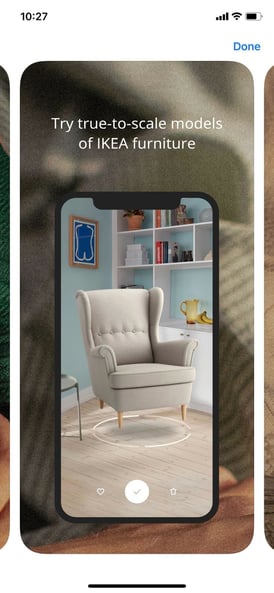
The IKEA Place app is a great example of AR product marketing. App users can select a piece of furniture they like and superimpose a to-scale model in their real-life space to see how it looks before purchasing. This opportunity can increase buyer confidence and sales if people see that they like how a product fits into their lifestyle.

ar vs vr

Image Source

VR marketing applications immerse consumers in branded experiences that can build awareness, recognition, and satisfaction. People can explore the world you create, learn more about your products, and even purchase VR products.

Gucci Town is a great example of an immersive VR brand experience. It’s the luxury fashion house’s virtual world within the Roblox metaverse, where people can explore, learn about its history, and connect with people in the game. They can also purchase exclusive Gucci Town clothing for their Roblox avatars.

These worlds are a new, unique, and exciting way of interacting with their favorite brands that don’t come from watching a TikTok, visiting a store, or reading an email newsletter.

An application of AR and VR is experiential marketing, where you invite your audiences to interact with your brand as a form of marketing. It’s a valuable application because humans want to build that kind of relationship with a brand, and a fun and immersive real-world experience can build an emotional connection.

Netflix’s Stranger Things Experience was an AR experiential marketing experience to promote the show’s upcoming season. Fans visited an in-person location and became part of an interactive AR game experience to make them feel like they’re in the Stranger Things world.

Consumer Preferences for AR vs. VR

Given their marketing applications, it makes sense to be curious about consumers’ thoughts.

We conducted a survey to ask consumers about their use of AR and VR and if they had preferences for either. Respondents reported using AR and VR on similar levels, most often saying they use it a few days a week or once a month or less.

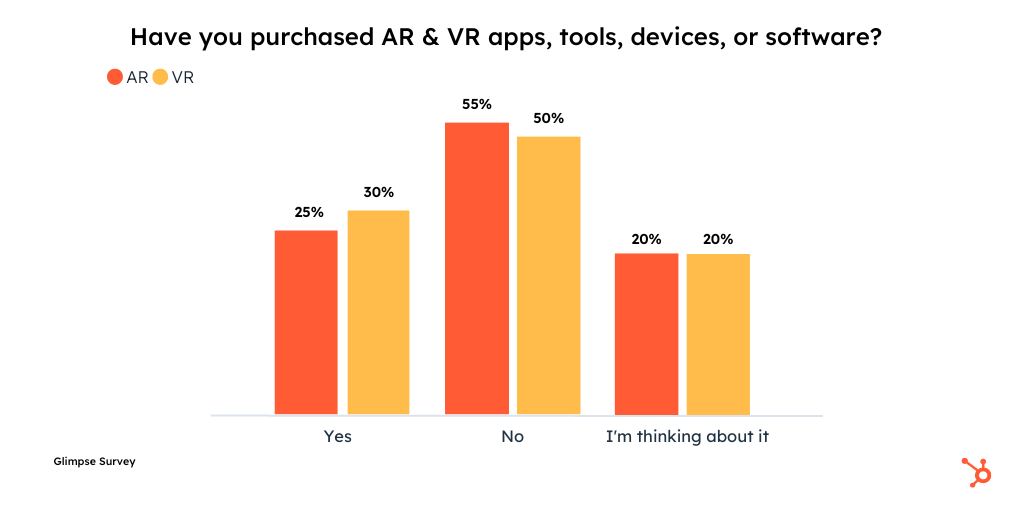
When we asked consumers if they’ve bought AR apps, tools, devices, or software, a majority said no (55%), 25% said yes, and 20% were thinking about it. The numbers were relatively similar for VR: 50% said no, 30% said yes, and 20% said they were considering it.

AR vs VR glimpse (1)

When asked if they preferred AR or VR, the majority said VR. Their reasons for preferring it were:

  • It’s a more immersive experience that takes them to an entertaining world,
  • The graphics and movements are smoother, and the visuals are better,
  • It has more applications than AR and is better for video games and interactive entertainment,
  • They’re more familiar with VR than AR.

Those who preferred AR said they appreciated it because it was more reality integrated and felt more real, they liked how they could add virtual things to real-world views and that AR was better for quality of life (QoL) applications like education, shopping, navigation, and healthcare.

A fair amount of respondents also said they didn’t prefer either or have an interest in using either. Some explicitly stated that they didn’t understand what either was, and some showed that they might not understand the difference by saying that VR is more realistic than AR when AR is the more life-like option.

This tracks with the results of our latest Consumer Trends Survey, which found that only 39% of respondents understood the concept of the metaverse (which can blend AR and VR elements). In addition,

  • Only 8% of U.S. adults have ever visited a metaverse (this remained consistent between 2022 and 2023 surveys.)
  • 47% bought virtual items other than NFTs, down 25% from May 2022, meaning that marketers planning to sell products in the virtual world might find consumers less willing or interested in buying.

Engagement with virtual worlds has waning hype, and consumers invest less in virtual items.

Business Preferences for AR and VR [Data]

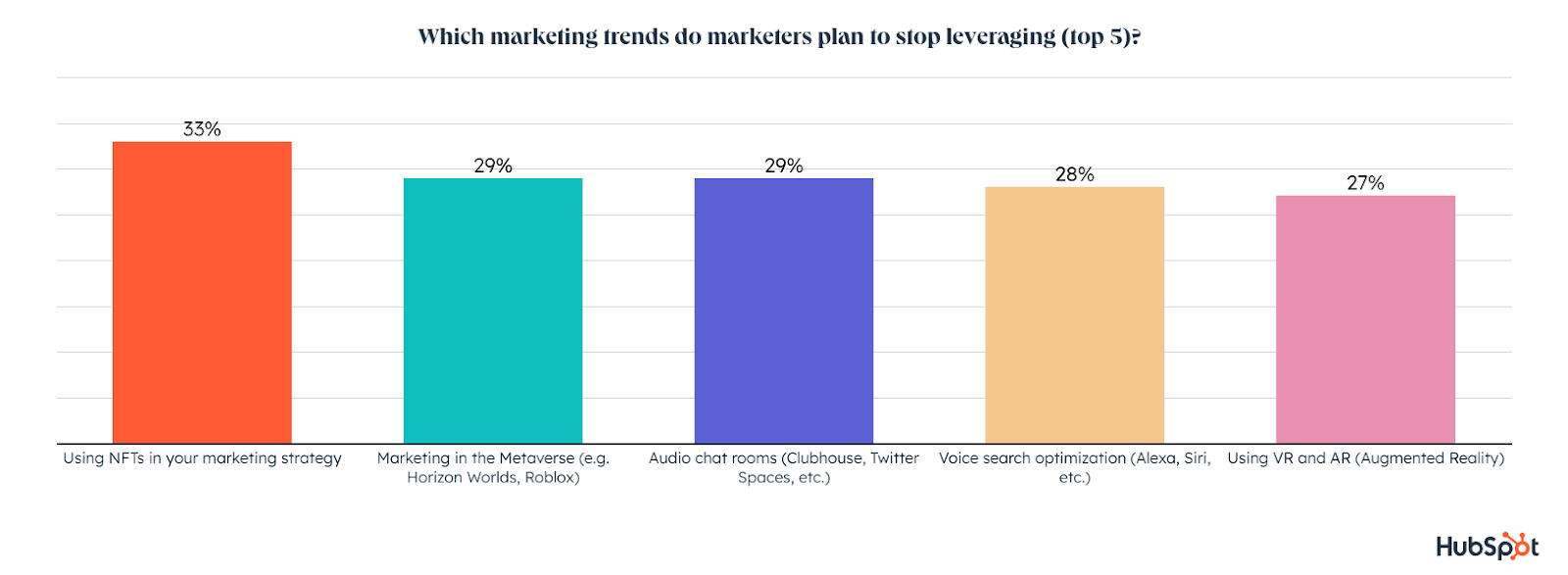
Our marketing strategy report from 2021 found that 35% of marketers were leveraging AR or VR in their strategies, but in 2023, more than a quarter of marketers plan to stop using VR and AR. It’s still intriguing for marketers, but it can be challenging to execute on because equipment can be expensive.

However, 14% of marketers do plan on leveraging and exploring VR/AR for the first time in 2023.

lower investments in metaverse

Image Source

AR vs. VR: Which Is More Effective for Marketing [Data]

There is no right or wrong answer as to whether AR or VR is more effective for marketing — it depends entirely on your business goals.

For example, a study conducted by Tim Hilken in the Netherlands found that both AR and VR increased customers’ purchase intentions. AR was more effective at stimulating purchases, but VR was more effective at creating positive brand attitudes. Both were effective at fulfilling a marketing goal, but each for a specific goal.

True sensory immersive VR experiences can be costly and require consumers to have the right devices to use them, but our survey results found that most consumers haven’t invested in them. However, virtual worlds like Horizon Worlds and Roblox don’t require sensory devices.

AR can be a cheaper option, but it doesn’t have the fully immersive brand experience that allows consumers to disappear into an alternate reality. But, the Stranger Things Experience did effectively create an immersive AR experience.

This is not to say that marketers shouldn’t use either of them. It boils down to this: AR and VR are both emerging technologies for marketing. Instead of changing your entire strategy to revolve around AR and VR, consider leveraging them as experimental tools. For example, you can create an AR experience as product marketing for a new offer or offer a fun VR game for people to play on your website.

You can test it out and give your audiences a new way to interact with your business without relying on it to meet your marketing goals. It can also be costly, so you’re preserving marketing budgets and not spending all of your money on channels that might not be as effective as you’d hoped.

To find inspiration, note what other brands are doing and what people are saying online about their experiences.

Over To You

AR and VR have been around for a long time but are still emerging tools for marketers. Consider your business needs, and note what other brands are doing and what people say online about their experiences.

Staying ahead of the trends simply means paying attention. If VR and AR marketing experiences skyrocket in popularity and become a must-have strategy, you’ll already know how your business needs to respond.

New Call-to-action

Categories B2B

30+ Remarkable Twitter Statistics to Be Aware of in 2023

Twitter is among the most popular (and powerful) social media networks. How you leverage the platform depends entirely on how its members use, follow, post, and interact with what they care about. Luckily, there are new statistics to make your social media marketing decisions more manageable.

So, how are people using Twitter nowadays? How are businesses using Twitter? And how connected do people feel to a brand due to your Twitter presence? Look at the most remarkable Twitter stats we’ve found for 2023. And if you’re in a pinch, jump to the information you need below:


Download Now: The 2023 State of Social Media Trends [Free Report]

Twitter Statistics

General Twitter Statistics

1. Most world leaders and foreign ministries have an official Twitter account. (Statista)

2. As of 2023, Twitter.com is the 4th most visited website in the world. (Similarweb)

3. The United States is the country with the most number of Twitter users, with 79.6 million users. (Demandsage)

Twitter Statistics for Business

4. Twitter generated $4.4 billion in revenue in 2022, an 11% decline year-over-year. (Social App Report 2022)

twitter statistics for business: quarterly revenue bar graph

Image Source

5. 7% of social media marketers believe that Twitter is the most effective for building an active community on social media, higher than LinkedIn but less effective than Instagram at 26%. (Social Media Trends Report)

6. 6% of social media marketers think Twitter offers the highest ROI when selling products directly in the app. (Social Media Trends Report)

7. Even though only about 17% of Twitter’s users come from the US, it accounts for more than 50% of the company’s revenue. (Social App Report)

8. The top three types of content that offer the biggest ROI on social media are relatable content, trendy content (cultural moments and news), and educational/informational content (Social Media Trends Report)

9. Almost 30M unique social media authors mentioned “reviews,” “advice on,” “pros and cons,” “alternatives,” and “best option,” on Twitter, looking for more authentic sources of information that they can trust. (Social Media Trends Report)

10. 5% of social media marketers plan to work with influencers/creators on Twitter more than other social platforms. (Social Media Trends Report)

11. The average Twitter Ads ROI is 40% higher than the average media ROI for other channels. (Twitter Marketing)

12. 66% of brands are not moving their presence off Twitter in 2023. (HubSpot Research)

13. The top three formats that social media marketers plan to invest the most in for 2023 are short-form content (TikTok, Reels, etc.), long-form videos, and audio chat rooms (like Twitter spaces) (Social Media Trends Report)

14. The best time to post on Twitter is between 9 AM to 3 PM. (Social Media Trends Report)

Twitter User Statistics

15. The leading countries based on the number of Twitter users in 2022 were the United States, Japan, and India. (Statista)

16. Twitter currently has 237.8 million monetizable daily active users. (Demandsage)

17. Twitter has around 450 million monthly active users as of 2023. (Demandsage)

18. It’s estimated that Twitter’s monthly active users will reach 652.23 million by 2028. (Demandsage)

19. Around seven-in-ten adult Twitter users in the U.S. (69%) get news on the site. (Pew Research)

20. 62.9% of Twitter users identify as male, one of the highest gender disparities out of all social networks. (Statista, We Are Social)

twitter user statistics: high gender disparities

Image Source

21. Roughly half of U.S. adults who use Twitter (49%) post fewer than five tweets per month. (Pew Research)

22. 59% of infrequent tweeters (otherwise referred to as “lurkers”) are between the ages of 30-49. (Pew Research)

23. Most Twitter news consumers in the U.S. say using the platform has increased their understanding of current events in the last year, but around a third say it has increased their stress levels. (Pew Research)

24. 31% of U.S. users say Twitter limiting the visibility of certain posts is a major problem, and 25% say the same about banning users from the platform. (Pew Research)

Twitter Usage Statistics

25. 80% of Twitter usage happens on mobile devices. (Google)

26. 55% of users log into Twitter each day. (Statista)

27. Twitter’s global average time per visit is approximately 10 minutes and 32 seconds. (Similarweb)

28. In 2022, 😂 Tears of Joy and 😭 Loudly Crying Face are tied for the most popular emojis used on Twitter. (Emojipedia)

twitter follower statistics: barack obama has the highest follower count on twitter

Image Source

Twitter Followers Statistics

29. Former president Barack Obama is the world’s most-followed Twitter account, at 133.1 million followers, followed by Elon Musk and then Justin Beiber. (Brandwatch)

Image Source

30. The NBA and Google are the most followed non-media business accounts on Twitter. Their followers are 39.9 million and 28.9 million, respectively. (Statista)

31. The most followed news account on Twitter is CNN Breaking News (@cnnbrk), with 58.9 million followers. CNN controls the two most followed news accounts on Twitter. (Press Gazette)

Stay Up to Date on the Latest Twitter Stats

Twitter is adapting and changing amidst the rise of new social platforms and tech, but it’s still a big competitor. Social media marketers should keep it on their radar and continue to leverage it to reach their target audience — just make sure you’re using it wisely.

Editor’s note: This article was originally published in March 2019 and has been updated for comprehensiveness.

New call-to-action

Categories B2B

Imposter Syndrome: 8 Ways to Deal With It Before It Hinders Your Success

“I got lucky.”

“I don’t belong here.”

“I’m a fraud, and it’s just a matter of time before everyone finds out.”

Sound familiar?

Download Now: Free Company Culture Code Template

That’s imposter syndrome talking. Most of us have experienced feelings of doubt and unworthiness at some point in our lives. But when your accomplishments are a result of your own knowledge, hard work, and preparation and you still feel inadequate…you’re probably suffering from impostor syndrome.

What is Imposter Syndrome?

Imposter syndrome is a feeling of unworthiness or incompetence, despite achieving accomplishments and success. This feeling is most common in the workplace, but it can manifest itself in just about any part of life. Those with imposter syndrome often go to great lengths to hide it, which can stunt their future success.

People who suffer from this syndrome often feel like frauds—despite being smart, skilled, capable professionals who actually deserve whatever commendations and praise they’re given. Rather than celebrating their accomplishments, they worry that they’ve somehow tricked people into thinking they’re good enough. As a result, they live in fear of being “found out” or “exposed.”

There are a variety of reasons why a person may feel like an imposter ranging from perfectionism to family upbringing. Regardless of the cause, this toxic line of thinking results in reduced self-confidence, low self-esteem, and limited ability to celebrate well-deserved success.

How common is imposter syndrome?

Impostor syndrome is actually fairly common: Researchers have found that up to 82% of people have suffered from it at one point or another. But the fact that it’s common doesn’t make it any less damaging to a person’s confidence and career growth. If anything, more people are unable to show up fully in their work than ever before which is concerning for several reasons.

How to Tell If You Have Imposter Syndrome

We often overlook the signs of impostor syndrome that come up in our day-to-day lives. However, recognizing these signs is the first step toward overcoming them.

You might suffer from impostor syndrome if:

  • You feel like you “got lucky” when you actually prepared well and worked hard.
  • You find it hard to accept praise.
  • You apologize for yourself when you didn’t actually do something wrong.
  • You hold yourself to incredibly —sometimes impossibly—high standards.
  • You find the fear of failure paralyzing.
  • You avoid expressing confidence because you think people will see it as overcompensating or obnoxious.
  • You’re convinced you’re not enough.
  • People close to you say you’re not as confident as you used to be.
  • You turn down opportunities for growth or visibility at work.

Pay attention to your language choices, both when you’re talking to other people and when you’re talking to yourself—especially when it comes to talking about work. If you find your own success or the praise others give you uncomfortable, do some reflective thinking on where those types of thoughts came from and what it means in your professional life.

The Impact of Imposter Syndrome

Imposter syndrome doesn’t always stop at feeling like a fraud. This mental state has bonafide mental, physical, and emotional effects, including:

  • Depression
  • Anxiety
  • Impaired Job Performance
  • Lowered Job Satisfaction
  • Burnout

Moreover, these negative mental health outcomes of imposter syndrome have been the subject of academic research for years. Most recently, Kevin Cokley, PhD, Professor of Psychology at the University of Michigan, has explored the subject in depth and found that imposter syndrome disproportionately affects the mental health of people of ethnically minoritized backgrounds, especially African Americans. This poses a greater challenge to everyone in the workforce to attract, retain, and develop diverse talent.

If you feel like you’re suffering from impostor syndrome or something like it, know that there are ways to curb these feelings in a healthy, proactive way.

8 Tips to Combat Imposter Syndrome

Getting rid of imposter syndrome isn’t as easy as positive self-talk and a can-do attitude. While those things are helpful, you’ll need to dig a bit deeper to uncover ways to overcome this debilitating mindset.

1. Know you’re not alone.

When you have impostor syndrome, some of the most important encouragement comes from realizing how many hugely successful people, both male and female, have built amazing careers even while regularly coping with it.

Which highly accomplished people have spoken about their impostor syndrome? Here are some quotes from The New York Times and Forbes:

“I have written eleven books, but each time I think, ‘uh oh, they’re going to find out now. I’ve run a game on everybody, and they’re going to find me out.'” – Author, Poet & Civil Rights Activist Maya Angelou:

All I can see is everything I’m doing wrong that is a sham and a fraud.”

“All I can see is everything I’m doing wrong that is a sham and a fraud.” Actor Don Cheadle

“The beauty of the impostor syndrome is you vacillate between extreme egomania and a complete feeling of: ‘I’m a fraud! Oh God, they’re onto me! I’m a fraud!’ So you just try to ride the egomania when it comes and enjoy it, and then slide through the idea of fraud.” – Actress, Writer & Producer Tina Fey, from her book Bossypants

2. Distinguish humility and fear.

There’s taking humility in your hard work and accomplishments, and then there’s feeling overcome with fear because of them. Sometimes, simply being good at something can cause it to discount its value. But as Carl Richards wrote in a New York Times article, “After spending a lot of time fine-tuning our ability, isn’t it sort of the point for our skill to look and feel natural?”

It all boils down to feeling unworthy. I like how Seth Godin put it in a blog post: “When you feel unworthy, any kind response, positive feedback or reward feels like a trick, a scam, the luck of the draw.”

But it is possible to feel worthy without feeling entitled, and overcoming impostor syndrome is all about finding a healthy balance between the two. Godin goes on to write, “Humility and worthiness have nothing at all to do with defending our territory. We don’t have to feel like a fraud to also be gracious, open or humble.”

3. Let go of your inner perfectionist.

I wrote about how perfectionism, while helpful in certain contexts, can be a major roadblock for productivity. Turns out it can be a major roadblock for overcoming impostor syndrome, too.

Many people who suffer from impostor syndrome are high achievers; people who set extremely high standards for themselves and are committed to doing their best and being the best.

But perfectionism only feeds into your impostor syndrome. When you feel like a fraud, it’s usually because you’re comparing yourself to some *perfect* outcome that’s either impossible or unrealistic.

Not only can no one do everything perfectly, but holding yourself to that standard can actually be super counterproductive. At some point, you need to take a step back and ask yourself: When is good enough good enough?

Read this blog post to see what a formula for “good enough” might look like. And if you need further encouragement, read this article from The Guardian.

Bottom line? While striving for perfection is certainly noble, it’s usually not realistic — and often, it’s counterproductive and will only make you feel more like a fraud.

4. Be kind to yourself.

“Take the pressure off yourself and stop trying to be the expert on day one.” advises HubSpot marketing manager Jennifer Stafancik.

Impostor syndrome often manifests itself as a voice in our heads, berating us with negative messages like “you’re not smart enough” or “you’re a fraud.”

Negative self-talk is a bad habit, and it can heavily influence our stress and anxiety levels.

“Being kind to yourself” simply means changing the way you talk to yourself in your head by practicing positive self-talk. Not only can it help you become less stressed and anxious, but it can also help you build the courage to do things that’ll bring you greater rewards.

Maria Klawe, the president of Harvey Mudd College, suffered from what she called “impostoritis” for most of her career. While she found it hard to silence the negative thoughts completely, she practiced hard to add positive thoughts to her inner voice. “Now I wake up most days with a voice on the left side of my head telling me what an incredible failure I am,” she wrote. “But the voice on the right side tells me that I can change the world — and I try to pay more attention to it.”

First, try to catch yourself whenever you have a negative thought. Then, turn around and challenge your own claim. For example, if you find yourself thinking, “I just got lucky,” challenge that by thinking, “What steps did I take and what work did I put in to get to this point?”

Then, you can answer your own question using affirmations, which are short, focused, positive statements about a goal you have. In this case, one might be as simple as, “I worked hard – and I always work hard.”

“For me, I put a lot of pressure on myself when joining HubSpot since it was a lateral move, which ended up sparking imposter syndrome — something I honestly thought I was immune to. “Stefancik explains. “Once I realized there was no reason to rush and to give myself more realistic milestones the imposter syndrome symptoms started to melt away.

5. Track and measure your successes.

When you feel like an impostor, one of the hardest things to grasp is how much of a role you have in your own successes. You might default them to luck or others’ hard work, when in fact, your own work, knowledge, and preparation had a lot to do with it.

To help show yourself that you’re actually doing well, keep track of your wins in a private document.

There are a lot of different ways to track these successes, and the metrics you use will depend entirely on your job. If you’re a blogger, you might keep track of your posts’ monthly average page views and watch them go up, or compare them to the team average. You might also keep a separate tab to paste kind words people have written to you via email, Twitter, blog comments, and so on.

In the same vein as keeping track of your success metrics, keep a file on your computer of wins and positive reinforcement both at work and in your personal life. One of the best things I’ve done is created a folder on my personal Gmail account called “Happy,” where I’ve stored everything from my college acceptance email to praise from my colleagues and bosses. Whenever I need a lift, I open that Gmail folder and scroll through them.

You can create an email folder for these emails as I did, or create something like a “swipe file” (i.e. a digital file) on your computer or phone to store screenshots of emails, tweets, dashboard metrics … whatever makes you feel good about your hard work and preparation.

6. Talk about it with a mentor and your manager.

No one should suffer in silence. Sharing your thoughts and experiences with someone else will make you better equipped to deal with your impostor syndrome. We recommend sharing them with both a mentor and your direct manager.

Your mentor will be able to help you talk candidly about your struggles with impostor syndrome while giving you a more objective point of view — especially if they work on a different team or at a different company. When you share your experience with them, you might ask if they’ve ever felt that way, or if they know someone who has.

The best mentors are forthcoming about the struggles they’ve gone through and the mistakes they’ve made in their careers, and you may find that they have some helpful stories or advice for how to deal with what you’re feeling.

We’d also suggest that you talk with your direct manager about your experiences, too. Why? Because they’re more likely to have the knowledge and tools to help you overcome your impostor syndrome in the context of your current job.

For example, you might ask them to help you find a system for tracking your successes, or figure out which metrics you should measure. Knowing what they know about both you and your role, they may also help you seek out more opportunities to shine and gain visibility on your team or at your company in general.

Finding a mentor or manager to talk to is a strategy that Krystal Wu, HubSpot’s Social Media Community Manager highly recommends.

“I’ve learned the best way to deal with imposter syndrome was to find a mentor to help guide me through my career choices,” Wu says.

As an example, Wu reflects, “I was new to my social community role and to marketing and I wanted to do my best work but I didn’t know what that meant all the time.”

“When I put myself out there to find people in roles similar to mine, attended events to learn more about my industry and learned from my mentor it helped me gain confidence in my career,” Wu explains. “The more confidence and education I had the more the imposter syndrome started to fade.”

“I won’t say it’s completely gone — because let’s be real, I’m always learning,” Wu admits. “But it’s not something hanging over my head all the time. It comes and goes and I know that surrounding myself with people that are more knowledgeable in my field has helped me grow.”

Speaking of opportunities …

7. Say “yes” to new opportunities.

It’s impossible to say “yes” to everything, especially when you’re feeling stressed or spread thin. But it’s all too common for people who have impostor syndrome to turn down career-making opportunities because they don’t feel like they’d do a good job.

When you’re presented with a new opportunity, it’s important to distinguish between the voice in your head saying you can’t do it because you’re not worthy and the one saying you can’t do it because you have too much on your plate. The former is your impostor syndrome speaking.

But remember: Taking on challenging new work and doing well at it can open a lot of doors for you. Don’t let your inner impostor turn down these game-changing opportunities. They can do wonders to help you learn, grow, and advance your career.

Keep Richard Branson’s famous quote in mind: “If someone offers you an amazing opportunity and you are not sure you can do it, say yes. Then learn how to do it later.”

While it might be intimidating to take on a role you’re not sure you can succeed in, know that you were asked to do it for a reason, and there’s nothing wrong with learning new things and asking questions along the way.

8. Embrace the feeling, and use it.

It’s really hard to get rid of impostor syndrome completely — especially if you’ve had it for years and years. The fact that hugely successful people like Maya Angelou and Don Cheadle feel that way after all they’ve accomplished is evidence that it can sometimes be a lifelong condition.

That’s why the best angle from which to tackle your impostor syndrome isn’t getting rid of it completely; it’s stopping it from hindering your success.

Overcoming Imposter Syndrome

I like the way Richards put it: “We know what the feeling is called. We know others suffer from it. We know a little bit about why we feel this way. And we now know how to handle it: Invite it in and remind ourselves why it’s here and what it means.”

Richards says he’s been invited to speak about his work and career all over the world, and yet he still hasn’t been able to get rid of his impostor syndrome. What he has learned to do is think of it “as a friend.”

Whenever he hears that negative voice in his head, he pauses for a minute, takes a deep breath, and says to himself, “Welcome back, old friend. I’m glad you’re here. Now, let’s get to work.”

Editor’s Note: This blog post was originally published in January 2016, but was updated in March 2020 for comprehensiveness and freshness.

company culture template

Categories B2B

37 of the Best Website Designs to Inspire You in 2023

Looking for website design examples? Your inspiration journey starts here.

Deciding to create a website for yourself or your business is a big decision, but all websites are a culmination of many small decisions. And the best-designed websites are made by those who take the time to craft a visual experience that feels on-brand and aligned with users’ expectations, while simultaneously incorporating elements to help it stand out.

Free Download: 77 Examples of Brilliant Web Design 

It’s a big task, but luckily you don’t need to start completely from scratch. There are website builders and content management systems like CMS Hub that allow you to build out pages by simply dragging elements into place. Plus, there are thousands of amazing websites to reference for inspiration.

In this article, we’ll be sharing a few dozen of the best website designs we’ve ever seen to inspire yours. You can click the links below to jump to explore website designs, and we’ve also included a bonus section of designs that are just plain cool — so check them out, too!

From familiar corporations to small businesses, to international organizations, the following sites push the status quo on the web. Whether it’s the design aesthetic, usability, interactivity, sound design, or value that the site provides, each one is a masterpiece in its respective industry and something to aspire to.

Not surprisingly, many organizations exist to highlight these sites and the contributions they make to the web. To help surface some of the most inspirational designs, I gathered several award-winners that have made their way through several key awards organizations — including Red Dot, Awwwards, UX Awards, The Webby Awards, SiteInspire, Best Website Gallery, and FWA.

As you browse through the list, know that each site excels in its own way and seeks to serve a unique purpose. While one site may be an excellent example of visual design, another may be an excellent example of interactivity.

This means that not all of these sites may be “conversion machines” or blueprint ideas that you can easily copy over to your site. Rather, they’re great ways to gain some website design inspiration and see the cutting-edge marketing that’s happening in the different corners of the web.

Keep in mind that web designs are fluid and change often. Some of the designs in this list have changed since they were awarded, but we do our best to keep them up-to-date. We’re confident you’ll find a design here that sparks your creativity.
Read More: 77 Examples of Incredible Website Design

77 Examples of Incredible Website Design

Download this free guide to see even more examples of website blog, homepage, and landing page designs.

Beautiful Award-Winning Websites

Best Website Designs from 2022

Hyer

Award: Website of the Month (2022), CSS Design Awards

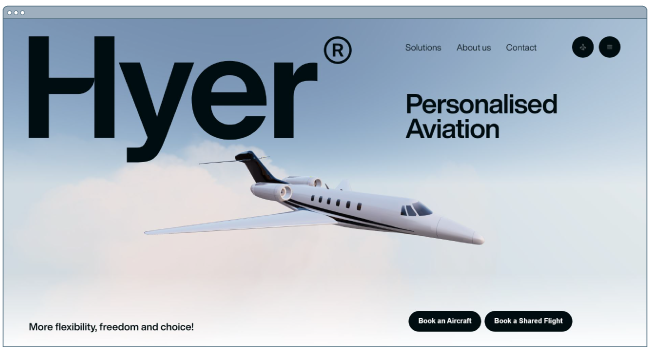
Want to make a strong impression on your website visitors? Take a page out of Hyer’s book.
Best website examples: Hyer

Image Source

This striking illustration of the airplane, as it slowly moves across the screen, is sure to grab website visitors’ attention.

This page has everything you need in an effective homepage: An image that tells a story but isn’t too distracting, use of white space, easy nav bar, a tagline or slogan, and a clear CTA.

It’s a clean design that’s free of any distractions and invites visitors to learn more about the brand.

Mubasic

Award: Website of the Day, August 10, 2022, Awwwards

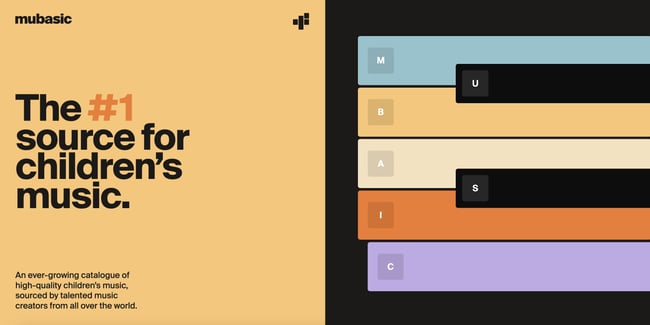
Mubasic’s site isn’t just visually compelling, it’s dynamic. Mubasic is a catalog of high-quality music for children, and the website’s design decisions help it achieve a light-hearted, easygoing feel. The poppy color scheme and effective visual hierarchy contribute to this site’s design success, however, the real reason it shines is because of how the design feels authentic to the brand’s mission.
Best website examples: Mubasic

Image Source

The homepage easily allows you to explore the company’s offerings, and even features a Q&A section set up in a unique format. Images pop up as you scroll down the page, and toward the bottom, there’s the opportunity to get in touch with contact information and a new customer form template.

When you reach the bottom of the home page, there’s a menu that features anchors to allow you to jump to wherever on the page the information you’re seeking lives.

Digital Cover

Award: Website of the Day, July 31, 2022, Awwwards

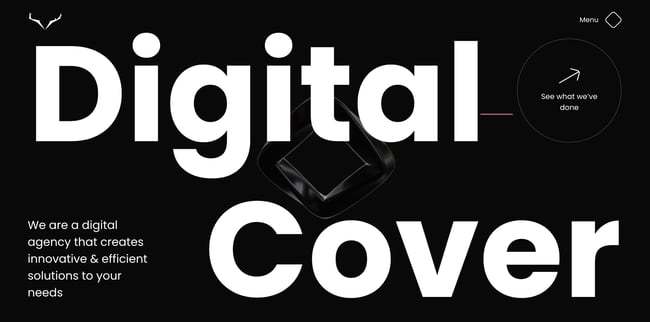
Everything from the loading screen to the homepage of this France-based digital agency’s website is a visual homerun. When you arrive on this homepage, you’re immediately swept into the world of Digital Cover. This is achieved by a graphic that appears nearly three-dimensional popping up and welcoming you into the company’s orbit.
Best website examples: Digital Cover

Image Source

Similar to the previous site, the animated nature of Digital Cover’s homepage adds intrigue and establishes this site as a candidate for best website design. With a simple swipe of a mouse pad you’re led to the company’s projects, or you can navigate to the clearly labeled menu in the top left corner. When you do, several options pop up.

From there, you are escorted to the page of your selection. The white lettering against the black background allows for the copy to pop. If you scroll to the bottom of any menu page, you’ll find contact information to get in touch with the agency, which is another strength of the design’s.

Best Website Designs from 2021

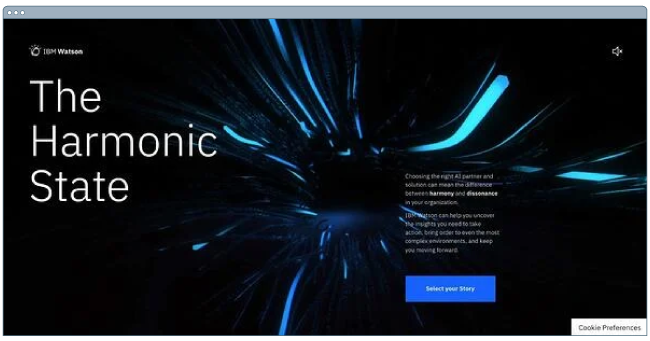
IBM’s The Harmonic State

Award: Site of the Month (July 2021), Awwwards

When you land on this IBM web page, it’s clear to see why the design won an award.
Best website examples: IBM

Image Source

The best way to describe the website is as an immersive experience. In fact, IBM uses both visual and auditory elements to draw the visitor in and keep them engaged.

When you first land on the web page, you’re prompted to put on headphones to get the full experience. Even if you skip this step, you’re drawn in by the interactive background that reacts as your mouse navigates on the page.

In addition, the page is well balanced with a large title that grabs your attention across from a small description with a bold blue CTA.

With a topic as complex as AI, IBM then uses visual storytelling to explain how its Watson tool works in the real world. Visitors can explore three stories through video game-like functions and learn more about the tool.

It’s a fun and effective way to get users engaged in a topic that can be complicated and dry.

Looking for more corporate website examples? Check out 25 Stunning Corporate Websites to Inspire Yours.

Superlist

Award: Site of the Month (April 2021), Awwwards

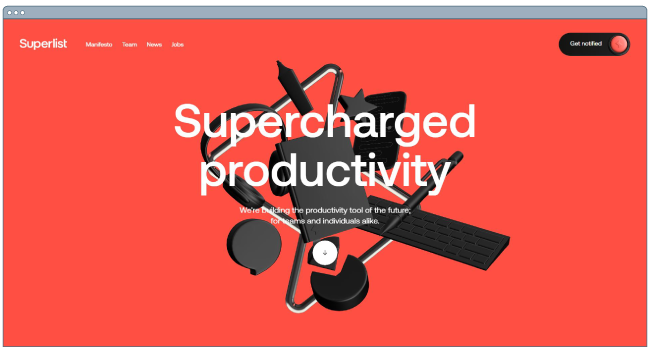
Superlist is a productivity app that helps teams and individuals change the way they work.

Too often, you land on a website and have to figure out what the brand is about. With Superlist, you know exactly what to expect as soon as you get to the homepage.
Best website examples: Superlist

Image Source

The interactive homepage shows common work accessories, like headphones and keyboard with clear, to-the-point copy.

Superlist effectively uses white space to keep the focus on its copy. However, to facilitate navigation, they include a small button with an arrow icon to indicate that there’s more to see on the page once you scroll.

From there, the fun visuals continue – keeping you engaged as you learn more about the brand.

Best Website Designs from 2020

Swab the World

Award: Site of the Day (2020), Awwwards

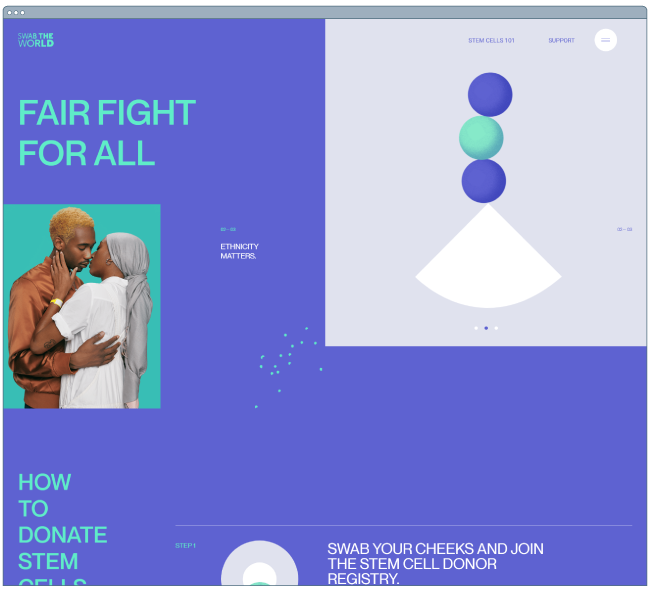
Parallax, bold colors, and negative space shape the design and experience of Swab the World’s website. The organization brings awareness to stem cell donations. Their mission is to “Make sure every single patient finds their match. Period.” Photos of couples exhibiting love and emotions bring a human element to a historically complex and scientific process.

From a technical perspective, the design makes moving down the page feel natural, ensuring the readers reach each point of copy and every CTA on the homepage.
Best website examples: Swab the World

Image Source

Newest Americans

Award: Honorable Mention (2020), Awwwards

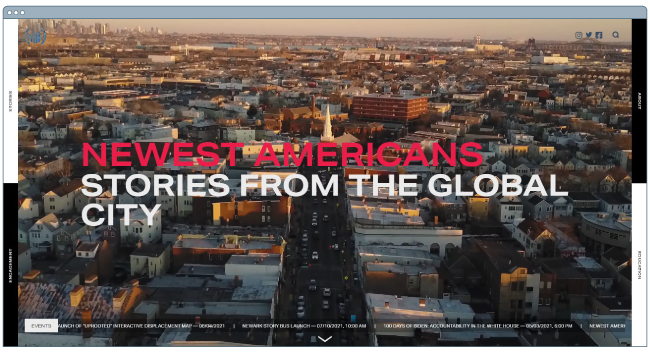
An organization with a responsibility as large as honoring past, present, and future migrating identities needs a beautiful and functional website to help spread the word. Newest Americans champion immigrant experiences in cities across the state of New Jersey. The website uses beautiful imagery of people, places, and items that represent this experience in a way that flows cohesively down the homepage, telling the story of this group of America’s newest citizens.

The website is both visually appealing and functional with a simple navigation menu, stories organized by photos, and a clean press page that puts the most recent articles front and center.
Best website examples: Newest Americans

Image Source

Spotify Design

Award: Honorable Mention (2020), Awwwards

Spotify is known for its fair share of amazing feats, and its latest iteration of Spotify.Design is no different. Serving as the hub for all things visual and creative for Spotify, the music and podcast streaming giant gives listeners a look into the who, what, why, and how of what makes the app so sensational.

Bright colors, drop shadows, and smooth animations give this website character and depth. The flat geometric designs with abstract accents make albums and artists practically jump off of the screen.
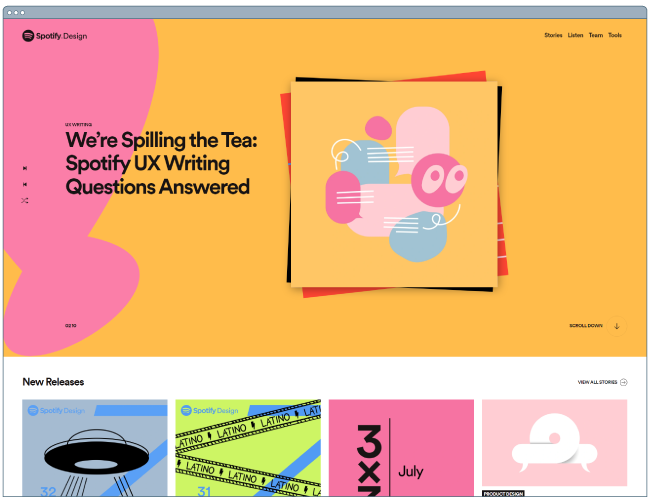
Best website examples: Spotify

Image Source

Looking for more design inspiration from microsites like this one? Read our post of the Best Microsite Examples We’ve Ever Seen.

Andy Warhol

Award: Honorable Mention (2020), Awwwards

Artist, film director, and producer Andy Warhol’s life is encapsulated in this splendidly designed website that captures his art style in a digital format. As you peruse the page, your cursor becomes a spotlight that converts every image you hover over into a negative image or inverses the colors of the text you’re reading.

The big, bold text makes a statement and emphasizes just how important copy is to website design. Subtle animations help pace the site and set the tone for each section as you peruse the home page.
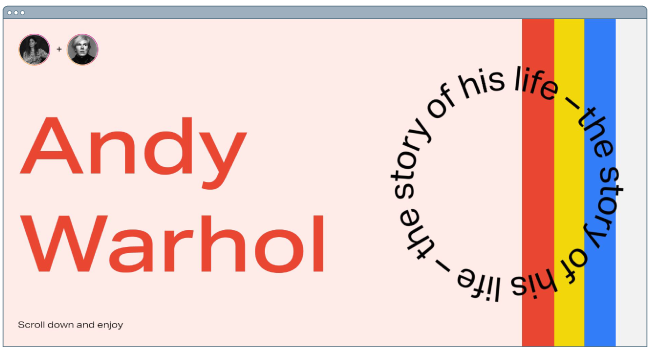
Best website examples: Andy Warhol

Image Source

Human Interaction Company

Award: Corporate Website (2020), Red Dot

To see video done right, look no further than the Human Interaction Company. From the moment you click on the site, the experience is lightning fast. You’re dropped directly into the action — the why, what, and how of Human Interaction and exactly what the team does.

This Red Dot Design Award winner aims to bring the study of human interaction to the masses, and in the process, show us just how engaging it can be to learn about it. Don’t get discouraged by their award status though — none of the photos on this site are photoshopped, so it’s a practical example of building quality with the resources you have available.
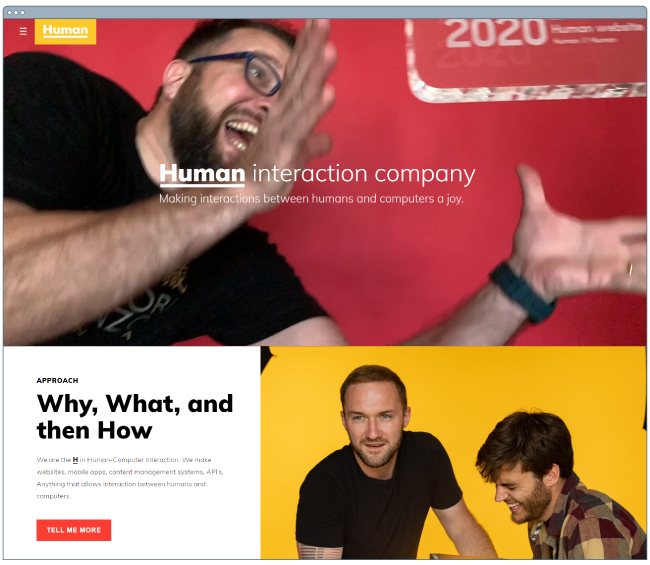
Best website examples: Human interaction company

Image Source

Garoa Skincare

Award: Site of the Day (2020), Awwwards

How do you transform the feeling of luxury and practicality into a website? Garoa Skincare provides a blueprint. Whether your product costs half the price of your closest competitor or twice the price, your site can bring a sense of extravagance to just about any product you sell.

High-quality visuals, typefaces that complement each other, and a balance of negative space with useful copy can bring a simplistic elegance to your website.
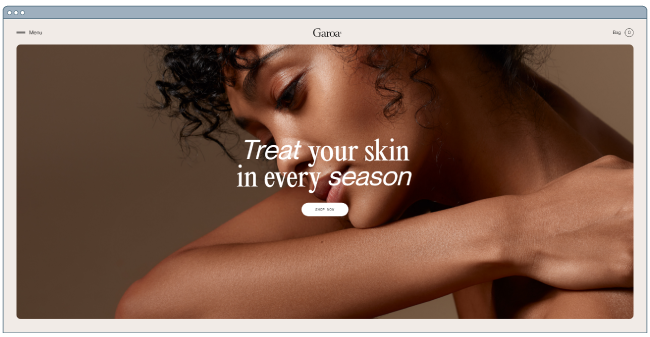
Best website examples: Garoa Skincare

Image Source

Best Website Designs from 2019

1917: In the Trenches

Award: Awwwards’ Best Website of the Day (2019)

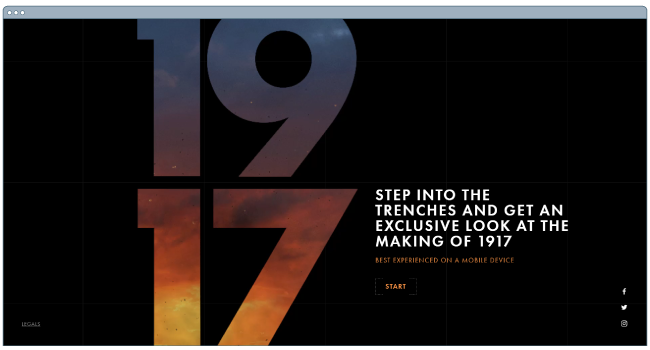
This website, made to promote the film 1917, lets you walk around the trenches and perform the same mission that the characters did in the film. You can also see their maps or access other tools.

This is a great example of a site that went above and beyond with interactivity as well as a site that leverages its content and prewritten storyline to market its film. This website won Site of the Day by Awwwards, which allows designers to vote and nominate great websites they see daily.
Best website examples: in the trenches

Image Source

The Octopus: A design blog by IDEO

Award: Business Blog/Website 2019 Webby award

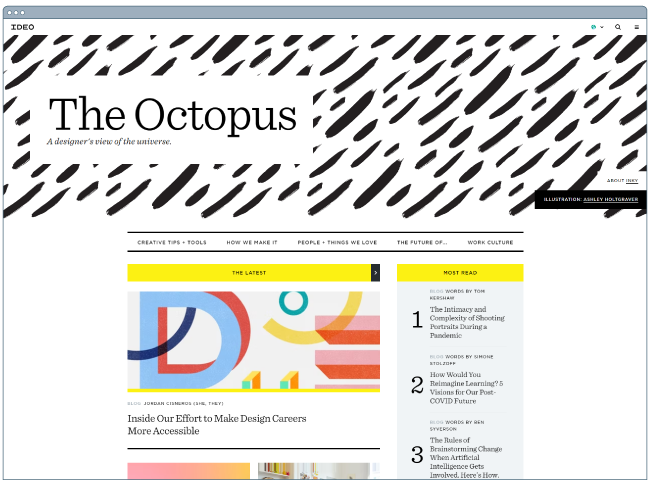
IDEO, a global design company, won the Business Blog/Website 2019 Webby award for its Octopus blog, and for good reason. The blog features a sleek, black-and-white Octopus drawing as its homepage design, and uses yellow, black, and white to create a cohesive theme as you scroll.

If you hover over a blog post, the title is highlighted in yellow. If you hover over an image, the image is pulled towards you — two small features that make a big difference in terms of creating a unique and engaging user experience.
designer websites: the octopus

Image Source

Nomadic Tribe

Award: Awwwards’ Site of the Year nomination (2019)

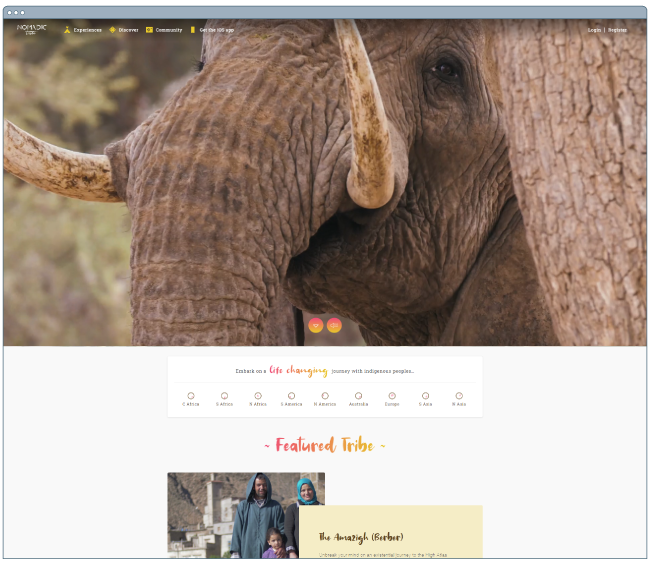
This site, which was nominated for Awwards’ Site of the Year, is one of the more engaging sites I’ve seen.

The homepage immediately begins playing a stunning video featuring a man walking across a desert, followed by gorgeous landscape scenes and text like, “Are you lucky enough to call yourself an adventurer?”

The text throughout the website is playful, with colorful pinks and oranges and yellows, and the homepage is logically designed, with CTAs placed throughout that range in commitment-level from “Read More” to “Watch Now” and, finally, “Download the App”.

Ultimately, the website is beautifully designed with strong attention to detail, and tells a compelling story throughout.
Best website examples: nomadic tribe

Image Source

Diana Danieli

Award: Webby 2019

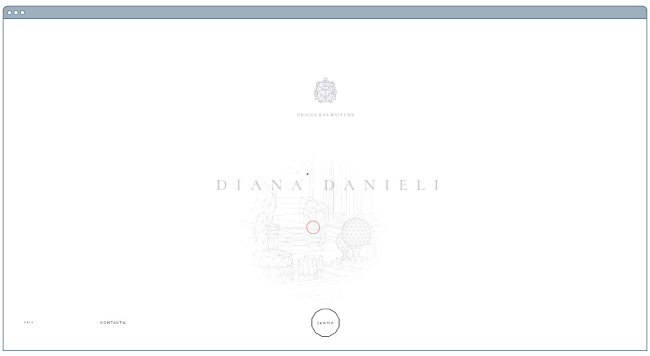
This 2019 Webby-winning site shows off imagery of art and architecture with either high contrast or heavy exposure. As a website visitor, you can click and drag your mouse to change the photos and variations. Each image shows a piece of work that highlights the artist who owns the website.

A cool plus about this website is its incorporation of audio and music. Clicking on certain buttons on the screenplays a piano note and truly immerses you in the Diana Danieli experience.

Want to see more personal websites? Check out our post on the Best Personal Websites.
Best website examples: diana danieli

Image Source

George Nakashima Woodworkers

Award: Webby 2019

This woodworking website emphasizes nature and care for the woodworking trade. It’s essentially a slideshow of beautiful forestry and farming images. As a new image comes on the screen, a new quote related to wood or trees also appears.

This is incredibly relaxing to the visitor and shows that the woodworkers recognize the beauty of trees and the environment. This website also won a Webbie in 2019.
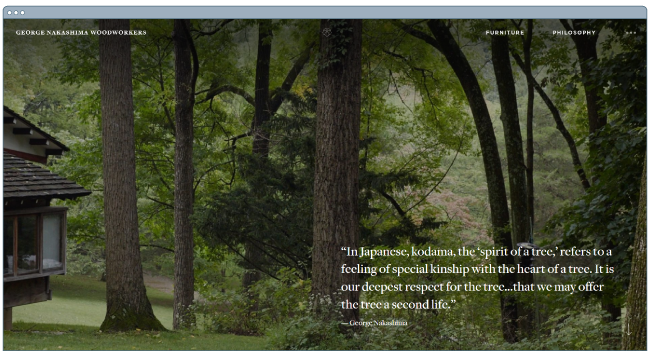
Best website examples: george nakashima

Image Source

Best Website Designs from 2018

crypton.trading

Award: Site of the Day (4/3/2018), Awwwards

Meet crypton.trading, your robot accountant.

Crypton.trading is a trading hub for cryptocurrencies such as Bitcoin, using artificial intelligence to predict changes in a currency’s value and identify key buying and selling opportunities. The website was rated high for its development and design, as it gradually explains more of the developer’s methods the further down visitors scroll.

This website makes tech-savvy visitors feel right at home the moment Crypton’s greeting appears across the homepage, one letter at a time.
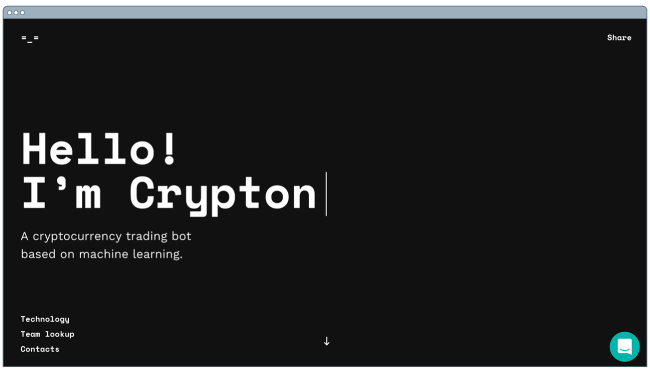
Best website examples: crypton.tradingImage Source

Southwest: Heart of Travel

Award: Best Visual Design – Aesthetic, 2018 Webby Awards

When Southwest Airlines wanted to prove that its customers were “more than just a dollar sign,” the company created a website where the design was assembled using the shapes of their customers’ flight paths.

The website, called Heart of Travel, even allows visitors to create their own artwork out of a trip they might plan on taking. In this way, Southwest’s website is a product of their most loyal passengers.
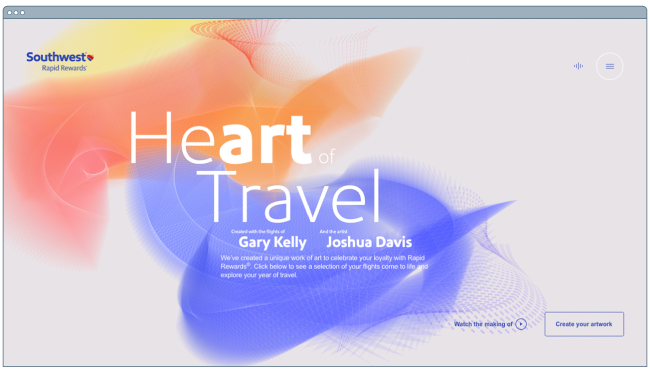
Best website examples: heart of travelImage Source

Overflow

Award: Site of the Day (3/20/2018), Best Website Gallery

Overflow is a design tool that allows people and businesses to create story-like flow diagrams of their ideas so they’re easier for others to understand. Aside from this being just a good service, the Overflow website practices what it preaches: Along with vibrant red call-to-action buttons for downloading the tool, this website promotes its product the best way it knows how — using a flow diagram.

The website delivers this flow diagram in the form of a video. While embedded videos can look clunky sitting in the middle of a website’s other design elements, Overflow’s is perfectly placed and exactly what you’d want to see when landing on the site for the first time.

Check out our SaaS web design post for more inspiration.
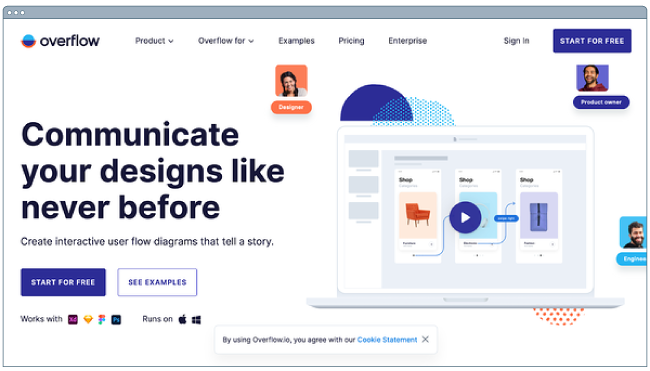
Best website examples: overflow

Image Source

Frans Hals Museum

Award: Site of the Year (2018), Awwwards

It can be tough for a museum to present all of its artwork together on a cohesive website. That’s what makes the website of the Frans Hals Museum so impressive.

Located in the Netherlands, this museum has created a website that uses a combination of digital design elements and its own exhibits. This mixture helps visitors understand what they’ll see, when they can see it, and where else they can get a taste of what this museum has to offer.
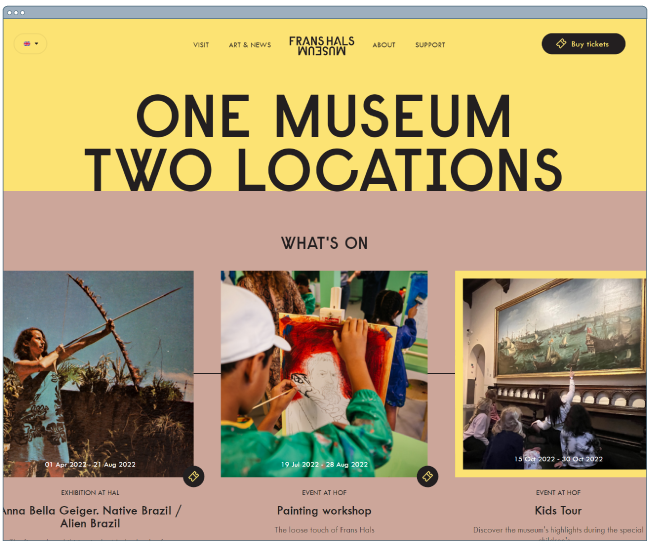
Best website examples: frans hals museum

Image Source

Best Website Designs from 2017

Simply Chocolate

Award: Site of the Year (2017), Awwwards

You’ll get a craving for chocolate just looking at this website — and in a way, that’s Simply Chocolate‘s website working as designed.

This appetizing website is that of a Denmark chocolate maker Simply Chocolate. Its website uses a variety of colors (and creative product names) to promote each chocolate bar. And as you scroll from one product to the next, they all seem to remain consistent in brand.

The three-dimensional appearance of each chocolate bar makes you feel like you can grab it off of your computer screen, while the “Add to Box” CTA to the top-left is ideally placed for users to select the products they want while browsing.
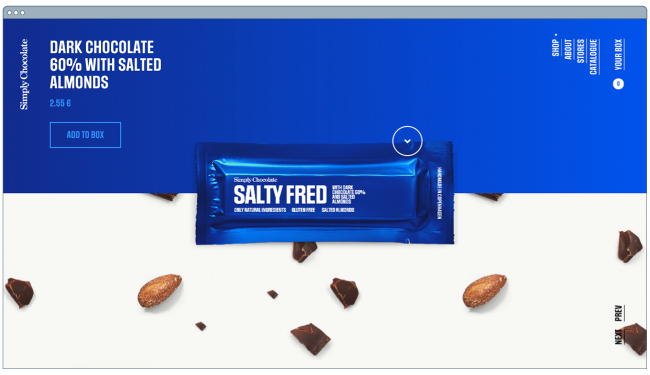
Best website examples: simply chocolate

Image Source

NOWNESS

Award: Best Cultural Blog/Website, 2017 Webby Awards

NOWNESS is perhaps the coolest crowdsourced video blog on the internet. That was a mouthful…what does it all mean?

NOWNESS‘ crowdsourcing is part of what makes it an award-winner. This means most of its content comes from independent creatives — an increasingly popular way for businesses to publish content.

NOWNESS is also a video channel, meaning all of its blog content is in video format. Together, these qualities help make Nowness a captivating hub for the stories that brands everywhere strive to tell.
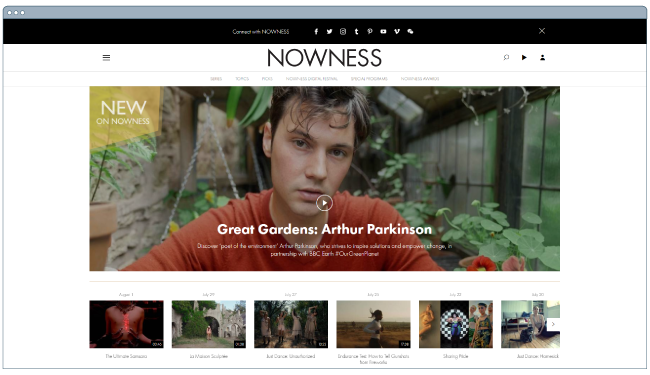
Best website examples: nownessImage Source

Best Website Designs from 2016

Rainforest Guardians

Award: Best Activism Website, 2016 Webby Awards

Rainforest Guardians was one of the most immersive nonprofit websites of 2016. Seeking to build awareness around deforestation, the site allows users to “visit” the various villages, natives, and waterways that make up the Amazon Rainforest.

The site puts interactivity at the center of its user experience — a wise choice if your goal is to get people to connect with your cause and convert into volunteers.
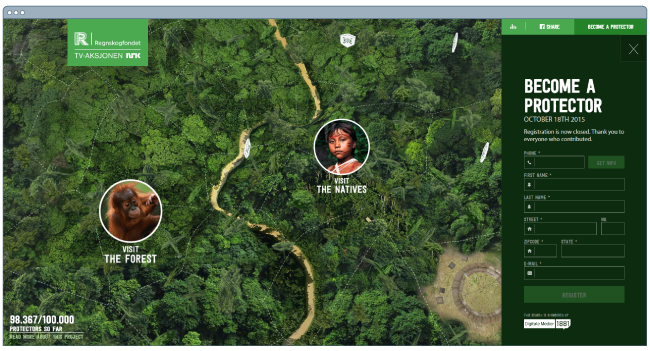
Best website examples: rainforest guardians

Image Source

Protest Sportswear

Award: Site of the Year (2016), Awwwards

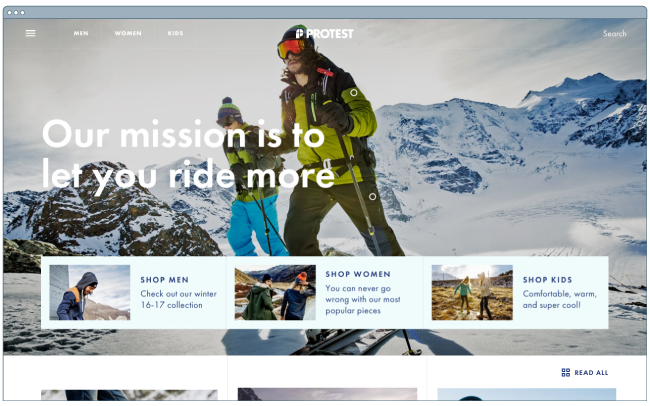
The Awwwards calls Protest Sportswear a “shoppable lookbook,” and that’s exactly what this site is. As a clothing outfitter, this company has reinvented the way they market its product: Rather than promoting garments of clothing, Protest Sportswear promotes “looks.”

This makes the company’s product the most appealing part of the website itself, using a collage of styles to design a homepage that changes as often as its customer’s styles do.
Best website examples: protest sportswear

Image Source

The Teacher’s Guild

Award: Best Association Website, 2016 Webby Awards

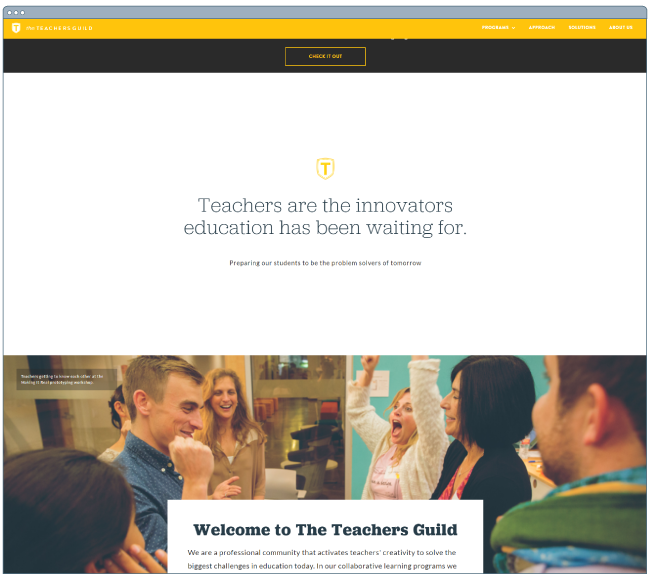
The Teacher’s Guild is a professional community of educators that addresses some of the most critical challenges in education. What makes this website award-winning is how it balances diverse content types — programs, solutions, approaches, and collaborations — without overwhelming visitors.

Not only are the background visuals prominently placed, but they also use white space to emphasize the written calls to action at the center, as shown in the screenshot below.
Best website examples: the teachers guild

Image Source

Best Website Designs from 2015 – 2014

Virgin America

Award: Most Significant Industry Evolution, 2014 UX Awards

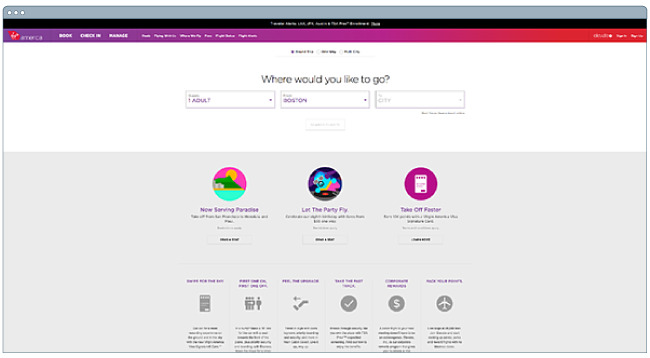
In a world where airline websites are known to be riddled with major usability issues, Virgin America has one of the best websites that pushes usability, accessibility, and responsive design forward.
Best website examples: Virgin AmericaImage Source

Feed

Award: Site of the Day (6/6/2015), Awwwards

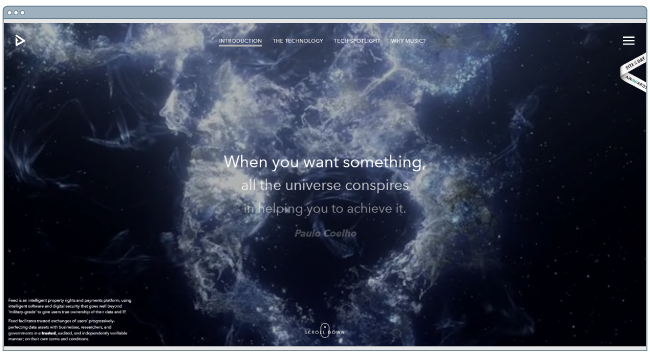
Not only is Feed an interesting concept, but it also has a stunning execution that challenges our understanding of what is possible on the web. Through a creative blend of animation and video, the site immerses users in an engaging experience.

As an atypical site, it contains several unique usability elements, including navigation that doubles as a scroll progress bar.
Best website examples: feed Image Source

ETQ

Award: Site of the Day (5/19/2015), Awwwards

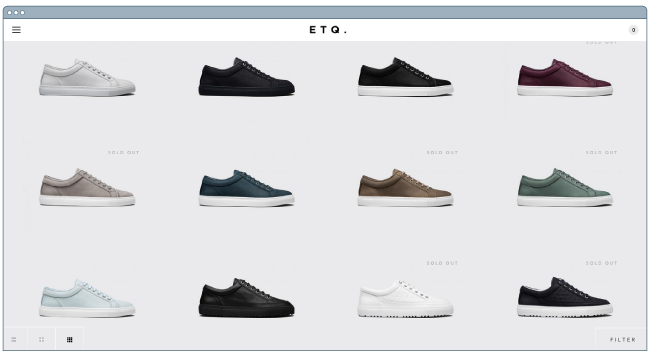
ETQ takes a minimalist approach to ecommerce. Big, compelling visuals of their product lay against simple, flat backgrounds accompanied by strong typography that keeps the focus on exactly what the user came there to see: shoes.

Looking for more ecommerce website inspiration? Read our post of the Best Ecommerce Website Design Examples to Get Inspired.
Best website examples: etqImage Source

Mikiya Kobayashi

Award: Site of the Day (7/4/2015), Awwwards

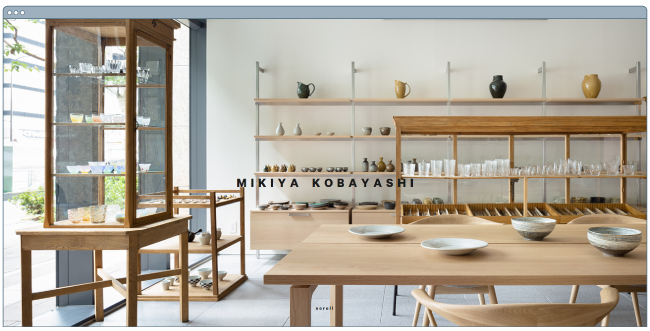
Mikiya is a Product Designer with a minimalistic portfolio that showcases his work through strong photography and subtle animations. His full site was originally created in Japanese and then translated into English, helping demonstrate the international scalability of his design.
Best website examples: mikiyaba kobayashiImage Source

Woven Magazine

Award: Site of the Day (4/4/2015), Best Website Gallery

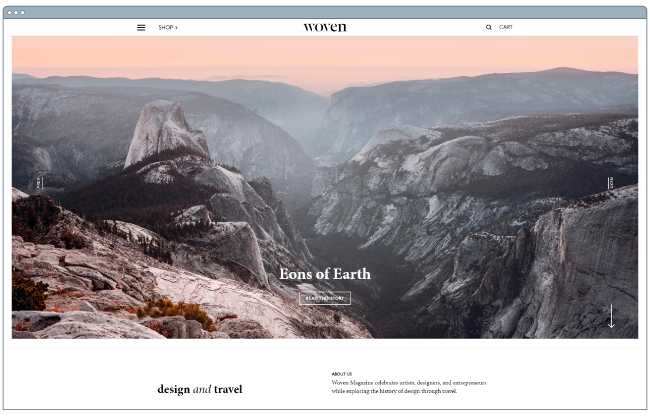
Woven is an online publication that celebrates artists, crafters, and creators alike. Its website confirms that publications can (and should) have beautiful, engaging visuals with easy-to-read content. Free of distractions like pop-ups and intrusive ads, this site is all about the experience of the content itself.
Best website examples: woven magazine

Image Source

JOHO’s Bean

Award: FWA of the Day (8/7/2015), Favorite Website Awards

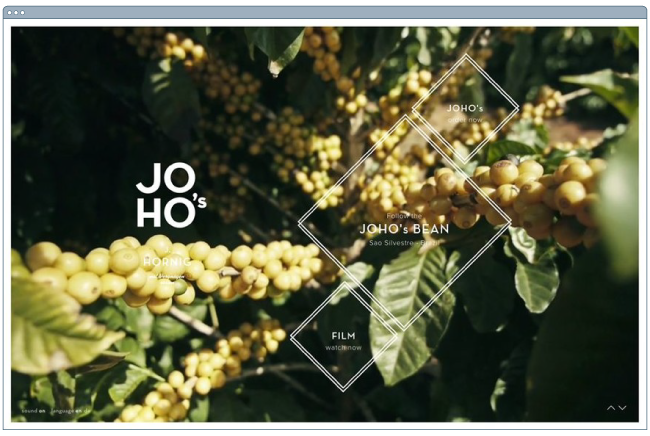
The website for JOHO’s Bean has incredible imagery, interactivity, storytelling, visual design, and most of all, sound engineering. These all come together to create a compelling, emotional, and engaging site that tells the story of a coffee bean’s journey.
Best website examples: johos beanImage Source

World of SWISS

Award: Best User Interface, 2015 Webby Awards

Another airline? Yep. SWISS airlines built an incredibly immersive site that tells the story of what it’s like to fly with them — and they did too great of a job to be ignored. Strong visuals and animations introduce the user to different sections of the site that are packed with information beyond the usual sales and marketing pitch.

Best website examples: world of swissImage Source

Other Cool Website Designs

Guillaume Tomasi

As a Photographer in Montreal, Guillaume Tomasi has built a portfolio that’s truly fit to house his unique and awe-inspiring photography. His surreal photo style is juxtaposed by his simple, flat, empty, and minimalistic portfolio design that places all of the focus on the work itself.

His unique series navigation coupled with art-gallery-inspired work introductions and perfect scrolling interactions yield an experience reminiscent of that of a real gallery.Best website examples: guillaume tomasi
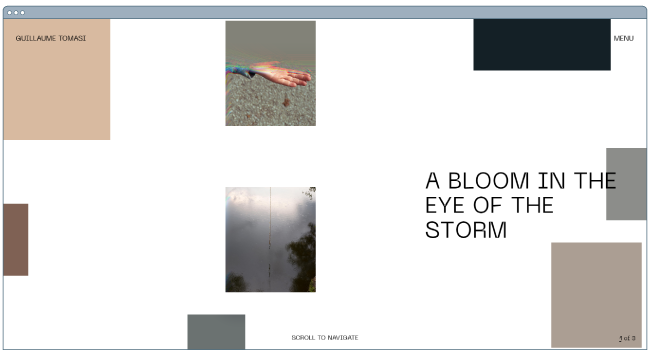
Image Source

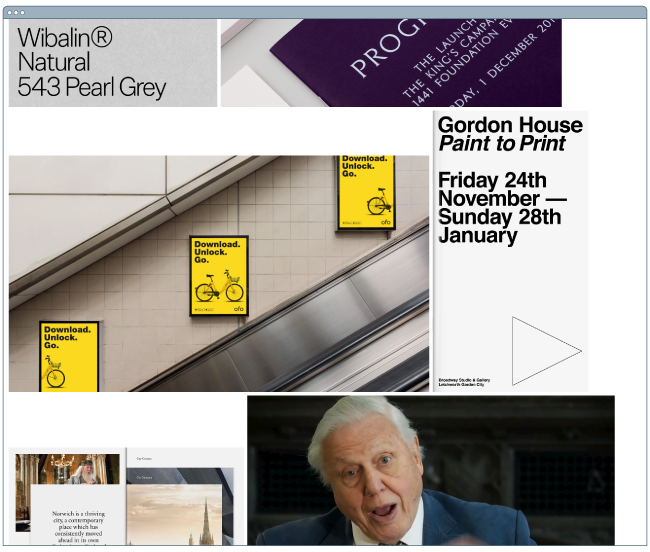
The District

This branding agency takes its imagery seriously, and it should — it handles all channels of media for its clients. The District’s website alone is a journey through some of the most beautiful artwork and photography you’ve ever seen.

These provocative tiles change rapidly as you explore the website, and the wackier they seem, the more interested you become in learning about their past work.
Best website examples: the district

Image Source

Tej Chauhan

Tej Chauhan has turned impressionist artwork into a business model with this intriguing website. Each image on this product developer’s homepage slides out to cover the previous image, offering little context around the object you now see in front of you. But it’s that lack of context that makes you want to learn more.

Plus, the tagline, “Souvenirs of The Near Future,” suggests these objects are a part of their product line — and an opportunity for you to bring these innovative objects into your life.

Best website examples: tej chauhan

Image Source

Want a similar look for your website? Check out the new CMS Hub theme collection on the Envato marketplace.

Amanda Martocchio Architecture

An architecture firm might not specialize in web development, but its website should still demonstrate its commitment to visually pleasing design. Amanda Martocchio took that to heart with this gorgeous website.

It’s no secret that Amanda Martocchio Architecture loves its work — each picture on the homepage of its website is an enchanting shot of the houses the company designs. The website labels every house you scroll through with the type of design that was intended, along with numerous angles to each building.

Best website examples: amanda martocchio architecture

Image Source

Where to Get Your Design Inspiration

If you want some design inspo, the good news is that you can find it just about everywhere.

One of the best ways to get inspiration for design is through travel. When you visit new places, you’re forced to get out of your comfort zone and experience something foreign.

What makes design so interesting is that everyone sees it differently and so, there’s always more to discover.

Another way to get design inspiration IRL is through the media. Every day, we are inundated with visual content. We make decisions about what we like, what we don’t like, and continue on our day.

But what if you were more intentional about how you viewed those interactions? You could come out of it with valuable insights.

You also can’t forget to leverage design communities. From design conferences to Reddit forums, there are hundreds of groups out there that can offer inspiration as well as advice.

Now that we’ve covered some IRL design inspiration sources, let’s cover the digital ones.

Website Design Inspiration Sources

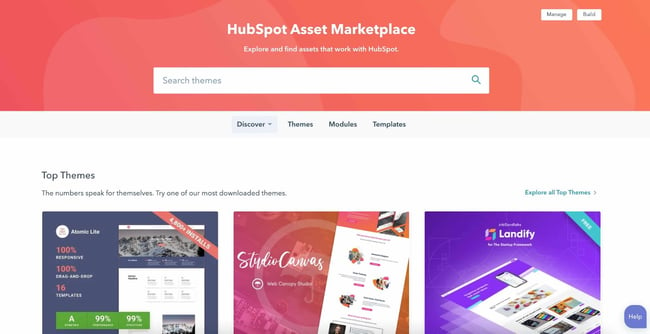
1. HubSpot’s Website Themes & Templates Marketplace

HubSpot’s Website Themes & Templates Marketplace (previously HubSpot Asset Marketplace) houses hundreds of website templates that you can sift through to get inspired for your own website.
website design inspiration sources

The best part of the marketplace is that you can narrow down by industry and feature, allowing you to see the templates that are most relevant.

Once you find a template you like, you can view a live preview of the site to get a full experience then download it if you decide to use it.

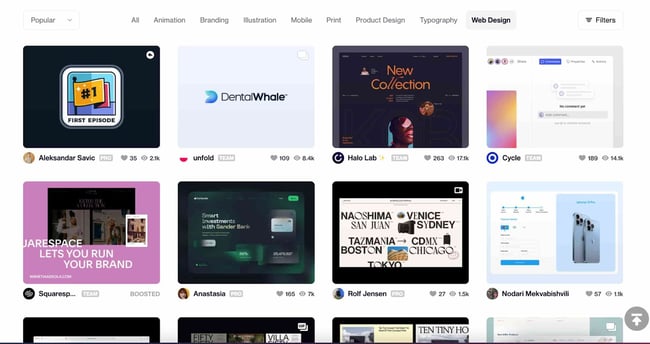
2. Dribble

Dribble is where designers go to get inspired and to share their work. The website has everything from animation and branding to illustration and mobile.
website design inspiration sources dribble

Image Source

Once you navigate to the “Web Design” tab on the homepage, you can filter results by color scheme, editing software, timeframe, and tags.

Furthermore, if you find a designer whose work you like, you can save the design for future reference and follow their work to see other designs on their profile.

This is an incredible resource to use whether you’re starting from scratch or already have a solid plan in mind.

3. Bēhance

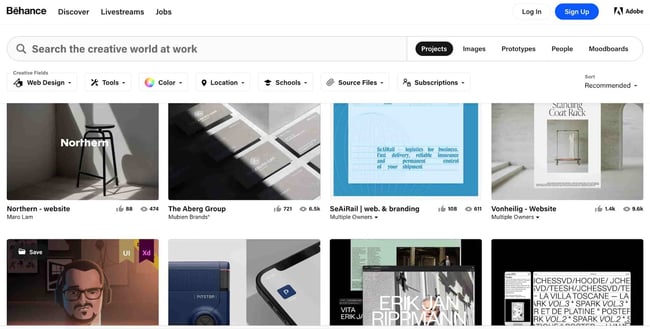
This is another digital platform full of creative inspiration to leverage ahead of your website design project.
website design inspiration sources behance

Image Source

One of the best features on this site is the ability to filter by location. This allows you to see how designers in different regions differ in technique and style.

This can be particularly helpful if you are designing a website for a foreign, unfamiliar market. You can gain interesting insights by evaluating the decisions made by Behance designers.

4. Pttrns

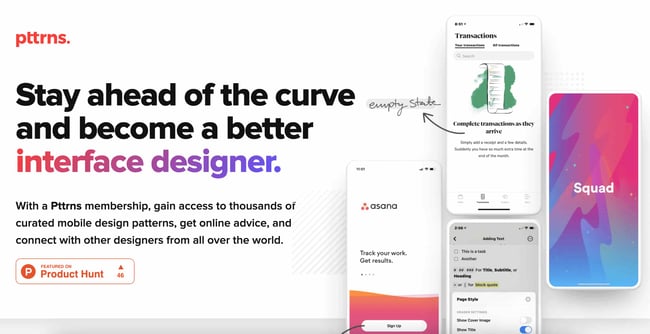
Want to focus on mobile web design? Pttrns is the place to go.

This subscription-based platform allows you to gain access to thousands of mobile design templates and get advice from top designers all over the world.
mobile website design inspiration pttrns

Image Source

Additional features on this platform include:

  • A favorites and collections folder to store your favorite designs.
  • A studio to interact with other designers and get advice.
  • A design guide to understand the strategy behind the designs.

Website Design Ideas

Now that you’ve seen a number of beautifully designed and award-winning platforms, keep these potential ideas in mind as you create your own. Here are a few suggestions we have to help you can create a site that could appear on our best website design inspiration list.

  • Consider ways that you can make your website interactive, like the 1917 example.
  • Make a website that emphasizes the mobile experience, even while it still has a good UX on desktops.
  • Create a website that tells a story about your brand with photos, text, or video.
  • If you can’t create a heavily interactive site, consider drawing in eyes with a site that presents a slideshow of your photos.
  • Ensure your call-to-actions are easy to see and encourage visitors to continue exploring your site
  • Keep navigation clean. Ensure your visitors always know how to get back to the homepage.
  • Integrate your social media sites via social embed buttons, so site visitors can easily follow you on your various social channels.
  • Keep each of your web pages consistent in design — including font, colors, images, and messaging.
  • Test your website’s usability with a heat map, which will show you on which web pages your visitors are most likely to bounce.
  • Include a live chat or chatbot to give visitors the option to engage with you directly on your website if they prefer live chat to phone calls. Live chat can automate functions for your sales and service reps and create a better communication experience for the customer.
  • Get an SSL certificate to ensure your website is secure. SSL is part of Google’s search ranking algorithm, so an SSL certificate can help you rank higher in search.

Build a Beautiful Website for your Business

Now that you’ve perused our best website design inspiration, it’s time to get started creating your own site. You’d be surprised how easy designing a site is once you have a look and feel in mind.

Once you’re ready to start coding or dragging and dropping, you’ll have a beautiful website that your visitors will enjoy.

Editor’s note: This post was originally published in January 2021 and has been updated for comprehensiveness.
examples of brilliant homepage, blog, and landing page design

Categories B2B

3 Ways Marketers are Already Navigating Potential Recession [Data]

While economists and investors debate whether we are or aren’t in a recession, 78% of marketers say it’s already here.

Since marketers are usually the first to see budget cuts in an economic downturn, it’s no surprise they’re already being hit hard. As one marketer in our sums it up:

“The company is losing money, having to raise pricing, and the budget for marketing is smaller. Because prices are higher and the marketing budget is lower, there is not enough marketing for the traffic and conversions we need.”

To help marketers recognize they’re not alone, we surveyed 300 marketers to find out exactly how they are being impacted by the recession.

Download Now: Free State of Marketing Report

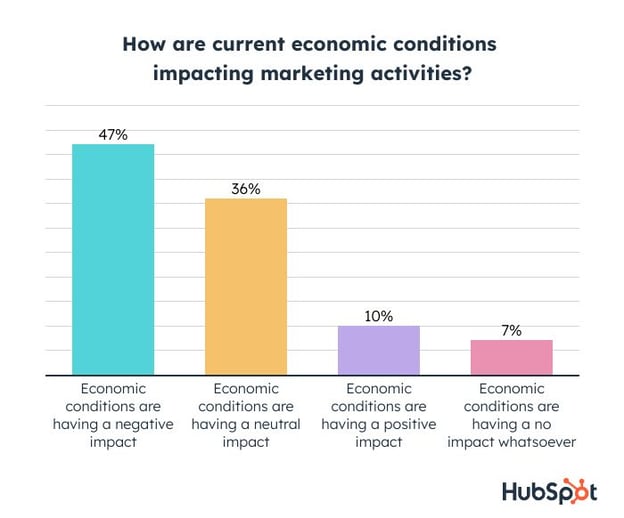
While 47% of marketers said that the economy was already having a negative impact on their work, we also dug deeper to discover three key impact themes marketers are experiencing.

In this post, we’ll highlight those themes, share quotes from anonymous marketers who’s participated, and offer resources or tips to help you navigate this time.

Three Marketing Impacts Caused by Recession Concerns

1. Consumers are spending less and exercising more caution/discretion:

Though not surprising, the biggest impact marketers are seeing is that consumers are cutting costs back due to uncertainty. This aligns well with data we’ve found from multiple consumer pulse surveys over the last six months.  

how how has the potential us recession impacted your spending habits new survey data: majority spending less

From inflation to geopolitical uncertainty and lingering COVID-19 concerns, consumers simply have no idea what to expect from the future.

“People are spending less because they do not know how long the recession is going to last. As a result, they spend less on our products,” says one survey respondent.

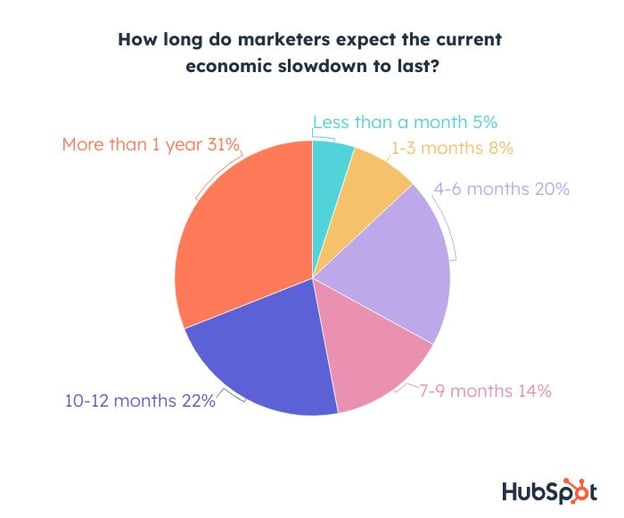
To make matters worse, a majority (67%) of marketers expect the recession to last more than six months, and one-third expect it to last more than a year:

how long do marketers expect the economic slowdown to last.

While we don’t have a crystal ball, aren’t giving legal or financial expert advice, and can’t possibly know what a full-blown recession will feel or look like at this point, it’s important to remember that recessions are often unavoidable. While we can’t prevent them, it’s important to continue leveraging credible sources, data, and experts beyond just a few publications when determining when, if, and how a modern-day recession would impact your business.

2. Inflation has made everything more expensive across businesses.

While consumers are pulling back spending, inflation forces businesses to raise prices and cut budgets for things they’re purchasing to stay afloat.

As a marketer in our survey put it, “higher prices make it hard to make ends meet. I have to delay payments, purchases, and planning.”

Company’s raising prices while consumers are scraping by leads to a misalignment between the two parties, leading to frustration on both sides.

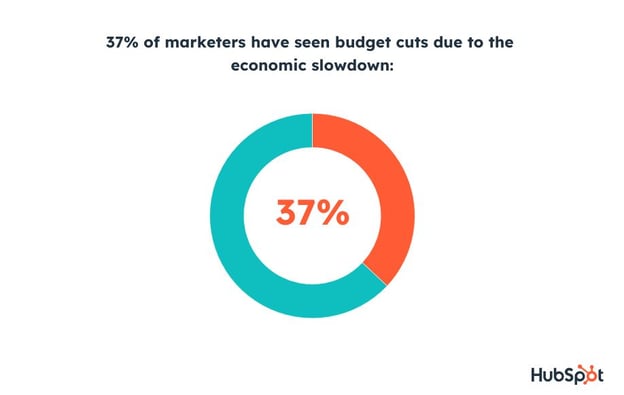
3. 37% of marketers have already seen budget cuts.

Marketers in our survey say they’re “needing to spend more to get similar results from six months ago.” At the same time, their budgets are being cut.one-third of marketers have already seen budget cuts

With their usual marketing channels proving to be less effective than before, marketers are having to get creative.

On top of that, one in three marketers say a recession will have an even bigger impact on their marketing activities than COVID-19, while another 33% say it will be about the same.

One way to stay ahead of the game is by following suit of the 80% of established marketing leaders, who participated in another survey we ran, saying they’ve already planned or prepared for a recession. 

If you run a team or major project that requires a budget, and haven’t started strategic planning for different company outcomes, here’s a helpful guide. For marketers at any level, it can also be a great idea to make pivot or backup plans for how you’ll adjust your content, schedules, or other aspects of your work if something unexpected happens. 

What’s Next?

So what now? We’ll run this same survey at a later data in the coming year and keep you updated on how the recession continues to impact marketers. In the meantime, you can review consumers’ take on this time, get insights from marketing executives, or catch up on everything else going on in our quickly-changing field with our 2023 Marketing Strategy and Trends Report

Disclaimer: This blog post is not legal or financial advice for you or your company to use in navigating a recession, economic downturn, or any other type of economic landscape. Instead, it provides background information to help you better understand how anonymously surveyed marketers unaffiliated with HubSpot are currently experiencing this time.
This information is not the same as legal or financial advice, where an attorney applies the law or a financial expert applies their expertise to your specific circumstances, so we insist that you consult an attorney or trustworthy financial sources if you’d like advice on your interpretation of this information or its accuracy.
In summation, you may not rely on this as legal advice, or as a recommendation of any particular legal, economic, or financial understanding.

New Call-to-action

Categories B2B

Is AI the Future of Video Creation? We Asked Wistia’s Head of Production

Video has become a cornerstone of modern marketing, landing front-and-center in many marketing strategies.

Yet, despite being an ROI powerhouse and top lead generator, video is a hard medium to pull off.

To state the obvious, video creation isn’t quick. On average, it takes marketers two weeks to create a video from start to finish.

But what if there was a way to streamline the process — to quickly come up with ideas and execute them in a fraction of the time?

The solution could be here already, and it’s with artificial intelligence.

Here, I spoke with Chris Lavigne, Head of Production at Wistia, to learn how AI is changing the way we create videos, and how it can power your next marketing video.

Free Guide: How to Use AI in Content Marketing [Download Now]

How AI is Changing Video Marketing

Imagine creating a video without writing a script or picking up a camera.

Thanks to new artificial intelligence (AI) and machine learning (ML) tools, it’s not only possible, it’s already happening.

Generative AI uses existing content like audio, video, and text to generate original content. In this case, video marketers can automate many stages of the process — like scripting, editing, and transcription — in a matter of seconds.

The ability to create videos in record time is an obvious benefit of using AI. But for Lavigne, it’s more than just saving time. It also has the potential to push the creative envelope.

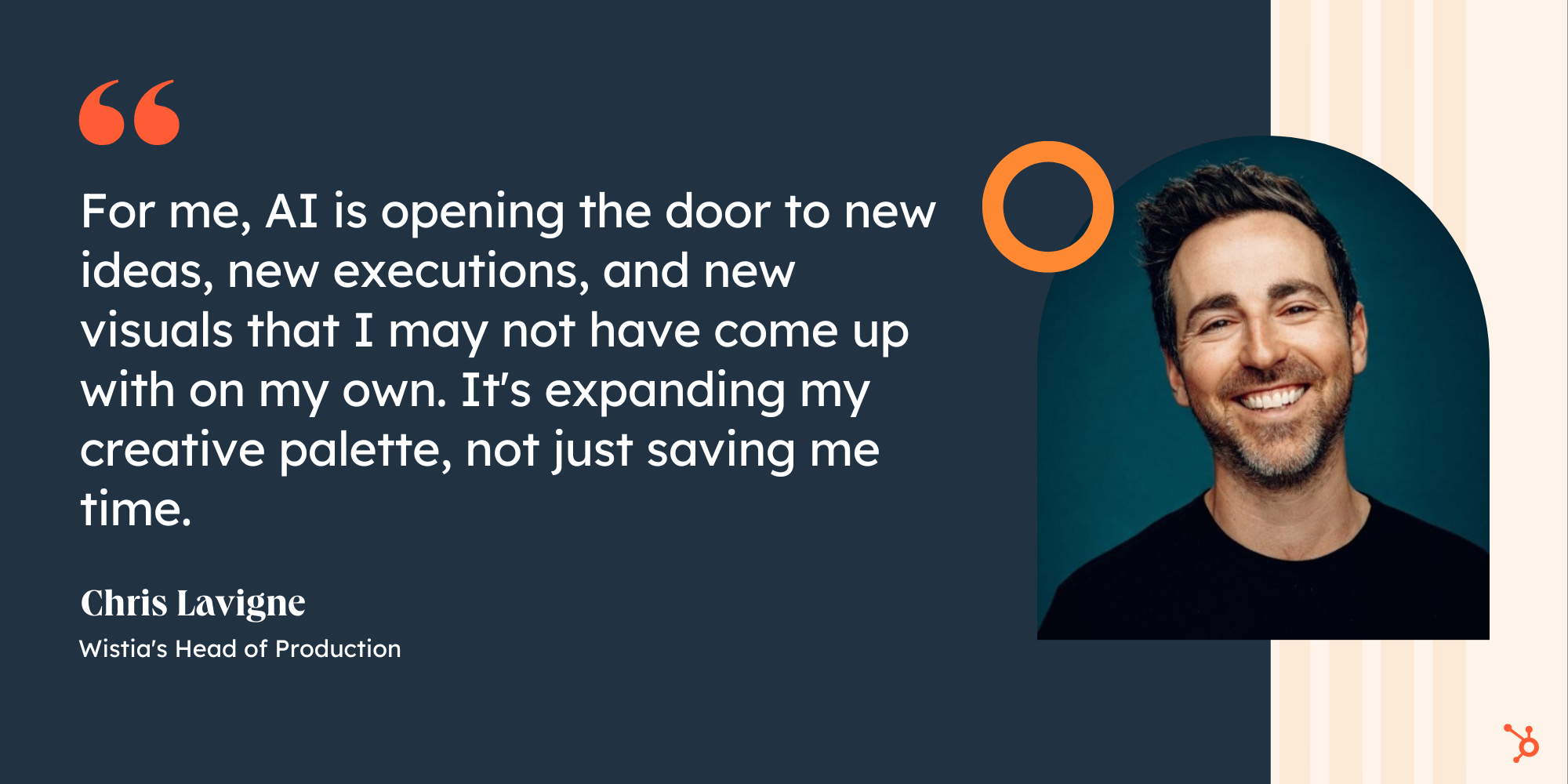
“For me, AI is opening the door to new ideas, new executions, and new visuals that I may not have come up with on my own. It’s expanding my creative palette, not just saving me time,” he told me.

Chris Lavigne quote 1

For instance, Lavigne and his team at Wistia created a video almost entirely powered by AI.

The process began with Lavigne opening up ChatGPT, an AI-powered chatbot, to generate a 60-second script about how to make an apple pie in the style of a YouTube video. He then uses AI software Synthesia to create a human avatar of himself to read the script.

To top it off, he adds a few final touches with visuals and b-roll. Here’s the end result:

Let’s take a look at more ways you can use AI in the video creation process.

How AI Can Power Your Next Video

1. Ideation and Script Writing

For most video marketers, the hardest part of the process is coming up with a great idea, followed by a compelling script.

For Lavigne, using AI for scriptwriting has been a game-changer. Specifically, he uses ChatGPT to create a framework.

“I can input a prompt and get an incredible starting point to take me from zero to 100. I can input how long I want the video to be, how detailed I want it to be, and what style of video I want it to be. The results are quite remarkable when you prompt it with the right things,” he told me.

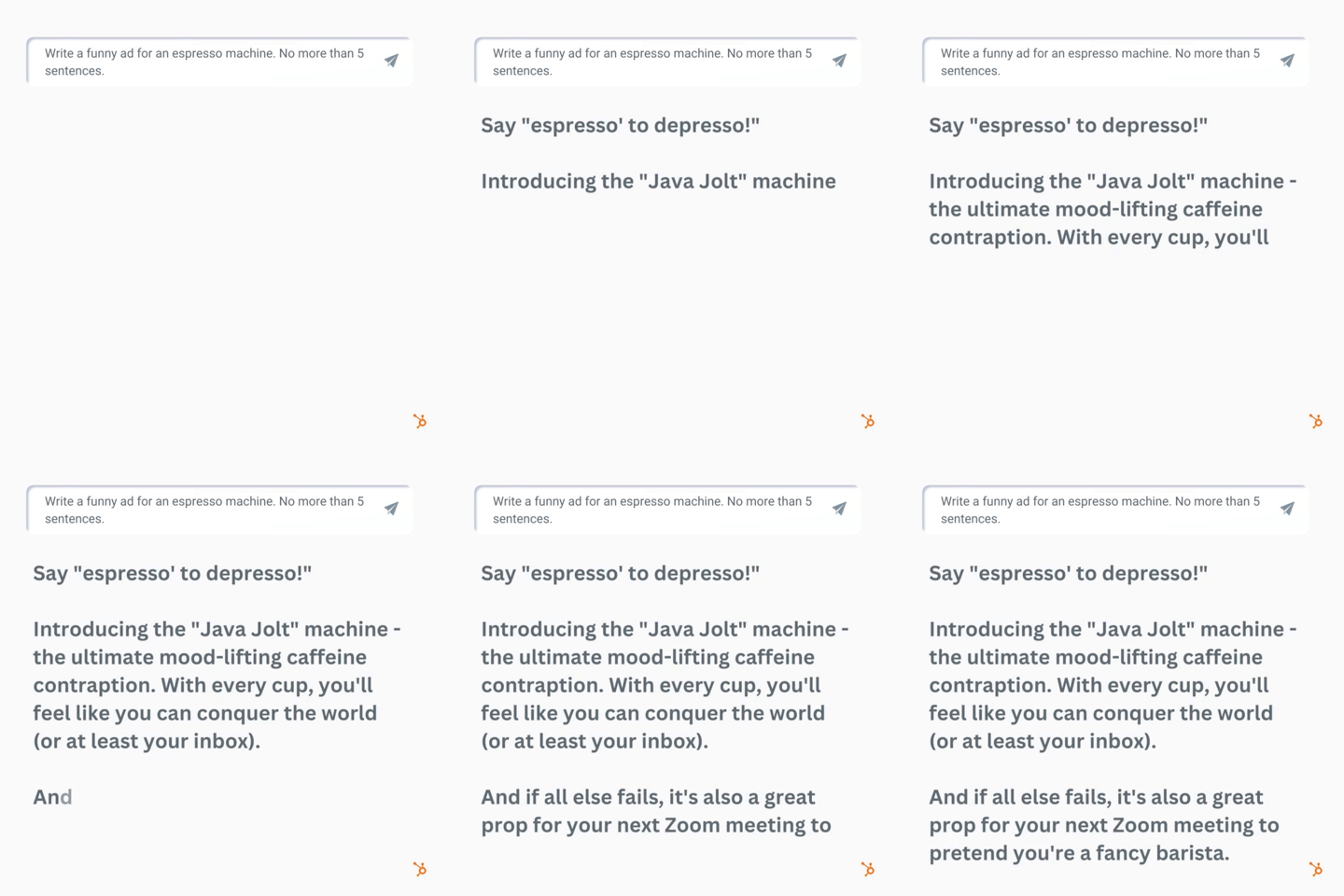
For example, you can prompt ChatGPT to write an ad in the style of an info-mercial or a TikTok video. You can even request a specific tone, such as funny or academic.

giphy (1)-Mar-17-2023-03-54-44-4061-PM

However, Lavigne is quick to caution against simply copying and pasting AI-generated content.

“AI can give you a rough edit, but you still need to add your perspective, personality, or brand touch. It’s not as simple as inputing a prompt and pasting the output into your marketing efforts. You’re missing a huge opportunity if you treat AI in that regard,” he says.

2. Video Editing

At Wistia, Lavigne has been exploring different AI tools in the post-production stage. 

One of these tools is Runway Al, which can quickly remove objects from the background of a video. Historically, this would be a time-consuming process that involves moving frame-by-frame to trace it out. Now, AI can do the heavy lifting.

Another tool Lavigne uses is Descript, which transcribes raw footage into text within minutes. This allows him to edit and rearrange video content without the need to constantly pause and rewind.

Turning raw footage into a final product takes a lot of time — but AI tools can streamline the process. 

As Lavigne puts it, “When you find the use case that you can use this software for, it blows your mind how much time you can possibly save. It gets me excited for where these tools are going in the future.”

3. Video Production

While artificial intelligence is remarkable, it does have its limitations in terms of video production.

Lavigne gives the example of human avatars. Yes, they look like humans. They talk like humans. But they’re not human enough to be believable.

Image Source

He told me, “There’s no substitute for shooting a real human being. AI has yet to replicate the image or likeness of humans, or the emotions they have on their face. That’s not to say it will never change. But currently, it’s a huge limitation in the world of production.”

This leads us to an important point: AI is not a perfect solution for everything. While it can assist in other areas in the production stage — like creating B-roll — you need to know when to use this technology, and when it’s better to do things the old-fashioned way. 

What AI Can’t Do For Video Creators

Almost 70% of decisions are based on emotion. In video marketing, you have to visually appeal to people’s emotions to make an impact.

The problem?

AI can mimic human intelligence, but human creativity isn’t as easy.

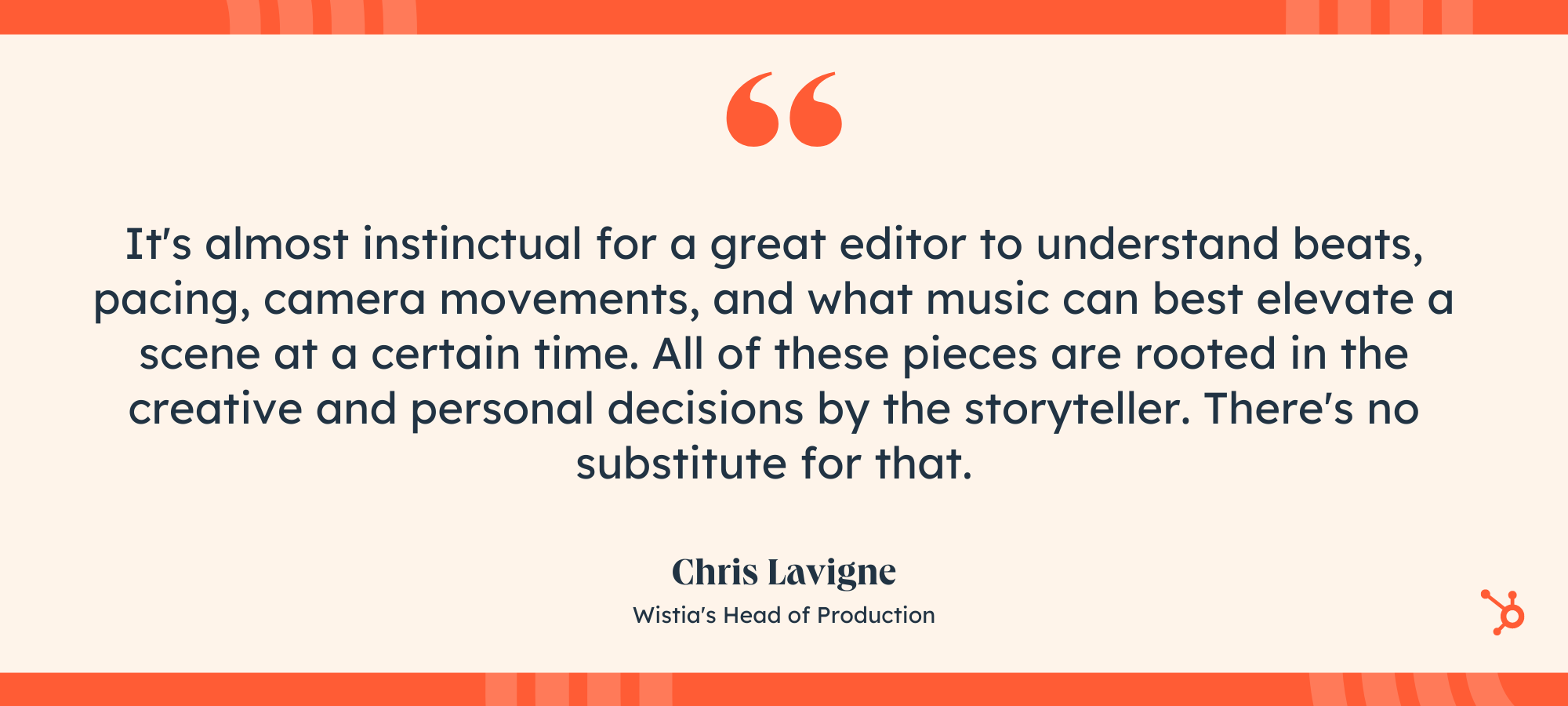
“It’s almost instinctual for a great editor to understand beats, pacing, camera movements, and what music can best elevate a scene at a certain time. All of these pieces are rooted in the creative and personal decisions by the storyteller. There’s no substitute for that,” Lavigne observes.

Chris Lavigne quote 2

As a consequence, Lavigne predicts that we’ll see an influx of generic, mediocre content generated by AI in the near future. However, he also sees this as an opportunity for video marketers to showcase their creativity and stand out from the crowd.

He adds, “Now is the time for video marketers to put their creative fingerprints over their work. That’s how you’ll stand apart.”

Is AI the Future of Video Creation?

Almost every emerging technology is met with some skepticism, and AI is no exception. For instance, could it eventually replace video marketers entirely?

Fortunately, Lavigne isn’t so convinced. He draws a parallel to the advent of photography, which some believed was the death of traditional art forms. 

He says, “The reaction to AI is similar to the arrival of a bunch of different technologies, like photography. If you can just photograph something, why do you need an artist to paint it? In reality, that’s not quite what happened.”

“We’re going to treat AI as a similar thing. It’s going to change the industry, but it won’t replace video creators,” he adds.

While AI may not replace you, Lavigne argues that the video marketer who uses AI will have an upper-hand. Therefore, video marketers should approach AI as a handy sidekick — not a rival.

Ultimately, Lavigne is enthusiastic about the future of video. In his own words, “I’m excited to use AI to automate the more tedious parts of production, which frees me up to make the best videos possible.”

New Call-to-action

Categories B2B

The State of Consumer Trends [How Data from 600+ Consumers Shifted Since 2022]

As the world constantly changes, it can be hard to stay up to date with ever evolving consumer behaviors, preferences, and trends.

But, as marketers, knowing your buyer persona — and what motivates them — is absolutely vital.

To help both marketers and business professionals alike, we conducted a bi-annual survey of 600+ U.S. adults in May 2022 and January 2023, and did a deep dive into generation-by-generation data to learn:

  • What trends they’re following.
  • Which online platforms they use.
  • How and where they prefer to shop.
  • What they think about returning to the office.
  • and much, much more.

Download Now: 2022 State of U.S. Consumer Trends Report

Here, we’ll explore some of the biggest consumer trends changes between May 2022 and January 2023. 

The 3 Biggest Consumer Trends Changes in the Past 9 Months

First, let’s dive into three of the biggest changes we saw between May 2022 and January 2023. 

1. Engagement with virtual worlds stayed about the same, but consumers are investing less money into virtual items or currencies. 

Despite the waning hype around the metaverse, attitudes haven’t changed much over the past six months. Both May and January’s surveys found only 8% of U.S. adults have ever visited a metaverse.

Public opinion on the metaverse has improved slightly over the past nine months. 36% of consumers now say the metaverse is the future of technology — up 6% since May. And 33% say the metaverse is an extension of reality, up 18% since May. 

However, investments in virtual currencies have seen a decline. In fact, among those who’ve ever visited a metaverse, only 50% reported buying cryptocurrency in January — which is a 35% decrease since May. Additionally, 60% of metaverse visitors reported buying NFTs in January 2023 … 13% lower than May’s respondents. 

The decrease in purchasing virtual currencies might have to do with today’s economic landscape. If people are generally more conservative with their spending, this could trickle into the virtual atmosphere, as well. However, it’s important to take note of the decrease as a potential signifier that virtual currency isn’t as popular as it was in 2022. 

2. Gen X and Boomers are warming up to social media as a product discovery/shopping channel, although TV ads and internet search are still preferred. 

In our January 2023 survey, we found 46% of Gen X and 24% of Boomers have discovered a new product on social media in the past three months — that’s a 10% and 41% increase since May, respectively. 

Additionally, 23% of Gen X (up 28% from May 2022) and 6% of Boomers (up 50% from May 2022) bought a product on social media in the past three months. 

more Gen X are discovering products on social media

All of which is to say: The group of consumers willing to purchase products and services on social is growing rapidly. Continuing to invest in social media marketing as an opportunity for product discovery is a good ideas we enter 2023. 

3. Companies taking a stance on social issues has grown more influential on consumers’ purchasing decisions since May 2022.

Oftentimes, consumers make purchasing decisions based on what they know of a company’s social or environmental advocacy.

This trend has increased over the past six months. Some of the biggest jumps we saw include: 

  • 52% of consumers say they’re more likely to purchase from a company that actively tries to reduce its environmental impact (up 13% since May 2022)
  • 39% say they are more likely to buy a product based on the brand’s commitment to diversity/inclusion (up 8% from May 2022)
  • 69% say they are more likely to purchase from a company that donates a portion of its profits to charity (up 5% from May 2022)
  • 79% of people are more likely to buy from companies that treat employees well
  • 48% say a product being made by a small business makes them more likely to purchase (up 9% from May 2022)

All of which is to say: It’s just as important – if not more so — to align your brand with strong values that matter to you, and to communicate those values to your consumers.

I know the power of this first-hand. I often buy Patagonia jackets, even though they’re more expensive than some other coat brands, because I’m proud to support Patagonia’s environmental activism

Next, let’s dive into the state of consumer trends in 2023, and how they’ve changed since 2022.

The State of Consumer Trends in 2023 [Top Findings You Need to Know About]

1. More and More, Gen Z Differentiates Themselves From All Other Age Groups

One of the most fascinating things to dig into when looking at survey results were the vast differences between Gen Z and other age groups — including their closest predecessor, Millennials. 

When taking a deeper dive into our generation-by-generation data, we found that Gen Z:

  • When it comes to shopping, generations are highly influenced by price, quality, and product reviews. Gen Z especially values brands that have active communities around them.
  • TikTok and Instagram are the most used social media apps among Gen Z women, while men spend much more time on YouTube.
  • Gen Z is all about YouTube, Instagram, and TikTok. Not only for social networking and entertainment but also for discovering (and buying) products.

percentage of each generation who purchases on social media

The findings above weren’t the only interesting points to call out. Our lead researcher and analyst, Maxwell Iskiev explores the differences between how all age groups shop and discover products with this follow-up guide:

max iskiev discusses purchasing habits of consumers in 2023

How Each Generation Shops in 2023 [New Data from Our State of Consumer Trends Report]

2. BeReal saw a 313% increase in usage between May and January. 

We compared usage of social media platforms between May 2022 and January 2023, and were surprised to see that BeReal had the biggest increase in usage (313%), followed by Twitch (29%), and LinkedIn (20%). 

However, it’s important to note that this doesn’t suggest those platforms are used by most consumers. BeReal, for instance, saw a 200% increase from 1% to 3% of consumers — so it’s still a relatively tiny sampling of the full consumer population. 

In terms of which platforms see the most consumer usage, Facebook, YouTube, and Instagram still take the lead. 

usage of social media platforms by u.s. adults in 2023

3. While social media channels are fun and emerging, search is the most valuable tool.

While age groups like millennials and Gen Z are quick to dive into new and emerging channels, especially those in the social media realm, they still turn to online searches, TV, and other utility channels to learn about everything from trends to products.

When asked where and how they discover new products, most consumers — regardless of age group — pointed to web searches.

the most popular channels for discovering new products in 2023

To learn more about the other top channels consumers discover products or brands on, as well as the content they love to see when they’re there, check out Maxwell Iskiev’s post: The Top Channels Consumers Use to Learn About Products [New Data] or our FREE and downloadable State of Consumer Trends Report PDF.

4. If you don’t have a mobile-friendly strategy — you could fall behind.

It’s no secret that each new generation gets more and more mobile and digitally connected. And, as the years go by, technology, websites, and social media networks are getting more and more mobile.

But, today Gen Z and Millennials aren’t the only ones finding themselves surfing the web on mobile devices. Now, most consumers regularly use mobile devices for everything from search, to social media, to even online shopping.

These findings aren’t surprising to us. In our 2023 Web Strategy Report, web managers we polled described mobile optimization to be an incredibly effective strategy for marketing and site growth. 

5. Some consumers are stepping into Web3, but most don’t even know what it is.

While some consumers, especially those in younger generations like Gen Z and millennials, are ready to throw their whole wallet into the metaverse and cryptocurrency, most are still getting their first taste of the Web3 world.

In fact, 51% of our survey participants from the May 2022 survey say they don’t even understand what Web3 even is yet.

While Web3 experts believe this technology will continue to grow in the coming years, businesses don’t need to pivot their whole strategy to get ahead of it right this second.

However, as the technology gets more prominent and accessible, it’s still helpful to learn about the potential opportunities and risks of the Web3 space. 

That’s why Caroline Forsey interviewed a handful of Web3 experts to learn more about how it could impact how consumers use the world wide web in the future.

Here is a quick, overarching summary of what Web3 could mean for future internet usage from Anna Seacat, VP of Marketing and Web3 Community at Proxy. anna seacat quote on web3

While Web3 might be a new concept to many, expect to hear more about it as the technology becomes more accessible to consumers and businesses in the coming years. For more expert predictions around this, hear what our CMO Kipp Bodnar and Kieran Flanagan, our SVP of Marketing, have to say about it in this episode of Marketing Against the Grain.

For more insights, check out these guides:

6. Consumers crave video, and effective brands are taking notice.

By now, you know that video has played a powerful role in the lives of consumers. Not only do consumers stream more video than ever, but year-over-year, HubSpot researchers find that most brands consider it to be their most effective type of marketing content

But, not just any video will result in a conversion, purchase, or view. While you don’t need a huge budget to woo your audiences, you will need to create content they’ll actually enjoy, keep their attention on, and be persuaded by.

In fact, 69% of our January 2023 respondents say it is more important that a marketing video be authentic and relatable than polished with high-quality video/audio.

This video interview and post from Wistia CEO, Chris Savage goes into great detail on his tips for leveraging video to humanize your brand.

For more on how marketers are benefiting from video in 2023, also check out our 2023 Video Marketing Report.

7. Stores and online retailers aren’t going away, But social commerce is growing.

A few short months ago, it seemed like social commerce features on Facebook and Instagram were just launching and gaining visibility. And although consumers still prefer to shop at stores and on the sites of online retailers they know and trust, some have started to make purchases via their favorite social platforms. 

When we asked consumers to select the top three ways they prefer to buy products back in May 2022, a whopping 73% still prefer to shop in-store, while an unsurprising 53% said they like to buy from online retailers.

Flash-forward to our January 2023 survey, and we still found 69% of consumers prefer to purchase a product in-store, followed by 52% who prefer to purchase through an online retailer selling a variety of brands (e.g. Amazon.com).    

how consumers prefer to purchase products

Despite how new social commerce is, one-tenth of consumers or 13% like to buy products directly from social media. And, with this trend starting to grow, we’re already seeing some brands thrive on social commerce channels.

Take Pink Tag Boutique for example. The Kentucky-based clothing and accessories business saw immense growth on the Facebook Shops. They attribute $44,448 in incremental sales from the tool, and have seen 66% greater average order value from social commerce buyers compared to those who bought directly from the company site.

Pink Tag Boutique Facebook Shops Case Study

For more examples of brands that are already excelling in social commerce, check out this post.

You can also find more shopping trend data in this follow-up report from Caroline Forsey: The Shopping Trends of 2023 & Beyond [State of Consumer Trends Data]

8. Compared to May 2022, consumers now want to return to an office. 

For the last two years, consumers — for the most part — have been stuck working at home. And, while many initially found it to be a tough new transition, a lot of us have learned to love it. 

Back in May 2022, in our initial survey, we found 54% of survey participants would rather quit than return to an office. 

work styles people prefer in 2023 in-office or remote

This isn’t the case anymore. As of January 2023, in-office is now the model that most workers prefer. In fact, 36% of full-time employees prefer to be fully in-office, while only 31% want to be fully remote and 33% prefer hybrid.

Additionally, the number of full-time office employees has risen from 40% in May 2022 to 48% in January 2023. 

However, remote/hybrid employees aren’t interested in going back to the office full-time. 48% of them would still consider leaving if they had to come in 5X a week, although they are more open to it than they were back in May. 

most consumers are concerned about being laid off

Even in times of financial uncertainty, it seems that consumers care more than ever about job flexibility — even in a time when job security is of larger concern. (In fact, 48% of full-time employees are currently concerned about being laid off.)

In the January 2023 report, we found The #1 reason employees plan to stay in their current job is healthy/work-life balance, beating out competitive pay at #2.

After all, countless studies show that it’s not healthy to make your job your entire life.

So, if you’re managing a team or planning an office re-entry strategy, keep your employees’ needs in mind. Below are just a few of the other workplace factors that could keep employees from looking elsewhere. 

top reasons employees want to stay in their current roles

For more on this, check out Workforce Trends You Need To Know About in 2023 [New Data].

9. Many consumers consider themselves “creators.”

When looking at our survey results for the question, “Would you consider yourself a creator?”, we found that 30% of 18-24-year-olds and 40% of 25-34-year-olds call themselves content creators.

What’s great for brands here? Your very own audiences might jump at the chance to create content for you, which could in turn help them build online influence.

But, what exactly IS a “creator”? Check out this deep dive by Caroline Forsey to learn more: If Everyone’s a Content Creator, Is Anyone?

10. Consumers care about their privacy. Brands should too.

Throughout the last two years, marketers have been pivoting due to privacy changes like Apple IOS 15’s email privacy rollout and the looming phaseout of third-party cookies. But, they might not want to stop there when it comes to considering consumer privacy.

Across generations, our data found that consumers are more likely to trust, interact with, and purchase products from brands that they trust with their data.

And, while lots of data is certainly helpful for brands when learning about audiences, consumer trust is the best way to earn loyalty.

In fact, in his post about fostering a privacy-first world, HubSpot CMO Kipp Bodnar gives tips on how marketers can create strategies that feel personalized, but use data in an ethical, trustworthy, and transparent way.

Kipp Bodnar's perspective on changing advertising standards in 2023

As a marketer, it’s important to identify which data points you really need and don’t need from your consumers and transparently explain how data like cookies or contact information is used when consumers are asked to give it out.

Download Now: 2022 State of U.S. Consumer Trends Report

What’s Next for Consumers, According to Trend Analysts

Now that you’ve read through the biggest findings of our Consumer Trends Report, you might also be asking, “What trends and themes could come in the next six months — or beyond?”

To give you a taste of just a few trends to keep on your radar, we reached out to Julia Janks of Trends.co to learn what she and her team of trend analysts will be focusing on. Here are three of the nine trends they’re keeping on their radar.

1. Gifting strategies could catch the eyes of consumers.

Forget loyalty points — gifting is the new customer retention strategy. As remote everything continues to rise, keeping connected to clients and loved ones will be key.

why gifting matters

Source: &Open

Gifting powerhouse 1-800-FLOWERS had a record-breaking year in 2020, and venture capital is flowing into startups like &Open ($7.2m last May) and Gracia (~$14m since its 2017 launch).

Companies will also use gifting to target employees, since worker retention is at an all-time low, and the average cost of replacing an employee is about seven months of their salary.

2. Voice search and audio SEO opportunities will grow.

The world of podcasts is growing faster than the entire internet did back in the early 2000s. Spotify alone now hosts 3m+ shows (that’s ~43x the number of titles on Netflix, Disney+, and Apple TV+, combined).

podcast growth vs. internet development

3. Consumers will visit pop-up shops — in the metaverse.

Pop-up shops in the metaverse are a thing now. And, brands like Hogan are already testing them out.

We could see the metaverse shopping industry continue to grow with consumer interest, as 30% of consumers HubSpot surveyed think more brands should consider virtual stores.

For the Julia’s full list of trends to watch, check out 9 Things Trends.co Analysts Will be Watching in The Next 6 Months & Beyond — and don’t forget to check out Trends.co for more business news, innovative ideas, and industry trend coverage.

Dive Deeper into Consumer Trends

In the post above, we gave just a few highlights of our State of Consumer Trends Survey, as well as our predictions for what’s to come. To learn more interesting themes, check out these follow-up posts:

Want all the data in one place? Click below to download the full findings of the survey in our State of Consumer Trends Report

New Call-to-action

Consumer Trends Post Authors

state of consumer trends post contributors

Categories B2B

12 of the Best WordPress Popup Plugins in 2023

Despite their overwhelmingly bad reputation, popups are a useful tool, but high conversion potential is not worth sacrificing user experience. Luckily, with the right WordPress popup plugins, you can leverage the high-conversion potential of popups without driving users away.)

Before diving into the tools, let’s look at the features to determine if a plugin suits your needs.

Grow Your Business With HubSpot's Tools for WordPress Websites

What to look for in a WordPress Popup Plugin

Popup plugins offer many features — from customization to screen display locations and built-in analytics — but the most important features to watch out for are targeting and trigger options.

Targeting refers to where the popup will appear on your website and who it will be shown to. Popular ways to target users with popups include page-level targeting, geolocation, device, and traffic source.

Triggers are actions that a user needs to take for the popup to appear. Popular trigger options include page entrance, scroll depth, clicks, time on page, and exit intent.

Having a few popup forms on your WordPress website could boost your lead capturing game. A quick Google search shows that there are many tools to choose from. To help you sort through the clutter and find a tool that moves the needle for your team, we’ll take a look at 12 WordPress popup plugins you should consider below.

1. HubSpot WordPress Plugin

HubSpot’s plugin allows you to connect your WordPress website to your HubSpot account for seamless integration. Any changes made to your popups in your HubSpot portal will be automatically reflected on your WordPress website without any extra work on your part.

Example of HubSpot's popup form


HubSpot’s popup tool is highly intuitive and easy to use. You are first prompted to select the type of popup you want (box, banner, or slide-in) and then taken to the customizer where you can edit the text, add an image and relevant form fields, and even design your own thank-you message at the end.

Every contact you capture is automatically added to your free HubSpot CRM account. You can also target users by simply typing in the URL of the page(s) you want your popup to show up on and choose whether you want it to be triggered by a 50% page scroll, exit intent, or time elapsed. And if users decide to dismiss your popup, you can choose when they will be exposed to it again.

All the features in this tool are free.

What We Like: Other than the obvious reason being that this is our plugin, we love it for all it offers for free. This is an all-in-one plugin that handles everything you need on WordPress. With popups, you can create or manage your pre-existing popups with little to no hassle.

2. OptinMonster

OptinMonster was one of the firsts to popularize the use of popup forms in the marketing space. Its drag-and-drop feature makes it highly easy to use. You can choose from a variety of pre-built templates or create your own popup from scratch. Their Canvas feature allows you to create any type of popup (not just forms!) with the use of custom HTML/CSS and WordPress shortcodes.

Small Success is another unique feature that lets you display different offers to people who have already converted on one of your popups so you won’t annoy your visitors by showing them forms they’ve already signed up for. You gain access to plenty of triggers, such as exit intent, time on page, user inactivity, clicks, as well as many advanced targeting options like new vs returning visitor, cookie, geolocation, device, adblock usage, and more.

Optin monster's plugin creation page

The main drawback with this plugin is that there is no free version. Plans start at $9/month, but you will need to upgrade to a higher tier for the more advanced features like A/B testing and exit intent.

What We Like: This is the best option for easy customizability. You have drag-and-drop for design, different templates to work off of, or even the ability to design from scratch. You’ll easily be able to with any type of popup you want to make with this plugin.

3. Elementor Popups

Design stunning popups with the popular page builder plugin Elementor and their Popup Builder feature. Elementor Popups uses the same interface as the page builder, allowing you to apply the same widgets and styling options to your popups, like buttons, countdown timers, email opt-in forms, and more. Similarly to many of the other plugins, this one offers a variety of popup forms like fly-ins and full-screen overlays.

With more than 100 beautiful templates to choose from, this popup builder lets you create WordPress specific page targeting options (categories, tags, post formats, etc.) with several triggers to choose from, such as click, time, scroll, inactivity, and exit intent.

An example of a popup ad created using Elementor

This plugin does not come with built-in analytics or A/B split testing. And while the Elementor page builder plugin is free to use, this popup builder is only available when you purchase the pro version, which costs $49 for one website, and up to $199 for unlimited sites.

What We Like: Elementor’s popup plugin is a great choice for premium designers. You won’t need any coding experience to create stunning popups for your users. This is another all-in-one plugin that helps you build

4. Sumo List Builder

Sumo is more than just a popup form builder. On top of growing your email list, this plugin also helps with your social media, link building, and site analytics. The app has a module called List Builder, which allows you to create popups. You can set you popups to show up according to traffic source or different triggers such as clicks, time on page, exit intent and scroll depth.

A Newsletter popup created using Sumo List Builder

Though this plugin comes with a free version, only one template is available in the free tier and you’ll need to upgrade to remove the Sumo branding. Premium plans start at $29/month, which puts Sumo on the more expensive side compared to other popup plugins.

What We Like: This plugin is great for building your email list. You have an intuitive integration with email and e-commerce, making this the perfect plugin for anyone looking to grow their business through email marketing.

5. PopUp Domination

PopUp Domination is one of the oldest popup tools out there. However, this hasn’t stopped them from making the right updates to stay competitive on the market. Its visual interface still makes it fairly easy to customize one of the 100+ pre-built templates available.

This plugin lets you show your popup to different users based on time on page, user inactivity, exit intent, clicks, total time on website, and mouse hover. On top of page-level targeting, more advanced targeting options include geolocation, traffic source, and device.

Popup Domination's homepage

PopUp Domination has a royalty rate pricing structure. Each tier grants you access to all the features: unlimited domains and popups, A/B testing, live chat support, and more. Instead of being charged to have access to more features, you’re charged based on the number of total views your popups get across all of your websites.

If you want to use your popups on many websites that have low traffic, PopUp Domination might be a good solution. However, this may not be the best option for you if you have very few sites with high traffic volumes.

What We Like: This plugin is great for beginners since you will have many resources to help you use the tool and a relatively low price for getting started. Once your website starts getting more subscribers, however, you might want to look toward pivoting toward a more price-friendly option for your popup ads.

6. MailOptin

MailOptin is a fast-growing popup plugin for WordPress. It converts your website visitors into email subscribers using different types of opt-in forms including popups, notification bars, inline or embedded forms, scroll boxes, slide-ins, sidebar forms etc.

It is intuitive and easy to you in part because it uses the WordPress Customizer that you already know and love. It ships with a ton of professionally designed and mobile responsive templates to choose from.

MailOptin's popup creation page

It includes a number of display triggers such as page-level targeting, exit intent, time on site, pageviews, scroll trigger, adblock and referral detection, device targeting, new versus returning visitors etc. And integrates with all major email marketing providers and CRMs including Hubspot.

MailOptin is freemium. You can try out the plugin for free by downloading the lite version on WordPress.org repository or purchase a premium license to unlock more powerful features and top-notch customer support.

What We Like: This popup plugin integrates well with WordPress since you work directly through WordPress customizer. This can be great for people familiar with WordPress and just want something that works.

7. Ninja Popups

Ninja Popups is one of CodeCanyon’s top selling plugins. For $24, you gain access to their drag-and-drop popup builder with over 70 templates and animation effects to choose from.

And if you want more than just forms, Ninja Popups lets you create all kinds of popups, such as video displays and social sharing boxes. Its anti-adblocker technology lets you show your popups even to visitors who use ad blockers. This plugin also offers page-level targeting, and trigger options include scroll depth, time on page, exit intent, and user inactivity.

An example of a popup ad created using ninja popups

Although there is no free version, at only $24, Ninja Popups offers some of the most creative freedom for the price.

What We Like: This plugin is effective and enables your creativity. Bypassing adblockers is especially helpful considering 2 in 5 people use adblock today.

8. Icegram

If you’re looking for a more native option, Icegram lets you create popups right from the WordPress dashboard, thought its text-based interface makes it slightly less user friendly than most. Icegram’s trigger options include time on page, exit intent, user inactivity, clicks, and time delay. Targeting options include page, user retargeting, device, and geolocation.

Icegram's text-based interface for creating popup ads

This plugin offers a fair amount of value for free, but to access more functionalities, you will want to upgrade. Premium plans start at $97/year.

What We Like: This plugin is another great choice for working directly through WordPress. If you can get past the text-based interface, this is a good option for those needing a simple popup ad solution.

9. Popup Maker

Popup Maker offers a lot of flexibility in terms of what you can build. In addition to opt-in forms, you can create cookie notices, video lightboxes, notification boxes, etc.

A big draw of this plugin is its WooCommerce integration, which lets you target users based on their shopping cart items, purchase data, and more. However, this plugin’s lack of a visual editor makes it less friendly to use.

Popup Maker's integration with WordPress

You can use Popup Maker for free, but for more functionality, individual extensions can be purchased starting at $87 per year

What We Like: This plugin lets you tailor your website popup ads to your user. You also have a good set of basic options to work off of as mentioned. Popup Maker is another good choice for those who are familiar with WordPress and just want a simple way to add popups to their page. The extra benefit is being able to work off of consumer data.

10. Bloom Email Opt-Ins

Provided to you by the devs at Elegant Themes (authors of the popular Divi theme), Bloom comes with over 100 templates to customize and lets you create a variety of forms on top of popups, including widgets, inline boxes, and optin lockers which you can use for gated content. Along with basic page targeting, this plugin contains unique trigger options — for example, make a popup appear after a user has left a comment on your page or after a user has made a purchase.

Bloom Email Opt-in's dashboard

Despite its high-quality templates and beautiful dashboard, Bloom lacks a lot of the advanced features other plugins offer like an exit intent trigger option, and it doesn’t have a visual customizer.

Because this plugin comes from Elegant Theme, you can only access it by purchasing an Elegant Theme subscription, which costs $89/year or $249 for lifetime support and updates. This subscription also gives you access to 87 premium themes and 2 other plugins. But if all you’re looking for is a popup plugin, this may not be worth the investment.

What We Like: Bloom Email Opt-ins is a great choice for people who need more than just a popup plugin. You can fully customize your website through this plugin, and that includes popup ads.

11. Popup Builder

Popup Builder lets you insert any type of content into your popups and create custom animation effects. It offers features like automatic closing, user retargeting, and time delay triggers, as well as integrations with email service providers MailChimp and AWeber.

An example of a popup ad made through popup builder While this plugin can be used for free, just like Popup Maker, you will need to purchase extensions for additional functionality. Individual extension prices vary between $5 and $15, but you can get the full bundle starting at $49/month.

What We Like: Popup builder is a good option for those wanting to make mobile-friendly popup ads. Its intuitive user experience lets you build great looking popups in seconds.

12. Poptin

Poptin is a free popup and form builder specially designed for marketers, website owners, and digital agencies. Its powerful conversion optimization features are effective in boosting email signups, reducing cart abandonment, increasing engagement, and improving your overall sales conversion rate. It has a variety of fully responsive and customizable popup and forms templates that you can utilize without the need for coding.

In a matter of minutes, you can create your lightbox popups, full-screen overlays, gamified popups, countdown popups, slide-ins, bars, widgets, email forms, and more. You can add different elements such as images, videos, icons, countdown timer, coupons, and even custom CSS. The best part is that you can Integrate it with HubSpot CRM and emailing software to experience a seamless lead generation funnel. Poptin also offers a wide range of smart triggers and targeting rules to better convert the most qualified leads and customers.

Poptin's homepage

Poptin’s free plan already includes major tools and features like analytics, A/B testing, exit-intent trigger, unlimited popups, and forms, among others. If you want to get access to more advanced features, you can always upgrade to its paid plans which start at only $25 per month.

What We Like: This plugin gives you a lot of bang for your buck. While other plugins on this list charge you for access to analytics, this tool gives you all of that for free. Poptin is best for marketers looking to add popups and dive into the data behind what makes them effective.

Choose whichever plugin fits your needs the best.

There are endless options when it comes to WordPress popup tools.

If you’re looking for a quick and easy way to collect user information and convert leads, check out HubSpot’s free form popup WordPress plugin. Installing the plugin will automatically connect your demand capture tools to the free HubSpot CRM so you can easily create follow-up emails for people who have filled out your form, track their activity on your site, and manage your leads all in one place.

Improve your website with effective technical SEO. Start by conducting this  audit.  


Categories B2B

Why Intent Data Matters

Remote work. Ad blocking. Email blindness. 

The digital world has changed. For B2B marketers, it likely looks rather odd compared to the world we once knew. 

This is the name of the game, however—and for many of the players, the ground is, again, about to move under your feet.

The B2B Landscape Will Soon Experience a Seismic Shift

Try as we might, the ripple effects of the pandemic are inescapable. COVID changed everything, of course. For digital marketers, the application of our marketing has changed in major ways.

Work-from-home eliminated the simplicity of certain ad targets. Budget reductions forced vendors to act and think lean. Deafening silence from established spray and pray channels, email included, weren’t producing the same yields. 

However, the events and behaviors of the past 36 months have only been an amuse-bouche for the true entree on the horizon.

Enter Sandman

The mere mention of Google can either excite or terrify B2B marketers. They are the keeper of the keys; the Boogeyman; the digital alpha and omega. 

Truly, they hold so many (if not all in certain aspects) of the Internet’s cards.

It’s this knowledge that looms over the industry; and prepared or not, Google will eventually make one of the most significant decisions in its storied history: Deprecate third-party cookies. The company’s current timeline states it’ll be late 2024 before they actually make the move. 

Whenever it does occur, however, it will completely upset the current digital ecosystem. Generations of marketers have learned their trade by leveraging third-party cookies, using this data to reach their audience and prospects. 

How will marketers navigate this? Naturally, you can’t wait until the 11th hour to make decisions. You want to be ahead of the curve long before your competitors even begin to turn. 

In fact, what you want to be is more…intentional.  

Highlighting Why Intent Data Matter

As third-party cookies go by way of the dinosaurs, you’re going to be seeing quite a bit about intent data in the coming years. As such, B2B marketers will need to have something tangible to turn to. 

Intent data is that very thing.

To state it more specifically, buyer-level intent data is that very thing.

Said plainly, buyer-level intent, or buyer intent data, is the measure of an individual prospect’s readiness to make a purchase within a given timeframe. 

This calculation is based on a group of signals shown by a prospect over the course of their digital buying journey.

Intent data matters because it is based on genuine activities. It is not an accumulation of random, often mismatched information, but rather an 

Frankly, intent data, let alone buyer-level intent data, is and will be more impactful and beneficial for B2B marketers than third-party cookies ever were.

Intent Data is Already Making an Impact

Having access to buyer-level intent data means having visibility into the buyer behaviors that truly matter. 

No longer will marketers need to guess what a potential buyer may or may not have been thinking when they visited a homepage of a website. They won’t need to guess as to whether or not a website visitor is actually a legitimate prospect, either!

Instead, intent data will identify, capture, and weighting consumer behaviors 

What Intent Data Eliminates

Leveraging buyer-level intent data provides a number of benefits. For starters, there are a few marketing elements that intent data neutralizes almost instantly.

Guesswork

We’ve mentioned it throughout this piece, but the elimination of guesswork is one of the greatest net positives of intent data. 

Consider all of the time you and your colleagues have spent wondering whether the person reading your blog will ever convert from browser to legitimate prospect. Imagine if you could take that same time instead and begin catering to those folks who’ve actually shown legitimate interest in your solutions simply by studying intent signals. How much more efficient and effective would your process and output be?

In-Actionable Data

Marketers get excited about data. Sales reps…not so much; at least, not in the same way marketing professionals do. 

Sales representatives have a difficult job and aren’t interested in going on scavenger hunts just to see if a lead might be interested. They’re looking for complete data that details who their lead is, what their challenges are, and when they might be looking to make a purchase decision.

Third-party cookie data is often incomplete and often devoid of any context. Buyer-level intent data is context quantified. 

One-Size Fits All Outreach

Speaking of in-actionable data, one of the greatest outcomes of in-actionable data is the one-size fits all approach. Whether it’s via email, display, phone calls, or texts, no one likes being a number in a sea of “everyone.” 

Intent data offers the opportunity to speak directly with the person who wants to hear from 

Sure, there are going to be plenty of times when a blanket statement appeals to and applies to all. But working with intent data offers you the unique opportunity to stop guessing something will be relevant and, instead, know it certainly is.

What Intent Data Enables

On the opposite end of the spectrum, intent data opens the door to a number of advantages.

Prioritization

If someone has their hand up, it means they’re interested. Buyer-level intent data offers tangible evidence of those with their hands raised. 

Intent data gives Marketing and Sales teams the proper understanding of who should be contacted first and whose timeline is most pressing. This saves a considerable amount of time for these professionals and gives the prospect the attention they deserve and need.

Tailored Messaging

You know that feeling you get whenever you receive something that was created just for you? In the B2B marketing world, intent data makes this possible.

By shining a light on precisely what a prospect is in market for, what they’re struggling with, and the types of content they’ve been exploring, B2B pros can craft and deliver true 1:1 experiences for their prospects.

Accelerated Sales Outcomes

When the stars align, Sales can shine. 

Ultimately, this is what it’s all about. As NetLine’s Chief Strategy Officer, David Fortino shared at B2BMX 2023, “If you can deliver the who (via buyer-level intent data, you’re effectively accelerating #sales dialogue.”

What more can you ask for than that?

Intent Data is Changing the B2B Landscape

The pursuit of purer, more-actionable data is never-ending. Intent data, specifically first-party sourced buyer-level intent data, gets us that much closer.  

In closing, intent data matters because the experience of your prospects and customers matter. How you prepare and bolster your team matters. How you source data matters. All of these elements are standard issue when it comes to intent data. 

And it’s for these reasons that we’re so bullish on buyer-level intent data being a staple in the Marketing department for decades to come.  

Categories B2B

3 Easy Steps to Build Your Brand Promise [+ Examples]

A brand promise is more than a tagline. It’s a way to show customers what your brand can offer that no one else can.

Like other kinds of promises, brand promises can get complicated. They set high expectations, offer ambitious commitments, and impact relationships.

Download Now: Free Brand Building Guide

Let’s talk about what a brand promise is, how to create a brand promise, and see examples from popular B2B and B2C brands. We’ll also share a brand promise template to help you draft your own.

Keep reading or jump ahead to the section you’re looking for:

Your brand promise should be central to your company, something that remains constant as it grows and evolves.

Not every brand promise is explicit. It’s often more of an internal mantra that’s shared with employees, investors, and partners. But when you’ve built a strong brand identity and clear messaging, your brand promise can be assumed by your target audience.

Brand Promise vs. Tagline

There’s often some confusion between a brand promise and a tagline, so let’s break it down.

difference between brand promise and tagline

While it can be just as short as a tagline, a brand promise tells consumers, “Hey, this is what you’ll find every time you interact with our brand.”

So, why have one? Well, a brand promise:

  • Helps internal and external stakeholders know what to expect from you.
  • Gains consumer trust.
  • Serves as the foundation from which you build out how your company operates from a consumer interaction perspective.

A Quick Brand Promise Definition

Brand promises are short statements. They make a commitment to your customer about what your brand will deliver.

It is a promise after all. So when you break it, it can affect your reputation and your revenue.

For instance, let’s say your brand promise is something like “Innovation at every turn,” and your company hasn’t come out with something new and fresh in the last five years. That can deter potential consumers.

Here are the most common types of brand promises:

  • Emotional: A promise appealing to emotion.
  • Action-based: A promise tied to a specific action.
  • Social: A promise based on ethical or social responsibility.

Why Your Brand Promise Is Important

This one message can have a big impact on customer sentiment, brand reputation, and more.

Because a brand promise is like a pinky promise. For the uninitiated, a pinky promise is usually between two people. It holds more weight than a spit shake, legal contract, verbal agreement, and “I swear on my [insert family member]” statements combined. It’s part of our social contract – once it’s been agreed upon, it cannot be broken.

Your brand promise is the scaled, commercial version of a pinky promise, with your brand holding up one finger and your target audience holding up the other.

Except, in this case, breaking it won’t just ruin your reputation, it can impact your revenue. This promise can affect your market valuation, employees, and stakeholders.

Making good on your brand promise can help you grow your brand, build trust with your target audiences, and boost your sales.

But how can you pack all that power into a single message? Let’s talk about how to create your brand promise.

How to Write a Brand Promise

1. Focus on your audience.

Your brand promise outlines your commitment to your audience. So, to figure out what your promise should be, your first step is determining what your audience wants from you.

It goes beyond a specific product or service, it’s more specific to the experience you’re providing.

For instance, Planet Fitness’s brand promise is based on people’s reluctance to join the gym for fear of judgment and embarrassment. The brand, in response, promises to create an environment that encourages people at all fitness levels to go to the gym and feel comfortable working out.

Another goal of your brand promise is to set you apart from your competitors. What makes you unique, is it your customer service, your product, your mission, your values? Use that to offer a promise that’s distinctive.

Brand promise example: Planet Fitness

In Planet Fitness’ case, the brand did something no one else had done: Address the problem with the gym environment, not its users.

As you learn about what your audience wants, keep asking questions. Do you know what their knowledge level is about your industry? Do you have a clear idea of what they need to know to make a purchase?

It’s important to remember that your brand promise isn’t simply a slogan or commitment. It’s the first step in building a community with shared values. The better you understand your audience, the more likely you are to engage them.

If you haven’t already, develop buyer personas and workshop messages that could resonate with each persona.

Featured Resource: Make My Persona

2. Think about your customer touchpoints.

With your brand promise, you’re guaranteeing something to your customers.

Whether your customer is in-store, on social media, or buying online, place yourself in their shoes and envision how you want those interactions to go. Is there a specific feeling involved? What do they have to gain?

For example, say a customer spends a lot of time on your website but hasn’t made a purchase. Do you have an idea about why they’re hesitating? If you were speaking to this customer in person, what would you say to help them move to the next step?

Once you put those feelings into words, you’ll be able to craft a brand promise that reflects the experience you want to promote.

You may also want to draft three or more secondary promises for each touchpoint at this stage. You may use these drafts to get to your main brand promise. This exercise can also help you narrow your focus to different touchpoints and how they can impact customer experience.

Your brand promise should be consistent across every touchpoint. So, the more time you spend looking at it from every angle, the more likely you are to create a powerful brand promise.

Featured Resource: Customer Journey Map Template

3. Keep it simple, unique, and inspiring.

Your brand promise should be clear and to the point, something you can say in one sentence. It won’t necessarily be as fun as a tagline, but it should definitely inspire trust and confidence.

Try to organize your ideas before you start writing. Having a concise idea of what you want to communicate can make writing easier.

Then, be thoughtful about which words you choose. Does your brand promise need complicated words or industry-specific terms? Is your brand promise about selling an offer or explaining your product? Answering these questions can help you find the right vocabulary for your promise.

Next, introduce some play into your writing. Think about your company culture, awakening the senses, and details that can paint a picture for your audience. This process will probably create more text than you’ll need, but it can help you create a promise with an authentic and empathetic voice.

Then you can edit your brand promise into a single succinct statement that is useful, positive, and hopeful.

If you can’t articulate your promise in this way, perhaps you haven’t fully fleshed out your brand’s purpose.

If that’s the case, start by asking yourself these questions:

  • What should my customers expect from me?
  • What does my company stand for?
  • What makes us unique?

What makes a brand promise successful?

Unlike a promise between two friends, a brand promise is a public agreement with a vast audience. You don’t have to offer a brand promise, but if you choose to, it will set expectations for your community.

That’s because saying you’ll do something is easy, but it can be difficult to follow through. And an inability to follow through on your brand promise can have a long-term effect on brand perception.

To get the most out of your brand promise, test it against the benchmarks below.

Your brand promise should be credible.

Your brand promise should be something that your business or product is qualified to offer. Brand promises that offer too much or don’t align with industry expectations can make customers question their authenticity.

An effective brand promise can offer clues about your business like:

  • Level of professional experience
  • Knowledge of complex issues
  • The character of your employees

This statement can also show your commitment to solving a specific problem for your customers.

Your brand promise should be memorable.

It’s not enough to just grab attention with your brand promise. Instead, you want people to remember your promise and connect it to your brand and products long-term.

Memorable brand promises evoke emotion, draw attention, and offer an audience something new. To create strong emotions, think about the emotions that come up when your customers solve a problem with your product or service. Then analyze the strength of these emotions. You can also look at how different situations might evoke different emotions.

This act of seeing from your customer’s perspective can help you create a “sticky” brand promise.

Your brand promise should have business impact.

In promises between friends, both make the promise because both get something out of it.

So, your brand promise should support what matters most to your business. It might convey product excellence, drive sales, or expand brand influence. And as people in your organization make decisions, they should do so with your brand promise in mind.

As you work on your brand promise, think about it from the perspective of every department and team member in your company. This can help your promise to inspire your employees and support the culture of your business too.

Your brand promise should be actionable.

A brand promise is an offer that a business needs to keep. This means that the promise must be something your company can act on.

As you review your brand promise, ask yourself:

  • Is your brand promise also a call-to-action?
  • What do your customers get in return if they commit to your brand?
  • How can your audience engage or get involved with your brand promise?
  • What other questions might someone ask after seeing your brand promise?

To be effective, your brand promise needs to be something your stakeholders can act on or see you taking action on, plus why that action is valuable. If your promise is vague or static, you may need to keep working.

Brand Promise Template

There isn’t an exact formula to create your brand promise. But we’ve mentioned that it’s a blend of a few things that make up your company. So here’s a formula you can use to create your promise:

Brand promise template

Positioning + Vision + Value Proposition = Your Brand Promise

Write your answers down and start blending these concepts together into one succinct idea.

Crafting your brand promise should be a top priority when developing your identity. Without this core message, you will likely struggle to develop your brand identity and strong messaging to connect with your target audience.

As with everything, expect to have a few iterations. You won’t always have the answer right away.

It may take a few sessions to flesh it out and that’s OK. Because once you have it, it will become ingrained both internally and externally as your company grows.

Brand Promise Examples

Brand promise examples graphic

Keep in mind that some of these examples of brand promises are assumed and some have been shared by the companies. Use them as inspiration when crafting your own.

  • Nike — Inspire every athlete in the world.
  • Apple — Think differently.
  • Starbucks — To inspire and nurture the human spirit – one person, one cup, one neighborhood at a time.
  • Coca-Cola — Refresh the world in mind, body, and spirit, and inspire moments of optimism.
  • Anima Iris — Feel empowered and emboldened.
  • Telfar — Redefine luxury as accessible and inclusive.
  • Tru Colour — Inclusion since inception.
  • Noirbnb — Create a safe space for POC to travel and discover new adventures.
  • Pur Home Clean — Change the way you think about cleaning.

What’s common across all these promises is that they never refer to a particular offering or numerical goal. Instead, they are statements that encompass the brand’s broader purpose.

Examples of Brand Promises for B2B

Business-to-business brand promises can be difficult to craft. This is because these relationships are often more about efficiency and ROI than meeting emotional needs.

Check out these B2B brand promise examples to spark your imagination.

  • HubSpot — Help millions of companies grow better.
  • Datadog — See inside any stack, any app, at any scale, anywhere.
  • MURAL — Change your how.
  • Recurly — Keep a good thing growing.
  • Calendly — Easy scheduling ahead.
  • Reachdesk — Unlock the power of gifting at scale.
  • LogicManager — Manage tomorrow’s surprises today.
  • Muck Rack — Smarter PR with powerful, easy-to-use software.
  • Gro Intelligence — See the big picture, act on the small details.

Build Your Brand Promise for Lasting Results

Some promises last for a lifetime. To make sure that you’re creating a brand promise for the long haul, give it some time.

Drafting a quick slogan can feel like the best choice when your team is running up against a deadline. But whether you draft your promise as part of larger branding efforts or as an add-on to your latest website redesign, it needs to be just right.

Take a look at the tips, templates, and examples above, and let your creativity run wild. Your brand may already have a strong identity, but how are you committing to your customers? Tell them today, with your brand promise.

Editor’s note: This post was originally published in June 2021 and has been updated for comprehensiveness.

brand consistency