Categories B2B

10 Challenges Marketers Face When Implementing AI in 2023 [New Data + Tips]

It’s no secret that embracing AI can come with a wide range of benefits for your marketing team — things like task automation, time and cost savings, increased productivity, and more. Despite these evident benefits, there is a lingering reluctance among many marketers to incorporate AI into their strategies.

In our report, The State of AI in Marketing in 2023, we found that only 35% of marketers use AI in their role. So, we wanted to dive into the challenges that marketers face when working with AI and find ways to bridge the gap.

Get Started with HubSpot's AI Campaign Assistant

We’ll also highlight expert insight from industry leaders so you can learn how to tackle these challenges and harness the power of AI in marketing.

Table of Contents:

The 10 Biggest Challenges When Implementing AI

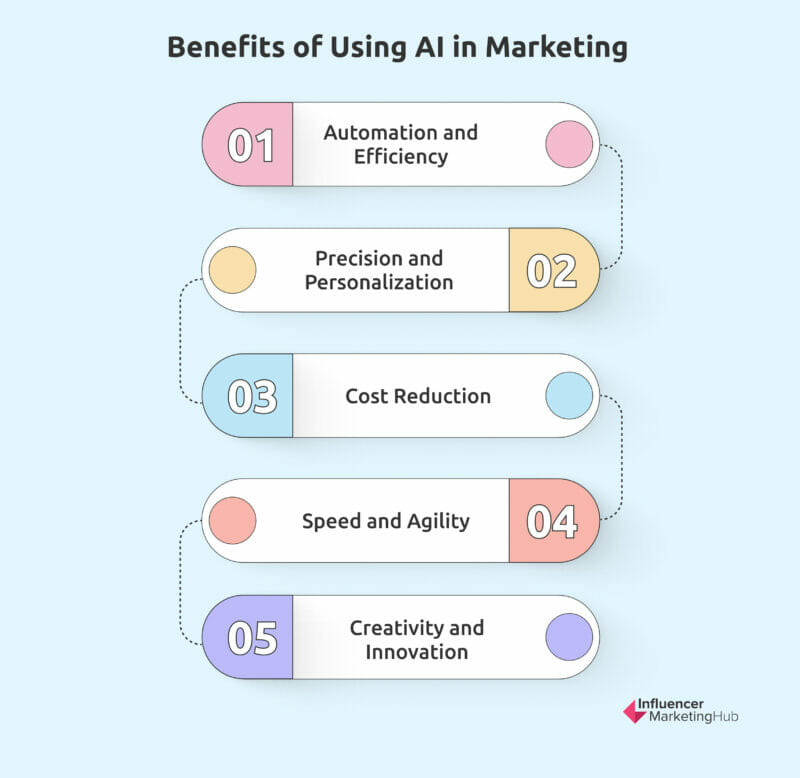
Along with the benefits of using AI in marketing outlined in the image below, the challenges of implementing AI in marketing are vast.

benefits of using AI in marketing

Image Source

This includes challenges related to the AI systems themselves, processes, team buy-in, and more. We‘re working through the biggest challenges and the data that justifies these day-to-day challenges. You’re not the only one feeling the struggle.

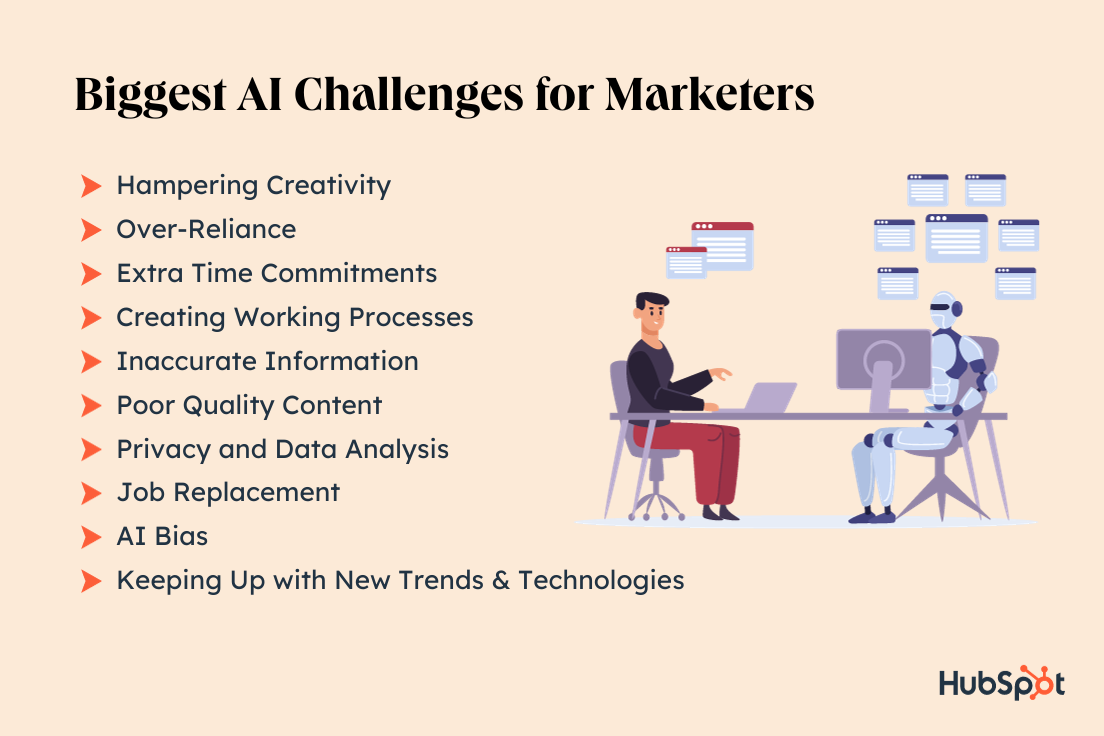
Here are 10 common challenges when it comes to AI in marketing.

biggest AI challenges for marketers

1. Hampering Creativity

64% of marketers share a common concern — they believe that generative AI will alter (40%) or hamper (24%) the creativity of those who use it.

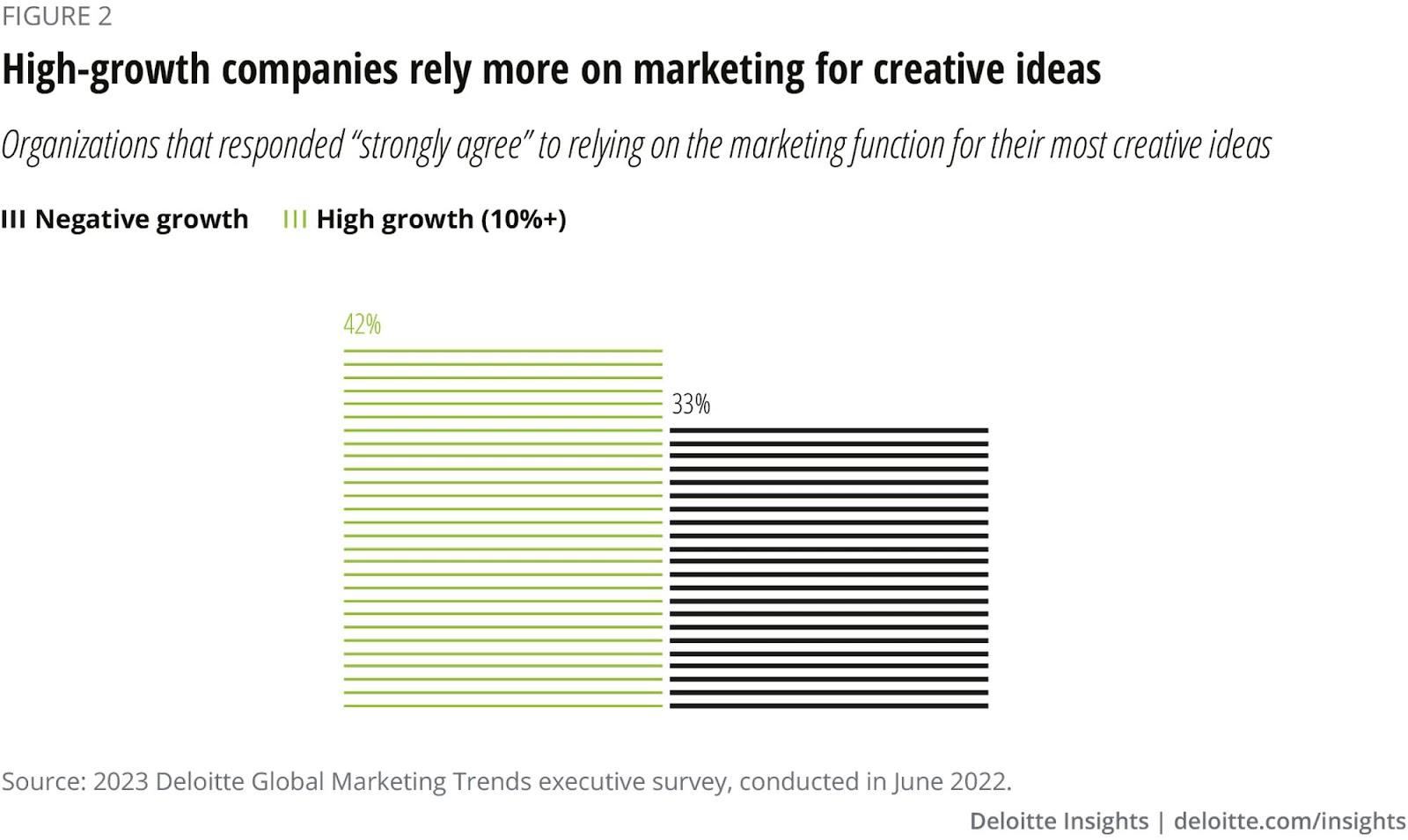
Deloitte Insights found that 42% of high-growth companies rely on marketing for their most creative ideas: “While creative ideas can come from any of these sources, the CMO is sometimes best positioned to be the champion of identifying and activating these ideas across the enterprise.”

With Deloitte Insights’ findings in mind, the notion of hampering creativity is a valid concern. We need marketing teams to feel creative. But, can AI and marketing creativity be achieved? We think so.

Deloitte Insights found that 42% of high-growth companies rely on marketing for their most creative ideas
Image Source

In our marketing and AI survey, 36% of marketers agree that Generative AI will boost the creativity of those who use it.

Perhaps the key to overcoming the challenge of hampering creativity is marketers using these tools to get creative juices flowing.

2. Over-Reliance

Over-reliance on AI tools is on almost every marketer’s mind.

The overwhelming majority of those surveyed (88%) agreed that marketers should use generative AI. However, 67% said that marketers should avoid becoming overly reliant on it.

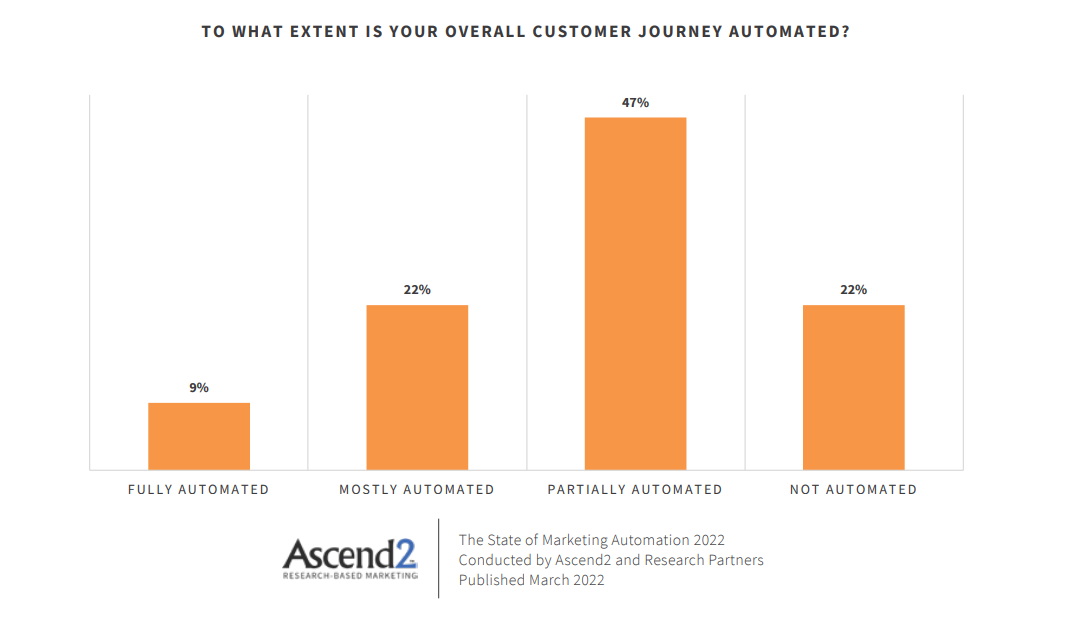
The challenge of becoming too reliant on AI may account for 47% of partially automated customer journeys, according to Ascend2.

The challenge of becoming too reliant on AI may account for 47% of partially automated customer journeys, according to Ascend2.
Image Source

If it does, there’s a case that AI can still automate marketing to some degree. After all, 47% of automated customer service is 100% better than none.

3. Extra Time Commitments

You need an excellent input if you want a sound output from AI. That means you need to know what to ask for based on your goals.

Prompting AI for marketing is yet another thing to add to your swelling to-do list.

Like any new skill, prompting AI needs to be learned and practiced. The good news is that the time taken to prompt and use AI may be a case of short-term pain for long-term gain.

Based on our research, if you can prompt AI to deliver generative content that you’re happy to publish, you could save as much as three hours and ten minutes when working on a single piece of marketing content from start to finish — not bad.

4. Creating Working Processes

A contributing factor to the challenge of time constraints when it comes to implementing AI is creating processes. But, navigating the challenges of AI will be easier with a working process.

If you use AI, you want all team members to work with it similarly. An AI process is required to help eliminate bias and ensure everything is fact-checked, and it naturally provides best practice tips to use AI tools efficiently.

AI content marketing workflow
Image Source

5. Inaccurate Information

In our state of AI in marketing research, we found that one of the top challenges for marketers implementing AI is pushback regarding inaccurate information.

It’s unsurprising, considering almost half of the marketers surveyed have received incorrect information from generative AI.

No doubt, for conscientious marketers, producing inaccurate information is a valid concern and could cause issues for brand reputation and brand/consumer relations.

6. Poor Quality Content

Similar to the challenge above, poor-quality content is a concern for conscientious marketers. But, there’s an argument that this does not need to be a challenge.

Creating content is the second most common task marketers use generative AI for. 45% of marketers surveyed use AI for content creation, including writing, images, and idea generation.

The top three uses for generative AI in content include:

  • Getting ideas/inspiration for marketing content – 22% of marketers
  • Summarizing text into key points – 21% of marketers
  • Writing copy and creating images for marketing content – 20% of marketers

7. Privacy and Data Analysis

Similarly to the above, there are still wide concerns about privacy and data analysis.

When it comes to data analysis, marketers use AI to analyze customer data and understand user behavior. It brings its own set of challenges.

8. Job Replacement

The worry about job replacement has been around for a while, and it’s understandable.

In 2017, a McKinsey report studied considerations around the workplace in 2030 and how AI might impact it. The report estimated that “between 400 million and 800 million individuals could be displaced by automation and need to find new jobs by 2030.”

The good news is the findings are yet to come to fruition. But the fear is still there. You might find some pushback when implementing AI with your team if they’re worried about job security.

In 2023, the subject of job replacement and AI is much more positive. Mike Maynard, the CEO at Napier, published an article titled Will AI Lead To The End Of Marketing Jobs? in Forbes.

Maynard said, “AI will inevitably replace certain aspects of traditional marketing, but by and large, it will probably be the tedious, mundane tasks, like analytics, that most of us aren’t particularly enthusiastic about anyway.

‘The truth is that although AI can potentially automate certain tasks and improve efficiency, it is unlikely to completely replace marketing teams for the foreseeable future.’

There are reasons to believe that AI is here to solve tasks and will never replace human teams in marketing. Naturally, marketing leaders have the challenge of convincing teams that their jobs are safe.

9. AI Bias

AI bias is a challenge that most marketers should be aware of.

Ultimately, AI will always be biased because humans are biased. Marketing leaders need to have a plan to rise to the challenge of teams inputting bias into a system.

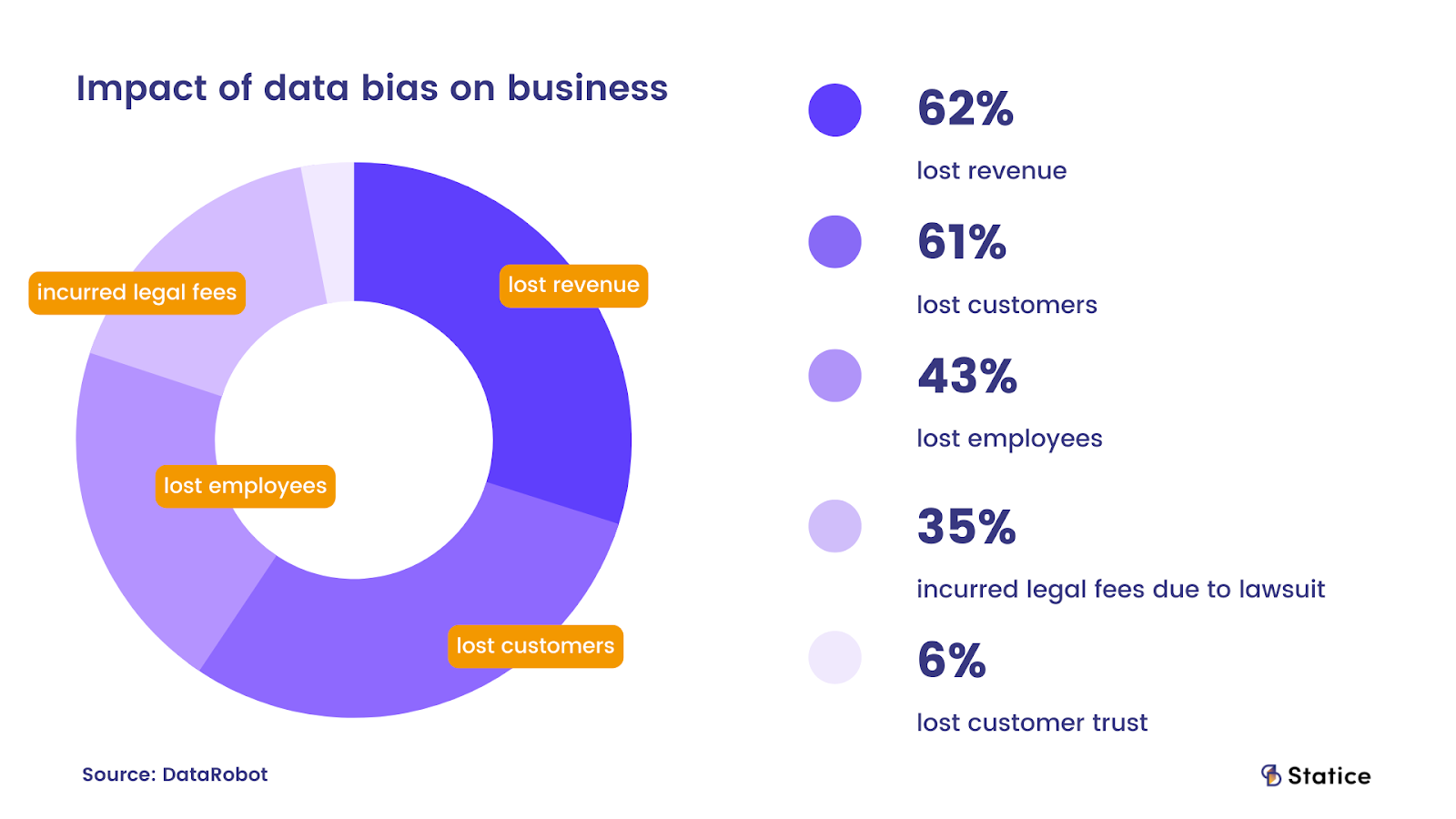
Bias is a serious consideration and challenges for business, and the impact of data bias can be serious. DataRobot’s 2022 survey found that the impact of data bias can result in as much as 62% lost revenue.

DataRobot’s 2022 survey found that the impact of data bias can result in as much as 62% lost revenue

Image Source

10. Keeping Up with New Trends and Technologies

The field of AI is constantly evolving, and it’s growing fast. Marketers can feel overwhelmed keeping up with the latest trends and technologies.

It’s hard to know what to try, prioritize, and invest your time into. This challenge is particularly overwhelming if you have business heads pushing your team for more.

12 Tips for Implementing AI

Okay, now we know what some of the biggest challenges are, let’s find out how to overcome them in a way that helps you reach your marketing objectives while you reap all the AI benefits you’ve heard so much about.

Here are 12 tips to help you do just that.

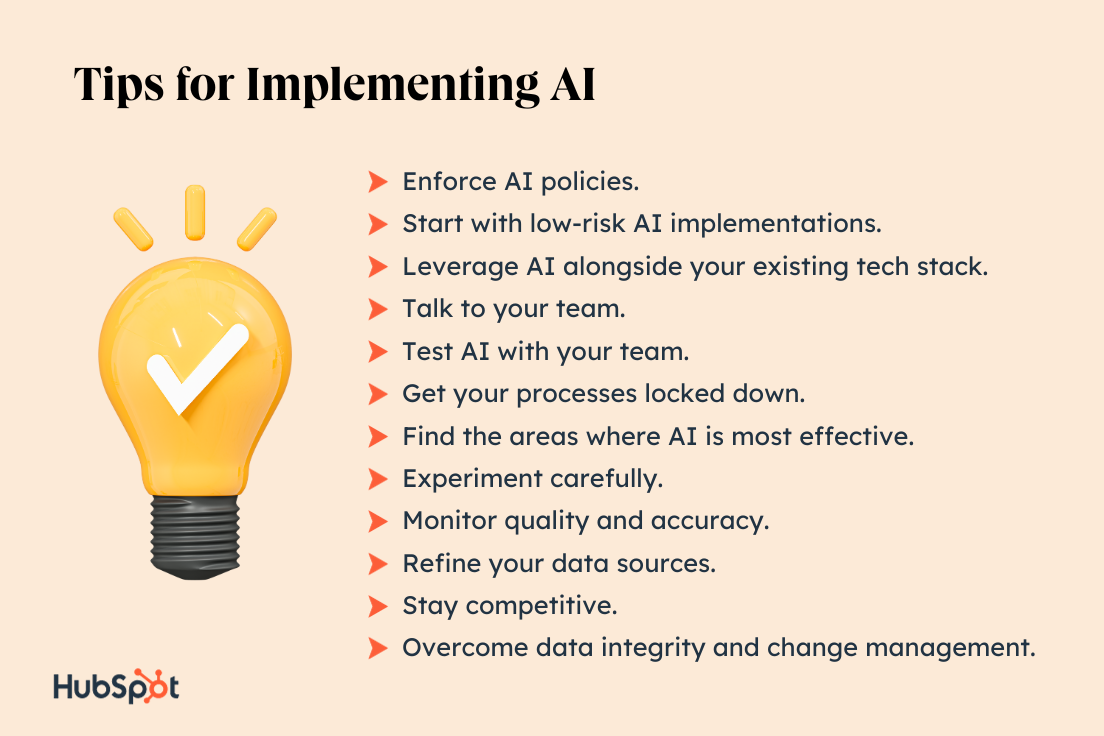
tips for implementing AI

1. Enforce AI policies.

Dan Robinson, Head of Marketing and e-Commerce at instantprint, recommends that businesses implement and enforce AI policies to aid smooth AI implementation.

The solutions he‘s integrated into instantprint’s AI implementations include:

“Employees must adhere to the guidelines we‘ve set out. We nurture an environment of trust but also provide our team with the rules and regulations they need to be aware of to use these tools effectively and safely. Our ‘AI Code of Conduct’ is set out by each platform we use, with do’s and don’t for each tool.

“We want to make our AI policy a collaborative space. Those using AI and other models will get to know the platforms in great detail. Making policies a shared effort means that we’re more likely to have rules that will work for our team, developed by our team, with the exception of legal and ethical frameworks as a standard.”

What we like: Robinson doesn‘t deny the importance of AI policies that are legal and ethical but doesn’t stop the team from adding their thoughts. With a collaborative effort to develop policies, you’re more likely to get buy-in from team members.

2. Start with low-risk AI implementations.

Rosella Dello Ioio, Head of Content at Enate, says, “Businesses should be clearly defining the data they can and can’t share with public and private AI models. Consider hiring a Chief AI Officer to take the lead on security and governance within the business.

“Once the rules around these challenges have been clearly established, begin rolling out GenAI in your marketing department by identifying all the people whose job involves creating (writing, designing, and building) and let them find the best AI co-pilot for their tasks.
Creative roles such as Copywriting and Graphic Design are relatively low-risk in terms of sensitive data as opposed to a CRM Manager who wants to use GenAI to analyze customer feedback and complaints.

Test and procure low-risk tools to support these creative individuals in boosting productivity and slashing the time spent on mundane tasks while ensuring governance protocols are adhered to.”

What we like: It’s justified for marketers to be concerned about data and analysis by AI tools, but Dello Ioio has found a solution that allows marketing leaders to start implementing AI in a way that feels manageable and safe.

Sometimes, the first step is the most challenging, and once leaders get rolling with AI, they may be inspired to try more.

Look at HubSpot’s AI content assistant for low-risk AI experimentation. It’s free to demo, and you can write content, create emails, landing pages, and more.

HubSpot's AI content assistant

3. Leverage AI alongside your existing tech stack.

Cassey Bowden, Director of Marketing at Promet Source, recommends that marketing leaders consider new AI tools with existing tech and your talented team.

She says, “When used effectively in combination with other tools and skills of our respective teams, the door is wide open for possibilities. I would encourage folks to look at AI as an assistive tool in their digital toolbox.

Those who will see the best results and realize the most benefits of AI, in my opinion, will be those who view this tech through a Venn diagram lens. Leveraging this tech along with your existing tech stack in addition to your skilled team, where these overlap, is where we will find success.”

What we like: Bowden’s tip could help marketing leaders close the gap on challenges that hamper creativity. If AI is used in addition to your skilled team, then there’s everything to gain through collaboration.

Consider taking the best of AI and the best of that all-important human touch and find the areas where they can best support each other.

4. Talk to your team.

Communication is, of course, everything! When it comes to AI, marketing leaders can eliminate a lot of AI challenges with team buy-in and communication.

Jessica Packard, Content Strategy Manager at ClockShark, found that some reassurance allowed her team to see AI for what it is; a marketing tool that can aid their workflow.

Packard says, “Initially, my team of copywriters was apprehensive about how AI could potentially replace their work in the organization.”

She continues, “The fear was understandable, but it was important to reassure them that the AI tools are still underdeveloped and they cannot create copy that successfully engages readers on an emotional level as humans do.

It’s also important to show them how leveraging AI can be beneficial to their work, from brainstorming content ideas to help writing creative titles and meta descriptions.”

Montse Cano, International SEO & Digital Marketing Consultant at Montserrat Cano, shared similar tips for overcoming AI challenges. She follows a set of questions and uses AI in a way that helps teams.

She shares her process, “We identify what needs we have in our team that we could meet by using AI. Is it code generation, text content ideas, or images? Then, assess current resources to test and validate outputs, i.e., do we need any training, hire someone else.”

Johannes Larsson, Founder and CEO at Johannes Larsson, adds to the importance of communication with an onus on regular comms and empowerment.

Larsson says, “We regularly communicate with our team about the benefits of AI and how it can empower them rather than threaten them. We also aim to provide training and resources to help them develop new skills and expand their knowledge in areas where AI is involved.”

What we like: It might seem simple to suggest communication, but it’s easily forgotten when you’re all busy at work. Cano, Packard, and Larsson have recognized the why behind team challenges and recommended how you can solve this challenge through communication, reassurance, and future training.

5. Test AI with your team.

In line with the importance of talking to your team, Kevin Miller, co-founder and CEO of GRO, encourages marketers to improve their workflow efficiency with AI.

He started with a solid goal, improving his team’s efficiency by 400%, and worked with his team to document AI success.

Miller shares his story, “We experimented with ChatGPT earlier this year to improve writing efficiency for long- and short-form content creation.

For our clients, we want to produce the highest-quality work possible to help them grow their domain authority and online traffic, so automation was a natural strategy to pursue that goal. That being said, it’s not a one-stop-shop tool.”

He continues, “Aiming to improve workflow efficiency by 400% by leveraging AI tools, we asked writers to adapt their workflows and give feedback on how well ChatGPT helped improve their writing and deliverability.

Although we did not hit those marks because of many natural obstacles and limitations of the software, we increased workflow efficiency by 200% through content templates and research assistance.

ChatGPT is fantastic for content generation and assessment, but can‘t do the work alone. It is still a part of many of our writers’ workflows to use as they see fit, and I am confident that it will continue to grow in capacity and use.”

What we like: Miller and his team have experimented with ChatGPT and actively found that AI can improve team efficiency. We especially like the level of involvement Miller’s team had in AI experimentation.

With his team reporting back on their AI feedback, we feel Miller was more likely to get buy-in from team members.

6. Get your processes locked down.

Adam Smith, founder of The Content Machine, has mastered AI prompts. His test website was just 30 days old and boasted over 36,000 clicks and over 1 million impressions. All of his content was created using AI.

Adam Smith, founder of The Content Machine, has mastered AI prompts. His test website was just 30 days old and boasted over 36,000 clicks and over 1 million impressions. All of his content was created using AI.

Image Source

Smith says, “I’m using totally un-edited AI content, straight from ChatGPT. There’s a big misconception that AI content is rubbish or garbage.

However you can create helpful content if you get your ChatGPT processes locked down! You aren’t going to be creating high-quality content with ‘write me a 1,500 word article on x topic’ type prompts.”

According to Smith, there’s more you can do to improve the quality of content, he advises you, “Add unique images, add internal links to other contextually relevant blog posts, add as much schema as possible, and embed related YouTube videos.”

What we like: With a well-thought-out prompting process, Adam Smith has proved that AI content can be helpful, and it can rank. (And it’s even better when the data backs up the claims.)

7. Find the areas where AI is most effective.

Using AI doesn’t have to be an all-or-nothing scenario. You can find the opportunities or tasks that AI is most capable of solving; then you can do the rest.

Sara Cooper, Director of Web Strategy at SimPRO, found that her team found AI most beneficial at generating headlines or sections of copy.

Copper says, “One of the biggest challenges has been feeding AI the right directives to get the output we are looking for and learning to not ask for too much from AI upfront.

For example, as the team has started to leverage AI to generate more content across our website, it‘s clear that it’s most effective when supporting the personalization of headlines or sections of copy rather than generating whole landing pages from scratch.”

Jessica Ruane, Senior Content Manager at Beekeeper, echoes Cooper. Ruane says, “A big challenge that surrounds AI is effectively utilizing it in Content Marketing. Companies are definitely using AI to varying degrees during the content creation process.

Some may be fully writing content with the use of AI, while others are utilizing it for research and inspiration. The best way to implement AI in content is — slowly. Focus on the ‘voice’ that you’d like to use, and experiment with rewriting phrases to get started.”

What we like: Ruane and Cooper agree that there’s a place for AI in content writing. Equally, they’re both seeing the role of AI vary based on what marketers find more useful. Consider using AI for different tasks and find what works for you and your team. AI doesn’t have to write everything.

8. Experiment carefully.

Sofia Inga Tyson, SEO Content Editor at Juro, resolves the AI challenge of quality and brand with careful experimentation and full disclosure to key stakeholders.

Tyson says, “There are certainly concerns about the use of AI in content strategies diluting the quality and overall authority of the website.

Businesses are often keen to experiment with AI to scale their content production but content writers are naturally fearful that AI-generated content at scale will have a detrimental impact on the performance of existing, expertly crafted content.

I think it’s really important to manage stakeholder expectations in this regard and ensure that these risks are disclosed to other decision-makers in the business that might be encouraging this approach for aggressive growth.

I also think it’s important to be cautious about AI-generated content because the true impact won’t be felt immediately. It could be months or even years before the content is evaluated negatively based on the quality or use of AI.

Any experiments should be just that – careful, closely monitored and kept at a scale that means it can be reversed if needed. I think this approach will bring a lot of content writers comfort as it demonstrates that you’re approaching the use of AI with caution, not carelessly jeopardizing the online presence you have already.”

What we like: Tyson’s holistic approach to AI covers brand reputation, the team, and stakeholders. She considers the desire to leverage AI with the needs of the team who use it. We love the reassurance for all involved when experimentation is monitored carefully.

9. Monitor quality and accuracy.

Once you’re set up and using AI, you don’t want to neglect the all-important quality check.

Annika Haataja, Head of SEO at Seeker, says, “As you expand your use of AI, don‘t forget to monitor quality and accuracy. We all know that AI can sometimes make mistakes, which may hurt adoption if teams don’t trust the results.

Have people review a sample of AI output to catch errors, and empower them to have faith in their own expertise in the process.”

What we like: Diligence around AI output could decline as teams become comfortable with AI usage. Haataja reminds us to stay mindful of quality and accuracy as AI adoption scales, an important reminder for all of us.

10. Refine your data sources.

Simon Brisk, Director at Click Intelligence Ltd., found AI bias a challenge. Interestingly, they found better data once his team refined the data sources.

He says, “One significant challenge we‘ve faced at Click Intelligence when integrating AI is ensuring data integrity. AI models are only as good as the data they’re trained on. Inaccurate or biased data can lead to misguided marketing decisions.

“For instance, while analyzing user behavior for an e-commerce client, skewed data initially suggested a preference for a specific product line. Only after refining data sources did we realize a more holistic preference trend, thereby recalibrating our marketing strategy.”

What we like: Brisk’s experience with AI bias shows the potential impact and the solution. By recalibrating data sources, Click Intelligence could recalibrate its marketing strategy based on reliable data.

11. Stay competitive.

The world of AI is developing fast. Chris Stott, Director at Seven Marketing, recommends staying ahead of AI developments.

He says, “Staying ahead of the competition is paramount. It’s essential for us to consistently deliver exceptional value. This means rigorously testing all AI software to keep us on the cutting edge and guarantee that we provide top-tier results to our clients.”

What we like: Incorporating AI into your systems can be exciting and empowering. Testing AI from a place of experimentation is a great way to explore AI capabilities with your team. You’ll soon get a feel for what supports you and what you can live without.

12. Overcome data integrity and change management.

Jessica Shee, Senior Tech Editor and Marketing Content Manager at iBoysoft, shares the importance of overcoming data integrity and change management.

She says, “Change management and data integrity are two significant obstacles to implementing AI in marketing. For accurate AI-driven insights and decision-making, it is essential to ensure high-quality, pure data.

Misaligned data can cause inaccurate forecasts and ineffective marketing campaigns. Invest in data cleansing, validation, and data integration tools to address this issue.

Change management is an additional obstacle. Integrating AI can disrupt existing workflows and require team members to acquire new skills. Transparent communication about the benefits of AI and training team members to cultivate acceptance and proficiency are necessary for a smooth implementation.

Working with AI experts, integrating teams in decision-making, and starting with trial projects can help integrate AI while resolving difficulties. A systematic strategy, continual training, and clear communication ensure a smoother transition and optimize AI marketing benefits.”

What we like: Shee recognizes that you don’t have to do everything alone. You can bring in experts and start with trial projects to help support your team through AI implementation challenges.

What’s stopping you from implementing AI?

Consider this: 70% of marketers consider it easy or somewhat easy to measure the success of marketing automation, so give it a go.

In the worst case, you‘ve run an experiment (and isn’t that what marketing is all about?), and in the best case, you’ve got the data to support the success of your AI endeavors. Getting buy-in from your team or stakeholders will be easier when they know AI drives marketing objectives.

Plus, with the top tips from marketing leaders, you’ll start with the best possible insights to make AI and marketing an absolute success.

New Call-to-action

Categories B2B

9 Pivotal Marketing Trends to Watch in 2024, According to Experts

No one knows the saying change is the only constant in life better than a marketer.

We’ve seen the number of MarTech solutions grow from about 150 to more than 11,000 over the last 20 or so years.

We’ve seen mobile become its own channel… and then as the world became device agnostic, we watched it simply merge with online.

We watched the birth of social (remember MySpace anyone?).

And finally, we leaned in as, a little more than a year ago, OpenAI unleashed generative AI into our world.

When I think about all that we experienced in the last 12 months and what we’re likely to see in the next 12, all I can think is: be ready for more change.

As marketers, we live and breathe customer focus, and in 2024, we will be put to the test. Here, I’m delighted to share some top trends to keep in mind from some truly exceptional marketing experts.

Free Report: The State of Artificial Intelligence in 2023

Top Marketing Trends to Watch in 2024, According to Experts

1. Doing more with AI — with empathy.

HubSpot’s State of Marketing report (coming January 2024) found 64% of marketers are already leveraging AI in their roles.

Many marketers have already begun exploring AI’s powers when it comes to content creation, market research, administrative tasks, and even upleveling the user experience with their brands.

My guess? This number will continue to grow in 2024 and beyond.

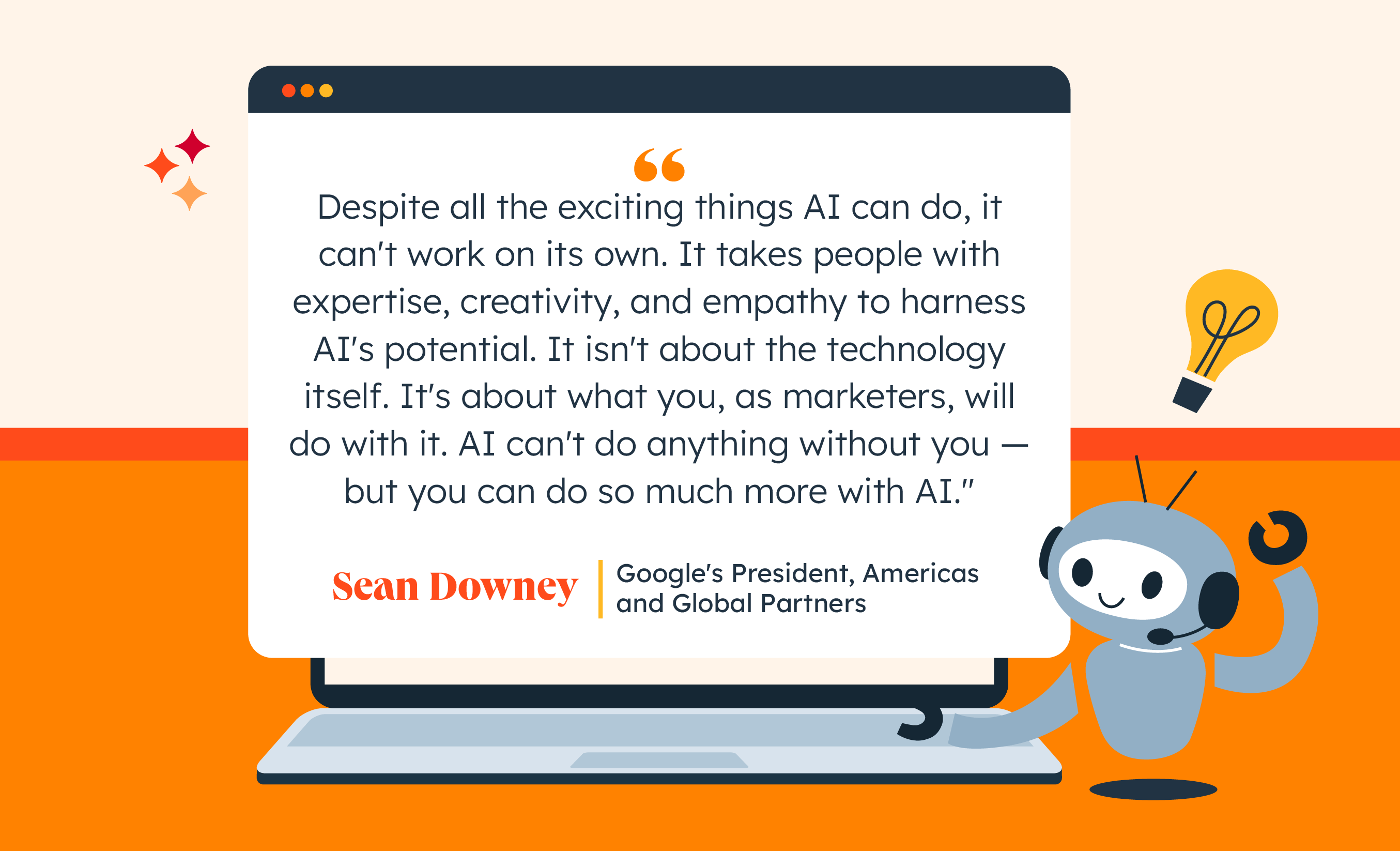
Sean Downey, Google’s President, Americas and Global Partners, agrees with this sentiment.

As he puts it: “It should come as no surprise that in 2024, the biggest marketing trends will center around the possibilities of AI. Today, marketers are faced with pressing challenges to navigate evolving consumer expectations and consumption habits in today’s media landscape, which is fragmented and shifting dramatically — all while delivering business outcomes more efficiently.”

sean downey quote on marketing trends to watch 2024

Downey adds, “The AI opportunity is coming at a time of transformation for everyone, including marketers. In fact, in addition to connecting brands and products to people, more than ever before, marketers need to be growth drivers for their companies.”

At many organizations, marketers will need to lead the charge when it comes to implementing AI into their workflows and demonstrating true impact before AI is adopted throughout the org.

This makes sense — marketing is about experimenting. So new technologies typically start with us.

AI will also shift the advertising landscape. In fact, Downey mentioned nearly 80% of Google’s advertisers already use at least one AI-powered Search Ads product.

And marketers who use Google’s AI-powered video reach campaigns see 3.7X return on ad spend compared to those who don’t.

He says, “The days of guesswork to find your most valuable customers are behind us. This means you can get back to doing what you do best: Marketing.”

Downey continues, “Now here’s where we flip the script. Despite all the exciting things AI can do, it can’t work on its own. It takes people with expertise, creativity, and empathy to harness AI’s potential. It isn’t about the technology itself. It’s about what you, as marketers, will do with it. AI can’t do anything without you — but you can do so much more with AI.”

2. Harnessing generative AI to improve messaging performance.

46% of marketers report that AI tools help them with content creation.

Christy Marble, 3X CMO at Pantheon, Visier, and SAP Concur, says this is a big trend her team is watching.

She told me, “Marketing adoption of generative AI will accelerate as more experiment; learn to use it responsibly; and tell their friends — a transformative opportunity to improve brand and messaging performance. Solid messaging frameworks are essential to brand consistency, and paired with generative AI they’re game-changers.”

Marble provides some tips for making content review meetings obsolete by making it easy for every marketer to create messaging that’s on-brand:

  • Use your messaging frameworks as core parameters in AI-enabled content platforms to ensure message differentiation and consistency.
  • Empower your teams with messaging rubrics, enabling them to use generative AI for self-review, and continuous improvement.
  • Use generative AI not to create more content, but use it to land context — to hone your craft and deliver value to your target audience with the right message, through the right channel, and at the right time in the customer journey.

3. Crafting unique branding with “human intelligence”.

As more marketers begin incorporating AI into their writing processes, we’ll see a rise in low-value, generic content across the internet.

To stand out, it’s critical you continue to create high-quality, human-led content that isn’t simply copied and pasted from a chatbot.

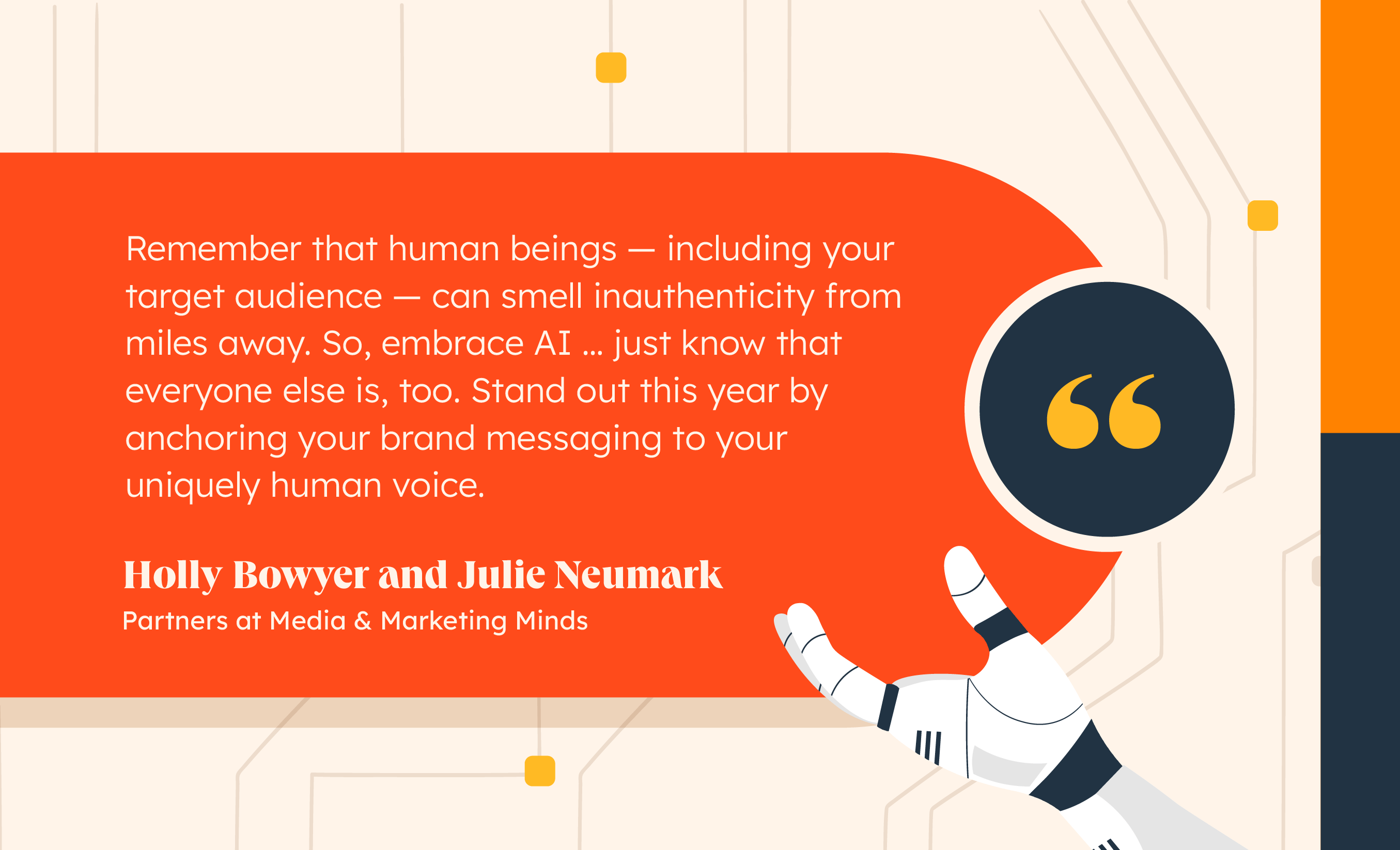
To dig into this trend, I spoke with Holly Bowyer and Julie Neumark, Partners at Media & Marketing Minds.

They told me: “AI is clearly the darling of 2024 trends. Your challenge? Don’t get so seduced by its shimmer that you neglect ‘human intelligence.’ You need to be at the helm in order to maximize the efficiency AI brings by gathering and processing massive amounts of data.”

holly bowyer and julie neumark quotes on marketing trends to watch 2024

They add, “Before you start churning out prompts asking for ‘witty, clever, and unique’ messaging ideas, you need to know your audience, competition, and core differentiators. Think of AI as your assistant, capable of expediting the laborious research process and distilling it down into consumable pieces.”

In other words: Prompting an AI chatbot should not be crux of your messaging strategy. It should be used to research, brainstorm, and refine messaging — but each step of the process needs to be human-first.

As Bowyer and Neumark say, “Remember that human beings — including your target audience — can smell inauthenticity from miles away. So, embrace AI … just know that everyone else is, too. Stand out this year by anchoring your brand messaging to your uniquely human voice.”

4. Becoming more purpose-led as Generative AI transforms buyer journeys.

Marketers across the globe have been tasked with drastically shifting their SEO strategies in 2023 and 2024 to prep for generative AI in search.

Creating how-to content won’t be as powerful as it used to be for capturing leads. In 2024, personality-led thought leadership content will be the main type of content that helps brands stand out on the SERPs.

Andrew Wheeler, CEO at Skyword, agrees with this sentiment.

As he puts it, “In 2024, marketers must wake up to the fact that their mass-produced content is becoming obsolete with AI tools emerging as the go-to for buyers seeking instant answers, suggestions, and problem-solving advice.”

He continues, “Savvy marketers will adapt by leaning into purpose-led content that resonates in ways AI can’t. Purpose-led means you have an exact understanding of who your brand helps and why it matters. It means you’re exceptionally dialed into the context in which your audience needs you, what they hope to gain, and how you make their lives better. And it means 100% of your content is focused on fulfilling their functional, emotional, and social needs in that context.”

He adds, “Genuine purpose equals genuine relevance. Especially in a tough economy, brands will have to ditch the distractions and deliver standout content that’s indispensably relevant alongside the influence of AI tools.”

5. Owning the customer experience.

I believe marketing leaders’ scope will expand to (finally, formally) own or influence every aspect of the customer experience flywheel – from the first moments of awareness, through acquisition, and into the product itself.

We will elevate our contributions to customer advocacy to truly influence customer loyalty through brand-consistent experiences throughout the product and the professional services that surround it: onboarding, implementation, and customer support.

In short, Marketing will become responsible for the end-to-end customer experience.

Christina Mautz quote on marketing trends to watch

6. Making more decisions with less data.

Over the past few years, we’ve all seen click-through rates continuously drop as social media and search features aim to keep users on-site.

Additionally, privacy laws and cookie policy changes means that many marketers now need to learn how to get by on less data.

For Andy Crestodina, Co-founder and CMO at Orbit Media, this isn’t an issue as much as an opportunity.

He says, “We’re in a low-data era of marketing, so get ready to make more decisions with less decision support. It’s going to be like the old days of advertising. Do the things that have always built awareness and trust. Create videos, publish research reports, get active with PR, collaborate with influencers. You won’t be able to connect all the dots, but strategy and fundamentals still apply. Those will never change.”

7. Preparing for generative AI in search. 

Google’s SGE roll-out in 2024 will cause monumental changes to content marketing and SEO.

SGE will open up new opportunities for your content to be discovered. At the same time, we’ll see major shifts in terms of what content performs best on search engines.

Marketers’ will want to re-think their existing SEO and content creation strategies to lean into more personality-driven content — something AI can’t replicate. 

To dig into this, I spoke with Casey Carey, Chief Market Officer at Quantive. According to Carey, there are four things you can do early in 2024 to prepare:

  1. Plan for the potential impact and communicate expectations to stakeholders and executives.
  2. Update your strategy to focus on unique and late-stage content such as templates, checklists, buying guides, calculators, etc.
  3. Invest more in rich content experiences — primarily video and images — as the top assets will be included to augment the user experience.
  4. SGE will outweigh results from high authority sources.

Now is the time to rethink the role of media and 3rd-party sources in your strategy. It‘s critical you consider how you’ll get ahead of this in early 2024.

(Want to know more about how to prepare? Check out Which Types of Content to Lean into Ahead of Google’s SGE — and What to Avoid.)

8. Using an account-based approach for more than just enterprise.

Account-based marketing used to be reserved for enterprise customers.

But Sydney Sloan, CMO at Drata, believes that won’t be the case in 2024.

She says, “Platforms have evolved, making it easy to set up segments of similar accounts or buyers and target your ads and messaging to them. Stop throwing all your budget at PPC; there’s a smarter way!”

She continues, “By segmenting your target customers, you can create campaigns with messaging and offers that truly address their challenges. Work closely with the SDR team to align their warm outbound cadences, leveraging keyword insights to personalize their messages.”

Sloan adds, “I’m thrilled to see that platforms like Google are tightening up limits to prevent spam — this is the new way. In the era of tighter budgets and a drive for efficiency, this is a great method to drive higher-quality opportunities into your funnel!”

staying ahead of marketing trends

9. Leveraging automation & GTM plays.

In 2024, automation and go-to-market (GTM) plays will sweep the marketing world, leaving traditional ABM tactics behind.

Bryan Law, Chief Marketing Officer at ZoomInfo, says this is a big trend his team is watching.

As he puts it, “Repeatable and scalable GTM plays that leverage robust, centralized data for targeting — triggered by real-time intent signals — will increasingly drive integrated campaigns across sales and marketing.”

He adds, “Companies that master this motion will reap the rewards of improved conversions, lower costs, and better efficiency. In fact, Bain & Co. has found that companies who master GTM plays are nearly three times more likely to outpace their competitors.”

Creating a value matrix can help you as you formulate a GTM strategy for 2024 and beyond. Additionally, it’s key you lean into data to support your motion.

Law says, “The scalability and relevance of GTM plays will also be enhanced by the rapid adoption of generative AI tools. High-quality data that combines first- and third-party sources are foundational for success — both for GTM plays themselves, and the GenAI embedded in them.”

Prepare for Changes … But Stay True to Foundational Marketing

What do all these changes mean for marketers?

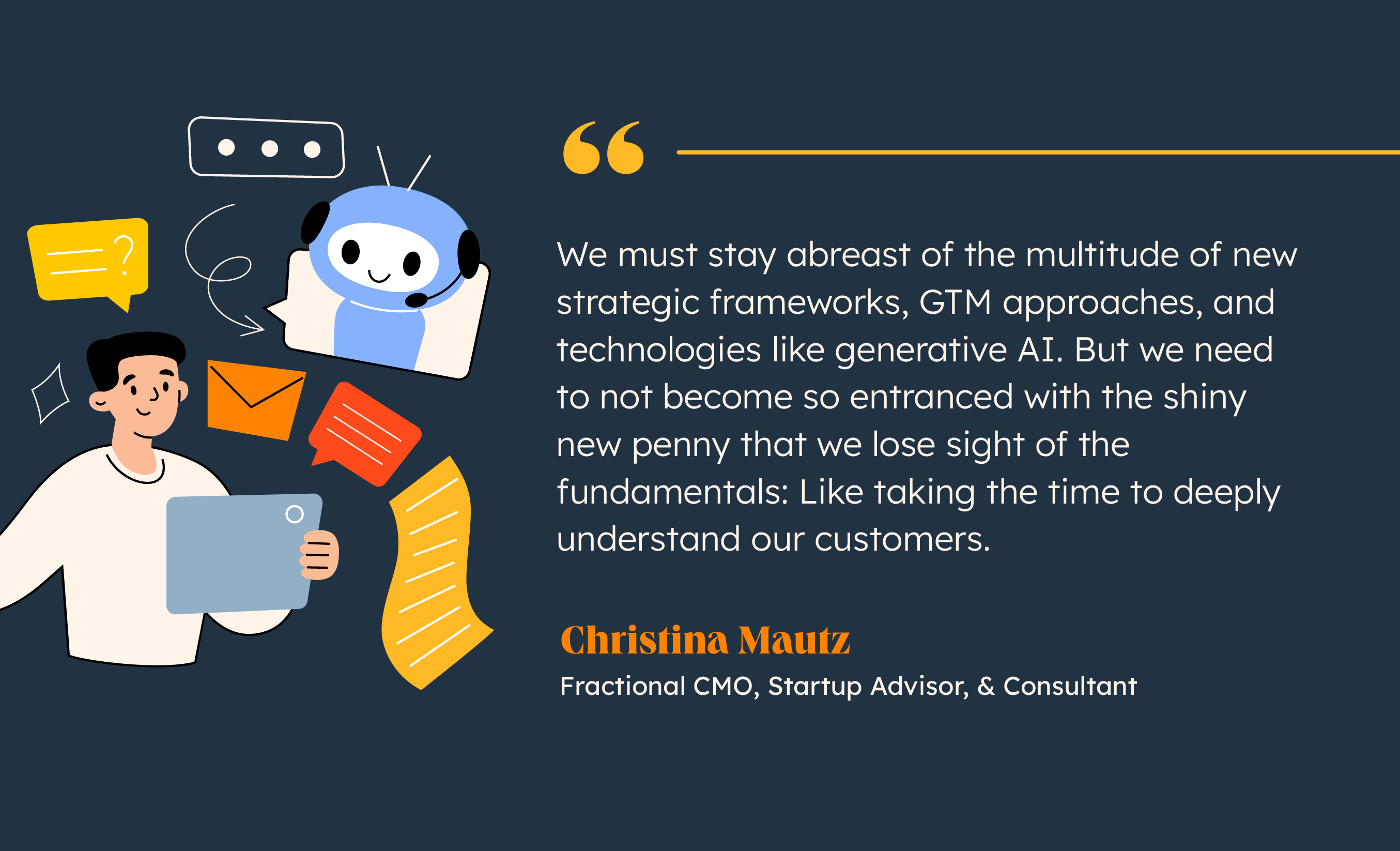
It means we must stay abreast of the multitude of new strategic frameworks, GTM approaches, and, of course, technologies like generative AI.

But we need to not become so entranced with the shiny new penny that we lose sight of the fundamentals: Like taking the time to deeply understand our customers.

While the ways in which we approach marketing will change in 2024, the foundational aspects of marketing will stay steady.

New Call-to-action

Categories B2B

How AI Can Improve Your Customer Experience [New Data + Tips]

62% of business leaders across industries have invested in AI to help their employees. Of those, 71% have seen a positive ROI, and 72% report increased employee productivity.

But how does AI stack up when it comes to customer experience specifically?

Keep reading to learn how to leverage AI-driven customer experiences — and why you should.

How AI Impacts the Customer Experience

How You Can Leverage AI to Improve the Customer Experience

8 Tips for Getting Started

Free Report: The State of Artificial Intelligence in 2023

How AI Impacts the Customer Experience

Using data-driven insights, we’ll show you how AI can impact the customer experience through support, marketing, sales, and more.

We also share expert insights about potential drawbacks so you can implement AI solutions the right way.

Improved Customer Service

A significant advantage of using AI in customer service is the potential to offer 24/7 assistance. In fact, this is the most significant benefit, according to customer service professionals surveyed for The State of AI Report.

The third most popular use case for AI/automation in service is using chatbots and self-service tools to facilitate this round-the-clock support. Routing requests to reps is the most popular AI use case cited by customer service pros.

Further, 84% of customer service reps say these solutions make it easier to respond to support tickets. Meanwhile, 64% say AI helps make customer interactions more personalized.

Data to support AI customer experience and the impact in service from The State of AI Report.

The impact: Chatbots provide the support infrastructure to offer 24/7 support, and AI solutions help reps respond to queries faster. That means customers typically experience shorter wait times.

To top it off, they may also receive more tailored responses from service agents.

Overall, this reduces frustration — and thus, friction — across the support journey. And that makes for a smoother customer experience.

Potential Drawback: Risk of Losing High-End Customers

“One of the main downsides of using AI in customer service is potentially losing high-end customers due to a lack of ‘sufficient’ support,” says Cath Brands, Chief Marketing Officer at Flintfox.

“While people today are generally okay with, let’s say, talking to AI chatbots, high-end customers usually expect dedicated, human-run customer service, and they get frustrated when met by AI bots.

“I really think this is a huge downside to using AI in customer service, and I don’t think many businesses can afford to lose their high-end customers due to situations like these,” warns Cath.

Marketing and Sales Journeys

More and more people prefer to research products and services independently online. For B2B sales reps, that means they only have around 5% of a customer’s time during their buying journey.

With fewer “face-to-face” interactions, reps should take any opportunity to influence customer decisions.

It’s also critical to give customers targeted, omnichannel assistance throughout their online marketing and sales journeys. Long story short? AI solutions could be your greatest ally here.

According to 89% of marketing pros surveyed, generative AI generally improves the quality of their content. Then, 84% of bloggers think that AI/automation helps them to better align web content with search intent.

→ Download Now: The State of AI in Marketing [Free Report]

On the sales front, the most popular use case for AI is content creation, closely followed by prospect outreach. Of sales pros, 86% report that using generative AI to craft messages to prospects is effective.

And 72% say it helps them to build rapport with prospects faster.

Data to support AI customer experience and the impact in marketing from The State of AI Report.

The impact: Better quality and more targeted content improves user experience. It also gives people everything they need to know to research your product or service independently.

That creates more positive experiences when customers engage with your brand across marketing channels (i.e., your social media or website).

Then, effective outreach messaging can help you influence a prospect’s sales journey. That, coupled with quick customer–company rapport, can help your sales reps make all interactions really count.

Potential Drawback: Hard To Find Relevant Use Cases

“One setback for AI content creation is that bots find it hard to find real-life examples that are actually relevant,” says Will Rice, SEO & Marketing Manager at MeasureMinds.

“Everybody knows that just explaining the theory of something isn’t enough. Showing a practical example of how this has worked in the real world helps users visualize how they can action the point you’re making,” says Will.

For Will, having these actionable real-life examples separates good content from great content. But “AI just can’t do this well. Especially for relatively new problems, where innovation is key.”

Personalized Experiences

Of consumers, 56% are more likely to make another purchase after a personalized shopping experience. And 62% of business leaders report better customer retention because of personalization.

But, creating end-to-end personalized customer experiences doesn’t just increase sales and retention. It also helps smaller brands compete with industry giants.

The crux? Most companies don’t have the foundations to map out the detailed customer picture that makes personalization possible.

However, enlisting AI/automation tools can help you build personalized experiences at scale and across channels.

There are three main ways that AI can help your brand create more personalized customer experiences:

  • Advanced customer segmentation. AI-powered algorithms analyze customer data and find distinct segments based on behaviors, preferences, and purchase history.
  • Real-time personalization. AI-driven systems process real-time data such as browsing behavior, previous purchases, and location to offer immediate personalization.
  • Predictive customer insights. AI analytics forecast customer behavior based on historical data and current trends, enabling brands to anticipate needs and preferences.

Potential Drawback: Falls Short With Creativity

“One key drawback of using AI in customer service is its inability to be creative,” says Tobias Liebsch, Co-founder at Fintalent.io.

“AI systems operate based on predefined rules and algorithms, lacking the flexibility to think outside the box.”

Although AI excels at following set guidelines, it may “struggle to handle complex or nuanced situations that demand creative and spontaneous problem-solving,” Tobias warns.

Because customer issues are often unique and require innovative thinking, AI might lack the creativity for personalized solutions.

Data Analysis

AI tools can gather, analyze, and spot trends in large volumes of data. Access to these data insights means you can spot (and celebrate!) your successes.

It also means you can quickly identify areas for improvement — including how to deliver better customer experiences overall.

The State of AI Report findings show that AI/automation helped professionals analyze data across different departments/jobs.

For example, collecting and analyzing customer feedback is the second most popular use of AI for customer service professionals. Then, data analysis/reporting is a popular use case among sales pros.

The impact: Trends from customer feedback and sales data can give you insights into how to improve customer experiences. Such as implementing a recurring suggestion from a customer survey that improves purchasing experiences.

Or finding common reasons customers cancel subscriptions so you can improve your offering and lower churn.

Data to support AI customer experience and the impact on data analysis from The State of AI Report.

Potential Drawback: Fewer Interactions With Customers

Merchynt uses AI “for every step of our customer journey,” says founder and CEO Justin Silverman.

AI has improved customer satisfaction through “a near-instant personalized strategy plan based on information we gather during their sign-up process.” But Justin warns the trade-off is fewer human interactions with customers.

As such, Merchynt is “missing valuable opportunities to gather feedback on how we can continue to improve our offerings.”

How You Can Leverage AI to Improve the Customer Experience

From account management to content creation, here are 10 ways your company can leverage AI to improve customer experiences.

How AI Can Help Improve the Customer Experience. Account Management. Field Customer Questions 24/7. Route Tickets to Reps. Content Creation. Remove Language Barriers. Proactive Problem Solving. Personalized Deals and Recommendations. Train Employees. Deliver Relevant Messaging to Customer Segments

Account Management

Good account management makes customers feel valued, leading to better experiences. Better customer experiences increase customer retention and make cross-selling and upselling more feasible.

But account management can be tricky. There are many plates to spin and people to keep happy — especially with a broad client base. AI solutions can help sales, marketing, and service professionals complete tasks faster.

That means they have more time to build better customer–company relationships.

An AI-powered tool like ChatSpot responds to chat-based commands. You can ask it to help you draft follow-up emails to prospects or thank you notes to existing customers.

The tool can also generate reports based on your company’s CRM data and add contacts with notes to HubSpot’s CRM.

AI customer experience, ChatSpot for account management

Get Started With HubSpot’s ChatSpot

Field Customer Questions 24/7

Hovia uses AI to deliver great experiences to its B2B and B2C segments. The brand also uses the tech to help them account for product outcomes, including specific wallpaper mural requirements.

“Our service desk provider has a first-to-market AI solution that allows us to answer complex queries with very little human input,” says Jack Gibson, Head of Growth.

Through AI, Hovia can accurately answer customer queries at scale — ensuring the best outcomes for both audiences. “While we do answer these on our FAQ pages, it’s reassuring to know that we can field these questions in real-time,” Jack explains.

Route Tickets to Reps

Routing tickets to reps is a popular use case for AI in customer support. You can leave basic tickets, like questions about your services or even customer returns, to chatbots.

(On that latter point, SurveyMonkey found that 59% of customers “would use AI to return a purchase.”)

But if the chatbot can’t handle the request, it can route the ticket to the correct department or rep. AI tools may also suggest a support ticket if a customer wants to chat with a human agent.

Prioritize Tickets and Queries

Not only can AI route tickets to reps, but it can also prioritize the query based on the level of urgency. To do this, AI tools analyze tickets based on sentiment, intent, and language used. Then, reps can handle the most dissatisfied customers first.

Faster query prioritization is one of the biggest pros of AI in customer service. Speedier prioritization can prevent emotionally charged interactions from escalating and maximize each customer interaction.

Both of which help to create better customer experiences.

Content Creation

Generative AI can help you streamline and scale your content creation efforts. And when paired with human expertise, it can give your customers a more tailored marketing/sales journey.

That creates a better customer experience across your sales, marketing, and support channels.

A generative AI tool like Content Assistant makes it easier to write customer emails, including prospecting, marketing, or service ticket responses. It can also help you gather information, generate ideas, and structure blog content.

Get started with HubSpot’s Content Assistant

Remove Language Barriers

The translation capabilities of AI tools can help you remove language barriers with minimal resources. For example, you can use ChatGPT to translate customer service queries and give more tailored support.

You can also use AI to translate articles from your knowledge hub automatically into multiple languages. This will help your website visitors access knowledge in their native language.

Deliver Relevant Messaging to Customer Segments

“AI can analyze customer data to identify distinct segments based on behavior, preferences, and engagement history,” says Matthew Smith, Operations Manager at Ticket Squeeze.

The team at Ticket Squeeze uses this data to “deliver more relevant and engaging messages” to different segments.

For example, they used AI to segment email lists into categories like “Sports Enthusiasts” and “Concert Aficionados.” Now, each segment receives content specific to their interests.

Matthew cites “higher open and click-through rates,” “deepened customer engagement,” and “reduced email fatigue” as benefits of a more personalized approach.

Proactive Problem Solving

AI analytics can help your brand offer proactive solutions before potential issues arise. A proactive solution could be as simple as restocking popular items to provide a seamless buying experience.

You could also use AI analytics to identify demand for future products, services, or improvements.

Personalized Deals and Recommendations

According to SurveyMonkey, 47% of customers are interested in receiving personalized deals from AI. That number rises to 63% within the Gen Z demographic.

Deals and recommendations are ways to create more personalized customer experiences. And as we highlighted earlier, that can help you compete with leading businesses in your industry.

AI-driven systems/algorithms can help you offer personalized product recommendations and discounts before customers express their requirements. The result? Your customers will feel valued.

Plus, you’ll save them time searching for desired products or services, creating more enjoyable buying experiences.

Train Employees

Through sentiment analysis and knowledge base integration, AI can help you train your customer service and sales reps.

Sentiment analysis gives your team insight into the intent or emotions behind customer messages. Then, if AI can access your knowledge base (i.e., blog content or company handbook), it will present relevant training scenarios to your team.

Finally, AI can analyze how your team performs with both sentiment analysis and your knowledge base in mind.

8 Tips for Getting Started

We spoke to eight professionals who are already using AI to improve the customer experience journey. They share their number one tips for those just starting with AI tech.

1. Automate smaller tasks first.

“One crucial tip for beginners is to start small,” says Liam Lucas, CEO of Off Road Genius. Liam, who has actively integrated AI into Off Road Genius’ customer experience journey, started by automating simple tasks.

Liam cites answering frequently asked questions through chatbots as an example of how they started small. That simple automation saved the service team’s time, and the instant responses to customers also improved “their overall experience.”

2. Refine AI content in iterations.

Chris Evans, an SEO Specialist at E2E Studios, uses AI to write emails to non-techy customers. Chris has been using AI to explain a product/service in layperson’s terms and simplify sales emails to make them more user-friendly.

Generative AI content “is only as good as you prime it,” warns Chris. “Out of the box, it will be ‘OK.’ But priming it with what you want and want to achieve, and the desired outcome produces much better results.”

Chris’ number one tip is to refine the content in iterations. “Start with a rough draft, ask ChatGPT to improve it … proofread it, tweak it, and again ask it to improve it based on your recommendations.”

3. Start with basic data analysis.

CEO and Founder of Linions, Kate Adams, has been using AI-driven insights to shape their marketing strategies.

“By employing AI analytics tools, we’ve gained a deep understanding of our customers’ preferences and behaviors,” says Kate.

Kate recommends that beginners start with basic data analysis like monitoring “website traffic, social media interactions, and sales patterns to identify trends.”

Even starting small can yield valuable insights that help you communicate with your audience meaningfully.

4. Front-load data input.

Hovia uses AI to provide accurate information to their customers, which improves the customer experience. To do this, the company uses AI to field queries about its product offering.

“Setting up the tool has been straightforward enough,” says Head of Growth, Jack Gibson.

“We’re able to provide detail on our product offering, material types, manufacturing process, shipping, designs, etc., to ensure that the automated output is as accurate as possible,” he says.

But if you’re considering adding an AI solution to your business, Jack advises “to make sure that you’re feeding as much information into the tool as possible.”

That’s because the more prompts it has, “the more relevant the output will be.” Although it can be slightly time-consuming in the short term, it creates “a better experience for the end user.”

5. Experiment with existing tools.

Pinar Arslan, a Customer Success Agent at Gameplan, has been using an AI tool “to determine which customers to prioritize.”

“We have found that the GPT-4 plugin Advanced Data Analytics by OpenAI is very helpful,” says Pinar. The team uses the plugin to identify customers who are at risk of canceling their subscriptions, which helps with prioritization.

Get Started With HubSpot’s AI Tools

6. Adopt a customer-centric approach.

“AI can be applied to a variety of areas within the customer experience,” says John Pennypacker, VP of Sales and Marketing at Deep Cognition. But, using AI “should always be done with an eye toward the customer.”

John recommends that companies use AI to complement and enhance their brand voice rather than take it over entirely.

“It’s important to ensure that customers don’t feel like they are dealing with an automated system or getting generic responses,” John warns. Instead, “businesses should strive to create a unique experience for each customer.”

7. Use AI to help you develop prompts.

“If you’re struggling to get the results you want, ask the AI to help write the prompt,” says Eric Mistry, Customer Education Operations Manager at Heap.

Eric recommends that you “start by explaining the problem, then ask it to ask you questions to understand the problem criteria, then produce a prompt.” Aside from text production, according to Eric, this approach “is a great way to produce fantastic images in AI tools like Dall-E or Midjourney.”

8. Maintain the human touch.

COO and Head of Marketing at CanXida, Azi Azimi, has used AI in customer experience processes across customer support, sales, and marketing. “Throughout these processes, we made sure to maintain a human touch,” says Azi.

For example, while AI plays a significant role, CanXida always provides opportunities for customers to connect with real people when needed. The CanXida teams also “personalized AI-generated messages to make them feel more human and authentic.”

Azi mentions this “balance between automation and human interaction” as pivotal in creating a positive customer experience.

Leveraging AI for Exceptional Customer Experiences

From browsing to purchasing and aftercare, AI, when implemented thoughtfully, has the potential to positively impact the entire customer experience, from browsing to purchasing and aftercare.

For example, AI tools like chatbots can help you provide 24/7 customer support. That means people can get quick answers to queries regardless of time zones or team availability, creating frictionless support experiences.

AI tech can also help you provide hyper-tailored marketing/sales journeys to new and existing customers. That reduces churn, bolsters your brand’s reputation, and encourages repeat purchases.

You can start with AI-enhanced customer experiences by first automating smaller tasks, front-loading data input, or experimenting with existing tools.

But whichever approach you take, remember to stay customer-centric and maintain the human touch for the best results.

New Call-to-action

Categories B2B

20 Types of Backlinks in SEO — The Complete Guide

Backlinks continue to be an important ranking factor in 2023 — and it seems it never changes. But what kind of backlinks matter most in SEO?

Editorial links, pillar links, sitewide links? What’s the difference between them? Which are worth the effort?

→ Download Now: SEO Starter Pack [Free Kit]

In this guide, I’ll share 20 different types of backlinks in SEO with examples. Additionally, you’ll read some expert tips and tricks to acquire high-quality links and gain better search visibility.

Table of Contents

What is an SEO backlink?

An SEO backlink is a hyperlink from one website to another. They’re also known as inbound, incoming, or external links.

Backlinks are an integral part of search engine ranking algorithms, as Google uses them to determine the credibility, authority, and relevance of the website.

The more backlinks from authoritative sources, the better the chances of higher rankings.

Here’s how a backlink looks on a web page.

Image Source

3 Undeniable Benefits of SEO Backlinks

Over 46% of SEO pros spend $5,000-$10,000 monthly on link building, a recent study found. However, according to Ahrefs, a whopping 66.31% of pages have no backlinks. And 90.63% of pages receive no organic search traffic from Google.

See the trend?

But let’s dive deep and see why backlinks matter.

1. Better Search Rankings

Backlinks are known as the “vote of confidence” from Google.

If your website gets high-quality backlinks, Google sees you as a trustworthy source, thus elevating your ratings in the search results.

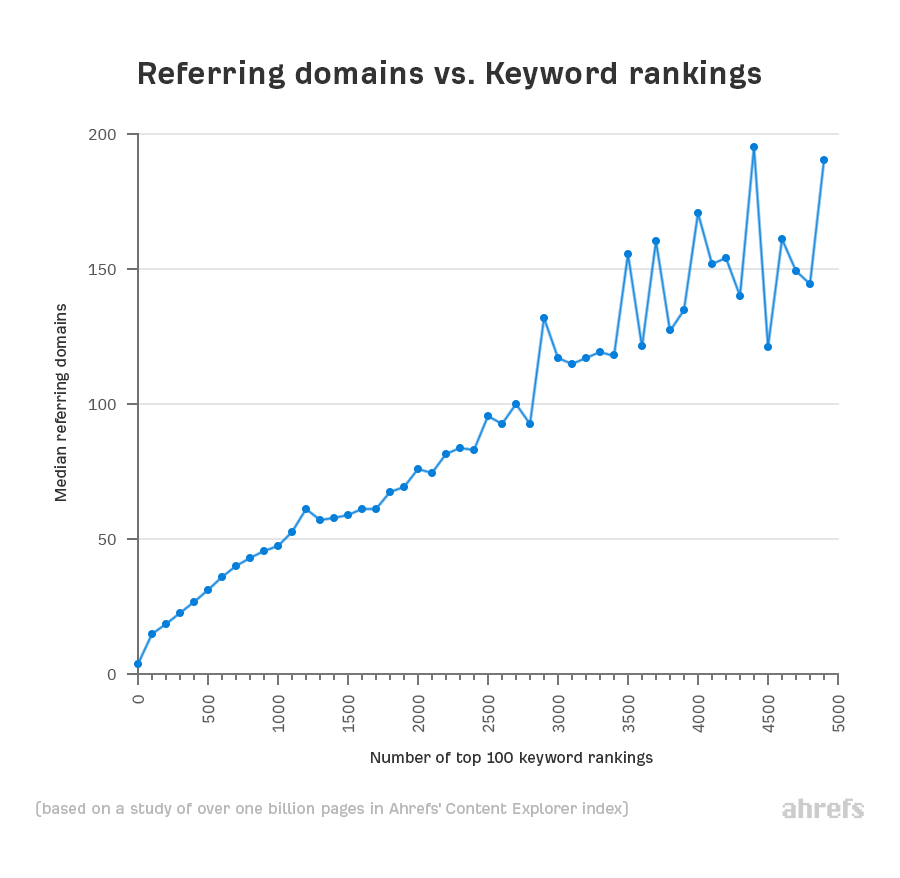
Ahrefs backs up this assumption with a study revealing the direct correlation between the number of referring domains and keyword rankings.

Image Source

Does it mean SEOs have to focus on acquiring an abundance of backlinks? Quite the opposite.

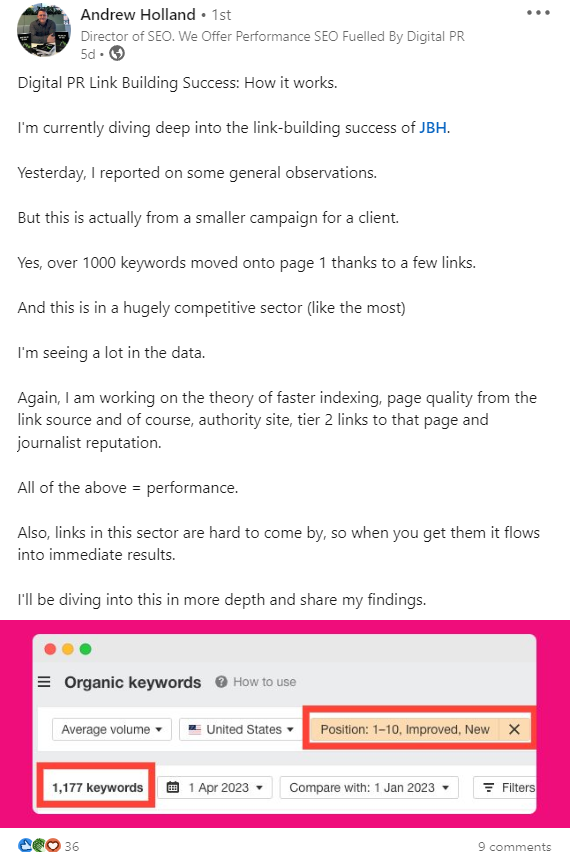
A plethora of low-quality backlinks won’t do in the long run, as Google may consider them spammy. That said, I suggest acquiring high-quality backlinks in fewer quantities rather than playing the numbers game.

But what defines a quality backlink? A high-quality backlink comes from a high domain authority website that is trusted by not only search engines but also people.

Here is a case study from Andrew Holland, Director of SEO at JBH. Look how they managed to improve their rankings with the help of a few links.

Image Source

2. Higher Domain Authority

Acquiring backlinks from relevant and reputable websites gradually improves domain authority (DA). This metric, developed by Moz, scores websites from 1 to 100. Higher scores indicate that your website will rank higher on SERPs.

However, SEO folks rely heavily on Ahrefs’ Domain Rating — an altered alternative to Moz’s score. Check your website’s domain rating with this free tool.

Pro tip: Earn backlinks from quality sites with a DR of 40+. Target DR 70+ sites for maximum impact on your rankings.

3. Referral Traffic and Leads

Backlinks are not only about improving your website. In fact, they can bring you referral traffic and prospective customers. This occurs when someone clicks on links in an article and lands on the webpage of the linked website.

Note: In my experience, you never know what media outlet or blog post will convert better and how many leads will come to your website. I’ve seen my guest posts bring hundreds of demo requests while others resulted in a few clicks. So, don’t build links for the sake of referral traffic alone.

Consider it a nice side effect.

20 Types of SEO Backlinks

Learn the nuances of the 20 most fruitful backlink types with examples and how to earn them.

1. Editorial Backlinks

Editorial backlinks are organic links acquired when other websites find your content valuable and link to it. These are the most coveted in SEO as they are earned based on superior, relevant content rather than being paid or requested.

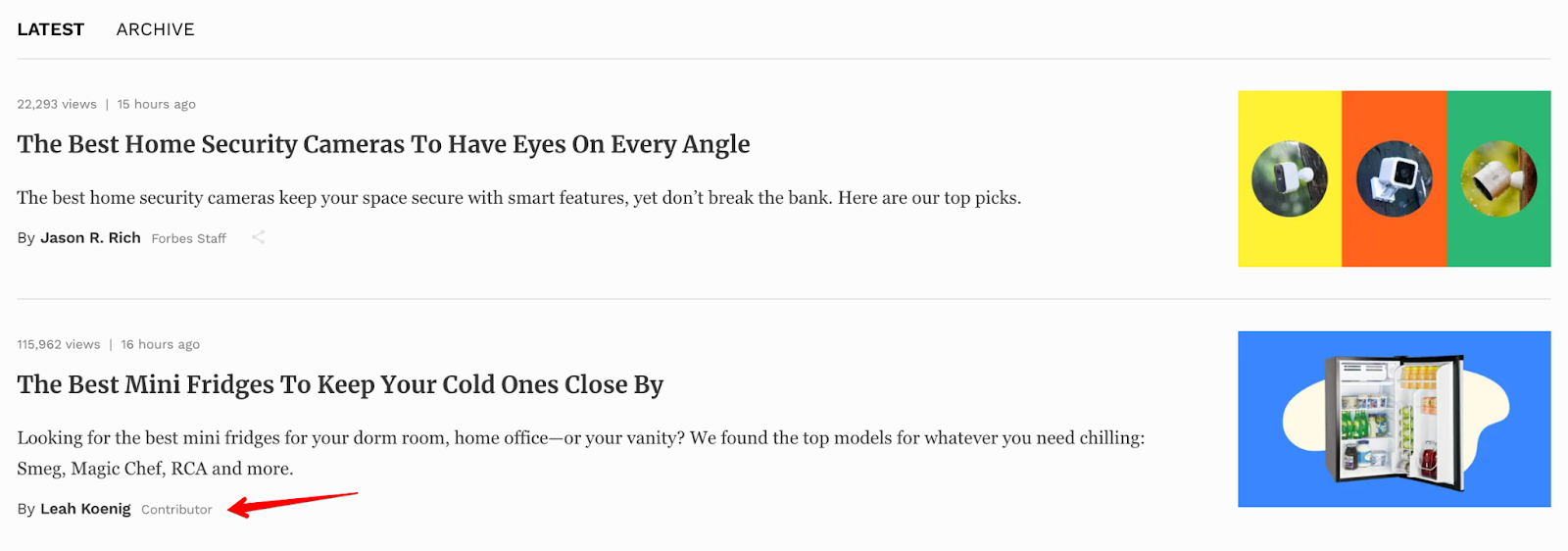
Therefore, editorial backlinks significantly improve SEO performance by signaling to search engines that your content is authoritative and credible. Usually, these links come from highly authoritative websites with a DR of 80+. Such websites include HubSpot, TechCrunch, Forbes, Vogue, news sites, etc.

To earn editorial backlinks, focus on creating authentic content with “originality nuggets.” Examples include thought leadership content, research, case studies, linkable assets, expert round-ups, and experiments.

A simple way to gain editorial links is to use services that connect journalists with experts like HARO and HaB2BW. Pitch your unique point of view backed up by data to get mentioned in industry publications.

These platforms email a source and a journalist with questions and answers every day.

HubSpot recommends: Find out which types of HubSpot’s blog post earn the most editorial backlinks.

2. Guest Post Backlinks

Guest post backlinks are a type of backlink that you acquire by writing and publishing content on other websites, typically within your niche or industry.

Guest posts help improve your website‘s authority and relevance within your industry, offering both SEO value and driving targeted traffic at the same time. Choose reputable websites for guest posting, and ensure your content is well-researched and provides value to the host site’s audience.

Pitch your guest post directly to a media outlet’s content marketer, or look for the guest post submission form like we have at HubSpot.

3. Mend Broken Backlinks

The strategy involves identifying broken links on relevant websites and suggesting your content as a replacement. This way, you’re earning a backlink by providing a solution to the webmaster.

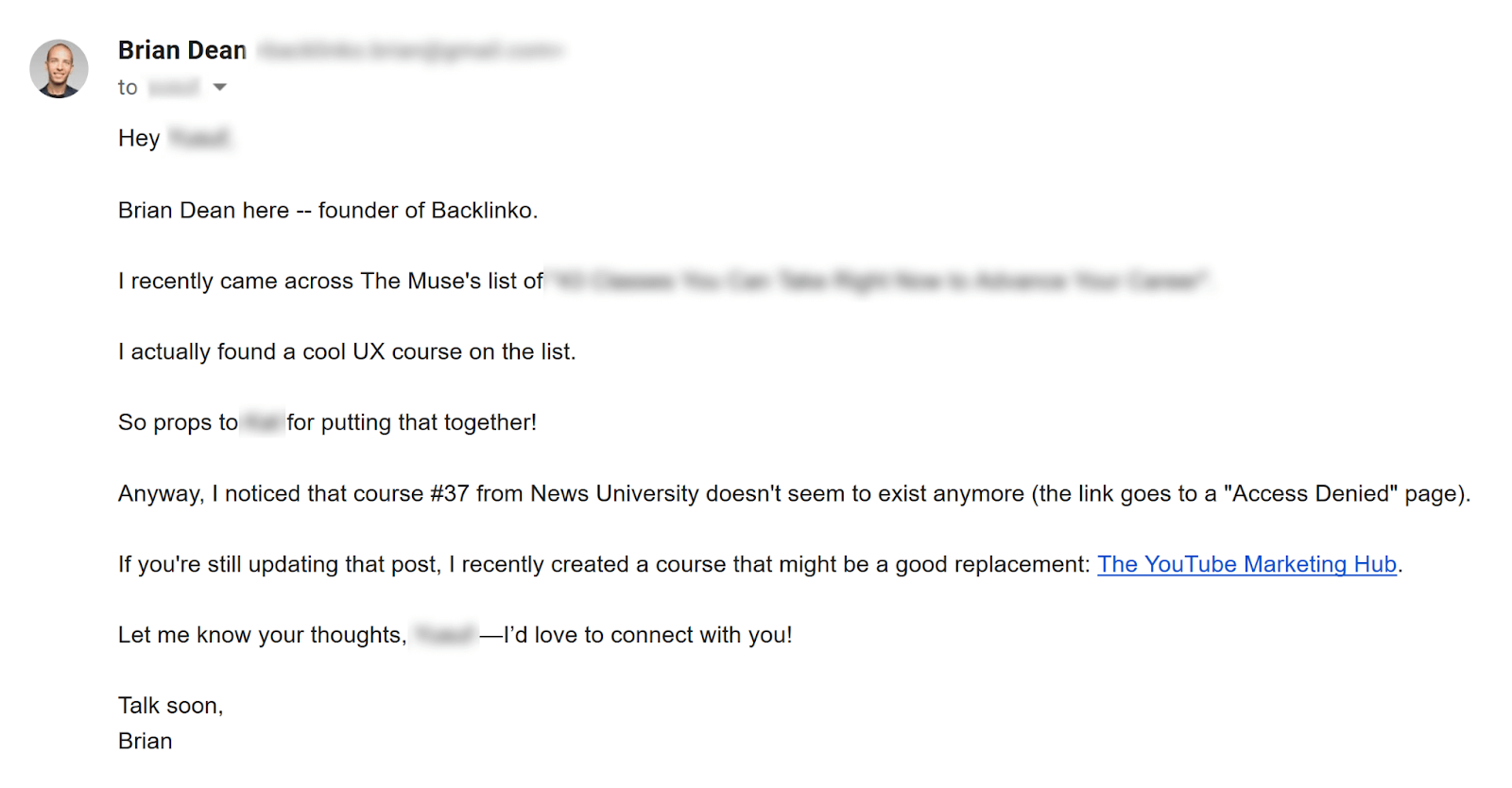
Use tools such as Check My Links or Broken Link Checker to scan relevant websites, find broken links, and then reach out to the site owner with your content as a solution. Brian Dean capitalizes a lot on this strategy to earn top-notch backlinks with one piece of content.

Explore how Brian pitches webmasters.

Image Source

Pro tip: Create astonishing content pieces to make webmasters link to them. As with editorial backlinks, content with originality nuggets shows the best results.

4. Dofollow Backlinks

Dofollow backlinks allow search engines to follow them, passing on link equity to the linked page. By default, all links are dofollow and do not require a rel= “dofollow” attribute to be used.

Example:

<a href=“https://blog.hubspot.com/marketing/covid-19-benchmark-data” target=“_blank” rel=“noopener”>How COVID-19 Is Impacting Sales and Marketing Performance</a>

When high-quality websites link to your content using “Dofollow” links, it enhances your website’s credibility and improves its position in search engine results. Your domain and page rating also rise.

5. Nofollow Backlinks

Nofollow links contain the nofollow (rel=“nofollow”) attribute and instruct search engines not to follow them (not to pass link equity to the page).

Although they don’t directly impact authority, nofollow backlinks can still drive traffic to your site and contribute to a natural link profile.

Example:

<a rel=“noopener” target=“_blank” href=“http://www.blog.hubspot.com/” rel=“nofollow”> Head to the HubSpot Blog </a>

You might want to use “Nofollow” links when you link to a page you don’t want to endorse, the link is sponsored or is user-generated.

6. Comment and Forum Backlinks

Comment backlinks are links that you acquire by leaving comments under blog posts. Likewise, forum backlinks come from forum threads or your signature.

While they are considered one of the easiest ways to acquire backlinks, they are often associated with low authority and relevance. Search engines are aware of comment spam and, in many cases, treat comment backlinks with caution.

The only reason I mention them is to warn you about the negative impact these links may cause.

Pro tip: Here are four well-known forums you can leverage for backlink building:

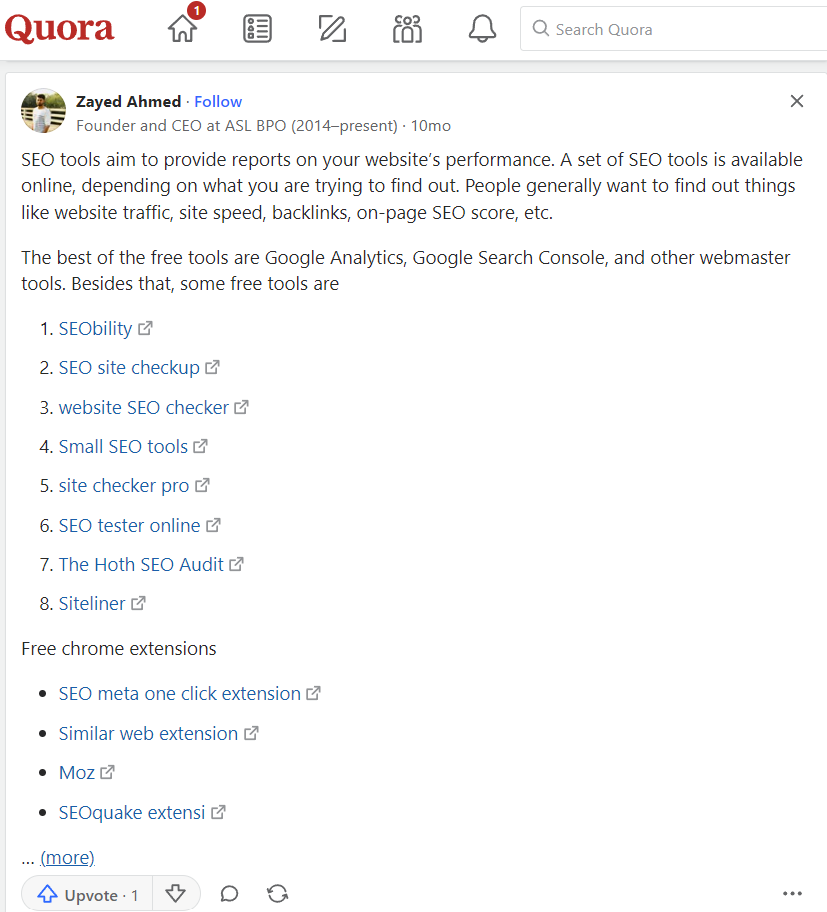
  • Quora.
  • Reddit.
  • Stack Overflow.
  • BabyCenter.
  • TripAdvisor.

Image Source

7. Niche Edits Backlinks

Niche edits, also known as curated links or link insertion, are backlinks inserted into existing articles, listicles, or pages on a website, rather than creating new content as you would with guest posts.

The top benefit of niche edits is that you add contextual links to already indexed and high-ranking pages. This means you start getting link juice nearly immediately.

Conversely, when you build links from new content (guest posts, press releases, etc.) you have to wait for the page to be indexed, which takes anywhere from two weeks to months.

“At HubSpot, we’re really trying to take content that’s already out there, improve upon it, and make sure that it’s optimal to support driving referral traffic and signups,” says Autumn Witter, an associate account manager of SEO and link building at HubSpot.

To do so, Witter’s team finds content where HubSpot products are already being mentioned. They then ask webmasters to add more relevant links with more relevant anchors.

8. Press Release Backlinks

These links you obtain by distributing press releases about your business updates or events. If done right, it’s a great tactic to gain brand exposure, as well as give an additional boost to your SEO efforts.

Use them when you want to inform people about a big event that your company is organizing, announce the release of a new product or service, or simply when you want to get attention for your brand.

Choose any natural-looking anchor text. Naked URLs, branded or generic anchors, and CTAs work best.

Keep in mind that most press release links are usually “Nofollow.”

Learn how to carry out an effective press release link building.

9. Social Media Backlinks

Social media backlinks refer to any link from a social media website or page to your site. They can be placed inside a post, in the comments, on user profiles, or be shared directly on the feeds.

While social media links are “Nofollow,” they can indirectly improve SEO by driving traffic and engagement on your site. The latter translates into higher rankings, as it boosts “time on page” and improves user behavior. Both are ranking factors.

Share nice visuals, videos, and thought-provoking posts across your social media channels, and include a link to your web page.

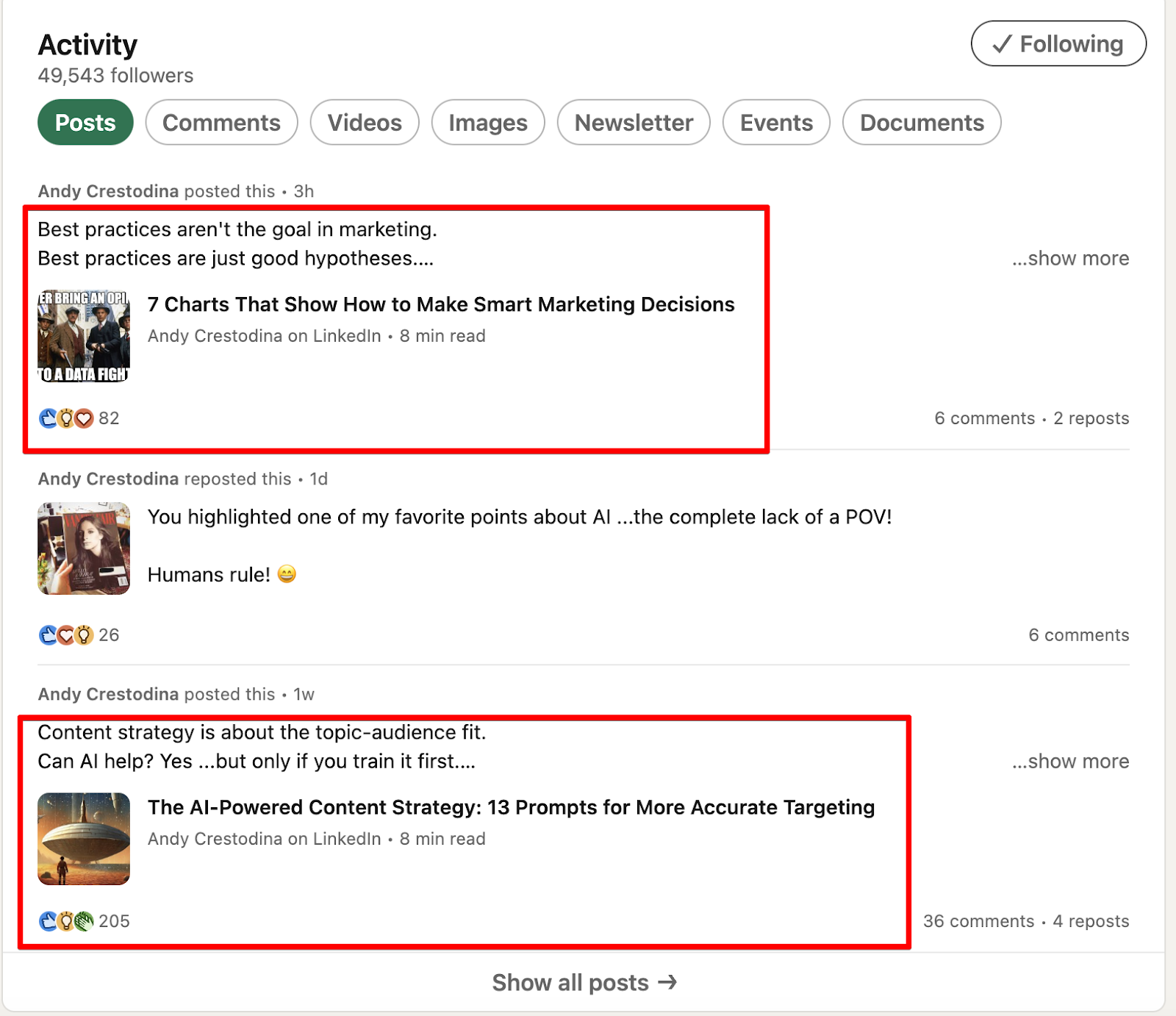
Andy Crestodina virtuously invites its LinkedIn audience to navigate to his company’s blog posts by crafting enticing hooks, sharing diagrams, or video explainers.

10. Directory Backlinks

Directory backlinks come from submitting your website to online directories or business listings, typically with a link to your site. They can enhance local SEO and diversify your backlink profile.

Don’t submit your site to hundreds of directories. Focus on reputable, niche-specific directories that are relevant to your business with an active audience.

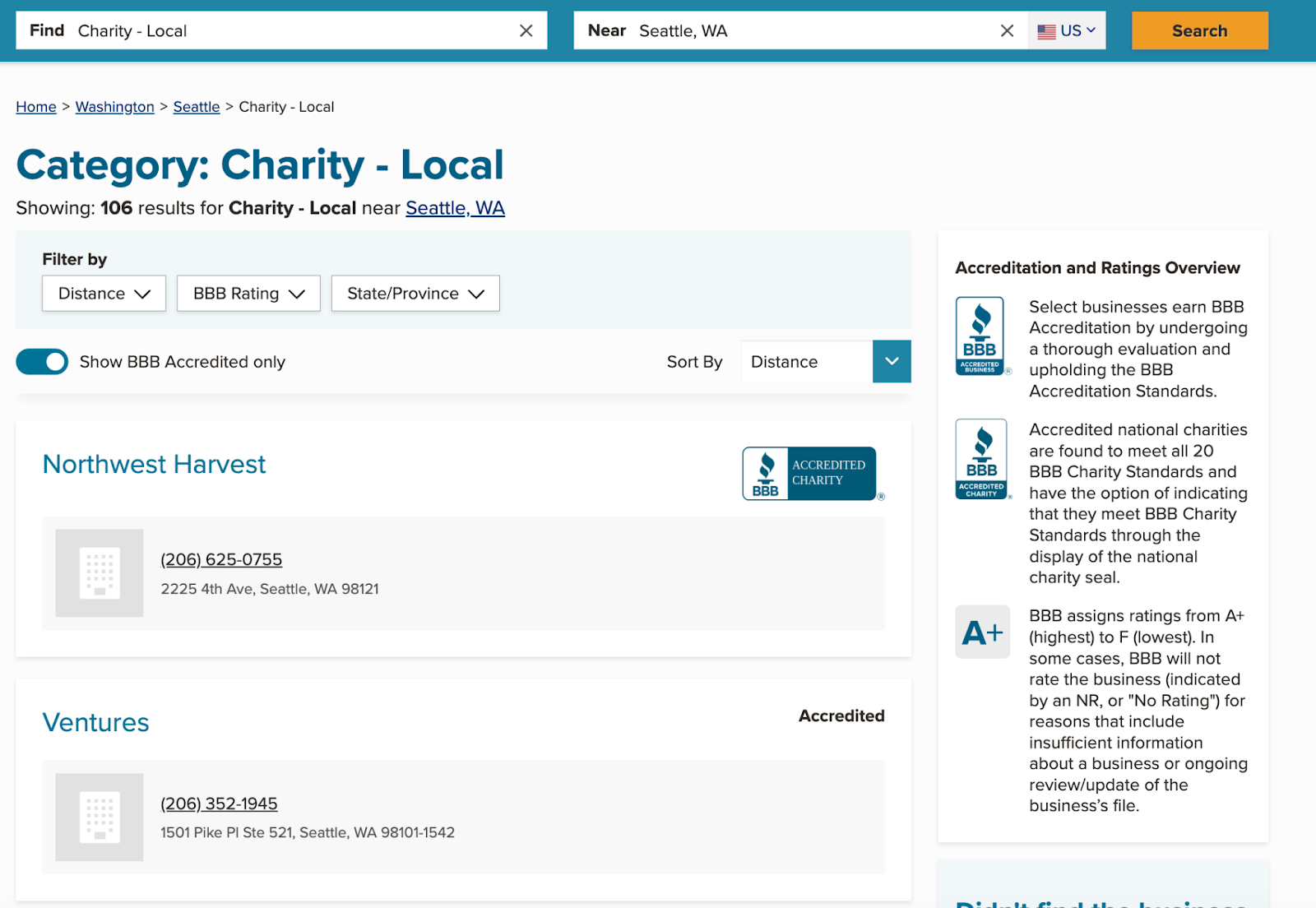
Further, ensure your information is consistent across listings, as Google pays attention to this for local businesses. Some of the decent directories include:

  • BOTW.
  • Spoke.
  • Yelp.
  • Better Business Bureau.
  • Google My Business.

Image Source

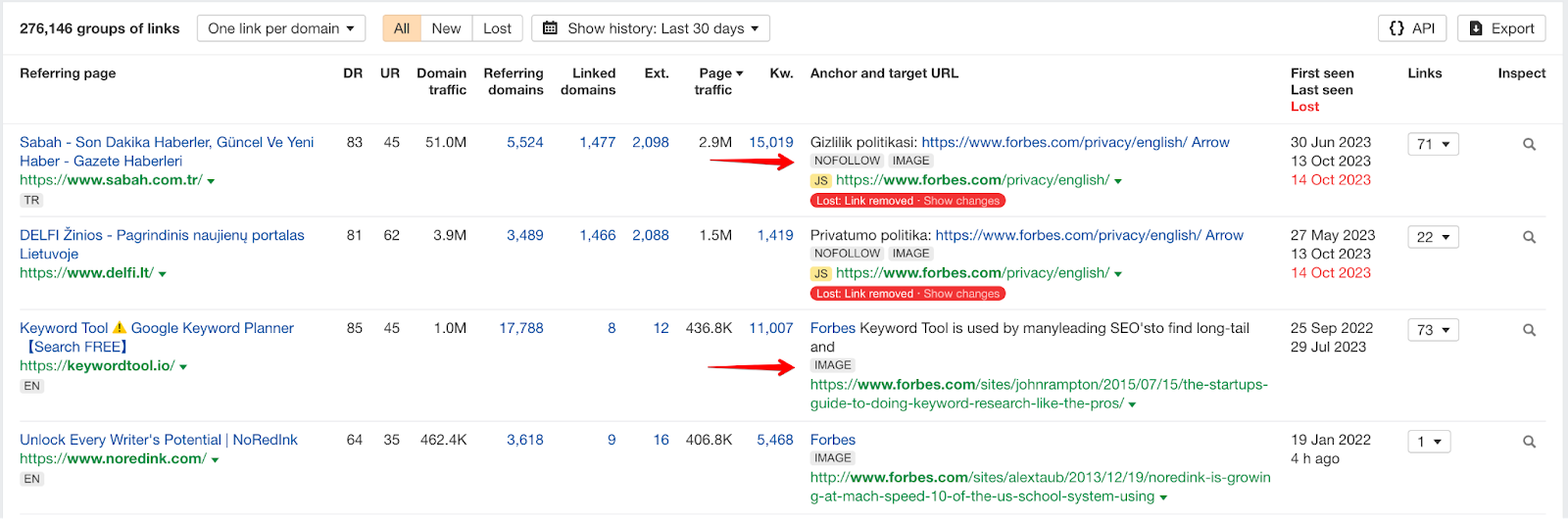
11. Image Backlinks

An image backlink is an image that is linked (attributed) to a site/page.

Why care about image backlinks? A Semrush study discovered that webpages using images earn 555% more quality backlinks.

Here are the most common types of images that tend to gain backlinks passively:

  • Infographics.
  • Graphs.
  • Product photos.
  • Maps.
  • Visual examples that support text.

Use Google Reverse Image Search to identify where exactly your image is being used. If someone is using your image and is not crediting you, directly reach out to the webmasters and claim your backlink.

Pro tip: Create original, high-quality images and use descriptive file names and alt tags to enhance their discoverability.

Image Source

12. Video Backlinks

The links come from video descriptions, comments, or video credits when your videos are uploaded on platforms like YouTube. Every link from YouTube content is “Nofollow.”

While backlinks on YouTube don’t give you direct SEO link juice, they are still links that can be discovered within YouTube searches and generate traffic. Optimize video titles, descriptions, and tags for relevant keywords to maximize their SEO impact.

13. Paid Backlinks

Paid link building is when a website pays a third-party domain for a dofollow backlink that points back to its domain. According to Authority Hackers, 74.3% of link builders pay for links, with the average amount being $83 for each link.

The numbers are impressive, but keep in mind that buying links is a black-hat SEO tactic. Google sees them as link schemes and a violation of search engines’ policies.

If engaging in sponsored link building, ensure the links are relevant to your niche and come from real websites, not PBNs. Ideally, they come from a commercial blog (some editors may sell links).

14. Edu and Gov Backlinks

Domains with the EDU and GOV suffix are the most trusted extensions for Google, as these areas belong to government and educational institutions.

These backlinks possess more authority and are harder to get than regular backlinks, but they are worth the effort.

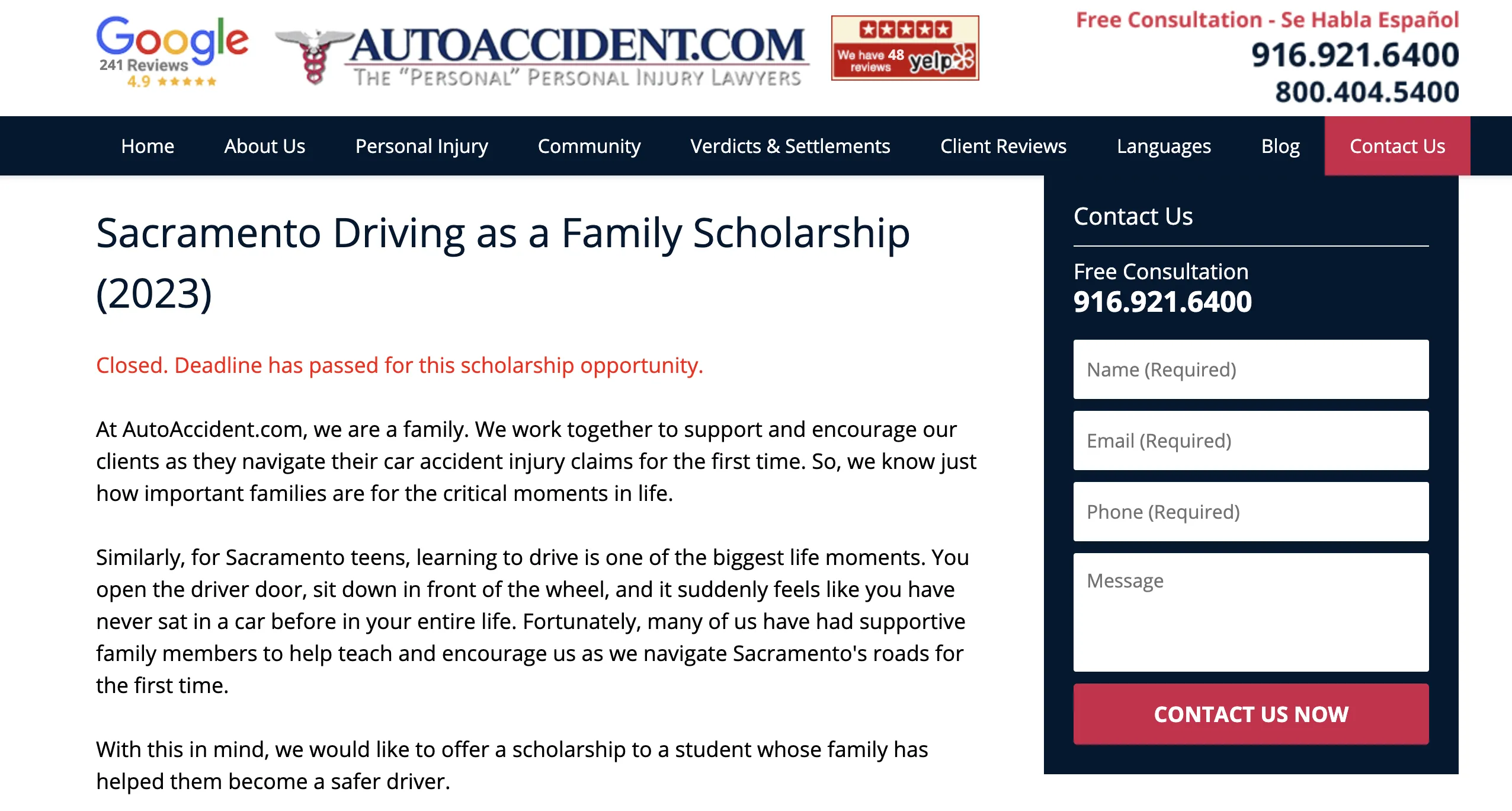
What makes this type of backlinks unique is that you can’t buy them. How to acquire? For educational institutions, try creating scholarships, internships for students, and events to grab their attention.

For example, AutoAccident regularly creates college scholarships.

Image Source

When it comes to .gov websites, they are super selective. Most often, you have to contact them to partner up on different initiatives.

15. Unlinked Brand Mentions

If a website talks about your brand, a case study, or research but does not link to you, these are unlinked brand mentions. Therefore, they’re great opportunities for link-building.

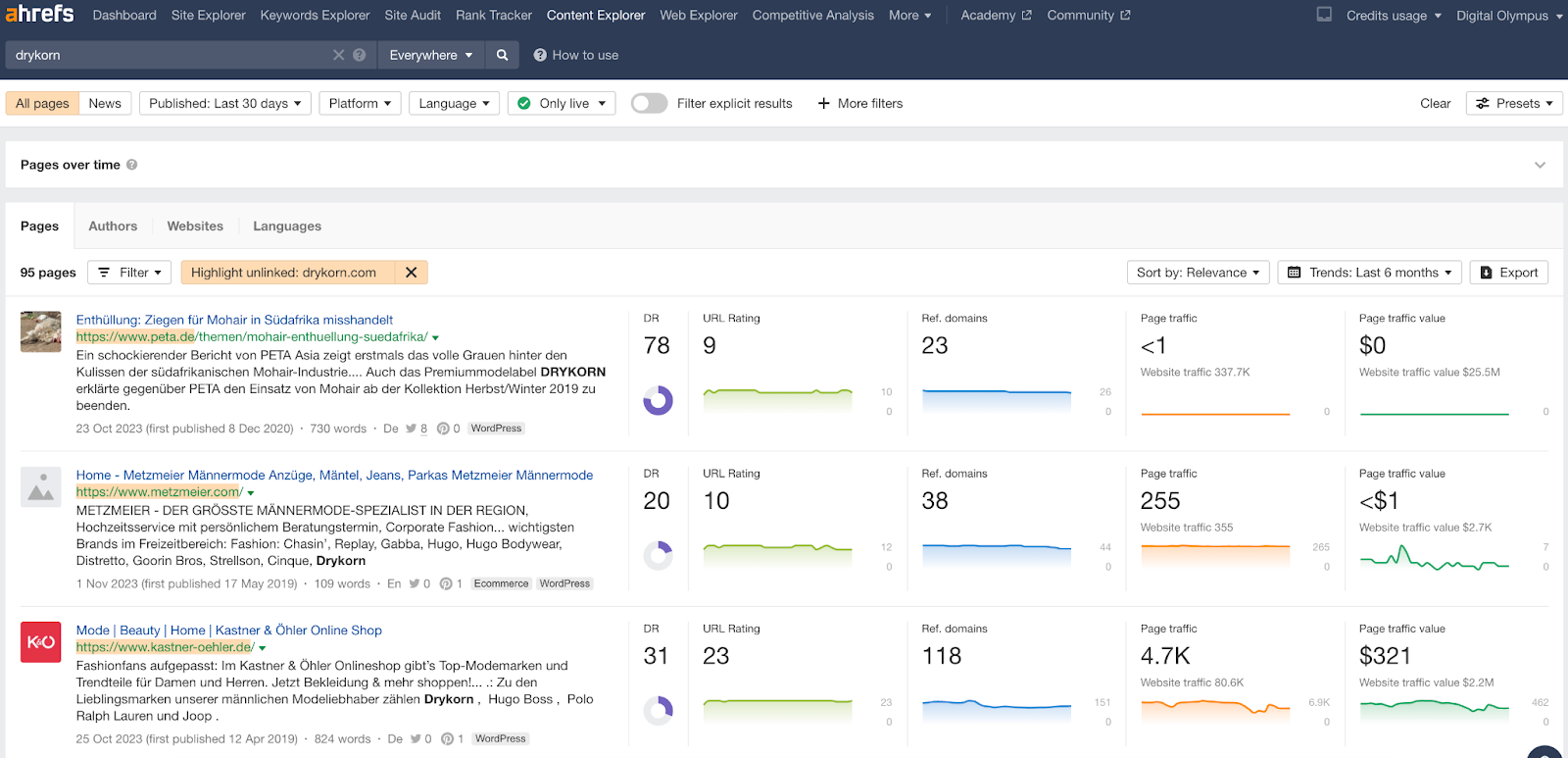
Use Ahrefs to spot unlinked brand mentions:

  1. Navigate to Ahrefs Content Explorer and type in your brand name.
  2. Create filters: Published (e.g., Last 30 days), Language, Only live.
  3. Click on “Highlight unlinked” and enter your domain name.
  4. Analyze link prospects and select those with high domain authority (DR) and topical relevance.

16. Podcast Backlinks

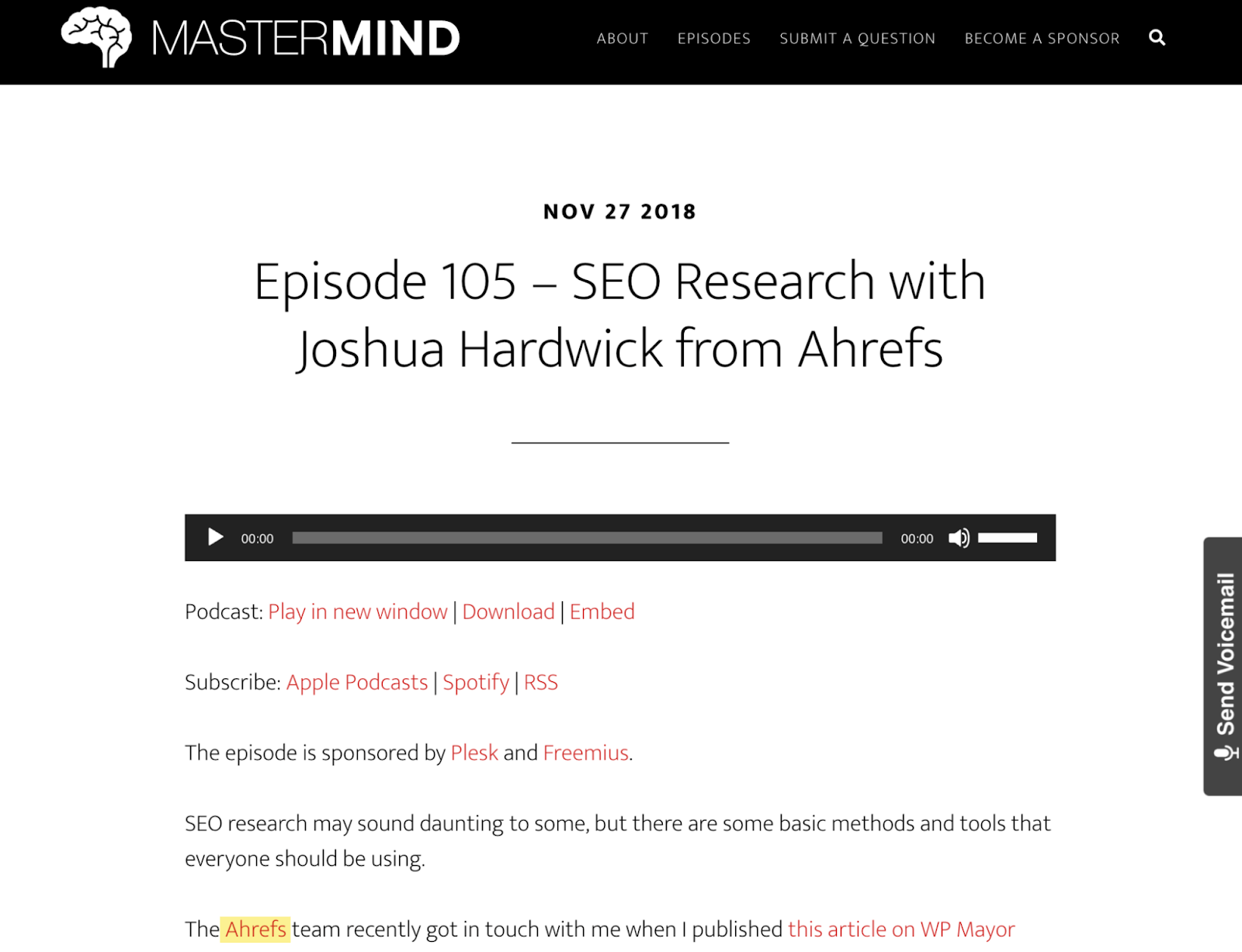
Obtain backlinks by being a guest on a podcast or when your website is mentioned in podcast show notes. It’s a great way to build homepage links, enhance your online presence, and contribute to industry recognition.

Identify relevant websites and podcasts and reach out with personalized messages. Here are some popular podcast platforms:

  • Apple Podcasts.
  • Stitcher.
  • Spotify.
  • Google Podcasts.
  • Podchaser.
  • Podcast Addict.
  • Podcorn.

Image Source

17. Testimonial Backlinks

Earn links by providing testimonials or reviews for products, services, or businesses. They are a win-win situation both for the business and the reviewer.

For businesses, it’s a valuable form of social proof that adds to their credibility and reputation.

On the other hand, the reviewer will get a link-building opportunity. All you have to do is select products and services that you actually use, pitch them, and then create a testimonial.

Image Source

18. Footer links

Footer links are sitewide links placed at the bottom of your website in the footer section. They appear on every page since the footer is static.

Use your footer to place internal links to important pages on your website so visitors can easily find information.

Google frequently checks footer links to make sure that you prioritize the user by providing value rather than for SEO purposes.

Though most of the time, footer links are internal, there are a few times when you might need to link to external sources, like credit a company that designed your site.

Image Source

19. Badge Backlinks

Badge backlinks are a unique type of backlink that can be earned when other websites or organizations award you with a digital badge or emblem that links back to your website.

These badges are typically given to recognize achievements, certifications, partnerships, or contributions.

Image Source

20. Influencer-Generated Backlinks

Influencers have high authority, they are respected in their industries, and their recommendations are strong.

When they mention or link to your website in their content, Google views these backlinks as a vote of confidence, especially in the era of the E-E-A-T algorithm.

Collaborate with influencers in your niche for round-ups, joint studies, etc. Ask for a product review or recommendation, and run a creative contest on their social media channels or website linking back to you.

5 Tips for SEO Backlinks

Still not sure how to acquire backlinks? This section covers 5 tips for backlinks shared by industry experts.

Tip 1: Focus on quality over quantity.

“A perfect backlink is an elusive goal. While you may strive to acquire backlinks that meet many metrics, your competitors are securing backlinks that intuitively fit their content, giving them an edge,” says Georgi Mamajanyan, CEO at SayNine.

As a result, Mamajanyan recommends focusing on quality over quantity. He also recommends identifying “the minimum metrics that meet your standards.” From there, you can build backlinks accordingly.

“The most critical metric isn‘t DR or DA, nor is it domain traffic; it’s whether the website represents a legitimate business (e.g., SAAS/Agency) or if it’s merely a platform created solely for selling backlinks,” says Mamajanyan.

Tip 2: Prioritize low-hanging fruits for quick wins.

Unlinked brand mentions are low-hanging fruits for both early startups that are just taking off and creating buzz and established companies. Monitor sites that don’t give you credit once per 30 days to strike while the iron is hot.

Securing these links usually comes with a low effort since media outlets already know and recommend your business.

Tip 3: Leverage relationships, not links.

According to Digital Olympus Founder Alex Tachalova, “The future of link building lies in acquiring links strictly through relationships.”

For example, Tachalova says, your team should ask industry players to share their thoughts on the topics you cover. This applies to webinars, podcasts, and virtually any marketing initiative that allows you to feature other companies.

“ Links are recommendations that can only be earned by connecting your brand meaningfully with other companies and individuals who may provide backlinks to your site. To achieve that, run co-marketing campaigns with other companies in your niche,” Tachalova says.

According to Tachalova building relationships with niche professionals unlocks various opportunities.

“Instead of focusing solely on transactions, consider the value you can offer other companies. This not only helps you gain links but also expands your brand’s visibility and puts your product or service in front of their audiences,” he says

Tip 4: Widen your prospecting to indirectly related verticals.

If your services are limited to a city or a target audience, build links from indirectly related platforms.

Say, you have an online shop for vegan skincare cosmetics. Which are your target sites for backlinks? Top of mind, blogs about skincare and vegan products. However, you can also consider building links from environmental projects.

For example, write op-eds on how your company contributes to resolving social or environmental disasters. You can then highlight the cruelty-free, low waste you’re on.

Tip 5: Monitor and disavow low-quality links.

When you grow, some competitors may take extra measures to make sure you fail in rankings by attacking your site with negative SEO. Usually, your site is subjected to link spam from PBNs, link farms, etc.

To maintain a healthy backlink profile, conduct a link-building audit once per month. Also, set up notifications about low-quality links pointing to your website using Linkody — a backlink monitoring tool.

Noticed unnatural links in a big quantity?

Google recommends disavowing all of them to prevent a negative impact on your site’s rankings.

Watch Matt Cuts from Google addressing questions about negative SEO in 2023.

Leverage Different Types of Backlinks to Maximize SEO Efforts

SEO is complex. It’s essential to not only acquire backlinks but also to understand the nuances of each type. Make sure to combine different link-building types with other SEO initiatives to maximize your online visibility.

marketing

Categories B2B

100 Essential PPC Statistics Every Marketer Needs to Know in 2023

The crown weighs heavily on the head of your marketing leadership when making command decisions about resource allocation. The SEO long game is important, but reserving a budget for search engine marketing (SEM) can also be a smart play, including pay-per-click (PPC) marketing.

Snagging higher spots on SERPs can quickly boost traffic, and PPC strategies have been proven to increase conversion. How can a marketer confidently decide how much money to put where, and is it time to convince the finance team to boost the budget?

Free Guide, Template & Planner: How to Use Google Ads for Business

Backing up your decisions or budgetary requests with data is a smart move. To that end, we’ve compiled a long and useful list of PPC — on both search and social — and SEM statistics that marketers can use in 2023 to guide and validate important strategic choices in their marketing plans.

Table of Contents

Search PPC Statistics

Social PPC Statistics

Search Engine Marketing Statistics

User Behavior Statistics

Paid Search Statistics

New Call-to-action

Categories B2B

Integrated Marketing Examples: 8 Best Campaigns, According to HubSpot

One of my favorite methods of marketing is integrated marketing. I love when I’m scrolling through social media and I see branding for a product, film, service, or artist that adapted to different channels.

It shows consistency and creativity, and it keeps a brand top of mind with its audience. But what is integrated marketing?

In this post, I’ll take you through some recent integrated marketing campaigns that delivered an excellent experience for customers and leads alike.

Download Now: Free State of Marketing Report [Updated for 2023]

What is integrated marketing?

Integrated marketing is any marketing campaign that uses multiple channels in execution.

For example, you might see a popular new donut flavor in a commercial, then drive past the donut shop to see posters of the donut.

If you flip through Instagram once you get to your destination, you might see a GIF on your feed displaying the donut.

This style of marketing is great for boosting leads and brand awareness. Using multiple sources to deliver the same campaign diversifies the audience’s interaction with its content.

Best Integrated Marketing Campaigns

1. Starbucks Pumpkin Spice Latte

Channels: Social Media, TV, Print, Email

I always know it‘s fall when I see advertisements for Starbucks’ Pumpkin Spice Latte everywhere, from television commercials to social media ads to TikToks and more.

Starbucks has conducted Facebook Lives announcing the launch of its Pumpkin Spice Lattes and released cozy music streams on YouTube promoting the drinks.

This year, the company released Instagram videos showing pumpkin carvings in the shape of its signature PSL.


What We Like: Starbucks keeps PSL advertisements consistent across all platforms while still adapting to each platform’s format, such as Lives for Facebook, Reels for Instagram, and long-form videos for YouTube.

2. Apple: Shot on iPhone

Channels: YouTube, Television, Social Media

Apple‘s “Shot on iPhone” campaign is one of my favorite examples of integrated marketing. The company finds new ways to show the quality of its phone’s cameras and features. The campaign includes:

  • Advertisements filmed entirely with an iPhone
  • Music videos shot with iPhones
  • Social media challenges asking iPhone users to share the best videos and photos they’ve shot with their iPhone.

Pro-Tip: Apple’s campaign calls for user-generated content from consumers, content creators, and artists who use its phones. Consider leveraging user-generated content in your integrated marketing campaign.

3. Hyundai Elantra

Channels: Spotify, Website

A great example of an integrated marketing campaign comes from the 2021 Hyundai Elantra award-winning campaign.

To increase brand awareness among the younger millennial demographic, Hyundai partnered with Spotify and musicians in LA, Miami, and NYC to give customers an insider’s guide of the city.

The city guides were made available to audiences everywhere through Spotify podcasts, where drivers could follow along from place to place by listening to the podcast.

What We Like: These guides were audio, video, and even a microsite that housed itineraries and stop descriptions.

As an associate marketing manager at HubSpot, I think this is a great campaign that utilizes the right channels for the audience that Hyundai is trying to reach.

4. “Fatima,” the movie

Channels: Facebook Premiere, other social media channels

In 2020, McKinney and Picturehouse teamed up to launch a new film, Fatima, the historical drama of the Virgin Mary’s appearances to three children in Fátima, Portugal, over a hundred years ago.

The companies developed social content to inspire, connect, and elevate the film’s key themes. It was a social campaign that included more than 200 pieces of content, reaching 14 million people.

But one month before the movie’s release, the world and Fatima were put on pause due to COVID-19.

To keep people interested and engaged for another four months, the companies created “Together In Spirit,” a virtual pilgrimage transporting people to the Shrine at Fátima. The campaign videos got more than 27 million views.

At a time when everyone was isolated, the goal of the broadcast was to provide a message of hope, and in the process, it became the best-performing Facebook Premiere event in motion picture history.

Pro-Tip: In the event that something unexpected happens that could affect audience attendance, think about ways to bring the event to your audience via social media, 3D tours, and more.

5. Victoria Monet’s “Audience”

Channels: Instagram, Facebook, Billboards

For the single, “Experience,” R&B singers Victoria Monet and Khalid collaborated with Spotify for a release campaign. The campaign included online and in-person marketing tactics.

In Canada, a billboard was created in Toronto, promoting the song’s Spotify release. In response, Monet posted a picture on Instagram to share with her fans and promote the single:

What We Like: The use of online and in-person marketing methods makes this integrated campaign one that can be seen from anywhere.

From the billboard in Canada to international Facebook and Instagram fans, the release of “Experience” was anticipated globally.

In fact, in one month, the single became Monet’s most popular song on the streaming service.

6. REI, #RecreateResponsibly

Channels: Website, Instagram

Outdoor activity is at the core of REI’s products. REI sells camping essentials, such as tents, clothes, and insulated containers. In 2020, REI partnered with several groups in Washington state that aim to preserve wildlife and nature.

Outdoor Alliance, The Outdoor Industry Association, and national parks came together for the #RecreateResponsibly campaign.

The point of this was to educate the public about how to stay safe when venturing outdoors, with the main content player being graphics similar to the one below:

Image Source

This graphic was shared on social media to spread awareness of tips to responsibly venture outdoors to avoid health concerns.

#RecreateResponsibly‘s hashtag asks followers to share the tips in real-life situations, shared by REI’s Instagram.

With the hashtag and partnerships, the campaign is also boosted by related blog posts on REI’s website. Posts like this one offer ways to stay safe while traveling.

What We Like: The hashtag has been used by The National Park Service, Colorado Parks and Wildlife, and Los Angeles National Forest, and brings awareness to large audiences.

The partnerships and REI’s content share an educational message and an interactive component — making this campaign diverse and engaging.

7. Melt Cosmetics, “She’s in Parties”

Channels: Website, Instagram, Facebook

“She’s in Parties” is the name of an eyeshadow palette from Melt Cosmetics.

Says staff writer Rebecca Riserbato, “The purple palette sparked a hashtag of the same name on Instagram. On the landing page for the collection, there’s a section dedicated to Instagram posts with the hashtag.”

The campaign inspired a purple theme, which took over the company’s Facebook and Instagram accounts. Along with this social media content, influencers sent the palette and began to upload their reviews on YouTube.

For this launch, a variety of social tactics were used. A matching social campaign, user-generated hashtag, YouTube recommendations, and a revolving landing page contributed to where the campaign was distributed.

Pro-Tip: When you know where your audience spends their time, like the team at Melt, you can reach them with a diverse, omnichannel strategy.

8. Brew Dr. Kombucha, “Love Wins”

Channels: Website, Instagram

“In May 2020, Brew Dr. Kombucha released its signature kombucha with limited-edition colorful, rainbow-wrapping for Pride Month,” HubSpot writer and Principle Marketing Manager Caroline Forsey recalls.

“The wrapping has the lifeline number to The Trevor Project printed directly on it — the company partnered with The Trevor Project and supports the organization through proceeds of its limited-edition kombucha.”

“Along with the limited-edition wrapping, the company created a dedicated landing page for #LoveWins and supported Pride Month with the #LoveWins hashtag across its social channels.”

Forsey continues, “Ultimately, I chose this campaign as one of my favorite integrated campaigns of 2020 because I was inspired to see this brand uplift and inspire communities while giving proceeds back to an incredibly worthy cause.”

What We Like: The brand chose a social movement that was important to them, Pride, and celebrated it with this integrated campaign.

This tactic brings awareness to a social cause a respected organization, and enhances a celebration.

Get Started With Integrated Marketing Campaigns

can help increase brand awareness, generate leads, and delight customers. The best-integrated marketing campaigns have an omnichannel approach, encourage audience engagement, and hopefully improve your brand reputation.

The only way to truly create an integrated marketing campaign is to have a marketing plan template to help you identify the proper channels, budget, and strategy for your campaign.

state-of-marketing-2023


Categories B2B

What is Email Deliverability? Best Tips & Practices in 2023

Email marketers spend a lot of time drafting poignant email copy, designing wonderfully branded email templates, and crafting enticing email subject lines in the hope of getting it open and skyrocketing click-through rates.

But email deliverability is key to your success.

Boost opens & CTRs. Get started with HubSpot's free email marketing software.

Despite knowing the best practices for email deliverability (a.k.a. ensuring your email is getting delivered to the right inbox) and boosting deliverability rates, most marketers fail to figure out why their emails disappear after being sent.

In this blog, we cover the following:

Imagine you send mail to a friend with a missing sender name. The post could end up in the trash because of the unknown sender. Similarly, emails may get delivered to the recipient’s email address but end up in a spam folder or marketing folder.

The term email deliverability may often be confused with ‘email delivery.’ While both the terms direct toward email delivery, there is a striking difference between the two terms.

Email Delivery vs. Email Deliverability

Email delivery measures the number of emails that were delivered successfully, no matter the folder. It tells if the recipient’s mail server has accepted the email file and delivered it to the receiver.

Precisely, it calculates the percentage of emails that didn’t bounce out of the sent emails.

Email deliverability is akin to the number of emails that reach the right destination. Also known as inbox placement, it calculates the percentage of emails that get delivered to the priority inbox.

An email deliverability rate of 100 emails, out of which 33 ended up in the spam folder, is 66%.

An easy summary of this email delivery vs. email deliverability comparison is:

  • Email delivery = How many emails were delivered?
  • Email deliverability = How many emails were delivered to the recipient’s inbox?

Delivery issues may be due to faulty email addresses, problems with your infrastructure, or too much negative feedback on the email address.

Deliverability issues arise due to outdated sending and permission practices, violating a law, or receiving too many spam labels by the receivers.

Why does email deliverability matter so much?

Email deliverability is crucial for higher ROI. For every $1 spent, email gives an ROI of around $36. Even if the email delivery rate is around 97% for the 1,000 emails sent, there are still 30 emails that bounced back.

Now, consider the open rates. The open rates might oscillate around 30%-40%. One of the major reasons for the low open rates could be email deliverability.

Emails that end up in the spam folders or the promotional folders have lower open rates because they are often overlooked.

For email marketers, getting higher open rates is imperative. And to ensure that, it is important that every email that you send should end up in the inbox.

What affects your email deliverability rate?

There is no single factor that affects the email deliverability rate.

Chances are that you could be doing various wrong things or just one mistake to get your emails marked as spam. The good thing is that these factors are in your hands and can be fixed by iterating your mistakes.

Sender Reputation

Whenever a marketer or an organization sends an email, the ISP assigns a sender score based on the recipient’s actions. The scores vary on a scale of 0-100.

A lower sender score means more recipients are unsubscribing or marking your email as spam. Out of various factors that affect your email deliverability rate, the sender score matters the most.

Email Content

Email subject and email content are imperative for boosting credibility and engagement levels. A compelling email subject line and enticing email content will have longer read times and higher open rates.

With these two factors, no ISP will mark your email for suspicion or flush it into the email spam folder.

Email Infrastructure

Despite everything being on the cloud, email deliverability largely depends on the software and hardware systems.

The email system works much like a real-life postal service system.

After you write a letter and dispatch it for delivery, the postal services, people who sort the letters, and delivery persons involved in delivering the posts to the receiver’s doorstep.

In the same way, email deliverability depends on the three hardware and software structures- mail servers, agents, and IP addresses.

If you have a high volume of email, you need a dedicated IP that provides robust and seamless email infrastructure. To know more about the dedicated IP addresses and how to connect to email addresses, click here.

Spike in Email Volume

No one likes their inbox flooded from the same sender at once.

Whether you are running promotional campaigns, launching a product, or having a big announcement for the subscribers, the emails should be sent at a fixed interval.

Spam emails have erratic patterns and are sent out in large volumes in short intervals.

Sending emails over a fixed time interval gives a positive sign to your ISPs that the emails sent are ethical and legitimate. Not to forget, the best time to send your emails drastically affects the open rates.

Keeping in mind, take a look at the things you should never do in your email marketing if you want your messages to be successfully delivered. And the things you can proactively do to increase your email deliverability rates.

24 Ways to Avoid Sending Spam Email & Improve Your Email Deliverability

1. Don’t buy or rent email lists.

Yes, you can legally rent and purchase lists of people who have agreed to email communications — but it’s never a good idea.

Not only is it a dirty email marketing tactic that goes against the Terms of Service for your email service provider, but these people don‘t actually know you — and it’s likely they won’t even want your emails.

In other words, there‘s a good chance they’ll mark you as spam.

Plus, let’s be honest … high-quality email addresses are never for sale.

2. Don’t email people who have bounced repeatedly.

Bounce rates are one of the key factors internet service providers (ISPs) use to determine an email sender‘s reputation, so having too many hard bounces can cause them to stop allowing your emails in folks’ inboxes.

Hard bounces are the result of non-existent email addresses and domains and typos in the recipient’s email address. The re-attempt to send the same emails will further aggravate the bounce rates, which is a red flag for the ISPs.

3. Don’t use all caps anywhere in your email or its subject line.

Using caps in email subject lines lowers the response rate by 30%. It looks like you are shouting at your audience, making your email less readable and disinteresting. It’s annoying and can seem spammy.

Instead of using disruptive tactics like all caps to get people’s attention, try personalizing your emails and using catchy and delightful language. (Read this blog post on how to write compelling emails for more tips.)

4. Don’t use exclamation points!!!!!

Even the smallest of symbols can drastically change the destiny of your email. Using too many exclamation points seems unprofessional and dominating in a way. You don’t need any fillers to get your emails noticed.

And when 69% of email recipients report email as spam based solely on the subject line, you’ll want to stay away from triggers like this as much as you can.

Plus, when you ask for punctuation to do a word’s job, it can really dilute your message.

The next time you’re tempted to use an exclamation point in an email (or anywhere, really), use this flowchart as a gut check.

5. Don’t use video, Flash, or JavaScript within your email.

By default, most email clients don’t allow the ability to view rich media like Flash or video embeds.

As for JavaScript and other dynamic scripts, even if a spam filter allows your email through, most email clients won’t allow these scripts to function — so avoid using them altogether.

Instead, use an image of your video player (with a play button) that links to the rich media on a website page. If you want to communicate your video idea even better, you can incorporate a GIF (with a link) and track the click-through rates thereafter.

To clear your doubts about embedding videos in emails, read our guide on the best ways to embed videos in emails.

6. Don’t include attachments to your emails.

Yes. The statement sounds vague, but including the attachments to your cold emails is never a good idea. An email with a short wall of text and all the first-hand information in the attachment could possibly be left unnoticed.

Also, the receivers consider the first emails with attachments as spam or malicious. This worsens the chances of getting your email to the spam folder.

Upload the attachment to your website and link to the file location in your email using an effective call-to-action button. This will minimize the chance of being blocked by spam filters and decrease the load time of your email.

(HubSpot users: HubSpot’s attachment tool in the email editor automatically does this for you. Simply highlight a bit of text or an image and click the attachment icon, and HubSpot will turn that text or image into a link leading to that attachment.)

7. Don’t use spam trigger words.

One of the easiest ways to avoid spam filters is by carefully choosing the words you use in your email’s subject line.

A good rule of thumb is this: If it sounds like something a used car salesman would say, it’s probably a spam trigger word. Think “free,” “guarantee,” “no obligation,” and so on. (For more, look at this list of common spam trigger words.)

Instead of using these trigger words, be creative, interesting, and informative — without giving too much away. Some better ideas for subject lines include:

  • “Hi [name], [question]?”
  • “Did you get what you were looking for?”
  • “You are not alone.”
  • “Feeling blue? Like puppies?”

8. Don’t forget to use spell check.

Spelling and grammar mistakes are the most embarrassing email offenses.

According to a report by Grammarly, around 93% of the respondents made email typos and blunders. Out of this, 63% committed embarrassing typos, while 50% were misunderstood by the recipients.

To maintain good email etiquette, it is really important that you avoid typos. And, it‘s easy for little spelling mistakes to slip by — especially when you’re self-editing.

Read this post to learn the most common spelling and grammar mistakes so you never make them again.

9. Don’t jam pack your email copy with keywords.

Keyword-stuffing your emails means shoving as many keywords into your emails as you can. There‘s a reason Google gives a lower rank to web pages that are stuffed with keywords — and that’s because it’s harmful to user experience.

To make it more likely folks will open your emails and not mark them as spam, write your emails for humans, not robots.

Copywriting that makes people want to take action is both simple and compelling. To make your writing sound more personable and relatable, use casual language, colloquial expressions, and even personal anecdotes.

I love the example below from Turnstyle Cycle (from our roundup of great email marketing examples). The copy is beautiful in its simplicity. It’s friendly yet sincere — especially with the following lines:

  • “We know you are busy and would hate to see you miss out.”
  • “Please let us know if we can help accommodate in any way possible.”
  • “Feel free to give us a call — we want to help :)”

Plus, they provided me with the exact details I needed to know — a reminder of what I’d signed up for and when, the expiration date, and a phone number to reach them. Check it out:

10. Don’t use an overwhelming number of images or huge images.

Using one large image as your entire email, or too many images in general, tends to end up in recipients’ spam folders. Most email recipients set their spam trigger criteria that filter heavily loaded images.

You’ll also want to make your image file sizes as small as possible without losing their visual integrity to prevent long email load times.

(If you’re a HubSpot user, the email tool automatically compresses images in emails so they load faster. For non-HubSpot users, some good image compression tools include Compressor.io, Compressjpeg.com, and Jpegmini.com.)

Not to mention, Microsoft Outlook doesn’t recognize background images, so you may want to avoid those and use a background color instead.

11. Keep your email lists current and clean.

Even if your list is entirely built on valid opt-ins, you are at risk of being branded a “spammer” if you don’t practice proper email hygiene.

Why? Because internet service providers (ISPs) base complaint rates on active subscribers, not total subscribers.

Also, expired email addresses can turn into SPAM traps, meaning that even if you acquired emails in a legitimate manner, the abandoned addresses that haven’t engaged in years may have morphed into spam traps.

Hitting even just one spam trap can cause deliverability problems.

Expired email addresses can also turn into unknown users (bounces). If you hit unknown accounts at a rate higher than 5%, then ISPs are going to see you as someone who has really bad email hygiene.

The result? They‘ll make it harder for your emails to reach people’s inboxes, and your overall sender reputation will definitely drop — leading to even more trouble reaching people’s inboxes.

By keeping your email lists current and clean, you’ll decrease the likelihood that people will flag your emails as spam. You can identify inactive subscribers and expired email addresses with metrics such as opens, clicks, or website activity.

12. Re-engage with inactive subscribers.

Even if your email list is clean, the task is still half done.

“Graymail” refers to email people technically opted in to receive but don‘t really want. This leads them to become less active or inactive altogether. Although it’s not considered spam, sending graymail is problematic because it can hurt the deliverability of your email overall.

Tipped off by low engagement rates, ISPs, and inbox providers may deliver email from known-graymail senders straight to recipients‘ “junk” folders — so the email technically gets sent (and can even appear to have been delivered), but it’s not necessarily seen.

Keep track of your inactive and infrequently active subscribers, and develop re-engagement campaigns for contacts who have stopped engaging with your messages.

For example, you could set conditions such as the length of time since their last form submission, website visit, or email click, triggering the email when it’s been a while since a contact last engaged with you.

In your workflow, you might try sending them an exclusive offer or coupon to get them excited about your company again. Or, you might ask them for feedback by sending out a quick survey to see what they would like to see in your emails.

Read this blog post for more ideas for launching an effective email re-engagement campaign.

13. Make use of double opt-ins.

Doing a double opt-in confirmation is one of the best ways to reduce email bounce rates.

Double opt-in means that after someone subscribes to your email list, you send them a follow-up email with a confirmation link, ensuring they actually want to receive email communications from you.

Here is a good example of a double opt-in email by Elementor. All I need to do is click on the “Confirm Your Email” button. It takes minutes to verify your email address, plus the reaped benefits for the sender.

Image Source

When you use double opt-in, your email lists will be much more qualified, and your subscribers will be much more engaged.

14. Ask your subscribers to add you to their address book.

Spam filters are more aggressive than ever — so much so that sometimes, the emails people value and want to read still end up in their spam boxes.

Make sure your emails get delivered by telling the subscriber’s email server that your email is safe enough to end up in their inbox.

Thrivecart does an excellent job of making this happen. They clearly specify why adding their email address is important for the subscribers.

Image Source

When subscribers add you to their address book, spam filters will back off.

15. Include a clear unsubscribe link and physical address in the footer.

There could be many reasons why your email subscribers want to opt out of your email list. It is always a good practice to allow people to unsubscribe to maintain list hygiene.

In your marketing emails, you must include a way for folks to unsubscribe from your email list, either by simply sending a reply email or by clicking no more than one level deep to reach a page from which they can unsubscribe.

Which method you choose is entirely up to you, as long as the information is clear and easy to locate. If you wish to evoke the subscriber’s interest, here are the best unsubscribe button ideas to save your subscribers.

The most common place for these unsubscribe CTAs is in the footer of your email, so users tend to know to look for it there — which makes for a better user experience. Here‘s an example from one of HubSpot’s emails:

In addition to the unsubscribe link, include a link to update subscriber preferences, which you can also see in the example above. That way, recipients can unsubscribe from just one type of email instead of all of them.

16. Use a familiar sender name.

Besides the subject line, the sender’s name is the second most important factor that gets your email read and opened. 45% of emails are opened because of the sender’s name.

People are so inundated with SPAM that they hesitate to open emails from unfamiliar senders. Make sure recipients can recognize you as your sender by using your brand name.

After you have established trust among the subscribers, create a personalization by using the real sender’s name. Recipients are typically more likely to trust a personalized sender name and email address than a generic one.

Use the original domain name instead of sending the email from Gmail, AOL, and Yahoo.

I love this example from Userpilot that uses the real sender’s name to create a sense of personalization. The email is sent on behalf of their content head ‘Emilia’ with the use of personal pronouns like ‘We’ and ‘I’.

Image Source

At HubSpot, we found that emails sent from “Maggie Georgieva, HubSpot” perform better in terms of open and click through rate than emails sent from just “HubSpot.”

(HubSpot customers: Learn how to personalize the “From” name and email address here.)

17. Offer recipients both an HTML and a plain text version of your emails.

Plain text emails are simply emails void of any formatting, while HTML (HyperText Markup Language) emails use formatting that lets you design more beautiful emails with attractive visual components.

By offering both a plain text and HTML version of a single email, you‘re not only indicating your legitimacy to ISPs, but you’re also making your emails more reader-friendly.

Most email marketing tools will let you easily create plain-text versions within their email editor, so take those five extra minutes to create and optimize the plain-text version of your email.

(HubSpot customers: Learn how to create a plain-text email in HubSpot here.)

Also, make sure the HTML version is properly coded: If there are broken tags in your HTML, the email provider and users might mark it as spam.

18. Allow people to view your email in a web browser.

Even after every step is taken to ensure proper email design, an email client can still display an email poorly.

It turns out that each of these clients displays emails differently. Every email client has certain features that may not render completely in other email clients.

The way an email looks in Gmail might be different than how it looks in Yahoo or Outlook. Hence, it is crucial to include a link in every email to view the email as a web page.

(HubSpot customers: Learn how to do this easily in HubSpot here.)

19. Include alt text in your email images.

Many email clients block images by default. This means that when someone opens your email, the images won’t load unless they click a button to show them or change their default settings.

Adding alt text to your images helps recipients understand your message even if they can’t see the images.

This is especially bad if you use an image as a call-to-action. Without alt text, a “turned off” image will look like this:

When you add alt text to the image, recipients will still know where to click to complete the action:

You can either edit the alt text in your email tool’s rich text editor (just right-click the image and edit away), or you can manually enter it in the HTML editor of your email tool like this:

<a href=”HTTP://YOURLINKHERE.COM“><img class=”alignCenter shadow“ src=”YOUR CTA BUTTON Image Source HERE.JPG“ alt-text=”YOUR ALT-TEXT GOES HERE“/></a>

20. Keep your emails short and sweet.

Too much copy is another red flag for spam filters.

Not only that but people generally like concise emails better. Everyone’s busy and their inbox is already full, so why make things worse?

One of the best ways to keep things short and sweet is to write like a human.

Writing your email like you were talking to someone in real life makes it feel much more approachable and relevant.

If you do have to write a lengthier email, then break it up into multiple paragraphs. Giving visual breaks and composing the email with a clear introduction, middle, and conclusion will make it much easier for your reader.

21. Test your emails before sending them.

There are a lot of email clients out there these days that email marketers have to consider when creating emails. On top of that, we have to consider mobile users, too — after all, 41% of people read email on their mobile devices.

Since different email clients view emails differently, use the A/B testing technique to test your email copies.

While it may be time-consuming to test out your emails for all email clients, you’ll want to test them for the ones your audience uses the most.

According to Litmus’ research of 1.06 billion email opens, the top five email clients are:

  1. Apple iPhone’s Mail app (28% of users)
  2. Gmail (16% of users)
  3. Apple iPad’s Mail app (11% of users)
  4. Google Android’s Mail app (9% of users)
  5. Outlook (9% of users)

If your email marketing tool lets you, go ahead and preview what your email looks like in different email clients and devices that are popular with your audience.

Use the “Preview in other inboxes” feature in Hubspot to send a test email and see how the design of your email looks in each email.

You should also send out a test version of your email before you send out the real deal to ensure it’s working properly.

22. Get an email sender accreditation from a third party.

Sender accreditation is a third-party process of verifying email senders and requiring them to follow certain usage guidelines.

This is a badge of trust that adds your company email address to a trusted listing that ISPs refer to allow certain emails to bypass email filters.

23. Monitor the reputation of your sender’s IP address.

Your emails‘ deliverability depends largely on your IP address’s reputation. If you‘re sending emails from an IP address with a poor reputation, your emails are far less likely to be successfully delivered to senders’ inboxes.

DNSchecker.org lets you check on whether or not you are a blacklisted sender — something many unlucky email marketers aren’t even aware of.

24. Stay up-to-date with anti-spam laws, spam filters, and IPs filter technology.

Email marketing is constantly evolving, and staying in the know helps ensure you’re always following best practices — and the law.

Responsible and legitimate email marketers make a point of regularly reading up on email sending laws, ISP behavior, and spam filter technology.

If you‘re looking for more information, check in with your company’s legal department or a trusted lawyer to ensure you’re staying within the boundaries of the law.

Email Deliverability Test Tools

If your email platform doesn’t offer enough deliverability analytics, we suggest using other tools that can help you test for delivery issues before your message goes out to your mailing list.

Here are four free tools that you can use:

Mail-Tester.com

Every time someone visits Mail-Tester.com, they’ll see a treehouse with an auto-generated email address listed on it that changes every time you visit the site.

You can send your email to the address listed, then click “Check Your Score.” Mail-Tester will then give you a free email deliverability score based on the email that was sent to the unique email address.

The software will analyze the text in the message, your mail server, and IP to determine if there are any deliverability issues.

Free users can access the report for seven days. You can also subscribe for unlimited email tests and reports that last for 30 days.

Mailtrap.io

Mailtrap is an email testing tool that allows you to run numerous email experiments in a safe testing environment. It captures your test emails and provides options for inspecting and debugging your templates.

With Mailtrap, all your email tests are neatly organized in one place and can’t be sent to real subscribers by mistake.

Each email captured into Mailtrap’s inbox gets a spam score with a detailed breakdown of factors affecting the result. The higher the score, the better odds an email has of reaching the recipient’s inbox.

With Mailtrap, you can check whether your domain is featured on common blacklists. If it is, you may want to address this before sending the next campaign.

This tool can also help you validate the HTML and CSS properties of your template to avoid rendering issues.

Spamcheck

Spamcheck is a simple and free tool that allows you to paste a plain text message into a text box and analyze it for any language that might trigger spam filtering.

After placing the text and clicking “Check your score,” the software will give you a score out of 10 based on what’s included and not included in the email body. For a bad email, it might look something like this:

MxToolBox

MxToolBox allows you to test your email deliverability by sending a test email to [email protected]. This email address will reply to the email with a linked call to action that says, “View your full Deliverability Report.”

You can then click on the CTA to see a deliverability score and information about what might stop your email from going into inboxes. If you want to see your result later on but no longer have the reply email, you can search for the result using your email address on the MxToolBox site.

Still want to learn more about email deliverability? Watch class six in our HubSpot Academy’s Email Marketing Certification course taught by HubSpot’s Post Master, Tom Monaghan.

Getting Started

Email deliverability has ripple effects, which means the higher the engagement levels are, the better the chances of inbox placement. A lot goes into monitoring your email deliverability rates, such as bounce rates, open rates, and clicks.

As long as you are performing the above best practices and using an email marketing tool that has a strong infrastructure and an in-built email deliverability tool, your email marketing efforts are surely going to reap fruitful results.

New Call-to-action

Categories B2B

How Can Intent Data Be Used In Account-Based Marketing?

It’s no longer enough to broadly target an industry or job title.

Successful B2B marketing requires we understand the specific needs and behaviors of our customers.

While we’ve explored the insights and advantages B2B intent data offers in previous posts, let’s shift our focus to a specific application of this transformative resource: Account-Based Marketing (ABM). 

Buyer-level intent data helps you to point out the buyers working at in-market accounts. Made using Midjourney.

Why is intent data critical for effective account-based marketing (ABM)?

Account-based marketing (ABM) has been around for about 20 years, with adoption creeping up throughout that time. Indeed, a recent survey found that nearly two-thirds (63%) of US B2B organizations with annual revenues greater than $50 million are currently using ABM methods and practices

Support for this strategic approach is strong within organizations that are using it. The 2022 ABM Benchmark Study from Momentum ITSMA and the ABM Leadership Alliance revealed that 7 in 10 (71%) companies planned to increase their ABM spending in 2023, with half increasing their ABM staff this year. 

So, where does intent data fit into an account-based strategy? Before we answer this question, let’s take a closer look at what ABM is. 

Defining Account-Based Marketing

[Note: those familiar with the ABCs of ABM can feel free to skip this section.]

ABM concentrates resources and efforts on high-value accounts with the greatest potential for conversion and tailors marketing efforts to the specific needs and pain points of these accounts. To put it another way, Gartner offers the following definition:

Account-based marketing (ABM) is a go-to-market strategy targeting certain accounts with a synchronized, continuous set of marketing and sales activities. ABM activities engage those accounts and individuals through all stages of the buying journey.

Even though “marketing” is in the name, Account-Based Marketing (ABM) extends beyond the realm of the marketing department. To successfully execute an ABM strategy, marketing must work closely with sales.

Without alignment between these two departments, your ABM program is destined to fail. 

In practice, this means that marketing and sales jointly determine which accounts or account-based criteria to target. The length of your list and your company’s position in the market depends on which type of ABM strategy you intend to use.

Here are the three you have to choose from with a brief explanation of what they are and how they differ:

  • One-to-One: This form of ABM targets the least number of accounts (around 15). It demands the greatest investment and places significant emphasis on highly personalized content and experiences. Despite this, the potential return per account can justify the investment, making it vital to focus on high-yield accounts that offer the best returns.
  • One-to-Few: The number of targeted accounts swells to about 50 in this approach. Personalization remains crucial, but it doesn’t center on individual accounts. Instead, it focuses on groups of accounts with shared characteristics, such as common pain points or segmentation. Maximizing a one-to-few strategy likely entails increased reliance on marketing automation.
  • One-to-Many: This strategy takes ABM to scale, targeting a significantly larger number of accounts compared to the other two types. While investment is lower, so is the return per account. Effective implementation of this type of ABM also demands the use of marketing automation.

The three-stage model has also been described using a pyramid illustration, as shown below:

Image caption: The three types of ABM. Source: ITSMA

Your strategy doesn’t necessarily have to be exclusive to one type of ABM. That previously-mentioned study from Momentum ITSMA revealed that close to half (47%) of respondents were using a combination of at least two types of ABM.

That said, if you’re new to ABM, you might want to start small and scale up from there.

At its core, ABM is about delivering personalized experiences that resonate with the unique needs of each account or account group, and that’s where intent data truly excels.

Imagine being able to access real-time insights into the interests, behaviors, and challenges of both target accounts and the people within those accounts. 

That’s what buyer-level intent data provides. 

B2B marketers and their colleagues in sales are then able to take that information and identify accounts that are actively seeking their solutions, prioritize them based on their level of intent, and design target campaigns that hit the mark. 

This also means that buyer intent data can be used for each of those three types of ABM:

  • At the one-to-one level, intent data can be used to provide a white glove sales experience that leaves your buyer feeling valued. 
  • For one-to-few ABM, there may be an increased amount of personalization through automation, but with a high degree of fine-tuning for each segment.
  • Finally, for one-to-many accounts, intent data can be used to deliver relevant campaigns at scale.

Let’s take a deeper dive into how this is done.

How can intent data help B2B marketers identify high-value target accounts?

The first step in a successful ABM strategy is identifying high-value target accounts. Again, the number of accounts on that list will depend on the type of ABM you are using.

Either way, using intent data can ease the way and help you determine the accounts that are likely to convert and when. 

According to Demand Gen Reports’ 2021 ABM Benchmark Survey, close to 6 in 10 (57%) of B2B marketers with an ABM strategy were using behavioral/intent signals to help build and formulate their targeted account lists, with another one-third (34%) planning to do so.

The most recent version of the Demand Gen Report survey also indicated B2B organizations with more mature ABM strategies were more likely to use intent/behavioral data (66%) than those just starting on their ABM journey (55%).

By analyzing intent data, you can identify accounts and buyers who are actively researching solutions in your category.

If you’re deploying a one-to-one ABM strategy, you’ll be seeking a limited number of individual accounts. However, with one-to-few or one-to-many ABM approaches, you might aim to identify clusters of accounts with shared pain points or those fitting a specific segment you wish to target.

This proactive strategy not only helps you focus on accounts with the highest conversion potential but can also lead to unexpected discoveries. Keeping a keen eye on intent data when identifying high-value targets could uncover new accounts previously unnoticed.

At this juncture, it’s important to remind you to involve your sales team when selecting high-value accounts to target. As they will be the people interacting directly with buyers, they can offer insights based on their experiences regarding which intent signals to prioritize.

How can intent data inform personalized messaging and outreach strategies for ABM?

One thing that ABM definitely is not is a one-size-fits-all strategy. 

Personalized messaging is a cornerstone of ABM, and intent data is the key to unlocking it. Indeed, many marketers who are already using intent data consider personalization as one of the most actionable ways to use intent data.

By analyzing the content that target accounts are consuming, marketers can gain insights into their pain points and interests. Having these insights at your fingertips enables you to tailor messaging and content that will resonate more effectively with your target accounts.

Your target accounts will be delighted to see that your messaging is focusing on the topics and pain points that are most relevant to them and addresses their needs. 

Buyer-level intent data is especially effective in determining not just what the needs of a target account are but gives you a look at what content individuals within the account are downloading and what they are searching for.

With this information, you can fine-tune your personalization on an individual buyer level. 

Personalized messaging and outreach do little if you aren’t reaching your target accounts on the channels they are on. Fortunately, intent data can also identify the most effective channels for outreach.

Whether it’s social media, email, or industry forums, marketers have the opportunity to create campaigns that are more likely to meet their target accounts where they are. 

What are the key components of an intent data-driven ABM strategy?

Here’s a rundown of the key elements you will need to drive a successful intent data-driven ABM strategy: 

High-quality, buyer-level intent data: Without a doubt, this is the lifeblood of your ABM strategy. Having access to reliable, in-depth intent data provides insights throughout your ABM strategy.

It informs you of the interests, behaviors, and pain points of your target audience so you can build a list that has a higher likelihood of conversion as well as introduce you to accounts that you might not have considered otherwise. 

Beyond that, intent data also provides clues on how to create highly personalized messaging and content that will make your targets feel as if you are speaking to them directly. And, when the time comes, intent signals will give sales a heads-up when a target account appears ready to be approached. 

Deep understanding of target account needs: Personalization is only effective if it hits the mark. B2B marketers must have a clear understanding of the pain points, interests, and needs of their target accounts to create personalized messaging and content.

Intent data is a conduit for discovering insights into your target accounts so that you can personalize messaging and provide tailor-made content that will guide them through their journey. 

A targeted outreach strategy: While personalization is a key component of an ABM strategy, it does little for your target accounts if your messaging and content aren’t on the channels the accounts are using.

Using intent data, you can identify the most effective channels for outreach and create campaigns that are tailored to the specific interests and pain points of your target accounts. 

Sales and marketing alignment: Another reminder that while ABM is considered a marketing strategy, it doesn’t work without support and input from sales.

Admittedly, alignment remains a bugbear for many organizations with a survey from the CMO Council showing only 3 in 10 (29%) of marketers saying they are very confident in their current sales and marketing alignment.

Try to think of an ABM strategy driven by intent data as a team sport. Sales and marketing teams must work together to ensure they are targeting the right accounts with the right messaging to get the ball past the goal.  

Make the most of intent data in your ABM strategy

The potential of intent data in ABM is boundless. It allows B2B marketers to identify high-value accounts, create personalized messaging that resonates, and develop outreach strategies that are more likely to convert.

Incorporating intent data into your ABM strategy is not just a trend, but a necessity to stay ahead in today’s rapidly evolving B2B marketing landscape. It’s time to transform your approach and adopt a data-driven mindset that will propel your ABM efforts to new heights.

If you’re primed to make the jump and intertwine intent data into your ABM strategy, we’re ready to assist. Reach out to us to learn more about how intent data can invigorate your ABM strategy and drive your business forward.

After all, understanding your customers’ intent isn’t just advantageous—it’s crucial to success.

Categories B2B

The Highs and Lows of Spotify: A Major Campaign and Layoffs in One Week

It’s been an eventful week for Spotify. As reported by our sister newsletter The Hustle, the company announced a round of layoffs just days after the launch of its annual campaign Spotify Wrapped.

While The Hustle talked about the business and employee implications of Spotify’s recent layoffs immediately following Wrapped, I’d like to take a look at this series of events from a marketing perspective.

The Marketing Power of Spotify Wrapped

Wrapped is to Spotify what “All I Want for Christmas Is You” is to Mariah Carey — a sure bet for engagement at the end of each year.

Since it began in 2016, Spotify Wrapped has given users a detailed analysis of their listening habits each year. While Wrapped was initially distributed in email format, its popularity exploded when social media sharing was added to the mix.

The idea to turn Wrapped results into sharable social media stories was pitched by former Spotify intern Jewel Ham in 2019. Since then, Spotify users can see their year-end data within the platform’s app and easily share listening stats directly to their Instagram stories.

According to Time, 156 million users engaged with Wrapped in 2022, and it’s estimated that half of Spotify Wrapped users share their results to their Instagram stories. That’s a lot of positive engagement Spotify can count on each year.

Not only has the campaign provided content opportunities for Spotify users, but several brands have hopped on board creating their versions of Wrapped and meme posts parodying Spotify’s branding.

Spotify released the 2023 Wrapped results on Wednesday, November 29. Per usual, social media feeds were flooded with Wrapped graphics and parody memes. However, just a few days later, the company made major announcements that cast a shadow over the positive buzz generated by Wrapped.

Then Came the Layoffs

On December 4, Spotify announced it was laying off 17% of its workforce, around 1.5k people.

This was the platform’s third round of layoffs in 2023, following reductions in January and June. After the layoffs were announced, mentions of Spotify on social media had a generally negative sentiment.

While the tech industry has seen a wave of job cuts this year, the timing of this round of layoffs didn’t cast Spotify in a positive light for the following reasons:

  • In Q3, the company reported profit for the first time in a year, with €32M in operating income (about $34.6M)
  • Employees were let go immediately after they completed work on a major campaign that had a positive impact on the company
  • Workers were laid off during the holiday season when people tend to have more financial obligations

While we know that Spotify, like any business, is looking to cut costs and boost profitability, this series of events wasn’t a good look in the court of public opinion where most people empathize more with the needs of employees than companies.

If Spotify were to produce its own Wrapped chronicling company events in 2023, it would yield interesting results.

New call-to-action

Categories B2B

PPC Competitor Analysis: The Complete Guide

In the competitive realm of digital advertising, understanding your PPC competitors is crucial. If your ads aren‘t performing at their best, it’s likely because you’re not fully tuned into what others in the space are doing.

Competitors might be employing tactics you haven’t considered or even mirroring your brand to divert your audience.

A thorough PPC competitor analysis helps you pinpoint these strategies, allowing you to refine your campaigns for better performance.

This guide offers a deep dive into the how and why of pay-per-click competitor analysis, ensuring your ads get the visibility and impact they deserve.

What is a PPC competitor analysis?

Why does a PPC competitor analysis matter?

The Anatomy of a PPC Competitor Analysis

How to Create a PPC Competitor Analysis Process

PPC Competitor Analysis Tools

Navigating the Future of PPC Competitor Analysis

Free Guide, Template & Planner: How to Use Google Ads for Business

What is a PPC competitor analysis?

PPC competitor analysis pulls back the curtain on your competitors’ pay-per-click strategies.

It’s a systematic process where advertisers critically assess and contrast their search engine marketing (SEM) approaches against their rivals. The aim?

To pinpoint where competitors are excelling, where they’re falling short, and most importantly, to unearth potential opportunities for differentiation and growth.

This involves a deep dive into:

  • Ad content, examining how competitors frame their messaging, their choice of words, and the kind of CTAs they use.
  • Keyword strategy, investigating which keywords competitors are banking on and how effectively those keywords are driving results.
  • Budget allocation, identifying how competitors allocate their ad spend, which campaigns they‘re investing heavily in, and which ones they aren’t.

By analyzing these components (and more), advertisers can glean valuable insights into their competitive landscape’s strengths, weaknesses, opportunities, and threats.

This not only informs smarter strategy but fosters innovation in PPC marketing campaigns.

Why does a PPC competitor analysis matter?

In digital marketing, knowledge is power. And in the PPC arena, understanding your competitors’ moves can give you a critical edge.

PPC competitor analysis isn‘t just a fancy term or an optional endeavor — it’s integral to crafting impactful and efficient campaigns. Let’s explore why these analyses are indispensable for companies wanting to advance.

Gain Competitive Insight

Looking closer at how your competitors structure their PPC campaigns is like receiving a roadmap of potential best practices.

Not all strategies will suit every business, but understanding the competition’s approach can guide adjustments to your own.

Whether it’s the ad copy they use, the landing pages they direct traffic to, or the times of day they prioritize, these insights allow marketers to benchmark their campaigns against the industry’s best and craft strategies that stand out in the marketplace.

Identify Market Gaps

While it‘s crucial to understand where competitors shine, it’s equally vital to notice where they don‘t. PPC competitor analysis can reveal areas your competitors might be neglecting.

Perhaps there’s a set of keywords they still need to target or a demographic they’ve overlooked.

Recognizing these gaps allows businesses to pivot, positioning themselves uniquely in the market. It‘s about being where others aren’t, providing solutions to audiences who might have previously been overlooked.

Optime Your Budget

In the world of PPC, where every click costs, ensuring that every dollar is well-spent is paramount.

By observing which keywords competitors pour money into or understanding the ad formats they prioritize, businesses can make informed decisions about where to allocate resources.

This insight helps avoid overspending in saturated areas and ensures a focus on avenues with higher potential ROI. Understanding competitors’ budgeting strategies provides a more straightforward path to maximizing your investment.

The Anatomy of a PPC Competitor Analysis

A PPC competitor analysis is not just a report — it‘s a comprehensive breakdown of your competitors’ advertising strategies on search platforms.

Think of it as a magnifying glass that reveals the intricacies of their campaigns, providing you with invaluable data to inform your next steps.

Let’s peel back the layers to understand the core components of this analysis.

Ad Content Overview

ppc competitor analysis example

Image Source

Behind every successful PPC campaign lies compelling ad content that resonates with the target audience. This section zeroes in on the actual text and visuals your competitors use in their advertisements.

By analyzing their ad copy, headlines, and CTAs, you can gauge the messaging that might resonate with the audience.

What’s their value proposition? Are they leveraging emotions, highlighting discounts, or emphasizing fast delivery? Understanding these elements can inspire your ad creation.

Keyword Strategy

ppc competitor analysis keyword strategy

Image Source

The lifeblood of any PPC campaign lies in its keywords. Here, the analysis uncovers the specific keywords your competitors are bidding on. But it goes beyond just listing them.

This section also showcases performance metrics associated with each keyword — like click-through rates, conversion rates, and quality scores.

Such insights can aid in refining your keyword strategy, ensuring you’re bidding on terms that promise optimal engagement and conversions.

Landing Page Experience

ppc competitor analysis; landing page

Once a user clicks on an ad, where do they land?

The destination — the landing page — is pivotal in converting that click into a desired action.

This analysis segment evaluates competitors‘ landing pages’ design, layout, and user experience. It’s about aesthetics, ease of navigation, mobile optimization, and clarity of CTAs.

The efficiency of these pages in guiding users toward a conversion can offer a wealth of ideas to enhance your landing page designs.

How to Create a PPC Competitor Analysis Process

In PPC, knowing your rival’s moves is half the battle won, and systematic competitor analysis can be your secret weapon. Ready to up your PPC game? Let’s dive into crafting a detailed competitor analysis process.

Identify your main competitors.

First up, know your competitors. Using tools like Ahrefs, SpyFu, and Google Ads’ Auction Insights can offer invaluable insights right out of the gate.

For instance, by plugging your target keywords into Ahrefs or SpyFu, you can pinpoint the brands frequently ranking for those terms.

While it might seem almost too basic, running a simple Google search with your main keywords can unveil a landscape of competitors’ ads. On the other hand, Google Ads’ Auction Insights tool is like having insider information.

It offers a glimpse of who’s bidding on the same terms as you and how often their ads are displayed compared to yours. This information makes crafting a list of your top PPC competitors a breeze.

Find competitors’ PPC keywords.

a keyword strategy is a key component of a ppc competitor analysis

Image Source

Within PPC, the keyword strategy is your foundation. Tools like Ahrefs or SpyFu are perfect for exploring keywords you and your competitors bid on.

At the same time, they can highlight specific keywords unique to your business or your competitors. Such distinctions can influence your overall strategy.

Understanding the balance between short-tail keywords (broader) and long-tail keywords (more specific) can guide your bidding approach.

And when you‘re trying to gauge the intent behind your competitors’ keyword choices, Google’s Keyword Planner offers insights into search volume and competition levels.

Analyze competitor ads.

With a grasp on your main competitors, it’s time to delve into their ad strategies.

Platforms like SpyFu or the Facebook Ad Library can give you a visual overview of their ads. Studying each component — from headlines and descriptions to display paths — can unveil patterns in their strategy.

Perhaps they emphasize specific phrases or benefits? Or maybe there’s a consistent offer they promote?

Observing these trends can give you insights into what might resonate with their audience. As you study, maintaining an organized collection of these ads can serve as both a reference and inspiration.

Conduct PPC landing page analysis.

Conduct PPC landing page analysis

Image Source

Your ad’s landing page plays a pivotal role in conversion. That’s why it’s crucial to analyze the post-click experience provided by competitors.

Tools that assess user experience, like GTmetrix or Google PageSpeed Insights, offer data on loading speeds.

Additionally, ensuring the content on a landing page aligns with its respective ad is critical. A mismatch here can lead to higher bounce rates.

And, of course, the clarity and positioning of CTAs on these landing pages can drastically impact conversions. As a marketer, having a mechanism to frequently audit and compare your landing pages against competitors can be invaluable.

Track competitors’ ad positions.

track competitors display ads positions

Image Source

Remarketing is a nuanced strategy that many brands employ. That’s why visiting competitors’ websites can offer insights into their retargeting game.

This hands-on approach can help you understand their remarketing strategies, especially regarding imagery, ad copy, and CTAs.

Tools like Google Ads‘ Auction Insights can help gauge if competitors are consistently grabbing those coveted top ad positions. Within the Auction Insights tab, you can see if new names pop up in your insights.

It’s a cue to dive deeper into their online strategies because sometimes the fiercest competitors on search aren’t your traditional industry adversaries.

A spike in a familiar brand‘s overlap rate might hint they’re upping their ad spend, signaling changes in their marketing priorities.

And, while predicting exact budgets is tricky, platforms like SEMrush can offer a ballpark figure on competitors’ PPC spending. Keeping tabs on these elements ensures you stay agile in your strategies, ready to pivot when necessary.

PPC Competitor Analysis Tools

PPC competitor analysis tools should be an essential part of your overall strategy. They are the backbone of your research, making the difference between guesswork and data-driven decisions.

Let’s explore some of the standout tools in the industry that can elevate your PPC game.

SEMRush

ppc competitor analysis, semrush

SEMRush is a comprehensive platform designed to enhance your client‘s Google Ads campaigns from the ground up. It’s not just about tracking but about strategizing.

Enter a website, and SEMRush unveils essential insights about major competitors, from top keywords to potential spending habits. It’s a must-have for clients who want to maintain a competitive edge across various advertising platforms.

  • Features: Keyword research, site auditing, ad tracking
  • Pricing: $119.95 per month
  • Best for Agencies and professionals focused on all-rounded digital marketing solutions
  • What we like: The multifunctional toolkit spans from SEO to PPC and content strategy.

SpyFu

ppc competitor analysis, SpyFu

When deciphering the intricacies of competitors’ ad strategies within Google Ads, SpyFu stands out.

The tool grants you a front-row seat to your competitors’ keywords, bidding, and ad choices, making it easier to craft a formidable counter-strategy. For every keyword purchased and every ad run, SpyFu captures it all.

  • Features: SEO and PPC competitor research, keyword research, ad history
  • Pricing: $39 per month
  • Best for: Small to mid-sized businesses diving into competitor analysis
  • What we like: Its deep dive into competitors’ keyword strategies, stretching back over a decade

Ahrefs

ppc competitor analysis, Ahrefs

Image Source

Ahrefs serves as an all-in-one toolkit, offering a plethora of functionalities from link building and keyword research to competitor analysis.

Its keyword explorer tool reveals potential keywords and gauges their competitiveness, ensuring your client’s budget optimizes by focusing on the most impactful keywords.

  • Features: Backlink analysis, organic traffic insights, keyword explorer
  • Pricing: $99 per month
  • Best for: SEO professionals and marketers wanting granular data
  • What we like: The depth and accuracy of its backlink analysis

BuzzSumo

ppc competitor analysis, BuzzSumo

Image Source

BuzzSumo is your go-to for all things social media. This cloud-based platform is tailored to boost your social media presence by uncovering trending topics, relevant keywords, and strategic outreach opportunities.

It keeps you in sync with what’s vital for your brand in the bustling world of social media.

  • Features: Content discovery, content alerts, influencer information
  • Pricing: $99 per month
  • Best for: Content marketers and brands looking to harness the power of viral content
  • What we like: Its ability to spot content trends and analyze what resonates with audiences

Google Ads Auction Insights

While Google Ads Auction Insights truly shines when managing an active campaign, it remains an invaluable asset for periodic insights.

By frequently checking the Auction Insights tab, you can garner many actionable insights to stay ahead of the curve.

  • Features: Overlap rate, top of page rate, position above rate
  • Pricing: Integrated within Google Ads (No additional cost)
  • Best for PPC advertisers wanting direct insights within the Google Ads ecosystem
  • What we like: The straightforward way it showcases how you stack up against competitors in the same auctions

Navigating the Future of PPC Competitor Analysis

Tapping into the power of PPC competitor analysis is more than just a strategic move — it’s a ticket to better ads, smarter campaigns, and a deeper understanding of the market landscape.

You can elevate your campaigns to unmatched heights with the right tools in your arsenal and a systematic approach. Remember, it’s not just about outspending your competitors but outthinking them.

Embrace the insights, act on the findings, and watch your PPC endeavors thrive in this digital age. Stay informed, stay ahead.

New Call-to-action