Categories B2B

Startup Marketing Strategy: 18 Ideas and Tactics That Actually Work

Running content strategy for B2B SaaS companies taught me that a digital marketing strategy for startups can’t just copy enterprise playbooks.

Content calendars, lead-scoring models, and expensive ABM campaigns? They fell apart when applied to early-stage businesses with tight budgets and small teams.

Download Now: Free Marketing Plan Template [Get Your Copy]

After working with several startups, I’ve seen exactly which scrappy marketing tactics drive leads and revenue — without draining time or budget. If you’re scaling a startup, these are the strategies that actually work.

Table of Contents

1. Use SMART goals to focus on business-critical goals upfront.

When I started helping startups with their marketing, I noticed a common pattern: many tried to do everything at once. Through trial and error, I learned that focusing on a few business-critical SMART goals works much better than spreading yourself thin. These are goals that are Specific, Measurable, Attainable, Relevant, and Timely.

In my work with early-stage companies, I’ve found these types of SMART goals particularly effective:

  • Increase organic traffic to our website by 50% by 2022
  • Create 10 new sales-focused blogs by Q3
  • Secure five placements in online media using digital PR by X date

The purpose of SMART goals is to set businesses up for success. They provide a sense of direction and help to organize efforts.

And, while SMART goals are invaluable for any organization, they’re particularly beneficial for start-ups.

Instead of trying to do everything at once, focus on the most business-critical goals, put everything you have behind them, and tackle things in a strategic way.

For instance, rather than spreading your time across several initiatives (some of which may not be important right now), focus on three or four that will lay a foundation for your activities or support your current efforts.

If you’re launching a new product, for instance, focus on the development but also set goals like:

  • Create 10 new blogs to build awareness of the product by X date
  • Publish two new web pages to promote the new product by X date
  • Secure five placements in online media using digital PR by X date

These are just some examples, but they can undoubtedly help raise the profile of your business idea without costing much — the only real expenditure is time. Instead of spreading your capabilities across several initiatives, try focusing on those that will support what you’re doing right now.

The key to sustained growth is consistency and focus, and SMART goals enable you to do just that.

2. Create detailed documents to distinguish who your target buyers are.

SMART goals give your marketing efforts direction and focus, but who are you marketing to?

For your start-up’s marketing efforts to bring in tangible results, those efforts need to be tailored to your ideal target audience.

Now you’ll probably have a good understanding of who you want to do business with, but have you articulated that to the rest of your team or — at the very least — put together a document detailing who your buyer personas are?

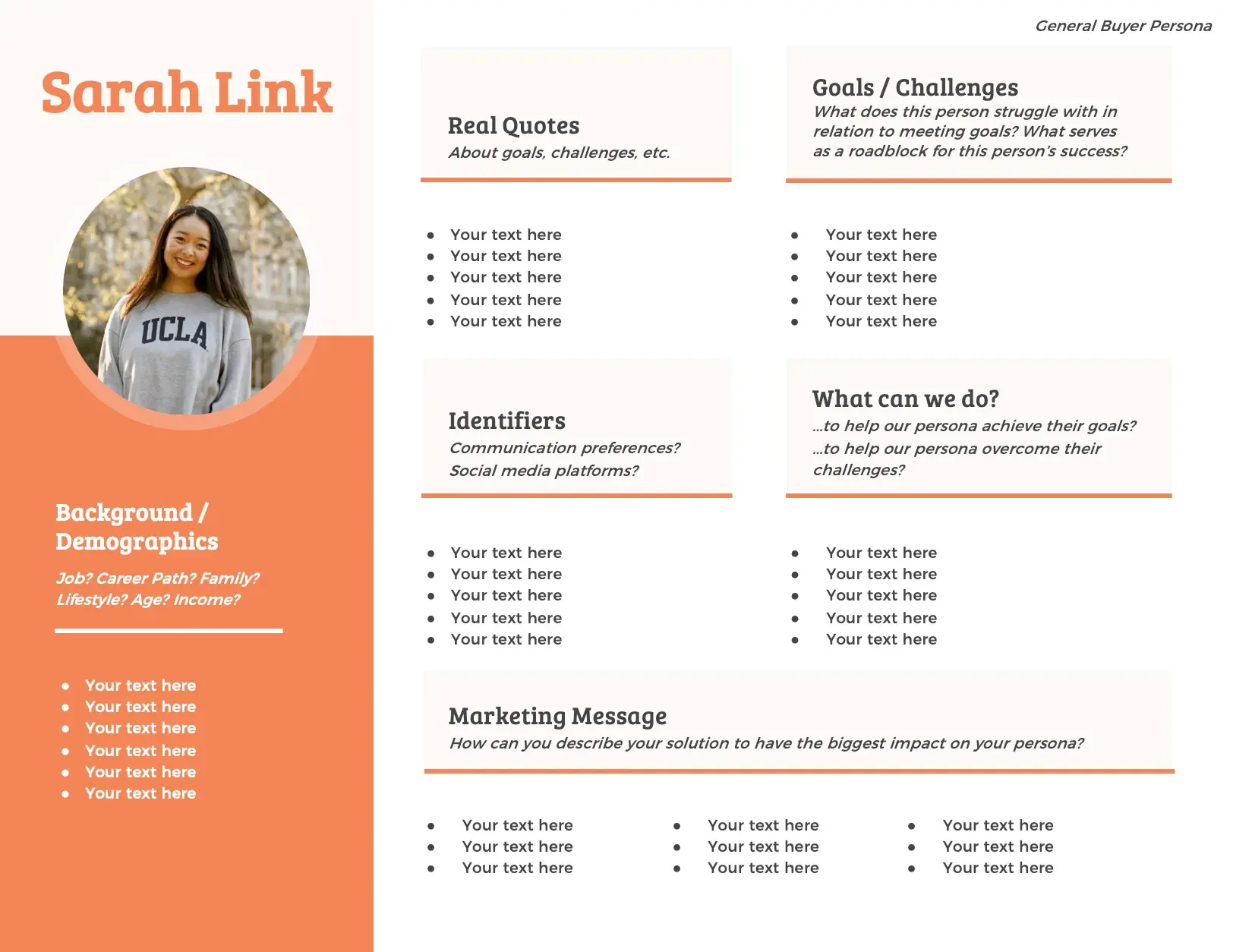
It‘s here where buyer personas come in handy. Buyer personas are semi-fictional representations of your ideal customers. They’re based on market research, current data, existing customers, and a few educated assumptions.

buyer persona example for your startup

Buyer personas help you understand the drivers, business challenges, and needs of those you want to market.

It’s also important to note that buyer personas are not real people but archetypes of them.

Now that we’ve briefly covered buyer personas, you might be wondering, “Okay, but what makes them so valuable to my start-up?” Buyer personas allow you to refine your marketing and segment your audience(s).

You want and need quick wins during the product development and release stages, so why waste time (and money) casting the widest net possible when you can hone in on those most likely to buy from you?

Your buyer personas give you a good idea of who these people are. Use that information to build marketing and PR campaigns focusing on the right people at the right time and place of their buyer’s journey.

3. Have clear, compelling messaging.

If you’ve ever seen a Ronseal advertisement, you’re likely already familiar with the following phrase: “It does what it says on the tin.”

In an age of slick, big-budget marketing campaigns and buzzwords, it falls to you to keep your messages clear and concise.

People don‘t want platitudes or jargon. They want to understand what your product does and how it can help them solve their business challenges. In fact — and this may sound harsh — it’s not even about your business. It’s about how you can help your potential customers.

With this in mind, any messaging that your startup creates (and this applies to all businesses of any size) needs to be created with the end user in mind. It needs to be simple, informative, and compelling. This will help convert the website traffic you generate into leads.

4. Create a content marketing strategy to generate leads.

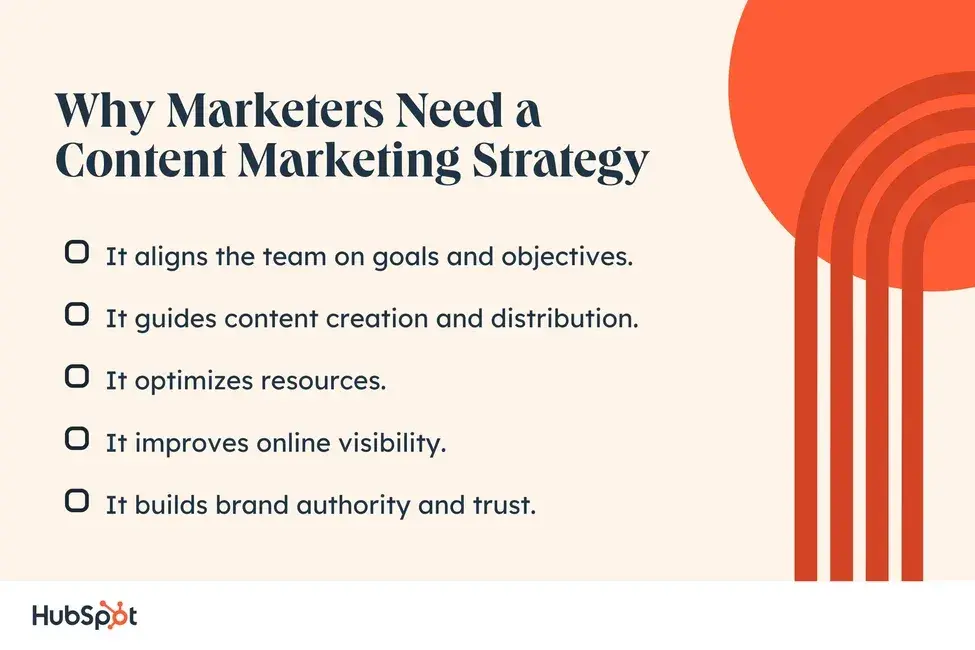
You need a plan for bringing prospects to your site. Content marketing is all about producing high-quality content that answers your prospects and customers’ questions, and nurturing them to a point of purchase.

why marketers need a content strategy

Source

When I work with startup clients now, I always emphasize that blogs are just the beginning. Each piece needs to be optimized for long-tail keywords that your target audience actually searches for. I’ve seen this simple approach help numerous startups build their digital footprint without a massive marketing budget.

The content you create also helps to generate leads and demonstrate your expertise. You could, for instance, produce informative ebooks and gate them behind landing pages on your website. Visitors can then download your ebooks in exchange for their details.

With this approach, you know that those who do download your ebooks are interested in hearing from you. The ebooks you create will be particularly useful for targeting “early adopters” i.e., those who want to be updated when it comes to new tech.

Over time, as more and more content is created, your website becomes a repository for information. Providing it’s all optimized for the right terms, the right people will find it time and time again.

5. Distribute the content you create.

It‘s not enough to hit “Publish” and wait for customers to show up. After all, content marketing doesn’t only work for organic search engine traffic. To get the most bang for your buck, you can repurpose the content you create, distribute it on non-search channels such as social and email, and promote it to new and existing audiences alike.

Let’s take a blog post for example. If you created a listicle that outlines 10 tips, you can create a social media graphic for each of the tips and do an informational series for your followers while promoting the full article and/or a related content offer.

A social media plan like this should be part of every content marketing strategy, and every content marketing strategy should be developed with distribution in mind.

6. Run ads for short-term results.

Content marketing is a long-term play. While it can be extremely rewarding over time, you likely won‘t see immediate results. As you build your content platform, you’ll need a way to generate leads and ROI in the short term, and the best way to do that is with ads.

Ads are “pay to play,” so they’re not as scalable as content marketing, but the benefit is that your ads will be shown to users shortly after you turn on the campaign.

But which ads should you go with first? Your ad strategy will determine that, but a good rule of thumb is this:

  • Google Search Ads — Best when people are already aware of the product/service you sell and search Google to find the right provider/vendor.
  • Social Ads — Because people don’t go on social media specifically to shop, these are best when people are unaware of the product/service, and you can catch their attention in a fun/visual way. Also good for finding niche audiences.
  • Display Ads — Best for brand awareness and re-targeting.

7. Implement a digital PR strategy to increase buzz around your brand.

Now if you want to get the most out of everything you do — particularly from a content creation perspective — why not amplify it with digital PR?

Digital PR effectively takes everything good about traditional PR — like press coverage, events, outreach, and thought leadership content — and does the same for the online space. Suddenly, the assets you’ve created for your marketing activity can be retrofitted to suit PR purposes.

In fact, digital PR goes one step further: the agency you work with will do its utmost to earn backlinks back to your website (editors and publications are notoriously difficult when it comes to keeping links in content). Subsequently, those reading your content via online publications can actually find your business, and the content itself is already optimized for search because you’ve done it already.

All-in-all, digital PR will help to increase your startup’s visibility both online and offline, helping you to get featured in key trade media relating to what you do and cause a positive stir in your industry.

8. Measure and improve customer lifetime value (CLV).

Because it‘s easier and less costly to retain or re-sell to existing customers than acquire new ones, it’s critical for startups to intentionally track CLV and improve on it by:

  • Enhancing the customer experience and eliminating friction
  • Tracking customer satisfaction and working to improve retention
  • Creating a strategy for upselling and cross-selling

9. Establish and cultivate your reputation.

97% of customers read online reviews for local businesses in 2025 (Bright Local). The internet allows customers to be more informed than ever during the buying process. A poor reputation can therefore hurt your marketing and sales efforts while a good reputation may help seal the deal.

With this in mind, you should do what you can to make a positive impression:

  • Ask customers for feedback and take action on it.
  • Ask for testimonials when you’ve exceeded expectations.
  • Cultivate other types of social proof, such as case studies.
  • Respond to online reviews professionally.

10. Build a referral engine.

Despite all the digital marketing strategies and tactics out there, word of mouth is still powerful.

This is especially true for those who intentionally improve the customer experience.

Referrals often happen organically, but a referral marketing strategy can help you generate them faster. For example, you can:

  • Identify promoters and ask them if they know anyone who would benefit from your product/service.
  • Incentivize customers to refer their friends through a referral program.
  • Leverage user-generated content.
  • Build campaigns that are mutually beneficial or champion a cause your customers support.

Startup Marketing Ideas

The above strategies can give you a high-level sense of where to go, but executing them is a different story. To get a sense of how a marketing strategy can produce success for your startup, we’re going to lay out some ideas. These ideas are from real startups and will help you visualize how a successful strategy can be helpful for your own marketing goals.

1. Use paid ads to build a community.

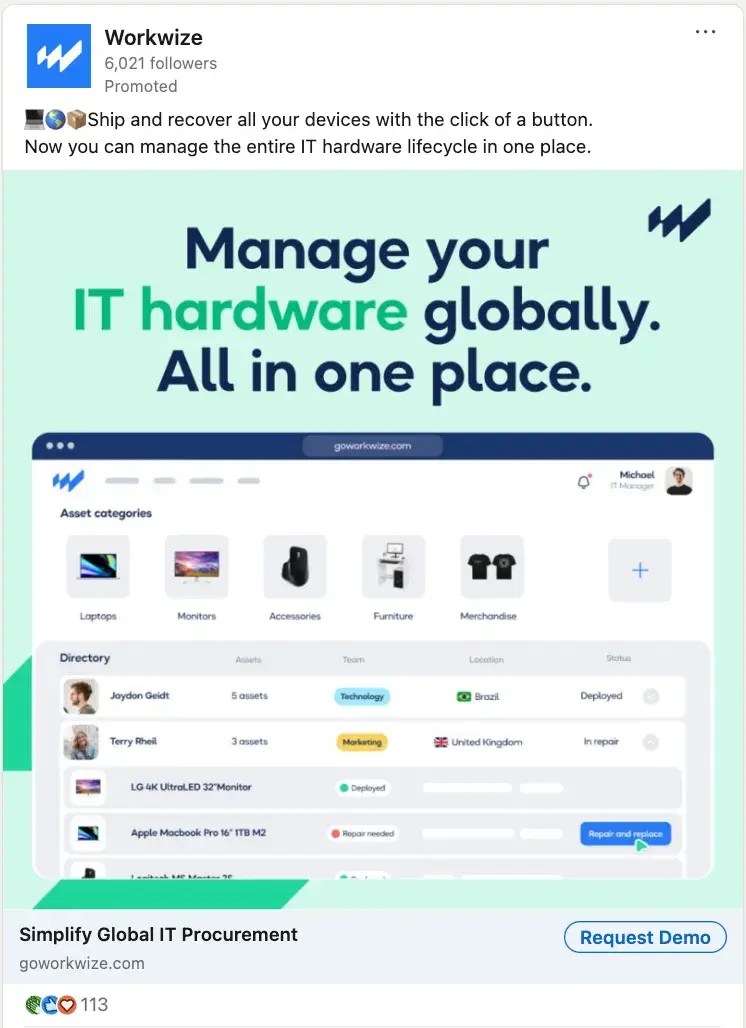
Workwize is a B2B company that helps businesses manage hybrid workplace solutions and office resources. They use targeted paid LinkedIn ads to connect with office managers, HR leaders, and operations teams struggling with hybrid work challenges.

startup marketing example from workwize

Source

Their LinkedIn ad campaigns focus on relatable pain points like recovering IT devices.

A similar B2B startup strategy could involve making use of a social media platform’s paid ads offerings to cater to your audience. Alternatively, you can upload offers for free and use hashtags to get them seen by more prospective customers, like #B2BMarketing or #MarTech.

2. Try social media to connect with customers.

When I advise startups on social media strategy, I always emphasize that you don‘t need a big budget to make an impact. I’ve seen companies build engaged communities simply by sharing authentic content and encouraging user participation.

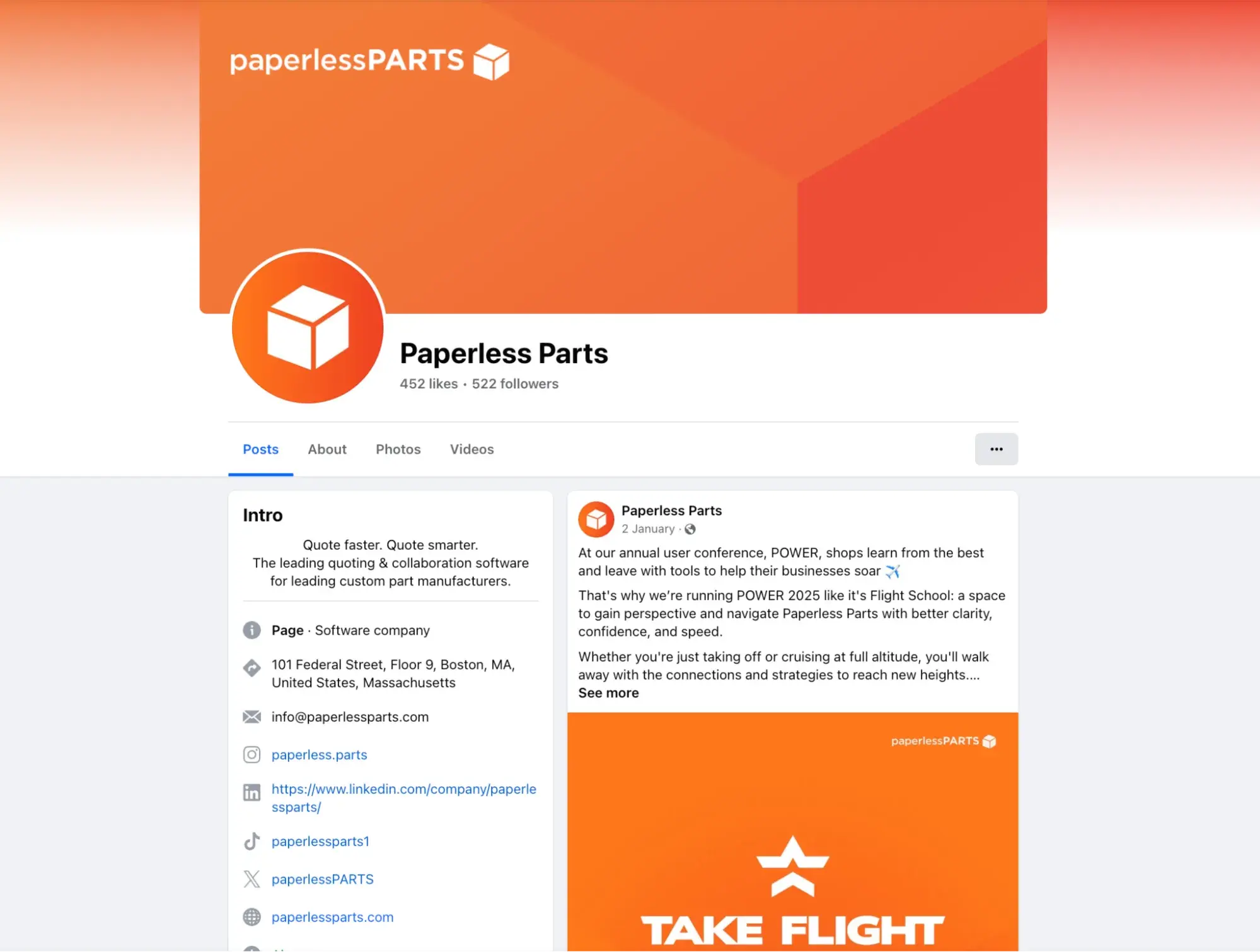
Take Paperless Parts, for example, a manufacturing company with a stellar Facebook page:

startup marketing example, paperless parts facebook page

Source

Creating a Facebook Business page and optimizing it is free so leads and customers can find it. The Paperless Parts feed begins with recommendations and reviews from happy customers, showing that the business has a dedicated customer user base.

After that, the business posts videos that go behind the scenes of the manufacturing process and also posts reminders for webinars and other website content.

A social media page for a startup that showcases customers, provides helpful content, and encourages audience participation is a free strategy to expand reach, bring clicks to your website, and show credibility in the industry.

3. Crowdfunding marketing, which can generate press.

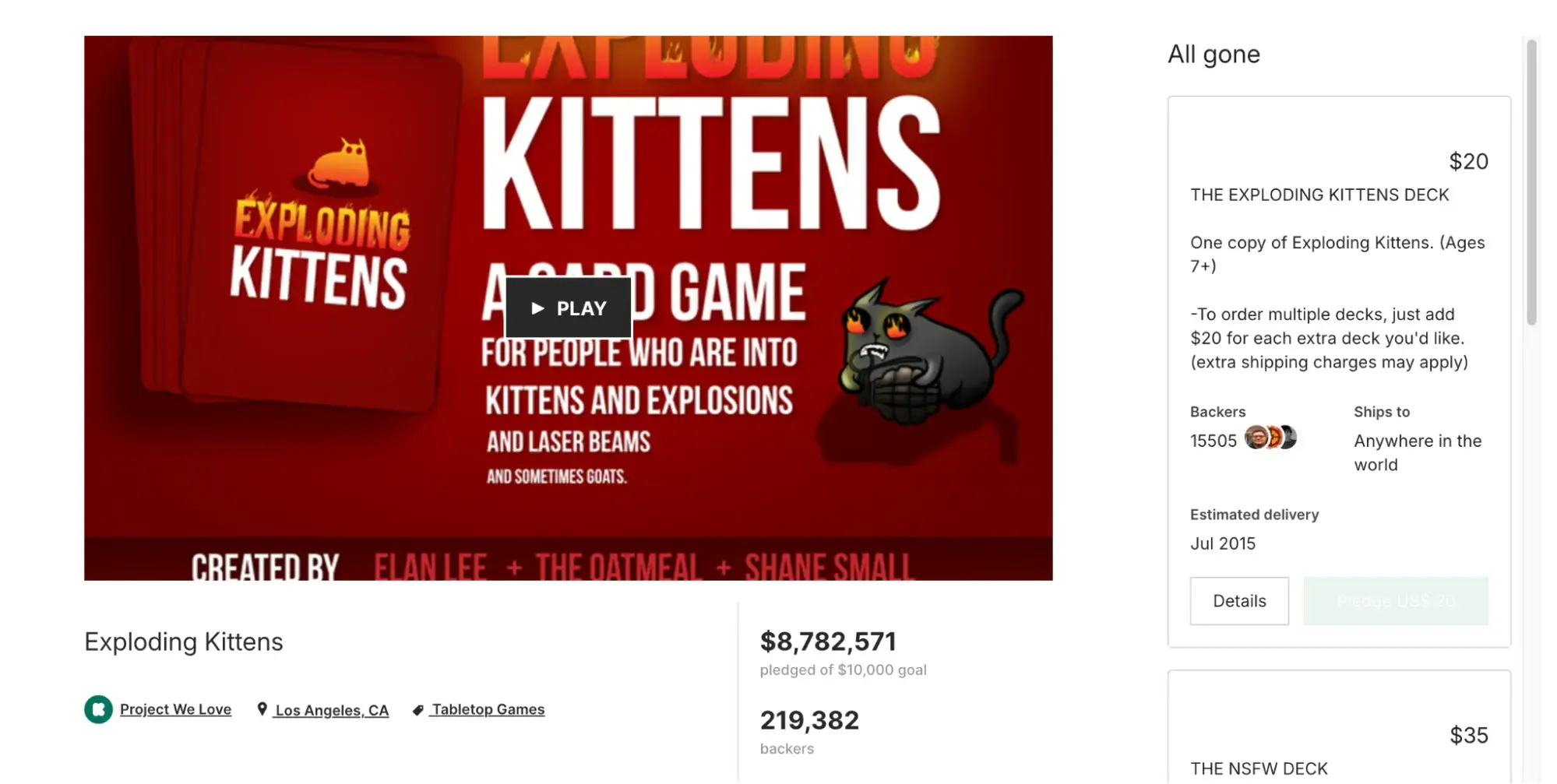
Are you thinking about starting a crowdfunding campaign? If you do, you could earn great press from publications, expanding your campaign’s reach. Take Exploding Kittens, for example, which started as a simple card game with quirky artwork and a playful concept.

When the creators launched their Kickstarter campaign in 2015, they set a modest goal of $10,000. The campaign went viral, raising $8.7 million from over 219,000 backers, making it the most-backed game project in Kickstarter’s history at the time.

startup marketing example, exploding kittens kickstarter

Source

This massive success caught the attention of major media outlets, generating widespread press coverage and building a dedicated fan base before the product even launched.

Even if you have just a few customers, you can use your crowdfunding campaign as a marketing tactic to get more people interested in your business.

4. Host a virtual meetup instead of a conference.

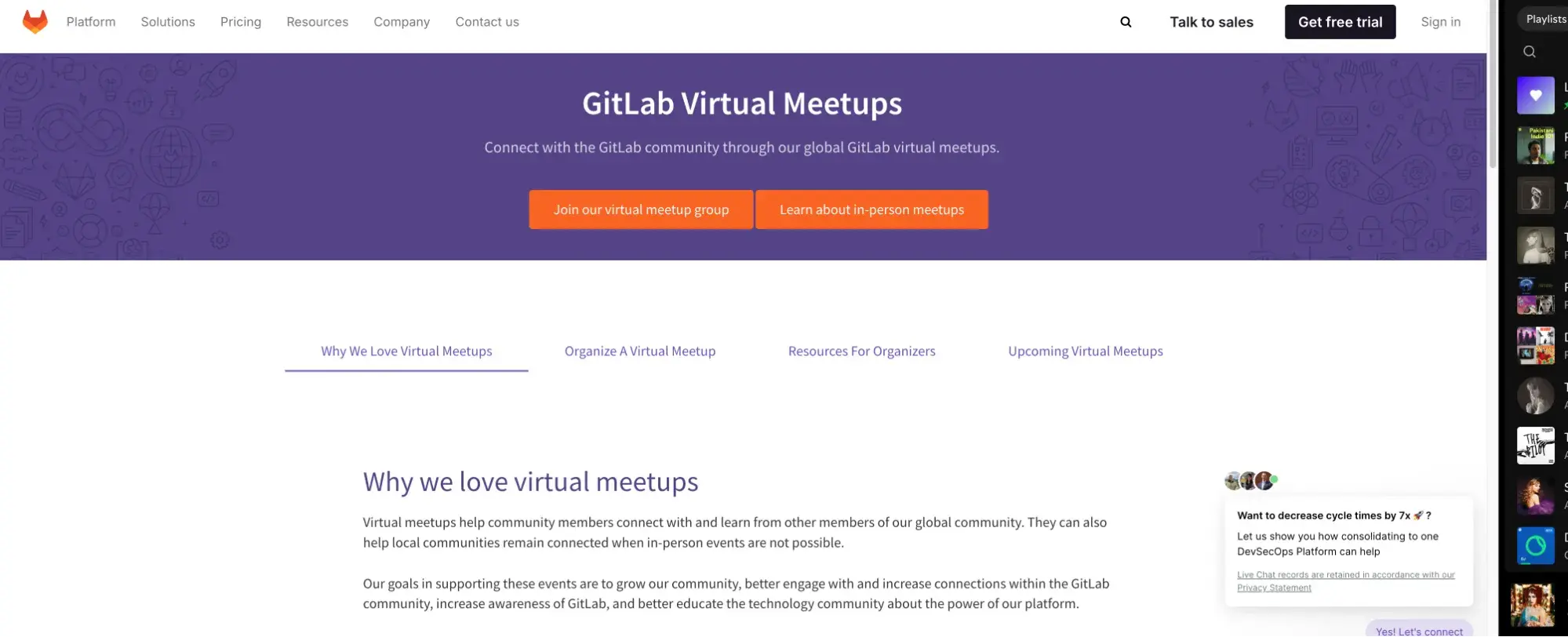
The development platform, GitLab, hosts in-person and virtual meetups to provide developers a platform to share ideas.

startup marketing example, gitlab virtual meetups

Source

This idea is a cool, low-cost way to expand your professional network and provide valuable content for customers without hosting a conference.

5. Use user-generated content to tell your story.

Startups don’t usually have the revenue to produce big-budget social media campaigns. For travel agency Wander Women Retreats, their marketing team found that the best way to tell their story is on Instagram.

The business page is filled with clients enjoying their destination vacations, booked using the service:

wander women retreats

Source

A marketing campaign that includes user-generated content is an easy, free way to work in testimonials. You can use your social media channels to execute the campaign and include hashtags for the chance to appear in more feeds.

When thinking about campaign ideas, you might not have to look that far. You might be able to turn some of the tools you already have at your disposal to boost your campaign messages. Is there a webinar you can host about a topic or a content offer you think will resonate particularly well with your LinkedIn audience?

6. Create SEO-optimized content to attract high-intent visitors.

SEO is another free, cost-effective strategy startup marketers can use to spread the word about their business.

But here’s the caveat: This one takes the longest of all the strategies mentioned.

While it‘s not incredibly time-consuming, it does require consistent effort. I’ve watched startups boost their lead generation through SEO, but it took months of methodical optimization to get there.

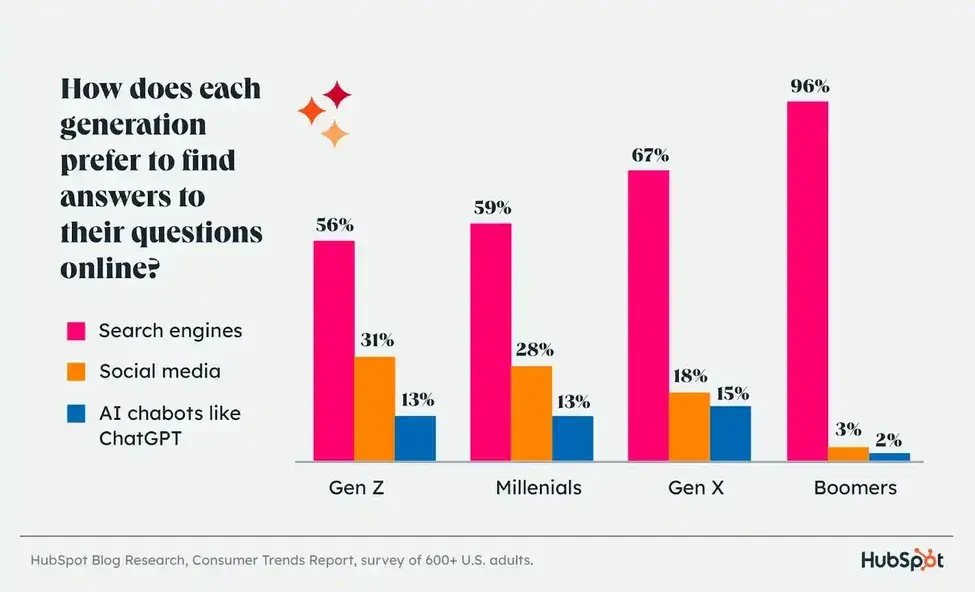
At this point, SEO won’t net you leads or opportunities immediately, but it will lay the foundation for consistent success in the months and years to come. In fact, for 88% of consumers, search engines are the best way to get information.

startup marketing trends, seo by generation

Source

You use SEO to optimize your web pages (and content) for keyword terms you know prospects use to find products or services like yours.

Better yet, you identify long-tail keyword terms with low to medium competition and high search volume relevant to your product or service and use those instead.

Your main service pages will, of course, be competing with other businesses in your space on many similar terms, but you can use the content you create to link to these pages, bolstering their SEO value over time and increasing their ranking on SERP results pages.

Updating and optimizing your website will ensure it continues to grow and attract interested prospects for the long term, so it‘s an opportunity you don’t want to miss.

7. Implement a referral program.

One of the most powerful strategies I’ve discovered while working with startups is referral marketing. When my clients ask me how to get more customers with a limited budget, I always point them toward building a strong referral program.

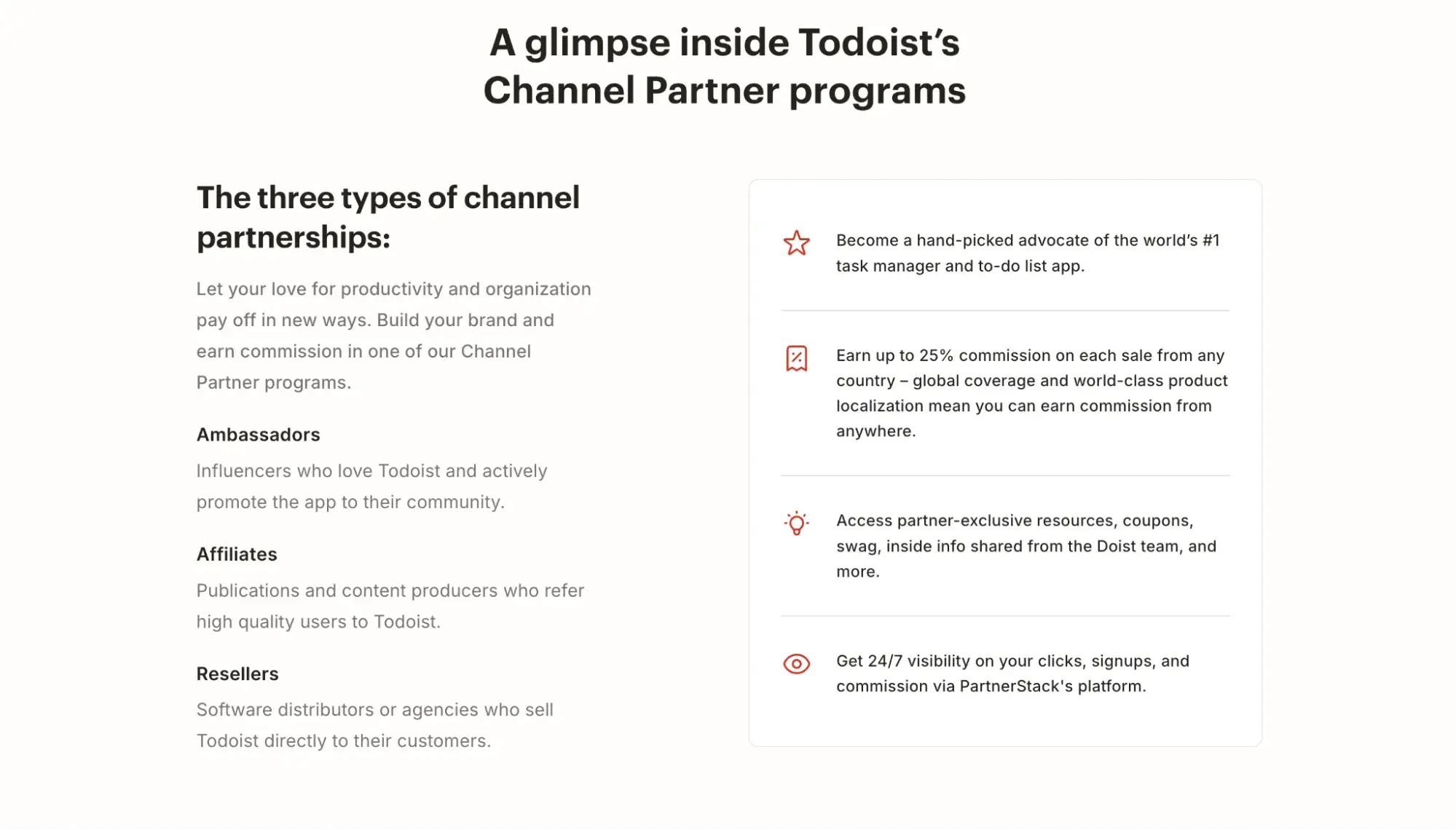
Task management app Todoist, for example, has a Partner Program.

referral program example from todoist

Source

Here‘s what I’ve seen work consistently:

  • Collect social proof through customer reviews, testimonials, and case studies that demonstrate your track record of solving real problems
  • Incentivize referrals by offering existing customers discounts or free product trials in exchange for their advocacy
  • Give free access to tech journalists and industry influencers who can review your product and generate press coverage
  • Feature customer reviews prominently across your website to build trust with potential buyers

Make sure to strategically place these testimonials and reviews where potential customers will see them during their decision-making process. They help build trust and authenticity in a way that your own marketing messages can’t match.

8. Offer a free or trial version of your product.

One of the best ways to get your startup out there is to offer some kind of version of your product/service for free — and it’s worked for many businesses already.

Canva, Dropbox, Zapier, and HubSpot are all high-profile tech companies offering a free/trial version of their product or service to let people try before buying (or upgrading).

As people use them and realize how great these products are, they feel compelled to buy the full, “unlimited” version for all the bells and whistles. Great, right?

offer a free version of your product

But getting people to use your product — and inherently talking about how good it is as a result — is all about lowering the customer’s acquisition costs.

What many businesses do with a freemium model is offer current trial users a discount on the full price of the software. This is significantly more appealing than paying the full price and can potentially convert more leads into paying customers very, very quickly.

Also, for those who don’t convert to paying customers with this offer, it enables you to understand what features or parts of your service are lacking. You can:

  • Ask for feedback from trial users who didn’t convert to understand the pain points.
  • Make targeted changes based on user feedback and behavior patterns.
  • Roll out improvements strategically to test their impact on conversion.
  • Track which features drive the most upgrades to inform product development.

For maximum effect, cross-reference what you offer against the main issues your buyer personas have in relation to technology like yours. Consider adding features to your product/service to address these problems (where possible). Maybe produce a roadmap and show people what they’ll be getting. Transparency is a great way to increase users.

Lastly, bear in mind that this approach does come with the risk that people might not want to upgrade to the full version. That said, be as clear as you can with what users can get from the full version and highlight how valuable it can be for them. Keep your coolest features under wraps!

5 Startup Marketing Tactics to Explore in 2025

Marketing trends come and go, but 2025 is showing us which tactics drive results for early-stage companies.

These five approaches are gaining significant traction because they focus on efficient growth, helping startups build momentum without requiring massive budgets or large teams.

Build a niche community.

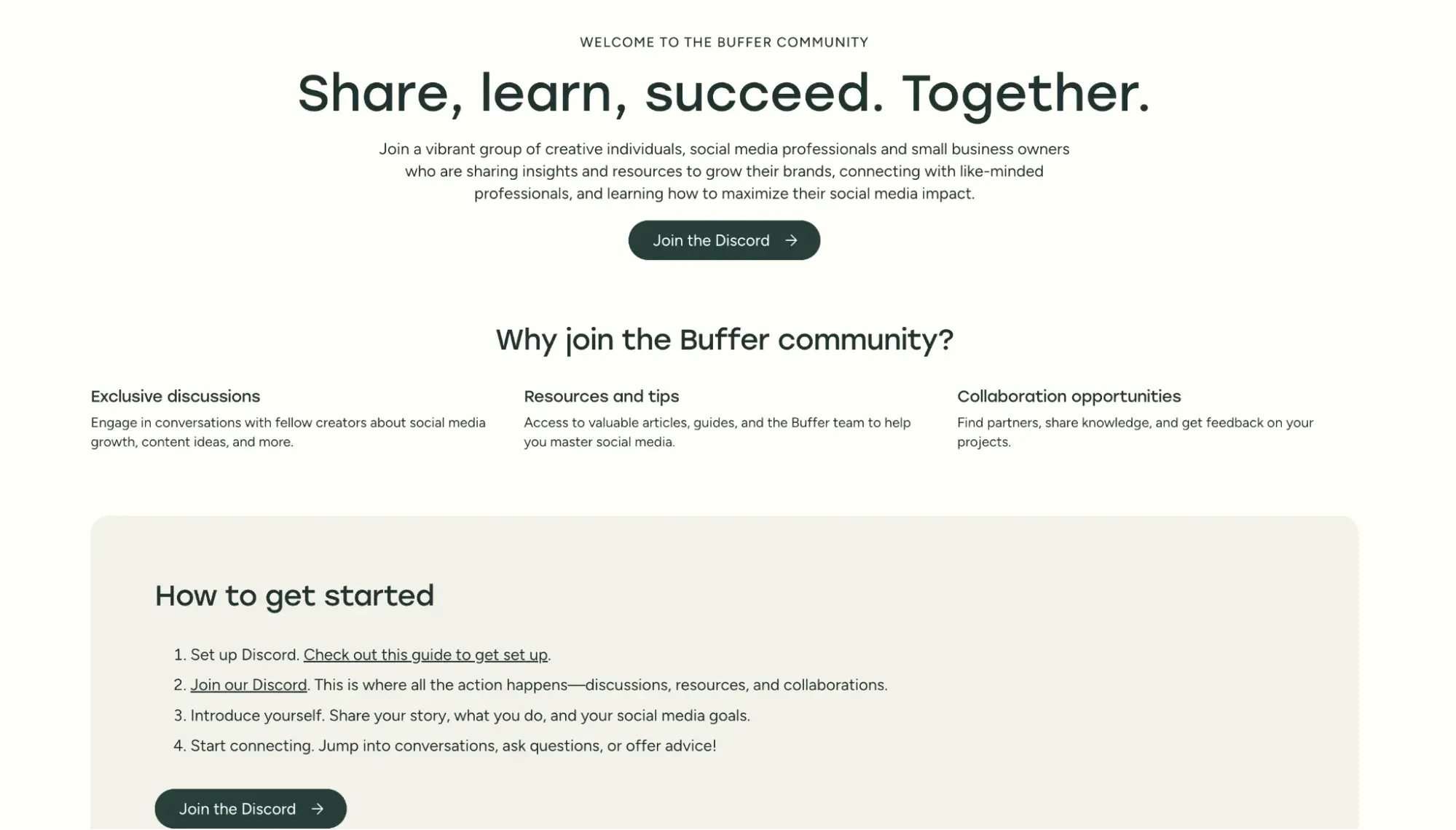
I‘m part of several thriving startup tool communities, and Buffer’s Discord channel stands out as a prime example. They’ve created a space where users share social media strategies, troubleshoot problems, and connect with other marketers.

build a startup tool community like buffer’s discord channel

Source

What makes these communities work isn‘t size — it’s relevance. On Slack, Reddit, or Discord, the most engaging groups focus on solving specific problems. Product Hunt runs a focused Slack community for makers, while Notion’s Reddit community shares templates and workflows that help users get more value from the tool.

Choose the right platform for your audience. Slack works well for professional communities that need real-time interaction, while Reddit is better for long-form discussions and knowledge sharing.

Pro tip: Start your community with just 10-20 highly engaged members. Give them exclusive access to your product updates and make them feel like true insiders. These early members will set the tone and help attract others.

Use generative AI to speed up your workflow.

Generative AI can help startups punch above their weight class when it comes to content production and research. I use it to brainstorm content angles, summarize market research, and turn long-form content into social posts.

But there’s a catch: AI works best as a strategic assistant, not a replacement for human insight.

I use AI to create a custom research workflow. Experimenting with different tools like Claude, ChatGPT, and Perplexity helped me pinpoint the strengths of each and create a system that improves my writing. You can also use tools like HubSpot’s Breeze platform for an AI assistant that supports your entire customer platform.

Use AI to suggest multiple headline variations. Identify repetitive tasks where AI can save you time while you focus on strategy and maintaining your brand’s unique voice.

Pro tip: Create a “prompt library” in a simple doc where you save your most effective AI prompts. Group them by task type (research, headlines, content repurposing) so you can quickly reuse what works.
Build a personal brand on LinkedIn or Instagram.

I watch founders get this wrong all the time; they hide behind their company logo instead of showing up as themselves. Yet some of my favorite startup tools caught my attention because I followed their founders’ journeys on LinkedIn or Instagram first.

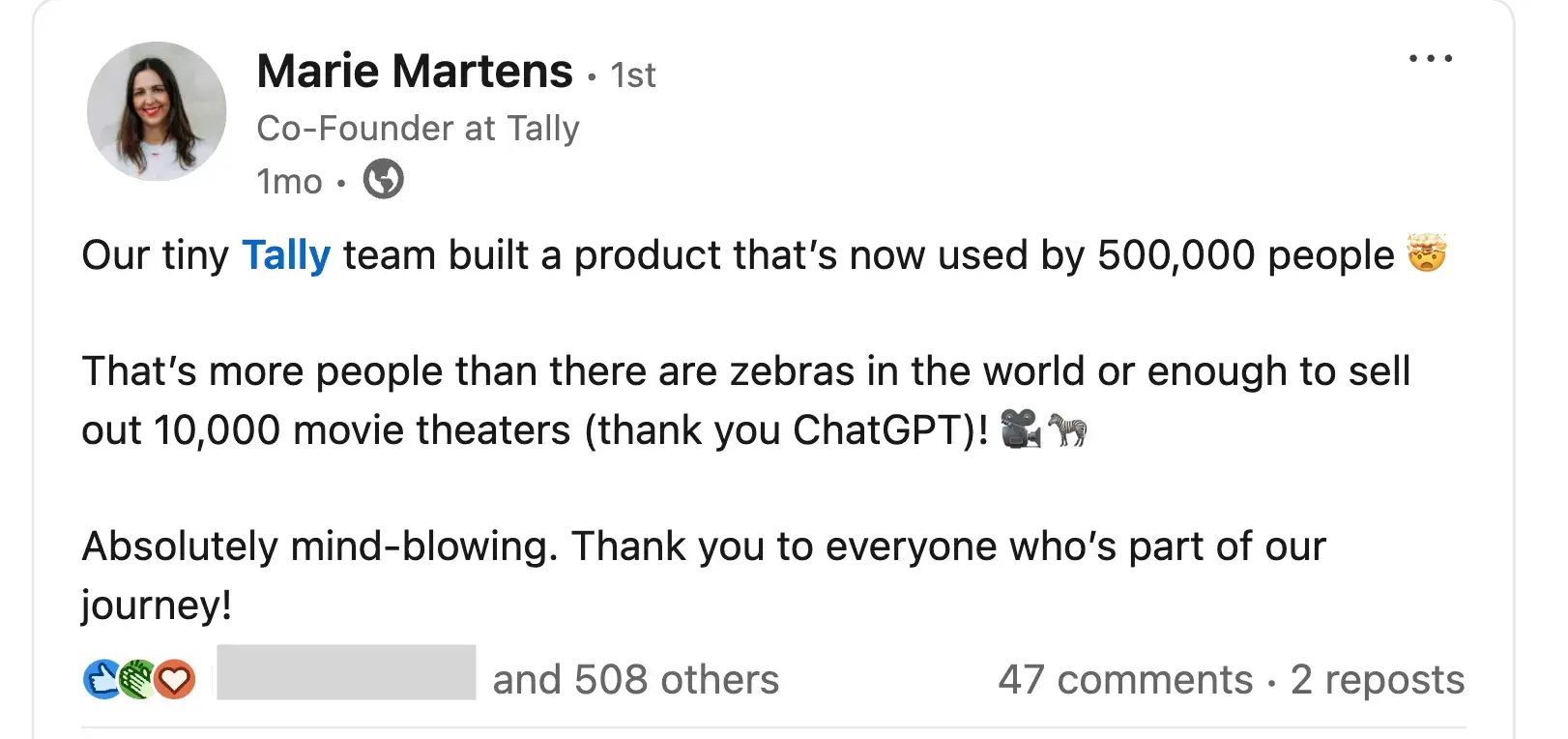
Take Marie Martens from the form tool Tally. Her open posts about building in public and sharing revenue numbers built an audience — before the product took off.

example of building in public from marie martens of tally

Building your brand doesn‘t mean becoming an influencer. Share your authentic building journey, what you’re learning, and the problems you‘re solving. Use HubSpot’s Social Media Management tool to schedule and track engagement on your posts.

When you do this consistently, you create momentum for your product.

Pro tip: Block 30 minutes every Monday to batch-write three personal posts about your startup journey. Focus on specific lessons learned rather than generic advice — share the exact process, numbers, or tools that moved the needle.

Create short-form video content that converts.

I’ve been putting off creating short-form video content because I thought I needed fancy equipment and editing skills. Every time I open TikTok or LinkedIn, I see competitors getting massive engagement with simple videos shot on their phones.

I‘m finally planning to experiment with video this quarter, starting small with 60-second tutorials and behind-the-scenes glimpses of my work process. I plan to use HubSpot’s Marketing Analytics to track which social channels drive the most engagement and conversions from my videos.

My research into successful B2B videos shows three principles worth following: Keep videos under 90 seconds, open with the main takeaway, and include a clear next step for viewers.

While I can‘t share personal results yet, I’m convinced enough by other founders’ success stories to make video a priority. Sometimes, we have to push past our comfort zone to find marketing channels that work.

Pro tip: Record your first 10 videos without posting them. This practice helps you find your natural style and confidence before going live. Plus, you’ll have a content bank ready when you start posting consistently.

Use no-code tools to validate marketing experiments

I used to wait weeks for developer resources before testing new marketing ideas. But, after discovering no-code tools, I’m able to validate concepts in hours instead of months.

Last month, I wanted to test if my audience would sign up for a weekly newsletter about startup marketing metrics. Instead of building a full landing page, I used HubSpot’s Landing Page Builder to create a simple signup form in 30 minutes.

After driving some traffic to it with LinkedIn posts, I learned that open rates for “marketing metrics” resonated more than “growth tips” — a valuable insight before I invested in a full content strategy.

My go-to stack for quick marketing tests includes Webflow for landing pages, Zapier for connecting tools, and Airtable for tracking results.

The best part? Most of these tools have free plans that are perfect for early validation. When an experiment works, I can either keep using the no-code version or build a more robust solution.

Pro tip: Before building anything, create a simple spreadsheet with three columns: “Assumption to Test,” “Success Metric,” and “Minimum Viable Test.” This framework prevents overbuilding and keeps experiments focused.

The Best Strategies Use a Combination of Ideas and Tactics

If you want to get the best possible results when it comes to marketing, you need to focus on what works.

I’ve learned that while there are loads of different ways to achieve your goals, it’s always better to focus on the most high-impact and cost-effective, and as a startup owner — I’m willing to bet you already know how important that is.

The best strategies use a combination of what I’ve mentioned above and then analyze their performance to determine which ones require more or less investment. No matter what you do, remember that your marketing activities are only as good as your goals and targeting.

Editor’s note: This post was originally published in April 2020 and has been updated for comprehensiveness.

Categories B2B

The 12 Best Free Flowchart Templates [+ Examples]

During my time at university, I used flowcharts to map out my research processes so they could be clearly understood and repeated during peer review. Lately, I’ve been using flowchart templates to organize an instructional book on floral design. Today, I’ll be exploring flowcharts as they pertain to the business sector.

Flowchart templates help people easily map out business processes, improve workflows, and even clarify organizational structures. Any industry can make smart use of flowcharts for business, and templates make that work go even faster.

→ Access Now: 8 Business Flowchart Templates [Free Tool]

Bulleted lists, Word documents, or even presentations can help convey a process, but they don’t offer the same level of visual clarity and readability that a flowchart does — especially when trying to map out different steps or stages. So, let’s answer the main questions first: what is a flowchart, and what can you use it for?

Table of Contents

What is a flowchart?

Flowcharts are ideal for outlining processes, which are the backbone of a strong business. In my opinion, a clear, repeatable process has two major hurdles to successful implementation in any business: first, the development of that process, and second, getting buy-in from stakeholders on that process. (Good luck, right?)
The best way to overcome both of these potential roadblocks is to transparently and logically outline a process.

Many businesses use flowcharts to manage this, as flowcharts visually outline a process roadmap for a full-scope understanding. They can also be easily digested by employees who need to know and follow the process.

In a business, flowcharts can be used for any of the following purposes:

  • Team and organizational alignment. An organizational structure diagram clarifies who reports to whom in your team.
  • Data management. A data flow diagram will help you understand how information progresses through your business up until deletion.
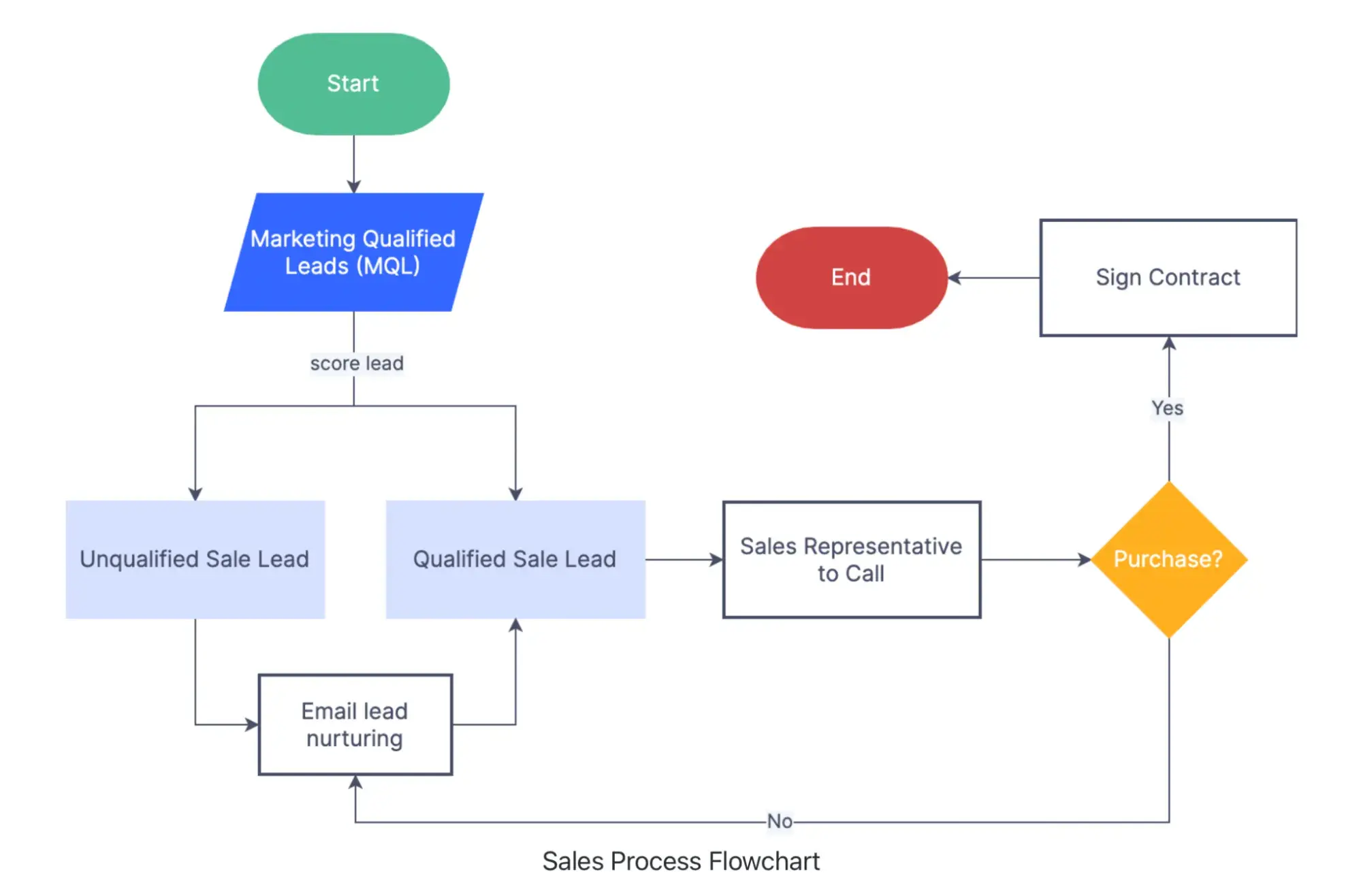
  • Sales process mapping. Creating a sales process flowchart can help you shorten the sales cycle and increase revenue.
  • Email nurturing. Email campaigns are famously dependent on workflows, which are a type of flowchart that decides who to enroll in a campaign and when.
  • Customer journey mapping. A customer journey flowchart shows how customers find you and what their experience is like at your business.
  • Customer or employee onboarding. A customer onboarding process flow can help you define what messaging to send and when during your customer’s first interactions with your business.
  • A/B testing. When designing an A/B test, you’ll typically use a flowchart to figure out how many versions you’ll test and the potential results you’ll get.

You can also use flowcharts for QA work, mapping out your career progression, and much, much more. Additionally, you can take advantage of templates to reduce your workload.

How Flowchart Templates Can Help

Pre-designed flowchart templates offer multiple benefits. I’ll take a look at them below:

  • Saves time. The primary benefit is pretty straightforward. Using a template is quicker than building a flowchart from square one.
  • Applicable for different purposes. Flowchart templates are available online for varied use cases, from university application workflows to loan approval processes. Search for one that fits your requirements, modify it, save/share/export it, and you’re good to go.
  • Customizable according to individual or organizational needs. Templates usually offer numerous modification and personalization options. I’ve seen some tools that also allow you to add your brand assets to the design.

To help you create actionable flowcharts for your organization, I’ve listed the best flowchart templates for you to start using today. These can help you to create a smoother process in any area of your business. The first nine come with a download link for you to start using that template right on Google Slides.

Flowchart Templates for Business

1. Basic Process Flowchart Template

basic process flowchart template, flowchart template

Download this Template

I feel that this basic flow chart template is a great solution for those just getting started with flowcharts. Why? The template allows its designers to specify a starting point, two potential outcomes, and then the resulting processes of those decisions. Due to its limitations, this flowchart template is best suited for simple processes.

Who should use this flowchart? Anyone who needs to map out if-then processes.

What I like about this flowchart template: The basic process flowchart is easy to use and follow, and it’s ideal for documenting straightforward or simple processes.

Pro tip: This flowchart is helpful for those looking to design an A/B test to determine the best way to get the results they’re looking for.

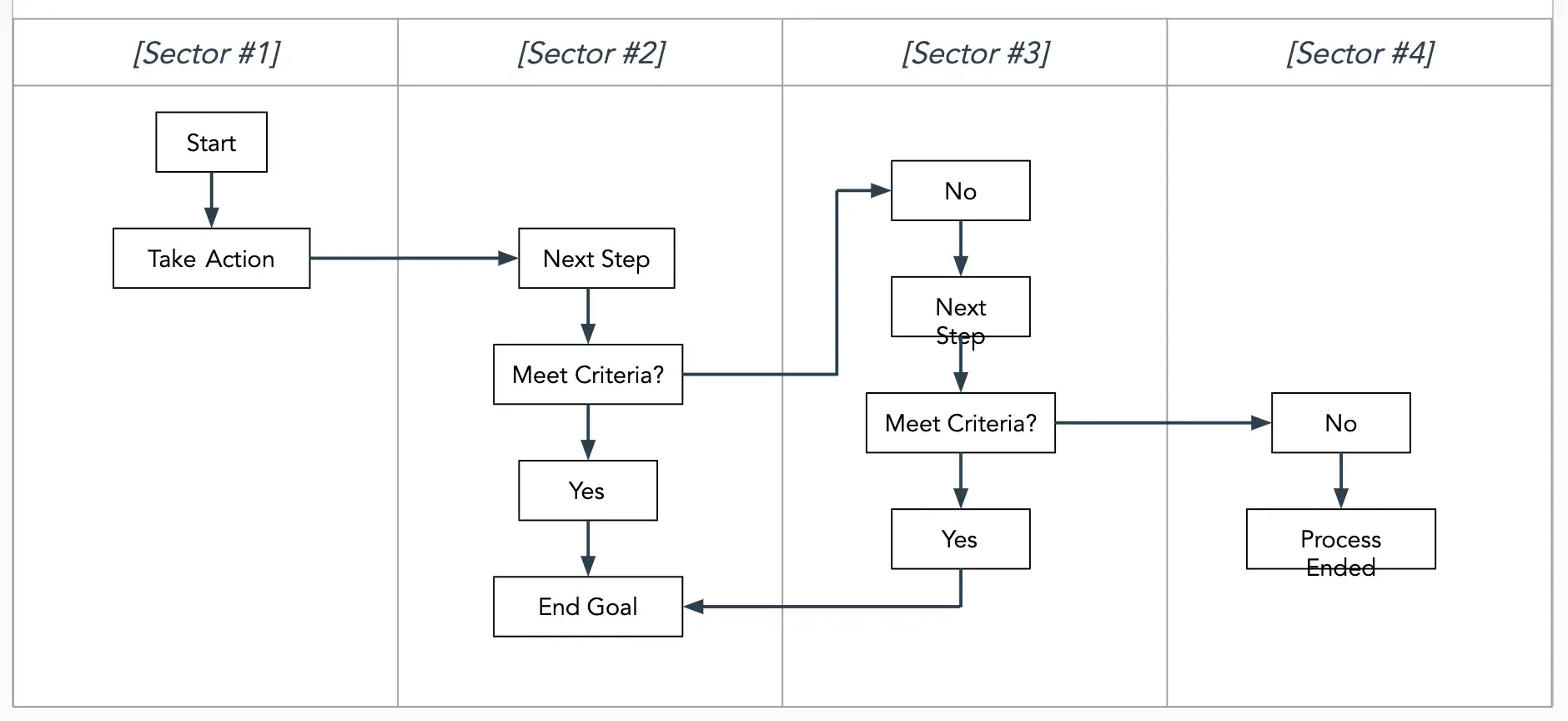
2. Swimlane Flowchart Template

swimlane flowchart template, flow chart template

Download this Template

The swimlane flowchart template divides the steps of a process into different sectors. For your business, these different sectors could be time periods, teams, employees, or work requirements.

Who should use this flowchart? Swimlane flowcharts are particularly helpful for those who oversee cross-functional processes.

What I like about this flowchart template: This template visualizes the different process steps that take place across multiple teams or organizations.

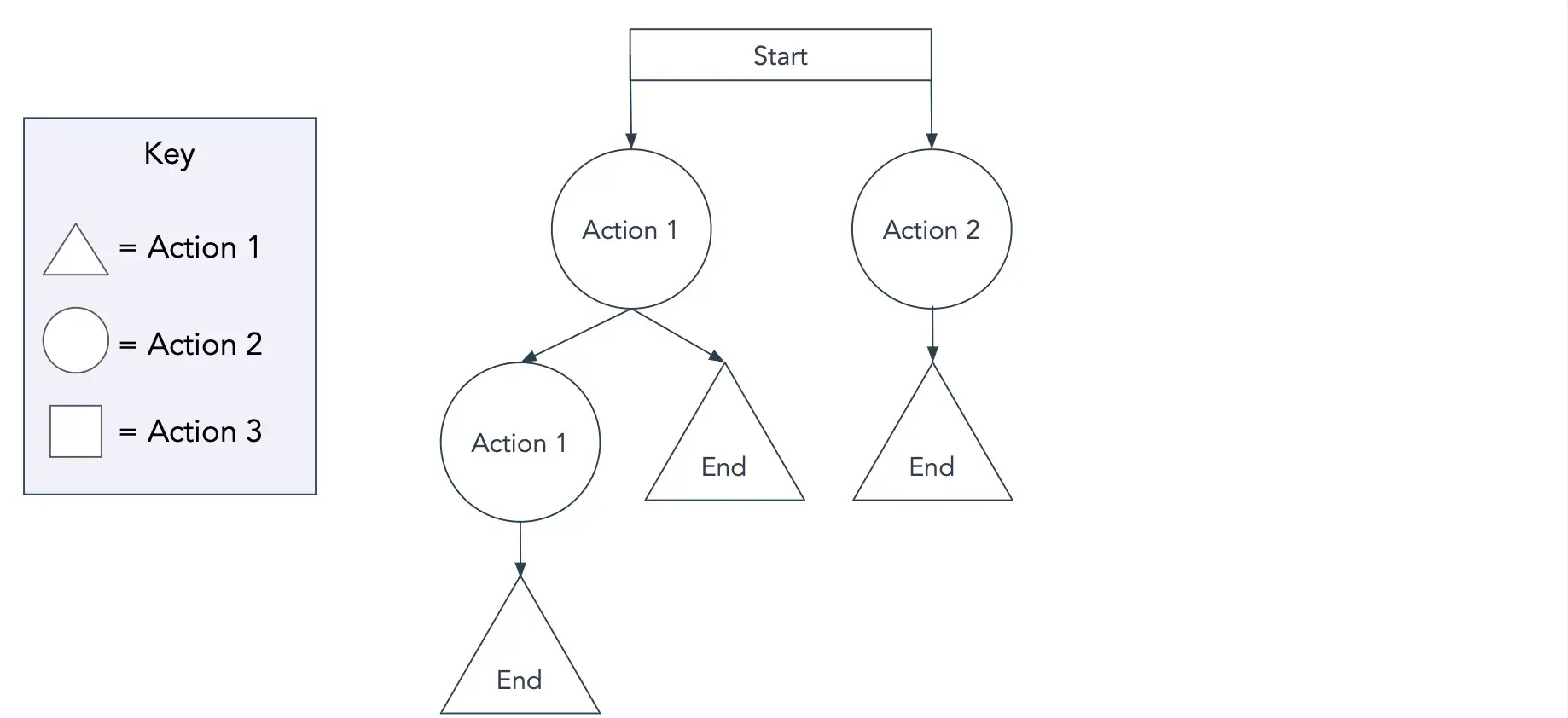
3. Task Flowchart Template

task flowchart template, flow chart template

Download this Template

A task flowchart template simplifies complex processes with unique shapes. Each shape on the flowchart represents something different, forming a quick visual key.

This format is helpful when the work of several teams intertwines throughout a process. This is because it makes it easier for team members to figure out the tasks they’re responsible for.

These roles are often noted in a key on the flowchart for quick reference.

Who should use this flowchart? Project managers looking to keep track of various tasks and their outcomes.

What I like about this flowchart template: The task flowchart visually depicts how various contributions to a product support the end result. Each stakeholder can see how their tasks impact the flow of the project.

Pro tip: The shapes can also represent different types of actions, like back-end development of a new element and then front-end testing of those elements to create a QA process.

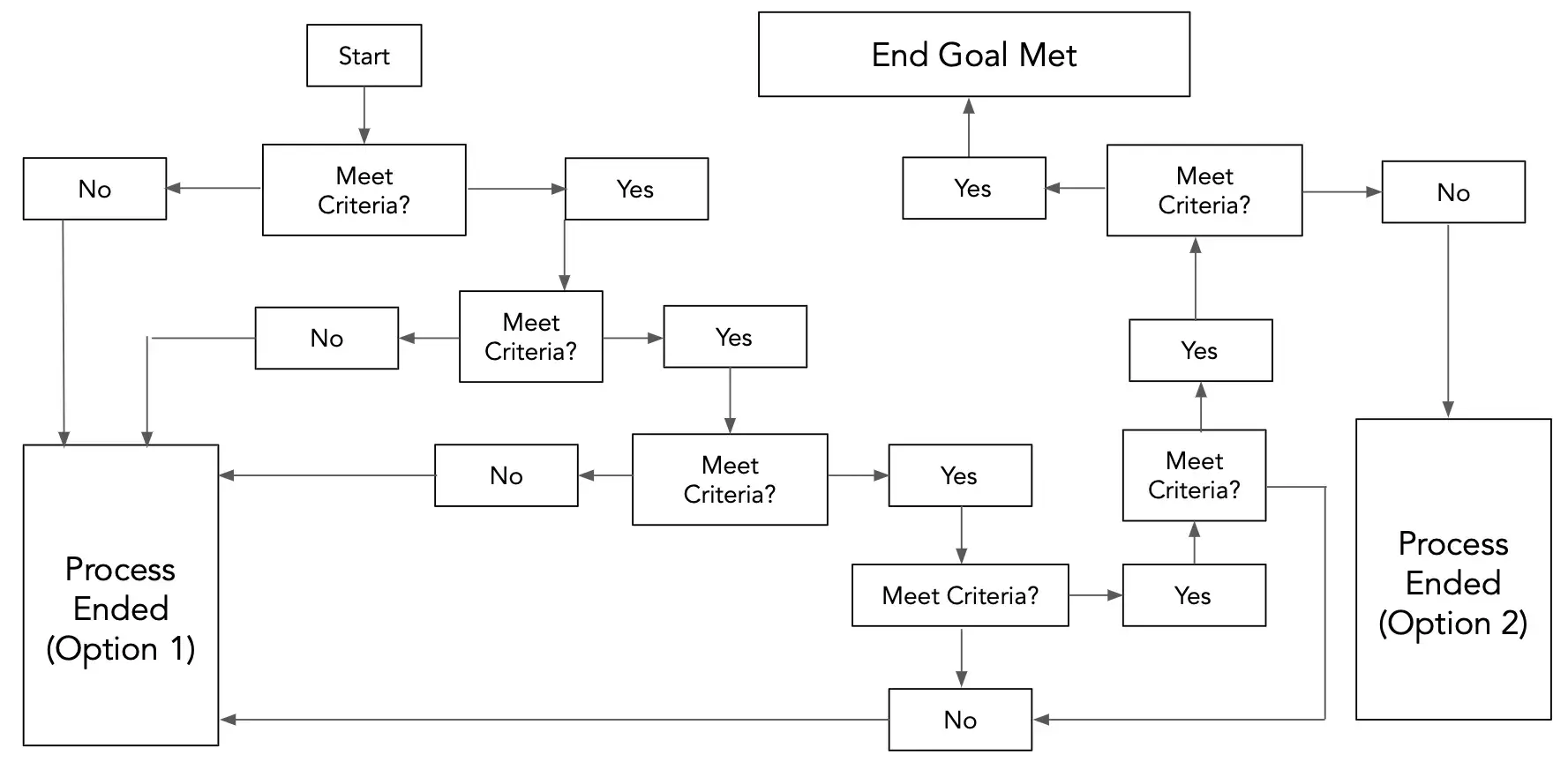
4. Complex Flowchart Template

complex flowchart template, flow chart template

Download this Template

For a flowchart that doesn’t need gridlines or different shapes, this template is the best solution in my opinion. It offers the option for multiple endpoints depending on which steps are taken throughout the process. Then it uses simple yes or no answers to drive you toward the endpoint.

Who should use this flowchart? Teams looking to manage processes that could have various endpoints or projects that have multiple steps and stakeholders involved.

What I like about this flowchart template: Complex processes can be difficult to keep track of. This flowchart template creates an intuitive visual for multi-step processes. This makes it easier to figure out if and when you should move forward.

5. Circular Flowchart Template

circular flowchart template, flow chart template

Download this Template

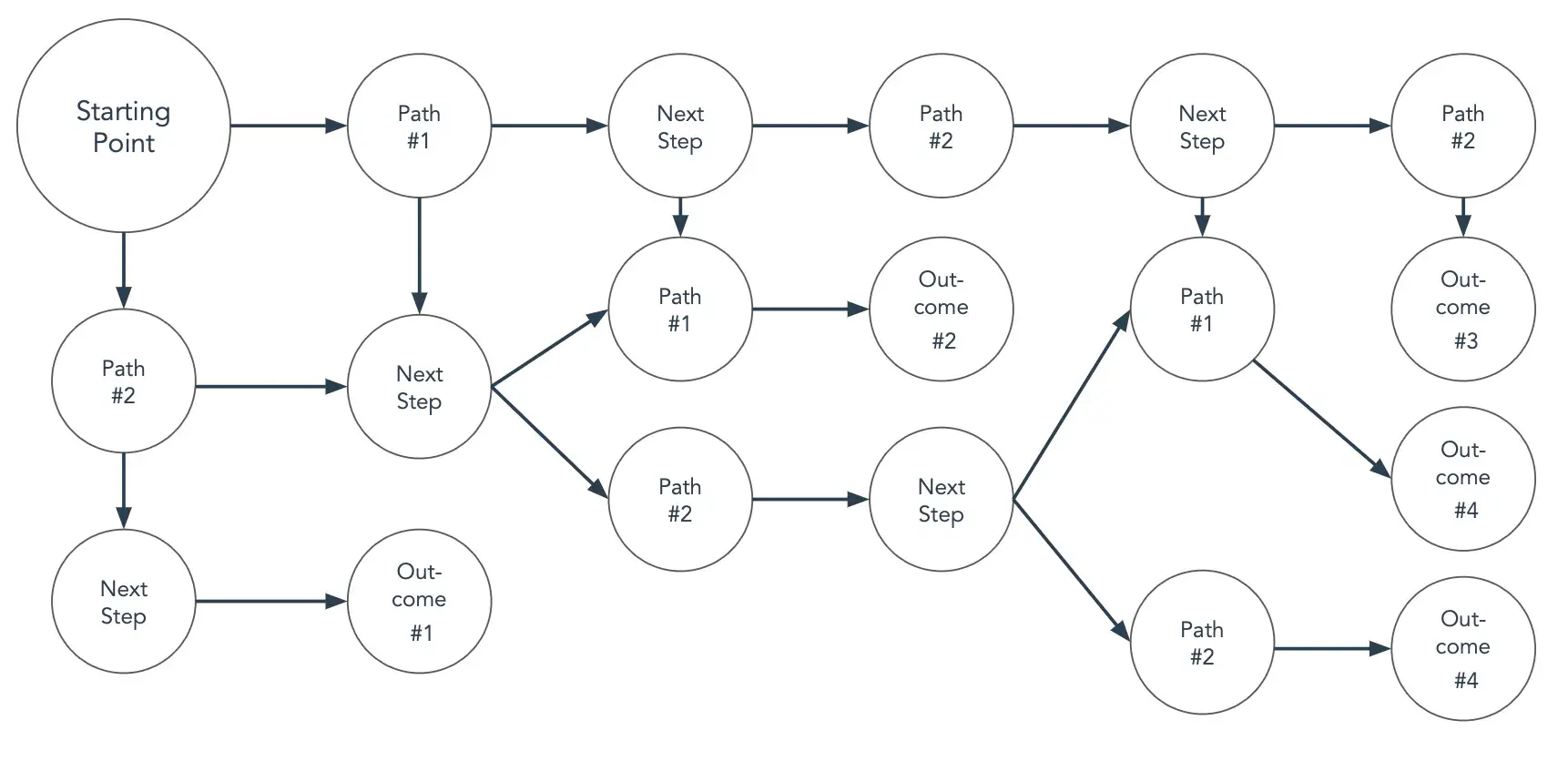
The circular flowchart template changes things up with a different shape, but it also offers a different path structure. It helps outline both short and long processes, with different outcomes depending on the number of steps required.

Who should use this flowchart? Social media managers, product marketers, and content strategists may find that this template suits their needs.

What I like about this flowchart template: This template has a cleaner appearance than some of the more complex flowcharts and may be better for visual learners.

6. Linear Flowchart Template

linear flowchart template, flow chart template

Download this Template

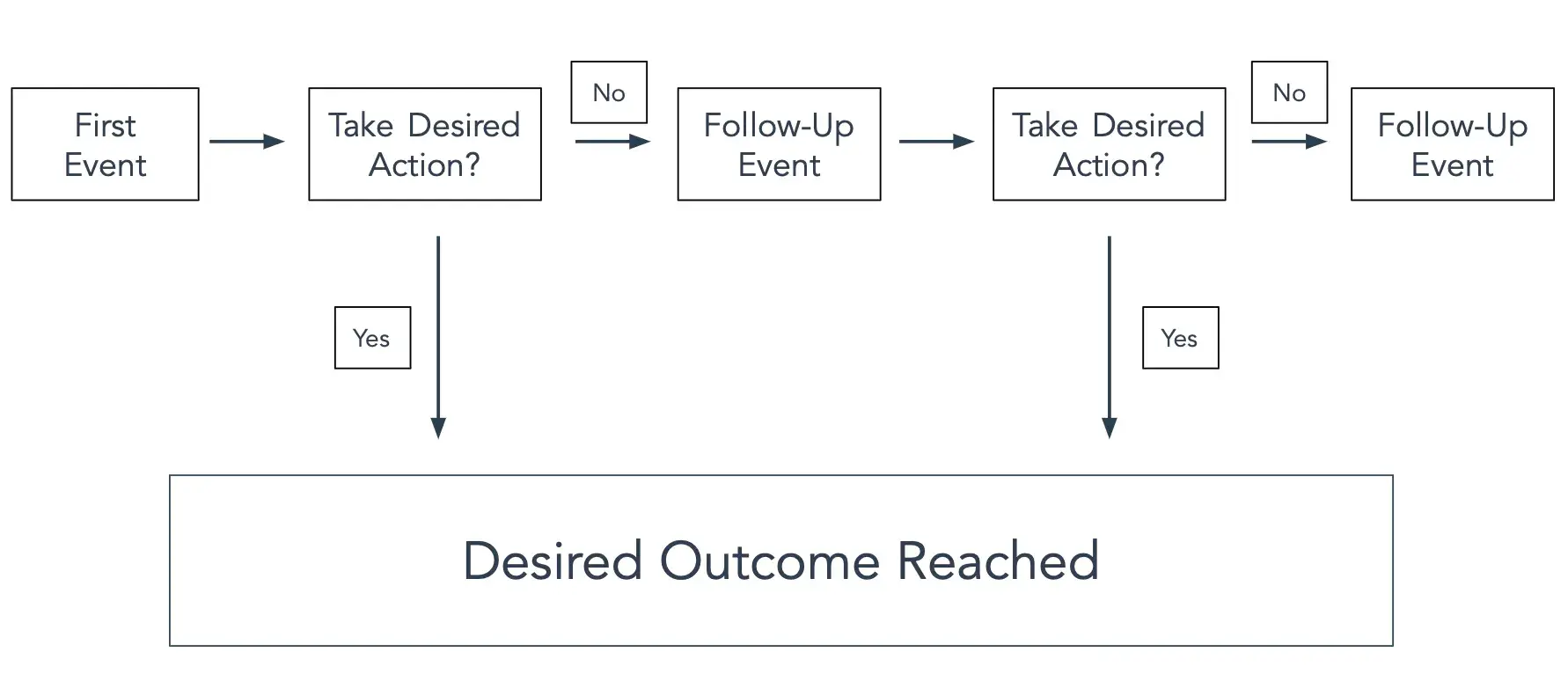
A linear flowchart template is a solution for when there’s only one optimal result. Every step of the process will either lead someone to that outcome or result in the process simply ending.

Who should use this flowchart? Email marketing specialists and sales teams can benefit from this template because there’s typically one goal: to earn one more subscriber or earn one more customer.

What I like about this flowchart template: With one singular goal, this flowchart format has a clear beginning and end, making it easy to outline a simple process.

Pro tip: This linear flow can be as long as you’d like it to be. I’ve personally received over 30 emails from the same source trying to get me to opt into their offer. They really hope that I will buy, and I really hope, for their sake, that they automate.

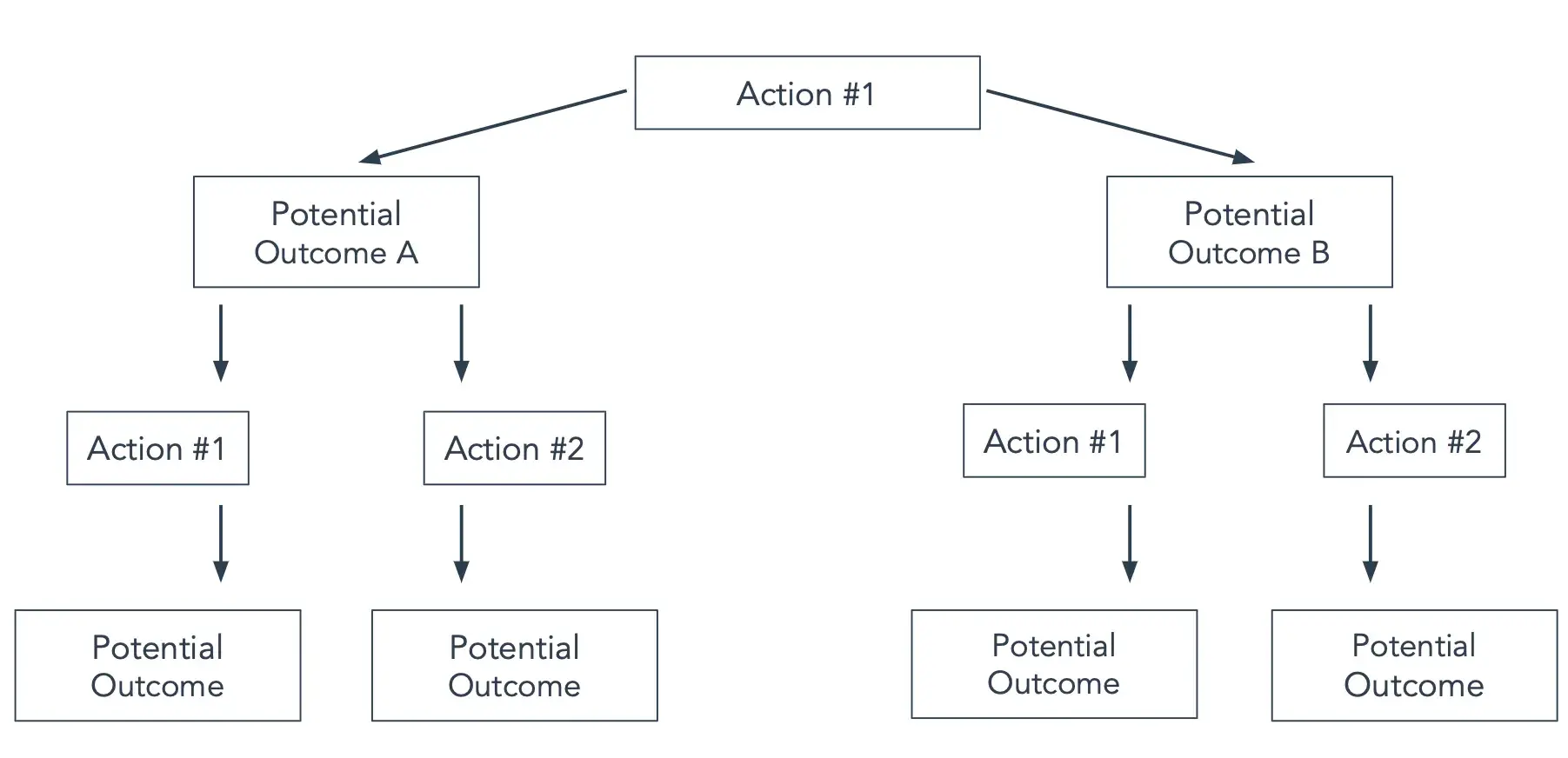
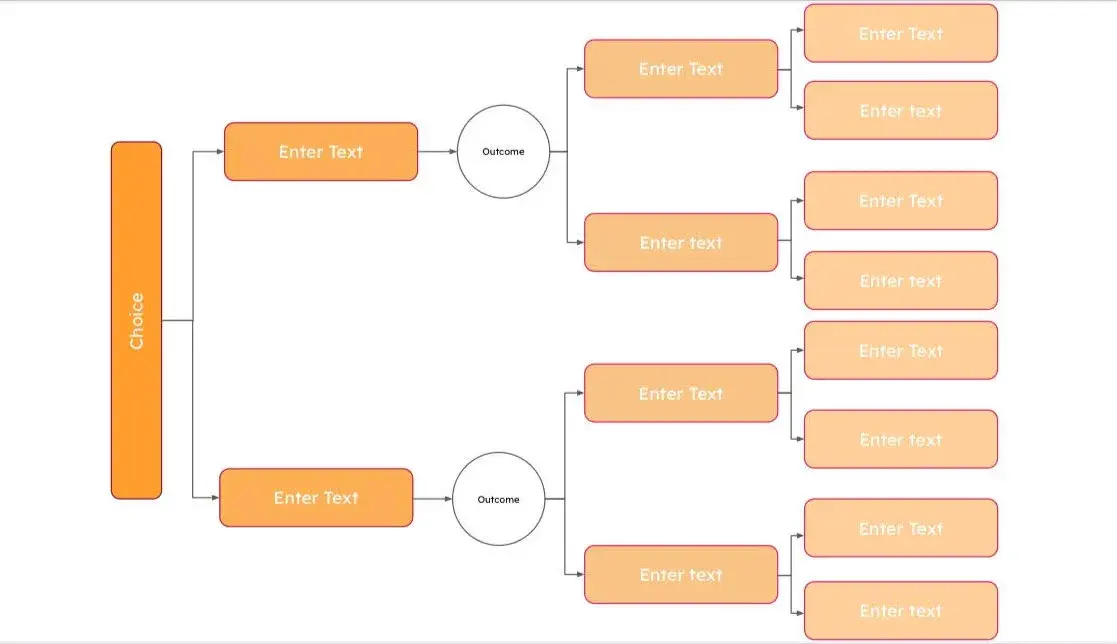
7. Tree Flowchart Template

tree flowchart template, free flowchart templates

Download this Template

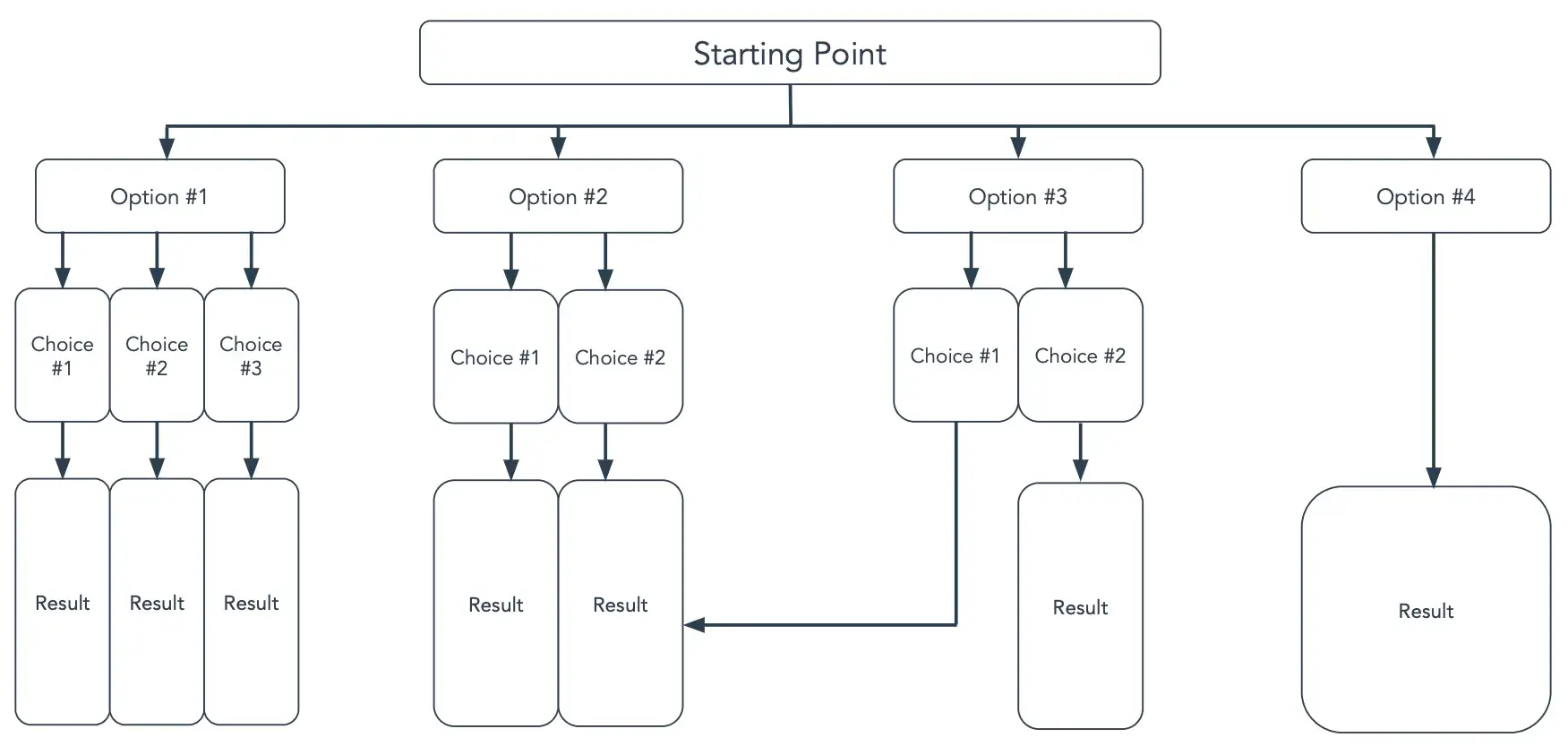
A tree-style flowchart template makes the most sense for situations where there are multiple choices and when each option has a clear and distinct next step.

Who should use this flowchart? For businesses, this flowchart would be perfect for the support department — which can use this template to map out responses from automated chat support or a phone tree.

What I like about this flowchart template: Each action has a clear next step and a predetermined outcome, but you can add more than two options, which is often not applicable to other flowcharts.

8. Organizational Flowchart Template

organizational flowchart template, free flowchart templates

Download this Template

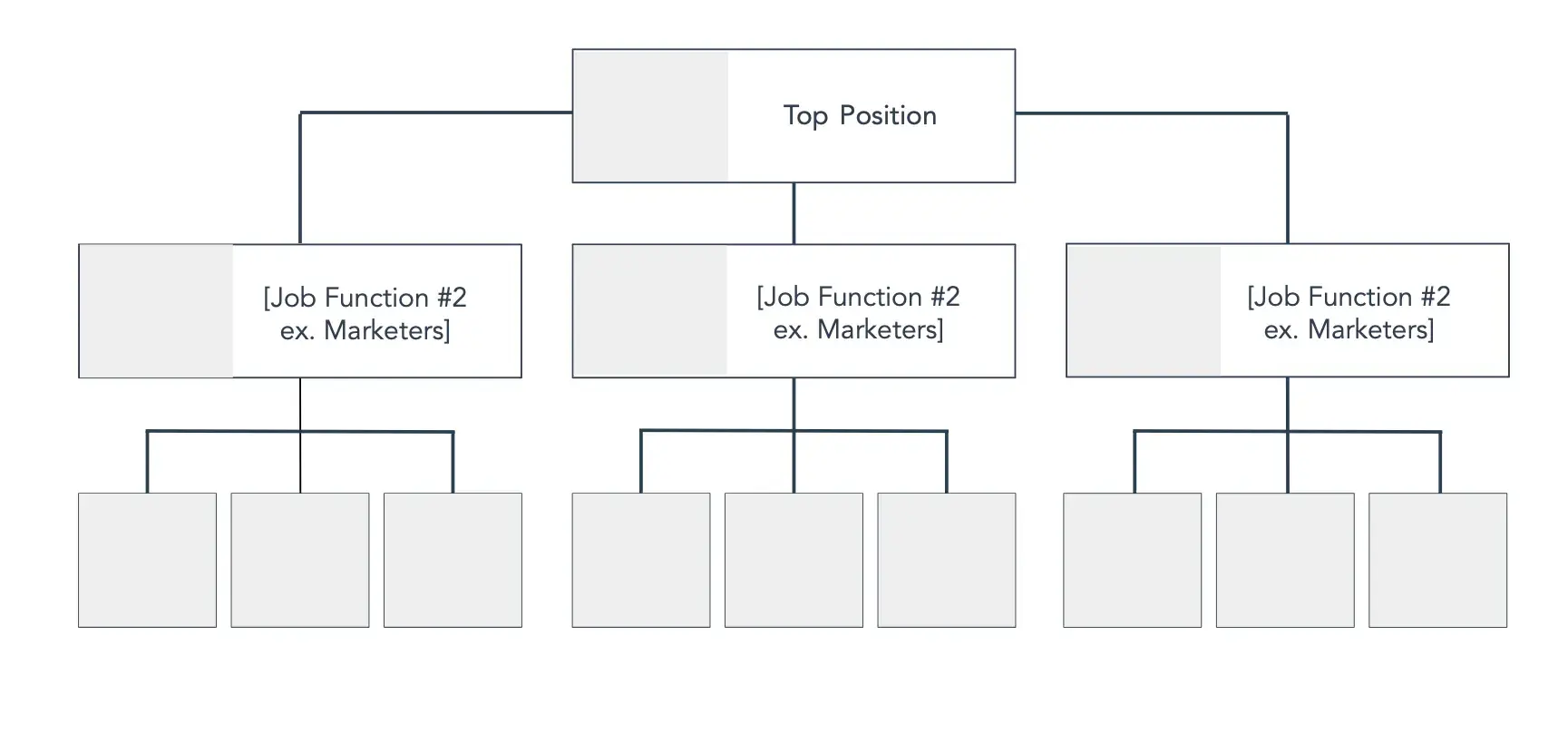
Another flowchart businesses might want to use is an organizational flowchart (or org chart) template. This is an essential chart that shows who reports to whom and helps all employees understand their position in the business.

Who should use this flowchart? Company and department heads use this template to outline the chain of command in an area of the business. Human Resources teams can also use it to inform team structure and organizational decisions.

What I like about this flowchart template: Users can see team structure at a glance and can quickly find who they need to go to for their project or to have their questions answered.

Pro tip: As people take on additional roles and report to various departments, these traditional org charts may not be flexible enough to represent reality. It may just represent a starting point that can help workers get oriented.

9. Decision Tree Flowchart Template

decision tree flowchart template, free flowchart templates

Download this Template

This template is similar to the tree-style flowchart template covered above, however, this template is specifically designed to help users arrive at a decision. Read more about decision trees and their advantages here.

Who should use this flowchart? For organizations, this template benefits any department that needs support in decision-making and evaluating different outcomes.

What I like about this flowchart template: Users can see the overarching big picture and simultaneously assess individual potential outcomes for a problem statement. It serves as a visual aid in the process of making a more informed decision.

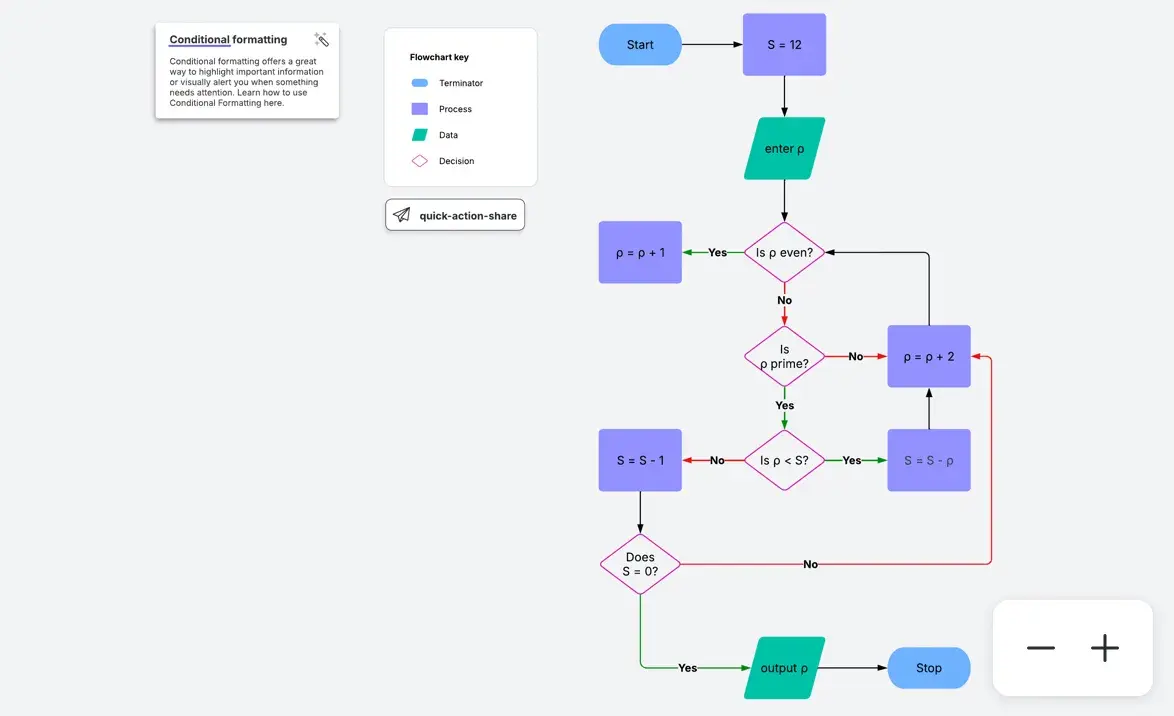
10. Algorithm Flowchart Template From Lucidchart

algorithm flowchart template from lucidchart, free flowchart template

Source

This template helps pictorially outline the step-by-step process involved in an algorithm.

Who should use this flowchart? This flowchart template is helpful for people involved in software and app development. Job roles that can benefit from this template include programmers, software engineers, AI/ML engineers, and data analysts.

What I like about this flowchart template: This template offers a clear visual representation for a more technical process. (Note: While the template is free, advanced features of the Lucidchart platform require a paid plan).

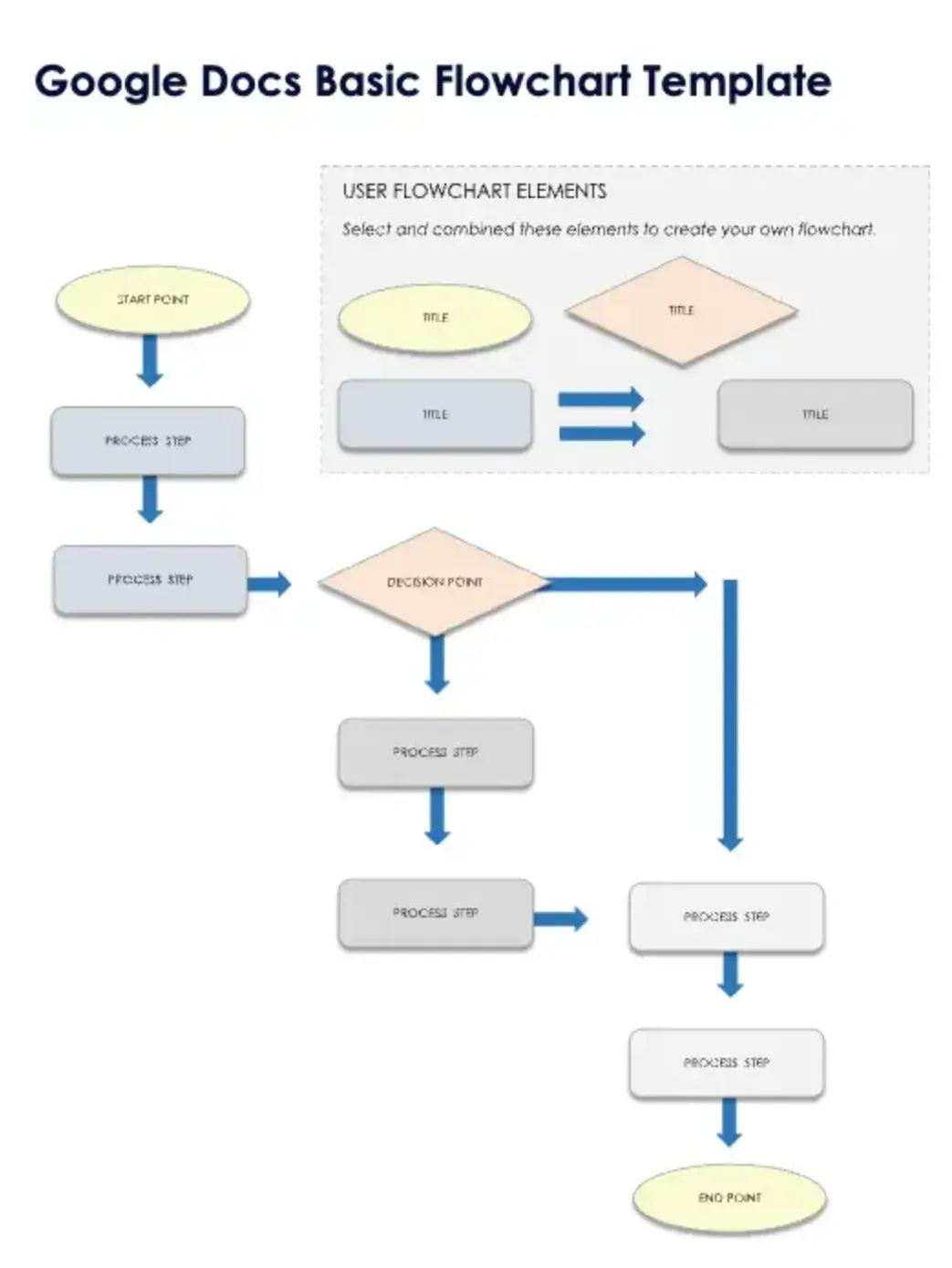
11. Google Docs Basic Flowchart Template From Smartsheet

google docs basic flowchart template from smartsheet, free flowchart template

Source

Among the leading online word processors, Google Docs is used by businesses around the world. It makes sense that users would like to create flowcharts from within the platform. This template helps with that. It offers a basic flowchart design, editable within Google Docs.

Who should use this flowchart? This template is beneficial for people who want to build and present flowcharts within Google Docs.

What I like about this flowchart template: It simplifies flowchart creation within Google Docs. Users can click on the download link, make a copy to their Google Docs account, and get started.

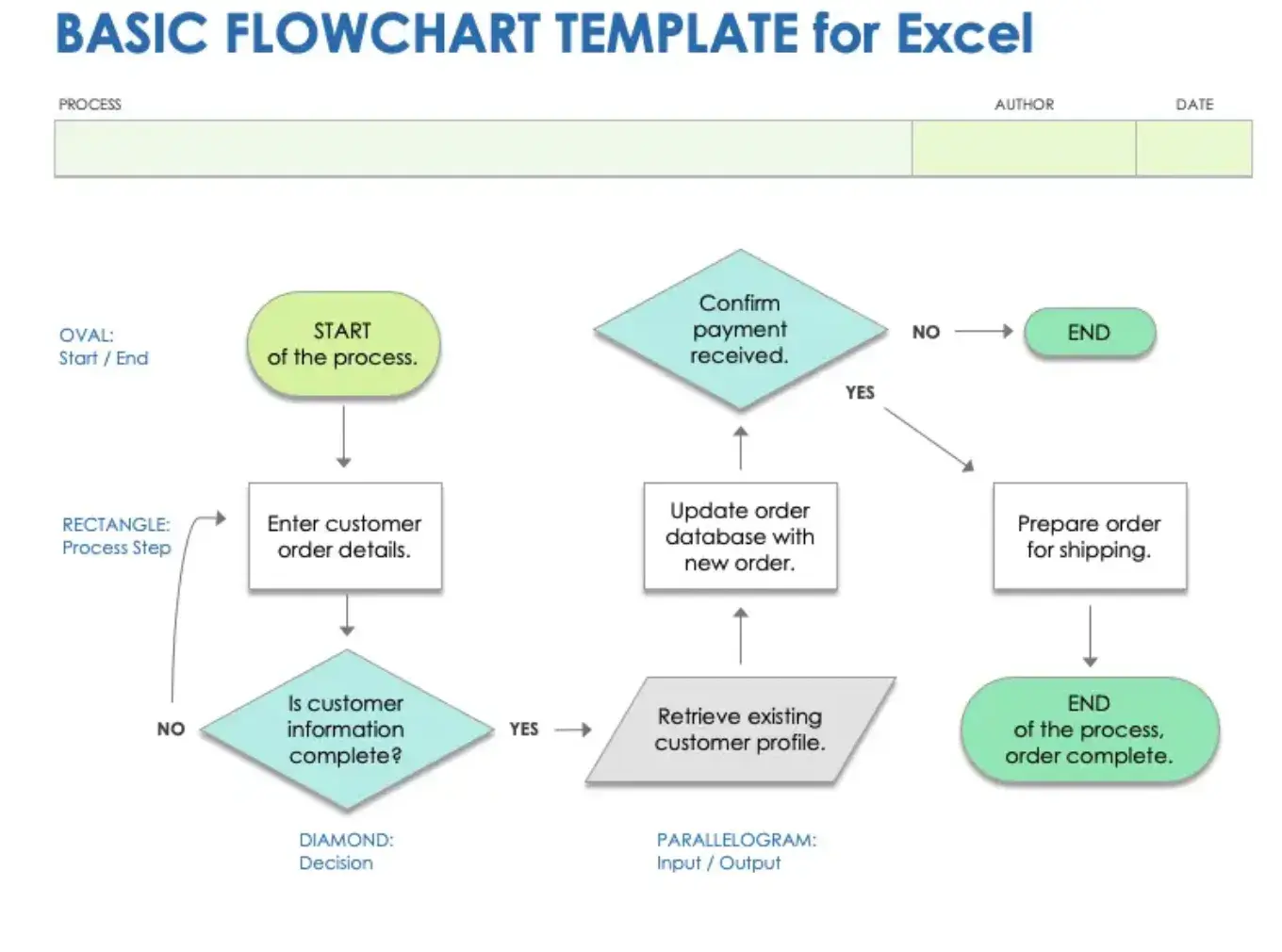
12. Excel Basic Flowchart Template From Smartsheet

excel basic flowchart template from smartsheet, free flowchart template

Source

Microsoft Excel was downloaded 10.5 million times on mobile devices in Q3 of 2024. That’s in just three months — highlighting the popularity of the spreadsheet tool. Smartsheet offers a basic flowchart template for Excel that can help streamline the process of building a flowchart within the platform.

Who should use this flowchart? This template is helpful for users looking to create a flowchart within Excel.

What I like about this flowchart template: It’s quicker to get right to work rather than spending time constructing a flowchart design using the “Shape” elements on the platform.

Now that I’ve shared different flowchart templates, it’s time to look at them in action. I’ll provide examples for the first eight types — so you can visualize how they would appear when building one yourself.

Flowchart Examples for Business

1. Basic Process Flowchart Example

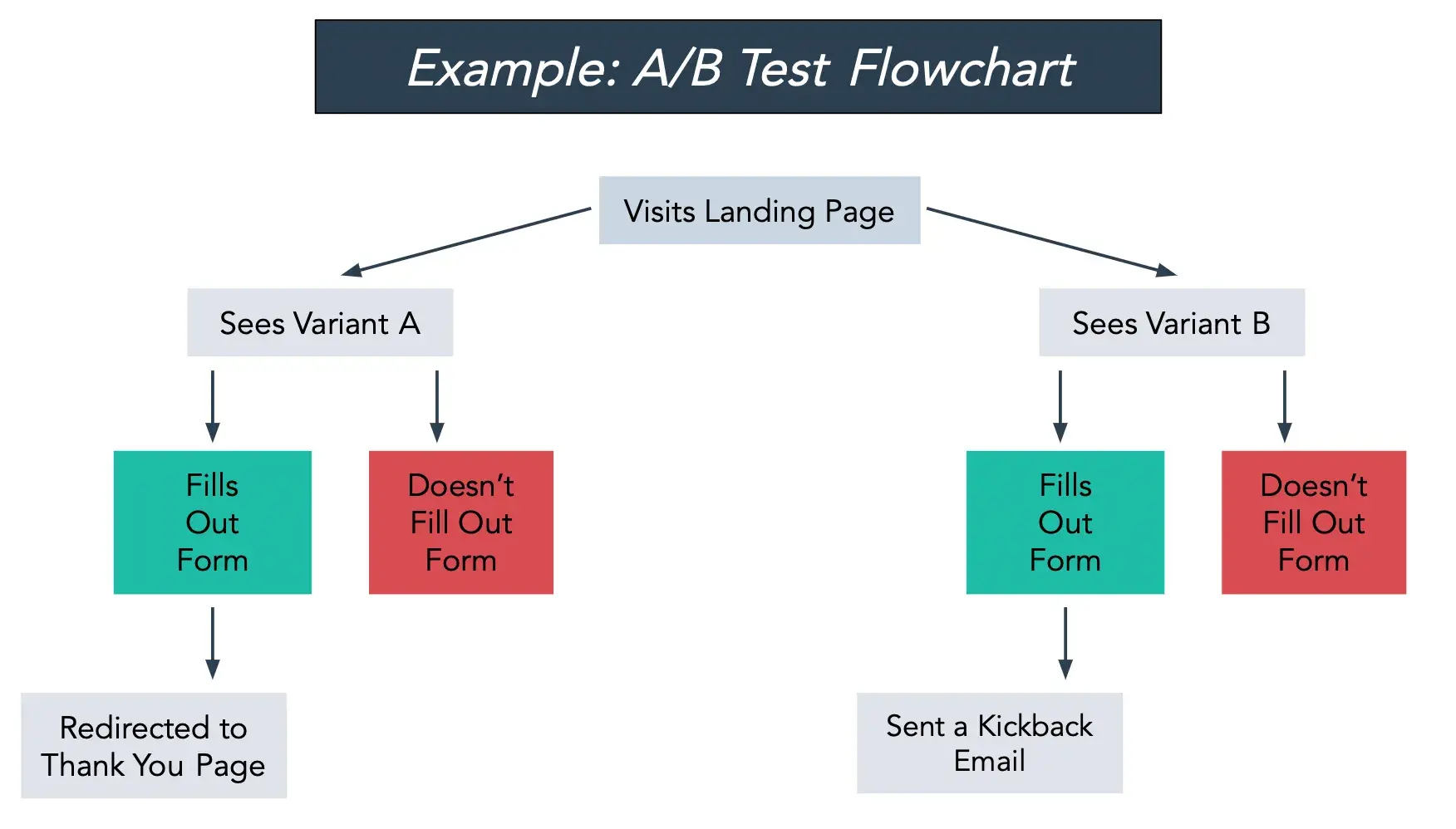
a/b test flowchart as a basic process flowchart example, flowchart templates

This template visualizes how a user visiting a company’s landing page could convert and become a lead. Notice how there are two potential final outcomes, but because of this chart’s simplicity, I can add as many outcomes as I want. With a flowchart like this, it’s important to have clear, defined goals in mind.

2. Swimlane Flowchart Example

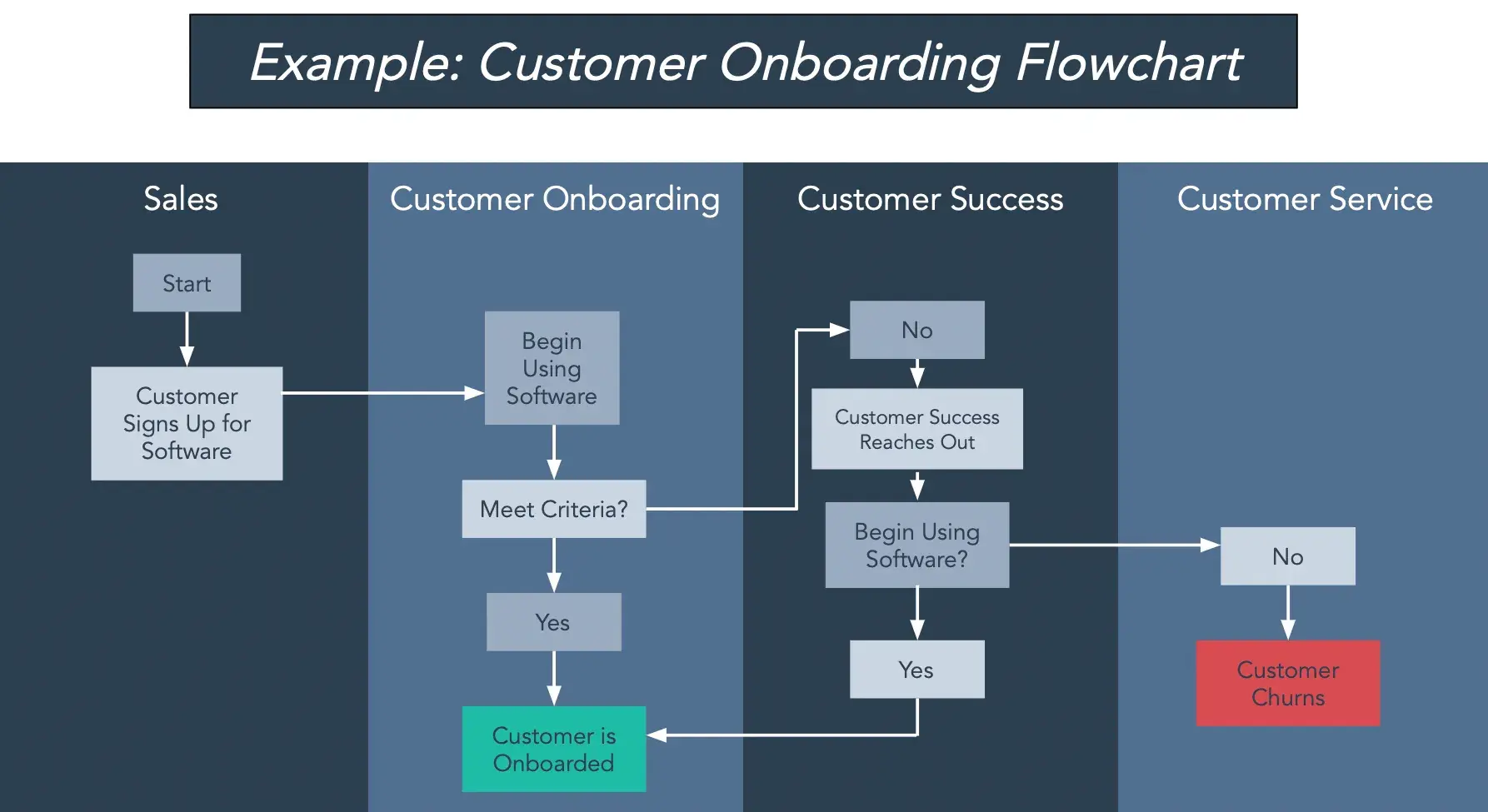
customer onboarding flowchart as a swimlane flowchart example, flowchart templates

In the example above, the swimlanes are divided by department to illustrate the process of the customer journey. This is exceedingly important for determining which teams need to interact with a customer and when.

Without a swimlane flowchart outlining these roles, the customers’ experience with the company can seem haphazard and poorly planned.

3. Task Flowchart Example

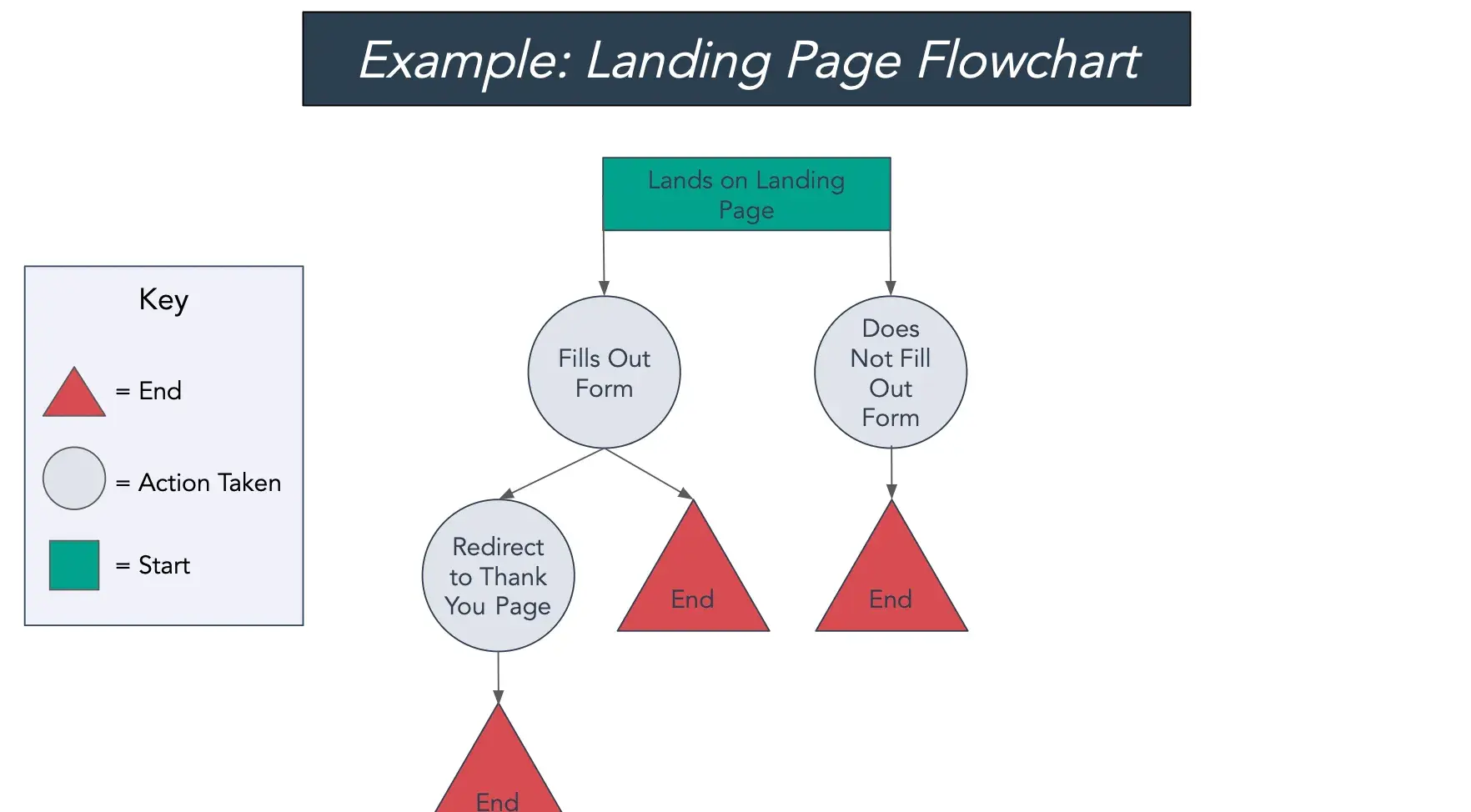
landing page flowchart as a task flowchart example, flowchart templates

In the example above, the different shapes represent the start of, end of, and actions taken during the process of viewing a landing page. This task flowchart example follows an “if this, then that” format. It shows the various outcomes that could occur when a potential customer visits a landing page.

4. Complex Flowchart Example

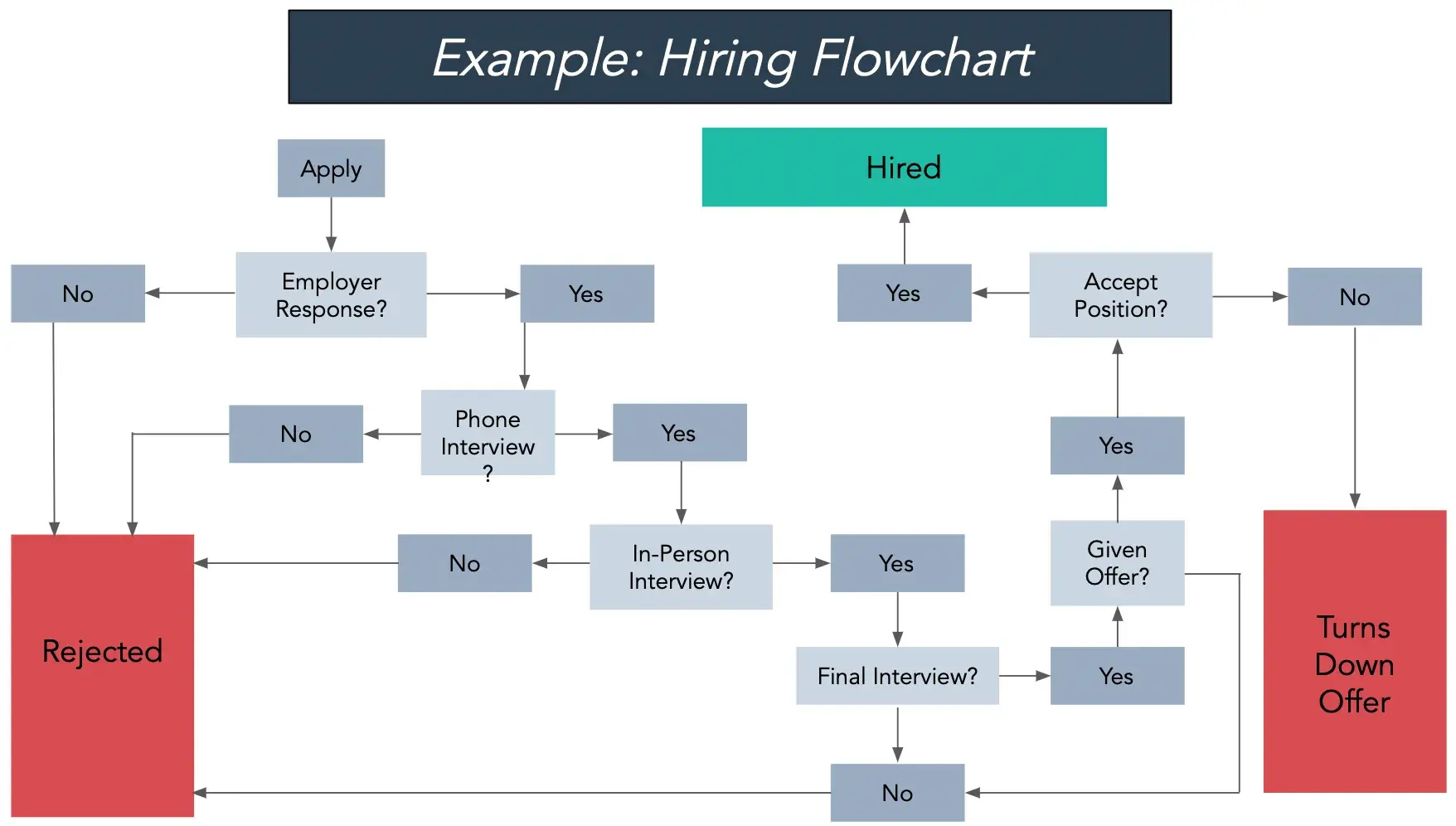
hiring flowchart as a complex flowchart example, flowchart templates

The above hiring visual is an example of a complex flowchart with many events and potential outcomes. It offers two potential outcomes at every stage. Then, it shows with clarity what happens as a candidate moves forward. The colors also make it clear which final outcomes are positive or negative.

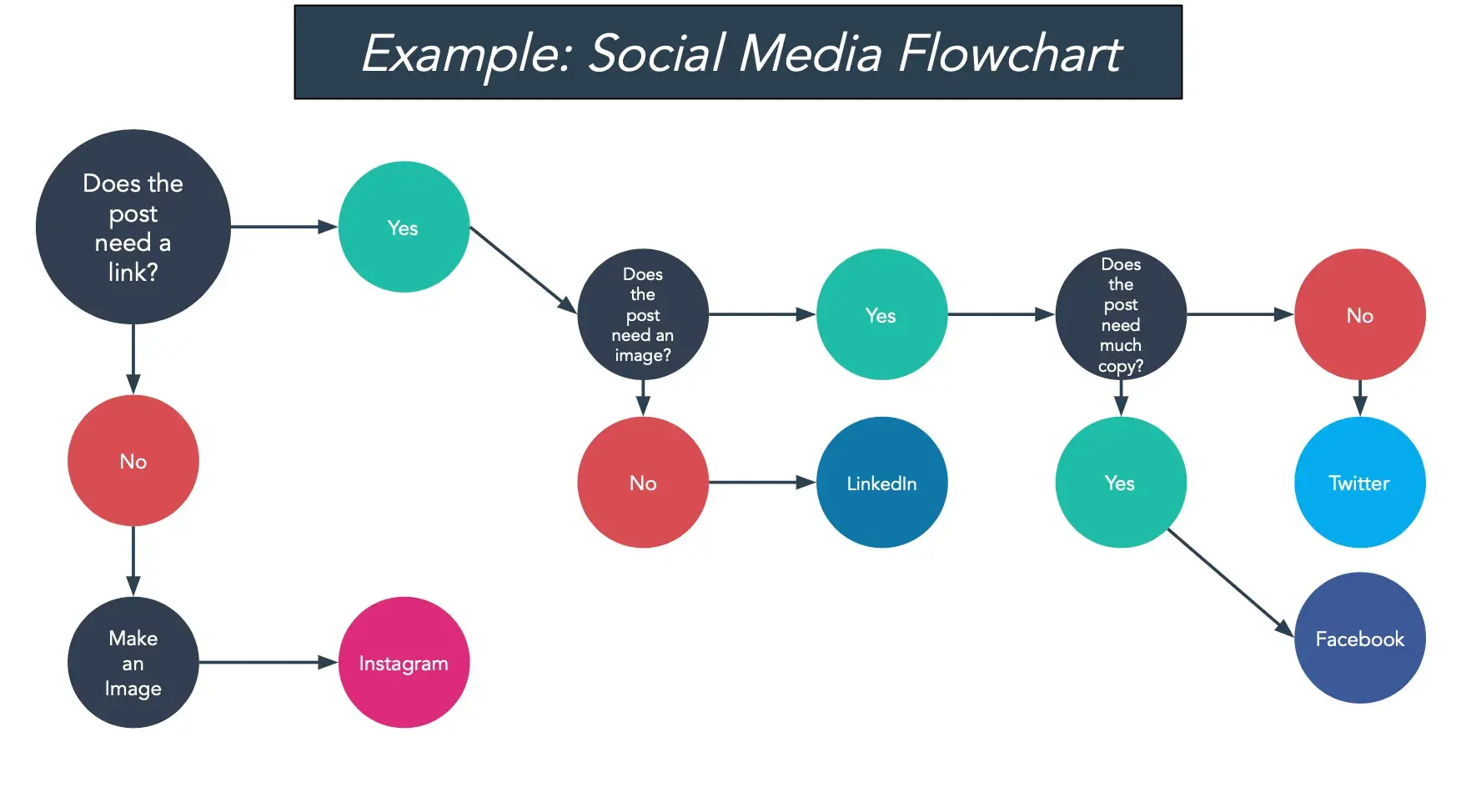
5. Circular Flowchart Example

social media flowchart as a circular flowchart example, flowchart templates

In the example above, a circular flowchart offers a decision-making framework.

Here, it’s used to help a social media manager figure out which site to post content on. It includes specific, targeted questions that define the assets the social media manager needs to create and which social platforms these assets are best suited for.

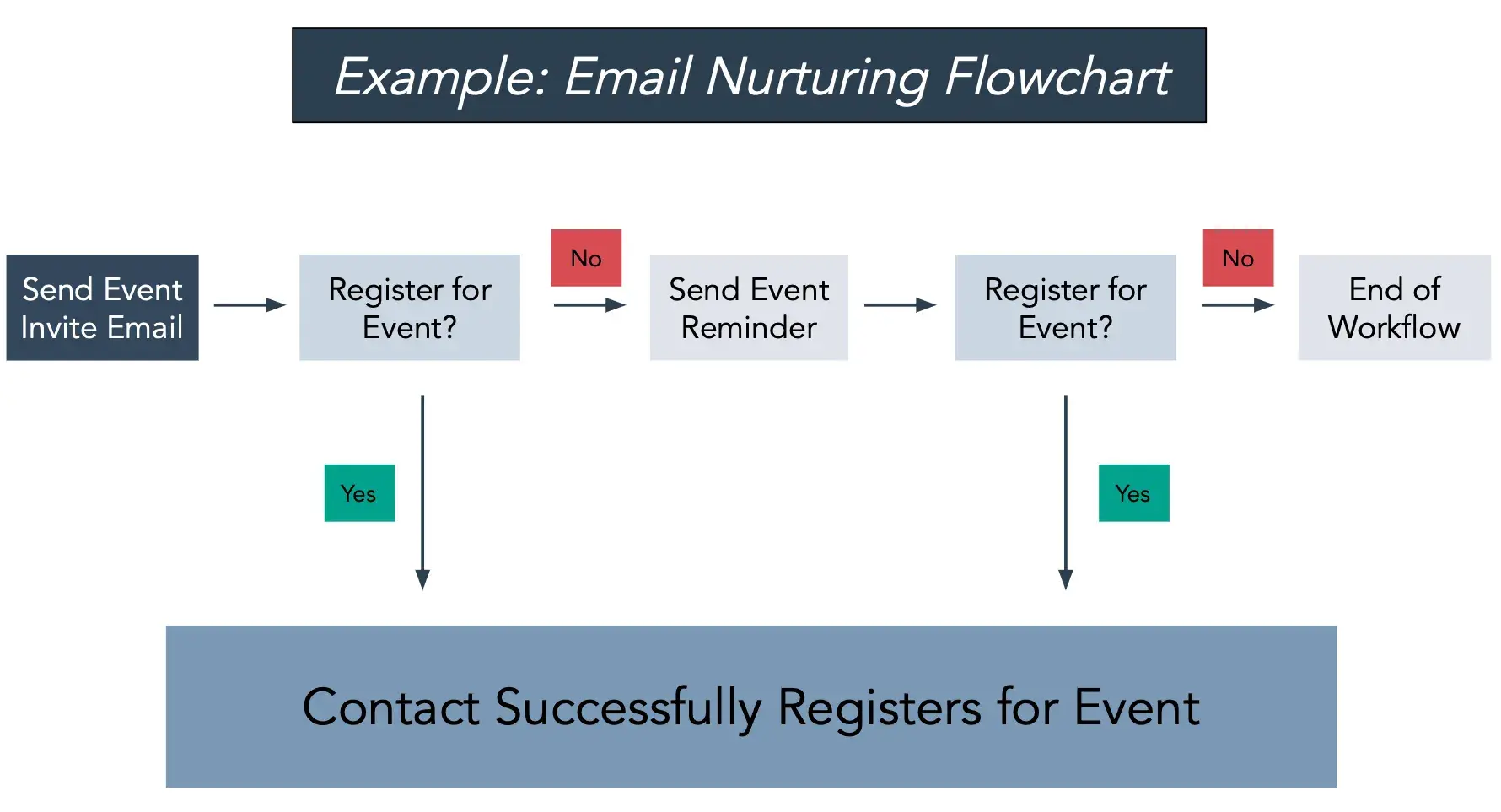
6. Linear Flowchart Example

email nurturing flowchart as a linear flowchart example, flowchart templates

As I mentioned earlier, linear flowcharts can be used for processes that have only one desired outcome. In the above example, it’s for an email nurturing sequence. In the image, the process ends whether someone signs up for an event or not.

A time-bound (or finite) email nurturing sequence is especially a good fit for these types of flowcharts. For continuous email marketing campaigns, I might need a more agile flowchart where I can determine when to move a subscriber to another email list.

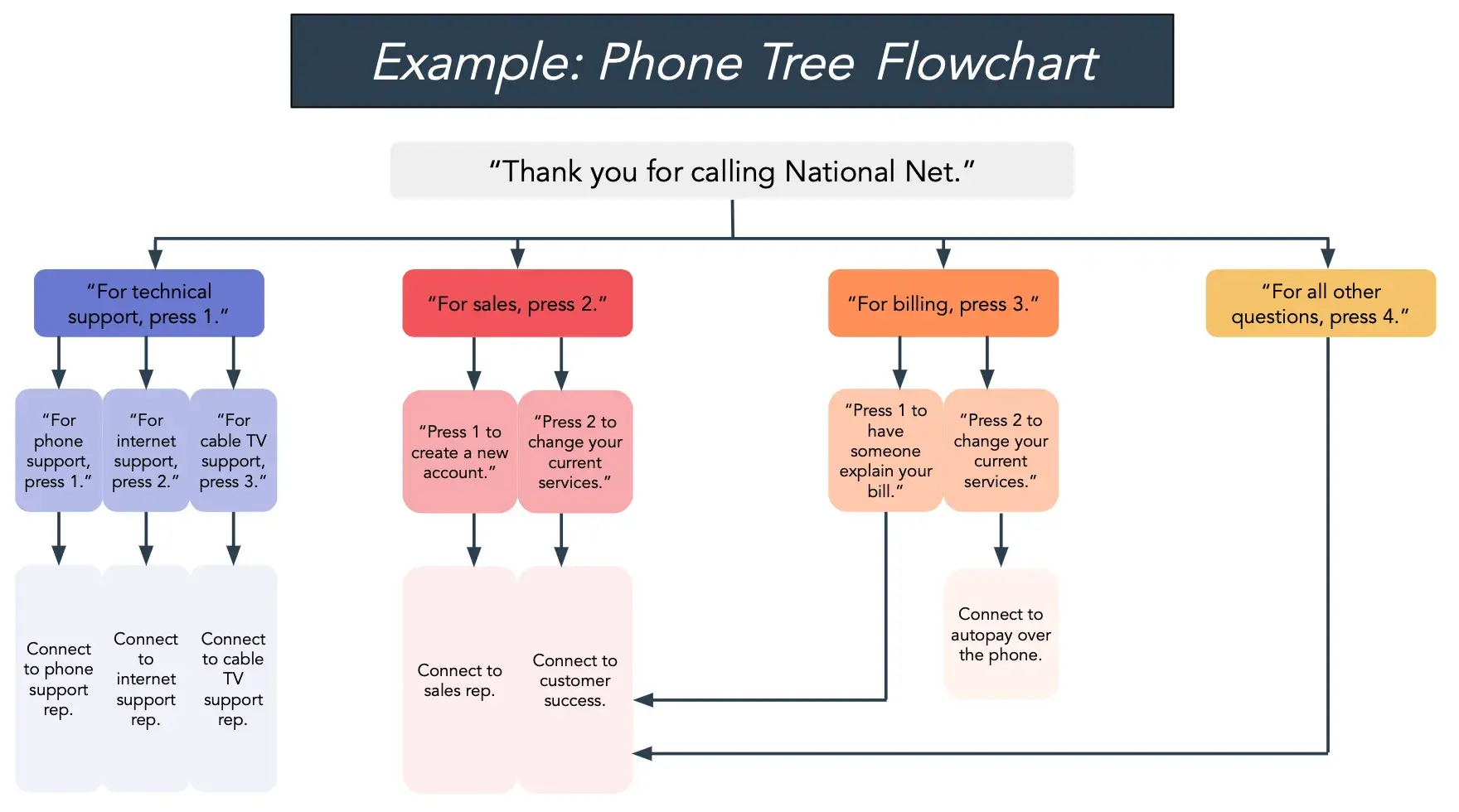
7. Tree Flowchart Example

phone tree flowchart as a tree flowchart example, flowchart templates

In this tree flowchart example, a business depicts the choices and next steps a caller can take when contacting them by phone. Notice that there are many endpoints for the customer depending on their previous action.

A flowchart like this is useful if I’m trying to outline a process with different branches. For instance, I might create a landing page flowchart that determines which form or CTA is depicted to a customer based on their previous activity on my website.

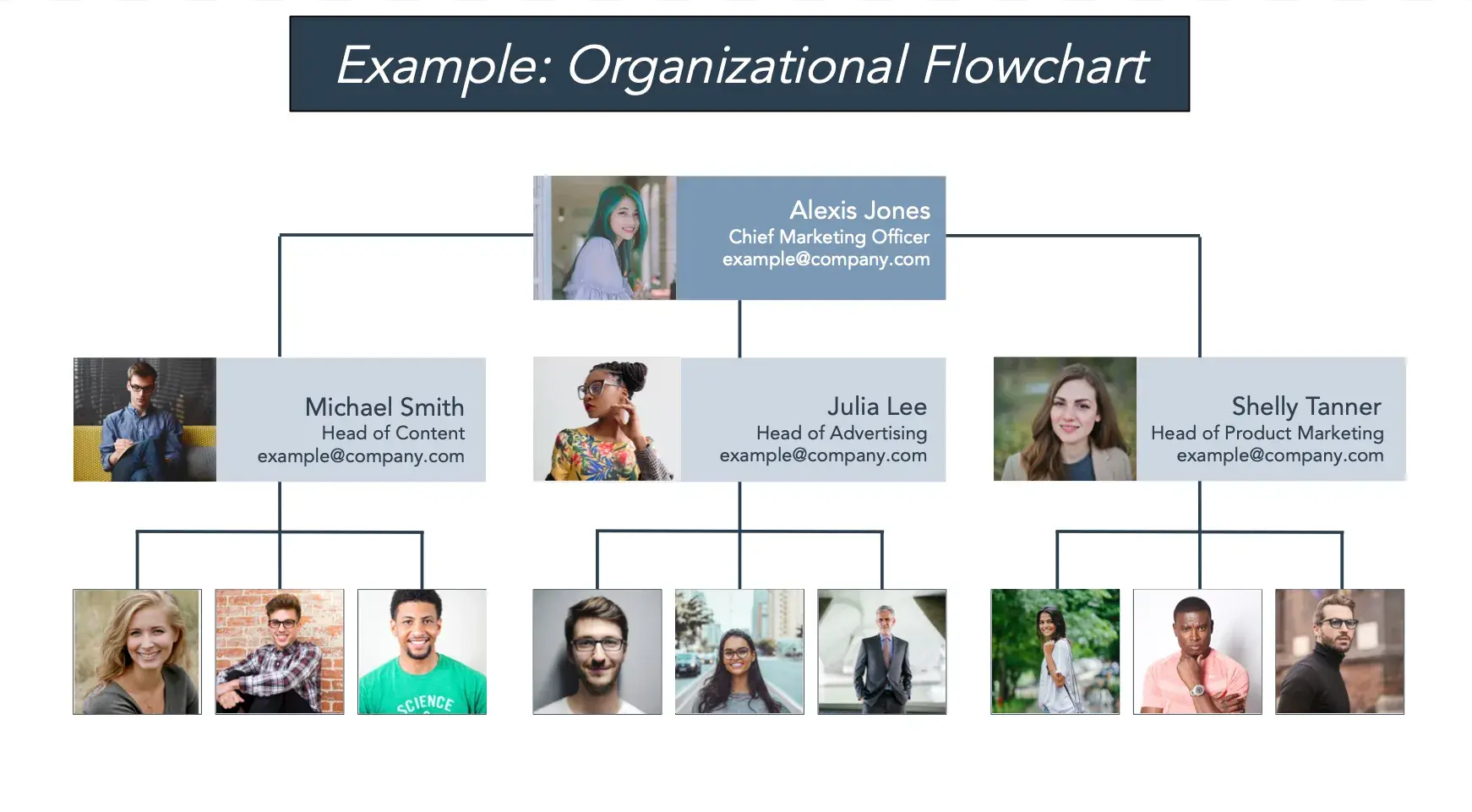
8. Organizational Flowchart Example

organizational flowchart example, flowchart templates

While not exactly procedural, this visualization helps those within the company quickly understand who reports to whom and who handles what.

The best part of this example is that it can be as detailed or as simple as you’d like it to be; you can delve down to your junior individual contributors or simply outline your leadership map.

Free Flowchart Templates

Flowchart templates are incredibly useful for solving business problems and simplifying processes. That said, some issues need more custom solutions.

I’ve gathered up some free and paid flowchart templates, tools, and software to try out — I’ll look at the free ones first.

The software and adjustable templates I’ve hunted down can even help your team connect and work together on flowcharts. They make it simple to create unique and easy-to-read flowcharts that fit a variety of needs — including mine.

I’ll be using demos of the free tools below to establish information flows for my instructional book about floristry. Hopefully, we’ll both learn something new.

Free Flowchart Templates, Tools, and Software

1. Miro

Pricing: Free, with paid options for extended features and enterprises.

miro flowchart tool, flowchart templates

Source

Who should use this tool?

Teams that use flowcharts for a wide variety of users and stakeholders. This tool is also helpful for teams that create flow charts collaboratively or want to include multiple flowcharts in a single document.

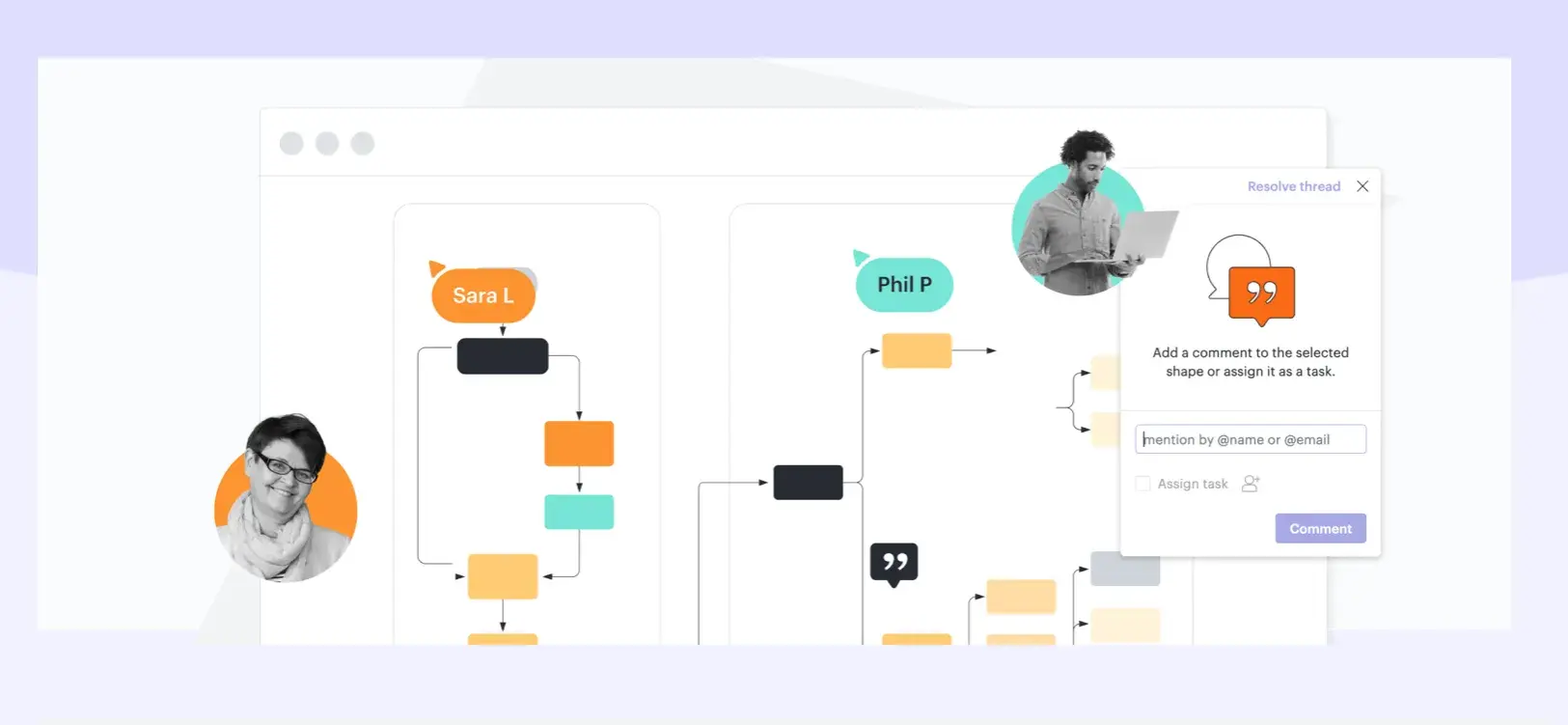
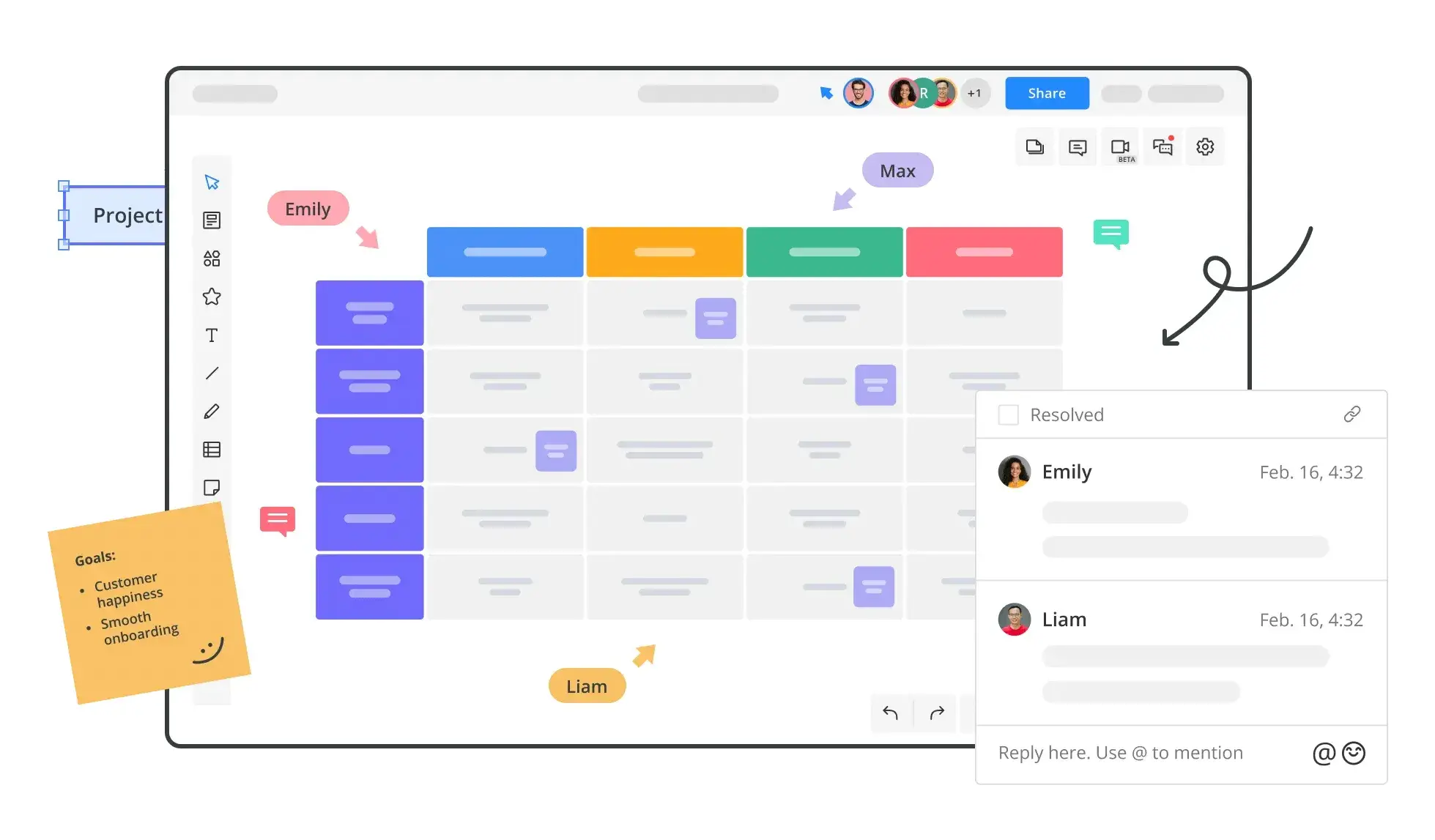
What I like: Miro offers tools to build and plan complex flowcharts for teams. Besides visual whiteboard tools, Miro also offers templates for strategy mapping, workflows, UX design, and more. I personally loved the digital sticky note feature that makes it easy to add comments to in-progress flowcharts.

Here’s a link to their flowchart template.

2. Draw.io

Pricing: Free

draw.io flowchart tool, flowchart templates

Source

Who should use this tool?

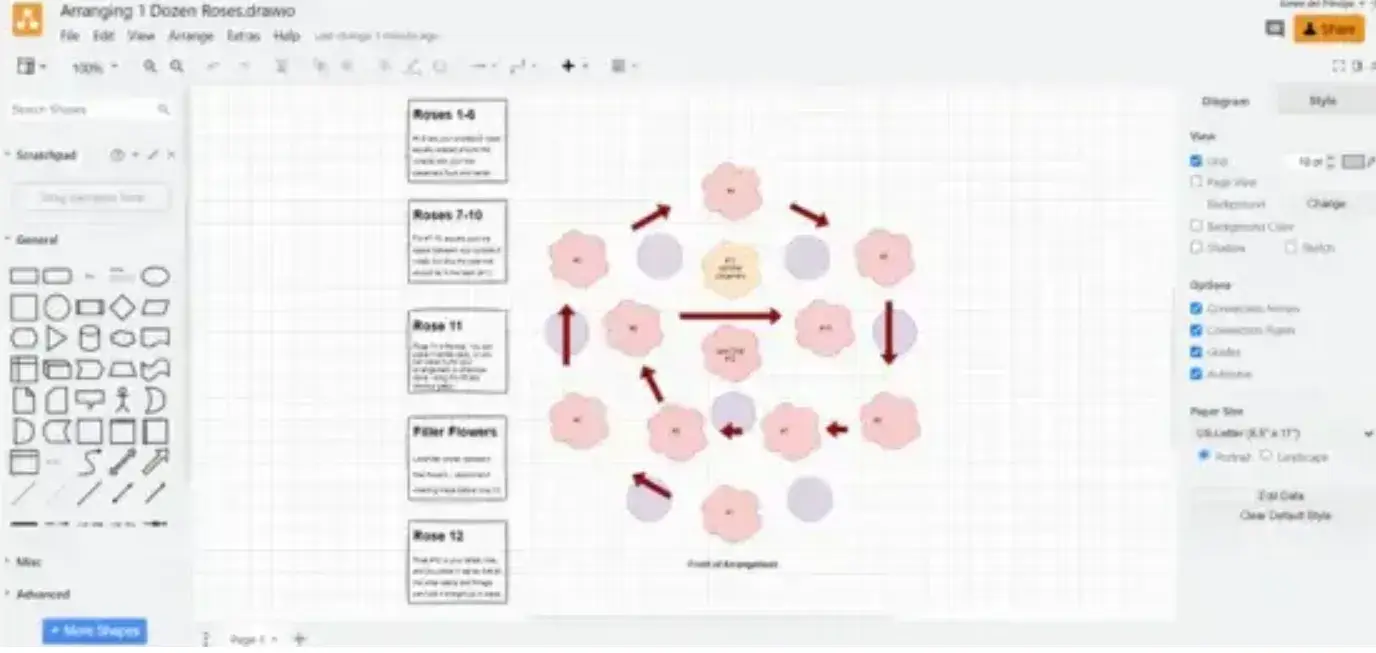
This tool is popular with users who want diagramming software for immediate business application. This flowchart tool also includes customizable templates. I used it to create the flowchart below that maps out how to arrange a dozen red roses.

creating a flowchart on draw.io, flowchart templates

What I like: This open-source technology is simple and quick to use for practical flowcharts and process mapping. It creates process diagrams for modeling, databases, networks, wireframes, and more. It also offers tons of customization options, but I didn’t find it overwhelming to use.

3. Zen Flowchart

Pricing: Free, with paid options for extended features.

zen flowchart flowchart tool, flowchart templates

Source

Who should use this tool?

Casual users and enterprise companies looking for web-based flowchart software.

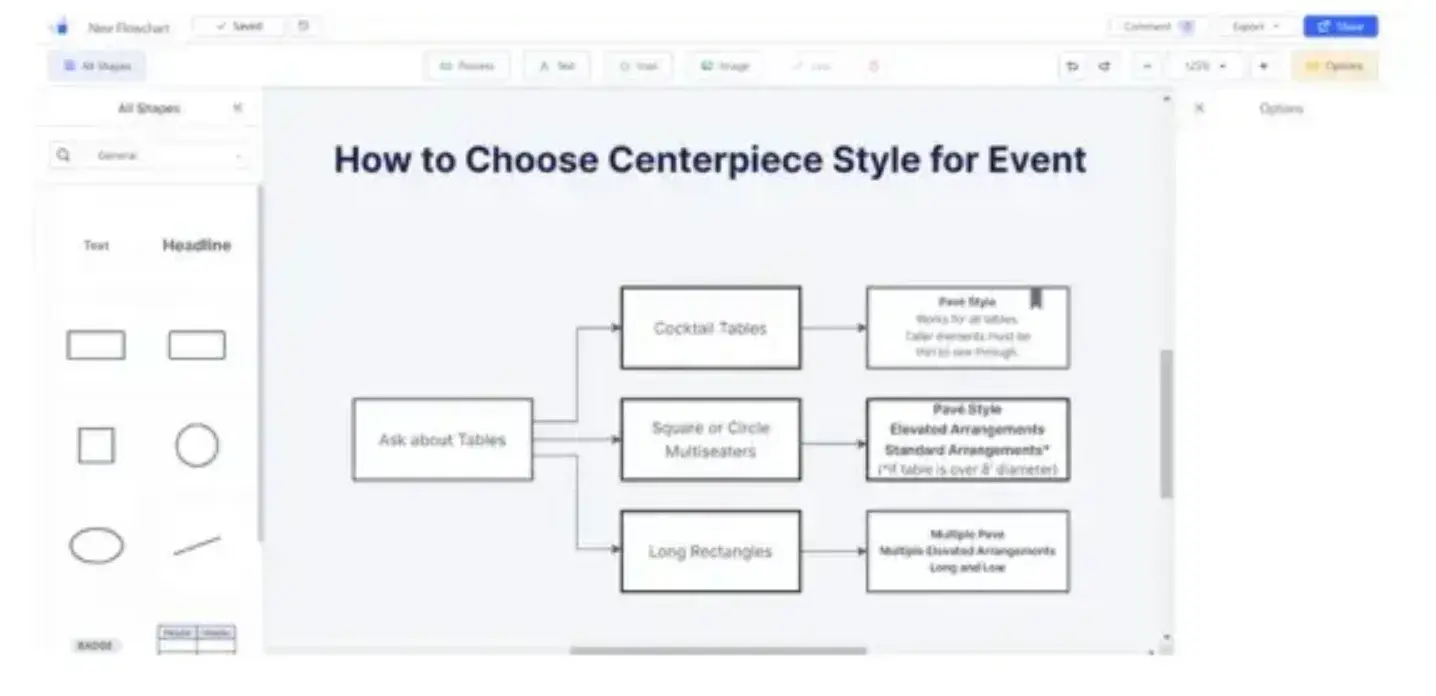
The free option is limited to 20 elements, so I was able to whip up a simple flowchart to help me decide which style centerpieces to create for an event. I didn’t find the arrows to be intuitive, but it does have icons to choose from, which was a fun touch.

creating a flowchart on zen flowchart, flowchart templates

What I like: Zen Flowchart is simple to use with a wide range of features. You can create mind maps, wireframes, or whiteboards with this drag-and-drop tool. The simple workspace helps limit distractions so you can focus on your business process. This flowchart tool also has features for collaboration and real-time commenting.

4. Lucidchart

Pricing: Free, with paid options for extended features and enterprise.

lucidchart flowchart tool, flowchart templates

Source

Who should use this tool?

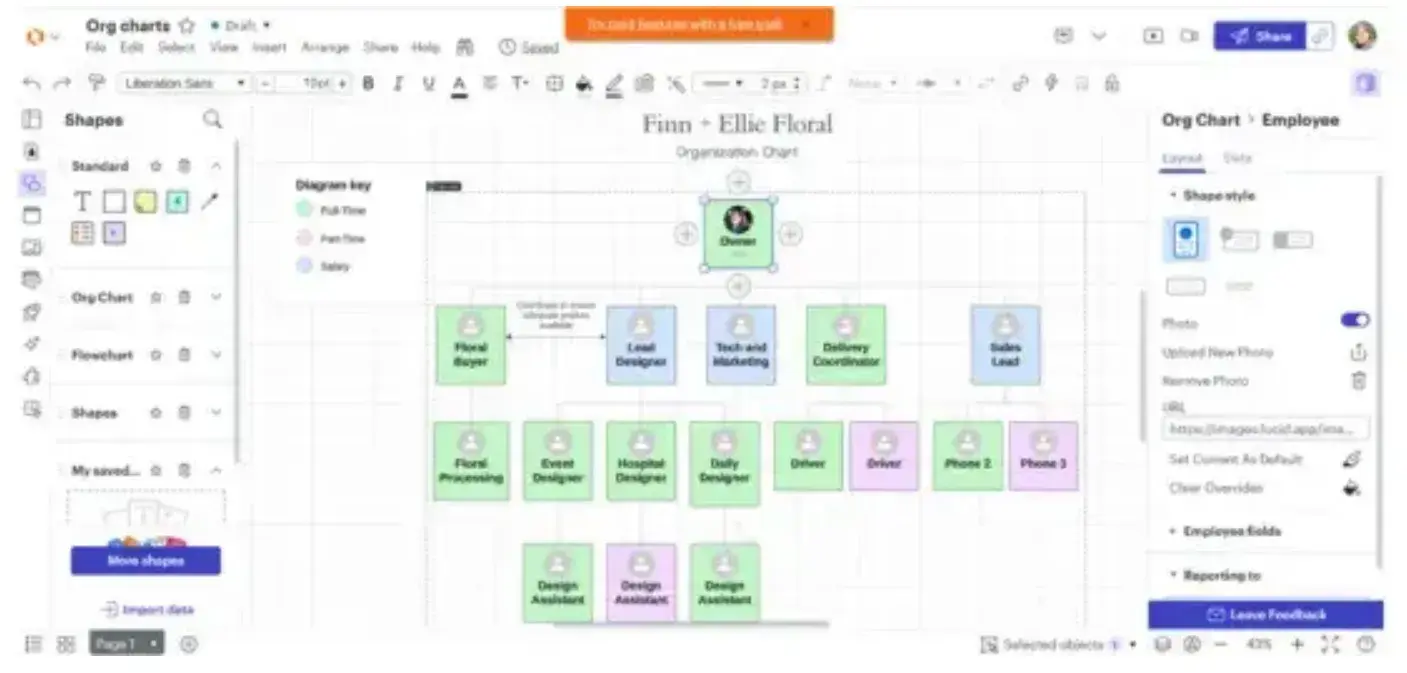
Lucidchart offers features for both individual users and collaborative professional teams. There are definitely enough options to do some advanced, professional chart work. I decided to build an org chart for my ideal floral shop:

creating a flowchart on lucidchart, flowchart templates

What I like: Beyond real-time collaboration and ease of use, this diagram software also has a range of advanced features. You can personalize flowcharts with custom shapes pulling from libraries of shapes and icons.

Automated diagramming can help new users create a flowchart without time-consuming edits and tweaks. For more skilled users, there are integrations with Atlassian, Zapier, Notion, and more which are also super useful.

These connections can help integrate flowchart collaboration into your current tech stack and workflows.

5. Cacoo

Pricing: Free, with paid options for extended features and enterprises.

cacoo flowchart tool, flowchart templates

Source

Who should use this tool?

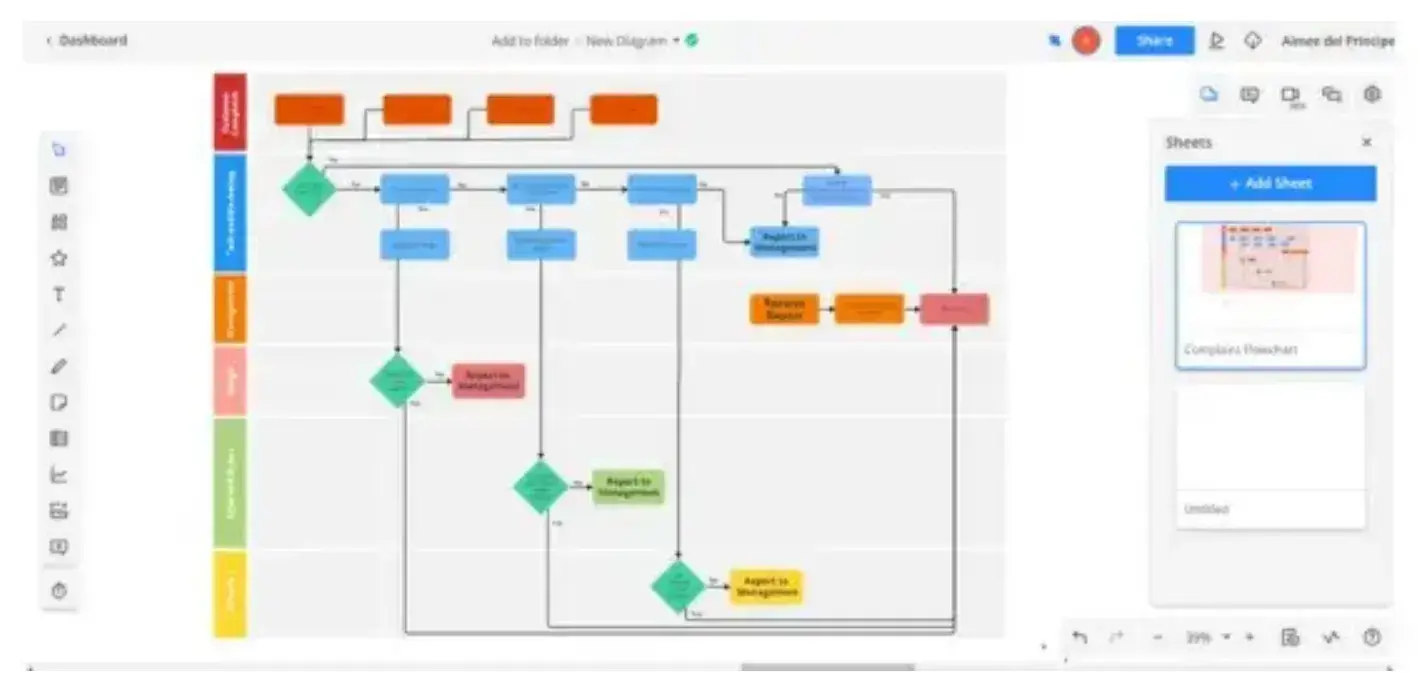
This cloud-based and user-friendly tool is useful for a variety of users and teams. Cacoo offers a host of collaboration tools — including video chat — as well as integrations with Adobe Creative Cloud and Google Drive. I used it to create this swimlane flowchart of how my ideal florist shop would manage customer complaints.

creating a flowchart on cacoo, flowchart templates

What I like: Cacoo is a comprehensive tool that makes it easy to personalize flowcharts for a range of uses. Whether you’re creating a marketing flowchart with imported images or a wireframe with custom symbols, this tool can help.

The central dashboard is also helpful for understanding everything your project needs at a glance and differentiates between private and shared folders.

Paid Flowchart Templates, Tools, and Software

6. Textografo

Pricing: Starts at $4/month.

textografo flowchart tool, flowchart templates

Source

Who should use this tool?

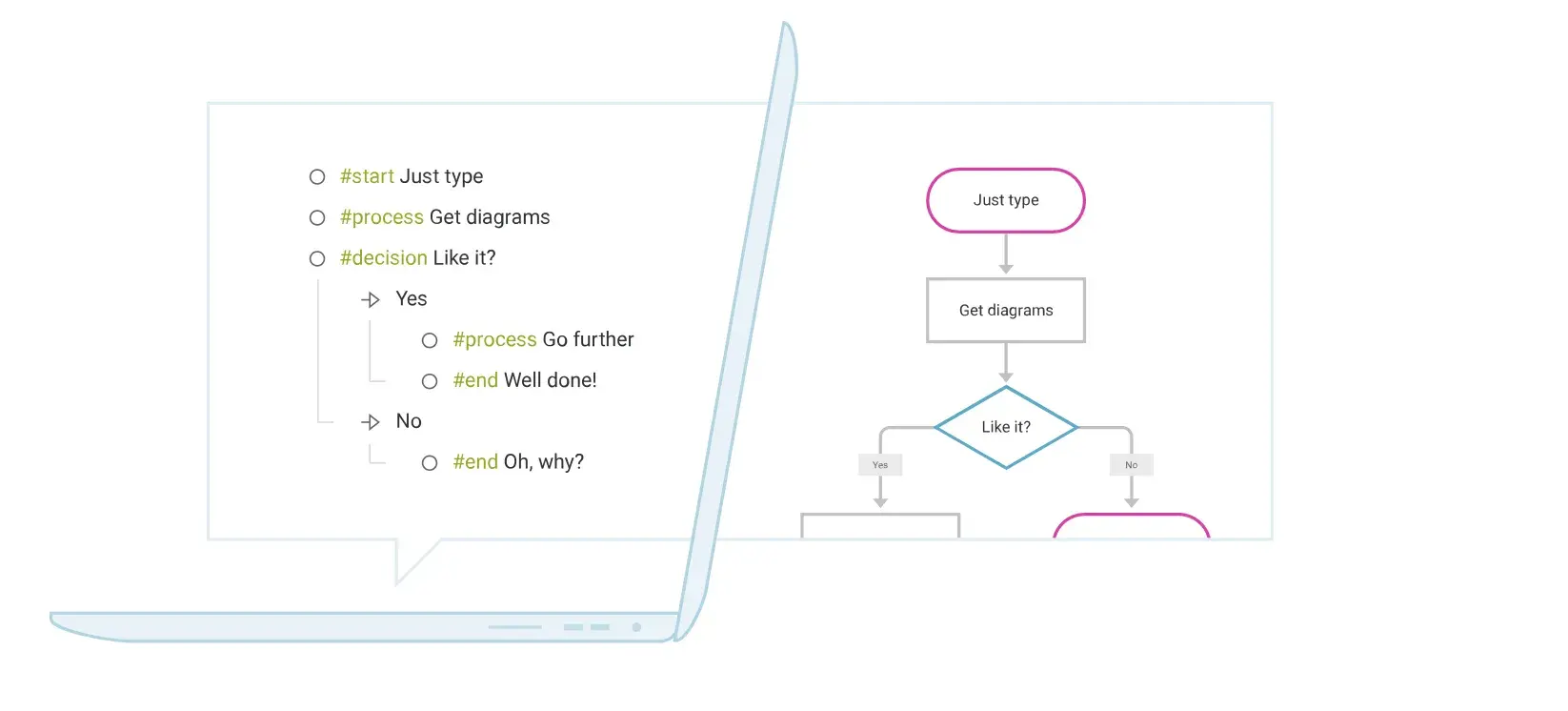
This text-to-diagram generator is a simple way for less visually oriented users to create flowcharts. It’s for users who understand the value of graphical flow diagrams but also may not be as quick or comfortable with visual tools.

What I like: This flowchart tool offers a different approach to flowchart creation that can save many users time and effort. Textografo can help users create a flowchart, mindmap, decision trees, or animated diagrams. Users can also collaborate on the process with this online tool.

7. Microsoft Visio

Pricing: Starts at $5/month.

microsoft visio flowchart tool, flowchart templates

Source

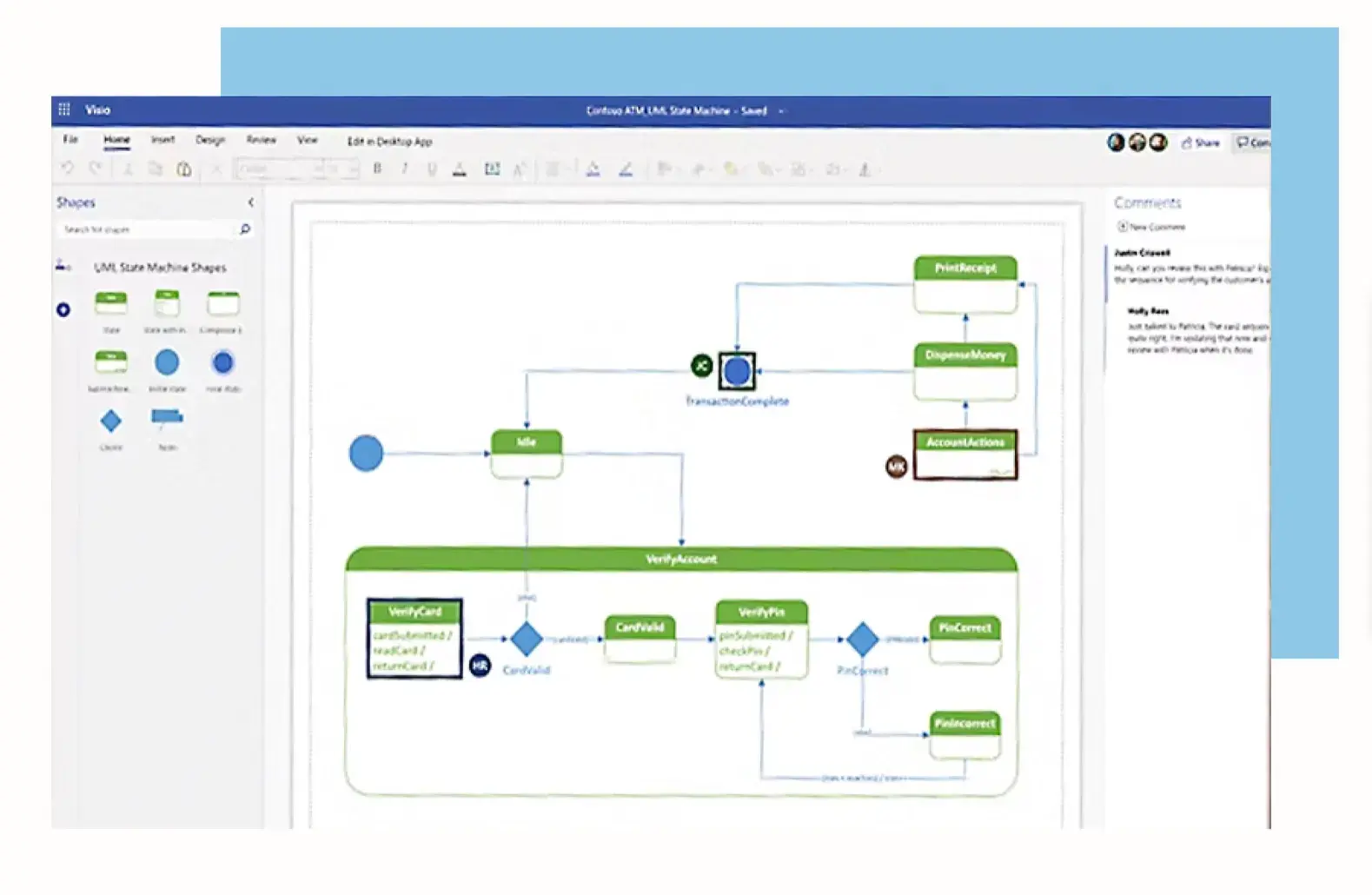
Who should use this tool? This option is great if you’re already embedded in the Microsoft 365 ecosystem.

What I like: This flowchart tool can help you create complex flowcharts or simple diagrams. The interface and styling are familiar to many business users, which can help speed up the process of visualizing complex ideas. It also offers themes to improve the look of your flowcharts.

Visio also comes with hundreds of templates for a range of industry needs. It also makes it simple to import data from Excel, Access, and other Microsoft sources.

What makes a great flowchart template?

There are certain components that make a flowchart template go from “just okay” to great — I’ll cover them below.

Visual Clarity, Hierarchy, and Organization

A great template follows a logical flow, with the content presented in an easy-to-digest way.

Good Design and Aesthetics

Multiple aspects go into the design of a flowchart template — color, font, sizing, shape, arrows, and spacing, among others. All must work together cohesively and legibly to make it a great template.

Consistency

Ever noticed inconsistent or jarring design instantly stands out (and not in a good way)?

I have, numerous times. Our eyes can immediately spot inconsistencies, be it just a different font size or an irregular color scheme.

The goal of flowchart design is to provide a seamless experience for the viewer, making the information visually understandable. Consistency helps with that. It also forms one of the ten usability heuristics by Jakob Nielsen, co-founder of the Nielsen Norman Group.

Ease of Use

Two questions I’d ask in this section are:

  • Are the shapes, layout, text, and formatting options user-friendly to navigate and modify?
  • Is the template simple to edit, preview, save, and download?

Hopefully, the answer is yes.

Using Business Flowchart Templates

Business flowchart templates are the fastest and easiest way to build flowcharts, even faster than tools that take some time to learn to make something custom. From among the free tools I tested today, here are my takeaways:

  • I can easily say that Cacoo was my favorite. They have far more intuitive arrows that connect to auto-docks around the shapes, keeping lines tight and clean.
  • Draw.io felt a bit like Photoshop to me, but not nearly as overwhelming. Professional graphic designers might like that one as well as Lucidchart for the familiar, double-paneled interface.
  • I would put Miro and Zen Flowchart in the same category of being easy for beginners to try out, but I think Miro edges out Zen Flowchart in terms of what you get for free. Zen Flowchart works well, but the free version is truly just for small projects — 20 elements isn’t much to work with.

I also hope that the templates discussed earlier in this post help you better illustrate and communicate processes in your company quickly and intuitively — without having to invest in or learn new software.

Editor’s note: This post was originally published in July 2018 and has been updated for comprehensiveness.

Categories B2B

Top Marketing Channels in 2025 — Here’s What Your Team Needs to Master [Data]

From short-form videos to SEO to influencer marketing, today’s marketers have more marketing channels to choose from than ever before.

When it comes to identifying which channels to focus on, it all comes down to your specific company, product, and target market. But I know firsthand how helpful it is to see how your fellow marketers are navigating the evolving landscape.

That’s why I’m excited that the HubSpot team surveyed over 1,700 B2B and B2C marketers to explore the most used marketing channels.

Download Now: Free State of Marketing Report [Updated for 2025]

Below, I’ll share the top marketing channels identified in that survey. I’ll also discuss how these channels can help amplify your reach and how real marketers are planning to implement them into their 2025 strategies.

Table of Contents

Top B2B Marketing Channels

Before I dive into the channels marketers are focusing on, I want to highlight who they’re marketing to.

Over 70% of B2B and B2C marketers plan to target Millennials in 2025, followed by Gen Z at over 30%. Meanwhile, marketers’ interest in reaching Gen X and Baby Boomer audiences is down 30%.

marketing channels, over 70% of b2b and b2c marketers plan to target millennials in 2025, followed by gen z at over 30%. meanwhile, marketers’ interest in reaching gen x and baby boomer audiences is down 30%.

When it comes to how marketers plan to reach these decision-makers, our survey found that the channels seeing increased investment in 2025 are:

  • Brand awareness.
  • Website/blog/SEO.
  • Paid social media content.
  • Organic social media content.
  • Video marketing.

Of marketers, 92% plan to maintain or increase investments in brand awareness in 2025, making it the top marketing channel across the board. Additionally, 13% of marketers plan to invest in brand awareness for the first time in 2025.

Brand-led marketing campaigns are becoming a top priority as consumers seek authenticity. Marketers plan to use brand-led campaigns to communicate their brand values, such as social responsibility.

I’m not surprised by this response, given that 65% of marketers reported that addressing social issues in marketing campaigns in 2024 was effective for their brand.

The top B2B marketing channels that resulted in the best ROI in 2024 were:

  • Website, blog, and SEO.
  • Paid social media content.
  • Social media shopping tools.

In my opinion, one of the most interesting findings from the HubSpot survey is that both B2B and B2C marketers are leveraging visual content over text-heavy content.

As a B2B marketer and writer, I’m personally drawn to text content like blog posts. But I can’t deny the impact of visual storytelling. Attention these days is limited, so it makes sense for both business-facing and consumer-facing businesses to use strong visuals to grab their audience’s attention.

The content formats that B2B marketers are using most are short-form video (30%) and images (29%), followed by interviews (24%) and blog posts (23%).

marketing channels, what content b2b marketers use most

With increasing content needs, especially on the visual side, marketers are turning to AI tools to help them generate more content. One in four marketers plan to leverage using AI to turn text into multimedia campaigns.

Moreover, the survey found that there’s still a learning curve that comes with AI for B2B and B2C marketers alike. Marketers are reporting that they feel overwhelmed by the idea of incorporating AI into their marketing strategies and workflows, with less than half saying they have a clear understanding of how to use AI in their marketing strategy.

When it comes to social media channels, the data shows that LinkedIn is a more important platform for B2B brands than B2C, with B2B marketers substantially more likely to report investing in this platform.

Finally, the top marketing strategies that B2B marketers are turning to in 2025 are:

  • Using AI to turn text into multimedia campaigns.
  • Using AI-powered reporting tools to evaluate the ROI of campaigns.
  • Automating marketing strategy and execution with AI.
  • Creating content that reflects your brand’s values.
  • Personality-led content, creators, and authentic engagement.

Top B2C Marketing Channels

Many B2C marketers use platforms similar to their B2B counterparts but with a few key differences. For B2C brands, the top marketing channels with the best ROI in 2024 were:

  • Email marketing
  • Paid social media content
  • Content marketing

Like B2B, the top content format for B2C marketing was short-form video. Of B2C marketers, 30% say they use short-form video as part of their content strategy. Compared to B2B marketers, B2C marketers incorporated more user-generated content (UGC) and live streaming in their content.

B2C marketers are also prioritizing authenticity in their marketing in 2025 and will likely use social media channels to do so.

HubSpot’s survey offered further support for the importance of social media, finding that B2C brands are planning to invest in Facebook, Instagram, YouTube, and TikTok in 2025.

Finally, the top B2C marketing strategies for 2025 are:

  • User-generated content.
  • Creating content that reflects your brand’s values.
  • Leveraging AI to turn text into multimedia campaigns.
  • Using social media DMs (direct messages) for customer service.
  • Using AI-powered reporting tools to evaluate the ROI of campaigns.

What are the biggest ways the marketing industry has changed in the past year?

Social Media Marketing

In 2025, I expect to see the rise of visual social media content driven by compelling storytelling.

The HubSpot survey found that consumers are looking for even more authenticity than ever before, and I think marketers will meet that expectation with brand-led social content and increased partnerships with content creators.

In fact, marketing leaders are prioritizing hiring for social media, creative, and content roles in 2025.

The top marketing role that leaders are making a recruiting priority in 2025 is a social media coordinator. Other top-priority roles include a content creator and social media strategist.

According to HubSpot’s survey of marketing professionals, the top performing content format in 2024 was short-form video. This points to the impact of social media — one that will continue to grow in 2025.

The top social channels for 2025 are YouTube, Instagram, and TikTok. These channels make sense to me given that they all offer opportunities for short-form video.

Video Marketing

Now is the time if you’ve yet to invest in video marketing.

Across industries and markets, I’ve found that video can be a great way to boost conversions, improve ROI, reach new audiences, and help you build relationships with current customers.

That may be why marketers report that video is the top media format they leverage today.

That being said, there are a lot of different kinds of videos. Regarding marketing, short-form content takes the cake for both B2B and B2C marketers.

21% of marketers say that short-form video delivers the highest ROI compared to other visual content formats.

Interestingly, the marketing channels seeing increased investment in 2025 are YouTube (30%), followed by Instagram (29%), and TikTok (28%). All three channels allow marketers to exercise their short-form video skills, so it makes sense that they’re focusing their time and resources there in the year to come.

I was curious why marketers believe short-form video is effective, and Jay Kallman, Founder of Revvy Marketing, describes it like this:

“Let’s be honest, attention spans are short, and consumers respond to the kind of stimulus that feels personal and relatable,” she says. “People want to feel seen and understood, and short-form video is engaging, real, and proven to work.”

Going into 2025, Kallman plans to lean further into short-form video to build awareness, trust, and authentic connections.

“You’ll see us showing up on platforms like LinkedIn in ways that feel approachable and real,” she says. “We’re also encouraging our clients to ditch overly polished videos — consumers don’t need ‘perfect,’ they need authentic.”

Influencer Marketing

Both B2B and B2C marketers found success with influencer marketing in 2024, telling me that this will continue to be a top marketing channel in 2025.

Marketers report seeing the highest ROI from influencers on the following social channels:

  • Facebook (28%).
  • Instagram (22%).
  • YouTube (12%).

As far as spending goes, brands spent anywhere from 50-74% of their marketing budget on influencers or content creators.

Our survey also found that marketers found the most success with micro-influencers — those with audiences in the range of 10K-100K followers.

In my experience, micro and even nano influencers have the most impact on their audiences. Niche influencers and content creators have built a lot of trust within their tight-knit community, so any brand they partner with automatically gains more credibility.

This is especially important as research has shown that consumers today gravitate towards authenticity. This means they tend to shy away from traditional lead-generating content, instead turning to influencers for product recommendations.

I asked Nicole Ponce Sanchez, Influencer Marketing Team Lead at Semrush, how influencer marketing is affecting the B2B space.

“The Martech influencer space is changing, and the reality of the landscape is that both consumers and brands are getting smarter,” she says. “Brands are now looking for influencers who create engaging, meaningful content that drives real results — not just entertainment for the sake of it.”

She adds, “In 2025, marketers will focus on authentic storytelling and building communities. We’re seeing a big rise in nano-influencers, which makes sense as they’re often more affordable and have deeper connections with their audiences.”

Kallman offered a similar sentiment when I asked about using influencer marketing as a channel:

“For 2025, I’d say lean into niche and local influencers who align with your brand values,” she says. “They can help build trust, foster connections, and expose your brand to the right people. At the end of the day, trust is going to be what wins in 2025, and micro-influencers are the perfect bridge to get there.”

Search Engine Optimization

Another critical component of any modern marketer’s strategy is Search Engine Optimization or SEO marketing.

If you successfully optimize your web content, it will position your brand as an authority in your domain, ultimately helping you increase organic traffic and your conversion rate.

It’s important to note that SEO isn’t just about your website. All of your web content needs to be search engine optimized.

That includes your YouTube channels, Google business profile, and podcast episodes, which should be optimized using target keywords.

And I’ll go ahead and point out what you’re probably thinking: yes, AI is changing the way people search for content online — but it’s not yet a bad thing for marketers.

Nearly half of both B2B and B2C marketers report their web traffic has increased as a result of consumers using AI for search.

Additionally, HubSpot’s survey found that 15% of marketers are increasing their investment in SEO in 2025, and 19% plan to build an SEO strategy for generative AI in search.

Case in point: Ksenia Busheva, Co-Founder and CMO at Pronounce AI, shared with me that in 2025, her team plans on investing in creating high-quality website and blog content to drive organic traffic — a strategy that’s proven to work well for the startup.

“In 2025, our organic traffic strategy is becoming even more interesting,” says Busheva. “Now, we’re not just competing with other websites for Google search rankings, but we also need to optimize for AI search results.”

She adds, “We’re optimizing our website and blog for the Bing search engine, as this can help us appear as a source on ChatGPT. To effectively rank in AI search results, we’re updating old articles, implementing better data markups, and adding FAQ/QA blocks. The SEO game is changing, and now is a great time to implement new strategies.”

Podcast Marketing

In 2024, podcast listening reached an all-time high. Research by Edison found that 100 million Americans listen to podcasts weekly.

Audio content is in high demand, so for many brands, podcasts can be a great platform to reach larger audiences.

The HubSpot survey found that 91% of marketers plan to maintain or increase their investments in podcasts and audio content in 2025.

It’s easy to see the appeal of podcasts, especially for a business. Podcast hosts help demonstrate the human side of your business while also serving as brand-specific influencers.

In addition, because people can listen to podcasts passively while doing other things, this can be an excellent channel for reaching people during their morning commutes, walking their dogs, or cleaning the house.

Featured Resource: How To Start a Podcast For Your Business

Podcasts can also be compelling because the human brain is programmed to crave, seek out, and respond to a well-crafted story.

The audio medium can be an excellent opportunity to tell a compelling story, capturing your audience’s attention while making your brand more personable.

My Takeaways on the Top Marketing Channels

Based on what worked for marketers in 2024, I expect the 2025 trends to build naturally on those strategies.

The more consumers are exposed to marketing, the less they trust it. It makes sense to me why authenticity has been becoming more of a priority in recent years. In 2025, I think authentic, creator content will drive marketing strategies across B2B and B2C industries.

Another takeaway is that visual content is here to stay. Short-form videos exploded in 2024, with TikTok and Reels leading the way and YouTube Shorts falling close behind.

There’s no shortage of video content, which means marketers must now focus on getting attention from their audience. In my experience, this is no small feat. But with the help of influencers, a strong brand POV, and the use of AI tools, marketers can find success.

Different marketing channels come with different benefits, but most businesses can find a way to use different channels in their marketing strategies to meet their unique business goals.

Using a range of different marketing channels can be a great way to create those multiple points of contact, nurture your leads over time, increase conversions, and help you achieve your marketing goals.

Editor’s Note: This post was originally published in April 2019 and has been updated for comprehensiveness.

Categories B2B

Be a Knock Out in Small and Local Business Marketing

In addition to running a marketing agency with customers around the globe and a seven-figure local business, today’s master is also a kickboxing champion and MMA fighter — making Jennifer Waters easily the marketer I’d least like to fight.

Though Flo from Progressive seems like she’d be a scrapper, right? It’s not just me?

Click Here to Subscribe to Masters in Marketing

But rather than spend our time arguing about which mascot would win in the octagon, today she’s here to teach you how to kill it… in small and local business marketing that is. But don’t worry; you SMB and enterprise marketers will get your kicks in, too.

Meet the Master

jennifer-waters-mim-email

Jennifer Waters
Co-founder, 7 Figure Dojo; Executive sensei, Seigler’s Karate Center

  • Claim to fame: Grew her small business to seven figures (Thus the name of her agency!)
  • Fun fact: She’s a sixth-degree Kempo karate black belt and purple belt in Tetsu Shin Ryu Jiu-Jitsu


Lesson 1: Forget omnichannel. Think omnipresence.

To survive as a local business, you need to think and market like a Fortune 500 company,” Waters says.

If that reflexively made your wallet pucker, you can relax. She means that you need to think bigger than just a few scattered Facebook ads.

“You need to do what I call omnipresence marketing. Digital marketing is just one arm of it,” Waters explains.

So while omnichannel refers to coordinating your marketing across all of your digital channels, omnipresence means you include the real world. In fact, Waters says the foundation of small-business marketing is live events.

“This is where you’re out shakin’ hands and kissin’ babies,” she smiles.

For a karate school, this might be hosting a monthly parents’ night out. For a florist, it could be weekly wine-and-design classes. (As a real-life example, the kung fu school I go to hosts a monthly classic kung fu movie night.) The exact details will differ, but the goals are the same: generating leads and building visibility.

“We want to be physically present in the community. We want to have internal events to bring people to us, to generate publicity. And because your name is constantly out there you become category king or category queen with your local business.

Meanwhile, as your digital marketing promotes these live events, your live events provide fodder for your digital marketing. And when you coordinate them both? Voilà! Omnipresence.

jennifer-waters-mim-community

Lesson 2: Relationships are everything.

Because I’m a massive dork, I can’t resist asking the cheese question: What do martial arts masters know that marketers need to learn?

Waters’ answer is anything but cheese.

“Relationships are everything,” she says. “Your relationship to the individual customer, or in this case to your martial arts student, is what is going to keep them coming back. Or feeling comfortable referring other people to you.

Every touchpoint you have with your audience — at live events, on social media, on your website, on the phone — is a chance to build that relationship.

Imagine you see a great video ad, so you call up the company and… some rude jerk answers the phone.

“All that marketing did nothing because the relationship wasn’t there.”

This is a good time to take stock: When you reply to your emails, are you maintaining that relationship? Are you proactively reaching out to customers who talk about you on social media? When they land on your homepage, are they getting the same vibe they can expect at your live events?

jennifer-waters-mim-traffic

Lesson 3: Cause a pause.

For Waters, the current era of marketing is all about asking, “What can we do to get this person to stop?

Stop scrolling and watch your video. Stop clearing the inbox and read your newsletter. Stop walking and check out your booth at your local fair.

“If I’m going out in person, I’m not going in plain clothes. I’m going to throw on a karate gi and now I’m stopping traffic.”

“If I was advising a chef who was trying to get people to come over and taste the pastries, I’d say put on a chef’s outfit with the hat and everything,” she gestures at an imaginary toque like Ratatouille.

And the same principle applies online; you just have to figure out the digital equivalent of your gi. Waters notes that, since they’re still new and novel to most folks, dropping AI-generated images into your social feed is a good way to get people to stop scrolling.

The key is figuring out what makes your unique business stand out both online and off.

Now, get out there and don your gi apparel.

Lingering Questions

This Week’s Question

What’s a career you’ve always wanted to get into but never have?—Eric Munn, Director of marketing, Chicago Transit Authority

This Week’s Answer

Waters says: “Honestly, I always wanted to do what I’m doing today! No other careers I would want to have!

And, when you cruise her resume — champion martial artist, multiple belt-holder, thriving small business owner, agency co-founder who gets to help other small businesses thrive every day — yeah, that’s a fair answer. 

Next Week’s Lingering Question

Waters asks: “What’s one marketing mechanism that will generate the most revenue quickly for a startup?”

Click Here to Subscribe to Masters in Marketing

Categories B2B

How Marketers Can Use Retail Media Networks to Get In Front of Customers [Expert Tips]

I was shopping for dog treats recently. My dog has particular tastes, so I turned to Amazon to find what new treats might delight her.

Amazon collects my browsing data and purchase history (aka, first-party data) and uses it to plan and deliver targeted ads while I’m on the platform. One of these ads led to me a good deal on some rawhide-free chewy rolls, which have now become her favorite.

Access Now: Free Media Planning Template

The retail media network (RMN) is what runs behind the scenes to enable that integrated experience. It’s how brands get their products in front of eager customers like me while not wasting too many ad dollars chasing cat owners instead.

If you’re running advertising for a brand, you may have questions about RMNs.

  • How do I get involved in RMNs?
  • How much should I spend?
  • What returns can I expect?

Along with help from a few RMN experts, we’ll work through answers to these questions and more.

Table of Contents

What is a retail media network?

A retail media network is an advertising platform that runs within a store’s website or app. These networks allow other brands to advertise online to customers on sites like Amazon, Target and CVS. 

Flonase RMN

Source

From the CVS example above, you can see the sponsored tag in the bottom right corner of the Flonase ad. That’s a retail media network ad.

The Benefits of Retail Media Networks

What’s so great about RMNs? I asked several RMN experts to share their insights.

A Clearer Performance Picture

Knowing that roughly 41% of ad spend goes to waste, marketing teams are under serious financial pressure to perform. They need ads that work as efficiently as possible. And they need to tell that tale to executive leadership to stay invested in ads.

Greg Brunk, Head of Product at MetaRouter, notes that RMNs have a unique ability to deliver on performance criteria and help tell the story of your ads to leadership.

“One of the most overlooked advantages of Retail Media Networks (RMNs) is their ability to provide direct, real-time ad performance measurement beyond what traditional ad platforms offer,” Brunk said.

“Many brands still operate in siloed reporting environments, making it difficult to understand the true impact of their media spend, especially across different networks. When properly implemented, RMNs can integrate ad performance data into existing analytics platforms, providing real-time visibility into impressions, clicks, and conversions.”

That said, he also cautions teams to pay close attention to these metrics — even when deciding on which RMNs to use or keep. “This level of transparency is critical for optimizing ad spend and proving ROI, yet many brands fail to leverage RMNs to their full measurement potential,” Brunk said. “Instead, they often choose to spend more on all RMNs equally or invest in one network over another based purely on instinct.”

(Psst: Subscribe to Masters in Marketing newsletter for weekly insights from top brands. Plus, for one week only, 100 readers can win our limited Kit!)

Guaranteed Consumer Attention

Consumer attention is fleeting: research shows that you have about eight seconds to catch a buyer’s eye and make your case. With such tight time expectations, marketers need every advantage they can get to capture consumer attention.

Paul Brenner of In-Store Marketplace explains that RMNs offer a special advantage in that department — especially with digital ad displays running in-store.

“Physical retail locations offer brands guaranteed consumer attention during purchase decisions — something digital channels can’t match. While most brands focus heavily on targeting and measurement capabilities, they often overlook the significant profit potential,” said Brenner. “Digital in-store advertising consistently delivers 70-90% margins, far outpacing traditional retail’s single-digit returns.”

Personalized Benefits

RMNs bring data and capabilities that enable better targeting and personalization. Personalized ads are table stakes these days.

Consumers expect a personalized experience: Research presented in Content Marketing Institute found that 88% of consumers expect personalized recommendations based on history, and 85% expect personalized recommendations.

Your ads need to fit those expectations.

Randy Mercer, Chief Strategy Officer, 1WorldSync shares that RMNs and their ad delivery capabilities can personalize your message to reach people better than many other channels can manage.

“There‘s the e-commerce advantage — when customers buy your product online, it shows up in their purchase history, which is often where they start their next shopping trip,” said Mercer. “Unlike a physical store where competitors’ products are right there on the shelf, your product stands alone in that history, making repeat purchases more likely.” (Randy)

Pro tip: Detailed media planning can help you which benefits matter the most to you and your team. Smart planning helps maximize ad results.

How Retail Media Networks Work

Now that you see what RMNs can do, how do they actually deliver on those benefits?

Gather first-party data.

A RMN’s biggest boon is first-party data. Retailers gather information on their shoppers from things like customer surveys, customer service interactions, loyalty programs, social media, and digital interactions. Basically, anything a customer touches, a retailer tracks.

That data gives advertisers a finely honed lens to examine their target audience. As you work with the team behind an RMN, you’ll find out what kinds of data they gather and if their audience fits your needs.

Buy and sell ad space.

Retailers then use their RMNs to sell advertising spots on their website, app, and other digital properties. Third-party brands (that’s you) buy these ad spaces. More RMNs are adding self-service options to let you build and buy ad space on your own. But, for larger campaigns, you’re typically working with the retailer’s team on a negotiated contract and bespoke pricing.

Pro tip: As you start this process, use our paid media template to track your ad buying and management.

Produce creative.

Each RMN will have its style guidelines and expectations on details like sizes, resolutions, and other requirements for your creative assets. For instance, Amazon Ads has a comprehensive set of guidelines on creative content, including regulations and restrictions. Any creative you present must meet these guidelines before Amazon puts in on its RMN.

Depending on the RMN, you’ll have access to many channels and content types to cover whatever you need in your campaign. For example, Target’s RMN, Roundel, offers access to options including display ads, video, and a curated influencer network. Make sure you can meet the content needs for any platform you choose.

Target customers.

RMNs use their treasure trove of (proprietary) first-party data to get ads to the right people. You’ll work with a self-service platform or team members to define your audience and their needs, then get your content in front of them as efficiently as possible.

As you build creative, you’ll also typically get access to personalization options using an RMN’s first-party data. That’s the sweet spot. You’ll be able to reach the right people at the right place and time. Ads are also typically personalized to buyers’ preferences and shopping behavior, helping you optimize your ad performance.

Deploy ads and measure results.

Once all that’s locked in, your ads go out in-network in the best channels and formats. Many RMNs offer real-time ad placement optimization — now with artificial intelligence and machine learning to optimize faster and at scale. When you’re trying to optimize your marketing and ad spend, that’s a big difference maker.

Like Brunk mentioned, RMNs will also usually share real-time performance data you can use with your team and leadership. Most RMNs will provide the usual performance metrics and KPIs like:

  • Impressions
  • Ad click growth
  • Cost per click (CPC)
  • Clickthrough rate (CTR)
  • Conversion rate
  • Return on ad spend (ROAS)

Platforms might also deliver channel-specific metrics or more modern ones like the Marketing Efficiency Ratio (MER), New to Brand (NTB), or Detail Page View Rate (DPVR). As technology and tools like AI evolve further, expect even more opportunities to collect data and learn for future iterations.

Top Retail Media Networks

Amazon Ads

Amazon is just a straight-up juggernaut, reporting more than $56 billion in revenue in 2024. All that cash also comes with a hoard of user data that Amazon leverages for ad campaigns.

Amazon Ads offers self-service and managed services, depending on your needs, campaign types, and budget. You’ll get access to millions of high-intent shoppers (once you’re on Amazon, you’re probably buying something). The company also offers a healthy suite of measurement capabilities, so if you’re in need of driving direct sales, Amazon Ads is a go-to solution.

Supported Campaign Types:

  • Sponsored products
  • Sponsored brands
  • Sponsored display
  • Video ads
  • Programmatic options through Amazon DSP

Minimum Spend Requirements: None. In fact, one of Amazon Ads’ biggest selling points is they’ll support campaigns of all budgets. You can start with literally $1. That said, most self-service campaigns will take a few thousand dollars per month to see effective results. Managed services will likely run you into the tens of thousands of dollars per month, typically as a percent-based fee added to the media cost.

Walmart Connect

Another retail behemoth, Walmart, offers a benefit that Amazon can’t touch: physicality. Walmart has over 4,600 stores in the U.S., offering in-store and digital advertising integrations. And, after six decades, they’ve got a ton of first-party data at your disposal. You can reach customers at every point in their shopping journeys with Walmart Connect.

Supported Campaign Types:

  • Sponsored products
  • Display ads
  • Video ads
  • In-store digital placements
  • Native ads

Minimum Spend Requirements: Requirements vary by campaign type. For example, you can launch a sponsored product campaign with as little as $100 (or a $50 daily commitment). Onsite displays require no minimum, but Walmart recommends committing at least $4,500 per campaign per month to get results. The Walmart Connect team can also provide quotes on services depending on your needs.

Roundel

Roundel is Target’s RMN, reaching shoppers in-store, online, and on mobile devices. Target has a hefty load of customer data and loyalty insights through Target Circle. And Target shoppers tend to be more loyal than other big-box retailers.

Roundel can also develop custom creative integrations with TV, video, influencers and more. If you’re seeking to improve your in-store and online conversions, Roundel offers many ways to help.

Supported Campaign Types:

  • Sponsored products
  • Display ads
  • Video ads
  • In-store digital placements
  • Custom creative campaigns

Minimum Spend Requirements: Target is a little less forthcoming about pricing. You’re usually negotiating with the Roundel team to set your campaign scope, which changes your spending requirements. But, don’t be surprised to spend at least $10,000 per month on a campaign.

Instacart Ads

When shoppers need a little help getting their grocery list done, they turn to Instacart. And Instacart has played a smart game, integrating its technology with retailers that need tech but don’t want to invest in it. These deeper retailer integrations offer interesting opportunities for advertising in the grocery space.

With Instacart Ads, you can get real-time, contextually relevant ads placed directly in the user’s shopping experience. With tens of millions of Instacart users, that’s a lot of ways to reach motivated buyers.

Supported Campaign Types:

  • Sponsored product placements
  • Display ads
  • Video ads

Minimum Spend Requirements: No minimum spend for Instacart ads. But, expect an Instacart ad campaign to need around $300-1,000 per day to achieve success. Reach out to Instacart Ads’ sales team for exact pricing.

Kroger Precision Marketing

Interestingly, the grocery chain Kroger brought its self-service RMN platform fully in-house in 2023, creating a smooth, one-stop-shop feel to its advertising process. The company has plenty of stores and grocery shopping data to feed smart advertising solutions.

Campaigns with Kroger tend to convert higher than other retailers, reporting it takes about half as many impressions to convert Kroger sellers.

If you’re in the consumer packaged goods (CPG) or grocery sectors, Kroger Precision Marketing can give you a lot of traction.

Supported Campaign Types:

  • Sponsored products
  • Display ads
  • In-store digital placements
  • Cross-channel integrated campaigns

Minimum Spend Requirements: You’ll need to ask KPM about these numbers; campaigns are usually advertiser-specific and negotiated directly. But, expect something in the tens of thousands of dollars, depending on your chosen channel. For example, KPM lists that partnering on a Snapchat campaign will carry a $50,000 minimum spend over 4-8 weeks.

eBay Advertising

Ecommerce ad buyers should not skip eBay Advertising. You’ve got a global community of buyers and a deep well of historical and behavioral buying data. The company also boasts some nice dynamic creative tools to help you personalize and retarget your ads.

eBay’s audience offers a lot of diversity, which gives great opportunities for more niche products. Dynamic ads also help you reach, engage, and convert these buyers.

Support Campaign Types:

  • Sponsored listings
  • Display ads
  • Video ads
  • Retargeting campaigns

Minimum Spend Requirements: Flexible pricing, with self-service available for smaller budgets and managed campaigns requiring higher minimums. With eBay’s self-service option, you’ll select an “ad rate,” which runs between 2% to 100% of the final sale price. So, the higher the percentage, the more advertising options you’ll receive. eBay collects the final ad rate once your item sells.

Klarna Marketing Solutions

Buyers are probably ready to buy if they’re exploring financing options with Klarna, so why not combine it with advertising? Because Klarna has sat between buyers and retailers, they’ve had ample opportunity to collect tons of buyer data — which they’re now offering through Klarna Marketing Solutions.

If you’re selling products that consumers would typically finance with flexible payment options, like electronics or furniture, Klarna’s RMN is one worth having in your toolkit.

Supported Campaign Types:

  • Sponsored placements
  • Native ads
  • Custom creative campaigns

Minimum Spend Requirements: Klarna does not publish data on minimum spends. You’ll need to contact sales. But, you’re likely looking at tens of thousands of dollars per month. So, I’d only use Klarna’s RMN if I were advertising for a mid- to large-sized brand.

Orange Apron Media (The Home Depot)

The Home Depot had a busy 2024. The company rebranded its RMN as Orange Apron Media and launched a self-service ad option later in the year.

Campaigns with Orange Apron Media can extend into digital and in-store advertising, particularly in the home improvement space.

Many high-intent buyers make The Home Depot some valuable advertising space, coupled with the company’s extensive targeting data stores.

Supported Campaign Types:

  • Sponsored product placements
  • Display ads
  • Video ads
  • Interactive in-store experiences

Minimum Spend Requirements: No advertised minimum spend. The Home Depot works with major brands like Kohler and Samsung, so expect managed services to cost a significant sum. That’s part of why the company moved into self-service options — to give smaller vendors opportunities to advertise on limited budgets.

CVS Media Exchange (CMX)

Brands in the health, wellness, and CPG sectors should know CMX intimately. CVS collects extensive health and wellness consumer data, which fuels highly targeted and personalized ad placements. You also have a network of stores where you can merge digital and in-store ad experiences.

Supported Campaign Types:

  • Sponsored product placements
  • Display ads
  • Video ads
  • Integrated in-store promotions

Minimum Spend Requirements: CVS works with big brands, so it’ll be a pretty penny to work with them on the managed services front. Like The Home Depot, CVS launched a self-service ad platform in 2024 in partnership with The Trade Desk to expand its footprint with smaller vendors.

Best Buy Ads

Best Buy Ads is best suited for consumer electronics brands — which led to a fascinating partnership. Best Buy and tech review site CNET announced a retail media partnership in 2024, including combining ad inventory.

So, if you use Best Buy’s RMN, you can also get placement on CNET as another traffic source of high-intent buyers. This retailer-publisher combination could lead to interesting new advertising connections down the road.

Supported Campaign Types:

  • Sponsored product placements
  • Display ads
  • Video ads
  • Interactive in-store digital displays

Minimum Spend Requirements: Go to the sales team for accurate numbers; there’s not much out there on spending with Best Buy Ads. But, you’re advertising alongside big spenders in the tech space, so I’d say prepare to spend on the higher end for successful campaigns.

Tips for Using Retail Media Networks

As you can see, most marketers will commit serious dollars and time toward RMNs. So, you want the best return for your ad spend. How do you really take advantage of RMNs and get the most out of your experience?

I asked our experts for ideas.

Take advantage of unique data integrations.

Most retailers offer both physical and digital experiences, which gives advertisers particularly interesting ways to attract consumers’ attention and drive conversions. Brenner sees this as especially valuable for in-store interactions.

“The most valuable RMN features combine robust first-party data with precise in-store targeting capabilities,” he said. “Networks that integrate their point-of-sale data with digital displays and audio can serve ads to specific customer segments at exact moments of purchase decisions.”

That data feeds back into the holistic shopping experience, helping you optimize ad spend and customer satisfaction.

“Equally important is the ability to adjust creative content in real-time based on inventory levels and store conditions,” said Brenner. “These capabilities consistently drive higher campaign performance by connecting with shoppers when they’re most likely to act.”

Go deeper with success metrics.

RMNs offer a wealth of data — not only about consumers but also about the ads themselves. Brunk thinks many advertisers are missing out on the best info.

“Many brands stop at return on ad spend (ROAS) and impressions but miss deeper, more actionable insights that can refine future campaigns,” he said. He then shares several examples:

  • Offsite attribution – RMNs have the potential to connect ad exposure to in-store purchases or offsite actions (e.g., a consumer seeing an ad on a retailer’s site and then buying in-store). Many businesses fail to track this, missing a key opportunity to measure cross-channel impact.
  • Bid efficiency and auction insights – Understanding how ad bids perform across different RMNs can help advertisers optimize spending across networks rather than relying on arbitrary budget allocations.
  • Time to conversion – Knowing how long it takes for a consumer to purchase after an ad exposure can help brands optimize retargeting and promotional timing.
  • Category share of voice (SOV) – Tracking how often a brand’s ads appear compared to competitors within a specific product category can provide a strategic advantage in category dominance.

Look beyond the usual metrics, and you can find lots of information to help you advertise more effectively.

Explore novel options like QR codes.

Use the digital and physical combination to your advantage by exploring alternate ways to engage. Mercer notes the value that QR codes bring to this process.

“The tricky part is connecting your ad spend to actual sales — if someone buys my product on Walmart.com, how do we know they bought it because of the retail media ad? This is where QR codes get interesting,” he said. “By integrating retail media strategies with on-package QR codes, we can track that complete consumer journey much better. It‘s why we’re putting so much effort into blending these concepts with initiatives like 2D Barcode Sunrise 2027.”

Consumers want fast and fun experiences when they’re in a store. Consider how your advertising could contribute to that desire.

Choosing the Right Retail Media Network

When it comes down to it, I’d say you want an RMN that best fits with your goals, objectives, and audience. As you assess your options, consider questions like:

  • How specific of an audience am I looking for?
  • What kinds of first-party data do I need?
  • Which metrics matter most to me, my team, and leadership?
  • How much can I realistically spend on a campaign every month?
  • Can I develop high-quality creative content in whatever format works best for the RMN and its consumers?
  • Can I get support easily if things go sideways?
  • Is the RMN committed to the future with new ideas and partnerships?

Play around with a few options and see what results you can generate with smaller self-service tests. Then, when you’re ready, commit to a larger spend using their managed service capabilities. And give it time for ads to run and return results.

There’s a world of potential within RMNs — and not just for selling dog treats. Put this valuable marketing channel to good use.

Categories B2B

How We’re Building Breeze to Power the Future of GTM

Two years after Generative AI took off, one thing is clear: AI will transform the way businesses operate. But for most small and medium businesses, the AI landscape feels overwhelming. They don’t need the hype; they need practical help.

The reality is that 50% of small businesses fail within five years. Not because starting a business is hard, but because scaling one is brutal. When you’re caught between limited resources and ambitious growth goals, you need tools that deliver actual results, not more complexity.

That’s what we’re building with Breeze — AI designed specifically for scaling companies, built directly into HubSpot’s customer platform. In this post, we’ll take you behind the scenes of how we’re building Breeze, the most common use cases, and how it’s already helping real businesses drive results.

The Breeze Tech Stack: Building for the AI-First Era

Software is evolving. What started as desktop programs in the 1990s and moved to cloud-based SaaS in the 2000s is now entering a new era: software that doesn’t just serve, but works toward outcomes. This is the shift from “software as a service” to “results as a service.

We’re not building AI because it’s the latest tech trend — we’re using AI to deliver what customers are actually after: more leads, faster sales cycles, and better customer satisfaction. With Breeze, scaling companies can quickly and easily get value from AI connected to their customer data. We’re distinguishing Breeze in three ways to enable HubSpot customers to get the most out of AI:

  1. Our platform unifies structured data (like CRM records) and unstructured data (such as emails, calls, and transcripts) with external data like buyer intent and company news to give Breeze the full picture.
  2. Our “all-on-one” approach provides context across the customer journey, unlike point solution AI agents that fall short without a full understanding of the GTM.
  3. Our agent ecosystem connects humans with AI agents to extend their teams — some built by HubSpot, others by partners and citizen developers — all seamlessly connected to customer data to solve any need.

The Four Layers of Breeze

We’re building Breeze in four layers with data and context as the foundation. It’s something HubSpot is uniquely positioned to provide as the source of truth for nearly 250,000 companies with millions of users. From there, we help customers make sense of that data, customize and extend Breeze, and use it to power their GTM — all without having to become AI experts themselves.

1. Context Layer: Unified Data for Powerful AI

AI is only as good as the data that powers it. Imagine asking your AI assistant to help with a customer issue, but it can‘t see their recent emails, doesn’t know about their last support call, and has no idea about the new product update that might solve their problem. That‘s the reality of most AI tools today — they’re smart, but they’re working blindfolded.

Providing complete customer context is essential to AI delivering on its full promise, and this is what makes HubSpot stand out from other tools in the market. Only HubSpot has the depth and breadth of data across the customer journey, and can unify it to train our AI systems. That’s what makes Breeze’s Context Layer so unique:

  • Breeze Knowledge Models: Not one, but multiple specialized models that pull all of your data into one clear picture of your customer, their interests, objections, and more. We combine the latest foundation models — from OpenAI, Stability AI, Google, Anthropic, and others — with our own custom models and deep understanding of the GTM for scaling businesses, so you get the best of AI without worrying about which model is best this month.
  • Structured Data: This has always been our strength — customer records, company information, contact data, and all the rich CRM information that HubSpot has organized for over 15 years.
  • Unstructured Data: This represents up to 80% of a business’s data that, until now, has been trapped, unable to be used. Think emails, call transcripts, meeting recordings, conversations. Our acquisition of Frame.ai in 2024 allows us to use this data for the first time, a capability lacking in most solutions on the market today.
  • External Data: Think of this as all the data that exists out in the world, beyond your company. We’re able to perceive this external data across text, audio, and video, including over 200 million buyer and company profiles, information from earnings releases, funding rounds, and other relevant news posted across the internet.

When you’re building a business, you don’t have time to hunt through multiple systems or keep up with AI developments. We absorb that complexity and bring together your internal and external data so Breeze has the complete picture.

2. Intelligence Layer: The Brain of Breeze

Our Intelligence Layer is the cognitive engine that processes your data into insights — it’s the “brain” of Breeze. While nascent today, we’re thinking about this in three ways to make Breeze even more powerful in the future:

  • Reasoning: Breeze won’t just look up answers — it will think things through, connecting different pieces of information to work out solutions, like your best employees tackling tough problems.
  • Memory: Unlike basic chatbots that forget conversations the moment they’re over, Breeze remembers. This is the next evolution in AI personalization and quality. Breeze will learn from previous conversations and remember key user facts and preferences that can be used across all of their interactions. No more repeating yourself.
  • Prediction: Instead of just reacting to problems, Breeze spots patterns and anticipates what might happen next through predictive analytics. For example, instead of finding out a client may not renew 30 days before expiration, Breeze flags concerning signals (decreasing usage, logins, fewer support tickets) months before the contract ends.

You shouldn’t need a massive data science team to turn raw business data into insights you can act on. With Breeze, every business will be able to reason through problems, remember every interaction, and predict what comes next.

3. Integration Layer: Your AI, Your Way

Think of Breeze’s Integration Layer as the command center where you can control, customize, extend, and maintain quality across your AI implementation. Here’s what that might look like:

  • Security & Governance: We’re building robust protections that keep your data safe and private, including tools for zero data retention, EU region processing, control over training data, and comprehensive trust and safety features.
  • Evaluation: Breeze will get better the more you use it with systems that continuously assess the quality of AI outputs, learn from customer corrections, and improve responses over time.
  • Breeze APIs: Modern connectors will expose Breeze’s capabilities to other systems, allowing Breeze to work where your team works. During Zoom meetings, for example, a Breeze-powered panel could automatically display relevant account history and suggest next steps, helping your team close deals faster.
  • Skills: These will be the building blocks of our agentic experiences — reusable capabilities you can mix and match to create custom solutions without starting from scratch. Think of them like singular, repeatable tasks you might see across different jobs: draft an email, schedule a meeting, or generate a summary.

Custom development is a Fortune 500 game. Breeze is built for the Future 5000 — ready to use out of the box, with intentional customization capabilities in the future.

4. Application Layer: Easy Tools to Grow

Finally, Breeze‘s Application Layer provides the interfaces that customers directly interact with. It’s where we package up all that powerful AI technology into easy-to-use tools that customers use to generate leads, build pipeline, and better service their customers. It includes:

  • Smart CRM: Our AI-powered system of record unifies your data, teams, and tech stack with features like conversational intelligence and smart workflows.
  • AI-Powered Hubs: With over 100 embedded AI features, our Hubs serve as a system of engagement for GTM teams to efficiently connect with customers and accomplish their goals, like driving leads, closing deals, and resolving support tickets.
  • Breeze Copilot: Your digital assistant that works alongside you, preparing for meetings, generating copy, and surfacing key insights when you need them.
  • Breeze Agents: Agents can handle specific tasks and are ready to use in minutes, like our Customer Agent. They extend your team, so you can focus on higher-value work.

We believe the future will be agents and humans working together in hybrid teams. And while HubSpot will build the agents we think most customers will need most of the time, we’re also opening up an ecosystem for agent builders to both build and sell specialized agents through our Agent Marketplace. We’re learning about what builders need with Agent.ai, which already has over one million users.

Where Breeze is Delivering Value Now

While most companies have experimented with AI solutions over the past two years, scaling businesses need clear, actionable guidance on where to start to get actual ROI. This roadmap shows exactly where to begin with Breeze for immediate results, based on what’s working for our customers right now, and how to get even more value with AI over time.

Here’s Where to Start Today

These are the areas where customers are accelerating their GTM with Breeze — the features you should implement first to scale support, generate leads, and close deals faster.

For Customer Service Teams

Resolve Customer Issues

  • Before: Support teams are overwhelmed with routine questions, manually digging through knowledge bases while higher-priority issues wait.
  • After: Customer Agent resolves tier-one issues automatically (we’re seeing 47% resolution rates on average, with some customers hitting over 60% with comprehensive knowledge bases) with just minutes of setup time.

Streamline Ticket Handling

  • Before: Reps waste time scrolling through endless conversation histories trying to identify the core issue and context needed for resolution, and crafting responses to repetitive questions.
  • After: Breeze gives reps the TL;DR — automatically summarizing ticket content with suggested responses, reducing response time by up to 40% and ensuring consistent, accurate answers.

For Marketing Teams

Scale Content Creation

  • Before: Marketers have one great blog post, but manually creating 10 blog posts, 2 landing pages, and a podcast and video around it takes days.
  • After: Content Remix takes your top-performing content and automatically builds a campaign around it while maintaining your brand voice — it even helps you produce short-form videos that offer higher ROI than any other format.

Optimize Emails for Conversion

  • Before: Marketers spend hours brainstorming subject lines, A/B testing multiple versions, and second-guessing their messaging effectiveness.
  • After: Breeze generates high-converting email subject lines and preview text tailored to your campaign goals and audience in seconds, increasing open rates without the guesswork.

For Sales Teams

Improve Prospecting

  • Before: Sales reps spend more time searching than selling, digging through CRM data and manually researching prospects before calls.
  • After: Breeze Copilot (now with over 75,000 weekly active users) preps you for calls instantly with all the right contact details, company info, and previous interactions you need, and drafts personalized follow-ups — right in your workflow.

Increase Sales Productivity

  • Before: Reps review lengthy deal notes and activity history, wasting time on deals that won’t close and missing signals on the ones that might.
  • After: Breeze’s AI-powered deal scores instantly highlight which opportunities deserve attention and which ones are at risk, while AI-generated buyer insights summarize buyer goals and interaction history to make it easy to prep for calls.

Real Results From HubSpot Customers

The true measure of any technology isn’t its capabilities but the outcomes it delivers. Here’s what HubSpot customers say about the value of Breeze:

  • Transkribus implemented Customer Agent to resolve 60% of inquiries automatically: “Implementing the Customer Agent has been transformative. What used to be a manual, time-intensive process is now streamlined and efficient.”

And this is just the beginning. In the future, Breeze will transform how businesses operate across their entire go-to-market strategy.

Imagine support teams preventing problems before tickets are created, with AI that spots at-risk customers early. Picture marketers finding and targeting only their most qualified prospects with precision, dramatically increasing conversion rates. Envision your sales team focused exclusively on client relationships, while Breeze seamlessly handles everything else — preparing the moment meetings are scheduled, providing real-time intelligence during calls, and automating every post-meeting task without lifting a finger.

This is the future of Breeze — not just automating tasks, but fundamentally reimagining how you connect with customers at every touchpoint.

Looking Forward: Our AI-First Customer Platform

Our AI-first approach means we are not “bolting” AI onto our platform, but deeply embedding it at the platform level to power all experiences — workflows, automation, and insights. In 2025, we’re focused on several enhancements at every layer:

  • Context Layer: Expanding our Breeze Knowledge Models with deeper integration of unstructured data across the go-to-market journey.
  • Intelligence Layer: Building more sophisticated reasoning, memory, and predictive capabilities to help Breeze solve increasingly complex business problems.
  • Integration Layer: Strengthening our security, governance, and evaluation systems to ensure trusted AI across all Breeze solutions.
  • Application Layer: Developing new specialized agents and enhancing our existing tools with even more AI capabilities.

Helping Scaling Businesses Grow Better with AI

For us, AI is not about shiny cool technology — it’s about the transformative value it brings to small and medium businesses. What excites and inspires us is applying AI to create a future where small teams can achieve big results, and where company size no longer determines company success.

When you’re scaling, the last thing you need is to become an AI expert overnight. With Breeze, you don’t have to. It delivers the power of AI without the complexity, letting you focus on what you do best: growing your business.

Want to learn more about how Breeze can transform your business? Contact our team for a demo today.*

*Some of the features and capabilities discussed in this post are plans, not promises or guarantees. We’re as excited as you to see new things make it into HubSpot products, but the development, releases, and timing of any specific features or functionality remains at our sole discretion. Please refer to our product pages to see what’s available today.

Categories B2B

Is B2B Telemarketing Making a Resurgence? Here’s What the Experts Say

Like many professionals, I face a deluge of sales messages every day. It’s easy to tune out emails, display ads, and LinkedIn messages. But a phone call? Love it or hate it, it captures my attention.

I set out to discover if B2B telemarketing is dead in 2025, or if it’s due for a comeback. I talked to sales experts and dug into data to find out whether cold calling still has a place in the modern sales strategy.

Download Now: Free Marketing Plan Template [Get Your Copy]

Follow along as I share what I found and the expert tips I uncovered on how to turn conversations into conversions with a phone call.

Table of Contents

What is B2B telemarketing?

B2B telemarketing is an outbound sales tactic in which one company attempts to build a relationship and sell its products or services over the phone to another. It’s better known as cold calling, “cold” because the seller is initiating contact with the buyer instead of the other way around.

Is telemarketing dead?

To answer my question, I turned to HubSpot’s State of Sales report to see what sales reps say about telemarketing as a lead gen and sales tactic.

First, I saw data that confirmed what I already knew: 71% of consumers want to start with self-service tools to do their own research rather than speak to a human.

However, this finding doesn’t mean that a lead won’t start their buying journey with research before talking to the sales team later on.

b2b telemarketing statistics

Just 19% of sales pros say that telemarketing is their best source of high-quality leads. That lags behind referrals, social media, and email marketing but shows that phone calls still work well for some companies and industries as a first point of contact.

b2b telemarketing statistics

I also found this surprising statistic. When HubSpot asked over 1,400 sales professionals about their most effective sales tactic, they reported 1) in-person meetings and 2) phone calls.

This tells me that high-dollar deals aren’t done over email or chat alone. Personal conversations — in-person, phone, or video — are key channels for conversion.

b2b telemarketing statistics

Leslie Venetz, founder of the Sales-Led GTM Agency, is bullish on phone-based outreach.

“Inbound gets fewer results than it ever has before. The same is true with PLG — it’s a very, very crowded market, and our buyers are frazzled, distracted, and overwhelmed. This is why I think we are seeing a resurgence in cold calling. Because so many folks are overly reliant on email right now, I believe cold calling will be a primary channel for revenue generation in 2025,” Venetz says.

Based on everything I’ve learned, I believe B2B telemarketing still deserves a place in most company’s sales strategies. It still needs an effective inbound marketing, social media, and email strategy to be effective, so your prospect has some brand awareness.

When you pick up the phone, a well-timed cold call can bridge the gap from awareness to interest.

(Psst: Subscribe to Masters in Marketing newsletter for weekly insights from top brands. Plus, for one week only, 100 readers can win our limited Kit!)

Benefits of B2B Telemarketing

What can this 150-year-old channel, the phone call, give us that email and social can’t?

Personalized Channel for High-Value Buyers

Buying enterprise software or multi-million dollar equipment isn’t like buying a pair of socks off Amazon. The average B2B software purchase takes three to six months and involves four to six decision-makers.

For that reason, 57% of C-level executives and VPs still prefer to speak to a sales rep on the phone to ask questions and fully understand the product or service they would be buying.

“While Gen Z does not like the phone, it‘s important for them to remember that most of the decision-makers they’re calling on are still in that older millennial+ age bracket,” says Venetz. “Especially if we look at senior level executives, the data repeatedly shows us that they prefer to be reached with a phone call.”

The most important factor B2B buyers look for, more than support and integration potential, is the trustworthiness of the organization and sales team, according to Gartner. To showcase your value and build trust, you need to build rapport and a relationship — you need conversations.

High Conversion Rate

According to Cognism’s State of Cold Calling, the average cold call connect rate is 16.6%, and the average success rate is 4.82%.

Compare that to the average conversion rate of 0.80% for B2B display ads, and that number starts to look pretty good. It’s also more than double the cold calling success rate from 2022 — a good indicator that cold calling is gaining traction again.

Let’s say that an outbound lead specialist makes 100 calls a day and actually speaks with 55 of them. That translates to 275 prospect convesations a week, not to mention voicemails to many more and about 13 qualified leads or appointments for your sales team each week.

B2B Telemarketing Types

The goals of B2B telemarketing can vary depending on your company’s size, industry, and sales organization.

A sales rep for a small company might manage telemarketing from first contact through lead nurturing and closing. At a larger company, dedicated sales development representatives often focus exclusively on outbound calls with the goal of handing qualified leads off.

1. Lead Generation

A lead generation call is when a sales development representative calls a prospect to qualify them as a lead. In a lead gen call, the caller should gather more information about a prospect, like job title, needs, and budget, and confirm their interest in learning more.

2. Appointment-Setting Call

An appointment-setting call has a very specific goal: booking a next step, like a demo, tour, or sales call.

3. Lead Nurturing Call

A lead nurturing call, also called a sales call, is when a sales team contacts a lead after they have expressed interest in the company’s offerings. Often, a lead fills out a form or a demo request online — but a lead nurturing call would be a critical first point of personal contact.

4. Follow-Up Call

Just like it sounds, a follow-up call is when a sales pro calls a prospect again after making an initial cold call or leaving a voicemail.

Tips for B2B Telemarketing [+ Experts and Data]

If you’re convinced that B2B telemarketing can help you generate leads, reach high-value buyers, and stand out from the crowd, it’s time to create a killer B2B telemarketing strategy. Here’s how.

1. Prioritize Data Accuracy

A clean database is the key to success in any telemarketing strategy. If your contacts and phone numbers are incorrect, you won’t get very far.

Consider multiple data sources and data enrichment for robust contact details. A powerful CRM is a must to keep all your leads and prospects in one place.

[Video: HubSpot CRM Tutorial for Beginners]

I also recommend creating a culture where both lead developers and sales reps take responsibility for maintaining contact data and notes in the CRM. Accurate contact details and notes set calls up for success.

2. Use signal-based selling

Once you have clean and accurate prospect data, you can supercharge your chance of success with signal-based selling. That means prioritizing your telemarketing outreach based on data and prospect activity.

“Signal-based selling isn’t strictly a new way of selling. It’s just a new term for a more advanced approach to figuring out how to reach the right person at the right time with the right message,” says Venetz.

One example of a signal is someone opening an email you sent, downloading a white paper, or filling out a form.

A trigger like this could alert a sales rep or appointment setter that it’s time to pick up the phonel. With AI, sales intelligence platforms can analyze multiple signals and assess which prospects are most likely ready to buy based on that analysis. Lead scoring, for example, is a helpful tool for a sales team to prioritize who to cold call.

3. Research your prospects.

There’s a rule of three in B2B prospecting. The 3X3 rule means you should spend three minutes finding three pieces of information about your prospect before you call.

That could be personal details about your contact from LinkedIn, a mutual contact, or company news from their website. With this quick information-finding, you can personalize your outreach and connect with a prospect to earn the right to their time.

4. Create a cold call script.

Every telemarketing call should start with a script.

It’s important to map out what you want to say before you call so you don’t forget your pitch or lose focus. The average cold call length, according to Cognism is 83 seconds — that means you have a very short window to get your message across. Every word counts. An effective cold call script can more than double your success rate.

The Opening Statement

“Your opening line needs to hook the prospect in the first 10 seconds, or the call is over before it starts,” warns Venetz. “Think, what can I say now that earns me the right to 30 more seconds of their attention or an additional 60 seconds of their attention?”

Getting a sales rep to pick up the phone is one small victory, but then what? 11% of unsuccessful cold calls end with the recipient simply hanging up.

To avoid this, revenue platform Gong recommends stating your full name and company and stating the reason for your call (no bait and switch!). If you have a mutual connection, this is a good time to drop it as well.

  • Example: Hi [First Name], This is [Full Name] from [Company]. How’ve you been? The reason for my call is …
  • Example: Hi [First Name], This is [Full Name] from [Company]. We both know [Mutual Contact], and she suggested we connect about [Relevant Area].

What the data says: Asking “How’ve you been?” in the opening line performs 6.6X higher than scripts without it. Stating the reason you’re calling also has a 2.1X higher success rate.

The Impact Statement

If you haven’t been hung up on yet, you’ve earned an additional twenty to thirty seconds of your prospect’s time to hook them into a discussion.

It’s okay to acknowledge the interruption at this stage, but don’t wait for permission before getting into the topic at hand. Here, you want to mention a pain point they are likely facing or a discussion point that you know is relevant because of your industry and marketing persona research.

It’s important to show that you know something about their company, but don’t make too many assumptions.

  • Example: I know we haven’t spoken before, but I saw [company news/LinkedIn post/other], and it seems like [pain point] is a challenge. Is this something your team is focused on?
  • Example: I saw you speak about [Topic] on this [Webinar/Event] last week. I speak to a lot of business owners who are struggling with this. Could I ask you a few questions about how you handle this at [Company]?

What the data says: Asking, “Did I catch you at a bad time?” drops your chance of booking a meeting by 40%.

“After the impact statement is when you are going to sense that you‘ve got it right and that they want to continue the call. It’s not about bulldozing people. It’s just about moving that permission to continue the call to a little bit later. Once you ask that question, you get their buy-in, then you’ve earned the right to start building more rapport, which is when you transition into questions,” said Venetz.

Open-Ended Discovery Questions

As an interviewer, there’s nothing I love more than open-ended questions. They’re a great starting point to get a prospect talking. Here are a few examples that you could ask on a cold call:

  • What are your top business priorities right now?
  • How would you describe the challenges you’re currently facing in [business area]?
  • What approaches have you tried in the past to address [specific issue]
  • How are changes in your competitive landscape impacting your business?
  • If time and money were not factors, what changes would you make to your current system?
  • Who else is typically involved in decisions related to [relevant area]?

The Pitch

Last, you need a succinct value proposition statement, the classic “pitch.”

  • At [company], we help customers like [relevant existing customers] solve [pain point] by [solution]. Would you be interested in receiving more information about how we do that?

If they say yes, you can then proceed to ask for a meeting. Don’t leave the ball in the prospect’s court — book a time before ending the call!

A cold calling script is an essential tool for lead developers and sales pros, but remember that it’s a conversation. Don’t stick to it too religiously that you sound like a robot, not a person.

“A great script is a guide, not a crutch,” advises Venetz. “Reps need the flexibility to personalize and adapt.”

5. Prepare for objections.

Objections are a reality all telemarketers deal with. The most common objections are that the prospect doesn’t think it’s a good fit, doesn’t have the budget, or simply isn’t interested.

telemarketing objections]

Source

Write out your most common objections and a script for how to handle each of them. Acknowledging the objection, responding with empathy, and humor are all good tactics to disarm anger, uncover their true objection, and keep them talking.

Practice role-playing your objections with your sales team, and don’t be afraid of rejection. Learn from your mistakes — I improve the most when I learn it.

6. Always follow up.

Finally, if you’ve qualified the lead and booked the next step (Hooray!), follow up with an email, text, or a calendar invite if applicable to ensure multiple points of contact with them. Let them know that you appreciated their time — remember: this is the start of a relationship.

Add any call notes to your CRM to remind yourself of details like pain points, budget, or their spouse’s name. That way, you set the next conversation up for success.

Conversions Start with Conversations

While phone calls may not be the first choice of channel for most people in 2025, the evidence I found showed that it’s still an important sales tactic. B2B buying is complex, and decision-makers need conversations to determine fit and, more importantly, build trust.

The best telemarketers don’t just pitch; they listen, ask the right questions, and uncover pain points. Telemarketing — or cold calling — can help you stand out from the digital noise and connect with a conversation.

Categories B2B

59 TikTok Stats to Know in 2025

Despite TikTok’s uncertain future and mysterious algorithm, there’s a lot of data about the platform and its users that marketers can use to refine their strategies.

I don’t know about you, but TikTok stats help me identify opportunities, pinpoint audience behaviors, and better understand the overall landscape of the platform as we head into an uncertain season of TikTok.

Download Now: The 2024 State of Social Media Trends [Free Report]

To help you make informed decisions about your strategy, I’ll share key TikTok statistics and facts to help you improve your social strategy in 2025.

Already know what stats you’re looking for? Jump there:

Table of Contents

TikTok Stats to Know in 2025

TikTok Stats for Marketers

Before I jump into overall TikTok stats, I want to share some key figures and best practices for marketers to know when using the app.

  • TikTok usage among social media marketers has increased 15% year over year. (HubSpot Blog Research)
  • 27% of marketers are increasing their investment in TikTok in 2025, behind Instagram (28.84%) and YouTube (29.58%). (HubSpot Blog Research)
  • The best times to post on the app are 6-9 p.m., 3-6 p.m., and 12-3 p.m., and the best day is Friday. (HubSpot Blog Research)
  • According to a study, one in ten Gen-Zers is more likely to rely on TikTok than Google. (Adobe)
  • Over 2 in 5 Americans use TikTok as a search engine. (Adobe)
  • TikTok has the third-best engagement rate, according to marketers. Of marketers surveyed, 13% said that TikTok has the highest engagement rate. Ahead of TikTok is Facebook (22%), YouTube (23%), and Instagram (23%). (HubSpot Blog Research)
  • TikTok video downloads reached 186 million in quarter four of 2024. (Statista)
  • TikTok says that a few U.S.-based employees can “heat” videos, which means they can intervene to increase their viewership. (Forbes, eMarketer)
  • TikTok’s CPM is half the cost of Instagram, a third of the cost of Twitter, and 62% less than Snapchat. (eMarketer)
  • TikTok’s ad revenue worldwide is projected to reach $33.1 billion in 2025 and $54 billion by 2027. (Oberlo)

tiktok stats show the platform’s ad revenue growth between 2020 and 2027.https://www.oberlo.com/statistics/tiktok-ad-revenue

Userbase, Downloads, and Growth

Next, I want to cover TikTok’s general user data, including downloads and growth over the years.

Within TikTok’s first year, it reportedly reached 500 million monthly active users. While once considered a fluke, TikTok’s growth has only skyrocketed since then.

  • In September 2021, TikTok celebrated reaching 1 billion monthly active users. (TikTok)
  • Douyin, TikTok’s original standalone app in China, had 300 million users when Musical.ly merged with TikTok. (The Verge)
  • In 2024, TikTok was the most downloaded app globally (825.5 million downloads), followed by Instagram and Facebook. (Statista)
  • In 2024, TikTok was the most installed iOS app, with 186 million downloads, followed by Temu, with 138 million. (Business of Apps)
  • TikTok generated around 186 million downloads from users worldwide in the fourth quarter of 2024 (Statista)

Demographics

Next, I want to share a breakdown of TikTok’s major demographics. These demographics are based on TikTok’s user base around the world.

indonesia has the largest tiktok audience as of 2024.https://www.statista.com/statistics/1299807/number-of-monthly-unique-tiktok-users/

  • Indonesia, the United States, and Brazil have the largest audiences on TikTok as of August 2024. (Statista)
  • TikTok’s largest age group is between the ages of 18 and 24. (Statista)
  • 70% of U.S. TikTok users identify as sports fans. (TikTok)
  • 92% of Gen Z users aged between 16 and 25 years use YouTube. Instagram and TikTok follow, with 85% and 78% of U.S. Gen Z users. (Statista)
  • Among social media marketers who build social media communities, 28% say that TikTok is the most effective platform for building an active community on social media. (HubSpot Blog Research).

User Behavior

TikTok is a fast-paced app. The second you log in, you see a video at the top of a feed that’s algorithmically curated around your interests.

From my own experience, I can easily spend more time than expected watching an endless stream of entertaining videos. Since these videos can be anywhere from 6 seconds to 10 minutes, the app is ideal for bridging the gap between people who seek quick entertainment or those looking to learn from longer-form content.

Because of TikTok’s quick pace and highly curated feed, many of the stats below don’t surprise me. Instead, they point to what most marketers already know, which is that TikTok content has major influence over consumers.

tiktok stats show how much average time spent on the app has increased between 2019-2024https://www.oberlo.com/statistics/average-time-spent-on-tiktok

  • The average user spends 58.4 minutes per day on the app, according to Oberlo. (Oberlo)
  • 73% of TikTok users watch whatever the algorithm suggests. (TikTok)
  • 72.1% of Gen Z is now on TikTok, and 72.5% use Instagram. (eMarketer)
  • After seeing an ad on TikTok, viewers trust the brand 41% more and are 31% more likely to be loyal to the brand. (TikTok)
  • TikTok users are 1.5x more likely to buy products they discover on the platform. (TikTok)
  • Users are 1.8x more likely to agree that TikTok introduces them to new topics they didn’t even know they liked. (TikTok)
  • TikTok is 20% more likely to be the sole focus of a user’s attention compared to video streaming platforms. (TikTok)
  • Millennial TikTok users are 2.3x more likely than other users to create a post and tag a brand. (TikTok)
  • A quarter of U.S. adults under 30 regularly get news on TikTok. (Pew Research Center)
  • 40% of users say that their For You Page (FYP) is either extremely or very interesting to them. (Pew Research Center)
  • 52% of U.S. adults on TikTok have never posted a video on the platform. (Pew Research Center)
  • The most active 25% of U.S. adults on TikTok produce 98% of public content. (Pew Research Center)
  • New recipes are the topics consumers search for the most on TikTok (36%), followed by new music (35%) and DIY tips (34%). (Adobe)

tiktok stats from adobe show that new recipes are the most searched for topic on tiktok.https://www.adobe.com/express/learn/blog/using-tiktok-as-a-search-engine

The Impact of TikTok

  • 52% of consumers who make purchases after seeing TikTok ads were only exposed to TikTok. (TikTok)
  • Ads on TikTok viewed for less than six seconds still produce a stronger impact compared to ads viewed for 20 seconds or more. (TikTok)
  • 41% of global Gen Z TikTok users say they’ve spent less time listening to podcasts since starting to use TikTok. (TikTok)
  • 67% of female shoppers rely on creator recommendations before making a purchase. (TikTok)
  • 57% of brands now leverage short-form videos (TikTok, IG Reels, etc.) as part of their social media strategy. (HubSpot Blog Research)
  • TikTok users are 1.8x more likely to convince their family and friends to buy the item they purchased previously (versus non-TikTok users). (TikTok)
  • 44% of Gen X TikTok users say the platform helps them discover new things. (TikTok)
  • TikTok users are 1.4x more likely to buy a new tech product in the next six months (versus non-TikTok users). (TikTok)
  • TikTok delivers 1.8 times the share of conversions relative to its share of spend. (TikTok)

tiktok delivers 1.8 times the share of conversions relative to the share of spend, a key tiktok stat

Source

Shopping on TikTok

Social commerce has exploded in recent years, and TikTok Shop has been at the forefront of that. With live streaming and in-app shopping features, it’s easier than ever for creators and businesses to get in front of consumers when they’re ready to buy.

And I don’t know about you, but the more convenient it is to shop, the more likely I am to make a purchase.

Here are some TikTok stats that support that:

  • 37% of TikTok users in the United States made purchases either through links on the app or directly on the platform. (Statista)
  • TikTok users are 1.4x more likely to order more food or grocery deliveries during festive seasons (versus non-TikTok users). (TikTok)
  • TikTok users are 1.3x more likely than other platform users to purchase a product to lift their spirits. (TikTok)
  • Millennial TikTok users are 2.9x more likely than other platform users to make a tutorial about a product after buying it. (TikTok)
  • 50% of TikTok users have bought something after watching TikTok LIVE. (The Drum)
  • 62% of U.S. adult TikTok users say one reason they use the site is to look at product reviews or recommendations. (Pew Research Center)

tiktok stats: a majority of tiktok users say the reason they use tiktok is for product reviews and recommendations.https://www.pewresearch.org/short-reads/2024/11/21/a-majority-of-us-tiktok-users-are-there-for-reviews-and-recommendations/

Viral Trends and Influencers on TikTok

I can’t tell you how many brands, creators, and businesses I’ve discovered, thanks to a viral video that popped up in my feed. TikTok has opened doors for influencers, comedians, meme creators, and even brands who have broken through the noise.

Here are a few interesting tidbits about viral trends and influencers on the app:

  • As of January 2025, the most followed creator on TikTok is Khaby Lame, with 162.4 million followers. Following close behind is Charlie D’Amelio, with 155.8 million. (Statista)
  • 67% of marketers who work with influencers/creators work with micro-influencers (10,000-99,999 followers/subscribers). Only 17% work with mega influencers (over 1 million followers/subscribers). (HubSpot Blog Research)
  • 47% of marketers value the quality of an influencer’s content when deciding who to work with. (HubSpot Blog Research)
  • 90% of marketers will maintain or increase investment in influencer marketing in 2024. (HubSpot Blog Research)
  • Ads with Creators on TikTok drove a 26% increase in brand favorability among social/video platform users. (TikTok)
  • There are 27 million paid content creators in the U.S., and 44% of them are full-time. (The Keller Advisory Group)
  • Warner Music Group teamed up with six TikTok influencers and received over 1.5M likes, an average engagement rate of 17%, and 13.4K user-generated videos. (The Influencer Marketing Factory)

Business, Revenue, and Competition

The launch of TikTok not only put its parent company, ByteDance, on the map, but it also resulted in competition from apps like Facebook, which launched a very similar app called Lasso shortly after TikTok went viral. While TikTok and ByteDance are less transparent about revenue and other major details, here’s what we know:

  • TikTok is the highest-grossing global app for consumer spending, generating an estimated $2.5 billion. (ASO World)
  • TikTok has a 4.6-star rating in the Apple App Store and 4.2 in the Google Play Store. (Apple App Store, Google Play Store)
  • As of November 2024, Bytedance, TikTok’s parent company, is valued at $300 billion, making it the world’s most valuable startup. (Statista)
  • TikTok contributed significantly to ByteDance’s $17 billion international revenues in 2024. (eMarketer)

The Future of TikTok

Although TikTok is still a top social platform and is ramping up its options for advertisers, its future is up in the air. The temporary TikTok ban in January 2025 showed us how quickly we could lose the platform and all of the connections that come with it.

Though the ban was quickly reversed, it’s still a reminder that, as marketers, we should never rely solely on one platform. I believe that the possibility of losing one channel shouldn’t disrupt your entire marketing strategy.

Now for the good news: While we wait to see what’s in store for TikTok’s future, the platform remains an active place for marketers and creators to reach an engaged audience. In my experience, as long as the app is active, it’s best to continue creating content, engaging with your followers, and refining your strategy.

Plus, our latest HubSpot research found that short-form video is the top content format for B2B and B2C marketers. So, even if TikTok’s future as a platform is uncertain, marketers still need to flex their short-form video skills.

Where to Find More TikTok Stats

If you want to learn more about TikTok, you can read up on its short history and early success in this post or click here to find a how-to guide for using the app. I also like to discover important TikTok facts on various websites, including:

Want to see what other businesses are doing on TikTok? Check out this roundup of brands on TikTok.

Making the Most of Data

TikTok is an essential part of marketers’ strategy. These stats show how wide-reaching the platform is and the power of crafting the right message. Start experimenting with TikTok today, find the right strategy for you, and grow.

Editor’s note: This post was originally published in November 2019 and has been updated for comprehensiveness.

Categories B2B

The Top Marketing Trends of 2025 & How They’ve Changed Since 2024 [Data from 1400+ Global Marketers]

Every time I think I have this whole marketing thing down to a science, something changes in the blink of an eye. And if you‘re a marketer like myself, you’ve probably experienced the same feeling of whiplash as marketing trends continue to shift.

Keeping up with the latest marketing trends isn’t always easy. But to succeed in the fast-paced marketing world and maintain relevance with your audience, it’s vital to stay ahead of them.

Download Now: Free State of Marketing Report [Updated for 2025]

Fortunately, I gathered all the information you need on the latest marketing trends — straight from industry experts and HubSpot’s survey of 1,400+ global marketing professionals — and crafted this guide just for you.

Let’s take a deep dive into marketing trends for 2024, shall we?

Table of Contents

1. Brands will focus heavily on younger audiences, mainly Gen-Z and Millennials.

Our survey shows marketers are narrowing their scope to Gen-Z and Millennial consumers and are shifting almost entirely away from Boomer and Gen X. Specifically, the percentage of marketers maintaining their focus on Gen-Z and Millennials has remained about the same, but the percentages focused on Boomers and Gen-Z have plummeted.

In 2023, 67% of marketers were trying to reach Gen X, but by the end of 2024, that number dropped 41%. For Boomers, the number dropped from 27% to 19%.

In 2023, 67% of marketers were trying to reach Gen X, but by the end of 2024, that number dropped 41%. For Boomers, the number dropped from 27% to 19%.

This shift in priorities is likely because Gen Z is projected to see the fastest growth in spending power. Many experts estimate the generation will add almost $9 trillion in global spending—more than any other generation.

2. Brand-led marketing will see a resurgence, with a focus on brand values.

Our latest Consumer Trends Report found that 82% of consumers prefer to buy from brands that share their values. This is especially true for Gen Z, which is also known to support brands promoting authenticity.

So, it makes sense that as brands target younger Gen Z consumers, companies will shift to brand-led marketing that focuses on promoting the brand’s missions, values, and ideals.

(Psst: Subscribe to Masters in Marketing newsletter for weekly insights from top brands. Plus, for one week only, 100 readers can win our limited Kit!)

In fact, our Marketing Trends survey found that over a fifth of responding marketers (21%) will explore value-driven branded content in 2025.

One of my favorite examples of this comes from Nike. In one of its latest ads, Nike highlighted its support of women‘s sports and athletes. Women’s sports are seeing a huge boom in popularity lately, but misogyny, sexism, and discrimination are still hurdles athletes in the industry have to navigate.

The Nike ad below highlights several iconic female athletes and the brand’s commitment to supporting them by providing high-quality apparel.

If you’re struggling to find content ideas relevant to your brand, you can use tools like HubSpot’s Blog Ideas Generator to kickstart your creativity.

Simply type in a few details about your brand, audience, and content, then choose a title that resonates with you the most. You can also take it a step further and generate outlines or blog posts that encapsulate your brand’s tone of voice.

3. Visual storytelling will dominate.

Last year, I said short-form videos would continue to rule, and this remains true: Most marketers (21%) report that the medium delivers the highest ROI.

“Video creates a deeper connection with your potential customer base, and it is easy for brands to repurpose video content into podcasts and text-based content,” Neil Patel, CMO and Co-Founder of NP Digital, says.

But short-form videos aren’t the only visual medium marketers will flock to in 2025. Prepare to see a rise in more visual media, such as live streams and images. According to nearly 30% of marketers in our survey, images are the second most used format by marketers, behind short-form videos.

Our survey also shows that short-form videos, images, and live streams are the top three formats that deliver the highest ROI.

Out of the big three, I‘m the least surprised about live-streaming’s popularity among marketers. Live-stream shopping, or live shopping, has become pretty popular over the last few years, with 47% of Gen Z consumers in both the US and UK having made a purchase from live stream.

4. It‘s the niche influencer’s time to shine.

I can‘t scroll through social media without seeing influencers promoting all kinds of products, and I don’t see this trend slowing down in 2025. Last, 84% of marketers in our survey said they would increase their investment in influencer marketing in 2024.

In 2024, marketers still plan to leverage influencer marketing. However, this time, there will be a serious focus on micro and nano influencers. Micro influencers are influencers with 10,000-99,999 subscribers, and nano influencers have 1,000-9,999 subscribers.

This is largely because smaller influencers typically have more engaged audiences, and in 2024, most marketers reported seeing the most success with micro (44%) and nano influencers (22%).

5. Data, data, data!

In 2024, marketers and brands faced a considerable headwind when it came to collecting data to inform their strategies. These challenges stemmed from the EU‘s General Data Protection Regulation and upgrades from Google and Apple, which all mean to give consumers more power over their data and how it’s being shared.

These changes are great for the consumer but present trickier waters for brands to navigate. So, it’s no surprise that marketers in our latest survey say increased data regulations are among the top data challenges facing marketers, just like last year.

These increased regulations lead to another top concern being poor data quality, plus 20% of marketers say consumers remain less trusting with their personal data.

But, data is still crucial in crafting successful marketing strategies and connecting to a target audience. In fact, 30% of marketers in our survey say data helps them understand which marketing strategies are most effective.

Here‘s my suggestion: To navigate these changes effectively, marketers need robust analytics tools that can provide valuable insights without relying heavily on third-party data. HubSpot’s Marketing Analytics & Dashboard software offers an easy-to-use solution, allowing businesses to track performance, analyze trends, and make data-driven decisions.

The Top Content Marketing Trend

At least 47% of buyers view three to five pieces of content before engaging with a sales rep, and most expect brands to create content to gain their interest. That’s why brands worldwide have only grown their investments in content marketing.

But what content strategies are brands investing in? Below are just a few trends you’ll want to follow in 2025.

6. Marketers will leverage AI to keep up with increasing content needs.

Of course, I’d be a fool to exclude the giant waves artificial intelligence made in 2024 and the changes it will bring in 2025. “Last year, 88% of marketers planned on investing the same amount or more into leveraging AI in 2024.

In 2025, marketers are interested in using AI to streamline content creation. Our survey found that 43% of marketers use AI to write copy, create images, and get new ideas.

This builds upon our findings from 2024 when 88% of marketers in our survey said they planned on investing in AI. Though there are concerns surrounding the use of AI, if you want your company to remain competitive in 2025 and keep up with demand, you‘ll likely want to look into leveraging different AI tools if you haven’t already.

Recently, I tried using AI to create a TikTok video, and it was surprisingly quick and easy. So, I‘d say it’s worth a shot.

Featured Resources

The Top Social Media Marketing Trend

In the U.S. alone, 90% of the population actively uses social media.

This is why social media marketing is a popular channel that’s become a part of almost every business’s greater marketing strategy.

Social media marketing allows you to authentically connect with your audience on a personal level, humanizing your brand.

7. Selling on social media will be even more normalized.

Many social media platforms are vying to become the next go-to shopping destination. Instagram has Instagram Shopping; Facebook has Facebook Shops; and TikTok is testing new e-commerce and partnership features.

This shift is already impacting consumer shopping habits. For instance, our State of Consumer Trends survey found that 40% of Gen Z-ers (18-24) have discovered new products on social media in the past 3 months.

Furthermore, the majority of Gen Zers in our survey (48%) said they’d like to learn about a product through a short-form video like a TikTok or Reel.

Featured Resources

Use Marketing Trends to Grow Better

You’re up to speed… for now. And, as long as you’re keeping a thumb on the pulse of marketing trends — and always remain open to change — your business won’t fall behind.

But if you‘re feeling overwhelmed by the idea of keeping up with all these insights, don’t worry.

The HubSpot Blog will be publishing regular Marketing Strategy research pieces with data from hundreds of marketing professionals in the coming months and will continue to update this post as new trends emerge.

Editor’s note: This post was originally published in August 2019 and was updated in March 2025 with updated HubSpot Blog trends data.

Categories B2B

7 Brands That Got Inclusive Marketing Right

Welcome to Creator Columns, where we bring expert HubSpot Creator voices to the Blogs that inspire and help you grow better.

As an inclusive marketing strategist and consultant, one of the things I find myself having to educate clients on is the right way to think about marketing inclusively.

At its core, inclusive marketing is all about helping a brand attract and retain more of the people who have the problem that brand solves.

Good marketing is inclusive.

Download Now: Free State of Marketing Report [Updated for 2025]

The consumers your brand serves have a number of different identities that impact their product decision-making process, their degree of success, as well as the experiences they have while considering and using your product.

Brands that acknowledge the ways in which consumers are different, and then find ways to better serve those differences, are making a big impact with more consumers and growing as a result.

In the examples below, I’ll walk you through how seven different brands effectively approach inclusive marketing, which enables them to attract and retain more of the customers they want to reach.

Examples of Effective Inclusive Marketing

1. Mattel leans into inclusive product design.

More than 300 million people worldwide are colorblind. In the summer of 2024, Mattel announced its journey to making its games colorblind-accessible. The brand noted 80% of its games would meet this standard by the end of 2024, including UNO, Skip-bo, and Kerplunk, and 90% of the portfolio would be colorblind-accessible by the end of 2025.

A spokesperson for Mattel noted a driving force behind leaning into making adjustments to its products: “Many games require color differentiation, and we want to ensure our Mattel games are accessible to as many users as possible.”

As part of its inclusive product design process, the team collaborated with members of its design team who experience color blindness, partnered with experts who focus on color deficiency, and consulted with people in the color-blind community. This co-creation with experts as well as the community itself enabled the brand to deliver a product that worked for the consumers it wanted to reach.

Some of the primary changes included adding symbols or icons, patterns, and even tactile clues that help differentiate the various colors.

2. Amped Fitness supports the unique needs of a subset of its customers.

Too often, customers will have different experiences with the same product based upon their identities.

For instance, when it comes to working out in a mixed gym environment, women often have a unique set of obstacles that prevent them from achieving success at the same rate as men, or prevent them from having experiences that make them feel safe, comfortable, and like they belong.

Amped Fitness recognized the need for a safe and comfortable environment for women, so it built a women’s only space in its gym called the “Babe Cave.” This sector features a full range of equipment, and offers women the opportunity to train free of the male gaze, and other uncomfortable situations that negatively impact their gym experience.

More gyms are starting to offer these types of safe spaces for women. One woman captioned a TikTok video about her experience in the women’s only section of her gym with “Never felt so comfortable working out.”

3. Lysol makes decisions based on deep consumer insights.

In 2024, Lysol was named Best In Ad Effectiveness for the Most Culturally Inclusive Brands awards from the Association of National Advertisers Alliance for Inclusive and Multicultural Marketing — for the second year in a row.

Brands that score highest in that category see increases in key performance indicators such as purchase intent, brand trust, brand affinity, and brand recommendations.

Gary Osifchin is the Chief Marketing Officer and General Manager at Reckitt U.S. Hygiene, the makers of brands like Lysol, Finish, Woolite, and more. He told me that the Reckitt’s approach to marketing involves deep customer insights that inform many decisions throughout all phases of the marketing mix.

4. Google Pixel 8 goes all-in on representation.

Representation is a common on-ramp for brands when they’re getting started with inclusive marketing. But oftentimes, representation can feel inauthentic — like the brand is just checking a box.

Google took a more authentic approach to representation that made its 2024 Super Bowl ad even more effective:

Google Pixel 8 has features that work well for people who are visually impaired. In highlighting one of those features, the brand spotlighted a visually-impaired actor in the ad. This is significant because disability representation in marketing is low in comparison to the number of people worldwide who have a disability.

The ad was also narrated by musical legend Stevie Wonder, who is also blind.

In addition to the talent featured in the ad, the brand also hired a blind director, ensuring representation behind the camera, as well. This is an inclusive marketing best practice — representation should be present throughout all areas of the production process.

This episode of Inclusion & Marketing goes more in depth on Google’s approach to accessibility representation, based upon an interview with Google’s Global Head of Disability Innovation, KR Liu.

5. Netflix makes multilingual content the standard.

Last year, I was struck by a statement from Bridgerton’s season 3 and 4 showrunner, Jess Bromwell, who explained why it takes two years to launch a new season.

She noted, “We are working to try and put the seasons out more quickly, but they do take eight months to film and then they have to be edited, and then they have to be dubbed into every language.”

Ensuring the series launches in every language is a part of the overall production process, not just for Bridgerton, but for many Netflix shows and movies, as well.

Netflix is currently available in more than 190 countries around the world and in 50 languages. The brand knows that by expanding reach through language, it is able to attract more customers.

The brand doesn’t just translate content. It also leans hard into producing original content specific to local markets, which is best practice for any multilingual content strategy, including extensions of established franchises — like Love Is Blind, which is available in ten markets including Sweden, Habibi, and Japan.

The original content approach also features shows and movies designed specifically for local markets, such as “Breaking the Silence: The Maria Soledad Case”, which is a story based upon a high-profile case in Argentina.

6. Procter & Gamble invests in minority-owned and operated media.

Historically, while some brands engage with consumers from diverse racial and ethnic communities, they haven’t always invested in media spend to effectively reach those audiences.

Ad spend with minority-owned media is only 5% of total spend. This pales in comparison to the diversity of the population.

Proctor & Gamble is one of the brands with large spending power that aims to shift where the investment goes to reach consumers. As of 2021, the brand made intentional commitments to increase its spend with minority-owned and operated media.

Doing so not only increases reach for Proctor & Gamble brands, but it also showcases that the brand is committed to the communities of the consumers it wants to reach.

The brand also worked to make its publishing and programmatic ecosystem more inclusive of content by hiring creators of underrepresented and underserved communities. One of the ways the brand chose to do this was through its “Widen the Screen” initiative, which aimed to address inequality in media by broadening the representation of Black life on-screen:

Investing in minority-owned media can be as simple as seeking out creators who are part of underrepresented and underserved communities on YouTube, and sponsoring their content.

7. Amazon Alexa challenges incorrect narratives.

Marketers have a lot of power to not only influence what people buy, but also how they feel about themselves and others. That’s why an important tenet of inclusive marketing is to change incorrect narratives and harmful stereotypes.

Amazon Alexa took the opportunity to change a narrative a few years back during a commercial that aired during the Super Bowl. The ad, which was targeted for the “general market”, featured a dark-skinned Black woman with naturally kinky hair as the lead character:

The narrative this talent selection and imagery communicated went against “traditional” standards of beauty that are shown in mainstream media and marketing. One research study showed that women with darker skin tones were the least represented in ads in 2023. Ads with lighter-skinned women appeared four times more frequently during the same time period.

It’s Time to Make Your Marketing More Inclusive

The are so many benefits to engaging in inclusive marketing, including the positive impact on your customers, and on your brand’s revenue. Get started by choosing the specific identities you want to serve, and then brainstorm ways to make them feel like they belong with you throughout your marketing mix.