Categories B2B

How to Create an Anchor Link to Jump to a Specific Part of a Page

When I’m reading a blog post or a long web page, one of my favorite things to do is jump to a specific section that I want to read first. This is made possible thanks to anchor links.

Want to see what I mean? Scroll to the table of contents below. Each of the topics in the table of contents is clickable, allowing you to jump directly to that section.

Build your website with HubSpot's Free CMS Software

Pretty cool, right? The best part about it all is that it‘s super easy to create an anchor link yourself, even if you don’t have extensive HTML knowledge. If the HTML-speak feels confusing, just follow along with the real-world examples below.

Note: If you are a HubSpot customer, follow these instructions.

Table of Contents

What is an HTML hyperlink?

An HTML hyperlink is a clickable link that can be attached to any HTML element on a webpage, such as an image or text. These links can be used to direct users to other pages within your site, external websites, or even specific parts of a webpage.

Hyperlinks are created by using HTML code, which is the language used to structure your website. Strategically utilizing hyperlinks can help you enhance the user experience on your website by guiding users through your content and help them discover related information.

What is an HTML anchor link?

An HTML anchor link, also known as a jump link, is the link that takes you to a specific part of a webpage. Anchor links are especially helpful for guiding users through a long page.

A great example of this is the table of contents I mentioned above. The table of contents uses anchor links that link out to different sections of this blog post, making it easier for readers to find the exact information they’re looking for.

Allowing people to effectively “jump” to a certain part of a webpage can make your website content more engaging. It’s also important for the user experience as it makes your content more convenient and scrollable for visitors to your site — but you have to make sure you do everything just right.

Anatomy of an Anchor Link

Creating an anchor link is simple. But it’s helpful to understand which HTML elements are involved and how they all connect. These are the elements required to create an anchor link.

1. Anchor Element

The most essential HTML element of an anchor link is the anchor element tag. This is the letter “a” with angle brackets on either side. It looks like this: <a>.

When you add the anchor element, it can hyperlink to a web page, an email address, a phone number, a file, or a section of content on the same page.

2. Href

Href — which stands for hypertext reference — is an attribute that specifies the destination of a link on a web page. An href attribute is usually added to define where the anchor link should be directed.

3. ID Tag

The id tag is an identifier that defines a unique element in the HTML. In the case of anchor links, the id is used to identify the section on the page you want to link to.

When adding an id to your anchor link code, it should look something like this:

<a id=“[idenitifier goes here]”>

Want to learn more about HTML basics and CSS hacks? Download this free ebook packed with 25 tangible tips and coding templates.

How to Create an Anchor Link

Now that I’ve shared the main elements that go into an anchor link, I’ll show you how to create an anchor link on your webpage, step by step.

1. Name the object or text you want to link to.

In a normal linking scenario, whatever you need to link to has a URL of its own. However, in this scenario, you‘re not linking to a new page with its own URL — so you have to make up a name for the link’s destination.

I‘d recommend using a word or phrase that describes the link’s destination. If you use a phrase, use underscores between each word instead of spaces, otherwise the code won’t work.

Example

Let‘s say I’m writing a how-to blog post that’s packed with examples. If I wanted to link to a specific example within the post, here’s what I‘d use as my object’s name:

example_1

Now, onto the next step.

2. Insert anchor link tag.

Take the name you’ve chosen and insert it into an opening HTML anchor link tag.

In other words, replace the red section of the tag below with the name you chose in the previous step:

<a id=“INSERT_YOUR_OBJECT_NAME_HERE”>

In this case, I’ve named my object “example 1.”

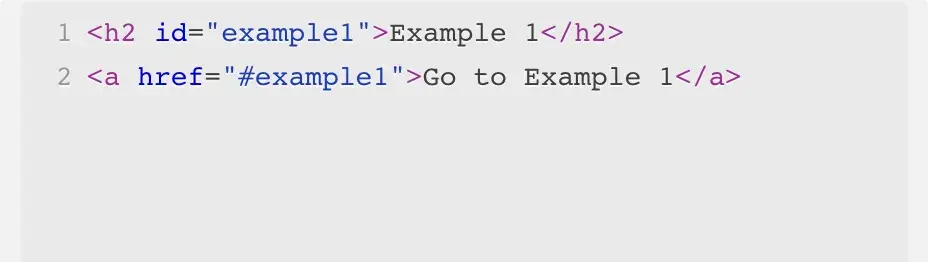
Here’s how that code looks in action:

: how to create an anchor link using html

3. Add opening and closing anchor link tags.

Place that complete opening <a> tag from above before the text or object you want to link to and add a closing </a> tag after.

Doing this sets the location of the link. This is what your code should look like now:

<a id=“INSERT_YOUR_OBJECT_NAME_HERE”>The object you want to link to.</a>

4. Create the hyperlink that’ll take you to that text or object.

Now, go to the part of the post where you‘d like to have the hyperlink. You’ll need to add a typical href attribute, which indicates the destination of the hyperlink. However, in the part where you‘d typically include a URL, you’ll include the pound symbol (#) and then the name of the object you‘re linking to. Here’s what it looks like:

<a href=“#INSERT_YOUR_OBJECT_NAME_HERE”>Click here to see the content below.</a>

creating an anchor link with an href tag

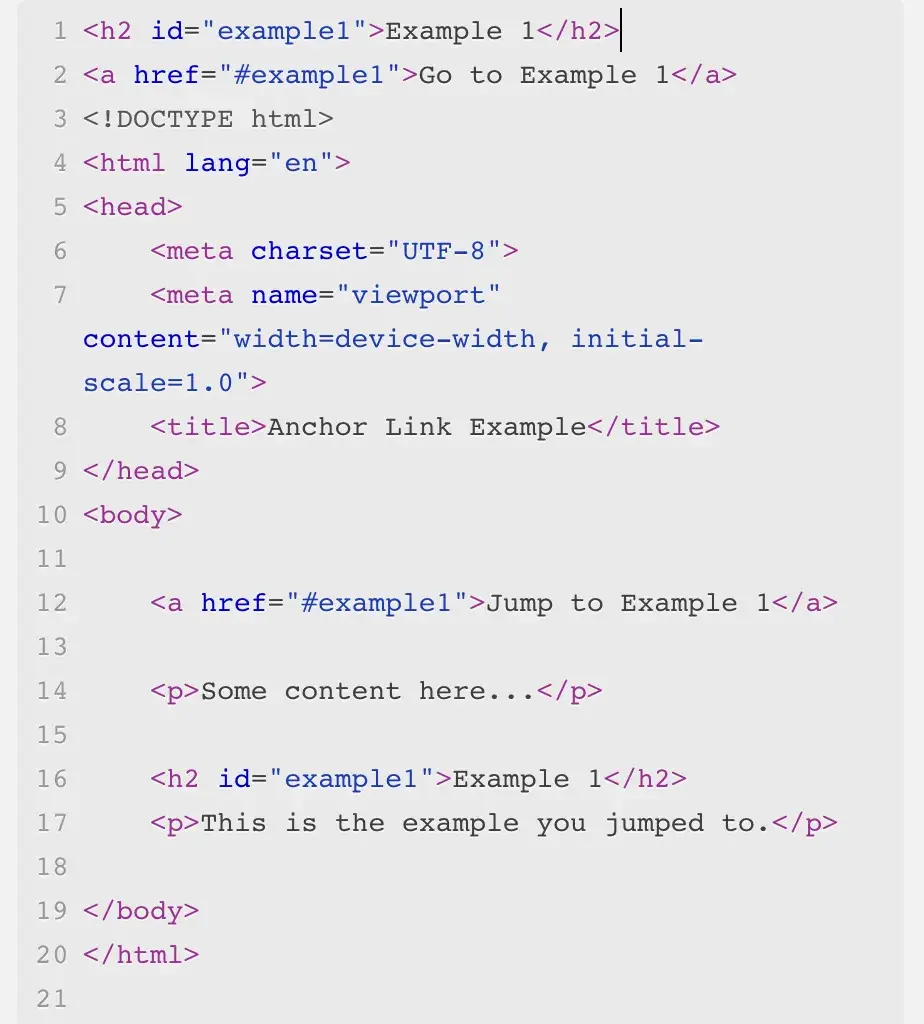
Here is how the full code should look once you’re done:

example of how to create an anchor link

If you want an easy way to give this a try, try our drag and drop website builder for free.

Best Practices for Jump Links

Even though creating anchor links adds a few more steps to your process before publishing a blog post, it can make a big impact on user experience. Here are a few things to keep in mind when you’re creating your next anchor link.

Prioritize user experience.

Anchor links are designed to improve the user experience. Creating links that take you to a specific part of the page makes it much easier for users to navigate through your content and find the information they are looking for. Without the assistance of anchor links, users may end up scrolling through the page for a long time, which could lead them to bounce.

Keep the user experience top-of-mind when creating anchor links. Make sure the sections you’re linking to within a page make sense from a reader’s point of view.

Ultimately, your customers will appreciate skimmable, easy-to-read content and may be more likely to revisit your site or make a purchase because of it.

Keep organization in mind.

Anchor links can be a great way to organize a long page of content. Think about the table of contents example I mentioned earlier. A table of contents can enhance the organization of long blog posts and make it easier for readers to find what they’re looking for.

I also use jump links for glossary pages. If you have a section on your website that features hundreds of terms and definitions, adding a jump link is a great way to improve the navigation. Not only can readers skip ahead to the terms they want to learn, but jump links can help connect different terms together.

Know when to use external links.

It’s important to remember the difference between a jump link and an external hyperlink.

A jump link is a link that ‘jumps’ to a specific section of a page on your website. External links, however, are hyperlinks that direct users to a page on a different website.

It‘s a best practice to create an external link when citing information from another source. Not only does this give credit where it’s due, but it also helps users find more information about the subject they are reading about.

I Learned How to Create Anchor Links With Ease

If you work with website content at all, knowing how to create an anchor link is a must.

Even if you’re like me and don’t have any coding experience, this is one of the easiest tricks to learn. As long as you understand how the different HTML elements work together, you can add all types of jump links to your content.

In my experience, I can tell you that linking to a specific part of a page is a simple way to make your content more user-oriented. Jump links help readers find the information they need quicker, which ultimately helps them be more engaged with your content overall.

Editor’s Note: This post was originally published in July 2014 and has been updated for freshness, accuracy, and comprehensiveness.

Categories B2B

The Usability Testing Playbook [Expert Tips & Sample Questions]

As an employee and a freelancer, I’ve seen plenty of brands fall prey to a shiny object syndrome where they want to build a feature they saw a competitor launch or simply thought was a good idea. Then, they build that idea without knowing if their audience needs or wants it — they skip usability testing.

“In many companies, if the leading competitor has this feature and we think it’s a good idea, validation is done. It never works,” shares author and product leader Itamar Gilad. “You should not assume that your competitor actually knows what they are doing any more than you do. I always ask, ‘Where is your evidence?’”

Download Our Free UX Research & Testing Kit

Usability testing is a way for your company to test and validate new ideas and features with evidence. In this post, I’ll cover what usability testing is, the main types of usability tests, and how to run a usability test — even without a big research team or budget.

Table of Contents

Usability Testing vs. User Research

User research, also known as UX research, is a broad field that includes multiple methods to understand the needs, behaviors, and motivations of users. Usability testing is just one of many user testing techniques.

Usability Testing vs. A/B Testing

A/B testing compares two variations to determine which performs better. While usability testing typically analyzes a single version of a product, UX researchers sometimes use A/B usability testing to compare two prototypes and understand why one version outperforms the other.

Benefits of Usability Testing

When you’re trying to build and launch a product, running a usability test may seem daunting or expensive. But I promise it’s worth the effort — here are four reasons why.

1. Helps you understand your users’ wants and needs.

I’ve seen some companies get so caught up in what they think their customers want that they only find out after launching a product that it doesn’t match what they need or want.

Testing a product early means companies can understand the market and create a product that’s much more likely to succeed.

2. Helps you make data-based decisions.

In any development cycle, products go through multiple rounds of iterations to reach a launch-ready product. Design teams have to make some assumptions when creating a first iteration, but usability testing can validate or disprove a concept before it moves from prototype to development.

Many teams can fall prey to a “false consensus effect,” where they assume that others will agree with their point of view. Usability testing removes the bias and the designer’s lens so you can have a data-based, objective view of what’s working and what’s not.

3. Creates shorter product development cycles.

You might assume that adding a testing phase would lengthen your product development cycle. But, when companies invest in UX and usability testing early, they can shorten product development by 33 to 55%. That means you need fewer resources to fix a faulty product later on — and you can deliver value add, revenue-generating products to the market faster.

4. Leads to higher customer retention, cross-sell, and upsell rates.

Studies show that companies that invest in customer experience see 42% higher customer retention, 33% higher customer satisfaction, and 32% higher cross-selling and up-selling. Simply put, with a good experience, customers are less likely to leave and more likely to spend more over time.

When to Do Usability Testing

Not every company has a dedicated UX research team, nor needs one.

While SaaS companies who ship products constantly may need a robust usability testing strategy, most companies need only periodic research. Here are some scenarios where usability testing may be beneficial.

Prototyping: Launching a New Product, App, or Website

Most product designs start with wireframes. Teams then build out high-fidelity mockups and a working prototype. These steps give companies a fast, low-cost way to validate a design before actually building it.

“Usability testing and design is so much cheaper than coding, then figuring out you created a problem and having to pivot back,” shares Katie Lukes, VP of Product Strategy at Innovatemap. “If you are making big swings and assumptions about how people work, you want to get that design in people‘s hands to see, ‘Can they navigate this experience that I’ve designed for them? Can they achieve this goal?’”

If you are designing whole screens that will be brand new experiences for the user or workflows for them to go through, designing a working prototype is really important.

Pre-Launch: Late-Stage Testing

Once you’ve validated and coded your concept, late-stage usability testing can help you catch bugs and issues before launch.

Post-Launch: Improving an Existing Product

If you have an existing website or app, you can run usability tests for a prototype of a new or improved feature. You can also A/B test small changes like copy, color, or other design choices to see if it improves a quantifiable outcome like a user clicking “Buy Now.”

Expanding to New Markets

If you have an existing product but are launching to new geographies or industries, usability testing can help you see how a different audience interacts with your product. For example, educators and students may use collaboration software differently than a business team.

What to Test for Usability Testing

When I conduct a usability test, I’m looking for much more detailed information than whether users had a “good” user experience or a “bad” one. To set up a successful usability test, identify the problem you are aiming to solve and create a study plan outlining exactly what you want to test and how.

Here are some components that you may want to consider testing.

Navigation

How easily can users find their way around your product? Test the intuitiveness of your menu structure, search functionality, and overall information architecture.

Task Completion

One of the top quantitative questions you need to answer is, can users accomplish a key task without frustration? For instance, what percentage of users can place an order on an ecommerce site? How long does it take them to do it on average? Identify any common barriers.

User Sentiment

Moderated usability testing is a great opportunity to uncover emotions users feel while using your product. A simple task completion percentage won’t tell you whether users were frustrated or happy completing a task and why.

Content

Are the words on your website or app clear, concise, and valuable to users? Evaluate the clarity, readability, and relevance of your content.

Performance and Functionality

On my website, I want to know if all the features are working as intended. Assess the performance of key functions and identify any technical issues or bugs. Look at whether your product is fast and responsive, performing well across different devices, screens, and browsers.

Visual Design

Color, typography, and layout aren’t just for aesthetic appeal. Each design choice affects the user experience. A cluttered interface, for example, can lead to confusion about where to turn or what to do next.

Accessibility

Can all users, including people with disabilities, effectively use your product? Test your product’s compatibility with assistive technologies and any applicable accessibility guidelines.

Usability Testing Examples & Case Studies

Usability testing has a real business impact for companies who take the time to invest in it. Take inspiration from these three usability testing examples.

1. Unmoderated Usability Tests: Panera Bread Catering Site

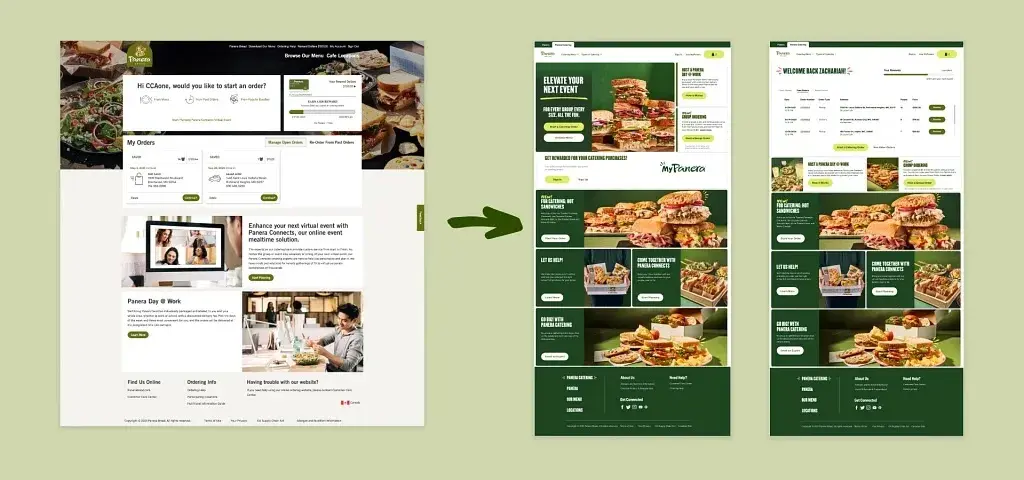
panera usability testing example

Source

Like many of you, I can’t resist Panera’s baguettes, salads, and addictive green tea. Ordering myself lunch on their app or kiosk is typically seamless.

However, Panera realized that an administrative assistant ordering lunch for a large group needed a different experience than their typical customer. They set out to redesign their ordering website for catering customers.

With a prototype built in Figma, Panera sent out unmoderated tests through UserTesting to test perceptions and usability of the order setup and checkout processes. Here are the improvements they made as a result of the insights:

  • Changed their tab structure and color schemes to eliminate confusion between the catering and consumer pages.
  • Made customization options and past order details easier to find, per user preferences.
  • Made bundles available with a single click to save time.

2. Moderated Usability Tests: Shopify Partners Site

shopify moderated usability testing example

Source

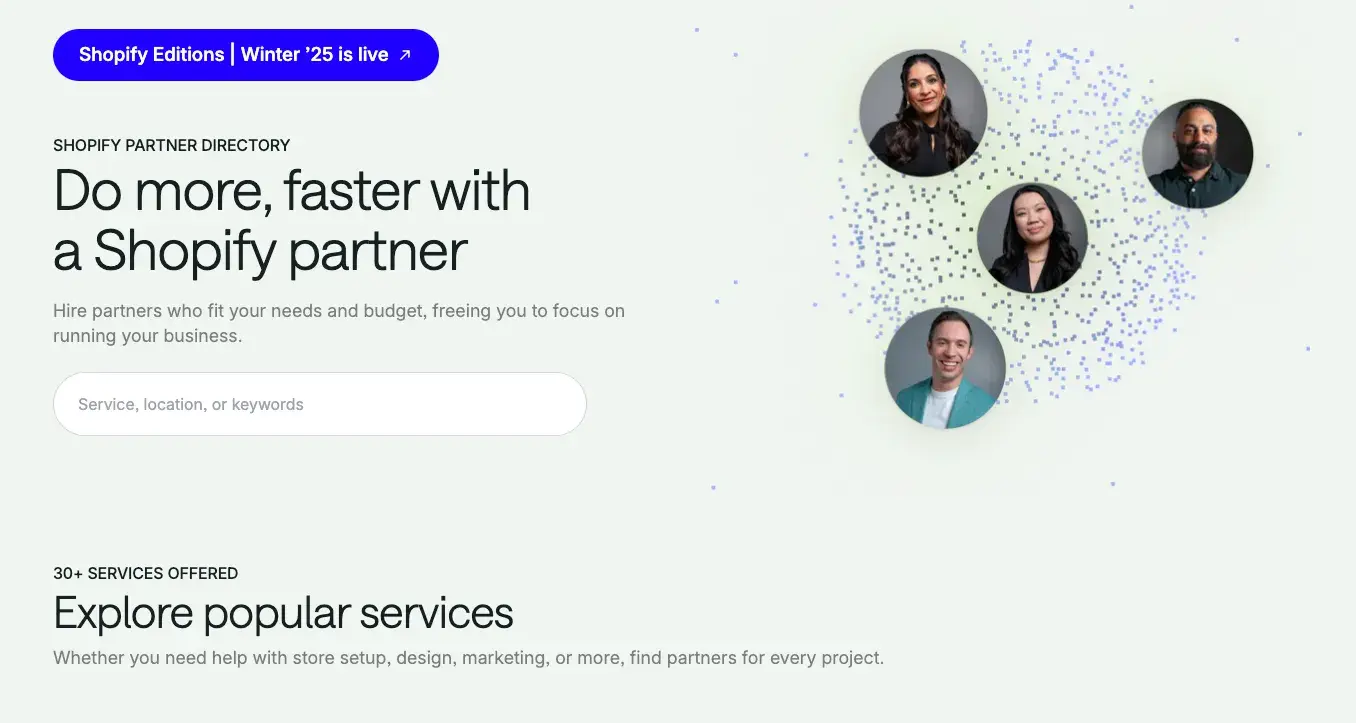
Before launching its partners program, Shopify wanted to design an experience that would allow merchants to connect with experts to support their businesses.

First, Shopify conducted broad user research, including moderated interviews, card sorting, and tree sorting, to discover which information would be most important to Shopify merchants.

Once they had a prototype of a Shopify expert profile, the brand ran a moderated usability test with current merchants. In addition to asking participants to complete general tasks, they asked open-ended questions like, “What information is helping you determine if an Expert is a good fit for your needs?” As a result:

  • They learned that users gravitate toward more human-looking profiles and want to know upfront how freelancers will communicate with them.
  • Since launching in 2023, Shopify has more than 780 experts spanning 30 service areas.

2. Unmoderated Usability Tests and Heatmaps: V1CE Website Optimization

v1ce usability testing example

Source

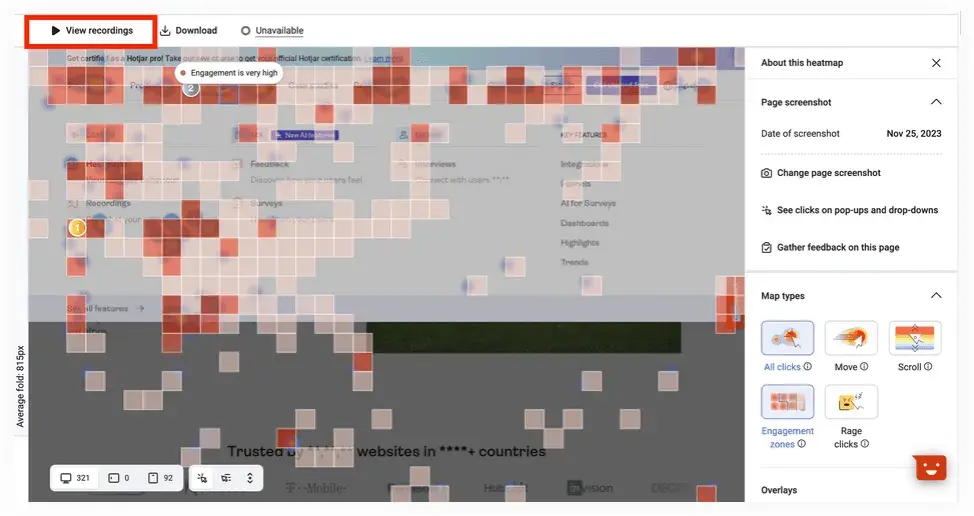
Contactless card company V1CE knew its website was driving low engagement — but they didn’t know why. Working with agency Credo and Hotjar, they tested through heat maps and user recordings to analyze how people interacted with the site. Here’s the impact of the studies:

  • V1CE realized that its case studies drew high engagement, but were buried beneath product pages. They moved case studies to be more prominent.
  • Based on A/B testing of two possible redesigns, V1CE launched the version with more engagement and conversions.
  • As a result, V1CE increased engagement by 14.5% and revenue by 220%.

Types of Usability Tests

There are many different types of usability tests, including moderated vs. unmoderated, remote vs. in-person, and qualitative vs. quantitative.

Here are three types to consider, as well as the pros and cons of each.

1. Hallway/Guerilla Usability Testing

Have you ever been approached by someone with a tablet asking you to review a product? This informal method involves approaching random people in a public space for a short in-person test.

It’s quick, cost-effective, and can provide immediate feedback. You may want to include a couple of qualifying questions to ensure they fit your target demographic. I’d also recommend incentivizing participation with a small gift card or other reward.

2. Moderated Usability Testing

Moderated usability testing is a method where a facilitator (either remote or in-person) guides participants through a study.

For example, a moderator may ask, “Where would you expect to find information about shipping?” or “Can you try to contact customer service through the website?”

“Moderated tests are wonderful for answering big questions and getting deep into a person’s experience. You can observe them, have them think out loud, and ask them follow-up questions as you go,” explains Lukes.

On the downside, moderated usability testing is slower and more expensive because you need to pay people for their time. But it can help you find the reason behind a problem. Observing people using your product first-hand, observing facial expressions, and asking follow-up questions gives you deep insights.

3. Unmoderated Usability Testing

Another popular way to test a product is through unmoderated usability testing, where a company sets up an on-demand testing experience that they can send out at scale. These can range in formatting from a simple task completion to heatmap tracking, or surveys.

Sites like UserTesting offer brands a relatively quick, inexpensive way to run usability tests. These tests can gather data quickly and are best for answering set questions like design or navigation choices.

How to Conduct a Usability Test

Running a usability test for the first time? Here’s how to get started.

1. Frame the problem.

First, decide which question you’re trying to answer. Use a problem statement to frame your goal, for example:

Users struggle to complete checkout on our e-commerce site, leading to high cart abandonment. This usability test will identify friction points and opportunities to improve the experience.

“You should know exactly the blanks you need to fill in, because then you know the questions you need to ask in interviews,” says Lukes. “Get those goals laid out first, then work your way backward into the questions and the prototype.”

2. Pick a focus area.

Next, determine which part of your product or website you want to test and which tasks you want your participants to complete. Set clear criteria to determine success for each task.

3. Choose a usability testing method.

Next, choose the best usability testing method for your study from those I explained above. In the early stages, moderated tests are often best. In later stages, unmoderated or guerilla testing is better.

Let’s be honest: A lot of this depends on your resources. If you have an in-house UX research team or the budget to hire an agency, you can lean on them to choose a method and set up the study.

But if you’re a marketing manager or small business owner with fewer resources, you may not be able to run robust studies. In that case:

“If you have little to no budget, run quick guerilla tests yourself to get some fast and inexpensive results,” recommends Lukes. “You can also get some users on a Zoom call and walk them through a design, even if it’s just a wireframe. Even that much feedback is a form of usability testing that is less expensive, and you can at least start with some insights to share with your team.”

3. Choose your study tasks and questions.

Next, determine which part of your product or website you want to test and which tasks you want your participants to complete. Set clear criteria to determine success for each task, for example error rate, completion rate, or time to completion.

4. Write a study plan and script.

At the beginning of your script, you should include the purpose of the study, if you’ll be recording, some background on the product or website, questions to learn about the participants’ current knowledge of the product or website, and, finally, their tasks.

To make your study consistent, unbiased, and scientific, moderators should follow the same script in each user session.

5. Delegate roles.

During your usability study, the moderator has to remain neutral, carefully guiding the participants through the tasks while strictly following the script. Whoever on your team is best at staying neutral, not giving in to social pressure, and making participants feel comfortable while pushing them to complete the tasks should be your moderator.

Note-taking or recording insights during the study is also just as important. If there’s no recorded data, you can’t extract any insights that’ll prove or disprove your hypothesis. Your team’s most attentive listener should be your note-taker during the study.

6. Find your participants.

Screening and recruiting the right participants is the hardest part of usability testing. Your participants should closely resemble your user base or be current customers whenever possible.

To recruit the ideal participants for your study, create the most detailed and specific persona as you possibly can and screen potential participants to make sure they fit. Incentivize them to participate with a gift card or another monetary reward.

While you can recruit and screen participants yourself, it’s often better to use an agency or usability testing service.

7. Conduct the study.

During the actual study, you should ask your participants to complete one task at a time, without your help or guidance. If the participant asks you how to do something, don’t say anything. You want to see how long it takes users to figure out your interface.

Asking participants to “think out loud” is also an effective tactic — you’ll know what’s going through a user’s head when they interact with your product or website.

After they complete each task, ask for their feedback, like if they expected to see what they just saw, if they would’ve completed the task if it wasn’t a test, if they would recommend your product to a friend, and what they would change about it. This qualitative data can pinpoint more pros and cons of your design.

8. Analyze your data.

You’ll collect a ton of qualitative and quantitative data during your study. Analyzing it will help you discover patterns of problems, gauge the severity of each usability issue, and provide design recommendations to the engineering team.

When you analyze your data, make sure to pay attention to both the users’ performance and their feelings about the product. Break out your data into visualizations and share it with all relevant stakeholders.

9. Report your findings.

After extracting insights from your data, report the main takeaways and lay out the next steps for improving your product or website’s design and the enhancements you expect to see during the next round of testing. Include everyone in your reporting — from executives to designers to developers — so they can see the evidence and make changes accordingly.

15 Usability Testing Questions

Need inspiration for your usability test script? These 15 tried-and-true questions can uncover user insights, friction in your product flows, and opportunities for improvement.

  1. What are your first thoughts as you look at this page?
  2. How satisfied are you with the [attribute] of [feature]?
  3. How do you use [feature]?
  4. What parts of [the product] do you use the most? Why?
  5. What parts of [the product] do you use the least? Why?
  6. If you could change one thing about [feature], what would it be?
  7. What do you expect [action/feature] to do?
  8. When you [action], what’s the first thing you do to [goal]?
  9. On a scale of 1-5, how easy or difficult was it to accomplish [task]? Can you explain your rating?
  10. Were there any features you expected to see but couldn’t find?
  11. What are three words you would use to describe your overall experience with this product?
  12. Overall, how easy or difficult was it to complete this task?
  13. What would you expect to happen once you [task]?
  14. How effectively does this communicate [theme]?
  15. How understandable was the information on this page?

Stop Guessing, Start Validating with Usability Testing

I’ve learned first-hand that it takes a cultural shift for a company to stop chasing shiny objects and instead slow down and ask users what they want. At the end of the day, usability testing helps you move beyond assumptions, validate ideas with real user feedback, and build products that people actually want to use.

And the best part? You don’t need a massive budget or a dedicated research team to get started. With even small usability tests, you can create better user experiences, shorten development cycles, and improve customer retention. So, before you roll out your next big idea, ask yourself: What do your users think?

Editor’s note: This post was originally published in August 2018 and has been updated for comprehensiveness.

Categories B2B

How to Develop a Content Strategy in 7 Steps (From Start to Finish)

Whether you‘re just starting out with content marketing or you’ve been using the same approach for a while, it never hurts to revisit your content strategy plan and make sure it’s innovative and engaging for your prospects and customers.

In this post, we’ll dive into what content strategy is, why your business needs a content marketing plan, and what steps you need to take to create your strategy.

Download Now: Free Content Marketing Planning Kit

Plus, we’ll explore some examples of effective content marketing strategies for inspiration.

Table of Contents

Your content strategy is the foundation of the attract and delight stages in your buyer’s journey that follows the inbound marketing framework.

Say your business goals include increasing brand awareness.

To achieve this, you might implement an SEO-focused content strategy to increase your website’s visibility on the search engine results pages (SERPs) and drive traffic to your products or services.

Along with attracting prospects to your brand, you can leverage a content strategy for sales enablement and customer satisfaction.

Plus, with 70% of marketers actively investing in content marketing, developing a good content strategy is critical to competing in your industry.

Why Marketers Need to Create a Content Marketing Strategy

A couple of years ago, I worked as a content writer for a literary company that had just launched.

Despite all the pre-launch meetings, the founder and CEO of the company didn’t understand the importance of creating a content marketing strategy for our forthcoming website.

Three months after the launch, the CEO expressed dissatisfaction with the poor performance so far — neither the website nor the company’s social media accounts were seeing organic traffic, and the paid ads were not converting at all.

I suggested that we create a content strategy plan for the next quarter.

Sure enough, by the end of Q2, we recorded an increase in traffic and conversions from both the website and social media profiles.

No matter the kind of company or industry you work in, a content marketing strategy is integral for the success of your digital marketing efforts.

why marketers need a content marketing strategy. it aligns the team on goals and objectives. it guides content creation and distribution. it optimizes resources. it improves online visibility. it builds brand authority and trust.

1. It aligns the team on goals and objectives.

When content creators, social media managers, writers, and other team members are aligned on goals such as brand awareness, lead generation, or customer engagement, they can produce content that consistently supports these aims.

This increases the chances of getting tangible results.

Carl Broadbent, a digital marketing expert, values content marketing strategies for the alignment they bring.

“After years of publishing blogs, ebooks, and videos, I‘ve learned that a strong content strategy acts like a guiding compass. It points you towards topics and formats aligned with business goals, so you’re not just cranking out content for content’s sake,” Broadbent says.

Broadbent also notes that teams will make mistakes along the way.

He recalls, “‘I’ve made that mistake! Last year, we invested heavily in podcasts, thinking it would attract our target buyers. Turns out our audience preferred snappy infographics. Our podcast push fizzled out fast without the right strategy in place.”

2. It guides content creation and distribution.

Ayomide Joseph, a freelance content marketer for SaaS companies like Aura, Nextiva, and Trengo, explains the purpose of a content marketing strategy:

“The concept of ‘strategy’ in content marketing is simply to give you a roadmap that’ll guide you from where you are to where you want to be,” Joseph says.

For example, Joseph notes that if you’re looking to drive more inbound leads via content, ideally, creating bottom-of-the-funnel content is the way to go.

“A content marketing strategy answers the questions, ‘How do you go about it? What’s the keyword you’re going to target, search volume, difficulty — and what distribution approach will you utilize?’” Joseph says. “If you don’t have a content marketing strategy, you’ll be working blind.”

A content marketing strategy requires you to plan the type of content to create, such as blog posts, infographics, videos, and podcasts.

You’ll also determine the most effective channels for distribution, whether that be social media platforms, email marketing, or the company’s website.

This planning ensures that content is consistent, timely, and relevant to the audience’s interests and needs, fostering brand loyalty and advocacy.

3. It optimizes resources.

When you map out a fully fledged content marketing strategy, you’ll be able to allocate resources more efficiently, whether those resources are time, budget, or manpower, to bring the strategy to life.

By knowing the type of content you need to produce and the platforms through which you’ll distribute it, you can direct your efforts and budget toward activities that offer the best return on investment (ROI).

4. It improves online visibility.

A well-executed content marketing strategy can alleviate this problem by improving a brand’s visibility in search engine results pages (SERPs).

High-quality, optimized content is favored by search engines and ranks higher in search results, which leads to increased organic traffic.

By targeting specific keywords and topics relevant to your target audience, you can attract more qualified leads to your website.

5. It builds brand authority and trust.

By consistently producing high-quality, relevant, and valuable content, you can establish your business as a thought leader in its industry.

This authority builds trust with your audience, which is crucial for long-term relationships and customer loyalty.

A content marketing strategy ensures that your content not only attracts attention but also provides value and encourages your audience to return and interact with the brand further.

Content Marketing Strategy Statistics

Here are some statistics that show the results a content marketing strategy can help you generate for your business:

Elements of a Content Strategy Plan

Since a content strategy plan is a roadmap designed to guide the creation, publication, and governance of useful content, here are some key elements to include when creating yours.

1. Goals and Objectives

What do you want to achieve with your content?

Do you want to increase brand awareness? Generate leads? Maybe improve customer engagement?

When you define the goals and objectives you want your content to help you achieve, you’re establishing your North Star.

So, if you’re not sure whether to include a certain type of content in your strategy, you can look to your North Star and determine if that content type will lead you in the right direction.

2. Audience Persona

An audience persona (or buyer persona) is a semi-fictional representation of your ideal customer based on data and research.

It helps you understand who you’re creating content for.

To create an accurate audience persona, you’ll need to conduct research through surveys and interviews and analyze your social media engagement to gather insights.

These insights include your audience’s demographic information, interests, pain points, and content preferences, to mention a few.

Knowing this information will help you understand the content types, topics, and marketing channels that will help you reach your goals.

3. Content Audit and Analysis

Once you’ve gotten your audience persona down, review your existing content to determine what’s working and what’s not.

This way, you’ll be able to identify gaps and opportunities for content.

In the content audit section of your content strategy plan, explain:

  • The kinds of content and topics that are already working well for you (e.g., blogs that discuss web development, micro-videos that explain coding tips and tricks, etc.)
  • The kinds of content and topics that are not gaining traction (e.g., white papers about the evolution of programming)
  • The content gaps and opportunities you’ve discovered

Pro tip: Use tools like Google Analytics and social media analytics to evaluate the performance of your content. Look for patterns in what types of content perform best and use this to inform future content creation.

4. Content Types and Channels

screenshot of a campaign-tracking spreadsheet.

Next, decide on the types of content you will create (e.g., blog posts, videos, infographics) and the marketing channels through which you will distribute them (e.g., website, social media, email).

Choose these content types and channels based on your audience’s preferences and where they spend their time online.

Consider experimenting with different formats and channels and measuring their effectiveness before choosing your ideal marketing mix.

5. Content Creation Process

screenshot of campaign-tracking spreadsheet.

This section of your content strategy plan outlines the steps for producing content, from idea generation to publication. This process includes assigning roles and responsibilities to other team members or freelancers.

Pro tip: Develop a content calendar to plan and schedule content in advance. Use collaboration tools to streamline the content creation process and ensure that team members (and/or freelancers) are on the same page.

6. Measurement and Analytics

Now you know your audience personas, the topics that make your audience tick, the channels you’ll use to distribute your content, and the content creation process.

The next step is to establish the metrics and key performance indicators (KPIs) to evaluate the success of your content.

Define clear metrics for each goal, such as engagement rates for brand awareness or conversion rates for lead generation.

Use tools like Google Analytics and native social media analytics tools to regularly monitor performance and adapt your strategy as needed. You can also use HubSpot’s analytics platform to get a unified overview of your content distribution efforts across multiple channels, including social media, emails, and PPC advertisements.

7. Content Governance

Content governance involves setting standards and policies for content creation, publication, and maintenance to ensure consistency and quality over time.

In this section of your content strategy plan, you’ll develop and include content style guidelines, tone of voice guidelines, and content quality criteria.

This ensures that your team members and/or freelancers create consistent and cohesive content.

What You Need to Create a Content Marketing Strategy

Now let’s have a look at everything you need to have a thorough content marketing strategy in place.

1. Brand Guidelines

Brand guidelines are documents that encapsulate your brand’s overall look and feel — its color palette, typography, personality, messaging, and so on.

Although generally used to establish a website’s design language or set up ad creatives, brand guidelines also help with your content strategy.

You can build your content governance model based on your brand guidelines to ensure creative teams always develop content that aligns with your brand identity and drives awareness.

You can use your brand guidelines to specify your written or video content’s style, tone of voice, the colors and fonts images or graphics should use, and pinpoint your image or video editing style, for instance.

Tools like Content Hub also help maintain brand consistency — it features an AI-powered writing assistant that automatically generates or tweaks your existing content based on your brand’s voice.

2. Editorial Calendar

The terms “content calendar” and “editorial calendar” are often used interchangeably, but they’re slightly different.

An editorial calendar looks at the bigger picture, giving a broad overview of the themes your content should cover within a specific time period. Meanwhile, a content calendar organizes each individual post within that time frame.

For example, an editorial calendar could simply state that all posts during October should center around Halloween, while the content calendar gets into the details — it organizes a series of individual posts, each covering a topic related to that theme.

Using editorial and content calendars simultaneously helps plan a thorough content marketing strategy and ensure cohesive topic coverage. It’s also useful for streamlining content ideation processes and maintaining steady workflows.

3. Content Clusters

On a similar note, content clusters are a series of interconnected posts that target all aspects of a particular topic in detail. Topic clusters help establish brand authority and target consumers spread across multiple stages of your marketing funnel.

For example, if your main topic is SEO, you could create a central post that offers a general overview of the subject — also known as pillar content. You can then branch off and create separate pieces that target all sub-topics related to SEO, like on-page, off-page, and technical SEO.

Again, content audits help spot topics that already do well. You can also use tools like HubSpot’s Marketing Software to set up content clusters and get insights into topic search volumes.

4. Marketing Funnels

Make sure your content strategy is designed to attract consumers from all stages and actively contribute to generating conversions.

For example, the SEO content pillar I just mentioned would attract top-of-the-funnel consumers — leads interested in a specific topic but who are not ready to make a purchase just yet. The content pillar would offer just enough information to get readers to learn more about the topic.

An email newsletter sign-up form at the end of the blog post could attract curious readers, drawing them into your ecosystem.

From there, a CRM tool can store these details and set up personalized email nurturing campaigns. These would help drive leads further down the funnel and eventually turn them into purchasing customers.

The blogs that cover SEO sub-topics, however, are perfect for attracting bottom-of-the-funnel consumers. In this case, product mentions with links to product pages might be just enough to get these leads to convert.

5. Competitive Research

Take a peek at your competitors. Get into as much detail as possible here — see what themes they cover, what content formats they follow, the channels they use, and how they perform.

This helps spot any weaknesses you can capitalize on, like not covering a particular topic in as much detail, for example. Meanwhile, knowing what content and marketing channels work best for them serves as another solid starting point for developing your marketing strategy.

Curious how former HubSpot’s senior director of global growth Aja Frost put together our content strategy?

define your goal. conduct persona research. run a content audit. choose a cms. determine content types. brainstorm content ideas. publish and manage your content.

1. Define your goal.

What’s your aim for developing a content marketing plan? Why do you want to produce content and create a content marketing plan?

It may seem obvious, but these questions are the core of a useful content strategy.

Look at high-level business goals, notes from meetings, and notes from your team, then do some solo research to make sure your goals have staying power.

Organize goals by priority.

Once you have a list of goals, rank them from most to least important.

This can help you decide which parts of your strategy are an immediate need and which are for long-term action.

This step can also help with resource questions later in the process.

Use the SMART framework to define goals.

The SMART framework can help you make broad goals more specific and actionable.

Know your goals before you begin planning, and you‘ll have an easier time determining what’s best for your strategy.

Download this goal-planning template to determine your content goals.

2. Conduct persona research.

To develop a successful plan, you need to clearly define your content’s target audience — also known as your buyer persona.

This is a crucial part of the planning phase of content strategy.

This is especially important for those who are new to marketing. By knowing your target audience, you can produce more relevant and valuable content that they’ll want to read and convert on.

Collect data and analyze it to find patterns.

If you don‘t already have defined personas, you’ll want to analyze your data to find who you want to create content for and the types of content they enjoy.

This post has some useful tips for how to create buyer personas using your data.

As you analyze metrics like contact trends and demographics, group your leads by what they have in common.

Then, look closely at these groups to find other similarities.

Use your research to refine buyer personas.

If you’re an experienced marketer, your target may have changed.

Do you want to target a new group of people or expand your current target market? Do you want to keep the same target audience?

Revisiting your audience parameters by conducting market research each year is crucial to growing your audience. Taking a closer look at your current customer segments can also help you refine your personas.

Featured Tool: Buyer Persona Generator

3. Run a content audit.

Early on, many brands start with blog posts or social media.

If you want to venture into different formats, run a content audit to assess your top-performing and lowest-performing content.

If you’ve been in business for a while, you should review your content marketing efforts and last year’s results.

Find topic and formatting gaps.

As you review your content, be sure to record page titles, content formats, word counts, and a summary of what your content covers.

This can help you find areas for improvement.

Review content for quality and relevance.

Next, analyze content quality and whether your content reflects what’s most important to your audience.

Then, use that information to inform which direction you take next.

Look for repurposing opportunities.

There are many ways to repurpose content.

This strategy can help you optimize your content on multiple channels.

It might mean grabbing your most popular blogs and creating YouTube videos, an ebook, or launching a podcast with that content.

Check out this post for more content-recycling ideas.

Create a content workflow.

Another way to approach your audit is to look at your team’s process.

Your content workflow impacts how you come up with ideas, what you publish, and the quality of your work.

Do you have a strategic workflow in place, or is your workflow organized around the habits of your team? An audit can help you see blocks and slow-downs that can affect your content long-term.

Whatever stage you’re in, a content audit will help you decide what resonates best with your audience, find gaps in your topic clusters, and process and brainstorm fresh content ideas.

4. Choose a content management system.

A few vital parts of content management include content creation, content publication, and content analytics.

You want to invest in a CMS to create, manage, and track your content in an easy and sustainable way.

Figure out specific CMS needs.

Finding the right CMS for your team may take some time.

First, talk to your team about their current processes to get a sense of the top features you’ll need. Then, start researching the best CMS for your needs with our list of the best CMS.

A CMS for a business should be easy to use, customizable, secure, and cost-effective.

Choose the right content management system.

With the HubSpot CMS, you can plan, produce, publish, and measure your results all in one place.

Another popular CMS is WordPress, to which you can add the HubSpot WordPress plugin for free web forms, live chat, CRM access, email marketing, and analytics.

This list of the best content management systems offers a comparison between the tools above and other popular choices.

Adopt a content governance model.

As you get to know your new CMS, be sure to put a content governance model in place. This is a process to manage content creation, publishing, and maintenance.

It helps you make sure that each piece of content aligns with business standards and policies.

As your content presence grows, this model will also help you create processes for updating and removing outdated content.

5. Determine which types of content you want to create.

There are a variety of content options, from written content like ebooks and blog posts to audio content like podcasts.

Great content strategy is a balance of decision-making, data analysis, and risk-taking. Those skills will all be put to the test in this step.

Review personas and goals.

You may need different types of content for different personas and goals.

Take a careful look at your end goals and the actions you want each persona to take. Then, work backward to choose the right kind of content for each goal and user.

For example, say you’re trying to decide between starting a blog or a podcast. Blogs tend to be better for conversion, while podcasts are great for building brand awareness.

Your goals and audience should be the deciding factor for which is best for your business.

Assess your resources.

Use a critical eye when you’re reviewing the resources you have for content production.

Questions like the ones below can help you narrow your focus and create a sustainable content strategy.

  • How big is your team?
  • How much time does your team have to create content?
  • What skills does your current team have?
  • What types of content would you need training on, and what would you need to outsource?
  • What is your content budget?

Choose the right topics, formats, and channels for your content.

Using your personas, choose a set number of high-level topics to focus your content on. You can speed up the process and find relevant ideas with a topic generator — simply type in a keyword and see what pops up, along with insights regarding search volumes to help gauge topic popularity.

Then, using your audience and topic choices, narrow down your chosen content formats and channels.

For example, say your team is launching a video channel, but they don‘t have a lot of experience. You might consider creating video shorts.

But if rankings for that topic tend to be long-form videos or podcasts, you’ll want to think about that decision — do you want to stand out and hope your audience pivots to a new format?

Or should you get help creating the content you think will top the current competitive landscape for your topic?

Once you’ve made these big decisions about your content strategy, you’ll be ready to get into the details.

6. Brainstorm content ideas.

Use your content audit, persona research, and goals to make the best content decisions for your business.

A quick review of this information before brainstorming can help you keep these insights top-of-mind.

Next, it’s time to start brainstorming ideas for your next content project.

Here are some tools to get the juices flowing.

1. Feedly

screenshot of feedy’s market intelligence product.

Source

The Feedly RSS feed is a wonderful way to track trending topics in your industry and find content ideas at the same time.

You start by telling the software what topics you’re most interested in, and its AI tool will do the rest.

You won’t need to scour the internet to find new content ideas anymore. Instead, you can go through your curated list, compiled from news sites, newsletters, and social media.

2. BuzzSumo

screenshot of buzzsumo’s trending feeds.

Source

Want to discover popular content and content ideas?

This company offers several market research tools, one of which uses social media shares to figure out if a piece of content is popular and well-liked.

This information helps you see which content ideas would do well if you were to create content about them.

3. BlogAbout

screenshot of blogabout’s product

Source

Get your mind gears going with IMPACT’s blog title generator.

This tool works a bit like Mad Libs, but instead of joke sentences, it shows you common headline formats with blanks where you can fill in the subject you have in mind.

This brainstorming technique helps you put general ideas in contexts that appeal to your target audience. Once you have a headline you like, BlogAbout lets you add it to a notebook so you can save your best ideas.

4. CoSchedule Headline Analyzer

screenshot of coschedule’s headline analyzer.

Source

You can get blog post ideas for an entire year with HubSpot’s Blog Ideas Generator.

All you need to do is enter general topics or terms you’d like to write about, and this content idea generator does all the work for you.

This tool analyzes headlines and titles and gives feedback on length, word choice, grammar, and keyword search volume.

If you have an idea in mind, run a few title options through the headline analyzer to see how you could make it stronger.

5. HubSpot’s Website Grader

screenshot of hubspot’s website grader.

Source

This is a great tool to use when you want to see where you’re at with your website and SEO efforts.

The Website Grader grades you on vital areas of your website performance and sends you a detailed report to help you optimize.

With this tool, you can figure out how to make your website more SEO-friendly and discover areas of improvement.

Refine and rank your ideas.

Brainstorming should be loose and unstructured.

It can be tempting to jump on an idea and start creating content right away. But instead, try to throw out your wildest ideas and see where they lead.

Then, take that list of content ideas and refine them.

To start, break ideas into groups and organize them around your goals, topics, or personas. Then, review each idea in detail and add specifics.

For example, say your topic is AI. One of your content ideas might be image generation. You can break this idea down further with content for image-generation tools, text-to-image prompts, or how to edit existing images.

Another way to refine content ideas is to conduct keyword research.

You can also define your process for refining ideas in your content workflow.

7. Publish and manage your content.

Your marketing plan should go beyond the types of content you‘ll create — it should also cover how you’ll organize your content.

Develop a content calendar.

With the help of an editorial calendar, you’ll be on the right track to publishing a well-balanced and diverse content library on your website.

Then, create a social media content calendar to promote and manage your content on other sites.

Featured Tool: Free Editorial Calendar Templates

Optimize your content for reach.

Many of the ideas you think of will be evergreen (i.e., just as relevant months or years from now as they are today).

That being said, you shouldn’t ignore timely topics either. While they may not be the bulk of your editorial calendar, they can help you generate spikes of traffic.

For example, most people incorporate popular holidays, like New Year‘s, into their marketing efforts. But you don’t have to limit yourself to these important marketing dates.

If niche holidays appeal to your audience, it could be worth publishing content on your blog or social media. Check out this ultimate list of social media holidays when you’re planning your calendar.

SEO tactics, cross-channel promotion, and channel-specific strategies (like social media strategy) are also key parts of content optimization.

Track and analyze content performance and process.

Analytics are essential to a strong content strategy.

Choose KPIs like traffic, engagement, lead generation, and conversion rates to measure the success of your content.

These resources can help you choose the best KPIs for each channel:

Revise your content strategy with data insights.

Don’t just collect and review your data.

Connect it to your content strategy efforts. Review your KPIs for effectiveness, run marketing experiments, and use your data to adjust your strategy.

This analysis can also be helpful when you need support from stakeholders. It can sometimes be difficult to get the resources you need to test a risky idea.

Data-driven insights can support your case for trying new ideas with your content strategy.

Pro tip: Use Campaign Assistant to generate copy that fits your content strategy.

Questions to Ask When Creating a Content Strategy

When you develop a content strategy, there are a few questions to answer. Let’s dive into those now.

1. Who will be reading your content?

Who’s the target audience for your content? For how many audiences are you creating content?

Just as your business might have more than one type of customer, your content strategy can cater to more than one type of user.

Using a variety of content types and channels will help you deliver content that’s tailored to each persona.

2. What problem(s) will you be solving for your audience(s)?

Ideally, your product or service solves a problem you know your audience has.

By the same token, your content coaches and educates your audience through this problem as they begin to notice and address it.

A sound content strategy supports people on both sides of your product: those who are still figuring out what their main challenges are and those who are already using your product to overcome these challenges.

Your content reinforces the solution(s) you’re offering and helps you build credibility with your target audience.

3. What makes you unique?

Your competitors likely have a similar product as yours, which means your potential customers need to know what makes yours better — or, at least, different.

Maybe your main asset is that your company has been established for many years. Or perhaps you have a unique brand voice that distinguishes you from your competitors.

To prove why you‘re worth buying from, you need to prove why you’re worth listening to. Once you figure that out, permeate that message in your content.

4. What content formats will you focus on?

To figure out what formats to focus on, you need to meet your audience where they are.

While you may be tempted to launch a podcast or YouTube channel, find out first where your audience lives.

Otherwise, you may waste time creating content that either won’t reach your audience or capture their attention.

Once you choose the best formats, start creating a budget to assess what resources you can allocate to execute this strategy.

5. What channels will you publish on?

Just as you can create content in different formats, you’ll also have various channels you can publish to, from your website to social media.

This part of your content strategy, again, will show where your audience lives.

If your audience prefers long-form video content, you may opt to publish your content on YouTube. If you have a younger audience that likes quick content, you may opt for TikTok and Instagram.

6. How will you manage content creation and publication?

Figuring out how you’ll create and publish all your content can be a daunting task.

Before you execute, it’s important to establish:

  • Who’s creating what.
  • Where it’s being published.
  • When it’s going live.

In a small team, this may be easy enough, as you may be the sole decision-maker. As your company grows, you may need to collaborate with several content teams to figure out an effective process.

Today’s content strategies prevent clutter by managing content from a topic standpoint.

When planning a content editorial calendar around topics, you can easily visualize your company’s message and assert yourself as an authority in your market over time.

Content Marketing Strategy Examples

Sales Enablement

Let’s consider the following scenario:

A prospect calls a sales representative at Wistia and asks questions related to Wistia’s video hosting service. As the Wistia sales rep speaks with her, he learns her business is using a few other tools to convert leads into sales, including Intercom.

Bingo.

Once the call ends, the sales rep sends the prospect a follow-up email with a blog post about Wistia’s integration with Intercom, which enables Intercom users to further personalize messages to prospects based on video-watching data they collect through Wistia.

This is a prime example of using a content strategy as a sales enablement tool.

On the surface, it might seem odd that Wistia has dedicated content about another business tool.

However, this content is a great resource for Wistia‘s sales team, particularly when prospects have concerns about how Wistia’s product can integrate with their existing software or processes.

Brand Value Alignment

According to HubSpot’s 2025 State of Marketing report, consumers — particularly younger ones — are increasingly looking for brands whose values align with their own.

Let’s say that one of those consumers wants a new winter coat, but they are concerned about the environmental impacts of buying a brand-new item of clothing. They go to their local Outdoor Gear Amalgamated store, where a sales representative has a QR code ready to scan that takes the customer directly to OGA’s online portal for its environmental positioning.

The online portal is a visually rich, engaging narrative. There, the customer can see the complete lifecycle of the winter coat they want to buy, from where the materials are sourced to OGA’s end-of-life recycling programs.

Using storytelling techniques geared to younger audiences, OGA can show potential customers that it walks the walk where the environment is concerned, building brand loyalty among those who share those values.

Niche Influencer Strategies

According to our original research, niche influencers are a rising trend among marketers. Here’s how incorporating it into your content marketing strategy might work:

A beauty company has just launched a line of foundations with an unusually large number of options for the fairest of fair to the deepest of deep skin tones. Instead of sending expensive swag boxes to the top beauty influencers, the company looks for influencers with under 10,000 followers who have built trust within a niche community.

User-generated content can often feel like a gamble, but because the beauty company is looking for smaller-scale influencers, there’s a sense of authenticity that you don’t always get with the biggest makeup influencers.

Whether a potential customer interacts with the company online or in person, an AI chatbot or a customer service specialist can direct them to the online content best suited to their skin tone, leveraging the trust in these personality-led creators. The content is also more personalized and more tailored to the specific customer.

Content Strategy Template

Ready to get started with your own content marketing strategy? Download this helpful workbook.

image of content marketing training workbook.

Source

It includes key readings and activities to help you fine-tune your plan and develop a robust strategy. You’ll learn how to:

  • Generate content ideas.
  • Create topic clusters and pillar pages.
  • Promote your content.
  • Repurpose your content based on your needs.

Content Strategy vs. Content Tactics

Putting a content strategy in place means you need a firm understanding of content tactics.

Content tactics are the actions you take to deliver your content strategy, and both are important to a successful content marketing program.

These are the eight most popular types of content marketing you can create for your readers and customers.

1. Blog Posts

Blog posts live on a website and should be published regularly to attract new visitors. In fact, 16% of marketers say their blog posts generated the biggest ROI for their businesses in 2024.

Blog posts should offer valuable content for your audience that makes them inclined to share posts on social media and across other websites.

We recommend that posts be between 1,000 and 2,000 words in length, but you should experiment to see if your audience prefers longer or shorter reads.

Featured Tool: Check out our free blog post templates for writing great how-to, listicle, curation, SlideShare presentations, and newsjacking posts on your own blog.

2. Ebooks

Ebooks are lead-generation tools that website visitors download after submitting a lead form with their contact information.

They’re typically longer, more in-depth, and published less often than blog posts, which are written to attract visitors to a website.

But ebooks aren’t only effective for the top of the funnel.

As Nora Leary, growth director at Ironpaper, Inc., notes, “Ebooks serve different purposes at varying stages in the buyer’s journey.”

She told me, “Awareness-level ebooks help educate the prospect about a certain pain point and are an excellent lead capture tool. The content should remain introductory and informational.”

Leary adds, “Ebooks can convert leads in the funnel by offering them useful tools as prospects consider their needs more in-depth.

“An ebook here might dive deeper into a particular problem and solution options and include templates or calculators.

[Lastly,] ebooks further down the funnel should become more personalized and offer more sales content. Comparison guides or an ebook of case studies are beneficial for prospects at this stage.”

Ebooks are the next step in the inbound marketing process. After reading a blog post, visitors might want more information.

This is where calls-to-action (CTAs) come into play, directing people to a landing page where they can submit their contact information and download an ebook to learn more valuable information for their business.

In turn, the business producing the ebook has a new lead for the sales team to contact.

Featured Tool: 18 Free Ebook Templates

3. Case Studies

A case study allows you to tell a customer story and build credibility.

A case study is perhaps the most versatile type of content marketing because it can take many different forms — some of which are on this list. That’s right, case studies can take the form of a blog post, ebook, podcast, or even an infographic.

The goal is to show how your product helped real-life companies succeed. Before choosing a customer for a case study, narrow in on the business area you’re trying to drive value for.

Featured Tool: 3 Free Case Study Templates

photos of case study templates.

Source

4. Templates

Templates are effective content marketing examples to try because they generate leads while offering tremendous value to your audience.

When you offer your audience templates to save them time and help them succeed, they’re more likely to engage with your content in the future.

5. Infographics

Infographics can organize and visualize data in a more compelling way than words alone.

These are great content formats to use if you’re trying to share a lot of data in a way that is clear and easy to understand.

Featured Tool: 15 Free Infographic Templates

screenshot of infographic templates.

Source

If you’re ready to get started, get our templates for creating beautiful infographics in less than an hour.

6. Videos

Videos require more investment than written content, but as visual content continues to offer big ROI, it’s a medium worth exploring. The good news is, you can save some of those resources on video creation, since there are plenty of free video editing software options available.

Featured Tool: Free Video Marketing Starter Pack + Templates

7. Podcasts

Starting a podcast will help audiences find your brand if they don’t have time or interest in reading content every day.

The number of podcast listeners is growing — in 2022, there was a 6% year-over-year increase in U.S. podcast listeners.

If you have interesting people to interview or conversations to host, consider experimenting with podcasting.

Featured Tool: How to Start a Podcast [Guide + Templates]

8. Social Media

Once you’ve been regularly publishing content on your own site for a while, start thinking about a social media strategy to distribute your content on social media.

In addition to sharing your content, you can also repurpose it into new formats and create original content specifically for each platform.

Posting on social media is pivotal to amplifying your brand’s reach and delivering your content to your customers where you know they spend their time. Popular social networks include:

When launching a business account on any of the social networks above, adjust your content to the platform.

For instance, Instagram and TikTok appeal to a younger demographic that wants trendy, funny, and creative short-form videos.

Do some market research to discover which platforms your buyers are on, and mold your content to their expectations.

Content strategy is more than planning and maintenance.

It takes time, organization, and creativity to grow a successful content marketing strategy.

From building the foundation of your content marketing plan to adding tools to manage your content better, setting up your strategy won’t be a hassle if you follow the steps and explore the resources here.

Editor’s note: This post was originally published in December 2014 and has been updated for comprehensiveness.

Categories B2B

The 13 Best Keyword Research Tools to Find the Right Keywords for SEO

Let’s get right down to it — the key to successful SEO is concentrating on long-tail keywords, which are associated with more qualified traffic that’s more likely to convert.

As for the key to finding — and choosing — the right long-tail keywords? I’ve found that it involves knowing how to use keyword research software effectively. In doing so, you can find specific, relevant search terms that can attract users who are further down their search intent than those using generic terms.

Download Now: Keyword Research Template [Free Resource]

In this post, I’m highlighting the thirteen best tools out there for performing keyword research for your website content. Before we go any further, though, I want to touch on two important things to consider as you do your research: relevance and (if applicable) location.

Table of Contents

Keyword Relevance

Relevance is the most important factor to consider when choosing the right keywords for SEO. Why? Because the more specific you are, the better.

For instance, if you own a company that installs swimming pools, it‘s likely that you’d attract more qualified prospects by targeting a keyword such as “fiberglass in-ground pool installation,” rather than “swimming pools.”

That‘s because there’s a good chance that someone searching for “fiberglass in-ground pool installation” is looking for information on installation or someone to perform the installation … and that could be you.

Sure, optimizing for “swimming pools” has its place. But there’s no doubt that this keyword will attract a much more generic audience that may not be looking for what you have to offer. Go for the relevant, long-tail keywords instead.

Location-Based Keywords

Another major factor to consider when optimizing for the right keywords is location-based searches. When looking for contractors and services in their specific area, search engine users will usually include their location in the search. So, “fiberglass in-ground pool installation” becomes “fiberglass in-ground pool installation in Boston, MA.”

If you operate in one geo-location, you may want to consider adding location-based keywords to all of your pages, since traffic from other locations isn’t going to be very much help to you.

If your business operates in several geo-locations, it is also a wise choice to create a separate web page dedicated to each location so you can make sure your brand is present when people are searching for individual locations.

Choosing the Right Keywords for Your Business

Now that you understand these two considerations, how do you choose the keywords most likely to drive the best leads to your business?

Guessing, for obvious reasons, is not a good strategy. While you might be spot on, the search terms people use to find you might surprise you.

With that in mind, it’s best to use a keyword research tool that will either confirm your guess (or blow it out of the water) and help you identify long-tail keywords that are right for your business.

There are tons of tools out there, and finding the best keyword research software can be overwhelming. To make your job easier, I’ve demoed these top thirteen tools — free and paid — so you can make a quick choice and start identifying strong long-tail keywords for your SEO campaign.

Free is always my favorite place to start, especially when you’re just dipping your toes into SEO.

1. Google Keyword Planner

google keyword planner is a free keyword research tool.

Best for: Simple keyword research that taps right into Google Search algorithms.

Google has a few tools that make it easy to conduct keyword research, and their free AdWords tool called Keyword Planner is a great place to start — especially if you use AdWords for some of your campaigns.

Important note: You need to set up an AdWords account to use Keyword Planner, but that doesn’t mean you have to create or spend money on an ad.

Google will try to funnel you into creating your first ad, providing step-by-step directions. You can bypass this by selecting “back” and “skip” until you are prompted to set up your account. After playing with it, I discovered that while you do need to put in a payment method, you do not need to spend money.

To get started, choose the “Discover new keywords option.”

choose ‘discover new keywords’ to start using google keyword planner.

Then, type in some basic information about your business and enter your URL.

fill in basic information about your business in google keyword planner.

When you input keywords and your website address into Keyword Planner, Google spits out a list of related keywords along with simple metrics to gauge how fierce the competition is around each one and how many searches it gets on both a global and local search level.

It‘ll also show you historical statistics and information on how a list of keywords might perform — and it’ll create a new keyword list by multiplying several lists of keywords together.

initial results from google keyword planner.

You can choose the ideas you like most, or that best fit your business, and then select “Add keywords” to save them so you can streamline what you’re looking for.

click add keywords to save them.

2. Google Trends

google trends is a free keyword research tool

Best for: Comparing search terms against one another and doing quick searches.

Google Trends is another free tool from Google. It lets you enter multiple keywords and filter by location, search history, and category. Once you enter that information in, it’ll give you results that show how much web interest there is around a particular keyword, what caused the interest (e.g., press coverage), and where the traffic is coming from — along with similar keywords.

The best part about Google Trends is its colorful, interactive graphs that you can play with, download, and even embed on your website.

One way to use Google Trends? If you’re trying to decide between two keyword variations for your latest blog post title. Simply perform a quick comparison search in Google Trends to see which one is getting searched more often.

marketing metrics vs marketing kpis using a keyword research tool.

For example, when you compare marketing metrics vs. marketing KPIs, you can see how they’ve trended over the past several years.

You’ll also be able to find related search terms that you can use to add more value to your content.

use google trends to find new search terms.

All in all, I love Google Trends for a quick confirmation of a keyword’s validity and a quick drill down to related, relevant terms.

3. Keyword Tool.io

keywordtool.io is a free keyword research tool.

Best for: Simple online keyword research.

Keyword Tool is a pretty rudimentary online keyword research tool, but if you’re just looking for a list of long-tail keyword suggestions related to one you already have in mind, then it can be useful.

It‘s also totally free. To use the most basic version, you don’t even need to create an account.

Keyword Tool uses Google Autocomplete to generate a list of relevant long-tail keyword suggestions. The search terms suggested by Google Autocomplete are based on a few different factors, like how often users were searching for a particular term in the past.

use keywords tool for keyword ideas.

This type of suggestion tool can help you understand what people are searching for around your topics. For example, bloggers might use a tool like this to brainstorm blog post titles that’ll do well in search.

If all you want are keyword suggestions and ideas, then I think it’s a great option. The free version does exactly that. However, it doesn’t tell you anything about search volume or cost-per-click (CPC).

To get that information, you’ll have to upgrade to Keyword Tool Pro. The Pro version will also let you export the keywords and use them for content creation, search engine optimization, CPC/PPC, or other marketing activities.

Alternatively, you can get ideas from Keywords Tool and then confirm them in Google Trends.

4. Ahrefs Webmaster Tools

ahrefs has a free keyword research software option for site owners.

Best for: Staying on top of technical website performance.

You may have noticed that I’ve included Ahrefs in both free and paid. That’s because there are two versions available. Admittedly, the most robust version is the paid version. However, if you want to dip your toes in and get a sense of how Ahrefs works, you can easily start with the version for website owners.

The caveat is that you must own your site, and you must have Google Search Console set up. That’s how it verifies ownership.

Admittedly, the keyword research functionality isn’t the best here, but it will give you insights on the keywords that you are ranking for and some insights into how people are finding you. In turn, you can use that information to start identifying new content that can work for you. If you don’t have this set up, it’s worth taking a few minutes to do so.

It may not revolutionize your keyword research efforts, but I’ve found that it greatly helps to track performance.

5. UberSuggest

Price: $29/month for Individual; $49/month for Business; $99/month for Enterprise

ubersuggest is a good free keyword research tool.

Best for: A low-cost keyword research option to help you optimize current and future content.

No article on keyword research software is complete without an overview of UberSuggest. Now I pay for this tool — I locked in a one-time Lifetime Access deal which gives me more tools and insights without the monthly payment. However, the free version and its three free daily searches is great if you only need a few ideas at a time.

ubersuggest has free keyword research software options.

I typed in “parenting coach,” and it came up with these different types of keywords that you can drill down further. You can also get new content ideas to help you perform well on SEO.

With a paid version, you can go even deeper with a minimum of 150 searches per day and more based on the plan you select. What I love most about UberSuggest goes far beyond its ability to help me identify new search ideas. It identifies pages that could be performing better on my site and provides new long-tail keywords that will help me improve existing content.

6. Moz’s Keyword Difficulty Tool

Price: $49/mo. for Starter; $99/mo. for Standard; $179/mo. for Medium; $299/mo. for Large

moz keyword difficulty checker is a powerful tool for keyword research.

Best for: Getting in-depth keyword research and competitive analysis.

The keyword difficulty tool from Moz is one of the most useful components of their paid suite. It’s a fantastic resource for analyzing the competitiveness of a keyword and for unearthing low-hanging fruit.

Note: Moz also has a free Keyword Explorer tool that gives you up to three searches a day. However, you only get about five ideas with information on the monthly volume, which means you’re better off with the paid option.

I played around with the trial mode a bit and got some insights about top-performing search terms for my site.

Then, I dove into keyword research. There’s so much Moz can do!

In a nutshell, this is how it works:

When you input a keyword into this tool, it’ll find the top rankings for that keyword and group them by types of suggestions. From there, you can choose to group them by similarity to one another (or not). Finally, you can see the relevance and difficulty of each keyword.

moz has a keyword research tool that includes difficulty

Want to do some competitive keyword analysis? You can use the tool to see who else is ranking for your targeted keywords, along with information like each site’s page authority and the number of root domains linking to their page.

You can also export all this data into a CSV for your own analysis.

7. SEMrush

Price: $139.95/mo. for Pro; $249.95/mo. for Guru; $499.95/mo. for Business

semrush is a popular paid keyword research tool.

Best for: Well-organized, easy-to-understand keyword analysis.

SEMrush is a competitive research tool that lets you keep an eye on your competitors‘ keywords to find opportunities to bump them out for a top position in Google’s and Bing‘s organic search results. You can compare a number of domains against one another to evaluate the competitive landscape, including their common keywords and positions in Google’s organic, paid, and shopping search results.

Position tracking is kind of like a sophisticated version of Google Trends, letting you see a keyword’s position in SERPs and analyze the history of rises and drops. Their colorful, visual charts are also super helpful for more quickly understanding trends and analyzing results.

semrush has a keyword overview tool.

Source

SEMrush offers keyword overview tools to help you go deep into performance, variations, and ideas for specific keywords.

semrush has a keyword magic tool.

Source

Additionally, they offer a keyword magic tool to identify new ideas for future content.

Before I even dove into keyword analysis or research, SEMrush did a quick analysis of my site and gave me some new “low-hanging fruit” search terms that could get me some good traffic. So, I absolutely love that.

Then I went into the Keyword Magic tool and typed in that search term and it gave me several ideas for long-tail keywords to work into that content.

There’s so much potential here!

8. Ahrefs

Price: $129/mo. for Lite; $249/mo. for Standard; $499/mo. for Advanced; $14,990/year for Enterprise

ahrefs is a comprehensive seo tool with keyword research software.

Best for: Those who take SEO seriously and want a comprehensive view of SEO performance.

I’ve already touched on the fact that Ahrefs Keywords Explorer is similar to SEMrush but with some extra bonuses and a much more intuitive design.

ahrefs can help you identify keywords for your website.

Source

For example, it’s able to estimate how many searches become real page visits. Not all of them do so, since Google gives instant answers for some queries. With Clicks and Clicks Per Search metrics, you’ll figure out traffic-generating keywords and skip dead-end options.

ahrefs keyword research software provides keyword difficulty, volume, and potential.

When it comes to the number of relevant keyword suggestions, Ahrefs goes the extra mile. It runs the biggest database — 28.7 billion keywords for over 200 countries — which means it can detect opportunities other tools could be missing.

You can get ideas in keyword clusters which can make it easier to write content that fits specific themes and aligns with your business goals.

ahrefs keyword research software provides content clusters.

Source

Ahrefs can also help you with competitive research. Their Site Explorer tool lifts the veil on competitors’ keyword strategies, while Content Gap lets you compare competitor keywords with your own to identify your might-have-beens.

ahrefs content gap improves seo keyword research.

Source

Ahrefs will also email you about even the smallest ranking progress of your competitors. Backlinks have a direct impact on ranking, and backlink research is one of Ahrefs’ strongest muscles.

Brian Dean, founder of Backlinko, says that Ahrefs is his #1 go-to tool for backlink analysis: “I’ve tested over 25 link analysis tools, and none come close to Ahrefs in terms of index size, freshness, and overall usability.”

Ultimately, I find that the possibilities with Ahrefs are endless, and I make sure I work with SEO experts who use it.

9. SE Ranking

Price: $52.00/mo. for Essential, $95.20/mo. for Pro, $207.20/mo. for Business

se ranking keyword suggestion tool is a keyword research software option.

Best for: SEO professionals who need comprehensive tools for their companies and clients.

Every time I look into SE Ranking, I’m thoroughly impressed by the depth of its insights and capabilities. There’s not an aspect of SEO that SE Ranking doesn’t cover.

Their aptly named Keyword Suggestion Tool is a comprehensive keyword analytics tool that lets you investigate organic and paid search competitors, monitor SEO and PPC campaigns, and generate thousands of suggestions to expand your keyword list.

To give you a sense of how it works, I typed in “coffee machines” and got the below analysis of that search term.

sample analysis from se ranking’s keyword research tool.

From there, I scrolled further down the page and got several categories of keyword ideas along with the top ranking sites.

sample keyword suggestions from se ranking’s keyword research tool.

SE Ranking puts a strong emphasis on the accuracy of keyword SEO data. The platform uses ungrouping techniques and a unique algorithm to provide users with accurate search volumes and keyword difficulty. For one seed term, you’ll get a list of similar, related, low search volume terms, long tail, and question-based keywords.

You can use convenient filters to select suggestions based on your target parameters and evaluate their efficiency by reviewing different metrics, including keyword relevance and more. This way, you can understand how well the suggestion fits into your content strategy.

10. GrowthBar

Price: 7-Day Free Trial, $36/mo. for Standard; $74.25/mo for Pro; $149.25/mo for Agency

growth bar offers keyword research software and seo content creation support.

Best for: People who want an all-in-one tool to identify search terms and write content.

GrowthBar is an SEO software tool for marketers and bloggers that helps perform keyword research, competitive analysis, rank tracking, and content generation.

I watched the demo video and learned that you connect it with your Google Search Console to help you ensure that your efforts are making an impact on your marketing efficiency and traffic.

Because it’s integrated with ChatGPT-4, it can identify ideas, subject lines, and content, allowing you to streamline content creation. I particularly love that aspect because while it’s quite easy to come up with ideas, the reality of acting on them is often quite different.

By coming up with an AI-supported draft, you can shortcut content creation, cutting out the time staring at a blank screen so you can go straight to the editing and personalization phase.

growthbar uses generative ai to write content that matches your keyword research results.

Source

GrowthBar also enables you to explore your competitors’ backlink data, their paid Google ads, organic keyword rankings, and even their Facebook Ads. It also unlocks critical data points and gives recommendations through a simple and easy-to-use dashboard.

Finally, the last standout feature of GrowthBar, in my opinion, is its ability to help you repurpose and reshare your new content to social channels to streamline your marketing efforts and get more eyes on what you create. And, after all — that’s the whole point.

growthtracker makes it easy to share content you create using its keyword research software and content creation tools.

Source

11. Accuranker

Price: 14-day free trial; starts at $116/month for up to 1000 keywords

accuranker provides analytical insights and keyword research software.

Source

Best for: Professionals who want detailed reporting and insights to show their impact.

AccuRanker is a keyword rank tracking tool with a key differentiator — it‘s lightning fast while being extremely precise. So, if you’re used to spending hours monitoring the rank progression of your keywords, this might just end up saving you a ton of time. Drawing from over 24 billion keywords worldwide, I feel confident that I’m getting the best possible keyword suggestions.

accuranker draws on 24 billion keywords for its keyword research software.

Source

Other advantages of this tool? It has built-in proxies to get a quick glance at whose ranking within the SERPs for any given keyword. If you plan to report keyword metrics to your manager or your team, you’ll like how it updates every 24 hours with the latest performance data.

accuranker goes beyond keyword research software to add in performance tracking

Source

It‘s also one of the best rank trackers out there that offers highly localized search engine rankings for your keywords. So, if you’re marketing your business to an international audience, everything that I’m seeing makes it a great tool for analyzing which pages are ranking in different countries.

Finally, I’m impressed by all of its integrations, which include Google Looker Studio, Google Analytics, Google Search Console, Google Sheets, and Adobe Analytics, among others, giving you a way to keep an eye on statistics and estimated search traffic for your keywords straight from your AccuRanker dashboard.

12. HubSpot

Price: $15/mo/seat for Marketing Hub Starter; $800/month for Marketing Hub Professional; $3600/month for Marketing Hub Enterprise

hubspot’s sem marketing software includes keyword research options.

Best for: Users of HubSpot or those considering HubSpot.

HubSpot also has its very own Content Strategy tool within the Marketing Hub. The Content Strategy tool helps you identify and research topics, find keywords or subtopics to go after, and ultimately help grow your content presence to generate more organic traffic over time.

If you’re a HubSpot customer or are considering making the switch to HubSpot’s marketing ecosystem, this is a must. You can access the Content Strategy tool and click on Content > Strategy.

From there, you can add different topics and get insights on search volume as well as additional recommended topics and search terms to consider.

use our seo tools to add topics and identify search volume and difficulty.

Source

In addition to integrating fully with our Content Management tools, you can also get detailed performance reporting so you can identify where you can improve and optimize.

13. Serpstat

Price: 7-day free trial; $50/mo. for Individual; $100/mo. for Team; $410/mo. for Agency

serpstat offers keyword research and website analysis tools.

Best for: Small businesses looking for an easy-to-use, highly intuitive platform.

Serpstat hit me with a super positive first impression by making it easy to take a peek under the hood. With a no-credit card free trial, it allowed me to dive right in with a simple Google login. That alone wins brownie points with me. I selected “Freemium,” but paid goes way further.

Right off the bat, I did a search for “how to market my business” and got 10 related keywords.

sample keyword research return from serpstat.

Each search term is clickable and allows me to go deeper down the rabbit hole of search ideas based on historically profitable keywords. Serpstat’s algorithm also figures the value of your keywords using different factors, like number of search results and cost-per-click.

I also love the ability to stay on top of how your competitors are performing — and what they are doing.

sample keyword research return from serpstat.

Source

Serpstat could be extremely useful to you if you want full analyses of keywords that work well for competitors. It’s also a great tool for making sure your page has a lower chance of losing a favorable ranking on SERPs.

Start Your Keyword Research

As I mentioned, it takes considerable time to weigh the differences between these platforms. And now, you don’t have to. I’ve shown you the details of what each platform does and how to use their interfaces. Now, it’s your turn.

Before you start, think about what you truly want from your SEO and keyword research tools. Are you looking for quick ideas and brainstorming? Want in-depth insights on performance and how to optimize existing content? Looking for something that can help you create content as well as identify your strategy?

With that in mind, take a spin through the post again and pay attention to how each tool can help you achieve those goals. Then, take the tool or tools that stand out to you and set up free trials to get a feel for how they work — and if each tool works with your brain and workflows.

Then, go forth and conquer!

Editor’s note: This post was originally published in August 2011 and has been updated for comprehensiveness.

Categories B2B

Marketing Like a Castaway

Here’s a hint as to the identity of today’s master in marketing: When I asked what his pie-in-the-sky marketing dream was, he sighed like Ahab hunting the white whale.

“I would love to get cast members from The Bear” — Hulu’s Chicago-set show ” — “to record announcements or do videos for us, highlighting what a Chicago icon we are.”

Click Here to Subscribe to Masters in Marketing

“We’ve had quite a few cameos in it, and it’s made us look really good.”

Any guesses?

Meet the Master

Eric Munn, Director of marketing, Chicago Transit Authority

Job: Juggling the marketing of the second-largest public transit system in the U.S. with a government agency-sized budget. (That’s a lot smaller than it sounds.)

Claim to fame: Introducing these sweet limited-edition throwback CTA passes

Fun fact: Juggling isn’t just a day in the life of a scrappy marketer. Eric can also juggle apples … and take a bite of them at the same time

Lesson 1: Digital is important — but it’s not everything.

Munn is by no means a Luddite, but he cautions against focusing so much “on the current and latest trend [that you] forget about the reliability and success of some old-school marketing that’s as simple as mailers or billboards.”

Yep, even if your audience is mostly Gen Zers and young millennials.

I was surprised that the CTA’s target audience skews that young, but “those are the people still learning their transportation habits.” It makes sense — he’s marketing to older teens who are using public transit on their own for the first time and 20-somethings who moved to Wrigleyville after college graduation.

So I was doubly surprised at how keen Munn is on old-school advertising. Mailers? Billboards? In this economy?

“welcome to chicago!” cta postcard.

Photo courtesy Chicago Transit Authority.

But one of the CTA’s most successful campaigns is a new resident mailer, reminding them that the CTA is just $2.50 to ride. “I think it’s a great way for a Chicago icon like the CTA to welcome you to the city.”

It may seem like an old-fashioned marketing tactic, but Munn says he hears from people who kept that postcard because it was the first mail they received as a newly minted Chicagoan.

Old doesn’t have to mean passé. Mailers, billboards, sponsorships, partnerships — these are all “really great ways to still get your brand and message into places, and might be a lot more affordable.”

photo of chicago transit authority billboard.

Photo courtesy Chicago Transit Authority.

Lesson 2: Go local (or at least regional).

Last year, the CTA implemented its first influencer campaign, beginning with three Chicagoland influencers. Munn outlines two big advantages to this strategy: Affordability and a higher probability of success.

Munn was pretty specific about what he wanted. “Our campaign was focused on using the CTA because it saves you money, which means more money in your pocket to go do all of the things that Chicago has to offer.”

So he sought out influencers who make content like “five things to do in Chicago this weekend” or “Chicago’s hidden gems.” Because there aren’t as many creators doing this type of content as, say, a top travel influencer, these niche accounts often have extremely engaged, valuable followers. And compared to top travel influencer prices, local influencers are more affordable, even on a smaller marketing budget.

(And FWIW, all evidence indicates that Munn’s onto something: HubSpot’s latest State of Marketing report identified niche-influencer marketing as a rising trend in 2025.)

Lesson 3: Relationship-building stretches in every direction.

Munn says that some days he feels like Tom Hanks’ character in Castaway, who “had to get really innovative with very few resources.” When you’re working for a government agency, “resources are very tight. You’re doing a lot of hard work.” And sometimes you want to knock out your own teeth with an ice skate.

So when he talks about building relationships, he’s casting (pun intended) a wide net. Riders, social media users, even marketers at other public transport agencies (“a really cool group, because they’re not my competitors, right? We’re all rooting for each other.”).

“I have introduced myself to many — I call them transit advocate accounts — people who are just regularly posting about the CTA or just about public transportation in general,” Munn says.

“i have introduced myself to many people who are just regularly posting about the cta or public transportation in general. when i have a campaign, i can reach out to them and say, ‘hey, we’re thinking about doing this, and i wanted to get your thoughts.’”

He takes the time now to get to know them “so that when I have a campaign, I can reach out to them and say, ‘Hey, we’re thinking about doing this, and I wanted to get your thoughts.’” (I used to work in the same office as Munn, and can vouch that this isn’t a cynical marketing play; he’s as genuine as they get. I’m unsurprised to hear that he’s found success with this tactic.)

If you’re facing leaner budgets, lower head count, or other belt-tightening measures, think about the meaningful relationships you can build outside of the usual stakeholders. Like Hanks’ Castaway character, use what you have around you to build your own success.

Lingering Questions

This Week’s Question

What is a blind spot in the marketing world that, if addressed, would make people’s lives better? —Jeff Wirth, Co-founder of the Interactive PlayLab

This Week’s Answer

A major blind spot in the marketing world is forgetting that most people aren’t as aware of your brand as you are.

Many brands use messaging that already assumes people know who you are or what you offer. Make sure you’re clear about what your product or service is going to do to help people. Witty and eye-catching is fun, but the conversion is in solving people’s problems.

Next Week’s Lingering Question

Munn asks: What‘s a career you’ve always wanted to get into but never have?

Click Here to Subscribe to Masters in Marketing


Categories B2B

B2B Marketing Analytics That Every Team Needs to Track — My Take as a Marketer

I primarily work with B2B clients, so I’m getting very well-versed in B2B marketing analytics. Every month, I report on the marketing for the prior month, and I turn those marketing analytics into stories and actions. Believe it or not, B2B marketing analytics doesn’t have to be boring.

I use various tools for my analytics, including but not limited to Google Analytics, Google Search Console, Looker Studio for automated dashboards (which makes light work of reporting on marketing analytics), Semrush, and so many more.

Download Now: Free Marketing Plan Template [Get Your Copy]

In this article, I’m digging into B2B marketing analytics, including what it is, the essential data to collect, and how to set up B2B marketing analytics — and I’ve shared tools, too.

As I said, there’s no one way to report on B2B analytics, so I spoke to B2B marketers who manage analytics for B2B companies daily. I got their insights on their favorite tools and what they love about them.

Table of Contents

What is B2B marketing analytics?

B2B marketing analytics is data that helps you understand your product, service, and/or audience. Marketers use marketing analytics to understand if marketing promotes a product or service successfully and increases sales.

Through data, marketers can create stories that lead to actions on how marketing can refine campaigns to get closer to company and marketing goals.

B2B marketing analytics includes:

  • Collecting data.
  • Measuring and analyzing data.
  • Using data to make data-driven business decisions.

Collecting data and knowing what to measure is no easy feat. Marketers talk about analysis paralysis, which describes the feeling of overwhelm when you have so much data at your disposal that you struggle to make decisions.

The clue is in the name, but marketing analytics is not the same as business analytics. However, business goals and performance should be considered when measuring marketing.

B2B Marketing Data to Collect

The best and worst thing about digital marketing analytics is that you can track everything, which can be overwhelming.

The key is to track what you need. The metrics you need should be things that help you understand your customers and your business so you can make data-driven decisions that improve your business.

To find out what metrics B2B marketers are tracking, I reached out to marketing managers who shared the B2B marketing analytics they track and why.

Revenue and MRR

Revenue and monthly recurring revenue (MRR) are obvious metrics to follow. Revenue, in particular, is the one metric that is crucial to all businesses.

For Ivan Burban, head of marketing at Coupler, revenue data is the most important. Burban describes MRR growth as the “north star metric.”

When I asked him why tracking revenue and MRR is important, Burban said, “Understanding data from all marketing channels [gives] insights into how your activities impact MRR traction.”

Burban notes that teams can see how marketing channels performed during the period and how successful acquisition/retention efforts were. “This also allows you to push well-performing activities, experiment, and cease non-performing efforts,” he says.

For example, he told me they invested in PPC for a few months and analyzed its performance. When it became clear that it didn’t boost their MRR growth even though they were spending substantial resources, they paused advertising and focused on developing a partner program.

I love what Burban is saying here, particularly the importance of understanding data from different marketing channels. Most B2B marketing analytics tools allow you to view and compare revenue from channels. With this functionality, you can see what’s working and what needs improving.

b2b marketing analytics: screenshot from b2b marketing tool shows how you can track revenue from different channels.

Pro tip: For larger marketing teams with online and offline marketing efforts, I’d like to note the importance of media mix modeling here. While revenue data in the screenshot above is incredibly useful, it doesn’t always tell the whole picture. I wrote an entire article on media mix modeling, which details the relationship between marketing and sales, even if it’s not directly obvious in reports. It’s definitely worth a read.

Considering the above (that the revenue graphs don’t always show the full picture), I wanted to know how Ivan Burban makes sense of data.

He says, “To decide on action points, you also need to evaluate customer data (CLV and retention rates) and data per marketing channel (for instance, the conversion rate for your landing pages and blog).”

In any case, Burban notes that revenue-related data is the most useful since it helps to prioritize marketing activities and understand the overall marketing state.

Burban agrees that revenue in isolation is not enough; you need to measure more to understand the full picture.

Engagement Metrics

Although revenue is the one metric that spans all businesses, engagement metrics were the most spoken about metric.

Of all the B2B marketers I spoke to, over half of them mentioned engagement metrics. For this reason, engagement metrics are listed here as the second metric.

Dominick Tomanelli is a marketing expert, co-founder, and CEO of Promobile Marketing. He knows a thing or two about B2B marketing analytics.

Tomanelli leaned into engagement metrics as data B2B marketers must track. For Tomanelli, engagement metrics are “the most valuable data.” He particularly likes to analyze how target audiences interact with campaigns.

He explains, “For example, it’s not just about how many people see a campaign but how many take the next step — signing up for a service, requesting more information, or even spending extra time engaging with the content.”

In B2B, these micro-actions are key indicators of intent. “If a decision-maker clicks on a demo request or spends significant time exploring a product page, that tells us we’ve hit the mark. It’s about quality over quantity. I’d rather have ten engaged leads than a hundred passive impressions,” Tomanelli says.

As a B2B marketer myself, I agree with Tomanelli. Engagement metrics are particularly important in B2B because sales cycles can be long. Marketing might get a conversion, but by the time the prospect has vetted options, involved stakeholders, engaged in demos to aid decision-making, etc., it can be months before a deal closes.

As a result, there’s no immediate revenue data, but if engagement is there, then marketing has some form of immediate feedback.

If, like me, you’re a consultant in the B2B space, you might have clients who aren’t great at “tying the loop,” i.e., telling you exactly how sales are doing from your leads. When this happens, you must rely on engagement metrics, such as form fills, whitepaper downloads, etc.

In my B2B marketing analytics meetings, I report on engagement metrics and conversions that I believe lead to sales. Below is a screenshot from my client’s monthly report. It shows:

  • Form fills.
  • Clicks to make a call.
  • Clicks to email.

screenshot shows how b2b marketers can track engagement metrics automated using b2b analytical tool, looker studio. the dashboard example includes graphs to show conversion numbers.

The great thing about this is that it’s automated using Looker Studio. I’ll tell you more about that later.

I put the report above in front of clients and ask them to tell me what’s been happening in sales. How are sales reporting on lead quality, for example. It’s critical to understand the data at a human level, otherwise it’s just numbers.

Tomanelli agrees, that the most important part of marketing analytics is always remembering the human side of the data. Numbers are great but only meaningful when you connect them to real people and their behaviors.

“Whether it’s a busy executive deciding whether to engage with a campaign or a nonprofit evaluating how well we met their goals, the data is just a way to better understand and serve those people,” Tomanelli says.

Pro tip: HubSpot’s Marketing Analytics is a great tool for measuring website engagement. The great thing about HubSpot is that you can do this alongside a lot of other analytics within the same tool, which spares the need to invest in and use several tools. HubSpot is seamless.

screenshot shows that hubspot’s marketing analytics help b2b marketers measure the most cited b2b marketing analytic engagement metrics in one place.

Check out HubSpot’s Marketing Analytics tool now.

The Sales Cycle

Since I mentioned the sales cycle earlier, I wanted to dig deeper into that. In B2B marketing, the sales cycle is particularly impactful on analytics.

Arthur Favier, founder and CEO of Oppizi, is here to tell us more. “Knowing the sales cycle — especially how long it takes to move leads through the funnel — is one of the most important pieces of information because it lets us know that our strategies perform well for our clients.”

Knowing the typical duration from initial contact to finished sale is very important in B2B settings because decision-making frequently involves several stakeholders, Favier notes.

“It assists you in determining whether a bottleneck is slowing down the process or if your strategies are shortening the cycle. For instance, if your data indicates that the sales cycle is taking 120 days when the industry average is 90 days, it is a strong indication that further investigation is necessary,” Favier says.

I loved this point from Favier. You can use benchmarking to determine if your marketing is helping or hindering your sales cycle.

I wanted to know what this data has taught Favier.

He says, “What I’ve learned is that not all leads or channels perform the same, and analytics are key to uncovering why. For example, tracking lead velocity across stages can reveal which parts of your funnel need attention — are leads dropping off after the demo stage? Are specific industries moving faster through the cycle?”

According to Favier, this level of detail allows you to focus resources where they’ll have the biggest impact, like adjusting messaging for slower-moving segments or prioritizing follow-ups for high-value leads. “Instead of guessing, you can make precise decisions that directly improve revenue and efficiency,” Favier says.

When it comes to your user’s journey through the funnel, CRMs like HubSpot keep track of this information. In a contact’s history you can see exactly what a contact has done throughout their entire history with your company. This data can be used to make data-driven decisions on what to do next.

b2b marketing analytics: screenshot from b2b marketing tool, hubspot’s contact history section, to demonstrate how b2b marketers can track customer journeys.

Customer Acquisition

I spoke to Zayed Ahmed from ASL BPO about customer acquisition. Though, like any good B2B marketer, Ahmed started talking to me with a caveat — one mentioned earlier in this article, but important enough to repeat here. Ahmed said, “The most important thing is understanding the data that matters for your business goals.”

I wanted to repeat this because I know too well how easy it can be to read an article like this and get blindsided by all the tracking possibilities. Stick to what’s important for your business.

Ahmed claims that customer acquisition is B2B marketing data that’s important to him because “it shows me how people find us and why they choose us over others. This data tells you which marketing channels are bringing in leads, how people interact with your website, and what steps they take before they contact you.”

When I asked Ahmed for an example, he said, “I’ve seen patterns where most of our qualified leads come through organic search or LinkedIn. That tells me where to invest more of my time and resources. I’ve also learned that when leads drop off, it’s usually because something about the messaging isn’t connecting with them or the process is too complicated.”

Tying in nicely with an earlier point, Ahmed says, “I don’t try to track everything. That’s overwhelming and pointless. I focus on data that answers specific questions: Where are my leads coming from? Why are people dropping off? What do clients care about the most?”

Ahmed notes that when he gets these answers, he can make practical changes that help the business grow.

“It’s not about the numbers themselves. It’s about using them to solve real problems or find opportunities,” Ahmed says.

I’m noticing a theme of being able to create stories and humanize data in B2B marketing analytics.

Pro tip: You can make light work out of customer acquisition metrics using HubSpot’s resources.

A second B2B marketer, Christian Hed, CMO of Dstny, also values the role of customer acquisition. Hed notes that his marketing team mostly collects data that helps measure the success of the campaigns we’re running.

“For example, if that’s SEO, we’ll collect data on the volume and growth of sessions, clicks, click-through rates, and organic-generated conversions. If it’s paid, we closely measure the particular creatives and how well they perform,” Hed says.

Hed recommends tracking results carefully because we often prove our guts wrong.

“Without tracking data, you don’t continuously iterate and improve — or even know if something was a success. We once made an entire campaign we were so sure would work … and it flopped so badly. We were happy to know that that was the wrong direction to go in, even if it hurt our creative soul a little,” Hed says.

What I like: I really liked what Hed said about proving your gut wrong. I work closely with my co-founder, Leigh Buttrey, who has amazing marketing instincts. She wanted to run an email campaign with a brand-new, minimalist email style. I was adamant it wouldn’t work. She was confident it would.

Buttrey ran the test, and the data spoke for itself: The email received higher engagement, and everything I thought I knew about email was challenged.

I learned that day never to trust my gut because mine was so wrong! Get data. If the data supports your feelings, great; if it doesn’t, what an opportunity to learn.

Use Multi-Touch Attribution Models

When it comes to multi-touch attribution models, those who work in an agency have a lot of experience. Agencies juggle many campaigns across many channels for many businesses. Plus, they need their reporting to be time-efficient, accurate, and useful.

For insights on multi-touch attribution models, I spoke to Aaron Whittaker, VP of demand generation and marketing at Thrive Internet Marketing Agency.

Whittaker fits the bill of a multi-talented B2B marketer. He works on content, SEO, PR, and media relations and uses multi-touch attribution models to analyze marketing success.

He says, “Instead of focusing solely on last-touch metrics, we developed a multi-touch attribution system that tracks prospect interactions across months-long buying journeys. For example, we discovered that technical white papers, while rarely the final conversion point, played a significant role in enterprise deals by building credibility early in the decision process.”

Pro tip: You won’t have an easy time if you track multi-touch attribution manually, so do look for marketing analytics tools that can make this easy for you. HubSpot makes light work of tracking B2B analytics.

screenshot shows a personalized dashboard from hubspot’s marketing analytics; a tool that helps b2b marketers manage b2b marketing analytics without being overwhelming.

Source

Whittaker credited an integration between HubSpot and GA4 for revealing unexpected insights about content engagement.

He says, “We found that prospects who engaged with product comparison content earlier in their journey had shorter sales cycles and higher conversion rates. This discovery led us to restructure our content strategy to introduce comparison tools sooner.”

Most valuable has been tracking micro-conversions throughout the buyer journey, according to Whittaker. Rather than just measuring form fills or demos booked, the team monitored actions like repeat visits to pricing pages or multiple team members from the same company viewing specific content. These behavioral patterns helped them identify high-intent accounts before they reach out.

“Looking at platform effectiveness, we leverage Tableau for custom reporting that connects marketing activities to actual revenue. This helps us understand which content types and channels drive the highest-value opportunities, not just the most leads,” Whittaker says.

I loved this insight about integrations from Whittaker, particularly because I know my co-founder, Leigh Buttrey, also finds this powerful. Buttrey is a PPC specialist and an incredible B2B marketing data analyst. Her reports are beyond insightful. She knows how to get the best data most efficiently. I’d be lost without her!

Buttrey says, “I like to use CRM integrations as part of my monthly reporting. With this, I’m able to identify leads right through to close.”

You’ll remember that I mentioned earlier how consultants can struggle to see what happens to leads acquired by marketing if clients aren’t transparent or particularly good at tracking it. Buttrey’s solution puts the power into marketing’s hands.

I wanted to know if there are any tools or tips for CRM integration.

Buttrey says, “Ensure that the CRM is properly set up with UTM tracking and automation workflows. HubSpot, and even some smaller CRMs, have powerful reporting tools, but they’re only as good as the data you feed them/

Buttrey says to always make sure clients have clear lead source attribution. This helps track campaign effectiveness through to revenue.

Buttrey warns, “It’s easy for a CRM to become messy over time. I schedule monthly checks to clean up data, ensure tracking is still accurate, and refine reporting to ensure we focus on the most valuable metrics.”

How to Set Up B2B Marketing Analytics

There are a multitude of ways in which you can set up B2B marketing analytics. For a moment, even I was overwhelmed by which reports I could teach you to set up. I knew I wanted to focus on GA4, though. I chose GA4 because I believe we should all use it (even better if you integrate it with your CRM).

Luckily, I know Kyle Rushton McGregor, who has extensive experience tracking B2B marketing analytics across a range of businesses and industries. He knew exactly which reports every B2B business should set up.

Rushton McGregor is a GA4 pro and the CEO of KRM Digital Marketing Ltd. He dedicates his entire working life to helping people get better at tracking, training people on GA4, and implementing GA4 reporting for clients.

As Google Analytics came to the end of life, Rushton McGregor did what many failed to do: He learned the ins and outs of GA4. As a result, Rushton McGregor knows a lot. He helped me scope this section, advising you to set up these main reports in GA4:

  • Event tracking.
  • Key events.
  • Exploration reports.

The beauty of setting up these B2B marketing analytics is that you can customize them exactly to your business and marketing goals. I’ve already mentioned the importance of that.

My familiarity with Rushton McGregor’s work meant I had a couple of fun analytical setups I wanted to include, and that’s

  • Tracking visits from AI (there’s nothing like being prepared for the future!).
  • Customizing reports because it’s fun and helps a report feel like yours.

This guide assumes that you already know how to set up GA4 and that you have admin access. If you don’t have GA4 set up, there’s a thorough tutorial video here:

Okay, let’s get into it, starting with event tracking.

Step 1: Start creating the event.

You need admin access to create events in GA4. You need to go to the Admin Console, Data display, and click Events in the menu.

Then, click Create event.

screenshot from ga4 shows b2b marketers how to set up event tracking to improve their b2b marketing analytics.

Source

I walked through this in real time so I could provide the latest screenshots. Once you create an event, you might need to select your data stream if you have many. Once done, you can create or edit existing events.

We’re creating an event, so I clicked Create to configure the event details.

Step 2: Configure the event.

screenshot shows the process for setting up b2b marketing analytics. this screenshot shows the configuration.

When it comes to configuring the event, there are some best practices you want to adhere to. To avoid confusion later, Rushton McGregor advises, “When you create a custom event name, I recommend you use lowercase letters and underscores for spaces. You’ll want to set your matching conditions using event_name and additional parameters.”

If you are starting out, GA4 has enhanced measurements that include events such as:

  • When someone downloads a file.
  • A click to an external site.
  • A video view.

Understanding this can help you understand how to configure additional, more granular events.

Rushton McGregor provides an example of how configuration looks for a form thank you page filled out.

screenshot shows the configuration filled out so b2b marketers can track form fill thank you page views. this b2b marketing analytic allows marketers to see how many potential leads have been sent to sales.

You can create custom events for a range of actions. For my own sites, I’ve set up:

  • Button clicks (only to key buttons on my website).
  • Forms filled.
  • Downloads.
  • Engagement and clicks within specific areas of a site (a blog sidebar, for example).
  • And more!

Rushton McGregor provides more examples in his guide to creating events in GA4. His examples include:

  • Page views.
  • File downloads (I recommend this one).
  • Outbound clicks.

Now you’ve got your custom events set up, let’s look at how you can visualize these using GA4’s exploration reports.

Step 3: Build an exploration.

To build an exploration, find the Explore tab in the left-hand menu of your GA4 account. Then, click Free-form.

screenshot from ga4 shows how to select free-form so b2b marketers can track b2b marketing analytical data in one easy place.

From here, you’ll be presented with options for creating a bespoke exploration where you can see precisely the B2B marketing data that’s most important to you.

For the purpose of this example, I wanted to show how you might track engagement from particular cities. As you can see in the screenshot below, I’ve pulled in the “organic traffic” segment, so the data is funneled down to organic only, then a row of towns and cities.

From this graph, I can now see where most of my organic traffic is coming from by city.

screenshot from ga4 shows the free-form displaying funnelled down data so b2b marketers can get specific on the data they want to track.

Step 4: Think about AI traffic sources.

This might not be a must for every business (yet), but I think this report is especially exciting. Rushton McGregor figured out how to pull your views from AI sources. For most businesses, the data won’t be all that impactful yet, but it doesn’t hurt to start tracking this data as a way to future-proof your marketing for when the inevitable switch to AI search happens.

For this report you need to repeat some steps from step one. Make sure you’ve got admin access, then go to Admin, Data display, and Channel groups.

screenshot from ga4 shows how to find channel groups so b2b marketers can track b2b marketing analytical data about traffic coming from ai sources.

Source

Click Create new channel group.

Rushton McGregor advises that you set the condition by doing the following:

  • Parameter: Session Source
  • Condition: Matches Regex
  • Regex Pattern: (Use a regex that includes common AI tools such as chatgpt.com|perplexity.ai|beacons.ai|coursefinder.ai)

Here’s how this looked for me:

screenshot from my ga4 shows how i set up b2b marketing analytics following these instructions. this report allows b2b marketing analysis of ai traffic.

Another tip from Rushton McGregor is to reorder the report so your new AI group is at the top. Here’s how I did that:

my screenshot shows how i organized my b2b marketing analytical reports.

Once reordered, press Save Group.

Finally, you need to click the pencil (pictured below because it took me an irrationally long time to find it).

b2b marketing analytics: editing channel groups

Select Primary Channel with AI as the default.

b2b marketing analytics: editing primary channel group

And that’s it! Data should be analyzed in traffic acquisition reports.

Step 5: Have fun with B2B analytics!

B2B marketing analytics can feel intense, no doubt about it, especially when there’s so much you can track, pressures from above, and more.

You want to create reports you love and want to use and reports that feel like yours.

Kyle Rushton McGregor has a final fun tip for making your reports your own. He says, “This isn’t going to change your analytics game, but you can use emojis to make reports in GA4. It’s a great way to add visualization and imagery to brighten up the interface.”

Pictured below is a customized GA4 report that’s as functional as it is fun.

screenshot from a ga4 report with emojis to help make b2b marketing analytics fun.

Source

B2B Marketing Analytics Tools

We’ve already mentioned tools above, but in the section below, I’m going to dig into some details. If you want more tool recommendations, I have already written about the best AI tools for B2B marketing. Fair to say, I truly do think these tools are the best because there are a couple of repeats in this shortlist.

1. HubSpot

b2b marketing analytics dashboard from hubspot

Source

HubSpot has earned its reputation as a leader in the B2B marketing space. G2 recognizes HubSpot as the number one marketing software, and, as pictured below, the platform received nine G2 awards in 2024.

screenshot shows hubspot rated as the number one marketing platform from g2. https://www.g2.com/best-software-companies/top-marketing

For B2B marketers, HubSpot has everything. I’m going to whittle the features down to some favorites.

CRM With Workflows and Automation

With HubSpot’s CRM, you can set up workflows, monitor prospect engagement, and view customer history and touchpoints. With the data, you can make data-driven decisions about what to do next to close a lead. Better, with HubSpot’s AI, you can rely on the recommended actions delivered to you.

Katherine González Rodríguez, international marketing and partnership manager at WeUni, uses HubSpot CRM to support B2B marketing.

González Rodríguez says, “My favorite marketing analytics tool is HubSpot. WeUni utilized its CRM feature to streamline our lead nurturing process. We set up automated workflows to track engagement and score leads based on behavior, significantly improving our lead qualification process and conversion rates.”

In another insightful use case, Rodríguez’s team applied HubSpot to segment audiences based on engagement metrics. This segmentation allowed them to personalize content and target messaging more effectively, enhancing engagement and conversions.

Customer Journey Tracking

I mentioned customer journey tracking earlier, but Dominick Tomanelli provides tips for tracking engagement metrics with HubSpot.

Tomanelli says, “A great use case we’ve had is tracking the customer journey from the first touchpoint — like an email click or a landing page visit — to the final action, whether scheduling a meeting or making a purchase.”

One time, Tomanelli ran a campaign targeted at mid-sized tech firms. Using HubSpot, he could see exactly which emails were being opened, which links were getting the most clicks, and even how long prospects were spending on our website.

“That level of detail allowed us to refine the messaging in real-time and focus on the genuinely interested prospects rather than wasting resources on a broader, less targeted approach,” Tomanelli says.

Gathering the data is one thing, but I wanted to know what the data meant to Tomanelli. How did he use the data to take action?

He says, “The way I use these insights is pretty straightforward but effective. For example, if we notice that certain content consistently drives engagement — say, a case study or a how-to guide — we double down on creating similar materials.”

On the flip side, Tomanelli says, “We tweak something or pivot entirely if something isn’t resonating. It’s not about perfection; it’s about being adaptive and willing to make changes based on what the data tells you.”

infographic shows many hubspot features that are helpful for b2b marketers including marketing analytics for b2b.

Best for: Any marketing team, big or small, who wants a comprehensive solution with everything in one piece of software.

Pricing: You can get access for free, then pricing increases depending on needs. HubSpot is definitely a platform you can grow with.

HubSpot’s Marketing Hub G2 Ratings: As above, HubSpot is highly rated on G2. At the time of writing this article, the platform has over 12,000 reviews and a rating of 4.4/5.

2. Pardot and Salesforce

infographic shows many pardot features that are helpful for b2b marketers including marketing analytics for b2b.

Source

Salesforce Pardot is a B2B marketing automation solution.

Like HubSpot CRM, it is known for providing a range of features for B2B marketers, including lead scoring and grading, as well as engagement metrics. Arthur Favier uses Salesforce to analyze the sales cycle (his recommended metric above).

Favier says, “We combine Salesforce with a platform such as Marketo. One use case that comes to mind is when we discovered that leads from one channel were converting nearly twice as slowly as leads from other channels. That channel didn’t seem to be doing well at first glance.”

However, Favier’s team discovered that those slower leads actually had larger transaction sizes — roughly 35% larger than the average — when they added pipeline data.

“We were able to boost our budget for that channel and modify our follow-up expectations as a result of that information, which eventually raised our revenue without compromising efficiency,” Favier shares.

Best for: Those who are already familiar with Salesforce and want to stay on the platform.

Pricing: Pardot starts at $1,250/month.

Pardots G2 Ratings: Pardot’s ratings are now combined with Salesforce Marketing Cloud Account Engagement. The software has 2,376 ratings and a rating of 4/5.

3. Google Analytics (GA4) & Looker Studio

I’ve already mentioned both GA4 and Looker Studio and how much I like these tools for managing my reporting of B2B marketing analytics.

Google tools are amazing because they are free, and when you consider what you can access with these tools, it is a must-use tool in B2B marketing analysis.

Examples of data that you can analyze in GA4:

  • Demographics.
  • Engagement metrics.
  • Devices and technology.
  • Attribution data.
  • And so, so much more.

As I’ve shared above with Kyle Ruishton McGregor’s custom events, you can make GA4 your own and make reporting easy with Looker Studio.

As your marketing analysis becomes more sophisticated and you start using tools, you can integrate GA4 with software like HubSpot, bringing all this insightful data into one place.

You will remember Zayed Ahmed from earlier; he recommended tracking customer acquisition metrics. Ahmed relies on GA4 more than any other tool. He says, “Google Analytics is one of the tools I rely on the most. It’s simple but gives you everything you need if you know how to read it.

“Once, I noticed that one of our service pages for virtual assistance wasn’t converting as well as others. The data showed that people were spending only a few seconds on that page before leaving. That’s a clear red flag,” Ahmed recalls.

Ahmed dug into the page and realized the problem — there was too much text, and the specific services the company was offering seemed unclear. He simplified the content, added a FAQ section, and made the contact form more obvious. Within a month, they page saw a noticeable increase in inquiries.

“I will caution that although GA4 is amazing, it can only gather data from those who accept cookies, so you never get all of your data in GA4. If you’re using GA4 to track revenue, for example, you’ll find that GA4 likely underreports on revenue,” Ahmed says.

When it comes to GA4, you don’t want to see stats off by more than around 10%. If you see a disparity of more than 10%, then it might signal there’s an issue, Ahmed notes.

Best for: I’ll say it again, everyone should be using GA4 and Looker Studio. They’re free, and there’s nothing to lose, and everything to gain.

Pricing: Free.

4. Semrush

I’m surprised I’ve reached this point before mentioning Semrush, honestly! I love it and use it almost daily.

b2b marketing analytics: screenshot from semrush shows b2b marketers how they can track analytics related to seo.

Semrush is great for SEO and competitor research related to SEO. You can use the tool to maintain your website, too.

The screenshot above is a picture of the position tracking graph for one of my clients. I like tracking keywords with Semrush because I can easily track specific keywords. I can also make notes about changes I’ve made that may influence position (see the red notes at the bottom of the graph).

Other benefits of Semrush include competitor analysis and the website health check.

Zayed Ahmed also rates Semrush highly.

He said, “I’ve learned that chasing high-competition keywords doesn’t always work. Instead, I focus on specific phrases that potential clients might search for, like ‘outsourcing back-office tasks for startups.’ These keywords might not have as much traffic, but the people searching for them are usually the ones ready to make a decision.”

Best for: Businesses who are very serious about SEO. Although you can also monitor website health, track keywords, and do competitor analysis, I feel a company would want to be serious about SEO to justify the price.

Pricing: For tracking up to five projects and 500 keywords, Semrush is $139/month. For businesses with one website, this will likely be the most suitable package, but if you want to increase trackable keywords or report results, the Guru package is $249.95/month.

Semrush’s G2 Ratings: Semrush has a rating of 4.5/5 and has been rated by 2,411 people.

5. Microsoft Clarity

Microsoft Clarity is an excellent tool, and it’s free, so why would you not use it? I’m not the only one that rates Clarity highly for B2B marketing.

Collins Agbonghama is a web developer at Profile Press. He also recommended Microsoft Clarity.

Agbonghama says, “Knowing how visitors use a website, such as how long they stay, what they click on, and how they move towards making a purchase, can help you improve your site to keep them interested.”

Microsoft Clarity is a free tool for analyzing site interactions. It provides heatmaps highlighting the most viewed parts of your pages, helping you place important information where it’s most effective.

Session recordings let you watch how users navigate your site so you can spot and fix any issues. Clarity also tracks clicks and scrolls, showing which buttons or links get the most attention. “This information helps you understand what works well and what needs improvement, leading to better user experiences and more successful marketing efforts,” Agbonghama notes.

I strongly agree with everything Agbonghama says. I’ll add that screen recordings are fascinating. You can see in real-time where users are most engaged and where they might be struggling. You can also filter to your most important pages to see behavior on particular areas of your site. Starting with an analysis on those money-generating pages is my recommendation.

Clicks and scroll depth are also interesting. Below is a picture of what that looks like.

screenshot from microsoft clarity shows how the tool provides marketing analytics for b2b through a heatmap.

Source

Best for: All businesses. It’s free, it’s useful, it’s a must-have.

Pricing: Free

Clarity’s G2 ratings: I’m really surprised to report that Clarity, a free tool, only has 37 reviews. It’s rated at 4.5/5.

6. Dreamdata

b2b marketing analytics: screenshot from dreamdata shows the customer journey dashboard.

Source

Dreamdata is an incredible team. I was first introduced to Dreamdata because a client had it set up. My co-founder, Leigh Buttrey, got to grips with this tool immediately, and she loves it even more than I do.

The tool is brilliant at helping B2B businesses understand and optimize their sales cycles. It offers insights into lead behavior, including touch points throughout their entire journey.

Buttrey used this tool to close the loop on over $320,000 worth of proposals and, thanks to the tool, was able to attribute the proposals to her ad work. We also knew who the leads were and that they were qualified.

Best for: Businesses who want to focus predominantly on attribution.

Pricing: Free

Dreamdata’s G2 ratings: 194 ratings and a score of 4.7/5.

Track the B2B Marketing Analytics That Matter Most to You

When I started writing this article, I wasn’t expecting to write much, but there is a lot to say regarding B2B and marketing analysis. I could’ve written so much more!

As a B2B marketer, I had a lot to say; it is my passion, after all. However, even after 10 years in marketing, I do not know it all, so hearing from other B2B marketers and how they manage and analyze data was a great pleasure.

If I could remind you of one thing, it would be this: Do not get daunted by marketing analysis. Think strategically about the right metrics for your business, and start by tracking the essentials only.

Categories B2B

13 Media Planning Tools I Tried & What Worked Best [+ Free Template]

Nowadays, people are consuming marketing and media in more ways than one, which means that media planning tools are no longer optional for those who want to reach their audiences across a variety of channels.

I’ve found that while traditional outlets like TV, publications, and radio can still be valuable for certain businesses, more media planning is needed across online platforms like email, social media, influencer, and search than ever before.

Access Now: Free Media Planning Template

That means comprehensive media planning software is important for staying on top of what you’re doing and determining how it works.

But where do you start? To help, I’ve rounded up a list of the essential media planning tools, software, and templates to use this year to help grow your audience.

1. HubSpot Media Planning Template [Featured Resource]

hubspot media planning template

Source

Price: Free

HubSpot’s paid media template can help you track your spending on paid media, when your messages are going out, and how much revenue you’re generating from each source.

With this media tool, you’ll have access to charts that automatically adjust when you add your spending and ROI information. This resource is free — get your copy now.

Key Features

  • Available in Google Sheets — no logins or apps required
  • Allows full customization based on your needs
  • Designed for easy tracking and reporting month-to-month

What I like: You can use this template to compile monthly data from your media efforts. With this media planning tool, you’ll see which paid media channel works best for your company and produces the best results for your bottom line.

Best for: Small teams and solopreneurs who want an easy-to-use document to plan and report on efforts.

2. Bionic Media Planning Software

bionic is a media planning tool.

Price: $995/month for up to 5 users

Bionic has some of the best media planning tools. They offer companies flowcharts, IOs and RFPs, trafficking, reporting, and dashboards about clients.

With regular updates, agencies using the software are provided with up-to-date planning tools to run and organize their campaigns.

Key Features

  • All-inclusive pricing means you don’t have to pay for each feature
  • Cloud-based platform
  • Intuitive interface

What I like: Bionic is a cloud-based media planning tool. You can be up and running with this tool in minutes with unlimited training, support, and data backups at no additional cost.

Best for: Agencies and mid-sized organizations with complex advertising needs.

3. SRDS Media Planning Platform

srds media planning is a popular option.

Price: Contact for pricing

The most important tool in media planning is data, and SRDS offers companies some of the best data-gathering tools. Thanks to their top-notch data-gathering software, you can feel confident promoting your media on all platforms. I wasn’t able to demo this specifically, but it consistently receives high rankings.

Key Features

  • Ability to compare and evaluate advertising options
  • Ability to connect directly with media reps
  • Makes it easy to find media used by your target markets

What I like: You’ll have access to extensive datasets that showcase audience statistics and demographics. This will help you choose the right platforms and messages to target specific audiences.

Best for: Agencies and larger organizations who use lots of different ad placements and channels.

4. Media Plan HQ

media plan hq is a robust media planning software solution.

Source

Price: 30-day free trial; $45/user per month (minimum of 3 users)

Media Plan HQ is a great media planning tool that doesn’t rely on spreadsheets. A real-time interface tracks dates, placements, and budgets without relying on Excel. The organized interface will make it easy for you to manage projects, track your marketing ROI, and share all the data with your team and stakeholders.

What’s more, it helps you break down your media buys by media, category, campaign, and stores/locations, which means that you can get the reporting and tracking you need with seamless insertion order development.

Key Features

  • Creative project management
  • Marketing invoice validation
  • Marketing request forms
  • Unlimited media plans, organizations, and media vendors
  • Unlimited creative storage, free upgrades, and free email support

What I like: There’s a lot to like here. Coming from an agency world, I love that it’s a collaborative, all-in-one platform that combines project management with media buying. Because you can work alongside team members without all the back-and-forth communication in emails, the reduced complexity means the platform can grow with your needs and your team.

Best for: Small creative teams or departments and agencies.

5. Mediatool

mediatool is a top media data management tool

Price: Contact for pricing.

Mediatool is a collaborative marketing platform that can help companies plan media to target whoever they want to. You can leverage actionable insights, collaborate with your team members, and develop impactful ad campaigns to make you stand out.

Key Features

  • 20 integrations and counting
  • Oversee campaign data and tracking
  • Provides a platform you can use for a single source of media data
  • Helps enhance productivity with efficient workflows
  • Easy to customize and scale to your needs
  • AI-integration provides media data insights instantaneously through a GPT-style chat

What I like: The platform is efficient, easy to understand, and easier to use than other media software — it’s intuitive and provides a centralized place to manage media data.

Best for: Mid-size companies with a variety of complex advertising needs.

6. Quantcast

quantcast is an intuitive media planning tool.

Source

Price: 30-day trial; Contact for pricing

When you use Quantcast, you’ll have insights with data from over 100 million websites. The tool uses AI so users can better predict how their media will influence their target audience. Due to the continuous bombardment of ads for products and services, this feature is essential.

Getting started is easy — a credit card is not required to set up an account. Their intuitive platform walks you through the process step by step.

launching a campaign with quantcast media planning tool.

Key Features

  • Audience source location filtering
  • Supports cookieless and omnichannel advertising
  • Uses 3rd party data and AI to create real-time audience insights
  • Easy to pinpoint new and existing audiences
  • Insights into customer journey
  • Intuitive interface and exceptional documentation

What I like: Quantcast is fantastic for understanding your audience‘s behavior. It provides real-time insights based on your ads and media to your audience, which can help you better understand them and create ads they’ll appreciate.

Best for: Marketing pros who want to simplify their existing media planning martech suite.

7. BasisAutomate+

basis technologies is one of the top media planning tools.

Price: Contact for pricing

Basis Technologies offers an all-in-one advertising platform that optimizes media planning, execution, and analysis. It’s a great solution for teams who want to be more efficient and strategically focused without getting bogged down in tedious tasks.

Key Features

  • Automated planning, performance, and measurement
  • Reduces operational complexity and manual work
  • Single platform to integrate all advertising efforts

What I like: When running multiple ad campaigns, it can feel chaotic. Basis Technologies allows you to integrate all your ads and media in one location across several platforms.

Best for: Marketing pros who want to simplify their existing media planning martech suite.

8. Proximic by Comscore

proximic by comscore is a media planning tool for cookieless advertising.

Price: Contact for pricing

Proximic is a platform by Comscore designed to help marketers reach their audiences at scale despite the challenges of modern advertising. With options for media buyers to precisely target audiences and media sellers to maximize monetization, Proximic offers solutions for both sides of the media equation.

Since we’re focused on media planning and marketing primarily, I’m focusing on the solution for media buyers, which is designed to improve reach by creating predictive audiences that don’t require personal identifiers.

Key Features

  • AI-powered contextual targeting improves reach
  • Meets consumer data privacy requirements by eliminating ID-based targeting
  • Content targeting to ensure your ads appear alongside brand-safe content

What I like: In the post-cookie world, where signal loss is a major problem faced by advertisers, I love that they have an AI-driven solution to make it easier to reach existing and new audiences.

Best for: Growing organizations with significant advertising needs and advertising agencies.

9. Nielsen

nielsen offers a suite of media planning tools.

Source

Price: Contact for pricing

Nielsen is a household name in audience measurement. It’s mainly for television metrics, but you can use it for other metrics across platforms. With a suite of solutions under categories of audience measurement, media planning, marketing optimization, and content metadata, it’s pretty much a media planner’s powerhouse, making it easier to gain an all-encompassing view of your audience.

Key Features

  • Audience segmentation
  • Competitive intelligence
  • Consumer insights
  • Scenario planning

Note: Because Nielsen offers a comprehensive suite of solutions for media planners and marketers, the list of key features is quite long when you factor in audience measurement, marketing optimization, and content metadata. While those could be quite beneficial solutions for marketers, I’ve focused exclusively on Nielson’s media planning solutions.

What I like: Nielsen has advanced audience segmentation and competitive intelligence that shows you the total picture of the media landscape. This media planning software can help your brand stand out among your competition.

Best for: Large organizations.

10. HubSpot Social Media Software

hubspot’s social media management software is a great media planning tool.

Source

Price: $15/month/seat Marketing Hub Starter; $15/month/seat Starter Customer Platform; $800/month (3 seats) for Marketing Hub Professional; $3,600/month Marketing Hub Enterprise (5 seats).

HubSpot Social Media Software is the best option for those who want to plan media specifically for social media. It allows you to publish any media on Facebook, LinkedIn, Instagram, or another social media platform. You can also see how your audience converts from social media to CRM.

Key Features

  • Centralized location for planning, building, and managing social media campaigns
  • Social mention monitoring
  • Social media marketing reporting

What I like: It can be time-consuming to constantly refresh your social media to see how many people have interacted with your ads. This platform will help you save time and effort from continually refreshing your socials. I also love that HubSpot’s Social Media Management Software provides weekly insights and AI-generated recommendations to help you stay on top of the content most likely to drive engagement.

Best for: Small businesses and solopreneurs, especially those using HubSpot as a CRM.

11. Scarborough from Nielsen

scarborough is a media planning tool for local businesses.

Source

Price: Contact for pricing

Scarborough is another name from Nielsen in media planning. It‘s a media planning tool that helps you get more hyper-focused on audience insights from locals from your area. It’s perfect for region-specific ads and promotions.

Key Features

  • Market-specific consumer habits
  • Cross-platform consumption
  • Insights into emerging and growing segments

What I like: You‘ll be able to profile consumers much more than with standard demographics. You’ll see their shopping behaviors, media consumption, and lifestyle. You can further narrow it down by people who watch specific sports or what they stream on devices.

Best for: Local businesses or businesses advertising in specific geographic markets.

12. MRI-Simmons

catalyst by mri-simmons is a comprehensive platform

Source

Price: Contact for pricing

MRI-Simmons focuses on consumer insights and analytics that make it easier for media buyers, marketers, and advertisers to understand consumer behaviors and make data-driven decisions. There are three outstanding media planning tools, each covering slightly different aspects:

  • Catalyst is the primary platform for media planners focused on consumer behavior analysis.
  • Activate Campaign Targets (ACT) helps marketers gain insights from the data and use them to target campaigns.
  • Brand Catalyst provides a tool for analyzing brand positioning and perception.

Companies using MRI-Simmons include Spotify, Coca-Cola, Dell, and more.

Key Features

  • Shareable reports and dashboards
  • Visual storytelling for quick analysis
  • Interactive quick reports

What I like: MRI-Simmons is a powerful segmentation tool that can help you find new audiences and follow trends. Knowing your new audience can help you anticipate their behavior and attitudes and find the best ways to market your products or services to them. I love the integration of all three tools for a comprehensive approach to media planning and marketing.

Best for: Mid-size to enterprise-level companies.

13. Monday.com

monday is a powerful online platform that can be used as a media planning tool.

Price: Free for up to 2 seats, limited features; $9/seat/month for Basic; $12/seat/month for Standard; $19/seat/month for Pro; Contact for Enterprise pricing.

Monday.com is an all-encompassing tool that enables you to schedule your media and implement it in the best ways possible for your audience. You can also use the task management features to check off your to-do list.

I have used Monday for so many different kinds of projects, including content planning and management, ticketing systems, project management, and creating an internal marketing agency — and that’s the tip of the iceberg.

Some ways that it could be used for your media planning include:

  • Campaign planning and management.
  • Content and asset audits and cataloging.
  • Media buying and budgeting.
  • Task management.
  • Media schedule tracking.
  • Reporting — internally and for clients.
  • Automations.
  • Integration with media tools.

Because Monday isn’t specifically designed for media planning per se, it’s important to go into it with a solid understanding of what you want it to do for you. It’s an incredibly powerful and versatile tool — however, without a solid plan, it can be overwhelming.

If you opt for this one, make sure to map out how you see it working and then work with Monday or even outline your use case with generative AI for advice on how to structure your boards. Additionally, you can choose one of Monday’s templates and use it as a starting point.

Key Features

  • 200+ integrations
  • 200+ templates across a variety of categories, including marketing, sales, and more.
  • A centralized hub for data
  • Comprehensive automations
  • Multiple views, including table, calendar, Gantt chart, and more.
  • Forms for data entry and marketing/media requests
  • Customizable dashboards

What I like: It’s an affordable media planning tool. Major companies like Hulu, Canva, and NHL use it, to name a few. I love how easy it is to use and customize. And between Monday’s support, automations, and the aid of outside generative AI, I’ve found that it can do just about anything you need.

Best for: Businesses of all sizes from solopreneurs to enterprises who do not need the audience development and targeting aspect and/or have a separate department for those lists.

Bonus Resource: HubSpot Academy’s Paid Media Course

HubSpot Academy’s paid media course is a great introduction to media planning software.

It’s perfect for all budgets and can allow you to develop paid media strategies and use media through the consumer’s journey.

Planning Your Media Strategy

While I found that many of these media planning tools hide demos and pricing behind their sales team, this article should help you narrow them down by capabilities and simplify your decision-making process.

As for where to go next? First, decide which channels you want to use — from traditional advertising to social media. Second, think about your media planning goals — do you need a tool to help you stay on top of multiple moving parts and dates, or do you want in-depth audience insights (or both)?

Using those decisions as a lens, I recommend revisiting the media planning tools above to choose which best aligns with your plan, and either take their free trials for a spin OR schedule demos with their sales teams.

Whatever media planning platform you choose, it should make your life easier and allow you to focus more on strategy and less on busy work.

Editor’s note: This post was originally published in April 2020 and has been updated for comprehensiveness.
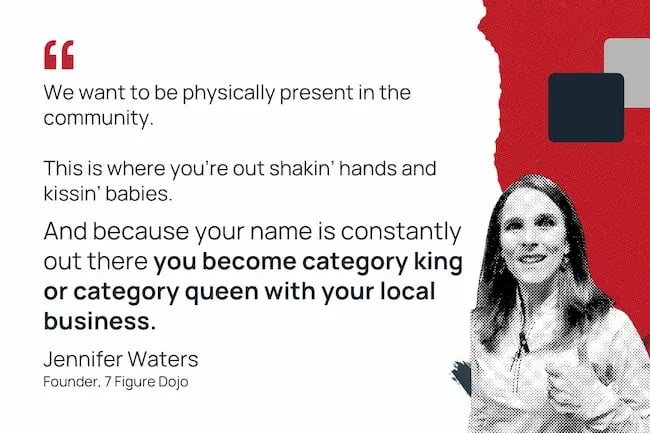
Categories B2B

How to Create a Successful Marketing Campaign [Strategies, Data, + Examples]

From P&G’s “Thank You, Mom” to Dos Equis’s “Most Interesting Man in the World,” marketing campaigns have a way of sticking with us. I find that the best types of marketing campaigns have a long shelf life — sticking in my brain for years, decades even (Sarah McLaughlin’s tear-jerking “Arms of an Angel” ads for the SPCA, anyone?). Why is that? Campaigns make companies memorable.

The entire goal of just about every type of marketing campaign is to build an emotional and memorable connection. I always tell people that campaigns should promote a focused effort that guides your audience toward the desired action. Marketing campaigns give your brand an identity, personality, and emotion.

Download Now: Marketing Campaign Template [Free Resource]

That’s why I’ve been working on this guide — to help you make decisions about how you’ll approach your next marketing campaign. I also have more than 20 years of marketing experience, so I’ll share my insights along the way. Keep reading to get started, or use the links below to jump ahead.

Table of Contents

Marketing Campaigns vs. Advertising Campaigns

Marketing is how a company raises awareness of its brand and convinces customers to make a purchase. Alternatively, advertising is the process of creating persuasive messages around these broad goals.

In terms of campaigns, an advertising campaign might be one facet of a larger marketing campaign strategy.

Let’s say Nike launched a campaign surrounding the release of a new product. Its advertising efforts only reflect one aspect of its marketing strategy. I’d also expect to see the brand use email newsletters, social media, and paid search to meet its goal.

Now that we understand the difference between advertising and marketing campaigns, here are a few more types of marketing campaigns you might run.

Using AI for Marketing Campaigns

No conversation about any type of marketing campaign today would be complete without talking about how to use AI effectively and ethically. Since AI came out, just about every tool I’ve demoed, tested, or reviewed has taken steps to integrate it … somehow. With that in mind, it’s important to see AI as your colleague (or assistant) to help you plan your efforts.

However, like any other tool, AI needs some guardrails. I caution you to make sure you understand all the elements of whatever type of marketing campaign you’re launching. What I’ve found after testing and playing with different AI tools is that if you don’t know what a good output — in this case, a marketing campaign — looks like, you won’t know how to evaluate whatever you use AI to create or ideate.

Candidly, that’s where this guide comes in. By taking the time to understand the different types of marketing campaigns, components, strategies, and examples I’ve shared, you’ll be able to work more effectively with whatever AI program you choose.

Whether you’re using generative AI to help you identify any angles you might have missed, create content, or solve technical issues, AI cannot replace your brain, your unique lived experience, or your gut intuition. However, it can help you speed up the process to get your campaign up and running, get creative off the ground, and analyze the data so you can test your idea and adjust accordingly.

Marketers have a wealth of choices when deciding what kind of marketing campaign to build. So, how do you make the right choice?

Before I take this discussion any further, I want to give you a short definition of each so you understand what they are and how they work.

Looking for a place to manage all your campaigns, no matter the type? Marketing Hub lets you work more efficiently with the help of AI. Personalize messaging, automate campaigns, and gain actionable insights. Start for free today.

1. Product Marketing Campaign

Product marketing or product launch campaigns are centered around building as much buzz as possible — usually related to a new release. Product launch campaigns are one of my favorite types of marketing campaigns. They come at an exciting time in a company when there’s a ton of collective energy related to a new release. In addition to having some really fantastic angles, it’s the perfect time to create buzz and draw people in.

Campaigns are usually omni-channel and rely on collaborative efforts, which means

lots of moving parts. Depending on the size of your organization, you’ll need a central team or person to manage critical checklist items for the launch.

Example of Product Marketing Campaigns

Apple typically does a great job of this with its annual product launches.

apple’s annual product launches are great types of marketing campaigns

Source

However, in my experience, unless you have devoted superfans, most people aren’t waiting with their wallets out, ready to buy your next new product.

So you need this type of campaign to hype up your audience.

Best For

Creating awareness, excitement, and demand for new products so people are ready to purchase as soon as they become available.

2. Brand Development Campaign

Brand campaigns are simply about building awareness about your company and what sets you apart from your competitors.

These are often eye-catching ads that set out to create an emotional reaction of some kind — humor, frustration, and nostalgia are common — to stick in people’s minds.

Example of Brand Development Campaigns

Coca-Cola has incredible branding campaigns that are usually targeted at creating unity around a shared interest that bridges all kinds of differences. The common thread? Drinking a Coke.

coca-cola’s brand development marketing campaigns are a great example of this type of marketing campaign.

I’ve seen many great Coca-Cola campaigns over the years, but some of my favorites come during the holidays or during the Olympics, which are natural times of gathering.

Best For

Increasing brand awareness and creating memorable emotional connections with people. This isn’t usually a type of marketing campaign for driving sales.

3. Email Marketing Campaign

Email marketing is one of the most effective types of marketing campaigns because you own the list and don’t have to rely on algorithm changes, and it’s one of my favorites.

Email is a relatively low-cost investment in terms of money and time and offers an effective opportunity to get in front of your audience.

Example of Email Marketing Campaigns

My favorite example of email marketing campaigns is BarkBox. While their campaigns won’t be the right fit for every brand, they’re absolutely delightful to find in my inbox.

text barkbox emails are fun types of marketing campaigns.

That said, depending on your business and deliverability needs, you might find that text-based emails work better for you. The key lies in having a strong strategy.

Best For

Nurturing a connection with your audience, which will ultimately drive sales.

4. Content Marketing Campaign

In a nutshell, content marketing is focused on serving relevant and useful content to your audience, often solving problems and showing how your services can help.

This type of marketing campaign can take place on a variety of platforms. While goals come first with any good content marketing campaign, I typically use the written word as the foundation of my content strategies.

Then, I repurpose the copy across design, audio, and video into different social media platforms and formats.

Example of Content Marketing Campaigns

HubSpot is pretty much the holy grail of content marketing — and yes, I’m writing this article for HubSpot, but it’s the absolute truth. HubSpot basically coined the term “inbound marketing,” which is largely content-driven.

hubspot’s marketing hub makes it easy to manage all types of marketing campaigns.

Their Marketing Hub and Breeze Copilot AI tool make it easy to create effective content that connects with your audience and drives leads.

Best For

I talk about content marketing as the long game because it can take a while for Google to index content and drive traffic. However, it’s one of the best ways to establish authority and maximize your SEO game.

5. User-Generated Content (UGC) Campaign

UGC campaigns are fantastic because the onus isn’t on you to create content; it’s on your audience.

When your audience creates content, their friends are more likely to take notice.

Well done UGC starts trends that go viral. Remember the Ice Bucket Challenge, which started as an ALS campaign?

Example of UGC Marketing Campaigns

The ALS Ice Bucket Challenge went viral — as a way to build awareness for ALS. Hundreds of people participated, partly for fun, in the popular trend.

the als ice bucket challenge is an example of ugc marketing campaigns.

Source

On the other hand, other UGC marketing campaigns might involve creating a user forum for products where people can answer each other’s questions. It’s a great source of voice of customer research, and more importantly, can give your company an idea of common problems that you may need to address through knowledge base content, tutorials, or other product service content.

Best For

Viral trends like the ice bucket challenge are great for growing your community. The other types are fantastic for creating a knowledge base or getting people engaged with your product.

6. Public Relations/Awareness Campaign

This type of marketing campaign focuses on spreading the word about something that’s going on, often an upcoming event or the debut of a new product.

While public awareness campaigns don’t often go viral, the idea behind them is catching attention and getting people to share the information organically — and sometimes by capturing the attention of journalists and news organizations.

Example of PR Awareness Campaigns

Lego’s Play is Your Superpower campaign is one of my favorite PR and awareness campaigns in recent years. With a goal of bringing awareness to the role that play … err … plays in brain development and encouraging families to encompass more playtime in their lives, Lego’s campaign is filled with bright colors, powerful statistics, and a compelling narrative.

lego’s play is your superpower campaign is a great example of pr awareness campaigns.

Best For

Gaining attention and awareness for your brand by connecting with emotions and journalists.

7. Direct Mail Campaign

I adore direct mail because this type of marketing campaign has a much higher reach percentage than just about any other platform.

Why? People like getting mail — and if it makes it to our mailboxes, at a minimum, we’re going to touch it and look through it. When it’s well done, people hang onto your direct mail promotions — what’s more, they spend 45% longer engaging with your direct mail than other types of marketing campaigns.

The only drawback is that it can be more costly, but in my opinion, it just means you need to be more strategic about your direct mail efforts.

Example of Direct Mail Campaigns

If you’re reading this in an election year, you already know how powerful direct mail can be. Candidates and PACs are always using postcards to build awareness. However, that’s not my favorite type of mailer.

My favorite type encourages people to hang onto the mailing, whether it comes in an envelope or as a flat postcard. Some examples might be:

  • Coupons
  • Calendars
  • Magnets
  • Pens

While you can go fancy, like in the example I’m sharing below, it can also be a simple letter and magnet with their contact info — like my septic company sent out shortly after we moved into our home in the country.

However, the best example in my book is Tommy Bahama. Their mailings often come in an envelope with a gift card attached. The savings are almost always worth hanging onto, also.

tommy bahama has great mailers as an example of marketing campaigns.

Source

I’ve also seen successful direct mail campaigns from service companies with a simple message along the lines of “We just painted a house on your street. Can we give you a quote, too?”

Best For

Developing brand awareness, driving traffic to a store — whether brick and mortar or online, and encouraging people to take action — for example, calling for a quote.

8. Affiliate Marketing Campaign

Affiliate marketing campaigns, also known as influencer campaigns or referral campaigns, are immensely popular ways to connect with new audiences.

People love to buy what other people love, so these types of campaigns provide more awareness, more sales, and commissions to the influencers who are selling your products. These can be ongoing offers or specific promotions.

Example of Product Marketing Campaigns

There are so many great examples of affiliate marketing campaigns. For example, there are several influencers only who promote the Fab Fit Fun box — I see their posts spin up a few times a year.

Clothing and gear brands also often have ambassador programs, which provide a discount to individuals to share with their followers — and deals on their own purchases — in exchange for posting content with photos and videos of their products. One of my clients is building an Ambassador Program to get user-generated content for marketing and use the power of influence.

However, one of the most popular examples is Amazon Associates, which creators can use to gain commissions from product sales.

amazon associates is one type of affiliate marketing campaign.

Best For

Growing your reach and harnessing the power of referrals and recommendations, while getting great content to repurpose in your own marketing.

9. Social Media Campaign

Social media marketing campaigns are simply about reaching your audience on the social media platform where they hang out.

I’ve used these types of campaigns to build brand awareness, nurture relationships, and even do some selling.

Example of Social Media Marketing Campaigns

Everywhere you turn, there are great examples of social media marketing campaigns, which makes it hard to choose. However, I love the Dove Self-Esteem Project, especially their recent Face of 10 campaign, which focuses on helping protect kids — young girls especially — from “anti-aging skincare content that can negatively impact their self-esteem.”

As a parent myself, this resonates with me as I try to protect my kids from social pressures… and this example goes to show how social media can be used for good as well as business growth.

Best For

Organic social media is all about getting as much unpaid engagement as you can. Paid social media campaigns are designed to widen your audience or deepen your reach and might include retargeting people who visited your site.

10. Acquisition Marketing Campaign

Acquisition marketing is a type of marketing campaign focused on growing by finding new customers, while working to keep existing customers engaged and happy. These campaigns focus on attracting, nurturing, and converting leads and may lean on a variety of other types of marketing campaigns I’ve explored here.

Example of Acquisition Marketing Campaigns

Referral programs are great examples of this. I’ve seen this everywhere, from my kids’ summer camp to software I use — where current users benefit from sharing, sometimes monetarily, and sometimes with additional benefits in the program itself.

the dropbox referral program is a good example of an acquisition marketing campaign.

Dropbox’s Referral program awards additional space for every person a user refers.

Best For

Keeping current customers happy while offering incentives to new customers. I particularly like this model because, so often, it feels like new customers get the best deal and existing users aren’t rewarded for staying — I see this often with cell phone and internet providers.

11. Paid Marketing/Advertising Campaign

Paid marketing or advertising campaigns decrease reliance on organic reach and focus on helping improve your position with paid efforts.

In a recent client project, we determined that we needed a blend of Google, YouTube, and Facebook ads, supported by organic content, to continue building the momentum we captured with her new launch.

That meant we needed a variety of different types of assets — landing pages, videos, blogs, social posts, and email sequences, among other types of marketing assets — to support our paid campaigns.

Example of Paid Marketing Campaigns

As with social media campaigns, there is no shortage of great paid marketing and advertising campaigns. The best ones provide an incentive for the audience to take action now and get answers to their questions.

If you’re doing a “request a quote” or “request a guide” type of campaign, you’re likely to get more clickthroughs in-app, whether by pushing your audience to join a chatbot message or filling out a form.

On the other hand, great ads offer an incentive to shop now — such as this one for Anabei sofas, which you can purchase for “up to 60% off” and according to this ad, “the entire sofa can go into the wash.” For a family with kids, dogs, and cats like mine, it’s quite the value prop!

Best For

Getting leads that you can convert through a nurture sequence or on your website.

12. SEO Marketing Campaign

While search engine optimization campaigns are less sexy to talk about than some of the other topics, simply put — they work. By analyzing what people want to know (search intent) and the words they use to search (keywords), you can create SEO strategies that drive traffic to your site.

Because the algorithm is continually changing, I always tell people that the most important part of writing SEO content starts with creating good, helpful content first that people want to read. In my book, that means that I write first for the humans who will be reading the content, while optimizing it for SEO to make it accessible to search engines.

While technical SEO on the back end of your website is critical, when I talk about SEO campaigns, it’s not usually what I’m referring to.

Instead, SEO campaigns usually refer to optimizing individual pages and content with specific keywords, including the content itself as well as the titles and metadata.

Example of SEO Marketing Campaigns

SEO is such an integral part of content marketing, so again, HubSpot gets a gold star for being great at SEO content with its Marketing Hub and Breeze Copilot AI tool.

Looking for more great examples? It’s as easy as doing a Google search for anything and seeing which topics pop up first.

when in doubt about seo marketing campaigns, head to google and do a quick search.

Best For

SEO, like lots of content marketing efforts, is usually a long game. It’s best for building authority and driving traffic.

13. Video Marketing Campaign

Video campaigns will continue to be important elements of every marketing strategy. YouTube, TikTok, and Meta platforms have billions of views each month, which means that if you’re not using video, you should be.

While video should be part of most other types of marketing campaigns on this list, they also serve as a standout process. And, what I love most about video campaigns is there’s a huge range from polished and highly-produced to grittier, low-production videos, meaning that there are opportunities to show up on video, whatever your budget. Moreover, you can do short-form content or longer videos based on the audience you want to appeal to.

For example, I love live video because it offers authentic insights into a brand or person. And, from a personal standpoint, I love that I can’t get stuck in editing and re-editing — it’s live, and you just keep going.

Example of Video Marketing Campaigns

There are approximately one gazillion examples of great video marketing ads that run the gamut from ads to live broadcasts and everything in between. Since it’s so difficult to find an example, I’m sharing a few of my favorites:

First up, Dollar Shave Club — because they launched their entire business with a video, which was just to prove the concept and demand for their products before they really had a business infrastructure.

The second is Old Spice. Roughly 15 years ago, they had a campaign called “The Man Your Man Could Smell Like” to breathe new life into the brand. The first video in that series is here:

I loved that ad and still find it hilarious. Recently, they’ve brought back the concept with the “Smell like your own man, man” campaign featuring videos like this:

Obviously, those are some of the more highly produced videos, but you only have to go to TikTok or Instagram to find more great video campaigns that are shorter-form. Or, perhaps you can join your favorite business coach’s livestream workshop, which is another type of video marketing campaign.

Best For

Building familiarity with the product and creating demand. I particularly like video for small businesses because it helps people build a relationship and identify with the business.

The Anatomy of a Successful Marketing Campaign

In our 2025 Marketing Strategy and Trends Report, we found that data-informed marketing strategies have become the most popular type of marketing campaign.

Brands also emphasize agile marketing and the ability to pivot in the types of campaigns they run.

Successful marketing campaigns continue to focus on social media marketing and brand-building. Companies have focused on online communities to drive more engagement.

Regardless of the type of campaign, the most popular marketing asset is video.

This is followed by images, blog articles, infographics, podcasts, and other audio content. Video continuously has the highest ROI of any media format — a trend that remains strong in 2025.

Marketers are continuing to invest more in video elements of marketing campaigns.

Beyond video, the most successful campaigns today include a blend of digital strategies to ensure that you maximize your efforts.

Marketing Campaign Components

Multiple components go into the planning, execution, and results of a stellar marketing campaign. We’ll discuss the most important components of campaigns below.

Goals and Key Progress Indicators (KPIs)

This component defines the end goal of your campaign. You‘ll develop specific, measurable goals. Then, you’ll state which metrics will be used to track progress.

For example, your content creation campaign might be measured by organic traffic. Each post may aim to drive 1,000 views per month and 10 new contacts. These categories will be measured in Google Analytics and Looker.

Channel

Where will your content and messaging be distributed?

Let’s say you’re running a social media marketing campaign. You might prioritize growing the channels most relevant to your audience. You can also omit those where you’re least likely to grow a loyal following.

Budget

Not all marketing campaigns require an incremental budget, but many still do. Factor in the agency, advertising, and freelance costs. Then, factor these numbers into any ROI analysis for your campaign.

Content Formats

Determine what kind of content you will be creating to fuel the campaign. It’s common for marketers to include multiple content formats in a singular campaign.

For example, a branding campaign could include video ads, press releases, and guest blogs.

Team

Who are the individuals you’re relying on to get the job done? Before kickstarting your campaign, designate people to work on every aspect of the campaign. You should know who handles copywriting, design, media buying, and reporting.

Creative Assets

A great marketing campaign should have great creative assets to match. Whether it’s a sleek website design or an interactive infographic, make sure your design is professional. All your assets should fit the purpose of the campaign.

Top Marketing Campaign Strategies [Data]

According to our 2025 State of Marketing report, there are several types of marketing campaigns and strategies that every business needs to stand out. Here are five of the top strategies marketers cite as their priority in 2025:

  • Flexible strategies that allow rapid pivoting if needed.
  • Customer retention to keep current customers happy.
  • Data-informed marketing strategies drawing on powerful marketing analytics software.
  • AI-driven marketing strategies, which help everyone remain competitive.
  • Short-form video, which has the highest ROI.

As a numbers nerd, I want to share more about the statistics behind these strategies to help you understand why each is so vital this year (and beyond).

Flexible Marketing Strategies

Flexibility may sound like a strange strategy, but it’s vital for agile marketing. Based on everything I’ve seen in the last several years, flexibility can make the difference between success and failure. Here’s what our report found:

  • Marketers rank planning ahead as the biggest way marketing has changed in recent years.
  • 80% agree that they are able to pivot in the case of major events like recessions, a pandemic, or political turmoil.
  • Marketers cite rapid change in people’s lives in recent years as the biggest challenge to understanding the target audience.

Customer Retention Strategies

It costs more to get new customers than to keep current customers (and, potentially, upsell them). More marketers today are leaning into that, working to find new ways to reduce customer churn. Here’s what our report found:

  • The majority of marketers surveyed agree that focusing on existing customers takes priority over finding new ones.
  • 90% of marketers plan to invest the same amount or more in improving customer service through multiple channels, including social media DMs.
  • 94% believe that personalized experiences increase the likelihood that people will become repeat customers.

Data-Informed Marketing Strategies

As marketing departments everywhere feel the pinch, it’s more important than ever to lean into data, and most marketers agree. I’m seeing this with my clients, too — they’re willing to invest money but need to see the ROI. Here’s what survey respondents have to say about how it supports their marketing:

  • 82% say they can turn their data into meaningful insights.
  • 73% agree they have the data they need to reach their target audience effectively.
  • 77% say they have high-quality data on their target audience that makes it easier to understand them.

AI-Driven Marketing Strategies

This should come as no surprise. However it’s interesting to see how AI stacks up with trends, budgets, and strategies.

  • 66% of marketers already use AI and marketing automation in their role.
  • 89% plan to invest the same amount or more into implementing AI marketing strategies this year.
  • 90% plan to grow or maintain their investment in SEO to prepare for generative AI in search.
  • Marketers say that AI and automation is the top new trend they’ll use for the first time this year.
  • 83% agree that AI and Automation tools help them spend more time on the most important part of their job, and 76% say it’s the part of their job they enjoy most.

Short-Form Video Marketing Strategies

Short-form video isn’t going anywhere. It’s one of the best ways to find new customers and build relationships with them — with relatively little investment of time or energy on your customers’ part. And while it’s the only specific tactic or type of marketing campaign in this list, it goes to show how important it is to marketers around the world:

  • Short-form video content is the #1 trend marketers plan to invest the most in during the year.
  • 93% of marketers plan to maintain or grow their investment in short-form video content.
  • Marketers cite short-form video as the marketing trend with the biggest ROI in the last year.

How to Create a Successful Marketing Campaign

Now, you might be wondering, “How do I get started from here?”

Well, now is the time to plan your campaign. In fact, the planning process is my favorite part. I always start by identifying key goals so I can start mapping out the strategies and tactics that will help me (and my clients) get there.

Next up is a campaign plan with a course of action that lays out the types of marketing campaigns and the marketing software that we’ll use to build and measure our efforts. And, as a reminder, this should detail required resources, assets, stakeholders, and measurable goals so we have a roadmap for tracking success.

Let’s dive into what that process will look like in detail in the section below. If you’re more of a visual learner, this video can help.

1. Understand the elements of your plan.

Before you get started, it’s important to understand that creating a successful marketing campaign requires considerably more effort and strategy than simply creating the marketing assets and making a post. No matter what type of marketing campaign you’re undertaking, I want you to take a moment to realize that you’ll need to spend time:

  • Planning your marketing campaign.
  • Creating and distributing your assets via the public-facing part of your campaign.
  • Converting your new leads into customers, whether through a nurture sequence, on-site, or something else.
  • Assessing your marketing campaign success and using that data to inform future efforts.

I’ll walk you through each step of the way below, but before going any further, I simply want you to acknowledge everything that goes into a successful campaign strategy.

2. Set a purpose and goal for your campaign.

all types of marketing campaigns start with goal setting

Source

I always like to start simple when it comes to planning every type of marketing campaign. Why are you running this campaign? What would you like your campaign to accomplish for your business?

If you’re having trouble defining your campaign purpose, start broad. I always recommend reviewing a set of goals like those below so you can identify which is most closely aligned with your own:

  • Promote a new product or service.
  • Increase brand awareness.
  • Gather customer feedback or content.
  • Drive leads.
  • Generate revenue.
  • Boost user engagement.
  • Advertise an upcoming event.

This is hardly a definitive list, but it gives you an idea of general business goals a campaign could help reach.

Got your key goals?

Now, let’s take this broad campaign purpose and turn it into a S.M.A.R.T. goal. We’ll use the third option as an example: Gather customer feedback or content.

“The goal of my marketing campaign is to gather user-generated content from 100 customers via a branded hashtag on Instagram featuring our new product line by December 31.”

The goal is specific (user-generated content), measurable (100 customers), attainable (via a branded Instagram hashtag), relevant (featuring the new product line), and timely (by December 31).

See how this broad campaign purpose instantly transforms into an actionable, attainable goal?

Pro tip: Setting SMART Goals is simple when you have the right tools. Check out the free SMART Goal-Setting template below to get started on this critical piece of your marketing campaign.

Featured Resource: Free SMART Goal-Setting Template

image of turning goals into smart goals.

3. Establish how you’ll measure your campaign.

This will look different for everyone, depending on the channels you’re leveraging and your end goal. You might measure email open rates, new Facebook likes, or product pre-orders. You can also track a combination of several helpful metrics.

These answers will depend on your overarching campaign goal. Here are a few examples of metrics based on the campaign goals mentioned above.

  • For promoting a new product or service: Pre-orders, sales, and upsells.
  • For increasing brand awareness: Sentiment, social mentions, and press mentions.
  • For gathering customer feedback or content: Social mentions and engagement.
  • For generating revenue: Leads, sales, and upsells.
  • For boosting user engagement: Blog shares, social shares, and email interactions.
  • For advertising an upcoming event: Ticket sales, vendor or entertainment bookings, and social mentions.

If your campaign involves multiple marketing channels, it’s wise to define how you’ll measure your campaign on each medium.

text identify the kpis for your type of marketing campaign.

Source

For example, say I was running my user-generated content (UGC) campaign on social media, email, and our blog. First, I’d define my key performance indicators (KPIs) for each medium, which may look like:

  • Instagram engagements (likes and comments) and profile tags.
  • Email open rates and click-through rates.
  • Blog views, click-throughs, and social shares.

Then, I’d define my primary campaign KPI: Instagram-branded hashtag mentions.

While the above KPIs indicate how well my campaign reaches and engages my audience, my primary KPI tells me how close I am to reaching my SMART goal.

Lastly, let’s think about another question: What does “success” look like for your company? Sure, it’s exciting to reach a predetermined goal, but that’s not always possible. What (outside of your goal) would constitute success for you (or serve as a milestone)?

Pro tip: When determining how you’ll measure your campaign, consider setting up some checkpoints along the way.

Let’s say your campaign involves boosting brand awareness, and your goal is to reach 50 PR mentions by the end of the year. You can set benchmark notifications at 10, 25, and 40 mentions.

This will remind you to keep pushing toward your ultimate goal and boost morale within your team. Checkpoints are a reminder that your hard work is paying off.

4. Define your target audience.

Imagine constructing a bulletproof marketing campaign only to be met with crickets.

In that case, you might think you chose the wrong marketing medium or that your creative wit wasn’t enough. However, the culprit may be your audience.

To resolve this problem, figure out what stage of the buyer’s journey your campaign is targeting. Are you trying to bring in new customers? Are you attempting to gather feedback from existing clients?

Are you marketing to those who recognize your brand? Or are you introducing a new brand identity altogether?

Your marketing message will vary depending on whether your campaign audience is in the awareness, consideration, or decision stage. Even though your campaign may reach those outside your target audience, it’s vital to design your campaign with a specific target in mind.

Next, identify your audience’s interests and pain points. Here are some questions to ask yourself and your team to better understand your audience.

  • What are my audience’s general interests? What magazines do they read? What TV shows do they watch? How do they spend their free time?
  • Where does my audience hang out online? For what purpose do they use Instagram, Facebook, and other networks? Do they engage or merely browse?
  • What kind of content gets my audience’s attention? Do they respond to straightforward sales messages? Would they rather consume witty, humorous content? What cultural references would they understand?
  • What kind of problems do they have that my product, service, or brand could solve?

Becoming well-acquainted with your campaign audience will help you confidently answer these questions and any others that may arise during the campaign.

Pro tip: To uncover more about your audience, survey your existing and potential customers in your market. Then, use this data to create your buyer personas. You can even enter that data into a free buyer persona generator like the one below.

Featured Resource: Buyer Persona Generator

hubspot’s persona tool makes it easy to target your marketing campaigns.

5. Set a concept for your campaign and get in contact with the right team.

Marketing campaigns require a mission, vision, and visual identity. Great campaigns are an offshoot of their parent brand — both visually and creatively. These campaigns stay consistent with the business brand while maintaining their own identity.

When creating campaign assets, some businesses use an in-house team. Others opt for an agency. You can also hire a freelancer or contractor to complete a specific portion of the project, such as the copy or design.

Pro tip: We recommend starting with your in-house team and moving forward from there. This team includes experts. They know your brand and can speak to what your campaign needs to succeed.

This step will likely take the longest, as you’ll be creating your campaign concept from scratch. Next, we’ll dive into how you’ll distribute your campaign assets and connect with your audience.

Featured Resource: Market Research Kit

hubspot’s market research kit and templates provide guidelines for different types of marketing campaigns.

6. Choose the channels on which you’ll run your campaign.

This choice depends on your audience preference, budget, and brand engagement levels. Your answers to the questions above should guide your decision.

Take a look at the current media channels you use to promote your company. Which ones perform the best? Which ones allow you to pay for advertisements? Which ones have the best engagement? Most importantly, where are your customers hanging out?

7. Set a timeline for your campaign.

build a timeline or visual map of your marketing campaign.

Source

Establishing a campaign deadline gives you a better idea of when, how, and how often you’ll promote it. Here’s how to do this:

  • Build a general campaign timeline. Then, mark your campaign start date and deadline on a calendar.
  • Take a look at your marketing assets and chosen promotional marketing channels. Then, work backward from the campaign launch date. Based on your resources, how often can you afford to post and promote your campaign content? With this information, create a promotional calendar for each marketing channel.
  • Decide on a cadence for each channel and map your scheduled posts, emails, etc., on your calendar.

Visually mapping your marketing campaign will help you evenly disperse your campaign promotions. You can then publish equally on each medium.

Visual mapping also gives you an idea of where your time and energy are going. When the campaign is over, you can look back to assess your effectiveness.

Pro tip: If your promotional calendar seems full, don’t fret. Social media and email scheduling tools can alleviate the pressure of posting daily. Check out tools, like HubSpot and Buffer, to help you schedule and manage your campaign promotions.

8. Ensure your campaign is driving users toward a desired action.

Even if your campaign is effective and drives a ton of traffic, it still needs to complete its desired action. By “the desired action,” I’m talking about that SMART goal you initially defined. Let’s take a moment and reiterate that goal.

For my sample campaign, my SMART goal was “to gather user-generated content from 100 customers via a branded hashtag on Instagram featuring our new product line by December 31.”

This step is all about calibrating your marketing efforts and channels to lead your customers to complete your desired goal. This is done through conversion assets like calls-to-action, landing pages, and lead forms.

Pro tip: Lead conversion assets can be used separately or in conjunction with one another. For example, you may feature a lead form on a landing page or create a call-to-action asking your audience to complete a form.

9. Monitor the right metrics.

monitor your success for any type of campaign using your kpis.

Source

Your campaign effectiveness metrics will depend on what type of marketing campaign you’re running. This section merely serves as a baseline list to give you an idea of what to watch.

Focusing on vanity metrics like generated traffic, click-through rate, and impressions is tempting. A bump in these areas is a good thing.

However, they don’t necessarily indicate a change in revenue. Vanity metrics can’t be the only means to measure the effectiveness of your campaign.

Pro tip: Bookmark all the marketing metrics to watch. It’s organized by marketing channel. You can quickly scan the list for new metrics to track.

10. Establish success numbers and metrics.

monitor the success of your marketing campaign.

Source

Start by considering your campaign’s initial SMART goal. Did you meet your target? If it did, great! If it didn’t, you can dive into the data to assess why.

For example, if your goal was to increase organic blog views by 100K, any bump in views would be considered successful. But there’s a difference between a campaign that works and a worthwhile campaign. A worthwhile campaign gives you an ROI proportionate to the time and energy you put into it.

Pro tip: While it’s OK to celebrate any bump in pre-orders, leads, views, or engagements, don’t assume that’s enough. There’s a reason the very first thing to do is set a campaign goal. Sticking to that goal and calibrating your investment will ensure your campaign is worthwhile.

11. Decide what you’ll do with the campaign data.

This step helps maximize your campaign’s business impact.

When you analyze and apply your data, its value increases tenfold. The data helped you assess your campaign results. Analyzing further gives you clarity on your audience, marketing methods, creative prowess, and more.

Let’s return to my UGC Instagram campaign.

In addition to meeting my goal of 100 posts with UGC, the data I collect in the process also offers insights into who my audience is. I can understand when and how often they post on Instagram, what languages they use, and how they use my product.

Whether you collect lead information, pre-orders, social engagements, or offer downloads, your data can equip you to expand your marketing efforts as a whole.

Pro tip: The campaign isn‘t over once you’ve pulled that final report. Spend time with your team in a retrospective meeting. Ask yourselves questions like:

  • What could’ve been done differently?
  • How could we have saved money?
  • For anything that went wrong, why do we think it went wrong?
  • What did we learn about our audience or marketing channels?
  • What kind of feedback could we gather from participants or customers?

Great Marketing Campaign Examples (and Why They’re So Great)

This wouldn’t be a HubSpot Ultimate Guide if we didn’t share some examples from the pros.

1. The Lip Bar‘s “Something BAWSE is coming.”

In 2022, The Lip Bar celebrated its 10-year anniversary. It also released a new product called “The Bawse Bundle.”

In early February, the brand launched a multi-channel campaign, from website and social media to billboards.

marketing campaign example from the lip bar

Source

The campaign is built around a story of resilience and perseverance, focusing on the CEO’s negative experience on the show Shark Tank.

Why This Campaign Works

It accomplishes multiple things through a single campaign: It gives the audience a peek into the brand’s journey. It builds on that journey and beautifully connects it to a product.

Current customers share in this excitement because of the 10-year anniversary. Plus, new customers will be drawn in by the CEO’s personal story.

2. Meta: “The Metaverse”

In 2021, Facebook announced the rebranding of its parent company. The new name, Meta, came with its own marketing campaign that introduced the world to a new concept called the “metaverse.”

in 2021, facebook rebranded as meta.

The video posted to the Meta Facebook account showcases an alternate reality where people can interact in 3D.

Why This Campaign Works

The idea of a Facebook rebrand had been speculated before the launch of the campaign, which piqued the public‘s interest. That meant even if they didn’t like the change, they would still be interested in seeing what happens next.

3. Popeyes: “Megan Thee Stallion Hottie Sauce”

Popeye’s already hit the ball out of the park with its chicken sandwich marketing campaign. Then, it nailed it again with the Megan Thee Stallion Hottie Sauce collaboration.

examples of marketing campaigns, popeyes

Source

Arguably, Popeyes created one of the best chicken sandwiches on the fast-food market in 2019. At the same time, artist Megan Thee Stallion was becoming the hottest rapper in the industry.

So, it made sense that in 2021, the two would join forces to debut a remix of the successful chicken sandwich.

Why This Campaign Works

This campaign targeted the younger crowd with both just chicken sandwiches and merchandise.

Popeyes was able to tap into this segment of the market and increase sales while continuing to capitalize on its success. Plus, the campaign never came across as stale.

4. Cheerios: #GoodGoesRound

[Video: https://www.youtube.com/watch?v=_kSv3UgjPTs]

General Mills ran a non-profit campaign called Good Goes Round via its Cheerios brand. This effort lobbied to raise enough money to fund one million meals.

Why This Campaign Works

The campaign featured its own landing page, video marketing assets, and hashtag (#GoodGoesRound). This separated the campaign from its parent brand and made it more shareable.

The company also paid to promote the “Good Goes Round” URL on Google, giving the campaign more visibility.

5. Apple: “Shot on iPhone”

types of marketing campaigns, apple

Source

You’ve probably seen a billboard with an amazing image that declares, “Shot on iPhone.” This series highlights the high-quality images that customers can capture on the iPhone X.

It’s a product launch campaign that focused on one specific feature of the new Apple smartphone.

Why This Campaign Works

This campaign was unique. It’s similar to a user-generated campaign but was also promoted heavily by the brand itself.

Apple launched its own Instagram account to share the #ShotoniPhone content. The brand also collaborated with professional photographers and videographers. There were even official TV advertisements.

6. The General: “Rebrand”

When it comes to cheesy commercials, The General’s old marketing strategy fits the bill.

The brand became synonymous with pixelated animations and low-quality production. This inevitably had a negative effect on the way potential customers perceived the quality of service.

In 2020, the company changed its marketing campaign to target a more rational customer who appreciates a little humor.

Shaquille O’Neal became the face of the brand. He appeared in commercials alongside other notable celebrities, like Montell Jordan and Ernie Johnson.

shaq is the new face of the general.

Why This Campaign Works

The General listened to its customers’ opinions of the brand before moving forward with the new campaign and saw great success as a result.

The tone of the marketing campaign remained light-hearted but took a more mature approach to the humor. The key selling points of The General shine through.

7. Airbnb: “Made Possible by Hosts”

In the face of the COVID-19 pandemic, travel companies such as Airbnb saw unprecedented losses in profit.

How did the company respond? It created a series of videos called “Made Possible by Hosts.” These videos showed appreciation for the hosts who have continued to accept guests on the platform.

Why This Campaign Works

What I really love about the campaign is that it doesn’t put Airbnb customers at the center.

Instead, it spotlights the hosts who accept customers in the first place. In doing so, Airbnb focuses on the human aspect of its platform: You’re not renting an Airbnb property. You’re renting someone’s home.

8. Patagonia: “Earth is Our Only Shareholder”

In 2022, founder of Patagonia Yvon Choinard decided on “going purpose” over “going public” which involved donating 100% of profits after reinvesting in the business to two nonprofits committed to championing the environment.

Why This Campaign Works

While less of a traditional marketing campaign and more of a business decision, I love Patagonia’s approach to double down on its values and attract its core audience — people who love the outdoors and want to protect it. It’s a powerful branding strategy and has the potential to continue spinning up lots of great campaigns.

Over to You

Marketing campaigns aren’t easy, but they’re valuable and integral to growing a successful brand and business.

Campaigns set apart certain deliverables from general promotional efforts. You can reach your audience in creative and exciting ways.

If you’re not sure where to start, I recommend putting yourself in your audience’s shoes. Start with what would be valuable to your audience and go from there.

After all, your audience is critical to your success as a company, so you’ll never go wrong by putting them first.

Editor’s note: This post was originally published in August 2017 and has been updated for comprehensiveness.

Categories B2B

The 6 Best Content Planning Software — Experts Explain Their Top Choice

I’ve been in content marketing since early 2015. With almost a decade of experience, I’ve tested dozens of content planning software, spreadsheets, and calendars over the years.

Collaborations with leading companies like HubSpot, Cognism, Userpilot, and small startups gave me the chance to work with tons of workflows and features. Some were love at first click, and some were meh.

Build your website with HubSpot's Free CMS Software

This article is a rundown of my six favorite content planning tools out there, complemented with insights from other content experts.

Table of Contents

What is content planning software?

Content planning software is a tool that helps you organize, schedule, track progress and post-dues, and manage your content creation process with teammates in one place.

It keeps your ideas, deadlines, briefs, publishing, and content distribution tasks on track, whether you’re working solo or as part of a team.

A content marketing manager easily spots gaps in content planning one month’s time ahead and gets their team to address the issues collaboratively.

4 Benefits of Using Content Planning Software

Content planning software is so versatile that its benefits become a long list. Yet I’d group them together into four categories:

1. Keeps everything organized and saves time.

Remember the days when your content ideas were scattered across random docs and notes? OK, I’m still guilty of it. But now I move everything written to software and set deadlines, add attachments, draft the concept into a task’s description, etc.

Plus, it became a priority for our team’s weekly planning meetings — every idea goes to a backlog where a manager or responsible person picks tasks to work on a given week.

At HubSpot, we also use Asana to organize content marketing, media, and SEO, work with contractors and freelancers to keep them on track, and govern the whole process of content creation.

content planning software to manage cross team's tasks

2. Helps track progress.

There’s nothing more satisfying than seeing tasks move from “in progress” to “done.” I love the visual progress bars and calendars — they keep me motivated and show me exactly where things stand.

Speaking of that, Scan2CAD demonstrated how Trello streamlined its workflows.

With over 90,000 customers and fewer than 25 employees, they needed a simple way to track progress. Before Trello, juggling multiple systems made tracking a headache for the entire time.

Now, Trello takes care of everything and gives a clear view of where each task stands — from content creation to sales to development.

Its straightforward setup made it easy to manage workflows and hit deadlines. As CEO Luke Kennedy, says, “We’ve saved hours of time and pain, plus a lot of money.”

3. Encourages collaboration.

Instead of endless email threads, everyone in the team updates the same tool. Comments, changes, and approvals happen all in one place, saving us tons of back-and-forth.

Mangopay’s experience with Notion is a perfect example of this. They streamlined their knowledge-sharing by replacing multiple tools with a single workspace. This added to collaboration and engagement — 64% of their 500 employees contribute as editors and 91% are active monthly.

By tearing down silos, Mangopay saw impressive results — like eliminating an HR Slack channel because answers were all in Wikis.

mangopay x notion

Source

4. Improves efficiency.

Having a clear plan means fewer last-minute scrambles, which leads to better ideas and execution. I can now schedule brainstorming sessions and still have time to refine everything before it goes live.

A perfect example of this is ON24 and their experience with CoSchedule. Before they started using it, their marketing team struggled with organizing their social media and blog content.

Deadlines were missed, and opportunities to grow their online presence were often overlooked. But once they centralized their content planning, they quadrupled their blog output from 24 to 112 blogs a year🔥. This boost in content production drove a 98% increase in blog traffic and a massive 1,412% growth in organic traffic.

on24 x coschedule case study

Source

A content planning tool is a must. But how should you select which one to use from so many options?

What to Look for in Content Planning Software

When I was looking for a perfect content planning tool, here’s what I focused on:

  • Ease of use. I wanted something simple. No complicated dashboards and a fancy design to waste time figuring out how to use it.
  • Collaboration. Since I work with a team, it needed to have real-time collaboration features. Task assignments, comments, attachments, postponed tasks, notifications, recurring tasks, multiple assignees, subtasks, and easy file sharing were a must.
  • Content calendar. I needed a solid content calendar to keep everything organized and on schedule. I wanted to see all my posts and deadlines in one spot.
  • Customization. I needed to adjust the tool to fit my process. I didn’t want to change how I worked just to make the tool fit.
  • Integrations. It had to sync with other tools I already use — social media managers, analytics, you name it.
  • Analytics. I wanted to track how my content was doing without pulling info from a bunch of places.
  • Templates. Templates for blogs, social posts, and newsletters helped me save time. No need to start from scratch every time.
  • Mobile access. I needed a tool I could access on the go. Cloud-based or mobile-friendly was another must.
  • Storage. I wanted to store everything in one place — drafts, images, final pieces — so I don’t need to dig through emails or folders.

Alright, let’s now see which tools cover all (or at least most) of these nine points mentioned. Each one has its strengths, and in the end, I’ll leave the final decision up to you.

The 6 Best Content Planning Software

1. ​​Asana

My first time using Asana wasn’t exactly a great experience — but I didn’t really give it a fair shot. Plus, to be honest, it wasn’t as awesome back then as it is now.

Now, 90% of my past and current clients use Asana for all their content management. From the very first stage of ideation to the final publishing, we handle everything through Asana’s boards — and I absolutely love this tool.

asana content calendar

It’s a complete system for organizing your content calendar, streamlining workflows, and keeping everything centralized — whether we need to schedule a blog post or map out a campaign timeline.

Top Features for Content Planning

  1. Content calendar: See all content in one interactive calendar, including launch dates and channels.
  2. Automation: Automatically assign tasks, set custom rules, and use templates for a faster workflow.
  3. Integrations: Sync with tools like Google Workspace, SharePoint, and Dropbox to centralize content reviews and storage.
  4. Custom dashboards: Track pieces by channel, audience, or status.
  5. Real-time feedback: Share feedback directly within calendar tasks and send notifications to your team.
  6. Flexible deadlines: Quickly adjust due dates and deadlines to accommodate changing priorities.
  7. Attachment integration: Attach relevant files directly to tasks, keeping all your content assets easily accessible in one place.

What I like: Asana has a great editorial calendar template, and I also like the ability to assign subtasks for each stage of content creation.

For example, under one blog post task, I can create subtasks for writing, editing, designing visuals, and scheduling. Everyone knows their role, and the work stays connected to the big picture.

asana editorial calendar

Source

Pricing

  • Personal (Free): Great for individuals; includes basic project views (list, board, calendar), integrations, and reporting.
  • Starter (€13.49/user/month): Adds timeline and Gantt views, automations, and dashboards — ideal for growing teams.
  • Advanced (€30.49/user/month billed annually): Includes portfolio management, advanced reporting, and resource management for larger companies.

Best for: Teams looking to automate and streamline their content workflows with a highly visual, centralized planning tool.

What do experts say about Asana?

Most experts I’ve spoken with agree that one of Asana’s best features is definitely its automation and super intuitive dashboard.

“The way I use the dashboard is pretty straightforward. I create a project for each campaign, and within that, tasks for content creation, approvals, and publishing. Every task has a due date, assigned team member, and clear instructions, which keeps everything organized… My team didn’t need much training to get started; the layout is intuitive enough that we just dove in and figured it out as we went,” shares Brenda Beltran, SEO content manager at Holafly.

When it comes to the downsides, Beltran pointed out that it doesn’t always integrate smoothly with every platform they use, like specific analytics tools. To work around this, they rely on Zapier to connect Asana with Google Sheets, creating custom reports to track campaign performance.

2. Content Marketing Planning Templates by HubSpot

The real pain isn’t the writing and creating itself — but everything else that goes into making sure content flows smoothly. That’s why I love HubSpot’s content marketing planning templates. They are fantastic for anyone in the world of brainstorming, scheduling, and optimizing blog posts.

A set of free templates makes content planning so enjoyable, whether you’re using Excel, Google Sheets, or Google Calendar.

Organize and prioritize content by breaking it down into key elements like topic, goal, content type, target persona, and responsible individual. Each idea is scored based on its benefit and cost, helping teams focus on high-impact strategies.

You can also track the status of each idea, ensuring alignment with business goals and efficient use of resources.

content marketing idea planning template by hubspot

Source

You’ll also love HubSpot editorial templates if you need something simple and cost-effective for your blog management. They make data aggregation and organization simpler, and they’re easy to customize. The learning curve is quick, and they integrate well with calendar apps and content management tools.

hubspot blog editorial calendar

Source

However, they’re not ideal if you need to track multiple channels, and collaboration options are quite limited.

Top Features for Content Planning

  • Content calendar: Plan publishing schedules to ensure content is published on time.
  • Topic brainstorming: Jot down ideas and align them with the target audience’s needs.
  • Keyword optimization: Link keywords to specific content pieces to keep SEO a top priority.
  • Easy customization: Tailor your calendar to fit your team’s unique workflow and needs.
  • Integrations: Sync with your existing tools like Google Calendar or CMS for better coordination.
  • Tracking progress: Track the status of content from idea to final post so no piece is overlooked.

What I like: The content calendar is my favorite template cause it’s simple and to the point. Super clear, with no unnecessary clutter, making it really easy to find what I need.

hubspot content marketing calendar

Source

Pricing

  • HubSpot offers free editorial, blog, and social media calendar templates.

Best for: Content marketers looking for an organized, simple, and free way to plan and schedule blog posts and social media content.

Pro tip: Test out HubSpot Content Hub — a suite of tools with content planning templates, AI-powered content generation, lead capture tools, a scalable CMS, video and podcast hosting, A/B testing, SEO recommendations, and advanced analytics.

Use it as a standalone tool or integrate it with a project management tool like we do with Asana to facilitate content production across different teams.

3. Notion

Notion’s versatility shines through with its content calendar templates made by different creators (both free and paid), which let you plan, track, and manage content seamlessly.

But if you prefer to start from scratch instead of using pre-made templates, you can totally do so.

notion editorial calendar templates

Source

Personally, I use Notion for a slightly different purpose than Asana. I don’t use it as a calendar or schedule but mainly for planning and progress tracking.

Here’s how.

I’ve set up a few key documents where I add tasks and track the entire process. For instance, I have a “Content Strategy” section where I map out detailed strategies for each client/website.

I also created a “Content Backlog” to keep track of all topics we’ve covered so I can see where each one stands — whether it’s a sprint candidate, has been published, is still in progress, or is in the distribution/promotion phase.

I put all my topics into one Notion sheet and track their status using colorful tags that help me clearly see what’s happening with each content piece at any given moment.

notion status tags

Of course, Notion also lets you use a Kanban board if you need a calendar-like view of tasks.

notion kanban board

Source

Top Features for Content Planning

  • Content calendar: Organize your entire content strategy in one place with customizable views for every type of content.
  • Template variety: Many free and paid content calendar templates, including blog editorial, social media, and YouTube planners.
  • Notion AI Integration: AI-powered features help generate ideas and suggestions based on your goals.
  • Database flexibility: Create custom databases for different types of content and link them to keep everything connected.
  • Customizable workflows: Use tags, checklists, and task assignments to design workflows that suit any project, ensuring clarity and accountability.
  • Progress tracking: Track the status of your tasks and content pieces using visual progress bars and kanban-style boards.

What I like: The ability to break down every piece of content and clearly track which stage of the funnel it’s in. I can leave notes within the document to note the resources I used, the questions I asked experts, how my whole process went, when I plan to publish, and more. It’s all organized in a clean, structured way for each topic, so everything’s super easy to follow.

planning the content in notion

Pricing

  • Free: Great for personal use and smaller teams with basic content management needs.
  • Plus (€11.50/seat/month): Perfect for small teams, offering unlimited blocks, file uploads, and integrations with third-party apps like Slack and GitHub.
  • Business (€17/seat/month): Designed for growing businesses, with advanced analytics, database automations, and more.
  • Enterprise: Contact sales for large-scale teams needing advanced security, custom integrations, and extensive control features.

Best for: Teams that want a highly customizable content management tool with a collaborative workspace and deep integration with other apps (Mailchimp, Asana, Calendly, etc.)

Pro tip: Notion is used as a tool to document content marketing processes and share across teams, stakeholders, and remote employees or freelancers. Userpilot and Lemlist use Notion to write and store standard operating procedures (SOPs).

What do experts say about Notion?

I had a chance to talk to Jake Ward, the founder of Kleo, a browser extension that helps you discover and create content on LinkedIn.

When I asked him about the tools he’s used for content planning, he said he’d tried a lot over the years — Asana, Trello, Monday.com — but Notion was the one that stuck.

Unlike other tools that lock people into rigid templates, Notion lets him set up custom databases, see a calendar view, and track progress exactly how he needs, Ward said.

“My dashboard in Notion has three main parts: Campaign Calendar, Content Hub, and Analytics. It’s color-coded, which helps me navigate faster. It’s easy to use, too — any new team member can pick it up without much trouble,” Ward adds. “The workflows are customizable, so I can make templates that fit exactly how I like to work. Every stage of content, from planning to review, has its space.”

Ward also shared that Notion doesn’t have the same built-in automation features as Trello or Monday.com, so he uses Zapier to get the job done. It’s an extra step, but it works.

“Paired with Kleo, it helps me create and grow my audience without spending hours managing stuff that doesn’t matter. It’s a simple setup, but it’s effective, and it’s helped me build an audience of over 150,000 followers in two years,” Ward says.

4. Trello

I used Trello for 8 months within my client’s workspace, and I enjoyed its simplicity. The Kanban view of the Content Calendar had the team stay on track and assign extra tasks like reading a memo, a new guideline, etc.

Trello uses boards, lists, and cards to break down tasks and track progress. Offers you a feature to label your tasks with priority, topic, etc. Core features come free of charge, making Trello a starting point for blogging. If you’re looking for something super intuitive and extremely easy to use, you’ll definitely like it.

For grown-up teams, IMO, the tool is too simple.

trello board

Source

Top Features for Content Planning

  • Boards & lists: Visualize your workflow with customizable boards and lists and track content production stages or campaign progress.
  • Cards: Every task has its own card, with details like descriptions, attachments, due dates, and checklists.
  • Butler automation: Set automated rules for almost everything (e.g., due dates, task assignments) so your team doesn’t waste time on repetitive work.
  • Integrations: Connect apps you already use, like Slack or Google Drive, to streamline your processes. Hundreds of power-ups add extra functionality to suit any project need.
  • Progress views: Switch between Calendar, Timeline, and Board views to stay on top of your deadlines. Each gives you a different perspective on your content calendar and task management.

What I like: Drag-and-drop feature. You can move things around in the cards in seconds, which is a lifesaver when you’re juggling a ton of media stuff at once.

Pricing overview:

  • Free: For individuals or small teams. Unlimited cards, Power-Ups, and boards (up to 10 per Workspace), plus 250 Workspace command runs per month.
  • Standard ($5/user/month): Unlimited boards, advanced checklists, and 1,000 command runs per month.
  • Premium (contact for pricing): Includes advanced features like a timeline view, additional automation options, and priority support for growing teams.

Best for: Teams that need a simple but effective tool for managing content workflows and projects, with flexible views and plenty of integrations.

What do experts say about Trello?

I caught up with Tiago Pita, brand and ecommerce director at Whole Food Earth, to ask more about his content workflow. His Trello has three main boards: Ideas, In Progress, and Published. Plus, there is a separate board for seasonal campaigns with specific deadlines and subtasks.

“It takes about 15 minutes to get a new team member up to speed. Its simplicity allows us to onboard quickly, which is great for a fast-paced environment like ours. Our on-time publishing rate improved by 30% after implementing Trello. It has helped us maintain a consistent content cadence, which has positively impacted our engagement rates across platforms,” says Pita.

When I asked if he’d tried anything else, he said they’d used Asana before, but it felt too feature-heavy for their needs at the time. Trello’s simplicity won out.

On the other hand, Trello lacks advanced analytics. To work around this, Pita’s team paired Trello with Google Sheets for metrics tracking. It’s not ideal, but it bridges the gap effectively.

5. CoSchedule

The tool is famous for its social media and content planning features with UNICEF, Yamaha, and P&G among their customers. That made me study the tool’s overviews and schedule a demo with their sales team to get an inside look.

From everything I’ve researched, CoShedule lives up to the hype.

coschedule content calendar

Source

What stood out to me is how it simplifies managing multiple projects or campaigns with color coding, labels, complex cross-team workflows, subtasks, integrations, APIs, etc.

Top Features for Content Planning

  • Unified marketing calendar: Centralize your marketing strategy with a single calendar where you can organize projects, schedule posts, and visualize deadlines.
  • Campaign management: Combine tasks into campaigns, giving you a holistic view of timelines and deliverables.
  • AI-powered assistant: Save time with tools to draft content, generate ideas, or even create images with minimal effort.
  • Social media management: Plan, publish, and track posts across platforms like LinkedIn, Instagram, and TikTok, all from one dashboard.
  • Integrations: Connect with apps like HubSpot, Slack, and Google Analytics to streamline workflows and consolidate reporting.
  • ReQueue feature: It automatically reshares your best-performing social media messages, saving time and driving more traffic to your top content with minimal effort.

What I like: You can add stakeholders as guest contributors to assign tasks, tag them in discussions, and let them review work. The read-only calendar links are a bonus, keeping clients updated on project progress in real time without letting them modify anything.

coschedule board

Source

Pricing

  • Free: Best for individuals managing basic social publishing. Includes 2 social profiles, 15 scheduled posts, and basic support.
  • Social Calendar ($19/user/month): For small teams focused on social media strategies. Offers unlimited posts, five social profiles, and advanced analytics.
  • Agency Calendar ($49/user/month): Tailored for agencies managing multiple clients. Includes client brand profiles, white-label reports, and more.
  • Content Calendar (custom pricing): Combines all content and social plans. Ideal for mid-sized teams needing robust tools like Kanban views and advanced reporting.
  • Marketing Suite (custom pricing): For large-scale teams handling complex campaigns, with features like asset management and enhanced permissions.

Best for: Teams that need an all-in-one content management solution with campaign-level organization and collaborative features.

What do experts say about CoSchedule?

I got some great insights about CoSchedule from Aaron Whittaker, vice president of demand generation and marketing at Thrive Internet Marketing Agency.

His team turned to CoSchedule’s Marketing Suite after evaluating several tools, including Monday.com, which lacked the specialized content marketing capabilities they needed. (I tried working in Monday, too, and it’s a nightmare with missing features for content collaboration.)

The standout CoSchedule’s features for him were Content Organizer, ReQueue + an integrated AI assistant that predicts content performance based on historical data.

“We can now visualize how a single topic branches into multiple content formats across different channels, with each piece automatically inheriting relevant campaign tags and deadlines,” Whittaker says. “The ReQueue feature alone saved us around 10 hours weekly on social media scheduling.”

Moreover, customizable workflows and content pillars helped them manage complex approval processes, although Whittaker noted limitations in the number of custom statuses allowed.

6. Basecamp

My first run-in with Basecamp? Not great.

The client who gave me access basically just threw me into the deep end, and I had to figure it out myself. I wasn’t too impressed, and a lot of it was honestly confusing. Back then, the original version of Basecamp was more complicated, and a great deal of marketers would agree.

But when they updated to the latest version, Basecamp went literally on fire.

basecamp cards on dashboard

Basecamp pulls everything into one simple dashboard: you’ve got to-do lists, shared calendars, and file storage to track every part of the content process. Unusual for content planning software and takes time to get used to but effective for small content teams to keep all content docs in one place.

Plus, team members can comment right on tasks or files, and there’s also a Campfire chat, so communication stays tight and organized.

Top Features for Content Planning

  • Messages under the cards: A centralized space to discuss specific topics, replacing endless project emails.
  • To-dos: Track work, deadlines, responsibilities, and project details all in one place.
  • File storage and sharing: Organize and share files, docs, and images with your team, keeping everything in one accessible spot.
  • Chat around the Campfire: Basecamp’s group chat feature lets you ask quick questions and get answers in real time.
  • Schedule: Visualize your project deadlines, milestones, and events on a single timeline to keep everything on track.
  • Timesheet add-on: Track your time directly in Basecamp — no spreadsheets necessary.

What I like: The Mission Control feature, where the needle moves depending on the progress of a task. It’s a cool way to visually track how things are going.

mission control in basecamp

Pricing

  • Basecamp ($15/user/month): Ideal for freelancers, startups, and small teams. Includes 500GB of file storage, and you only pay for employees, with guests being free.
  • Basecamp Pro Unlimited ($299/month, billed annually): For growing teams or larger organizations. Includes everything in Basecamp, plus 10x the file storage (5TB), 1:1 onboarding, priority support, and advanced admin features.

Best For: Teams looking for an all-in-one, user-friendly tool that simplifies communication, task tracking, and scheduling in a single platform.

What do experts say about Basecamp?

“Each content manager in charge of a specific country’s content needs to be kept up-to-date, and everyone needs to work together on things like planning blog topics, localizing content, and handling distribution,” says Mia Jozipović, content manager at Siterice.hr (part of the FamilyCare Group).

“Basecamp helps us stay more connected — not just between content managers, but also with social media managers and the rest of the team. We can see each other’s tasks, but if we need a clearer view, we can filter to just our own,” Jozipović says, “And when we need to share something, we have a separate Campfire chat for that.”

As a small downside, Jozipović mentioned that Basecamp can be a bit more complicated to get the hang of compared to tools like Trello, which is extremely intuitive.

From Scattered to Sorted Under One Roof

Less stress, fewer worries, and finally, no more waking up in a panic about what I need to tackle today. That’s what life feels like after adding content planning tools and editorial templates to my routine.

My final advice for the tools:

  1. Small teams: Basecamp, Trello + free content planning templates by HubSpot
  2. Mid-sized and large teams: Asana or CoSchedule — for content planning, Notion — for SOPs in content marketing + HubSpot’s editorial templates.

Categories B2B

Marketing Budget: How Much Should Your Team Spend in 2025? [By Industry]

As a marketer, I’ve learned firsthand that developing a marketing budget is a critical component of any marketing strategy. Unfortunately, figuring out exactly how much your team should spend can be no small challenge.

Click here to download 8 free marketing budget templates.

In this blog post, I’ll share some helpful marketing budget templates. I’ll also share what a marketing budget is, why you need one, and everything else you need to create a marketing budget with confidence. So, let’s get started!

Table of Contents

What is a marketing budget?

As content strategist Rana Bano explains, “A marketing budget outlines the specific amount of money a company allocates to its marketing activities.”

She continues, “It influences your marketing strategy by helping you understand how much you spend promoting your business.” But what exactly does this look like in practice?

As with anything, the specifics of an effective marketing budget will vary depending on your unique industry, organization, and resources. I’ve found that for companies that prioritize digital ads, for instance, breaking down target spending by different types of online ads can be helpful.

For example, the marketing budget below outlines target spending for Google Ads and Instagram Ads:

a sample marketing budget for different kinds of digital ads.

Source

In contrast, other organizations may be less focused on digital advertising platforms. For these companies, specifying spending on marketing traditional platforms such as billboards, TV and radio ads, or in-person events may be more useful.

The sample budget below details spending for an in-person event, accounting for everything from venue and food costs to name tags, programs, and swag items:

an example of a detailed event marketing budget.

Source

How Much to Spend on Marketing

So, you know you need a marketing budget. But what’s the best way to decide how much to spend on different marketing initiatives? In my experience, I’ve found that it’s important first to determine how much funding is available for all of your marketing efforts.

There are different approaches to answering this question, but if you’re not sure where to start, I’ve learned that benchmarking against industry averages can be helpful.

A recent survey of chief marketing officers found that an average 7.7% of company revenue was allocated to marketing in 2024 — so, making sure your marketing budget falls around that range is likely a good idea.

Then, once you’ve determined how much funding you have access to, you can start to figure out how much to spend on different parts of your marketing strategy. This can start with a fairly high-level view. For example, the sample B2C and B2B budgets below outline how much of a total marketing budget should go toward several broad categories.

a high-level marketing budget example.

Source

Of course, once you’ve laid out a rough, high-level budget, it’s time to get specific. Here’s one of my favorite examples of a detailed marketing budget, which illustrates just how granular you can get with allocating marketing spend:

a detailed marketing budget example.

Source

Why You Need a Marketing Budget

Take it from me: Today’s marketing landscape is complicated. Budget cuts are more frequent than ever, and underperforming marketers quickly fall under the axe. Beyond that, more than half of marketers in HubSpot’s recent survey reported that how they spend their budget and the ROI it produces is being scrutinized more now than it was in the past.

That’s why a comprehensive marketing budget is so important. A well-thought-out budget will help you avoid these negative outcomes and ensure you have the cash you need to execute your marketing strategy.

In addition, I’ve learned that developing a marketing budget can help you:

  • Prioritize projects to invest in.
  • Allocate funds for software purchases.
  • Compare your year-over-year progress.
  • Allocate funds for projects in advance.
  • Justify the importance of specific projects.
  • Calculate the ROI from your marketing projects.
  • Show the value of proposed marketing projects to your higher-ups.
  • Show positive ROI, which can help you get a bigger budget in the future.
  • Allocate funds for freelancers and full-time hires who’ll execute your strategy.

At the end of the day, sustained investment is critical for marketing success.

As Vistatec CMO Simon Hodgkins points out, “To avoid the pitfalls of reduced marketing budgets, companies must reframe their view of marketing from a cost to an investment. This investment should be aimed at achieving long-term objectives, such as brand building, customer acquisition, and market expansion.”

It may be tempting to cut costs by thoughtlessly trimming your marketing budget — but that’s unlikely to pay off in the long term.

Inside a Typical Marketing Budget

According to a recent survey from HubSpot, today’s marketers are seeing the biggest ROI from social media marketing tools. As such, it’s no surprise that these platforms are receiving the lion’s share of many organizations’ marketing budgets.

Specifically, when asked which formats deliver the highest ROI, survey respondents highlighted the following areas:

  • Short-form video (21.02%).
  • Images (19.47%).
  • Live streaming video (15.53%).
  • Interviews (15.19%).
  • Blog posts (14.79%).

In addition, when asked where they plan to increase marketing investment in 2025, respondents mentioned the following areas:

  • Short-form video (17.13%).
  • Images (14.85%).
  • UGC (13.93%).
  • Live streaming (13.88%).
  • Podcasts or other audio content (13.08%).

Of course, social media has been a core component of marketing for years. However, in 2024, another growing marketing trend emerged: Nearly one in four survey respondents reported that influencer marketing played a substantial role in their 2024 strategy.

Moreover, respondents shared that in many cases, working with small-scale influencers (that is, influencers with audiences under 100k) is particularly effective.

These trends suggest that, when allocating their marketing budgets, more marketers are prioritizing social media marketing and small-scale influencer marketing.

Marketing Budget as a Percentage of Revenue

Decisions related to marketing budget allocation remain largely industry-specific. But, as a general rule of thumb, experts suggest that B2B companies should spend 2-5% of their revenue on marketing, while B2C companies should spend closer to 5-10%.

Marketing Budgets by Industry

Diving a little deeper, it’s helpful to understand just how widely marketing budgets vary by industry. Below, I’ve shared the average percentage of revenue CMOs in different industries reported spending on marketing in 2024.

INDUSTRY

MARKETING BUDGET

(% OF COMPANY REVENUE)

Consumer packaged goods

18.09%

Education

14.59%

Communications/media

13.82%

Transportation

11.67%

Consumer services

11.25%

Banking/finance/insurance

11.18%

Professional services

11.06%

Mining/construction

10.20%

Real estate

9.82%

Healthcare

9.31%

Tech software/platform

9.16%

Pharma/biotech

8.21%

Manufacturing

6.67%

Retail wholesale

5.46%

Energy

3.21%

On the low end of the spectrum, this data shows that energy companies spend just 3.21% of their revenue on marketing. In contrast, consumer packaged goods companies spend a whopping 18.09%. As such, it’s important for marketers to benchmark their own budgets against these industry averages.

Indeed, I’ve found that benchmarking is a great way to convince the higher-ups to sign off on your proposed budget. Then, once you’ve got buy-in on what you need to execute your strategies, you’ll be set up to outshine others in your industry and make your company a model for how other teams in your space should approach marketing.

Marketing Budget Best Practices

According to data from HubSpot, fewer than one out of five marketers today feel very confident when deciding where to invest budget to maximize ROI. What does it take to craft a marketing budget like a pro? There’s no one-size-fits-all solution — but here are some of my favorite best practices to make sure you’re set up for success.

1. Understand your customer journey.

Most customer journeys are not as straightforward as Googling a term, jumping on an email list, and then converting. On the contrary, the vast majority of journeys are full of twists and turns.

Figuring out how your customers go from product awareness to purchase varies from industry to industry. What works for B2B brands may not work for B2C, and what works for a large organization may not work for small businesses.

That’s why David Hoos, former B2B performance marketing manager at The Outloud Group, says you should take the time to understand your customer journey before spending a dime of your marketing budget. If you invest in this research first, you’ll uncover:

  • What channels to spend your budget on.
  • What platforms to use to reach your target audience.
  • What messages will resonate with them.
  • What kinds of content will entertain and educate them.
  • What solution will convert them.

Understanding your customer journey is key to unlocking the highest ROI efforts. Moreover, reporting tools like HubSpot’s Customer Journey Analytics can help you paint a clearer picture of these journeys, maximizing your chances of optimizing your marketing budget.

2. Hire a marketing agency where needed.

In my personal experience, it can be really hard to oversee multiple marketing projects without help — even when you have a strong in-house marketing team.

Besides the time required to hire, train, and onboard a team, you’ll have to pay your in-house employees competitive salaries and offer benefits … all of which might be a stretch if your budget doesn’t allow for a huge team or if you don’t have the time to supervise them.

This is where marketing agencies come in. While agencies aren’t cheap, they eliminate some of these challenges, and they can function as an extended arm of your team.

Indeed, I’ve found that partnering with a marketing agency can give you access to a team of specialists who may help you hit your goals faster, while using up a lot less of your marketing budget.

3. Get an in-house marketing team.

At the same time, relying on an agency to run all of your projects isn’t the wisest use of your marketing budget.

As former Managing Director and Global Head of Brand at Accenture Mark Prince explains, “An in-house agency is an investment that will lead to cost savings.” He goes on, “Our in-house agency (Accenture Canvas) is revered above all external partners due to getting the above right. We’ve also reduced agency spend by >50%.”

In other words, there are times when an external marketing agency can be a great partner — but it’s also important to invest in building a solid in-house marketing team.

4. Invest in content repurposing and updating.

Charlie Southwell, marketing director at Technically Write IT, notes that creating unique and valuable content is expensive. For this reason, Charlie’s team tries to repurpose everything they create.

Their first step is to produce evergreen content that will remain valuable for at least two years. After creating these high-quality assets, the team repurposes and promotes them in multiple content formats.

Adopting this strategy in your own organization may be easier than you realize. If you published some evergreen assets a while back, consider updating and repurposing them. Beyond just providing current info for your audience, a content update may help your content move up the SERPs.

One of the biggest benefits of repurposing and updating content in this way is that it can give you leeway to re-promote your assets multiple times per year. In Southwell’s words, “Not doing this is a missed opportunity that prevents content from getting enough mileage and maximizing value from your marketing budget.”

5. De-prioritize underperforming channels.

Time and time again, I’ve learned that understanding which channels drive the most revenue for your business — and which are falling short — is critical to marketing budget optimization.

As Sidharth Kumar, head of marketing at DRTConfidence, explains, businesses should constantly assess their campaigns to uncover those that may be underperforming. Doing so will help optimize spending in the right direction, and it will empower teams to phase out campaigns that don’t generate sufficient ROI.

To gain visibility into how your budget spent on marketing campaigns is (or isn’t) translating into revenue, consider using a tool such as HubSpot’s Marketing Analytics software. With a tool like this, you can also generate reports based on CRM data to identify key insights that can help you with marketing campaigns.

If your data suggests that some underperforming channels might still work some of the time, use those channels for experimentation and apply the 70-20-10 rule when budgeting for them: According to this rule, 70% of your marketing budget goes to proven strategies, 20% goes to new strategies, and 10% goes to experimental strategies which are unproven but which could illuminate opportunities for future growth.

6. Constantly re-evaluate your marketing strategy.

Another important best practice to keep in mind when developing your budget is the SMART framework: An effective marketing strategy will have objectives and key results (OKRs) that are Specific, Measurable, Attainable, Relevant, and Time-bound.

Ensuring your marketing goals are SMART is vital for budget optimization, as SMART goals and metrics help you track progress and evaluate (and re-evaluate) which channels and campaigns work best.

Indeed, “Constantly reviewing and re-evaluating your marketing strategy helps you know when to stay the course or pivot,” says Thomas Simon, marketing manager at Monitask. “It also lets you use effective tactics and not blindly follow a particular plan without the data or results to back your decision.”

And how often should you review your marketing goals and re-evaluate performance? Corey Haines, co-founder of SwipeWell, recommends marketers do a biweekly or monthly review of budget allocation. After all, “Regular reviews help you cut unnecessary spending, reallocate to high-performing campaigns, and decide when to increase or decrease variable costs like ad spend,” he explains.

7. Don’t underestimate the power of automation.

Finally, no collection of marketing best practices would be complete without acknowledging the growing importance of AI and automation. In HubSpot’s latest survey of marketers, one in five respondents reported currently leveraging AI agents to automate marketing, and the top three AI use cases they identified were:

  • Content creation (using generative AI to write copy, create images, get ideas, etc.).
  • Learning to do things (using generative AI to learn an Excel function, debug SQL code, etc.).
  • Data analysis/reporting (using generative AI to analyze or manipulate marketing data).

Chang Chen, former head of go-to-market at Bardeen.ai, has seen significant efficiency boosts from integrating AI and automation.

Chen says, “AI now aids with SEO, user research, and even the crafting of highly personalized emails,” she explained. “This allows our team to focus on strategic and creative aspects of their work, freeing them from routine tasks and enabling them to apply their creativity towards business expansion.”

Chen continues, “[AI] also shortens the time to market and quickens the feedback cycle, fostering growth. An experiment that used to take 1-2 months to launch can now be ready in a few weeks.”

Chen then ties this investment back to budget planning, sharing: “We have incorporated this improved efficiency directly into our marketing budget. This not only optimizes the use of our current resources but also allows room for innovation.”

She concludes, “We have allocated a portion of our budget specifically for experimentation, allowing us to continue exploring the capabilities of new technologies and automation possibilities.”

In other words, automation is here to stay. Top-performing marketers will embrace these new technologies, proactively identify opportunities to experiment with them, and incorporate them into their marketing budgets.

Manage Your Marketing Budget the Right Way

Ultimately, I’ve learned that being a successful marketer isn’t just about thinking strategically. It’s also about adhering to a strict budget, achieving new levels of growth, and choosing the most cost-effective options for your company.

Armed with the knowledge and best practices I’ve outlined above, you’ll be set up to manage your marketing budget right — and you’ll be on your way to building a successful, optimized marketing budget strategy for your organization.

Editor’s Note: This post was originally published in March 2021 and has been updated for comprehensiveness.