Categories B2B

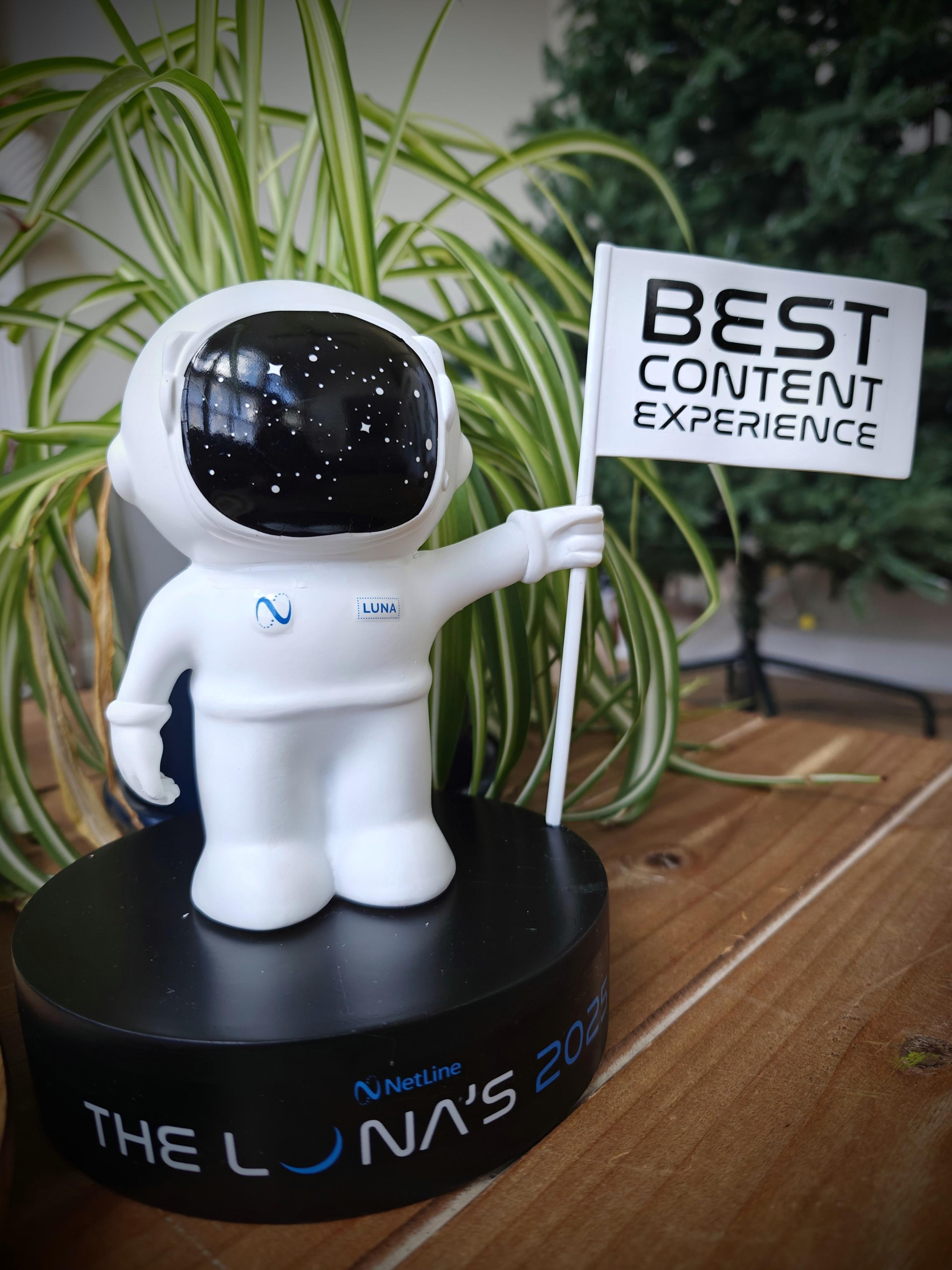
Celebrating the Winners of the 2025 Lunas: Revenue Impact

Conversations around ROI usually begin and end with one thing: money.

This is perfectly reasonable, of course. After all, the term is a financial metric. 

However, viewing ROI exclusively as a monetary metric in what is soon to be 2026 feels a bit shortsighted.  So what does it take to consistently connect marketing to revenue? 

According to what NetLine’s general manager, David Fortino, shared at B2B Forum 2024, ROI is no longer simply about “return on investment”—it’s also about Resonance, Originality, and Impact

This broader view of ROI highlights the emotional, creative, and strategic elements that define successful marketing in practice. And this is precisely what the Revenue Impact category aims to recognize.

Let’s Meet the Winners in The Luna’s 2025 Revenue Impact Category

The Revenue Impact category of The 2025 Luna’s honors marketing programs that do more than deliver leads or move metrics—they create lasting, measurable business value. These winners have shown how great storytelling, executed with precision, becomes a direct contributor to growth.

The 2025 Revenue Impact honorees—DataBee, a Comcast Company, and TE Connectivity—have proven this philosophy in action. 

Their work reflects a deep understanding of each brand’s audience, differentiated execution, and a clear connection to revenue outcomes. By making every marketing touchpoint intentional and value-driven, they’ve advanced the role of marketing as a true business driver while simultaneously elevating the brand.

Revenue Impact Award Winners

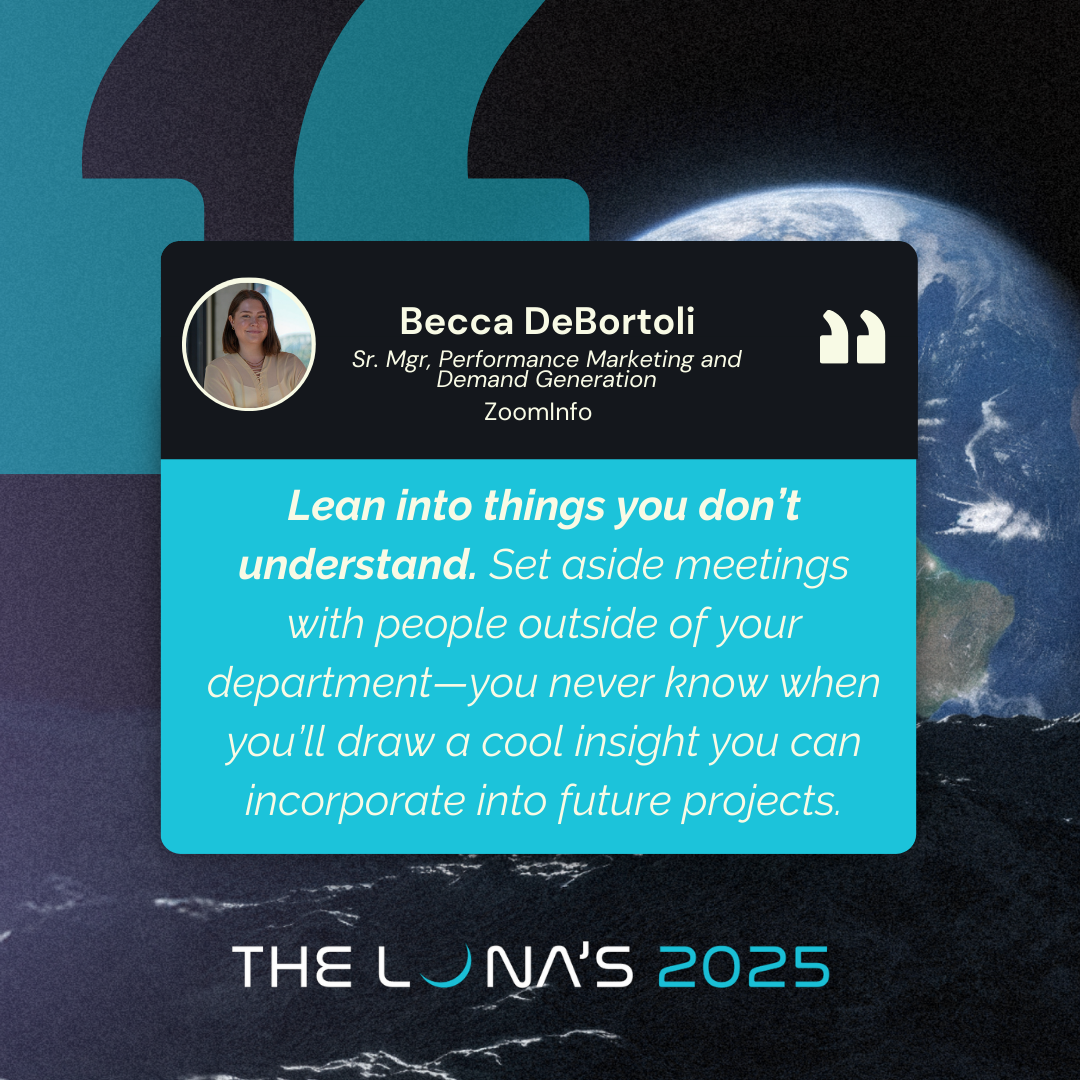
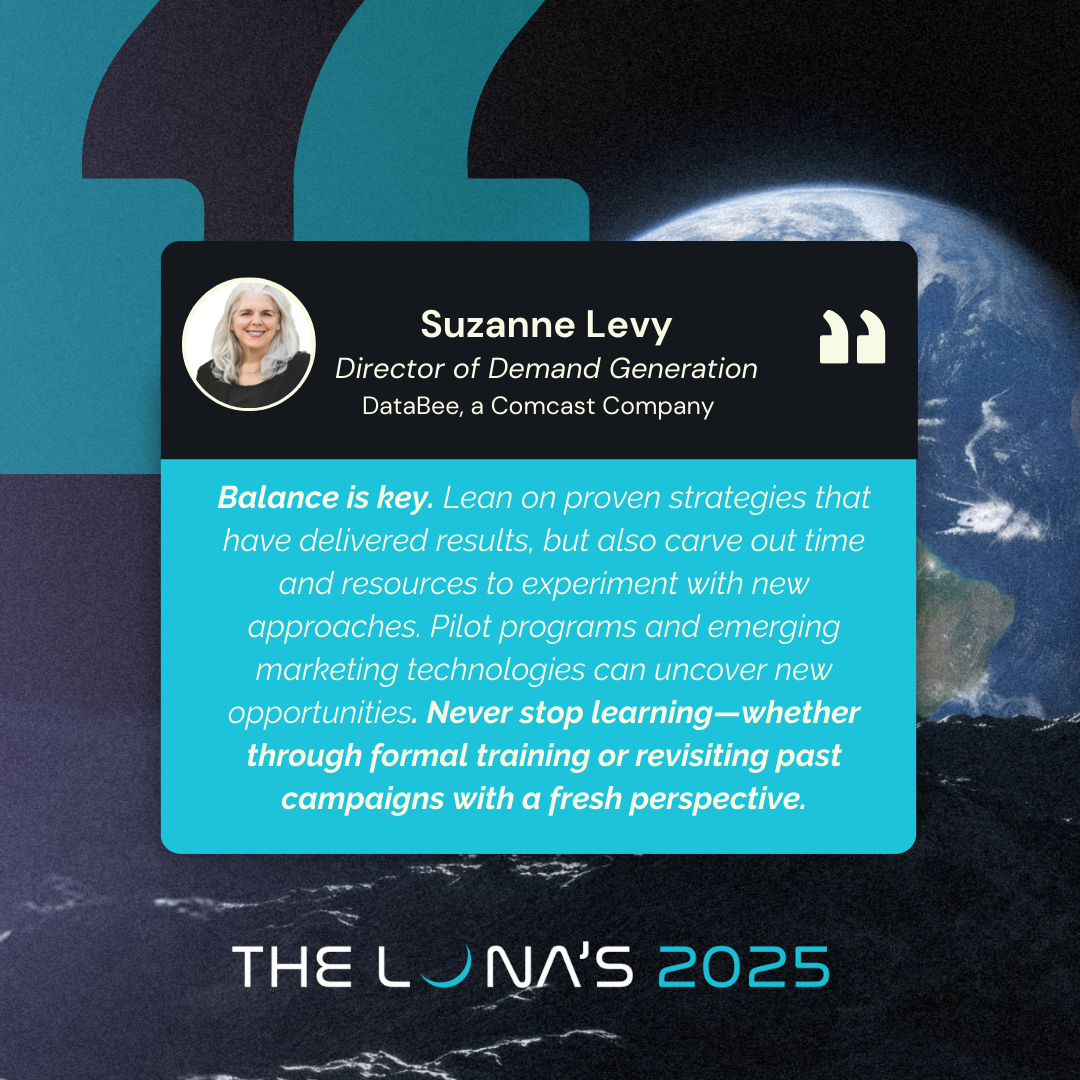
To gain greater perspective on what makes these organizations succeed, we spoke with Suzanne Levy, Director of Demand Generation for DataBee, and Laetitia Donovan, Sr. Manager, Marketing for TE Connectivity.

Resonance: Rooted in Relevance and Real Human Insight

When asked how they create marketing that resonates, the Revenue Impact winners shared a simple but powerful idea: start with the audience, and don’t assume anything.

The strongest content isn’t produced in isolation. It’s shaped by real conversations, frontline insights, and a clear understanding of what the buyer actually needs. For both DataBee and TE Connectivity, resonance begins with relevance—and relevance comes from listening.

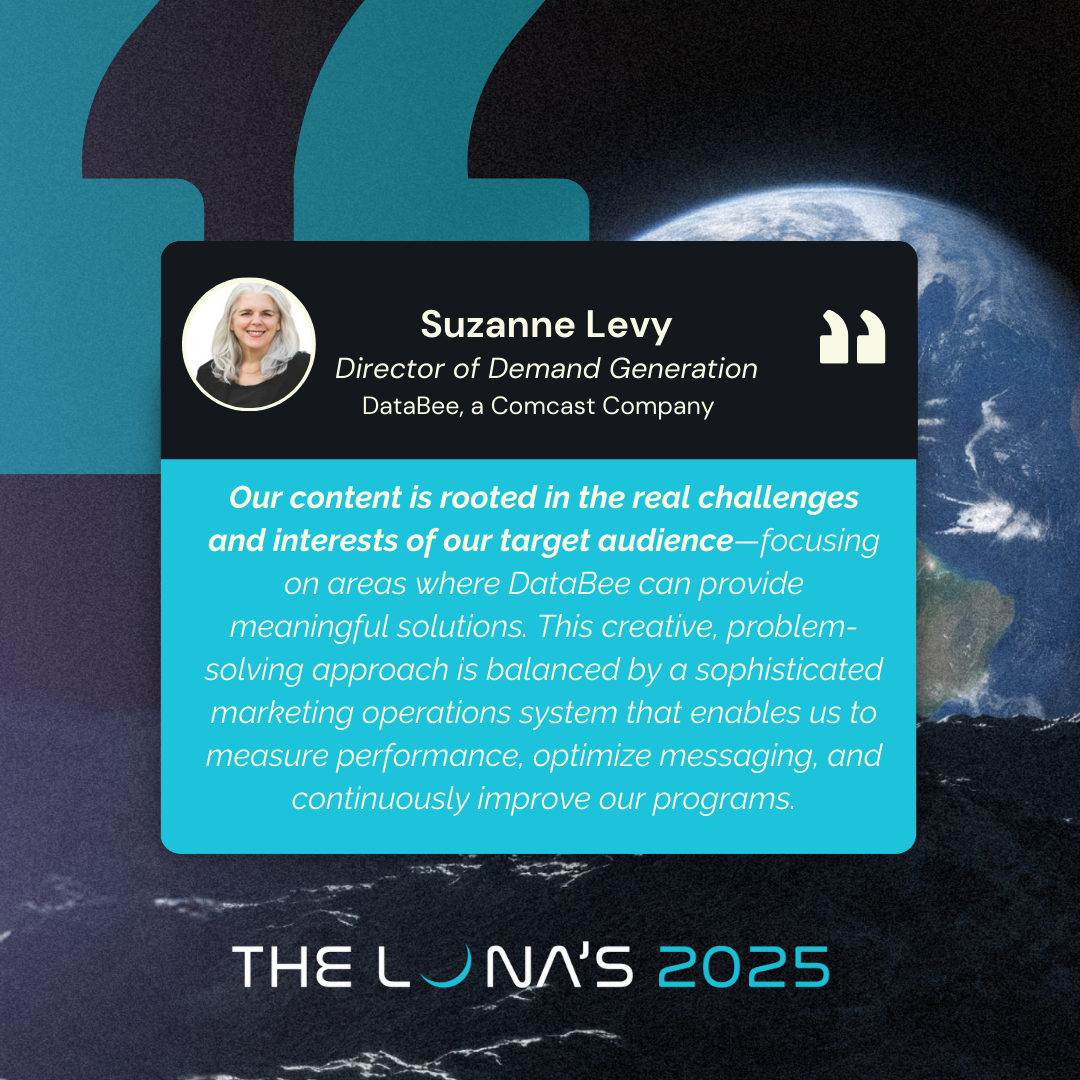
Suzanne Levy of DataBee described how their team grounds every piece of content in specific, observable challenges.

“Our content is rooted in the real challenges and interests of our target audience—focusing on areas where DataBee can provide meaningful solutions.”

This approach ensures that the brand’s message is purposeful. Educational, yes—but also tailored to build trust with clients, analysts, and influencers alike. It’s how the team moves beyond surface-level messaging and into something that supports longer-term relationships.

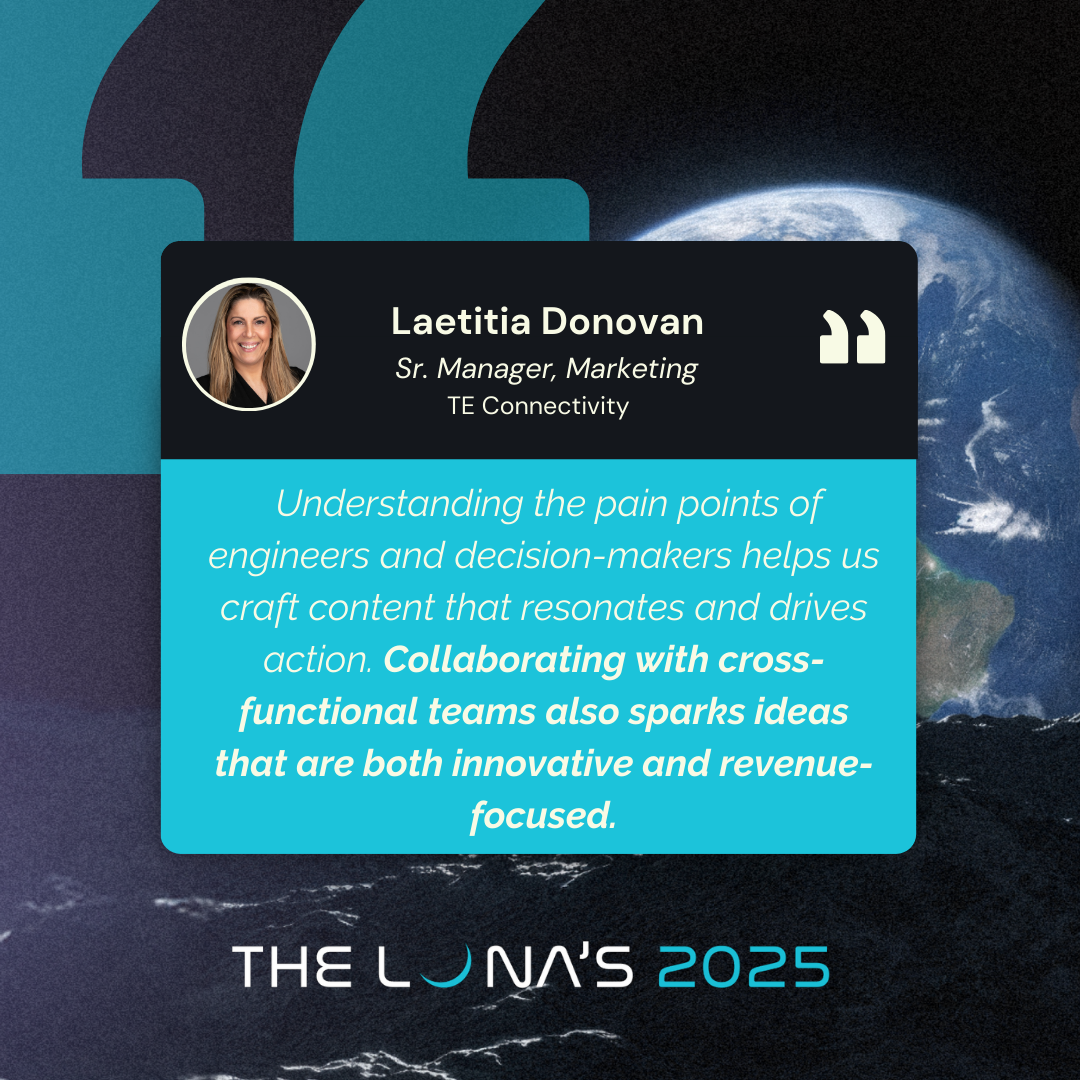
At TE Connectivity, Laetitia Donovan takes a similar stance, especially when speaking to technical audiences with highly specialized pain points.

“Understanding the pain points of engineers and decision-makers helps us craft content that resonates and drives action.”

Each brand views resonance as a twofold victory: half creative and half strategic. They earn attention by being specific, deliver value by being useful, and maintain momentum by staying aligned with the real-world concerns of the people they serve.

This isn’t about filling channels. It’s about showing up with something worth reading, watching, or sharing—because it reflects what the audience cares about right now.

Originality: Breaking Through with Intentional Creativity

Everyone hopes that their ideas, perspectives, and outputs are original. It’s never easy. But that’s where success finds its origins. 

The Revenue Impact winners shared that distinction, for them, doesn’t come from being louder, but from being more precise. They pointed to clarity over theatrics. 

For TE Connectivity, originality starts with understanding how buyers move through their journey—and responding accordingly. “We must create differentiation through personalization and a clear understanding of the audience behaviors along the customer journey,” Laetitia Donovan said. The goal isn’t to surprise for surprise’s sake, but to deliver messaging that feels intentionally designed for the moment and the audience.

That discipline shows up in how campaigns are structured and measured. Personalization, targeting, and behavioral insight work together to create programs that feel specific rather than broad, and deliberate rather than generic.

At DataBee, originality is shaped by a similar mindset. Their team focuses on evolution (testing, refining, and improving) without losing sight of what the audience expects from the brand. “We prioritize content that is educational and engaging,” Suzanne Levy said. “Balanced by a sophisticated marketing operations system that enables us to measure performance, optimize messaging, and continuously improve our programs.”

Each brand treats originality as a product of focus and follow-through. The work stands apart because it reflects clear thinking, informed decisions, and a willingness to adapt—resulting in campaigns that feel distinct, purposeful, and built to perform.

Impact: Creating Real, Measurable Business Value

In terms of impact, the Revenue Impact winners were clear: it has to be measured in business terms. 

Attention is important. Engagement is valuable. But neither matters unless they help move the business forward.

TE Connectivity’s marketing team starts every program with cross-functional alignment. Impact is baked into the process, not added at the end. “We start every initiative by aligning with sales and product teams to define clear business outcomes,” says Laetitia Donovan. “Whether it’s pipeline acceleration, lead quality, or market penetration.”

From there, the team uses performance dashboards to monitor progress in real time—focusing on the metrics that actually signal momentum, not just activity.

Databee’s goal is to balance innovation with performance and creativity, hoping to achieve impact through constant calibration.“This combination [of creativity and measurement] ensures our efforts are both innovative and tied directly to business outcomes,” Suzanne Levy says.

Each team treats impact as a shared responsibility between marketing, sales, and strategy. Clearly, their focus isn’t about volume or vanity, but qualified leads, an accelerated pipeline, and a measurable contribution to growth.

Lessons from Revenue-Focused Marketers

Asked what advice they’d share with marketers looking to elevate their impact, both Levy and Donovan pointed to the value of balance, experimentation, and alignment.

“Lean on proven strategies that have delivered results, but also carve out time and resources to experiment with new approaches… Continuous learning and experimentation are essential to staying relevant and driving impact.”
Suzanne Levy

“Build trust by showing how marketing contributes to driving incremental growth… Don’t just report on clicks—connect the dots to qualified leads, opportunities, and closed-won deals.”
Laetitia Donovan

It’s this blend of strategic rigor and creative courage that defines their programs—and helps their work stand up to both marketing and business scrutiny.

The Role NetLine Played

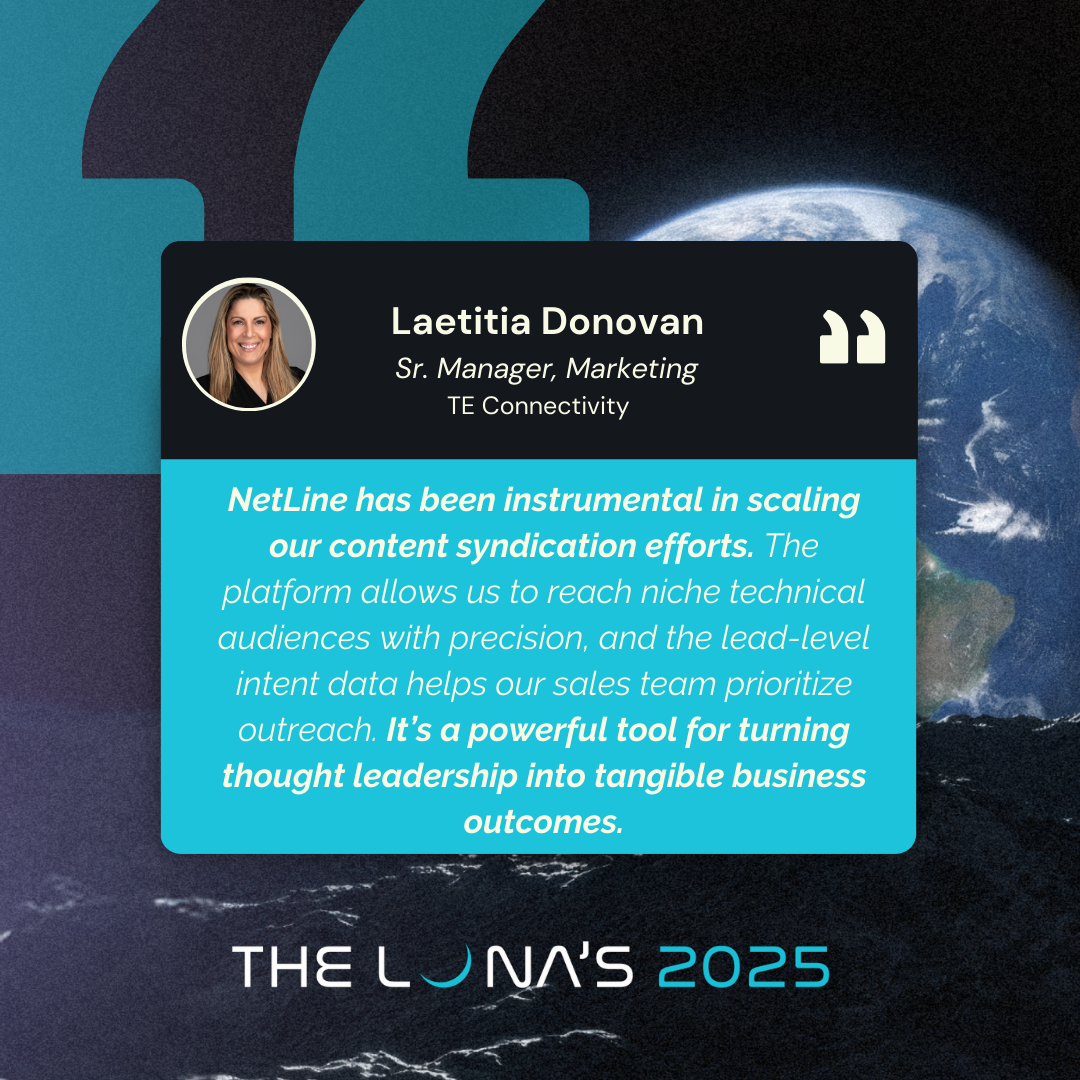
Both winners cited NetLine as a key partner in their success—especially when it came to scaling programs and connecting content to pipeline.

“NetLine has been a valuable partner for DataBee. They take the time to understand our business—both strategically and tactically—and they consistently align programs with our goals.”
Suzanne Levy

For these teams, NetLine has gone beyond delivery—it’s contributed directly to resonance, originality, and impact by supporting tailored distribution, delivering intent insights, and adapting programs to match business goals.

“NetLine has been instrumental in scaling our content syndication efforts. The platform allows us to reach niche technical audiences with precision, and the lead-level intent data helps our sales team prioritize outreach.”
Laetitia Donovan

Final Thoughts: The Real ROI

The 2025 Revenue Impact winners reflect what modern marketing success looks like: grounded in strategy, powered by insight, and unapologetically accountable.

By embracing Resonance, Originality, and Impact as critical elements of ROI, DataBee and TE Connectivity have shown how to transform content into growth. Their work is a roadmap for marketers looking to build smarter, sharper, and more business-connected campaigns—without sacrificing creativity or customer focus.

Congratulations to Suzanne, Laetitia, and their teams on this well-earned recognition. Your programs represent the future of performance marketing—not as a cost center, but as a core driver of business success.

Categories B2B

AI-powered email content suggestions that actually convert leads

AI-powered email content suggestions are changing how marketing teams write, test, and scale email campaigns. Instead of guessing what message will resonate, marketers can now use AI to analyze data, predict engagement, and generate personalized content that converts. Download Now: Full-Stack AI Marketing Toolkit

But there’s a huge difference between emails that sound good and emails that perform.

In this guide, we’ll cover how to use AI email content suggestions to deliver stronger open rates, higher click-throughs, and measurable revenue impact.

Table of Contents


What AI-Powered Email Content Suggestions Are and Why They Matter

AI-powered email content suggestions use machine learning to tailor your subject lines, body copy, and CTAs to each audience segment and lifecycle stage. The system analyzes engagement data, like open rates and replies, to recommend what message, tone, or offer is most likely to drive action.

In practical terms, that means:

  • Generating email subject lines designed to boost open rates
  • Optimizing email copy that earns more clicks and replies
  • Recommending CTAs that move contacts from MQL to SQL faster

When connected to your CRM, AI turns raw engagement data into actionable insight. Instead of guessing what your audience might respond to, you see which phrases, formats, and offers actually convert. As the AI tool collects and analyzes more data, it compounds on those learnings with every send.

The real advantage comes when these suggestions are used inside automated email campaigns. That integration creates a feedback loop between your content and data, allowing the AI to adapt in real time to audience intent and performance signals.

Real results in action: HubSpot’s own demand generation team used AI to transform their email nurturing strategy, analyzing user behavior and website data to deliver hyper-personalized content recommendations.

By using GPT-4 to understand intent and match users with relevant courses, we achieved an 82% higher conversion rate, 30% better open rate, and 50% lift in click-throughs.

Read more about it in the 2025 State of Marketing Report.

Best AI Tools for Email Content Suggestions

When it comes to email creation, the real power of AI lies in tools that plug into your CRM and connect to your customer data. With this insider information, crafting compelling headlines or body copy is a breeze.

Here are a few top options to consider, starting with HubSpot’s Breeze Copilot.

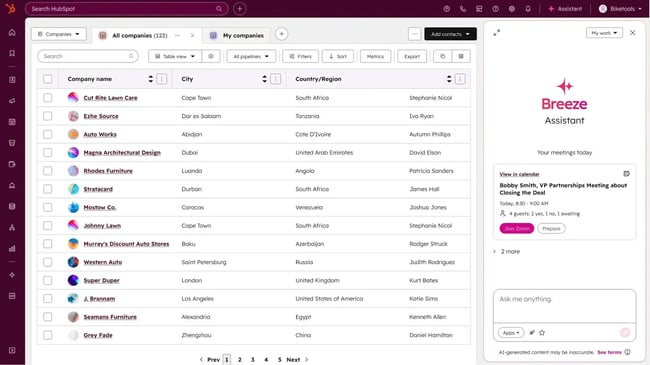
1. HubSpot’s Breeze Copilot

ai powered email content, hubspot

Source

HubSpot’s Breeze Copilot is built directly into the HubSpot email editor, giving marketers an AI assistant that knows their audience as well as their CRM does. It uses existing data, like lifecycle stage, engagement history, and past campaign performance.

With these insights, Breeze can:

  • Generate personalized subject lines
  • Tailor email copy to audience preferences
  • Create CTAs that align with conversion goals

Why it stands out: Most AI writers generate generic copy. Breeze Copilot is different, as it grounds every suggestion in your own CRM data and campaign analytics. That means smarter recommendations that match real buyer behavior.

What I like:

  • Generates content that adapts to your contact’s stage, behavior, and preferences
  • Lives inside HubSpot, so there’s no copy-and-paste between tools
  • Suggests entire email structures, not just sentences or subject lines
  • Syncs seamlessly with automated email campaigns for built-in testing and reporting

Best for: Marketing teams that want to combine creativity with data-driven precision.

Pricing:

HubSpot pro tip: Pair Breeze Copilot with AI-assisted content creation to build reusable, modular assets, like headers and footers. You can then drag and drop those assets into future campaigns.

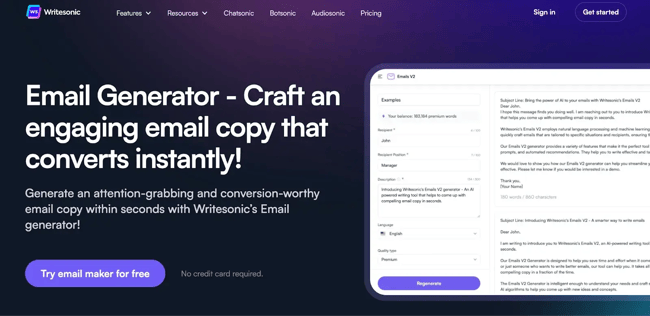
2. WriteSonic’s Email Generator

ai powered email content, writesonic

Source

Writesonic’s dedicated email generator helps marketers craft targeted email campaigns quickly in more than 25 languages.

Its strength lies in how easy it is to iterate. Whether you’re writing onboarding sequences, announcing a product launch, or sending a recurring newsletter, Writesonic’s saved templates let you start with proven frameworks instead of a blank page.

What I like:

  • Speed and templates. With Writesonic, you select an email template, plug in your details, and generate a first draft in minutes.
  • Multi-language support. Useful if you send to global audiences; the platform supports email copy in 25+ languages.
  • Pre-built performance frameworks. For SaaS brands, for example, Writesonic offers 100+ free email templates and 500+ subject lines designed for boosting opens and clicks.

Best for: Marketing teams who need to turn around multiple campaign emails quickly, especially newsletters, product updates, or launches, but haven’t yet opted for a full CRM-embedded AI writing workflow.

Pricing: Plans start at $49/month.

3. Seventh Sense

ai powered email content, seventhsense

Source

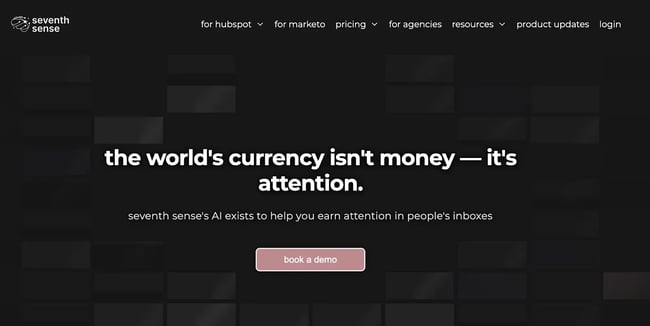
Seventh Sense is the secret weapon for timing. It uses machine learning to predict when each contact is most likely to open or click an email, then schedules delivery accordingly. By learning from historical engagement patterns, you ensure that your perfectly written AI-generated emails land in inboxes at the exact moment they’re most likely to be seen.

What I like:

  • Predictive optimization. Learn individual engagement habits to send emails at peak times.
  • Integration with HubSpot. Works seamlessly with automated email campaigns to improve deliverability and engagement.
  • Personalized pacing: Prevents fatigue by spacing sends based on recipient behavior.

Best for: Teams focused on maximizing open and click-through rates through smarter send times.

Pricing: Plans start at $80/month, billed annually.

4. Copy.ai

ai powered email content, copyai

Source

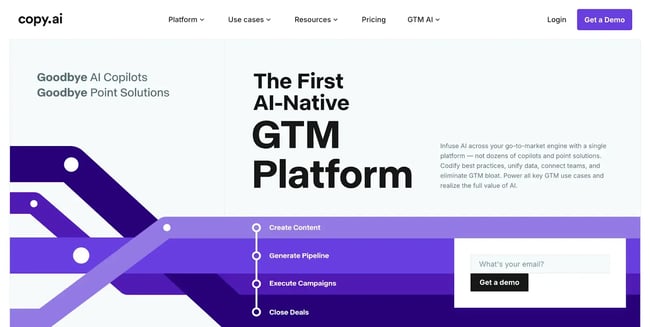
Copy.ai is a creative AI platform that helps teams build multi-step workflows for campaign creation. It includes templates for full email sequences, making it a great tool for teams managing complex lifecycle or drip campaigns.

What I like:

  • Workflow automation. Generate entire sequences in minutes.
  • Collaboration tools. Allow multiple team members to refine drafts together.
  • Prompt library. Save custom prompts that can be reused for similar campaigns or customer segments.

Best for: Marketing teams that need to scale high-quality emails across multiple products or regions quickly.

Pricing: Plans vary. For Chat, plans start at $29/month.

5. MailMaestro

ai powered email content, maestrolabs

Source

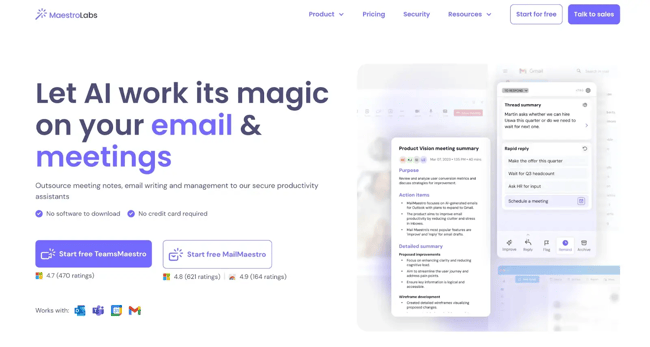
MailMaestro is an AI‐powered email writer and assistant designed to integrate directly with Outlook and Gmail, letting teams draft, reply, and manage professional email content more quickly and effectively.

It supports multiple languages, tone adjustments, and context-aware drafting, helping marketers scale email content production without sacrificing clarity or brand-voice integrity.

What I like:

  • Rapid, context-aware drafts. You input a short instruction, and the tool generates three differentiated versions in seconds.
  • Tone and language controls. Choose a desired tone and language variant for global campaigns.
  • Integration with inbox workflow. Because it lives in Outlook or Gmail, mail writers stay in their workflow rather than jumping between tools.

Best for: Marketing and operations teams that handle high volumes of email communications.

6. ChatGPT

ai powered email content, chatgpt

Source

ChatGPT is the most versatile large-language model for marketers looking to brainstorm, draft, and refine email content fast. You can use it to outline entire nurture flows, generate subject line variations, rewrite CTAs, or test tone and voice before syncing the copy into your CRM.

Because it’s not limited to pre-built templates, ChatGPT is great for creative ideation, making it an ideal starting point for teams that want to experiment with AI before committing to a fully embedded system.

What we like: Great for brainstorming prompts or rephrasing CTAs across lifecycle stages.

Best for: Teams developing a prompt library to fuel CRM-connected workflows.

Pricing: $20/month for the Pro Plan.

How to Set Up AI Email Suggestions Inside Your Existing Workflow

AI tools are fantastic for quickly creating email content that keeps readers engaged. But these tools work better when they’re connected to your data and approval processes.

Here’s how to set it up for success.

1. Unify your CRM data.

AI email suggestions are only as smart as the data they learn from. Create a single source of truth inside your CRM and consolidate:

  • Records
  • Deal stages
  • Engagement activity

When your data is unified, your AI can recognize key patterns, like which content drives MQLs versus which stalls at the SQL stage, and generate a copy that reflects that insight.

HubSpot Pro Tip: Treat data hygiene as part of content strategy. The more accurate your CRM, the better your AI recommendations.

2. Confirm consent and define segments.

AI tools amplify personalization. That means any weak spots in your personalization consents or segmentation will be highlighted. Avoid this by:

  • Revisiting opt-ins
  • Double-checking preferences
  • Updating compliance policies

Once confirmed, define your key lifecycle segments. This segment-level context helps the AI adapt tone and CTA strength to where a contact is in the journey.

Example: A top-of-funnel lead might see “Learn more,” while an active trial user receives “Schedule your onboarding call.”

3. Connect your AI assistant.

Use HubSpot’s AI email assistant to start generating contextual copy directly inside your email editor. Because it’s native to HubSpot, the assistant automatically references:

  • Contact data
  • Deal information
  • Past campaign results

You can also toggle between AI-generated subject lines, body copy, or CTAs, all while maintaining CRM context. With these insights and user options, content suggestions can be automatically tailored to fit your brand and your goals.

4. Activate modular content.

If you’re managing multiple campaigns or teams, modular content is your best bet for efficiency. Using HubSpot’s AI-assisted content creation tools, build a shared library of pre-approved elements, like intros, feature blurbs, and CTAs, that AI can pull into future campaigns.

This structure lets you:

  • Maintain brand and compliance consistency
  • Track how specific snippets perform over time
  • Enable non-writers to assemble conversion-ready emails in minutes

HubSpot Pro Tip: Label modules with tags like “BOFU CTA – Demo” or “Awareness Body – Product Value” so your AI assistant learns which assets perform best at each stage.

5. Enable version control and approvals.

This cannot be stressed enough: AI-generated content should never be a one-click send.

Create approval workflows that route new email versions through a human reviewer before launch, especially for campaigns involving pricing, compliance, or regulated industries.

Within HubSpot, you can set role-based permissions to allow marketing leads, compliance officers, or product marketers to review drafts before publishing. This keeps your AI both efficient and accountable.

When your CRM, content library, and approval process are working together, AI stops being a writing shortcut and becomes a conversion engine. Every email aligns with the right audience with a real shot at an expected outcome.

AI Email Content Prompts for Every Lifecycle Stage

Good AI depends on great direction. Without clear context, even the most advanced model will give you generic, one-size-fits-all copy. The key is to prompt your AI like a strategist, not just a writer.

That means telling it who you’re talking to, what you want them to do, and why now.

Whether you’re using ChatGPT, Claude, or HubSpot’s AI email assistant, a few well-structured prompts can turn generic suggestions into high-performing, lifecycle-specific content.

Here’s how to think about it.

1. Welcome and Activation Prompts That Build Momentum

Goal: Introduce value quickly and encourage engagement.

Prompt example: Write a 120-word welcome email for new sign-ups who downloaded our guide. Include one clear CTA to start a free trial and reference their interest in [topic]. Maintain a confident, approachable tone.”

HubSpot pro tip: Use HubSpot’s AI email assistant to instantly generate multiple versions of your welcome email and test open rates across your automated email campaigns.

2. Nurture Prompts That Turn Interest Into Intent

Goal: Deepen trust through education.

Prompt example: “Generate a follow-up email that highlights a customer success story relevant to mid-funnel prospects. Keep tone helpful, not salesy. End with a soft CTA to schedule a demo.”

HubSpot pro tip: You can find additional tested examples in HubSpot’s AI prompts for email content library.

3. Sales Acceleration Prompts For Product-led and Sales-led Motions

Goal: Move prospects from intent to action.

Prompt example: Write an email for contacts who engaged with pricing pages twice this week. Use urgency and social proof to encourage booking a demo.”

HubSpot pro tip: Pair this with CRM filters to ensure only active, high-intent contacts receive the message.

4. Renewal and Expansion Prompts That Deepen Trust

Goal: Retain and grow existing customers.

Prompt example: “Compose a renewal reminder for existing customers. Reinforce ROI achieved so far, introduce one new feature, and offer an incentive for early renewal.”

HubSpot pro tip: Use HubSpot’s automation rules to trigger this sequence 30 days before contract expiration, and measure conversion uplift over time.

The Prompt Framework

Use this simple, repeatable structure for every prompt you write. It works whether you’re drafting in ChatGPT, Claude, or directly inside HubSpot’s AI email assistant.

  • Goal: What you want the reader to do
  • Segment: Who the message is for
  • Stage: Awareness, consideration, decision, or retention
  • Context: Data or insights from CRM
  • Constraints: Word count, tone, compliance rules, or localization needs
  • Voice and Tone: Brand-specific phrasing or style guide notes
  • Offer/CTA: The clear next step

When used consistently, this framework helps AI generate more personalized, compliant, and performance-oriented email copy. You can also test variations directly in automated email campaigns to see which elements drive higher open, click, and reply rates.

Need more ideas? Explore AI prompts for email content for ready-made examples you can adapt to your workflows.

AI Email Content Generation Guardrails

While it’s true that AI can scale content production, without the right systems, it can also scale mistakes. A strong QA process protects your brand voice, ensures compliance, and keeps every AI-generated email aligned with your audience’s expectations.

Whether you’re using HubSpot’s AI email writer or a large language model like ChatGPT, build guardrails into your workflow from the start.

Here’s where you should put your focus.

Editorial Standards For AI-generated Email Copy

Before any AI-generated email goes live, it should pass a two-layer QA process:

Layer 1: Copy Quality

Review for clarity, tone, accuracy, and alignment with the campaign goal.

Ask:

  • Does this sound like us?
  • Does it say something true, valuable, and easy to act on?

Layer 2: Compliance

Verify that claims, disclaimers, and data usage follow regional privacy and consent rules.

Quick Quality Checklist

Your email is good to go if:

  • The message is relevant and specific to its segment
  • Tone matches brand personality
  • Claims and data are verified—no “AI-hallucinated” metrics or testimonials
  • CTA is clear and action-oriented
  • Internal links guide readers toward the next logical step
  • Accessibility is considered

For sensitive or high-stakes topics, like finance, health, legal, or regulated industries, add a subject matter expert (SME) review loop before publishing. A five-minute check by an internal expert can prevent weeks of damage control later.

HubSpot pro tip: In your prompt library, include disallowed patterns (e.g., exaggerated claims, pressure tactics, or speculative results). Then train your team to flag and rewrite any AI-generated content that drifts into that language.

Example disallowed list:

  • “Guaranteed results”
  • “You’ll regret missing out”
  • “We’re the only solution that works”
  • “100% success rate”

Embedding these tone and compliance rules directly in prompts keeps your AI from crossing your brand lines, even when generating at scale.

Privacy, Consent, and Opt-in Personalization

Personalization builds trust when it’s based on value. Use data responsibly, and design prompts that always respect permission settings.

1. Build prompts with explicit consent in mind.

Include privacy-safe context in every instruction: “Use only consented data points (e.g., name, company, or product type) to personalize this email.”

2. Add fail-safe defaults.

When key data is missing, the AI should gracefully generalize: “If the user’s location is unknown, use a neutral greeting like ‘Hey there!’ instead of referencing city data.”

3. Apply data minimization.

Only include data that’s necessary for relevance. Avoid sensitive attributes, even if technically available in your CRM.

4. Reinforce preference management.

Close every personalized email with a simple way to manage settings or unsubscribe.

HubSpot Pro Tip: Document your personalization guardrails in the same place as your prompt templates. When a team member or AI assistant pulls a new draft, privacy is a default.

When done right, guardrails make email content creation safer and faster. By defining how your brand writes, what it never says, and what data it uses, you can scale content creation confidently across every campaign and segment.

How to Measure AI Email Content Performance and Iterate Fast

AI-powered content is just like any other part of your content strategy—you need to measure performance. A strong measurement plan helps you separate “sounds good” from “actually performs.”

Use a test-and-learn approach to understand what works, prove ROI, and continuously refine your email strategy.

Here’s how to measure.

1. Define your test matrix.

Start by mapping your tests to lifecycle stages. Each stage focuses on a different lever for performance:

Lifecycle Stage

What to Test

Metric to Watch

Typical Test Duration

Awareness

Subject lines, preview text

Open rate

3–5 sends

Consideration

Value framing, content length

Click-through rate

1–2 weeks

Decision

CTA placement, offer clarity

Conversion rate

2–3 weeks

Retention

Dynamic content and send timing

Reply rate, renewal rate

30-day cycles

2. Change one variable at a time.

Multivariate tests sound efficient, but can blur your results. To isolate true impact, adjust only one variable per variant, like subject line length, CTA wording, or tone.

Each experiment should include:

  • A single hypothesis: “Shorter subject lines increase open rates for awareness campaigns.”
  • One clear success metric: “+10% open rate within the same segment.”
  • Run-stop rules: “Stop after 1,000 sends or when the confidence interval hits 95%.”

HubSpot Pro Tip: Use automated email campaigns to schedule, randomize, and record your variants automatically so you never lose data mid-test.

3. Attribute results through CRM and campaign analytics.

The power of testing inside a connected CRM is attribution. Every click, reply, or conversion can be traced back to the specific AI suggestion that influenced it.

In HubSpot’s campaign analytics, you can:

  • Track how AI-generated copy affects contact movement throughout the sales funnel
  • Compare AI-written versus human-written variants by open and conversion rate
  • View engagement by persona, deal stage, or segment

This end-to-end visibility helps you answer the ultimate question: Did AI make us more effective, or just more efficient?

4. Expand insights beyond email.

Your email results are also signals for broader brand visibility. Use AI Search Grader to analyze your brand in AI search and see how your messaging performs in AI-driven search experiences.

When the language that performs best in email also appears in AI search summaries, you’ve hit message-market alignment. This step ties your email testing back to top-funnel visibility, closing the loop between engagement and discovery.

5. Build a shared performance dashboard.

Create a single view of your key metrics so your team can quickly see what’s working. Include:

  • Variant name and date range
  • Lifecycle stage and audience segment
  • Prompt used to generate the content
  • Key metrics, like open, click, conversion, unsubscribe
  • Outcome and decision

HubSpot pro tip: Build this as a shared HubSpot dashboard or Google Sheet synced via API. Over time, you’ll identify which prompt types, tones, or CTA structures deliver consistent lifts. Then, you can train your AI email assistant to prioritize those patterns automatically.

Common AI Email Content Pitfalls and How to Avoid Them

Even experienced teams run into a few common mistakes when scaling AI workflows. Here’s how to avoid them.

Pitfall

Why it happens

How to fix it

Generic outputs

Insufficient context in prompts

Add CRM data, persona details, and campaign goals

Brand drift

No standardized tone rules

Use a branded prompt template and QA checklist

Hallucinated claims

AI invents data or testimonials

Require SME review for factual accuracy

Over-personalization

Prompts include non-consented data

Use fail-safe defaults and consent-based fields

Unclear measurement

No control group or test tracking

Establish variant logging and attribution rules

Frequently Asked Questions About AI-powered Email Content Suggestions

What is the fastest way to start using AI for email content suggestions?

Begin with one clear use case, like onboarding or nurture, and one prompt library. Test your process in a controlled environment before scaling. HubSpot’s Breeze Copilot makes this easy: open your email editor, generate subject line and body copy variations, and compare results instantly inside your campaign dashboard.

How do I keep AI-generated content on brand and accurate?

Train your AI on your voice, not someone else’s. Include a short brand voice brief in every prompt, keep a “do not use” list for banned phrases or exaggerated claims, and route sensitive messages through a quick human review before publishing. This two-step process keeps every AI-generated email consistent, compliant, and trustworthy.

How do I personalize AI without feeling intrusive?

Personalization should feel like relevance, not surveillance. Use only consented data and focus on delivering clear value. HubSpot’s consent-first personalization tools make it easy to give subscribers transparent controls and preference management.

How do I measure whether AI suggestions actually improved performance?

Start small and measure clearly. Build a simple test matrix by lifecycle stage — subject lines for awareness, CTAs for decision — and change one element at a time. Track each variant in HubSpot’s campaign analytics and tie outcomes directly to CRM metrics like open rate, CTR, MQL, or SQL conversion. Keep what works, retire what doesn’t, and document learnings for your next round.

Which HubSpot tools help with AI email content and measurement?

HubSpot’s Marketing Hub powers creation, testing, and delivery through automated email campaigns. Content Hub manages reusable assets and brand voice libraries. Breeze Copilot and Agents automate AI-driven workflows and suggest optimized copy inside your editor, while AI Search Grader helps you analyze your brand in AI search and measure visibility across emerging AI-powered discovery channels.

TL;DR: AI-powered email content suggestions

AI-powered email content suggestions use machine learning to generate subject lines, body copy, and calls-to-action tailored to your audience and lifecycle stage. By connecting these suggestions to your CRM data and workflows, you can boost open rates, clicks, and conversions—while saving time and maintaining brand consistency.

To get started:

  1. Unify your CRM data
  2. Set up your AI email assistant
  3. Use prompt frameworks for each lifecycle stage
  4. Measure results with clear A/B tests

Ready to see the impact? Start free with HubSpot’s Marketing Hub and see how AI-powered content can transform your email performance.

Categories B2B

Website homepage design: My favorite 32 examples to inspire you

Homepage design shapes the first impression potential customers have of your business, yet many companies underestimate its impact on conversions and credibility.

When I first meet with a potential client, I’ll often hear: “The website is fine, it just needs to be optimized for visibility.” Then I visit the site and, as soon as the homepage loads, I see that’s not quite the case. Unclear messaging, messy layouts, poor design choices … I’ve seen it all.

→ Free Download: 5 Key Steps to Building and Maintaining a High Performing  Website

What you might not realize is the bottom-line impact your homepage design can have, good and bad. The homepage is usually where leads and customers get their first look and impression of your business. It’s a digital representative, acting on behalf of your business to introduce your brand, products, and services. 

In this guide, I’ll share best practices for homepage design along with brilliant homepage design examples that have implemented them.

Table of Contents

Homepage Design Best Practices

Through trial and error (and a whole lot of website analytics ), I’ve developed a set of homepage design best practices that consistently deliver results. The goal is to capture attention at the first page load, while also leaving a lasting impression that encourages visitors to return and take action.

1. First impressions and next steps happen in the hero section.

The most important part of your homepage lies above the fold (also known as the “hero” section). That means everything that a visitor sees when they first load the page, and before they start to scroll.

I spend a lot of time carefully crafting this section, from the layout and background to the copy. Here are some things I always make sure to have in place in the homepage hero:

  • Consistent brand identity, from colors to tone of voice
  • Sharp, clear visuals without cluttering the space
  • A punchy headline that encapsulates the key message of the business
  • Very brief paragraph text underneath the headline to provide more detail
  • A strong call-to-action

These are the basics, but there are other important elements to think about.

For example, I always try to test the headline in the hero section over time. I use different variations and see which impacts website metrics like Time On Page, Scroll Depth, or Bounce Rate.

For the call-to-action, I might use a button that takes the visitor to a contact or demo page. Sometimes, I’ll embed a form right within the hero to remove the extra step.

The most important factor is stating what your business provides so the user knows where they’ve landed. I always try to combine the product or service of the business with a user benefit to encourage visitors to learn more.

For example, an online clothing store might write “Comfortable Clothing for Parents on the Go” with a “Shop Now” call-to-action button. The user then knows:

  • This is an online store for day wear
  • It’s designed with them in mind (busy parents)
  • The unique selling point is comfort

2. Write for your target audience.

I have two main focus points when it comes to writing your homepage copy:

  • Write for your target audience
  • Write like your target audience

Many companies I work with believe they should focus solely on their brand and products on their homepage, with little to no content beyond that. But if you’re not writing with the target audience in mind, the messaging won’t resonate, and visitors will disengage.

Taylor Shanklin , CEO and founder of Barlele, a branding strategy and web design agency, says when designing a homepage, you should start by creating a clear list of problems your target audience has and the solutions you offer for those problems.

“ Once you have that really well defined, it is easier to design the website interaction journey in a way that quickly and clearly communicates how you are the best company to provide a solution to their problem.”

Tone matters, too. I research my target audience’s behaviors, preferences, needs, and challenges. Those findings guide the language and tone I use in my homepage elements. My goal is to speak in terms they use daily and avoid confusing them with technical jargon.

Pro tip: Head to forums and online communities for advice and feedback.

If you’re unsure what problems your target audience has or how they speak about the solutions your business provides, head to places like relevant subreddits or other online spaces. Check out discussion threads for insight into their needs and write your homepage copy accordingly.

3. Use design to showcase your unique selling proposition.

Your homepage must clearly explain your unique selling proposition (USP). That includes:

  • What makes the products, services, and brand unique
  • Why they’re superior or different from the competition

I already spoke about your hero design and copy above. But don’t forget visual elements, too. Use consistent brand design across your colors, fonts, and graphics. Consider adding an explainer video or customer testimonials that hone in on your USP.

For example, HubSpot’s USP is perfectly captured in the homepage subheading: “Unite marketing, sales, and customer service on one AI-powered customer platform that delivers results fast.”

As you move through your homepage design, outline this in a logical way to guide visitors through your offerings. The order or layout might look something like this:

  • Hero section
  • Brief brand story speaking to the customer about why you’re the best choice for them
  • Section on your products or services with links to other pages for more detail
  • Customer testimonials
  • Final call-to-action banner

Leave plenty of whitespace between elements and sections to let the information stand out.

Pro tip: Use color or animation to enhance your homepage design.

Consider contrasting colors in your palette or simple animations to focus attention on your USP.

4. Optimize your webpage for multiple devices.

In 2024, mobile devices accounted for 67.3% of website traffic. When I’m in a website builder or Content Management System (CMS), the default view is usually desktop. So, I know it’s easy for the tablet or mobile view to feel like a secondary priority.

But that’s where most of your visitors are going to see the website, especially if you’re running a direct-to-consumer business.

How do I optimize a homepage for multiple devices? It depends on the platform a customer uses to manage the website, but here are some fundamentals:

  • I use a responsive design that automatically adjusts the layout to fit the screen of any device.
  • I prioritize mobile usability, so I use clear and concise navigation bars and menus, large tap-friendly buttons, and larger font-size text.
  • I hide some elements on the mobile version of a site if they’re going to clutter the layout or cannot re-size responsively.
  • I avoid elements like flash banners, bulky animations, and pop-ups that can overload mobile screens, slow page loading times, and cause higher bounce rates.

Avoiding slowing your page is especially important. Paige Arnof-Fenn, founder and CEO of marketing network Mavens & Moguls, says that if your website doesn’t load in 3 seconds or less, “your users will go somewhere else, and the opportunity will be lost.”

Pro tip: I always fully test a website’s responsiveness on multiple devices. It might look good on mobile, but grab a tablet and use a large desktop monitor to double-check the site is usable everywhere.

5. Include multiple calls-to-action (CTAs).

I know a potential customer getting in touch or making a purchase via your website is a top priority. However, when reviewing your homepage design, I recommend considering what a customer might want to do now, rather than what you would like them to do.

Not everyone buys in the same way, and website visitors often like options.

Let’s say I’m working on the homepage layout and design for a construction company. I’ll include a call to action to get in touch or book a consultation, of course. But I might also include a form to access a cost calculator for home renovations. Multiple CTAs keep visitors engaged and provide other ways for you to capture their contact details to nurture them further through other channels like email marketing

Other CTA options include things like:

  • Signing up for a free trial
  • Exploring a specific product category
  • Downloading a valuable resource
  • Contacting your sales team

Homepages with multiple CTAs act as a bridge between interest and conversion.

Here are some quick tips I keep in mind to maximize the effectiveness of my CTAs.

  • I position them prominently on the homepage, with the first one easily visible in the hero without scrolling.
  • I use design elements like contrasting colors or images to make them stand out.
  • I use strong verbs and action-oriented language to compel action. Verbs like get, start, join, and discover are powerful because they convey both action and outcome.

Pro tip: Don’t go overboard. too many CTAs can create visual clutter on your homepage.

Don’t overload your homepage with too many CTAs. Consider one or two per section of your homepage. The goal is for them to be easy to find, not overpowering.

6. Stay on brand.

One of my pet peeves is seeing inconsistent design elements on a homepage. It shouldn’t feel like the visitor is seeing a completely different website from one section to the next. You’d be surprised how much that comes down to the little things.

Staying on brand is all about cohesion throughout your website, but also on individual pages like the homepage. Consistency builds a strong visual identity that visitors can recognize and remember.

For me, that covers:

  • Making sure I place the logo in the main navigation so it’s visible on the homepage at all times
  • Using the brand’s color palette for text, backgrounds, icons, graphics, and buttons.
  • Using the same font for all headers and all paragraph text.
  • Maintaining a consistent tone, which means avoiding a casual tone in one area and a formal tone in another.

Pro tip: It’s totally acceptable (and even typical) to use a different font for headings and subheadings than your paragraph text. I might use a bold, fun font for headings. But for paragraph text, I always lean on something very clean and readable.

7. Localize your homepage content.

This tip applies whether you’re a local business, serve multiple regions, or operate internationally.

For local businesses like restaurants or home improvement services, I always recommend highlighting the location prominently. People like to know that providers live and operate in the same community they do, and it helps improve your visibility in places like Google Search. I might add the town or county’s name to the hero heading, for example, or embed a map on the homepage to help people find a brick-and-mortar location.

Regional or international businesses have other things to consider, like:

  • Do your products or services vary from one location to another?
  • Do your customers speak different languages depending on where they’re visiting the site?
  • Are there multiple office or store locations to consider?

Let’s say I’m working on the site for a franchise business, for example. It may be a national chain, but the customers want to know what’s available in their area. So, I might include a “Locate Store” CTA in the homepage hero to take users directly to the most relevant sub-website or location page.

Similarly, I’ve worked on international websites that need to serve the content in multiple languages. One site even needed completely different content for homepages in different countries because they offer different services in each.

Like all homepage design considerations, it’s all about the user and making their journey as frictionless as possible.

Pro tip: If I need to serve a website in different languages but I’m tight on time and budget for translating pages, I often use paid tools that automatically translate content and create language-specific variations of the homepage.

8. Pay close attention to your website analytics.

I’ve spent a lot of time on homepage designs previously, only to be disappointed by the results, such as low conversion rates. But I’ve learned over time that analytics are crucial to avoiding and correcting homepages that aren’t driving results.

Many website building platforms like HubSpot come with built-in analytics to help you see things like:

  • How many visitors the homepage is getting
  • How long visitors are spending on the page
  • Whether they’re taking action like clicking buttons or visiting other pages
  • How many conversions the homepage and overall site is driving

I also usually create and connect a Google Analytics account to provide more detailed information or the ability to drill down into important metrics a bit further.

Keeping an eye on analytics monthly or quarterly means I can begin pinpointing areas for improvement. For example, I might decide to change the hero CTA on the homepage and see if that leads to more conversions.

Pro tip: Other tools allow you to see how users interact with your homepage by recording their visits into video clips that you can watch, or by showing heatmaps to determine where users scroll and click the most. I often use Microsoft Clarity for this purpose as it’s free, but there are more advanced paid tools available, too.

Brilliant Homepage Examples To Inspire You

I’ve shared my personal best practices for website homepage design. Now, let’s take a look at some of the best real-world homepage examples that put these best practices into action.

1. HubSpot

accessible website examples, hubspot’s website has a toggle to turn on high contrast

There might be a bit of bias here since it’s our website, but HubSpot is one of the best examples of good homepage design.

The background visuals are strong, it provides multiple CTAs, and the layout stays super clean while still fitting in feature explanations and plenty of social proof.

As Garry West, director at Imagefix, a design and digital marketing agency, says, social proof tells potential customers and visitors that a company “isn’t just making promises it delivers for others like them.”

HubSpot’s homepage also uses lots of small animations and microinteractions to keep users scrolling and learning more without overwhelming the design.

What I love: I love the subtle animation in the hero header. The final word in the sentence scrolls through terms like “grow,” “scale,” and “retain” to communicate the all-in-one power of the platform.

2. Barkbox

website home page design, barkbox

Source

Barkbox is a subscription service for monthly toy and treat packages for dogs. On their homepage, they combine real visuals of dogs with cute graphics and cartoons to explain the service.

Alongside cohesive design, they use a strong brand voice in the copy, complete with dog-related puns, while maintaining clear messaging.

What I love: Social proof can be tricky to come by when your end user communicates in tail wags rather than in writing. But Barkbox still embeds customer stories on their homepage, showing some of their canine customers enjoying the treats and toys from their packages.

3. A24 Films

website home page design, a24

Source

A24 Films takes a unique approach to its homepage engagement, which works quite beautifully.

I think this is a great example of how to lean on visuals to communicate, rather than a text-heavy homepage. A24 uses a simple layout, with each section containing a striking image and a simple subheading to direct users to podcasts, interviews, merchandise, or membership.

What I love: There are no fancy bells and whistles on the A24 website. Everything is focused on clear calls-to-action and giving each one plenty of space to stand out.

4. Pixelgrade

website home page design, pixelgrade

Source

Pixelgrade provides WordPress themes for people building WordPress websites.

They use visuals right within the hero to showcase examples of their themes, before highlighting the benefits of their themes, interspersed with customer testimonials further down the page.

Color is used liberally but consistently to add style without overwhelming the user, with lots of white backgrounds and contrasting element backgrounds

What I love: The simple design and the color combination that makes the above-the-fold CTA stand out is beautifully done.

5. Chipotle

website home page design,  chipotle

Source

The Chipotle homepage uses tons of background video. That includes close-up food shots in the hero, and video background where you’d usually expect to see images in modular sections further down the page.

It gives the whole page movement and life to reflect the fun atmosphere customers can expect in their many locations.

What I love: Some brands think homepages have to be static or only update them once in a while. Chipotle features upcoming events and current offers right on their homepage to drive interest among both new and loyal customers.

6. Spotify

website home page design, spotify

Source

Spotify is an interesting one. They used to have a fairly standard, static homepage with a CTA to sign up to the platform. Now, when you open the site, the homepage looks like you’re already signed in, even if you’re not yet a user. Every element on the page opens up a path to conversion, leading to a sign-up opportunity.

It gives new visitors a snapshot of what the app looks like and they use the space to show key features like playlists, podcasts, and trending items.

What I love: Instead of generic text, Spotify uses a “What do you want to play?” placeholder in the search bar. It’s the perfect opening for new users to find something that will instantly engage them.

7. Future Current

website home page design,  future current

Source

I’ve worked with a few coaches and individual consultants, and it can be tricky to nail down a personal brand. Future Current does this beautifully while still finding space to place founder Melyssa’s story front and center on the homepage.

The homepage uses a simple but cohesive combination of colors and visuals to instill the sense of calm and “inner knowing” that Melyssa’s services are based on.

What I love: Future Current focuses on the target audience all throughout the homepage, highlighting what they can gain from working with the company and providing CTAs for their free community space.

8. Digiday

website home page design, digiday

Source

Digiday is an online trade publication geared towards digital marketing and media professionals. Since the site is almost exclusively focused on publishing and promoting content, it uses a typical news media layout for the homepage.

From “Latest News” to topic-based rows as users scroll, Digiday ensures anyone in the industry can find something interesting and useful to engage with on the homepage.

What I love: At the very top of the homepage is a banner promoting content for “Digiday+ Member Exclusives.” If you’re running a content-based site and finding it challenging to monetize, small CTAs like this can help nurture free users into paid subscribers.

9. Evernote

website home page design, evernote

Source

Evernote’s homepage will feel like a beacon of hope if your desk is a warzone of sticky notes like mine. The headline “Your second brain” is enough to make me want to try it immediately.

The design stays true to the promise of organization with a simple layout and graphics. The CTA, with its sleek black color against the white space, is impossible to miss as well.

What I love: The primary visual is an image of Evernote in action. I can almost see my own to-do lists and notes neatly organized within the app. It’s a powerful image that fuels a desire to get started and experience that organization firsthand.

10. charity: water

website home page design, charity water

Source

Charities and non-profits need to be more heavily CTA-focused than many other organizations. Donations are the primary goal of the website, and charity: water does an excellent job of this by placing a donation payment form right within the homepage hero.

Users can enter an amount and donate with as little friction as possible. Meanwhile, the rest of the homepage focuses on driving home the mission behind the organization with beautiful visuals and several other methods through which visitors can donate.

What I love: charity: water uses an extensive navigation menu for users to discover more, so they don’t clutter the homepage with too many sections. It keeps the focus purely on donations towards their important cause.

11. Medium

website home page design, medium

Source

Medium’s homepage is another brilliant example of less is more. It uses simple messaging on a minimalist background that communicates what the brand is all about and the key value proposition.

This is followed by a prominent and action-oriented CTA that invites me to take the next step. By minimizing messaging, they lean into their “Human stories & ideas” headline and create curiosity to drive clickthroughs.

What I love: Unique CTA button text is one of my favorite things to try on websites. I love the “Start reading” CTA text on Medium’s homepage.

12. Kind Snacks

website home page design, kind

Source

Kind is a snack brand that centers itself around kindness in every aspect of its vision and products, from being kind to the environment to your own individual health.

The homepage seamlessly weaves this mission and brand values into a narrative, always featuring high-quality product visuals in the mix.

What I love: Getting the right balance of color can be difficult. Kind achieves this by using the bright, primary colors of their brand as simple backgrounds in each section on the homepage. It gives life to the page without being overwhelming.

13. Happy Money

website home page design, happy money

Source

Happy Money’s homepage grabs my attention with a positive and emotionally charged message that promises you won’t be just another number with the company.

The color scheme and graphics play into this humanized feel to drive home the idea of trust and approachability. Below the fold, the content is well-organized to keep visitors scrolling by answering questions and providing more encouragement with social proof.

What I love: Many financial services brands opt for dark colors and simple designs. But Happy Money leans into their unique brand values with playful colors and visuals.

14. Tesla

website home page design, tesla

Source

Tesla is a brand known for its innovation and futuristic products. Rather than using excessive copy on the homepage, they let the vehicles speak for themselves with a wealth of visuals.

The hero utilizes a scrolling carousel to showcase various models in diverse environments. Hero CTAs, which give users options to “Order Now” or “Learn More,” demonstrate how you can cater to different stages of the buying journey above the fold.

What I love: Further down the homepage, Tesla embeds an interactive global map of all Tesla Superchargers and Destination Chargers around the world. It’s a clever way to get ahead of any potential objections in relation to electric vehicles.

15. Thrive Market

website home page design, thrive

Source

The Thrive Market is another example of a website that gets straight to the point. The homepage immediately asks me a question, encouraging immediate engagement and moving me one step closer to conversion.

The page features vibrant images of wholesome foods and natural products with clear, straightforward text promising you don’t have to break the bank to eat well.

What I love: I love the video background on the hero. While video backgrounds aren’t unique these days, Thrive Market uses them to show different products in different scenarios. From snacks in lunchboxes to home-cooked pizzas, it allows users to visualize the day-to-day scenarios where the product would be convenient.

16. Security.org

website home page design, secuirty

Source

Security.org positions itself as the ultimate resource for all things DIY digital security. The homepage encourages visitors to do it themselves with Security.org’s help.

Additionally, the page features a clear, uncluttered layout with ample white space surrounding the text and between elements. This ensures everything is easy to read and find.

What I love: Security.org is a super niche website, focusing purely on customer education around home security. They make this clear right from the hero header copy to avoid confusing users about the purpose of the site.

17. Carmax

website home page design, carmax

Source

Carmax is an online marketplace for used cars, and it keeps it very simple in terms of design. After the bright, fun background image in the hero, it relies on lots of whitespace and minimalism throughout the rest of the page.

Alongside CTAs to explore used cars, the homepage takes visitors on a journey through customer testimonials, resources, and multiple search options.

What I love: Right below the fold is a simple calculator for visitors to see what price point they should aim for while browsing the site.

18. Coursera

website home page design, coursea

Source

Coursera is another example of a content-heavy website that caters to a diverse range of target audiences. As an online training marketplace, it uses multiple sections throughout the homepage to ensure anyone who lands on the site can find their way to a suitable course or category.

By grouping courses into specific job functions, learning paths, and career stages, the homepage directs the user to the most relevant journey.

What I love: Rather than focusing on a single CTA, the homepage hero scrolls through different offers with beautiful but distinct graphics and color combinations.

19. The Exploratorium

website home page design, exploratorium

Source

When you’re marketing an in-person experience, your website homepage can become a first touchpoint for what users can expect during their visit.

The Exploratorium in San Francisco uses real footage for a background video in the hero, so users can picture themselves at the attraction as soon as they land on the site.

Throughout the rest of the page, they use sections to promote upcoming special events and reservations for school field trips to guide the user to the right place.

What I love: The Exploratium has a chatbot embedded on the homepage and throughout the site to help visitors easily take action around memberships and reservations.

20. Italic

website home page design, italic

Source

Italic is a luxury homeware and clothing brand. The homepage uses a subtle blend of monochrome colors, which allows the product highlights in different sections of the page to stand out even more.

All the images on the page use the same treatment and style to keep a cohesive feel to the products as users scroll.

What I love: When I open the Italic website, a full-screen pop-up appears to promote their latest sale. Pop-ups are a great way to increase conversions, especially if you switch them out frequently with new deals and promotions.

21. One Fine Stay

website home page design, one fine stay

Source

One Fine Stay is another great example of how to use video in your hero background to help visitors visualize themselves using your product or service.

But One Fine Stay also ties this into the messaging really well with the main heading and sub-heading text.

As the user scrolls, the homepage further explains how the stays work, but always with that “home away from home” angle in the copy to keep the message consistent.

What I love: I counted over four CTAs on the homepage, from searching a destination to calling the reservations team on the phone. Giving users the option to convert how they want to is a surefire way to increase your homepage conversion rates.

22. Roto-Rooter

website home page design,  rotorooter

Source

Roto-Rooter is a plumbing service but with national reach. Their homepage needs to combine the feeling of a local service while ensuring they can make the site usable for people in many different locations.

They do this by giving people multiple options to find the service closest to them, primarily with a ZIP code-based search in the hero. But users can also use the “Locations” item in the main navigation and even find the option to switch to the Canadian version of the site further down the page.

What I like: From images of the team to embedded customer reviews, Roto-Rooter uses a ton of social proof on the homepage to reinforce its brand values around quality and expertise.

23. Anytime Fitness

website home page design, anytime fitness

Source

Anytime Fitness is an example of a really strong brand applied the right way on the site homepage. The strong purple base with blue highlights gives the hero a striking appearance. The rest of the homepage still incorporates these design elements really well, but with lots of whitespace and lower contrast backgrounds, so information about locations and classes can stand out.

What I love: Anytime Fitness homepage uses a simple checklist section to highlight the benefits of their gyms, like 24-hour opening times and the number of locations available.

24. Pearl Dental NYC

website home page design, pearl

Source

NYC-based dental clinic, Pearl Dental, uses very simple branding and colors. The dark navy invokes a sense of professionalism and trust, while the clinic images and team profiles help potential customers feel at ease.

They also include sections on specific dental services they provide and an embedded map to help patients find the clinic more easily.

What I love: Pearl Dental includes an accessibility widget in the bottom right corner, so users with different needs can adapt the look of the site to better find information.

25. Index Ventures

website home page design, index ventures

Source

Index Ventures is a venture capital firm that uses its website homepage to inform potential founders about who they are and what they do.

The branding is clean and simple, but clever animations like background color changes on scroll keep the user engaged as they scroll through different sections.

What I love: The scrolling list of existing portfolio companies, such as Figma and Revolut, reinforces the industry expertise and previous successes of Index Ventures.

26. Huda Beauty

website home page design, huda beauty

Source

Huda Beauty has become a global brand, but it started as an influencer channel. Huda remains front and center in the branding and website design; however, to keep the brand’s grassroots origins at the forefront of user trust.

The bright pink branding colors and sections are the perfect framing for product shots. The brand also utilizes sections to promote items such as gifts and kits, aiming to increase conversions.

What I love: Another callback to Huda Beauty’s influencer roots is the helpful beauty guides embedded on the homepage.

27. Burrow

website home page design, burrow

Source

Burrow makes and sells different kinds of modular furniture. I’ve highlighted a few examples of hero background videos on this list, but this one might be my favorite.

Burrow uses a form of stop-motion animation in their video, which is reflective of how their modular furniture products work; each piece fits into the other with simplicity.

What I love: Further down the homepage, Burrow includes a longer, standard video showing people unboxing and putting the furniture together so users can see for themselves how easy it is.

28. Citrin Cooperman

website home page design,  citrincooperman

Source

Citrin Cooperman is a finance and tax consulting firm that operates across several industries. Their site’s homepage is an example of B2B marketing done well.

It keeps helpful resources on things that matter to the target audience front and center, which builds trust and conveys a sense of expertise.

What I love: The branding is sleek and professional, but not dull, and I particularly like the background images overlaid with their navy brand color.

29. St. Elmo Steak House

website home page design, st elmo

Source

St. Elmo’s Steak House in Indianapolis uses lots of dark colors and fades in their branding on the homepage, reflective of the classic and comforting interior of the restaurant itself.

They lean heavily on their heritage, highlighting their tenure of over 100 years and the dishes they are most known for.

What I love: The scrolling effect on a collage of images showing off the food, cocktails, and dining experience gives visitors a sense of what to expect when they visit the location itself.

30. Pastels Salon

website home page design,  pastels

Source

The Pastels Salon site subverts expectations a bit. Rather than having the website menu horizontal along the top, it sits to the left and remains static as the user scrolls the homepage.

This keeps the “next step” for the user in their eyeline at all times, whether it’s exploring a specific service or clicking the “Appointment” button.

What I love: Pastels includes images of their real team on the homepage to build trust with their website visitors and give the brand a welcoming feel.

31. Avis

website home page design, avis

Source

Renting a car can be a stressful experience. There are so many options, and it’s difficult to know what to choose. Avis aims to reduce this friction for website visitors all throughout the homepage, including the easy “Select My Car” form right in the hero.

What I love: Further down the page is a big list of cities users can click to jumpstart their booking process even further with the correct pick-up details.

32. Rabbit Hole Distillery

website home page design, rabbithole

Source

When your website needs to serve more than one purpose, it can be difficult to know what to prioritize. Rabbit Hole does this beautifully, using their homepage to promote both bourbon sales and in-person visits and tours of the distillery itself.

The strong branding and 3D effect on product images ensure every section on the homepage pops, making scrolling an experience in itself.

What I love: One section of the homepage is dedicated to a brief history of the brand’s founder, highlighting the values and journey that underpin their products.

Build a great homepage for your brand.

If you’ve taken the time to review a few examples from my list of favorites, you’ll notice a few key themes that stand out for building a great homepage: build a cohesive brand, focus on CTAs, and minimize friction for users wherever possible.

Follow these golden rules and, no matter your industry or target audience, you can build a homepage built to intrigue and convert website visitors into loyal customers.

Editor’s note: This post was originally published in March 2013 and has been updated for comprehensiveness.

Categories B2B

“AI is bad at being cool”

I spent the last week asking HubSpot marketers to get really honest about what actually worked for them in 2025 — and what they let go of.

Click Here to Subscribe to Masters in Marketing

Six HubSpotters share some of their “why didn’t I do this sooner?” moments from the past 12 months, from rethinking how they use AI to backing unmeasurable bets.

If you could go back to January 2025, what would you tell yourself to stop overthinking?

Adam Biddlecombe, Lead marketer, AI media strategist

Stop overthinking AI. It is exciting, easily the biggest technological shift of my lifetime, but so many use cases are still experimental and not consistently accurate.

“The real wins have come from keeping it simple. Small tasks, small workflow tweaks. Building a handful of custom GPTs for specific jobs, getting meeting notes summarized for a quick Slack update, turning messy ideas into a clear campaign brief.

“Those little building blocks have made me way more productive, organized, and efficient at work.”

Rory Hope, Senior manager, EN Growth

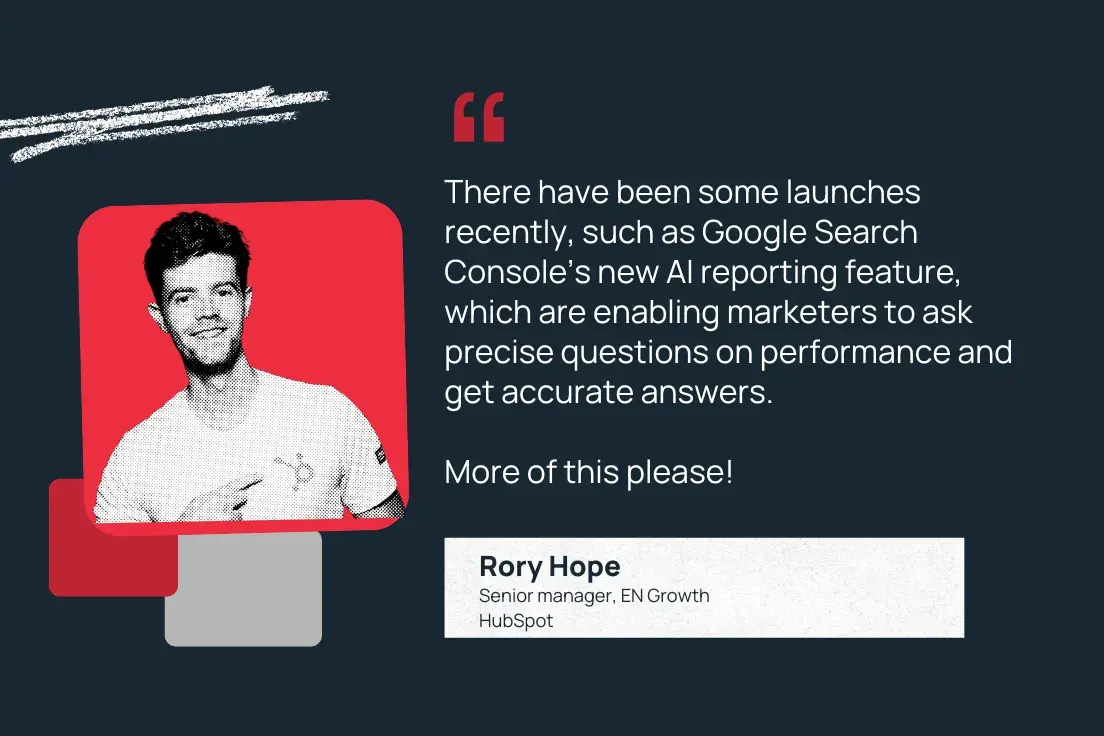
“I would have told myself not to overthink how AI is disrupting top of funnel search marketing, and that’s because we’ve seen this year how the search community has evolved to focus on optimizing for AI visibility. We’ve now got AI visibility monitoring tools, proven AEO tactics, and clear AEO reporting KPIs.

“we’ve seen this year how the search community has evolved to focus on optimizing for ai visibility. we’ve now got ai visibility monitoring tools, proven aeo tactics, and clear aeo reporting kpis.” —rory hope, senior manager, en growth, hubspot

“In January 2025, the route forwards was uncertain, but we’ve thankfully been able to navigate that uncertainty and establish a new AEO process that’s scaling AI visibility for HubSpot.”

What’s the smallest change you made in 2025 that had the biggest impact on your results?

Nuriel Canlas, Senior marketer, HubSpot Media

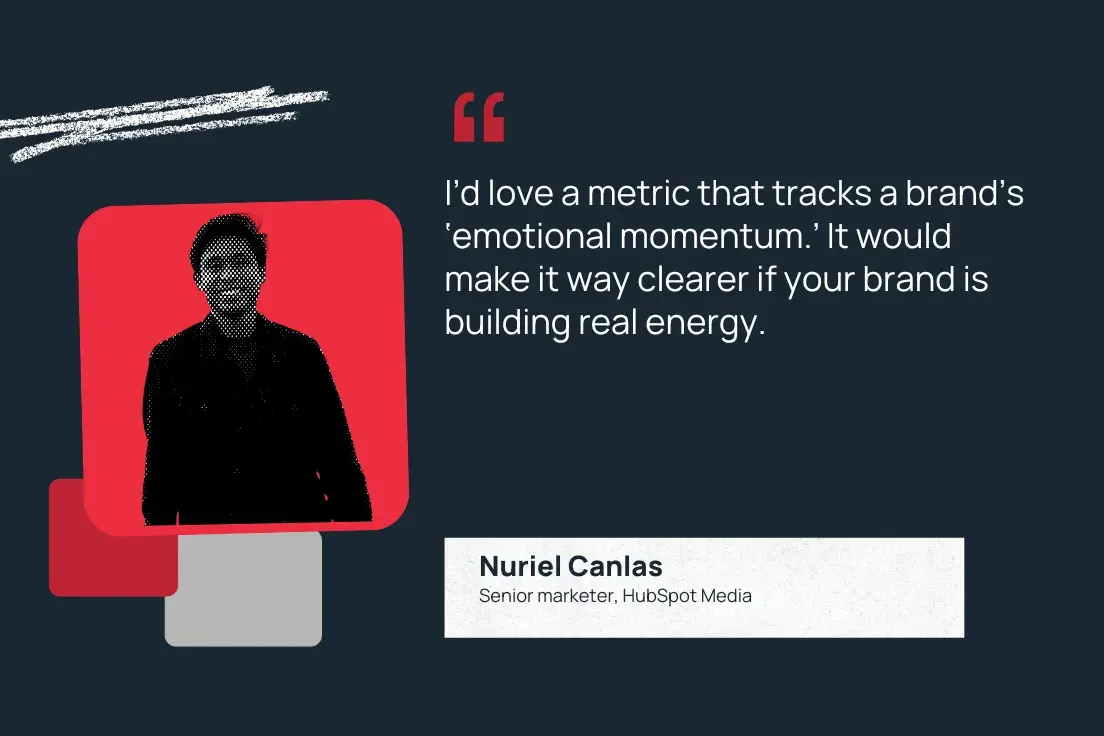
“My biggest win came from a simple mindset shift. I stopped thinking I needed a playbook for everything and started treating each challenge like something I could figure out. Once I leaned into that, my work got faster and the results got better.”

“my biggest win came from a simple mindset shift. i stopped thinking i needed a playbook for everything and started treating each challenge like something i could figure out.” —nuriel canlas, senior marketer, hubspot media

Amanda Kopen, Manager, Marketing

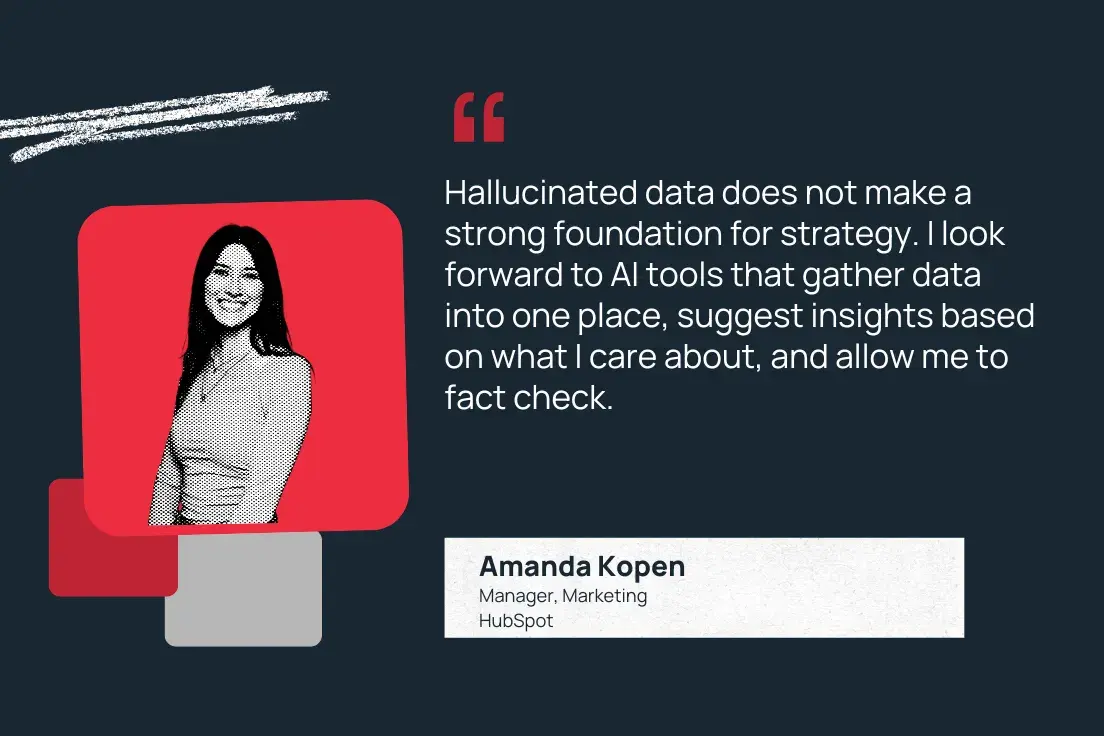
“One small change I made in H1 2025 that had an outsized impact on H2 results was repurposing one 15-minute meeting per month to educate my team on AI developments. AI Overviews, model updates, and the decrease of organic traffic was very nerve-wracking — especially for those with SEO backgrounds. But spending the time to consolidate information from across the industry into short lessons empowered my team to use AI in their work daily.

“one small change i made in h1 2025 that had an outsized impact on h2 results was repurposing one 15-minute meeting per month to educate my team on ai developments. spending the time to consolidate information from across the industry into short lessons empowered my team to use ai in their work daily.” —amanda kopen, manager, marketing, hubspot

“Now in December, they’re bringing news and insights to me and sharing with each other. Our efficiency and creativity have improved greatly, which has led to growing AI referral demand.”

What piece of marketing advice did you finally ignore this year — and why was that the right call?

Amy Marino, Senior director, brand and social

The narrative that AI will replace the need for creative strategists is so wrong.

“We integrated AI into our social content production this year, and the opposite proved true: AI made creative strategy and taste more valuable, not less. Anyone can generate content now. But knowing what’s viral vs forgettable, culturally fluent vs cringe, and what maintains our voice vs sounding like generic AI because what actually makes the content work.

AI is pretty bad at being cool, interesting, and differentiated, and I‘m not sure that’s something that can be prompted.”

Which marketing metric did you finally stop obsessing over — and what happened when you let it go?

Jonathon McKenzie, Head of brand paid media

“this year i let go of the idea that if you can’t measure it, you shouldn’t do it. not everything that builds brand shows up in the weekly dashboard.“ —jonathon mckenzie, head of brand paid media, hubspot

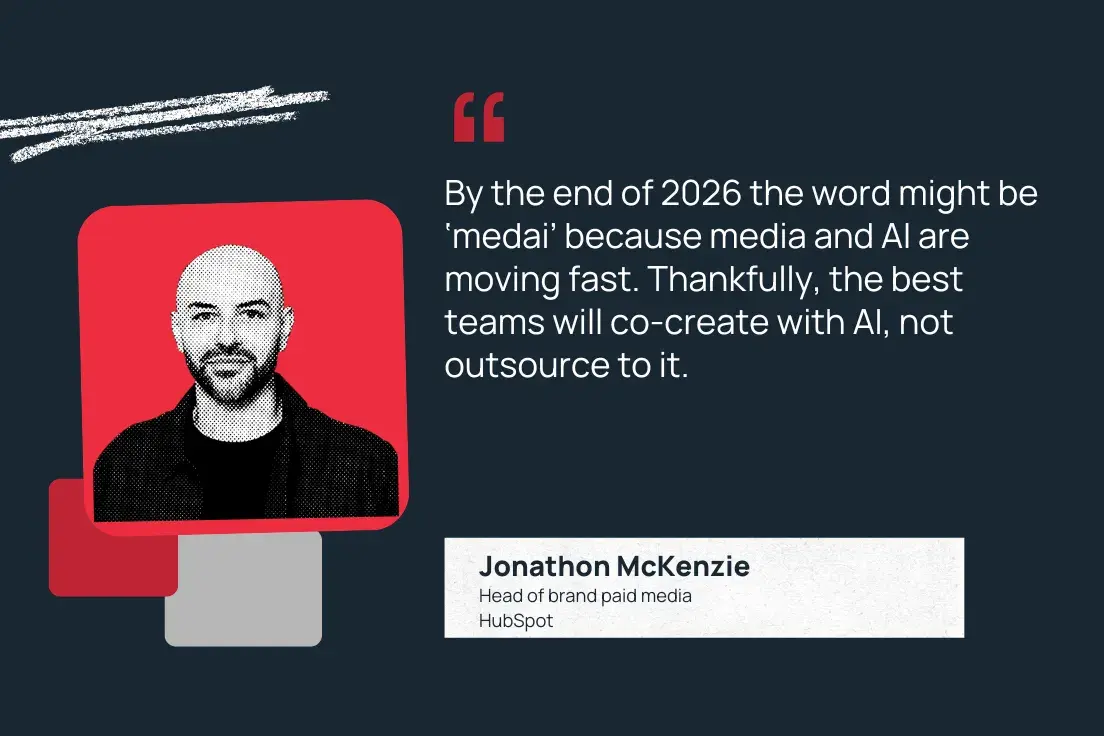
“This year I let go of the idea that if you can’t measure it, you shouldn’t do it. We backed out-of-home in a region where awareness had stalled, even though it didn’t map to a clean LTV story. It worked. Not everything that builds brand shows up in the weekly dashboard.

Click Here to Subscribe to Masters in Marketing

Categories B2B

How to launch a successful email marketing campaign: Tips + data from an email marketer

At the start of my marketing career, I managed two small email lists and quickly discovered why email marketing delivers an average ROI of $36-40 for every dollar spent. With nearly 5 billion email users worldwide, it’s no wonder this channel remains one of the most effective ways to reach your audience.

Download Now: Email Marketing Planning Template 

In this comprehensive email marketing guide, I’ll walk you through everything from best practices to building your first campaign to advanced strategies that drive results. Whether you‘re launching your first email or optimizing an existing program, you’ll learn the proven tactics that make email marketing 40 times more effective at customer acquisition than social media.

Table of Contents

The goal is building customer relationships, promoting products or services, increasing brand awareness, and ultimately driving sales.

In my experience, email marketing allows me to reach my target audience directly with personalized and relevant content. It’s also cost-effective, easy to track, and provides valuable data for analyzing campaign success.

Marketers have been using email as a channel for almost as long as they’ve been using the internet. The first marketing email was sent in 1978, resulting in $13 million in sales.

Email has been one of the most highly used marketing channels ever since.

This is because email is a flexible yet cost-effective way to reach many people relatively quickly. I can also personalize my message to target specific audiences and generate leads.

Email marketing can take many different forms. These campaigns can include a single email announcing new content, an ongoing newsletter delivered regularly, or contacting customers about product updates.

Email isn’t as shiny as newer channels, like messaging and social. However, email is an effective way to build an audience that gets results.

“One of my favorite parts about email marketing is its intimacy,” says Rob Litterst, head of strategy and operations for HubSpot’s Newsletter Network.

“Access to someone’s inbox is sacred, and for a person to welcome you in, there’s already a certain level of trust that you just can’t achieve with other platforms,” he says.

"One of my favorite parts about email marketing is its intimacy,” says Rob Litterst, head of strategy and operations for HubSpot’s Newsletter Network.  “Access to someone’s inbox is sacred, and for a person to welcome you in, there’s already a certain level of trust that you just can’t achieve with other platforms."

Master the fundamentals of email marketing with a free online course.

When to Use Email Marketing

Email marketing remains a powerful tactic to:

  • Build relationships. Build connections through personalized engagement.
  • Boost brand awareness. Keep your company and your services top-of-mind for the moment when your prospects are ready to engage.
  • Promote your content. Use email to share relevant blog content or valuable assets with your prospects.
  • Generate leads. Entice subscribers to provide their personal information in exchange for an asset that they’d find valuable.
  • Market your products. Promote your products and services.
  • Nurture leads. Delight your customers with content that can help them succeed in their goals.

Benefits of Email Marketing

Email marketing has steadily proven itself as a powerful channel for reaching and engaging your audience. It offers a mix of personal touch and cost-effectiveness that many other channels just can’t match. Let’s dive into some of the key benefits you can harness when you add email to your marketing strategy.

1. Cost-Effective

Email marketing is budget-friendly compared to traditional advertising methods like print ads or television commercials. Most email platforms offer affordable plans, and sometimes even free options, that still pack a punch in delivering your messages.

Since you don’t have to invest heavily in expensive media placements, you are free to experiment more, refine your campaigns, and allocate resources to other creative or strategic projects.

Moreover, email marketing has a high return on investment (ROI), making you an average of $36 for every $1 spent.

2. Direct and Personalized Communication

One of the reasons I rate email marketing so highly is because it gives you the ability to deliver personalized messages straight to your audience’s inbox. I’ve experienced firsthand how personal touches, like addressing me by my name or referencing a previous interaction we’ve had, has made me fall in love with a brand and made me look out for every email they send me.

By segmenting your email list based on factors like purchase history or interests, you can make each email feel like it was written just for that person. It’s like having a one-on-one conversation with your customers.

3. Strengthened Brand Awareness

Every time you send an email, you get a chance to reinforce your brand’s identity. With consistent messaging, carefully chosen images, and a unique tone of voice, your emails help establish who you are and what you stand for. Over time, this builds a strong association between your brand and the quality or value you provide.

Your subscribers start to recognize your style and look forward to your emails, which is exactly the kind of lasting impression you want to create. Whether it’s through eye-catching designs or thoughtful content, each email adds another brushstroke to the overall picture of your brand.

4. Measurable Results and Insights

With email marketing, every send and every click is trackable. This level of measurement is a game-changer because you always know what’s working and what isn’t. You can look at open rates, click-through rates, bounce rates, and even conversion rates to see where you might improve.

For example, if a particular subject line isn’t performing well, you can adjust it and test a new approach the next time. This constant feedback loop means you’re always learning and evolving, so your campaigns get better with each send.

5. Increased Customer Engagement and Loyalty

Consistency is key when it comes to building lasting relationships with your customers. With email marketing, you get the chance to stay in regular contact with your audience by sharing news, special offers, or insightful content. This regular engagement isn’t just about selling — it’s about building a community around your brand.

When I still ran my beauty blog, I liked to think of my (very small) email list as a group of friends who trusted my advice and recommendations. Over time, that trust translates into customer loyalty, and loyal customers are more likely to stick with your brand for the long haul.

6. Increased Conversion Opportunities

Every email is a chance to drive your audience toward a goal, whether that’s making a purchase, signing up for an event, or simply visiting your website. By including clear calls-to-action (CTAs) in your emails, you guide your readers step-by-step through the customer journey.

“While it’s the second-most used marketing channel (beat by social media), a whopping 95% of email marketers call it practical,” says Pamela Bump, head of content growth at HubSpot.

“For HubSpot — and our blog team — we’ve deeply leveraged email and even catered blog posts to our very subscribers,” she says. “Over the years, this has driven high ROI, millions of page views, countless conversions, and even customers.”

A great way to increase conversions is to experiment with different CTA placements and phrasing to see what resonates best with your audience. For example, you can shift your CTA button closer to the top of the email to see if it’ll result in more click-through rates. It may sound simple, but these tweaks can make a big difference in turning interest into action.

7. Automation and Scalability

As your business grows, so does the challenge of staying in touch with every customer. Email sequence software comes with powerful automation tools that let you schedule emails or even trigger messages based on user actions — like a thank-you email when someone makes a purchase.

This means you can “set it and forget it” to a large extent. For example, when I ran the email marketing for a literary website, I set up an automated email series that nurtured leads over days or even weeks. This saved me countless hours while still delivering a personalized experience to every subscriber.

Automation not only helps you scale your efforts but also ensures that each customer journey is smooth and consistent.

Types of Marketing Emails

Email marketing isn’t a one-size-fits-all approach. Depending on your audience, goals, and the current stage of your customer journey, you can adopt various email types to engage your audience effectively. Here are some common types of email marketing that you can send to your customers (with examples from my own inbox):

1. Welcome Emails

Your welcome email sets the tone for your entire relationship. It typically sees the highest engagement rates of any email type — often 50% higher than standard campaigns.

Best practices:

  • Send immediately after signup
  • Include a clear value proposition
  • Offer a welcome incentive
  • Set expectations for future emails

Here’s a welcome email from Strava, the running app:

strava welcome email, email marketing campaign

What works: The cheerful headline creates an immediate connection. Multiple CTAs show different ways to get value, while the testimonial provides social proof. This helps new users understand exactly what they can achieve with the app.

2. Promotional Emails

Promotional emails drive immediate action through special offers, discounts, or limited-time deals. They’re your direct sales tool.

Key elements:

  • Clear discount or offer
  • Urgency indicators
  • Prominent CTAs
  • Product visuals

asos promotional email, email marketing campaign

What works: ASOS combines a compelling 70% discount with personalized product recommendations based on browsing history. The deadline creates urgency while multiple product images provide options.

3. Newsletters

Newsletters nurture long-term relationships by delivering consistent value. They keep your brand top-of-mind between purchases while establishing your expertise.

Effective newsletters include:

  • Industry insights and trends
  • Educational content
  • Company updates
  • Curated resources

field notes newsletter email, email marketing campaign

What works: Omniscient Digital’s newsletter delivers deep, actionable insights without fluff. Each edition teaches something valuable, building loyalty through expertise.

4. Transactional Emails

Triggered by user actions, transactional emails have the highest open rates (often 80%+) because recipients expect them. Use this engagement opportunity wisely.

Common transactional emails:

  • Order confirmations
  • Shipping notifications
  • Password resets
  • Account updates

amazon transactional email, email marketing campaign

What works: Amazon provides all essential information while adding product recommendations to increase order value — turning a service email into a sales opportunity.

5. Re-engagement Emails

Win back inactive subscribers before they’re lost forever. These emails acknowledge the relationship gap and offer reasons to return.

Re-engagement tactics:

  • Exclusive “we miss you” offers
  • Account activity reminders
  • Preference update options
  • Emotional appeals

email marketing guide, duolingo reengagement email

What works: Duolingo’s emotional approach humanizes their brand mascot, creating guilt-free motivation to return. The simple CTA makes re-engagement effortless.

6. Abandoned Cart Emails

Recover lost sales by reminding customers about items left behind. These emails generate 29% of all email marketing revenue despite being sent to a small segment.

Abandoned cart essentials:

  • Product images and details
  • Easy return-to-cart button
  • Limited-time incentive
  • Alternative payment options

fashionova abandoned cart email, email marketing campaign

What works: FashionNova’s 50% discount creates irresistible urgency. Buy-now-pay-later options remove financial barriers while product recommendations increase average order value.

7. Lead Nurturing Emails

Lead nurturing emails contain valuable information that is relevant to consumers at different stages of their buyer’s journey.

Lead nurturing emails typically:

  • Address pain points
  • Offer solutions
  • Are personalized and relevant

warby parker lead nurturing email, email marketing campaign

What works: Warby Parker’s lead-nurturing email effectively addresses the issue of excessive screen time and the problems it causes for its target audience. Wrby Parker points recipients to a solution offered by the eyewear brand, which includes anti–fatigue glasses and blue-light-filtering lenses.

8. Dedicated Emails

Dedicated emails are designed to notify recipients of specific products, offers, or services. Dedicated emails often include calls to action, urgent language, and images of products and services up for grabs.

pet house dedication email, email marketing campaign

What works: The email is clever and well-formatted to fit the season, with “No Tricks, All Treats” being a fitting theme for Halloween. This dedicated email example also includes the most important information in the subject line (“Free Car Air Freshener”).

How to Create an Email Marketing Strategy: 9 Essential Steps

Building a successful email marketing program requires strategic planning. These nine steps will guide you from initial setup through ongoing optimization, ensuring every campaign drives measurable results.

Step 1: Define your target audience.

Before writing a single email, understand who you’re talking to. Effective campaigns start with detailed buyer personas that capture:

  • Demographics and firmographics
  • Pain points and challenges
  • Content preferences
  • Buying behavior patterns

Use HubSpot’s Marketing Analytics software to gather behavioral data that informs your personas.

Step 2: Set clear, measurable goals.

Your email marketing goals should align with broader business objectives. Start by researching industry benchmarks.

Common email marketing goals include:

  • Increase email list by 25% in Q1
  • Achieve 30% open rate on promotional emails
  • Generate 100 qualified leads per month
  • Improve click-through rate by 10%

Step 3: Choose the right email marketing platform.

Your email service provider (ESP) is the foundation of your program. Essential features to consider:

Must-have capabilities:

  • List segmentation and personalization
  • Automation workflows
  • A/B testing functionality
  • Mobile-responsive templates
  • Detailed analytics and reporting
  • CRM integration
  • Compliance tools (GDPR, CAN-SPAM)

Platform recommendations by business size:

  • Small businesses: HubSpot (free tier available), Mailchimp, Constant Contact
  • Growing companies: HubSpot Marketing Hub, Mailjet, ActiveCampaign
  • Enterprise: Salesforce Marketing Cloud, Adobe Campaign, Oracle Eloqua

Step 4: Build your email list (the right way).

Quality beats quantity every time. Focus on attracting engaged subscribers who want to hear from you.

Effective list-building tactics:

  • Create valuable lead magnets (ebooks, templates, tools)
  • Add signup forms to high-traffic pages
  • Use exit-intent popups strategically
  • Offer exclusive content or discounts
  • Run social media campaigns
  • Host webinars or events

Never buy email lists — they damage deliverability and violate regulations.

Step 5: Develop your content strategy.

Map email content to your customer journey stages:

Awareness stage:

  • Educational newsletters
  • Industry insights
  • How-to guides

Consideration stage:

  • Product comparisons
  • Case studies
  • Free trials or demos

Decision stage:

  • Customer testimonials
  • Limited-time offers
  • Personalized recommendations

Step 6: Design for engagement.

Your emails compete with dozens of others for attention. Stand out with:

Design best practices:

  • Mobile-first layouts (60%+ of emails open on mobile)
  • Clear visual hierarchy
  • Contrasting CTA buttons
  • Alt text for images
  • White space for readability
  • Brand consistency

Step 7: Create your email calendar.

Consistency builds trust. Develop a sending schedule your audience can rely on:

Sample email calendar:

  • Weekly newsletter: Tuesdays at 10 AM
  • Monthly product updates: First Thursday
  • Promotional emails: Maximum 2 per month
  • Transactional emails: Real-time triggers

Inform subscribers about your schedule upfront to set expectations.

Step 8: Implement testing and optimization.

Every audience is unique. Use A/B testing to discover what resonates:

Elements to test:

  • Subject lines (length, personalization, emojis)
  • Send times and days
  • CTA placement and copy
  • Email length
  • Image vs. text ratio
  • From names

Madison Zoey Vettorino, former HubSpot marketing manager, emphasizes: “A/B testing is an excellent way to determine if changes will be successful before implementing on a larger scale.”

Step 9: Measure, analyze, and iterate.

Track these essential KPIs:

Primary metrics:

  • Deliverability rate: Aim for 95%+
  • Open rate: Industry average 15-25%
  • Click-through rate: Target 2-5%
  • Conversion rate: Varies by goal
  • Unsubscribe rate: Keep under 0.5%

Advanced metrics:

  • Revenue per email
  • List growth rate
  • Email sharing/forwarding rate
  • Overall ROI

Use insights to continuously refine your strategy. What worked last quarter might need adjustment as your audience evolves.

Pro tip: Campaign Assistant, HubSpot’s AI tool, can help you quickly write effective email copy aligned with your campaign goals.

How to Build Your Email List

Now, to my favorite part: filling the email list with eager prospects who are excited to hear from you.

There are many creative ways to build your email list (and, no, purchasing emails ain’t one).

Tactically speaking, list building comes down to two key elements that work cohesively to grow your subscriber numbers: lead magnets and opt-in forms.

Featured Resource: The Ultimate Guide to Email Newsletters

Here’s how I build and grow my email lists.

Use lead magnets.

Your lead magnet is exactly as it sounds: It attracts prospects to your email list, usually as a free offer.

The offer can take many formats, should be valuable to your prospects, and is given away for free in exchange for an email address.

There’s just one problem: People have become hyper-protective of their personal information. You can’t expect to receive an email address without exchanging it for something valuable.

Think about a lead magnet that is relevant, useful, and makes your prospects’ lives easier.

Here are a few types of lead magnets you could create:

  • Ebooks.
  • Whitepapers.
  • Infographics.
  • Reports or studies.
  • Checklists.
  • Templates.
  • Webinars or courses.
  • Tools.

If you’re short on resources, you can even repurpose existing content to create lead magnets.

Create an enticing opt-in form.

Your opt-in form is how you get a prospect’s information to add them to your list. It’s the gate between your future leads and the incredible asset you created with them in mind.

Here are some tips for creating an enticing opt-in form:

Create an attractive design and attention-grabbing header.

Your form should be branded, stand out from the page, and entice people to sign up. You want to excite readers with the offer.

Make the copy relevant to the offer.

While your goal is to get people to enter their information, it isn’t to deceive them. Any information on your form should be a truthful representation of the offer.

Keep the form simple.

This could be one of your first interactions with your prospect. Don’t scare them away with several long-form fields.

Ask for only the most essential information: first name and email is a good place to start.

Set your opt-in form for double confirmation.

It may seem counterproductive to ask your subscribers to opt into your emails twice, but some research on open rates suggests that customers may prefer a confirmed opt-in (COI) email more than a welcome email.

Ensure that the flow works.

Take yourself through the user experience before you go live. Double-check that the form works as intended, the thank you page is live, and your offer is delivered as promised.

This is one of your first impressions of your new lead — make it a professional and positive one.

If all goes well, you’ll have built a robust list of subscribers and leads waiting to hear from you. But you can’t start emailing just yet unless you want to end up in a spam folder, or worse, a blocked list.

Here are a few important things to remember before you start emailing your list.

1. Implement email segmentation.

Once you’ve added people to your list, you must break them down into different segments.

That way, instead of having a monolithic email list of everybody, you’ll have easier-to-manage subcategories that pertain to your subscribers’ unique characteristics, interests, and preferences.

Your subscribers are humans, after all, and you should do your best to treat them as such. That means not sending generic email blasts.

Why should you segment your email list?

Each person who signs up to receive your emails is at a different level of readiness to convert into a customer (which is the ultimate goal of all this).

If you send a discount coupon for your product to subscribers that don’t even know how to diagnose their problem, you’ll probably lose them. That’s because you’re skipping the part where you build trust and develop the relationship.

I try to make every email I send treat my subscribers like humans I want to connect with, as opposed to a herd of leads I’m trying to corral into a one-size-fits-all box.

I’ve found the more I segment my list, the more trust I build with my leads, and the easier it is to convert them later.

How to Segment Email Lists

The first step in segmentation is creating separate lead magnets and opt-in forms for each part of the buyer’s journey. That way, your contacts are automatically divided into separate lists.

Beyond that, email marketing platforms allow you to segment your email list by contact data and behavior to help you send the right emails to the right people.

Here are some ways you could break up your list:

  • Geographical location.
  • Lifecycle stage.
  • Awareness, consideration, and decision stage.
  • Industry.
  • Previous engagement with your brand.
  • Language.
  • Job title.

In reality, you can segment your list any way that you want. Just make sure to be as exclusive as possible when sending emails to each subgroup.

2. A/B test your marketing emails.

Not all email lists are created equal. Some audiences prefer personalization, and others will think it’s spammy. Some audiences will like bright, eye-catching CTA buttons. Others will prefer a more subtle call-to-action.

You’ll never know what type of people make up your email list until you test the variables. That’s where A/B testing comes in handy.

“If you’re considering making any structural or content alterations to your email marketing, A/B testing is an excellent way to determine if the changes will be successful or worthwhile before they’re implemented on a larger scale,” says Madison Zoey Vettorino, former marketing manager and SEO content writer for HubSpot’s Website Blog.

Surprisingly, not many brands leverage it.

A/B testing, or split testing, is a way to see what type of email performs best with your audience by analyzing the results of email A against email B. This can be especially helpful when working with templates.

“Since emails often have the same template, A/B testing is smart because you can usually control variables outside of the test and get a solid signal on what performs better,” HubSpot’s Litterst says.

Here’s the step-by-step process I use for A/B testing my emails:

  • Select one variable to test at a time, e.g., subject line, CTA, images.
  • Create two versions of the email: one with and one without the variable.
  • Allow your emails to be sent out simultaneously for a period of time.
  • Analyze your results and keep only the version that performed better.
  • Test a new variable and repeat the process.

Most email service providers will have A/B testing built into their software, which will make it easy for you to compare email results without much manual work.

When conducting an A/B test, I suggest following these tips:

Test one element at a time.

“For example, try the same email with a different subject line. Or the same email and same subject line with a different CTA,” Curtis del Principe, a content strategist and writer at HubSpot, told me.

“It might be tempting to make several changes at once, but that makes it harder to pinpoint the true cause of your wins or losses,” he says.

Don’t try to “eyeball” an A/B test.

A/B test should be run with intention. Making quick changes and approaching results unscientifically can lead to incorrect conclusions.

“You might be tempted to run an informal A/B test by making a change and then casually paying attention to the responses that you get. This unscientific method can easily be skewed by factors outside your control (like seasonality or deliverability),” says del Principe.

“It also leaves out a ton of valuable data, like open rate, click-through rate, unsubscribe rate, or sharing/forwarding rate.”

Instead, I recommend using an email marketing tool, like Marketing Hub or BuzzStream, to help you get a broader and more accurate understanding of your email performance.

Featured Resource: The Complete A/B Testing Kit

3. Analyze your email marketing performance.

Once you’ve got your first few campaigns, it’s time to see how they’re performing.

By diving into your email marketing analytics, you’ll be able to make better decisions that will help your business’s bottom line, resonate with your subscribers, readers, and customers, and justify your work to the rest of your company.

4. Set email marketing KPIs.

I think there are four key metrics to pay attention to when evaluating the effectiveness of your email marketing campaign.

  • Deliverability measures the rate at which emails reach your intended subscribers’ inboxes.
  • Open rate is the percentage of people that open your email once it reaches their inbox.
  • Click-through rate (CTR) is the percentage of people who click on your CTAs.
  • Unsubscribes measures the number of people who opt out of your email list once they receive your email.

5. Adjust email components to improve results.

Many factors impact your KPIs, and it will take some experimentation and guesswork to figure out which tweaks to your emails will yield the biggest significance.

If you aren’t getting the desired numbers, I suggest playing with these variables to improve your email results.

Deliverability

  • Ensure that you’re following best practices regarding spam filters.
  • Remove inactive people from your email list to keep only engaged subscribers.
  • Check which emails have bounced and remove those email addresses from your list.

Open Rate

  • Play with the language in your subject line to entice people to click on your email.
  • Adjust the time and day that you send your email to see what works best.

Click-Through Rate (CTR)

  • Evaluate your offer to ensure that it provides value to your segmented list.
  • Rewrite your copy to make sure that it’s clear what you want the reader to do.
  • Try different CTAs, e.g., graphic versus inline copy, bold versus subtle.

Unsubscribes

  • First, consider if this is a blessing in disguise, as uninterested parties are removing themselves from your list.
  • Regularly send an email to inactive subscribers on your list asking if they still want to be a part of it.
  • Evaluate whether the email you sent is aligned with your brand.
  • Ensure you haven’t performed a bait-and-switch by promising one thing and delivering another.
  • Make sure your emails are providing value to your audience before trying to upsell.

6. Use an email marketing report template.

Once you’ve got some campaigns under your belt, it’s time to look at how they performed. Your data does no good if you can’t report it in an organized fashion.

An email marketing report is a spreadsheet where you can record your results in one place to help you make inferences from your KPIs and take action to improve them.

Here’s how I like to organize my reports.

Metrics

  • Total number of emails sent.
  • Number of emails delivered.
  • Deliverability Rate.
  • Bounce Rate.
  • Open Rate.
  • Click-Through Rate (CTR).
  • Click-to-open Rate (CTOR).
  • Unsubscribe Rate.

Data

  • Subject line.
  • Length of the email body.
  • Offer.
  • CTA (inline or graphic).
  • List segment(s).

Questions To Ask

  • Was your deliverability rate high in comparison to previous periods?
  • How did your CTR compare to your open rate?
  • Were your unsubscribe numbers consistent with other emails?
  • Did a certain subject line perform better than others?
  • Does the length of the email make a difference in CTR?
  • Could another style of CTA perform better?
  • Was the offer appropriate for the list segment?

Email Marketing Stats You Should Know

Knowing the stats can help you understand the lay of the land. Here I’ve gathered some statistics regarding email marketing in general and by industry.

General Email Marketing Stats

Email Marketing Stats by Industry

Email marketing rules change based on your industry and who you’re marketing to. Below are some email marketing trends for B2B, B2C, and ecommerce companies that can inform your email marketing strategy.

Email Marketing Stats for B2B

Email Marketing Stats for B2C

  • B2C email programs are nearly 3X more likely than their B2B counterparts to use different tactics, including AMP for email, live content, multivariate testing, and loyalty programs.
  • 56% of B2C marketers use email data to form their target audiences.
  • 74% of B2C marketers are targeting Millennials in 2025.

Email Marketing Stats for Ecommerce

Email Marketing Compliance: Essential Regulations and Best Practices

Email marketing compliance isn‘t optional — it’s essential for protecting your business and maintaining subscriber trust. Violations can result in hefty fines and permanent damage to your sender reputation.

CAN-SPAM Act (United States)

The CAN-SPAM Act sets requirements for commercial emails in the US. Violations can cost up to $51,744 per email.

Key requirements:

  • Accurate header information: “From,” “To,” and routing information must be truthful
  • Clear subject lines: No deceptive or misleading subjects
  • Identification: Clearly identify messages as advertisements
  • Physical address: Include your valid postal address
  • Opt-out mechanism: Provide clear, easy unsubscribe method
  • Honor opt-outs: Process requests within 10 business days
  • Monitor third parties: You’re responsible for compliance even when using agencies

GDPR (European Union)

The General Data Protection Regulation applies to any business processing EU residents’ data, regardless of location. Fines can reach €20 million or 4% of global revenue.

GDPR email requirements:

  • Explicit consent: Pre-checked boxes don’t count
  • Clear privacy policy: Explain data usage transparently
  • Right to access: Provide data upon request
  • Right to deletion: Remove data when requested
  • Data portability: Export subscriber data in common format
  • Breach notification: Alert authorities within 72 hours

CASL (Canada)

Canada’s Anti-Spam Legislation is one of the strictest globally, with fines up to $10 million per violation.

CASL requirements:

  • Express consent: Must be opt-in (not opt-out)
  • Clear identification: Include your name and contact info
  • Unsubscribe mechanism: Must work for 60 days minimum
  • Consent records: Maintain proof of permission

Industry-Specific Regulations

Certain industries face additional requirements:

Healthcare (HIPAA):

  • Encrypt emails containing patient information
  • Obtain written consent for marketing
  • Implement access controls

Financial Services:

  • Include required disclosures
  • Maintain communication records
  • Follow SEC/FINRA guidelines

Compliance Best Practices Checklist

Before sending:

  • Obtain explicit, documented consent
  • Provide clear privacy policy at signup
  • Use double opt-in for extra protection
  • Segment lists by consent type and location

In every email:

  • Include company name and address
  • Add visible unsubscribe link
  • Use honest subject lines
  • Identify promotional content

Ongoing maintenance:

  • Process unsubscribes immediately
  • Regular list hygiene (remove bounces, inactives)
  • Update privacy policies annually
  • Train team on compliance requirements
  • Document all consent records

Platform features to enable:

  • Automatic unsubscribe handling
  • Bounce management
  • Consent tracking
  • IP warming for new domains
  • Authentication (SPF, DKIM, DMARC)

Building Trust Through Compliance

Compliance isn‘t just about avoiding fines — it’s about respecting your subscribers. When you follow regulations:

  • Open rates increase (subscribers trust you)
  • Spam complaints decrease
  • Deliverability improves
  • Brand reputation strengthens

Remember: The easiest way to stay compliant is choosing an ESP that handles technical requirements automatically. Platforms like HubSpot build compliance features into their core functionality, reducing your risk.

Email Marketing Tips

While I usually don’t think twice about the formatting or subject line of an email I send to a friend, email marketing requires a lot more consideration.

I’ve learned that everything from the time you send your email to the devices on which your email could be opened matters.

Your goal with every email is to generate more leads, which makes crafting a marketing email a more involved process than other emails you’ve written.

How to Write a Marketing Email Well

Let’s touch on the components of a successful marketing email.

Copy: The copy in the body of your email should be consistent with your voice and stick to only one topic.

Images: Choose images that are optimized for all devices, eye-catching, and relevant.

CTA: Your call-to-action should lead to a relevant offer and stand out from the rest of the email.

Timing: Based on Mailmodo’s State of Email 2024 findings, the best day to send your emails is Tuesday. According to GetResponse’s email benchmarks report, the best time to send emails is either before your audience wakes up (4–6 am) or later in the afternoon (5–7 pm).

Responsiveness: Nearly 50% of email marketers say 40%–60% of their email engagement comes from mobile devices. Your email should, therefore, be optimized for this, as well as all other devices.

Personalization: Write every email like you’re sending it to a friend. Be personable and address your reader in a familiar tone.

Subject Line: Use clear, actionable, enticing language that is personalized and aligned with the body of the email.

Featured Resource: 100 Email Subject Lines We Actually Clicked

Pro tip: Leverage AI for email marketing. By using tools like our AI Email Writer, you can generate copy that suits your goals, saving time along the way.

Personalize your email marketing.

“Personalization isn’t just about adding a contact’s name to the subject line anymore but is all about creating personalized experiences that demonstrate you understand them and have insider knowledge about how they can use your products to succeed,” Aleia Walker, growth marketing manager at HubSpot.

Once you know who you’re emailing and what’s important to them, sending emails with personalized touches will be much easier.

Sure, you’re speaking to 100+ people at one time, but your leads don’t need to know it.

Personalized emails have higher open rates. In addition, 83% of customers are willing to share their data to create a more personalized experience.

You’ve gathered all this unique data. Your email marketing software allows for personalization tokens. You have no excuse for sending generic emails that don’t make your leads feel special.

“It’s more impactful to base email personalization on two or three factors instead of just what a contact is engaging with on your side,” Walker says.

Walker suggests, “Consider personalizing emails based on what you know about your contact, such as their location, industry, employee size, etc., alongside how they engage with your content.”

Here are a few ways I like to personalize my emails:

  • Add a first name field in the subject line and/or greeting.
  • Include region-specific information when appropriate.
  • Send content that is relevant to your lead’s lifecycle stage.
  • Only send emails that pertain to the last engagement a lead has had with your brand.
  • Write about relevant and/or personal events, like region-specific holidays or birthdays.
  • End your emails with a personal signature from a human (not your company).
  • Use a relevant CTA to an offer that the reader will find useful.

Use email marketing templates.

Email marketing templates — like these ones from HubSpot — are another great resource to help you with your email marketing.

Unless you’re a designer and developer, on top of being a skilled marketer, templates will save you a ton of time — they take the design, coding, and UX-definition work out of crafting your emails.

Just one caveat: When making your selection, I advise choosing email templates that are proven to be effective.

The highest-quality templates come from the most reputable ESPs that have tested them against thousands of alternatives. So, stick with the professionals.

If you’re struggling with the above tips, HubSpot offers email marketing tools to help personalize your marketing emails, optimize your emails with A/B testing, and create aesthetically pleasing emails using templates.

Furthermore, HubSpot’s Campaign Assistant uses AI technology to generate copy for marketing emails.

Email Marketing FAQ

How much does email marketing cost?

Email marketing is highly cost-effective, with many platforms offering free plans for small lists and paid plans typically ranging from $10-$300+ per month depending on list size and features. The investment is minimal compared to traditional advertising, and with an average ROI of $36 for every $1 spent, it’s one of the most profitable marketing channels available.

What’s the best email marketing platform for beginners?

HubSpot offers a free email marketing service with user-friendly tools and no design or IT experience required, making it ideal for beginners. Moosend is another excellent choice for solopreneurs due to its affordability and ease of use while still covering all the basics. Both platforms provide templates, automation, and analytics to help you get started quickly.

How often should I send marketing emails?

Most marketers send 1-4 emails per month to each subscriber, with Tuesday being the optimal day and either early morning (4-6 am) or late afternoon (5-7 pm) being the best times. The key is to establish a consistent schedule and communicate it upfront so subscribers know what to expect. Always prioritize providing value over frequency to maintain engagement and avoid high unsubscribe rates.

What’s a good email open rate?

A good email open rate varies by industry, but 67.1% of marketers report average open rates above 20%, which serves as a general benchmark. Open rates are influenced by factors like subject line quality, sender reputation, list segmentation, and send timing. Focus on improving your metrics over time through A/B testing rather than comparing yourself directly to industry averages.

Do I need permission to send marketing emails?

Yes, you must obtain explicit permission before sending marketing emails to comply with CAN-SPAM and GDPR regulations. Use opt-in forms where subscribers actively choose to receive your emails, and consider implementing double opt-in for additional confirmation. Never purchase email lists, as this violates regulations and damages your sender reputation.

How do I avoid spam filters?

Avoid spam by using a reputable email service provider, implementing double opt-in, and avoiding spam trigger words like “click below” or excessive caps and exclamation points. Ask subscribers to whitelist your email address by adding it to their contacts, regularly clean your list of inactive users, and maintain consistent sending practices. Monitor your deliverability metrics and sender reputation to catch issues early.

What’s the difference between email marketing and newsletters?

Newsletters are a specific type of email marketing focused on delivering valuable content, industry news, and updates on a regular schedule to nurture long-term relationships. Email marketing is a broader practice that encompasses newsletters, promotional emails, transactional emails, welcome sequences, abandoned cart reminders, and other campaign types. Newsletters were the most sent email campaign type in 2023, followed closely by promotional emails.

How long should marketing emails be?

Marketing emails should be concise and focused on a single topic, with length depending on the email type and purpose. Promotional emails and CTAs are most effective when brief and scannable, while newsletters can be longer if they offer substantial value. The key is to respect your subscribers’ time—keep copy clear and actionable, use short paragraphs, and ensure every sentence serves a purpose.

Beginning Email Marketing

Email marketing is a powerful, cost-effective way to connect with your audience and drive business growth. With over 4.3 billion users worldwide and an average ROI of $36–$40 for every $1 spent, it remains one of the most effective digital marketing channels.

To succeed, start by defining your goals, building a quality email list, choosing the right platform, and sending targeted, valuable content. Track your results, follow legal requirements, and continually optimize for better performance.

Ready to launch or improve your strategy? Start free with HubSpot’s email marketing tools.

Editor’s note: This post was originally published in June 2018 and has been updated for comprehensiveness.

Categories B2B

Celebrating the Winners of The 2025 Luna’s: Best Always-On Strategy

The concept of “time” in business has fundamentally shifted.

For the longest…time, we wanted to know when the best… time (geez, sorry) was to do insert thing:

  • When should I post on social media?
  • When should we schedule the email to go out?
  • When should we have our campaign live?

The answer to each of these questions, for the most part, is that it doesn’t matter. Really.

The digital ecosystem is vast and fragmented that we cannot expect people to show up at a given…no, I won’t say it again…MOMENT! There’s a good alternative.

Yes, we cannot expect people to show up at a given moment—unlessunless you are consistent.

Now, consistency is an entirely different story.

Always-On Campaigns Are Your Best Utility Player

Always-On” does not mean “Set-and-Forget.” 

In fact, as our winners demonstrate, maintaining a perpetual presence requires more agility, not less. It requires a commitment to data hygiene, a refusal to accept stagnation, and a mindset that views a campaign not as a static asset, but as a living entity.

The Best Always-On Strategy category honors the programs that never slow down. These are the engines of demand generation, the campaigns that continually generate high-quality leads, fuel pipeline, and prove the power of consistent performance.

Let’s meet the marketers who have mastered the art of the marathon in 2025.

Let’s Meet the Winners in The Luna’s 2025 Best Always-On Strategy Category

BEST ALWAYS-ON STRATEGY Celebrating the programs that never slow down, delivering consistent performance and continuous value.

The winners of The 2025 Luna’s have set the bar high, showcasing the power of persistence, adaptability, and strategic thinking in B2B marketing. Their campaigns don’t just run continuously—they evolve, learn, and improve with every interaction.

Congratulations to each of our winners! Now, let’s get a taste of what makes them tick, what drives them, and (most importantly for you) how you can learn from their success.

What Makes a Great Always-On Strategy?

When asked what defines a successful always-on program, the winners shared insights that reflect their unique approaches to maintaining momentum.

Across their responses, one theme emerged: evolution over repetition.

The most common failure point for always-on programs is fatigue. Not just audience fatigue, but internal creative fatigue. How do you keep a message fresh when it runs every single day of the year?

When we asked our winners how they keep their programs running smoothly, a distinct theme emerged: Evolution.

Sage’s Allie Ortiz provided perhaps the most perfect metaphor for this approach. She doesn’t view her campaigns as marketing tactics, but rather as biological systems.

“Consistency and optimization are everything. At Sage, we treat always-on programs like a living ecosystem; continuously monitoring performance, refreshing creative, and aligning messaging with current buyer challenges or industry trends. Keeping content varied across verticals and funnel stages ensures engagement never plateaus.”

This “living ecosystem” approach was echoed by Tricentis, where J.D. Callaway emphasizes the importance of the quarterly refresh. By avoiding the trap of overly promotional language, they maintain a conversation rather than a broadcast.

“We treat our always-on programs as living campaigns—continually monitoring performance, A/B testing creative and messaging, and refining based on engagement data. We also refresh content quarterly to align with evolving buyer pain points… Keeping messaging conversational and value-focused—rather than overly promotional—has helped us maintain engagement over time.”

For Dassault Systèmes, agility is achieved through rigorous internal alignment. Anna Colbert notes that even a year-long campaign must stay hyper-relevant to the immediate news cycle.

“Maintaining always-on programs requires a combination of strategic planning and consistent execution. One key factor is ensuring that the Geo is consistently aligned with the brand team… For instance, our DELMIAWORKS campaign included several brand new and hyper-relevant pieces of content, relating to the Internet of Things, Data-Driven Manufacturing, and Artificial Intelligence.”

Meanwhile, Vertex Inc. relies on a strategy of continuous spotlighting. By constantly rotating the assets to focus on the latest innovations, they ensure the “always-on” light never illuminates a stale product.

“We continually create and refresh assets that spotlight the latest features, functionality, and innovations in Vertex solutions. This ensures our messaging reflects what’s most relevant to our audiences at any given moment.”

Practical Tips for Building Always-On Programs

Strategy is glamorous; execution is gritty. When managing high-volume, year-round campaigns, the difference between success and failure often comes down to boring, unsexy habits.

We asked our winners for the one practice that made the biggest difference. The answers weren’t about creative brilliance—they were about discipline.

Dassault Systèmes offered a masterclass in data hygiene. Anna Colbert described a process of “contact assessment” that many marketers skip because it is tedious. But the results speak for themselves.

“One of the most impactful practices has been conducting contact assessments and making targeting adjustments on a quarterly basis. It sounds simple, but if you’re generating a high volume of contacts every week, keeping up with this practice can be difficult… For instance, we assessed and adjusted the targeting mid campaign to remove Municipalities, Car dealerships, IT companies, and some non-profits based on the results we had seen thus far.”


Think about that for a second. How many marketers are brave enough to remove potential sectors mid-campaign? That is the discipline of quality over quantity.

Media Cause takes a similar approach, utilizing a tiered system to filter the noise.

“At the start of the campaign, we focused on a broader audience that was still within our target audience. With each iteration, we narrowed in on the audience that best responded to our ads. Then, we created a tiered approach to ensure we focused on the most valuable leads for follow-up.”

For Sage and Vertex, the secret weapon is the “Feedback Loop.” It’s not enough to launch; you have to autopsy every result.

“At Sage, we prioritize feedback loops and iteration. Every campaign, high performing or low performing, gets a post-mortem to understand what worked and where we can refine targeting, messaging, or follow-up. This data-driven mindset has helped turn always-on from a static channel into a continuous learning engine that performs better each quarter.”

“The most impactful practice for our team has been maintaining a consistent feedback loop between content creation and campaign performance… This data-driven collaboration allows us to continuously improve content relevance, ensuring each campaign builds stronger connections with our target audiences.”

Advice for Building Always-On Programs

When asked for their single best piece of advice for marketers looking to build always-on programs, the winners shared insights that reflect their deep understanding of sustainable growth.

Starting an always-on program can feel daunting. The idea of a campaign that never ends can trigger a sense of perfectionism—the feeling that because it’s permanent, it has to be flawless from day one.

The advice from our winners? Just start.

Jennifer Janes from DoIT hits the nail on the head regarding the “perfectionism trap.”

“You may not get everything right the first time, but you won’t know what works for your organization until you try. It’s better to test and learn than to get stuck chasing perfection.”

Sage offers a practical blueprint for those overwhelmed by the scope. You don’t need to boil the ocean; you just need to start heating the water.

“Start small, stay consistent, and measure everything. Always-on success isn’t about launching a big program overnight. It’s about building momentum. Focus on one core audience, a strong content offer, and a clear nurture path.”

Tricentis advises focusing on the foundation before you worry about the volume.

“Start with a strong foundation of audience insights and build from there. Understand your buyers’ intent signals and pain points before creating content. Then, keep iterating—don’t set it and forget it.”

And Media Cause reminds us that the term “Always-On” is a technical setting, not a management style.

“Don’t let an always-on campaign turn into a set-it-and-forget-it campaign. Even with an always-on campaign, it is essential to regularly evaluate results to ensure continued success.”

The Role of NetLine in Their Success

Finally, we asked our winners how the NetLine platform fits into their broader strategy. What became clear in their responses is that for an always-on strategy to work, the relationship between vendor and marketer must evolve into a true partnership.

Tricentis highlighted the difference between a lead vendor and a growth partner.

“NetLine has been a great partner. They understand our strategy, our products, and our ICP. They have always been proactive with suggestions and best practices for our team and truly a partner looking for mutual success, rather than just selling leads.”

Dassault Systèmes went a step further, highlighting the human element—specifically calling out their account team for fostering a relationship based on shared knowledge.

“Their consistent campaign quality and high service levels have fostered a genuine give-and-take relationship, allowing for open collaboration and shared success. In addition, our account team has remained relatively consistent over time. This alone is a huge plus.”

For DoIT, the platform serves as a vital R&D lab for their messaging.

“NetLine has been a great partner when it comes to sourcing and understanding lead behavior from our target accounts. We can test out a variety of content to see what messaging and pain points resonate with our target prospects, and use that information to inform our marketing strategy.”

Lumen focused on the efficiency of the intent engine, which allows them to run complex partner campaigns without drowning in manual work.

“For Lumen, what’s made the biggest impact is NetLine’s ability to support always-on content syndication, which keeps our messaging in front of the right audiences without requiring constant manual intervention.”

And Vertex Inc. summed it up by focusing on the ultimate goal: Growth.

“With NetLine’s support, we’ve been able to keep our always-on strategy truly ‘always-on’—continuously connecting with new prospects while nurturing existing relationships. Their insights and collaboration have been instrumental in the ongoing growth and success of our marketing programs.”

Celebrating the Best Always-On Strategies

The winners of the 2025 Best Always-On Strategy award have proven that consistency is not about repetition—it is about resilience. It is about building a system that can adapt, learn, and grow without ever hitting the “pause” button.

By treating their campaigns as living ecosystems, prioritizing data hygiene over vanity metrics, and viewing their vendors as strategic partners, these marketers have set the standard for what it means to be truly “Always-On.”

As we celebrate their achievements, their insights serve as a powerful reminder of what’s possible when marketers commit to the marathon mindset and embrace the discipline of continuous improvement.

Congratulations to all our winners!

Categories B2B

2025’s Lingering Questions

Lingering Questions is one of my favorite parts of the Masters in Marketing newsletter, because it’s an opportunity for marketers to talk directly to one another.

This year, a few clear themes emerged: yes, AI can help you be a better and more efficient marketer, but human connection is more important than ever; authenticity, even if it means you’re a bit unpolished, is preferable to perfection; and consumers across all industries are hungry for community.

Click Here to Subscribe to Masters in Marketing

We’ve rounded up all the questions marketers asked each other in the last 12 months:

April Sunshine Hawkins, Marketing and communications leader

“What warm memory comes to mind when you hear these three words: creative, curious, courageous?”

Irina Novoselsky, CEO of Hootsuite

“I’ve spent the last year focused on building meaningful relationships on LinkedIn — sharing personal and professional experiences to create genuine connections. Each of these words have shaped this journey: staying curious about what my audience cares about and wants to learn from me, experimenting with creative ways to share my experience and engage with others, and embracing the courage it took to get started and be vulnerable.

“As the CEO of a social company, I recognize the transformative power of social media. It drives pipeline, builds connections, and ensures your voice shapes conversations that are happening with or without you. But what’s even more powerful is the impact the relationships built through social can have outside of the digital world.

“A memory that stands out is the first ‘IRL’ dinner I had with a marketing leader I connected with on LinkedIn, after months of engaging with each other‘s content. What started as a digital connection has since grown into a genuine friendship (and many double dates with our husbands!) — and it’s all thanks to social.

“To any marketers reading this that may be hesitant to get started, let this be your sign: Make the leap into posting. You don’t know what new friendships you may be missing out on.”

Read more: Gen Z is turning this CEO’s business model upside down

Novoselsky asked, “How do you approach your personal brand on social media? Has social created meaningful opportunities or opened doors for you professionally and personally?”

Preston Rutherford, Co-founder of Chubbies

“I approach the personal brand piece by trying to be exactly how I am in person. I don’t know how to do anything else.

“And yes, it has opened infinite doors, not least of which is the opportunity to talk with [Masters in Marketing]!”

Read more: Chubbies’ co-founder warns: Don’t get hooked on the performance marketing drug

Rutherford asked, “What is your favorite movie that you’re embarrassed for anyone to know about?”

Anna Engel and Nathaniel Gaynor, Director of brand, content and culture; Sr. marketing manager, brand partnerships at McDonald’s

Gaynor: Eurovision Song Contest: The Story of Fire Saga

Engel: The Princess Diaries

Read more: Beyond the Golden Arches: How two McDonald’s marketers win Gen Z

Engel and Gaynor asked, “What brand do you think is taking bold risks to connect with Gen Z today?”

Jeff Wirth, Co-founder of the Interactive PlayLab

“Party At Anna‘s is a company pushing boundaries by creating interactive and immersive experiences that resonate with Gen Z’s love for storytelling and social engagement.

“Their projects take bold risks by incorporating real-time audience participation, unconventional venues, and dynamic, unpredictable narratives. By embracing themes of identity, community, and collective storytelling, they craft highly shareable and deeply personal experiences that redefine what theatre can be for a new generation.”

Read more: Consultant behind Meow Wolf, Blue Man Group shares lessons on joy, playing, and branded experiences

Wirth asked, “What is a blind spot in the marketing world that, if addressed, would make people’s lives better?”

Eric Munn, Director of marketing at Chicago Transit Authority

“A major blind spot in the marketing world is forgetting that most people aren’t as aware of your brand as you are. Many brands use messaging that already assumes people know who you are or what you offer. Make sure you’re clear about what your product or service is going to do to help people. Witty and eye-catching is fun, but the conversion is in solving people’s problems.”

make sure you're clear about what your product or service is going to do to help people. witty and eye-catching is fun, but the conversion is in solving people's problems. —eric munn, director of marketing, chicago transit authority

Read more: Marketing like a Castaway

Munn asked, “What’s a career you’ve always wanted to get into but never have?”

Jennifer Waters, Co-founder of 7 Figure Dojo and executive sensei at Seigler’s Karate Center

“Honestly, I always wanted to do what I’m doing today! No other careers I would want to have!”

Read more: Be a knockout in small and local business marketing

Waters asked, “What’s one marketing mechanism that will generate the most revenue quickly for a startup?”

Erin Quinn, The Original Pickle Shot

“I know it‘s annoying to say ’it depends,’ but my recommendation for quick revenue growth would likely vary depending on the startup.

“For example, paid social is likely to be a cost-efficient and impactful choice for a budget-friendly DTC skincare brand targeted towards Gen Z. (There’s a reason that paid social is the first and only paid media that many brands invest in!)

“Promo codes, rebates, and couponing can be an important add-on to said campaign, as these tactics provide an extra incentive for conversion and you can use redemption as a KPI.

“No matter the business model, my most important ‘do this before anything else’ recommendation would be to spend time on your consumer target, positioning, and brand identity development so that you are targeting the right people in the right place with the right messaging and creative. It won’t drive revenue in the short term, but it will save you money and drive revenue in the long run.”

Read more: How this small startup outperformed a stalling industry

Quinn asked, “What’s the most memorable advertisement (commercial, print ad, OOH, anything!) you can remember seeing, and why do you think it has stuck with you?”

Alex Lieberman, Co-founder, Morning Brew

“The OG Dollar Shave Club ‘Our Blades Are F*cking Great’ commercial.

That spot hits on everything I look for in a good ad:

  • It tells a story, which makes you FEEL before you THINK.
  • Its approach is novel, which creates intrigue & makes you lean forward (vs. lean back).
  • It doesn‘t sell a product. It sells an emotion. And once you feel that emotion, you become open to the product.It’s an ad disguised as entertainment. The best ads make you feel like you‘re eating ice cream, when you’re really eating cauliflower.

The spot drove 27 million YouTube views on a budget of $4,500, and I believe is a big reason why DSC ultimately sold for $1 billion to Unilever.”

Read more: Morning Brew’s co-founder on the three channels that will win 2025 (plus, how to craft a voice that stands out)

Lieberman asked, “What are your thoughts on the ongoing ‘attribution’ hoopla? And what’s the right amount of attribution without getting overly scientific/metrics-focused with your marketing strategy?”

Jackie Widmann, VP of marketing at Bero Brewing

“When you‘re building a new brand from the ground-up, you don’t have historical data to look at as you evaluate performance. We‘re doing everything that we can to combine a mix of more tactical metrics (i.e., sales of our products across channels as we invest in various marketing tactics, how quickly we are growing our community and how engaged they are with the information we’re sharing with them, and of course monitoring sentiment around everything that we say and do).

“The best thing brands can do right now is to operate with a connected strategy and look at every moment as an opportunity to be 360 – and truly analyze your results in the same way.”

Read more: Be an addition, not a substitution: Lessons from Tom Holland’s NA beer brand

Widmann asked, “Right now, it feels like so many brands are investing in beautifully produced, curated, experiential moments that are intended to drive awareness and shareability (and likely very expensive). How do you think new brands with limited budgets should approach this tactic and still manage to cut through the clutter?”

Kevin Indig, Growth advisor for Hims, Reddit, Toast, Dropbox & more

“In my experience, the highly produced moments matter at certain moments, like when customers consider a purchase, but what often catches their attention is the highly authentic, unpolished moment.

“That’s why influencer marketing works. So, as a brand with a limited budget, I’d focus my budget on a few well-produced marketing assets (like videos of product images) and the rest on authentic, raw moments that build trust and curiosity.”

Read more: Reddit’s growth advisor on finding your vertical-specific SEO strategy

Indig asked, “What’s the most underrated marketing channel right now, and why do you think it deserves more attention?”

Lisa Lozelle, Sr. director of state communications & engagement at Best Buddies International

“For me, the current most underrated marketing channel is direct mail. A well-designed print piece can break through the clutter and make an impact.

“People save postcards from favorite non-profits that capture a mission moment, connecting them to the cause. They earmark pages in a well-designed catalog of products they covet and are incentivized to purchase with direct mail pieces that feel curated and personal.

“Pro Tip: Mail isn’t dead — ask Gen Z. According to a USPS survey, 72% of digital natives get excited about good old-fashioned mail. Give them something to hold on to.”

Read more: Brand-building brilliance from Best Buddies

Lozelle asked, “As a marketing thought leader, how do you see AI influencing strategic thinking and the creative process in brand building?”

Heike Young, Head of content, social, & integrated marketing at Microsoft

“AI is effective as a thought partner. Ask it to poke holes in your strategy and play devil‘s advocate. Also ask it to find additional research and data points you haven’t considered. Those workflows can make your original ideas even stronger.

“All of that being said, I believe human creativity is more critical than ever, and I love seeing human fingerprints on the content I personally consume. For instance, I’ve recently been swooning over all the tiny creative details in Severance.

“I believe some AI-related changes in marketing will happen faster than we expect, and others will happen more slowly. Only time will tell what falls into which category. So I’m leaning into AI where it’s useful for me, and not forcing it where it doesn’t seem helpful.”

Read more: How Heike Young uses humor to transform B2B marketing

Young asked, “What’s a piece of marketing advice you would have given earlier in your career, but you would no longer give, due to how marketing has changed?”

Sonia Thompson, Founder of Inclusion & Marketing

“Early in my career, I would have advised marketers to spend time focusing on a unique brand and really investing in what you could do to deliver a remarkable customer experience.

“It‘s not that remarkable experiences and strong brands aren’t needed, but I find spending too much time there — especially up front — prevents brands from showing up consistently. Today’s world and consumers move fast — and quite frankly, consumers will be the ones that guide you on what makes a remarkable experience.

“So, it‘s more important now to show up and let your voice, point of view, and what you stand for be known. Refine your experience over time, based on feedback from your customers and the community you build. That community and the trust they need to have with you is hard to build if you don’t show up consistently. Don’t fall into the trap of analysis paralysis.

“it's more important now to show up and let your voice, point of view, and what you stand for be known. refine your experience over time, based on feedback from your customers and the community you build. that community and the trust they need to have with you is hard to build if you don't show up consistently.”—sonia thompson, founder, inclusion & marketing

“This isn’t a case for delivering poor quality, but rather a case for brands and marketers to do a better job of being active shapers and participants of culture as it is happening. Be relevant and remarkable to consumers in a way that is most valued and relevant to them. Your marketing and impact will be much more effective as a result.”

Read more: Main character energy: What Black Panther can teach you about inclusive marketing

Thompson asked, “How have you seen inclusion shape the way marketing has been done over the last five years, and how do you feel it will shape (if at all) the next five years of marketing?”

Jay Schwedelson, Founder of SubjectLine.com and host of Try This, Not That! For Marketers Only!

“Over the past five years, inclusion has shifted from a corporate checkbox to an essential part of how we approach marketing and business overall (or at least, it should be!).

“It‘s no longer just about who appears in stock photos; it’s about who’s developing the strategy, writing the copy, and making the decisions.

“In our own work, from virtual events to newsletters to agency services, we’ve seen that when people feel seen, they engage more, share more, and stay loyal longer.

“Looking ahead, inclusion won’t just shape marketing, it will be marketing. As AI continues to dominate content creation, the ability to add a human touch, making every person feel recognized, respected, and understood will be the ultimate differentiator.”

Read more: Attribution is garbage, says this email expert. (Plus, 3 reasons Jay’s a loser)

Schwedelson asked, “What’s one marketing belief you held five years ago that you’ve completely changed your mind about?”

Brian Morrissey, Founder of The Rebooting and former editor-in-chief of Digiday

“That in-person events would become less important. 100% wrong. In-person events are more important than ever.

“Humans are social animals and will always congregate. No matter what comes with AI, I do not believe the human species will throw in the towel on congregation.”

Read more: The growth hack era is ending, according to Digiday’s former editor-in-chief

Morrissey asked, “Will SEO be obsolete in three to five years?”

Shelagh Dolan, Content marketing lead at Quora for Business

“Honestly? Yes.

“Traditional, organic SEO has always been a challenge — it required constant research and maintenance with no guaranteed returns, not to mention being beholden to an algorithm that could tank your strategy at any moment.

“AI Overviews and zero-click search have made it 10 times harder to drive organic traffic, and in three to five years, there will be no reason for anyone to ever scroll through pages of results to find themselves on a company-sponsored blog post reading a long-winded, H2-clad overview of an industry topic — and I say this as a long-time content marketer.

“I think about how my own information-seeking behavior has completely changed over the last year with AI, from finding quick answers and technical troubleshooting at work to making recipes and getting TV/movie recommendations at home.

“I don‘t have a technical background but I get a daily behind-the-scenes look at the AI product the Quora team is building (it’s called Poe, and it’s a central place to access every AI model and create your own customized bots). The biggest shock has been how quickly new models and capabilities roll out — announcements and launches almost daily.

“I think marketers — probably especially B2B marketers — are hyper aware of AI‘s capabilities and its impact on SEO, among other aspects of marketing, but it won’t be long before the general public catches up and becomes accustomed to the deeply personalized experiences possible through AI.

“Soon everyone will gravitate to their preferred method of finding and consuming information, whether it’s scanning an AI Overview, messaging a chat app (which can already do so much more than chat), conversing out loud with AI, or referencing a handful of trusted sources.

“In three to five years I think we’ll be far away from scrolling through SERPs and much closer to a Her [the 2013 sci-fi movie in which a man falls in love with his AI] situation.”

Read more: Does Quora work for marketing?

Dolan asked, “Besides AI, what marketing trends or technologies are you keeping your eye on or planning to try this year?”

Katie Parkes, Director of social, community, and customer marketing for Apollo.io

“I’m paying close attention to how data storytelling is evolving, especially as trust in traditional marketing claims continues to erode.

“The brands standing out right now aren‘t just publishing content — they’re showing receipts. Customer impact. Product usage. Transparent benchmarks. As social algorithms continue to reward who is getting the most attention, credibility is the new currency.

“But here‘s the thing: credibility can’t just be manufactured and isn’t all about numbers. It needs to be earned in creative, human ways, so you need to rely on real voices.

“That‘s why I’m excited about creator-led and community-first B2B marketing — tapping into your power users, internal experts, and community members to share the story in their own words. We’re moving away from polished brand narratives and toward trusted individuals who bring both expertise and authenticity.

“It’s not about saying more, it’s about being believed.”

Read more: Turn your power users into creators (and vice versa)

Parkes asked, “What’s one ‘boring’ marketing channel or tactic that’s working way better than expected for you right now, and why do you think that is?”

Jay Schwedelson, Founder of SubjectLine.com and host of Try This, Not That! For Marketers Only!

“Weekend email sends! Email campaigns targeting director-level and above contacts are generating a 40% year over year increase in click-through rates. Not testing Sunday sends is leaving a super valuable opportunity to engage with key people when they have the time to really dig into what you are sharing.”

Read more: What you’re doing wrong in your marketing emails (according to an email expert)

Schwedelson asked, “You always say ‘create once, distribute forever’ — what’s one piece of content you’ve milked longer than anyone should reasonably admit? And why that one?”

Ross Simmonds, Founder and CEO of Foundation Marketing

“One piece of content I‘ve absolutely milked? A tweet I wrote in 2019 simply said ’Create Once, Distribute Forever‘ and it was a hit… It wasn’t even meant to be a flagship idea back then… Just a brain dump about repurposing strategy. But I kept referencing it in talks, turning it into a slide, a workshop, a tweet thread, the title of my book, a core framework for Foundation.

“Why that one? Because the concept resonated deeply not just with marketers, but with entrepreneurs, creators, and executives who realized they were sitting on gold without mining it. It gave people permission to stop chasing new and start maximizing what they already had. That message stuck, and I’ve been doubling down ever since.”

Read more: Trash AI content, experimental budgets, and TikTok for B2B: Ross Simmonds unfiltered

Simmonds asked, “What’s one marketing hill you’ll die on… Even if the data or the trends say otherwise?”

Grace Wells, Creative director

“It‘s not about how big you are, it’s about how connected your audience feels.

“Buying followers is worse for your credibility than a small organic following. Avoiding events because they cost money robs you of essential customer interaction. Organic content and brand storytelling are what make conversion content work. I see so many brands get caught up in chasing an immediate conversion to scale as fast as possible.

“To get big you have to get connected to an audience that will champion your growth, and that takes soft skills.”

Read more: Make space for customers to see their business as part of yours

Wells asked, “What’s one thing you learned in your first-ever job that remains core to the businessperson you are today?”

Joy Gendusa, Founder and CEO of PostcardMania

“I learned that most people give 80% to their work and some give 100%. If you give 110%, you’ll be the best.”

Read more: 239% growth from… print mail?! Why you shouldn’t sleep on direct mail

Gendusa asked, “What’s one marketing strategy you think will be obsolete in five years?”

Maya Grossman, Executive career coach and CEO of Maya Grossman Group

“In 5 years content won’t be king.

“We‘re already seeing AI can generate ’good‘ content on demand (just spend 5 minutes on LinkedIn). What breaks through won’t be quality alone but distribution strategy, speed of iteration, strategic positioning and relevance. Your brilliant thought leadership won‘t matter if your buyer’s AI skips it for something faster, easier, or more emotionally compelling.

“Marketers’ jobs will revolve less around creating and more around matchmaking.”

Grossman asked, “What’s a trend everyone’s excited about that you think is overhyped or completely misunderstood?”

Brenna Loury, CMO of Doist

“Adding AI chatbots everywhere. *ducks for cover*

“Unless there is a very obvious use case, I feel that this is a lazy implementation of AI. Most companies need to think much harder about their users’ pain points before just slapping a chatbot onto their UI.”

Read more: Memorable marketing, visible mistakes, and a faster horse

Loury asked, “What is your favorite thing about marketing that can’t be easily measured?”

MacKenzie Kassab, Director of creative strategy at Rare Beauty

“The emotional connection. I love the way marketing can make people feel something. It could be inspiration, motivation, curiosity, nostalgia, or just a moment of joy. For us it comes down to self-acceptance and belonging. That connection drives everything we do, no matter how impossible it is to quantify (although I’m sure AI is trying).

“Helping even one person in our community feel seen and comfortable in their skin—I love so much about my work, but that’s really what gives it all meaning.”

Read more: Rare Beauty’s “anonymous insider” spills the tea on their new Substack

Kassab asked, “What’s your least favorite part of your job, and how do you motivate yourself to get through it?”

Max Miller, Founder and host of Tasting History

“My least favorite part of the job is the constant need for growth and more content. Whenever a video drops, YouTube gives me a ranking of how the video is performing in comparison with the last 10 videos. If it‘s a 1 out of 10, it’s a good day; if it‘s a 10 out of 10, my whole day is spent asking why people didn’t like it as much.

“The best way to motivate myself through that is remembering that I get to do what I love for a living — even on the tough days, that perspective keeps me going.”

Read more: Tasting marketing: What a viral YouTube star wishes marketers knew

Miller asked, “Have you found AI making an impact on your work at Condé Nast? If so, has it been a net positive or net negative? In many ways, the proliferation of AI content is making creating quality content, especially educational content, more difficult so I’m always curious how this new technology is affecting other fields.”

Sheena Hakimian, Senior director of digital consumer marketing at Condé Nast

“From a marketing and subscription standpoint, we’re excited to explore how AI can help us deliver more dynamic, personalized experiences on our sites. That said, the human touch is still the heart of our strategy, especially when it comes to brand voice and creative direction.

“The rise of AI-generated content has actually made high-quality, thoughtful content even more valuable. It’s easier than ever to pump out content, but much harder to build trust, credibility, and originality.

“At Condé Nast, our unique edge is still our storytelling and editorial integrity. AI, to us, is a tool to scale our voices around that, not replace it. So overall, I’d say it can be a net positive when used with intention. But like anything, it depends on how thoughtfully it’s integrated.”

Read more: Condé Nast marketing leader shares her framework for destroying your imposter syndrome

Hakimian asked, “You’ve built an incredible reputation for understanding Gen Z behavior and creating authentic, community-first content. In a world that’s constantly chasing virality, how do you balance consistency with creativity, and what advice would you give to brands trying to build genuine relationships over time, not JUST reach?”

Jayde Powell, Founder and head of creative at The Em Dash Co.

“Remember that there‘s a difference between consistency and cadence. Oftentimes I feel, especially as it relates to building community on social, that there’s this mentality that the more content you pump out, the more you engage with people — and the more beneficial it is for your brand. And I disagree.

“I think what people are looking for is a sense of comfort, a sense of home, a sense of familiarity. And that‘s what you can accomplish through consistency. Consistency is less about how much and how often you’re putting content out and more about the feelings that your audience will associate with your brand.

“people are looking for a sense of comfort, a sense of home, a sense of familiarity. and that's what you can accomplish through consistency. consistency is less about how much and how often you're putting content out and more about the feelings that your audience will associate with your brand.” —jayde powell, founder and head of creative, the em dash co.

“So it could literally be something as simple as the style and the tone in which you communicate or create your content. It could be the visuals you use. It can be how you greet your audience when you post — those are the things that really build community.

“Think of it as like a relationship. You’re not in a relationship with someone just because of the amount of things that they do for you, it’s how they do it for you. That’s the same way it should be for your community as it relates to brands.”

Read more: Marketing without the cringe: Jayde Powell on Gen Z audiences

Powell asked, “What sparks joy for you?”

Ryan Atkinson, Founder and CEO of Spacebar Visuals

“Professionally, when you take a bet on something and it works.

“Personally, being with family, friends, working out, and reading books.”

Read more: Don’t just grow to grow: Real talk from a serial founder

Atkinson asked, “If you could only invest in one tool to help your company grow for the next three years, what tool would it be?”

Al Iverson, Industry research and community engagement lead at Valimail and deliverability consultant and publisher at Spam Resource

“Email deliverability is a land of best practices. Do’s and don’ts that we collectively tell people to stick to, but we can potentially become too complacent to stay within our lane, not challenge the status quo of how best to do something, whether it be connect with our audience or market a new product.”

Read more: Here’s why your next newsletter isn’t going to spam

Iverson asked, “What’s one email-sending habit or best practice you think we should collectively leave behind, and what would you replace it with?”

Lindsey Gamble, Creator economy consultant and creator of the Lindsey Gamble newsletter

“Relying solely on last-click attribution for measuring the success of influencer marketing is a mistake. Sure, tracking links and promo codes show direct sales, but creators play a much bigger role in awareness, brand building, consideration, traffic, and more, all of which leads to purchases down the line, even if the link or code isn’t used.

“We need to measure the impact of creators more creatively and look at the full picture, including content performance, website traffic, brand follower growth, search lift, share of voice, brand and sales lift studies, post-campaign surveys, and other methods to capture the true impact of influencer campaigns, otherwise you’re likely missing a ton.”

Read more: Why creator marketing works for any business

Gamble asked, “What’s a marketing strategy or trend that you think is widely overlooked but has high potential for impact right now?”

Brandon Smithwrick, Founder of Content to Commas

“One strategy I think is often overlooked is using social media to drive exclusive offers directly within the community you’ve already built. For example, teasing a promotion through Instagram Close Friends can give you a sense of traction before launch. Tools like ManyChat also make it easy to create DM-only offers that feel special and personal.”

Read more: “You can make money doing this?!”

Smithwrick asked, “What’s a creative hot take that will make a marketer second guess how they work with creatives?”

Alicia Mickes, Senior creative director at Magic: The Gathering

“In my experience, the business side (i.e. product strategists, sales and marketing managers) bring in Creative too late…often treating creative as the shiny gift wrap around the product strategy—but in reality, the creative is the product strategy.

“If you involve us only at the end, you‘re not getting design, you’re just getting decoration. Every time you hand us a baked plan and ask us to ‘make it pop,’ you’ve already cut the legs out from under what could have been a more powerful marketing campaign.

“Let creatives lead earlier! I always encourage working in groups: have early holistic campaign development conversations with key stakeholders from media, strategy, product, and creative. The future of marketing is all about experiences where creative execution is indistinguishable from brand strategy. If you still think of Creative as just a service department, you’re already behind.”

Read more: Why creative teams need the safety to fail, according to a senior director for Magic: The Gathering

Mickes asked, “As marketing shifts from communication and storytelling to creating authentic cultural experiences, how are you or your company rethinking the role of Creative?”

Deesha Laxsav, Senior manager of brand marketing at Clutch

“At Clutch, we‘re making sure every content piece is supported by creative that feels rooted in real-life experiences. That means weaving in authentic perspectives from influencers and providers we quote, so the stories aren’t just polished narratives, they‘re reflections of what’s actually happening in the market.

“Most recently, we’ve been testing more video content that’s intentionally lighter-touch rather than investing in big, glossy productions. We’re seeing that people consistently choose authenticity over stiffness. They want to hear directly from trusted experts in a way that feels conversational and relatable. For us, creative’s role is to amplify real voices and experiences, not manufacture them.”

Read more: Why you should build relationships backward (and how)

Laxsav asked, “When it comes to building partnerships for CultureCon, how do you decide which people to collaborate with — whether that’s speakers, creators, or community leaders — to make sure they authentically represent CultureCon’s mission and resonate with your audience?”

Shareese Bembury-Coakley, VP of business development and partnerships at CultureCon

“At CultureCon, data is paramount to everything we do. So, we‘re not making assumptions about our audience, we’re not just coming up with ideas. We’re really letting that [data] inform everything that you see.

“So, the programming that you see being hyper-relevant? Our communities told us what they wanted, the brands that they like to engage with, the speakers they wanted to hear from, and we listened to them.

“I think a lot of brands and communities are sometimes trying to go against the grain, trying to push something on their audience, and it’s not what they want. We evolve and iterate [based on data], and that’s why the brands and the community and the speakers can come out and have a great time.”

Read more: It’s all about you

Bembury-Coakley asked, “I think nostalgia is something that’s been overdone. I would love to know: What’s a better way for brands to engage with communities or consumers that they want to connect with?”

Bryetta Calloway, Co-founder and CEO of Stories Seen

“I agree, nostalgia has become the easy button for connection. But real community is built forward, not backward. The better path for brands is participatory storytelling: inviting people to co-create the narrative rather than simply consume it. Communities don‘t want to be reminded of who they were; they want to be seen in who they’re becoming.

“That requires marketers to move from campaigns to contexts, spaces where shared curiosity, lived experience, and emerging identity meet. Whether through localized storytelling, behind-the-build transparency, or platforming authentic user voices, brands can shift from ‘remember when’ to ‘imagine with us.’

“the better path for brands is participatory storytelling: inviting people to co-create the narrative rather than simply consume it. communities don't want to be reminded of who they were; they want to be seen in who they're becoming.”—bryetta calloway, co-founder and ceo, stories seen

“Connection today isn’t about familiarity; it’s about alignment. The question isn’t ‘How do we tap into what people loved?’ but ‘How do we stand alongside what they’re creating next?’ That’s where trust, loyalty, and modern belonging live.”

Calloway asked, “As marketers, we often talk about authenticity and alignment but those words can become buzzwords fast. How do you ensure your team stays connected to real people and not just the performance of connection?”

Katie Miserany, Chief communications officer and SVP of marketing at SurveyMonkey

“You absolutely must know what your customers care about and want from you. I think a lot of brands today want to be “cool” and that’s contributing to the great flattening of brands and content across the ecosystem right now.

“At SurveyMonkey, we don’t aspire to be cool. We want to be the lovable nerd who you want to partner with in your high school chem lab because you know we’ll do all the work and make you look smart. This is how you differentiate today: know the value you provide in your customers’ eyes and maximize it in everything you do.”

Read more: Why SurveyMonkey’s marketing leader says your foundation is broken

Miserany asked, “Every leader must justify marketing and brand investment with hard numbers. How do you functionally bridge the gap between creative, intangible brand value and tangible financial outcomes, and how do you justify that brand investment to key stakeholders?”

Ashley Judge, Executive director at Destination Salem

“In destination marketing, our work sits between numbers and imagination. We’re here to drive economic value for residents and small businesses, so we measure everything: visitation, spending, seasonality, excise tax. But the way we get there is by creating a bit of fantasy. People don’t visit because of data; they visit because they’ve been pulled into a story about a place. Our creative work builds that story, and when it works, you can see it in the numbers that follow.”

Read more: Marketing is removing barriers: Lessons from a destination marketing expert

Judge asked, “What’s something your team does purely out of love for the user — not metrics, not growth, just because it feels right?”

Ashley Faus, Head of lifecycle marketing, portfolio, at Atlassian

“We offer the Atlassian Team Playbook, available free and un-gated, to make it easier for teams to collaborate. It’s full of practical advice, exercises, and templates to help teams discover dependencies, run retros, and define roles and responsibilities.

“We’ve also added some whimsical experiences to the product, like a Halloween-themed animation, or confetti when you move a task to ‘done’. These make the day a little brighter for our users!”

Faus asked, “What tactics are marketers using to make their messaging stand out in a show floor filled with booths about AI?”

Jihan Donawa Gibson, Senior growth marketing manager at Swoogo

“The best way to get your booth to stand out against AI is to be human. Seems simple, but sometimes we forget that just building the booth doesn’t mean attendees will come. People are craving human connection in this AI-driven time.”

“Make sure you have the best, most welcoming representatives at your booth. That means standing outside of the booth sometimes, making it clear to attendees passing by that you want to speak with them. Don’t wait for them to come to you. 85% of consumers are likely to purchase from a brand that creates a positive, memorable experience.

“Make sure your booth‘s messaging is very clear. Not just your company’s name and logo — but what your company can help people with.

“Incorporate play/experiential into your booth. Schedule live talks for attendees to stop by the booth and chat with an expert. Give intentional and meaningful swag. Not everything needs your logo blasted on it.”

Moni Oyolede, Founder of MoMartech

Read: 3 bitter truths all marketers need to hear right now

Oyolede asked, “If you could redesign the way creatives and marketing professionals work, what non-negotiables would you include?”

Cristina Jerome, Founder of Off Worque

“First, I‘d make work/life balance a structural expectation and not a personal responsibility. After working in marketing for ten years, I’ve seen the best output from every team not only when we‘re well rested, but we don’t feel anxious to ask for rest and use our PTO.

“Structurally, I‘d include flexible work blocks, projected no-meeting windows, and half days on Fridays all year round. Additionally, I’d prioritize mental health literacy for managers. If marketing is an always-on industry, we need leaders who know how to recognize burnout, support employees through high-pressure seasons, and model boundaries themselves.”

Read more: Use the ick to create better marketing

Click Here to Subscribe to Masters in Marketing

Categories B2B

3 easy growth hacks to get ahead in an AI-saturated landscape

Over the last five years, the business world has undergone a more dramatic transformation than it did in the entire decade before. Just as companies were adapting to permanent shifts in workplace dynamics, consumer behavior, and global economics — all sparked by the COVID-19 pandemic — generative AI emerged. This delivered a shock to business comparable to the internet revolution of the 1990s.

Download Now: Free Loop Marketing Prompt Library

Companies that once led the digital transformation now face an unexpected reality: their hard-won advantages are evaporating as competitors leverage AI to match the capabilities of much larger, better-funded teams.

The playing field hasn‘t just leveled. It’s been completely redrawn.

Through months of market research focused on customer needs, HubSpot uncovered how growth-driving teams are responding to this new environment. They’re abandoning linear playbooks in favor of go-to-market strategies that operate in an infinite Loop — a continuously adapting cycle of learning, experimenting, optimizing, and scaling.

A 2025 study of 1,800 brand professionals (including marketers, advertisers, content strategists, brand specialists, and GTM decision-makers) identified key tactics that brands are using to get ahead in the eye of dramatic tech transformation. These insights form what HubSpot calls The Loop Marketing Landscape.

3 Takeaways from HubSpot’s Loop Marketing Landscape Report

1. Brands must document clear brand positioning.

This may sound pretty obvious, but it’s far from a given. While every marketing textbook harps on the importance of documenting a unique value proposition (UVP), HubSpot found that only half (51%) of global marketers actually have one.

The remaining 49% revealed the following:

  • 39% say, “We have a general idea, but it’s not formally documented.”
  • 8% say, “We have multiple competing value propositions depending on who you ask.”
  • 3% say their brand completely lacks brand positioning (documented or undocumented).

Why It Matters

When you compare overall goal attainment (in the past year) across respondents, 52% of marketers on goal-exceeding teams had a clearly defined and documented UVP. Only 36% of teams who just hit their targets (without regularly exceeding) did. And just 24% of respondents who regularly missed their goals did.

How clearly defined is your brand's UVP?

The connection is clear: If your own teams can’t articulate what makes you valuable, your customers won’t get it either. Misalignment across marketing, sales, product, and leadership can quickly lead to inconsistent messaging in the market.

How to Build a Brand Identity That Grows With You

Every brand identity should amplify how your business uniquely solves for the customer (and outshines the competition). Respondents with clearly documented brand positioning leaned into the following best practices when developing and refining their own:

  • Competitive research: If you have a limited customer base or don’t yet have access to the customer data you need, start with competitor research (like 25% of global marketers HubSpot surveyed) to learn what and what not to do from high- and low-performing brands in your space.
  • Customer data analysis: 48% of US respondents (and 97% of non-US respondents) leverage accessible customer data to build positioning statements or value propositions based on the needs and opportunities of target groups with the highest buying potential.
  • Monitoring hard analytics: 31% use web data, like social media analytics or site engagement, to test, monitor, and validate content that tests new messaging, value propositions, brand mission statements, brand aesthetics, or other parts of their brand identity.
  • A/B or multivariate testing: A/B or multivariate testing enables teams to create two or more alternative brand identities for the same audience to see which one “wins.” While this is greatly dependent on the tools you’re working with, 11% of US marketers and 38% of non-US marketers still use it for refinement or validation steps.
  • Regular audits and refinement: 64% of respondents whose teams regularly exceed goals say they make time to audit and refine their brand identity at least every five years (with 34% saying they do it at least every two years).

In the Loop framework, brand positioning becomes the anchor that every iteration loops back to.

2. Brands need to create personalized customer content.

While most global respondents use some form of personalization in their marketing or advertising content, 50% aren’t going any deeper than inserting a name, company, or address token.

Only 25% said they segmented audiences by easy-to-find demographics, such as gender, country, or industry. And only 15% were segmenting or personalizing content tailored to the buyer personas (groups or targets) most likely to buy their products.

How do you tailor marketing plays to the right audience?

Why It Matters

Let’s face it. Contact tokens are cute, but they aren’t captivating.

As marketing teams gain broad access to generative AI, basic personalization is no longer a differentiator in the market — it’s the standard. What actually moves customers to take action is content that speaks directly to their needs, motivations, and buying behaviors.

The correlation to performance is striking:

  • 93% of respondents on goal-exceeding teams reported using some form of basic to advanced personalization techniques in their marketing, compared to 49% of respondents on teams that simply meet their goals.
  • Half of respondents on those goal-exceeding teams also say their brand uses at least one form of advanced personalization or segmentation.
  • Further, 56% of respondents on goal-exceeding teams report more than a quarter of their monthly content leverages some form of personalization or segmentation, compared to 26% of respondents on teams that do not regularly exceed goals.

How to Get Personal

You can’t create tailored content without first knowing who you’re speaking to and where they spend their time.

Of the respondents with personalization tactics in motion, basic demographic data (43%) and shopping habits (36%) were most valuable to them when determining:

  • Who to target for the best purchasing opportunity.
  • Which channels to target them on.
  • What types of content will resonate most with them.

Once you’ve built out buyer personas for your target audiences, start identifying the channels they use and what types of affordable, personalized or segmented experiences you can provide to them.

Two channels that respondents said their brands regularly use for personalized or segmented content were email (61%) and paid media, such as website or social ads (47%).

In the Loop model, personalization is how brands learn in real time, feed insights back into the system, and refine the next iteration of content.

3. Brands are diving into channel diversification.

The web landscape is always changing and evolving, particularly with the expansion of generative AI. As new channels emerge and gain virality, others can drop in effectiveness or ROI within weeks or months.

HubSpot’s survey found that:

  • 73% of global respondents say they use three or more distinct marketing channels (e.g., email, ads, social platforms, video, SEO, AEO, podcasts, influencers, etc.).
  • This experimentation is ramping up even more in the US, where 56% of respondents say their brands have over five marketing channels, compared to one-third of global respondents.

Why It Matters

It‘s easy to see one channel doing well and become complacent, thinking you can just lean into it forever. But that’s not how today’s world works.

In the past 12 months, for example, web brands that invested most of their resources in SEO experienced significant ROI downturns when Google’s AI Overviews unexpectedly led to 60% fewer search result clicks to other websites.

That’s likely one of many reasons why 48% of respondents now say their brand allocates more than one-fifth of its budget to channel experimentation and diversification.

Where to Expand Next

When looking at the data, these channel expansion opportunities stood out the most:

  • 79% of respondents dabble in some form of paid brand amplification across multiple channels (although each brand’s investment may vary).
  • 74% of global respondents leverage influencers or brand partnerships (particularly on channels their marketers are less familiar with).
  • Most marketers on goal-meeting or -exceeding teams are building or experimenting with some type of online community.

Diversification ensures that if one part of your Loop falters, the rest of your strategy stays in motion.

Getting in the Loop

As brands adapt to a world where AI accelerates the pace of change, the businesses that win are those that can continuously learn, adapt, and refresh their strategy.

That’s the power of Loop Marketing: it turns growth into a perpetual cycle rather than a one-time roadmap.

Teams that consistently exceed their goals aren’t relying on static playbooks. They are:

  • Unifying their teams around clearly documented value propositions.
  • Embracing the customer data they have at their fingertips.
  • Leaving critical time for experimentation and channel expansion.
  • Using AI to optimize workplace efficiency while still amplifying human-driven creativity that makes their brand relatable and unique.

That’s the next era of marketing.

To learn more about these findings and how to build a strong Loop Marketing playbook, read the full report here.

Categories B2B

Celebrating the Winners of The 2025 Luna’s: Best Content Experience

Creating content that captivates, educates, and inspires is no small feat.

We are in a constant battle for attention, where buyers are inundated with information and choices. To win here requires more than competence, more than convenience, and more than consistency.

It requires excellence. It requires an experience that transcends…well, expectations. 

The Best Content Experience category honors the campaigns that rise above the noise, delivering unforgettable experiences that resonate deeply with audiences and drive real impact. 

Let’s meet the marketers who propelled their brands and clients to new heights in 2025.

Let’s Meet the Winners in The Luna’s 2025 Best Content Experience Category

The winners of The 2025 Luna’s have set the bar high, showcasing the power of creativity, empathy, and authenticity in B2B content marketing.

Their campaigns captivated audiences and delivered real impact—offering unforgettable experiences that educate, engage, and inspire.

Congratulations to each of our winners! Now, let’s get a taste of what makes them tick, what drives them, and (most importantly for you) how you can learn from their success.

What Makes a Great Content Experience?

Creative Director at Buck and Digital Design Grad Ryan Honey Visits VFS” by vancouverfilmschool is licensed under CC BY 2.0.

When asked what defines a great content experience for B2B buyers, the winners shared insights that reflect their unique approaches to connecting with audiences. Across their responses, one theme emerged: focus on them.

In 2025, this might be a tired conclusion. But, genuinely, it resonates for a human reason; people want to know what’s in it for them. It’s normal! It’s instinctive! And the best content experiences are created by professionals who have done their homework and are positioned to serve their ideal customer profile. 

Quest’s Darcy Baker is aligned with these perspectives, as she emphasized the importance of listening to customers and prospects. 

“Our best-performing content doesn’t begin with a topic we want to talk about—it begins with a real question, concern, or roadblock we’re hearing in conversations.” For Baker, clarity and empathy are the antidotes to the overwhelming noise B2B buyers face.

Koertni Adams echoed this sentiment, highlighting the need for respect and relevance. “Enterprise buyers aren’t looking for more content—they’re looking for clarity. The best experiences speak directly to the problems they’re accountable for solving and deliver insight they can actually use.” Adams’ focus on delivering actionable insights underscores the importance of creating content that serves a purpose beyond marketing.

Daniela Morales of Avidly emphasized practicality and simplicity, stating, “Good content helps people quickly understand whether it’s relevant and gives them something useful straight away.” Her approach reflects the need for content that is clear, concise, and immediately valuable.

Andrea Atkins of Google Public Sector brought a storytelling perspective to the conversation, emphasizing the importance of authenticity and human connection. 

A successful content experience solves a human problem for a technical audience and builds trust by guiding them seamlessly through their journey.” Atkins finds inspiration in customer stories and social media, using real-world narratives to craft content that resonates deeply with her audience.

Practical Tips for Creating High-Impact Content

Everyone wants to know how to do it better, regardless of whatever “it” is. So, when you win an award, people naturally want to know how you did it. 

  • What separated you from the pack?
  • What gave you the edge?
  • How did you do that?

Fortunately, the Best Content Experience winners shared practical advice for marketers looking to create their next eBook, webinar, or guide. 

Darcy Baker advised starting with the problem, not the solution: “Identify the exact moment where your audience feels ‘stuck’ and build from there.” She also emphasized the importance of making content digestible, writing in a conversational tone, and closing with an invitation to engage rather than a hard pitch.

Koertni Adams offered a balanced approach, encouraging marketers to combine brevity with substance:

“Craft your content with data-driven specificity instead of vague claims. Build credibility through proof—customer examples, metrics, and real workflows give your content more clout.” Adams also stressed the importance of authenticity, urging marketers to create content that feels less like marketing and more like trusted advice.

Daniela Morales kept her advice straightforward: “Keep the content focused and avoid unnecessary complexity. Make the key message easy to understand and include real examples or data where possible.” Her emphasis on simplicity aligns with her broader philosophy of creating clear and practical content.

Andrea Atkins provided a powerful reminder to “show, don’t tell.”

She explained, “Modern B2B buyers are fatigued by generic advice and buzzwords; they need concrete proof. Dedicate a section to an actual customer success story or real-world use case that validates your key claims.” Atkins’ focus on tangible examples and data-driven results highlights the importance of building credibility and relatability in B2B content.

Advice for Improving B2B Content

When asked for their single best piece of advice for improving B2B content, the winners shared insights that reflect their deep understanding of their audiences.

Darcy Baker emphasized the importance of staying close to the customer: “Sit in on customer calls. Listen to support team conversations. When your content reflects the language, concerns, and questions of your buyer—word for word—it resonates immediately.”

Koertni Adams encouraged marketers to “talk like a human” and lean into authenticity: “Great B2B marketing balances strategic storytelling with tactical depth. As we all witness the ever-rising volume of AI-generated content, publishing things that feel (and are) genuine is more important than ever.”

Daniela Morales kept her advice practical, urging marketers to focus on usefulness: “If it doesn’t answer a real question or solve a real problem, it won’t perform. And ensure every asset supports a clear next step in the buyer journey.”

Andrea Atkins championed the value of listening deeply to the customer’s voice: “True content excellence is less about slick design and more about solving a problem. Make it a habit to read emails in the support queue, review comments posted under videos, listen to recorded sales calls, and shadow customers whenever possible.” Her advice underscores the importance of empathy and immersion in the customer experience.

The Role of NetLine in Their Success

Finally, the winners reflected on how NetLine has supported their growth and success as marketers. 

Darcy Baker praised NetLine for helping Quest Technology Management connect with the right audiences at the right moments: “NetLine helps us ensure our content reaches professionals who are already searching for clarity in the areas we write about. That alignment has made our content significantly more effective.”

Koertni Adams highlighted NetLine’s ability to drive engagement with key contacts at ideal target accounts: “NetLine helps us cut through the noise to reach specific audiences that we truly believe our product is a great fit for.”

Daniela Morales appreciated NetLine’s targeting capabilities and integration with HubSpot: “NetLine helps us reach the right leads for our clients without wasting time or budget. The option to upload target account lists keeps campaigns aligned with each client’s ideal customer profile.”

Andrea Atkins shared how NetLine has enabled Google Public Sector to scale its content distribution strategy: “NetLine has been an excellent addition to our strategy, allowing us to execute with greater agility and scale. The leads generated on the platform have translated directly into pipeline and measurable success.”

Celebrating the Best Content Experiences

The winners in the Best Content Experience category have demonstrated that great B2B content is built on empathy, relevance, and authenticity. By listening deeply to their audiences, crafting content that solves real problems, and leveraging tools like NetLine to reach the right people, they’ve created campaigns that educate, engage, and inspire. 

As we celebrate their achievements, their insights serve as a powerful reminder of what’s possible when marketers prioritize the needs of their buyers and commit to delivering value at every stage of the journey.

Categories B2B

The 2025 Luna’s: Celebrating the Best, Boldest, and Brightest in B2B Marketing

Modern marketing. Where do we start?

The amount of space junk orbiting our collective solar system is relentless. Sometimes, it can be unforgiving.

There’s always another quarter, another launch, another “can we get this live by tomorrow?” request coming our way. And yet, every once in a while, a team dares to stop scrolling and takes a collective breath… looks up, and recognizes the light they’ve created.

It is this last line that brought The Luna’s to life.

Introducing The Luna’s—NetLine’s Inaugural Customer Awards

As 2025 draws to a close, NetLine is proud to introduce The Luna’s: our inaugural client recognition awards—a space‑themed celebration (naturally) honoring B2B marketers who didn’t just keep up this year… they redefined what great looks like.

A Celebration Born from Connection

The Luna’s started from a simple question: How can we better showcase and commemorate the terrific work produced by our clients?

For more than three decades, NetLine has helped B2B marketers distribute content, engage in‑market buyers, and turn insights into revenue. But NetLine’s mission and promises can only be delivered when we have outstanding content to power the platform. 

The Luna’s flip the script, honoring the people behind the campaigns that shaped 2025.

The 2025 Luna’s Award Categories & Winners

To bring this to life, NetLine’s Marketing, Customer Success, and Sales teams came together to determine and define five award categories that reflect how modern demand gen really works.

Here are the categories we landed on:

  • Best Content Experience
  • Best Buying Group Strategy
  • Best Always-On Strategy
  • Revenue Impact
  • The Luna Legacy Award

Once we reviewed nominations from across NetLine’s customer ecosystem, we judged the submissions and nominees in each category based on:

  • Creativity
  • Execution
  • Results
  • and Innovation

The result is a constellation of stories, from early‑stage startups to global enterprises, that reflects the best of what B2B marketing can be.

The 2025 Winners

Each Luna’s category recognizes a different way marketers brought light to their audiences this year.

Best Content Experience

What it recognizes:
Campaigns that captivated audiences and delivered real impact—designing content experiences that educate, engage, and genuinely help buyers move forward.

2025 Winners

  • AbsenceSoft
  • Anaconda
  • Avidly
  • CG Life
  • Google
  • MessageGears 
  • ON24
  • Quest Technology Management

Best Buying Group Strategy

What it recognizes:
Marketers who build smarter ways to reach entire buying groups—crafting journeys that resonate with decision-makers and the influencers around them.

2025 Winners

  • Bitrise
  • Gamma
  • Lambda
  • Lyra Health
  • NTT Data
  • Precision Medicine Group
  • Veeam
  • Zoom Communications

Best Always-On Strategy

What it recognizes:
Programs that never slow down—continually generating high-quality leads, fueling pipeline, and proving the power of consistent performance.

2025 Winners
These teams showed that “always-on” doesn’t mean “always the same”:

  • Dassault Systemes
  • DoiT International
  • Grove Marketing
  • Lumen
  • Media Cause
  • Sage
  • Tricentis
  • Vertex

Revenue Impact

What it recognizes:
Campaigns that turned great content into measurable business wins—showing how smart storytelling drives real pipeline and revenue.

2025 Winners

  • Atlassian
  • DataBee, a Comcast Company
  • Corelight
  • Just Global
  • Kepler Group
  • Mediaplus
  • Rootstock
  • TE Connectivity
  • Zeta Global

These teams didn’t just prove campaign performance; they helped shift marketing from “cost center” to growth engine.

The Luna Legacy Award

What it recognizes:
Long-time NetLine customers whose creativity, innovation, and results have consistently set the standard—demonstrating excellence across every campaign, year after year.

2025 Winners

  • Autodesk
  • Cato Networks
  • NAVEX Global
  • OMD
  • Park & Battery
  • Paycor, a Paychex Company
  • Software Advice
  • ZoomInfo

What This Year’s Submissions Revealed

In reviewing submissions, five big themes emerged to paint a picture of where B2B marketing is headed:

  1. Asking and listening beats assumptions
    • The strongest content experiences started not with “what we want to say,” but with real questions and roadblocks heard on customer calls, support queues, and social channels.
  2. Authenticity > automation
    • Winners repeatedly emphasized a human, conversational tone over jargon-heavy “marketing speak.” Automation supported the journey but never replaced empathy.
  3. Education is the new engagement
    • Top-performing assets led with usefulness: practical guidance, real examples, and data buyers could take straight into a meeting. Sales pitches waited until value was clearly proven.
  4. Always-on means always-learning
    • Always-on programs that stood out weren’t “set and forget.” They were iterative systems—refreshing content quarterly, tightening targeting, and letting performance data reshape the story over time.
  5. Revenue isn’t the enemy of creativity
    • Bold, creative work and disciplined measurement can coexist—as long as marketers speak the language of pipeline, not just clicks.

The Voice of the Customer

We may provide the pathways for our clients to reach their ideal customers via the NetLine Platform, but our clients do the heavy lifting. Naturally, we’re curious as to why these clients keep coming back to NetLine and the role NetLine plays in their growth and success as marketers. 

So asked them about it. Their responses were a testament to the value of collaboration and the impact of the platform on their campaigns.


“From my perspective, the NetLine platform is a differentiator. The data provided is extensive, and the user experience is great. To have that kind of insight and reporting available at the tips of our fingers, whenever needed, is a key enabler, especially in terms of campaign optimization, as well as for easy sharing of up-to-date performance results internally.”
Anna Colbert, Campaign & Digital Marketing Specialist, Dassault Systemes


“NetLine has been an excellent addition to our content distribution strategy, ultimately allowing our Public Sector team to execute with greater agility and scale. We’ve gotten so much value from the leads generated on the platform, which has translated directly into pipeline and measurable success for the team.”
Andrea Atkins, Marketing Manager, Integrated Campaigns, Google Public Sector


“NetLine has been instrumental in scaling our content syndication efforts. The platform allows us to reach niche technical audiences with precision, and the lead-level intent data helps our sales team prioritize outreach. It’s a powerful tool for turning thought leadership into tangible business outcomes.”
Laetitia Donovan, Sr. Manager Marketing, TE Connectivity

These testimonials underscore the collaborative spirit and shared success that define how the company views the relationships we have with our clients.

On behalf of everyone here at NetLine, we extend a hearty and humble thank you to all of our winners and our entire client base.

We are grateful for and honored by the trust you place in us.

Looking Out Across the Lunaverse

If 2025 was the year of creative resilience, 2026 is shaping up to be the year of bold reinvention, where discerning buyers, complex signals, and transformative AI are reshaping how campaigns are planned, produced, and optimized. 

Despite challenges like tighter budgets, limited time, and uncertainty, the marketers behind this year’s Luna winners demonstrated that staying close to buyers allows creativity not only to survive but to scale. 

We are proud to honor our clients and will continue to celebrate the marketers who drive industries forward through imagination, impact, and endurance.

The brands that win will be those that listen hardest, the teams that grow will test, learn, and iterate fastest, and the marketers who stand out will be those who stand for something.