Categories B2B

Brand optimization: What it is and why your AI visibility depends on it

Consistency is key to achieving any goal.

Want to learn to play the piano? Practice consistently. Trying to get in shape for a sibling’s wedding? Exercise and eat healthily consistently. Want your brand to be seen and positioned as the premier choice in its industry by both your target audience and AI? Enter brand optimization.Free Download: How to Create a Style Guide [+ Free Templates]

While the phrase may sound new and exciting, brand optimization has been around for years. It’s all about brand consistency, a topic I first wrote about in my second-ever blog article back in 2013. However, though the idea is age-old, the strategies and tactics we use to optimize a brand have evolved.

In this article, we’ll dive into what brand optimization is, how you know when you need it, how it differs from a rebrand, and more.

Table of Contents


TLDR Executive Summary

Brand optimization is an ongoing practice to improve positioning, messaging, and customer experience across channels and teams. It differs from rebranding by focusing on small, iterative improvements instead of a full identity reset. Brand optimization is usually triggered by events that hurt brand perception, competition, and overall performance with your target audience.

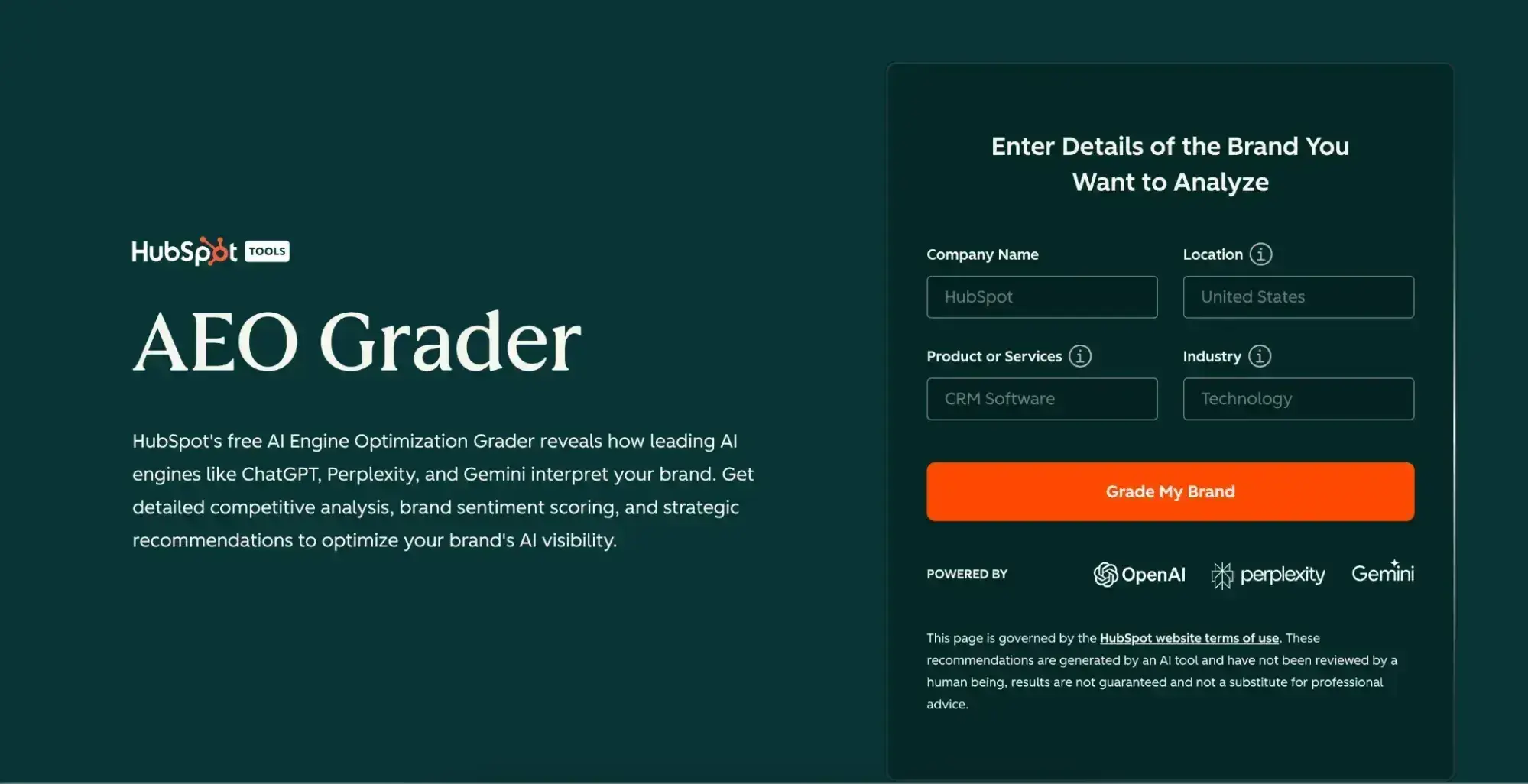
Brand optimization focuses include, but are not limited to, visual consistency, message clarity, customer experience alignment, team and channel alignment, and AI visibility. HubSpot and Breeze AI offer a host of tools to help you with brand optimization, including its free AEO Search grader, Brand Voice tools, and content/document templates.

What is brand optimization?

Brand optimization is the ongoing, data-driven practice of refining how your brand is perceived, experienced, and communicated across every channel and team to improve sales and marketing, all without overhauling your core identity.

Unlike a rebrand, which typically transforms a brand’s identity, logo, voice, name, or core positioning, brand optimization works within your existing brand framework to find and fix the gaps between your brand’s potential and its actual performance.

Think of it this way: Rebranding is cosmetic surgery, and brand optimization is a fitness routine. Rebranding is a one-off reconstruction, but optimization restores function and builds long-term strength through consistent, intentional work.

Brand optimization focuses on a few key areas:

  • Messaging clarity: Is your offering accurate and clear? Does your value proposition resonate with your ideal customer? Is it consistent across marketing, sales, and customer service?
  • Visual and voice consistency:  Does your brand look and sound the same across your website, ads, emails, social media, and sales decks?
  • Customer experience alignment: Does the brand promise you make in marketing match the experience customers actually have?
  • Team and channel alignment: Are your marketing, sales, and service teams aligned on the brand narrative? Are they all promising the same things?
  • AI and search visibility: Is your brand being accurately represented and cited in AI-powered search tools?

It’s a continuous improvement cycle driven by data from brand health surveys, conversion analytics, customer feedback, competitive analysis, and increasingly, AI citation monitoring.

Brand optimization vs. digital marketing optimization

To anyone outside of the marketing industry, brand optimization and digital marketing optimization may sound like the same thing. They may use the words interchangeably, but the strategies are actually dramatically different, and mixing them up can lead to misaligned priorities and murky measurement.

Simply put: Brand optimization focuses on how your brand is perceived and experienced across all touchpoints, while digital marketing optimization focuses on how your channels and campaigns perform.

You need both, but they need different strategies, owners, metrics, and cadences.

The simplest way to think about it: brand optimization asks, “Are we saying the right things?” Digital marketing optimization asks, “Are we saying them in the right places, at the right times, to the right people?”

But what about marketing campaign optimization?

Brand optimization vs. digital marketing optimization vs. marketing campaign optimization

Once again, these three concepts are closely related, but are used at different scales and serve different purposes.

  • Brand optimization differs from digital marketing optimization by focusing on brand clarity and consistency, not just channel performance
  • Marketing campaign optimization focuses on improving the performance of specific campaigns, creatives, and channels.
  • Brand optimization guides marketing campaign optimization by defining the message, promise, and proof to test.

The easiest way to explain it is that brand optimization guides digital marketing optimization and marketing campaign optimization.

Brand optimization defines the what — the message, the promise, and the proof points. Digital marketing optimization then defines where those elements are communicated, and campaign optimization tests and refines how to express them most effectively across those specific channels and audiences.

Without a solid brand foundation, you’re optimizing tactics on top of a shaky base.

Do you need brand optimization?

Ok, so brand optimization, digital marketing, and marketing campaign optimization aren’t the same thing. But how do you know when you need one over the other?

Brand optimization is most valuable when triggered by a specific condition. Before investing time and resources, check whether any of these apply to your organization.

Common triggers that signal it’s time to optimize your brand include:

  • Unclear brand perception: Customers, prospects, or even your own team struggle to describe what your brand stands for or what makes it different.
  • New or Shifting Competitors: Your competitive landscape has changed, and your positioning no longer clearly differentiates you.
  • Strategic Direction Changes: You‘ve launched new products, entered new markets, or adjusted your ICP, but your brand messaging hasn’t caught up. For example, think about Spotify expanding into podcasts and audiobooks, or Netflix doing in-person pop-ups.
  • ICP or Persona Drift: The customers you‘re actually attracting don’t match the customers you’re trying to attract, or you’re seeing increased churn from misaligned expectations.
  • Stagnant brand performance: Key brand health metrics such as brand recall, net promoter score (NPS), and share of voice have plateaued or declined.
  • Negative brand events: A PR issue, product failure, leadership change, or customer service breakdown has created brand perception damage.
  • Inconsistent customer journey: Marketing, sales, and service are each telling a slightly different story to the same buyer, creating friction or confusion.
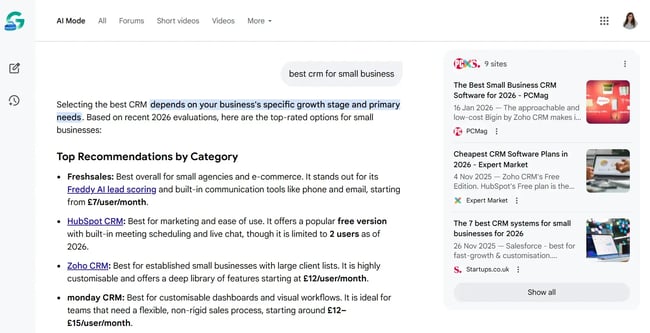
  • Invisible in AI search: Your brand isn’t appearing or is being misrepresented when buyers ask ChatGPT, Perplexity, Gemini, or other LLMs about your category.

Bottom line: If three or more of these apply to your organization, you‘re likely leaving revenue on the table. Brand inconsistency isn’t just a marketing problem; it lengthens sales cycles, increases churn, and makes pipeline harder to build.

How to Optimize Your Brand: Brand Optimization Checklist and Strategy
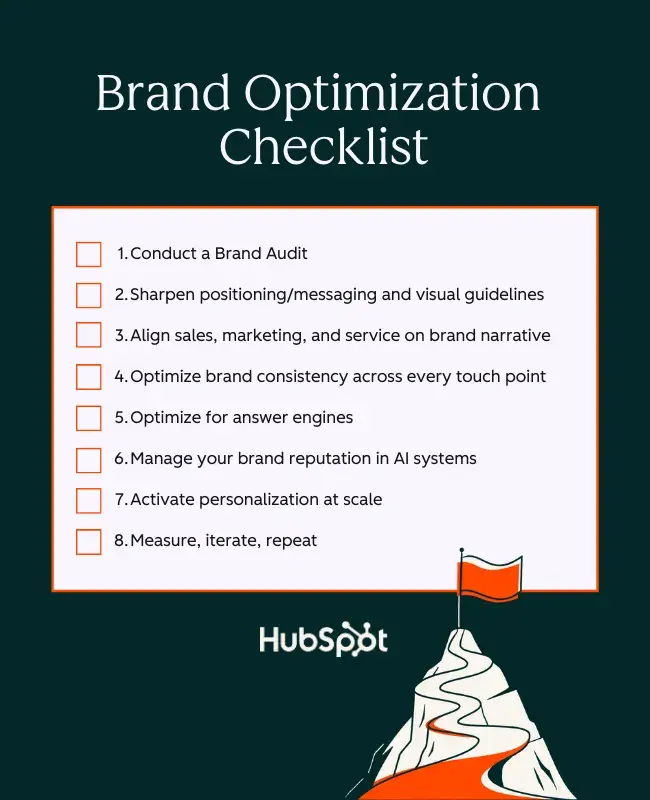
brand optimization checklist with 8 steps from audit to iteration, branded with hubspot logo

A strong brand optimization initiative follows a clear workflow:

  • Audit where you are
  • Define where you need to be
  • Align your team
  • Iterate based on real data.

Here’s how to do it.

Step 1: Conduct a brand audit

A brand audit is the foundation of any optimization effort. You can’t set a goal or destination unless you know where you currently stand, and many organizations are surprised by how inconsistent their brand has been when they actively look.

Your audit should cover:

  • Messaging consistency: Collect your website, sales deck, email sequences, paid ads, social profiles, and support documentation. Does your core value proposition sound the same across all of them?
  • Visual identity: Are your fonts, color palette, logo usage, and imagery consistent? Are your brand guidelines actually being used?
  • Brand perception: Run a short survey with customers, prospects, and churned accounts. Ask them to describe your brand in their own words. Compare their answers to how you describe yourselves. You can also check your brand mentions across social media and forums to evaluate how your audience candidly describes and discusses you.
  • Competitive positioning: How does your messaging compare to your top three to five competitors? Where do you sound the same? Where do you have a real point of difference?
  • Team alignment: Interview your sales and customer success teams. What words and stories do they use to describe your brand? Do they match marketing?

Pro Tip: Tools like HubSpot Marketing Hub can help you centralize brand assets and audit email and landing page consistency at scale — especially useful for larger teams managing multiple campaigns simultaneously.

Step 2: Sharpen your positioning/messaging and visual guidelines.

The audit will surface gaps. Step 2 is about fixing the underlying messaging foundation before you push new content out the door.

Positioning and Messaging

Your messaging should include:

  • A clear, differentiated positioning statement and brand narrative (not just a tagline — the full strategic logic of why you win)
  • A value proposition ladder organized by audience segment or persona
  • Proof points and customer evidence for each key claim (i.e., usage statistics, testimonials, case studies)
  • Consistent language for your core products, features, benefits, and outcomes.
  • Understanding of your brand architecture

This step is also where you should audit your brand’s alignment with customer trust signals.

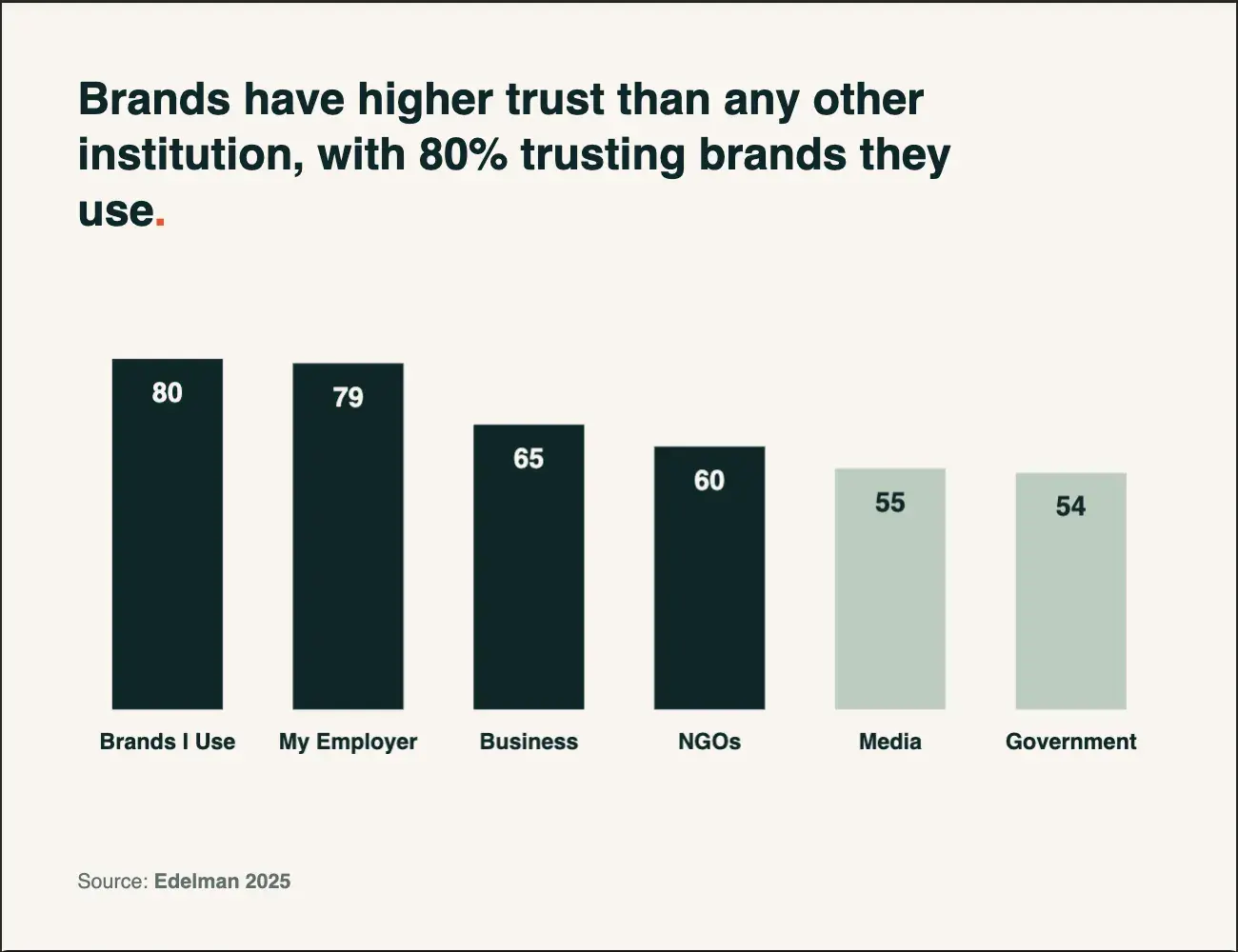
According to the 2025 Edelman Trust Barometer Special Report on Brand Trust, 80% of consumers trust brands they use more than most institutions these days (i.e., business, media, or government), and trust has become just as important a purchase driver as quality or price (88% naming each a major consideration).
edelman 2025 bar chart showing brand optimization trust data — 80% of consumers trust brands they use more than government or media

Take note of trust signals you want to be consistent in your messaging, such as customer reviews and ratings, security badges, certifications, or industry awards.

Overall, messaging should reflect what your brand actually delivers, not just what sounds appealing.

Pro Tip: Our AI Brand Voice feature can help keep your voice and tone consistent across all your assets and touchpoints by analyzing and documenting your unique style. It will use this information to generate content for you with Breeze Assistant, or you can upload it to other tools like ChatGPT, Grammarly, or Claude.

Visual Guidelines

Visual brand guidelines can be rightfully detailed. For the case of marketing, make sure you have at least clear directives on:

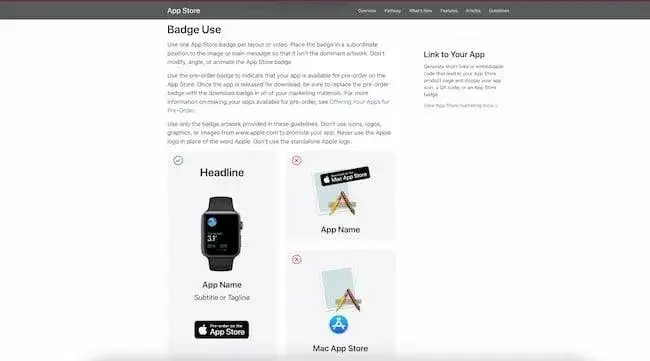
  • Logos and product/services images: Should your product only be shown in particular scenarios? Are there specific ways your logo can or cannot be displayed or used? Provide files and examples of correct and incorrect uses.
  • Acceptable brand colors: Share approved color codes and combinations for your brand.

Apple does a great job of showing how it wants its branded badges to be used in its media kit.
apple app store media kit showing brand optimization badge usage guidelines for app developers

Source

Step 3: Align sales, marketing, and service on brand narrative

Research from Capital One Shopping found that approximately 95% of companies have brand guidelines, but only about 30% say they are widely used and recognized throughout their organization. That means the problem isn’t documentation, it’s adoption.

Once you’ve defined your messaging and brand narrative, you’ve got to make sure your team is using them.

Inconsistent messaging across teams is one of the most common and costly brand issues teams can face. Marketing says one thing and a sales rep says another; buyers notice. It erodes confidence, extends sales cycles, and can even cause churn if buyers feel like they were misled during the sales process.

I mean, consider how you’d feel if a sales rep drastically overshot the mileage on a car he was trying to sell you. That happened to me once, and it still grinds my gears to think about it.

These inconsistencies are often unintentional, but still harmful.

To avoid them, make sure to align your teams on your brand narrative by:

  • Developing a shared brand narrative document (not a lengthy style guide, but a concise, practical reference for how to talk about the brand). This is another place HubSpot Brand Voice can help.
  • Running brand narrative workshops with your entire company, not just marketing.
  • Creating modular message blocks and templates that sales reps can use and adapt without going off-brand.
  • Building brand consistency checkpoints into your review process. Again, inconsistency can easily happen by accident. A quick QA can help stop it in its tracks.

Pro Tip: HubSpot’s Sales Hub enables marketing and sales teams to share approved content, sequences, and messaging templates, making it easier to maintain brand consistency at the moment of actual customer interaction.

Step 4: Optimize brand consistency across every touchpoint

With the team trained, it’s time to execute and ensure your brand is applied consistently wherever a buyer encounters it.

Map your customer journey from first awareness through post-purchase, and audit the brand experience at each touchpoint. This can include, but is not limited to:

  • Paid Ads
  • Social Media Content
  • Organic Content (i.e., website copy, blog articles)
  • Landing Pages
  • Emails
  • Sales Calls
  • Proposals
  • Onboarding Materials
  • Support Documentation
  • Renewal Communications

Pro Tip: Pay special attention to the transitions between marketing, sales, and service. These handoffs are where brand consistency tends to break down and where buyer trust is most easily lost.

Step 5: Optimize for answer engine optimization (AEO)

Ok, this step is new territory for most brand teams, but it’s quickly becoming essential.

Edelman found that 91% of consumers who use generative AI and LLMs (ChatGPT, Perplexity, Gemini, Claude, and others) use it for shopping, including researching brands, comparing products, and summarizing reviews.

That’s not niche behavior. That’s a mainstream buyer journey.

That said, how your brand appears (or doesn’t appear) in AI responses is as critical as it can impact your brand awareness, credibility, and even sales. It also relies heavily on brand consistency, not just on your website, but across the internet.

To optimize your brand for AI visibility or AI search:

  • Create authoritative, well-structured content. Directly answer common questions your buyers are asking LLMs. Think conversational, specific, and comprehensive.
  • Use structured data (schema markup) on your key pages. This helps AI systems evaluate and attribute your content easily.
  • Earn third-party mentions and citations from high-authority sources. Think trade publications, analyst reports, industry roundups, and review platforms.

Research shows brand search volume is the strongest predictor of LLM citations, with a 0.334 correlation coefficient outperforming traditional backlink metrics.

  • Maintain consistent social and database profiles. Consistent profiles on Wikidata, LinkedIn, Crunchbase, G2, social media, and relevant review platforms make your brand easy to recognize as a real entity.
  • Support your claims. Include data-backed statistics and original expert quotes in your content. Research shows these elements can increase AI visibility by 22–37%.

Learn more about each of these tactics and brand consistency in our articles:

Pro Tip: HubSpot’s free AI Search Grader and AEO Grader tools allow you to audit and track your brand’s visibility and representation in AI-powered search — a critical measurement gap for most marketing teams in 2026.

Step 6: Manage your brand’s reputation in AI ecosystems

Optimizing for AEO isn‘t just about appearing in LLM responses — it’s about controlling how you‘re represented by them. AI systems can perpetuate outdated, inaccurate, or competitor-favoring narratives about your brand if you’re not actively managing the signal landscape.

So, stay vigilant. 77% of go-to-market leaders admit they lack a clear AI engine discovery strategy. That’s a significant competitive gap — and an opportunity for teams willing to move first.

To manage your AI brand reputation, follow these practical steps:

  1. Run regular brand audits using AI tools: Query ChatGPT, Perplexity, and Gemini with the questions your buyers are most likely to ask. Are the answers accurate? Is your brand being mentioned? What competitors appear alongside you?
  2. Update and consolidate your Wikipedia presence, if relevant. Wikipedia is one of the highest-cited sources by LLMs and serves as a key entity signal.
  3. Monitor and respond to reviews: G2, Capterra, Trustpilot, and other review platforms are regularly cited by AI systems.
  4. Proactively publish and distribute original data. Don’t just cite others‘ data; be the source others link to. Invest in original research, case studies, and thought leadership that reinforce your brand’s key narratives and make ownership clear like HubSpot’s 2025 State of Marketing Report.

Step 7: Activate brand personalization at scale

Personalization and brand consistency can seem like opposing goals, but it’s really not. Let me explain.

Brand personalization at scale means delivering content and experiences that feel tailored to the individual while staying unmistakably on-brand. In other words, it’s creating value and experiences unique to each individual that only your brand can.

Turning to Spotify again, Wrapped is a perfect example of personalization and brand optimization coming together.

spotify wrapped 2025 playlist page — an example of brand optimization through personalized user experience at scale

But there are also simple and thoughtful ways smaller brands can execute this as well. For instance:

  • Use dynamic/personalized content. Develop segment-specific messaging variations that share the same positioning foundation but adjust emphasis, proof points, and language for different industry verticals, buyer personas, stages of the funnel, or lifecycle stages.
  • Use AI to generate personalized content. AI can help you quickly create content variations at scale without sacrificing brand voice consistency. Breeze AI can help you do this right in HubSpot.
  • Build content templates and AI-assisted workflows. These give your team the flexibility to personalize while locking down core brand design elements and experience.
  • Train your AI tools on your brand voice guidelines. With these guidelines known, AI-generated content can stay on-brand even at speed.

Step 8: Measure, iterate, and repeat

Brand optimization is not a project with an end date; it’s a regular improvement practice. Step 8 is about building the measurement and review cadence that keeps your brand sharp over time.

This timeline is subject to the conditions or trigger events we talked about earlier, but all those held constant, review your brand performance at least quarterly. Review should include:

  • Brand health survey data
  • Messaging consistency audits
  • AI visibility monitoring
  • Competitive positioning assessments.

Use findings from each cycle to prioritize the next set of optimization efforts. See the next section for the specific metrics and tools to track.

How to Measure Success from Brand Optimization

Vanity metrics like impressions, follower counts, and page views can be exciting to look at, but for most businesses, they don’t really offer any insight into whether brand optimization is working. Here are some metrics that do and how you can track them.

1. Brand health and perception metrics

To get an overall pulse on how your brand is viewed by your audience, track:

  • Unaided Brand Awareness (or Brand Salience). This is how often your brand comes to mind unprompted in your category. For example, if someone asks, “When you think of CRM software, which companies come to mind?”

Record which brands are mentioned spontaneously and in what order (first mention, called “top of mind awareness,” is the most valuable). You can run these through tools like Qualtrics, SurveyMonkey, or TypeForm, or conduct your own focus groups.

  • Brand Favorability. Measured this by asking respondents who are aware of your brand to rate how favorable their impression of it is (typically on a scale of 1-5) and tracking the percentage rate you favorably (top two box — “favorable” or “very favorable”).
  • Net promoter score (NPS). This is how likely a customer is to recommend your brand to a friend on a scale of 0-10 (Promoters (9–10), Passives (7–8), Detractors (0–6)).

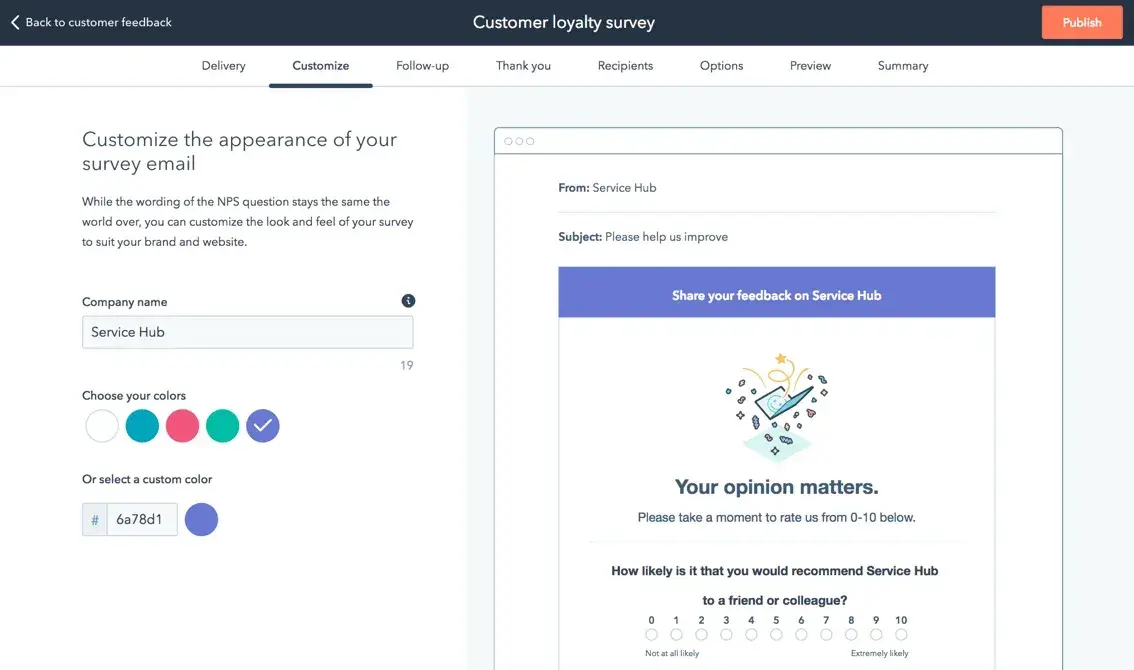
HubSpot Service Hub has a native NPS survey functionality — you can send surveys via email (seen below) or embed them on web pages, and responses are tracked in an Analyze tab per survey.
hubspot service hub nps customer loyalty survey builder showing brand optimization measurement via email survey customization

Source

You can’t add a calculated NPS score to a custom dashboard in HubSpot. But with an integration like Delighted or Retently, you can sync scores back to HubSpot contact records for better reporting.

All of these metrics are only valuable if you track them regularly and pay close attention to how they rise or fall. Benchmark them quarterly to track their trajectory. A rising NPS, along with a rising close rate and unaided brand awareness, is a strong signal that brand optimization is working.

Free Download: 5 Free Customer Satisfaction Survey Templates

2. Messaging consistency score

Audit your key brand touchpoints (like website homepage, sales deck, top emails, and paid ad copy) quarterly and score them against your messaging architecture.

How many use the agreed-upon value proposition? How many go off-script? This internal metric becomes a leading indicator of brand health over time.

3. Revenue and pipeline attribution

Organizations that consistently maintain strong brand presentation report 10–20% revenue growth attributable to brand consistency initiatives, with some studies placing the figure as high as 33%. But how do you measure this?

Look specifically at direct traffic (a proxy for brand demand), branded search volume in Google Search Console, and deals sourced from brand-building activities like thought leadership, events, and PR.

HubSpot’s Marketing Hub and Content Hub can also measure and track attribution across the full customer lifecycle using a variety of models and interactions.
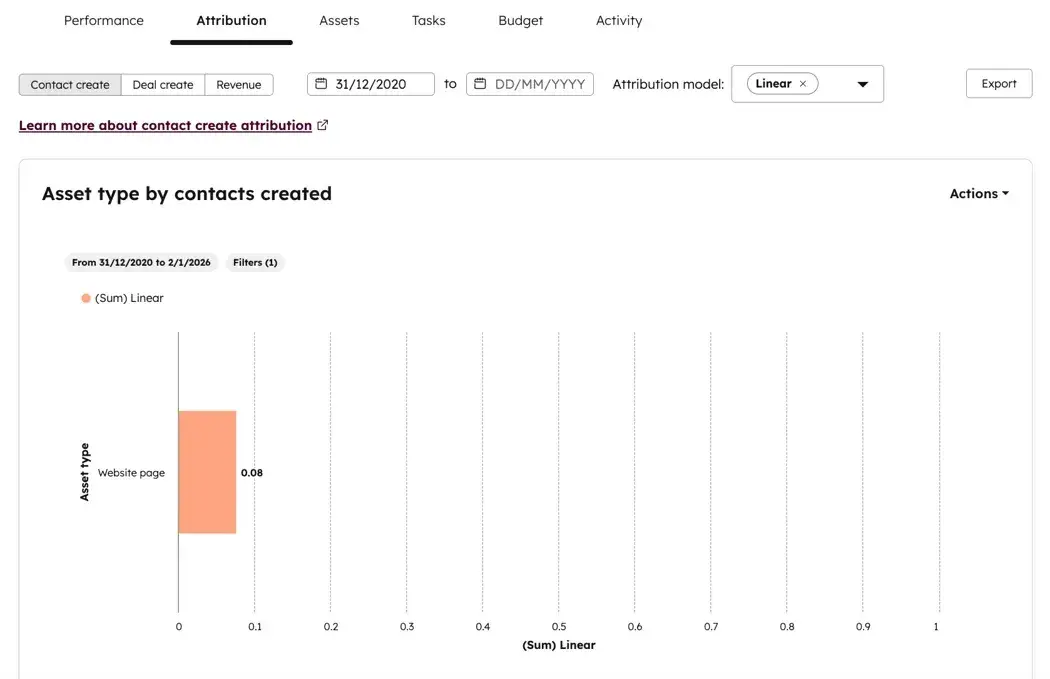
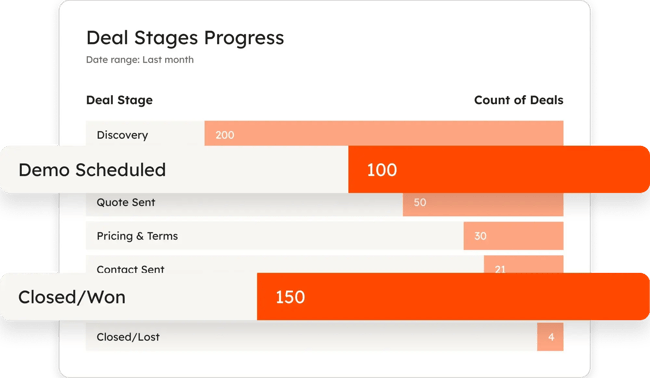
hubspot marketing hub attribution report tracking asset type by contacts created to measure brand optimization impact

Source

Learn how to set up and use attribution in HubSpot in our free online course, “Attribution Reporting in HubSpot.”

4. AI brand visibility and share of voice

You’ve likely heard a lot about brand visibility and share of voice in the rise of AEO and GEO. They evaluate how often your brand appears in LLM responses for your category’s key queries, but why do these even matter?

Semrush data shows that users from LLM referrals convert at 4.4x the rate of traditional organic search visitors. So, you want to be visible in AI systems.

To monitor how you’re doing, track how often your brand appears in AI-generated responses for the queries your buyers are most likely to ask. There are two main approaches:

  • Manual querying — run a set of 10–20 target prompts in ChatGPT, Perplexity, Gemini, and Claude on a regular cadence (weekly or monthly), screenshot or log the results, and track whether your brand appears and where in the response it falls. Low-tech but gives you direct visibility into what buyers actually see.
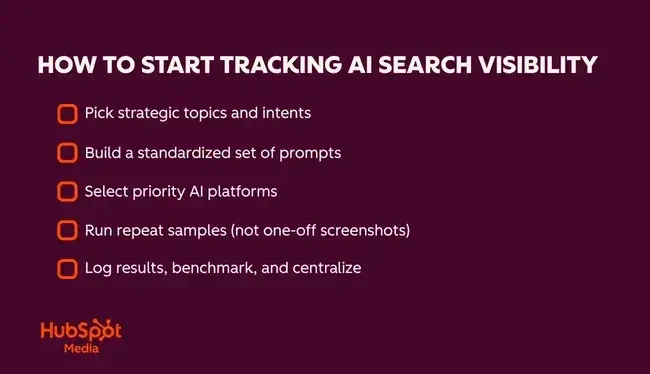
hubspot media checklist graphic showing 5 steps to start tracking ai search visibility for brand optimization

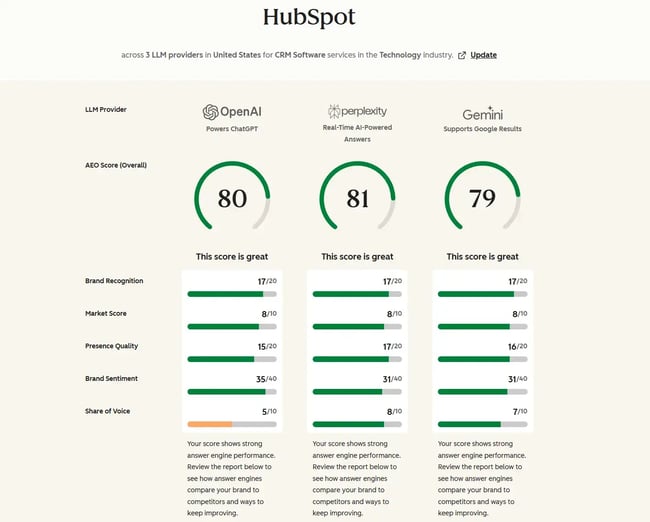
  • Dedicated AEO/LLM tracking tools — Tools like HubSpot’s AI Search Grader, as well as third-party platforms like Semrush’s AI Visibility Index, allow you to systematically track brand mentions, citation frequency, share of voice against competitors, and which of your pages are being cited.
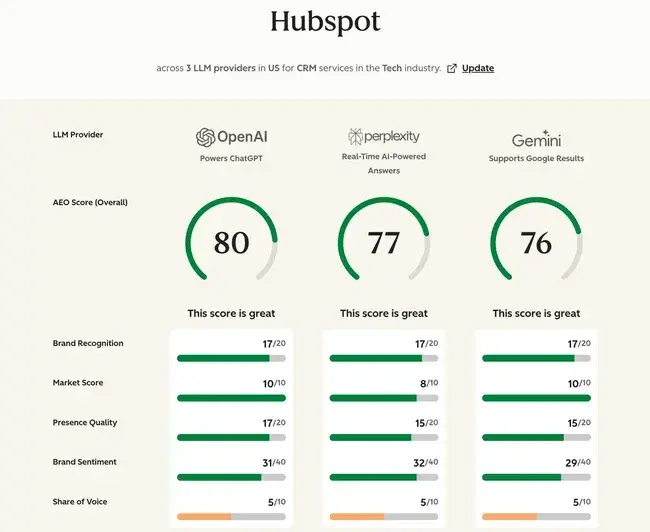
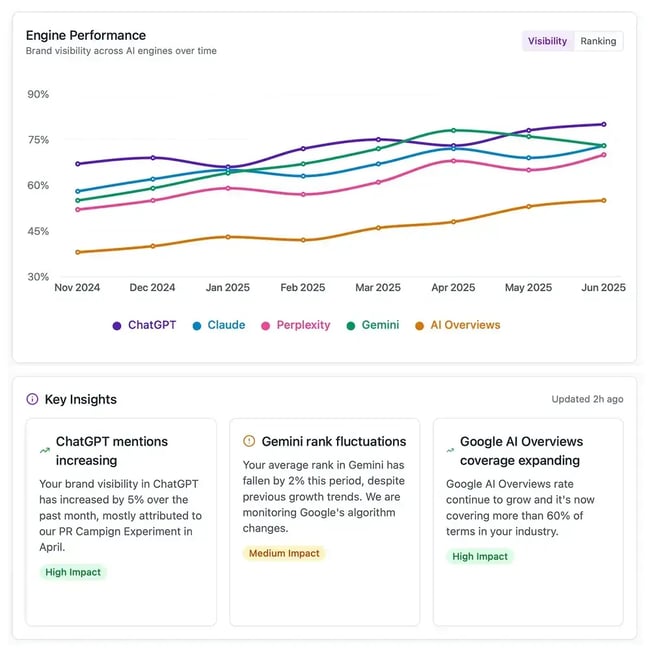
hubspot ai search grader dashboard showing brand optimization aeo scores across openai, perplexity, and gemini

Pro Tip: Not sure what questions your customers are asking? Chat with your sales and customer service reps to learn which concerns or questions they tackle most frequently. You can also check out AnswerThePeople to see what your target audience is asking at large.

Be sure to build a simple brand KPI scorecard to track these metrics quarterly. Include benchmarks from your previous quarter and note any brand optimization activities that may have driven movement. Over 12 months, this becomes one of the most valuable strategic assets your marketing team owns.

Frequently asked questions about brand optimization

When should you optimize a brand vs. rebrand?

Brand optimization differs from rebranding by focusing on iterative improvements instead of a full identity reset.

So, it’s best to optimize your brand when your core identity — your name, your fundamental positioning, your visual system — is still sound, but execution is inconsistent, or your messaging hasn’t kept pace with business changes.

Rebrand when your identity itself is the problem. Maybe your name creates confusion, your visual identity is irrecoverably dated, you’re entering an entirely new market, or a significant reputation crisis requires a clean break.

Most organizations that believe they need a rebrand actually just need brand optimization. Rebranding is expensive, disruptive, and takes 12–18 months to show results. Optimization is faster, more targeted, and often delivers stronger short-term impact.

How long does brand optimization take to show results?

The brand optimization timeline depends on what you‘re optimizing and what you’re measuring.

  • Internal alignment improvements (sales team messaging consistency, brand guidelines adoption) can show measurable results within 30–60 days.
  • Brand perception metrics like NPS and unaided awareness typically move over two to three quarters.
  • Revenue attribution tied to brand investment typically occurs over a six-to-twelve month horizon.
  • AI brand visibility is newer and harder to generalize, but initial improvements in LLM citation frequency can appear within four to six weeks of content and AEO strategy changes, with significant share-of-voice gains taking three to six months of consistent effort.

What’s the best way to align sales and service with a new brand narrative?

Don’t send them a document. Alignment and adoption require engagement.

The most effective approaches combine live workshops (where teams can ask questions, surface their own language, and see why the new narrative matters to them) with practical tools: modular message blocks, battlecard updates, updated talk tracks, and reinforcement from leadership. If the VP of Sales isn’t using the new narrative in pipeline reviews, neither will the reps.

HubSpot’s Sales Hub makes it easier to distribute and track adoption of brand-aligned content and sequences, so marketing can see whether the new narrative is actually being used — not just downloaded.

Can small teams optimize their brand without an agency?

Absolutely. Brand optimization is a mindset and a process more than a budget line. A small team can execute a meaningful brand optimization initiative by:

  • Running a low-cost brand perception survey (even a five-question survey to 50 customers is valuable)
  • Auditing their top 10 brand touchpoints against a simple messaging checklist
  • Running regular LLM queries to audit their AI brand visibility
  • Using HubSpot’s Content Hub and Breeze AI to streamline brand-consistent content production

Agencies can accelerate the process, but they’re not a prerequisite. The most important input is honest, structured self-assessment — and the discipline to act on what you find.

How do you keep personalization on-brand at scale?

The key to maintaining consistency while personalizing at scale is having a well-defined brand voice and messaging architecture before you start. That way, whether it’s AI or a team member doing the work, they have something to evaluate their language based on.

Practically, this means establishing brand guidelines and building brand-trained content templates, using AI tools like HubSpot’s Breeze. These resources give both AI and humans clear guardrails for what they can and cannot do. Adding a careful review of personalized content against brand standards should also be a part of your QA process as a safety net.

Stay optimized. Stay relevant.

Brand optimization is one of the highest-leverage activities available to a marketing leader, but also one of the most underrated.

Unlike its flashy cousin, the rebrand, optimization doesn’t require a new name, a new logo, or a six-month agency engagement. It requires honesty about where your brand is falling short, a structured process for closing those gaps, and the discipline to measure what matters.

In 2026, that work includes making sure your brand is shown correctly and visible to the AI tools buyers use every day. The teams that treat AI brand visibility as a core brand management responsibility will have a meaningful and compounding competitive advantage.

Start with the audit. Build the messaging foundation. Align your teams. And then track it — because a brand that isn‘t measured can’t be optimized.

For a head start, download HubSpot’s free Brand Style Guide template to document and distribute your brand standards across every team.


Categories B2B

AI content optimization: How to get found in Google and AI search in 2026

I’ve spent most of the last 10 years writing, managing, and improving content to reach internet audiences. But even for an ol’ marketer like me, AI content optimization was hard at first. Thankfully, I’ve done a lot of the work, so it doesn’t have to be for you.

Download Now: The Annual State of Artificial Intelligence in 2025 [Free Report]

AI content optimization is the practice of structuring and improving online content so it performs well and gets seen in traditional search, AI-generated answer summaries, and the LLMs that synthesize answers for millions of people every day.

Google ranks aren’t the end-all, be-all anymore. Let’s explore what AI content optimization is, why it matters, and the best practices every marketer should know, and more.

Table of Contents

TLDR Executive Summary

AI content optimization improves content performance across search engines and AI answer engines. In other words, AI search optimization includes both AEO and GEO tactics. While traditional SEO focuses on ranking signals like relevance, crawlability, and on-page optimization, answer engine optimization (AEO) optimizes on-page answers for extraction in AI summaries and Q&A results, and generative engine optimization (GEO) optimizes content strategy to increase citations and inclusion in generative answers.

Marketers can put their best AI content optimization efforts forward by focusing on authority, structure, and freshness. Write thorough content around your the topics you want to get found for, cite credible sources, offer original data and research whenever possible, format answer blocks to be self-contained and extractable, and keep content updated.

HubSpot’s Free AI Search Grader will help you see how your brand and website currently perform in AI systems, while HubSpot Content Hub can help you publish and structure the content you need to improve your performance.

What is AI content optimization?

AI content optimization (or AI-driven content optimization) is the process of creating and structuring content so it ranks in traditional search and gets cited or surfaced in AI-generated answers from platforms like Google AI Overviews, ChatGPT, Perplexity, and Gemini.

It sits at the intersection of two disciplines: conventional SEO and newer practices called Generative Engine Optimization (GEO) and answer engine optimizations (AEO).

Traditional SEO focuses on ranking signals like keywords, crawlability, backlinks, on-page structure, and EEAT, to attract clicks and website traffic from search results pages.

GEO, first formalized in a 2024 paper from Princeton and Georgia Tech researchers, optimizes to appear in AI-generated responses as citations or recommendations, while AEO works to appear in AI overviews, featured snippets, etc.

They all work together. Strong SEO builds the technical foundation — accessible, authoritative, well-structured content — that AI engines draw on when deciding what to cite. But ranking #1 in Google doesn’t guarantee visibility in AI answers.

A page can rank #1 in Google but never get cited by ChatGPT if it lacks the structural elements AI engines prioritize. This article will help you avoid that, but I also recommend digging deeper specifically into AEO and GEO with these resources:

Why AI content optimization matters for growth

Search engines still matter, but they’re no longer the only things that matter. Let me explain.

AI’s influence on consumer behavior is immense, stretching into how they search for information and make purchases. And the numbers support the urgency for marketers to adapt.

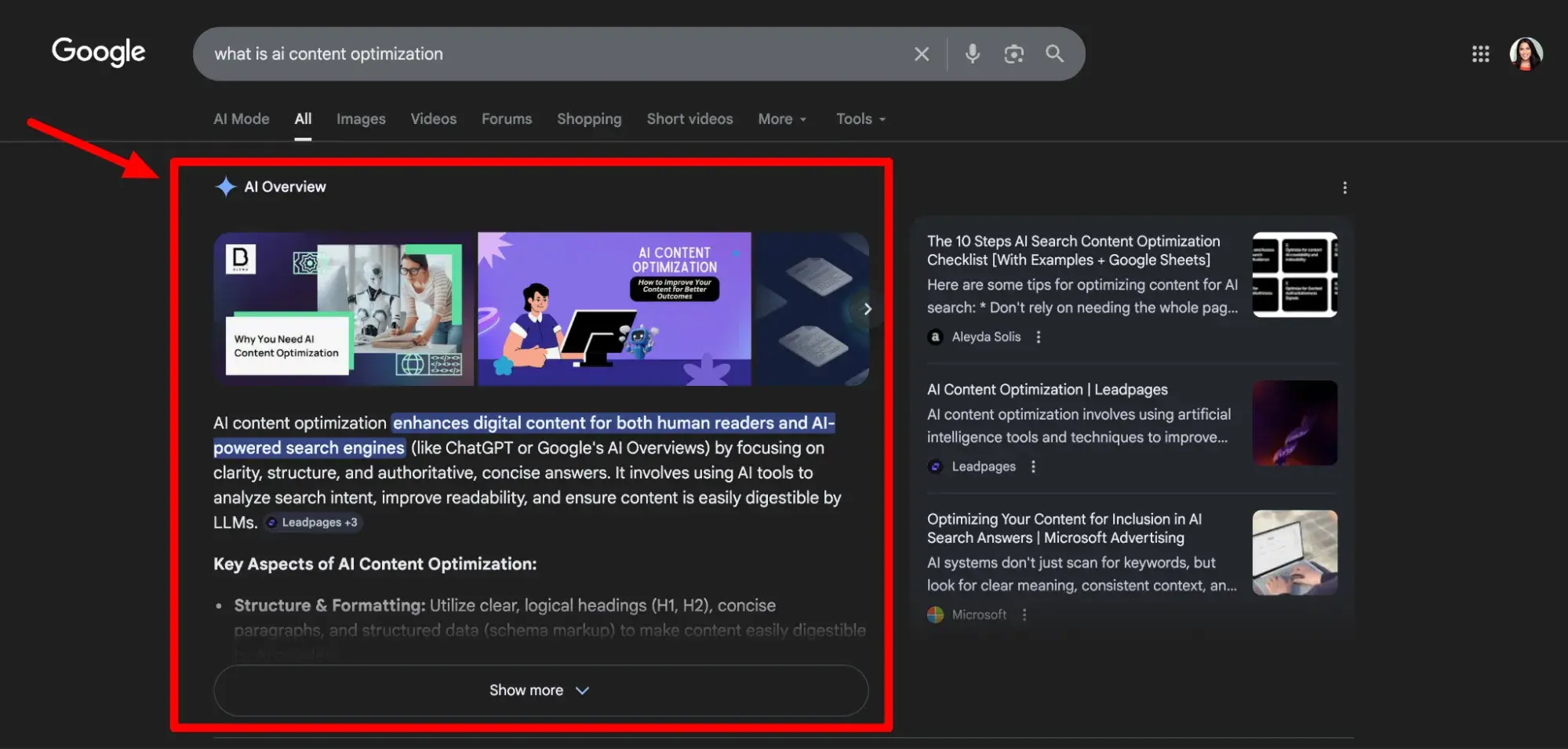
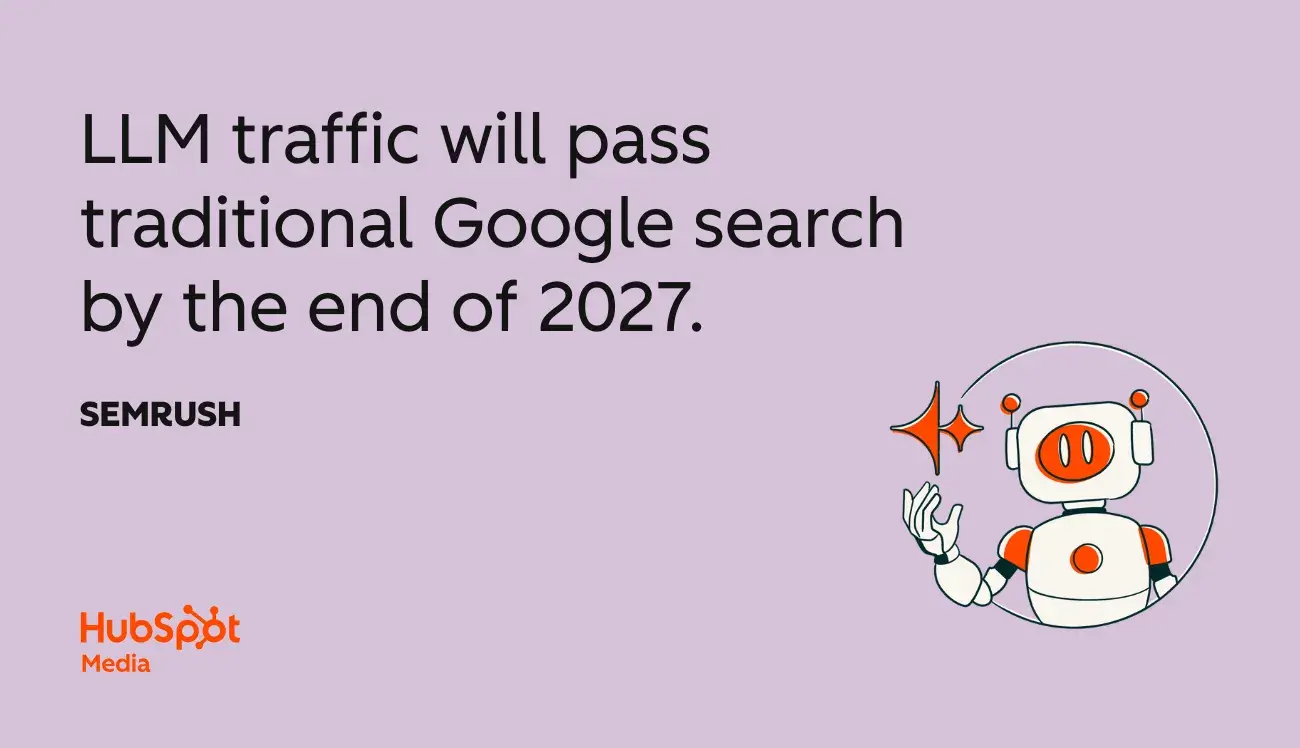
Google says that almost 60% of searches now end without a click. Users get what they need directly from AI Overviews, featured snippets, or knowledge panels. And research from Semrush predicts that LLM traffic will pass traditional Google search by the end of 2027.

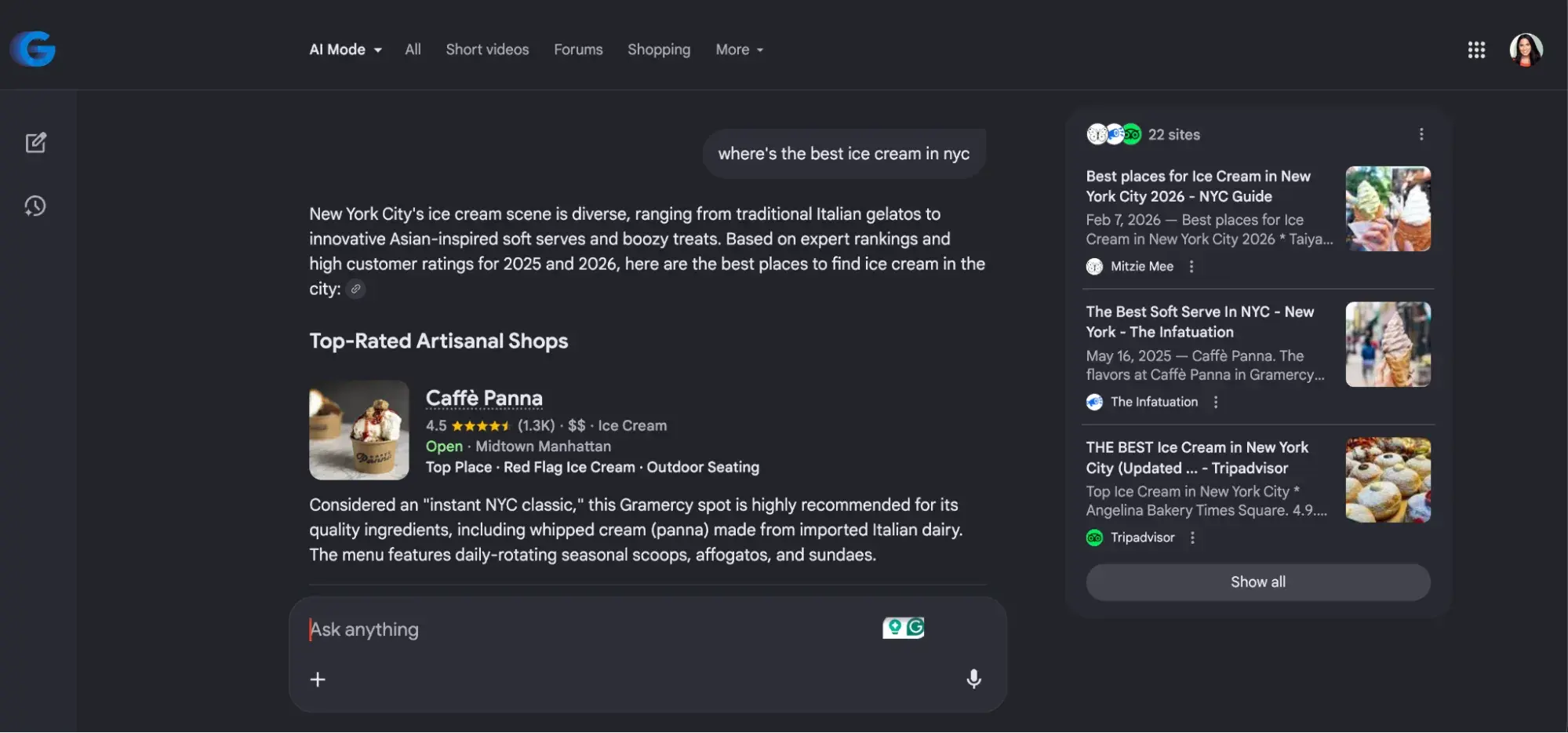
one goal of ai content optimization is to help you appear in ai overviews in google

But if you get that placement or citation, your organic click-through rate (CTR) is 35% higher than non-cited competitors on the same query.

AI referral traffic is also growing at a rate that’s hard to ignore. According to Previsible’s 2025 AI Traffic Report, total AI-referred sessions jumped from 17,076 to 107,100 between January and May 2025 alone — a 527% increase.

ChatGPT alone grew from roughly 600 monthly visits in early 2024 to over 22,000 monthly visits per site by May 2025.

The audience driving that traffic is growing fast, too. A June 2025 Pew Research Center survey of 5,123 U.S. adults found that 34% have used ChatGPT, roughly double the share from 2023, including 58% of adults under 30.

For brands targeting younger buyers or early-adopter professionals, the competitive window is still open, but it won’t stay that way for long. Early movers are accumulating citation share while most competitors are still measuring success in blue-link clicks.

How to do AI content optimization: AI content optimization techniques

Step 1: Audit your AI visibility baseline

Before optimizing anything, you need to know where you stand. Manually query popular AI tools like ChatGPT, Perplexity, and Google AI with the questions your customers ask most. Take note of:

  • If your brand appears
  • How it’s described
  • Which competitors are or are not getting cited.

Pro Tip: Use HubSpot’s free AI Search Grader to benchmark your brand‘s current performance in AI answers. Traditional analytics tools like Google Analytics won’t capture this — they only see post-click behavior.

Step 2: Build topical authority through content clusters

AI engines favor sources that demonstrate deep, sustained expertise on a topic.

A single well-written article scratching the surface on a subject isn’t enough. You need to prove you understand it thoroughly by providing consistent, comprehensive coverage. This tends to happen naturally after a few years of regular content creation, but if you’re just getting started, organize your content around topics or content clusters.

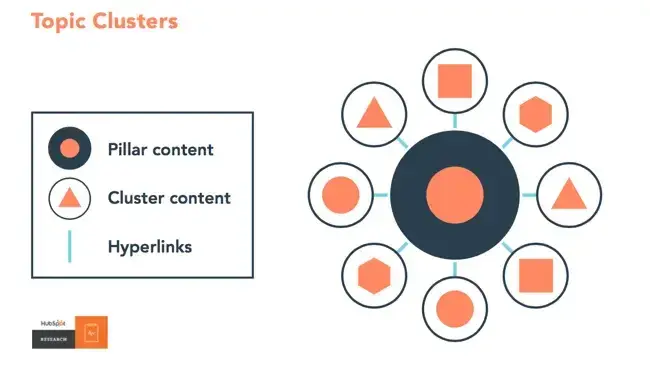
Topic clusters build topical authority. It all starts with a pillar page — one, detailed page on that acts as the hub on the topic. It links to all related posts that address specific questions, sub-topics, and use cases and they all link back to it.

Internal links help users and crawlers find similar content. They not only show expertise, but also help with traditional SEO keyword optimization, by showcasing topic density.


Step 3: Structure pages for AI extraction

AI systems don’t read content the way humans do. They scan for clear, citable passages with direct answers to what a user asked for.

To cater, marketers should structure each page with skimming in mind:

  • Lead with the direct answer. Put the key definition or conclusion directly under the H1, before any preamble.
  • Write answer blocks of 75–150 words that are self-contained. A reader (or AI) should be able to lift the passage and understand it without surrounding context.
  • Use clear H2 and H3 headings. Mirror the questions your audience actually asks.
  • Keep sentences direct and fact-first. Avoid hedged, fluffy language that LLMs struggle to cite confidently.
  • Implement schema markup where relevant.

A February 2026 Search Engine Land analysis of ChatGPT citation patterns found that 44% of all citations come from the first 30% of a page’s content, and that cited passages were nearly twice as likely to use definitive language (“X is,” “X refers to”) versus vague framing.

So, don’t sleep on structure.

Step 4: Add citations, statistics, and verifiable claims

This is one of the most supported findings in GEO research. It was also a personal standard I held as a content director.

Wherever you make a claim, back it with a linked, reputable source — ideally a primary source like a peer-reviewed study, analyst report, or first-party research.

The original Princeton/KDD GEO study found that including citations, quotations from credible sources, and statistics can boost source visibility in generative engine responses by over 40%. In other words, AI engines want to cite content they can trust and verify, and content that cites its sources signals exactly that credibility.

Pro Tip: Whenever you can, share original research. Original data and expert opinions give AI and audiences something they can’t find anywhere else. This also gives AI systems and competitors something to talk about. Look for information gaps in your industry and fill them.

Step 5: Conduct a content gap analysis

Speaking of gaps, look at what questions your target audience is asking AI tools that your content doesn’t currently answer well.

Content gap analysis applied to AI means identifying which queries trigger your competitors as cited sources and which ones surface nothing reliable at all (an even bigger opportunity). Fill those gaps with dedicated, well-structured content.

Step 6: Make your content technically accessible to AI crawlers

According to a 2025 Search Engine Land investigation, 46% of ChatGPT bot visits begin in “reading mode.” That’s a plain HTML version of a web page stripped of images, CSS, JavaScript, and schema markup. After landing, 63% of ChatGPT agents leave immediately, often due to HTTP errors, slow load times, CAPTCHA, or bot-blocking settings.

Make sure your website and content are technically optimized:

  • Check your robots.txt to ensure you’re not blocking AI crawlers.
  • Fix 4XX and 5XX errors.
  • Keep page load speeds fast.

If your content can‘t be read, it can’t be cited. (But be careful not to tread into over-optimization.)

Step 7: Refresh content regularly and timestamp updates

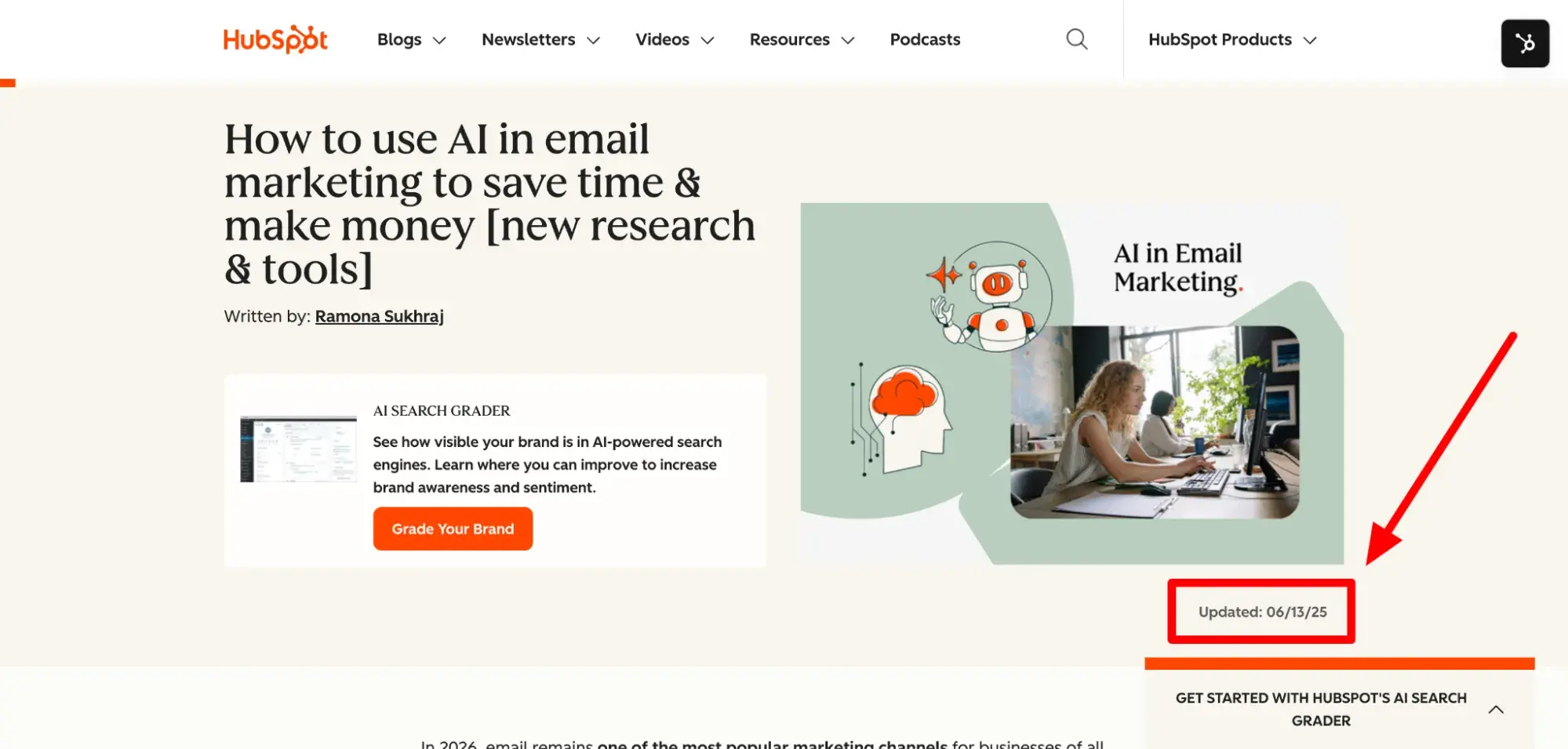
In an Ahrefs analysis, AI-cited content was 25.7% fresher on average than content cited in traditional organic Google results. Similarly, 76.4% of ChatGPT’s top 1000 cited pages had been updated within the previous 30 days. Both of these points certainly suggest that new information performs better with AI, so, lean into it.

Add a visible “Last updated” timestamp to cornerstone content, and schedule regular refreshes that add new data, update statistics, and reflect the current state of your topic.

ai content optimization means keeping your content up to date and accurate. be transparent by adding last updated dates to your content.

Step 8: Build your brand entity across the web

AI doesn’t always just take your word for it. They looks for confirmation of your expertise and authority. What does this looked like exactly?

AI systems synthesize from many sources, weighing your presence on things like social media and YouTube, but also independent mentions from earned media, third-party reviews, community discussions on Reddit and Quora, and coverage in industry publications.

When multiple independent sources discuss your brand in relevant, positive contexts or cites you, AI systems have clearer signals to interpret your credibility.

This is where digital PR and GEO converge in a way: press coverage isn‘t just for awareness anymore; it’s a citation signal.

A great way to get started with expanding your digital footprint is by repurposing your content for different platforms. For example, turning blog articles into posts for social media or turning podcasts into video scripts or voiceover. Explore other creative ways to repurpose content here.


AI SEO Optimization Checklist

  1. Create pillar pages.
  2. Write thorough content around your the topics you want to get found for.
  3. Cite credible sources.
  4. Offer original data and research whenever possible.
  5. Format answer blocks to be self-contained and extractable.
  6. Keep content updated.
  7. Establish expertise. Get mentions and cited on other reputable third-party sites.
  8. Ensure search engine robots can crawl your website.

Best AI Content Optimization Tools

Now, here’s the meta part of our guide. While you’re optimizing content to get found by AI, there are also AI tools to help you do that. For AI content optimization, you’ll want tools that cover four distinct needs. Here are some tools I recommend to help you in each area:

  • AI visibility tracking: Monitoring how often and accurately your brand appears in ChatGPT, Perplexity, and AI Overviews. HubSpot’s AI Search Grader is a strong free starting point; enterprise options include Semrush’s AI Visibility Toolkit and Ahrefs Brand Radar.
  • Content research and gap analysis: Identifying the questions AI tools are answering in your space and where coverage is thin. TAhrefs and Semrush both offer keyword and topic research that can be applied to AI-first query patterns. You can also use AnswerThePublic to see what your audience at large is searching.
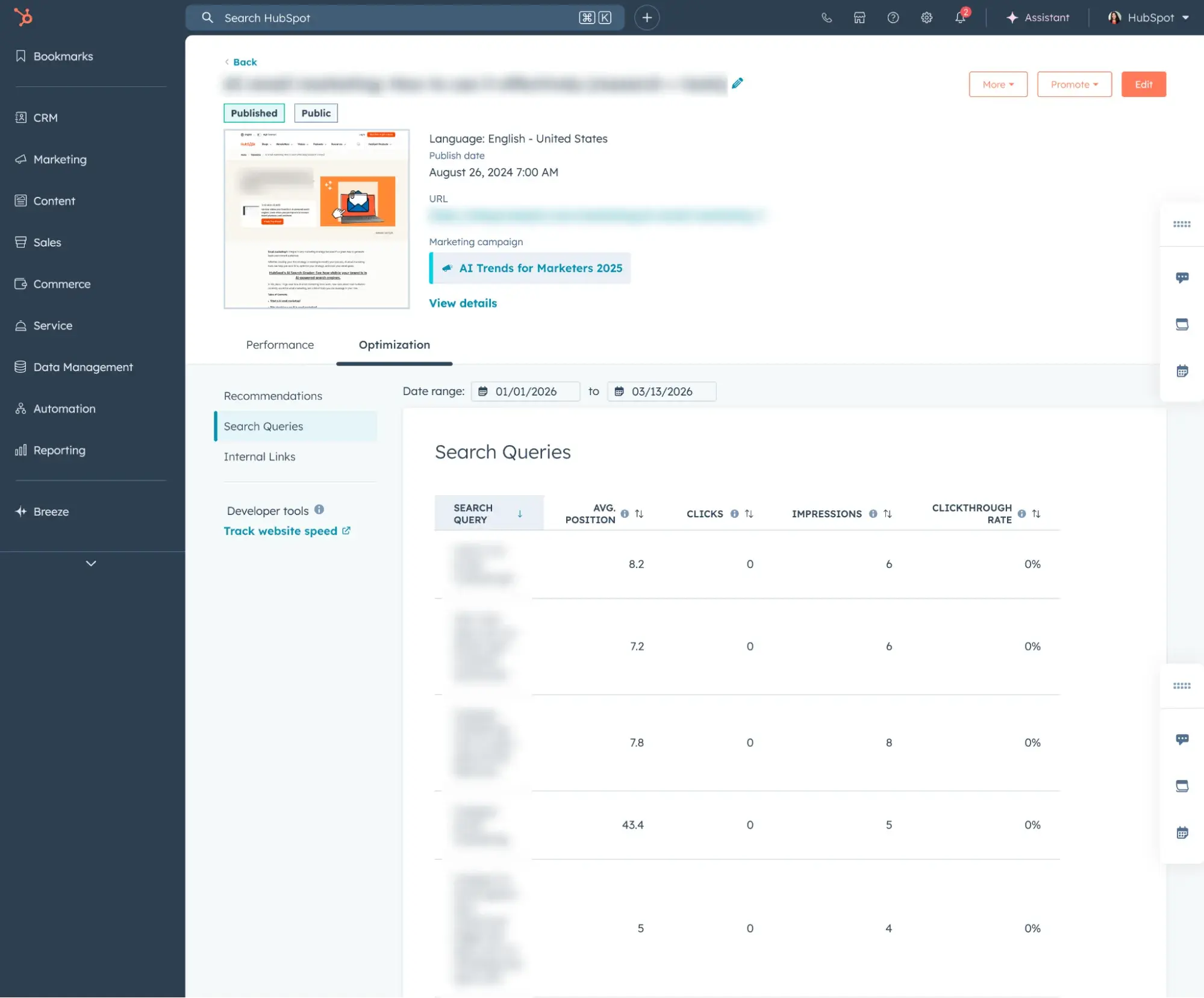
  • On-page optimization and structure: Tools like Clearscope and MarketMuse help ensure your content covers a topic comprehensively and is structured for extractability. HubSpot’s Content Hub and Breeze Copilot, however, can help streamline content production workflows at scale with content generation, template development, and SEO suggestions.

hubspot’s seo recommendations help make ai content optimization easier

  • Technical crawlability: Google Search Console remains essential for catching the technical errors (4XX codes, crawl blocks) that prevent both Google and AI crawlers from reading your content.

Note: the AI SEO tool landscape is evolving quickly, and there’s a separate post covering AI SEO tools in depth.

Frequently Asked Questions About AI Content Optimization

Is AI content optimization different from SEO?

They’re related but not the same. Traditional SEO optimizes for search engine (i.e. Google) rankings and clicks. AI content optimization adds a second goal: getting cited and surfaced in AI-generated answers.

GEO builds on SEO fundamentals rather than replacing them — strong SEO creates the technical foundation that AI systems rely on when deciding which brands to reference. Think of AI content optimization as SEO expanded to cover the full modern search landscape.

How can I appear in AI Overviews and LLM answers?

Focus on three things: authority, structure, and freshness. Write comprehensive content that covers a topic deeply, cite credible sources, offer original data and research whenever possible, format answer blocks to be self-contained and extractable, and keep content updated.

Per Ahrefs’ citation research, content depth and readability matter more for securing AI citations than traditional metrics like backlinks.

When should I use the FAQ schema versus on-page FAQs?

Use both when possible, but prioritize the on-page FAQ content first. Structured schema markup helps search engines understand your content, but the actual question-and-answer text is what AI systems extract and cite. Write FAQs that directly answer the question in the first sentence, keep answers to 75–150 words, and ensure each one is self-contained.

How can I prevent AI hallucinations in my content workflow?

The best defense is source hygiene. Link every factual claim to a verifiable primary source. Include a publication date on all statistics. Avoid vague, unverifiable assertions that AI tools might confidently repeat in distorted form. When using AI tools in your own drafting process, treat the output as a first draft. Fact check everything before publishing.

What is the best way to measure AI visibility without separate analytics?

Start with manual sampling: run your target queries in ChatGPT, Perplexity, and Google AI Overviews regularly and note your brand’s appearance. From there, GA4 can identify referral traffic from AI platforms (look for traffic sources tagged to chatgpt.com, perplexity.ai, etc.). Server log analysis is the most accurate method as it reveals when AI crawlers pull your content, which GA4 misses entirely.

Dedicated tools like HubSpot’s AI Search Grader, Semrush’s AI Visibility Toolkit, or Ahrefs Brand Radar are also worth adding as this channel becomes increasingly important to your pipeline.

Optimize for the future

AI content optimization isn‘t a single tactic you check off a list — it’s a shift in how you think about content performance altogether. The goal is no longer just to appease Google; it’s to be the source AI systems trust, cite, and surface when your customers are asking questions that matter.

The good news: the fundamentals haven’t changed as much as the headlines suggest. Great content — thorough, well-sourced, clearly structured, and regularly updated — is exactly what both Google and AI engines want. The difference now is that the form your content takes matters more than ever. Lead with answers. Back up claims. Stay fresh. The brands investing in this now will own the citation share their competitors are still ignoring.

Categories B2B

Seed Keywords: The Starting Point for SEO Research

Every successful content strategy starts with a short list of simple words. Before I ever open a keyword research tool, I write down a handful of phrases that describe what my business does or what my audience searches for. Those phrases are seed keywords, and they do more work than most marketers realize.Download Now: Keyword Research Template [Free Resource]

In this guide, I will walk through what seed keywords are, why they matter, exactly how to find them, the best tools to use, and how to turn a seed list into a full content plan.

Table of Contents

What Are Seed Keywords?

Seed keywords are broad, short phrases (typically one or two words) that represent the core topics your business operates in. They are the starting point for keyword research, not the finish line. Think of them as the seeds you plant before a topic cluster grows around them.

For example, if you run a project management SaaS, your seed keywords might be “project management,” “task tracking,” and “team collaboration.” From each of those seeds, you can grow dozens of long-tail keywords, supporting blog posts, and pillar pages.

Think of seed words as the simplest, most direct description of a topic your audience cares about. They carry broad intent and high search volume, which is why they serve as anchors for the rest of your strategy.

Pro Tip: Don’t confuse seed keywords with target keywords. Seed keywords are the raw material. Target keywords are the specific, refined phrases you actually optimize each page around.

I’ve found that teams who skip the seed keyword phase tend to build scattered content libraries with no clear thematic structure. Defining the seeds first aligns writers, strategists, and subject matter experts before anyone writes a single word.

Why Seed Keywords Matter for Content Strategy

Seed keywords form the foundation of topic clusters. A topic cluster typically includes one pillar page that targets a broad theme and multiple supporting pages that address related long-tail queries. Without a clear seed keyword to anchor the pillar, the cluster has no center of gravity.

Here is why a strong seed keyword set improves your entire program:

  • Reduces the blank-page problem. A strong seed keyword set gives writers and strategists a defined universe to work within. Instead of brainstorming from nothing, the team starts with a map.
  • Improves content planning consistency. When everyone agrees on five seed keywords, editorial calendars, content audits, and gap analyses all use the same vocabulary.
  • Connects you to buyer intent. Seed keywords help generate long-tail keywords, which express more specific search intent. Long-tail keywords that express more specific search intent than seed keywords are often easier to rank for and convert better.
  • Supports scalable organic growth. A well-chosen seed grows into dozens of rankable pages. One seed keyword can become your next quarter of content.

I think about it this way: if my content strategy were a tree, seed keywords are the root system. You can see the leaves (published posts), but the roots determine what can actually grow. For more on how buyer journey keywords connect to this model, HubSpot has a useful breakdown of how intent changes at each stage.

How to Find Seed Keywords

Finding seed keywords is part research, part listening. The best seeds come from understanding how your customers actually talk, not just how you describe your product internally. Here is the process I use.

Step 1: Start with what you know.

Write down five to ten phrases that describe your business from your customer’s point of view. Not your marketing tagline. Not your internal jargon. What would someone type into Google at 11 p.m. when they have the problem your product solves?

If you sell accounting software to freelancers, your customer is not searching “financial management SaaS.” They are searching “how to invoice clients” or “freelance tax tips.” Start there.

Pro Tip: Ask your sales team what phrases prospects use in discovery calls. That vocabulary is a great foundation for seed keyword research.

Step 2: Mine first-party data.

First-party data includes CRM notes, sales call transcripts, chat logs, support tickets, and on-site search queries. These sources reveal the exact words your buyers use before they become customers.

Customer language helps identify seed keywords that match real buyer vocabulary. I’ve pulled seed lists directly from support ticket subjects and discovered entire content gaps the team never knew existed.

Check your site search logs if your site has an internal search. Every query is a data point about what visitors could not find. Those are seeds.

Step 3: Analyze competitor topics.

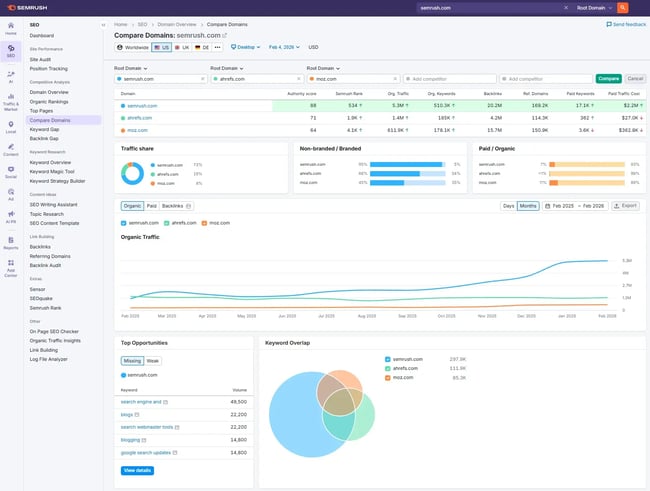
Look at what your top competitors are ranking for and writing about. You are not copying them, you are mapping the landscape. Tools like Ahrefs and Semrush let you see which broad topic categories drive the most traffic to a competitor domain. For a deeper look at identifying competitor traffic patterns, HubSpot’s guide covers the best approaches.

Step 4: Use Google’s own suggestions.

Type a broad topic into Google and pay attention to autocomplete suggestions, “People also ask” boxes, and related searches at the bottom of the page. These are seeds handed to you by the largest search dataset in the world.

I also look at SERP features as clues. If a topic consistently triggers featured snippets or image packs, the query has well-defined informational intent — which makes it a strong seed candidate.

Step 5: Validate with search volume data.

A seed keyword should have enough search volume to justify building a cluster around it, but not so much that ranking is impossible for your domain authority. Use a keyword tool to check monthly search volume and keyword difficulty for each candidate seed.

The goal at this stage is not to find the highest-volume terms. It is to find terms where you can realistically compete and where there is room to build supporting content. Understanding what keywords your potential customers are using is the foundation for making this judgment well.

Step 6: Group seeds into themes.

Once you have a list of 15 to 30 candidate seeds, look for patterns. Words that belong to the same buyer problem or product category should be grouped together. Each group becomes a potential topic cluster.

For example, seeds like “content calendar,” “editorial planning,” and “blog scheduling” all belong to the same cluster. You don’t need three separate pillar pages — you need one strong pillar and several supporting posts, each targeting a variation.

Step 7: Pressure-Test with AI.

I run my shortlisted seeds through a large language model and ask it to generate related queries, common questions, and adjacent topics. This surfaces angles I had not considered and helps identify which seeds have the richest long-tail potential.

This is not about outsourcing your strategy to AI. It is about using AI to stress-test your list and catch blind spots before you commit to a quarter of content.

Best Seed Keyword Tools

The right seed keywords tool depends on where you are in the process. Some tools are better for initial ideation; others shine for expansion, clustering, or validation. Here is a comparison of the best options.

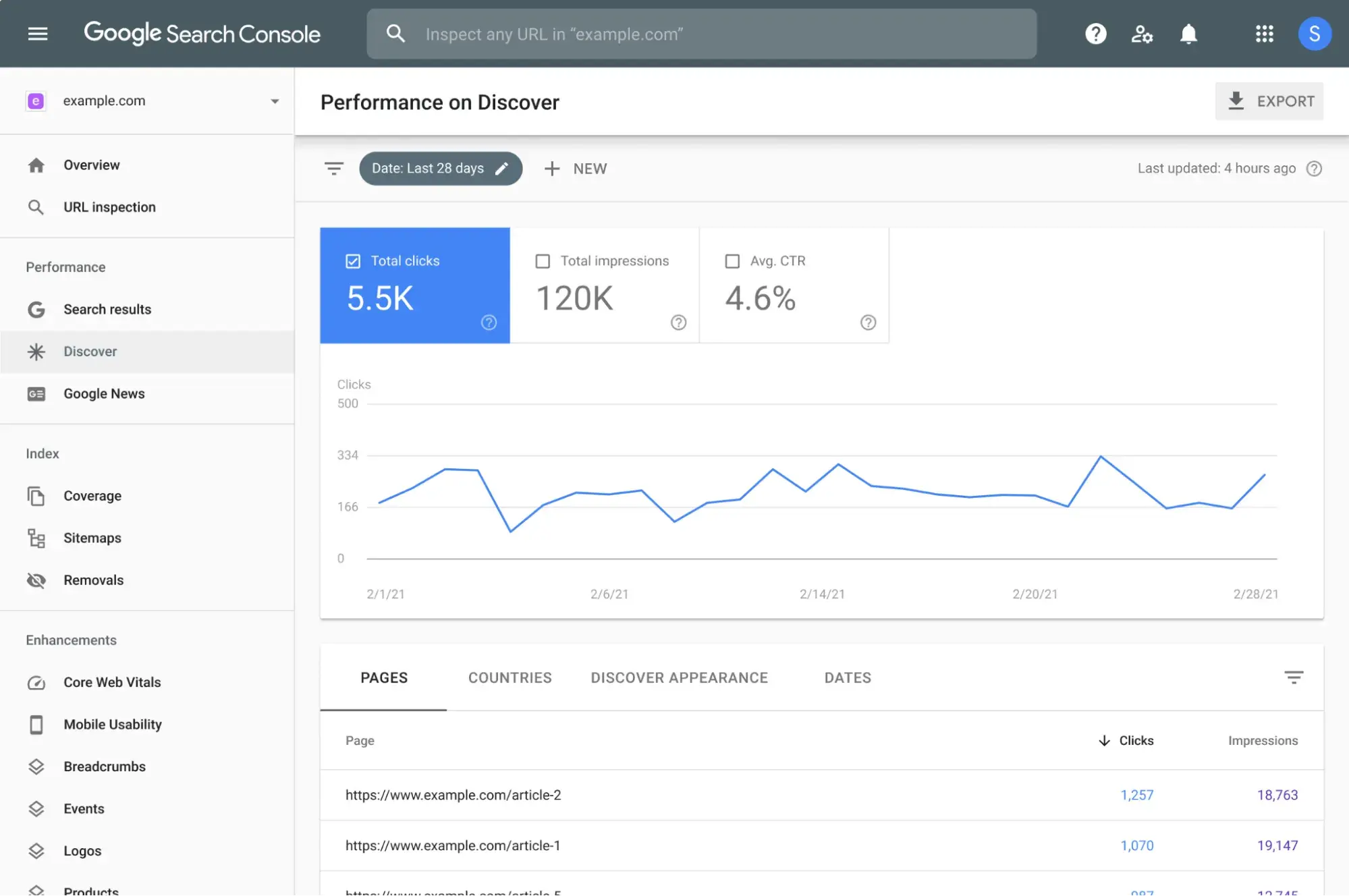
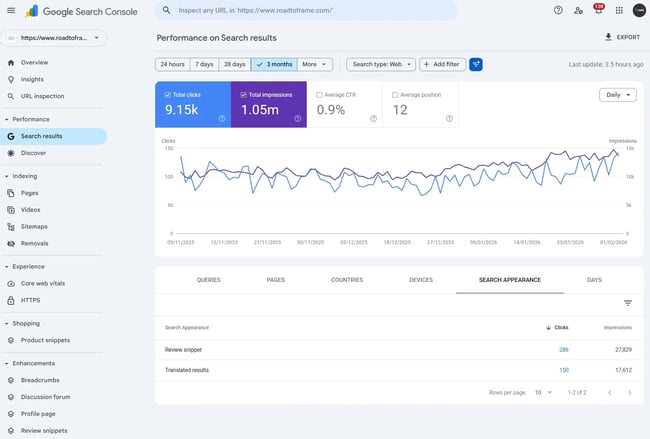
1. Google Search Console

best seed keyword tools: google search console

If your site is already live, Search Console shows you what queries are bringing people to your pages. Filtering by impressions rather than clicks reveals topics you are close to ranking for but have not fully addressed. Those near-miss queries are excellent seed candidates.

Best for: Teams with existing traffic who want to expand around proven themes.

2. Ahrefs Keywords Explorer

best seed keyword tools: ahrefs keyword explorer

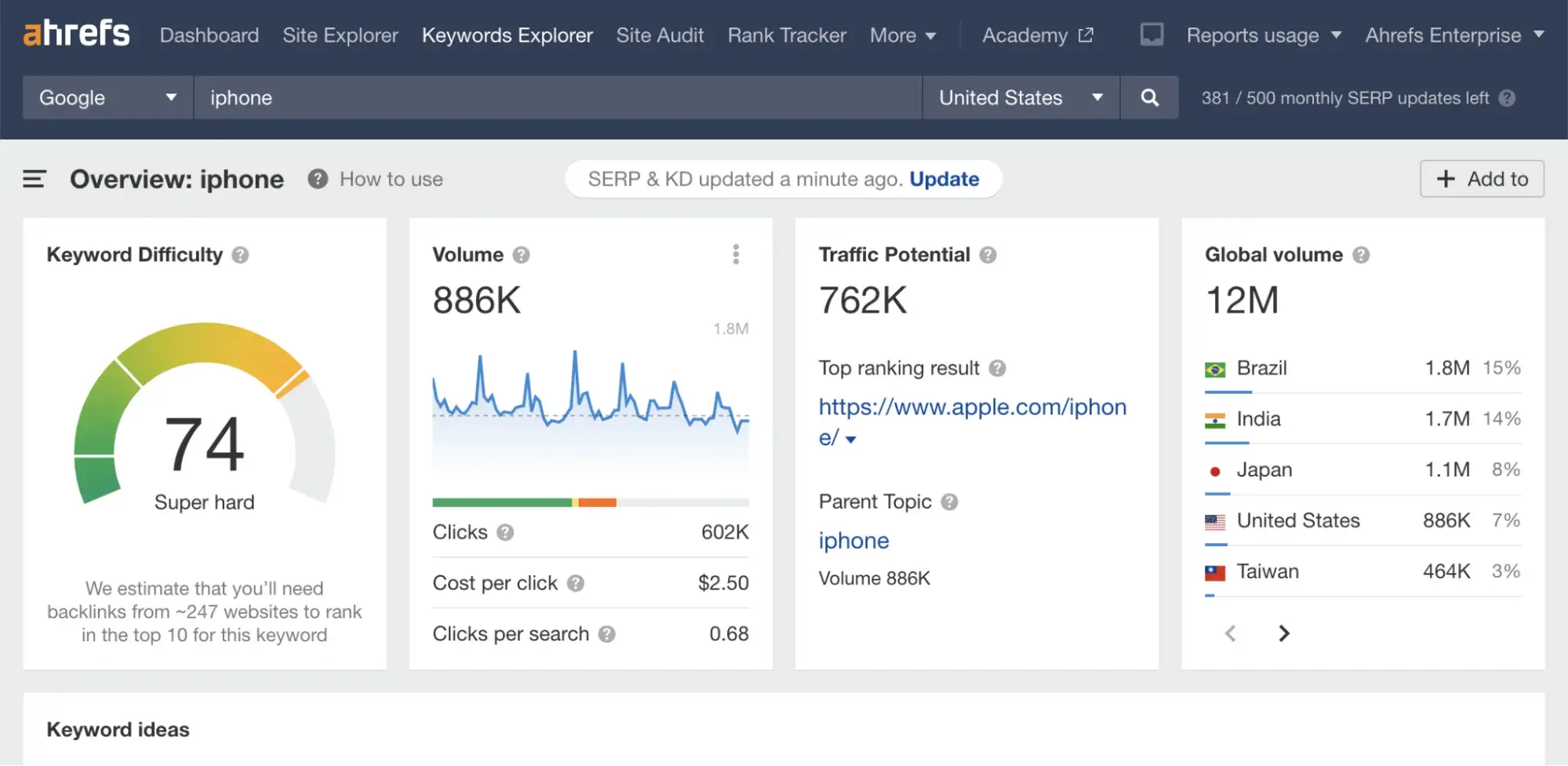
Ahrefs lets you enter a broad term and immediately see keyword difficulty, search volume, click potential, and a list of related terms grouped by parent topic. I use it to validate seeds and quickly estimate cluster size before committing resources.

For context on helpful keyword identification tools, HubSpot has covered several solid options worth bookmarking.

What we like: The “parent topic” feature in Ahrefs automatically groups related keywords, making cluster planning much faster.

3. AnswerThePublic

best seed keyword tools: answerthepublic

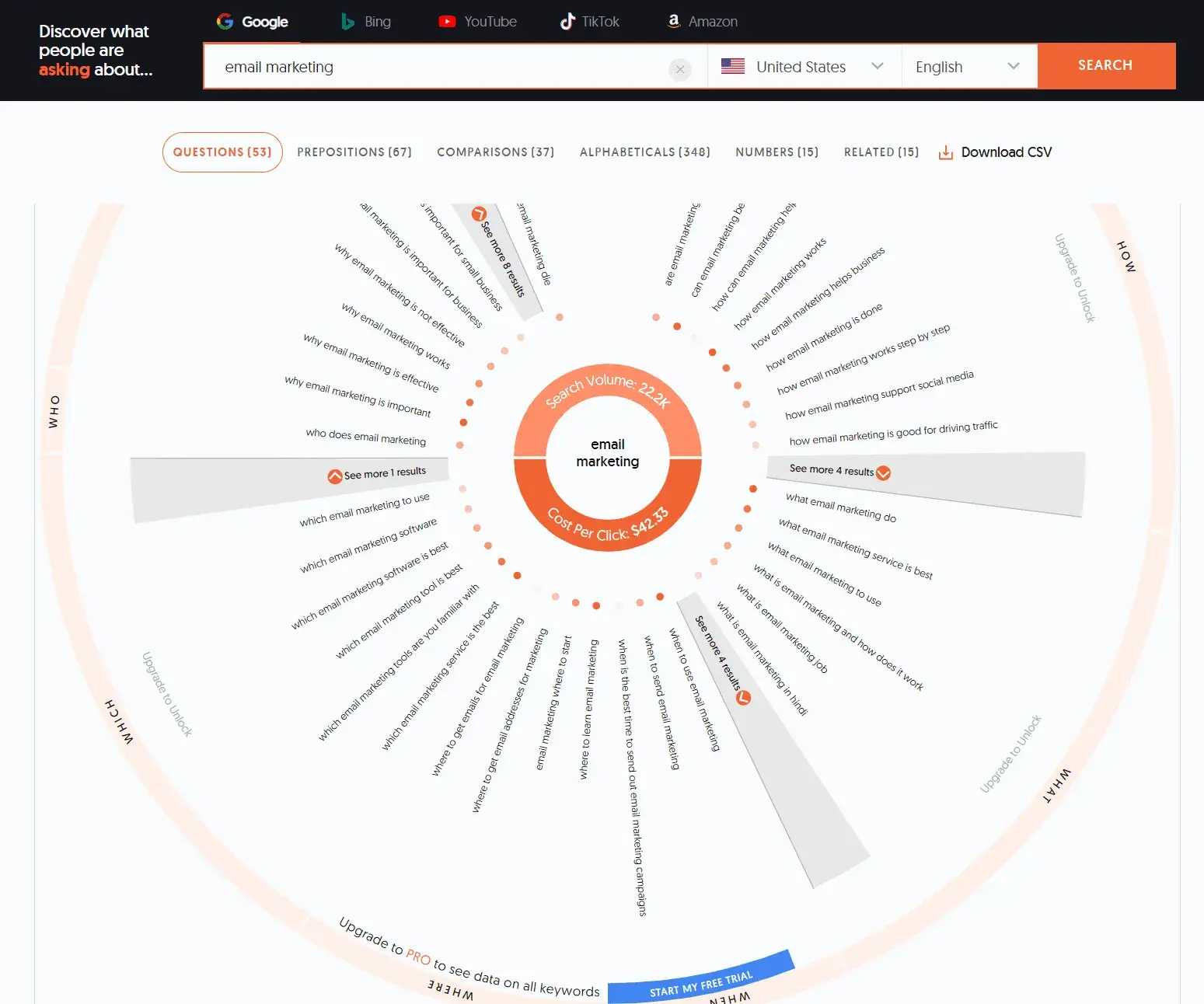
AnswerThePublic visualizes the questions, prepositions, and comparisons people search around a given seed. It is one of the fastest ways to move from a single seed keyword to a long list of long-tail angles.

Best for: Content ideation sessions and FAQ development.

4. Google Keyword Planner

best seed keyword tools: google keyword planner

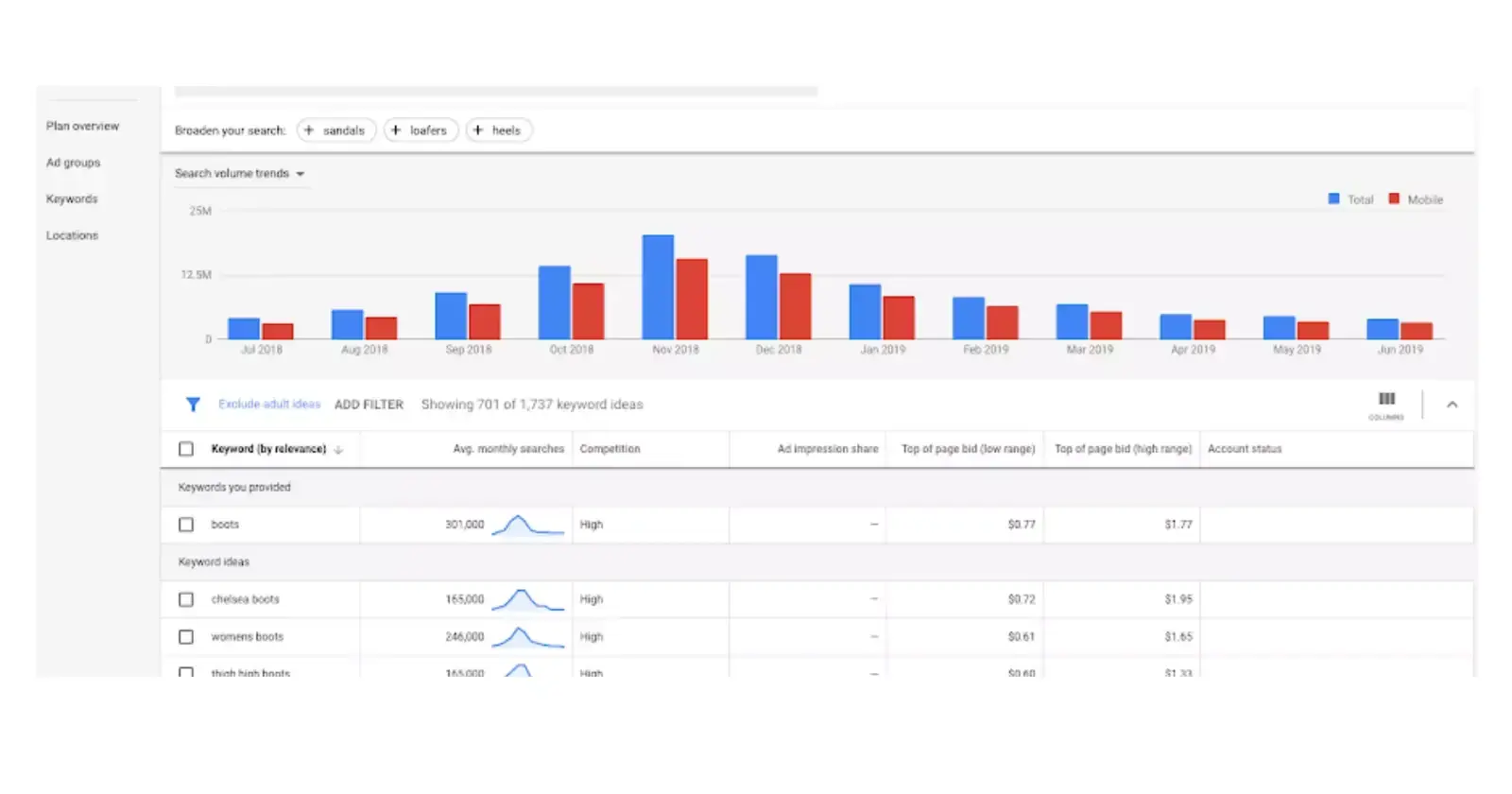
Free with a Google Ads account, Keyword Planner gives you monthly search volume ranges and competition data. It is not as precise as paid tools, but for validating whether a seed has meaningful demand, it is more than sufficient.

Best for: Bootstrapped teams or early-stage research where budget is a constraint.

5. Semrush Keyword Magic Tool

best seed keyword tools: semrush keyword magic tool

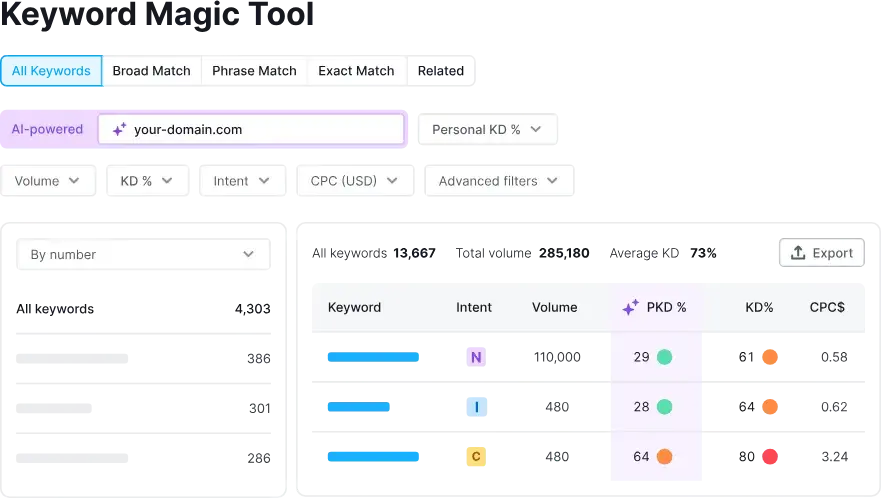
Semrush’s Keyword Magic Tool is particularly strong for clustering. You can enter a seed keyword and group the results by topic, question type, or intent, which maps almost directly to a topic cluster architecture.

What we like: The intent filter makes it easy to separate informational seeds (blog content) from transactional ones (landing pages).

6. HubSpot’s SEO and Content Tools

HubSpot’s AI content tools within Content Hub connect keyword research directly to your content creation workflow. You can track topic cluster health, identify content gaps, and publish without switching between a dozen tabs. For teams already in HubSpot, this integration reduces the friction between seed research and actual publishing.

Best for: HubSpot users who want keyword research and content production in one place.

If you’re looking for a keyword research template to help you track based on business goals and opportunities, click here to use it for free.

free keyword research template for identifying seed keywords

How to Build Your Content Plan From Seed Keywords

Having a list of seed keywords is not a content plan. It is the raw material. Here is how I turn seeds into a structured, publishable plan.

1. Choose three to five anchor seeds.

Don’t try to plant all your seeds at once. Pick three to five that represent your most important buyer problems or product categories. These become your pillar page topics. Each pillar page targets a broad theme related to multiple long-tail keywords.

For reference, long-tail keywords are specific, lower-volume phrases that branch off your seed. They are usually three or more words and express a defined intent. Long-tail keywords express more specific search intent than seed keywords, which is why supporting pages targeting them tend to convert better than broad pillar pages.

2. Build a cluster map for each seed.

For each anchor seed, generate a list of 10 to 20 related long-tail keywords using your chosen tool.

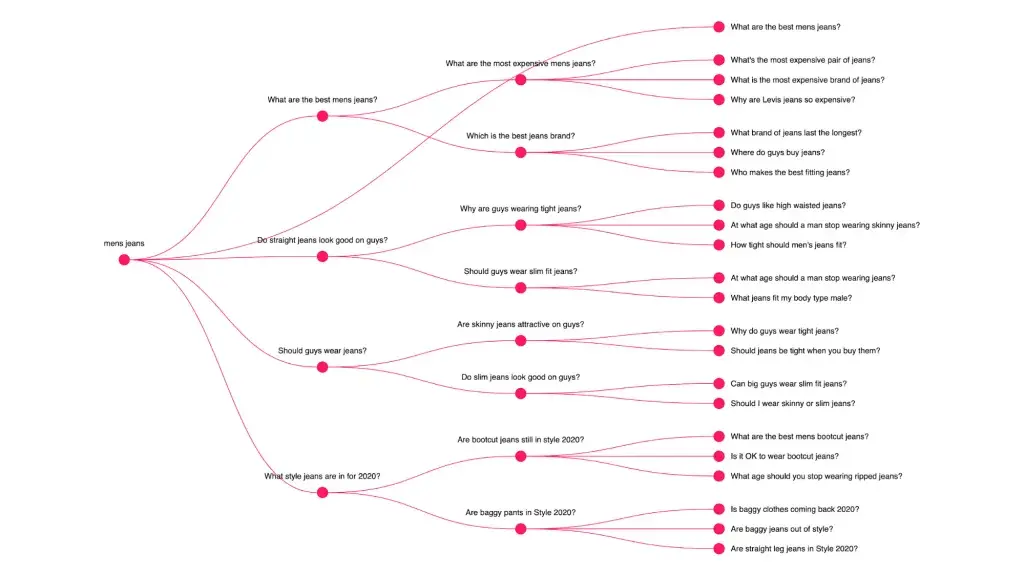
These become the supporting pages in your cluster. A topic cluster typically includes one pillar page and multiple supporting pages, each targeting a specific long-tail variation. Look at the following example: if your business sells men’s jeans, think of all the queries or thoughts customers have when they visit your site.

how to build your content plan from seed keywords: build a cluster map

Source

Coming up with long-tail keywords is easier than you think when you consider all the different ways people can navigate a cluster map.

3. Assign intent to every cluster page.

Not every keyword in a cluster belongs in a blog post. Some belong in landing pages, product comparison pages, or FAQ entries.

Sorting by search intent before writing prevents creating content that ranks but never converts. Consider dividing yours like the following categories:

  • Informational intent: educational posts and how-to guides.
  • Commercial intent: comparison and review content.
  • Transactional intent: product and trial pages.

4. Map internal links between cluster pages.

Pillar pages should link to every supporting page. Supporting pages should link back to the pillar. This internal link structure signals to search engines that the cluster is related and that the pillar page is the authoritative source on the topic.

For guidance on tracking and improving your SEO strategy once your clusters are live, HubSpot’s breakdown walks through the key metrics to watch.

5. Set a publishing cadence and governance process.

A content plan isn’t useful if it lives in a spreadsheet no one updates.

Assign ownership to each cluster, set a publishing cadence your team can sustain, and schedule quarterly reviews to audit performance and refresh seeds that have shifted in demand.

Pro Tip: Brand consistency across content compounds over time. Teams that maintain consistent messaging and topic ownership across their clusters tend to build authority faster than those that publish sporadically across broad topic areas.

6. Track rankings at the cluster level.

Don’t just monitor individual keyword rankings — track the cluster as a whole. If your pillar page is ranking but supporting pages are not being indexed, that is a signal of an internal link structure or crawl budget issue. If supporting pages rank but the pillar does not, you may need to strengthen your pillar content or consolidate weaker posts.

Pro Tip: Use the Early-Signs Guide to AEO from HubSpot to understand how answer-focused content optimization affects visibility in AI-powered search results. Seed keywords that trigger featured snippets or AI Overviews are worth prioritizing.

Frequently Asked Questions About Seed Keywords

How many seed keywords should I start with?

Start with three to five seed keywords. That is enough to build meaningful clusters without spreading resources too thin. Once those clusters are established and performing, you can add more seeds. Starting with too many seeds leads to shallow coverage across all of them rather than deep authority in any of them.

Can branded terms be seed keywords?

Yes. Branded seeds, such as your company name or product names, are valid starting points for a cluster around your brand. However, non-branded seeds almost always have more strategic value because they capture buyers who have not yet heard of you. I treat branded and non-branded seeds as separate workstreams.

What’s the difference between seed keywords and long-tail keywords?

Seed keywords are broad, short phrases used as the starting point for keyword research. Long-tail keywords are specific, multi-word phrases derived from seed keywords. Seed keywords help generate long-tail keywords. Long-tail keywords express more specific search intent than seed keywords and are typically easier to rank for on newer or smaller-authority sites.

How often should I refresh my seed keywords?

Review your seed list quarterly. Markets shift, products evolve, and buyer language changes. A seed keyword that drove strong results a year ago may now face more competition or declining search interest. I run a seed refresh at the start of each quarter, cross-referencing search volume trends with changes in product direction.

Do seed keywords change by market or language?

Absolutely. Seed keywords are grounded in how real buyers talk, and that language varies significantly by region, culture, and language. A seed keyword that works in American English may not translate directly to British English, let alone Spanish or Japanese. For international SEO, I would build separate seed lists for each target market rather than translating directly from one language to another.

Take Your SEO Research Further

Seed keywords are where all good content strategies begin, but the landscape is changing fast. AI-powered search is reshaping how answers surface, and optimizing for answer engines is becoming as important as optimizing for traditional rankings.

The seeds you plant today determine what your content program can grow into. Start small — and with discipline — you can build clusters that earn authority over time.

Categories B2B

Answer engine optimization case studies that prove the ROI of AEO in 2026

AI search is already influencing how buyers discover brands — and the results are measurable. According to the 2026 HubSpot State of Marketing report, 58% of marketers say visitors referred by AI tools convert at higher rates than traditional organic traffic. As platforms like ChatGPT, Perplexity, and Gemini increasingly shape buying decisions, visibility inside AI-generated answers is quickly becoming a competitive advantage. Free AEO Grader: See How You Rank on AI Search Results

This shift has given rise to answer engine optimization (AEO) — the practice of structuring content so AI systems can extract, cite, and recommend it in generative responses. But while many marketers are experimenting with lists, tables, and FAQs, few teams fully understand which strategies actually produce business results.

That’s where real-world examples matter. By analyzing recent AEO case studies across SaaS, agencies, and legal services, clear patterns begin to emerge about what drives AI citations, brand mentions, and revenue.

In this article, we’ll break down answer engine optimization case studies that demonstrate the real ROI of AEO in 2026 — including how companies increased AI-referred trials, boosted citation rates, and even generated millions in revenue from AI discovery.

Table of Contents

What these answer engine optimization case studies reveal now.

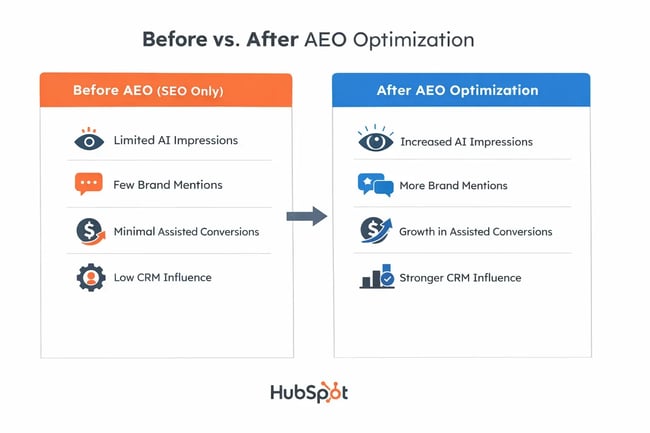
Across recent AEO case studies, one pattern shows up consistently — visibility shifts before traffic does. Brands see earlier gains in AI citations, brand mentions, and assisted conversions.

before aeo vs. after based on answer engine optimization case studies

Another finding touches upon measurements and ROI.

Before AEO, teams measured rankings and clicks. Now, measurement shifts toward AI Overview visibility, citation frequency, and CRM influence. Marketers start attributing value to assisted deals, influenced revenue, and brand recall surfaced through generative answers rather than direct visits.

Similarly, the AEO case studies recognize a clear sales impact, albeit indirectly, in many of them. Agencies report higher baseline brand familiarity in early sales conversations, fewer “what do you do?” questions, and shorter evaluation cycles after AI citations increase. Likewise, more than half of marketers report AI-referred visitors convert at a higher rate than traditional organic traffic.

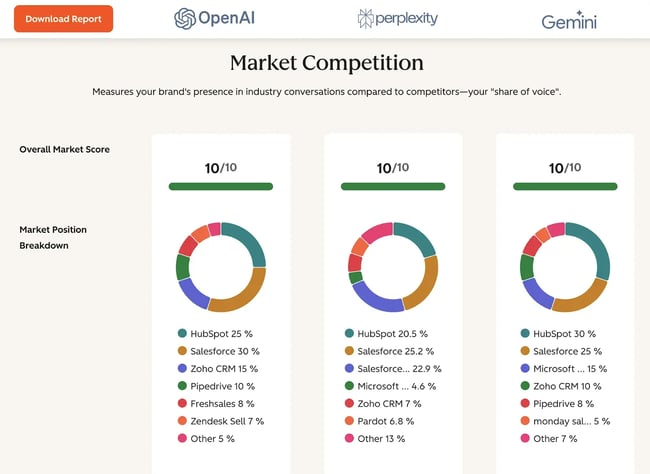
HubSpot’s AEO Grader evaluates websites based on how they show up across LLMs and offers suggestions for improvements.

Answer engine optimization case studies that prove AEO’s ROI.

Answer engine optimization delivers measurable ROI when brands increase their visibility inside AI-generated answers, leading to higher-quality traffic and stronger brand recall. The following case studies showing ROI from answer engine optimization campaigns demonstrate how companies across different industries implemented AEO strategies to improve how AI systems interpret and cite their content.

From B2B SaaS companies driving thousands of AI-referred trials to agencies generating sales-qualified leads directly from LLMs, these examples highlight the tactics that helped both established brands and emerging players compete for AI visibility and turn citations into real business outcomes.

Discovered: From 575 to 3,500+ trials per month in 7 weeks for a B2B SaaS

This is the story of how Discovered, an organic search agency, pulled off a miracle for their client and 6x AI-referred trials.

answer engine optimization case studies, results

Source

The Before

The client’s company had a mature SEO program that was no longer delivering and had no deliberate AEO strategy, which translated into minimal business impact. Potential buyers simply couldn’t find the company because it was invisible inside AI answers.

What made the matter worse is that the existing strategy focused primarily on top-of-funnel informational content that wasn’t converting.

So the fix had to be immediate and tied to business outcomes.

Execution Teardown

The work began with a thorough technical SEO audit and AI visibility audit. The team found issues with broken schema (a major red flag for AI citations), duplicating content, and poor internal linking. Needless to say, there was no optimization for LLMs.

Once the technical issues were fixed, Discovered moved to publishing dozens of content pieces targeting buyer-intent queries that LLMs had already answered. Instead of the usual 8–10 monthly posts, they published 66 AEO-optimized articles in the first month.

Here’s the winning AEO content framework the teams used to structure articles:

  • Clear, verifiable facts that LLMs could cite with confidence.
  • Entity optimization and schema markup for better knowledge graph integration.
  • Answer-focused structures targeting actual buyer questions.
  • Intentional internal linking to high-intent conversion pages.

Although the result of publishing 66 decision-level intent articles brought in an influx of AI citations within 72 hours, that wasn’t enough.

To make the client’s tool top-of-mind for LLMs, the Discovered team had to increase trust signals. To do so, they extended the strategy beyond owned content and went on Reddit. Using aged accounts, they seeded helpful comments in relevant subreddits that ranked #1 for the target discussion.

The Results

The downstream impact didn’t take long to show up. Within just seven weeks, Discovered delivered astonishing AEO results:

  • 6x increase in AI-referred trials from 575 to 3,500+ trials attributed to ChatGPT, Claude, and Perplexity recommendations.
  • 600% citation uplift.
  • 3x SERP performance on high-intent keywords, driving qualified traffic that converted.
  • #1 Reddit rankings.

Curious if your business’s website is AEO-ready? Run it through HubSpot’s AEO Grader to get a detailed competitive analysis, brand sentiment scoring, and strategic recommendations to optimize your brand’s AI visibility.

How Apollo lifted its brand citation rate by 63% for AI awareness prompts.

Brianna Chapman leads Reddit and community strategy at Apollo.io, so she greatly influences how LLMs cite Apollo today. Without revamping its website content, Chapman increased the brand citation rate solely by using Reddit as the main source of information for AI search engines.

The Before

When Chapman started digging into whether Apollo was actually showing up in ChatGPT, Perplexity, or Gemini about sales tools, she found herself frustrated. “LLMs kept positioning us as ‘just a B2B data provider’ when we’re actually a full sales engagement platform. Competitors were getting cited for capabilities we had, and sometimes did better,” shares Chapman.

The major problem was that LLMs were pulling content from old Reddit threads with incomplete or outdated information about Apollo, but because those threads existed and were crawlable, the information kept being treated as truth.

Execution Teardown

Chapman stopped treating AI visibility as an SEO problem and began thinking of it as narrative control. The goal was to shape conversations in places LLMs already trust (mainly Reddit) without being sketchy about it.

Here’s what Chapman did precisely to flip the narrative and drive brand citations.

First, she figured out which prompts actually mattered (aka how people ask inside LLMs) and audited the brand’s visibility in AI search engines.

To do so, Chapman pulled first-party data from Enterpret (customer feedback), social listening, and prompts people were giving inside Apollo’s AI Assistant. She got about 200 prompts per topic, like:

  • “ai that verifies emails before sending outreach”
  • what ai sales tools don’t feel spammy?”

From there, she tracked all of them in AirOps to see where Apollo was (or wasn’t) getting cited.

Then it was time to act.

She built r/UseApolloIO as a credible resource and grew this subreddit to 1,100+ members with 33,400+ content views in over five months. The major shift happened when Chapman posted a detailed comparison in r/UseApolloIO about when teams should choose Apollo versus a competitor.

Within a couple of days, AirOps showed the new thread getting picked up, and within a week, it had displaced the old one, gaining +3,000 citations across key prompts in LLMs.

The Results

The results speak for themselves: 63% brand citation rate for AI awareness prompts, 36% for category prompts. Reddit sentiment also got more positive, driving beta sign-ups and demo requests.

Featured resources:

How Broworks generates SQLs directly from LLMs after AEO.

One day, Broworks, an enterprise Webflow development agency, wondered what if they could build a pipeline from AI tools instead of just traditional search engines? So the team rolled up their sleeves and dug deep into AEO optimization of their entire website.

The Before

Broworks had their brand already cited in LLMs here and there, but those mentions didn’t translate into anything the business could measure. On top of that, there was no structured way to influence AI-generated answers and no attribution tying AI-driven sessions back to pipeline outcomes.

Execution Teardown

First, the Broworks team realized they had had a schema markup problem. So they implemented custom schema markup across key landing pages, case studies, and blog posts. They added FAQ Schema, Article Schema, and Local Business, and Organization Schema — essential schema attributes for LLM indexing.

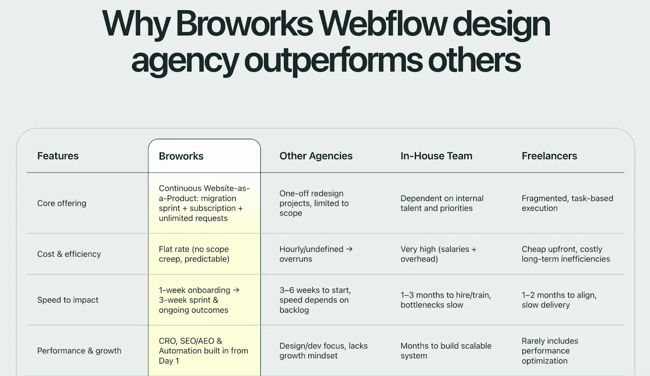
They also placed comparison tables directly on the landing pages.

aeo case studies, best practices illustrated — adding tables

Source

Their second step was to align the website’s content with prompt-driven search. Meaning, optimize content not around traditional keywords but questions people ask ChatGPT, like: “Who is the best Webflow SEO agency for B2B SaaS?”

They also added FAQ sections to most pages and summarized key takeaways at the top of articles.

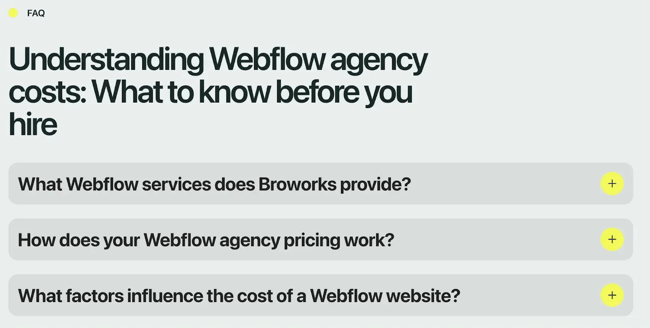
Even Broworks’ pricing page has an FAQ section.

aeo case studies, best practices illustrated — adding faqs

Source

The Results

Within three months, AEO and GEO outcomes became visible in both analytics and sales data:

  • 10% of organic traffic originated from LLMs, including ChatGPT, Claude, and Perplexity.
  • 27% of AI-referred sessions converted into SQLs.
  • 30% higher time on site compared to traditional organic traffic.

Sales teams reported stronger baseline awareness and fewer introductory conversations. Prospects arrived already aligned on the problem and solution, shortening qualification cycles.

Intercore Technologies achieved $2.34M in total revenue attributed to AI discovery over six months.

Intercore Technologies, a digital agency for law firms, helped an established Chicago personal injury firm rise from an invisibility crisis. The brand’s SEO was stellar; they ranked #1 for “Chicago personal injury lawyer” and had over 15,000+ monthly organic visitors — but their lead volume dropped.

The brand actually leaked its clients to competitors that were more visible in AI search engines, as search behavior drastically shifted in this niche.

The Before

In short, Intercore’s client was not recognized by AI search engines at all. The brand didn’t appear in LLM results for the query “personal injury lawyer Chicago,” despite strong domain expertise. Competitors, on the other hand, were mentioned 73% of the time.

Execution Teardown

Intercore Technologies approached AEO as a precision problem. They focused their work on making the firm’s expertise legible and quotable for AI search engines evaluating legal intent.

Execution centered on four pillars:

  • Legal entity clarification. Practice areas, case types, and jurisdictional relevance were explicitly defined so LLMs could associate the firm with specific legal scenarios (e.g., personal injury claims, settlement processes, local statutes).
  • Answer-first content restructuring:
  • 50 core pages were rewritten to lead with direct answers to high-intent legal questions commonly surfaced in AI responses.
  • Added 500+ word FAQ sections to each practice area.
  • Created “Ultimate Guide to Personal Injury Claims in Illinois.”
  • Implemented semantic HTML structure (H1–H4 hierarchy).
  • Created comparison tables (Auto vs. Slip & Fall vs. Medical).
  • Schema and the site’s speed. Structured data was applied to reinforce legal services, locations, and professional credibility, thereby improving extraction accuracy across AI platforms. They optimized page load speed to under two seconds.
  • Established a multi-platform presence for maximum AI visibility. LinkedIn was used for a thought leadership campaign with over 5,000 engagement actions in the first month. They also launched a YouTube channel and published on Reddit, Quora, and Forbes Legal Council.

The Results

After this massive undertaking, AI visibility started translating into both reach and revenue. AI visibility increased to 68% across ChatGPT, Perplexity, and Claude.

The revenue impact followed quickly:

  • 156 new clients attributed directly to AI recommendations.
  • $47,500 average case value from AI-referred clients.
  • $2.34M in total revenue attributed to AI discovery.
  • 16.9% average AI conversion rate.

Takeaways From These AEO Case Studies

Let’s develop a playbook from these answer engine optimization ROI case studies so growth specialists can easily modify their AEO efforts and see similar results.

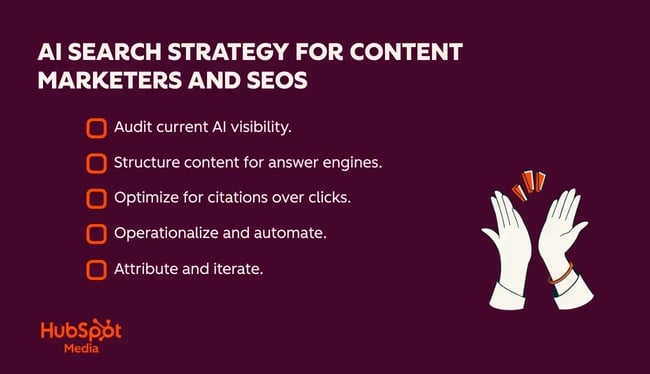
aeo strategy for content marketers and seos

1. AI visibility compounds before traffic does.

Across all case studies, brands saw AI citations, mentions, and awareness lift weeks or months before any meaningful traffic changes. Marketers should treat AI visibility as a leading indicator of their answer engine optimization efforts.

Use HubSpot’s AEO Grader to learn and monitor how leading answer engines like ChatGPT, Perplexity, and Gemini interpret your brand. The AEO Grader audit reveals critical opportunities and content gaps that directly impact how millions of users discover and evaluate your brand using LLMs.

HubSpot AEO Grader market competition overview

2. Answer-first content is your new textbook for content creation.

Answer-first content consistently outperforms keyword-first content. Pages that open with direct answers, summaries, or FAQs were cited more reliably by LLMs than traditional blog-style introductions. This pattern shows up across SaaS, agency, and legal services examples. Answer-first content flips the traditional SEO model by prioritizing immediate clarity over keyword stuffing or narrative build-up.

To put this into practice, start every page with a clear answer to the top-intent question, followed by context, examples, or supporting detail. Use headings that mirror natural queries, like “How can I optimize my SaaS website for AI search?” and provide a short, self-contained answer immediately below. By doing so, marketers increase the likelihood that AI systems extract their content confidently and cite it as a trustworthy source. Over time, this approach compounds visibility and can drive higher-quality AI-referred traffic.

3. Schema markup is no longer optional for AEO.

Schema markup is the backbone of machine-readable content, allowing AI systems to understand pages and determine how to cite them. Case studies repeatedly show that implementing structured data — including FAQ, HowTo, Product, Offer, Breadcrumb, and Dataset schema — directly improves AI extraction and citation rates. Without schema, even high-quality content risks being overlooked by LLMs because it’s harder for them to parse and verify information.

Actionably, audit all high-value pages for relevant schema types. Start with FAQ and HowTo for decision-stage content, Product and Offer for transactional pages, and Breadcrumb or Organization for site hierarchy and entity clarity. Test the schema using Google’s Rich Results Test or other structured data validators, and iterate based on AI citation performance. Proper schema not only increases the likelihood of being surfaced but also ensures that AI systems interpret the content accurately, improving trust signals and downstream conversions.

HubSpot Content Hub helps marketers publish schema-ready content across websites.

4. Narrative control matters as much as on-site optimization.

On-site AEO optimization alone isn’t enough. LLMs pull from trusted external sources, which means a brand’s AI visibility is influenced heavily by third-party content. Apollo’s case demonstrates that managing a brand’s narrative in platforms like Reddit or Quora can shift how AI systems describe and recommend it. If outdated or incomplete information dominates these sources, LLMs will continue to propagate misaligned messages, even if the website is fully optimized.

To take control, identify the key prompts or topics an audience is querying inside AI tools. Then, actively shape the conversation in trusted communities by providing accurate, detailed, and helpful content. For example, creating dedicated subreddits, participating in niche forums, or posting authoritative comparisons can guide AI systems toward citing a brand correctly. By pairing on-site optimization with external narrative control, marketers increase both the quantity and quality of AI citations, which can drive higher conversions and strengthen brand recognition.

HubSpot’s AI Content Writer helps marketers create high-quality content at scale across channels.

5. Internal linking to high-intent conversion pages is a must.

Internal linking signals context and relevance to AI systems as much as to human users. Case studies show that AI crawlers benefit when content across a site is connected intentionally, particularly linking answer-first pages to high-intent landing pages or product offers. Without a clear internal linking structure, LLMs may surface content that is informative but fails to guide users toward conversion opportunities.

To implement this, map out high-value pages and identify key answer-first articles that can serve as entry points. Link these strategically to product pages, service pages, or other high-intent conversion targets. Use descriptive anchor text that aligns with user queries, so AI systems understand the relationship between pages. This approach ensures that AI-referred traffic not only discovers the content but also moves through the conversion funnel efficiently, improving assisted conversions and pipeline influence.

6. Page speed counts for AEO.

AI systems rely on fast, reliable access to content. Pages that take too long to load may fail to be fetched or fully parsed by AI crawlers, limiting citations and AI visibility. Case studies show that even sites with excellent content and schema lose out when load times exceed two seconds. Slow pages increase fetch latency, raise the risk of incomplete parsing, and reduce the likelihood of the content being surfaced in AI answers.

Action steps include auditing page speed with tools like Google PageSpeed Insights or HubSpot’s Website Grader, optimizing images and scripts, enabling caching, and minimizing render-blocking resources. Additionally, prioritize mobile performance, as many AI systems evaluate content using mobile-first indexing. By improving load times, businesses not only enhance user experience but also ensure that AI systems can reliably extract and cite their content, translating into higher AI visibility and measurable ROI.

7. Question-based subheadings are AEO gold.

Question-based H2s and H3s work wonders because they directly match how users query answer engines. For example, add an H2 “How can marketers structure pages for answer engine optimization?” and then expand using informative H3s.

Answer the query immediately below the heading, so as not to leave room for misinterpretation for AI.

Marketers can simplify their lives with the HubSpot Content Hub that includes built-in AEO and SEO recommendations for headings and structure, as well as drag-and-drop modules for FAQ sections and lists.

Featured resources:

Frequently Asked Questions About Answer Engine Optimization Case Studies

What is answer engine optimization, and how is it different from traditional SEO?

Answer engine optimization (AEO) focuses on making content easy for AI systems and LLMs to extract, understand, and reuse as direct answers. The goal is visibility inside AI Overviews, chat responses, and generative search results, where users often never click through to a website.

Traditional SEO prioritizes rankings, clicks, and traffic. AEO prioritizes answerability, entity clarity, and citation likelihood. In practice, AEO builds on SEO foundations but shifts success metrics toward AI mentions, assisted conversions, and CRM influence rather than sessions alone.

Which schema types should I start with for AEO?

Teams should start with schema that clarifies intent and relationships. FAQ, HowTo, Product, Organization, Breadcrumb, and Article schema consistently improve AI extraction and citation accuracy across AEO case studies.

The priority is not schema volume but relevance. Schema should reinforce what the page is clearly about and how concepts connect.

How do I adapt my content for AI Overviews and chat answers without hurting my UX?

The most effective approach is an answer-first structure. Sections should begin with a direct, self-contained answer, followed by context, examples, or depth for human readers. This pattern serves both audiences without duplicating content.

AEO case studies show that short paragraphs, clear headings, summaries, and FAQs improve AI reuse while keeping pages scannable and readable. AEO works best when it aligns with good UX principles rather than competing with them.

How do I prove ROI for AEO when traffic does not always increase?

AEO ROI rarely shows up first in traffic. Instead, teams track AI citations, brand mentions, assisted conversions, influenced deals, and sales feedback inside CRM systems. These indicators surface earlier and compound over time.

Many AEO case studies validate ROI by correlating AI visibility gains with higher lead quality, shorter sales cycles, and lower acquisition costs. The key is expanding measurement beyond last-click attribution.

When should I consider bringing in AEO services versus keeping it in‑house?

In-house teams perform well when they already own content, schema, and analytics workflows and can iterate quickly. This works best for companies with mature SEO foundations and access to CRM-level attribution data.

External AEO services make sense when teams lack entity modeling expertise, schema depth, or visibility into how AI systems reference their brand.

Answer engine optimization is your growth lever.

AEO delivers real business impact when teams stop treating AI visibility as a byproduct of SEO. And it delivers fast: From the first week of optimizing their website for AEO, digital marketers can see a forming pipeline directly attributed to AI recommendations.

If you want to speed up AEO implementation, tools matter.

Platforms like HubSpot Content Hub help teams publish schema-ready, answer-first content at scale, while visibility checks through tools like HubSpot’s AEO Grader or Xfunnel reduce guesswork and speed up iteration.

Gear up and make AEO your growth lever.

Categories B2B

ChatGPT Product Recommendations: How to Make Sure You Are One in 2026

Whether I’m looking for a new car, email marketing software, or pair of shoes, sometimes I wish I had a personal shopper — Someone to share a second opinion, make suggestions when I’m indecisive, and help find the best deal. In recent years, ChatGPT product recommendations and its Shopping Research feature have become this for many.Download Now: HubSpot's Free AEO Guide

Increasingly, shoppers are skipping search engines and going straight to ChatGPT with queries like “best CRM for startups under 50 people” or “what are the best gifts for chai lovers?” In fact, according to G2’s 2025 Buyer Behavior Report, generative AI chatbots are now the #1 influence over vendor shortlists, ahead of review sites, vendor websites, and salespeople.

That’s a huge shift in how people shop, and marketers and ecommerce teams need to adapt if they want to stay visible. This guide breaks down exactly how ChatGPT decides which products to surface — and, more importantly, what you can do today to be one of them.

Table of Contents

What’s Changed in ChatGPT Shopping for Businesses?

In a 2025 survey of 1,000+ B2B software buyers by G2, half of the respondents said they now start their buying journey in an AI chatbot instead of Google Search. ChatGPT took notice.

Last fall, ChatGPT launched ChatGPT Shopping and instant checkout. These new features let users find and even buy products (on Etsy and Shopify) without leaving their chat.

ChatGPT will suggest products, prices, reviews, and a link to buy the item right away for Etsy and Shopify brands. You can also buy the item from their websites to add it to your cart.

Here’s a quick example. To launch the shopping experience on mobile or desktop, I clicked the plus sign (+) near the query field and select “Shopping Research.”

chatgpt product recommendations, accessing chatgpt shopping on desktop

From there, I entered what I was looking for (in this case, “the best gifts for authentic indian chai loves”) and hit enter. As it generated its product recommendations, ChatGPT asked me some questions about price and preferences to refine its suggestions.

chatgpt product recommendations, chatgpt shopping on desktop asking product questions to refine recommendations

However, if you don’t answer the questions, it still gave you what it thought was best in a detailed listicle.

chatgpt product recommendations delivered in editorial form

chatgpt product recommendations also delivered in ecommerce format

As I scrolled through, I saw some suggestions opened side panels to purchase the product in-chat like this gift set from VADHAM.

chatgpt product recommendations showing product details in a panel

And others had me to click through to the website.

You’re probably wondering, how is this any different from a normal ChatGPT query? Well, if you don’t use the “Shopping Research” tool, ChatGPT will share general gift ideas rather than specific products you can buy immediately.

chatgpt product recommendations outside of “shopping research” tool are more general

Let’s look at what’s different in ChatGPT shopping in 2026, more granularly:

  • A specialized shopping model powers recommendations. ChatGPT Shopping Research runs on a specialized variant of GPT-5 mini, trained specifically for shopping tasks. According to OpenAI’s own benchmarks, this model achieves 52% product accuracy on complex multi-constraint queries, compared to 37% for standard ChatGPT Search.
  • The ChatGPT Merchant Program is live. OpenAI’s merchant program allows businesses to submit product feeds directly, improving the likelihood ChatGPT can access accurate, structured product information. Plans include an Instant Checkout, allowing users to buy directly within the platform.
  • B2B and SaaS are on board. Product discovery isn’t limited to ecommerce or B2C. ChatGPT regularly recommends software tools, platforms, and services when users ask for solutions to business problems.
  • No paid placement (yet). Unlike Google Shopping, ChatGPT product recommendations are currently not ad-driven. According to OpenAI, “ChatGPT shows the most relevant products from across the web. Product results are organic and unsponsored, ranked purely on relevance to the user.” Visibility here is earned, not bought — but more on that soon.

Why ChatGPT Product Discovery Matters for B2B and SaaS

Getting crawled by ChatGPT means potential visibility to the platform’s reported 900 million weekly active users. And ChatGPT product recommendations aren’t limited to just consumer goods.

If your company sells software, professional services, or any high-consideration product, ChatGPT discovery may already be affecting your pipeline, whether you’ve optimized for it or not. Let me explain.

B2B buyers are using AI to build shortlists.

Decision-makers at mid-market and enterprise companies are running AI queries like “What HubSpot competitors should I evaluate?” before they ever visit a vendor’s website. In other words, AI is narrowing down their choices from the very beginning of their buying journey.

On top of that, 6sense found that 95% of the time, the winning vendor is already on the buyer’s short list, while 80% of the deals are won by the vendor the buyer contacts first. So, if you’re not being surfaced early by AI, you’re likely not even in the running.

AI search is already the second-biggest lead source for B2B.

According to a 2025 study by 10Fold Communications, AI-based platforms like ChatGPT and Perplexity are now the second-most common source of qualified leads. They’re behind only social media and ahead of organic search, email marketing, and paid media.

AI traffic converts dramatically better.

Research shows ChatGPT traffic converted 31% higher than non-branded organic search. For B2B specifically, ChatGPT delivers a 56.3% higher close rate than leads originating from Google or Bing.

Users arriving from ChatGPT also often have already completed early-stage research. They’re closer to a decision, which typically means higher conversion rates and shorter sales cycles. These findings are consistent with theories about AI shifting buyer behavior and preferences, and marketers should be adapting.

Review platforms carry even more weight.

For B2B products, ChatGPT leans heavily on aggregator signals from platforms like G2, Capterra, and TrustRadius. Weak review presence is a visibility killer.

Pro Tip: Run a few ChatGPT queries in your category right now. Search “best [your product type] for [your ICP]” and note who shows up. This will give you a solid AI visibility benchmark to work from.

You can also use HubSpot’s free AEO Grader to see how your content is currently being interpreted by AI systems.

chatgpt product recommendations, assess how you perform in ai systems in general with hubspot aeo grader

How ChatGPT Product Recommendations Work

ChatGPT doesn’t have a top-secret algorithm in the Google sense. Rather, it claims to synthesize information from multiple sources and apply large language model (LLM) reasoning to answer shopping queries.

There are, however, some consistent signals that seem to influence what gets recommended.

ChatGPT product recommendations are influenced by query relevance, structured data on product pages, product availability and product price, reviews and authority, and contextual alignment with buyer intent.

1. Query Relevance

The most fundamental signal is how well your product’s content matches the intent of the user’s query. ChatGPT loves semantic matching. It doesn’t just look for keyword overlap; it interprets meaning and intent.

For example, if a user asks for “a lightweight CRM for solo consultants,” a product page that explicitly states that use case will outperform one that generically claims to serve all businesses.

Furthermore, Nectiv’s October 2025 analysis found that commercial intent prompts are significantly more likely to trigger web searches in ChatGPT (53.5%) than informational queries (18.7%). The most common terms that trigger a search include “reviews,” “free,” “features,” and “comparison.”

2. Structured Data on Product Pages

ChatGPT’s web browsing ability indexes product pages, and, as with all content, structured data (specifically schema markup) helps it parse product attributes more accurately. Schema types that are particularly relevant for product pages include: product schema, offer schema, and product variants.

3. Availability and Price Info

ChatGPT product recommendations are also believed to be influenced by product availability and price. Pricing pages are known to attract some of the most concentrated AI traffic. So, if your product is out of stock, discontinued, or has pricing that’s difficult to surface (like “contact for pricing” with no ranges), it’s at a disadvantage.

I mean, think about it: If a friend told you about a product, hyped it up, and then it turned out to be out of stock, you’d probably be really annoyed. (I would.) ChatGPT doesn’t want to give its users that experience.

4. Authority and Review Signals

Authority signals in AI work similarly to traditional SEO, but extend to third-party platforms, like established review sites, industry publications, analyst reports, and platforms like LinkedIn.

5. Context Alignment

ChatGPT tailors recommendations to the full context of a conversation and what it knows about a person. That said, a user who has mentioned they run a 10-person remote team and need a free solution will get different recommendations than someone who mentioned running an enterprise.

Your content needs to speak to specific use cases, personas, and contexts, not just the general product category, to show up as ChatGPT product recommendations to qualified audiences.

How to Help ChatGPT Discover Your Products

According to the Previsible 2025 State of AI Discovery Report, AI traffic concentrates most heavily on industry, tools, and pricing pages ‌a.k.a. ‌precisely the decision-stage pages that we know to drive B2B conversions. On top of that, HubSpot research has found ChatGPT is the #1 AI tool marketers use in their roles.

Despite the platform’s popularity, however, only 11% of companies claim to have the majority of their content AI-ready. That presents a huge competitive opportunity.

Getting discovered by ChatGPT isn’t about gaming a system; it’s about having genuinely good, structured, accessible product information. Here are the most impactful steps you can take to increase your chances of showing up in ChatGPT’s product recommendations.

Step 1: Add product schema markup to your pages/content

Structured data is a pillar of both answer engine optimization (AEO) and generative answer optimization (GEO), so, of course, it’s important to ChatGPT.

Without schema markup and good site architecture, ChatGPT’s web crawler has to do more “thinking” to figure out your product details and what you’re all about. With it, that information is structured and clear, making it more explicit and machine-readable.

Read: How to Use Schema Markup to Improve Your Website’s Structure

That said, for all your product pages, add the following:

  • Product schema: Include name, brand, image URL, description, SKU or GTIN, and a URL.
  • Offer schema: Include price, priceCurrency, availability (use schema.org values like InStock or OutOfStock), and a valid URL.
  • AggregateRating schema: Pull in review count and average rating from your review platform or record.
  • FAQPage schema: For landing pages that address common buyer questions, FAQ schema boosts context alignment.

And if you’re a B2B or SaaS company, treat your pricing page, feature comparison pages, and use-case landing pages as “product pages” for schema purposes. For SaaS, in particular, transparent pricing pages with clear tier breakdowns are a strong trust and visibility signal.

Pro Tip: Use Google’s Rich Results Test to verify your schema is installed correctly before expecting it to influence AI recommendations.

With HubSpot Content Hub, use HubSpot’s structured content tools and CMS developer documentation to implement JSON-LD schema directly in your page templates.

Step 2: Ensure crawlability and technical accessibility

As we mentioned, ChatGPT uses web crawlers (OAI-SearchBot is the primary one) to index content. If your product pages aren’t crawlable, you can’t be recommended, full stop.

In addition to schema, here are some things you can do to improve your crawlability:

  • Verify OAI-SearchBot is not blocked in your robots.txt file.
  • Submit an up-to-date XML sitemap that includes all product and solution pages.
  • Ensure product pages load quickly and don’t require JavaScript execution to render key content. Like search engines, faster-loading content is measurably more likely to be included by AI systems.
  • Use clear, descriptive URL structures (e.g., /products/crm-for-startups rather than /p?id=4421).
  • Eliminate duplicate content issues that dilute entity clarity.

Pro Tip: Check your server logs or a tool like Cloudflare Analytics for OAI-SearchBot activity. If it’s not showing up, investigate your robots.txt and page rendering. Your site may not be crawlable at the moment.

Step 3: Optimize product page content for use-case queries

Think like a buyer using natural language, not a marketer writing for robots.

ChatGPT users phrase queries conversationally, and product content that answers questions or includes those phrases explicitly is often favored.

Here’s what you can do:

  • Lead with the use case or “benefit,” not the feature. Instead of “AI-powered pipeline automation,” write “HubSpot helps sales teams of 10–50 people close more deals without manual data entry.”
  • Add comparison content. Pages like “HubSpot vs. Salesforce for small business” are exactly what ChatGPT draws from when users are weighing their options.
  • Include explicit use case headers. Sections like “Best for freelancers,” “Ideal for enterprise,” or “How [Product] handles [specific workflow]” create context for AI systems.
  • Answer the top 5–10 questions your buyers ask. Use FAQ sections on product pages. This content maps directly to ChatGPT conversational queries.

But don’t forget to differentiate! While you want to capture your audience’s words, you also want to make sure your unique offering and what makes you the right choice is clear and distinct from your competition.

It’s also important to note that ChatGPT’s instant checkout is currently limited to Etsy and Shopify shops. If you’re using either platform, make sure to follow these tips on your Shopify product descriptions/pages and Etsy Shop descriptions.

Need help writing your content? There are a host of AI content writing tools to get you started, including HubSpot’s.

Step 4: Build review and social proof Infrastructure

ChatGPT product recommendations are heavily influenced by what authoritative external sources say about your product, especially third-party review sites. This means your social proof strategy needs to extend beyond your own website.

For B2B and SaaS:

  • Prioritize G2 and Capterra. These are among the most crawled and referenced sources for software recommendations. Aim for at least 50 reviews with an average rating of 4.0+. Any fewer will look like too small a sample size to trust and any rating lower will reflect badly on your service.
  • Optimize your G2 profile. Treat your G2 listing like a landing page. Include a complete description, feature tags, use case categories, website links, and comparison positioning.
  • Pull social proof from LinkedIn. Customer testimonials, case study shares, and product mentions on LinkedIn are increasingly surfaced by ChatGPT, especially for B2B queries.
  • Earn coverage on relevant industry publications. Getting mentioned in respected trade publications (think MarTech, TechCrunch, industry newsletters) builds the authority signals ChatGPT weighs.

chatgpt product recommendations look at your brand’s rating and reputation on third-party sites, especially review sites like g2 or capterra.

Notice how HubSpot incorporated social proof and reviews from G2 onto our website. The more consistently your product is mentioned positively across these sources, the more likely it is to surface.

hubspot highlights social proof from third-party sites to help optimize for chatgpt product recommendations

Pro Tip: Use HubSpot’s Smart CRM to connect review request workflows directly to customer lifecycle data. This makes it easier to trigger review asks at the right moment post-onboarding.

Step 5: Submit a Product Feed to ChatGPT Merchant Program

OpenAI’s Merchant Program gives businesses a direct channel to make product information and purchasing available in ChatGPT. Think of it like having a feed from Facebook Marketplace or Instagram Shops in a conversation, but with AI recommendations.

To get started:

  • Visit chatgpt.com/merchants and create a merchant account.
  • Prepare a product feed in a supported format (typically JSON or CSV).
  • Include accurate product names, descriptions, prices, availability status, images, and URLs.
  • Keep the feed updated — stale or inaccurate data can actively harm your recommendation eligibility. However, OpenAI’s documentation explicitly acknowledges that the model may still make mistakes about current pricing and availability and encourages users to verify on merchant sites.

Pro Tip: For B2B companies without a traditional product feed, consider creating a structured “solutions feed” that lists your key offerings, including pricing tiers, target audiences, and use cases. This helps give ChatGPT clean, machine-readable data to work with.

After that, use HubSpot’s AEO Grader to find problems with how AI systems are understanding your content.

Step 6: Build a Measurement Loop

You can’t manage what you don’t measure. Tracking ChatGPT-driven discovery requires a slightly different approach than traditional SEO analytics.

Build your monitoring workflow around these signals:

  • UTM-tag your ChatGPT traffic. If you’re linked or cited in ChatGPT responses, monitor direct/referral traffic patterns in Google Analytics 4 — AI-driven traffic often appears as direct or from chat.openai.com. Segment and track it separately from your first day.
  • Run regular probe queries. Weekly, manually run 10–20 queries in ChatGPT that match your target buyer’s language. Note when you appear, what competitors appear, and how the response positions you.
  • Track brand mentions with monitoring tools. Tools like Mention, Brand24, or HubSpot’s Social Monitoring in Marketing Hub can capture when your product is mentioned across the web — which feeds the authority signals ChatGPT draws from. You can also see AI traffic in HubSpot’s traffic report.
  • Monitor G2 and review platform rankings. Your position in category rankings on G2 correlates with AI recommendation frequency. Track it monthly.

FAQs About ChatGPT Product Recommendations

Do I need a product feed to appear in ChatGPT recommendations?

Not necessarily, but having one significantly improves your chances.

ChatGPT can discover products through web crawling alone, but a product feed submitted via the ChatGPT Merchant Program gives OpenAI direct, internal access to clean, structured data without the extra work.

For products with many variants, frequent price changes, or availability fluctuations (i.e. clothing and other consumer goods), a feed is strongly recommended.

How do I help ChatGPT discover new or seasonal products faster?

Update your sitemap immediately when new product pages go live and ensure they’re linked from existing high-authority pages.

For seasonal products, create evergreen landing pages (e.g., “[Product] for Holiday Gifting”) that you update each cycle rather than creating new URLs annually. This preserves crawl priority and authority signals.

Submitting updated product feeds promptly also accelerates discovery.

What if my competitors outrank me even with correct schema?

To be blunt, this is very likely. Schema is necessary but not a panacea.

If competitors are outperforming you despite correct markup, the gap is usually in one of three areas: (1) review volume and quality on third-party platforms, (2) content authority and depth on use-case-specific pages, or (3) brand mention frequency across external publications.

Audit your G2 profile versus competitors, compare your product page content depth, and assess how often you’re cited in industry sources versus your top competitors. 10Fold 2025 research found that content depth and readability matter most for AI citation, not traditional SEO metrics like backlinks or traffic.

How should I monitor product page performance from AI traffic?

In Google Analytics 4, segment traffic by source to identify sessions originating from chat.openai.com or appearing as “direct” with AI-typical behavior patterns (low pages-per-session, high conversion rates).

Use HubSpot Marketing Hub to track keyword-level and page-level performance alongside your CRM pipeline data, enabling you to connect AI-driven traffic to actual revenue outcomes. For a comprehensive framework, HubSpot’s AEO Guide walks through the full answer engine optimization workflow.

Structure for ChatGPT Shopping Success

The data is clear: AI referral traffic is growing 165x faster than organic search, converts at 4–9x the rate of traditional visitors, and is already the most influential force shaping B2B vendor shortlists. So, if you think you can ignore ChatGPT product recommendations, you’ll want to think again.

ChatGPT product recommendations aren’t a paid channel; they’re an earned one. The businesses that will dominate AI-driven discovery in 2026 are the ones that give AI systems clean, structured, authoritative data to work with.

Start with your product schema. Fix your crawlability. Build your review site presence. And monitor it all consistently. All of this compounds and can help turn ChatGPT into your audience’s most reliable personal shopper.

Categories B2B

The simple genius behind this long-forgotten Google Chrome ad

We trust simple promises more than long lists. When brands focus on one clear benefit, it feels more believable than trying to do everything at once. Take it from Google.

Free AEO Grader: See How You Rank on AI Search Results

When Chrome launched in 2009, they called it, “The Fast Browser.” They used this same line time and time again in multiple different ads. It’s a good line. But think for a second about all of the attributes Google didn’t mention.

They didn‘t mention how passwords are synced, how security is best-in-class, or integrations with Gmail. They didn’t mention the extensions, stability, or automatic updates. They could have done, but instead they focused on one benefit. Speed.

The campaign worked. Now, Chrome is the most popular browser in the world, capturing 71% of the market. Saying less can make your product feel more effective. Adding benefits can actually weaken persuasion. Here’s why.

Table of Contents

The Goal Dilution Effect

Google Chrome’s simple ad campaign is an example of the goal dilution effect. This cognitive bias causes people to believe products are less effective if they achieve multiple aims, instead of one focused goal. In short, the more benefits you give, the less believable those benefits are.

In a 2007 study by Zhang and Fishbach, participants were given information about how eating tomatoes could achieve certain goals.

  • Some are told eating tomatoes achieved just one goal: “help prevent cancer.”

  • Others are told eating tomatoes achieves two goals: “help prevent cancer and degenerative disease of the eye.” 

Zhang and Fishbach found that participants rated tomatoes as 12% more effective at preventing cancer when this was the only listed benefit, compared to when an additional health benefit was also included.

goal dillution, chrome

The Beauty of Simplicity: Five Guys

Five Guys benefited from the same bias in 1986 when Jerry Murrell launched the first store. They didn’t attempt to be a jack-of-all-trades. They focused on one benefit, and that focus boosted how believable their claims seemed.

On Nudge Podcast, Richard Shotton explained how the Five Guys founder was inspired by the long queues outside of Thrasher’s Fries in Ocean City, Maryland. He’s quoted as saying, “There must’ve been 20 places selling boardwalk fries, but only one place had a long line.”

goal dillution, five guys

Why did Thrasher’s have such popularity? Well, according to Murrell, it was their focus. Thrashers only offered fries, nothing else.

Five Guys replicated the same tactic. Rather than offering side salads, desserts, fish fillets and other items synonymous with fast food stores. Five Guys only offered the bare minimum: burger and fries.

goal dillution, five guys menu

That simple menu helped Five Guys explode in popularity. The chain exploded in the mid-2010s, growing by over 700% in six years. With limited menus, the brand could focus on making excellent burgers and fries. And, with the goal dilution effect, customers got the message.

Less is more

Chrome and Five Guys remind us that restraint is a strategy. When you strip away everything a product could do and commit to what it does best, people believe. The strengths are impossible to miss. So, the brands that win aren‘t always the ones with the most to offer. They’re the ones who know what they do best and trust their customers to fill in the rest.

Categories B2B

Community marketing: How to use it to drive customer advocacy and reduce CAC

Community marketing is a growth strategy centered on participation. It brings customers together to share knowledge, solve problems, and build trust. In the process, it drives advocacy, retention, and lower customer acquisition costs. Download Now: 3 Community Management Templates [Free Kit]

When community programs are built intentionally and connected to CRM and lifecycle data, they can shorten sales cycles, reduce support costs, and turn customers into credible advocates.

This guide breaks down what community marketing is, how it fits into modern lifecycle marketing, and how marketing teams can build and scale community programs that deliver measurable business impact.

Table of Contents

What is community marketing?

Community marketing is a strategy that brings customers, partners, and advocates together around shared interests or challenges to drive ongoing engagement, loyalty, and long-term advocacy. In practice, community marketing improves retention rates, generates referrals, and reduces support costs by enabling peer-to-peer problem-solving and authentic advocacy.

Unlike social media management, which primarily focuses on distributing content, community marketing emphasizes participation and engagement. In fact, 40.1% of consumers say they’re more likely to stay loyal to a brand after engaging with it in an online brand community.

That preference is also evident in how people experience these channels. 67% of consumers say they feel more connected to brands through community than through social media. This shift moves brands away from broadcasting messages and toward facilitating conversation and collaboration.

Community marketing also differs from generic “community building.” While community building emphasizes belonging, community marketing ties that sense of belonging back to measurable business outcomes such as retention, referrals, product adoption, and support efficiency.

In lifecycle terms, community marketing plays a critical role in the Amplify stage of Loop Marketing. It helps to extend the value after conversion and encourages customers to share, contribute, and, more importantly, advocate.

When community activity is connected to CRM data, marketers gain visibility into how engagement influences revenue, renewal, and growth.

How Community Marketing Drives Advocacy and Lowers Acquisition Costs

Community marketing is effective because trust is established much faster between peers than between brands and buyers. In fact, 55% of social users say they’re more likely to trust brands that publish human-generated content.

Seeing real people ask questions and speak honestly about their experiences builds trust faster through word-of-mouth marketing than polished messaging ever could. That trust helps decisions happen sooner and takes some of the pressure off paid campaigns.

Nicole van Zanten, Co-President & Chief Growth Officer at ICUC.social, told me, “When done with meaning, engagement, and purpose, we see that customers convert faster, stay longer with a brand or business, and refer more often.”

From a cost perspective, community marketing reduces the reliance on paid channels and support teams through:

  • Increase community-driven referrals
  • Organic user-generated content
  • Peer-to-peer support

Instead of acquiring every customer through ads or outbound efforts, brands benefit from compounding value created by existing customers. The metrics that tend to prove this impact most clearly include:

  • Repeat engagement
  • Referral traffic
  • Attributed revenue
  • User-generated content
  • NPS uplift

When community members feel seen and heard, they’re more likely to continue spending with that brand. That trust shows up in buying behavior, too — trusted relationships make repeat purchases 2.3 times more likely.

Community Marketing Strategy

66% of companies say their community has a positive impact on customer retention. The strongest community marketing programs are built around a clear outcome, informed by audience behavior, and supported by the right platforms and workflows.

Here’s how brands can approach a community marketing strategy that actually delivers results.

1. Define a specific problem the community will solve.

Effective community marketing programs start by solving a specific customer problem, such as improving onboarding, increasing product education, or enabling peer support. Community efforts lose focus when they try to serve every audience and every use case at once. High-performing communities are anchored to a clear outcome, such as:

  • Improving onboarding
  • Increasing product education
  • Enabling peer support
  • Building advocacy.

Starting with a defined problem gives the community a reason to exist beyond engagement alone. It also provides a decision-making framework for everything that follows, from platform selection to programming and measurement.

What the expert says: van Zanten says, “Community efforts fail when they try to be everything for everyone. The most successful teams identify a problem area or opportunity and let everything cascade back to that outcome.”

2. Understand customer behavior before choosing a platform.

Platform decisions should follow audience behavior, not trends. Communities are more likely to succeed when they are built in spaces where members already spend time and feel comfortable engaging.

Before selecting a platform, marketers should look for patterns in:

  • How customers communicate
  • The types of conversations they participate in
  • The channels they return to most often

This context helps teams avoid forcing engagement into unfamiliar environments and instead design communities that feel intuitive from day one.

What the expert says: van Zanten stresses that it’s important to use social listening to observe first. She says, “Understand what customers are talking about, what tensions exist, and what parallel interests show up. That context tells brands what they are actually building for.”

HubSpot Pro Tip: Offline community marketing can drive the same retention and advocacy impact as online communities, provided engagement is tracked and integrated into your broader marketing systems.

3. Select a platform that aligns with audience needs and operational realities.

There isn’t a single platform that works best for every community. What matters most is how an audience already interacts online and what the community needs to function day to day as it grows.

In practice, platform decisions tend to come down to a handful of practical questions:

  • Where do members already spend time and feel comfortable engaging?
  • How much moderation will the community require?
  • What level of access is needed to understand participation and outcomes?
  • Which safety and governance features are necessary?
  • Can the platform be used without creating extra work?

What the expert says: van Zanten points out, “Some brands will thrive on Discord or Reddit, while others perform better in close Facebook Groups or LinkedIn communities. The best platform is the one aligned with the audience and operational needs.”

HubSpot Pro Tip: Platform selection also affects how easily community data can integrate with a CRM. Choosing tools that connect natively with platforms like HubSpot makes it easier to tie engagement back to lifecycle metrics and business outcomes.

4. Design engagement programs that encourage participation, not broadcasting.

Communities thrive when members are invited to participate. Programs built around interaction consistently outperform passive content streams. Interaction often looks like:

  • Moderated discussions
  • Live sessions
  • Feedback prompts
  • Peer-led threads

When engagement is intentional, members are more likely to ask questions or help one another. That participation strengthens trust and keeps the community active long after the initial launch.

What the expert says: “We’ve seen strong success with dedicated Discord communities where brands host live AMAs, exclusive content, and behind-the-scenes access.” van Zanten adds, “When community members feel invited into the process, engagement increases significantly.”

HubSpot Pro Tip: HubSpot’s Marketing Software can help teams promote community discussions and events through scheduled social posts and a unified social inbox. This makes it easier to drive participation across channels and keep conversations moving without adding manual overhead.

5. Enable peer-to-peer support and contribution.

One of the most scalable benefits of community marketing is peer-to-peer support. When members help one another solve problems, answer questions, and share experiences, communities create value that doesn’t rely solely on internal teams.

Over time, this dynamic reduces support volume, speeds up resolution, and increases trust among members. When guidance comes from peers who have faced similar challenges, customers are more willing to engage, learn, and contribute.

The result is a community that supports itself. And, the community becomes more useful and credible as participation grows.

What the expert says: van Zanten mentions, “In one healthcare community, peer-generated answers reduced support tickets by nearly 30%. That insight justified expanding the program and investing in more structured workflows.”

6. Align community data with CRM and lifecycle metrics.

Community marketing tends to earn ongoing investment once teams can clearly connect participation to outcomes and metrics that leadership actually cares about. That connection usually comes from tying community activity back to CRM data, where engagement can be viewed in the context of the full customer lifecycle.

With that kind of visibility, it becomes easier to see:

  • Which members stick around longer
  • Which segments contribute most often
  • Whether community participation shows up alongside expansion or fewer support requests

Without those insights, community impact is hard to defend. Engagement might look healthy on the surface, but it stays anecdotal — and anecdotes rarely survive budget reviews.

HubSpot Pro Tip: Using the Customer Service Software, lifecycle metrics turn community from a standalone initiative into a measurable growth channel. Marketing, sales, and customer service teams can use this data to evaluate performance through the same shared lens.

7. Build for long-term advocacy, not short-term campaigns.

Community marketing creates the most value when it’s treated as an ongoing relationship. Programs built mainly to promote launches, discounts, or announcements often spike activity for a moment — and then go quiet as soon as the push ends.

Things look very different when members feel noticed, supported, and actually heard. In those communities, people start sharing experiences or sticking up for brands on their own. Seeing who consistently helps others or shows up in discussions makes it easier to create ambassador programs or referral initiatives.

With these programs in place, advocacy stops being a vague success story and becomes something teams can actively support and scale.

What the expert says: “The strongest communities build belonging first, product second.” van Zanten adds, “People resonate more with real, authentic customer voices than polished brand messaging — and that’s what drives long-term advocacy.”

8. Integrate community data with CRM.

When community engagement is tied back to CRM data, patterns emerge that aren’t visible otherwise. Brands can see how participation aligns with retention, referrals, and even reduced support demand.

With that data, it becomes much easier to understand who’s actually participating, how community activity fits into the broader customer lifecycle, and whether the community is contributing real business value.

HubSpot Pro Tip: HubSpot’s CRM allows teams to tie community participation to the broader customer journey, making attribution clearer and cross-team alignment easier.

9. Support community managers with automation

As communities grow, operational bottlenecks — such as comment moderation, content creation, and approvals — begin to form. AI-powered tools can help support community moderators by automating:

  • New member welcome announcements
  • Surfacing relevant content
  • Summarizing discussions
  • Creating visual assets for events or announcements

I have found that automation tools allow community managers to focus less on repetitive tasks and more on relationship-building and program strategy.

HubSpot Pro Tip: Content Hub’s AI tools, including its image generator, can help teams quickly create guides, discussion prompts, event graphics, and educational resources that keep communities active without slowing teams down.

Community Engagement Programs You Could Launch Now

Not every community program needs to be complex to be effective. The most successful engagement initiatives are often the ones that solve a clear customer need and create repeat reasons to participate.

Below are several proven community engagement programs, along with why they tend to work well in practice.

1. Customer forums.

Customer forums create lasting value because they give people a place to ask questions, swap solutions, and learn from one another in context. Over time, those conversations turn into a searchable resource that customers actually use.

When forums are connected to product education and support workflows, they feel less like a help center and more like a shared workspace.

Best for: Product adoption and support deflection

Why it works: I’ve found forums especially effective because the value compounds. One good answer helps the next ten who search for the same issue. As that library grows, peer-generated responses often become the most trusted reference point, sometimes even more than official documentation.

2. Virtual events and office hours.

Virtual events and office hours create a real-time connection between brands and community members. These sessions can include:

  • Live Q&As
  • Product walkthroughs
  • Onboarding support
  • Informal discussions around shared challenges

Best for: Trust-building, education, and early-stage engagement

Why it works: In practice, smaller, recurring sessions outperform large, infrequent webinars. Consistency lowers the barrier to participation and builds familiarity. I’ve found members are more likely to engage when events feel conversational rather than promotional.

3. Ambassador programs.

Ambassador programs formalize advocacy by giving engaged customers a clear way to promote the brand through referrals, content creation, testimonials, or speaking opportunities. These programs typically include incentives, recognition, and defined expectations.

Best for: Advocacy, referrals, and social proof

Why it works: What I like about ambassador programs is their scalability. When incentives and recognition are clearly defined, advocacy becomes repeatable instead of ad hoc. Ambassadors often act as community leaders, helping set norms and encourage participation across the group.

4. Partner communities.

Partner-led communities bring together customers, experts, and complementary brands around shared goals. These communities often feature joint programming, co-created content, or shared learning initiatives.

Best for: Reach expansion, credibility-building, and shared growth

Why it works: Partner communities work best when collaborators already serve overlapping audiences. I’ve found that this approach expands reach while distributing operational effort, allowing communities to grow faster without sacrificing relevance or trust.

5. Content-led communities.

Content-led communities are built around education and thought leadership. Members engage through discussions tied to articles, guides, events, research, or ongoing learning series.

Content Hub’s image generator can support these programs by helping teams quickly create visual assets that spark discussion and encourage sharing within the community.

Best for: Early-lifecycle engagement and long-term brand affinity

Why it works: Educational communities attract members before they are ready to buy and give them a reason to return consistently. When content fuels conversation — instead of sitting passively — it becomes a catalyst for engagement and relationship-building

Community Platforms and Partners to Consider

Choosing the right community platform is both a strategic and operational decision. Platforms influence how easily members engage and how effectively engagement data can be tied back to business outcomes.

Owned vs. Third-Party Community Platforms Comparison

Consideration

Owned Platforms

Third-Party Platforms (Slack, Discord, LinkedIn)

Best for

Long-term community programs, attribution, and lifecycle integration

Early-stage communities and rapid experimentation

Data control

Full control over data, governance, and integrations

Limited control over data and customization

CRM integration

Easier to integrate with CRM systems like HubSpot; engagement ties directly to contact records and lifecycle stages

Difficult to integrate with CRM and marketing systems; limited data access

Setup time

Longer initial setup; requires hosting or platform management

Lower barrier to entry; reduced setup time; members often already familiar

Measurement & attribution

Easier to track how participation influences retention, expansion, and advocacy

Limited visibility into business outcomes; engagement data harder to extract

Scalability

Built for long-term growth and operational scalability

Limitations around governance and long-term scalability emerge as communities grow

Member familiarity

May require onboarding to new platform

Members already familiar with tools, accelerating early participation

Cost consideration

Typically requires investment in a platform and hosting

Often free or low-cost to start

Governance & moderation

Full control over safety, moderation policies, and governance features

Limited control; dependent on platform’s built-in features

Ideal use case

Programs where measurement matters and community ties to business outcomes

Testing engagement formats and building momentum before committing to the owned platform

Key Takeaway: Third-party platforms work best as stepping stones rather than a permanent solution. Third-party options are excellent for testing engagement formats and building momentum, but owned platforms become necessary when measurement, CRM integration, and long-term scalability matter.

Below are several common options, along with where each tends to work best.

1. Owned Community Platforms

Owned community platforms give brands full control over data, making governance and integrations easier. These platforms are typically hosted or managed directly by the organization and can be closely aligned with CRM and lifecycle data.

Best for: Long-term community programs, attribution, and lifecycle integration

Why it works: I prefer owned platforms for programs where measurement matters. When community engagement can be tied directly to contact records and lifecycle stages, it becomes much easier to understand how participation influences retention, expansion, and advocacy — especially when integrated with a CRM like HubSpot.

2. Slack or Discord

Third-party platforms like Slack or Discord lower the barrier to entry and reduce setup time. Members are often already familiar with these tools, which can help accelerate early participation.

Best for: Early-stage communities and rapid experimentation

Why it works: In my experience, these platforms work best as stepping stones rather than permanent homes. They are excellent for testing engagement formats and building momentum, but limitations around data access, governance, and long-term scalability often pop up as communities grow.

3. LinkedIn Groups

LinkedIn Groups offer built-in discovery and access to professional audiences. They can be useful for sparking discussion without requiring members to join a new platform.

Best for: Early engagement and professional networking

Word of caution: LinkedIn Groups can be effective for gathering like-minded professionals. However, they offer limited control over data and customization. As a result, they can be difficult to scale operationally or integrate with broader marketing and CRM systems over time.

4. Partner ecosystems.

Partner-led communities bring together customers, experts, and brands around shared goals. These ecosystems often include:

Best for: Reach expansion, credibility, and shared growth

Why it works: Partner ecosystems combine multiple incentives into a single community experience. The HubSpot ecosystem is a strong example. It brings together agencies, consultants, and technology partners to support education and advocacy across diverse audiences.

How to Measure Community Marketing and Prove ROI

Measuring community marketing involves looking beyond surface-level engagement and focusing on signals that reflect genuine business impact. The strongest programs combine behavioral metrics with lifecycle and revenue data to tell a clear story about value.

Here are the metrics that consistently do the heavy lifting.

1. Engagement Rate

What it measures: Participation, not just growth.

Engagement rates indicate whether members are actually participating, contributing, and returning — or quietly drifting away.

Tracking engagement trends over time also makes it easier to spot momentum early or intervene before participation starts to stall.

What I’ve learned: I’ve learned to prioritize active members over total member counts when reporting success. A smaller, consistently engaged community almost always delivers more value than a large group of passive members.

2. Retention and Expansion Influence

What it measures: Long-term customer value and account growth.

Retention and expansion metrics show whether community participation is helping customers stay longer and strengthen their relationship with the brand. Communities that support onboarding, education, and peer problem-solving often influence these outcomes.

Tracking community participation alongside lifecycle stages helps spot these patterns. When engagement data is viewed next to renewal and expansion metrics, the connection between community involvement and customer longevity becomes much clearer.

What the expert says: van Zanten explains, “The most reliable ROI signals are centered around retention and renewal rate of community members, contribution and engagement levels, sentiment, and how conversations evolve over time.”

What I’ve learned: Retention impact rarely shows up overnight. Community members who engage early and often tend to stick around longer and expand more naturally, especially when the community helps them get value faster.

3. Referral and Advocacy Activity

What it measures: Willingness to recommend, share, and speak on behalf of the brand.

Referral traffic, reviews, testimonials, and user-generated content signal advocacy. These behaviors show that members trust the brand enough to put their own credibility behind it.

Communities that encourage contribution consistently outperform passive groups. When members are given space to share experiences and help others, advocacy becomes a natural extension of participation.

What I’ve learned: Advocacy is first evident in behavior. The earliest signals are often small — thoughtful answers, shared screenshots, unsolicited recommendations — but those moments are usually the foundation for referrals and long-term word-of-mouth growth.

4. Pipeline and Revenue Influence

What it measures: Community impact on revenue and deal progression.

Pipeline influence looks at whether community participation shows up in real sales activity. Things like:

  • Deals moving faster
  • Higher close rates
  • Referrals entering the pipeline.

This is often the moment when community marketing clicks for leadership. When community data is tied back to CRM records, it becomes much easier to see where engagement overlaps with revenue, instead of guessing after the fact.

What I’ve learned: Once participation can be tied to pipeline or cost savings, the community stops being viewed as a brand initiative and starts being treated like a growth lever.

Community Building Examples Across B2B and D2C

Looking at strong community programs across industries helps clarify what effective community marketing looks like in practice. Here are a few examples of successful community management initiatives.

1. HubSpot Community

community marketing, HubSpot Community brings together customers, partners and experts for support and ongoing learning

Source

The HubSpot Community brings together customers, partners, and experts to support product education, peer-to-peer problem-solving, and ongoing learning. Members can ask questions, share insights, and access guidance across HubSpot’s tools and use cases.

What stands out: Community activity complements support, content, and product education rather than competing with them. To me, that integration makes the community feel like a natural extension of the customer experience.

2. Notion Community

community marketing with notion’s community centered around co-creation

Source

Notion’s community is centered on co-creation. Members share templates, workflows, and use cases that help others get more value from the product while showcasing the flexibility of the platform.

What stands out: I appreciate how the emphasis on contribution turns customers into collaborators. By making it easy for users to build and share, Notion’s community scales product education while reinforcing a strong sense of ownership and pride among members.

3. Peloton Community

community marketing, peloton’s community integrates challenges and shared progress for its members

Source

Peloton’s community spans several platforms, including Facebook. It integrates content, challenges, and shared progress to create a sense of momentum and accountability. Members engage not just with the brand, but with one another through milestones and collective experiences.

What stands out: As a Peloton user, I have firsthand experience with how emotional investment drives retention. By combining progress tracking with shared achievement, Peloton’s community transforms individual usage into a collective journey, making participation feel motivating rather than transactional.

Frequently Asked Questions About Community Marketing

Is community marketing the same as social media marketing?

No. Social media marketing is primarily a distribution channel for reaching broad audiences, while community marketing focuses on building relationships within a defined group. Social platforms prioritize visibility and reach; communities prioritize participation, trust, and long-term value creation. While social media can support community growth, it does not replace the depth or durability of a true community.

How long does it take to see results from community marketing?

Community marketing typically shows early engagement signals within the first few months, such as participation and discussion activity. Measurable business outcomes — like improved retention, referrals, or support deflection — usually emerge over six to twelve months. The timeline depends on the community’s purpose, audience readiness, and how well engagement is connected to lifecycle metrics.

Which platform is best for a brand community?

There is no single best platform for every community. The right choice depends on audience behavior, internal resources, data needs, and long-term goals. Owned platforms offer greater control and integration with CRM systems, while third-party platforms reduce setup friction and can accelerate early engagement. The most effective communities choose platforms based on fit, not popularity.

How do I resource a community program if I have a small team?

Small teams can run effective community programs by prioritizing focus and leverage. Clear programming, repeatable engagement formats, and content reuse reduce manual effort. Automation and AI-powered tools can support onboarding, moderation, and content creation, allowing teams to scale participation without scaling headcount.

How do I start if I don’t have an existing audience?

Most communities don’t start from zero. Early members often come from customers already engaged in onboarding, support, education, or partner programs. Starting with a small, relevant group helps establish norms, generate early value, and create momentum before expanding to a broader audience.

Building Customer-Led Growth through Community Marketing

Community marketing delivers its greatest value when it’s treated as a long-term growth strategy, not a side project. When communities are designed with intention and measured against real business outcomes, they become powerful drivers of advocacy, retention, and lower acquisition costs.

Connecting community activity to content, CRM, and lifecycle marketing gives teams the visibility they need to understand what’s working and where to invest next. HubSpot’s connected platform supports this approach by bringing engagement, automation, and customer data together in one place.

For marketing teams focused on turning participation into measurable impact, community marketing is a foundational part of building durable, customer-led growth.

Categories B2B

Competitor analysis tools marketing teams actually use in 2026

Competitor analysis tools are software platforms that help marketing teams monitor and compare competitor strategies across SEO, social, PPC, and market intelligence. Think of them as marketer’s best friend: they expedite the competitor analysis process, so you can see where your competition is making moves (and where the gaps are wide open). The best tools work passively, updating in the background while you focus on moving the needle for your business. → Download Now: SEO Starter Pack [Free Kit]

I’ve worked in digital marketing for nearly 20 years, with more than a decade focused on SEO. In that time, I’ve tested — and retired — a lot of marketing tools. In this article, I round up 14 competitor analysis tools that marketing teams actually use, grouped by marketing category, from SEO and paid media to social and market intelligence.

For each tool, I break down its key features, pricing, and what I genuinely like about using it. Where my hands-on experience is limited, I’ve brought in perspectives from industry experts who rely on these platforms day-to-day, sharing how they use them and why they rate them.

Table of Contents

What to look for in competitor analysis tools.

The best competitor analysis tools aren’t necessarily the ones with the most features, or the most expensive; they’re the tools that give your business the data it needs, while inspiring your team to use them.

In practice, that means tools align to a clear goal, fit naturally into existing workflows, and make it easy to turn insight into action.

The best tools are accurate, regularly updated, and built for side-by-side comparison. Just as importantly, insights shouldn’t live in isolation — competitor insights should be centralized in CRM for unified reporting and action, so they can inform campaigns, content, and sales conversations. Any new tools should integrate cleanly into an existing tech stack.

Below are extra tips for each channel to help teams choose the right tools for their specific needs.

  • SEO: Look for tools that clearly show keyword overlap, ranking movement, and content gaps, so Search Engine Optimization (SEO) teams can prioritize where to defend positions and where to challenge competitors. Ideally, the SEO tool will already include features and reports for Generative Engine Optimization (GEO), such as prompt tracking and recommendations to improve visibility in AI tools.
  • Social media: Prioritize platforms that surface engagement trends, content formats, and posting frequency, helping teams understand what’s resonating rather than just who has the biggest audience.
  • PPC: Choose tools that reveal competitor ad copy, keyword strategy, and budget signals, enabling paid teams to spot testing patterns and shifts in bidding behavior early.
  • Market intelligence: Focus on tools that track broader signals like positioning, pricing, product launches, and brand sentiment. Ideally, the tool is supported by AI copilots that summarize findings and generate action plans from competitor data.

Pro Tip: If you want to master the basics of competitor analysis, read HubSpot’s competitor analysis guide, where you’ll also find a downloadable template.

The Best Competitor Analysis Tools By Category

There’s a detailed breakdown of every tool below, but here’s an overview:

Tool

Category

Standout Feature

Best For

Semrush

SEO / GEO / AEO

Side-by-side competitor domain & keyword comparison (plus AI/GEO tracking)

SEO teams managing multiple competitors, markets, or AI visibility

Ahrefs

SEO

Deep backlink intelligence and content gap analysis

SEO teams focused on authority, links, and content-led growth

Moz

SEO

Simple, trusted metrics like Domain Authority

Smaller teams that want dependable SEO benchmarking without complexity

HubSpot

Social / CRM

Social competitor insights tied directly to CRM and campaigns

Teams already using HubSpot who want centralized competitor data

Sprout Social

Social

Clean, presentation-ready competitor and sentiment reports

Social teams reporting to stakeholders or clients

Brand24

Social / Brand Monitoring

Real-time competitor mentions and sentiment analysis

Teams focused on reputation, PR, and brand perception

SpyFu

PPC

Historical ad copy and long-running keyword intelligence

PPC teams who want fast, actionable competitor insights

Google Ads (Auction Insights)

PPC

First-party competitive auction data

Paid media teams needing real-time competitive pressure signals

BuzzSumo

Content / Influencer

Identifies top-performing competitor content and who amplifies it

Content, PR, and social teams shaping messaging and formats

HypeAuditor

Influencer

Fraud detection and audience authenticity scoring

Brands evaluating competitor influencer partnerships

Owler

Market Intelligence

Real-time competitor news and company updates

Marketing and sales teams tracking strategic competitor moves

Morning Consult

Market Intelligence

Consumer sentiment and brand perception polling

Enterprise teams needing perception-led competitive insights

Google Search Console

SEO (Free)

First-party search performance and query data

Any team wanting reliable, zero-cost SEO insights

HubSpot AI Search Grader

GEO / AEO (Free)

Measures competitor visibility in AI-generated answers

Teams experimenting with AI search and AEO

SEO Competitor Analysis Tools

SEO competitor analysis is foundational to marketing. SEO insights provide marketing teams with information about client strategy, audience pain points, and opportunities to get visibility when your prospects are asking for it. By looking at search engine results pages, SEO uncovers direct and indirect competitors, and the findings may be surprising since indirect competitors in particular often fly under the radar.

1. Semrush

semrush is an seo competitor analysis tool. the screenshot shows how you can compare competitor domains.

Semrush is best for SEO competitor analysis, particularly for teams managing multiple competitors or markets. It’s a widely used platform and a staple for SEO. Recently, Semrush rebranded to Semrush One to better encapsulate what it is: one tool for all your search needs, from SEO to GEO and AI search. Semrush is especially strong for teams that want to understand the full competitive landscape — from keyword overlap to content strategy and AI visibility — without stitching together multiple tools.

Key features:

  • Competitive keyword and domain comparison to identify gaps and overlaps. You can directly compare your competitors against up to four others, and Semrush creates tables and reports showing with data, where you’re ahead or falling behind compared to competitors.
  • AI-assisted content and keyword suggestions, and AI visibility tracking that help teams uncover competitor topics and forecast visibility opportunities in GEO.
  • Reports like Position Tracking, Site Audit, and Prompt Tracking monitor your data so you can see how fluctuations in on-site and off-site SEO/GEO are affecting your site.

Pricing:

Semrush offers a free 7-day trial; after that, teams need to pay for access. Billed annually, costs are:

  • Starter: $165.17/month
  • Pro+: $248.17/month
  • Advanced: $455.67/month

What I like: I’m a big fan of Semrush. I’ve used it for many years. I think the user experience (UX) is really good and intuitive, and over the last year to eighteen months, I‘ve been impressed by how well Semrush has kept up with the changing search landscape, including AEO/GEO tools.

2. Ahrefs

Screenshot from Ahref’s backlink tool, an SEO competitor analysis report that shows backlinks that competitors have earned.

Ahrefs is best known for its depth of data and its strength in backlink and content-led competitor analysis. It’s a go-to tool for SEO teams looking to understand why competitors outperform them. While Ahrefs has traditionally focused on classic organic search and backlinks, it’s increasingly useful for teams tracking modern GEO and AI-driven discovery.

Key features:

  • Deep backlink analysis that shows where competitors are earning authority, which links matter most, and where link gaps exist.
  • Content Explorer and Top Pages reports that surface competitors’ best-performing content, helping teams reverse-engineer formats, topics, and update opportunities.
  • Brand Radar Report tracks AI visibility across a number of LLM chatbots, so you can see how your site is appearing in AI search.

Pricing:

Ahrefs does not offer a free plan, but it does provide limited access via Ahrefs Webmaster Tools.

Paid plans start at:

  • Starter: $29/month
  • Lite: $129/month
  • Standard: $249/month
  • Advanced: $449/month
  • Enterprise: $1,499/month

Why marketing experts like Ahrefs: Lauren Schwartz, Digital Strategy Manager at Maid2Match, recommends using Ahrefs for competitor analysis with Site Explorer. She uses it to see the performance of a specific subfolder of a competitor’s website. It provides an overview of the competitor’s strategy and tactics, and whether they’re working. Schwartz says, “Ahrefs fills in the gaps to round out data gathered from Google Search Console, helping you make more informed SEO decisions.” Jimmy Hartill also rates Ahrefs. He says, “Ahrefs is good for position tracking and gap analysis. It’s never going to be 100% accurate, but it is at least consistent for making judgment calls.”

3. Moz

screenshot of moz’s competitor analysis dashboard comparing seo for

Source

Moz is a long-standing SEO platform that’s often favored by smaller in-house teams and agencies who need to benchmark competitors and prioritize opportunities. Moz isn’t as expansive as Semrush or Ahrefs, but it remains a dependable choice for SEO competitor analysis.

Key features:

  • Keyword and domain comparison tools that help teams identify ranking gaps, competitive difficulty, and realistic opportunities.
  • Domain Authority and Page Authority metrics for quick, high-level competitor benchmarking and trend tracking.
  • Rank tracking and on-page optimization insights that make it easier to monitor progress against competitors over time.

Pricing:

Moz offers a limited free tier. Paid plans start at:

  • Starter: $49/month
  • Standard: $99/month
  • Medium: $179/month
  • Large: $299/month

What I like: Moz is easy to trust and easy to use. The reports and metrics are easy to understand, and for teams that want a solid SEO competitor analysis tool without a steep learning curve, Moz still holds its own.

What experts like about Moz: Lydia Fox, Head of SEO at Serpify, says, “I use MOZ practically every single day. One of my favourite tools they offer is their Chrome extension, which lets you view links and quickly see which are internal, nofollow, or do-follow, making on-page analysis super easy. I also love the link analysis, and pay attention to spam score when evaluating domains for potential off-page collaborations.”

Interested in reviewing other tools that let you spy on competitors’ traffic? Read What is Competitor Keyword Analysis? 6 Best Tools for the Job

Social Media Competitor Analysis Tools

Keeping tabs on competitors on social media isn’t about vanity metrics — it’s about understanding how they show up, what resonates with their audience, and how their messaging evolves. Social media competitor analysis tools help marketing teams track competitor activity across platforms to spot trends early, adapt content strategies, and stay one step ahead.

4. HubSpot

screenshot from hubspot’s social media competitor analysis tool showing audience and post reports.

HubSpot’s social media tools are best suited for teams already using its CRM and marketing platform because they provide comprehensive competitor insights and are best combined with broader marketing operations within Marketing Hub.

Pro Tip: This video shows you how to set up and monitor competitor streams for social media

HubSpot offers so much more than social media competitor analysis. It connects social insights directly to customer data, campaigns, and reporting dashboards — making it particularly valuable for teams that prioritize unified data and streamlined workflows.

Key features:

  • Social media monitoring and competitor tracking that lets you follow competitor accounts, track their posting frequency, and benchmark engagement metrics alongside your own performance.
  • Integrated reporting that pulls social competitor data into the same dashboards as your CRM, email campaigns, and content performance, creating a single source of truth for marketing teams.
  • Content strategy tools that analyze competitor posts and suggest optimal posting times, formats, and topics based on what’s performing well in your industry.

Pricing:

HubSpot’s social tools are included in the Marketing Hub. You can access limited features with the free tier, then paid plans (billed annually) start from:

  • Starter: $15/month
  • Professional: $890/month
  • Enterprise: $3,600/month

What I like: I love how centralized everything is on Marketing Hub, including its social competitor analysis. It makes it easier to connect the dots between competitors’ actions and how they should inform your strategy. In addition, HubSpot and Marketing Hub are far beyond just a social media competitor analysis tool. One investment into HubSpot’s tools can save hundreds — even thousands — by replacing multiple point solutions. For example, teams often use HubSpot instead of paying separately for social scheduling, competitor analysis tools, marketing platforms, landing page builders, and more.

What experts love about HubSpot: I’m not the only one who rates HubSpot. Jenny Bernarde, Brand and Communications Manager, BrightLocal, says, “One of the best features of HubSpot’s social media tool is the scheduling tool. It’s clearly laid out, easy to use, and provides accurate previews for each channel. The AI generation feature is helpful to edit my work, and the in-platform video editing tool makes sharing videos easier than ever.”

5. Sprout Social

Screenshot from Sprout Social, a social media competitor analysis, showing reports for audience growth.

Sprout Social is a comprehensive social media management tool that includes deep competitor insights, expected scheduling tools, and more sophisticated monitoring, such as sentiment analysis and audience intelligence. Sprout Social helps social media marketers understand what competitors are posting, how audiences are responding, and what content strategies are actually driving engagement.

Key features:

  • Competitive reports that track competitor performance across platforms, including follower growth, engagement rates, post frequency, and content type analysis, all visualized in easy-to-digest dashboards.
  • Social listening capabilities that monitor competitor brand mentions, hashtags, and industry keywords to surface trends, sentiment shifts, and emerging opportunities before they become obvious.
  • Message Spike Alerts and trend identification that notify teams when competitors experience sudden engagement changes or viral moments, helping you understand what’s resonating in real-time.

Pricing:

Sprout Social offers a 30-day free trial with no credit card required.

Paid plans (billed annually) start from:

  • Standard: $199/month
  • Professional: $299/month
  • Advanced: $399/month
  • Enterprise: Custom pricing

What I like: Sprout Social’s reporting is exceptionally clean and presentation-ready, which matters when you need to quickly share competitor insights with stakeholders or clients. I’ve worked in an agency as a project manager balancing multiple clients, so I know the value of a quick-turn report that looks good.

6. Brand24

screenshot from brand24, a social media competitor analysis tool.

Brand24 helps social media marketers prioritize real-time social listening and brand monitoring. It‘s particularly strong for tracking competitor mentions, brand sentiment, and emerging conversations across social platforms, blogs, forums, and news sites. Unlike broader social tools, Brand24 focuses specifically on what’s being said about you, your competitors — and by extension, your market — making it ideal for reputation monitoring and competitive intelligence.

Key features:

  • Real-time mention tracking across social media, blogs, forums, podcasts, and news sites that captures competitor brand mentions, product feedback, and customer sentiment as conversations happen.
  • Sentiment analysis and discussion volume metrics that help teams gauge how audiences feel about competitors and identify shifts in brand perception or emerging crises.
  • Influencer identification and reach analysis that shows who‘s talking about your competitors, how much influence they have, and what narratives they’re shaping in your industry.

Pricing:

Brand24 offers a 14-day free trial. Paid plans with annual billing start from:

  • Individual: $149/month
  • Team: $249/month
  • Pro: $299/month
  • Business: $499/month
  • Enterprise: $1,499/month

What experts love about Brand24: Bernarde also uses Brand24 to track brand mentions. She says, “Its AI Brand Assistant is a quick way to delve into your data, pull out certain mentions from campaigns, and its recommendations make it easy to plan next steps in our brand marketing.

PPC Competitor Analysis Tools

Paid media teams need to know who they’re bidding against, how aggressive competitors are, and how messaging shifts over time. The tools below are the ones marketing teams rely on for PPC competitive analysis, enabling smarter bidding and creative decisions.

7. SpyFu

screenshot from ppc competitor analysis tool, spyfu, showing the monthly ppc overview and kombat report.

SpyFu is a specialized tool for paid search and competitive keyword research. It’s designed to answer very practical PPC questions quickly: who’s bidding on what, how long they’ve been doing it, and which keywords and ads are worth paying attention to. SpyFu is best for PPC competitor analysis, particularly for teams that want fast, actionable insight without enterprise complexity.

Key features:

  • Competitor keyword research shows who bids on which terms and how aggressively.
  • Historical ad copy and keyword data to identify long-running, proven campaigns.
  • Kombat reports that reveal shared and unique keywords across multiple competitors.

Pricing: SpyFu offers limited free access. Billed annually, paid plans start at:

  • Basic: $29/month
  • Pro + AI: $89/month
  • Team: $187/month

Why marketing experts like SpyFu: Leigh Buttrey and I co-founded a boutique SEM agency, forank, Leigh manages all things PPC, so I asked her what she likes about SpyFu. Buttrey says, “Spyfu is fairly lightweight and affordable, which makes it a great entry-level competitor analysis tool for PPC marketers. It’s fast, easy to use, and it cuts through noise, highlighting what competitors are actually spending money on, making it easier to prioritize tests and spot opportunities early.”

8. Google Ads Auction Insights

screenshot from google ads auction insights, a ppc competitor research tool, showing how the tool shares competitive context about ads and competitive performance.

Google Ads Auction Insights is a built-in report that shows how your ads perform relative to other advertisers in the same auctions. To see Google Ads Auction Insights within the Google Ads platform, you need to have ads running. While the report doesn’t expose keywords or ad copy, it provides direct competitive context from Google. PPC experts use Google Ads Auction Insights to make strategic bidding and budgeting decisions by analyzing where their account is performing and where opportunities are missed.

Key features:

  • Impression share, overlap rate, and outranking share against competing advertisers.
  • Visibility into how often competitors appear above you in auctions.
  • Time-based comparisons to track competitive pressure and market shifts.

Pricing:Free forever

Why marketing experts like Google Ads Auction Insights: Buttrey says, “Auction Insights is essential because it’s first-party data straight from Google. It shows you competitive pressure in real time — who’s outranking you, how often they appear, and when the market is getting more aggressive. I use it to sense-check third-party tools and to understand whether performance changes are caused by bidding behavior, not campaign setup.”

Content and Influencer Analysis Tools

Content and influencer competitor analysis helps teams understand what’s actually influencing audiences, not just what competitors are publishing. These tools reveal which topics, formats, and creators are driving engagement and trust, making it easier to reverse-engineer successful strategies and avoid chasing vanity metrics.

9. BuzzSumo

screenshot from buzzsumo, a content and influencer analysis tool

Screenshot from Buzzsumo, a content and influencer analysis tool

BuzzSumo is a content research and analysis platform that reveals which competitor content is performing best across social channels, who‘s sharing it, and why it’s resonating. Marketing teams rely on BuzzSumo to reverse-engineer successful content strategies, identify content gaps, and discover the influencers and publishers amplifying competitor messages.

Key features:

  • Content analysis that shows top-performing competitor articles, videos, and posts ranked by social engagement, backlinks, and evergreen score, helping teams identify winning topics and formats worth replicating.
  • Influencer and journalist discovery tools that reveal who’s sharing and linking to competitor content, making it easier to build relationships with the same voices amplifying your competition.
  • Trending topics and question analyzer that surfaces real-time content opportunities and common questions in your niche, showing what audiences are actively searching for and discussing before competitors capitalize on it.

Pricing:

BuzzSumo offers a 7-day free trial. Paid plans, billed annually, start from:

  • Content Creation: $159/month
  • PR & Comms: $239/month
  • Suite: $399/month
  • Enterprise: $999/month

What I like: BuzzSumo is a tool that benefits all of marketing, not just social media. While it is excellent for social media and influence, you can also use it to generate ideas for your overall content strategy and the types of messaging that are trending in your industry.

10. HypeAuditor

Screenshot from hyperauditor, a content and influencer analysis tool

HypeAuditor is an AI-powered influencer analytics platform that reveals audience quality, engagement authenticity, and fraud detection. Marketing teams use HypeAuditor to understand which influencers competitors are working with, whether those partnerships are delivering real value, and how to build more effective influencer strategies based on verified data rather than vanity metrics.

Key features:

  • Influencer fraud detection and audience quality analysis that identifies fake followers, engagement pods, and bot activity, helping teams avoid wasting budget on influencers with inflated metrics and ensuring competitor partnerships are as successful as they appear.
  • Competitor influencer tracking that shows which creators are promoting competitor products, how often they post, what engagement they’re generating, and estimated campaign costs, giving you a complete view of competitor influencer strategies.
  • Market analysis and benchmarking reports that compare influencer performance across your industry, revealing average engagement rates, audience demographics, and content formats that drive the best ROI for similar brands.

Pricing:

HypeAuditor offers a demo, but there’s no pricing on their website; it’s all custom. Book a free demo to enquire about pricing.

Market Intelligence and Pricing Tools

Competitive intelligence tools help teams stay informed without drowning in noise. Instead of manual research or one-off reports, these platforms surface timely signals and trends that can influence messaging, positioning, pricing conversations, and go-to-market decisions.

11. Owler

screenshot from owler, a competitive intelligence tool.

Source

Owler is an affordable business intelligence platform that tracks competitor news, funding, leadership changes, and company growth signals in real-time. Marketing teams use Owler to stay informed about competitors, including acquisitions, product launches, and executive hires that could signal shifts in strategy or market positioning, making it easier to spot opportunities.

Key features:

  • Real-time competitor news alerts and company updates that deliver notifications about competitor funding rounds, leadership changes, mergers, acquisitions, and product announcements directly to your inbox or Slack.
  • Company profiles with revenue estimates, employee counts, competitor lists, and growth metrics that provide a high-level snapshot of competitive positioning and market share without requiring deep research.
  • Competitive insights feed that surfaces trending companies in your industry, tracks follower activity, and highlights which competitors are gaining momentum or losing ground in public perception.

Pricing: Owler offers a limited free tier. Paid plans start from:

  • Pro: $39/month
  • Enterprise: Custom pricing

12. Morning Consult

screenshot from my account in Morning Consult, a competitive intelligence tool.

Morning Consult helps enterprise brands and agencies access data-driven insights into brand perception and consumer sentiment at scale. It’s a market intelligence platform that uses real-time polling and survey data to track brand health, competitive positioning, and audience sentiment across demographics and markets. Marketing teams rely on Morning Consult to understand how their brand stacks up against competitors in the eyes of actual consumers — not just through social listening or web analytics, but through direct feedback that reveals awareness, consideration, and trust metrics that drive purchase decisions.

Key features:

  • Brand tracking and competitive benchmarking that measures brand awareness, favorability, consideration, and purchase intent against competitors across key demographics, helping teams identify perception gaps and positioning opportunities.
  • Consumer sentiment analysis and trend forecasting that captures real-time shifts in public opinion about competitors, industries, and market dynamics through continuous polling of targeted audiences.
  • Custom research capabilities and audience segmentation that allow teams to drill into specific customer segments, test messaging concepts, and validate strategic decisions with proprietary data tailored to their competitive landscape.

Pricing: Morning Consult does not publicly list pricing. Plans are customized based on research needs, audience size, and tracking frequency. Teams will need to book a demo to access prices.

Free Search and Web Tools

Free tools can be surprisingly powerful, especially when teams want data, insights, or validation on assumptions before investing in paid platforms. The tools below genuinely rival paid platforms in depth and reliability, and when used well, they can form the backbone of a highly effective competitive workflow. That’s why they’re often the first place teams start when budgets are tight — and the last tools they stop using, even as stacks grow.

13. Google Search Console

screenshot from google search console’s interface.

Google Search Console (GSC) is one of the most underrated tools for SEO, not because it shows competitor data directly, but because it reveals where you’re already competing. By analyzing impressions, queries, and pages, teams can review SERPs and see which competitors appear alongside them in search results and where visibility is being gained or lost.

Key features:

  • Search performance reports showing queries, impressions, clicks, and ranking trends over time. The great thing about this report is that it is the real, source data about your site, not third-party data.
  • Technical signals like indexing, Core Web Vitals, and crawl issues that affect competitive visibility are all within Google Search Console, and the platform shows you where errors are, too.
  • Links report details all of your internal links so you can see which pages have the most links, and which have few or none.

Pricing: Free forever.

What I like: I love GSC because it’s your source data; it’s reality. It’s first-party data from Google, making it invaluable. You can uncover an incredible amount of information for free — especially in the Performance report, where you can see the actual queries your site appeared for in SERPs, along with impressions, clicks, and trends over time. It’s a goldmine because it shows the real keywords people are using to find you, including long-tail and emerging queries that often don’t appear in paid tools like Semrush, Moz, or Ahrefs.

14. HubSpot AI Search Grader

screenshot from an aeo grader, a free competitor analysis tool, showing how the tool can be used to review ai search visibility, brand sentiment, and more. you can use it as a competitor research tool for reviewing competitor domains.

HubSpot’s AI Search Grader is designed for the new era of search, where visibility isn’t limited to blue links. AI Search Grader is a free tool for checking AI search visibility, helping teams understand how their brand — and their competitors — appear in large language model (LLM) answers and AI-powered search experiences.

Teams can plug in competitor domains to compare them to their own domain, making it one of the most practical free competitor analysis tools for GEO and AI search.

Key features:

  • Visibility scoring for AI-generated search and LLM answers, giving teams a clear, comparable view of how often their brand appears in AI-driven responses across emerging search experiences.
  • Competitor comparisons that show relative presence in AI responses, allowing teams to benchmark themselves against direct competitors and spot gaps in AI visibility, authority, and coverage.
  • Actionable recommendations tied to HubSpot’s AEO (Answer Engine Optimization) framework, helping teams translate visibility gaps into concrete next steps for improving how content is understood and surfaced by AI systems.

Pro Tip: If you want more support understanding AEO, HubSpot has a complete AEO guide here.

Pricing:Free forever.

What I like: For a free AI search tool, I think AEO Search Grader is excellent! It makes AI search measurable. It’s quick, genuinely useful, and a great way to start conversations about GEO without overcomplicating things. For marketers experimenting with AI visibility, it’s an easy win.

Frequently Asked Questions About Competitor Analysis Tools

What is the simplest free stack to start with?

Start with Google Search Console for first-party search data, Google Ads Auction Insights for paid visibility signals, and HubSpot’s AI Search Grader to understand AI and GEO presence. Together, these give you a clear picture of where you’re competing today — across classic search, paid, and AI — all without spending anything.

How often should we run competitor analysis?

Competitor analysis should be ongoing. With tools like Semrush or Ahrefs, you can run competitor analysis in the background. SEO teams can conduct deeper analysis at regular intervals, such as quarterly, biannually, or annually. The goal isn’t constant, manual auditing — it’s staying alert to meaningful changes.

Is it legal to monitor ads, emails, and social posts from competitors?

Yes, it’s legal to monitor ads, email marketing, and social posts from competitors as long as you’re observing publicly available information and not accessing private systems. Teams should validate data accuracy and respect privacy when using competitor analysis tools.

How can we keep insights from getting siloed?

Centralize findings in a shared system — ideally your CRM — so insights connect to campaigns, content, and revenue. AI summaries and regular reviews help keep competitive data actionable rather than forgotten.

When should we move from spreadsheets to a competitive intelligence platform?

Consider moving from spreadsheets to competitive intelligence platforms as soon as possible, because the tools will offer so much data and expedited workflows. If competitor tracking becomes ongoing, multi-channel, or shared across teams, spreadsheets slow down decision-making and lead to data errors.

Turning Insight From Competitor Analysis Tools Into Competitive Advantage

Competitor analysis only works when it’s operational. The tools marketing teams actually use aren’t just good at collecting data — they help teams compare competitors across SEO, social, PPC, and market intelligence, then turn those insights into decisions. The most effective stacks combine best-in-class specialist tools with a central system — like HubSpot CRM — where insights can be shared, tracked, and acted on over time.

Speaking from experience, I’ve used most of these tools in real-world SEO and marketing workflows, and I genuinely believe you can do a lot before spending a penny. Google Search Console, Google Ads Auction Insights, and HubSpot’s AI Search Grader are incredibly powerful free tools, especially when budgets are tight or teams are just getting started with competitive research.

My advice is always the same: start with the free tools, then try paid platforms to see which actually fit your goals, your team, and your workflows. The best competitor analysis stack is the one your team will keep using — even as it evolves.

Categories B2B

Answer engine optimization strategy beyond basic SEO and AEO tactics

If you’re not in the trenches of search every single day, it’s hard to know how seriously to take answer engine optimization strategy. There are two dominant camps right now: those who see generative AI as the most disruptive shift search has ever experienced, and those who argue that AEO (or GEO) is simply an extension of traditional SEO. 

Free AEO Grader: See How You Rank on AI Search Results

Predictably, the truth lives somewhere in the middle — a lot of AEO is SEO, with some pivots, enhancements, or attention diverted to prominent tactics that help brands gain visibility in AI tools. On the other hand, you can gain visibility in AI tools without ranking well in traditional SEO listings; the tactics can be separated.

What‘s harder to separate is your brand from the consequences of ignoring AI’s impact on search. Google’s AI Overviews (AIO) is taking clicks from websites; clicks drop by 61% when AIO is present and more alarmingly, your potential customers are busy asking AI tools about brands before they decide to create a shortlist. If your brand isn’t getting visibility for those early searches, you’re out of the race before the buyer has even discovered your website.

If you’re creating an answer engine optimization strategy and you want something more nuanced than “just do good SEO,” this is the article for you. I’ll cover how answer engines choose what to cite, where SEO still does the heavy lifting, and what additional work is required to appear in AI-generated answers.

Table of Contents

AEO strategy foundations: how AI engines and LLMs pick sources.

The models that power LLMs, like ChatGPT, are trained on a combination of:

  • Publicly available internet content
  • Licensed third-party data
  • Information generated by human trainers and users

Together, these sources shape how models understand entities, topics, and relationships across the web.

Read more about the foundation of ChatGPT here.

A common misconception is that LLMs were trained on a bunch of sources and that their answers are now set, but this isn’t the case.

Enter Retrieval Augmented Generation (RAG).

RAG improves AI responses by adding external context when a question is asked. Rather than relying only on what a model learned during training, RAG allows it to pull in relevant information to produce (in theory!) more accurate, grounded answers.

Here’s what a basic RAG workflow looks like:

diagram shows a basic rag workflow so marketers can understand how llms work before creating their answer engine optimization strategy.

Source

In this search evolution, your content needs to be retrievable, which means being clear in your content (and in the content others publish about you across the web) about who you are, what you do, and how everything is connected.

Entity clarity and consistency help AI systems confidently identify, extract, and reuse your content, reducing confusion and increasing the likelihood that your brand is cited accurately in AI-generated answers. On top of that, there are technical considerations to account for, such as ensuring key content is accessible in HTML. I’ll cover these tactics later.

Answer engine optimization strategy beyond the basics

If you’re a competent SEO specialist, then the five steps below may feel familiar, but it’s important to list these components of an answer engine optimization strategy because some extra focus is required from SEO or AEO teams if you want to succeed in AI-driven search results.

I’ve covered each component in detail below, but this table provides an overview of how each area is managed in an SEO vs. AEO strategy.

Area

SEO

AEO

Audience targeting

Keyword-driven intent and SERP analysis mean audience targeting can get as granular as SERPs will allow. Sometimes, only broader pages rank for specific keywords.

Answer-driven intent allows for highly specific audience targeting based on roles, use cases, and challenges because AI can match answers precisely.

Landing pages

Pages are sometimes designed to rank broadly, and fewer pages are created to avoid keyword cannibalization.

Granular, audience-specific pages are created to address a single audience and their challenges in detail.

Content formatting

Content is optimized for readability, user experience, and ranking signals.

Content must be structured for extraction, such as question-led subheads and direct answer blocks.

HTML and JavaScript

Search engine bots crawl HTML and render JavaScript to discover dynamically loaded content.

Content must exist plainly in HTML so AI systems can reliably retrieve, parse, and cite it without executing scripts.

Keywords and prompt tracking

Keywords serve as directional signals, but success is judged by whether the content meets needs and drives real on-site outcomes.

Prompts serve as directional signals, but success is judged by whether the content meets needs and drives real on-site outcomes.

Measuring success

Organic traffic, rankings, click-through rates, and tangible business impact, such as conversions, revenue generated, and pipeline influence.

Visibility, citations, and tangible business impact, such as conversions, revenue generated, and pipeline influence.

1. Know your audience on a granular level.

A strong answer engine optimization strategy starts with a deeper understanding of the audience. Yes, traditional SEO typically requires this, too, but with the opportunities created by AEO, it’s extremely shortsighted not to revisit your ideal client profile (ICP) and get granular.

The next section elaborates on the why behind this, but in short, it’s no longer enough to know which keywords a broad market searches for. You need clarity on who is asking the question, why they’re asking, and what kind of answer would genuinely help them move forward.

AEO strategy requires mapping buyer questions to answer types and platforms.

Remember: people are searching for personalized, nuanced, detailed questions in AI search, and if you want to serve your audience via AI, you need to get into the nuance.

Granularity also creates strategic flexibility. You can address specific industries, roles, or use cases without forcing everything into a single, catch-all page — while still benefiting from your broader SEO foundations.

Pro tip: When planning AEO content, write down the exact person you’re answering before you write the answer. If you haven’t created buyer personas, you need them for every decision maker, especially if you’re in B2B.

HubSpot’s Make My Persona helps marketing teams define clear buyer personas by mapping roles, goals, challenges, and decision drivers to a single, consistent profile. Clear personas create stronger entity–intent alignment, making it easier to produce audience-specific answers that AI systems can accurately extract and cite.

screenshot from hubspot’s make my persona shows how marketers can easily create a buyer persona to inspire their answer engine optimization strategy.

Once you’ve established your audience, you can serve them on your site.

2. Create targeted pages that address specific audiences and their challenges.

SEO landing pages have traditionally been shaped by what Google appears to reward in the search results. For example, if a search for “SEM marketing consultant for ecommerce” returns mostly broad SEO service pages, teams often conclude that the safest place to target that term is the broad service page, rather than creating a dedicated landing page for the ecommerce audience.

Here’s the SERPs showing pretty generic Search Engine Marketing (SEM) services.

Google SERPs shows how traditional SEO fails and AEO strategy can help brands get visibility in front of their audiences

While this approach can work for rankings, it’s limiting. Broad pages leave little room to address nuance or fully explain a specific offering. In this case, going deep on the PPC side of SEM might dilute relevance for an SEO-focused page, while keeping it high-level risks underselling the full service altogether. The result is content that ranks but does not effectively address any particular audience.

This is where traditional SEO fails.

With SEO, searchers have to open numerous links and explore websites to find case studies before they can feel confident that the SEM services offered are suitable and that the company excels in their industry.

AEO resolves this problem by summarizing information from across the sources and providing a solid starting point for discovery and further research. AEO-driven search creates far more freedom and opportunity to serve narrow, well-defined audiences with highly targeted content.

Here’s a screenshot of AIO taking a searcher directly to their solution by mentioning brands:

screenshot from aio shows how an effective aeo strategy brings companies to the top of google.

Granular pages that address a specific role, problem, or use case make it easier for AI systems to identify a clean, relevant answer and cite it. A single paragraph can surface in an AI response even if the page itself would never rank on page one of traditional search. This is why smaller brands can now earn top-of-funnel visibility in AI answers, even when their broader SEO performance isn’t especially strong.

Pro tip: If a page tries to speak to everyone, it gives an answer engine nothing specific to quote. The more precisely you define the audience, their challenges, and your solutions, the more likely your content is to be extracted and reused.

3. Format correctly in a way that helps AI

Even the most targeted pages can be overlooked by AI crawlers if the structure makes it hard for AI systems to extract a clear answer.

Content formatting should use question-led subheads, direct answer blocks, and semantic triples. I’m keeping this brief because I explore this in more detail later in the article.

4. Keep content available in HTML.

There are technical considerations that influence the success of an AI engine optimization strategy, and one of the most important is ensuring that content is available in HTML.

Google’s search crawlers can render JavaScript, which means they’re often able to discover text that isn’t present in the raw HTML. As a result, traditional SEO can sometimes rely on JavaScript to load or reveal content dynamically. Content doesn’t have to be included in HTML for SEO That said, this approach still comes with risk; not all rendered content is indexed, especially when it’s hidden behind tabs, accordions, or filters that require user interaction.

AI crawlers don’t behave like Googlebot. They rely on HTML only. If important answers only appear after scripts run, there’s a real risk they won’t be retrieved, extracted, or cited at all.

The takeaway is simple: if content is critical to being understood or referenced by AI systems, it should exist plainly in the HTML, not depend on JavaScript to appear.

5. Don’t get too wrapped up in keywords and prompts.

Over-reliance on keywords has always failed to tell the full story, but with AEO and prompt tracking in the mix, it falls short more than ever.

Keyword data can indicate demand, and prompt tracking can help determine who has visibility and where, but AI tools change their sources a lot, based on what’s recently updated, individual searcher personalization, and, of course, the nuance of prompts is impossible to track.

Is it useful to track keywords and prompts? Sure, but with caveats…

Pro Tip: Don’t get so wrapped up in prompt tracking that it becomes your primary source of success because AEO success isn’t just about whether a prompt triggers a mention. It’s about whether your content genuinely meets a specific need, answers the right question, and supports decision-making. The most reliable signal that your strategy is working is still a tangible impact on your website: engagement, conversions, and bottom-of-funnel outcomes like revenue, not isolated visibility metrics alone.

How to format AEO content so LLMs extract and cite it.

LLMs need content to be clearly structured and easy to extract. The formatting principles below build on familiar SEO best practices but apply them more deliberately so that individual passages can stand on their own within AI-generated answers.

Write question‑led subheads with direct answers.

LLMs are optimized to respond to questions, so your content should mirror that structure.

There’s no strict format, but here’s a guide to help you write succinctly:

  • Write a 40–80-word answer directly under each question. You can elaborate further after the first sentence or two if you want to.
  • Stick to one idea per sentence, so it’s simple.
  • Use clear subject–predicate–object phrasing to reduce ambiguity. More tips on this later.

These formats are not exactly new, and are likely already included in your digital strategy guide, particularly in your SEO blog.

When it comes to AEO strategy, it doesn’t hurt to give this format some extra thought.

Tools like Breeze AI Suite help marketers write content that ranks in AEO and SEO. Breeze AI helps writers research common buyer questions and plan extraction-friendly answers directly inside their workflow. Combined with Content Hub, writing and marketing teams become an unstoppable force. Content Hub operationalizes templates, briefs, and reusable content patterns that support extractable answers at scale.

Combined with HubSpot’s Marketing Hub, markets can orchestrate cross‑channel promotion and nurturing around answer‑ready content.

Use semantic triples

Semantic triples are a writing and structuring technique that expresses meaning through explicit relationships: a subject, a predicate, and an object. This approach makes it easier for AI systems to understand not just the words on a page, but how concepts relate to one another.

HubSpot does this particularly well. Instead of vaguely describing capabilities, HubSpot explicitly states what its product is, what it offers, and how it’s used.

For example, instead of a vague description like “HubSpot offers powerful tools to help businesses grow and improve their marketing efforts.” We use explicit, entity-driven descriptions, like “HubSpot is a CRM platform that provides marketing automation, sales enablement, and customer service tools for B2B companies.”

Broken down into a semantic triple:

  • Subject: HubSpot
  • Predicate: is a
  • Object: CRM platform

In this structure:

  • The subject is a clearly identifiable entity that AI systems can recognize and classify, such as a company, product, person, or concept.
  • The predicate defines the relationship between the subject and the information that follows.
  • The object provides the specific, factual information that defines or explains the subject.

This level of clarity helps AI systems understand not just keywords, but meaning. Use them to identify who the expert is, what they’re authoritative on, and how concepts relate to one another.

Pro Tip: Semantic triples don’t have to take over your writing; just consider them in your next piece. In my experience, with semantic triples front of mind, I use them a lot more now than I did before, and I like them! It makes sense to me that semantic triples lead to unambiguous content, and that must be helpful for AI.

Chunk content for AI and humans.

Chunking is the practice of breaking content into small, self-contained sections that communicate a single idea clearly and efficiently. This approach improves readability for humans and makes it easier for AI systems to identify, extract, and reuse relevant information.

For AEO, chunking means using:

  • Short sections
  • Clear subheads
  • Bullets
  • Code or callout blocks

Every key section should be able to stand alone as a complete answer. If a paragraph only makes sense in the context of the full page, it’s harder for an AI model to quote or summarize it confidently.

Important note: There are many criticisms of chunking content because it reads like “use paragraphs.” And while that is part of it, chunking content isn’t just about implementing paragraphs. The concept of chunking is designed to help writers get the most important information out first. Instead of overwhelming objective facts with opinion or nuance, chunk content so the fact comes first, then your opinion later; don’t combine the two.

How to build authority so answer engines trust you.

The importance of showcasing authority became prominent among SEO specialists, alongside Google’s Experience, Expertise, Authority, and Trust (E-E-A-T). Emphasis on authority signals seems to carry on into answer engine optimization.

The following principles help ensure your content remains authoritative (and extractable) regardless of how many AI or Google’s EEAT updates occur.

  • 1. Show expertise and author identity.

Showcasing expertise starts with the content itself. Clear explanations, confident language, and evidence of real-world experience signal credibility to readers, Google, and AI systems.

This includes:

  • Referencing first-party research
  • Citing reputable sources
  • Demonstrating depth on the topic rather than surface-level commentary

If your content doesn’t clearly reflect expertise, no amount of technical optimization will compensate for it.

Important note: Demonstrating expertise isn’t just a content decision; it’s a technical one.

Within the HTML of your website, you can add or reinforce author bios, credentials, and references to help AI understand your content and find more words to cite. You do this through the schema. JSON-LD schema improves AI extraction and citation of content.

Schema lives in the HTML and can surface detailed information about a person (an author on your site or a team member), including their role, experience, areas of expertise, and publications. Since it’s in the HTML, AI crawlers can read it and summarize it in the answers.

While schema is (currently) just more words on a site for AI crawlers, it’s an excellent tactic for SEO, so there’s every reason to use it.

Why I like schema: In some cases, adding or improving schema can show a tangible impact within days. In my experience, rich snippets or knowledge panels can appear shortly after implementation, a reminder that this work pays off for SEO and benefits the AEO strategy.

Interested in schema? Read my article Schema markup for AEO: How to implement it to boost answer engine visibility in 2026

2. Diversify citations across platforms that AI engines favor.

Answer engines don’t rely on a single source type; you can’t just optimize your website and expect this to be enough. When people search for AI, they’re looking for third-party validation and branded content. For example, research shows that 32% of buyers discover new B2B vendors using generative AI. To discover vendors using AI, searches are likely looking for “the best [solution] for [highly detailed problem].”

No marketer should expect branded content to be consistently cited in searches like this. There needs to be proof, and AI tools pull from a mix of brand-owned content, trusted publications, expert commentary, documentation, and community-driven platforms.

Here’s an example:

screenshot from AI Mode shows how AI doesn’t always cite a product’s website as the source, suggesting that PR must form part of answer engine optimization strategy.

The search in the previous image shows three sources. They’re industry-expert listicles, not content from the recommended company’s website.

That means building authority for AEO requires more than publishing on your own site; it requires earning high-quality mentions in the places AI engines already trust and cite.

A digital PR approach works best here.

Focus on:

  • Contributing genuinely helpful, non-promotional insights to industry publications, podcasts, reports, and expert roundups.
  • Prioritize clarity and usefulness over links or brand mentions.
  • Ensure consistency in how other sites talk about you by providing brand guidelines.

When multiple credible sources consistently reference your expertise, AI systems are more likely to cite your brand accurately as part of an answer.

Once those mentions exist, marketing teams can measure how their brand appears in AI-driven results. HubSpot’s AEO Search Grader benchmarks brand visibility in AI answer engines. This AI search tool makes it easier for marketers to understand where the brand is appearing, where they’re missing, and how citation patterns change over time.

Read more on AI visibility: Quick Guide to AEO with HubSpot.

3. Keep facts fresh and consistent everywhere.

AEO specialists must work toward earning consistent citations. To some degree, what generative AI tools produce is out of a brand’s control, but maintaining consistency across names, product descriptions, locations, and other attributes increases the likelihood of AI citing information about your brand that is correct.

This mirrors the logic behind local SEO and Name, Address, and Phone number (NAP) consistency. When AI systems pull information from multiple sources, even small discrepancies can lead to outdated and incorrect answers being surfaced.

That’s why it’s critical to regularly update the key pages, profiles, and feeds that AI engines are most likely to revisit.

Pricing is a particularly important example. AI tools surface pricing information quickly and prominently, and accurate, accessible pricing can actively influence buying decisions.

In his article, AI tools are already reshaping B2B purchasing behavior, Constantine von Hoffman explains, “AI can compress buying cycles dramatically for larger companies with complex, committee-driven purchasing processes. Stakeholders can rely on AI-generated shortlists built around specified criteria, shifting the onus to vendors to maintain explicit, searchable, and accessible content — especially pricing — on their websites.”

In the same piece, Hoffman interviews Chris Penn, Co-founder and Chief Data Scientist at TrustInsight.AI. Penn describes asking Gemini’s Deep Research to find alternatives after his existing SaaS provider raised prices. Within minutes, the AI produced a shortlist based on publicly available information, and he switched vendors without ever engaging a traditional sales process.

The takeaway is clear: when facts like pricing, positioning, or availability change, they need to be updated everywhere — quickly. In an AI-driven buying journey, stale or inconsistent information doesn’t just create confusion; it can cost you the deal before your team even knows a decision is being made.

4. Publish first-party insights AI can’t find elsewhere

One of the strongest authority signals you can send to answer engines is originality. First-party insights, proprietary data, internal benchmarks, unique frameworks, or firsthand observations give AI systems concrete references that don’t already exist elsewhere on the web.

This kind of content is harder to replicate, easier to attribute, and more likely to be cited because it adds net-new information to an answer. Even small original insights, when clearly explained and well structured, can significantly increase the likelihood that your content is surfaced and trusted in AI-generated responses.

In theory, being the source of new information should increase your chances of being cited by AI tools.

How to measure success from your AEO strategy.

Although there’s a clear overlap between SEO and AEO strategy, measuring AEO requires going beyond traditional SEO metrics. Clicks are no longer an important metric; marketers must capture how AI-driven discovery influences real buying behavior.

Monitor citations and mentions across engines.

Citations and mentions are a useful signal that your AEO strategy is working, but they need to be interpreted correctly.

AI visibility is volatile. Sources change based on freshness, phrasing, personalization, and how a question is framed, so it’s normal to see movement week to week.

Because of that, monitoring AEO performance requires a mix of periodic manual checks and dedicated tracking. Manually reviewing how your brand appears for priority questions across different AI tools helps you assess accuracy, positioning, and context. Tracking over time allows you to spot patterns.

Pro tip: Xfunnel measures LLM visibility and AI-driven search performance, showing which content AI systems surface and how often. It’s useful for spotting patterns, gaps, and competitive movement, especially when paired with traffic and conversion data.

Screenshot from an XFunnels shows how marketers can measure their AEO strategy by analyzing how their site is performing in AI tools.

Traffic

AI-driven experiences may reduce clicks overall, but traffic still matters. AI tools do send referrals, and traffic remains a reliable indicator of discovery and relevance.

Unlike pure visibility metrics, traffic is tangible. Looking specifically at traffic from AI sources helps you understand whether your content is being used as a starting point for deeper research.

In my own reporting, I’ve seen clear year-on-year growth from AI-driven traffic alone:

  • January 2025 saw a 40% increase compared to January 2024
  • January 2026 saw a 257% increase compared to January 2025

Pro tip: Don’t just look at totals. Review which pages users land on from AI referrals. That insight shows you which topics, formats, and questions are actually earning citations and clicks.

Conversions

Conversions tell you whether AI-influenced visibility leads to action. Track form submissions, demo requests, and content downloads associated with AEO-optimized pages.

Assisted conversions are especially important. AEO often influences early-stage consideration rather than acting as a last-click channel, so its value may not show up in simplistic attribution models. If AI exposure is introducing better-informed prospects into your funnel, conversion trends will reflect that over time.

Revenue

Revenue is how to drive tangible business value from AEO.

Close the loop on leads generated from AEO. You can track which source sent a lead, for example, a referral from ChatGPT that filled out a contact form, and ask sales how the lead progressed. If a sale converts the lead, then AEO specialists can take some credit for it.

Over time, strong AEO performance should correlate with higher-quality inbound leads, more educated buyers, and shorter sales cycles. If AI tools are helping prospects pre-qualify vendors before they ever speak to sales, that efficiency shows up in revenue data.

In my own client marketing, I’m finding that AEO leads convert 7.12% of their AI-referral traffic compared with 1.37% of their traditional-SEO traffic.

Connect visibility to pipeline in your CRM.

Smart CRM connects AEO visibility to pipeline and revenue metrics

AEO only becomes strategically valuable when visibility connects to business outcomes. By tying AI-driven discovery to on-site engagement, opportunities, and revenue within your CRM, you can demonstrate how answer engine visibility drives real pipeline impact.

Using HubSpot CRM, sales and marketing teams can track how AI-influenced traffic engages with content, converts, and progresses through the funnel.

screenshot from hubspot’s deal stage progress shows how hubspot crm provides a timeline of events for all leads that were generated from aeo strategies.

This makes AEO measurable in the same way as other growth channels — not as a vanity metric, but as a contributor to demand, pipeline, and revenue.

Answer engine optimization mistakes to avoid.

Avoiding the following mistakes will help ensure your answer engine optimization strategy strengthens visibility and supports real business outcomes.

When creating your strategy, remember to avoid these mistakes:

  • Treating AEO as a replacement for SEO rather than a layer built on top of strong SEO foundations
  • Optimizing for keywords or prompts instead of real questions, needs, and decision-making context
  • Publishing authoritative content that’s poorly structured, making it hard for AI systems to extract and cite
  • Focusing on visibility or mentions alone without tying AEO performance to engagement, pipeline, or revenue

Frequently Asked Questions About AEO Strategy

Do I need llms.txt if I already have a sitemap?

A sitemap helps search engines discover pages, but llms.txt exposes priority content to AI models for discovery. It’s not a replacement for a sitemap — it’s an additional signal that helps guide AI models toward your most important, answer-ready pages. It also contains more context about the page.

How do I track Perplexity citations or referrals?

You can track citations within Perlexity using tools like Xfunnel, which measures LLM visibility and AI-driven search performance.

Track referrals in your analytics using source/medium data. You’ll be able to see exactly how much traffic was referred to your site from any AI tool.

What is the best way to balance human readability with AI extractability?

Write for humans first, but structure for AI. Use clear questions, direct answers, and short, self-contained sections so the content is easy to read and extract without sacrificing depth.

When should I use Speakable versus FAQ schema?

Use FAQ schema for pages that answer multiple discrete questions in text-based formats. Use Speakable schema to mark short sections that are best suited for audio playback, allowing search engines and tools like Google Assistant to identify content for text-to-speech and distribute it through voice-based channels.

How often should I refresh answer blocks and schema?

Refresh answer blocks and schema whenever facts change, and review them at least quarterly. Regular updates help maintain accuracy and signal freshness to both search engines and AI systems.

AEO Strategy is Key

Strong SEO foundations still matter, but AEO strategy emphasizes certain tactics. When you combine granular audience understanding, answer-ready formatting, consistent entities, and measurable impact, you don’t just earn AI visibility — you earn trust at the exact moment buyers are making decisions.

In my experience working in B2B environments, AEO drives traffic and generates high-intent leads for websites. Tools like AI Search Grader make measuring AEO easier by helping you understand where and how your brand appears across AI-powered search experiences — and where there’s room to improve. AEO works best when it’s intentional, measurable, and connected to revenue, not when it’s bolted on as an experiment.

Categories B2B

AI and SEO: What AI means for the future of SEO [Expert Tips & Interview]

Artificial intelligence (AI) is rewriting the playbook of so much of our lives — how we interact, how we learn, how we complete daily tasks, and sometimes even what we eat for dinner. So, of course, AI and the future of SEO are no different.HubSpot's AI Search Grader: See how visible your brand is in AI-powered search  engines.

It’s been just over three years since ChatGPT took the internet by storm. While AI was technically nothing new in modern consumer (and marketer) lives, this level of AI had never been so accessible to the general public before, and they certainly haven’t taken it for granted. According to McKinsey, half of Google’s results already have AI-powered results, and trends predict that number to hit 75% by 2028.

What does this mean for marketers? We’ll unpack how AI and SEO are converging, how AI has changed consumer behavior, and what it holds for the future of SEO.

Table of Contents

How AI is Impacting SEO

This topic is a complicated one. AI is transforming SEO practices. It hasn’t just changed how marketers optimize to get found in search engines; it’s changed consumer search behaviors and even the search engines themselves. It was all a chain reaction, really.

AI changed consumer search behavior, so search engines adopted AI-powered features, and now marketers are turning to new strategies to appeal to AI, while also using AI to expedite and enhance optimization.

Let’s start from the top with the catalyst:

AI has changed consumer search behavior.

Google isn’t the only tech giant consumers turn to for answers anymore. People are increasingly calling out to voice assistants like Alexa and Siri, and asking chatbots like ChatGPT, Perplexity, and Gemini their questions.

GWI actually found that 31% of Gen Zers already prefer using AI platforms or chatbots to find information online, while research from Semrush predicts that LLM traffic will pass traditional Google search by the end of 2027.

ai and the future of seo, llm traffic predicted to dominate

On top of that, HubSpot research found that 79% of those already using AI for search believe it actually offers a better experience than traditional search engines. Clearly, consumer search behavior and preferences are shifting, and artificial intelligence plays a large role in this.

AI has changed search engines.

Seeing the popularity of AI platforms, Google began rolling out several generative AI-powered features, such as AI overviews and “AI Mode,” that offer more chatbot-like experiences than traditional search results pages.

ai and the future of seo, ai mode offers experience similar to chatbots

Google reports that over 27% of searches now end without a click as users get what they need directly from these features. And the traffic implications are significant.

Zero-click searches have climbed from 56% to nearly 69% of queries from May 2024 to May 2025, while search referral traffic to 1,000 tracked web domains fell from 12 billion visits in June 2024 to 11.2 billion in June 2025, according to SimilarWeb’s Annual Digital 100 Report.

With AI overviews taking up about 42% of desktop screens and 48% on mobile, organic listings are further down the page, so even once “high-ranking”, highly visited, high-quality content marketing is getting ignored.

Understandably, that makes anxiety a bit high for us marketers, so we’ve had to adapt.

Pro tip: Use HubSpot’s free AI Search Grader to check how visible your brand is in AI-powered search engines and identify where you can improve.

AI has changed search engine optimization.

A Semrush analysis of 200,000+ keywords reported that nearly 95% of keywords triggering AI Overviews have no paid ads or minimal commercial value. In other words, it seems Google is deploying AI summaries mainly for informational searches, while keeping transactional content in the traditional SERP format.

Why does that matter? Well, it means the website traffic most at risk is top-of-funnel educational content that typically grabs a lot of clicks for businesses and builds brand awareness — and Google gets to protect its ad revenue. Clever if you’re Google, cruel if you’re a marketer.

But there are ways to fight back.

Marketers need to incorporate answer engine optimization (AEO) into their strategies to help their businesses appeal to AI features in search engines and generative engine optimization (GEO) to cater to generative AI — but those are not the only ways their SEO is pivoting.

Keyword Research and Topic Discovery for AI Search

Old school keyword research focused on matching exact phrases and measuring search volume and keyword difficulty. Keyword research for AI search encompasses intent mapping, topic clustering, and, most importantly, conversational query analysis.

You’ve likely heard it a lot lately — People engage with AI more like they do with other people than they do with search engines. Instead of typing “ice cream shop nyc” (A regular query for me and my sweet tooth), they’d likely say, “What’s the ice cream shop near me?”

Pew Research Center confirms, finding that longer, question-format queries are most likely to generate AI Overview responses.

ai and the future of seo, ai searches trend to be longer

Source

Because of this, marketers need to structure keyword strategies around “what,” “how,” “why,” and “best” queries.

Pro Tip: Build an inventory of the questions your audience typically asks during the buyer’s journey. Connect with sales and customer service to understand the questions they field regularly in each stage.

Mine AnswerThePublic and Google‘s “People Also Ask” (PAA) boxes for your core topics. These reveal what users want answered and what Google’s algorithm considers relevant.

In a very meta twist, many AI tools are also emerging to help marketers optimize for AI.

HubSpot’s Breeze, Semrush‘s Copilot, and Ahrefs’ AI Content Helper, for example, have features to help analyze search intent at scale, identify content gaps, and generate topic clusters that map to the full buyer journey — including the conversational, long-tail queries that AI Overviews most frequently address.

HubSpot’s Content Hub, in particular, is great for building topic clusters that map keywords to buyer intent and create content that earns citations across both traditional and AI search.

ai and the future of seo, topic clusters

Source

Content Optimization for Machine Learning

Quality is very much a factor in AI and SEO success. Google evaluates websites using its E-E-A-T quality framework (Experience, Expertise, Authoritativeness, and Trustworthiness), and Google is one of the many sources AI consults in crafting its answers.

AI tries to generate the most helpful, factual answers possible. Making sure your content references trusted sources and thought leaders, and even shares original research and data when possible, is a great way to appeal to this.

In fact, Digital Marketing Institute has found that content enriched with credible citations and statistics improves AI visibility by 30-40% compared to baseline approaches.

Thankfully, AI tools can help you with both content structure and quality. How’s so?

Ask ChatGPT for feedback on how to improve an article draft to better reach a specific audience. It can also help you brainstorm topics, identify knowledge gaps, write metadata, source data, create visual aids, and even proofread for you.

Heck, I used Claude for ideas on this article’s title.

ai and the future of seo, chatgpt can suggest blog article titles

For existing content, try asking your AI system of choice to identify where information has gone stale, suggest updated statistics, and recommend structural changes to improve E-E-A-T signals.

Rather than creating net-new content on every topic, AI tools like HubSpot’s Content Remix can even help you repurpose and optimize content for other media. Learn about more useful AI SEO tools here.

Of course, you always want to review and edit any work you generate with generative AI, but nearly 70% of companies report better returns after integrating it into their SEO and content workflows.

Read: Is AI-Generated Content Good for SEO?: 300+ Web Strategists Weigh In

Technical SEO Automation

Technical SEO is also a big factor in catering to LLMs. Machine learning systems, both Google’s and the LLMs powering AI answers, favor content with specific structural characteristics.

More specifically, content with proper schema markup, clear headings, concise paragraphs that directly answer questions, and FAQ sections all improve a page’s “extractability” for AI. As a result, marketers should lean more heavily on structured data, header optimization, and overall page formatting.

Platforms like Screaming Frog, Semrush, and Ahrefs (the fave here on the HubSpot blog team) now also use machine learning to automatically crawl sites, identify issues (broken links, duplicate content, slow page speed, missing schema), and prioritize fixes by estimated impact.

What I can personally confirm: what once required hours of manual audit work can now be flagged, triaged, and assigned in minutes.

Pro Tip: Make sure AI crawlers can access your content. Some sites inadvertently block AI bots through robots.txt rules or JavaScript rendering issues. Generative engine optimization (GEO) guides from Search Engine Land emphasize that content must be technically accessible and machine-readable to have any chance of appearing in AI-generated answers.

How Marketers Can Adapt SEO to AI

In an interview with fellow HubSpotter Curt del Principe, Amanda Sellers, Manager of EN Blog Growth, shared her top takeaways for marketers looking to adapt to AI and the future of SEO:

1. Lean into original, comprehensive data.

“It’s not enough to produce evergreen, factual content anymore because ChatGPT can arguably do that,” Sellers explains. “You want to create content that is citation-worthy.”

A large part of this comes back to how comprehensive your content and answers are. AI reads detail as deeper knowledge and, in turn, credibility worth citing. So don’t just scratch the surface on a topic. Dig deep.

Sellers continues, “While LLMs craft their answers from many sources, you‘re much more likely to help shape the answer if you’re cited as a source. Original data and thought leadership help here.”

That means it’s even better if other websites cite you as their data source. Seeing your information cited and backlinked vouches for your authority even in the eyes of your competitors.

2. Prioritize structure and context.

“Design content with structure in mind,” advises Sellers.

As we’ve discussed, “AI retrieves content in chunks and doesn’t ‘understand’ information the way a human would. Writing content in semantically rich sections and strengthening semantic association increases the likelihood of good retrieval and, in effect, visibility.”

What does semantic richness look like?

  • AI-powered search engines change how content is discovered and ranked
  • Marketers use AI tools for keyword research, content optimization, and technical SEO
  • HubSpot’s Breeze suite provides AI-powered tools for SEO and content optimization

It’s statements that are clear and direct; that define explicitly correlations and relationships.

Pro tip: HubSpot Content Hub can help you create structured templates at scale so your team can produce AEO-optimized content more quickly.

3. Expand your presence.

The more often people hear or see things, the more we commit them to memory. AI and LLMs work similarly; the more they see a source mentioned or active across authoritative contexts on the web, the more likely they are to trust them and cite them.

In other words, LLMs are more likely to treat your content as credible and worth citing if your brand is cited in reputable industry publications, discussed in high-quality forums, and referenced in academic or government sources, among other things.

This isn’t just about backlinks and footnotes, however. It’s about establishing proof that your brand is a legitimate subject-matter expert across many different online territories. Think other publications, forums, review sites, and social media platforms.

Here’s what you can do:

  • Publish thought leadership posts or articles on LinkedIn.
  • Create educational video content for YouTube.
  • Participate in relevant Reddit communities and Quora discussions.
  • Guest blog on reputable publications or being quoted/mentioned by them.
  • Create original research and data visualizations that attracts citations.
  • Be interviewed or featured by other trusted sources.

ai and the future of seo, hubspot engages on reddit to help establish expertise

Multi-channel diversification is also built into the Loop Marketing playbook in the Amplify stage. Learn more about it here.

Pro tip: Content Remix can help you with this repurposing in one click.

4. Establish your credibility.

Expanding your presence across the web also helps establish you as a credible expert in your field, but our efforts shouldn’t end there. Showcase your awards, accolades, and social proof on your website.

That means:

  • Industry awards
  • Relevant company history and experience
  • Relevant degrees, certificates, and licenses
  • Customer testimonials
  • Ratings & reviews
  • Case studies

All of these add to your lore as valuable resource to your target audience, search engines, and AI systems.

5. Don’t forget about SEO.

“Feed two birds with one scone,” advises Sellers. “LLMs rely on Google’s index for now, so good AEO is dependent on good SEO. Invest in strategies that will help content rank on search and also increase AI visibility.

For example, think about positioning and the unique things your publication can offer that can’t be found elsewhere. That could mean the input of an expert in your field, industry data your company already collects, or even just a fun tone readers come back for.

While AI systems don’t emphasize differentiation, SEO does. So, creating content that also offers unique value from other sources will help you in both arenas.

Frequently Asked Questions About AI and SEO

What is SEO for AI?

SEO for AI — sometimes called Generative Engine Optimization (GEO) or Answer Engine Optimization (AEO) — is the practice of optimizing content to appear in AI-generated answers from platforms like Google AI Overviews, ChatGPT, Perplexity, and Gemini.

While traditional SEO focuses on ranking in search results, AI SEO focuses on appearing in or being cited as a trusted source in AI-generated summaries. But the two are closely related. Both look for accurate, up-to-date, and comprehensive content, an easy-to-follow structure, and technical accessibility, but vary in how.

AI SEO, for instance, favors structured data implementation, a modular content architecture designed for easy extraction, and a presence on authoritative third-party sources when citing pages.

Is SEO still worth it with AI? Is SEO still relevant with AI?

100%. Traditional SEO remains relevant alongside AI-driven strategies. According to Ahrefs, Google still sends 345x more traffic than ChatGPT, Gemini, and Perplexity combined as of September 2025. But the space is evolving.

Organic traffic is likely to become harder to come by as AI preferences expand, but brand visibility, authority, and citations in AI answers will likely prove important throughout the buyer’s journey.

Furthermore, SEO is essentially the foundation on which AI search visibility is built. AI systems like Google’s Gemini, ChatGPT, and Perplexity pull primarily from content that has already established authority and trust through traditional SEO signals. More than 99% of AI Overview sources come from pages already ranking in the top 10 organic results.

SEO now needs to optimize for both traditional search results and AI-generated answers simultaneously — not one of the other.

Sites that have strong technical SEO and high-quality authoritative content are best positioned to earn AI citations. Sites that have neglected these fundamentals are doubly disadvantaged as they rank poorly in traditional search and rarely appear in AI answers.

Can SEO be done with AI?

Like most things in digital marketing, yes, AI can help optimize for search engines.

AI tools can assist with:

  • keyword research and topic clustering
  • content brief generation
  • on-page optimization recommendations
  • technical audit automation
  • meta description and title tag drafting
  • content performance analysis.

While AI is a powerful tool for SEO, it should enhance human expertise, not replace it. The winning formula is AI for scale and efficiency, humans for expertise and differentiation.

HubSpot’s Breeze tools are designed around this idea, giving marketing teams AI capabilities that amplify their expertise rather than substitute for it.

What is the relationship between AI and SEO?

Today, AI and SEO are linked in several ways.

First, AI is shifting consumer search behavior. Second, AI is reshaping how search engines work: Google, Bing, and emerging platforms use machine learning throughout their ranking algorithms, and generative AI now powers the summaries and overviews users see before organic results. Third, AI has become a core tool within SEO practice — from automated audits to content optimization and competitive analysis.

TLDR: AI is both the environment SEO practitioners work in, and one of the most powerful tools they use to do their work.

Are recent SEO shifts due to AI?

“I believe that the ‘Helpful Content’ algorithm update (and the broader emphasis on EEAT) is in direct response to AI content creation,” says Sellers. If you’re unfamiliar, she’s talking about a massive update Google made in late 2022 to the algorithm that chooses its search rankings.

That kicked off a long series of additional updates 2023-2025 that aimed to promote content that met Google’s guidelines for quality: Experience, Expertise, Authority, and Trustworthiness (or EEAT) and roll out AI overviews, AI mode, and more.

The goal of EEAT is simple: To make sure that the most valuable content for humans shows up in the search results, instead of content made to please search engines.

“In theory, generative AI becoming accessible for content creators and website owners means an opening of the floodgates for more content proliferation.” But more content doesn’t necessarily mean better content, especially for consumers.

“Generative AI is very good at providing evergreen, objective information (and regurgitating stances that already exist),” Sellers emphasizes. “It’s less good at providing opinions, unique stances, emotional reflection, or first-party research.”

ai and the future of seo, expert quote on including unique value in content

And those are the qualities that are winning in the traditional search rankings right now. Qualities that tend to only come from real-life human experience.

So we’re seeing changes in response to AI, but what about changes driven by AI?

Is AI-powered search changing SEO?

Coming from the front line, most marketers would say very likely, yes.

Though it still dominates globally, holding roughly 89% of the search engine market, Google’s search market share dipped below 90% for the first time since 2015 in early 2025. This drop is suspected to be thanks to AI search, as AI traffic began to appear in analytics.

However, it’s worth noting many searches that can be satisfied by ChatGPT would likely have been zero-click searches anyway, meaning the user would have gotten their answer straight from the search results page without ever clicking through to your site.

Plus, Google launched its own Search Generative Experiment (SGE) features in response to the rise in ChatGPT, so even the remaining 89% doesn’t result in the same click or website visit traditional search did.

Has AI changed search behavior?

“Changes in search behavior are difficult to quantify,” Sellers cautions. “Especially since these kinds of macro behavioral changes are slow and widespread.”

“I am starting to see demand loss on some queries where I suspect ChatGPT could probably be more helpful than a blog post,” she says. “But with all the volatility, it’s hard to say if AI adoption is the main cause of the loss.”

So, while behavioral shifts are definitely happening, they are currently slow.

What is happening is a significant rise in zero-click searches, and that‘s largely being driven by Google’s own AI Overviews rather than users leaving for ChatGPT. Organic click-through rates dropped to 40.3%, while for news-related queries specifically, zero-click outcomes rose from 56% to 69% year-over-year as AI Overviews rolled out more broadly.

While that’s bad news for raw traffic numbers, optimizing for AI search results can still go a long way in boosting your brand’s visibility and awareness — especially since early data suggests AI-referred visitors convert at significantly higher rates than traditional organic traffic.

Which makes a lovely segue to the question of how SEO fits into a larger marketing strategy — a question that existed long before AI jumped in to complicate things.

Does AI shift the balance of organic vs. non-organic marketing strategies?

“It’s never good practice to put all your eggs in one basket, however powerful that basket is,” Sellers says. “This is an opinion I held before widespread AI adoption, and it’s an opinion I’ll continue to hold.”

ai and the future of seo, expert quote on diversifying

(For SEOs, this is an opinion often learned after getting burned by an algorithm update.)

“Google is [still] a powerful channel for blogs because organic search (the behavior) is ongoing and repeatable — which makes it very easy to scale and get performance.”

That’s in contrast to channels like email, paid ads, or social media, which require constant attention (or constant budget). But is AI changing the impact of those levers?

“I think that the effectiveness of Google as a channel is decreasing,” admits Sellers. “But the funny thing is… It’s been continually decreasing for my entire career as a content SEO. The introduction of featured snippets, increasing the real estate for Google Ads, the introduction of images and video on the [results page], the rise of zero-click searches … have all reduced the effectiveness of the channel.”

ai and the future of seo, old serp page design

Source

And yet, Google still leads the way.

“We adapt and make new strategies in the wake of those things and still see an incredible volume of demand from search as a result,” Sellers says. “The same will happen through the AI boom.”

SE-Oh, the places AI will go

AI is rewriting the rules of SEO, sure, but it hasn‘t thrown out the playbook entirely. What made great content great before AI still hold: accuracy, clarity, and genuine value for the reader. What’s changed is the game board. We’re not longer trying to conquer just a search engine results page, you’re navigating AI systems that synthesize, summarize, and cite.

So yes, AI has changed we decide our dinner menu and how we find the best ice cream shop in NYC — and it‘s absolutely changing SEO. But if there’s one thing Amanda Sellers‘ experience on the front lines makes clear, it’s that change is nothing new for SEO practitioners.

We’ve survived featured snippets, algorithm updates, and the great zero-click reckoning. The AI era is just the next evolution — and the marketers who lean into it, rather than away from it, will be the ones shaping the future of search.

Editor’s note: This post was originally published in March 2024 and has been updated for comprehensiveness.