Categories B2B

How Often You Should Publish Blog, Video, and Social Media Content

As a marketer, you know digital content like blogs, videos, and social media are integral to your marketing strategy, but figuring out the frequency you should post digital content can be tricky.

Fortunately, HubSpot surveyed over 1,200 marketers to determine how often you should publish content across various channels. Here’s what you need to know.

Download Now: The State of Media & Content Planning in 2022 [Free Data Report]

How often do marketers publish content?

Our survey found that 34% of marketers publish content multiple times a week, and 33% publish content once a day. Only 13% reported publishing content multiple times a day, 10% said weekly, 6% said multiple times per month, and 4% said once a month or less.

But which posting frequency is the most effective? Well, most marketers (35%) who publish once daily described their 2022 marketing strategy as effective.

Interestingly, we found that 33% of the marketers who publish multiple times a week said their marketing strategy was effective, 39% described it as neither effective nor ineffective, and most (43%) described it as ineffective.

However, how often you should post content depends on when your audience is most active online and on different platforms.

How often should you post content?

To find out how often you should post content, conduct audits for your marketing channels to track your audience’s behavior and your content’s performance. You can conduct a website audit to assess your blog and web pages. You can also perform a social media audit to do the same for your social media channels.

After completing your audits, you’ll have a comprehensive analysis of your content’s performance and your audience’s behavior. You’ll then be able to determine how often you should post content for each channel.

While the ideal posting cadence can vary for every organization, there are some factors marketers should be aware of when posting content.

How often should marketers post blog content?

How often you publish a blog post depends on your goal. For example, if your main goal is to boost organic traffic, we recommend posting optimized content as frequently as possible. Consider educational content like how-to’s, listicles, and campaign round-ups to keep your blog posts fresh and consistent. Running out of ideas? Check out 101 blog post ideas for inspiration.

For organic traffic, small blogs should post new content 3-4 times a week, and larger blogs should post new and updated content 4-5 times a week.

If your goal is to raise brand awareness, you likely won’t need to post as often as you would for organic traffic. That’s because you’ll focus more on building your brand’s voice than on boosting numbers. You’ll need to focus on diversifying your posts and providing informative content to boost brand awareness.

We recommend small blogs post new content once or twice a month to raise brand awareness. In this case, larger blogs should post new and updated content 3-4 times a week.

How often should marketers post social media content?

How often you post on social media depends on the platform and how it works. For example, Twitter is a chronological-based social media platform — so posting at a high frequency is better for visibility.

On the other hand, Facebook is algorithm-based, so your posts should be more about quality than quality. In fact, we found that posting on Facebook more than five times per week can cause the ROI to drop significantly.

However, every social media app is different, and there are exceptions to the rule. For instance, TikTok is algorithm-based, but creators are encouraged to post 1-4 times daily to boost visibility.

How often should marketers post video content?

The frequency in which you post video content will vary depending on the platform, but a great rule of thumb is to include video content wherever possible in your blog and social media content. So, every time you post a new blog, try to find a way to incorporate video. For example, you can embed TikTok videos and YouTube videos or create fresh videos specifically for the post.

Now that you know how frequently you should post content, you’re ready to craft your 2023 marketing strategy.

content planning in 2022

Categories B2B

How to Dramatically Increase Your Revenue with Nano and Micro-influencers

Nano-influencers and micro-influencers — which are content creators and key opinion leaders (KOLs) with smaller audiences ranging from 10,000 to 75,000 followers — often slip under the radar.

However, despite a smaller following, their conversion rates stack up against celebrities and those with bigger audiences. In fact, according to Forbes, micro-influencers drive 60% higher campaign engagement rates than their macro-influencer counterparts.

You can dramatically increase revenue with the right strategy behind your micro and nano-influencer marketing plan. Here’s what you need to know.

Download Our Guide to Influencer Marketing Essentials

What is influencer marketing?

Influencer marketing is the practice of brands collaborating with influencers. Influencers are social media superstars, trendsetters, tastemakers, and knowledge leaders with sizable and highly engaged networks of followers on social media.

Accessing influencers is a powerful marketing tool to boost brand awareness, send qualified traffic to your website, and impact purchasing decisions through product placements and endorsements on social media.

Influencers can be anything from a famous fashion photographer on Instagram, a well-read cybersecurity blogger who tweets, or a dance instructor on TikTok.

What are micro- and nano-influencers? 

Micro- and nano-influencers are individuals or accounts with small but loyal audiences. Nano-influencers have less than 10k followers, and those in the micro category have an audience size between 10k-75k.

The most significant benefit of working with an influencer with a smaller following is their close, trusted relationships with their audiences. Consumers are more likely to follow advice or recommendations because, with a smaller audience, these influencers are more likely to engage one-on-one with followers.

This interaction leads to higher conversion rates and more returns on your marketing investment. Plus, smaller influencers typically come with a budget-friendly price tag, so your marketing dollars go further.

These influencers want to grow their following and reputation, so they may go the extra mile to impress brands. If you need to adjust deadlines or alter posts, micro- and nano-influencers may be responsive to feedback. Small-scale influencers respond faster to communication as they have fewer messages in their inbox.

Some brands shy away from working with influencers with fewer followers because they want a broader reach. However, nano and micro-influencers have developed strong trust with their audiences, will work for smaller budgets, and are more likely to collaborate in content creation.  

How to Find and Recruit Micro-influencers and Nano-influencers

Building a successful campaign with micro- and nano-influencers requires finding the hidden gems that fit within your budget but have a highly engaged audience. Here’s how you can do that.

1. Search in an influencer database or marketplace.

A database like the impact.com for Influencers and Creators platform does most of the heavy research for you. It gives you a quick overview of an account’s followers, engagement rate, platforms where they are active, and more. A marketplace also shares potential partners’ categories, demographics, and values so you can quickly find influencers that match your brand identity.

2. Get specific about with whom you want to work.

The smaller the audience, the more targeted your messaging needs to be. When trying to connect with a small number of people, you need to be sure your product fits their lifestyle. When finding and recruiting micro- and nano-influencers, get specific — look for partners who are already fans of your brand and speak your language.

3. Offer a personal touch when engaging with influencers.

Building long-lasting relationships with influencers are all about creating emotional connections. Customize your outreach messages and focus on nurturing your relationships as your partnership grows.

4. Consistently add new influencers to your marketing strategy.

You’ll want to work with larger groups of influencers with small audiences to widen your reach, so keep your recruitment efforts going after getting your partnership program off the ground. Consistency fuels your marketing initiative, so you can make new connections and promote brand awareness.

How to Manage Micro- and Nano-influencers to Build Profitable Relationships

Securing long-lasting partnerships that boost revenue involves creating a mutually beneficial environment where you and your influencers succeed.

For instance, online for-profit clothing store Ivory Ella partnered with micro- and nano-influencers to tap into new audiences and grow revenue. By the end of their first full year, they saw 11% of their total revenue coming through partnerships. They decided to double down on partnerships, and in Q4, they increased revenue by 56% year-over-year (YoY) and generated 17% of total revenue through their influencer partnership program.

Ivory Ella isn’t an outlier. You can achieve great results by doing the following:

1. Automate manual processes to improve workflow.

Busy work piles up when you onboard and manage multiple influencers. Automation tools help ease some pressure, so you don’t fall behind. Consider automating:

  • Tracking and reporting: automatically generate reports that show each influencer’s engagement and conversions.
  • Communication: use an automated system to send updates, surveys, check-ins, feedback requests, and other forms of communication.
  • Recruiting: set up alerts to be notified of new potential partners in your space. Using automation fosters growth with less human intervention.

2. Choose your compensation method based on performance.

Influencers with smaller followings charge far less than celebrities. However, you still need to reward them fairly for their time and effort.

Some popular payment models for influencers include:

  • Performance bonuses: brands pay influencers when a user converts or triggers a “success event.” These events include purchases, subscriptions, sign-ups to newsletters and free trials, app downloads, etc.
  • Participation bonuses: this model compensates for upper-funnel contributions such as brand awareness.
  • Hybrid model: influencers get paid a flat fee plus performance and/or participation bonuses for specific user actions.
  • Flat fee: brands pay influencers a fixed rate per post or campaign.
  • Gifting: brands gift products or services to influencers in exchange for content creation.
  • Tiered fee: the fee is based on the number of engagements and/or contributions to the buyer journey.
  • Monthly payouts: influencers get paid a fixed monthly fee for the length of the contract.

Micro- and nano-influencers introduce potential customers to your brand through engaging content. The last touchpoint attribution model gives the conversion credit to the final touchpoint where a customer has converted.

These creators are seldom the last touchpoint. They play an essential role in other parts of the sales cycle, such as brand awareness and persuading audiences to convert eventually. For these reasons, paying small-scale influencers with gifts and performance bonuses that solely reward last touchpoints may not meet their requirements.

According to a WARC and impact.com white paper, 84% of influencers (small-scale and big-scale) prefer a flat fee payment, while 47%are open to a hybrid model.

3. Prioritize your partner’s experience.

Working with a beloved brand is exciting for an influencer of any size. Micro- and nano-influencers who partner with the right brand may get the momentum they need to accelerate audience growth. By providing a memorable experience, you may contribute to their development, which benefits your brand.  

When partners feel valued, they’ll take that extra step when discussing your brand and products. They want to build a business with you, and the more recognition they get for their work, the better their content becomes.

Here are some ways to boost your partner experience:

  • Reward partners. Incentivize influencers for achieving specific goals or milestones. For example, offer them a performance boost when they bring in a defined amount of new leads or raise their commission at a special conversion rate.
  • Pay influencers on time. An influencer and creator platform tracks and streamlines payments, so you’re never late.
  • Gifting goes a long way. Give away some of your top products to loyal partners or share a discount code for them to try something new.
  • Have fun and get creative. Challenges, games, or other fun activities are a great way to stand out and bring something new to your partnerships.

Get Significant Revenue Boosts from Smaller Audiences

A strong influencer-based marketing strategy requires many different kinds of partnerships — including those with smaller followings. It’s easy to get caught up in numbers and assume bigger is always better, but after a few collaborations with micro- and nano-influencers, you’ll quickly see how you can get great returns from working with the right people.

Improve your website with effective technical SEO. Start by conducting this  audit.  

Categories B2B

5 Marketing Trends That Might Not Survive in 2023 [HubSpot Research]

Few marketing trends last forever. In reality, they come and go at rapid speed — and marketers must adapt.

Because marketing is always evolving, your marketing playbook should, too. But if your strategy looks the same as years prior, it’s time to do some housekeeping.

Download Now: Free State of Marketing Report [Updated for 2022]

Here, we’ll cover five marketing trends that are losing steam and how marketers can respond.

1. Celebrity endorsements on social media.

Have you ever seen a sponsored post from a celebrity on social media and thought, “Do they really use that?”

For example, Beyond Meat’s collaboration with media personality Kim Kardashian became a viral moment in 2022, but for all the wrong reasons. After releasing a promotional video of Kardashian sampling its vegan products, viewers were quick to accuse Kardashian of “fake chewing,” leading many to question the authenticity of her endorsement.

While celebrities offer more exposure, consumers need to trust the celebrity and believe the endorsement is authentic. But building that trust is getting harder.

Research shows that trust in celebrity endorsements is decreasing. Only 44% of Gen Z-ers trust endorsements from a celebrity or athlete. This number drops to 38% for Millennials.

Unsurprisingly, the same study found that influencers are more trusted as brand spokespeople. We predict social media influencers – specifically micro-influencers — will start dominating this space.

Micro-influencers have a smaller following than traditional celebrities, but their audience is highly engaged. On top of that, they are seen as “everyday” people, so their audience is more likely to trust their recommendations.

Brands are catching on: more than 56% of marketers who invest in influencer marketing work with micro-influencers.

2. The heavily filtered Instagram aesthetic.

If you’ve scrolled through Instagram recently, you may notice the aesthetic is changing.

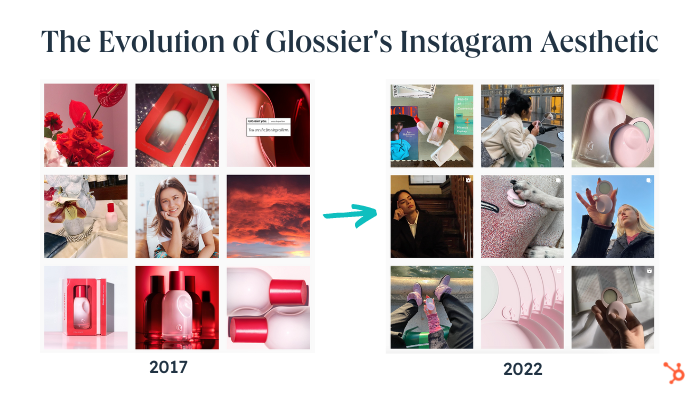
Gone are the days of heavily filtered photos and perfect Instagram feeds. Nowadays, influencers, brands, and everyday users are pivoting towards a more unedited look.

What’s the reason for this pivot? Many users feel a sense of fatigue over the highly processed aesthetic that has dominated the platform for years. The Gen Z crowd, in particular, values authenticity over appearing too polished online. It’s no surprise they gravitate to TikTok, where raw and unfiltered content is the norm.

Brands are starting to take notice of this shift. Skincare brand Glossier, for example, plays into the “anti-aesthetic” movement by sharing candid shots, unedited photos, and even cute animal photos.

Glossier Instagram (1)Although this is just a shift in aesthetics, it points to a bigger trend with young consumers: they crave authenticity from brands. In other words, snapshots of avocado toast and heavily filtered selfies won’t cut it. Instead, brands must explore how to appear more accessible and relatable online.
3. Audio chat rooms.

Audio chat rooms — like Clubhouse and Twitter Spaces — surged in popularity during the start of the pandemic, when many people were seeking opportunities to connect with others.

Fast forward to today, and more than a quarter (29%) of marketers are planning to stop investing in audio chat rooms in 2023.

From a marketing perspective, the biggest problem with audio chat rooms is that users prefer to speak with people — not brands. In fact, only 7% of Gen Z consumers prefer audio chat rooms for discovering new products.

Audio chat rooms are also losing popularity with younger audiences. Only 14% of Gen Z consumers have visited Twitter in the past three months, and a slim 13% have visited Clubhouse. If your audience skews younger, it’s worth exploring other strategies.

4. Long-form videos for social media.

It’s no secret that short-form video has dominated the social media landscape this year, and it will continue to pick up steam in 2023.

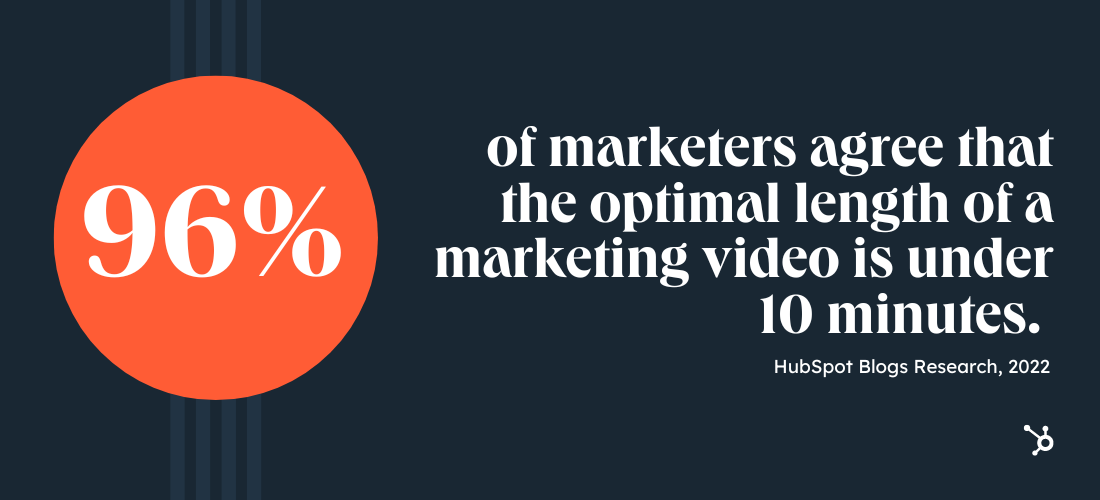
In fact, short-form video will see the most growth of any trend in 2023, according to HubSpot’s 2023 Marketing Strategy & Trends Report. On top of that, a staggering 96% of marketers agree that the optimal length of a marketing video is under 10 minutes.

Marketing Trends 2023 (1)

Of course, this isn’t to suggest long-form video doesn’t have its place — or that it’s going extinct. Longer videos can offer more information about a topic, product, service, or brand.

However, the challenge is keeping your videos engaging enough to hold the audience’s attention. Shorter videos, on the other hand, work well on social media because they align with the fast-paced attention spans of online audiences.

5. Marketing in the metaverse.

Marketing is all about experimentation, and the metaverse became a new playground for marketers to explore. However, this initial excitement seems to be fizzling out.

29% of marketers plan to stop marketing in the metaverse (e.g. Horizon Worlds and Roblox) in 2023. In addition, more than a quarter (27%) plan to stop leveraging VR and AR.

Although the metaverse is intriguing, it’s proving difficult to execute. The equipment is expensive, the hardware is uncomfortable, and adoption is slow.

That said, the metaverse is still in its infancy. As it continues to evolve, things could turn around.

Back to You

Marketing is always evolving, so your marketing playbook should, too. As we inch closer to 2023, it’s essential to take stock of which trends you want to leverage, and which ones are better left behind.

New Call-to-action

Categories B2B

Scheduling Instagram Reels: The Complete Guide

Instagram Reels generate 43.5% more engagement than Instagram videos on average. So if you’re looking to give your content a boost, it’s time to make the switch.

Download Now: Free Instagram for Business Kit + Templates

But there’s a catch. It’s impossible to deliver engaging Reels daily. You may run out of time or ideas. Scheduling Instagram Reels is a great solution to keep up with posting every day.

Read the full post to learn how to schedule IG Reels.

Table of Contents

The Benefits of Scheduling Instagram Reels

Still not convinced that you should schedule your reels? Here are six major benefits of planning ahead.

1. Posting at the right time garners more engagement.

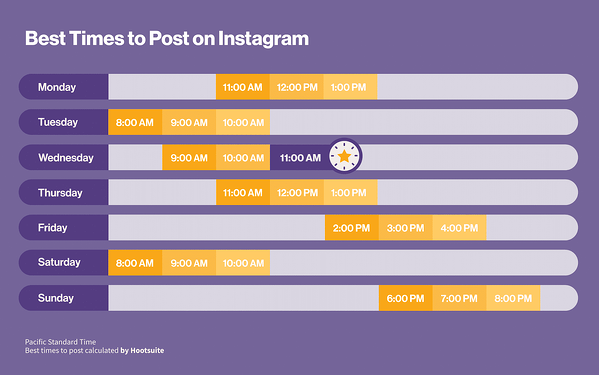
The best time to post Reels is between 9 a.m. and 12 p.m. from Monday to Thursday, according to a two-year-long research study from Hootsuite. On Saturdays, you’ll want to post at 9 a.m., and on Sundays, it’s 7 p.m.

Unless you live, sleep, and eat with the phone in your hands, it’s difficult to stick to these time slots without scheduling posts.

If you want the most engagement on your Reels, schedule them when your audience is most active on Instagram.

best time for scheduling instagram reels

Image Source

2. You’ll be flexible and consistent with content creation.

The idea for a Reel can hit you anytime, but you don’t always have to publish it instantly. Let’s say you just posted a Reel one hour ago, and you’re already filming another. It’s better to schedule your new Reel for later the next day. This way, you won’t confuse the Instagram algorithm with excessive posting.

Ideally, your team will post between 14-20 times per week on Instagram for the best reach rate per post. Reportedly, creators should post no less than 4-7 Reels per week.

3. You can plan your marketing campaigns upfront.

When it comes to product updates, seasonal sales, and other planned marketing activities, you create promo content beforehand. Prepare your Reels, schedule them for the future, and enjoy seamless campaigns.

4. You can post even when you’re out of the office.

On Instagram, you’ll get more impressions if you publish quality content regularly. Stop posting for a week, and you’ll see a drop in impressions and engagement.

Make Instagram work for you while you’re on vacation by scheduling IG Reels.

5. You can drive sales and ROI.

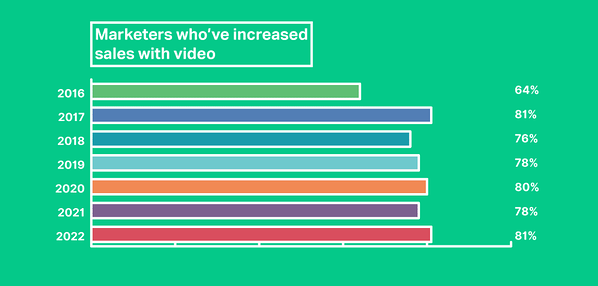
Your Reels can help your sales team reach its goals. Eighty-one percent of marketers say that video marketing has helped them drive sales. By preparing and scheduling Reels, you can help prevent dips in sales.

instagram reels help increase sales

Image Source

How to Schedule Instagram Reels With Creator Studio by Meta

Meta has allows any user to schedule Instagram Reels since August 2022. You’ll just need to use Creator Studio, Meta’s official, free social media management platform. Let’s go over the process.

1. Create an account and connect your Instagram.

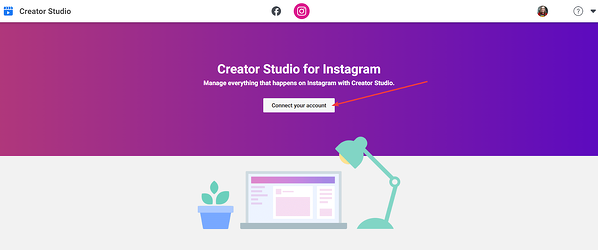
Log into Creator Studio, and enter your Facebook account details. Then, click on the Instagram icon and connect your Instagram account by following the given instructions.

How to connect Instagram to Creator Studio

To connect your Instagram profile, you first need to create a Facebook Page (don’t confuse it with a personal profile).

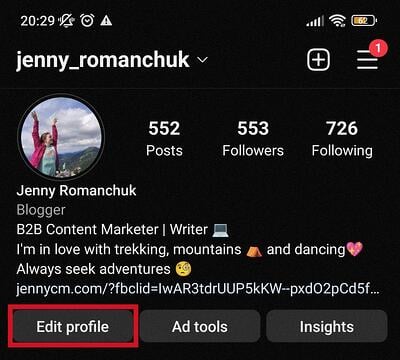
Then, open the Instagram app and click “Edit profile.” Tap “Page,” and connect your Facebook Business Page to your Instagram account.

how to tie up a Facebook Page with an Instagram account

2. Prepare your Reels using Instagram.

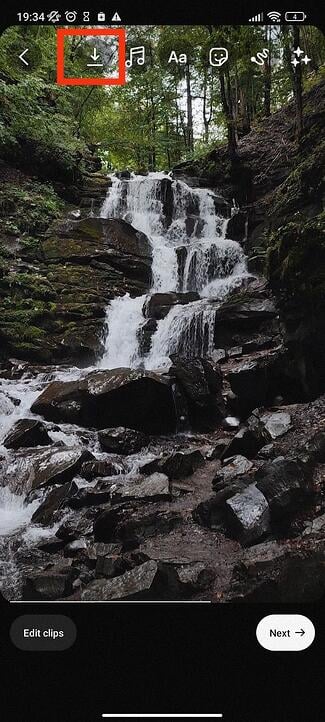
Create your Reel on Instagram, and edit it. Add sounds, choose visual effects, or apply filters. Download the video to your phone by clicking the “Download” button. You’ll use your downloaded video for scheduling in the next step.

How to download a Reel

3. Create a post and format it with Creator Studio.

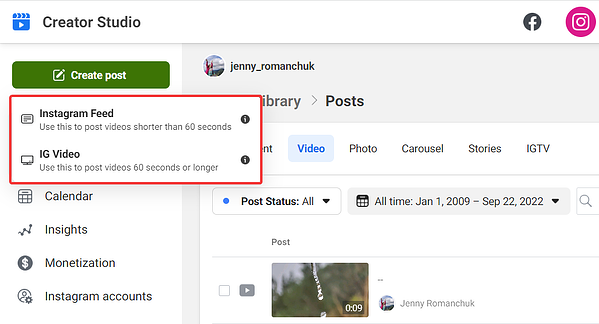
Click on the green button at the top right corner and select what video you want to publish. Use Instagram Feed for videos under 60 seconds. Select IG Video for posting Reels up to 90 seconds.

It may sound confusing since Reels aren’t mentioned in the dropdown, but all videos you publish on Instagram automatically become Reels.

How to schedule Reels with Creator Studio

Image Source

Now, upload the Reels you would like to post. Write a caption, add hashtags, and choose a location, if needed.

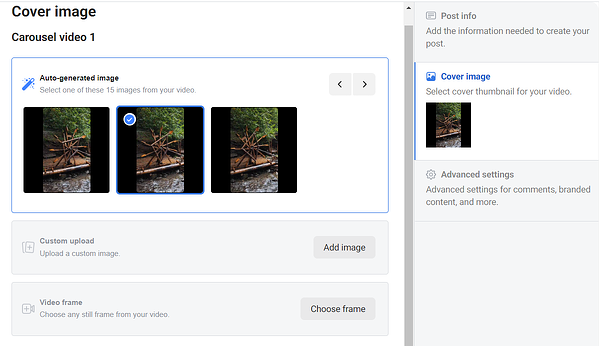
Lastly, select a cover image. Creator Studio will offer you options. You can pick one of 15 AI-generated images, upload a custom image, or choose any frame from the video.

Choose the cover thumbnail for your Reel

Image Source

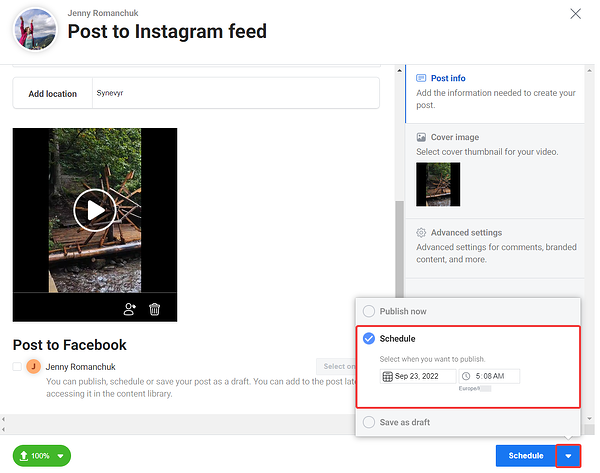
Navigate to the bottom right corner and click on the blue arrow to trigger publishing options. Select “Schedule” and set the date and time when you want to publish the Reel.

Scheduling Instagram Reels with Creator Studio

Image Source

That’s it! Your Reel will be published on the selected day and time.

How to Schedule Instagram Reels With Other Tools

If you manage many social media accounts, you may benefit from using a third-party social media management platform.

The process for scheduling a Reel is similar, regardless of platform. For our example, we’ll show you how to schedule your posts using Later.

1. Create Later’s account and connect your Instagram.

This step is super easy. Sign up and click on “Add Social Profile.” Once you connect your account, you’ll appear in the Later dashboard, where you can create Reels.

Note: The auto-scheduling feature works only for Instagram Business Profiles. You cannot use Creator or Personal profiles for scheduling Reels due to Instagram regulations. Here is how to set up a business account on Instagram.

2. Record your Reels and adjust them to meet Instagram video guidelines.

Film and edit videos for Reels. Add music and effects. Crop the video to an aspect ratio of 9:16 or 16:9, which is recommended by Instagram for optimal viewing.

3. Add the video to Later

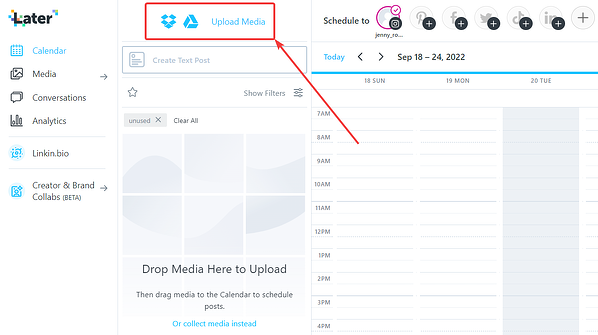
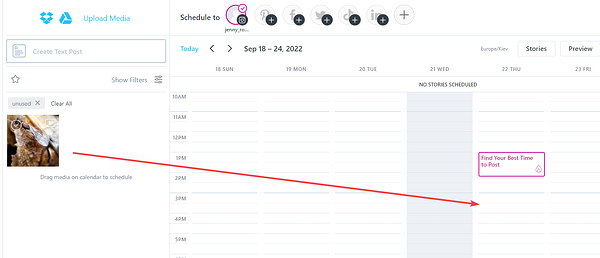
Upload your Reel video to the Media Library by clicking the blue button in the top left corner. The video will appear right below.

How to create an IG Reel using Later

Image Source

Drag your video to Calendar to schedule and open the Post Builder.

How to schedule Reels with Later

Image Source

4. Format and schedule your Instagram Reel.

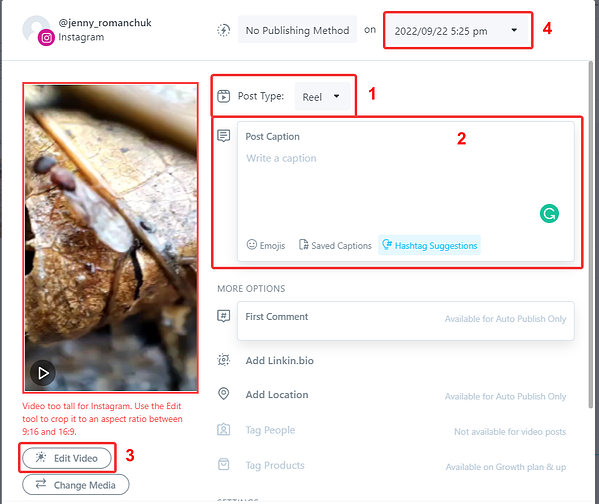
In the Post Builder, select “Post Type — Reel.” Write a caption and add hashtags. Add location and first comment (if needed). Ensure your Reel is up to 90 seconds long, or trim it.

Note: Custom cover images are not allowed for auto-published Reels due to Instagram API restrictions. Choose a frame from the video to use as the thumbnail.

Choose the day and time to post the Reel. Then, follow the instructions in the screenshot.

Prepare your Reels for scheduling

Image Source

Click “Save.” Then, your Reel will be automatically published at the selected time.

Now let’s see the best tools for scheduling Instagram Reels.

Best Apps for Scheduling Instagram Reels

This section features three different apps to schedule IG Reels. We’ll discuss what features they have, pricing, and some tips for using each tool.

Let’s start!

Later

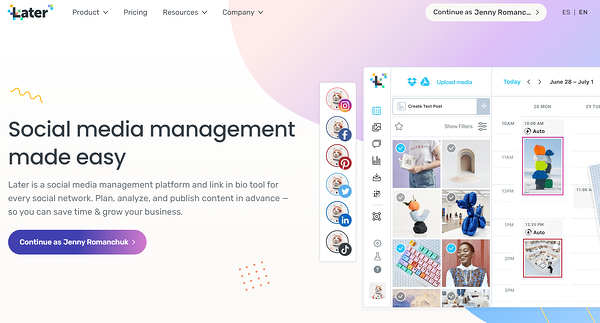
scheduling Instagram reels app, Later

Image Source

Later is an intuitive tool for creators and social media managers alike. You can plan, schedule, and analyze content across all social media platforms.

What we like about Later is the Visual Planner. In this section, you can rearrange upcoming Instagram posts to develop a bespoke look and feel for your social media page.

You can also use Later’s in-depth IG and TikTok analytics to determine when your audience is most engaged. This way, you can uncover the best time to post Reels.

For ecommerce, Later is integrated with Shopify. This lets you tag products on posts to redirect your audience to the item cards.

Pricing

  • Try it free for 14 days.
  • Pay $18 per month for the Starter plan; $40 per month for the Growth plan; and $80 per month for the Advanced plan.

Hootsuite

scheduling Instagram reels app, Hootsuite

Image Source

Hootsuite is an all-in-one social media management tool that is best for digital marketing agencies and mid-to-enterprise-level in-house teams. It works with all social media platforms, including YouTube.

Hootsuite can be used for:

  • Planning and scheduling posts.
  • Running and optimizing ad campaigns on social media.
  • Managing communication in direct messages and comments in one place.
  • Monitoring your brand mentions.

Pricing

  • Free 30-day trial.
  • The Professional plan is $49 monthly; the Team plan is $179 monthly; the Business plan is $739 monthly.
  • Custom deals are available for enterprises.

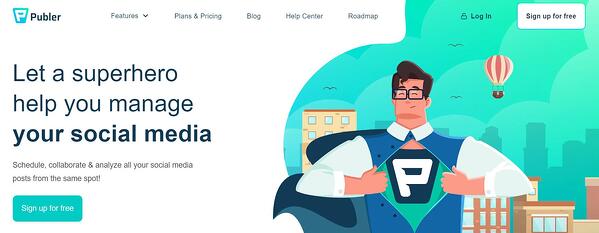
Publer

scheduling Instagram reels app, Publer

Image Source

Publer is a versatile tool for social media management and beyond. It enables you to create, curate, schedule, and analyze all upcoming social media posts with unique features.

With Publer, you can manage Facebook, Instagram, TikTok, Twitter, LinkedIn, Pinterest, Google Business profiles, WordPress sites, and even Telegram channels and groups.

Features We Like

  • Publer’s “Link in Bio” feature makes Instagram posts clickable. Analytics are included.
  • Integration with Crello and VistaCreate. You can design graphics and turn them into social media posts in one click.
  • Bulk scheduling. You can craft up to 500 posts and schedule them in advance.
  • Recycling. Automatically rewrite your top-performing “evergreen” posts with a built-in Spintax Generator and schedule auto-generated posts.

Pricing

  • Freemium for three accounts and limited features.
  • The Professional plan is $15 per month; a 7-day free trial is included.
  • The Business plan is $28 per month; a 14-day free trial is included.

Gain More Engagement With Instagram Reels Scheduling

Scheduling your Reels helps you drive more engagement and attract new followers faster.

Opt for a paid social media management app if you create content for multiple accounts or across different social platforms. For creators, we recommend using Creator Studio or trying Publer’s free plan.

Soon, you’ll be one step closer to your next viral moment.

New Call-to-action

Categories B2B

10 Creative Company Profile Examples to Inspire You [Templates]

What do your customers know about you? Do they know you sell products and have a website? That’s not always enough to build a brand identity that resonates with buyers and establishes your brand as the right choice. 

People who find you online want to know about your company’s mission, vision, and, of course, how you can help them solve their problems. And, an impactful and memorable first impression can help you stand out in the digital world.

How can you make sure that they have all that information at their fingertips? Well, a company profile is the perfect tool for the job.

Free Download: 6 Customizable Company Profile Templates

In this article, we’ll discuss:

A company profile serves multiple purposes, but two of its primary goals are to connect with customers and attract investors for funding opportunities.

Why Company Profiles are Important

Company profiles go a step beyond the standard “about” page. They share how your company got started — and why you continue to serve customers.

Here are some of the reasons why having a company profile is important:

1. A company profile differentiates your brand.

A company profile describes what makes your company unique. It automatically differentiates your brand because no other company has the exact same founding story and reason for existing that your business does. Your history and values are integral parts of your brand positioning strategy, and a company profile is where you can mention this information without it feeling extraneous or out of place.

2. A company profile may justify a higher price point.

You can justify a higher price point for your products and services, if you go into details about your production values or ethically-sourced materials.

For instance, Starbucks’ coffee may not necessarily be better than Dunkin’ Donuts’ coffee, but because Starbucks goes into details about its high-quality ingredients, it immediately creates the sense that you’ll be paying a little more for a “better” product.

3. A Company profile builds your reputation.

What do you want your company to be known for?Is your company the one that started as a small family-owned shop that grew into a billion-dollar enterprise? Or is it a company that upholds sustainability and puts ethics at the forefront of its brand? You can build your reputation through marketing, service, and sales campaigns, but it all begins with a well-curated first impression.

Now that you understand the importance of a company profile, it’s time to learn how to write one. Creating a company profile doesn’t have to be nerve-wracking. In fact, it can actually be rather straightforward.

Here are ten steps to guide you on how to write your company profile.

1. State the purpose of the company profile.

This is the most critical part when writing an effective company profile. You want to make sure that the statement aligns with what you’re trying to accomplish. For instance, if your goal is to attract investors, you can include:

  • Your business’s performance
  • The value of the products you sell
  • The company’s revenue

On the other hand, if you want to attract customers, it’s best to add the company values to your profile.

The purpose of a company profile should act as your guide throughout the process, so take your time on it.

2. Decide on the format or style.

How you present your profile significantly affects how successful it is. It’s important that the style offers excellent readability and encourages the audience to engage with it.

This depends on your audience – for example, it’s best to stick to the traditional format for an accounting firm. That is, list the company’s achievements and awards.

On the other hand, if you’re in a fashion or social media marketing firm, it’s advisable to be creative and visual. Byte/Dept, for example, is a marketing technology company with a creative and visual homepage that is in line with what it offers. 

company profile example: byte/dept

Don’t be afraid to experiment or go wild with your ideas as long as they resonate with your target audience.

3. Tell your story & be authentic.

There are probably a million other businesses that sell what you’re selling, but no one else shares your story. Your story is what makes you unique. Don’t just write numbers and dates; let your prospects know who you really are. Be vulnerable and tell them why you started your business.

What inspired you? Share the bad and the good – it doesn’t have to be glamorous. It only has to be authentic.

4. Add your company’s mission statement.

If you don’t have a mission statement, it’s time to craft one. Writing a mission statement for your company isn’t as scary as it sounds, and there is no need to overthink it. You only need to ask yourself these three questions:

  • Who you serve – this is your target consumer
  • How do you do it – what product or service do you provide to solve their problems?
  • What makes you different – why should your consumers buy from you or trust you over your competitors?

5. Write your company’s history.

This needs to be in chronological; otherwise, it will confuse your readers. You can do it in a paragraph or a timeline format as long as it shows a flow.

Another tip is to remember that less can be more. As tempting as it is to share all your milestones, stick to the major ones to avoid overwhelming the reader.

6. Describe the products and services you offer.

The next step is to describe what your company offers. You can choose a few of your best products or services and give an in-depth description or simply list down everything your business offers.

7. Name the awards your company has received.

If you have received any awards or recognition, add them to your profile and describe them. They showcase your company’s values and give the community a reason to trust you.

8. Add your customer’s testimonials.

Your customers may take everything you say with a grain of salt, but they will believe other customers who have used your products. This is an excellent way to promote your business without having your products or services come off as hard-sell.

If you’re a B2C business, simply include some of your customer’s best quotes, tied with your best value products. If you’re a B2B business, have a testimonial from the most prominent client on your profile.

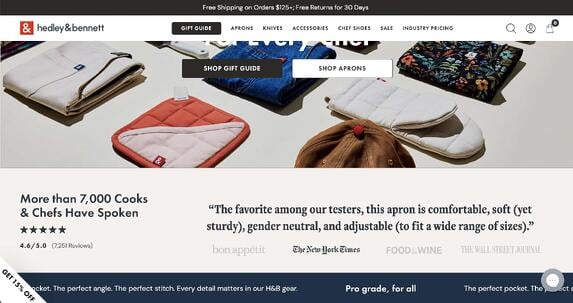
Hedley & Bennett, a restaurant wear company, features customer reviews and testimonials on its homepage. 

company profile example: hedley&bennett

9. Include a call to action.

This isn’t mandatory, but it’s a nice touch to your company’s profile. What do you want the readers to do after reading the profile? Visit your branch, check out your website, or call you? Simply include it at the end of your profile. This brings us to our last step.

10. Add your company’s contact information.

This is one of the most critical parts of the company profile. Include all the possible ways your prospects can reach you. This may include but is not limited to; social media profiles, websites, phone numbers, fax, email, and physical address.

Make sure it’s visible to anyone who reads your company profile.

Company Overview Template

Now that we have gone through all the necessary steps you need to create a company profile, it’s time to put all that into action. Here is a simple company overview template that will help you get started.

Our Story

[Company name] was founded in [Year], and we have accomplished so much over the years. To create a world where [ the solution your business solves] has always been our goal.

Our Founder and CEO [Name] was inspired to start this company by [ one or two sources of inspiration].

At [Company Name], we encourage our community to [ a positive statement related to your brand].

Meet our Team

[Photo] [Name] [Job Title]

[Photo] [Name] [Job Title]

[Photo] [Name] [Job Title]

Our Mission, Vision & Values

Mission

Our goal is to provide our customers with the best [ service or product] at the best possible market price without compromising quality.

Vision

To be the most reliable [ service or product] provider and enhance [what your product or service does].

Core values

[List your company’s core values]

What Our Customers are Saying

[Insert customer’s testimonials]

Contact Information

Location

Website URL

Social Media Pages

Cell Number

Company Profile Examples

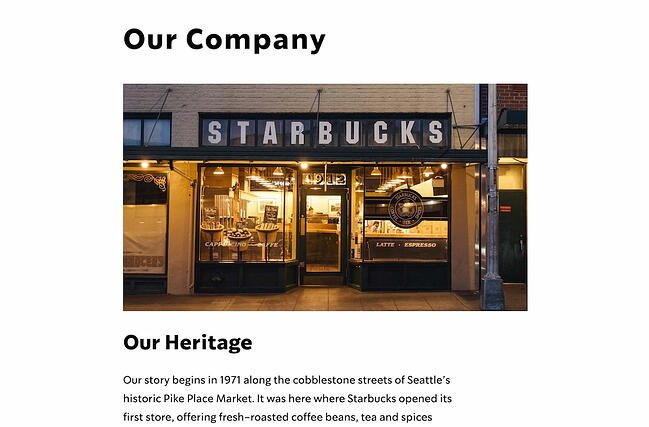
1. Starbucks

Company Profile Examples: Starbucks

Starbucks’ company profile has it all — its mission, background story, products, store atmosphere, and even folklore regarding the name. Best of all, they manage to pull off sounding genuine and grandiose. I don’t know many other coffee stores that could claim that their mission is “to inspire and nurture the human spirit.”

Starbucks’ company profile is a fantastic example of a store with a common household product: coffee. Starbucks managed to stand out from the competition through its mission and values.

2. Wales Bonner

Company Profile Examples: wales bonner

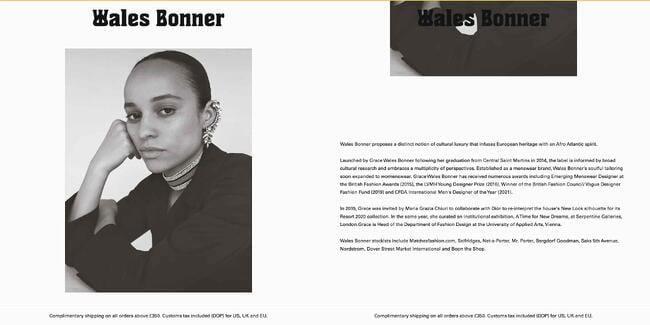
If your company has an exciting and intellectual history, you might consider creating a profile like Wales Bonner’s. It begins with an impactful statement: “Wales Bonner proposes a distinct notion of cultural luxury that infuses European heritage with an Afro Atlantic spirit. Launched by Grace Wales Bonner following her graduation from Central Saint Martins in 2014, the label is informed by broad cultural research and embraces a multiplicity of perspectives.”

After sharing the brand’s intellectual background, it describes the owner’s journey in building the company, starting from the time she was a college student, as well as the accolades she has received through her ingenuity in design. With a good balance of image and text, the timeline serves as a reminder of Wales Bonner’s stability and growth.

3. Diehl Group Architects

Company profile example: Diehl Group Architects

For both cleanliness and ease-of-use, take a look at Diehl Group Architects’ company profile. The web page uses clickable boxes to separate topics, allowing users to choose which subject they’d like to learn more about.Additionally, the entire design mirrors the company’s purpose, including the page’s background, which displays a floor plan.

4. Bloomberg

Company Profile Examples: bloomberg

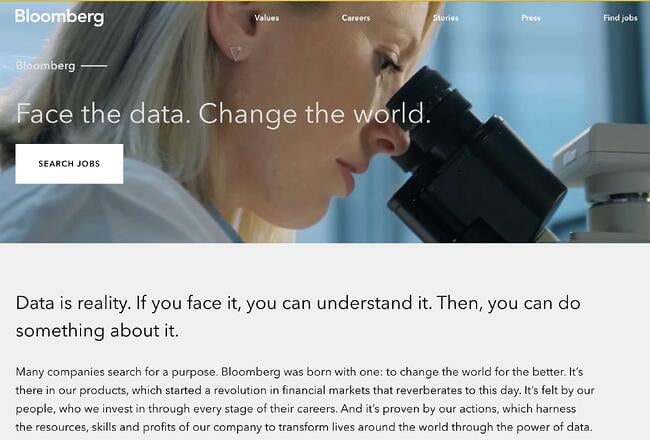
Consumers use video as an integral part of their journey with brands, so you might consider using a compelling video to convey your company’s story as Bloomberg does in its company profile.

Bloomberg’s profile proves the company knows its audience because they offer quick statistics and links to other areas of the site, such as Careers and Tech. While other businesses might do well in offering a creative, long-form story, Bloomberg’s typical demographic is likely more analytical.

5. Nike

Company profile example: NikeYou can get a sense of Nike’s two primary purposes almost instantly — fitness, people, and inclusion.
When you land on its website, you’re greeted by a bold statement:  “Bring inspiration and innovation to every athlete* in the world.” The asterisk implies, “If you have a body, you are an athlete.” As you scroll, you’ll see information on its internal diversity and inclusion initiative, global community impact, and sustainable business program, with very little mention of its products.

Nike’s company profile portrays a larger, grander vision, compelling an audience to believe in its brand before purchasing a product.

6. Seattle Cider

Company Profile Examples: seattle cider

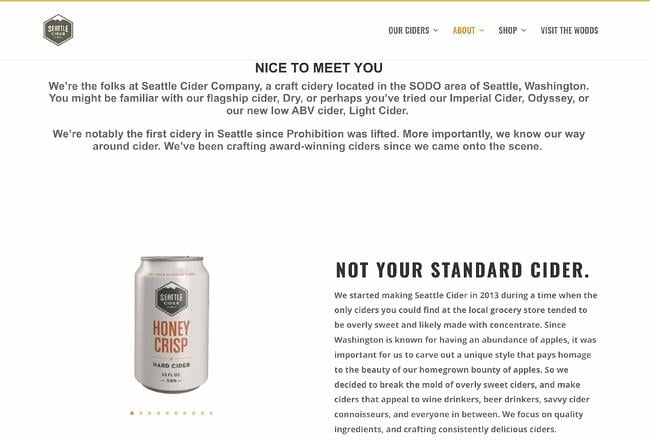
Seattle Cider Company’s profile is minimal and engages viewers through compelling animations that demonstrate the company’s cider selection. The page flows seamlessly and provides critical information regarding the product before displaying the company’s mission and values. This profile is a good example of a company that understands its users’ concerns (in this case, quality ingredients), and addresses those issues while still displaying personality and flair.

7. Delta

Company profile example: Delta

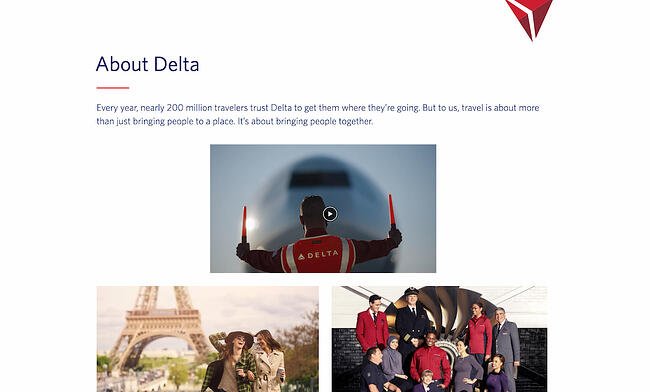
Delta’s page is well-organized by topic and showcases the company’s values, including efforts to engage with the community and promote sustainability. It includes brief meta-descriptions below each category, and the design allows users to click through to learn more. Overall, Delta’s company profile is simple and uncluttered but includes all the necessary information to demonstrate why it’s unique. 

8. Roam Loud

Company profile example: Roam Loud

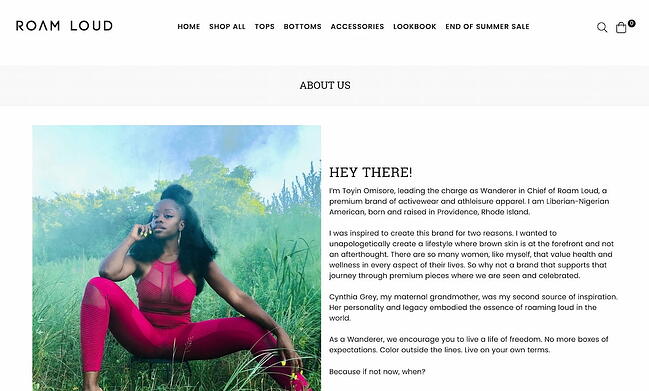
Roam Loud’s company profile is a great example and inspiration for any brand that has a personal story. It’s simple yet effective, starting with a friendly greeting, “Hey there!” and ending with a list of values. In between, the founder clearly states why she created her brand and why its existence is important to her and prospective buyers. 

9. MAD Architects

Company profile example: MAD Architects

MAD Architects’ company profile is a great example of simplicity and informativeness. The profile isn’t shy about the firm’s accomplishments and lets readers dive deeper into the firm’s exhibitions, lectures, awards, and publications, all visible on different tabs on the same page. By leaning into a strong brand voice and giving details about its service, customers have the information they need to decide for themselves. 

If your business is a leader in your field, consider creating one similar to MAD Architects. 

10. Topicals

Company Profile Examples: topicals

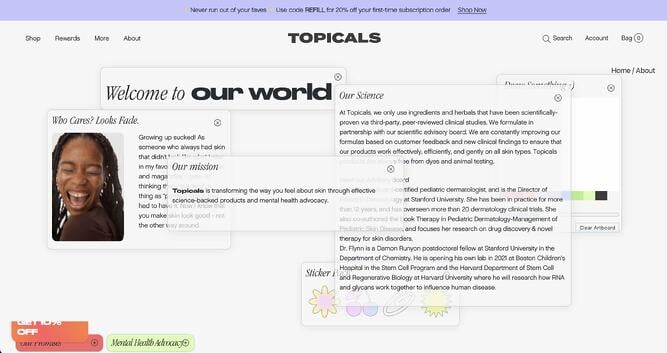
Topicals is a skincare company that provides products and education to help people target and learn about flare-ups. It has a one-of-a-kind about us page that is interactive and provides a fun experience for site visitors. 

When you land on the page, you immediately see multiple interactive cards, the first of which features a description of its mission. Once you’re done reading about its purpose, you can learn more about the company by clicking on the other cards, or simply selecting the information that is most relevant to your needs.

Examples of Company Descriptions

Here are some examples of company descriptions that enhance their organizations’ company profile.

1. HubSpot

Company description example: HubSpot

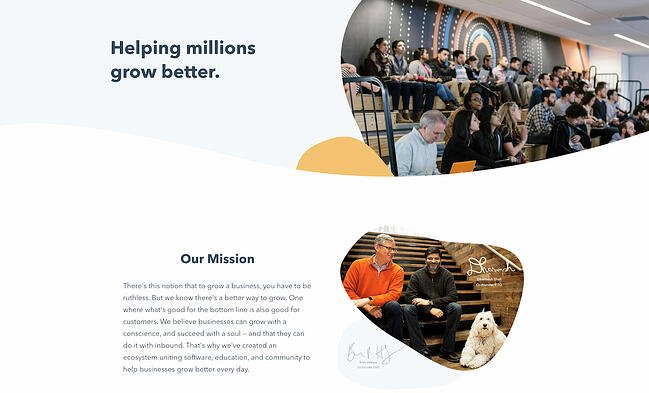
On HubSpot’s profile page, you’ll find a brief description of the company’s mission and what it does. In just a few words, HubSpot explains that the company’s goal is to help businesses grow through its specialized inbound software.

2. Landed, Inc.

Company description example: landed, inc.

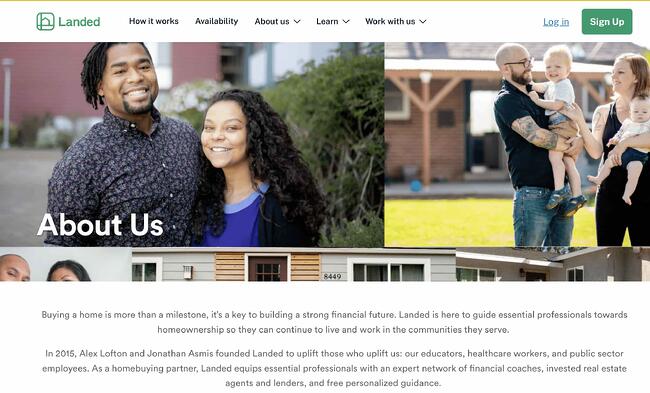
Landed, Inc’s About Us page begins with a brief description that explains why it exists: “Buying a home is more than a milestone, it’s a key to building a strong financial future.” From there, it talks about its mission, how it helps people buy homes, and a brief company history and description. 

3. H&H Wealth

example company description: h&h wealth

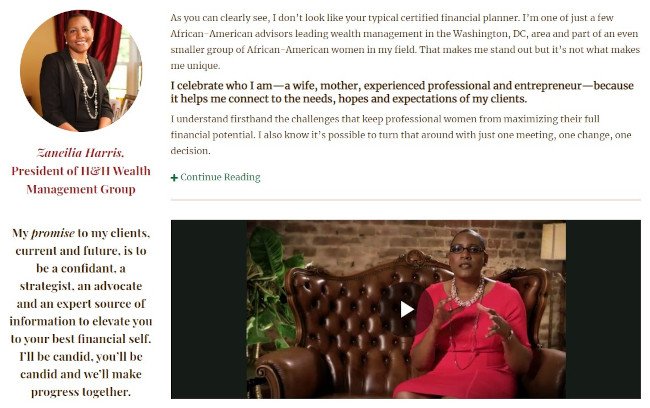
In the “Why Zaneilia” page of its website, the founder of H&H Wealth briefly introduces what she believes in and encourages her customers to walk the journey with her. She also makes a promise to her clients, setting expectations and the tone for the service she’ll deliver, helping her and her business come across as a partner rather than a vendor.

4. Dope Coffee

Company description example: dope coffee

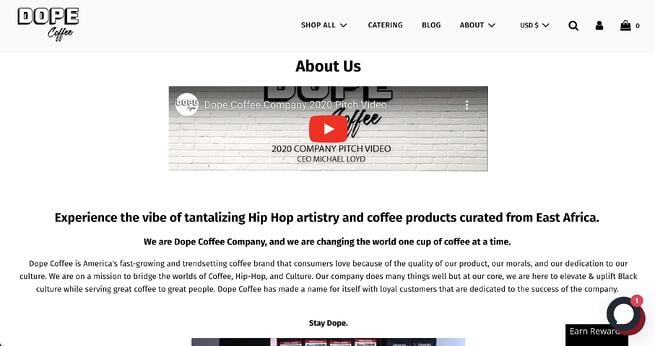
Dope Coffee aims to bridge the gap between coffee, hip hop, and culture to uplift the Black community. Its website describes the company’s history and mission, but a single line sticks out as a powerful and impactful description of its business to take inspiration from: “We are Dope Coffee Company, and we are changing the world one cup of coffee at a time.”

5. Authentique Agency

Company description example: authentique agency

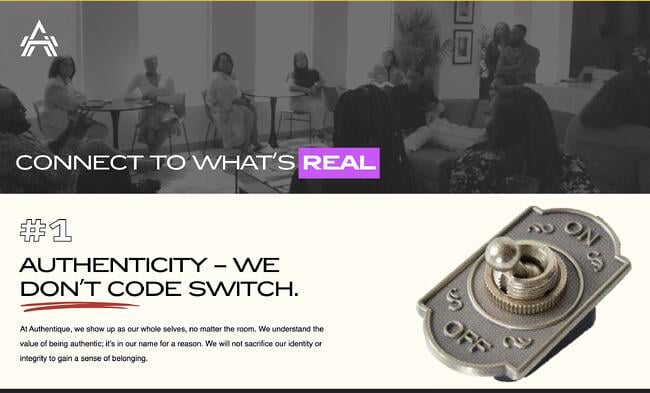
Authentique Agency provides the perfect amount of information upfront to describe what it is and its mission and values — leveraging the power of identity in brand campaigns that reflect cultural identities rather than erasing them. It’s a great example of how to quickly and succinctly get your message across to site visitors. 

6. The Cru

Company description example: the cru

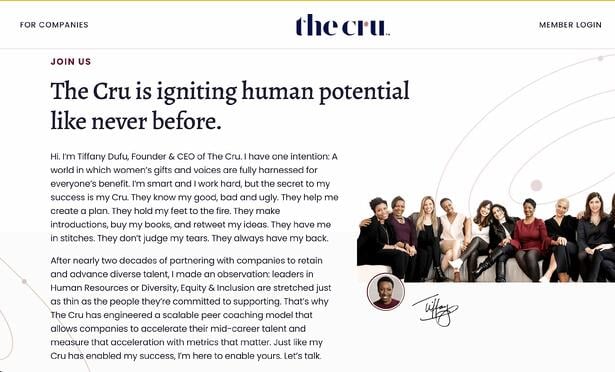
The Cru is a service that connects members with like-minded women to fuel personal and professional growth. It uses an “Our Story” page as a company profile, where the founder details how she formed the organization and how she owns “Cru” (a play on the word “crew”). This summary is a testament to the value of the service. The “letter from the founder” style also feels very personal and welcoming.

7. H.J Russell & Company

Company description example: h.j. russel & company

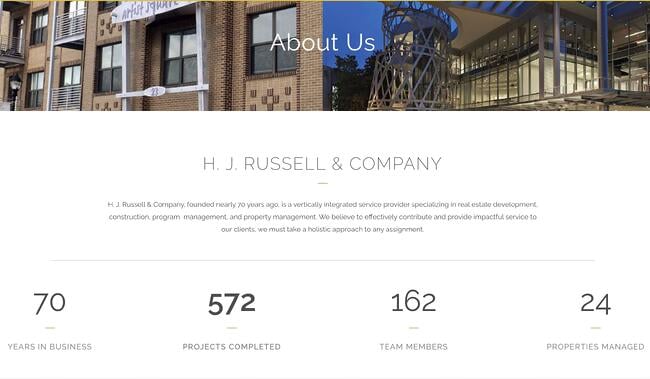
H.J Russell & Company opens up its description with its history and specialties: “H. J. Russell & Company, founded over 70 years ago, is a vertically integrated service provider specializing in real estate development, construction, program management, and property management.” It also makes its values clear in the last sentence, so you get a snapshot of the company’s key proposition and leadership status in just a few sentences. It also includes critical numbers that inform people of its expertise, from the number of projects completed to the properties it manages. 

8. Carol H. Williams

Company description example: Carol H. Williams

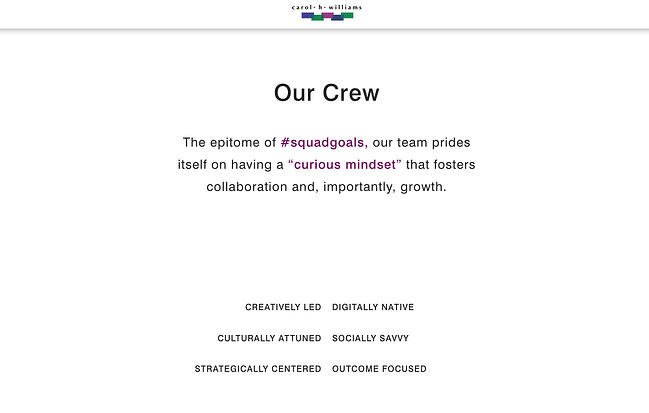
Carol H. Williams, an advertising agency, doesn’t have an “about” page or a formal company description. However, it displays a snapshot of what the company is all about on its “Team” page. It emphasizes its core values and uses trendy language (“#squadgoals”) to establish that it keeps up with the current trends.

9. Cafe Con Libros

Company description example: cafe con libros

Cafe Con Libros doesn’t have an about us page, but it does have a company description that clearly explains its mission and values in two short sentences: “Cafe con Libros (coffee with books) is an Intersectional Feminist community bookstore and coffee shop. Through our choice of books, programming, and great coffee, we endeavor to create a vibrant community space where everyone; specifically womxn-identified folx, feel centered, affirmed and celebrated.” 

10. Custom Collaborative

Company description example: custom collaborative

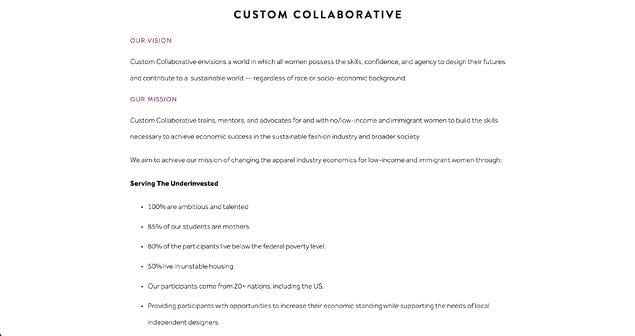
Custom Collaborative helps no/low-income immigrant women build entrepreneurship skills that help them succeed in sustainable fashion. Its about us page features essential need-to-know information for anyone looking to them for support, interested in donating to the cause, or simply looking to learn more about the business. 

Company Profile Templates

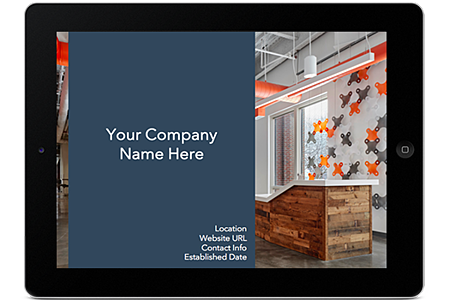
Company Profile Template

Download These Templates for Free

  • Company name
  • Established date
  • Physical address per location
  • Contact information

About Us / Our Story / Our Beginning

In this part of the company profile, you will need to include a brief introduction to your company, including where, when, and by whom the company was founded, the company’s mission statement, and/or the company’s vision and purpose. You don’t necessarily have to include products or services in this section yet, but focus on your bigger meaning, and how you stand out from competitors instead. Tell your story in a compelling way. For instance, HubSpot starts their About Us section with, “More than ten years ago, we had a vision — an inbound world”. HubSpot doesn’t mention their products until further down the page.

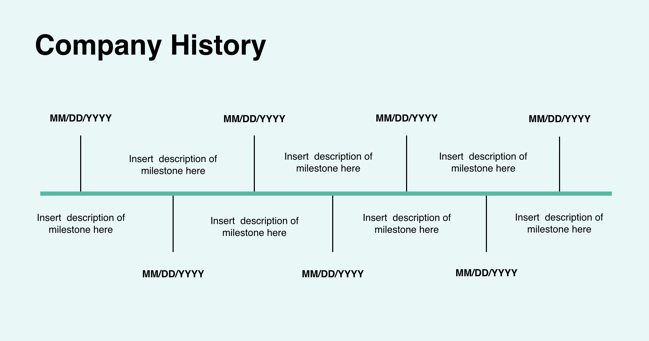
If you want to add your company history in a more compact way, consider adding a company timeline, like this one:

Company Profile Template: Company History

Download This Template

Our Mission / Values

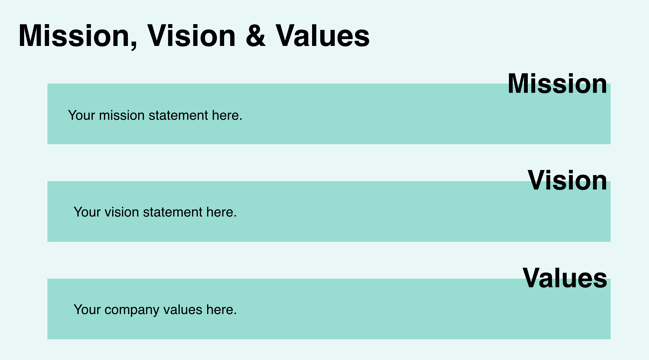
Here, you need to say what your company stands for on a larger scale. You can state your ultimate goal, and your hopes for your products or services. Take a look at these inspiring company vision and mission statement examples for ideas. Here’s an example:

Company Profile Template: Mission & Values

Download This Template

Our Team

Provide a picture or brief paragraph describing your tea.You can focus on leadership, or provide an explanation of your company’s culture. Ultimately, this section should help users understand how your employees can uniquely serve them.

Company Profile Template: Meet the Team

Download This Template

Our Product / Services

Describe a high-level overview of what your product is, and how you hope it will positively impact the user’s life. You can link to a Product page if necessary, so keep this section relatively general.

Start Your Company Profile Today

There are a few elements that can contribute to a stellar company profile, and by adhering to a template, you can build one quickly and effectively.

Editor’s Note: This post was originally published in January 2019 but has been updated for comprehensiveness.Discover videos, templates, tips, and other resources dedicated to helping you  launch an effective video marketing strategy. 

Categories B2B

Nonprofit Email Marketing: The Ultimate Guide To A Successful NPO Email Strategy

Effective email and newsletter marketing is crucial for a nonprofit organization’s (NPO) success. With scarce resources, limited staffing, and divided leadership attention, investing in marketing efforts can often take a backseat to more urgent matters.

Luckily, email marketing is both cost-effective and less time-consuming than other NPO marketing strategies. Regularly sent out, well-crafted newsletters can give your nonprofit authority while also helping you stay at the forefront of your donors’ minds.

Download Now: Nonprofit Marketing & Fundraising  Trends for 2022 [Free Report]

By reading this post, you will discover how your nonprofit can stay connected with donors and attract exciting new prospects through personalized and meaningful email marketing.

Table of Contents

Why does email work for nonprofits?

Studies show that email continues to offer the highest return on investment (ROI) of any outreach strategy. TruConversion reports that an email marketing campaign can deliver a return of $40 for every $1 spent. This makes email the channel with the highest ROI that nonprofits can use to reach prospective donors.

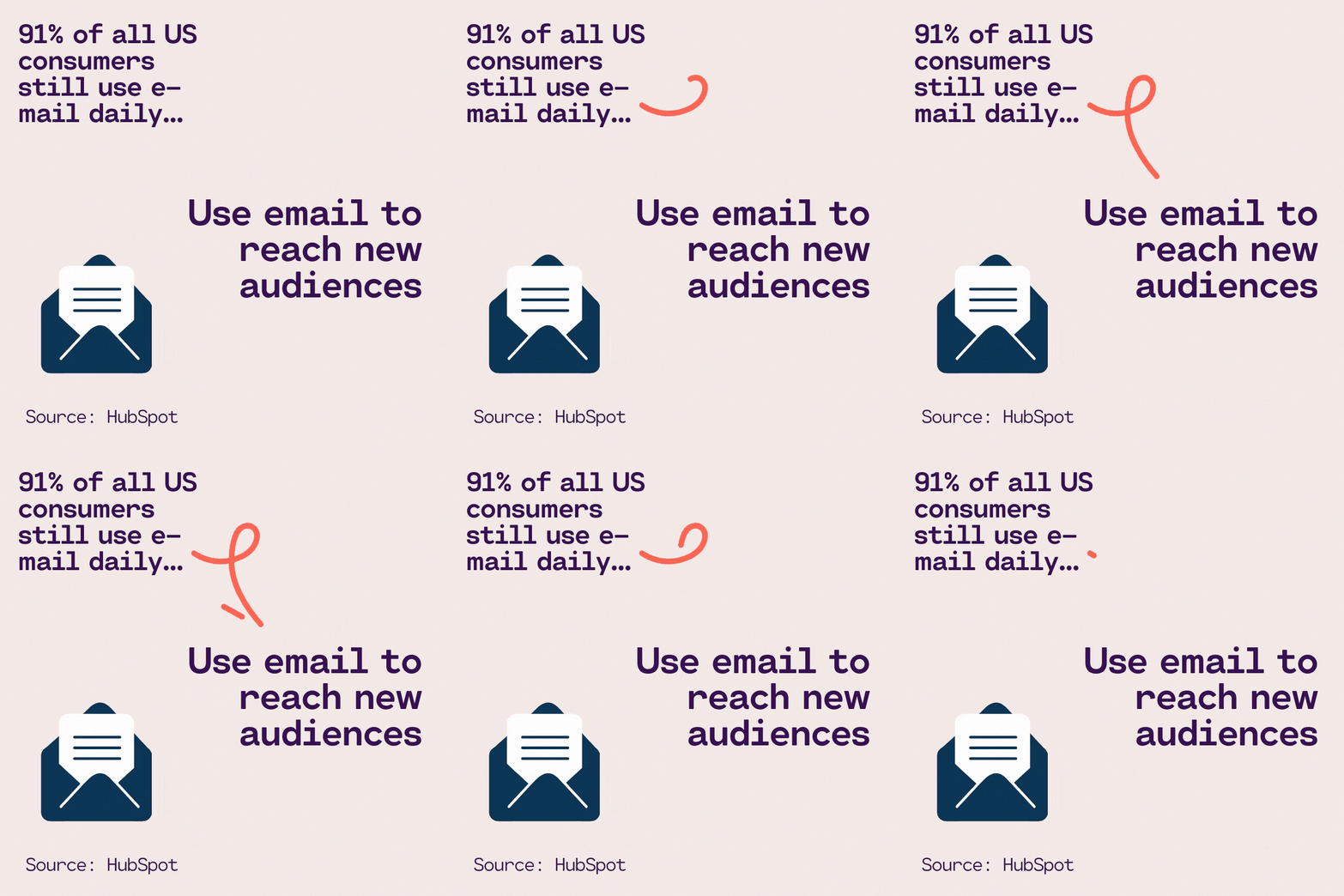
Additionally, 91% of all US consumers still use email daily. Email can therefore enable NPOs to reach audiences that might not otherwise engage with their marketing efforts on social media.

Pro tip: Before starting a new email campaign, make sure it aligns with your nonprofit marketing plan and helps you reach your organization’s goals.

onprofit newsletter, 91% of US consumers still use email daily. Use email to reach new audiences.

Email Marketing Best Practices for Nonprofits

1. Commit to regular sends.

Nonprofits are often stretched for resources, and it’s easy to set marketing aside for matters that seem more pressing. However, regular email marketing is one of the most effective ways to grow your organization. A content schedule for your emails can keep you organized you can frequently engage with and steadily grow your donor base.

Making email sends an “always on” part of your marketing strategy will play a big role in your success on the channel. “Always on” doesn’t mean that you’re bombarding your email list with constant messages — it means that you’re committed to consistency in how often you send your emails.

Send informative emails on a predictable schedule, instead of only when you’re actively running a campaign or seeking donations. This will help nurture your audience towards deeper forms of engagement (like donating or attending an event) in the future. Remember: the goal is building long-term relationships.

Setting the right cadence for your emails is important to keep the members of your list engaged with your organization. When you’re first starting out, this requires a careful balancing act. You don’t want to send too few emails, but you also don’t want to veer into potential spam territory. More on that in the next section.

Pro tip: Double-check that your email offers value to your readers before sending. Value could include the latest information about your nonprofit, ways to get involved, upcoming events, or recent projects your organization has completed.

2. Be wary of spam folders.

If your audience is only used to hearing from you on a one-off basis, you’ll need to gradually shift to sending more emails. A sudden switch could trigger some users’ email clients to send you to the spam folder.

Email deliverability can be a complex subject, but here are a few important things to remember if you’re transitioning to more frequent email marketing.

  • Don’t directly embed forms or include attachments in your emails. Linking out to web pages with forms is a better practice.
  • Send your emails from a recognizable address. If you can, avoid sending from a [email protected] address. Use a name your readers will recognize.
  • Lead with informative subject lines instead of direct calls for donations. Check out our blog post on picking great email subject lines.
  • If you’re emailing a list that isn’t used to frequent sends, let them know what’s going on. Tell your readers that you plan to start sending more informative emails, and most importantly, allow them to opt out. It might seem counterintuitive in the short term, but cleaning disengaged folks off your email list is important to the long-term health of your email program.

Pro Tip: Assign a staff member to send your monthly newsletter using their name. This increases your chance of avoiding donors’ spam folders.

For more tips on improving your email deliverability, check out our blog post on the subject here.

3. Leverage personal connections with your audience.

Personalizing your emails is a simple — but powerful — step that you can take to create a personal connection with readers.

First, make sure you’re using an email tool that enables personalization. It might be an investment upfront, but having access to personalization features will greatly improve the value your audience gets out of your email sends.

Worried about coming off as creepy or not sure where to start? Focus on personalizing emails based on actions your email recipients have taken on your website, advises Rachel Leist, a VP of marketing, automation, and demand generation at HubSpot. Instead of using personal data in your contact management system, perhaps thank them for a donation or downloading a report.

“If a person receives an email that refers to an action they took on your website, they will not be as nervous as they would if you were personalizing around specific personal information you happen to have on them,” Leist explains.

Pro tip: Personalize your emails by using first names and interesting taglines. Emails with personalized subject lines generate six times higher transaction rates.

4. Segment your database.

A segmented email list can help you ensure that the right person receives the right email at the right time. While everyone on your email list believes in your organization, you don’t need to send every email to everyone. Each person in your database is at a different stage on their journey with your organization, and the emails they receive should reflect that.

For example, someone who has donated $5 to your organization in the last year is probably not as engaged as someone who has donated $1,000 to your organization in the last month.

Factors like donation amount, events attended, and actions taken on your website or social media channels can all be important indicators of engagement level, and shouldn’t be ignored when you’re sending out emails.

More engaged audience members will likely respond more positively to more frequent emails, while folks with fewer touch points should receive fewer emails giving them more basic information about your NPO.

Pro tip: When people download your content or subscribe to your newsletter, make sure you enter them into a specific drip campaign that sends them automated emails relevant to the topics they are interested in.

5. Test, analyze, and adapt accordingly.

Finally, running an email program is not a “one-and-done” marketing strategy. You’ll need to note key performance indicators and make changes to your approach based on real-world data.

If you’re just getting started, industry benchmarks can be a useful point of comparison. But remember, not all NPOs are the same, and not all NPO audiences are going to respond the same way to emails.

To start, keep track of a few key email metrics, measure them with each email send, and look for trends over time. Our article on email marketing metrics for beginners offers a helpful starting place if you’re not sure what to track.

Pro tip: Regularly monitor your email open rate using the Hubspot email health tool.

How to Write an Amazing Nonprofit Newsletter

1. Write an eye-catching subject line.

Subject lines can be tricky. You’re looking for a short phrase that communicates your intent while retaining your non-profit’s unique voice. An interesting subject line should include the following elements.

  1. Urgency. You want recipients to feel the urgency to both open emails from your NPO and take action.
  2. Specificity. If you have an interesting statistic or data point to share, be sure to put it in the subject line.
  3. Upcoming events. To increase engagement, your newsletter should let people know what upcoming events they can attend or volunteer at.
  4. Name recognition. Pique your audience’s interest by including their name in the subject line (when appropriate).
  5. Relevancy. If current events or politics influence your nonprofit’s goal(s), referencing those events can make your newsletter more relevant and timely.

Pro tip: 46% of email opens take place on mobile, so be sure to make your subject lines 50 characters or less so mobile viewers can read the entire message.

Explore this blog for more subject line best practices.

2. Give compelling updates.

An amazing nonprofit newsletter should include the latest and greatest from your organization. Inform your recipients of recent goals reached, heartwarming stories of those you help, life updates of staff and volunteers, and anything else of note.

Pro tip: To make your emails visually interesting, take pictures during events to include in your newsletters. With permission, include the names of the volunteers pictured and describe what activities took place.

3. Have an attitude of gratitude.

Your cause is near and dear to those who subscribe to your newsletter. Their time spent volunteering and money donated should always be received with a spirit of gratitude.

Let email recipients know the immediate impact of their donations with interesting data points. For example, “Your donation helped x number of families” or “Your volunteer efforts fed x number of children.”

Pro tip: Some of your newsletter recipients will be more involved than others. Consider opening the line of communication with these donors by sending a personalized, non-automated email that references their specific efforts to the cause.

4. Include a Call-to-Action

A call-to-action (CTA) is an invitation to your audience to do something. In an email or newsletter, your CTA should be a button that links to the action you want recipients to take next.

Examples of CTAs for your nonprofit email could be “Subscribe to the newsletter,” “Donate now,” “Refer a friend,” or more. Don’t be afraid to get creative with your CTAs, and be sure to measure your conversion rate.

Pro tip: There are lots of CTA tools you can use to make linking to the next step easier. Explore common options here.

Examples of Nonprofit Fundraising Emails 

Want to put together an effective fundraising email? Check out some examples to get a sense of what your newsletter can look like.

Alzheimer’s Association

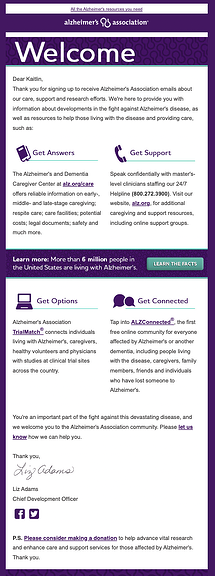
This Welcome email from the Alzheimer’s Association doesn’t lead with a request for a donation. Instead, the team connects recipients to the cause by providing them with resources to learn about the disease.

The main CTA urges readers to “learn the facts.” By gaining a greater understanding of Alzheimer’s email recipients are encouraged to act — either by advocating for the group, volunteering, or donating.

What we love: There are several resources shown in this email, targeting different groups affected by Alzheimer’s disease. A loved one could access a support group. A family looking for care solutions can explore their options. Most importantly, people living with Alzheimer’s are given autonomy and can get matched with a care team.

nonprofit newsletter examples, Alzheimer’s Association

Black Girls Code

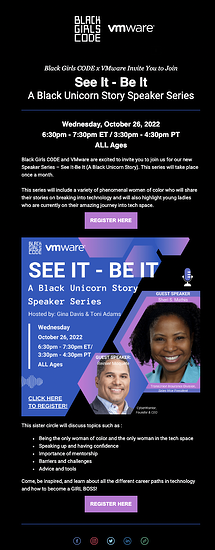
This email from Black Girls Code focuses on one webinar that is open to all. By including events and participation opportunities, the nonprofit demonstrates value to those on its email list. As a subscriber, you’ll make sure you never miss an event.

What we love: This email utilizes design to strategically focus readers’ attention. The graphic that includes the panel’s speaker information and time are beautifully designed with eye-catching colors that pop over a black background. The only other colorful elements? Two bold registration CTAs in lavender.

nonprofit newsletter ideas, Black Girls Code

The End Child Poverty California Coalition (ECPC)

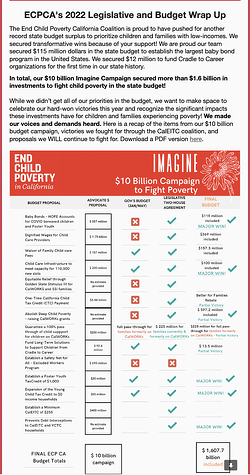
ECPC’s email demonstrates the importance of keeping your donors and volunteers informed. This section of the group’s newsletter explains how much the coalition’s Imagine Campaign secured and where funds were used. An infographic makes understanding the complexities of state budgeting easy.

What we love: ECPC has mastered transparency. The group acknowledges that not all of its priorities were included in the state budget. After, the coalition celebrates wins they were able to achieve. The use of honesty makes the nonprofit feel trustworthy and garners even more support.

nonprofit newsletter ideas, The End Child Poverty California Coalition

The Trevor Project

Awareness days, holidays, and important anniversaries offer special opportunities to engage your audience. This is especially true when you can tie the event to your nonprofit’s mission or research.

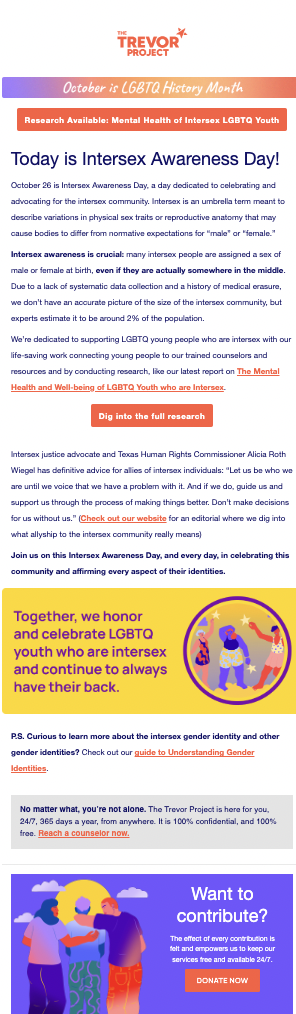
The Trevor Project sent a dedicated email on Intersex Awareness Day. In the email, the organization explains what it means to be intersex and the importance of acknowledging this community. Then, it links to a report where people can learn more about the well-being of intersex youth.

What we love: Not only does this email highlight Intersex Awareness Day, it also reminds recipients that October is LGBTQ History Month. Readers who didn’t have their calendars marked are now informed and will be more likely to engage with other Trevor Project research.

nonprofit newsletter ideas, The Trevor Project

The International Rescue Committee

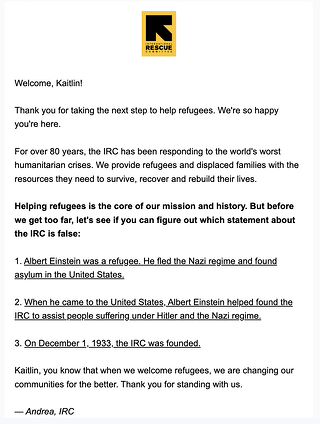
The International Rescue Committee (IRC) faces the urgent task of assisting people in conflict zones and disaster areas. This email both explains what the organization does and its historical impact.

What we love: Highlighting articles and the organization’s history increases the subscriber’s emotional investment. Readers will also have a better understanding of the IRC’s values.

nonprofit newsletter example, the International Rescue Committee

The Smithsonian Institution

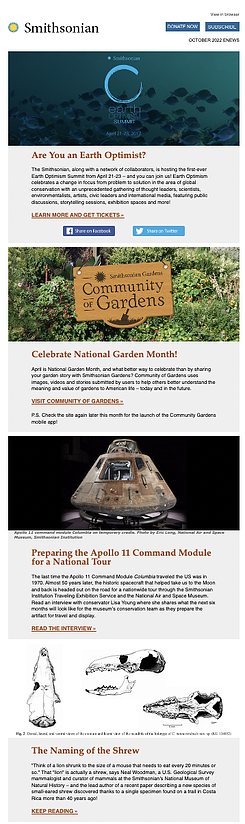
The Smithsonian Institution is one of the largest museum and research networks in the world. Keeping up with each museum and department would be exhausting. Luckily, the nonprofit’s marketing team has gathered the highlights into one, easy-to-read newsletter.

What we love: When we go to museums, we marvel at the artifacts and objects on display. The Smithsonian newsletter uses photographs to replicate this experience on any device.

nonprofit newsletter example, smithsonian institute

Save The Children

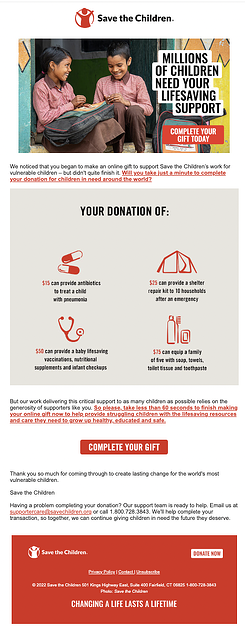
When folks first sign up for your emails, it’s a good indicator that they’re feeling engaged with your mission. Check out this automatic welcome email from Save the Children introduces the organization to a new subscriber and requests a donation at the end. Your audience wants to help — don’t make them wait!

What we love: Save the Children created a simple infographic to show how a small donation can make a big impact. This can encourage supporters to contribute.

nonprofit newsletter example, save the children

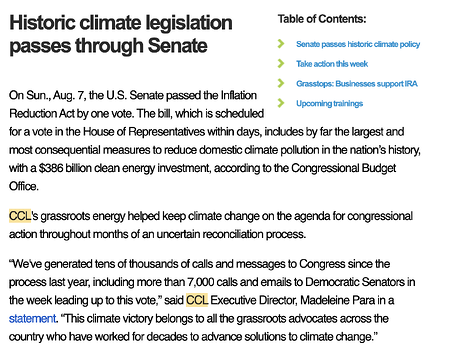
Citizens’ Climate Lobby

Citizens’ Climate Lobby (CCL) demonstrates in the email below how to update subscribers on important current events. By referencing recent policy changes that were helpful to their cause, CCL can both thank their email subscribers for their hard work while getting them excited about future progress.

What we love: This email does a good job of providing relevance and timeliness to the nonprofit’s conversation. nonprofit newsletter example, Citizen’s Climate Lobby

826 Boston

826 Boston is a writing, tutoring, and publishing nonprofit that works with students and community members. As a local nonprofit, community events offer an opportunity for Boston residents to get involved and learn more about the organization. This email highlights Books for Breakfast, including critical information about where the event is held and when.

Pro tip: If your organization relies on donations from corporate sponsors, email offers an opportunity to showcase your partnership. This creates added value for the businesses you work with.

nonprofit newsletter example, 826 Boston

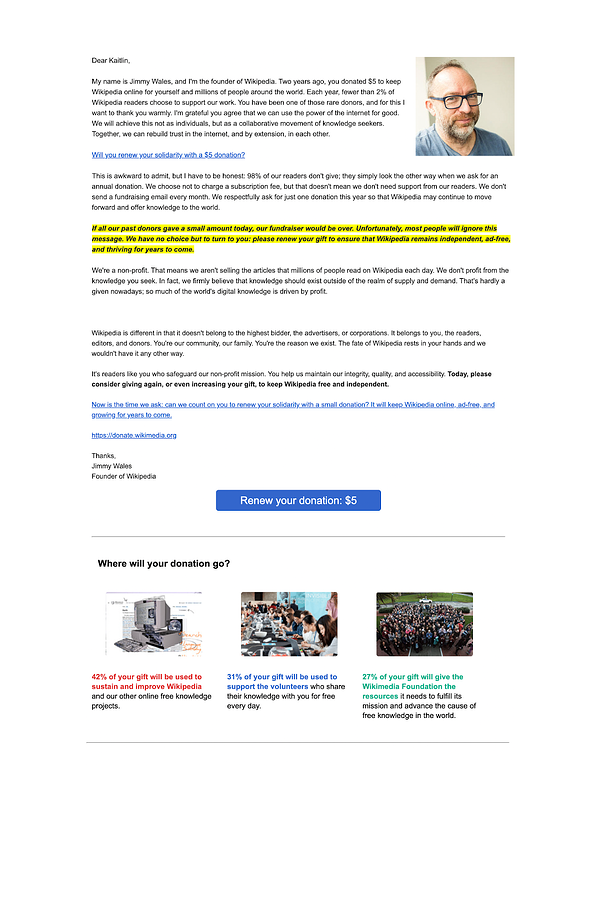
Wikimedia

Not every donor or subscriber should be emailed every day. Wikimedia is sparing with its calls for donations, making their infrequent sends more impactful. By highlighting a past action and demonstrating urgency for a repeat donation, recipients will be more likely to give.

This type of email works best for past donors and less active members of your email list. Even though they don’t visit your website daily, they may be willing to donate on occasion.

What we love: This email from Wikimedia shows what percentage of your donation goes to which parts of the organization. This creates transparency and makes donors feel good about their contributions.

nonprofit newsletter example, Wikimedia

Free Email Marketing Software for Nonprofits

Want to use professional email software for your nonprofit without breaking the bank? There are several free versions of professional marketing software that you can use. Check out what some of the most popular programs offer. Then, decide which option works best for you.

1. HubSpot Email Marketing Software

HubSpot offers a free version of its paid email marketing software that integrates with its free CRM software. Users can run a sophisticated marketing campaign and get access to forms, landing pages, and Facebook, Instagram, Google, and LinkedIn ads, as well as templates.

HubSpot also has access to contact management and live chat capabilities. These tools allow you to optimize the experience for each subscriber. There are also traffic and conversion analytics capabilities for campaign optimization.

2. Sender

Want to reach lots of people with beautiful, personalized emails? Sender could be just right for you. This program has extensive HTML editing and personalization capabilities. Sender also has impressive analytics capabilities that allow you to track the delivery and opening of individual emails. You’ll also be able to build individual recipient profiles to further optimize your strategy.

3. Sendinblue

If you’re looking for variety in your emails, Sendinblue has you covered. This program includes over 70 responsive templates for emails that can be designed for any screen. The free version gives you the ability to send 300 emails a day.

You also have the ability to use A/B testing to find email content that works and segmenting options to make sure the right person receives your message.

4. SendGrid

SendGrid specializes in email campaigns that are tailored to individual preferences. Its free version gives you access to a wide range of personalization tools, including APIs, Webhooks, and STMP Relay.

You’ll also have granular control over who receives your emails with a wide range of delivery optimization tools. Plus, you can access sophisticated email editing and analytics tools that allow you to optimize sends for your target audience.

Start Today

You don’t need to be a professional marketer to get professional results from email marketing. However, you do need to set some time aside to get started.

Remember, email marketing when done thoughtfully, can have a big payoff. Get started today if you haven’t already, and you could generate more buzz for your organization than ever before!

nonprofit trends

Categories B2B

How to Write Process Documentation

Whether you’re completing recurring tasks or creating a new program, process documentation can help you formalize your business endeavors. In fact, creating documentation helps improve coordination, structure, and consistency in your organization.

→ Download Now: Free Business Proposal Template

This post gathers best practices for process documentation. Here, you’ll learn:

Process documentation could be a step-by-step tutorial on a new software tool or an onboarding document for new hires. This practice allows you to be proactive in designing internal systems and processes that save time, capital, and valuable energy.

Why Process Documentation Matters

If you lack structure and details for core organizational processes, your business is more at risk for inefficiencies. Process documentation provides an additional layer of protection for your organization.

The lack of documentation can lead to the following organizational challenges.

Lack of Information Retention

If just one person has extensive knowledge about a process, the organization is at risk of losing that knowledge if they leave. Process documentation helps outline the information that this person holds and allows you to store it in a way that others can access.

Redundancies

Without a roadmap, there’s a higher chance that time will be wasted on unnecessary or repetitive tasks. Process documentation can help you outline and visualize these redundancies so that you can create a better solution.

Bottlenecking

Bottlenecking can happen at any stage of the process. It’s important to find out where bottlenecks come from and why. Identifying these delays and hurdles will be helpful when creating more efficiency.

Revenue Loss

Less productivity means more time and energy is exhausted on the execution of processes in your organization. Team members then have less availability to take on new projects. This disorganization can lead to lost revenue, or even turnover, at your business.

Process Documentation Benefits

Process documentation is critical to the overall function and flow of the systems within your organization. Other common benefits of process documentation follow.

It creates resilience against change.

Process documentation allows your organization to maintain a steady pace and momentum, despite moving pieces. By breaking everything down (as granularly as possible), individual components of the process may be shifted or replaced with considerable ease.

This can be especially helpful when there is restructuring or staffing changes at your organization. When one person leaves your team, their knowledge can live on. If a new teammate joins, documentation will help them ramp up quickly.

You’ll identify dispensable processes and steps.

When diving into your organizational processes, you’ll determine whether a process is bringing justifiable value to your organization. You’ll be able to identify which steps within your processes are necessary and effective.

Are there any steps that can be altered or eliminated without sacrificing efficacy? This practice will create clarity for your team.

It collects and organizes knowledge.

A process document contains collective knowledge on a given approach to a topic. By making these documents easily accessible to team members, you allow for the growth and flow of information throughout the organization.

It allows for self-evaluation and accounts for variables.

Process documentation allows team members to reflect on their individual contributions. They can see precisely their impact on the outcome of a given process.

Creating documentation is also helpful in identifying where to make adjustments to refine the process for better outcomes.

It ensures compliance.

Your team should include relevant process documents in the onboarding and training process. You can then ensure that team members, new and old alike, have all the information they need to complete a task.

By specifying parameters, you can make sure that safety, legal, or other compliance is achieved.

It minimizes mistakes.

Mistakes are a natural part of life. However, you’ll want to avoid missteps in your business whenever possible. Step-by-step instructions to complete a task can help you minimize these mistakes.

Creating Process Documentation

Now that you’ve seen how essential process documentation is to your organization, let’s explore how you can implement it in your own businesses.

1. Identify your purpose.

Before you start writing, hold a brainstorming session. During this time, you should determine what your end document should accomplish. Are you creating a training guide? Are you laying out a process for senior leadership?

You’ll want to establish a clear name for the process you’re documenting and a clear objective for what you are trying to accomplish.

2. Determine your audience.

Next, identify your audience and why you need to explain this process to them. For example, is this for the sales team or new hires? The audience will determine the information that you include.

3. Identify the format.

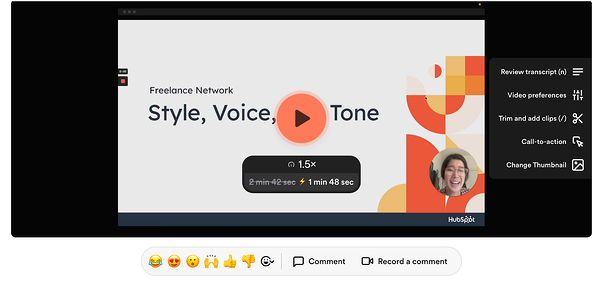
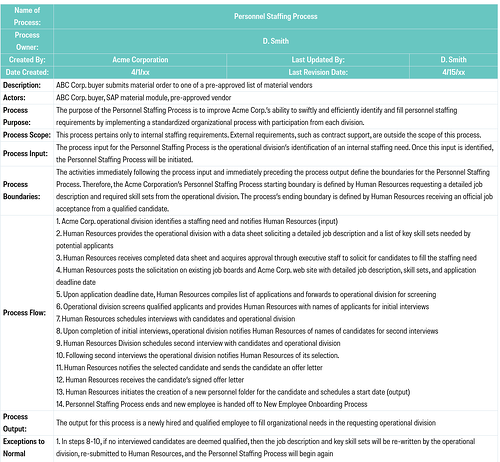
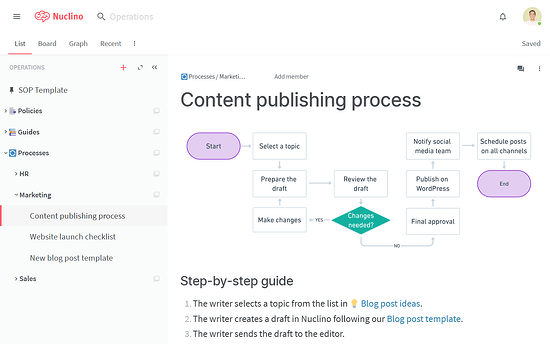
You’ll want to decide what’s essential for you to include in your documentation. And that goes beyond text. Will you need visuals? Perhaps your document would benefit from graphs, tables, or a flow chart. Perhaps a PDF or webpage isn’t the best format. Some processes are best explained over video.

process documentation, training video

Here, you’ll determine which format or visual best communicates necessary information.

4. Define scope.

Your scope will establish what is and isn’t included in your documentation. This can help you keep a narrow focus on the specific task that is being documented. Working within a defined scope will help your team avoid information overload.

5. Identify the necessary tools and resources.

Next, determine what you’ll need to complete the task. That includes relevant software, tools, and capital needed for each step of the process. These resources are sometimes referred to as inputs.

6. Determine sequence.

When possible, outline the sequential steps needed to repeat a process. This plays a huge role in increasing efficiency and determining the overall success of any task.

However, not every task has a clear sequential order. Sometimes you’ll need to evaluate various scenarios and potential outcomes to determine the order of operations for your process. In this case, create different sequences for each scenario.

7. Determine responsible parties.

The next step is to think of each stakeholder’s role. This portion of your document should be as detailed as possible. Include timeline expectations for each person and how these deadlines support your overall timeline goals.

8. Identify boundaries.

Your document should lay out any boundaries that shape your process. That includes process timelines, due dates, budgetary limitations, key performance markers, etc.

If you’re considering changing your process, establishing firm boundaries will help you understand any limitations. You’ll be able to identify what you can shift and what must remain constant.

In the staffing process document below, boundaries related to human resources are clearly defined. The document also lays out where HR’s involvement stops.

process documentation example, setting boundaries

Image Source

9. Explain exceptions and contingencies.

Be mindful of exceptions that can arise and account for them in your process documentation. The same goes for contingencies. You should outline when team members would have to deviate from the designated sequence of steps.

10. Review and test.

Once you’ve considered all of these factors and documented your process, you’re going to review your work. Edit your document. Then, test your instructions by completing the task as outlined. If all goes right, you should achieve the desired outcomes of your task.

Remember: If your process involves multiple stakeholders, this may end up being a project involving layers of feedback. Each perspective offers you a greater opportunity to optimize improvements in your processes.

Tips for Process Documentation

Before your team begins writing, here are some pointers that can help you make the most of your effort.

1. Keep it brief.

You have the choice of being as wordy or as short-handed as you’d like. We recommend being as concise as possible. Say enough to get the idea across, without being repetitive or using filler words.

2. Include visuals (where applicable).

Visuals can make your document more engaging. For example, images or infographics can break up large chunks of text. That can make your document easier to read.

In other cases, graphs or tables may be the most helpful way to display information. For complex topics or visual processes, a video may work best.

Pro tip: If you’re showing how one step leads to the next, consider a flow chart.

process documentation: a step-by-step guide

Image Source

3. Give your team editing power.

Give your stakeholders the ability to edit process documentation. This simple tweak to your document’s permissions settings can save a lot of time and back-and-forth between your team. As processes change over time, you’ll have multiple members of your organization who can keep your content up-to-date.

4. Stay flexible.

Remember: There is no one right way to document processes. The only way to do process documentation wrong is to skip it entirely.

The way you create documentation may change over time. In fact, your document itself will likely go through multiple iterations. Keep a flexible mindset for the best results.

Getting Started with Documentation

Now, that you’ve explored best practices for process documentation, you can start writing.

Remember: Documenting the steps to your most frequently followed processes saves your team from having to constantly reinvent the wheel. Your team will instead have a firm baseline. Instead, they can innovate the wheel if need be.

business proposal

Categories B2B

How to Send Effective Order Confirmation Emails [Examples + Template]

Order confirmation emails have a 65% open rate, the highest average open rate of all emails. Optimizing these emails is a sure way to get more eyes on your brand.

Download Now: Ecommerce Marketing Plan Template

Beyond brand-building, email confirmations bring peace of mind to your valued customers by verifying that a transaction on your website was successful. Without this confirmation, your customers may feel confused. The consequence is a shaky brand experience and potentially an increase in inquiries for your customer service team.

Let’s explore how you can optimize your confirmation emails with actionable examples and templates. In this article, you’ll explore:

Confirmation Email Best Practices

Many confirmation emails are part of a workflow. Once a customer completes a transaction, an email automatically comes out recapping what they bought. Even though this email follows a formal structure, there are still best practices your brand should implement.

For instance, it’s critical your order confirmation email be:

  • Mobile-friendly. Many recipients will check their email on their phones to see whether an order was processed.
  • Skim-able. Many customers are on-the-go and don’t have time to read dense text. If you have important delivery information you’d like to include, consider linking to it instead of including it in the body text.
  • Provides an email and phone number of your customer support, in case the recipient’s order is incorrect.
  • Outlines next steps. That includes when the customer can expect an order to ship, or how the customer can track their order.
  • Includes shipping address, payment method, and order number.
  • Offers upselling opportunities, like products that complement their purchase or upgraded plans to consider in the future.

Additionally, consider how you can include brand voice in your text to cultivate customer loyalty, particularly with first-time customers. You might also add links to your social media accounts or blog, so new customers can find other ways to engage with your brand.

10 Order Confirmation Email Examples

Before you get started on your confirmation email, take inspiration from our round-up of the best email examples. Then, read on for some templates that your team can use.

1. Offer a next step.

Email confirmation example from Uber.

Uber’s order confirmation emails are sleek, clean, and aesthetically pleasing. Their design makes use of large text, plenty of white space, and a blue call-to-action to incentivize the rider to “rate or tip” the driver.

What we love: The email is organized so the rider sees the most critical information above-the-fold — a “thank you” followed by the price. The recipient only needs to scroll if they want to.

2. Affirm the purchase.

Email confirmation example from JetBlue.

JetBlue’s order confirmation email opens with their fun and clever slogan, “You’re all set to jet.” This phrase immediately reassures the recipient that their order was successfully processed.

Additionally, the text below the initial slogan promises the recipient “the most legroom in coach, free wi-fi & entertainment, and free snacks & drinks.” Even though the recipient has already paid, JetBlue uses the order confirmation email as another opportunity to cultivate stronger customer loyalty.

What we love: Below the confirmation, JetBlue provides a simple “Manage trip” CTA, so the customer can easily update a seat assignment, add extras, or switch flights. Best of all, they’ve included a link to their mobile app. Customers receiving order confirmations from JetBlue will need their app to access their mobile ticket, so it’s a smart strategy for JetBlue to include the app link.

3. Create a sleek design.

Email confirmation example from Hausera.

Hausera, an ecommerce site that sells kitchen and bathroom fixtures, does an excellent job ensuring their order confirmation email is sleek, all while offering the recipient any information they may need. They start with positive messaging like “progress is a beautiful thing” and “congratulations” to thank the customer for their order.

Email confirmation example from Hausera.

What we love: Below the order summary, they include helpful CTAs such as “Keep Shopping,” as well as options to either email, call, or live chat with a support rep. Whether a customer has an issue with their order or simply wants to continue perusing Hausera, the ecommerce site ensures the customer can find the next steps from within the order confirmation itself.

4. Put the most important details up top.

Email confirmation example from Tobi

Tobi’s order confirmation email is simple and straightforward. The ecommerce site offers two critical CTAs — “review my order” and “contact customer care” — within the email itself. The recipient is able to immediately check and correct any information if their order doesn’t look right.

What we love: Tobi also effectively outlines their order process within the body text of their email. They tell the customer to ” allow up to 2 business days to process and ship your order.” By including this information in their email, Tobi ensures minimal outreach from customers who are wondering when their order will ship, or why they haven’t received shipping information already.

5. Say, Thanks!

Email confirmation example from BigStub

BigStub’s order confirmation email, while admittedly text-heavy, does a good job providing the customer with plenty of critical information throughout their email, including a CTA to check order status, a phone number to contact customer support, and a note regarding delivery details for the recipient’s ticket.

What we love: BigStub offers a $25 rebate within the order confirmation email with enrollment in Great Fun. Even if the customer doesn’t apply for the rebate, the inclusion is still an effective method that allows BigStub to potentially boost positive brand perception.

6. Make it shoppable.

Email confirmation example from JustBats

JustBats, an ecommerce site that sells baseball and softball equipment, does an excellent job of cross-selling other products in their order confirmation emails. For instance, if you purchase a glove on their site, you’ll receive an email with the following message — “You have the glove, now get the bat.”

The rest of the email is designed to help a user choose a bat, with CTAs like “Shop all bats” and “Shop closeouts.” The email also features helpful resources to ensure the recipient is able to find the right bat for his or her needs.

What we love: JustBats proves an order confirmation email can be an effective opportunity to suggest other relevant products or services, particularly since the order can help you understand the customer’s needs. In the above example, a glove is a logical next step for someone who has just purchased a bat, and vice versa.

7. Be helpful.

Email confirmation example from SoulCycle.

SoulCycle’s order confirmation email effectively provides all relevant information and demonstrates SoulCycle’s ability to go above-and-beyond in customer service. Once they’ve outlined when, where, and on which bike the customer will be riding, SoulCycle includes other useful information including the studio address and a note that shoes and water will be provided.

At the bottom of their email, they send a cheerful invitation that reads “Questions, concerns, or just want to say hello?” with both a phone number and email if the recipient needs to reach customer support.

What we love: SoulCycle pays attention to the language in their order confirmation email, and looks for areas where they can add brand voice.

8. Reinforce meaningful actions.

Take a look at the order confirmation received from Massachusetts’ Franklin Park Zoo upon a recent purchase:

Email confirmation example from Franklin Park Zoo.

This email provides all the information needed, but it also makes the recipient feel good about the purchase by letting them know that their money was helping support conservation efforts.

9. Teach users about new technology.

Screenshot of Zoom’s email confirmation showing 3 core elements: payment details, getting started, and support.

Zoom’s confirmation email contains three parts:

  • It confirms the purchase.
  • It encourages the recipient to use the service by jumping with “schedule a meeting.”
  • For the recipients who might be less savvy, Zoom offers demos, webinars, and support.

What we love: The sleek and minimal design underpins the ease of use of Zoom’s meeting software. The email is well-designed with a lot of white space. This makes it easy to read and draws the eye to the most important elements like the iconography representing support and training opportunities.

10. Stay on brand.

Screenshot of an ecommerce brand’s email confirmation shows good use of branded language like: ‘happy, healthy skin’ and ‘we hope you love your new skincare’

SKINICIAN uses a consistent tone throughout its confirmation email. The text at the top is friendly and personable. It affirms the buyer’s purchase with “Happy Healthy Skin is around the corner.” The intro ends with a friendly “we hope you love your new skincare.”

What we love: At the top of the email the recipient can take two actions: “View your order” or “Keep shopping.” An effective addition to this email is the “You saved £5.00,” which reminds the user of the value of shopping at their site.

11 Order Confirmation Email Templates

Looking to craft the perfect confirmation email? Try these email templates to create a confirmation sequence that serves your customers and supports your brand.

1. Educating Customers

order confirmation template, Thank you for your order. Please take a moment to review the details below.  Order Number: [order number] Order Date: [order date] Payment Date: [order payment] Now, let’s get you started with [product]. [Information on how to use the product.] Dig into some of the guides, webinars, and training materials, below. Contact customer support.What we love: This template gives the recipient everything they need to affirm their purchase, then, it preempts their next needs by offering educational materials.

Either the recipient will know what they need to do next, or they might appreciate guidance to get the most out of their new purchase.

This template also connects the brand to the consumer. The addition of “Contact customer support” shows the brand cares about the user by giving easy access to support.

2. Supporting Your Sales Funnel

confirmation email template, You’ve purchased [item]. Thank you for choosing us! Purchase date: [date of purchase] Order number: [order number] Amount: [cost of order] [Order status] [Add sections with related items to bring the buyer back into the shop.]

What we love: Shoppable email confirmation is likely to take your user back to the website. Plus, it shares products that you know the customer might be interested in.

3. Sharing brand values.

Thank you for shopping with us today! Here are the details of your latest purchase: Purchase date: [date of purchase] Order number: [order number] Amount: [purchase cost] [Track My Order] [Add a “Did you know?” section taking the user to relevant pages on the website.]

What we love: Remember, 65% of people open confirmation emails, and your buyer might not know everything about your brand yet. Informing your buyers about what sets you aside from the competition can help turn them into loyal customers and brand advocates.

4. Making the Buyer Feel Good

Hey [name], You’ve done something incredible today by donating [amount]. Thanks to your generosity we will be able to [what the donation money accomplishes]. It’s people like you who make a difference and we really appreciate it.

What we love: There’s nothing like the affirmation that you’ve done a good thing. With something like a donation you can expect the donor to feel good already, but they might not appreciate the scale of their contribution. This email template helps to do just that, and it quietly reinforces exactly what the nonprofit is achieving.

5. Welcoming a Buyer Into the Community

email confirmation template, Hey [name], You signed up for [subscription]. It’s great to have you! Here are the details. Subscription start date: [date] Subscription length: [time period] Amount: [cost] Payment date: [date of payment] Your subscription is active until [date] and will automatically renew. You’re now part of a [size] community, and we’re all here to [mission].  Why not head over and introduce yourself to the community? You’ll find threads and channels dedicated to introductions and our moderators are there to welcome you. Find us on [Slack link], [Facebook Group link], and [LinkedIn link].

What we love: The email covers the details of the purchase and subscription at the top. It eliminates questions about automatic renewal and affirms that the decision is a good one by telling the recipient that others have subscribed too. Finally, the email aims to make the transition into the community easy by encouraging them to introduce themselves and where to do it.

6. Reaffirming the Purchase

Hello [name]! You’ve taken action today! Here's more about your order. Invoiced amount: [cost] Status: [paid or pending] Payment date: [date of payment] [Order details] You should be proud of the good work you’ve done today. By purchasing [service] you can expect. Got questions? Reach out to customer service.

What we love: There’s nothing like a quick affirmation of a good decision. This email does that, but it also gives the reasons why the recipient can be happy about the decision by outlining the expectations. The customer service details at the end are a nice addition, just in case there are any nagging worries.

7. Confirming a Booking

Dear [name], Thank you for choosing us for your upcoming visit. We can’t wait to meet you. Here’s confirmation of your booking: Booking number: [order number] Arrival date: [date] Nights: [number of nights] Room: [room number if applicable] Total rate: [nightly rate if applicable] Amount paid: [cost] Balance outstanding: [remaining balance if applicable] Before you arrive, there are a few things to note: [Provide specific instructions.] Here’s how to find us. [Detailed directions.] Any questions, don’t hesitate to pick up the phone and call us at [number].

What we love: This confirmation template provides all the next steps that the recipient needs to see their hotel or room booking was a success. Additionally, the email is advising the recipient on what they can do next. That includes covering the location and any specific instructions the purchaser might need to be aware of.

8. Opting for Simplicity

Hello [name], Thanks for choosing us. Your order for [product/service] was successful. You can expect delivery in [number] business days. Order number: [order number] Payment received: [cost] [Track order status]What we love: Although simplistic, this confirmation email does everything that it needs to. It’s suitable for brands who want to get to the point and deliver all the core information.

9. Encouraging Referrals

confirmation email template: Hello [name], It’s time to celebrate! Your order is being processed and will be with you in [number] business days. Your order details: Order number: [number] Order date: [date] Amount paid: [cost] Don’t forget! We offer 10% off your next order if you refer a friend. Just share your referral code [code] with a friend, and we’ll sort the rest!

What we love: The tone of this email template is friendly and informative. At the end, the brand prompts the customer to share with a friend for 10% off their next order. You can reinforce this messaging in later emails too, which is especially useful when the order arrives.

10. Upselling

Hello [name], Please find the details of your order below. You’ll receive a shipping notification in 1-2 days. Your order details: Order number: [number] Order date: [date] Amount paid: [cost] Your items would look amazing with these accessories! [Related items] [Revise Your Order]

What we love: Similarly to the JustBats and SKINICIAN examples above, this template is giving users an opportunity to go back to the website. The related items next to a “revise your order” button are effective. This CTA can inspire an upsell before the order is fully processed.

11. Incentivize Action

confirmation email template, Hey [name]! Your order is processed. Check out the order details below. Order number: [number] Order date: [date] Amount paid: [cost] [Review Order] Before you go, did you check out our sale ending in [hours/days]? It’s not too late, you can pick up [items] for up to 50% off. [Shop]

What we love: The notion of a soon-to-be-ending sale encourages users to take action. The shop button makes viewing the sale items easy.

Subject Line Templates

Looking for some quick inspiration for subject lines? Here are a few popular options that you can use in your confirmation emails.

Note: Subject lines vary based on the type of item that is for sale and the action that has been completed.

Ecommerce Purchases

  • 🙌🏻 You did it!
  • Your purchase is on its way.
  • We’ve got your order!

Email Sign-ups

  • Email confirmation! You’re one click away.
  • You’re almost there! Confirm your email.
  • Click here to confirm your email.
  • Click to join 10,110 subscribers.

Donations

  • Confirm your email for access.
  • You’re making a difference.
  • You changed a life today.
  • You’re amazing! 💙 Thank you for your donation.

How to Create and Send Order Confirmation Emails

There are plenty of online sites with email templates that can help you create confirmation emails.

For instance, you can create an order confirmation email within the HubSpot Email Marketing tool for free. You can choose a pre-made template and customize text, images, and overall design. Or, you can create an email from scratch.

Here’s an example of an order confirmation email made with HubSpot’s email tool.

Email confirmation email created using HubSpot’s email marketing tool.

There are plenty of other order confirmation email templates available through tools such as Stripo and Squarespace.

Alternatively, if you use an ecommerce website builder like X-Cart, you can use one of their email tool add-ons to create your own order confirmation email.

Order Confirmation Page

Typically, when a customer places an order, they’ll see a confirmation page before they even receive the confirmation email.

For instance, here’s what you’ll see when you place an order on Amazon.

Amazon order confirmation page

Image Source

This page is where you’re redirected when you click the “Buy” or “Purchase” button and signifies that an email should be on its way. An online confirmation page is a temporary notice that tells your customer that their transaction went through correctly. If a customer doesn’t see this page, he or she will likely assume their transaction didn’t work.

When you’re creating an online confirmation page, here are a few things you should include:

  • Messaging such as “Success! Your order is confirmed”, as well as a note that the customer should expect an email in their inbox soon.
  • An order number, delivery details, and order summary (including total cost).
  • Images of the products or services bought.

Additionally, you might include other relevant purchases on a customer’s order confirmation page. For instance, if they’ve purchased a blender on your site, perhaps you want to show them a smoothie recipe book on their order confirmation page.

Ultimately, it’s critical to create order confirmation pages and emails. These details ensure your customer feels supported throughout their entire buyer’s journey.

Editor’s Note: This post was originally published in Aug. 2019 and has been updated for comprehensiveness. 

ecommerce planning template

Categories B2B

50+ of the Best Affiliate Programs That Pay the Highest Commission

Every day, thousands of publishers benefit from a recurring cash inflow by partnering up with other companies via affiliate programs.

Affiliate marketing is one of the best ways to monetize your blog, especially when you don’t sell products or services. Joining an affiliate program can get you exclusive access to new content and special deals for your audience — all while earning you more money.

Download Now: Free Affiliate Marketing Templates

There are many types of affiliate programs, ranging from online courses to website builders to marketing and business affiliates. Here, we’re going to explore the best affiliate programs with the highest earning potential to ensure you can make money off the content you provide.

But first — what exactly is an affiliate program?

To further understand affiliate programs, let’s consider an example. Wirecutter.com, a New York Times company, is a website that lists product recommendations for shoppers. Wirecutter largely earns commission based on affiliate relationships with retailers.

The publication’s affiliate monetization model might make you doubt the legitimacy of its recommendations — but, in fact, it’s quite the opposite.

Wirecutter only makes commission when a reader purchases a product from an affiliate retailer and doesn’t return the product. Wirecutter, then, has no incentive to promote inferior products. If they did, they’d make less money and turn away readers.

How do affiliates make money?

The affiliate gets a unique link (an “affiliate link”) from which clicks can be tracked — typically using cookies. The cookie then tracks the user to see if they make a purchase. If they do within an allotted amount of time, then the affiliate will earn commission.

Each cookie has a “length” or “cookie life”, which simply defines how long the cookie will be tracking the user’s online activity.

For example, if a cookie has a 30-day life, your referral needs to make a purchase within 30-days of clicking your affiliate link in order for you to get paid — otherwise the lead will no longer be trackable.

If you’re interested in starting an affiliate program, there are different types of affiliate programs, and you’ll want to pick the one best-suited for your business. Let’s dive into the types of affiliate programs, next.

Types of Affiliate Programs

If you’re looking to promote products or services, there are a few affiliate programs you can consider. When choosing an affiliate program, you’ll want to keep in mind the avenues or platforms where your audience spends the majority of their time. For instance, does your buyer persona typically read blog posts, scroll Facebook, or use search engines when researching new products?

Alternatively, is your buyer persona someone who’s always looking for a good deal, and would appreciate a link on a coupon site? Or are they more interested in doing tons of research before purchasing, making your promotion efforts more worthwhile on a review site?

While those are questions you’ll have to consider for yourself, let’s take a look at some general types of affiliate programs so you can begin brainstorming potential avenues for your own marketing efforts:

Search Affiliates

With this program, marketers pay their own money to promote affiliate offers on search results or other online advertising platforms like Facebook Advertising. This is a great option for marketers with an SEO background and want to A/B test to see which ads result in the most referrals — and ROI.

Influencer Programs

If you’re a blogger or social media influencer who engages with a specific audience, consider partnering with a company whose products would appeal to them. For instance, if you are a food blogger or YouTube influencer who creates recipe content, consider partnering with a company that sells kitchen appliances by featuring their product in your content in exchange for commission for every product sold via your affiliate link. Ideally, this would result in additional revenue if your audience likes the products you’re promoting.

Review Sites

Blind buying products online can be daunting for consumers, which is why they often turn to review sites during the buyer’s journey so they can conduct research before purchasing. Review sites partner with individual companies or affiliate networks to review products and services in exchange for an affiliate link.

Coupon Sites

Similar to review sites, coupon sites partner with companies to provide buyers with discounts on products and services in exchange for a kickback.

Email Marketing

This is best in small doses. You don’t want to send out bulk emails to an audience who isn’t interested in promoted products or services. However, with proper consideration for who’s receiving the email, this could be an effective method. For instance, if you work for a marketing agency, you could partner with a company that sells design tools and include an affiliate within emails you send to design clients. This could help your clients create higher-quality content while providing an added source of revenue.

Affiliate Networks

Can’t decide on which affiliate program to try first? Consider joining an affiliate network. Instead of offering products from only one company, affiliate networks act as a marketplace and provide a larger pool of brands and offers to choose from. This option may appeal to beginner affiliate marketers because you don’t have to manage as many partnerships at once. Plus, there’s no limit on how many affiliate networks you can join, so the possibilities are endless.

Are you a blogger or small business who would like to join an affiliate program to generate income? Below, we’ll explore the top affiliate programs that you can join.

1. Amazon Associates

affiliate network example: amazon associates

Commission: 1-10% (depending on the product category)

Cookie life: 24 hours

Amazon is one of the most popular online shopping platforms, so if you’re looking to buy something, chances are you’ll find it on Amazon.

Amazon Associates get commissions between 1% and 10%, depending on the category the product purchased falls under. The most valuable items to promote are clothes and luxury beauty products, both of which can earn you a 10% cut on the price.

One of the main advantages of doing affiliate marketing with Amazon is that people already know the company and love to shop there, so it’s not a hard sell. The company has very high conversion rates, especially around the holidays. And because the product selection is so vast, it fits most kinds of businesses.

If you write about animals, for instance, you can promote cat treats or dog toys. If your audience is interested in cars, you can recommend jumper cables — you get the idea.

Additionally, if someone ends up on Amazon through your link and buys something other than what your content links to, you still get commission on the user’s entire cart.

Ultimately, the only downside is some categories have particularly low commissions, such as video games and electronics.

For businesses with large audiences, Amazon recently launched their new Amazon Influencer Program as an extension to the Associates program for social media influencers. You get similar benefits to the online Associates program, as well as your own page on Amazon with a unique URL to showcase the products you recommend to your followers.

Currently, you must have a YouTube, Instagram, Twitter, or Facebook account to qualify. Amazon looks at the number of followers and other engagement metrics of your social media accounts to determine whether you’re eligible for the program.

2. eBay Partner Network

affiliate network example: eBay partner networkCommission: 1-4%, depending on category

Cookie life: 24 hours

With over one billion listings from a wide range of product categories, eBay’s affiliate program shares a lot of the same advantages as Amazon’s — well-known brand, high conversion rates, and a diverse selection of products.

The eBay Partner Network pays a commission of 1% to 4%. You earn a percentage of the revenue eBay earns from that purchase, based on the product category.

High-ticket items you can promote fall under Parts & Accessories, or Fashion. You can have a look at the complete rate card here. The one downside of this program is that it offers a cap for each category — with most falling well under $1,000. Your earning potential is thus limited.

3. Rakuten Advertising

affiliate network example: rakuten advertisingCommission: Depends on the merchant

Cookie life: Depends on the merchant

Formerly known as Linkshare, Rakuten is one of the oldest affiliate networks in the game. Because Rakuten has been a trusted name in affiliate marketing for so long, it has been able to establish partnerships with some of the biggest brands in the world including Sephora, New Balance, and jetBlue.

Despite Rakuten’s impressive partner roster, it only has partnerships with around 1,000 merchants — which is far less than other competing networks. Still, if you’re a small business or new to affiliate marketing, it may be advantageous to sign up with Rakuten so you can get access to affiliate offers from brands your audience recognizes.

Like many other affiliate networks, commission rates vary based on the product and what merchant it comes from.

4. CJ Affiliate

affiliate network example: cj affiliateCommission: Depends on the merchant

Cookie life: Depends on the merchant

CJ Affiliate (formerly known as Commission Junction) is one of the most popular affiliate networks out there, holding 7.69% of the market share.

One of the benefits of using CJ Affiliates is its selection of brand partnerships which cover many verticals including retail, travel, finance, and network & home services. Currently CJ partners with over 3,800 brands including household names such as Barnes & Noble, Office Depot, J.Crew, and Blue Apron.

5. ShareASale

affiliate network example: shareasaleCommission: Depends on the merchant

Cookie life: Depends on the merchant

ShareASale partners with thousands of merchants of all types, so finding the right affiliate product is a breeze — no matter what your niche is. Some of its most well known brand partners are Etsy, Reebok, and Warby Parker.

After joining the network, you have to apply to the individual merchants you want to use. Once approved, you’ll be able to generate affiliate links and view sales stats on the ShareASale dashboard.

Because of the wide variety of products and merchants available, commission rates vary.

6. FlexOffers

affiliate network example: flexoffers

Commission: Depends on the merchant

Cookie life: Depends on the merchant

FlexOffers has an impressive affiliate database that is comprised of over 10,000 ad partners from over 65 networks. It partners with some of the biggest retailers on the planet including Samsung, Nike, Microsoft, and Macy’s.

FlexOffers’ easy-to-use dashboard includes access to over 650 million products so you can find the offer that works best for you. Once you find the product you’re looking for, you can then take advantage of its automated affiliate links so you don’t have to create it manually.

Commission rates vary based on the merchant and publishers are paid every month on NET 60 terms, meaning that each month’s commissions are processed 60 days after the last day of the month.

Don’t have time to look through all of the programs? We’ve divided this list into several subsections:

Let’s get started.

Best Marketing and Business Affiliate Programs

1. HubSpot

best affiliate programs: hubspot

Commission: 15% recurring or 100% of the first month’s revenue

Cookie life: 90 days

HubSpot’s mission is to help millions of organizations grow better. HubSpot’s award-winning CRM platform — which is comprised of Marketing Hub, Sales Hub, Service Hub, CMS Hub, and Operations Hub, and a powerful free CRM — gives thousands of companies the tools they need to manage the customer experience — all the way from awareness to advocacy.

As a HubSpot affiliate, you have the choice between a 15% recurring rate for up to one year or a flat rate corresponding to 100% of the first month’s revenue.

HubSpot’s plans range from $50 all the way up to $3,000+ per month. And it is not uncommon for customers to purchase more than one product at a time. So these payouts could quickly add up.

When you join HubSpot’s affiliate program, you gain access to a large creative inventory, including demo videos, banners, and copy examples, all designed to help you earn the most commission possible. Plus, you can cultivate a one-on-one relationship with the HubSpot affiliate team, whose members are all dedicated to helping you succeed.

If you have a large business audience or want to monetize your content, then our affiliate program is likely well-suited for you. (You can learn more about HubSpot by reading HubSpot reviews.)

2. Elementor

best affiliate programs: elementor

Commission: 50% per sale

Cookie life: 45 days

Elementor is a dynamic drag-and-drop website builder used to create more than 7% of all the world’s websites. With hundreds of widgets, integrations, website templates, and design tools, Elementor users can customize and scale their WordPress website-building process without writing a single line of code. Unique amongst WordPress website builders, Elementor now offers cloud hosting features, as well.

Yet, Elementor is more than simple software — it has 100k members in its online community where web creators share advice, host meetups, and push each other to professional growth.

Elementor affiliates earn 50% per sale. The software has five pricing packages, ranging from $49 to $999 per year. This broad array of pricing tiers makes it easier for affiliates to strategically market various plans to specific audiences.

With notable affiliates earning north of $10,000 a month, Elementor is an attractive option to consider.

3. Moosend

best affiliate programs: moosend

Commission: 30% Lifetime Recurring

Cookie life: 90 days

Moosend is an affordable all-in-one email marketing automation solution that enables marketers to promote their business and increase their customer base with engaging campaigns.

Apart from the user-friendly email editor, you’ll get access to online forms, landing pages, audience management tools, segmentation, and personalization features to turn your subscribers into loyal advocates of your brand.

Moosend’s affiliate program allows you to earn a 30% lifetime recurring commission on every plan that your contacts buy. The 90-day cookie will give your audience the time they need to make a purchase, while you can earn extra commissions when your contact upgrades their plan.

Moosend affiliates can benefit from the pre-made materials (banners, templates, etc.) and available resources found in their affiliate dashboard. The affiliate team is also ready to assist and help solve problems that may arise.

4. AWeber

best affiliate marketing program:  aweber

Commission: 30% recurring

Cookie life: One year

AWeber has been the autoresponder of choice for over one million businesses and entrepreneurs since 1998. It’s a great tool for newsletter and email drip campaigns.

Affiliates of AWeber can earn substantial income through two different channels:

  • Their in-house program offers a lifetime 30% commission. Plans typically range from around $20 to $150 per month, so the payout can add up.
  • Alternatively, you can earn up to $300 per account through CJ Affiliate. However, the cookie life with this option is only 45 days, rather than one year.

5. Sendinblue

best affiliate programs: sendinblue

Commission: €5 when a referred user creates a free account + €100 if that user buys a subscription

Cookie life: 90 days

Sendinblue is an all-in-one digital marketing platform that helps businesses connect with customers via email marketing, SMS, chat, marketing automation, CRM, and more. This user-friendly tool is rapidly growing in popularity with over 175,000 users worldwide.

The affiliate program has two different streams: one for agencies and one for bloggers.

Sendinblue’s free and affordable pricing plans make it a very attractive revenue opportunity for bloggers and publishers in the email marketing space. You’ll get €100 every time you refer a paying customer and join a network of top affiliates like WPBeginner, Capterra, CodeinWP, emailvendorselection, emailtooltester, and many more.

Note: Even though the payout is in euros, the program is open to the United States and your commission will be converted based on currency rates at the time of the payment.

6. ConvertKit

best affiliate marketing program: convertkit

Commission: 30% recurring

Cookie life: 30 days

A new up-and-comer in the email marketing field, ConvertKit helps its customers grow their customer-base via landing pages, forms, and email drip campaigns. (You can learn more about ConvertKit by reading reviews.)

ConvertKit’s affiliate program is primarily addressed to existing ConvertKit users who feel their audience could benefit from email marketing products. The program offers a lifelong 30% commission for every referred paying customer or webinar subscriber.

With plans ranging anywhere from $29 per month all the way to $2,000+, the income potential is a very attractive offer, and it costs you absolutely nothing to join the program. The program does not, however, offer any special deals or discounts for any product the affiliate might promote.

7. GetResponse

best affiliate programs: getresponse

Commission: $100 for every sale referred, or 33% of recurring subscriptions

Cookie life: 120 days

Along with email marketing, GetResponse offers landing pages, opt-in forms, webinar hosting, a CRM tool, and plenty of other marketing automation tools. (You can learn more about GetResponse by reading reviews.)

Just like AWeber, GetResponse has two affiliate programs you can choose from (or, you can join both!):

  • Their self-hosted program offers a 33% recurring commission. With plans ranging anywhere from $15 to $1,200/month, the payout can be pretty substantial.
  • You can also earn $135 for every sale referred through CJ Affiliate. However, the cookie life is only 30 days, rather than 120 offered in the in-house program.

8. Fiverr

best affiliate programs: fiverr

Commission: $15-50 for Fiverr CPA, $10 CPA + 10% RevShare for Fiverr Hybrid, or 30% of every Fiverr Learn course order

Cookie life: 30 days

Fiverr has a few products you might promote on your own website or blog — including Fiverr (the freelance marketplace with digital services for everything from marketing to tech), Fiverr Pro (access to hand-vetted talent trusted by major brands), and Fiverr Learn (courses for freelancers and businesses looking to expand their skills).

If you work with clients who might need to hire a freelancer for marketing, design, or tech skills, or you write a blog for entrepreneurs and want to promote Fiverr Learn, you might want to consider partnering with Fiverr. The popular site, with over 5.5 million users, offers affiliates a dashboard to manage and monitor campaigns, and creative assets to help you promote their services. Of course, commission varies depending on the service you want to promote. Take a look at their full offerings here.

9. Pabbly

best affiliate programs: pabbly

Commission: 30% recurring

Cookie life: 30 days

Pabbly is an online platform that offers multiple marketing and business management tools for email marketing, form building, subscription-billing, email verification, workflow automation, and app integration. The most popular package is Pabbly Plus — a cost-effective bundle of all the Pabbly applications.

Unique features of their affiliate program include:

  • You can promote all or any of their products to get a 30% commission within 40 days of the sale.
  • They track sales of all their products using a single cookie. So whatever product you promote, it will get you a commission on the sale of all the products purchased through your affiliate link. Also, this will save you from referring each product separately to your audience.
  • A single sale of Pabbly products can provide you the minimum commission of $183.

Additionally, they provide a single dashboard for monitoring sales, allowing you to view all your commission-related details — such as sales, referrals, and payouts — in a single place.

10. Unbounce

best affiliate marketing program: unbounce

Commission: 20% of recurring revenue for every customer you refer

Cookie life: 90 days

This popular landing page platform — used by brands such as Campaign Monitor and Zola — helps users design high-converting landing pages for SaaS businesses, ecommerce sites, and agencies. Unbounce’s affiliate program is impressive, giving you the opportunity to earn 20% of the recurring revenue for every customer you refer.

Plus, your site visitors or social media followers get 20% off their first three months using Unbounce, making the exchange valuable for them, as well. Unbounce provides you with plenty of tools to succeed using their affiliate program, including a Partner coach, custom dashboard to track progress, and training and promotional materials to ensure you’re promoting their business as effectively as possible. If you’re a marketer hoping to help clients increase conversions on their landing pages, this partnership could be a win-win for you both.

11. Constant Contact

best affiliate marketing program: constant contact

Commission: $5 for each referral that signs up for a free trial, and $105 when your referrals pay for a new account

Cookie life: 120 days

Constant Contact offers powerful email marketing tools for small businesses, bloggers, and entrepreneurs. Among other things, users of Constant Contact can create Instagram and Facebook Ads, automate their email marketing campaigns, target new ecommerce customers, and send follow-up emails to increase revenue to their online stores.

The company’s affiliate program enables you to earn $5 for all qualified leads, and $105 when the referral becomes a customer of Constant Contact.

Additionally, you’ll receive promotional materials, a tracking dashboard, and personalized support to help you succeed with the affiliate program. Constant Contact is used by major brands including Facebook, WordPress, and Shopify. If you believe your clients or prospects could benefit from email marketing tools, this is a good partnership to consider.

12. Systeme.io

affiliate marketing program: systeme.io

Commission: 40% recurring

Cookie life: 180 Days

Systeme.io is a fast and simple marketing tool that has everything you need to launch, grow, and scale your online business. There are over 200,000 customers that use Systeme.io to build sales funnels, send unlimited emails, create and manage online courses and blogs, run affiliate programs, build websites, and automate almost every aspect of their marketing.

Systeme.io offers 6 different pricing packages, ranging from $27 per month to $828 per year. Along with their extensive pricing tiers, they have multiple lead magnets and online courses that can help affiliates pull in the maximum number of leads to their funnels. Affiliates can leverage all 6 pricing plans and onboarding materials to convert new users.

Systeme.io affiliates earn 40% lifetime commissions on all subscriptions and course sales. Plus, they earn 5% second-tier commissions if their referrals successfully promote the platform themselves​. This affiliate program offers attractive income potential — with a monthly payout of over $100,000 to their affiliates, and over $2,000,000 in total affiliate commissions earned so far.

13. Typeform

best affiliate marketing programs: typeform

Commission: 20% recurring

Cookie life: Unknown

Typeform, which offers conversational forms and surveys including Contact Forms, Employee Satisfaction Surveys, and Event Lead Capture Forms, offers a 20% recurring commission on referrals. That means you’ll earn up to 20% of a referred customers’ subscription to Typeform, as long as the subscription remains active.

This adds up quickly, and the service is relatively cheap, making it easy for your referrals to make a purchase. If you refer 100 customers who sign up for a monthly basic plan, you would bring in $580 every month.

14. Outgrow Affiliate Program

outgrow affiliate marketing program

Commission: 20% upfront and 20% recurring

Cookie life: 30 days

Outgrow is an interactive content builder that helps marketers to create personalized content including calculators, viral quizzes, eCommerce recommendations, forms, surveys, chatbots, polls, and assessments. Personalized solutions like interactive content add real value to the customer and increase user engagement, improve conversions, and generate leads that marketers can then use for segmentation and retargeting.

Along with 20% commission upfront and 20% on recurring payments, Outgrow affiliates receive 24/7 chat support and opportunities to get featured on Outgrow’s webinars and podcasts.

Best Online Course Affiliate Programs

15. Thinkific

best affiliate marketing program:  thinkific

Commission: 30% recurring

Cookie life: 90 days

Thinkific’s powerful all-in-one platform makes it easy to share your knowledge, grow your audience, and scale the business you already love. The platform enables users to create, market, and sell online courses and membership sites under their own brand.

You’re an ideal candidate for Thinkific’s affiliate program if your audience is made up of any of the following:

  • Content creators with skills and knowledge to share;
  • Business leaders who want to create courses for customers; or
  • Entrepreneurs who want to add new revenue streams

As an affiliate partner, your perks include a 30% lifetime recurring commission, a competitive 90-day cookie window, and access to ready-to-post creative and promotional content. Thinkific affiliate partners earn up to $1,700 per referral every year.

16. Kajabi

best affiliate marketing program: kajabi

Commission: 30% recurring

Cookie life: 30 days

Kajabi is an all-in-one platform that lets users create online courses, launch marketing campaigns, build landing pages, and design the perfect website.

The Kajabi Partner Program is currently only open to Kajabi users. As an affiliate, you’ll receive a 30% lifetime commission for any new member you bring to Kajabi that stays active past their trial period. What’s more, you will be treated to special rewards as you progress. Each level unlocks exciting bonuses only available to Kajabi Partners.

17. Teachable

best affiliate marketing program: teachable

Commission: 30% recurring, with the ability to earn up to 50% commission through monthly bonuses

Cookie life: 90 days

Teachable helps you create and sell beautiful online courses. With over 18 million students and 186 thousand active courses, Teachable is one of the most reputable e-learning platforms. Plus, it’s heavily endorsed by Pat Flynn from Smart Passive Income.

Ranging from Facebook ads to cake decorating tips, Teachable is suited for a variety of niche subjects. Teachable’s affiliate program pays a recurring 30% commission on the referral’s monthly subscription fee. Plans can go anywhere from $29 to $499 per month, meaning you’ll be able to earn up to $150 a month per sale.

18. iSpring

best affiliate marketing programs: ispring

Commission: 10% per sale

Cookie life: 90 days

iSpring is an international software development company that produces tools for eLearning content authoring and online training. Their flagship product is iSpring Suite, an award-winning authoring tool that allows the creation of interactive online courses, quizzes, video tutorials, role-plays, and ebooks.

iSpring Suite has an intuitive interface that is familiar to everyone (the tool works as a PowerPoint add-in) and offers solutions for any learning need. And that’s why it has become popular among people from different fields: from university professors to corporate instructional designers.

The affiliate program includes iSpring Suite and iSpring Suite Max, which cost $770 and $970, respectively. Thus, you can earn from $77 to $97 from a single purchase and around $1000/month if you provide 10+ customers monthly. You will receive verified commissions quarterly.

Best Website Builder Affiliate Programs

19. Shopify

best affiliate marketing programs: shopify

Commission: 200% commission after a referral has been an active subscriber for 2 months

Cookie life: 30 days

With nearly 2 million merchants worldwide, Shopify has truly proven itself as a market leader in the drop-shipping industry. Shopify has everything you need to start your online store, including website builders, shopping carts, web hosting and store management tools, analytics features, payment processing, and much more.

If your audience is all about e-commerce and needs help setting up an online store, Shopify’s affiliate program might be for you. Affiliates earn a whooping 200% commission on the cost of a monthly subscription (that’s up to $2,400!). Additionally, when a referral signs up for a Shopify Plus account, you get paid a flat $2,000 bounty payment.

On top of the money, as a Shopify affiliate, you get priority support for your own Shopify store, as well as free Shopify content to promote to your audience.

Joining the program is absolutely free. The main drawbacks may be that the target for this program is quite niche, since you’ll need an audience that sells products online and doesn’t already have a solid e-commerce platform.

20. Leadpages

best affiliate marketing programs: leadpages

Commission: Up to 50% commission

Cookie life: 30 days

Leadpages is an online tool that lets you create easy-to-customize landing pages to collect contact information and boost your conversion rates. (You can learn more about LeadPages by reading reviews.)

Their affiliate program is only open to Leadpages customers. Each paying customer referred brings in a lifetime commission of 30%. Membership prices range from $25 to $200 per month.

Leadpages will sometimes run special offers, such as a $5,000 bonus for affiliates who drive 10+ sales by a given date. All affiliates get access to banners, sidebar images, and social media-friendly links. You also have the option to share a unique link to a free content page (like a blog post or video) rather than a product page.

21. Wix

best affiliate marketing programs: wix

Commission: $100 per Premium sale

Cookie life: 30 days

If you’re interested in unlimited payouts with minimal effort, Wix could be for you. The web development company is one of the most popular web hosting platforms, and offers $100 per Premium referral with no limit on the amount of people you can refer (which means, if you refer 10 people, you’ve already made $1,000). Additionally, Wix provides links and creatives, including banners and landing pages in all languages, to make it easy for you to include their link on your site.

However, it’s important to note that there is a minimum sales target you need to reach to get paid — $300 per month (if you make less than that, your earnings will stay in your account until you reach that benchmark). If you feel your website, blog, or social channel is visited on a regular basis by prospects who might be interested in creating their own website on a hosting platform, this could be a good program for you, but if you’re unsure if you can meet the minimum sales target for a while, you might want to reconsider.

22. Crowdbotics

CrowdboticsCommission: Payouts start at $750 per referral and vary by project size

Cookie life: Contact Crowdbotics for more information

Crowdbotics makes it faster than ever to build complete, scalable apps for business. With Crowdbotics, professionals can turn ideas into real code using a matched library of components and a network of on-call experts.

Crowdbotics references a library of millions of production-grade software packages to identify the most effective components and workflows for a given project. Once your referral partner starts building their app, you can claim various rewards from Crowdbotics ranging from cash payouts to development credits.

Best Web Hosting Affiliate Programs

23. WP Engine

best affiliate marketing programs: WP engine

Commission: $200+ per signup

Cookie life: 180 days

There are millions of websites on the internet, and more than 40% are built on WordPress. WP Engine provides super-fast web hosting for thousands of WordPress websites around the world.

WP Engine’s affiliate program runs on the ShareASale network. By promoting WP Engine plans, you can earn $200 per signup or 100% of the customer’s first monthly payment — whichever one is higher. You gain access to exclusive affiliate discounts you can offer to your audience.

You can also promote StudioPress themes and earn 35% of the sales generated. These purchases get 60 days of cookie tracking.

It’s important to note — WP Engine’s affiliate program is two-tiered, which means that you’ll get paid not only for referring customers, but also for referring affiliates. You get $50 for each of their referrals.

While it may not be easy to find an audience looking to build a new WordPress website, when you do find those users, the profits can be huge.

24. Kinsta

best affiliate marketing programs: kinsta

Commission: Up to $500 per referral + 10% recurring

Cookie life: 60 days

Kinsta was founded in 2013 by veteran WordPress developers “with a desire to create the best WordPress hosting platform in the world.” They strive to offer WordPress hosting that is fast, secure, and reliable.

Kinsta’s affiliate program pays an initial commission, followed by a recurring 10% monthly payment. Affiliates can earn up to $500 initially, depending on the type of plan the referral has purchased:

  • Starter: $30
  • Pro: $100
  • Business: $150
  • Enterprise: $500

While 10% may not seem like much, your referrals are likely to have a high lifetime value, thanks to Kinsta’s high customer retention rate of 95%.

25. Bluehost

best affiliate marketing programs: bluehost

Commission: $65 per sale

Cookie life: 45 days

Bluehost, a web hosting platform that supports more than 2 million websites, offers a phenomenal affiliate program for any business or entrepreneur looking to monetize their blog or website. If you promote Bluehost’s products or services on your own blog or website (either through custom banners or links), you can earn anywhere from $65 to $130 per sale generated from your website — an incredibly high fee.

Best of all, it’s free to join their affiliate program, and Bluehost offers reliable tracking to ensure you get credit for each lead you provide them. Plus, Bluehost offers affiliate managers who can offer support or personalized advice. With such an accessible program, there are a ton of Bluehost reviews with the pros and cons.

26. Hostgator

best affiliate marketing programs: hostgator

Commission: $65 to $125 per signup

Cookie life: 60 days

Hostgator offers both web hosting and building tools, and is incredibly low-cost for startups or ecommerce businesses with limited budgets — for instance, a starter plan costs only $3.84/month.

It’s free to become a Hostgator affiliate, and their tiered payouts are substantial — you can make $65 per signup if you provide Hostgator with 1-5 signups per month, and up to $125 per signup if you provide Hostgator with over 21 signups. You can either embed tracking links on your site or create a custom coupon code. Since Hostgator provides a 45-day money-back guarantee, it’s low-risk for your website visitors to try it out.

27. GreenGeeks

best affiliate marketing programs: greengeeks

Commission: $50 for one sale; up to $100 for six sales

Cookie life: 30 days

GreenGeeks, an eco-friendly, secure web hosting platform, allows you to earn up to $100 per sale. They have a tiered program that pays generously — including $50 for just one sale, and $100 for six or more. Additionally, the company provides a selection of creative assets, content, and banners to ensure you’re proud of the link or banner you include on your website or blog.

If you believe your blog readers or website visitors are interested in exploring web hosting platforms (for instance, if you write content for freelancers), this could be a good option to explore. Best of all, the company promotes eco-friendly alternatives, so you can feel good knowing you’re spreading a positive, “green message” to your site visitor

Best Retail Affiliate Programs

Disclaimer: Commissions for retail stores are much smaller because the purchase price is much smaller. But this also means that it’s easier to get your audience to buy those items (low price = low commitment), which could translate into high conversion rates and higher returns.

28. Target

best affiliate marketing programs: targetCommission: 1-8% (depending on the product category and sales volume)

Cookie life: 7 days

While it doesn’t offer as wide a selection as Amazon or eBay, Target remains a highly recognizable brand with a variety of different products.

Target’s affiliate program operates on a volume-based commission structure, meaning that your commission increases as the number of items purchased increases. Sadly, a product category that does not benefit from this model is the Health and Beauty products — the commission on this category caps at 1%, regardless of volume.

It’s also critical to note — most people tend to prefer buying Target products in-person, rather than online, so this could have an impact on your returns.

29. Hammacher Schlemmer

best affiliate marketing programs: hammacherCommission: 8% on any sale

Cookie life: 30 days

Hammacher Schlemmer is America’s longest-running catalog with a lifetime of over 150 years, and continues to successfully sell items ranging from electronics to outdoor living gear. Additionally, the company offers an impressive affiliate program with the potential to earn incredibly high commissions.

They offer 8% commission on any product you’re able to sell through your own website or blog. While 8% might not sound like a lot, consider some of the higher-priced items they sell, including a Muhammad Ali Autographed Photo Collage for $5,000, or the Full Immersion Professional Racer’s Simulator for $65,000.

Ultimately, if you’re able to find products or services on Hammacher Schlemmer’s website that align well with your own core offerings or might interest your buyer persona, you might consider partnering with the brand.

Additionally, this affiliate program could be a good idea for an ecommerce business interested in expanding their offerings. Hammacher Schlemmer provides tools (including password-protected online reports) and content to help your online store succeed.

30. Spocket

best affiliate marketing programs: spocket

Commission: 20% per Bronze subscriber; 25% per Silver subscriber; 30% per Gold subscriber (up to 445.50 per subscriber)

Cookie life: 90 days

Spocket, a dropshipping supplier, wholesaler, and distributor of high-quality American and European products, enables entrepreneurs to sell products from thousands of dropshipping suppliers around the world. They also offer an incredibly impressive affiliate program — you can make up to $450 for each customer you refer to Spocket, and you’ll continue to collect commission off your referral’s Spocket account as long as they remain a customer.

Their program will also provide you with the tools and resources you need to successfully promote their business. If your website visitors are entrepreneurs or ecommerce businesses, this is a good affiliate program to explore.

Best Beauty and Cosmetic Affiliate Programs

31. Ulta

best affiliate marketing programs: ulta

Commission: 1-5%

Cookie life: 30 days

Ulta is a go-to brand for beauty enthusiasts who want both affordable and prestigious skincare, makeup, and personal care products. Ulta is popular for its diverse offerings, which can cater to the tastes of a large readership.

Ulta’s affiliate program pays 1-5% in commissions. While this number may seem low, the company is ranked #2 in the beauty and cosmetics online space, meaning that your readers have likely heard of it and could even be current customers. You are provided with dynamic banners and text links to promote Ulta’s products. The company has ongoing promotions, including free shipping and free products, to help you drive more sales.

32. Sephora

best affiliate marketing programs: sephoraCommission: 5%

Cookie life: 24 hours

If you serve a more affluent readership, Sephora is the affiliate program for you. The retailer offers a wide selection of prestige beauty products, including skincare, body care, makeup, and fragrances. Additionally, they offer a superior customer experience — for instance, they offer a free gift with any purchase and have a strong rewards program.

Sephora’s affiliate program offers a 5% commission rate on all sales, which is higher than Ulta’s and most online retailers’ commission rates. Like most programs, Sephora gives affiliates access to promotional banners and other creative assets, which you can use on your site and social media accounts.

The only downside to this program is that the cookie length is uncommonly short: The cookie will expire just 24 hours after the user clicks on the affiliate link.

33. FragranceNet.com

best affiliate marketing programs: fragrancenet.com

Commission: 1-5%

Cookie life: Unknown

A leader in the online perfume space, FragranceNet.com gives you access to hundreds and thousands of top designer fragrances and aromatherapy products. It sells other products, too, such as skincare and makeup. However, due to its specialization in fragrances, we recommend it for bloggers who primarily write about fragrances.

Affiliates earn 1-5% for every purchase generated through their link. The brand gives you access to links and banners, fresh blog content, seasonal ads, and coupon codes to drive your referral to a conversion. The program is run through the Rakuten platform.

34. BH Cosmetics

best affiliate marketing programs: bh cosmetics

Commission: 8%

Cookie life: 60 days

Born and raised in LA, BH Cosmetics is one of the leading companies in the beauty industry. They are passionate about creating new and innovative beauty trends and dedicated to bringing customers the best in cruelty-free cosmetics. They also run promotions and sales regularly to help convert those leads.

BH Cosmetics affiliates receive an 8% commission on purchases made within 60 days of the user’s visit. The site has an average order value of $38 and an on-site conversion rate of 6.46%.

As an affiliate, you’ll get exclusive access to coupons and banners you can use on your website, blog, or emails. You’ll also receive monthly affiliate newsletters. Plus, their dedicated in-house affiliate team runs monthly incentives and affiliate contests to encourage you to promote your affiliate link.

Best Travel Affiliate Programs

35. Boatbookings

best affiliate marketing programs: boatbookings

Commission: 20% + 10% for returning customers

Cookie life: 30 days

If you think your website visitors might be interested in chartering yachts, you might want to join Boatbookings’ affiliate program. Boatbookings specializes in luxury yacht chartering, boat rentals, and sailing and motor yacht vacations.

On the charter value of a boat, Boatbookings receives commission on the net charter value (not including APA or any additional items ordered). On this commission, affiliates will earn 20% as a base rate, with a possibility for escalating rates if referring multiple clients. When customers return to Boatbookings, affiliates receive an additional 10% commission on that second purchase.

36. Cheapflights

best affiliate marketing programs: cheapflights

Commission: Flat rate — up to $0.45 per click-out

Cookie life: Session

Cheapflights is a travel comparison site that helps users find the cheapest plane tickets.

Cheapflights is another company that rewards its affiliates not for bringing paying customers, but for sending traffic to their partners.

Affiliates are paid a flat fee when a user clicks through — $0.45 per click-out for desktop and tablet, and $0.25 for mobile.

As an affiliate, you get access to various creative assets, ranging from banners to search boxes and travel widgets, that allow your visitors to conduct a search on your site and display flight results on Cheapflights’ page. This is their most popular travel affiliate tool and generates the highest revenue per visit.

37. Momondo

best affiliate marketing programs: momondo

Commission: Flat rate — up to $0.65 per click-out

Cookie life: Session

Momondo is a global travel search site that compares cheap flights, hotels, and car rental deals.

Each time someone clicks on a flight on Momondo’s website from your site’s link, you will earn $0.65 for desktop and tablet users, and $0.45 for mobile users.

38. Sandals Resorts

best affiliate marketing programs: sandals

Commission: 4%

Cookie life: 60 days

Sandals is one of the most well-recognized names in Caribbean resort travel. All Sandals Resorts offer luxurious vacations for couples and families traveling to Jamaica, The Bahamas, Barbados, and more.

The Sandals affiliate program pays you a commission for referring users to book either a stay in one of the Sandals Resorts, or booking an activity. While 4% might seem like a small percentage, these luxury resorts have daily rates that range from $150 to over $2,000 per person — which means, if a couple were to book a romantic week in a Sandals Resort at $500 per person per night, you would earn a commission of $280!

This program is only worthwhile, however, if your site and audience has a true interest in luxury travel to the Caribbean.

Best Personal Finance and Investment Affiliate Programs

39. Acorns

best affiliate marketing programs: acornsCommission: $10 per qualified lead

Cookie life: 30 days

Acorn is a “micro-investing” mobile app that helps people between the ages of 25 and 35 invest their money wisely. If you own a financial advice blog that serves this demographic — especially if they haven’t yet accrued capital or assets — this is the affiliate program for you.

Affiliates receive $10 for every referred customer. You’ll receive a wide variety of creative assets to help you promote the app and a dedicated account manager to help you boost your marketing efforts.

40. Sage Financials

best affiliate marketing programs: sage

Commission: 7% per sale and $5 per free trial

Cookie life: 30 days

Sage Financials — a cloud accounting solution built on Salesforce that provides accounting, analytics, and reporting tools for small and mid-sized businesses — has an impressive affiliate program that includes a dedicated support team, commission paid directly into your bank account (and currency of choice), and detailed reporting on your performance and earnings.

Best of all, you’re able to receive commission even from free sign-ups Sage receives from your website or blog. If you feel your website visitors or blog readers are interested in accounting tools, this could be a good partnership to explore.

Now that we’ve gone over some of the best affiliate programs overall, let’s go over the programs that pay the highest commission.

1. Semrush: $200 per Subscription

best affiliate marketing programs: semrush

Commission: $200 per subscription, $10 per free trial, and $0.01 per new sign up

Cookie life: 10 years

Semrush is a SaaS company that specializes in SEO and competitive analysis tools for digital marketers. Its affiliate program offers $200 per subscription, so if you refer 10 people only, you’ll be bringing in $2,000 per month. Plus, they offer a very generous 10-year cookie life.

Since Semrush’s affiliate program functions under a first cookie attribution model, if a referral were to cancel their subscription and sign up again in the future (within 10 years), you still get commission on that second subscription.

Exclusive Semrush promotional material is available in five different languages, and applicants are automatically pre-approved, so the sign-up process is only a few minutes, enabling you to get started right away.

2. Coursera: Up to 45% Per Sale

best affiliate marketing programs: coursera

Commission: 10-45%

Cookie life: 30 days

Coursera offers over 1,000 courses and specializations ranging anywhere from Digital Marketing to Applied Data Science and Personal Development. Each course consists of pre-recorded videos, puzzles, and assignments.

Coursera’s affiliate program runs on the Linkshare network and offers a commission ranging from 10% to 45% with bonuses for strong performance. Courses and Specializations are generally priced between $29 and $99. As a Coursera affiliate, you get access to professionally-designed banners and a monthly affiliate newsletter with curated content recommendations.

3. BigCommerce: 200% per Sale

best affiliate marketing programs: bigcommerce

Commission: 200% or $1,500 per enterprise customer

Cookie life: 90 days

Founded in 2009, BigCommerce is an online store builder that powers thousands of e-commerce stores in over 150 countries. It serves a wide variety of industries, including

fashion, automotive, manufacturing, food, and health.

When you refer visitors to BigCommerce, you earn 200% of the customer’s first monthly payment (that’s up to $500 per referral!), or $1,500 per enterprise customer.

4. Shift4Shop: $5 – $25 per Signup

shift4shop homepage

Commission: $5 – $25 per Signup

Cookie life: 120 days

Shift4Shop is an e-commerce platform with a high focus on SEO. It provides you with all the tools you need to build, promote, and grow your online store. Users can use Shift4Shop to start an online business, add a shopping cart to an existing site, or replace their current shopping cart platform.

Affiliates earn a commission from $5 to $25 on each referred customer and have access to a wide range of marketing tools and content, including banner images, affiliate marketing-specific newsletters, and more. Affiliates are also put in touch with a dedicated affiliate manager for guidance. Shift4Shop’s affiliate program runs on the ShareASale network.

5. Flywheel: 300% per Signup

best affiliate marketing programs: flywheel

Commission: 300%, up to $500 per referral

Cookie life: 90 days

As another dedicated WordPress hosting solution, Flywheel aims to take away all the hassle that comes with web hosting so users can focus on doing what they do best — creating and designing websites.

Flywheel affiliates can earn up to $500 per referral. You get access to tons of creative assets, from banners to co-branded landing pages to stylish social images. The Flywheel team will even work with you to create custom images that can take your commissions to the next level.

It’s worth noting that there is no minimum threshold limit to receive a payment.

6. TripAdvisor: Minimum 50% per Booking

best affiliate marketing programs: tripadvisor

Commission: Minimum 50% per booking

Cookie life: 14 days

Crowned the “world’s largest travel site”, TripAdvisor provides travelers with the wisdom of the crowds to help them decide where to stay, how to fly, what to do, and where to eat. The site helps you compare prices from 200+ hotel booking sites so you can find the lowest price on the hotel that’s right for you.

Powered by Commission Junction, TripAdvisor’s affiliate program pays a 50% commission off the revenue generated from a user clicking on links and/or ads that send them to a TripAdvisor partner site. Which means, unlike most other affiliate programs in this list, you don’t have to wait for your referral to make a purchase to earn your commission. As soon as someone comes from your website and clicks on one of the ads or links on the TripAdvisor website, you get paid.

On average, affiliates will earn between $0.15-$0.75 per click-out. While it may not seem like a lot, since your revenue is only dependent on clicks (and not purchase), this can add up quite nicely.

7. Volusion: 200% per Signup

best affiliate marketing programs: volusion

Commission: 200% per Signup

Cookie life: 45 days

Volusion is an e-commerce solution that enables small businesses to create, manage, and expand their online stores. They provide customers with exports to help them every step of the way, including help with domain purchase, web design, cart integration, SEO, and security.

Affiliates get paid a 200% commission on the referred customer’s first monthly payment, which can range anywhere from $29 to $299 (or even higher with their Prime custom tier). As an affiliate, you get access to marketing material to assist in your promotional efforts.

8. Invoice Ninja: 50% per Signup

best affiliate marketing programs: invoiceninja

Commission: 50% on all referrals for four years

Cookie life: N/A; instead of cookie, Invoice Ninja tracks by account creation from referral URL (for four years)

Invoice Ninja, a free open-source invoicing app for freelancers and businesses, offers a Ninja Pro Plan for just $10 a month — and, as an affiliate partner, you can make 50% on all referrals for four years. That means, if you refer 100 Pro users, you’ll receive $5,000 every year for the next four years.

Additionally, any user can start free and upgrade when they decide it’s worthwhile, so it’s easy for your site visitors to give the tool a try. You can provide their affiliate link in your email signature, on a blog post, or in an email newsletter, and Invoice Ninja provides both logos and ads to make it easy to promote their tool. If your social media followers or website visitors are typically online entrepreneurs or freelancers, this could be a good partnership to consider.

9. Capitalist Exploits: 50% per Sale

best affiliate marketing programs: capitalist exploits

Commission: 50%

Cookie life: 365 days

Capitalist Exploits provides trade recommendations for investors and anyone looking to outperform the market by sharing only the best low-risk/high-reward opportunities to subscribers.

If your target audience consists of investors, high net-worth individuals, people interested in investment, financial advisors, or wealth managers, then this program might be for you.

Capitalist Exploits pays a 50% commission on any referred sale with absolutely no limits. Their products range from $1,575 to $3,499. This means each referral brings you a minimum of $787.50. Affiliates also receive exclusive access to paid membership trials for your audience.

Ultimately, when deciding which program to choose, there are many key elements to keep in mind, including how established your online following is, and how much you want to earn.

And, most importantly — who is your audience, and what are they interested in?

Think about what your website visitors or your social media followers need and could benefit from, and choose an affiliate marketing program that will let you promote products in support of that. Once you do that, you’ll be well on your way to exponentially multiplying your affiliate income.

Editor’s note: This post was originally published in April 2019 and has been updated for comprehensiveness.

New Call-to-action

Categories B2B

How Marketers are Navigating Q4: Traffic, Lead & Email Data from 150K+ Brands

If you’re a marketer, it’s likely been a very – odd – Q4!

On top of racing to the finish with end-of-year reports, campaigns, and project memos, you’re also in the thick of annual planning for the new year.

And, to add one more complicated layer to the mix, many marketing teams are waiting in the balance to see how our uncertain economy and the continuance of unprecedented global events will impact their work.

While we don’t have a crystal ball, our final analytics report of the year aims to give you an insightful glimpse of how industries are performing in Q4, and help you make the most informed decisions for your brand as 2023 begins.

Without further adieu, let’s dive in.

Download Now: Free State of Marketing Report [Updated for 2022]

About this Data: These insights are based on data aggregated from 158,000+ HubSpot customers globally between November 2021 and November 2022. Because the data is aggregated from HubSpot customers’ businesses, please keep in mind that the performance of individual businesses, including HubSpot’s, might differ based on their markets, customer base, industry, geography, stage, and/or other factors.

Mid-Q4 Marketing Themes

Overall Themes

With seasonality – which we began to see in our last recap – in full swing, industries linking to retail, travel, and leisure are seeing unsurprising month-to-month upticks in conversions, leads, and even traffic. Meanwhile, industries like construction – which are often less active during the end of the year and in uncertain financial times – are seeing some MoM and YoY decreases.

Overall, year-over-year leads and conversions are trending up, which could be a positive sign for marketers who want to show that their work does impact their brand’s bottom line.


Below, we’ll dig into a few specific marketing themes.

Website Performance Continues to See Seasonality

Website Traffic

Compared to October, websites across industries saw a significant traffic decrease in November, with Construction and Financial Activities seeing the greatest dips. Only Leisure and Hospitality saw a significant MoM gain, which makes sense due to holiday-related travel and annual vacation planning on the rise.

Luckily, many industries are seeing year-over-year traffic boosts.

Manufacturing as well as Trade, Transportation & Utilities (which includes the retail industry) lead the pack with 6.3% and 6.2% increases respectively. The only industry which didn’t see a boost was Construction, which saw a slight dip of 2.6%.

As we mentioned in previous reports, the construction industry’s performance could be due in part to the season as well as current macroeconomic conditions.


Website Conversion Rates

Month-over-month, website conversions were relatively flat across industries. This can happen due to seasonality.

One big exception to the MoM data was Leisure and Hospitality which saw a significant 9.5% increase. Not super surprising during the end-of-year holiday and shopping season.

Year-over-year, we saw the biggest conversion increases from Education & Health Services followed by Leisure and Hospitality. In previous posts, we’ve highlighted that Leisure and Hospitality brands are likely seeing growth due in part to global regions and key travel cities reopening due to fewer COVID-19 restrictions.

Industry

MoM

YoY

Sample size

All

-1.3%

+9.2%

127169

Construction

-2.5%

+2.3%

1177

Education and Health Services

+2.0%

+17.6

3374

Financial Activities

+0.8

+1.7%

3628

Leisure and Hospitality

+9.5%

+13.4%

972

Manufacturing

-0.7%

-0.7%

3606

Professional and Business Services

-3.0%

+10.2%

11,708

Technology, Information and Media

+2.2%

+3.4%

14,208

Trade, Transportation and Utilities

+3.69%

-2.8

3,087

Inbound Leads See Positive Movement

Despite lower or flat traffic and conversions, both YoY and MoM lead trends are actually ticking up across most industries: a positive theme for marketers who are hyper-focused on their business’s bottom line.

Trade, Transportation & Utilities (which includes the bustling retail industry), and Leisure and Hospitality saw the largest MoM gains.

Year over year, Leisure and Hospitality also saw a huge YoY gain along with Education & Health Services. And, as a consistent theme, only Construction saw annual and monthly decreases.


Email Opens Hold Steady Despite More Sends

While most email marketers expect to see email engagement drop as the holidays begin in November, there was only a 1.3% open rate decrease, despite a large 13% increase in sends (likely due to end-of-year campaigns and last-minute pushes to hit numbers). Additionally, more subscribers were likely opening and potentially engaging with emails this month as all industries saw a 10.3% open increase.

Despite positive movements in November, marketing email is still dealing with some long-term challenges as opens and open rates have decreased by 14.5% and 10.1% respectively – even with more companies embracing a slightly more modest number of email sends.

Metric

MoM

YoY

Sample size

Email sends

+13.9%

-3.9%

144,733

Email opens

+10.3%

-14.5%

144,733

Email open rate

-1.3%

-10.1%

144,796

Starting the Year with a Full View

While these November numbers show some industries working their way back from slower growth in 2022 – and a few still continuing to keep up numbers in seasonality and current macro-economic times – it’s important for marketers to look at all possible data when planning out their strategies for January and the new year ahead. That’s why, on top of reports like these, it’s important to look at:

  • Your annual and MoM website traffic and conversion data
  • Your leads, sales, and revenue, especially as compared to direct competitors
  • The direct and indirect ROI of your inbound campaigns, such as marketing newsletters.  

To keep you informed as you kick your new marketing plans off next year, we’ll be launching a series of posts across the HubSpot Blogs in January to give you an overall look at how businesses performed throughout 2022, as well as insights on how business heads, marketers, sales teams, and other departments can adapt in 2023. Stay tuned!

In the meantime, read through our previous reports below:

Or, download our free State of Marketing Report below to dive deeper into what marketers focused on this year.

New Call-to-action