Categories B2B

56 Core Company Values That Will Shape Your Culture & Inspire Your Employees

Company values help you direct every person on your team toward a common goal. They remind you that you share a bigger purpose.

Businesses often look to each other to figure out how to refine their values, habits, and ideas into a set of values. To keep growing, companies need something their teams can get behind and understand.

Download Now: 50 Examples of Company Core Values

This search has led many people to HubSpot’s culture code — and the original 2013 deck has almost 6 million views online.

In this post, we’ll explore why company values are important. We’ll show you how to create your core values and serve up some industry favorites for inspiration. And we’ll talk about how HubSpot created our culture code and work to grow better.

Keeping these common values top of mind will help you make business decisions that are in line with your core principles and stay true to the company vision.

Why are company values important?

Core company values give employees purpose. Purpose is undeniably critical for employee satisfaction. In fact, a McKinsey & Company survey of employees found 70% of employees said their sense of purpose was largely defined by work. However, that number drops significantly to 15% when non-executive participants were asked if they are living their purpose at work.

This is why it’s important your core values are embraced at every level, not just by the executive team. Purpose doesn’t just improve employee satisfaction — it also increases your bottom line and builds trust with customers.

Professor and author Ranjay Gulati explains in his book Deep Purpose that “To get purpose right, leaders must fundamentally change not only how they execute it but also how they conceive of and relate to it.” Gulati calls this process deep purpose, which furthers an organization’s reason for being in a more intense, thoughtful, and comprehensive way.

Ultimately, core values are critical if you want to create a long-lasting, successful, and motivating place to work.

Whether you work for a new company in need of core-value inspiration, or an older company in need of a value revamp, you’re in luck — below, we’ve cultivated a list of some of the best company values. Additionally, we’ll examine how some companies truly honor their values.

Elements of Company Core Values

1. Clear and Concise

It is essential to keep your company values clear so that they can be understood and embraced by employees, regardless of their level or position in the company.

Your company values should ensure that employees know what to expect and effectively communicate what’s important to the organization.

2. Brief and Memorable

Don’t over explain your company values — keep them brief, instead. Having bite-sized values will make them easier to remember, making it more likely that they will be internalized and adopted as part of your company culture.

Plus, having short and catchy values can help create a distinctive brand identity, giving your company a competitive advantage. It will be easier to differentiate your company from others in the market when the values are memorable and unique.

3. Action-Oriented

Want values that create a significant impact? Make them action-oriented.

Rather than focusing on abstract ideas and concepts, establish core values that serve as a guide for how employees should act and behave in their daily work. This will help establish accountability among your employees and empower them to do their best work.

4. Reflective

Your core values establish the foundation of your company’s culture, which is why they must be unique to your company and accurately reflect your mission, vision, beliefs, and objectives.

Keeping your values consistent with your objectives can help create an authentic brand image and foster trust among your customers, partners, and employees. It will also help attract and retain employees who have the same beliefs, resulting in a more cohesive and effective staff.

5. Adaptable

While your core values should always be consistent with your overall mission, don’t be afraid to make adjustments as your company grows. Your company may not look like it did when it first started out, and your original values may not be as relevant or effective as they were then.

For instance, HubSpot has updated its Culture Code over 30 times since its founding.

As your business evolves, regularly obtain feedback from employees and other stakeholders, and re-assess your core values when necessary.

Examples of Companies with Inspiring Core Values

1. Patagonia

  1. Build the best product — Our criteria for the best product rests on function, repairability, and, foremost, durability. Among the most direct ways we can limit ecological impacts is with goods that last for generations or can be recycled so the materials in them remain in use. Making the best product matters for saving the planet.
  2. Cause no unnecessary harm — We know that our business activity—from lighting stores to dyeing shirts—is part of the problem. We work steadily to change our business practices and share what we’ve learned. But we recognize that this is not enough. We seek not only to do less harm, but more good.
  3. Use business to protect nature — The challenges we face as a society require leadership. Once we identify a problem, we act. We embrace risk and act to protect and restore the stability, integrity and beauty of the web of life.
  4. Not bound by convention — Our success—and much of the fun—lies in developing new ways to do things.

For Patagonia, company values aren’t just a few feel-good statements to put on the “About Us” page. When founder Yvon Chouinard’s first venture, Chouinard Equipment, found that their pitons were damaging natural rock, they developed an environmentally-friendly alternative — aluminum chocks.

This bold act was the first of many, including offering on-site childcare, creating the Tools for Grassroots Activists conference, and Patagonia Action Works. The most recent is the news that Chouinard is shifting his family’s ownership of the company to a trust that will support future operations. This $3 billion decision also has the potential to contribute about $100 million a year to climate change research.

“While we’re doing our best to address the environmental crisis, it’s not enough. We needed to find a way to put more money into fighting the crisis while keeping the company’s values intact…

Truth be told, there were no good options available. So, we created our own.”

This move is a clear reflection of the company’s core values above.

2. Google

  1. Focus on the user and all else will follow.
  2. It’s best to do one thing really, really well.
  3. Fast is better than slow.
  4. Democracy on the web works.
  5. You don’t need to be at your desk to need an answer.
  6. You can make money without doing evil.
  7. There’s always more information out there.
  8. The need for information crosses all borders.
  9. You can be serious without a suit.
  10. Great just isn’t good enough.

On Google’s philosophy page, they don’t just list their core values — they also provide examples.

For instance, consider their value, “You can make money without doing evil.” While many companies likely tout the benefits of integrity, Google references strategic efforts it has made to avoid “evil” business, including — “We don’t allow ads to be displayed on our results pages unless they are relevant where they are shown … We don’t accept pop–up advertising, which interferes with your ability to see the content you’ve requested … [and] Advertising on Google is always clearly identified as a ‘Sponsored Link,’ so it does not compromise the integrity of our search results.”

Fulfilling values like “don’t be evil” can be complicated. As Google grows and develops more products, there is more tension and scrutiny. Ultimately, a core value doesn’t have much power if your company can’t list intentional, calculated decisions it’s made to put values ahead of profit.

3. Coca Cola

  1. People are at the center of everything we do, from our employees to those who touch our business to the communities we call home.
  2. Each one of us can make a big difference for a better shared future.
  3. We value diversity, equity and inclusion — 700,000+ people around the world work at Coca-Cola and our bottling partners. We champion diversity by building a workforce as diverse as the consumers we serve. Because the more perspectives we have, the better decisions we make.
  4. We value equality — Empowering people’s access to equal opportunities, no matter who they are or where they’re from. Our company has signed several gender diversity pledges and is working towards an even split of women and men in leadership roles.
  5. We value human and workplace rights — For 130+ years, we have built a reputation on trust and respect – everywhere we do business.
  6. We commit to supplier diversity — Our commitment is to spend $1 billion with diverse partners. We are more than doubling our spending with Black-owned enterprises across our U.S. supply chain—by at least $500 million—over the next five years.

Coca-Cola demonstrates its diversity core value with its public Diversity, Equity, and Inclusion page. It lists the company’s diversity-related efforts, such as, “It’s our ambition by 2030 to have women hold 50% of senior leadership roles at the company and in the U.S. to have race and ethnicity representation reflect national census data at all levels.”

Additionally, Coca-Cola’s Sustainability page exemplifies its commitment to climate, as well. This page includes charts and statistics about water usage, recycling, and more. By acknowledging both its efforts and its shortcomings, Coca-Cola is able to show its desire to live up to its values, while taking responsibility for any mismatch between its ideals and reality.

4. Whole Foods

  1. We Sell the Highest Quality Natural and Organic Foods
  2. We satisfy and delight our customers
  3. We promote team member growth and happiness
  4. We practice win-win partnerships with our suppliers
  5. We create profits and prosperity
  6. We Care About our Community and the Environment

Underneath each of its values on its core value page, Whole Foods provides a link, such as, “Learn more about how we care about our communities and the environment.”

Ultimately, their page demonstrates their ability to walk the walk. For instance, to exemplify their commitment to local communities, Whole Foods created a Local Producer Loan Program, which provides up to $26 million in low-interest loans to independent local farmers and food artisans.

Additionally, Whole Foods provides a list of environmentally-friendly efforts they’ve practiced since 1980, including “Printing and packaging using recycled paper and water- or vegetable-based, composting to decrease landfill waste, and no single-use plastic bags at checkout since 2008”.

Amazon’s acquisition of the grocery chain in 2017 caused some loyal shoppers to question the authenticity of the brand. But they brought in a new CEO in 2022 who wants to more deeply connect to the core values of Whole Foods. And a 30% increase in local brands and double the number of banned food ingredients in stores show that the company is still focused on its core values.

If you’ve ever been to Whole Foods, you know they’re serious about their efforts to reduce waste and help the local community. In fact, it’s part of the reason so many customers are brand loyalists — because they support those efforts, too.

5. Nude Barre

  1. We strive to make sure that all hu(e)mans feel seen and heard.
  2. We believe that everybody deserves to find their perfect hue. — The diverse world we live in needs products that account for all skin tones and body types. Every hu(e)man deserves a choice. Our company is pioneering the change we want to see in retail by providing an unmatched level of choices, regardless of hue!
  3. We believe in eliminating the “other.” — Gone are the days of “sun tan” and “beige” being the only options for nude. No one should have to dye or customize their hosiery and intimates. Through our 12 inclusive shades, we are committed to making undergarments that look good, feel good, and are the perfect hue for you!
  4. Because we all deserve to be center stage. — Here at Nude Barre, we are on a mission to reclaim and revolutionize nude. We provide people who have been historically overlooked and underrepresented with resilient and comfortable bodywear that becomes one with your skin. Our 12 unique shades close the representational gap and elevate all hu(e)mans. Because if we don’t, who will?

Nude Barre founder Erin Carpenter used her experience as a professional dancer as a starting point for her product.

“I would spend hours dyeing my tights and ‘pancaking’ my shoes [applying pancake foundation to shoes with a sponge to mattify and change their color], and had many friends and colleagues who were doing the same to meet the industry’s requirement of nude undergarments.”

These frustrations didn’t just lead her to solve a problem that she struggled with for years. They helped her create a set of company values that emphasize empathy, access, representation, and awareness.

This clear story and set of values have led to over $1.5 million in funding to continue to grow her business.

6. Gusto

  1. Embody a service mindset. — Never stop advocating for the needs of others.
  2. Dream big, then make it real. — Be ambitious. Show and do is greater than tell and talk.
  3. Be proud of the how. — Ensure deep integrity in everything you do.
  4. Embrace an ownership mentality. — Take initiative to leave things better than you found them.
  5. Debate then commit. — Share openly, question respectfully, and once a decision is made, commit fully.
  6. Build with humility. — Put collective success before individual achievements.

This popular payroll app supports 200,000+ businesses in the United States. Gusto doesn’t just talk about supporting the needs of employees and customers. Leaders at this company make it happen with radical transparency.

For example, Gusto’s chief security officer recently wrote for Fast Company about transparency. His article talks about why he shares every performance review with each of Gusto’s 2000 employees.

“Many organizations espouse transparency as a core value, but it typically doesn’t extend to performance reviews. While leaders are often privy to our teams’ reviews, it’s rarely a two-way street. The result is that for many people, it’s uncomfortable to give and receive constructive feedback at work.

When I first shared my review, the Google Doc…broke because hundreds of people—nearly 30% of our workforce—tried to read it that same day. Similarly, almost 40% of employees read our co-founder and CTO’s review the day he first shared it.”

This simple approach to company values shows their team how their leaders hold each other accountable, and that “it’s okay to fall short sometimes as long as we commit to growth.”

7. American Express

  1. WE DELIVER FOR OUR CUSTOMERS — We’re driven by our commitment to deliver exceptional products, services and experiences to our customers. We value our strong customer relationships, and are defined by how well we take care of them.
  2. WE RESPECT PEOPLE — We are a diverse and inclusive company, and serve diverse customers. We believe we are a better company when each of us feels included, valued, and able to trust colleagues who respect each of us for who we are and what we contribute to our collective success.
  3. WE CARE ABOUT OUR COMMUNITIES — We aim to make a difference in the communities where we work and live. Our commitment to corporate social responsibility makes an impact by strengthening our connections.
  4. WE MAKE IT GREAT — We deliver an unparalleled standard of excellence in everything we do, staying focused on the biggest opportunities to be meaningful to our customers. From our innovative products to our world-class customer service, our customers expect the best —and our teams are proud to deliver it.
  5. WE NEED DIFFERENT VIEWS — By being open to different ideas from our colleagues, customers and the world around us, we will find more ways to win.
  6. WE DO WHAT’S RIGHT — Customers choose us because they trust our brand and people. We earn that trust by ensuring everything we do is reliable, consistent, and with the highest level of integrity.
  7. WE WIN AS A TEAM — We view each other as colleagues – part of the same team, striving to deliver the brand promise to our customers and each other every day. Individual performance is essential and valued; but never at the expense of the team.

American Express doesn’t just hit the bare minimum when it comes to polite, helpful customer service. They go above and beyond to solve for their customers, even when there’s no protocol in place.

For instance, Raymond Joabar, the Executive Vice President at American Express, told this story in a Forbes interview: “One time, a hotel café manager [an Amex merchant] alerted my team that he had accidentally sold a display cake with harmful chemicals and needed to find the customers before they ate it. Obviously, there’s no procedure for that, but our team took ownership of the problem. They gathered all the information they could from the record of charge, identified 21 Card Members who used their cards at the café during that time frame, reviewed the accounts to find the right match, and then called the Card Member in time before they served the cake at an anniversary party.”

“The important point here,” Joabar noted, “other than that everybody ended up safe and sound — is that there isn’t a script for every situation, so we empower our care professionals to do what’s right for the customer. And we recognize what they do with this empowerment as well. We give awards to employees who go above and beyond to help customers and we share their stories across the company.”

This anecdote exemplifies American Express employees’ commitment to their customers even when it’s not easy, and demonstrates the company’s dedication to living by its values.

8. REI

At Recreational Equipment, Inc. (REI) we believe a life outdoors is a life well-lived!

We believe that it’s in the wild, untamed and natural places that we find our best selves, so our purpose is to awaken a lifelong love of the outdoors, for all.

Since 1938, we have been your local outdoor co-op, working to help you experience the transformational power of nature. We bring you top-quality gear and apparel, expert advice, rental equipment, inspiring stories of life outside and outdoor experiences to enjoy alone or share with your friends and family. And because we have no shareholders, with every purchase you make with REI, you are choosing to steward the outdoors, support sustainable business and help the fight for life outside.

So whether you’re new to the outdoors or a seasoned pro, we hope you’ll join us.

Recreational equipment co-op REI has remained true to its values since its founding in 1938. The co-op model allows them to invest a significant portion of profits back into their community through employee profit sharing and donations to nonprofits dedicated to the outdoors.

Since 2015, all REI stores close on Black Friday — perhaps the biggest shopping day of the year — so employees can enjoy time outdoors with friends and family.

The company states “We give all our employees a day off to #OptOutside with family and friends on the busiest retail day of the year. We continue this tradition because we believe in putting purpose before profits.”

But some employees feel that the company could do more to meet the expectations set by its ambitious value statement. They’re not the only people that feel this way about an employer. A 2022 Gartner survey says that 50% of employees have changed their employer expectations since the pandemic.

It’s no longer enough to have a clear set of company values, companies must show action toward those stated goals. According to a 2021 McKinsey report, only 30% of consumers want to hear a brand’s stance on societal issues. At the same time, 61% want to see companies take action on those issues.

Company values are more than a page on the website. They need to be a plan for what your company stands for over time. Let’s talk about how you can create authentic company values for your business.

How to Implement Core Values

Now that you’ve seen what core values look like at other companies, you may be wondering how to create and implement your own. While defining your core values may be a hefty task, there are a few simple steps that will help you develop and iterate your own.

1. Check in with your team.

A quick way to get started is to consult your founders or executive team. They’ll often already have a mission statement or vision for the company values.

If not, you may want to set up a few brainstorming sessions with your team. Company values can also come up as your team solves problems together.

As you start your business, jot down ideas as they come up, and keep them somewhere that’s easy to find. This way you have an easy place to go for inspiration when you draw a blank or get stuck.

Once you have that framework, you can work on fleshing out your organization’s core values.

If you’re having a hard time getting started, this company culture code template can help.

How HubSpot completed this step: HubSpot was operating for three years before co-founder Dharmesh Shah started work on HubSpot’s culture code. He started the project by asking questions and sending surveys to the team.

This took several rounds because one of the common themes was that employees love working at HubSpot because of the people. It took more time and effort to discover why and how that feeling could translate to a set of company values.

2. Solicit feedback.

The level of feedback you need for a project like this isn’t a one-time and done sort of effort. While the responses to a question like “Why do you love working here?” may feel good to hear, they may not be specific or honest enough to build your core values on.

You’ll want to ask tough questions and get into the details. This will help you collect constructive criticism. It will also help you understand the culture your business already has. Building on your existing values is the best way to create a lasting company culture.

It’s also important to key into informal conversations and non-verbal signals. Let your team know what you’re doing and why. Then, practice active listening. It may be tempting to argue or defend your point of view during these conversations. But interrupting in this way could mean that you’ll lose valuable insights.

These are some useful resources for gathering feedback from your team:

How HubSpot completed this step: HubSpot’s core employee values were initially outlined in the acronym HEART:

  • Humble
  • Effective
  • Adaptable
  • Remarkable
  • Transparent

While getting feedback for HubSpot’s culture code update, co-founder Dharmesh Shah realized that something was a bit off. He found that the acronym was missing one integral part of how HubSpot does business: empathy.
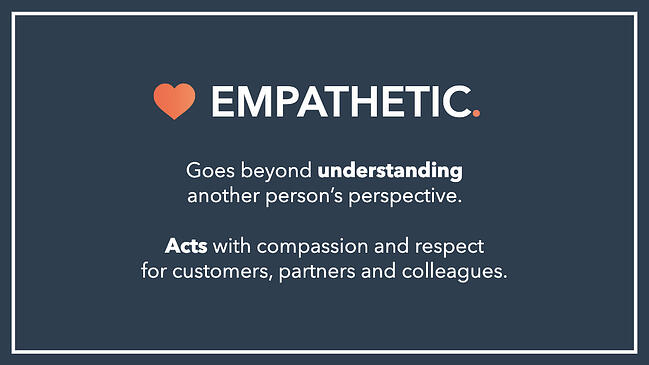
Company values examples: HubSpot, Empathy

In response, Shah proposed replacing “Effective” with “Empathy” and encouraged employees to submit feedback via an internal wiki page.

3. Implement feedback.

Part of creating a set of company values is ensuring that employees buy into those ideas. So, if collecting feedback is an essential step, the next step has to be putting that feedback into action.

While not every piece of feedback will be useful, it’s important to recognize these contributions. As you review updates from your team, you’ll want to compare these insights and start to look for patterns. Once you have some clear ideas of what you want to add or update, outline your next steps to put these changes into place.

Then, share the plan with your team and thank them for their insights.

How HubSpot completed this step: In HubSpot’s case, the team decided to update our culture code and the HEART acronym changed to Humble, Empathetic, Adaptable, Remarkable, and Transparent.
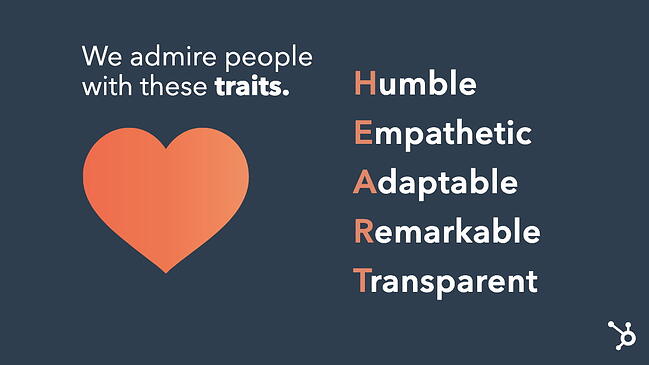
Company values example: HubSpot, HEART

This process took several years of refining. After this change and many rounds of feedback, the culture code was shared globally.

4. Make your core values unique to your brand.

Many industries have catchy phrases or jargon that are central to your business. But those phrases probably aren’t the best way to communicate the unique values of your brand.

Your company values aren’t just a blueprint for what your business does and what your employees believe in. It’s about what separates your team from everything else out there.

You learn from each other and develop tactics and strategies every day. These habits come from a foundation of shared values. So, your goal during this step is to bring those distinct values to light.

This may mean collecting quotes that inspire your team. It could arise from offsite meetings or impromptu conversations.

No matter what your creative process is, to make your company values unique, you’ll want to think about what you want those values to do.

Ask yourself:

  • How can my team act on these ideas?
  • What will make these ideas easy to remember?
  • Do these ideas inspire me to do my best?
  • Are these ideas inclusive and relevant for everyone on the team?
  • Are they specific enough to guide us when making tough decisions?

As you refine your core values, make sure that they embody the spirit of your business and team.

How HubSpot completed this step: Core values often relate to the problems your business wants to solve and how that relates to your personal values.

For example, in a talk at Stanford University, Dharmesh Shah shared the quote, “Sunlight is the best disinfectant.” He told a story of how he interpreted this Louis Brandeis quote and then explained how it came into conversations that he and co-founder Brian Halligan were having about transparency.

You can hear the full story in the video below:

Company values often use short sentences and declarative phrases. Because of this, it can also be useful to explain how your team interprets a simple phrase within your values. For example, the culture code explains what transparency is and what it isn’t at HubSpot.
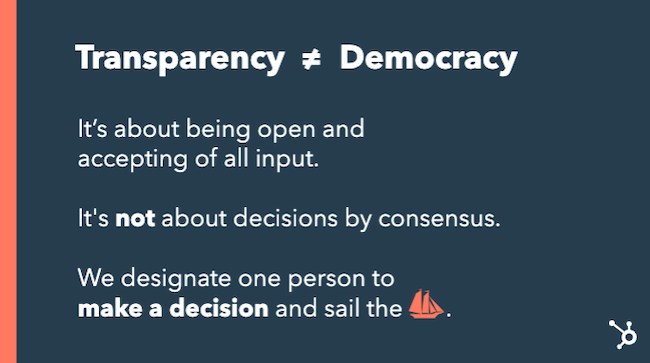
Company values examples: HubSpot, Transparency

5. Continue to evolve when necessary.

Change is the only constant. Your business will change over time. Societal norms, values, and trends will change too. To keep your company culture in line with the times, you’ll want to revisit your values regularly.

First, spend some time with your core values. These will often stay the same. That said, the way your business applies or interprets these values may have shifted.

Next, add or remove values in line with changes to your culture. Take care to make thoughtful updates and bring in a group of engaged employees to offer early feedback.

Once the group feels satisfied with your updates, share them with the full team for another round of feedback. Staying open throughout the process is important for keeping your team engaged.

Your company values should consistently reflect the core of your business. This means that the way you write and edit them will impact every single person connected to the company.

As you make changes, start with leadership and ask them to model these updated values. Find ways to encourage employees to embrace updated values. And engage as many people as you can to make sure your company’s culture stays top of mind, fresh, and current.

How HubSpot completed this step: As HubSpot continues to grow there are new ideas to consider. For example, the culture code covers concerns about time off, remote work, and more with a simple phrase – use good judgment. Leaders at HubSpot talk constantly about the culture and HEART comes up in both tactical and strategic conversations.

In many ways, the team built HubSpot’s culture code in the same way they create HubSpot’s products — thoughtful updates, regular feedback, and continuous investment.

This slide from the culture code deck emphasizes the importance of updates to company values:

Company values examples: HubSpot, culture debt

As of this writing, HubSpot’s culture code has seen over 33 revisions. Updates go through a beta testing process that collects both quantitative and qualitative data. And HubSpot employees work with HEART & SOUL.
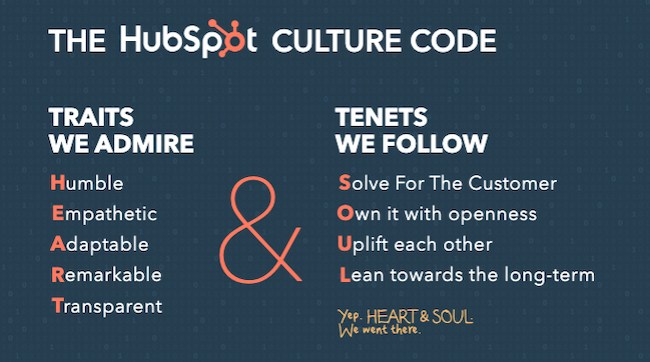
Company values examples: HubSpot, HEART and SOUL

Strong Company Values are Good for Business

Ultimately, good core values can help an audience identify with, and stay loyal to, your brand, rather than flipping between you and competitors. To ensure long-term success and long-term employee retention, it’s critical you create — and live by — certain non-negotiable company values.

Editor’s Note: This article was originally published in November 2020 and has been updated for comprehensiveness.

New call-to-action

Categories B2B

What’s a Marketing Audit? [+ How To Do One]

As marketers, we’re always looking for ways to improve our game plan. But with so many tactics and channels available, knowing where to focus our efforts can be challenging.

Ultimately, no marketing strategy is perfect. A marketing audit gives you a holistic view of your marketing efforts, including what’s working, what could be improved, and where new opportunities are present.

Here, we’ll take a closer look at marketing audits, the best time to conduct one, and a few best practices to pull one off.

Download Now: Free Marketing Plan Template [Get Your Copy]

Table of Contents

What is a marketing audit?

What are the elements of a marketing audit?

Who does a marketing audit?

When should I do a marketing audit?

How to Do a Marketing Audit

A marketing audit identifies the biggest strengths and weaknesses of your current strategy. It highlights what plans, processes, and practices are most effective at meeting goals. Just as importantly, it builds a foundation for future decision-making by identifying opportunities, gaps, and areas for improvement.

To get the best results, your marketing audit should be objective, systematic, and recurring:

  • Objective to ensure your it’s free of bias
  • Systematic to ensure your audit is structured, organized, and measurable
  • Recurring so you can discover and address problems early on

Keep in mind that a marketing audit can encompass your entire operation or a subset of it — such as a specific campaign, process, or focus (e.g., social media marketing).

Elements of a Marketing Audit

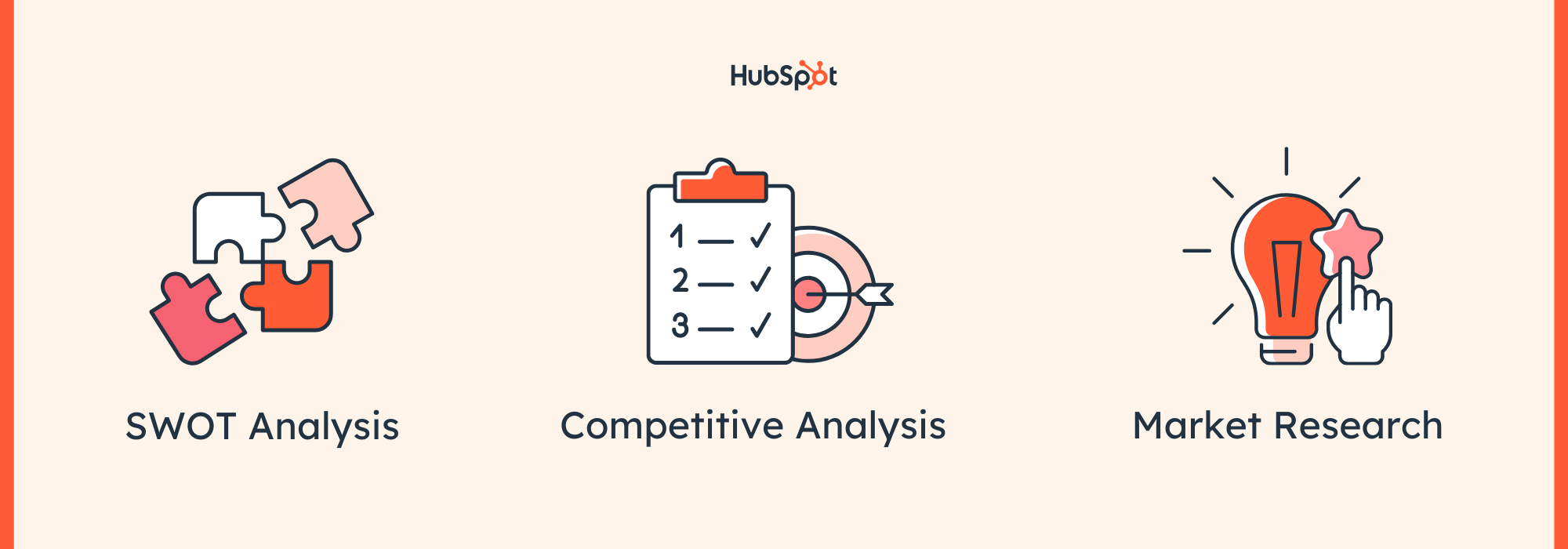
Marketing Audit: SWOT, competitive analysis, and market research

A comprehensive marketing audit may include one or more of the following elements:

1. SWOT analysis.

A SWOT analysis outlines the strengths, weaknesses, opportunities, and threats of your marketing. Using this framework, you can take inventory of your marketing assets and roadblocks.

2. Competitive analysis.

As the name suggests, a competitive analysis takes stock of the strengths and weaknesses of your competitors. It puts a magnifying glass on their products, prices, marketing strategies, campaigns, and target audience.

3. Market research.

Even if you think you know your customers through and through, market research can reveal even deeper insight into their needs, preferences, motivations, and behaviors. On top of that, you can tap into emerging trends and new opportunities in the marketplace, helping you stay ahead of the curve.

Who does a marketing audit?

A third party typically conducts a marketing audit. This is for a few reasons.

First, your audit needs to be as objective as possible. With this in mind, outsourcing to a third party – rather than conducting it internally — is the sounder option.

On top of that, third-party firms have more experience in conducting audits — and that experience really matters. Often, they’re better equipped to identify best practices and opportunities for improvement, and they may have access to specialized tools, technologies, and research capabilities.

When should I do a marketing audit?

A marketing audit should be conducted on a regular basis. After all, the sooner you capitalize on what’s working (and remedy what’s not), the stronger your marketing plan will be.

Of course, the exact frequency depends on your organization’s industry, size, and goals. Generally, it’s good practice to conduct an audit on an annual basis.

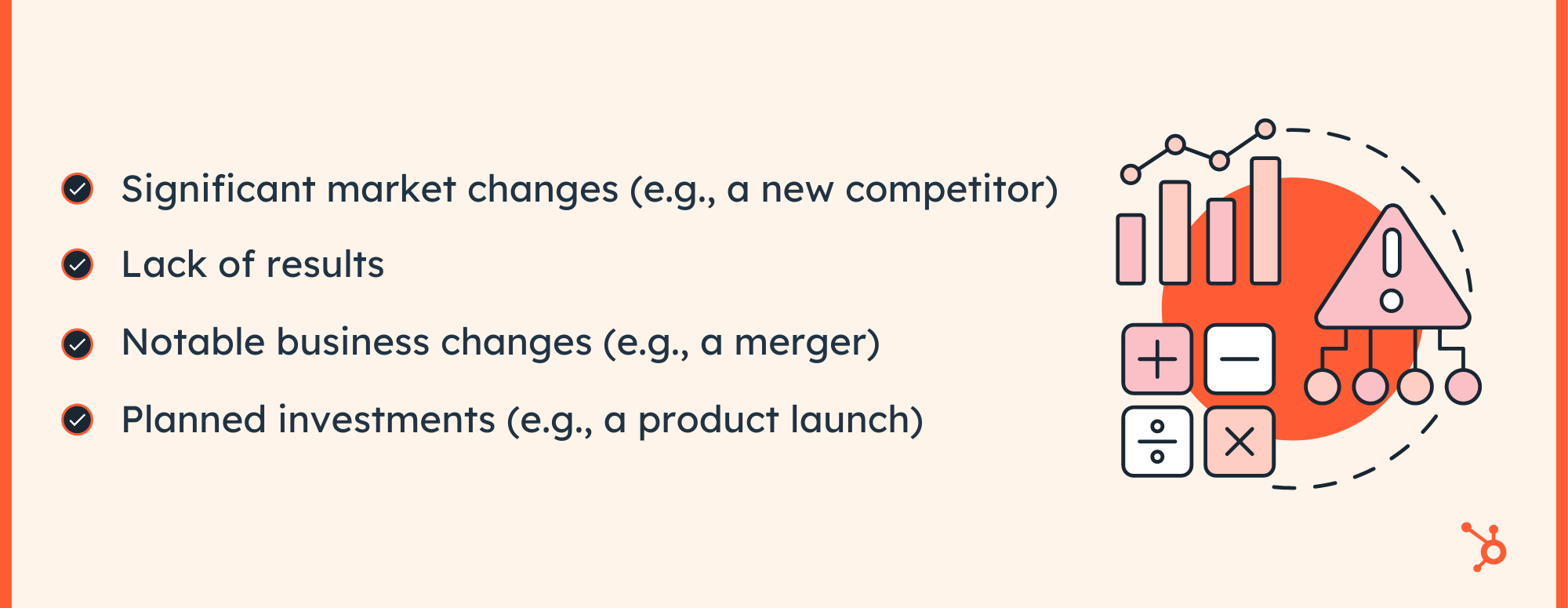
Other factors may trigger the need for an audit, including:

Marketing Audit Triggers: significant market changes (e.g., a new competitor), lack of results, notable business changes (e.g., a merger), and/or planned investments (e.g., a rebrand or new product launch).

Now let’s cover the steps for conducting a marketing audit and a few best practices.

1. Choose what you want to audit.

As already mentioned, your marketing audit can cover your entire operation or target a specific campaign, process, or area, such as social media or content. That said, different components of your marketing are often interrelated, so it can be helpful to analyze “the big picture.”

Ultimately, what you choose to audit is entirely up to you and will depend on your marketing priorities.

2. Identify your goals and objectives.

Want to know which of your social media campaigns are performing well? Or how your content strategy stacks up against your competitors? Or, maybe you want to refresh your branding or customer personas.

Start by picking an objective that will serve as the “North Star” for your audit. Next, break down your object into measurable goals.

For example, suppose your main objective is determining which social media channels provide the best engagement. In that case, your goal might be, “Meet a minimum quota of 200 new followers per month on TikTok.” Then, your marketing audit would put this to the test.

3. Collect the right information.

Now that you have well-defined and measurable goals, the next step is gathering information. This can come from a number of sources — such as campaign metrics, website traffic, social media metrics, and marketing spend.

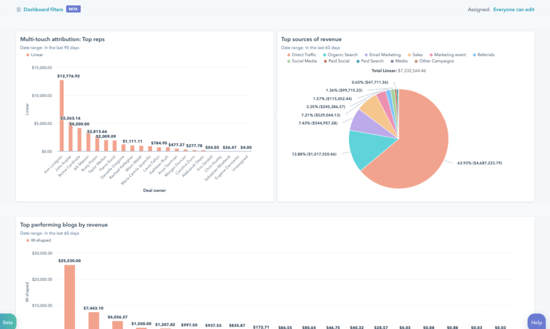
For instance, if you’re tracking the effectiveness of a specific campaign, HubSpot users can access a wealth of campaign data via the marketing analytics dashboard. From here, they can direct their marketing budget toward their most successful efforts.

Screenshot 2023-05-11 at 3.33.58 PMImage Source

You can also gather data from external sources like market research reports, industry benchmarks, and competitor analysis — but ensure the data is reliable and accurate.

Once you’ve gathered the data, organize it in a way that is easy to analyze and reference later. You may want to create charts and graphs, and consolidate data into a single document.

4. Surface any findings or insights from the data.

How you evaluate your data depends on the goals of the audit. For instance, you might perform a competitive analysis if you’re looking to evaluate your pricing strategy against your competitors. 

Document the results or findings from this step so you can make effective recommendations down the line.

5. Make recommendations (and track them).

Lastly, make recommendations for improving your marketing strategy — such as readjusting your messaging, marketing channels, or spend.

For example, if you discover your Facebook advertising strategy isn’t capturing enough leads, a recommendation might be to redirect that spend to another channel.

After you make these adjustments, monitor the results to determine their effectiveness. This involves tracking key performance indicators (KPIs) and making changes as needed.

Back to You

Again, no marketing plan is perfect. By running a marketing audit, however, you can capitalize on what’s working and resolve what’s not. The result? A more optimized strategy that drives results.

New Call-to-action

Categories B2B

8 Strategies for Google Shopping Ads That’ll Boost Your Conversion Rates

Did you know there were over 214.7 million digital buyers in the US in 2022? Online shopping has become a mainstream revenue source for businesses. So, with the right Google Shopping campaign structure, your business can soar.

Free Guide, Template & Planner: How to Use Google Ads for Business

Google Shopping ads are an essential part of any successful digital marketing strategy. They are a great way to drive more sales and increase online visibility. Most businesses today are already investing in Google Shopping ads. If you’re not, it’s time to get started.

Keep reading to learn eight Google Shopping ads strategies that will help you drive more sales and increase your ROI. You’ll also get tips on optimizing your campaigns for maximum effectiveness.

The Benefits of Google Shopping Ads

Google Shopping ads allow you to target specific customers based on their demographics, interests, and other characteristics. It helps ensure that your Google shopping campaign structure targets the right audience.

These ads use visuals to draw customers in and make them more likely to click.

Here are six key benefits you can enjoy with Google Shopping ads:

  • Your products will have increased visibility.
  • You have improved brand recognition.
  • You’ll see an increased click-through rate.
  • Google Shopping ads can improve your marketing’s return on investment (ROI).
  • There’s a lower cost per acquisition (CPA).
  • You’ll have a competitive advantage against other businesses.

Your business can enjoy these benefits if it sets up its campaigns correctly. Although Google Shopping ads can be tricky, with the right strategies in place, you can make sure that your campaigns are effective.

Google Shopping Ads Strategies

Now that you know what Google Shopping ads are, it’s time to learn the strategies that will help you drive more sales and increase your ROI. Here are eight Google Shopping Ads Strategies you should consider.

1. Use automated bidding.

This allows you to set a target cost-per-click (CPC) and have Google adjust your bids to reach that goal. The strategy can help you optimize your campaigns for maximum effectiveness.

You can also set bid limits to ensure you stay within your budget. Automated bidding helps you save time and money while achieving your goals.

You can set an automated bidding strategy on the Google Ads website. You can do this by selecting “Tools” and then selecting “Bidding Strategies.”

Select the type of bidding strategy you want to use, such as “Maximize Clicks,” “Target ROI,” or “Target Cost-per-Conversion.”

2. A/B test your campaigns.

A/B testing is a great way to test different strategies and determine the most effective ones. You can try different ad copy, images, and keywords to see which ones have the best results.

You can also test different bidding strategies and determine which one is most cost-effective and drives the most sales.

A/B testing can help you optimize your campaigns for maximum effectiveness. As your company grows or changes, you should reexamine your campaigns to see if they still need tweaking or if a new strategy would work better.

3. Optimize your product page.

Your product page is one of the most critical aspects of your Google Shopping ads campaigns. It needs to be optimized to be successful.

Ensure your product page contains all the relevant information, including images and product descriptions. You should also include customer reviews to help build trust and encourage people to purchase.

Other effective strategies include using keywords on your product page related to the products you’re selling. It will help Google better understand your products, resulting in more effective ad campaigns.

4. Split your ad groups by product type.

Ad groups are a great way to organize your Google Shopping ads campaigns. You can divide your ad groups by product type or price range, depending on your goals.

By creating specific ad groups, you can target more relevant customers and ensure they see the products most likely to appeal to them.

Plus, depending on their importance, you can set specific bids for each ad group. It can help you optimize your campaigns and ensure they are as cost-effective as possible.

5. Use retargeting methods

Retargeting is a great way to stay top of mind with customers, even after they’ve left your website. It can help keep them engaged and more likely to buy.

You can set up retargeting campaigns that display ads to customers who have already visited your website or interacted with your products.

Platforms like Google Ads allow you to create retargeting campaigns where your ads will show when customers are browsing other websites or using other apps.

You can also use retargeting to display ads for products customers viewed but didn’t purchase in the past.

6. Build a similar audience list.

Similar audiences are a great way to reach customers similar to those you have already successfully converted.

You can create a list by taking data from your existing customers and using it to find other potential customers with similar characteristics.

For example, you can create a list of people similar to customers who have purchased from you. Google Ads will then use this list to display your ads to similar audiences.

7. Include a special offer or deal.

You can use special offers or discounts in your Google Shopping ads campaigns to attract more customers.

It’s essential to ensure the offer relates to your product and provides good value to your customers. You can also use special offers or discounts to encourage customers to purchase from you.

You can increase sales and capture more customers by including a special offer or deal in your campaigns.

8. Consider your pricing strategy.

Your pricing strategy is an essential part of your Google Shopping ads campaigns. Ensure that your prices are competitive and that you get the most value.

You can also use dynamic pricing to adjust your prices based on market conditions and customer demand. It can help you stay competitive and ensure your prices are as attractive to customers.

How to Create a Google Shopping Ad Campaign

Creating a Google Shopping ads campaign can be complex and time-consuming. However, with guidance or professional help, you can create a comprehensive Google shopping campaign structure.

1. Select the products you want to advertise.

Before you flesh out your campaign, you’ll need to choose which products to advertise. Consider which products are relevant to the widest audience or which products seem to appeal most to current customers.

Consider factors such as the demand for the product, its profit margin, and its competitiveness in the market.

Pro tip: Make a list of the products you want to include in your ad campaign. This can help you stay on track throughout the campaign process.

2. Create groups based on the products and their characteristics.

Now that you know which products you want to advertise, think about how you can group them together. You can put products of the same type, price range, or brand in the same campaign.

When you divide your products into groups, you can better advertise to your target personas. You can segment your customers to tailor your ad campaigns to their interests and needs.

For example, you could create a product group for high-end handbags and another for budget-friendly bags. Or perhaps all your prom dress options are in one campaign, and bridal dresses are in another.

3. Create an ad and choose a bid strategy.

Now that you know what you want to advertise, it’s time to create the ad itself. Use clear and high-quality product images to attract potential customers. You’ll also want to target the right keywords so you’ll reach the appropriate audience.

Once you have your assets together, decide on a bid strategy based on your business goals and budget.

You can use manual bidding to have more control over your ad spend, or you can use automated systems such as Maximize Clicks or Target CPA to optimize your campaigns.

4. Monitor and adjust your campaigns to improve your performance.

Putting your ad on Google Shopping isn’t the end. You’ll need to regularly review your campaign to see how it performs.

Use the data provided by Google to identify which ads are generating the most clicks and conversions. Adjust your bids, ad copy, and targeting as needed to ensure maximum performance.

You can also use A/B testing to compare the performance of different ad variations and see which ones are most effective.

Google Shopping Ad Campaign Example

Now that you know best practices, let’s see Google Shopping Ads in action. Check out these brands for inspiration.

Lululemon Running Shoes

google ads, lululemon sneakers

There are hundreds of sneaker options that customers can choose from. Top brands must break through the noise. That’s especially true in Google Shopping ads.

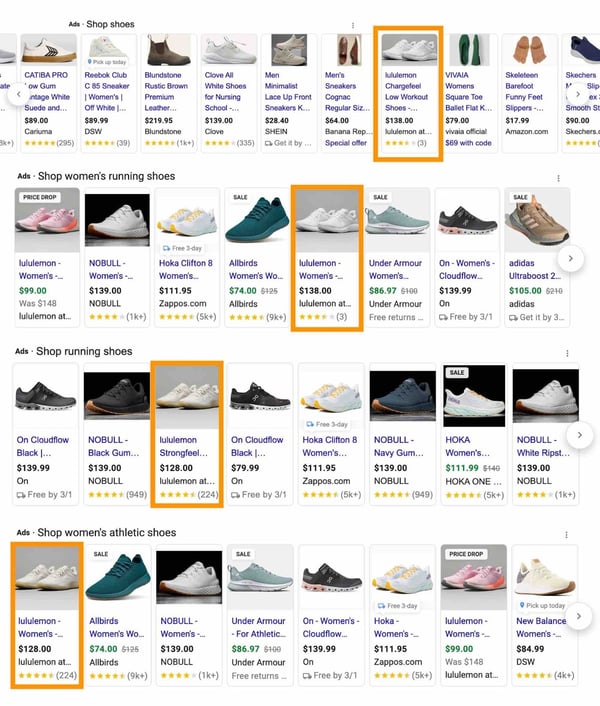
Lululemon gives themselves a leg up with their masterful use of keywords. While their products don’t appear on the first page for a general search for “shoes,” their sneakers become much more relevant when users search more specific keywords.

Lululemon is among the top Google Shopping ads for running shoes, women’s running shoes, and women’s athletic shoes.

Pro tip: Segment your product into multiple ad groups to create targeted campaigns. You can then show relevant ads to the right audience.

Chewy Cat Trees

google ads, chewy

Cat trees come in all shapes and sizes. However, for a plant lover, the cactus-shaped cat tree above may have a particular appeal.

Even with such a niche product, there are multiple options to choose from. Chewy helps its cat trees and scratching posts stand out by highlighting a reduced price. The brand also mentions that shipping is free, which will likely push some buyers over the edge.

Pro tip: Discounts and free shipping can help your product stand out.

Cast Iron Skillets

google ads, skillets

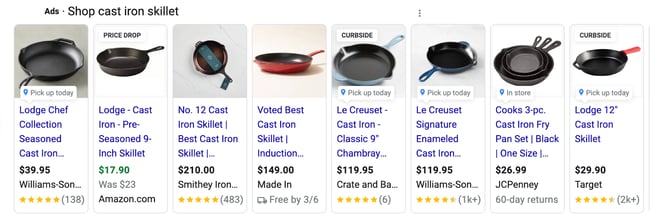
There are dozens of brands that sell cast iron skillets, so how do customers know which one to buy? They take a deep dive into the reviews.

If you search “cast iron skillets” on Google, you’ll see many shopping ads pop up. The searcher is automatically drawn to the bright yellow stars on certain products.

Those who are happy to pay a higher price for a great product will gravitate toward the Smithey skillet. With 483 five-star reviews, a buyer will feel assured that the product will be worth wild.

Someone else may have a smaller budget. They’ll see that the Target skillet has a lower star rating but more than 2,000 reviews. This creates trust in the quality of the product.

Pro tip: Make the most of social proof and add ratings to your Google Shopping ads.

Making the Most of Google Shopping Ads

When researching an upcoming purchase, most people will turn to Google for advice. That’s why it’s essential to craft a Google Shopping strategy so you can reach the right audience.

Start brainstorming which products you’d like to advertise and keywords that your customer persona might search for. Soon you’ll be on your way to increased engagement and revenue.

New Call-to-action

Categories B2B

How to Perfect Personalized Marketing with the Help of Your Data Warehouse

Today, the bar for personalized customer engagement is higher than ever.

As a marketer, you know that customer data is key to delivering personalized experiences that drive growth. A whopping 82% of marketers say having high-quality data on their target audience is important to succeeding in their role – but more than half of them say they’re missing key information.

Get HubSpot's Free CRM Now

Data silos are one of the biggest hurdles that prevent businesses from delivering personalized, data-driven experiences to their customers. Only 27% of marketers say their marketing data is fully integrated with their systems and tools, resulting in fragmented and inconsistent outreach.

The good news is: It’s possible to unify your data and make it actionable in one place. One key technology for effective data activation? The cloud data warehouse.

In this blog, we’ll discuss a strategy to get first-party data out of the data warehouse and into your CRM, so you can leverage it for more effective marketing.

Data warehouses allow marketing teams to consolidate data from multiple platforms including advertising channels like Google and Facebook, analytics platforms like Mixpanel and Google Analytics, and CRM systems like HubSpot and Salesforce. Even better, both first-party and third-party customer data can be unified in the warehouse.

The most popular cloud data warehouses include:

How Data Activation Provides a Single Source of Truth

Unifying all of your customer data points (that you’ve collected through tools like HubSpot, Google Analytics,or Zendesk) into a customer 360 profile enables you to have a holistic understanding of your target audience.

A customer 360 profile refers to having a 360 degree view of your customer’s information and behavior. This might include company data, purchase history, support interactions, and even engagement with your website, app, or social media accounts.

Fortunately, many companies have already employed data teams to consolidate customer 360 data in a central place: the data warehouse.

In the past, the warehouse was limited to technical users who knew SQL. Accessing customer data was a battle between Go-to-Market and IT teams, resulting in reduced agility and low autonomy for business teams.

Enter data activation: a way to bridge the gap between data and marketing.

Data activation platforms like Census provide warehouse-native no-code tools that enable marketers to unlock data directly from the warehouse – all without needing to know SQL.

This makes it easier for marketers to use customer 360 data to personalize recommendations and customize promotions.

Leveraging the same data infrastructure across the organization improves efficiency and team collaboration, because marketers now work with the same source of truth as data and IT teams. You can be confident that your data is fresh and trustworthy because it’s approved and maintained by the data team.

Activating the data warehouse for customer segmentation

Collecting data is useless without action. Let’s talk about how to actually use your customer data to drive more effective engagement.

Customer segmentation is key to reaching the right customers at the right time with the most relevant information.

This way, you can better understand your customers and meet their unique needs at every stage of the customer journey.

For instance, you would want to send different and targeted messages to:

  • Users who are on a free trial of your product, versus users on your highest paid plans
  • VIP customers who have purchased multiple times, versus visitors who just signed up for your mailing list
  • Companies that have 50 user seats versus companies who have 2 user seats

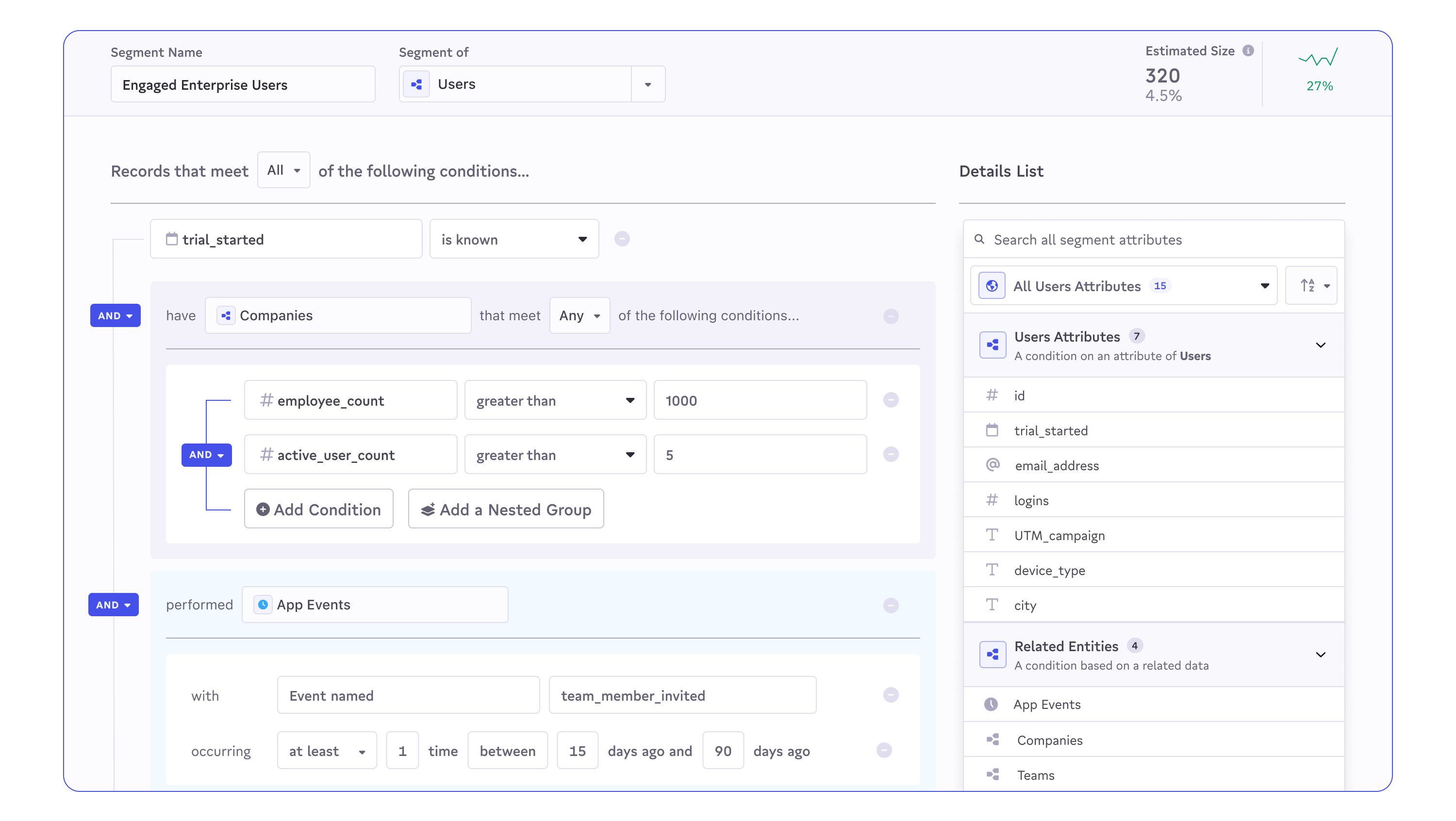
Data activation platforms like the Census Audience Hub help you build dynamic audience segments with your unified customer 360 profiles.

Any user, regardless of technical skill level, can easily create, explore, and manage audiences — then send them to your CRM for targeted outreach.

pesonalized-marketing-audience-hub

Success stories from Clockwise and Prolific: Using first-party data for better personalization

Clockwise and Prolific are two companies that activate their first-party data to deliver personalized, cross-channel experiences. Both companies use Census to power HubSpot with relevant, real-time data.

Clockwise

clockwise-app

Image Source

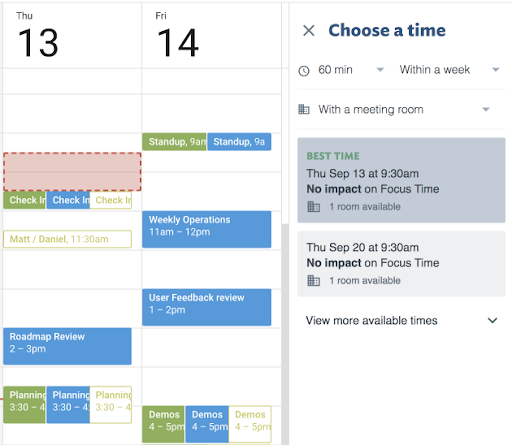
Clockwise is a SaaS productivity tool that helps busy professionals manage their meeting scheduling and find more time for uninterrupted flow.

They needed a better way to get product usage and engagement data in front of their go-to-market teams. By setting up real-time data syncing, the business operations team was able to:

  1. Reduce time to stand up segmentation growth experiments from weeks to hours
  2. Enable more personalized onboarding communications with granular user segmentation
  3. Provide self-service access to real time product engagement data

Read the case study here.

Prolific

prolific-researcherImage Source

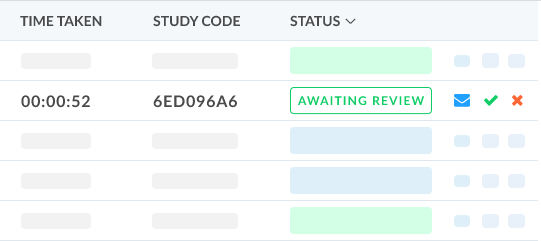
Prolific simplifies online data collection by connecting researchers with the study participants they need, quickly.

Their newly-minted sales team was eager for data on their customers and prospects. After connecting their data warehouse to HubSpot, their salespeople now have important context for every sales interaction — without ever leaving HubSpot.

Prolific used Census’s data activation platform to:

  • Build Customer 360 profiles in HubSpot with complete product behavior data
  • Automate sales workflows based on product usage and segmentation data
  • Identify purchase intent and personalize messages

Read the case study here.

Key learnings from Clockwise and Prolific: Building a robust and scalable data foundation makes first-party data more valuable and usable. But collecting data is just the beginning. The real value is in activating data to drive business decisions and revenue.

Key Takeaways

Accessing and leveraging customer data is crucial for marketers who want to deliver personalized experiences that drive growth.

By integrating your data warehouse with your CRM, you can unlock new insights and create a central repository of customer data that can be used to power all of your marketing efforts.

Our three key takeaways from this article are:

  1. Data Activation is crucial. It connects your data infrastructure to your marketing efforts, making you more data-driven than ever.
  2. Real-time segmentation is key to personalization. To target accurately, go for a solution that updates audiences continuously and makes your data available seamlessly.
  3. Your martech stack should embrace data. Choose a customer engagement platform that integrates with your tech stack, instead of using siloed tools.

To exceed customer expectations, empower your marketing, engineering, and IT teams to activate a 360° view of customer data.

crm software free

Categories B2B

10 Business Grants for AAPI Entrepreneurs (+ Where to Find More)

Welcome to Breaking the Blueprint — a blog series that dives into the unique business challenges and opportunities of underrepresented business owners and entrepreneurs. Learn how they’ve grown or scaled their businesses, explored entrepreneurial ventures within their companies, or created side hustles, and how their stories can inspire and inform your own success.

Courage and hope reside at the heart of building a business. Hope for a better quality of life, financial stability, and, if we’re lucky, generational wealth for our families.

However, for Asian American and Pacific Islander entrepreneurs, spinning an idea into a profitable business requires startup funding that is often difficult to access because of systemic barriers.

Read more Breaking the Blueprint content

As an alternative to venture capital, angel investments, and loans, business grants can help bridge this gap by awarding money that doesn’t require repayment or equity exchange. This post will explore where AAPI entrepreneurs can find business grants, and how to apply for them successfully.

Why are grants helpful for AAPI business owners?

Although the AAPI community owns around 2 million enterprises, including small sole proprietorships, and is the most rapidly growing ethnic group in America, grant opportunities specifically for AAPI businesses are scarce.

Beyond the absence of support for these aspiring business owners, AAPI entrepreneurs are also hesitant to apply for the small number of available funds and grants due to cultural and language barriers. According to a survey conducted by Bank of America, 37% of AAPI business owners don’t feel sufficiently informed on how to apply for capital and 23% don’t know where to apply. The National CAPACD also reports that 58% of AAPI entrepreneurs struggle with federal, state, and local relief programs for small businesses.

There is a clear need for more visible resources and mentorship related to business development and funding opportunities so that a new generation of AAPI-founded companies can make culture-shifting and innovative contributions to society. The first step to picking the right resource for you is understanding how much money you’ll need.

How much does it cost to start a business?

Finances are unique for each person or company and depend on the type of business, the number of employees, and other details. According to Small Business Trends, on average, startup and first-year costs fall between $30,000 and $40,000, although it can cost significantly less for service providers and online businesses. There are several variables to consider when evaluating how much money you’ll need to launch, including:

  • One-time and ongoing costs
  • Essentials such as equipment, software, and supplies
  • Fixed and fluctuating costs such as rent and utilities
  • Marketing expenses
  • Legal and accounting fees
  • Insurance
  • Licenses and permits
  • Employee salaries and benefits
  • Taxes

The U.S. Small Business Administration (SBA) has a handy worksheet for calculating startup costs. After determining how much money you’ll need, you can assess your options for funding, whether it’s pulling from your personal accounts, courting investors, applying for a grant, or seeking lending options through banks.

The Difference Between Investors and Grant Programs

This money doesn’t appear like an ancestral blessing with no strings attached. Investors earn a return on their investment through equity and earning dividends in the form of cash or shares of stock, or in some cases, repayment with a pre-decided interest rate.

On the other hand, business grants are non-dilutive, meaning you keep full ownership of your business and don’t have to pay back any money. Many grant programs award the money upfront, while some pay as reimbursements after expense reports are submitted.

Where To Find Business Grants

The main types of grants for entrepreneurs include general business grants, industry-specific grants, grants for women minority-owned businesses, and COVID-19 relief grants. Each grant is unique and differs on who is eligible, the use of the money, and the award amount. Here is a list of grant-making organizations.

  • Search and apply for federal funding on Grants.gov, a database with grants from around 26 federal agencies, such as SBA, MBDA, and USDA. The agencies award grants for critical recovery initiatives, innovative research, and other projects for non-profit organizations, for-profit businesses, and other entities. Annually, this site helps award approximately $500 billion across more than 1,000 federal grants.
  • Non-profit organizations can offer grants to support small businesses and entrepreneurs.
  • Private foundations offer industry-specific grants.
  • Local Asian Chambers of Commerce offer grants, funding opportunities, networking, mentorship, and financial literacy resources to Asian American-owned businesses.

10 Grants for AAPI-Owned Businesses

Although the list isn’t long, there are a handful of grants for AAPI entrepreneurs that could be your ticket to accelerate the growth of your business.

1. Gold House

Gold House invests in AAPI entrepreneurs disrupting their industries to give them the capital and tools they need to scale. It offers two grant opportunities: SAFE Gold House Ventures and Gold Futures Challenge.

Gold Futures Challenge gives awards to organizations/projects that support API communities and help them feel seen, heard, empowered, and united. It’s a challenge-based fund and the public votes for winners from a pool of finalists chosen by a selection committee.

  • Grant Amount: Prizes range from $25k – $100k
  • Eligibility: AAPI-serving organizations registered as 501(c)(3) nonprofit, fiscally-sponsored projects, or government organizations.
  • Application Date: Apply by June 15, 2023

SAFE Gold House Ventures invests in AAPI entrepreneurs disrupting their industries. It’s a 12-week startup accelerator with 1:1 advising, masterclasses, and networking opportunities.

  • Grant Amount: $150k investment for each winner
  • Eligibility: Open to founders of C Corp companies who identify as AAPI. LLCs can apply but are required to convert to a C Corp to receive funding.
  • Application Date: Fall 2023 applications open in August

2. USA Funding Applications

USA Funding Applications is an online funding resource that gives you access to 20K applications and grant sources. AAPI entrepreneurs and business owners can apply within the Minorities/Demographic section, and there’s no limit to the number of grants you can apply for.

  • Grant Amount: Varies by grant and case-by-case basis.
  • Eligibility: See eligibility requirements for your category after signing up.
  • Application Dates: Applications accepted on a rolling basis throughout the year.

3. Hawai’i Foundher

Hawai’i Foundher is a six-month accelerator program that provides five businesses with grant funding, flexible child and elder care stipends, a workspace on each major Hawaiian island, two core mentors, and access to an advisor network. The program helps Native Hawaiian, Pacific Islander, and Asian women and mothers with businesses in the five core markets of Hawaii: food, health and wellness, fashion, tech, and education.

  • Grant Amount: Undisclosed
  • Eligibility: Must be a for-profit, early-stage business with 50% of founders being women of Native Hawaiian, Pacific Islander, or Asian descent and based in Hawaii.
  • Application Dates: 2023 – 2024 dates to be announced

4. AAPIStrong

National ACE’s AAPISTRONG has a grant page updated annually with available opportunities. At the time of this writing, two grants have deadlines in May, and you can sign up for new grant alerts here.

The National ACE and Verizon Small Business Digital Ready Program Grant will provide $1 million in small business grants in 2023 to help with marketing, equipment, team building, and more.

  • Grant Amount: $10,000 each
  • Eligibility: Complete any combination of two Small Business Digital Ready Program courses, coaching events, and community events before applying.
  • Application Dates: 2024 dates to be announced.

The Greg Hill Foundation and GrubHub Community Fund Grant will provide $1.25 million to small business restaurants. A portion of this fund is dedicated to supporting minority-owned businesses for technology and equipment, marketing services, staff training and wages, and more.

  • Grant Amount: Ranges from $5,000 to $25,000
  • Eligibility: Must own only one restaurant location with 50 or fewer employees in Boston, Chicago, New York City, and Philadelphia.
  • Application Dates: 2024 dates to be announced

5. Asian Pacific Community Fund

APCF provides alternative funding for Los Angeles County nonprofit organizations serving low-income and underserved Asian and Pacific Islander (API) communities. It offers long-term funding opportunities, core operating support, and resources beyond traditional grant-making. APCF has awarded over 260 grants and distributed over $1.6 million in funds.

Firecracker Fund

  • Grant Amount: Undisclosed
  • Eligibility: Nonprofit organizations with programs that promote healthy lifestyles through nutrition and physical fitness for AAPIs in Los Angeles and Orange counties.
  • Application Dates: 2023 dates to be announced

APCF Operating Grant

  • Grant Amount: Ranges from $5,000 to $15,000
  • Eligibility: Organizations that serve AAPI community members needing the most assistance in Los Angeles County and beyond.
  • Application Dates: 2024 dates to be announced

Asian Pacific Community Giving Circle

  • Grant Amount: Undisclosed
  • Eligibility: Organizations that serve AAPI communities throughout Greater Los Angeles County. The area of focus changes each year and previously included organizations with programs for mental health, youth leadership development, language access, bullying prevention, environmental justice, and financial literacy.
  • Application Dates: 2024 dates to be announced

6. Asian Women Giving Circle

AWGC believes funding is a form of activism. Its team has granted $1 million in the past 16 years through 100 grant projects. Annually, they award 8 to 10 grants to help fund projects led by Asian American women artists and community groups in NYC that bring progressive social transformation and raise awareness of critical issues affecting Asian American women, girls, and gender-expansive people.

  • Grant Amount: Typically $8,000 each, depending on how much AWGC raises for their annual pot.
  • Eligibility: Open to 501(c)(3) organizations and individual artists. Projects must incorporate art, highlight women and gender-expansive people’s leadership, and be applied to a specific project, not ongoing programs or operations.
  • Application Dates: 2024 dates to be announced

Tips for Successfully Applying for Business Grants

1. Start early.

Having a small window of time to draft a business plan, gather the necessary paperwork, and fill out a grant application will make it harder to complete. Start the process early to give you enough time to plan, write, and submit the best application possible without any additional stress that comes with feeling rushed and overwhelmed.

2. Do your research.

When preparing to apply for a grant, thoroughly research to understand the organization offering the award. Treat it as though you’re preparing for a job interview and customize your application to show why you’re the best fit to receive their funding. Take your time while reading the grant guidelines and application requirements to ensure you’re addressing all the necessary points and letting your proposal and vision shine.

3. Get help from a grant writer.

You’re capable of completing your grant application, but if financially possible, hiring a professional grant writer with experience crafting award-winning applications can help increase your chances of receiving funding.

4. Apply to more than one grant.

Grants are limited and competitive, but don’t let that discourage you from applying to as many of them as possible. The more applications you submit, the greater your chance of being awarded. Don’t sacrifice quality for quantity; ensure your applications are customized for each organization.

Mistakes to Avoid With Business Grants

1. Falling for a scam.

Be cautious when applying for grants. Scams exist to trick you into paying money or sharing sensitive information. Verify the authenticity of a grant opportunity (they are always free) before applying.

2. Committing fraud.

Misrepresenting how you plan to utilize grant money can result in serious consequences, such as being barred from receiving future funding, civil lawsuits, and criminal prosecution in some cases. When applying, be honest about how your business will spend the money.

3. Forgetting to pay your taxes.

Most business grants are taxable because the money is considered income. Research federal and state tax laws to understand how much of your grant needs to be claimed for your tax return, and work with an accountant to guide you on how to report it. The organization that awards the grant can also clarify some of these details.

Rise to the challenge of launching a business.

Obtaining funding can be intimidating, but now is your chance to turn your ideas into an operating, money-making business. If you aren’t offered money during your first round of grant applications or raising capital, keep trying. If those funding sources aren’t working in your favor yet, consider looking into business loans or crowdfunding. You always have options.

Click the link to discover more Breaking the Blueprint Content.

Categories B2B

AI Marketing — The Complete Guide

ChatGPT has entered the chat, bringing the resurgence of the conversation around artificial intelligence (AI) and marketing.

Sign Up to Try HubSpot's AI Tools

It seemed like AI marketing as a concept had stalled, but in 2023 it’s more popular than ever, leaving everyone wondering, “How can marketers use AI?” Today, we’re going to answer that question.

We’ll cover what AI marketing is, how to use it, examples, pros and cons, and marketing strategies that benefit from AI. Let’s dive in.

Table of Contents

To use AI in marketing, typically, the AI will collect data, learn customer behaviors, and analyze this information to help a business achieve its goals. AI can even reach out to customers who do a specific behavior on your website, like clicking a button or liking social media posts.

There are several AI tools and software marketers can use that will trigger automated responses for your customers. AI marketing is used for data analysis, media buying, content generation, personalization, and more. Now, let’s dive into how marketers use AI.

Pro tip: If you’re a HubSpot user, check out our new AI tools. We have a new content assistant and ChatSpot tools to streamline your day-to-day. Plus, many of our features use AI, including SEO, call recordings, social media, data management, and more.

i marketing tool, hubspot content assistant

Get started with HubSpot content assistant.

How do marketers use AI?

AI has been a growing industry and topic of conversation for the better part of a decade. In fact, there was a 27% reported increase in implementing AI or machine learning into companies’ marketing toolkits.

The top three reported uses for AI in marketing were content personalization, predictive analytics for customer insights, and targeting decisions. Below, we’ll dive into some of the use cases for AI in marketing.

When to Use AI Marketing

1. Content Personalization

One of the ways to use AI in marketing is to personalize content. This means AI can change the customer’s experience depending on their online behavior or whether or not they’ve filled out a form for your company.

For example, dynamic content changes depending on the user — their name, occupation, online behavior, etc. AI analyzes a user online and gives them a more personal experience with marketing assets, including web pages, social media posts, and emails.

6Sense is a helpful tool that leverages AI to sift through intent data. You can then understand who in your audience is looking to make a purchase so you can personalize the marketing experience.

2. Data Analytics

Data analytics is one of the main uses of AI in marketing. AI can collect and sift through large amounts of data from several marketing campaigns and summarize the findings.

AI can predict the outcome of marketing campaigns by using historical data, such as consumer engagement metrics, purchases, time-on-page, email opens, and more.

This will help you save time when strategizing and developing marketing assets for your campaigns.

Pro tip: HubSpot Sales Hub has conversational intelligence capabilities to help you understand how your team performs on customer calls through data-driven insights. Learn how to use account-based marketing recommendations powered by AI. 

3. Content Generation

AI can also be used to help generate content. It can help develop captions, social media posts, email subject lines, and even blog copy.

We’ve all seen how AI can write articles when given a certain subject. Still, it’s important to note that most AI-generated content isn’t ready for publishing immediately.

Most marketers today use generative AI to recommend content and generate portions of an article. They then fact-check, edit, and adjust AI’s writing to make it sound more human.

The best way to use AI in content generation is to help get you started. The best, high-quality content is produced by marketers using insights from AI to create content faster.

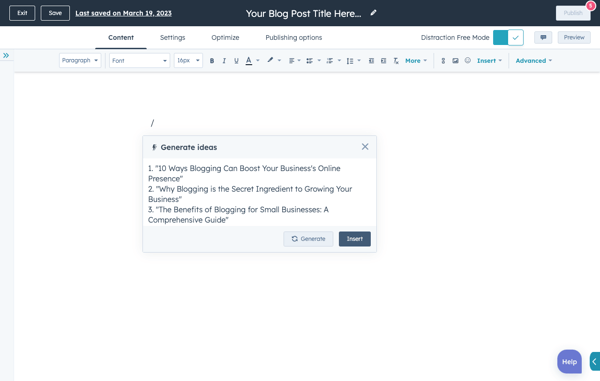
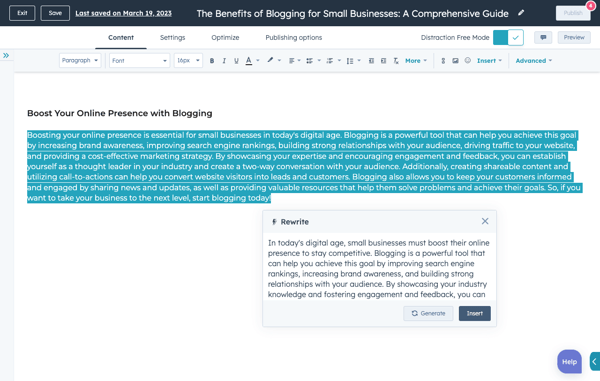
Pro tip: HubSpot has an AI-powered content assistant that can help you generate blog ideas, create outlines, and write blogs or marketing emails.

ai marketing, person using hubspot content assistant to improve writing

4. Media Buying

Another way to use AI in marketing is through media buying. AI technology can predict the most effective ad and media placements to reach a target audience and maximize ROI.

To implement this tactic, use AI software specifically made to help your media buying team. Pattern89 is one example. This AI marketing tool provides recommendations on your ad spend and enables you to target the right audience to increase performance.

Additionally, if you use Google Ads, you’re already encountering the AI that helps with the auction process.

5. Chatbots

One use of AI in marketing that we’ve seen for years is chatbots. Chatbots, created with natural language processing (NLP), can solve quick problems for customers, help nurture leads, answer repeated questions, and more.

A chatbot can personalize the customer journey during the stage when they’re consuming marketing content. This tool can also answer customer questions.

Let’s look at Drift. The company has trained its chatbot to answer questions, even if it’s outside a pre-programmed path. This way, if a person has a question that isn’t loaded into the system, the user will still get an answer.

Pro tip: Looking to better understand how AI-powered chatbots can answer customer questions? HubSpot Academy can help. This course describes the difference between rule-based and AI-powered chatbots.

6. Automated Email Marketing Campaigns

Automated email marketing has also been around for years. But AI tools can help produce more engaging email content and learn about your email list behaviors.

The goal is to have your marketers spend less time researching and brainstorming so they can focus on sending successful campaigns. As AI expands and improves, automated email marketing software becomes even more important to include in your marketing stack.

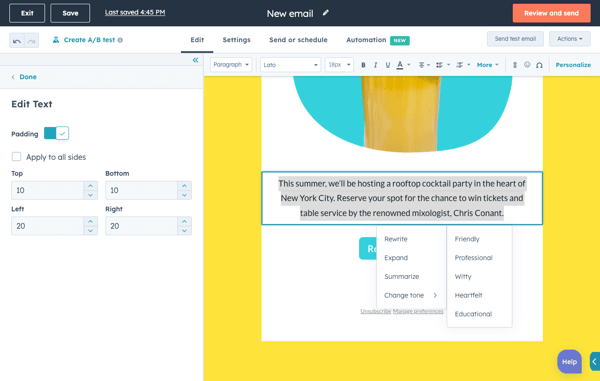
HubSpot Content Assistant can help you create marketing emails. Write a prompt about what you’d like to promote — from a discount to a webinar to a blog post — and AI can generate a message with the right tone.

ai marketing tool, hubspot content assistant

7. Forecasting Sales

A great use of AI in marketing is to forecast sales.

Now you might think that has more to do with sales than marketing. However, AI can help marketers understand the predicted outcome of their campaigns and marketing assets.

This insight can help marketers develop better campaigns that actually produce sales and ROI.

8. Improving Customer Experience

Marketing is all about the customer experience, and AI can help marketers deliver the best experience for their visitors to convert them into leads.

AI can help increase customer retention and loyalty, delight customers with personalized content, and improve assets.

9. SEO

One of the most significant advantages AI can bring to SEO is the ability to optimize content for search engines. AI algorithms can analyze website traffic, identify keywords that can help improve search engine rankings, and track competitors’ activity.

Plus, using AI-powered tools, marketers can learn about their audience’s preferences and customize their content to match their interests.

To learn more about how AI can impact your SEO efforts, visit HubSpot Academy. Our Keyword Research for SEO course includes information on how search engines leverage AI to suggest related searches by keywords.

Examples of AI Marketing

At this point, you might be wondering, “Okay, but how does this look in practice?” Let’s review some real-life examples of how big media companies have used AI in their marketing.

1. Netflix

If you’re in marketing, you know you have to deliver the right message to the right person at the right time. Netflix uses AI to do this. How?

On a Netflix Tech Blog, the company explains how it uses previous viewing history to determine the artwork for recommended movies or TV shows.

For example, if you’ve watched a lot of one actor’s movies, they might recommend another movie they’re in. But if the artwork doesn’t show off the actor, you may click away. So, when the movie is recommended to this specific viewer, the artwork will showcase that actor.

Or maybe a viewer tends to watch more comedies than romances. When Netflix recommends a movie, they might change the artwork to show off comedic scenes versus romantic moments from the film.

Let’s take a look at how Netflix would recommend the movie Good Will Hunting to someone who watches romance movies versus the artwork they’d use to recommend the movie to someone who watches comedies.

AI in marketing, example from Netflix using AI to personalize movie recommendations.

Image Source

So, why does Netflix do this? The goal is to increase conversion rates and improve the customer experience on their platform.

2. Spotify

Spotify uses a similar approach to Netflix. The company will use AI to understand a user’s music interests, podcast favorites, purchase history, location, brand interactions, and more.

Then, customized playlists and recommendations are curated for each user.

AI in marketing, example from Spotify

This type of content personalization has helped major media companies like Spotify become top streaming platforms. But the personalization doesn’t end there.

Spotify will also send automated email marketing messages with personalized recommendations.

The goal? Create automated marketing messages and assets that will convert a user because the message is specific to that customer.

3. Amazon

Two major use cases for AI in marketing are forecasting sales and analyzing data. Amazon uses AI to do just that.

When you go on Amazon, there is a recommended products section that uses predictive analytics to determine if a customer is likely to make a purchase.

AI marketing example from Amazon.

This helps the marketing teams at Amazon know what products to place in front of which customers. Plus, they can predict how well a product will sell based on their recommended product campaigns.

This type of AI helps increase conversions, improve customer satisfaction, and measure the overall success and ROI of various marketing campaigns.

AI Marketing Pros and Cons

We’ve covered a lot so far, including what AI marketing looks like in the real world. However, is this something you should implement at your company? Below, we’ll discuss some of the advantages and disadvantages of AI marketing.

ai marketing, pros and cons

AI Marketing Advantages

1. Increase your ROI.

As you can see from the examples above, the main goal of using AI in marketing is to increase ROI and build campaigns that are easier to track.

The data analytics and insight AI provides can be leveraged to produce better marketing assets and improve your campaigns in real time.

This will save your marketing team time and money, allowing them to work more efficiently and increase profits.

2. Improve customer relationships.

Another advantage is that using AI in marketing can help improve your relationship with your customers.

The more personalized your recommendations are and the deeper your relationship with your customer is, the more likely they’ll become repeat purchasers. This happens through AI’s ability to personalize marketing assets and content in real time.

Additionally, AI can identify customers at risk of churning and put them in an automated marketing campaign to get them to re-engage with your company.

3. Make better, strategic marketing decisions.

AI is becoming more popular in marketing, culminating in the ability to make better strategic marketing decisions. As your company and marketing team grows, scaling has never been more important (but also, it’s never been more difficult).

AI can make scaling your business easier, using data to analyze, predict, and create marketing assets that sell. See how your team can use artificial intelligence and automation in this course from HubSpot Academy. 

AI Marketing Disadvantages

1. Content quality.

If you’re going to use AI to generate content without having a human edit it, you’re going to see a drop in the quality of your content. The success of AI is reliant on high-quality data that is accurate and timely.

Without a human editor, AI can produce content with factual inaccuracies, bias, or a divergent tone from your brand. Using AI requires human oversight so these types of mistakes don’t happen.

2. Privacy.

As marketing assets have become more personalized through the years, customers are beginning to value privacy more and more. With AI, some of these techniques require using a customer’s cookies and previous internet behavior to predict future purchases.

If your marketing team downloads and uses AI software, you’ll need to be sure you comply with privacy laws, such as GDPR.

3. Evaluating non-quantifiable KPIs.

It might be hard to get buy-in to invest in AI at your company because there are non-quantifiable KPIs at play.

Certain metrics will be easy to track, but others — like improving the customer experience, increasing brand awareness, or improving reputation — will be much harder. That’s why it’s important to have the right measurement tools in place.

Marketing Strategies That Use AI

Many marketing strategies take advantage of AI. Consider whether your team could benefit from some (or all) of these tactics. These strategies include:

  • Content marketing. Whether it’s for content generation or personalization, AI can help your team produce more content in less time. Personalization software may be just the thing your brand needs.
  • Product marketing. By tracking user behavior, AI can make recommendations for customers and predict purchases. AI can keep your brand top of mind while you engage in other tasks that AI can’t perform.
  • Email marketing. AI can help you produce lead-nurturing marketing emails and analyze past email behaviors and performance. It can send automatic emails based on customer behavior and flag outstanding emails and those needing work.
  • Advertising. AI can take care of buying media ads, whether it’s display ads, PPC, or paid social, so the content you’ve crafted can make it to your target audience.

Remember: AI should help your team level up their operations. Human input and editing will always be part of the process.

Critical thinking skills should be positioned alongside AI content. to empower your team to engage AI effectively and accurately. Learn best practices for critical thinking and problem-solving in the workplace. 

Harnessing the Power of AI

Marketing teams can scale their operations with AI, and it doesn’t have to break the bank. However, it’s important to keep in mind the limitations of AI, even as the technology continues to get better over time in the changing marketing landscape.

While you might be able to use it to aid several marketing campaigns (and should), it isn’t replacing marketers just yet.

New Call-to-action

Categories B2B

How to Lock Cells in Google Sheets

Imagine spending hours creating a Google Sheet to share with your team, only to find that a team member accidentally deleted an important column, row, cell, or, even worse — an entire sheet.

→ Access Now: Google Sheets Templates [Free Kit]

That can be frustrating. However, it’s entirely preventable if you lock cells in Google Sheets.

As it turns out, with just a few clicks of a mouse, you can lock cells and entire sheets in Google Sheets — meaning, you and your team can work on the same sheet without hindering the next person from completing their assigned tasks.

In this post, we’ll go over how to lock and unlock cells in Google Sheets.

Table of Contents

The Benefits of Locking Cells in Google Sheets

Google Sheets allows users to lock cells from editing, which means you can protect your Sheet from any potential accidents, including editing and deletion.

You can also protect important data and calculations, so you can rest easy knowing the formulas in your Sheet are correct and accurate.

The ability to lock cells in Google Sheets comes with a variety of benefits.

Not only can you lock cells from editing, but you can also control which team members can edit your document — right down to the very cells those team members are allowed to manipulate.

This is extremely helpful if multiple team members are working on the same Sheet at once. You can also copy permissions from other sheets, if you have locked cells in other Sheets.

Let’s take a look at the steps to lock cells in Google Sheets.

How to Lock Specific Cells in Google Sheets

Locking specific cells in Google Sheets is a simple task. Here’s how to do it:

1. Right-click on the cell you want to lock.

After opening a new Google Sheet (or a Sheet you have already been working in), right-click on the cell or cells you want to lock.

How to lock cells in google sheets, step 1: right-click on the cell you want to lock.

2. Hover over “View more cell actions.”

This option is listed at the bottom of the dropdown menu.

Depending on where your cells are located in the Sheet, you may need to scroll down until you see it. When you see it, hover over the “View more cell actions” to open up another menu.

How to lock cells in google sheets, step 2: hover over “view more cell actions.”

3. Select “Protect range.”

The next menu will give you several more cell actions. Look for the action labeled “Protect range.” Choose “Protect range” to begin assigning cells to a locked status.

Protect cells google sheets, step 3: select “protect range.”

Alternatively, you can perform the same task by clicking on the Data tab and choosing “Protect sheets and ranges.”

Protect cells google sheets, alternate step 3: click on the “data” tab and select “protect sheets and ranges.”

4. Choose “Add a sheet or range” from the side panel.

After clicking “Protect range” from the dropdown menu or “Protect sheets and ranges” from the Data tab, you will notice the open side panel on the right of your screen. Click on “Add a sheet or range.”

Protect cells google sheets, step 4: select “add a sheet or range” from the side panel.

5. Choose which cells to lock.

Next, decide which cells to lock from editing. If you click the cell you want to lock, that cell’s information will be referenced in the range section. If you need to lock a range of cells, enter the range into the field.

Google sheets protected cells, step 5: choose which cells to lock.

6. Select “Set permissions.”

Select “Set permissions” to choose who can edit the selected cells. If you’re the only person allowed to edit the cell, make sure you choose “only you.”

You can also copy permissions from other sheets, if you have locked cells in other Sheets.

Google sheets protected cells, step 6: select “set permissions.”

7. Select “Done.”

Once you’re finished locking cells from editing, click “Done” to save your preferences. Now, those cells are locked from editing until you unlock them and change the settings.

ow to lock cells in google sheets, step 7: select “done.”

How to Lock Cells and Give Editing Permission to Select Users

If you and your team are working in a Google Sheet, consider giving editing permissions to select users. This will help you assign tasks and better manage your project and keep others from accidentally deleting important work.

To lock cells and give editing permission to select users, follow these steps.

1. Right-click the selected cells.

Choose the cell or cells you would like to restrict. Then, right-click to open up the dropdown menu.

How to lock cells in google sheets, step 1: right-click on the cell you want to lock.

2. Hover “View more cell actions.”

Scroll or look to the bottom of the dropdown menu and hover over “View more cell actions.” This will open another menu on your screen.

How to lock cells in google sheets, step 2: hover over “view more cell actions.”

3. Select “Protect range.”

To change a cell’s editing status, choose “Protect range.” This action will open a side panel menu.

Protect cells google sheets, step 3: select “protect range.”

4. Click “Add a sheet or range” from the side panel.

In the side panel, click “Add a sheet or range.” Clicking this button will allow you to enter which cells or sheets to lock.

Protect cells google sheets, step 4: select “add a sheet or range” from the side panel.

5. Choose which cells to lock.

Determine which cells your team member needs to perform their assigned task. Then, enter the range of cells into the box.

Google sheets protected cells, step 5: choose which cells to lock.

6. Select “Set permissions.”

Once you’ve entered the desired cells in the box, you’ll need to set editing restrictions. To restrict access to the range of cells, click “Set permissions.”

Google sheets protected cells, step 6: select “set permissions.”

7. Choose “Custom.”

From this screen, you have the option to decide who has permission to edit the range of cells. To add a team member or multiple team members, click “Custom.”

How to lock cells in google sheets, step 7: select “custom.”

8. Assign editors to cells.

Now, you can decide who needs editing access to the range of cells you have specified. Enter the email addresses of your team members to assign them as editors of the cells. This will give them editing access to designated cells within the sheet.

Be sure to click “Done” to save the range editing permissions.

How to lock cells in google sheets, step 8: assign editors to cells and select “done.”

How to Lock an Entire Sheet

There may be times you will need to lock an entire sheet from editing. Thankfully, this is a simple process.

To lock an entire sheet, you can right-click on any cell within the document to open the dropdown menu. You’ll take the same steps to lock an entire sheet as you did with locking just one cell.

Here’s how to do it:

1. Right-click on any cell.

Right-click on any cell in your Google Sheet to open a drop-down menu. To lock an entire sheet, it does not matter which cell you use to do this.

How to lock cells in google sheets, step 1: right-click on any cell.

2. Hover over “View more cell actions.”

Choose the “View more cell actions” option at the bottom of the dropdown menu. You do not need to click. Just hover over it to open another menu.

ow to lock cells in google sheets, step 2: hover over “view more cell actions.”

3. Select “Protect range.”

Click “Protect range” to open the permissions side panel. Alternatively, you can reach the “Protected sheets and ranges” side panel by clicking on the Data tab and selecting “Protect sheets and ranges.”

Protect cells google sheets, step 3: select “protect range.”

4. Choose “Add a sheet or range” from the side panel.

Click “Add a sheet or range” to begin locking an entire sheet.

Protect cells google sheets, step 4: select “add a sheet or range” from the side panel.

5. Click on “Sheet.”

Click on the “Sheet” button to lock an entire sheet. Once you’re in the Sheet tab, select which Sheet you would like to lock.

ou have the option to exclude certain cells from being locked. If you need certain cells open for editing, click the box for “Except certain cells” and specify the range.

Google sheets protected cells, step 5: click on “sheet.”

6. Select “Set permissions.”

Before you can lock your Sheet, you need to set editing permissions. Select “Set permissions” to choose who can edit the locked Sheet. If you are the only person allowed to edit the sheet, make sure you choose “Only you.”

Google sheets protected cells, step 6: select “set permissions.”

Once you’ve determined who has editing permissions for your Sheet, either just you or members of your team, be sure to hit “Done” to save the permissions. Now your Sheet is locked and cannot be edited without permission.

Google sheets protected cells, step 6: select “done” after “set permissions.”

How to Show a Warning but Allow Editing of Locked Cells

If you’re working on a document simultaneously with team members and you don’t want your cells to be modified, you can allow users to receive a warning before accepting their edits.

To show a warning, follow these steps:

1. Right-click on the cells you want to lock.

In your Google Sheet, right-click on the cells you want to lock. You can set a warning for an entire Sheet by following this process as well.

How to lock cells in google sheets, step 1: right-click on the cell you want to lock.

2. Hover over “View more cell actions.”

Scroll to the bottom of the menu and hover over “View more cell actions.”

How to lock cells in google sheets, step 2: hover over “view more cell actions.”

3. Select “Protect range.”

To set an editing warning on certain cells or your Sheet, click “Protect range” to assign cells or a Sheet to a warning status.

Protect cells google sheets, step 3: select “protect range.”

4. Choose “Add a sheet or range” from the side panel.

On the right of your screen, you will see an open side panel menu. Click “Add a sheet or range.”

Protect cells google sheets, step 4: select “add a sheet or range” from the side panel.

5. Choose which cells or sheet to set an editing warning.

You can set an editing warning for a range of cells or an entire sheet. In the side panel, determine which cells or sheets need a warning and make sure the information referenced in the box matches your desired cells or sheet.

Google sheets protected cells, step 5: choose which cells or sheet to add an edit warning.

6. Select “Set permissions.”

After you have verified which cells or sheets should have an editing warning, click “Set permissions” to go to the editing preference screen.

Google sheets protected cells, step 6: select “set permissions.”

7. Choose “Show a warning when editing this range.”

How to lock cells in google sheets, step 7: choose “show a warning when editing this range,” then select “done.”

Select “Show a warning when editing this range,” then hit “Done” to save your editing permissions.

If a user tries to make changes in the semi-locked cell or Sheet, they will receive a warning message as a heads-up. Users must either click “Cancel” or “Ok” to make changes or revert to the original document.

How to lock cells in google sheets, step 7: If a user tries to make changes in the semi-locked cell or Sheet, they will receive a warning message as a heads-up.

How to Unlock Cells

Locking a cell or a Sheet is extremely helpful in maintaining the integrity of your data. But, there will be times when you will need to unlock a cell to update or change the information within it.

Now that you understand how to lock cells, let’s take a look at how to unlock them.

1. Right-click on the cells you want to unlock.

In your Google Sheet, right-click on the cell you need to unlock. This action opens a dropdown menu.

How to unlock cells in google sheets, step 1: right-click on the cell you want to unlock.

2. Hover over “View more cell actions.”

Look for the “View more cell actions” option in the drop-down menu. This option is located at the bottom of the dropdown menu. When you find it, hover your mouse over the action.

How to unlock cells in google sheets, step 2: hover over “view more cell actions.”

3. Select “Protect range.”

Like locking a cell, you will still need to click on the “Protect range” option. This will open a side panel menu where you can choose to unlock the cell.

Protect cells google sheets, how to unlock cells step 3: select “protect range.”

4. Click on the locked cell.

In the side panel menu, you will see a list of locked cells within your Sheet. Click on the cell or cell range that you wish to unlock.

Protect cells google sheets, how to unlock cells step 4: click on the locked cell or range you want to unlock.

5. Click the trashcan icon.

Next, click on the trashcan icon to the side of the description box.

Google sheets protected cells, how to unlock cells step 5: click the trash can icon.

6. Select “Remove.”

A warning screen will pop up asking if you want to remove the protected range. If you are sure you want to unlock the cell, click the “Remove” button.

Once you click the button, your cell is free to be edited by anyone with editing permission for the document.

Google sheets protected cells, how to unlock cells step 6: select “remove.”

Locking Cells in Google Sheets

And there you have it! Be sure to take some time to set editing preferences and assign certain cells or sheets to your team.

Once you’ve done that, you and your team can confidently work on the same Google Sheet without worrying someone will accidentally edit or delete important information.

business google sheets templates

Categories B2B

The Complete Guide to Empathetic Marketing

Successful empathetic marketing is about connecting your audience and your brand. That doesn’t mean just throwing ads at your audience. It means creating truly valuable assets — content that serves customers’ needs and addresses their most significant pain points.

Download Now: Free Marketing Plan Template [Get Your Copy]

This type of content is much easier to create when it’s informed and driven by empathy. When you put yourself in your customers’ shoes, you can more easily acknowledge struggles and think critically about the best solutions.

Below, let’s go over why empathetic marketing is such a powerful strategy for businesses of all types and sizes, tips for infusing more empathy into your marketing, and a few real-life examples of empathetic marketing in practice.

Table of Contents

​​

The Benefits of Empathetic Marketing

As Dr. Brené Brown notes, “Empathy is feeling with people.”

Showing empathy in your marketing helps build trust between your brand and your customers. And during a time when more consumers are losing confidence in brands, brand trust is a major win if you can achieve it.

A 2022 PwC survey found that only 30% of consumers have a high level of trust in companies.

If you can get on the other side, however, you may be on your way to becoming one of the most trusted brands by consumers.

All it takes is a more insightful perspective on where your customer is coming from, their needs, and how your brand can help them meet their goals.

Tips for Empathetic Marketing

You know you want to infuse more empathy into your marketing, but how exactly can you do that? Here are the best tips to remember if you want to be an empathetic marketer.

Put the customer at the forefront.

Empathetic marketing starts and ends with your customer, so it only makes sense to put their wants and needs at the forefront.

Empathy is about understanding something from another’s perspective by seeing something through their eyes. To empathize with customers, imagine their experience with your brand. Look at your product or service from their viewpoint, and think about each step they may take.

Better yet, you can follow real-life customer journeys to see their actions when shopping on your site or digesting your content.

To truly understand your customers’ experiences with your brand, take time to dive into each step of their journey so you can better understand what they may want or need during each stage.

Be open to feedback.

Operating in a vacuum is easy because that’s how they’ve always been done. But to truly practice empathy in your marketing, you have to bring your customers into the planning aspect so you can hear directly from them.

They can share what they want to see from your brand or what should be changed.

To collect feedback from your audience, go directly to the source. Run a survey or host a focus group to learn exactly what your customers’ challenges are, what they need, and how they view your brand.

These insights can help you better understand how your product or service plays a role in helping your customers navigate their challenges or achieve their goals.

Your customers will tell you if the messaging doesn’t land. Be open to shifting your approach if that’s what it takes for your message to resonate.

Always be listening.

While you should always collect direct feedback from your customers and audience, gathering insights that they don’t personally share with you is essential. People tend to be more honest when they aren’t talking directly to a brand or think the brand won’t see their comments.

Pay attention to the overall sentiment when your brand is mentioned online to see the general feelings towards your company, whether positive or negative.

Tune into your customers’ conversations, the feedback they’re sharing about their experience, and their general sentiment about your brand. You can do this by monitoring social media comments, checking out reviews on your site, or tracking reviews on third-party sites.

Be genuine.

Understanding your audience and their various needs is essential to empathetic marketing. The last thing you want is to break their trust. Being fake or putting on a persona is the quickest way to do that.

Whenever you share content or conduct outreach, be genuine in your approach. Transparency goes a long way in being authentic, so always lead with empathy if you want your content or messaging to resonate.

Provide your customer with the right content.

After all of the listening and empathizing you’ve done, it would be a shame not to put that learning into practice. And yet, some brands continue to share content their audience isn’t interested in. This is the last thing you want to do.

If you want your marketing approach to resonate with your customers, delivering the content you promised them is essential.

After running surveys or focus groups, explore how you can adjust your product, messaging, or communication channels to better meet the needs of your most loyal customers.

Empathetic Marketing Examples

Now that you know what empathetic marketing is and how to incorporate it into your strategy, let’s walk through eight brands that nail empathetic content marketing across various media.

LUSH

With the tagline, “Fresh, handmade cosmetics,” LUSH is a beauty brand that is all about natural products.

As such, we see its radical transparency in the “How It’s Made video series, where LUSH goes behind the scenes of some of its most popular products.

Each episode features actual LUSH employees in the “kitchen,” narrating how the products are made. Lush visuals (pun intended) showcase just how natural the ingredients are.

You see mounds of fresh fruits, tea infusions, and salt swirled together to become the product you know and love. It’s equal parts interesting and educational.

Why This Works

LUSH customers want to buy beauty products that are truly natural. They care about using fresh, organic, and ethically sourced ingredients — hence why the videos feature colorful, close-up shots of freshly-squeezed pineapple and jackfruit juices to drive that point home.

Taking customers inside the factory and showing them every part of the process — with a human face — assures them that they can consume these products with peace of mind.

LinkedIn

LinkedIn Talent Solutions provides HR professionals the tools they need to improve recruitment, employee engagement, and career development practices within their organization.

LinkedIn Talent creates helpful content on a dedicated blog to supplement these tools. The blog offers tips that address the challenges of the talent industry. LinkedIn also develops reports offering deeper insight into different industry sectors, such as this Workplace Learning Report.

Empathetic marketing — One of the graphs from a LinkedIn Talent report on Workplace Learning showing that 83% of organizations want to build a more people-centric culture while 81% of L&D departments are helping.

Image Source

Why This Works

One effective empathy marketing tactic is education. LinkedIn wants to empower its audience to do work and hire better (and use its product to do so).

This report is just one tool that offers its audience deeper insight into the industry while positioning the brand as a powerful resource.

Through offerings like this, customers learn that they can rely on LinkedIn as a trusted source to guide them in the right direction, and LinkedIn can continue to provide solutions through its product offerings. It’s a win-win all around.

The Home Depot

The Home Depot is a home and garden supply store that caters to all types of builders and DIY-ers — whether you’re a construction worker building a gazebo or a homemaker experimenting with gardening.

In other words, their content must cater to various demographics.

Home Depot is all about DIY, so its marketing focuses on what its supplies can help you do.

This “How to Plant a Wildflower Garden with Seeds” guide teaches consumers to grow their own wildflower garden using seeds, common flower types to plant, and what supplies they need. It even outlines the difficulty level and estimated time to complete the project.

Empathy in marketing example: The Home Depot offers a beginner’s guide to planting a wildflower garden on its website which showcases empathetic marketing in action.

Image Source

Why This Works

As one of the most trusted brands by consumers, Home Depot knows its customers rely on the store to supply them with DIY tools and navigate these hands-on projects — with a little encouragement along the way.

This quick guide delivers on these needs and inspires customers to take action.

Extra

We’ve seen just about every twist on gum marketing: sexy encounters, romantic trysts, and more. Extra is pushing past that narrative.

The brand realizes that gum is a seemingly mundane product, but its omnipresence means it’s there for many of life’s little moments.

Hence, the #ChewItBeforeYouDoIt campaign is all about taking a moment to chew a piece of gum before doing, saying, or acting during your daily life. Extra suggests that doing so can be the difference between a good moment and an awkward experience.

n Instagram post from Extra Gum that says “hitting ‘reply all’ on an email” followed by the brand’s campaign tagline, “chew it before you do it.” This post is an example of using empathy in marketing.

Image Source

Why This Works

In many ways, gum is a product meant to enhance intimacy, making your breath fresh for more closeness. In our techno-connected world, those everyday moments of intimacy are often overlooked.

This campaign relates to regular moments we’ve all experienced and points out how something as simple as chewing gum can make a difference in your day.

Microsoft

Microsoft offers a range of products from Azure to Microsoft 365. Many of these products are generally used by developers to build their own platforms or tools. To make sure these developers are supported, Microsoft created communities.

These communities help developers connect and learn from one another and are organized into different product categories, such as Microsoft 365 or gaming. People can tailor their experience based on what topics they’re interested in.

Empathetic marketing example — The landing page for Microsoft’s developer communities which houses several online communities for developers to connect and learn from one another.

Image Source

Why This Works

Developers are always seeking tips and tricks for using their go-to tools, and while there are many digital channels from which to learn, going straight to the source is always a great option.

Through interactive communities, Microsoft ensures developers can get the support and training they need to use its tools and even connect with others.

Michael’s

In a world where Pinterest dominates, Michael’s chain of craft stores is making a play to capture its own audience on its own properties. The brand provides craft tutorials and product features on a projects page on its website.

These projects offer step-by-step instructions on creating various crafts for beginners and advanced crafters alike.

Each project on the site also includes links to materials you may need that can be found in Michael’s online store. If you want more help with your craft, Michael’s even offers virtual and in-store classes for select projects.

Craft store Michael’s shows empathy in its marketing with a projects page on its website that provides step-by-step instructions for DIY projects.

Image Source

Why This Works

Crafting is an exciting hobby, but not without its own frustrations. Providing useful tips and hacks on how to do things better via a free publication helps readers do more of what they love with fewer headaches.

Additionally, fans get to share their enthusiasm through social by using the hashtag #MakeItWithMichaels, helping Michael’s extend its reach to a bigger crafting audience.

JetBlue

JetBlue is a brand known for superb customer service and humor. At this point, we know where it flies and we know its hook, so its marketing needs to extend beyond the services provided.

As such, JetBlue’s content focuses more on the world of flying and the experiences we all have.

JetBlue is a brand known for superb customer service and humor. At this point, we know where it flies and its hook, so its marketing needs to extend beyond the services provided.

As such, JetBlue’s content focuses more on the world of flying and the experiences we all have.

JetBlue addresses every type of customer who may fly on its planes, from families to pets to children. That’s one reason the airline launched JetBlue Jr., an educational video series for kids ages 7–10.

The videos go over all types of aviation topics, from vocabulary to physics, in an entertaining and digestible way for kids to learn.

Why This Works

If you’re a parent, you know how much of an undertaking it can be to fly with children.

Brand marketing isn’t often tailored to children, so it’s refreshing to see JetBlue consider all passengers and empathize with a parent’s desire to keep their kids entertained while traveling.

Girlfriend Collective

Girlfriend Collective is a sustainable clothing brand. While it has a devoted following, it’s always searching for ways to more deeply connect with its audience. The company’s email marketing channel is a fantastic outlet for that.

Girlfriend Collective uses email to share new products or upcoming launches. The brand also generally uses a targeted approach to help customers make purchasing decisions, sending more personalized emails.

One email from the brand was more personal than most and showed deep empathy and understanding for its audience.

Before Mother’s Day, Girlfriend Collective sent this email to customers, allowing them to opt out of receiving Mother’s Day promos.

An email from Girlfriend Collective that gives customers the choice to opt out of upcoming emails that will feature Mother’s Day gift ideas, which is a great example of empathetic marketing.

Image Source

Why This Works

Holidays like Mother’s Day or Father’s Day can be emotional for many people for various reasons. Girlfriend Collective gave its audience a choice to opt out of seeing these potentially triggering emails, which not many brands take the opportunity to do.

This move demonstrates that Girlfriend Collective cares about its customers and sees them as humans.

Ready to Try It?

Approach the content you seek to create from a perspective that puts others’ wants, needs, and dreams before your own. That’s the smartest way to grow an audience.

In doing so, you’re showing people that you care about them as humans, first and foremost. People want to work with (B2B) or support (B2C) people that they like and companies that they believe “get” them.

You can always talk about your brand and what you’re peddling once a connection and a relationship are established. But if you do things right, people will be drawn to you, and you won’t ever have to toot your own horn.

New Call-to-action

Categories B2B

How Taco Bell Turned A Trademark Battle Into A Marketing Campaign

Welcome to HubSpot Marketing News! Tap in for campaign deep dives, the latest marketing industry news, and tried-and-true insights from HubSpot’s media team.

In most cases, the pursuit of good vibes isn’t enough to overturn a trademark — but Taco Bell is certainly trying.

The popular fast-food chain set its sights on the term “Taco Tuesday” which it wants to use freely to promote sales happiness among taco lovers. There’s just one problem.

Though the phrase is frequently used in conversation, it’s actually a registered trademark owned by the Wyoming-based chain Taco John’s and has been since 1989.

Learn how to run more impactful, measurable marketing campaigns.

On May 16, Taco Bell filed a petition with the USPTO requesting the reversal of the trademark, claiming the term is too common and widely used for Taco John’s to maintain the rights to it. Taco Bell claims the goal in this filing is to “liberate” the term for any and all restaurants to use freely.

It’s not the first time “Taco Tuesday” has been involved in trademark controversy.

In 2019 Lebron James attempted to trademark the term but was turned down by the PTO because it was too widely used. Naturally, James released a statement supporting Taco Bell’s efforts to overturn the trademark and is now starring in the company’s latest ad.

@tacobell

We’re working on it, LeBron.

♬ original sound – tacobell

Through the company’s statement, the public petition on change.org, and the partnership with James, the liberation of “Taco Tuesday” feels more like a marketing campaign than a legal pursuit.

However, Taco John’s isn’t taking the challenge lying down. The company released a (hilariously petty) statement in response to Taco Bell announcing a new Tuesday special offering two tacos for $2.

In the statement, Taco John’s CEO Jim Creel says, “I’d like to thank our worthy competitors at Taco Bell for reminding everyone that Taco Tuesday® is best celebrated at Taco John’s®.”

We’re anxiously awaiting the USPTO’s response to this taco saga…

Elsewhere in Marketing

The latest marketing news and strategy insights.

Twitter fingers: pew research released new insights into how Twitter user behavior has changed since Elon Musk’s acquisition of the platform.

Meta just rolled out a performance-based ad revenue share model to replace its Reels Play bonus program that sunset earlier this year.

…Also in Meta news: the company was just hit with a record $1.3 billion fine for violating E.U. data privacy rules.

Google announced plans to remove inactive Gmail accounts beginning in December 2023.

Telly introduces free TVs that feature a constant stream of ads and track user data.

The latest on AI: the HubSpot Marketing Blog just released the State of Generative AI, featuring new data from over 1300 marketers.

New call-to-action

Categories B2B

AI Marketing Automation: What Marketers Need to Know

Artificial Intelligence continues solidifying itself as a crucial tool within the marketing industry, especially regarding automation.

In fact, the market for artificial intelligence in marketing is expected to grow to more than $107.5 billion by 2028 — a huge leap from $15.84 billion in 2021.

So, marketers must stay current on the many ways AI marketing automation can and should be used to remain competitive. To keep you in the loop, here’s a breakdown of AI’s role in marketing automation and how marketers can leverage it.

How is AI driving marketing automation?

Why Marketers Should Use AI in Marketing Automation

Ways Use AI in Marketing Automation

Successfully implementing AI Marketing Automation

Free Guide: How to Use AI in Content Marketing [Download Now]

How is AI driving marketing automation?

At its core, AI uses machine learning to mimic how humans learn and improve accuracy by analyzing large stacks of data. When applied to marketing automation, AI analyzes vast data sets to pinpoint patterns, predict customer behavior, and make immediate decisions.

As a result, AI and machine learning algorithms are helping marketers automate and optimize tasks that would otherwise be tedious, time-consuming, and expensive. So, it’s no surprise that AI marketing automation is here to stay.

In 2020, the global market for marketing automation was $4,438.7 million, and it’s expected to grow to $14,180.6 million by 2030. Moreover, the top 28% of businesses actively use marketing automation and AI tools in their process.

Why Marketers Should Use AI in Marketing Automation

AI-powered marketing automation can streamline marketing processes. This gives marketers the time and space to focus on other aspects of their job — such as brainstorming and strategizing.

AI marketing automation also makes sending personalized content to customers easier, thanks to data and algorithms. Other benefits include cost efficiency and optimization of ROI.

Automating repetitive tasks can save money. For example, using AI chatbots to communicate with customers would eliminate the need for human customer service agents, which can save costs over time.

And companies that implement AI in marketing see an average increase in ROI of up to 30%, according to a study by Accenture.

Ways Use AI in Marketing Automation

Below are some ways marketers can leverage AI to automate their processes.

Personalization

McKinsey’s Next in Personalization Report shows 71% of consumers expect companies to provide personalized interactions. Furthermore, 76% of consumers experience frustration when they don’t receive personalized interactions.

Creating personalized experiences for all of your customers can be tedious, time-consuming, and unrealistic without automation.

AI can automate the process by analyzing customer data and behaviors and using that information to tailor each customer’s experience.

For example, Whole Foods leverages AI to provide customers with personalized messaging.

In 2021, Whole Foods opened several Just Walk Out stores across the U.S. The stores allow customers to pick up their items and leave without stopping at a register.

Instead, the items are charged via AI. The purchase information gathered by the AI is then used to identify patterns and predict future behaviors. This allows the AI to send personalized messages to customers.

So, if a customer purchases frozen vegan dinners, Whole Foods could send promo codes and discounts for other vegan products.

Email Automation

Marketers can send tons of emails to potential leads, but it can take significant time away from more big-picture duties. Your company can quickly send thousands of personalized emails using AI for marketing email automation.

This is especially helpful as your email list grows because who has time to send 200,000 emails multiple times a week?

Furthermore, AI can analyze the performance of your emails in real time, and you can use the data to improve your next set of emails.

Lead Scoring and Nurturing

AI can quickly and efficiently analyze data to determine which leads will likely become customers. With AI, marketers can save time and money on lead scoring while improving their leads’ quality.

AI can also automate the lead nurturing process by effectively guiding leads through the sales funnel until they are ready to purchase, boosting conversion rates.

Predictive Analytics

Part of being a successful marketer is being proactive and anticipating trends. Fortunately, AI is an excellent tool for analyzing and predicting customer behavior and trends thanks to algorithms.

This will allow marketers to adjust their marketing strategies according to predictive data. For example, the data can help a business predict the best time to launch a new product.

Channel Optimization

There are many channels to consider when marketing your brand, product, or service. With Al algorithms, marketers can easily identify which channels are the most effective in reaching their target audience.

This allows marketing to properly allocate time and funds to channels with the best return on investment.

Customer Service and Communication

62% of consumers would prefer to use a customer service bot rather than wait 15 minutes for human agents to speak with them.

Using AI to respond to customers instantly will improve your customer’s experience and satisfaction while saving time and resources.

AI-powered chatbots can answer frequently asked questions, recommend products, and process orders faster than a team could manually.

Successfully implementing AI Marketing Automation

To leverage AI marketing automation, you must identify the best tools and platforms to help you reach your marketing goals. From chatbots to software to AI-powered platforms, there are many applications to choose from.

For example, HubSpot’s content assistant is a suite of free, AI-powered features that uses generative AI to help create and share materials such as written content, outlines, and emails.

We also offer ChatSpot, a conversational CRM bot that marketing professionals can connect to HubSpot to maximize productivity.

The feature uses chat-based commands to interact with your CRM data, so you can accomplish everything you already do in HubSpot faster.

You don’t have to be super tech-savvy to implement AI marketing automation into your business.

All you need is to identify repetitive tasks within your process that could be improved by automation, then find the right tools or software to suit your needs.

Now that you know what AI marketing automation is, you’re ready to find ways to use it.

New Call-to-action