Categories B2B

Email Marketing: The Ultimate Guide (+ Expert Tips)

Done correctly, email marketing can be as powerful as any other tactic today. Research has repeatedly found that the ROI for email is consistently high. In 2022, Litmus found that the return could be as high as $36 for every dollar invested.

With that in mind, let’s review the best ways to leverage email marketing. We’ll also cover benefits and statistics that show the importance of email, just in case you need extra convincing. Let’s dig in.

What is email marketing?

Getting Started with Email Marketing

How to Send Marketing Emails

Email Regulations You Should Know

Email Marketing Tips

Download Now: Email Marketing Planning Template 

Marketers have been using email as a channel for almost as long as they’ve been using the internet. The first marketing email was sent in 1978, resulting in $13 million in sales.

Email has been one of the most highly used marketing channels ever since.

This is because email is a flexible yet cost-effective way to reach many people relatively quickly. You can also personalize your message to target specific audiences and generate leads.

Email marketing can take many different forms. These campaigns can include a single email announcing new content, an ongoing newsletter delivered regularly, or contacting customers about product updates.

Email isn’t as shiny as newer channels, like messaging and social. However, email is an effective way to build an audience that gets results.

“One of my favorite parts about email marketing is its intimacy,” says Rob Litterst, head of strategy and operations for HubSpot’s Newsletter Network.

“Access to someone’s inbox is sacred, and for a person to welcome you in, there’s already a certain level of trust that you just can’t achieve with other platforms,” he says.

Copy of Linkedin - 1104x736 - Quote + Headshot - DarkMaster the fundamentals of email marketing with a free online course.

When to Use Email Marketing

Email marketing remains a powerful tactic to:

  • Build relationships. Build connections through personalized engagement.
  • Boost brand awareness. Keep your company and your services top-of-mind for the moment when your prospects are ready to engage.
  • Promote your content. Use email to share relevant blog content or valuable assets with your prospects.
  • Generate leads. Entice subscribers to provide their personal information in exchange for an asset that they’d find valuable.
  • Market your products. Promote your products and services.
  • Nurture leads. Delight your customers with content that can help them succeed in their goals.

Email Marketing Benefits

  • There are over 4.3 billion email users worldwide, so if you’re looking for a way to reach your customers, email is the perfect place to find them.
  • As of 2022, email generates $36 for every dollar spent.
  • 51% of marketers say email marketing is the most effective marketing channel, according to our Marketing Trends survey. 
  • 53% of marketers are continuing to invest in email marketing in 2023.
  • 33% are increasing their investment in email marketing in 2023.
  • 33% of marketers send weekly emails, and 26% send emails multiple times monthly.

Beyond just the statistics, perhaps the best reason to use email marketing is that you own the channel. Outside of compliance regulations, no external entity can impact how, when, or why you reach out to your subscribers.

Time and time again, email proves to be an unsung hero in marketing.

While it’s the third most-used marketing channel (beat by social media and websites), a whopping 95% of email marketers call it practical,” says Pamela Bump, head of content growth at HubSpot.

“For HubSpot — and our blog team — we’ve deeply leveraged email and even catered blog posts to our very subscribers,” she says. “Over the years, this has driven high ROI, millions of page views, countless conversions, and even customers.”

Copy of Linkedin - 1104x736 - Quote + Headshot - Dark (1)

Email Marketing Stats by Industry

Email marketing rules change based on your industry and who you’re marketing to. Below are some email marketing trends for B2B, B2C, e-commerce, and real estate companies that can inform your email marketing strategy.

Email Marketing Stats for B2B

  • Email is the third-highest owned-media platform B2B marketers used to distribute content in the last 12 months.
  • 44% of B2B marketers say email marketing is the most effective marketing channel.
  • B2B marketers say email engagement is the fourth most insightful metric when evaluating performance over the past year, more than social media, search rankings, and lead quality.

Email Marketing Stats for B2C

  • 50% of B2C marketers say growing their email list is one of the biggest challenges in their role.
  •  
  • 37% of B2C marketers send daily marketing emails to their subscribers.

Email Marketing Stats for Ecommerce

  • 57.2% of marketers say the e-commerce brands they manage have 1,000 to 10,000 contacts on their email lists.
  • 85.7% of e-commerce marketers say the primary business objective of their email strategy is increasing brand awareness.
  • Roughly 72% of e-commerce marketers say the biggest challenge they face with email is low open rates.

Getting Started with Email Marketing

Before you get overwhelmed with the vast possibilities of email marketing, let’s break down a few key steps to get you started building a solid email campaign that will delight your customers.

You can think of these steps as creating a successful email marketing strategy.

1. Create an Email Marketing Strategy

You can learn how to build an effective email strategy and send emails that people actually want to read. It just takes a plan (one that can be broken down into a few key steps).

Think of the following five steps as an outline for your email strategy. We’ll dive deeper into some of these in a moment.

Featured Resource

1. Define your audience.

Effective emails, whether a campaign or a one-off, start with understanding your audience.

Like everything else in marketing, start with your buyer persona, understand what pain points they’re dealing with, and tailor your email campaign to your audience’s needs.

2. Establish your goals.

Before you come up with your campaign goals, gather some context.

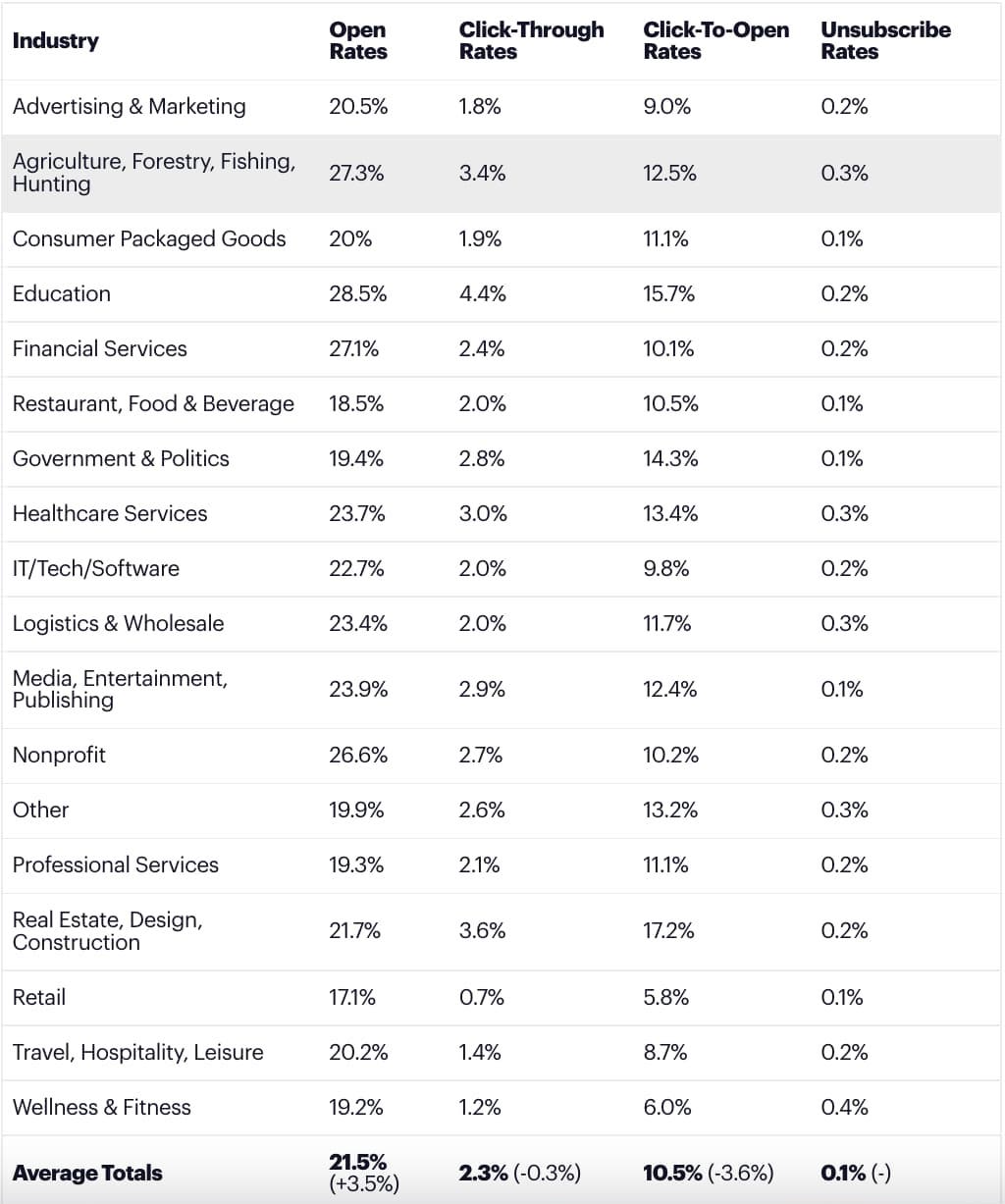
You’ll want to know the average email stats for your industry and use them as benchmarks for your goals.

email marketing stats broken down by industry

As you can see, these benchmarks vary greatly. Using this guide will help you create realistic goals for your team.

3. Build your email list.

You need people to email, right? An email list (we’ll cover how to build your email list in the next section) is a group of users who have permitted you to send them relevant content.

To build that list, you need several ways for prospects to opt-in to receive your emails which we’ll cover in another section in just a moment.

Don’t be discouraged if you only have a few people on your list. It can take some time to build. In the meantime, treat every subscriber and lead like gold, and you’ll start seeing your email list grow organically.

4. Choose an email campaign type.

Email campaigns vary, and trying to decide between them can be overwhelming. Do you send a weekly newsletter? Should you send out new product announcements? Which blog posts are worth sharing?

The answer is subjective.

You can start by learning about the types of email campaigns, then decide which is best for your audience.

You should also set up different lists for different types of emails, so customers and prospects can sign up for only the emails that are relevant to them.

5. Make a schedule.

Decide how often you plan to contact your list and inform your audience upfront.

This way, they’ll know exactly what to expect ahead of time. Forgetting this can lead to high unsubscribe lists and even get you in their spam.

In addition, once you set a schedule, be consistent. It will build trust and ensure you stay top of mind for your audience.

6. Measure your results.

This should come as no surprise. As marketers, we measure everything. Being meticulous about every key metric will help you make small changes to your emails, yielding large results.

We’re going to touch on the exact KPIs to monitor in a bit (or you can jump ahead).

Now that you understand the steps to creating an email marketing strategy, we’ll look at what’s involved in building your email list.

2. Choose an email marketing platform.

An email marketing provider (ESP) is an excellent resource if you’re looking any support while fine-tuning your email marketing efforts.

For example, HubSpot’s Email Marketing tool allows you to efficiently create, personalize, and optimize marketing emails that feel and look professional without designers or IT.

There are a variety of features to help you create the best email marketing campaigns and support all of your email marketing goals.

Additionally, you can analyze the success of your email marketing so you can share the data that matters most to your business with your team. The best part? You can use HubSpot’s Email Marketing service for free.

Here are examples of features services like HubSpot offer to consider when choosing an email service provider:

  • CRM platform with segmentation capabilities
  • Good standing with Internet Service Providers
  • A positive reputation as an email service provider (ESP)
  • Easy-to-build forms, landing pages, and CTAs
  • Automation
  • Simple ways to comply with email regulations
  • Ability to split test your emails
  • Built-in analytics
  • Downloadable reports

3. Build Your Email List

Now to the fun part: filling your email list with eager prospects excited to hear from you.

There are many creative ways to build your email list (and, no, purchasing emails ain’t one).

Tactically speaking, list building comes down to two key elements that work cohesively to grow your subscriber numbers: lead magnets and opt-in forms.

Featured Resources

Here’s how to get started building and growing your email list.

3. Use lead magnets.

Your lead magnet is exactly as it sounds: It attracts prospects to your email list, usually as a free offer.

The offer can take many formats, should be valuable to your prospects, and is given away for free in exchange for an email address.

There’s just one problem: People have become hyper-protective of their personal information. You can’t expect to receive an email address without exchanging it for something valuable.

Think about a lead magnet that is relevant, useful, and makes your prospects’ lives easier.

Here are a few types of lead magnets you could create:

  • Ebooks.
  • Whitepapers.
  • Infographics.
  • Reports or studies.
  • Checklists.
  • Templates.
  • Webinars or courses.
  • Tools.

If you’re short on resources, you can even repurpour existing content to create lead magnets.

4. Create an enticing opt-in form.

Your opt-in form is how you get a prospect’s information to add them to your list. It’s the gate between your future leads and the incredible asset you created with them in mind.

Here are some tips for creating an enticing opt-in form:

Create an attractive design and attention-grabbing header.

Your form should be branded, stand out from the page, and entice people to sign up. You want to excite readers with the offer.

Make the copy relevant to the offer.

While your goal is to get people to enter their information, it isn’t to deceive them. Any information on your form should be a truthful representation of the offer.

Keep the form simple.

This could be one of your first interactions with your prospect. Don’t scare them away with a long long-form several fields.

Ask for only the most essential information: first name and email is a good place to start.

Set your opt-in form for double confirmation.

It may seem counterproductive to ask your subscribers to opt into your emails twice, but some research on open rates suggests that customers may prefer a confirmed opt-in (COI) email more than a welcome email.

Ensure that the flow works.

Take yourself through the user experience before you go live. Double-check that the form works as intended, the thank you page is live, and your offer is delivered as promised.

This is one of your first impressions of your new lead — make it a professional and positive one.

Next, let’s take a moment to cover some universally-accepted email marketing best practices regarding how to send marketing emails.

List snippet

If all goes well, you’ll have built a robust list of subscribers and leads waiting to hear from you. But you can’t start emailing just yet unless you want to end up in a spam folder, or worse, a blocked list.

Here are a few important things to remember before you start emailing your list.

1. Implement email segmentation.

Once you’ve added people to your list, you must break them down into different segments.

That way, instead of having a monolithic email list of everybody, you’ll have easier-to-manage subcategories that pertain to your subscribers’ unique characteristics, interests, and preferences.

Our subscribers are humans, after all, and we should do our best to treat them as such. That means not sending generic email blasts.

Why should you segment your email list?

Each person who signs up to receive your emails is at a different level of readiness to convert into a customer (which is the ultimate goal of all this).

If you send a discount coupon for your product to subscribers that don’t even know how to diagnose their problem, you’ll probably lose them. That’s because you’re skipping the part where you build trust and develop the relationship.

Every email you send should treat your subscribers like humans you want to connect with, as opposed to a herd of leads you’re trying to corral into a one-size-fits-all box.

The more you segment your list, the more trust you build with your leads, and the easier it’ll be to convert them later.

How to Segment Email Lists

The first step in segmentation is creating separate lead magnets and opt-in forms for each part of the buyer’s journey. That way, your contacts are automatically divided into separate lists.

Beyond that, email marketing platforms allow you to segment your email list by contact data and behavior to help you send the right emails to the right people.

Here are some ways you could break up your list:

  • Geographical location.
  • Lifecycle stage.
  • Awareness, consideration, and decision stage.
  • Industry.
  • Previous engagement with your brand.
  • Language.
  • Job Title.

In reality, you can segment your list any way that you want. Just make sure to be as exclusive as possible when sending emails to each subgroup.

2. A/B test your marketing emails.

Not all email lists are created equal. Some audiences prefer personalization, and others will think it’s spammy. Some audiences will like bright, eye-catching CTA buttons. Others will prefer a more subtle call-to-action.

You’ll never know what type of people make up your email list until you test the variables. That’s where A/B testing comes in handy.

“If you’re considering making any structural or content alterations to your email marketing, A/B testing is an excellent way to determine if the changes will be successful or worthwhile before they’re implemented on a larger scale,” says Madison Zoey Vettorino, marketing manager and SEO content writer for HubSpot’s Website Blog.

Surprisingly, not many brands leverage it. A 2021 Litmus study found that 44% of marketers rarely A/B or multivariate test their emails. Only 19% do it often or always.

Copy of Linkedin - 1104x736 - Quote + Headshot - Dark (2)

A/B testing, or split testing, is a way to see what type of email performs best with your audience by analyzing the results of email A against email B. This can be especially helpful when working with templates.

“Since emails often have the same template, A/B testing is smart because you can usually control variables outside of the test and get a solid signal on what performs better,” HubSpot’s Litterst says.

Here’s the step-by-step process for A/B testing your emails:

  • Select one variable to test at a time, e.g., subject line, CTA, images.
  • Create two versions of the email: one with and one without the variable.
  • Allow your emails to be sent out simultaneously for a period of time.
  • Analyze your results and keep only the version that performed better.
  • Test a new variable and repeat the process.

Most email service providers will have A/B testing built into their software, which will make it easy for you to compare email results without much manual work.

When conducting an A/B test, consider these tips:

Test one element at a time.

“For example, try the same email with a different subject line. Or the same email and same subject line with a different CTA,” says Curtis del Principe, a user acquisition program lead and content strategist at HubSpot.

“It might be tempting to make several changes at once, but that makes it harder to pinpoint the true cause of your wins or losses,” he says.

Don’t try to “eyeball” an A/B test.

A/B test should be run with intention. Making quick changes and approaching results unscientifically can lead to incorrect conclusions.

“You might be tempted to run an informal A/B test by making a change and then casually paying attention to the responses that you get. This unscientific method can easily be skewed by factors outside your control (like seasonality or deliverability),” says del Principe. “It also leaves out a ton of valuable data, like open rate, click-through rate, unsubscribe rate, or sharing/forwarding rate.”

Instead, use an email marketing tool, like Marketing Hub or BuzzStream, to help you get a broader and more accurate understanding of your email performance.

Featured Resource

3. Analyze your email marketing performance.

Once you’ve got your first few campaigns, it’s time to see how they’re performing.

By diving into your email marketing analytics, you’ll be able to make better decisions that will help your business’s bottom line, resonate with your subscribers, readers, and customers, and justify your work to the rest of your company.

Here are the best ways to analyze the effectiveness of your email marketing campaigns.

4. Set email marketing KPIs.

There are four key metrics to pay attention to when evaluating the effectiveness of your email marketing campaign.

  • Deliverability measures the rate at which emails reach your intended subscribers’ inboxes.
  • Open rate is the percentage of people that open your email once it reaches their inbox.
  • Clickthrough rate (CTR) is the percentage of people that click on your CTAs.
  • Unsubscribes measures the number of people who opt out of your email list once they receive your email.

5. Adjust email components to improve results.

Many factors impact your KPIs, and it will take some experimentation and guesswork to figure out which tweaks to your emails will yield the biggest significance.

If you aren’t getting the desired numbers, try playing with these variables to improve your email results.

Deliverability

  • Ensure that you’re following best practices regarding spam filters.
  • Remove inactive people from your email list to keep only engaged subscribers.
  • Check which emails have bounced and remove those email addresses from your list.

Open Rate

  • Play with the language in your subject line to entice people to click on your email.
  • Adjust the time and day that you send your email to see what works best.

Clickthrough Rate (CTR)

  • Evaluate your offer to ensure that it provides value to your segmented list.
  • Rewrite your copy to make sure that it’s clear what you want the reader to do.
  • Try different CTAs, e.g., graphic versus Inline copy, bold versus subtle.

Unsubscribes

  • First, consider if this is a blessing in disguise, as uninterested parties are removing themselves from your list.
  • Regularly send an email to inactive subscribers on your list asking if they still want to be a part of it
  • Evaluate whether the email you sent is aligned with your brand.
  • Ensure you haven’t performed a bait-and-switch by promising one thing and delivering another.
  • Make sure your emails are providing value to your audience before trying to upsell.

6. Use an email marketing report template.

Once you’ve got some campaigns under your belt, it’s time to look at how they performed. Your data does no good if you can’t report it in an organized fashion.

An email marketing report is a spreadsheet where you can record your results in one place to help you make inferences from your KPIs and take action to improve them.

Here’s how you should organize your report.

Metrics

  • Total number of emails sent
  • Number of emails delivered
  • Deliverability Rate
  • Bounce Rate
  • Open Rate
  • Clickthrough Rate (CTR)
  • Click-to-open Rate (CTOR)
  • Unsubscribe Rate

Data

  • Subject line
  • Length of the email body
  • Offer
  • CTA (inline or graphic)
  • List segment(s)

Questions To Ask:

  • Was your deliverability rate high in comparison to previous periods?
  • How did your CTR compare to your open rate?
  • Were your unsubscribe numbers consistent with other emails?
  • Did a certain subject line perform better than others?
  • Does the length of the email make a difference in CTR?
  • Could another style of CTA perform better?
  • Was the offer appropriate for the list segment?

Email Regulations You Should Know

Email regulations are important to follow as they regulate and protect consumers’ desires to know how and why their information is being used.

If there’s anything we care about, it’s complying with what our customers—or potential customers—want.

There are a few key ones that you should understand:

1. CAN-SPAM Compliance

Technically, CAN-SPAM is an acronym for Controlling the Assault of Non-Solicited Pornography and Marketing (because sometimes the two go together).

In practice, it’s a way to protect your subscribers’ right to only receive emails that they’ve requested.

The law was passed in 2003 and applies to any commercial emails used for business purposes.

Here are the ways to ensure that your emails are CAN-SPAM compliant:

  • Include your company name and address in every email.
  • Place visible unsubscribe links within your emails.
  • Use real email addresses in the “From” and “Reply to” fields.
  • Write subject lines that indicate the contents of the email.

Please note: This is not to be confused with legal advice. See the FTC’s site for more specific legal information regarding CAN-SPAM laws.

2. GDPR Compliance

While some may view these newly implemented email regulations as burdensome and unnecessary, General Data Protection Regulation (GDPR) moves us closer to building long-lasting, trusting customer relationships.

GDPR is about giving your customers the right to choose. They choose your emails. They decide to hear from you. They choose your products. And that is exactly what inbound marketing is about.

It is important to note that GDPR only applies to businesses operating in the European Union and businesses that market to EU citizens.

Noncompliance will result in significant fees that aren’t worth the risk, so make sure to read the GDPR guidelines entirely.

Here’s an overview of how you can comply with GDPR laws:

  • Use precise language when requesting consent to store personal information.
  • Only collect contact data that is necessary for and relevant to your business.
  • Store contact data securely and only use it for the agreed-upon purpose.
  • Retain data for justifiable business purposes only.
  • Delete contact data on request.
  • Make it easy for contacts to unsubscribe from your list or update their preferences.
  • Comply promptly with a contact’s request for access to their data.
  • Keep company records to prove GDPR compliance.

These regulations will be taken seriously (as they should), so it’s a good idea to create a GDPR strategy for your business before sending emails.

3. Avoid Spam Filters

You spend time creating the perfect email and adhering to regulations, so the last thing you want is to end up in a spam folder.

You’ll want to avoid the spam folder because:

  • It hurts your deliverability rates across the board.
  • Your contacts will likely miss all of your emails.
  • You won’t be able to measure your email marketing effectiveness accurately.
  • Your analytics will be skewed.

You can avoid being deduced to spam with the following.

Get whitelisted.

A whitelist is a list of approved senders that can reach the subscriber’s inbox. The easiest way to accomplish this is to have your new subscriber add your email address to their address book.

Include directions on how to do this in your welcome email.

Mind your copy.

Avoid using all caps and multiple exclamation points, as well as spam trigger words, like “opt-in,” “click below,” and “order,” that are easily detected and marked down by Internet Service Providers (ISPs).

Use a reliable email service provider.

Your email service provider’s reputation affects your deliverability, so stick to established, well-known companies.

Implement a double opt-in.

Once someone opts in to your email list, send an email asking them to confirm. This ensures that your new subscriber is genuinely interested in your emails and will likely be more engaged.

(Check out more ways you can avoid the spam filter.)

And last but certainly not least, you need to consistently measure the success of your email marketing efforts. There are a number of options you can choose from when it comes to your business’s email marketing analytics.

Email Marketing Tips

While you probably don’t think twice about the formatting or subject line of an email you send to a friend, email marketing requires a lot more consideration.

Everything from the time you send your email to the devices on which your email could be opened matters.

Your goal with every email is to generate more leads, which makes crafting a marketing email a more involved process than other emails you’ve written.

Let’s touch on the components of a successful marketing email:

Copy: The copy in the body of your email should be consistent with your voice and stick to only one topic.

Images: Choose images that are optimized for all devices, eye-catching, and relevant.

CTA: Your call-to-action should lead to a relevant offer and stand out from the rest of the email.

Timing: Based on a study that observed response rates of 20 million emails, Tuesday at 11 AM ET is the best day and time to send your email.

Responsiveness: 55% of emails are opened on mobile. Your email should, therefore, be optimized for this as well as all other devices.

Personalization: Write every email like you’re sending it to a friend. Be personable and address your reader in a familiar tone.

Subject Line: Use clear, actionable, enticing language that is personalized and aligned with the body of the email.

Featured Resource

Personalize your email marketing.

“Personalization isn’t just about adding a contact’s name to the subject line anymore but is all about creating personalized experiences that demonstrate you understand them and have insider knowledge about how they can use your products to succeed,” Aleia Walker, growth marketing manager at HubSpot.

Now that you know who you’re emailing and what’s important to them, sending emails with personalized touches will be much easier.

Sure, you’re speaking to 100+ people at one time, but your leads don’t need to know it.

A 2021 report by Litmus revealed that 80% of customers are more likely to make a purchase from a brand that provides personalized experiences.

To really drive this point home, consider this: Personalized emails have higher open rates. In addition, 83% of customers are willing to share their data to create a more personalized experience.

You’ve gathered all this unique data. Your email marketing software allows for personalization tokens. You have no excuse for sending generic emails that don’t make your leads feel special.

“It’s more impactful to base email personalization on two or three factors instead of just what a contact is engaging with on your side,” Walker says.

Walker suggests, “Consider personalizing emails based on what you know about your contact, such as their location, industry, employee size, etc., alongside how they engage with your content.”

Here are a few ways to personalize your emails:

  • Add a first name field in your subject line and/or greeting.
  • Include region-specific information when appropriate.
  • Send content that is relevant to your lead’s lifecycle stage.
  • Only send emails that pertain to the last engagement a lead has had with your brand.
  • Write about relevant and/or personal events, like region-specific holidays or birthdays.
  • End your emails with a personal signature from a human (not your company).
  • Use a relevant call-to-action to an offer that the reader will find useful.

6. Use email marketing templates.

Email marketing templates — like these ones from HubSpot — are another great resource to help you with your email marketing.

Unless you’re a designer and developer, on top of being a skilled marketer, templates will save you a ton of time — they take the design, coding, and UX-definition work out of crafting your emails.

Just one caveat: when making your selection, choose email templates that are proven to be effective.

The highest-quality templates come from the most reputable ESPs that have tested them against thousands of alternatives. So, stick with the professionals.

If you’re struggling with the above tips, HubSpot offers e-mail marketing tools to help personalize your marketing emails, optimize your emails with A/B testing, and create aesthetically pleasing emails using templates.  

Furthermore, HubSpot’s Campaign Assistant uses AI technology to generate copy for marketing emails.

Beginning Email Marketing

While there are many rules to sending a marketing email, the most important is this: Treat the reader on the other end like you’re writing to a friend.

You can achieve all of your email marketing goals if you keep this golden rule top of mind in every autoresponder, lead magnet, and subject line.

And remember, the more you help your subscribers, the more they will want to hear from you and look forward to opening emails that you send.

Editor’s note: This post was originally published in 2019 and has been updated for comprehensiveness.

New Call-to-action

Categories B2B

16 Grants for LGBTQ+ Owned Businesses and Entrepreneurs

Welcome to Breaking the Blueprint — a blog series that dives into the unique business challenges and opportunities of underrepresented business owners and entrepreneurs. Learn how they’ve grown or scaled their businesses, explored entrepreneurial ventures within their companies, or created side hustles, and how their stories can inspire and inform your own success.

Small businesses are the lifeblood of America, and those owned by LGBTQ+ entrepreneurs make a hugely positive impact. According to a 2022 report by the NLGCC, National LGBT Chamber of Commerce, LGBTQ-owned businesses contribute over $1.7 trillion to the U.S. economy and support over 33,000 jobs annually.

But as any entrepreneur knows, starting and growing a small business is not just hard work, but it can be expensive. Startup and growth costs are especially challenging for business owners in marginalized populations, such as the LGBTQ+ community, who face higher levels of financial insecurity and fewer resources than their peers.

Fortunately, LGBTQ+ entrepreneurs can apply for grants specific to their community, or grants that are known to be inclusive of them. If you want to fund your LGBTQ+ small business with a grant, check out the list below.

Read more Breaking the Blueprint content

Grants for LGBTQ+ Owned Businesses and Entrepreneurs

Small business owners commonly fund their ventures with loans, credit cards, lines of credit, and/or investors, but all require repayment, potentially with steep interest fees. While grants are harder to obtain, they’re coveted since the money is gifted and doesn’t have to be repaid.

Grants are offered by a range of entities, including the government, nonprofit organizations, philanthropic foundations, and corporations. They each have their criteria for awarding grants to a select number of businesses or organizations.

1. StartOut

While not quite a typical grant, this membership organization is for LGBTQ entrepreneurs. They offer exclusive networking opportunities, skills training, and mentorship. Members also get access to an investor portal with over 500 investors looking to help finance LGBTQ business owners.

Start Out also has a growth lab, described as the country’s only dedicated LGBTQ accelerator program. StartOut hosts many events, online and in person, and their annual Equity Summit features sessions on funding your business with grants.

Due Date: June 30th, 2023

2. TRANSFORM Business Grant

The TRANSFORM Business grant supports individuals in systematically oppressed groups making a social impact. It’s a microgrant of $1,000 and also includes a customized, year-long business strategy and development program, and preference is given to those in financial need.

Due Date: July – August 2023

3. Queer to Stay

Queer to Stay uplifts LGBTQ+ small businesses and provides the resources they need to operate and continue making an impact. It offers 65+ grants to small, LGBTQ+-owned businesses across the U.S.

Due Date: August 31st, 2023

4. Astraea Foundation

Most grants this foundation awards focus on supporting non-profit and community organizations created by lesbian, trans, intersex, and LGBTQI groups.

Its U.S. fund is a yearly program that supports projects that further the liberation of LGBTQ+ individuals. It accepts proposals from organizations supporting climate justice and disaster resilience for queer, trans, and intersex communities in the U.S. and organizations looking to create long-term, affordable, and sustainable housing for BIPOC LGBTQ+ people in the U.S. South.

Due Date: Accepting proposals as of June 2023

5. Ford Foundation

The Ford Foundation gives out around 1,500 grants annually to support social justice and address inequality in all forms, including a focus area on gender, racial, and ethnic justice.

The foundation identifies most recipients themselves, but they do welcome proposals. A quick search for “LGBTQ” under their recent grantees shows many recipients working in the community, and their website emphasizes supporting the LGBTQ+ population. It’s currently running two grants programs:

  • JustFilms: Supports film and media storytelling projects that explore different aspects of inequality.
  • Good Neighbor Committee: Supports New York-based organizations that contribute to improving and uplifting local communities.

Due Date: Accepting proposals as of June 2023

6. National Pride Grant

Founders First CDC, which doles out various grants, launched its inaugural Pride Grant for LGBTQIA+ Small Businesses in 2023 to increase businesses led by diverse founders; the grant will give $25,000 in grant packages each to 25 LGBTQ-led US businesses.

Due Date: Check back for the 2024 deadline

7. NLGCC Community Impact Grant Program

The National LGBT Chamber of Commerce partners with food delivery business Grubhub for an annual grant program. It offers grants between $10,000 to $25,000 for LGBTQ-owned or allied businesses in the food and beverage industry. 

Due Date: Check back for the 2024 deadline

8. Borealis Philanthropy

Borealis Philanthropy manages several funds that give grants, two geared toward the LGBTQ+ community. The Fund for Trans Generations supports leaders and organizations working to improve all aspects of life for trans and nonbinary people, and funding is available year-round. It also has the Emerging LGBTQ+ Leaders of Color grant, which funds queer and trans leaders of color under age 40 in inclusivity and social justice work.

Due Date: Check back for the 2024 deadline

9. SoGal Black Founder Startup Grant

Black business founders who self-identify as women or non-binary can apply for these grants to remove barriers to capital. Grants range between $5,000 and $10,000 and are given to legally registered businesses to help them scale. Applications are accepted on a rolling basis.

Due Date: Check back for the 2024 deadline

General Business Grants

There are loads of other small business grants available that aren’t exclusive to the LGBTQ+ community, but may be a good fit. Here are a few to get you started:

  • Grants.gov is the central hub for federal grants. Thousands of grant programs are listed in the website’s database, and you can search by keyword. You’ll be able to find grants specifically for those in minority communities, or those that are open to anyone but put a preference on minority applicants. Make sure when searching grants that you check eligibility requirements carefully, as some are only for non-profit or government organizations.
  • The Comcast Rise Grant program originally focused on small business owners of color or women in designated US cities. It’s now open to all small businesses, but their emphasis remains on supporting diversity, equity and inclusion, so LGBTQ+ entrepreneurs — especially those with intersectionalities in other minority groups — may have a better shot.
  • Women Who Tech gives out grants to female-founded or women-focused startups. They have several programs and challenges that grant funding for innovation in technology, so LGBTQ+ business owners who identify as female may want to apply for their grants.

Many businesses are also dedicated to helping LGTBQ+ business owners find the capital they need. Here are some examples:

  • iFundWomen offers coaching, networking, and training. It also offers crowdfunding focused on queer-owned businesses and their campaigns.
  • Pipeline Angels is an angel investor firm that supports transgender women, cisgender women, nonbinary, two-spirit, and GNC founders.
  • Loud Capital is a venture capital firm of diverse founders that invests in businesses owned by diverse founders.
  • Gaingels facilitates venture capital investing through an ecosystem of investors who offer capital to startups and companies run by LGBTQ+ entrepreneurs.

Over to You

Starting and scaling a successful small business can be incredibly rewarding, but the reality is that it’s often exhausting and expensive — especially for LGBTQ entrepreneurs, who already face challenges such as discrimination and wage gaps. As you explore your funding options, make sure to include grants in the mix — the fact that they don’t require repayment can save you heaps of money.

Click the link to discover more Breaking the Blueprint Content.

Categories B2B

How to Perfect Your Resume Headline (+Examples)

Picture this: A busy hiring manager is sifting through dozens, if not hundreds, of resumes. How can you make yours stand out in a sea of sameness? Enter the resume headline, your secret weapon to grab their attention and keep them hooked.

→ Download Now: 12 Resume Templates [Free Download]

In this comprehensive guide, we’ll share everything you need to know about resume headlines, from what they are to how to craft the perfect one. We’ll also discuss 25+ examples and dive into what makes each shine.

Whether you’re a fresh-faced graduate or a seasoned expert, this step-by-step guide will help you create a winning headline that sets you apart from the competition. So, buckle up and get ready to elevate your job search with the best resume headlines.

Table of Contents

What are resume headlines?

A resume headline, or a resume title or summary, is a brief, eye-catching phrase placed at the top of your resume, right below your name and contact information.

It serves as a powerful introduction to your resume, highlighting your most relevant skills, experiences, and accomplishments concisely. Think of it as your personal tagline or an elevator pitch that quickly and effectively communicates your unique value proposition to potential employers.

Resume headlines play a crucial role in capturing the attention of hiring managers and setting the tone for the rest of your resume. A good resume headline entices the reader to learn more about you, ultimately increasing the chances of securing an interview.

In a competitive job market, having a strong and memorable one-liner as a resume headline can make all the difference in setting you apart from other candidates.

Not sure how to get started with crafting your resume? Check out our collection of resume templates.

Why Resume Headlines Matter

In today’s fast-paced job market, hiring managers often take only six to seven seconds to scan each resume before deciding whether to move forward with a candidate.

That’s where resume headlines come in, making a powerful first impression and conveying your most valuable qualifications right off the bat.

They can even stand out from the pile of resumes within a company’s applicant tracking system, which about 75% of companies use.

After perfecting your headline, it’s time to write your full resume. Ready to get started? Check out our resume tips to help you land that job, with advice directly from experienced recruiters.

Benefits of Resume Headlines

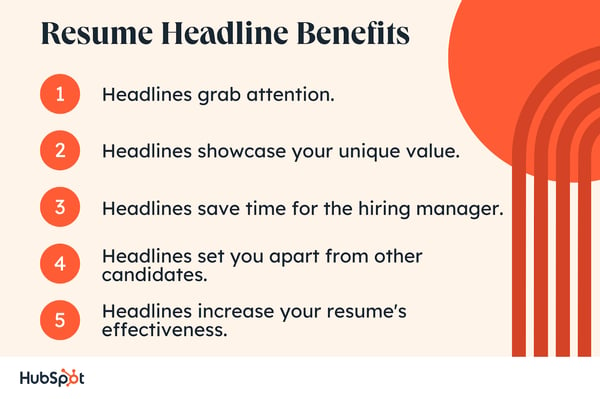
Here are some key benefits of using a resume headline.

Resume Headline Benefits. Headlines grab attention. Headlines showcase your unique value. Headlines save time for the hiring manager. Headlines set you apart from other candidates. Headlines increase your resume's effectiveness.

1. Headlines grab attention.

A well-written resume headline immediately catches the eye of a hiring manager, setting the stage for the rest of your resume.

Clearly stating your value proposition encourages the reader to explore your resume in greater detail.

2. Headlines showcase your unique value.

Your resume headline allows you to highlight your most relevant skills, experiences, and accomplishments tailored to the specific job you’re applying for.

This targeted approach demonstrates that you’ve carefully considered the employer’s needs and how you can address them.

3. Headlines save time for the hiring manager.

With a concise and compelling resume headline, you make it easy for hiring managers to quickly identify your strengths and qualifications.

This efficiency is crucial when they have limited time to review a large volume of resumes.

4. Headlines set you apart from other candidates.

A well-crafted resume headline distinguishes you from other applicants by showcasing your unique selling points.

In a competitive job market, standing out from the crowd is essential to securing interviews and ultimately landing the job.

5. Headlines increase your resume’s effectiveness.

With such a short window of opportunity, an impactful resume headline can significantly increase the chances of your resume being noticed and retained in the hiring manager’s mind.

How to Write a Resume Headline

Crafting the perfect resume headline requires a thoughtful and targeted approach.

By following these steps, you’ll be well on your way to creating a compelling and attention-grabbing headline that sets you apart from the competition.

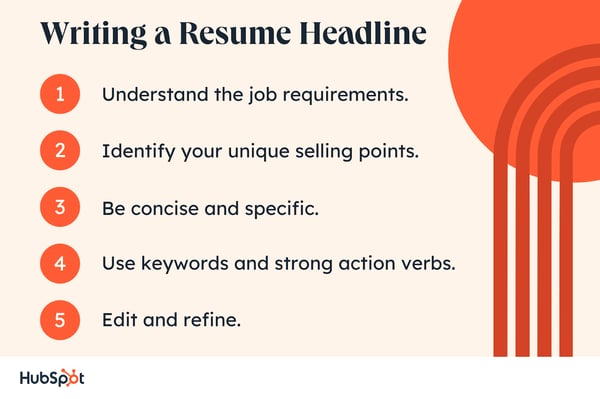
Writing a Resume Headline. Understand the job requirements. Identify your unique selling points. Be concise and specific. Use keywords and strong action verbs. Edit and refine.

Understand the job requirements.

Before writing your resume headline, carefully review the job description and list the most important skills, qualifications, and experiences required for the position.

This will help you tailor your headline to the employer’s specific needs and demonstrate that you’re the right fit for the job.

Identify your unique selling points.

Take a moment to reflect on your professional background and identify your key strengths, accomplishments, and relevant experiences to the job.

Consider what makes you stand out from other candidates and how your unique selling points align with the employer’s needs.

Be concise and specific.

Aim to keep your resume headline brief, ideally between 5 to 15 words. Focus on the most relevant and impactful information, and avoid using cliches or generic phrases.

Specificity is key — use numbers, percentages, or other concrete details to quantify your achievements whenever possible.

Use keywords and strong action verbs.

Begin your resume headline with a strong action verb that highlights your skills and accomplishments, such as “managed,” “developed,” or “achieved.”

Incorporate relevant keywords from the job description to showcase your familiarity with the industry and the specific role.

Edit and refine.

Once you’ve drafted your resume headline, take a step back and review it with a critical eye. Edit and refine your headline to ensure it’s concise, clear, and free of any spelling or grammatical errors.

Ask for feedback from a trusted friend or colleague to ensure your headline effectively conveys your unique value proposition.

Resume Headline Examples

Now that you have a solid understanding of how to write a resume headline, let’s explore real-life examples that showcase the principles we’ve discussed.

These examples of resume headlines span industries and levels of experience, and they all do a great job of grabbing the hiring manager’s attention.

Note how each headline is tailored to the job and emphasizes the candidate’s strengths, accomplishments, and work experience.

Entry-level Resume Headline Examples

1. Enthusiastic Marketing Graduate with a Strong Academic Background in Digital Advertising

Best for: Marketing graduates seeking entry-level roles

What we like: A few vivid adjectives ending with a focus on the applicant’s background make this headline upbeat.

2. Detail-Oriented Finance Major with Internship Experience at Top Investment Firm

Best for: Finance students pursuing roles in the financial sector

What we like: This headline captures a key characteristic of the applicant and highlights their most important experience to date.

3. Driven Sales Associate with Proven Track Record in Customer Satisfaction and Retention

Best for: Recent graduates pursuing sales roles

What we like: The claim to a “proven track record” directs hiring managers to scan the rest of the resume to find said track record.

Mid-level Professional Resume Headline Examples

4. Experienced Project Manager with a 90% On-Time Delivery Record

Best for: Professionals with project management experience seeking a leadership role

What we like: Including the record percentage provides a concrete metric for hiring managers to consider.

5. Certified Software Engineer Specializing in Full Stack Development and Agile Methodologies

Best for: Software engineers looking to showcase their technical expertise

What we like: This headline names specific areas of specialization, highlighting exactly what this candidate offers.

6. Bilingual HR Specialist with Expertise in Recruitment and Talent Management

Best for: HR professionals targeting roles in multicultural organizations

What we like: Naming a special skill, like being bilingual, immediately sets this candidate apart.

Senior-level Professional Resume Headline Examples

7. Visionary CMO with 10+ Years of Experience Driving Brand Growth and Revenue

Best for: Senior marketing professionals seeking executive roles

What we like: This headline specifies the number of years of experience, immediately giving the candidate credibility as a leader.

8. Award-Winning Sales Director with a History of Consistently Exceeding Sales Targets

Best for: Goal-oriented sales executives looking to showcase their achievements

What we like: These are big claims in the headline — and a great option if you can support them with evidence in the rest of your resume.

9. Innovative Product Manager with a Track Record of Successful Product Launches

Best for: Product managers with experience in bringing new products to the market

What we like: The adjective at the beginning, “innovative,” pairs nicely with the action of “successful product launches.”

Technology and Engineering Resume Headline Examples

10. Certified Data Analyst with Expertise in SQL, Python, and Tableau

Best for: Data analysts seeking roles in data-driven organizations

What we like: Naming the candidate’s specific expertise immediately lets recruiters know if the candidate is fit for the job.

11. Civil Engineer Specializing in Infrastructure Development and Sustainable Design

Best for: Civil engineers targeting roles in environmentally-conscious firms

What we like: Highlighting specific areas allows the recruiter to know whether they want to keep reading or not.

12. Cybersecurity Expert with 5+ Years of Experience Protecting Enterprise Networks

Best for: IT professionals focusing on cybersecurity

What we like: This headline emphasizes the candidate’s area of experience, likely because they’re looking for another job with an enterprise network.

Healthcare and Sciences Resume Headline Examples

13. Registered Nurse with 7 Years of Experience in Critical Care and Emergency Medicine

Best for: Experienced nurses targeting specialized healthcare roles

What we like: Putting the number of years in the headline saves the recruiter the time of calculating years of experience based on the dates listed in the resume.

14. Pharmaceutical Sales Representative with a Proven Record of Increasing Market Share

Best for: Sales professionals in the pharmaceutical industry

What we like: This headline is simple and direct.

15. Environmental Scientist Specializing in Climate Change Mitigation and Policy Development

Best for: Scientists pursuing roles in environmental research and policy

What we like: The word “specializing” can be used for candidates with experience in their area or those who are just starting out but focused their studies on that particular topic.

Education and Training Resume Headline Examples

16. Passionate Elementary School Teacher with 10 Years of Experience Fostering Student Success

Best for: Educators seeking roles in primary education

What we like: “Student success” is a great general phrase that captures what good teachers do best, which can be elaborated on in the resume below.

17. Corporate Trainer with a Focus on Leadership Development and Employee Engagement

Best for: Professionals in organizational development and training

What we like: Providing the focus gives the hiring agent a better idea of the candidate’s experience than simply the job title.

18. Instructional Designer with a Track Record of Creating Engaging eLearning Content

Best for: Instructional designers targeting roles in online learning

What we like: This headline focuses on the accomplishments of the candidate.

Creative and Media Resume Headline Examples

19. Art Director with a Portfolio of Award-Winning Campaigns for Global Brands

Best for: Creative professionals in advertising and design

What we like: “Award-winning” and “global brands” are attention-grabbing words that are sure to intrigue a hiring manager to read on.

20. Social Media Strategist with a History of Boosting Brand Awareness and Engagement

Best for: Social media specialists targeting roles in marketing

What we like: Modest and to the point, this headline simply states what the candidate has accomplished and implies what they can do in their next job.

21. Seasoned Journalist with a Passion for Investigative Reporting and Multimedia Storytelling

Best for: Journalists seeking roles in news organizations

What we like: “Seasoned” nicely implies experience without listing the number of years, while the two stated passions strongly describe this candidate.

Business and Finance Resume Headline Examples

22. Certified Public Accountant with a Strong Background in Financial Analysis and Reporting

Best for: Accounting professionals targeting roles in finance

What we like: This headline succinctly lists the candidate’s qualifications and background.

23. Operations Manager with 8 Years of Experience in Streamlining Processes and Reducing Costs

Best for: Professionals with operations management experience seeking leadership roles

What we like: Operations managers do lots of things, so emphasizing two key areas helps recruiters get to know this candidate better quickly.

24. Supply Chain Expert with a Track Record of Improving Efficiency and Reducing Lead Times

Best for: Professionals in logistics and supply chain management

What we like: Improving efficiency and reducing lead times are essential parts of this job, so listing them upfront is a good idea.

Customer Service and Retail Resume Headline Examples

25. Customer Service Manager Committed to Enhancing the Customer Experience and Building Loyalty

Best for: Customer service professionals targeting managerial roles

What we like: “Committed” is another flexible word that a seasoned or aspiring manager can use to share their values in their headline.

26. Retail Store Manager with a History of Increasing Sales and Reducing Employee Turnover

Best for: Retail professionals seeking store management positions

What we like: You’d expect a successful retail manager to increase sales, but this headline also shares another important achievement: reducing employee turnover. Be sure to highlight what you have done and what you can do in your next position.

27. Hospitality Professional with 5+ Years of Experience in Event Planning and Coordination

Best for: Professionals in the hospitality industry targeting event planning roles

What we like: Years of experience make this headline stand out.

Sealing the Deal With an Effective Resume Headline

In a competitive job market, the power of a captivating resume headline can’t be overstated. By following this step-by-step guide, you’ll be well-equipped to create a headline that grabs attention and highlight your unique strengths.

Remember to tailor your headline to the specific job requirements, showcase your unique selling points, and maintain a concise, clear, and impactful style.

With a winning resume headline, you’ll capture the interest of hiring managers and increase your chances of securing your dream job.

So, go ahead and perfect that headline — your future self will thank you!

New Call-to-action

Categories B2B

B2B Lead Generation: The Best Campaigns for Every Channel

19% of marketers say generating leads is their top goal in 2023.

However, building an effective lead generation strategy is often easier said than done. To do it right, you need an in-depth understanding of tried-and-tested channels.

In this post, you’ll gain insights into each major channel for B2B lead generation, including social media, PPC, blogging, and email. Best of all, you’ll learn effective strategies and impressive real-world examples for each.

Let’s dive in.

Download Now: Lead Generation Best Practices Guide

Table of Contents

What is B2B lead generation?

B2B lead generation is the process of bringing prospective customers to your organization. These leads should be potential buyers who would benefit from your business’ product or service.

The types of leads generated vary by campaign and marketing platform. Disciplined B2B marketers understand the different dynamics, budgets, and expectations typical of each lead generation channel.

Learn more about B2B lead generation in the video below.

Social Media Marketing Strategies

Social media is a critical component of B2B marketing. In fact, 36% of B2B marketers determine which social media platforms to leverage based on their lead generation potential.

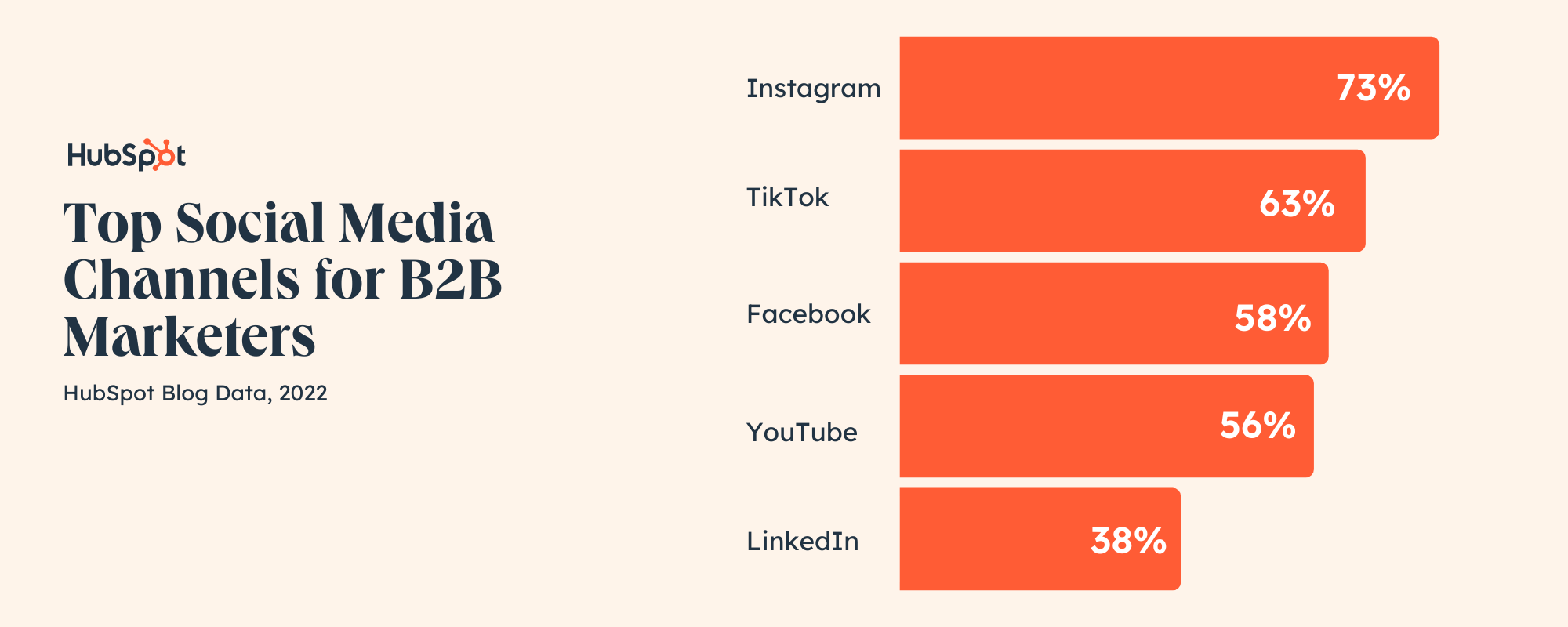
Here are the most popular social media channels for B2B marketers: 

Social media b2b lead gen

Here’s how your team can perfect your social media strategy.

What is the conversion rate of social media?

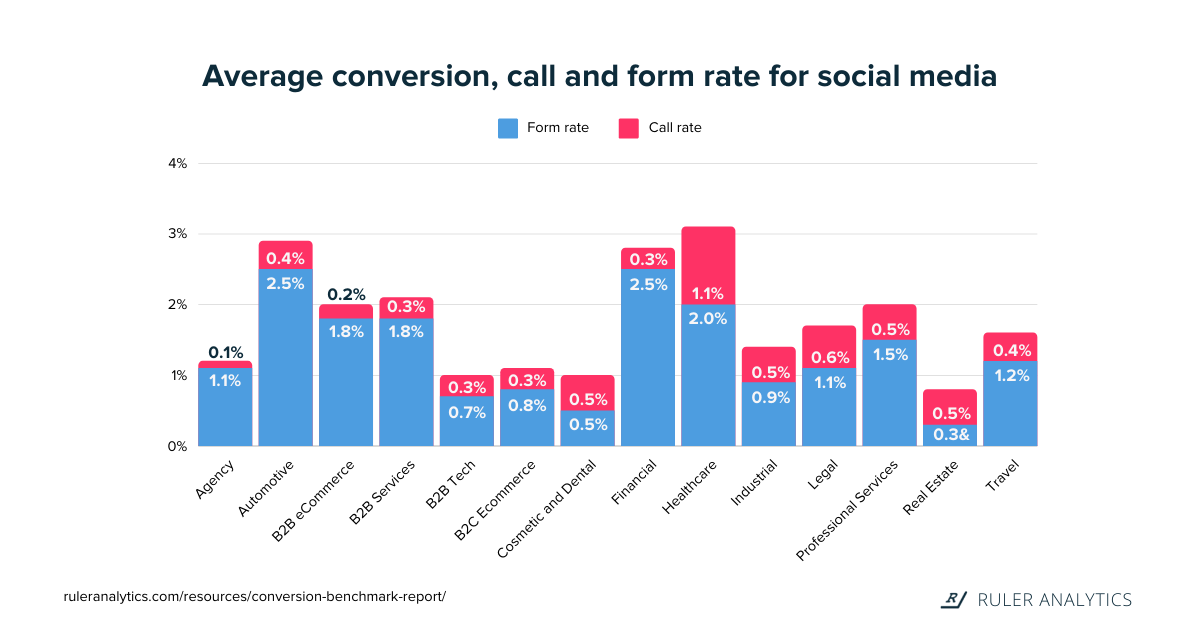
While there’s no single answer for B2B social media conversion rates, there are some calculated assumptions you can use to gauge efficacy. For B2B companies, social media conversion rates fall around 1.55% on average, according to 2021 research from Ruler Analytics.

Best B2B Lead Generation Strategies Rule Analytics Conversion Rates

Image Source

While social media is an important means of generating leads, these platforms have a lower conversion rate compared to other B2B digital channels. Ruler Analytics found that social media had the lowest average conversion rate for B2B companies when compared to paid marketing, organic search, email marketing, and referrals.

Remember: Social media is an important channel for top-of-the-funnel awareness. Even if you see higher conversion rates elsewhere, social media can keep your brand top-of-mind for potential buyers.

To increase conversion rates, focus on promoting helpful content behind lead capture forms. For example, you might promote a downloadable ebook to capture quality leads with an initial offer.

There are two main channels you should focus on:

  • LinkedIn Ads.
  • Facebook Lead Ad.

Let’s dive into each of these primary B2B social media channels now.

LinkedIn Ads

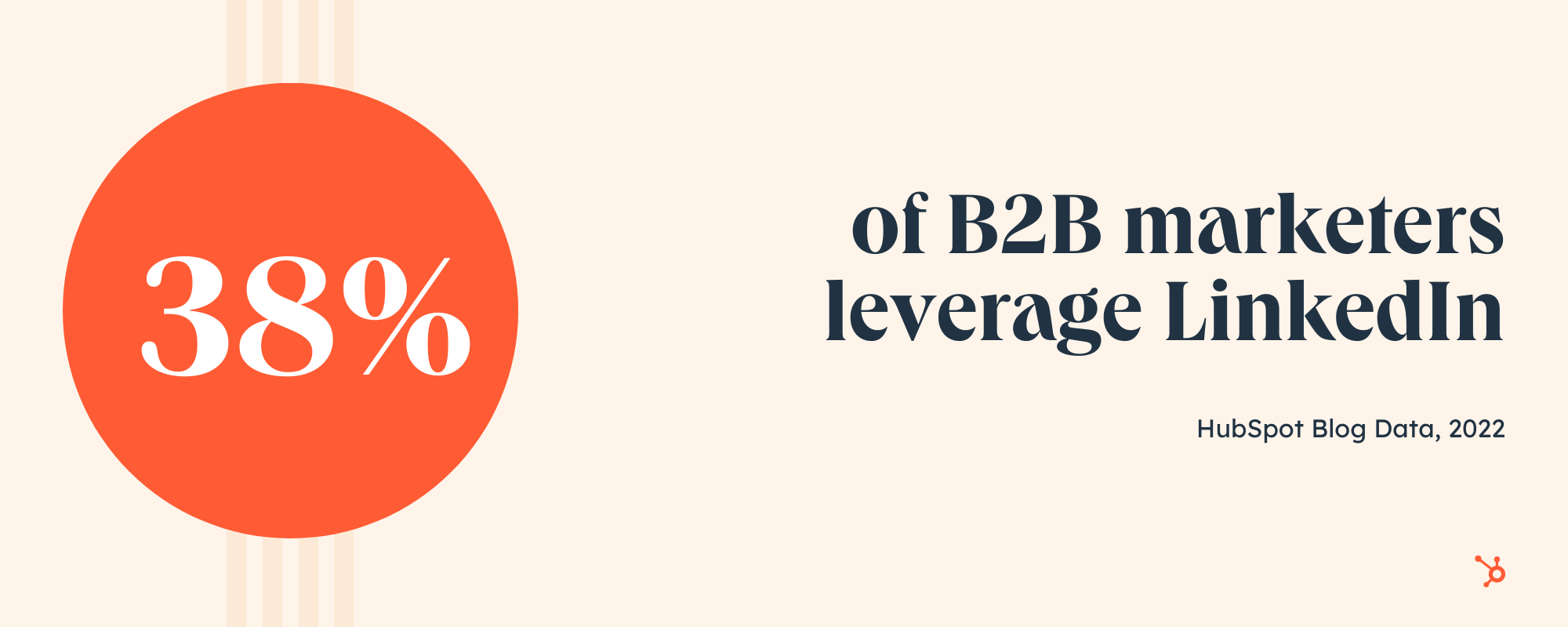
It’s no surprise that LinkedIn, the go-to B2B social network, has above-the-board figures when it comes to social media conversion. In fact, 38% of B2B marketers leverage LinkedIn.

B2b lead gen LinkedIn (1)

However, investing your energy in a channel with high engagement rates doesn’t automatically guarantee success. On LinkedIn, you must:

  • Target your audience based on buyer persona.
  • Make sure your ads have a newsworthy, topical angle.
  • Continuously test CTAs, images, and copy.

Pro tip: LinkedIn can be a helpful platform to display social proof. Consider sharing testimonials or case studies. Potential customers can then see which brands in their network you’ve already helped with your offering.

You can learn more about the nitty-gritty of LinkedIn Ad strategies from this LinkedIn-HubSpot 2-week free course.

Facebook Lead Ads

More than half (58%) of B2B marketers leverage Facebook. Using Facebook lead ads in your marketing strategy can help you navigate the shift to mobile.

Facebook lead ads allow your prospects to sign up for offers inside a mobile interface. These ads also allow you to generate leads generation inside the world’s largest social media channel.

Designed to be both targeted to your audience and highly customizable, Meta launched this service in 2015. Customers can now sign up for your offer in just two taps, without leaving the social network.

B2B lead generation best practices, Facebook Lead Ad example

Image Source

Remember: Facebook lead ads aren’t designed to replace your landing pages. While Facebook Lead Ad helps you capture leads inside Facebook, your landing pages are still necessary for capturing leads from organic search and PPC.

For more details, check out this step-by-step procedure on how to create Facebook Lead Ads.

Tip for Running Great Social Media Lead Generation Campaigns

Case 1. Using Scarcity and Exclusivity

When we believe something is in short supply, we’re willing to pay a premium for it. This is known as the scarcity principle.

Virgin Active South Africa used scarcity (a limited-time offer) to increase the value of their offer. Their slogan — “Is summer ready for you?” — rings of seasonality. The question, along with the related offer, is only for the summer season.

What we like: In addition to seasonal messaging, the accompanying image emphasizes summer fun. The key messages and CTAs are also clearly highlighted.

B2B lead generation best practices, Virgin Active Facebook Lead Ad example

Image Source

Case 2. Giving Before You Get

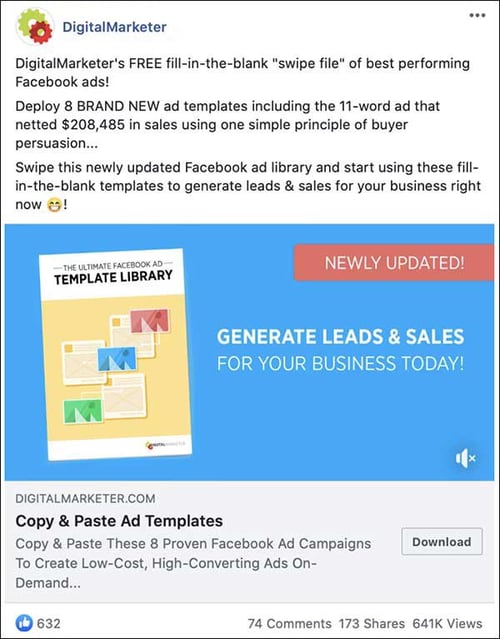
DigitalMarketer doesn’t sell — it gives something valuable away for free. That’s a compelling deal. By creating a clear value proposition, leads are more likely to share information with DigitalMarketer.

Their image amplifies the message and the CTA is clear but subtle. DigitalMarketer hooks leads through the law of reciprocity, which makes users feel they should return the favor through a later engagement.

DigitalMarketer Top Performing Facebook Lead Ad B2B Lead Generation Best Practices

Image Source

What we love: Digital Marketer’s copy emphasizes how templates can both save time and generate sales. Find ways to demonstrate your value ad to entice leads to your offering.  

Case 3. Finding the Right CTA

Your call-to-action should be enticing and tell readers exactly what will happen when they click. The phrase “Book Now” creates a sense of urgency. The viewer feels like they should book their ticket for the Van Gogh event before time runs out.

best b2b lead generation example, Van Gogh Sacramento

Image Source

What we love: This ad describes the art installation in the text and shows the experience visually. The viewer can picture the experience in their head when they click “Book Now.”

PPC Lead Generation Strategies

Pay-per-click (PPC) lead generation campaigns focus on a wide range of paid advertising platforms — the most popular being Google AdWords and Display Network. However, you’ll find a wide range of PPC lead generation options outside of Google, including:

  • B2B review directories or comparison sites.
  • Trade media display ads.
  • Social media advertising.
  • Affiliate marketing.

What is the conversion rate in PPC lead generation?

Adwords conversion rates fall around 2.41% for B2B companies, according to 2021 data from WordStream. Meanwhile, display conversion is averaged at 0.77%. However, rates vary depending on your industry.

It’s important to know your industry benchmarks. A good starting point is to ask each PPC vendor for their average conversion ratio across the board. This lets you evaluate your campaign results better.

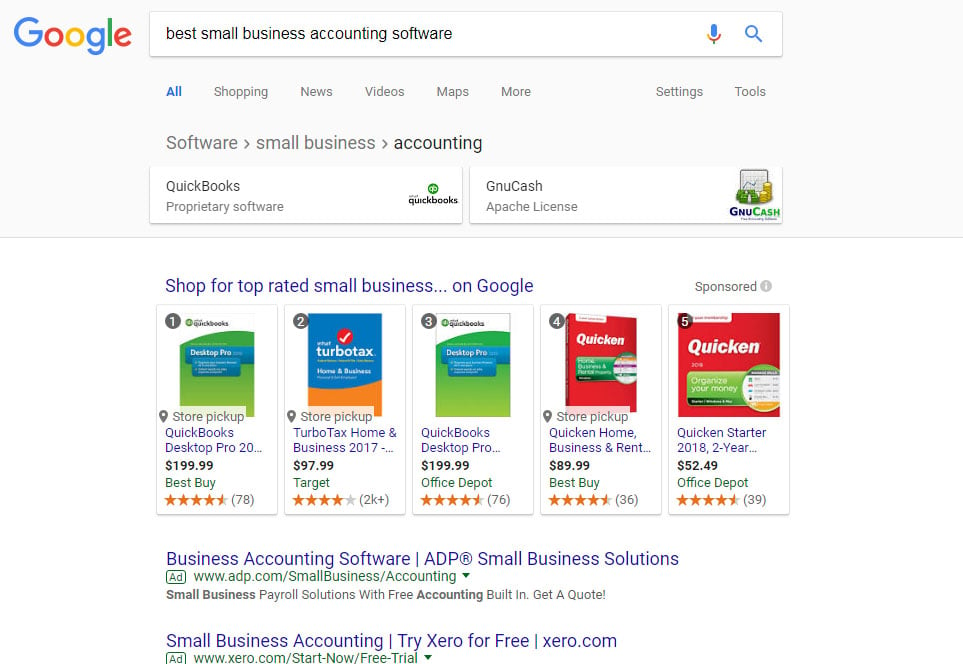
Should PPC replace organic marketing? No — they complement each other. For instance, many high-value keyword searches have only PPC ads above the fold like this.

B2B lead generation best practices Google search for “best small business accounting software”

In other words, even if you have a good organic ranking, it may be buried under PPC ads.

An Example of an Efficient PPC Lead Generation Channel

Among the PPC platforms mentioned above, B2B review directories and comparison sites can provide a uniquely fresh lead source. Other PPC channels are likely already saturated by big players in your space, the ones with deep pockets.

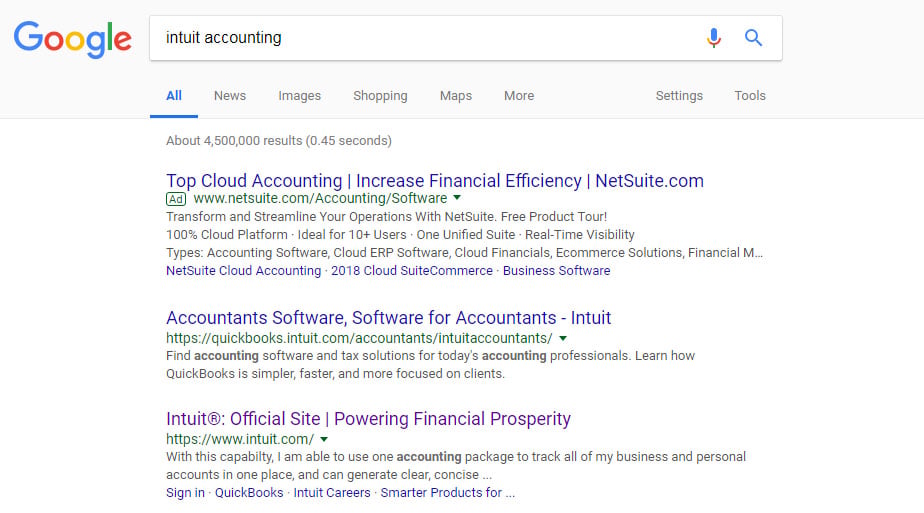
For instance, in SaaS, a highly competitive industry across verticals, AdWords bidding is highly competitive. To win, you’ll need to target a lot of relevant keywords. Sometimes competitors even bid for keywords against your own brand — like this example, where Netsuite ranks higher for “Intuit Accounting.”

B2B lead generation best practices Google search for “intuit accounting”

For many SaaS startups and SMBs, having another lead source like B2B review sites provides the option to meet and even surpass monthly lead quotas.

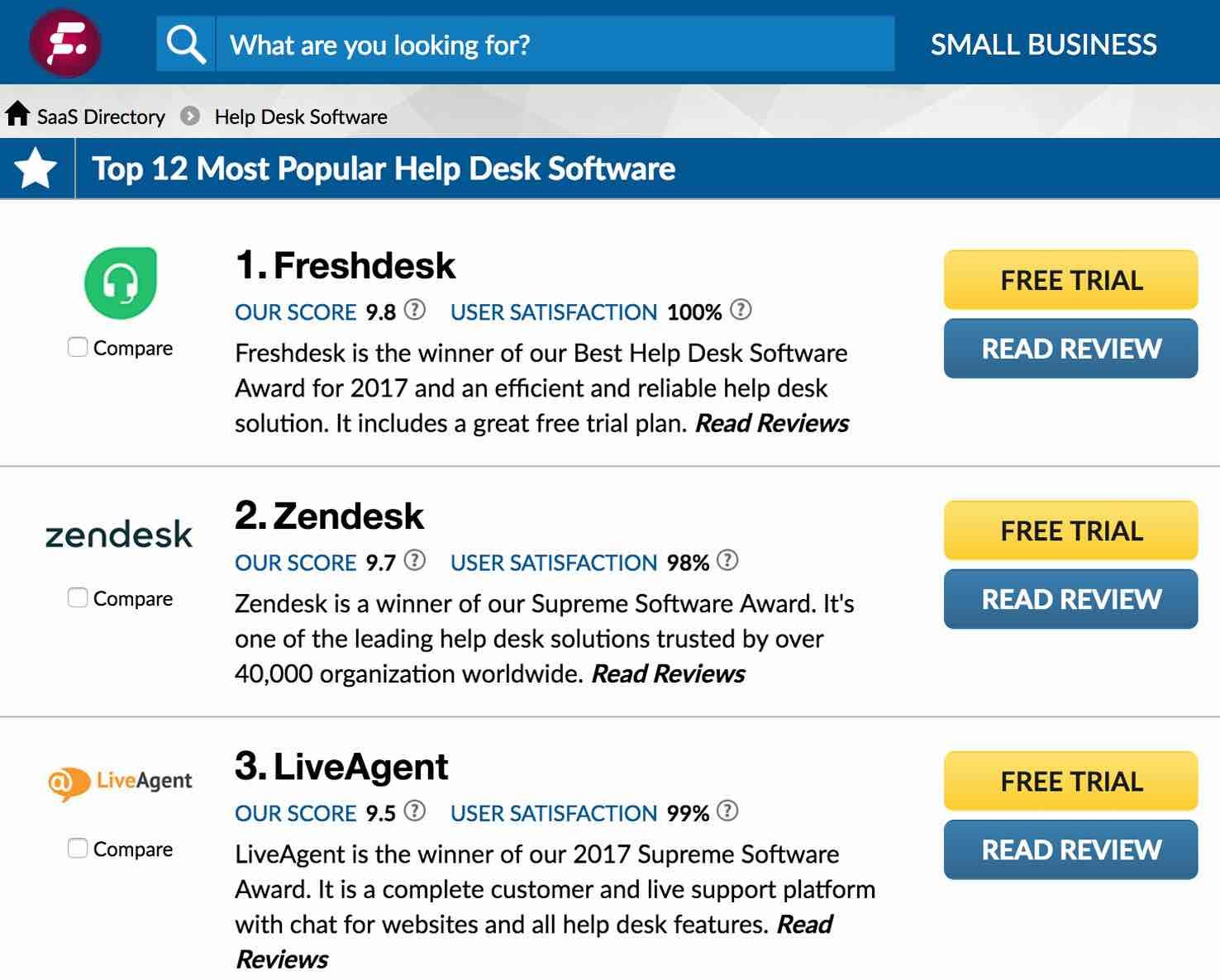
Let’s take a closer look at which popular marketing tools are used for lead generation by such sites. For example, here’s what FinancesOnline, one of the top software review platforms, offers:

  1. Lead generation campaigns: The review site can link directly to a vendor’s sign-up landing page, encouraging people who read your review to try out your free trial next. These campaigns can generate as much as a 24% conversion rate.
  2. Premium placement: In an increasingly commodified SaaS category, like a CRM where features are more standardized than unique, being included in a premium placement can make or break your sales opportunity. You have a much higher chance of attracting new leads if you’re listed among the most popular solutions, as prospects will usually only try out a few products. Make sure you get on such a list, because your competitors are probably already there.
  3. Industry awards: When buyers are comparing your product to your closest competitors, having your product stand out thanks to a featured quality award can have a critical impact on your sales. FinancesOnline, like many other review platforms, can give your product an edge with such awards.

B2B lead generation best practices FinancesOnline SaaS directory help desk software

Image Source

Look for a third-party online marketplace in your industry, and get in touch with these intermediaries to ensure your product is listed.

Blogging Lead Generation Strategies

Blogging is at the core of content marketing. This strategy focuses on creating content that is interesting or valuable to your defined audience. The goal is to attract and sustain online engagement for leads down the road.

A lot has been said about the benefits of business blogging. Let’s reiterate the major benefits.

  1. You can drive traffic to your website. With the right SEO planning, your blog gives you search presence, linking you to keywords relevant to prospects. Every blog post you write is one additional indexed page that helps get your content on Google.
  2. You can convert traffic to leads. A well-placed CTA in a compelling blog post can direct prospects to your landing page for leads.
  3. You can gain repeat business. A blog can delight existing customers with fresh content for repeat business or referrals.

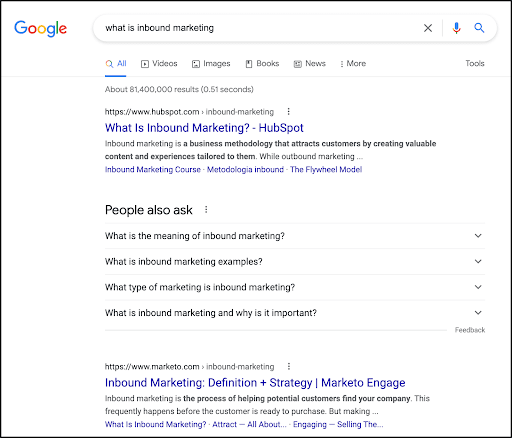
Blogging also establishes niche authority and places prospects within your sphere of influence. Blogging is a large part of the HubSpot Strategy. Just search “inbound marketing” or its derivatives, and you’ll come across HubSpot consistently.

B2B lead generation best practices Google search “what is inbound marketing”

How effective is blogging in the long run? At HubSpot, about 90% of the leads our marketing team generates each month come from blog posts that were published many months — or sometimes years — ago.

Which content types drive lead generation?

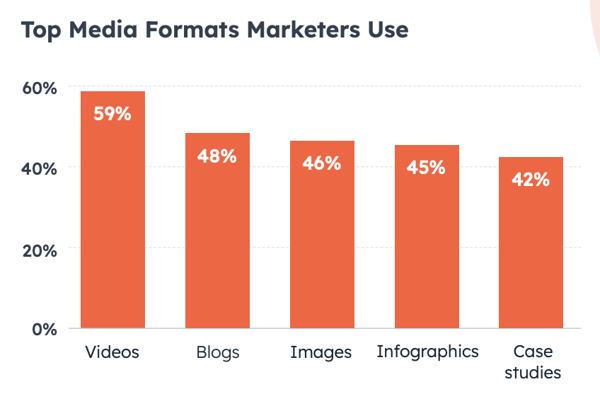
If you’re planning on just writing a blog or only working with video, you’re out of luck. Robust content marketing strategies use a variety of formats to engage their audiences. Video, blogs, and images are among the top media that marketers use.

Best B2B lead generation, top media formats marketers use

When building your content marketing strategy, consider including the following content.

  1. Authoritative posts are blog posts about subjects you’re an expert in. Readers should leave understanding with a better understanding of the topic at hand.
  2. Solid opinion pieces can help you spread brand awareness. However, this shouldn’t just be your ideas and thoughts. Persuading option pieces are backed by data and research.
  3. Original research is commissioned for industry consumption. Focus on questions that have yet to be answered or data sets that need a refresh.
  4. How-tos provide tips and tutorials to address prospects’ problems. By the end, they’ll have their issue resolved and you to thank.
  5. Trending content can help you capitalize on popular topics. Have any headlines and trends been related to your business? Consider a blog post that connects the dots.
  6. Infographics turn information into digestible visual bits for easy consumption. Encourage your audience to share these images where applicable.
  7. Videos on the upswing in content marketing. In fact, 72% of prospects prefer to watch a video over reading about a product. If your company does not have video talent in-house, consider contracting a team to help you produce this content.

Remember: These content types are most effective when they align with your marketing goals. In short, the hard work is still on you — you have to develop topics that are lead magnets to your audience.

Examples of Great B2B Blogging Campaigns

Case 1: Running Your Blog Like a Media Pro

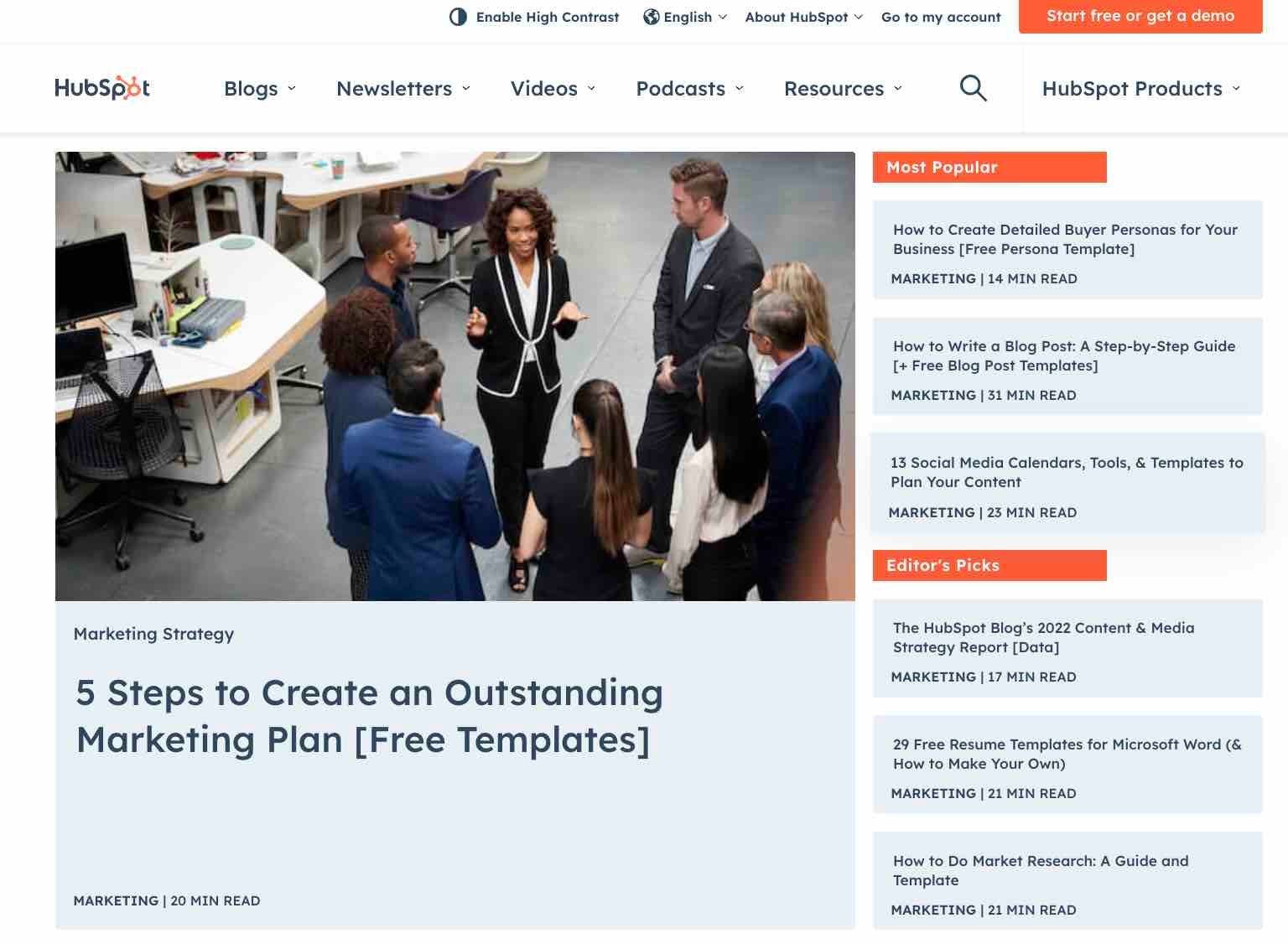
HubSpot is influential when it comes to inbound marketing. But it didn’t happen by accident — HubSpot’s marketing team works hard to run its blog as a media site with a full editorial calendar.

HubSpot’s blog publishes tips, listicles, ideas, inspiration, insights, reports, ebooks, white papers, videos, and more. All of this content relates to inbound methodology across its niche segments in marketing, sales, website, and service. The blog even outperforms entrenched business media like Forbes and CNN Money in SERPs about inbound marketing.

B2B lead generation best practices HubSpot blog

Image Source

Case 2: Knowing Your Audience

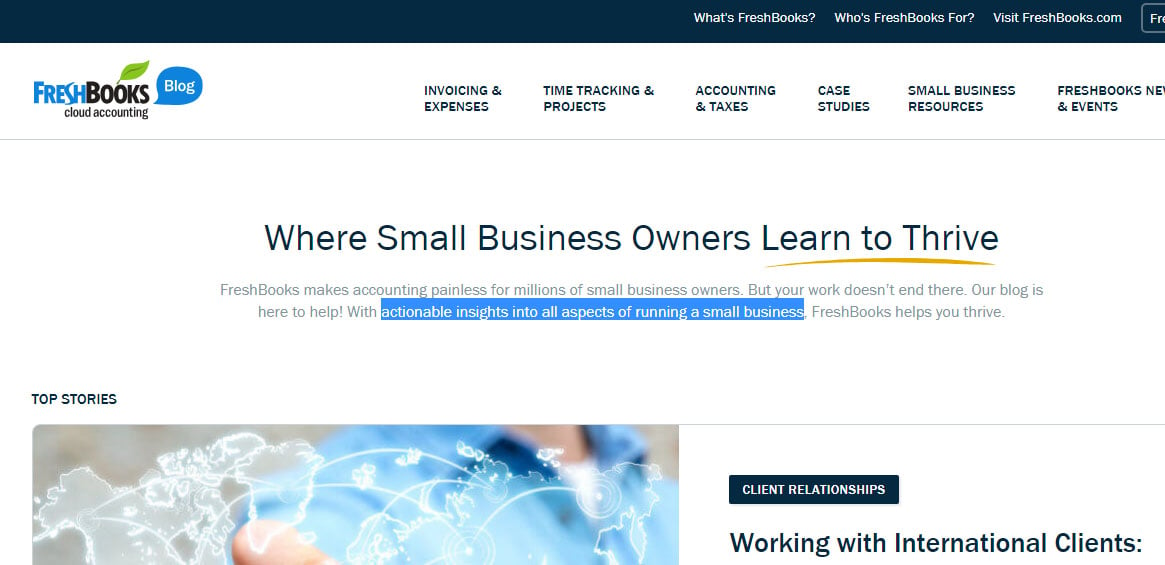
FreshBooks is clear about its target audience. In fact, the first step to having great content is to know your audience (your “Ideal Customer” personas). For FreshBooks, this means delivering “actionable insights into all aspects of running a small business.”

B2B lead generation best practices FreshBooks blog

Image Source

Case 3: Leveraging Thought Leaders

Have any die-hard supporters or thought leaders in your base? Have them put their insights and opinions about your industry in your blog posts.

Your thought leader should be writing regular posts to leverage SEO and brand association, both of which can result in more leads down the road.

Email Marketing Lead Generation Strategies

A staggering 90% of B2B marketers say email marketing is either very effective or somewhat effective for reaching their goals, according to 2022 HubSpot Blogs report.

Email is often the bridge between marketing automation and CRM, two cloud solutions most widely used by marketers today. The email opt-in is still the starting point of lead generation and email marketing is the core of lead nurturing.

The advent of automated lead scoring, predictive analytics, and AI algorithms only reinforces email marketing with laser-focused, personalized touches, and real-time delivery.

For instance, HubSpot users can automate their email campaigns and move their prospects further down the funnel to generate more leads. This doesn’t require any coding skills — in fact, it’s as simple as setting up certain triggers that will send your emails to the right leads at the right time. Take a look at the video below:

In short, email marketing is still one of your best tools to engage intent signals, distribute content, and deliver pitches.

What is the conversion rate of email marketing?

You’re looking at two variables when it comes to email marketing:

  • Open rate.
  • Click-through rate (CTR).

A GetResponse study puts the overall email open rate average at 82.20% and CTR at 21.69%. The report further divided the figures by location, with North America at a 23.53% open rate and 3.86% CTR.

By industry, internet marketing has a 14.97% open rate and 1.66% CTR, as of 2022.

Meanwhile, Marketing Insider Group puts email marketing conversion into another perspective: You earn $44 for every dollar spent on email marketing. The consensus is, yes, email marketing has one of the highest conversion rates, corroborating the DemandWave findings above.

Which factors influence email marketing conversion?

It takes creativity to brainstorm your content or offer, but with that aside, email marketing is more of a science. You can measure it, analyze it, and improve it. Here are the key factors that affect your email marketing conversion rates:

  1. Value offers. You must have a lead magnet to attract email sign-ups, whether it’s value content, freebies, deals, or anything that is interesting to your audience.
  2. Landing pages. Optimize these pages by having a clear offer of your lead magnet, compelling CTA, permission, and appealing visuals.
  3. Email subject lines. Keep your subjects short, crisp, and compelling with clear benefits to the recipient.
  4. Segmentation. Split your list into sublists for more targeted messages, which will allow you to increase your open and click-through rates.
  5. Analytics. Run analytics to do regular clean-up of your lists and update it as necessary based on past recipient actions.

Examples of Great B2B Email Marketing Campaigns

Case 1: Storytelling

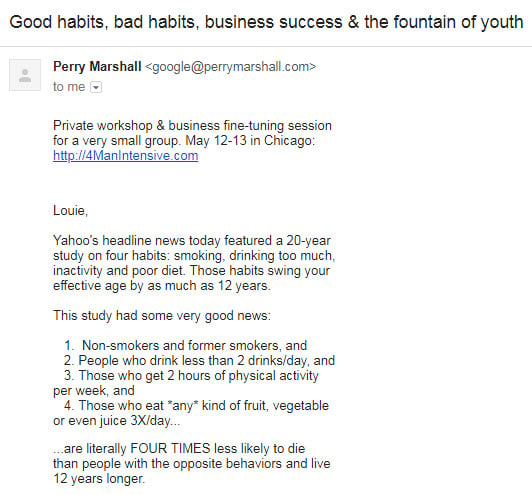
At its core, email marketing is about your message, and here’s where your skill in storytelling can weave magic into a bland topic like a business workshop, captivating the prospect’s interest. 

Perry Marshall, the best-selling author of Ultimate Guide to Google AdWords, is a master of storytelling. He can hook seemingly unrelated subjects together, all leading to his value offer.

Perry Marshall good and bad habits, b2b lead generation storytelling best practices

Case 2: Use of Humor/Allegory

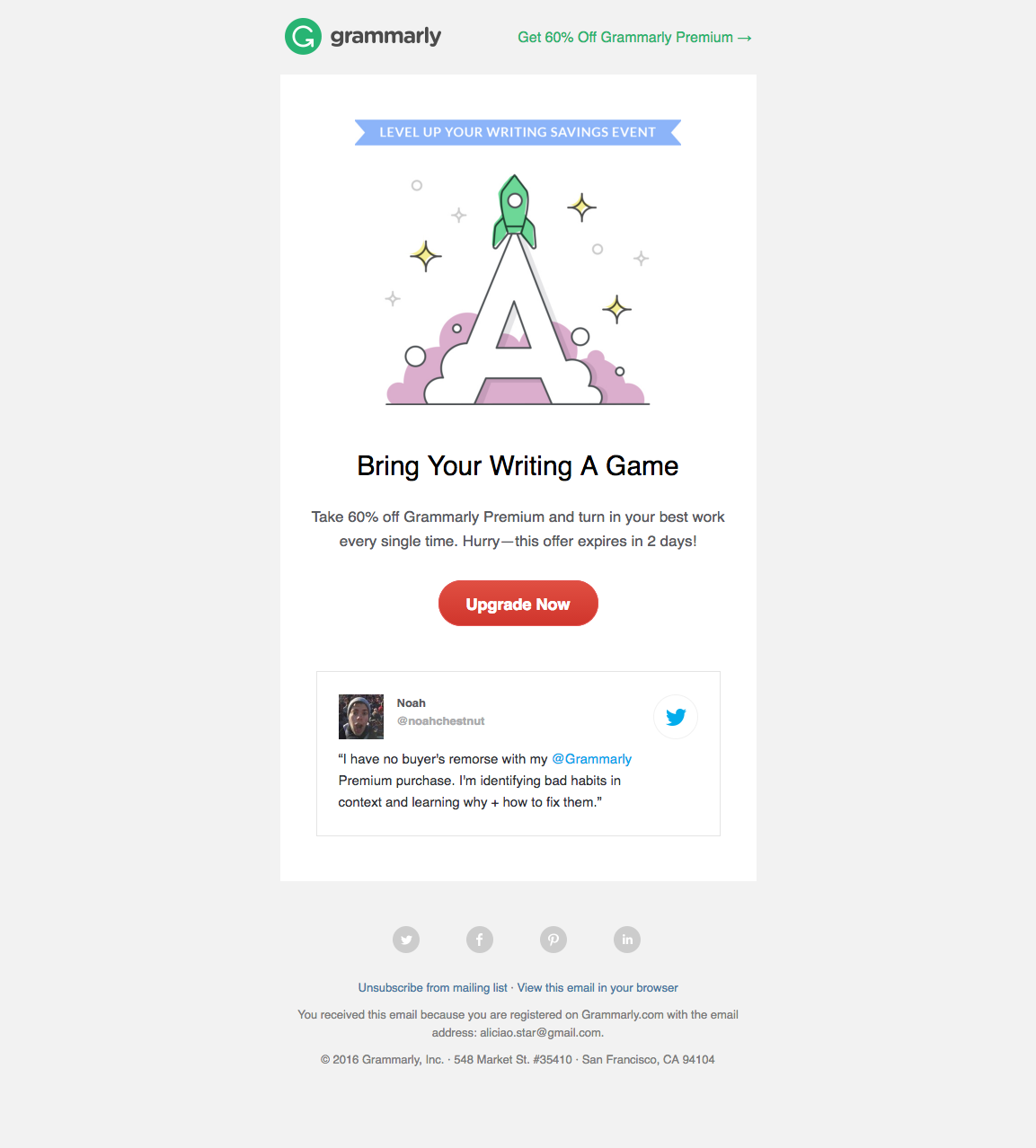
Email marketing favors the clever, and this message from Grammarly is a great example. To emphasize the benefit of spell-checking software, the email visually alludes to the alphabet. By turning the “A” into rocket exhaust, the brand emphasizes the importance and adventure of your grammar journey.  Grammarly is witty and helps engage readers for those few critical seconds.

grammarly level up your writing email b2b best practices lead generation

Image Source

Remember: The use of humor is tricky and can backfire if executed poorly. Make sure any humor or allegory is something everyone can understand.

Case #3: Housekeeping

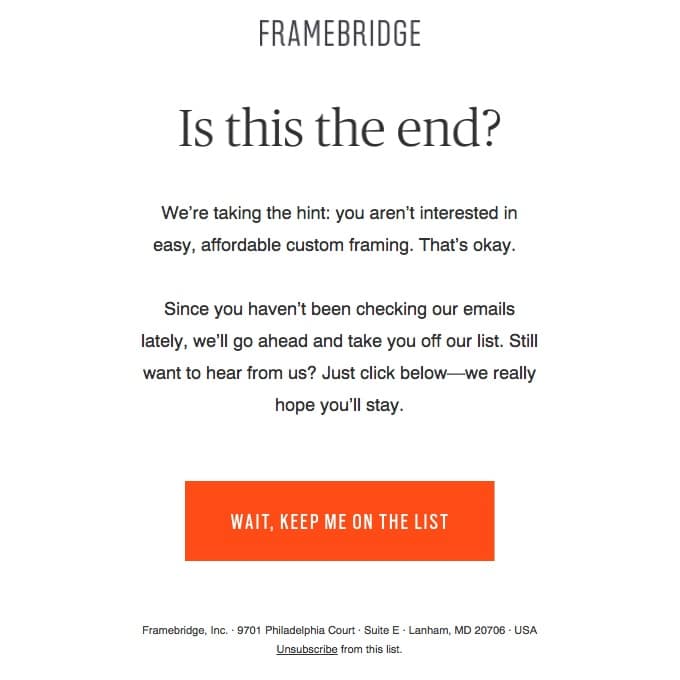
Email marketing isn’t all about the welcome — some goodbyes are in order, too. Cleaning up your list is one step toward qualifying leads for higher conversions down the funnel. 

Framebridge makes sure its list is updated by sorting out inactive subscribers.

ReEngageEmailSubscribers b2b lead generation best practices

Image Source

Pro tip: Breakup emails like the one above are a great way to reengage folks on your list and clean out inactive emails.

The 10 Best Lead Generation Strategies

In this post, we’ve shared best practices for different types of lead generation. Below are best practices that work across channels. Put these best practices into action, and maximize your lead generation.

1. Target the right audience.

Know your buyer personas. In B2B, your audience could be different people in different departments. Often, you don’t have a single audience, but micro-audiences with varying interests and pain points.

2. Create lead magnets.

Develop content or offers that pique the interest of your target audience. The best lead magnets use NLP techniques in marketing, such as, clear, tangible benefit, urgency, exclusivity, social proof, authority, and immediate gratification.

3. Explore new lead channels.

Search, social media, and top media sites are unsurprisingly crowded with high-value sponsorships. You can, however, discover unique PPC channels and similar third-party marketplaces for your industry. Because these sites cater to your customers, they tend to have higher conversion rates and dominate high-value general organic search keywords.

4. Capture the right information.

The rule of thumb is to get only the most basic customer data at the initial stage (e.g., name and email address) and, as you work the lead down the pipeline, ask for a little more data.

5. Score, sort, and segment leads.

Not all leads are valuable and not all have the same value. Based on your metrics, run a lead scoring tool to sort leads into proper segments. This will let you target your micro-audiences with personalized messages and offers. Today’s marketing automation software, like HubSpot, are very powerful and can automate this important process.

6. Blog consistently.

Regularly posting content improves your SEO, authority, brand awareness, industry stickiness, and, generally, your web presence.

7. Integrate organic and PPC.

These two marketing channels complement each other. When executed together, they can fill in the gaps. For example, you can run paid search for any organic keywords for which you’re not ranking highly.

8. Benchmark your conversion rates.

Don’t be content with seeing your rates improve month-to-month or year-to-year. Compare them with the competition. That’s the true picture of your business’ competitiveness.

9. Automate. 

The best marketing automation will put your lead generation into a workflow. The software can then capture leads from your campaign, score them, nurture them throughout the lead pipeline, and qualify them. Then, your leads will be ready for your sales team.

10. Go mobile. 

Mobile marketing is the next battlefield for B2B leads. More business buyers are using their smartphones in the purchase journey. Make sure your forms, emails, websites, and ads are optimized for mobile.

Those are some of the best B2B lead generation campaigns and techniques at your fingertips. Apply or reapply these time-tested techniques and share with us how much they improve your lead volume.

Categories B2B

10 How-To Videos That Really Work (And Why)

How-to videos are an especially compelling way to learn how to do something online because the video shows you exactly how to do it.

We found that of the 91.9% of internet users who enjoy watching videos, 31.3% want how-to videos, and 29.8% want educational videos.

In this post, we’ll explain why how-to videos are so popular and include 10 examples to inspire your next video marketing campaign.

How-to Video Searches Are Popular 

How-to Video Examples

Best How-to Videos

→ Access Now: Video Marketing Starter Pack [Free Kit]

How-To Video Searches Are Popular

As mentioned, how-to videos are popular because they visually show users how to complete tasks. However, it’s not just consumers who benefit from how-to videos.

How-to videos are an excellent way to establish your brand as an expert in its industry, and they can demonstrate the unique features of your product or service.

According to WyzOwl’s 2023 Video Marketing Statistics Report, 96% of video marketers say video has increased users’ understanding of their product or service.

Furthermore, 87% of video marketers say that video has increased traffic to their website, and 80% say video has directly increased sales.

How-to Video Examples

Below are five great how-to videos, and you can apply these to your own videos.

1. How to Do Push-Ups

If you’re anything like me and lack upper body strength, you’ve likely struggled to do a push-up. Fortunately, Hybrid Calisthnecis posts videos showing how viewers can work up to different exercises, including push-ups.

This how-to video breaks down the different ways to work up to a push-up and provides solutions to some of the issues viewers may face, such as wrist pain.

When creating a how-to video for your brand, be proactive and consider the different struggles consumers may encounter when learning to do something. Make sure your video provides solutions.

Another takeaway from this video is its title, “You CAN do pushups, my friend!” When naming your videos, you don’t have to stick to the traditional “How to ___” format.

Be bold and think outside the box while still formatting your videos to be SEO-friendly.

2. How to Prep Your Skin for Non-Cakey Foundation Application

Remember, how-to videos are exceptional at providing information about your product or service.

For example, makeup brand Fenty Beauty posts videos showing viewers how their products can achieve different looks or solve common problems.

For example, cakey foundation application is a typical concern for many makeup users. The video below shows viewers how to prep their skin to avoid the problem with Fenty products.

Think of a problem your audience may often face. Create a how-to video showing your audience how products or services solve the issue.

3. How to Learn Python Fast with ChatGPT

This video by data scientist Sundas Khalid shows viewers how to learn coding language using ChatGPT.

The main takeaway from this video is how Sundas uses very plain, easy-to-follow language to describe something that may initially sound daunting and complicated.

She also uses emojis, stock images, and screen recordings of her using ChatGPT to help viewers further visualize the task.

When creating a how-to video, avoid using jargon or complex language — and use imagery to illustrate your point better.

4. How to Grow on Instagram from 0

In this how-to video, content creator Jade Beason explains how to grow your Instagram channel from scratch, going from zero followers to 10,000.

This video is excellent for people early in their Instagram marketing or creator journey and provides comprehensive steps to reaching their goals.

In your how-to video, think of consumers new to your niche who have no idea where to start. Think about creating a how-to video for them and how you can break down the task into simple steps they can follow.

5. How to Increase Your Reels Views

Again, you don’t have to be married to the “How to ____” title format. In fact, it can be helpful for your viewers to know they’ll get the information they need in a few tips or steps. Take the video below as an example.

Content creator Modern Millie gives five tips on increasing your Reels’ views.

Best How-to Videos

Below are some of the best how-to videos to think about in your marketing campaign.

6. How to Make Chocolate Ice Cream Bars

You Suck at Cooking is a channel that shows people how to cook different meals and snacks in a very unconventional way. Its videos feature absurd humor, random skits, funny musical breaks, and the creator’s unique personality.

Your how-to videos don’t always have to be clinical and boring. Don’t be afraid to add personality and humor to make them stand out.

7. How to Finger Tap on Guitar

The video above features award-winning guitarist Yvette Young teaching viewers how to two-hand tap on the guitar. The video is for the musical instrument company Sweetwater.

The company often posts videos to its channel showing musicians of all levels how to perfect their craft.

This video is especially interesting because guitar enthusiasts often reference Yvette Young when trying to learn specific techniques — particularly her two-hand tapping technique, which is common in her style of music.

Consider an influential person in your niche whom your audience may be interested in emulating. Try posting a how-to video showing your audience how they can achieve that person’s accomplishments, style, or look.

8. How to Draw Stitch from ‘Lilo and Stitch’

Art for Kids Hub is a YouTube channel that posts new art tutorials for children every week. The channel’s target audience is families and children. Rob Jensen and his children host its how-to videos to reach their target audience.

Consider having someone connected to your target audience to host your how-to videos. For example, if you’re a sports equipment company, you might want your videos hosted by an athlete or coach.

9. How to Wake Up Earlier

Unless you’re a morning person, you’ll likely agree that waking up early can be unpleasant but necessary. This video taps into that relatable feeling of struggling to wake up early and create a consistent routine.

The video host, Maya Lee, shares her struggles with waking up and how she feels when she doesn’t sleep enough. Her experience makes the tips and tricks she shares seem more genuine.

When creating a how-to video, try to be relatable to your audience and their struggles so you can build credibility in your content.

10. How to Learn the Full Splits

Speaking of relatability, the above video teaches viewers how to do a full split by documenting the journey of creator Henry Vo. The video shows how he went from being unable to do a split to doing it in 30 days.

Consider showing someone’s journey of learning the task in your how-to video. Even better, include a specific time frame, like 30 days, to show viewers that they can achieve their goal with the proper amount of time.

How-to videos help build brand awareness, explain your products or services, and establish credibility with your audience.

Now that you have these examples of great how-to videos, you’re ready to add the video format to your next marketing campaign.

Discover videos, templates, tips, and other resources dedicated to helping you  launch an effective video marketing strategy. 

Categories B2B

How AI Will Revolutionize Product Development, and How to Prepare [Insights from AWS’ Senior Advisor to Startups]

As any business owner knows, product-market fit is one of the most challenging aspects of starting a business.

Predicting the right product to build – and investing in building prototypes, experimenting, and testing — is an exhaustingly long and expensive process, and oftentimes, business owners run out of money before they’re even able to test their products.

Fortunately, as AWS Senior Advisor to Startups and AI expert Deepam Mishra told me, “This process is about to be turned on its head with the newest advances in AI.”

I sat down with Mishra to discuss how AI will revolutionize every aspect of the product development process, and how startups and SMBs should prepare for it.

Free Report: The State of Artificial Intelligence in 2023

How AI Will Revolutionize Product Development, According to AWS’ Senior Advisor to Startups

1. Product-market fit predictions will be more accurate.

From Mishra’s experience, he’s seen many startups fail due to poor product-market fit.

This corresponds with wider trends. A whopping 35% of SMBs and startups fail due to no market need.

Fortunately, AI can help solve for this. AI-fueled data analysis can help startups collect a more accurate, well-rounded view of the quantitative and qualitative data they‘ll need to determine whether their product actually meets their customers’ needs — or whether they’ve even selected the right audience in the first place.

Leveraging AI when collecting and analyzing data can also help teams understand their customers on a deeper level.

As Mishra told me, “AI can make it easier to understand the real customer needs hiding behind known problems. Often engineers start building prototypes without a deep understanding of the quantitative and qualitative customer needs. Before generative AI there were less capable tools to analyze such information.”

2. AI will greatly enhance speed of iteration and time to market.

Creating mockups and prototypes of a product you want to test is one of the most time-consuming aspects of the product development lifecycle. It typically takes four to 12 weeks to create an electronics prototype, and one to four weeks for a 3D printed mockup.

“The time it takes to generate a physical incarnation — or even a 3D or visual incarnation of a product — requires some real physics behind it,” Mishra explains.

“It’s a fairly long process for product managers, designers, and software engineers to build a product into a three-dimensional model.”

In other words: All that time and money you put into creating and testing a prototype could end up costing you your business.

Imagine the power, then, of a world in which AI can help you create mockups and prototypes in just a few hours.

This speed is more than just convenient: It could be life-saving for SMBs and startups that don‘t have the time or resources to waste on product features that won’t yield strong returns.

For Mishra, it’s one of the most exciting areas of opportunity in the product space.

As he puts it, “The fact that you can create content from scratch with such rapid speed, and hit a higher level of accuracy, is one of the most exciting components of all this.”

Leadership Post AWS_300-02

3. AI will change how you collect customer feedback.

Once you have a prototype, or even a minimum viable product, you can‘t stop iterating there. You’ll need to test it with prospective or current customers to learn how to improve or iterate upon it next.

And, until now, product analytics has been largely restricted to structured or numerical data.

But structured data has its limitations.

Mishra told me, “Most enterprise information is unstructured, as it sits in the forms of documents and emails and social media chatter. I would guess that less than 20% of a business’ data is structured data. So there’s a huge opportunity cost in not analyzing that 70% to 80% of information.”

In other words, there aren’t many scalable solutions to collecting and analyzing quantitative data to analyze how customers are responding to your product.

For now, many product teams rely on focus groups to collect feedback, but focus groups aren’t always accurate representations of customer sentiment, which leaves your product team vulnerable to potentially creating a product that doesn’t actually serve your customers.

Fortunately, “Generative AI can help convert customer feedback into data for your business,” Mishra explains. “Let’s say you get a lot of social media feedback or product usage comments or chatter on customer forums. Now, you can convert that information into charts and trend lines and analyze it in the same way you’ve always analyzed structured data.”

He adds, “Essentially, you can figure out which features your customers are talking about the most. Or, what emotions customers have when it comes to particular product features. This helps you determine product-market fit, or even which features to add or remove from your product.”

The potential impact of being able to convert quantitative feedback into actionable data points is enormous.

With the help of AI, your team can feel more confident that you’re truly investing time and energy into product features that matter most to your customers.

4. AI will redefine how engineers and product managers interact with software.

Beyond developing a product, AI can also innovate the teams developing it.

Up until now, we‘ve had entire roles defined around getting people trained on a particular product suite. They’ve become the experts on a given software, and understand how each piece works.

In the future, we’ll begin to see how AI can help your team ramp up new employees without necessarily needing these software experts to host trainings.

Perhaps you have a junior programmer on your team with limited experience. To ensure she adheres to your company’s particular discipline of software coding, you can have a lot of it pre-programmed and systematized through AI code generation tools.

For more intensive processes, like prototyping, Mishra explains that some training duties could even be replaced by chat-based AI. “We have moved to realizing that more natural chat-type interfaces can substitute very complex ways of asking for help from software and hardware tools.”

Let’s say your company needs to design a widget. Rather than spending time and resources on mocking up a prototype, you could ask a chatbot to produce some design examples and provide constraints.

“You don’t need to even know what machine learning tools are being used,” Mishra adds, “you just talk to a chat interface, and maybe there are five different products behind the chat. But as humans, we care less about the tool and more about the outputs.”

5. AI will lift human creativity in the product space.

Machine learning has been around for almost two decades, and has already been leveraged for a long time in the product development space.

But it’s about to change drastically.

As Mishra explained to me, the old machine learning algorithms could learn patterns of transforming inputs to outputs, and could then apply that pattern to unseen data.

But the new generative machine models take this process a step further: They can still apply patterns to unseen data, but they can also get a deeper understanding of the thinking behind the creative process.

Leadership Post AWS_300-03

“They can understand how a software programmer creates software, or how a designer creates a design, or how an artist creates art,” Mishra told me.

He adds, “These models are beginning to understand the thinking behind the creation, which is both an exciting and scary part of it. But where this applies to pretty much all stages of product development is that you can now supercharge the human creativity component.”

In other words: AI will become any product manager, engineer, or designer’s co-pilot as they navigate a new terrain, in which rote, repeatable actions will be replaced by time spent designing and iterating on better, more powerful products.

Eventually, AI Will Change the Customer Experience Entirely

There’s a separate, deeper conversation to be had about the long-term ramifications of AI and the product space.

For now, product leadership has largely focused on how they can effectively enhance their products by adding AI into their existing features.

As Mishra puts it, “Most leaders right now are saying, ‘Let me swap what I had with generative AI.’ So you might think of these products as version 2.0 of a previous model.”

“But,” he continues,“the next generation of solutions, which some of the more ambitious innovators are starting to work on, are completely reimagining the customer experience. They’re not just saying, ‘We are adding AI to a product,’ but instead, they’re saying, ‘Let’s reimagine the entire product itself, with AI as its foundation.’ They’ll reimagine the interfaces between human and technology.”

Leadership Post AWS_300-01

Right now, consumers choose between a variety of streaming services, such as Netflix or Amazon Prime, and then the streaming service provides AI-based recommendations based on prior user behavior.

As Mishra explains, “The first wave of startups will say, ‘Okay, let’s make those predictions better.’ But the second wave of startups or innovators will say, ‘Wait a second … Why do you even need to be worried about just one platform? Why not think bigger?’”

“So we’ll have companies that say, ‘Let me generate content on various platforms depending on your mood and 10,000 other behaviors, versus the three genres I know you like.”

How does this fit into the current product development process? It doesn’t.

Instead, it flips it entirely upside down. And that’s both terrifying and thrilling.

Mishra suggests, “How do you reimagine the product experience? I think that’s where human creativity is going to be applied.”

How to Get Started with AI and Product Development

1. Start experimenting.

Mishra acknowledges that as much as it‘s an exciting time in the product space, it’s also a challenging time, and plenty of SMBs and startups are questioning whether they should even invest in AI at all.

Change is happening quickly, and it can be difficult to determine which aspects of AI you should invest in, or how you should approach implementing it into your current processes.

Mishra‘s advice? “Start experimenting, because you’ll find it a lot easier once you get started. And there are a couple of areas which will give you value regardless of whether you put AI into production or not, including analyzing customer information and feedback, or doing things like enterprise search — you’ll start to see eye-opening value from these experiments, which will guide you down the right path.”

Fortunately, you don‘t need to hire your own machine learning engineer to create something from scratch. Instead, you might consider tools like Amazon’s recently released Bedrock, which provides pre-built generative AI models that you can add to an existing application with an API. This enables you to forgo any AI training and limit the data breach risks, and be up and running in minutes.

2. Identify where AI can help your team.

Mishra recommends figuring out the right use cases that will have a positive ROI for your business.

Ultimately, it’s critical you take the time to determine which areas of the business could get the highest value from AI, and start there.

For instance, he suggests, “I’m seeing a lot of work in the areas of customer-facing activities because that drives revenue, so that’s potentially high-value.”

If you‘re unsure where to get started on your own team, there’s no need to reinvent the wheel. Consider reaching out to cloud experts or startups that can walk you through some common solutions already being explored by other companies.

3. Get stakeholder buy-in.

There’s another equally-vital requirement to experimentation: Stakeholder and leadership buy-in.

Mishra says, “I think cultural alignment and stakeholder alignment is an important area that companies need to start working on. If the top leadership is fearful for the wrong reasons, that could inhibit their growth.”

There are certainly privacy and data leakage concerns when it comes to AI. Plus, AI isn‘t perfect: It can hallucinate or provide inaccurate or biased information when it’s providing results.

Which means, when convincing leadership to invest in AI, it‘s critical that you emphasize that AI will not be steering the ship. Instead, it will be your team’s trusted co-pilot.

It‘s also important to note — if leadership feels it’s risky to invest in AI, they should also be considering the risks of not investing in it.

As Mishra puts it, “This is a seminal moment, and you can get left behind as other startups and enterprise companies begin to move faster in their product innovation cycles.”

New Call-to-action

Categories B2B

How to Identify & Work With the Best Brand Influencers for Your Business

I commented on a friend‘s vacation post, scrolled past a Comforter advertisement, and double-tapped an influencer’s skincare post this morning. That‘s the thing about brand influencer marketing — you follow them for a reason, so you don’t mind interacting with their sponsored content.

I follow this influencer because she‘s an editor of a major magazine that I enjoy reading, and her content interests me. Since I trust her opinion, I’ll check out any skincare brands she endorses.

Even though influencer marketing is a well-known marketing channel by now, it’s always important to reiterate that your customers trust the opinions of others — and that majorly impacts buying decisions.

Nearly 90% of all marketers find ROI from influencer marketing comparable to, or better than, other marketing channels.

Now that we understand the potential benefits of leveraging influencers, let’s consider strategies for identifying the most suitable ones for your industry.

Download Our Guide to Influencer Marketing Essentials

What is an influencer?

An influencer is someone who‘s amassed a substantial social media audience and can sway their followers’ actions. So odds are you’ve seen them on many social media platforms, including Instagram, YouTube, TikTok, and Twitter.

Businesses can benefit from influencers by increasing brand awareness, reaching new audiences, and converting customers.

Collaborating with an influencer enables a business to use its credibility and influence its followers, resulting in higher sales and stronger customer loyalty.

Influencers can also create genuine content that resonates with their followers, helping businesses connect with their desired audience.

In 2022, 57% of marketers surveyed by HubSpot said their company worked with creators or influencers. Over one in four marketers currently leverage influencer marketing.

And 33% of Gen Zers have bought a product based on an influencer’s recommendation in the past three months.

However, it’s vital to note that not all influencers and collaborations are equally advantageous. Choosing influencers based on their demographics, values, and content quality is essential so they align with your brand.

Ensure the partnership achieves the desired results by setting clear goals and expectations and tracking the campaign’s performance.89% of marketers who already use influencer marketing plan to keep up or increase their investment in 2023.

Image source

The Benefits of Working With Brand Influencers

Do you want to work with brand influencers, or are you still on the fence? Brand influencer marketing is a recent development in online business, so you might not have much faith in its efficacy yet.

But that doesn’t mean brand influencer marketing isn’t practical. It’s one of the best ways to market your brand these days. If you aren’t convinced, here are a few benefits you can expect when working with a brand influencer.

Increased Brand Awareness

You could be the best in the world at what you do, but that doesn’t matter if nobody is aware. So how can you get more eyes on your brand, aside from the classic methods?

Brand influencer partnerships. Influencers are more prevalent than ever, and that can be to your advantage. Get more eyes on your business by tapping into a brand influencer’s audience.

Audience Growth

Successful influencers have large audiences — audiences they know well. After all, an influencer is nothing without an audience. Why not benefit from that connection?

A brand new audience can be intimidating but think of brand influencers as ambassadors. They lend their credibility to your business, meaning more loyal customers that you don’t have to work as hard to win over.

Increased Traffic

Could you use more leads? Of course, you could! A bigger audience is excellent, but it doesn’t necessarily mean more business for you. Once again, this is where brand influencer partnerships come into play.

For example, imagine an influencer mentioning and linking your product on their blog. Chances are, people will click through. And from there, there’s a better chance visitors will buy that product or check out the rest of your website.

More Sales

All actions in business lead to sales — at least, they should. Unfortunately, the truth is that nothing guarantees sales. The best you can do is increase your chances; influencers give you great odds.

Think about it: Most people buy things based on recommendations from individuals they trust — friends, celebrities, and of course, influencers.

So partnering with a brand influencer could help recommend your offer to a new audience, upping the number of people who become your customers.

How to Find Brand Influencers for Your Industry

How can you determine the right “fit” with a brand influencer? Business/influencer fit will become extremely important for your future collaborations, so be sure to nail down the following criteria:

1. Figure out your target audience.

A target audience varies by demographic, geographic, and behavioral factors, to name a few. Common ways to segment an audience are age, gender, location, behavior, lifestyle, values, and interests.

As you narrow your audience, you’ll dive into the marketing strategies and content that resonate most with them.

Determining your target audience will ensure that your audience is similar to your influencers. Otherwise, your content will fall flat and won’t inspire users to take action.

A great example of business/influencer fit is how many sportswear brands, like Nike and Puma, partner with famous athletes to create products and content.

If you’re a fan of Lebron James, you probably already know Nike sponsors him — and that partnership goes a long way for Nike’s business.

2. Research influencers.

There’s no doubt that social media is the best place to research your influencers — but let’s break it down into more concrete steps.

The easiest way to find the right brand influencers is to see if any are already discussing your business.

Social monitoring or searching for your brand on social media sites are great ways to get started, and listening tools can help you find influencers already interested in your industry.

Another tip for researching influencers is to search for relevant hashtags.

If you’re a health and wellness brand looking for an influencer, searching for “#health, #wellness, #sponsored, #ad” on Instagram will bring you to influencers who have already posted industry-relevant content.

If you see a post that catches your eye, check out the rest of the influencer’s engagement on other posts.

Remember that influencers can have smaller, devoted followings — so don‘t turn away from someone just because they have fewer followers than you initially had in mind.

Additionally, there’s a down arrow next book out for influencers who are alretitor’s brands.

If you see an influencer‘s post on Instagram that may resonate with your brand, try looking for similar profiles. Next to the “Follow” button on Instagram, there’s a down arrow.

You’ll see a list of suggested users by clicking the down arrow. Scroll through those and see if anyone is willing to take you on.

3. Determine relevance.

Take a look at your content. What is your brand‘s aesthetic, and what tone do you use in your copy? What are the underlying messages you’re trying to communicate?

It‘s essential to see how aligned your influencer’s content is with your own. Their social presence shouldn’t be filled with posts like yours, but their messaging should be similar since you’re targeting a specific audience.

Engagement is also an indicator of relevance for your brand. If the influencer‘s audience isn’t engaged with their content, partnering with your brand won‘t make a difference.

Determining whether the influencer’s followers are commenting and sharing their content or just liking it is essential.

Additionally, do similar users return to comment and like content time and time again? This implies that the influencer’s audience enjoys engaging with the influencer and likes the content she promotes.

Connecting with Influencers

Now that you‘ve done your initial research and hopefully conducted a list of possible influencers for your brand to work with, it’s time to connect.

You want to reach out to influencers without seeming spammy or too transactional. Relationships are key, after all.

And if you have a terrible relationship with your brand influencer, odds are they won’t continue to post on your behalf.

1. Reach out…strategically.

There are better strategies than cold emailing or direct messaging an influencer for relationship building. If you want to work with an influencer, try courting them first.

I mean that you should subscribe to their blog, follow all their social channels, and comment on their posts. Influencers work hard on their content, just like your business does.

If you want an influencer to take notice of your business, you have to be interested in what they’re doing. Beginning a partnership by interacting on the channels you hope to work together on will demonstrate your interest.

Influencers work hard on their content, just like your business does. If you want an influencer to take notice of your business, you have to be interested in what they’re doing.

Beginning a partnership by interacting on the channels you hope to work together on will demonstrate your interest.

Some influencers have a presence on multiple social media platforms. It‘s your job to know how they want to be contacted for business partnerships. If they have a business email in their Instagram bio, that’s likely the best choice.

Alternatively, maybe they have an inquiries section on their blog. Whatever the case is, make sure to send a personal message that doesn‘t feel like it’s been generated by a template.

2. Make a human connection.

Sending messages into the digital universe is scary because you don‘t know when or if you’ll ever hear back. Making a connection in the real world is much more actionable and gives a face to your business.

This doesn‘t mean you should go out and stalk your list of influencers until you meet in person. If you’re serious about connecting, try attending or hosting an influencer event.

Bringing influencers to you will make connecting with them much more accessible and allow them to interact with your brand before agreeing to work with you.

Many marketers are learning to market themselves as well as their businesses. Hopefully, you’ve also been growing your network — so you may already have connections to your influencers.

If you have someone at the top of your list, see if they‘re following someone you know. Maybe they’ve worked with a similar brand, and you know someone on that team.

The world is smaller than we think, and you might be sitting on a goldmine of potential relationships.

3. Manage your outreach efforts.

Like any other marketing strategy, influencer outreach should be organized and well-documented. The last thing you want is to accidentally reach out to the same influencer on four platforms with the same message. Yikes.

After reaching out, give an influencer some time before a follow-up. Like in a sales pitch, you don‘t want to be overbearing or clingy. Respect the influencer’s time — if they want to work with you, they’ll respond to your outreach.

You should also be documenting what outreach strategies work for you. Maybe after a first email, you’ve succeeded in hopping on a call with potential influencers.

Knowing what works for you will help you further develop your outreach strategy and enable you to be more creative.

Best Practices for Working With Brand Influencers

A new form of marketing, like influencer partnerships, can seem discouraging. You might not know the best way to do it if you haven’t worked with many influencers yet. In that case, review some of these most promising practices.

Here, you can get a sounder idea of what to anticipate when you pursue your next brand influencer partnership.

Be Goal-Oriented

Before anything, make sure your business is in order. A brand influencer partnership is doomed to fail if either party isn’t pulling their weight, so ensure you’re on the same page.

Most importantly, establish and communicate your goals. Do you want more sales? More email subscriptions? Instagram followers? Get as explicit as possible and let influencers know when you reach out.

Focus on Relevance

Bigger isn’t always better when it comes to brand influencers. The assumption that more followers translate to greater brand exposure may not always hold.

Instead of popularity, you should prioritize relevance in your search for a brand influencer. This ensures a better match between your brand and the brand influencer.

This overlap makes you more likely to secure a partnership with a receptive audience.

Diversify

Let’s think of brand influencer partnerships as investments for a minute. They won’t always return what you invest, so risks are always involved. What steps should you take under those circumstances? Diversify.

Or, at least, don’t go all-in on one influencer partnership. The other extreme is collaborating with many influencers to increase your chances of a winning coalition.

You can see what’s best for your brand, but a middle-of-the-road approach works best for most.

Trust Them

No one likes being told what to do. Influencers are no different, so don’t forget that when you collaborate. After all, if you had their influence, you wouldn’t need to partner with influencers.

That doesn’t mean they should have free reign, however.

Make sure you’re on the same page regarding standards like deadlines. Other than that, do your research before you partner with any influencers. It takes both parties to form a successful partnership, so mutual trust goes a long way.

How to Become a Brand Influencer

You have learned about partnering with influencers, but what if you aspire to become one? There isn’t necessarily a prescribed method, but here are a few advised steps to consider.

1. Get in your niche.

What sparks your interest or ignites your passion? Becoming an influencer in any industry is possible, but choosing the sector where you possess a strong understanding and proficiency is essential.

2. Get to know your audience.

There are various methods to initiate the process, but an initial step could be to analyze your social media metrics. This should give you an idea of your demographics and who’s consuming your content.

3. Post content.

You can post on the fly or develop a content strategy. We recommend a content strategy, but that might not be necessary as you start. Ensure you release relevant content consistently, even if you don’t stick to a schedule.

4. Stay consistent.

The previous three steps are the fundamentals of becoming a brand influencer, but they’re also just the start. Keep up the hard work, and be consistent. An online reputation is hard to build and easy to destroy.

Reach New Audiences With a Brand Influencer

Brand influencers can help you build and expand a devoted following, increase your word-of-mouth marketing efforts, increase sales, leads, and conversions, and create more human relationships with your potential customers.

The right influencers are inherently interested in your brand, believe in your mission, and can communicate about your business eloquently.

Focusing on long-term relationships with your influencers will continue building their knowledge of your company and bring the best results.

Improve your website with effective technical SEO. Start by conducting this  audit.  


Categories B2B

How the HubSpot Blog Generates Leads [+ How Yours Can, Too]

It’s hard to believe that if the HubSpot Blog were a person, it would currently be in high school.

That’s right – for well over a decade, content has been published on the HubSpot Blog to help hundreds of millions of readers discover best practices in the areas of marketing, sales, customer service, website development, agency work, and general business best practices.

Behind the scenes, our team also thinks about how we can convince as many readers as possible to become leads and access more information, tools, and resources from HubSpot – and anyone who has worked on lead generation knows that accomplishing this task is much easier said than done.

Effective blog lead generation requires both creative and analytical skills. It’s about knowing what numbers to crunch, how to analyze your existing data, and how to make projections based off of traffic, monthly search volume, and conversion potential.

Additionally, any good marketer needs to understand the human aspect behind this process and not lose sight of the people reading your blog and the problems your business can help them solve.

Over the years, the team at HubSpot has landed on a process that continuously generates leads day-after-day, with a reliable blog view-to-lead conversion rate and a steady flow of traffic. Software like HubSpot’s CTA tool can help you create professional-looking and click-worthy CTAs in seconds.

Here are the steps my team at HubSpot takes to generate leads from our blog.

Download Now: Free Content Marketing Planning Templates

1. Audit existing blog metrics.

To develop a process for growing our blog lead number, we first needed an understanding of how well we were performing.

To capture the current state of blog lead generation, we looked for the overall traffic number and number of leads generated from the blog. These two numbers gave us a baseline conversion rate (in this case, number of leads generated, divided by the total views to the HubSpot Blog in a given time period) from which we knew the team could only go up.

While the number of leads was the ultimate goal for our team, we wanted to take a deeper look at the overall conversion rate and how it changed month-over-month – this number would let us know for sure if we were growing traffic to posts and topics that were most likely to convert their intended audiences.

The big-picture conversion rate gave us an important directional view, but if we ever saw a major shift in that conversion rate, we needed to know where that shift was happening. For example, if we saw a surge in traffic to a low-converting post, that would hinder the overall conversion rate for the blog.

To drill down further, we also looked at all of our post-level data – that is, each post’s traffic number, number of leads generated, and CVR. By exporting and tracking this data monthly, we were able to see which posts were dragging down our CVR, which posts were keeping it strong, and which posts were prime candidates for a better CVR.

How to complete this step:

  1. Choose a time period (last quarter, last month, etc.) for which you want to know your conversion metrics.
  2. Determine your overall data for traffic and leads generated in this time and calculate overall blog CVR.
  3. Export your traffic and lead numbers for individual blog posts for this time period. Depending on your analytics tool, this may require you to export data from two different sources and combine metrics using a VLOOKUP on Excel or Google Sheets.
  4. For each post, divide the number of leads it generated by its traffic number to get post-level conversion metrics.

For a quick video overview on more HubSpot Blog lead generation tips like this, check out our video guide.

2. Group common posts together.

Over the years, HubSpot has published thousands of blog posts – and while this was immensely helpful for growing HubSpot’s email subscription base and ranking for countless keywords, it made the process of organizing and analyzing conversion metrics extremely difficult.

Luckily, the blog and SEO teams developed a model to group posts with similar search intent with the pillar-cluster model. In a nutshell, this model was the result of a massive audit to better organize our blog, reduce redundancy on the blog, and help search engines understand which pieces of content we wanted to be considered the most authoritative on a given subject.

As a result of this project, all of our blog posts were given a relevant “topic tag” – or the cluster for which each post belonged. For instance, any Instagram post is assigned an “Instagram Marketing” tag, and links back to our Instagram Marketing pillar page.

This process ensures effectiveness when analyzing metrics. For instance, when exporting blog metrics, we can analyze blog posts by tag (i.e. all “Instagram Marketing” posts), of which we have a few hundred — rather than analyzing each individual URL, of which we have over 10,000.

How to complete this step:

  1. Export all of your blog posts from your CMS or website analytics tool onto a spreadsheet.
  2. Categorize each of your keywords into a topic cluster. These topic clusters should be high in search volume, anchored by a long and high-trafficked post, and related to each other when it comes to search intent. For example, rather than put all of our posts on social media in one giant “Social Media” cluster, we created more niche clusters for Facebook, Twitter, LinkedIn, and Instagram to help us categorize with more specificity.
  3. With each post properly categorized, organize your data with a pivot table to look at the numbers generated by each cluster rather than each URL. Your pivot table should include the number of posts in each cluster, the views generated, and the leads generated. From there, you can calculate the cluster’s CVR by dividing total leads by total views.

3. Determine the best content offer opportunities.

One of the major benefits of grouping your posts together is identifying a content offer opportunity that can be effectively promoted on multiple blog posts, as opposed to an individual post.

As acquisition marketers, it’s tempting for us to attempt optimizing the conversion paths for high-traffic posts. However, these high-traffic posts are oftentimes too general and unrelated to what it is we’re trying to market.

This mismatch results in misplaced efforts and unmet lead goals, as we’re quick to ignore blog posts which – on their own – may have lower traffic numbers, but together have a substantial traffic number.

Ask yourself – which of these two options is a better pursuit for lead generation?

  • A blog post that has little or nothing to do with your products or services, but is viewed 100,000 times a year.
  • 10 individual blog posts that have a clear connection to your company’s core competencies, but on average generate only 10,000 views each per year.

In either scenario, you’d be optimizing the conversion path for 100,000 readers – it’s only by grouping these posts together that you’d realize option #2 is a much better option for lead generation.

To address this issue, we organized all of our blog topics by the potential number of leads they could generate, but readily discounted any topic cluster of which we doubted the conversion potential. This crucial step ensured we only considered ideas that we believed would be worth our time and resources to create.

Along with dedicated CTAs for each blog post we create, we also create featured resources for certain topics we believe have high conversion potential. For instance, in this Ebook Format blog post, we created a special featured resource, 18 Free Ebook Formatting & Creation Templates:

HubSpot's featured resource on ebook formatting templates

How to complete this step:

  1. Calculate how many leads each topic cluster could be generating. At HubSpot, we do this by subtracting each cluster’s actual CVR from its target CVR, and multiplying that difference by the traffic number for the desired time period.
  2. Organize data by each cluster’s lead generation opportunity – looking first at the highest opportunity and at the lowest opportunity last.
  3. Work through your list of high-opportunity clusters and remove any low-intent clusters from your consideration, ensuring you’re only left with topic clusters that have a direct connection to your products/services.
  4. Select one (or many) topic clusters which you want to support with a lead-generating content offer.

4. Create lead-generating content.

By this point, you’ve identified topic clusters which you feel would benefit from a new, dedicated piece of lead generating content. Now, it’s time to create that piece of content.

Understanding what kind of content to create comes from knowledge of your industry, your market, and your buyer personas. In our experience, we discovered HubSpot’s Blog audience responds to actionable, personalized, and customizable content in the form of templates, tools, and kits.

However, this is not the case for all organizations – so figure out which content format works best for your audience by auditing the performance of your current library or testing out different formats to see what resonates with your blog readers.

With the knowledge of what formats work best for our readership, we got to work on creating templates for our most-read but lowest-converting clusters, so that readers would see our content as an actionable next step for them to apply the knowledge they gained in the blog post. Below are a few examples of how we mapped an offer to a topic cluster.

Blog Topic Cluster

Content Offer

Customer Experience

Customer Journey Map Templates

Sales Training

New Hire Sales Onboarding Template

Product Marketing

Product Go-to-Market Kit

Pricing Strategy

Sales Pricing Strategy Calculator

Facebook Advertising

Facebook Advertising Checklist

The most important thing to remember during this step is to not overcomplicate your content. Remember, to secure a conversion, you need to convince a reader of your content’s quality and relevance. If you’re struggling to make the connection between your blog content and your offer’s content yourself, how well do you think a reader skimming your blog posts will make that connection?

How to complete this step:

  1. Look through the posts in the topic cluster you want to optimize with new content and think about what a natural next step would be for the reader.
  2. Cement an idea for a piece of content you can create that aids your readers in that next step.
  3. Create the content in your desired format (PDF for ebooks, Google Sheets or Microsoft Word for templates, etc.) and launch it behind a lead-generating form on your website.

5. Promote content with CTAs.

HubSpot CTA Tool

HubSpot’s CTA tool enables you to create CTAs and personalize them to each visitor.

To facilitate a blog conversion, you’ll need to let blog readers know about the new lead-generating piece of content on the same page as your blog content.

Blog CTAs can take a variety of formats. Two of the most popular are:

    • Anchor Text CTAs – Hyperlinked text to the landing page of the offer you’re promoting. Remember to keep anchor text direct and clear so readers know what they’re clicking – action words like “download” and “access” are useful here.
  • Image CTAs – Hyperlinked images to your offer’s landing page. These CTAs might look like a banner ad and contain an image of the offer alongside copy explaining the value of it. These image CTAs could also be an image of the offer itself, which makes sense if promoting a template or a tool.

At HubSpot, the majority of our posts contain at least three CTAs – one anchor text, and two image. Depending on the intent we expect readers have on a specific post, we may include several more. However, all of these decisions are based on years of data collection and A/B testing – which we encourage you to rely on as well to ensure a non-intrusive CTA experience on your blog posts.

How to complete this step:

  1. Determine the CTA types you want to include for the blog posts you’re optimizing.
  2. If necessary, create CTA imagery with a design tool like Adobe or Canva.
  3. Add CTAs to each post, either by utilizing a CTA tool or hyperlinking each image or line of text you add into your blog posts. We recommend the former.

6. Analyze your results.

We gained confidence that this approach worked best for us when the results confirmed so.

After 30 days of launching a new content offer on a series of blog posts, we always answer two questions:

  1. How many leads did each blog generate before we optimized it with the new content offer?
  2. How many leads did each blog generate after we optimized it with the new content offer?

Far more often than not, these clusters see a notable increase in CVR, with some increasing by more than 1,000%.

However, there have been times where we missed the mark and the offer did not perform as expected. When that was the case, we reverted the changes and went back to the drawing board – equipped with the knowledge of what didn’t work, which helped us determine what would help us generate more leads in the future.

How to complete this step:

  1. Calculate the traffic, lead, and CVR numbers for each blog post optimized with the new offer before swapping out the CTA.
  2. Calculate the same for a set time period after the CTAs were swapped.
  3. Calculate the difference in leads and in CVR for each post.
  4. If the post did not increase in CVR as expected, consider reverting your changes and creating a new content offer.

7. Align with SEO.

When we discovered that this process was helping us hit our goals, our immediate thought was protection. HubSpot writers and SEOs work hard to ensure our blog posts continuously rank on the first page for the search results of their intended keywords — and we don’t want to lose that hard-fought real estate.

However, like all teams, SEO needs to prioritize which blog posts are most in need of protection from losing their SERP rankings and traffic – so it became our job to ensure HubSpot’s SEO team knew which posts were most important when it came to generating leads.

We’re fortunate here at HubSpot to work with expert SEOs who are able to quickly and effectively prioritize the right content.

As my colleague Braden Becker – HubSpot Senior SEO Strategist – said when we spoke about this topic at INBOUND 2020, “Traffic doesn’t pay the bills.”

Once we were all on-board regarding prioritization, our teams came to an agreement on how to best manage an SEO strategy for high lead-drivers while respecting the importance of maintaining high traffic numbers for posts across the HubSpot Blog.

The team takes the following steps to ensure lead generation goals are met:

  • Protect the traffic to high-traffic, high-converting blog posts by regularly checking performance and making as-needed updates to the content of these posts. By frequently optimizing these posts, we let search engines know we’re quick to add the most relevant information onto these pages.
  • Grow the traffic to low-traffic, high-converting blog posts – or ensure that these posts have maxed out their organic traffic potential.
  • Create posts for keywords that we have not written articles for – but align with related content offers or clusters – as these posts could generate substantial lead numbers for us. This step requires keyword research to ensure these new posts generate traffic.
  • Stop protecting traffic to high-traffic, low-converting posts. While strong traffic numbers are great, we came to the conclusion that a lower traffic number is acceptable if it means redirecting our historical optimization efforts away from posts that might not generate as much traffic, but will generate significantly more leads than other posts.

How to complete this step:

  1. Come up with a list of blog content that you’d like to see an increase or decrease of traffic to for lead-generation purposes.
  2. Present this list to your colleague(s) in SEO to determine what work can be done to redirect traffic growth efforts to the right posts. Note: it’s important to set expectations here, as an SEO cannot wave a magic wand and increase demand for a low-ranking keyword. Sometimes, a post is ranking as well as it can be – but that doesn’t mean you shouldn’t double check to see if there’s opportunity to grow traffic where possible.
  3. Present a list of high-traffic, high-converting blog content to see if there are similar keywords which could be written about in a new (or updated) blog post, in addition to potential keywords that could be the basis for net new posts.
  4. Come with data. SEOs aren’t in the business of risk-taking, so explain how a sacrifice of traffic in some areas could result in a stronger CVR and higher lead number from your company’s blog.

8. Repeat the cycle!

HubSpot’s bloggers are always creating new blog posts and historically optimizing existing ones. In other words, my team is always presented with opportunities to create new lead-generating content and ensure the content we’ve already made still holds up and is of value to our leads.

Whenever we create a piece of gated content, we always follow the seven steps above, and we’re consistently rewarded with an increase in leads from our blog. 

Blog - Content Mapping Template


Categories B2B

55 Best Online Local Business Directories & Listing Sites

Creating business listings on directory websites is an easy way to improve your local SEO.

All you have to do is list your business in online local directories such as Yellow Pages, Manta, and more. This is called building citations, and it’s a critical piece of a local marketing strategy.

 Download Now: SEO Starter Pack [Free Kit]

By building citations, you can make sure that you appear in local packs when people look for businesses like yours in their area. Business directories may seem like a thing of the past, but they’re a great way to grow your presence online.

In this post, we go over everything you need to know about creating business listings and why they’re so valuable, even in the age of social media and other marketing tactics.

Promoting a local business isn’t easy these days. Whether it’s because of oversaturation or complicated search engine algorithms, it’s all too easy to feel like no one will find your business in the local search results.

Today, Google is inserting itself between consumer and local business websites much more often. For proof, you need to look no further than Accelerated Mobile Pages (AMP), featured snippets, and most importantly, local packs.

You can improve visibility in local packs by listing your local business’ NAP (Name, Address, Phone Number) on directories, online business listing sites, and citation sites. Aside from improving your local SEO, these can also improve your rankings on search engines because the listings usually link back to your site.

But what is a business listing, and what does it look like?

When I was a local SEO specialist at my previous company, I spent much of my time finding new business listing opportunities to build citations and generate backlinks for our local websites. This allowed us to rank not only in the local packs, but in the main SERPs, too.

I have a few tips to help you out. Make sure your company listing has the following information once you add it to a directory:

  • Consistent NAP. If you add or update your business on multiple business listing sites, make sure you’re providing the same company information across each directory.
  • A link to your website. Backlinks — also known as inbound links — are crucial to your company website’s Domain Rating. Consider adding a tracking link at the end of this URL as well, so you can see how much traffic your website specifically gets from the business directories that are linking to it.
  • A company description. Make sure you have a detailed description of your business that reflects your organization’s mission, culture, and values.
  • Multimedia. Give company searchers a visual taste of your business with a picture or video of your office, your employees, or your daily business operations.

There are plenty of location-specific and industry-specific business listing sites where you can submit your data. To start promoting your local business, however, you should start with the big sites and slowly work your way toward the more niche directories.

I’ll soon go over our list of best local directories, but first, let’s cover our methodology.

How We Chose the Best Online Directories

I used to build citations for my former company, and I can tell you with full confidence that there are many, many business directories out there — and not all of them are good.

I used two simple parameters to curate the best business listing sites you can sign up on right now.

Domain Rating

Domain rating is a score that’s given to websites to reflect how well they rank on Google based on their backlink profile. The minimum score is 0 and the maximum score is 100. Domain rating is similar, but not the same as, domain authority.

The minimum required domain rating for the directories on this list was 50. I gathered the data from Ahrefs, but you can also double-check using your preferred SEO tool.

Category

I compiled this list for use by any business. Regardless of your industry or target market, you can submit your business to the directories below. To make it onto this list, the directory had to be categorized as General.

I’ve included traffic numbers for your reference, but in reality, they’re not that important. Local citations help you build consistent references to your NAP information online. Whether or not an organic website visitor sees that information isn’t too important.

With that, let’s go over the top free business directories you can join right now.

The below business listing sites made it onto the list because they’re free and also offer an easy process for claiming or creating your profile.

Some online business directories require phone verification or extra steps, but the below options are relatively simple to sign up on. These ten business listings are a great place to start before signing up on more industry-specific listing sites.

1. Google Business Profile

Domain Rating: 98
Monthly Organic Traffic: 81M Visits

Google Business Profile (formerly known as Google My Business) directly lists you on Google’s local pack and search results. A Google Business Profile includes your NAP, business hours, services, customer reviews, photos, and much more.

Claim your free Google Business Profile.

2. Superpages

Domain Rating: 84
Monthly Organic Traffic: 1.7M Visits

Superpages is a general online directory site for a wide variety of local business categories. A Superpages listing includes your NAP, business hours, and website.

Claim your free business listing on Superpages.

3. Better Business Bureau

Domain Rating: 93
Monthly Organic Traffic: 13M Visits

Better Business Bureau is an online directory site for a wide variety of local business categories. A Better Business Bureau listing includes your NAP, company history, company email, and website. You may also apply for optional accreditation.

Claim your free business listing on BBB.

4. Hotfrog

Domain Rating: 79
Monthly Organic Traffic: 24K Visits

Hotfrog is a general online directory site. A Hotfrog listing includes your NAP, business hours, business description, and website.

Claim your free business listing on Hotfrog.

5. Merchant Circle

Domain Rating: 85
Monthly Organic Traffic: 70K Visits

Merchant Circle is a general online listing site. A Merchant Circle listing includes your NAP, logo, payment options, business hours, business description, and website.

Claim your free business listing on MerchantCircle.

6. EZLocal

Domain Rating: 77
Monthly Organic Traffic: 90K Visits

EZLocal is a general online directory for a wide variety of local business categories. An EZLocal listing includes your NAP, parking information, business hours, and website.

Claim your free business listing on EZLocal.

7. eLocal

Domain Rating: 77
Monthly Organic Traffic: 14K Visits

eLocal is a general local directory. An eLocal listing includes your NAP, business description, website, and payment options.

Claim your free business listing on eLocal.

8. Manta

Domain Rating: 87
Monthly Organic Traffic: 2.3M Visits

A Manta listing includes your NAP, business hours, services, website, business description, and social media links. You may also apply for Manta verification.

Claim your free business listing on Manta.

9. Foursquare

Domain Rating: 91
Monthly Organic Traffic: 30M Visits

Foursquare is a general online directory for a wide variety of local business categories. A Foursquare listing includes your NAP, business hours, logo, and customer reviews.

Claim your free business listing on Foursquare.

10. Yellow Pages

Domain Rating: 90
Monthly Organic Traffic: 14M Visits

An oldie but a goodie, Yellow Pages is maybe the most well-known local directory. A Yellow Pages listing includes your NAP, parking information, business hours, and customer reviews.

Claim your free business listing on Yellow Pages.

Featured Business Listing Site: HubSpot Solutions Online Directory

HubSpot also offers an online directory for marketing and advertising agencies. If you fall into this category, I highly recommend signing up for free.
online business directory: HubSpot solutions marketplace

Add your free business listing to HubSpot’s Solutions directory.

Online Directories for Local Businesses

When it comes to listing your business online, you aren’t limited to just using the free sites above. We’ve compiled the best directories on the web to list your business, whether paid or unpaid (most, however, should be free).

In my years as a local SEO and citation builder, I found most of these relatively easy to sign up on, but a few sites may require additional verification or a pending period. The good news is that there is little to no chance that your listing will be rejected.

1. Facebook Pages

Domain Rating: 100
Monthly Organic Traffic: 1.7B Visits

Facebook Pages is one of the best places to list your business online and get visibility through both organic search and Facebook’s internal search feature. A Facebook Page includes both basic NAP information and updates from your business.

Create your free business listing on Facebook Pages.

2. Instagram for Business

Domain Rating: 99
Monthly Organic Traffic: 1.4B Visits

Like Facebook, Instagram is another valuable place to list your business’ NAP information for visibility, local SEO, and social media marketing purposes. An Instagram profile will include your business’ NAP information, as well as photos and updates posted directly by you.

Create your free business listing on Instagram.

3. LinkedIn Company Directory

Domain Rating: 98
Monthly Organic Traffic: 319M Visits

LinkedIn offers a directory of business pages (called LinkedIn Pages), where most companies and businesses can add a profile for free. Like Facebook and Instagram, you not only get an opportunity to list your NAP but also to publish updates and even jobs.

Create your free business listing on LinkedIn.

4. Apple Maps

Domain Rating: 97
Monthly Organic Traffic: 424M Visits

If people visit your business in person, it’s always a good idea to add it to navigation apps and services. Apple Maps isn’t technically a business listing site, but it’s still an essential citation. You can now easily get started by using Apple’s new Business Connect online portal.

Create your free business listing on Apple Maps.

5. Yelp

Domain Rating: 95
Monthly Organic Traffic: 234M Visits

Whether you run a restaurant, a local boutique, or a repair shop, Yelp is an invaluable directory to list your business online. It not only boosts your credibility with customer reviews, but it also provides one more citation with your NAP, business hours, services, and more.

Create your free business listing on Yelp.

6. Bing Places

Domain Rating: 93
Monthly Organic Traffic: 17.1M Visits

Bing may not feel as essential as Google, but it’s still an important citation, especially because some of your customers might use Bing as their primary search engine. Adding your business to Bing also allows users to navigate directly to you using Bing Maps.

Create your free business listing on Bing Places.

7. Foursquare

Domain Rating: 91
Monthly Organic Traffic: 28.3M Visits

When I was building citations at my previous company, Foursquare was one of my favorite business listing sites. It’s quick, easy, and painless to add your online listing, and it includes all essential information without many frills. An easy citation if there ever was one.

Create your free business listing on Foursquare.

8. Angi

Domain Rating: 91
Monthly Organic Traffic: 14.9M Visits

Formerly known as Angie’s List, Angi is a valuable citation for providers of home services — from plumbing to landscaping to maintenance and renovations.

Create your free business listing on Angi.

9. Thumbtack

Domain Rating: 90
Monthly Organic Traffic: 6M Visits

Thumbtack is another great business directory for providers of home renovation and maintenance services. Other industries that could add a business listing to Thumbtack include electronics repair specialists and web designers.

Create your free business listing on Thumbtack.

10. Nextdoor

Domain Rating: 89
Monthly Organic Traffic: 6.3M Visits

Nextdoor is both a neighborhood guide and a free online business directory for local businesses of any category, but it’s specially recommended if you offer home services or products at a local shop.

Create your free business listing on Nextdoor.

Business Listing Sites

Those aren’t all the online directories you can join. Below are more of the best options for businesses of any category.

You’ll notice that some of them have low organic traffic numbers. Remember: The main benefit of adding your company to business listing sites is to build citations with your NAP information.

Even if an online directory only receives a few organic visits per month, that’s okay — the main value is having a listing with your correct name, address, and phone number (NAP).

Don’t worry about upgrading any of these listings. I never did when I was building citations. Most people don’t visit online business directories any longer; instead, they use Google or other popular websites such as Yelp.

1. City-data.com

Domain Rating: 85
Monthly Organic Traffic: 1.2M

City-data is a neighborhood forum and online directory that covers the entirety of the US.

Create your free business listing on City-data.com.

2. ChamberofCommerce.com

Domain Rating: 82
Monthly Organic Traffic: 550K

ChamberofCommerce is an online directory with a membership and an accreditation option.

Create your free business listing on ChamberofCommerce.com.

3. Company.com

Domain Rating: 80
Monthly Organic Traffic: 12.3K

Company.com is a digital ads service provider that also publishes an online directory.

Create your free business listing on Company.com.

4. Dun & Bradstreet Business Directory

Domain Rating: 79
Monthly Organic Traffic: 259K

Dun & Bradstreet is a famous online directory with an accreditation option.

Create your free business listing on Dun & Bradstreet.

5. Brownbook.net

Domain Rating: 78
Monthly Organic Traffic: 1.4K

Brownbook.net is a Yellow Pages alternative for businesses of any category. One of my favorite citations — it’s very easy to sign up.

Create your free business listing on Brownbook.net.

6. Local.com

Domain Rating: 78
Monthly Organic Traffic: 178K

Local.com is an online business directory with a blog and a series of advertising options.

Create your free business listing on Local.com.

7. Turbify

Domain Rating: 78
Monthly Organic Traffic: 1.7K

Turbify is an online local listing provider that gives you a free report and also lists you online.

Create your free business listing on Turbify.

8. Kompass.com

Domain Rating: 76
Monthly Organic Traffic: 11.1K

Kompass is a B2B online business directory that also allows you to respond to public requests for proposals.

Create your business listing on Kompass.com.

9. Storeboard

Domain Rating: 76
Monthly Organic Traffic: 1.3K

Storeboard is an online business directory that also includes a homepage “feed,” like a social media site.

Create your free business listing on Storeboard.

10. eBusinessPages

Domain Rating: 76
Monthly Organic Traffic: 261

eBusinessPages may have low traffic numbers, but it’s an easy and simple citation to add to your roster.

Create your free business listing on eBusinessPages.

11. City Squares

Domain Rating: 74
Monthly Organic Traffic: 5.3K

CitySquares is an online business directory that also has a handy partner program for companies with multiple locations.

Create your free business listing on City Squares.

12. BOTW

Domain Rating: 74
Monthly Organic Traffic: 30.2K

Best of the Web (BOTW) is an online business directory with advertising and upgrade options.

Create your free business listing on BOTW.

13. Infobel

Domain Rating: 74
Monthly Organic Traffic: 913K

Infobel is an EU-based business listing site that also includes a local US directory for companies of any category.

Create your free business listing on Infobel.

14. iBegin

Domain Rating: 73
Monthly Organic Traffic: 42.7K

iBegin is a simple online directory where you can not only submit your business, but blog posts as well.

Create your free business listing on iBegin.

15. Neustar Localeze

Domain Rating: 73
Monthly Organic Traffic: 13.3K

Neustar Localeze is a business listing service that also includes an online directory. This one is paid, and sign-up can be a little more complicated than other options, but it’s still worth it.

Create your business listing on Neustar Localeze.

16. Spoke

Domain Rating: 74
Monthly Organic Traffic: 1.9K

Spoke.com is an online business directory with a “feed” on its home page, like a social media site. You can also add people and topics.

Create your free business listing on Spoke.

17. GoLocal247

Domain Rating: 73
Monthly Organic Traffic: 12.7K

GoLocal247 is an online business directory where you can also post free classified ads.

Create your free business listing on GoLocal247.

18. Call Up Contact

Domain Rating: 73
Monthly Organic Traffic: 73.7K

Call Up Contact is a free business listing site where you can also add individual pages for your products and services.

Create your free business listing on CallUpContact.

19. n49.com

Domain Rating: 73
Monthly Organic Traffic: 159K

n49 is a Canada-based directory that has a US arm. One of my favorites in terms of UX and workflow. It’s simple to sign up, and editing your listing is easy through its portal.

Create your free business listing on n49.

20. Cybo

Domain Rating: 72
Monthly Organic Traffic: 330K

Cybo is a global business listing site for companies of any category.

Create your free business listing on Cybo.

21. Just Landed

Domain Rating: 72
Monthly Organic Traffic: 42.7K

Just Landed is an online business directory that also includes an expat community and an area for classified ads.

Create your free business listing on Just Landed.

22. Tuugo.us

Domain Rating: 72
Monthly Organic Traffic: 130

Tuugo’s organic traffic numbers may be low, but like others on this list, it’s an easy citation that will help you reinforce your NAP information. It’s also very, very simple to sign up — no verification required.

Create your free business listing on Tuugo.us.

23. Lacartes

Domain Rating: 72
Monthly Organic Traffic: 15.2K

Lacartes is an online business directory that also includes a job and product marketplace, as well as a community forum.

Create your free business listing on Lacartes.

24. City Local Pro

Domain Rating: 72
Monthly Organic Traffic: 539

City Local Pro is a business directory that specializes in home improvement services, but you may be able to sign up and get a citation regardless of category.

Create your free business listing on City Local Pro.

25. Yellow.Place

Domain Rating: 72
Monthly Organic Traffic: 972K

Yellow.Place is a Yellow Pages alternative with advertising options.

Create your free business listing on Yellow.Place.

26. Hub.biz

Domain Rating: 72
Monthly Organic Traffic: 124K

Hub.biz is an online directory with a text-based “feed” that includes updates from local businesses.

Create your free business listing on Hub.biz.

27. Cylex US

Domain Rating: 73
Monthly Organic Traffic: 921K

Cylex US is an online directory that offers premium listings, as well as the ability to post special offers.

Create your free business listing on Cylex.us.

28. Fyple.com

Domain Rating: 68
Monthly Organic Traffic: 2.1K

Fyple is a local directory for businesses of any category. It also offers customers the option to post reviews.

Create your free business listing on Fyple.

29. Opendi.us

Domain Rating: 67
Monthly Organic Traffic: 23.5K
Opendi is a business directory with international arms in Europe and South America. Opendi has a long pending period for new listings, but it’s worth submitting to.

Create your free business listing on Opendi.us.

30. ExpressBusinessDirectory.com

Domain Rating: 65
Monthly Organic Traffic: 7

ExpressBusinessDirectory.com has low traffic numbers, but it’s easy to submit to, and you can never run short on citations.

Create your free business listing on ExpressBusinessDirectory.

31. My Huckleberry

Domain Rating: 64
Monthly Organic Traffic: 544

My Huckleberry is an online business directory with an online forum and a coupon marketplace.

Create your free business listing on My Huckleberry.

32. Bizhwy.com

Domain Rating: 66
Monthly Organic Traffic: 24

Bizhwy.com is a simple online business directory that also gives you the option of submitting a press release. Since its traffic numbers are low, I recommend sticking to a free listing.

Create your free business listing on Bizhwy.

33. DirJournal.com

Domain Rating: 63
Monthly Organic Traffic: 802

DirJournal is an online business directory that also offers advertising options. Since its traffic numbers are low, I recommend sticking to a free listing.

Create your free business listing on Dirjournal.

34. USdirectory.com

Domain Rating: 56
Monthly Organic Traffic: 1.7K

USdirectory.com is a business listing site that offers advertising options. I also recommend sticking to a free listing for this one.

Create your business listing on US Directory.

35. FindUSlocal.com

Domain Rating: 55
Monthly Organic Traffic: 61.8K

FindUSlocal is an online business directory with a “feed”-like home page.

Create your free business listing on FindUSLocal.

Benefits of Listing Your Business in Local Directories

As mentioned, the value of listing your business in directories isn’t about visibility in the directories themselves (although that’s certainly helpful); it’s more about building citations with your business information.

Here are some of the benefits of listing your business online. It’s a lot of work, but it’s endlessly invaluable.

Rank Higher in Local Packs

You’ve seen local packs before — they’re the groups of local businesses that appear when you make a location-based search, such as “pizza near me.”

By listing your business in local directories, you’re reinforcing your company’s NAP information again and again. This constant and consistent record of citations (really, make sure your information is consistent!) can improve your chances of ranking higher in Google’s local packs. You’ll therefore increase visibility and exposure in your area, which can result in more website visits and foot traffic.

Get White-Hat Backlinks to Your Website

We can’t forget the big benefit: Backlinks. Most local directories allow you to add a link to your website, and while some of them may be no-follow links, it’s still worth the mention.

Most directories are authoritative websites that have a high domain authority or domain rating. By listing your business on these directories, you can indirectly increase your website’s domain authority by getting a “vote,” so to speak, from an authoritative site.

By getting backlinks or “votes” from directories, you will, in turn, improve your search engine rankings and increase your website’s visibility and traffic.

Boost Company Legitimacy

Creating business listings can also improve your legitimacy. Local directories are trusted sources of information, and being listed on these directories can boost your company’s credibility and reputation.

Imagine if people look up your business and the first page of the SERPs are filled with random URLs that happen to share your business name. That doesn’t help you look established. But if the SERPs are all filled with listings from other directories, users will feel like your company is real and therefore worth their investment.

No matter what, being listed in local directories will improve your online reputation and increase your brand visibility.

Add Your Local Business to Online Directories

Making sure that you have a presence where your potential customers might find you is critical to any local marketing plan. It’s critical to build citations not only for the added visibility but for the SEO benefits, too. Add your local business to some of these business listings and directories today — and watch your business and customer base grow.

Editor’s note: This post was originally published in March 2013 and has been updated for comprehensiveness.

marketing

Categories B2B

How to Gain Your First (or Next) 1,000 Instagram Followers – 31 Tips

Gaining more followers on Instagram is key to successfully scaling your marketing efforts on the platform. But how do you increase followers on Instagram, especially if you have fewer than a thousand?

New Data: Instagram Engagement Report [Free Download]

It’s no secret that opportunities are continuing to grow on Instagram for Business. Approximately 90% of Instagram’s 1 billion active monthly users follow a business account on the platform, and there are more than 200 million business accounts.

But here’s the deal: Unless you’re famous, it’s tough to amass a huge following on Instagram without some hard work. It’s especially difficult if you’re a small business using Instagram marketing to gain more clients. How do you even get started?

Luckily, you can do a few things right away to collect at least 1,000 quality followers for your personal or professional Instagram account. It’s all about knowing where to invest your time and effort. In this post, we’ll discuss a few strategies to help you gain those followers, from creating a follow-worthy Instagram profile to using contests and staying true to your brand.

Types of Instagram Followers

Before we talk about how to attract IG followers, let’s talk about who you want to attract. There are three main types of Instagram followers, and the first two are the kind of followers you want to avoid.

Fake Followers

Fake IG followers are usually bots or fake accounts that inflate your follower count. Fake followers don’t engage, and engagement is a factor in how IG’s algorithm pushes new users to your feed.

Ghost Followers

Most of these “ghosts” are inactive users. They’re not engaging with your content, so these followers can skew your engagement metrics. This means it may be a good idea to clean ghost followers from your list if you’re looking for growth.

Organic Followers

Organic IG followers are your active audience — the people who find your profile and engage. Within your authentic followers, there are a few sub-groups you’ll also want to pay attention to.

Customers

These followers have made a purchase and often follow your IG for product updates, sales, and discounts. To engage more customers, highlight your products on Instagram and offer exclusive offers on this platform.

Competitors

Some organic followers are also following your competitors. They might be comparing brands before making a purchase or doing some research. To engage these followers, take cues from competitor content when you’re coming up with Instagram content. You may also want to use specific hashtags or location tags to improve your visibility with this group.

Influencers

Micro and nano influencers are Instagram accounts with 10-75K followers. These niche influencers can lead to useful partnerships and increased sales for your business. To attract influencers, produce consistent, high-quality content for a specific audience.

Now that we’ve covered who you want to follow your brand, it’s time to talk about how to get their attention.

To get more followers on Instagram, you’ll need to post consistently over time while using best practices. If you’re new to Instagram marketing, this can be challenging.

Before you start optimizing your Instagram profile, you’ll want to create the Instagram Strategy you need to hit the ground running.

Next, we’ll cover Setting up Your Instagram Account to help you level up. Then we’ll go into actionable tips for Engaging IG Followers, Instagram Content Creation, and Promoting Your Instagram Account.

Even if you’ve never tried your hand at Instagram marketing, and even if you don’t have a team of content creators, you can grow your Instagram account with the right tools. With that said, let’s jump right in.

Instagram Strategy

1. Use a social media content calendar to plan your Instagram posts ahead of time.

how to increase followers on instagram: use a social media content calendar

Download a Free Content Calendar to Grow Your Instagram Followers

Most of the work of increasing your Instagram followers happens before you open the app. For one, you must plan to publish new Instagram posts consistently, and even though it’s tempting to post when inspiration strikes, it’s essential to find a rhythm that helps you capitalize on trends. Not to mention it will also help you nurture a community that will expect specific posts from you at a specific time.

Consistently planning, writing, and publishing Instagram posts requires an exceptional level of organization. For that reason, we recommend using a social media content calendar to plan your posting schedule ahead of time.

Here are some resources you can use to jumpstart your Instagram content creation process:

2. Use a social media management tool to schedule your posts in advance.

how to increase followers on instagram: use a social media toolGet Started with HubSpot’s Social Media Tool

A social media management tool will help you post consistently without the extra work of logging into Instagram each time. If you’re serious about increasing your Instagram following while minimizing work, then you want to schedule your posts using a tool and then let the software do the rest.

Instagram has a wide variety of post types, from the traditional square photos to Stories to the more recent Reels. This wide variety gives you a lot of choices for growing your followers, but can be daunting or overwhelming without a tool to help. You can always post manually, but scheduling your posts in advance can help you use these content formats more effectively.

Here are more articles to help you choose the right tool and learn how to schedule Instagram posts:

3. Adhere to a regular posting schedule.

Set a schedule for posting to build trust with your audience. Optimizing your schedule for your specific audience might take time and experimentation.

IG followers best time to post graphic

Experiment with these times and days to see what works for your audience. You may find that your target users are most active and engaged at different times. Once you find the best times to post to Instagram, stick with a consistent schedule to set expectations for your audience.

Keep your target persona in mind as you plan out your posting schedule, as that can drastically impact your posting timing and frequency — especially if you’re targeting an audience in a different time zone. (Download this free template for creating buyer personas if you don’t have a few already.)

Setting up Your Instagram Account

4. Download an Instagram for Business kit with templates and how-tos.

how to increase followers on instagram: download an instagram kitDownload a Free Kit to Help You Grow Your Instagram Profile

A series of templates and how-to guides are an essential addition to your Instagram growth toolbox. HubSpot’s kit will allow you to expedite content creation and stay on top of Instagram’s latest trends, including its recent shift from static photos to short videos.

Having this on hand is helpful especially if you’re new to Instagram content creation, or don’t know how and where to start. At this point, you should also arm yourself with tips and tricks for Instagram. Here are a few articles to help you out:

5. Make your account into a business profile.

While you could technically grow using just a personal profile, we recommend turning your account into an Instagram business profile, or starting one anew. This will give you access to Instagram Insights, which will allow you to understand how quickly your following is growing and how well your strategy is working.

Even if you only plan to become an independent content creator, you should still consider operating your account as if it were a business.

To switch from a personal to a business account, take the following steps:

  • On the Instagram app, go to your profile.
  • Tap the Menu hamburger button on the upper right-hand corner.
  • Tap Settings on the pop-up.
  • Scroll down and tap Account type and tools.
  • Tap Switch to professional account.

You’ll then have the option to switch entirely to a business account or to stay as a professional account.

6. Customize your Instagram for Business profile.

Next, customize your Instagram profile to make it look good. Tell your potential followers who you are, and give them a reason to follow you.

How? Start by making sure your username is recognizable and easily searchable — like your business name. In the example below, The Journal Shop uses the username @thejournalshop.

how to increase instagram followers: use business name example

If your business name is already taken, try keeping your business name as the first part of your username so that people searching for your business are more likely to come across you. For example, the Australian activewear line Lorna Jane uses the username @lornajaneactive.

Below are more Instagram profile optimization tips.

Step 1. Choose a profile picture that’s on-brand with your other social networks, like your company logo.

Step 2. Fill your bio with delightful, actionable information about your brand. Information like this lets people know what you’re about and gives them a reason to follow you. Include who you are and what you do, and be sure to add a hint of personality.

Here are a few examples for inspiration:

  • @cheekbonebeauty: “🧡 Indigenous Roots. 🌱 Sustainable By Nature. 💚 @bcorporation Certified 🌎”
  • @oreo: “Playful moments from your favorite cookie.”
  • @mrsbrittanyhennessy: “wife, boy mom x2, sagittarius. professional opinion giver✍🏾🎤🎬. creators, parenting, the interwebz.”
  • @CalifiaFarms: “⁣Because life’s too short for one type of milk. 🌱”
  • @coragedolls: “Instilling cultural pride with products & stories that finally reflect her. #blackowned”

Step 3. Add a link tree to your bio to make it easy for people to go straight from Instagram to your other platforms if they want to. The space allotted for URLs is precious real estate. 

There are just a few places on Instagram where you can place clickable links, so use it wisely (ever heard the line “link in bio“?). We recommend using a shortened, customized Bitly link to make it more clickable. When you receive 10,000 followers, you can add links to your Instagram Stories.

Step 4. Enable notifications so you can see when people share or comment on your photos. This’ll let you engage with them more quickly — just like a lot of companies do on Twitter. To enable notifications, go to “Settings and privacy” and then “Notifications.” Select “From everyone” for every category.

Note: We don’t recommend you link your Instagram account to Twitter or other social media platforms for automatic posts. Why? Because each platform caters to a different audience and needs different types of posts.

Instagram Content Creation

7. Designate an experienced content creator.

Just like there should be one (maybe two) people managing your other social media accounts, there should only be one or two people managing your Instagram account.

If possible, choose someone with experience on the platform who will “get” it — and be sure they stay updated on all new features Instagram has to offer from Reels to Instagram Shopping.

That said, you can also learn how to become a content creator for Instagram by learning how to become a digital creator, downloading content creation templates, and pursuing an Instagram Marketing certification.

how to increase instagram followers: take an instagram marketing course

Learn How to Increase Followers with HubSpot’s Free Instagram Marketing Course

Alternatively, you can hire freelance content creators from marketplaces such as:

As to what gets specifically posted: You’ll have a lot of freedom if you’re an entrepreneur or solo professional. If you work for a large organization, you might find that a lot of people want a say in what’s posted. That’s when an organized social media request form or guidelines document comes in handy.

This document should inform people how to request a post on your Instagram account, when to post it, what the value of the post is, and why your company should post it.

8. Follow photography and editing best practices.

On Instagram, post quality matters. A lot. Your Twitter followers might forgive a few bad tweets, but a bad photo on Instagram is a big no-no.

Fortunately, you don’t have to take a photography course to be a good Instagram poster — nor do you have to practice for weeks before you start. But you should get familiar with basic photography tips and photo editing apps.

Photography Best Practices

Since Instagram is a mobile app, chances are, some content you post to Instagram will be taken on your mobile device. That’s expected.

If your budget allows, consider investing in professional photography for your Instagram photos, as that will elevate your profile. Otherwise, a smartphone and a few editing apps will do. Then, follow these photo tips:

  • Focus on one subject at a time.
  • Embrace negative space.
  • Find interesting perspectives.
  • Look for symmetry.
  • Capture small details.
  • Make your followers laugh.
Edit Photos Before You Post

Instagram has some basic editing capabilities, but oftentimes, they aren’t adequate to make visuals really great.

Most of your photos should go through at least one or two photo editing apps on your mobile phone before you open them on Instagram. Some options include:

Create an Instagram Theme

Additionally, consider creating a cohesive Instagram theme across your feed, so anyone visiting your account for the first time can get a sense of your brand. The below example from the @the.plottery uses similar typography and purple colors throughout.

how to increase instagram followers: using a theme example

You can also use Instagram templates to create a consistent look and feel for your images.

9. Write engaging, shareable captions.

Captions are an essential part of your post — the icing on the cake if you will. Consistently great captions can do wonders for humanizing your brand, winning over followers, and making your content more shareable — thereby giving you more exposure.

Here are a few things you might see in a winning Instagram caption:

  • Clever or witty comments
  • Calls to action
  • Relevant emojis
  • Hashtags
Clever or Witty Comments

Some brands and influencers have used clever or witty captions, or even audience-appropriate jokes to further humanize themselves on Instagram.

Kelly Hendrickson, HubSpot’s former Head of Brand Social, says that she loves Netflix’s account and sub-accounts, particularly because of the post captions.

how to increase instagram followers: use witty captions example

“They have such a clear brand voice, and you laugh along with them. They’re in on the joke, just like one of your friends,” she says.

Netflix’s voice is casual, trendy, and humorous while still staying on brand.

In the post above, the caption is funny, authentic, and relatable.

Calls to Action

Another way to increase the shareability of your caption and engage your followers is to ask questions or have some sort of call-to-action in the captions of your photos.

For example, you might write, “Double-tap if you find this funny,” or “Share your story in the comments.”

In the example below, we asked followers of the HubSpot Instagram account to drop a tip on measuring social media ROI:

how to increase instagram followers: cta example on post

Relevant Emojis

Adding just a few relevant emojis can add even more personality to your posts. It could also make them even more noticeable on an Instagram feed. Many content creators and brands include witty text with relevant emojis to make the post pop. For instance, @ugarteaurelia uses taco emojis to highlight the topic of her post (tacos, of course).

how to increase instagram followers: emojis in caption example

Along with the three items listed above, you’ll also want to include hashtags.

10. Use a consistent, platform-specific brand voice.

Photos and videos might be the most important part of your Instagram posts, but captions, comments, and other text should never be an afterthought. If you’re building a brand on Instagram or have more than one Instagram manager, consider developing a consistent voice that humanizes your brand.

This shows potential followers that you are credible and relatable, rather than formal or intimidating.

When developing a voice, you should keep the platform and your audience in mind.

For example, many influencers and prominent accounts on Instagram have a super casual voice and style but stay professional and on-brand. Once you’ve got your voice down, make sure it stays consistent and natural in your captions, comments, messages, and your bio, like this example from Barbie the movie:

IG followers strategies example: Consistent brand voice, Barbie the movie

Image Source

Once you’ve created and optimized your profile, have someone managing it, and have your creative assets ready, it’s time to start posting. We’ve already shared some resources to get started, but it’s worth going over again because posting consistently will have the largest impact on your follower count:

11. Lean into trending content formats.

With the arrival of TikTok on the social media scene, short-form videos have become one of the most effective content formats on social media.

In fact, according to a HubSpot Blog survey, 85% of marketers who use short-form videos find them to be the most effective content format. And 95% of marketers who use short-form videos plan to increase their investment or continue investing the same amount in the following year.

That’s why it’s important to lean into trending content formats. After TikTok, Instagram came out with IG Reels, and this feature is a great way to post funny, relatable content.

When Instagram comes out with new tools, like IG Reels, don’t be afraid to use those features because they can help you gain Instagram followers.

12. Post content your followers want to see.

To gain your first 1,000 followers on Instagram, it’s important to know who your audience is. Once you’ve created your Instagram account, you should take note of which posts perform best.

Is it interactive content, behind-the-scenes stories, funny and relatable posts, or something else? When you have a general idea of what performs best, continue to create that type of content.

Additionally, Instagram has many tools and features you can use: IG Reels, Instagram Stories, Instagram Live, Highlights, and more. Begin by posting several types of content formats and see which one does best. Then, come up with a strategy and become an expert at that one tool. Doing so will help you create content your followers want to see and gain new followers.

13. Post user-generated content.

Brands can publish user-generated content to show appreciation for existing customers and generate social proof at the same time.

If I see a regular person endorsing a product on Instagram, I’m more likely to believe they really like the product.

The same is true for most consumers. That’s why sites like Yelp are so popular.

Ultimately, user-generated content can be an excellent strategy when trying to increase brand awareness and trust in your products or services.

For instance, Bevel reposted a video from athlete Peyton Wood using and recommending their products to their 115K followers.

Posting Wood using Bevel is a smart move.

Firstly, the product is designed with black men in mind. Having Wood, who is part of the brand’s target demographic, recommend the product serves as the social proof the brand wants.

Furthermore, part of Wood’s audience will likely fall within Bevel’s target audience. Simply put, the two brands have similar audiences and brands that align well, which is why it’s a good opportunity for Bevel to promote Wood’s content.

14. Share educational content with Instagram carousels.

You can also create educational content in the form of Instagram carousel posts. Instagram carousels have become a popular way to educate audiences on an idea or topic.

Think about what you can educate your audience on and then create a simple Instagram carousel post with an engaging title that entices users to click on the post.

With this type of content, you can share the post on your Stories, and then hopefully other users will be compelled by the content to share on their Stories as well.

Engaging IG Followers

It’s a good idea to have a solid number of great posts up — maybe 15 or so — before you start engaging people and working down this section of the list. That way, when people visit your profile, they’ll see a full screen of photos and will know you’ll post great content regularly.

If you haven’t already, download this social media content calendar template and plan out your posts. It’s best to build a backlog of content that’s ready to post a few days or weeks ahead of the publishing date.

This will ensure you always have content during holidays, vacations, and even creative blocks.

15. Engage with users through follows, likes, and comments.

Instagram is very much a community, and one great way to get involved in that community is to find people who post pictures that interest you, follow their accounts, and interact with their content. It’s the most natural way to draw attention to your own Instagram account.

This accomplishes two things: for one, when they get the notification that you’ve followed them, there’s a good chance they’ll check out your profile. This goes back to the importance of having great content on your account before you start connecting.

Secondly, it means you’ll be seeing their recent posts in your feed, so you can Like and interact with them if you choose to.

As you build a following, celebrate your followers by responding to and pinning their comments, and even reposting their posts for user-generated content.

16. Allow outside contributors to curate your content.

Although it’s best to have only one or two people manning your account, one or two people can’t be everywhere at once taking photos. What about that fun sushi night the engineers had last night? Or the event your head of sales spoke at earlier this week?

There’s a whole breadth of content you’ll want to post to Instagram, and more often than not, one person won’t be able to keep track of it all.

One solution? Create a system where you can curate photos and content from members of your team.

There are a few ways to do this. The first option is to create a specific email address for employees to send their photos, short videos, memes, hyperlapses, and so on.

Encourage people to add a descriptive subject line so you can easily sort through the content they’re sending. While this doesn’t seem like the smoothest way to curate photos, it’s actually the easiest for the people sending you photos — and the easier you can make it for them to send content, the more content you’ll get.

If your team shares a Box or Dropbox account, you could also create a shared folder where people can automatically drop their photos and videos.

17. Run Instagram contests to encourage engagement.

Another great way to expand your reach while increasing engagement with your photos is to run an Instagram contest or giveaway. As part of your contest, you can ask users to follow your account, like, and/or comment on the post to be eligible to win.

I mean, come on. Who doesn’t love winning free stuff?

You can also add a user-generated content (UGC) element to the contest, too, where people post a photo of their own and use a specific hashtag.

18. Explore Instagram Stories’ interactive features.

Instagram has always given brands the platform to share beautiful, curated photos to represent their companies.

But with ephemeral Instagram Stories, brands can also share on-the-fly, behind-the-scenes looks for 24 hours that may not be as polished as a published photo, but give your brand more personality on the platform.

Along with sharing video clips and static images through Instagram Stories, users can also use polls, event reminders, and the “Ask a Question,” tool to gain more engagement and learn more about their audiences.

Once a user is verified or has over 10,000 followers, they can even include a link to a webpage within a story.

How Brands Can Use Instagram Stories

Instagram Stories disappear after 24 hours unless they are marked as a “Story Highlight.”

Highlighted stories will show up at the top of your profile between the photo feed and your bio.

dope scrubs using instagram stories to help gain more instagram followers in story highlights

Image Source

Here are a few other brands we recommend following to see what they’re sharing:

Dana Shultz (@minimalistbaker) publishes easy vegan and gluten-free recipes on her blog. Her Stories feature neat how-to videos of her making breakfast and testing out new recipes in her kitchen. The behind-the-scenes aspect of her Stories provides a lot of human context for her blog’s brand, and everybody loves a good how-to video.

Casper publishes quirky Instagram content to advertise their mattresses — without overtly doing so. The main theme of their content? Staying in is better than going out (because you can stay in and lay on a comfy Casper mattress, naturally).

They’ve even created a gallery for followers to use as backdrops for their Snapchat and Instagram stories to make it look like they’re out at a party when in reality, they’re laying in bed.

Here are our tips for using Instagram Stories for your brand:

  • Whether it’s funny, sad, or unique, be authentic. Your photo gallery is where content can be perfect and polished. Instagram Stories are for the raw, unscripted, and unretouched. Use Stories to share the other side of your brand that followers might not be able to see elsewhere. Do you have a dog-friendly office? Is your team trying out the latest challenge? Start filming to showcase the more human side of your brand.
  • Go behind the scenes. These are by far our favorite types of content for ephemeral video sharing. Show followers what goes into the planning of an event or the launching of a product, and make it fun. Your followers want to feel included and in the know. You could also use Stories to cultivate a brand loyalty program that only rewards people who check out your content.

19. Use the Instagram Live feature.

Instagram also lets users record and share Live videos, another content format that’s proven to be hugely popular on other social networks. What’s unique about Live videos on Instagram? They disappear when users stop filming.

This authentic, bi-directional experience lets brands share unscripted, raw moments with their audience to incorporate human elements into a social media platform that’s highly edited and polished in its traditional use.

Since the Live feature launched, Instagram has added even more features to inspire engagement, such as:

  • Request feature to go live with the live account
  • Pinned comment
  • Q&A box
  • Up to four accounts on Live at a time
  • Filters

Live video is a growing trend across a variety of social media platforms, so if something interesting is happening, start rolling. Whether it’s an event, a team birthday party, or behind-the-scenes footage, your devoted followers want to see what you’re up to.

And if you want to make it even more interesting, you could collaborate with an influencer or another brand to host a Live. With people that your audience is interested in, you can promote this Live event, and then host it on your profile.

Promoting this type of event will help you tap into someone else’s audience while interacting and engaging with your followers by answering their questions and talking to them during the Live.

20. Diversify your audience to resonate with different types of users.

As your followers grow, it can be tricky to identify what content types will resonate with them. With this in mind, divide your audience into sub-groups and target your content to various demographics.

For instance, if you have 200K followers, those followers probably come from different regions of the world, have different interests and hobbies, and likely have different careers. Rather than post all-encompassing content that will satisfy all your followers at once, conduct some analytics research to separate them into smaller sub-groups.

Take Starbucks as a good example of this. Starbucks has millions of followers. There’s no way the global coffee brand can post content to satisfy millions of people at once — and it doesn’t try to.

Instead, Starbucks regularly posts more exclusive content geared toward particular groups, such as this post they published showing a typical workday at a Starbucks location:

how to increase instagram followers: targeting audience example

This post won’t appeal to Starbucks followers who don’t work from home, but that’s OK.

You don’t always need to post content to please everyone. Instead, show your company’s ability to connect and engage with sub-groups and post what aligns with your own brand’s values.

Creating a work-friendly atmosphere is something that matters to Starbucks, so by posting about coffee shop work days, they’re doing more to demonstrate their values than they are appealing to everyone. Which is kind of the point, isn’t it?

21. Don’t buy fake Instagram followers.

Authenticity and honesty are key if you want to grow your audience on Instagram. But to quickly grow their IG accounts, some resort to buying followers.

If this is a step you’re considering, first think about the philosophy of this decision. At its core, buying followers is unethical and in violation of Instagram’s community guidelines. This move can damage your brand’s reputation by eroding trust.

Then there are the tactical impacts of this approach.

Fake followers can’t engage, and they won’t like, comment, share, or repost your content. This lack of engagement sends a signal to the platform that your content isn’t interesting or useful to your followers.

While inflating your follower count, fake followers will erode metrics like:

  • Organic reach
  • Likes
  • Comments

An inflated follower count will also make it tougher for you to measure the actual effects of social campaigns and strategies. Instead, focus on growing organic followers who are excited about your brand and content.

22. Tag relevant users.

Another way to gain more followers on Instagram is to tag relevant users in your posts. Your posts will then show up in that person’s tagged posts, and anyone who looks through there will find your page (and hopefully, follow). This is also a great way to highlight creators or vendors your business collaborates with, like in the example from Therapy Stores below:

IG followers strategies example: Tag relevant users, Therapy Stores

But it’s important that you only tag people who are in the photo or relevant to the photo. For example, many times, influencers tag the clothing or makeup brands they wore in a photo.

23. Post content that’s meant to be re-shared.

Each post on your Instagram should have a purpose. It could be to generate likes, comments, engagement, or shares. But you can’t expect followers to re-share content just for the heck of it. There needs to be a reason.

Because of this, reverse engineer your Instagram posts. Think, “What type of content would my audience re-share?” Then, create that content. It could be a quote, a meme, an infographic, statistics, etc.

To gain new followers, you should post content that’s meant to be re-shared, so that when others do re-share it on their own Instagram Stories and tag you, their audience will find you and follow you.

24. Host an Instagram account takeover.

When you’re collaborating with influencers and other brands, think about hosting an Instagram account takeover. You can have an influencer take over your Stories for the day, and promote this on their own Stories.

Then, you’ll get their followers to follow along with the Stories and hopefully follow your account.

Additionally, you can ask an influencer or brand if you can take over their Stories, and interact with their audience as a way to promote your own account.

25. Get on the Instagram Explore page.

Getting on the Instagram Explore page is easier said than done. We get that. However, creating posts that are aimed at getting on the Explore page means you’ll be creating easily shareable and trendy content.

Think about viral trends and create a video that your audience might engage with. Additionally, use hashtags and tag other users and brands in those posts.

Instagram’s Explore Page algorithm also seems to grab content that has more engagement, especially if said engagement happens in the first few hours of posting. In Instagram’s case, quality is better than quantity, and getting interaction from influential users is one of the best ways to do it.

Promoting Your Instagram Account

26. Optimize posts with relevant hashtags.

On Instagram, a hashtag ties conversations from different users who wouldn’t already be connected into a single stream. If you use relevant Instagram hashtags, your posts will gain exposure to a wider audience and help you become discoverable to potential customers.

The key to using hashtags effectively is to be selective and use them sparingly. Try to limit the number of hashtags per caption to around three. Similarly, don’t use “like for like” hashtags, like #like4like or #like4likes.

This is a shortcut tactic that’ll only leave you with low-quality followers.

To find the hashtags your audience might be using, do a little research on relevant hashtags in your niche or industry. The easiest way to do this research is in the Instagram app itself, in the Explore tab (also known as the magnifying glass icon).

When you search for one hashtag, it’ll show you a list of related hashtags at the top of your screen.

For example, when I search for #digitalmarketingstrategy on Instagram, it shows me relevant hashtags like #digitalmarketingexpert, #digitalmarketing, and so on.

how to increase instagram followers: hashtag results for digitalmarketingstrategy

To help relate to your followers on a personal level, you might consider hopping on hashtag trends like #tbt (“Throwback Thursday”), #MotivationMonday, #TransformationTuesday, or other trending hashtags.

Once you build up a following, you can try creating your own hashtags — like your company name or a slogan that applies to your content. This is a great way to build up your brand on the platform and build a more cohesive presence.

27. Try Instagram promotions and ads.

Additionally, to promote your Instagram, it’s important to get started with Instagram promotions and ads. This will help you reach a wider audience. I know it might seem like ads are only effective for selling certain products, but I’ve followed several business accounts because of a sponsored post I saw.

Here are a few articles to get you started:

28. Share your profile link on your website and social media channels.

Have a website? Newsletter? YouTube channel? Make sure you include a link to your Instagram on every single platform. Embed posts in your blogs, post on your other social media platforms, and share social links in your email newsletters. A great way to gain followers on one platform is to ask current followers on other platforms if they want to follow you somewhere else as well.

The first place you’ll want to make sure to add an Instagram badge is your website, specifically your footer and “About Us” page.

Here’s what the badge could look like:

example of instagram user linking to other business accounts to help gain 1000 instagram followers

If your brand has brick-and-mortar locations, put out a good ol’ print call-to-action letting people know you have an Instagram account and encouraging them to follow you. You can also place them on your business cards. You might even offer a discount code for doing so.

Also, be sure to promote your Instagram account on your other digital platforms. Chances are, the folks who already follow you on Facebook and Twitter will also follow you on Instagram without much prodding.

Let those followers know you’re on Instagram and encourage them to follow you there.

how to gain instagram followers tip like linking to your social media profiles as shown by the McBride Sisters wine business example

In this example, wine company The McBride Sisters encouraged their email subscribers to follow them on Instagram with a simple CTA: “Join the community.”

29. Cross-promote with influencers and brands with similar audiences.

Once you build rapport with the folks behind accounts with similar audiences to your own, consider collaborating with them.

Partnering with Instagram influencers and brands helps with discoverability, reach, and social proof.

For instance, influencer @lavishlyjackie posted a sponsored video with Olive Ateliers. The vintage shopping brand then used the video in its collateral.

how to increase instagram followers: sponsored video example

With this partnership, both accounts can expand their reach and gain new followers. It’s a win-win. However, be sure to create content that seems natural and makes sense for your brands and collective audience.

30. Apply for a verification badge.

When an account on Instagram is verified, it has a blue dot, called a badge, next to the username. When another user comes across this profile or finds the verified username in search, the blue dot confirms to them that the account is the business, individual, or brand that it’s claiming to be. Author @angiethomas has one such badge.

how to increase instagram followers: badge example

While Instagram has a list of eligibility requirements for the badge, the platform does allow users to apply for one. You can learn more about that process on Instagram’s Help Center.

31. Create your own filters and badges.

When it’s time to promote a new product or feature, creating your own filters, stickers, or badges can help you reach a new audience. You can learn how to create your own filter to jazz up your Instagram Stories.

The best way to do this is to use these on highly shareable posts that followers will want to add to their own Stories. This way, you’ll reach their audiences and your users will promote your page for you.

Quality Over Quantity Still Matters

Ultimately, it’s important to focus less on the number of followers you have, and more on the quality of content you create. Your audience will grow naturally if you put effort and time into creating engaging, informative, or inspirational content without worrying about “quick fixes” for boosts in followers.

You want to play the long game on Instagram, and that starts with focusing on what you can control: the quality of the content you produce, the messages you promote, and the brand you build.

Editor’s note: This post was originally published in February 2016 and has been updated for comprehensiveness.

instagram-engagement-report