Categories B2B

AI marketing predictions that will shape 2026

Marketing is set for its most transformative year in decades, according to major AI predictions for 2026. Currently, marketers struggle with fragmented customer journeys, declining attention spans, rising acquisition costs, and failed campaigns. Using AI in marketing will redefine how brands connect with consumers by using real-time data processing and predictive analytics.

Download Now: Free AI Agents Guide

According to the HubSpot 2026 State of Marketing report, over 64% of organizations currently use AI. The growth of AI in marketing is predicted to increase drastically over the next year, given the rise of AI-driven content, AI agents, hyperpersonalized campaigns, and more. Marketers will need to evolve to take on more strategic and analytical roles while delegating routine tasks to AI tools.

This article will cover the top AI predictions for 2026 and the AI marketing predictions beyond 2026. For teams looking to stay ahead and implement AI, the HubSpot AI Agent Playbook provides step-by-step frameworks for automating marketing workflows and deploying AI agents across campaigns.

Table of Contents

Current AI Capabilities

Future AI Capabilities

Basic AI summaries

AI search engine-powered conversational answers

Draft marketing content

Run entire campaigns, Agent-to-Agent interactions

Ability to create a singular text/image/video based on a user prompt

Multi-modal content repurposes a single asset

Basic customer segmentation

Advanced individualistic personalization

Accommodates repetitive jobs

Replace repetitive tasks with predictable workflows

Lacks data privacy

Prioritizes data privacy by prioritizing first-party and zero-party data

AI Marketing Predictions for 2026

2026 is a pivotal year for AI in marketing. AI is predicted to not only streamline routine tasks but also to drive strategic decision-making in marketing. This involves transforming insights into action faster than ever, while raising important questions about data privacy, ethical use, and the balance between human creativity and machine intelligence.

Prevalence of AI-Driven Search Engines

One of the major AI predictions for 2026 is that traditional SEO will be replaced by Search Everywhere Optimization (SEvO), Generative Engine Optimization (GEO), and Answer Engine Optimization.

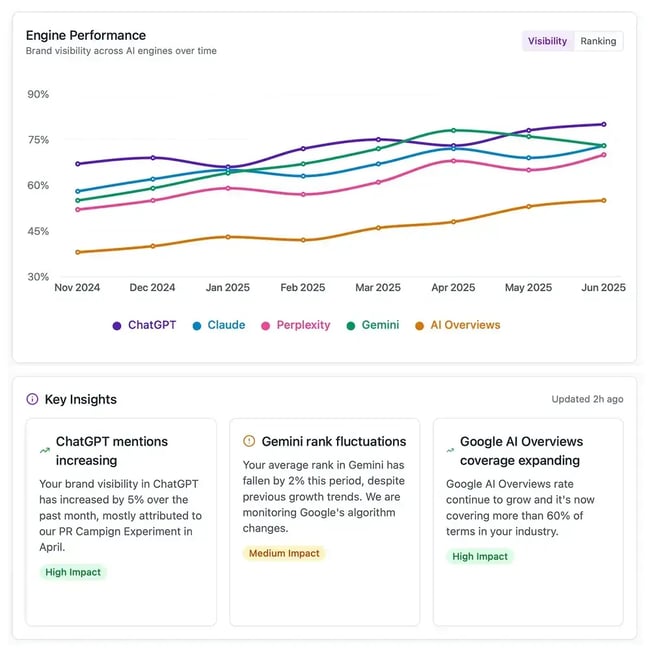
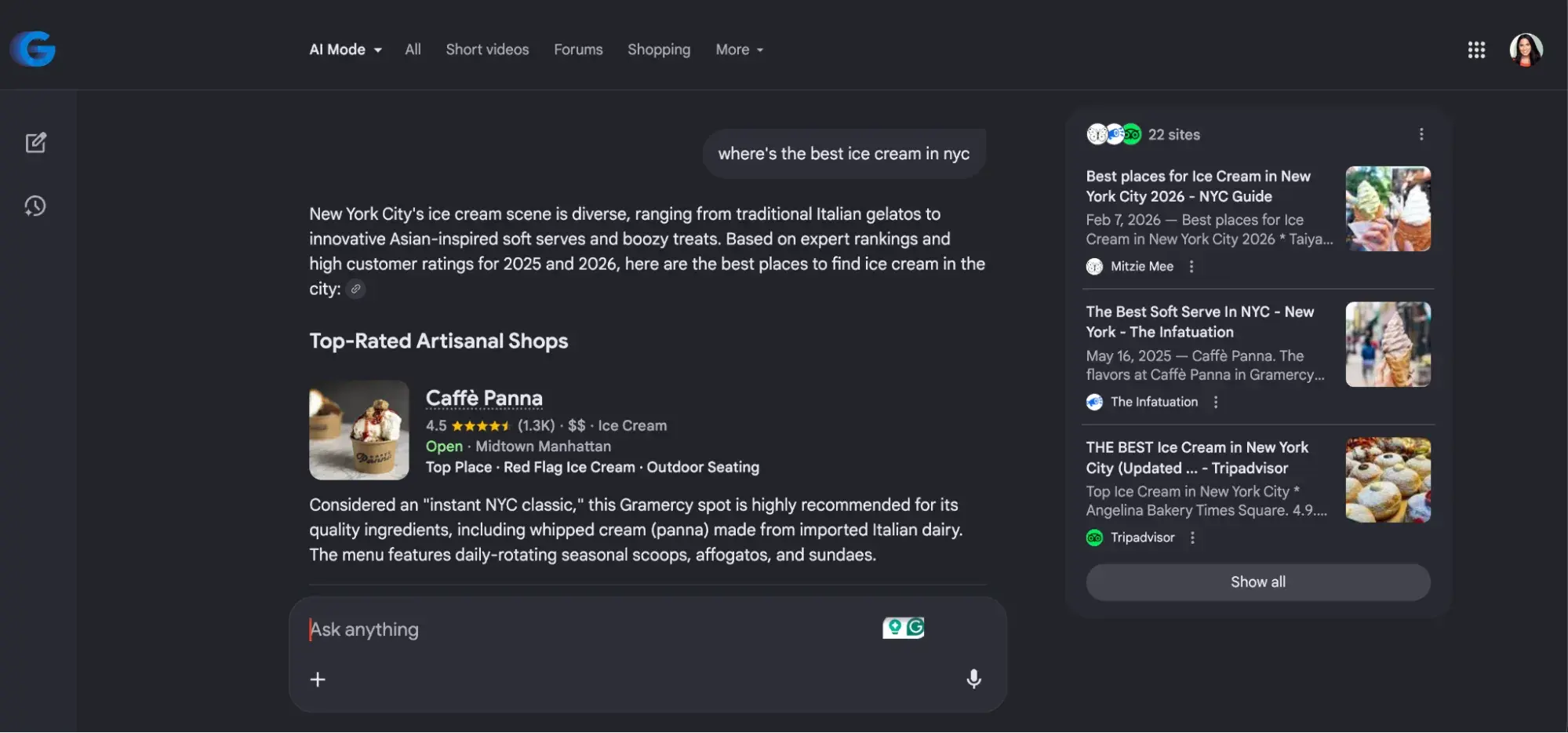
Search behavior is moving from finding links to finding answers. So, consumers are no longer relying solely on Google to make a decision. Instead, users are actively searching on AI search engines and asking Perplexity, Claude, Gemini, or ChatGPT for direct answers.

This fragmentation means brands must be discoverable wherever audiences search: not just on traditional search engines like Google, but also within AI-generated summaries and conversational interfaces.

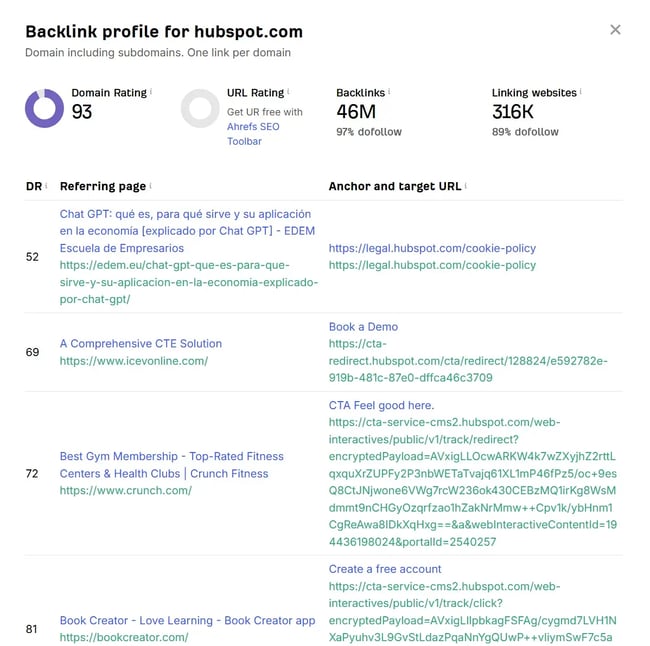
Therefore, brand mentions across trusted sources such as reviews, forums, podcasts, and social media now carry more weight than traditional backlinks. AI systems surface brands based on “AI authority,” i.e., how often and credibly a brand is referenced, making reputation and content quality critical for visibility.

In short, one of the 2026 AI marketing predictions is that a brand’s SEO strategy must evolve into AEO. If the content isn’t structured for LLMs and humans, brands lose their voice in the conversation. Companies and businesses must start speaking the language of AI models and human users simultaneously if they want to be cited as the “source of truth.”

According to the HubSpot 2026 State of Marketing report, 40.6% marketers are currently updating their SEO strategy for AI-powered search engines. Another 48.57% of marketers are using AI occasionally to make personalized content.

hubspot 2026 state of marketing report]

Marketing in 2026 will require optimization for:

  • Voice search
  • Image & visual search
  • Conversational queries

AI models powering discovery will extend far beyond keyword-based SEO to multimodal content relevance across channels.

My strategy for AI search

I like how product search and discoverability are evolving with time, while the fundamentals remain the same. Users ultimately want to find answers in the easiest and fastest way possible. AI-powered search engines will provide that in 2026, while AI tools will help brands optimize for the AI search era.

I often use HubSpot’s Breeze AI content generator to create content for brands because it helps me optimize for AEO. I can use HubSpot’s AI to write pieces that structure my posts for LLM readability and humans simultaneously.

The HubSpot Breeze AI suite helps businesses optimize for AI search engines to accelerate business growth and boost team productivity. Breeze can also help segment customers for campaigns, personalize content, and help clean up data to save teams time.

hubspot breeze ai suite, ai predictions, rise of ai content generators

Rise of AI Agents in Marketing

One of the top AI predictions for 2026 is that AI agents, autonomous systems that think, act, and optimize on their own, will become mainstream in marketing workflows. Here’s how:

  • AI agents will manage entire campaigns end-to-end
  • AI agents can help marketers optimize bids, audience targeting, and creatives in real time
  • Agentic AI will free humans to focus on strategy rather than on manual tasks

AI agents are transitioning from assistants to autonomous decision-makers. By the end of 2026, agentic AI systems will be able to plan, execute, and optimize full marketing campaigns without constant human input. These agents will operate across platforms, manage budgets, test creatives, and refine strategies in real time.

Consumers are also using personal AI agents to research and purchase products. With 24% of AI users already using AI shopping assistants, marketers must optimize not just for human audiences, but for “agent-to-agent” interactions. Optimizing for agent-to-agent interactions means ensuring product data is structured, accessible via APIs, and interpretable by AI systems.

The future of commerce and advertising is agent-mediated. One of the future predictions of Artificial Intelligence is that AI agents will negotiate media buys directly with one another, bypassing human intermediaries. Agent-to-agent trading enables faster, more scalable transactions and supports new ad formats that don’t fit legacy programmatic pipelines.

Similarly, consumers use AI agents to compare products, check stock, and make purchases, often without visiting a brand’s website. Protocols such as the Agentic Commerce Protocol (ACP) and the Model Context Protocol (MCP) enable brands to embed interactive, transactional experiences directly within AI chat interfaces.

In 2025, AI was primarily used to draft content. In 2026, AI will be used to run entire campaigns. While an AI agent waits for a command, another agent works toward a predefined goal, handling the busywork of prospecting and qualification in the background.

According to the HubSpot 2026 State of Marketing report, 19.20% of marketers are already leveraging AI agents to automate marketing initiatives end-to-end. These numbers are set to grow in the coming months.

How I use AI agents

I use AI agents to automate workflows, freeing up my time to focus on brand strategy. For example, I can assign a target to a HubSpot Breeze Agent and let it research, qualify, and engage leads in the background. The sales team can then start closing deals from the AI-generated leads.

The HubSpot AI Agents Playbook explains how people can leverage AI agents and prepare for the future. With the HubSpot AI agent playbook, marketers can pinpoint where and how to implement agents into workflows.

hubspot ai agents playbook, ai predictions rise of ai agents in marketing

As a starting point, I recommend using HubSpot’s built-in AI agents.

The HubSpot Breeze AI Agents help marketing teams discover, customize, and deploy AI agents to automate business workflows. Similarly, the HubSpot Breeze Data Agent helps scale data operations with an AI agent that researches and analyzes customer data to deliver instantaneous results.

hubspot ai data agent success rate, ai predictions, rise of ai agents

Pro tip: If a workflow requires following strict logic (if criteria X are met, then Y should follow), it’s best to delegate the work to an AI agent. Refer to the HubSpot AI Agents Playbook to learn how to leverage AI agents and prepare for future-proof work.

AI Content Will Become Mainstream

One of the primary AI predictions for 2026 is that generative AI will no longer be just a content-drafting tool but will become a creative co-pilot. Marketers will use AI tools to produce multimodal content (text, image, audio, video) at scale, enabling rapid localization and personalization.

However, with AI-generated “slop” flooding the web, authenticity and human creativity are becoming differentiators. Brands are balancing AI efficiency with employee and creator-led storytelling to maintain emotional resonance and trust.

As mentioned earlier, nearly half of marketers surveyed in HubSpot’s report have used AI to create personalized content. Moreover, 35.08% marketers are repurposing content across channels.

In 2026, AI won’t just produce content but drive “living campaigns” that self-adjust messaging, formats, visuals, and tones based on performance signals across platforms. Traditional static ads will largely give way to dynamically evolving creative assets that adapt per audience segment.

Brands are likely to use AI-generated images, videos, and copy as standard practice rather than as experiments. So, marketers will leverage AI tools to produce thousands of creative variations for A/B testing, with human marketers focusing more on strategy and creative direction rather than execution.

Users now want fluid formats and expect to consume ideas in the format that fits their moment. So, AI future predictions 2026 involve the rise of AI tools that can generate multi-modal content by adapting a single asset into audio, visual, and text formats.

How I see AI content

I think the most successful brands in 2026 will treat a blog post as just the raw material and use AI to remix that post into a podcast, a slide deck, or a social carousel. This will ensure marketers reach every segment of the audience on launch day.

For example, I often use HubSpot Breeze AI content generator to create AI content and remix a single asset into blogs and social posts.

The HubSpot Breeze AI content generator can generate AI content that helps save teams time. Breeze can also help segment customers for campaigns, personalize content, and help clean up data to save teams time.

hubspot breeze ai content generator landing page, ai predictions, rise of ai content]

Pro tip: Stop publishing single-format content. The right AI tools can help marketers ideate, create, and share content quickly across various platforms.

Hyper-Personalization and Predictive Analytics

One of the important AI predictions for 2026 is AI-driven personalization that goes beyond user segmentation to real-time, cross-channel individualization. Using behavioral signals, context, and intent, AI tools tailor content, product offers, and journeys for each user by dynamically adjusting emails, ads, and website experiences.

Predictive analytics enables anticipatory marketing, where brands surface offers before customers consciously realize they want them. Tools like Google Analytics 4 AI Insights predict churn, purchase likelihood, and next-best actions, allowing marketers to act proactively.

According to the HubSpot 2026 State of Marketing report, 32.96% of marketers are currently extensively using AI for data analysis and automated reporting. Another 33.24% are extensively using AI for market research and competitor analysis.

The future of AI involves marketers who’ll deliver one-to-one personalization to drive higher engagement and conversion rates. Marketing will eventually move beyond basic segmentation to truly individualized experiences.

AI will enable brands to create unique content, product recommendations, and messaging for each customer in real-time, analyzing behavioral patterns, purchase history, and contextual signals to deliver precisely what resonates with each person.

How I see Hyper Personalization

In a world flooded with AI-generated content, the only way to cut through the noise is with data that an LLM doesn‘t have: customers’ real-time context. The solution is predictive personalization. That’s why I use HubSpot Breeze to unify customer data for predicting what a customer needs next, moving from generic blasts to timely, high-value interactions.

The HubSpot Breeze AI suite unifies marketing, sales, and client data to accelerate business growth, scale revenue, and ramp up customer service. The HubSpot Breeze Data Agent helps with data operations by researching and answering customized questions using CRM data.

Marketers can also refer to the HubSpot AI Agents Playbook to understand how AI agents work and deploy them for predictive data analytics.

hubspot personalization tools landing page, ai predictions, hyper-personalization and analytics

The Future of Marketing Teams and Roles

One of the major AI predictions of 2026 is that AI is transforming marketing roles. Routine tasks are automated, allowing marketers to focus on strategy, creativity, and ethical oversight. Some of the new roles that are emerging are:

  • AI Marketing Specialist: Manages AI tools for personalization and analytics.
  • Prompt Engineer: Crafts inputs to generate high-quality AI outputs.
  • Automation Manager: Integrates AI workflows across platforms.
  • Data Storyteller: Translates AI insights into business narratives.
  • Micro-Content Creator: Produces authentic, human-edited content to counter AI “slop.”

Leadership must foster AI literacy and human-in-the-loop processes to ensure AI enhances, not replaces, human judgment.

The 30% Rule dictates that AI must automate one-third of the routine workload. AI adoption will free up 30% of the marketing team’s time to be reinvested in high-leverage creativity.

2026 AI marketing predictions also include new roles like Vibe Marketing, a concept inspired by the ‘Vibe Coding’ trend. Marketers don’t need to be a CRM technical expert to work in marketing; they just need to know the broader strategy.

This shift removes the tool fatigue that plagues growing teams. Vibe Marketers provide the vibe (the strategy and goal), and AI handles the execution. This allows junior marketers to execute senior-level campaigns, provided their strategy is sound.

According to the HubSpot 2026 State of Marketing report, 32.82% respondents have said AI tools are saving 10-14 hours per week for marketing teams. Simultaneously, 41.81% marketers have said AI has moderately increased productivity.

AI isn’t going anywhere. Marketers must upskill and learn the tools to secure their positions and find AI-proof jobs.

How I see the future of marketing roles

I think AI will replace repetitive jobs while retaining those that require human creativity and innovation, returning marketing to its creative roots. The barrier to entry is no longer “knowing the software,” but “knowing the customer.”

I’d also recommend the HubSpot 2025 AI Agents Playbook for marketers. After all, upskilling and learning about AI is the only way to protect jobs in the long run.

The HubSpot 2025 AI Agents Playbook helps marketers learn insider strategies and helps companies have an edge in marketing, sales, and operations.

Pro tip: Instead of traditional business school degrees, what will matter is how good a marketer can deploy a strategy. Even junior marketers can execute a campaign if they know how to use AI tools effectively. Be quick to learn on the go.

Privacy-First Data Strategies

Privacy-focused data operations for AI systems are one of the top AI predictions for 2026.

With third-party cookies phased out and global privacy regulations tightening, first-party and zero-party data are now foundational. Brands are shifting to consent-based data models, collecting customer preferences directly through surveys, loyalty programs, and preference centers.

AI helps extract value from limited data by using intent-based signals and contextual targeting, reducing reliance on personal identifiers. Using AI responsibly not only ensures compliance but also builds trust, turning data strategy into a competitive advantage.

As AI adoption surges, ethical issues like data privacy, bias mitigation, transparent decision-making, and responsible use move from optional to strategic imperatives. Brands that lead with trusted and explainable AI will gain a competitive advantage.

According to HubSpot’s State of Marketing survey, 40.13% marketers have concerns about data privacy and security. In fact, it’s the biggest barrier that prevents organizations from adopting AI in marketing.

How I see privacy-first data strategies

Privacy is a fundamental aspect of human life. So, it’s natural for the majority of marketers to be concerned about data privacy issues.

However, with the right regulations and better data practices across AI companies, I’m hopeful that in 2026, more companies and marketers will feel confident to use AI.

AI tools that have built-in privacy will be preferred over those that aren’t as transparent. For instance, the HubSpot Breeze AI suite delivers secure and trustworthy AI solutions with robust privacy safeguards built into the system.

Pro tip: Always read the Privacy Policy of AI tools to understand what kind of personal data they collect and process. Review permissions granted to AI tools and revoke them if they violate data privacy guidelines.

How Marketers Should Prepare for 2026 AI Predictions

The window for marketers to get ahead of the next AI wave is closing fast. Here’s what marketers need to do now to survive the future of AI:

  1. Start experimenting with AI agents today. Don’t wait for the “perfect” tool. Begin testing current AI models to understand their capabilities and limitations before more powerful systems become widely available.
  2. Build workflows that assume AI automation. Start designing processes that have AI handle routine tasks such as email responses, content creation, and data analysis. Focus energy on strategy and creative direction instead of execution.
  3. Develop AI orchestration skills. The future marketing professional will be more like a director coordinating multiple AI tools than someone doing manual tasks. Learn prompt engineering and manage AI systems effectively.
  4. Create custom solutions instead of buying SaaS. Many marketing tools can now be built in minutes using AI. Marketers can create complex projects with OpenAI, Claude, Gemini, and HubSpot that would have previously required entire teams.
  5. Think like a small, powerful team. AI will enable small groups with concentrated focus to create projects that used to require hundreds of people. Position the marketing team to leverage this.

AI Predictions Beyond 2026

AI marketing predictions by 2030 would be intelligent, ethical, immersive, and human-first brands, powered by AI, but led by empathy.

By 2050, in the age of AGI, marketing will no longer be about selling products, but about designing intelligent relationships between humans and the systems that serve them.

What Marketing Looks Like in 2030

Marketing in 2030 will operate through predictive AI systems that anticipate customer needs before consumers express intent, replacing reactive campaigns with adaptive, real-time experiences and deeply human. All marketing campaigns will be powered by AI but led by empathy.

Marketing Becomes Predictive, Not Reactive

By 2030, marketing won’t wait for customers to act.

  • AI models will anticipate needs before intent is expressed
  • Campaigns will trigger based on life moments, context, and behavior patterns
  • Funnels will be dynamic and non-linear, updating in real time per individual

Hyper-Personalization at the Identity Level

Segmentation will be obsolete.

  • One-to-one marketing at scale becomes standard
  • Content, pricing, UX, and even brand tone adapt per user
  • AI-generated content will be governed by a strict brand and ethics layer

The Rise of Zero-Party Data & Trust Economics

With stricter privacy laws and cookie-less ecosystems:

  • Customers voluntarily share data in exchange for value
  • Brands compete on transparency, not tracking sophistication
  • Trust becomes a measurable KPI

AI Co-Marketers Become the Norm

Marketers won’t “use tools”— they’ll work with AI partners.

AI will:

  • Design campaigns
  • Test thousands of creative variations instantly
  • Predict ROI before launch
  • Optimize messaging mid-conversation

Humans will focus on:

  • Strategy
  • Ethics
  • Creativity
  • Cultural relevance

Content Evolves into Experiences

Static content fades. Immersive content dominates.

  • Interactive video, AR demos, virtual showrooms
  • Conversational content via AI agents
  • Personalized brand worlds instead of landing pages

The 2050 Vision: Marketing in the Age of AGI

By 2050, marketing will no longer be a function defined by tools, channels, or even data. In the age of Artificial General Intelligence (AGI), one of the AI predictions is that marketing itself will become a co-evolutionary system — one where human values, machine intelligence, and consumer intent continuously adapt to each other in real time.

From Optimization to Understanding

Marketing today is obsessed with optimization: click-through rates, conversion funnels, attribution models. AGI changes the game by shifting focus from what works to why it works.

AGI systems will:

  • Understand human psychology at an individual and collective level
  • Model emotions, motivations, cultural context, and ethics
  • Anticipate needs before consumers can articulate them

The End of Campaigns, The Rise of Living Brands

In the AGI era, campaigns will feel archaic. Instead:

  • Brands will operate as continuously evolving entities
  • Messaging, visuals, and values will adapt instantly to social, cultural, and economic changes
  • Brand identity will be fluid yet consistent, guided by an AGI “brand consciousness”

Marketers as Philosophers, Curators, and Governors

AGI will automate execution entirely, but not responsibility. The most valuable skill won’t be prompt-writing or analytics; it will be judgment.

Human marketers will evolve into:

  • Philosophers who define purpose, values, and boundaries
  • Curators guiding creativity, culture, and narrative
  • Governors overseeing the ethical use of intelligence

The Ultimate Shift: From Attention Economy to Meaning Economy

The attention economy will collapse under AGI abundance. What replaces it is the meaning economy, where:

  • Brands compete on contribution, not visibility
  • Success is measured by long-term impact on human well-being
  • Marketing exists to reduce friction in life, not create desire artificially

Frequently Asked Questions About AI Predictions

What is the best AI predictor?

AI predictor performance depends on the specific use case and data requirements. HubSpot Breeze AI suite is one of the best AI predictors that provides integrated predictive capabilities for marketing attribution, lead scoring, and revenue forecasting. HubSpot Breeze analyzes historical customer data to generate actionable predictions that inform campaign strategy and resource allocation.

What are the future predictions of AI?

Future AI predictions include the rise of AI search engines, AI agents in marketing, AI-generated content, hyper-personalization, changes in job profiles, and privacy-first protocols. By 2030, marketing will become more predictive, AI co-marketers will become normal, and content will evolve into immersive human experiences.

What is the 30% rule for AI?

The 30% rule for AI means it should handle 30% of the workflow, including repetitive, data-heavy tasks. Humans can focus on the remaining 70% work that requires critical thinking, creativity, and ethical judgment. Thus, AI serves as an assisting tool for employees rather than replacing their jobs.

What jobs will be eliminated by 2030?

Jobs like Telemarketing, Bookkeeping Clerks, Compensation and Benefits Managers, Receptionists, Couriers, Proofreaders, Computer Support Specialists, Market Research Analysts, Advertising Salespeople, and Retail Salespeople may be eliminated and replaced by AI by 2030. However, strategic marketing roles that focus on creativity, ethics, and culture will remain essential.

AI in 2026: The Bottom Line

AI in 2026 won’t be defined by a single “ChatGPT moment,” but by the quiet, powerful transformation of how work gets done more efficiently. Organizations that integrate AI into their core operations will start to see compounding effects.

While breakthroughs in model capabilities will continue, the real success stories will come from how marketers integrate AI into daily workflows.


Categories B2B

Marketing experiments every growth team should run

Every reliable tactic marketers now love, from video content to email marketing and blogging, was once a new experiment that early adopters tested and developed. Creating new marketing strategies is foundational to marketing, helping brands reach new customers and gather data that helps facilitate smarter business decisions. Access Now: Free Loop Marketing Landscape Report

While experimentation isn‘t new, digital marketing offers brands greater flexibility and potential. Let’s look at experiment types, which metrics to track, and how to design experiments across marketing channels to achieve maximum success.

Table of Contents

What are marketing experiments, and how do they work?

Marketing experiments are controlled changes to a marketing message or campaign to improve reach or conversion rates. These tests can be a small, single tweak or a campaign-wide experiment. Successful marketing experiments assess both quantitative data and qualitative factors, and the campaign results directly feed the next iteration of marketing materials.

Experiments are a part of step four in the Loop Marketing cycle: evolve in real-time. Here are quick examples of marketing experiments feeding the loop:

Experiment Example

How it Feeds the Marketing Loop

Change CTA button color on a landing page

Measures immediate impact on click-through rate (CTR); then, iterates the winning version to improve conversion rates

Test UGC vs. branded photography in paid ads

Uses engagement and conversion data to evolve ad strategy based on what resonates with audiences

A/B test email subject lines

Evaluates open rates, engagement rates, and qualitative replies to refine future messaging

The Elements Every Marketing Experiment Needs

Before spending any marketing budget on an experiment, make sure it has what it needs to succeed: a solid foundation, clear test factors, predetermined success metrics, and an intentionally selected framework.

The Basics

Marketing experiments are composed of a few key factors, like a specific hypothesis, subject, and both dependent and independent variables.

  • Measurable hypothesis (expected outcome): A clear, testable prediction.
  • Subjects: Who is exposed to the experiment.
  • Independent variable: The element marketers intentionally change.
  • Dependent variable: The measured outcome.

Here‘s an example of how this looks: A local coffee shop runs a Facebook advertising campaign targeting people who have liked its page (subjects). The owners hypothesize that offering a 10% off rainy-day promotion (independent variable) will increase Facebook ad conversion rates by 20% (dependent variable), compared to evergreen ads that don’t change with the weather.

Test Factors

Marketing experimentation requires several test factors, like control vs. variant, randomization, and experiment duration.

  • Control: The original version of a message, ad, or experience (baseline).
  • Variant: The version that includes the intentional change being tested (like new copy, creative materials, or promotions).
  • Randomization: The process of randomly assigning people to see either the control or the variant.
  • Duration: The length of time the experiment runs, determined by how much data is needed to confidently compare results.

Success Metrics

Measuring the success of a marketing experiment is more nuanced than relying on a single metric. Both primary and secondary metrics must be considered:

  • Primary metric: The single desired outcome (like lead generation or sales)
  • Secondary metrics: Supporting outcomes that provide additional context (like engagement or time on page)

Note that the data alone doesn‘t tell a complete story of an experiment’s success (I’ll share more on this below).

A/B vs. Multivariate Marketing Experiments

Marketing experiments follow three common frameworks: A/B tests, multivariate tests, and holdout tests. Each evaluates different elements of a marketing campaign and shares its own valuable insights.


What It Does

How It Feeds The Marketing Loop

A/B Tests

Compares one specific change to the control group

Insights are easy to interpret and can be applied immediately to improve future iterations

Multivariate Changes

Compares multiple variables simultaneously

Results are more difficult to interpret, but can provide insights that help marketing materials evolve holistically

Holdout Tests

Compares viewers exposed to a campaign with those intentionally not exposed to measure incremental impact

Identifies whether marketing exposure drives an outcome that would not have occurred otherwise

Both A/B testing and multivariate testing are built into marketing software like the HubSpot Marketing Hub. Users can quickly test variations of content and see how they perform:

The AB test button in the top right is highlighted. Ideal for marketing experiments

Source

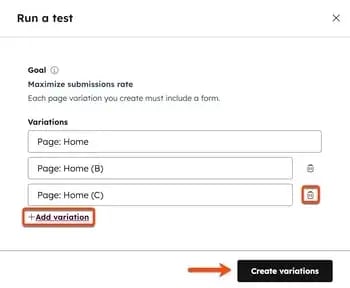
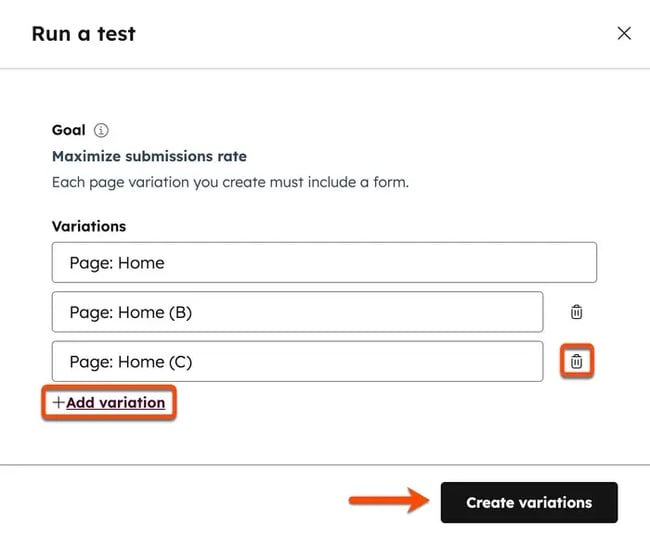
This type of adaptive testing allows marketers to run multiple experiments simultaneously, facilitating up to five variations at a time:

After clicking the test icon in the content editor, a dialog box is displayed. Three variation text input fields are shown. A box is placed around the delete variation icon next to a variation. A box is placed around the + Add variations text. An arrow points to the Create variations button.

Source

After understanding the different frameworks, work through the following five steps to launch your experiment.

Steps to Design and Run Marketing Experiments

Choose the right question and success metric.

The first step in designing a marketing experiment is articulating the question (hypothesis) being tested and tying it to a specific success metric.

Below are some sample question formulas and applications. Notice that the questions being asked are all clear and data-driven. This is important because unclear hypotheses increase the risk of interpretation bias and false correlations.

Question Formulas

Examples

Will [changing X] increase [Y] [metric] for [audience/marketing asset]?

Will moving the email opt-in higher increase leads generated by 20% on my most-read blog post?

Will [changing X] decrease [Y] [metric] for [audience/marketing asset]?

Will removing steps at checkout decrease abandoned carts by 5% for digital products?

Will [changing X] reduce time to [desired action] for [asset]?

Will adding social proof to our email nurture sequence reduce time to purchase for our software demos?

Where to start? I recommend you experiment with an underperforming page first. Find an ad, landing page, or website page that has low conversion rates and develop a hypothesis for improvement.

Pick a test type and define the variable.

After choosing the right question for their experiment, marketers must select a testing framework. Selecting the wrong test type or testing too many variables simultaneously can make results difficult to interpret and act on.

While there are many different types of marketing tests to run, let’s look at three common test types, the variables that they measure, and common examples.

Test Types

Examples

Variable

A/B

Email subject lines, sales page CTAs, button color

One isolated element, such as copy, placement, or color

Multivariate

Testing multiple page elements at once, like headings, layout, and images

Multiple elements tested simultaneously to measure interaction effects

Holdout

Measuring the real impact of ads, lifecycle emails, or always-on campaigns

Exposure versus no exposure to a campaign or marketing materials

Where to start? I recommend an A/B test. It’s one of the most effective marketing experiments because it offers instant clarity on a single variable. Use HubSpot’s free A/B testing kit to quickly iterate on experiments.

Estimate the sample and set a stopping rule.

Marketing experiments need a clear endpoint (stopping rule) that signals when the experiment has gathered enough data (sample) to render the hypothesis proven or disproven. The stopping point should be objective and predefined before an experiment begins.

Some common stopping points for marketing experiments are:

Potential Stopping Point

What It Determines

Example

Traffic/sample size

If enough data was gathered to confidently compare results between the control group and the experiment

Experiment ends after 15,000 viewers have experiential marketing materials

Duration

Experiment time frame

Experiment ends after 14 days have passed

KPIs met

If the hypothesis was supported by the success metric

The hypothesis of a 5% click-through rate improvement was realized

Budget

How much marketing spend should be invested

Experiment ends after $1,000 in ad spend is reached

Negative performance

If the variant is causing extreme harm

A social media experiment concludes when it results in a 2% lower engagement rate on the entire account

Data quality issue

Whether results can be trusted

Errors or attribution issues are detected

External event

If an external force has impacted experiment results

A national emergency dominates news cycle and promotional materials on social media are paused

Build, ensure quality, and launch.

Experiment design and execution greatly impact results. Building an experiment with a focus on quality assurance protects marketing effort and spend from chasing inconclusive or biased experimental results.

Consider the following checks and balances during the build, QA, and launch phase of an experiment:

Build:

  • Control and variant are implemented correctly.
  • Only the intended variable is different.

Quality assurance:

  • Tracking events fire correctly.
  • Randomization works as expected.

Launch:

  • Test launches during normal traffic patterns.
  • Tracking mechanics (UTM codes, pixels, analytics) are correctly recording data.

I’ll share exact tool recommendations for running marketing experiments below.

Analyze, document, and decide the rollout.

Analysis is an essential part of the experimental marketing process. Establishing the success or failure of marketing efforts helps make the data gathered actionable, while also feeding the development of future experiments.

Marketing teams should ask objective, investigative questions to analyze, document, and determine experiment rollout. Here’s a checklist:

Analyze:

  • Did the experiment reach its predefined stopping rule?
  • Was enough data collected to evaluate the experiment?
  • Did the variant outperform the control on the primary metric?
  • Could external factors (seasonality, campaigns, news events) have influenced results?

Document:

  • What was the original hypothesis, and was it supported by the data?
  • What was the exact variable changed?
  • What unexpected outcomes or behaviors emerged?
  • What assumptions were validated or invalidated?

Rollout:

  • Should the winning variant be iterated on or retested?
  • Is this outcome strong enough to apply across other channels or assets?
  • Does this result justify rolling out to 100% of traffic?
  • Are there risks in scaling this change broadly?

Common Pitfalls That Break Marketing Experiments

Marketing experiments can be sabotaged by common pitfalls like seasonal effects, skipping qualitative review, selecting the wrong duration, and running multiple experiments at once. Heed these warnings.

Skipping Qualitative Review

While data is important in objectively evaluating a marketing experiment’s success, human review of qualitative factors is essential. Scott Queen, senior product strategist at SegMetrics, advised that marketers must look at marketing experiments from both a quantitative and qualitative perspective.

Using the example of lead generation, Queen shared that “you have to think about it in two ways: the pure number… And then you have to do some analysis of ‘are they the right people?’”

A lead generation campaign that resulted in 1,000 new email signups might look successful, but what if none of those customers live within the shipping range of an ecommerce company? Quantitative alone can‘t determine a marketing experiment’s success.

Choosing the Wrong Duration

The duration of marketing experimentation impacts marketing spend and the amount of data gathered. Finding the right duration for a marketing experiment is a balancing act.

How long should brands run a marketing experiment? That depends on the channel.

“Some of your marketing tactics that are reasonably immediate, I would say you look at them weekly,” shared Queen. Other desired outcomes, like growing organic website traffic from an SEO experiment, can take months to gather enough data.

Not Accounting for Seasonal Effects

Tests that are executed during atypical periods (holidays, national emergencies, elections) may be skewed due to external influences rather than the experiment itself.

This shift change comes from both viewers and algorithms. For example, as a Pinterest marketer, I know to avoid publishing evergreen content from Thanksgiving to Christmas because seasonal content is so heavily favored by Pinterest’s algorithm. This skew is forced by the algorithm.

During periods of crisis, user attention, or even time spent on social media, can decrease. When possible, avoid running experiments during these periods to reduce the risk of attributing results to factors outside the test.

Running Multiple Experiments at Once

Running multiple tests at once increases the risk of incorrect attribution. Attribution is already challenging in digital marketing, where many touchpoints (such as influencer mentions or AI-generated overviews) are difficult to capture.

When possible, running experiments sequentially or coordinating parallel tests helps ensure results can be interpreted with confidence. For example, changing a single variable on the homepage and testing these versions parallel to each other:

Adaptive homepage testing in HubSpot Content Hub

Source

Tools to Plan, Run, and Analyze Marketing Experiments

Consider the following tools to plan and execute your marketing efforts.

Marketing Hub

HubSpot‘s Marketing Hub is a comprehensive platform that combines data from social media, a business’s website, CRM, search engines, and paid ads into one user-friendly dashboard. Easily filter data by asset titles, type, interaction type, interaction source, and campaigns.

Price: Paid plans start at $10/month

Standout features include:

  • Ad retargeting and audience management: Build and test retargeting campaigns across experimental groups.
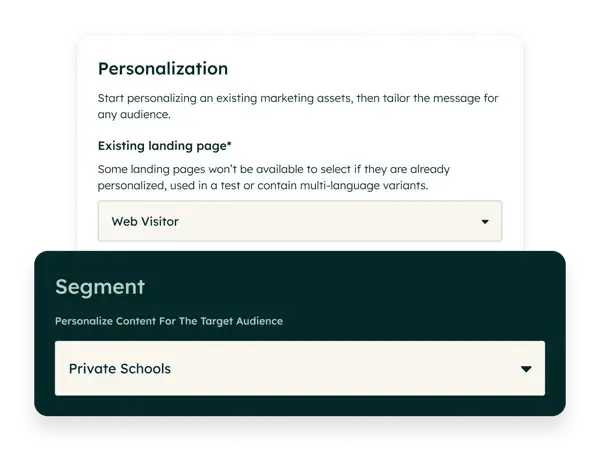
  • Advanced personalization: Create and test personalized content experiences based on CRM data, lifecycle stage, or behavior.

landing page personalization results

Source

  • Smart CRM integration: Run experiments on consistently defined audiences using shared CRM data across teams.
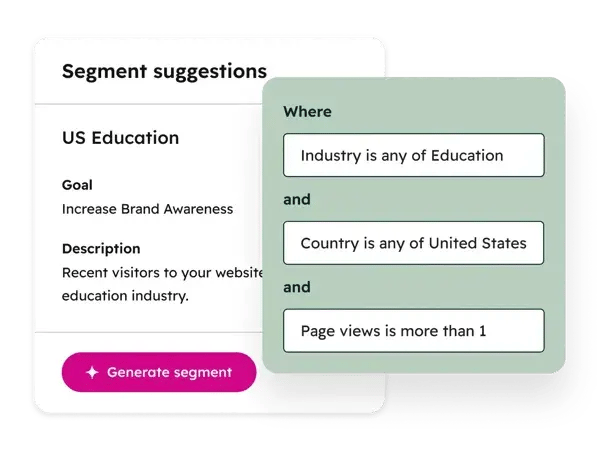
  • AI-powered segmentation: Use AI segment suggestions to define and refine audience groups for more relevant experiments.

segment suggestions - web visitors

Source

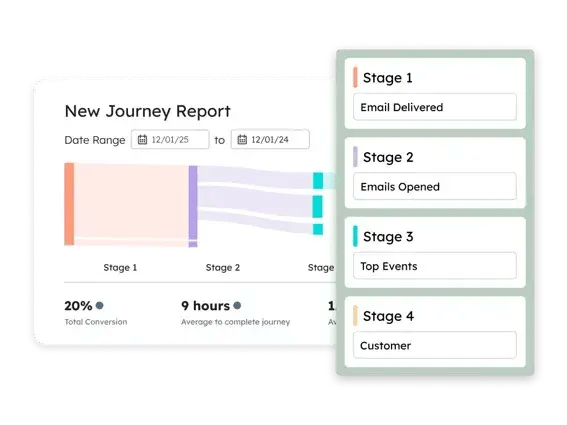
  • Journey mapping: Analyze customer journey data to find where visitors are most likely to convert.
  • A/B and adaptive testing: Test variations of landing pages, emails, and CTAs to identify what drives higher engagement and conversions.
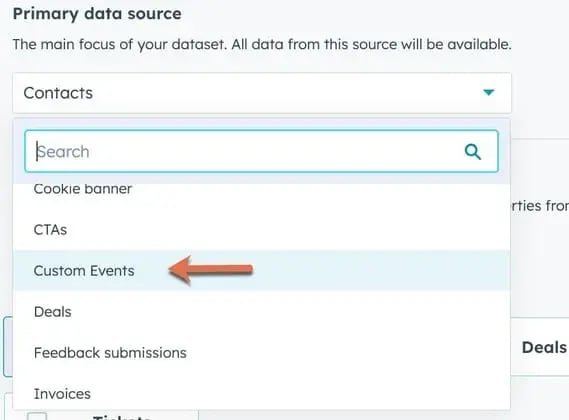
  • Behavioral event tracking: Track and report on specific user actions to measure experiment impact beyond surface-level metrics.

primary-source-custom-events

Source

  • Advanced marketing reporting: Analyze experiment results across channels and funnel stages in unified dashboards.
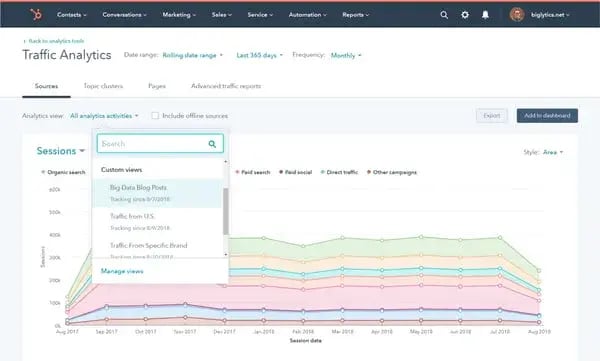
  • SEO and content performance tracking: Measure how content and SEO experiments affect organic traffic, engagement, and conversions.

dashboard showing different website traffic sources

Source

What we like: HubSpot’s Marketing Hub makes data as actionable as possible, allowing for easy decision-making and understanding across marketing team members. I like that the built-in AI features work with you instead of taking over entire processes, leaving you firmly in control of your own experiments while still leveraging the insights that AI brings.

SegMetrics

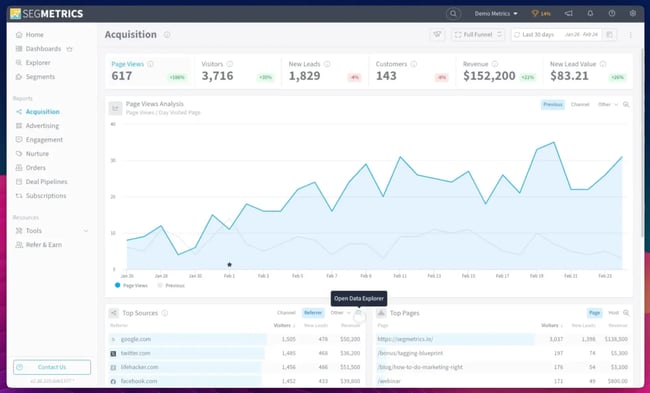
SegMetrics is a marketing attribution and reporting tool designed to help marketers understand how experiments impact revenue. It connects marketing touchpoints across the funnel to downstream outcomes, making it easier to validate whether experiments are driving qualified leads, customers, and lifetime value.

Price: Starts at $57/month

Key features include:

  • Revenue-based attribution
  • Lifecycle and funnel reporting
  • Campaign and channel attribution
  • CRM and marketing tool integrations
  • Lead quality analysis

segmetrics dashboard screenshot

Source

What we like: The subscription model features. Many reporting tools struggle to measure results for companies promoting recurring subscription purchases. On a demo call with Queen, he showed me SegMetrics’ pre-built tools to help marketers find which experiments extend customer lifetime value (LTV) for subscription-based businesses.

Google Analytics 4

Google Analytics 4 (GA4) measures countless user interactions and events. It provides a famously (or maybe infamously) overwhelming amount of data, but as it relates to marketing experimentation, GA4 helps marketers with funnel analysis, traffic segmentation, and experiment validation across channels.

Price: Free

Some GA4 features that relate to marketing experimentation include:

  • Event-based tracking
  • Segment comparisons
  • Conversions
  • Traffic source and campaign reporting (with UTM parameters, explained below)

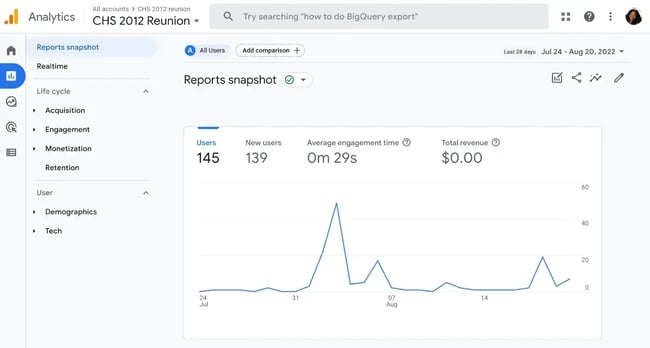
This GA4 snapshot illustrates how teams can analyze user volume and engagement trends over time to evaluate whether an experiment meaningfully changes on-site behavior.

reports; google analytics tutorial

What we like: GA4 is widely adopted, which makes it a familiar and accessible data source for experimentation. It helps teams validate experiment results by tracking user behavior, traffic sources, and conversions without requiring additional setup.

UTM Parameters

UTM codes aren’t a software or program, but are an instrumental tool in tracking attribution across platforms and experiments. A UTM (Urchin Tracking Module) code is a small bit of text added to a URL to track the performance of that specific marketing asset.

Price: Free

These codes can contain up to five parameters:

  1. utm_source
  2. utm_medium
  3. utm_campaign
  4. utm_term (optional, mainly for paid search)
  5. utm_content (optional, often for A/B testing)

Here’s an example from the HubSpot blog:

utm code example

UTM codes don’t replace attribution software like HubSpot. Instead, they work together to improve campaign-level attribution and tracking.

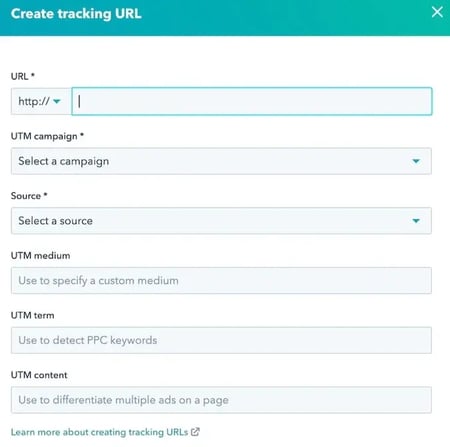
You can create a UTM code easily with HubSpot (pictured below, instructions here), as well as Google Analytics Campaign URL Builder.

How to Build UTM Codes in HubSpot, fill in the attributes of your UTM code and click create

Source

What we like: It’s not a standalone tool, but UTM parameters are essential to the experimentation process. I like how quick and easy they are to create.

Real‑World Marketing Experiment Examples

Let’s review some real-world marketing experiments: their hypotheses, variants, and outcomes. Experiments in this section cover different areas of the sales funnel and are drawn from real case studies and companies.

Lead Qualification and Automation

Handled worked with HubSpot to centralize and refine its lead qualification process to improve conversions and sales efficiency at the decision stage of the funnel.

  • Hypothesis: By replacing manual coordination with automated workflows, Handled could increase lead-to-customer conversion rates and provide a seamless retention experience that manual competitors couldn’t match.
  • Variant: Handled moved away from fragmented tools to a centralized HubSpot CRM system. They implemented Programmable Automation to instantly sync logistics data and trigger personalized customer communications the moment a lead reached the decision phase.
  • Business outcome: The team achieved a “Single Source of Truth,” allowing them to focus on closing deals rather than manual data entry.

handled and hubspot case study example

Source

Consider applying this real-life example to your marketing in these two ways.

Test lead quality, not just lead volume.

Teams can experiment with form fields, qualification questions, or gated content to validate whether fewer but more qualified leads drive better downstream outcomes. This helps shift experimentation from vanity metrics to revenue impact.

Align messaging with sales conversations.

Another experiment to consider is testing landing pages and ad messaging against real sales objections or FAQs. This validates whether clearer expectation-setting improves conversion quality and reduces friction later in the funnel.

Mini Cart Redesign

Grene and VWO Services (https://vwo.com/success-stories/grene/) ran an A/B test on Grene’s mini cart (decision stage of the funnel) that reportedly increased cart page visits, conversions, and purchase quantity.

  • Hypothesis: Making the mini cart easier to use (higher CTA, remove friction) would increase purchase quantity.
  • Variant: Redesigned mini cart with prominent CTA, simplified UI, and product total visibility.
  • Business outcome: The redesign led to a 16.63% increase in conversion rate and doubled the average purchase quantity.

The case study from VWO Services notes that other changes were also made (and goes into detail here), but cites the mini cart redesign as the catalyst.

grene cart experiment screenshot

Source

What we like: In the case study summary, VWO Services noted that they removed certain options from the mini cart’s design to reduce the odds of customers accidentally removing items from their cart. I really like the UX considerations and the ripple effect of simple experiments.

Remove steps from checkout.

Teams can test removing secondary actions from the cart or checkout flow. This experiment validates whether fewer choices increase completed purchases without hurting average order value.

Increase primary CTA visibility.

Another simple test is increasing the prominence of the primary checkout CTA through size, contrast, or placement. This helps confirm whether having a clearer visual hierarchy reduces hesitation at the moment of purchase.

Landing Page Navigation Removal

HubSpot ran an A/B test removing top navigation from landing pages to see if this improved conversions at the decision stage of the funnel.

  • Hypothesis: Removing navigation links/search bar would reduce distractions and increase focus on the primary conversion goal.
  • Variant: Landing pages with navigation links removed, directing attention to a single CTA.
  • Business outcome: The test revealed that removing navigation was most effective at the decision stage, resulting in a 16% to 28% increase in conversion rates for high-intent pages (like demo requests). Interestingly, the change had a much smaller impact on awareness-stage pages.

free hubspot ab testing kit screenshot

Source

Reduce cognitive load at the moment of decision.

Teams can test simplified landing pages to validate whether fewer choices lead to higher completion rates. This is especially effective when the goal is a single action, like form fills or demo requests.

Match navigation depth to intent level.

Another idea is to selectively remove navigation only on decision-stage assets, while keeping it on awareness or educational pages. This helps confirm whether focused experiences perform better once users are ready to convert.

Free Trial CTA Testing

Going and Unbounce ran an A/B test on the homepage CTA to improve conversions at the decision stage of the funnel.

  • Hypothesis: Changing the call-to-action from “Sign up for free” to “Trial for free” would better communicate value and increase conversions.
  • Variant: Modified CTA text to emphasize a free trial rather than a free plan.
  • Business outcome: The variant drove a 104% increase in conversions month-over-month.

marketing experiments real-life example from going

Source

What we like: Ah, the power of focused, smart A/B testing. I think this works because the new language made the value of the premium offering clearer, reducing hesitation from the viewer.

Test value framing in CTAs.

Teams can experiment with CTAs that emphasize access over commitment. This helps validate which language better reduces perceived risk at the decision stage.

Align CTA with product model.

Another simple test is matching CTA copy with how the product actually works, like trials or previews. This confirms whether clearer expectation-setting improves conversions by reducing friction and uncertainty.

Social Listening

Rozum Robotics used the social listening tool Awario to strengthen PR and lead generation efforts for Rozum Café.

  • Hypothesis: By monitoring real-time web and social mentions, the team could identify niche audiences and influencers more effectively than traditional research methods.
  • Tactics: Implemented brand and competitor monitoring to track industry sentiment, surface relevant influencers in food-tech and robotics, and engage with online mentions in real time.
  • Outcome: The team identified two new target audiences, reduced PR research time by 70%, and improved lead quality through more targeted outreach.

rozum robotics website screenshot

Source

Audience discovery through social listening.

Teams can replicate this experiment by monitoring brand, competitor, and category keywords to uncover unexpected audiences engaging with related topics. This helps validate whether current targeting assumptions match real-world conversations.

Influencer and media identification experiments.

Instead of relying on static media lists, marketers can test social listening to identify journalists, creators, or niche communities already discussing adjacent products or problems. This validates whether real-time signals lead to higher-quality PR and lead to opportunities.

Marketing Experiment Examples by Funnel Stage

Marketing experiments can target audience members at different points in the customer journey: awareness, consideration, decision, and retention. The 25 experiment ideas below span these four categories to help improve marketing ROI.

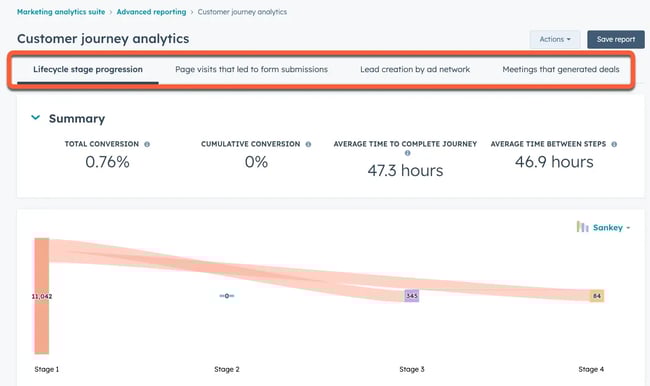
Consider using HubSpot’s advanced reporting tools to visually analyze viewers in different lifecycle stages.

customer journey templates analytics

Source

Awareness Experiments You Can Launch This Week

Experiments for awareness focus on brand recognition, first contact, and contextualizing the product. Consider these ideas.

  1. Cold audience targeting test: Compare broad targeting against AI-suggested segments to see which drives lower CPMs or higher engagement. HubSpot’s AI segment suggestions and Smart CRM help define and refine audiences used in the experiment.
  2. Creative format test (static vs. video): Test whether short-form video ads outperform static images for reach or impressions. Validates which creative format captures attention fastest in cold audiences.
  3. Pain vs. gain competitor audience test: Test pain-focused versus benefit-focused social ad messaging when targeting users who follow a competitor to evaluate which framing drives stronger engagement from cold audiences.
  4. Headline framing test (benefit vs. curiosity): Compare benefit-led headlines against curiosity-driven headlines in paid social or display ads. Test which framing gets more engagement from viewers.
  5. Message framing test: Test brand-led messaging against product-led messaging for first-touch engagement. Results can be analyzed using HubSpot’s campaign and traffic analytics.

Consideration Experiments That Lift Engagement

Experiments for the consideration phase focus on improving engagement, developing a relationship, and making the product’s value known. Consider these ideas.

  1. On-page engagement test: Compare static pages to pages with interactive elements. Behavioral event tracking in HubSpot helps measure scroll depth, clicks, and engagement signals.
  2. Email nurture sequencing test: Test different nurture paths for the same segment. Compare plain text emails with design-heavy HTML emails for engagement differences.
  3. Content format test (guide vs. checklist): Offer the same email opt-in as a longer-form ebook versus a short checklist. Validates how much depth audience members want before taking the next step.
  4. Social proof placement test: Test testimonials above vs. below the fold on landing pages. Measure scroll depth and time spent on page for engagement lift.
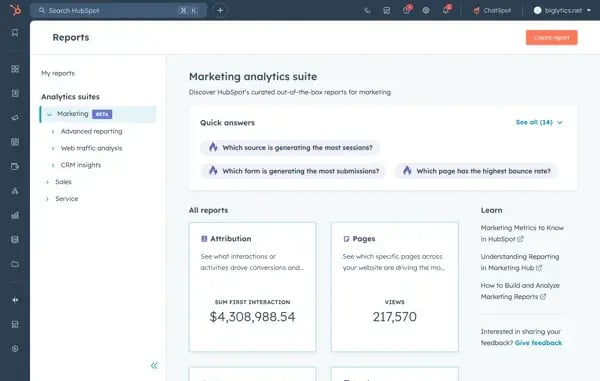
  5. Lead magnet format test: Test a checklist versus a long-form guide on the same topic. HubSpot reporting (pictured below) shows which asset drives deeper engagement and assisted conversions.

hubspot marketing analytics suite

Source

Decision‑Stage Experiments That Drive Conversions

Decision-stage experiments test messaging, pricing, customer information intake, and retargeting to achieve higher conversion rates. Consider these experiment ideas.

  1. Form length test: Test short vs. qualifying forms to balance conversion rate and lead quality. HubSpot’s Smart CRM data helps assess downstream impact beyond the initial conversion.
  2. CTA intent test: Compare low-commitment CTAs (“Get started”) with high-intent CTAs (“Book a demo”).
  3. Retargeting message test: Serve different retargeting ads to users who viewed pricing but didn’t convert.
  4. Urgency messaging test: Test countdowns, limited availability, or deadline language. Validates whether urgency increases conversions without harming trust.
  5. Pricing page experiment: Test simplified pricing layouts against detailed feature breakdowns. Adaptive testing in HubSpot (pictured below) allows teams to test multiple versions efficiently.

after clicking the test icon in the content editor, a dialog box is displayed. three variation text input fields are shown. a box is placed around the delete variation icon next to a variation. a box is placed around the + add variations text. an arrow points to the create variations

Source

Retention and Expansion Experiments That Improve LTV

Retention and expansion experiments analyze customer onboarding, communication, and feedback with the goal of retaining customers for as long as possible. Consider these ideas:

  1. Lifecycle email timing test: Test when to introduce upsell or cross-sell messaging. HubSpot Smart CRM lifecycle stages ensure users are evaluated consistently.
  2. Onboarding flow test: Compare a short onboarding sequence to a guided, multi-step experience.
  3. Customer feedback timing test: Test immediate surveys versus milestone-based feedback. Reporting helps connect feedback to churn or expansion.
  4. Personalized retention offers: Test personalized incentives based on usage or purchase history.
  5. Product usage email cadence: Test sending educational/product benefit emails weekly versus biweekly. Evaluates how frequency impacts open rates and click-throughs without causing fatigue.

Analyze data easily with HubSpot’s customer journey reporting:

hubspot marketing hub customer journey screenshot

Source

SEO and Content Experiments for Durable Growth

Experiments that aim to improve long-term organic growth, like SEO and social media content, focus on being displayed in search results, meeting user needs, and personalizing experiences with your brand.

  1. SERP feature optimization test: Test FAQ or snippet-friendly formatting. HubSpot analytics help monitor organic performance and engagement.
  2. Landing page A/B test: Test two different landing pages targeting the same keyword or search intent. Validates whether layout, messaging, or CTA structure improves engagement and conversions from organic traffic without changing rankings.
  3. Social post format test: Test different social post formats—such as text-only, carousel, or short video—when promoting the same content. Validates which format drives higher click-through rates and return visits to owned content.
  4. Content depth test: Compare concise answers against long-form, comprehensive guides on the same topic. Validates how depth impacts rankings, time on page, and conversion behavior.
  5. Personalized landing page experiment: Test personalized landing page content based on visitor segmentation or CRM data against a generic version. This can be done with HubSpot’s AI-powered personalization tools (pictured below).

personalize from scratch in the hubspot marketing hub

Source

Frequently Asked Questions About Marketing Experiments

How long should a marketing experiment run?

The duration of a marketing experiment is determined by the channel and sample size. Experimental paid advertising campaigns can be reviewed weekly, while efforts like organic SEO and organic social media posts may take weeks or months to collect sufficient data.

Can I test more than one variable at a time?

Testing more than one variable at a time, known as multivariate testing, isn’t recommended for beginners, as the results are often less conclusive than those from tests like A/B testing. However, these tests can be effective for gauging interaction effects.

What if my marketing experiment is inconclusive?

An inconclusive (or “null”) result is still a win: it proves that the specific change you tested does not significantly influence your audience‘s behavior. In this case, marketers shouldn’t just try again: they should develop a bolder hypothesis.

When should I stop a marketing experiment early?

Marketing experiments should be stopped early if there are errors with attribution or analytics, if they result in an extremely negative outcome, or if external factors (such as national crises, elections, or holidays) interfere with results. Avoid stopping tests just because they look “down” in the first few days, as data often stabilizes over time.

Do I need statistical software to analyze results?

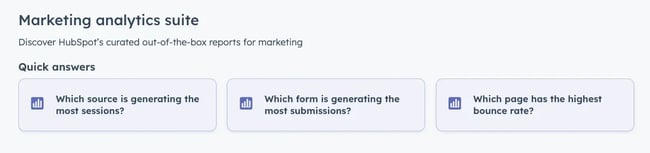
Marketing teams can conduct experiments without statistical software, but data must still be collected reliably for accurate reporting. Good reporting software not only collects data but also makes it actionable. For example, HubSpot has advanced marketing reports inside the marketing analytics suite that provide quick answers, like “which form is generating the most submissions?”

quick-answer-marketing-suite

Source

Next Steps

Experimentation is in the DNA of modern marketing. It helps brands uncover more effective marketing messages, promotions, and strategies for converting viewers into customers. Leveraged correctly, a brand’s experiments directly lead to business growth.

With built-in experimentation, personalization, and reporting capabilities, HubSpot makes it easier for teams to turn experiments into insights and insights into growth.

Categories B2B

What We’re Building with Starter Story


We have some big news: HubSpot Media is acquiring Starter Story, one of the most trusted and beloved media brands in the entrepreneurship space.

If you’ve spent any time in the world of bootstrapped businesses, online startups, or the indie founder community, you already know what Starter Story is. But if this is your first introduction, buckle up, because this brand has a story worth telling.

Subscribe to Starter Story [Free Resources for Entrepreneurs]

Table of Contents

What Is Starter Story?

Back in 2017, a software engineer named Pat Walls was burning the candle at both ends. His first startup had just failed to get into Y Combinator. He was spending his days at work and his nights trying to build something that would stick—a story most entrepreneurs know all too well.

Refusing to give up entrepreneurship, Pat started a side project — something low-cost, scrappy, and built from genuine curiosity. He wanted to know how real founders actually built their businesses from the ground up. So he started calling them up and asking.

He built the first version of Starter Story from a Starbucks, posting his early founder interviews to Reddit and Hacker News to see what would happen. People loved it. He kept going. By October 2017, Starter Story was live, and it grew from there in a way that would feel right at home on its own pages.

Today, Starter Story is a full-on multi-channel media brand reaching over 100 million people per year. The numbers are hard to argue with:

  • 800,000+ combined YouTube subscribers
  • 600,000+ combined social followers
  • 300,000 newsletter subscribers
  • 4,500+ founder case studies and interviews in its database
  • 100M+ content views annually

But what makes Starter Story culturally significant isn‘t the scale — it’s the trust. For the bootstrapped founder community, getting featured on Starter Story has become something of a rite of passage. These aren‘t fluffy success stories. They’re honest, transparent breakdowns of how founders built their companies: what they charged, how they found their first customers, what nearly broke them, and what finally clicked. Revenue figures included.

That combination of radical honesty and practical insight is rare. It’s also precisely why Starter Story has built such a loyal, high-intent audience.

Why HubSpot Media Acquired It

Let’s zoom out for a second.

The media landscape is shifting in ways that marketers feel every day. Organic traffic is getting harder to earn. Paid acquisition costs keep climbing. Audience attention is scattered across more channels than ever. The playbooks that worked five years ago — keyword stuffing, algorithmic content at scale, banner ads — are increasingly hitting diminishing returns.

What’s working? Trusted, creator-led brands that audiences actively seek out. Brands that people subscribe to, share, and come back to — not because they were served a retargeted ad, but because the content is genuinely worth their time.

That‘s what HubSpot Media has been building toward. Rather than rent attention through paid channels, we’re investing in media properties that own it. The Hustle, Mindstream, and now Starter Story are all part of that same thesis: if you want to reach the people who matter most to your business, build (or acquire) the media they already love.

Starter Story fits this strategy exceptionally well because of who it reaches. The Starter Story audience is made up of early-stage founders — people at the exact moment they‘re deciding which tools to build their businesses on. Pre-seed through Series A, they’re evaluating options, moving fast, and forming opinions about which brands they trust. That‘s a core segment for HubSpot, and Starter Story reaches them in their element, when they’re actively learning and making decisions.

It‘s not a demographic fit. It’s a mindset fit. And that makes all the difference.

HubSpot Media: A Track Record Worth Talking About

We don’t make these kinds of moves lightly, and we have the results to back up why we keep making them.

HubSpot’s media network now drives over 50 million engagements and tens of thousands of leads each month — a number that reflects genuine audience behavior, not inflated impressions. On YouTube alone, HubSpot’s channels collectively pull in over 20 million views per month.

The Hustle, which HubSpot acquired in 2021, is a clear proof point. It‘s remained editorially independent, kept its voice and community, and continued to grow. The same goes for Mindstream. We’ve learned how to be good stewards of the media brands we invest in — adding resources without adding interference.

With Starter Story joining the network, our combined YouTube subscriber count rises to 2.9 million. That’s a real, engaged audience of people who want to build things.

A Note on Why This Matters

There‘s a version of this story you could tell about media strategy and acquisition multiples. We’re not going to say to that version.

The version we care about is this one: there are millions of people around the world who want to build something. Some are a few months into a side project. Some are staring at a blank Notion doc, trying to figure out what to make next. Some have launched and are grinding through the messy middle. And Starter Story has been one of the most honest, most generous resources available to all of them.

Getting to invest in that — and help it grow — is something we’re genuinely proud of.

If you’ve never read a Starter Story case study, go read one now. Then subscribe to the newsletter. Then watch a few videos. Trust us on this one.

And if you’re building something right now — welcome to the HubSpot Media family. We built these things for you.

Categories B2B

Profound vs Scrunch AI for AEO: Which tool delivers better ROI?

As businesses adjust to the new AEO landscape, marketers are seeing increasing convergence with marketing automation—HubSpot’s recent acquisition of Xfunnel signals this shift, bringing AI search optimization directly into the CRM ecosystem where attribution and revenue tracking happen.

As a result, Marketers need the right AEO tools to reach their audience, who are flocking to AI search engines in droves. Two platforms gaining traction are Profound and Scrunch for AEO.

Both platforms boast useful tools meant to boost discoverability and reach, but which between the two is best for your business? Keep reading for a breakdown of Profound vs Scrunch for AEO and to see which would work best for you.

Free AEO Grader: See How You Rank on AI Search Results

Table of Contents

What is Profound?

Profound is an enterprise-grade Answer Engine Optimization platform that helps brands boost discoverability across AI-powered search engines like ChatGPT, Perplexity, Claude, and Google AI Overviews

Profound combines comprehensive monitoring across 9+ AI engines with powerful content creation tools called Agents that enable teams to produce AI-optimized content at scale.

My research shows Profound is particularly known for its Prompt Volumes feature—the first tool to reveal actual search volume data for AI conversations—and its specialized ChatGPT Shopping optimization capabilities for e-commerce brands.

screenshot of profound ai landing page

Source

What is Scrunch?

Scrunch is an AI Customer Experience Platform that focuses on technical optimization and helping brands control how AI agents interpret and cite their content. Rather than emphasizing content creation, Scrunch identifies technical barriers that prevent AI crawlers from accessing your site, analyzing which sources AI engines prefer to cite, and providing actionable recommendations to improve visibility.

My favorite, and a fan favorite, feature is its Agent Experience Platform (AXP), which creates parallel, AI-optimized versions of your web pages specifically designed for AI consumption—dramatically improving how effectively AI systems can process and reference your content.

screenshot of scrunch ai landing page

Source

Profound vs Scrunch for AEO: Comparison at a glance

Here’s a high-level comparison I put together to help you quickly understand how Scrunch and Profound differ:

Profound

  • Primary Strength: Content creation and production at scale
  • Best For: Enterprise brands needing to generate high volumes of AI-optimized content
  • Standout Features:
  • Agents tool with dozens of AI-optimized content templates (listicles, how-tos, comparisons)
  • Prompt Volumes showing actual AI search demand by topic
  • ChatGPT Shopping optimization for e-commerce brands
  • Monitoring across 9+ AI engines (ChatGPT, Perplexity, Claude, Gemini, Grok, Copilot, Meta AI, DeepSeek, Google AI Overviews)
  • Implementation Timeline: 4-6 weeks to first visibility improvements
  • Pricing Model: $99/month for Starter tier; $399/month for Growth tier; Custom Enterprise pricing
  • Ideal Customer: Large marketing teams with content production bottlenecks, e-commerce brands, and companies needing prompt volume forecasting
  • Integration Approach: Custom enterprise integrations with your content stack

Scrunch

  • Primary Strength: Technical optimization and AI agent experience
  • Best For: Organizations with strong existing content that needs technical optimization
  • Standout Features:
  • Agent Experience Platform (AXP) is creating AI-optimized parallel versions of web pages
  • Real-time error detection identifying AI crawler issues
  • Citation analysis revealing which sources AI prefers
  • Data API for seamless CRM and analytics integration
  • Performance tracking by persona, topic, and geography
  • Implementation Timeline: 2-4 weeks to first technical improvements
  • Pricing Model: For brands, $250/month for the Core tier and custom pricing for the Enterprise tier. For agencies, $500/month for the Core tier and custom pricing for the Enterprise tier.
  • Ideal Customer: Technical teams, companies with developer resources, brands prioritizing ROI efficiency and CRM integration
  • Integration Approach: Robust Data API enabling custom integrations with HubSpot, Salesforce, and BI tools

Key Differentiators at a Glance

Feature

Profound

Scrunch

Content Creation

✅ Extensive (Agents tool)

⚠️ Limited focus

Technical Optimization

⚠️ Basic (Agent Analytics)

✅ Advanced (AXP + error detection)

Search Volume Data

✅ Prompt Volumes

❌ Not available

CRM Integration

⚠️ Custom work required

✅ Data API provided

Free Trial

❌ No

✅ 7-day trial

E-commerce Features

✅ ChatGPT Shopping

⚠️ Limited

Implementation Speed

4-6 weeks

2-4 weeks

Best for Budget

Enterprise

Mid-market to enterprise

Profound vs Scrunch compared

Now, walk with me as we dive deep into how these platforms stack up across the features that matter most to marketing and SEO professionals.

AI Visibility Monitoring & Dashboards

Profound’s Approach: Profound’s Answer Engine Insights dashboard serves as the central hub for tracking brand visibility. The platform displays a primary visibility score that trends over time, allowing you to see performance across 7-day, 30-day, or custom periods.

The dashboard includes competitive benchmarking that shows your brand’s industry ranking alongside direct competitors, with weekly performance trends for each company. Users can filter visibility data by AI model or region, making it easy to understand where your brand performs strongest.

The platform stores screenshots of AI responses for audit trails and verification, which is valuable for proving citation patterns to stakeholders.

Scrunch’s Approach: Scrunch organizes its monitoring around a clean, modern dashboard that emphasizes prompt-level analysis. Rather than a single visibility score, Scrunch shows mention frequency, share-of-voice percentages, and sentiment analysis for each tracked prompt.

The platform excels at competitive benchmarking by displaying competitor mentions alongside AI responses, enabling direct, side-by-side comparison.

One standout feature is Scrunch’s real-time AI crawler feed, which shows exactly when AI bots visit your site, which pages they access, and traffic trends over time. This granular visibility helps technical teams identify crawling issues before they impact visibility.

The platform also offers robust filtering by topic, persona, funnel stage, AI model, and custom tags—making it highly flexible for organizations with diverse tracking needs.

Winner for Monitoring: Scrunch edges ahead for teams needing granular, prompt-level insights and real-time crawler monitoring. Profound wins for enterprise teams wanting executive-friendly visibility, scoring, and comprehensive screenshot documentation.

Prompt Analytics & Search Volume Data

Profound’s Approach: Profound‘s Prompt Volumes feature is genuinely revolutionary—it’s the first platform to reveal actual search volume data for AI conversations.

Similar to how Google Keyword Planner shows monthly search volumes, Prompt Volumes displays how frequently topics are discussed across ChatGPT, Perplexity, Copilot, and other platforms.

Prompt Volumes enables traditional SEO-style content planning, allowing you to prioritize topics based on demand rather than guesswork.

The Conversation Explorer lets you drill into specific prompts to see precisely how AI engines respond, with full-text extraction and context around your brand mentions. Users can customize prompts, disable irrelevant ones, or add their own queries to track.

This flexibility is essential for aligning monitoring with your specific brand strategy and messaging priorities.

Scrunch’s Approach: Scrunch takes a different approach to prompt analytics. Rather than providing volume estimates, the platform converts your keywords into synthetic tracking prompts. Therefore, you’re not monitoring actual user queries, but structured questions the system generates based on your industry and target keywords.

The Starter plan includes 1,000 pre-built industry prompts organized by topic, plus 350 custom prompts you can define. Each prompt runs across multiple AI platforms, with the system capturing complete responses, highlighting your brand mentions, and showing competitor citations in context.

Scrunch‘s prompt trend tracking shows which topics are gaining or losing momentum over time, though user reviews note that the available trend data is somewhat limited compared to Profound’s volume insights.

Winner for Prompts: Profound decisively wins here. If search volume forecasting is essential to your content planning (and for most marketing teams, it is), Prompt Volumes provides data you simply cannot get elsewhere.

Scrunch‘s synthetic prompt approach works for monitoring but doesn’t answer “how big is the opportunity?” questions.

Content Creation & Optimization

Profound’s Approach: Profound’s Agents feature is a complete content production system designed for AI optimization. The platform offers dozens of templates, including listicles, how-tos, comparison articles, and other formats proven to earn AI citations.

Each template is pre-optimized for AI comprehension, incorporating structural elements that increase the likelihood that answer engines will reference the content.

The Agents workflow lets you refine audience targeting, select specific topics and prompts to optimize for, and build custom content pipelines that integrate with your existing CMS and workflow tools.

Human-in-the-loop checkpoints ensure quality control while still dramatically accelerating production. According to Profound’s positioning, teams can create AI-optimized content in minutes rather than weeks.

The platform also provides optimization insights for existing content, though some users report receiving “no recommendations found” messages, suggesting the optimization guidance isn’t always comprehensive for every article.

Scrunch’s Approach: Scrunch explicitly focuses on content creation. Instead, the platform assumes you have quality content and need technical optimization to make it more accessible to AI systems.

The Insights module provides actionable recommendations, such as “Update FAQ” or “Add structured data,” but these are diagnostic rather than generative.

Scrunch‘s site audit feature lets you check individual URLs to see what AI bots see when they visit, providing a content quality score and checklist of improvements. However, manually auditing individual pages isn’t scalable for brands with large sites.

The platform identifies content gaps and opportunities, but doesn‘t provide tools to generate or edit the text—you’ll need to export recommendations and use separate tools like ChatGPT or dedicated content platforms to create the optimized content.

Winner for Content: Profound dominates if content creation is a priority. Scrunch is better for teams with strong existing content who need technical insights rather than production assistance.

Technical Optimization & Crawler Management

Profound’s Approach: Profound’s Agent Analytics tool provides technical visibility into how AI crawlers interact with your website. The platform integrates with major CDN providers (Cloudflare, Vercel, Netlify, Fastly, Akamai, Amazon CloudFront, GCP Cloud CDN, and WordPress) to track which AI bots access your content, when they visit, and which pages they crawl most frequently.

The integration approach is notably robust—Profound cross-checks IP addresses with published ranges from OpenAI, Anthropic, Google, and other providers to verify AI identity, ensuring accurate attribution.

The platform provides technical analysis to ensure your site is optimized for AI indexing and retrieval, and GA4 integration helps measure how many human visitors originate from AI-driven search.

However, Profound doesn‘t offer the same level of proactive error detection or remediation guidance as more technically-focused platforms. The tool tells you what’s happening, but provides less specific direction on fixing technical issues.

Scrunch’s Approach: This is where Scrunch truly shines. The platform’s error detection feature automatically identifies when AI bots cannot properly crawl your site and provides specific, actionable recommendations to fix the issues.

Rather than generic advice, Scrunch shows exactly which technical barriers are blocking AI visibility—whether that’s JavaScript rendering problems, robots.txt misconfigurations, or page speed issues.

The real-time AI crawler feed is particularly valuable for technical teams. You can see a live log of bot visits, including which specific URLs were accessed by platforms like Anthropic (Claude), Perplexity, and OpenAI (ChatGPT).

The system categorizes visits into segments like “Citations,” “Training,” and “Indexing,” helping teams understand domain activity patterns and prioritize optimization efforts.

The Agent Experience Platform (AXP) is Scrunch‘s most technically sophisticated feature. AXP sits at your CDN level (typically Cloudflare) and automatically detects AI bot traffic. When an AI crawler visits, AXP serves an optimized, code-light version of your page—often reducing file size by 98% (from 263KB to 4.4KB in Scrunch’s example).

This “shadow site” approach dramatically improves how effectively AI systems can process and reference your content, without requiring you to rewrite your human-facing site.

Winner for Technical: Scrunch decisively wins for technical optimization. The combination of error detection, real-time crawler monitoring, and the groundbreaking AXP makes it the clear choice for technically sophisticated teams.

Profound‘s Agent Analytics is solid but doesn’t match Scrunch’s depth.

Citation Analysis & Competitive Intelligence

Profound’s Approach: Profound’s citation tracking shows which external websites AI engines reference when mentioning your brand or industry topics. The platform displays citation patterns across all monitored AI engines, helping you understand which domains carry the most authority with AI systems.

This intelligence is valuable for link-building strategy and understanding content partnerships that could boost visibility.

The competitive benchmarking module shows your brand‘s visibility score compared to direct rivals, with weekly trend data indicating who’s gaining or losing ground. Users can apply filters to view competitive data across specific AI models or regions.

The platform also provides sentiment analysis showing whether AI mentions are positive, neutral, or negative.

Scrunch’s Approach: Scrunch excels at granular citation analysis. Rather than just showing aggregate citation counts, the platform displays the actual AI responses with your brand mentions highlighted, the surrounding context, and which sources the AI cited.

You see competitor mentions in the same responses, enabling accurate side-by-side comparison.

The competitive insights dashboard shows share-of-voice percentages for each tracked prompt, revealing exactly where competitors outperform you.

Scrunch’s persona-based analysis is particularly sophisticated—you can track how AI presents your brand to different audience segments (CTOs vs. developers vs. IT managers) and identify visibility gaps for specific personas that generic tracking would miss.

The platform’s citation analysis reveals which sites AI loves to cite in your industry, helping inform both content strategy and link-building priorities. According to customer testimonials, companies like BairesDev used these insights to go “from invisible to cited right alongside the biggest players” within weeks.

Winner for Citations: Scrunch provides more actionable citation intelligence with its context-rich responses and persona-based segmentation. Profound offers solid competitive benchmarking but with less granular detail.

E-commerce & Shopping Optimization

Profound’s Approach: Profound is the only central AEO platform with dedicated ChatGPT Shopping optimization features. As AI-powered shopping experiences emerge (ChatGPT now shows shopping tiles for product queries), this capability becomes increasingly valuable for e-commerce brands.

The Shopping feature tracks how your products appear in ChatGPT Shopping results, monitors shopping triggers (keywords that prompt ChatGPT to display shopping tiles), analyzes response patterns in which your products are featured, and provides product-level analytics, including visibility, retailers, and reviews. For e-commerce brands, this specialized functionality could justify the platform cost on its own.

Scrunch’s Approach: According to user reviews, Scrunch has “strong e-commerce features that allow you to track how specific SKUs appear in ChatGPT” responses. However, the platform doesn‘t emphasize shopping optimization the way Profound does, and dedicated shopping features aren’t prominently featured in Scrunch’s marketing materials or documentation.

The standard monitoring and citation analysis capabilities work for e-commerce brands tracking product mentions, but lack the specialized shopping-specific insights Profound provides.

Winner for E-commerce: Profound wins decisively for e-commerce brands focused on AI shopping optimization. If ChatGPT Shopping visibility is a priority, Profound is currently the only enterprise-grade option with purpose-built features.

Integration Capabilities & Data Access

Profound’s Approach: Profound emphasizes integration with your existing content tech stack. The platform’s Agents feature can connect with your CMS, content planning tools, and publishing workflows.

For enterprise deployments, Profound supports custom integrations with dedicated CSM support to coordinate implementation across content, SEO, and IT teams.

The platform includes GA4 integration to attribute AI search traffic and conversions to actual business outcomes. However, CRM integration isn’t prominently featured and typically requires custom API work.

According to our analysis, HubSpot users should plan for 20-40 hours of initial integration work to connect Profound data to HubSpot properties and workflows, with 5-10 hours monthly for ongoing maintenance.

Data export options include standard reporting formats, though some users note that exporting data for external analysis can be challenging—a common complaint in user reviews about workflow limitations.

Scrunch’s Approach: Scrunch’s Data API is a significant differentiator. The platform provides robust API access specifically designed for integration with CRMs, BI tools, and custom dashboards, making it feasible to:

  • Create custom HubSpot properties for AI visibility scores by contact company
  • Build Salesforce dashboards showing prompt performance by opportunity
  • Push data to internal analytics platforms like Looker or Tableau
  • Set up webhook-based triggers for marketing automation workflows

The API approach gives technical teams maximum flexibility to build sophisticated attribution models and connect AEO performance to downstream business metrics. Scrunch also supports standard data exports (CSV, sheets) that integrate with Looker Studio and existing reporting stacks.

For HubSpot users specifically, the Data API makes implementation more straightforward than Profound’s custom approach—typically requiring 10-20 hours for initial setup rather than 20-40 hours.

Winner for Integration: Scrunch wins for organizations with technical resources or marketing ops teams who can leverage the Data API. Profound is better for teams that want white-glove enterprise integration support but are willing to invest more time and resources.

The HubSpot Advantage: With the acquisition of Xfunnel, HubSpot is making AEO a first-class citizen in its platform ecosystem. This integration means marketers can eventually track AI visibility, prompt performance, and citation data alongside traditional channel metrics—all within a unified attribution model.

While both Profound and Scrunch offer integration capabilities, Xfunnel‘s native HubSpot integration (now part of the HubSpot platform) provides the most seamless path to connecting AEO performance to closed revenue.

For HubSpot customers, this acquisition signals that AI search optimization will become as integral to your marketing stack as email or SEO.

User Experience & Learning Curve

Profound’s Approach: Profound’s interface prioritizes comprehensive data analysis over a simplified user experience. The platform is data-heavy with sophisticated dashboards that require investment to master.

User reviews consistently mention a “steep learning curve,” with some describing the interface as “overwhelming” for new users.

However, this complexity comes with power. The platform offers highly customizable dashboards and reports tailored to specific brand needs, enabling advanced users to create personalized views that highlight their most important metrics. For teams willing to invest the learning time, Profound becomes a robust analytics engine.

The platform’s rapid feature releases mean the interface evolves frequently. While this demonstrates product innovation, it also means teams must continually adapt to new capabilities. Enterprise customers receive premium support via email or Slack to help navigate the complexity.

Scrunch’s Approach: Scrunch receives consistent praise for its clean, modern, and intuitive interface. User reviews highlight quick onboarding with guided setup for prompts, competitors, and brand configuration. The navigation is straightforward, with clear dashboards that make tracking brand presence accessible even to team members without deep technical expertise.

The excellent filtering capabilities (by topic, persona, stage, model, and custom tags) are easy to use rather than buried in complex menus. The prompt-level organization makes the platform flexible without being confusing. According to reviews, the platform’s “intuitive UI” means “despite its technical backend, the dashboard is easy to navigate for day-to-day management.”

The main UX limitation noted in reviews is that while Scrunch excels at identifying optimization opportunities, the interface doesn’t guide you toward fixing gaps as comprehensively as some users would like. The insights exist, but feel “underdeveloped compared to the polished monitoring dashboards.”

Winner for UX: Scrunch wins decisively for user experience. If team adoption and daily usability matter (and they should), Scrunch’s intuitive interface significantly reduces the learning curve. Profound is better for power users who value customization over ease of use.

Platform Coverage & Geographic Support

Profound’s Coverage:

  • AI Engines: ChatGPT, Perplexity, Claude, Gemini, Grok, Microsoft Copilot, Meta AI, DeepSeek, Google AI Overviews (9 platforms)
  • Geographic Support: Multi-region tracking for enterprise deployments
  • Language Support: Not prominently specified but implied through global deployment
  • Update Frequency: Real-time monitoring with continuous updates

Scrunch’s Coverage:

  • AI Engines: ChatGPT, Claude, Perplexity, Gemini, Google AI Mode, Google AI Overviews, Meta AI (7+ platforms)
  • Geographic Support: Persona-based tracking includes geographic parameters
  • Language Support: Multi-language capabilities for global brands
  • Update Frequency: System updates every three days

Winner for Coverage: Profound has a slight edge in total AI engine count (9 vs. 7+), particularly valuable as newer engines like DeepSeek and Grok gain adoption. Both platforms cover the major engines that drive most AI search volume.

Support, Security & Compliance

Profound’s Enterprise Readiness:

  • SOC 2 Type II compliant with an independent audit
  • Single Sign-On (SSO) via SAML or OIDC
  • Daily automated backups are retained for one week
  • Premium support via email or Slack with a dedicated CSM for enterprise
  • Role-based access controls
  • Enterprise-focused security posture aligned with Fortune 500 requirements

Scrunch’s Enterprise Readiness:

  • SOC 2 Type II compliant with an independent audit
  • Role-based access control (RBAC) for granular permissions
  • Global deployment capabilities across regions
  • Data API security with careful key management requirements
  • Enterprise support with a rapid product development cycle
  • AXP security considerations for AI-specific content delivery

Winner for Enterprise Security: Both platforms meet enterprise security requirements with SOC 2 Type II compliance. Profound edges ahead slightly with explicit SSO support and Fortune 500 positioning, while Scrunch offers more granular RBAC for complex team structures.

Which should you choose for AEO: Profound or Scrunch?

Both Profound and Scrunch have unique qualities that make them excellent tools for enhancing AEO strategies, but which would work best for your strategy depends mainly on your budget and where your business is in its journey.

Early-stage startups with a tight budget should opt for Scrunch as it’s the most budget-friendly option compared to Profound and is much easier to set up thanks to its intuitive user experience. Scrunch also offers robust, citation-focused analysis, making it the best option for teams looking to quickly boost mentions in AI citations.

However, if your business is scaling rapidly and you find yourself in need of enterprise-level analytics and comprehensive brand sentiment tracking, Profound is the platform for you. Profound offers deeper AI agent analytics, more tools, and longer data retention than Scrunch.

Frequently Asked Questions about Profound vs Scrunch for AEO

What is the main difference between Profound and Scrunch for Answer Engine Optimization?

The main difference between Profound and Scrunch lies in their core approach to AEO: Profound is a content-creation powerhouse designed to scale AI-optimized content production, while Scrunch is a technical optimization specialist focused on making existing content more accessible to AI systems.

Profound’s standout feature is its Agents tool with dozens of templates for generating listicles, comparisons, and how-tos, plus Prompt Volumes that reveal actual AI search demand—making it ideal for teams with content production bottlenecks.

Scrunch excels in technical infrastructure, with its Agent Experience Platform (AXP) that creates AI-optimized “shadow sites,” real-time error detection, and a robust Data API for CRM integration—perfect for technically sophisticated teams with strong existing content.

In terms of accessibility, Profound requires enterprise pricing and custom sales consultation, while Scrunch offers transparent pricing with a 7-day free trial. Think of it this way: choose Profound if you need to create more content, choose Scrunch if you need to optimize what you already have.

Which AI engines and platforms do Profound and Scrunch track?

Profound monitors 9 major AI platforms:

  • ChatGPT
  • Perplexity
  • Claude
  • Gemini
  • Grok
  • Microsoft Copilot
  • Meta AI
  • DeepSeek
  • Google AI Overviews

Scrunch tracks at least 7 platforms, including:

  • ChatGPT
  • Claude
  • Perplexity
  • Gemini
  • Google AI Mode
  • Google AI Overviews
  • Meta AI

Both platforms cover the most critical AI engines that drive the majority of AI search volume. Still, I’d say Profound has a slight edge in total platform count, particularly for newer engines like DeepSeek and Grok.

What is Scrunch’s Agent Experience Platform (AXP), and does Profound have something similar?

Scrunch’s Agent Experience Platform (AXP) automatically detects AI bot traffic. It serves them a parallel, AI-optimized version of your pages—reducing file size by up to 98% to dramatically improve how AI systems process and cite your content.

This “shadow site” approach solves technical crawling issues without changing your human-facing website. Profound does not have a comparable feature; instead, it offers Agent Analytics that monitors AI crawler activity and tracks which bots visit your site, but doesn’t serve optimized content specifically to AI agents.

Do Profound and Scrunch help with content creation and optimization?

Profound excels at content creation with its Agents feature, which provides dozens of AI-optimized templates (listicles, how-tos, comparisons) and enables teams to generate content at scale with human-in-the-loop checkpoints and custom pipeline integration with your CMS.

The platform is specifically designed to solve content production bottlenecks and can help teams create AI-optimized content in minutes rather than weeks. Scrunch takes the opposite approach—it assumes you already have quality content and focuses on technical optimization rather than creation.

Scrunch identifies optimization opportunities through error detection and site audits (providing recommendations like “Update FAQ” or “Add structured data”). Still, it doesn‘t offer tools actually to generate or edit content—you’ll need to use separate tools like ChatGPT or content platforms to implement the recommendations.

If content creation is your primary need, Profound is the clear choice; if you have strong existing content that needs technical optimization, Scrunch is the better fit.

Which tool is easier to set up and use for teams without dedicated AEO specialists?

Profound excels at content creation with its Agents feature, which provides dozens of AI-optimized templates (listicles, how-tos, comparisons) and enables teams to generate content at scale with human-in-the-loop checkpoints and custom pipeline integration with your CMS.

The platform is specifically designed to solve content production bottlenecks and can help teams create AI-optimized content in minutes rather than weeks. Scrunch takes the opposite approach—it assumes you already have quality content and focuses on technical optimization rather than creation.

Scrunch identifies optimization opportunities through error detection and site audits (providing recommendations like “Update FAQ” or “Add structured data”). Still, it doesn‘t offer tools actually to generate or edit content—you’ll need to use separate tools like ChatGPT or content platforms to implement the recommendations.

If content creation is your primary need, Profound is the clear choice; if you have strong existing content that needs technical optimization, Scrunch is the better fit.


Categories B2B

8 generative engine optimization best practices your strategy needs

Despite what the headlines would have you believe, artificial intelligence (AI) isn’t new. The term and early technology date back to the 1950s, but generative AI (which emerged in the 2010s) is undeniably new terrain.Download Now: HubSpot's Free AEO Guide

With both leaving their mark on consumer search behavior, marketing strategies like generative engine optimization (GEO) are not just becoming popular but essential.

But that doesn’t mean generative trauma ensues. Let’s unpack how your business and marketing team can navigate the changes, unknowns, and competition with generative AI SEO best practices.

Table of Contents

What is generative engine optimization?

Generative engine optimization (GEO) is about making your website and content easy for AI-powered search tools (like ChatGPT, Gemini, Perplexity) to find, understand, and cite.

When someone asks one of these tools a question, the AI systems scan content across the web to create an answer. It doesn’t give you a list of resources that could be helpful, like search engine optimization, but it aims to directly answer your question while citing websites it thinks are reliable. GEO helps your content get chosen as one of those lucky resources.

TLDR: SEO gets you on the party guest list (SERP). GEO gets you a VIP seat and a shoutout from the DJ (Citation).

GEO vs AEO

Ok, so SEO is clearly different from GEO, but what about AEO? Answer engine optimization (AEO) is closely related to GEO, but there’s a distinction worth understanding.

AEO targets direct-answer features that have been around for a while; think featured snippets in Google, knowledge panels, and voice assistant responses. It’s about showing up in those quick-answer boxes.

Generative engine optimization, on the other hand, focuses specifically on newer AI tools that generate original responses by combining information from multiple sources. It helps you be one of those sources.

Overall, many tactics work for both goals (and even SEO), but GEO requires extra attention to how you structure information and establish credibility so AI systems feel confident citing your work.

Why generative engine optimization matters now

Let’s not get it twisted: GEO isn’t replacing SEO. Rather, it’s extending it for a world where AI plays a bigger role in how people discover information. The marketers who figure this out early will have a significant advantage.

(So, if you’re reading this, congrats! You’re in good company.)

BrightLocal research shows that Google still drives 61% of all general searches, but AI platforms are noticeably growing as destinations where people start their research.

In fact, according to GWI, 31% of Gen Zers already say they use AI platforms or chatbots most frequently to find information online, and Gartner even predicts that 40% of B2B queries will be handled by an answer engine by the end of the year.

Add the prevalence of voice assistants like Siri and Alexa on our smartphones and in our homes, and the need to evolve is even more apparent. A list of links isn’t always helpful to users; they want synthesized, actionable answers with clear sources they can trust. That’s where generative engines come in.

If you don’t invest in GEO now, you could be missing out on all of these possibilities — but this challenge isn’t a bad thing. GEO just demands we level up. AI tools ultimately prioritize quality, and the best way to compete is to just keep delivering more and better value in your content.

Tools like HubSpot’s Content Hub can help by making it easier to create structured, well-organized content that aligns with GEO best practices.

Generative Engine Optimization Best Practices You Can Implement Today

Regardless of the tools you use, here are some best practices for generative engine optimization you use to put your best foot forward.

1. Lead with clear, direct answers

AI systems love resources that get straight to the point. In other words, they favor content where the information they need isn’t buried. That said, start each section by directly answering the target question as concisely as possible (aim for fewer than 300 words), then expand with context and details.

Think of it like this: if someone pulled out just one paragraph from your article, would it make sense and answer their question on its own? That‘s what you’re aiming for.

Answer the question first, then explain the nuances. This is how you should approach writing for AI search in general — clarity first, depth second. Here at HubSpot, we’ve been experimenting with “summaries” at the beginning of our articles to accomplish this:

generative engine optimization best practices, clear, direct answers

Source

Pro tip: Use the “inverted pyramid” approach to writing journalists lean into: Put the most important stuff at the top, supporting details below. This makes it easy for AI to find and extract your main points accurately.

generative engine optimization best practices, inverted pyramid writing

Source

You can also use HubSpot’s Content Hub to create templates that enforce this answer-first structure across all your content, so it becomes automatic.

2. Be specific about who and what you’re talking about

Sometimes when you’re reading about complicated topics, it’s easy to lose the thread. Maybe you’re reading an explanation of X and Y and how they relate to Z, but suddenly you’re unsure whether the last sentence was about Z or X or something else entirely.

AI systems are similar in a way. They process and cite content by recognizing its subject matter, like specific people, places, companies, and concepts. Depending on the context, vague references in your content can confuse AI and reduce your chances of being cited.

For example, saying “The company launched it in 2024,” may leave AI systems asking, “What company?” Instead, you’d want to write “HubSpot launched Content Hub AI in 2024,” so AI gets the details right.

Keep these clarity best practices in mind when writing for generative engine optimization:

  • Use full names first (then you can shorten them)
  • Spell out acronyms before using them repeatedly
  • Link to official pages for companies and concepts
  • Stick with consistent terms throughout your content
  • Avoid unclear pronouns when they could refer to multiple things

3. Optimize the technical elements of your website

GEO is just as much about what’s off the page as what’s on the page. That means keeping your website running smoothly and organized in a way that AI can understand, with strong technical SEO is critical to getting found and cited.

Here’s what you can do:

Add Schema Markup

Schema markup is backend code that explains what your content is about in a way that’s crystal clear to AI systems. According to Schema.org statistics, pages with properly implemented schema are processed more accurately by AI systems because there’s no ambiguity about their meaning.

There are countless different types of schema, but don’t get overwhelmed. Focus on these types first for the most common “query” impact:

  • Article schema with author information and dates
  • FAQ schema for question-based content
  • HowTo schema for guides and tutorials
  • Organization schema to establish who you are
  • Breadcrumb schema to show how your content connects

Test your schema using Google’s Rich Results Test to catch any errors that might confuse AI systems.

generative engine optimization best practices, google rich results tool can help maintain site performance

Source

Keep your website fast and functional

Both AI systems and search engines consider site performance a trust signal. Slow, broken sites are deprioritized because they’re seen as lower quality and, frankly, deliver a worse user experience. That’s the last thing anyone wants.

That said, use tools like Google PageSpeed Insights and GTmetrix to find and fix website performance issues.

I popped Apple in as an example, and even giants like it have room for improvement.

generative engine optimization best practices, google core web vitals can help maintain site performance

Pay special attention to maintaining:

  • Page speed (aim for under 2.5 seconds to load)
  • Mobile experience (AI systems prioritize mobile-friendly content)
  • Security (always use HTTPS)
  • Clear navigation (helps AI understand how content relates)
  • Clean, functioning code (reduces confusion for automated systems)

Pro Tip: Use HubSpot’s CMS to automatically handle many technical requirements for fast, AI-friendly websites (e.g., mobile responsiveness and security).

To learn more about optimizing your site speed, you can also check out our articles, “Here’s How I Measure Website Speed and Guarantee Performance (+Tips)” and “19 Website Speed Optimization Strategies [New Data].”

Optimize your metadata

While traditional metadata targets search result pages, GEO-optimized metadata helps generative search quickly understand and accurately summarize what your content covers. In today’s search landscape, you ideally want to appeal to both.

With that in mind:

  • Ensure all your images have alt tags
  • Make your title tags, headers, and linked text as specific and keyword optimized as possible
  • Write descriptions that:
  • Clearly state what the content is about
  • Highlight your unique perspective or value
  • Use natural, conversational language
  • Stay within 155-160 characters
  • Include specific claims or numbers when relevant

AI systems often use well-written meta descriptions and data as the foundation for understanding your content and retrieving information.

4. Establish credibility

As a user, I’ve definitely seen my share of AI hallucinations and odd citations, but to their credit, most AI systems make an active effort to check whether websites actually know what they’re talking about before citing them. So, how can yours make the cut?

Experience, Expertise, Authoritativeness, and Trustworthiness (E-E-A-T) has been around for a while now, but it is still important in the AI age. It’s actually the core evaluation criterion that AI systems (and Google) use to assess the credibility of sources. In other words, strong E-E-A-T signals dramatically increase the likelihood of citations.

Strengthen yours by adding:

  • Author bios showing relevant experience and credentials (like mine, seen below). Even better, implement Author Schema markup.
  • About pages. Talking about your company’s founding, history, mission, and accomplishments, among other things, helps establish its expertise.
  • Links to authoritative sources. Like you want to see AI cite credible resources, it wants to see the same from you. This means sources that are original, current, and list specific accountable parties or authors.
  • Publication dates showing your content is current
  • Clear editorial standards demonstrating your commitment to quality

generative engine optimization best practices, showcase expertise with author bios, ramona sukhraj

Source

According to Google’s Quality Rater Guidelines (updated regularly through 2024), expertise and trustworthiness are the primary ways to evaluate content quality — and AI systems are trained using these same standards.

5. Showcase deep subject matter expertise

Another part of establishing credibility is showing a deep understanding of your industry, product, and desired area of expertise. Here’s how:

Make your content comprehensive

One way tools evaluate subject-matter expertise is by looking for comprehensive coverage of a specific topic across your website and content. For example, think of how HubSpot covers digital marketing and business growth, and Healthline covers wellness.

Research from Clearscope shows that thorough content (2,500+ words with comprehensive topic coverage) received 3.2x more AI citations than shorter, surface-level pieces. Semrush also found that comprehensive, well-sourced content earns 77.2% more backlinks than shallow content, which helps both your GEO and traditional SEO performance.

So, go deep. That means:

  • Covering multiple aspects of a subject.
  • Providing real, unique examples and step-by-step guidance.
  • Including data and statistics to support your points
  • Addressing common questions and edge cases
  • Linking to related resources for people who want to learn more

Bottomline: AI systems prefer sources that thoroughly address a topic rather than providing quick, incomplete answers.

Create pillar pages

Credibility and comprehensive coverage typically happen naturally over time with consistency, but you can help it along. Consider creating pillar pages on your core topics, then supporting articles that go deep into specific aspects under that umbrella.

For example, if your pillar topic is “email marketing,” create supporting content on segmentation, automation, deliverability, metrics, and platform comparisons.

From there, strategically link the pieces together. Linking is fundamental to effective content optimization in the AI era, as it signals to AI and search engines that pages are related. Make sure each piece leads back to the pillar and the pillar down to each piece.

generative engine optimization best practices, show deep subject matter expertise with topic clusters

The goal is to be complete. Hobbyists scratch the surface. Experts go deep.

Pro tip: Topic clusters and pillars can get complicated. Use HubSpot’s topic cluster tool in Content Hub and Marketing Hub to map out your content and spot gaps where you might be missing important pieces.

6. Include images, videos, and other visual content

Research from Princeton and Georgia Tech found that content with relevant images, charts, and videos got 40% more AI citations than text-only content. That’s a big advantage, but why exactly?

Not only do visuals make content more engaging and memorable for your audience, but they also help AI systems understand context. They also signal that you’ve put real effort into making information accessible and clear from many different angles. It’s a sign of being thorough, and AI loves thorough.

In your content, include:

  • Custom images with detailed alt text descriptions. This is not just for accessibility, but because AI systems read that text to understand what the image shows.
  • Charts and graphs that make data and trends easier to grasp
  • Videos that explain complex ideas
  • Infographics that summarize key points
  • Screenshots that show step-by-step processes or examples of what you’re discussing.

(This article is a good example of this tip in action.)

7. Write like a real person to a real person

Don’t you hate it when AI sounds like a robot? Ironically, it hates that too.

AI systems are trained on conversational questions and natural language. Content that’s overly formal, technical, or stuffed with keywords is harder for AI to interpret and cite accurately.

Write as if you’re explaining something to a smart colleague who may be new to the topic:

  • Address readers directly using “you.”
  • Include personal experience and insights with words like “I,” “My,” “Our.”
  • Include questions that readers might ask or leads typically ask.
  • Define technical terms when you need to use them
  • Don’t go overboard with jargon

This conversational style isn‘t just better for GEO — it’s also more engaging for human readers, improving your content performance across the board.

Pro Tip: If you’re using AI to actually write your content, make sure to edit and humanize it before publishing.

Search engines and AI engines claim they don’t penalize AI-generated content, but they do penalize unoriginal content, which is an inherent risk with AI tools. More on that shortly.

8. Publish regularly and keep content fresh

Freshness matters enormously for GEO. AI systems prefer recent content as it’s more likely to be up to date. Content Marketing Institute’s 2024 research found that organizations publishing weekly or more often had AI citation rates 67% higher than those publishing monthly or less often.

Build a content refresh strategy:

  • Review content every quarter to catch outdated information
  • Update dates when you make significant changes
  • Add new sections on emerging developments
  • Replace old sources with recent research and data
  • Track what you’ve updated so AI systems notice the changes

Content that hasn’t been touched in over 18 months is much less likely to be cited, no matter how good it originally was.

Common Generative Engine Optimization Pitfalls (and How to Avoid Them)

1. Being vague or inconsistent about who/what you’re discussing

The mistake: Switching between different names for the same thing (like “HubSpot,” “the company,” “the platform,” “it”) without enough context, or using pronouns when it’s unclear what they refer to.

Why it hurts: AI systems identify specific people, places, and things to understand and recommend content. Vague references create confusion, preventing potential citations.

Fix it fast:

  • Search your content for words like “it,” “they,” and “this.”
  • Replace unclear references with specific names
  • Create a style guide for consistent terminology
  • Use structured data to explicitly define key terms

2. Skipping schema markup or implementing it wrong

The mistake: Publishing content without schema markup, using outdated formats, or implementing it incorrectly so it doesn’t work properly.

Why it hurts: AI systems use schema as a reliable way to understand your content. Missing or broken schema can affect how AI interprets what you’re saying.

Fix it fast:

3. Citing questionable or outdated sources

The mistake: Linking to unreliable sites, news aggregators, or research from before 2024 when current information is available.

Why it hurts: AI systems evaluate the credibility of sources. Weak or outdated citations signal low-quality content that shouldn’t be trusted.

Fix it fast:

  • Replace citations older than 18 months
  • Link to original sources or reputable sources instead of roundups
  • Remove links or references to low-authority sites or voices
  • Add publication dates to all citations
  • Prioritize academic, government, and recognized industry sources

4. Publishing AI-written content without editing

The mistake: Using AI-generated content directly without adding a unique perspective, original research, your brand voice, or expert input.

Why it hurts: AI systems recognize and downrank generic, AI-generated content that lacks original value. Ironically, AI-written content often doesn’t perform well for GEO.

Fix it fast:

  • Add real, unique examples from your experience
  • Include your own data or case studies
  • Add quotes and insights from experts on your team
  • Include your personal perspective, commentary, and emotion

HubSpot’s brand voice tool can help with this.

Read: How to humanize AI content to rank, engage, and get shared

5. Never updating or revisiting content

The mistake: Creating content and never revisiting it, even as information becomes outdated or new developments happen.

Why it hurts: AI systems heavily favor recent content. Stale information is skipped in favor of fresher sources, even if your original content was of higher quality.

Fix it fast:

  • Set up a quarterly content review calendar for high-quality and high-ranking pieces (aka Historic Optimization)
  • Update statistics and examples to current year data
  • Refresh publication dates after substantial updates
  • Review and replace examples and screenshots
  • Add new sections on recent developments

6. Leaving out author credentials and authority signals

The mistake: Publishing content without author information, credentials, or organizational background that helps AI systems evaluate trustworthiness.

Why it hurts: AI systems are trained to assess credibility based on an author‘s expertise and an organization’s authority. Anonymous or poorly attributed content is treated as less trustworthy.

Fix it fast:

  • Add detailed author bios to all content
  • Connect author bylines to credentials
  • Create strong “about” and “team” pages
  • Link authors to professional profiles (LinkedIn, company pages)
  • Include your editorial standards and fact-checking process

Read: Professional Bio Examples: 29 Work Bios I Keep in My Back Pocket for Inspo [+ Templates]

7. Not tracking whether your GEO efforts are working

The mistake: Implementing GEO tactics without measuring whether they’re increasing AI citations, traffic from AI platforms, or brand mentions.

Why it hurts: You can‘t improve what you don’t measure. Without tracking, you might waste time on things that don’t actually help.

Fix it fast:

  • Set up Google Search Console to track AI Overview appearances
  • Monitor brand mentions in ChatGPT, Perplexity, and other AI tools
  • Track traffic from AI platforms in Google Analytics
  • Use tools like BrandWell’s AI Visibility Score to measure citations
  • Create monthly GEO performance dashboards

8. Over-optimizing for specific AI platforms

The mistake: Tailoring content to a specific tool (i.e., ChatGPT or Perplexity) without considering how the landscape is changing.

Why it hurts: The AI search world is evolving fast. Platform-specific tricks might not work as new systems emerge, and existing ones change.

Fix it fast:

  • Focus on fundamental content quality rather than platform hacks
  • Build broad expertise that works across platforms
  • Stay informed about new AI search tools
  • Implement universal best practices (schema, credibility, sources)
  • Avoid manipulative tactics in favor of genuinely useful content

FAQs About Generative Engine Optimization Best Practices

Is generative engine optimization replacing traditional SEO?

No, GEO isn‘t replacing traditional SEO; it’s complementing it. Search engines still drive the majority of website traffic, so SEO is critical. Plus, a lot of GEO, and AEO for that matter, is rooted in the same criteria as search engines.

All of them prioritize quality content, credible sources, technical excellence, and user value. The main difference is that SEO focuses on ranking in search results, while GEO focuses on getting cited by AI tools that create synthesized answers.

The smartest approach combines both strategies.

When you implement GEO best practices like thorough content, strong sources, clear language, and structured data, you’re also strengthening your traditional SEO. Think of GEO as SEO evolving for a world where AI plays a bigger role, not as a replacement.

How long does it take to see results from GEO?

You’ll typically start seeing GEO results within 4-12 weeks of implementation, though timing varies based on your existing content quality, site authority, and the extent of your optimization.

Quick wins (2-4 weeks):

  • AI platforms start citing your newly optimized content
  • Better structured data helps AI understand your content more accurately

Medium-term results (2-3 months):

  • More frequent citations as AI systems recognize your expertise
  • Higher visibility in AI responses for your target topics

Long-term gains (6+ months):

  • Established authority drives consistent citations
  • Comprehensive topic coverage makes you a go-to source

Unlike traditional SEO, where ranking changes can take months, GEO can show results faster because AI systems continuously update their source preferences. That said, building sustainable GEO performance requires the same long-term commitment to quality that SEO demands.

How can I get cited by AI tools more often?

TLDR: Getting more citations from AI tools requires a combination of content quality, technical setup, and strategic positioning.

Key citation drivers:

  1. Show clear expertise: Include author credentials, organizational history, and evidence that you know the topic overall. Showcase social proof.
  2. Cover topics thoroughly: Create in-depth content that really truly explores subjects rather than skimming the surface.
  3. Use credible sources: Link to and work with trustworthy, verifiable references that AI systems can validate.
  4. Add structured data: Use schema markup to clearly signal what your content is about.
  5. Optimize your technical performance: Speed and functionality are signals of quality.
  6. Keep content fresh: Regular updates with current data and information
  7. Build connected content: Develop related articles showing comprehensive subject knowledge

According to research from Arizona State University published in 2024, the strongest predictors of AI citations are content depth, source authority, and technical quality — not keyword stuffing or link volume.

Tactical approach: Start with your highest-authority content (based on backlinks, traffic, and engagement), then optimize those pieces first with GEO best practices. This creates momentum that extends to newer content as AI systems recognize your site as reliable.

What schema should I start with for GEO?

If you’re just getting started with schema for GEO, focus on these four types that deliver the biggest impact:

1. Article schema: Tells AI systems about your content type, author, publication date, and headline. This is the foundation for all editorial content.

2. Organization schema: Establishes who you are and why you should be trusted as a source.

3. FAQ schema: Maps directly to how people ask AI tools questions, making your content highly relevant for conversational searches.

4. Breadcrumb schema: Helps AI understand how your content connects and relates, important for showing comprehensive coverage.

After getting these core types in place, expand to a more specialized schema:

  • HowTo schema for guides and tutorials
  • Product schema for reviews and comparisons
  • Person schema for author credibility
  • VideoObject schema for video content

Use Schema.org as your reference guide, and validate your implementation using Google‘s Rich Results Test. HubSpot’s Content Hub includes built-in schema tools that simplify implementation without needing technical expertise.

Do I need separate GEO workflows for enterprise and SMB?

The core GEO best practices work universally, but how you implement them should match your resources, scale, and organizational structure.

Enterprise GEO workflows should emphasize:

  • Centralized standards: Consistent schema templates, content guidelines, and quality controls across teams
  • Dedicated resources: Specialized roles for GEO implementation and monitoring
  • Automated processes: Programmatic schema deployment and content auditing
  • Cross-team coordination: Integration between SEO, content, and technical teams
  • Advanced tracking: Sophisticated measurement and AI citation monitoring

SMB GEO workflows should focus on:

  • High-impact priorities: Start with core schema types and your best content first
  • Scalable processes: Template-based approaches that don’t require huge resources
  • Integrated tools: Platforms like HubSpot’s Content Hub that bundle GEO capabilities
  • Simple measurement: Track AI referral traffic and brand mentions rather than complex attribution
  • Gradual expansion: Begin with top-performing content and grow from there

The goal is the same regardless of organization size: create trustworthy, well-structured content that AI systems cite. The path just needs to fit your resources and setup.

Generating Generative Success

I get it. While AI is technically not new, it feels like it is. With answer engines and generative engines, we’ve never seen artificial intelligence at this level or so easily accessible to the general public.

But don’t let the marketing tabloids scare you. Your old SEO playbook isn’t useless; in fact, much of generative engine optimization is rooted in the same principles.

Start with your most important content, get the technical foundations right (like schema and clear language), and commit to keeping your expertise fresh, current, and valuable. Organizations that treat GEO as a strategic priority rather than a checkbox will maintain their visibility as search continues to evolve.

Ready to implement these GEO best practices at scale? HubSpot’s Content Hub provides integrated tools for creating, optimizing, and measuring AI-ready content without needing a technical team.

Categories B2B

Content amplification: How to amplify content across every marketing channel

Sharing content across channels is a top 5 marketing trend in 2026, according to HubSpot’s State of Marketing report. The brands that will do this successfully with the best ROI will focus on amplification, not just copy/paste repurposing.

Download Now: Free Loop Marketing Prompt Library

Learn how to get the most mileage from your brand‘s owned media, earned media, and user-generated content with smart content amplification. These strategies and tools teach the exact frameworks, tools, and tips that help brands scale smarter. Let’s go!

Table of Contents

What is content amplification?

Content amplification is the process of distributing content across channels (social media, website content, email marketing, paid advertising) to extend reach, generate engagement, and make content discoverable. Unlike content repurposing, which changes a piece of content’s format, content amplification focuses on scaling distribution and impact, creating a data-led feedback loop.

In HubSpot’s Loop Marketing model, amplification is the third stage: content performance data (clicks, shares, and conversions) feeds future content creation, personalization, and redistribution.

Amplification is more important than ever as discovery moves beyond Google to include social platforms and LLM bots (ChatGPT, Gemini, Perplexity). Here are a few examples:

Content Amplification Examples by Format

Original Content Format

Example Amplification Efforts

Loop Signal Generated

Long-form YouTube video

Turn transcript and screenshots into a blog post

Search traffic, on-page engagement, content performance data

Written blog post

Use as basis for a podcast episode

New audience reach, subscriber growth, lead generation

LinkedIn carousel

Turn into an automated email sequence

Click-through rates, lead engagement, nurture performance

Photos of a live in-person event

Post on social media and run paid ads for next event

Demand signals, ad performance data, event interest

Benefits of Content Amplification

Successful content amplification efforts result in more marketing data, new audiences, and improved discovery across channels. The following benefits await teams that do this well.

Generate engagement for a data-led feedback loop.

A data-led feedback loop in content amplification occurs when performance metrics from distributed content, such as clicks, shares, and conversions, inform which assets to amplify further and guide future content creation.

The 80/20 rule suggests that 80% of marketing’s impact often comes from 20% of the efforts. An amplification-first strategy helps marketers identify the content that generates the most engagement (clicks, shares, conversions) and use those signals to create a data-led feedback loop.

Example: Instead of running ads to untested content in a new campaign, marketers will wait to see which content organically generates the most engagement and amplify those assets with paid ad spend.

Reach new audiences.

Content amplification extends audience reach by distributing proven content across platforms where target audiences actively engage, rather than relying on a single channel for discovery. With the average social media user engaging with more than six different social platforms per month, brands need to distribute content in different formats across platforms to reach new viewers. But not all content can be simply re-shared across all platforms. Instead, marketers leveraging a content amplification strategy review the top-performing content and tailor it for amplification across channels.

Example: Taking top-performing TikTok content and republishing as a series of trial reels on Instagram to reach Instagram-only audiences and gather engagement data.

Tools help make this process more efficient. Using HubSpot’s Breeze Content Remix tool, a single blog post can be remixed into content for multiple platforms:

Content amplification example showing a blog posts, social post, SMS, image, ad, and landing page

Source

Improve search and AI discovery.

Content amplification improves discoverability by creating multiple touchpoints across search engines, social platforms, and AI answer engines, increasing the likelihood that target audiences encounter brand content. Amplifying a brand’s most-engaged content increases the chances of appearing in search results. This moves beyond Google SERPs: social media platforms increasingly act as search engines.

AI answer engines also scrape and cite answers from all sources, giving engaging content across the web the power to drive traffic. As a result, a single search query can now surface multiple assets from the same brand.

Example: Most Google queries pull more than just owned media from a brand‘s website. SERPs also include social media posts, sometimes with an entire dedicated social media section in Google’s “What people are saying” module:

google serp screenshot showing social media featured in search results

To capitalize on this multi-platform discovery, brands can amplify high-performing content into formats optimized for AI citation. For example, taking FAQs from a top-performing blog post and distributing them as short-form FAQ videos across search and video platforms increases the likelihood of citation in AI-powered search tools like ChatGPT, Gemini, and Perplexity.

Pain Points of Content Amplification

Confusion over which amplification tools deliver the best ROI.

With so many marketing tools offering AI, automation, and amplification, marketers struggle with weighing the benefits against the costs and ROI. Many platforms assist with parts of the amplification process, but few clearly connect amplification efforts to revenue.

Tools are foundational to 2026 trends: in HubSpot’s 2026 State of Marketing report, 48.6% of marketers said that they were using AI to create personalized content. Another 47.4% said they were leveraging automation to improve the efficiency of their marketing processes. However, increased tool adoption does not automatically translate into clearer performance measurement.

Amplification is a routine part of my job as a freelance marketing manager. I’ve found that the most effective tools gather data and assist with amplification, but none can completely replace human selection while maximizing ROI. I’ll share exact recommendations below.

Lack of clear measurement tied to revenue.

The multi-touch nature of modern digital marketing complicates attribution and clarity around what drives revenue. To address this, marketers need to look beyond first-touch and last-touch attribution models.

This pain point is reduced by using attribution tools that track interactions across channels, helping teams understand the full journey that leads to a sale and measure how amplification contributes to revenue.

Difficulty repurposing content for multiple channels.

Many brands struggle to amplify content effectively across platforms. Different social media tools offer bulk cross-posting, but poor execution results in reduced engagement.

A checkbox approach reflects content repurposing without strategy, rather than intentional content amplification. It’s best to use tools that are tailored for thoughtful amplification, like HubSpot’s Breeze AI, which generates personalized content at scale while ensuring the output remains deeply aligned.

Tailoring content to match a platform’s format and context takes time. This is why I recommend one of the amplification strategies below rather than amplifying everything everywhere all at once.

Content Amplification Strategies

Effective content amplification strategies fall into four categories: performance-based, brand-focused, community-driven, and earned media. The following strategies offer diverse approaches for deciding which content to amplify for maximum results.

Amplify content based on performance thresholds.

This is a widely used amplification strategy: doubling down on the content marketing that’s driving results. It capitalizes on organically-generated momentum, user interests, and trends. Some easy ideas include:

  • Blog post reaches 5,000 views in the last 30 days? Amplify the message to the email list.
  • Pinterest pin reaches 100 shares in the last month? Amplify as an Instagram reel.
  • Lead magnet attracts 35% more people from search? Amplify as a LinkedIn post.

Remember that this is different from content repurposing, where content is adapted into new formats across marketing channels. Marketers must still follow repurposing fundamentals, like tailoring content to fit each platform‘s format. But by amplifying content from your brand’s ecosystem that’s already met key performance indicators (KPIs), marketers let engagement and performance data guide what to amplify.

I think this is a great first step in amplification for a marketing team to make, as it follows the 80/20 while creating a feedback loop that supports the Evolve stage of Loop Marketing.

Amplify content that emphasizes differentiators and solidifies branding.

Differentiation is important for brands at the amplification stage because undifferentiated content fails to generate strong marketing loop data. Step one of the marketing loop is to express who you are. Without this step reflected in amplified content, the marketing loop doesn’t gather the same data.

Why differentiation matters for amplification: Consider two Amazon sellers with identical Alibaba-sourced products that use the same stock photos. When they amplify content, viewers can’t distinguish between the two brands, making it nearly impossible to build recognition or loyalty. Without clear differentiation, amplification efforts generate impressions but fail to create meaningful brand associations that drive repeat engagement or conversions.

Ways to apply this strategy:

  • Use AI to create personalized content (instead of outsourcing brand voice). Marketers using AI to create personalized content was the top 2026 trend from our State of Marketing report.
  • Amplify well-branded content. Keep every touchpoint branded, consistent, and clearly defined so audiences recognize and remember the brand.
  • Highlight differentiators. Consider product features, differentiators of your ideal customer, or brand values. According to our State of Marketing report, 47% of marketers are creating content that reflects brand values in 2026.

Get help with defining brand voice across platforms within HubSpot’s Content Hub:

HubSpot’s brand voice software user interface showing different content channels

Source

Amplify validated content within niche online communities.

After content has reached performance thresholds, consider amplifying it within niche communities. Examples of some of these channels include:

  • Reddit, Quora, and dedicated niche forums
  • Private Facebook groups
  • Company-owned forums or social media groups

Feedback from niche communities also fuels the Evolve stage of Loop Marketing. It provides data, behavioral signals, and insights into the target audience that teams can use to refine future content.

These communities can be direct sources of customer insight, like this example from Instant Pot’s community:

instant pot community screenshot

Source

I like seeing brands leverage niche groups in 2026. I’m in groups for several companies, and it feels community-focused rather than sales-focused.

Amplify earned media or exposure.

Positive earned media (like organic celebrity recommendations, a magazine product review, or the founder being interviewed in a respected media outlet) is very powerful when amplified across a brand’s owned channels. This impartial exposure is often more trustworthy to viewers than brand-generated marketing.

Brands can amplify positive earned media in these ways:

  • Sharing exposure with new email subscribers
  • Pinning to the top of their social media profiles (Instagram, TikTok, LinkedIn, and X offer this feature)
  • Leverage the authority boost on their website, social media bios, and email footers

For example, the brand See The Way I See had a positive Shark Tank appearance and leverages this on its website:

see the way i see website screenshot showing third-party validation

Source

When I reflect on my experience as a consumer, I can think of several purchases that I made specifically after seeing a brand amplify its exposure in earned media outlets. This works alongside branded marketing messaging and can support all stages of a brand’s sales funnel.

I’ll share more real-life examples of this below.

Social Amplification and Brand Amplification Tactics

Amplification is an important part of any social media marketing strategy. Try these four strategies for amplifying existing content across different social media channels.

Encourage user-generated amplification.

Getting viewers to organically amplify your content on social media creates a more powerful ripple effect than amplifying it yourself. It stimulates social media algorithms and exposes content to a broader audience. This activity increases user engagement, impressions, and data, feeding the Marketing Loop.

Brands can encourage user-generated amplification by including clear sharing calls to action (CTAs) and analyzing which content formats are most frequently shared, then creating more content aligned with those patterns.

Amplify user-generated content (UGC).

Like earned media, user-generated content (UGC) can be very effective because it reflects objective user experiences. Brands can amplify UGC in a few simple ways:

  • Reshare UGC across social media channels
  • Run ads to a piece of organic UGC (called creator whitelisting or authorized ads)
  • Highlight UGC on product or landing pages

Amplified UGC generates engagement and trust signals that feed the Amplify and Evolve stages of the Marketing Loop, helping teams identify which messages resonate most with real customers. Here’s an example of whitelisting on Facebook from the brand Warby Parker:

how-to-use-facebook-for-business-8-20250416-1920165

Source

Use comments as an amplification tool.

Comments are one of the simplest ways for marketing teams to amplify content. While every social media platform has its own unique algorithm, comments generally stimulate it and increase visibility and distribution.

Follow these steps to easily amplify social media content through comments:

  • Reply to all viewer comments, even with a simple emoji
  • Thoroughly answer all product/offer questions
  • Turn high-engagement comments or questions into follow-up posts

HubSpot’s original research has found that 1 in 3 media planners report using content to engage with their audiences as a top strategic goal (read more in our content marketing planning kit).

Yet I see brands ignore comments on social media all the time. Sometimes it‘s a bot leaving a spam comment that needs to be deleted. Other times, it’s someone asking a question about a product and being ignored. Either way, it shows viewers that the marketing team isn’t actually paying attention to their social media.

Here’s a positive example from the brand Forme, where the marketing team provides detailed answers to customer questions. This increases the odds of that viewer converting, and since that comment is visible to everyone, it also provides additional information to all potential customers.

how-to-use-facebook-for-business-3-20250416-4979517

Source

Follow up with users using retargeting ads.

Amplifying content to users who have already liked, saved, or commented on your social media posts helps reinforce interest and move audiences further through the Marketing Loop. Retargeting ads are one of the most common and effective forms of content amplification because they build on existing engagement signals rather than starting from scratch.

Using HubSpot’s Marketing Hub, teams can create retargeting audiences based on content engagement and sync those audiences to social ad platforms, making it easier to amplify high-performing content to users who are most likely to convert.

Content Amplification Tools and Platforms to Consider

HubSpot’s Content Hub

HubSpot’s Content Hub helps teams create, manage, and distribute content across channels, with built-in AI assistance to speed up execution. By centralizing content creation and performance data, Content Hub makes it easier to repurpose and amplify content without switching between tools.

Price: Paid plans start at $9/month

Content remix showing the ability to turn a video into multiple pieces of content

Source

Content Hub also includes Breeze Content Remix, which helps teams turn a single piece of long-form content into multiple shorter assets. This reduces the time required to prepare content for distribution.

content remix showing image asset

Source

Key Content Hub features that support amplification:

  • AI-assisted writing to draft, refine, and adapt content faster
  • Breeze content remix to generate multiple assets from one core asset
  • Centralized content management across owned channels
  • Built-in performance insights to identify content worth amplifying
  • Integration with HubSpot’s broader platform to support data-led feedback loops

content remix showing ability to select different content types

Source

What I like: I test a lot of marketing tools, and I love how user-friendly HubSpot’s Content Hub is while still supporting so many essential functions. It not only makes onboarding easier, but it also makes you more eager to use the product. The price also makes it the most competitive tool on the market.

SegMetrics

SegMetrics is an attribution and reporting platform designed to help marketers understand which content and amplification efforts actually drive growth and revenue. Because amplification relies on distributing content across multiple channels, attribution is essential for closing the feedback loop and making data-led decisions.

Price: Starts at $57/month

Key SegMetrics features for content amplification:

  • Multi-touch attribution to connect content and campaigns to revenue
  • Integrations with major marketing, email, and ad platforms
  • Customizable dashboards to visualize amplification performance
  • Customer journey tracking across channels and touchpoints
  • Revenue-focused reporting to prioritize high-impact amplification strategies

segmetrics data reporting screenshot

Source

What I like: The amount of data gathered is really comprehensive, which can be overwhelming. But the dashboards are highly customizable and help make the data digestible and actionable.

BuzzSumo

BuzzSumo is a social listening tool that allows brands to analyze which topics and content formats are shared most before amplifying similar content. This is a marketing tool with many features, but the monitoring capabilities are particularly impactful for amplification.

Price: Starts at $159/month

Marketers can set an alert for these mentions:

  1. Brand
  2. Topics
  3. Competitors
  4. Products

These alerts can be set for your specific brand and products, or set broadly for industry-wide trends. This allows marketers to amplify content at the exact moment that something is trending. I really like the customizable trending topics feed for staying on top of emerging interests.

buzzsumo trends screenshot

Source

What I like: Marketers can analyze their own brand or their competitors (BuzzSumo calls this “competitor intelligence”). This is a great way to capitalize on the success of other brands’ experimentation.

Later

Later is a social media scheduling tool that syncs with all major social platforms. Beyond its scheduling capabilities, it helps teams identify content with above-average engagement and makes it easy to redistribute that content across platforms.

Price: Starts at $25/month

Key features for content amplification:

  • Post scheduling across multiple social platforms from one dashboard
  • Engagement analytics to identify high-performing content worth amplifying
  • Visual content calendar to resurface and re-promote proven posts
  • Easy content duplication and rescheduling across channels
  • Performance insights to track reach and engagement over time
  • Syncs with Meta Business Suite (next tool) for easy ads 

What I like: Later makes it easier to repurpose and amplify your content across channels. I particularly like the visual aspect of the calendar. The analytics feature keeps tabs on your reach and engagement (but I do still recommend syncing with an attribution tool that also gathers website data).

Meta Ads Manager

Meta Ads Manager is a go-to tool for targeted ads. Its large audience reach, depth of first-party data, and retargeting capabilities make it especially effective for amplifying content.

Price: Free

Noteworthy features for content amplification:

  • Retargeting audiences based on website visits, video views, and social engagement
  • Custom and lookalike audiences to scale high-performing content
  • Placement across Facebook and Instagram from a single campaign
  • Frequency and budget controls to prevent audience fatigue
  • Conversion and engagement reporting to evaluate amplification performance

How to Measure and Optimize Content Amplification

While content amplification can take many different forms, all strategies follow the same framework: sync data, define success metrics, choose which content to amplify, and reiterate. Here’s how to implement each step.

Step 1: Sync all data sources.

If a brand doesn’t have all of its data in one place, marketing can’t use it to guide amplification decisions. Check that these data sources are all active and running error-free:

  • CRM or lead database
  • Google Analytics
  • Google Search Console
  • Social media tracking pixels (Meta, LinkedIn, TikTok, etc.)
  • Email marketing platform
  • Reporting or attribution software

I‘ve found that many brands have holes in their data sources (like Google Analytics disconnected during a website migration), but aren’t aware. I recommend beginning this process with an audit so the team can move forward with confidence.

Step 2: Define amplification success metrics by funnel stage.

Amplification metrics change based on where the content sits in the sales funnel. Here are some examples of which metrics to track:

  • Top-of-funnel: Reach, shares, saves, engagement rate
  • Mid-funnel: Click-through rate, content-assisted conversions
  • Bottom-funnel: Pipeline influenced, revenue attribution

This focus prevents teams from optimizing amplification solely around vanity metrics.

Step 3: Identify which content is worth amplifying.

Not all content deserves additional distribution. Use performance feedback to decide what to scale. Some signals to consider are:

  • Above-average engagement or conversion rates
  • Repeat interaction across channels
  • Strong performance with a specific audience segment or format

The data gathered in step 1 eliminates guesswork, biases, and distractions.

Step 4: Review performance, iterate, and act.

Use amplification results to refine what you create, where you distribute it, and how you scale it next. This step closes the loop and feeds the next round of amplification decisions.

This is the exact strategy that I use when running my clients’ content marketing. Here’s an example from a Pinterest account that I manage. On Pinterest, organic user shares have far more weight in the algorithm than creator uploads. Because of this, I optimize the content for shares.

I looked at the content that was shared most by users and dedicated 75% of our content strategy to those top-performing formats (and leaving the other 25% of content for experimentation).

This strategy resulted in hundreds of user-generated shares per day, and took the account from 150,000 monthly impressions to consistent months of 1-2 million impressions and direct impact on lead generation.

Pinterest screenshot showing an example of content amplification

Content Amplification Templates You Can Use Now

These HubSpot templates make it easier to repurpose content, plan distribution, and coordinate publishing across channels.

Content Planning Template

HubSpot’s content planning template provides a set of structured spreadsheets that span all four parts of the Marketing Loop: express who you are, tailor your approach, amplify your reach, and evolve in real-time. This birds-eye view helps teams survey their content ecosystem.

Some of the templates included are:

  • Content mapping
  • SWOT analysis
  • Calendar scheduling
  • Performance training
  • Search engine optimization
  • Audience segmentation

hubspot’s free content planning templates

Source

Content Creation Templates

HubSpot‘s free content creation templates support the creation of many pieces of content from a single concept. By enabling content to exist in multiple forms, it’s easier to amplify high-performing ideas across different platforms and audience preferences.

Some of the content formats included are:

  1. Case studies
  2. CTAs
  3. Infographics
  4. Blog posts
  5. Ebooks
  6. Social media graphics
  7. Presentations
  8. Press release

hubspot’s free content creation templates

Source

Editorial calendar templates

The editorial calendar templates help teams decide when and where content should be published. This supports amplification by coordinating distribution timing across channels, reducing overlap, and ensuring proven content is surfaced more than once.

The editorial calendar templates include:

  1. Content planning
  2. Blog planning
  3. Social media calendar

hubspot’s free editorial calendar

Source

Content Amplification Examples You Can Steal

The following three brands successfully amplify diverse content across formats and channels. Here are some techniques worth stealing for your own strategy.

Popflex

Popflex is an activewear brand that has amplification not only at the core of its social media marketing strategy, but also of its product development. Products are developed by founder Cassey Ho using social media surveys and comments. Development and behind-the-scenes processes are shared on social media, which creates a constant feedback loop that helps products and marketing materials evolve.

Here are three content amplification techniques from Popflex that I think are worth stealing:

  • Feedback intake: Popflex asks users for input regularly in post comments and surveys
  • Feedback action: Visible action is taken on the feedback, from showcasing input on Instagram stories to announcing a revised product that was tweaked with user input
  • Founder visibility: Cassey Ho’s visibility as a founder amplifies the product, development process, and new releases

pop felx content amplification

Source

Canva

Canva is a web-based graphic design tool with a strong digital marketing presence across social media, email, and its website. With more than 9 million followers across platforms, Canva’s marketing team creates content that is unique to each platform, while also amplifying popular, trendy, and helpful content across multiple platforms and formats.

Here are three content amplification techniques from Canva that I think are worth stealing:

  • Trends: Canva follows user signals to find the most popular trends heading into the new year
  • Influencer marketing: The team amplifies content from social media influencers and users who feature their product in content, inspiring a community feeling
  • Knowledge base: Canva’s knowledge base uses AI and semantic search to answer user questions, while also amplifying existing content within its knowledge base responses

canva content amplification example

Source

Forme

Forme is a posture-correcting apparel brand that uses content amplification to build trust around a relatively unfamiliar product category. Rather than relying solely on brand-generated messaging, Forme amplifies third-party validation, customer education, and social proof across its marketing channels.

content amplification, forme

Source

Here are three content amplification techniques from Forme that I think are worth stealing:

  • Earned media: Taylor Swift wore their bra when training for the Eras Tour, and the brand amplified the moment across owned channels
  • Customer proof: Reviews, testimonials, and real customer stories are surfaced across social media and product pages
  • Influencer/creator amplification: Forme amplifies content from influencers and creators who feature the product organically and educate their followers about how it works

Frequently Asked Questions About Content Amplification

How much should I spend on paid promotion for content amplification?

There isn’t a fixed rule on how much paid advertising spend should be dedicated to content amplification. Ad spend should be safely divided between experimental content, evergreen campaigns, and amplifying high-quality content that has already performed well with tested audience segments.

How often should I repost or reshare the same content across channels?

The same content can be reposted or reshared across social media platforms weekly or monthly, depending on each platform‘s content lifespan and each brand’s publishing cadence. Rather than resharing the same asset everywhere at once, brands should rotate distribution across platforms, tailoring to each platform’s format, culture, and audience.

When should I gate content in an amplification campaign?

Do not gate content when amplification is intended to drive top-of-funnel reach and engagement. Gate content only when the goal shifts to capturing first-party data (like leads from retargeted or high-intent audiences) to feed the marketing loop.

What is the best way to attribute content amplification to pipeline?

The most effective way to attribute content amplification to pipeline is to combine UTM tracking, first-party analytics, and multi-touch attribution. This allows marketers to connect amplified content to downstream actions (like form fills, demos, or purchases) rather than relying solely on last-click attribution.

Which metrics matter most for social amplification?

It depends on the funnel stage. Top of funnel content should be measured for impressions, engagement, and shares. Content amplified for mid- or lower-funnel goals should be measured using lead generation, conversion rate, and pipeline or revenue influenced.

Scale Smarter With Content Amplification

Long gone are the days of circulating a press release to share your company‘s news. Marketers have to work harder than ever to earn viewers’ attention, retention, and conversion.

Thankfully, with a few specific frameworks, strategies, and tools, it‘s possible to scale smarter. HubSpot’s Content Hub offers all the tools brands need with ease and affordability. Try a demo today.

Categories B2B

Social media schedulers: Our top picks for growing businesses

If you’re managing social media marketing without a social media scheduler, I’ve got one thing to say to you: You’re making your job harder than it needs to be. A social media scheduler eliminates the chaos of logging into multiple platforms, posting in real-time, and hoping you remembered to hit publish at the right moment — freeing you to focus on strategy instead of logistics.

→ Free Download: Social Media Calendar Template [Access Now]

That said, social media management tools and social media calendar tools have evolved from simple post schedulers into comprehensive platforms that handle everything from content creation to analytics. For growing businesses, finding the best social media scheduler means balancing functionality and affordability.

Free social media tools can get you started, but as your strategy matures — and as you learn how B2B marketers can succeed on social — you’ll likely need more robust social media scheduling platforms that connect posting to actual business outcomes.

In this guide, I’ve curated the top social media tools for teams at every stage, broken down key features to prioritize, and outlined exactly how to use social media scheduling software to maximize efficiency.

Let’s get into it.

Table of Contents:

What is a social media scheduler?

a hubspot-branded image defining and explaining what a social media scheduler is in plain english

​​A social media scheduler is software that lets you plan, create, and automatically publish content across multiple social platforms from one central dashboard.

Instead of manually logging into each platform to post in real-time, you queue content in advance, and the tool publishes it at your specified times, even while you’re offline, asleep, or focused on other work.

Core capabilities of social media scheduling software include:

  • Bulk scheduling: Upload and schedule weeks or months of content in a single session
  • Multi-platform publishing: Post simultaneously to Instagram, Facebook, LinkedIn, X, TikTok, and other networks
  • Content calendars: Visualize your entire posting schedule across channels
  • Optimal timing: Publish during peak engagement windows without being online
  • Asset management: Store images, videos, and captions for easy reuse

Social media scheduling tools automate post timing, maintain consistency, and free up marketers for strategic work rather than repetitive manual tasks. This shift from reactive posting to proactive planning is why the best social media scheduler options have become essential for teams managing multiple accounts or platforms.

For growing businesses, free social media scheduling options provide an entry point, while more robust platforms offer advanced features such as:

  • Analytics
  • Team collaboration
  • AI-powered recommendations

Overall, the best social media scheduler for small businesses typically balances ease of use with room to scale as posting needs increase.

Now that we’ve covered what social media schedulers do and why they matter, in the next section, let’s walk through how to put these tools to work.

Pro Tip: HubSpot’s Social Media Management Software enables bulk scheduling, performance tracking, and direct CRM integration for unified customer insights, connecting your social efforts to the same contact data that powers tools like Marketing Hub.

How to use a social media scheduler


All-in-all, getting started with social media scheduling software takes three (relatively easy) core steps:

  • Planning your content
  • Connecting your accounts
  • Refining your approach based on performance data

However, each step requires thoughtful preparation to get social media scheduling done right. Below, I’ve outlined exactly how to approach each one. Take a look:

Step #1: Plan your calendar

Before scheduling a single post, you’ll need to do the utmost important groundwork: establishing what you’ll share (and when).

Start by auditing your existing content, such as:

  • Blog posts
  • Product updates
  • Customer stories
  • Evergreen resources

Starting this audit will help you effectively identify what can be repurposed for social.

Then, build your content calendar by:

  • Setting posting frequency: Determine how often you’ll publish on each platform based on your bandwidth and audience expectations
  • Mapping content themes: Assign topics or content types to specific days (e.g., tips on Tuesdays, customer spotlights on Thursdays)
  • Batching creation sessions: Write and design multiple posts in one sitting rather than creating daily
  • Balancing content mix: Aim for a ratio of educational, promotional, and engagement-focused posts

Pro Tip: HubSpot’s Content Hub supports social scheduling workflows by centralizing brand assets, enabling content remixing, and maintaining messaging consistency across channels.

Step #2: Connect your profiles

Once your calendar is mapped, it’s time to link your social accounts to your chosen platform. Most social media scheduling platforms support direct API connections to major networks, including:

  • Facebook
  • Instagram
  • LinkedIn
  • X
  • Pinterest
  • TikTok

Then, during setup, be sure to:

  • Authenticate each account: Grant posting permissions through each platform’s official authorization flow
  • Assign team access: If collaborating, set roles and approval workflows for content review
  • Configure default settings: Establish posting preferences like link shortening, UTM parameters, and image sizing
  • Import existing assets: Upload logos, templates, and approved visuals to your media library

Pro Tip: HubSpot’s Social Media Management Software enables bulk scheduling, performance tracking, and direct CRM integration for unified customer insights. This means posts you schedule connect directly to contact records, so you can see how social engagement ties to leads and customers.

Step #3: Publish and optimize

Now, scheduling posts is just the beginning — the real value comes from analyzing what works and adjusting accordingly.

After your content goes live, monitor engagement metrics to inform future decisions.

Here’s how you’ll optimize and refine your approach:

  • Review performance data: Track likes, comments, shares, clicks, and reach for each post
  • Test posting times: Experiment with different publish windows to find when your audience is most active
  • Identify top content: Note which topics, formats, and CTAs drive the strongest response
  • Iterate on underperformers: Adjust headlines, visuals, or messaging for posts that fall flat

All-in-all, social media scheduling improves efficiency by batching content creation, reducing manual posting, and enabling off-hours publishing. With the right social media scheduling software in place, you spend less time on logistics and more time on strategy.

In the next section, let’s get into the good stuff: the best social media schedulers.

Best social media schedulers (at a glance)

Tool

Best For

Key Features

Pricing

Free Trial

HubSpot’s Social Media Management Software (Marketing Hub)

Marketing teams using HubSpot’s ecosystem who want scheduling tied to lead generation and sales pipelines

Multi-platform scheduling

Brand mention monitoring

CRM integration

Breeze AI captions and timing

Free: $0/month

Starter: $15/month

Professional: $890/month

Enterprise: $3,600/month

Yes, 14 days

Buffer

Individuals or small teams seeking a free scheduler with a minimal learning curve

Drag-and-drop calendar

Browser extension

Basic analytics

Affordable paid tiers

Free: $0/month

Essentials: $6/month

Team: $12/month

Yes, 14 days

Hootsuite

Growing teams needing room to scale into enterprise features

10+ social networks

Team workflows with approvals

Social listening

Customizable dashboards

Standard: $249 per user/month

Advanced: $499 per user/month

Enterprise: Custom pricing only (see here)

Yes, 30 days

Sprout Social

Agencies and mid-market teams needing enterprise-grade reporting

Unified smart inbox

Advanced reporting exports

Asset library

Social listening and sentiment analysis

Starter: $25/month

Growth: $50/month

Scale: $110/month


Later

E-commerce brands, creators, and lifestyle businesses are prioritizing Instagram and TikTok

Visual grid planner

Linkin.bio shoppable pages

UGC discovery

Hashtag suggestions

Starter: $25/month

Growth: $50/month

Scale: $110/month

Yes, 14 days

Lately

Content-heavy teams wanting to automate repurposing

AI-generated posts from blogs/videos/audio

Brand voice learning

Performance analytics

Bulk generation

Custom pricing only; demo required (see here)

No

Social Bee

Small businesses seeking a balance of features and affordability

Content categories

Evergreen recycling

Canva integration

RSS automation

Bootstrap: $24/month

Accelerate: $40/month

Pro: $82/month

Yes, 14 days

Best social media schedulers

1. HubSpot’s Social Media Management Software (Marketing Hub)

social media scheduler screenshot from hubspot

Why it’s a fit: HubSpot’s Social Media Management Software enables bulk scheduling, performance tracking, and direct CRM integration for unified customer insights. If your team already uses HubSpot for email, leads, or sales, this tool keeps social data connected to your contact records — so you can attribute revenue to social efforts and see complete customer journeys.

HubSpot’s Social Media Management Software key features:

  • Schedule posts across Facebook, Instagram, LinkedIn, and X from one dashboard
  • Monitor brand mentions and keywords directly within the platform
  • Connect social engagement to CRM contacts for closed-loop reporting
  • Access Breeze AI for AI-generated captions and optimal timing recommendations

Best for: Marketing teams using HubSpot’s ecosystem who want social media scheduling software that ties directly to lead generation and sales pipelines.

HubSpot pricing (Marketing Hub):

  • Free: $0/month
  • Starter: $15/month
  • Professional: $890/month
  • Enterprise: $3,600/month

2. Buffer

social media scheduler screenshot from buffer

Source

Why it’s a fit: Buffer offers a clean, intuitive interface that makes scheduling approachable for solopreneurs and small teams just getting started.

Buffer’s key features:

  • Simple drag-and-drop calendar interface
  • Browser extension for quick content sharing
  • Basic analytics on post performance
  • Affordable paid tiers as needs grow

Best for: Individuals or very small teams seeking a free social media scheduler with a minimal learning curve.

Buffer pricing:

  • Free: $0/month
  • Essentials: $6/month
  • Team: $12/month

3. Hootsuite


social media scheduler screenshot from hootsuite

Source

Why it’s a fit: Hootsuite supports a wide range of networks and offers team collaboration features, making it a strong choice for small businesses expanding their social presence.

Hootsuite’s key features:

  • Supports 10+ social networks, including TikTok and Pinterest
  • Team workflows with approval processes and content libraries
  • Social listening for competitors and industry monitoring
  • Customizable analytics dashboards

Best for: Growing teams that need the best social media scheduler for small businesses with room to scale into enterprise features.

Hootsuite pricing:

  • Standard: $249 per user/month
  • Advanced: $499 per user/month
  • Enterprise: Custom pricing only (see here)

4. Sprout Social

social media scheduler screenshot from sprout social

Source

Why it’s a fit: Sprout Social combines scheduling with deep analytics, social listening, and client reporting — ideal for agencies managing multiple brands or businesses with complex approval workflows.

Sprout Social’s key features:

  • Unified smart inbox across all connected profiles
  • Advanced reporting with presentation-ready exports
  • Asset library for centralized brand management
  • Built-in social listening and sentiment analysis

Best for: Agencies and mid-market teams needing social media scheduling platforms with enterprise-grade reporting.

Sprout Social pricing:

  • Standard: $199 per seat/month
  • Professional: $299 per seat/month
  • Advanced: $399 per seat/month
  • Enterprise: Custom pricing only (see here)

5. Later

social media scheduler screenshot from later

Source

Why it’s a fit: Later’s visual content calendar and Instagram-first approach make it a strong pick for brands where aesthetics drive engagement. Its drag-and-drop grid preview helps teams plan cohesive visual feeds.

Later’s key features:

  • Visual Instagram grid planner
  • Linkin.bio for shoppable link-in-bio pages
  • User-generated content discovery tools
  • Hashtag suggestions and first-comment scheduling

Best for: E-commerce brands, creators, and lifestyle businesses prioritizing Instagram and TikTok.

Later pricing:

  • Starter: $25/month
  • Growth: $50/month
  • Scale: $110/month

6. Lately

social media scheduler screenshot from lately

Source

Why it’s a fit: Lately uses AI to repurpose long-form content into social posts automatically, reducing content creation time for teams with blogs, podcasts, or video libraries to mine.

Lately’s key features:

  • AI-generated social posts from blogs, videos, and audio
  • Brand voice learning for consistent messaging
  • Performance analytics tied to AI recommendations
  • Bulk content generation from single assets

Best for: Content-heavy teams wanting social media scheduling software that automates repurposing.

Lately pricing:

  • Custom pricing only; demo required (see here)

7. SocialBee

social media scheduler screenshot from socialbee

Source

Why it’s a fit: SocialBee offers category-based scheduling and content recycling at a lower price point than many competitors, making it accessible for budget-conscious small businesses.

SocialBee’s key features:

  • Content categories for balanced posting mix
  • Evergreen content recycling
  • Canva integration for in-app design
  • RSS feed automation

Best for: Small businesses seeking a social media scheduler that balances features and affordability.

SocialBee pricing:

  • Bootstrap: $24/month
  • Accelerate: $40/month
  • Pro: $82/month

Social media scheduling tools: Features to look for

Here’s the (hard) truth about social media scheduling tools: Not all of them offer the same capabilities.

When evaluating options — whether you’re testing a free social media scheduler or investing in premium social media scheduling software — prioritize the following features that separate basic tools from the best social media scheduler for your needs.

Take a look:

1. Multi-platform publishing and bulk scheduling

The core function of any scheduler is to post across multiple networks from a single location. Look for tools that support all the platforms your audience uses (e.g., Facebook, Instagram, LinkedIn, X, TikTok, Pinterest) and let you schedule content in bulk rather than one post at a time.

Here’s what to check:

  • Number of social profiles supported per plan
  • Ability to customize posts per platform (character limits, image specs, hashtags)
  • Bulk upload via CSV or spreadsheet
  • Queue and calendar views for visualizing scheduled content

Overall, social media scheduling improves efficiency by batching content creation, reducing manual posting, and enabling off-hours publishing — but only if bulk scheduling is intuitive and reliable.

2. Analytics and performance reporting

Scheduling without measurement is guesswork. The best social media scheduler options include built-in analytics that track:

  • Engagement
  • Reach
  • Clicks
  • Follower growth

A social media scheduler that supports tracking and reporting of these metrics gives you a clear picture of your social performance, so you can identify what’s working and adjust your strategy.

Moreover, if you want to get granular, here are some additional key metrics to access:

  • Post-level engagement (likes, comments, shares, saves)
  • Click-through rates on links
  • Audience growth over time
  • Best-performing content types and posting times

3. CRM and marketing tool integration

Standalone scheduling creates data silos. For growing businesses, the best social media scheduler for small businesses connects to your CRM, email platform, and broader marketing stack so social activity informs (and is informed by) your other channels.

If you aren’t convinced, here’s a list of integration benefits:

  • Attribute leads and customers to social campaigns
  • Trigger workflows based on social engagement
  • Maintain consistent messaging across email, ads, and social
  • View complete customer journeys in one system

Pro Tip: HubSpot’s Marketing Hub users gain this advantage natively. Social engagement ties directly to contact records alongside email opens, form submissions, and sales conversations.

4. Content library and asset management

Consistency requires easy access to approved visuals, templates, and messaging. Look for social media scheduling software that includes a centralized asset library where teams can store and reuse brand-approved content.

While browsing, here’s what to look for:

  • Media library (for images, videos, and GIFs)
  • Folder organization and tagging
  • Team permissions for asset uploads and edits
  • Integration with design tools like Canva

Pro Tip: HubSpot’s free version of Marketing Hub (and paid tiers, too) integrates with Canva, enabling content remixing, centralized brand asset management, and messaging consistency across channels – eliminating scattered files and off-brand posts that slow teams down.

5. AI-powered assistance

AI capabilities are quickly becoming standard in social media scheduling platforms. These features reduce manual effort by:

  • Generating captions
  • Recommending optimal posting times
  • Suggesting content variations

If you’re not sold on AI-powered social media scheduling yet, here are a few features to prioritize:

  • Caption generation based on links, images, or prompts
  • Optimal send-time recommendations based on audience activity
  • Content repurposing suggestions (turning blogs into social posts)
  • Hashtag recommendations

Next, let’s tackle the questions marketers ask most about social media schedulers.

Frequently asked questions (FAQ) about social media schedulers

What platforms do most social media schedulers support?

Most social media scheduling platforms support the major networks:

  • Facebook
  • Instagram
  • LinkedIn
  • X (formerly Twitter)
  • TikTok
  • Pinterest
  • YouTube

Some tools also integrate with Google Business Profile, Threads, and Mastodon.

However, platform support varies by tool and pricing tier:

  • Basic/free plans typically include Facebook, Instagram, LinkedIn, and X
  • Mid-tier plans often add TikTok, Pinterest, and YouTube
  • Enterprise plans may include niche networks and additional profile slots

Before committing to any tool, verify it supports every platform your audience uses and check whether certain networks require higher-tier plans.

Pro Tip: HubSpot’s Social Media Management Software enables scheduling across Facebook, Instagram, LinkedIn, and X from one dashboard, with direct CRM integration for unified customer insights.

Are there good free social media scheduler options?

My short answer? Yes. Several social media scheduling software options offer functional free tiers suitable for individuals and very small teams.

Here’s what free plans typically include:

  • 1 to 3 connected social profiles
  • Basic scheduling and calendar views
  • Limited posts per month (often 10 to 30)
  • Minimal analytics

Additionally, a free social media scheduler works well for solopreneurs or businesses testing social strategy before scaling. HubSpot’s Marketing Hub, for example, includes free social publishing tools that integrate with its CRM, useful for teams looking to track leads from day one.

As posting needs grow, the best social media scheduler for small businesses will offer affordable paid tiers with expanded limits and features.

How do approvals work in a social media scheduler?

Most social media scheduling platforms designed for teams include approval workflows that route posts through designated reviewers before publishing.

Typical approval workflow steps:

  1. Content creator drafts and schedules a post
  2. Post enters a pending/review queue
  3. Designated approver receives notification
  4. Approver reviews, requests edits, or approves
  5. Approved posts publish at the scheduled time

Approval features prevent off-brand messaging, catch errors, and maintain compliance. This is especially important for regulated industries or agencies managing client accounts.

Overall, the best social media schedulers offer custom approval chains, role-based permissions, and in-platform feedback, so edits happen without email back-and-forth.

Can I schedule Instagram Reels and Stories with a scheduler?

Yes, most major social media scheduling software now supports scheduling for Instagram Reels and Stories, though functionality varies.

What to know:

  • Reels: Many platforms support direct Reels publishing with captions, cover images, and hashtags
  • Stories: Some tools offer direct publishing; others send mobile reminders with pre-loaded content for manual posting
  • Limitations: Interactive Story elements (polls, questions, links) may require manual addition after publishing

Later and Buffer both support Reels scheduling. HubSpot’s Social Media Management Software enables Instagram post scheduling with direct publishing

All-in-all, always confirm your chosen tool’s specific Instagram capabilities, as platform API changes can affect feature availability.

How do I migrate from one scheduler to another without downtime?

This may not be the answer you want, but it’s the honest one: Switching social media scheduling platforms requires planning to avoid gaps in your posting calendar.

However, if you’re committed to making a switch, I’ve outlined a step-by-step migration process to follow. Take a look:

  1. Export existing content: Download scheduled posts, media assets, and analytics reports from your current tool
  2. Overlap subscriptions: Run both tools simultaneously for 1 to 2 weeks during transition
  3. Recreate your calendar: Rebuild your posting schedule in the new platform, starting with dates beyond your current tool’s last scheduled post
  4. Reconnect profiles: Authenticate all social accounts in the new tool (this won’t affect existing scheduled posts in the old tool)
  5. Test before going live: Schedule a few test posts to confirm publishing works correctly
  6. Cancel old subscription: Only after confirming the new tool is fully operational

Marketers, a social media scheduling tool might be your new best friend

Whether your calendar likes it or not, social media scheduling software transforms how marketing teams and, more broadly, brands operate.

Instead of scrambling to post in real-time across multiple platforms, you:

  • Batch content creation
  • Maintain a consistent publishing cadence
  • Free up hours each week for strategy, creativity, and audience engagement

It doesn’t matter if you’re starting with a free social media scheduler or investing in a full-featured platform; the efficiency gains compound quickly, especially as your posting volume and channel count grow.

The best social media scheduler for small businesses isn’t necessarily the one with the most bells and whistles; it’s the one that fits your workflow, integrates with your existing tools, and scales alongside your goals.

Ready to simplify your social strategy and see what’s actually working? Get started with HubSpot’s Social Media Management Software to schedule posts, track engagement, and connect every interaction to your CRM — all from one platform.

Categories B2B

Generative engine optimization for small business: How to win with a small budget in 2026

In a past work life, I stole search rank positions #1 and zero and even featured snippets from much larger companies, including HubSpot. That’s why I firmly believe bootstrapped small-to-medium-sized businesses (SMB) can compete with big-budget corporations.

Strategies like SEO, social media, and generative engine optimization for small business make it possible.Download Now: HubSpot's Free AEO Guide

I know what you’re thinking, “GEO for small business? Not another thing to add to my plate.” But generative engine optimization (GEO) doesn’t actually mean a complete overhaul of your marketing. It‘s an evolution of what you’re likely already doing with SEO — just adapted for a world where AI referral traffic to SMB websites increased by 123% in just a matter of months.

GEO doesn’t demand more time; it demands smarter use of the time you already have. This guide will show you exactly how, without draining your budget or hiring a specialized team.

Table of Contents

TLDR

Generative engine optimization (GEO) helps small businesses get cited in AI-generated answers from ChatGPT, Perplexity, and Google’s Gemini without requiring big budgets or new skills. If a small business is already doing well with SEO, leaning into schema markup, optimizing their Google Business Profile, creating FAQ pages, encouraging customer reviews, and ensuring name, address, and phone number (NAP) consistency across their web presence will set them up for GEO success.

Most can start with free tools and see results within 4-8 weeks, with local businesses having a particular advantage since they can dominate geographic-specific queries more easily than national competitors. HubSpot Marketing Hub has several free tools to help you structure, publish, and optimize your content in your GEO efforts, while our free AI search grader can help you audit how you’re currently doing.

What is generative engine optimization for small business?

Generative engine optimization (GEO) for small business is the practice of making your content easy for AI-powered search tools to find, understand, and cite when generating answers to user questions.

Here‘s how it works in plain English: When someone asks a generative engine (like ChatGPT, Perplexity, or Google’s Gemini) a question, these AI systems scan the web to gather information.

Instead of showing a list of links (like traditional search), they create a synthesized answer and cite sources they consider reliable and authoritative. GEO ensures your small business becomes one of those cited sources.

GEO vs. SEO: What SMBs Need to Know

Traditional SEO for small businesses focuses on ranking your website in search engine results pages (SERPs) so people can click through, browse, and take action. GEO focuses on getting your business mentioned directly in AI-generated answers, even if users don’t always click through.

– Wait, no click? What’s the point then? GEO is still extremely valuable for small businesses. Let me explain with an example.

Say you’re an event planner, and a potential customer is looking for information on their opens.

  • SEO: “Here are 10 event planners near you” → User clicks your listing → Visits your website
  • GEO: “Based on reviews and service offerings, here are the top event planners in your area…” → Your business gets mentioned with key details → User may visit your site OR contact you directly, but they still become aware of your business and its expertise.

Both awareness and traffic matter. In fact, BrightLocal’s 2025 SMB Marketing Report found that 72% of SMBs say SEO has a significant impact on growth, and now GEO is extending that reach to AI platforms.

The most important thing to understand: If you‘re doing SEO well, you’re already the majority of the way to effective GEO. The foundations are the same: quality content, credible information, and technical soundness. GEO just adds a few targeted optimizations on top.

(Plus, you should regularly revisit your search strategy anyway.)

Why Generative Engine Optimization Matters Now for Small Businesses

Shift from Rankings to Multi-surface Visibility

Search engines are certainly not dead, but consumer search behavior is changing. Getting found isn’t just about search engine rank anymore; it’s about being visible across multiple platforms, and that includes AI engines.

A study by GWI found 31% of Gen Zers already use AI platforms or chatbots most frequently to find information online, while research from Semrush predicts that LLM traffic will pass traditional Google search by the end of 2027.

If small businesses are going to stay competitive, they need to take note of these changes and adapt their strategies accordingly.

Early adoption benefits

Our 2026 State of Marketing found over 92% of marketers plan on or are already using SEO optimization for traditional and AI-powered search engines.

At the same time, nearly 24% are exploring updating their SEO strategy for generative AI in search (e.g. ChatGPT, Gemini, Claude). That means it’s likely your competitors are already showing up in AI search results.

For small businesses, this creates both opportunity and urgency. Early adopters who optimize for AI search are establishing authority before the space becomes saturated.

But don’t worry, you don’t need months to start seeing GEO benefits.

7 Day Quick-Win Checklist for GEO for Small Business

Here’s what you can accomplish in the next week:

Day 1-2: Audit your Google Business Profile — ensure all information is complete, accurate, and includes detailed service descriptions. Learn more about what this looks like in our article, “Google My Business Guide: Complete Overview & Expert Tips.

generative engine optimization for small business, google my business profile example

Source

Day 3: Add FAQ schema to your most important pages using a free schema generator. More on that and schema markup in general in our article, “How to Use Schema Markup to Improve Your Website’s Structure.”

Day 4-5: Update your homepage and key service pages with clear, direct answers to common customer questions in the first 2-3 paragraphs.

Pro Tip: Also, make sure to highlight your location. Local SEO can be a very influential part of AI search. (More on that later.)

Day 6: Add author bios and credentials to blog posts and service pages.

Day 7: Check if your site appears in ChatGPT or Perplexity for your core services (search “[your service] in [your city]”)

We’ll expand on this process further in our next section.

Want to know where you stand right now? Use HubSpot’s AI Search Grader to check your AI search visibility and get personalized recommendations.

generative engine optimization for small business, aeo search grader from hubspot

How to Do Generative Engine Optimization for Small Business

1. Audit your AI visibility and foundations.

Before optimizing anything, you need to understand where you currently stand.

HubSpot’s free AI Search Grader is a great place to start. It’ll give you a detailed competitive analysis, brand sentiment score, and strategic recommendations to optimize your brand’s AI visibility, but don’t stop there.

  • Search for your business name + service in ChatGPT, Perplexity, and Google (with AI Overviews enabled).
  • Complete your Google Business Profile.
  • Run your website through Google’s Rich Results Test.
  • Use Google PageSpeed Insights to check site performance (i.e., speed).

generative engine optimization for small business, optimize site speed and performance

Source

As you do this, ask yourself:

  • Does your business appear when you search for your category + location?
  • Is the information accurate?
  • Do you have basic schema markup in place?
  • Is your site mobile-friendly and fast?

This baseline audit takes 30-45 minutes and will show you exactly where to focus your efforts.

2. Research what/who LLMs are already citing in your niche.

Large language models (LLMs) have citation patterns. They look for certain types of sources and content structures get referenced more frequently — though I’ve noticed they’re not always the biggest or most well-known sources.

(If you’re still debating if GEO is worth it for a small business, I’d say that’s an encouraging sign, but I digress.)

Take some time to research which sources, companies, and even competitors are getting cited for the questions your customers typically ask. Type each question into each AI tool individually, and note which businesses come up.

Visit those sites and analyze:

  • How they structure their content
  • What credentials do they display
  • How they answer questions (format, length, specificity)
  • What schema markup do they use (check with Schema Markup Validator)

This will give you insight into what content formats AI prefers (i.e., listicles, Q&A, detailed guides), content lengths, and common elements such as customer reviews, specific data points, and local references. This research is free and should take about 1-2 hours.

Pro Tip: If you don’t know what questions your audience is asking. Check out AnswerThePublic and the “People Also Ask” boxes in Google search results. You can also check with your sales and customer service reps to see which questions come up most often in their conversations.

3. Optimize your existing content to be LLM-friendly.

You don’t need to hire writers or create dozens of new pages, at least not right off the bat. Start by optimizing what you already have with these techniques:

Lead with direct answers (first 200-300 words):

  • State the answer to the target question immediately
  • Include your business name, service, and location in the first paragraph
  • Use natural, conversational language

For instance, don’t say “In this post, we’ll share various templates for planning your events.”

Say, Ramona’s Elite Events offers high-end party and event planning services in downtown Boston. Our seasoned planners typically respond within 24 hours to requests regarding Boston-area birthdays, weddings, engagement parties, and corporate events.”

Add clear structure:

  • Use descriptive H2 and H3 headings that include target keywords and questions
  • Include a table of contents for longer pages
  • Include comparison tables to organize important data
  • Add FAQ sections with schema markup (use a free FAQ schema generator)

Include credibility signals:

  • Author names with brief credentials
  • Publication/update dates
  • Customer review counts and ratings, Certifications, licenses, or industry affiliations
  • Specific service details (response times, service areas, pricing ranges)

HubSpot’s Content Hub has a host of free tools to help you accomplish these tasks. You can also try free tools like Google Docs, Grammarly, and Hemingway Editor to simplify complex language

4. Plan question-led content and entity coverage.

With your format and structure insights handy, you can start planning your content. AI systems are designed to answer questions, so keep your content organized around the actual questions your customers ask.

Follow these simple steps to get started:

  • List 10-15 core questions
  • Note which ones you already answered on your website
  • Identify gaps where you need new content
  • Prioritize based on search volume and business impact

Pro Tip: Be mindful of specificity, especially when it comes to “entity coverage.” Entity coverage means being specific about who/what/where you’re discussing.

Instead of “we offer services,” write “Ramona’s Elite Events offers party and event planning services in downtown Boston.” AI systems need this specificity to confidently cite your content.

5. Publish across multi-platform channels.

We touched upon this lightly earlier, but search is no longer just about your website. In fact, GEO especially looks for sources that have established authority across a variety of different platforms people turn to for information.

Similar to social media, the goal isn’t to be everywhere, though. The goal is to be visible on the platforms your audience (in this case, AI systems) use as sources for your industry. This includes, but is not limited to:

  • Google Business Profile
  • YouTube: Short how-to videos and service explanations get indexed by AI systems
  • LinkedIn: Share expertise through posts and articles
  • Industry directories (i.e. Houzz for the construction industry): Ensure consistent NAP (Name, Address, Phone) across all listings

generative engine optimization for small business, industry specific review sits

  • Local news/blogs: Pitch expert commentary to get quoted and linked
  • Review Sites: Make sure your profile is complete and address all your reviews.

Pro Tip: According to Search Engine Land’s 2025 research, 88% of consumers would use a business that responds to all reviews, compared to just 47% who would trust one that stays silent. So converse with your customers, satisfied or dissatisfied.

6. Measure and iterate monthly.

No plan is perfect, especially if you’re just getting started.

So, make sure you have key performance indicators (KPIs) in place and conduct regular checks to monitor your progress. At the very least, you should check these metrics monthly, but I’d say it’s smart to even look weekly once you start seeing progress.

Metrics and KPIs can include:

  • Number of AI citations: How many times was your business mentioned this month?
  • Check Google Search Console for AI Overview appearances
  • Search your business in ChatGPT, Perplexity, and Google AI Mode to do a spot check if you’re cited
  • AI referral traffic: Monitor website traffic from AI platforms in HubSpot or Google Analytics.
  • Ranking vs. Competitors: Are you cited before or after competitors?

Generative engine optimization best practices for small business

Now that you know how to get started, here are five GEO best practices to keep in mind as you implement, especially as a small business with limited time and resources.

1. Prioritize your Google Business Profile.

According to WhiteSpark research, GBP is the most important ranking factor for small businesses, especially local ones. Think of your GBP as your business’s first impression to AI systems.

When someone asks ChatGPT or Google’s AI for recommendations in your category and location, the completeness and quality of your GBP directly influence whether you get mentioned.

Here’s what you can do:

  • Complete every section— don’t skip hours, services, attributes, or your business description
  • Use primary keywords naturally: “event planning in Boston,” not “I help you party.”
  • Post weekly to signal you’re an active, legitimate business
  • Upload photos regularly (businesses with photos get 35% more engagement)
  • Respond to every review within 24-48 hours

The time investment is minimal: about 30 minutes for initial setup, then just 15 minutes weekly for maintenance.

2. Implement schema markup.

Schema markup tells AI systems exactly what your content means, so it doesn’t have to guess. Think of schema as a translation layer between your human-readable content and machine-readable data.

For small businesses, you don’t need to implement every schema type that exists. Focus on these three essential types that deliver the most impact:

  • LocalBusiness Schema: Your business name, address, phone, hours, service area, categories, and ratings
  • FAQ Schema: Questions and answers that help you appear in AI-generated responses
  • Service Schema: Specific services you offer, pricing ranges, and service area coverage

And you don’t need to be a developer to implement schema.

Free tools like Google’s Structured Data Markup Helper and Schema Markup Generator by Technical SEO walk you through the process step-by-step.

Many website platforms, including WordPress, Squarespace, and Wix, offer plugins that automatically add schema with just a few clicks. HubSpot supports schema both in templates and via CRM data modelling.

For more on technical optimization, read our guide on how to optimize your site structure for maximum SEO impact.

3. Create question-focused FAQ pages.

Frequently asked question (FAQ) pages are GEO goldmines because they directly match how people query AI systems.

When someone asks ChatGPT, “What event planners in Boston take on events outside the city?” your FAQ page with that exact question and a clear answer becomes highly citable.

Create a dedicated FAQ page with clear, concise answers of 100-200 words each, like Beem Light Sauna does below. Add FAQ schema markup to explicitly tell AI systems “this is a question, this is the answer.”

generative engine optimization for small business, faq pages

Source

Include specific details like prices, timelines, service areas, and credentials rather than vague responses. Each answer should link to relevant service pages for customers who want more information.

4. Leverage customer reviews systematically.

Reviews aren‘t just social proof; they’re credibility signals that AI systems weigh heavily when deciding who to cite. The difference between a business with 50 generic five-star reviews and one with 50 detailed reviews mentioning specific services and outcomes is substantial in AI citation decisions.

When asking for reviews, encourage customers to mention specific services, results, or experiences.

“Can you share details about which service you used and how it helped?” prompts much richer content than “please leave us a review.” A review saying “Ramona’s Epic Events helped us plan a memorable 70th birthday for our dad under budget and with a short timeline!” is exponentially more useful to AI systems than “great service.”

Pro Tips:

  • Ask for reviews with specific language that encourages detail
  • Respond to every review, positive and negative, within 24-48 hours
  • Embed reviews on your website with Review Schema markup
  • Focus on getting detailed, entity-rich reviews over sheer volume

One important note: FCC regulations passed in late 2024 changed how businesses can request reviews. You can ask satisfied customers to share their experience, but you cannot request a certain star rating or offer incentives for reviews.

5. Keep NAP information consistent.

NAP consistency seems small, but when AI encounters conflicting information about your business across platforms, it reduces confidence in all information about you, potentially excluding you from citations entirely.

Your NAP must match exactly across your website, Google Business Profile, Bing Places, Facebook business page, industry directories like Yelp and Yellow Pages, and all social media profiles. “Exactly” means character-for-character identical.

Common inconsistencies that hurt GEO:

  • “Street” vs. “St.”
  • Suite number inconsistency
  • Different phone numbers across platforms
  • Business name variations (“Ramona’s Epic Events” vs. “Ramona’s Elegant Event Planning”)

These seem like minor details, but AI systems use NAP consistency as a trust signal. The fix is straightforward but takes attention to detail: audit every online presence, standardize your NAP format, and update everything to match. A simple free tool to start: search your business name in quotes on Google to see all your listings.

Expect to invest 2-3 hours for the initial audit and fixes, then 30 minutes quarterly to verify everything remains consistent as platforms update.

Generative engine optimization for local content

Many small businesses have a unique GEO advantage: they can often establish expertise for a specific geographic area, which is easier than competing nationally or globally. Here are some tips to try

1. Create location-specific content pages.

If you serve multiple neighborhoods or cities, create dedicated pages for each location with unique, locally-relevant content. Generic “we serve the entire metro area” pages don’t give AI systems the specificity they need to confidently cite you for neighborhood-specific queries.

What to include on location pages:

  • Specific neighborhood names, landmarks, and ZIP codes
  • Local statistics or facts relevant to your service
  • Customer testimonials from that specific area
  • Photos of work completed in that neighborhood
  • Directions and parking information

For example, many years ago, I worked with a client who did residential and commercial construction in the state. Instead of having a general “Construction in Connecticut,” we created dozens of landing pages catering to specific towns and cities.

generative engine optimization for small business, location specific landing pages

Source

For more local SEO strategies, check out our guide on dominating local search.

2. Build local backlinks and mentions.

As you’ve likely gathered, AI systems look for cross-platform validation. Because of this, local backlinks signal authority in your geographic area. Now, you don‘t need hundreds of backlinks; you just need relevant, local ones that confirm you’re an established part of your community.

Try this:

  • Pitch yourself to local news outlets as an expert source. Journalists need reliable local experts for quotes, and these mentions build awareness and often come with backlinks to your website.
  • Sponsor local events (Little League teams, community festivals, charity runs)
  • Offer your service/product to local influencers and creators for honest reviews
  • Write guest posts for local business blogs or community websites
  • Get listed on Chamber of Commerce and industry association sites
  • Participate in local business roundups and “best of” lists

The key is consistency. Building 2-3 quality local links per month compounds significantly over the course of a year.

3. Optimize for “near me” voice searches.

Research shows that 76% of voice searches are related to “near me” and local inquiries, and 72% of consumers use voice to search for local businesses. Furthermore, voice search optimization and GEO follow many of the same practices. So, use this in your favor.

Structure your content to naturally answer voice queries. Don’t keyword-stuff text; write as if you‘re answering a customer’s spoken question. Use long-tail keywords like “award-winning party planning near me” and answer the who, what, when, where, why, and how of your services.

Voice search optimization checklist:

  • Use conversational, question-based content structure
  • Include business hours prominently on every relevant page
  • Answer who, what, when, where, why, and how
  • Ensure mobile site speed is fast (voice searches happen on mobile)
  • Include long-tail location keywords naturally

Put all together, here’s what voice-optimized content might look like:

“Looking for an experienced event planner to bring your special occasions to life? Ramona’s Epic Events offers event planning services throughout Boston and the surrounding neighborhoods. We typically respond within 24 hours. Call (555) 123-4567 or request a consultation online.”

4. Create locally-focused blog content.

Blog posts targeting local search intent help establish topical authority for your area. These aren‘t promotional posts about your business; they’re genuinely helpful content that demonstrates local expertise.

Think about common shopping pain points and considerations (price, location, features, etc.) in your area and write content around that.

For instance, “Common Wedding Planning Problems That Arise in a Historic Building” addresses issues unique to historic venues. “How to Save an Outdoor Event If It Rains” speaks to local weather patterns. Local regulations make excellent content topics too: “What You Need to Know About Noise Ordinances in Boston.”

Here’s another simple example from my old client.

generative engine optimization for small business, location specific blog content

Source

These posts serve dual purposes by attracting local search traffic and providing AI systems with locally relevant content to give users.

5. Participate in local online communities.

AI systems increasingly scan community platforms for expertise signals, so your participation in them serves multiple purposes: it helps real people, builds local visibility, and creates signals AI systems can detect.

Local Facebook groups, Reddit local subreddits like r/Portland or r/Seattle, and your Google Business Profile Q&A section all offer opportunities to demonstrate expertise.

Where to be active (all free):

  • Nextdoor: Answer questions in your service area. Don’t just drop your business name; provide real expertise and mention your business naturally when relevant.
  • Local Facebook groups
  • Reddit local subreddits (r/[yourcity])
  • Google Business Profile Q&A section
  • Local online forums specific to your industry

The crucial point here is to be genuine. Promotional spam gets flagged and removed quickly, damaging your reputation. Instead, focus on being the most helpful expert in your local community. To learn more about local SEO fundamentals, read our article on small business SEO strategies.

Recommended generative engine optimization software on a budget

You don’t need enterprise tools to execute effective GEO. Here are budget-friendly options that deliver results whether you’re a small business or a large.

1. Google Search Console (Free)

generative engine optimization for small business, google search console

Google Search Console is the foundation of any SEO or GEO strategy, and it’s completely free. This tool tracks your website performance, shows which keywords drive traffic, identifies technical issues that might prevent AI systems from crawling your content, and now even shows when your content appears in AI Overviews.

Every single small business needs this tool. It’s non-negotiable. Set it up once and check it weekly for insights about your content performance. Learn more and get started at Google Search Console.

2. HubSpot Marketing Hub (Free Tier Available)

generative engine optimization for small business, hubspot marketing hub tools

Source

HubSpot Marketing Hub is a comprehensive customer platform that includes marketing, sales, content, service, and website tools for businesses of all sizes.

For small businesses ready to scale content marketing, it offers built-in SEO recommendations, content templates optimized for AI readability, topic cluster tools to organize content, and an AI-powered content assistant.

The free tier provides surprisingly robust features for businesses just starting with content marketing. As you grow, the Starter tier at $20/month adds more sophisticated tools, and Professional at $890/month is appropriate for businesses with dedicated content strategies.

Key features for GEO:

  • Built-in SEO recommendations
  • Content templates optimized for AI readability
  • Topic cluster tools
  • Schema markup capabilities (Professional tier)
  • AI-powered content assistant

3. Screaming Frog SEO Spider (Free Tier Available)

generative engine optimization for small business, screaming frog seo tool

Source

Screaming Frog was a game-changer in SERP conquering days. The software crawls your website to identify technical SEO issues, missing metadata, broken links, and schema implementation problems. For small businesses wanting deep technical insights without hiring a developer, this tool is invaluable.

The free version crawls up to 500 URLs per domain, which is more than enough for most small business websites. The interface takes a little learning, but the insights are worth it. Use the Issues tab for a quick overview of potential problems, then drill down into specifics.

What it audits:

  • Technical elements that make content AI-unfriendly
  • Schema markup implementation
  • Missing meta descriptions or alt text
  • Site structure issues that confuse AI systems
  • Broken links and redirect chains

The paid version at $259/year unlocks additional features, but most small businesses get excellent value from the free tier. Learn more at Screaming Frog.

4. AnswerThePublic (Free Tier Available)

generative engine optimization for small business, answerthepublic question tool

Source

AnswerThePublic generates question-based keywords and content ideas based on actual search queries, making it perfect for GEO strategy. The tool shows you exactly what questions people ask about your services or products, helps you create content that matches AI query patterns, and visualizes question themes and subtopics so you can see content gaps.

The free version allows three searches per day, which is enough for initial research and periodic updates. Type in your core service or product, and you’ll get a visual map of questions organized by who, what, when, where, why, and how. These questions become your content roadmap—each one is an opportunity for an AI citation.

Best for:

  • Initial content strategy planning
  • Identifying question-based content opportunities
  • Understanding how people phrase questions in your industry
  • Discovering content gaps in your coverage

The Pro version at $99/month removes search limits and adds competitor analysis, but start with the free tier to validate the approach. Check it out at AnswerThePublic.

Overall, many small businesses achieve significant GEO improvements with just these free tools plus HubSpot‘s free tier. Only upgrade to paid tools once you’ve validated that GEO is driving leads and you’re ready to scale.

Want more SEO strategy insights? Read our article on how often you should revisit your SEO strategy.

FAQs about Generative Engine Optimization for Small Business

How long does it take to see results with GEO?

Small businesses typically start seeing GEO results within 4-8 weeks of implementation, which is actually faster than traditional SEO.

Timeline breakdown:

Weeks 1-2:

  • Complete initial optimization (schema, GBP, content updates)
  • See improved accuracy if your business was already being mentioned

Weeks 3-6:

  • Start appearing in AI responses for long-tail, local queries
  • See uptick in traffic from AI platforms in Google Analytics

Weeks 7-12:

  • More consistent citations across multiple AI platforms
  • Increased visibility for competitive keywords

3-6 months:

  • Established authority in your local market/niche
  • Regular citations drive measurable traffic and leads

GEO can be faster than SEO because AI systems update source preferences continuously (vs. monthly algorithm updates), there’s less competition for AI citations (for now), and local businesses benefit from geographic specificity. However, like SEO, GEO requires ongoing effort. The businesses that maintain and update their content consistently see the best long-term results.

Do I need new tools, or can I start with what I have?

You can absolutely start with free tools you likely already use or have access to. For most small businesses, free tools (i.e., Google Search Console, HubSpot’s Free Tier, Screaming Frog) are sufficient for the first 3-6 months. Invest in paid tools once you‘ve validated that GEO is driving results and you’re ready to scale.

When to invest in paid tools:

  • You’re ready to scale content production
  • You want advanced technical audits
  • You need to manage multiple locations
  • You want automated citation tracking

How does GEO differ from answer engine optimization?

Answer engine optimization (AEO) and generative engine optimization (GEO) are related but distinct:

Answer Engine Optimization (AEO):

  • Optimizes for direct-answer features that have existed for years
  • Targets: Google Featured Snippets, Knowledge Panels, “People Also Ask” boxes
  • Goal: Appear in the “answer box” at the top of traditional search results

Generative Engine Optimization (GEO):

  • Optimizes for newer AI platforms that generate original synthesized responses
  • Targets: ChatGPT, Perplexity, Google’s AI Overviews, Gemini
  • Goal: Get cited as a source within AI-generated answers

The key difference: AEO focuses on extracting one perfect answer. GEO focuses on establishing comprehensive expertise, so AI systems trust you as a source for multiple related questions.

For small businesses, the good news is that optimizing for one generally helps the other. If you create question-focused content with schema markup, you’re improving both AEO and GEO simultaneously. To understand how search is evolving, read our 2025 SEO predictions.

Can GEO help if I only serve a local market?

Absolutely, in fact, local businesses may have a GEO advantage.

Why GEO works well for local businesses:

  1. Less competition: National businesses compete for broad terms, but you own your specific geography
  2. Voice search alignment: 76% of voice searches are local, and voice queries match GEO content structure
  3. Google Business Profile power: GBP is heavily weighted by AI systems for local queries
  4. Specific intent: Local searches have clear intent, which AI systems handle well

Local GEO advantages you can leverage:

  • Geographic specificity: “Emergency plumber in Pearl District, Portland” is easier to own than “emergency plumber”
  • Community presence: Local reviews, sponsorships, and mentions carry weight
  • Neighborhood expertise: You can create comprehensive local content that national competitors can’t match
  • Multi-location visibility: Serve 3-5 neighborhoods? That’s 3-5 opportunities for AI citations

Local GEO checklist:

  • Perfect your Google Business Profile
  • Create location-specific content pages
  • Implement LocalBusiness schema
  • Build local citations and backlinks
  • Encourage detailed, location-specific reviews

For more on local visibility, check out our guide to local SEO.

Should I hire an agency or keep GEO in-house?

For most small businesses, you can handle GEO basics in-house, especially in the first 6-12 months.

Keep GEO in-house if:

  • You have 3-5 hours per month to dedicate to optimization
  • You’re comfortable with basic website updates (or your website platform makes it easy)
  • You want to control costs during the learning phase
  • Your business serves a single location or limited service area
  • You have someone on staff who understands SEO fundamentals

Consider hiring help if:

  • You serve multiple locations and need scalable implementation
  • You have zero time for marketing tasks
  • Your website needs significant technical work
  • You want advanced competitive analysis and strategy
  • You’re ready to invest $1,500-5,000/month for comprehensive services

Middle-ground option: Consultant or freelancer

Instead of a full-service agency, consider hiring a GEO consultant for:

  • Initial strategy and audit ($500-1,500 one-time)
  • Monthly check-ins to review progress ($300-800/month)
  • Technical implementation of schema markup ($500-1,000 one-time)

Questions to ask before hiring:

  • Do they have specific GEO experience (not just SEO)?
  • Can they show examples of getting clients cited in AI platforms?
  • Do they understand local search for small businesses?
  • What’s their implementation timeline?
  • Do they provide training so you can maintain results?

Do small businesses need GEO?

The short answer: Absolutely. As do large businesses.

Like SEO, GEO is becoming one of the most effective and low-cost ways to get in front of your audience and you don’t have to reinvent the wheel to succeed with it. GEO is an evolution of SEO for an era where AI plays a bigger role in how people discover businesses and information.

The small businesses winning with GEO aren‘t the ones with the biggest budgets; they’re the ones who started early, focused on fundamentals, and consistently delivered value. The good news? As a small business, you’re nimble enough to adapt faster than larger competitors. So start implementing the tips shared in this guide with your team.

Ready to implement these strategies at scale? HubSpot’s Content Hub, Marketing Hub, and Breeze AI provide integrated tools for creating, optimizing, and measuring AI-ready content, with plans designed specifically for small businesses.

The future of search is here. Make sure your business is part of it.

Categories B2B

5 Universal Trends Reshaping How Buyers Research and Buy

B2B buyers are under pressure. (Cue Bowie and Queen.)

Their wallets are lighter, their teams are leaner, technology is outpacing adaptation, and thanks to the proliferation of AI, security risks have never been greater. 

But here’s what’s fascinating—and actionable—about this chaos: it’s creating patterns that smart content marketers can leverage.

So, how do we get a handle on all of it so we can leverage this chaos? 

NetLine’s 2026 B2B Content Trends & Planning Guide is a good starting point. 

Based on 7+ million first-party registrations, this guide offers a look at cross-industry analysis and 2026 investment priorities, informed by early demand signals. The result is an actionable framework for content marketers and strategists.

In reviewing this guide, we’ve identified five forces that are reshaping the B2B landscape right under our feet.

1. Strategy and Technology Are Merging


Photo by Stig Nygaard on Flickr

Gone are the days when IT departments made technology decisions in isolation. Today, every system, platform, and infrastructure investment must align with broader business strategies. The stakes are simply too high for anything less.

This shift isn’t happening because everyone suddenly became a strategic thinker. It’s happening because technology decisions now have far-reaching implications for business outcomes. For example, a CRM upgrade isn’t just about better data management—it’s about improving customer retention, driving revenue, and staying competitive.

Content Implication: Your technical content needs to bridge the gap between features and business value. Buyers aren’t just asking, “What does this tool do?” They’re asking, “How does this tool help us achieve our strategic goals?” Speak their language by connecting technical capabilities to measurable outcomes.

2. Buying Committees Are Getting Bigger and More Complex

Photo by Alina Grubnyak on Unsplash

Look at the data from any industry, and you’ll see the same pattern: multiple roles converging on the same content topics. 

  • Healthcare shows executives (22%), IT professionals (22%), and medical staff (15%) all researching similar solutions. 
  • Manufacturing reveals IT teams (22%), executives (16%), and production managers (15%) consuming the same content.

This isn’t just a trend—it’s the new normal. Buying decisions now require cross-functional alignment because the impact of these decisions spans the entire organization.

Content Implication: Your content needs to resonate with diverse audiences simultaneously. For example, a white paper might need to include both the technical depth that satisfies IT evaluators and the strategic overview that convinces executives. Think of your content as a bridge that connects different stakeholders with a shared understanding.

3. Security Is Everyone’s Problem Now

Photo by David Goehring on Flickr

Across every industry NetLine analyzed, security topics are trending. Leaders at all levels—whether they’re hospital administrators, manufacturing VPs, or school district superintendents—are grappling with issues like intrusion detection, data recovery, and infrastructure protection.

What’s driving this shift? Security has evolved from a technical consideration to a matter of business continuity. For example, ransomware attacks rose by 32% in 2025, causing not just data breaches but also operational disruptions and financial losses that can cripple organizations.

The content implication: Buyers want to know how your solution will keep them operational when the worst happens. Frame your messaging around resilience and risk mitigation. Stop treating security as a feature and start positioning it as a form of business insurance. 

4. Workforce Challenges are Reshaping Everything

Photo by Clem Onojeghuo on Unsplash

Human resources topics are trending in manufacturing. Not because factories suddenly discovered they need people, but because the people they have are stretched beyond capacity, and the people they need seem to be impossible to find.

While the manufacturing industry is the example, it’s not the exception. This workforce crisis is forcing a fundamental rethink of how organizations operate. 

  • The manufacturing director isn’t researching HR software because they want to—they’re researching it because their production line depends on three people who could retire tomorrow, taking decades of institutional knowledge with them.
  • The technology company isn’t exploring employee benefits for fun—they’re exploring them because their competitors are poaching talent faster than they can hire.

The ripple effects are reshaping entire industries. Solutions that once required dedicated teams are now operating with skeleton crews. Systems that assumed stable staffing now need to accommodate constant turnover.

The content implication: “How does this help us do more with the team we actually have?” Content that answers that becomes increasingly more valuable… because that’s the question keeping your buyers awake at night.

5. Modernization Isn’t Optional Anymore

Photo by Nikita Zaitsev on Unsplash

Infrastructure management, ERP upgrades, and database modernization are no longer “someday” projects. They’re today’s priorities. Organizations that delayed modernization are now facing mounting risks, from hybrid work demands to security vulnerabilities and AI dependencies.

The reality is stark: legacy systems aren’t just technical debt—they’re business risks. And while modernization can feel daunting, the cost of inaction is even higher. Competitors and prospects won’t wait for you to catch up.

The content implication: Buyers aren’t moved by the change is coming. They need to be convinced that your solution will get them through it. Stop selling modernization as an aspiration and start positioning it as survival. 

How to Use These Trends in Your 2026 Content Strategy 

Understanding these trends is just the first step. The real challenge—and opportunity—lies in how you respond. Here’s how to align your content strategy with the evolving B2B landscape:

Match Your Formats to Your Audiences

The data reveals clear format preferences that vary by role and industry. 

  • Technical evaluators gravitate toward White Papers (16-18% preference) because they need depth for complex evaluations.
  • Executives prefer eBooks (14-16%) because they need strategic overviews they can consume efficiently.
  • Cross-functional teams choose On-Demand Webinars (10-16%) because they support collaborative learning during planning cycles.

Stop creating content based on what you want to produce and start creating based on what your buyers want to consume.

Lead With Business Outcomes

Your buyers don’t care about your technology. What they care about is what your technology enables them to achieve.

For example:

  • Security features should translate to operational continuity. 
  • Efficiency improvements should connect to competitive advantage. 
  • Modernization capabilities should link to strategic objectives.

Therefore, connecting technical capabilities to business results is always a wise choice. 

Address the Whole Committee

Buying decisions involve multiple stakeholders with different priorities. For example:

  • The IT director needs technical specifications.
  • The CFO needs ROI justification.
  • The CEO needs strategic alignment.

Create content that speaks to all these needs, or risk stalling your deals.

Adapt or Fall Behind

The question isn’t whether these forces will shape your buyers’ decisions—they already are. The real question is whether your content strategy will meet buyers where they are or remain stuck in the past.

The B2B buying landscape is evolving rapidly, driven by universal pressures that transcend industry boundaries. The organizations that recognize these patterns and adapt their content strategies accordingly will have a significant edge in 2026.

The 2026 B2B Content Trends & Planning Guide will help you understand where you can seize upon these opportunities.

Choose wisely. Your 2026 results depend on it.

Categories B2B

24 generative engine optimization statistics marketing leaders should know

I never thought I‘d see the day when “Googling” something and sifting through links would become passé. But, like many marketers over the last year, I’m seeing a massive shift in how people find brands, products, and answers online.

More and more consumers are getting their answers directly from AI platforms like ChatGPT, and marketers are leveraging generative engine optimization (GEO) tactics to boost brand awareness and get cited by AI answer engines.

Not sure if GEO is worth all the hype? No worries, I rounded up some Generative Engine Optimization statistics to show you how crucial GEO is in modern digital marketing.

Free AEO Grader: See How You Rank on AI Search Results

Table of Contents

Why generative engine optimization is so important now

Generative engine optimization is crucial to digital marketing now because the way consumers search for products and services has changed significantly over the last few years. When I first entered the digital marketing industry, consumers typically searched for answers by plugging inquiries into search engines like Google.

They’d then browse the top links Google provides until they found the answers they were looking for.

Now, consumers are asking questions to AI systems like ChatGPT, Google AI, and Perplexity, and these systems are providing direct answers rather than links for users to sift through. As a result, many businesses are seeing a drop in website traffic.

Now, to keep up with how people are discovering brands and businesses, marketers must shift from optimizing for SERPs (SEO) to optimizing for AI-powered answer engines; in other words, General Engine Optimization (GEO).

GEO enables making content easily accessible to Large Language Models (LLMs), so it can be summarized and cited in AI-generated answers.

Generative engine optimization statistics marketing leaders should know

Here are some facts I’ve gathered about the use and importance of generative engine optimization, ranging from user adoption to SERP changes to the most cited content formats.

User Adoption

1. 31% of Gen Z users turn to AI tools alongside traditional search engines.

2. 67% of digital marketers say GEO tracking is more complex.

Pro Tip: To simplify this complexity, tools like HubSpot’s AEO Grader can help you quickly assess how well your content is optimized for AI answer engines, providing actionable recommendations without the steep learning curve.

3. Early adopters say GEO-ready content is discovered up to 10x faster by generative engines compared to relying on organic SEO alone.

4. Gen AI search visitors are expected to surpass traditional search by 2028.

5. Perplexity processes 780 million search queries a month, up from 230 million in August 2024.

6. According to reports from Averi and DataSlayer, ChatGPT reached 800 million weekly active users as of October 2025, doubling from 400 million in February. According to HubSpot’s State of AI Marketing Report, marketers are responding to this surge by rapidly adopting AI-powered tools to stay competitive in this evolving landscape.

SERP Changes

7. Approximately 60% of global Google searches result in no clicks.

8. The September 2025 “num=100” update led to 77% of sites seeing a drop in total impressions in tracking tools.

9. AI Overviews now list an average of 5 sources.

10. In January 2025, 91.3% of queries that triggered an AI Overview were informational. By October, that share was down to 57.1%, and the share of commercial and transactional AIOs

rose.

11. Reddit saw a 450% increase in AI citations from March to June 2025, with the platform now accounting for 21% of Google AI Overview citations.

12. The top 5 domains capture 38% of citations, the top 10 secure 54%, and the top 20 command 66%, making it extremely difficult for smaller publishers, niche sites, and emerging voices to gain AI visibility.

Behavior shifts

13. AI-referred traffic rates have increased by 600% since January 2025, demonstrating explosive growth in users clicking through from AI platforms to websites.

14. 39% of consumers, and over half of Gen Z, are already using AI for product discovery, with younger demographics leading adoption. HubSpot’s State of AI Marketing Report confirms this behavioral shift, showing that forward-thinking marketers are already restructuring their content strategies to meet consumers where they’re searching.

16. 83% of users find AI-powered search tools more efficient than traditional engines, indicating strong user satisfaction driving continued adoption.

17. ChatGPT prompt volume jumped nearly 70% from January to June 2025, demonstrating rapid acceleration in AI search adoption.

18. Studies show that when AI summaries were present, users clicked on traditional search links in only 8% of visits—compared to 15% when no AI summaries appeared, representing a 54% drop in click-through rates.

19. 80% of consumers rely on AI-written summaries for at least 40% of their searches, fundamentally changing how people consume information online.

Most Cited Content Formats

20. Video is the single most cited content format across every vertical, with YouTube alone accounting for nearly a quarter of all citations, making it the leading content type for AI citations.

21. FAQs are the format most cited by generative AI engines because they answer specific questions directly, matching how users query AI systems.

22. LLMs are 28-40% more likely to cite content with clear formatting—hierarchical headings, bullet points, numbered lists, and tables, demonstrating the importance of structured presentation. Creating this structured, citation-worthy content at scale is easier with platforms like HubSpot’s Content Hub, which helps teams produce, organize, and optimize content with built-in AI assistance while maintaining the quality standards that AI engines prioritize.

23. Listicles achieve a 25% citation rate versus 11% for narrative blog posts and opinion pieces, showing structured formats significantly outperform traditional content.

24. Comparative listicles, how-to guides, and FAQs are the most cited formats across platforms, with answer-first formatting being particularly effective.

Frequently Asked Questions about Generative Engine Optimization statistics.

How fast can we see impact from GEO?

Unlike traditional SEO, which can take 6-12 months, AI visibility improvements can appear within weeks—especially on platforms like Perplexity that conduct real-time web searches. Structural optimizations, such as schema and formatting, can impact citations within 30-60 days, while building original research and authority signals typically takes 3-6 months.

The fastest gains come from adding specific statistics and structured answers to existing high-performing content, with tactical changes improving visibility within 30 to 45 days.

What tools do we need to implement GEO effectively?

Start by assessing your current content with HubSpot’s AEO Grader to identify quick wins.

For ongoing optimization and content creation, HubSpot’s Content Hub offers AI-powered writing assistance with built-in structure optimization, while Marketing Hub provides the analytics infrastructure to track AI referral traffic and measure GEO performance alongside your traditional marketing metrics

How do we avoid quality issues when scaling AI-assisted content?

Most content cited in AI Overviews is at least partially AI-generated—proving that AI-assisted content doesn’t hurt rankings when it maintains quality.

The key is combining AI efficiency with human expertise: use AI to generate structured frameworks, data-driven outlines, and first drafts, but always have subject-matter experts refine the content to add proprietary insights, verify accuracy, and ensure it is genuinely citation-worthy rather than just technically optimized.

Focus on extractability over word count—content must answer questions directly in 40-60 word blocks with clear attribution to sources.

When should you prioritize GEO over traditional SEO projects?

Prioritize GEO when your target audience shows high AI search adoption rates (especially B2B buyers, Gen Z, or technical audiences), when you’re in industries where informational queries dominate, and 60% of searches end without clicks, or when your competitors are already earning AI citations.

Since 99% of AI Overviews cite pages from the organic top 10, you should focus on GEO after establishing strong traditional SEO foundations—think of it as “SEO plus” rather than a replacement. The highest ROI comes from optimizing content that already ranks well but isn’t yet earning AI citations.

How do we report GEO results to executives?

Track five core metrics: citation frequency (how often your brand appears in AI responses for target queries), brand visibility score (your citation rate relative to competitors), AI share of voice (your percentage of total category mentions), sentiment of citations (positive/neutral/negative), and conversion rates from AI traffic.

Present the business case clearly: AI search visitors convert at 4.4x the rate of traditional organic search, making each AI citation significantly more valuable than conventional traffic metrics.

Include competitive benchmarking showing how often competitors appear versus your brand, and demonstrate progress with month-over-month citation growth across platforms like ChatGPT, Perplexity, and Google AI Overviews.