Categories B2B

What is an attribution window in marketing? What marketers need to know

An attribution window is the defined time period when a marketing touchpoint — such as an ad click, email open, or page view — can be credited for a conversion. Window length directly affects how conversions are counted, how channels perform, and how budget decisions are made. Platforms use different defaults, and these differences often create mismatches in data across tools. 

Download Now: Free State of Marketing Report [Updated for 2025]

Marketers use HubSpot attribution reporting to compare model outcomes with consistent lookback periods and align windows across platforms. A marketing attribution window determines which touchpoints are eligible to receive conversion credit, shaping how teams interpret performance and drive decisions about spend, messaging, and channel mix.

Explore our guide to attribution modeling for a deeper look at how credit is assigned across customer journeys.

Table of Contents

What is an attribution window in marketing?

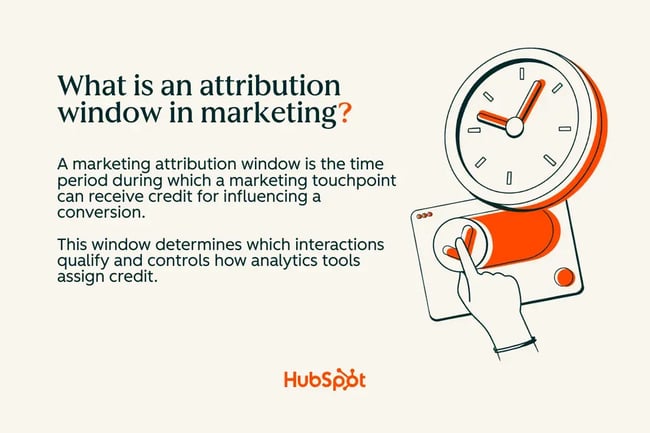
A marketing attribution window is the time period during which a marketing touchpoint can receive credit for influencing a conversion. This window determines which interactions qualify and controls how analytics tools assign credit. Most platforms set default windows, but marketers customize them based on sales cycle length, campaign type, and channel behavior.

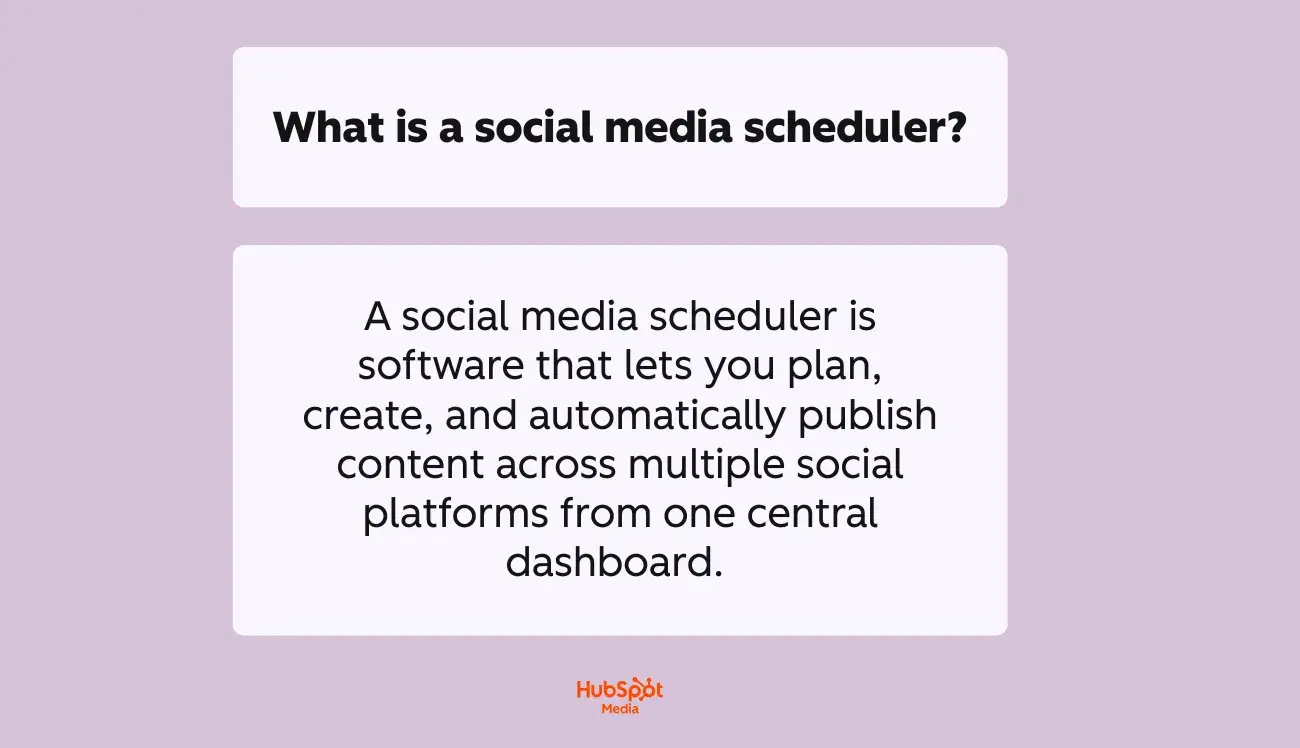
what is an attribution window in marketing

Attribution window affects conversion counting. When a window lasts 7 days, tools evaluate touchpoints that occurred within that range. When it lasts 30 days, tools evaluate a larger set of interactions. Platform defaults influence reporting accuracy because each tool uses its own assumptions about how long a touchpoint remains relevant.

Consumer brands often see fast purchase cycles. Buyers usually click and convert within hours or days. Short attribution windows capture this pattern without pulling in unrelated traffic.

B2B software teams work with longer consideration cycles that span early research, content engagement, and nurture activity. Prospects interact with ads, webinars, and product pages over several weeks. Longer windows capture these extended journeys.

Pro tip: Start with platform defaults, then adjust based on real user behavior and your sales cycle.

Marketers use attribution windows in conjunction with broader measurement frameworks. Learn more about how windows interact with credit assignment in our guide to attribution modeling.

Why the Attribution Window Matters

Attribution windows influence how marketing, RevOps, and finance interpret performance. Short windows highlight lower-funnel activity and credit touchpoints that drive immediate action. Longer windows bring extended evaluation journeys into view and reveal the influence of remarketing, content, and nurture programs. Adjusting the window changes revenue credit, ROAS values, and budget allocation decisions.

Window length shifts conversion attribution. Misaligned windows create inconsistent metrics across platforms, which affects how teams interpret channel impact and spend efficiency.

Meta Ads often apply default short-click and view-through settings. These defaults credit conversions that happen soon after an impression or click.

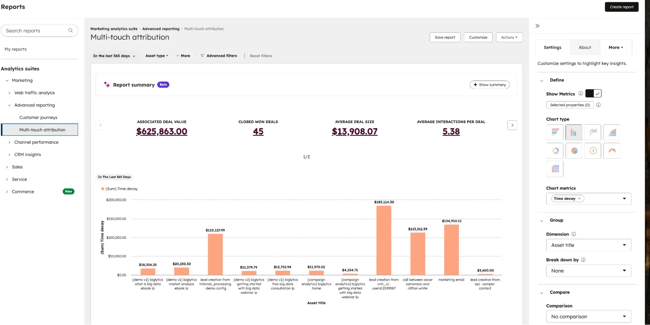
HubSpot attribution reporting uses consistent lookback periods across channels and evaluates a broader set of touchpoints. This difference often causes Meta to report higher conversion counts, while HubSpot distributes credit across a wider set of interactions.

Marketers reviewing ROAS, CAC, and channel-level revenue often link their analysis to window logic. For more guidance on how these metrics work together, explore our posts on advertising metrics, analyzing display ad performance, and ROAS buckets.

How different window lengths impact ROAS, CAC, and revenue reporting

Impact on ROAS, CAC, and Revenue Reporting by Window Length

Window length

ROAS impact

CAC impact

Revenue reporting impact

1–7 days

Higher ROAS for lower-funnel ads

Lower CAC due to fast conversions

Credits recent clicks or impressions

14–30 days

Balanced ROAS across channels

CAC reflects mixed intent

Captures nurture and remarketing influence

30–90 days

Lower ROAS for short-cycle channels

Higher CAC for lower-intent campaigns

Distributes credit across multi-touch journeys

Attribution Window Types

Marketers use several attribution window types to measure how different interactions contribute to conversions. Each window captures a specific kind of engagement, such as clicks, views, re-engagement, or deep-link actions. Many platforms use a mix of these windows to assign credit.

Click-through windows

Click-through windows credit conversions that occur within a set number of days after someone clicks an ad or email. These windows drive the majority of platform-reported conversions and reflect clear, high-intent actions.

Best for: High-intent traffic

What we like: Clear behavioral signal that connects action to outcome

Marketers exploring credit assignment across channels can review how click activity influences last-click attribution. Click-through windows also appear in the comparison chart later in this section.

View-through windows

A view-through window counts conversions that happen after a user sees an impression, even without a click. Platforms use these windows to measure upper-funnel influence and early engagement signals.

Pro tip: Use view-through windows cautiously for awareness channels where impressions scale quickly.

View-through attribution relies on impression data. High impression volume across display or social campaigns can significantly influence how much credit goes to awareness programs.

Conversion windows

A conversion window measures how long a user has to complete a tracked goal after interacting with a campaign. Ecommerce tools and CRMs use these windows to determine eligibility for revenue credit.

Short conversion windows, such as 1–7 days, fit fast-moving purchases. Longer windows support products or services with more evaluation steps across content, email, or retargeting.

Teams often misconfigure conversion windows when they default to platform settings instead of matching window length to real buying behavior. This misalignment affects revenue trends and the interpretation of lead quality, especially in B2B environments.

Re-engagement windows

Re-engagement windows apply to retargeting and lifecycle campaigns. They define how long a user remains eligible for follow-up ads or nurture flows.

Best for: Multi-step journeys

Use case: A SaaS user enters a free trial, then receives targeted ads or emails for upgrade prompts during a defined re-engagement period.

These windows help marketers keep outreach aligned with key lifecycle milestones and user activity patterns.

Deep linking duration

Deep-linking windows determine how long mobile touchpoints remain valid when a user lands in an app from a specific link or ad. These windows matter for mobile measurement because they influence how platforms assign credit to in-app actions.

What we like: Strong signal for mobile attribution and app-based conversions

Mobile measurement partners, such as AppsFlyer and Adjust, often use default deep-linking durations ranging from minutes to days, depending on the app’s behavior and funnel length. Marketers adjust this window to match the expected time between app entry and conversion.

Comparison table: Attribution window types

Window type

Typical range

Best for

Key pitfall

Click-through

1–30 days

High-intent campaigns

May miss the impression-level influence

View-through

1–7 days

Awareness and display

Can inflate impact if impression volume is high

Conversion

1–90 days

Ecommerce, CRM-based attribution

Misalignment with the real sales cycle

Re-engagement

7–30 days

Retargeting and lifecycle

May extend outreach beyond user interest

Deep linking

Minutes–days

Mobile apps and in-app events

Loss of credit if the duration is too short

Click-through windows credit conversions that happen after a click. View-through windows credit conversions that occur after an impression without a click. Lookback windows define how far back a model can search for any eligible touchpoints. Clear rules for each window type help keep conversion attribution consistent across reports and tools.

How Long Should My Attribution Window Be?

The ideal attribution window depends on channel behavior, campaign objective, and sales cycle length. Shorter windows are suited to low-consideration purchases, while longer windows support B2B journeys, multi-stakeholder decisions, and extended nurturing cycles. HubSpot Marketing Hub helps teams test different window lengths and evaluate conversion trends across attribution models.

Attribution window length influences conversion eligibility. Marketers often start with standard windows based on known customer behavior. These defaults offer a baseline for early reporting.

Teams adjust window length as real data comes in. This approach ties window settings to actual buyer patterns rather than assumptions.

A simple testing process helps teams refine their window over time:

  • Create a baseline report with the current attribution window.
  • Duplicate the report in a separate window (e.g., 7 days vs. 30 days).
  • Compare changes in attributed conversions, ROAS, CAC, and channel mix.
  • Document the selected window in your reporting playbook and apply it across campaigns.

This approach gives marketers a clear path to adjust window settings without losing historical context.

Fast-Moving Purchases (DTC + Low ACV)

Typical window: 1–7-day click

Why: fast decisions and mobile-first behavior that drives quick conversions

These short windows reflect patterns common in ecommerce, subscription boxes, and low-priced digital products. Conversions often happen within hours or days of the first click, so short windows capture the bulk of relevant traffic.

Use campaign attribution reporting to evaluate short-cycle performance across ads, email, and landing page activity. Short windows highlight the channels that drive rapid engagement and near-immediate action.

Mid-Funnel Lead Gen (B2B, PLG)

Typical window: 7–14-day click

Why: prospects engage with several assets before submitting a form or starting a trial

Mid-funnel programs often involve multiple touches across content, email, and product pages. A medium-length window captures these interactions without extending credit too broadly.

What we like: balanced signal strength and practicality. This window supports measurement without inflating the impact from early exploratory activity.

Long B2B Sales Cycles

Typical window: 30–90 day lookback

Why: extended research phases, evaluation periods, and stakeholder involvement

Enterprise and high-ACV products often require weeks or months of education and internal alignment. A longer window captures early-stage content activity, partner referrals, and nurture engagement.

Pro tip: Align window length with actual CRM deal velocity data. This approach keeps reporting tied to real buying behavior and supports consistent trend analysis across quarters.

Multi-Channel Campaigns (Paid + Lifecycle + Organic)

Typical window: 30-day cross-channel

Why: mixed intent and multiple touchpoints across ads, email, content, and direct traffic

multi touch attribution in hubspot marketing hub

Cross-channel journeys often stretch across several weeks, especially when campaigns involve retargeting, nurture flows, and deeper content engagement.

Best for: account-based initiatives where several stakeholders interact with different assets before a demo request or opportunity creation.

How Attribution Windows Impact KPIs and Budget Decisions

A longer attribution window increases attributed conversions and can make awareness channels appear more effective. A shorter window reduces credited volume and highlights lower-funnel channels. Conversion attribution shifts whenever the window changes, because different sets of touchpoints qualify for credit. These changes influence ROAS, CAC, revenue allocation, and cross-channel comparison.

Window length directly controls revenue credit. Long windows capture extended journeys and distribute credit to earlier interactions. Short windows concentrate credit on recent engagements. These shifts influence how teams interpret ROAS, CAC, and return from channel investments.

A typical example is the difference between a Meta 7-day click window and a HubSpot 30-day lookback period. Meta may credit a conversion that happens within a week of the click. HubSpot attribution reporting uses a consistent 30-day lookback to evaluate a broader set of touchpoints across the journey. This difference creates variation in credited conversions, ROAS summaries, and budget conversations.

Teams reviewing acquisition costs often turn to our guidance on ROAS buckets to understand how shifts in window length influence performance patterns.

Frequently Asked Questions About Attribution Windows

What’s the difference between an attribution window and a lookback window?

The lookback window determines how far back the model searches for touchpoints. An attribution window focuses on the time period when a touchpoint can receive credit. A 30-day lookback reviews the whole month of activity. A 7-day click window credits touchpoints that happen within one week of a click.

HubSpot attribution reporting uses consistent lookback periods across channels, helping teams compare model outcomes and see how window logic affects revenue credit.

How often should I revisit my attribution window settings?

A quarterly review works well for many teams, especially when seasonality or buying patterns shift. A window may be misaligned when conversion timing changes, when new channels enter the mix, or when deals take longer to close.

Cross-platform alignment also matters. Teams often revisit window settings when they notice reporting gaps between ad platforms and HubSpot or when new leadership asks for more predictable forecasting.

Do attribution windows affect multi-touch attribution outcomes?

Yes. Window changes adjust which touchpoints qualify for credit. Window settings influence multi-touch models because each model uses the window to determine which interactions participate in credit distribution.

A narrower window includes fewer touchpoints and concentrates credit on recent engagements. A broader window pulls early content, lifecycle stages, and remarketing activity into the model.

Why do my platform metrics and HubSpot reports not match exactly?

Most platforms use different default windows, which creates variation in credited conversions. Some tools credit impression views. Others credit clicks or deeper behavioral signals. Data availability also varies across platforms, especially for view-through or impression-based reporting.

Pro tip: Align windows across tools for closer comparisons. Shared logic reduces discrepancies and provides a clearer view of channel contribution. A simple alignment process looks like this:

  • Pick a standard window for key goals, such as a 30-day lookback for lead generation.
  • Update ad platforms and analytics tools to match that standard wherever possible.
  • Use HubSpot attribution reporting as the central source of truth for channel comparison and planning.

Should view-through windows be used for all channels?

No. View-through windows work best for display, awareness, and mobile campaigns with high impression volume. These channels benefit from tracking early influence and brand exposure.

Performance channels that rely on high-intent actions may not need broad view-through windows. Many teams track both view-through and click-through activity in HubSpot to evaluate impact across the whole journey.

Getting Started

Aligned windows across platforms support more transparent reporting, reduce discrepancies, and strengthen budget decisions. HubSpot Marketing Hub simplifies this process with attribution reporting that compares model outcomes across a consistent lookback period, enabling teams to evaluate performance with confidence.

Teams evaluating attribution tools can also review our guide to three types of marketing attribution software to find a fit that supports their reporting approach. From experience, aligned windows help marketing and RevOps teams gain clarity more quickly during planning cycles and support more grounded conversations about which channels drive real results.

Categories B2B

Marketing operations tech stack audit: A proven checklist for operations teams

Marketing tech stacks often expand fast, leading to sprawl. The result is low tool usage. Gartner estimates that only 49% of marketing technology tools are actively used by teams. A marketing operations tech stack audit brings structure back to teams with bloated software.

Download Now: Free State of Marketing Report [Updated for 2025]

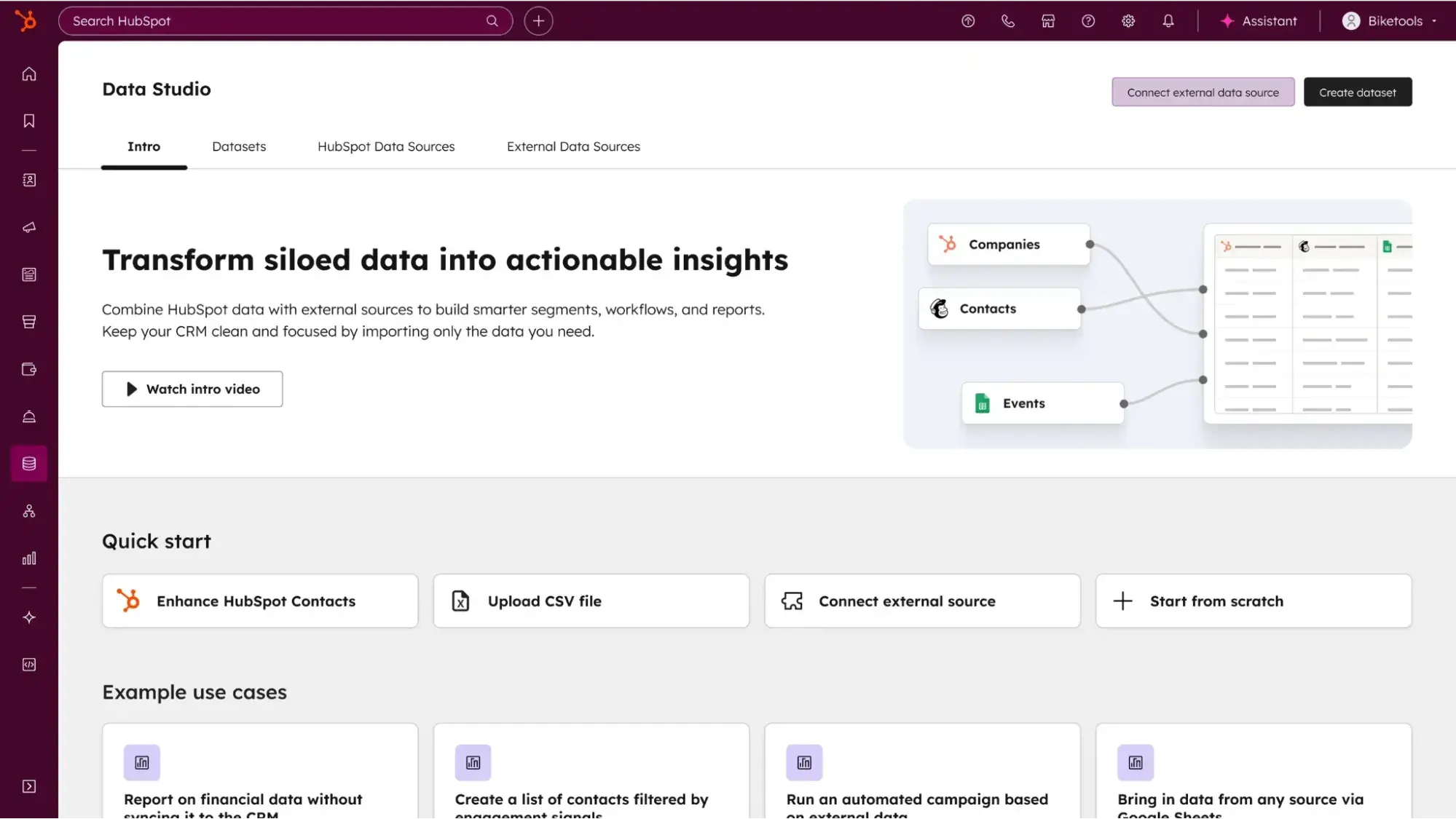
During the audit, teams identify opportunities to cut redundant software, resolve data issues, and improve ROI. Ironically, teams may also surface the need for new tech to manage large volumes of data. HubSpot’s Data Hub is designed to help, combining data across each company’s tech stacks.

This post explores when marketing operations tech stack audits are necessary. Marketers will also learn how to run tech stack audits and where AI fits into the process.

Table of Contents

What is a marketing operations tech stack audit?

A marketing operations tech stack audit is a structured review of all marketing, sales, and service tools. The audit identifies tools that do the same job. During the tech stack audit, teams also map what data is collected by each tool and if data is accurate.

At the end of the audit, the team should have a list of every tool that the marketing team uses. Marketers can then see how data moves between systems, what metrics are captured by each tool, and opportunities for consolidation. HubSpot Data Hub stores data from each tool in the tech stack in a central location, breaking down silos.

Tech stack audits allow teams to see what duplicate solutions should be cut. Marketers will also notice which tools create barriers in their workflow and offer little valuable data. Thorough evaluation leads to data consistency and a tech stack that reflects current business priorities.

Benefits of a Marketing Operations Tech Stack Audit

Audits lead to better quality data

According to a report from Hightouch, 75% of pain points related to marketing technology trace back to data issues. Furthermore, a staggering 95% of respondents reported difficulty in targeting and reaching their intended audience. Marketing audits help solve that challenge.

Tool reviews help teams see what data is being collected, whether the data is useful, and if it’s being stored in a way that benefits marketing campaigns. HubSpot Data Hub can help teams looking to unify data and unlock insight into what potential customers are looking for.

With martech audits, teams spend only on the tools they use

According to Hightouch, marketers have access to an average of 90 tools and don’t use 70% of them. A Gartner report found that low usage costs businesses real dollars. In fact, the advisory firm found that billion-dollar companies with average tool utilization can waste up to $8.5 million. Marketing operation tech stack audits help teams identify and eliminate underused tools.

Smaller tech stacks mean less time spent on training

According to Gartner, companies that use four or more enablement methods show stronger marketing technology performance. Teams must invest in training and development to unlock technological capabilities and perform well. Fewer tools mean less time needs to be spent on training. Marketers only learn how to use the tools they actually need.

What You Should Audit in Your Marketing Operations Technology Stack

A comprehensive marketing operations technology stack includes a CRM to manage customer interactions, automation for key campaigns, and analytics to improve performance. Most teams also benefit from content marketing tools that improve SEO systems and social media management tools. Each category warrants a review of ownership and usage.

The sections below outline the core areas to review and the HubSpot products that support a more connected stack.

CRM and Contact Management

marketing operations tech stack audit, crm

Source

The CRM shapes how customer data moves across the lifecycle. HubSpot’s Smart CRM centralizes records across marketing, sales, and service. With a unified source of data, marketing teams can more easily segment customers and personalize campaigns. Teams often review CRM activity alongside inside sales technologies to understand how engagement moves through the funnel.

Pro tip: HubSpot CRM brings every interaction into a unified record for simpler workflows and more reliable reporting.

Marketing Automation

Marketing automation platforms streamline repetitive marketing tasks using pre-built workflows. Tools like HubSpot Marketing Hub also use customer data stored in CRMs to power personalized marketing campaigns. Marketing automation often focuses on creating email workflows, qualifying leads, and routine posting.

Pro tip: Marketing Hub centralizes email, automation, forms, and journeys in a single environment.

Data and Analytics

marketing operations tech stack audit, data hub

Source

Marketers need to evaluate how campaigns perform. Each team takes a different approach to collecting this data. Some organizations look at reporting dashboards in each tool or channel. Others consolidate data into one platform to see overall performance. Often, teams look at reports in both unified and single-channel tools.

Regardless of the specific approach, tools should collect data that teams need to understand customer needs. Marketing operation tech stack audits note tools that do not gather helpful analytics or fail to store data properly.

Pro tip: Data Hub consolidates data across marketing tech stacks, so teams can unlock insights to run better campaigns.

Content and Asset Management

marketing operations tech stack audit, content hub

Source

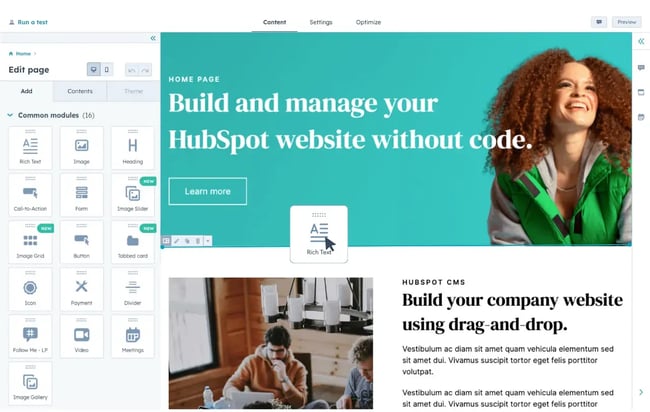
Content marketing requires a comprehensive tech stack of its own. Teams need a content management system to host blog posts and landing pages. Teams also need tools to aid in content creation (yes, even that Adobe Creative Cloud subscription should be part of the audit).

The best content management tools offer a one-stop shop for hosting, creation, and optimization. Teams seeking a unified approach to content marketing should opt for Content Hub. The tool supports creation, storage, SEO suggestions, and AI-assisted drafting.

Pro tip: Content Hub ties content creation to CRM data and automation activities to support personalization.

Advertising and Paid Media

marketing operations tech stack audit, hubspot ads

Source

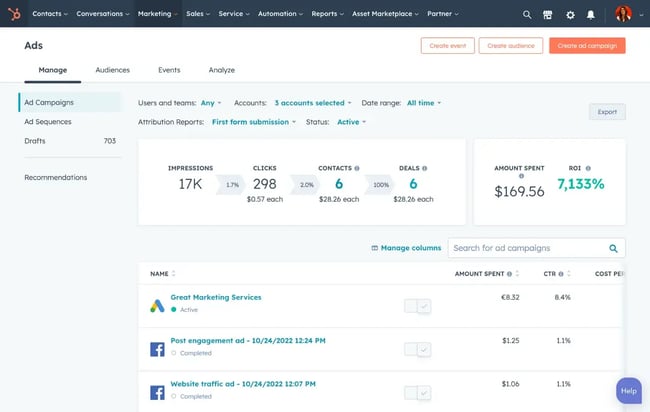
Paid media systems manage campaigns across search, social, and display. Performance improves when these systems connect to the CRM for consistent conversion tracking. Marketing Hub’s Ads tools sync audiences and attach campaign results to lifecycle progression.

Social Media Management

marketing operations tech stack audit, social inbox

Source

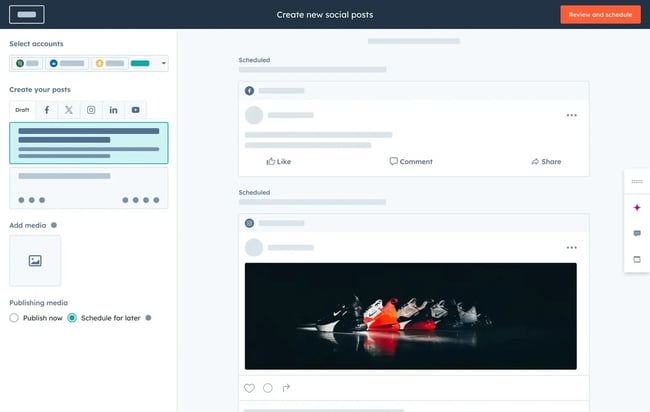
While each social media channel offers some native management capabilities, most brand teams need a comprehensive solution. Social media marketers often look for tools that help with scheduling and creation, as well as social listening. Marketing Hub’s Social Inbox connects this work to CRM records.

SEO and Web Optimization

seo-keyword-research-40-20251125-9287567

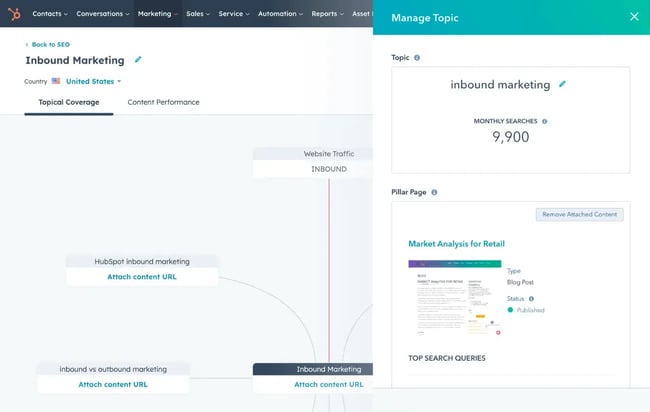
SEO systems support visibility across search. Marketing Hub’s SEO tools offer recommendations, topic clusters, and performance tracking. Teams exploring channel orchestration often extend this work using our guidance on creating an omnichannel experience or building a complete marketing stack.

Pro tip: Marketing Hub’s integrated SEO tools make it easier to know what keywords to target and how to improve page performance.

How to Run a Marketing Operations Tech Stack Audit

A complete audit includes running an inventory of current tools and mapping what data is stored where. Then, marketers score tool performance, note key integrations, and decide if the tool is worth the cost.

The steps below outline a repeatable approach for organizations of any size.

1. Build a complete inventory of every tool

Document each system, outline its purpose, and capture how teams use it. This baseline highlights overlaps and friction points in the workflow. Audit inventory includes the tool name, owner, users, cost, data collected, integrations, and contract details.

Focus on:

  • Apps connected to your CRM
  • Point solutions used for one-off tasks
  • Shadow IT tools adopted without governance
  • Renewal dates and contract terms
  • Active workflows and automations tied to each tool

2. Map data flows and identify the single system of record

Data mapping shows how contact, event, asset, and revenue information flows across the stack. Smart CRM remains the unified system of record, and the map anchors on that foundation. This map becomes the foundation for future data governance and lifecycle work.

Focus on:

  • Where data enters the system
  • How it moves between tools
  • What transformations happen along the way
  • Which tools overwrite or enrich fields
  • Where data leaves the ecosystem

3. Evaluate contracts, costs, and usage levels

Contract and usage reviews clarify whether spend matches value. Many teams find overlapping tools, unused seats, or features with limited impact. Renewal timing also shapes consolidation plans.

Focus on:

  • Active seats compared to usage logs
  • Duplicate categories where multiple tools perform the same task
  • Contract terms that affect transition timing
  • Coverage fees or volume-based pricing
  • Feature gaps that affect key workflows

Understanding usage helps teams make budget recommendations with clear data to support them.

4. Score each tool for impact vs. effort

Once teams know what tools are being used, each needs to be evaluated for its impact. Scoring helps teams understand where each platform contributes. A matrix that assesses the impact on goals and the effort required to maintain the tool provides clarity for planning.

Focus on:

  • Workflow impact
  • Integration quality
  • Automation reliability
  • Reporting importance
  • Maintenance workload

5. Assess integrations and data sync reliability

At this point in the audit, marketers know which tools are absolutely essential to how the team operates. Any auxiliary technology should integrate with the most important software teams already use. Data gathered from these tools should accurately sync into the CRM and other essential software tools.

Pro tip: Data Hub automates data quality and syncs collected data with HubSpot’s CRM.

Focus on:

  • Sync frequency and error logs
  • Field mapping and naming conventions
  • Data volume limits
  • API usage patterns
  • Reliability across peak periods

6. Identify redundancies and consolidation opportunities

Redundancies occur when several tools handle similar work or when functions are fragmented across point solutions. Redundant tools should be consolidated or removed.

Focus on:

  • Tools with overlapping features
  • Single-use platforms with low adoption
  • Teams using different systems for similar tasks
  • Workflows that require multiple logins
  • Legacy tools no longer tied to core processes

Pro tip: HubSpot’s connected ecosystem reduces fragmentation across CRM, automation, content, and data systems.

7. Align lifecycle stages and reporting across platforms

Unified lifecycle data gives teams a stable view of volume, conversion, and funnel velocity. Lifecycle alignment supports consistent reporting and predictable handoffs. Lifecycle stages must be aligned across all platforms.

Focus on:

  • Unified lifecycle definitions
  • Required fields at each stage
  • Lead status and handoff rules
  • Reporting filters and naming conventions
  • Dashboards used by marketing, sales, and service

8. Build your 30-60-90 day roadmap

A roadmap converts audit findings into a structured plan. Strong roadmaps assign owners, sequence work, and spotlight immediate opportunities for consolidation.

How do we prioritize fixes after the audit?

Start with data stabilization and updates that unlock high-volume workflows. Then move into consolidation, lifecycle cleanup, and reporting changes. Larger platform transitions fit naturally into later phases once stakeholders review the plan.

Where AI Fits in Your Marketing Operations Tech Stack Audit

With a flurry of AI tools, marketers struggle when choosing tools that provide real value. According to Hightouch, only 10% of marketers are using AI effectively today, but 75% want to use AI for more use cases. Luckily, AI can improve the audit process. AI allows for faster discovery and data cleanup. See how below.

Inventory parsing and classification

AI helps categorize tools and highlight overlaps. Once an inventory list is created, AI can group tools by function and flag software with overlapping capabilities. Teams can also import usage data into AI tools like HubSpot’s Breeze AI Suite to see which tools have low usage. This step removes hours of manual review and gives teams a clean starting point.

Duplicate detection and data cleanup

AI surfaces duplicate contacts, conflicting field values, and incomplete lifecycle data. Data Hub is one AI tool that teams can use to improve the quality of data collected across the martech stack. Data can then be stored in HubSpot’s AI CRM for a unified view.

Clean data allows for better visibility and strengthens segmentation, routing, reporting, and automation.

Workflow and integration mapping

AI-powered tools like Data Hub show how information moves across the stack. Teams can then map workflow dependencies and surface workflows that conflict with each other. With AI-powered insights, teams can safely sunset software they no longer need.

Frequently Asked Questions About Marketing Operations Tech Stack Audits

How often should we run a marketing operations tech stack audit?

Most teams run a full audit twice a year and add a lighter quarterly review in fast-changing environments. This cadence maintains data quality and catches issues before they spread.

Should we consolidate to a single platform?

Consolidation works when reducing tools simplifies work, strengthens data quality, or saves budget. HubSpot offers a unified solution for marketers, with SEO, social, and automation tools all under one umbrella.

Who should own the audit and ongoing governance?

Marketing operations or RevOps typically lead this work. Governance then moves to a small cross-functional group that manages lifecycle definitions, field standards, reporting rules, and change processes.

When should we re-platform our CRM or automation?

Re-platforming becomes necessary when data inconsistencies, integration failures, or workflow limitations block progress. HubSpot tools natively integrate with each other, offering a unified approach to data. Teams already using Marketing Hub may benefit from re-platforming to HubSpot’s CRM.

How do we show the audit’s impact to executives?

Executives respond well to improvements in data health, speed to touch, tool cost, and reporting accuracy. Present before-and-after metrics that show duplicate reduction, stronger lifecycle data, and time saved across teams.

Getting Started

A marketing operations tech stack audit helps teams reduce tool redundancy, correct data issues, and strengthen ROI. After an audit, clearer view of how their systems work together and a stronger foundation for ongoing growth. HubSpot Data Hub makes sure that the information collected by a comprehensive marketing operation tech stack is high-quality and centralized in one location.

I’ve seen audits change how teams operate. Clean data supports faster campaigns. Lifecycle alignment brings clarity to reporting. A stable system frees operations teams to focus on strategy rather than troubleshooting.

With a steady audit rhythm, organizations pay only for the tools they actually use and unlock insights that lead to better strategy.

Categories B2B

AI engine optimization audit: How to audit your content for AI search engines

An AI engine optimization audit evaluates brand visibility, accuracy, and citations in AI-powered search engines. It highlights how a brand appears across ChatGPT, Gemini, Perplexity, and Bing Copilot, and identifies gaps in the facts, descriptions, and links these systems rely on. In contrast, a traditional SEO audit focuses on website rankings and technical health in classic search engines. HubSpot's AI Search Grader: See how visible your brand is in AI-powered search  engines.

AI search extracts information directly from content, public sources, and structured data. This shift changes how buyers discover brands and validate solutions. Growth-focused teams benefit from precise, consistent brand details in AI summaries, as these summaries influence early research, shortlists, and pipeline creation.

This post gives teams a complete workflow for running an AI engine optimization audit, priority fixes, a practical checklist, and the HubSpot tools that support the process. Each section offers clear steps for testing visibility across AI engines, measuring accuracy, updating content, and publishing structured, AI-friendly pages at scale.

Table of Contents

What is an AI engine optimization audit?

An AI engine optimization audit is a structured review that measures how accurately AI search engines represent a brand. It evaluates visibility, accuracy, and citations across systems like ChatGPT, Gemini, Perplexity, and Bing Copilot. The goal is to confirm that AI-generated summaries accurately reflect the brand’s facts, product details, and sources.

An AI engine optimization audit differs from a traditional SEO audit. A traditional SEO audit focuses on rankings, crawlability, and technical health. An AEO audit focuses on entity correctness, brand mentions, citation frequency, and the precision of AI-generated summaries. An AI engine optimization audit identifies outdated facts, missing brand mentions, and incorrect citations in AI summaries. These issues often stem from unstructured pages, unclear entities, and inconsistent context.

AI engines pull information from standalone chunks, structured data, and patterns across the web. They interpret content more accurately when pages use clear headings, defined entities, semantic triples, and consistent formatting.

HubSpot Search Grader provides a free way to assess brand visibility in AI search engines and establish a fast baseline. It complements foundational work such as running a website audit, improving the fundamentals in the technical SEO guide, adding markup from the structured data walkthrough, and reviewing performance in your SEO report.

How AEO, GEO, and SEO Work Together

AEO, GEO, and SEO each strengthen how buyers discover and understand a brand.

  • AEO (answer engine optimization) focuses on entity clarity, accurate citations, and how AI engines summarize a brand.
  • GEO (generative engine optimization) focuses on performance in generative experiences across channels, including conversational answers and synthesized results.
  • SEO (search engine optimization) focuses on rankings, crawlability, and technical performance in traditional search engines.

Teams gain stronger visibility when these workflows run together. AEO highlights entity gaps. GEO highlights the depth and usefulness of content in generative environments. SEO highlights technical and ranking signals. Adding all three dimensions to your SEO report helps teams track visibility changes across search experiences.

Audit Type

What the Audit Covers

Why It’s Important

AEO (Answer Engine Optimization)

Entity definitions, brand mentions, citations, factual accuracy, and how AI systems interpret and summarize the brand

Ensures AI engines clearly understand who a brand is, what it offers, and when to reference the brand in direct answers and summaries

GEO (Generative Engine Optimization)

Performance in generative experiences, including conversational responses, synthesized results, multi-source answers, and content usefulness

Improves visibility and influence in AI-driven discovery moments where users receive generated answers instead of links

SEO (Search Engine Optimization)

Rankings, crawlability, indexing, site architecture, technical health, backlinks, and keyword performance

Maintains strong visibility in traditional search results and ensures content can be discovered, indexed, and ranked effectively

Why run an AI engine optimization audit now?

AI search now plays a significant role in how buyers research categories, compare vendors, and validate solutions. An AI engine optimization audit gives teams a clear understanding of how AI engines summarize their brand today and where improvements will have the greatest impact.

AI search is reshaping top-of-funnel discovery.

Traffic is harder to earn as AI engines become the first stop for contextual answers. Large language models (LLMs) generate tailored responses that provide users with direct guidance, reducing the need to interact with traditional SERP links. Strong AEO foundations help AI engines highlight accurate facts and updated messaging.

AI engines influence B2B buying committees.

AI summaries often appear before buyers reach a website. These early summaries shape category expectations, frame key capabilities, and affect which vendors appear relevant. AEO improvements support more consistent visibility in these moments.

Incorrect or missing brand facts spread quickly.

AI engines absorb outdated information from old pages, legacy listings, and external sources. Those inaccuracies can spread across multiple systems. Publishing consistent, structured updates helps guide AI engines toward current facts.

Pipeline and revenue reporting needs accurate AI mentions.

Pipeline creation depends on how clearly buyers understand a brand’s offerings. Updated AI summaries support more consistent messaging across the funnel. Smart CRM connects content improvements to pipeline and revenue outcomes, which links AEO efforts to measurable business impact.

AI search optimization compounds over time.

Clear entity signals help AI engines categorize a brand more accurately. Early improvements create a foundation that strengthens recognition and citation patterns across future updates.

How to Run an AEO Audit (Step-by-Step)

An AEO audit evaluates how AI engines describe a brand, highlights errors, and guides updates that strengthen visibility. Each step works as a standalone task that teams can complete in sequence or integrate into existing content workflows.

ai engine optimization audit, how to

Step 1: Define the entities, topics, and branded phrases you want AI engines to recognize

List the core facts AI engines should reference when summarizing your brand. Include company name, product names, key features, target personas, and category terms. Add high-intent topics that align with your positioning.

Step 2: Test your brand in top AI engines

Run targeted prompts across ChatGPT, Gemini, Perplexity, and Bing Copilot. Include private or industry models if relevant to your audience. Test branded queries, category queries, and solution-driven prompts. Teams evaluating Microsoft’s ecosystem can also reference our guidance on whether marketers should optimize for Bing.

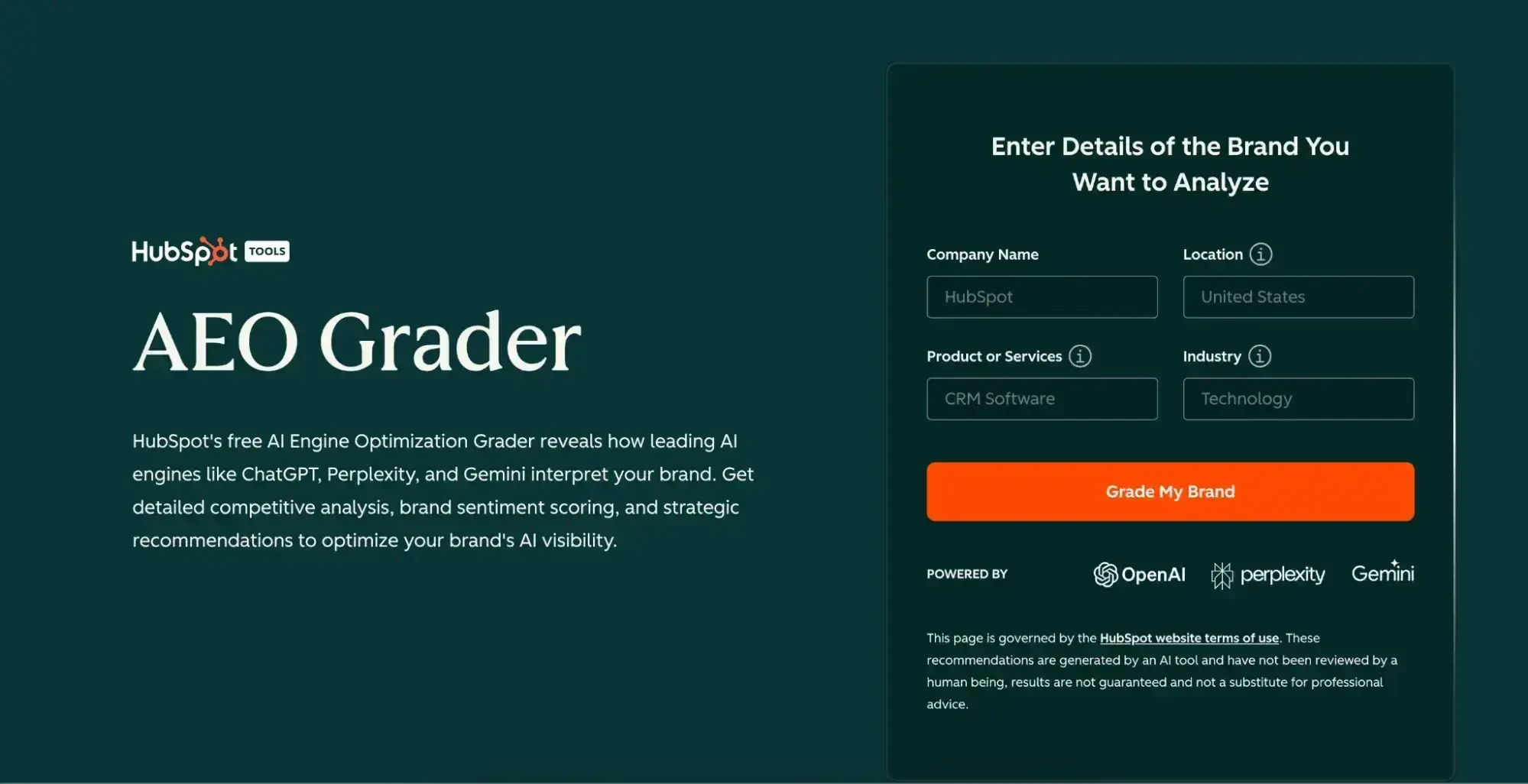
ai engine optimization audit, aeo grader

Source

Pro tip: Use HubSpot’s free AEO Grader to see how your website is appearing in AI search engines.

Step 3: Capture and categorize all AI outputs

Record screenshots and text from each engine. Categorize outputs as correct, outdated, incomplete, inaccurate, or missing. Add a column for confidence markers such as citations, links, attributed sources, and contextual accuracy.

Pro tip: Add a confidence-marker column to highlight which engines pull from trustworthy sources.

Step 4: Score visibility, accuracy, and citation completeness

Create a simple scoring model for visibility, accuracy, depth, and citations. Visibility measures whether the brand appears. Accuracy measures factual correctness. Depth indicates whether product-level details appear. Citations measure whether AI engines link to brand-owned sources.

Step 5: Identify entity gaps and semantic errors

Check for incorrect founders, dates, product descriptions, or industry categories. Flag missing features, outdated positioning, and expired pricing. This step surfaces unclear or inconsistent entity signals.

What I like: Entity-gap reviews often reveal inconsistencies across About pages, product pages, and listings. Updating these hubs simultaneously strengthens AEO, SEO, and GEO signals.

Step 6: Review on-site content for structure and AEO clarity

Evaluate whether the content uses extractable chunks, clean H2/H3 formatting, lists, and explicit semantic triples. Review internal linking and entity details across key pages. Strengthen structured data using the practices in HubSpot’s structured data guide. HubSpot Content Hub supports structured, entity-friendly publishing at scale.

Step 7: Update or create supporting content with an AI-friendly structure

Draft updates using AI tools, then manually validate each fact. Breeze AI Suite accelerates content briefs, QA pairs, and optimization tasks. Content Hub and Marketing Hub help teams blend SEO and AEO updates with structured editing tools and performance insights.

Best for: Teams managing large content libraries benefit most from drafting first-pass updates in Breeze and refining with human review.

Step 8: Re-test using HubSpot AI search grader

Run another full test using HubSpot Search Grader after publishing updates. Record changes, compare outputs, and refine your entity list as the brand evolves. An AI engine optimization audit should be repeated quarterly or after major content changes.

How to Operationalize Your AEO Audit in HubSpot

HubSpot’s ecosystem supports the entire AEO workflow:

  • AI Search Grader establishes baselines for visibility, accuracy, and citations.
  • Content Hub publishes structured, entity-friendly updates.
  • Breeze AI Suite speeds up content briefs, revisions, and QA tasks.
  • Marketing Hub SEO tools highlight technical issues and topic gaps that support AEO and SEO work.
  • Smart CRM connects content updates to engagement, lead quality, and revenue insights.

Best for: Teams that want a repeatable AEO workflow tied directly to content operations and reporting.

Priority Fixes After Your Answer Engine Optimization Audit

High-impact fixes focus on correcting brand facts, strengthening entity clarity, publishing structured content, expanding high-intent coverage, updating public listings, and adding authoritative citations.

Fix 1: Correct brand facts across owned content.

Update outdated product descriptions, feature lists, and claims. Add semantic triples that clearly establish relationships among the brand, its products, and its categories.

Pro tip: Add semantic triples to product pages, About pages, and glossary entries to strengthen entity clarity.

Fix 2: Strengthen entity pages and brand hubs.

Clarify who the brand serves, what categories it participates in, and which products it offers. Strengthen About pages, glossary entries, and product pages so AI engines have reliable sources for the fundamentals.

Fix 3: Add structured data and better content architecture.

Publish schema markup for entities, products, and organizational details. Strengthen the information architecture so AI engines can interpret the site structure quickly. HubSpot’s structured data guide outlines markup patterns teams can operationalize across the site.

What I like: Structured data often becomes one of the fastest ways to correct misaligned AI-generated facts.

Fix 4: Create supporting content for high-intent topics.

Expand content to align with buyer needs in AI engines. Add explainers, templates, guides, and updated category pages. Marketing Hub’s SEO recommendations highlight topic gaps and content opportunities.

ai engine optimization audit,  seo tools

Source

Best for: Teams building topic authority across hybrid AEO and SEO workflows.

Fix 5: Update digital footprints on high-authority platforms.

Refresh brand information across LinkedIn, G2, GitHub, YouTube, and other profiles AI engines frequently reference. Create a Wikipedia page only if the brand meets notability standards and can follow editorial guidelines.

Fix 6: Add earned media and authoritative citations.

Strengthen presence across reputable outlets, including press outlets, podcasts, and interviews. AI engines favor brands with consistent external validation.

Pro tip: Earned media improves citation patterns and reduces outdated references across AI engines.

AI Search Optimization Audit Checklist

Use this AEO audit checklist as a repeatable monthly or quarterly workflow.

  • Identify core entities to evaluate.
  • Test visibility in top AI engines.
  • Capture and categorize outputs.
  • Score visibility, accuracy, and citations.
  • Fix entity and semantic errors.
  • Update content structure and metadata.
  • Add structured data and entity markup.
  • Re-test with HubSpot AI Search Grader.
  • Repeat every quarter.

Frequently Asked Questions About AI Engine Optimization Audits

Teams encounter several common questions when they begin evaluating how AI engines summarize their brand.

Do I need developer resources for an AI engine optimization audit?

Developer support is not required for the evaluation itself. Developer resources can help when adding structured data, updating schema markup, or adjusting site architecture that supports clearer entity signals.

How often should I rerun the audit?

Run the audit quarterly or after major content, product, or positioning updates. This rhythm keeps AI-generated summaries aligned with your current brand details.

Should I create a Wikipedia page for my brand?

Create a Wikipedia page only if the brand meets notability criteria and can follow editorial standards. Pages that do not meet these requirements may be removed, creating confusion for AI engines.

Will llms.txt impact traditional seo?

llms.txt manages access for AI crawlers and does not impact Google’s ranking algorithms. It operates independently of traditional SEO signals.

What’s the best way to get cited by AI engines faster?

Publish structured, entity-rich content with clear semantic relationships. Strengthen external citations from reputable outlets. Use HubSpot AI Search Grader to identify gaps and plan updates.

Getting Started

An AI engine optimization audit highlights how AI search engines describe a brand, identifies accuracy gaps, and guides updates to improve visibility across the buyer journey. The shift toward AI-generated summaries makes this work an important part of discovery, revenue creation, and growth planning. Get started by defining core entities, testing visibility across major AI engines, and running an initial baseline with HubSpot AI Search Grader.

I’ve seen significant improvements from teams that adopt a consistent audit cycle, update outdated facts, and publish structured content — small improvements compound. AI engines update their summaries quickly when brands publish clear, reliable information in structured formats.

Categories B2B

Answer engine optimization vs. traditional SEO: What marketers need to know

Understanding answer engine optimization (AEO) vs. traditional SEO has become mission-critical for content managers and marketing leaders as search shifts toward AI-generated responses, voice results, and zero-click experiences. While page ranking on Google is still important (for now), success increasingly depends on whether a brand stays visible when an AI system summarizes an answer. HubSpot's AI Search Grader: See how visible your brand is in AI-powered search  engines.

Traditional SEO still drives performance for long-form content, rankings, and organic traffic. AEO, however, determines whether a brand appears in AI Overviews, featured snippets, and voice search. Answer engine optimization and traditional SEO models run in parallel, and they rely on different signals, content structures, and measurement frameworks.

This guide breaks down AEO vs. SEO, where each one is most effective, and how teams can combine the two. The post also highlights tools — including HubSpot’s AEO Grader, Website Grader, Marketing Hub, and Content Hub — that help teams build content for both AI-driven and classic search visibility.

Table of Contents

Why Answer Engine Optimization Is Different From Traditional SEO

Answer engine optimization is different from traditional SEO because AEO prepares content for direct answers in AI Overviews, voice search, and featured snippets, while SEO focuses on ranking full pages in organic search results. These approaches support two very different ways content is evaluated and surfaced online. One is built to extract short, precise answers, and the other to assess full-page relevance and authority.

AEO revolves around a simple idea: Answer engines need structured, explicit, and skimmable information to cite. AI systems work by identifying a clear definition, recognizing supporting context, and validating its structure with schema and internal linking. Traditional SEO takes a broader view by evaluating page depth, intent alignment, crawlability, backlinks, and topic authority.

These patterns show how answer engine optimization and traditional SEO interpret structure differently:

  • AEO prioritizes direct answers, which power AI Overviews.
  • SEO prioritizes full-page rankings, which drive organic traffic.
  • AEO improves zero-click visibility, which drives AI citations.
  • SEO strengthens long-form content, which drives domain authority.

Semantic signals shape how content shows up across AI-driven results and traditional search. Content managers who optimize for answer engine optimization vs. SEO (or vice versa) often see strong performance in one area and unexplained gaps in the other.

While good SEO can lead to some AEO wins, it is not a substitute for explicitly structured answers, schema, and consistent terminology. Content that only follows SEO conventions may rank well but still fail to appear in AI Overviews or answer surfaces.

What Answer Engine Optimization Focuses On

Answer engine optimization focuses on producing structured answers that AI systems can extract and cite. AEO requires clear definitions, direct explanations, and schema that reinforces meaning. It works best when content presents the answer immediately and follows with concise context.

AEO increases the likelihood of appearing in:

  • AI Overviews.
  • Featured snippets.
  • Voice search results.
  • LLM-generated citations.
  • Chat-style answer panels.

These elements help AI interpret content with fewer assumptions and increase the chances of generating correct citations.

What Traditional SEO Focuses On

Traditional SEO focuses on helping full pages rank in search results through authority, depth, and technical performance. SEO emphasizes comprehensive content, strong linking, and clean metadata that help search engines assess relevance. SEO relies on:

  • Topic clusters.
  • Backlinks.
  • Keyword alignment.
  • Metadata optimization.
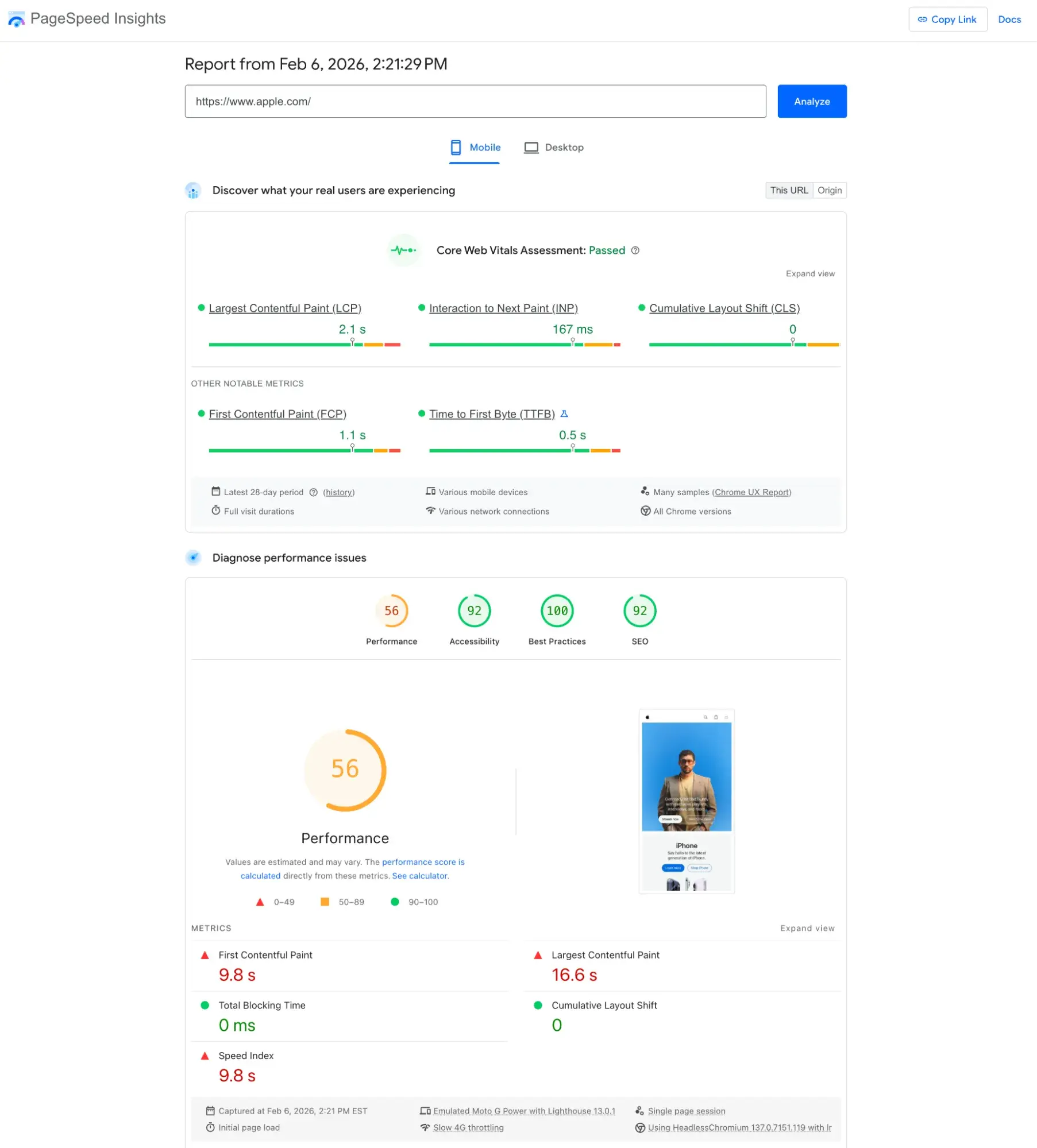
  • Page experience and Core Web Vitals.

These elements signal that a page deserves to rank for specific keywords.

Why Content Teams Need Both

Content teams need both AEO and SEO because AI-driven experiences highlight short answers while search engines continue to evaluate full pages. Answer-focused content helps brands appear in zero-click surfaces, and zero-click visibility supports early-stage awareness. Meanwhile, detailed pages drive conversions and reinforce topical depth, and stronger topical depth increases the credibility of answer blocks.

As AI-generated results expand across search engines and devices, teams that balance AEO and SEO maintain visibility wherever users look for information, whether they scroll through SERPs, trigger a voice prompt, or read an AI-generated summary.

How Answer Engine Optimization vs. Traditional SEO Differ in Practice

Answer engine optimization differs from traditional SEO in the way content is structured, discovered, evaluated, and surfaced. AEO prioritizes short, extractable answer blocks for AI search, while SEO prioritizes deep, comprehensive pages that rank in search results.

Below is a clear comparison of answer engine optimization vs. traditional SEO that content managers can use during planning.

Answer Engine Optimization vs. Traditional SEO: 5 Key Differences

Dimension

AEO

Traditional SEO

Primary Goal

Eligibility for AI Overviews, voice answers, and snippets

High-ranking positions in SERPs

Query Patterns

Question-led, conversational, zero-click

Transactional, navigational, research-heavy

Content Structure

Short answers, Q&A blocks, scannable formats

Long-form depth, topic clusters

Technical Signals

FAQ Page/How To schema, entity clarity

Page speed, metadata, backlinks

Success Measures

Voice visibility, AI citations, zero-click performance

Traffic, rankings, CTR, conversions

Pro tip: HubSpot’s AEO Grader analyzes answer readiness across structured content, schema, and semantic clarity, a capability most SEO tools don’t yet offer.

1. Goals

AEO focuses on helping content appear as direct answers, while SEO focuses on helping full pages rank for relevant queries. These goals serve different stages in the user journey. Where AEO prioritizes clarity in the first sentence, SEO prioritizes depth, UX, and topic relevance throughout the page.

When AEO and SEO goals align, answer visibility supports early discovery, and sustained rankings support ongoing traffic and conversions.

2. Query Patterns

AEO is shaped by question-based queries, while SEO accommodates a wider range of intent, including transactional, navigational, and research-heavy queries. Users tend to trigger answer engines when they type or speak questions, and they turn to SERPs when they need comparisons, pricing, or detailed context.

Clear questions improve answer extraction, and stronger contextual pages improve ranking stability.

3. Content structure

AEO requires short, structured answers placed high on the page, while SEO requires long-form content built around topic clusters. AEO content reads like a direct response to a specific question. SEO content reads like an in-depth guide or resource.

Many high-performing pages use a hybrid structure:

  • The first section answers the question directly.
  • Subsequent sections expand into SEO-rich explanations.
  • FAQs reinforce alternative phrasing and related intent.

When AEO and SEO strategies work in collaboration, answer blocks improve AI eligibility, and long-form depth strengthens the surrounding cluster.

4. Technical signals

AEO relies on schema markup, entity clarity, and consistent terminology, while SEO relies on page performance, metadata optimization, and internal linking. Schema gives AI systems a structured map of meaning, and technical SEO supports discoverability and crawlability.

When AEO and SEO work in parallel, schema sharpens the interpretation of content, and technical SEO ensures the page can be found, indexed, and ranked.

5. Success metrics

AEO measures visibility in answer surfaces, while SEO measures performance in search rankings and organic traffic. AEO metrics include AI Overview presence, voice answer visibility, and zero-click CTA engagement. SEO metrics include keyword rankings, organic sessions, and conversion rates from search.

Together, AEO and SEO metrics provide a broader picture of visibility — both answer-level influence early in the journey, and page-level conversions later on.

aeo vs seo, when to use each

When to prioritize AEO strategies over SEO hybrid approaches

Content managers often need to decide when to lead with answer engine optimization vs. traditional SEO and when a hybrid approach will drive better results. AEO should be a priority for marketers when users want clear, direct answers, while SEO becomes essential when they need depth, comparison, or evaluation.

The four scenarios below outline how to think about this balance in practice.

AEO vs. Traditional SEO Overview

Scenario

First Priority (AEO vs. SEO)

Why It Matters

What Could Change the Priority

How the Other Strategy Supports Success

Audience uses question-based or conversational queries

AEO

Ensures the best answer surfaces quickly while still giving a path to deeper content when needed.

If intent shifts toward evaluation or comparison that needs more detail

SEO provides deeper context, related articles, and topic-cluster support

Topic requires depth, comparison, or buyer evaluation

SEO

Helps buyers compare options, understand tradeoffs, and move toward a decision—not just get a one-line answer.

If the query is simplified into a definition-style or “what is…” search

AEO helps capture snippets and AI Overview placements that point back to the in-depth page

Goal is visibility in AI Overviews, voice results, or LLM citations

AEO

Increases the chances that answer engines quote the brand directly instead of a competitor.

If the query becomes more commercial, feature-focused, or brand-comparison oriented

SEO strengthens domain authority and reinforces the credibility of the cited page

Need for both early discovery and long-form performance

Hybrid (AEO + SEO)

Protects visibility across changing SERP layouts and AI experiences by not depending on a single channel.

If AI begins to dominate more informational results or SEO competition increases for key terms

AEO drives quick, zero-click visibility; SEO sustains traffic, engagement, and conversions over time

1. When audiences search using question-based queries

AEO should take the lead when audiences begin with clear, question-based queries such as “what is…,” “how does…,” or “when should…”. These searches trigger answer-oriented systems that surface structured, concise responses rather than long lists of links.

If the decision is answer engine optimization vs. SEO, AEO works well here because answer engines look for straightforward definitions, consistent phrasing, and answer blocks placed high on the page. SEO still plays a supporting role by anchoring that short answer within a broader topic cluster that provides depth for users who click through.

When intent shifts from asking a question to evaluating options, SEO becomes increasingly important because audiences need more than a one-sentence response.

  • Answer engine optimization vs. traditional SEO: AEO should take the lead because answer engines elevate short, structured explanations.
  • User intent: Users want a fast, factual answer to a “what is,” “how does,” or “when should” question.
  • Why it matters: Strong AEO performance ensures the brand appears in AI Overviews, snippets, and voice responses before users view traditional SERPs.
  • What could shift the priority: If intent moves from broad understanding to evaluating options, SEO becomes more important.
  • How SEO supports success: SEO provides deeper context, internal linking, and reference content for users who move beyond the initial answer.

2. When the topic requires detail, comparison, or decision support

SEO should take the lead when audiences need comprehensive information, a structured explanation, or a comparison that cannot be delivered in a short answer. Product research, pricing, and evaluation queries rely on full-page depth, internal linking, and clear visual hierarchy.

AEO still contributes through answer blocks at the top of the page that help secure snippets and AI visibility. These blocks create early-stage exposure, while the SEO-driven sections below guide users through more complex questions.

If the query can be answered with a simple definition, AEO temporarily becomes more influential. But the moment depth becomes necessary, SEO determines performance.

  • Answer engine optimization vs. traditional SEO: SEO should take the lead because users need detailed information—not just a concise answer.
  • User intent: Users want structured evaluation, including comparisons, pricing, pros and cons, or specific use cases.
  • Why it matters: SEO ensures users can navigate long-form content that informs decisions and supports the buyer journey.
  • What could shift the priority: If the query shifts toward early-stage or definition-style searches, AEO may briefly take precedence.
  • How AEO supports success: AEO helps capture snippets and AI Overview placements that guide users toward the in-depth page.

3. When the goal is visibility inside AI Overviews, voice results, or LLM citations

AEO should take the lead when teams want to appear inside AI-generated summaries, voice responses, or assistant-style answers. These systems look for short, stable explanations, consistent terminology, and schema that reinforces meaning.

SEO supports this work by helping search engines evaluate the authority of the domain, which improves how reliably those answers surface. Strong authority increases answer visibility, and consistent answer structure increases citation accuracy.

When the query becomes more commercial or comparison-driven, SEO regains priority because the audience’s needs shift beyond a single extracted explanation.

  • Answer engine optimization vs. traditional SEO: AEO should take the lead because AI systems rely on clear definitions, consistent terminology, and structured answers.
  • User intent: Users expect a quick, authoritative explanation delivered through AI summaries or voice responses.
  • Why it matters: AEO improves the likelihood that answer engines cite the brand directly instead of a competitor.
  • What could shift the priority: If the query becomes more commercial, feature-focused, or comparison-driven, SEO becomes more important.
  • How SEO supports success: SEO strengthens domain authority and reinforces the credibility of the page being cited.

4. When teams want sustained organic traffic and answer-level visibility

A hybrid approach should take the lead when teams want both early visibility in answer surfaces and ongoing traffic from long-form search results. Hybrid pages integrate AEO and SEO: a structured answer block at the top, followed by detailed sections that support rankings, conversions, and internal linking.

AEO ensures the page appears in AI Overviews and snippets, while SEO ensures the page remains competitive on traditional SERPs. When these elements work together, answer surfaces drive early discovery, and rankings support the full buyer journey.

If either visibility type becomes more dominant for a specific query—such as when AI systems take over more informational results or when competitive SEO intensifies—the balance shifts accordingly.

  • Answer engine optimization vs. traditional SEO: A hybrid (AEO + SEO) approach should take the lead because the page must serve both AI surfaces and classic SERPs.
  • User intent: Users may want a quick definition upfront, followed by deeper explanations, comparisons, or examples.
  • Why it matters: A blended strategy protects visibility across both AI-driven results and traditional search rankings.
  • What could shift the priority: If AI begins dominating more informational queries, AEO becomes more influential; if SEO competition increases, SEO becomes more critical.
  • How AEO and SEO support success together: AEO provides early visibility and snippet capture, while SEO ensures long-term rankings, engagement, and conversions.

Measuring AEO Alongside Traditional SEO

Measuring AEO alongside traditional SEO requires combining answer-level visibility with classic page-level metrics to understand how content performs across AI-generated results and search engines.

AEO focuses on whether content is cited, surfaced, or summarized by AI systems, while SEO focuses on how full pages rank, attract traffic, and convert. When these metrics are evaluated together, content managers get a complete view of how audiences discover and engage with their brand.

It’s not a case of answer engine optimization vs. traditional SEO. AEO and SEO do not replace each other. They reinforce each other throughout the search journey. Answer visibility reflects early-stage discovery, and page performance reflects deeper evaluation. When both are strong, answer clarity improves AI citations, and strong pages reinforce the authority behind those answers.

Metric

AEO Focus

SEO Focus

Measurement Tool Example

AI Overview & Voice Answers

Appearing in AI-generated summaries and voice responses

Appearing in SERP answer boxes & rich results

AEO Grader, Search Console

Snippets & Rich Results

Extractable, structured answers

Enhanced SERP visibility and CTR

Search Console

Zero-Click Engagement

Smart CTA interactions inside AI results

Assisted conversions & behavior before page visits

Marketing Hub

Keyword Rankings

Entity clarity and definition alignment

SERP positioning and demand visibility

HubSpot SEO Tools

Topic Cluster Performance

Terminology consistency across answers

Authority across pillar and subtopic content

Topic Cluster Tool

Conversions from Organic + Zero-Click Activity

Early-stage influence from answer surfaces

On-page conversion outcomes

Marketing Hub attribution

1. AI Overview and voice answer visibility

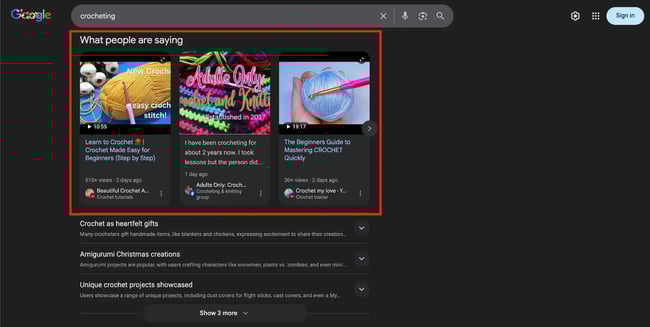
AI Overview and voice answer visibility measure whether content appears inside AI-generated summaries and voice assistant responses—surfaces that increasingly precede traditional SERPs. For AEO, this metric is foundational because answer engines rely on short, structured explanations; for SEO, it aligns with how rich results and featured snippets reinforce authority.

How to track AI Overview and voice answer visibility as an AEO vs. SEO performance metric:

  • Monitor appearances in AI Overviews, Gemini snapshots, and Perplexity citations.
  • Review voice responses (Siri, Alexa, Gemini) for accuracy.
  • Check Search Console for snippet-like answer patterns.
  • Assess answer block clarity and schema markup.

Helpful HubSpot Tools for Measuring This AEO/SEO Metric:

  • AEO Grader, which evaluates answer structure, schema readiness, and clarity.
  • AEO Guide, which offers structured recommendations for strengthening answer eligibility.

2. Snippet and rich-result performance

Snippet and rich-result performance measures how often content is elevated into featured snippets, FAQ panels, and structured SERP enhancements. For AEO, snippet clarity signals that the page delivers extractable answers. For SEO, snippets boost visibility and drive incremental CTR.

How to track snippet and rich-result performance as an AEO vs. SEO metric:

  • Monitor featured snippet wins and FAQ rich results through Search Console.
  • Add an FAQ Page or How To schema to improve eligibility.
  • Track impressions and CTR for snippet-led keywords.

Helpful HubSpot Tools for This AEO/SEO Metric:

  • Content Hub, where users can add schema and optimize semantic structure.
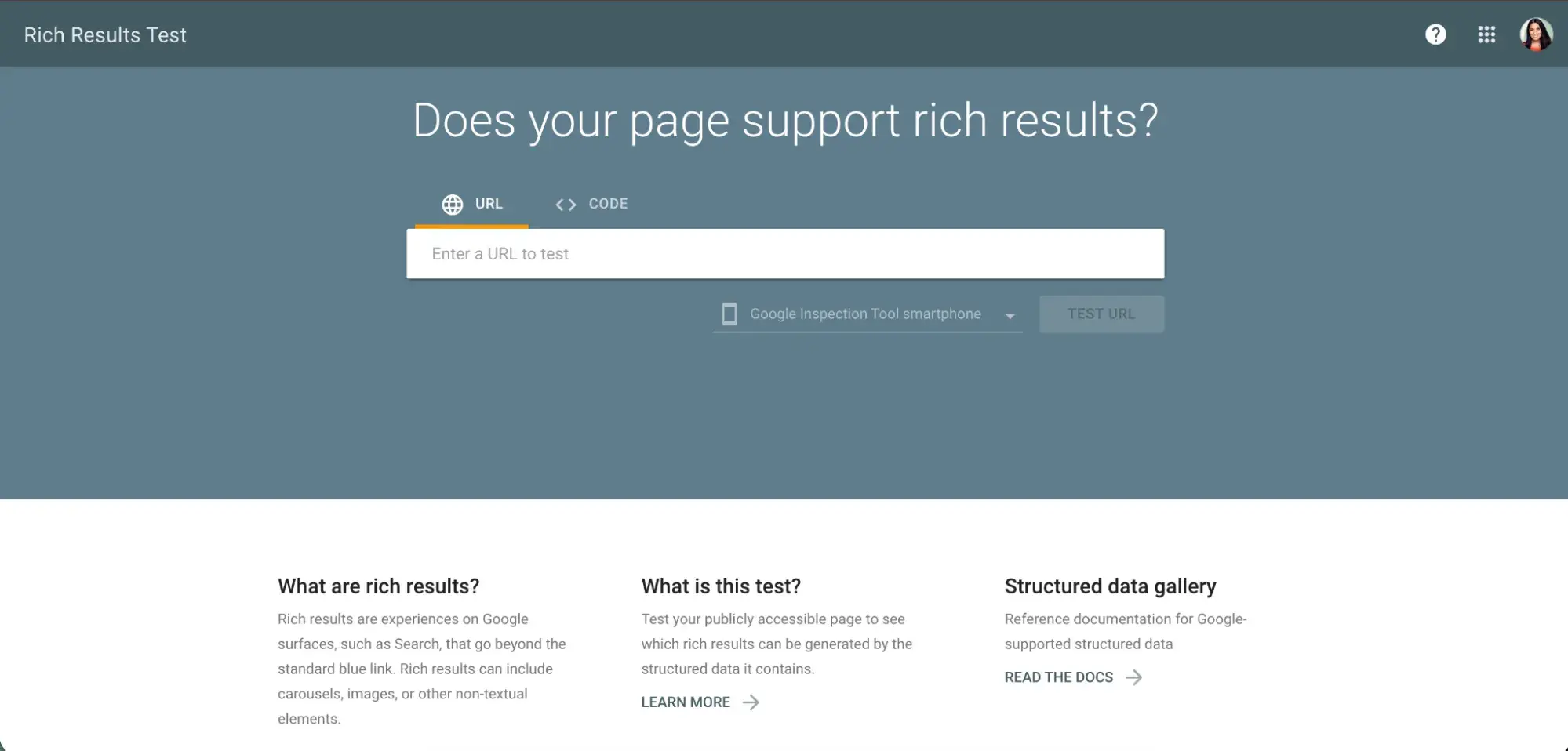
  • Website Grader, which identifies technical blockers affecting snippet eligibility.
  • Marketing Hub SEO Tools, which can validate metadata, headings, and internal linking.

answer engine optimization vs seo, content hub

Source

3. Zero-click CTA engagement

Zero-click engagement measures actions taken directly inside AI results or snippets — before users reach a webpage. AEO treats this as a primary engagement metric; SEO traditionally evaluates what happens after the click.

How to track zero-click CTA engagement as an AEO vs. SEO metric:

  • Add smart CTAs to answer blocks.
  • Track CTA engagement inside Marketing Hub.
  • Log AI Overview link interactions when available.
  • Attribute assisted conversions to these interactions through CRM data.

Helpful HubSpot Tools for This AEO/SEO Metric:

  • AEO Grader, which confirms an answer structure that supports CTA surfacing.

answer engine optimization vs seo, aeo grader

Source

4. Organic keyword rankings and impressions

Organic keyword rankings and impressions measure how well full pages perform in traditional SERPs. These metrics rely on strong content depth, internal linking, and technical SEO.

They matter because high-ranking pages strengthen overall authority, and stronger authority improves how AI systems interpret and trust associated answer blocks.

How to track organic keyword rankings and impressions as an AEO vs. SEO metric:

  • Monitor rankings and impressions using HubSpot SEO Tools + Search Console.
  • Track ranking stability across the topic cluster.
  • Use ranking trends to refine answer definitions.

Helpful HubSpot Tools for This AEO/SEO Metric:

answer engine optimization vs seo, seo tools

Source

5. Topic cluster performance

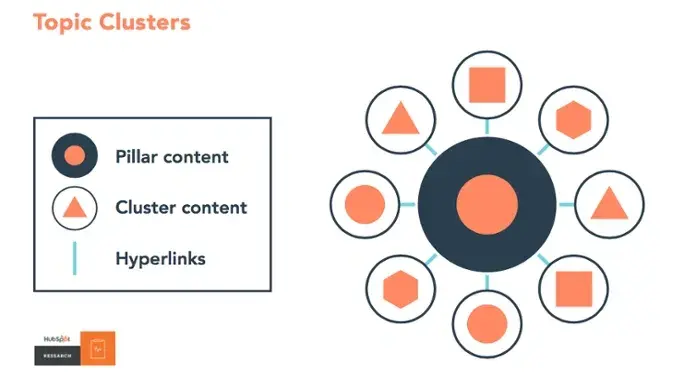
Topic cluster performance measures how well a group of related pages performs collectively, reflecting the connected authority of the entire content ecosystem. Clusters support both AEO and SEO by reinforcing relationships between terms and concepts.

This metric matters because strong clusters increase the clarity of definitions and the stability of rankings, and strong clarity improves answer eligibility.

How to track topic cluster performance and impressions as an AEO vs. SEO metric:

  • Review pillar and subtopic performance in Marketing Hub.
  • Evaluate internal linking and terminology consistency.
  • Ensure cluster pages support definitions used in answer blocks.

Helpful HubSpot Tools for This AEO/SEO Metric:

  • Marketing Hub SEO Tools, which build topic clusters, monitor performance, and reinforce semantic structure.
  • Content Hub, which ensures consistent terminology and entity cues across the cluster.

answer engine optimization vs seo, seo tools

Source

6. Conversion rate from organic and zero-click activity

Conversion rate from organic and zero-click activity measures how effectively content turns visibility into leads, trials, or revenue. AEO influences early awareness; SEO influences evaluation-stage conversions.

This metric matters because it ties answer visibility to actual outcomes inside the CRM, making it easier to demonstrate the value of AEO beyond impressions.

How to track conversion rate from organic and zero-click activity as an AEO vs. SEO metric:

  • Attribute conversions from organic traffic using CRM attribution.
  • Monitor smart CTA clicks + AI Overview interactions.
  • Combine organic session conversions with zero-click influence.

Helpful HubSpot Tools for This AEO/SEO Metric:

answer engine optimization vs seo, seo tools data

Source

Tradeoffs of Answer Engine Optimization vs. SEO

Answer engine optimization vs. traditional SEO introduces practical tradeoffs that content managers need to consider when planning strategy, structuring content, and allocating time. AEO improves visibility in AI answers and voice responses, while SEO anchors visibility in SERPs and long-form content. Both are essential, but each creates different operational requirements, content formats, and measurement challenges.

Below are the five tradeoffs that matter most when deciding how to balance the two.

1. Content format flexibility

AEO requires tight, structured answers, while SEO allows for long-form detail and broader narrative flexibility. Answer engines need concise definitions, direct phrasing, and predictable structure. SEO accommodates depth, storytelling, subheadings, and multimedia.

  • AEO perspective: favors short answers, consistent terminology, and clear schema markup.
  • SEO perspective: supports long-form guides, examples, visuals, and broader context.
  • The tradeoff of AEO vs. SEO: AEO tightens the format; SEO expands the amount and style of content you can include.
  • What to consider: start pages with AEO-friendly answer blocks, then expand into SEO-rich depth below.

2. Time investment and maintenance

AEO requires frequent updates to answer blocks, while SEO requires broader updates across entire pages or clusters. AI systems evolve quickly, so AEO-focused content must remain current and aligned with new phrasing patterns. SEO requires updating metadata, internal links, and content depth.

  • AEO perspective: requires regular updates to phrasing, schema, and answer clarity as AI models evolve.
  • SEO perspective: requires periodic updates to page depth, internal linking, and metadata across clusters.
  • The tradeoff of AEO vs. SEO: AEO maintenance is fast but ongoing; SEO maintenance is slower but more comprehensive.
  • What to consider: audit answer blocks monthly and refresh SEO pages or clusters quarterly.

3. Measurement complexity

AEO relies on emerging visibility metrics, while SEO relies on established analytics frameworks. This makes measurement one of the clearest trade-offs in AEO vs. SEO.

  • AEO perspective: tracks AI Overview presence, voice answers, and zero-click CTA interactions.
  • SEO perspective: tracks keyword rankings, SERP impressions, traffic, and on-page conversions.
  • The tradeoff of AEO vs. SEO: AEO visibility is harder to quantify; SEO performance is easier to benchmark and compare.
  • What to consider: tie both AEO and SEO touchpoints to revenue using CRM-based attribution.

4. Impact on the user journey

AEO influences early-stage discovery, while SEO influences evaluation and conversion. Users often encounter AEO content through AI answers or voice responses before they ever see the SERP. SEO remains critical when users compare options, explore features, or make decisions.

  • AEO perspective: drives top-of-funnel reach by surfacing direct answers in AI and voice results.
  • SEO perspective: supports mid- and bottom-funnel research, comparison, and conversion pathways.
  • The tradeoff of AEO vs. SEO: AEO builds awareness; SEO drives decisions and outcomes.
  • What to consider: high-performing content usually needs both AEO to be found and SEO to convert.

5. Level of control

AEO provides limited control over how answers are surfaced, while SEO gives content managers more control over ranking, snippets, and page experience. Answer engines pull content in ways that are not always predictable or transparent. SEO provides clearer signals and more established levers.

At a glance:

  • AEO perspective: depends on AI extraction logic, which varies across systems and updates.
  • SEO perspective: influenced by metadata, technical SEO, structured content, and user experience.
  • The tradeoff of AEO vs. SEO: AEO increases visibility but with less control; SEO increases control but requires deeper investment.
  • What to consider: consistent terminology and schema markup increase stability for both AEO and SEO.

Frequently Asked Questions About Answer Engine optimization vs. traditional SEO

Does AEO replace traditional SEO?

AEO does not replace traditional SEO. The two serve different functions and work best together instead of being treated as AEO vs. SEO in isolation. AEO improves visibility inside AI answers, voice responses, and zero-click surfaces, while SEO strengthens page rankings, traffic, and on-page conversions. Content teams typically get the strongest results when both approaches support one another—AEO for early discovery and SEO for deeper evaluation.

Which schema types matter most for AEO?

FAQ Page schema and How To schema matter most for AEO because they provide the structured patterns that answer engines rely on. These schema types help AI systems interpret definitions, steps, and short answers more consistently. Organization, Article, and Breadcrumb schema also support clarity, but FAQPage and HowTo schema typically offer the strongest lift for answer extraction.

How often should answer blocks be refreshed?

Answer blocks should be refreshed monthly because AI models evolve faster than traditional SERP algorithms. Refreshing ensures phrasing remains accurate, terminology stays consistent, and schema continues to match current extraction patterns. For deeper SEO-focused pages, quarterly updates are usually sufficient unless rankings begin to shift.

How do brands appear in AI Overviews and voice results?

Brands appear in AI Overviews and voice results by providing clear, structured answers that match how users phrase questions. Short definitions, consistent terminology, and supporting schema increase the likelihood of extraction. Strong topic clusters, internal linking, and entity clarity further reinforce eligibility across both AI and traditional search systems.

What’s the best way to start AEO if the team is small?

Small teams should start AEO by identifying the top 10–15 high-value questions and building clear answer blocks for each. These blocks can be added to existing pages, supported with FAQ Page schema, and measured using tools like HubSpot’s AEO Grader. From there, content managers can expand into larger refresh cycles, cluster updates, and answer-level measurement.

How to Start Building a Unified AEO + SEO Strategy

A unified AEO + SEO strategy starts by recognizing that AI systems and search engines serve different but equally important roles in how people search today. It’s no longer a question of choosing answer engine optimization or traditional SEO. Modern visibility requires both.

In my experience, the biggest strategic shift was letting go of the assumption that visibility begins at the page level. AI systems often decide what to cite based on the first lines alone, which makes clarity a strategic priority, not something to build toward gradually. If the content never reaches the user, how strong the rest of the page is doesn’t matter.

Once I understood how AEO and SEO operate at different stages of the same journey, it became easier to approach them sequentially rather than as answer engine optimization vs. traditional SEO. AEO drives discovery by helping models interpret terminology and surface answers. SEO drives intent and evaluation by giving users the depth they need once they choose to click. Thinking in terms of discovery → intent created far more consistency in how content performed across both AI and traditional search surfaces.

If the goal is to build a unified AEO and SEO strategy, the strongest place to begin is understanding whether your existing content is answer-ready. HubSpot’s AEO Grader evaluates answer clarity, schema structure, and AI visibility. Run your content through the free AEO Grader to see how well it performs in AI search.

Categories B2B

Adaptive marketing: Proven strategies for growing companies

The best marketing isn’t chiseled in stone. Apative marketing is alive, responding to new tools, shifting consumer preferences, trends, and real-time data. Changing with the trends gives brands a competitive edge, if marketing teams handle it correctly. Learn More About HubSpot's Enterprise Marketing Software

Many traditional marketing tactics (like brochures, billboards, and magazine ads) aren’t adaptable. Digital marketing can always be tweaked and improved based on performance. Tools like Marketing Hub use data-driven segments to help create adaptive, personalized offers. Adaptive marketing offers a greater competitive edge than ever before.

An adaptive marketing approach gives brands the flexibility to respond to real-time data about trends, user behavior, and market shifts. Do this well, and the result is enhanced customer engagement with a direct impact on revenue. Here are the tools, frameworks, and strategies to leverage in your brand’s strategy.

Table of Contents

What is adaptive marketing?

Adaptive marketing is a flexible strategy where brands continuously adjust their marketing in response to real-time signals, such as trends, world events, customer behavior, and changes in technology.

Some signals and responses include:

  • Customer behavior, which can trigger personalized offers based on pages viewed or actions taken.
  • The time of day content is accessed.
  • Where the user is based.
  • And any current events.

Signal

Example Response

Customer behavior

Trigger personalized offers based on pages viewed or actions taken

Time of day

Monitor user activity and send emails or publish on social media when viewers are most engaged

Location

Offer free one-day shipping to website users in a specific location

Current events

Pause or alter social media and email content during sensitive current events

Adaptive marketing is different from agile marketing. Agile marketing has its roots in software development and focuses on how teams work. The agile approach involves sprints, rapid testing, and quick iterations. Meanwhile, adaptive marketing focuses on how marketing strategy responds to changing data, trends, and consumer behavior.

Why Adaptive Marketing Works

Adaptive marketing is effective because it allows brands to evolve and improve with:

  • Technology, like AI, content marketing, reporting, and attribution tools.
  • Data, including insights on consumer behavior, market trends, and social media users.
  • Feedback from test groups, followers, community members, and customers.
  • Customer expectations, as consumers see other brands evolve, yours will be expected to keep up.

As a marketer, I see adaptive marketing is a litmus test that tells me how much brands A) value their marketing and B) understand technology. Some brands resist updates, improvements, and development, and it really undercuts marketing ROI. That might’ve been fine for traditional marketing, but digital marketing has too much potential to remain rigid.

Adaptive Marketing Strategies

Adaptive marketing can take many forms. Tio strategies facilitate adaptive marketing through AI personalization, trigger-based automation, and user data-based automation. Savvy teams experiment to find tactics that work.

Targeting customers with real-time AI personalization

Real-time personalization adapts offers, messaging, or content based on live signals such as location, device, referral source, or recent activity. Instead of showing the same experience to every visitor, brands tailor interactions to what’s most relevant in the moment.

This is a top trend in 2026. In our State of Marketing survey, 49% of marketers said using AI to create personalized content was a focus. HubSpot’s Marketing Hub supports real-time personalization. Marketing Hub uses behavioral data and AI-driven segments to tailor content and offers as customer context changes.

content personalization with ai inside hubspots marketing hub

Source

As a consumer, I find that audience segmentation makes web browsing more convenient. It‘s smart and leverages technology to improve the user experience in a way traditional marketing can’t.

Adapting messages based on consumer data

Marketers used to have to guess where their customers were. Now, brands can tailor messaging to reflect what customers are actually doing. The framework for this system can be created based on audience segments. Then, automation tools customize for individual users.

Remember, not all consumer data can be adaptively used to feed the marketing loop. I recommend choosing a few specific signals that matter most to your product. For example, Duolingo reacts to insights from consumer behavior with tailored push notifications and emails about product usage.

Adaptive marketing strategy example from Duolingo

Source

HubSpot’s Marketing Hub centralizes CRM and behavioral data, so marketers can adapt campaigns based on how customers move through the funnel.

Setting trigger-based rules for adaptive content

Trigger-based automation focuses on responding to specific actions or inactions with predefined “if this, then that” responses. Marketing teams can then adapt content automatically without continuously changing personalization rules or audience segments.

Website pop-ips are one common “if this, then that” trigger. Below, a website pop-up that appears as a desktop user moves their mouse towards the exit button:

HubSpot trigger-based popup

Source

Here are some more trigger ideas and examples.

Trigger

Adaptive Content/Action

First product interaction

Offer onboarding tips related to the feature used

No activity for a set period

Trigger a re-engagement message or offer

Content download

Recommend related content or next-step resources

Trial nearing expiration

Send upgrade prompts or value-focused reminders

Pro tip: In Loop Marketing, trigger-based automation supports the Amplify stage by ensuring the right follow-up happens at the right moment, keeping prospects engaged.

Adjusting content to align with current trends

Adjusting content to align with current trends can lead to higher social media and email engagement. Adaptive marketing grants teams the speed to hop on trends, even if the lifespan of a trend might only be a week. Marketing teams need to adapt to trends as they emerge in real-time.

However, chasing trends isn’t always effective. Some trends can feel off-brand or unrelated to the product. Teams that create successful campaigns around trends have a clear understanding of their tone, taste, and point of view (step one in Loop Marketing). Marketers then know what trends to capitalize on and which to leave behind.

I love seeing brands take their normal content and adapt it to fit a trending topic or style, like this example of Canva blending their content marketing with the Stranger Things trend:

Continuously testing

Experimental testing (such as A/B, multivariate, and holdout tests) helps teams understand which marketing efforts are driving engagement and conversion. With A/B and adaptive testing tools built into HubSpot Marketing Hub, teams can test variations continuously and apply learnings without launching separate campaigns.

See an example below of A/B testing email subject lines:

After clicking the test icon in the content editor, a dialog box is displayed. Three variation text input fields are shown. A box is placed around the delete variation icon next to a variation. A box is placed around the + Add variations text. An arrow points to the Create variations button.

Source

Marketers who are comfortable testing multiple elements simultaneously can move beyond A/B testing to multivariate testing. With Marketing Hub, up to five web page versions (such as landing pages or sales pages) can be tested at once.

After clicking the test icon in the content editor, a dialog box is displayed. Three variation text input fields are shown. A box is placed around the delete variation icon next to a variation. A box is placed around the + Add variations text. An arrow points to the Create variations button.

Source

Tools to Power Your Adaptive Marketing Strategy

Marketing Hub

HubSpot Marketing Hub helps teams be adaptive by turning customer data into action. Adaptive marketing strategies require regular measurement and feedback loops. By centralizing data, testing, and automation in Marketing Hub, teams can respond to changing signals without relying on disconnected systems.

customer journey report in hubspot

Source

Price: Free tier, with paid plans starting at $9/month

HubSpot Marketing Hub helps teams act on data and implement adaptive marketing strategies. Meanwhile, the unified Smart CRM powers segmentation and adaptive triggers.

adaptive marketing feature for email inside marketing hub

Source

Adaptive marketing and execution features include:

  • Adaptive testing for website and landing page optimization
  • A/B testing for emails and pages
  • Behavioral event tracking to trigger responses based on user actions
  • AI-driven segmentation that updates audiences dynamically
  • Marketing automation for “if this, then that” workflows
  • Integrated reporting to support iteration

Personalization agent suggestions from HubSpot

Source

What I like: HubSpot’s 2026 State of Marketing survey found that leveraging automation was the #2 trend of the year. I appreciate that Marketing Hub’s features make it easy to act on this trend and marketing data.

SegMetrics

SegMetrics helps marketing teams understand how changes in strategy affect revenue over time. By connecting customer behavior, cohorts, and lifecycle data to business outcomes, SegMetrics supports faster iteration based on what’s actually driving growth.

Price: Starts at $57/month

Key adaptive marketing capabilities include:

  • Revenue-based attribution to evaluate the impact of changes
  • Cohort analysis to compare performance before and after adaptations
  • Lifecycle insights to identify drop-off and re-engagement opportunities

segmetrics data reporting screenshot

Source

What I like: SegMetrics works well for businesses with free trials, subscriptions, upsells, or hybrid funnels/mixed models that are hard to evaluate with standard attribution.

Hotjar

Hotjar helps adaptive marketing teams understand how users interact with content, not just whether they convert. It adds qualitative context to performance data, making it easier to identify friction and improve.

Price: Free with paid plans starting at $49/month

Key Hotjar features include:

  • Heatmaps and scroll depth to reveal engagement patterns
  • Session recordings to observe user behavior
  • On-site surveys for direct customer feedback

hotjar heatmap screenshot

Source

What I like: The scroll depth monitoring and heatmaps add great qualitative insight to enrich the quantitative data, like time spent on page, bounce rate, etc.

Optimizely

Optimizely supports adaptive marketing by enabling teams to personalize digital experiences and test those changes in a controlled way. Its personalization tools allow marketers to tailor content and experiences for different audiences while measuring impact before rolling changes out more broadly.

Price: Custom pricing only

Key Optimizely features for adaptation are:

  • Audience-based personalization for websites and digital experiences
  • Experimentation to validate personalized variations before scaling
  • Rules- and data-driven targeting to adapt experiences by segment or behavior

optimizely adaptive ai tool

Source

Best for: Teams that want to personalize experiences thoughtfully and test changes before applying them across their entire audience.

Google Trends

Google Trends is a free tool that marketing teams can use to identify market trends and changing consumer preferences.

Price: Free

Key Google Trends features related to adaptive marketing include:

  • Real-time shifts in search demand and interest
  • Early momentum detection with years of search history
  • Search data customizable by location, timeframe, categories, or search type

Google Trends screenshot

Source

What I like: Conversations may happen all over the internet, but if something becomes a true trend, it will be reflected in Google search, even if it originated on TikTok, Reddit, etc. Seeing the history over time helps teams adapt messaging and content topics quickly.

How to Measure and Iterate Adaptive Marketing Campaigns

Successful adaptive marketing campaigns can generate different success metrics. Teams should track revenue, lead generation, sales velocity, engagement rate, and owned channel growth.

Revenue Impact

Monitoring revenue by campaign or audience segment ties adaptive marketing efforts directly to business outcomes. Teams should measure revenue performance before and after changes to see how much the adaptations are contributing to growth.

Revenue impact can be measured by connecting website, CRM, and campaign data in a single reporting system, like HubSpot. Marketers can then review how different campaigns or segments contribute to conversions over time. While attribution is rarely perfect, directional insights (like common entry points or conversion paths) can guide iteration.

Revenue impact is the most important metric, but it‘s not the only metric that matters. It’s also important to review revenue contextually with sales velocity.

Sales and Falloff Velocity

Sales velocity is a commonly used metric that estimates how quickly leads convert into customers. It’s typically calculated using the following formula:

  • Sales velocity = (number of opportunities x deal value x win rate) / length of sales cycle

Velocity is often overlooked, according to Scott Queen, senior product strategist at SegMetrics, and not just sales velocity. Queen sells a product with a subscription model and a two-week free trial, so a sale is predictably made in two weeks. The velocity he pays more attention to is fallout velocity: when do customers cancel their memberships?

“If I notice that people fall off a subscription around three or four months, then maybe I do something at the three or four-month mark to make sure that they’re engaged,” Queen shared.

Lead Generation Rate

Lead generation rate measures how effectively marketing efforts convert visitors into leads. Instead of tracking lead volume alone, lead generation focuses on the percentage of users who take a qualifying action after engaging with content.

For this data to be impactful, a baseline will need to be established before the content is adapted to measure change. Comparing lead generation rates before and after updates helps teams understand exactly which adaptive strategies are improving acquisition.

HubSpot Marketing Hub connects forms, landing pages, automation, and reporting. Marketers can then measure how adaptive campaigns contribute to lead growth over time.

https://www.hubspot.com/use-case/generate-leads

Source

Engagement Rate

A higher engagement rate doesn’t directly affect revenue. However, a healthy/growing engagement rate provides important signals about the effectiveness of marketing efforts. Some engagement measurements include:

  • Website behavior, like the amount of time on page, button clicks, scroll depth, and shares.
  • Email engagement, like opens, replies, and clicks.
  • Social media content: Likes, comments, saves, followers

Some marketers consider engagement rate a vanity metric, and that can be true if revenue growth isn‘t also being considered. I value engagement because it’s a strong signal from viewers about which content marketing strategies are of most interest to them.

Owned Channel Growth

Owned channel growth measures how effectively marketing efforts move audiences from borrowed platforms (like ads, social media, and search) to channels that a brand controls. Owned platforms offer a more reliable line of communication to customers and give teams more flexibility to adapt messaging over time. Common owned channels include:

  • Email subscribers.
  • Private communities or memberships.
  • Customer accounts or dashboards.
  • SMS or messaging lists.
  • App installs or logged-in users.

I pay close attention to owned channel growth because it reflects long-term marketing health. When adaptive strategies work, audiences don’t just engage once: They opt in, return, and stay connected in environments where I can continue testing and tailoring content to them.

Aldi

Aldi is a discount supermarket that uses social media to maximize its marketing, consumer engagement, and positioning. The reaction to consumer and platform trends has not only amplified its social media marketing efforts, but it’s even contributed to the creation of trendy products.

Some brands try to look perfect online. I love Aldi‘s authenticity. The brand’s marketing efforts have created a high-value feedback loop where customer reactions directly inform future content and promotions.

Amazon

With an estimated 12-13 million orders per day, Amazon has more data at its disposal than most companies, and it puts that data to work.

Logged-in users see adaptive recommendations broken down by category based on browsing behavior. New visitors see top products across categories, with the promise of tailored recommendations once an account is created.

Amazon screenshot showing adaptive marketing strategies

Source

The algorithm performs real-time data analysis on behavior. Refresh the page, and some of the old recommendations that didn’t inspire a click are replaced with new products. Data-driven insights drive a highly personalized consumer experience that directly impacts time spent on page and revenue.

Astronomer

Astronomer is a data orchestration platform that was skyrocketed to mainstream consciousness by bad PR: The CEO was caught on a viral kiss-cam moment at a Coldplay concert in July 2025. After a relentless news cycle, the company took hold of the mic by hiring Gwyneth Paltrow (ex-wife of Coldplay’s frontman) to deliver a positive message about the company.

This is called crisis PR, and it‘s one of the oldest forms of adaptive marketing in the book. This way of adapting to a viral news moment may sound like an extreme example, but I don’t think it’s that different from the COVID-19 litmus test.

All companies were tested to see how responsive their marketing plans were to fluctuating market conditions and consumer behavior. Many failed, acting like it was business as usual and publishing generic promotional materials. It felt out of touch, affecting customer sentiment.

What’s Next for Adaptive Marketing With AI

When surveyed for HubSpot’s 2026 State of Marketing report, 47% of marketers said that leveraging automation was a top trend they were exploring. AI is already helping marketers analyze content results and adapt campaigns.

Next comes agentic marketing, where autonomous AI agents will make the changes themselves. Within HubSpot, AI features like Breeze’s AI Segment Suggestions support this shift. Teams can adapt targeting in real time based on behavior and performance signals.

Breeze AI Segment Suggestions

Source

AI-powered tools point toward a future where adaptive marketing becomes faster, more precise, and increasingly automated.

Frequently Asked Questions About Adaptive Marketing Strategies

Is adaptive marketing the same as agile marketing?

No, adaptive marketing is not the same as agile marketing. Agile marketing refers to how teams work (rapid testing and quick iterations). Adaptive marketing refers to a dynamic strategy that responds to changes (data, technology, and trends).

What tools do I need to start adaptive marketing?

To start adaptive marketing, teams need tools for data collection and analysis, experimentation, automation, and trend monitoring. Platforms like HubSpot Marketing Hub can help centralize these efforts by combining analytics, testing, and automation in one system.

How quickly can teams see impact from adaptive strategies?

With sufficient traffic and data, teams can often evaluate early results of some adaptive strategies within one week.

Can small teams run adaptive marketing effectively?

Yes, small teams can often run adaptive marketing more effectively than larger teams because they face fewer approvals and can make faster decisions. This speed makes it easier to test, experiment, and adjust course.

How do I get executive buy-in for adaptive marketing?

Executive buy-in for adaptive marketing depends on clearly connecting changes to business outcomes. Consider using a single source of truth, like HubSpot’s analytics tools, to show how adaptive decisions correlate with growth or revenue. This will build confidence and alignment with leadership.

Adapt and Grow

Adaptive marketing isn’t new, but the opportunity for brands keeps increasing. Today, AI-powered technology provides more opportunities for dynamic, personalized marketing. Real-time personalization, faster experimentation, and data-driven decision-making help marketers determine what offers to run at key moments.

I think that brands and marketing agencies owe it to their customers (and themselves) to engage with the real-time insights at our fingertips and keep refining what we present to consumers.

That‘s easy with HubSpot’s Marketing Hub, which combines CRM, marketing data analytics, and automation into one seamless interface. Schedule a demo to try it for your team’s next campaign.

Categories B2B

Email marketing reporting: Our top best practices and tool recommendations for 2026

Here’s a (maybe) mildly spicy hot take: Email marketing reporting is the backbone of any performance-focused email strategy. Without it, you’re sending campaigns into a void, unable to see what’s working, what’s falling flat, and most importantly, what’s driving revenue.

The top reporting features in email marketing software go far beyond open rates and click-throughs. Today’s email reporting tools enable closed-loop reporting, connecting every email touchpoint to pipeline outcomes and customer lifetime value. This means marketers can finally answer the question executives care about most: How does email contribute to revenue?

In this guide, I’ll break down what email marketing reporting actually involves — which KPIs to track at each funnel stage, how to build a dashboard that surfaces actionable insights, and which email marketing reporting tools can help you get there.

Let’s get started.

Table of Contents

What is email marketing reporting?

a screenshot a hubspot-branded image defining and explaining email marketing reporting in plain english

Email marketing reporting is the process of collecting, analyzing, and interpreting data from your email campaigns to measure performance and inform strategy. It transforms raw metrics, such as:

  • Opens
  • Clicks
  • Conversions

These data points yield actionable insights that directly connect to pipeline growth, revenue generation, and customer lifetime value.

Moreover, robust email marketing reporting answers three core questions:

  • Are your emails reaching inboxes?
  • Are recipients engaging with your content?
  • (Most critically) Are those engagements driving measurable business outcomes?

Now, comprehensive email marketing reporting requires the following:

  • Tracking deliverability metrics
  • Engagement rates
  • Revenue attribution

This means monitoring not just surface-level activity, but understanding how each email touchpoint contributes to a contact’s journey from subscriber to customer.

Additionally, the top reporting features in email marketing software include:

  • Deliverability tracking: This feature monitors inbox placement, bounce rates, and sender reputation
  • Engagement analytics: These metrics cover open rates, click-through rates, click mapping, and unsubscribe trends
  • Revenue attribution: These metrics connect email interactions to closed deals and pipeline value
  • Audience segmentation insights: This capability reveals which contact groups respond to specific content types
  • A/B test results: This data quantifies performance differences between subject lines, send times, and content variations

All-in-all, without robust email marketing reporting tools, you’re essentially sending campaigns into a void. With them, every email becomes a data point that sharpens your understanding of what drives revenue.

Now that we’ve covered what email marketing reporting is and why it matters, in the next section, let’s talk specifics: what metrics you’ll track to measure campaign success and prove business impact.

Pro Tip: HubSpot’s Reporting and Dashboard Software connects email touchpoints to revenue outcomes, multi-touch attribution models, and full-funnel visibility — allowing marketers to see exactly how email contributes to CLV over time.

Email marketing reporting: What to track

a hubspot-branded featured image of a graphic explaining what email marketing reporting metrics to track

a hubspot-branded featured image of a graphic explaining what email marketing reporting metrics to track

Now that we’ve covered what email marketing reporting is, let’s talk about how you’ll put it into practice.

As previously mentioned, email marketing reporting requires:

  • Tracking deliverability metrics
  • Engagement rates
  • Revenue attribution

However, the detailed breakdown below provides complete visibility into campaign health and business impact.

To build a complete email reporting framework, take a look at the following nine metrics:

  • Deliverability rate: This foundational metric measures the percentage of emails that successfully reach subscribers’ inboxes. (A deliverability rate below 95% signals list hygiene or authentication issues that require immediate attention.)
  • Open rate: This engagement indicator indicates how many recipients viewed your email. Open rates provide directional insight into subject line effectiveness and send time optimization.
  • Click-through rate (CTR): This engagement indicator reveals the percentage of recipients who clicked at least one link. This metric directly measures content relevance and CTA effectiveness. Most email reporting tools (like HubSpot’s Email Marketing Software) show click mapping to identify which specific links drive engagement.
  • Conversion rate: This action-based metric tracks recipients who complete a desired action, such as submitting a form, making a purchase, downloading, or requesting a demo. Well-executed email marketing reporting combines real-time performance data, audience segmentation insights, and conversion tracking to accurately attribute these actions.
  • Revenue attribution: This bottom-line metric connects email touches to closed deals. The top reporting features in email marketing software include first-touch attribution, multi-touch models, pipeline influence reporting, and customer lifetime value.
  • List growth rate: This health indicator measures net subscriber acquisition after accounting for unsubscribes and bounces. To calculate your list growth rate, calculate monthly: (new subscribers − lost subscribers) ÷ total list size × 100. (Healthy lists grow 2-5% monthly.)
  • Unsubscribe rate: This retention metric measures the percentage of recipients who unsubscribe from your emails after a campaign send. Sudden spikes indicate content-audience misalignment, over-sending, or poor list segmentation.
  • Spam complaint rate: This measures how often recipients mark your emails as spam. This rate must stay below 0.1% to protect the sender’s reputation. Email marketing reporting tools should flag campaigns exceeding this threshold immediately.
  • Engagement quality: This advanced metric goes beyond opens and clicks to measure meaningful interaction. It encompasses time spent reading emails, forwarding and sharing rates, reply rates for conversational campaigns, and repeat engagement from the same contacts.

Next, let’s walk through how to build an email reporting dashboard — all with these metrics as your foundation.

Pro Tip: HubSpot’s Marketing Hub provides comprehensive email reporting dashboards, A/B testing analytics, and contact-level engagement tracking, so you can monitor the KPIs mentioned above from a single platform connected to your CRM data.

How to build an email reporting dashboard the right way

A well-built email reporting dashboard turns scattered data into clear, actionable insights. What’s even more, advanced email reporting platforms offer:

  • Native CRM integration
  • Custom dashboard creation
  • Cross-channel attribution capabilities

But only if you set them up strategically from the start. Here’s how to build yours the right way — check out the following steps:

Step #1: Define your reporting goals before adding a single widget.

Your dashboard should answer specific business questions, not just display every available metric. Start by identifying what decisions your email reporting will inform.

Ask yourself:

  • Are you optimizing for engagement, conversions, or revenue?
  • Who will use this dashboard — marketing managers, executives, or campaign specialists?
  • What timeframes matter most: daily performance, weekly trends, or monthly benchmarks?

Step #2: Select KPIs that align with your funnel stage.

Not every metric belongs on every dashboard. Match your KPIs to what you’re actually trying to measure.

Here’s how you’ll assess email marketing reporting based on your funnel stage:

  • Top-of-funnel campaigns (newsletters, nurture sequences): Prioritize open rates, click-through rates, and list growth
  • Mid-funnel campaigns (product education, case studies): Focus on conversion rates, content engagement depth, and lead scoring changes
  • Bottom-of-funnel campaigns (sales enablement, demos): Track revenue attribution, pipeline influence, and deal velocity

Pro Tip: HubSpot’s Reporting and Dashboard Software connects email touchpoints to revenue outcomes, multi-touch attribution models, and full-funnel visibility — making it easy to see how each campaign type contributes to closed deals.

Step #3: Build your dashboard structure with hierarchy in mind.

The top reporting features in email marketing software mean nothing if your dashboard layout creates confusion. Organize information from high-level insights down to granular details.

Here’s a structure I recommend:

  • Row 1: Executive summary – total sends, overall engagement rate, revenue attributed to email this period
  • Row 2: Deliverability health — inbox placement, bounce rates, spam complaints
  • Row 3: Engagement performance — opens, clicks, and conversions by campaign type
  • Row 4: List and audience metrics — growth rate, segment performance, unsubscribe trends

Step #4: Connect email data to your CRM and revenue sources.

Time for a marketing reality check (that you didn’t ask for): Email reporting in isolation only tells half the story.

Effective email analytics combines:

  • Real-time performance data
  • Audience segmentation insights
  • Conversion tracking

However, all of this requires connecting your email platform to contact records and deal data.

With HubSpot’s Marketing Hub, your email reporting dashboard automatically pulls from your CRM. This means you can see which emails influenced specific deals, track engagement by lifecycle stage, and measure true customer lifetime value by acquisition source.

Step #5: Set up automated alerts and benchmarks.

Don’t wait until your weekly review to catch problems. Email marketing reporting tools should notify you when metrics fall outside acceptable ranges.

Therefore, configure alerts for:

  • Deliverability dropping below 95%
  • Spam complaint rates exceeding 0.1%
  • Spikes in unsubscribe rates
  • Conversion rates falling below your rolling average

Step #6: Schedule regular reviews and iterate.

Your dashboard isn’t a set-it-and-forget-it tool. Schedule weekly check-ins to review performance and monthly deep-dives to assess whether your tracked metrics still align with business goals.

During each review, be sure to:

  • Identify top-performing campaigns and analyze what made them work
  • Flag underperforming segments for testing or suppression
  • Update benchmarks based on recent performance trends
  • Add or remove widgets as your email strategy evolves

Building your email marketing reporting dashboard correctly from the start saves hours of rework later. Plus, with HubSpot’s connected reporting ecosystem, every email sent becomes a data point that ties directly to the pipeline and revenue.

Pro Tip: HubSpot’s Breeze AI enhances email reporting with predictive send-time optimization, automated performance summaries, and actionable recommendations — helping you spot patterns and opportunities more quickly during these reviews.

Templates for email marketing reporting

Consistent reporting keeps stakeholders informed and helps you spot trends before they become problems. These three templates give you ready-to-use formats for different audiences and cadences — so you spend less time building reports and more time acting on insights.

As previously mentioned, email marketing reporting requires tracking deliverability metrics, engagement rates, and revenue attribution. Moreover, the templates I’ve provided below organize these data points into clear, stakeholder-friendly formats.

Take a look:

Template #1: Weekly Email Pulse Check

Best for: Marketing team syncs, campaign managers, quick performance snapshots.

Here’s the table you’ll use:

Metric

This Week

Last Week

% Change

Emails sent


Deliverability rate


Open rate


Click-through rate


Conversion rate


Unsubscribe rate


Then, be sure to add context with qualitative notes, including:

  • Top-performing email: [Campaign name] — [Key metric that stood out]
  • Areas of concern: [Any metrics trending downward or below benchmark]
  • Next week’s focus: [One or two priorities based on this week’s data]

Overall, this template works well for email reporting during standing team meetings. Its format is scannable, consistent, and action-oriented.

Pro Tip: If you’re using HubSpot’s Marketing Hub, you’ll be able to grab email reporting dashboard data, A/B testing analytics, and contact-level engagement tracking all in one place, making it easy to pull these numbers in minutes.

Template 2: Monthly Executive Summary

Best for: Leadership updates, cross-functional stakeholders, budget discussions.

Volume & Reach:

  • Total emails sent: [Number]
  • Average deliverability rate: [%]
  • List size (end of month): [Number]
  • Net list growth: [+/- Number] ([%] change)

Engagement Summary:

  • Average open rate: [%] (benchmark: [%])
  • Average CTR: [%] (benchmark: [%])
  • Total clicks: [Number]

Business Impact:

  • Conversions attributed to email: [Number]
  • Revenue attributed to email: [$]
  • Pipeline influenced by email: [$]
  • Top-converting campaign: [Name]

Key Insights:

  • [Insight about what worked]
  • [Insight about audience behavior]
  • [Recommendation for next month]

This template is easy to copy and paste, making it simple to customize and share when necessary.

Template #3: Campaign Post-Send Report

Best for: Individual campaign analysis, A/B test documentation, stakeholder recaps.

First, include the following information:

  • Campaign Name: [Name]
  • Send Date: [Date]
  • Audience Segment: [Segment name and size]
  • Campaign Goal: [Primary objective]

Then, dive into the nitty-gritty elements of your email marketing campaign:

Deliverability:

  • Sent: [Number]
  • Delivered: [Number] ([%])
  • Bounced: [Number] (Hard: [#] / Soft: [#])

Engagement:

  • Opens: [Number] ([%])
  • Unique clicks: [Number] ([%])
  • Click-to-open rate: [%]
  • Top clicked link: [URL or CTA description]

Conversions & Attribution:

  • Primary conversion action: [Description]
  • Conversions: [Number]
  • Conversion rate: [%]
  • Revenue attributed: [$]

A/B Test Results (if applicable):

  • Variable tested: [Subject line / Send time / CTA / etc.]
  • Variant A: [Result]
  • Variant B: [Result]
  • Winner: [A or B] — [Why]

Takeaways:

  • What worked: [Specific element]
  • What to test next: [Hypothesis]

Ultimately, these templates are meant to serve as starting points for your team’s email reporting workflow. Feel free to edit them based on your specific KPIs and stakeholder needs.

Email marketing reporting tools (at a glance)

Tool

Best For

Key Features

Pricing

Free Trial

HubSpot (Marketing Hub)

B2B teams needing email reporting connected to the sales pipeline and revenue attribution

Native CRM integration

Multi-touch attribution reporting

Custom dashboard builder

Click mapping

List health monitoring

Breeze AI for predictive optimization

Starter: $9/month

Professional: $800/month

Enterprise: $3,600/month

Yes, 14 days

Klaviyo

E-commerce brands needing direct revenue attribution tied to product catalog data

Revenue-per-recipient tracking

Predictive analytics (CLV, churn risk)

Segment performance comparison

Product-level attribution

Benchmark data

Free: $0/month

Email (1,001 to 1,500 profiles): $45/month

Email (1,501 to 2,500 profiles):

$65/month

*Note: Pricing for Klaviyo is based on the number of active profiles.

No (free tier available)

Mailchimp

Small to mid-sized businesses seeking user-friendly email reporting

Campaign performance snapshots

Comparative reporting

Click maps

Industry benchmark comparisons

AI-driven content optimizer

Free: $0/month

Essentials: $13/month

Standard: $20/month

Premium: $350/month

*Note: Pricing for Mailchimp is based on the number of contacts.

Yes, 14 days

Salesforce Marketing Cloud

Enterprise organizations invested in Salesforce needing unified sales and service data

Einstein AI analytics

Cross-channel journey reporting

Custom SQL report builder

Deliverability monitoring

Account-based reporting

Salesforce Starter: $25/month

Marketing Cloud Growth Edition: $1,500/month

Marketing Cloud Advanced Edition: $3,250/month

No

ActiveCampaign

Teams running sophisticated automation workflows requiring sequence-level performance visibility

Automation funnel reporting

Site tracking integration

Deal attribution

Split testing reports

Engagement tagging

Starter: $15/month

Plus: $49/month

Pro: $79/month

Enterprise: $145/month

Yes, 14 days

Litmus

Teams prioritizing email design optimization, accessibility compliance, and engagement quality analysis

Email client and device reporting

Read time tracking

Engagement scoring

Accessibility checks

Spam filter testing

Custom pricing only, demo call required (see here)

No

Email marketing reporting tools

The right email marketing reporting tools transform raw campaign data into strategic insights. Advanced email reporting platforms offer native CRM integration, custom dashboard creation, and cross-channel attribution capabilities, but each tool brings its own strengths, depending on your needs.

Here are six platforms with strong email reporting capabilities:

1. HubSpot (Marketing Hub)

a screenshot of hubspot’s email marketing reporting dashboard

Source

Best for: B2B teams that need email reporting connected to sales pipeline and revenue attribution in one platform.

HubSpot’s Marketing Hub provides comprehensive email reporting dashboards, A/B testing analytics, and contact-level engagement tracking — all connected directly to your CRM.

HubSpot’s key email marketing reporting features:

  • Native CRM integration ties every email interaction to contact records, deals, and revenue
  • Multi-touch attribution reporting (that shows how email influences the pipeline at each funnel stage)
  • Custom dashboard builder with drag-and-drop widgets
  • List health monitoring (tracking growth, churn, and segment performance over time)

HubSpot pricing (Marketing Hub):

  • Starter: $9/month
  • Professional: $800/month
  • Enterprise: $3,600/month

2. Klaviyo

a screenshot of klaviyo’s email marketing reporting dashboard

Source

Best for: E-commerce brands that need direct revenue attribution tied to product catalog data.

Klaviyo specializes in e-commerce email reporting with deep integrations into Shopify, WooCommerce, and other online storefronts.

Klaviyo’s key email marketing reporting features:

  • Revenue-per-recipient tracking
  • Predictive analytics (including customer lifetime value and churn risk scores)
  • Segment performance comparison showing engagement by customer cohort
  • Product-level attribution (i.e., identifying which emails drive specific SKU purchases)
  • Benchmark data

Klaviyo pricing:

  • Free: $0/month
  • Email (1,001 to 1,500 profiles): $45/month
  • Email (1,501 to 2,500 profiles): $65/month

*Note: Pricing for Klaviyo is based on the number of active profiles.

3. Mailchimp

a screenshot of mailchimp’s email marketing reporting dashboard

Source

Best for: Small to mid-sized businesses seeking user-friendly email reporting without a steep learning curve.

Mailchimp offers accessible email marketing reporting for small businesses and growing teams with straightforward dashboards and industry benchmarking.

Mailchimp’s email marketing reporting features:

  • Campaign performance snapshots with open rate, CTR, and revenue tracking
  • Comparative reporting across campaigns to identify trends
  • Click maps and subscriber activity timelines
  • Industry benchmark comparisons
  • Content optimizer with AI-driven recommendations for subject lines and send times

Mailchimp pricing (0-500 contacts):

  • Free: $0/month
  • Essentials: $13/month
  • Standard: $20/month
  • Premium: $350/month

*Note: Pricing for Mailchimp is based on the number of contacts.

4. Salesforce Marketing Cloud

a screenshot of salesforce marketing cloud’s email marketing reporting dashboard

Source

Best for: Enterprise organizations already invested in Salesforce who need email reporting unified with sales and service data.

Salesforce Marketing Cloud delivers enterprise-grade email reporting with deep integration into the Salesforce CRM ecosystem.

Salesforce Marketing Cloud key email marketing reporting features:

  • Cross-channel journey reporting (connecting email to SMS, push, and advertising touchpoints)
  • Custom report builder with SQL query access for advanced analysis
  • Deliverability monitoring
  • Account-based reporting

Salesforce Marketing Cloud pricing:

  • Salesforce Starter: $25/month
  • Marketing Cloud Growth Edition: $1,500/month
  • Marketing Cloud Advanced Edition: $3,250/month

5. ActiveCampaign

 a screenshot of activecampaign’s email marketing reporting dashboard

Source

Best for: Teams running sophisticated automation workflows who need visibility into sequence-level performance.

ActiveCampaign combines email reporting with automation performance tracking, showing how individual emails perform within complex sequences.

ActiveCampaign’s key email reporting features:

  • Automation funnel reporting
  • Site tracking integration connecting email clicks to on-site behavior
  • Deal attribution
  • Split testing reports for subject lines, content, and automation paths
  • Engagement tagging

ActiveCampaign pricing (email features only):

  • Starter: $15/month
  • Plus: $49/month
  • Pro: $79/month
  • Enterprise: $145/month

6. Litmus

a screenshot of litmus’ email marketing reporting dashboard

Source

Best for: Teams prioritizing email design optimization, accessibility compliance, and deep engagement quality analysis.

Litmus focuses on email analytics with an emphasis on rendering, accessibility, and engagement quality metrics beyond opens and clicks.

Litmus’ key email reporting features:

  • Email client and device reporting
  • Read time tracking
  • Engagement scoring (that categorizes subscribers as readers, skimmers, or deleters)
  • Accessibility checking
  • Spam filter testing

Litmus pricing:

  • Custom pricing only, demo call required (see here)

Frequently asked questions (FAQ) about email marketing reporting

Which benchmarks should I trust when I’m in a niche market?

Industry-wide benchmarks often miss the mark for niche markets due to limited sample sizes and audience variability. Your most reliable email marketing reporting benchmarks are internal.

However, I suggest building your own baseline by:

  • Tracking your rolling 90-day average for each core metric (open rate, CTR, conversion rate, unsubscribe rate)
  • Segmenting benchmarks by campaign type — promotional emails, newsletters, and transactional sends perform differently
  • Documenting seasonal patterns specific to your audience
  • Comparing performance across audience segments rather than against external data

Also, use third-party benchmarks directionally, not prescriptively. If your niche consistently sees 15% open rates while industry reports suggest 25%, your internal trend data matters more than the gap.

How can I quickly QA a sudden drop in open or click rates?

You probably guessed this, but I’ll say it anyway: A sudden performance drop signals a specific issue.

To work through it, use this diagnostic checklist:

Deliverability problems:

  • Did your bounce rate spike? Check for list quality issues or a bad data import
  • Did spam complaints increase? Review recent content for potential triggers
  • Has your sending domain or IP reputation changed? Use tools like Google Postmaster to verify

Audience or segmentation issues:

  • Did you send to a new or different segment than usual?
  • Was the list recently cleaned, removing engaged contacts?
  • Did you accidentally include a suppression list or exclude your most active subscribers?

Content or technical errors:

  • Did the subject line contain spam-trigger words or broken personalization tokens?
  • Were links broken, causing clicks to go untracked?
  • Did images fail to load, reducing engagement cues?

External factors:

  • Did a major event (holiday, news cycle) shift audience attention?
  • Did Apple MPP or email client updates affect tracking accuracy?

The top reporting features in email marketing software — regardless of which platform you’re using — should include real-time alerts when metrics fall outside normal ranges. However, if you’re using HubSpot, its Reporting and Dashboard Software lets you compare the underperforming send against recent campaigns side by side, helping you isolate the variable that changed.

Email marketing reporting ain’t so bad after all

Your data-driven email strategy is within reach; you just have to start measuring what matters.

Although email marketing has grown more complex, the fundamentals of strong reporting remain unchanged. That said, every successful email marketing reporting framework needs:

  • Clear KPIs tied to business outcomes
  • Consistent tracking and analysis
  • Genuine connection between engagement and revenue

The right email marketing reporting tools reveal whether your investment in campaigns translates into pipeline growth, conversions, and customer lifetime value — not just vanity metrics.

As I’ve already mentioned (time and time again throughout this post), email marketing reporting requires tracking deliverability metrics, engagement rates, and revenue attribution. When you build this foundation correctly, every send becomes an opportunity to learn, optimize, and prove impact.

HubSpot’s Marketing Hub supports your email reporting strategy by:

  • Connecting performance to revenue through unified dashboards that tie opens and clicks to closed deals and pipeline value
  • Segmenting engagement data dynamically (so you can analyze performance by audience behavior, lifecycle stage, and campaign type)
  • Integrating with your CRM to centralize email metrics alongside contact records, sales activity, and attribution data

Whether you’re sending weekly newsletters or automated nurture sequences, your emails deserve reporting that captures their true business impact.

Ready to build email reporting that proves ROI? Get started with HubSpot’s Email Marketing Software to create professional campaigns, track the metrics that matter, and connect every send to revenue — all from one platform.

Categories B2B

Introducing the Agentic Customer Platform

The Gap Between Output and Outcomes

Over the past two years, I’ve had hundreds of conversations with business leaders about AI. The pattern is always the same: initial excitement about what AI can do, followed by frustration about what it actually delivers.

“It writes great emails,” they tell me. “But are they converting?” Not really.

“It can research prospects in seconds.” Great. But is it finding the right ones? Usually not.

The gap between AI‘s impressive output and the business outcomes we actually need has never been clearer. At HubSpot, we have an opinion on why this gap exists. It’s because AI today operates without the one thing humans have always brought to their work: context.

The Missing Ingredient: Context

Think about your best team members. They know which prospects are worth prioritizing because they’ve seen similar patterns before. They write emails that convert because they understand your brand voice and your audience. They solve customer problems quickly because they remember what worked in the past.

That’s context: having the right information at the right time, combined with the judgment to know what to do with it.

Without context, AI gives generic answers based on the one-size-fits-all wisdom of the internet. It doesn‘t know your customers, your business, or what actually drives results for companies like yours. That’s why AI agents without context can‘t drive the outcomes you’re looking for. They lack the understanding required to make their actions effective.

The Problem: Context Lives Everywhere and Nowhere

Right now, most of this context is buried in people’s heads, scattered across systems, and hidden in how your team actually works.

Why did you escalate that deal? Why did that campaign work? Most systems capture what happened, but the reasoning behind decisions (the exceptions, precedents, judgment calls) lives spread across email, Slack, and inside people’s heads.

This insider knowledge builds up over time. And it disappears when someone leaves.

Most AI tools can’t find or use this context. They ask you to upload your brand guidelines, configure your workflows, and teach them how your business works. Then do it again for the next tool. And again.

That’s backwards.

What We’re Building: The Agentic Customer Platform

At HubSpot, we believe there‘s a better way. We’re building what we call an agentic customer platform: software that captures all your customer data and business context in one place, then makes it available to both your team and AI agents so they can work together to market, sell, and service customers.

For 25 years, CRM software helped track the work of marketing, sales, and support teams. The software contained the data, and humans provided the context, judgment, and action. Now, AI agents can take on more work, but only if they have access to the same context humans have.

This requires a fundamentally new kind of platform, built on three tightly connected layers:

agentic-customer-platform-3

1. The Context Layer: Where Knowledge Lives

At the core is our Smart CRM, a single source of truth that brings together:

Complete Customer Data: Not just structured records like companies, contacts, and tickets, but also unstructured data in emails, call transcripts, and chat conversations. The full picture, all in one place.

Business Context: Your unique brand, products, and strategies. Not just what happened, but why decisions were made. Understanding the rationale, precedents, exceptions, and judgment calls.

Team Context: How your people work, communicate, and collaborate. The patterns that make your team effective, captured systematically so knowledge doesn’t disappear when someone leaves.

Industry Intelligence: Insights from more than 250,000 companies and their users. What works for businesses like yours: which campaign tactics drive results, which deal signals predict closes, which support approaches keep customers happy.

Domain Knowledge: Deep go-to-market expertise acquired over 20 years and millions of campaigns, deals, and support interactions. This guides smarter actions like which deals need attention today, when a prospect is ready to buy, or how to route a complex issue.

2. The Action Layer: Where Work Gets Done

Context alone isn’t enough. You need applications that can actually apply it to drive value:

Hubs: Our Marketing, Sales, and Service hubs are smarter from day one because they’re powered by context. That makes growing awareness, building pipelines, and keeping customers happy much easier.

Breeze Agents: AI teammates that do real work: researching accounts, enriching data, answering support questions, qualifying leads. They complete tasks that free your team for higher-value work.

Breeze Assistant: An AI go-to-market expert for every employee, providing insights and recommendations specific to their role and context. It can also write and update the CRM for you.

What makes these different? They‘re informed by complete customer context, so they produce better results for your business and better experiences for your customers. And because it’s all on one platform, you avoid the spam and disconnected experiences that come from fragmented point products.

3. The Coordination Layer: Where Humans and Agents Collaborate

For humans and agents to work as true collaborators, you need coordination that goes beyond traditional workflow automation:

Agent Management: You decide which tasks agents handle autonomously and which stay with humans. You can @mention agents in deals, assign them tasks, set permissions (just like any employee).

Connected Systems: Your business doesn’t run in one system, and neither should your agents. HubSpot connects to your broader tech stack so agents can work across platforms, becoming the connective tissue between systems.

Unified Governance: One platform means one set of permissions, one audit trail, one security model. Everything operates under consistent governance.

Why This Matters

You don’t care about AI. You care about results. And results require context.

AI models are becoming commodities. What AI can’t replicate is the combination of your customer data, business knowledge, and proven practices from hundreds of thousands of similar companies. AI knows a lot about the world; you need a platform that knows about your world.

Most CRMs weren‘t built for this. They’re systems of record, not systems of context. AI point products don’t have access to your complete customer data. And cobbling together integrations creates the very fragmentation that shared context is meant to solve.

With HubSpot, your context lives in one place and powers everything. Where humans and AI collaborate as teammates. Where you can put your customers at the center of how you market, sell, and service.

That’s our vision: making AI actually work for growing companies.

Categories B2B

How to structure pages for AEO and answer engines: A quick-start guide

The way consumers search for answers online has changed over the years. Instead of typing a keyword or query into search engines like Google, people are typing their questions directly into engines like ChatGPT to get direct, no-frills answers.

So, instead of optimizing for SEO, marketers need to know how to structure a page for AEO (Answer Engine Optimization).

Like many marketers, I found learning to optimize content for AEO challenging. Fortunately, you don‘t have to struggle like I did, because I’ve crafted this guide on structuring your content for AEO.

Keep reading for a walkthrough of page structure, key elements of AEO, and answers to frequently asked questions.

Free AEO Grader: See How You Rank on AI Search Results

Table of Contents


Why is page structure so important for AEO?

Page structure is critical for AEO because of how answer engines synthesize content.

In the past, we marketers would format our blog and website content so that search engines could “crawl” our pages, looking for keywords and backlinks to determine how the content would rank in SERPs.

The right combination of keywords and links would help determine whether the content ranked first in search results or ended up on the dreaded second page.

Now, LLMs like ChatGPT, Google AI Overviews, and Perplexity do more than just crawl for keywords; they analyze, extract, and synthesize content in real time. Unlike traditional search engines, which primarily match keywords and evaluate backlinks, LLMs analyze your content as contextual information within their token limits.

If your page is poorly structured, engines like ChatGPT could miss your best insights entirely, pull information out of context, or simply skip over your content in favor of a competitor‘s page that’s easier to process.

Structure acts as a roadmap that helps LLMs quickly identify what‘s important, what’s authoritative, and what directly answers a user’s query.

So, when structuring your content, you’ll want to ensure your website contains pages with clear headings, concise answers near the top, and logical information flow. When your content lacks structure, you‘re essentially forcing the LLM to work harder to extract meaning, which often means it won’t extract your content at all.

How to structure a page for AEO

I‘ve never been one for gatekeeping, so here’s the typical outline I follow when structuring my blog posts with AEO in mind:

H1 (Title)

I used to be called the headline queen when I was a journalist because I knew how to get creative with clever wordplay, funny puns, and attention grabbers, all while still incorporating keywords. My headlines drove clicks and often led to my content ranking high in SERPs.

Imagine my surprise when the same tactics didn’t work in an AEO world, and I wasn’t seeing the engagement I was used to in the world of SEO.

Don’t make the same mistake I did. Instead, keep these key principles in mind when structuring your headline:

Be explicit and descriptive. Your H1 should tell both humans and LLMs exactly what they‘ll learn. Not to toot my own horn, but “How to Structure Pages for AEO and Answer Engines: A Quick-Start Guide” works because it’s specific about the topic, the approach, and the outcome.

Use natural language patterns. If people ask, “How do I optimize for answer engines?” your H1 should reflect that phrasing. Question-based H1s (“How Do I…?” “What Is…?” “Why Does…?”) or clear declarative statements (“Complete Guide to…”) perform well because they match query intent directly.

Front-load your primary keyword. Put your main topic in the first few words. “AEO Page Structure: How to Optimize Content for Answer Engines” is stronger than “The Ultimate 2024 Comprehensive Guide to Structuring Your Pages for Modern Answer Engine Optimization Success.” LLMs processing your page will weigh those opening words more heavily.

Keep it under 60-70 characters when possible. While LLMs aren’t bound by title tag limits, concise H1s are easier to extract and cite. They also tend to be clearer and more focused, which helps with comprehension.

Skip the fluff. Avoid filler words like “ultimate,” “complete,” or “definitive” unless they add genuine meaning. Answer engines care about clarity and relevance, no superlatives.

Tools like HubSpot’s Content Hub can help you optimize your H1s and page structure with built-in SEO recommendations, making it easier to implement these principles at scale.

TL;DR

A TL;DR section in an AEO post should deliver maximum value in minimum space—it‘s your content’s elevator pitch to both human readers and answer engines. Structure it so that even if someone reads nothing else, they walk away with actionable insights.

Key principles:

Place it immediately after your introduction. Right after your H1 and opening paragraph(s), before your first H2. This positioning ensures LLMs encounter your key takeaways early in the processing of your page, and it mirrors the placement of the featured snippet users expect from traditional search.

Use 2-4 bullet points or a tight paragraph. Bullets work best when you have distinct, parallel takeaways (“Here are the three things you need to know”). A paragraph works when you‘re synthesizing a single cohesive insight. Keep the total TL;DR under 100 words—any longer and it’s not really “too long; didn’t read” anymore.

Make each point self-contained and actionable. Don’t tease—deliver. “Use question-based H2s and H3s to match natural query patterns” is better than “Heading structure matters for AEO.” Every bullet should provide real value that someone could act on immediately.

Front-load your main keyword naturally. If your post is about AEO page structure, make sure “AEO page structure” or a close variant appears in your TL;DR. This reinforces topical relevance for LLMs scanning the top of your content.

Write in active voice with a clear subject-verb-object structure. “Answer engines prioritize clear structure over keyword density” is easier to extract than “Clear structure is what gets prioritized by answer engines versus keyword density.” LLMs process straightforward syntax more reliably.

Label it clearly. Use “TL;DR” or “Key Takeaways” as a mini-heading (bold text or H2, depending on your preference). This explicit labeling helps both humans and LLMs recognize “this is the summary section.”

Avoid duplication with your conclusion. Your TL;DR should preview what‘s coming, while your conclusion should synthesize what you’ve covered. They serve different purposes—don’t just copy-paste between them.

Question-based H2/H3s

Question-based H2s and H3s are AEO gold because they directly match how users query answer engines. When someone asks ChatGPT or Perplexity a question, the system looks for content that explicitly addresses that question, and nothing signals relevance better than a heading that mirrors the query itself.

These are the best practices I keep in mind when mapping out my H2s and H3s:

Use actual questions people ask. Pull from “People Also Ask” boxes, Answer the Public, or your own customer support tickets. Questions like “Why is page structure important for AEO?” or “What schema types should I start with?” are far more retrievable than generic headings like “The Importance of Structure” or “Schema Basics.”

Start with question words. “How,” “What,” “Why,” “When,” “Where,” and “Should” are your friends. These trigger patterns help LLMs identify your content as question-answering material. “How often should I update my FAQs?” is immediately recognizable as addressing a specific user need.

Be specific, not broad. “What is AEO?” is fine for a definitional section, but “How do I audit my existing content for AEO?” is better because it targets a specific intent. The more precise your question, the more likely it is to match what someone actually asked.

Answer immediately below the heading. Get to the point! Never bury the answer three paragraphs down. Your first sentence under that H2 or H3 should directly answer the question. Think of it like featured snippet optimization, but for LLMs.

“You should update quick answers and FAQs quarterly, or whenever there are significant changes to your product, industry regulations, or user behavior patterns.”

Maintain natural phrasing. Don’t keyword-stuff or make questions awkward. “How can marketers structure pages for answer engine optimization?” reads better than “How structure pages AEO answer engines?” LLMs are trained on natural language, so write like a human helping another human.

Create a logical hierarchy. Use H2s for major questions and H3s for related sub-questions. For example, an H2 might ask “How do I structure a page for AEO?” with H3s underneath like “Where should the TL;DR go?” and “What about FAQ sections?” This helps LLMs understand the relationship between topics.

Lists

I love a good listicle because they provide information in a straightforward, digestible way that leaves little room for misinterpretation. And, it turns out LLMs love them, too for similar reasons.

Lists are incredibly easy for LLMs to parse, extract, and cite. When an answer engine scans your content, lists provide clean, structured information that can be quickly chunked and understood without requiring heavy interpretation. They’re essentially pre-formatted answers ready for extraction.

Remember these key principles when structuring your list for your next post:

Make each list item self-contained. Every bullet or numbered point should make sense even if read in isolation. Don’t write “Use clear headings” and assume the LLM remembered your intro paragraph about why.

Instead, write “Use clear, question-based headings that mirror how users search,” so the item carries its own context.

Start with the action or key concept. Front-load what matters. “Frontload your primary keyword in the H1” is stronger than “When writing your H1, you should consider frontloading your primary keyword for better visibility.” LLMs scan the beginning of each list item more heavily.

Keep items parallel in structure. If your first three bullets start with action verbs (“Optimize,” “Include,” “Structure”), keep that pattern throughout. Parallel structure helps LLMs recognize the list as a cohesive set of related points rather than random fragments.

Add brief explanations when helpful. A list item can be more than one sentence. “Use schema markup. It helps LLMs understand your content structure” works, but “Use schema markup like FAQPage and HowTo schema to provide explicit structural signals that answer engines can parse and prioritize” is more useful and still scannable.

Use sub-bullets sparingly but strategically. If a main point has 2-3 supporting details, sub-bullets work great. Just don‘t nest more than two levels deep or you’ll lose both human readers and LLM comprehension.

Number lists when order matters. If you‘re outlining steps in a process or ranking items by priority, use numbered lists. This tells the LLM there’s a sequence or hierarchy. For collections of equal-weight tips or features, bullets are fine.

Introduce your list with context. Don’t just drop a list in cold. A brief sentence before like “Here are five ways to structure your H1 for maximum AEO impact:” helps LLMs understand what the list represents and how to frame it when citing your content.

Conclusion

A conclusion for an AEO post should reinforce your main points, provide a clear takeaway, and ideally push the reader toward action—but it also serves a specific purpose for answer engines: it’s often where LLMs look for summary statements and final recommendations.

Key principles:

Summarize without repeating verbatim. Your conclusion should distill the core message in fresh language. If your post covered seven tips for structuring pages, don’t just list them again—synthesize them into a broader insight.

“Structuring pages for AEO comes down to clarity, hierarchy, and making your content easy for LLMs to extract and cite” captures the essence without rehashing every point.

Include a clear, actionable next step. Answer engines often pull conclusions when users ask “what should I do about X?” Give them something concrete: “Start by auditing your top 10 pages for question-based headings and TL;DR sections, then layer in schema markup as you go.” This makes your conclusion more retrievable for action-oriented queries.

Reinforce your main keyword and topic. Mention your primary concept one last time naturally. “By prioritizing AEO-friendly page structure, you’re not just optimizing for today’s answer engines—you’re future-proofing your content for however search evolves” keeps the semantic focus clear for LLMs processing the page.

Keep it concise but substantive. Two to four paragraphs is usually the sweet spot. Long enough to provide real value, short enough that an LLM can process it within context limits. Avoid fluff like “In conclusion, we’ve covered…” and just deliver the insight.

End with perspective or context. Give readers (and LLMs) a sense of why this matters beyond tactics. “As answer engines become the primary way people discover information, the marketers who master structured, extractable content will own visibility in ways traditional SEO never allowed,” adds weight and authority to your conclusion.

Consider a forward-looking statement. Briefly mention what‘s next or what to watch for. “As LLM technology evolves, expect answer engines to get even better at understanding context—but clear structure will always be your competitive advantage.” This signals you’re thinking beyond today’s tactics.

FAQ Module

I’ve found that an FAQ section in an AEO post is one of the highest-value structural elements because it directly mirrors how people query answer engines. When someone asks ChatGPT or Perplexity a question, the system actively looks for Q&A-formatted contentw.

A well-structured FAQ makes that extraction effortless.

Key principles:

Use actual H3 headings for each question. Don’t just bold the questions or put them in a different font. Make each FAQ question its own H3 heading. This gives LLMs clear semantic signals that this is a distinct question-answer pair.

“Where should the TL;DR go on the page?” as an H3 is infinitely more retrievable than the same text in bold.

Write questions exactly as users ask them. Pull from real search queries, customer questions, or PAA boxes. “Do I need both an FAQ section and PAA-style H3 questions?” is better than “FAQ vs. PAA Questions” because it matches natural language patterns. LLMs are trained to recognize question syntax.

Answer immediately and directly. Your first sentence under each H3 should be a complete, standalone answer. Don’t make the LLM hunt through three paragraphs to find the answer. “The TL;DR should go immediately after your H1 and introduction, before your first H2 section.” gives the answer upfront, then you can elaborate if needed.

Keep answers concise but complete. Aim for 2-4 sentences per FAQ answer. Short enough to be quickly extractable, long enough to be genuinely useful. If you need more depth, that’s a sign the topic deserves its own full section in the post, not just an FAQ treatment.

Use FAQPage schema markup. This is non-negotiable for AEO. FAQPage schema explicitly tells answer engines “this is a question and this is the accepted answer.” It’s one of the clearest structural signals you can send. Make sure each question-answer pair is properly marked up.

Prioritize high-value questions. Don‘t pad your FAQ with obvious or low-intent questions just to hit a number. Focus on questions that address real confusion, common objections, or next-level concerns that your main content didn’t fully cover. Quality over quantity.

Place the FAQ strategically. Most AEO posts benefit from FAQs near the end, after you’ve covered the main content but before the conclusion. This positions them as “additional helpful information” while keeping your primary content hierarchy clean.

However, if FAQs address critical blocking issues, consider moving them to a higher level.

Make questions distinct from your H2/H3 structure. Your FAQ should complement, not duplicate, your main content headings. If you already have an H2 titled “Why is page structure important for AEO?” don’t repeat it in your FAQ. Use the FAQ for related but distinct questions like “How is AEO different from traditional SEO?”


Best tools to structure a page for AEO

Here are four essential tools for structuring pages for AEO, organized by category:

1. Content Management System: HubSpot Content Hub

Sure, I might be biased, but it’s true that HubSpot’s Content Hub is purpose-built for modern content optimization, with native features that make AEO implementation straightforward. The platform offers AI-powered content optimization suggestions, built-in SEO recommendations for headings and structure, and drag-and-drop modules for FAQ sections and lists.

What sets Content Hub apart is its integrated approach—you can manage schema markup, track content performance, and optimize structure all in one place without juggling multiple tools. The CMS also supports content clustering and pillar page architecture, which helps establish topical authority that answer engines prioritize.

2. Schema Markup Tool: Google’s Rich Results Test

Google‘s Rich Results Test (formerly the Structured Data Testing Tool) is essential for validating your schema markup before publishing. While it’s Google-focused, the markup validation applies broadly to how answer engines parse your content.

Use it to test FAQPage schema, HowTo schema, Article schema, and other structured data types. The tool shows you exactly how search engines and answer engines will interpret your markup, flagging errors or warnings that could prevent proper extraction.

3. Content Analysis Platform: Clearscope or MarketMuse

These platforms help you understand topic coverage and content structure from a semantic perspective.

While traditionally used for SEO, tools like Clearscope and MarketMuse are increasingly valuable for AEO because they identify content gaps, suggest related questions to address, and help you build comprehensive content that LLMs recognize as authoritative.

They analyze top-performing content and suggest structural improvements, heading optimizations, and topic clusters that improve your chances of being cited by answer engines.

4. AI Writing Assistant: Claude or ChatGPT (Plus or Enterprise)

Yes, answer engines themselves can be your best tool for optimizing content for answer engines. I’ve found that using Claude or ChatGPT to test how well your content answers specific questions, identify gaps in your structure, or even generate FAQ questions based on your main content.

You can paste draft sections and ask “What questions does this content answer clearly?” or “How would you restructure this for better extraction?” This real-time feedback from an LLM helps you understand exactly how answer engines will interpret and use your content.

Tips for structuring a page for answer engines

Here are five qualitative tips for structuring pages that answer engines love:

1. Write in digestible chunks, not walls of text

Break your content into 2-4 sentence paragraphs rather than dense blocks of 8-10 sentences. Answer engines process content in chunks, and shorter paragraphs are easier to extract and cite accurately.

Each paragraph should contain one clear idea or point. When your content is chunked well, answer engines can pull exactly what they need without having to parse through complex, multi-idea paragraphs that risk being quoted out of context.

2. Front-load answers, then explain

Lead with the answer or main point in your first sentence, then provide context, examples, or elaboration afterward. This “inverted pyramid” approach ensures that even if an LLM only processes the first part of your section (due to token limits or relevance scoring), it still captures your key insight.

Think of it as writing for someone who might only read your topic sentence, because that‘s essentially how answer engines scan content initially before deciding what’s worth extracting in full.

3. Use transition phrases that signal structure

Help LLMs understand how your ideas connect by using explicit transitions: “Here’s why that matters,” “The key takeaway is,” “This means that,” or “In practice, this looks like.”

These phrases act as semantic signposts that help answer engines understand relationships between concepts. When an LLM sees “Here are three reasons why,” it knows a list is coming. When it sees “The main benefit is,” it knows you’re about to state something important worth extracting.

4. Create content with attribution in mind

Write as if every sentence might be cited independently. Avoid vague pronouns or references that only make sense if someone read the previous paragraph. Instead of writing “This approach works because it’s faster,” write “Question-based headings work because they match natural query patterns.”

This self-contained style makes your content more extractable and ensures that when answer engines cite you, the citation makes sense standalone, which increases the likelihood they’ll cite you in the first place.

5. Balance depth with scannability

Don’t sacrifice substance for structure, but make your depth easy to navigate. Use descriptive subheadings frequently (every 200-300 words), incorporate callout formatting for key insights, and ensure that someone skimming your H2s and H3s alone could understand your main argument.

Answer engines don’t just extract random sentences—they look for content that demonstrates expertise while remaining accessible. The sweet spot is comprehensive coverage broken into scannable, well-labeled sections that signal “this person knows what they’re talking about AND makes it easy to understand.”

Frequently asked questions about structuring pages for AEO

Where should the TL;DR go on the page?

The TL;DR should go immediately after your H1 and introduction, before your first H2 section. This placement gives answer engines instant access to your main takeaways in the prime real estate at the top of your content, where LLMs process information most heavily.

Keep it to 2-4 concise bullet points or a single tight paragraph (3-5 sentences maximum), with each point being self-contained and actionable. Think of it as your elevator pitch—if someone only read this section, they’d still walk away with genuine value.

Do I need both an FAQ section and PAA-style H3 questions?

You don’t strictly need both, but using them together serves different purposes and maximizes your AEO coverage.

PAA-style H3 questions within your main content address core topics and guide readers through your primary narrative, while FAQ sections handle secondary questions, edge cases, and common objections that don’t fit cleanly into your main structure.

Think of H3 questions as your main course and FAQs as the side dishes—they complement each other without redundancy. Just make sure you‘re not duplicating the exact same questions in both places, or you’re wasting valuable content real estate.

What schema types should I start with for AEO?

Start with FAQPage schema and Article schema—these are the most universally applicable and easiest to implement for content marketers.

FAQPage schema explicitly marks your question-answer pairs, making them immediately recognizable to answer engines, while Article schema provides crucial metadata about your content type, publish date, and author that builds credibility signals.

If your content includes step-by-step instructions, add HowTo schema to capture procedural queries. These three schema types cover the vast majority of AEO use cases and can be implemented without heavy technical lift, especially if you’re using a CMS like HubSpot that supports structured data natively.

How often should I update my quick answers and FAQs?

Update your quick answers and FAQs quarterly as a baseline, or immediately whenever there are significant changes to your product, industry regulations, or user behavior patterns. Answer engines prioritize freshness and accuracy, so outdated information can hurt your retrievability even if the rest of your content is solid.

Set calendar reminders to review your top-performing AEO content every three months, and monitor customer support tickets or new PAA questions that signal emerging concerns worth addressing.

If your industry moves faster (like tech or finance), consider monthly reviews for your highest-traffic pages.

Categories B2B

I went from Wall Street to content creation: Here’s my journey

At 23, I walked into BlackRock‘s New York office fresh out of Wesleyan University, ready to conquer Wall Street. By 28, I had traded my corporate badge for a ring light and a mission to empower women through content creation. Along the way, I learned that the biggest impact doesn’t always come from the biggest institutions. Download Now: Ultimate Guide to Influencer Marketing

The journey began in 2018, when I joined BlackRock’s Financial Markets Advisory team. In my role, I advised governments and banks on complex financial issues. At 23, I was analyzing balance sheets and sitting in rooms where billion-dollar decisions were made. After two years, I moved to an investment bank as a corporate bond trader. Fast-paced, high-pressure, complex work.

But even as I was building this impressive Wall Street resume, I kept thinking: What am I really building toward? I had access to financial knowledge that most women would never get. But, because of the limitations some Wall Street institutions impose on their employees, I wasn’t permitted to share basic financial knowledge with the world.

Table of Contents

The Moment That Changed Everything

After leaving BlackRock, I went on to work at an investment bank, and that’s where everything shifted. It was there that I uncovered systemic pay inequity. Hundreds of Black employees, including myself, were doing the same work as our white counterparts.

However, we were significantly underpaid. I gathered data, documented discrepancies, and wrote a letter to the head of HR. That email led to a formal review and correction of compensation, resulting in revised pay for hundreds of Black employees across the firm.

That email did not lead to immediate change. It took months of internal review before compensation was formally corrected, ultimately resulting in revised pay for hundreds of Black employees across the firm.

It was a win, but it came at a cost. Even before I sent that letter, the person responsible for pay equity attempted to dismiss my concerns. Afterward, I was repeatedly told that our compensation was already correct. It wasn’t. The data proved otherwise.

That experience of being gaslit, even in the face of clear evidence, clarified something for me: I no longer wanted to spend my career fighting for equity in institutions that failed to recognize it or value me until external pressure made it unavoidable.

My passion wasn’t climbing the corporate ladder. It was educating women on their finances, beauty, and wellness. I wanted to encourage women to embody health and wealth in everything they do. As my slogan says: stay healthy and wealthy.

I wanted to build something where my voice and values weren’t up for negotiation.

The Pivot: From Trading Floor to TikTok

In May of 2022, I posted my first vlog on TikTok as a form of self-expression.

I technically missed the big creator boom of 2020 and 2021, but I wasn’t chasing virality. I was simply showing up as myself.

I started sharing day-in-the-life videos as a Wall Street trader, and people were fascinated. Then, I wove in life lessons, beauty routines, and wellness tips because those have always been part of who I am.

Beauty wasn’t new territory for me. I got certified in makeup artistry and skincare back in spring 2014, when I was still in high school in Jamaica. When I moved to the U.S. for college at Wesleyan University, I was the girl doing everyone‘s makeup for graduation, Valentine’s Day, and Halloween.

So, when I started creating content, I didn’t pick a niche and force myself into a box. I showed up as my full self: a finance professional who also loves a good skincare and beauty routine, a green juice, and a perfectly curated outfit.

The audience grew rapidly because I wasn’t performing. I was just living out loud. I had put “The Finance Baddie®” in my TikTok bio almost as an afterthought, just a fun name while I was randomly making content about my life.

the finance baddie on tiktok

Source

Then one day at a women’s Wall Street networking event, the host mentioned that younger professionals there had recognized me from TikTok, excitedly telling them, “That’s The Finance Baddie®!” I realized then that the name had stuck. Younger women on Wall Street were actually looking up to me, not for my corporate title, but for the content I was creating in my free time.

Building a Multi-Dimensional Brand

Today, I‘ve partnered with brands across beauty and skincare, health and wellness, home and kitchen, food and beverage, technology, fashion, and travel. That range isn’t random. It’s a reflection of how I actually live.

I’ve been able to work with so many brands across different sectors because authenticity is my platform. I incorporate these brands genuinely into my lifestyle.

When I partnered with Primal Kitchen, it was natural to feature their dressings in my meal prep videos because that’s what I actually use in my kitchen. When I worked with Aveeno Skincare, it was a natural fit because their products have been a part of my skincare regimen since I was a little girl. Most recently, I collaborated with Dr. Dennis Gross Skincare™, whose LED FaceWare Pro Mask has been a regular part of my nighttime skincare routine. I only recommend high-quality products and services that I believe in, like, and use.

Some creators have a niche. I am the niche.

My audience follows me for different reasons. Some come for financial wisdom. Others want beauty tips, meal prep ideas, juicing recipes, fashion inspiration, or skincare routines. The common thread? They trust me.

That trust comes from offering value beyond brand partnerships. I host finance workshops and classes for women. At my financial vision board party, Rich Girl Reset, I guided women through setting their financial intentions and creating an action plan to actually help them follow through.

rich girl reset webinar replay with the finance baddie

Source

At my Finance Masterclass, Time Is Money, I taught women how to maximize their earning potential and monetize their time. The goal is to put themselves in a financial position where they can pivot for any scenario.

time is money couse from the finance baddie

Source

I share real insights, not just sponsored content. My reputation goes before me, and brands work with me because they know I’m building a community, not just promoting products.

Lessons I’ve Learned

My journey from Wall Street to content creation taught me lessons that anyone considering a career pivot needs to hear:

  1. Your expertise is portable. The financial knowledge I gained on Wall Street didn’t disappear when I left. It became the foundation of my content and what makes my voice credible in the creator space.
  2. You don’t have to choose one passion. Finance, beauty, wellness, fashion — they can all coexist. The most authentic brand reflects all of who you are, not just one dimension.
  3. Authenticity builds trust, and trust builds longevity. I only partner with brands I genuinely use and believe in. That integrity is why my audience trusts my recommendations and why brands continue to work with me.
  4. Timing matters less than authenticity. I started creating content in 2022, well after the pandemic creator boom. But, showing up authentically and consistently mattered more than being early.
  5. Offer value beyond transactions. I host workshops, provide real financial education, and build community. That’s what separates content creators from influencers and what makes partnerships meaningful.
  6. Your reputation is your currency. Whether on Wall Street or as a creator, how you show up matters. Build a reputation for quality, integrity, and value.
  7. Freedom is the ultimate wealth. The ability to work on your own terms, share what you‘re passionate about, and impact lives in the way you choose? That’s worth more than any Wall Street bonus.
  8. Sometimes the most powerful move is building something new. Fighting for change in broken systems is exhausting. Sometimes the answer isn‘t fixing the institution from the inside. It’s creating your own platform on your own terms.

Why Authenticity Wins

The transition from Wall Street to content creation wasn’t about running away. It was about running toward impact.

On Wall Street, I was one voice in a system that often didn’t want to hear me. As a creator, I reach hundreds of thousands of women every single day. I can teach them about compound interest and the latest lip plumper in the same breath. I can show them that you don’t have to choose between being financially savvy and loving beauty, between being strategic and being creative.

I went from advising governments on some of the most complex economic and financial decisions to advising women on how to build wealth, confidence, and a life they love. And honestly? The impact feels bigger. The fulfillment is deeper. The freedom is real.

Your Wall Street might not be an actual trading floor. It’s any place where you’re undervalued, boxed in, or told to dim your light. But remember: You have permission to leave. You have permission to build something new. And you have permission to show up as your full, multi-dimensional, unapologetic self.

That’s where the real wealth is. Not in the salary. Not in the title. But in the freedom to live and work on your own terms.

And trust me: that’s a return on investment no Wall Street firm can match.

Categories B2B

B2B Email Marketing: How to use email to drive B2B pipeline growth

If you‘ve ever wondered why B2B email marketing still dominates as a revenue-driving channel in 2025, you’re not alone. Despite the rise of new marketing platforms and AI-powered tools, B2B email marketing remains one of the most reliable ways to nurture leads, accelerate pipeline, and actually close deals.

When done right, email provides the space to build trust, educate decision-makers, and stay top of mind throughout the entire journey.

In this guide, I’m walking you through how to build a B2B email marketing strategy that actually drives revenue, from segmentation and automation to the metrics that matter to your leadership team.

→ Download Now: The Beginner's Guide to Email Marketing [Free Ebook]

Table of Contents

What is B2B Email Marketing?

B2B email marketing refers to businesses sending emails to other companies, as opposed to individual consumers (B2C). For example, instead of trying to convince someone to buy a new pair of sneakers for themselves, you‘re reaching out to a company’s purchasing manager to discuss enterprise software, bulk office supplies, or professional services.

Although the acronyms may be similar, B2B email marketing differs significantly from B2C email marketing.

B2C emails can be spontaneous and emotion-driven (hello, flash sales and FOMO!), but B2B emails require a more strategic and informative approach. You‘re not just talking to one person who’s shopping on their lunch break; you’re often addressing multiple stakeholders who need to justify every purchase to their team.

The CFO wants to see ROI projections, the IT director needs to know about integration capabilities, and the end users want to understand how it‘ll make their jobs easier. That’s why B2B buying cycles are so much longer — we’re talking weeks or even months instead of “add to cart right now.”

I‘ve found that B2B email marketing really shines because it gives you the space to nurture these complex relationships over time. You can send a whitepaper to the marketing director one week, follow up with a case study for the VP, and then circle back with implementation details when they’re finally ready to make a decision.

It’s all about building trust and providing value at every stage of that lengthy journey, which is precisely why email remains such a powerful channel for B2B marketers.

Why B2B Email Marketing Drives Pipeline

It’s crucial that marketers understand that email marketing b2b lead generation is more than just a broadcast tool whose worth can be measured solely in opens and clicks. By recognizing B2B email marketing as a revenue channel, you can measure pipeline contribution and deal velocity.

That said, here’s how email actually drives pipeline:

  • Targeted personalized content – With B2B email marketing, you can segment your audiences by industry, role, or behavior. Thus, allowing for hyper-relevant messaging that significantly boosts open, click-through, and response rates compared to non-targeted email blasts.
  • Lead nurturing and education – Use your B2B emails to deliver valuable content, such as webinars, case studies, industry insights, tailored to buyer behavior, educating prospects, and keeping your brand top-of-mind during long B2B sales cycles.
  • Behavioral Intent Signals for Sales – When a contact from a target account suddenly opens three emails in one day, visits your pricing page, and downloads a case study, that‘s not just engagement—it’s a buying signal. Modern email platforms surface these signals to sales in real-time, effectively turning marketing email into a lead enrichment and qualification engine.

The B2B Email Marketing Revenue Measurement Framework

Treating email as a revenue channel means measuring it like one:

  • Pipeline sourced: How many opportunities were created where email was the first or last point of contact?
  • Pipeline influenced: How many deals in your CRM showed meaningful email engagement before closing?
  • Velocity impact: Do deals with high email engagement close faster than those without?
  • Average contract value: Are email-nurtured deals larger because buyers are better educated?

How to Build a B2B Email Marketing Strategy

Step 1: Audit Your Current State (Week 1)

Before building an effective B2B email marketing strategy, you‘ll need to understand what you’re working with, so look into the following metrics from the last 6 months:

  • Total database size and growth rate
  • Deliverability metrics (bounce rate, spam complaints)
  • Engagement by segment (industry, company size, lifecycle stage)
  • Unsubscribe patterns (when and why people opt out)
  • Current pipeline contribution from email (if tracked)

Then, interview your sales team:

  • What objections do they hear repeatedly?
  • At what point do deals typically stall?
  • Which content pieces actually help close deals?
  • What questions do prospects ask before they’re ready to talk?

Tracking the above metrics and consulting your sales team will help you identify any gaps in your current strategy. Perhaps your database is growing, but engagement is declining, suggesting a targeting issue. Maybe sales loves your content but doesn’t know when prospects engage with it, presenting an issue with integration.

Step 2: Define Your Revenue Goals and Work Backwards (Week 1)

I know this sounds strange, but once you‘ve set your revenue goals, you’re going to want to start from the end. Yep, that‘s right. The end. Here’s what I mean:

Work backwards from your annual target:

If you need to generate $5M in pipeline this year, and your average deal size is $50K, you would need 100 opportunities influenced by email

At a 20% email-to-opportunity conversion rate, you need 500 marketing-qualified engagements, which means X number of targeted sends to Y segments.

This math becomes your North Star. Every program you build should align with these numbers. This approach transforms email marketing B2B lead generation from a volume game into a predictable revenue engine.

Step 3: Map Your Buyer’s Journey (Week 2)

This is where most strategies tend to become theoretical. Keep it practical, and create a simple three-stage framework:

Early Stage (Problem Aware): A prospect may know they have a problem, but isn’t actively evaluating solutions yet. Your email goal should be to educate and provide perspective, not to pitch. For example, your B2B email can include industry trend reports, challenge-focused content, and peer insights.

Mid-Stage (Solution-Aware): Your target audience is researching options and building requirements. Let your email goal be to position your approach and build preference.

For example, you can provide framework content, methodology explainers, and comparison guides that don’t bash competitors but show your differentiation.

Late Stage (Vendor Evaluation): They’re in active conversations with you or competitors. Email goal: Reinforce value, address objections, create urgency. Example: Customer proof, ROI calculators, implementation timelines, executive insights.

For each stage, write down the 3-5 questions prospects actually ask. Your content should answer those questions before sales even gets on the phone.

Step 4: Segment Your Database for Relevance (Week 2-3)

Generic email is dead. But over-segmentation is paralyzing. Find the middle ground.

Start with these four dimensions:

Engagement level: Active (opened/clicked in last 30 days), warming (30-90 days), cold (90+ days), unengaged (never). Different groups need completely different approaches.

Account fit: ICP accounts vs. non-ICP. If someone‘s at a 50-person company and you only sell to enterprise, don’t waste their time or yours with enterprise-focused content.

Lifecycle stage: Subscriber, MQL, SQL, opportunity, customer. A prospect in an active deal needs reinforcement content, not top-of-funnel education.

Behavioral signals: Product page visits, pricing page views, competitor comparison downloads, and case study consumption. These indicate buying intent and should trigger different workflows.

The goal isn‘t to create 47 segments. It’s to ensure the right person gets the right message at approximately the right time.

Step 5: Build Your Core Program Architecture (Week 3-4)

Think of your email program as a system of interconnected campaigns, not one-off sends.

The five programs every B2B email strategy needs:

Welcome/Onboarding Series: Someone just subscribed or downloaded content. You have their attention for maybe 72 hours. Use it. 3-5 emails over 2 weeks that establish credibility, set expectations, and move them toward a next action.

Nurture Tracks by Persona/Stage: Long-running sequences (8-12 emails over 3-6 months) that educate and build preference. Don’t make these feel like a drip campaign—space them thoughtfully and make each email valuable standalone.

Re-engagement Campaigns: Your database decays 25% annually. Proactive re-engagement for people going cold prevents list atrophy. “We’ve noticed you haven’t engaged—what would be more valuable to you?” Then act on their feedback or gracefully let them go.

Pipeline Acceleration: Triggered sends based on deal stage or account activity. When an opp hits “Technical Review” stage, relevant stakeholders automatically get implementation case studies. This is where email directly impacts close rates.

Customer Expansion: Your easiest revenue is sitting in your install base. Regular customer-only newsletters, feature updates, advanced use case content, and expansion plays. Track this to upsell/cross-sell revenue.

Step 6: Create Your Content Engine (Week 4-6)

You can‘t execute an email strategy without content, but you don’t need to create everything from scratch.

Audit what you already have:

  • Sales decks and one-pagers can become email content
  • Webinar recordings can be chunked into insight emails
  • Customer calls contain objection-handling gold
  • Product marketing has competitive intelligence sitting unused

Build a content matrix: Map your existing assets to buyer stages and personas. Identify the 5-7 critical gaps where you have nothing valuable to send. Prioritize creating those pieces.

Establish a sustainable cadence: Most B2B companies can‘t sustain weekly content creation. That’s fine. Plan for what you can actually execute—maybe one strong piece per month, repurposed across channels, with email as the primary distribution vehicle.

Step 7: Set Up Your Tech Stack and Tracking (Week 5-7)

Strategy means nothing if you can’t execute and measure it.

Essential infrastructure:

Email platform connected to CRM: Bidirectional sync so behavior flows to sales records and CRM data informs email targeting. If these systems don‘t talk, you’re just guessing.

UTM parameters on every link: Consistent naming convention so you can track email’s contribution in your analytics platform. Format: utm_source=email&utm_medium=nurture&utm_campaign=q4_product_series&utm_content=email_3

Lead scoring integration: Email engagement should influence lead scores. Someone who opens 5 emails in a week and clicks through to pricing is more sales-ready than someone who filled out a form once and disappeared.

Dashboard for key metrics: Opens and clicks matter, but only as leading indicators. Your dashboard should show: email-sourced pipeline, email-influenced pipeline, MQL generation, conversion rates by campaign, and unsubscribe/deliverability trends.

Step 8: Launch, Learn, and Iterate (Ongoing)

Start with your highest-impact program first. Don’t try to launch everything simultaneously.

Month 1-2: Pilot Your Top Priority If pipeline generation is urgent, start with a mid-funnel nurture targeting engaged contacts at ICP accounts. If database growth is the issue, nail your welcome series first.

Test systematically, not randomly:

  • Subject lines and send times are table stakes tests
  • More valuable: Test content approaches (education vs. social proof), CTAs (demo vs. content download), and segmentation hypotheses (do enterprise contacts respond better to executive content?)

Monthly review cadence: Look at both program-level performance (is the nurture track generating MQLs?) and tactical execution (are emails rendering correctly?). Adjust based on data, not opinions.

Quarterly strategy refresh: Are the buyer journey stages still accurate? Has competitive positioning shifted? Are there new objections sales is hearing? Your strategy should evolve with your market.

Step 9: Integrate Email With the Broader GTM Motion (Month 3+)

Email works best when it’s not isolated.

Sales enablement loop: Share engagement reports with sales weekly. “Here are the 15 accounts showing buying signals based on email behavior.” Make it easy for them to act on email intelligence.

Content syndication: Every piece of pillar content gets an email campaign, a LinkedIn series, a webinar, and sales enablement. Email is the distribution engine, not the entire strategy.

Account-based integration: For your top 50 target accounts, coordinate email with ad retargeting, direct mail, and SDR outreach. Multi-channel orchestration dramatically improves conversion.

Following B2B email marketing best practices means treating email as part of your integrated go-to-market strategy, not an isolated channel.

The Mindset Shift That Makes This Work

After ten years, here’s what I know: The companies that win with email marketing treat it as a strategic function, not a tactical one. They staff it appropriately, give it a real budget, and measure it against revenue metrics.

They also accept that building a mature email program takes 6-12 months. You’ll see early wins—better engagement, some pipeline contribution—but the compounding effects of good nurture, consistent sending, and improving segmentation take time to materialize.

Start with the foundation, launch progressively, and optimize relentlessly. The tactics will evolve, but this strategic approach won’t.

B2B Email Segmentation and Personalization

Demographic

Demographic segmentation means dividing your email list based on demographic information, such as age, gender, job title, education level, and more. In the case of B2B email marketing, specifically, you’ll want to focus on demographic characteristics like role, job title, and level of authority.

Behavior

For behavioral segmentation, you will separate your email list based on audience behaviors and actions, which include their browsing habits, email engagement, and purchase history. Doing so allows you to send content tailored to the links your recipients clicked or the purchase they’ve made.

Firmographic

Firmographic segmentation is highly specific to B2B email marketing and involves segmenting your audience based on characteristics of the companies they work for. Characteristics to consider include industry, company size, annual revenue, and location.

Intent

Intent segmentation involves dividing your email list based on the interests, opinions, and attitudes of your audience. In intent segmentation, you’ll likely consider values, beliefs, personality traits, and lifestyle.

In terms of B2B, this segmentation would involve dividing your audience based on their business goals and values, such as companies prioritizing sustainability over growth.

B2B Email Automation Workflows to Set Up First

Not sure where to start with B2B email automation workflows? No worries, I’ve got you covered. Here are four workflows you should set up first.

Welcome and Onboarding

B2B welcome and onboarding email automation kicks off when a new lead signs up or a customer completes a purchase, sending a series of emails that introduce your company, set expectations, and guide them through initial setup.

It’s your first impression at scale, helping new contacts understand your value proposition while reducing the learning curve for your product or service. A smooth onboarding experience is crucial because it directly impacts activation rates and long-term retention—people who receive value quickly tend to stick around.

To set it up, map out the key actions you want new users to take in their first 30 days, then create a sequence of 3-7 emails spaced over that period, each focused on one specific goal or feature.

Lead Nurture by Pain and Persona

This workflow segments leads based on their specific challenges or roles, then delivers targeted content that speaks directly to their situation, such as sending CFOs ROI calculators while sending IT managers technical specifications.

It’s essential because generic messaging often falls flat in B2B, where different stakeholders prioritize entirely different things. By addressing the actual problems your prospects are facing, you build trust and move them toward a purchase decision much faster than spray-and-pray approaches.

Set it up by creating buyer personas with their unique pain points, tagging leads accordingly (through forms, behavior, or enrichment data), and building content tracks that progressively address each segment’s concerns.

Product Education and Expansion

The product education and expansion email workflow educates existing customers about features they haven‘t yet adopted or introduces complementary products they may need. It’s typically triggered by usage patterns or account milestones.

This workflow is important because most B2B products have low feature adoption rates, meaning customers aren’t getting full value, and unhappy customers churn.

By proactively teaching customers about capabilities that solve their evolving needs, you increase product stickiness and create natural upsell opportunities.

To implement it, identify underutilized features or logical upgrade paths, set behavioral triggers (like “hasn’t used X feature after 60 days”), and create educational sequences that combine how-to content with compelling use cases.

Re‑engagement and Win‑back

This workflow targets inactive leads or churned customers with compelling reasons to reconsider, often including special offers, new features, or case studies showcasing results.

Re-engagement/win-back segmentation matters because acquiring new customers costs 5-25x more than re-engaging existing ones, and circumstances change. The timing that was wrong six months ago might be perfect now.

These campaigns can resurrect relationships that represent significant untapped revenue with relatively low effort.

Set it up by defining what “inactive” means for your business (no logins for 90 days, no email opens for 6 months), segment by why they likely disengaged, and craft 2-4 touchpoints that acknowledge the lapse, highlight what’s new or different, and include a clear, low-friction path back.

B2B Email Marketing Best Practices Checklist

Here are some best practices to check off when crafting and sending B2B marketing emails. To automate the process, you can use tools like Breeze AI Email Writer.

☐ Segment ruthlessly for relevance – Send targeted messages based on industry, company size, role, and behavior to increase open rates by 14% and click rates by 100%+

☐ Write subject lines that promise value, not clickbait – Keep them under 50 characters, lead with benefits or curiosity, and A/B test to find what drives your audience to open

☐ Personalize beyond the first name – Reference company details, past interactions, or specific pain points to build genuine connections that move deals forward

☐ Make your CTA impossible to miss – Use one primary call-to-action per email, make it visually prominent, and use action-oriented copy that tells recipients exactly what happens next

☐ Optimize for mobile (60% of B2B emails are opened there) – Use responsive design, keep paragraphs short, ensure buttons are thumb-friendly, and front-load your key message

☐ Test send times strategically – For B2B, Tuesday-Thursday between 10am-2pm typically performs best, but test your specific audience’s patterns to maximize engagement

☐ Clean your list religiously – Remove inactive subscribers quarterly to maintain deliverability, protect sender reputation, and keep your metrics accurate

☐ Track metrics that matter to revenue – Monitor beyond opens and clicks to conversion rates, pipeline influence, and ultimately closed revenue attributed to email campaigns

B2b Email Templates and Examples That Work

B2B Marketing Emails at the Awareness Stage

B2B marketing emails in the awareness stage of the marketing funnel usually come in the form of:

  • Education content: Links to blog posts, reports, or knowledge pertaining to niche issues and trends common in the recipient’s industry
  • Resources: Helpful tools or guides that allow recipients to diagnose issues within their business and find solutions
  • Newsletters: Emails containing the latest industry news, expert insights, and trends.
  • Event Invites: Links to free webinars, online workshops, and digital conferences

Below is an example of a newsletter from The Hustle. The Hustle’s newsletter offers funny, irreverent, yet helpful and up-to-date insights into the latest industry news and niche trends.

At the awareness stage, prospects are aware they have a problem or an area of improvement they want to address. At the very least, they want more knowledge about their industry. That’s where B2B emails like the ones above come in handy.

B2B marketing at the awareness stage works by providing your audience with helpful information and resources, establishing your brand as a trusted industry expert. If you can be trusted to know your industry, then you can be trusted to offer great products and services.

B2B Marketing Emails at the Consideration Stage

B2B email marketing at the consideration stage consists of the following email types:

  • Case Study Emails: Show proven track record of success by including specific examples of your products/services improving other businesses.
  • Comparison Guide / Whitepaper Offer: Compares other solutions from competitors in your niche to help your audience decide for themselves if they’d like to work with you.
  • Product Demo Invite: Enables the recipient to visualize the solution in action by demonstrating its functionality.

At the consideration stage of the funnel, your B2B marketing emails should focus on demonstrating the value of your company‘s products and services. Now, you’re moving from sending out general information to solutions-based content with calls-to-action, such as “Click This Demo” or “Download Guide.”

B2B Marketing Emails at the Decision Stage

B2B marketing emails at the decision stage focus on closing. At this point, your audience has been aware of the problem, already sought a solution, and is now ready to buy, sign up, or commit. Now you need to get them to the finish line.

At the decision stage, B2B email marketing materials are typically:

  • Personalized Demos and Content Offers: These emails provide direct value tailored to the recipient’s specific needs.
  • Customer Testimonials and Success Stories: Similar to case studies, these materials share testimonials and real-life situations in which your products and services have been successful.
  • Free Trial / Pilot Offer: A low-risk opportunity to allow the recipient to try your products/services.
  • Implementation / Onboarding Focus: Provides resources on how to integrate or transition to your service seamlessly.


B2B Email Marketing Software and Tools to Use

Finding the right B2B email marketing tool or software can be a chore, so I made it easier on you by listing my top four.

HubSpot

  • Pricing: Free plan available; Marketing Hub starts at $20/month (Starter), $890/month (Professional), $3,600/month (Enterprise)
  • Standout features: All-in-one CRM integration, advanced automation workflows, A/B testing, detailed analytics, lead scoring, and seamless integration with sales tools
  • Free trial: Free plan available with basic features; paid plans offer 14-day free trial

Mailchimp

  • Pricing: Free plan for up to 500 contacts; paid plans start at $13/month (Essentials), $20/month (Standard), $350/month (Premium)
  • Standout features: User-friendly interface, extensive template library, predictive segmentation, multivariate testing, and strong e-commerce integrations
  • Free trial: Free plan available; paid plans offer a 14-day free trial

ActiveCampaign

  • Pricing: Starts at $15/month (Starter), $49/month (Plus), $79/month (Pro), $149 for Enterprise
  • Standout features: Sophisticated automation capabilities, CRM functionality, lead scoring, SMS marketing, and conditional content
  • Free trial: 14-day free trial available

Constant Contact

  • Pricing: Starts at $12/month (Lite), $35/month (Standard), $80/month (Premium)
  • Standout features: Easy-to-use drag-and-drop editor, event marketing tools, social media integration, and excellent customer support
  • Free trial: 14-day free trial available

Brevo

  • Pricing: Free plan available; paid plans start at $9/month (Starter), $18/month (Standard), $499/month (Professional), and custom pricing for Enterprise
  • Standout features: SMS marketing included, transactional email capabilities, marketing automation, chat functionality, and pay-as-you-go email options
  • Free trial: Free plan available with up to 300 emails/day

Frequently Asked Questions About B2B Email Marketing

How do I start B2B email marketing from scratch?

Begin by selecting an email marketing platform that aligns with your budget and technical requirements, such as HubSpot or Mailchimp. Build your initial email list through website opt-in forms, content downloads, and networking events, while ensuring compliance with regulations such as GDPR and CAN-SPAM.

Create a content strategy that addresses your target audience’s pain points and business challenges, then segment your list based on industry, company size, or buyer journey stage.

Set up automated welcome sequences and nurture campaigns to engage new subscribers, and establish key performance metrics to track your success from day one.

How often should you send B2B emails?

The ideal B2B email frequency depends on your audience, content value, and industry, but most successful B2B companies send between 2-4 emails per month to avoid overwhelming subscribers while maintaining engagement.

Weekly emails work well for newsletters or thought leadership content, while promotional or sales-focused emails should be sent more sparingly to prevent list fatigue.

Test different frequencies with your specific audience and monitor unsubscribe rates and engagement metrics to determine the optimal frequency for your audience.

Always prioritize quality over quantity—it’s better to send one highly relevant, valuable email than multiple mediocre ones that recipients will ignore or mark as spam.

What is the best way to grow a B2B email list?

Create high-value, gated content, such as whitepapers, industry reports, webinars, and case studies, that address specific business challenges your target audience faces. Optimize your website with strategic opt-in forms, exit-intent popups, and dedicated landing pages that clearly communicate the benefits of subscribing.

Leverage LinkedIn and other professional networks to promote your content and drive sign-ups, and consider hosting virtual events or partnering with complementary businesses for co-marketing opportunities.

Always use double opt-in to ensure list quality, never purchase email lists (which damages deliverability and reputation), and make sure your value proposition is clear so prospects understand what they’ll receive by subscribing.

How can I prevent B2B emails from being classified as spam?

Maintain a good sender reputation by using a reputable email service provider, authenticating your domain with SPF, DKIM, and DMARC records, and consistently sending from the same verified domain and IP address.

Focus on permission-based marketing by only emailing people who have explicitly opted in, making unsubscribe options clearly visible, and promptly honoring removal requests. Craft emails with balanced text-to-image ratios, avoid spam trigger words like “free money” or excessive punctuation, and ensure your subject lines accurately reflect your content.

Regularly clean your email list by removing inactive subscribers and invalid addresses, monitor your engagement rates and spam complaints, and warm up new IP addresses gradually rather than sending large volumes immediately.

What metrics should I report to revenue leaders?

Report pipeline contribution and revenue attribution by tracking how many marketing-qualified leads (MQLs) and sales-qualified leads (SQLs) originated from email campaigns, along with the actual closed-won deals and revenue generated.

Include conversion rates at each stage of the funnel, from email open rates and click-through rates to demo requests and opportunity creation, so that leaders can see the complete customer journey.

Highlight email-influenced revenue, which shows deals where email touchpoints played a role, even if they weren’t the first or last touch.

Additionally, report on ROI and cost-per-lead metrics to demonstrate the efficiency of your email marketing spend compared to other channels, and track lead velocity to show how quickly email-generated leads move through the sales pipeline.