Categories B2B

When the Click Disappears: Why B2B Marketers Must Rethink Value, Intent, and Ownership

Much like The Foo Fighters, I have a confession to make: I am not an SEO person.

My entry into the marketing world was through social media. I’ve cobbled together several skills from there. Still, I am not an SEO person.

The way I’ve always understood SEO was that it wasn’t simply about rankings.
It was about finding signals; understanding who was searching, what they needed, and where they were looking to go next.

That is why the discussions over the past month about the future (and current state) of search and its next evolution have been so intriguing.

While we stand to gain convenience, what do we risk losing?

Search Engine Overhaul

Photo by Growtika on Unsplash

Recently, I read a LinkedIn post that shared an Ahrefs study that should raise every B2B marketer’s eyebrows. There’s plenty to take in, but here’s the biggest takeaway. “When Google’s new AI Overviews appear in search results, click-through rates for the top organic result drop by 34.5%.”

Since this post, I’ve read many articles in a similar vein, each covering different aspects of these ripple effects. Losing more than a third of click-throughs sure sounds…alarming, right? Perhaps. 

The more I’ve read, the more context I’ve uncovered to color what’s happening.

All in all, real seismic change is occurring under our digital feet.

Change in marketing is inevitable, and it sure seems that we have entered into another era of significant change.

The Disappearing Value Exchange

For years, the inbound playbook was simple:

  • Write content that Google likes. 
  • Get rewarded with traffic. 
  • Generate leads
  • Repeat.

We learned how to title, structure, and sprinkle keywords in just the right places. We cracked the algorithmic code. And it worked.

Then Google pivoted, saying, “Stop writing for robots, start writing for people.”

E-A-T (now E-E-A-T) became gospel. Depth, credibility, and originality became the new best practices.

The focus shifted to clarity, usefulness, and intent.

But now? We’re back to writing for robots. And this time, they don’t click.

So, what are we losing here?

I mentioned above that my understanding of SEO has always revolved more around the intent signals and contextual clues that search revealed to us (who was ready to act, and why). 

Those signals are disappearing.

As AI Overviews become more prevalent and the use of chatbots continues, we’ll need new ways to capture them; ways that demand deeper experiences, stronger value exchanges, and a real rethinking of what inbound marketing is supposed to do.

  • They don’t need context. 
  • They certainly don’t need your website. 
  • They just need the gist.

AI Overviews are scraping, summarizing, and repackaging your content, and delivering answers before the reader ever reaches you.

These AIs need you, but they don’t serve you. 

Sure, you may get the credit. But you don’t get the visit. 

For media properties, this is quite the predicament. “Publishers are being heavily impacted by AI,” NetLine GM David Fortino shared. “[These publishers are] providing answers that don’t require users to even get to the editorial content they’re writing.”

The value exchange many of us relied on is disappearing right at the doorstep.

And the longer we allow that value to go unclaimed, the more room we leave for someone else to define us.

As Michael Brito cautions, our brands are increasingly being defined by third-party chatter—forums, reviews, old blog posts—not the assets you’re intentionally publishing.

Convenience Minus Context

NOT SURE NEED CONTEXT - Futurama Fry Meme Generator

The value exchange that businesses and publishers have come to expect across the web is no more. Yes, that brand visibility you’ve become accustomed to generating through your SEO efforts may still come, but it’s not the same as it once was.

Here’s what’s increasingly missing:

  • The context you’d normally provide.
  • The branded experience of your site.
  • The behavioral data you used to capture.
  • The chance to convert that interest into a lead or conversation.

As Wil Reynolds has noted in many of his keynotes and blogs, while AI Overviews haven’t destroyed traffic the way many feared, they’ve introduced new complications. 

“SEO isn’t being replaced by AI Overviews. But these summaries are changing the nature of the click. You’re still showing up—just not getting the data or business benefit you used to.”

Valuable Enough to Seek Out

Your brand may still be visible across these overviews. But you can’t capitalize on that visibility.

“Unlike search, where a teaser might bring someone to your site,” David Fortino shared, “AI just gives a lot more value to the end user right there, in the moment. And you’re left hoping that they find you valuable enough to seek out.”

This is the heart of the issue: Do you provide enough perceived value for a user to continue?

AI is faster than us. It’s more convenient. It’s trained on more data than any single human will ever process.

And hope is not a strategy.

But what AI still cannot do is think originally. It doesn’t create new knowledge. It doesn’t care. It doesn’t have conviction.

This is exactly what Andy Crestodina pointed to in a recent conversation with NetLine. “AI cannot produce new original data. It doesn’t really do that. And AI does not ever really take a stand. It doesn’t have beliefs like we do.”

Andy doubled down on two differentiators that matter more now than ever:

  • Original research
  • Strong, unmistakable points of view

This, friends, is where we plant our collective flags.

How Original

The unoriginal advice here is to invest in and produce more original content, especially if you are the only person/brand that can execute against it.

We’ve been warned for years that a content glut was making it harder to stand out. AI’s ascension only adds lava to this out-of-control wildfire.

This was before AI could vacuum up your blog post and regurgitate it in two seconds flat. 

Mark Schaefer called it years ago in The Content Code—specifically with the principles of content shock—warning that an unstoppable flood of content would outpace our ability to consume it.

Of course, the answer to standing out isn’t just more content; it’s producing better content.

BuzzSumo’s 2018 Content Trends Report spelled it out in clear terms. “In a world full of content, people want to share authoritative and quality content. This also applies to links. People want to link to the best content they can find. That means deep research, long-form content, original findings.”

BuzzSumo’s advice is something NetLine has long taken to heart. For the past nine years, our annual State of B2B Content Consumption and Demand Reports have delivered a unique look into the behaviors of B2B professionals across the globe. 

Each volume provides value that no others can produce. By sharing these findings and insights, we offer marketers opportunities to level up their work, regardless of their relationship with NetLine.

If the answer back then was depth, differentiation, and conviction, it’s only more critical now.

But how and where it’s answered is most important.

And even when your content does break through, it may not be your version that gets seen.

As Fortino put it, “The LLM is going to craft a response that seamlessly pulls that in. It might cite you, but you have no control over the complete narrative.”

Owning Original 

Convenience is costly. Always has been and always will be. 

We are losing valuable intent signals in exchange for speed.

AI isn’t killing SEO. There’s still a significant role for content that answers specific questions well.

(Don’t believe me? Ask your generative AI of choice where to get the best tacos in Philly and see what sources show up.)

While SEO isn’t dying, it is changing. But, Jon, it’s always changing. Of course; but this is quite different. 

For B2B marketers serious about building trust, authority, and preference, we need to invest in channels and tactics where you own the data.

“If you don’t know who these users are and you have no permission rights to reach them,” Fortino said, “the only thing you have to do is pray that someone actually finds an answer through search that’s augmented with AI—or through an LLM—and that they then go visit.”

This will certainly read as self-serving, but gating your content has never held more value than it does today. 

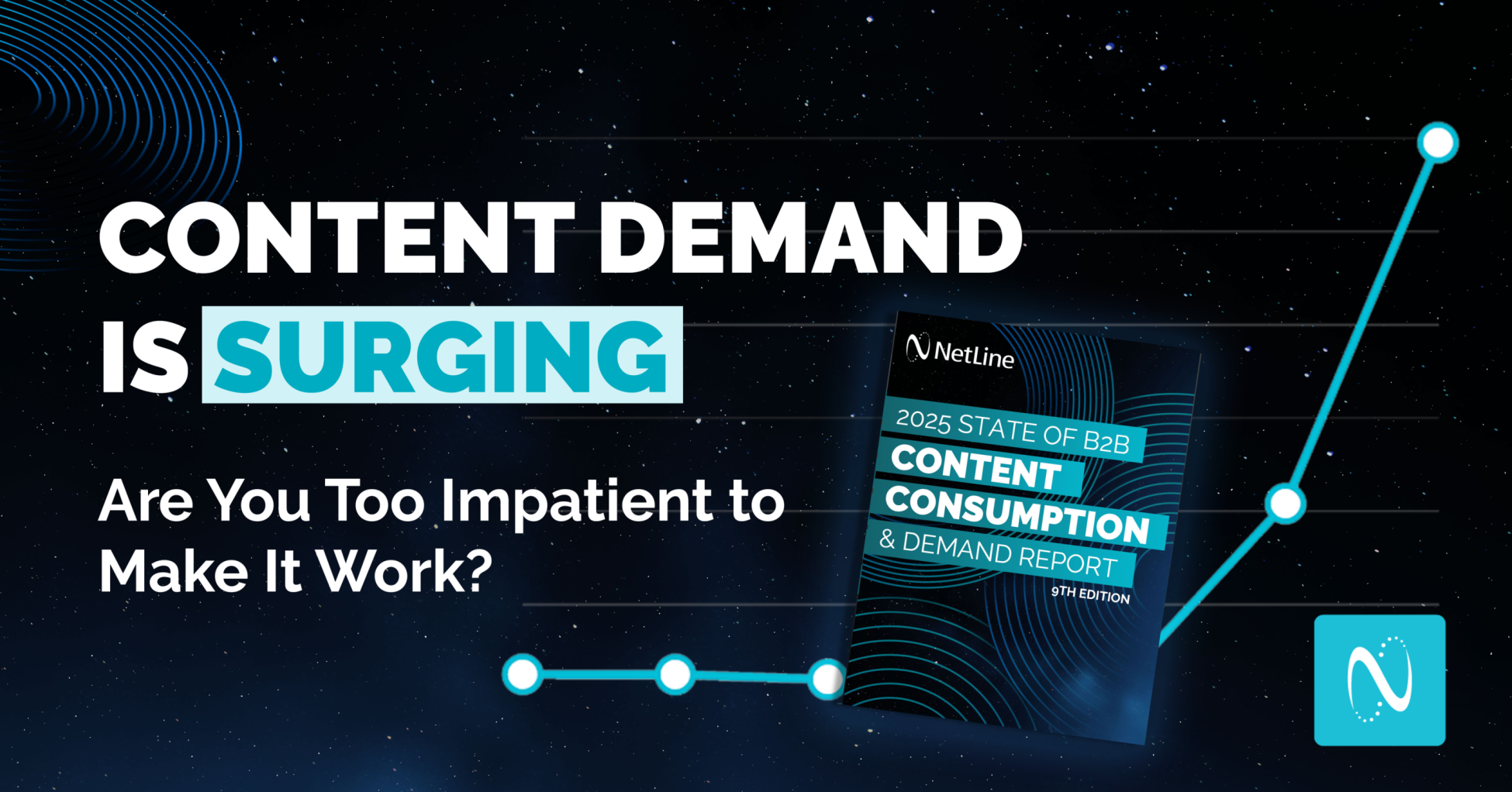
We share in NetLine’s 2025 State of B2B Content Consumption and Demand Report that gated registrations increased 27% between 2023 and 2024. 

That’s not resistance to friction. That’s a willingness to exchange information for real value.

And while it may feel counter to everything we’re relearning about accessibility and reach, in a world where discovery is outsourced to machines, gating may be the only way to move from being cited to being remembered. 

Because what will separate us isn’t how loudly we publish—it’s what we own and what we offer.

  • Content that delivers something new—first-party data, contrarian takes, unique signals
  • Ideas that matter—grounded in perspective, not keywords
    Platforms we control—because if we don’t control the platform, we don’t control the outcome

Plus, there’s one big factor in gated content: it means that a user has specifically requested to consume it. They may just feed it to the great big AI machine, but the likelihood that a human being wants to read your content is significantly greater.

Rebuilding the Signal

Photo by Svetogor Maliugin on Unsplash

We can’t rely on old behaviors to reveal new intent.

If AI is compressing content, collapsing context, and reshaping the discovery process, marketers need better ways to identify who’s actually in-market, and what they care about.

This is where buyer-level intent data becomes essential.

Content consumption used to be directional: a visit, a scroll, a download. Now, it’s fragmented across channels, obfuscated by AI Overviews, and often invisible within LLM outputs. The only way to reassemble that picture is by tuning into deeper behavioral signals—the kind that reveal what a buyer is researching, how frequently, and where they are in their journey.

Gating great content is the first step. But linking that engagement to real behavioral insight—and activating it across sales enablement, nurture strategies, and outreach—is how you close the gap between being found and being chosen.

Said plainly: If AI blurred your view of the buyer, intent data sharpens it again.

Be Worth the Extra Clicks

When AI delivers answers instantly, fewer people visit your site, meaning you see fewer people raising their hands.

That’s the new reality.

So the question becomes: If no one has to click anymore, what would make them want to?

You have two paths:

  1. Create content that’s easily summarized, skimmed, and forgotten.
  2. Or build something so valuable, so specific, so unmistakably you that people go out of their way to find it.

That means leading with original data, owning a clear, compelling point of view—in ways machines can’t replicate.

Visibility used to be the win. Now it’s just step one.

The real question is:

  •  Did they care enough to act?
  •  Did they care enough to come back?

That’s the bar, now. That’s what we build for.

Categories B2B

Multi-agent AI systems — how this AI tech stack can power your marketing org

It feels like not that long ago, companies were just starting to talk about AI in their operations. You had highly specific use cases or industry needs, but the sweeping proclamations of “artificial intelligence will upend business as we know it” are only now feeling especially urgent.

I blinked, and everything was ChatGPT. Blink again, and it’s “agentic AI.” And right as I started experimenting with AI agents, the question became, “How do AI agents work together in shared systems?”

Download Now: The Annual State of Artificial Intelligence in 2024 [Free Report]

The multi-agent AI system is yet another “next step” on the road to AI adoption. But, I think it’s a logical one. A single AI agent can help your marketing team, but a group of them can really get things going.

Let’s talk about where the tech is now and how you can bring AI agents into your organization.

Table of Contents

What are multi-agent systems?

A multi-agent system (MAS) is a network of AI agents that operate on their own and collaborate to solve complex challenges. Each agent in a MAS manages a specific task or area but communicates with other agents to decide on actions and adapt as needed.

How do multi-agent systems work?

Multi-agent systems operate by assigning specialized tasks to agents that interact within a shared environment. You see this structure on your human marketing team now:

  • A campaign strategist who researches the target audience and positioning.
  • A copywriter who crafts content to reach those audiences.
  • A visual designer who catches people’s attention with images and video.

Some teams have one person playing multiple roles (or, sometimes, all the roles). But, on a larger team, each person operates autonomously to do their work, but communicates within the shared framework of team goals and desired outcomes.

A multi-agent system runs similarly. Each agent manages its tasks but can negotiate, delegate, and learn from one another. Plus, these agents can adapt dynamically to changes in the ecosystem without human input.

To help contextualize a MAS, I talked with David LeVine, Chief Strategy and Finance Officer for Lucid Services Group. LeVine walked me through an explanation of how a system of AI agents can work together for marketers:

Agent 1: Intake & Planning

This agent would “listen” to a marketer describe the campaign they want to create. The human provides target audiences, channels, goals, and creative ideas using natural language. This agent processes the information and prepares it for the MAS.

Agent 2: Ideation & Development

This agent takes the campaign data and develops multiple campaign strategies and creative direction. Along with what the human marketer provided, the agent can autonomously query other data sources and past campaign content to help craft strong strategic angles.

Agent 3: Testing & Refinement

This agent can run simulated tests or develop A/B setups to evaluate campaign assets’ performance potential. It can pull information from CRM data, online surveys, or other analytics tools to pre-test campaign content before a human hits go.

Agent 4: Execution & Monitoring

This agent launches the campaign (with human oversight as desired). It watches for performance and how the campaign lands in the marketplace, adjusting messaging, spend, and targeting across segments and channels.

Continuous Human Oversight

AI agents can accomplish a lot on their own — and, ideally, that’s the goal. But, LeVine noted the value humans have in the development and deployment processes. “All of these stages would need human validation, especially early on,” he said. With human support, these MAS can align and optimize a campaign’s impact while reducing risks to your brand.

Multi-Agent Systems vs. Single AI Agents

Before I dive deeper into multi-agent systems, I should note the differences between types of agentic AI now being sold to companies.

Single AI Agents: Output

When I’ve previously discussed agentic AI for marketing and social media, I shared single AI agents. These agents can work autonomously alongside your teams, usually to support a very specific function or task.

The name of that game is “output.” You could give those agents access to a data trove and broad functional authority, but the result is almost always an output. Generate a blog post, summarize a data report, draft an ad — you get something at the end of the agentic process.

On marketing teams today, I think these agents operate as particularly well-educated interns. You wouldn’t leave them entirely on their own (yet), but you can trust they’ll do a fine job. That’s especially the case with where these agents plug in best now:

  • Frontline customer support
  • Content creation
  • Campaign optimization
  • Data analysis

Multi-Agent Systems: Coordination

If a single AI agent is an intern, MAS is the group of interns graduating into full-time roles. A MAS still produces something — there are results from their operation. But the core difference is how these systems create that outcome.

MAS are designed for coordination. Each agent plays a role in achieving a directed outcome, and they communicate with each other to reach that goal. Done well, MAS should feel less like using a tool and more like managing a team.

AI agents are still finding their footing within most organizations — AI adoption is happening, albeit carefully. Multi-agent systems stretch a team’s technical capabilities even further than single agents do. Still, I’ve found some technical-forward marketers using MAS as a campaign manager or operating in a support capacity.

Benefits of Multi-Agent Systems

With power and opportunity available to your team, a multi-agent system can bring impressive benefits. Let’s cover a few of the most crucial.

Cross-Functional Collaboration

When I’ve assembled teams in the past, I’ve sought experts in particular fields. That could be a marketing team with various skills like copywriting, long-form writing, and visual design. The best teams are typically greater than the sum of their parts: McKinsey research shows cross-functional teams can achieve up to a 30% increase in efficiency.

A multi-agent system brings similar benefits. An agent might focus on strategy, content, or testing. While each agent operates in its prescribed function, it provides valuable data for its fellow agents in service of the team goal. That collaboration across functions removes information silos that plague human teams while speeding up problem-solving.

Learning and Adjusting On-the-Go

Within a MAS, agents can share knowledge and imitate effective behaviors, meaning they can learn and adjust over time. LeVine noted this feature is one that companies can miss out on if they’re not paying attention.

“I think the most underestimated or unknown basic capability or goal of MAS solutions is that the individual agents can collaborate and learn from each other based on experiences or observation. A human does not necessarily need to intervene before action is taken by the MAS,” he said.

That ability to learn and adjust mid-operation gives these systems remarkable flexibility to help marketers do their jobs well.

“The learning and imitation and sharing of knowledge across agents can help marketing professionals understand changes in customer preference or demand and optimize ROI around marketing efforts. As always, data quality and accessibility are critical to deliver insight that will be of benefit and on point,” LeVine said.

Continuous Optimization

A single AI agent can run or monitor one aspect of a campaign, but it’s not exactly “set it and forget it,” especially when you need to change or improve your campaign. And, as a campaign gets complex and you want to change some part based on results elsewhere? Good luck tracking all of that.

With a MAS, agents can handle campaign tweaks for you. With close collaboration and data-sharing between agents, your system can adjust ad bids, copy, or targeting in real time. The MAS can orchestrate agentic operations to maximize your campaign’s return.

Challenges of Multi-Agent Systems

No new technology comes without its caveats. A multi-agent system is certainly a new technology. But, most challenges with a MAS relate to how your team engineers the system and adopts it operationally.

Data Quality and Accessibility

Data quality issues are the bane of AI implementation. And as you automate more workflows using AI, you need clean data that your tools can quickly access and process.

“Data that is not appropriately governed and stewarded will eventually cause an inability for the task(s) to be completed in a manner that is brand beneficial and may be very harmful to the relationship,” said LeVine. “Data that is not accessible will cause the task(s) to fail, which is also problematic.”

Clean data is the foundation for a successful multi-agent system. Review your data sources and look to remove duplicate data, standardize formats, and ensure consistency across sources.

Complexity and Error Propagation

If you ever took a comp-sci class, you encountered “GIGO” — otherwise known as “garbage in, garbage out.” When you give a system bad input to start, you’ll get bad output; the system has no way of discerning what’s good from what’s garbage.

Even as agentic AI gets smarter, it’s still a machine. And, as you network multiple agents in service of a common goal, any slight error gets magnified quickly. When that happens, increasing complexity makes it tougher for you and your team to pinpoint where things went wrong and change system parameters to compensate.

As LeVine noted, clean and organized data makes an enormous difference in managing GIGO’s potential negative consequences. You’ll also want human monitoring of the system overall and each agent’s performance. Those early days and weeks are vital to limiting the effects of complexity — keep a pulse on your agents and step in quickly when required.

Organizational Inertia

I’ve talked before about lagging employee adoption being the AI killer. That’s not just front-line employees, either. If leadership can’t or won’t get on board with AI implementation, any advanced initiative beyond a “light experiment” dies on the vine.

“Decision makers may not want to give up control to AI agents, and their support will be critical to adoption throughout the business,” warns LeVine.

He also encourages you to get as many employees bought into the idea as possible by removing the fear. “To the people in the organization, this is all new stuff. New is scary,” said LeVine. “Find an OCM [organizational change management] framework you like and use it to make sure people are AI literate and more at ease.”

How to Implement Multi-Agent Systems

how to implement multi-agent systems

As multi-agent systems become bigger players in company operations, you’ll want to explore implementation sooner rather than later. What does that look like?

In some cases, that’s prepacked MAS. But, current solutions mainly target large enterprise use cases. For instance, Accenture’s AI Refinery and Salesforce’s Agentforce make it easy for non-technical teams to build and run MAS in-platform. That said, you’ll pay a premium for the privilege.

If you don’t have enterprise funding, you still have options. In fact, many marketing leaders have implemented MAS on their own. Through my research and various conversations with these leaders, I also learned that three really is a magic number. Most experts and examples I’ve found rely on three agents operating in concert within their multi-agent systems.

That’s certainly not a set-in-stone rule; you can use two, four, or more agents. But recall that each agent adds layers of complexity — increasing the surface area for risks, breakage, and consequences of bad data. So, for your initial MAS attempts, start with three agents.

With that goal in mind, let’s chat about where you start.

1. Define your goal and agents.

While agentic AI can do a lot of work on its own, you still want an overarching goal or purpose for your MAS. For our example, let’s build a multi-agent system focused on helping launch and monitor a marketing campaign.

With that goal in mind, we can create our agent list:

  • A strategy agent that analyzes past data, audience segments, and business goals to create campaign ideas.
  • A content agent that drafts copy for emails and social media posts, and generates visuals.
  • A performance agent that monitors our key metrics and flags low-performing elements.

2. Choose your AI tools.

With goals established, you can select the best AI tool stack for your needs. I find that the more specific the agent, the better the results. For instance, HubSpot’s Breeze AI agents include:

  • The Content Agent for tailored blogs, landing pages, and other longer-form content creation.
  • The Social Media Agent for streamlined social content planning and AI-powered production help.
  • The Prospecting Agent for researching target audiences and building personalized outreach campaigns.

Other AI agents can provide tailored functions that fit neatly into your MAS plans. Remember: the agents themselves are only part of the answer; you need to build strong connections between them and feed them with high-quality data.

3. Create a shared workspace.

I truly cannot stress enough how important good data is to this entire process. If your data hygiene is messy, you’ll end up with confused, nonfunctional AI agents — the kind that’ll disappoint your teams and halt wider organizational adoption.

You don’t need perfection to start, but focus on centralizing key information and indexing appropriately. Tools like Notion, Airtable, or Google Sheets can serve as excellent data repositories to help agents access data and log progress.

4. Connect your AI agents.

When you’re ready for your AI agents to communicate with each other, use a connecting tool like Zapier or Make.com to set up automated workflow triggers. I like these tools because they keep the process simple; whatever keeps me from having to mess with a bunch of APIs works for me.

You can also set up scheduled prompts or automations within each tool (like ChatGPT) to regularly run crucial tasks like a weekly performance check on your MAS.

5. Integrate humans intentionally.

The best MAS don’t shut out humans — they integrate regular check-ins and the human touch to create smarter, more efficient systems. Team members should review outputs regularly, validate key campaign directions (ideally before you hit Publish), and adjust prompts or rules based on your results.

In this way, a multi-agent system operates as a team within your team. Treat your AI team with good data and clear direction, and you can unlock greater results.

Multi-Agent Systems in the Real World

“Multi-agent systems” sound like they belong exclusively to the Fortune 500, but they’re not just for massive enterprises. Nimble and creative marketing teams can build MAS to suit their needs without breaking the bank.

If I were assembling a multi-agent system from scratch, I’d follow examples like these.

RED27Creative: Content Intelligence Network

Kiel Tredrea, President & CMO of RED27Creative, saw what many marketing leaders witness in their operations: disconnection. Specifically, he saw content creation, personalization, and performance analysis basically battling one another instead of working in concert for his clients.

Tredrea’s systems, the “Content Intelligence Network,” deploys three specialized AI agents:

  • A content strategist agent that analyzes industry trends and competitive positioning.
  • A personalization agent that segments website visitors and tailors messaging.
  • A performance optimization agent that continuously refines campaigns based on real-time engagement metrics.

Each agent can access shared data but is free to make autonomous decisions within its specialty. How did this play out in real life? Tredrea walked me through a use case with a B2B software client:

“The content strategist agent identified untapped SEO opportunities around ‘fractional marketing’ solutions. It fed these insights to the personalization agent, which dynamically adjusted website messaging for visitors from specific industries,” said Tredrea. “Simultaneously, the performance agent detected higher conversion rates when technical specifications were presented earlier in the customer journey and automatically triggered content redistribution.”

This process led to a 37% increase in qualified leads and a 22% higher conversion rate from website visitor to sales call while spending 30% less on ads.

I think the Content Intelligence Network shows the power of agents informing each other’s activities. It’s one thing to say agents use shared data and learn from one another; it’s another to see it happen and generate meaningful results. There are no information silos here — insights flow between agents.

Multi-touch Marketing: PPC Intelligence Network

Milton Brown, owner of Multi Touch Marketing, shared he’s implemented MAS across several PPC and digital marketing campaigns. He pointed me to a project with a higher education client where he deployed what he calls the “PPC Intelligence Network.”

“We created three specialized AI agents that worked in concert: one continuously analyzed keyword performance and bid adjustments, another monitored ad creative effectiveness and generated responsive search ad variations, while a third tracked conversion path analytics and landing page performance,” Brown said.

Remember when I said coordination was the key difference (and benefit) between single-agent and multi-agent systems? Brown’s system bears that out beautifully.

“The keyword agent identified high-performing terms, which triggered the creative agent to generate new variations emphasizing those terms, while simultaneously alerting the conversion agent to prioritize those traffic segments,” he said.

With the MAS operating in full swing, the campaign’s efficiency improved by 28%, and enrollment rates from optimized funnels increased by 17%.

The part I find most interesting for small to medium businesses is the scalability of a system like this across teams and companies of various sizes and resources. Brown shared more:

“This approach scales nicely across budgets — I’ve implemented similar systems across campaigns ranging from $20,000 to $5 million with consistent success rates,” he said.

Frec Markets: Real-Time Social Conversion

Enterprise-grade MAS infrastructure is great. But I love a lean, mean, multi-agent machine — and Amberly Jones, Head of Growth at Frec Markets, has built exactly that for a fascinating use case: turning social media engagement into a low-cost acquisition strategy at scale.

Jones and her company found potential users were often on Reddit and X, debating sophisticated investing topics. So, they stitched together three narrow agents and kept humans involved only when judgment and compliance mattered.

She walked me through Frec’s three-agent stack:

  • F5bot: “Every few minutes, F5bot sweeps public threads for our priority phrases and drops any hits into a dedicated Slack channel. That one feed means we never miss a mention, yet we incur zero crawling or infrastructure costs of our own.”
  • Two LLM endpoints: “When an alert surfaces, a growth associate copies [likely meaning ‘uses a pre-loaded’] OpenAI o3 prompt that‘s pre-loaded with our brand voice, FAQ snippets, and FINRA guardrails. o3 returns a one-paragraph summary plus an intent tag (question, praise, complaint, rumour). If the tag calls for a response, the same text is pasted into a second prompt for Anthropic’s Claude, which drafts a plain-English reply that already meets our compliance checklist.”
  • Sprout Social: “The draft reply is dropped into Sprout as a pending post. Sprout publishes at the optimal time and logs the interaction for attribution.”

Before this automated setup, her team struggled to keep pace with the volume of activity on these platforms.

“We searched for and replied to Reddit threads in roughly four hours a day — too slow to shape the conversation,” said Jones. ”Today, the average first response takes less than thirty minutes, keeping discussions factual, friendly, and discoverable.”

I think Jones and Frec Markets have a solid example of a scrappy system responding to a critical business need. Plus, it also shows an important lesson Jones wanted to highlight:

“The lesson isn‘t that AI replaces marketers; it’s that we can all do so much more with AI,” she said. “Three single-purpose agents — listen, distill, draft — can strip the busy work out of social engagement so humans can focus on judgment, compliance, and building relationships that convert.”

Are you ready for multi-agent systems?

I still don’t believe we’ve truly cracked the agentic AI code yet. There are ample opportunities for agents to go astray, and networked agents without human intervention increase risks dramatically. Humans need to stay involved in the details for now; until they don’t, I would say true agentic AI hasn’t arrived.

That said, a MAS built on solid infrastructure, fed useful data, and given some measure of self-control can amplify your marketing team’s work today. I wouldn’t turn over the keys to the campaign kingdom, but as I wrote this piece, I saw experts and organizations embracing possibilities and uncovering new opportunities through multi-agent systems.

Don’t sleep on these systems. Find a genuine business need and build a three-agent system to start. This system won’t replace you or your team, but you might find AI delivering something new and valuable.

Categories B2B

4 shopping trends to expect in uncertain financial times [data + how marketers can adapt]

If you’ve watched the news recently, the possibility of a recession has captured everyone’s attention.

Most reputable sources say it’s too soon to say whether or not a recession will happen, but, regardless, savvy businesses are thinking ahead and considering how their potential customers might react. 

Download Now: Free State of Marketing Report [Updated for 2025]

To give insight into how consumer behaviors are or could be shifting, I surveyed more than 200 U.S. consumers to ask them if their spending behaviors have already changed amidst the possibility of a recession, and how they would change if we were to enter one. 

Table of Contents

Recessions can be induced by global economic shocks, changes in consumer confidence, and other large-scale economic changes.

But this year, in particular, there are a select few factors that have spurred concern about a potential recession, including tariffs and federal job cuts.

For more on the cause of recessions and why some are concerned about them happening in the near future, check out this helpful post from our partners at The Hustle.

Are we in a recession?

I’m not an economist, so I looked to trained professionals for this answer. 

JP Morgan Chase placed 2025 recession expectations at 60%, and in early March of 2025, the former Treasury Secretary said there is close to a 50/50 chance of a recession in 2025. While the stock market dropped in April (The Dow Jones Industrial Average ended the month with a 3.2% loss), the market returned a few weeks ago. 

This being said, we (and by we I mean financial experts, not me, a HubSpot Blog writer) can’t declare a recession until there are two consecutive quarters of negative growth, and that hasn’t happened.

How Consumer Spending Habits Could be Changing Today [Data]

1. How has the news of a potential US recession impacted your spending habits?

In winter 2023, we asked consumers how the news of a potential US recession would impact their spending habits. The most significant reaction was to purchase less (30%) and spend money more conservatively than they did in previous months (28%). 

I asked this same question in May of 2025, and there was a small change: consumers are reacting to a potential recession by spending more conscientiously than in previous months (28%), rather than slowing purchases overall (22%). 

I interpret this as consumers being less panicked and more pragmatic about potential downturns because of what they learned about handling their financial situations from the economic effects of COVID-19 and post-pandemic inflation. 

donut graph displaying that most consumers spend money more conscientiously with news of a recession

The number of respondents who say that the news of a potential recession hasn’t impacted their spending dropped from 13% in 2023 to 9% in 2025. 

My Takeaways for Marketers

Rising costs of goods (see those egg prices recently?) and services often cause consumers to become more cautious in “frivolous” spending. I recommend focusing on strategies to help your business continue to draw in revenue while customers tighten their wallets. Discounts, sales, and deals are a great place to start, but the most impactful marketing play is highlighting your value proposition in all content you release. 

Consumers are making strategic adjustments, so make sure all of your messaging and content make your value proposition and benefits explicitly clear so thoughtful spenders know exactly what they’ll get from going through with a sale.

How Spending Could Change In a Recession

Consumer spending behavior is often contingent on outside factors, and news of immense economic change is certainly one of those factors. 

Below, I’ll go over what consumers told me about how they’d respond to financial uncertainty. 

2. If a recession is declared, how will your home budget change in the first three months of this new financial era?

59% of consumers I polled this May (2025) say that, if a recession is declared, their home budgets will decrease. 

donut graph showing that most consumers will decrease their budgets if a recession were declared

As of April 2025, inflation hit 2.3%, but wages aren’t moving to match these changes. Naturally, the public is already looking for ways to avoid breaking the bank by reducing their budgets.

My Takeaways for Marketers

Lowered budgets mean consumers are going to be more thoughtful about how they spend their money. 

This is important to keep in mind if financial uncertainty continues, but it’s not something to panic about or change your entire marketing strategy over. Instead, focus on championing the value your offer will bring to consumers. Hammer in on the benefits they’ll get and prove that they will genuinely be getting value for their money if they decide to spend it with you. Testimonials and user-generated content can go a long way in terms of supporting the benefits of what you’re selling.

3. During uncertain financial times, what did you spend the most money on?

I also asked consumers to reflect on their purchasing behaviors in previous uncertain economic times (like past recessions or the COVID-19 pandemic), and they reported spending the most money on necessities, most commonly essential groceries and food (58%). 

That’s followed by fixed expenses like rent, mortgage, housing bills (like utilities), essential personal care and hygiene products, and medication and healthcare. 

graph displaying consumers top spending priorities during a recession

Since consumers also told me that they plan to maintain the same spending habits as they did in past recessions, you can learn from what they previously spent money on to recession-proof your strategies. 

The biggest difference between how consumers spent most of their money in 2023 and 2025 is that clothing, shoes, and other essentials were the top 3 spending categories, higher than medication and healthcare. What this shows me is a shift to self-preservation. By reducing or eliminating spending on leisure or entertainment, people can ensure that families are taken care of before taking risks on “non-essential” purchases. 

My Takeaways for Marketers

Consumers essentially don’t want to feel like they’re “wasting” money during a time when every dollar counts. Since they’re more conscientious about their spending, the best way for marketers in all industries to beat the skepticism is to lock in on proving the value customers will get from your product or service. If they know they’ll get genuine value, they’re more likely to spend money.

How an Upcoming Recession Could Differ from 2008

There are key differences between the potential recession in 2025, what happened during and after the pandemic, and the Great Recession of 2008, mainly the factors that will have caused it and its potential duration. 

The recession in 2008 was due to debt-related excess built up in housing infrastructure, which took the economy nearly a decade to absorb. COVID-related fiscal and monetary stimulus contributed to inflation and drove speculation in financial assets. 

According to Mark Zandi, Chief Economist at Moody’s Analytics, 2025 would be largely tariff-induced, as well as federal job cuts, DOGE changes, declining consumer confidence, and slowed spending. 

There’s no way to predict how long it would last before it even happens, but Political Economist and Brown University Professor Mark Blyth says, “This is a once-in-a-generation shift in how we run the global economy.”

Whatever happens, the economy has already shifted in the past few months, and survey respondents told me that they have already started to spend money more conscientiously. And, if we enter a recession, they’ll have the same spending habits as they did during other uncertain financial times, which tells me that it’s important for businesses to be prepared for potential consumer shifts.

Key Takeaways for Businesses in 2025

As a marketer, I’m not an expert in financial markets or a source for investment, HR, or legal advice. The data above can help you understand consumer spending behavior during recessions, but it’s important to keep in mind that results are just a brief look into the eyes of consumers. 

If there’s one thing I do know, though, it’s marketing. The survey results I discussed above tell me that marketers should be aware of how efforts might need to pivot with changing consumer needs or trends. Here are a few takeaways I suggest keeping in mind to adapt our marketing strategies for financial instability: 

  • Value-first marketing: As consumers and businesses tighten their budgets, making sales, retaining customers, and persuading people to buy non-essential products will be more difficult. I recommend focusing heavily on the value you’ll be able to provide, rather than your product or service being flashy, trendy, or cool. Consumers are more likely to spend money during these periods if they know it won’t be a “waste.” 
  • Partner with influencers and creators: Influencers and creators have loyal followings that relate to them and trust what they offer. If you already have an influencer budget, partner with people who have strong relationships with their communities and can demonstrate that they get value from what you offer. 
  • Champion testimonials, reviews, and UGC: Relatability will be a significant selling point during a recession, as people want to see proof that the money they spend will help them. Testimonials, reviews, and user-generated content show interested shoppers that people like them, who share their same pain points and needs, are getting value from what you offer. 
  • Create education-focused content: Consumers who do purchase from you want to make sure they get the most value, and education-focused marketing content will help them do exactly that. 
  • Revisit your customer journey maps: Revisiting your customer journey maps will help you add additional touchpoints for nurturing if consumers have longer consideration phases during a recession or general economic instability. 
  • Cost-effective marketing: You might want to explore more cost-effective strategies for marketing, like reducing excess ad spend and focusing on organic social, SEO, or email marketing instead.

Remember, financial uncertainties — and even recessions — are common. And while it might become more challenging to win customers in the coming months, business and consumers will still keep moving (and making purchases) even as we wait for the cycle to run its course.

Editor’s note: This post was originally published in August 2022 and has been updated for comprehensiveness.

Categories B2B

The best video marketing channels to grow your brand this year

Video is no longer a nice-to-have. It’s now an absolute must and should be at the forefront of any marketing strategy. With almost half of Gen Z and millennials watching short-form video to discover new products, video is essential to increasing visibility and getting brand recognition.

→ Access Now: Video Marketing Starter Pack [Free Kit]

But now the question is, where is the best place to post videos?

I’m here to help. Here’s a list of the best vlog promotion channels for your short-form, long-form, and live videos based on ROI, engagement, and lead generation.

Table of Contents

With TikTok’s future uncertain, platforms like LinkedIn, X, and even Substack are taking this opportunity to woo TikTok’s audience (or “liberate them,” if you ask Substack’s CEO) and introduce features like dedicated video feeds, algorithm changes that prioritize videos, and new video advertising avenues for marketers.

And marketers, too, continue to see the value of video content. According to our 2024 State of Video Marketing Report, 37% of marketers found video to be very effective in helping them achieve their business goals.

Our 2025 State of Marketing Report also shows that in 2025, marketers will continue to invest more in video — particularly short-form video as it delivers the highest ROI (21.02%).

formats that deliver the highest roi from hubspot state of marketing data

The data from consumers shows that investing more in video is a wise choice.

According to a Wyzowl survey, 78% say that they would rather watch a short video to learn more about a product than read articles or manuals, and a whopping 91% of consumers say that video quality impacts their trust in a brand.

To help you get started on creating high-quality videos, HubSpot has created a nifty AI-powered Clip Creator tool to help you create and edit videos. With a few clicks, you can create watermark-free videos for your social media channels. And for people who are already used to a certain workflow, we got you, too. We have a list of the top AI video editing tools that can help you with your next video.

Now, let’s get on to the best vlog promotion channels.

Best Channels for Short-Form Video

TikTok

Since launching in 2016, TikTok has upended social media, so much so that many platforms (including Instagram and LinkedIn) have been heavily investing in hosting and elevating vertical videos to capture more of TikTok’s audience.

It’s no surprise that many social media networks want to become more like TikTok, as TikTok users spend almost 44 hours on average per month on the app, according to Statista.

This is significantly more time than all the other apps on the list. Trailing behind in second place was the YouTube app, where users spent almost 25 hours a month on average, just a little over half of TikTokers time.

TikTok has grown beyond being *the platform* for viral dances (although there is still plenty of that), and has become a viable marketing option for those willing to get creative — and these stats prove it.

Pro tip: To learn more about TikTok marketing, I recommend checking out our free marketer’s guide to TikTok.

bar graph showing leading social media apps average monthly time spent

Source

Instagram

Instagram is the top platform for sharing videos, topping the charts in ROI, engagement, and lead generation over competitors like TikTok and YouTube. A Sprout Social survey also found that 61% of social media users turn to Instagram to find new products.

It offers a great deal of options, too, as marketers can play with multiple content formats on top of videos (think carousels, Lives, and Stories) while capturing the attention of an already engaged audience.

hubspot graph showing which social media platforms are best for generating engagement when sharing marketing videos

Source

LinkedIn

Marketers, don’t sleep on LinkedIn. In 2025, Wyzowl reported that for the first time, LinkedIn was the most widely used platform by marketers, after accidentally leaving out YouTube, the channel that usually claims the top spot, in their survey.

Caveats aside, LinkedIn is quickly becoming an emerging platform to post marketing vlogs, especially B2B marketing. They’ve introduced a new algorithm that prioritizes video over text or images, and rebranded their Wire Program to BrandLink which allows advertisers to pair up with content creators and publishers and place pre-roll ads before a trusted creator’s video.

Best Channel for Long-Form Video

YouTube

Hands-down, YouTube is the best channel for long-form videos. There’s no other platform like it.

YouTube has kept a competitive edge against other vlog promotion channels like TikTok and Instagram. Not only are people watching YouTube on their phones, but it has also captured a substantial share of people’s watch time on television, sometimes surpassing legacy networks like FOX, Disney, and NBC.

With its media dominance and reach, it’s no wonder that YouTube has emerged as a powerful marketing tool. In fact, almost 30% of marketers plan to increase their investment in YouTube in 2025, according to HubSpot’s 2025 State of Marketing and Trends report.

30% of marketers plan to increase their investment in youtube in 2025, according to hubspot’s 2025 state of marketing and trends report

Participants also ranked YouTube as the third-best platform for ROI. While many marketers find success on YouTube for different reasons, its large user base (2.6 billion active users, to be exact) and advanced ad targeting certainly help.

If you’re looking for the best place to host your long-form videos — like product demos, Q&As, behind-the-scenes content, and more – YouTube is the home for it all.

Pro tip: If you’re just getting started with YouTube as a vlog promotion channel, check out our complete guide on creating, promoting, and optimizing your video content.

TikTok

While TikTok is best known for bite-sized videos, creators can actually upload videos up to 60 minutes long. Over the years, the maximum video length has been slowly, well, ticking up. When it was first launched, TikTok started with a 15-second limit. Then, they upped it to 60 seconds, and then three minutes. You get the picture.

Data trends show that longer videos deliver more views and higher engagement.

An interesting study by Buffer shows that videos between one and 10 minutes in length get the highest number of views, have the highest reach, and the longest watch time on TikTok compared to videos under a minute. Creators with more followers also tend to have longer videos, according to Statista.

While people don’t generally think of videos under five minutes long as long-form, the data seems to show that audiences on TikTok — as well as the channel’s algorithm — seem to favor longer content.

Best Channels for Live Video

YouTube Live

With its massive user base, reach, and diverse audience, YouTube Live is an appealing option for your livestreaming needs. Data from Statista says that it was the most used live streaming channel in the United States in 2023.

Features like Super Chats, Super Stickers and membership gifting enable greater engagement with your audience and monetization avenues.

YouTube also provides powerful analytics on live videos. Check real-time analytics like concurrent viewers, likes, and chat rates, as well as post-stream stats like the number of new subscribers, total watch time, and more.

Instagram Live

With Instagram Live, you can stream from anywhere and invite guests to join your stream. There’s plenty of opportunity for engagement: viewers can send emojis, write comments, and send donation badges.

Additionally, when you go live on Instagram, your followers receive a notification to tune in so your stream won’t get lost in the crowd, which is more likely to happen on YouTube or Twitch.

Facebook Live

Like YouTube, Facebook boasts a massive audience spanning multiple age groups, although millennials take up the largest share.

Facebook Live is an excellent option if you‘re already active on the platform and have a healthy following. But if you’re still growing an audience, fear not — you can go live from a personal profile, page, or even a group.

With Facebook Live, you can edit previously recorded streams, chat with users using the live chat feature, and schedule your streams in advance. However, keep in mind that Facebook limits your stream length, and your monetization options aren’t as robust as other platforms.

Want more? Check out this article on tips for Facebook Live.

But what about Twitch?

It feels odd to exclude Twitch from a conversation about live streaming, since it is the most popular streaming-specific platform in the world. That said, marketers report low engagement and ROI on the platform, and the content is heavily geared towards gamers and e-sports.

In 2024, non-gaming content constituted only 15% of Twitch streams, but there are some non-gaming marketers who have found success using Twitch. Billboard reported that in 2025, music marketers have found success promoting artists by partnering with established Twitch streamers, clipping moments from streams, and putting the shorts on places like TikTok or Instagram.

Back to You

It can be difficult to figure out how to approach video marketing. It takes time, money, and energy to create videos — making it imperative to find the best home for your content.

If you need some inspiration, first check out what’s already out there and see what you like. After you’ve done some research, think about your target audience and define some goals, such as lead generation, engagement, or brand awareness. Once you nail those down, it’s easier to pick the platform to achieve them.

Editor’s note: This post was originally published in July 2022 and has been updated for comprehensiveness.

Categories B2B

Online advertising: All you need to know

Millions of businesses worldwide invest billions in paid ads each year to put themselves in front of as many people as possible. And they’re doing it because online advertising, when done right, delivers outstanding results.

Download Now: Free Ad Campaign Planning Kit

On the other hand, if you’re not careful, it can feel like flushing your $$ down the digital drain.

To help you out, we’ve put together this comprehensive online advertising guide for business.

Table of Contents

What is online advertising?

Online advertising is promoting your brand, product, or service through various digital channels. It’s an umbrella term that covers social media, display ads, paid and organic search, and native advertising. And it should definitely be part of your marketing strategy.

How Online Advertising Works

Whether you‘re on the lookout for the best Indian restaurant in your neighborhood or looking for a specific SaaS tool, you’re likely going to turn to a search engine to find what you need.

The same goes for your audience.

With search engines like Google, Perplexity, and many others being a core part of daily routines, running paid ads can catch your audience’s attention on these platforms.

And let’s not overlook how much time people spend on social media — an average of two hours and 23 minutes each day, according to Statista (though some of us — cough — may be pushing those averages ever higher). In most cases, social media advertising should be part of your overall marketing plan.

There are plenty of ways to advertise your business strategically. First think about who you’re trying to reach.

Ask yourself questions like:

  • What target demographic am I advertising to?
  • How can I place my product or service offering in front of my target?

The answer is to see where your target demographic spends the most time online. Research their most frequented social media channels and the keywords they look up the most.

If you want to run pay-per-click (PPC) ads on social media, it’s important to note that most social media platforms offer business pages the ability to pay a fee to promote posts/ads within the interface.

Or, if you are looking to advertise on a search engine for targeted keywords, Google Ads or Sixads can guide you through the process of payment and execution.

To learn more about boosting social media posts, read How to Boost a Post on Social Media [Instagram, Facebook, and Twitter].

If you’re curious about SEO versus PPC, try our article on when to optimize and when to pay for traffic.

Benefits of Online Advertising

There are three key ways that digital advertising can help you improve the performance of your organic marketing efforts.

With digital ads, organic performance can benefit from:

  1. An increase in brand awareness by displaying your content to individuals within and outside of your networks.
  2. A better understanding of your audiences by leveraging the targeting and analytics of the ads platforms.
  3. The creation of higher-performing content by understanding what ad content helps you achieve your business goals and what doesn’t.

The goal of any advertising strategy should be to get a positive return on your investment, which comes down to whether you‘re getting more revenue out of the ad campaign than the cost you’re putting in.

To get help on quickly creating high-quality marketing campaigns, try HubSpot’s Campaign Assistant — it can help you generate copy for landing pages, ads, and emails, so you can spend more time on strategy.

Types of Online Advertising

Let’s dive right into the different types of online advertising.

Social Media Advertising

Every month, there are over 3 billion active users on Facebook, 2 billion on Instagram, and 586 million on X worldwide.

Because of the sheer number of active users on these platforms, advertising spending invested in social media channels is at an all-time high. The global digital advertising spend is projected to exceed $344 billion by 2027.

When HubSpot asked marketers which social media platforms were best for engagement, we found that Instagram and Facebook take the top slots — but YouTube wasn’t too far behind.

best social media platforms for engagement. “on which of these social media platforms do you see the highest engagement levels? select one.” youtube 18.37%. instagram 26.01%. facebook 21.88%. x 9.49%. tiktok 12.13%. linkedin 7.29%.

Advertising on social media comes with many advantages. You can:

  • Reach very specific target audiences with the help of targeting features and different audiences across all of the social media platforms.
  • Leverage a variety of ad formats to advertise in a way that aligns with your business goals.
  • Invest in the specific advertising efforts that drive leads and sales for your business.

Let‘s look at eight popular social media networks, including Facebook, Instagram, LinkedIn, X, Pinterest, YouTube, Snapchat, and TikTok. We’ll cover the audiences and ad types available on each one.

In HubSpot original research from 2025, we asked marketers which social media platforms their companies used. YouTube and Instagram were by far the most popular, with Facebook, X, TikTok, and LinkedIn also making the list.

the 6 most popular social media platforms for marketing/advertising. “which of the following social media platforms does your company leverage? select all that apply.” youtube 77.5%. instagram 74.43%. facebook 59.67%. x 55.71%. tiktok 54.31%. linkedin 41.30%.

That doesn’t mean you should only focus on one or more of the top six. Depending on your business and your target audience, you may find other platforms just as — or even more — useful.

For instance, digital marketer Jenna Kutcher is a big proponent of Pinterest, which she told HubSpot was the number one organic traffic driver for her business and her most lucrative channel: “The average entrepreneur is spending 20 hours a week on marketing and eight hours on social media,” Kutcher said.

“By comparison, Pinterest takes me under an hour a week, and gives my content a longer shelf life. The average lifespan of a post on Instagram is 24 hours at best. The average lifespan of one pin on Pinterest is four months.”

To learn more about paid social media marketing, read Paid Social Media: Worth the investment?

1. Facebook

According to HubSpot’s 2025 Social Media Trends report, nearly 60% of marketers say their companies are leveraging Facebook.

One of the most powerful features of advertising on Facebook is audience targeting. The targeting capabilities on Facebook are unmatched by any other social media network. Facebook‘s advanced targeting can target your ads to the most relevant audience — and even tap into new audiences you’d otherwise never reach with organic content alone.

Personally, my favorite way to advertise on Facebook is with lead ads because they give you the best of both worlds: sharing visual content and generating leads simultaneously. Facebook lead ads allow you to capture lead information without directing people out of the Facebook platform.

With lead ads, you provide a helpful piece of content that encourages viewers to sign up for a newsletter, receive a price estimate, or request additional business information. In return, when the viewer fills out the form, the business receives a new lead.

Here’s an example that Facebook provides in its lead ads overview:

screenshot of a facebook lead ad that asks two questions about home remodeling.

Source

Facebook suggests using three or fewer questions, like in this example, which it says results in a 26% lower cost per lead than ads that ask more than three questions.

2. Instagram

You can also advertise on Instagram through the Facebook Ads Manager. Instagram has over 2 billion monthly users globally, the vast majority of whom are between the ages of 18 and 34.

There are three ways that you can advertise on Instagram:

  • Create and promote posts, Stories, and Reels directly from your Instagram professional account.
  • Create ads from your Facebook Page and promote them on both Facebook and Instagram.
  • Create ad campaigns in the Facebook Ads Manager to access full targeting capabilities.

I recommend taking the third option and creating custom campaigns for your audience on Instagram.

Ads that appear while scrolling your feed are called in-feed ads. The ads that you see in the “Explore” section while exploring your interests and discovering new content creators are explore ads.

In this example provided by Meta, you can see that the explore ad is a 1×1 tile with a “Sponsored” label:

screenshot of tiles on an instagram “explore” page, with a sponsored tile in the center.

Source

Ads in Instagram Explore are a great opportunity to put your brand in front of people looking for new creators or content.

To learn more, read The Pros and Cons of Instagram Marketing.

3. LinkedIn

LinkedIn has over 900 million monthly active users worldwide.

Users on the platform are largely working professionals, which makes LinkedIn a great place for B2B (business-to-business) advertising.

The advantage of advertising on LinkedIn is its unique targeting capabilities. On LinkedIn, you’ll have access to unique targeting criteria that are unavailable on other platforms.

Maybe you only want to advertise to potential customers at the director level who work in customer service within the recruiting industry. LinkedIn’s targeting capabilities make that possible.

Plus, with the option to include lead gen forms in your LinkedIn ads, LinkedIn can be a lead generation machine. This will allow you to reach a very specific audience and drive leads without directing them outside of the LinkedIn platform.

In this PDF on best practices, LinkedIn provides the example below of JP Morgan using LinkedIn’s conversation ads:

screenshot of a jp morgan conversation ad on linkedin.

Source

4. X (formerly Twitter)

Digital advertising is less common on X because organic reach is still a significant driver of a brand’s performance on X.

This is very unique to X — but even so, ads can still deliver strong results depending on your goals. X has over 586 million monthly users globally.

If you’re curious about advertising on X, read our post, How to Market on X: Tips and Data from a Marketer.

5. Pinterest

Some say that Pinterest is the only platform where users actually want to see ads from brands they love because Pinterest is all about visuals.

Pinterest has 537 million users who are highly engaged and predominantly female.

Here’s how to advertise on Pinterest in four steps:

  • Pick a pin. Promote your best pins so they appear in the most relevant places.
  • Decide who sees it. Set up targeting so the right people see your ads.
  • Pay for results. Choose to pay for engagement or visits to your site.
  • Track what’s working. Once your campaign starts, see how it’s doing and make adjustments as necessary.

Among Pinterest’s case studies is this success story from Kroger:

animated gif of an ad kroger ran on pinterest. “every recipe has a story. create your own holiday table with these recipes.”

Source

Pinterest says in the case study, “Kroger’s efforts paid off in a big way. Premiere Spotlight in search achieved a remarkable 11.6% lift in awareness.1 They also saw a 5.4-point lift in brand association, positioning Kroger as a trusted partner in meal planning.”

6. YouTube

Ads on YouTube appear before and during other YouTube videos or as a stand-alone promoted video that’s displayed after performing a search.

Since you can target demographic information and interests, you can serve your videos to specific, relevant audiences already watching videos from similar brands or on related topics.

Learn more about YouTube advertising with our article YouTube Ads for Beginners: How to Launch & Optimize a YouTube Video Advertising Campaign.

7. Snapchat

Snapchat offers a few ad types, including story ads, and augmented reality (AR) lenses — pretty similar to the advertising options on Instagram.

What makes Snapchat unique is the augmented reality lenses. AR lenses are sponsored by a business to create interactive moments that users can use and share with their friends.

For more, read our article Should You Advertise on Snapchat?

8. TikTok

Promoting TikTok videos allows brands to build awareness with a young target audience. Most posts you’ll see on TikTok aim to get laughs.

From a brand perspective, you’ll want to create funny videos that align with other content on the platform and take advantage of fast-moving trends — think dance challenges and memes. This type of content is the most effective.

HubSpotter Caroline Forsey talked to TikTok’s global head of product partnerships, and they have the scoop on how to use TikTok for lead gen.

Paid Search Advertising

People searching online are looking for something specific and will click on the first result they believe will be the most helpful to them.

You might be thinking: “I already appear in organic results on search engines. Why should I pay to advertise too?”

Well, there are three key reasons:

  • Google estimates that for every $1 a company spends on Google Ads, it gets $8 in profit. (You can read about Google’s methodology starting on page 56 of this PDF report.)
  • Advertising on search engines protects you from the competition who may be advertising on your branded terms.
  • Search ads appear first in the search engine results pages (SERPs) above the organic results.

Paid search advertising allows advertisers to capture the attention of their audience in a more targeted way than with organic search alone.

Search ads allow you to anticipate the wants, needs, and desires of your potential customers and serve ads to them that are highly contextual.

Over time, the analytics of your search ads can help you analyze and improve those ads to reach even more people.

But how does Google know how to deliver the right ad to the right person? That’s where keywords come into play.

Keywords

Keyword research is just as important for paid ads as it is for organic search.

That’s because Google matches your ad with search queries based on the keywords you selected.

Each ad group you create within your campaign will target a small set of keywords, and Google will display your ad based on those selections.

Let’s say Mary is moving to a different house and is looking for a home mover. So she goes into Google and types “who are the best movers.”

By searching “best movers,” she’s going to see results for advertisers that targeted keywords like “moving companies” and “top-rated movers.”

Search engines also consider your intent when choosing the types of ads to display.

So, how do you select your keywords?

Keywords typically fall under two categories: brand and non-brand.

A brand keyword is a word or phrase that includes a brand‘s name or variations of a brand’s name. For example, some of HubSpot’s brand keywords include HubSpot, HubSpot Free CRM, and HubSpot Marketing Hub.

These are all variations of the HubSpot brand and the tools that we offer.

Non-brand keywords are all other relevant keywords that don‘t include a brand’s name or variations of a brand’s name.

Some of HubSpot’s non-brand keywords include “inbound marketing,“ ”sales software,“ and ”customer relationship management.”

While these keywords are not part of HubSpot’s brand name, they are relevant terms that allow HubSpot to reach audiences interested in eventually making a purchase.

Brand and non-brand keywords play a role in your digital advertising strategy. Brand keywords help you protect your brand from your competitor’s ads.

If you don‘t run ad campaigns for brand keywords, you’ll leave your business vulnerable to losing website traffic to the competition who is bidding on your brand keywords.

Non-brand keywords still have a role to play, too. Non-brand keywords allow you to reach new audiences unfamiliar with your brand.

Match Type

When it comes to when your ad is displayed, you don’t just want to pick a certain group of keywords and have the ad shown only when those keywords are entered into the search engine.

This is where match type comes in. Since there’s an infinite number of ways that people can actually search for one term, Google gives you three match types to choose from: exact match, phrase match, and broad match.

You can even use a broad match modifier and exclude negative keywords to optimize where your ads are delivered.

Let’s take a look at each match type:

  • Exact match: A keyword set to exact match will only display your ad if the search term includes that exact keyword or a very close variation. Exact match keywords are surrounded in [brackets].
  • Phrase match: A keyword set to phrase match will display your ad if the search term contains the same order of the words, but it can also contain additional words. Phrase match keywords are surrounded by “quotes.”
  • Broad match: A keyword set to broad match displays your ad when the search term contains any or some combination or variations of the words in your keyword, in any order. Broad match keywords don’t include any symbols.
  • Broad match modifier: The broad match modifier allows you to select keywords that must be included in the search query for your ad to be displayed. Keywords with a broad match modifier use a +plus sign.
  • Negative keywords: Excludes your ads from being shown on searches with that term. Negative keywords include a -minus sign.

Google vs. Bing vs. Yahoo

There are a few advertising platforms out there for search, including Google, Bing, and Yahoo. But Google is by far the most used search engine out there.

Google processes some 15 million search queries each month. With Google leading the search engine market and accounting for 70% of the global search engine market share75% in the US — it makes sense for businesses to run Google Ads campaigns.

But this doesn’t mean you should entirely rule out advertising on these other platforms.

In some cases, you can achieve impressive results with a smaller ad spend on Bing and Yahoo than you could on Google since there is less competition from advertisers.

My recommendation is to dig into your organic traffic to identify if Bing or Yahoo make up a significant amount of traffic for any given keywords or topics.

This might indicate that advertising for those keywords on Bing or Yahoo could be profitable.

Regardless of where you advertise, the good news is that advertising on all of these platforms more or less work and look the same. So knowing how to advertise on one will make advertising on the others easier.

Native Advertising

Native advertising, or sponsored content, blends in with the publisher’s content, whether written copy or a video (though there should always be some sort of tag that identifies it as paid content).

Here’s an example from Adweek, which regularly publishes pieces in partnership with brands (note the “sponsored content” tag at the very top left of the piece).

screenshot of sponsored content on adweek.com. “advertising to the 50-plus audience has never been more important” by barbara shipley, chief brand officer, aarp.

Source

When you pay for a publisher‘s native advertising services, you’ll be able to leverage their editorial expertise and audience reach to help your brand tell captivating stories to a bigger and better viewership.

This way, even though your post is technically promotional, it won‘t disrupt their audience’s browsing experience. They‘ll enjoy reading your post and won’t feel like you or the publisher are advertising to them — exposing your work to an engaged viewership.

And as with the example above, native advertising gives you the opportunity to show up authentically to your audience and give them information that’s genuinely useful to them.

To find the optimal native advertising opportunities for your brand, try using StackAdapt or Nativo.

Display Advertising

Display ads are a controversial topic among digital marketers.

Some advertisers have abused them by tricking internet users into clicking misleading ads, and malicious display ads have even spread computer viruses.

It’s easy to see why people use ad blockers: Display ads have a reputation of being intrusive, distracting, and irrelevant.

On the other side of the spectrum, though, display advertising technology has advanced to the point where ad networks can leverage data and machine learning to offer advertisers more effective targeting strategies and consumers more relevant ads.

Ad networks like Google Display Network and Meta’s Audience Network are the leaders in the banner ad renaissance.

They can display your ads to the right target audience at the right place and time.

And if you want more control of your advertising, they‘ll let you decide where to place your ads. Below, we’ll cover each ad network’s features and targeting capabilities.

1. Google Display Network

When you use Google’s Display Network, you can design visually appealing ads and place them on over 2 million websites and apps, YouTube, and Gmail.

You can also build new audiences by targeting people who are most likely to be interested in your product or service and re-market website visitors just by importing a list of their contact information.

If you don’t want to manually build out your ideal audience or deal with bidding, you can let Google Ads do it for you. Its automated targeting and bidding features can identify your highest-converting audience for the best return on investment.

2. Meta’s Audience Network

With Meta’s Audience Network, brands can expand their Facebook ad campaigns and use the same targeting data they use on the platform to advertise on a huge collection of websites and apps.

Brands can place native ads, banner ads, full-screen ads, in-stream video ads, and rewarded video ads (for example, “Watch this video ad to get more tokens!”) on the network’s websites and apps that their Facebook audience frequently visits.

If you want to continue leveling up your ads training, check out HubSpot Academy’s free course on the Digital Advertising Training Course.

Getting Started

In today’s digital work, having the right online advertising strategy is essential for every business.

Now that you know about all of the digital ad types that are available, the next step is to learn how to leverage the right ads for your business to achieve your goals.

Start building a strategy today, so you can increase your revenue tomorrow.

Editor’s note: This post was originally published in August 2018 and has been updated for comprehensiveness.
Categories B2B

10 holiday marketing campaign examples + marketing tips

I know I’m in the minority, but the second September hits, I want to break out the Christmas tree, play “Jingle Bells,” and cover everything in baubles and tinsel. But one of the more accepted signs that the festive season is officially upon us is when holiday marketing campaigns start jingling, ringing and ho-ho-ho-ing into our homes, streets, and devices. After all, is it even Christmastime if I’m not hearing sleigh bells every five minutes?

Download Now: Free Ad Campaign Planning Kit

It’s never too early to start making a list and planning this year’s holiday marketing campaign (unless you’re reading this in December, in which case, you can get a head start on next year’s ads). So, in this post, I’ve rounded up ten of the best holiday marketing campaigns from the past couple of years to inspire your plans.

And when you’re ready to deck your own marketing plans, check out HubSpot’s guide to creating seasonal marketing campaigns. I also love Campaign Assistant, a free AI-powered tool that helps you create copy for your next ad, landing page, or marketing email.

1. Etsy: Where’s Waldo/Wally

Etsy tugs on all the strings with this ad. It’s cozy, gives me hits of nostalgia, and somehow captures a bit of that anxiety that I felt looking for Waldo in the books. Hearing his inner monologue made me feel like I’m finally getting to know the silly guy that I’ve been looking for all these years, and he’s more soft-spoken than I thought!

Waldo, or Wally, as he is known in certain countries, with his trademark red-striped sweater and beanie, weaves in and out through throngs of people who are staring, whispering, and rejoicing that they have found him. At the end, he reunites with his partner, Wenda, in a coffee shop and says what is perhaps my favorite tagline in recent years: “Sometimes, it takes someone who really knows you to make you feel seen.” I mean, come on. It’s just perfection.

What I like: I like how watching this ad made me feel as much joy as finally finding Waldo in the books. It’s also a bit of marketing genius on behalf of Etsy; they’re using this commercial to remind us how it feels when you get a gift from someone who just gets you. And hmm, maybe Etsy is a good place to find those kinds of gifts?

2. Chewy: Coal, the holiday surprise

This may be the only time that I’m sad about not getting Coal for the holidays. The ad starts out simple enough. We see two girls opening their presents on Christmas. They’re confused that all they’re getting is coal… coal-themed presents, that is.

Then, their mom carries in a black puppy, a rescue, as Chewy points out in the video description, aptly named Coal. Just seeing Coal’s little puppy eyes made me as excited as the girls in the video.

What I like: I like that on top of this ad being so cute, Chewy is responding to both the ad’s fans — and detractors — in the comment section on YouTube. Chewy’s engagement really shows that they care about their customers.

3. Chick-fil-A: Legends of Evergreen Hills

Chick-fil-A has been slowly building its own cinematic universe, all taking place in a magical wonderland called Evergreen Hills. In 2019, they introduced Sam, a little girl who just wanted to build a snowman with her family. The heartwarming two-minute ad titled The Time Shop encouraged viewers to give the gift of time. Since then, Sam, her family, and her friends return over the holidays with a new story that expands on the world of Evergreen Hills.

In 2024, Sam is back, now a bit more grown-up. This time her new adventure unfolds in five, 22-minute episodes available in the newly launched Chick-fil-A Play app.

The app, which marks Chick-fil-A’s expansion into entertainment, contains exclusive animated series, podcasts, and games. As part of the app’s launch, Chick-fil-A released the first episode on social media as well as clips and stills to promote the show and the app.

So not only is this series part of a holiday marketing campaign that promotes Chick-fil-A the restaurant, but it also is a part of a years-long marketing storyline taking place in multiple platforms and ultimately culminating with the launch of the app.

What I like: I have to give them props for their commitment in building this cinematic universe and for seamlessly weaving this story thread through multiple platforms.

4. Kroger: Share your food, share your heart

This ad packs a lot of story in a minute. Set to America’s song Lonely People, it tells the story of a boy who notices that his seemingly grouchy elderly neighbor is pretty lonely during the holidays. He then gets the idea to sneak some food from his family’s holiday meal, and leaves a small plate of snacks and festive treats at her doorstep.

Seeing his kindness, his family then offers to share their whole meal with the neighbor who invites them inside her home. The tagline “Share food. Share love,” then appears as we see the family chatting with their neighbor.

What I like: If this doesn’t make you want to stop scrolling and step outside to talk to some humans, I don’t know what will.

5. Disney: The Boy and the Octopus

Hot take: This short is way more magical than any movie Disney has put out in recent years. Directed by Taika Waititi, this story is centered on a little boy who, after swimming in the ocean, comes home with a spunky and stubborn octopus stuck to his head.

They become fast friends, and the boy introduces the octopus to the world on dry land, all while a gentle, acoustic version of The Little Mermaid’s Part of Your World plays in the background. The octopus is captivated by what dry land has to offer.

One night, after watching a Christmas classic on TV, the octopus wishes to hitch a ride with Santa and see more of the world, so the two hatch a plan for the octopus to meet Santa.

This short subtly weaves beloved Disney properties throughout the story, from a Buzz Lightyear action figure to a Star Wars lightsaber to the Mickey beanie that the boy uses to conceal the octopus as they sightsee around town.

What I like: I think this short just hits all the spots. It’s fun, it’s endearing, and just serves up the magic that Disney is known for.

6. Hershey’s Kisses

I have to put in a plug for this classic. First debuting in 1989, this simple ad stars red and green Hershey’s Kisses doubling as bells and playing the carol, We Wish You a Merry Christmas, while being conducted by a silver Kiss.

While there have been some small changes throughout the years, this ad remains largely the same year after year, and is much beloved by merrymakers all around the country. Even the grinches at r/CommercialsIHate subreddit like this ad.

What I like: I like that this ad has staying power. It hasn’t lost its charm at all and has become an American holiday tradition.

7. Outback: Koala on the Walla

Speaking of traditions, I love Outback Steakhouse’s vaguely threatening alternative to Elf on the Shelf: Koala on the Walla. The jingle about this cute marsupial-a says, “He knows all of your secrets. Every rule that you’ve defied.” This koala is always watching, and denies you steak if you’ve been bad.

I’m personally rooting for Koala on the Walla to finally kick out those mischievous Elves that seem to adorn every shelf.

What I like: Despite his threatening nature, Koala on the Walla is just too cute, and I definitely wouldn’t mind having him around the house, despite the risk that his beady eyes might be spying on me from inside the washing machine.

8. GAP: Holiday ‘24

This ad isn’t flashy, but its simplicity is what makes it so effective. For this campaign, GAP assembled a diverse choir of talented musicians and social media stars, their beautiful voices blending together as they sing Janet Jackson’s Together Again a cappella.

It’s a great reminder that sometimes you don’t need fancy animation or an elaborate storyline. A simple ad can resonate just as well.

What I like: I like how they brought together different voices and styles and how beautifully the song was arranged to make each singer shine.

9. LEGO: Herding home for the holidays

Lego has not made a holiday movie this time around, but if they did, they think that it would be the G.O.A.T. That is, it would have literal (Lego) goats.

While some brands have made beautiful cinematic masterpieces for their holiday marketing campaigns, including some on this list, Lego has made a trailer for a movie that doesn’t actually exist. Called Herding for the Holidays, the fake movie tells the story of a city go-getter who heads back to the farm to become a goat-getter, and it’s got strong Hallmark Christmas movie vibes. Lego, it’s not too late to make this happen!

What I like: Tons and tons of goats and lego. What’s not to love?

10. Coca-Cola: Secret Santa

A list about the best holiday marketing campaigns wouldn’t be complete without talking about the AI-generated ad that Coca-Cola released in 2024. While I wouldn’t say that this ad is tops when it comes to technicality or frankly, aesthetics, it was one of the best at eliciting engagement, albeit mostly negative.

The ad was inspired by a 1995 ad that used real trucks and real people. This newest ad was a collaboration between three AI studios and used four AI models, according to Forbes. And yet, the result is a series of clips that teeter ever so closely on the cliff over the uncanny valley.

The backlash to the ads was swift. Article after article talked about the pushback the company faced after the ad was released. Critics called the ad “soulless.”

What I like: I like that it’s a real-time test of the old saying, “There’s no such thing as bad publicity.” After all, when was the last time the news cycle was taken by a Coca-Cola ad? While all the negative publicity probably won’t make a real dent on the sales of Coke, I’m looking forward to seeing if they’re going to hire a human Santa for the next holiday campaign.

What I don’t like: You could argue that AI is just a step above using CGI, but the technology really isn’t there yet. Zoom in, and you can see that the trunks look so wonky, some of the wheels weren’t even spinning. Even the Coca-Cola logo itself is off in some places. I think it’s unfortunate that the three companies and the four AI models couldn’t perfect the logo in every shot.

Go Forth and Be Merry

As these examples show, there are many ways to incorporate holiday cheer into your marketing campaigns. Holiday ads no longer fit into one mold, but as cheesy as it sounds, what the most effective ones have in common is heart.

Think about what makes the holidays so special to you, and tell that story. I’m pretty basic, so what usually gets me are ads that show a hint of ‘90s nostalgia or a sumptuous family spread. You know I’m taking notes from Kroger’s ad, and making beef wellington this year.

Editor’s note: This post was originally published in December 2015 and has been updated for comprehensiveness.

Categories B2B

The most effective types of content on social media in 2025 [new data]

It’s 2025, and the highest-ROI marketing channel is still good ol’ social media. I’ve created social media content for just about everyone: government offices, nonprofits, small businesses, solopreneurs, and more.

Sharing content on social media is a no-brainer for brands. But orienting yourself on the basics of social media, types of content, trends, etc. is a heavy lift.

Download Now: The 2025 State of Social Media Trends [Free Report]

Whether you’re looking for a strategy refresh or trying out a new channel for the first time, this is your guide to the different types of social media content, what works best, and how it can empower your business. I’ll dive into the data and trends so you can clearly see where to invest in 2025.

Different Types of Social Media Content

We used to talk about content formats in conjunction with social media platforms: photos equal Instagram, videos equal YouTube, text equals Twitter. Now, most social media platforms are a mosaic of content types. Here are the most popular formats today.

1. Short-Form Video

As a consumer, who hasn’t felt the gravitational pull of short-form videos? They’re fun to watch, (too) easy to binge, and relatively fast for businesses to create. These quick, stimulating videos are the most engaging social media content there is.

According to our 2025 Marketing Trends Report, short-form videos are more important than ever for businesses:

  • 21% of social media marketers said that short-form video content has the highest ROI.
  • Short-form video content is the #1 priority among social media marketers.
  • 17% said that they plan to increase their investment in short-form video in 2025.

Short-form videos can be published on TikTok, Instagram, Facebook, YouTube, Pinterest, LinkedIn, and X (previously Twitter). Take a look at our latest Social Media Video Trends Report to see where these platforms stack up against each other.

The TikTok video below is a great example from Brooki Bakehouse, sharing a behind-the-scenes look at what it’s like running a bakery. This content format is highly relatable and markets the business without the video content feeling like marketing. It’s also a low-budget way to create short-form videos.

Great for: Brand awareness, lead generation, and showcasing customer success.

2. Long-Form Video

Video content is now so diverse that it’s been split into several different social media content categories. Despite having lower ROI than short-form videos, long-form video content is still relevant and in demand on social media. A few quick differences from short-form video content:

  • Longer = more costly to produce.
  • Consumers expect higher production quality.
  • Content needs to be highly engaging, as the average viewer lacks the attention span to finish long-form content.

I only watch longer video content when I’m emotionally invested in a brand’s voice, mission, or product. Short-form videos are great top-of-funnel content, while long-form content nurtures existing leads.

Below is a long-form video example from the coffee accessory company AeroPress. This company knows that its target audience is interested in the lifestyle that accompanies its product, and they create videos that cater to that lifestyle:

Great for: Relationship building, customer retention, and customer education.

3. Live Video

Don’t forget live video! This format has the third-highest ROI of all social media content types, but is one of the least-used content types according to surveyed marketers. This digital marketing medium packs a punch, and brands that ignore it are missing out on an incredible connection opportunity.

Live video gained popularity during the pandemic, allowing remote participation in events. Twitch and other popular live-streaming platforms let people interact with their favorite creators in real time. I like seeing brands use live video because it can’t be faked: There’s no AI or repurposed content. It feels like a genuine investment in engaging with viewers.

You can choose a virtual-only live video, or live stream an in-life event to offer physical audience members and virtual viewers the same real-time experience. Here’s an example of a live-streamed event from Sephora:

Great for: Customer engagement, solution education, and building trust/credibility.

4. Images

When asked about the type of content that they use most, marketers reported that images were used almost as frequently as short-form video. Images are convenient because they can be shared on all social media channels. The image umbrella primarily includes photography, not designed graphics (that’s the next point).

Some easy image post ideas include:

  • Product announcements.
  • Before and after photos.
  • Product photography.
  • Behind-the-scenes.
  • Office life.

Here’s an example of a simple image post from The Woobles showcasing new products:

social media types of content, image post

Source

Great for: Product awareness, storytelling, and staying top of mind.

5. Infographics/Carousels

Infographics are a content type with the share-ability and visual appeal of photos but are filled with helpful data and information. It’s an impactful form of social media content and educational content. Infographics are effective, too, with 51% of marketers who regularly use them saying they yield high ROI.

I’m also lumping carousels in here with infographics — I think carousels are even more valuable in 2025 than raw infographics. I say this based on both user behavior and preferential treatment in the algorithm. Did you know that if your Instagram followers see the first page of your carousel but didn’t engage, Instagram will show it again, but swiped to a different slide to catch the viewer’s attention?

Carousels have become extremely popular on certain social media platforms (like Instagram, LinkedIn, and even TikTok). Both infographics and carousels serve the same purpose: Use this content format to educate and share industry news. Here’s an example from apparel brand Gnara that educates viewers on the history of women’s pants:

Great for: Industry authority, shareability, and customer education.

6. Text Posts

We see text-based content on social media every day, from X “threads” to Meta’s Threads app to thought leadership posts on LinkedIn. The primary goal is to share insight through words — you can pair it with an eye-catching image, but the focal point is the writing itself.

Blogs are popular text-based content where people read longer posts and discover helpful information. But a common mistake is sharing blog links directly on social media. Social platform algorithms don’t favor linking out; they want viewers to stay!

Marketers reported that their blog or website is the #2 area seeing an increased investment this year, and sharing snippets as text-only posts on social media is a great way to repurpose. Break a blog post down into snackable takeaways that are more suitable for social users’ habits.

Here’s an example of a highly engaging text post from copywriter Jasmin Alić on LinkedIn:

social media types of content, text post

Source

Great for: Engagement, problem awareness, and product awareness.

7. User-Generated Content (UGC)

User-generated content (UGC) is content your audience creates that features your business/brand that is not paid for by your business. For example, someone shares a non-sponsored Instagram Reel about how much they like your product or posts a picture wearing your clothing and tags your business.

UGC is seeing an increase in investment in 2025. Marketers reported that it was their third-highest focus area, behind short-form video and images.

UGC pays off, as customers trust reviews from friends and family more than they trust branded ads. Nearly 80% of people say UGC highly impacts their purchase decisions, considerably more so than branded content and influencer content.

This type of content is powerful because it helps your audiences see that people use and like your products, vouching for you in a real-life way. Why toot your own horn if you can get someone else to do it, right? It naturally funnels in new social media followers.

Here’s an example of user-generated content posted by India @ourwanderlust_life featuring the Stasher Bag. Stasher Bag commented on this post, which is a free way to boost user-generated content in the algorithm and get more exposure.

I already own several Stasher Bag products, and seeing people using their product reminds me of its value. UGC brings in new leads while reinforcing the buying decision of past customers.

Great for: Lead generation, brand awareness, and conversions.

8. Audio Chat and Live Rooms

Remember when Clubhouse was all everyone could talk about?! That frenzy has passed, but audio chats and live rooms are here to stay. Many platforms have native audio features, like X Spaces, LinkedIn Live, and Facebook Live Audio.

Audio content is particularly trendy among Gen Z, the biggest social media demographic. A 2024 Spotify study found that Gen Z enjoys audio content because it creates a feeling of genuine connection (more so than other online content).

Audio chat rooms let brands directly communicate with audiences and develop closer relationships than seeing a billboard or watching a YouTube video. And, during a time when customers value connections with brands more than ever, audio chat rooms are a valuable tool.

This type of content isn’t my style as a consumer, but this shows the value of a diverse content strategy: The same content won’t speak to every consumer. Having multiple social media accounts and sharing different types of content will help you create a wide funnel. Here’s an example from a chat hosted by The SAS Collective on X:

social media types of content, audio chat

Source

Great for: Conversions, industry authority, and community building.

9. Forums and Private Groups

There’s more to a social media strategy than just gaining followers and making sales. Some brands are facilitating a genuine community around their product. One of the most effective ways to do this is through forums and private groups.

When asked about the biggest benefits of building social media communities, marketers cited increased brand sentiment/loyalty as the top benefit.

I’m a part of several company groups. As a consumer, I’m much more likely to remember and recommend a product when I’m a part of a tangible group with other customers. It makes me feel like the brand cares about my success with their product, not just the sale.

Here’s an example from the pressure cooker company Instant Pot®. This group keeps its audience engaged by creating a place to share recipes, troubleshoot together, and celebrate wins:

instant pot’s facebook community showing different social media types of content

Source

Great for: Referrals, audience engagement, and social proof.

10. Content That Represents Brand Values

Almost half of marketers say that content reflecting brand values is part of their existing social media strategy. This type of content is anything that highlights what your company stands for, such as commitments to sustainable production practices, fair treatment of employees, social justice, and more.

Consumers care more than ever about what the brands they buy from stand for and the values they have. They want to know the causes that businesses support and the commitments made to bettering the world.

If you need an example of doing brand value content right, look no further than Patagonia. It’s not just about loyalty: Marketers also say that it has the 5th biggest ROI of any trend. Marketers also report that creating content that reflects brand values is a top priority in 2025.

Great for: Building trust and credibility.

11. Shoppable Content

Shoppable social media content allows consumers to browse through products on your accounts, discover things they like, and even make a purchase without leaving the app.

The image below is an Instagram shop for Ink Meets Paper, where someone can browse its products, find what interests them, and make a purchase. This is a valuable content type as social shopping is currently on the rise, and consumers are discovering new products and buying products on social media apps more than ever before.

In fact, social media is the most popular way for Gen Z, millennials, and Gen X to discover new products — over one in five have made an in-app purchase in the past three months. No wonder 87% of marketers said they would increase their investment in social selling enablement tools in 2025.

social media types of content: instagram shop for ink meets paper

Source

Great for: Conversions and product awareness.

12. Ephemeral/Disappearing Content

Ephemeral/disappearing content is content that only stays up for a certain amount of time, like Instagram Stories that disappear after 24 hours. Leveraging people’s FOMO (fear of missing out) is one of the oldest tricks in the marketing playbook. The feeling is amplified even more on social media.

Users only have a set period to engage with disappearing content, so they might be more eager to keep track of your profiles and keep returning to experience it.

Creating quizzes and polls in your Stories is a great way to leverage this type of content. People only have a certain amount of time to respond, generating excitement and immediate action and inspiring respondents to come back and see results.

See the Instagram story example below from Harvard Business Review, or browse more ideas from LEGO, NASA, Outback Steakhouse, and more.

social media types of content: instagram stories for harvard business review

Source

Great for: Customer engagement, lead nurturing, and education.

13. Educational Content

This is less of a content format and more of a content type. Educational content shares helpful information with audiences that helps them reach their goals and meet their needs. Any of the content types we’ve discussed can deliver educational content: infographics, videos, text-based posts, images, etc.

Educational content is perfect for all social media channels. HubSpot often shares educational content through YouTube videos, where viewers can learn more about concepts of interest, like this example below:

Great for: Problem awareness, brand awareness, and industry authority.

14. Funny, Trendy, and Relatable Content

Social media marketers know the value of a viral post too well. Creating buzzy content requires a high level of awareness of what’s happening online, cultural moments, and current events.

Over 40% of marketers already share funny, trendy, and relatable content on social media, and 59% say they will double down on funny content in 2025, it being the most effective of the three. Consumers love it, too — they’re starved for quality humor from brands.

Our very own social media team is savvy at this kind of content, like this funny and relatable X post:

social media types of content: relatable content

Source

Great for: Audience engagement and staying top of mind.

Repurposing content is still a valuable strategy.

It’s challenging to create individual pieces of content for every single platform, so many marketers share similar content across platforms but repurpose it to fit the tone and requirements of each one. Repurposing content is important to maximizing ROI and ensuring your content reaches your audience.

The key to success, however, is repurposing content, not simply resharing it. Viewers don’t appreciate seeing a brand share the exact same thing on each platform.

It’s a new era for social media. Let this tutorial help you create a plan that will help you reach potential customers and turn them into fans:

Want more social media insights?

Have these social media content ideas inspired you to get creating? As a longtime marketer, I’ve seen the impact of a strong social media presence. I’ve also seen how much investment it takes to see results.

Creating endless social media posts is demanding. Social media users want to be entertained, educated, and informed. It’s a heavy lift for marketers, but the opportunity makes it worthwhile.

Learn more about the state of social media with more of this data, videos, and exclusive industry tips on our Social Media Trends report.

Editor’s note: This post was originally published in January 2015 and has been updated for comprehensiveness.

Categories B2B

Turn your power users into creators (and vice versa)

One of the most powerful — but least used — aspects of social media is its ability to turn customers into community.

Today’s master has a lot to say about how social, community, and customer marketing all work together as one. And as our 15-minute interview stretched into a 90-minute coffee chat, folks, it got really hard to distill it down into only three lessons.

But if your role touches on any of those areas, you’re going to want to see what Katie Parkes has to say.Click Here to Subscribe to Masters in Marketing

katie-parks-mim-smallKatie Parkes

Director of Social, Community, and Customer Marketing for Apollo.io

  • Fun Fact: Katie competed nationally for Canada in figure skating and plays a dwarven fighter named Barbara Wild in D&D.
  • Claim to Fame: Founding member of Shopify’s enterprise marketing team. She’s told the stories of some of the fastest-growing ecommerce brands (like Allbirds, Knix, and Chubbies), grew Shopify’s social media audience by 270% in one year, and tripled listenership for Shopify’s enterprise podcast. 

    (She also moonlights as a toddler brand strategist, rebranding broccoli as “dinosaur trees” and spinach as “Hulk leaves.”)

Lesson 1: Make YouTube your hero.

Since Katie Parkes heads up social and community, you probably expect her gaze to be locked on TikTok or Reddit, right?

But when I ask her which marketing channel she’d pick if she were only allowed just one… she doesn’t even take a breath before blurting out, “YouTube.”

“YouTube is poised to have its biggest year yet,” she says, pointing out that the video giant has now eclipsed even Netflix as the most-watched streaming service on TV.

And, fun fact: YT’s audience is just a teeeeeny tiny hair smaller than TikTok and Instagram… combined.

“Use YouTube as your hero channel, and build a content engine around it,” Parkes advises. “Every video becomes the source material for dozens of repurposed assets — carousels, threads, memes, Reels, Shorts, and more.

“I think of it like this: Validate a topic with audience demand. Create a video script about that topic. Turn that video script into a blog, then take pieces and consider how it could become a carousel or short video.”

And as for the community aspect? Though YT lacks the direct message feature of most social platforms, Parkes says you should engage your audience right there in the comments.

“Priority one is keeping them on channel.”

And what do you put on that shiny new channel? Well… turn to your users.

Katie Parkes "Use YouTube as your hero channel, and build a content engine around it."

Lesson 2: Turn power users into creators. (And vice versa.)

One of the most valuable marketing resources you have is your own user base, according to Parkes.

The first thing you need to do is find your power users. Then turn those power users into creators. Have them create YouTube videos for your channels. Have them jump into your webinars.”

And it can work just as well in the opposite direction: Turning content creators into power users.

“Reach out to creators that your [ideal customers] already know and give them access to your product and research. Influencer marketing is not just an awareness play, but also an incredible growth engine.”

Either way, the results will land harder than content that comes directly from your own company. (In nerdspeak, you’ll roll persuasion with advantage.) Your audience already knows you believe in your product. Show them that people just like them believe, too.

Katie Parkes "The first thing you need to do is find your power users. Then turn those power users into creators."

Lesson 3: Listen up.

Once you give your power users a voice, your audience shouldn’t be the only ones listening. In addition to being great collaborators for content, your users are also the best source of info about… y’know… your users.

“Take the people who love your product and build an advisory board. Give them exclusive access to betas, and tap them for product feedback.”

And while that will improve your product, it’s not just a product play. When your audience knows they’re being heard, it creates a more engaged and loyal community.

But it’s not just a feedback play, either. Your existing users also understand what potential new users think — after all, they were noobs once, too. You can turn to them to A/B test marketing collateral, gather quotes from subject matter experts for new content, or even source vegetarian recipes for the Instant Pot you were just gifted. (Okay, that one’s just for me. But seriously, cdelprincipe [at] hubspot [dot] com.)

Parkes says to start with the question, “How do you make them feel empowered?” Then make it happen.

Lingering Questions

Today’s Question

“Besides AI, what marketing trends or technologies are you keeping your eye on or planning to try this year?” — Shelagh Dolan, Content marketing lead, Quora for Business

Today’s Answer

Parkes says: “I’m paying close attention to how data storytelling is evolving, especially as trust in marketing continues to erode.

The brands standing out right now aren’t just publishing content — they’re showing receipts. Customer stories. Product usage. Community influence. As social algorithms continue to reward who is getting the most attention, credibility is the new currency.

But isn’t just about numbers. It needs to be earned in creative, human ways, so you need to rely on real voices.

That’s why I’m excited about creator-led and community-first B2B marketing — tapping into your power users, internal experts, and community members to share the story in their own words. We’re moving away from polished brand narratives and toward trusted individuals who bring both expertise and authenticity.

In a sea of regurgitated AI garbage and fake content, the most important thing your brand can focus on is being believed.

Next Week’s Question

Parkes asks: What’s one “boring” marketing channel or tactic that’s working way better than expected for you right now, and why do you think that is?Click Here to Subscribe to Masters in Marketing

Categories B2B

Is Threads losing steam? Here’s what we know [new research]

When Threads launched in July 2023, it made headlines for breaking records — 100 million sign-ups in less than five days — and was quickly dubbed the “Twitter killer.” But within weeks, usage dropped sharply. Headlines followed, warning that Threads was already losing steam.

Download Now: The 2025 State of Social Media Trends [Free Report]

Fast forward to 2025, and the picture looks very different. Despite early skepticism, Threads has quietly grown into an active conversation platform online, yet it is still murky waters for brands.

So, is Threads really losing steam? Not quite. The platform may have cooled from its explosive debut, but recent data and the marketers I spoke with suggest it’s gaining traction in a more sustainable, long-term way.

Is Threads losing steam?

Short answer: No — at least, not anymore.

After the initial burst of downloads and attention in July 2023, Threads experienced a steep drop in engagement. According to SimilarWeb, usage fell by 79% just one month after launch, and average time spent on the app dropped from 21 minutes to just 3 minutes per day in the U.S.

But those early numbers told only part of the story.

In January 2025, Meta CEO Mark Zuckerberg revealed that Threads had surpassed 320 million monthly active users. Data from Backlinko supports that growth:

  • Threads now has 100 million daily active users globally.
  • In the U.S. alone, there are 30 million monthly active users.
  • The app has maintained steady growth every month since its rocky post-launch period.

“Threads now has more than 320 million monthly actives, and has been adding more than 1 million sign-ups per day. I expect Threads to continue on its trajectory to become the leading discussion platform and eventually reach 1 billion people over the next several years,” he wrote in an earnings statement.

When I log on to Threads, I’m impressed at how lovely my feed feels. Essentially, it’s the text version of Instagram. My experience seems to match many of the users and brands who’ve adopted the program, especially the ones who have fled Twitter in the past few years.

threads mau growth since 2023

While app downloads have slowed compared to launch week, retention and engagement have quietly climbed.

Threads hasn’t replaced X (formerly Twitter) across the board, but it has found a strong foothold — especially among creators, lifestyle brands, and those looking for an alternative to heavily algorithm-driven feeds.

threads app downloads

My feed, for example, is a mix of memes, aesthetic photos, and political news stories. It nostalgically feels like 2015-era Twitter again… nature is healing.

threads ‘for you’ feed

Source

How Marketers and Creators Are Using Threads

While users have embraced Threads, the reactions from marketers have been more muddled. Here’s what I found in HubSpot’s Marketing Trends report:

  • Only 9% of marketers are using Threads in their overall strategy.
  • The ROI is much less tangible than other social platforms — only 3% of respondents saw a return.
  • For those using Threads, however, they are seeing positive results. 39% of marketers will continue their investment on the platform in 2025, while 24% will increase their investment.

To understand how marketers were incorporating Threads into their strategy, I spoke with several creators and strategists who’ve embraced the platform.

Many early users credit Threads’ integration with Instagram as a key driver of growth. Gigi Robinson, a managed Meta creator and founder of Hosts of Influence, said the crossover made it easy to bring over existing audiences:

“A bunch of followers just came on over from Insta to Threads or Facebook to Threads, which I think was really cool.” To date, she’s gained more than 10K followers on the platform.

threads strategy in 2025

Source

She told me that the decline of X, particularly its shift to paid verification, was a major turning point for her. “When X rolled out that they were getting rid of verification — even for credible media sources — it felt like a slap in the face,” Robinson said. “It made Threads a much more appealing alternative.”

Robinson’s content strategy on Threads blends humor, relatability, and a dose of realism. “Sh*tposting, affirmations, crazy headlines — that’s what gets attention,” she said. “I’ve had about 2 million impressions from Threads and gained 1,500 followers just by consistently engaging and showing up.”

As a creator, speaker, and advocate who’s been building an online presence for nearly a decade, Robinson sees Threads as an extension of her broader ecosystem — one that includes Instagram, LinkedIn, YouTube, and now her new education platform for creators. She often repurposes content across channels and uses Threads to test ideas, share behind-the-scenes moments, and land brand partnerships.

“It feels like a shared Notes app with my community,” she said. “There’s no pressure to be perfect — and that’s why people engage.”

Though the platform doesn’t yet have the depth of conversation in certain industries (such as crypto or B2B tech), its steady user growth and positive sentiment suggest it’s far from fading.

As creative director Mike Vannelli put it, “Threads is less volatile, more intimate — kind of like early Instagram but for ideas. We’re seeing more meaningful engagement, especially from creative audiences who are tired of the noise.”

Vanelli says he and his team are experimenting with “softer storytelling” on Threads.

Marketers are still figuring out where Threads fits into their larger strategy — but one thing is clear: The platform rewards experimentation, authenticity, and low-pressure content.

But it’s still not right for every brand.

“We’re highly regulated in financial services, so Threads doesn’t fit our compliance needs yet,” said Kelley Muhsemann, a marketing manager at wealth management firm R.W. Rogé & Company, Inc. “But if your audience is Gen Z or Millennial, it could be a goldmine.”

Lia Savillo, a social media lead in the crypto space, echoed that Threads hasn’t yet captured her target audience. “The platform hasn’t gained traction within the crypto space, and there’s very limited industry-relevant conversation happening there.”

For now, I recommend brands to assess where their communities already live, and many are keeping Threads in the mix for future opportunities.

My Key Takeaways on Threads for Marketers

Threads may not be making the same splash it did at launch. But after speaking with creators and marketers who are still actively using it, I’m convinced it’s quietly becoming a valuable space, especially for brands willing to experiment.

Here’s what stood out to me:

  • Threads is still growing. With over 320M MAUs and climbing, it’s far from a dead platform.
  • Engagement thrives on authenticity. Funny, real, imperfect content performs well, especially when paired with consistent interaction.
  • It’s ideal for testing different types of content. With no set “best practices,” Threads gives brands space to play, listen, and learn.
  • Know your niche. The platform isn’t yet a fit for every industry. If your audience isn’t there, you might hold off — but if they are, it could be a smart early investment.

Personally, I don’t see Threads as the next Twitter (RIP) — and maybe that’s the point. It’s carving out something different: a lighter, more human space for conversation and creativity.

Editor’s note: This post was originally published in September 2023 and has been updated for comprehensiveness.

Categories B2B

We asked customers how they like to communicate with brands [HubSpot blog survey]

Customer communication preferences vary widely in today‘s digital landscape. Some may want to go to a company’s landing page, initiate a conversation with a chatbot, or even pick up the phone to learn more about a service or product.

In my experience leading marketing teams, understanding how your customers prefer to interact with your brand is essential for creating exceptional customer experiences that drive loyalty and retention.

Download Now: Free State of Marketing Report [Updated for 2025]

Read on to discover HubSpot Blog insights and research about customer communication preferences with their favorite businesses.

Table of Contents

Customer Communication Preference Statistics

To begin, I recognize it’s a marketer’s tendency to focus on campaigns and metrics. However, some of the most valuable intelligence for your marketing strategy comes directly from your customer service teams. So let’s begin with some insights from our State of Customer Service report.

According to our research, consumers are more demanding than ever when it comes to customer experience. Leaders report that the number of tickets their company receives is higher than ever before (75%), and customers expect issues to be resolved immediately (82%).

Additionally, customers expect a higher level of personalization than ever before (78%). So we ran a HubSpot blog survey asking respondents how they prefer to interact with companies when looking for information about a product or service. Let’s dive into it.

How Customers Prefer to Learn About Products

According to customer responses, 46% said they prefer to review its content (videos, commercials, blog posts, images, etc.), 15% follow or visit its social media accounts, and 9% go to the company’s physical store and read reviews on review sites or social media pages.

Source

1. Reviewing Content

When customers want to learn more about a product, they overwhelmingly turn directly to your content. Research consistently shows that potential buyers actively seek out videos, blog posts, social media content, and other materials published by companies before making purchase decisions. This natural customer behavior should be the cornerstone of your marketing strategy.

To maximize this opportunity, create content that meets your audience where they already spend their time. For example, Gen Z spends most of their time on YouTube, followed by Instagram, Snapchat, and then TikTok. By understanding these platform preferences, you can ensure your content reaches potential customers on their terms.

Your content must also align with customer search intent. The AI Insights for Marketers report reveals that 55% of marketers now use AI for text-based content creation (blogs, ebooks, marketing emails, press releases, product descriptions, and social posts) — a direct response to the growing customer demand for informative, helpful content.

This strategic focus on AI-enhanced content creation delivers dual benefits: marketers can spend more time on creative work (66% agree) while reducing time spent on repetitive tasks (78%). The result? Businesses can consistently produce the high-quality, personalized content that today’s research-oriented customers actively seek out.

Pro tip: HubSpot’s Email Marketing tools help you leverage AI-assisted content creation while maintaining the authentic personal touch that customers expect during their research process.

2. Social Media

When it comes to social media, 56% of consumers are influenced by posts shared by friends and family for sourcing ideas. In addition, 54% of Gen Z shoppers and 58% of millennials agree that social platforms are better than online searches for finding new products.

In addition to this survey data, the 2025 Social Media Trends report also indicates that social media continues to be a crucial channel for customer communication. 69% of marketers agree that more shopping will happen on social media than on brand websites or third-party marketplaces this year. This signals a significant shift in consumer behavior that businesses need to prepare for, and social media management is getting more important to reach customers.

Pro tip: Leverage HubSpot’s SMS Marketing tools to complement your social media strategy with direct, personalized messaging that meets customers on their preferred channels.

3. Reading Reviews

When it comes to reading reviews, National Leave a Review Day data shows that 54% of consumers are putting their trust in online reviews first, outweighing the opinions of friends and family (24%), company claims (18%), social media influencers (2%), and media reviews (2%).

Review management isn’t just a reputational concern but a necessary business function that directly impacts your bottom line. I believe forward-thinking companies integrate review generation into their core customer experience strategy rather than treating it as an afterthought.

How Customers Prefer to Communicate with a Company

When reaching out to a company online, survey respondents preferred to message a human representative from your business (45%).

Source

This is a crucial statistic to be aware of considering the rise of chatbots. While the AI-powered tool is undoubtedly helpful, customers are letting us know that they don’t want you to shift your entire messaging strategy to revolve around an automated tool.

However, the second-highest preference is for a mix of chatbots and human representatives. So, even though customers want to talk to a person, you can combine both tools in your strategy. When you leverage a mix of the two, aim to have bots complement the human experience. For example, a bot can initiate a conversation and collect information to transfer the customer to an agent most equipped to provide a solution.

Customers are also okay with simply using chatbots for routine and simple tasks, like order tracking, checking status or balance, or changing an order.

Source

How I Think Companies Can Better Meet Customer Expectations This Year

As we move through the year, the businesses that thrive will align their communication strategies with evolving customer preferences. The data is clear: customers expect immediate, personalized service across all channels, with both self-service options and human support available when needed.

I think we‘re at an inflection point in customer communications. Throughout my marketing career, I’ve observed many technological shifts, but few as transformative as what we’re experiencing now with AI-enhanced communications. Companies that resist this evolution risk being left behind, while those who thoughtfully embrace it will forge deeper connections with their customers.

By leveraging the insights from HubSpot’s research and implementing the right tools, you can create a customer communication strategy that not only meets these expectations but exceeds them, driving loyalty and growth in an increasingly competitive marketplace.

Editor’s note: This article was originally published in July 2017 and has since been updated for comprehensiveness.