Categories B2B

What is a Media Mix & The Most Effective Types [HubSpot Blog Data]

I’m willing to bet that today, the typical campaign at any brand uses a media mix.

This refers to the process of using multiple channels to meet marketing goals. The question is, how exactly does it help brands better plan campaigns?

Free Ebook: The Marketer's Guide to TikTok for Business [Download Now]

Let’s dive into how it works, review some stats, and see some brand examples.

A media mix is another term for an overview of the channels businesses choose to execute their marketing strategies on. Ultimately, media mix optimization is the process of analyzing the performance of those channels.

Think about the last campaign you saw from one of your favorite brands. What did they do differently that really clicked with you? By incorporating a media mix into your yearly planning, you can narrow down what resonates with your audience.

Media Mix Example

To see how a media mix works for a campaign, let’s use makeup brand The Lip Bar’s latest campaign: “Something BAWSE is coming.”

To build anticipation around its latest product launch and celebrate its 10-year company anniversary, The Lip Bar launched a multi-channel campaign that reached audiences both online and offline.

First up, website.

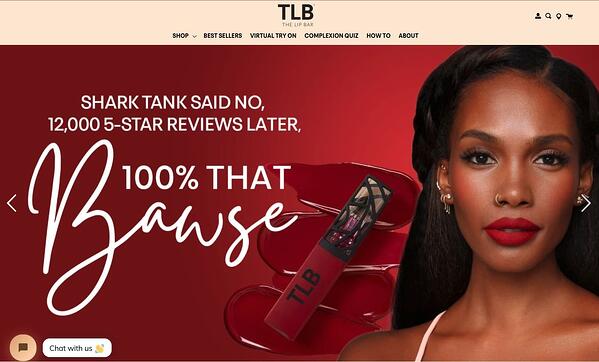
media mix example showing makeup brand's campaign on their website

Image Source

When you land on the brand’s homepage, you’ll see an image of the CEO with the following sentence “Shark Tank said no, 12,000 5-star reviews later, 100% that bawse.”

Upon clicking on the image, you’ll arrive at a landing page that has a timeline of the brand. From launching in 2012, to opening its flagship store in 2019, then expanding to 1500+ stores in 2021. Once you get to 2022, you see the tagline “Something Bawse is Coming.”

As you continue scrolling, you reach a section that offers a launch date and time for the brand’s newest product.

The second digital channel the brand leveraged for this campaign is YouTube, publishing a 45-second video showing the CEO’s journey over the last 10 years.

Moving offline, the brand also published billboards in five cities to continue the campaign.

Note how the billboard didn’t use the tagline we saw on social media platforms.

media mix example showing makeup brand's billboard campaign

Image Source

The benefit of using a media mix is to leverage different strategies to see which tactics work and lead to better conversions.

The Lip Bar’s latest campaign is a great example of how any brand can leverage channels differently to reach the same marketing goal.

Media Mix Stats in 2022

In January 2022, we surveyed over 600 media planners to discover their strategies, goals, and challenges. Here are some interesting findings:

  • 84% of media planners surveyed leverage a mix of organic and paid media.
  • Email marketing is the most leveraged media channel, used by 1 in 2 media planners.
  • 41% of media planners surveyed will change their media mix in 2022, while 45% will keep it the same.
  • 14% of media planners currently leverage non-fungible tokens (NFTs) while 16% plan to use them for the first time in 2022.
  • 39% of those who use NFTs in their media planning say they have the best ROI of any channel in their media mix.
  • 39% of marketers surveyed say determining the most effective media mix is the biggest challenge of media planning.

Media Mix Optimization

Media mix optimization provides businesses with an understanding of how their messages are coming across to customers. It allows a brand to invest more time and money into marketing strategies that are best suited for their audiences.

Marketers might consider optimizing their media mix if they want to gain some helpful insight into what time and capital is needed to target their audience in a way that gives customers a personalized experience.

But, while media mix optimization is a powerful opportunity for methodizing data collection online, it’s not the best strategy for marketers who employ a lot of traditional marketing techniques, since you can’t really measure the success of a billboard or newspaper ad.

However, to make guided decisions such as what font to use in creative design, when to publish social media posts on various channels, or where to invest resources, this method can be helpful.

Optimizing a media mix means looking at the analytics and ROI of various marketing strategies. This can be anything from engagement data of social media platforms to views on the newest commercial.

That’s where media mix modeling comes in. If media mix optimization is the “what,” modeling is the “how.” Every model can (and should) look different, depending on your marketing and broader business goal.

Media mix models can be used to analyze the relationship between a dependent variable and an independent variable.

For instance, let’s say a business has a question like, “How did paying for a sponsored tweet affect overall blog traffic?” The business’s media mix model should then accurately depict how a dependent variable – like overall blog traffic – relates to an independent variable, such as investing in Twitter.

For businesses still deciding if a media mix optimization is a good idea for them, we’ve put together key tips to guide you when creating a media mix model. Let’s explore those, next.

Tips for Optimizing Your Media Mix

1. Collect personal level data.

The goal here is to find and focus on analytics that will help provide an accurate picture of how customers engage with your media mix.

Analytics software is expansive and offers an array of tools for use. If you’re in the market for one, the HubSpot Marketing Hub is a great place to go.

Having too many metrics can be confusing and lead to inaccurate data. The best plan is to have an idea of which metrics need to be tracked so they can be right at the beginning.

A normal media mix optimization process can take anywhere from a few months to a year. So, collecting the right information at the beginning contributes to getting the most accurate information overall.

2. Have a robust reporting process.

When using a media mix, you often combine online and offline strategies. With this in mind, it can be more difficult to measure the impact of a billboard compared to a paid social ad.

That means you’ll have to think outside of the box when evaluating your media mix. For instance, while an online ad will have clear conversion rates you can find, a billboard may require some creative tracking.

Perhaps, you can track the uptick in branded search volume or improved brand recall.

This requires having a robust reporting process that accounts for the events you’ll be tracking – both online and offline.

3. Choose the right platform.

Marketing teams that use CMS or analytics software are already ahead of the game. Software like this is essential to optimizing a media mix because it can give you numbers that would otherwise take some time to figure out manually.

A brand can analyze its media mix with the use of platforms that collect engagement data in real-time and compile that data into tracking reports.

Look for a platform that can give a holistic view of results across the board, so results will maintain consistency. It’s also good to choose software that specializes in the marketing channels being used at the time.

Because optimizing is measuring a lot of different data at once, stick to as few systems as possible.

For businesses that are in the market for a CMS, HubSpot offers tools that are easy to use for brands of any size.

4. Analyze the data.

We’ve been talking a lot about the kind of data and analyzing that needs to be done in a media mix optimization, but another important factor is being able to interpret and understand that data.

It’s no secret that in the marketing world, there is an abundance of processes and acronyms floating around. While first getting into the groove of understanding them and what they mean can be intimidating, it’s important to know the data being collected and how to use it to your advantage.

For instance, if a marketing team had especially high click-to-open rates for weekly newsletters, that’s useful information to infer that the next campaign could benefit greatly from an email-marketing rollout. Alternatively, if a marketing team has no idea what a click-to-open rate is, those numbers aren’t going to be helpful — just a little confusing.

Reading data to understand its usefulness is just as important as collecting it.

5. Consider public perception.

Knowing how the public perceives your brand can help fill in some interpretation gaps during the modeling process. In the media mix model, think about how to fit in customer opinion. That way, the numbers will have some customer opinions to define them.

There are a couple of ways to do this.

To better understand your brand perception, monitor your brand mentions on social media. Take note of the positives, the negatives, and the questions. You can also create a survey to know how your customers feel about your company and its services and use a net promoter score.

An NPS asks customers how likely they are to recommend a business to a friend. Knowing this will aid in figuring out how a business fares among the competition in the market. It will also assist in future marketing endeavors.

For instance, if customers fill out your survey and ask for more personalized Instagram stories, your team could take that knowledge and include it in your next campaign.

This method ultimately gives the media mix optimization reigns to the customer.

Media mix optimization can help your marketing team figure out which distribution channels will best promote an upcoming campaign, and can ultimately help strengthen your marketing strategy as a whole.

Editor’s Note: This post was originally published in Feb. 2020 and has been updated for comprehensiveness.

Blog - Content Mapping Template

Categories B2B

3 Instagram Video Formats You Should Leverage in 2022 [Data from 500+ Marketers]

As a marketer, you’ve probably wondered which Instagram video format would perform the best for your audience.

To help you, we asked consumers what type of video formats they watch the most. Plus, we surveyed marketers to discover their Instagram marketing strategies.

New Data: Instagram Engagement Report [2022 Version]

You’ll also learn what video format users like to watch on Instagram as well as the size, length, and aspect ratio you should be using.

How Marketers are Leveraging Video on Instagram

In 2021, we surveyed over 1,000 global marketers to understand which trends they currently (and plan to) leverage.

The first thing that stood out to us is that ​​marketers who leverage video content on Instagram are 16% more likely to say their Instagram strategy was effective last year.

We also found that 82% of marketers post video content on Instagram and the content formats they use most are video-based.

The main difference we see in how marketers use video versus other content formats on Instagram is that they use humor more in video and market products and services less.

As for the platform’s features, marketers surveyed say posting videos offers the highest engagement level and the highest ROI, more than images and live streaming.

We know that short-form video is at the peak of its popularity on platforms like Instagram and TikTok and that could play a role in how popular video is. In fact, 85% of marketers say short-form is the most effective video style they leverage.

With that said, only one in four marketers use Reels. At the time marketers were surveyed, they said it offered one of the lowest ROI. However, it’s still a feature they plan to invest in this new year.

Now that we know how marketers are thinking of video, let’s switch to the consumer perspective.

Best Video Format for Instagram

Currently, Instagram offers three video formats:

  • In-feed
  • Reel
  • Stories

Back in June 2021, we surveyed more than 300 consumers to discover which video formats they watch the most. lucid data survey results showing that consumers watch Instagram Stories the most

Data Source

Ultimately, Instagram Story videos were the most popular video format to watch on the social media site, with 43% of those surveyed watching this type of video content the most.

Besides survey respondents who didn’t use Instagram, the next highest video format to watch were live videos and then videos shared directly in the feed.

The least popular video format was IGTV, which was discontinued in October, a few months after this survey.

Now that we know how consumers and marketers are behaving, let’s find out how you can post the best video content on Instagram.

This is the proper video quality for a post on the Instagram feed. It will look something like the screenshot below.

example of an instagram in-feed video

For an Instagram Story or Reel, the video should be 1080 x 1080 pixels, with an aspect ratio of 9:16. The maximum file size should be 250MB.

It will look something like this:

example of an instagram Story video

While these are the main types of videos to upload on Instagram, you can explore other spec requirements on the Instagram site.

While all these stats are important, one of the ways to keep file size down is to shorten the video. You can’t just upload 24 hours of video content on the platform.

Now you might be wondering, “How long can my Instagram videos be?” Let’s dive in below.

How Long Can Instagram Videos Be?

Instagram videos are a great way to reach Gen Z or millennial audiences. However, it’s important to think about the type of video content that performs best on the platform.

Additionally, knowing the right size and video specifications before filming your videos can help you reach success quicker.

Editor’s Note: This post was originally published in June 2021 and has been updated for comprehensiveness.

Improve your website with effective technical SEO. Start by conducting this  audit.  

Categories B2B

How to Be an Amazing Mentor in 10 Ways, according to HubSpot Managers

Take a minute to think about the best mentor you’ve ever had. It could be your manager, a colleague, a parent, a friend, a coach, a college professor.

Then, you reach a point in your life where you have the chance to do the same for someone else. It can be both exciting, and a little confusing.

→ Click here to download leadership lessons from HubSpot founder, Dharmesh  Shah [Free Guide].

In this article, you’ll get tips from both mentors and mentees on what it takes to foster this successful relationship.

What does it mean to be a mentor?

At its core, being a mentor is being a trusted advisor. It all boils down to making yourself available to support and advise someone when they need it, delivering that support in a way that makes sense to them, and always keeping that person’s best interests in mind.

So, what value does a mentor bring? It depends on who you ask.

For Vrnda LeValley, customer training manager at HubSpot, it’s a shift in perspective.

“My mentor provides a perspective that isn’t riddled with the same self-doubt and stereotype sensitivities that I desperately want to avoid and handicap me,” she says, “and a broader view of the implications of action versus inaction because they have a better vantage point from their upstream position within the company.”

She adds that her mentor has been able to step in and correct narratives that muddy her ability to make the most strategic decisions.

For Legal Specialist at HubSpot Jason Perry, one of the benefits of mentorship is the opportunity to extend your network.

“I most value the trust and confidence they extend to me by granting me access and recommending me to their broader networks,” he said.

Beyond that, there’s a certain freedom that comes with having a mentor.

“I think it allows for an open space to be vulnerable with someone who is more senior in their career but does not have direct control over your career growth,” said Chloe Washington, chief of staff to the CMO at HubSpot. “You can be more transparent and ask questions you may not feel comfortable asking your manager or another co-worker.”

With that said, the mentorship doesn’t just benefit the mentee, it’s a two-sided relationship.

“I am constantly inspired by what my mentees are doing, their ambition, and their goals,” Washington said. “It motivates me as I continue along my career journey. It also allows me to form relationships with people that I may have not otherwise been able to speak with as much or as often.”

1. Understand what you want out of the relationship.

As we’ve mentioned, mentorship isn’t a one-way relationship. This means that just like the mentee, you should know the type of relationship you’re seeking and what you want to gain.

Charlene Strain, marketing manager at HubSpot, serves as a mentor and suggests asking yourself these questions to get started:

  • Do you view it as a two-way street, player-coach relationship where you learn from them as much as they learn from you or something else?
  • How can you sharpen your area of expertise?
  • Do they have connections or gaps of knowledge for you as well?
  • How does taking on a mentorship role strengthen you as a leader in your personal and professional life?

Knowing these answers will help you frame your mentorship strategy and start with clear intentions.

2. Set expectations together in the very beginning.

Once you know what you want out of the relationship as a mentor, setting expectations is the next natural step.

Every mentor-mentee relationship is unique. So, when you first start out, discuss expectations with your mentee and determine if you’re ready for that commitment.

“Everyone works and receives feedback differently, so it’s important to understand if the relationship is a fit for both parties [based] on what they’re looking for,” said Strain.

Here’s what Strain recommends discussing:

  • Is there a time limit on when the mentorship ends?
  • How often should you meet, and why?
  • What resources can the mentor provide for the mentee to do some work on their own?
  • What metrics are being used to measure success?
  • How hands-on should the mentor be?

You should come to these answers as a duo and it’s OK if it takes a little bit to figure it out. The time you put in at the beginning will pay off in the long term.

Some expectations are pretty straightforward, Perry says: professionalism, punctuality, clear communication, and organization. However, some expectations will be shaped by the mentee.

“A mentee should be able to tell me as the mentor exactly what they’d like me to do for them, whether it ‘s to provide information, make an introduction, write a recommendation or provide advice,” says Perry. “The relationship is theirs to shape and build and that starts with a clear, direct ask of some sort.”

When Washington works with mentees, her first session focuses on goal setting, setting up a meeting cadence, and discussing ground rules.

“For example, if there is a big topic to discuss, I request that they give me a heads up a few days before so that I can come fully prepared to discuss my point of view and not waste their time formulating my thoughts on the fly,” she said.

From there, she creates a running agenda doc to keep track of notes and have a place they can refer back to once the mentorship ends.

3. Take a genuine interest in your mentee as a person.

A mentor/mentee relationship is a very personal one.

You can give mediocre advice without really knowing a person, but to stand out as an amazing mentor, you’re really going to have to get to know your mentee on a personal level.

You probably have some of the more career-oriented questions down: what their working style is, their dream job, goals for their current job, and so on and so forth. But what about the stuff that makes them … them?

Getting to know your mentee on a deeper level will help you build a strong relationship, and it’ll also help you understand who they are as a person and how they interact with others, and so on.

One great way to get to know someone? Become an active listener. This is easier said than done: It means making a conscious effort to really, truly pay attention to what your mentee is saying, instead of thinking about what you’re going to say next.

“Two traits that are helpful for someone to be a successful mentor are good listening skills and the ability to connect like-minded people,” said Strain. “Our professional lives are not in a silo, they’re a web. So, anyway I can truly listen to a mentee’s goals, their journey, and where they see themselves will help me connect them with other people or businesses with the same mission.”

You might worry that you need to come up with something helpful right away, when in fact, the best thing you can do for your mentee is to listen closely to what they’re saying, ask open questions to dig deeper and act as a sounding board.

4. Build trust.

In the last section, we stressed the vulnerability that comes with mentorship. To continue fostering a safe environment in which your mentee can share their concerns and challenges, you need to build trust.

That can happen in a few different ways. For Solutions Engineer at HubSpot Jeremy Sagaille, it’s transparency.

“I feel like I can really be myself in front of my mentor and I don’t feel like I have to do the typical corporate political BS,” he said, “which is something that I’ve definitely had to tiptoe through in the past and haven’t done well with.”

For LeValley, it’s the ability to see beyond the circumstance to assess the core issues, challenges, and opportunities.

“Those can get cloudy when you are on the road to a destination you have never visited before,” she says. “It makes all the difference when avoiding pitfalls and finding solid shortcuts.”

She adds that truth-telling is another valuable trait in a mentor.

“Many people haven’t been given the hard messages required for growth, due to lack of investment or lack of courage from those around them,” she says. “Personally, the best thing my mentor told me was to check in with my growth mindset and read a book. Not what I wanted to hear but it was 100% what I needed to hear.”

Once you build trust with your mentee, your relationship will be able to go that much deeper.

5. Know when to give advice.

When you’re mentoring someone, you might feel pressured to give them advice straight away. But not all feedback is helpful feedback, and knowing the difference is key.

A good mentor knows when to hit ‘pause’ during a conversation, says Rebecca Corliss, former director of marketing at HubSpot.

“If you don’t have the right information, experience, or emotional state to react to a scenario properly, hit ‘pause,” she said. “That will give you a chance to get more information, talk to your resources, and come back with a clear and valuable response.”

Here’s what that might look like in a real conversation.

“Thanks for sharing this with me. I’m going to take some time and give this some serious thought before we continue. It’s important to me that I’m giving you the best possible solution. Why don’t we continue talking about it [tomorrow/next week/next time we meet]? I’ll book some time.”

6. Don’t assume anything about your mentee – ask.

Biases cloud our judgment whether we realize it or not. While we can work to uncover and dismantle them, some are so ingrained that they peak out without us realizing it.

To combat this issue with your mentee, breakthrough common assumptions by asking questions and digging deeper. This is especially important if you’re mentoring someone who’s in the early stages of their career

Say you’re mentoring someone who’s having trouble getting through to their manager. Instead of launching into a story about a time you had communication issues with a manager of yours, spend time asking questions that draw out the important details of their problem.

“Your job is to facilitate advancement and movement, not just chat,” says LeValley. “Your words can change their lives so you must choose them carefully.”

Only once you’ve gotten an honest background on a problem can you share helpful, relevant feedback – without making decisions for your mentee.

7. Share your journey.

Being open to sharing your own mistakes and failures is one of the best gifts a mentor can give.

Not only is it helpful information for problem-solving purposes, but it also builds trust and strengthens the relationship.

“Junior employees don’t always feel comfortable owning up to a mistake or admitting that they’re struggling in a certain area,” says former Managing Director at HubSpot Emma Brudner. “If you cop to your failures and struggles, you make it OK for them to chime in and help them share with you.”

Sagaille says that before his mentor, he often thought the struggles he faced were unique. However, he was reassured by his mentor, who had experience in his exact role.

“I’m just excited that I have a window into the future a little bit because she’s dealt with similar issues and she’s had some setbacks because of those issues,” he says, “so, she’s able to steer me in the direction so I can avoid those pitfalls.”

Leslie Ye, content designer at HubSpot, suggests reflecting on the roadblocks you faced when you were in your mentee’s stage in life or career.

“Hearing how someone else approached a challenge is always helpful for someone going through it for the first time,” she says. “Even if you don’t solve problems the same way as your mentee, it’s always useful to hear multiple perspectives.”

Perry echoes this sentiment.

“Take time to tap into your own story,” he says, “Especially for Black mentors, it’s important to relate and establish an interpersonal bond that fosters real talk – be a true resource in all facets.”

He adds that adversity of any kind our response to them is a foundational way to create relatability. Strain agrees, pointing to her non-traditional tech background before transitioning to the B2B Saas space.

“I’m extremely transparent about my own journey with a mentee. As I climb up the ladder as a Black woman in tech, it’s important for me to continue reaching back down and helping others up as well,” she says. “If it wasn’t for some of my own incredible mentors throughout my career, I wouldn’t be a mentor now as well.”

8. Celebrate their achievements.

Because people often look for or call upon a mentor to help them with tough situations, many mentorship conversations revolve around the stressful stuff.

When you take the time to highlight and even celebrate your mentee’s successes and achievements, you’re also building your mentee’s confidence and keeping them motivated.

“I’ve worked in a lot of places in the past that were very reserved with positive feedback and very lavish with constructive or negative feedback,” said Sagaille. “So I think that’s something my mentor does really, really well – it’s a nice balance.”

Some mentees also seek approval from their mentors. Acknowledging their success is a way to satisfy that psychological need for recognition.

If you’re wondering how to celebrate their achievements, consider asking them what their love languages are. Those aren’t just helpful for personal relationships, they also work for professional ones as well.

For instance, you may want to congratulate your mentee on a win by sending them a gift. However, if they value words of affirmation more, that’s the better way to go.

9. Seek out resources to help your mentee grow.

Great mentors look for situations – and some even create situations – to help their mentees get closer to their goals.

It can be anything from connecting them with someone with experience in their dream job to recommending a conference they might be interested in. Take note of the areas in which your mentee wants to grow, and always be looking for opportunities to point them in the right direction.

If you work at the same company as your mentee and have some involvement in their experience, Corliss suggests introducing new projects to them over time as a way to build a strong foundation.

“First, start with something that gives context. This could be something that requires research and is genuinely valuable,” she says. “Then, handoff something small that you normally do for your intern or mentee to own. This will help your mentee learn how to develop ownership over something, including how to execute and reach a goal on his or her own. Then, build upon that foundation.”

10. Be sure you have the bandwidth.

LeValley believes mentorship is best when it’s approached as a calling instead of a task. With that in mind, it’s important to consider if you have the bandwidth to take it on.

“Be honest with yourself about what extent you are willing to give of your time and expertise,” Strain says. “This will help you manage your own workload and personal life easier without guilt or stretching yourself too thin.”

Washington echoes this sentiment and adds that it’s OK to bow out if you realize you don’t have the bandwidth.

“The relationship needs to be mutually beneficial and if you feel like you would be burdened by taking on the relationship, then be respectful to your prospective mentee and tell them that you’re not able to take on the relationship,” she says. “It’s better to be upfront than to waste anyone’s time.”

At the end of the day, being a great mentor takes practice and patience. The more you work with a given mentee, the more you’ll learn a lot about them: their communication style, how they process feedback, how they go about pursuing their goals.

The best part? It will likely be as rewarding an experience for you as it will be for your mentees.

Editor’s Note: This post was originally published in Jan. 2016 and has been updated for comprehensiveness.

New Call-to-action

Categories B2B

31 Instagram Features, Hacks, & Tips Everyone Should Know About

Did you know you could schedule your Instagram posts in advance? Or optimize your bio to appear in the Explore tab?

There are countless lesser-known Instagram features, settings, hacks, and search options to help take your Instagram game to the next level. And we’ve compiled them all, here.

Whether you’re a recruiter looking to showcase your company’s culture, a marketer in the e-commerce industry, or an individual who’s just looking to use Instagram in the best ways possible, there are Instagram tips and features here for you.

*Bonus Content* Click here to unlock 20 powerful strategies & hacks for  increasing Instagram engagement.

Note: Before getting started, make sure you’re operating on the latest version of Instagram. At the time of publishing this guide, the latest version is 15.1.1 on iOS and on Android. Please also note that although this article might demonstrate each tip below using an iPhone or Android device, all items on this list are available for both operating systems and can be enjoyed using the same step-by-step instructions.

Table of Contents: 

31 Hidden Instagram Hacks, Tips, and Features

Instagram Account Features

1. Add and manage multiple accounts from the same device.

Have a separate account for your dog? Don’t be embarrassed; stand by your puppy profile. In fact, whether it’s a pet account or a business account, you can add and manage this one right alongside your personal account.

Here’s how:

  1. From your profile, tap the gear icon. To find this icon on an Android device, you’ll first need to tap the three horizontal lines to the top right of your screen.
  2. Scroll to the very bottom and tap “Add Account.”
  3. Add your other account by username and password, and you’re all set.

To toggle between both profiles, hold down your profile picture in the navigation bar to view all connected accounts. You can also switch to a different account through the Settings page mentioned earlier. See what this screen looks like in the next Instagram feature, below.

2. See all the posts you’ve liked.

Ever wanted to see the posts you’ve Liked, all in one place? All you have to do is go to your own profile and click the “Settings” button in the top right — a gear icon on iPhone/iPad, and three dots on Android — then, click “Account”, and finally “Posts You’ve Liked.”

someone's instagram settings to click account to find out posts you've likedsomeone's instagram settings to click account to find out posts you've liked

To un-Like any of the posts you’ve Liked, simply go to the post and deselect the “heart” icon below it. Don’t worry — the user won’t be notified that you’ve un-Liked the post.

3. Hide, delete, or disable comments on your posts.

Twitter may carry a more “anything goes” culture of commentary, but your Instagram is your domain — and it’s much easier to control who says what on your content. This is especially important if you manage a business account.

To Filter Comments by Keyword:

In the Instagram mobile app, navigate to “Options” and select “Comments.” From here, you can toggle on “Hide Inappropriate Comments” and even enter specific keywords you’d like the app to police within each comment.

To Delete Comments:

Tap the speech bubble icon below the comment you’d like to delete, and swipe lightly to the left over this text. Select the garbage can icon that appears to delete this post. You can also do this to your own comments.

To Disable Comments Entirely:

To clarify, you can’t turn off comments across your entire profile; you can only disable them for individual posts.

To do so, start posting an image on which you’d like nobody to comment. When you reach the page to add a caption, tags, and location, tap “Advanced Settings” at the very bottom. This will open a screen where you can easily switch on an option labeled “Turn Off Commenting.”

4. Clear your Instagram search history.

We swear — this blog post isn’t all about how to convince people you’re not an Instagram creeper. But many of us can relate to the desire to clear our online search history everywhere, including on this particular social channel. Luckily, you can.

To clear your Instagram search history, go to your own profile and click the “Settings” button (a gear icon on iPhone/iPad and three dots on Android). Scroll down and click “Security”:

showing in settings how to clear instagram search history

Then, select “Clear Search History” at bottom of the screen, and then confirm by clicking the blue link, “Clear Search History”.

showing in settings how to clear instagram search history

5. Add another Instagram account to your bio.

Perhaps your company has more than one Instagram account for different aspects of your brand. For instance, HubSpot has a verified HubSpot account, a HubSpot Life account, a HubSpot Academy account, and a HubSpot Partners account.

To draw awareness back to its main company page, then, HubSpot links to the @HubSpot account in its other account bios, like in @HubSpotLife’s account:

add another account to instagram bio

Fortunately, you have the option to include another Instagram account in your Instagram bio. To do so, simply type the “@” sign into your Bio, and then select the account you’d like to tag. Then, click “Done”.

add-insta-account-to-bio

Instagram Design Features 

6. Add special fonts to your bio.

Here’s an Instagram bio hack that can truly make your profile stand out. You can already add emojis to the bio beneath your profile photo, but your keyboard limits your creativity right there.

Using a couple of basic third-party websites, you can copy over some more special fonts not often found in the Instagram community. Here’s how.

To Add a Special Font to Your Bio via Mobile:

Add a new font to your Instagram bio via your mobile device using a website like LingoJam. Open the site on your phone, type your desired bio text in the lefthand text box, and you’ll see the same bio text in different typefaces appear on the right.

how to add special font to bio with a tool like lingojam

Carry your chosen font over to your Instagram bio by tapping it and selecting “Copy.” Then, open your Instagram app, navigate to your profile, select “Edit Profile,” tap the “Bio” section and paste your chosen font into the empty field.

To Add a Special Font to Your Bio on Desktop:

If you’re editing your Instagram profile on your laptop or desktop, Font Space has a library of fonts you can download and copy into your bio in seconds. To do so, Find a font you like and select “Download” beneath the font’s sample image, as shown below.

cursive font of someone's name

Downloading this font will open a folder on your desktop where you can pull a “.ttf” file that carries the various versions of this font. The file will look something like the screenshot below.

copying special font to paste it into instagram

Once you have this font copied to your computer’s clipboard, open your internet browser and log onto Instagram.com. Select “Edit Profile” and paste your downloaded font into your bio field. You can then edit the sample text that came with your font to write your new bio as you see fit.

7. Add special characters to your bio.

Not only can you customize your bio with a special font, but you can also add atypical characters that distinguish you or your brand — but that you wouldn’t find on your smartphone’s normal keyboard. These include §, †, or even ™ if your Instagram name features a trademarked product name.

To Add Special Characters From Mobile

Using your mobile device, install a free mobile app like Character Pad, which catalogs nearly every character and symbol you might need but won’t find in the 26-letter English alphabet.

Open the app and find the character you want to add to your Instagram bio. In Character Pad, you’ll simply double-tap the picture of your chosen symbol to paste it into a text box, as shown below. Then, copy this character to your phone’s clipboard. (For our purposes, I double-tapped the half moon icon.)

special charactersOnce you have your symbol copied to your clipboard, open Instagram, navigate to your bio, and tap “Edit Profile.”
edit profile-1Hold down your finger on the field of your bio you want to insert your special character until “Paste” appears as an option, as shown below. Tap “Paste” and then “Done” you’ll be all set.

welcome to my page

To Add Special Characters From a PC

You can also insert special characters and symbols through Instagram’s web client on a desktop or laptop computer. The easiest way is to use Microsoft Word’s “Symbol” insertion icon, as shown below.

ms-word-insert-symbol

Select your desired symbol or character and copy it to your computer’s clipboard. Then, navigate to Instagram.com and follow the steps above to paste your character into a particular part of your bio.

You might be tempted to simply Google search the special character you want, and at times it might work just as well as the steps above. But keep in mind not all special characters you copy from the internet are “clean” when you paste them into Instagram — some of them might become corrupted or not show up correctly.

8. Reorder filters to set your favorite filters at the front.

If you use Instagram a lot, chances are, you have a few favorite go-to filters, and others you never touch. To make editing photos easier, you can reorder the filters in your editing window.

To reorder filters, add a new post and begin editing it. When you get to the filters page, hold down on a filter you’d like to move, and then drag it to your preferred location. 

reorder instagram filters

9. Use Instagram as a photo editor (without having to post anything).

Perhaps you love Instagram’s filters and editing capabilities, but aren’t quite ready to post the photo to your account — right now, or ever. To use Instagram as a photo editor without posting anything, all you need to do is publish a picture while your phone is on airplane mode.

First, be sure you have “Save Original Photo” turned on in your Instagram settings.

IMG_8604

Then, turn on airplane mode — see instructions in #5.

Next, follow the normal steps to post a photo to Instagram: Upload the photo, edit it, and press “Share.” An error message will appear saying the upload failed, but you’ll be able to find the edited image in your phone’s photo gallery.

use ig as photo editor

10. Insert line breaks into your bio and captions.

When you write a caption in Instagram, you’ll see the keyboard doesn’t give you an option to press “Enter” or “Return.” The same is true for your bio. So how do all those people put line breaks in there?

No return key.png

It turns out that all you have to do is press the “123” key in the bottom lefthand corner of the keyboard, and the “Return” key will appear on the bottom right.

Return key.png

I know this tip sounds simple, but a lot of people miss it — myself included, until a colleague clued me in. We’ve seen some elaborate solutions out there for hacking through this problem, like writing the caption copy in another app, then copying and pasting it into Instagram. Thankfully, it’s much simpler than that.

Instagram Optimization Features

11. Optimize your Instagram bio to appear in the Explore tab.

Your friends, family, and coworkers might be your first group of Instagram followers, but growing your audience takes more than the people who already know you. One key way to do this is to get your profile to appear in Instagram’s Explore page.

explore tabThe Explore page, accessible using the magnifying glass icon shown above, is a browsing page that sorts the entire Instagram community by topic and keyword. These include “Fitness,” “Style,” “Science,” and more.

Hashtagging your posts with these words can expose your content to the people browsing these topics, but you can also use them in your Instagram name and bio to promote your profile.

If Jane Doe is a marketing consultant, for example, she might want to make her Instagram name “Jane Doe Marketing,” rather than simply “Jane Doe.” Then, in her bio, she can include all of her specialties, such as “SEO,” “blogging,” “email marketing,” etc.

12. Drive traffic to an external website.

One of the biggest frustrations people have with marketing on Instagram is that clickable URLs aren’t allowed anywhere except the single “website” box in your bio. If you put a URL in a photo caption it’ll appear as plain text, meaning users would have to painstakingly copy the URL, open a web browser, and paste or type it in there.

One sneaky way to get people to visit your Instagram profile, which is where that one clickable URL is allowed, is to use your photo captions to encourage people to visit your profile for a link. Then, update that URL frequently to point to your latest blog content, YouTube video, product, or offer.

Check out the example from food magazine Bon Appétit below. This photo’s caption provides a text call-to-action to visit the user’s profile so you can click the link related to the post.

Then, in Bon Appétit‘s profile, you’ll see the link itself. Update this link frequently to point to your latest content or offer.

add link to bioPlus, if you have a verified Instagram account, you can also add links to your Story. Read more about this feature here.

13. Sell products from Instagram using Shoppable Posts.

You might already know you can tag people in your Instagram posts as (or after) you post new content. Now, you can tag products — and direct your viewers to a product page to buy what they saw.

To Add an Instagram Business Account

You’ll need an Instagram Business account to publish shoppable posts. You can get one by selecting “Edit Profile” on your Instagram profile and tapping “Try Instagram Business Tools,” as shown below.

switch to professional account button on instagram

To Tag a Post With Products

Once you’ve launched an Instagram Business account, you’ll need to enable product tags to use them on a post that depicts a product. Navigate to your settings using the gear icon from your profile page, and select “Products.” Tap “Continue” and follow the prompts to connect a “product catalog” to your business profile.

With product tags enabled on your Instagram Business account, you can now upload new posts and tag your photo with products you find from your product catalog. Here’s what a shoppable post can look like:

instagram-shoppable-postImage via Instagram

14. Create an auto-complete quick reply for standard responses.

Responding to user comments and questions is incredibly timely, but fortunately, there’s a hack to streamline the process and make it more efficient. (Note: This only works on Instagram Business accounts.)

You can simply create a one-to-two word phrase that can act as your shortcut to a longer standard response you might send often. To do this, click “Business” in your Settings, and then “Quick Replies” — or, click the three-dot chat bubble icon on bottom of screen, and then click “New Quick Reply”.

Add a shortcut you can enter for the response. For instance, you might type “returnpolicy” as the shortcut for a longer response, i.e.: “Hey there. We’re sorry you don’t love your purchase. Fortunately, we permit 30-day returns, no questions asked. Please send us your order confirmation number to get the process started.”

Once you’ve added a shortcut, you can either type the shortcut “returnpolicy” into the comment box when you want it to auto-generate, or you can tap the three-dot chat Quick Replies bubble icon at the bottom of your screen to choose from a response you’ve created. (Read more about Quick Replies here.)

0bbb2a75b44c18506923b75ffceb2a1a

Image Source

15. Pin your Instagram post to Pinterest.

Instagram doesn’t have a natural integration with many social networks (except Facebook, its parent company) for publishing Instagram posts to other social accounts.

But with respect to Pinterest, image-loving platforms stick together. Here’s a backdoor way to Pin your latest Instagram Story to Pinterest:

On the Instagram mobile app, tap a post to view it in full, then tap the three dots to the top-right of the image. Select “Copy Share URL” to attach the picture’s link to your clipboard.

copy an instagram post's link

Open the Pinterest mobile app — or download it; you’ll need it for this step — and navigate to your profile page. If you have the latest version of Pinterest downloaded, it might ask you as soon as you open the app if you’d like to produce the image from your clipboard.

If not, select the “+” icon to the top right to add a new pin, and you’ll see a menu of options where you can add your “Copied Link” to a new Pin or board on your profile.

Instagram Stories Features

16. Create a collection of saved posts.

In addition to being able to view all of the posts you’ve liked, Instagram also has an option to save or bookmark certain posts in collections that you create.

Start by going to your profile, and tapping the “Settings” icon at the top-right of your screen, and then select “Saved”:

someone's instagram settings to find saved posts

Next, press the “+” button and name your new Collection. someone's instagram settings to find saved posts

Click “Next”, and select images from your “Saved” section.

someone's instagram settings to find saved posts

To save photos for future collections, tap the bookmark icon below the post you want to add, as shown below:

save for future collectionsThen, go back to your saved photos by following the previous steps.

You’ll see the photos you’ve saved — to add them to your Collection, select the Collection you want to add to, and tap “Add to Collection.” From there, you can add any of your saved photos.

add to new instagram collection

17. Create Stories Highlights to show Stories for longer than a day.

Like in Snapchat, posts to your story only stick around for your followers to see for 24 hours. But sometimes, you have a story that deserves more daylight to be told.

That’s where Stories Highlights comes in, a feature by Instagram that allows you to save stories together in the same space on your profile page. If you ever wondered what that “New” button with the “+” icon was below your profile image, this explains it.

To make a Stories Highlight, tap this New option and select any number of past stories in your album:

create stories highlights

Image via
Instagram

Then, give it a cover photo and a name to display as its own Instagram Story on your profile page. You can remove Stories Highlights at any time by tapping and holding down this story.

18. Reorder Instagram Stories highlights.

The Highlights on your Instagram feed act as your brand’s portfolio — you can use Highlights to demonstrate your company’s values, showcase new products or services, or categorize various topics you post about frequently.

For instance, The North Face uses its Highlights section to highlight various initiatives that are important to the brand, including a section labelled “VOTE”, “Global Climbing Day 2020” and “Summer Basecamp”:

change order instagram highlightsSince a user can only see the first four highlights when they first come across your feed, you’ll want to ensure your first highlights are the ones you’re most proud of. To do this, simply follow this trick:

1. Hold down the highlight you’d like moved to the front of this list and click “Edit Highlight” when the slide-up appears.

editing a highlight on instagram

2. Next, find an image or video you’d like to add to the highlight. (Don’t worry — you’ll be able to delete this within 30 seconds, so you don’t need to choose one that will stay on the highlight.)

edit highlight3. Click “Done” in the top right corner.

4. Now, your Highlight will be first in the list. To remove the image or video you just added, follow the above instructions and simply un-check the image you added. Your highlight will remain at the beginning of the Highlight reel.

19. Change your Instagram Highlights Icon without publishing it to your feed.

The image you choose for each Highlight should accurately depict what type of content users can expect to see if they tap the Highlight, so you’ll want to choose a compelling, engaging image.

However, if you have a design, logo, or image you’d like to use that isn’t in your Instagram feed, it’s still possible to make it the Highlight Icon.

To do this, click “Edit Highlight” (same as the step above):

clicking on edit highlight button on instagramNext, click “Edit Cover”. Scroll through your camera roll to find an image you like.

edit highlight cover photo

new photo for highlightOnce you choose an image from your camera roll, click “Done”. Your Highlight cover image is now an image you’ve never posted on your Instagram account:

new image for highlights

20. Schedule posts in advance.

Instagram being a mobile app, you’re probably in a routine of taking photos and posting them to your Instagram Story on the fly. But, you can also pre-post them from your computer for a set day and time in the future.

This feature is available with a social media scheduling tool, as well as HubSpot if you have an Instagram business account. If you have this business profile, switch to it via the Instagram mobile app and follow the prompts to connect it to Facebook.

how to switch to instagram professional account

Depending on the social scheduling tool you use, you might not include this step. Once you’ve toggled to the right account, however, you’ll launch your scheduling tool, navigate to your current connected profiles, and see Instagram as an available integration.

21. Use ‘Type Mode’ to enhance your Instagram Stories.

Instagram Stories is a feature of Instagram that allows you to post ephemeral photos that show up separately from your profile and only last 24 hours. It’s a great function for helping like-minded users discover your profile on Instagram’s homepage.

But since its beginning, Stories have become quite creative, and it takes more than a pretty filter to stand out to your audience. Enter “Type Mode,” an option similar to Snapchat that gives you the power to caption Stories that need extra context to resonate with someone. Here’s how to use it:

1. Open Instagram Stories by swiping right from your Instagram feed. This will launch your smartphone camera. Then, take a photo or video and press the “Aa” icon to the top-right of your screen, as shown below:

the text button on an instagram story to add text

This “Aa” icon will open Type Mode, where you have five fonts to choose from: Modern, Neon, Typewriter, Strong, and Classic. Here’s what a sample Story looks like with Modern font:

adding text to instagram story

22. Post content from other users to your Instagram Story.

Although Instagram Stories are a great way to give your content exposure on your followers’ homepages, you might not always have something Story-worthy. In those times, you can share an inspiring post from someone else through your Instagram Stories. Here’s how:

1. Find a post you want to share in your Instagram Stories and tap the paper airplane icon, as shown below.

post content from other users

Instagram Account: @Freddysusa

This icon will open a screen allowing you to send this post to specific followers, or add to your Story. Tap the latter option, as shown below.

adding someone's post to my instagram story

Tapping this option will automatically turn the post into an Instagram Story, which you can edit and design to your liking the same way you would any other Instagram Story.

Instagram User Preferences Features

23. Get notifications when your favorite people post.

Never want to miss an Instagram post from your favorite influencers again? You can choose to get a notification every time a specific user posts a new photo. All you have to do is turn on notifications for each user individually.

To turn on these notifications, visit a user’s profile, click the three dots in the upper right-hand corner of the post, click “Notifications” from the menu, and finally toggle on notifications for either posts or stories from the menu that appears.

Get notifications when your favorite people postsomeone's instagram account to get notifications when influencers postsomeone's instagram account to get notifications when influencers postInstagram Account: Jen Reed @thesisterstudioig

Want to turn post notifications off? Just follow the same steps. It’s important to note that you must enable notifications from the Instagram app in your phone’s settings — here’s how.

  • To allow notifications on iPhone/iPad: Go to “Settings,” then “Notifications.” Choose “Instagram” and then turn on the setting to “Allow Notifications.”
  • To allow notifications on Android: Go to “Settings,” then choose “Apps,” then “Instagram.” Select the option to show notifications.

24. Hide Photos You’ve Been Tagged In

When someone tags you in a photo or video on Instagram, it’s automatically added to your profile under “Photos of You,” unless you opt to add tagged photos manually (see the next tip).

To see the posts you’ve been tagged in, go to your own profile and click the person icon below your bio.

see photos youve been tagged inNext, click on an individual post (any in the group of tagged photos) and click “Edit” in the top right. Then, click “Manually Approve Tags”:

click manually approve tags to hide photos you're tagged in

Then, to hide the posts you’ve been tagged in from other users, select the posts you’d like to remove from your profile, and when you’re done, tap “Hide Photos” at the bottom of your screen. When prompted, tap “Hide From Profile.”

hide from profile

This won’t remove the posts themselves from Instagram, but it will remove them from your profile, so you and others can’t access them.

25. Adjust your settings to approve tagged photos before they show up in your profile.

As we mentioned in the previous step, when someone tags a photo or video of you on Instagram, it’s usually added to your profile automatically. But, you can change your Instagram settings to enable manually selecting which photos you’re tagged in that show up on your profile.

To add tags manually, follow the same steps above to get to the photos in which you’ve been tagged, and click “Edit” at the top right of your screen. Tap “Tagging Options,” and select “Add Manually.”

approve tagged photos ahead of time

You’ll still be notified when someone tags you in a photo. Once that happens, to manually add a tagged photo to your profile, tap the photo you were tagged in, then tap your username and select “Show on My Profile.” And if you’d rather it not be visible, choose “Hide from My Profile” instead.

26. Hide ads you don’t find relevant.

Instagram tries to show you ads that are interesting and relevant to you. You might see ads based on people you follow and things you Like on Instagram, or the third-party websites and apps you visit.

If you see sponsored posts you don’t find relevant, though, you can let Instagram know and slowly teach its algorithm what you like and don’t like to see.

To hide ads on Instagram, tap on the three dots to the right of a post labeled “Sponsored,” and choose “Hide This.”

hiding a starbucks ad on instagram

From there, it’ll ask you to share why you don’t want to see the ad anymore.

IMG_8620

You can also opt out of seeing ads based on sites and apps off of Instagram and Facebook from your device’s settings. Note that even if you choose to opt out of seeing these types of ads, you’ll still see ads based on your Instagram and Facebook activity.

  • To limit ad tracking on an iPhone/iPad: Go to “Settings” and choose “Privacy,” then “Advertising.” From there, choose the option to “Limit Ad Tracking”

Screen Shot 2020-09-14 at 2.30.43 PM

  • To turn off interest-based ads on Android: Go to “Google Settings,” then “Ads.” From there, choose the option to “Turn off interest-based ads.”

opt-out-interest-based-ads-android.png

27. Send photos privately to your friends.

Posting photos with all of your followers or with the public isn’t the only way to share content on Instagram. You can also share them with individual or multiple users, kind of like a Facebook message or group text message.

You can either send a new photo to friends, or send a photo that you or someone else has already posted.

To send a new photo privately, upload a photo and begin editing it, as you would when editing a new post. When you get to the “Share” page, tap the top where it automatically says “New Post,” but when prompted, select “Direct Message.” From there, you can pick and choose whom you’d like to send the photo to.

You can access your direct messages at any time by clicking the mailbox icon at the top right of your homepage.

To send an existing photo privately, start by opening the post you want to share — it can be your own or someone else’s, as long as the latter has a public account. Next, click the paper-airplane-like icon below the post, then select who you want to receive it when the “Send to” box appears.

User Search Features

28. Search Instagram users without an account.

As much as Instagram would like to see you ultimately create an account for yourself or your business, you can peruse the beautiful brands, people, and dogs that are waiting for you without an account to see if it’s worth signing up.

There are two ways to search for people on Instagram without logging in:

Entering a Username at the End of the Instagram URL

The first way to search users without an account is by using an Instagram username you already know, and adding it to the end of “www.instagram.com/.”

For example, if you were to start with our Instagram username — which is simply “HubSpot” — you can enter the following into your browser’s address bar: www.instagram.com/hubspot. This will bring you to our Instagram profile as well as the elusive search bar at the top of the page:

search users without an account

Once you’ve reached this page, you can use the search bar to the left of the “Sign Up” button to browse users who are already active on the platform.

Googling Them in an Instagram Site Search

A slightly “hackier” way of looking up users without an Instagram account of your own is to simply search their name in a Google site search. This means telling Google to only look up search terms on a website of your choice (in this case, Instagram).

To site search a user, open a Google search and type the following: “site:instagram.com [name of user].”

By keeping all the text prior to the brackets in your search bar, you can shuffle through names of people and businesses and Google will produce results that live only on Instagram. Here’s what a site search looks like for HubSpot, below. As you can see, Google produces our main profile, our culture-focused HubSpot Life profile, Instagram posts that include the #hubspot hashtag, and our HubSpot Academy Page.

Google site search for HubSpot, allowing you to search Instagram users without an account

29. Upload and browse video content on IGTV.

IGTV is one of the biggest new features by Instagram to date. This acronym, as you might assume, stands for “Instagram TV,” and it’s basically an Explore page just for users’ video content. The main benefits of IGTV? You can upload videos more than 60 seconds long, and you can create your own channel with, perhaps, a video series that can be broadcast across other video platforms like YouTube.

browse igtv

Navigate to IGTV by going to your Explore page and selecting “IGTV” at the top, as shown above. A page will appear featuring topics and videos by some of the most prolific IGTV video creators on the platform today.

As you view more videos, the topics you see on the IGTV homepage will begin to adapt to your interests and serve you more content around those interests. And, naturally, the same goes for your target audience.

Create an IGTV channel by tapping the “+” icon to the top right of your screen, as shown below:

create an igtv channel

With an IGTV channel created, you can then upload videos directly from your smartphone’s camera roll to your channel.

30. Look through pictures without accidentally liking them.

It’s pretty easy to learn how to like something on Instagram — so easy, in fact, that people do it accidentally: It’s just a quick double tap of the photo once you’ve entered its full view.

The thing is, it’s so easy to do quickly by mistake.

So, here’s a quick Instagram cheat for you: To look through someone’s photos without “double-tap paranoia,” scroll through Instagram feeds with your phone set to airplane mode. Without internet access, you won’t be able to Like a photo, even if you accidentally double-tap it.

The pictures won’t load in the first place if you start on airplane mode, though. You’ll have to go to the feed first to load the posts, then turn on airplane mode, then start scrolling.

When you reach the end of the first rows of posts and want to load more, simply turn airplane mode off, let more load, and then turn it on again. Cumbersome? Maybe a little, but it could be worth the paranoia mitigation.

  • To turn on airplane mode on an iPhone/iPad: Swipe up from the bottom of the screen and click the airplane icon. Or, go to “Settings” and then “Wi-Fi,” and switch “Airplane Mode” on.
  • To turn on airplane mode on an Android device: Swipe down from the top of the screen. Then, swipe from right to left until you see “Settings,” and then touch it. Touch “Airplane Mode” to turn it on.

31. Browse posts from certain locations.

One fun thing you can do on Instagram is browse photos and videos from a specific location, or taken near your current location. I like to do that when I’m planning a trip somewhere, or want to check out a new restaurant and scroll through the pictures taken there.

Here’s how to do both of these things.

To Browse Posts From at a Specific Location:

You can either search for a specific place, or you can click into a geotag on an existing photo.

To search for a specific place: Tap the magnifying glass icon at the bottom of your home screen, which will bring you to the general search page. When you click into the search bar at the top, four tabs will appear. Choose “Places,” and type in the name of a place. When you press “Search,” it’ll show you all the top and recent posts that were geotagged with that location.

search for location on ig

specific location on igTo look at posts with a certain geotag: Go to the photo that’s geotagged with that location, and click the geotag. It’ll show you all the top and recent posts that were geotagged with that location.

geotag fenway park

geotag on ig

Browse Posts Near Your Current Location:

Follow the same instructions above to get to “Places.” Tap the search bar, and select “Near Current Location.”

browse instagram near current location

Choose which geotag you’d like to browse from the options that appear. Let’s say I chose to browse posts with the Museum of Science geotag. When I click “Museum of Science, Boston” on the menu, I’ll see the top and recent posts that were geotagged at that location.

How to Get Verified on Instagram

A verified badge (the blue check beside a celebrity or brand account name) tells users that you’re, in Instagram’s words, “the authentic presence of a notable public figure, celebrity, global brand or entity it represents”.

For instance, there are plenty of “Reese Witherspoon” fan pages on Instagram, but there’s only one real Reese Witherspoon account, as verified by the blue badge:

verify account reese witherspoon

To request a verified badge, you must be a public figure, celebrity, or brand and meet certain requirements. If you’ve determined you fit Instagram’s criteria for verification, follow these steps to request a badge:

  1. Go to your profile (the person icon in bottom left corner).
  2. Tap the three lines in the top right corner.
  3. Click “Settings” > “Account” > “Request Verification”
  4. Fill out the form, including username, Full Name, Known As, Category, and government-issued phoot ID.
  5. When you’ve filled out all form fields, click “Send”.

It’s important to note, you won’t necessarily receive a verified badge if you request one. Learn more about what happens after you request a verified badge.

Instagram Features & Hacks

I might be biased, but Instagram is one of the most fun (and visually appealing) social apps around. And now, with these tricks, you can use it to an even fuller extent.

Plus, many of these features can help to enhance your brand’s presence on Instagram. Now, you know how to use the app more efficiently, to make sure you’re only tagged in photos you want to appear on your profile, and have even more ways to engage with the people by whom you’d like to be discovered.

Instagram Hacks

Categories B2B

How Market Intelligence Will Make Your Marketing Team More Agile

When I was younger, my dream was to open a cheese store with my family. My mom, brother, sister, and I — we’re all obsessed with cheese.

So anytime I see a cheese store, I’ll go in and sample everything … for research, obviously.

Although I’d never thought about it this way before, I was already thinking in terms of market intelligence and market research (two different concepts, but more on that below).

→ Download Now: Market Research Templates [Free Kit]

I was thinking about the product and its competitors.

As a marketer, market intelligence is important because it can help you understand your position in the market, evaluate your product, know your target audience, and conduct competitive analysis.

With this information, your marketing team will be better equipped to position your company in the marketplace. For companies that prioritize intelligence data, decision-making can be five times faster.

Feeling hesitant to rely on intelligence data? Gartner reports over one-third of organizations will rely on decision intelligence by 2023, making data intelligence a must for remaining competitive.

Below, let’s review what market intelligence is, how it’s different from market research, and the intel tools that can facilitate the process.

Market intelligence is used to learn about the existing market, customers, problems, competition, and growth potential. Businesses can gather this information through internal and external sources such as sales logs, surveys, social media, news websites, manufacturers, clients, or distributors.

For instance, companies can gather general demographics and spending habits of their consumers to write better, more targeted social media ads. Additionally, market intelligence can help a company make decisions on product development and establish a stronger brand.

How to Gather Market Intelligence

So, what type of information should you collect? Generally, market intelligence can be divided into four main categories of information:

Competitor Intelligence

This is the process of learning more about your competitors. To do this, you might conduct a SWOT analysis, so you can look at the competition’s strengths and weaknesses. The goal is to uncover why customers would choose competitors over your product or service.

Product Intelligence

Once you’ve analyzed how you compare to your competitors, look inward at your own product or service. The goal is to learn about its quality and performance and identify opportunities for improvement.

If you have a physical product, you should also analyze your manufacturing process. Are you building your product in the most efficient way? This information should help you improve the user experience and improve your product.

Market Understanding

To truly understand how your product is performing, you’ll have to look at the various markets where it’s available. Could you expand your product to other markets? Are there other markets that could benefit from your product or service?

Ultimately, this information should help you understand where your audience is and what gaps exist, so you can fill them.

Customer Understanding

Understanding your customer helps to increase your product or service life cycle. That’s because it’s usually more expensive to gain a new customer than to keep an existing one.

For this reason — and many others — you have to know your audience. Why do your customers buy from you? What challenges do you help them resolve? The goal here is to gather the information that can help your marketing team come up with targeted campaigns.

Overall, gathering market intelligence should answer questions like:

  • Where should we devote more resources?
  • What markets can we enter next?
  • What are our customers purchasing patterns?
  • What audiences should we market to?

Now, you might be wondering, “How do I gather this information?”

To conduct market intelligence, you’ll use internal and external sources of data, such as:

  • Surveys
  • Polls
  • Forms
  • Focus groups
  • Interviews
  • Observation
  • A/B tests
  • Competitor tracking analytics

Depending on the analytics you have available, a lot of this information can be found on your content management system (CMS) or customer relationship management (CRM).

However, before we jump into the software you can use to find this information, I know you’re probably thinking, “How is this different from market research?” Let’s dive into that below.

Alternatively to market intelligence, market research focuses on learning more about the buyer’s research process and what influences their buying decisions.

Example of Market Intelligence

Let’s walk through an example of how a fictional company could use market intelligence to create a competitive advantage.

JKL Podcasting Co offers online software podcasters can use to record, edit, and distribute their podcast to major streaming platforms. As marketers at JKL look to expand the company’s user base, they performed an in-depth analysis of the market for podcast recording software.

In this analysis, they covered four areas:

  1. Competitor landscape — They identified the top-ranking podcast recording software companies to understand their product features, pricing model, sales funnel, marketing tactics, and customer demographics.
  2. Product — After gathering competitor information, they worked with their product team to gain a deep understanding of their own product including key features, how it was like competitor products, and what differentiated it from competitor products. They also learned about up-and-coming features launching later in the year.
  3. Market analysis — Next, the team did research to understand the overall valuation and growth potential of the podcast recording software market. They learned podcast listenership has grown over the past decade and is expected to grow more in coming years, which could lead to more podcasts being produced. With seeing growth and investment in the podcasting space, along with increased interest in people wanting to start podcasts, marketers at JKL learn there is a potential market for new, or up-and-coming podcasters who want easy-to-use software.
  4. Customer base — Finally, the JKL marketing team reached out to a focus group of their current customers to understand their relationship to the product. The customers walk them through their podcast production workflow using JKL software and share what features they love, along with what new features or changes they would like to see.

After going through this exercise, JKL has gained valuable insight into their competitive landscape, product features to highlight, market growth opportunities, and ways to keep their current customer base engaged and using the platform.

You’re probably wondering, “How do I gather this information?” Below, let’s review what tools and software you can use.

Market Intelligence Tools

For market intelligence to be useful, companies need to conduct research and sort through their collected data for analysis. A lot of this can be done through your CRM software.

To start, many CRMs allow you to create competitor profiles in which you will track your competitors’ products, price points, organizational updates, social media activity, and more.

You’ll likely also find battle card templates in your CRM, making it easy for your sales reps to access the information they need during their calls to combat objections and persuade prospects.

In addition, you can conduct regular win/loss analysis with your sales team to determine strengths and weaknesses in your sales and/or marketing strategy. You’ll want to know:

  • What factors are contributing to your wins and losses?
  • What other company was the prospect considering for the sale? Why?
  • Which competitors are you beating and which ones you are losing to?

If you don’t already have a CRM, there are many out there that cater to businesses ranging from small to enterprise-level. Pricing is usually structured on a monthly basis and can range anywhere from $20/month to $1200+.

If your team would rather focus on specific tools, there are several online options to help you achieve your goals. Below are a few we recommend, divided into sections depending on your goals. Additionally, if you’re a HubSpot user, many of these tools integrate with HubSpot.

Competitor Intelligence

1. HubSpot’s Marketing Hub

Market-Intelligence-Marketing-Hub

Image Source

HubSpot’s Marketing Hub has extensive tools to help marketing teams manage, track and scale their efforts. The platform offers both free and premium subscription plans ranging from $45 to $3,200 a month.

2. Crayon

Market-Intelligence-Crayon-Homepage

Image Source

Crayon is one of the leading competitive intelligence (CI) tools in the industry. Its software can fetch and categorize data from over 300 million sources.

The platform also makes it easy for sales and marketing teams to find the intel they need, through battle cards, email digests, and a centralized dashboard.

For pricing information, you must contact the company.

3. SEMrush

Market-Intelligence-SEMrush-homepage

Image Source

If you want to track your competitors’ SEO performance, SEMrush is a great place to start. The platform has extensive tools, including keyword research, domain overview, and keyword difficulty. This will give you more insight into your competitors’ strategies and how their efforts are performing.

Similar to HubSpot, SEMrush offers a free version of its platform. It also offers premium subscription plans ranging from $119 to $449 a month.

Product Intelligence

1. SurveyMonkey

Market intelligence Survey Monkey homepage

Image Source

Surveys are one of the best ways to learn more about how customers are responding to your products. Survey Monkey allows you to customize your survey to get the insights you need. Beyond a wide range of survey features like advanced survey logic and pagination, the platform also has tools to promote team collaboration.

Access to Survey Monkey starts at no cost, but their premium versions begin at $25/month.

2. InMoment

Image Source

InMoment, formerly Wootric, an analytics platform that helps you learn more about customer sentiment. You can gather real-time analytics, which arms your team to make decisions quickly.

The platform also has many integrations for easy team collaboration, including Slack, Zapier, and HubSpot.

For pricing details, you must contact the company.

3. Metadata

Metadata.io Homepage

Image Source

Metadata is a SaaS company that helps B2B brands generate demand for their products and/or services. On the platform, you can identify audiences, conduct experiments, and track the full sales journey.

Pricing starts at $3,950 for growing companies, with custom plans available for enterprise-level businesses.

Customer Understanding

1. Google Forms

Google Forms homepageImage Source

The stand-out feature on Google Forms is the simple and easy-to-use interface. In just a few minutes, you can have a survey ready to send out to your audience to collect data. You can receive alerts every time someone answers your survey and add collaborators.

The best part? It’s free for individuals and included in your plan if you have a Google Business account.

2. CallTrackingMetrics

CallTrackingMetrics homepage

Image Source

Too often, there’s a disconnect between sales and marketing teams – CallTrackingMetrics helps solve that. The platform offers a robust analytics tool that can identify which marketing campaigns are driving conversions, automate call processes for smoother interactions, and provide analytics — all in one place.

Pricing ranges from $39/month to $299/month, with custom plans available.

3. Google Analytics

Google Analytics homepage

Image Source

Google Analytics is a website analytics tool with powerful reporting capabilities to understand how users are behaving on your site. It’s a great software for brands that are already using other Google products, such as Google Ads or Google Business, as they work together seamlessly.

On the platform, you can get detailed reports by goal: acquisition, retention, engagement, and monetization. The visual dashboard also allows you to get a snapshot of your site is performing.

The standard version is free and ideal for small to medium-sized companies. Entreprise-level businesses must contact sales for pricing.

How To Leverage Market Intelligence Data

Once you start collecting data, unpacking it is the next step.

But before you dive in head-first, come back to your goal. What do you want to learn and why? Use that to steer your approach.

Having a clear direction is essential during this stage to narrow down what data to focus on. You’ll be compiling a lot of data, and not all of it will be relevant to your main objective. Knowing which will be most impactful will save you so much time and allow you to use your resources efficiently.

Now that you know what to focus on, start organizing and reviewing your data. You’ll want to look for patterns. During this step, keep an open mind. Confirmation bias (the tendency to interpret information to support a pre-existing idea or belief) can greatly impact how you interpret data, so it’s important to consider all perspectives.

Once you identify a theme or trend, dive deeper to answer the 5Ws. When did it start? Who or what is influencing this? Why is it happening? Where else is this trend identified?

From there, it’s time to strategize. Based on what your data is telling you, you can develop an action plan and make recommendations to key stakeholders.

For instance, let’s say your latest intel revealed that consumers are unaware of a key feature in your product line, which is steering them toward your competitors. Your recommendation could be to launch a marketing campaign that highlights that feature, create stronger messaging on your website product pages, and adjust the sales team’s scripts to place more emphasis on this feature and how it’s better suited for your customers than a competitor’s.

The formula is easy: collect, organize, identify, and recommend. Understanding your market is key to entering the market and maintaining your place in it. But if you want to stand out among your competition, you’ll need to leverage market intel.

Market intelligence can give you a holistic view of the market, improve customer retention, boost your efficiency, and give you a competitive advantage. So, I’m not being hyperbolic when I say market intelligence is vital for your company to succeed.

New Call-to-action

Categories B2B

7 Steps to Create a Complete Marketing Strategy in 2022

The truth is, keeping up with marketing trends could be a full-time job.

→ Download Now: Free Marketing Plan Template

In 2022 alone, we’ve seen a major shift to short-form video content; the rise and fall of new platforms (looking at you, Meta); and the continuing impact of the global pandemic. In short, what worked for your marketing strategy in the past might not fly today.

To succeed in the fast-paced marketing world — and maintain a sense of relevance with your audience — it’s vital to stay ahead of the curve. 

To help ease some of that uncertainty, we’ve created this guide to show you step-by-step how to create a marketing strategy that leaves no stone unturned.

Let’s dive into the critical components of a complete marketing strategy in 2022, followed by some examples for inspiration.

The Importance of Customer-Driven Marketing Strategy Steps

A robust marketing strategy will reach your target audience – this includes those who have never heard of your brand all the way to repeat customers.

Without a defined strategy, you’ll essentially be throwing things to the wall to see what sticks. And it’s costing you cost, time, and resources.

A marketing strategy will:

  • Align your team to specific goals.
  • Help you tie your efforts to business objectives.
  • Allow you to identify and test what resonates with your target audience.

There are seven key steps to crafting a successful marketing strategy: Build your marketing plan, create your buyer personas, identify your goals, select the tools, review your existing resources, audit and plan media campaigns, and lastly, execute your strategy.

Let’s get into the details of each step in the next section. Or you can jump to the section you’re most interested in.

1. Build a marketing plan.

Wait, I have to make a plan for my strategy? What’s the difference?

Your marketing strategy provides an overview of the reasons why your marketing team will need certain resources, take certain actions, and set certain goals over the year. Your marketing plan is the specific actions you’ll take to achieve that strategy.

Not sure where to start? This free marketing plan template can help.

marketing-strategy-template-free

Download for Free

The right template can help you build a marketing plan that identifies your budget for the year, the initiatives your marketing organization needs to tackle, and the marketing channels you’ll use to implement those initiatives.

Plus, it’ll tie everything back to a business summary, to keep you aligned with overarching company goals.

2. Create buyer personas.

If you can’t define who your audience is in one sentence, now’s your chance to do it. A buyer persona is a snapshot of your ideal customer.

For example, a store like Macy’s could define a buyer persona as Budgeting Belinda, a stylish working-class woman in her 30s living in a suburb, looking to fill her closet with designer deals at low prices.

With this description, Macy’s Marketing department can picture Budgeting Belinda and work with a clear definition in mind.

Buyer personas have critical demographic and psychographic information, including age, job title, income, location, interests, and challenges. Notice how Belinda has all of those attributes in her description.

You don’t have to create your buyer persona with a pen and paper. In fact, HubSpot offers a free template you can use to make your own (and it’s really fun).

You can also use a platform like Versium, which helps you identify, understand and reach your target audience through data and artificial intelligence.

Buyer personas should be at the core of building your strategy.

3. Identify your goals.

Your marketing strategy goals should reflect your business goals.

For example, if one of your business goals is to have 300 people attend your annual conference in three months, your goal as a marketer should be along the lines of boosting online registration by 10% at the end of the month to stay on track.

Other marketing goals might be to increase brand awareness or generate high-quality leads. You might also want to grow or maintain thought leadership in your industry or increase customer value.

Whatever your goals, identify what they are and how your marketing organization can work to achieve them over the next year.

4. Select the appropriate tools.

Once you have your goals identified, make sure you have the right tools to measure the success of those goals.

Online software like social media schedulers gives you analytics to help you keep track of what your audience likes and doesn’t. Alternatively, you might consider Google Analytics to measure blog and web page performance.

Additionally, make your goals SMART – to do so, take a look at How to Write a SMART Goal [+ Free SMART Goal Template].

Here are a few tools that can help you track and measure the success of your marketing goals:

HubSpot Marketing Hub

The Marketing Hub allows you to consolidate all of your marketing tools into one centralized platform.

hubspot marketing hub dashboard

Too often, you’ll find a tool that’s powerful but not very easy to use. With this tool, you can attract users with blogs, SEO, and live chat tools. You can then convert and nurture those leads through marketing automation, the landing page builder, and lead tracking features.

With custom reporting and built-in analytics, you can analyze your data and plan out your next move. Plus, HubSpot Marketing Hub integrates with over 500 tools.

Pricing: Free; Starter, $45/month; Professional, $800/month; Enterprise, $3,200/month.

Trello

trello-for-marketing-planning

Trello keeps your marketing team on track and openly communicating about the projects they’re working on. Create boards for individual campaigns, editorial calendars, or quarterly goals.

Built-in workflows and automation capabilities keep communication streamlined, and simplicity keeps your marketing team focused on the work that matters.

Pricing: Free; Standard Class, $5/month; Premium Class, $10/month for 100 users; Enterprise, $17.50/month for 250 users.

TrueNorth

truenorth-softwareTrueNorth is a marketing management platform built to help you hit your marketing goals. Built specifically for marketing teams, TrueNorth turns your marketing strategy into a visual projection of your growth, which is used to create monthly milestones that help you stay on track.

One of the key benefits of TrueNorth is that it centralizes all of your ideas, campaigns, and results in one place, with everything tied back to your goal.

Pricing: $115/month (free for 30 days).

Monday.com

monday.com hubspot integrationEverything on Monday.com starts with a board or visually driven table. Create and customize workflows for your team and keep groups, items, sub-items, and updates synced in real-time.

You can also transform data pulled from timeline and Gantt views to track your projects on Monday.com and ensure deadlines have been met. Plus, with more than 40 integrations — from SurveyMonkey to Mailchimp and, of course, HubSpot — you can visualize your data and ensure your whole company is collaborating.

Pricing: Basic, $8/month/seat; Standard, $10/month/seat; Pro, $16/month/seat; Enterprise, contact for pricing.

SEMrush

semrush dashboardSEO continues to be a huge factor in the successful ranking of your website.

SEMrush allows you to run a technical SEO audit, track daily rankings, analyze your competitor’s SEO strategy, research millions of keywords, and even source ideas for earning more organic traffic.

But the benefits don’t stop at SEO. Use SEMRush for PPC, building and measuring an effective social media strategy, content planning, and even market research.

Pricing: Pro, $119/month; Guru, $229/month; Business, $449/month.

Buzzsumo

buzzsumo marketing strategy tool

BuzzSumo allows you to analyze data to enhance and lead your marketing strategy, all while exploring high-performing content in your industry.

Use the platform to identify influencers who may help your brand reach, monitor comments, and find trends to make the most of every turn.

As your needs evolve, you can also leverage their crisis management and video marketing tools.

Pricing: Plus, $179/month; Large, $299/month; Enterprise, contact for pricing.

Crazy Egg

crazyegg website optimizationNeed to optimize your website this year? Consider getting started with Crazy Egg. You’ll be able to identify “attention hotspots” on your product pages, track ad campaign traffic on your site, and understand if shoppers are clicking where you want them to.

You can even make sure your “Buy Now” buttons are in the best place.

Crazy Egg also offers recordings, A/B testing, and more to help ensure your website is offering the best user experience.

Pricing: Basic, $24/month; Standard, $49/month; Plus, $99/month; Pro, $249/month; Enterprise, contact for pricing.

5. Review your media.

Decide what you already have in your arsenal that can help you create your strategy. To streamline this process, think of your assets in three categories – paid, owned, and earned media.

  • Paid media means any channel you spend money on to attract your target audience. This includes offline channels like television, direct mail, and billboard to online channels like social media, search engines, and websites.
  • Owned Media refers to any of the media your marketing team has to create: pictures, videos, podcasts, ebooks, infographics, etc.
  • Earned media is another way to say user-generated content. Shares on social media, tweets about your business, and photos posted on Instagram mentioning your brand are all examples of earned media.

Gather your materials in each media type and consolidate them in one location to have a clear vision of what you have and how you can integrate them to maximize your strategy.

For example, if you already have a blog that’s rolling out weekly content in your niche (owned media), you might consider promoting your blog posts on Twitter (paid media), which customers might then reTweet (earned media). Ultimately, that will help you create a better, more well-rounded marketing strategy.

If you have resources that don’t fit into your goals, nix them. This is a great time to clean house and identify gaps in your materials.

6. Audit and plan media campaigns.

Cleaning house segues straight into this step. Now, you must decide which content is going to help you.

Focus on your owned media and marketing goals. For instance, will updating the CTAs at the end of your blog posts help you increase RSVPs to your event?

Next, look at your buyer personas. Let’s say you work for a video editing software company. If one of your persona’s challenges is adding clean sound effects to their videos but you don’t have any content that reflects that, make a 15-second demo video for Instagram to show how great your product is at solving that challenge.

Finally, create a content creation plan. The plan should include topic clusters, goals, format, and channel for each piece of content. Be sure to include which challenge it’s solving for your buyer persona.

For ideas on content creation or a more in-depth look at how to create a content plan, check out our post, The Ultimate Guide to Content Creation.

7. Bring it to fruition.

At this point, your market research and planning should help you visualize how your strategy will be executed – and by which teams.

The final step is to bring that all together and assign actions to your plans.

Create a document that maps out the steps you need to take to execute your campaign. In other words, define your strategy.

Think long-term when creating this document. A standard strategy document is 12 months. This structured timeline should be the home base for your strategic marketing efforts.

To paint an example, let’s go back to the video software company.

Maybe in January, you will launch a software update that improves the exportation process for users. In April, you want to publish an ebook that explains editing terms to your buyer personas, and in September, you plan to launch an integration with other software.

Remember, your digital strategy is unique to your business, so the document should be as well. As long as the strategy includes the pertinent details outlined in previous sections, you’ll be set.

Now that we’ve explored the critical steps of a complete marketing strategy, let’s look at some “Why didn’t I think of that?” strategies to inspire your own.

Examples of Successful Marketing Strategies

1. Regal Movies

Digital strategy: Owned media

Regal Movies took the Halloween spirit to a new level, even renaming its Twitter account to reflect the spirit of the season. This “Monster Madness” poll is a fun, interactive way to get followers invested in Regal’s content:

regal movies' owned media

Image Source

Regal’s tweet is an example of owned media because the company was in full control of the answers followers gave (and, apparently, American Werewolf didn’t stand a chance).

Regal effectively kept true to their brand by using only classic movies in their poll while still putting a modern spin on it.

This is also a good example of how retweets don’t necessarily equal success. While four retweets aren’t that big of a deal, check out the votes: 461. That means there were over 400 interactions with a single tweet.

2. La Croix

Digital strategy: User-generated content, earned media

User-generated content is one of the best ways to gain traction in your strategy.

It demonstrates your appreciation for loyal customers, builds community, and also incentivizes other users’ to promote your products for the chance at a similar shout-out.

Plus, sometimes the content your brand loyalists create is really, really good.

lacroix

Image Source

In this case, the consumer is praising the brand’s product. Doesn’t get better than a fantastic review like that.

3. Small Girls PR

Digital strategy: Event marketing

Wait, is that Keke Palmer?

olay

Image Source

Small Girls PR is a boutique PR company based in New York, and one of the company’s talents is throwing amazing events for their clients, like Olay. This event recap carousel on Instagram is an effective event marketing example, as it boosts awareness for your brand and offers social proof by featuring a public figure.

4. Superside

Digital strategy: Paid media

Design agency Superside launched an Instagram ad to promote a lead magnet: Their digital ad design guide. While the brand may have created the guide specifically for paid promotions, it’s also possible that they repurposed a high-performing blog post into a downloadable ebook.

marketing strategy paid media example

In this case, all they had to do was repackage their current content, build an ad around it with creative assets, and run it.

In previous sections, we discussed the power of leveraging multiple forms of media in your marketing strategy. This is a great example of it.

5. Target

Digital strategy: Paid media, Twitter cards

If you’ve got the budget for paid media, take full advantage of it.

Paid media is when you pay social channels, like Twitter, to promote your content on their site. By doing this, your content reaches new audiences you might not be able to reach organically:

target marketing strategy example

Image Source

This inclusive ad from Target about fall shopping uses Twitter cards to promote the brand and make shopping easy with the click of a button.

More social channels are offering ways for shoppers to purchase in-app or close to it, driving sales and boosting exposure for brands.

What to Expect After Following Your Marketing Process Steps

Ultimately, creating a complete marketing strategy isn’t something that can happen overnight. It takes time, hard work, and dedication to ensure you’re reaching your ideal audience, whenever and wherever they want to be reached.

Stick with it (and use some of the resources we’ve included in this post), and over time, research and customer feedback will help you refine your strategy to ensure you’re spending most of your time on the marketing channels your audience cares most about.

Editor’s note: This post was originally published in October 2019. It has been updated for freshness and accuracy.

New Call-to-action

Categories B2B

The Plain-English Guide to Conjoint Analysis

Sometimes, commercials really get me.

T-Mobile‘s Super Bowl commercial this year is a prime example — “What’s for Dinner?” demonstrates the infuriating process of choosing what to do for dinner for a young couple, and it’s gold.

The reason T-Mobile’s ad was so relatable is because of their market research. They looked at what their target audiences wanted — including their thought processes, what informs their decisions, and the trade-offs they’re willing to make for their products.

→ Download Now: Market Research Templates [Free Kit]

To accomplish all of these important factors in one go, many companies use conjoint analysis.

Think about buying a new phone. Attributes you might consider are color, size, and model. The reason phone companies include these specs in their marketing is due to research such as conjoint analysis.

Would consumers purchase this product or service if brought to market? That’s the question conjoint analysis strives to answer. It’s a quantitative measure in marketing research, meaning it measures numbers rather than open-ended questions. Questions on the phone company survey would include price points, color preference, and camera quality.

Surveys intended for conjoint analysis are formatted to reflect the buyer’s journey.

For instance, notice in this example for televisions, the specs are the options and the consumer picks what best reflects their lifestyle:

conjoint analysis exampleImage Source

This direct method of giving consumers multiple profiles to then analyze is how conjoint analysis got its name. These answers are helpful when determining how to market a new product.

If answers on the phone company survey proved that their target audience of adults ages 18-25 wanted a green phone from $400-600 and a camera with portrait mode, advertisements can cater directly to that.

The conjoint analysis shows what consumers are willing to give up in order to get what they need. For instance, some might be willing to pay a little more money for a larger model of a phone if their preference is larger text.

Types of Conjoint Analysis

Choice-based conjoint (CBC) and Adaptive Conjoint Analysis (ACA) are the two main types of conjoint analysis.

Choice-based is the most common form because it asks consumers to mimic their buying habits. ACA is helpful for product design, offering more questions about specs of a product.

Choice-based conjoint analysis questions are usually presented in a “Would you rather?” format. For example, “Would you rather take a ride-share service to a location 10 minutes away for $13 or walk 30 minutes for free?” The marketer for the ride-share service could use answers from this question to think of the upsides to show off in different campaigns.

ACA leans towards a Likert-scale format (most likely to least likely) for its attribute-based questions. Respondents can base their preference on specs by showing how likely they are to buy a product with slight differences — for example, similar cars with different doors and manufacturers.

How To Do A Conjoint Analysis

To create a conjoint analysis, you’ll first need to define a list of attributes about your product. Attributes are usually four to five items that describe your product or service. Consider color, size, price, and market-specific attributes, such as lenses if you’re selling cameras.

Additionally, try to keep in mind your ideal respondents. Who do you want to answer your survey? A group of adult men? A group of working mothers? Identify your respondent base and ask specific questions catered to that target market.

The next step is to organize your questionnaire depending on the type of conjoint analysis you want to conduct. For instance, to run an adaptive conjoint analysis, you will present questions with a Likert-scale.

You can use a conjoint analysis tool to create and modify your survey. Then, you can distribute your questionnaire through multiple channels, including email, SMS, and social media.

For more ways to introduce product marketing into your company, check out our ultimate guide here.

Examples of Conjoint Analysis

Sawtooth Software offers a great example of conjoint analysis for a phone company:

conjoint analysis exampleImage Source

The analysis puts three different phone services next to each other. The horizontal column of the model identifies which service is offering a certain program, described by the vertical values. The bottom row shows a percent value of consumers’ preferences.

QuestionPro offers this fun, interactive conjoint analysis template about retirement home options. The survey gives you a scenario and asks your course of action. For instance, it asks if you would sign a rental agreement for retirement home housing immediately, and considers specs like rent, meals, size, etc.

Conjoint analysis isn’t limited to existing products. They’re also very helpful for figuring out if a brand-new product is worth developing. For instance, if surveys show that audiences would be into the idea of an app that chooses clothes for consumers, that could be a new venture for clothing companies in the future.

Looking to create a conjoint analysis of your own? Check out our top four conjoint analysis tools below.

Conjoint Analysis Tools

1. Qualtrics

Conjoint Analysis from Qualtrics

Image Source

Qualtrics is an easy-to-use survey tool that offers comprehensive product insights. You can create, modify, distribute, and analyze a conjoint analysis in one place. All it takes is four steps — define your attributes, build and modify your questions in the survey editor, distribute the survey, and analyze the results. 

What We Like: Qualtrics goes beyond product insights — this powerful software also captures customer, brand, and employee experience insights.

Pro Tip: Leverage email to invite respondents to take your survey. With Qualtrics, you can embed a survey question directly in your email survey invite. 

2. Cojoint.ly

Conjoint Analysis from Conjoint.ly

Image Source

Conjoint.ly offers a complete toolbox for product and pricing research — including a Product Description test, an A/B test, and a Price Sensitivity test. You can also source your own respondents for your survey or buy quality-assured respondents from Conjoint.ly.

What We Like: Users can simply choose a tool that best fits their research question. These tools are organized under four main categories: pricing research, features and claims, range optimization, and concept testing.

Pro Tip: If you want to “try before you buy,” you can use Conjoint.ly’s Quick Feedback tool. For a small price, you get around 50 respondents to provide feedback within a 6-hour window.

3. 1000minds

Conjoint Analysis from 1000minds

Image Source

1000minds offers an adaptive conjoint analysis tool. Meaning, each time a choice is made, it adapts by formulating a new question to ask based on all previous choices. This makes the survey feel more like a conversation.

What We Like: We’re impressed by the scalability of 1000minds. The tool allows you to include as many participants as you like, potentially in the thousands.

Pro Tip: You can use their conjoint analysis templates or build your own model from scratch. 

4. Q Research Software

Conjoint Analysis from Q Research Software

Image Source

Q is analysis software that is specifically designed by market researchers. Its conjoint analysis tool is ideal for choice-based analyses. Users can create experimental designs, analyze the data, and generate reports. 

What We Like: Q cuts through the grunt work with automation — including cleaning and formatting data, updating surveys, and producing reports.

Pro Tip: With just a few clicks, you can export any reports or visualizations from Q to PowerPoint and Excel.

A conjoint analysis requires a solid survey design and analysis, but the extra effort is often worth it. By going the extra mile, you can access insights into your audience’s preferences and buying decisions — which is invaluable when determining how to market a new product or service.

New Call-to-action

Categories B2B

SEO vs. PPC: When to Optimize and When to Pay for Traffic

If you’re struggling to get the word out about your brand new business venture, you’re not alone. Like you, many business owners struggle to acquire customers in the beginning.Balancing the cost, maintenance, and results of a marketing campaign isn’t easy. Most of the time, the solution to this problem is one of two marketing strategies: search engine optimization (SEO) or pay-per-click (PPC) campaigns. But which method is suitable for you?

Download Now: HubSpot's Annual State of Marketing Report

In this article, we’ve explored what you can expect to achieve from each of these acquisition strategies. We’ve also provided some pros and cons of SEO and PPC strategies along with descriptive statistics and real-life examples to help you decide whether your business is best suited for SEO or PPC — or both.

What is SEO?

Search engine optimization is the process of enhancing your website’s visibility to make it rank and gain organic traffic from search engines.

Just as you turn to your favorite search engines, such as Google or Bing, to look up a new marketing acronym or where to get good pizza, so do your consumers. When you invest in SEO, you’re increasing the likelihood of your target audience finding you when they make a Google search for keywords related to your product or service. In fact, 61% of marketers say that SEO is a top inbound marketing factor for their business. But it’s easier said than done.

Here’s an example of SEO in action.

In the image below, Hubspot appears at the top of Google’s organic search engine results page (SERP) for the term “inbound marketing,” thanks to the SEO strategy we have in place.

SEO example of HubSpot ranking for "inbound" marketing"

The order of the results that appear on the search engine results page isn’t arbitrary. Each search engine takes into account several ranking factors that influence where a webpage gets placed. The goal of an SEO strategy is to create web pages and content that work with the ranking factors of the search engine in order to rise within the SERP rankings.

Are there other search engines besides Google?

Most SEO strategies center around Google instead of others like Bing and Yahoo! because it holds 92.47% of the search engine market share. Because of this, you’ll need to learn about Google’s 200 ranking factors, technical SEO, link building, content creation, and so much more if you want to appear higher up on the search engine results page.

Pros of SEO

Here are some advantages of SEO:

1. SEO is cheaper in the long run.

Although SEO might cost time and money —to pay freelancers or agencies, and for SEO tools — it’s still cheaper than PPC in the long run.

When you create content that ranks and drives traffic to your website, you no longer have to keep spending money to make your target customers see it. And when these customers decide to click on your link, it comes at zero cost, unlike a PPC campaign where you pay per click.

Organic traffic is also very scalable and cost-effective.

2. You can target different funnel stages with SEO.

Not all of your audience is at the same stage of the sales funnel.

Some are just getting to know your brand at the top of the funnel. And others are already at the bottom of the funnel, ready to pull out their wallets.

With SEO, you can create different content types (blog posts, guides, case studies) that meet each segment of your audience exactly where they are in the sales funnel. This gives your site a better shot at getting visitors to the next step in the funnel each time they browse your content.

3. Search traffic is more stable.

Once you rank on Google, you can begin to plan for and predict free traffic to your website as long as you keep optimizing it.

Another advantage to keep in mind is that there is no off-and-on switch with SEO. With PPC marketing, your website stops appearing on search results once your marketing budget dries up. A great way to remember this difference is by thinking in terms of real estate: SEO is like owning your traffic whereas PPC is like renting it.

4. Organic listings build brand authority.

Appearing consistently on search results for keywords related to your products and services helps build trust and brand authority with your target audience.

It also signifies to Google that you’re an expert on that topic or subject. This can lead to more backlinks from other trusted sites which is a ranking factor that search engines favor strongly.

Cons of SEO

Here are some reasons why you might not love SEO:

1. Search engine algorithms change.

Search engines, especially Google, have changed their algorithms many times over the years. These changes mean that you’ll have to keep a close eye on your marketing strategy and organic results.

2. You’ll need to optimize your website regularly.

Your job doesn’t end when you get your website to rank for target keywords for one month. Over time, you’ll have to regularly optimize your content and web pages so that your site continues to rank.

Optimization might include refreshing old articles and removing old/expired links.

3. SEO takes time to show results.

If your website or domain is new, it’s unlikely that you’ll enjoy immediate results from SEO. The reason is that several factors affect how Google ranks websites — many of which won’t be established within the first few weeks or months of launching your site.

2. It requires high-level skills and expertise.

If you’re not hiring a professional, make sure you understand your audience’s goals and meet them with quality content in order to optimize your site properly for the search engines.

It’s undoubtedly time-consuming and overwhelming to run a business while taking technical SEO, writing, and link-building classes, but it can be done if you commit to using an SEO strategy to generate revenue.

What is PPC?

PPC, or pay-per-click, is a form of search engine marketing (SEM) where an advertiser pays a publisher (such as Google or Facebook) for each click someone makes on an ad. This model allows businesses to pay only when consumers interact with their ads. If you use PPC ads, you’ll attract people who are interested in your offer and ready to convert.

You may have noticed that some of the top search results are tagged with an “Ad” marker, like the HelloFresh search results here. Example of PPC search result for "hellofresh"

PPC ads always appear alongside organic search results. Some businesses run these search ads for specific marketing campaigns that have a definite start and end date. Others bid on their own brand name as part of their overall marketing strategy — like HelloFresh. Either way, this method is mainly associated with search engines as advertisers bid on keywords that are relevant to their target markets.

The cost of PPC ads usually depends on your industry and the search volume of the keyword you’re targeting.

PPC advertising can help your business stay competitive in a crowded market and quickly get in front of their target consumers if you don’t have the domain authority to get your site ranking organically on search engines.

Pros of PPC

1. PPC offers quick results.

While it can take months to see results from your SEO strategy, it can take just a few hours to see results from your PPC campaign.

2. PPC ads appear above organic rankings.

When you run a PPC campaign for your target keyword, your website would appear first on the search engine result page. This ranking makes your audience notice you first before scrolling to see other results.

3. PPC allows you to pinpoint your target audience.

While setting up a PPC campaign, you get to choose who you want to target with your ads.

Do you want people from a specific geographic area? Or people of a particular age? Marital status? Or interest? If so, then you should use PPC.

3. You can quickly run A/B tests on a PPC ad.

With a PPC campaign, you can run two different ads simultaneously to measure the one that converts better.

All you’ll have to do is change some ad elements like the ad copy and allow them to run for a period. Depending on the performance, you can decide to either “kill” the Google ads or continue optimization to improve your results.

Cons of PPC

1. PPC ads are expensive.

Without money, you cannot run a PPC campaign.

You have to pay for every link that your audience clicks, meaning once your budget dries up, so does your traffic.

Also, a PPC ad can get even more expensive (as high as $40) when you’re in a competitive industry like legal or insurance.

2. Lower profit margins.

While a PPC campaign might bring short-term wins, it’ll usually result in lower profit margins. Because PPC is a “pay to play” system, your customer acquisition costs (CAC) would continue to get higher without a significant increase in the prices of your products and services.

3. PPC ads become stale after a while.

You have limited control over your paid ad because of the rule set by ad platforms like Google. As such, your copy might have similar wording to your competitors, which makes it easy for your audience to pass over quickly.

SEO is also more effective for local searches and can grow your online presence for longer. Pay-per-click (PPC), on the other hand, is an acquisition strategy that requires you to spend ad money to get your content in front of an audience when they search for specific keywords online.

SEO vs. PPC: Which is better?

Asking which is better between SEO and PPC is like asking whether it’s better to eat with a fork or spoon — it depends.

Serving pasta? Sure, I’d love a fork. Soup? I’d rather have a spoon.

In the same way, different situations exist where SEO is better than PPC and vice versa.

Let’s now look at some of these situations.

Use SEO if…

  • Your marketing budget is low.
  • You want to build your brand authority.
  • You’re looking to maximize your long-term return-on-investment (ROI).
  • You want to create content that reaches your audience at different stages of the sales funnel.

Use PPC if…

You’d get better results with PPC in situations where:

  • You want quick results.
  • Your product is novel or first-of-its-kind.
  • You’re promoting a time-sensitive offer, like a holiday sale.
  • You want to direct your audience to a sales or landing page.

How to Make SEO and PPC Work For You

Instead of choosing between SEO or PPC, why not combine the two strategies and make them work for you?

Here’s how you can get the best of both worlds.

1. Create retargeting ads.

Retargeting ads example featuring Birchbox

Image Source

Did someone visit your site, probably the pricing or check-out page, without buying?

You can easily use a retargeting ad to prompt these visitors, even after they’ve left your site, to come back and make a purchase.

2. Promote website content with social media ads.

social media ads example featuring dollar shave club

Image Source

While you want your content to rank organically, you can give it a quick boost by promoting it on social media.

Not only do these kinds of ads help with content distribution, but they could potentially help you acquire essential backlinks that’d boost your rankings.

Also, it’s going to be a shame not to promote your latest blog post, guide, report, or case study after spending hours creating it.

3. Collect data From ads to improve your SEO strategy.

PPC campaigns grant you access to a lot of data — keyword search volumes, keywords your competitors are bidding for, highest converting calls-to-action, and so on.

Aimed with all of this data, you’d be able to create better SEO strategies with less effort.

SEO vs. PPC Statistics

SEO

  • Google is responsible for over 92.47% of global web traffic.
  • 90.63% of online content gets zero traffic from Google, with only 0.21% getting over 1000 visits per month.
  • 35.18% of browser-based Google searches resulted in an organic link click in 2020.
  • 99.2% of website pages have less than 100 backlinks.
  • Google processes over 5.6 billion searches per day (or 2 trillion searches per year.)
  • 64% of marketers actively invest in SEO.

PPC

Final Thoughts

Whether you choose to go with SEO or PPC ultimately depends on your business situation. So take your time to evaluate the pros and cons of both SEO and PPC to see which is the right fit for you. And if possible, integrate the two strategies to see even more outstanding results for your business.

Editor’s note: This post was originally published in July 2019 and has been updated for comprehensiveness.

Editor’s note: This post was originally published in July 2019 and has been updated for comprehensiveness.

state of marketing

Categories B2B

How to Run an Effective Vetting Process for Candidates in 2022

Imagine you’re a hiring manager and put up an ad for a role. After a lengthy process, you hire someone you think is a great fit.

Except, reality sets in a few weeks later when you realize they were a bad hire and you have the start all over again. A robust vetting process would help you avoid this costly mistake.

However, it’s not enough to come up with a process, you have to make sure it’s inclusive, fair, and efficient. Let’s show you how.

→ Click here to download our free guide to hiring and training a team of  all-stars [Free Ebook].

Hiring the wrong employee can cost companies hundreds of thousands of dollars. Back in 2016, The U.S. Department of Labor estimated this cost was close to 30% of the former employee’s first-year earnings.

Today, that figure could be even higher.

Undoubtedly, recruiting and hiring candidates is an expensive and time-consuming process. This is on top of figuring out which candidates are most qualified to succeed at your company for the long haul.

A vetting process should include a few critical elements. Let’s cover how to run an effective vetting process that’s efficient and free of bias as possible.

How long does the vetting process take?

The vetting process can take anywhere from a few days to a few weeks depending on what your process looks like, the seniority level for the role, and the industry.

For instance, a role at the Federal Bureau of Investigation likely has a much longer vetting process than one at a SaaS company. The FBI likely conducts in-depth background checks beyond a candidate’s criminal background whereas a SaaS company may focus the bulk of its vetting process on technical proficiency.

Over time, your company will start compiling data on how long the process takes based on the factors mentioned above and build its strategy based on that.

1. Write an accurate job description.

Your vetting process will be easier start-to-finish if you take the time to write an accurate and compelling job description.

I spoke to Claire McCarthy, team lead in sales recruiting, who told me the job description can help both you and the candidate ensure a mutually beneficial fit from the start.

“We have pretty comprehensive job descriptions and we want candidates to take the time to read them and ensure the role is a good match for their background and skillset, as well as their long-term goals,” she said.

McCarthy adds that it’s valuable to focus on attributes when creating your job description.

“For instance, for a sales role, we might list ‘customer-first mentality’ as a requirement,” she said.

In addition, craft your description to attract a wide pool of diverse applicants, since diverse teams perform better, and come up with more innovative ideas.

This is important because a Hewlett Packard internal report found that women historically won’t apply for a job unless they meet all the qualifications, while most men will apply if they meet only 60% of them.

However, it doesn’t only affect candidates from a gender perspective. Racism, ableism, and ageism can also impact the hiring process – and it all starts with your job description.

To do so, you can rely on tools like Textio, which help you identify and remove implicit and explicit biased language from your job description.

The goal is to use inclusive language that welcomes and attracts a diverse range of talent.

Take a look at the marketing job descriptions you should recruit and hire to have an all-star team.

2. Leverage software to review candidates’ application materials.

A vetting process should allow you to filter out candidates who don’t have the skills necessary to succeed in the role. To do this, start by vetting the applicant’s resume, cover letter, and other application materials they’ve submitted for review.

Additionally, a vetting process can support your diversity and inclusion initiative by ensuring your HR team remains fair and unbiased when evaluating potential candidates.

For instance, you might implement a blind search system in which resumes are scanned by software, such as Greenhouse.

By ensuring your resumes are automatically sorted based on skill, you’re circumventing some of the unintentional biases that might lead your HR employees to make unfair judgments.

3. Use video interviews prior to phone calls.

There are certain questions you can ask to decipher whether or not a candidate has the correct skills for the role.

You don’t want your recruiters spending valuable time on phone calls when you can just as easily collect that information another way.

At HubSpot, our hiring process includes video interviews, in which candidates must answer a series of questions and submit their recorded responses. The caveat here is that they must answer each question within a minute and they won’t know what the questions are ahead of time.

“We do this for high volume roles, and use the video interview as a qualifier for whether or not the candidate moves forward with a phone interview,” said McCarthy.

Consider using video interviews to limit the amount of phone calls your HR team needs to make each day.

4. Evaluate candidates’ qualifications using additional assessment tools.

To evaluate whether your candidate will succeed in the role, consider offering initial assessments.

As a HubSpot writer, I was asked to write a blog post from scratch using one of HubSpot’s prompt topics before being invited for an interview. This makes sense – why waste your time, and your candidate’s time, if they don’t have the skills you’re looking for?

From the candidate’s perspective, it allows them to get a taste of what the role requires and show off why they’re right for it.

You might consider offering role plays for customer-facing positions, case studies for functional roles, or coding assessments for engineering positions.

5. Trust the process.

The point of having a process is to ensure consistency and promote fairness.

This means across all tools and software you utilize just as much as the steps you follow.

Ultimately, a vetting process is only effective if it’s consistent and replicable.

“A vetting process is about establishing a process at the beginning and sticking to it,” said McCarthy. “Additionally, it’s important to use a vetting process to operationalize how we review candidates and decide which ones are most qualified to move forward to next steps.”

Using these five tactics will mitigate the time and money your HR team spends on recruitment in 2022 while ensuring you hire the best applicants – a win all around.

Editor’s Note: This post was originally published in January 2019 and has been updated for comprehensiveness. 

New Call-to-action

Categories B2B

How to Manage YouTube Comments

The YouTube section can be a fun place to engage your audience and continue the conversation. However, it can also be a source of negativity.

At its best, it can build community and at its worst, it can harm your brand and distract viewers from your content.

→ Free Templates: How to Use YouTube for Business [Download Now]

With this in mind, it’s important to know how to manage your comments. Discover how to delete and disable comments plus troubleshoot a common problem.

How to Turn on Comments on YouTube

When it comes to comments on a video-level, there are four main settings you can have:

  • Allow all comments – This allows user comments to be immediately visible.
  • Hold all comments for review – This requires you to approve every comment before it will show in the comment section. It will stay in the review tab for up to 60 days
  • Hold some comments for review – If some comments are flagged as potentially inappropriate by YouTube’s system, they will be hidden and held for review. You can also create a blocked words list that will hold comments containing or closely matching these terms.
  • Turn off comments – This prevents any user from leaving comments under your video.

When you start a channel on YouTube, the default comment setting is to hold inappropriate comments for review and allow all other comments to show immediately under the video.

If you had changed your settings and now want videos on your channel to display comments, you can do so by following these steps:

  1. Access your Studio dashboard and click on “Settings.”

    how to turn on comments on YouTube step 1

  2. Select “Upload defaults.”

    how to turn on comments on YouTube step 2

  3. Navigate to the “Advanced Settings” tab.

    how to turn on comments on YouTube step 3

  4. Scroll down to the “Comments” section and select “Allow all comments.”

    how to turn on comments on YouTube step 4

  5. Scroll down to the “Comments” section.

how to turn on comments on YouTube step 5

How to Delete YouTube Comments

When it comes to deleting YouTube comments, the rule of thumb is to use it with intention.

It’s not sustainable or effective to delete every comment your brand disagrees with.

You might ask, “Well, what if a comment says something false or damaging about our brand?” In this case, responding to the comment may be a more effective strategy. This way, you address the comment and can redirect viewers.

To save time, focus on deleting comments that are hateful, explicit, or spammy.

  1. Open YouTube Studio.

  2. Select “Comments” from the sidebar.

  3. Sift through your published comments.

  4. Tap “More” to see the option to remove the comment.

  5. Delete and return to the “Comments” dashboard.

How to Turn Off Comments on YouTube

youtube comment section turned off

There are two ways to turn off comments on YouTube: at the channel-level and at the video-level.

Here’s how it works at the channel level:

  1. Access your Studio dashboard and click on “Settings.”

    how to turn off comments on youtube step 1

  2. Select “Upload defaults.”

    how to turn off comments on youtube step 2

  3. Navigate to the “Advanced Settings” tab.

how to turn off comments on youtube step 3

4. Scroll down to the Comments section.

how to turn off comments on youtube step 4

5. Select “Disable comments” and click “Save.”

how to turn off comments on youtube step 5

To turn off comments on a specific video, you can do this during the uploading process.

  1. In the “Details” tab of the upload, scroll all the way down to “Show more.”

    turn off comments on a specific video step 1

  2. Under “Comments and Ratings,” choose “Disable comments.”

turn off comments on a specific video step 2

Note that you can change this setting later after uploading your video.

Troubleshooting: Youtube Comments Not Loading

If your YouTube comments aren’t loading, there’s a good chance it’s your internet connection. If your connection is slow and unreliable, the comment section may not load properly.

Another reason why your comments may not load is if you’re using a different viewport. While on the web app, YouTube comments load automatically when you scroll, on the mobile app, you must tap to see the comments section.

Lastly, certain browser extensions may affect how elements load on a page. As such, test disabling your browser extensions if your comments are not loading.

New call-to-action