Categories B2B

How to Write a Marketing Resume Hiring Managers Will Notice [Free 2022 Templates + Samples]

As we collectively enter into year three of the pandemic, the great resignation, and the “candidate’s market”, having a stand-out marketing resume is more important than ever.

It’s ironic, but despite knowing how to sell products and services, so many marketers have a hard time selling themselves. It can often be difficult to turn the spotlight inward, but this is a skill all marketers need to perfect if they want to grow in their careers.

→ Download Now: 12 Resume Templates [Free Download]

In this article, we’ll show you both new-aged and tried-and-true methods for building the perfect resume. You’ll find resume templates and examples that have worked for our team here at HubSpot and folks in successful careers at other companies.

How to Write a Marketing Resume

If you’re a marketer whose resume could use a little polish, don’t worry. With just a few resources and some actionable tips from hiring managers themselves, we’ll help you create a truly impressive marketing resume that’s sure to stand out to recruiters.

1. Start with a template.

To make things easy and increase your effectiveness, don’t start from scratch. Resume templates give you a starting place for layout and formatting as well as inspiration for what to include.
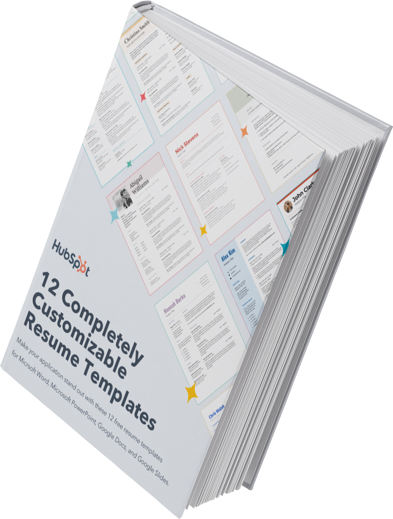
Featured Resource: 12 Free Resume Templates

resume templates

Download 12 free designed, formatted, and customizable resume templates here. Take a look at them, and then use the advice below to customize your resume and make it rise above the rest in the stack.

Alternatively, there are resume builder tools out there that can help as well.

2. Know your target audience.

You never start a marketing campaign without knowing who you want to reach. That’s because once you know your target audience, it’s easier for the other decisions to fall into place.

The same logic applies to your resume. If you know who will read it and what’s important to them, you can shape your message accordingly. To do this, you need to think about the type of job and company you’re hoping to work for.

Ask yourself questions like:

  • Is the job purely in inbound marketing, or will it require both traditional and digital work?
  • Will you be a specialist or a generalist?
  • Who is the employer — an agency with a buzzing digital marketing team in place already, or a small company looking to leverage the power of social media to grow their sales? Or maybe it’s a marketing department within a large and established corporation?

Once you’ve outlined what’s most important to the company and job you’re applying for, you can carefully target your resume to them. You’ll know what skills or traits to highlight, what keywords to use, and which parts of your background will be most interesting to the hiring manager. (For clues about which skills different marketing roles typically require, read this blog post on marketing job descriptions. You can borrow phrasing from those for your own resume.)

3. Define your unique value proposition.

You have a unique blend of skills, characteristics, and experiences that make you different from every marketer. To create a truly effective resume, you need to define exactly what this unique blend is — we’ll call this your value proposition.

To develop your own value proposition, think about what separates you from other marketers. Is it your in-depth knowledge of marketing analytics? Your ability to write irresistible headlines? Perhaps it’s your talent for creating compelling videos? Or maybe you have an impressive record of using social media to drive sales growth? Whatever it is, you can use it to set your resume apart from the crowd.

To a large extent, your value proposition depends on the type of positions and companies you’re targeting. Large and small companies often look for completely different skill sets, as do companies in different industries. So as you think about what makes you uniquely valuable, and how that aligns with the jobs you’re applying to.

4. Describe impact, not features.

One of the oldest copywriting tricks in the book is FAB (features, advantages, benefits).

By selling benefits over features, you’re better able to resonate with your audience because you’re actually painting a picture of what life will be like with the product or service.

The same goes for your resume.

When writing your resume copy, summarizing your experience, or formulating your objective, don’t simply rely on what you’ve done. Instead of creating a list of duties (features) under each role, outline your accomplishments (benefits). These provide a clearer picture of who they’re hiring if they choose you.

For example, instead of “Monitored SEO campaigns,” the following makes a much stronger statement: “Increased organic traffic by 56% in one quarter.”

As a result, the hiring manager is challenged to wonder, “What would life look like if we benefited from this impact?”

5. Determine your messaging strategy.

It’s crucial to determine your messaging strategy — before you write a single word of your resume. That’s what you do when you’re running a marketing campaign, isn’t it? Here are some of the things to think about:

  • What is the best structure for your resume in order to highlight your value proposition?
  • Which keywords will your ideal employer be looking for?
  • How can you give real-world examples of your value proposition in action? (Think about campaigns you’ve run, social media successes, ideas you developed, etc.)
  • What is the best layout and design to reinforce your message?

All these decisions should be made before you start writing, and they should all be made with your target audience in mind. That way you can be sure that when potential employers read your resume, it will immediately strike a chord.

If you want an example of great messaging in a resume, check out the example below. Look at the progression of roles and key accomplishments in those roles — it tells the applicant’s career story while also making them look exceptionally qualified.

professional experience and progression of roles on a marketing resume

6. Don’t overcomplicate things.

Just like the marketing adage says, “A confused mind says no.”

The best way to convey an idea is… simply. Even when the topic is complex.

With this in mind, consider what message you want to send and keep the copy clear and concise to support it.

Use the layout of your resume to help in this endeavor, and don’t be afraid to trim any unnecessary bits.

7. Make sure your resume gets seen.

If you don’t already have a connection at the company you’re applying to, you’ll most likely need to apply through a computer system. This process is what makes it so critical to upload it in a format that allows all recipients to read it as intended, like a PDF. That way, none of the original formatting or spacing is lost in translation, making it really difficult to read from a recruiter’s perspective. Although they’ll still have access to your resume, confusing formatting might distract them from the content.

Once you send in your resume, the computer service will scan it for relevant keywords that have been programmed in advance by the recruiter. Then, the system will either “pass” or “fail” you, depending on how many keywords and phrases are included in your resume that match what the recruiter’s looking for.

Don’t worry: Even if you “fail,” it doesn’t mean your resume won’t ever get seen by a real human. But it doesn’t look great, either — so try to foresee which keywords the recruiter will be looking for by making a note of all of the skills you have that are relevant to the job description.

Keywords to include might be the names of the social media sites you use, analytics or CRM systems you know, and software programs or SAAS systems you’re familiar with. Make sure you’ve included these terms as seamlessly as possible throughout your resume (where relevant), and add any outliers at the very bottom under a “Technical Skills” or “Digital Marketing Skills” section.

Sure, computers may be used in the initial screening process, but it’s humans — with real feelings, pet peeves, hobbies, relationships, experiences, and backgrounds — who are ultimately reading and evaluating our resumes.

They’re also the ones who get annoyed when we don’t put our employment record in chronological order; who just don’t feel like reading paragraph-long job descriptions; and who get excited when you went to the same college as them. So to get a sense of what really matters on a marketing resume, I asked some hiring experts what they actually care about when they scan resumes, and here’s the inside scoop on the tips they shared with me. (By the way, don’t miss out on what they said about cover letters at the end.)

1. Keep it brief.

Limit your resumes to one page if you can. It takes hiring managers six seconds to decide whether they like your resume or not. If they do, they’ll keep reading. If they don’t… well, it’s on to the next. So, chances are, they won’t even get to page two.

In some cases, bleeding onto another page is OK, especially if you have a lot of really relevant experience. But if you have to do that, just don’t exceed two pages. Remember, recruiters can always look at your LinkedIn profile for the full story. (Because you’ve completed your profile on LinkedIn, right?)

2. Use simple formatting.

Formatting speaks to the way candidates collect their thoughts and organize their ideas. As HubSpot’s VP of Sales Productivity and Enablement Andrew Quinn explains it, “A candidate’s resume is their ad to me. How are they structuring this ad so I get a clear picture of what they’re capable of?”

There’s a fine line, though. You have to strike a balance between making your resume stand out and keeping the formatting consistent.

Below is an example resume with great formatting that’s easy to read. If you like the format and want to use it as your own, you can find it among our free downloadable resume templates here.

marketing resume template with great formatting

If you’re a creative, you might be asking, “What about graphic-heavy resumes?” Here’s the general consensus on infographic resumes: Don’t make an infographic resume. Every hiring manager I spoke with advised sticking to the classic resume form instead of infographics or other formats.

Simply put, infographics are hard to understand. Creativity is encouraged when applying for design roles, but use your portfolio to let that skill shine. Plus, you’ll have a lot more wiggle room to show off your talents outside of a static medium like a PDF version of your resume.

Below is an example of a creative format that’s still easy to read and understand. It was made using the Apple desktop app iWork Pages, which can be exported as a PDF so none of that beautiful formatting gets messed up in translation.

marketing resume with creative format

3. Pay attention to the quality of your writing.

Hiring managers throw away resumes with spelling errors — but writing quality goes beyond just simple spelling mistakes. Writing and presenting data in meaningful ways is a critical skill for any position, from blogging to engineering.

Are the details you want hiring managers to know about you easy to consume? Do you use concise sentences to convey your performance and accomplishments? Are your verb tenses consistent (except for current positions)? Is your language overflowing with buzzwords, or does it sound natural? Are you making sure to use first-person without using “I” or “my”? (See #11 in this blog post to understand why that’s not okay.)

“Formatting, spelling, syntax, and structure are all evidence of attention to detail,” Quinn told me. “This is important for any job, but especially if you’re applying to a job where attention to detail matters.” If you’re applying for a writing position, this is even more important.

4. Include your location.

When it comes to location, hiring managers want to know if you’ll need to relocate. If you already live near the company’s office, great! If you would need to relocate, then there are more options both you and the hiring team will need to think through. Hiring managers can’t legally ask you directly where you live — but omitting your location may raise eyebrows. Even P.O. boxes could be concerning.

If you do need to relocate, you should still include your current, out-of-town city and state on your resume, but be prepared to answer relocation status questions in an interview. If the company doesn’t offer relocation packages or remote options, will you be able to afford to take the job and move anyway?

If not, you’re better off applying for roles in your area, roles that mention relocation assistance on the application, or roles that are remote-friendly.

5. Highlight your education intentionally.

Which is more important: Where you went to school, or what you studied?

It depends on the job you’re applying for and the level of the role within the company.

In most cases, your degree should make sense for the role. Hiring managers are looking for the tie-in; what’s relevant about what a candidate’s done in school. That doesn’t mean only marketing majors can apply to marketing jobs — marketing teams might hire someone who came out of creative studies like liberal arts, graphic design, or writing. An engineering team, on the other hand, probably won’t hire someone without a computer science degree.

marketing resume education section

It also depends on how successful you were at the school you attended. While there are some hiring managers who only give interviews to graduates of top-tier schools, most say it helps to go to a top-tier school, but it’s certainly not a deal-breaker if you went to a less popular school or a community college. A community college graduate with a 4.0 GPA could be more attractive than an Ivy League graduate with a 2.0.

Speaking of GPA — when to take it off your resume is subjective. If your GPA was below a 3.0, consider removing it altogether. If it’s higher than that, Quinn says, “The benchmark is five to seven years after graduation, which is when candidates tend to have a solid track record of employment. If you did well in school but had lackluster job prospects following graduation because of, say, a bad economy, you could definitely leave it on longer.”

marketing resume education section with gpa listed

It goes both ways, he explained: “If you had great jobs and accomplishments following graduation but didn’t have a good GPA, consider removing your GPA earlier.”

Three to five years after college or graduate school graduation, you can move your “Education” section to the bottom of your resume — unless you connected with someone through an alumni network or if you know an executive there who also went to your school.

The same thing applies if you haven’t completed your degree. Basha Coleman, Historical Optimization Marketing Manager at HubSpot adds, “Not every job requires a degree these days. Relevant work experience and transferrable skills are just as valuable. Focus on highlighting your experience so the hiring team can see your expertise.”

Want to take your marketing education to the next level and make your resume even more appealing to potential employers? Become a certified inbound marketing professional with HubSpot’s free marketing certification.

6. Be consistent with company names and job titles.

Hiring managers will look at where you’ve worked before (do they recognize the company names or know anyone who works there?) and your titles at those companies.

“If you’re applying for a sales position at a software company like HubSpot, we’re looking for experience selling software,” David Fernandez, former Recruiting Team Lead at HubSpot, told me. “If you’re applying for a services position, we’re looking for customer-facing experience.”

example of a marketing resume

Yes, people tweak their titles at previous companies to more closely match the positions they’re applying for. If you do this, your “new” title should be close enough to what you really did that if someone were to call and check a reference, they wouldn’t be dumbfounded. Maybe “Clerk to the Surgical Waiting Room” becomes “Customer Service Clerk.” Also, make sure to change your titles on LinkedIn, too — hiring managers will check for consistency on LinkedIn, Fernandez said.

7. Include enough bullet points in each section.

Each position you’ve had should be accompanied by no more than five to six bullet points. Remember, these hiring managers are scanning your resumes really quickly, so you want to make it easy for them to find and digest the relevant information by consolidating the most important points and putting them first. Paragraphs are a big no-no.

Luckily, you work in a profession where everything can be measured and analyzed, which means it’s relatively easy to tell an impressive story of success. Think about all the ways your work can be quantified through hard data and then fill your resume with action-packed bullet points that convey the value you’ve added.

Focus on accomplishments first before responsibilities and duties. If you had a senior management role, include the number of people you managed. If you built a program from the ground up, call that out.

Also, include goals and metrics that hiring managers can use to compare you against other candidates, and make sure those metrics make sense so you don’t confuse the hiring manager. Run the metrics by a family member. I’m serious. If they make sense to them, then they’re all set. If not, then you weren’t clear enough and you need to tweak the language.

Examples might be increasing social media engagement, improving SEO ROI, driving increased web traffic, reducing bounce rates, boosting landing page conversions, etc. Once you have a list of your results, choose the best four or five and turn these into bullet points like these:

  • Drove 37% improvement in newsletter clickthrough rates by rewriting sales copy.
  • Grew ecommerce sales 23% in just 6 months by redesigning and A/B testing all landing pages.

8. Don’t forget to add your dates of employment.

Job hopping isn’t the red flag it once was. These days, switching jobs is not only necessary for career growth but it’s often cited as one of the fastest ways to grow financially, too.

So don’t be afraid to list several back-to-back stints at different companies in a short period of time. As long as you’ve included your achievements in each role, you’re golden.

If you took longer than six months off of work, explain the gap on your resume. If it’s something like teaching or the Peace Corps that you can describe like a job, then you can insert it into your resume just as you would any other position:

example resume with peace corps as a position

If it’s something like traveling abroad or taking time off for family or personal reasons, you can simply add it in italics of parenthesis. You could also list this period as a “sabbatical”. Hiring managers just want to see a rational explanation — that you were doing something productive with your time.

9. Consider adding interests and hobbies.

Character is something hiring teams are constantly on the look out for in the candidates they interview and hire. Although character is easily picked up on in person, it’s not impossible to get an impression of a person’s character from their resume.

To showcase character in a one-way document, Editor in Chief of LinkedIn’s Marketing Solutions Blog, Tequia Burt, encourages candidates to be confident in their ability to do the work they’re applying for. She adds, “Take pride in what you do. Don’t focus on how others will perceive you. Show them how you perceive yourself.”

Burt continues, “Be real. Be yourself. Be the best at what you do and let that shine through in your resume.” The perfect way to do this is by sharing interest and hobbies.

10. Let your personality and character shine.

Whether you should include interests and hobbies on your resume depends on the company culture and the job. If you’re applying for a creative role, hobbies like photography and painting could be interesting to an employer. If you’re hiring for an accounting role, then a hobby like skydiving wouldn’t be good to include — hiring managers might categorize you as a risk-taker, and do they really want a risk-taker managing their money?

“Think about the conclusions someone could draw from your hobbies relative to the role you’re hiring for,” Quinn advises. “Do they enhance or detract from the image you’re trying to convey? If you know the culture embraces unique individuals that have a broad background and set of interests, then it could be useful information. But conservative organizations probably don’t care what you do in your free time — in fact, they could interpret outside hobbies as distractions.”

Companies with cultures like HubSpot’s want their employees to have some personality and invest in outside interests. So if you’re applying to join that kind of culture, an “Interests” or “Hobbies” section could benefit you.

Before including or omitting this section on your resume, gain some intelligence about the company’s environment and culture. (And check out HubSpot’s culture code if you haven’t already.)

Spend Less Time on These…

Personal Statements/Objectives

In fact, we recommend skipping these altogether. Frankly, they’re irrelevant. I’ve spoken with HubSpot recruiters about numerous times where candidates put the name of another local company on there — huge mistake.

Instead, replace it with a “Skills” or “Key Skills” section at the top of your resume, in column format, that highlights the top six to nine skills applicable to the role you’re applying for. Be sure to change these skills for each job and use the job description as a guideline.

Don’t plagiarize the job description by any means, but you can pull out key phrases. For example, in the example below, one of the listed skills is “Deep understanding of the consumer lifecycle.” That’s because the job description asked for exactly that: a deep understanding of the consumer lifecycle and customer journey.

Skills section on a resume

Pro Tip: Although you should leave this section off your resume, you should have something in the ‘Summary’ section of your LinkedIn profile. Focus this section on specific skills and achievements. It’s a good place to put a link to your portfolio, blog, SlideShare presentations, or examples of work you’ve created like open-source code.

Use that space to talk about specific achievements from previous roles, awards you’ve won, or projects you’ve worked on. The information and skills on here should be applicable to where you’re headed in your career, not irrelevant past skills. (When I first heard this tip, I immediately took “emergency medicine” off of mine.)

Cover Letters

Cover letters vary in importance, depending on the industry or company to which you are applying. Many companies that require you to write a cover letter will read it, but they’ll focus mostly on your resume.

With this in mind, it’s best practice to draft a cover letter just in case. And you don’t need to create one from scratch for each role. Coleman suggests creating a cover letter template. “This can be the base of your cover letter, but it still gives you enough room to customize. That way, you don’t feel as overwhelmed when you realize the job description requires a cover letter.”

Here’s the cover letter template she created as a new marketer applying to roles in her first few years after college:

Marketing Cover Letter Example: Basha Coleman

Marketing Resume Examples

So here are some examples of marketer resumes done well:

1. Natalie Gullatt

Marketing Resume Example: Natalie Gullatt

Natalie Gullatt takes a more traditional approach with her resume, abandoning fancy frills in favor of hard-hitting copy. She expertly conveys her marketing impact with metrics (e.g. “decrease[d] costs by 61%” and “generated a $746k revenue pipeline”) so that anyone considering her for the role can ask themselves: “What if she could do that for us too?”

2. Andrea Fitzgerald

Marketing Resume Examples: Andrea Fitzgerald

Andrea Fitzgerald uses her page space effectively with listable items on the left and experience on the right. This makes the rest of the resume easier to skim so hiring managers can quickly find the information important to them.

She also summarizes her achievements in bite-sized sentences. This combined with the vertical format gives a lot of room to fully list out the depth of experience Fitzgerald has.

3. Jess Johnson

Marketing Resume Example: Jess Johnson Page 1Marketing Resume Example: Jess Johnson Page 2

Jess Johnson applied to HubSpot with this resume, tailored to the job and company branding. By taking this unique approach, her goal was to stand out from other applicants. While her resume wasn’t the only factor in her landing the job, I imagine it gained a bit of attention. After all, a hiring manager is looking for applicants they can picture in the position.

4. Sarah Casdorph

Marketing Resume Example: Sarah Casdorph Page 1Marketing Resume Example: Sarah Casdorph Page 2

There’s an old saying out there for keeping resumes to one page, but for marketers with extensive experience, the one page isn’t always possible without compromising readability and design. At the same time, anything on the second page is at risk of being ignored.

Sarah Casdorph solves for this, putting top skills on the front page and pulling out “notable impacts” for each position. Not only is her two-pager easily navigable, but there’s a clear trail of achievement.

It’s Just Like Marketing

As a marketer, you have a talent for communication and a solid understanding of what makes people buy. The good news is that by applying this knowledge to your own resume, you can easily stand out from the crowd.

Editor’s note: This post was originally published in July 2018 and has been updated for comprehensiveness.
New Call-to-Action

Categories B2B

How to Understand Market Penetration and Create a Strategy With STP Marketing

Everyone wants their business to grow. This seems pretty intuitive considering effective and successful growth means your business is experiencing boosts in revenue, brand awareness, brand loyalty, and more — and we know this to be true by looking at the most successful and well-known companies today (e.g. Apple, Amazon, etc.).

The question is: What do these highly-successful companies do to ensure they put themselves in a position for strong and consistent growth?

→ Download Now: Free Product Marketing Kit [Free Templates]

Of course, there are a number of answers to this question based on who you ask. However, the one we’re going to focus on in this blog post is market penetration. So, what is market penetration?

How to Calculate Market Penetration

If you’re using market penetration as a measurement, use the following formula to discover how much a product or service is used by customers compared to its total estimated market. In other words, take the current sale volume for your product or service and divide it by the total sale volume of all similar products available in the market.

(Number of Customers / Target Market Size) x 100 = Market Penetration Rate

Frequently monitoring your market penetration is important in order to identify any increases or decreases in penetration. If you’re wondering how often to calculate market penetration, a good rule of thumb is to calculate it after every marketing and sales campaign you run. This will highlight any changes in penetration — and, as a result, you’ll also have a better idea of the success of your campaign(s).

Next, let’s dive a little deeper into what market penetration is and why it’s such an effective growth strategy.

Understanding Market Penetration

A company can use market penetration at the industry level to review the potential for specific products or services or on a smaller scale as a way to gauge the market share of a product or service. It offers insight into how the market and your customers view your product or service.

What is high market penetration?

When it comes to market penetration, you want yours to be high. There are many benefits to high market penetration.

For instance, think about Nike. The company is a market leader in athletic shoes. When you go to the sneakers section of a store like Foot Locker or Dick’s Sporting Goods, Nike consistently takes up a large portion of the space.

That’s because retailers like Foot Locker and Dick’s know Nike delivers in sales. They also know their customers expect a wide selection of Nike products in their stores. Nike’s popularity and brand name warrant better shelving space and visibility, too. This is all a result of Nike’s high market penetration.

Similar to Nike, when you have a high market penetration…

  • You’re an industry leader.
  • You sell products or services that are already established within the industry.
  • You have a widely-recognized brand.
  • You have good visibility in the market.
  • You have strong brand equity.
  • You likely make your product for less than you would be able to if you were a less-established business due to the scale of your operation.
  • You have a high sales volume which means you have leverage among suppliers and sellers.

High market penetration offers a marketing advantage and more potential for continued growth and success as a business. Needless to say, high market penetration is the goal — but, how do you achieve it? Well, market development is a good place to start.

To increase market penetration, focus on market development first. Let’s look at an example.

Example of Market Development Increasing Market Penetration

A successful leggings brand, Booty by Brabants, has made waves in recent years in the athletic-wear industry. The brand has established itself as a seller of high-quality and unique leggings for women of all sizes.

By reviewing their market penetration, BBB was able to identify a small, existing market they could tap into — kids’ leggings. They determined that selling kids’ leggings could help them broaden their target audience and customer base for little added cost and effort.

Although BBB Kids leggings aren’t a major source of revenue for the company, they’re complementary to its existing product line and bring in new customers. BBB was able to identify an existing market they hadn’t taken advantage of yet and determine clear steps to successfully enter that market. As a result, they expanded their product line, customer base, and market penetration.

Now, let’s look at the most effective ways to get started on your market penetration strategy.

As you begin working on your market penetration strategy, you may hear the words: Ansoff Matrix.

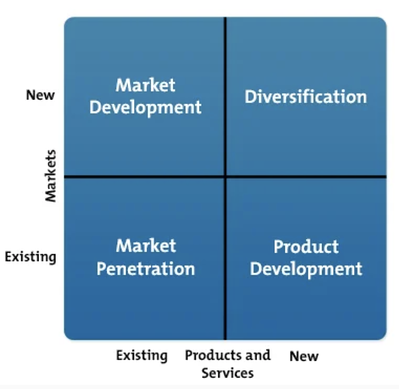
The Ansoff Matrix is a tool with four growth strategies listed for businesses to consider.

ansoff matrix growth strategy

Image Source

As you move to the upper-right quadrant of this matrix, the growth strategies become riskier for businesses. We’ve included information about the Ansoff Matrix in this article because it further proves and highlights the fact that market penetration is a highly-valuable and achievable way to effectively grow a business, even for the risk-averse.

At this point, you might be wondering about the specific strategies under the umbrella of market penetration that you can deploy at your company — let’s talk about some of those next.

Market Penetration Strategies

Here are some examples of effective market penetration strategies that you may choose to focus on and/or implement at your company.

1. Change your pricing.

Lower or raise the cost of one of your products.

2. Revamp your marketing.

Rework your marketing plan and/or roadmap.

3. Identify the need for a new product and launch it.

Survey and analyze your customers and target audience to identify the need for a new product (or feature). Then, create that product and sell it.

4. Update or change your product (or a specific feature of your product).

Resolve the challenges of your customers and buyer personas more effectively by updating or changing a product or feature.

5. Grow business in new territories and offer franchise opportunities.

Identify new territories in which you can expand and grow your business. Ask yourself: Which new areas can we open our stores or prospect? You might also begin offering franchise opportunities to expand your brick-and-mortar business.

6. Identify a business partner to work with.

Partner or merge with another business in a mutually beneficial way (e.g. run a co-marketing campaign).

7. Purchase a small business or competitor in your industry.

If you have the resources, consider acquiring a small business or competitor in your industry to broaden your base of customers and your offerings/ capabilities. (HubSpot did this a while ago.)

8. Offer a promotional program to boost loyalty.

Give customers an opportunity to sign up for a loyalty program that provides them with perks in return for giving you their contact information (e.g. discounts, birthday gifts, inside information, etc.).

9. Develop a new marketing campaign.

Create and launch a marketing campaign or initiative to promote your product line in a unique and new way that your customers haven’t seen before. Analyze your campaign’s success so you can refer to it in the future.

10. Boost sales rep activity.

Encourage sales reps to increase the number of interactions they have with qualified prospects (e.g. focus on social selling and meeting prospects where they are).

Segmentation, Targeting, and Positioning

STP marketing stands for segmentation, targeting, and positioning. This is a three-step model that helps you to examine your products or services and how you communicate them to your market. Step one is to divide your market into segments. Step two is to target each segment with tailored marketing campaigns. Step three is to position your business and marketing in a way that will appeal the most to each segment.

What’s an example of a successful market penetration strategy?

There are several examples of companies using market penetration to grow their business. For the sake of this piece, let’s look at Dunkin’.

Dunkin’ (formerly, Dunkin’ Donuts) was started in Quincy, MA back in the 1940s. Since then, Dunkin’ has become a globally-recognized brand. Dunkin’ has since grown substantially and opened stores in 46 countries — yet, the company’s most-loyal customers remain in New England. In fact, there are 12,500 Dunkin’s worldwide (9,000 of which are in the U.S.) In terms of market penetration, Dunkin’ continues to tap into their large and loyal market by opening and maintaining that large portion of their stores in New England.

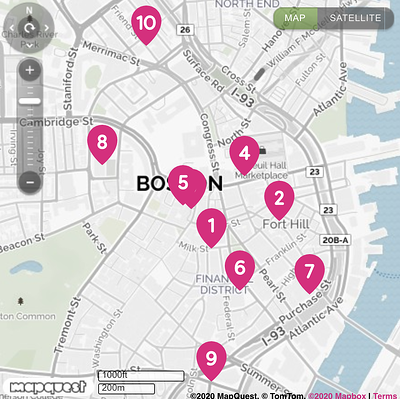
Check out the following map for example — Boston is a small city, and you can walk between almost all 10 of these Dunkin’ locations in just minutes.

dunkin donuts example of market penetration

Image Source

Dunkin’ knows where their customers are and that those customers want a Dunkin’ store every… well, city block.

Not only has Dunkin’ successfully penetrated their market by opening and maintaining so many stores in New England, but they’ve also increased market penetration by making specific changes to their branding and menu.

Most notably, they changed their name from Dunkin’ Donuts to Dunkin’. The company does 60% of their business in coffee and other drinks, so the “Donuts” aspect of their original name was arguably a bit misleading. The CEO of Dunkin’ said this move was important because the new name, “… speaks to the breadth of our offerings.”

The brand name change also gives a signal to customers that there are a number of other menu items available, aside from donuts. In fact, the name change was paired with many menu additions, including healthier options as well as offerings for non-dairy and vegan customers including their Beyond Sausage and almond milk.

All of these changes broadened Dunkin’s customer base and target audience by accommodating more people within the market they were already penetrating.

Invest in Market Penetration to Grow Better

We just covered several reasons why market penetration is so beneficial to your business’s long-term success. And as you’ve learned throughout this blog post, it’s a highly effective growth strategy that’s typically low-risk.

There are many market penetration strategies to choose from, plan, and implement at your company, so pick the best option for your goals and get started.

Editor’s note: This post was originally published in August 2020 and has been updated for comprehensiveness.

Product Marketing Kit

Categories B2B

Everything You Need to Know about Brand Experience

Online sales are reaching all-time highs as buyers become more comfortable with digital transactions — in 2021, for example, consumers spent a collective $14 billion online across Black Friday and Cyber Monday.

For businesses, the shift to online-first purchasing offers substantive potential, but also underpins prospective problems: As the number of digital product offerings ramps up, competition for customer conversions is also on the rise.

Free Kit: PR & Branding Kit for Startups and Entrepreneurs

The result? A battlefield for brand experience. If companies can create a lasting positive impression among potential customers, they can drive sales and set the stage for long-term loyalty. But what exactly is brand experience? What does effective design require and what does it look like in practice? Most importantly, how do brands create experience strategies that deliver reliable results over time?

While brand experience is similar to user experience, it encompasses a broader perception of your brand at large. Where user experience speaks to the takeaways — positive or negative — of a user when they interact with your website or social media profiles, brand experience refers to the impression of your brand as a whole. Not surprisingly, positive user experiences inform better brand experiences (and vice versa) but the two are distinct concepts.

It’s also important to understand that brand experience is subjective. While it’s possible to create experiences that produce reactions along a generalized spectrum, individual users will have different reactions to your efforts. In practice, this means that no matter how carefully you curate brand experience efforts, there will always be customers who come away with a negative reaction. As a result, the goal isn’t to create a universal experience but rather to create one that resonates positively with the largest number of target customers.

Breaking Down Brand Experience Design

Just 39% of business decision-makers say their brand effectively resonates with prospective buyers. This is a problem: If customers don’t connect your brand with positive thoughts, feelings, and reactions, they’re less likely to remember your products and services when it comes time to make a purchase.

Worth noting? Neutrality isn’t enough. While negative impressions of your brand can drive customers away from your site, neutral impressions are just as problematic — even if consumers see your brand listed in search engine results or advertised online, the absence of a positive brand impression means they won’t seek you out over companies that offer better connective messaging.

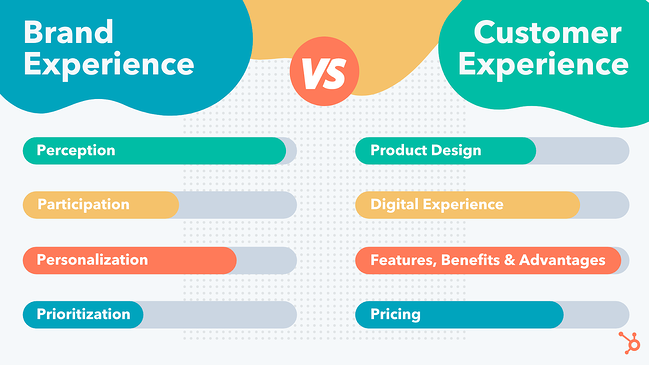
So what does effective brand experience design look like? Four components are critical:

Brand Experience vs. Customer Experience

Perception

Perception forms a key part of the experience. This includes audio, visual, and tactical interactions that allow customers to connect a specific sense to advertising campaigns. In much the same way that particular smells can bring back memories of childhood experiences, brands that successfully merge senses with marketing can create connections that drive sales.

Participation

It’s also more likely that customers will walk away with a positive brand experience if they’re able to participate in some way rather than simply watch. This might include the ability to submit suggestions online or interact in real-time online question forums, or it could feature the use of physical installations that allow consumers to touch your product or provide direct feedback.

Personalization

Generic marketing campaigns can produce steady returns, but personalization can help encourage connection across different customer segments. By leveraging both user-provided data (with their consent) along with social media interactions and other engagement data, it’s possible to create more personalized efforts that help create connections between consumer needs and current product offerings.

Prioritization

Brand experience can’t be all things to all people. Attempts to capture every consumer in every circumstance actually undermine experience-driven efforts — as a result, it’s worth selecting specific brand metrics such as positive social mentions or repeat purchases to prioritize.

Creating a Brand Experience Strategy

So how do you build an effective brand experience strategy?

First up is identifying areas where your current experience isn’t meeting customer expectations. Social media interactions and customer service calls can help pinpoint potential problems — if consistent concerns around brand interaction or reaction arise, this can help frame the foundation of brand experience strategy.

Next is targeting an area for improvement. While there may be more than one aspect of brand experience that could use a refresh or redesign, attempting to do everything at once can spread strategy efforts too thin and deliver less-than-ideal results. For example, you might choose to increase positive social mentions across specific channels such as Facebook or Instagram. While the eventual goal could be a larger social impact from initial contact to eventual conversion, easily-accessible social platforms provide an ideal starting point.

Effective measurement follows to ensure efforts are bearing fruit. In the case of our social media example above, this means tracking user views, reactions, and responses to social media posts along with the sentiment — positive, negative, or neutral — that goes along with them. This is also the time to explore and innovate by testing multiple strategies to see which one sticks. From video campaigns to personalized storytelling to marketing efforts all designed to elicit specific emotions, it’s worth finding that resonates with your customer base and then fine-tuning your efforts to deliver ideal outcomes.

It’s one thing to talk about brand experience building, but it’s another to see it in action. Here’s a look at five brand experiences efforts that offer effective in-practice examples.

1. Red Bull

In 2012, the company went all-in on its tagline “Red Bull gives you wings by sending skydiver Alex Baumgartner 24 miles above the Earth’s surface to pull off the highest skydive ever recorded and become the first person to break the sound barrier during freefall.

While his record was broken two years later by an executive from Google, it doesn’t change the fact that Red Bull did something no one had ever done before and created a unique brand experience that aligned with its core marketing message.

2. Lean Cuisine

While healthy eating has taken off in recent years, messaging around this effort is often the opposite. With a focus on weight loss instead of overall health, many brands find themselves reinforcing harmful stereotypes that equate weight loss with personal worth.

Lean Cuisine’s #WeighThis campaign looked to change the narrative by placing “scales” around New York’s Grand Central Station that encouraged women to “weigh in”.

The catch? These scales were actually boards that let women write down how they would prefer to be measured — such as by their own persistence, accomplishments or efforts.

Even better? Lean Cuisine marketers were smart enough to stay out of the way. There were no samples on offer, no surveys to fill out; women simply saw the scales and interacted with them, in turn boosting Lean Cuisine’s overall brand experience.

3. Dove

Dove’s Campaign for Real Beauty took a similar approach to Lean Cuisine but opted for the use of viral video that highlighted beauty of all types — beauty that goes beyond photoshoots and photoshop. The campaign earned praise for both its authenticity and efforts to help boost self-esteem among young girls.

By choosing emotional experience over a simple sales effort, Dove was able to better connect with its target customer base and boost overall customer loyalty.

4. Cadbury India

Cadbury India opted for consumer suggestions in creating their new chocolate bar flavor. Customers were encouraged to visit the company’s dedicated chocolate bar platform that let them select ingredients and create a recipe. Cadbury then tried all suggested recipes and selected the best of those submitted.

By prioritizing interaction over simple reaction, Cadbury facilitated consumer connection and encouraged customers to view chocolate bar making as a collaborative effort rather than a corporate endeavor, in turn creating a community-based brand experience.

5. WestJet

Canadian commercial airline WestJet has been running its “Christmas Miracle” campaign since 2013. It’s 2021 version sees the company asking people what they miss the most during the holidays — not surprisingly, many mention absent family members. WestJet staff then provide plane tickets to help loved ones reconnect, and the end of the video features a tearful reunion in progress.

Overall, it’s a feel-good experience designed to bring out emotions already close to the surface for many customers and in turn, boost the overall brand experience.

Building a Better Brand Experience

The right brand experience makes all the difference when it comes to cultivating long-term customer relationships. By understanding where current efforts don’t deliver, prioritizing areas for improvement and tracking engagement metrics over time, it’s possible to build a brand experience that boosts customer connection and encourages long-term loyalty.

Editor’s note: This post was originally published in February 2016 and has been updated for comprehensiveness.

PR and Branding for Startups

Categories B2B

The Who, What, Why, & How of Digital Marketing

With how accessible the internet is today, would you believe me if I told you the number of people who go online every day is still increasing?

It is. In fact, “constant” internet usage among adults increased by 5% in just the last three years, according to Pew Research. And although we say it a lot, the way people shop and buy really has changed along with it — meaning offline marketing isn’t as effective as it used to be.

→ Click here to download our free guide to digital marketing fundamentals  [Download Now].

Marketing has always been about connecting with your audience in the right place and at the right time. Today, that means you need to meet them where they are already spending time: on the internet.

Enter digital marketing — in other words, any form of marketing that exists online.

At HubSpot, we talk a lot about inbound marketing as a really effective way to attract, engage, and delight customers online. But we still get a lot of questions from people all around the world about digital marketing. So, we decided to answer them. Click the links below to jump to each question, or keep reading to see how digital marketing is carried out today.

So, how do you define digital marketing today?


A seasoned inbound marketer might say inbound marketing and digital marketing are virtually the same thing, but there are some minor differences. And conversations with marketers and business owners in the U.S., U.K., Asia, Australia, and New Zealand, I’ve learned a lot about how those small differences are being observed across the world.

How does a business define digital marketing?

At this stage, digital marketing is vital for your business and brand awareness. It seems like every other brand has a website. And if they don’t, they at least have a social media presence or digital ad strategy. Digital content and marketing is so common that consumers now expect and rely on it as a way to learn about brands. Because digital marketing has so many options and strategies associated with it, you can get creative and experiment with a variety of marketing tactics on a budget.

Digital marketing is defined by the use of numerous digital tactics and channels to connect with customers where they spend much of their time: online. The best digital marketers have a clear picture of how each digital marketing campaign supports their overarching goals. And depending on the goals of their marketing strategy, marketers can support a larger campaign through the free and paid channels at their disposal.

A content marketer, for example, can create a series of blog posts that generate leads from a new ebook the business recently created. The company’s social media marketer might then help promote these blog posts through paid and organic posts on the business’s social media accounts. Perhaps the email marketer creates an email campaign to send those who download the ebook more information on the company. We’ll talk more about these specific digital marketers in a minute.

There are a few major benefits of digital marketing: 

  1. You can focus your efforts on only the prospects most likely to purchase your product or service.

  2. It’s more cost-effective than outbound marketing methods.

  3. Digital marketing evens the playing field within your industry and allows you to compete with bigger brands.

  4. Digital marketing is measurable.

  5. It’s easier to adapt and change a digital marketing strategy.

  6. Digital marketing can improve your conversion rate and the quality of your leads.

  7. You can engage audiences at every stage with digital marketing.

Let’s dive into them now.

1. You can focus your efforts on only the prospects most likely to purchase your product or service.

If you place an advertisement on TV, in a magazine, or on a billboard, you have limited control over who sees the ad. Of course, you can measure certain demographics — including the magazine’s typical readership, or the demographic of a certain neighborhood — but it’s still largely a shot in the dark.

Digital marketing, on the other hand, allows you to identify and target a highly-specific audience, and send that audience personalized, high-converting marketing messages.

For instance, you might take advantage of social media’s targeting features to show social media ads to a certain audience based on variables such as age, gender, location, interests, networks, or behaviors. Alternatively, you might use PPC or SEO strategies to serve ads to users who’ve shown interest in your product or service, or who’ve searched for specific keywords that relate to your industry.

Ultimately, digital marketing enables you to conduct the research necessary to identify your buyer persona, and lets you refine your marketing strategy over time to ensure you’re reaching prospects most likely to buy. Best of all, digital marketing helps you market to sub-groups within your larger target audience. If you sell multiple products or services to different buyer personas, this is especially helpful.

2. It’s more cost-effective than outbound marketing methods.

Digital marketing enables you to track campaigns on a daily basis and decrease the amount of money you’re spending on a certain channel if it isn’t demonstrating high ROI. The same can’t be said for traditional forms of advertising. It doesn’t matter how your billboard performs — it still costs the same, whether or not it converts for you.

Plus, with digital marketing, you have complete control over where you choose to spend your money. Perhaps rather than paying for PPC campaigns, you choose to spend money on design software to create high-converting Instagram content. A digital marketing strategy allows you to continuously pivot, ensuring you’re never wasting money on channels that don’t perform well.

By and large, digital marketing is a more cost-effective solution, and provides you unique opportunities to ensure you’re getting the most bang for your buck.

For instance, if you work for a small business with a limited budget, you might try investing in social media, blogging, or SEO – three strategies that can give you high ROI even with minimal spend.

3. Digital marketing evens the playing field within your industry and allows you to compete with bigger brands.

If you work for a small business, it’s likely difficult for you to compete with the major brands in your industry, many of which have millions of dollars to invest in television commercials or nationwide campaigns. Fortunately, there are plenty of opportunities to outrank the big players through strategic digital marketing initiatives.

For instance, you might identify certain long-tail keywords that relate to your product or service, and create high-quality content to help you rank on search engines for those keywords. Search engines don’t care which brand is biggest — instead, search engines will prioritize content that resonates best with the target audience.

4. Digital marketing is measurable.

Digital marketing can give you a comprehensive, start-to-finish view of all the metrics that might matter to your company — including impressions, shares, views, clicks, and time on page. This is one of the biggest benefits of digital marketing. While traditional advertising can be useful for certain goals, its biggest limitation is measurability.

Unlike most offline marketing efforts, digital marketing allows marketers to see accurate results in real time. If you’ve ever put an advertisement in a newspaper, you’ll know how difficult it is to estimate how many people actually flipped to that page and paid attention to your ad. There’s no surefire way to know if that ad was responsible for any sales at all.

On the other hand, with digital marketing, you can measure the ROI of pretty much any aspect of your marketing efforts.

Here are some examples:

Website Traffic

With digital marketing, you can see the exact number of people who have viewed your website’s homepage in real time by using digital analytics software, available in marketing platforms like HubSpot.

You can also see how many pages they visited, what device they were using, and where they came from, amongst other digital analytics data.

This intelligence helps you to prioritize which marketing channels to spend more or less time on, based on the number of people those channels are driving to your website. For example, if only 10% of your traffic is coming from organic search, you know that you probably need to spend some time on SEO to increase that percentage.

With offline marketing, it’s very difficult to tell how people are interacting with your brand before they have an interaction with a salesperson or make a purchase. With digital marketing, you can identify trends and patterns in people’s behavior before they’ve reached the final stage in their buyer’s journey, meaning you can make more informed decisions about how to attract them to your website right at the top of the marketing funnel.

Content Performance and Lead Generation

Imagine you’ve created a product brochure and posted it through people’s letterboxes — that brochure is a form of content, albeit offline. The problem is that you have no idea how many people opened your brochure or how many people threw it straight into the trash.

Now imagine you had that brochure on your website instead. You can measure exactly how many people viewed the page where it’s hosted, and you can collect the contact details of those who download it by using forms. Not only can you measure how many people are engaging with your content, but you’re also generating qualified leads when people download it.

Attribution Modeling

An effective digital marketing strategy combined with the right tools and technologies allows you to trace all of your sales back to a customer’s first digital touchpoint with your business.

We call this attribution modeling, and it allows you to identify trends in the way people research and buy your product, helping you to make more informed decisions about what parts of your marketing strategy deserve more attention, and what parts of your sales cycle need refining.

Connecting the dots between marketing and sales is hugely important — according to Aberdeen Group, companies with strong sales and marketing alignment achieve a 20% annual growth rate, compared to a 4% decline in revenue for companies with poor alignment. If you can improve your customer’s journey through the buying cycle by using digital technologies, then it’s likely to reflect positively on your business’s bottom line.

5. It’s easier to adapt and change a digital marketing strategy.

A lot of work goes into developing a marketing strategy. Generally, you will follow through with that strategy until completion, allow it to take effect, and then judge its results. However, things do not always go according to plan. You may realize halfway through that a calculation was off, an assumption was incorrect, or an audience did not react how they were expected to. Being able to pivot or adjust the strategy along the way is highly beneficial because it prevents you from having to start over completely.

Being able to change your strategy easily is a great benefit of digital marketing. Adapting a digital marketing strategy is a lot easier than other more traditional forms of marketing, like mailers or billboard advertising. For instance, if an online ad isn’t delivering as expected, you can quickly adjust it or pause it to yield better results.

6. Digital marketing can improve your conversion rate and the quality of your leads.

As digital marketing makes it simpler to measure your marketing efforts, this makes improving your conversion rate simpler as well. Being able to measure the effectiveness of each tactic helps you develop better strategies. Continuously refining your methods improves your conversion rate. Investing in online marketing ensures that everything is optimized for the highest amount of conversions.

Additionally, all leads do not offer the same value for your business. Digital marketing provides an opportunity for you to target a specific audience that will yield higher quality leads that are more likely to become customers. Connecting your business with the most valuable leads will directly improve your conversion rate.

7. You can engage audiences at every stage with digital marketing.

It’s essential to begin engaging your audience as early as possible. Making a connection at the first stage of the buyer’s journey helps push the lead through the customer funnel. Using digital marketing allows you to accomplish that from start to finish and at every point in between.

Online channels allow you to follow the entire buying journey of your customers. Understanding and analyzing how customers are moving and operating is important for converting leads. Digital marketing allows you to track them through that process. And, even if they don’t convert in the early stages, it at least helps ensure they have made a connection with your business.

Here’s a quick rundown of some of the most common digital marketing tactics and the channels involved in each one.

1. Search Engine Optimization (SEO)

This is the process of optimizing your website to “rank” higher in search engine results pages, thereby increasing the amount of organic (or free) traffic your website receives. The channels that benefit from SEO include websites, blogs, and infographics.

There are a number of ways to approach SEO in order to generate qualified traffic to your website. These include:

  • On page SEO: This type of SEO focuses on all of the content that exists “on the page” when looking at a website. By researching keywords for their search volume and intent (or meaning), you can answer questions for readers and rank higher on the search engine results pages (SERPs) those questions produce.
  • Off page SEO: This type of SEO focuses on all of the activity that takes place “off the page” when looking to optimize your website. “What activity not on my own website could affect my ranking?” You might ask. The answer is inbound links, also known as backlinks. The number of publishers that link to you, and the relative “authority” of those publishers, affect how highly you rank for the keywords you care about. By networking with other publishers, writing guest posts on these websites (and linking back to your website), and generating external attention, you can earn the backlinks you need to move your website up on all the right SERPs.
  • Technical SEO: This type of SEO focuses on the backend of your website, and how your pages are coded. Image compression, structured data, and CSS file optimization are all forms of technical SEO that can increase your website’s loading speed — an important ranking factor in the eyes of search engines like Google.

For a real-life example on how to successfully implement SEO into your digital marketing strategy, check out our case study on Canva here:

2. Content Marketing

This term denotes the creation and promotion of content assets for the purpose of generating brand awareness, traffic growth, lead generation, and customers.

Want to learn and apply content marketing to your business? Check out HubSpot Academy’s free content marketing training resource page.

The channels that can play a part in your content marketing strategy include:

  • Blog posts: Writing and publishing articles on a company blog helps you demonstrate your industry expertise and generates organic search traffic for your business. This ultimately gives you more opportunities to convert website visitors into leads for your sales team.
  • Ebooks and whitepapers: Ebooks, whitepapers, and similar long-form content helps further educate website visitors. It also allows you to exchange content for a reader’s contact information, generating leads for your company and moving people through the buyer’s journey.
  • Infographics: Sometimes, readers want you to show, not tell. Infographics are a form of visual content that helps website visitors visualize a concept you want to help them learn.
  • Audio or visual content: Television and radio are popular channels for digital marketing. Creating content that can be shared online as a video or heard on the radio by listeners can greatly broaden your potential audience.

Stumped? Download 150+ content creation templates by clicking below: 

content templates

3. Social Media Marketing

This practice promotes your brand and your content on social media channels to increase brand awareness, drive traffic, and generate leads for your business.

If you’re new to social platforms, you can use tools like HubSpot to connect channels like LinkedIn and Facebook in one place. This way, you can easily schedule content for multiple channels at once, and monitor analytics from the platform as well.

On top of connecting social accounts for posting purposes, you can also integrate your social media inboxes into HubSpot, so you can get your direct messages in one place.

The channels you can use in social media marketing include:

  • Facebook
  • Twitter
  • LinkedIn
  • Instagram
  • Snapchat
  • Pinterest

Many marketers will use these social media platforms to create a viral campaign. Partnering with a popular content creator or taking part in a trend that’s currently resonating with a wide audience is a strategy of viral marketing. The purpose is to create something shareworthy in the hopes that it will organically spread across a social media channel.

Don’t know how to get started with social media marketing? Download our free social media content calendar to get your social strategy up and running.

social media content calendar

4. Pay Per Click (PPC)

PPC is a method of driving traffic to your website by paying a publisher every time your ad is clicked. One of the most common types of PPC is Google Ads, which allows you to pay for top slots on Google’s search engine results pages at a price “per click” of the links you place. Other channels where you can use PPC include:

  • Paid ads on Facebook: Here, users can pay to customize a video, image post, or slideshow, which Facebook will publish to the news feeds of people who match your business’s audience.
  • Twitter Ads campaigns: Here, users can pay to place a series of posts or profile badges to the news feeds of a specific audience, all dedicated to accomplish a specific goal for your business. This goal can be website traffic, more Twitter followers, tweet engagement, or even app downloads.
  • Sponsored Messages on LinkedIn: Here, users can pay to send messages directly to specific LinkedIn users based on their industry and background.

PPC can be hard to grasp at first, so we’ve created a beginner-friendly guide to get you started. Download it below: 

New Call-to-action

5. Affiliate Marketing

This is a type of performance-based advertising where you receive commission for promoting someone else’s products or services on your website. Affiliate marketing channels include:

This is part of the relatively new wave of
influencer marketing. Creating a campaign with the use of influencers can be a highly effective form of affiliate marketing. Finding the right content creators can take your digital campaign to the next level.

6. Native Advertising

Native advertising refers to advertisements that are primarily content-led and featured on a platform alongside other, non-paid content. BuzzFeed-sponsored posts are a good example, but many people also consider social media advertising to be “native” — Facebook advertising and Instagram advertising, for example.

7. Marketing Automation

Marketing automation refers to the software that serves to automate your basic marketing operations. Many marketing departments can automate repetitive tasks they would otherwise do manually, such as:

  • Email newsletters: Email automation doesn’t just allow you to automatically send emails to your subscribers. It can also help you shrink and expand your contact list as needed so your newsletters are only going to the people who want to see them in their inboxes.
  • Social media post scheduling: If you want to grow your organization’s presence on a social network, you need to post frequently. This makes manual posting a bit of an unruly process. Social media scheduling tools push your content to your social media channels for you, so you can spend more time focusing on content strategy.
  • Lead-nurturing workflows: Generating leads, and converting those leads into customers, can be a long process.You can automate that process by sending leads specific emails and content once they fit certain criteria, such as when they download and open an ebook.
  • Campaign tracking and reporting:Marketing campaigns can include a ton of different people, emails, content, webpages, phone calls, and more. Marketing automation can help you sort everything you work on by the campaign it’s serving, and then track the performance of that campaign based on the progress all of these components make over time.

8. Email Marketing

Companies use email marketing as a way of communicating with their audiences. Email is often used to promote content, discounts and events, as well as to direct people toward the business’s website. The types of emails you might send in an email marketing campaign include:

  • Blog subscription newsletters.
  • Follow-up emails to website visitors who downloaded something.
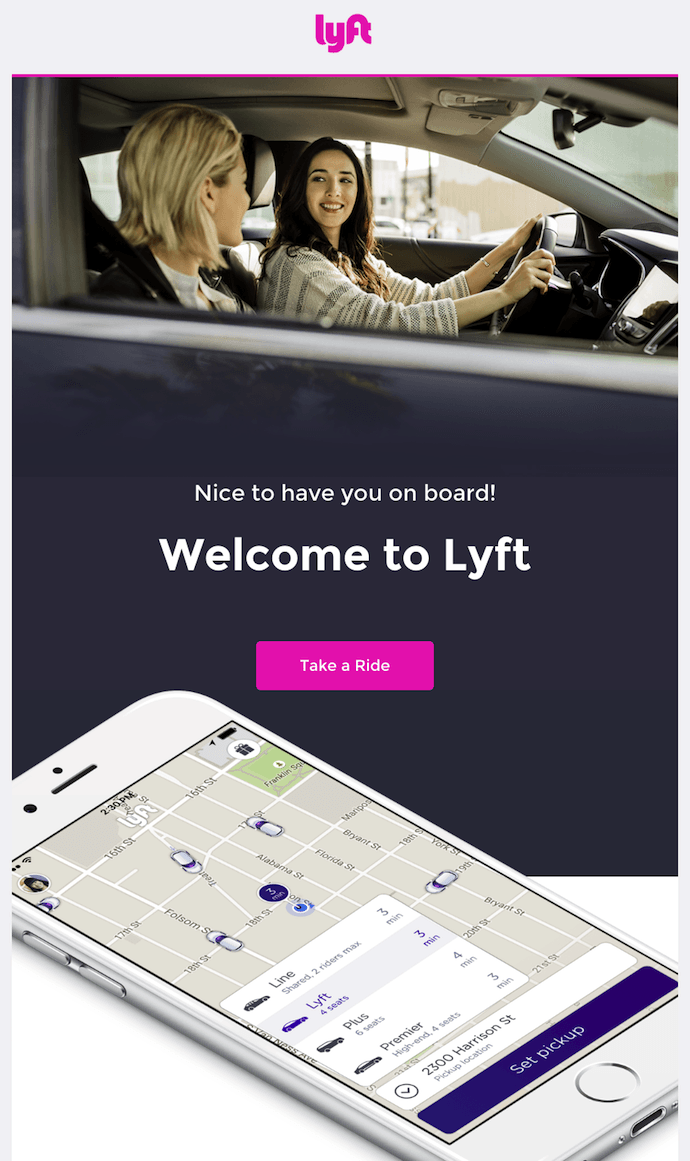
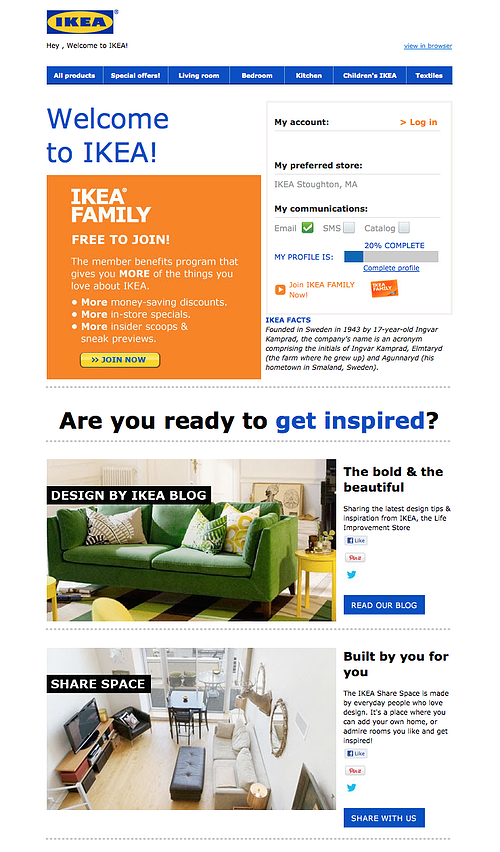
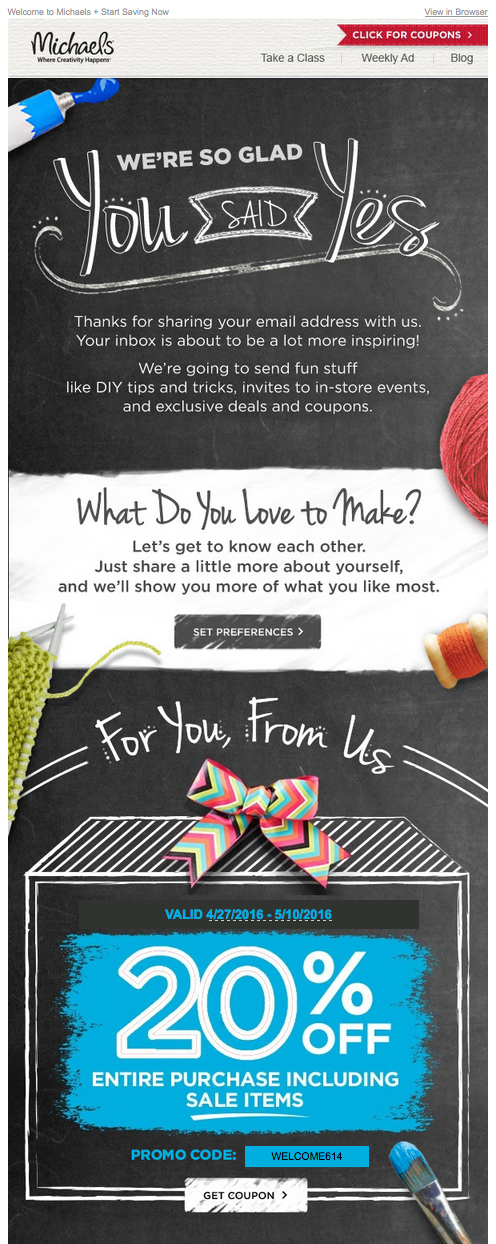
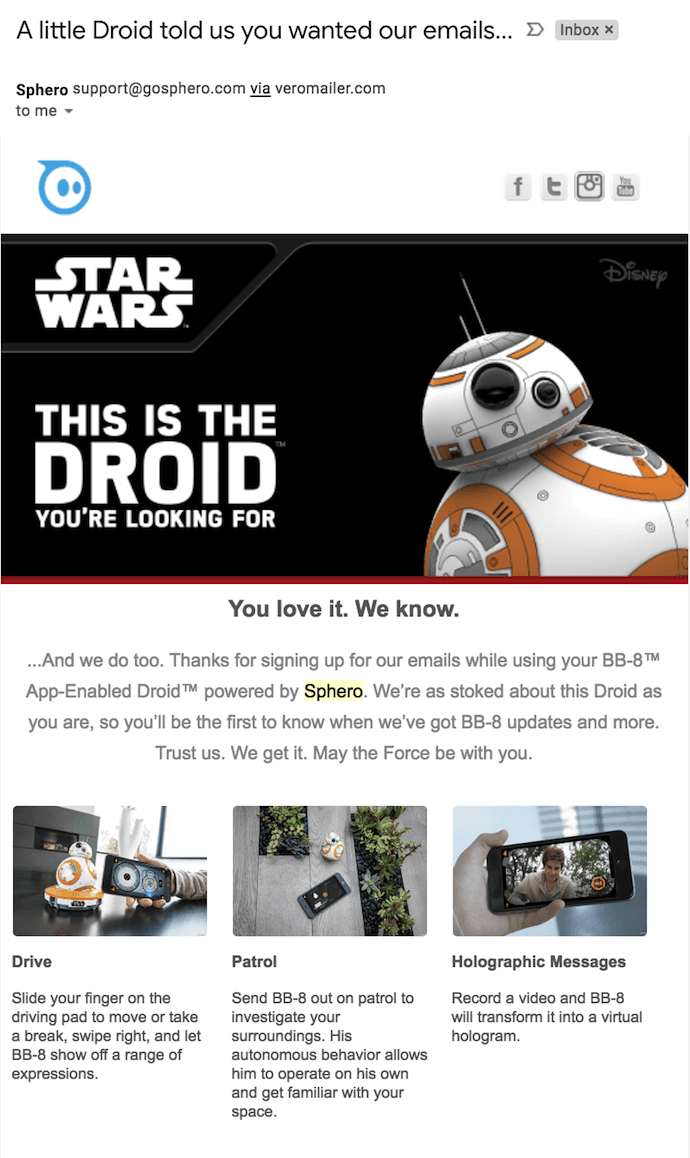
  • Customer welcome emails.
  • Holiday promotions to loyalty program members.
  • Tips or similar series emails for customer nurturing.

Learn more about email marketing with our free guide: 

New Call-to-action

9. Online PR

Online PR is the practice of securing earned online coverage with digital publications, blogs, and other content-based websites. It’s much like traditional PR, but in the online space. The channels you can use to maximize your PR efforts include:

  • Reporter outreach via social media: Talking to journalists on Twitter, for example, is a great way to develop a relationship with the press that produces earned media opportunities for your company.
  • Engaging online reviews of your company: When someone reviews your company online, whether that review is good or bad, your instinct might be not to touch it. On the contrary, engaging company reviews helps you humanize your brand and deliver powerful messaging that protects your reputation.
  • Engaging comments on your personal website or blog: Similar to the way you’d respond to reviews of your company, responding to the people who are reading your content is the best way to generate productive conversation around your industry.

If you don’t have a dedicated PR team, it can be hard to get started. Luckily, we’ve got you covered. Download our free PR kit below: 

New Call-to-action

10. Inbound Marketing

Inbound marketing refers to a marketing methodology wherein you attract, engage, and delight customers at every stage of the buyer’s journey. You can use every digital marketing tactic listed above, throughout an inbound marketing strategy, to create a customer experience that works with the customer, not against them. Here are some classic examples of inbound marketing versus traditional marketing:

  • Blogging vs. pop-up ads
  • Video marketing vs. commercial advertising
  • Email contact lists vs. email spam

11. Sponsored Content

With sponsored content, you as a brand pay another company or entity to create and promote content that discusses your brand or service in some way.

One popular type of sponsored content is influencer marketing. With this type of sponsored content, a brand sponsors an influencer in its industry to publish posts or videos related to the company on social media.

Another type of sponsored content could be a blog post or article that is written to highlight a topic, service, or brand.

12. Search Engine Marketing (SEM)

When a potential lead is searching for a product or business that is related to yours, it’s a great opportunity for a promotion. Paid advertising and SEO are two great strategies for promoting your business to capitalize on those future leads. Search engine marketing is another way to increase website traffic by placing paid ads on search engines. The two most popular SEM services are Bing Ads and Google Ads. These paid ads fit seamlessly on the top of search engine results pages, giving instant visibility. This is also an example of effective native advertising.

13. Instant Messaging Marketing

Marketing your products through messaging platforms is a fast way to reach potential leads, even for those who haven’t offered up their cell phone number. It’s a simple way to let your audience know about flash sales, new products, or updates about their orders. If your customers have questions or need more information, it’s also a convenient way for them to connect to customer service. You can choose to send messages directly to a mobile phone by text or through messages on platforms like Facebook Messenger or WhatsApp.

The digital marketer usually focuses on a different key performance indicator (KPI) for each channel so they can properly measure the company’s performance across each one. A digital marketer who’s in charge of SEO, for example, measures their website’s “organic traffic.” In small companies, one generalist might own many of the digital marketing tactics described above at the same time. In larger companies, these tactics have multiple specialists that each focus on just one or two of the brand’s digital channels.

Here are some examples of these specialists:

SEO Manager

Main KPIs: Organic traffic

In short, SEO managers get the business to rank on Google. Using a variety of approaches to search engine optimization, this person might work directly with content creators to ensure the content they produce performs well on Google — even if the company also posts this content on social media.

Content Marketing Specialist

Main KPIs: Time on page, overall blog traffic, YouTube channel subscribers

Content marketing specialists are the digital content creators. They frequently keep track of the company’s blogging calendar, and come up with a content strategy that includes video as well. These professionals often work with people in other departments to ensure the products and campaigns the business launches are supported with promotional content on each digital channel.

Social Media Manager

Main KPIs: Follows, Impressions, Shares

The role of a social media manager is easy to infer from the title, but which social networks they manage for the company depends on the industry. Above all, social media managers establish a posting schedule for the company’s written and visual content. This employee might also work with the content marketing specialist to develop a strategy for which content to post on which social network.

(Note: Per the KPIs above, “impressions” refers to the number of times a business’s posts appear on the newsfeed of a user.)

Marketing Automation Coordinator

Main KPIs: Email open rate, campaign click-through rate, lead-generation (conversion) rate

The marketing automation coordinator helps choose and manage the software that allows the whole marketing team to understand their customers’ behavior and measure the growth of their business. Because many of the marketing operations described above might be executed separately from one another, it’s important for there to be someone who can group these digital activities into individual campaigns and track each campaign’s performance.

Inbound Marketing vs. Digital Marketing: Which Is It?

Inbound marketing is a methodology that uses digital marketing assets to attract, engage, and delight customers online. Digital marketing, on the other hand, is simply an umbrella term to describe online marketing tactics of any kind, regardless of whether they’re considered inbound or outbound.

Digital marketing is often compared to inbound marketing, but it doesn’t differentiate between ‘inbound’ and ‘outbound’ methods. It’s more of an umbrella term for all marketing that involves digital communication, while inbound marketing is more of a strategy.

Digital outbound tactics aim to put a marketing message in front of as many people as possible in the online space — regardless of whether it’s relevant or welcomed. For example, the garish banner ads you see at the top of many websites try to push a product or promotion onto people who aren’t necessarily ready to receive it.

On the other hand, marketers who employ digital inbound tactics use online content to attract their target customers onto their websites by providing assets that are helpful to them. One of the simplest yet most powerful inbound digital marketing assets is a blog, which allows your website to capitalize on the terms which your ideal customers are searching for.

Does digital marketing work for all businesses?

Digital marketing can work for any business in any industry. Regardless of what your company sells, digital marketing still involves building out buyer personas to identify your audience’s needs, and creating valuable online content. However, that’s not to say all businesses should implement a digital marketing strategy in the same way.

B2B Digital Marketing

If your company is business-to-business (B2B), your digital marketing efforts are likely to be centered around online lead generation, with the end goal being for someone to speak to a salesperson. For that reason, the role of your marketing strategy is to attract and convert the highest quality leads for your salespeople via your website and supporting digital channels.

Beyond your website, you’ll probably choose to focus your efforts on business-focused channels like LinkedIn where your demographic is spending their time online.

B2C Digital Marketing

If your company is business-to-consumer (B2C), depending on the price point of your products, it’s likely that the goal of your digital marketing efforts is to attract people to your website and have them become customers without ever needing to speak to a salesperson.

For that reason, you’re probably less likely to focus on ‘leads’ in their traditional sense, and more likely to focus on building an accelerated buyer’s journey, from the moment someone lands on your website, to the moment that they make a purchase. This will often mean your product features in your content higher up in the marketing funnel than it might for a B2B business, and you might need to use stronger calls-to-action (CTAs).

For B2C companies, channels like Instagram and Pinterest can often be more valuable than business-focused platforms like LinkedIn.

What types of digital content should I create?

The kind of content you create depends on your audience’s needs at different stages in the buyer’s journey. You should start by creating buyer personas (use these free templates, or try makemypersona.com) to identify what your audience’s goals and challenges are in relation to your business. On a basic level, your online content should aim to help them meet these goals, and overcome their challenges.

Then, you’ll need to think about when they’re most likely to be ready to consume this content in relation to what stage they’re at in their buyer’s journey. We call this content mapping.

With content mapping, the goal is to target content according to:

  1. The characteristics of the person who will be consuming it (that’s where buyer personas come in).
  2. How close that person is to making a purchase (i.e., their lifecycle stage).

In terms of the format of your content, there are a lot of different things to try. Here are some options we’d recommend using at each stage of the buyer’s journey:

Awareness Stage

  • Blog posts. Great for increasing your organic traffic when paired with a strong SEO and keyword strategy.
  • Infographics. Very shareable, meaning they increase your chances of being found via social media when others share your content. (Check out these free infographic templates to get you started.)
  • Short videos. Again, these are very shareable and can help your brand get found by new audiences by hosting them on platforms like YouTube.

Consideration Stage

  • Ebooks. Great for lead generation as they’re generally more comprehensive than a blog post or infographic, meaning someone is more likely to exchange their contact information to receive it.
  • Research reports. Again, this is a high value content piece which is great for lead generation. Research reports and new data for your industry can also work for the awareness stage though, as they’re often picked-up by the media or industry press.
  • Webinars. As they’re a more detailed, interactive form of video content, webinars are an effective consideration stage content format as they offer more comprehensive content than a blog post or short video.

Decision Stage

  • Case studies. Having detailed case studies on your website can be an effective form of content for those who are ready to make a purchasing decision, as it helps you positively influence their decision.
  • Testimonials. If case studies aren’t a good fit for your business, having short testimonials around your website is a good alternative. For B2C brands, think of testimonials a little more loosely. If you’re a clothing brand, these might take the form of photos of how other people styled a shirt or dress, pulled from a branded hashtag where people can contribute.

1. Define your goals.

When you’re first getting started with digital marketing, it’s critical you start by identifying and defining your goals, since you’ll craft your strategy differently depending on those goals. For instance, if your goal is to increase brand awareness, you might want to pay more attention to reaching new audiences via social media.

Alternatively, perhaps you want to increase sales on a specific product — if that’s the case, it’s more important you focus on SEO and optimizing content to get potential buyers on your website in the first place. Additionally, if sales is your goal, you might test out PPC campaigns to drive traffic through paid ads.

Whatever the case, it’s easiest to shape a digital marketing strategy after you’ve determined your company’s biggest goals.

2. Identify your target audience.

We’ve mentioned this before, but one of the biggest benefits of digital marketing is the opportunity to target specific audiences – however, you can’t take advantage of that benefit if you haven’t first identified your target audience.

Of course, it’s important to note, your target audience might vary depending on the channel or goal(s) you have for a specific product or campaign.

For instance, perhaps you’ve noticed most of your Instagram audience is younger and prefers funny memes and quick videos — but your LinkedIn audience tends to be older professionals who are looking for more tactical advice. You’ll want to vary your content to appeal to these different target audiences.

If you’re starting from scratch, feel free to take a look at How to Find Your Target Audience.

3. Establish a budget for each digital channel.

As with anything, the budget you determine really depends on what elements of digital marketing you’re looking to add to your strategy.

If you’re focusing on inbound techniques like SEO, social media, and content creation for a preexisting website, the good news is you don’t need very much budget at all. With inbound marketing, the main focus is on creating high quality content that your audience will want to consume, which unless you’re planning to outsource the work, the only investment you’ll need is your time.

You can get started by hosting a website and creating content using HubSpot’s CMS. For those on a tight budget, you can get started using WordPress hosted on WP Engine, using a simple them from StudioPress, and building your site without code using the Elementor Website Builder for WordPress.

With outbound techniques like online advertising and purchasing email lists, there is undoubtedly some expense. What it costs comes down to what kind of visibility you want to receive as a result of the advertising.

For example, to implement PPC using Google AdWords, you’ll bid against other companies in your industry to appear at the top of Google’s search results for keywords associated with your business. Depending on the competitiveness of the keyword, this can be reasonably affordable, or extremely expensive, which is why it’s a good idea to focus building your organic reach, too.

4. Strike a good balance between paid and free digital strategies.

A digital marketing strategy likely needs both paid and free aspects to truly be effective.

For instance, if you spend time building comprehensive buyer personas to identify the needs of your audience, and you focus on creating quality online content to attract and convert them, then you’re likely to see strong results within the first six months despite minimal ad spend.

However, if paid advertising is part of your digital strategy, then the results might come even quicker.

Ultimately, it’s recommended to focus on building your organic (or ‘free’) reach using content, SEO, and social media for more long-term, sustainable success.

When in doubt, try both, and iterate on your process as you learn which channels — paid or free – perform best for your brand.

5. Create engaging content.

Once you know your audience and you have a budget, it’s time to start creating content for the various channels you’re going to use. This content can be social media posts, blog posts, PPC ads, sponsored content, email marketing newsletters, and more.

Of course, any content you create should be interesting and engaging to your audience because the point of marketing content is to increase brand awareness and improve lead generation.

6. Optimize your digital assets for mobile.

Another key component of digital marketing is mobile marketing. In fact, smartphone usage as a whole accounts for 69% of time spent consuming digital media in the U.S., while desktop-based digital media consumption makes up less than half — and the U.S. still isn’t mobile’s biggest fan compared to other countries.

This means it’s essential to optimize your digital ads, web pages, social media images, and other digital assets for mobile devices. If your company has a mobile app that enables users to engage with your brand or shop your products, your app falls under the digital marketing umbrella, too.

Those engaging with your company online via mobile devices need to have the same positive experience as they would on desktop. This means implementing a mobile-friendly or responsive website design to make browsing user-friendly for those on mobile devices. It might also mean reducing the length of your lead generation forms to create a hassle-free experience for people downloading your content on-the-go. As for your social media images, it’s important to always have a mobile user in mind when creating them, as image dimensions are smaller on mobile devices and text can be cut-off.

There are lots of ways you can optimize your digital marketing assets for mobile users, and when implementing any digital marketing strategy, it’s hugely important to consider how the experience will translate on mobile devices. By ensuring this is always front-of-mind, you’ll be creating digital experiences that work for your audience, and consequently achieve the results you’re hoping for.

7. Conduct keyword research.

Digital marketing is all about reaching targeted audiences through personalized content — all of which can’t happen without effective keyword research.

Conducting keyword research is critical for optimizing your website and content for SEO and ensuring people can find your business through search engines. Additionally, social media keyword research can be helpful for marketing your products or services on various social channels, as well.

Even if you don’t have a full-time SEO strategist, you’ll still want to conduct keyword research. Try creating a list of high-performing keywords that relate to your products or services, and consider long-tail variations for added opportunities.

8. Iterate based on the analytics you measure.

Finally, to create an effective digital marketing strategy for the long-term, it’s vital your team learn how to pivot based on analytics.

For instance, perhaps after a couple of months you find your audience isn’t as interested in your content on Instagram anymore — but they love what you’re creating on Twitter. Sure, this might be an opportunity to re-examine your Instagram strategy as a whole, but it might also be a sign that your audience prefers a different channel to consume branded content.

Alternatively, perhaps you find an older web page isn’t getting the traffic it used to. You might consider updating the page or getting rid of it entirely to ensure visitors are finding the freshest, most relevant content for their needs.

Digital marketing provides businesses with incredibly flexible opportunities for continuous growth — but it’s up to you to take advantage of them.

I’m ready to try digital marketing. Now what?

If you’re already doing digital marketing, it’s likely that you’re at least reaching some segments of your audience online. No doubt you can think of some areas of your strategy that could use a little improvement, though.

That’s why we created a step-by-step guide to help you build a digital marketing strategy that’s truly effective, whether you’re a complete beginner or have a little more experience.

Next, let’s look at some examples of digital marketing that will be sure to inspire you.

1. Lego’s Rebuild the World Campaign

digital marketing examples: lego

Image Source

This is a great example of a digital marketing campaign because it says something about the brand. In this campaign, Lego takes a stance on important global issues as a way to connect with its audience.

In this day and age, it’s becoming increasingly important for companies to discuss global issues and show alignment with their customers in that way. The major play with this campaign is to help share the brand’s story and messaging.

Given that 89% of customers shop from brands that share their values, this was a good move for the toy brand.

2. Dove’s Reverse Selfie Campaign

digital marketing examples: dove

Image Source

As we continue to learn how social media is affecting children, especially young girls, Dove decided to send a message. The Reverse Selfie campaign shows the reverse of what a teen girl did to prepare for a selfie and photoshop the picture. The purpose is to increase awareness of how social media can negatively impact self-esteem.

This is an excellent example of what marketing content can look like when you know your audience intimately. By knowing its audience of real women, many of them parents, Dove was able to bring light to an often overlooked consequence of the growth of social media.

3. Jennifer Lopez’s #InTheMorningChallenge

digital marketing examples: jennifer lopez

Image Source

In this social media campaign, Jennifer Lopez created a dance challenge to promote her new song. With this challenge, fans would do the same dance in their pajamas and in dress up clothes.

This was a successful social media campaign as the video had over 13 million views and over 5,000 posts.

Using social media is a great way to engage your audience and get them to participate with your brand one on one.

4. Always’ #DayoftheGirl Campaign

digital marketing examples: always

Image Source

This is another digital campaign that focuses on emotional marketing. With this campaign, Always asked their own employees what tips they would give to girls. The women offer their valuable insight in a way meant to inspire everyone for International Day of the Girl, an international holiday that occurs annually in October.

Again, this isn’t a campaign where the product is mentioned much, but that isn’t the point. The point of this digital campaign was to inspire its audience. With that message, they could reach even more people, increase brand awareness, and show their audience that the brand aligns with their values.

Integrate Digital Marketing Into Your Strategy

Any opportunity where you can connect to your audience is an opportunity to convert a lead or acquire a customer. Digital marketing creates so many more of those opportunities by allowing you to reach prospective buyers through a wide variety of channels. Whether it’s social media platforms, websites, text messages, or any online medium, it’s an invaluable way to promote your business, service, or product.

Editor’s Note: This blog post was originally published in September 2019, but was updated for comprehensiveness.

New Call-to-action

Categories B2B

What Are Employability Skills?

Most jobs require specific skills to succeed, like knowing how to use social media scheduling tools if you’re going to work as a content creator.

However, most jobs require skills that aren’t always listed on a job application because you’re expected to have them no matter what, like communicating with your coworkers.

These skills, often called employability skills, are critical even if they’re not listed on a job application. Let’s go over what they are, how they apply to day-to-day activities, and how to improve upon them so you can succeed in every position you have.

Download Now: 4 Free Skill Development Templates


As foundational skills, employability skills can be transferable to any position you hold, regardless of job type. For example, you need to communicate well regardless of your position level, whether you’re the C-Suite executive or newly-hired marketing intern.

Employability skills aren’t always listed as required skills on job applications because they are expected as a baseline, but employers and interviewers will still look for them during interviews and expect you to use them on the job.

Developing Employability Skills

You can develop employability skills without specific training through experiences at school, work, hobbies, and extracurricular activities. For example, you can develop public speaking skills from presentations given in class and collaboration skills from playing on a sports team in your free time.

Employability Skills Examples

Let’s go over some examples of employability skills.

  • Communication: In all positions, you’ll need to communicate with your teammates and customers and be able to explain yourself clearly, both verbally and in writing.
  • Collaboration: Employers want you to collaborate because teamwork is often a means by which a company can meet its goals. Collaboration also means being able to work well with others.
  • Critical Thinking: This is your ability to analyze and understand the information in your workplace and act on it. This is a critical employability skill because you’ll always need to think logically about problems and situations that arise at work and come to a solution.
  • Self-management: Employers want you to self-manage and meet deadlines and goals without significant guidance unless necessary. While there’s nothing wrong with asking for help, employers want to train you and have you be able to take on your everyday tasks.
  • Adaptability: Adaptability is a critical employability skill because things can change quickly at work, and adjusting as necessary can be the difference between continuing business success or falling behind.
  • Reliability: Employers want to know that they can trust you in all aspects of work, that you’re punctual and complete assignments, show up on time and that you can be consistent in your overall performance without strict guidance.
  • Organization/Planning: Being organized and able to plan means you can adequately understand how to complete your assignments in a structured and timely manner. You can create schedules and stick to them to meet targets and deadlines.
  • Leadership: Employers appreciate leadership skills because they want you to take charge when necessary, whether over your job performance or during team activities, or because you’re at a leadership level and manage other people.
  • Willingness to learn: Being willing to learn is required for all jobs as you’re always expected to learn on the job, be open to learning on the job, and take on new tasks.
  • Tech Savvy: A baseline ability to use technology in day-to-day job duties, anything from knowing how to send an email, conduct a query online, or use tools like Google Suite. Technological skills move out of essential employability skills when they are things like using different coding languages.

Improve Employability Skills

As mentioned above, employability skills aren’t taught. They come along with different experiences like working on a job and participating in hobbies. Working on improving your skills can typically be done in activities you may already be involved in. For example:

  • If you want to improve your organization skills, you can organize events in your community.
  • If you want to become a stronger leader, you can ask to shadow current leaders at your workplace to learn from their style or step up to the plate to lead new workplace activities.
  • If you want to improve your technical skills, you can start leveraging different tools in your day-to-day life.
  • If you want to be better at self-management, you can ask for more responsibility at work to help you learn about time management and organization.

When working to improve your employability skills, it may be helpful to plan out your progress in a checklist.

Employability Skills Checklist

An employability skills checklist will help you create an improvement plan to follow. You can select a specific skill you want to work on and outline the steps you’ll take to improve, a desired timeframe for the process, and resources that will help you get to your end goal.

employability skills checklist

Download This Template Here

Over To You

Developing employability skills isn’t a significant challenge, as we often develop them over time through life experiences. Use our checklist to take stock of the ones you have, and create plans to further develop those you think are lacking.

New call-to-action

skill improvement template

Categories B2B

How to Optimize Your Instagram Strategy for Search Discoverability

On social media platforms, the more exposure you can get, the better. Like many others, Instagram has a search and explore page to help users discover new content.

Download Now: Free Instagram for Business Kit + Templates

Most brands already leverage timeline posts and Stories to reach their core audience. However, not enough leverage all the opportunities these features offer.

Let’s dive into what those are and what you can gain from using them.

How Instagram’s Search and Explore Feature Works

To start, there are five main search categories on Instagram:

How Instagram's Search and Explore Feature Works

  • Top – This includes top posts related to your search term, regardless of the type of post.
  • Accounts – This lists the accounts that match your search term.
  • Audio – This features songs and artists on the platform with the same name as your search term.
  • Tags – This shows the hashtags related to your search term along with post volume.
  • Places – This refers to the locations around the world that include your search term.

What’s interesting about the “Tags” tab is that it breaks down hashtag results even further in three categories: top, recent, and Reels.

instagram search

You can also use Instagram’s search feature on the web app. However, it doesn’t have as much functionality. For instance, on the web app, you’ll only see results from the “Top” tab, unless you add the “@” or pound hashtag “#” to narrow down your results.

Now onto the Explore tab.

Similar to other social platforms, Instagram’s Explore tab works by showing you content based on the people you follow and the posts you’ve engaged with.

instagram search

My Explore page is full of cat videos, food recipes, and natural hair care. Recently, I’ve been more interested in home decor, so that’s starting to feature more prominently on my Explore page.

The key difference between the Search and Explore features is that one is highly personalized whereas the other is not.

How to Get Featured in Instagram’s Search and Explore Posts

So, you want to expand your reach and get more engagement on your posts? Here are some steps you can take to help you meet those goals.

1. Add hashtags to your posts.

When you add a hashtag to your post, it allows users with similar interests to find your post more easily.

When adding hashtags, you want to use a mix of popular and niche tags. Why? Well, if you only use popular hashtags, your post may get lost in the hundreds of thousands of posts.

However, if you only use really niche hashtags, you may not expand your reach by much. As such, use a balance of both.

On Instagram, you can use up to 30 hashtags in a post. While we don’t recommend using them all, focus on having a mix of five to 10 relevant hashtags, going from general to specific.

The best part is you don’t have to do any guesswork on which ones to use.

instagram hashtag search results page

For instance, say you’re a coffee brand and post a cappuccino. Instagram already tells you how many posts are linked to this hashtag, making it easy to select the relevant ones.

Don’t forget that you can also add hashtags to your Stories by clicking on the emoji icon and selecting the hashtag feature.

how to add hashtags to your instagram post

As you type your keyword, relevant hashtags will appear. Pro-tip: To avoid ruining your Stories post with a ton of hashtags, you can do one of two things: Make them very small or use the color feature to identify a color in the image and use it to blend the hashtags into the image.

how to add hashtags to your instagram post

2. Add a location tag to your posts.

Another way to improve your search discoverability is to add a location tag to your post.

Start by clicking on the emoji on the top right corner.

how to add a location tag to your instagram post step 1

Then, select the location feature in the list of options.

how to add a location tag to your instagram post step 2

Type in your desired location. This can be a physical location like “Pasion Del Cielo Coffee” or a fictional one like “Coffee Time” that adds personality to the post.

how to add a location tag to your instagram post step 3

The last step involves placing your clickable location tag somewhere on your Stories post.

how to add a location tag to your instagram post step 4

3. Add relevant keywords to your Instagram profile.

If you want users to easily find you, make sure your profile reflects the terms they would use to find you. It could be in your username, page name, or bio – if it’s somewhere in there, users can find you.

For instance, if you’re a coffee shop located in Miami, Florida, your profile should include both “coffee” and “Miami” to help users find you.

4. Write descriptive captions.

Captions are another way for users to find you in search. That means that short, vague captions aren’t going to cut it.

Instead, opt for a descriptive caption that is relevant to the image you shared. That way, when users type in the search term, your post has a better chance of showing up.

5. Up your content quality.

When it comes to search, you want to be in the “Top” tab.

It shows the most popular posts, with the most engagement – likes, comments, and shares. The way creators get there is by having high-quality content that captures users’ attention.

And when we say, we’re not just talking about visual quality – although that’s very important too. The content itself should be interesting and resonate with your audience. You meet these two requirements and you have a good chance of outperforming similar posts.

How to Search on Instagram

Before we dive into the steps to search on Instagram, let’s cover the main reasons why you’d want to.

The first is to scope out influencers and potential partners. Say you want to work with an influencer for a campaign but haven’t yet identified someone.

With the search feature, you can search for influencers with content that align with your brand and industry. You can use hashtags and keywords to find them. They’re also likely to show up on your Explore page.

Another reason you may want to conduct a search is to learn more about your audience. Perhaps you want to put a face to your buyer persona – you could visit some users’ profiles to get a sense of who they are, their interests, and how they might connect with your brand.

Lastly, it’s valuable to learn how certain hashtags are used and if they align with the content you’ll be posting.

For instance, you might think the word “cappuccino” might generate only coffee-related content. However, many posts for this hashtag are about beauty products, from eyeshadows to lipsticks.

Knowing this, you can make sure you use the most accurate hashtags for your posts.

Instagram Hashtag Search

1. Start on your Explore tab and type your term in the search bar.

Instagram Hashtag Search step 1

Pro-tip: If you want to go straight to the posts tied to that parent term, you can add the pound symbol directly in front of your keyword.

2. Navigate to the “Tags” tab and sift through the relevant hashtags to find the one you want.

Instagram Hashtag Search step 2

3. Scroll through the Top, Recent, and Reels tabs related to your keyword.

Instagram Hashtag Search step 3

Instagram Location Search

1. Start on your Explore tab and type your term in the search bar.

Instagram location search step 1

2. Navigate to the “Places” tab and sift through the list of related locations.

Instagram location search step 2

3. Scroll through the results.

Instagram location search step 3

Optimizing your Instagram for search will help your brand expand its reach and boost your social media performance.

New Call-to-action

Categories B2B

Instagram Reels vs. TikTok vs. Snapchat: Which Should Businesses Use? [Marketing Professional Data]

Remember Vine? Despite its huge initial growth, the six-second looping video app was discontinued by Twitter in 2016 — only four years after its launch.

Since then, we’ve seen apps like Snapchat, Instagram’s Reels feature, and TikTok fill its void. They allow users to express their creativity with short mobile videos while attracting Gen Z and millennial audiences. They also feel more niche and non-traditional than older platforms, like Facebook or Twitter.

Download Now: Social Media Trends in 2022 [Free Report]

Snapchat, which launched in 2011, allows users to create video-based stories about their lives and send video or image-based messages to their friends. Unlike most other apps, Snapchat content expires either immediately or after 24 hours. This platform leads to users creating content that is more lighthearted on uncensored than other more public-facing platforms.

Meanwhile, TikTok, which launched in just 2017, is similar to Vine in that it allows users to create 10 to 60-second looping videos that can be seen on their profiles or can be algorithmically placed on feeds of users with similar interests or demographics.

Instagram Reels, launched in late 2020, is the platform’s answer to TikTok. The similarities between the two are many — they both allow users to quickly create short-form videos and add filters, effects, and music. However, the most noticeable difference between the two is the length of videos. A Reel is capped at 60 seconds, whereas a TikTok video can reach 3 minutes.

At the moment, all three apps continue to grow. Instagram has 500 million daily users globally, closely followed by Snapchat with 306 million. Not to be outshined, TikTok hit a big milestone towards the end of 2021 — 1 billion daily users.

Despite each platform’s growth, marketers in the social media realm are wondering, “Are any of these worth the hype? Or will they just become another Vine?”

It’s no secret that short-form videos are dominating the social media landscape, and it doesn’t appear to be slowing down. 31% of marketers currently leverage short-form video and 29% plan to leverage it for the first time in 2022. But where, exactly, do they plan to invest?

To learn more about the strength of these three apps, the HubSpot Blog surveyed 1,000+ marketers to find out where they’re investing their time and money.

When asked which platforms marketers plan to increase their investment in this year, TikTok came out on top (62%), with Instagram following closely behind (54%).

But how do these apps fair for ROI? When asked which platform resulted in the biggest ROI in 2021, 18% of marketers responded with Instagram, earning a second place spot. Meanwhile, TikTok landed in fourth place at 12%. As for Snapchat, it didn’t make the top five — but you shouldn’t cross it off your list just yet (more on that later).

Below, I’ll walk you through the ins and outs of TikTok, Reels, and Snapchat, their distinct differences, and the marketing opportunities that each app could provide you now and in the future.

Snapchat vs. TikTok: A Head-to-Head Comparison

User Base

Instagram, Snapchat, and TikTok claim to have predominantly Gen-Z and millennial audiences. In fact, a recent study found that Snapchat, Instagram, and TikTok were the platforms of choice for Gen Zer’s.

According to 2019 data from Snapchat, 90% of 13 to 24-year-olds use Snapchat. Similarly, more than half of TikTok’s global audience is under 34. Meanwhile, Instagram holds nearly equal sway with both Gen-Z and millennial audiences.

The three platforms also have incredibly global audiences. While Snapchat has a large number of users from India, TikTok has such a large user base in China that it has a Chinese version of its app called Douyin. As for Instagram, India and the United States hold the top spots as the countries with the highest number of Instagram users.

Platform and Features

Snapchat’s format includes three main pages: a Friends page, the camera, and Discover. The Friends page shows a list of the user’s friends where it allows them to open Snaps or see each user’s Story. The other two pages are its camera and Snapchat Discover.

While the camera is pretty straightforward to visualize, here are screenshots of the Friends Page, Camera, and Discover:

Image Source

Discover is specifically for brands and publishers to post Stories. While the Friends page allows you to access Stories that have been filmed or created by friends natively in the app, Stories published by brands on the Discover page are often high quality and include graphic designs, edited imagery, animation, or production quality video. Here’s a detailed post about how brands are leveraging Snapchat Discover.

TikTok also has a few central pages. One is a feed that allows people to see videos from their followers or that TikTok algorithms will think a user is interested in.

Image Source

Aside from the feed, users can click on the Search page to see both a search box and highlights of all the trending topics on TikTok. The other two major pages are the app’s camera and the user’s profile page.

Here’s where Instagram Reels is different — while TikTok and Snapchat are standalone platforms, Instagram Reels is just one feature within the app.

Image Source

Instagram Reels has a few central pages — the camera, the feed, and the Explore page. When users record a Reel, they can share it with their friends on their private feed or, if they have a public account, make it available to the broader Instagram community through the Explore page.

Regardless, your Reels will live in a designated tab under your profile. You can also share your reel to your Story, close friends, or in a direct message.

Want to learn more about how to navigate and create posts on each app? Check out our guides on how to use Snapchat, TikTok, and Instagram Reels.

Content on Each Platform

Snapchat is primarily an app for friend-to-friend content which includes text and video-based messages that people post to their daily Stories or send specifically to friends.

However, on the Discover area of the platform, marketers can create advertisements and Story editions with videos and graphics to promote their own products or services. Here’s an example of a Story from Snapchat Discover that highlights a Los Angeles-based manicurist:

Since TikTok allows you to instantly publish public videos, the platform is great for both branded and non-branded content. Much of the content you see on TikTok is short, looping skits, mini-music videos, or vlog-styled clips.

Like Snapchat, Instagram Reels can be shared amongst friends or made public to the larger community. But in order for your Reel to go viral, you need to be picked for the Explore page. When this happens, you’ll receive a notification letting you know that your video has been selected. This can happen anywhere from immediately after posting to a few days after publishing.

Plus, with the integration of Shopping and Branded Content features, we’re seeing businesses use Reels as a tool to promote products and partner with influencers to create branded content.

Which platform is better for content marketing?

Each platform has its pros and cons for content marketers. Here’s what you should keep in mind about each.

TikTok

If you’re aiming to target Gen-Z and on an incredibly limited budget, TikTok’s app might be worth experimenting on. Because of the way the app is formatted, users can more easily find your company page, follow you, or search for your content than they can on Snapchat. You can also further optimize videos with hashtags and keywords.

However, if you’re looking for website traffic, or don’t have time to experiment with TikTok, you’ll want to hold off for now. The platform is still highly experimental and only allows certain brands to link their videos to web content.

Snapchat

On Snapchat, marketers will mainly thrive on the Discover page. While partnering with Snapchat to become an official Discover publisher might be inaccessible at the moment, you can still purchase ads on the platform that similarly allow you to tell users a visual Story about your product. These ads can even get high placement within Discover feeds.

One thing to note is that Snapchat Discover-based ads are much shorter than the Stories of Discover publishers. This means that if you want to create long-form Story content to highlight a product, service, or brand, you might want to try Instagram Reels or consider TikTok experimentation.

Aside from Discover, creating an individual account has not proven to be hugely beneficial for brands because users still have to friend them to see their content. Brands also can’t add links to this content like they do with ads.

However, if you’re looking to create short, bite-sized content for web traffic, conversions, or high placement on a social app that’s popular with Gen Z or millennials, Snapchat’s ad program still might be right for you because although the Stories you’re allotted are shorter, you can still flex your creative muscles to quickly promote a product.

Instagram Reels

We like where Instagram Reels is going when it comes to branded content. With Branded Content Tags, influencers can disclose when they’re creating branded content which increases transparency and makes it easier to create and share branded content.

Further, as Reels continue to earn its place on the app, we expect to see more video editing tools and insights.

User Behavior

Each of these apps have one primary goal: to keep users entertained on their respective platforms as long as possible. And, based on stats below, these applications do successfully keep users engaged.

Snapchat users spend an average of 26 minutes daily on the app and users create an average of 2.1 million Snaps per minute. Meanwhile, TikTok users spend an average of 52 minutes on the app daily as 90% of its user base logs in more than once a day. On average, Instagram users spend 53 minutes per day on the app — although we don’t know how much of this time is spent on Reels specifically.

Although Snapchat is an app that encourages connecting with friends, more and more users are beginning to use it as a part of their shopping process. According to a 2019 Snapchat report, Snapchat users involve Snapchat in their buyer’s journey 35% more than Twitter and 58% more than Facebook.

Instagram Reels is also involved in the buyer’s journey. By integrating Shopping features, businesses and creators can tag products when they create a Reel, making them fully shoppable. When a viewer taps the “View Products” button, they can either buy, save, or learn more about the products.

Instagram Reels also integrates with Instagram Checkout — a feature that allows users to purchase products without leaving the app.

Image Source

When it comes to TikTok, there aren’t many public stats related to advertising engagement just yet. However, brands have gone viral on the app, especially when creating hashtag challenges related to new product offerings. One example of this was Guess’ #InMyDemin challenge. During the challenge, people posted videos of themselves in Guess’ new denim clothing line. These TikTok videos then reportedly racked up a total of 3.8 million views.

As TikTok aims to gain more advertisers, you can probably expect to see more information coming soon about how users interact with advertisers.

Which user base is better for marketers?

While Gen Z is flocking to TikTok, there’s a broader age group of both Gen Z and millennials on Snapchat and Instagram Reels.

Although users spend more time on TikTok and Instagram, they also use Snapchat as a utility app to connect with friends and log into it multiple times per day. This might mean that people see value in the app, other than entertainment, which is the pure mission of TikTok’s platform.

Marketing Opportunities

Instagram Reels, Snapchat, and TikTok are trying to make their applications more enticing to advertisers. Here’s a breakdown of each.

Snapchat

At this very moment, there are only two marketing options for brands on Snapchat and they’re both more accessible to mid-sized or large companies than smaller businesses. The first, and seemingly most profitable, is advertising. Snapchat advertising has been seen to provide ROI related to both in-store and online store purchases.

Snapchat ads also allow you to present your ads in Snapchat’s Discover, similarly to branded publishers. However, unlike Snapchat Discover publishers, you can link ads or paid mini-Stories to your website, which could be beneficial to your traffic or online conversions.

Posting Stories as a publisher on Snapchat Discover is the other option. However, to become a publisher, you need to have a specific contract with Snapchat rather than simply signing up online. You also need to create Story-styled, original content that really engages with users. Discover publishing is also meant to keep users in the app, meaning that you won’t be able to place links into this type of content.

To learn more about how brands are leveraging both ads and Stories on Snapchat Discover, check out this blog post for a detailed list of examples and takeaways.

TikTok

TikTok only launched in 2017, but it’s already expanding its advertising options. It’s become a viable option for brands willing to get creative with their digital marketing. So much so, it launched TikTok for Business in 2021, allowing marketers to create and manage ad campaigns on the platform.

That said, TikTok ads come at a premium cost compared to other platforms. Reports from AdAge in late 2019 show that TikTok’s cost of advertising can be between $50,000 to $120,000 depending on the ad format and duration.

Although these costs are steep for small businesses, the good news is that there are many different ways to advertise on the platform besides its native paid advertising program.

Instagram Reels

Instagram Reels earns a gold star when it comes to marketing opportunities. Despite being criticized as a “TikTok copycat,” its rolled out numerous Shopping features that separate it from the pack.

Further, it may be more cost effective than TikTok. Creatopy, an ad design platform, published a case study comparing the performance between TikTok and Instagram Reels. It ran identical campaigns on both platforms — both had a total spend of $1,000 on each, the same video, ad copy, and landing page. They also targeted similar audiences.

The results were staggering — reach on Instagram Reels was almost double than on TikTok and impressions were almost triple. It cost them $2.60 to reach 1,000 people on Reels, compared to $5.03 on TikTok.

Of course, there are a lot of factors to consider when comparing two platforms, even when you use the same ad. It’s also important to remember these apps are continuously updating their algorithms and features. This study could have very different results a few months from now.

Weighing Snapchat, TikTok, and Instagram Reels

Although Snapchat is more mature, TikTok’s newness makes it a great place for side experiments — especially when targeting Gen Z. Not only is content creation free on the app, but the platform is so new that nearly everything is experimental.

If your goal is to increase conversions and work with influencers, Instagram Reels is your best bet. Instagram is the platform of choice for influencer marketing, and its shopping and branded content features enable visitors to engage and convert without leaving the app.

That said, if you’re more interested in marketing to professionals or those in B2B industries, table these platforms and focus on the more traditional social media networks.

New call-to-action

Categories B2B

How to Share an Instagram Story in Under 5 Steps

Have you ever watched an Instagram story and thought, “[Insert name of friend] needs to see this?”

Download Now: Free Instagram for Business Kit + Templates

One of my favorite aspects of Instagram — and social media in general — is its shareability. For businesses, it’s also a great way to engage your audience, share relevant content, and tell a bigger brand story.

However, when it comes to reposting content on Instagram, the steps aren’t always straightforward. Here, we’ll cover how to share content to your Instagram story.

Table of Contents

How to Share an Instagram Story

How to Share an Instagram Post to My Story

Why Brands Share Instagram Stories and Posts

As I mentioned above, businesses can repost content on Instagram to engage their followers and share on-brand content.

But what, exactly, should you share? It’s a good idea to share content that meets at least one of the following criteria:

  • The content is directly related to my brand
  • The content reflects my brand’s aesthetic
  • A customer has tagged or mentioned my brand
  • My followers will find the content valuable

Here’s an example — Peloton’s apparel brand, @PeletonApparel, regularly shares posts from customers wearing its clothing – and they typically add a call to action, such as a link to its shop. It’s an excellent way to leverage user generated content to engage a community and build brand advocates.

peleton

A word of caution here — when it comes to reposting user-generated content, brands should always ask for permission from users before reposting content. Certain users value their privacy over others — and you never want to overstep those boundaries.

Now, let’s cover how to repost content on your Instagram Story.

How to Share an Instagram Story to My Story

Your ability to repost someone’s Story depends on whether the original creator tagged you.

If the user hasn’t tagged you, you’re limited in what you can do. Currently, there’s no feature that allows you to repost stories without a tag. However, you can share it via direct messages to another follower.

If you were tagged in a story, you can easily reshare it to your story by following the steps below:

  1. Tap the direct messages icon in the upper right-hand corner.

InstagramStep4

2. Locate and open the tagging notification.

InstagramStep5

3. Tap “Add to Your Story.” From here, you can add your own text, filters, and stickers to the post — or continue to the next step.

InstagramStep6

4. Lastly, tap “Send.”

InstagramStep7Once your post is live, viewers can see the original story, along with any comments or stickers you may have added.

How to Share an Instagram Post to My Story

You can share another user’s in-feed post to your story in four quick steps:

1. Tap that airplane icon below the photo or video in your feed.
InstagramStep12. From the pop-up menu, tap “Add post/video to your story.”

InstagramStep2

3. Next, you can add text, filters, or stickers to the story — or move to the next step.

4. Tap “Send To” then “Share.”

InstagramStep3Why Can’t I Share Someone’s Instagram Story?

Keep in mind that many users enable story sharing by default, but others may opt to disable this feature. Similarly, users may put their profile on private mode. If they haven’t accepted your follow request, you won’t be able to view their stories.

Of course, you can screenshot or screen record a story before it expires. However, when it comes to sharing and reposting content, it’s important to remember that certain users value their privacy more than others. To avoid crossing any lines, it’s a good habit to ask for permission before sharing any content to your page.

New Call-to-action

Categories B2B

Resume Tips to Get You The Job You Want, Straight from Recruiters

I can’t think of many tasks people dread more than writing a resume. There are so many little things you need to add, rephrase, check, double-check, triple-check.

Post-pandemic, the job search is a whole different ball game, with new considerations you haven’t faced before.

→ Download Now: 12 Resume Templates [Free Download]

A checklist makes everything seem less daunting so that’s what much of this article will be, and the best part is it’s recruiter-approved. Let’s dive in.

1. Include your contact information.

This seems like a given, right? Not exactly.

“You would be surprised to know how many really good resumes I’ve come across with no contact information,” says Ira Hughley, senior technical recruiter at HubSpot.

Make sure your full name, email address, and location are included. Don’t write out your full home address though, only a city and state.

While your location may not be too relevant to the job itself, as more roles are remote than ever before, employers still want to know your general location for tax and law purposes.

This also means that you should probably remove references that are too local, as your resume will likely reach a broader audience than before.

Lastly, make sure your email address is professional. While the time of MSN and AIM usernames are long gone, many of us still use old addresses we created long before we were in the workforce.

With this in mind, create a simple email with your first and last name. If it’s already taken, consider adding your industry to your email. E.g.: [email protected]

2. Tailor your resume to the role.

One of the biggest mistakes job seekers make is using the same resume for every role they apply for.

Hughley recommends having multiple resume versions for each role category you’re interested in.

“Don’t try to cram all of your experience into the resume,” he says. “Sometimes you can talk to them during the interview.”

The same goes for keeping old roles that are no longer relevant.

“Be 110% sure that your work experience and interests match the job opportunity you are looking to get,” says Hughley. “Too often, I see resumes with tons of experience in areas other than the one being applied for.”

Instead, note roles that highlight your experience and show why you are a good fit for the role.

What if I’m transitioning to a new industry and don’t have much experience, what should I do? ” In this case, build a functional resume that frames your past experience to match the job you’re seeking.​​how to write a good resume

Image Source

For instance, say you’re transitioning to a developer role but only have experience in writing. Well, developer roles require problem-solving, critical thinking, time management, and a willingness to learn.

In this case, you can highlight the same skills in your writing role, like:

  • Meeting deadlines – time management
  • Brainstorming new article ideas – critical thinking
  • Analyzing article performance and suggesting optimization strategies – problem-solving

While you may not have the experience, you probably have transferable skills that will help you excel in your new role.

3. Describe your experience in detail.

When it comes to the experience section, there are the basics we all know to input: Previous companies, job titles, and responsibilities. There are two additional details you shouldn’t forget to add: The results you achieved and the awards you received.

One issue Hughley often sees with resumes is that they’re too vague.

“Highlight yourself! Sometimes, I see just a title and no highlights or takeaways from that role,” he says. “This is the time to brag about what you have accomplished, even if it’s just a couple of bullet points.”

HubSpot Recruiter Timothy Dixon-Traylor says we often leave out important details that could help us stand out.

“I believe the most important part of the resume is to show how you’ve made an impact in your current and previous roles,” he said. “This can be done by quantifying your results and impacts, as best you can.”

Dixon-Traylor continues, “Most recruiters and hiring managers will be asking themselves, ‘How can this person help elevate the team and the organization?’Quantifying your contributions will be your first step showcasing how,” he said. 

Resume tips example before and after

Did your work lead to higher revenue, conversions, traffic, etc? Make sure to mention that and add figures.

Next, use action verbs. Instead of “worked on,” write “led,” “managed,” “brainstormed.” This adds specificity to your responsibilities and helps employers better understand your previous roles.

“Avoid short phrases such as “assist customers” or “make cold calls to prospects,” Dixon-Traylor says. “What are you assisting these customers to do? How many customers are you working with a day? Do you have any KPIs or metrics that align with those activities? It goes back to my previous point of quantifying your impact to show how valuable you are.”

Another thing to avoid? Fluff.

Dixon-Traylor suggests asking yourself if your content is showcasing your abilities and the value you bring. If not, go back to the drawing board. 

4. Summarize your experience in a “Key Skills” section.

Your skills section is one of the most important in your resume. Hiring managers and automated resume scanners look at this section to assess if you have the relevant skills.

As such, do not put your skills section all the way at the bottom. Instead, put it toward the top of the resume above your experience section or to the side. Ideally, the hiring manager gets a sense of your skills and your experience shows how you gained them.

5. Design your resume using a template that fits the tone of your industry.

Every industry has an unofficial way of doing things when it comes to hiring.

For instance, traditionally creative industries tend to allow (and in some cases promote) showing some personality in resumes. This can range from adding your picture to your resume to using bright colors and illustrations.

Be sure to follow the tone that’s most appropriate for your industry – no need to reinvent the wheel when the guide is already there.

In addition, Dixton-Traylor suggests using a good balance of white space without crowding the page.

“Use as much white space as possible, on one to two pages that showcase the value you bring,” he says. “Add the technologies, skills, systems, or programs that you have hands-on experience working with. This can range from technical tools, such as Tableau and HubSpot down to simple tools like POS systems, Microsoft Office, or Google Suite.”

Want more design tips? Jump to this section

6. Incorporate keywords from the job description.

There are two reasons you want your resume to have the keywords from the job description:

  • It will show hiring managers that your skills and experience closely align with the job req.
  • You will ensure that your resume successfully passes through automated resume scanners, which look for keyword matches.

7. Proofread for grammar, brevity, and specific action verbs.

One thing you don’t want is an error in your resume. It can affect your credibility and make you look unprofessional.

So, the first step is proofreading your resume. Once you complete it, leave it for a few hours or days then give it another look.

Then, run it through grammar editing software to make sure everything is correct. Here are some good options:

8. Convert your resume to a PDF file.

Imagine you spend hours formatting your resume just for it all to get lost once someone else opens it. That’s what happens when you submit your resume using Word.

Instead, convert your final resume into a PDF file to preserve your formatting. This also ensures easy uploading on most hiring forms.

How The Pandemic Impacted The Hiring Process

When COVID-19 surfaced in early March of 2020, it created a lot of uncertainty in the market. Unemployment rates skyrocketed to 14.7%, as companies struggled with

Now, two years later, the outlook is more positive.

“The talent pool has drastically expanded because most companies are remote, which means that talent is no longer limited by location,” Hughley says.

This is great news for job seekers who were once constrained to the job opportunities in their local areas. A job market that was advantageous for employers has now switched to being favorable to job seekers.

Employers have to offer better benefits with more flexibility to be competitive, everything from remote stipends to unlimited vacation days.

“There is a shift now as well because many recruitment platforms have moved to online or virtual strategy,” Hughley adds. “We have to find more creative ways to connect to candidates to make for the best candidate experience.”

Lastly, Hughley says that the pandemic has made hiring managers more empathetic toward candidates.

“When I think of […] all that applicants have had to endure, I make a conscious effort to lead all hiring and conversations with empathy,” he says.

Dixon-Traylor adds the pandemic has brought more humanity into the hiring process. 

“Pre-pandemic, I loved advocating for candidates who don’t have ‘ideal’ backgrounds – from job hoppers and folks who have gaps to folks who don’t have direct experience, but have impeccable transferable skills,” he said. “Since the pandemic, I advocate even more those communities in the entire hiring process.”

He continues to say that he looks at hiring as a long-term strategy, guiding hiring managers through their unconscious biases and helping them understand what should be required versus what can be coached.

The Ultimate Checklist of Resume Tips

Contact Information Tips

  • Include your basic contact information – including your name, email address, and phone number – at the top?
  • Is your email address professional? (e.g. [email protected] vs. [email protected])
  • Is your email address associated with a familiar domain, like Gmail? Outdated domains can be a red flag for tech-savvy companies.
  • Do your resume details align with your LinkedIn profile? Hiring managers will likely review both.
  • Have you included links to social media profiles, portfolios, and a personal website if relevant?
  • Have you audited your social profiles to ensure no unprofessional content is available to the public?
  • Have you customized any communication within your resume that addresses the company or hiring manager by name?
  • Have you granted the recipient the proper permissions to view it (or opened up permissions to everyone)? If you’re sending your resume as a Google Doc.

Featured Resource: 12 Free Resume Templates

resume templates

Download 12 free designed, formatted, and customizable resume templates here.

Writing for Your Industry Tips

  • Are you writing in a tone that matches that of the company to which you’re applying? For instance, while still writing professionally, you might use a different tone when applying to work at a new tech startup versus an established accounting firm.
  • Have you customized your resume for the specific job to which you’re applying? Highlight work experience and skills that are relevant to the position – don’t just write down every job you’ve ever held.
  • Do you have a clear objective at the top of your resume that is company-focused, rather than you-focused? You don’t need one, but you do need a “Key Skills” section that summarizes who you are and what you can offer the company.
  • Have you included both accomplishments and responsibilities under each job? Both should be easy to ascertain when scanning your resume.
  • Have you used numbers and metrics where possible to better convey your success? For example: “Generated 150 marketing-qualified leads,” “Increased Instagram followers by 25%,” “Oversaw a $250K budget.”
  • Do you illustrate career progression? It should be clear if you were promoted, gained additional responsibility, or switched jobs laterally to acquire more skills.
  • What company details have you added? List not only the names of companies but a short description of what each company does.
  • Have you included your tenure at each company?
  • Have you included relevant information about your education?
  • Does your unique value proposition shine through? E.g., something that makes you stand out from other applicants, or highlights that you’re uniquely qualified for the position.
  • If relevant for the position, have you included links to a portfolio or samples of your work?

Formatting and Design Tips

  • Have you used a resume template so the layout of your resume is visually appealing and easy to read? Get 10 free templates here.
  • Is your resume too creative? (For instance, if you’re applying for a creative position and have formatted your resume as an infographic … is it really simple enough to read, or is it best to save that creativity for your portfolio?
  • Have you selected a clear, easy-to-read font? Is your name clearly stated at the top? It’s a good idea to make your name slightly larger than all other text – employers read many resumes every week, and you need to be memorable.
  • Have you made use of common formatting conventions that make content easier to read, such as bullet points and header text?
  • Has your formatting remained consistent across all positions? For example, if you’ve bolded job titles, are all job titles indeed bolded?
  • Are your margins even?
  • Are all items properly aligned? For example, if you’ve right-aligned dates, are they all lining up in tandem with one another?
  • Are all links you’ve included clickable?
  • Have you converted your resume to a format that allows all recipients to read it as intended, without downloading specific fonts or needing special software? A PDF format is recommended.

Editing Tips

  • Have you included keywords in your resume? If you’re submitting to an automated system, it might be critical to get past filters. Be sure your resume directly reflects some of the software and skills mentioned in the job description.
  • Have you edited it for brevity? Try to keep your resume to about one page per 10 years of job experience, if possible.
  • Have you removed irrelevant job experiences?
  • Is each section of your resume ranked in a way that highlights your skills and what you have to offer the employer? For instance, if you’re a recent graduate with internships in different fields, you might list your most relevant experience at the top, instead of ordering everything by date.
  • Have you edited out generic action verbs in favor of more specific ones? For instance, “managed” instead of simply “worked.”
  • Have you made use of a thesaurus to prevent monotony?
  • Have you found more professional alternatives to unprofessional-sounding terms? “Tasked with,” for example, can make you seem less proactive than someone who “coordinated” various projects regardless of who told them to.
  • Are your special skills truly special? While speaking a foreign language is indeed noteworthy, these days, it might be redundant to mention that you’re proficient in Microsoft Word or capable of using email.
  • Have you done a sweep for annoying jargon or business babble? Everything should be clearly articulated, so it’s easy for the hiring manager to quickly understand what you do.
  • Is everything 100% true? If you write that you’re fluent in a foreign language on your resume, you should be prepared to speak that language during your interview.
  • Have you conducted spelling grammar checks?
  • Finally, have you asked a friend who hasn’t read your resume before to provide a final glance for errors, inconsistencies, or confusing phrasing?

If you’ve checked the boxes of all the resume tips that apply to you, you should be ready to submit your application.

Editor’s Note: This post was originally published in March 2018 and has been updated for comprehensiveness.
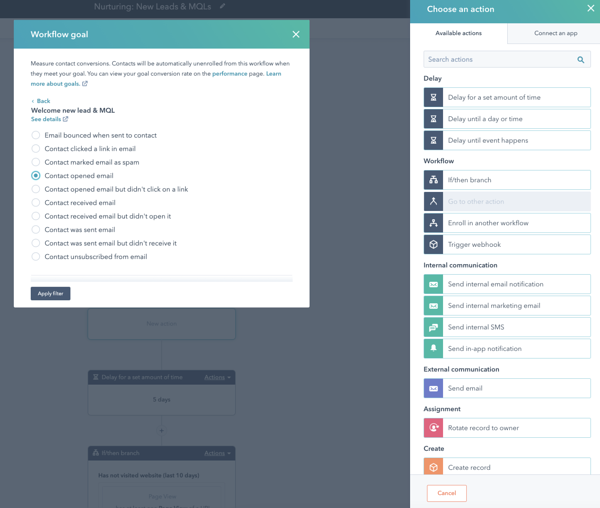
New Call-to-action

Categories B2B

8 Valentine’s Day Marketing Campaigns We Love

Love, flowers, chocolate, blah blah blah …

Where are the marketing results?!

Okay, probably not what your Valentine’s date cares about. But if you’re a marketer, you might be interested in merging the most lovey-dovey of days with your marketing. But how?

Download Now: Free Ad Campaign Planning Kit

Well, these companies have figured out some creative ways to leverage the warm and fuzzies (or unadulterated rage and crushing loneliness … whatever) that Valentine’s Day instills in people.

If you don’t have a marketing campaign planned for the 14th, maybe some of these will inspire you to get in on some last-minute Valentine’s Day action.

8 Effective Valentine’s Day Marketing Campaigns

1. Ranch Dressing’s Customized Bottle

Nothing says Valentine’s Day like giving someone a bottle of — Ranch Dressing?

In 2021, while flower companies and B2C brands were highlighting the romantic gifts partners could give to each other, Hidden Valley took a funny approach to this strategy by offering audiences customized Valentine’s Day-themed bottles of Ranch salad dressing.

Ranch Dressing Customized Valentine's Day bottle

While this seems like an odd gift to some, Hidden Valley knows that they have fans out there that just love to cover everything they eat with Ranch dressing. To those audiences, this gift is funny, personalized, and potentially useful.

2. Pandora’s Little Acts of Love

A common pushback people give for Valentine’s Day is that appreciation for loved ones should be shared all year round. Jewelry company Pandora emphasized that small acts of love are suitable anytime with their “Little Acts of Love” placement in 2022. 

The ad shows couples displaying acts of kindness towards one another that would be appreciated any day of the year. This ad reminds us all that thoughtful gestures can go a long way.

3. 1-800-Flowers’ Galentine’s Day

Valentine’s Day isn’t just for significant others, and 1-800-Flowers wants friendships to be celebrated as well.

This ad depicts two friends talking about how they established their friendship, reminding the viewer that platonic love also deserves to be celebrated. The two friends in the ad ask each other thoughtful questions about their friendship and how much they mean to each other. 

It’s an emotional ad that will inspire you to call your best friend, and maybe send them some flowers.

4. Hallmark’s Tell Them They Matter This Valentine’s Day

A Valentine’s Day ad with an important message — everyone deserves to feel like they matter. This ad depicts a young woman who is inundated with negative messages from peers on social media. The messages are pretty bleak and would be hard to hear for anyone. 

At the end, she finds a Valentine’s Day card in her locker from her best friend reminding her she matters and is loved, which helps drown out the negativity of the messages at the top of the ad. Though more series in nature, this heartwarming ad shows how powerful our words really are, and inspires us to show more kindness to one another.

5. Target Valentine’s Day Haul Instagram Post

Many people have experienced walking into Target without a list, relying on Target to tell them what they need. This user-generated post on Target’s Instagram account captures the spirit of what we all love about Target — how easy it is to load up on fun items (though our bank accounts may not share the love). 

In the video, the original poster fills their cart with festive Valentine’s Day merchandise at their local Target. Though it isn’t a traditionally produced ad, it’s a relatable post for Target shoppers who may have been inspired to visit their local store and pick up some of the items they saw featured in the post to celebrate.

6. MeUndies Match Me Valentine’s Day

This relatable MeUndies ad from 2021 captures the spirit of communicating via Zoom that many people have become familiar with since early 2020. 

In the ad, couples talk about some of their pre-pandemic plans including travel, and weddings. Though many of those events didn’t go as planned, the couples talked about ways they’ve grown closer despite the challenges and uncertainty brought on by the pandemic all while wearing matching merch from MeUndies.

7. Winc’s Be Wine Instagram Post

Wine is a popular Valentine’s Day gift that is up there with roses and chocolate. Wine subscription company Winc typically devotes real estate on their social channels for Valentine’s Day-themed posts in the weeks leading up to the holiday. 

In 2021, the Winc Instagram account had a series of posts consisting of unique and user-generated content related to Valentine’s Day. The “Be Wine?” post was among the most popular. We loved the punny caption and heart-themed visuals.

8. OpenTable’s Millennial Experiences

If you’ve ever marketed to millennials, you may know that millennials value experiential gifts. Or, as OpenTable says in this 2020 ad, dates. 

In 2020 OpenTable released 14 ads as part of a two-week countdown to Valentine’s Day, encouraging customers to make reservations early to avoid the holiday rush.

Each of the ads targeted a different audience that could benefit from using OpenTable to make Valentine’s Day reservations, with a clear call-to-action and messaging that appeals to the ideal viewer. 

Honorable Mention: Match.com’s “Match Made in Hell” campaign.

Technically, this campaign wasn’t created for Valentine’s Day specifically. But, many of our marketers thought it had all the perfect elements of a great Valentine’s Day campaign. Because of this, we wouldn’t be surprised if it sees a lot of circulation in February.

In the commercial, directed by actor Ryan Reynolds, Satan sits in Hell using Match’s app when he sees he’s matched with a woman named 2020. When he meets up with her on Earth, he nervously says “Hi 2-0-2-0.” She replies, “Please, call me 2020” — pronouncing it like the year. 

As the commercial continues, 2020’s character appears to be the epitome of everything that happened in 2020.

For example, which launched in December, shows Satan and 2020 causing mischief, stealing toilet paper from store shelves, having a picnic inn empty stadiums, and ultimately posing for a selfie in front of a dumpster fire.

The couple frolics to the familiar sounds of Taylor Swift’s hit song, “Love Story.” which also sparks a sense of rom-com nostalgia for millennials. 

On the same day of this ad’s release, Match and Reynolds also shared another commercial showing the pair explaining how they met in couple’s counseling.

In this video, Satan explains how he found 2020 on Match:

“I started by using the Match custom search filter. I filtered out joy, happiness, toilet paper, and reason,” Satan says in the video below:

Although this didn’t launch in February, it was a very clever newsjacking example that many of our marketers say they enjoyed when they were asked to share their favorite Valentine’s campaigns.

While 2020 was a difficult year for many, Match and Reynolds identified a tasteful way to create content that audiences could relate to. At the same time, they still told an epic, hilarious love story with a pleasant, entertaining tone. Although they discussed a truly terrible year, they did so in a way that felt like escapism for the viewer.

Valentine’s Day Campaign Takeaways

As you create and launch Valentine’s Day campaigns, take note of these strategies many of the brands above used:

  • Grab your audience’s attention: Like with any holiday, marketers around the globe are churning out content around it. To compete with this overly saturated Valentine’s Day ad landscape, you’ll need to grab and keep your viewer’s attention with entertaining elements or valuable information.
  • Be relatable: Around this time of year, many people are inundated with high-budget Valentine’s Day ads that offer them no useful information or value. Even if you want to tell a mushy romance-fueled love story with your content, make sure it still feels relatable or authentic. To do this, you can leverage tactics like telling a story your audience will relate to, or leveraging user-generated content from your followers — like Twitter has.
  • Test out different platforms: While some companies on this list took to Instagram, others embraced physical campaign strategies like special products or billboard use. 

Editor’s Note: This blog post was originally published in Feb. 2013, but was updated for comprehensiveness.
Improve your website with effective technical SEO. Start by conducting this  audit.