Categories B2B

How to Create Landing Pages for Real Estate [+Examples]

When people are looking to buy or rent a new house, what’s the first thing they do? That’s right, they go online.

In fact, 51% of home searches start on the internet. People search Zillow, Apartments.com, Redfin, and local real estate websites.

Additionally, people also turn to the internet when they want to value their home or learn more about the real estate market.

All this to say that when it’s time to generate leads in the real estate industry, posting online and creating a landing page is the first step.

In this post, we’ll discuss how to create a landing page for real estate and review sample real estate landing pages to inspire your own.

Free Resource: Real Estate Strategy Template

1. Choose the type of landing page you need.

Before you can get started, it’s important to understand the different types of real estate landing pages.

The three main types include:

  • Home valuation: This type of landing page lets users type in their address and get a quick idea of how much their home is worth.
  • Buying/selling websites: These websites are where buyers and sellers go to place listings online, including Zillow or Redfin.
  • Free content: This landing page is usually targeted toward those who want to start working in the real estate industry or are in the beginning stages of buying/selling. You can place free content on a landing page to get leads to download the offer so when the time comes to buy or sell, they think of you.

Depending on the type of landing page you need, the process and design will be a little different.

2. Use a simple lead capture form and search function.

When creating a landing page for real estate, the goal is to gain leads through a lead capture form asking for information (whether it be a name, email, or phone number). The first step to doing this is to have simple search functionality that is front and center in your design for home buying/selling or home valuation.

If you’re creating a landing page for free content, you won’t need a search function, but you will need a lead capture form that is simple and easy to use (this should also be a large part of your design that is easy to see).

The simplicity of the search function or lead capture form will make your call to action (CTA) stand out and get people searching through your site.

With Zillow, the home page has a simple search function so homebuyers can search for houses in a certain area. This keeps the site clean and it gets straight to the point — no distractions.

real estate landing pages: zillow

3. Always pay attention to curb appeal.

Everyone knows that curb appeal is important when it comes to buying or selling a home. The same holds true for your landing page. Use clear, crisp imagery that inspires home buyers to imagine their new life in the house you’re selling. When this happens, buyers are more likely to convert.

The visual design of your landing page is even more important than most landing pages. If people don’t like the design of the landing page, they might not even like the house because they can’t see past the poor web design.

4. Write honest copy.

The copy you write for each house should be honest. You’ll want to include detailed information and use descriptive adjectives that will paint a picture for prospective buyers. But don’t embellish.

When people start visiting your house they’ll see what’s true and what isn’t. If you aren’t being honest in your copy, then people won’t want to work with you because they can’t trust you. You should use short copy that’s punchy and to the point.

Buying or selling a home is a major financial and life decision. Trust is of the utmost importance between you and your prospective leads.

5. Include testimonials.

Although most home buying efforts begin online, most people hire real estate agents through referrals. In fact, 42% of sellers who use real estate agents find these agents through referrals and 82% of all real estate transactions come from referrals. This means that customer testimonials and reviews are very important. On your landing page, include testimonials so visitors know they can trust you.

It’s a particularly good idea to place testimonials near your CTA, so it motivates people to click on your form.

You can also place badges or awards on your landing pages to instill a sense of professionalism and credibility.

6. Highlight the benefits of your offer.

Depending on the type of landing page, you might need to highlight the benefit of your content offer. For example, if you have a home valuation calculator, it’s important to write copy that emphasizes why this will give a seller more power in the process. Or if you’re giving away a free checklist or ebook, explain how it helps people in the process of buying or selling.

This is how you’ll communicate your value with your leads, which will inspire them to convert.

7. Be personal.

The intent of your landing page is important. Your landing page will look different if it’s a home valuation, buying/selling, or content offer page. The point of creating a landing page is to create a personal experience for those interested in certain offers.

That’s why landing pages are different from your everyday website. These pages keep customers focused on going down the path they want: searching for a home, getting in contact with an agent, etc.

Additionally, the design of your landing page should be personalized to the experience of the viewer. This means that your page should be optimized for mobile, tablet, and desktop experiences. You might also have an app that will help your visitors come back anytime they’re looking for a home.

Best Real Estate Landing Pages

1. Redfin Home Valuation Landing Page

Talk about a simple landing page. This is a no-fuss home valuation landing page that lets visitors get a real-time estimate of how much their home is worth.

This landing page is a good example of being simple, using short, punchy text and engaging graphics to draw attention to the simple CTA of entering a home address.

real estate landing pages: redfin

2. Hill Realty Group

This is a great example of a realty group’s home search landing page. First, it focuses on the curb appeal of the properties and areas that it sells houses in. Then, it includes a simple property search where you can include your location, bed and bath requirements, etc.

real estate landing pages: hill realty group

3. The H. Williams Group

This is a sample real estate landing page with a content offer. This realtor has a simple lead capture form enticing visitors to download her guide to Alexandria. This is a great content offer because people looking for a guide to the area are most likely going to move there and may contact her to be their realtor.

Additionally, this page is great because all the focus is on the simple capture form. The design is sleek and simple, with a logo, picture, headline, and capture form. That’s it. That’s why this landing page works.

real estate landing pages: the H Williams group

Creating a real estate landing page is very important for marketing your listings or offers. That’s why it’s important to create a landing page that will convert visitors into buyers.

New call-to-action

Categories B2B

9 Creative Company Profile Examples to Inspire You [Templates]

What do your customers know about you?

Is it that you sell X product and that your website is located at example-domain.com? That’s not enough to build a brand identity that resonates with buyers and establishes your brand as the right choice.

Free Download: 6 Customizable Company Profile Templates

Creating a compelling company profile will help your customers understand your company beyond the basics. Ultimately, your company profile is what intrigues a new visitor to check out your products or services in more detail, and nudge potential customers into choosing your business over competitors.

In this article, we’ll discuss:

To illustrate, lets’ take a look at two famous examples.

We all know about the infamous rivalry between Dunkin’ Donuts and Starbucks. At the end of the day, they both sell coffee — but they’ve each cultivated strong, unique brands, and have attracted very different audiences as a result.

You can often overhear heated arguments regarding the topic, with people vehemently claiming one coffee chain to be better than the other. But let’s say you didn’t know about the rivalry, and you’d never heard of either Starbucks or Dunkin’ Donuts before.

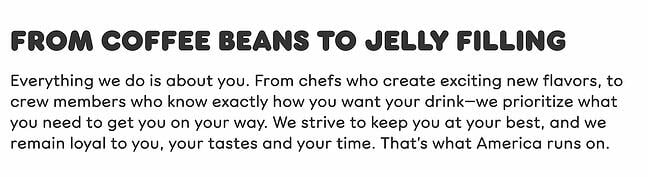
Instead, you stumble across these two very different company profile statements:Company profile example: Dunkin Donuts

Image Source

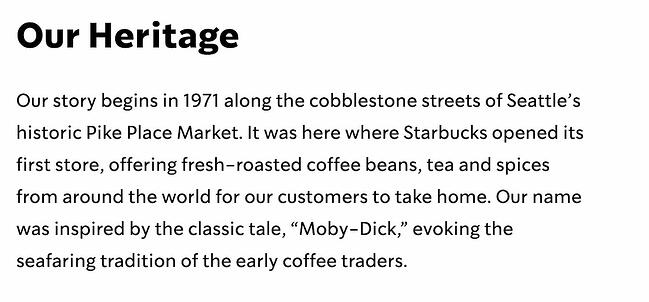
Company profile example: Starbucks

Image Source

From their opening paragraphs alone, I’m willing to bet you’re persuaded to check out one brand in more detail over the other. It isn’t just the language itself that gives you a sense of their business — it’s the design, the font, and the color.

That’s why having a company profile is so important.

Why Company Profiles are Important

It’s quite easy to skip over company profiles and simply write a cut-and-dry “about” page that doesn’t tell much about you.

Company profiles go a step beyond the standard “about” page by sharing how your company got started down to where it is today — and why you continue to serve customers.

Here are some of the reasons why having a company profile is important:

A company profile will differentiate your brand.

A company profile will naturally describe what makes your company unique. It will automatically differentiate your brand because no other company has the exact same founding story and reason for existing that you do. Your history and values are integral parts of a brand positioning strategy, and a company profile is the one place where you can mention these pieces of information without it feeling extraneous or out-of-place.

A company profile may justify a higher price point.

If you go into detail about your production values or ethically sourced materials, you may be able to justify a higher price point for your products and services. For instance, Starbucks’ coffee may not necessarily be better than Dunkin’ Donuts’ coffee — but because Starbucks goes into detail about its high-quality ingredients, it immediately creates the sense that you’ll be paying a premium for its goods.

A company profile will build your reputation.

What do you want to be known for? As the company that started as a small family-owned shop but then grew into a billion-dollar enterprise? As the company that places sustainability and ethics at the forefront of its efforts? You can build your reputation through marketing, service, and sales campaigns, but it all begins with the company profile.

Who you are, where you come from, and why you exist will create the groundwork needed for fostering a positive reputation.

The importance of creating a company profile can’t be overstated, but if you’re not sure how to write one, don’t fret — below, we go over what you should include in your profile.

Your company profile shouldn’t be a regurgitation of your “about us” page — though your company profile can certainly be part of your “about us” page. The truth is, a company profile is less about what you do than about why you do it and how you got started doing it.

Here’s a handy list of things you should include in your company profile:

  • Your business name
  • The year you were founded
  • Your founder’s name
  • Your original business name, if you had one
  • The original reason your business was founded (or the former vision or mission for the company)
  • How that reason, mission, or vision changed over the years
  • A description of your products and services
  • Your current mission and vision statement
  • Your motto or slogan
  • Your company values

In your company profile, you should strive to describe how you solve for customers’ pain, what problems you seek to solve, and why you’re different from the competition. Those three pieces of information should be infused into every section of your company profile, as opposed to having dedicated sections.

If you’re not sure how to get started, below we’ll explore some of the most creative company profile examples. That way, you can create a company profile that will attract and engage the right audience. Once you’re done perusing these impressive examples, take a look at our template to get started designing your own.

Company Profile Examples

1. Starbucks

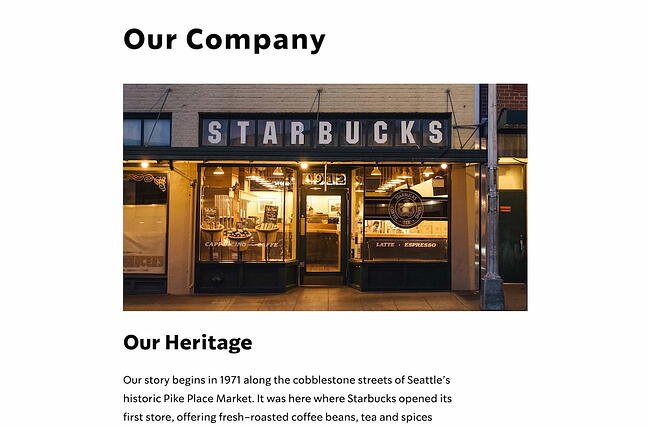
Company profile example: Starbucks (full)Starbucks’ company profile has it all — the company’s mission, background story, products, store atmosphere, and even folklore regarding the name. Best of all, they somehow manage to pull off sounding both genuine and grandiose. I don’t know many other coffee stores that could claim that their mission is “to inspire and nurture the human spirit.”

Starbucks’ company profile is a fantastic example of a store with a common household product — coffee — managing to stand out from the competition through their mission and values.

2. Wales Bonner

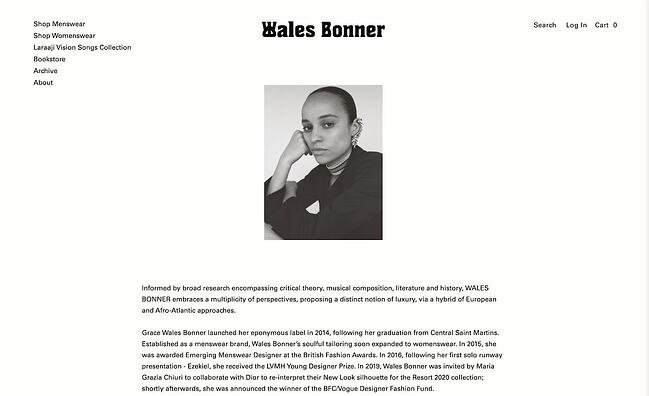
Company profile example: Wales BonnerIf your company has an interesting and intellectual history, you might consider creating a company profile like Wales Bonner’s. The profile reads like an essay from the very first line — “Informed by broad research encompassing critical theory, musical composition, literature and history, WALES BONNER embraces a multiplicity of perspectives, proposing a distinct notion of luxury, via a hybrid of European and Afro-Atlantic approaches.”

After sharing the brand’s intellectual background, it then describes the owner’s path to founding it, starting from the time she was a college student. With a good balance of image and text, the timeline serves as a reminder of Wales Bonner’s stability and growth.

3. Diehl Group Architects

Company profile example: Diehl Group ArchitectsFor both cleanliness and ease-of-use, take a look at Diehl Group Architects’ company profile. The web page uses clickable boxes to separate topics, allowing users to choose which subject they’d like to learn more about. Additionally, the entire design — including the page’s background, which displays a floor-plan — mirrors the company’s purpose.

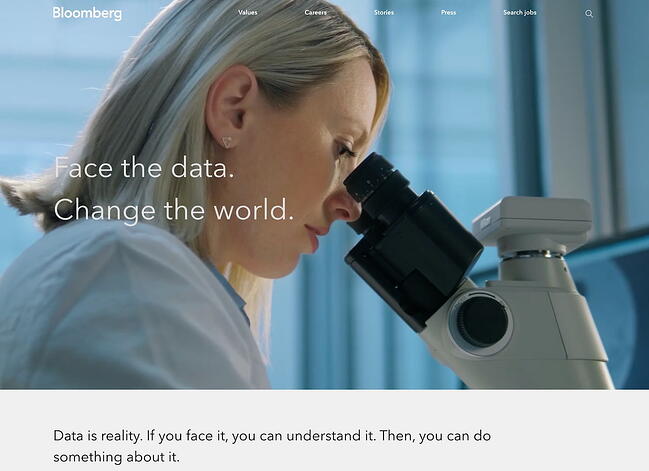
4. Bloomberg

Company profile example: Bloomberg

Nearly nine out of ten people report wanting to see more videos from brands, so you might consider using a compelling video to convey your company’s story, like Bloomberg does in their company profile.

Additionally, Bloomberg’s profile proves the company knows its audience — they offer a few quick statistics, and then link to other areas of the site, such as Careers and Tech. While another business might do well offering a creative, long-form story, Bloomberg’s typical demographic is likely more analytical.

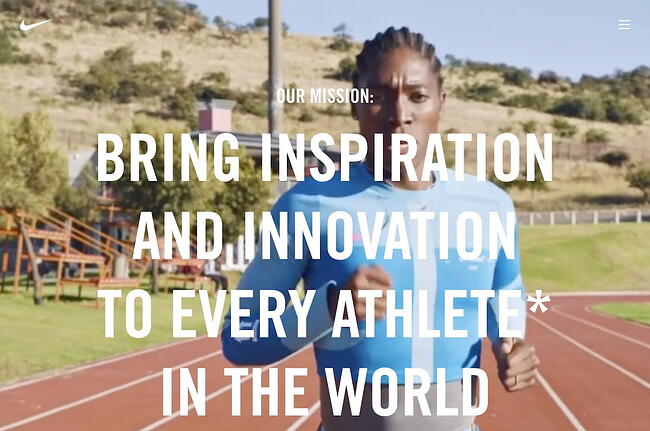
5. Nike

Company profile example: NikeYou can get a sense for Nike’s two primary purposes almost instantly — fitness and people. When you first open their company profile, you’re greeted with videos of people of different ages, gender, and nationalities playing sports.

Additionally, their initial introduction is this: “Bring inspiration and innovation to every athlete* in the world.” Below, beside the asterisk, it says, “If you have a body, you are an athlete.” As you scroll, you’ll see information on their internal diversity and inclusion initiative, their global community impact, and their sustainable business program, with very little mention of their products.

Nike’s company profile portrays a larger, grander vision, compelling an audience to believe in their brand even before they purchase a product.

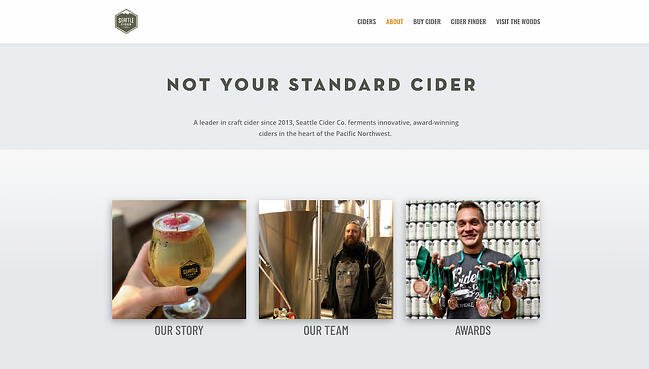
6. Seattle Cider

Company profile example: Seattle CiderSeattle Cider Company’s profile is minimal and engages the user through compelling animations that demonstrate the company’s cider selection. The page flows seamlessly, and provides critical information regarding the product before displaying the company’s mission and values. This profile is a good example of a company that understands its users’ concerns (in this case, quality ingredients), and addresses those issues while still displaying personality and flair.

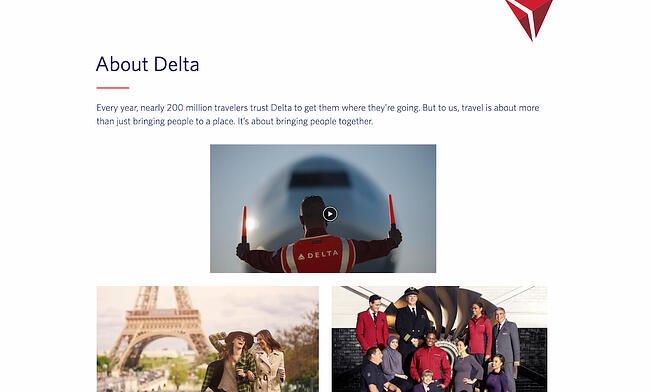
7. Delta

Company profile example: Delta

Delta’s page is well-organized by topic, and showcases the company’s values, including efforts to engage with the community and promote sustainability. They’ve included brief meta-descriptions below each category. The design allows for users to click-through if they want to learn more. Overall, Delta’s company profile is simple and uncluttered, but includes all the necessary information to demonstrate why Delta is unique.

8. Roam Loud

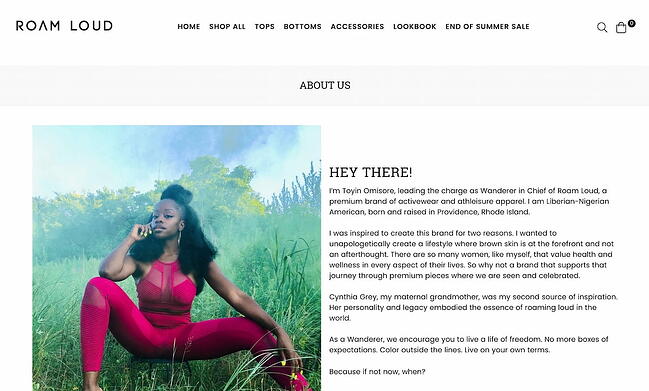
Company profile example: Roam LoudDo you have a personal story behind your company’s founding? Roam Loud’s example is one you may just want to copy. The brand’s company profile is simple yet effective, starting with a friendly greeting (“Hey there!”) and ending with a list of values. In between, the founder makes it clear why she created this brand — and why its existence is so important to her and prospective buyers.

9. MAD Architects

Company profile example: MAD ArchitectsFor simplicity and informativeness, take a look at MAD Architects’ company profile. The profile isn’t shy about the firm’s numerous accomplishments, and it gives readers the opportunity to dive deeper by listing the firm’s exhibitions, lectures, awards, and publications, all visible on different tabs within the same page. If your business is a leader in its field, it’s important to establish that in your company profile. Consider creating one similar to MAD Architects’ profile.

With this in mind, the description serves to align with the prospect as they are evaluating which providers are right for them. By leaning into a strong brand voice and providing details about what makes your company unique or superior to the prospect’s alternatives, customers will believe in your brand and want to do business with you.

Examples of Company Descriptions

Here are some examples of company descriptions that enhance their organizations’ company profile.

1. HubSpot

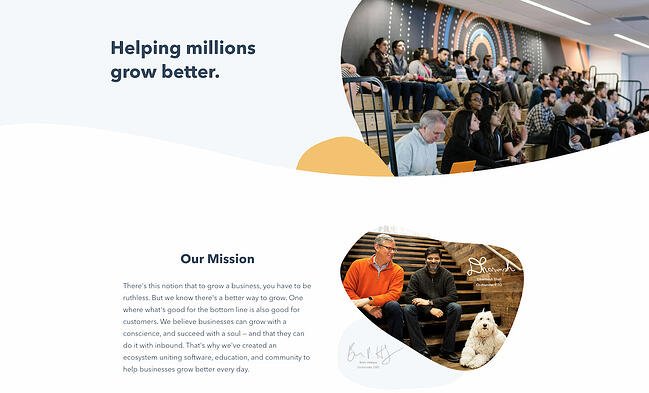
Company description example: HubSpotOn HubSpot’s company profile page, you can find a quick description of the company’s mission and what it does. In just a few words, HubSpot explains that the company’s goal is to help businesses grow through its specialized inbound software.

2. Landed, Inc.

landed inc company description

Landed, Inc.’s About Us page starts with their vision statement: “If we want stronger schools and safer communities, we need to support those who make it possible.” From there, they talk about their history before launching into their mission statement and company description. The latter is summarized succinctly in bullet points in its own separate section, making it easy for prospects to find and understand.

3. H&H Wealth

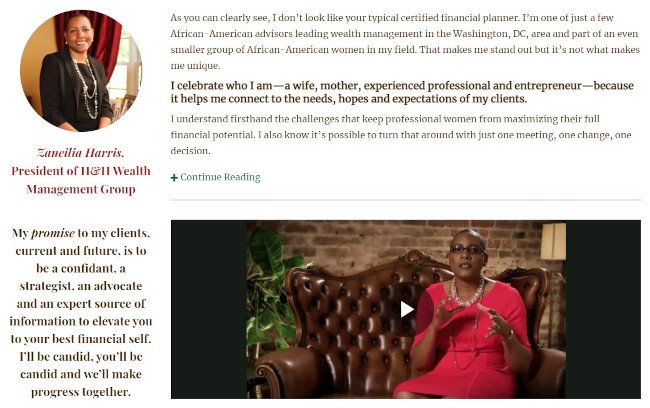
h&h wealth company descriptionIn the “Why Us” page of their website, the founder of H&H Wealth calls out what makes her different from other certified financial planners and leans into why her customers benefit from her unique perspective. She also makes a promise to her clients, which sets the expectations and the tone for the service being delivered. As a result, the tone comes across as that of a partner rather than a vendor.

4. Tesla

Tesla Company description

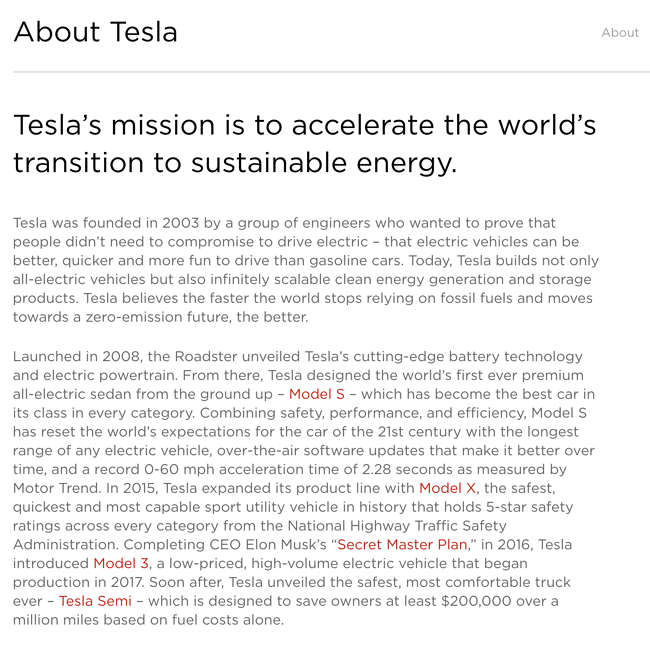
In this description, Tesla explains when it was founded, the company mission, and what types of products it specializes in. It also gives added information about the history of the company and how it has continued to grow with the same values.

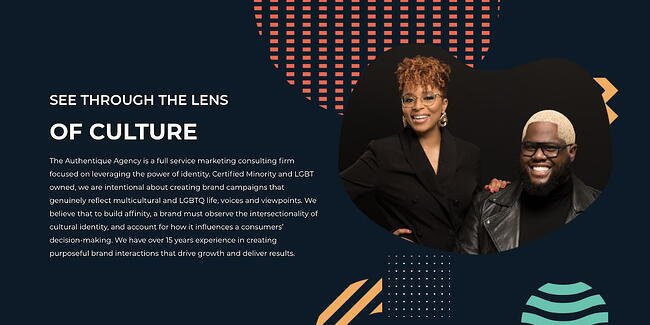
5. Authentique Agency

Company description example: Authentique AgencyAuthentique Agency provides a lot of information up front for their customers because they know that partnering with an agency (and choosing which one on top of that) is a big decision for scaling businesses. It not only provides information about its values, but about its long-standing experience in the industry and primary goals when they work with clients.

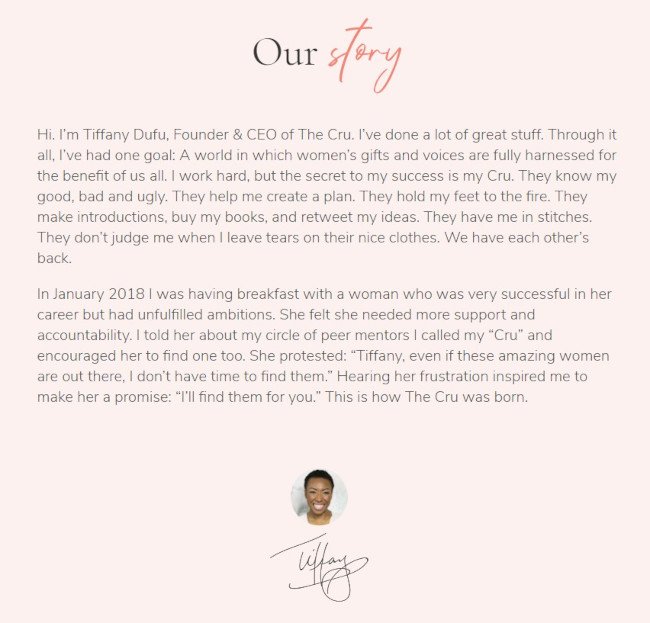
6. The Cru

the cru's company profileThe Cru is a service that connects members with like-minded women to fuel personal and professional growth. They use an “Our Story” page as a company profile, where the founder details how the organization was formed and how she now has her own “Cru” (a play on the word “crew”). This summary is a testament to the value of the service. The “letter from the founder” style also feels very personal and welcoming.

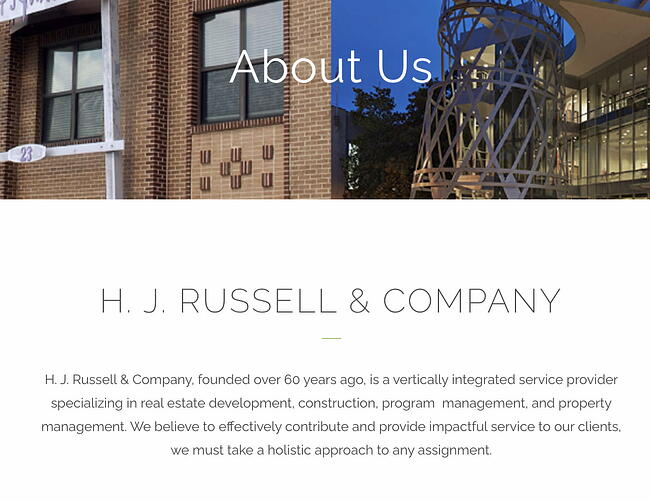
7. H.J Russell & Company

Company description example: H&J Russell

H.J Russell & Company opens up its description with its history and specialities: “H. J. Russell & Company, founded over 60 years ago, is a vertically integrated service provider specializing in real estate development, construction, program management, and property management.” It also makes its values clear in the last sentence, so that you get a snapshot of the company’s values, key value proposition, and leadership status in just a few sentences.

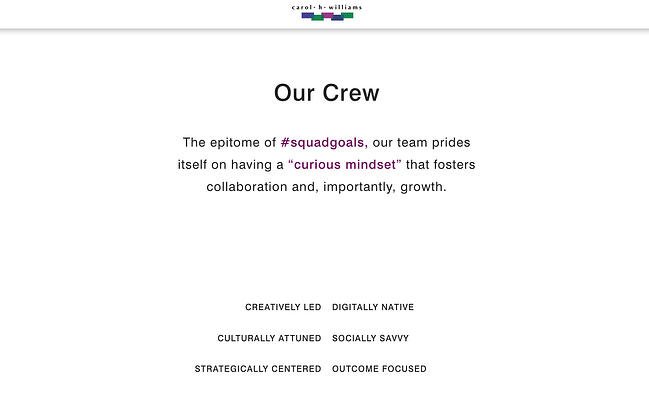
8. Carol H. Williams

Company description example: Carol H. Williams

Carol H. Williams, an advertising agency, doesn’t have an “about” page or a formal company description. But it does include a snapshot of what the company is all about in its “Team” page. It emphasizes its core values and uses trendy language (“#squadgoals”) to establish that it keeps up with the current trends.


Company Profile Templates

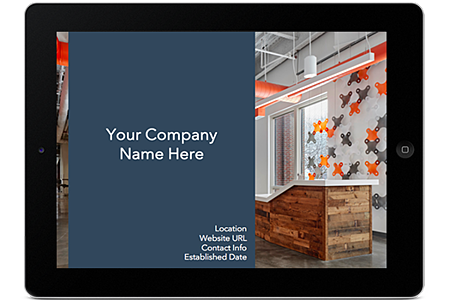
Company Profile Template

Download These Templates for Free

  • Company name
  • Established date
  • Physical address per location
  • Contact information

About Us / Our Story / Our Beginning

Here, you’ll want to include a brief introduction to your company, including where, when, and by whom the company was founded, the company’s mission statement, and/or the company’s vision and purpose. In this section, you don’t necessarily want to include products or services — instead, focus on your bigger meaning, and how you stand out from competitors. Tell your story in a compelling way — for instance, HubSpot starts their About Us section with, “More than ten years ago, we had a vision — an inbound world”. HubSpot doesn’t mention their products until further down the page.

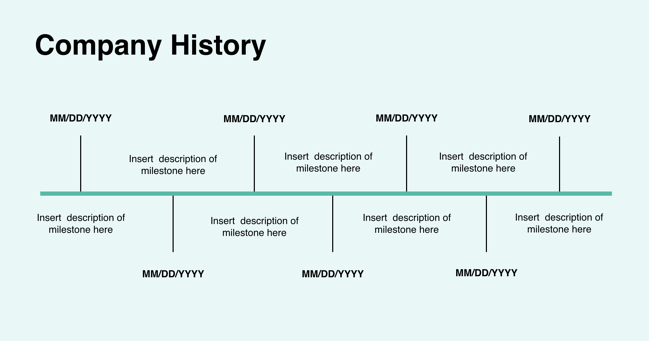
If you want to add your company history in a more compact way, consider adding a company timeline, like this one:

Company history on profile template

Download This Template

Our Mission / Values

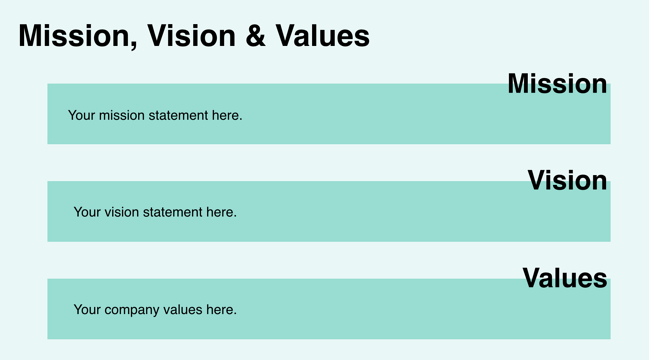
Here, you’ll want to say what your company stands for on a larger scale. What is your ultimate goal, and what do you hope your products or services will give people? Take a look at these inspiring company vision and mission statement examples for ideas. Here’s an example:

Compact Mission, Vision, Values slide in company profile template.

Download This Template

Our Team

Provide a picture or brief paragraph describing your team — you might focus on leadership, or provide an explanation of your company’s culture. Ultimately, this section should help users understand how your employees can uniquely serve them.

Team section template for company profile

Download This Template

Our Product / Services

Describe a high-level overview of what your product is, and how you hope it will positively impact the user’s life. You can link to a Product page if necessary, so keep this section relatively general.

Start Your Company Profile Today

There are a few elements that can contribute to a stellar company profile, and by adhering to a template, you can build one quickly and effectively.

Editor’s Note: This post was originally published in January 2019 but has been updated for comprehensiveness.Discover videos, templates, tips, and other resources dedicated to helping you  launch an effective video marketing strategy. 

Categories B2B

The Best Integrated Marketing Campaigns, According to HubSpot Marketers

Integrated marketing is any marketing campaign that uses multiple channels in execution. For example, you might see a popular new donut flavor in a commercial, then drive past the donut shop to see posters of the donut. And if you flip through Instagram once you get to your destination, you might see a GIF on your feed, displaying the donut.

This style of marketing is great for boosting leads and brand awareness. Using multiple sources to deliver the same campaign diversifies the audience that interacts with its content. In this post, let’s look at some recent integrated marketing campaigns that delivered a great experience for customers and leads alike.

→ Download Now: Free Marketing Plan Template

Best Integrated Marketing Campaigns

1. Hyundai Elantra

Channels: Spotify, Website

A great example of an integrated marketing campaign comes from the 2021 Hyundai Elantra award-winning campaign.

To increase brand awareness among the younger, millennial demographic, Hyundai partnered with Spotify and musicians in LA, Miami, and NYC to give customers an insider’s guide of the city.

The city guides were made available to audiences everywhere through Spotify podcasts, where drivers could follow along from place to place by listening to the podcast.

These guides were audio, video, and even a microsite that housed itineraries and stop descriptions.

As an associate marketing manager at HubSpot, I think this is a great campaign that utilizes the right channels for the audience that Hyundai is trying to reach.

2. “Fatima,” the movie

Channels: Facebook Premiere, other social media channels

In 2020, McKinney and Picturehouse teamed up to launch a new film, Fatima, the historical drama of the Virgin Mary’s appearances to three children in Fátima, Portugal, over a hundred years ago.

The companies developed social content to inspire, connect and elevate the film’s key themes. It was a social campaign that included more than 200 pieces of content reaching 14 million people.

But one month before the movie’s release, the world and Fatima were put on pause due to COVID-19. To keep people interested and engagement up for another four months, the companies created “Together In Spirit,” a virtual pilgrimage transporting people to the Shrine at Fátima. The campaign videos got more than 27 million views.

At a time when everyone was isolated, the goal of the broadcast was to provide a message of hope, and in the process, it became the best-performing Facebook Premiere event in motion picture history.

3. Hulu’s HAHA Awards

Channels: Twitter, LinkedIn, YouTube, Website

One of my favorite integrated marketing campaigns to come along is the launch of Hulu’s HAHA Awards. HAHA is a clever acronym, standing for “Hilarious Animated Hulu Awards,” which I love.

Initially, I saw the commercial during a regular ad break while watching — of course — Hulu:

Because there’s no awards show for animated content, the team at Hulu decided to change that — and get fans involved. Fans can vote for the awards on Twitter and Hulu’s website.

I appreciate that anyone with a Twitter account can participate in voting, regardless of if they are Hulu customers. Some of the categories are popular TV shows, like Archer and Bob Burgers, so the masses can vote. Additionally, people without a Twitter or Hulu account can vote, just by visiting the website.

The tactic of using YouTube to introduce the campaign, as well as alternate methods of voting, makes this campaign a chance for Hulu to delight customers and earn more quality leads from social media.

4. Victoria Monet’s “Audience”

Channels: Instagram, Facebook, Billboards

For the single, “Experience,” R&B singers Victoria Monet and Khalid collaborated with Spotify for a release campaign. The campaign included online and in-person marketing tactics and is the favorite campaign of HubSpot staff writer Jay Fuchs.

In Canada, there was a billboard put up in Toronto, promoting the song’s Spotify release. In response, Monet posted a picture on Instagram to share with her fans and promote the single:

The use of online and in-person marketing methods makes this integrated campaign one that can be seen from anywhere. From the billboard in Canada to international Facebook and Instagram fans, the release of “Experience” was anticipated globally. In fact, in one month, the single became Monet’s most popular song on the streaming service.

5. Gillette, “The Best Men Can Be”

Channels: Website, YouTube

“In 2019, Gillette launched its campaign, ‘The Best Men Can Be’. The campaign included an inspiring video, a landing page that celebrates male advocates and leaders in the community, and a hashtag, #thebestmencanbe, to encourage user participation across social channels,” says HubSpot Marketing Manager, Caroline Forsey.

integrated marketing campaigns: gillette

Image Source

“The campaign, created in response to the #metoo movement, urged men to hold themselves to a higher standard,” says Forsey. In the corresponding ad for the movement, viewers are shown hypothetical real-life instances of men stepping in to be themselves, and making positive change in their community. To heighten awareness of the movement, the landing page highlights real accounts of men upholding the hashtag Gillette created.

“While the campaign received some backlash from both stakeholders and consumers, I think it was worth the price because it redefined the shaving brand as a relevant, values-oriented brand. For me personally, I shared the ad with all my male friends and family members, and it sparked a discussion — which, really, is what marketing is all about,” Forsey commented.

Gillette’s tactic of getting their customers involved proved to be successful in the moment and long-term. Discussions, like the one Forsey had with men in her life, were happening nationwide. In fact, my university class had one about the campaign. This integrated campaign, boosted by real accounts, was proven to be not only successful but valuable.

6. REI, #RecreateResponsibly

Channels: Website, Instagram

Outdoor activity is at the core of REI’s products. REI sells camping essentials, such as tents, clothes, and insulated containers. In 2020, REI partnered with several groups in Washington state that aim to preserve wildlife and nature, making it the favorite campaign of HubSpot marketing manager, Clint Fontanella.

Outdoor Alliance, The Outdoor Industry Association, and national parks came together for the #RecreateResponsibly campaign. The point of which was to educate the public about how to stay safe when venturing outdoors, with the main content player being graphics similar to the one below:

integrated marketing campaigns: REI

Image Source

This graphic was shared on social media to spread awareness of tips to responsibly venture outdoors to avoid health concerns. #RecreateResponsibly‘s hashtag asks followers to share the tips in real-life situations, shared by REI’s Instagram.

With the hashtag and partnerships, the campaign is also boosted by related blog posts on REI’s website. Posts like this one offer ways to stay safe while traveling.

The hashtag has been used by The National Park Service, Colorado Parks and Wildlife, and Los Angeles National Forest, and brings awareness to large audiences. The partnerships and REI’s content share an educational message and an interactive component — making this campaign diverse and engaging.

7. Melt Cosmetics, “She’s in Parties”

Channels: Website, Instagram, Facebook

“She’s in Parties” is the name of an eyeshadow palette from Melt Cosmetics. Says staff writer Rebecca Riserbato, “The purple palette sparked a hashtag of the same name on Instagram. On the landing page for the collection, there’s a section dedicated to Instagram posts with the hashtag.”

The campaign inspired a purple theme, which took over the company’s Facebook and Instagram accounts. Along with this social media content, influencers who were sent the palette began to upload their reviews on YouTube.

For this launch, a variety of social tactics were used. A matching social campaign, user-generated hashtag, YouTube recommendations, and a revolving landing page were all contributions to where the campaign was distributed. When you know where your audience spends their time, like the team at Melt, you can reach them with a diverse, omnichannel strategy.

8. Brew Dr. Kombucha, “Love Wins”

Channels: Website, Instagram

“In May 2020, Brew Dr. Kombucha released its signature kombucha with limited-edition colorful, rainbow-wrapping for Pride Month,” Forsey recalls. “The wrapping has the lifeline number to The Trevor Project printed directly on it — the company partnered with The Trevor Project and supports the organization through proceeds of its limited-edition kombucha.”

integrated marketing campaigns: Brew Dr. Kombucha

Image Source

“Along with the limited-edition wrapping, the company created a dedicated landing page for #LoveWins, and supported Pride Month with the #LoveWins hashtag across its social channels.”

Forsey continues, “Ultimately, I chose this campaign as one of my favorite integrated campaigns of 2020 because I was inspired to see this brand uplift and inspire communities while giving proceeds back to an incredibly worthy cause.”

The brand chose a social movement that was important to them, Pride, and celebrated it with this integrated campaign. This tactic brings awareness to a social cause, a respected organization, and enhances a celebration.

9. The New York Times, “The Truth Is Hard”

Channels: Commercial, Facebook, Billboard

In early 2018, the newspaper The New York Times was struggling. With dwindling subscriptions and dwindling trust in the news from the general public, the team behind the famous publication had to figure out how to build widespread trust.

That’s where “The Truth Is Hard” came in — it was a campaign designed to offer transparency. “I think the best advertising not only gets you to pause and pay attention at the moment but also encourages the viewer to take action and learn more after the fact,” says Alicia Collins, senior brand manager.

The New York Times’ ‘The Truth Is Hard’ campaign does that. It tells a clear and impactful story, and demonstrates the value and importance of journalism right away.”

Following a tribute to journalism at the 2018 Oscars, the campaign began. The Times aired a minimalist film to display the clarity of newsprint, and challenged viewers to think about what truth means to them.

Refugee crises, sickness, and wars — the second phase dove deep into conveying what journalists endure in order to deliver the most accurate coverage. And, with a paid media campaign on Facebook, Twitter, and Instagram, all of this content was broadcast for the world to see.

integrated marketing campaigns: The New York Times

Image Source

This campaign earned the Times their highest number of new subscriptions since the paywall started, increasing signups by 100%. The multiple channels used by the news source to restore their image to the public worked and made this integrated campaign a win.

Get Started With Integrated Marketing Campaigns

Integrated marketing campaigns can help increase brand awareness, generate leads, and delight your customers. The best integrated marketing campaigns have an omnichannel approach, encourage audience engagement, and hopefully improve your brand reputation.

And the only way to truly create an integrated marketing campaign is to have a marketing plan template to help you identify the right channels, budget, and strategy for your campaign.

Marketing Plan Template

Categories B2B

How to Write a Creative Brief in 11 Simple Steps [Examples + Template]

The first step in any successful project is drawing up a game plan with a clear objective. It’s one of the reasons marketers love creative briefs.

A creative brief acts as a roadmap that takes a project from ideation to completion. It ensures the scope, timeline, key stakeholders, and purpose of the project are communicated clearly. The creative brief is the single source of truth for everyone working on a project. If questions come up or tasks become unclear, the creative brief will steer things in the right direction.

If you’re just starting out in a creative role, taking on your first gig as a designer or consultant, or you simply want to get better at writing creative briefs, this article has everything you need to know to write the most effective creative briefs.

Free Download: Creative Brief Templates

Whether you’re a consultant pitching a creative brief to a client, or a project manager presenting a brief to your team, start by speaking with the project stakeholders. These discussions will help you understand the company’s mission, project goals, and challenges your team faces. Then, you’ll have enough information to write a compelling brief that focuses on what’s really important to your company or client.

The idea of a creative brief sounds simple, but it can be hard to wrap a lot of important details into just a few pages. Therefore, a creative brief is typically made of eight sections that can fit on one to two pages.

Creative briefs are pretty standard documents within just about every marketing, advertising, or design team. But the format of every company’s creative brief might vary slightly to suit the needs of the project or client. Below is a simple outline that will be the foundation of your creative brief. It includes the most important steps in the creative process and information that’ll be relevant to stakeholders involved in the project.

Once you’re fully informed and ready to write, use the following steps to draft yours. To make it even easier, I’ve included a fill-in-the-blank template in the last step.

Follow Along with HubSpot’s Free Creative Brief Templates

creative brief template

Download Now

1. Decide on a name for the project.

The first step in developing a creative brief is deciding on a project name. This might sound simple, but it’s one of the most critical components of a creative brief. If you’re building a campaign around a brand new product or service, the campaign name will be the first time many members of your team will be introduced to it. Referring to the campaign (and therefore product or service) by the correct name prevents the game of telephone from happening. Without a specific and clear campaign name, people will make up their own terminology which can alter the intent of the campaign.

To create a project or campaign name for your creative brief, keep it creative and brief. A few words or a short sentence should work just fine. If you’re launching a product, identify what the call to action will be for the target audience, then center the name around that. Here are a few examples of fictional campaign names:

  • The Search for Adventure Campaign- A scavenger hunt-themed amusement park.
  • The Don’t Forget Your Memories Campaign – A photo frame company.
  • The “What’s hotter than Pepperco hot sauce?” Campaign – A hot sauce brand.

2. Write about the brand and summarize the project’s background.

Another simple, yet essential section is the company background. If you work in an agency setting, this is non-negotiable as your team is likely handling several client campaigns at once. However, if you’re developing a creative brief for an in-house project, you’ll still want to include this part. New hires on your team, freelancers, and vendors will appreciate the background that your internal team is already privy to.

The company background shouldn’t be a general history of the company or a copied and pasted paragraph from the about page. Instead, tailor this to the project at hand. Set the scene with one or two sentences that sum up the brand’s mission. Follow this with a few sentences that give background on the brand and what led to the development of the project.

While some creatives have put this information all together in a quick paragraph, others separate it with headers like “Brand Statement” and “Background.”

Here are some questions to consider when writing a company background for your creative brief:

  • Has the company launched a campaign like this before?
  • Why is the company choosing to launch this campaign right now?
  • What’s happening in the market and how will this campaign respond to it?

3. Highlight the project objective.

Here is where the creative brief gets more specific. The project objective should briefly explain the purpose of the project, the timeline, and the audience it’ll target. This can be done in a sentence or two, but you can get creative and stylize it in sections.

This part of the creative brief will be helpful in emphasizing why the project needs to happen. The goal aspects will help you and your team align on the project’s expectations. If the company or client hasn’t identified any major challenges, you can focus this section on goals and objectives. Explain what a successful project looks like and how it will benefit the company.

Pro Tip: Writing a project objective is very similar to writing a goal, so take a look at this blog post for more detail on goal and objective writing.

Here’s an example of a sample creative brief for PayPal that offers separate sections for “The Problem” and “The Goal”:

PayPal Sample brief showing The Problem and The Goal

4. Describe the target audience.

Next, it’s time to define the target audience for the project. This is the segment of your market that will directly benefit from the product or service being launched. You can take audience segmentation a step further by identifying a primary and secondary audience. Doing so will give your team more freedom to explore creative ideas that might resonate with one group more than the other.

When crafting the target audience section, be sure to include the following:

  • Demographics – Simple demographic information gives your team insight into exactly who the audience is. This includes data points like age, income, education, ethnicity, and occupation.
  • Behaviors – Buying behaviors, trends, and other customer history make up the target audience behaviors. These provide important context to the creative brief because they explain where the customer is in their buyer journey.
  • Psychographics – This is how the audience thinks and feels about your brand and the product or service you sell, in general.
  • Geographics – Digital, physical, and hybrid campaigns will benefit from having geographics stated explicitly in the creative brief so that media buyers can price ad slots in each market.

Pro Tip: Your creative brief shouldn’t be too long, and this section can take up quite a bit of space. To make this section more digestible, consider using buyer personas.

Here’s how the sample brief for PayPal noted above thoughtfully explains a new product’s target audience:

PayPal sample brief target audience

5. Interpret the competitive landscape.

Knowing what your competitors are doing is advantageous for the whole team. You can use competitive data to come up with ideas that haven’t been tried yet, learn from their failed projects, or build a project that improves on a strategy they’ve used in the past.

Include a quick list of competitors with similar product or service offerings. Briefly list a few things your company has in common with them, how your brand has differentiated itself already, and a few areas where this project can help you get ahead.

6. Prepare the key message.

The key message can be the most difficult part of the creative brief to develop because just about every stakeholder will have a different opinion of what it should be. To get buy-in faster, try this simple trick. Ask yourself “We’re launching this project, so what?” The so what? is your key message. It explains why your target audience should stop what they’re doing and pay attention to your campaign.

The key message includes the pain point, what the audience’s experience might be like without the pain point, and the benefit they’ll receive as a result of your company’s solution. This framework places the customer in the spotlight of the campaign. Instead of telling them what this product or service could do for them, it positions them as the main character in the journey from problem to solution.

7. Choose the key consumer benefit.

If you’re launching a new product, there are likely several features and benefits that the target audience will experience when they decide to purchase it. However, it’s very difficult to structure a campaign around several different features. That’s why marketers and creatives use something called a key consumer benefit (KCB) in the creative brief to keep everyone aligned on the primary benefit being communicated. To choose the right KCB, you’ll want to get input from the project stakeholders and rely on consumer data to guide the decision.

Pro Tip: Your KCB won’t always be the fanciest feature of your product. The benefit that solves the biggest problem for your audience is a great choice for the KCB.

8. Select an attitude.

The tone and voice of your campaign create the overall attitude and that should be consistent throughout every creative element that’s being developed. Identifying a few adjectives that describe the attitude of the campaign can help copywriters draft copy that sends the correct message within the right context. Graphic designers can use colors and techniques to portray the tone and voice as well.

In this section of the brief, you should also note the appropriate voice for your audience. While some audiences, like those in the business world, prefer more formal language, others might engage more with a casual, relatable tone. To substantiate your decision to choose a particular brand voice and tone, you could write something like, “Our brand voice is a casual and carefree tone because it speaks to younger Gen-Z audiences.”

Pro tip: Use a thesaurus to find specific words that evoke nuanced emotions and attitudes for a hyper-targeted campaign.

9. Determine the best call to action.

Finally, your audience needs something to do once they see your campaign. The good thing about CTAs is that they don’t have to be physical actions. A CTA could have a goal to change thoughts and perceptions about your brand which doesn’t require the audience to do anything at all.

Your creative brief might include several different CTAs, especially if you have a primary and secondary target audience. But it’s a good idea to have one primary CTA that drives the project objective we talked about earlier.

10. Draft the distribution plan.

When the project is done, you’ll need to make sure your audience actually sees it. List a few channels or platforms on which you plan to announce the launch, as well as any promotional content you plan to create.

When drafting this section, think about your target audience. Don’t waste time on a promotional strategy that they won’t see. For example, if you’re promoting a project to Gen-Z, you’ll want to invest in social media rather than billboards or newspaper ads.

11. Share the creative brief with stakeholders.

Once you’ve drafted a creative brief, share it with the team you’ll be working with. You’ll also want to circulate it around the company via Slack, email, or presentations. If you’re a consultant working outside of a client’s company, encourage your clients to share the brief internally.

As you or your clients spread awareness, you should be open to answering questions or taking feedback from colleagues in case they have any great ideas. This strategy will improve team alignment, increase support of the project, and ensure that all of your colleagues are on the same page.

Creative Brief Template

Having trouble with the flow and organization of your brief? Here’s a simple template that could help. Copy and paste it into a document and fill in the blanks. You can also add to it or adjust it as needed for your project.

basic Creative Brief Template Example

Download More Creative Brief Templates

[Inset company or client logo at the top along with the project name.]

COMPANY BACKGROUND:

For ___ years, ______ [Brand Name] has been serving customers in the ____________ [group/job field/geographical area] with ____________________ [product or service].

[Brand Name] has made achievements including __________,__________, and ___________. We have also launched marketing campaigns that have touched on ____________,________, and ____________. With the launch of _________ [project name] they hope to ___________.

PROJECT OBJECTIVE:

With this project, the company aims to solve problems related to ____________________, while also expanding on ___________ and improving on _____________.

TARGET AUDIENCE:

Our target audience is ____ [gender], in the age range of _ and _, and live areas like ____, _____, and ______. They enjoy _____, dislike ______, and might work in fields like _____, _____, and _____. They want more of ________ and their daily pain points include ________.

Their favorite products might include _______ and ______. They learn about these products through channels including ________, _________, and _______.

COMPETITORS:

Our three biggest competitors [are/will be] ________, ________, and _______. These competitors offer _____, ______, and ______. We are ahead of them in _____ and ______, but we are behind when it comes to product offerings like __________ and _________.

KEY MESSAGE:

The target audience is experiencing __________ [pain point], but with our newest project ___________, they’ll get to experience _________ [new experience without the pain point]. That’s what makes ______ [solution] an unrivaled solution within the market.

KEY CONSUMER BENEFIT:

________ [feature] is the best way for our target audience to experience _____ [benefit].

ATTITUDE:

[Include three to five adjectives that describe the tone and voice of the project.]

CALL TO ACTION:

When the target audience sees our campaign, they will [feel/think/do] _________.

DISTRIBUTION:

We will promote the launch on platforms and channels that our demographic regularly engages with. These will include ________, ________, and _______.

We will also release content including _______, _______, and ________ to gain attention from our audience and inform them of the project.

Below are a few messages we will use:

  • _________________________________________________.
  • _________________________________________________.
  • _________________________________________________.

Types of Creative Briefs [+ Examples]

Creative briefs serve several purposes in the communications field. Marketers, designers, and advertisers use them differently. Depending on your role, your team, and the project you’re working on, one might be more effective than the other. Below are some of the most common types of creative briefs used across industries today plus examples of what they might look like.

Marketing Creative Briefs

A marketing creative brief is most commonly used to bring campaigns to market. This type of creative brief can be used for both new and existing campaigns. Broad business goals and strategies to accomplish them are usually included in this type of creative brief. It’s also not uncommon to see revenue goals and a budget included in a marketing creative brief.

Simple Marketing Creative Brief Example

Simple Marketing Creative Brief Example

Product Design Creative Briefs

Product design creative briefs outline the go-to-market strategy for a new product or feature launch. Product marketers are responsible for developing this type of brief. Developed in conjunction with the product manager, the product design creative brief will describe the features and benefits of the product and how the audience will benefit from them. Unique features of this type of creative brief include product documentation and product descriptions.

Product Design Creative Brief Example

Tech Product Design Creative Brief Example

Advertising Agency Creative Briefs

Advertising agencies develop creative briefs often for the various clients they serve. These briefs are concise and include the client’s brand guidelines as well as the specific project guidelines. A budget may also be included in the brief so that all teams can make wise decisions about the tactics they recommend for the client. An account manager or supervisor develops the creative brief and shares it with client stakeholders before the agency begins working on the project.

Advertising Agency Creative Brief Example

Advertising Agency Creative Brief Example

Streamline Projects with a Creative Brief

Scope creep happens to the best of us. Projects get bigger, stakeholders are added, and the objective of the project seems to morph as time goes on. Streamline your next product launch or marketing and advertising campaign with a creative brief. As a result, you’ll find that your team is more aligned with the project’s goals. We’ve even provided free creative brief templates to get you started — download them below.

Editor’s note: This post was originally published in July 2019 and has been updated for comprehensiveness.
New Call-to-action

Categories B2B

How to Make Instagram Story Highlights [+Engage Your Audience]

Did you know that ⅓ of the most viewed Instagram Stories are from businesses? Customers want to see what businesses are posting about on “Stories,” however, as you probably know, those are only viewable for 24 hours.

But what if your audience wants to save those Stories and come back to them later (whether for a link or to reference something)? This is why Instagram added the “Highlights” feature several years ago.

With this tool, brands can save Stories so that customers can look at them whenever they want, indefinitely.

In this post, we’ll walk you through how to make an Instagram Story Highlight, and then dive into expert tips on how to use the feature to engage your audience.

Click here to access a month's worth of Instagram tips & free templates.

1. Tap on the plus sign from your profile.

The first step in creating an Instagram Highlight is to tap on the plus sign in the top right corner of the screen when you’re on your profile.

Instagram Story Highlights

2. Select Story Highlight

Then, you’ll want to select “Story Highlight.”

Instagram Story Highlights

3. Choose the Story you want to add.

At this point, it’s time to choose what Stories you want to save to your highlight. You can choose one or several. Then, hit “Next.”

Instagram Story Highlights

4. Pick a cover photo and add a name for your highlight.

Lastly, you’ll choose a cover photo and then add a name for your highlight. Then, click “Add.” To add more Stories over time, you can tap and hold the highlight and then select “Edit Highlight.”

As time goes on and you want to reorder or archive your Instagram Story highlights, you can select “Edit Highlight” and then choose the Story you want to delete. Then, you can click on “Edit Highlight,” go to your Instagram Story archives and select the post again. This will now add that post again, making it at the front of your highlights thread.

Instagram Story Highlights

Once you’ve gone through these steps, your Instagram Story highlight will be visible on your profile. But, you might be wondering what picture you should use for your highlight cover/icon. Let’s dive in below.

Instagram Story Highlights Cover

The last step of adding a highlight is selecting a name and image/icon. Visually, the best thing to do is create icons that are matching. For example, the HubSpot Academy Instagram account uses similar icons for its highlights.

As you can see, the icons follow a certain format, are visually appealing, and match the theme of the rest of the feed.

instagram story highlights icons

Before you create your highlights in the app, it’s important to choose the name and design the icons that you want.

As you’re designing the icons, you’ll use square dimensions. It’s actually very similar in size to the profile picture size. Make sure your icons have an aspect ratio of 1:1 and use dimensions like 2000 x 2000 pixels.

Now that you know how to make an Instagram Story highlight, you might be wondering what the best practices are. Let’s review some of the best ways you can use this feature to engage with your audience.

1. Promote your products.

With Instagram highlights, you can promote your best-selling products. Perhaps you design an icon to look like your product, and then name it your product name. In that highlight, you can show reviews for specific products, photos, features, benefits, and more.

Jenni Kim, a marketing manager at HubSpot, says, “Brainstorm your highlights into the topics most relevant to what your audience is looking for to give an overview of what your social brand offers! The highlights act as a compilation or mini archive for your past stories, so it’s a perfect way to showcase your past content in a way that’s useful to your audience as they learn more about your brand.”

This is a great way to engage your audience on Instagram and increase the chances that your followers will purchase from you.

2. Add blog posts.

The best way to engage with your audience through highlights is to post engaging content that your followers want to come back to.

For instance, you can add blog post links and save the most recent and relevant content on the highlight. This will help give your audience an easy place to access your top blog posts, even if they’re reading the posts after you’ve already promoted them on social media.

3. Show interviews.

Another great way to engage with your audience through highlights is to post interviews with your employees, leadership, or customers. Or, if you post interview content on your blogs, you can film those interviews and save them to your interviews highlight. This will showcase your series and help you educate your audience.

Interview content is typically very engaging because it’s interesting while being informative. It gives a behind-the-scenes look at how others do what they do.

4. Reveal behind-the-scenes footage.

Speaking of behind the scenes, one of the best types of content to post on highlights is BTS footage. Whether you’re an individual brand or a company, showing the behind-the-scenes footage is a fun way for customers to see how you do what you do. You can showcase behind-the-scenes footage of product production or of a photoshoot ad campaign.

This type of footage is engaging and helps your audience connect with your brand. By saving this footage on your highlights, you’ll extend the engagement and hopefully develop interested and long-term viewers who keep coming back for more.

5. Include events.

When it comes to promoting events, saving information on your Instagram highlights is a great way to make sure customers and followers have all the information they need at their fingertips.

This helps engage the people who are attending your event (because they’ll want to come back to this highlight for information) and promote the event to those who haven’t heard of it (if people are looking at your profile, they’ll see that you’re having an event).

6. Save links.

Of course one of the top ways to get followers to purchase products from you on social media is to add links to your social media pages. If you’re an influencer or company, you can save these most asked-for links to a highlight. This makes it easy for users to find a product from you and purchase it.

7. Showcase your culture.

Instagram highlights can be used to showcase fun, exciting video footage that reveals what your company culture is like. Perhaps you have someone on your culture team take videos of morale-boosting events.

Or maybe you start a takeover series like HubSpot has on our HubSpot Life Instagram account. With this highlight, we engage our audience every day with a different employee takeover. This employee will basically post a “day in the life” on Stories that day and you can save those to your highlights for whenever people are researching what your company culture is like.

8. Answer FAQs.

When users have questions, they go to social media. A great way to engage those customers is to have a FAQ highlight where you discuss any/all the top questions that users ask.

9. Incorporate reviews and testimonials.

We all know that people purchase products that have great reviews and testimonials. In fact, it’s one of the top elements that impact purchasing decisions. That’s why it’s a good idea to engage those users who are researching your product by looking at social media with a “Reviews and Testimonials” highlight.

10. Give tips/tricks.

Educating your audience is one of the best ways to provide value on social media. Save your tips and tricks to a highlight to continue educating and engaging with your audience on Instagram.

11. Display sales and discounts.

How do you get the word out about current sales and discounts? One way to do this is through Instagram story highlights. You can save all this information on a highlight so that customers know they can always check this highlight before making a purchase. Again, this keeps users coming back to your profile and engaging with your content.

12. Show case studies.

Depending on your product, people might want to see case studies or use cases for your product. When potential customers go online and look at your social media, that highlight will get them to click and see how other people are using your product or service.

Instagram Story Highlights are a great way to keep important information easily accessible for your audience on your social media. With this feature, you can use your Stories (one of the most popular Instagram features) as a part of your long-term social media strategy.

30 days of instagram

Categories B2B

What is Data as a Service (DaaS)?

“The Cloud.”

It’s a concept that has grown wildly within the past 20-40 years as technology evolves. But if you’re like me, you might not know what it really means.

The cloud refers to how and where data is stored and where it isn’t. It allows software and services to run on the internet, instead of only locally on one device, because the data is stored remotely across a variety of different servers.

With this technology, companies have begun storing data online and modernizing their infrastructure, data management, storage, and analytics.

While data management, analytics, and integration can sound like intimidating topics (especially to those of us that aren’t mathematically inclined), it’s so important for analyzing, strategizing, and increasing reliability in data for your marketing efforts.

In this post, let’s review what data as a service (DaaS) means and look at some DaaS companies to understand it better.

Download Now: 2021 State of RevOps [Free Report]

DaaS companies focus on helping customers use their data in the most strategic, efficient way. Additionally, they help customers store their data and have impeccable search functions to make creating data reports easier.

As we continue to get more data and insights into what works and doesn’t, data-driven decision-making is becoming more and more popular among businesses.

DaaS is similar to software as a service (SaaS), which are companies that offer software online and via the cloud, instead of needing to download or install a program. There’s also IaaS (Infrastructure as a Service) and PaaS (Platform as a Service).

Any “as a service” company is using the cloud to manage business resources. And while SaaS is a popular term that many people know, not as many people are familiar with DaaS. This is partially because data continues to get more advanced, with more storage capabilities and better analytics as the cloud evolves.

DaaS companies usually are priced based on the amount of data storage that a business wants to purchase. Data is measured using the megabyte model.

When businesses have an excess of data and aren’t sure how to maintain it, DaaS is a popular solution. By using DaaS software, companies can immediately store and manage their data and will have greater flexibility when it comes to scaling up.

By now, you might be wondering, “What are the benefits of using a DaaS platform?”

Well, one of the main advantages of using a DaaS platform instead of storing data physically on-site is automated maintenance. The DaaS provider will automatically manage data and keep the tools and services up-to-date.

Additionally, DaaS is more cost-effective and will lead to more agile decision-making and faster innovation. This is because data will be the center of the business and used for strategic decision-making and data management.

With a data-driven culture, an organization will be able to innovate and grow at high rates because its ideas and initiatives are informed by trustworthy data.

For example, a company can use a cloud-based DaaS solution to manage compliance and scaling requirements, making it easier to adjust operations to fluctuating demands.

So, what does this look like in action? And what are some examples of a DaaS company? Let’s dive in below.

Data as a Service (DaaS) Companies

1. Snowflake

Snowflake is a DaaS company that provides data warehousing, data lake, data sharing, and data exchange capabilities. This was one of the first modern DaaS companies to provide data as a service products. With this platform, your company can store and analyze both structured and semi-structured data for business insights.

2. SAP Hana

SAP Hana is a high-performance in-memory database that provides advanced analytics on multimodel data, on-premise, and in the cloud. With this platform, you can build data solutions with modern architectures and gain business-ready insights in real-time.

3. Oracle DaaS

Oracle DaaS is a subscription-based marketing intelligence platform that leverages Oracle’s acquisitions of Datalogix and BlueKai. Oracle DaaS for Marketing provides anonymous multi-channel data for marketers, and Oracle DaaS for Social provides social and enterprise data.

As technology continues to evolve, managing, storing, and analyzing data will become increasingly important. And while it might seem confusing, DaaS companies can help simplify this process and make it easier to understand.

New call-to-action

Categories B2B

2021 YouTube Ad Specs

Did you know that over 500 hours of content is uploaded to YouTube every minute, and the platform has more than 2 billion users?

I don’t know if it’s just me, but I didn’t know YouTube had that much content published every day.

Since many businesses use YouTube as a marketing tool for their campaigns, it’s important to stay up to date on the ad specifications.

In this post, we’ll give a quick overview of the ad formats and ad requirements for YouTube.

→ Free Templates: How to Use YouTube for Business [Download Now]

YouTube Ad Specs

YouTube Display Ad Specs

Display ads appear to the top right of a video, right above the video suggestions.

Specs:

  • 300 x 250 px for the larger view
  • 300 x 60 px for the smaller view
  • Recommended video dimensions are: 426 x 240 (240p), 640 x 360 (360p), 854 x 480 (480p),1280 x 720 (720p), 1920 x 1080 (1080p), 2560 x 1440 (1440p) and 3840 x 2160 (2160p).
  • Aspect ratio is 16:9
  • Max file size is 128GB or 12 hours, whichever is less.
  • Accepted video formats include: .MOV, .MPEG4, .MP4, .AVI, .WMV, .MPEGPS, .FLV, 3GPP, and WebM.

YouTube Pre-Roll, Mid-Roll, and In-Stream Ad Specs

As I’m sure you’ve seen, most YouTube videos have ads either at the beginning of the video (these can be skippable or non-skippable) or in the middle of the video. These are called pre-roll and mid-roll ads (previously called in-stream ads).

While there are several YouTube ad types, the specs for these ads are the same. In fact, the specs are the same as non-ad videos since they all play through the standard YouTube player (the only difference is video length).

Specs:

  • Recommended dimensions: 426 x 240 (240p), 640 x 360 (360p), 854 x 480 (480p),1280 x 720 (720p), 1920 x 1080 (1080p), 2560 x 1440 (1440p) and 3840 x 2160 (2160p).
  • Minimum dimension is 426 x 240.
  • Max dimension is 3840 x 2160.
  • Aspect ratio is 16:9.
  • Max file size is 128GB or 12 hours, whichever is less.
  • Accepted video formats include: .MOV, .MPEG4, MP4, .AVI, .WMV, .MPEGPS, .FLV, 3GPP, and WebM.
  • Skippable video length max is 6 minutes (skippable after 5 seconds).
  • Non-skippable video length max is 15 or 20 seconds (30 seconds in some regions).
  • Mid-roll video length minimum is 30 seconds.

YouTube Vertical Video Ad Specs

YouTube has optimized the mobile viewing experience so that video ads that are vertical can show up on full screen across different devices (whether landscape or vertical).

Specs:

  • Landscape: 16:9
  • Either a vertical 9:16 or square 1:1, or both.

YouTube Ad Banner Size

A banner ad campaign is one that stretches across the top of a YouTube page.

Specs:

  • 16:9 aspect ratio
  • Keep within recommended YouTube banner size of 2560 x 1440 px

YouTube ad specifications graphic

YouTube ads can be very influential for your audience. However, to have the most impact, your ads should be the right size and the best quality by following these ad specifications.

New call-to-action

Categories B2B

Organic Marketing vs. Paid Marketing: Everything You Need to Know

Have you ever heard of the law of attraction? It sounds ‘woo-woo’ but stay with me here. It’s a philosophy that means we can attract into our lives whatever we’re focusing on. More simply put, positive thoughts will naturally bring positivity your way.

Organic marketing works similarly. The goal is to naturally attract your audience to your brand or business. But how do you do that?

In this post, we’ll go over what organic marketing is and how it’s different from paid forms of marketing.

→ Download Now: Free Marketing Plan Template

The main goal of organic marketing is to increase brand awareness and build a connection with your audience, whether through educational or entertaining content. Of course, as a business, you’ll need multiple ways to attract leads and convert users. Organic marketing is just one way to do that (paid marketing is another, which we’ll dive into below).

With organic marketing, you can attract visitors to your site, who will hopefully convert to paid customers eventually. The goal is to keep your business top of mind when it comes time for a consumer to make purchasing decisions.

Additionally, organic marketing impacts your paid marketing efforts because if someone organically comes across your website, you can retarget them later with paid ads (on social media, search engines, etc.).

Ultimately, the goal of organic marketing is to drive traffic to your site. While you’ll use social media channels, the best place to spend your time with organic marketing is SEO. In fact, SEO drives 1000%+ more traffic than organic social media.

To measure the effectiveness of your organic marketing efforts, you’ll look at which content is driving the most traffic to your site, leads generated from those campaigns, and which channels drive the highest amount of high converting traffic to your site.

Organic Marketing Examples

Before we dive into the differences between organic and paid marketing, let’s look at some examples of organic marketing:

  • Unpaid social media posts on Facebook, Twitter, Instagram, Snapchat, Pinterest, Tik Tok, etc.
  • Blog posts (this very post you’re reading is an organic marketing effort)
  • Guest posts
  • User-generated content
  • Email newsletters
  • SEO
  • Online PR and link generation
  • YouTube

Now, let’s learn a little bit more about inorganic, or paid marketing.

Inorganic marketing strategies include paid search ads, paid social media ads, sponsored posts, display ads, video ads on YouTube, etc. With paid media, you can micro-target your ideal audience and reach people who might never have heard of your business otherwise.

While organic marketing is more like word-of-mouth marketing, paid marketing is similar to sales-focused marketing. The goals for the two are very different. One is to attract audiences and increase brand awareness and the other is to convert audiences on a specific campaign.

You’ll measure the success of paid marketing through return on ad spend (ROAS), driving impressions, achieving high conversion rates, etc.

Now that we know more about the differences between organic and inorganic/paid marketing, let’s dive into how to build an organic marketing strategy.

1. Analyze your current traffic habits.

To build an organic marketing strategy, you should analyze your audience’s current traffic habits on your site and then compare them to your ideal audience.

First, it’s important to know where you get the most organic traffic currently. Is it from your YouTube channel, blog posts, or email newsletters?

Then, think about how your ideal audience usually discovers a business like yours. Do they rely on industry publications, social media, or review sites?

It’s important to understand what type of organic traffic that your target audience is consuming so that you can create that content. Additionally, you need to understand what organic traffic is already working for your business so you can continue creating that content.

Organic marketing only works when you truly understand your audience and what they want to see.

2. Create content.

Once you know which channels you want to focus on and where your target audience spends their time online, then it’s time to start creating content. However, before you can just create content, you need to brainstorm the types of content assets you want to create and build a list of several ideas.

For instance, if you want to focus on blogging, do your keyword research and competitor analysis, and then build a list of keywords you can create posts around. Then, you can start creating content.

However, if you want to focus on creating case studies or research, you’ll have to do first-hand research, and then decide how you’ll publish your findings.

Before you can create content, you’ll need to know which platforms and channels you want to focus on.

3. Optimize your content.

If you were to ask what makes organic content work, the answer would be SEO. You’ll want to optimize all your content so that it will show up on search engines and social media platforms. For example, the strategies might be similar, but you’ll optimize your blog content, video descriptions on YouTube, and social media posts.

To optimize this content, usually, the strategies involve incorporating keywords into your content, having a great design, and using metadata to let search engines know what your content is about.

4. Evaluate and improve.

Lastly, the key to any organic marketing strategy is to evaluate and iterate. You can use tools, like HubSpot’s SEO marketing software to plan your SEO strategy, optimize your content, and measure real return on investment.

This type of software will help you measure and keep track of your KPIs so you can see what’s working and what isn’t.

Organic marketing is all about bringing people to you, instead of reaching out to people via paid methods. With organic marketing, you’ll create several types of content to keep people engaged and interested in your brand. When it comes time to make a purchasing decision, they’ll think of you first.

Marketing Plan Template

Categories B2B

Can and Should You Advertise Your Brand on Discord?

Emerging platforms provide a unique opportunity for marketers. While it’s important to try new things in your marketing, is it worth trying new things if the platform is still so new that you don’t know if you’ll find success? For example, the once dismissed TikTok is now a social media channel with immense value for all different kinds of businesses.

Discord is now an emerging platform posing the same questions as TikTok once did. Many marketers are unsure how it works and whether it makes sense to leverage the tool as an experimental strategy.

If you’re curious, this post will explain what Discord is, whether it makes sense to join the platform, and how to market your brand or business if you do.

Download Now: Free Ad Campaign Planning Kit

What is Discord?

Discord is a voice and chat platform where users join conversation servers, sometimes through exclusive invites, and talk to other members about niche topics. Initially launched in 2015 for gamers, it has since grown to house a diverse group of users, from influencers to content creators to businesses using the platform as an alternative to Slack and Microsoft Teams.

Considering that it has experienced considerable growth and now caters to various groups, it makes sense that marketers may be curious about joining the platform and seeing if it can help them meet their marketing needs.

Can you advertise on Discord?

Yes, and no.

There are no native advertising tools that you can find on other social media platforms like Facebook or TikTok, but you can still advertise your business organically through community engagement; “Brands can authentically engage with consumers on Discord by leveraging what is already appealing about Discord to consumers — forming relationships around common interests and having discussions in real-time,” said Jesse Nicely, VP and group strategy director at Cashmere Agency, to Marketing Dive.

Which brands should use Discord?

Most businesses can benefit from using Discord, but the benefits are significant for those looking to create an always-on, engaged community of like-minded people that are interested in what your business has to offer. 

Kenny Layton, Discord’s Head of Talent Partnerships, said to EDM.com, “We like to call ourselves the 24-hour diner of the internet, where communities can just come and hang out with each other at any time they want.” While it is possible to create a community on other social channels, most people follow a wide variety of accounts, creators, brands, etc., but your Discord community is focused solely on your business.

Brands that are interested in learning more about their audience should also consider using Discord; “A lot of the time with artists they’re always having to guess what the fans want or are thinking…there’s no better way to know what your fans want than to have them tell you. That can inform…marketing and advertising spend. That data is valuable,” says Brian Barnett to EDM.com.

However, as mentioned above, it is an emerging platform. There are no specific tools for advertising your channel, but, again, it can help you create relationships with your audience, which is a driving factor of customer loyalty.

If you’re interested in leveraging the platform, let’s discuss the different ways you can promote your brand on Discord.

How to Promote Your Brand on Discord

Build your own community.

The best way to promote your brand on Discord is to build a business-specific community server, along with different related channels for conversation. You can then invite users to join, have them find you organically through browsing the platform, or promote it on your other social channels and in marketing materials.

Marques Brownlee, a technology YouTuber, has a Discord community channel called the MKBHD. His community centers around discussions of his content, like podcasts and new videos, but he also created additional channels to promote different topics of conversation, as shown in the image below.

marques brownleee discord sidebar channels example

Music streaming service Spotify also has a Discord community that features the channel #listeningparty (shown in the image below). Active users can share links to playlists they’re currently listening to, and voice chat about the music.  

spotify listening party discord server for listening party

Within your community, you can further promote your brand by sharing links to your external social profiles, as beauty brand Starface has done for their Twitter account in the image below.

starface promoting twitter account on discord

In addition to advertising your business, you can also use Discord as a tool for customer service by creating specific channels to house answers to frequently asked questions, or where users can ask questions and get answers from you or other active community members.

When you create a community, you can also set rules to ensure that everyone is respected and welcomed and designate moderators to patrol the channel to ensure rules get followed.

Join communities and servers relevant to your business offerings.

Another way to promote your business on Discord is to join other channels or servers relevant to your business and engage in conversations. Most channels are moderated, but you’ll likely be allowed to share links to your content, like high-quality blog posts that help you to draw in new users.

Can and Should You Advertise Your Brand on Discord?

Nicely said, “Discord’s fast-paced nature makes it fertile ground for emergent culture and trends, and allows brands the opportunity to constantly engage with consumers on interesting topics.”

While the platform doesn’t have the built-in advertising features on other channels, it can be extremely useful for marketers looking to build a community of like-minded users who enjoy your business and want to engage in conversation. However, as noted before, Discord is still an emerging platform for marketing, so it can be challenging to get your foot in the door or see immediate success.

If you take the time to create a unique Discord community with different channels for conversation, engage with users in your community, and you provide them with high-quality content that they enjoy, you’ll likely find yourself with an active channel that teaches you more about your audience.

advertising plan

Categories B2B

10 Real Estate Social Media Marketing Strategies That’ll Bring in New Business

The following is a guest post by Leslie Mann, a real estate agent with Gibson Sotheby’s International Realty of Weston, MA.

Buying or selling a home is an important financial (and emotional) decision. Most people are full of questions when they undertake this endeavor.

Your clients want more than someone with a real estate license. They want an agent who will protect their interests and help them navigate the complexities of property ownership. The agent they choose must be someone they’ll feel confident having by their side throughout the process.

That’s where social media comes in. If applied correctly, it can be a great way to open a dialogue, share advice, and forge an ongoing relationship with buyers, sellers, and renters. In this post, learn the benefits of using social media for real estate, a handy list of do’s and don’ts for agents to follow, and examples of posts you can incorporate into your real estate social media strategy.

Free Resource: Real Estate Strategy Template

Ryan Tombul, Nashville Realtor, J.D., says, “Social media doubles as an avenue for free marketing that allows agents to supplement exposure for listings within their own personal network and beyond.” Read on to discover real estate social media strategy tips, as well as things you should avoid. 

Tips That Agents Should Embrace

1. Promote the town, not just the house.

Homebuyers want to know the good, bad, and ugly of each town to which they’re considering a move. Yet, most real estate blogs simply give buyers basic demographic statistics and perhaps some flowery language about the area. Instead, use your social media channels to provide potential clients a far richer understanding of the markets you serve, letting them know the pros and cons of each neighborhood.

Many cities have a “@CityOf …” Twitter handle, which you can mention directly in your own tweets. Use these handles to promote properties you have listed in that city. City accounts on Twitter tend to be receptive to these shout-outs and might retweet you — increasing your post’s reach to their followers.

Instagram Business accounts are also prime real estate (no pun intended) for you to post beautiful photos of the town in which your properties are listed.

2. Be yourself.

I’ve heard of many realtors who pay a ghost writer to write their marketing copy, yet this approach has its shortcomings. The copy simply doesn’t ring true; it fails to give clients a sense of who you really are. Studies show that consumers want to make a personal connection with those whom they do business with, and there’s no shortcut to writing your own authentic social media content that resembles who you are as a real estate agency.

Let your personality shine through across each social network you’re on. It’s a great way to open a dialogue with a client before they ever pick up the phone.

3. Educate your buyers.

Some of the most trying days as a real estate agent prove to be great lessons we can share with our clients. Talking about common real estate pitfalls makes your buyers smarter, giving them a smoother browsing experience and qualifying them to work with you.

Social media is the perfect outlet for this. If you have a blog, consider writing articles about home-buying tips, and use social media to promote them. Perhaps you can tweet a “Real Estate Fact of the Day,” hashtagging #realestate while you’re at it.

4. Chat with your followers.

Home buyers today expect instant responses to their questions, but where they ask those questions has changed.

Home buyers are calling real estate agents much less than they used to with questions about a property or neighborhood. They’re going online, using Facebook’s Recommendations feature, and tweeting at real estate offices on Twitter. Be ready for this outreach, answer them, and use these questions as an opportunity to start dialogue with followers who might be in the early stages of the buying process.

5. Respond to comments, good and bad.

Respond promptly and courteously to engage readers who post comments on your social media sites. One caveat: Don’t feel compelled to respond to those who post abusive comments. Social media does lure its share of online bullies, and not every remark aimed at your is worth your breath.

Resist the temptation to get into battle with your harshest critics, and acknowledge those who praise your service. A lot of people who reach out to you are simply looking for more information about a listing — or a listing they might’ve thought was still available, but has been sold or rented. Absorb their frustration and use their comment as an opportunity to pivot their interest to other properties.

Practices That Agents Should Avoid

6. Shouting about your home listings

It’s fine to let people know about the homes you’re marketing, but don’t make the house itself the primary topic of your conversation. Think about common questions home buyers and sellers ask you, and turn these into posts. Provide valuable content and you’ll keep people coming back.

7. Forgetting video

There are more than 8 billion daily video views on Facebook.

It’s tempting to skip the expense of shooting and editing a video, but online video is an important element of home marketing. Think about it: Home buyers are visual buyers, and if done well, a video creates an emotional connection with them that they might not have from just a photo-based listing.

YouTube videos also improve your website’s ranking in search engines like Google — a common place where home buyers and renters start their search for a new home.

8. Assuming you’re only connecting with first-time buyers

According to a recent PDF by the National Association of Realtors (NAR), 24% of home buyers in America are 41-50 years old or younger. About 22% of them are first-time buyers. If you think you’re just talking to first-time home buyers on social media, think again.

If you think you think you’re just talking to first-time home buyers on social media, think again.

Social networks like Facebook are great places to engage “fans” and learn what they’re looking for from their agent, but keep in mind they’re not all new to the buying process. Have content suited for all levels of home-buying experience ready to serve up to your fans and followers — you never know whom you’ll be connecting with.

9. Talking to yourself

A post, link, photo, or tweet on your profile might look nice to you, but it means very little if it doesn’t resonate with the people who are following your page.

Social media is more about listening than about talking. Pay attention to what people are saying about you and your brand. Solicit and gather feedback through informal polls or via free survey services like Survey Monkey or Google Forms. This will ensure each and every piece of content you share on social media reflects the interests of your customers.

10. Ignoring your existing clients

Invite your previous buyers and sellers to join you on social media. That way, your sites becomes richer communities of shared experiences and objective advice from those who recently completed the home buying/selling journey.

Using Social Media for Real Estate

It may not seem like the right channel to use for your industry, but using social media for real estate has various benefits. Most significantly, there are more than 3.78 billion social media users globally, and the average person spends close to 2 ½ hours using social media every single day. So, statistically speaking, your audience is already on social media — why not meet them where they already are?

Second, social media also offers targeted advertising options tailored to audiences in specific locations — isn’t that just what realtors look for? 

Lastly, having a social media presence helps you build brand awareness and generate trust with your audience. They may not be ready to make a purchase yet or even reach out to begin a conversion, but if they see you’re consistently active on your platforms, or they come across one of your advertisements, they may make a mental note of what you offer and come back to you when they’re prepared to begin their process. 

COVID-19 has also impacted the real estate market, just as it has for other industries, so leveraging social media will help you stay up-to-date with current trends.

Social Media House-Buying Trends from COVID-19

While social media has always been a tool for realtors to leverage, COVID-19 has brought it center stage. 

One of the biggest changes is the rise of virtual showings. Some agencies reserved virtual viewings for specific circumstances or luxury homes, but it has now become a common practice: “We used to keep our virtual tours for our luxury homes, but we’ve found it adds to the home buying experience for our clients,” says Lisa Alexander, president of Del-Co Realty. 

As health and safety restrictions are lifted, virtual showings are likely here to stay as buyers have realized a significant benefit from them: reduced costs. Buyers searching for new homes in locations they’re not in can save time and money on travel costs until they’re sure about their options. 

The length of the searching process is also lowered, as buyers can view multiple homes in a short period via online video or virtual tour, as opposed to waiting weeks for an open house or for there to be a space for them during a showing. 

Given its relevance, let’s go over the various ways to leverage different social media platforms to share real estate content. 

Real Estate Social Media Content

Realtors can benefit from using many of the same platforms that most businesses can benefit from — Facebook, Instagram, and TikTok. Let’s discuss how you can use them, and then go over content ideas to share on each platform. 

Facebook for Realtors

Facebook is an excellent tool for real estate professionals. It offers various high-quality options: targeted ads for local listings, Facebook messenger for conversations with clients, and the ability to share multiple forms of multimedia: images, videos, and even live video. 

Instagram for Realtors

On Instagram, Realtors can create a business account and include contact CTA buttons so those who land on your profile can send you a message on the platform, an email about a property image they saw that intrigued them, or other personalized options. 

The platform is great for sharing high-quality image content, and the image below is an example of a new property announcement. 

realtor social media example instagram post announcing new listing


TikTok for Realtors

TikTok is an emerging platform for all industries, but it can be extremely beneficial for realtors, especially considering that the audience favors behind-the-scenes type content, which is exactly what house walkthroughs are (the video below is an example).


In addition, TikTok users don’t expect content to be high-quality or professional-grade, which is even better for realtors that can just use a phone camera on-site to take a video. Below we’ll go over additional content ideas to post on social media. 

Real Estate Social Media Ideas

Going live for open house and virtual showings.

Realtors can do this on Instagram, Facebook, and TikTok, and a benefit to going live is that the videos can be saved and later shared to your profile, acting as an additional form of content. 

Answering audience questions. 

All social media platforms are a great place to answer audience questions, as you can engage with your audience and develop a rapport that leads to a working relationship. The TikTok below is an example of a realtor answering an audience question about financing a home. 


Another benefit to answering questions publicly is that it’s public, and everyone can see your responses. This can help interested buyers approach you with qualified, further-down-the-funnel questions. 

Share customer testimonials and success stories.

All platforms are a great place to share customer testimonials, helping you use user-generated content to establish legitimacy and credibility with your audience. The Facebook post below is an example of a client testimonial. 


Property photos.

Property photos are a must for realtors on social media, especially on Instagram and Facebook. You can give clients a sneak peek of what to expect from the property and entice them to reach out to you to learn more through a virtual or in-person tour. 

Here’s an example of high-quality property photos on Instagram:


You can share property photos on TikTok as still images, but the platform is better suited for video. 

Property videos and tours. 

All three platforms are great for video, as it gives your audiences an interactive way to learn about different properties. If they’re still curious after watching the video, they can click on a CTA button on your profile to ask for more info. 

Here is an example of a property tour on TikTok:


And here’s an example from Instagram:


Realtor bios.

Relationships between agents and clients are important, as they trust you to take to heart the things that they care about and point them in the right direction. As a result, using social media to share realtor bios is worth considering. Your audience can learn more about what you offer and reach out if it feels like a good match. 

real estate social media realtor bio instagram post example

If you’re looking for more supporting information, the statistics below will further emphasize the importance of using social media for real estate. 

Real Estate Social Media Statistics

  • In 2020, 44% of real estate agents generated the most clients via social media, only topped by referrals. 
  • 82% of agents plan to improve their social media presence to grow their business in 2021. 
  • The National Association of Realtors 2021 Realtor Technology survey found that 53% of respondents say that social media is one of the most valuable technology tools they use. 
  • 74% of realtors use Facebook for professional purposes. 
  • Clubhouse, a social media app that prioritizes audio, has real estate conversation clubs with over 50k followers
  • 81% of older millennials, 80% of younger millennials, and 78% of Gen X found their home on a mobile device

At the end of the day, your followers may prove themselves to be your strongest property advocates. 

If you take the time to create a social media presence that includes high-quality photos of the properties you sell, you interact with clients, and you follow a consistent schedule, you’ll likely find yourself generating new clients and closing on more homes.

New call-to-action