Categories B2B

28 of the Best SEO Tools for Auditing & Monitoring Your Website in 2022

There’s nothing quite like a sudden Google algorithm update to leave you feeling equal parts confused and concerned. It seems as though search engines like Google wait for you to get all of your ducks in a row and then unleash an update that makes your efforts instantly obsolete.

Plus, there’s still some secrecy behind how Google evaluates websites and determines which sites appear — and how they appear — on the search engine results page (SERPs) for different queries.

→ Download Now: SEO Starter Pack [Free Kit]

The good news is that there are several search engine optimization (SEO) tools out there — some free, some paid — that can help you view

your website the way search engines like Google see it — this way, you can improve your ranking and relevance for your target keywords.

Note: Some of the free tools below also offer paid plans while some of the paid tools also offer free plans — so, we recommend you check out the pricing pages for the tools you’re most interested in to determine which plan is ideal for your needs and goals.

For universal SEO tips, you can use today to grow your business, check out our video guide below.

Free SEO Tools

These tools are free to use, but you might find a paid option that has more features. We’ve shared some of the best features in each tool as well as how you can get the most out of them for your SEO strategy.

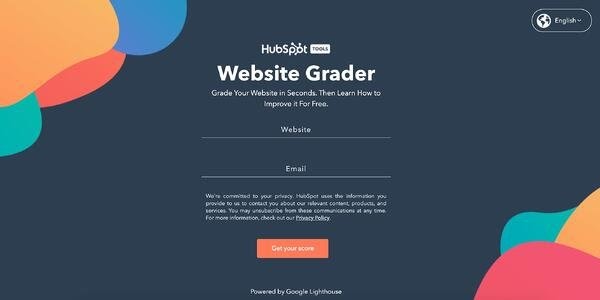
1. HubSpot Website Grader

SEO Tool: HubSpot Website Grader

Image Source

The goal of marketing is to generate traffic and qualified leads via the company’s website. That’s why, as marketers, we need to understand exactly what we can do to improve the SEO of that website.

With HubSpot’s Website Grader, simply enter the URL of your website to automatically receive a report card with actionable insights about your SEO efforts. From there, you can sign up for the HubSpot Academy SEO course that teaches you how to improve your website’s SEO, user experience (UX), and more.

With the HubSpot Website Grader, you can:

  • Website performance: Learn about your website’s performance in seconds, and identify specific performance issues and receive clear, actionable feedback on how you can fix them.
  • On-demand support: Receive how-to education on how you can improve your website.
  • Improve specific website issues: Gain access to a five-lesson HubSpot Academy course on Website Optimization so you can understand how to improve upon your website’s specific problem areas.
  • Optimize for mobile: Discover how to optimize your website for mobile.
  • Boost web security: Learn how you can implement website security best practices.
  • Enhance the user experience: Personalize your website’s UX to create a delightful experience for users.

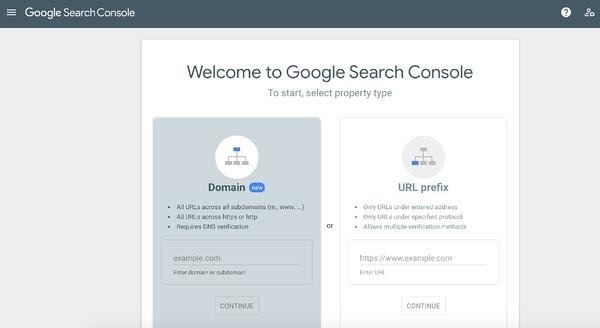
2. Google Search Console

SEO Tool: Google Search Console

Image Source

Google Search Console has a number of tools available to help you appear in the SERPs for the search terms and phrases your target audience is looking for.

If you’re the owner of a business or an SEO on your marketing team, Search Console can help you conduct an initial SEO analysis from scratch or update your existing SEO strategy with fresh keywords. Google Search Console monitors, debugs, and optimizes your website — and you don’t need to know how to code to benefit from this tool.

Here are some examples of website elements Google Search Console will teach you about and help you optimize:

  • Keywords: Learn about the keywords your webpages are currently ranking for.
  • Crawl Errors: Identify any crawl errors that exist on your website.
  • Mobile Responsiveness: Understand how mobile-friendly your website is and discover opportunities to improve the mobile experience for your users.
  • Google Index: See how many of your web pages are in Google’s Index (if they aren’t in Google’s index, you can use the tool’s URL Inspection Tool to submit a page for indexing).
  • Analytics and Metrics: The website-related metrics that matter most to you, like clicks, impressions, average click-through rate (CTR), and average position.

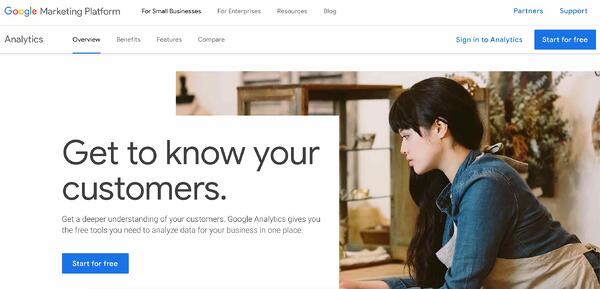
3. Google Analytics

SEO Tool: Google Analytics

Image Source

Although Google Analytics has a paid version, the free version of the product can help you manage your website’s SEO — this is especially true if you pair Google Analytics with Google Search Console. In doing so, all of your website’s SEO data will be centrally located and compiled, and you can use queries to identify areas for improvement with the keywords and phrases that you want your website and web pages to rank for.

Other ways that you can use the free version of Google Analytics to understand and improve your SEO are:

4. UpCity Free SEO Report Card

SEO Tool: UpCity Free SEO Report

Image Source

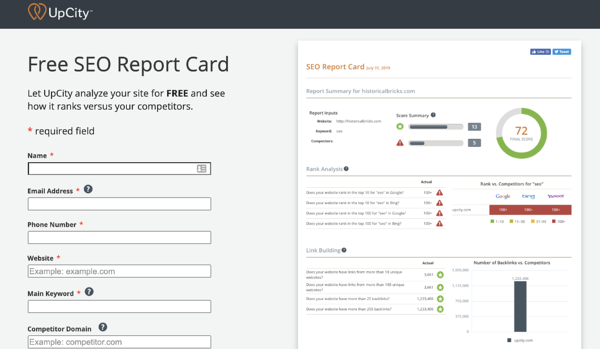
The Free SEO Report Card by UpCity lets you analyze your website to determine how it stacks up against the competition.

In exchange for your email address and a few data points, SEO Report Card will serve up a report that covers the following:

  • Rank Analysis: A snapshot of where your website ranks on the most popular search engines.
  • Link Building: A detailed account of the number of websites that link back to your site.
  • On-Site Analysis: A look at how successful you were in incorporating your main keyword throughout your site.
  • Website Accessibility: Information about your site’s load time and accessibility.
  • Trust Metrics: An overview of your site’s level of trust or authority.
  • Current Indexing: An indication of how many of your site pages have been indexed.

5. Internet Marketing Ninjas

SEO Tool: Internet Marketing Ninjas

Image Source

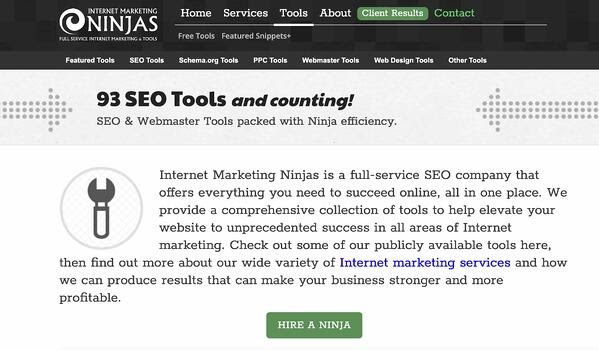
Internet Marketing Ninjas is an SEO-focused company with a variety of free tools you can use to compare your website against the competition, optimize web pages for certain keywords, generate meta tags, and increase organic traffic to your website.

Here are some examples of the free Internet Marketing Ninja SEO tools you can take advantage of:

  • Broken link tool: Identify broken links and redirects and use the site crawl feature to generate an XML sitemap of your website.
  • Image metadata: See all of your page links (external, internal, etc.) on your web pages to review what’s working well and what’s broken or needs an update.
  • On-page optimization tool: Use this to evaluate your web page content, meta information, and internal links.
  • Side-by-side comparison: Compare the SEO of your web pages versus a competitor’s web pages.
  • Page load time: Analyze page-load time and how long each component of a web page takes to fully display.

6. Bing Webmaster

SEO Tool: Bing Webmaster

Image Source

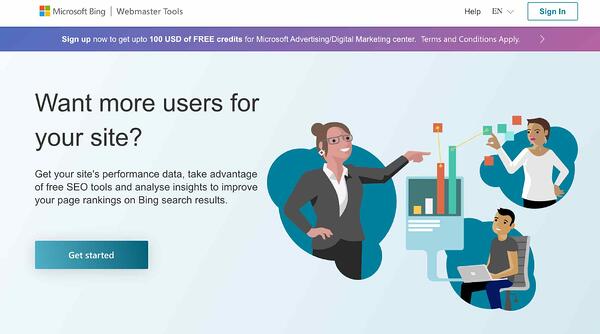
Microsoft Bing Webmaster gives you access to many tools that offer insight into your website such as reporting, diagnostic, and SEO tools. The SEO tools that you can use for free have the power to help you analyze your website, manage backlinks, and review keywords to ensure your site is well-optimized for organic search.

Here are some of the other things you can do with Bing Webmaster’s SEO tools:

  • See backlink profiles: Learn about your backlink profile to understand referring pages, domains, and anchor links.
  • Perform keyword research: Determine which keywords and phrases your audience is searching for as well as the search volumes of those keywords and phrases.
  • Use the site scanning feature: Crawl your website and identify technical SEO errors.
  • Get SEO reports: Review any errors that are on your website and individual site pages.

7. Google Trends

SEO Tool: Google Trends

Image Source

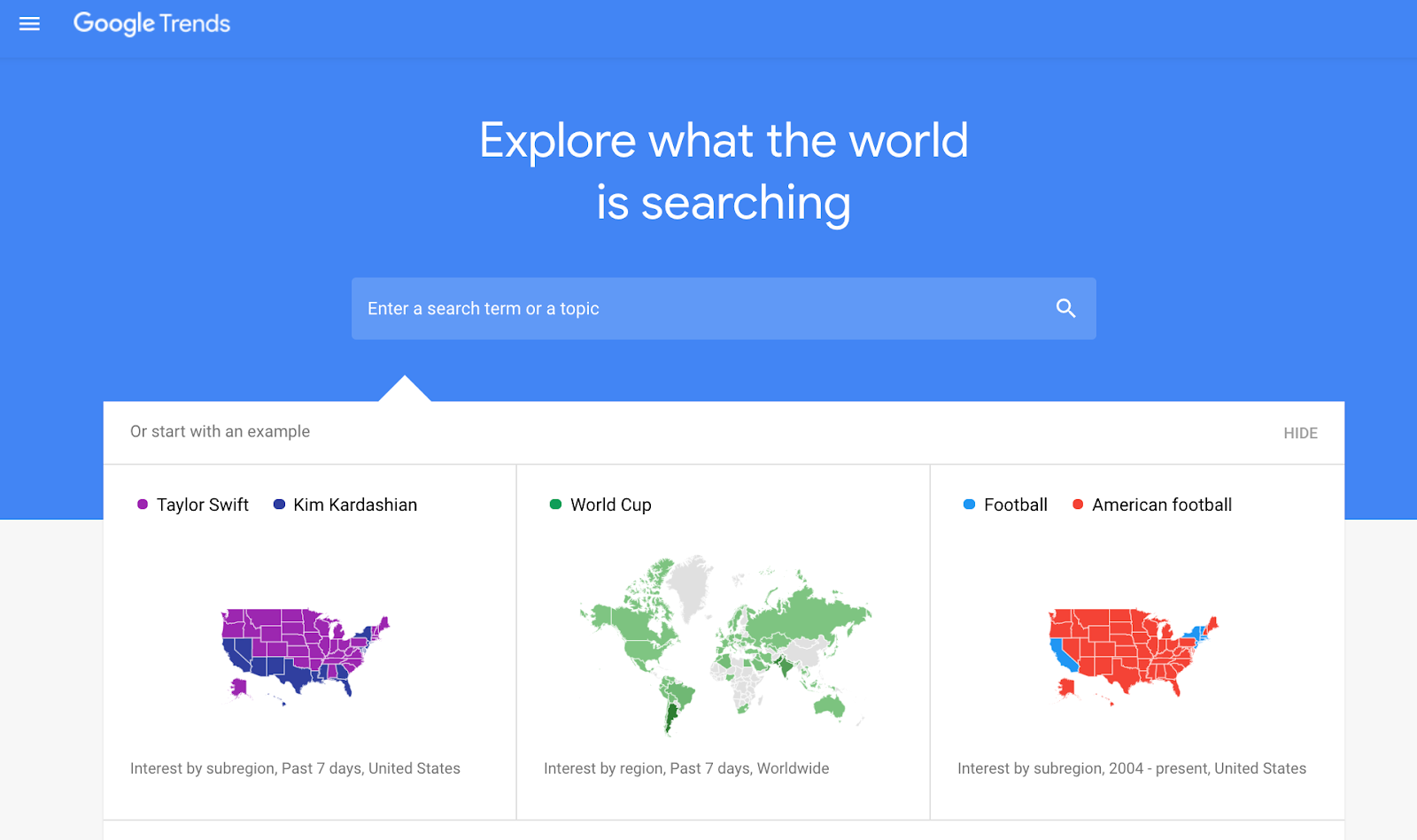
Traditional SEO tools like the ones we’ve already discussed are great for conducting research and audits when your business is already established. But what if you’re starting a new business venture and want to know what popular industries, topics, and ideas people are exploring? Google Trends is a great place to explore untapped potential that can yield a large keyword landscape for your website.

You’ll want to note that Google Trends isn’t where you’ll get granular data. This tool performs best when you use it as a compass to set a direction for your SEO strategy, and then pair those insights with a more robust software like HubSpot’s SEO Marketing Tool.

Here’s what you should look for in Google Trends:

  • Trends: Look for trends in specific countries or regions of the world.
  • Popular topics: Find popular people and long tail keywords related to them.
  • Comparisons: Compare and contrast trends over time.

8. Seolyzer

SEO Tool: Seolyzer

Image Source

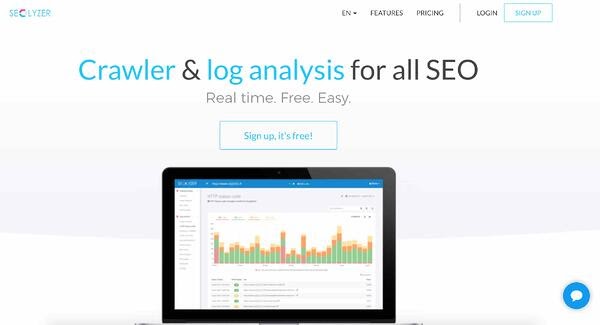
Seolyzer is a free site crawling, log analysis, and SEO tool that helps you determine how search engines like Google view your website. Seolyzer pulls information that crawling bots leave in your server’s log files while browsing your site to identify and create your SEO KPIs. The tool also identifies error codes, redirects, and page speed performance.

Additionally, Seolyzer can help you:

  • Monitor SEO issues: Identify poor response time, error messages, and crawl volume so you can resolve them before serious damage is done.
  • Manage your unique KPIs: Analyze page performance, crawl volume, HTTP status codes, active and new pages, and desktop versus mobile responsiveness.
  • Segment web pages: Determine what your most crawled pages are.
  • Compare web pages: See what Google deems as the most important to the pages that are crucial to your business’s bottom line.
  • Measure SEO impact: Understand the impact of your SEO efforts on a page-by-page basis or by the category of the page.

9. SEOquake

SEO Tool: SEOquake

Image Source

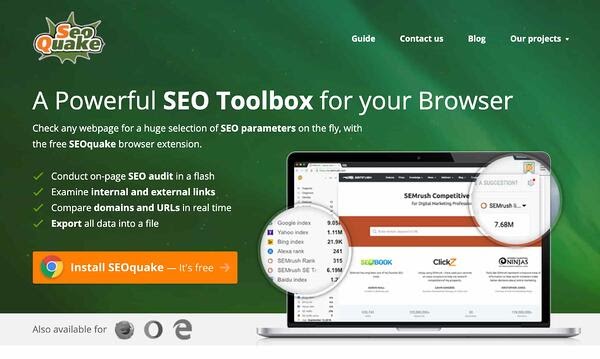
SEOquake is a Google Chrome extension that automatically checks a web page’s SEO parameters quickly for free. This includes on-page SEO audits, internal and external link reviews, real-time URL and domain comparison, and data file export.

Other things you can use SEOquake for are:

  • Link Analysis: Get a detailed description of how all of your links are doing — including URLs, anchor text, and other link types — with the tools Link Examiner feature.
  • Focus on metrics that matter: Adjust the SEOquake reports you receive to display only the parameters and metrics that you care about.
  • Audit your website’s SEO: Identify any SEO-related issues that would be findable by search engines.
  • Share your findings with stakeholders: Export the results of your SEO analysis into an adjustable and shareable report.

10. Seobility

SEO Tool: Seobility

Image Source

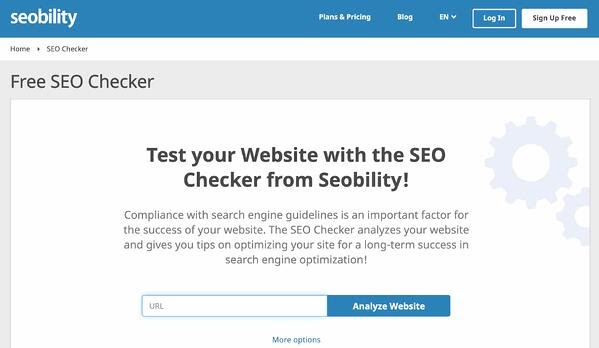
Seobility is a free SEO-checker tool. With it, you can test your website’s level of compliance with today’s SEO guidelines. By simply entering your URL, your site will be analyzed and you’ll receive tips on how you can better optimize your website.

In addition to a detailed SEO audit of your website, you’ll gain access to 1,000 subpage audits, email reporting and alerts, and keyword monitoring.

Here are some more advantages of using Seobility:

  • Find technical errors: Resolve on-page SEO issues quickly to recover lost traffic and prevent future traffic dips.
  • Accurate SEO scoring: Receive an SEO score that accounts for various website factors including meta-information, page quality, link structure, and more.
  • Meta information analysis: Understand the specific SEO issues with your meta information such as meta titles/ descriptions, meta tags, and invalid or incorrect domain names or page URLs.
  • Optimization opportunities: Identify areas for improvement regarding your page speed and quality (related to text, duplicate content, responsive design, and alt attributes for content).
  • Link structure suggestions: Understand how your page and link structure can be improved by getting data about your headers, internal links, and incorrect anchor text.
  • Server error fixes: Identify specific server errors related to any redirects, HTTP headers, or CSS and Javascript files.

11. Check My Links

SEO Tool: Check My Links

Image Source

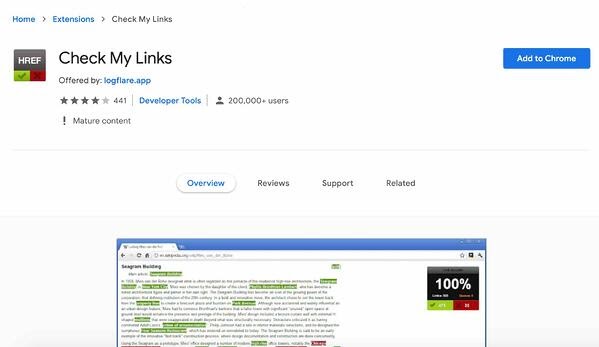
Check My Links is a Google Chrome extension that you can use to ensure your links on both internal or external web pages work. For instance, if you were to search a term on Wikipedia, Check My Links would be able to tell you how many links that Wikipedia page has in total and how many of those links are broken.

This is helpful because you can make corrections to broken links immediately (or hopefully, before a page goes live). Check My Links is ideal for developers, content editors, and web designers according to its creators.

Here are some more examples of what Check My Links can do:

  • Identify broken links: Check each link on your webpages and identify all invalid links.
  • Auto-highlight issues: Quickly see the good links in green and the broken links in red.
  • Export broken links for further analysis: Copy all of your bad links to your clipboard in one click.

12. BROWSEO

SEO Tool: BROWSEO

Image Source

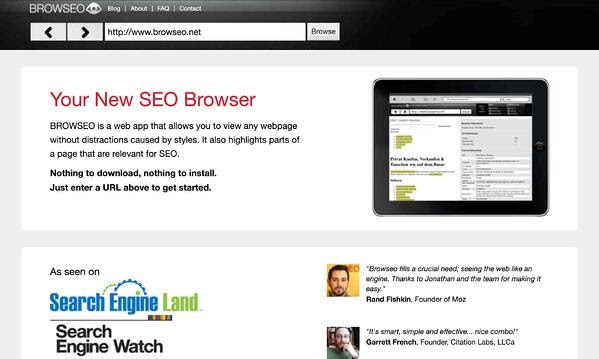
BROWSEO is an SEO browser that allows you to review your webpage in a limited format so you can analyze its UX and content as well as gain insight into its SEO. Once you input the URL, the output will hone in on your HTML so you’re able to understand the page’s structure, optimized search terms, and other SEO-related factors.

Examples of what you can do with BROWSEO include:

  • See the number of words on the page: Find the sweet spot for copy length on your webpages.
  • Determine the number of internal and external links on your page: This allows you to see how your linking strategy is working on each page.
  • See all of your meta information: Review title tags, alt text, and meta descriptions.

Paid SEO Tools

Next, let’s look at some paid SEO tools. (Note that some of these tools have free trial periods. Some also offer entirely free plans but with restrictions in terms of flexibility and customization.)

1. HubSpot SEO Marketing Software

SEO Tool: HubSpot SEO Marketing Software

Image Source

Price: $45/ mo for the Starter plan, $800 for professional, and $3,200 for enterprise.

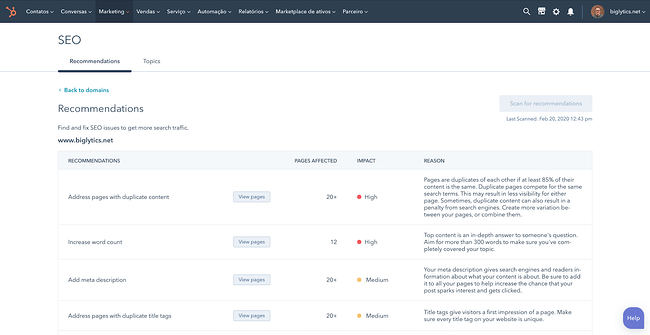
HubSpot’s Marketing Hub includes an SEO marketing software tool that’s perfect for helping you build authority across your website. Since this software is integrated with HubSpot landing pages, webpages, and blog posts, you’ll never miss an opportunity to optimize your content for traffic and conversions.

No matter if you’re creating your first content strategy or you’re an expert in all things SEO, HubSpot’s SEO Marketing Software gives you the tools and the confidence to rank in the SERP and report on your performance.

HubSpot’s marketing software doesn’t keep SEO in a silo. This tool works in conjunction with:

  • Email: Send professional emails using your own branded designs.
  • Marketing Automation: Create dynamic campaigns for segmented audiences.
  • Lead Management: Track leads through each stage in your sales process.
  • Analytics: Review your campaign to identify success and opportunities for improvement.

2. Ahrefs

SEO Tool: Ahrefs

Image Source

Price: Seven-day trial for $7, $99/ mo for Lite, $179/ mo for Standard, $399/ mo for Advanced, $999/ mo for Agency

Ahrefs is an advanced SEO resource that examines your website property and produces keyword, link, and ranking profiles to help you make better decisions on your content.

Some of Ahrefs’ main features are:

  • Site Explorer: Shows you the performance of specific webpages on your website.
  • Content Explorer: This allows you to search high-performing webpages under specific keywords and topics.
  • Keywords Explorer: Generates the monthly search volume and click-through rates of specific keywords.
  • Site Audit: Crawls specified verticals within your domain and reveals a number of technical issues at the page level.

3. SEMrush

SEO Tool: SEMrush

Image Source

Price: $119.95/ mo for Pro, $229.95/ mo for Guru, or $449.95/ mo for Business

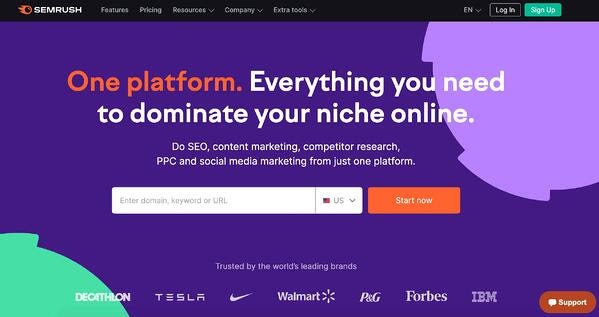
SEMrush is an elaborate dashboard that reports on the performance of domains as a whole and their specific pages. SEMrush offers numerous resources, one of which is the SEO Toolkit.

Toolkit allows you to track a website’s visibility improvement over time as well as identify which keywords it’s ranking for, what the page’s rank is for a keyword, the keyword’s monthly search volume, and more.

SEMrush also allows you to:

  • Build links: Analyze backlinks from other websites to your site.
  • Use the Keyword Magic tool: Identify all keywords you need to successfully build an SEO strategy.
  • See your competitors’ strategies: Identify the paid keywords or ad copy used in the PPC ads of your competition.
  • Receive recommendations: See how you can increase your organic traffic by optimizing your content.

4. KWFinder

SEO Tool: KWFinder

Image Source

Price: 10-day free trial; $29/mo

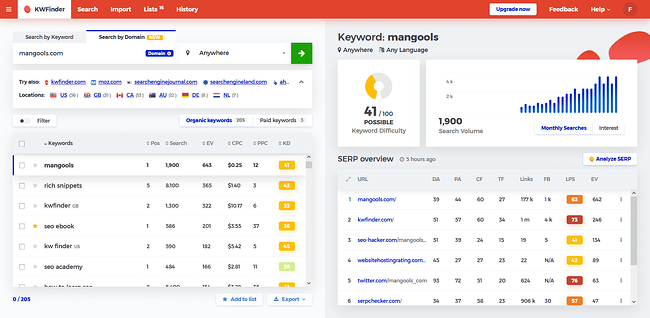
Sometimes you don’t need an SEO tool with all the bells and whistles if you only need to do keyword research. KWFinder is a great software that fills the gap between nuts-and-bolts SEO work and copywriting. You’ll find keywords that aren’t too difficult to rank for but still carry the potential to bring in traffic.

What makes KWFinder unique is how seamlessly it shifts between languages and regions so that you can serve your audience no matter where in the world they are.

Some of the top features KWFinder offers include:

  • Hidden long tail keyword insights: Find long tail keywords that give you more opportunities to acquire traffic.
  • Competitor keyword insights: See how your competitor’s keyword strategy compares to your own, plus find more keyword opportunities.
  • SERP analysis tool: Analyze competition in the SERP to understand what elements readers are looking for on your pages.
  • Local keyword research tool: See what searchers are looking for locally and appeal to local markets for more niche traffic.

5. GrowthBar

SEO Tool: GrowthBar

Image Source

Price: Free five-day trial, $29.90/ mo for Basic, $39.90 for Premium, and $79.90 for Agency.

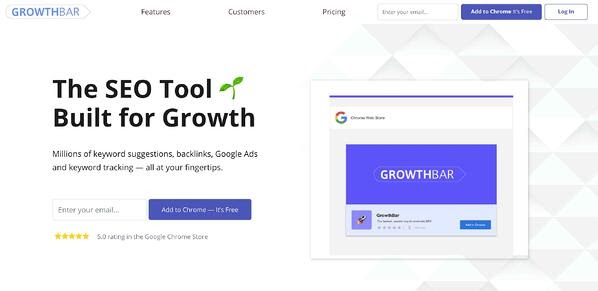
GrowthBar is a Chrome extension that can help you perform keyword research, competitive analysis, and track SEO rankings. With the GrowthBar, access data points about any website directly from the search engine results pages. This allows you to assess your competitors’ performance and view the growth channels, keywords, backlinks, and ads that are working for them.

Here are some more key features of GrowthBar:

  • Use the Top Keywords and Backlinks feature: See which paid and organic keywords are driving the most traffic for your website and get a list of the most authoritative backlinks pointing to your site.
  • Get your Keyword Difficulty Score: Quickly assess how hard it would be to rank for a particular keyword based on the strength of the domain authorities of the URLs ranking on page one.
  • Use the Word Count tool: View the word count of any page directly from the SERP.
  • Run Facebook Ads: Get a visual of what they look like from a search engine’s perspective.
  • Use the Keyword Suggestions tool: Get a list of related keywords you might want to rank for along with their Search volume & CPCs.

6. Woorank

SEO Tool: Woorank

Image Source

Price: Free 14-day trial, $79.99/ mo for Pro, $199.99/ mo for Premium, or contact for Enterprise quote

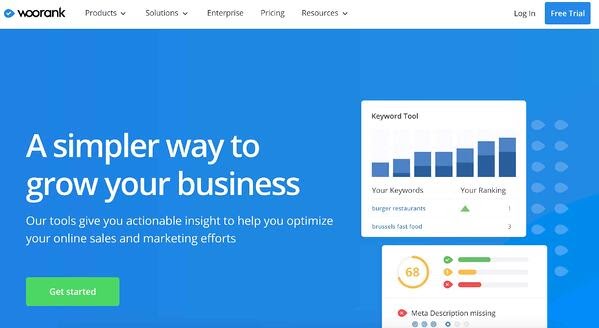
Woorank’s in-depth site analysis helps marketers reveal opportunities for optimization and improvement. This analysis takes into account the performance of existing SEO initiatives, social media, usability, and more.

Each report is divided into sections to help you easily analyze your site and identify targets for optimization. Here are a few features of the report:

  • Marketing Checklist: Review common marketing tasks that you can complete as part of your SEO strategy execution.
  • SEO: Analyze your SEO metrics against your goals.
  • Mobile: Decide which mobile optimization tactics to employ based on the mobile data.
  • Social: Get insight into how social media is playing a part in your traffic and SEO goals.

7. BuzzStream

SEO Tool: BuzzStream

Image Source

Price: Free 30-day trial, $24/ mo for Starter, $124/ mo for Group, $299/ mo for Professional, $999+ for Custom

Although backlinks to your website are critical to ranking well on Google, the outreach you do while link building can feel a lot like cold calling. BuzzStream makes it easy to research the appropriate people, come up with effective email messages, and track who’s accepted each link request.

BuzzStream also helps you:

  • Identify candidates for outreach: Find them based on their industry and how engaged they are across various social networks.
  • Identify candidates for backlinks: These are individuals who will likely be receptive to your backlink request for other reasons that are unique to your business’s niche.

8. Moz Pro

SEO Tool: Moz Pro

Image Source

Price: Free 30-day trial, $99/ mo for Standard, $149/ mo for Medium, $249/ mo for Large, $599/ mo for Premium

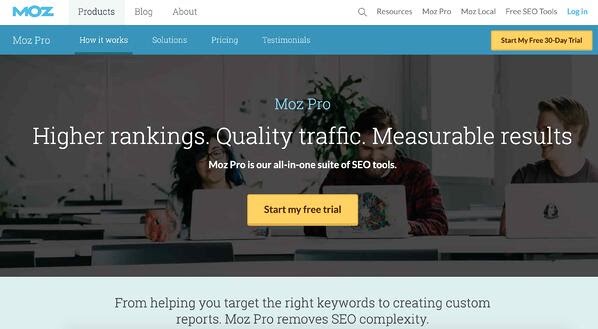
The Moz Pro subscription serves as an all-in-one tool for increasing your business’ search ranking. Moz’s collection of research tools provides subscribers with the resources they need to identify SEO opportunities, track growth, build reports, and optimize their efforts.

Moz Pro also includes:

  • Website crawler: Analyzes up to 3,000 links on a given URL.
  • Email report: Details that crawl data for the pages your site links to.
  • Insight into various “crawlability” factors: These include duplicate content and redirects that could be influencing your SEO performance.

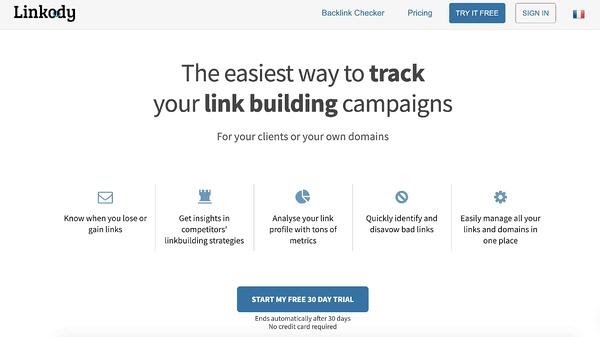
9. Linkody

SEO Tool: Linkody

Image Source

Price: 30-day free trial; $14.90/ mo for Webmaster, $24.90/ mo for Advanced, $49.90/ mo for Pro, 99.90/ mo for Agency, and $153.90 /mo for Agency XL

The best way to understand the performance of your off-page SEO is by having a good overview of your backlinks. Linkody allows you to discover, track, analyze, and disavow backlinks all from an easy-to-use interface.

Aside from that, the tool checks your links 24/7 and informs you of any changes so you can take immediate action in case a link is lost or broken.

Other Linkody features include:

  • “Spy” on your competitors’ backlinks: Simply enter the URL of your competitor and let the tool pull all the links and metrics. The information returned will help you discover niche-relevant, high-quality backlink opportunities for your brand.
  • Gain useful insights: See your most important metrics when it comes to backlink tracking, such as the ‘rel’ attribute, Google indexation status, the website’s Domain Authority, Spam Score, Alexa rank, and more.
  • Create white-label reports: Download reports that can be shared with your team and/or clients to get a better idea of your backlink distribution and link-building progress.

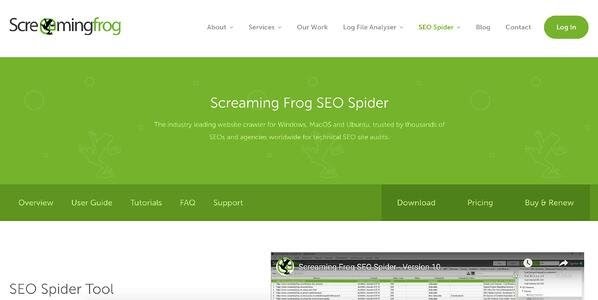
10. Screaming Frog SEO Spider

SEO Tool: Screaming Frog SEO Spider

Image Source

Price: Free or €149/ year

Designed specifically for the SEO-minded, this program crawls the websites you specify, examining the URLs for common SEO issues. This program simplifies and expedites an otherwise time-consuming process — especially for larger websites. (It could take hours or days to manually evaluate the same URLs.)

Other notable features of Screaming Frog SEO Spider are:

  • Java Program: Screaming Frog includes an intuitive Java program with easy-to-navigate tabs.
  • Easy export to Excel: Further analyze your SEO data.

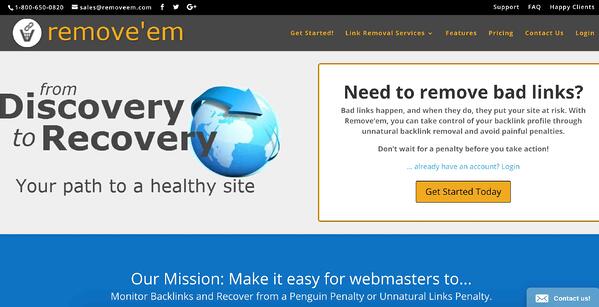
11. Remove’em

SEO Tool: Remove'em

Image Source

Price: $249 one-time payment for Life-Time plan, $99/ mo for Subscription (one website), or $899/ mo for Agency (10+ websites)

If you’re buying a website domain that has been used in the past, or you’re rebuilding a poor SEO strategy, you may discover some problematic backlinks while conducting your audit. Artificial or unnatural links have the potential to seriously hurt your search ranking. Remove’em helps get rid of those links.

This tool has the ability to:

  • Scan your backlink profile: Discover a list of contact information for the links and domains you’ll need to reach out to for removal.
  • Export a list of backlinks: If you wish, you can disavow backlinks by telling Google not to take these “bad” links into account when crawling your site.

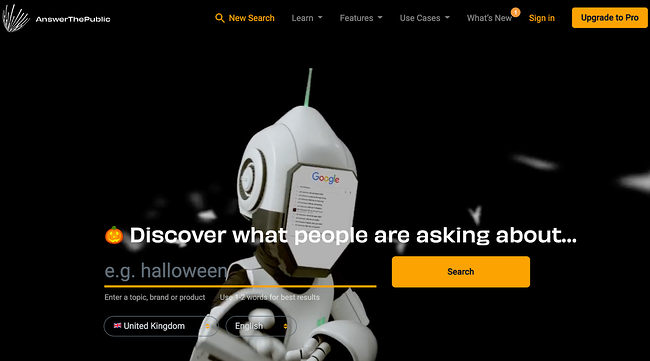
12. AnswerThePublic

SEO Tool: AnswerThePublic

Image Source

Price: $99/ mo for Monthly plan, $79/ mo for Annual plan, $199/ mo for the Expert plan

AnswerThePublic is a search listening and keyword tool that listens to autocomplete data from Google and other search engines, and then provides you with a list of phrases and questions that people are searching for around your keyword. This allows you to craft your website and content to your audience to increase traffic and conversions.

With AnswerThePublic, you can also:

  • Receive updates: See when people are talking about your most relevant keywords.
  • Monitor keyword trends: Understand keyword research behavior among your target audience and customers.
  • See real-time searches: View the keywords and phrases that your audience is researching in real-time.
  • Get ideas for your website and blog: Discover new content ideas based on relevant keyword research.

13. Keyword Hero

SEO Tool: Keyword Hero

Image Source

Price: 14-day trial for any plan, Free for Little Hero, $9/ mo for Big Hero, $49/ mo for Giant Hero, and $149/ mo for Ultimate Hero

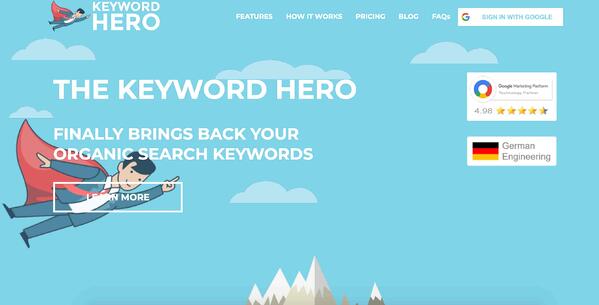
Keyword Hero pairs your visitor’s sessions with the keywords they used to land on your page, all within your Google Analytics account. In other words, this tool gives you an understanding of the search intent of your organic traffic.

Here are some more actions you can take with Keyword Hero:

  • Identify the organic traffic and conversions: Uncover the success you receive from your intended keywords.
  • Separate traffic: Identify brand versus non-brand search traffic.
  • Optimize your position in the SERPs: Optimize your website for specific target keywords.
  • See query details: Understand whether your visitors used informational versus transactional queries to find on your website.

14. SpyFu

SEO Tool: SpyFu

Image Source

Price: $39/ mo for Basic, $69/ mo for Professional, $129/ mo for Unlimited.

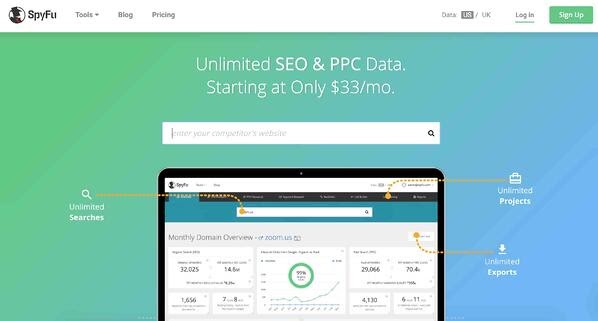
SpyFu is a competitor keyword research tool for Google Ads. In addition to keyword research, it helps with PPC competitive research, SEO competitive research, and the creation of custom lists and domains.

The tool helps you drive traffic to your Google Ads campaigns and website, monitor both paid and organic rankings on Google, Bing, and Yahoo, and obtain reliable and accurate contact information for leads.

With SpyFu, you can also:

  • Download a competitor’s PPC keywords: Use this insight to develop more competitive PPC strategies that can compete in the ad space.
  • Download a competitor’s SEO keywords: Use this insight to develop more competitive organic keyword strategies that can compete in the SERP.
  • Review ranking trends: the ranking of a page or website for a keyword over time.
  • Discover keyword ideas: Keyword advice for your Google Ads to increase chances of conversion.

15. Seomater

SEO Tool: Seomater

Image Source

Price: Pay as You Go (starting at $5), $19/ mo for Small Business, $49/ mo for Professional, $179/ mo for Unlimited.

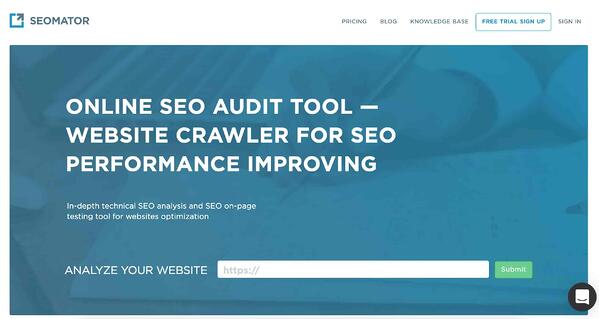
Seomater is an SEO auditing and website crawling tool. It assists with technical SEO analysis and SEO on-page optimization testing. Once the tool crawls your site, you’ll receive an SEO report that explains your website’s various SEO-related elements including internal and external links, backlinks, page quality and speed, social media, organic presence, and more.

Your analysis will also come with tips on how you can improve each of these SEO elements. In addition, you can:

  • Use the SEO Monitoring Alerts feature: Your website will be automatically crawled and you’ll get an immediate notification if something is problematic in terms of SEO.
  • Get detailed reports: Find insights about your on-page and off-page SEO elements.
  • Use the Domain Comparison tool: Compare two competitors’ websites to identify the strengths and weaknesses of their SEO (such as broken links, content quality, HTML tags, and more).

16. ContentKing

SEO Tool: ContentKing

Image Source

Price: $139/ mo for Basic, $319/ mo for Standard, $449/ mo for Pro, or $1,279 for Enterprise.

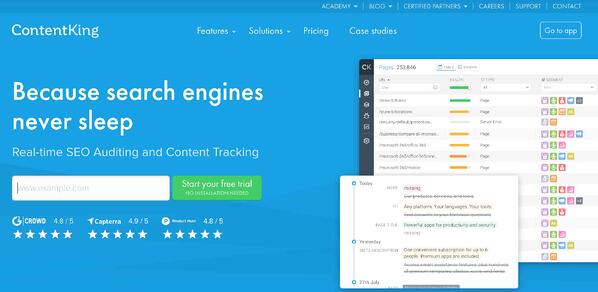
ContentKing is a real-time SEO auditing and content tracking tool — it tracks your website 24/7 so any issues related to SEO don’t go unnoticed for too long. The tool is cloud-based, meaning there’s no installation required and your data and reports are available whenever you need them.

With ContentKing, you can also:

  • Improve your SEO: Use ContentKing’s 24/7 website audits (and algorithms) to gain insight into your SEO and receive tasks that will help you optimize your webpages.
  • Get alerts: Get notified whenever something on your website is broken or is no longer well-optimized so you can efficiently fix the issue.
  • Track Changes: Follow the history of all your content changes on your site (such as changes on individual web pages and changes in robots.txt) and search the history of your changes.
  • Visualize data: See real-time dashboards and reports.

Now that you’ve learned about some of the best free and paid SEO tools on the market, determine which option will help you achieve your SEO goals and get started auditing, optimizing, and monitoring your website, individual web pages, and content.

Editor’s note: This post was originally published in December 2018 and has been updated for comprehensiveness.
marketing

Categories B2B

How Consumers Responded to Black Friday Ads in 2021 [+Trends to Watch]

After 2020, there were big expectations for what 2021 could bring. Some predicted lower Black Friday sales as supply chains struggle to meet demand. Others said 2021 would bring record numbers.

As an advertiser, you might want to learn more about growing online purchasing behaviors – and how you can leverage them in 2022.

Download even more examples of remarkable marketing and advertising campaigns  here. 

Below, we’ll highlight what we learned from polling 300+ consumers after this Black Friday. Then, we’ll present a few consumer behavior predictions you’ll need to know about when determining your 2022 Black Friday ad strategy.

What We Learned About Black Friday Shoppers in 2021

To help marketers discover more about the consumer behaviors behind Black Friday’s 2021 results, I surveyed a pool of more than 300 people using Lucid Software. The goal was to learn what led them to engage with or purchase products in Black Friday ads.

Here’s what we learned from our results.

1. Social media was the leading driver for ad engagement.

With Black Friday deals comes an inundation of Black Friday ads throughout all forms of media. It’s no surprise that millions of people shopped on Black Friday – but which ad strategies actually led to purchases?

When I asked participants, “Did you engage with any online ads or promotions for Black Friday?” 56% said they engaged with one or more ads in some way, while only 26% said they ignored them.

lucid survey results on black friday ads 2021

We also found that social media was the number one place consumers engaged with ads, with 54% of consumers surveyed clicking on ads they saw on a social network.

Social media is a big revenue driver when it comes to Black Friday ads and the opportunities it offers continue to expand. Let’s take a look at Instagram for example.

You can discover a brand, scroll through their profile, see a product you like, and complete a purchase without ever leaving the platform.

With so many social media platforms offering ecommerce features, brands can attract shoppers at every stage of the buyer’s journey and consumers can experience a seamless shopping experience. It’s a win-win.

From an advertising perspective, this is a big indication that brands should be well prepared for social media ads as Black Friday approaches.

Instead of waiting for the week before Black Friday, where timelines are already flooded with ads, consider starting early and you may get better results.

That said, having an online presence beyond social media is also important. Our survey found that while most of the ads consumers clicked on came from social media, 23% clicked on ads they saw on brand websites and 22% on search engines.

With this in mind, it’s important to diversify your ad channels, as each has the potential to drive revenue.

2. Consumers showed interest in technology and electronic deals.

Aside from the ad’s location, the product or service advertised could have played a role in an audience’s level of engagement.

To get an idea of which products were most popular, I asked survey participants, “Which industries were you most interested in shopping?” 49% answered “Electronics and appliances.”

This mirrors data from SEMrush, which shows that the most popular and searched products include laptops, televisions, watches, headphones, video games, and cellphones.​​semrush data on most popular shopping categories

Image Source

Amazon reported that its top-selling items were also electronics: Apple Airpods, the Fire TV Stick, the Echo Dot, smart lightbulbs, and more.

This is great news for brands that fall within this industry, as Black Friday is a great opportunity to drive traffic to your products.

3. Consumers are shopping more online.

40% of Lucid survey respondents said they shopped exclusively online, with only 7% doing an even mix of online and in-person.

Although traffic at retail stores is up almost 50% from last year, it’s still not back to pre-pandemic numbers, according to a CNBC report.

Ecommerce brands are benefiting from this recent shift, with Shopify reporting a 21% increase in Black Friday/Cyber Monday sales year-over-year. Globally, the platform reached peak sales of $3.1 million per minute on Black Friday.

However, what data does suggest is that online ads can drive shoppers to head to stores in person. Fiffy-four percent of consumers surveyed on Lucid said that they visited a store to grab a deal they saw in an ad online.`

3 Predictions for Black Friday 2022

1. Brands with a strong social strategy will outperform those without one.

Our survey results and mounting research continues to show the growing importance of developing or constantly improving a web presence.

And as we mentioned, an online web presence might not just be a nice perk for your customers. It might result in ROI for your brand, especially on Black Friday.

Growing an online presence doesn’t have to be expensive and daunting.

For example, if you’re just dipping your toes into online marketing, you could start with free strategies like building a social media profile, launching a basic website, starting a marketing email, or creating a Google My Business for your store.

Then, once you’re comfortable, experiment with larger investments such as buying online ads.

The strategies above will allow people across the web to learn more about your brand, offerings, or services. These tactics could also make it easier for prospects to find you when they’re researching products or services in your industry.

2. Consumers will start shopping earlier.

In previous years, shoppers waited closer to Thanksgiving weekend to start shopping. This year, things are changing.

According to the National Retail Federation, this early shopping trend has been rising since 2011.

They report that most consumers (61%) started shopping as early as Halloween this year, almost a month before Black Friday. In fact, some completed roughly a third of their holiday shopping by the beginning of the month.

In addition, shoppers aren’t just waiting to stumble upon ads, nearly 48% of Lucid respondents surveyed said they actively searched for Black Friday deals and promotions.

lucid survey results 2021 on black friday ads

For advertisers, this means launching ads early to reach consumers as they’re starting to shop for the holiday season.

3. Shoppers will be more intentional about where they spend.

In early 2021, Intuit ran a survey of over 1,000 Americans and found that 70% are supporting local businesses.

The survey also revealed that Millennials and Gen Z are more likely to support local businesses by only shopping online (45 percent).

This intentionality was also apparent during Black Friday 2021. Among the consumers surveyed in our Lucid poll, 63% said they either prioritized shopping from small or local brands or did a combination of small to large businesses.

5 Tips for Creating Effective Black Friday Ads

1. Plan (and launch) early.

This year, consumers started holiday shopping early.

We can’t predict with full accuracy what things will look like next year. So, in absence of knowledge, it’s better to stay ready so you don’t have to get ready.

In other words, don’t start planning your promotion strategy in early November. You want to give your team enough time to plan an effective strategy that will reach your target audience at the right place and at the right time.

You’ll need enough time to craft a plan, develop the strategy, build the creative assets, and launch the campaign. You’ll also need to account for any obstacles you may encounter along the way.

2. Highlight how a service or product can solve for your customer.

Your ads should aim to educate ideal customers about your offerings, how they can help them, or why they might need them in their daily lives.

But, how do you convey that your offerings are valuable, important, or necessities when you don’t actually sell an essential product? Although it can take some creativity, it is possible to do this.

Above is an example of Twitter content from InfoArmor, an information security service owned by Allstate.

In the tweet, InfoArmor shared a blog post about the dangers of information security when working remotely and how InfoArmor could protect remote employee information.

3. Diversify your promotion channels.

We mentioned that social media is a huge revenue generator during Black Friday.

However, that doesn’t mean it’s the only channel you should leverage to attract shoppers. In fact, you should promote your ads across all channels to maximize your reach.

Have a newsletter? Share your offers there. You could also consider running a Google Ads campaign.

Regardless of which online platforms you embrace, be sure to create content that speaks to those customers, rather than just placing a basic ad on every website you can access.

By creating content that’s tailored to platforms your customers use, you’ll increase the likelihood of catching their eyes as they scroll through endless web pages, feeds, or email inboxes. And, once you grab their attention, you can use that content to highlight your value proposition in an entertaining or interesting way.

For example, if you’re creating an ad for Instagram, it might be tempting to just use a picture of the ad you made for a website or newspaper on with a basic caption.

But, that might not be engaging for people scrolling through their feeds looking for valuable product information or entertaining content. Instead, consider creating a short marketing video or a series of photos of customers with your product to better engage this audience.

Below is a great example of a Black Friday post that could also work well as an ad on Instagram. The post shows a video demo of someone from Hair Vivi putting on one of the brand’s wigs.

While the video shows viewers how easy it is to put on the wig, the caption also highlights the product’s value and the company’s Black Friday deals.

4. Present deals, sales, or affordable offers.

Aside from aiming to buy products with the best value, budget-conscious shoppers will also be looking for the best deals this holiday season.

If you can offer a deal or sale on your product or offering, embrace that information in your advertising.

Here’s a great ad from Walmart that highlights all the online deals they’ll be offering this year:

walmart black friday adAlong with the ad highlighting a bunch of great deals and alternatives for Black Friday in-person sales, the ad is also interesting because it’s interactive online but formatted so it can also work as a static print ad if needed.

Aside from the ad above, Walmart has created content with a similar aesthetic and deal-oriented message for social media platforms like Facebook. Here’s a screenshot of featured content on its Facebook Business page.

walmart black friday ad

5. Embrace video marketing.

In our 2021 State of Marketing Report, we found that video is the leading form of marketing content used across industries. And, with Gen-Z and millennials embracing video more than ever for product discovery, this format becomes more of a low-hanging fruit each year.

If you think video marketing is only for big brands, think again.

In the last year, we’ve seen all sorts of small and large brands affordably embrace video to attract and nurture leads.

Here’s one great example of a startup demo video created by Beauty Bakerie.

While the content allows viewers to see what the products will look like in real life, Cashmere, the brand’s CEO – Cashmere Nicole Carillo – gives instructions on how to use it so they’ll also know just how easy it is to add to their daily beauty routine.

Every Black Friday is an opportunity to learn more about your target audience. Pay attention to what works, what doesn’t, and look out for trends that will help you improve your ad strategy.

Editor’s Note: This blog post was originally published in December 2019 but was updated for freshness and comprehensiveness.

New Call-to-action

Categories B2B

How to Automate Your Account-Based Marketing Strategy

Today, marketing is all about personalization.It’s about reaching the right people in the right place at the right time. Account-based marketing (ABM) is no different — it’s a strategy that’s been growing in popularity in recent years. In fact, 94.3% of respondents to a 2020 State of ABM survey use an ABM strategy.

That’s why ABM is an important strategy to implement if you sell high-value B2B products or services to a finite number of companies with several decision makers. Using ABM automation tools is the key to scaling these efforts.

Here, we’ll show you exactly how to automate your account-based marketing strategy using ABM automation tools.

Learn More About HubSpot's ABM Software

Learn More About HubSpot’s ABM Software

1. Scalable Acquisition Strategy

We know that anytime a process is automated, it’s scalable. When ABM strategies are automated, bandwidth on your marketing team becomes available. Your team can spend more time nurturing the accounts they’re responsible for and personalizing the sales cycle for the decision makers within the account. That way, new business can be acquired without the limitations of manually nurturing each account.

2. Shorter Sales Cycle

Consider this: When your sales reps have just a few accounts to target to close deals, they can become more selective about who moves through the sales cycle and when. When a specific marketing tactic works to generate leads in a particular account, the sales rep can shift their focus to that deal. ABM automation benefits sales reps by incentivizing them to work efficiently to close deals which leads to shorter sales cycles.

3. Better Marketing and Sales Alignment

For far too many marketing and sales teams, alignment between the two seems to be a goal instead of reality. An automated account based marketing strategy causes and requires alignment between these two business functions in order to close deals.

The marketing team is responsible for creating sales enablement content while the sales team is responsible for cultivating the relationships and closing deals. Without both of these parts of the puzzle working together, the ABM strategy would fail. Automating the strategy by producing content at scale and tracking accounts through the sales process using ABM automation tools like RollWorks keeps both teams aligned and achieving their goals.

ABM Marketing automation results on a dashboard

Image Source

4. Stronger Customer Retention

Leveraging personalized marketing and sales materials for each account is a fundamental tactic used in account based marketing. But that can be difficult to maintain if your team is doing this manually. Eventually, the personalized materials transform into more general content and the relationship between your business and the account fizzles out.

With ABM automation, this doesn’t have to be the case. Automating emails and direct mail campaigns (just to name a few) throughout the account’s life cycle can strengthen the relationship, yielding improved customer retention and satisfaction.

1. Create your Ideal Customer Profile (ICP).

Before you can get started with ABM, you’ll need to define your ideal customer profile. This is similar to a buyer persona, except it’s built around targeting entire organizations rather than individuals.

You’ll want to know what types of companies you want to target. For example, your ICP should include information on company size, revenue, industry, and location.

With software, like HubSpot’s ABM software, you can use ICP workflow templates to help you spot common traits that can be used to classify companies in your database by how well they match your ICP.

Ultimately, automation should help you identify and organize your target accounts. Once you’ve created your ICP, you should be able to use this information in your ABM software to manage your audience.

2. Set up your target accounts.

Once you’ve created your ICP, you should be able to set up your target accounts in your ABM software.

Tagging “Target accounts” in your software will enable you to manage your audience from a Target Accounts dashboard. For example, with HubSpot’s ABM software, you can tag accounts as target accounts and then rank them with the ICP Tier property. Your priority accounts will be marked “Tier 1,” while lower priority accounts will be marked “Tier 3.”

Additionally, a great ABM software will use AI-powered target account recommendations to automate the process of researching companies that are a good fit.

These types of tools will help you manage and then segment your lists so you can deliver personalized content to your target accounts.

3. Integrate your ABM, marketing automation software, and CRM.

Before you can build your ABM campaigns, you’ll want to integrate your ABM software with your marketing automation software and your CRM.

For example, with HubSpot, you can use many of the ABM software features if you have Marketing or Sales Pro.

Integrating your marketing tools is important in the automation process. If your ABM software doesn’t interact with your email marketing software or your ads tools, then you won’t be able to automate the process.

Additionally, if it doesn’t interact with your CRM, it’ll be impossible to know if leads become accounts and track the ROI of an account-based campaign.

By integrating these tools, you’ll have your ICP research, target accounts, content, and CRM all in one place.

4. Build your campaigns.

When you have your ABM software and marketing tools set up, it’s time to create your campaigns.

To start, you’ll want to decide what channels you want to use and what actions will trigger an automated workflow.

First, look at your target accounts and find out where they spend their time online. For example, you can build an ad campaign based on people’s job titles or companies on LinkedIn and Facebook.

Then, you’ll want to think about your customer journey and set up automated workflows. For instance, you can have a task created for a sales rep when someone who works at one of your target accounts interacts with an email, your website, or blog content.

5. Personalize your content.

You probably got started with ABM so you could personalize your marketing campaigns. To do this, you’ll want to create your content, and use your automation tools to segment your audience.

For example, with HubSpot’s ABM software, you can use company lists to create an ad audience or use company ad targeting for your LinkedIn ads.

With your ICP set up, you can create your content based on your target audience. The content in your ABM campaigns will be similar to other marketing content, except that you’re now targeting specific accounts and companies.

Ultimately, your messaging should address specific pain points, and appeal to solving your target account’s problems.

6. Tailor your engagement.

Another aspect of your ABM strategy will be collaborating with your sales team so they can tailor their engagement with target accounts.

A great way to do this is through automation tools. That’s why your CRM and ABM software need to work together.

For example, with HubSpot’s ABM software and Sales Hub, you can automate your follow up emails and tasks based on the prospect’s behavior.

However, remember that even though you’re focusing on automation right now, your sales outreach and content should still be personalized.

7. Set up a dashboard to assess ongoing efforts.

The last step to automating your ABM strategy is to track and measure your efforts. With ABM software, you’ll want to see information at-a-glance.

For instance, on your dashboard, you might include information on your target accounts such as company score, open deals, total pipeline, and the number of decision-makers identified.

ABM automation dashboard to assess ongoing efforts

Image Source

If your ABM software has company scoring available, you should use it. This is similar to lead scoring, where you assign a score based on the properties in your software.

Additionally, you should consider running A/B tests when you get started with ABM automation so you can see what messaging appeals to your ICP.

While ABM does require thoughtful planning and coordination, using ABM software tools — ideally ones that integrate with your CRM and marketing automation tools — can help you automate and scale your strategy.

Editor’s note: This post was originally published in May 2020 and has been updated for comprehensiveness.

Take me to Projects

Categories B2B

What Is Servant Leadership?

Leadership looks different for everyone.

Some choose to use a democratic style, where they make final decisions after getting input from team members. Some are individualists, focused on personal development and improvement, while others act as a coach that works to help employees develop their skills and build strong teams.

Although different in practice, most leadership styles have in common that the leader is a force of authority at their business — entirely different from servant leadership, where authority is purposely left by the wayside.

In this post, learn about servant leadership, its main characteristics, and how it can benefit your organization.

→ Click here to download leadership lessons from HubSpot founder, Dharmesh  Shah [Free Guide].

What is servant leadership?

Servant leadership is the idea that a leader’s primary goal is to serve their employees and give them the support they need to develop their skills and succeed at their jobs. This differs from traditional leadership in that a leader doesn’t enforce their authority or treat others as subordinates.

Robert K. Greenleaf first coined the term servant leader in his 1970 essay The Servant as Leader. In the essay, he says that the servant leader “Focuses primarily on the growth and well-being of people and the communities to which they belong” and that they “Put the needs of others first and help people develop and perform as highly as possible.”

Essentially, the leader (a boss, CEO, or any type of executive at a business) exists to serve the people that work for the company. In turn, employees supported by a leader with their best interest at heart are more motivated, empowered, high-performing, and able to provide customers with the best possible experience.  

Servant Leadership Characteristics

In his essay, Greenleaf outlines ten fundamental principles of servant leadership, which we’ll discuss below.

servant leadership characteristics

1. Listening

Servant leaders must be good listeners. It helps them get to know the people that work for the business and what they’re all about.

With listening, servant leaders will discover insight about employees that will help them best support their needs, whether it’s understanding areas for personal development or simply learning how employees feel at work and if anything needs to be done to improve their experience.

2. Empathy

Servant leaders need to be empathetic as it’s one of the best ways to help employees grow to be the best they can be.

For example, an employee may express a desire to develop a particular skill, and they want to feel as though you’re listening to them and understanding their needs. Empathy helps with this, as you’ll be able to relate to their interest and ask further questions that help you help them move forward.

Empathy is also critical in servant leadership when it comes to correcting behaviors. For example, say that an employee could not meet a goal at the end of the quarter. With traditional leadership, you may tell the employee that they must perform better without giving actionable advice that will help them do so.

Instead, a servant leader would be empathetic towards the situation and want to understand the roadblocks that caused them to struggle. Of course, you’d still like to ensure that it wouldn’t happen again, but you’d work alongside the employee to guarantee they have the tools to perform better and meet their goals next quarter.

3. Healing

Greenleaf says that servant leaders must understand the importance of healing as people aren’t always used to working in situations where their leader doesn’t force their authority and require compliance.

A servant leader needs to understand that they may need to work with employees to become comfortable with the process and create a working environment that builds trust and helps them be comfortable with your leadership style.

4. Self-awareness

Servant leaders must be self-aware because they need to understand their position and perception within their team. For example, if you’re enforcing your authority, you’re not a servant leader, and you’re likely pushing employees away. Therefore, it’s essential to be aware of the space you take up within your team on a day-to-day basis.

Self-awareness also helps servant leaders understand their strengths and weaknesses when assisting employees to be the best they can be. For example, if you receive feedback that you’re not the best at communicating, you should identify your weakness and work to improve, as employees can’t succeed if they don’t understand you.

5. Persuasion

Servant leaders use persuasion instead of power and authority to influence their teams and get everyone on the same page. You should convince others and get buy-in without forcing compliance or telling people that they simply have to do something because you said they have to.

6. Conceptualization

Conceptualization means that servant leaders can develop a direction for their teams that will bring company success.

This key characteristic directly relates to other skills on this list. For example, suppose a servant leader conceptualizes a goal for employees. In that case, they should be able to persuade without forcing compliance and provide employees with everything they need to help actualize the goal and be there for them throughout the process.

7. Foresight

The Oxford Language Dictionary defines foresight as the ability to predict or the action of predicting what will happen or be needed in the future. With servant leadership, this means using historical performance and current objectives to predict future outcomes and what employees will need to help them succeed.

For example, if your teams have historically struggled with a particular task and that task is required to meet an upcoming objective, your foresight should let you know that you’d want to be present to assist when employees are undertaking that task, and maybe provide extra resources to ensure people don’t get stuck.

8. Stewardship

Stewardship is synonymous with accountability in servant leadership. The leader can take responsibility for their actions and understand how their support for their employees contributes to the overall performance of their teams.

9. Commitment to the Growth of People

Servant leaders want employees to be equipped with the tools and resources they need to succeed and feel motivated to help the company succeed. As such, servant leaders must be committed to the growth and development of people.

In practice, this can look like ensuring employees have the proper training for their required duties, planning development opportunities, or even checking in with employees to understand their career goals and figuring out how to help them get there.

10. Building community

Workplace communities foster a sense of trust and togetherness, which helps people feel like they are working together to meet a common goal. As a servant leader, you’d want to ensure that your workplace feels like a community by building relationships with others and encouraging people to build relationships with their coworkers.

As mentioned above, servant leadership is significantly different from traditional leadership styles. The leader is not an authoritative force but more of a collaborator that works alongside employees to help them succeed. It may be helpful to have some examples of what servant leadership can look like in action, so we’ll discuss some below.

Servant Leadership Examples

Leading by Example

A servant leader is willing to do anything that they ask their employees to do.

So, let’s say that employees are rushing to meet quotas for the month. Rather than instructing employees to just work harder, a servant leader will sit down with them and help them get there. Maybe they take on some tasks, motivate employees, and provide actionable advice that helps them meet their targets.

Collaboration

A servant leader sits down with employees and asks them to share feedback about business processes and whether they help them perform their duties. The servant leader actively listens to feedback, learns from what they’ve heard, and works to make necessary changes to help employees seamlessly do their work.

Empathy

A servant leader cares about their employees as people. If someone comes to them and lets them know that they’re going through something, the servant leader doesn’t tell them to check their feelings at the door or inform them that they better not fall short of expectations.

Instead, they work with the employee to develop a plan that will allow them to succeed despite what they’re going through.

Servant Leadership Can Help Companies Succeed

Although different from traditional styles, servant leaders can build motivated and capable teams that succeed in business.

If you’re a leader looking to try their hand at this leadership style, make sure that you understand who your employees are as people, provide them with the tools and support they need to succeed, and act as an ever-present resource, no matter what they need.

New Call-to-action

Categories B2B

How to Create a Product Launch Email [Outlines + Templates]

There are few times more exciting in a company than during a product launch. Anticipation brews and a sense of optimism emerges around the prospect of a growth in market share.

Still, a question always arises when a new product launches: do enough people know about this launch for it to be successful?

There are multiple avenues to communicate through during a product launch — ads, social media, PR, and blog promotion, to name a few. Yet, one of the most underrated and effective communication methods to alert internal and external stakeholders is a product launch email.

→ Download Now: Free Product Marketing Kit [Free Templates]

Not only do product launch emails make your customers aware of the product launch, but they also communicate vital information about the launch to those inside of your company.

In this post, we’ll walk you through the steps for writing three different types of product launch emails, including offering suggestions for your product launch email subject lines and outlining the ideal product launch email sequence.

Featured Resource: Product Marketing Email Templates [Download Now]

Product-Marketing-Graphic

HubSpot’s Free Product Marketing Kit is full of the organizational templates you’ll need to spread the word about your product, including email templates. Why waste time starting from scratch? Click here to download the templates.

Internal Product Launch Email

You’ll want to share an internal product launch email with your entire company on either the day of or prior to your product launch. With this email, you’ll want to turn all of the employees at your company into an enthusiastic, well-informed, word-of-mouth marketing team by providing them with:

  • An overview of the product
  • Why employees should be excited about it
  • “Lazy copy” for email and social media that employees can copy and paste

Here’s an outline of an internal product launch email. You can also download it as a template with more details.

1. Subject line and preview text.

Keep the subject line at or under 12 words. We’ll provide a list of examples below.

2. Greeting and tl;dr.

Just like you, the employees at your company are busy, so capture their attention with a quick hello and a 1-2 sentence overview on the product launch.

3. What is it?

Give your readers the very basic info on your product, like what it’s called, what it does, when it’s available to the public, and how much it costs. You should also include an image so readers have a visual reference.

4. Why it matters.

Why should your employees be excited about this launch? You can go a little more in-depth here, so explain what void this product fills in the market and what opportunity you’re seizing on to expand your market share, delight more users, and expand your customer base.

Some questions you can answer in this section are:

  • Does this update address a common customer complaint?
  • Are you bringing your product up to par for the market you’re in?
  • Do you have statistics or revenue projections to prove the importance?

5. How it works.

In this section, give a brief overview of the steps required to get or use this product/feature. How do your customers sign up? Are there any usage limitations? Anticipate frequently asked questions — particularly from salespeople, marketers, account managers, and support reps — and try to reduce confusion upfront.

6. Who it’s for.

If you haven’t already covered it, say who the intended audience for this product is, or if any users will automatically see this new feature. This section is particularly important for regional or language-specific products.

7. Where to go with questions.

Provide the contact info and name of the person or people who are best equipped to answer any questions about the product, its launch, or its promotion.

8. Lazy copy.

You’ll want to make it as simple as possible for employees to share the product launch over email or social media. Provide sample text and URLs that can be copied and pasted — or better yet, pre-made social links from a site like Share Link Generator.

Here’s an example of lazy copy for every situation.

  • Twitter: We’ve just launched [Product Name] here @[Company Name]! This new feature will let you [List Main Benefit]. Click here to learn more about it [Insert URL].
  • LinkedIn: It’s an exciting day here at [Company Name]! Today, we’re announcing our launch of [Product Name] – a new product that [List One or Two Major Benefits or Features].
    We’re thrilled to finally share this with our customers. Learn more at our website, and reach out to me if you have any questions about the new product! [
    Insert Product Page URL]
  • Email:

internal product launch email template lazy copy

Product Launch Email Templates

Remember, you can save time by using product launch planning and email templates. You can download free product marketing email templates here in our Product Marketing Go-To-Market Kit. You and your team can work together to make an exciting product launch campaign if you take advantage of these tools.

So when you create or find the template that’s right for you, add in your product’s information and get your network buzzing about it.

Internal Product Launch Email Subject Lines

Need a good email subject line for your internal product launch announcement email? Try one of these on for size.

  • It’s Time! [Product] is now live. Click to learn more!
  • We just launched [Product] – And we need your help
  • [NOW LIVE]: [Product] is available to the public
  • [Product] launches today. Here’s what you need to know.
  • The moment you’ve all been waiting for: [Product] is here.
  • [PLEASE READ]: Everything you need to know about [Product].
  • [Product] goes live today. Help us spread the word!

Internal Product Launch Update Email

The internal product launch update email is best shared with direct stakeholders in the product launch. For example: product marketers, product managers, designers, social, and PR.

These emails should be sent routinely leading up to the official product launch (every week, every other week, etc.) and provide readers with actionable steps on what has happened since your last email, what needs to be done, and whether or not you’re on track for launch.

Here’s an outline of what your internal product launch update email should look like. You can also download it as a template with more details.

1. Subject line and preview text.

Keep the subject line at or under 12 words. We’ll provide a list of examples below.

2. Days until product launch.

Reiterate the scheduled date of the product launch in addition to how many days remain.

3. Major updates.

List out any major updates that have occurred between the previous email and this one. For example: a bug was fixed, final designs were approved, or you secured placement in a leading circuit on announcement day.

4. Resources.

Link out to shared documents, the campaign planning spreadsheets, or any other resources that your team may need to reference this week.

5. Progress against goals.

Remind your team of the overarching campaign goals in this section and provide a status update (complete, meeting, exceeding, or lagging).

6. Updates by the team.

Run through brief status updates and developments from each team. This is also a great place to share each team’s focus for the upcoming week.

7. Questions or comments.

Encourage recipients to reach out to you directly with any questions.

Internal Product Launch Update Email Subject Line Examples

Choose a subject line for your internal product launch update emails and make it the standard for whenever you send out your updates.

  • [Date] Bi-weekly [Product Name] Update
  • [#] Days Until [Product]: This Week’s Update
  • [Product] Launch Status: Today’s Action Items
  • New from [Company]: A Solution for [Main Problem]
  • [Product]: A Solution to Your [Problem]
  • Available Now: [Product], the Solution to [Problem]
  • [Product] is Now Available. Here’s How You Can Get it.
  • Problems With [Problem]? Try [Product] – New from [Company]
  • At Last – A Solution to Your [Problem]
  • Meet [Product]: A New Product to Help You [Benefit]

External Product Launch Email

The time has come to share your exciting new product with the world.

If you have an established list of loyal contacts in your CRM, create a list of recipients you think would benefit from the product launch email. While you can send out a mass email to all of your contacts, it makes sense to group your contacts together by their lifecycle stage or their interests so that you’re prioritizing customers who would be most interested or ready for your new product.

Here’s how you might want to format an email to your contacts to encourage them to buy or learn more about your new product.

1. Subject line and preview text.

Keep the subject line at or under 12 words. We’ll provide a list of examples below.

2. Greeting and tl;dr.

Like your fellow employees, your customers are also very busy. Don’t bury the lede — start the email off with the big news! Buzzwords like “new,” “big news,” or “now available” would be good to implement here, alongside a quick overview of what the product is called, what it does, and an image of the product.

3. Overview of the product.

Provide a high-level summary of what the product is, why it was made, and what it does.

4. Key features.

List the key features or benefits of this offer. If you have a product demo video, you may want to link to it here.

5. Call-to-action.

Leave your contacts with an actionable next step. Do you want them to reply to you with questions? Sign up for a demo? Check out the new product page on your website? Whatever your desired next step is, make it abundantly clear with a link or by bolding the action.

External Product Launch Email Subject Lines Examples

Want to grab the attention of your contacts? Try one of these product launch email subject lines:

  • New from [Company]: A Solution for [Main Problem]
  • [Product]: A Solution to Your [Problem]
  • Available Now: [Product], the Solution to [Problem]
  • [Product] is Now Available. Here’s How You Can Get it.
  • Problems With [Problem]? Try [Product] – New from [Company]
  • At Last – A Solution to Your [Problem]
  • Meet [Product]: A New Product to Help You [Benefit]

Product Launch Email Sequence

To spread the word for your product launch more efficiently, consider enrolling your contacts into an email sequence in your email marketing software. Here are the steps you might want to follow:

Internal Product Launch Email Sequence

1. Introductory email: Alert the employees the product development is in progress and why.2. Pre-launch email: Let employees know when the product is set to be launched and what is expected of them on launch day.
3. Launch day email: On the day of the product launch, alert all employees the product is available to the public and provide share links.
4. Follow-up email: After some time has passed, send employees an update of your performance against goals, and a reminder of how employees can help the product launch be more successful.

External Product Launch Email Sequence

When you want to build anticipation among your contacts, consider an external product launch email sequence. This can be used to gradually increase your prospects’ interests before and after the product comes out.

Remember: you may only want to enroll people in this sequence that meet certain qualification criteria.

1. Pre-Announcement Email.

This email comes once you feel the product is in a good place and you’re comfortable announcing its release date to the public. It should include a basic description of the product in addition to an expected time frame. We suggest not identifying an official launch date unless you are absolutely confident the date you have chosen is accurate — you never know what could go wrong between now and then, so it’s best to play it safe.

2. Announcement Email.

This email should be the official email announcement of your product. We’ve outlined what should be included in this email in the section above, but remember to keep the content in this email short, informative, and actionable.

3. Follow-Up Email.

This email should be sent to the contacts you feel would be a good fit for your new product but didn’t follow up with your original email. Kindly remind them that you think they would benefit from this new product and you’re excited to hear if they’re interested.

When building excitement for your new product, having this sequence can keep your customers waiting in anticipation of your next best thing. Take a look below at an example of a real, recent product launch.

Email to Customer about New Product Example

Samsung has been exceptionally successful in advertising its new Galaxy Fold cell phones, and its emails have been building suspense for them for over a year.

This email example serves as one of its pre-announcements, allowing excited customers to pre-order the device. Previous emails they’ve sent have included the specifications and features of the Fold, and this email gives a time frame of when customers should expect its arrival.

email to customer about new product example

You can keep it simple as shown above, or get creative in your new product emails — just make sure it’s conveying the information your customers want to know.

Ready, Set, Launch! (Your Next Product)

Build your email marketing campaigns in a way that appeals to your own internal team, and your customers in search of the next best thing. We hope you can implement some tips from this guide into your marketing, and wish you the best of luck in your next product launch.

Product Marketing Kit

Categories B2B

How to Get Bitcoins: 6 Tried-and-True Methods

The conversation around Bitcoin has been brewing for years but it exploded in 2017 when the stock reached $19,000. It dipped back down for a few more years until it surged in 2020 and reached new peaks in 2021.

In the past, Bitcoin and other digital currencies were seen as extremely volatile, reserved for investors with extensive knowledge of the market and the world of crypto. Today, that idea has been relaxed a bit, as more governments and institutions recognize it.

Unlock tips, systems & recommended resources to stay ahead of the tech curve.

Today, the number of retail investors who want to get their hands on this valuable cryptocurrency is growing. In fact, a 2021 survey by the University of Chicago revealed that 14% of Americans invested in cryptocurrency in the past 12 months.

So let’s learn all about where you can get it and when it’s the right time to invest.

Once you have your cryptocurrency, you need to store it in a Bitcoin wallet. Every wallet comes with private keys and addresses used to access the wallet, which can be internet-based or hardware-based.

  • A hot wallet is one that is connected to the internet, which makes it easy for investors to access their Bitcoin. However, it does pose a security risk, as you are susceptible to hacking and theft.
  • A cold wallet is one that isn’t connected to the internet, making it the safest way to store your currency. In this case, you print your private keys and addresses and store them somewhere, like a safe or safety deposit box. You can also store that information on a USB or hard drive.

Without your private keys and addresses, it’s impossible to access your Bitcoin. So, it’s imperative that you are careful about where you store this information.

Where to Get Bitcoins

How to Get Bitcoins Fast

These days, you can quickly and easily buy Bitcoins online or offline. It’s just a matter of choosing the right purchasing option for you.

Cryptocurrency Exchanges

Cryptocurrency exchanges are marketplaces where sellers trade cryptocurrencies in exchange for fiat money (i.e. government-issued currency like the euro) or other digital currencies.

Most exchanges accept bank transfers or credit card payments, and some even accept Paypal payments. They’ll also charge you a transaction fee for every trade you make.

You can choose from hundreds of crypto exchanges, but the most popular and reputable exchanges include Coinbase, Gemini, Binance.US, and Kraken.

Investment Brokerage Firms

An investment brokerage firm is a platform that allows investors to buy and sell stocks and cryptocurrencies.

Companies like Robinhood allow retail investors to trade and invest commission-free, making them highly popular. All you need to get started is an account and the money to buy and you’re good to go.

Payment Services

Recently, payment services like CashApp, Venmo, and Paypal have introduced new features to their online platforms that allow users to buy, sell, and hold cryptocurrencies.

For instance, CashApp now has an entire tab dedicated to Bitcoin.

how to buy bitcoin on payment services company cashapp

The platform also offers Bitcoin Boost, an opportunity to earn Bitcoin on purchases made with the CashApp card. Think cashback, except crypto.

So, there’s more than just one way to get Bitcoin on these platforms.

Bitcoin ATMs, Stores, and Merchants

If you’d rather buy Bitcoins in person, you have several options to choose from:

  • Bitcoin ATMs, which work very similarly to a regular cash-based ATM. You can find one near you through Coin ATM Radar.
  • Retail stores, which sell and buy Bitcoin. Visit LibertyX and CoinMap to find ones in your region.
  • Peer-to-peer, if you’re interested in buying Bitcoin directly from another person. Websites like LocalBitcoins can help you find people who are willing to exchange Bitcoin for cash.

Currently, there are very few banks that allow the trade and storage of cryptocurrency, including online-only banks Ally and USAA.

How to Get Bitcoins for Free

The examples outlined below are all examples of Bitcoin faucets, which are platforms that offer small amounts of Bitcoin in exchange for completing a task.

While they won’t get you a ton of bitcoins quickly, you can accumulate some over time and use them as a way to learn more about the cryptocurrency.

1. Play Mobile or Online Games to Earn Bitcoins

One of the most entertaining and fun ways to earn free Bitcoins is by playing mobile or online games. That’s right – you can play games on your phone or computer and actually get paid in Bitcoin.

Some serve a lot of advertisements to their users. So, to avoid the ads, you can join a Bitcoin casino, where you bet your own money or Bitcoin on traditional casino games, sports matches, and lotteries to potentially win a higher payout in Bitcoin.

2. Do Odd Jobs Online to Earn Bitcoins

Another way to earn free Bitcoins is by completing tasks on websites. Some companies will pay you in Bitcoin to test their websites, take their surveys, retweet their posts, and complete other small tasks.

There are also websites that let people offer small Bitcoin rewards to the person who can give them the best answer to one of their questions.

You can find odd jobs that pay you in Bitcoin on Cointiply.

3. Write About Cryptocurrency to Earn Bitcoins

Certain cryptocurrency blogs, news outlets, and forums will pay you in Bitcoin to contribute your insights and write for them if you have a lot of knowledge about the industry.

Popular cryptocurrency forums, like Publish0x, reward users for reading and writing articles relating to Bitcoin. how to earn bitcoin fast through publishing on publish0x

Image Source

On this site, users can earn Bitcoin along with other cryptocurrencies. They can also give tips to authors they enjoy.

Is now the time to invest in Bitcoin?

This answer to this question will vary greatly depending on your financial goals and your risk level.

For instance, younger people tend to take on riskier investments as they have more time to wait out the market while older investors tend to be more conservative.

Cryptocurrencies are still considered volatile in the market, which has led financial advisors to call it a speculative asset – i.e., one that is very risky but can have a huge return on investment. That’s why they recommend only allocating a small portion of your portfolio to Bitcoin.

With any financial decision, consult an advisor who can offer tailored advice and guide you on the best moves to make.

One thing that’s clear is that Bitcoin is more popular than ever and it’s not going away anytime soon.

Editor’s Note: This post was originally published in August 2018 and has been updated for comprehensiveness.

Stay Current on Emerging Tech

Categories B2B

What Is Facebook CBO? Budget Optimization Done Right [Tutorial]

Within 1.84 billion daily active users, Facebook is a valuable platform for marketers. In fact, 10 million advertisers already use the platform to meet their marketing goals.

There are various types of ads you can run on the platform to meet different needs, like lead generation ads, videos, or carousel ads. However, regardless of the ad you choose to run, each has one thing in common: they cost money.

In this post, learn about CBO, a specific type of budgeting option on Facebook, the benefits it can bring to your campaign marketing, and how to use it on Facebook ads manager.

Sign Up for HubSpot Academy's Free Facebook Ads Training Course

The most significant benefit to CBO is that your campaign spending is optimized for top-performing ad sets. You’re not spending equal amounts on poor-performing and high-performing ads but instead spending more money where you’re going to maximize ROI.

In addition, the process is automated — an algorithm learns from your campaign goals and the ads you want to run and distributes money without you needing to do anything. With other processes, like ABO, changes need to be made manually.

Facebook CBO vs. ABO

Ad Set Budget Optimization, or ABO, is when you create a set budget for each ad set, and each receives the same amount of money, regardless of performance. It’s not an automated process, so you need to track performance and make necessary adjustments on your own.

With CBO, you set an overall campaign budget, and an algorithm distributes money to different ad sets based on what it deems will perform best. As a result, different ad sets may receive more money. The image below is a graphic that shows the difference between CBO and ABO on Facebook.

facebook campaign budget optimization diagram

Image Source

For example, if your overall budget is $100 and you have four ad sets, each ad set will receive $25 with ABO. With CBO, a campaign budget of $100 will be distributed based on opportunities for high-performance, so one ad set may receive $25, another $35, another $20, and another $20.

How To Set Up Facebook CBO

Setting up Facebook CBO is a relatively straightforward process, and we’ll outline the steps below.

1. Navigate to Facebook Ads Manager.

2. Click the blue Create New Campaign button.

3. Name your campaign.

4. Select your designed campaign objective from the pop-up menu (as shown in the image below).

facebook cbo tutorial: set campaign goal

5. Scroll down to the bottom of the page and toggle the Campaign Budget Optimization button into the on position, as highlighted in red in the image below.

facebook cbo tutorial: campaign budget optimization toggle button

6. Once toggled into the on position, you’re prompted to specify whether your campaign budget has a daily spend limit or if it’s an overall lifetime budget (as shown in the image below).

facebook cbo tutorial: campaign budget type

7. Select your campaign bid strategy, which is how you want your budget to be spent.

facebook cbo tutorial: campaign bid strategy

8. Once you’ve entered all of the above information, you’ll be prompted to enter standard information you’d enter when creating a standard Facebook ad (conversion location, campaign schedule, audience information, asset placements, etc.).

Should you choose to use CBO, it’s essential to follow best practices.

Facebook CBO Best Practices

Let’s go over some best practices for using CBO, according to Facebook.

1. Use large audiences.

Larger audience groups make it easier for the algorithm to make accurate, strategic decisions for distributing funds for your campaigns. More audience members equal more metrics, which equals more available data for the algorithm to study and learn from.

2. Don’t use too many ad sets.

Facebook notes that exceeding 70 ad sets limits the number of edits you can make after publishing and also causes the algorithm to take more time to learn from your data and optimize your ad spend for higher performance.

3. Don’t pause and unpause your ad sets.

CBO is an automated system, so your campaign budgets are distributed based on active ads. If you pause certain sets, their data does not get factored into the algorithmic decision process, and it will allocate your budgets elsewhere. If you leave ads paused for too long, it’s possible that spending will be used up, and your paused ads won’t run.

4. Be strategic about ad set spending limits.

CBO is most powerful when the algorithm has free reign to learn from data and metrics. If you set too many limits on ad spending, like daily budgets, the algorithm has less flexibility, and your budgets will be less optimized.

If you prefer to set stricter limits and optimize per ad set, Facebook recommends using ABO.

5. Input all changes in bulk.

Facebook says that it takes significant time for campaign changes to go live when using CBO, so it’s essential to make all adjustments in bulk to minimize downtime.

CBO Helps You Optimize And Save Time

Using Campaign Budget Optimization on Facebook helps save you time through automation and ensures that your spending on the platform is optimized for best results. If you decide it’s right for you, consider the best practices and begin creating your campaign in Ads Manager.

New call-to-action

Categories B2B

What Is Content Seeding & How Does It Work? [Examples]

Every summer, I start a vegetable garden. I purchase seeds, plant them in various places in my backyard, tend to them, and with the help of the right weather conditions, help them grow. Why am I talking about gardening on a marketing blog?

Content seeding. But instead of planting zucchini seeds, marketers plant content to grow brand awareness and leads.

Download Our Guide to Influencer Marketing Essentials

Let’s get into the specifics of what content seeding is and how it works.

Content seeding allows brands to highlight their content in places target audiences will see and engage with it. Influencers are a prime choice for content seeding because they usually have large audiences. These audiences have been proven to trust influencers more than their friends.

For instance, lifestyle subscription box FabFitFun has a target audience of women “ages 18-34, who love a good deal [and] want to hear about the latest and greatest trends in beauty, fitness, nutrition, and style.” When they work with influencers on content seeding, they choose platforms their target audience is interested in, like my favorite podcast, True Crime Obsessed (TCO).

When I heard ads for FabFitFun on TCO, I was immediately interested in the brand and what it offers, so I followed the link in the podcast subscription. The added bonus of hearing high praises from hosts I’ve come to connect with and trust solidified my interest and ultimately drove me to subscribe. That’s content seeding in motion.

When I heard ads for FabFitFun on TCO, I was immediately interested in the brand and what it offers, so I followed the link in the podcast subscription. The added bonus of hearing high praises from hosts I’ve come to connect with and trust solidified my interest and ultimately drove me to subscribe. That’s content seeding in motion.

Part of the reason content seeding is so successful is that the content shared by influencers or partners is relevant to the target audience. Market research shows brands, like FabFitFun, where their audience is and gives them clues as to where to seed content.

What is influencer seeding?

Often brands will give out products or services to influencers in the hopes that they will share favorable reviews or promote the product to their audience. This is referred to as influencer seeding. Like content seeding, utilizing influencers that align with the interests of your target audience will yield the best results.

Having industry leaders promote a brand through their social platforms or other networks increases the reach of the business, because they’ve built trust with their own audiences.

This doesn’t mean that you have to find the influencer with the most followers to do the job. Sure, someone with millions of followers will have a wide reach, but there is value in utilizing micro-influencers, too. Micro-influencers – those with roughly 10,000 to 50,000 followers – often serve more niche, but loyal audiences. This can be an advantage when you are looking to segment or narrow your target audience.

Micro-influencers also provide a level of authenticity influencers with higher follower counts lack due to their mass appeal. Social media platforms are inundated with marketing campaigns and ads. Make your product or service stand out by tapping into the networks of smaller influencers and take advantage of word-of-mouth cred.

However, influencers aren’t the only way to facilitate content seeding. You can also contact an agency that specializes in seeding, or reach out to thought leaders for a partnership on a blog post or email newsletter.

Where Content Seeding is Commonly Used

While blogging and editorial outlets previously served as the primary avenues for content seeding, social media platforms have become the dominant method of choice.

  • TikTok
  • Twitter
  • YouTube
  • Facebook
  • Instagram
  • LinkedIn
  • Podcasts
  • Pinterest

All of these platforms are useless if you don’t have a plan in place to utilize them. Next, we’ll dig into tips for creating an effective influencer seeding campaign.

Creating an Influencer Seeding Strategy

Creating a plan will help you conserve resources and focus your energy on what’s most important for your brand. Here are some best practices to follow:

  • Set your end goal: What would you like to accomplish? Are you looking to build brand awareness or boost sales? Once your goals are established, you can assess which platform would make the most sense to use to achieve them.
  • Research ideal influencers: By now you should have clear personas identifying who your target audience is. With that information in hand, look into the types of people they would follow and their interests. Look at trending hashtags or topics related to your brand, and the influencers who follow them.
  • Send relevant content, services, and products: You’ll want to make sure what you’re sending the influencer to promote is actually relevant to their brand and audience. For example, if you sell artisan chocolates, you may want to reach out to influencers that have content dedicated to chocolate sweets and desserts, instead of just sending products out to foodies in general. This is where going niche pays off.
  • Engage and comment: If an influencer posts anything regarding your brand, engage with it. This can include liking the post, commenting, or sharing. Even if the feedback is negative, you can thank them for their honest review and find out how you can make improvements.
  • Measure the outcome: Examine the reach of influencer posts, traffic statistics, and engagement (shares, comments, brand mentions). For ecommerce, track any promo codes or affiliate links used during the campaign. Looking at these metrics will help you figure out what worked and what didn’t.

If you’re starting to think of ways you can get into content seeding, which platforms to use, and what content to share — don’t worry, we’re going to look at more great examples of content seeding next.

Content Seeding Examples

1. Claire Saffitz x Coveteur

influencer seeding Claire Saffitz

Claire Saffitz, host of series “Gourmet Makes,” has become a food influencer because of how much she connects with fans of the channel. Recently, Saffitz collaborated with magazine Coveteur on her Instagram.

This is a great example of content seeding because Coveteur’s partnership with Saffitz brought recognition to their magazine. Her Q/A with the lifestyle magazine could closely appeal to Saffitz’s fans: people who are interested in cooking and health. The closely running avenues of the publisher’s audiences mean a potential 971,000 new readers from Saffitz’s Instagram.

2. Mandy McEwen x LinkedIn Marketing

influencer seeding example Mod Girl

Founder of marketing company Mod Girl Marketing, Mandy McEwen, partnered with LinkedIn Marketing’s Thought Leadership campaign. This partnership aligns with McEwen’s following — professionals who are interested in working with thought leaders — and LinkedIn’s audience — professionals looking for workplace connections and advancements.

McEwen also gains new engagement from the partnership, while building her credibility as a marketer. This is a great example of how content seeding can work both ways to build brand awareness.

3. Lin-Manuel Miranda x Reddit

influencer seeding example Reddit

Social platform Reddit had actor Lin-Manuel Miranda (Hamilton, In the Heights) run an Ask Me Anything (AMA) on the site. The thing about AMAs is that you must have an account to participate. Fans had to sign up for an account to ask Miranda a question, then notice social communities for Miranda’s line of work, like Broadway and television.

Having Miranda post this on Twitter to three million followers is great exposure for Reddit. If the platform wanted to grow its theatre-based threads and community, this AMA was a perfect seed to plant.

4. Louis Tomlinson x GQ

Musician Louis Tomlinson collaborated with GQ to go undercover, answering comments from Twitter, YouTube, and Instagram. The Actually Me series not only gets celebrities to answer fun questions, but it’s a great way for them to engage directly with fans.

Tomlinson and GQ each have large audiences, but Tomlinson’s 35 million Twitter followers and 17.9 million Instagram followers would certainly expand GQ’s reach.

GQ partnering with Tomlinson to promote another channel of theirs is a smart way to attract potential subscribers. If fans find that more of their favorite artists have similar videos on GQ’s YouTube channel, they might tune in and share their finds to their own audience.

5. Sara Blakely x Masterclass

content seeding example Masterclass

Founder and CEO of Spanx, Sara Blakely, worked with MasterClass on an entrepreneurship course. MasterClass is an online education platform offering courses in various industries. Learn tennis from 23-time title holder Serena Williams or get a crash course in fashion from Vogue Editor-In-Chief Anna Wintour.

Blakely’s partnership with MasterClass is an invitation for fans of the entrepreneur to get a look into how she built her empire. If 300,000 of Blakely’s followers are interested in her story, the website could benefit greatly from dropping their branded content on her Instagram.

Make Content Seeding Work for You

My vegetable garden thrives every year because of a combination of work from my end, the right soil, and favorable weather conditions. The same is true for content seeding. A perfect content seeding strategy is built from a combination of brands finding the right partners, a great platform, and a favorable product or service to promote.

You don’t have to invest huge amounts of money into content seeding. Choosing micro-influencers or guest bloggers and podcast interviews are more cost-effective ways of content seeding as well.

This article was originally published November 25, 2019 and has been updated for comprehensiveness.

Improve your website with effective technical SEO. Start by conducting this  audit.  

Categories B2B

5 Steps to Create an Outstanding Marketing Plan [Free Templates]

Do you take a good, hard look at your team’s marketing strategy every year?

You should. An annual marketing plan helps you set your marketing on the right course to make your company’s business goals a reality. Think of it as a high-level plan that guides the direction of your team’s campaigns, goals, and growth.

Without one, things can get messy — and it’s nearly impossible to put a number on the budget you’ll need to secure for the projects, hiring, and outsourcing you’ll encounter over the course of a year if you don’t have a plan.

Keep in mind there are variations to the marketing plan you need, depending on your industry and the goals of your marketing team. To make your plan’s creation easier, we’ve put together a list of what to include in your plan and a few different planning templates where you can easily fill in the blanks.

→ Download Now: Free Marketing Plan Template

To start, let’s dive into how to create a marketing plan and then take a look at what a high-level marketing plan has inside.

In this article, we’re going to discuss:

Marketing Plan Outline

Marketing plans can get quite granular to reflect the industry you’re in, whether you’re selling to consumers (B2C) or other businesses (B2B), and how big your digital presence is. Nonetheless, here are the elements every effective marketing plan includes:

1. Business Summary

In a marketing plan, your Business Summary is exactly what it sounds like: a summary of the organization. This includes:

  • The company name
  • Where it’s headquartered
  • Its mission statement

2. Business Initiatives

The Business Initiatives element of a marketing plan helps you segment the various goals of your department. Be careful not to include big-picture company initiatives, which you’d normally find in a business plan. This section of your marketing plan should outline the projects that are specific to marketing. You’ll also describe the goals of those projects and how those goals will be measured.

3. Customer Analysis

Here’s where you’ll conduct some basic market research. If your company has already done a thorough market research study, this section of your marketing plan might be easier to put together.

Ultimately, this element of your marketing plan will help you describe the industry you’re selling to and your buyer persona. A buyer persona is a semi-fictional description of your ideal customer, focusing on traits like:

  • Age
  • Location
  • Title
  • Goals
  • Personal challenges
  • Pains
  • Triggering events

4. Competitor Analysis

Your buyer persona has choices when it comes to solving their problems, choices in both the types of solutions they consider and the providers that can administer those solutions. In your market research, you should consider your competition, what they do well, and where the gaps are that you can potentially fill. This can include:

  • Positioning
  • Market share
  • Offerings
  • Pricing

5. SWOT Analysis

Your marketing plan’s Business Summary also includes a SWOT analysis, which stands for the business’s strengths, weaknesses, opportunities, and threats. Be patient with your business’s SWOT analysis; you’ll write most of it based on your market research from the sections above and your strategy below.

6. Market Strategy

Your Market Strategy uses the information included in the above sections to describe how your company should approach the market. What will your business offer your buyer personas that your competitors aren’t already offering them?

In a full-length marketing plan, this section can contain the “seven Ps of marketing”:

  • Product
  • Price
  • Place
  • Promotion
  • People
  • Process
  • Physical Evidence

(You’ll learn more about these seven sub-components inside our free marketing plan template, which you can download below.)

7. Budget

Don’t mistake the Budget element of your marketing plan with your product’s price or other company financials. Your budget describes how much money the business has allotted the marketing team to pursue the initiatives and goals outlined in the elements above.

Depending on how many individual expenses you have, you should consider itemizing this budget by what specifically you’ll spend your budget on. Example marketing expenses include:

  • Outsourcing costs to a marketing agency and/or other providers
  • Marketing software
  • Paid promotions
  • Events (those you’ll host and/or attend)

8. Marketing Channels

Lastly, your marketing plan will include a list of your marketing channels. While your company might promote the product itself using certain ad space, your marketing channels are where you’ll publish the content that educates your buyers, generates leads, and spreads awareness of your brand.

If you publish (or intend to publish) on social media, this is the place to talk about it. Use the Marketing Channels section of your marketing plan to lay out which social networks you want to launch a business page on, what you’ll use this social network for, and how you’ll measure your success on this network. Part of this section’s purpose is to prove to your superiors, both inside and outside the marketing department, that these channels will serve to grow the business.

Businesses with extensive social media presences might even consider elaborating on their social strategy in a separate social media plan template.

9. Financial Projections

Knowing the budget and doing analysis on the marketing channels you want to invest in, you should be able to come up with a plan for how much budget to invest in which tactics based on expected ROI. From there, you’ll be able to come up with financial projections for the year. These won’t be 100% accurate but can help with executive planning.

1. Conduct a situation analysis.

Before you can get started with your marketing plan, you have to know your current situation.

What are your strengths, weaknesses, opportunities, and threats? Conducting a basic SWOT analysis is the first step to creating a marketing plan.

Additionally, you should also have an understanding of the current market. How do you compare to your competitors? Doing a competitor analysis should help you with this step.

Think about how other products are better than yours. Plus, consider the gaps in a competitor’s approach. What are they missing? What can you offer that’ll give you a competitive advantage? Think about what sets you apart.

Answering questions like this should help you figure out what your customer wants, which brings us to step number two.

2. Define your target audience.

Once you better understand the market and your company’s situation, make sure you know who your target audience is.

If your company already has buyer personas, this step might just mean you have to refine your current personas.

If you don’t have a buyer persona, you should create one. To do this, you might have to conduct market research.

Your buyer persona should include demographic information such as age, gender, and income. However, it will also include psychographic information such as pain points and goals. What drives your audience? What problems do they have that your product or service can fix?

Once you have this information written out, it’ll help you define your goals, which brings us to step number three.

3. Write SMART goals.

My mother always used to tell me, “You can’t go somewhere unless you have a road map.” Now, for me, someone who’s geographically challenged, that was literal advice.

However, it can also be applied metaphorically to marketing. You can’t improve your ROI unless you know what your goals are.

After you’ve figured out your current situation and know your audience, you can begin to define your SMART goals.

SMART goals are specific, measurable, attainable, relevant, and time-bound. This means that all your goals should be specific and include a time frame for which you want to complete them.

For example, your goal could be to increase your Instagram followers by 15% in three months. Depending on your overall marketing goals, this should be relevant and attainable. Additionally, this goal is specific, measurable, and time-bound.

Before you start any tactic, you should write out your goals. Then, you can begin to analyze which tactics will help you achieve that goal. That brings us to step number four.

4. Analyze your tactics.

At this point, you’ve written down your goals based on your target audience and current situation.

Now, you have to figure out what tactics will help you achieve your goals. Plus, what are the right channels and action items to focus on.

For example, if your goal is to increase your Instagram followers by 15% in three months, your tactics might include hosting a giveaway, responding to every comment, and posting three times on Instagram per week.

Once you know your goals, brainstorming several tactics to achieve those goals should be easy.

However, while writing your tactics, you have to keep your budget in mind, which brings us to step number five.

5. Set your budget.

Before you can begin implementing any of the ideas that you’ve come up with in the steps above, you have to know your budget.

For example, your tactics might include social media advertising. However, if you don’t have the budget for that, then you might not be able to achieve your goals.

While you’re writing out your tactics, be sure to note an estimated budget. You can include the time it’ll take to complete each tactic in addition to the assets you might need to purchase, such as ad space.

Now that you know how to create your marketing plan, let’s dive into creating a marketing campaign outline that will help you reach the goals outlined plan.

One Page Marketing Plan Template

As demonstrated above, a marketing plan can be a long document. When you want to share information with stakeholders or simply want an overview of your plan for quick reference, having a shorter version on hand can be helpful. A one page marketing plan can be the solution, and we’ll discuss its elements below. 

  1. Business Summary: Include your company name, list the names of individuals responsible for enacting the different stages of your plan, and a brief mission statement. 
  2. Business Initiatives: A summary of your marketing plan goals and the initiatives to help you achieve them. This can include your marketing strategies. 
  3. Target Market: Outline your target audience(s) that your efforts will reach. 
  4. Budget: An overview of the money you’ll spend to help you meet your marketing goals. 
  5. Marketing Channels: list the channels you’ll use to achieve your marketing goals.

Free Marketing Plan Template [Word]

Now that you know what to include in your marketing plan, it’s time to grab your marketing plan template and see how best to organize the six elements explained above. The following marketing plan template opens directly in Microsoft Word, so you can edit each section as you see fit:

Cover page of free marketing plan template

Download your marketing plan template here.

Marketing Campaign Template

Your marketing plan is a high-level view of the different marketing strategies you’ll use to meet your business objectives. A marketing campaign template is a focused plan that will help achieve those marketing goals. 

A marketing campaign template should include the following key components: 

  • Goals and KPIs: Identify the end goal for each of the individual campaigns you’ll run and the metrics you will use to measure the results of your campaign when it ends. For example, conversion rates, sales, sign-ups, etc. 
  • Channels: Identify the different channels you’ll use to enact your marketing campaign to reach your audience. Maybe you run a social media campaign on Twitter to raise brand awareness or a direct mail campaign to notify your audience of upcoming sales. 
  • Budget: Identify the budget you’ll need to run your campaign and how it will be distributed, like the amount you’ll spend on creating content or ad placements in different areas. Having these numbers also helps you later on when you quantify the success of your campaign, like ROI. 
  • Content: Identify the type of content you’ll create and distribute during your campaigns—for example, blog posts, video ads, email newsletters, etc. 
  • Teams and DRIs: Identify the teams and people that will be part of enacting your marketing plan from start to finish, like those responsible for creating your marketing assets, budgets, or analyzing metrics once campaigns are complete.
  • Design: Identify what your marketing campaigns will look like and how you’ll use design elements to attract your audience. It’s important to note that your design should directly relate to the purpose of your campaign.

Digital Marketing Plan Template

A digital marketing plan is similar to a marketing campaign plan, but, as the name suggests, it’s tailored to the campaigns that you run online. Let’s go over the key components of a digital marketing plan template to help you stay on track to meet your goals. 

  • Objectives: The goals for your digital marketing and what you’re hoping to accomplish, like driving more traffic to your website. Maybe you want to drive more traffic to your website, or 
  • Budget: Identify how much it will cost to run your digital marketing campaign and how the money will be distributed. For example, ad placement on different social media sites costs money, and so does creating your assets.
  • Target audience: Which segments of your audience are you hoping to reach with this campaign? It’s essential to identify the audiences you want to reach with your digital marketing, as different channels house different audience segments. 
  • Channels: Identifies the channels that are central to your digital marketing campaign. 
  • Timeline: Explains the length of time your digital campaigns will run, from how long it should take to create your assets to the final day of the campaign. 

Many people use social media in their digital campaigns, and below we’ll discuss some ideas you can use for inspiration.

Social Media Marketing Plan Templates

As marketing departments grow, so will their presence on social media. And as their social media presence grows, so will their need to measure, plan, and re-plan what types of content they want to publish across each network.

If you’re looking for a way to deepen your social media marketing strategy — even further than the marketing plan template above — the following collection of social media marketing plan templates is perfect for you:

Download 10 social media reporting templates here.

In the above collection of marketing plan templates, you’ll get to fill in the following contents (and more) to suit your company:

  • Annual social media budget tracking
  • Weekly social media themes
  • Required social media image dimension key
  • Pie chart on social media traffic sorted by platform
  • Social media post calendar and publish time

Below, let’s review the social media reporting templates, and what you’ll find in each one.

1. Social Media Questions

Social media publishing analysis and questions.

This template lists out questions to help you decide which social media management platform you should use.

Once you know what social media tactics you’re going to implement in your marketing plan, it’s time to figure out what channels are right for you. This template will help you do that.

2. Hashtag Holidays

Social media hashtag holidays.

If you’re going to lean in to social media in your marketing plan, you can use hashtag holidays to generate ideas.

These holidays are a great way to fill out your social media publishing schedule. With this template, you’ll get a list of all the hashtag holidays for the year.

3. Facebook Live Schedule

Facebook live schedule template.

If Facebook live is one of the marketing tactics in your plan, this template will help you design an editorial calendar. With this template, you can organize what Facebook live’s you want to do and when.

4. Instagram Post Log

Instagram post log for social media publishing management.

Are you going to begin using Instagram regularly? Do you want to increase your following? With this template, you can organize your Instagram posts, so everyone on your team knows what posts are going live and when.

Additionally, you can organize your assets and campaigns on this doc.

5. Paid Social Media Template

paid social media template for annual budgeting

With this template, you can organize your annual and monthly budget for your paid social media calendar.

6. Social Media Audit

Social media audit template.

Conducting a social media audit? You can use this template to help you gather the right analytics.

7. Social Media Editorial Calendar

Social media editorial calendar template.

With this template, you can organize your social media editorial calendar. For example, you can include social media posts for each platform, so your team knows what’s going live on any given day.

8. Social Media Image Sizes

Social media image size template.

With this template, your team can have the latest social media image sizes handy. This template includes image sizes for all major social media platforms, including Facebook, Instagram, and Twitter.

9. Social Media Marketing Proposal

Social media marketing proposal template.

With this template, you can create an entire social media marketing proposal. This will outline the social media goals, scope of the work, and the tactics that you plan to implement.

10. Social Media Reporting Template

Social media report template.

With this template, you’ll gain access to a slidedeck that includes templates for social media reporting. If you plan to implement social media in your marketing plan, these reporting templates can help you track your progress.

Simple Marketing Plan Template

Of course, this type of planning takes a lot of time and effort. So if you’re strapped for time before the holidays, give our new Marketing Plan Generator a try. 

This tool simplifies yearly planning by asking prompted questions to help guide your process. You’ll be asked to input information about: 

Try our free Marketing Plan Generator here.

  • Your annual marketing mission statement, which is what your marketing is focused on for the year. 
  • The strategy that you’ll take with your marketing throughout the year to accomplish your marketing goals. 
  • Three main marketing initiatives that you’ll focus on during the year (i.e., brand awareness or building a high-quality pipeline) metrics you’ll use to measure your success.
  • Your target goals for those marketing initiatives like generating 100 leads per week. 
  • Marketing initiatives that are not aligned with your current strategy to stay focused on your goals and activities that will help you be successful.

Once you input all information, the tool will spit out a table (as shown in the image below) that you can use to guide your processes.

simple marketing plan template

Pro Tip: If the tool doesn’t work, clear your browser’s cache or access it in incognito mode.

Over To You

The best way to set up your marketing plan for the year is to start with quick wins first, that way you can ramp up fast and set yourself (and your team) up to hit more challenging goals and take on more sophisticated projects by Q4. So, what do you say? Are you ready to give it a spin?

Editor’s note: This post was originally published in December 2016 and has been updated for comprehensiveness.

Marketing Plan Template

Categories B2B

What We Learned from Analyzing 600K+ IT Buyer Downloads

Have you ever thought about the amount of time that exists between one year to another? 

Yes, the correct and smart-alecky answer is to say, “well, in fact, there are exactly 365 days between one year and another.” That’s all well and good and, of course, quite obvious. But the amount of stuff that occurs between each year is remarkable. Think about how different 2021 has been compared to 2020. Sure there are plenty of similarities, but the two years, truly, are vastly different. 
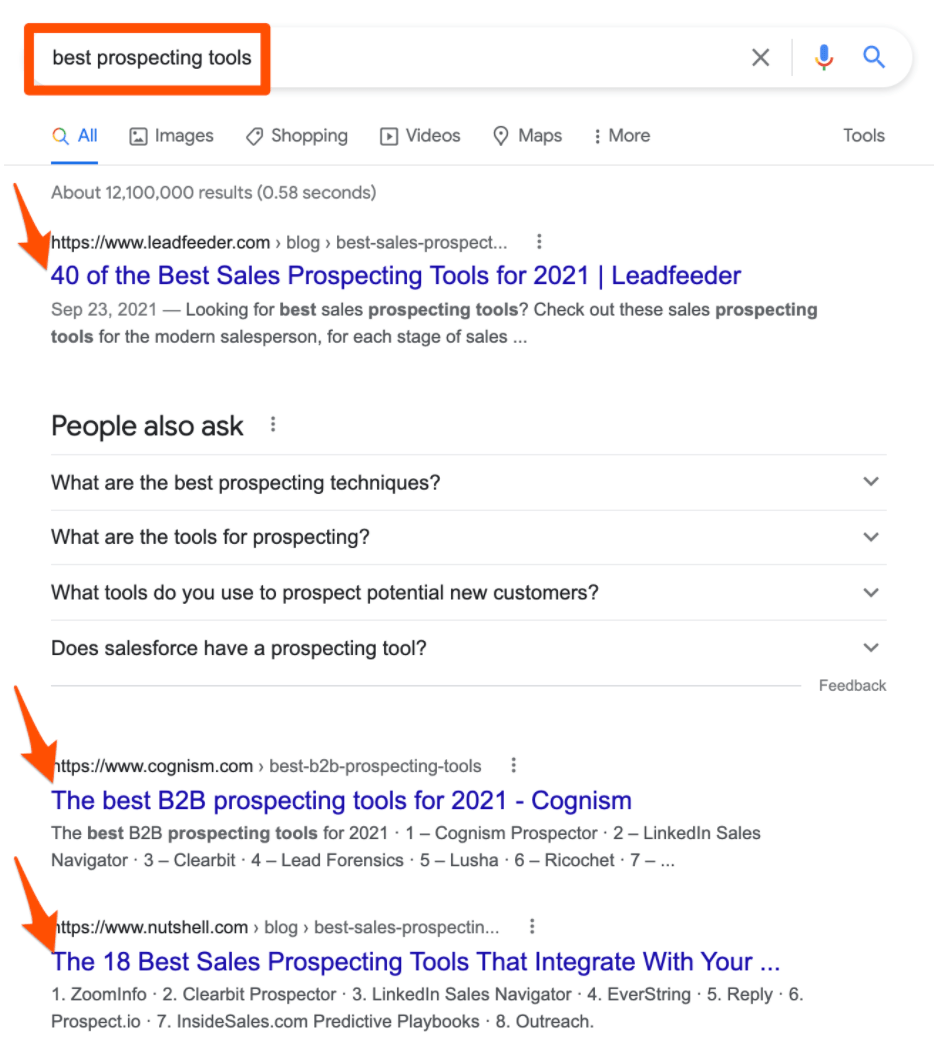
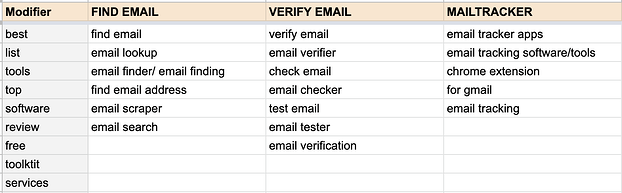
How we behaved in the first half of last year versus this past Spring could even be described as polar opposites. With this in mind, we wanted to take a look into how consumption patterns have evolved.

Reviewing the H1 2021 Consumption Behaviors of IT Buyers

Recently, we studied the consumption trends of IT buyers from the first half of 2021essentially, folks who are specifically working in IT roles. (Naturally, if you’re interested in some of the larger consumption trends, our 2021 State of B2B Content Consumption and Demand Report is a terrific resource. We’re also beginning to work on the 2022 version of that, so look forward to that sometime in early Q1.)

To do this properly, we analyzed our data as we normally would and then asked another industry leader to join us in discussing our findings. Along with myself and our Chief Strategy Officer, David Fortino, we were pleased to be joined by Tim Hayden, CEO of Brain+Trust Partners to ponder these behaviors, insights, and discoveries. 

Analyzing The “What”

Before we get into some of the more personal identifying factors of these registrations, let’s start by examining some of the top-level traits of our findings.

Total Registrations

NetLine sees a ton of registration requests from the IT job area audience. Regardless of what or when we review information, this group is our largest audience by a wide margin. During the first half of 2021 this group represented 27% of all requests. While this audience’s consumption was largely even YOY, 2021 did see a very minor dip from 2020. And there’s a good reason for that.

“I think the one thing that’s interesting,” David Fortino said, “if we compared this [data] to 2020, that volume was a little bit greater due to the fact that there was a scrambling of sorts, as you can imagine due to COVID.” 

Although IT audiences were always our largest audience segment in terms of content consumption, they were never put under the pressure that they were at that moment where every organization had to go fully digital. “A lot of organizations just clearly weren’t prepared to do so. “I think clearly, IT teams have settled into a groove now, and have understood what it takes to run an organization from that perspective,” David said. “So, their behavior, I suppose, from the content consumption side of things has kind of fallen back into the levels that we would historically have seen.”

Digitization is something that people across the organization are acutely aware of now. And with that, they are ever more curious and interested in what it’s going to take to accelerate the performance of whatever their job task may be.

Registrations by Topic 

This segment of the analysis is a very interesting one. At the top of the list, we see Linux and cybersecurity and security in general, with data at the bottom. During our conversation, Tim Hayden mentioned the digitization of the world and its total impact on businesses across the board.

“I think there’s a number of trend lines that are parallel here,” Tim said. “There’s what we’ve already started to scratch the surface on with the pandemic and the acceleration of digital transformation projects of digitization initiatives.” Tim believes the other attraction to Linux comes down to the current aversion to big-box tech. 

“I think people see Linux as an open standards platform where there is a tremendous amount of sharing of information on how to do things,” Tim said. “I think that is why we’re seeing [Linux] at the top of the list more than anything else is it’s an alternative to a lot of the off-the-shelf big tech that has been the object of most spend by both IT professionals and I think people across the marketing and customer experience communication suite who have in the last five to 10 years are spending as much on IT as somebody in IT is.”

David completely agreed with Tim’s assessment and continued with comments around some of the other topics on the list, specifically cybersecurity and data. “With employees going fully digitized and outside of the actual physical office environment, there was a whole new resurgence around what securing your actual data structure looked, like your data centers and so on,” David said. “And that wasn’t just about external threats, it was just simply about data leakage, compliance and so on, wherein the office, all of that was tightly controlled.”

Analyzing The “Who”

Now that we’ve reviewed the top level, let’s dig into the stuff that makes this study so intriguing: The more personal variables that begin to tell us “who” this audience is.

Registrations by Org Size

NetLine categorizes organizational sizes in 14 unique groupings, going from one to four employees and ending with the largest at 50K+. Considering the interest businesses have in reaching major corporations, let’s dig into the habits of the 50K+ audience. 

IT Buyers working within organizations of 50K+ employees represented more than 10% of all consumption behavior. Compared to their most closely-related brethren, organizations of 50k+ requested 104% more content than did professionals from organizations employing between 20K and 49,999 people. Considering the players at the top of the food chain (Amazon, Walmart, Apple, etc.), there’s a lot to be intrigued by. Tim has worked extensively with some of the companies in those realms, so we asked him if there was anything from an IT standpoint that these businesses are specifically in the market for in the content world.

Dave mentioned this as well, but the distribution of the workforce, especially in larger companies, are the ones that have had to all of a sudden go from organizational development, HR policies to health policies and health protocols,” Tim said. “And with that, you’ve got the distributed workforce—they’re working remotely and they’re doing so on their own devices. That creates challenges with their own devices on their own home networks.”

Tim further highlighted that this kind of workforce distribution creates challenges for IT teams that are supporting specific business units under a tremendous amount of pressure when it comes to security. “I think business continuity for the people that are on the front lines of the business, whether that’s customer experience and customer or tech support, or if it’s something in the sales of the marketing function, [is very important].”

Registrations by Job Level

Everyone is always interested in reaching the most influential people in an organization. From the CEOs to SVPs and VPs, there’s nothing Marketers love more than trying to engage the people at the top. However, regardless of which industry we’re analyzing or which job area we’re looking at, Individual Contributors are always the largest representatives of all consumption. 

As we detailed in the 2021 Consumption Report, we saw a slight dip in overall C-level consumption. The folks who picked up that slack, however, were Senior Employees and Senior VPs. These pros consumed 600% more content compared to their C-level leadership.

“Although [C-Level consumption] fluctuates a bit YOY,” David said, “one commonality is that the C-Suite itself generally consumes in 10% to 12% of all content across our platform. So, putting that another way, 86% to 88% of content is not being consumed by the C-Suite. That, it then introduces that challenge, right? Where you’ve got Marketers with this preconceived notion that we need to enter the C-Suite, we need to be influencing these folks. Well, it turns out that they’re just simply not interested in engaging with your content, nor are they generally going to respond to your emails, especially marketing emails or phone calls.” 

The main takeaway here is that regardless of market trends, influencing the influencers of the C-Suite is integral to driving customer penetration. “Whether you’re talking about digital innovation and rearchitecting a relationship with an organization, or you’re simply just trying to start first with a dialogue at a very painless entry point, trying to go through the C-Suite,” David said. “Unless it’s another C-Suite person forging that dialogue, it’s generally not going to happen.”

Registrations by Job Function

Here is where we end up seeing some of the differences between 2021 and the chaos that was the first half of 2020. IT systems management professionals consumed nearly 40% less content YOY. My theory is that because IT systems were put to their paces in the first half of 2020, these folks finally got a chance to take a breath.

Comparatively, their counterparts in IT general management are now the ones who are now trying to figure out how to keep up with everything that has now been added to their plate. This effort to keep up lead to a nearly 143% rise in overall consumption from this group. As David shared, he sees this as a sign that businesses are now back in growth mode. 

“People are planning for the future and it’s no longer about holding down the fort, right?” David said. “We’ve held the fort or we’ve lost the fort at this point. Business is always about the continuance in the future of wherever you’re going. Whether it’s fully distributed hybrid, you name it, but we are still charging ahead. And now, we’re getting back into research projects. We’re starting to understand where we need to spend allocation, R&D, and so on.”

Registrations by Sub-Industry

One of the most interesting insights we pulled from this report comes from direct real-world behaviors and how it is conveyed in content consumption.

What we observed last year during the initial COVID outbreak was that everything (from research collection to information distribution) was quite centralized and came from the top down. The federal government was the one dictating how new information was shared and how recommendations were shared. In 2021, as things have settled down and resembled a more normal atmosphere, that top-down dispersal has been left behind. As the collective dust has settled, decisions are being made by local and state governments. This is why consumption numbers have flipped.

 Here are some of the other highlights from this portion of the analysis:

  • Consumption from the Consumer Goods audience was up
    • Knowing that people have purchased so much in the last two years (it’s one of the reasons why we’re seeing all the different backlogs of goods in our shipping ports), it’s no surprise CPG brands have been digging into additional content—all of which ties directly into the increase in content consumption from General Manufacturing businesses.
  • Wine & Spirits Industry decreased
    • One of the sub-industries David was most intrigued by was the decline of content consumption within the wine and spirits industry. “I’d love to read a little bit more into that,” David said, “but I believe alcohol consumption is still at record levels across the US still due to most post-pandemic experiences, yet content consumption has flatlined.” (As a note, we wrote a little bit about this in a guest post on the Marketing Insider Group blog last Holiday season. It’s well worth the read if you’re curious about last year’s incredible consumption behaviors from the Wine & Spirits industry.)
  • The world of Agriculture
    • Tim, however, was most intrigued by the world of agriculture. “What’s fascinating is that agriculture is one of those industries that we’ve been watching at Brain+Trust for several years,” Tim said. “It’s one of the first places that robots have really started to take over so much of the value chain of what happens in the field, what happens in the processing and packaging of produce. But again, from a general content consumption standpoint, especially that which would be IT related or directional in terms of how-to, cheat sheets, white papers, those kinds of things, the best guess that I could give you for both general agriculture and wine and spirits is that there was a whole lot of aggregation and centralization of the channels over the last two years, right?”

      “It was more folks that were going to home delivery services, that were doing curbside pickup at the grocery store. And with that, folks are limiting their discovery to a menu, if you think about that real quick. They’re not being influenced throughout the week and building a shopping list the way they were before. I’m not saying that people don’t do that anymore, but they do less of it because they realize they need to go to the grocery store, and rather than being able to walk at a leisurely pace for an hour in the store and fill your basket with the things that are on your list and the things that are impulse, now, you’re more direct with it.” 

Analyze Your Own Industry and Looking to 2022

Our special thanks to Tim Hayden of Brain+Trust Partners for his time and expertise.

The nuggets we extracted from the consumption behaviors of the IT Job Area audience during the first half of 2021 were enough for an entire report on it’s own. Considering there are more than 300 individual industries represented on NetLine’s platform, this likely means there’s a whole heck more data waiting to be unearthed that we simply cannot get to. Fortunately, Audience Explorer can, and given its unmatched power, you’ll be able to make incredible decisions for your business based on real-time, first-party consumption data.

Beyond that, we’ll be back for another round of breakdown in the coming months with the debut of our 2022 State of B2B Content Consumption and Demand Report for Marketers. There will be updates to all our historical tracking along with some of the latest insights we’ve uncovered from the last 12 months. We’re looking forward to bringing you that and more in the new year.