Categories B2B

How to Write a Memo [Template, Examples & HubSpotter Tips]

A memo is the best way to share news when you have a significant update or important win within your company.

Unlike an email, your memo will go out to your entire department or everyone at the company, so knowing how to format a memo is just as important as what you write. No pressure. (Well, maybe some pressure…)

Before writing a memo, I take some time to hype myself up. This bit of internal communication will be read by my peers, my boss, and likely my boss’s boss. Getting the language right is essential, and every word counts.

In this post, I’ll share my experience writing memos and tips from my HubSpot peers. From there, I’ll showcase stellar memo examples and a template to help you create your own. Let’s dive in!

What is a memo?

How to Write a Memo

Types of Memos

When to Write a Memo

Best Practices for Formatting a Memo

Business Memo Template

Memo Examples

→ Download Now: 4 Free Memo Templates [Free Resource]

Memos are shared to inform readers about new information and have applications for different communities and businesses.

Communities can use memos to tell people within it about public safety guidelines, promote various events, and raise awareness on subjects that affect their lives.

Businesses can use memos to relay information involving newly updated policies, changes in procedure, important milestones, or necessary employee actions, such as attending an upcoming meeting or convention.

I often find myself writing memos when there are significant changes to my program at HubSpot. Perhaps we’re implementing a new workflow, reorganizing the structure of our team, or sharing insights from a project we just completed. Memos denote importance, so I only write them when I have important updates to share that impact multiple stakeholders.

Below, we’ll explore when memos are necessary. But first, let’s discuss how to write a memo.

You can put together a memo in a few short steps. To give you an idea of how each step is formatted, I’ll write an example memo and break it down for each step. My example memo will be an internal announcement for a writing training session.

1. Write a heading.

No matter what kind of memo you’re writing, you’ll need to include a heading. This section should include who the memo is for (whether an individual or department), the date, who the memo is from, and a subject line.

Your subject line should be short, attention-grabbing, and give readers a general idea of what the memo is about.

“The headings you use should be descriptive enough that your readers can infer what they’ll get in each section,” suggests Kaitlin Milliken, senior program manager at HubSpot. “Cut the cute language and keep your headings very tactical.”

Make sure the tone of your title matches the seriousness of the subject matter and your organization’s communication style. A witty opener won’t be right for every memo.

Testing It Out

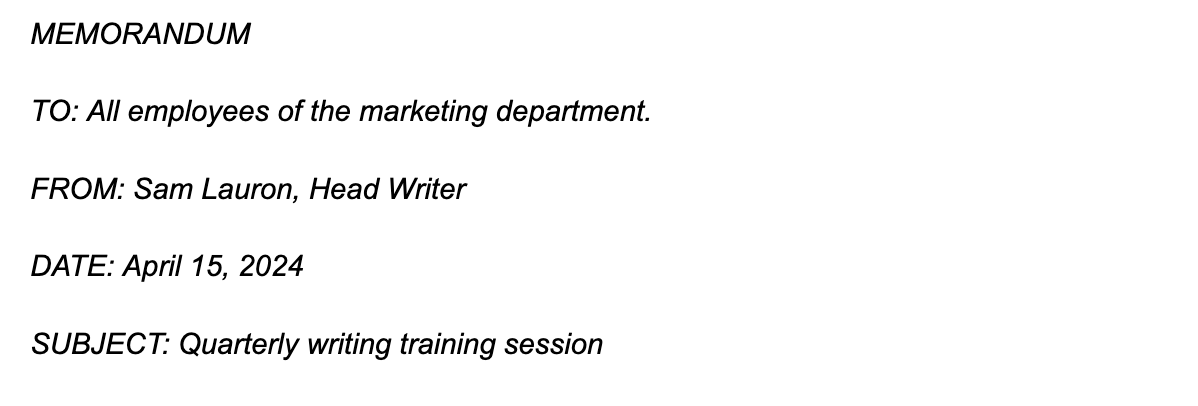
Here’s how this would look for my example memo about a writing training session:

2. Write an introduction.

Remember, you want your memo to be brief and information-packed. Your introduction should be an efficient use of space. It should highlight the issue or problem and the solution you decided to move forward with.

“The beginning of any memo should state a clear purpose of what the memo will cover,” says Karla Hesterberg, director of content marketing at HubSpot. “Depending on the subject, this could be as simple as an overview of a statement that establishes the need for a new investment. The more simple and straightforward, the better.”

That’s a reality that I personally struggle with. As a writer, I want to include those eloquent phrases and thoughtful transitions that sound great when read aloud. However, I need to take a different approach to writing memos.

My introduction should just summarize the purpose of the memo in two to three sentences.

Testing It Out

Using Hesterberg’s tip, here’s how I’d write the introduction for my memo:

3. Provide background on the issue.

Remember, memos go out to a wide group of employees. Not everyone reading your memo will have the same background that you do as a writer. You’ll need a section to explain any necessary context that folks need to know before going forward.

So, what do you put in? I asked Basha Coleman, one of the best memo writers on my team. Coleman is a principal marketing manager on HubSpot’s audience development team.

Coleman says she includes a section at the top of her memos that cover the following:

  • The situation
  • The impact of the situation
  • Recommended solutions

“This gives stakeholders the need-to-know info right away in case they don’t have time to read the whole memo at once,” Coleman says.

Beyond that, I like to link to other important documents that provide context on a topic.

That could be a related memo from a different team with more information, a news article that you’re directly responding to, or a relevant dashboard that showcases the issue.

You don’t want this section to be long. However, if folks are interested in learning more, you’ve just given them the power to do so.

Testing It Out

4. Outline action items and timeline (optional).

Depending on the purpose of your memo, you may have action items for employees to complete or provide a timeline of when changes will take place.

For example, they may need to complete a task or provide information by a certain deadline.

This section should include the following:

  • When employees can expect changes to go into effect.
  • What changes have already been made and what to expect in the future.
  • Deadlines they need to adhere to.

When developing a timeline, avoid just creating a paragraph with dates interspersed throughout.

“Don’t be afraid to use visual cues in your memo, like tables, heading colors to display hierarchy of information, charts, and graphs. These can keep a memo brief and skimmable,” suggests Coleman.

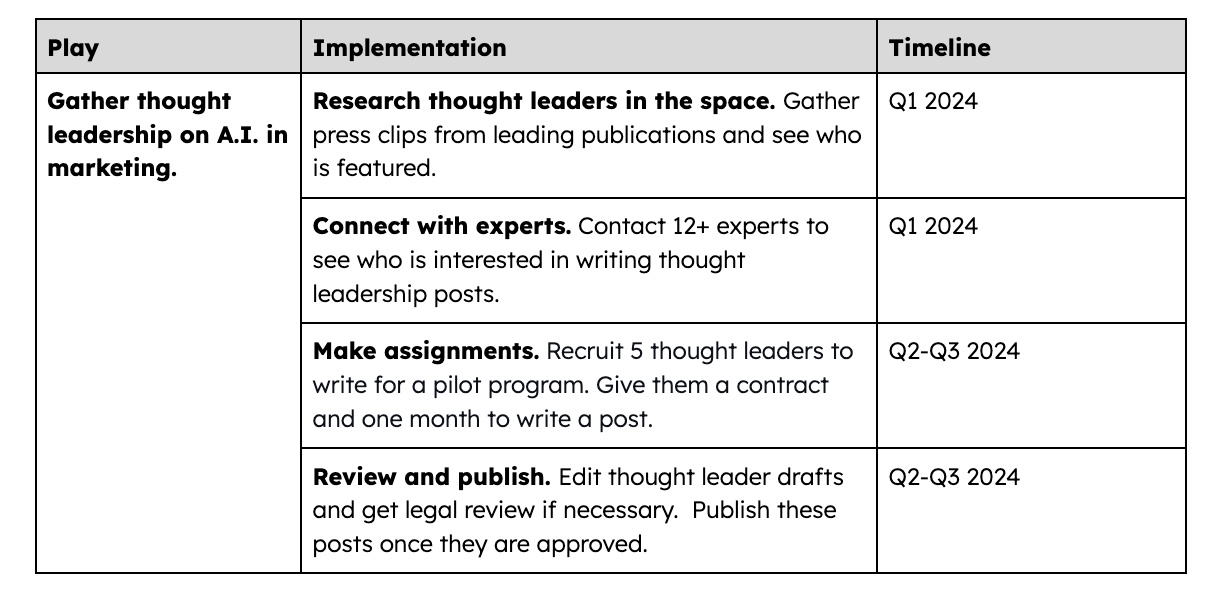
Milliken agrees. In a recent memo on building a thought leadership program, she included tables that laid out each step her team would take, more details about what was needed, and when it would occur.

“I also included an infographic of a pipeline to show the stages of the project and how long each would take proportionally,” she says. “This makes it easier to visualize a timetable than just skimming chunks of text.”

Testing It Out

Here’s a sample table I created to demonstrate.

If no action is needed on the employee’s behalf, you can leave this section out.

5. Justify any reasoning.

If you’re communicating a request or anything new that could ruffle some feathers, you can make your case by offering a rationale as to why your announcement or request is so important.

“Think about your target audience and try to anticipate areas where they might ask questions, have concerns, or need more clarity,” says Hesterberg. “Try to re-read as someone who doesn’t have all the context you have to identify areas you need to build up.”

Remember, as the memo writer, you’re an expert on the subject. You may need to ask a manager or a peer to review your memo with a skeptical eye. Where do they have questions? What needs additional justification?

From there, you can strengthen your case. This often includes featuring statistics as to why it’s critical and urgent to make a change.

“Keep in mind that data is super powerful but must be presented in a way that enhances the narrative rather than confusing it,” says Amanda Sellers, a blog strategy manager at HubSpot.

For example, the phrase “58.97% met the benchmark and 10.26% far exceeded the benchmark” is clunky. Instead, Sellers suggests writing,”Our strategy is working nearly 70% of the time.”

The first example is unwieldy, Sellers notes, referring to a methodology that a broader audience is less likely to care about.

Meanwhile, “the second audience demonstrates the more important thing: why that methodology was important and what you can take from it,” Sellers explains.

Testing It Out

To justify the importance of the quarterly writing training session, especially in conjunction with AI tools, I’d add this data point in my memo:

6. Soften any blows (optional).

If you’re making a big change that could be seen as controversial or making bold statements where people might feel slighted, you can soften this with a well-placed caveat.

For example, with the rise of AI, you might be communicating a new company policy related to using AI.

You could soften the blow by sharing that it hasn’t been an issue for most people, but it’s important to have a clear policy in place for handling it.

Testing It Out

Let’s say my memo took a different position regarding AI for writing. Here’s how I’d format my memo to soften the blow:

7. Include a closing statement.

Your closing statement will include any information you’d like to reinforce. Are there any specific contacts readers should reach out to for questions? If so, include them here.

“A conclusion that just reiterates your main points is boring and likely to be skipped,” Milliken says. “End on your most compelling points. You can either reassert urgency or discuss the resources you need to be successful.”

Milliken often closes on the support her team requires to find success. That could be additional financial resources, a champion within leadership, or more time to establish the change.

Testing It Out

8. Review and proofread before sending

This step may seem like a no-brainer, but it‘s important to review your document before sending it out. Memos are meant to inform readers of upcoming changes and relay important information.

You don’t want to risk causing confusion with a typo or misstatement.

“Memos often have a broad audience, so you’ll want to craft a narrative that is easily understood no matter who is reading it,” says Sellers. “That means telling a persuasive story, getting to the point quickly, anticipating questions, and cutting jargon to find the simplest way of saying something.”

Testing It Out

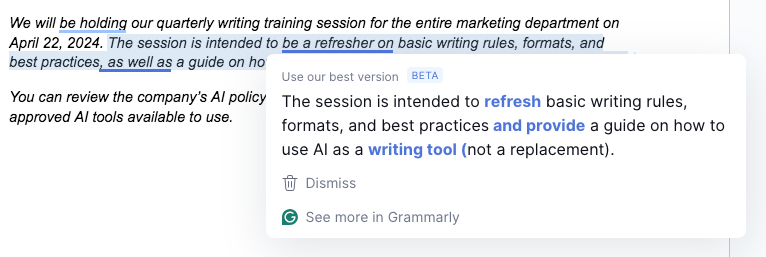
Ask a coworker to review your memo or use an editing tool like Grammarly or Hemingway to review and proofread.

Here’s an example of Grammarly editing my memo and making suggestions for improvement:

9. Create any audio or video aids,

Once the memo is written, I like to give it one last pass. What would make the message even more clear? Should I work with creative to build an infographic? Should I amplify the document over our email channels?

Now that I’ve invested the time, I want to make sure my message is heard.

Coleman often creates a recording with a deck, highlighting the most important points in the document.

“Including video summaries of my memos with Loom is helpful for accessibility and busy stakeholders who like to listen to updates while working on other tasks,” she notes.

10. Communicate urgency (if necessary).

The last important tip? Up the urgency. If your memo pitches something new or timely, you want to explain why the change is urgent and the importance of moving now.

“The best way to do this is to explain what we’re at risk of losing if we don’t take action here,” says Hesterberg.

For pitch memos, Hesterberg suggests telling readers why this problem is important and why people should care. For explanatory memos, she recommends explaining what the information in the memo will be used for.

Testing It Out

Here’s how I’d add urgency to my memo about the training session:

Types of Memos

Now you know how to write a memo, but before you start banging away at your keyboard, it’s helpful to know the types of memos that are out there.

1. Request Memo

In a nutshell, request memos are exactly what they sound like: memos that are designed to make a request and get a positive response.

When writing request memos, focus on using persuasive language and, where possible, stats or numbers to highlight why a “yes” is the right answer.

Some sample uses of request memos might be to request a new purchase from your company or authorization for professional learning or volunteer opportunities.

When writing request memos, be clear in your request, state any costs, share why it’s important, and keep emotion and personal feelings out of the request.

2. Informative Memo

You might see these called announcement memos as well, and they make up the bulk of most memos I’ve seen. The goal of informative memos is to communicate new information to your audience.

Sample uses of informative memos might include changes in policy, company news, new processes, or even new staff members.

Ultimately, you can think of an informative memo as a clear, concise way to share announcements with your audience and provide any justification necessary for the new information.

3. Confirmation Memo

You can think of confirmation memos as a paper trail to make sure key stakeholders have a record of discussions.

Sample uses of confirmation memos are documenting conversations, so you have justification should it ever be called into question, clarifying anything that has ambiguity to avoid misunderstanding down the road.

When writing confirmation memos, specificity and clarity should be your number one goal.

4. Directive Memo

Directive memos are largely self-explanatory. When you need to communicate how to do something to your audience, you might write a directive memo offering detailed instructions that are easy to follow.

Sample uses of directive memos include sharing how to implement a new process, comply with new requirements, or even complete necessary tasks.

When to Write a Memo

As you’ve seen with the types of memos above, most memos are designed to communicate new information. However, memo purposes stretch far and wide.

“Memos serve a variety of purposes, but generally speaking, they either pitch or propose something new, consolidate information into one place for the sake of alignment, or explain or clarify information about a project or program,” says Hesterberg.

You might write a memo in the following scenarios:

  • You have a new policy, and you need to explain it to your audience.
  • Sharing important company updates and information.
  • Announcing new staff members or promotions.
  • Confirming details of a discussion to get everyone on the same page and create a paper trail.
  • Teach or tell people how to do something.
  • Requesting something and justifying why it matters.

There are lots of possibilities out there. In a nutshell, if you have something you need to share, a memo might be the answer.

Best Practices for Formatting a Memo

Now that you know when to write a memo, what types of memos there are, and what elements to include in your memo, I have a few parting tips. To sum it up, here are a few best practices for formatting a memo.

Cater to your audience.

Before you start writing your memo, consider who your audience is. Understanding who will read your memo will help you tailor your message, tone, and CTA for that audience.

Pamela Bump, head of content growth at HubSpot, suggests considering the following questions.

“Are the leaders you’re writing for busy executives who want a quick one-pager focused on the most need-to-know information?” she says. “Or are the readers more inquisitive and interested in soaking in all the information they can get?”

Make it skimmable.

HubSpot’s Kaitlin Milliken recalls a time when she wrote a memo that wasn’t skimmable.

“When I was asked to write my first memo, I created a document with huge walls of text,” she says. “My manager gave me great feedback, encouraging me to use charts and graphs throughout the document. That makes total sense to me now. No one wants to read a huge string of lengthy paragraphs, but they’ll definitely skim a table.”

To make your memo easier to read, use headings and separate paragraphs to break up new thoughts or talking points. You can also add tables and graphs to create a visual break when it makes sense.

Milliken adds, “Bullet points are your friend. They create breaking points throughout your document and keep information easy to digest.”

Be mindful of length.

The length of your memo depends on the type you’re writing. Generally speaking, a memo is one or two paragraphs long. But the length can vary if you’re writing an informative memo versus a request memo.

If your audience is interested in learning, an informative memo can provide more detail, while a request memo should be brief and to the point.

“If you’re unsure, go for a shorter 1-2 page document, but link it to another page or dashboard with further data, context, or information that they can dig into if they choose,” Bump suggests.

Now that you’ve learned what goes into a memo, here’s an easy-to-follow business memo template with examples of how to use them to serve different needs as guidance.

Business Memo Template

MEMORANDUM

TO:

FROM:

DATE:

SUBJECT:

I’m writing to inform you that [reason for writing memo].

As our company continues to grow … [evidence or reason to support your opening paragraph].

Please let me know if you have any questions. In the meantime, I’d appreciate your cooperation as [official business information] takes place.

Business Memo Template Format

The business memo template format is designed to effectively communicate your message. A memo should disseminate the necessary information in a way that is easy for a mass number of employees to digest.

An accurate subject line will alert them that this memo is relevant to them specifically. And beginning with an executive summary allows recipients to understand the general message before they dive deeper into the details.

The background information offers context to the message, and the overview and timeline should answer questions that are likely to come up.

Header

In your header, you‘ll want to clearly label your content “Memorandum” so your readers know exactly what they’re receiving. As previously mentioned, you‘ll want to include “TO”, “FROM”, “DATE”, and “SUBJECT.”

This information is relevant for providing content, like who you’re addressing and why.

Paragraph One

In the first paragraph, you‘ll want to quickly and clearly state the purpose of your memo. You might begin your sentence with the phrase, “I’m writing to inform you … “ or ”I’m writing to request … ”

A memo is meant to be short, clear, and to the point. You’ll want to deliver your most critical information upfront and then use subsequent paragraphs as opportunities to dive into more detail.

Paragraph Two

In the second paragraph, you‘ll want to provide context or supporting evidence. For instance, let’s say your memo informs the company of an internal reorganization.

If this is the case, paragraph two should say something like, “As our company continues to grow, we’ve decided it makes more sense to separate our video production team from our content team.

This way, those teams can focus more on their individual goals.”

Paragraph Three

In the third paragraph, you‘ll want to include your specific request of each employee — if you’re planning a team outing, this is the space you’d include, “Please RSVP with dietary restrictions,” or “Please email me with questions.”

On the contrary, if you‘re informing staff of upcoming construction to the building, you might say, “I’d appreciate your cooperation during this time.”

Even if you don’t expect any specific action from employees, it’s helpful to include how you hope they’ll handle the news and whether you expect them to do something in response to the memo.

Downloadable Memo Template

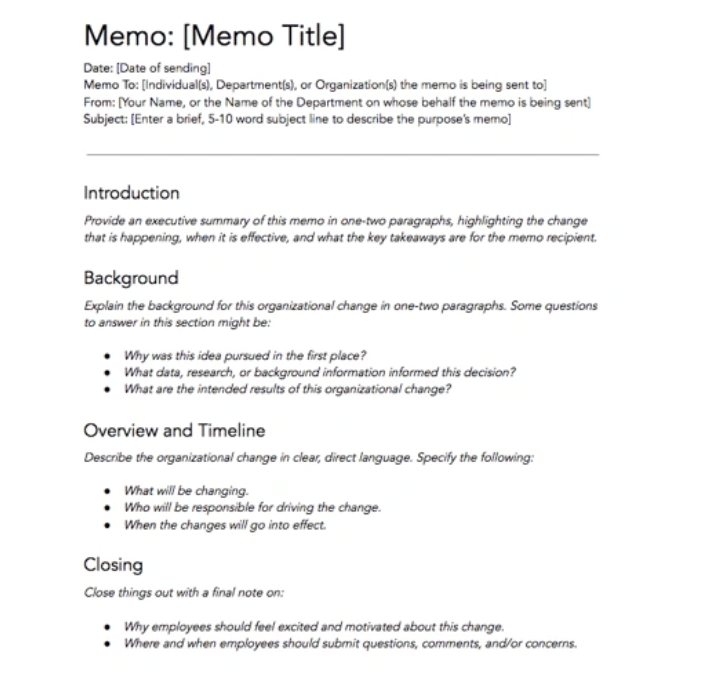
Want to see the above memo format in its final form? Download HubSpot’s free business memo templates, shown below.

The document gives you a framework that sorts your memorandum into subtopics to help employees better digest the information and understand what’s expected of them after reading it.

Download This Template

Memo Examples

Different industries or situations will require slightly different memos. Certain ones will need to be longer or shorter, others may not have a timeline, and some will have extensive background information.

The format of your memo should change to fit the message you want your employees to receive.

Launch Delay Memo

The objective of this memo is to announce that the launch of a product will be delayed. The introduction includes the new date, so a timeline or long overview isn’t necessary.

This format of this memo could be applied to other situations where a simple, but important, change is occurring.

What I Like: The launch memo provides readers with insight into product launch delays, which can alleviate some frustration that customers or employees may otherwise feel if they were not informed.

Other date changes, promotions, milestones, or product announcements could also utilize this format.

Building Update Memo

There are logistical aspects of a business that concern your employees but don’t necessarily involve their work. This memo depicts an example of a kitchen remodel in the office. It’s a bit of an inconvenience but not one of a large magnitude.

What I Like: This memo demonstrates a business’s understanding of the impact that renovations can have on employees and shows respect and consideration for their needs.

This memo format could be applied to other building updates, work-from-home days, or other widespread but minor announcements.

Community Memo

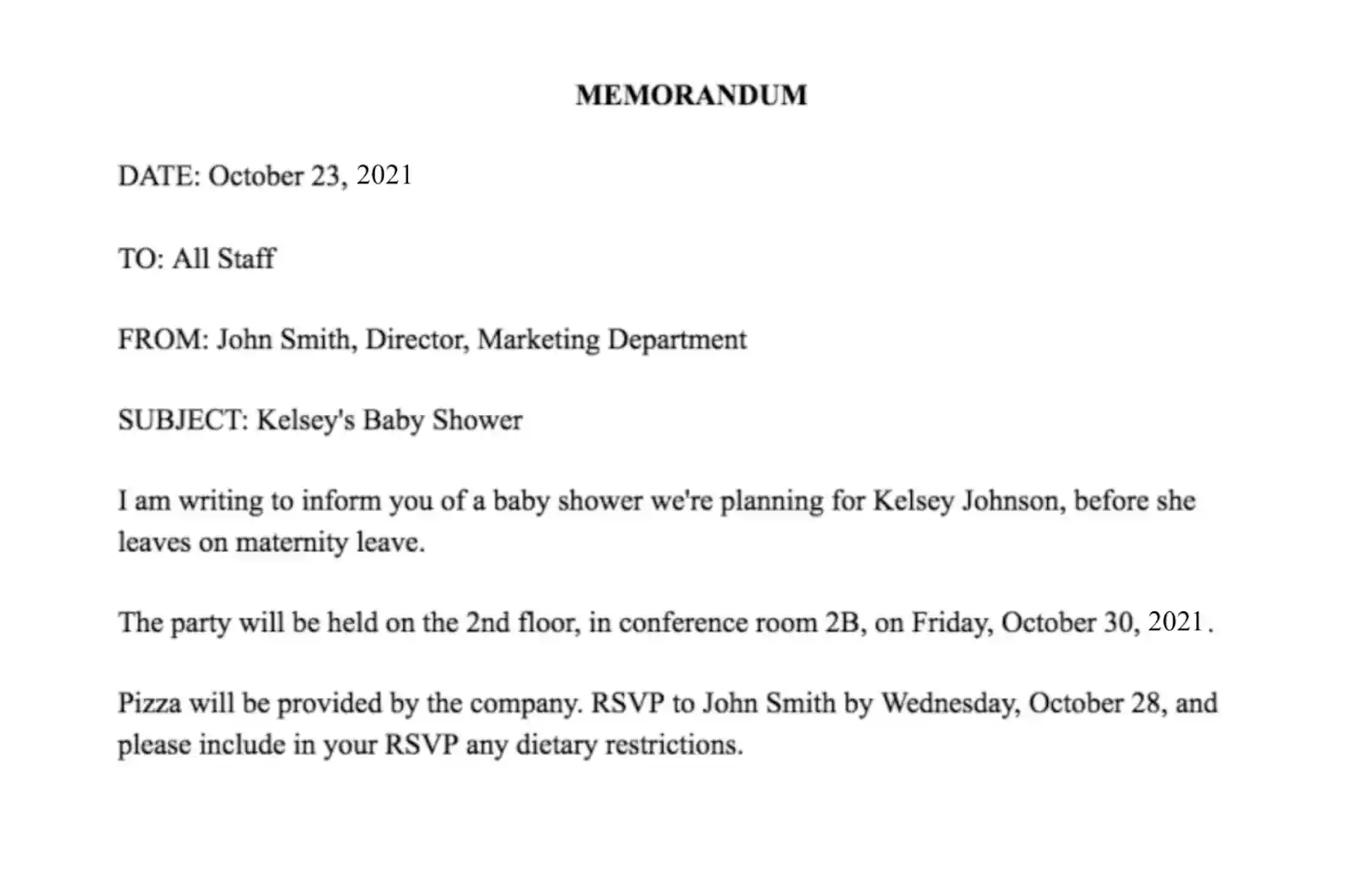
Celebrations, events, theme days, or other fun things for your employees can also be communicated through memos. Community memos like this example are generally shorter because they don’t require much background information or many details.

What I Like: This memo has clear directions on where to find the event taking place, something which would’ve been less effective if it only included the floor number.

Memos of this nature should include a summary, date, and location at a minimum.

Persuasion Memo

Persuasion memos are used to encourage readers to take action regarding an event or proposition, like voting or petitioning.

What We Like: This persuasion memo prioritizes giving the reader information to learn on their own and make a decision based on their findings.

The main components of the persuasion memo should include an overview of the task at hand, context to learn more about it, and a call to action that emphasizes the impact the reader can potentially make.

Write Your Memos To the Point

The main difference between a memo and just an email is not the level of complexity. It’s the size of the audience.

A memo can be simple or intricate as long as it effectively communicates your message and is relevant to the receiving group of employees. And, the message itself should be clear and concise, no matter which memo format you use.

Editor’s note: This post was originally published in October 2018 and has been updated for comprehensiveness.

New call-to-action

Categories B2B

The Ultimate Guide to Social Community Management [+Expert Tips]

I used to roll my eyes at the word “community.” It sounded like just another marketing buzzword. But after becoming actively involved in building and maintaining online communities around brands, I realized the immense value hidden behind what I once dismissed as a mere fad.

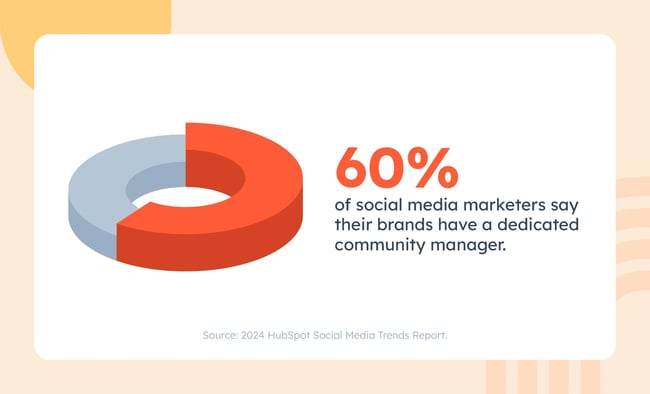
For example, here at HubSpot, building a strong community has enabled us to connect with our target audience on a much deeper level and foster growth. And it’s not just us — 86% of social media marketers believe having an active community is critical to brands’ success on social media in 2024. And an impressive 60% say their companies are already building such communities.

Download Now: 3 Community Management Templates [Free Kit]

In this complete guide to community management, I’ll tell you everything you need to know, and include practical steps to integrate it effectively into your brand’s marketing strategy.

Why Should Your Brand Care About Community Management?

So, what makes community management so special? Why should you even care? To answer these questions, we need to go back in time a bit.

Communication in the business world used to be largely one-directional. Brands would blast out broad and generic marketing messages to a mass audience and then hope for the best. There wasn’t much room for two-way conversations or feedback from the audience.

Meanwhile, for most customers, it was all about the price. Wherever it was cheaper, that’s where they would buy. They didn’t care much for a deep connection or engagement with a brand.

But we live in a whole different world now.

Today, people expect not just to passively consume content or messages from brands but to interact with this content — and, by extension, with the brands themselves. In fact, consumers are more inclined to support businesses that engage with them on a personal level.

As Viktoriia Khutorna, communications specialist at Promova, puts it:

“People are likely to go to a company that not only sells at a reasonable price but also communicates humanly, jokes, supports, or honestly admits mistakes and goes to fix them.”

Enter community management.

quote on importance of community management for brand building

Community management addresses these changing expectations head-on by building a space where your brand can interact with your audience, become an integral part of their lives, and make them feel heard and valued. And trust me, that’s a powerful tool in today’s competitive business landscape — I’ve seen it firsthand.

Community management enables your business to:

  • Get feedback and gather ideas from your customers and audience through real conversations.
  • Provide timely support to fans, customers, and other stakeholders.
  • Increase brand and product awareness within your target demographic.
  • Gain deeper insights into your customers’ preferences, expectations, and needs in regard to your products, content, services, and support.
  • Build both individual and group relationships between your brand and your audience.
  • Increase customer engagement with your brand, fostering trust and loyalty.
  • Boost conversions and sales.
  • Deliver value that extends beyond a product or service, like a sense of belonging.

Community management comes in many forms. In the next section, we’ll review them so you can determine the most appropriate approach for your brand.

Types of Community Management

There are many ways to look at the different forms of community management, but the easiest one is through the SPACES model. This framework, proposed by CMX, organizes community management strategies based on their primary function and the focus of the community in question.

The acronym “SPACES” represents six distinct types of community management:

  • Support
  • Product
  • Acquisition
  • Contribution
  • Engagement
  • Success

Here’s a breakdown of what each type entails.

Support Community Management

How it works: Support communities empower members to help each other out by answering questions or solving problems. These communities can be organized as an online forum, discussion board, or community website where members ask questions and fellow members answer them.

You can also offer other support resources within these communities. For example, I like to share frequently asked question (FAQ) documents that members can use to get quick answers.

Benefits: Reduced customer support costs, lower workload for your customer service teams, quicker resolution of common issues, and a greater sense of community among members.

Best for: Brands with in-depth product lines, like software or electronics companies, where users can benefit from sharing tips, tricks, and troubleshooting advice.

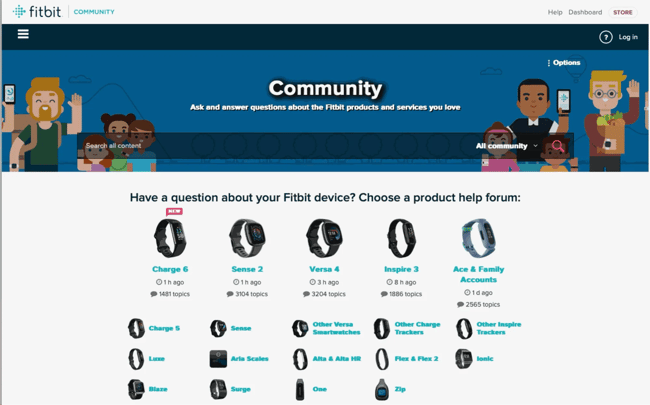
Community management examples: HubSpot Developers, Microsoft Community, and Fitbit Community.

Fitbit support community homepage.

Image Source

Product Ideation, Innovation, and Feedback Community Management

How it works: In this type of community, you create a safe space for your target audience to share thoughts and feedback on how you can improve your product and services or innovate. In a nutshell, it invites members to participate directly in the product development process.

Benefits: Improved product-market fit, continuous product improvement based on user feedback, and higher user satisfaction. Involving users in the development process also cultivates a sense of ownership in the brand, which can boost loyalty.

Best for: Consumer-oriented software-as-a-service (SaaS) companies where user feedback is crucial for iterative product development.

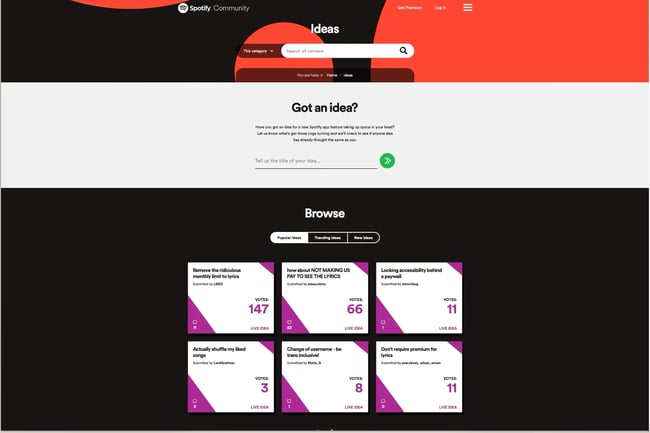
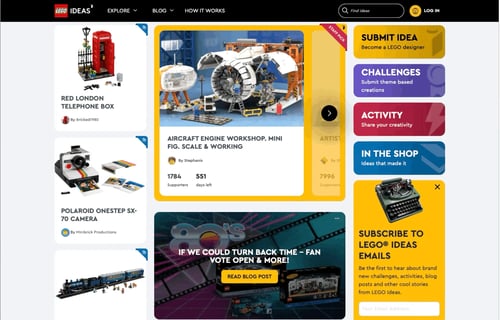
Community management examples: LEGO Ideas and Spotify Ideas.

Spotify Ideas community homepage.

Image Source

Acquisition and Advocacy Community Management

How it works: Acquisition and advocacy communities take the form of networks of brand ambassadors or advocates who help build awareness and promote your products and services through word of mouth, affiliate programs, or even social media.

Benefits: Increased brand awareness, lower customer acquisition costs, and higher conversion rates.

Best for: Almost every type of company can benefit from acquisition and advocacy communities, but from my experience, this form of community management is particularly effective for startups and brands launching new products or entering new markets.

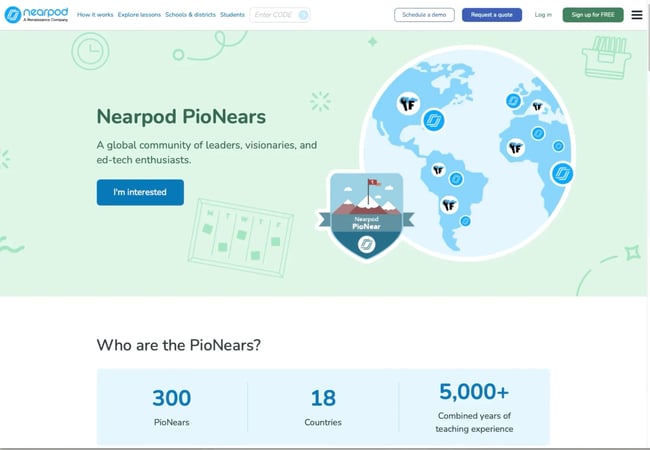
Community management examples: Apple’s Distinguished Educators, Nearpod PioNears, Sephora Squad, and Lululemon Global Ambassadors.

Homepage of Nearpod PioNears community.

Image Source

Content and Contribution Community Management

How it works: These communities encourage users to contribute content and ideas or participate in collaborative projects. Contributions can range from guest blog posts to media submissions (like photos and videos) to involvement in open-source software projects to listings on your website.

Dedicated team members typically curate the user-generated content to ensure it’s appropriate, meets quality standards, and aligns with the community guidelines.

Benefits: Increased member engagement, a strong sense of ownership among contributors, and more valuable content for the entire community.

Best for: Media companies, creative industries, and open-source projects that thrive from user-generated content.

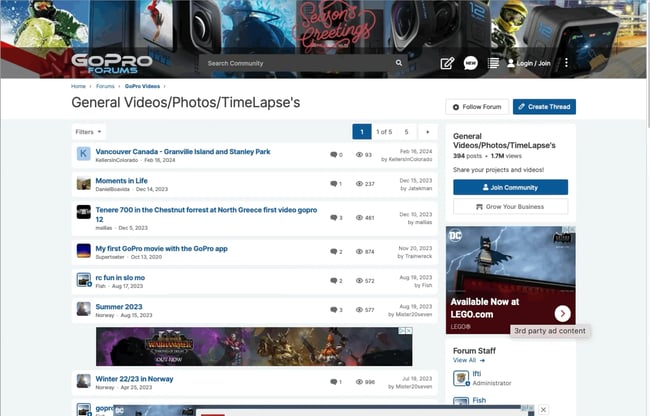
Community management examples: GoPro Forums and Photoshop’s Lightroom community.

GoPro’s photo- and video-sharing community.

Image Source

Engagement Community Management (External and Internal)

How they work: There are two types of engagement communities: external and internal. External engagement communities connect individuals who have a shared interest related to a company or brand. For instance, if I run a company that sells outdoor gear, I could create a community of hiking enthusiasts.

Conversely, internal engagement communities bring together a brand’s internal contributors, such as employees, partners, vendors, or suppliers. These communities can serve as a hub for sharing internal news or resources or promoting the company’s culture. A Slack channel made up of an international company’s remote workforce is a great example.

Benefits: External engagement provides people with a sense of belonging that can lead to a stronger connection with your brand. These communities can also organically increase brand awareness via word-of-mouth recommendations.

Internal engagement communities can help align staff members with the company’s goals and values, improve morale and retention, enhance collaboration, and strengthen partnerships with suppliers, vendors, distributors, and other business partners.

Best for: External engagement communities can benefit any type of business. But they’re especially great for lifestyle brands or companies with a strong brand identity that resonates with a particular lifestyle or set of values (e.g., fitness or beauty). Internal communities are beneficial for larger organizations with many departments or teams spread across different regions or countries.

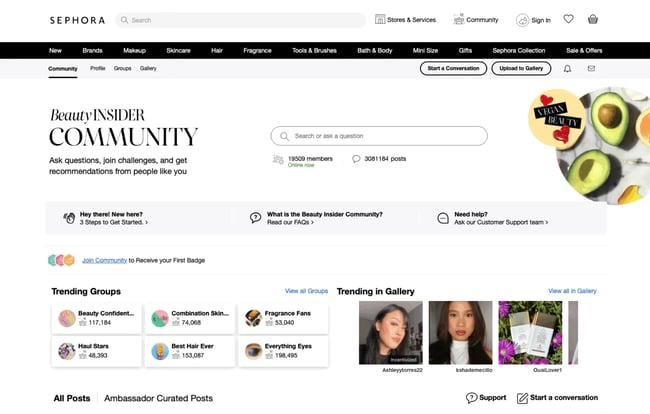
Community management examples: Internal: HubSpot’s Slack community, which is a platform for employees to connect, share ideas, and ask questions. External: HubSpot’s community for inbound marketers, Nike’s Run Club, and Sephora’s Beauty Insider Community.

Sephora Beauty Insider Community homepage.

Image Source

Success Community Engagement Management

How it works: As the name suggests, success communities are aimed at helping users succeed with a particular product or service or achieve desired outcomes — such as by sharing best practices, user experiences, and success stories.

Benefits: Greater customer satisfaction, reduced churn rate, and valuable testimonials that can attract new members.

Best for: SaaS, business-to-business (B2B), and service-oriented businesses where product success is closely tied to continued product use.

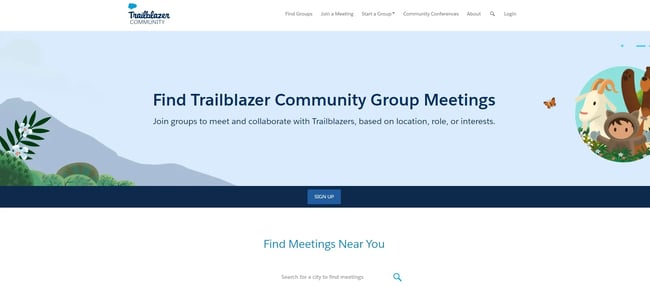
Community management examples: Salesforce’s Trailblazer Community and WeightWatchers Community.

Salesforce’s Trailblazer community.

Image Source

How to Build a Community Management Strategy: A Step-By-Step Guide

We’ve looked at the main types of community management. Let me now walk you through my step-by-step process for crafting a community management strategy that gets results.

1. Define your objectives.

The first thing to do when building a community management strategy is to define your primary objectives. Ask yourself: “What is it I want to achieve by building and maintaining a community?

For example, I’ve built and managed online communities focused on:

  • Increasing brand awareness.
  • Gathering product feedback for product development.
  • Increasing engagement.
  • Enhancing customer support.
  • Building a network of brand advocates.
  • Increasing traffic to a website.
  • Increasing customer satisfaction and retention.
  • Boosting sales and conversions.

Remember, these are just examples. Your objectives will be unique to your brand or project.

Regardless, defining them upfront helps you lay the groundwork for the entire strategy. Everything from the choice of platform to the type of content you create and share with your community will be geared toward achieving the objectives you’ve defined.

2. Identify your audience.

After defining your primary objectives, the next thing to do is identify and understand the audience.

That means gathering data on your current customers or target demographic, including:

  • Demographics. Who are they (age, gender, profession, etc.)?
  • Psychographics. What are their values, attitudes, and lifestyles?
  • Behaviors. How do they interact with brands and content online? What social media platforms do they use?
  • Needs and challenges. What are they seeking to gain from being part of a community? What challenges are they hoping to overcome?

To gather this intel, I use various tools and resources, including market research, social media analytics, and customer surveys.

Taking time to understand the target audience will help you:

  • Choose the most effective channels for community building.
  • Determine the most appropriate style and tone of communication.
  • Tailor content and activities to their needs and interests.
  • Predict and manage any potential challenges that might arise within the community.

3. Choose the right channels.

Next, choose the channels where the communities you’re hoping to build and nurture will live. That could include social media platforms like Facebook or Instagram, a forum on a brand’s website, Slack channels, or even offline meetups.

When choosing the best platform for your target community, consider these factors:

  • Audience preferences. Ensure the platform(s) align with the way your current customers or target audience prefers to communicate. For example, I might choose to focus my efforts on TikTok if I have a young target audience, Instagram if I’m going for a broad audience, or LinkedIn if I’m targeting a B2B crowd.
  • Objectives and type of interaction. Remember those objectives we talked about earlier? They play a big role here, too, as do the type of interaction you desire from your audience. ​​For example, social media platforms like Facebook and Instagram are fantastic for real-time engagement and boosting brand awareness.
  • Control. Another critical consideration is control over the user experience and data management. Hosting a community on your own website, for example, offers more control than using a third-party social media platform.
  • Platform tools and features. Consider the community management tools and resources each option offers. For example, if you’re hoping to engage your audience via quizzes, polls, or live chats, focus on platforms that have these features.

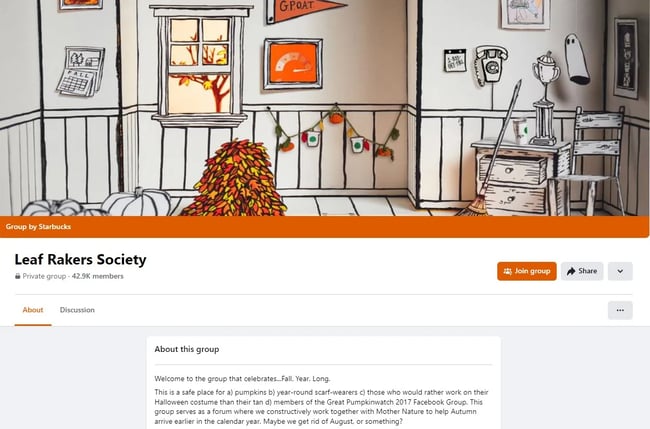
Starbucks’ Leaf Rakers Society community group on Facebook.

Image Source

For in-depth discussions, user-generated content, and gathering valuable feedback, dedicated forums on your brand website are the way to go.

4. Set your targets.

With the primary objectives set, the audience understood, and the platform(s) chosen, the next step is to set targets. These targets will naturally flow from your primary objectives.

For example:

  • If the primary goal is to increase engagement, a sample target could be to increase the average comments per social media post by 15% in the next three months.
  • If the goal is to gather feedback in order to improve a product, a potential target could be to collect and respond to at least 100 customer feedback submissions each month.

Needless to say, it’s crucial to set realistic targets. Here are my top tips for setting achievable goals:

Consider industry benchmarks.

This entails looking at similar communities from other brands in your industry and their average past performance. That gives a solid baseline to set your own targets on.

For example, if historical data indicates that similar communities typically see a 10% month-over-month increase in forum participation, you could set a comparable target for your community.

Run your own experiment.

A great alternative to using industry data is to run your own experiments and then use your findings to inform your targets.

Say my primary objective is to increase customer engagement. I could track relevant engagement metrics (brand mentions, likes, shares, and comments) for a set period (like 4- 8 weeks). At the end of this period, I would average out engagement rates to set a baseline. I would then use this baseline to establish an achievable goal for the next period and then update my targets as time passes and I collect more data.

In the course of this experiment, I would also do A/B tests to see what approach resonates most with my followers. In other words, what drives the most engagement? For example, do they comment more on funny memes or insightful industry articles? These findings can then guide future decisions.

Start small.

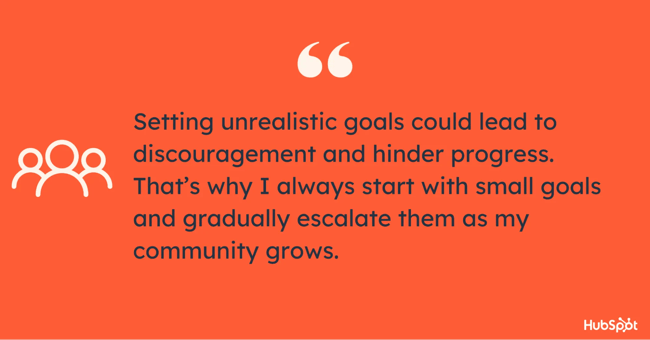
Building a thriving community takes time and consistent effort. Setting unrealistic goals could lead to discouragement and hinder progress. That’s why I always start with small goals and gradually escalate them as my community grows.

For example, instead of aiming to double the number of user-generated content submissions (photos, videos, and reviews) on your platform in the first month, you could target a 15% increase each month for the first three months.

quote on setting goals as social community managerAlign targets with your company resources.

When setting targets, make sure they’re aligned with your resources, including time, budget, and staff. It’s great to aim high, but at the same time, it’s important to remain realistic about what’s achievable with your current resources.

For example, if you’re a solopreneur managing a community on a limited budget, you could set a target of responding to each comment within 48 hours rather than a more ambitious target of 12 hours.

5. Post regularly and engage with your audience.

Consistent posting and active engagement are crucial to keeping your community vibrant and sustaining interest among members.

To help with this, you can develop a content calendar to ensure a steady stream of new content for your audience to engage and interact with.

Depending on your goals and the type of community, content could include:

  • Blog posts or articles. Establish yourself as a thought leader or authority in your field.
  • Polls and quizzes. Gather valuable insights.
  • Discussion prompts. Spark conversation.
  • Contests and giveaways. Encourage member participation.

In addition to keeping your community lively, regular posting helps maintain visibility in your members’ feeds, keeping your brand on top of their minds.

That said, life happens, and you can‘t be online every minute. Don’t let that silence your community. Tools like HubSpot’s Marketing Hub let you schedule posts in advance, ensuring there‘s always something for your audience to engage with, even if you’re unavailable.

Besides posting, remember to interact with your people.

Show them that they aren’t just numbers and that they’re valued by:

  • “Liking” their comments.
  • Upvoting their forum posts where appropriate.
  • Responding to their questions or concerns.

If you’re primarily managing your community on social media, consider following back your biggest brand advocates — if you deem it appropriate — or interacting with the content your audience shares (even if it’s not directly related to your company). It’s a small gesture that shows you support their interests and builds stronger relationships.

By actively engaging with your community, you not only make them feel valued but also create more opportunities to glean valuable insights into their needs, preferences, and challenges.

6. Measure your results.

Finally, it’s time to measure the results. This lets you know whether what you’re doing is working or whether you need to change tactics.

But before we jump in, here’s some advice from my own experience: Don‘t get hung up too much on quantitative data. Numbers can’t always capture the magic of a thriving community. Additionally, building a vibrant community takes time, so be patient and focus on the long game.

Now, let‘s talk about how to measure those results. It’s easier than you might think. Here are my go-to methods:

Social Listening

Social listening means monitoring your social media accounts and other digital platforms to understand what people are saying about your brand and/or its products and services. It involves keeping track of any mentions, keywords, or discussions related to your brand (or those of your competitors). Social listening lets you know whether your community management efforts are paying off. If more people are talking positively about your brand, then you know you’re doing something right.

Platform Analytics

Many community management platforms have built-in tools you can use to measure progress and success. For example, I use tools like X Analytics, Instagram Insights, and Facebook Analytics to get direct insights into the engagement and reach of my posts and interactions on these platforms.

Analytics Tools

If your platform of choice doesn‘t include an analytics tool, or if you’re looking for deeper analysis, consider a third-party tool or platform. HubSpot’s Social Media Management tools, Google Analytics, Databox, and Sprout Social are some of the options I use. They provide valuable data that helps me refine my strategy and maximize my community’s impact.

Community Managers: Who They Are and Why You Need Them

According to Joe Kevens, founder of B2B SaaS Reviews, “A community needs to be actively managed to create and sustain the ongoing engagement community members seek.”

He adds: “Without sufficient community management, you run the risk of your community discussions going stale and your user engagement dropping — or losing them from your community altogether.”

This is where a community manager — the person responsible for overseeing your community management efforts across various platforms — comes in.

If your business has the resources, consider hiring a community manager. Depending on the community you build, you might need more than one, each focusing on a different area. HubSpot’s research shows that 60% of brands have a dedicated community manager.

Number of brands that have a dedicated community manager.

What is the Role of a Community Manager?

James Watts, community expert and founder of teach.io, says that the role of a community manager is “to be the brand’s voice, ears and heart within the community. They’re there to welcome and help people, start discussions and address any concerns.”

Here’s a look at the many hats a community manager wears:

  • Develops and implements strategies for building, growing, and nurturing a community.
  • Creates engaging content that resonates with the community.
  • Responds to comments and questions and actively encourages member participation.
  • Acts as a liaison between the community and the brand.
  • Maintains the voice of your brand in all interactions.
  • Organizes relevant online events like webinars or contests to keep communities excited and boost engagement.
  • Tracks and analyzes metrics to measure success.
  • Enforces community guidelines, ensuring respectful interactions and removing inappropriate content.
  • Stays current on trends to identify new opportunities for content creation or engagement.

What are the Traits of a Community Manager?

Ready to bring a community manager on board? Here are the key qualities I recommend looking for to ensure you hire the best possible candidate:

  • Authenticity and attention to detail.
  • Excellent communication skills, i.e., ability to articulate ideas clearly or respond to questions and comments appropriately.
  • Empathy toward the needs and feelings of community members.
  • Strong time management and organization skills to ensure all aspects of community management run smoothly.
  • Flexibility and adaptability to new trends or new audience expectations.
  • Creativity and problem-solving ability.
  • Patience and resilience (as building a successful community takes time).
  • Familiarity with the technical specifications and functionalities of different community engagement platforms.
  • Ability to interpret data and metrics to track progress or measure success.
  • Passion for the brand and industry to foster more authentic interactions.

Where to Find a Community Manager

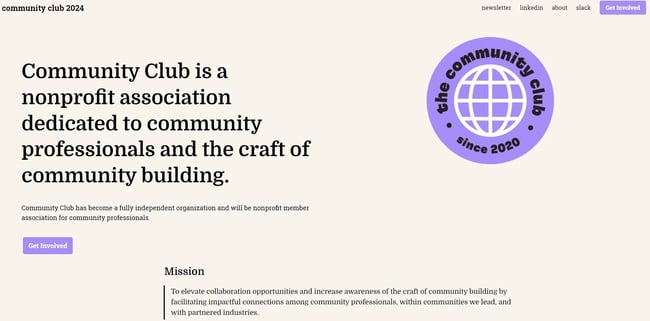
Community Club is a resource for finding a community manager.

Image Source

The good news is there are multiple places to find great community manager candidates. Here are a few of my favorites:

  • Community Club. This nonprofit offers an excellent resource for connecting with experienced community managers.
  • CMX Hub. This website includes a job board where you can post and search for community management positions. It’s especially valuable for finding candidates who are specifically looking to grow in these roles.
  • LinkedIn. LinkedIn allows you to explore profiles of potential community managers, their experiences, and endorsements. You can also post your own job openings and join numerous groups dedicated to community management where professionals discuss industry trends, share advice, and exchange job opportunities.
  • Facebook Groups. Facebook is home to community management groups, some of which are location-based while others are industry-specific. These groups are excellent for posting job openings, asking for recommendations, and connecting directly with potential hires.
  • Upwork. Upwork is great if you are looking to hire a community manager on a contract or freelance basis. You can create a job post that outlines the project you’re hiring for and the qualifications you need.

Community management, on the other hand, involves building and nurturing a brand’s community across multiple channels and mediums — both offline and online.

Social media community engagement is one of the easiest forms of community management to implement because all you need to do is:

  • Sign up on your social media platform of choice.
  • Gain followers (some of which will naturally be your current and potential customers).
  • Interact and engage with them.

According to HubSpot’s research, Facebook is the most effective platform for building an active community, with 48% of social media marketers who build social communities putting it in their top three. Also popular are YouTube (46%), Instagram (40%), TikTok (28%), and X (20%).

Why is Social Media Community Management Important?

Building a community on social media can provide numerous benefits for your brand. Let’s look at a few.

1. It increases brand visibility and awareness.

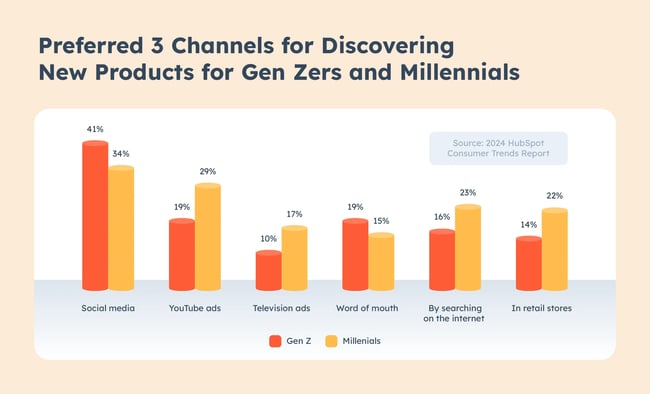
One of the biggest benefits of building social media communities that I’ve seen is that it increases brand awareness. In fact, social media is one of the top ways that people discover new products in the modern day. HubSpot’s research found that 41% of Gen Zers and 34% of millennials said that social media is among their top three preferred channels for discovering new products. And a third of consumers have discovered a new product using social media in the past three months.

Social media is among the top three preferred channels for discovering products for Gen Zers and millennials.

With over 5 billion people using social media, the potential reach is staggering. Actively managing and nurturing a community on social media allows you to tap into this huge audience and make your brand known among them.

2. It humanizes your brand.

Social media is the chance to ditch corporate formalities and showcase the human side of your business. Engaging in real conversations, replying to messages and comments, and being authentic helps build a stronger personal connection with your audience. They feel like they’re interacting with real people rather than a faceless entity.

3. It cultivates brand loyalty and advocacy.

Consistently delivering valuable content, actively listening to feedback, and showing that you care about their needs will help you cultivate a tribe of loyal customers. And here’s the best part: Loyal followers are one of your biggest assets. They’ll recommend your products or services to others, driving sales and boosting your brand’s reputation organically.

4. It unlocks customer insights.

Social media is a goldmine of useful data and information. I like to think of it as getting a front-row seat to your audience’s preferences, pain points, and feedback. These insights can help you refine your products and services, tailor your marketing strategies, and provide solutions that truly resonate with your audience or cater to their needs.

5. It drives traffic and conversions.

Social media community management is a powerful tool for conversions. Organic interactions with followers create natural opportunities to direct them to your website, blog, or landing pages. For example, by strategically inserting relevant links within comments or posts, I create a seamless transition for my audience to explore my offerings and take the next step in their customer journey.

Community Management Versus Social Media Community Management: Why You Need Both

So, do you need community management if you already have an active and engaged community on social media? I’ve often encountered this question, and my answer is always a resounding yes.

You need both because:

  • They offer complementary strengths: Social media platforms are excellent for broad reach and initial engagement but often lack the depth needed for stronger, long-term relationships. Personally, I’ve found that they offer a perfect springboard directing users to more focused communities, like forums on websites, which are ideal for deeper interactions. Conversely, insights gained from these dedicated communities can inform your social media strategy, ensuring content is resonant and targeted.
  • Audiences have different preferences: Different segments of your brand audience might prefer different modes of engagement. For example, some might be active on social media, while others might prefer other niche platforms, like dedicated forums. So, using social media alone might cause you to miss out on meaningful engagements and connections with a significant portion of your audience. By implementing both strategies, you make sure no segment of your audience is overlooked and that your brand maximizes its engagement potential across all platforms.

Best Practices for Community Management

Effective community management can transform your followers into loyal customers and potential brand advocates. Here are some useful tips for managing your community effectively on social media platforms.

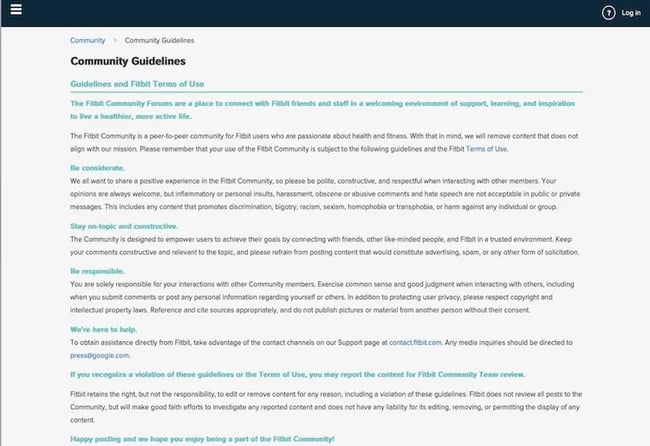
1. Establish clear guidelines.

Whenever I’m managing a community, one of the first things I do is set firm rules and guidelines for all members and contributors. These guidelines typically cover everything from the type of content allowed to the tone of comments and the handling of disagreements.

Clear guidelines help maintain a safe and respectful environment where each member feels comfortable interacting or engaging.

Community guidelines example from Fitbit.

Image Source

2. Encourage members to interact.

A community thrives on interaction beyond just you and your audience. As Hellen Katherine, senior marketing and PR manager at MG Empower, explains:

“Community isn’t solely formed through brand-to-consumer interactions. The interactions among consumers themselves are truly significant elements of a strategy, with the brand serving as the platform or facilitator for these engagements.”

In any brand community I’m managing, I’m always trying to encourage member-to-member interactions. For example, I often highlight any standout posts or comments from members and then encourage others to respond to them.

quote on building social community

3. Recognize and reward participation.

An important part of managing a successful community is showing appreciation for your members. It shows you value their time and commitment to your brand.

There are many ways to recognize and reward participation. For instance, try to welcome each member to a community personally. You can thank them for joining and ask what you can do to make their experience a great one.

You also can keep track of the most active members and then acknowledge their contributions via special mentions or gifts from time to time.

4. Personalize your interactions.

Move beyond generic responses — let your brand’s personality shine through your interactions. I like to use a conversational tone in posts and replies to show the audience that there are real people behind the brand. I also address people by their names and try to personalize every interaction.

There are many other ways to humanize your brand. For example, you can share behind-the-scenes content to give members a peek into the brand’s operations and its staff or share personal stories that resonate with community members.

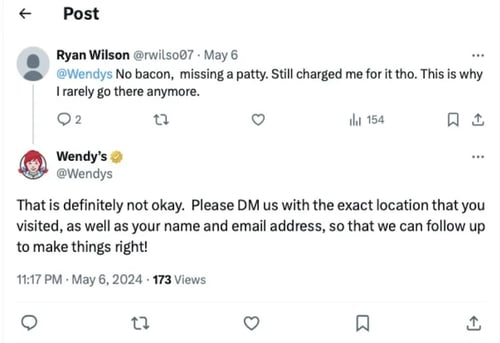
5. Be transparent and authentic.

Try to be as honest and authentic as possible in your interactions with community members. Address any negative comments, feedback, or challenges openly and acknowledge mistakes when they happen. Being authentic builds trust and can help foster stronger connections with your audience.

Example of a brand openly acknowledging and addressing negative feedback.

Image Source

6. Use technology to your advantage.

Many community management platforms, including social media, offer features to streamline your workflow and enhance engagement. Whether it’s polls or live chats, take full advantage of them to deliver value to your community and maximize engagement.

7. Respond promptly.

Timeliness is critical in community management. Therefore, another important thing I do within communities I’m overseeing or managing is to make sure to address comments, concerns, and questions from audience members as quickly as possible. This shows members I’m attentive to their needs.

According to Jan Crewe, a social media community manager at ICUC, responding to incoming comments fast is key for building relationships with your audience. She says that “this increases the chance of subsequent responses, extending the interaction.” It also allows you to address any pressing issues before they snowball.

8. Celebrate milestones with your community.

Celebrate any milestones or achievements, both yours and those of your community members. Whether it’s attaining a certain number of followers or members, the anniversary of the community’s founding, or individual achievements of community members, sharing such moments can strengthen the sense of community and deepen the connection your audience feels to your brand.

9. Maintain your brand voice at all times.

It’s important to maintain your brand voice when managing a community. Your brand voice is what makes your business unique and ensures it’s identifiable to your members and audience. If your brand is known for being easy-going, this personality should be reflected in all your interactions and content.

10. Embrace continuous learning.

Community management is constantly evolving. Stay open to learning new ideas and best practices and incorporating them into your strategy.

I try to stay updated on industry trends, changes in social media algorithms, and evolving audience preferences. This proactive approach allows me to adapt my strategies as needed and consequently keep my communities engaged and relevant.

Community Management Examples

1. Gymshark

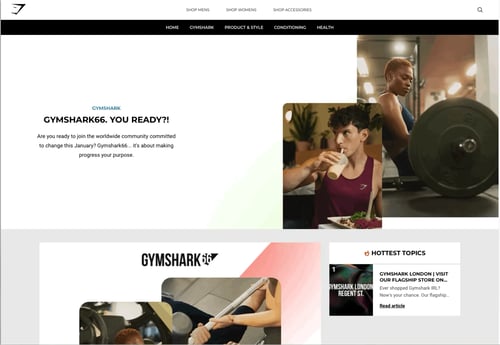
Gymshark is a great community management example.

Image Source

Gymshark is a UK fitness apparel retailer that has witnessed tremendous growth in the last decade. A big part of this growth has to do with its impressive community management strategy.

Here’s a breakdown of how the company has managed to cultivate and nurture a thriving community of fitness enthusiasts:

  • Social media engagement. Gymshark uses various social media platforms, including Instagram, X, and YouTube, to engage with its community. It maintains a consistent brand voice and tone across all channels, which helps community members feel connected regardless of where they interact with it.
  • Influencer collaboration. The brand often partners with fitness influencers who embody its values. These influencers actively promote the brand by participating in both online and offline campaigns, attending brand events, or just wearing its apparel during workouts. That increases brand awareness and boosts its credibility.
  • Fitness challenges and competitions. Gymshark often hosts challenges for its community. An example is “Gymshark66,” a 66-day challenge that encourages followers to pursue, achieve, and share fitness goals. Such challenges increase engagement and strengthen the connection that community members feel toward the brand.
  • Global pop-up events. The company regularly holds global meetups and pop-up events that allow community members to engage directly with the brand, each other, and some of their favorite influencers; try out its products; or participate in live workouts.
  • Responsive community management team. The brand’s community management team is known for its prompt responses to customer inquiries or comments on social media. That builds trust.
  • User-generated content. The brand encourages user-generated content through special hashtags or contests. It then showcases these submissions on its social media channels or website, crediting the creators. That creates a sense of ownership and belonging among community members.

Via these strategies, Gymshark has cultivated a very loyal and engaged community, helping drive success.

2. LEGO

LEGO is a great community management example.

Image Source

LEGO, the construction toy production company, is another example of a brand that exemplifies great community management.

Here are some key elements of LEGO’s community management strategy:

  • LEGO Ideas platform: LEGO’s most notable community management initiative is the LEGO Ideas platform. Here, fans can submit their own set designs, which the community votes on. Winning designs could be made into official LEGO sets, giving fans a direct role in product development. This fosters a sense of ownership and deepens connection with the brand.
  • LEGO events: Lego regularly hosts live events and workshops in its stores, where members can interact with other members, participate in cool building challenges, and generally celebrate their love for LEGO together. Again, this helps deepen members’ connection with the brand.
  • LEGO ambassador network: This community network connects adult fans of LEGO (AFOLs) with one another and directly with LEGO through ambassadors who represent local fan communities. Through the network, ambassadors gather insights, share news, and relay community sentiment back to the brand, which it then uses to shape community activities and even business strategies.
  • Social media: LEGO also has a strong presence on social media channels, such as Instagram, TikTok, and X, where it interacts and engages with fans through initiatives like interactive polls, themed challenges, and user-generated content showcases.

Through these programs and strategies, LEGO actively maintains and nurtures a vibrant, engaged community that supports the brand’s continued growth and evolution.

Start Building Your Community Today

The power of community management is undeniable. It humanizes your brand, increases brand awareness, provides valuable customer insights, and enhances trust in and loyalty to your brand — all of which are vital ingredients for long-term success.

In this day and age, I think it’s an element that every brand must incorporate into their overall business strategy. So, don’t wait any longer. Use the knowledge, tools, and strategies explored here to craft a winning community management plan.

Editor’s note: This post was originally published in November 2023 and has been updated for comprehensiveness.

Blog - Content Mapping Template

Categories B2B

14 Best AI Video Generators to Use in 2024

Videos are integral to any marketing campaign; however, they can be tedious and difficult to create if you aren’t savvy with editing or are short on time.

Fortunately, you can leverage many AI video generators to streamline your video production and create content that engages your audience. But what’s the best AI video generator for your task at hand?

Download Now: The Annual State of Artificial Intelligence Report

This article will explore 14 different AI video generators, their features, and how you can best use them in your next video marketing campaign. Time to press play on easier video creation.

Table of Contents

Can AI make videos?

Yes, AI can make videos.

AI video generators can instantly produce basic presentation slides with text, B-roll, and background music, all the way up to advanced videos of lifelike humans “speaking” to you (also known as AI avatars).

AI’s impressive — but it’s not perfect.

What works well with AI video generators:

  • Video scripts. Being able to generate video scripts in a few seconds is incredible and saves so much time.
  • Stock imagery, B-roll, and background music. Even though it still requires editing, having multimedia pulled automatically for you by the video generator makes it feel like you have an assistant.
  • Video editing. The video editing capabilities are incredible and often beginner-friendly, which is a huge leap in the video editing world.

What isn’t working (yet):

  • Believability. The realistic AI avatars are incredibly advanced, but most are still identifiable as non-human models. The eyes, mannerisms, and articulation give them away.
  • Pacing. There’s been a lot of research done on how quickly a video has to move from scene to scene to hold viewers’ attention, and I found that not all generators factored this into their algorithm.
  • Decision overload. The number of video templates, AI avatars, and effects at your fingertips can make the editing process feel overwhelming.

AI is rapidly advancing, and some of these quirks will soon be passé.

Transforming Text to Video With AI

When ChatGPT catapulted to popularity in 2022, I don’t think the average person had any idea just how quickly AI video would follow. It needs to be used ethically to be useful to society, but when leveraged correctly, it’s an incredible tool.

The most sought-after AI video feature is the text-to-video generator. This allows you to type in a sentence and, in a few seconds, be presented with an editable AI-generated video.

I tested this feature using two different prompts:

  • A vague prompt: “I’d like to educate viewers about AI-generated video.”
  • A specific prompt: “I’d like to inspire beginner marketers to try their hand at AI video generation. The video should explain the benefits of AI video generators and should inspire viewers to try this new video tool.”

As my pinky finger gently tapped the “enter” button on my keyboard, it felt more like a magic wand than a measly appendage. I used HubSpot’s free AI video generator Clip Creator, and here’s what I saw.

They were both high-quality videos. Both videos had appropriate stock images, music, and were tailored for human behavior. The content was very similar for both videos.

After testing many AI generators, I’ve found that a marketer’s time is better spent editing rather than making their prompt more specific. No matter how perfect your prompt feels, the end result will still require edits.

What makes a great AI video generator?

So, how does one evaluate all of the different software on the market? The best AI video tools all have a mix of these different features.

Intuitive User Interface

While most platforms go on and on about their list of fancy AI features, what users need first and foremost is an easy-to-use AI studio. This enables a quick editing process.

AI Scripts

Automatically-generated video scripts save an incredible amount of time when producing video content.

They turn written content (such as a blog post, email, etc.) or a prompt into spoken language. Sometimes, they even use an AI narrator to read it out loud for you.

Not all software can generate video scripts, but it’s an enormous time saver. To be fair to the software that doesn’t offer this: It’s replaceable with a few clicks in ChatGPT.

After trying more than a dozen AI video generators, I found the AI scripts were one of the features that made the greatest difference, along with the next feature.

Factoring in Human Behavior

Some software have tailored their AI to match human behavior, and some haven’t.

For example, humans prefer videos with a brisk pace and visuals that don’t stay on the screen too long. In the video world, this is referred to as “pacing.”

Not all software is tailored for this, and as a result, will produce slow, lengthy slides that feel like a bad PowerPoint presentation.

This isn’t a detail that software companies list on their “features” page, but it’s something that’s apparent based on the first draft of the video that the software gives you.

Template Library

Start from scratch? What is it, 2018?

There’s no need to start from scratch with video anymore, as most platforms have built-in template libraries. Bonus points if these libraries include variation in:

  • Intended audience.
  • Aspect ratio.
  • Project type.

Editing Capabilities

It’s normal for different software to offer different editing options, but most AI studios will cover the basics, such as:

  • Text.
  • Fonts.
  • Music.
  • Colors.
  • Timing.
  • Transitions.
  • Animations.
  • Stock footage.
  • Different video styles.

More advanced software will also include avatars, where you can edit an avatar’s:

  • Face/body.
  • Clothes.
  • Accent.
  • Tone.

Pricing Tiers (or Free Plan)

The cost of an AI video generator ranges from $0 to $50 a month (paid annually).

All of the paid software include a discount when purchasing an annual package, and the cost of month-to-month service is always higher.

I know you’re on a budget — all of the suggested AI tools below are either free or include a free trial/demo.

Multilingual

Look for software that supports multiple languages if your business requires it.

Best AI Video Generators

AI video generators have come extremely far in a short time. You can now make professional videos with the numerous text-to-video generation tools on the market.

I’ve tried all of the most popular AI video generators so that you don’t have to. Here’s what I found.

1. Clip Creator

Image Source

Clip Creator is the best AI video generator for beginners. It can be used by someone with no video experience and walks you through the video creation process painlessly.

You start by answering a few basic questions (like video type and video tone), then provide a brief overview of the video you’d like to create.

You can choose from video templates, which are oriented for both landscape videos and vertical videos.

Then, Clip Creator uses AI to generate the text on your slides, plus the background imagery. You’re instantly given a video with editable text, stock images, background music, etc.

The video creation workflow is very intuitive (think: the ease of Canva, not the struggle of Adobe Premiere Pro).

My experience: I love how streamlined this software is. Instead of bombarding you with endless features, options, and pop-ups, Clip Creator starts simple and allows you to make any edits you need after it generates the video.

Image Source

Pros: Incredibly intuitive user interface, great customization options, and makes for a very fast video creation process.

Cons: Smaller template library than paid AI video generators, and no advanced features like realistic AI avatars.

Best for: Video creation beginners and marketers on a budget. Most user-friendly interface and best free AI video generator.

2. Pictory

Image Source

Pictory is an excellent AI video generator for creators and marketers who don’t have experience creating videos. All you have to do is provide a script or article to guide your video content.

For example, you can submit a blog post, and Pictory will create a video based on the post that can be used for social media or your website. Furthermore, you can edit videos in minutes by using text.

Pictory also includes a feature that creates shareable video highlight reels that can be used as a trailer or a short-form video for social media such as a Reel.

Even better, Pictory can automatically caption and summarize your videos.

My experience: I provided the same prompt for Pictory as I did for the Clip Creator video, and it initially generated much less content (only 1 slide).

I went back and instead provided a URL of a blog post and tested the blog-to-video generator. This feature automatically creates video scripts based on a blog post, and using their realistic AI voices, I could have it automatically narrated too.

The writing on every slide needed to be edited significantly to be useful, but I was impressed with the options. Pictory supports multiple languages (currently English, Spanish, French, and German) and has a huge library of AI voices.

Image Source

Prices for Pictory start at $19 per month, and users can try a 2-week free trial.

Pros: Users have a lot of options for how to begin their AI-generated videos, and they can thoroughly customize the video output.

Cons: The first draft of the automatically-generated videos needs heavy editing. It may be faster to let ChatGPT write a script for you and use that.

Best for: Marketers and creators with limited video editing experience who want to convert content like blog posts or webinars into shareable video content.

3. Simplified

Image Source

The Simplified AI video generator transforms a long-form video into multiple AI-enhanced clips with just one click. This allows users to create videos from text and make an entirely new video using its accessible editing interface.

Simplified simplifies the way we produce content by providing users with easy access to an expansive in-app library that hosts thousands of templates, all available for free.

I like that it not only does it guarantee exceptional video quality, but it also pairs this with an intuitive, user-friendly interface, ensuring that users can craft high-quality videos without sacrificing ease of use.

Its comprehensive suite of features goes beyond basic editing options to include animation enhancements and multilingual translation capabilities, making it a versatile all-in-one tool for video creation. Users can save their brand settings in

Simplified’s “brand book” which I think is a great time-saving feature.

Whether you’re a seasoned professional or just starting, this platform equips you with everything you need to bring your vision to life. Brands like Bloomberg, DuckDuckGo, and Cashify use Simplified for their marketing needs.

My experience: I prompted Simplified the same way I prompted the other video generators, and I was immediately asked to describe my target audience in addition to providing my video topic.

This was a nice step to get more personalized videos but required more user-generated input than Clip Creator, which had a multiple-choice intake process.

If you stick to the free plan, it’s time-consuming to sift through all of the features to see what’s actually free to use.

Image Source

Prices for Simplified include a forever free plan, paid plans start from $15.20 a month, billed annually.

Pros: If you pay for this software, you have many creation options at your fingertips that not all other platforms offer (AI meme creation, AI image generation, AI carousel maker, etc.).

Cons: Not the best free AI video generator; other platforms are more generous with their features. You’re not able to test the text-to-video generator without joining a paid plan, as you’re about to do with other features.

Best for: Creators who want to create, edit, and schedule videos for all social media platforms.

4. Synthesia

Image Source

Synthesia is an AI video creation platform that can generate videos in more than 120 languages, accents, and voice tones.

Users can create custom AI avatars to represent their brand in videos or choose from more than 150 diverse stock AI avatars.

Other interesting features include text-to-speech, which allows users to type in their texts to be converted into professional voiceovers.

Users can also clone their own voice and pair it with their avatar. Brands like Nike and Google leverage Synthesia in their videos.

My experience: I tried the free video demo of Synthesia. Rather than using AI to write video scripts based on a prompt, you enter a script, and then an AI avatar reads it for you.

While it does generate very realistic AI avatars, they do have the mannerisms of video game characters and tech-savvy viewers would be able to spot that this is AI-generated.

Image Source

Prices for Synthesia start at $22/month, and you can create a free AI video using their demo generator.

Pros: The realistic AI avatars allow you to choose the “model” and tone of your video.

Cons: The free version is more limited than the other AI video tools, and viewers will likely detect the unnaturalness of the AI avatars.

Best for: Brands looking to create videos that feature a host or stand-in for on-air talent.

5. HeyGen

Image Source

HeyGen provides a variety of helpful tools and features for users to generate videos in minutes. Users can choose from 300+ voices available in 40+ languages.

They can also create a custom avatar that uses their own voice via uploaded recordings. Users can also personalize their avatar by using its face swap feature.

My experience: HeyGen offers many competitive features, such as voice cloning, realistic AI avatars, and even basic avatar animation.

The avatar voices have variety in their tone and intonation, which creates a very realistic experience for the listeners.

HeyGen auto-populates your video clips with background music, stock photos, and more, providing a really quick process for making professional videos.

I was surprised by how easy it was to generate videos and found it to have one of the smoothest interfaces.

Image Source

HeyGen is free to use for one minute daily. For longer use, prices start at $48 per month, when paid annually.

Pros: HeyGen provides easy-to-follow video tutorials to explain its features further and answer common questions. The user interface isn’t overwhelming and guides you through creating videos.

Cons: The lowest pricing tier is more expensive than many other AI video tools.

Best for: Quickly produce professional videos with this fast and user-friendly AI video generation platform.

6. Movavi Video Editor

Image Source

Rather than generating AI videos from scratch, the Movavi Video Editor uses AI to make video editing easier. Video editing can be a time-consuming chore, and for many, it’s the less enjoyable side of content creation.

However, with Movavi Video Editor’s nonlinear AI technique, you’re not just replicating traditional tool functions but also enhancing your videos through advanced AI video editing.

With AI background removal, you can cut out and replace backgrounds, adding a new dimension to your visuals.

Plus, the AI noise removal feature enhances audio quality by automatically eliminating unwanted sounds, ensuring your videos are of the highest standard.

Image Source

The app also offers a host of advanced options like PiP, chroma-key, titles, keyframing, motion tracking, and more. Following the free 7-day trial, paid plans start at $49.95 per year.

Pros: The presence of built-in training rapidly familiarizes you with the software, and it has features that many other AI video editors don’t.

Cons: This AI video editor brings high-level tools (like color correction) to marketers’ fingertips, but total video newbies may be overwhelmed with some of the more advanced features.

Best for: Creators and marketers who already have video footage and want help editing videos to be more engaging (or who just need to speed up the editing process).

7. Deepbrain AI

Image Source

With Deepbrain AI, users can create videos by uploading their script and using the text-to-speech feature. The platform will then generate a video in five minutes or less. You can manually type in the script or copy and paste it into the platform.

From there, you just need to select the appropriate language and AI model and finish editing. Deepbrain allows users to select a custom-made avatar that suits their brand.

My experience: New users are allowed to input a 300-character script, and using the Deepbrain AI text-to-video generator, an AI avatar will read your script.

I found the Deepbrain AI models to be less convincing than others; the mouths sometimes moved between sentences, and I think all viewers could identify these as non-human.

However, since the advent of TikTok’s text-to-speech narration feature, the public has become more accustomed to artificial narration, and there are many situations where this type of AI would work well.

Image Source

Prices for Deepbrain start at $30 per month.

Pros: The platform’s intuitive features make it excellent for beginners with limited or no video creation experience.

Cons: The Deepbrain AI avatars are identifiable as being non-human.

Best for: Marketing videos that need text-to-speech narration and have visuals for B-roll.

8. Synthesys

Image Source

A popular choice for brands looking to create videos for commercial use, Synthesys is an AI video generator that aims to enhance your content.

The platform uses its Synthesys text-to-video technology to turn scripts into engaging media.

With Synthesys, you can create video content without a camera or crew. Just choose an avatar and type in your script in one of 140+ available languages.

From there, the generator will create a high-quality video to be shared across multiple platforms.

My experience: I like that Synthesys allows you to try their video editor for free without signing up, which is a really user-friendly approach that allows you to test the product easily to see if it meets your needs.

You’re immediately offered a range of video templates, and can easily customize the text, narration, colors, and AI avatar. With the free plan, you can download AI-generated videos, images, and voiceovers.

Image Source

After the free plan, prices for Synthesys start at $20 per month when paid annually.

Pros: The AI avatar options with this software are really diverse, allowing you to choose standing avatars, seated avatars, and even create a custom avatar to help distinguish your videos.

Cons: This AI video maker requires you to input your own text and doesn’t include language generation that some other platforms have.

Best for: Explainer videos, eLearning, product descriptions, and social media content, particularly across multilingual channels. Videos can be translated using AI.

9. InVideo

Image Source

You don’t need a background in video editing or creation to use InVideo. Like many AI video generators on this list, InVideo creates video from input text.

Moreover, the platform has various professionally designed and animated templates that users can choose from.

To create your video, input your text, select or customize a template, and download the finished video. From there, you can share it directly to platforms like Facebook, Instagram, and YouTube.

My experience: I entered a short prompt, and it generated a video title. Then, InVideo asked me to select the audience, look and feel, and platform.

From there, the AI-generated a script, planned video scenes, generated video scenes, and created an outline for the video.

The AI-generated script was informative, thorough, and well-paced. It was narrated by a lifelike AI narrator and automatically paired with background music as well as background stock imagery and dynamic visuals.

In addition to being able to manually edit the video, I could also give commands, and AI editing would make my changes.

Image Source

InVideo is free to use and has plans starting at $20 per month (when paid annually) if you’re a small business or creator looking to create watermark-free content.

Pros: The fastest AI video generator for creating and editing professional videos that check all the boxes (visuals, script, narration, and music).

Cons: The video editor has fewer controls than other platforms, as they’d rather you give commands and let the AI video editor handle the edits. You still have an incredible amount of control over the video generation and editing.

Best for: Quickly creating and sharing social media videos and making minimal manual edits.

10. Veed.io

ai created video, Veed.io

Image Source

With Veed.io, you can use custom text, colors, font, and music to create a unique video for your brand. One of its standout features is Auto Transcribe.

You can upload your video, hit the Auto Transcribe button, and immediately download the script. Even better, there is no software to download, and the platform is easy to use for those without video editing experience.

My experience: I entered my “Pinterest marketing for beginners” prompt, and Veed.io quickly generated a short vertical video.

The AI video generator automatically provided the script, AI narration, background music, stock videos, and close captioning.

The on-screen captions were really engaging, using color-changing text and emojis — perfect for social media.

Image Source

Veed.io is free to use for videos under 10 minutes. To access more features, prices start at $18 per month (when billed annually) and go all the way up to enterprise custom pricing.

Pros: The pacing, on-screen captions, slang, and tone were very engaging.

Cons: The stock video that was automatically inserted into the video was off-topic at times but can be easily edited.

Best for: Short-form videos designed to hold attention on social media.

11. Elai.io

Image Source

Elai is simple and requires no video editing skills. To use Elai, copy and paste a blog post URL or HTML text, choose a template from its library, and let the generator do the rest.

This AI video maker is specialized in corporate learning. Once the video is complete, review it to make any changes before rendering and downloading it.

My experience: I found that the format that Elai uses is unique. Even though the AI avatar doesn’t pass as a real human, the small display size of the avatar makes it feel less distracting.

The avatar compliments these videos instead of dominating them. I also really like the audio options: you can upload an audio file of you speaking, and Elai will generate a realistic AI avatar to narrate the text.

Image Source

Elai has over 60 languages and 25 avatars to choose from. You can use Elai for free with a 1-minute credit. For more features, Elai’s plans start at $23 per month (billed annually).

Pros: As a specialized AI video generator, this tool allows you to quickly create training videos for new hires or product onboarding videos.

Cons: Being a platform specialized for educational videos, it would be more time-consuming to create general marketing videos.

Best for: Generating videos at scale and creating training videos and product videos.

12. Colossyan

Image Source

Colossyan provides a diverse range of avatars who can recite your script in a variety of accents and languages.

You can also customize your avatar’s outfit. Colossyan’s key features are auto translations, subtitles, and the ability to enhance messages via screen recording.

My experience: The AI avatar options from Colossyan are advanced. You can add multiple AI avatars to a single video screen in the video creation workflow, starting a “conversation.” You can even customize the pauses between speakers.

Image Source

There’s a free trial, and the prices start at $19 per month (when billed annually).

Pros: The advanced avatar options make this a highly customizable AI video generator.

Cons: The sound of the AI narrators isn’t the most natural-sounding.

Best for: Creating training videos and explainers for workplace learning.

13. FlexClip

Image Source

This AI video generator features hundreds of video templates, AI-generated subtitles, background remover, and a text-to-speech engine. And its intuitive interface makes it simple for creators at any skill level.

My experience: I created my video by inputting a URL and letting FlexClip automatically pull content from my website.

The AI generator took an enormous amount of work out of the video creation process, but still required editing. The pacing of the video was slower than other AI tools, but I was able to easily customize all elements of the video.

Image Source

After the free plan, pricing starts at $9.99 per month (when billed annually, which saves 50%).

Pros: The price point of the basic plan makes this a very budget-friendly AI video generator, and this is a great straightforward AI video generator for beginners who don’t want to feel overwhelmed.

Cons: The AI-generated first draft requires more editing than some of the other platforms.

Best for: Creating videos for internal communication and product promos.

14. Wave Video

Image Source

Wave Video is a popular choice among content creators thanks to its many tools, which include image and video assets, text overlay effects, audio, and captions.

The platform also provides a variety of video formats for Facebook, YouTube, TikTok, Instagram, and website-based applications.

Other key features are:

  • Text-to-video AI.
  • Video hosting.
  • Voiceovers.
  • Text-to-speech.
  • Millions of stock assets.

My experience: I tested Wave Video by inserting a blog post URL and letting the AI video generator populate text and graphics based on the content.

The video background graphics, pacing, and text populated on the slides needed significant editing to be ready for viewers.

I like how easy it is to change the video format and edit any of the content. Wave Video also has many live-stream video tools.

Image Source

Wave Video is free, with monthly plans starting at $16 (paid annually).

Pros: The features on this software are very beginner-friendly, and the user interface doesn’t feel overwhelming.

Cons: The stock images it pulled were of lower quality than some of the other AI tools. The images were blurry and stayed on screen much too long before switching slides (video pacing needed editing).

Best for: Livestream videos.

Making the Most of AI Video

How will AI-generated video help your brand? You can create amazing videos in just a few clicks, which is something that felt unimaginable a few years ago.

Now that you know what AI video generators are available, you’re ready to find the right one to leverage for your next video.

New Call-to-action

Categories B2B

25 Top-Notch Product Landing Page Templates

Over the course of my career as a marketing executive, I’ve found that an effective product landing page template can be a vital resource.

After all, a landing page is a great way to turn traffic into conversions — but not all pages are created equal.

In this article, I’ll start by going through a number of product landing page examples, exploring the wide range of templates you can use to get started crafting your own landing page today.

Then, I’ll offer some of my favorite, tried-and-true best practices for creating a winning landing page.

Learn More About HubSpot's Free Landing Page Builder

25 Free Professionally-Designed Landing Page Templates

Ready to get started? Below, I’ve compiled a list of 25 of my favorite free, professionally-designed landing page templates that you can use to build your next landing page. So, let’s dive in!

1. Royce

Available on Squarespace

Royce is a template designed specifically for event reservations. It doesn’t include a navigation bar, sticking to a clean layout that features a customizable background image, a headline, and a call-to-action (CTA) button that says “RSVP.”

Royce Event Landing Page example

Image Source

What I like: To fill out the form and reserve a spot, visitors can either click the RSVP button to see a form appear or simply scroll down below the fold to see a static reservation form, offering visitors two ways to convert.

Royce RSVP Submission Form on Royce Landing Page template

2. Click Through

Exclusively Available With HubSpot’s Free Landing Page Builder

The Click Through landing page template is ideal for capturing blog subscribers.

It includes an attractive hero image at the top, space to provide context about what users can expect if they subscribe, and a module for past content right below.

example landing page template in architecture with placeholder text and images, Architecture

Pro tip: This template can also be customized with your brand and edited with HubSpot’s drag-and-drop interface.

3. Simple Conversion

Available on HubSpot

This design includes a photo, customizable text, and a short form. It has no navigation bar, keeping visitors focused on your offering, and you can also customize and add other elements, such as the icons below the form.

Below the fold, you can also add more information about your offering or company.

Invest Landing Page Template from Hubspot

Best for: This template is a great option if you’re looking to add some custom elements to your landing page.

4. Blank

Available on HubSpot

The Blank template has a simplistic look and feel, but it devotes a bit more room to text than some of the other templates on this list. As such, Hubstrap might be a good option if your content offer doesn’t need as much imagery.

For example, you might use this page to describe an offer, such as a long whitepaper on a topic related to your industry. As with other templates, you can also personalize the design and add drag-and-drop sections to the page.

Hubstrap product Landing Page example

What I like: Unlike the landing page templates above, this example does include a navigation bar. However, it’s simple enough that it doesn’t distract from the offer, making this a great option if you’re looking to include navigation.

5. Video

Exclusively Available With HubSpot’s Free Landing Page Builder

If you don’t want your conversion elements at the top of the page, a longer-form sales page might be your best bet. Video is a modern, minimalist-looking template that you can customize with your detail-rich sales copy.

example landing page template in vibrant with placeholder text and images, video

Pro tip: Pairing each section of text with a compelling video is a great way to create a user experience your prospects will love.

6. Session

Available on HubSpot

This template includes a hero image, a headline, text, bright CTA buttons, and a form. I love how it eliminates the navigation bar but still includes a button at the top of the page.

The image keeps information visible but less distracting. As you scroll below the fold, this template also includes places for more imagery and details that could relate to your product or offering.

Landing Form Landing Page Template from Hubspot

Best for: The single button at the top of the page makes this template a great option for marketers looking to direct visitors’ attention directly to a CTA.

7. Focus

Available on HubSpot

Focus is a sleek, modern design for a content-based offer. It has a simple layout with a form, headline, description text, photo, and logo, and as with many of the other templates I’ve shared, it has no navigation element.

I especially like how this template enables you to add a photo or product shot. I also like the bright background that keeps me engaged.

Gradient Landing Page Template from Hubspot

Pro tip: For extra customization, this template allows you to adjust or change the color of the background.

8. University

Available on Wix

I’d recommend this layout for marketers seeking leads for an educational event, course, or similar service.

The form is more detailed than some of the other templates on this list, and the layout itself also allows room for more text and imagery.

Above the fold, you can see a headline, supporting images, and a form. Then, if you keep scrolling down, there are additional sections where you can place even more text and imagery.

University Landing Page example from Wix

Image Source

What I like: This template includes some great components specifically designed for educational offerings.

9. Skyline

Available on Wix

This template is a good option for a company or individual that hasn’t yet launched their website or product but still wants to gain some leads in the meantime.

Above the fold, there’s a giant headline area with the text “Coming Soon.”

When you scroll down, you can see a place for a short description of the company and a box where visitors can add their email. In addition, this template also lets you add a photo or video to the background.

Skyline Landing Page Template from Wix

Image Source

Best for: If you’re promoting an offering that isn’t yet available, Skyline is definitely a great template to consider.

10. Sprocket

Exclusively Available With HubSpot’s Free Landing Page Builder

With a big headline, a short subtitle, and a conversion element above the fold, Sprocket helps you make your point concretely and succinctly.

This makes it a great landing page for nearly any piece of gated content, from ebooks to newsletters and tools.

example landing page template in bold with placeholder text and images, Bold

What I like: Sometimes, less is more. This template doesn’t have too much going on, and that makes it one of my favorite options for a clear, straightforward offering.

11. Online Store Coming Soon

Available on Wix

This template is very simple. Like the “Coming Soon” template I shared above, this template allows you to edit the text, so you can use this layout for a range of different purposes.

There is no navigation element, and information about the company is off in the corners, keeping the prime real estate of the page clear and focused.

This layout includes space for a strong product shot (in the example below, it’s an image of a pair of shoes), as well as headline text, a small amount of descriptive text, an email box, and a CTA button.

Wix Online Store Coming Soon product landing page template.

Image Source

Pro tip: This template also lets you link your social media accounts to the icons under the “Notify Me” button.

12. Lead-Gen Landing Page

Available on Wix

In my experience, this template is especially effective for B2B products. It allows you to edit and customize the text and images, as well as enabling you to place background videos into the layout.

The page is designed to be on the longer side, with a form and CTA above the fold, followed by sections that can detail different aspects of your company, such as staff information, below.

Lead-Gen Landing Page example from Wix

Image Source

Best for: If you’re focused on B2B offerings, I definitely recommend taking a look at this template.

13. Proland

Available on Envato Elements

This template has a little more going on than some of the other ones I’ve shared, but I think it’s a great option for marketers looking to include some more detailed information alongside their CTA.

The template includes a minimal navigation bar, a headline and subtitle, and a button you can use to launch a video.

Envato does require a paid subscription to access this template, but it offers a 30% discount for students and unlimited downloads once you become a member.

The Proland product landing page template offers marketers space to include some details about their offering alongside a CTA

Image Source

What I like: With its clean design and minimalist aesthetic, this is a great template for a modern brand looking to share some more details about its offering.

14. Atlas

Exclusively Available With HubSpot’s Free Landing Page Builder

Specifically designed for ebooks, Atlas establishes a simple format to help your website visitors visualize the offer, digest what it’s about, and convert above the fold.

If they need more information — for example, if you’re offering an in-depth white paper or report — additional modules can be added to further persuade them to opt in.

example landing page template in atlas with placeholder text and images

Best for: I’ve found that Rally is an especially effective template for landing pages promoting an ebook or similar content offering.

15. Real Estate Landing Page

Available on Wix

The focus of this template is to invite visitors to contact the company. While it doesn’t offer a resource for information by default, it can be edited and customized to include such an offering.

In addition, as you scroll down the page, the background image remains static, and there is room to add company information below the fold.

Real Estate Landing Page template

Image Source

Pro tip: You can use the second form at the very bottom of the page to give visitors another chance to convert.

16. Construction and Lawyer Landing Pages

Available on WordPress.org

While the Lawyer Landing Page and Construction Landing Page templates target two different industries, their designs are very similar. Both have a header image, overlaid text, and an arrow pointing to a decently sized form above the fold.

Furthermore, both these templates have a place to offer visitors a free quote.

Image Source

The Construction Landing Page template is designed for the construction industry, but can easily be adapted for other businesses

Image Source

What I like: Although these templates are designed for the legal and construction fields, they can easily be customized to fit other brands and industries.

17. Accelerator

Exclusively Available With HubSpot’s Free Landing Page Builder

Another landing page that combines versatility with a flexible layout, Accelerator is a great option if you want to create a gripping narrative around your copy.

This template gives you plenty of room to provide additional context about your offering before presenting visitors with a conversion element, and you can also add extra modules with its simple, drag-and-drop interface.

example landing page template in nightfall with placeholder text and images

Best for: This template can be adapted for either long-form content or short, snappy, hard-hitting copy.

18. Gardenhouse

Available on MailChimp

This template does not include a navigation bar, which ensures that your visitors will be focused on your offering and CTA. In addition, like all landing page templates from MailChimp, this layout is optimized for mobile.

That means it will automatically adjust to different screen sizes — a feature that I’ve found especially important in recent years, as more and more traffic comes from mobile devices.

Gardenhouse Landing Page example from MailChimp

Image Source

Pro tip: You can customize this template with your company’s logo and/or other company information toward the bottom of the page.

19. Bandmates

Available on MailChimp

This template is also pretty simple, but it’s got plenty of room for customization.

As with many of the other templates I’ve highlighted, it has no navigation bar, but it does have space for a company logo, text description, and a subscribe form above the fold.

With Bandmates, you can also drag more elements, like text or form boxes, into the design. In addition, just below the form, you can include either a product shot or another image.

Bandmates Landing Page template from Mailchimp

Image Source

What I like: The default blue background allows the form and CTA button to pop, but you can also customize the colors to fit your brand.

20. O-Book

Available on Unbounce

Unbounce requires a subscription, but you can test out layouts like O-Book for a free, 14-day trial period.

As such, this template would be a good option for a company that has already gained revenue from existing landing pages and is looking to test out a more detailed (though still affordable) design.

This template includes a clear spot for a product image, headlines, and detailed description text as well as a form box to collect visitors’ contact information.

In addition, O-Book’s top navigation bar is minimal, but it does include social media buttons.

O-Book Landing Page example from Unbounce

Image Source

Best for: This template is designed for lead generation specific to ebooks, making it a great option for marketers looking to promote a longer-form content offering.

21. Webinar

Available on Wix

This template is specifically designed for marketers looking to promote a webinar or similar event-based offering.

With its limited navigation elements and prominently displayed headline and CTA, this is a great option if you’re looking for a more minimalist approach.

Webinar is a great template for a landing page focused on promoting a webinar or similar event

Image Source

Pro tip: Below the fold, this template has space for you to add some more detail about the event, including background information and a testimonial.

22. Essex

Available on Squarespace

This template is another fun, minimalist option. Essex has no navigation bar. Instead, it includes a single, brightly colored CTA at the top corner of the page.

It includes a massive heading and image above the fold, as well as space for more details if you scroll down the page.

The Essex landing page template is a fun, minimalist option for marketers to consider.

Image Source

What I like: I especially love the unique color schemes available with this template, from its default purple and green to a range of additional options you can choose from.

23. Marketing Launch

Available on Wix

Another solid option for promoting an offering that is not yet available, the Marketing Launch template is a sleek yet engaging layout.

It includes space for a prominent headline, a box to collect visitors’ email addresses, and a full-page background image or video.

At the bottom of the page, this template includes small social media icons, keeping viewers focused on the main CTA in the center of the page.

This Marketing Launch template is a sleek, simple layout.

Image Source

Best for: I’ve found that simple landing pages like this one can be a great way to build excitement about an offering that’s still “coming soon,” while also enabling you to collect contact information from potential customers.

24. Product Landing Page

Available on Wix

This brightly-colored template is one of my favorite layouts from Wix. Starting off with a short headline and CTA, this template keeps the CTA front and center.

Scrolling down past the fold, it includes a series of panels with different colored backgrounds, ensuring that the information and pictures pop while consistently directing viewers toward CTA buttons.

Finally, at the very bottom of the page, there’s a place where you can add social media links, as well as a box to collect visitors’ email addresses.

This Product Landing Page template offers a fun, colorful layout.

Image Source

Pro tip: In my experience, fun imagery and colors like the ones included in this template are a great way to keep visitors engaged.

25. Consultant Landing Page

Available on Wix

This template is specifically designed to help consultants promote their business and gather contact information from prospective customers.

While many of the other templates in this list start off with a lot of imagery or videos, this template keeps it clean with a plain background, headline, and simple “Let’s talk” CTA above the fold.

If you scroll down, the template includes space to present a short bio, an overview of services provided, and a carousel to display some testimonials. Then, at the very bottom of the page, there’s a short contact form.

Sticking to its minimalist principles, this form includes text boxes for just a first and last name, an email address, and a message.

This Consultant Landing Page template is a simple yet effective option, designed specifically for consultants

Image Source

What I like: This template sets itself apart with its innovative highlighter animation effect, instantly drawing visitors’ attention to the main headline at the top of the page.

Landing Page Best Practices

The templates above illustrate many important landing-page best practices. For example, many of the templates I’ve listed have no navigation bar, as a navigation bar can detract attention or clicks away from the offer on the page.

Most of them also have room for a photo or video, which are great ways to boost engagement.

An effective landing page offers visitors a helpful resource, such as a white paper, exclusive video, or other piece of content, in exchange for their contact information. For instance, take a look at this landing page example from HubSpot:

This page starts off with a place to add an eye-catching headline and featured image. It also includes a prominently displayed CTA, which can be used to link to a contact information form.

It offers space to describe the content offering with enough detail to entice viewers without bogging them down in unnecessarily lengthy text.

In fact, this example landing page illustrates several critical best practices to keep in mind when designing your own pages:

  • Avoid complexity. Landing pages are important, but they don’t have to be complicated. Aim for a page that’s concise and inviting rather than complex and overwhelming.
  • Don’t ask for too much. Rather than just placing a long contact form on your page, tease an interesting offer or a free resource in exchange for just a small amount of contact information.
  • Leverage AI. Generative AI tools like HubSpot’s Campaign Assistant can help you quickly write your first draft, getting you up and running in minutes.
  • Embrace templates. Finally, even if you know what you’re going to offer and what information you’d like to receive from visitors, building a landing page from scratch can feel daunting. So, if you don’t have the bandwidth to build a page yourself, and if you don’t have the resources to hire a designer, using a pre-designed website template can be a great way to launch a professional-looking page quickly and effectively.

To learn about other landing page best practices, check out this comprehensive guide.

Craft the Best Landing Page for Your Business

At the end of the day, every business is different. The best landing page for one organization may be utterly ineffective for another — and vice versa.

But armed with the templates and best practices I’ve shared in this article, you’ll be on your way to crafting the best landing page for your unique company, offering, and customers.

New Call-to-action

Editor’s note: This post was originally published in May, 2019 and has been updated for comprehensiveness.

Categories B2B

How to Start a Cover Letter That Gets You Your Dream Job

Thousands of other job seekers are applying for your dream job. So, if you want to get hired, you must learn how to start a cover letter that makes you stand out from the crowd.

As someone who’s written several cover letters — including the one that landed me my dream job at HubSpot — I’ve found that a compelling cover letter introduction makes the hiring team excited to know more about you. That’s something a resume alone won’t do for you.

Today, I’ll show you how to start a cover letter that hooks employers at first glance.

→ Click here to access 5 free cover letter templates [Free Download]

Table of Contents

Cover Letter Opening Lines

I took some time to study the best cover letter examples, and one thing stood out to me: They all have compelling opening sentences.

Sample cover letter with a compelling opening line.

To help you overcome writer’s block, I’ve put together some crisp cover letter opening lines so you can get your creative juices flowing.

  • It’s uncanny how much the job posting describes me.
  • Since [moment you were inspired], I have wanted to work in [company name].
  • In [year], I generated [ballpark figure] in revenue, [figure] leads, and nearly tripled content marketing ROI for my previous employer.
  • I knew I had to apply when I realized [company name] was hiring.
  • I’m passionate about [industry]. That’s why I was thrilled to learn of [company name]’s incredible breakthrough on [breakthrough details].
  • It’s likely that you don’t know me, but your client services team certainly does. Now, I’d like to join the vendor that made me a successful [type of profession].
  • With my strong oral communication skills, I can effectively engage with clients to understand their needs and provide tailored solutions, ultimately driving customer satisfaction and retention for your company.
  • I know you’re my current employer’s competitor. But why can’t we be friends?
  • My role as a [current position] has given me a ton of experience in [relevant skill]. Accordingly, I’ve learned that the best way to achieve success is through [important lesson you learned].

free cover letter templates

Featured resource: 5 Free Cover Letter Templates

Start off your cover letter (and finish it) with a bang with 5 Free Cover Letter Templates. These fill-in-the-blank templates can help you impress recruiters and land your next job interview.

The Dos of Starting a Cover Letter

I used to think my writing was the secret sauce that made my cover letters stand out. But over time, I realized there were other elements that really brought them to life.

Based on my experience, here are some things I recommend doing:

  • Indicate interest in the company. It’s obvious you’re interested in the job. But how interested are you in the company? I always go the extra mile by explaining why I’m drawn to the company — more on this later.
  • Stand out from the crowd. Show the hiring team what makes you better than other applicants. Here’s where I highlight my skills, passion, and accomplishments.
  • Dig into the company. Once you understand the company culture, goals, and values, you’ll know how to adjust your tone accordingly.
  • Keep your sentences short. I get it — you have a lot to write about yourself. Aim for the least amount of words, though. Three to four paragraphs is the magic number. Always works for me!
  • Address the hiring manager by name. Here’s your chance to cut through the “dear sir/ma’am” clutter in your salutation. LinkedIn and company websites always come in handy when I want to get a hiring manager’s name without contacting the company directly.

The Don’ts of Starting a Cover Letter

When writing a cover letter, here are some things to avoid if you want to land a job interview faster:

  • Avoid information dumps. I know you’re proud of your skills and accomplishments, and you should be. But instead of overwhelming the hiring manager with loads of information, highlight the value you bring to the company.
  • Don’t sound arrogant. There’s a thin line between confidence and arrogance. So, instead of making bold claims about your qualifications, quantify your accomplishments and present yourself as an enthusiastic team player.
  • Don’t highlight your weaknesses. Instead of apologizing for a lack of specific qualifications, focus on your strengths and show how you’ll provide value to the company.
  • Don’t forget to proofread. If your cover letter needs a second pair of eyes, go for it. Typos and grammatical errors can portray incompetence, so normalize asking your friends and family for help.
  • Don’t copy and paste your resume. You shouldn’t list all your hard skills and experience in a cover letter — that’s what your resume is for. Instead, present unique selling points you wouldn’t include in your resume.
  • Don’t be cliché. Avoiding clichés involves describing what makes you unique. For example, instead of writing, “I have excellent oral skills,” explain how you’ve used those skills to accomplish something in a previous role. For instance, “My excellent oral skills and unique storytelling abilities helped me close 40% more deals and bag the Salesperson of the Year Award in my previous role.”

Key elements that make up every cover letter template.

A cover letter is a lot like a professional bio — it highlights your expertise and accomplishments. The difference is that while a bio is static, a cover letter is tailored to a specific role, which means you’ll need to impress the hiring manager from the get-go.

When starting a cover letter for a job, here are ten methods I recommend.

1. Share a quantifiable accomplishment.

how to start a cover letter example, open with accomplishment

It isn’t enough to mention you’re a “digital marketer with proven success in SEO strategies.” Proven success? Okay, where’s the proof?

Don’t expect the hiring manager to just take your word for it. Toss in some stats instead. How have you contributed to your company’s bottom line? Did your Facebook marketing campaign grow your social media following, or has your blog content increased organic traffic?

Unsurprisingly, while researching this topic, I found that I’m not the only one who believes in starting a cover letter with a quantifiable accomplishment.

Corissa Peterson, a certified resume writer at Resume Genius says, “When a candidate quantifies their accomplishments, it tells me that they get the importance of results and business impact. In our business, it’s all about the results.”

Sure, past success doesn’t guarantee future results, but employers love seeing numbers anyway — stats mean measurable performance.

Example

“Over the past year as a digital marketing manager at [company name], I’ve generated over $25,000 in revenue, increased organic website traffic by 15%, and tripled our social media ROI.”

Why This Works

Employers want to see whether you’re capable of achieving long-term results. By including stats, this candidate goes straight to the point and gives employers just what they’re looking for.

Pro tip: Not all achievements are quantifiable. If you don’t have the work experience to report impressive numbers, I recommend a qualitative approach. Ever received positive feedback from your boss? That counts!

2. Start with something they don’t know.

how to start a cover letter example, open with new information

Hiring managers are busy people. So, I wouldn’t waste their time when applying for a job. That’s why I never state the obvious. They already know I’m writing to apply for the open position at their company, and my resume highlights everything they need to know about my job history and educational background. Why waste my opener on something so boring?

In my years of experience, I’ve learned it’s an instant rejection. So, I start my cover letters by offering something new, expanding on what the employer already knows about me, and presenting new details about what I can bring to the company.

Example

“My resume will tell you I’m a certified content marketer. Your records will tell you I’ve interviewed for a few different [company name] positions in the past. What neither of these will tell you is that I’ve been working with your customer success team to build a new campaign strategy for my company — one of your newest (and largest) clients.”

Why This Works

The candidate steals the show with a unique intro that demonstrates they’re not interested in wasting anyone’s time. Not even theirs. This impressive tactic effuses the kind of confidence that makes other cover letters pale in contrast to yours.

3. Start with facts or news about the company.

how to start a cover letter example, open with company news

You can’t go wrong with company news and facts in your first sentence. These little add-ons show you’ve done your research about the company.

I love including company news in my cover letters because it allows me to incorporate my own values. For example, if a company I’m interested in wins an award for its high-tech solutions, I can sprinkle in a few words about how much I value technological advancements.

Besides facts and news, here are other things worth including in your opening sentence:

  • Recently released studies, surveys, or reports.
  • Prevailing challenges in the company.
  • Technologies the company is currently using.

Let’s see how to start a cover letter by mentioning a newsworthy event.

Example

“When I saw that [company name] was featured in Fortune Magazine last month for its commitment to renewable energy and reducing waste in the workplace — all while experiencing triple-digit revenue growth — I was inspired.”

Why This Works

Not many job applicants will even think of including newsworthy events in their cover letters, so this candidate is off to a great start by mentioning the company’s most recent wins.

4. Mention a mutual connection.

how to start a cover letter example, open with a connection

If an internal employee suggested you apply for a role at their company, don’t be shy to include this in your cover letter opening line. However, you’ll need to get their permission first. I find this helpful because it lets me build a sense of familiarity with the hiring manager.

According to Gitnux Marketdata Report 2024, 70% of employers share my sentiments; they believe referred employees fit better with their company culture.

That being said, be tactful with your approach. When mentioning a mutual contact, I always make sure it’s more than just a name drop but something that adds value to my cover letter.

For instance, I provide context by highlighting how my relationship with the person has prepared me for the role. And if there are any shared values that make me an ideal candidate, I mention them as well.

According to Jess Munday, the people and culture manager of Custom Neon, “the risks of mentioning someone include the possibility that the connection might not have a positive relationship with the hiring manager or may not endorse the candidate as strongly as assumed.”

To mitigate these risks, Jess suggests confirming the connection has a good professional relationship with the hiring manager.

Example

“At the suggestion of my former colleague, [colleague’s name], I’m submitting my resume for the graphic designer position and [company name]. I worked with [colleague’s name] at [previous company name]. She referred me to this job because she believes my proficiency in Adobe Photoshop and Illustrator makes me a great fit for the role.”

Why This Works

There was no beating around the bush here. The applicant seized the first opportunity to hook the hiring manager’s attention by mentioning a mutual contact. It’ll get them wondering how much of an asset the person is. That’s the kind of curiosity that gets you hired.

5. Share a lesson you’ve learned in your career.

how to start a cover letter example, open with a lesson

Learned something noteworthy in your previous job? Let’s hear it. Employers expect some level of expertise from their employees. Well, unless you’re applying for an entry-level job.

If you want to impress employers, spice up your cover letter opening line with a lesson you’ve learned in your career. Let’s see an example of this tip in action.

Example

“As a [previous job position] with high-level management experience in the [industry], I’ve learned that the best way to boost conversions was to [biggest lesson you’ve learned].”

Why This Works

Notice how this candidate demonstrates their ability to learn and adapt? They sure are committed to professional development. That’s a surefire way to stand out from the rest!

6. Start with your mission statement.

how to start a cover letter example, open with a mission statement

I’m a big advocate of applying for a role that aligns with my values. So, I wouldn’t want to work in an organization whose vision and mission I don’t share. Our goals must align to a great extent. It helps me strike a healthy work-life balance that contributes to my overall job satisfaction.

If you don’t already have a personal mission statement, you might want to take some time to create one. I’d recommend checking out personal brand statement examples or LinkedIn profiles of industry leaders for inspiration.

Bryan J. Driscoll, owner of Bryan J. Driscoll, JD, LLC, says, “Opening with a personal mission statement […] isn’t about grandiose declarations of intent but about succinctly aligning one’s professional purpose with the organizational mission.”

Bryan further provides an example of how to start a cover letter using a personal mission statement.

Example

“Driven by a commitment to foster inclusive work environments, I’ve dedicated my career to developing HR policies that not only comply with legislation but celebrate diversity — reflecting the company’s core values.”

Why This Works

The candidate doesn’t stop at mentioning what motivates them. They take things one step further by linking their motivation to the company’s core values. They’re essentially telling the hiring manager, “I know the importance of this role, so I won’t slack off on it.”

7. Express passion for what you do.

how to start a cover letter example, open with your value proposition

When researching this article, I was surprised to find that companies spend almost $4,700 to recruit new talent. So, I don’t blame recruiters for using strict screening methods to choose the right candidate for each role. And part of what makes you suitable is your passion.

Passionate employees are more likely to be content with their jobs and stay longer in their positions than discontent employees. In my case, I’ve been a seasoned writer at HubSpot for over six years, and my passion for storytelling is one of the things that keeps me going.

So, if I want to express passion for what I do, I’ll include at least one of these things in my cover letter:

  • What inspires me.
  • What I enjoy doing.
  • My career goals.

Then, I’ll link my passion to the role I’m applying for. The example below demonstrates how to achieve this.

Example

“My proficiency in using design tools like Adobe Photoshop aside, what truly drives me is the power of telling stories through compelling visuals. I enjoy consuming complex information, breaking it down, and presenting it in a simple-to-understand, colorful visual that resonates with my target audience.”

Why This Works

Every job applicant will boast about their skills. Only a few, like this one, will truly express genuine passion for what they do. It’s a breath of fresh air that hiring managers will really appreciate.

8. State your unique value proposition.

Because hiring managers receive hundreds of job applications, they may spend less than 30 seconds reading each cover letter to find out how each candidate can provide value to the company. Why not make their job easier by writing your unique value proposition upfront?

It’s not enough to just state your hard skills. Instead, highlight how your skills, accomplishments, and experience make you a valuable asset to the organization.

George Moulos, managing director of Ecommerce Brokers, shares this sentiment. He says, “Simply listing skills in a cover letter can come across as generic and impersonal. Effectively highlighting skills involves connecting them to the specific needs and goals of the company.”

In the example below, George demonstrates how to start a cover letter by highlighting what you bring to the table.

Example

“With my strong communication skills, I can effectively engage with clients to understand their needs and provide personalized solutions, ultimately driving customer satisfaction and retention for your company.”

Why This Works

I love how concise this intro is! Plus, the candidate shows they understand the requirements of the customer-facing role they’re applying for. Looks like a win to me.

9. Start with excitement for the company.

how to start a cover letter example, open with excitement

It makes sense to mention why you’re interested in the role you’re applying for. But to hiring managers, that’s just another bland section of a cover letter. Tell them why you’re excited to work for the company, and you’ll totally blow them away.

For instance, if I’m applying for a content writing role, I could say, “I’m excited to work at [company name] because I’m passionate about content writing, and I think my skills and experiences will be a good match.”

Sure, I’ve expressed my passion for the job, but I’ve done nothing to explain why the company specifically suits my interests. So, instead, I’ll want to highlight how my expertise relates to the company’s goals.

Example

“When I discovered [company name] was hiring, I knew I had to apply. I’m excited to find a company where I can use my content writing expertise to generate organic traffic. I’ve gone through the feedback of past and current employees on Glassdoors, and your organizational culture is something I can seamlessly fit into.”

Why This Works

Employers want to hire people who are excited about working for them. I like how the candidate shows they appreciate the organizational culture, proving that it’s not just about the money — they’re genuinely interested in the company.

10. Start with an element of surprise.

how to start a cover letter example, open with surprise

Imagine if you had to flip through a hundred cover letters a day, and each one began with the same cliché phrase: “I’m writing to express interest in…”

Boring, right? It’ll be easy for such applications to get lost in the clutter. That’s exactly what you don’t want to happen in your job search.

Hiring teams need a break from cliché cover letter opening lines. So, you’ll be at an advantage if you quickly build intrigue from the first line. It spurs them to keep reading.

One thing I’ve learned, though, is that if you start your cover letter with an element of surprise, you need to follow it up with some concrete information.

Example

“I like to think of myself as a round peg thriving in a square hole kind of world. What does this mean? It means that my diverse background makes me a well-rounded candidate who is able to comprehend, develop, and execute various functions in business.”

Why This Works

Finally, a cover letter where the job applicant’s personality shines through! That’s something you don’t see every day. When hiring managers feel like a real person is behind a job application, they’ll want to keep reading.

Contact Information Checklist for a Cover Letter

In some cases, you’ll submit your cover letter separately from your resume. So, you need to make sure the hiring manager can reach you if the need arises. That’s why I always double-check to confirm I’ve included my contact information and everything else that belongs in the header.

Here’s a checklist I swear by:

  • Your full name.
  • Your phone number.
  • Your email address.
  • Your location.
  • Name of the recipient.
  • Job title of the recipient.
  • Company name.
  • Company address.

After you’ve written a good cover letter, though, your resume can determine whether or not you make it to an interview. So, learning how to write a resume is just as important as polishing your cover letter writing skills.

If you want to boost your chances of getting your dream job, I’d recommend following our ultimate resume-writing checklist, straight from recruiters.

Crafting a Compelling Cover Letter

When making a career change, learning how to start a cover letter is a soft skill worth gaining. It can significantly boost your job search and help you land multiple interviews.

If you want to craft a great cover letter in half the time it’ll take to write one from scratch, the cover letter formats I provided earlier are all you need. Whether you want to write a skimmable cover letter or a data-driven one, you’ll find unique formats you can customize to get your dream job.

Remember the dos and don’ts I outlined? They’ll come in handy whether you write a cover letter from scratch or use a template. While there’s no hard and fast rule, following these tips will help your job application stand out from the rest.

Professional Cover Letter Templates

Categories B2B

The 46 Best Cover Letter Examples: What They Got Right

I’ve sent plenty of cover letters throughout my career, so I know it isn’t usually fun to write one. Fortunately, the cover letter examples I painstakingly gathered below show that it’s possible to have a little fun with your job search — and maybe even make yourself a better candidate in the process.

I was shocked upon learning 45% of job seekers don’t include a cover letter when applying for a job. I definitely don’t recommend following the crowd on this matter because your cover letter is a chance to tell the stories your resume only outlines.

It’s an opportunity for you to highlight your creativity at the earliest stage of the recruitment process.

Are you ready to showcase your unique skills and experience? Or are you looking for more tips and cover letter inspiration?

Keep reading for 40+ cover letter examples, then check out tips for cover letter formatting and what makes a cover letter great.

→ Click here to access 5 free cover letter templates [Free Download]

Table of Contents

Customizable Cover Letter Examples

In a hurry for a cover letter example you can download and customize? Check out the ones below from HubSpot’s cover letter template kit.

1. Standard Cover Letter Example

Download a Customizable Copy of This Cover Letter Example

This standard cover letter is among my favorite approaches because it hits all the right notes: It includes a space to give a brief summary of your experience, as well as a space to delve in-depth into the specific responsibilities of your current role.

You also have the chance to describe the challenges you’ve mastered in previous roles, showing that you’re capable of facing any problem that comes your way.

Why I Love It

I love this cover letter because it allows you to describe the high points of your career while still being professional, personalized, and succinct.

2. Data-Driven Cover Letter Example

Download a Customizable Copy of This Cover Letter Example

Numbers are worth a million words — or that’s how I think the saying should go (if only we could include pictures in cover letters).

Citing data and statistics about your achievements at your current company is an assured way to capture a hiring manager’s attention.

Over the years, I’ve learned most hiring managers don’t read the entire letter, so a bulleted summary of your achievements can be a powerful way to increase the effectiveness and scannability of your message.

Why I Love It

I love this cover letter because it’s adaptable to any role. Even if you don’t work in a data-centric role, you can include any enumerable achievement.

If I worked in a creative industry, for instance, I could include the number of creative assets you designed for your current company.

3. Entry-Level Cover Letter Example

Download a Customizable Copy of This Cover Letter Example

Many of us have had “first job jitters” (that‘s what I’m calling it) when applying for our first career opportunity.
However, my experience taught me to increase my chances of getting that first interview by including a cover letter that explains how my education can help me succeed in the role I applied for.

In fact, HubSpot staff writer Erica Santiago says highlighting her education was key to snagging her first role out of college.

“When I graduated from journalism school, I only had a couple of internships under my belt and maybe some writing clips — not enough to compete with most young professionals with more experience,” she recalls.

“So, I highlighted the classes I took such as ‘News Reporting and Writing’ or ‘Electronic News Gathering,’” she says. “And I explained the assignments I did and how they gave me real-world experience in interviewing and reporting.”

She says that’s how she got her first job as a digital journalist for WSVN in Miami.

If you need help understanding how to highlight your education in a cover letter, look no further than this example from HubSpot.

While other cover letter samples give experienced professionals the opportunity to share their experience at length, this one gives you the chance to describe your personal and professional attributes.

You can then convey how you can use your knowledge to help your target company reach its goals.

Why I Love It

I love this cover letter because it’s easy and simple to use for a student who has little experience in their target industry — including those who haven’t yet completed an internship.

Looking for more? Download the entire kit below.

Best Cover Letter Examples

What does a good cover letter look like in practice, and how can you make yours stand out? I found six examples from job seekers who decided to do things a bit differently.

Note: Some of these cover letters include real company names and NSFW language that I’ve covered up.

4. The Cover Letter That Explains ‘Why,’ Not Just ‘How’

You may already know how to talk about how you’ll best execute a certain role in your cover letter. But there’s another question you might want to answer: Why the heck do you want to work here?

The Muse, a career guidance site, says that it’s often best to lead with the why — especially if it makes a good story.

I advise against blathering on and on, but a brief tale that illuminates your desire to work for that particular employer can really make you stand out.

Image Source

Here’s another instance of the power of personalization.

The author of this cover letter clearly has a passion for this prospective employer — the Chicago Cubs — and if she’s lying about it, well, I’m sure that would eventually be revealed in an interview.

Make sure your story is nonfiction and relatable according to each job. While I love a good tale of childhood baseball games, an introduction like this one probably wouldn’t be fitting in a cover letter for, say, a software company.

But a story of how the hours you spent playing with DOS games as a kid led to your passion for coding? Sure, I’d find that fitting.

If you’re really passionate about a particular job opening, think about where that deep interest is rooted. Then, tell your hiring manager about it in a few sentences.

Why I Love It

This example shows how effective personalization can be. The writer is passionate about the employer, drawing from her own childhood experience to communicate her enthusiasm.

Further reading: Sales Cover Letter Tips

5. The ‘We’re Meant for Each Other’ Cover Letter

This cover letter example is a special one because it was submitted to us here at HubSpot. What does the letter do well? It makes a connection with us before we’ve even met the letter’s author.

“Content Marketing Certified” shows the applicant has taken the content marketing certification course in our HubSpot Academy (you can take the same course here).

Our “records” indicate he/she did indeed give an interview with us before — and was a HubSpot customer.

The cover letter sang references to a relationship we didn’t even know we had with the candidate.

The letter ends with a charming pitch for why, despite him/her not getting hired previously, our interests complement each other this time around.

(Yes, the applicant was hired.)

Why I Love It

This cover letter example does an excellent job of building rapport with the employer. Despite not getting hired for previous roles they applied for at HubSpot, the writer conveys exactly why they are right for this role.

Read more: Customer Service Cover Letter Tips

6. The Cover Letter with H.E.A.R.T.

HubSpot has a lot of H.E.A.R.T. — Humble, Empathetic, Adaptable, Remarkable, Transparent.

Our Culture Code is the foundation of the company’s culture, the driving force behind our mission to help millions grow better, and serves as the scaffolding for our hiring practices.

Recruiters at HubSpot look for applicants who demonstrate how they embody the Culture Code and job description, paying extra attention to cover letters that are super custom to HubSpot.

In another HubSpot submission, a HubSpot applicant writes about how she found out about HubSpot, why she likes the company, and how her professional experience aligns with H.E.A.R.T.

Why I Love It

HubSpot’s recruiting team was impressed with her dedication to the company and how she went beyond what was asked for by linking her portfolio in her closing paragraph.

Featured Resource: 5 Free Cover Letter Templates

Download our collection of 5 professional cover letter templates to help you summarize your professional journey and land your dream job — whether it’s at your first or fifth company.

Short Cover Letter Examples

7. The Short-and-Sweet Cover Letter

In 2009, David Silverman penned an article for Harvard Business Review titled “The Best Cover Letter I Ever Received.” That letter has three complete sentences, as follows:

Image Source

One might argue that this particular letter is less than outstanding, and I’ll also admit it’s an older example.

It’s brief, to say the least, and the author doesn’t go into a ton of detail about what makes him or her qualified for the job in question.

But that’s what Silverman likes about it — the fact that the applicant only included the pieces of information that would matter the most to the recipient.

“The writer of this letter took the time to think through what would be relevant to me,” writes Silverman. “Instead of scattering lots of facts in hopes that one was relevant, the candidate offered up an opinion as to which experiences I should focus on.”

When you apply for a job, start by determining two things:

  • Who might oversee the role — that’s often included in the description, under “reports to.” Address your letter to that individual.
  • Figure out what problems this role is meant to solve for that person. Then, concisely phrase in your cover letter how and why your experience can and will resolve those problems.

Why I Love It

The key to this standout cover letter is research.

By looking into who you’ll be reporting to and learning more about that person’s leadership style, you’ll be better prepared to tailor your cover letter to focus on how you can create solutions for them.

Read here for more tips on how to land your dream job.

8. The Short Story

Basha Coleman began her cover letter with a short story. The goal of this short story is two-fold:

  • Detail the experience she already has with the organization.
  • Stand out to the hiring team.

I notice her short story follows a typical narrative arc: It has a conflict/obstacle, a turning point, and a positive outcome, all created with a goal to emphasize a theme or point.

In this case, Coleman is emphasizing her existing affinity with the brand and her triumphs within the program so that she can continue on her career path.

Why I Love It

Like the second example in our list, I think this cover letter does an excellent job of conveying the applicant’s existing affinity for the brand. If you are applying to a company you love, don’t be shy about showing it and explaining why.

9. The Bare Bones Cover Letter

In today’s job market, cover letters aren’t always necessary. Even though many recruiters won’t ask for or even read them, cover letters can still be effective and convey personality to a reader.

Writing a strong cover letter can help you better convey your interest in the position and company.

This template from The Balance Careers puts together the essential components of a short cover letter: excitement about the position, your qualifications, and a call-to-action for the recruiter to follow up with you.

Combining these central aspects in a well-written, compelling narrative will go a long way in convincing readers to hire you.

Image Source

Why I Love It

I appreciate that this letter is organized and concise. The inclusion of bullet points to highlight key skills and help the recruiter skim the document is a nice touch, in my opinion.

Check out this post for more useful cover letter tips.

10. The Breezy Follow-Up

In this cover letter, Amanda Edens is following the instructions the hiring manager gave by forwarding an email with her resume and writing samples attached.

Edens knows that the body of the email is prime real estate to get the hiring manager’s attention, but she also doesn’t want to overwhelm the recipient with too much information since a cover letter was not requested.

This short cover letter is the result. I especially admire how she uses casual and breezy language to convey personality and enthusiasm, and she keeps her paragraphs succinct.

Why I Love It

Not only does Amanda include links to relevant writing samples that are live on the web, but she also closes with a strong final paragraph that:

  • Summarizes the expertise she has relevant to the posting.
  • Emphasizes that she doesn’t want to simply get a job but rather help the organization accomplish its goals.
  • The reader gets everything they need in an organized and thoughtful manner.

11. The Administrative Assistant Cover Letter

In this cover letter, the candidate plays up her prior music industry experience to build a connection with Epic Music Group. If you have specific industry experience for the role you’re applying for, be sure to highlight that.

Image Source

It’s clear that she’s passionate about not only the music industry but Epic as a whole.

She’s done so much research on the company that she knows what software programs they use and happens to be proficient in it to help convey value to the hiring manager.

This example further illustrates the importance of research.

I suggest you make sure you understand the culture of the company to which you’re applying before you send a completely unfiltered cover letter — if you don’t, there’s a good chance it’ll completely miss the mark.

Why I Love It

In just three short paragraphs, the applicant uses their company research to drive home why they are the perfect fit for the role — emphasizing industry experience as well as software knowledge specific to the company.

All of this communicates that she’d be able to start with very few hiccups while getting up to speed.

Further reading: 15 Cover Letter Templates

12. The Internship Cover Letter

Maybe you’re just getting started in your career and looking to land the right internship to gain experience in your field.

In this case, you’ll need to highlight more of your educational background and transferable skills since you won’t have as much professional experience to highlight.

Image Source

I think the cover letter above is a great example of how to emphasize your skills and accomplishments when applying to internships or entry-level positions. A few things the applicant does well:

  • Highlights relevant extracurriculars and affinity networks. In this case, the applicant is applying for a business analyst position, so mentioning their involvement in a FinTech group makes sense.
  • Previous internships in relevant fields: Our applicant points out that they’ve interned as a Business Analyst at another firm. Pointing out that they’ve done the role before will help make their case for fit.
  • Highlight other useful skills: This applicant is fluent in both English and German. If an international company or an organization needs bilingual support, knowing multiple languages is an asset.

Why I Love It

This cover letter example illustrates how you can leverage your education and background to get the gig even when you don’t have much working experience.

Highlighting previous internships or experience in related fields can go a long way in convincing hiring managers you’re the perfect candidate for the role.

Further reading for recent graduates:

Creative Cover Letter Examples

13. The Brutally Honest Cover Letter

Then, there are the occasions when your future boss might appreciate honesty — in its purest form.

Former Livestream CEO Jesse Hertzberg, by his own admission, is one of those people, which might be why he called this example “the best cover letter” (which he received while he was with Squarespace):

Image Source

As Hertzberg says in the blog post elaborating on this excerpt — it’s not appropriate for every job or company.

But if you happen to be sure that the corporate culture of this prospective employer gets a kick out of a complete lack of filter, then there’s a chance that the hiring manager might appreciate your candor.

“Remember that I’m reading these all day long,” Hertzberg writes. “You need to quickly convince me I should keep reading. You need to stand out.”

Why I Love It

The applicant did their research on the company’s culture and executed this cover letter flawlessly. It’s funny and shows off the applicant’s personality, all while making it clear why they are a good fit for the role.

Further reading:

14. The Pivot Cover Letter

Making a career switch? Your cover letter can be an excellent opportunity for you to explain the reasoning behind your career change and how your transferable skills qualify you for the role.

In this cover letter example, the applicant is pivoting to a career in UX. Not only does she make the case for why she should be hired, she shows the recruiter by using a simple but effective design scheme that shows off her skills.

It’s clean but effective.

Since the role she is applying for is more visual, it’s important to both show and tell why you’re a good fit.

Why I Love It

This cover letter strikes the perfect balance between creativity and simplicity in design while putting the applicant’s career change into context.

I appreciate that the copy is clean, with a creative font choice that isn’t distracting from the content but still demonstrates the applicant’s knack for design.

15. The Graphic Design Cover Letter

When applying for more creative roles, the design of your cover letter can say just as much as the words on the page. Take the graphic designer letter example below.

Image Source

It’s got so much going for it:

  • Pop of color
  • Clean layout
  • Interesting fonts

Besides the style elements, this example also doesn’t skimp on the key skills recruiters are looking for. Using metrics, the applicant proves their value and why they would be a great fit.

Why I Love It

I love how this cover letter thoroughly conveys the applicant’s skills and qualifications using a variety of visual elements and emphasizing their greatest achievements.

Pro tip: If you’re applying for a graphic design job, share a link to your graphic design portfolio website, even if it’s not an application requirement.

Job Cover Letter Examples

Next up, let’s go over some classic cover letter examples for jobs, especially if you’re applying to internships or only have a few years of experience.

The below cover letters follow the golden rules and don’t deviate too much from the standard — which is ideal if you’re applying to positions in more traditional industries.

16. Consulting Internship Cover Letter Example

Image Source

Many internship applicants are early on in their careers or are still in college. That means they’ve yet to gather enough experience to offer tangible proof of their ability to do the job.

That means that a cover letter is the place where an internship applicant can shine.

This cover letter example highlights the applicant’s skills in a bullet-point format. That makes it easier for an overburdened hiring manager to get the essence of her points quickly if they’re only skimming cover letters.

Not only that, but this applicant personalized the letter in every single sentence. She shares information about her prior conversations with some of the company’s employees and mentions the company’s name at every turn.

While she only has one prior consulting job, she deftly mentions the skills she developed in that role and ties them into her desired position at Quantcast Product Group.

Why I Love It

This cover letter example does a fantastic job advertising the applicant’s soft skills in a highly scannable format — while still going heavy on the personalization.

Don’t be shy to lightly play with formatting to get your point across and to imbue the letter with your passion for a company.

17. Nonprofit Referral Cover Letter Example

Image Source

This cover letter example for a nonprofit job hits the ground running by inserting the name of one of the nonprofit’s Superintendents right away.

That’s an excellent way to get a recruiter’s attention and make you stand out from the slush pile, even if you’re only just out of school, as is the case for this applicant.

If you’ve received an internal recommendation for a position, you’d be wise to open your letter with that information. Don’t worry about it feeling too stilted or strange — remember, hiring managers only skim letters.

Your goal is to make sure they get information about you that they otherwise won’t get from your resume.

With only three full paragraphs, this cover letter example is short, sweet, and to the point. No time is wasted, and it also goes over the critical basics, such as skills and experience.

Why I Love It

This nonprofit cover letter includes a recommendation from an internal employee at the target organization, making it more likely to stand out from the slush pile.

I also love that it doesn’t skimp on the basics, such as skills, enthusiasm, and experience.

18. General Email Inquiry Cover Letter Example

Image Source

Even if a job opportunity isn’t available at an organization yet, it doesn’t mean that there won’t be. You can always send a general inquiry cover letter, like the one in this example.

This email cover letter for a political campaign internship is short and sweet, but includes the critical information the campaign coordinator needs to consider the applicant for any new positions that may open up.

The best part about this cover letter is that it can be easily customized from one political campaign employer to the next.

While it does include a level of personalization, it’s brief and can be easily changed to address the specific political candidate.

When sending general inquiries like this one, it’s essential to make the personalization aspect as pain-free as possible for yourself. That may mean including only one sentence or two, knowing that a general inquiry might not be replied to.

Why I Love It

I like how this email cover letter example hits all the right notes while keeping it brief and to the point. While I don’t recommend choosing this format for a formal cover letter, it works if you’re sending a general inquiry to an employer over email.

It’s also a good example to follow if you’re still in college or have very little experience.

Read more: How to Write a Letter of Interest

19. Post-Phone-Call Cover Letter Example

Image Source

If you get a phone call from a potential employer and they invite you to send your resume, pat yourself on the back — that is such a win. In your cover letter, be sure to mention that right away, like this example does.

A hiring manager or an executive at a company likely has a lot of tasks on their plate, which means that they may forget about your call from one week to the next.

That is totally okay, which is why this example starts with a reminder that the applicant and the letter recipient spoke back on January 31st. It also has a few more details about why they started speaking in the first place.

Aside from leveraging the phone call that’s already occurred, I think this cover letter also does an excellent job explaining why the applicant is an ideal choice for the job.

It goes into detail about skills and previous experience with a high level of enthusiasm, and includes a promise to follow up at the end.

Why I Love It

This cover letter example includes two things that would immediately draw my attention: A phone call they’ve already had and a mutual contact at their organization.

The job and internship search can be grueling; never be afraid to use everything you have at your disposal to improve your standing over other applicants.

Read more: How to Start a Cover Letter

20. Mission-Driven Graduate Cover Letter Example

Image Source

This cover letter example from a recent B.A. graduate wowed me from the first sentence.

The applicant right away explains her attained degree and her specific career interests, then dives into the aspects of her experience that make her such a great candidate.

It’s so personalized to the employer’s own mission that it’s difficult to stop reading it.

Even if the hiring manager isn’t a science or health professional, they would be able to effectively gauge the applicant’s suitability for the role by the expertise she shows in her cover letter alone.

The applicant explains at length why she’s excited to work for that specific hospital. The organization serves Aboriginal populations, which aligns with her own values and research interests.

In the last paragraph, she summarizes what she knows about the employer in one sentence, then describes how each of her experiences supports the employer’s mission.

That is an exceedingly clever and meaningful way to align yourself with an organization at a deeper level, in my opinion.

Why I Love It

If you’re applying to a mission-driven organization, don’t be shy about showing your excitement and expertise. You don’t need a lot of experience to show that your values align with those of your target organization.

This cover letter example is especially good inspiration if you’re making a career change, have only just a few internships under your belt, or are graduating from college.

21. Short Recommendation Cover Letter Example

Image Source

Referral or recommendation cover letters don’t need to be too long, and this is a great example of that. It immediately leverages a mutual connection at the company.

The mutual connection recommended that the applicant contact the hiring manager for a role, which is a piece of information I always recommend you frontload in your letter.

This specific cover letter comes from an applicant with little experience, making it a good example to follow if you’re switching careers or just out of college.

Instead of talking about their experience, the applicant uses anecdotal evidence to convey their enthusiasm for working at that company.

The writer also goes over their most salient skills, such as being able to speak multiple languages. They also explain how their degree directly applies to the target role.

I love that the candidate highlights their leadership abilities and makes that an effective selling point for being hired.

Why I Love It

This cover letter doesn’t go on for too long, which I love. It’s simple and sweet and provides all the information the hiring manager needs to look more closely at the applicant’s resume and make an interviewing decision.

22. Professor or Research Position Cover Letter Example

Image Source

Academic or research position cover letters might require a little more information than the typical cover letter — and this is one such example. Why is it okay to go a little longer?

Because the letter is not only a way to supplement the Ph.D. candidate’s academic CV, but to provide a writing sample for the search committee.

I love this cover letter because it expresses the candidate’s enthusiasm for teaching and explains her instructional ethos, such as providing out-of-the-classroom opportunities, championing communication, and encouraging students to step out of their comfort zone.

The applicant also suggests courses she may be able to teach at the target institution and expresses her interest in developing new courses as needed.

She also suggests how she can enhance the college’s extracurricular programming by offering study abroad courses, which shows not just an interest in teaching but adding to the school’s overall culture.

Why I Love It

While this letter goes for a little longer than recommended, I think it serves as a fantastic writing sample and explains the applicant’s research background at length.

If you’re applying to academic or research roles, don’t be afraid to go into detail about what most excites you in terms of research interests.

23. Director Cover Letter Example

Image Source

This cover letter example — for a Director of Catering position at a university — doesn’t waste any time.

The applicant right away says that he’s a strong candidate for the role, then jumps right into three salient qualifications that make him a great fit.

I love how the applicant uses bullet points and bold text to guide an overburdened hiring manager through the cover letter — and to give them permission to scan it, if needed.

If the hiring manager would like more information or actual examples of the skills, they merely need to read the rest of the bullet point paragraph.

As mentioned, light formatting can be beneficial to your cover letter, as it draws the recruiter’s eyes and prevents them from having to fish for the information they’re looking for.

Why I Love It

This short, sweet cover letter includes the critical information a hiring manager or high-level executive needs to make an interview decision.

I love the use of formatting that doesn’t stray too much from regular cover letter conventions, and I like that the applicant kept all other paragraphs extremely brief.

24. Editorial Cover Letter Example

Image Source

Applying for an editorial or journalistic position? Like a cover letter example I shared earlier, you can take a more storytelling approach to capture the hiring manager’s attention.

This cover letter example does that effectively by telling an anecdote that directly mentions the newspaper where they’d like to work.

This immediately draws the reader in and tells them that this application isn’t random at all; the applicant would like to work at the newspaper because they’ve read it every morning.

Not only that, but they have a favorite reporter on the newspaper’s staff. The applicant then jumps into the specific reason they want to take an editorial position at the Baltimore Sun.

The cover letter includes all pertinent information, such as how previous positions have equipped the applicant to take on this job. It closes with enthusiasm after keeping the reader rapt every step of the way.

Why I Love It

The applicant uses storytelling to — you guessed it — apply for a position that needs storytelling skills. If you’re applying for a data-driven position or a graphic design position, why not showcase those skills in the cover letter itself?

I like that this letter doesn’t diverge too much from cover letter conventions while still differentiating itself.

25. Promotion Cover Letter Example

Image Source

In this cover letter example, the applicant already works for the employer and wishes to apply for the next position to move up in their career.

I like that the letter cites the applicant’s extensive knowledge of the organization, which will no doubt give them an advantage over external applicants.

Not only that, but the applicant also references their experience before they started working at the employer’s company and uses that information to make their candidacy even more desirable.

Lastly, this letter includes a healthy level of enthusiasm for the university and the position — something that is never extra in a cover letter.

Why I Love It

I think this cover letter example does an excellent job showing the candidate’s knowledge of their current organization while stating why they’re a natural fit for the promotion.

Plus, the letter includes information on the applicant’s relevant activities outside of work — if you’re involved in any organizations that might help you do your job better, be sure to include them.

26. Law Cover Letter Example

Image Source

This law cover letter example jumps right into personalization, a bold move that will serve you well if you’re genuinely interested in a company and want to stand out.

The applicant cites the recipient’s recent article on bond litigation, then ties that into the role they’d like to get at the law firm.

The applicant then goes into his skills and the feedback he’s received from past managers. This is an excellent way to introduce your skills without sounding dry — or even unfounded.

By citing positive feedback you’ve received, you imply that others have praised you for having those skills and that you’re not only “tooting your own horn.”

Pro Tip: In cover letters, it’s absolutely okay to toot your own horn — that’s what they’re for. But if you can cite others’ remarks, that also helps.

At just two and a half paragraphs, this letter is exceedingly short but no less effective. It’s an excellent example of how to personalize your letter quickly while still conveying the essentials of a cover letter.

Why I Love It

This short cover letter example keeps it brief while still creating high impact. The applicant personalizes the letter immediately, cites external feedback, and conveys enthusiasm.

This letter proves you don’t need to write a novel about an employer to sway the hiring manager into giving you an interview.

Career Cover Letter Examples

27. Construction Cover Letter Example

Image Source

This construction cover letter for a site manager position checks all the boxes for a cover letter that stands out and grabs the attention of hiring managers, based on what recruiters shared with me.

The candidate starts out by outlining their expertise in inspection codes, equipment maintenance, and OSHA safety regulations — all of which are critical skills for a construction site manager.

They also highlight other skills that can pertain to this type of role including project budgeting, client relationship management, and resolving disputes.

Why I Love It

In addition to communicating their expertise and experience in a concise way, I like that this cover letter added their key achievements using bullet points.

This makes the cover letter easy to scan without missing any critical details that make this candidate stand out.

28. Human Resources (HR) Cover Letter Example

Image Source

In this snippet of a cover letter for an experienced HR manager, the candidate shows that he’s researched the company he’s applying to.

He mentions his enthusiasm for the company’s mission of fostering a culture of innovation and collaboration and follows that up with details about how his experience relates to it.

Why I Love It

Showing you’ve done your research is a great way to personalize your cover letter and grab the attention of recruiters.

In addition to the company-focused elements, I like that the candidate also includes data to back up his experience and communicate why he’s qualified for the role.

29. Technical Writer Cover Letter Example

Image Source

According to recruiters I talked to, one of the best ways candidates can make their cover letters stand out is by telling a story.

“Cover letters should tell a compelling story about the candidate’s career journey, motivations, and aspirations,” says Indre Padegimiene, talent acquisition specialist at Omnisend.

“While telling a story, it is important to focus on your relevant achievements and experiences that directly relate to the job requirements.”

Why I Love It

The candidate for this technical writing role does a great job of telling a compelling story by hooking the reader in.

He starts off by describing how his career in software engineering led him to technical writing and goes on to explain how that specialized background makes him a great fit for the role.

30. Engineering Cover Letter Example

Image Source

This cover letter for a software engineer showcases how to make your cover letter visually stand out in a sea of applications.

The letter is professional and easy to read, while the icons give it a pop of color that makes it interesting to a recruiter who may be quickly scanning hundreds of cover letters in one sitting.

Why I Love It

Engineering is often considered an analytical profession, so cover letters for these roles tend to be more simple and straightforward. What I like about this cover letter is the visual elements are unexpected.

I imagine a recruiter scanning a sea of black-and-white text and pausing on this one. It’s not over the top with colors, but it’s just enough to make someone stop and read what the candidate has to say.

31. Business Analyst Cover Letter Example

Image Source

This cover letter for a business analyst position hits all the marks. The candidate begins the letter with enthusiasm and quickly follows it up with why they’d be a great fit for the role due to their passion for data.

If you’re the recruiter for this role, it’s important to immediately see that the candidate is enthusiastic about data patterns and business solutions, as he pointed out in the first paragraph.

The rest of the cover letter goes into more detail about the candidate’s previous role, specific achievements, and what skills he could bring to the role.

Why I Love It

After reading this cover letter, I think the candidate successfully communicates how data-driven his previous roles have been and why he excels in this type of role. I also like the data point he included, but I do wish it stood out more.

32. Project Management Cover Letter Example

Image Source

I like the format of this cover letter for a project manager position. After reading the full letter, it sounds to me like Michael read the job posting carefully and used that to write his cover letter.

He begins the cover letter with a brief overview of his qualifications and interest in the job. He then goes into a “day in the life” of his previous position, outlining the tasks and processes he excelled in.

I also like that he calls out the soft skills that people praise him for, like communication and being able to work under pressure, as these are important qualifications for a project manager position.

Finally, Michael concludes the cover letter with a call-to-action. He suggests scheduling a time to discuss the position if he meets the qualifications.

Why I Love It

Job postings outline everything you need to have to land the role, so it makes sense to use that information to guide you as you write your cover letter like this one does.

33. Customer Service Cover Letter Example

Image Source

This cover letter for a customer service position is a great example of communicating your understanding of the role.

Keyla does a great job of demonstrating her knowledge of the service industry and its needs and tying in her relevant experience.

Why I Love It

Customer service professionals should be friendly, engaging, and people-oriented, and that’s the feeling I get from Keyla when I first look at her cover letter. The pops of mint feel inviting and encourage me to read more about this candidate.

34. Retail Cover Letter Example

Image Source

This cover letter is for a sales associate at a local store. If you work in retail, you know how important it is to have excellent customer service skills.

Josephine highlights her customer experience while also addressing the fact that her work has mainly been remote — which differs from the in-person role she’s applying for.

She then explains that she’s looking to deepen her customer experience, which is why she’s interested in this role.

In my opinion, it’s always a good idea to address any potential questions recruiters may have in your cover letter.

Your cover letter is a chance to expand on the experience outlined in your resume.

If there’s anything in your work history that would give a recruiter pause, your cover letter is the perfect opportunity to address it.

Why I Love It

To me, this cover letter feels personal and genuine. While she may not have much experience yet, Josephine does a great job of explaining her career journey and goals to emphasize why she wants this position.

35. Accounting Cover Letter Example

Image Source

This cover letter for an accounting position is a great example of how to position yourself when you don’t have much experience yet.

The candidate demonstrates enthusiasm, which goes a long way, according to Kayla Norflus, senior recruitment marketing specialist at The TemPositions Group of Companies.

“Let your genuine interest in the role and the company shine through,” says Norflus. “Authenticity resonates with recruiters, making you more memorable. Express your excitement about the opportunity to bring your unique skills to their team.”

Why I Love It

I appreciate that this candidate is enthusiastic and eager to land the role. He doesn’t try to embellish his experience, either, which is authentic in my opinion.

36. Sales Cover Letter Example

Image Source

A sales cover letter should demonstrate your pitching skills, highlight sales achievements, and communicate your sales expertise — and that’s exactly what this cover letter example does.

It leads with enthusiasm, outlines career highlights, and shares specific results the candidate has achieved.

Why I Love It

My favorite part of this cover letter is the opening line. The candidate demonstrated their knowledge and enthusiasm for the product by sharing that they’re a longtime user.

If you want to show a hiring manager that you’re a good fit for the role, it helps if you’re already familiar with what they do.

37. Social Media Cover Letter Example

Image Source

Social media roles require a passion for social media and marketing, collaboration skills, and an analytical mindset.

This cover letter for a social media specialist highlights those attributions. The cover letter leads with the candidate’s 10 years of experience in social media management and analysis, which instantly qualifies her for the position.

She then goes into detail about why she pursued this line of work and the educational and professional qualifications that have led her to where she is today.

Why I Love It

Not only is it easy to read due to the clean yet visually appealing design, but this cover letter checks all the boxes when it comes to the content of your cover letter.

I also like that Carrie included icons for her social profiles, which is a must when applying for a social media role.

38. Teaching Cover Letter Example

Image Source

As I mentioned earlier, your cover letter is an opportunity to tell your story. And one major component of good storytelling is the hook.

According to Sebastian Morgan, a Senior Career Coach at CV Genius, cover letters with great hooks stand out the most.

“Most job applicants default to generic openers like ‘I’m writing to express my interest in [X role],’ which is straightforward and professional,” says Morgan. “But it misses a valuable opportunity to state the value you offer me and my organization specifically.”

The candidate who wrote this cover letter for a piano teaching position leads with a strong hook that states, “Being a pianist in the renowned Dulcet Orchestra for 25 years and having gathered enough mastery on the grand piano…”

He then goes on to explain how he became interested in teaching and why he’s looking to transition into a full-time teaching role.

Why I Love It

If I were hiring a piano teacher, this candidate’s cover letter hook would immediately grab my attention. Then, after reading the rest of his story, I would be convinced to interview this person to hear more.

That’s the power of writing a cover letter with a compelling story instead of simply listing your qualifications.

39. Business Administration Cover Letter Example

Image Source

This cover letter example is for a business administrator position. The candidate, Hannah, does a good job of explaining her educational background and prior work experiences, specifically noting her business management course.

Mentioning specific courses or certifications can demonstrate your knowledge and credibility, especially if they’re well-known in the industry you’re applying to.

For example, if you complete one of HubSpot’s certifications, you’ll earn a badge that’s instantly recognizable to anyone in the industry.

Why I Love It

I like that she explained her career journey in a way that explains why she’s applying to this role at this time. She’s demonstrated that she has career goals and plans for the future.

40. Graphic Design Cover Letter Example

Image Source

The first thing I noticed about this graphic design cover letter is the candidate’s achievements outlined in bullet points, something I know recruiters look for.

Kayla Norflus says she’s drawn to cover letters that include specific, measurable accomplishments.

“These not only demonstrate a candidate’s ability to deliver results but also provide a clear picture of their potential impact within our team,” says Norflus.

“It’s the specificity — such as increasing sales by a certain percentage or streamlining processes to save time — that really makes these achievements shine.”

Why I Love It

In addition to highlighting his specific achievements, Nathan nails the visual appeal of his cover letter. It’s simple yet stands out while showcasing his professional design skills.

41. Web Development Cover Letter Example

Image Source

If you have experience with specific tools or software, mention that in both your resume and cover letter. You can expand on your experience with these tools in your cover letter to demonstrate your knowledge to recruiters.

This candidate lists his expertise in HTML5, CSS3, and JavaScript as these skills will stand out to recruiters.

Why I Love It

I appreciate how concise yet specific this candidate is when sharing his web development experience and achievements.

For example, he says his web development work has helped grow revenues, increase web traffic, and accelerate customer acquisition.

42. Healthcare Cover Letter Example

Image Source

Healthcare is one of those industries where you can’t “fake it ‘til you make it.”

You need specific qualifications, certifications, and educational background to even apply, and even then, you’re up against candidates with the same experience as you.

That’s where storytelling and personalization can help. In this cover letter example from Resume Genius, the candidate tells the story of a challenge they helped their team solve that involved comforting distressed patients.

Not only did this help with acquisition rates, but the candidate also demonstrated their success with patient care.

Why I Love It

As I’ve mentioned, your cover letter is the perfect time to tell a story or explain part of your experience in more detail than you can on a resume. And this cover letter is a great example of how to do that.

43. Architecture Cover Letter Example

Image Source

This cover letter is for a senior architect manager position. Because it’s a senior role, it’s important to demonstrate your history and experience in similar positions, and this cover letter example does that right off the bat.

The candidate immediately states that he has over 15 years of experience in architecture. He then summarizes his educational background and job history.

Why I Love It

I like how this cover letter is formatted, both with the design and the content. I especially like the branded logo at the top, which would be memorable to me if I were a hiring manager.

44. Photography Cover Letter Example

Image Source

In this cover letter example, the candidate is a freelance photographer who’s applying for a permanent position with a newspaper. When making a career transition or pivot, don’t shy away from sharing that.

“Explain any career gaps or why you are transitioning,” says Prestina Yarrington, a growth and development coach and former senior manager in global talent acquisition at Microsoft.

“The cover letter should tell the reader something your resume cannot.”

Why I Love It

As a freelancer myself, I appreciate how this candidate communicated his experience and how it can translate into a full-time role.

45. Creative Director Cover Letter Example

Image Source

This cover letter is for an art director role. The candidate begins the cover letter by listing the necessary skills to have in creative design which sets the tone for the qualifications she’s about to share.

Why I Love It

I like the elevator pitch the candidate included at the top of her cover letter. I also appreciate the drawing underneath the sign-off, considering this is an artistic role.

Elements like this are an opportunity to showcase personality in a way you can’t do on a resume.

46. Virtual Assistant Cover Letter Example

Image Source

This cover letter example is for a virtual assistant position. The candidate follows a standard cover letter format by outlining his longevity in the field, past experiences, and soft skills.

The design is non-traditional in that it’s aligned center which could be off-putting to some recruiters but it could also stand out.

Why I Love It

The candidate explains how prior roles working at non-profits and organizing events have helped him hone his skills as a virtual assistant.

In my experience, anytime you can communicate how skills from seemingly unrelated roles apply to the role you’re applying for, it demonstrates your understanding of the position.

At just two and a half paragraphs, this letter is exceedingly short but no less effective. It’s an excellent example of how to personalize your letter quickly while still conveying the essentials of a cover letter.

Now that I’ve shown you some excellent examples, let’s talk about how you can create the best cover letter for your dream job.

What’s on a cover letter?

Before you start writing your cover letter, let’s cover a few basic must-haves you’ll want to include. If you’re looking for more detailed instructions, check out this guide to writing a cover letter.

Greeting

Add a simple, but pleasant greeting to address the recruiter or hiring manager.

Learn more:

Opener

Write a catchy introduction that explains why you’re interested in the role.

Learn more:

Work Experience

This is the heart of your cover letter. It outlines your relevant experience and why you’d be a great fit for the role. You can highlight special skills, experiences, professional achievements, or education to help make your case.

Learn more:

Closing

In this paragraph, add a call-to-action by expressing interest in an interview. Offer your contact information and sign off.

Learn more:

What does a cover letter look like?

Besides showing off your skills and qualifications, cover letters give you the opportunity to present a clear, concise, and compelling writing sample. It shows off your personality and your ability to convey ideas.

That’s a lot of information to include on a single page, so it can help to have a clear structure to start with.

Check out our fillable cover letter templates to see how you should organize the content of your cover letter.

What makes a great cover letter?

A cover letter is personal, but it also needs to help you reach a goal and help the hiring team understand how you could perform that role with their company. This complexity can make cover letters really tough to write.

Because cover letters are difficult to write, many come off as boring, basic, or confusing for hiring managers to read. But the tips below about the qualities that make a cover letter great can help you take your cover letter from basic to bright.

Start with this quick video, then keep reading for more tips:

[Video: The Secret Formula For A Great Cover Letter!]

Personalized Introduction

Begin with an introduction that’s personal. It should capture the reader’s attention and address your recipient by name. Then, add a compelling opening sentence that emphasizes your interest in the specific role.

Helpful Cover Letter Introduction:

“Dear [Hiring Manager’s Name],

In an increasingly digitized world, where customer-centric strategies are vital for business success, I am thrilled to apply for the [Job Title] position at HubSpot.”

Unhelpful Cover Letter Introduction:

“To Whom it May Concern,

I am applying for the [Job Title] position at HubSpot. I have some experience in marketing and can help your clients grow their businesses.”

Relevant Professional Experience

It can be tempting to use the same cover letter for every job. After all, it‘s about your experience, isn’t it? But it’s not enough to rephrase the work history in your resume.

Recruiters and hiring managers are looking to fill a specific role, so you need to show how your experience translates to their unique needs.

So, the body of a great cover letter should showcase the specific professional experiences that are relevant to the job you’re applying for. Emphasize your accomplishments and skills that directly relate to what the job needs.

To speed up this part of the cover letter writing process, start by creating a list of your transferable skills. Drafting this list can help you quickly focus on the skills to highlight in your cover letter.

Then, use AI tools to summarize job descriptions and narrow in on where your experience and the needs of the role you’re applying for overlap. This post is full of useful AI assistant tools if you’re new to AI.

Helpful Cover Letter Experience:

“At [Company Name], I had the opportunity to assist a global ecommerce retailer in enhancing their online customer experience. By conducting in-depth market research and customer journey mapping, I identified pain points and areas of improvement in their website navigation and user interface.”

Unhelpful Cover Letter Experience:

“I also worked with an ecommerce retailer to improve the customer experience. We did some surveys and training, and they were happy with the results.”

Useful Examples

To make your cover letter stand out, add specific examples that show how you’ve solved problems or gotten results in past roles.

Quantify your accomplishments whenever possible, using data to give the reader a clear understanding of your impact.

Helpful Cover Letter Example:

“I lead a team of five content writers while increasing website traffic by 18% year-over-year.”

Unhelpful Cover Letter Example:

“I have a great track record of leadership and achieving fantastic results.”

Research and Company Knowledge

Hiring teams aren‘t hiring anyone with the skills to do the job. They’re hiring a person they’ll work alongside at their specific company.

So, to show that you‘re not just looking for any job anywhere, share your knowledge of the company’s industry, values, and culture in your cover letter.

Spend some time on the company website and take notes on what makes this business interesting to you and why you would want to work there.

Then, explain how your skills align with the company’s mission and goals and explain how you could add to their chances of success. This will showcase your interest in the company and help them see if you are a good cultural fit.

Helpful Cover Letter Research:

“I was particularly drawn to HubSpot not only for its industry-leading solutions but also for its exceptional company culture. HubSpot’s commitment to employee development and fostering a collaborative environment is evident in its recognition as a top workplace consistently. I strongly believe that my passion for continuous learning, self-motivation, and dedication to contributing to a team will make me a valuable asset to HubSpot.”

Unhelpful Cover Letter Research:

“I have been inspired by HubSpot’s commitment to inbound marketing and its comprehensive suite of solutions. HubSpot’s dedication to providing valuable content and fostering meaningful relationships aligns with my own values and aspirations.”

Clear Writing

Your cover letter needs to pack in a lot of important information. But it’s also important that your cover letter is clear and concise.

To accomplish this, use professional but easy-to-understand language. Be sure to remove any grammar or spelling errors and avoid lengthy paragraphs and avoid jargon or overly technical language.

You may also want to use bullet points to make your letter easier to skim. Then, proofread your cover letter for clarity or ask a friend to proofread it for you.

Further reading:

Helpful Cover Letter Writing:

“In addition to my academic accomplishments, I gained valuable practical experience through internships at respected law firms.

Working alongside experienced attorneys, I assisted in providing legal support to clients. This hands-on experience helped me develop a deep understanding of client needs and enhanced my ability to effectively communicate complex legal concepts in a straightforward manner.”

Unhelpful Cover Letter Writing:

“Furthermore, as a complement to my academic accomplishments, I have garnered invaluable practical experience through internships at esteemed law firms.

Throughout these placements, I actively collaborated with seasoned attorneys to conduct due diligence and furnish clients with comprehensive legal support. Notably, these experiences fostered a profound comprehension of client necessities, whilst honing my legal acumen to articulately convey intricate legal principles within a lucid and concise framework, adhering to applicable precedents and statutes of limitations.”

Genuine Interest and Enthusiasm

Find ways to convey your passion for the role and how excited you are to contribute to the company you’re applying to. At the same time, make sure your interest feels authentic and outline how it aligns with your career goals.

Your ultimate goal is an enthusiastic letter that feels honest and leaves a lasting positive impression.

Showing excitement in writing doesn’t come naturally for everyone. A few tips that can help you boost the genuine enthusiasm in your letter:

  • Record audio of yourself speaking about the role, then use voice-to-text technology to transcribe and add these sections to your letter.
  • Choose your words carefully.
  • Write in active voice.

Helpful Cover Letter Tone:

“I am genuinely enthusiastic about the prospect of joining [Company/Organization Name] as an accountant. My combination of technical proficiency, eagerness to learn, and strong attention to detail make me an ideal candidate for this role. I am confident that my dedication, reliability, and passion for accounting will contribute to the continued success of your organization.”

Unhelpful Cover Letter Tone:

“Honestly, I can hardly contain my excitement when it comes to reconciliations, financial statement analysis, and tax regulations! Engaging in spirited discussions with professors and classmates has allowed me to foster an unbreakable bond with the fascinating world of accounting, and I’m positively bursting with enthusiasm at the prospect of applying my skills in a professional setting.”

Memorable Conclusion

End your cover letter on a strong note. Summarize your top qualifications, restate your interest in the position, and express your interest in future communication.

Then, thank your reader for their time and consideration and include your contact information for easy follow-up.

To make your conclusion memorable, think about what parts of your letter you‘d most like the hiring manager to keep top of mind. Then, consider your word choice and phrasing. If you’re feeling stuck, this list of ways to close an email can help.

Helpful Cover Letter Conclusion:

“Thank you for considering my application. I am excited about the opportunity to further discuss how my qualifications align with the needs of Greenpeace. Please feel free to contact me at your convenience to arrange an interview.

Together, let’s make a lasting impact on our planet.

Sincerely,

[Your Name]”

Unhelpful Cover Letter Conclusion:

“Thank you for considering my application. I look forward to the possibility of discussing my qualifications further and how I can contribute to Greenpeace’s mission. Please feel free to contact me at your convenience to arrange an interview.

Sincerely,

[Your Name]”

Take Cover

I’d like to add another stage to the job search: experimentation.

In today’s competitive landscape, it’s so easy to feel defeated, less-than-good-enough, or like giving up your job search.

But don’t let the process become so monotonous. Have fun discovering the qualitative data I’ve discussed here — then, have even more by getting creative with your cover letter composition.

I certainly can’t guarantee that every prospective employer will respond positively — or at all — to even the most unique, compelling cover letter. But the one that’s right for you will.

So, get inspired by these examples and templates. Write an incredible cover letter that shows the hiring team at your dream job exactly who you are.

Editor’s note: This post was originally published in October 2020 and has been updated for comprehensiveness. This article was written by a human, but our team uses AI in our editorial process. Check out our full disclosure to learn more about how we use AI.

Professional Cover Letter Templates

Categories B2B

75 Quotes That Celebrate Teamwork, Hard Work, and Collaboration

Teamwork makes the dream work. I’ve said this quote in the office and on Zoom. I’ve even set it as my Slack status. Turns out John C. Maxwell said it in 2002.

It remains a popular quote today, in part because he was right: If you’re aiming high, a team helps you hit the mark.

I love quotes. They take truths that we all know and boil them down into something memorable. I use quotes to keep me motivated and stay connected with my team. That’s why I love quotes that are connected to teamwork.

To help take teams to the next level, I’ve collected my favorite 75 quotes about collaboration, teamwork, and determination.

Download Now: Complete Guide to Collaborating at Work [Free Guide + Templates]

Teamwork Quotes to Inspire Collaboration

I’m the type of person who loves to work collaboratively. That’s why I love group projects that bring multiple great minds together. I can bounce ideas off my teammates and gain their insights.

If you’re looking for a bit of inspiration to get you psyched to work in a team, start with these quotes.

1. “Alone we can do so little; together we can do so much.” — Helen Keller (Click to Tweet.)

2. “If everyone is moving forward together, then success takes care of itself.” — Henry Ford (Click to Tweet.)

3. “Many ideas grow better when transplanted into another mind than the one where they sprang up.” — Oliver Wendell Holmes (Click to Tweet.)

4. “If I have seen further, it is by standing on the shoulders of giants.” — Isaac Newton (Click to Tweet.)

5. “No one can whistle a symphony. It takes a whole orchestra to play it.” — H.E. Luccock (Click to Tweet.)

6. “Teamwork is the ability to work together toward a common vision. The ability to direct individual accomplishments toward organizational objectives. It is the fuel that allows common people to attain uncommon results.” — Andrew Carnegie (Click to Tweet.)

team quotes; Isaac Newton quote

7. “It is the long history of humankind (and animal kind, too) that those who learned to collaborate and improvise most effectively have prevailed.” — Charles Darwin (Click to Tweet.)

8. “Coming together is a beginning, staying together is progress, and working together is success.” — Henry Ford (Click to Tweet.)

9. “Talent wins games, but teamwork and intelligence win championships.” — Michael Jordan (Click to Tweet.)

10. “The strength of the team is each individual member. The strength of each member is the team.” — Phil Jackson (Click to Tweet.)

11. “The best teamwork comes from men who are working independently toward one goal in unison.” — James Cash Penney (Click to Tweet.)

12. “Politeness is the poison of collaboration.” — Edwin Land (Click to Tweet.)

13. “Find a group of people who challenge and inspire you, spend a lot of time with them, and it will change your life.” — Amy Poehler (Click to Tweet.)

14. “Effectively, change is almost impossible without industry-wide collaboration, cooperation, and consensus.” — Simon Mainwaring (Click to Tweet.)

Want more? Check out these corporate team-building activities.

team quotes; Amy Poehler quote

15. “Teamwork begins by building trust. And the only way to do that is to overcome our need for invulnerability.” — Patrick Lencioni (Click to Tweet.)

16. “You need to be aware of what others are doing, applaud their efforts, acknowledge their successes, and encourage them in their pursuits. When we all help one another, everybody wins.” — Jim Stovall (Click to Tweet.)

17. “The way a team plays as a whole determines its success. You may have the greatest bunch of individual stars in the world, but if they don’t play together, the club won’t be worth a dime.” — Babe Ruth (Click to Tweet.)

18. “There is no such thing as a self-made man. You will reach your goals only with the help of others.” — George Shinn (Click to Tweet.)

19. “It is literally true that you can succeed best and quickest by helping others to succeed.” — Napoleon Hill (Click to Tweet.)

20. “The whole is other than the sum of the parts.” — Kurt Koffka (Click to Tweet.)

21. “A group becomes a team when each member is sure enough of himself and his contribution to praise the skills of others.” — Norman Shidle (Click to Tweet.)

team quotes; Reid Hoffman quote

22. “The ratio of We’s to I’s is the best indicator of the development of a team.” — Lewis B. Ergen (Click to Tweet.)

23. “Individual commitment to a group effort — that is what makes a team work, a company work, a society work, a civilization work.” — Vince Lombardi (Click to Tweet.)

24. “One piece of log creates a small fire, adequate to warm you up, add just a few more pieces to blast an immense bonfire, large enough to warm up your entire circle of friends; needless to say that individuality counts but teamwork dynamites.” — Jin Kwon (Click to Tweet.)

25. “No matter how brilliant your mind or strategy, if you’re playing a solo game, you’ll always lose out to a team.” — Reid Hoffman (Click to Tweet.)

26. “Keep away from people who try to belittle your ambitions. Small people always do that, but the really great make you feel that you, too, can become great.” — Mark Twain (Click to Tweet.)

27. “If you want to lift yourself up, lift up someone else.” — Booker T. Washington (Click to Tweet.)

28. “Great things in business are never done by one person; they’re done by a team of people.” — Steve Jobs (Click to Tweet.)

29. “Individually, we are one drop. Together, we are an ocean.” — Ryunosuke Satoro (Click to Tweet.)

team quotes; Iyanla Vanzant quote

30. “Cooperation is the thorough conviction that nobody can get there unless everybody gets there.” — Virginia Burden (Click to Tweet.)

31. “None of us, including me, ever do great things. But we can all do small things, with great love, and together we can do something wonderful.” — Mother Teresa (Click to Tweet.)

32. “It is amazing what you can accomplish if you do not care who gets the credit.” — Harry Truman (Click to Tweet.)

33. “It takes two flints to make a fire.” — Louisa May Alcott (Click to Tweet.)

34. “The way to achieve your own success is to be willing to help somebody else get it first.” — Iyanla Vanzant (Click to Tweet.)

35. “If you want to go fast, go alone. If you want to go far, go together.” — African Proverb (Click to Tweet.)

36. “Success is best when it’s shared.” — Howard Schultz
(
Click to Tweet
.)

Need help collaborating effectively? Take a look at 21 marketing collaboration tools to improve teamwork.

Hard Work Quotes to Inspire Determination

We’ve all hit a rut. Trust me, I’ve been there too. Once the caffeine wears off or when I have competing priorities on my plate, I can get so stressed that I feel paralyzed.

A little bit of motivation can get me out of my head and back to the grind. These are my favorite quotes about hard work that keep me inspired.

37. “Hard work beats talent if talent doesn’t work hard.” — Tim Notke (Click to Tweet.)

38. “We think, mistakenly, that success is the result of the amount of time we put in at work, instead of the quality of time we put in.” — Ariana Huffington (Click to Tweet.)

39. “When the ideas are coming, I don’t stop until the ideas stop because that train doesn’t come along all the time.” — Dr. Dre (Click to Tweet.)

team quotes; arianna huffington quote

40. “Someone once told me growth and comfort do not coexist. And I think it’s a really good thing to remember.” — Ginni Rometty (Click to Tweet.)

41. “Hard work keeps the wrinkles out of the mind and spirit.” — Helena Rubinstein (Click to Tweet.)

42. “Satisfaction lies in the effort, not in the attainment.” — Mahatma Gandhi (Click to Tweet.)

43. “I’m a greater believer in luck, and I find the harder I work, the more I have of it.” — Thomas Jefferson (Click to Tweet.)

44. “Diamonds are nothing more than chunks of coal that stuck to their jobs.” — Malcolm Forbes (Click to Tweet.)

45. “The dictionary is the only place that success comes before work.” — Vince Lombardi Jr. (Click to Tweet.)

Need tools to boost collaboration and encourage innovation? See how HubSpot can help.

Short Teamwork Quotes

Sometimes, I don’t have the time or energy to read a full motivational speech. Even a paragraph-long pep talk can feel like a big lift. That’s when I turn to short quotes.

These short truisms boil the big ideas about teamwork into something simple and byte-sized.

46. “Teamwork makes the dream work.” — John C. Maxwell (Click to Tweet.)

47. “The bigger the dream, the more important the team.” — Robin Sharma (Click to Tweet.)

48. “None of us is as smart as all of us.” — Ken Blanchard (Click to Tweet.)

49. “If you take out the team in teamwork, it’s just work. Now who wants that?” — Matthew Woodring Stover (Click to Tweet.)

50. “Tough times don’t last. Tough teams do.” — Robert Schuller. (Click to Tweet.)

team quote, Matthew Woodring Stover

51. “Together, ordinary people can achieve extraordinary results.” — Becka Schoettle (Click to Tweet.)

52. “Communication works for those who work at it.” — John Powell (Click to Tweet.)

53. “Effective teamwork begins and ends with communication.” — Mike Krzyzewski (Click to Tweet.)

54. “It’s better to have a great team than a team of greats.” — Simon Sinek (Click to Tweet.)

55. “Ego is the ultimate killer on a team.” — Patrick Lencioni (Click to Tweet.)

56. “Strategy is not a solo sport, even if you’re the CEO” — Max McKeown (Click to Tweet.)

57. “There is no such thing as a ‘one-man show’ in a winning team.” — Jose B. Cabajar (Click to Tweet.)

58. “Many candles can be kindled from one candle without diminishing it.” — Midrash (Click to Tweet.)

59. “We rise by lifting others.” — Robert Ingersoll (Click to Tweet.)

60. “In teamwork, silence isn’t golden. It’s deadly.” — Mark Sanborn (Click to Tweet.)

Motivational Teamwork Quotes

Sometimes, I find the start of a team project to be overwhelming. There are so many things to do and the ball hasn’t even gotten rolling. These motivartional teamwork quotes help me start projects on the right foot.

61. “When a team outgrows individual performance and learns team confidence, excellence becomes reality.” — Joe Paterno (Click to Tweet.)

62. “The power of one, if fearless and focused, is formidable, but the power of many working together is better.” — Gloria Macapagal Arroyo (Click to Tweet.)

63. “You can’t build a reputation on what you are going to do.” — Henry Ford (Click to Tweet.)

64. “When you hand good people possibility, they do great things.” — Biz Stone (Click to Tweet.)

65. “In the midst of chaos, there is also opportunity.” — Sun Tzu (Click to Tweet.)

66. “Our destiny is not written for us, it’s written by us.” — Barack Obama (Click to Tweet.)

team quotes, Gloria Macapagal Arroyo

67. “Every once in a while you hear an expert that says team chemistry is overrated. You just write that person off.” — Tony La Russa (Click to Tweet.)

68. “Create an environment where people can take risks. If everything has to be brilliant from the word go, you’re never gonna get off the ground.” — Paul Hewson, a.k.a Bono (Click to Tweet.)

69. “Every time you are tempted to react in the same old way, ask if you want to be a prison of the past or a pioneer of the future.” — Deepak Chopra (Click to Tweet.)

70. “Decency is avoiding disrespect, not avoiding disagreement. Integrity is trying to get it right, not being right.” — Adam Grant (Click to Tweet.)

71. “If you want to build a ship, don’t drum up people together to collect wood and don’t assign them tasks and work, but rather teach them to long for the endless immensity of the sea.” — Antoine de Saint-Exupery (Click to Tweet.)

72. “Never doubt that a small group of thoughtful, committed people can change the world. Indeed, it is the only thing that ever has.” — Margaret Mead (Click to Tweet.)

73. “When your team is winning, be ready to be tough, because winning can make you soft. On the other hand, when your team is losing, stick by them. Keep believing.” — Bo Schembechler (Click to Tweet.)

74. “You are either supporting the vision or supporting division.” — Saji Ijiyemi (Click to Tweet.)

75. “Not finance, not strategy. Not technology. It is teamwork that remains the ultimate competitive advantage, both because it is so powerful and rare.” — Patrick Lencioni
(
Click to Tweet.
)

Great quotes can help motivate teams, inspire them to innovate, and get them thinking big. But quotes are just the start. For teamwork to make the dream work, businesses need the right combination of people, processes, and technologies.

It’s this team trifecta that puts companies on the path to success.

New call-to-action

Categories B2B

Writing the Ultimate One-Pager About Your Business: 8 Examples and How to Make One [+ Free Template]

Whether you’re a business owner or a sales rep, you’re always pitching your services, telling potential clients what you offer as succinctly as possible. Trust me, I’ve been there myself, trying to sum up my copywriting business in as few words as I can. That’s where the business one-pager has come to my rescue.

I’ve created presentations about what I do and have a full website dedicated to my business. But, when potential clients need answers fast, I pull out a one-pager — my value proposition boiled into one hard-hitting page.

If your business is missing this helpful tool, don’t worry. I’ve done the leg work to help. You can see eight of my favorite business one-pagers. Then, I’ll discuss how you can make your own step-by-step and share a template to make the process easy. Let’s get started. You can boil your pitch down to one hard-hitting page that grabs attention and gets to the point.

→ Download Now: Free Business Plan Template

What is a one-pager?

A one-pager is a document that summarizes an offer, process, concept, or policy in around 250 words. Its purpose is to capture the reader’s interest and leave them wanting more. It aims to compel the reader to take action, such as scheduling a call, visiting a website, or signing a contract.

That being said, one-pagers aren’t just for selling. They can also be educational tools. When sharing knowledge, the crisp, engaging format grabs attention and helps readers retain key information.

The Anatomy of a One-Pager

Your one-pager should be tailored to your specific goals. For example, my one-pager focuses on my writing services and a crash course into neuromarketing, a field I specialize in. That would be wildly different than the one-pager for a SaaS company or a wedding cake bakery.

Regardless, no matter the business, there are seven essential elements that must be in each one pager. I’ll share each of these components below.

  • Company logo. Include your company logo prominently on the page. This small image reinforces your brand and ensures readers know who is behind the offer.
  • About. Provide a brief elevator pitch that covers who you are, what makes you unique, and why readers should care. This section should pique their interest in the main content on the sheet.
  • Problem statement. Open with the problem you‘re solving. For sales one-pagers, speak directly to your customer’s pain points. If you‘re courting investors, describe the niche you’re filling. For an internal one-pager, provide a high-level roadmap of what’s to come.
  • Features and benefits. This section is where you highlight your unique value proposition. Clearly outline the key features and benefits of your product, venture, or concept. Keep it short. Focus on the most essential points.
  • Social proof. Use social proof to back up your claims with evidence. Include client testimonials, industry stats, or awards to reinforce your credibility and build trust.
  • Call to action. Include a clear call to action that leaves no doubt about what the reader should do next, such as calling, visiting your website, or taking the next step in the process.
  • Contact info. Provide clean, clear contact information (website, email, phone, social media) at the bottom of your one-pager to ensure leads can easily get in touch with you.

While all of this information is essential in your one-pager, how you design the sheet will vary wildly. If you work in a buttoned-up, formal industry, you may opt for texts and clean graphs only. If your readers are busy, an infographic may be a more skimmable way to share information.

Download our one-pager business template now to communicate your vision clearly and effectively.

How to Make a One-Pager for Your Business [+Template]

Now that we know what goes into a one-pager, I’ll share the process of making one step-by-step. We’ll also work through the process using a one-pager template from HubSpot.

In my example, I’ll make a one-pager for a fictional puzzle subscription company — Puzzle Me This. I’ll share the value proposition for this business all on one page as a way to attract potential buyers.

1. List out the basics.

We discussed seven elements you need in your one-pager above. You’ll also need to condense your mission into short headlines, your value proposition into a brief overview, and your problem statement into a few sentences.

Before I start putting my one-pager together, I like to sit down and list it all out. That involves gathering my assets (like my logo) into a folder and writing out the text I want to include in an unformatted Google Doc.

Let’s take a look at HubSpot’s template. We’ll need to gather the following:

  • A logo.
  • An about section.
  • A mission statement and overview.
  • Information about products or services.
  • Contact information.
  • Information about the problem, solution, and market.
  • More about the product’s competitive edge and strategy.
  • Two photos.
  • A QR code that leads to our website.

For my sample puzzle business, I gathered all of the information into one folder. That involved creating an unformatted Pages document with all of my text. Having all of the pieces compiled cleanly will make formatting my document easier.

business one pager, folder with assets

2. Consider your value proposition and look ahead.

Your one-pager will need to show what makes your offering unique and how it stands out. You’ll need to clearly outline the problem you’re solving and preview how your solution addresses it.

You may even Define your target audience and speak directly to their needs and pain points.

From there, I recommend looking ahead. This is especially true if you’re pitching your business to investors. They’ll get a sense of what they can expect from you in the future.

Let’s circle back to Puzzle Me This. There are a few different subscription boxes on the market. However, my business focuses on picking the perfect puzzle for the person so they don’t have to choose one themselves. Beyond that, I want to partner with independent artists, so I made sure to highlight that in my one-pager.

business one pager, text for a one pager

3. Get designing.

Now that you have all of the pieces ready, it’s time to start designing. How you lay out your one-pager will depend on your industry and the access that you have to graphic design talent. If you have a designer on staff, you may ask them to create a custom layout on your behalf.

However, templates like this one from HubSpot make the process easy for everyone. I used the template for the Puzzle Me This example. I was able to get everything filled out in minutes. The longest part of the process was crafting the perfect text.

one pager for a puzzle business

One-Pager Examples

One-pagers can be helpful for all types of businesses, so they vary widely in how they look and are presented. Taking a look at well-designed one-pagers can help you get inspired when you create your own. So, let’s dive in!

1. Business One-Pager

business one pager example, human resources

Image Source

Looking to create a one-pager with stats to back up your value proposition? This template from Awware has you covered. Text-heavy sections that cover the company’s missions, values, and progress can be found on the left side. Icons and all-caps make headings jump.

The right side focuses on data. Readers can see how the company performs at a glance, giving the impact of the business nice visual leverage. I also like how the template makes use of a consistent color palette to avoid clutter.

Pro tip: Incorporate storytelling, social proof, and value to demonstrate why your business is a strong potential partner.

2. Product One-Pager

business one pager example, gaming

Image Source

Product one-pagers focus on the specs of a specific offering. What makes them different than alternatives, what are the core features, and what’s the price point? A product one-pager should answer these questions.

The one-pager above showcases a console that’s coming soon. I like that this example has a timeline of when the product is expected to hit the market. Beyond that, the console’s features are condensed into easy-to-skim bullet points.

Pro tip: Font size can help you navigate your reader’s attention. Put the most important information, like pricing and release date, in larger font.

3. Marketing One-pager

business one pager example, media

Image Source

Marketing one-pagers are internal documents that align teams. They are snapshots of critical elements like logos, brand colors, fonts, voice, goals, and customer personas. If you are launching a new campaign, a one-pager ensures messaging, visuals, and tone remain consistent with your brand.

The one-pager above focuses on a video marketing campaign. The sheet specifies what the project is for, its objective, and then the branding elements that will be used in the video. As a marketer, this sheet would make it easy for me to understand what the team wants and how to make it.

What I like: If you have a specific vision, make the content of your one-pager specific as well. This page lists out the filters, adjustments, and hex code of the color palette.

4. One-Pager Pitch

business one pager example, pitch

Image Source

One-pager pitches are beneficial for project managers with new initiatives and consultants competing for contracts. Use this document to capture the attention of your audience and pique their interest. A well-crafted one-page pitch document can increase your chances of landing that coveted client.

The one-pager above pitches a marketing consultancy. I like how this page keeps the value proposition simple. There’s a quick blurb about what the organization can do, then images of the people on the team. This helps create a personal touch.

Beyond that, I like how the team lists out recommendations for a successful partnership. This level of transparency creates a sense of trustworthiness.

Pro tip: Do you have impressive statistics? Feature them in your one-pager.

5. Startup One-Pager

business one pager example, startup

Image Source

For startups, a one-pager is your ultimate elevator pitch. Whether you’re seek funding, networking, or brand promotion, this document showcases your scrappiness. Startup one-pagers cover the essentials: a compelling pitch, team expertise, market insights, and a clear call to action.

The one pager above compiles all of the information an investor might need at a glance. The company’s value proposition and mission statement are boiled down into headings. In a few brief paragraphs, you can understand where the startup is at in its development and what’s coming next.

Pro tip: Include extra punches like media attention or social proof to validate your idea and details about your investment stage.

6. Sales Rep One-Pager

business one pager example, healthcare

Image Source

Some sales one-pagers are made for reps to help them more effectively communicate with prospects. The above one-pager lays out the different costs of each insurance plan. It also coaches reps on how to work with different types of customers.

Pro tip: Highlight your unique value proposition in this compact yet impactful piece, positioning your offering as the solution they’ve been seeking.

7. Sales One-Pager

business one pager example, delta

Image Source

A sales one-pager summarizes the key aspects of your company, product, or service in a single, brief document. It aims to engage potential customers by clearly demonstrating how you can address their challenges and encouraging them to take the next step in the sales process.

I like how the post above showcases the target market for the data agency’s services. This short customer persona makes it clear who would benefit from this offering.

Pro tip: If you’re looking to summarize all that you offer quickly, include a conclusion section in your one-pager.

8. Event One-Pager

business one pager example, event

A compelling event one-pager can be an invaluable tool for capturing the attention of your target audience and ensuring a successful turnout, whether you’re hosting a conference, seminar, or corporate gathering.

This one-pager specifically focuses on sponsors, so all elements of the sheet speak directly to that audience. Your event will likely need multiple types of one-pagers for each audience you hope to reach.

Pro tip: Your one-pager should go beyond the basics. Whether it’s a lineup of renowned speakers, exclusive networking opportunities, or cutting-edge industry insights, the one-pager should entice readers.

Tips for Creating Effective One-Pagers

Stuffing information on one page doesn’t guarantee success. Below, I’ll share some pearls of wisdom I’ve gathered from making one-pagers in the past.

Be concise and audience-focused.

A one-pager must strike a balance between impact and readability. Brevity is key. This asset should be concise. Tailor your language and content to your specific audience. Avoid corporate jargon when addressing customers, but prioritize numbers and data when pitching to investors.

Elevate your one-pager with strategic formatting.

Pay attention to formatting elements that make your one-pager easy to read. Embrace white space to create a visually appealing layout that avoids clutter and allows your content to shine. I also recommend crafting a compelling headline that captures your reader’s attention and communicates the core value of your offering.

Tell a cohesive story.

Like any good narrative, your one-pager should have a distinct beginning, middle, and end. Each component should seamlessly connect, guiding your reader through a clear and engaging story. The cohesive flow keeps your audience interested and reinforces your main point.

Consider how your one-pager will be distributed.

Adhere to the “one” in one-pager. Stick to a single side of a standard 8.5 x 11″ page. Using this format ensures easy physical and digital distribution.

Speaking of distribution, think creatively. While one-pagers make excellent handouts, explore sharing the content on your website, social media channels, or even as an email newsletter, ensuring your audience receives it through their preferred channels.

Boost Your Business With a One Pager

We live in a fast-paced business world, so grabbing your audience’s attention and getting your message across is crucial. One-pagers are great for showcasing your business, product, or event in a concise, engaging way.

Use our one-page business template to get ahead. With this template, you’ll be able to create a professional and persuasive one-pager in no time.

Business Plan Template

Categories B2B

7 Things Creators Should Know About Marketing Their Book

Writing a book is a gargantuan task, and reaching the finish line is a feat equal to summiting a mountain.

Getting the “It’s a great book, you did it!” email from my publisher was a high I hope I’ll never forget. I thought all the hard work was over after that. What a sucker I was.

Book marketing felt completely overwhelming to me (which I’m embarrassed to say as a professional marketer). And there are endless book marketing strategies and click-bait articles on how to become a New York Times bestseller.

And there’s a lot on the line: good book marketing attracts readers, leads to book sales, and more books down the line.

Download Now: Content Promotion Templates + Kit

What I wanted more than anything during my book marketing process was an honest, thorough conversation with another author on how to market a book. And that‘s what I’m sharing with you today.

How I Marketed My Book

5 Helpful Book Marketing Tools

7 Tips for Marketing Your Book

How I Marketed My Book

My book, How to Be a Digital Nomad, was published by Kogan Page in January 2024. I was eyebrows-deep in my book marketing plan when my publisher let me know that they’d be funding a 12-week publicity campaign.

The campaign, run by The Book Publicist, got me in BBC, Reader‘s Digest, and Forbes, among other print and digital publications. Book promotion services are incredible assets, but they’re not in every budget and they’re still only one piece of the puzzle.

Before you spend money on professional marketing services, you’ll need to wrap your head around the basics of book marketing strategy.

These are the steps I took to market my book on my own, plus some bonus advice if you’re considering a professional campaign.

How to be a digital nomad by Kayla Ihrig

Step 1: I budgeted lots of time.

Magazines are planned a season in advance. Some podcasts are booked nine months out. Articles can take months to rank on Google.

Marketing and publicity take time. This means that your first step in marketing your book is beginning early enough to have your marketing efforts come to fruition at your release date.

You can promote your book for weeks, months, and years after it‘s released, but marketing is most important during its release.

This is what generally qualifies you for best-seller lists, and these numbers are also used by bookstores when they’re deciding what to stock on the shelves.

Here’s the book marketing schedule I used for myself:

  • Marketing research: Began August 2023
  • Marketing plan development: Began September 2023
  • Plan execution: October 2023 – February 2024
  • Release: January 2024

I’ll share a word of warning for your late-game marketing efforts in a minute.

Step 2: I got publicity training.

Publicity is similar to normal marketing, but they’re cousins (not twins). Marketing is the act of getting your name and message out there.

Publicity has the same end goal but does so by leveraging respected publications and tapping into their existing audiences.

So why did I choose publicity as my primary vehicle for book promotion?

  1. Publicity has a snowball effect. Getting featured in Reader’s Digest makes it easier for you to get featured in Forbes (and so on).
  2. The audience is already built. You can skip the line of attracting the audience from scratch and instead walk out onto a stage that’s built and already has raving fans.
  3. One story, endless outlets. I shared my same story with 49 podcasts, many digital publications, several print magazines, and two local newspapers. If I was creating unique content for my own website or YouTube channel, I could’ve only shared that same story once.

If you already have an audience gathered, fantastic: they’re already warmed up to your message and used to engaging with your content, which makes them easier leads for book sales.

But the opportunity to market your book to new oceans of people is too big to pass up.

To learn the ins and outs of publicity, I took the Impacting Millions course by Selina Soo.

Step 3: I committed to ongoing education.

Publishing is an intense industry, and if you’re like me (pre-book launch), you probably have no idea how a lot of it works.

The closest (or most enjoyable) way to learn about the publishing world I found was the On Good Authority Podcast by Anna David. I highly recommend working a few episodes into your weekly routine leading up to your release.

The episodes are delicious to listen to and shed light on the industry’s inner workings while also giving actionable tips for newbies (and span both traditional publisher and self-published books).

I found myself taking notes constantly while listening.

Some of my favorite interviews are with Estelle Erasmus, Ben Mezrich, and Ryan Paugh. I worked this into my routine beginning in September.

how i marketed my book

Step 4: I started pitching podcasts.

In October, I started pitching podcasts my story. Podcasts were my primary marketing focus because:

  • Less work is required from the guest. Not much preparation is required and guests aren’t responsible for any of the post-production.
  • The same story can be shared every time. No “reinventing the wheel” is necessary for podcasts, as it is for other mediums (such as guest blogging).
  • Loyal listener base. Popular podcasts have very loyal listener bases and a long shelf-life.

I used the platform Podmatch and can’t recommend it enough (more on this in a moment).

Step 5: I built an author webpage.

You might be wondering: Shouldn’t this step have come before pitching podcasts?

Yes, building a website would ideally come before any marketing begins UNLESS building your webpage leads you to postpone your book marketing process. This was me.

When I initially started building my author webpage, it quickly became a black hole, and I felt like it would never be “ready” for eyeballs.

I felt it holding back the entire book marketing process, so I decided to pause the website until after the first podcast interviews were booked.

Step 6: I teamed with book marketers.

After working for almost ten years in marketing, I was excited to see what book marketers did differently from general marketers.

My campaign‘s focus was getting in front of other publications’ audiences (such as BBC Radio and Women’s Own Magazine), which confirmed my theory that publicity was a fruitful marketing path for book marketing.

What I learned: When book marketers secure you publicity, it’s often the result of pre-built relationships with publications and journalists.

They also have years of experience pitching outlets and bring so much niche-specific knowledge to the table.

Book promotion is a very specific type of marketing and it would be a mistake to task a virtual assistant (VA) or general marketing team member with tackling publicity outreach and expect the same results.

Self-published authors may have even more to gain from hiring niche-specific marketing services. A traditional publisher will offer some marketing services of their own, so self-publishing naturally creates a greater demand on the author.

5 Helpful Book Marketing Tools

Releasing a book is like launching a rocket into space, and each of these tools was an extra engine on my rocket ship.

1. Podmatch

Podmatch is the best way to get yourself booked on podcasts. Once you‘ve set up your profile, you can quickly apply to dozens of podcasts and easily communicate with hosts through your inbox.

It’s much easier than managing conversations in your email inbox, and hosts are typically very active. The standard membership costs $29 a month.

Podmatch screenshot

Image Source

2. Gmail’s Built-In Email Scheduler

Pre-writing and scheduling emails will save you hours during your launch process. You don‘t need specific email marketing tools for this; Gmail has a native scheduler built in. I’ll share examples of batchable emails in a moment.

Gmail schedule email feature

Image Source

3. Notion

Notion is a workspace tool that can help you stay organized through the brainstorming, execution, and tracking of your book promotion process.

I used private Notion workspaces for all of the behind-the-scenes work and created a shareable workspace for my industry contacts who offered to help promote the book.

Notion book promotion screenshot

Image Source

4. Later

Later is a social media scheduler that allows you to pre-schedule posts across platforms. It‘s incredibly user-friendly and I’m surprised that they give users so many features on the free plan.

Pro tip: On the Later free plan, you can only schedule 12 posts on each platform per month — but, if you start your marketing far enough in advance, you can work within these limits.

If you run out of free posts and don’t have the budget to sign up for a paid plan, spend time using the native schedulers on Pinterest, LinkedIn, Facebook, Instagram, X, and TikTok.

5. Google Drive

In terms of file organization, Google Drive is as good as it gets. I can’t imagine going back to the days of having to save your work on a USB stick that was easily misplaced.

Pro tip: Name and file everything correctly 100% of the time. This will save so much time and make you an organization machine.

Google Drive screenshot

Image Source

7 Tips for Marketing Your Book

Feeling more prepared to market your masterpiece? Here are my top tips to help you progress (and dare I say, enjoy the process).

Tip 1: Don’t overthink your website.

The right path for your author website will depend on your genre. Fiction writers can have an enormous amount of fun with their online presence. A stunning example of fiction website design is author Hafsah Faizal’s website.

Beyond her own website, Hafsah Faizal is also the founder of IceyDesigns, where she displays other author websites that she‘s designed. It’s a fantastic source of inspiration and guidance for fiction writers.

My recommendation for nonfiction writers? Don’t overcomplicate the website process. If you already have a website and your book supports your main brand, simply add a new tab to display your book.

You can see a great example of this from the Career Contessa.

A good author website needs to:

  • Offer contact info.
  • List praise for the book.
  • Communicate your authority/expertise.
  • Share past publicity (interviews, features, and so on).
  • Include FAQs like release date, where to purchase, etc.
  • Offer pictures of your book cover plus other photos for media use.

Is my author website perfect? Definitely not. I didn‘t have a budget for professional photos or a web designer.

The headshot I used is a selfie, and the book photo is a mockup I created in Canva before receiving a physical copy of my book. I’m not a professional web designer, but I did my best using a website template.

It would be quite different if I’d hired professionals to help, but I think clarity is the most important thing to remember when designing your website.

Author website example from Kayla Ihrig

Image Source

Tip 2: Schedule everything you can.

This naturally applies to social media, but you should also apply this to your inbox. Emails turned out to be an unexpected black hole during my book marketing process.

I‘m not referring to bulk email marketing, either — just plain ’ole email correspondence related to your book release.

You’ll save a lot of time when you pre-write and schedule emails such as:

  • Endorsement request, follow-up, and thank-you.
  • Book review request, follow-up, and thank-you.
  • Interview request, follow-up, and thank-you.
  • Request to share your book, plus follow-up and thank-you.
  • Post-release thank you email to everyone else who helped.

Not only will batch-scheduling these emails free up time and headspace, it’ll also take away the repeated moment of decision-making.

The closer my book release date inched, the more insecure I got.

By January, the pre-release nerves had soaked through to the bone, and I could’ve never typed up and hit send on so many request emails related to interviews, reviews, and so on.

My scheduled emails saved the progress from flatlining.

Tip 3: Save some energy for promoting your features.

When you publish interviews and op-eds, people rely on you to promote them: most importantly, the hosts/publications.

The relationship with guests is supposed to be symbiotic, and they expect you to expand their viewership by sharing your features with your audience.

If you have a traditional publisher, they also want to re-share the content to show off their authors in the spotlight.

You can promote your book’s publicity this way:

1. Include links in your email marketing.

2. Schedule posts on social media.

3. Put it on your website.

One of the big regrets I have from my launch process is not dedicating more time to promoting my features.0

I had dozens of interviews come out within two weeks of each other at launch, and I was emotionally raw and had never felt worse about the book.

Out of exhaustion and insecurity, I failed to share some great features, and I know I really let those hosts/publications down.

It was embarrassing to ghost people who had me on their show, and I’m sure it impacted the odds of me being invited back for a future episode.

Graphic of 7 tips for marketing your book

Tip 4: Decide how to handle book reviews.

Book reviews can bolster your spirits or make you feel like pulling the plug on book marketing altogether. I think it‘s helpful to decide in advance how you’d like to approach this.

Do you plan on using book reviews to market your book? If the answer is no, then I would wholeheartedly recommend you not read your reviews while you‘re still promoting your book’s release.

Reviews have too much power and will be a distraction whether they’re wonderful, or they move you to tears. I found myself obsessed with my book reviews, and I’m not alone.

The Guardian described Goodreads reviews as “a psychological thriller” for new authors.

For me, obsessing over book reviews drained the remaining enthusiasm from the book launch process. It ultimately made me feel like I never wanted to see my book again; I eventually blocked all review sites from my web browsers.

It took a few months before I saw my book on the shelves in a bookstore for the first time, and when this happened, I felt happy. Had I still been re-reading all of my book reviews on a daily basis, I’m not sure this would’ve happened.

Instead of relying on unverified book reviewers, you can use feedback from early readers/beta readers and your endorsers in your marketing materials.

Kayla Ihrig with her bookImage source

Tip 5: Remember your closest circle.

Don’t forget your family and friends in the book marketing process (but don’t treat them like everybody else, either).

Spare your network the pre-written marketing materials and share some honest updates, both the highs and lows, on your Facebook page or through text updates.

Your past colleagues or friends from school might not be your target audience, but some will still transform into paying customers.

People whom I hadn’t spoken to in years came out of the woodwork to buy my book and send me a direct message on Facebook sharing their well-wishes. I was completely shocked on several occasions, but so incredibly appreciative.

Tip 6: Focus on ROI.

Avoid tasks that “feel” productive but don’t deliver results. For example, guest posting on blogs can feel like a great use of time, but writing a great blog post takes hours. Does the blog have a large readership?

Is the audience directly interested in what your book is about?

Not all opportunities are equally fruitful for you while you promote your book.

Tip 7: Create your content in advance.

Most of the above tips focus on reaching new potentially interested readers, but don‘t neglect the audience you’ve already gathered.

The majority of your email marketing, YouTube videos, social media posts, etc., related to your book should be batched and scheduled ahead of time.

This content can include:

  • Pre-orders. Remind your audience that they can pre-order your book and why it helps.
  • Organic content marketing. If applicable, create helpful content that’s related to your book topic.
  • Personal author journey. Your followers and network are interested in your journey, especially if you‘re a first-time author. Try to show the human side of what it’s like to publish a book.

You‘ll be thanking yourself when these posts are going live across platforms and you’re freed up to focus on last-minute opportunities.

Next Steps for Marketing Your Book

Are you feeling ready to market your book with confidence and attract readers?

Marketing a book is a full-time job, especially for self-published authors who don’t have the support of a publisher with selling experience.

I hope this article made you feel less alone through all of it, and makes the process feel more approachable.

All the work will pay off soon. Congrats, author!

promoting content

Categories B2B

Return to Office? How Employees Are Feeling in 2024 [Data from 700+ Consumers]

I saw a pretty compelling statistic recently: Before the pandemic, just 8% of companies offered flexible work policies. After the fact, nearly two thirds (62%) have implemented some level of flex work.

Fast forward to today, and many companies (like Tesla and Goldman Sachs) have asked workers to return to office full-time.

I always assumed the WFH trend wouldn’t last forever. But the benefits of remote work for both employees and employers are hard to ignore.

So, how is everyone feeling about return to office mandates in 2024?

Download Now: The State of U.S. Consumer Trends [Free Report]

Table of Contents

Are workers willing to return to office?

According to our survey of 700+ consumers, 42% have already returned to office full-time or nearly full-time.

But the question is: Are employees willing to return to office? While it’s not a hard no, 38% of employees still prefer a hybrid work model.

Regardless, the majority (58%) would not consider leaving their current job if their company made them go into the office five days a week.

And lack of remote work options isn’t one of the top reasons employees are considering leaving their current job. Our findings suggest that pay is the biggest motive.

Why are companies bringing employees back?

Every company has its own reasons for asking employees to return to the office. Here are a few of the big ones.

Availability of Office Space

While many companies ditched their office space in response to the pandemic, some held on. This is one reason businesses are calling for a return to office — they have a physical workspace to support it.

According to a recent survey, 51% of companies that have an office space currently require some or all employees to work in-person. And 39% plan to by the end of 2024.

More Opportunities for Collaboration

The number one pain point for companies in the remote work era is disconnected systems. That’s why many employers believe the in-office work environment creates connection.

And they’re not all wrong. We found that 40% of remote workers reportedly miss spontaneous, in-person connections with their colleagues.

Increased Productivity

Productivity paranoia’ represents the idea that lost productivity is a direct result of employees not working.

And remote work has only magnified the skepticism, regardless of the fact that 62% of workers feel more productive at home.

Still, 37% of employers have added or increased the use of employee tracking software. And many believe return to office mandates will equate to greater productivity at work.

The Impact of Return to Office Mandates

Among companies who have returned to office, the majority say they’ve seen some level of improvement in revenue, productivity, and worker retention.

At the individual level, I’d say the mandates affect everyone differently.

Some people do actually feel more productive in the office.

I also think it depends on the job. There’s a lot of discourse on social media about the purpose of return to office mandates.

Like this TikTok about going into the office just to sit in Zoom meetings all day.

@1corporatemillennial i love it here 🥲
#corporatemillennial
#millennialsoftiktok
#corporate
#corporatehumor
#corporateamerica
#corporatejob
#corporatejokes
#corporatelife
#corporatetok
#corporatetiktok
#work
#workhumor
#workjokes
#worklife
#workmemes
#worksatire
#office
#officejokes
#officelife
#officehumor
#job
#jobhumor
#jobsatire
#9to5
#wfh
#wfhjokes
#wfhlife
#workfromhome
♬ I been drinking – Ma

Based on the conversations I’ve seen on the topic, employees are responding to these mandates based on two main factors.

Trust

Many companies adjusted their policies to accommodate flexible work, and now those policies are quickly changing.

The employee perspective: If I accepted a job with the expectations of working remotely, shouldn’t my company honor that?

Practicality

Asking employees to return to the office requires additional time (and money) to commute. And many employees feel more productive at home.

The employee perspective: If I can do my job effectively from home (which the pandemic has proven), why should I go back in?

How to Implement a Return to Office Mandate (If Necessary)

If you’re an employer thinking of requiring a full-time return to the office, here are some tips to consider.

1. Explain the mandate with transparency.

Many employees have become comfortable working from home. They feel more productive, have greater flexibility, and can effectively complete their assigned duties.

That’s why transparency is key when you’re asking them to switch up their routine.

First, communicate the goals behind your return to office mandate. Then, clearly explain the benefits to your employees and how you plan to support them during the transition.

You still may get some push-back, but at least you’ll have some concrete rationale to lean on.

2. Use empathy and patience throughout the transition.

Everyone’s circumstances are different. As you think through your company’s transition back to office, make sure to proceed with care.

Rather than implementing one overarching policy, consider setting guidelines based on the needs of your individual employees and teams.

For example, our recent State of Sales report showed that salespeople perceive selling remotely as less effective than in-person sales. In this case, returning to the office may be viewed as a benefit for your sales team.

But that doesn’t mean the same is true for your other functions, like marketing or customer service.

3. Encourage a healthy work-life balance.

One of the top reasons that employees change jobs is for a better work-life balance. To help your employees transition back to the office, consider offering alternatives like:

  • Flexible office and home hours on light meeting weeks
  • A company-wide meeting free day each week (Our HubSpotters love our Meeting-Free Fridays!)
  • A few more vacation days in summer or during the winter holidays
  • Extra time off for work anniversaries. (An example of this would be HubSpot’s 5-Year Sabbatical Program)
  • Additional family, sickness, or mental health leave options when possible

4. Consider a hybrid work model.

As discussed earlier, the majority of employees still prefer a hybrid work model. If remote or hybrid work is doable for your business, build a strategy to support it.

If a hybrid model isn’t feasible, then you can always implement some of the strategies I’ve outlined in Step 3. Just remember that some of your talent may move elsewhere if they prefer the flexibility.

Navigating RTO

Before asking employees to return to the office, make sure you truly understand why you want employees to come back. Plan ahead, lead with transparency, and give your employees the tools to make a smooth transition.

New Call-to-action