Categories B2B

How to Discover Your Long-term Career Goals, According to Experts

“Where do you see yourself in five to ten years?”

Of all the job interview questions out there, this has always been one of the most difficult.

These days, the next steps in your career aren’t always linear. The age-old corporate ladder model of putting in a few years as an associate contributor, becoming a manager of a small team, and climbing your way to the senior management or director level is not right for everyone.

And considering you’ll spend roughly one-third of your life at work, it’s critical you take the time to reflect and choose the best career path for you.

To help you figure out your short and long term career goals, I spoke with four career coaches. Here, we’ll explore how you can determine your own career goals for long-term professional fulfillment. Let’s dive in.

→ Click here to download leadership lessons from HubSpot founder, Dharmesh  Shah [Free Guide].

What are career goals?

Career goals are any short or long term milestones you hope to achieve throughout your career to get you where you want to be. While your personal goals might include starting a family or buying a house, your career goals are entirely focused on the trajectory of your professional life. 

Your long term career goals are the adult answer to the question, “What do you want to be when you grow up?” Perhaps you hope to become CFO, business owner, or VP of Marketing. Alternatively, maybe you want to become a lecturer at a college, open your own private practice, write a novel, or own a yoga studio. 

Once you’ve identified your long term goals, you’ll want to create a strategic vision for how to get there, which is comprised of lots of short term goals. For instance, maybe in your short term plan, you’d like to get your MBA, speak at conferences, take a writing course, or get your yoga certificate. All your short term decisions should be made, at least in part, with your long term career goal in-mind. 

Let’s dive into the difference between short and long term career goals, now. 

Short Term Career Goals 

A short term career goal is any professional goal that will take you a few months or few years to achieve. Your short term goals should fit into the roadmap you need to follow to eventually reach your long-term goals. 

Short term goals can relate to education, professional development, personal development, or leadership. For instance, a few short term goals might include: 

  • Taking an Excel course to become more proficient in data analysis
  • Signing up for your company’s professional development workshop to master new skills related to management 
  • Enrolling in a Toastmasters class to become a more confident public speaker 
  • Increasing your monthly sales by 30% 
  • Collaborating more efficiently across departments 

From these examples, you can begin to see that short term goals are not the end-all, be-all of your professional development — they’re just a starting point. It’s often easiest to determine your short term goals by first discovering your long term goals, and then working backwards. 

For instance, if your long term goal is to become the VP of Marketing, you’ll want to identify an appropriate leadership roadmap and start with relevant short term goals, like taking a public speaking course, strengthening your leadership skills, or networking within the industry to find appropriate mentors. 

When devising your short term goals, you’ll want to ensure you’re following the SMART framework: Specific, measurable, attainable, relevant, and time-bound. 

The SMART framework can help you create more specific goals that are typically easier to achieve — for instance, you might modify your short term goal, “I want to create a stronger team culture” to “I will improve our team’s culture by implementing weekly team lunches and facilitating various ice breakers or games during these lunches. At the end of the quarter, I’ll send out a survey to team members to measure employees’ satisfaction levels with team culture.”
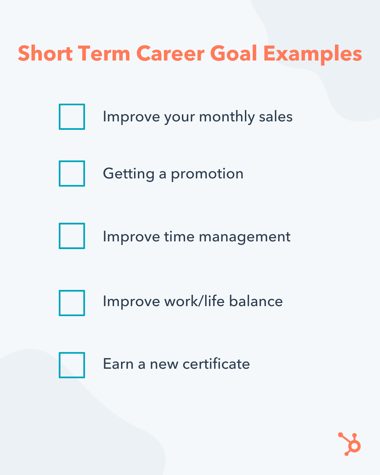
examples of short term career goals

Long Term Career Goals 

A long term career goal is your long-term vision that drives your career and professional development decisions, and typically takes years to achieve. 

Oftentimes, your long term career goals can be the motivating factors in your day-to-day. For instance, perhaps you don’t love your current role as a content marketer — but it’s necessary for you to learn the ins and outs of marketing, since your long term goal is to become a VP of Marketing. 

A long term goal should drive your professional decisions and career conversations with your manager, since long term goals are only achievable once you’ve crossed off a series of short term steps. Of course, you’ll want to ensure the long term goals you articulate with your manager are possible at your current company. 

For instance, if you’re in a marketing-related role, it’s appropriate to communicate to your manager that your long term goal is to become a VP of Marketing. It’s less appropriate to tell her that your long term goal is to write a science fiction book, since that demonstrates to your manager that you don’t plan on staying at your current company for the long haul. 

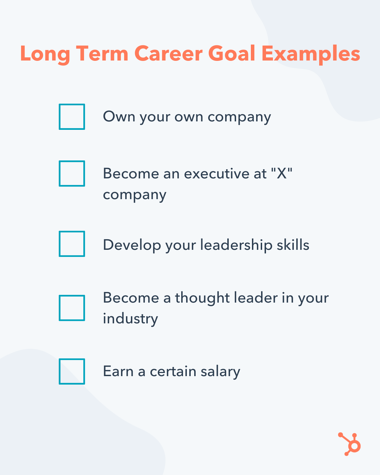
A few examples of long term goals include: 

  • Become an executive at a company 
  • Lead the financial team at a start-up 
  • Become a thought leader in the SEO space 
  • Start your own company 
  • Take courses to switch career paths and become a product manager 
  • Build a consulting business

Ultimately, your long term goal is the desired end result of many strategic, short-term decisions. 

If your long term goal is to become a product manager, some short-term decisions might include taking a college course on product management, conducting informational interviews with product managers to learn more about necessary skills for the role, and taking a few courses related to the core requirements. 

If your long term goal doesn’t relate to your current role, consider how you might level up outside of work to break into a new industry. For instance, if a long term goal is to become a novelist, perhaps you take some fiction workshops outside of work. Alternatively, if your long term goal is to start your own business, maybe you create your business plan on the weekends.
examples of long term career goals

How do you know what your career goals are? 

It’s the million dollar question, isn’t it? Many of us hope to know what our career goals are as soon as we graduate college — but, as we try out certain roles and uncover our professional strengths and weaknesses, these goals likely change over time. 

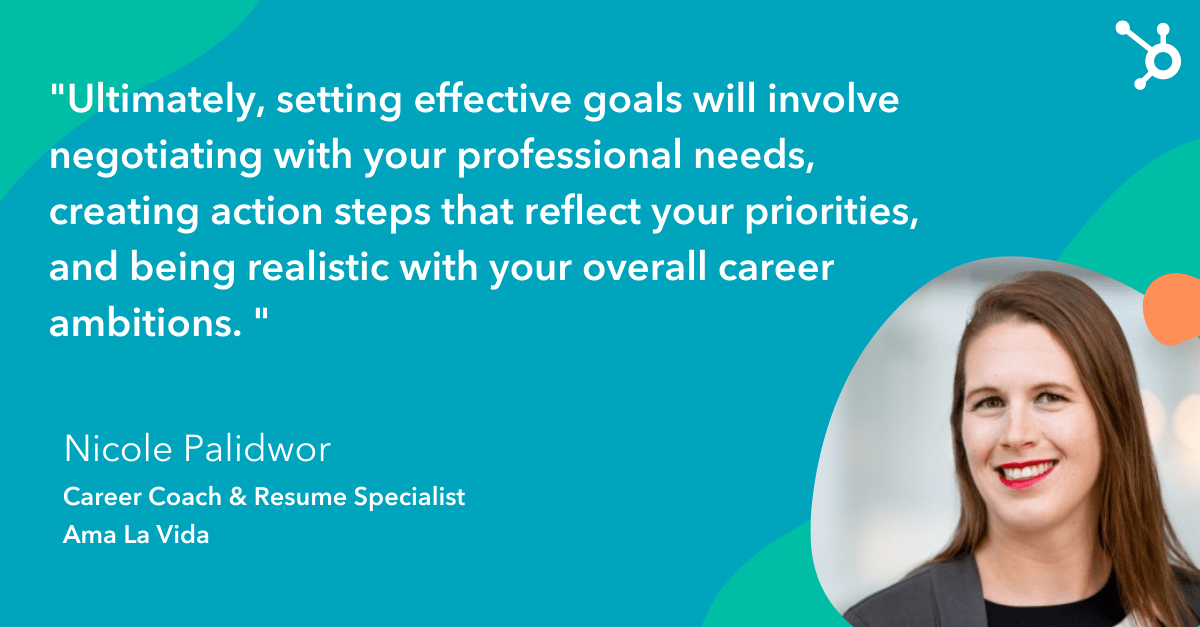
To get some insight here, I spoke with Nicole Palidwor, a certified career coach and resumé specialist at Ama La Vida.

Palidwor told me she typically urges her clients to focus on the following five areas when considering a career change: 

  • Values: What do I care about? What is important to me?
  • Interests: What topics do I find fascinating or intriguing?
  • Work Environment: What industry and/or company type interests me?
  • Status: What is my desired professional recognition and achievement?
  • Compensation: What is my long-term desired income?

Palidwor says, “Different priorities will lead you down different paths. For example, if interests rank highest, you’ll look for careers that allow you to explore your passions or reflect your training. If overall compensation is your motivator, you’ll pursue titles and qualifications that move the salary needle.”

She adds, “It’s also important to recognize potential tradeoffs. High compensation doesn’t necessarily align with working for social causes. Ideal work environments may not always provide the status you’re looking for. Non-profit work, tech startups, Fortune 500s, engineering firms, and executive opportunities all await you, but they may not all make sense.”
quote from career coach on importance of creating action steps for career goals

Senior Director of Student Affairs for Penn State University and career development strategist for Mentor Me Ashley A. Adams, PhD, agrees that figuring out your values is a critical step in choosing a career path.

Adams told me, “The first step in determining career goals is to focus on your values. Values serve as a compass and should guide your decision-making in all things, but particularly in your career.”

“For instance,” She adds, “if you value family, identify industries that have structured or predictable work schedules that allow you to plan appropriate family time. Alternatively, if you value wealth, find organizations that have lucrative benefits, high % matching 401K, and above-average salaries. Once you’ve identified your values, then you can focus on your strengths and weaknesses.”

Once you’ve made a list of your values and interests, you can begin to identify your most powerful professional skills. You’ll then want to determine a career that aligns all three of these areas. 

Additionally, Sho Dewan, who was listed one of the top career coaches globally on LinkedIn’s Top Voices list and is CEO of Workhap, recommends breaking down your goals into three parts: 

  • What is the result I want? (Example: “I want to earn a promotion in six months.”)
  • What is the action I have to take every day or week to achieve that goal? (Example: “I will arrange feedback meetings with my manager, learn new skills, organize team-building events, etc.”)
  • What is the thought I need to remind myself to achieve that goal? (Example: “I am skilled at what I do, my manager wants to see me succeed, and I am a valuable asset to the team.”)

Dewan says, “If you can think these thoughts consistently, then you will be motivated to take the required action — which will lead to you getting your desired results.”

Heidi Siegal Kogon, Founder and Career Coach at Kogon Coaching, also encourages her clients to understand their core values and innate strengths. She says you can do this by asking those closest to you, leveraging personality or strength assessment tools, or thinking about what you most enjoy doing. 

She adds, “You’ll want to take the time to figure out what you truly want — not what someone else wants for you, or what you think you ‘should‘ do. Many people live their lives based on what other people think they should do. Those people may think they have your best interest at heart, but it still may not be the best decision for you.”

If you currently work at a company, or you’re interviewing for a new position, follow these tips to decide what your career goals are:

  • Look at the organizational structure
  • Know the company’s hierarchical lingo
  • Ask what a typical career trajectory might look like in your role
  • Consider long term goals such as becoming an executive or owning your own business
  • Think about what motivates you

This means that you’ll want to think about what motivates you and then consider what the next step would be at the company you’re working for. You should know how the organization structures its hierarchy and the lingo that’s used.

Then, you can lay out a basic plan for a career trajectory from one role to the next. Once you have an idea of the roles you want, then you can focus on deciding what skills and education you might need to get there.

5 Career Goal Examples

Now that we’ve explored what career goals are, let’s put this into practice. Here are six examples of career goals to get you started writing your own.

Alternatively, here’s how you might want to answer the question, “Where do you see yourself in five to ten years?” during a job interview. 

Example One: A Leadership Career Goal 

“Over the next couple of years, I’d like to enroll at a university to earn my MBA in finance. I hope to one day become CFO at a company, and I believe my MBA will help me achieve that goal. I have always been interested in a career in finance, and I also have strong leadership skills. Becoming an executive for a financial department would combine these interests well.” 

Short Term Goal: Get an MBA in finance

Long Term Goal: Become CFO at a corporation

Use Case: Interview or performance review

career goals statement example for leadership

Example Two: An Independent Career Goal 

“My ultimate dream has always been to write a book and become a novelist. To help myself achieve this goal, I am going to sign up for a local writer’s fiction workshop so I can receive feedback on my writing from my peers.” 

Short Term Goal: Take a fiction workshop 

Long Term Goal: Write a book 

Use Case: Personal 

Example Three: A Skill-based Career Goal 

“Over the next five years, I’d like to gain enough experience to transition into a role on the SEO team. During my conversations with SEO strategists, I’ve learned one weakness I have is minimal knowledge of Excel, so I’d like to take an Excel course to strengthen my skills. This excel course, along with seeking out collaborative projects with the SEO team, should help me achieve my goal.” 

Short Term Goal: Learn Excel 

Long Term Goal: Become an SEO consultant 

Use Case: Performance review 

career goals statement example for new skills

Example Four: An Outside-of-Work Career Goal 

“Within the next five years, I want to open a yoga studio. To accomplish this, I am going to start by getting my yoga teacher’s certification. This will enable me to break into the yoga industry, and after a few years working at a yoga studio, I can learn the ins and outs to better equip myself to open my own studio.” 

Short Term Goal: Get my yoga certificate 

Long Term Goal: Open a yoga studio 

Use Case: Personal 

Example Five: A Business Owner Career Goal 

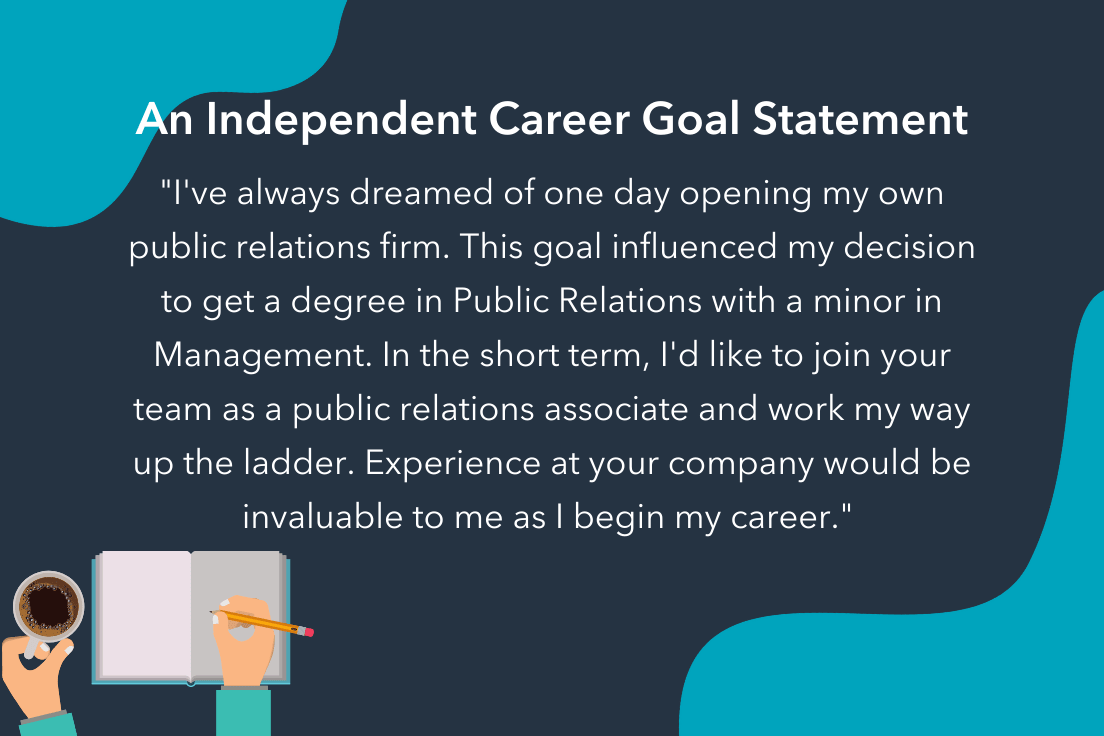
“I’ve always dreamed of one day opening my own public relations firm. This goal influenced my decision to attend X University and get a degree in Public Relations with a minor in Management. In the short term, I’d like to join your team as a public relations associate and work my way up the ladder. Experience at your company would be invaluable to me as I begin my career.” 

Short Term Goal: Get a job as a public relations associate

Long Term Goal: Open my own public relations firm

Use Case: Interview 
career goals statement example for business owner

How to Write Career Goals 

Once you’ve determined what your career goals are, you’ll want to write them down. Perhaps you’ll mention them on your resumé if your goals align with the role for which you’re interviewing.

Alternatively, maybe you write your career goals down before a performance review with your manager for a more constructive, guided conversation. 

Finally, even if your goals don’t align with your current role, you’ll still want to write them down for personal reflection. 

Here are four steps you can follow when writing your career goals:

1. Consider where you want to improve your career.

2. Use SMART goals formatting.

3. Write short term and long term goals.

4. Be detailed with your plan.

1. Consider where you want to improve your career.

Before you write your goals, think about the areas you want to advance. There are four main categories that I like to think about:

  • Improving work performance.
  • Developing skills that will help you become a leader/manager.
  • Self-improvement focused goals.
  • Learning about something new and different in your field.

When you write out your career goals, think about each of these areas. 

How can you improve your work performance? What kind of skills do you need to develop to get where you want to go? How can you improve yourself and grow? What can you learn about that’s new in your industry?

Thinking about these questions will help you begin brainstorming if you’re not necessarily sure where you want to end up.

2. Use SMART goals formatting.

An easy way to write out your career goals is to format it like a SMART goal, like mentioned above. Your goals should be specific, measurable, attainable, relevant, and timely.

Being as specific and relevant as possible is important for you to communicate with your manager or a potential employer.

3. Write short term and long term goals.

When you’re writing out your goals, write out a few short term and long term goals. It’s important to consider what type of goals you want to achieve in the next few years, as well as goals for the distant future.

You can come up with a career trajectory, and then write out short term goals that will help you get there. Additionally, when writing out your long term goals, consider why you want to become an executive or own a company. Thinking about what motivates you can help you maintain focus.

4. Be detailed with your plan.

Writing out your goals doesn’t just mean writing out a wish list. You should also come up with a plan of action for how you’re going to achieve your goals. This plan will consist of a basic trajectory, and the short term goals you need to achieve to get there.

I asked Nicole Palidwor about the “do’s” and “don’ts” when it comes to writing career goals.

Palidwor told me, “You’ll want to write career goals that make sense for your current lifestyle, available bandwidth, and the urgency of a professional change. People often get ambitious, but come to realize sending out 50 applications a week isn’t realistic.”

“Instead, create action steps that reflect what you can and want to do by establishing smaller, but still relevant, achievable, and appropriately ranked goals.”

Palidwor adds, “Don’t make too large or ambiguous goals. Break them down. Additionally, I’d quantify your expected results to hold yourself accountable, and give yourself deadlines so that you stay on track to achieving your goals. The more you break down and organize your goals, the easier they seem (and are!) to accomplish.”

When writing career goals for a resume, however, you’ll also want to ensure you make it clear how you plan on helping the company hit its own business goals — not just your own.

As Marcy Williams, Founder and Career Coach at Coach Marcy Life Coaching Services, tells me, “When writing out my career goals for a performance review or for a resumé, I make talking points of what I contribute to the role within the organization first. I discuss how I love working as a team to improve processes and the experience for all versus speaking of just myself.”

Williams adds, “Do not talk about yourself first when jotting down career goals because it will give the employer the feeling that you are only in it for yourself and not for the betterment of the organization.”

And there you have it! You’re well on your way towards creating more actionable, tactical career goals to get you where you want to be. Keep these tips in-mind, and don’t be afraid to iterate over time as you learn more about what you like — and don’t like — about your current career path. 
New Call-to-action

Categories B2B

UTM Codes: How to Create UTM Tracking URLs on Google Analytics

Crucial aspects of being a great marketer are being able to measure your success and measure your impact. No matter which metrics you use, you want to prove to your boss (and the company) that you’re worth your salt.

You deserve your budget — and maybe need more of it — and you deserve to dedicate time to the marketing activities that work. Building UTM codes that track your campaigns’ success is the best way to prove it.

→ Free Download: Free Marketing Reporting Templates [Access Now]In this blog post, you’ll learn what UTM codes are, how to use them, and how to build them in both Google Analytics and HubSpot.

UTM codes are also known as UTM parameters — or tracking tags — because they help you “track” website traffic from its origin.

Now, you might be thinking, “Ginny, I have HubSpot, so I already know if my website traffic is coming from Google, email, social media, and similar marketing channels. What does a UTM code tell me that I don’t already know?”

HubSpot Marketing Hub provides you with these high-level sources of traffic, but UTM also helps you drill down into specific pages and posts within these traffic sources.

UTM Code Example

If you’re promoting a campaign on social media, for example, you’ll know how much traffic came from social media.

Building a UTM code, however, can tell you how much of that traffic came from Facebook or even a particular post on Facebook.

Here’s an example of a URL with its own UTM code highlighted in orange at the end of the URL below:

http://blog.hubspot.com/9-reasons-you-cant-resist-list?utm_campaign=blogpost &utm_medium=social&utm_source=facebook

In the example above, you’re saying that once traffic comes in from people who click this link, the traffic should be attributed to Facebook. The “medium” is social media, while the “source” is Facebook.

Adding these snippets of code after the question mark above doesn’t affect anything on the page — it just lets your analytics program know that someone arrived through a certain source inside an overall marketing channel, as part of a specific campaign.

UTM Tracking

UTM tracking entails adding a UTM code, a snippet of code, to the end of a URL in order to track the performance of your marketing campaigns and content as well as your website’s traffic sources. 

UTM Tracking Best Practices

Here are some best practices to keep in mind when creating and using UTM tracking URLs: 

  • Make your URLs and links are consistent, clean, and easy to read (you may create a standard for link tagging/UTM parameter guide to ensure consistency here). 
  • Keep a list of your UTM links so everyone on your team knows which tagged links currently exist. 
  • Connect UTM tracking to your CRM (like HubSpot) to gain insight into how your bottom line looks. 
  • Be specific with your URL UTM parameters so your tags clearly state what you’re tracking and where. 
  • Stick with all lower or upper case — UTM codes are case-sensitive. 
  • Keep names short but descriptive (e.g. “U.S.” versus “United-States”). 

UTM Parameter Examples & Use Cases

UTM codes can track a medium and a source within that medium. Where it gets more flexible is in the language you use to describe that source. Maybe you want to attribute website traffic to a social network, a type of content, or even the exact name of an advertisement on the web.

Here are the five things you can track with UTM codes and why you might track them:

1. Campaign

Campaign-based tracking tags group all of the content from one campaign in your analytics. The example UTM code below would help you attribute website traffic to links that were placed as a part of a 20% discount promotion you’re hosting.

Example: utm_campaign=20percentpromocode

2. Source

A source-based URL parameter can tell you which website is sending you traffic. You could add the example code below to every link you post to your Facebook page, helping you to track all traffic that comes from Facebook.

Example: utm_source=Facebook

3. Medium

This type of tracking tag informs you of the medium that your tracked link is featured in. You can use the example UTM code below to track all traffic that comes from social media (as opposed to other mediums, like email).

Example: utm_medium=socialmedia

4. Piece of Content

This type of UTM code is used to track the specific types of content that point to the same destination from a common source and medium.

It’s often used in pay-per-click (PPC) campaigns or with two identical links on the same page, as shown in the sample UTM code below.

Example: utm_content=sidebarlink or utm_content=headerlink

5. Term

A term- or keyword-based tracking code identifies the keywords you’ve paid for in a PPC ad. If you pay for a Google Ads campaign to rank under the keyword, “marketing software,” you might add the following UTM code to the end of the link you submit to Google to run this ad.

Example: utm_term=marketing+software

The best part about UTM parameters is that you can make any combination you like of these codes — use the bare minimum (campaign, source, and medium) to track all of your links, or use all of them to get super specific about your tracking.

Clearly, you can use a combination of UTM parameters in lots of ways:

  • Track the success of certain marketing initiatives.
  • See how well your social channels promote your content versus when your followers promote your content.
  • Measure the effectiveness of guest posting referral traffic.
  • Track the same piece of content across multiple marketing channels.
  • See where most people click on your internal links in a blog post.

Okay, so you’re on board with UTM codes … but how the heck do you set them up? It’s easy.

Below are instructions for setting up and measuring UTM parameters in Google Analytics and HubSpot.

How to Build UTM Codes in Google Analytics

Here are the steps involved in building UTM codes in Google Analytics. 

1. Open Google’s Campaign URL Builder.

There are three different types of tracking tags you can create in Google, two of which help you track traffic to new apps on app marketplaces. You’ll be using the Google Analytics Campaign URL Builder — the third option on this list.

2. Fill in each link attribute in the following form.

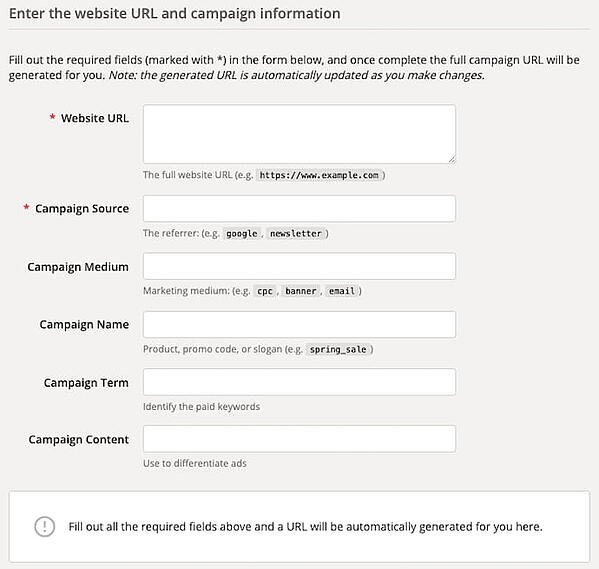
Visit the page linked above and click the link to see this URL builder. Then, you’ll see the UTM builder shown below. Add the URL, Campaign, Source, and Medium information into their respective boxes.

How to build UTM Codes in Google Analytics: Fill in each link attribute in the following form.

3. Use the link in your marketing campaign.

If you’d like to shorten it, you’ll need a tool like bit.ly … or just use HubSpot’s URL Builder if you’re a HubSpot customer.

how to build UTM codes in google analytics: Use the link in your marketing campaign

4. Measure your success.

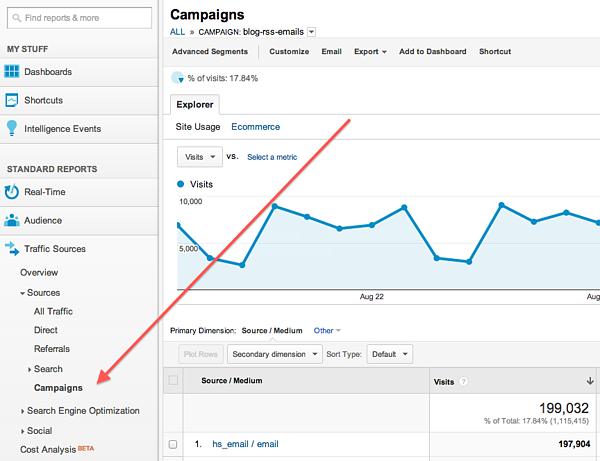
If you already have Google Analytics set up for your site, Google will automatically track incoming campaigns. Like in HubSpot, you can access them under “Audience,” then “Sources,” then “Campaigns.” Click on each campaign to view the source and medium.

how to build utm codes in google analytics: Measure your success

And that’s it — you’ll have custom tracking codes set up and running in no time! In a few weeks, you’ll be able to make a case for what you need because you’ll have the right metrics available.

How to Build UTM Codes in HubSpot 

Here’s how you’d go about building UTM codes in HubSpot. 

1. Navigate to your Analytics Tools.

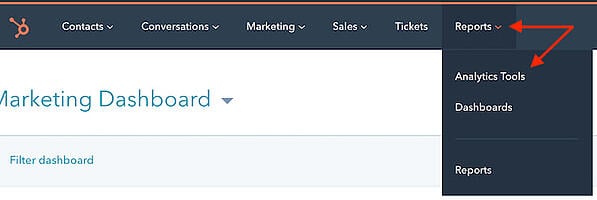
In your Marketing Hub dashboard, select “Reports” on the top navigation bar. Then select “Analytics Tools” in the dropdown, as shown below.

How to Build UTM Codes in HubSpot: navigate to your analytics tool

2. Open the Tracking URL Builder.

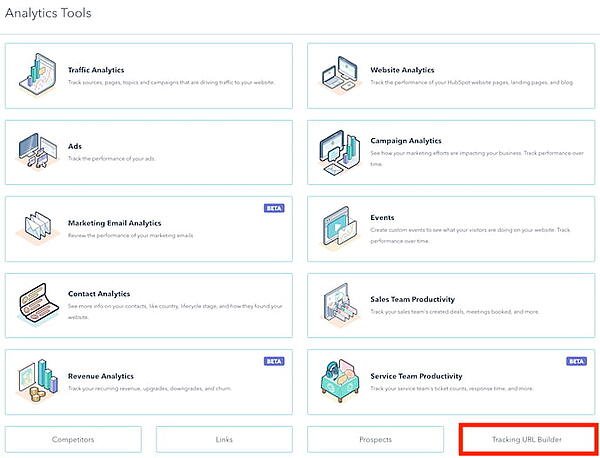
In the menu of analytics tools that appears, look to the very bottom-righthand corner. You’ll see the option, “Tracking URL Builder.” Click this option at the bottom of the page, as shown in the red box below.

How to Build UTM Codes in HubSpot: open the tracking url builder

3. Open the Tracking URL form to create a new UTM code.

Whenever you create a web campaign that includes at least one UTM code, you’ll see this campaign listed on the page shown below.

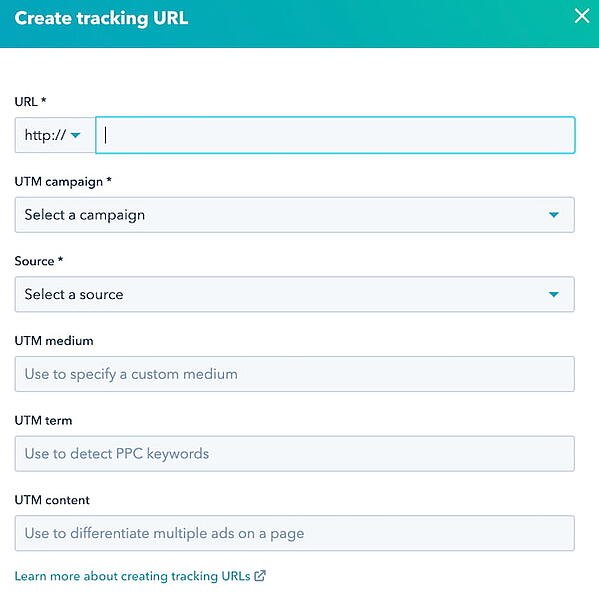
This page outlines a tracking tag’s source, medium, term, content, and creation date, which you can see along the bottom of the screenshot below. Click “Create Tracking URL” in the top-righthand corner.

How to Build UTM Codes in HubSpot: open the tracking URL form to create a new UTM code

4. Fill in each attribute of your UTM code and click “Create.”

In the form that appears, fill in the URL, Campaign, Source, and Medium fields. If you’d like to add Content and Term, you can do so in the bottom two fields of this form. When you’re done, you’ll see an orange “Create” button become available at the bottom.

Click it, and HubSpot will log your UTM code as a new campaign, and this link will be ready to include on any webpage from which you want to track the traffic.

How to Build UTM Codes in HubSpot: fill in the attributes of your UTM code and click create

5. Use the shortened link in your marketing campaign.

How to Build UTM Codes in HubSpot: use the shortened link in your marketing campaign

6. Measure your success.

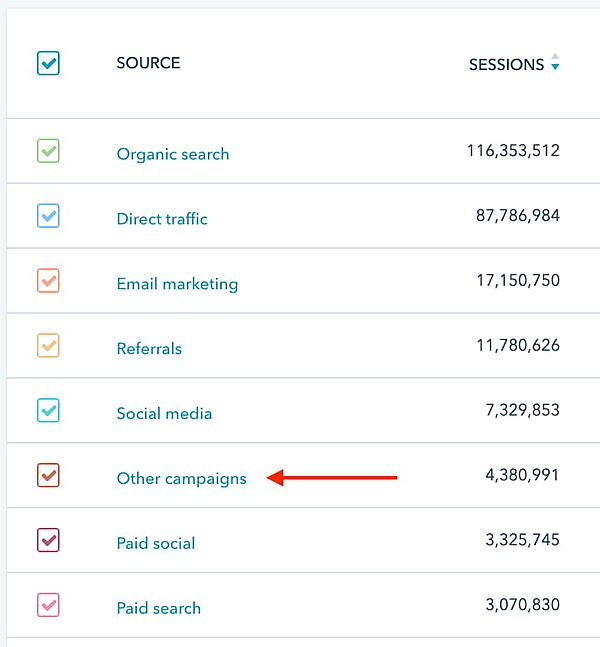
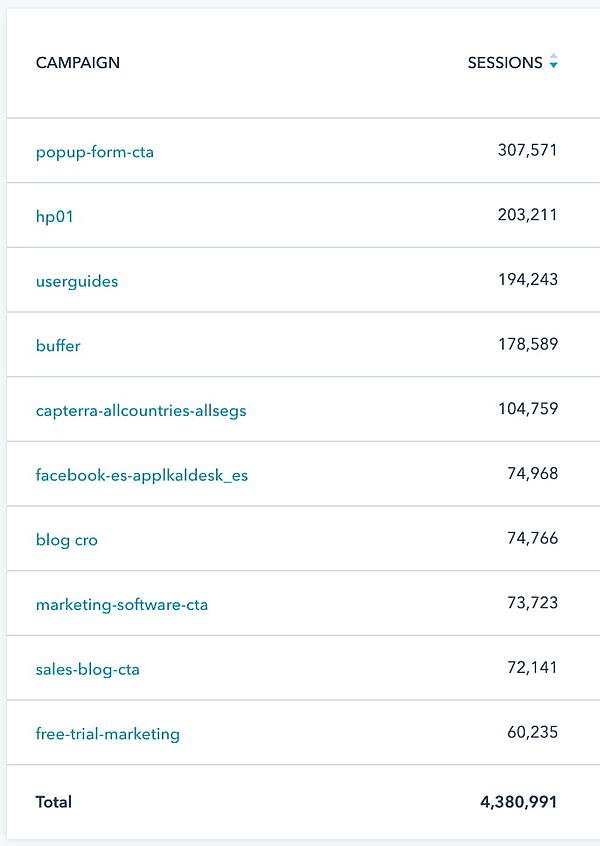
You can track your UTM parameters in your Traffic Analytics dashboard under “Other Campaigns,” as shown below. Click on the individual campaign to break down the source and medium.

How to Build UTM Codes in HubSpot: measure your success

As you can see in the second image, below, the name of the campaign appears to the left — based on the text in the UTM code you created — with the traffic from people who used each URL to arrive at your campaign’s main webpage.

How to Build UTM Codes in HubSpot: measure your success

Start Creating UTM Tracking URLs

Use the steps, best practices, and tools above to start creating and using UTM tracking URLs so you’re able to track the performance of your marketing campaigns and content. 

Editor’s note: This post was originally published in September 2013 and has been updated for comprehensiveness.

 marketing reporting templates

Categories B2B

25+ Web Design Statistics that Are Essential to Know in 2021

In 2010, there were over 2 billion internet users worldwide. In 2021, there were over 4.6 billion

To attract and engage this growing base of online users, websites are being created at a rapid pace. In 2010, there were a little over 210 million websites. Today, there are over 1.8 billion. 

To stand out in this crowded online space, you need to understand the latest technologies and trends in web design, as well as consumer behaviors and expectations. To help, we’ve covered the most essential web design statistics of 2021. Let’s get started.

Download Now: State of Web Strategy in 2020

Web Design Statistics

Mobile Web Design Statistics

1. In the first quarter of 2021, mobile devices generated 54.8 percent of global website traffic. (Statista, 2021)

Mobile traffic has been hovering around the 50 percent mark since the beginning of 2017. That means it’s more important than ever to optimize your website for mobile devices as well as desktops. It’s also important to consider whether offering a mobile app would provide a better experience to your users.

2. 32% of small businesses already have a mobile app and 42% plan to build one in the future. 26% of small businesses, on the other hand, are unlikely to ever release one. (Top Design Firms, 2021)

Some small businesses have already created a mobile app, while others plan to in order to improve their customer service or streamline the purchasing process for their customers. But over a quarter of some small businesses aren’t planning to — now or ever. Some don’t have the budget or marketing capabilities to create and promote their app. Others don’t think it makes sense for their business or audience.

Whether your small business should invest in building a mobile app or not depends on a wide range of factors, including your industry, target audience, and budget.

3. 50% of smartphone users are more likely to use a company or brand’s mobile site when browsing or shopping on a smartphone because they don’t want to download an app. (Google/Ipsos, 2019)

When deciding whether to invest in building a mobile app, consider that half of smartphone users prefer to browse or shop on a mobile site because they don’t want to take the extra steps required to download an app.

4. In a study commissioned by Google and conducted by 55 and Deloitte, decreasing mobile site load times by just one tenth of a second resulted in major increases in conversion rates — specifically, 8.4% for retail sites and 10.1% for travel sites. (Deloitte, 2019)

55 and Deloitte analyzed mobile site data from 37 retail, travel, luxury and lead generation brands across Europe and the US over a four-week period. Results showed that a 0.1 second improvement in load time can influence every step of the user journey and ultimately increase conversion rates. On average, conversions increased by 8.4% for retail sites and by 10.1% for travel sites.

This proves that website speed matters and should be considered a key performance metric.

Responsive Web Design Statistics

5. 73.1% of web designers believe that a non-responsive design is a top reason why visitors leave a website. (GoodFirms, 2021)

Considering that billions of people are accessing the internet using their mobile devices, it’s essential that your website is optimized for smaller screen sizes as well as desktops. In fact, not having a responsive design is rated as a top reason visitors might leave a website, according to a survey of 200+ web designers and freelancers. Other reasons are slow load times, bad navigation, and poor content structure.

web design statistic: 73.1% web designers believe non-responsive design is among top reasons for a visitor to leave a website

Image Source

6. 53.8% of web designers cite “not being responsive on all devices” as a top reason for a website to be redesigned. (GoodFirms, 2021)

If your website isn’t responsive, then it’s time for a redesign, according to that same group of  200+ web designers and freelancers. The other top reasons — low conversion rate, high bounce rate, and “needs better UX” — could be addressed by a responsive design as well.

Web Design Industry Statistics

7. In 2020, the total number of web developers and designers in the United States was around 178,900. By 2030, this number is projected to reach over 205,000. (Statista, 2021)

In this study, web developers and designers were defined as those “responsible for the design and development of websites or interfaces including the overall layout, graphics, font type, etc.” The market is expected to grow by over 20,000 jobs in the next decade.

8. Employment of web developers and digital designers is projected to grow 8 percent from 2019 to 2029, much faster than the average for all occupations. (U.S. Bureau of Labor Statistics, 2021)

According to the U.S. Bureau of Labor Statistics, the employment of web developers and designers will grow at a much faster rate than the average for all occupations. It believes that demand will be driven by the continued popularity of mobile devices and ecommerce.

9. The median annual wage for web developers and digital designers was $77,200 in May 2020. (U.S. Bureau of Labor Statistics, 2021)

The median annual wage for web developers and designers was over $77,000 in 2020. The U.S. Bureau of Labor Statistics defines median wage as “the wage at which half the workers in an occupation earned more than that amount and half earned less.” In the case of web developers and designers, the lowest 10 percent earned less than $40,750, and the highest 10 percent earned more than $146,430.

10. The web design services market is estimated to be worth $40.8 billion in the US in 2021. (IBISWorld, 2020)

The web design services market is estimated to be worth over $40 billion in the US. Since 2016, it has grown an average of 4.4% per year.

Modern Web Design Statistics

11. 50% of consumers believe that website design is crucial to a business’s overall brand. (Top Design Firms, 2021)

In a survey of 500 consumers, half said that website design is important to a business’s overall brand. That suggests businesses should prioritize website design (or a redesign) to meet consumers’ expectations and strengthen their brand identity.

12. When asked what visual elements they value on a company website, 40% of consumers said images, 39% said color, and 21% said video. (Top Design Firms, 2021)

Images, color, and videos are the top visual elements that consumers value on a company website. Considering that nearly 40% said images and color and 21% said video, your business should prioritize adding images and picking a website color scheme first. Then, focus on incorporating video as well as other visual elements mentioned — namely, typography, infographics, and animation.

web design statistic: 40% of consumers value images the most on a company website

Image Source

13. 84.6% of web designers believe crowded web design is the most common mistake made by small businesses. (GoodFirms, 2021)

An overwhelming number of web designers (84.6%) believe crowded web design is the most common mistake that small businesses make when creating a website. That means you want to incorporate images, color, video, and other visual elements that consumers value — but not overdo it. Taking a minimalist approach can help.

14. 42% of people will leave a website because of poor functionality.  (Top Design Firms, 2021)

Web design isn’t just about making pretty websites — it’s about making websites that are easy to use and navigate. If yours isn’t, then it’s likely that many visitors will abandon your site. In a survey by Top Design Firms, 42% of respondents said they’d leave a website that had poor functionality.

15. 38.5% of web designers believe that outdated design is a top reason why visitors leave a website. (GoodFirms, 2021)

In addition to a non-responsive design and functionality issues, web designers cite outdated design as a top reason for visitors abandoning a website. You might be wondering when  a design becomes “outdated.” According to Business 2 Community, the average lifespan for a website is 1.5 to 2.5 years. Past that range, a website will need to incorporate new design trends and technologies to feel “fresh” and competitive.

16. 39% of consumers appreciate color more than any other component of a website’s design. (Top Design Firms, 2021)

39% of website visitors care about color more than any other component of a website’s design. That means companies should prioritize picking a website color scheme. Ideally, your color schemes will reinforce your brand, make your site easy to read and navigate, and also look good.

17. Only 8% of consumers notice whitespace when viewing a website for the first time. (Top Design Firms, 2021)

When viewing a website for their first time, only a fraction of visitors notice whitespace. That doesn’t mean it’s not important, however. This critical design element can help draw visitors’ attention to certain elements, like CTAs, and make it easier for them to understand and digest your content.

18. 26% of consumers prefer primary color schemes, 21% prefer complementary, and 20% prefer analogous. (Top Design Firms, 2021)

Consumers are split about which type of color scheme they prefer: some want primary, others want complementary, while others want analogous. To understand the difference, you need to be somewhat familiar with color theory. A primary color scheme is made up of one or more primary colors (red, yellow, and blue). A complementary color scheme uses two colors directly across from each other on the color wheel (like orange and blue) and relevant tints of those colors. An analogous color scheme is created by pairing one main color with the two colors directly next to it on the color wheel (like green, purple, and blue.

When selecting a color scheme, companies should consider their products, services, and audience.

19. 22% of consumers visiting a website for the first time look for eye-catching colors. But 21% of consumers will leave a site with “outlandish” colors. (Top Design Firms, 2021)

Since 22% of consumers visiting a website for the first time look for eye-catching colors, but 21% will leave one with “outlandish” colors, it’s important to strike the right balance. To help choose eye-catching — but not garish — colors for your website color scheme, opt for a neutral background color. Then choose primary and secondary colors. Don’t be afraid to look at businesses in your industry for inspiration.

20. When looking at a website for the first time, 38% of consumers look at a page’s layout or navigational links. (Top Design Firms, 2021)

38% of people visiting a website for the first time look at the layout or navigational links on a page. If the layout is confusing or the navigation menu is hard to find, then visitors may leave your website.

21.  As of June 2021, Google.com is the most popular website worldwide, with 86.9 billion total monthly visits. (Statista, 2021)

For the last decade, Google.com has been the most popular website worldwide. In June 2021, it racked up 86.9 billion total monthly visits. That means you can learn a few things from their website’s design if you need inspiration. YouTube, Facebook, and Wikipedia are the next most popular websites across the world.

Statistic: Most popular websites worldwide as of June 2021, by total visits (in billions) | Statista

Image Source

Ecommerce Web Design Statistics

22. In 2021, 53.9 percent of all retail ecommerce is expected to be generated via mobile devices. (Statista, 2021)

Mobile is not only responsible for the majority of global traffic this year — it’s also making up the majority of retail ecommerce sales. That adds even more incentive for ecommerce sites to ensure they are fully responsive and mobile-friendly.

23. 23% of small retail businesses don’t have a website. (Digital.com, 2021)

With ecommerce growing year-over-year, it might surprise you that 23% of small retail businesses don’t have a website. Some believe they don’t need one — but they are likely missing out on key opportunities to generate revenue. According to Statista, revenue from ecommerce in the United States amounted to 431.6 billion U.S dollars in 2020. It’s estimated to increase to 563.4 billion dollars by 2025.

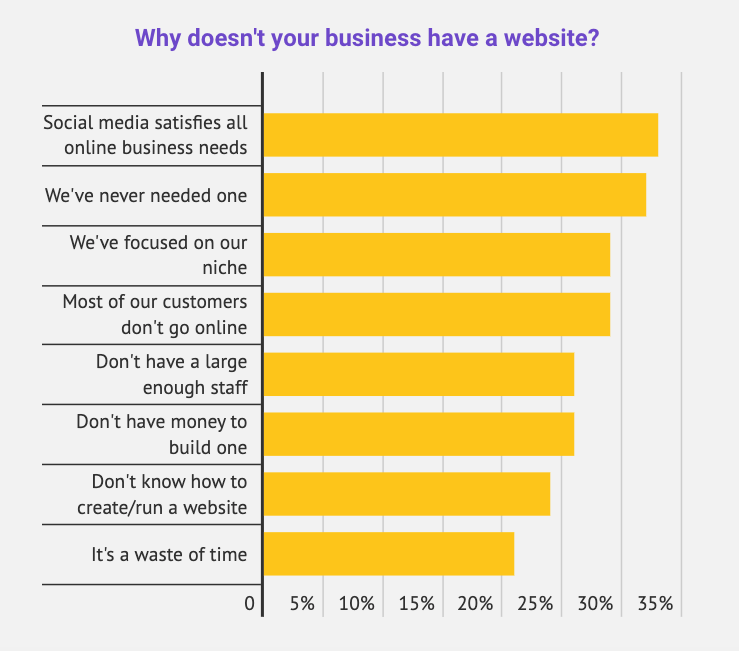
24. 24% of small retail businesses without a website responded that their reason for not having one was that they don’t know how to create/run a website. (Digital.com, 2021)

While some businesses doubt the necessity of having an online presence, others simply don’t have the resources to create one. 24% of small business owners without a website said the reason was that they don’t know how to create and run one. The rise of user-friendly and affordable content management systems and website builders could help overcome this objection and get more small businesses online.

web design statistic: 24% of small retail businesses without a website say they don’t know how to create/run a website.

Image Source

25. As of June 2021, Amazon was the most popular ecommerce site in the United States, with approximately 2.45 billion total monthly visits. (Statista, 2021)

Since Amazon has had unprecedented success in driving traffic to their site, Amazon.com can provide inspiration for your website’s design. It’s become the go-to platform for many online shoppers due to its broad assortment of goods, third-party selling, and other design and functionality choices.

26. 85% of shoppers say product information and pictures are important to them when deciding which brand or retailer to buy from. (Google/Ipsos, 2019)

Online shoppers use a variety of factors to decide which brands and retailers to buy from. The majority cite product information and pictures as an important factor, so make sure your ecommerce site’s product pages are optimized for copy and imagery.

27. 60% of consumers rate usability as an important design characteristic for an online shop. (Statista, 2020)

In a survey of almost 1,000 US consumers, 60 percent stated that website usability is important for them in an online shop. You can improve the usability of your website by using visual hierarchy, colors, and consistency to make it as easy to use as possible. If you’re not sure where to start, HubSpot’s Website Grader and other usability testing tools can help identify improvement opportunities.

Preparing for the Future of Web Design

The web design industry is growing and so are user’s expectations of what websites and online shops look like and are capable of. Will you be prepared to meet them?

Editor’s note: This post was originally published in December 2019 and has been updated for comprehensiveness.

state of marketing

Categories B2B

The 22 Best iPaaS Vendors for Any Budget

As your business grows and evolves, you’ll inevitably find yourself adding more applications to your tech stack. If those applications run on different platforms and can’t communicate effectively, you’re going to run into issues with data loss, duplication of efforts, and bottlenecks that slow your team down.

If you’ve decided you want to invest in an iPaaS tool but aren’t sure where to start, you’re in the right place. In this article, we’ll go over some of the best iPaaS vendors, so you can discover one that fits your company’s unique needs and budget. Let’s dive in.

Unlock tips, systems & recommended resources to stay ahead of the tech curve.

iPaaS Vendors: Top Features to Look For

iPaaS — which stands for Integration Platform as a Service — helps you connect the tools and systems that power your business in one place, so information can be shared without high-maintenance, one-off integrations, or manual data entry.

When considering iPaaS vendors and companies, you should know what to look for to get the most out of your investment. While some solutions are free, others can come with a hefty price tag.

Here are the top features you should look for.

User-Friendly Workflows Tool

iPaaS solutions allow you to integrate two or more apps to automate a process that otherwise takes longer to complete. It’s a critical tool to have in your workflow automation arsenal. As such, it should allow you to build workflows and connect apps in a user-friendly, no-code workflows tool.

The exception would be if you’re planning to create highly personalized workflows and integrations using code.

API Management Tool

You may be looking for an iPaaS provider that can help you build and deploy an API. You may also wish to create a unique integration tool using APIs from various apps and platforms. Some iPaaS services offer an API management feature either within the platform or as an add-on.

Templated Integrations

For small-to-medium businesses without an integration workflow, it’ll be critical to choose a tool that offers at least a few basic templated integrations to get you off the ground. Whether you want to create a simple or complicated series of integrations, the iPaaS vendor should offer a jumping-off point.

Top-Notch Security

iPaaS vendors will be handling your company’s confidential data, so they should offer end-to-end security and encryption. Most iPaaS vendors list their certifications and describe their security measures on their websites. If you have any doubts or special concerns about the security of your data, be sure to bring up any questions during the demo or consultation.

Ready to dive into the best iPaaS vendors of this year?

We wrote a deep dive on iPaaS here if you’d like to learn more about the basics of iPaaS services, view a complete glossary of iPaaS terms, and better understand what iPaaS can potentially offer your business.

Now, it’s time to check out the best iPaaS vendors you can use to integrate your business’s apps and services.

1. Dell Boomi

iPaaS vendors: Dell BoomiImage Source

Acquired by Dell in 2010, Boomi offers a cloud-based integration and API management solution with all the bells and whistles you could ask for: workflows, API design, application deployment, B2B/EDI management, and much more. Within Boomi, you can design end-to-end workflows and process data across multiple applications. Suitable for enterprise and small businesses from many different industries, Boomi has been considered a leader in the iPaaS space for the last six years by Gartner.

Features

  • User-friendly workflows tool: Boomi has a drag-and-drop UI for creating integrations and workflows.
  • API management tool: Boomi includes an API management tool to design and deploy APIs.
  • Templated integrations: Boomi includes templates and a process library for the easy creation of integrations.
  • Top-notch security: Boomi details its approach to data security here.

Best for: Because of its low starting price and robust features, Dell Boomi is a great fit for small-to-enterprise businesses that have any need for integrations. There are, however, free tools that have similar capabilities.

Price: Starting at $50/month.

2. Oracle Integration Cloud

iPaaS vendors: Oracle Integration CloudImage Source

If you’re looking for a straightforward iPaaS solution with industry best practices and premade integration flows baked into the product, Oracle Integration Cloud might be an option to take a deeper look at. Oracle serves up an extensive library of out-of-the-box adapters to different SaaS and on-premises applications, making the initial set-up less time consuming for your team.

Features

  • User-friendly workflows tool: Oracle Integration Cloud offers a drag-and-drop tool for creating connections between apps. There are, however, more user-friendly tools out there, such as Workato.
  • API management tool: Oracle offers an API platform.
  • Templated integrations: Oracle Integration Cloud includes a vast library of premade integrations.
  • Top-notch security: Oracle details its approach to data security here.

Best for: Oracle Integration Cloud is a great fit for enterprise businesses that can benefit from the premade integrations Oracle offers in its library.

Price: Choose from several different pricing structures, including a pay-as-you-go plan starting at $1.2097/message, and a monthly flex plan starting at $0.3226/message.

3. Workato

iPaaS vendors: WorkatoImage Source

This iPaaS solution was designed to enable better connection between business users and IT, allowing both groups to plan, create, and easily maintain integrations between different systems. Workato provides pre-built integration flows between 300 of the most popular SaaS products, and the ability to design custom integrations in a simple, drag-and-drop interface.

Features

  • User-friendly workflows tool: Workato has a user-friendly tool for integrating apps and creating workflows.
  • API management tool: Workato has an API Platform.
  • Templated integrations: Workato has a library of community-made “recipes” for launching integrations.
  • Top-notch security: Workato details its approach to data security here.

Best for: Workato is a great fit for small-to-medium businesses that use the apps listed in the Workato community recipes page.

Price: Contact Workato for a quote.

4. TIBCO Cloud™

iPaaS vendors: TIBCO CloudImage Source

TIBCO Cloud prides itself on providing an easy-to-use iPaaS solution that simplifies the creation and management of integration flows in your business. They consider themselves to be an “application neutral” technology partner for their clients — meaning, they won’t try to push you towards using a particular application or ecosystem. Instead, they’ll work with you to build a solution that connects the on-premises tools and cloud-based applications your business already prefers to use.

Features

  • User-friendly workflows tool: TIBCO Cloud Integration has a visual UI for building workflows and integrations. It does require some knowledge of code, so it’s not recommended for beginners.
  • API management tool: TIBCO Cloud offers an API management tool that’s sold separately from its Integration tool.
  • Templated integrations: TIBCO Cloud has a library of premade connectors.
  • Top-notch security: TIBCO Cloud details its approach to data security here.

Best for: TIBCO Cloud is a great fit for large-to-enterprise businesses that need extensive custom integrations.

Price: Starting at $400/month for a Basic Plan, $1500/month for a Standard Plan, and custom pricing for Hybrid plans based on your unique needs.

5. Elastic.io

iPaaS vendors: Elastic.ioImage Source

Elastic.io promises to remove the laborious product management component of custom integrations and reduce the amount of time spent on integrations at your company by up to 80%. This iPaaS vendor also takes an as-a-service mentality to how they work with customers, helping you support feature roll-outs and upgrades, bug fixes, and connector updates.

Features

  • User-friendly workflows tool: Elastic.io has a user-friendly integration flow designer.
  • API management tool: Elastic.io offers an API integration tool that allows you to integrate APIs from other services.
  • Templated integrations: Elastic.io has a library of premade connectors.
  • Top-notch security: Elastic.io details its approach to data security here.

Best for: Elastic.io’s lower investment and user-friendly integrations builder makes it a great choice for medium-to-large business just starting to create app integrations.

Price: For system integrators, the monthly plans start at €199/month; for enterprise customers, the yearly plans start at €1,499/month; and for software vendors, they offer the platform as OEM with customizable pricing (i.e. on request).

6. Modulus Data

iPaaS vendors: Modulus DataImage Source

This iPaaS vendor specializes in integrations for the Human Resources industry, offering a comprehensive library of pre-built connectors aimed at helping your HR department align their applications and tools in one seamless, secure hub. Modulus Data has out-of-the-box connectors with most popular HR applications and software tools, including Workday, Greenhouse, Monster, and Oracle HCM.

Features

  • User-friendly workflows tool: Modulus Data offers a visual integrations builder tool.
  • API management tool: Modulus Data uses an API-to-API connection to integrate apps; however, it doesn’t offer an option for managing or creating custom APIs.
  • Templated integrations: Modulus Data offers a library of prebuilt connectors.
  • Top-notch security: While Modulus Data doesn’t have security documentation, it indicates its level of security in its terms and conditions.

Best for: Modulus data is a great fit for recruitment firms and HR departments looking to streamline workflows and integrate the apps in their tech stacks.

Price: Contact Modulus Data for a quote.

7. Informatica

iPaaS vendors: InformaticaImage Source

Informatica has been around since 1993, and still continues to be an industry leader in helping businesses manage their data effectively and securely. Specializing in enterprise level iPaaS solutions, Informatica lists big companies like GE, Unilever, and L’Oreal among their clients. If you’re a large company looking for hands-on support on your custom iPaaS journey, Informatica might be a good fit for your needs.

Features

  • User-friendly workflows tool: Informatica has a visual integrations builder tool.
  • API management tool: Informatica offers an API management tool to build and deploy APIs.
  • Templated integrations: Informatica offers a library of prebuilt connectors.
  • Top-notch security: Informatica details its approach to data security here.

Best for: Informatica is a great fit for enterprise businesses with legacy applications that they’d like to integrate with their cloud-based apps and services.

Price: Contact Informatica for a quote.

8. IBM AppConnect

iPaaS vendors: IBM AppConnectImage Source

IBM’s iPaaS solution markets itself as an easy way to connect apps, build APIs, integrate data, and act on events. AppConnect comes equipped with a series of templates made up of common patterns you can use to quickly set-up integration flows for your business, and start getting value immediately. SMBs looking to get started with iPaaS and explore the possibilities of new applications might benefit from using AppConnect.

Features

  • User-friendly workflows tool: AppConnect features a visual, no-code integrations builder.
  • API management tool: AppConnect offers an API management tool to build and deploy APIs.
  • Templated integrations: AppConnect has a library of prebuilt connectors.
  • Top-notch security: IBM details its approach to data security here.

Best for: Due to its free starting price, AppConnect is a great fit for small-to-medium businesses that want to try a hand at app integration. The iPaaS vendor then allows you to upgrade as your needs grow more sophisticated.

Price: AppConnect offers a free lite package. Professional packages start at $500/month.

9. SnapLogic

iPaaS vendors: SnapLogicImage Source

For companies seeking an enterprise-level iPaaS solution that can handle a lot of data quickly, SnapLogic offers a way to automate integrations across on-premises and cloud-based applications on a large scale. But don’t let the hefty capabilities of SnapLogic mislead you into thinking the product itself is for the extremely tech-savvy only — this iPaaS solution is designed with user accessibility in mind, so even teams with less technology experience can build, manage, and scale custom integrations and workflows.

Features

  • User-friendly workflows tool: SnapLogic features a drag-and-drop low-code integrations builder.
  • API management tool: SnapLogic offers an API management tool to build and deploy APIs.
  • Templated integrations: SnapLogic has a library of premade “Snaps,” their name for “connectors.”
  • Top-notch security: SnapLogic details its approach to data security here.

Best for: SnapLogic is a great fit for enterprise businesses that need to automate processes across their IT, sales, marketing, HR, and accounting departments.

Price: Contact SnapLogic for a quote.

10. Zapier

iPaaS vendors: ZapierImage Source

One of the more user and wallet-friendly options in the iPaaS space, Zapier gives businesses of any size the ability to design and manage custom integration solutions that fit their exact needs. Zapier adds new integrations (called “zaps”) to their massive integrations library each week, so chances are, there’s already an out-of-the-box solution available for you to start using today.

Features

  • User-friendly workflows tool: Zapier has a visual workflows builder and is extremely user-friendly.
  • API management tool: Zapier does not offer an API management tool.
  • Templated integrations: Zapier has the biggest integrations library of this list. Each app has hundreds — if not thousands — of premade workflows.
  • Top-notch security: Zapier details its approach to data security here.

Best for: Due to its ease-of-use, Zapier is a great choice for small businesses and freelancers who want to create simpler workflows.

Price: Zapier offers a free basic package. Starter packages start at $19.99/month, and Professional packages begin at $49/month.

11. Jitterbit

iPaaS vendors: JitterbitImage Source

According to G2 ratings, Jitterbit is one of the more user-friendly and cost-effective iPaaS options out there. This iPaaS vendor offers support for a wide breadth of connectors, advanced workflow capabilities, real-time integrations, and a range of data security features. Additionally, Jitterbit has an easy-to-use visual designer to help make the setup and monitoring processes run smoothly — even for teams without a dedicated developer on staff.

Features

  • User-friendly workflows tool: Jitterbit features a visual drag-and-drop workflows builder.
  • API management tool: Jitterbit offers an API management tool to build and deploy APIs.
  • Templated integrations: Jitterbit has pre-built templates inside the platform.
  • Top-notch security: Jitterbit details its approach to data security here.

Best for: Jitterbit is a great fit for medium-to-enterprise businesses in the energy, financial, healthcare, manufacturing, retail, and transportation industries.

Price: Contact Jitterbit to get a quote.

12. Amazon API Gateway

iPaaS vendors: Amazon API GatewayImage Source

Built with developers in mind, Amazon’s iPaaS solution enables teams to create and manage APIs that act as a “front door” for applications to access data and share information. Amazon API Gateway is unique because you only pay for the API calls you use, rather than most other iPaaS vendors which rely on monthly or annual pricing models. This iPaaS vendor is one to consider if you have a developer on staff and want more direct control over the API calls your company uses.

Features

  • User-friendly workflows tool: Amazon API Gateway offers a visual API manager.
  • API management tool: Amazon API Gateway is specifically an API management tool; this is its core strength.
  • Templated integrations: Amazon API Gateway doesn’t offer any templated integrations.
  • Top-notch security: Amazon API Gateway details its approach to data security here.

Best for: Amazon API Gateway is a great fit for medium-to-enterprise businesses that need to build and manage custom APIs at scale.

Price: Pricing is determined by the quantity and type of API calls used.

13. Pabbly Connect

iPaaS vendors: Pabbly ConnectImage Source

Pabbly Connect enables you to seamlessly integrate applications from multiple niches such as marketing, CRM, finance, and more to create automated workflows. Additionally, you can create multi-step calls, set instant triggers, apply conditions using various filters, add unlimited applications, and do a lot more in your workflows.

Features

  • User-friendly workflows tool: Pabbly Connect offers a visual integration creator.
  • API management tool: Pabbly Connect offers an API modules tool for connecting apps, but it doesn’t offer a standalone API management tool.
  • Templated integrations: Pabbly Connect doesn’t have a library of premade integrations.
  • Top-notch security: While Pabbly Connect doesn’t have security documentation, it does describe some of its security measures in its privacy policy.

Best for: Pabbly Connect is another great tool for freelancers and small businesses; whether you choose it over Zapier depends on which apps you’d like to integrate.

Price: Free and paid plans available. With the basic plan that comes at $9/month, you get unlimited workflows.

14. Celigo Integrator.io

iPaaS vendors: CeligoImage Source

If you aren’t sure how an iPaaS solution will work for your company and are wary of hefty fees, Celigo offers a free version of their iPaaS product. Their Integration Marketplace is stocked with plenty of prebuilt, supported integrations with common applications, and their “flow” subscription model means you can start off with the free version and only start paying if you increase your usage and add new integrations into the mix.

Features

  • User-friendly workflows tool: Celigo offers a visual no-code flow builder.
  • API management tool: Celigo includes an API management tool to build and deploy APIs.
  • Templated integrations: Celigo has an integration marketplace with prebuilt connectors.
  • Top-notch security: Celigo details its approach to data security here.

Best for: Celigo is a great fit for large-to-enterprise businesses that want to create custom integrations and APIs.

Price: Packages start at $7,200/year.

15. Tray.io

iPaaS vendors: Tray.ioImage Source

This iPaaS vendor was designed with the intention to better connect the tools and workflows used by your marketing, sales, product, and services teams. They offer out-of-the-box integration solutions developed with these specific teams in mind, and aim to empower your teams to manage and create the integrations they need without requiring developer assistance every step of the way.

Features

  • User-friendly workflows tool: Tray.io offers a visual drag-and-drop workflow builder.
  • API management tool: While Tray.io uses APIs to connect apps, it doesn’t offer a standalone API management tool.
  • Templated integrations: Tray.io offers a library of prebuilt connectors.
  • Top-notch security: Tray.io details its approach to data security here.

Best for: Tray.io is a great fit for businesses that need to foster greater collaboration between its teams, since it allows you to share workflows between teams.

Price: Contact Tray.io for a quote.

16. Xplenty

iPaaS vendors: XplentyImage Source

If you’re seeking a straightforward way to visualize your workflows, integrations, and data flows, Xplenty might be a good option to consider. Their simplified dashboard enables you to manage how your tools and data are working together in one central place, and your developers will love that they can connect Xplenty with their existing monitoring systems using service hooks.

Features

  • User-friendly workflows tool: Xplenty offers a visual user interface; however, it still requires some coding.
  • API management tool: Xplenty doesn’t offer an API management tool.
  • Templated integrations: Xplenty offers a library of prebuilt connectors.
  • Top-notch security: Xplenty.io details its approach to data security here.

Best for: Xplenty is a great fit for small-to-enterprise businesses with a team of developers to build custom integrations.

Price: Contact Xpenty for a quote.

17. Mulesoft

iPaaS vendors: MulesoftImage Source

Used by tech giants like Netflix and Airbnb, Mulesoft offers a wide range of customized iPaaS solutions for different industries and tech setups. Their selection of out-of-the-box connectivity options means your team will spend less time initially building out new integrations, since prebuilt integrations are easier to get up and running fast.

Features

  • User-friendly workflows tool: Mulesoft features a visual workflows “composer” for creating integrations without coding.
  • API management tool: Mulesoft offers an API manager.
  • Templated integrations: Mulesoft has a library of prebuilt connectors.
  • Top-notch security: Mulesoft details its approach to data security here.

Best for: Mulesoft is a great fit for large-to-enterprise businesses that are looking to integrate apps and deploy APIs in one convenient platform.

Price: Contact Mulesoft for a quote.

18. Cleo Integration Cloud

iPaaS vendors: Cleo Integration CloudImage Source

Cleo Integration Cloud offers a user-friendly, easy-to-use platform for automating processes across various teams in your businesses. The integration platform is focused on breaking down silos so that there’s utmost clarity between your business processes. The platform offers an integration environment called CIC Studio that helps you create workflows and integrations in an intuitive way.

Features

  • User-friendly workflows tool: Cleo offers a visual drag-and-drop workflows editor for creating integrations without coding.
  • API management tool: While Cleo uses APIs to connect apps, it doesn’t offer a standalone API management tool.
  • Templated integrations: Cleo offers a library of prebuilt connectors.
  • Top-notch security: Cleo lists its security certifications here.

Best for: Cleo Integration Cloud is a great fit for B2B businesses that need to create sophisticated integrations with different protocols.

Price: Contact Cleo for a quote.

19. Talend Cloud Data Integration

iPaaS vendors: TalendImage Source

Talend Cloud Data Integration is an iPaaS solution for hybrid information systems — it can connect both cloud-to-cloud applications and cloud-to-on-premise applications, which makes it a great pick if your team isn’t looking to go full cloud just yet. You can develop and launch integrations in a central dashboard.

Features

  • User-friendly workflows tool: Talend uses a visual “pipeline designer” to create workflows.
  • API management tool: Talend offers API services for creating and deploying APIs.
  • Templated integrations: Talend has a list of supported connectors; however, it’s more limited than others in this list.
  • Top-notch security: Talend details its approach to data security here.

Best for: Talend is a great fit for large-to-enterprise businesses that want to connect on-premises solutions with cloud apps.

Price: Contact Talend for a quote.

20. Blendr.io

iPaaS vendors: Blendr.ioImage Source

Blendr.io offers a low-code visual builder to create complex enterprise-grade or standardized self-service integrations. They also provide a set of features to embed integrations in the UI of your platform (including HubSpot) into the UI of other SaaS platforms.

Blendr.io integrates marketing, sales, events, productivity, and 300+ other cloud platforms. If you end up not finding the integration you need in their library, you can ask the Blendr.io team to add it at no additional cost to your plan.

Features

  • User-friendly workflows tool: Blendr.io has a visual no-code automation builder.
  • API management tool: Blendr.io allows you to manage API integrations, but doesn’t allow you to build and deploy APIs.
  • Templated integrations: Blendr.io has a list of premade connectors.
  • Top-notch security: Qlik, Blendr.io’s creator, details its approach to data security here.

Best for: Blendr.io is a great fit for SaaS businesses that need to automate internal processes and are also interested in embedding an integration feature into their own software. Blendr.io allows you to embed their UI into your SaaS product.

Price: Contact Blendr.io for a quote.

21. RudderStack Cloud Extract

iPaaS vendors: RudderStack Cloud ExtractImage Source

Formerly called Blendo, RudderStack Cloud Extract is a self-service iPaaS solution that can connect applications from your sales, marketing, and financial teams and flow directly into a number of popular data warehousing options. RudderStack Cloud Extract was designed to make reporting across multiple applications more straightforward, so they ensure you can access your data in your preferred reporting platform.

Features

  • User-friendly workflows tool: RudderStack Cloud Extract has a user-friendly no-code integration builder.
  • API management tool: RudderStack Cloud Extract doesn’t offer an API management tool.
  • Templated integrations: RudderStack Cloud Extract has a list of premade connectors.
  • Top-notch security: RudderStack doesn’t have any security documentation on their website, though they do provide some details in their service agreement.

Best for: RudderStack Cloud Extract is a great fit for B2B businesses that need to aggregate customer data from both cloud apps and internal databases.

Price: Starts at free, while Pro starts at $750/month.

22. Skyvia

iPaaS vendors: SkyviaImage Source

Last but certainly not least, we have Skyvia, a no-coding cloud data integration platform that offers both ELT and ETL approaches. It has both visual tools for simple integration cases and powerful mapping and transformation settings for more complex scenarios. The platform also offers no-coding OData and SQL web API layer and has ADO.NET provider and ODBC driver for accessing your data via these APIs over the web. Skyvia supports all major data sources — from SaaS apps like Salesforce and BigCommerce, to databases like MySQL and SQL Server.

Features

  • User-friendly workflows tool: Skyvia has a user-friendly no-code integration builder.
  • API management tool: Skyvia doesn’t offer an API management tool.
  • Templated integrations: Skyvia has a list of premade connectors.
  • Top-notch security: Skyvia details its approach to data security here.

Best for: Skyvia is a great fit for small-to-large businesses because of its free plans and robust data management tools. You can easily integrate both cloud and on-premise data.

Price: Choose from a Data Integration Free plan (free), a Data Basic Integration plan ($19/month), and a Data Integration Standard plan ($99/month).

Choose an IPAAS Vendor to Break Down Silos

An iPaaS vendor can help you integrate disparate apps, streamline processes, create collaborative workflows, and unify all of your customers’ data. The result is that your team will no longer be working in silos, empowering you to grow better.

Editor’s note: This post was originally published in June 2019 and has been updated for comprehensiveness.

Stay Current on Emerging Tech

Categories B2B

2021 Cloud Technology Investment Trends: What Buyers Truly Need From the Cloud

One of the things we often hear from prospects and clients is that they wish they had a better idea of what their own audience, prospects, and customers were really thinking when they requested a piece of content.  

For example, our client wanted to better understand where their prospects were in their overall buying journey and what pain points they were experiencing. Said another way, they were attempting to identify their potential buyer’s intent.

Buyer intent data has long been relegated to company-level observations associated with IP address mapping and tracking users across web pages without their consent. Such intent data is helpful in understanding extremely top-of-funnel behavior but lacks the discrete context and depth of learnings that buyer-level intent data can deliver. Buyer-level, and fully permissioned, intent data builds on those fundamentals and delivers invaluable directly provided by buyers as they consume content specific to their various business and technical challenges. 

Fortunately, this is something that NetLine now has greater visibility into. 

The Challenge

As shared in a recent blog, businesses across the globe are being forced to accelerate digital business transformation plans by at least five years through 2024 to survive in a post-COVID-19 world. This shift involves a permanently higher adoption of remote work and digital touchpoints for customers and employees alike.

Meeting the needs of this transformation requires a modern hybrid cloud solution that unifies infrastructure and frees data to move where it needs to be, allowing a data-centric business to adapt and change direction quickly in the name of gaining a competitive advantage.

But making a decision on cloud technology investment can be challenging. Factor in the number of technology options being added every week and IT decision-makers are left wondering if they’ve made the right decisions. 

The Goal

Identify and understand how leading IT decision-makers are attempting to simplify their cloud management landscape and progress through their cloud journey. 

Such observations should exclusively be captured via first-party interactions with IT buyers as they voluntarily registered and consumed related content. 

How This Data Was Captured

By tapping into dramatic scale beyond the limitations of their own content, our customer leveraged NetLine’s Intent Discovery product to secure first-party sourced intent-rich data squarely aimed at accelerating sales outcomes. Empowered by NetLine’s entire content universe, the client put to good use all 12,000+ assets, billions of data points, and the 35,925,120 different ways of filtering buyers actively performing research.

Unlike traditional intent data, Buyer-Level intent Discovery helps you better understand the challenges, priorities, and purchase timeline of your ideal targets. Nothing is hidden behind obfuscated datasets and/or black box proprietary scores. 

Perhaps most importantly, Intent Discovery acts as an always-on monitor of all B2B content consumption behavior as professionals are actively researching content specific to their challenges. Monitoring activity is then mined on a real-time basis and intercepted once a buyer has met or exceeded each element required to define intent—capturing custom, intent-rich, customer-specific insights directly from the prospect.

The Questions

To answer the questions, we engaged 400+ senior-level IT decision-makers to assess their experiences and cloud management aspirations.

These data results are the responses from their unique feedback.

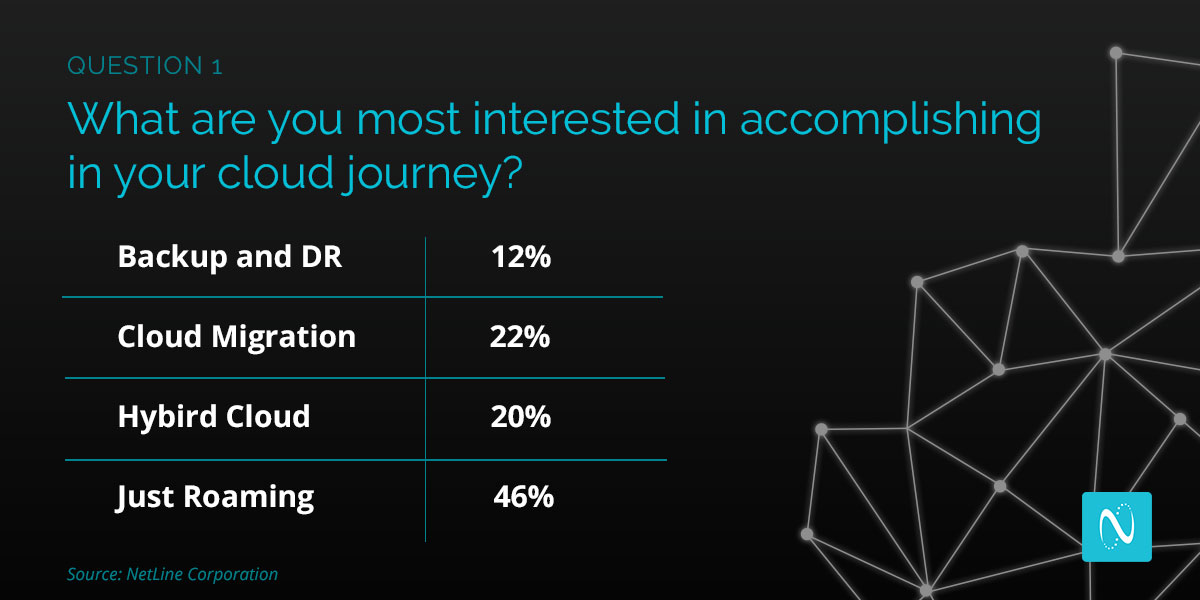
1. What are you most interested in accomplishing in your cloud journey?

While many professionals were merely doing their research on the specifics of cloud management—46% of Senior decision-makers shared that they were just roaming for information when answering what they were looking to accomplish in their cloud journey—there were plenty of insights to be extracted. 

For instance:

  • More than 34% of all Computer as Technology professionals said that Cloud Migration was their top priority, as did 30% of Biotech and Pharmaceutical pros.
  • IT decision-makers in the Manufacturing sector were 357% more likely to cite Cloud Migration as their number one target to accomplish in their cloud journey.
  • 50% of Legal and Automotive employees, respectfully, were most interested in gaining a better grasp on their Hybrid Cloud options. In comparison to their peers in other industries, they are 146% more likely to share this sentiment.
  • 29.41% of Media and 21.05% of Government professionals, however, were most interested in shoring up their Backup and Data Recovery capabilities.
  • Insurance industry IT leadership were purposeful and 42% less likely to state that they were “Just Roaming” indicating a predisposition to be further down the funnel in their personal cloud journey. 

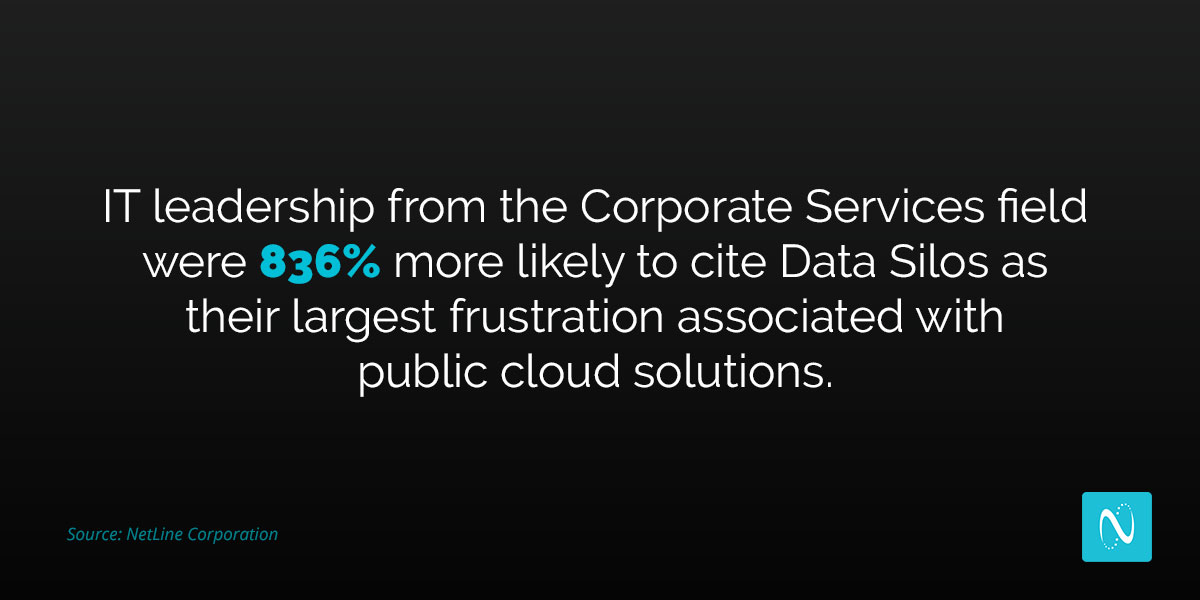
While this is merely an educated guess, it’s safe to say that professionals from the Construction, Corporate Services, and Travel/Hospitality/Entertainment industries are just now trying to get a handle on how a cloud strategy makes sense for their businesses. For the Travel/Hospitality/Entertainment field specifically, this guess is further supported by the answers provided in Question 2.

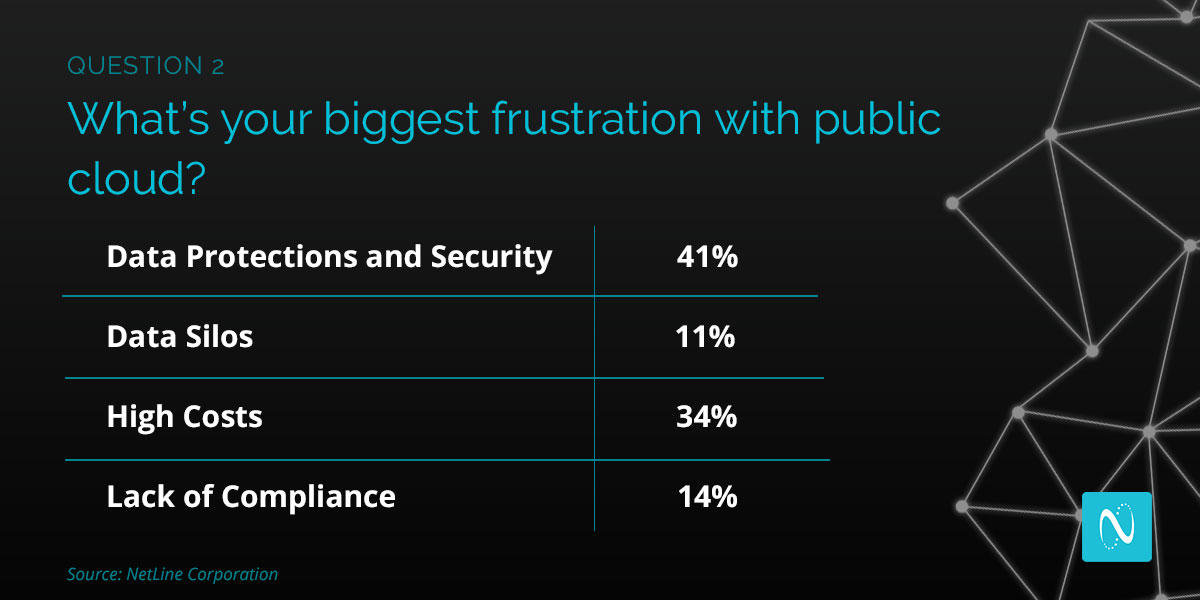
2. What’s your biggest frustration with the public cloud?

For this question, there were two very clear frustrations associated with the public cloud: The high cost and the data protections and security issues.

Here are some of the other highlights:

  • 100% of responses captured by IT buyers within the Construction and Manufacturing industries stated the High Cost was their greatest frustration
  • IT leadership within the Corporate Services vertical were 836% more likely to cite Data Silos as their largest frustration associated with public cloud solutions.
  • 50% of respondents from the Biotech and Pharmaceuticals and Travel/Hospitality/Entertainment fields listed the public cloud’s Lack of Compliance as a major challenge.
  • Overall, the primary concern for all respondents around the public cloud was Data Protections and Security, accounting for 41.15% of all answers. Professionals from the Automotive (58.33%), Insurance (57.9%), Legal (50%), Education (47.46%), and Utility/Energy (45%) fields were the five most represented industries in this group.
  • The High Cost of the public cloud was a big concern for 34.38% of participants. Construction and Manufacturing fields aside (100% each), the Travel/Hospitality/Entertainment (50%), Retail and Consumer Goods (48.72%), Media (47%), Healthcare/Medical (46.3%), and Computers and Technology (36.6%) fields were the five most represented in this group.

At a macro-level, (beyond the overwhelming answers to data protections and security and the high costs associated with the public cloud) there doesn’t seem to be any hardline connection of one’s industry’s perceived need to protect their data at all costs vs. the need to keep cost in mind. 

For example, while Insurance professionals said data protections (57.9%) was more of a priority than the high cost (31.58%) of the public cloud, professionals in the Healthcare/Medical field leaned more toward the cost side of things (46.3% to 38.89%). 

The Results

What our customer now has, beyond high quality, first-party leads every client can generate through NetLine, is a greater understanding of where their potential clients are in their unique buying journey. 

They now know that 58% of Senior Leaders in the Automotive industry Data Protections and Security as their biggest frustration. They also are aware that IT leaders within the Pharma and Travel industries are 262% more likely to state that a “Lack of Compliance” is their biggest frustration with the public cloud.

From a price perspective, they now know that IT buyers within the Construction and Manufacturing industries are 190% more likely to be highly sensitive to costs associated with public cloud solutions. Curiously, and perhaps paradoxically, IT decision-makers within the Government sector were 43% less likely to have sensitivity to price. All of this is extremely useful for their business and allows their Marketing and Sales teams to refine their messaging to become more impactful.

Buyer-Level Intent Discovery removes the guesswork that comes with every lead and instead provides context to what each prospect needs and what your buying audience craves. Insights like these are more valuable than gold, as they set the table for more productive and more fruitful interactions, relationships, and, hopefully, sales.

How Your Business Can Better Understand the Intent of Your Audience

In today’s hyper-competitive vendor market, it is more important than ever to understand the real-time pain points and in-market tendencies of your future buyers.

NetLine’s Intent Discovery product helps businesses accelerate its sales cycle by capturing first-party intent data by intercepting and engaging the buyer with customized validation questions. With this one-of-a-kind product, B2B Marketers can gain first-party insights for immediate activation and seamless remarketing/sales acceleration.

For more information on how you can move beyond account-level insights and start your buyer-level intent discovery journey, contact us, or visit our website.

Categories B2B

What is Public Relations? The Definition of PR in 100 Words or Less

Image is an important aspect of brand awareness, which influences whether your potential customers know, like, and trust you. Where publicity is outside a brand’s control, public relations (PR) is an effective way to contribute to the conversation.

Download Now: Free Press Release Template

There’s an old saying: “Advertising is what you pay for; publicity is what you pray for.”

Public relations isn’t an easy profession to define. In fact, in 2012, the Public Relations Society of America (PRSA) accepted a few thousand submissions before finally agreeing on one:

What Is Public Relations? Official Definition from PRSASo how can an organization take its beneficial relationship to the public and turn it into good press? Are you really “praying” for something, like the old saying goes, if you’re using a strategic process to get results?
If public relations is a bridge for that relationship, then public relations professionals are the bridge builders. Let’s talk about them a little more specifically:

What is a public relations professional?

A public relations professional is in charge of creating and executing a PR strategy, helping a business or individual cultivate a positive reputation through various unpaid or earned channels and formats, including press, social media, and in-person engagements. They also help clients defend their reputations during crises that threaten their credibility.

In order to understand this, you must first consider the two sides of PR: the positive storytelling side and the negative damage-controle side.

Positive Public Relations

Public Relations: Positive PR StrategiesIf an organization is proactive about their image, they will likely be investing in positive public relations where a PR professional helps portray the brand’s reputation, idea, product, position, or accomplishments in a positive light.

So, in a sense, you can think of PR professionals as storytellers. Unlike advertisers, who tell stories through paid methods, PR professionals tell their stories through unpaid or earned media.

These unpaid or earned avenues include:

  • News and press
  • Media outreach
  • Social media
  • Speaking engagements

Keep in mind that a PR professional isn’t just trying to reach a paying customer … they’re trying to reach everyone.

Example of Positive PR

Let’s say you work for a small interior design company, and your business just won an award: “Best Interior Design Company in Chicago.” A PR specialist might draft a press release and conduct outreach to reporters to write a story about this accomplishment to spread the news to the public.

Along with building a credible reputation for your interior design business, the PR professional is also helping the public receive relevant information about this accolade. If I’m a consumer looking for an interior designer, this announcement could help me, too.

Public relations extends to government, too. PR professionals can execute political campaigns or explain a government’s new policy to the public. In this case, you can see how PR professionals work to maintain a healthy and productive relationship between their client (the government) and the general public, who have a right to hear about new policies.

Damage Control in PR (Negative Public Relations)

Public Relations: Negative PR Strategies

PR isn’t just used for positive storytelling. It’s also used to mitigate any damage that could weaken a client’s reputation.

If public discourse around a particular brand has a negative sentiment, perhaps as a result of negative publicity or news, a PR professional’s job is to advise the organization on how to proceed.

After all, if conversations are being had, then an organization should share their side of the story. However, how they respond will have an impact on the public’s perception. If done poorly, it could make the situation worse.

A PR professional will then be tasked with:

Example of Damage Control in PR

In the early 1980s, numerous bottles of Johnson & Johnson’s Tylenol product were laced with cyanide by an unknown person, killing seven people. This led to widespread panic and could have resulted in the end of Tylenol products.

Johnson & Johnson took aggressive PR measures to mitigate the damage: First, the company pulled all of its Tylenol products off the shelves and issued a national statement warning consumers not to purchase or use Tylenol. Then, Johnson & Johnson created a new tamper-resistant seal and instructed 2,000 sales personnel to deliver presentations to the medical community to reintroduce these new, safer Tylenol bottles.

This effective PR strategy saved Johnson & Johnson’s reputation as well as their product — in fact, Tylenol shares climbed back up to 24 percent just six weeks after the cyanide crisis.

In the case of Johnson & Johnson, a simple advertising campaign wouldn’t have worked. Instead, PR was necessary: PR professionals were able to spread a story that portrayed Johnson & Johnson as a company that puts consumers ahead of profit. Along with mitigating damage to Johnson & Johnson’s reputation, PR was used to save more people from consuming cyanide-laced Tylenol, and then used to inform the public that Tylenol was safe again. A win-win-win.

PR as an Important Marketing Strategy

In these examples, you can see PR professionals are adept at handling a wide variety of both good and bad circumstances and must address these events so the public and client can maintain a beneficial relationship. PR specialists also play a role in advising management on the best policy decisions or actions to take and conducting programs, such as fundraising or networking events, to help the public understand the organization’s goals.

PR isn’t just used to influence a story after it happens — it’s also used to write that story in the first place.

Editor’s note: This post was originally published in April 2018 and has been updated for comprehensiveness.

New Call-to-action

Categories B2B

Best Personal Websites: 19 Examples to Blow Your Mind

Here’s the thing about resumes and cover letters: No matter how unique you try to make your own, for the most part, they tend to read dry. And there’s a good reason for it: It’s supposed to be a single, no-frills page that documents your work experience. And while being concise is good, there’s very little opportunity to convey your uniqueness, or for your personality to shine through at all for that matter.

While a resume is a sole, largely unchanging document, a personal website can be customized and updated according to what you’re working on, or what you want to emphasize. It’s both fluid and current.

→ Download Now: 10 LinkedIn Bio Templates

Did you know 80% of businesses say a personal website is important when evaluating job candidates? Recruiters are looking you up online, and a personal website that tells the story you want to tell can make all the difference between you and a competing candidate.

If you’re thinking about creating a personal website of your very own, check out the examples below that hit the nail on the head. Inspired by a particular type of website? Click one of the following links to jump to that section of this article:

Personal Resume Websites

Whether you create a single-page site or a larger portfolio, the web resume serves as a more personalized option for sharing information and demonstrating your technological skills — and it can be used by all types of job seekers.

Even if you have very little work experience, you can leverage a website to build a better picture of your capabilities and yourself as a candidate, while leaning on your traditional resume to provide the basic background information.

1. Gary Sheng

Personal Website Examples: Gary Sheng

Unlike a standard resume document, Sheng’s website makes it easy for him to include logos and clickable links that allow his software engineering and web development skills to shine.

Gary Sheng's Clickable Links

We love that visitors can choose to scroll down his page to view all of the website’s categories (“About Me,” “My Passion,” etc.), or jump to a specific page using the top navigation.

The “My System” section reads like a company mission statement, and this personal touch helps humanize his work and make him more memorable.

2. Brandon Johnson

Personal Website Examples: Brandon Johnson

Johnson’s incredible resume must be seen to be believed. Beautiful images of planets help to complement his planetary science background, and animations make his resume more of an experience than a document.

In terms of design, the textured, multi-layered background adds greater depth to the two-dimensional page in a way that evokes feelings of space and the planetary systems, which Johnson’s work focuses on.

3. Quinton Harris

Personal Website Examples: Quinton Harris

Harris’ resume uses photos to tell his personal story — and it reads kind of like a cool, digital scrapbook. It covers all the bases of a resume — and then some — by discussing his educational background, work experience, and skills in a highly visual way.

Not to mention, the copy is fantastic. It’s clear that Harris took the time to carefully choose the right words to describe each step of his personal and professional journey. For example, the section on storytelling reads:

NYC, my new home, is filled with the necessary secrets to not only propel my craft forward, but my identity as an artist. With every lens snapped and every pixel laid, I am becoming me.

Finally, at the final navigational point (note the scrolling circles on the left-hand side of the page), users are redirected to quintonharris.com, where he goes on to tell his story in more detail.

Website homepage of Quinton Harris that says 'Griot in Training' across the front

Best Practices for Resume Websites

  1. Code your resume so it can be crawled by search engines.
  2. Offer a button to download your resume in PDF so the hiring manager can add it to your file.
  3. Keep branding consistent between the website and document versions: Use similar fonts, colors, and images so you’re easy to recognize.
  4. Be creative and authentic to yourself. Think about the colors, images, and media you want to be a part of your story that you couldn’t include in a document resume.

Personal Portfolios

Building an online portfolio is a highly useful personal branding and marketing tool if your work experience and skill set call for content creation. In fact, photographers, graphic designers, illustrators, writers, and content marketers can all use web portfolios to show off their skills in a more user-friendly way than a resume or hard copy portfolio.

4. Sean Halpin

Personal Website Examples: Sean Halpin

Halpin’s portfolio is short, sweet, and to the point, which is authentic to his voice and personal branding outlined on the site. Instead of a lot of copy, Halpin presents large thumbnail cards so that his projects speak for themselves and allow the user to delve deeper if one catches their eye.

5. Tony D’Orio

Personal Website Examples: Tony D'Orio

It’s important to keep the design of your visual portfolio simple to let images capture visitors’ attention, and D’Orio accomplishes this by featuring bold photographs front-and-center on his website. His logo and navigation menu are clear and don’t distract from his work. And he makes it easy for potential customers to download his work free of charge.

Want to give it a try? Click on the hamburger menu in the top left corner, then select + Create a PDF to select as many images as you’d like to download.

Link to create a PDF from Tony D'Orio's personal online portfolio, featuring tiled images of his photography

Once you open the PDF, you’ll notice that it comes fully equipped with D’Orio’s business card as the cover … just in case you need it.

Tony D'Orio Business Card PDF

6. Verena Michelitsch

Personal Website Examples: Verena Michelitsch

When you’re a designer, not one pixel on your personal website should go unused. Verena Michelitsch’s portfolio, shown above, is covered end to end in artwork. From her extensive library of work, she chose to exhibit multiple colors, styles, and dimensions so visitors can see just how much range she has as a designer. It’s a perfect example of the classic adage, “show, don’t tell.”

7. Gari Cruze

Personal Website Examples: Gari Cruze

Cruze is a copywriter. But by turning his website into a portfolio featuring images from different campaigns he’s worked on, he makes visitors want to keep clicking to learn more about him. Also, there’s a great CTA at the top of the page that leads visitors to his latest blog post.

His site’s humorous copy — specifically in the “17 Random Things” and “Oh Yes, They’re Talking” sections — serves to show off his skills, while making himself more memorable as well. These pages also include his contact information on the right-hand side, making it easy to reach out and connect at any point:

Personal Websites Examples: Gari Cruze

8. Melanie Daveid

Personal Website Examples: Melanie Daveid

Daveid’s website is a great example of “less is more.”

This developer’s portfolio features clear, well-branded imagery of campaigns and apps that Daveid worked on, and she shows off her coding skills when you click through to see the specifics of her work.

While it might seem overly minimal to only include three examples of her work, Daveid did her portfolio a service by including her best, most noteworthy campaigns. At the end of the day, it’s better to have fewer examples of excellence in your portfolio than many examples of mediocrity.

9. The Beast Is Back

Personal Website Examples: Christopher Lee: The Beast Is Back

Christopher Lee’s portfolio is busy and colorful in a way that works. When you read more about Lee on his easily navigable site, you realize that such a fun and vibrant homepage is perfect for an illustrator and toy designer.

Known by his brand name, “The Beast Is Back,” Lee’s web portfolio highlights eye-catching designs with recognizable brands, such as Target and Mario, along with links to purchase his work. This is another gallery-style portfolio with pops of color that make it fun and give it personality, thus making it more memorable.

10. Daniel Grindrod

Personal Website Examples: Daniel GrindrodThis freelance videographer is another example of a simple but sleek portfolio, allowing his potential clients to browse deeper into his “Work” and “Stills” sections. The opening video on the homepage — as shown on the still image above — also ensures his site visitors that he’s actively creating beautiful work.
Best Practices for Portfolio Websites

  1. Use mainly visuals. Even if you’re showcasing your written work, using logos or other branding is more eye-catching for your visitors.
  2. Don’t be afraid to be yourself. Your personality, style, and sense of humor could be what sets you apart from other sites!
  3. Organization is key. If your portfolio is full of photos, logos, and other images, make sure it’s easy for visitors to navigate to where they can contact you.
  4. Brand yourself. Choose a logo or icon to make your information easily identifiable.

Personal Blogs

Consistently publishing on a blog is a great way to attract attention on social media and search engines — and drive traffic to your site. Blogging is a smart way to give your work a personality, chronicle your experiences, and stretch your writing muscles. You might write a personal blog if you’re a writer by trade, but virtually anyone can benefit from adding a blog to their site and providing useful content for their audience.

11. The Everywhereist

Personal Website Examples: The Everywhereist

This blog looks a bit busier, but its consistent branding helps visitors easily navigate the site. The travel blog uses globe iconography to move visitors around the site, making it easy to explore sections beyond the blog.

Owned by writer Geraldine DeRuiter, this blog also features a “Best Of” section that allows new visitors to learn about what the blog covers to get acclimated. The color scheme is warm, neutral, and free of excess clutter that could distract from the content.

The Everywhereist Blog

12. Side Hustle Nation

Personal Website Examples: Nick Loper: Side Hustle Nation

Side Hustle Nation is the business blog of Nick Loper, an advisor whose website offers tons of valuable financial advice for individual business owners. His homepage, shown above, sets a lighthearted yet passionate tone for his readers. It suggests you’ll get friendly content all committed to a single goal: financial freedom. The green call to action, “Start Here,” helps first-time visitors know exactly how to navigate his website.

Side Hustle Nation Blog

On Nick’s blog page, shown above, you’ll notice two unique types of content: “My Podcast Production Process,” the top post; and “Quarterly Progress Report,” the third post down. The top post shows readers how Nick, himself, creates content that helps his business grow, while the third post down keeps his readers up to date on his blog’s growth over time. These content types give people a peek behind the curtain of your operation, showing them you practice what you preach and that your insight is tried and true.

13. fifty coffees

Personal Website Examples: fifty coffees blog

The website fifty coffees chronicles the author’s series of coffee meetings in search of her next job opportunity, and it does a great job of using photography and visuals to assist in the telling of her lengthy stories.

The best part? Each post ends with numbered takeaways from her meetings for ease of reading comprehension. The high-quality photography used to complement the stories is like icing on the cake.

fifty coffees blog

14. Minimalist Baker

Personal Website Examples: Minimalist Baker

I’m not highlighting Dana’s food blog just because the food looks delicious and I’m hungry. Her blog uses a simple white background to let her food photography pop, unique branding to make her memorable, and mini-bio to personalize her website.

15. Mr. Money Mustache

Personal Website Examples: Mr. Money Mustache

Mr. Money Mustache might take on an old-school, Gangs of New York-style facade, but his blog design — and the advice the blog offers — couldn’t be more fresh (he also doesn’t really look like that).

This financial blog is a funny, browsable website that offers sound insight into money management for the layperson. While his personal stories help support the legitimacy of his advice, the navigation links surrounding his logo make it easy to jump right into his content without any prior context around his brand.

Best Practices for Blogs

  1. Keep your site simple and clutter-free to avoid additional distractions beyond blog posts.
  2. Publish often. Those who prioritize marketing efforts are 13x more likely to see positive ROI.
  3. Experiment with different blog styles, such as lists, interviews, graphics, and bullets.
  4. Employ visuals to break up text and add context to your discussion.

Personal Demo Websites

Another cool way to promote yourself and your skills is to create a personal website that doubles as a demonstration of your coding, design, illustration, or developer skills. These sites can be interactive and animated in a way that provides information about you and also shows hiring managers why they should work with you. This is a great website option for technical and artistic content creators such as developers, animators, UX designers, website content managers, and illustrators.

16. Albino Tonnina

Personal Website Examples: Albino Tonnina

Tonnina is showcasing advanced and complicated web development skills, but the images and storytelling methods he uses are simple and easy to understand. In the process, you get a demo of the depth of his animation and coding experience.

17. Robby Leonardi

Personal Website Examples: Robby Leonardi

Leonardi’s incredible demo website uses animation and web development skills to turn his portfolio and resume into a video game for site visitors. The whimsical branding and unique way of sharing information ensure that his site is memorable to visitors.

18. Samuel Reed

Personal Website Examples: Samuel Reed

Reed uses his page as a start-to-finish demo of how to code a website. His website starts as a blank white page and ends as a fully interactive site that visitors can watch him code themselves. The cool factor makes this website memorable, and it makes his skills extremely marketable.

19. Devon Stank

Personal Website Examples: Devon Stank

Stank’s demo site does a great job of showing that he has the web design chops and it takes it a step further by telling visitors all about him, his agency, and his passions. It’s the perfect balance of a demo and a mini-resume.

Plus, we love the video he includes as an intro. It’s a consumable narrative that at once captures Stank’s personality and credentials.

Best Practices for Demo Websites

  1. Brand yourself and use consistent logos and colors to identify your name and your skills amongst the bevy of visuals.
  2. Don’t overwhelm your visitors with too many visuals at once — especially if your demo is animated. Be sure to keep imagery easy to understand so visitors aren’t bombarded when they visit your site.

Developing a Personal Website

Regardless of the type of personal website you’re building, there’s plenty of inspiration above on how to convey personality while connecting with your audience. Keep in the above tips in mind, remember to design for your audience’s experience, and most importantly have fun.

Editor’s note: This post was originally published in April 2019 and has been updated for comprehensiveness.

New Call-to-action

Categories B2B

Product Classification: What It Is & Its Impact on Marketing Efforts

The other day, I roamed the aisles of CVS and picked up the same toothpaste I’ve been buying for years.

I didn’t think twice about it. I made the purchase on auto-pilot. I didn’t consider testing out a different brand or purchasing one from another retailer.

Toothpaste, as it turns out, is known as a “convenience good,” which consumers usually buy without putting too much thought into the brand or effort.

→ Download Now: Free Product Marketing Kit [Free Templates]

Understanding product classification is key to uncovering the reasons behind your consumers’ general buying behaviors and how you can better market your products as a result.

There are four types of product classification. Let’s dive into each type, so you can determine where your product falls.

Product Classification in Marketing

Knowing the classification of a product is vital when devising a marketing strategy. Why? Well, it lets you know the mindset most consumers have and the behavior they exhibit when interacting with your product.

This knowledge arms you to devise an effective marketing strategy that will meet your consumers where they are. It also helps you decide on a realistic marketing budget.

For instance, say your products fall under the “unsought goods” classification (more on that in this section). This means that you’ll likely need to take a more aggressive marketing approach to reach consumers that may not have considered your product or brand.

Think of charity organizations, life insurance companies, and funeral homes. These are usually not top of mind for consumers. As such, these brands must work a little harder to be visible to consumers and highlight the benefits of their goods or services.

Shopping goods, on the other hand, are highly visible and very competitive. Consumers typically spend time comparing quality, cost, and value before making a purchase. That’s why building brand loyalty is vital for this product classification.

As you can see, there are factors to consider for every classification of product. The more familiar you are with consumer habits and beliefs for that category, the more equipped you will be to market your product.

There are four types of products and each is classified based on consumer habits, price, and product characteristics: convenience goods, shopping goods, specialty products, and unsought goods.

Let’s dive into each one in more detail.

1. Convenience Goods

Like the Crest toothpaste example, convenience goods are products that consumers purchase repeatedly and without much thought.

Once consumers choose their brand of choice, they typically stick to it unless they see a reason to switch, such as an interesting advertisement that compels them to try it or convenient placement at the checkout aisle.

These products include gum, toilet paper, soap, toothpaste, shampoo, milk, and other necessities that people buy regularly.

To market a convenience good, you want to consider that most people will impulse buy these products. Placing your products near the checkout line at a store could be a good idea for these products — which is why you’ll often find candy and gum at the front of a store.

Since most convenience products are priced low, cost and discounting isn’t a major deciding factor when considering a purchase. I won’t switch my toilet paper brand just to save a few cents.

For convenience goods, brand recognition is key. With this in mind, you’ll want to implement widespread campaigns to spread awareness of your company if possible.

For instance, Charmin, the toilet paper brand, is a widely recognized brand in the United States — likely in part due to the company’s consistent and long-term advertising strategy, dating back to the 1960’s with the invention of the character “Mr. Whipple” who appeared on TV, print, and radio ads.

2. Shopping Goods

Shopping goods are commodities consumers typically spend more time researching and comparing before purchase.

They can range from affordable items, like clothes and home decor, to higher-end goods like cars and houses.

These are more one-off purchases with a higher economic impact.

For instance, while you will buy toilet paper over and over again for the rest of your life, you’ll likely only purchase a house a few times at most. And, since it’s an expensive and important purchase, you’ll spend a good amount of time deliberating on it, attending different open houses, and comparing the pros and cons of your final selection.

The same can be said for smaller products. If you have an event coming up and you want to purchase a nice pair of shoes, this doesn’t fall under impulse purchases.

Instead, you’ll want to try it on, consider whether the price is worth it, and even get input from your loved ones.

To market a shopping good, invest in content that persuades your buyer of your product’s value. It’s important your marketing materials demonstrate how your product differs from the competition, and the unique value it provides consumers.

Price also plays a role in this product type, so the promotion of discounts and sales can attract consumers toward your brand.

3. Specialty Goods

A specialty good is the only product of its kind on the market, which means consumers typically don’t feel the need to compare and deliberate as much as they would with shopping products.

A good example of this? iPhones.

I’ve been purchasing new iPhones for years, and I haven’t paused to consider other smartphone models — because of Apple’s strong brand identity and the perception I have of its product quality.

When marketing a specialty good, you don’t necessarily need to spend too much time convincing consumers that your product is different from competitors. They already know already.

Instead, focus on how your products are constantly innovating and improving. This will ensure your customers will remain loyal to your brand.

For instance, if Apple stopped making impressive improvements on their iPhones and promoting new features, I might consider switching brands. But since they’ve continued to impress me over the years, I’ve continued to purchase from them.

4. Unsought Goods

Finally, unsought products — goods that people aren’t typically excited to buy. Good examples of unsought goods include fire extinguishers, batteries, and life insurance.

People will typically buy an unsought good out of a sense of fear or danger. For instance, you wouldn’t go on the market looking for the “new and best” fire extinguisher. You’d only purchase one due to the fear of a potential fire. Alternatively, some unsought goods, like batteries, are bought simply because the old ones expired or ran out.

When marketing an unsought good, focus on reminding consumers of the existence of your product, and convincing consumers that purchasing your product will leave them with a better sense of security.

For instance, Duracell’s Beach x Bear commercial encourages viewers to remember the importance of batteries in life-threatening situations, like impending bear attacks or when using a metal detector.

Product Classification Examples

1. Browndages

Browndages is a convenience goods brand that markets itself by highlighting its key feature: bandages for every skin tone.

Messaging like “The perfect bandage for brown skin,” can be seen on the brand’s website, packaging and social media platforms, making it stand out against competitors like Band-Aid that typically focus its product’s medical benefits.

2. State Farm Insurance

Like many insurance companies, State Farm falls under the “unsought goods” product classification.

As such, brand and product awareness is a priority when it comes to marketing.

In its marketing efforts, State Farm, formerly AllState, positions itself as a reliable and trustworthy partner to rely on when bad things happen in your life.

In this example, the brand spotlights a fear many car owners have — a popular tactic used by unsought goods brands — while mentioning why trusting this brand will make things go smoothly.

3. Energizer

For many consumers, the first thing they think of when they picture batteries is a pink rabbit holding a drumset.

Similar to Charmin, Energizer created a brand mascot that consumers could easily recognize and remember: the Energizer Bunny.

product classification example: Energizer Image Source

As a convenience good, Energizer needed to increase its brand recognition so that it could stand out among competitors in the store.

Now, the brand is widely popular and this is likely due to this marketing tactic.

4. Oui The People

For products under the “shopping goods” classification, it’s imperative that you identify ways to stand out among your competitors.

Why? Because, when shopping for these products, consumers compare everything: features, cost, value. As such, you must offer something that other brands don’t – whether that relates to your product features, brand values, or mission.

For Oui The People, sustainability is at the center of its brand.

Consumers who care about the environment will gravitate toward the brand because of its use of recyclable material for its products and packaging.

5. Pyer Moss

As mentioned before, when people purchase specialty products, they’re not looking to be convinced of their quality or value. That’s already clear.

What consumers are looking for instead is a brand identity they can relate to, a vision they identify with.

Luxury clothing company Pyer Moss attracts consumers with its refreshing and innovative take on fashion. The brand isn’t afraid to step outside of the norm while still remaining rooted in its heritage.

Now that you know where your product fits, use consumers’ buyer behavior to inspire your next marketing campaign. Now it’s time to figure out how you can meet — and exceed — customers’ expectations of your product.

Editor’s Note: This blog post was originally published in August 2020, but has been updated for comprehensiveness.

Product Marketing Kit

Categories B2B

How to Write the Best SOPs for Your Company

Imagine this: You’re a project manager at a boutique marketing firm tasked with training the new PM and getting them up to speed on how to do their job to meet expectations.

To fulfill this request, you probably had to learn a series of actions already set in place. That series of actions is called a standard operating procedure, or SOP for short, and they help to routinize job functions.

As your company requires more standardized processes to run, such as managing your iPaaS integrations or building email campaigns, SOPs become invaluable for keeping everything in-line.

In this guide, we’ll explain the basics of SOPs and how to write them. Then, we’ll recommend our favorite software tools for creating and executing SOPs. Let’s dive in.

→ Download Now: Free Marketing Plan Template

SOP Example

A good SOP is clearly worded and easy to read. Well-written SOPs have steps that are short and simple and are usually presented in a clearly labeled document.

Below is an example of a generic SOP for a new vehicle purchase process. As shown, each section is clearly labeled for fast reading and clear comprehension.

infographic of a standard operating procedure layout

Image Source

Let’s discuss the specifics of this example in more detail.

Standard Operating Procedures Format

  • Title: SOPs should always begin with a title that briefly but fully encapsulates the purpose of the document.
  • Identification: This information should be placed near the top of the document for ID purposes, including any relevant ID numbers, department names, and necessary signatures.
  • Purpose: If a reader wants to understand the SOP more deeply before reading on, the “Purpose” section gives a brief summary of what the SOP aims to explain. This section probably won’t need to be longer than a paragraph.
  • Definitions: If necessary, include definitions of jargon that the reader should know before they begin.
  • Procedure: The format of the procedure section will vary depending on the complexity of the process. For simpler step-by-step processes, a numbered list will work. You may need to add sub-steps if the user must decide between two or more steps at a given point. If your SOP involves many decisions and forks, a flowchart is likely a more suitable format.

1. Create a list of processes

To begin, come up with an in-depth list of functions employees perform for their jobs that need SOPs. Some departments that could benefit from SOPs include finance, legal, HR, customer service, and IT. Think about those jobs that have a strict protocol; where not missing one step is vital.

For example, a new public relations professional would need to know the processes of writing press releases and securing press for their company. This is a great reason for creating an SOP.

2. Format your process

You can get creative with how you present SOPs. As long as they are easy to understand, there are no bounds to how a workflow can be created. The most widely seen SOP formats include step-by-step documents, workflow diagrams, organizational charts, detailed instructions, and checklists.

What kind of format would the public relations professional best receive their SOP? Most likely a workflow diagram. This would allow them to see why they must complete one step in order to get to the next. From writing the headline at the top to including correct hyperlinks, every step would be clearly notated.

3. Communicate

Make sure the process you write is accurate. Talk to the employees who will be using it every day. Ask for their feedback and advice. If they can provide useful edits or tips that would make the SOP easier to understand, include them.

For example, a reliable source for an SOP on how to write a solid press release would likely be a senior publicist or manager at the company

3. Write

Write the SOP by using the method that works best for your situation. Think about who you’re writing the SOP for and how the information will best be presented. This is also a good time to figure out who will be responsible for updating the SOP as needed.

A public relations professional would most likely benefit from an SOP about how to write press releases that give specific directions about format. For example, “Paragraph one must be 50-60 words introducing the album, the band, and their concept for the record cycle,” and “Paragraph two must be 30-40 words and include short descriptions of 2-3 songs.

4. Implementation

SOPs should be updated at least once a year after implementation. They should always reflect the needs of the organization at that time. Maintaining them is important so employees always have the most up-to-date information about what’s expected from their day-to-day.

SOPs aren’t the quickest or shortest guides to write. But they can become a time-consuming project. Software can help speed up the writing process, and we’ve rounded up a couple of superstars:

(was a little unsure about the formatting for the list)

1. Trello

Price: Trello offers three pricing plans: Free, Business Class ($10 per user per month and recommended for teams up to 100 people), and Enterprise ($17.50 per user per month).

Trello is a scheduling tool that allows its users to see their collaboration using “cards,” which are like virtual sticky notes for each board. Trello can be used for organization; from editorial calendars to SOPs.

sop software: trello

Image Source

We like Trello for its ease of having all documents in one place. If you scroll through this Office Management board, you can see a list of responsibilities for certain employees.

2. HubSpot

Price: HubSpot automation tools are included in Professional and Enterprise subscriptions of Marketing Hub, Service Hub, Sales Hub, and Operations Hub.

HubSpot’s CRM includes the workflows tool, which allows users to use marketing automation technology within their business. Workflows turn actions and/or commands into customizable flow charts.

sop software: hubspot

Image Source

We like the workflows tool for SOPs because it has the option to write out lists into a visual chart.

3. Evernote

Price: Evernote offers three plans: Free, Personal ($7.99 per month), and Professional ($9.99 per month).

Evernote is a popular note-taking app that lets you do a lot more than take organized notes. It offers numerous organization, collaboration, and administration functions. The app also has a number of templates, including one for SOPs.

sop software: evernote

Image Source

We like Evernote because of its compatibility with different operating systems and organization capability.

4. Pipefy

Price: Pipefy offers four plans: Free, Business ($18 per user per month), Enterprise ($30 per user per month), and Unlimited (custom pricing).

Pipefy offers resources and tools for process management. Choose from an assortment of templates (seriously, there are so many), most of which are offered for free. There are a number of SOP templates that specify your organization’s needs, such as “Team Member Onboarding.”

sop software: pipefy

Image Source

We love Pipefy because of its abundance of templates available and easy-to-understand template titles.

5. SweetProcess

Price: SweetProcess is $99 per month for teams of up to 20 people, plus $5 per month for each additional user. On the annual plan, this is reduced to $82.50 per month and $4.17 per month for each additional member.

SOP writing is SweetProcess’ main jam. Their tagline is, “Who said writing SOPs have to be painful?” so you can guarantee an easy-to-follow experience.

sop software: sweetprocess

Image Source

Write SOPs That Rock

SOPs are fundamental to making internal processes run smoothly. They save time, help familiarize new employees with your processes, and keep experienced employees up-to-speed when your processes change. It’s worth putting in the time to make them clear, readable, and actionable.

For more free inspiration, click below to check out HubSpot’s section of easy-to-use templates.

Editor’s note: This post was originally published in October 2019 and has been updated for comprehensiveness.

Marketing Plan Template

Categories B2B

How Daily Harvest Earned $250 Million in Revenue in Just 5 Years of Business

In just 5 years, Daily Harvest, which provides healthy, easy-to-prep meals to customers based on algorithmic flavor preferences, disrupted the food industry and earned more than $250 million in revenue.

And, even before the acceleration in home food deliveries in 2020, the health and sustainability-conscious brand had already raked in $43 million in funding from investors who aligned with the company’s vision.

In a recent episode of HubSpot’s podcast, The Shake Up, our hosts Alexis Gay and Brianne Kimmel spoke with Daily Harvest founder and CEO Rachel Drori to learn what inspired her to build the brand, how she navigated investor pitching, how algorithms fuel the business, and how she thinks about the brand’s marketing mix.

Below are just a few highlights from the podcast:

Listen to the Shows in HubSpot's Podcast Network Now

Daily Harvest on Growing Its Brand and Customer Base

Daily Harvest’s Mission to Serve Healthy Food

[00:21:26] Rachel Drori: We’re not a meal kit. We’re more like a [00:21:30] modern CPG than a meal kit. Our food doesn’t rotate. You don’t have to really cook it. It’s already prepped.

[00:21:42] Alexis Gay: Would you say you’re defining a new category?

[00:21:45] Drori: Absolutely. I got into it because I’m absolutely a foodie. …. I wanted food that was convenient because that’s what makes fruits and vegetables hard. … But I also wanted food that was jam-packed with all the stuff that I know is good for me. … Hippocrates said, “Let food be thy medicine,” right? We’ve ended up with a Hippocratic oath for medicine being a medicine. Whereas food is kind of lost its way. So we’re really here to change that.

… The way that Big Food is set up is very systemically broken. … Investors in big food companies, the big CPGs of the world, are really focused on things like margin, accretion, and slow, steady returns dividends. … When you think about how that translates to food … it’s pretty ugly. And the way that they’re structurally set up is not to innovate. A case in point is Kraft in recent years, right? Their big innovation last year was launching pink macaroni and cheese. … They’ve just completely lost touch with the customer and they don’t have the structural agility to be able to move with modern times.

What drives demand for Daily Harvest?

[00:23:57] Gay: What drives the demand for your product? … Is it that younger generations are focusing on healthier food options? Is that the traditional family dinner is not as much part of our culture, is it because of the struggles of the restaurant industry? What do you think?

[00:24:15] Drori: I think there’s a few things. We’re kind of at the crossroads of a bunch of — I hate using this term — megatrends, right? … I think people are just smarter and there’s enough education out there where people are realizing that if I stick to the basics — like things my grandparents ate, things my great grandparents ate — then I’m going to be okay. So our whole food ethos is really based on this idea where we’re not going to tell you what not to eat.

… We are including everybody’s eating habits and everybody’s eating values, but we’re going to provide a base of fruits and vegetables. So our goal is to get everybody to eat more fruits and vegetables. And then, if you want to add a piece of chicken to your harvest bowl … we think that’s great.

Navigating Tricky Investment Pitches

[00:25:42] Gay: In 2017, you had $43 million in investments, which is incredible. But in order to get that type of cash infusion, it starts with a pitch. And I want to hear a little bit about one of those pitch meetings back then in 2017, how were you approaching, crafting the pitch around Daily Harvest?

[00:26:02] Drori: 2017 was the point when we felt like we had reached true product-market fit. So pre-fundraising — previous to that point — I would say it was incredibly difficult. People didn’t understand how the collections that we had laddered up to this bigger picture to this platform. There was a lot of friction in the fundraising process, especially because the people from who I was trying to raise money just didn’t see that there was a problem. They were like, “Well, why, why wouldn’t I just buy a Jamba Juice?” I’m like, “I don’t even know where to begin.”

[00:26:40] Gay: Did you ever feel discouraged

[00:26:41] Drori: After meetings like that? Oh, discouraged wouldn’t even cover it. I think that fundraising is the most demoralizing process.

[00:26:58] Gay: What was the key message you were really trying to land with the people you were seeking investment from.

[00:27:05] Drori: There were two things. The message I was trying to land was just this big picture. That big food is completely broken and that there’s this opportunity and that big food is not meeting customers. … Where I would say it got really tricky wasn’t necessarily with the problem statement. It really was that a lot of people got tripped up on the frozen.

[00:27:32] Gay: Why do you think that is?

[00:27:34] Drori: They still do, but everyone’s like, “Oh, so you’re disrupting frozen food?” and I’m like, “Soup is not a frozen category. Lattes are not a frozen category. Breakfast cereal is not a frozen category. How is that your logic?” Frozen is how we make food incredibly clean, unprocessed, convenient, and sustainable. … You know, we’re really trying to focus on that, that big picture to paint this story that we’re not going after frozen food.

… Eventually, we did it. The other thing that I was really looking for in that round was values alignment from our investors. … I wanted to make sure that we were never going to end up in a position where some of the investment community in big food causes a lot of health challenges. … There was a lot of insuring that our investors were going to have values that aligned as well.

Finding Like-Minded Investors

[00:29:10] Kimmel: How did you actually reverse the pitch and ask those investors questions to give you a real feel if they were going to add value and be a valuable person to help you scale Daily Harvest?

[00:29:25] Drori: One of the tricks, when you’re pitching, is that you’re also always selling. So one of the things that I did was I showed that there was great customer demand for these things — like sustainability is now table stakes. It wasn’t five years ago. Just showing where the customer demand was going and showing that there was also a business revenue opportunity tied to everything that we were hoping to do on the sustainability side … was a really important part of the story. Some of the questions that we asked just to make sure that people were aligned actually weren’t to the investors directly. it was always to other companies that they invested in and not the ones that they introduced us to.

… Those back-channel calls where you ask about a time where there was a really difficult decision that you had to weigh: Margins versus doing what was right for the customer, right? For me, that’s one of the hardest tensions and I was always going to focus on what was best for the customer — and what’s best for the Earth is also best for the customer.

Building Out the Business

[00:32:08] Kimmel: What were the next steps that had to happen to make Daily Harvest truly scalable?

[00:32:19] Drori: A lot of it sat in our supply chain. … We had a lot of amazing farmers that we engaged directly with. We still, to this day, do all of our own sourcing and work directly with everyone. But a lot of that story was very idealistic. …  It was a hard thing to do at that scale.

… Even like our packaging, right? We have these like grand plans to have completely home-compostable packaging. There’s a lot of storytelling there because there’s a scale problem. So you always have this chicken or egg problem when you’re talking about physical goods, where in order to make something cost-effective so that you can think about things like profitability, you have to have the scale to be able to justify those big swings.

Personalizing the Customer Experience

[00:34:15] Gay: A lot of companies that are offering food delivery in some capacity are keeping their offering really simple, focusing on just dinner or just one type of food. But you have over 60 items for breakfast, lunch, and dinner. Was that a conscious decision you made to offer so many more?

[00:34:32] Drori: Because we have this direct link with our customers. What we’re able to do is we actually phenotype taste beds and we understand what every single customer wants and needs down to an incredible level of detail that allows us to create food for each individual. We don’t look at customers as averages. We really look at each individual and we create food to meet the needs of those customers.

… We have smoothies for different tastes, preferences, and different tea, eating values, and different profiles. As we expand into this collection depth, we see different groups consuming over different days. So it’s really systematic the way that we think about it. And it’s really served as well to increase share of stomach over time,as we’ve been able to take this data and turn it into meeting the needs of our customers.

[00:35:41] Gay: How did you build that?

[00:35:45] Drori: We have an incredible algorithms team who has really been a key part to our food delivery and then the personalization tied to that development to make sure that we’re matching the right people with the right food. That was creative.

[00:38:00] Kimmel: How do you balance qualitative insights as well? Like, do you have a great team that’s reading customer support tickets? Do you have focus groups? How do you collect a lot of Individual insights from each Daily Harvest user?

[00:38:14] Drori: There are two ways in which we do that. One is we have an incredibly passionate care team. … We’ve really emboldened our care team to be a part of this co-creation journey and adding the context behind what we’re seeing in the data. That’s a huge piece of what we do. Then we have a in-house research team that takes the data that we see and ties it together with the emotional, the psychological, the why behind what we’re seeing. … And it’s an incredibly powerful combination.

Daily Harvest’s Changing Marketing Mix

[00:41:20] Gay: I want to talk a little bit about your marketing mix. … In a world where startups rely so heavily on Facebook, Google, and Amazon for sales, you have invested in TV ads in influencer partnerships. … I would love to know what was your decision-making process in making some of those bets?

[00:42:11] Drori: It was easy to scale on Facebook. Now it’s a whole different ball of wax. The landscape has changed significantly … the landscape is always changing, it’s a complete moving target and something that works today will not work tomorrow. It’s just how you have to live in this world. We went out really aggressively into every channel you can imagine to give us that optionality and that agility where we can change our spend in different channels based on what happens to be working at the time.

… Influencer marketing is part of our mix, TV is a part of our mix, but I think the most important thing is — even if one thing is working really well — that you keep your spend and you keep the other channels engaged enough where if something changes you can always pivot and change that mix.

[00:43:57] Kimmel: How do you think about some of the branded Daily Harvest stuff versus like engaging with influencers and people that are likely to use Daily Harvest anyway, because it falls into like this new category of just easier, healthier.

[00:44:27] Drori: People always say like, “What’s the secret to your really fast growth?” And I actually talk about our supply chain, which is not the answer that people want to hear, but the reason why is … if you’ve ever seen a Rogers bell curve, it’s a normal bell curve, but if you think about the way normal product development works, you have an insight and then can take up to a year to ring something to market.

… Climbing up that curve, by the time you get to the top. That’s usually when big companies are going to market. Right? Our supply chain agility and our data allows us to go to market when an early adopter is interested in something and our early adopters because we listened to them, became these evangelists

… And what’s really powerful is that it spurs this virtuous marketing cycle that rides itself up that curve, as opposed to facing headwinds on the way down, where you have to like hire Justin Timberlake to shake his tushy on television. … Of course, we pay for some influencers, but really, what you’re seeing is us co-creating with our customers and our customers being so glad that we listened to them and gave them what they wanted.

To hear the full conversation or check out other episodes of The Shake Up, click here.

hubspot podcast network