Categories B2B

The 15 Best WordPress Email Plugins in 2024

If you’re on the lookout to enhance your business blog with an email newsletter, using a WordPress email plugin is indispensable. These plugins not only simplify content distribution but also offer insights into your target audience’s preferences, enabling you to optimize your content strategy effectively.

Discover the 15 best WordPress email plugins on the market from the list below, and choose the one that’s right for your needs and goals.

Download Now: Email Marketing Planning Template 

1. HubSpot WordPress Plugin

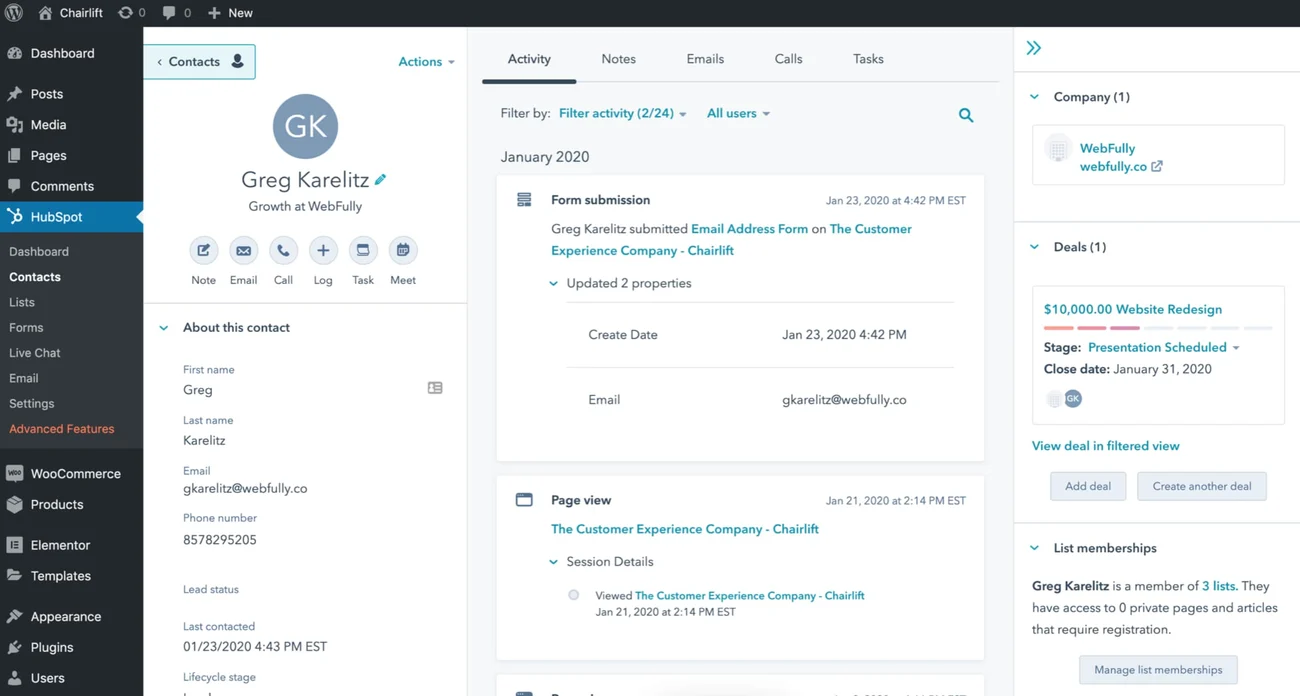
Best wordpress email plugins, HubSpot’s WP plugin email builder

The HubSpot WordPress Plugin offers a variety of features to help you collect leads and grow your customer base. In addition to allowing you to create forms and pop-ups with a simple drag-and-drop interface, HubSpot collects submissions from any form on your WordPress site and instantly adds those leads to your CRM, allowing you to start nurturing them into loyal customers right away.

The plugin features a live chat function, which allows you to start interacting with site visitors and potentially create leads from such talks. You may also use bots to answer simple inquiries from your website visitors, ensuring that you’re helping them even when your team is unavailable.

When someone fills out one of your pop-up forms, you can automate a simple kickback email to contact them and give them the stuff you promised. You can also upgrade to a paid version of Marketing Hub to begin emailing those contacts right away.

Best for: We recommend the HubSpot WordPress Plugin for anyone. Between forms, pop-ups, live chat, and a fully integrated CRM, there’s no better free email subscription plugin available for WordPress.

2. MailPoet

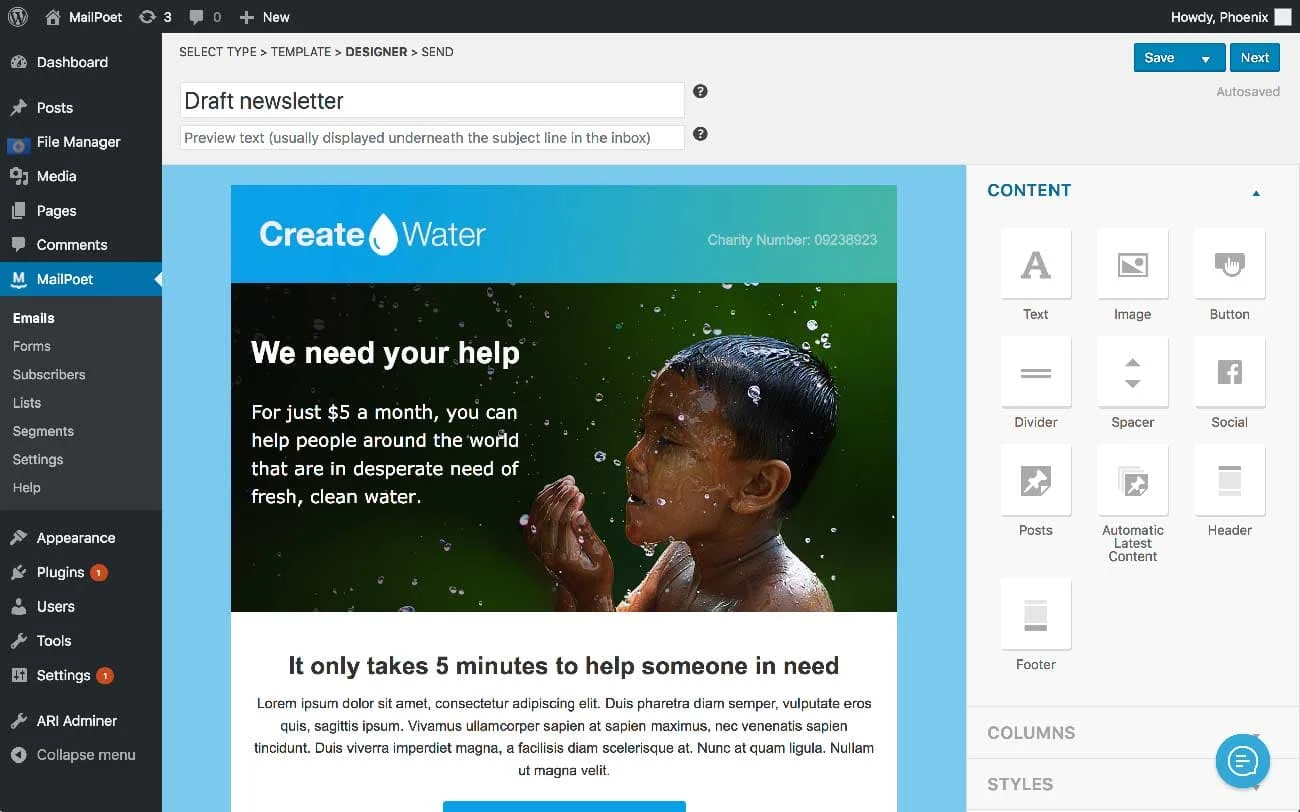
Best wordpress email plugins, MailPoet

MailPoet is one of the most popular free WordPress newsletter plugins. You can quickly import an existing list from your CRM or another marketing automation solution to manage your subscribers, or you can construct forms and add them to your site using widgets. Furthermore, the email editor’s drag-and-drop functionality allows you to easily design responsive emails that look fantastic on any device or email service.

MailPoet is free for those with fewer than 1,000 subscribers, but it grows more powerful as you upgrade. Premium customers, among other sophisticated capabilities, may observe which subscribers have opened your email and which links people are clicking on within your email.

Best for: Those looking for a popular, free, and adaptable WordPress email newsletter plugin can test MailPoet and play around with its subscriber management, email building, and automation capabilities. Those with smaller lists can also benefit from premium features for free.

3. Newsletter

Best wordpress email plugins, Newsletter

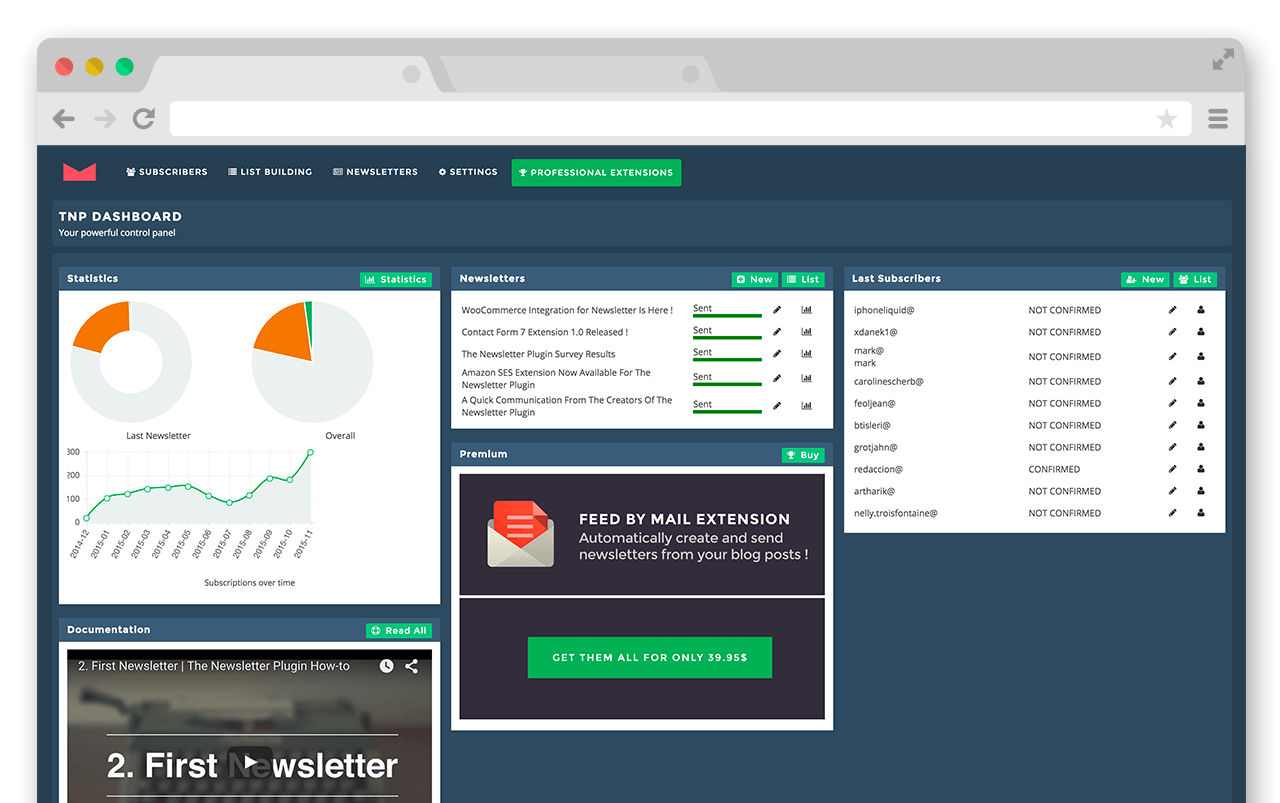
Newsletter is a WordPress email marketing tool that offers all-inclusive features. It lets you easily add subscription forms, create emails with a drag-and-drop builder, segment leads using multi-list targeting, and automate regular newsletters for consistent subscriber engagement. It provides built-in reporting for email performance insights and integrates with tools like Mailgun and Spark Post for optimized email strategies.

Best for: The Newsletter plugin is best for WordPress bloggers looking to automate their newsletters and track performance. It’s another popular, well-received option that’s worth trying out for free.

4. Brevo

best wordpress email plugins, Brevo

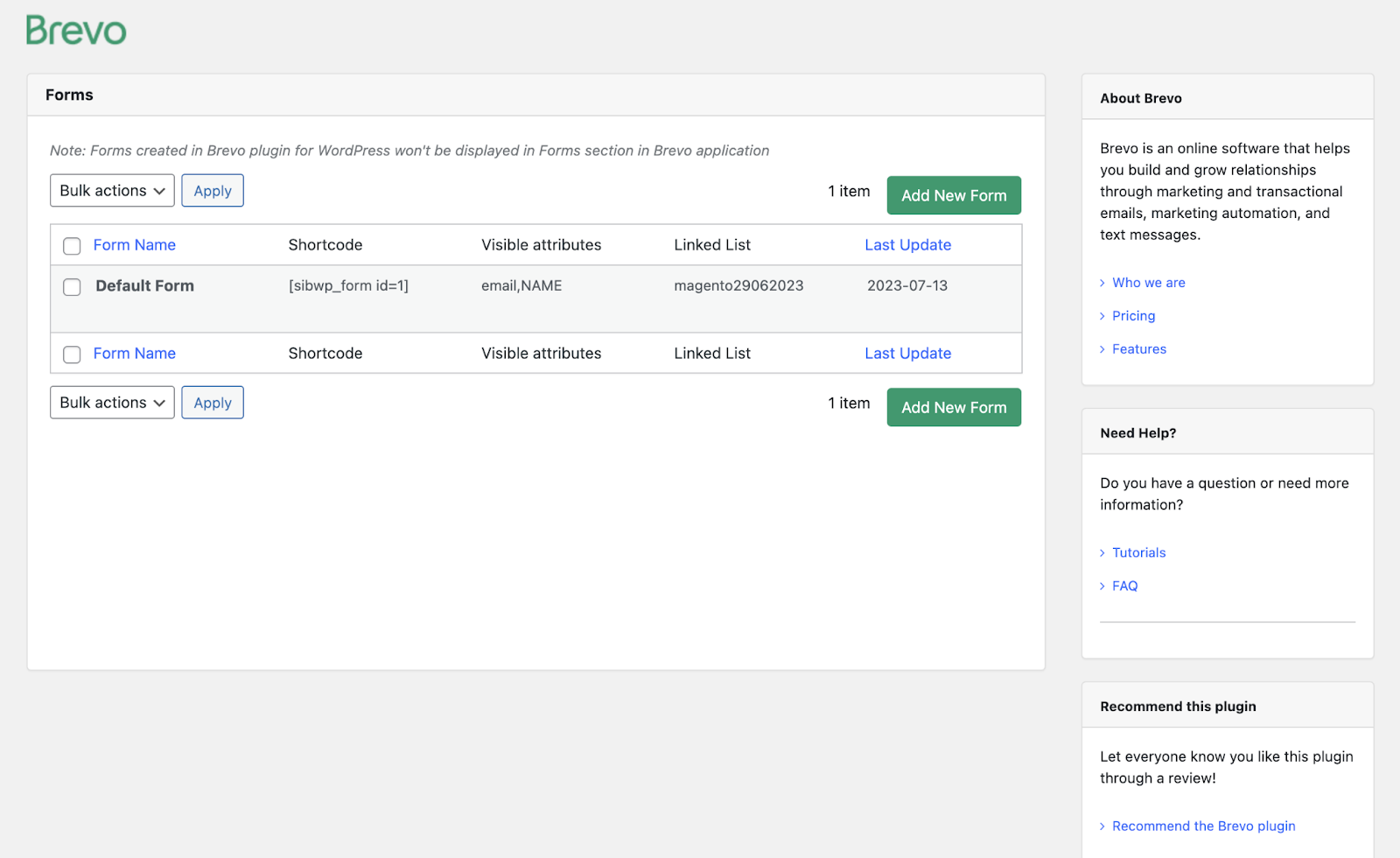
Brevo (formerly Sendinblue), a cloud-based digital marketing solution trusted by over 50,000 businesses worldwide, seamlessly integrates with WordPress through its dedicated plugin. This plugin enables you to efficiently create lead-capturing forms, manage subscriber lists, conduct email marketing campaigns, and assess campaign performance using detailed reports. The drag-and-drop email editor facilitates personalized engagement, and the free version allows for up to 300 daily emails.

Moreover, the Brevo WordPress plugin extends its utility to transactional emails. Leveraging the wp_mail function, you can effortlessly send transactional emails using Brevo’s Simple Mail Transfer Protocol (SMTP) service. This functionality proves invaluable for sending order confirmations and keeping customers informed about vital account changes. Elevate your WordPress capabilities by incorporating Brevo’s practical tools and enhancing communication efficiency.

Best for: WordPress business owners in need of a simple but inclusive email marketing plugin will enjoy Brevo for its tools, support, and integration with its other advanced marketing tools. You can get decent mileage from the plugin for free before reaching your send limit.

5. Sumo

best wordpress email plugins, Sumo

Sumo boasts an impressive 30,000 active WordPress installations, renowned for its versatile growth-focused tools. Beyond pop-ups, welcome emails, and automated drip campaigns, it equips you with additional resources for business expansion.

The plugin showcases a versatile “share” button, facilitating seamless content sharing across social platforms. Seamless integration with WooCommerce empowers you to generate discounts and exclusive offers, curbing abandoned carts and boosting order values.

Sumo takes it a step further with free customer support and personalized onboarding for all users, regardless of their subscription tier. Maximize plugin benefits with Sumo’s holistic support approach.

Best for: Sumo works great for ecommerce websites and WooCommerce that run regular email campaigns. New businesses will appreciate the generous free version, which allows up to 10,000 emails per month and unlimited subscribers.

6. Icegram Express

best wordpress email plugins, Icegram Express

Icegram Express, a user-friendly plugin, simplifies notifying subscribers about fresh blog content. Seamlessly incorporate a subscription box onto your site and receive instant notifications upon new sign-ups. Effortlessly alert your subscribers upon new post releases or curate bespoke newsletters to disseminate your content.

The plugin’s commitment to list health is evident, offering double opt-in functionality for targeted outreach. Safeguard against bot interference by integrating captchas into your subscription box. The tool’s utility extends to list cleanup and spam testing, ensuring optimal email list integrity.

Best for: Icegram Express is best for bloggers who want a simple plugin to notify readers when a new blog post is published, along with some simple metrics and a custom newsletter option.

7. Subscribe2

best wordpress email plugins, Subscribe2

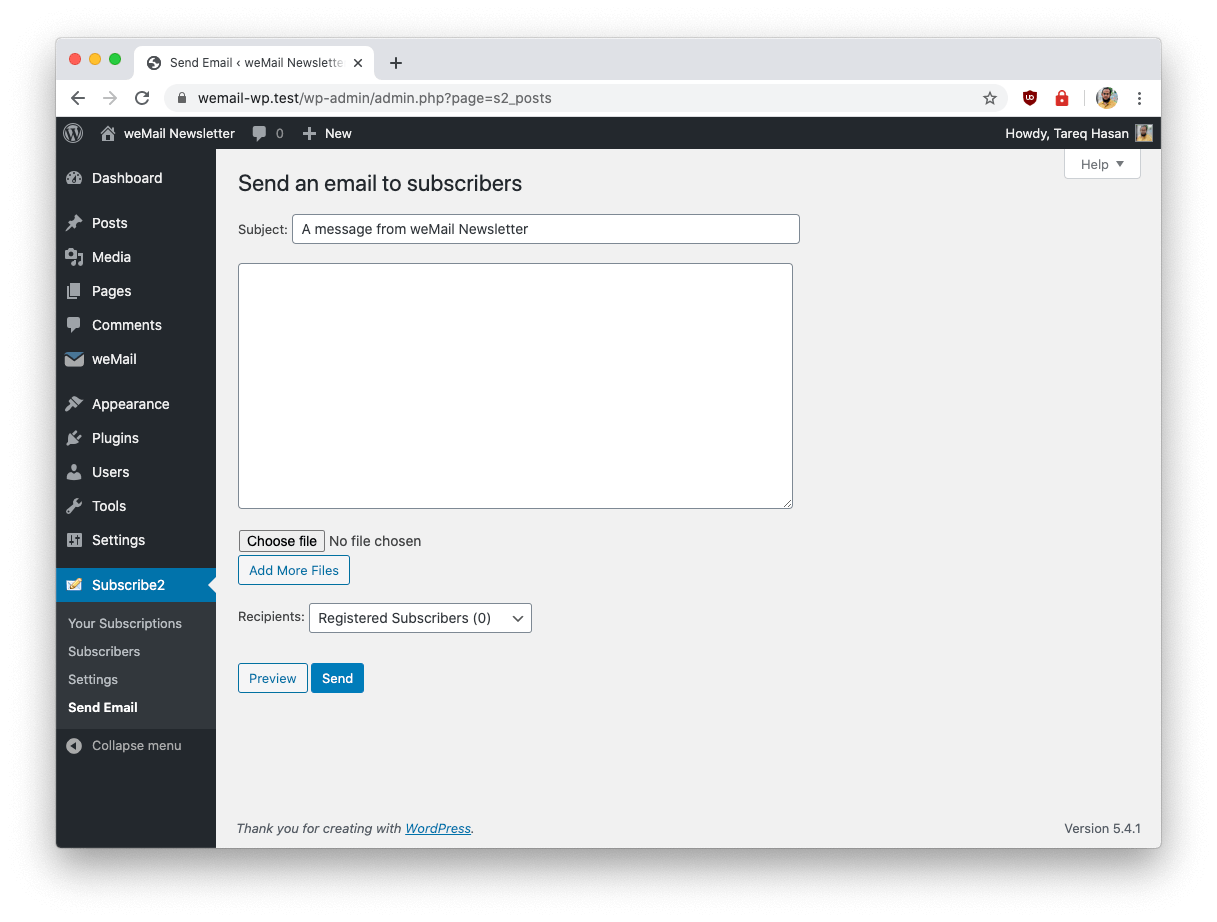
Subscribe2, a versatile plugin, empowers communication with your blog subscribers. Effortlessly dispatch straightforward notifications upon new content or deliver periodic post digests, and tailor your emails by excluding specific post categories or individual posts.

The plugin supports both plain text and custom HTML email creation, accommodating your preferences. Enhance your capabilities by upgrading to its paid service, weMail, enabling direct email transmission to Mailchimp, AWeber, and other prominent email service providers.

Best for: Subscribe2 is another WordPress email plugin that’s ideal for bloggers who want to send email alerts to subscribers or to compile their most recent blog posts into a digest.

8. SendPress Newsletters

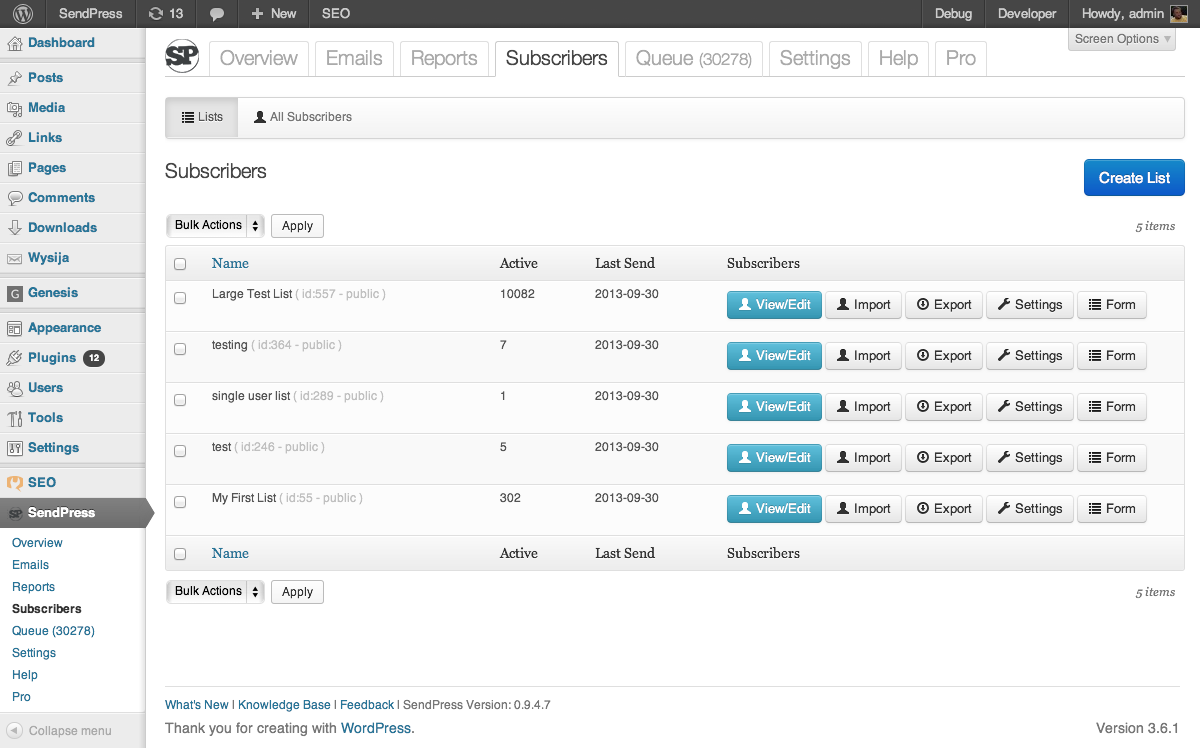
best wordpress email plugins, sendpress newsletters

SendPress Newsletters, an intuitive email newsletter plugin, streamlines communication effortlessly. Seamlessly import WordPress contacts and content, enabling swift creation of blog notification emails.

With SendPress, you gain access to an array of styling and editing tools, allowing for professional emails devoid of coding requirements. The AutoCron service ensures the consistent dispatch of scheduled emails by regularly monitoring your site.

However, be aware that advanced features like analytics, bounce handling, and campaign tracking via third-party platforms such as Google Analytics require an upgrade to the paid version.

Best for: SendPress provides a simple email automation subscription for small WordPress sites that want to grow their audiences.

9. OptinMonster

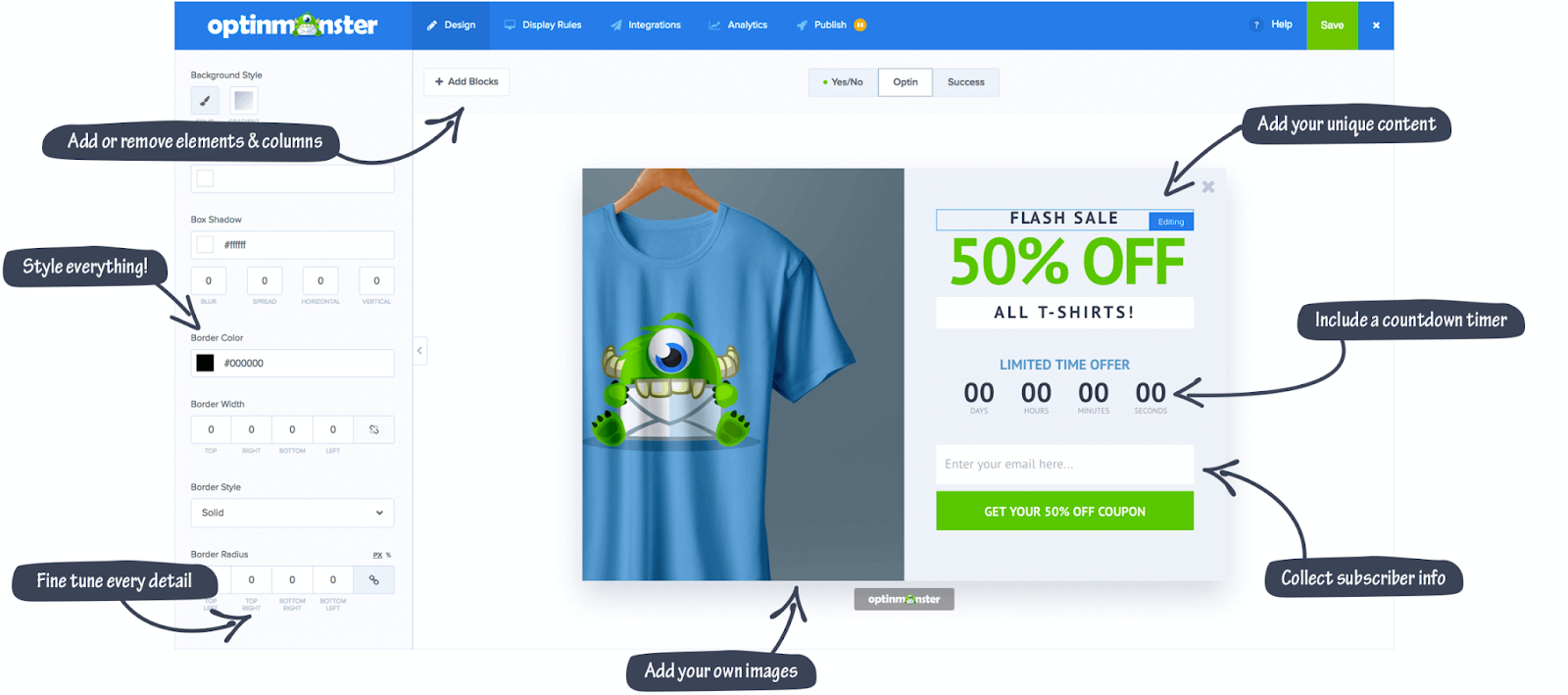
best wordpress email plugins, optinmonster

OptinMonster, a renowned and potent plugin, thrives in augmenting your WordPress email list and boosting subscribers through dynamic pop-ups and static forms. The plugin boasts a user-friendly drag-and-drop editor, enabling form creation from scratch or using ready-made templates.

OptinMonster stands apart due to its advanced targeting capabilities. Employing exit intent technology, it triggers pop-ups as users prepare to exit a page. Moreover, page-level targeting personalizes content offers according to visitor behavior and location on your site. Capitalize on this data by seamlessly integrating with OptinMonster’s diverse email service providers, facilitating tailored email campaigns.

Best for: Marketers who want to implement pop-ups in their marketing strategies (especially for exit intents), and implement advanced tracking on their forms and email campaigns to drive conversions.

10. Thrive Leads

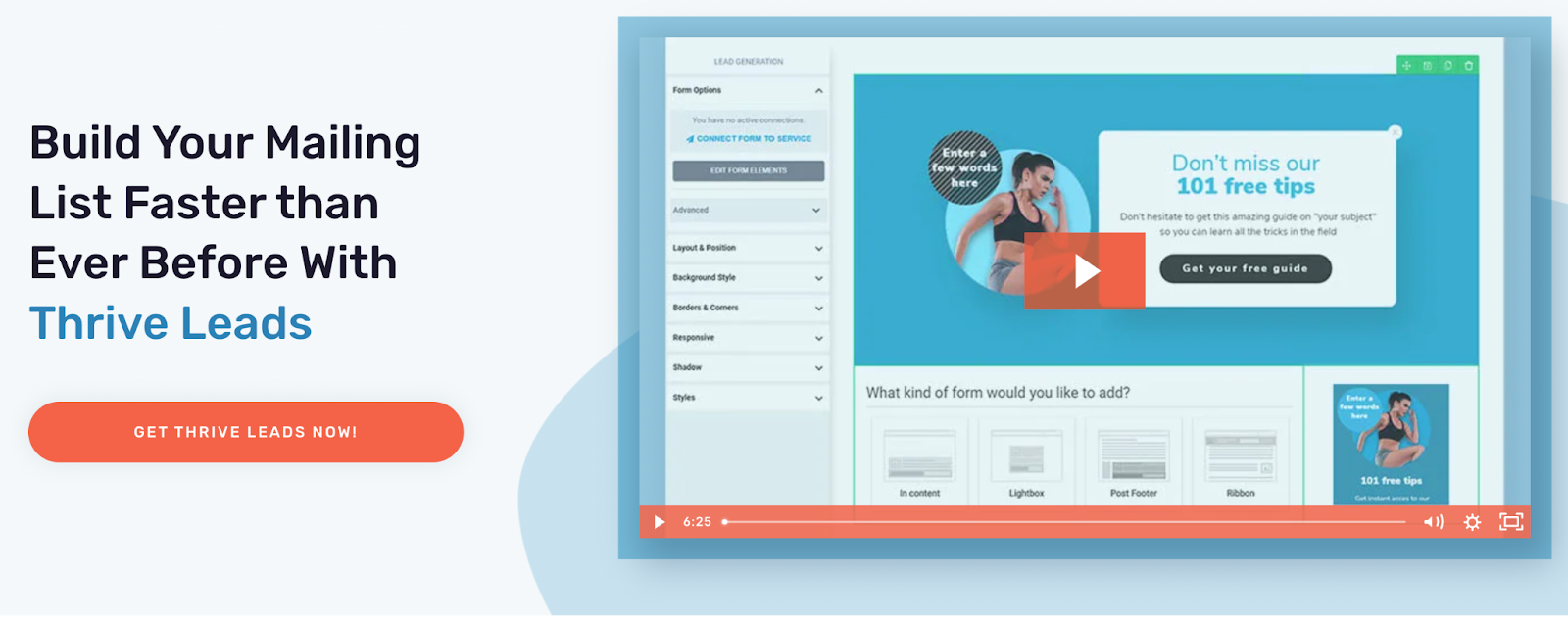
best wordpress email plugins, thrive leads

Similar to OptinMonster, Thrive Leads is dedicated to rapid subscriber list expansion. This versatile tool boasts a wide range of pop-up styles, from full-screen overlays to multiple-choice forms, complemented by comprehensive targeting options.

Thrive Leads takes it a step further with A/B testing, enabling you to gauge the performance of varied designs or content offers. This invaluable feature empowers substantial conversion rate enhancements, enhancing the efficacy of your efforts.

Best for: Thrive Leads is a complete solution that assists online businesses in increasing subscriptions, increasing conversions, and targeting the appropriate people at the right time. If this describes you, give it a go. Also, keep in mind that Thrive Leads is primarily a form tool — email is only one component, and the plugin performs best when combined with another email tool.

11. WP Subscribe

Best WordPress email plugins, WP Subscribe

WP Subscribe, crafted by MyThemeShop, aligns with their hallmark of fast, reliable, SEO-friendly WordPress products. The plugin’s streamlined code guarantees rapid loading without site slowdowns.

Position your subscription form anywhere, assured of its responsiveness across screens. WP Subscribe seamlessly integrates with leading email service providers like AWeber and MailChimp, ensuring swift email list utilization. Enhance your strategy with WP Subscribe’s precision and performance focus.

Best for: Use WP Subscribe to build custom forms and grow your email list — for anything else, you’ll need to integrate with another email automation tool.

12. Ninja Forms

best wordpress email plugins, ninja forms

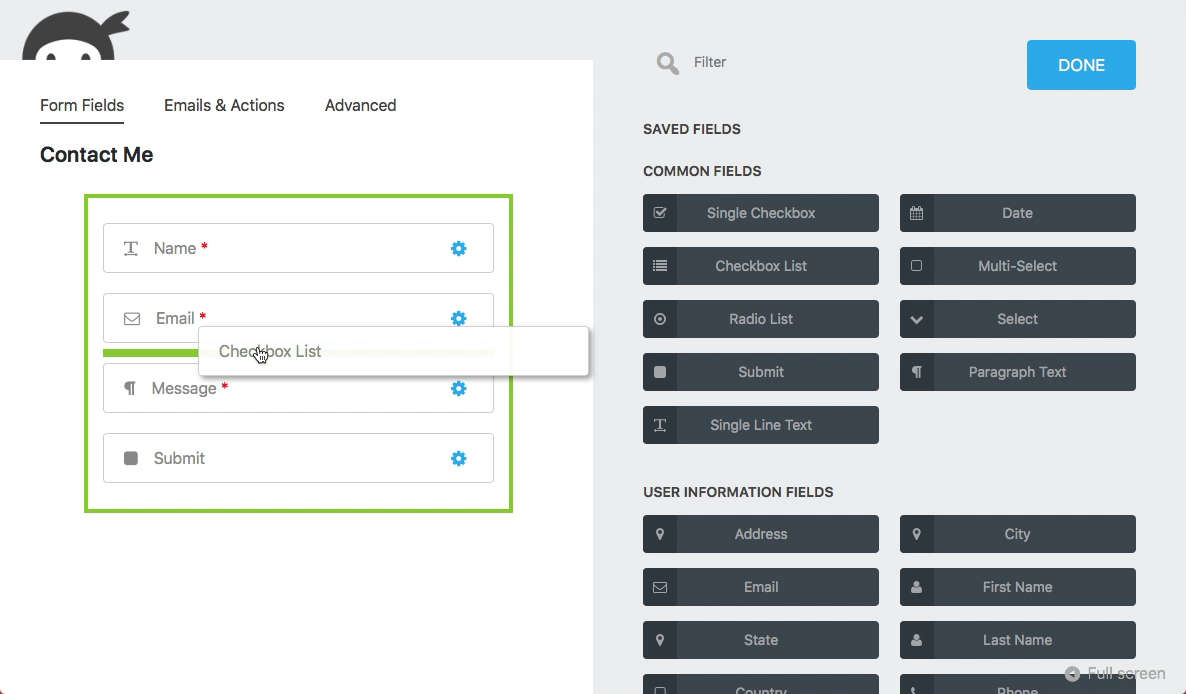
Ninja Forms dominates with over 800,000 WordPress installations, ranking among the top form plugins. It delivers anticipated email subscription form features and distinctive extras, notably a renowned builder tool enabling code-free professional form creation.

Counter spam effectively through diverse options, including Google’s reCAPTCHA. Facilitate seamless payments via PayPal Express, Stripe, and Elavon integrations, and instantly engage new leads by integrating with a host of prominent mailing list tools.

Best for: WordPress users who need a reliable form builder tool to grow their email subscriber list should put Ninja Forms on the list — it’s one of the leading options available, and it’s flexible enough that you can use it for other cases beyond email signups.

13. Email Template Customizer for WooCommerce

best wordpress email plugins, woocommerce email template customizer

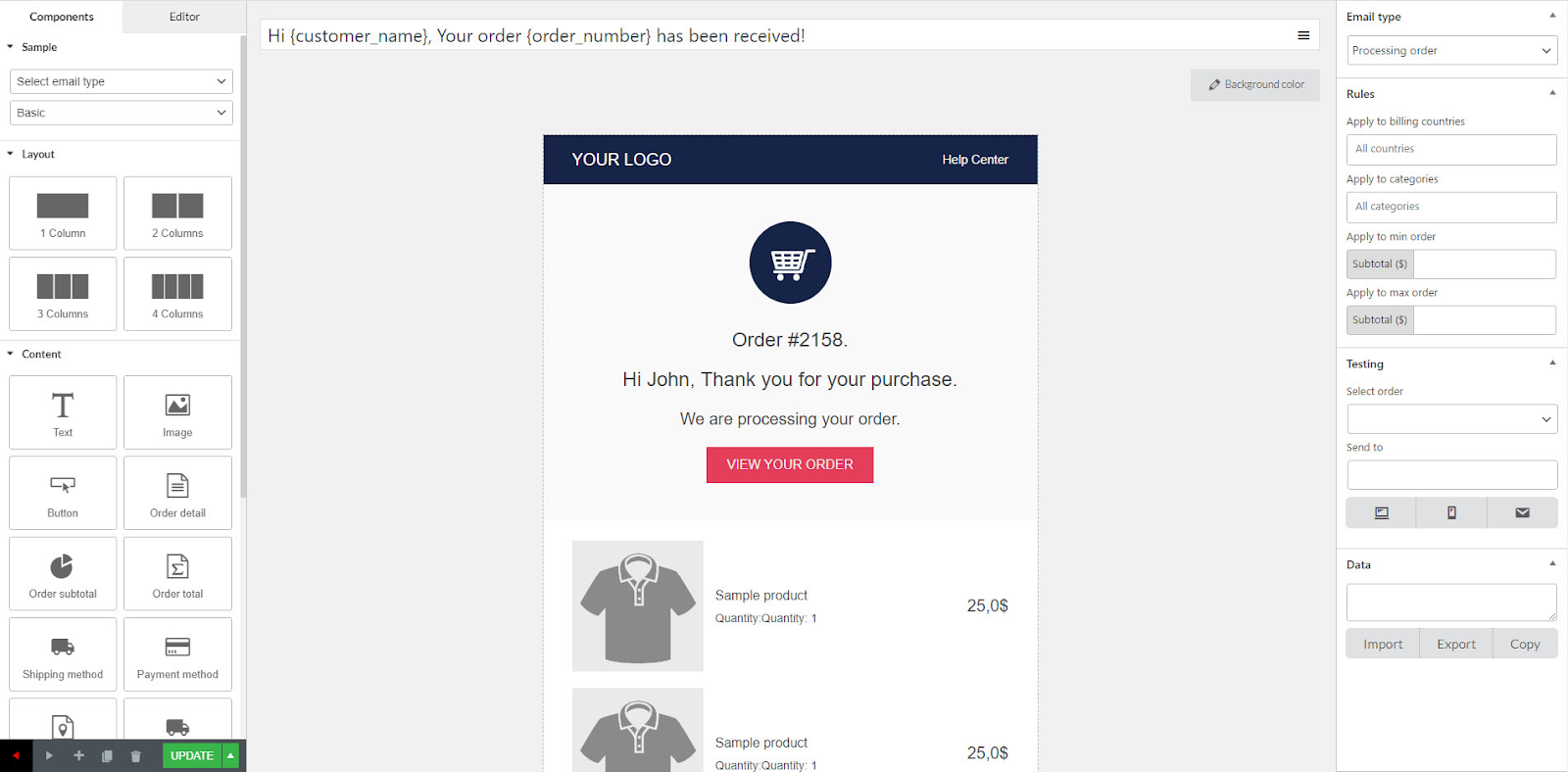
Enhance WooCommerce with the Email Template Customizer plugin. Personalize email templates seamlessly with drag-and-drop ease, leveraging WooCommerce-specific elements like order and shipping details. Streamline transactional emails, order confirmations, and shipping notifications.

Upgrade to the paid version for advanced features: Suggest products, provide coupons, and send targeted emails based on specific order criteria. Tailor your WooCommerce emails efficiently with Email Template Customizer’s intuitive toolkit.

Best for: WooCommerce site owners should try Email Template Customizer for WooCommerce as a solution to build custom emails to customers.

14. WP Mail SMTP by WPForms

best wordpress email plugins, WP Mail SMTP

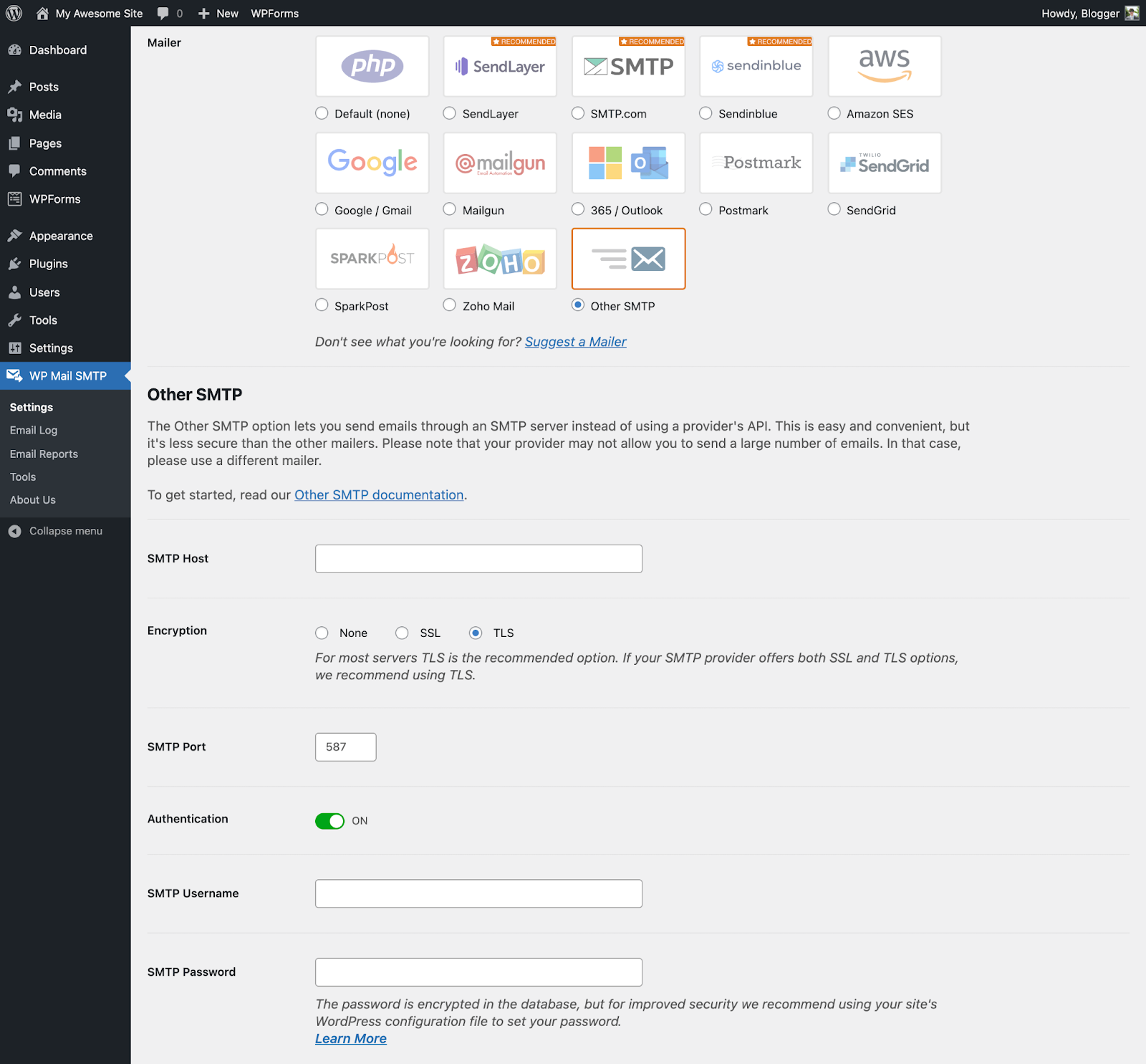
The creators of WPForms introduce WP Mail SMTP, an email-focused plugin targeting deliverability hurdles. By replacing PHPMailer with SMTP, it enhances email reliability. Boasting 3 million+ downloads, it elevates deliverability, avoiding spam folders and failures.

WP Mail SMTP authenticates emails to clients, smoothly integrating with reputable SMTP providers through a wp_mail() function reconfiguration. For the uninitiated, the plugin offers a guided setup and comprehensive documentation for seamless navigation. Overcome deliverability challenges with WP Mail SMTP’s strategic intervention.

Best for: WordPress marketers who are experiencing email deliverability issues may consider trying this plugin.

15. Icegram Engage

best wordpress email plugins, icegram engage

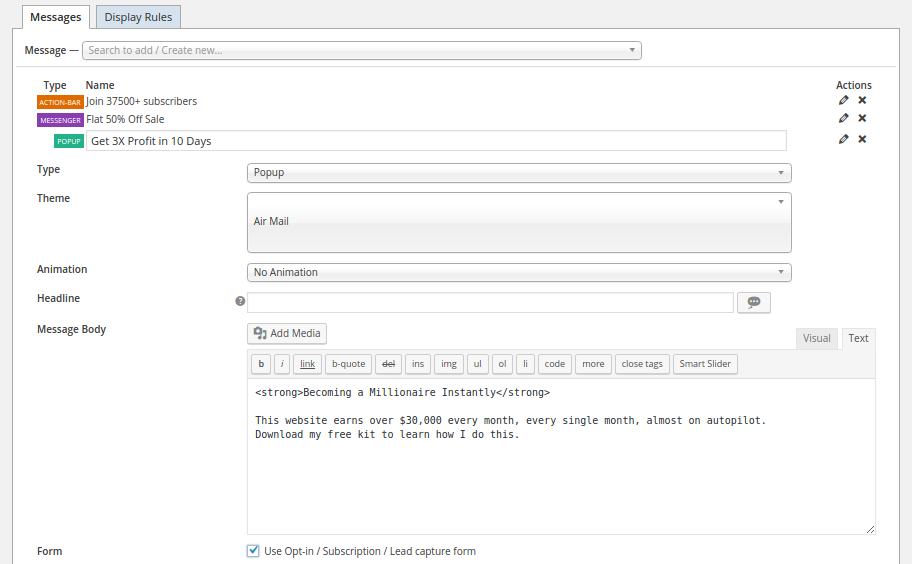
Icegram is a powerful plugin specifically designed to increase engagement, gather leads, and build relationships with your customers. It offers a plethora of features such as opt-in forms, notifications, pop-ups, welcome mats, and much more. With the help of the A/B testing feature you can optimize your campaigns for maximum conversions. Icegram also integrates with a wide range of email marketing services like MailChimp and AWeber to easily sync your leads from the website.

Best for: Marketers who want an all-in-one solution that is easy to set up and use, and that can help them engage with their customers, build relationships, and grow their email leads list. Icegram is a great choice for those looking to maximize their conversions on WordPress websites.

Upgrade your WordPress emails.

It is critical to select the plugin that works best for you. Whether you need a highly configurable plugin or one that just drives submissions so you can get your email newsletter off the ground, the options above are a wonderful place to start whenever you contemplate how to start building out your subscriber list.

Editor’s note: This post was originally published in November 2021 and has been updated for comprehensiveness.

New Call-to-action

Categories B2B

The Hustle’s YouTube Team Tells Us Their Favorite Short-Form Videos of 2023

2024 is here, and I want to look back on some of the previous year‘s short-form videos with the creatives behind The Hustle’s YouTube team. Why, you may ask? Short-form videos will remain key to many marketing campaigns this year.

In fact, 31% of the 1,400 marketers in our most recent survey say short-form videos yield the highest ROI, and most respondents (26%) say they will invest in short-from videos the most in 2024.

Furthermore, I wanted to pick The Hustle team‘s brains and learn their favorite because who better to consult than the pros? So, without further ado, here’s The Hustle‘s YouTube team’s favorite short-form videos and what we can learn from them.

Download Now: Free State of Marketing Report [Updated for 2024]

4 Best Short-Form Videos, According to The Hustle’s YouTube Team

1. “Edge Hated the Rated R Spinner Belt!”

“This is a very niche topic, so shoutout to my algorithm,” says Jon Weigell, senior host and multimedia producer for The Hustle.

The video is titled Edge Hated the Rated R Spinner Belt! and tells a fun behind-the-scenes story about a piece of wrestling history from the perspective of professional wrestler Edge.

“Topic aside, this short grabs you from the start with a strong opening quote,” Weigell says. “It begins with an opinionated declaration that gets attention, and the rest of the video mixes VO with sound effects and a large catalog of video and still imagery to keep your attention.”

The video also features authentic quotes from Edge, giving viewers a small glimpse into the performer behind the iconic wrestler.

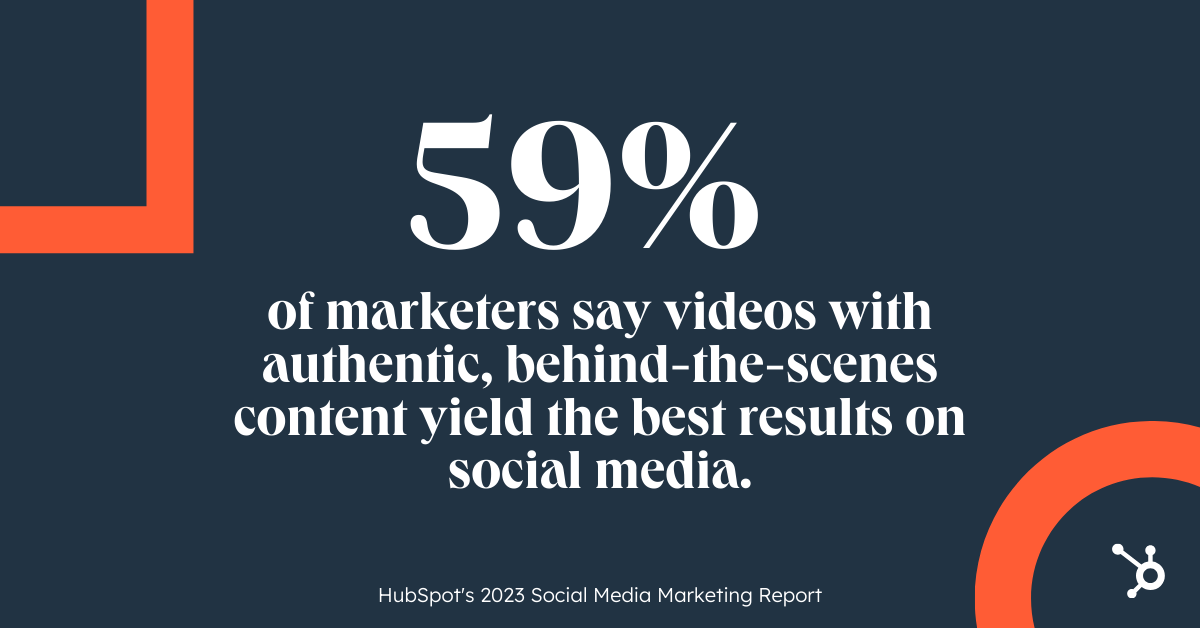
This aligns with a finding in our most recent Social Media Marketing Report, in which 59% of marketers say videos with authentic, behind-the-scenes content yield the best results on social media.

So, when creating short-form videos for social media, think of ways to convey authentic storytelling and how to enhance the story with compelling quotes, sounds, and imagery.

“The ending loop is also a very impressive cherry on top,” Weigell says.

And I agree that ending loops is smooth as butter.

2. “Simple Cheat Code for Making Music”

Content creator and host for The Hustle, Noelle Medina, told me she stumbled upon her favorite short-form video while searching for music-mixing equipment.

“A few things I love about it are the creator component, the how-to component, and the audio component,” she explains. “I love that this creator brings us into her personal recording space and opens with a claim that she quickly explains and supports with visual evidence.”

By taking viewers into her at-home studio, the video’s creator, music producer So Wylie, comes off as authentic and establishes trust and authority with her audience. And believe me, trust goes a long way.

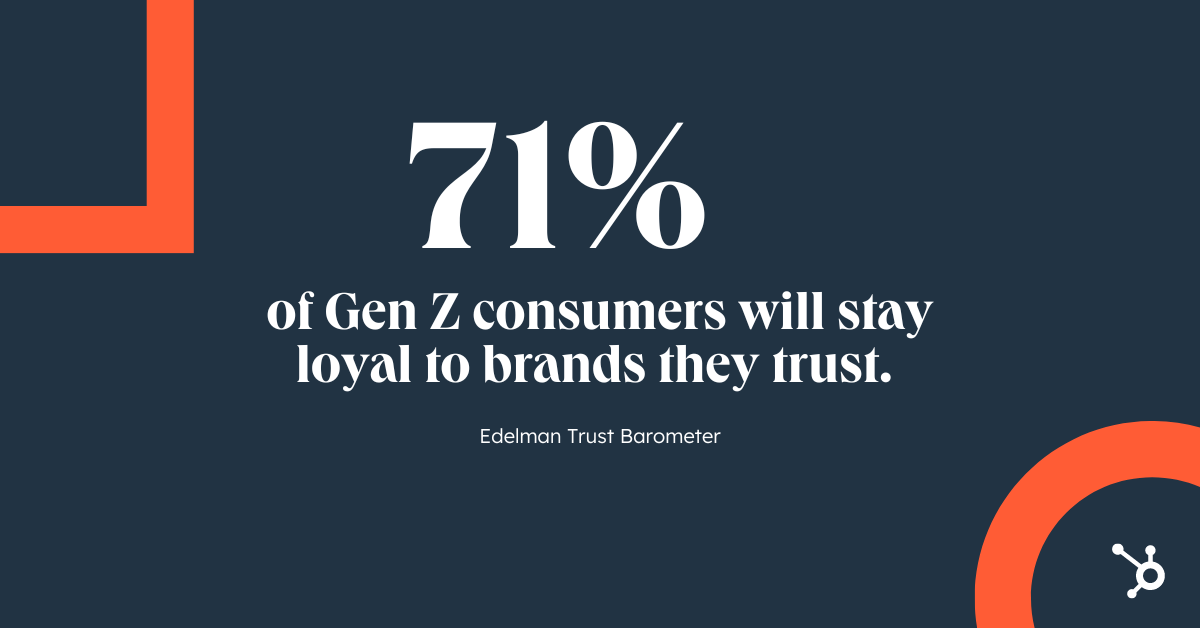
A recent study found that 71% of Gen Z consumers will stay loyal to brands they trust.

After letting us into her studio, Wylie goes into a how-to tutorial showing her process for layering tracks and vocals.

“All of this – the VO and the visual context – is underscored by her use of audio storytelling,” Medina. “The way the music unfolds gives the short even more substance and entices the viewer to watch and listen again and again.”

Medina is right; I watched the video multiple times and even subscribed to So Wylie’s page. It was just that good of a video.

Consider giving your audience a step-by-step tutorial in your short-form videos and film yourself going through the process. And, if appropriate, enhance the experience of your video with some relaxing or fun music.

3. “Bubble Tea is Brewing Up Serious Profits in the US”

“This is one of my favorite shorts on YouTube,” says Shadé Olasimbo, senior producer for The Hustle. “Yeah, I’m biased because it comes from The Hustle YouTube Channel, but it was also the start of an experiment we did as a team for content that worked for our channel.”

Olasimbo says the task was simply to go out and create a fun video without a script or production plan, which is what HubSpot host Medina did.

“It feels like I was on FaceTime with her as she was running errands, and I learned something interesting along the way,” Olasimbo says.

She continues, “And what makes that so great is that’s exactly what our channel is trying to accomplish: content that is entertaining and informative but delivered in an easily digestible way. Plus, who doesn’t love bubble tea?”

Are you noticing a theme so far? Like the previous videos, this video also comes off as authentic while sharing interesting and educational content.

Furthermore, this video proves you don’t need a huge budget or fancy production to create valuable content.


4. “I put 20 extension tubes on my camera …”

“This short has three things I love that also work well on YouTube – a compelling hook that tells you what to expect in the video, stakes, and a satisfying ending,” says Taryn Varricchio, editorial manager for The Hustle YouTube Channel.

Audiences immediately learn at the start of the video that the host, Nicolas Grant, is testing whether extension tubes can turn any normal camera into a macro lens.

Grant does something he’s never done before to make things interesting and to captivate viewers. He stacks 20 tubes on one camera.

“He makes it hard to look away by showing us each step he takes to set up the camera and his test subject,” Varricchio says.

She explains, “I’m ultimately satisfied at the end of the video because he delivers on his promise, and I get a glimpse at what the individual threads of a microfiber towel look like – something I never imagined I’d see.”

In short, the video was compelling enough to keep viewers engaged but also informative enough that audiences left having seen and learned something new.

Tips on Making the Best Short-Form Videos

So, here‘s what I learned from The Hustle’s YouTube team about making excellent short-form videos:

1. Authenticity is key.

Authenticity is definitely the buzzword for this post, and for good reason. Each video presented by The Hustle’s YouTube team features a host telling an authentic story.

Edge is a real former pro wrestler giving a genuine account of the story behind his championship belt.

So Wylie is an experienced music producer who gave a play-by-play walkthrough of how she used a tool to create new music.

Nioclas Grant is a professional content creator and videographer who used his video to creatively share the importance of extension tubes on cameras.

Noelle Medina loves boba enough to walk almost an hour across town to her favorite spot and, being the boba connoisseur she is, told us some fun marketing facts while on her journey.

Each host shared information from a genuine and authentic place, creating unique perspectives and building trust with the audience.

2. Education and Information Create Value.

Audiences love learning something new, whether it’s an anecdote from their favorite wrestler, fun marketing facts about a beloved drink, the perks of a piece of equipment, or a tutorial from a well-known musician.

So, when creating your own short-form video, think about the kind of information your audience would find valuable and how you can educate them in a creative way.

3. Quick cuts, interesting imagery, and music can keep your audience watching.

Cutting quickly between scenes and images in your video will keep your audience interested. Keeping your video focused on one image for too long can make your video feel slow and stale.

Furthermore, imagery can enhance the dialogue in your video. For example, b-roll showing Edge holding his spinner belt and images of Edge‘s original design allow viewers to visualize the host’s story.

And the music in So Wylie’s video created a relaxing atmosphere that made me want to watch the video again and again.

4. You don’t need a big budget production.

Medina‘s boba video shows that sometimes all you need is a camera, a story, and a mission. The content creator’s mission was to get to her favorite boba spot on time, but she used her phone to tell an informative story along the way,

Footage from her walk through the park and the cute dogs she spotted along the way served as b-roll.

Aside from the camera on her phone, there wasn’t really any fancy equipment or big-budget tools to bring her video to life. Yet, her video was still entertaining and kept me and Olasimbo hooked.

So, if you‘re worried that your budget isn’t big enough to create a high quality video — don’t sweat it! The camera on your smartphone could be the only ticket you need to create excellent content.

You can learn a lot from your favorite videos. What are some of your favorite videos from the past year, and what lessons did you learn from them?

state-of-marketing-2024

Categories B2B

24 of My Favorite Sample Business Plans & Examples For Your Inspiration

I believe that reading sample business plans is essential when writing your own.

→ Download Now: Free Business Plan Template

As you explore business plan examples from real companies and brands, it’s easier for you to learn how to write a good one.

But what does a good business plan look like? And how do you write one that’s both viable and convincing. I’ll walk you through the ideal business plan format along with some examples to help you get started.

Table of Contents

Business Plan Format

Ask any successful sports coach how they win so many games, and they’ll tell you they have a unique plan for every single game. To me, the same logic applies to business.

If you want to build a thriving company that can pull ahead of the competition, you need to prepare for battle before breaking into a market.

Business plans guide you along the rocky journey of growing a company. And if your business plan is compelling enough, it can also convince investors to give you funding.

With so much at stake, I’m sure you’re wondering where to begin.

First, you’ll want to nail down your formatting. Most business plans include the following sections.

1. Executive Summary

I’d say the executive summary is the most important section of the entire business plan. 

Why? Essentially, it’s the overview or introduction, written in a way to grab readers’ attention and guide them through the rest of the business plan. This is important, because a business plan can be dozens or hundreds of pages long.

There are two main elements I’d recommend including in your executive summary:

Company Description

This is the perfect space to highlight your company’s mission statement and goals, a brief overview of your history and leadership, and your top accomplishments as a business.

Tell potential investors who you are and why what you do matters. Naturally, they’re going to want to know who they’re getting into business with up front, and this is a great opportunity to showcase your impact.

Need some extra help firming up those business goals? Check out HubSpot Academy’s free course to help you set goals that matter — I’d highly recommend it

Products and Services

To piggyback off of the company description, be sure to incorporate an overview of your offerings. This doesn’t have to be extensive — just another chance to introduce your industry and overall purpose as a business.

In addition to the items above, I recommend including some information about your financial projections and competitive advantage here too.:

Keep in mind you’ll cover many of these topics in more detail later on in the business plan. So, keep the executive summary clear and brief, and only include the most important takeaways.

Executive Summary Business Plan Examples

This example was created with HubSpot’s business plan template:

business plan sample: Executive Summary Example

This executive summary is so good to me because it tells potential investors a short story while still covering all of the most important details.

Business plans examples: Executive Summary

Image Source

Tips for Writing Your Executive Summary

  • Start with a strong introduction of your company, showcase your mission and impact, and outline the products and services you provide.
  • Clearly define a problem, and explain how your product solves that problem, and show why the market needs your business.
  • Be sure to highlight your value proposition, market opportunity, and growth potential.
  • Keep it concise and support ideas with data.
  • Customize your summary to your audience. For example, emphasize finances and return on investment for venture capitalists.

Check out our tips for writing an effective executive summary for more guidance.

2. Market Opportunity

This is where you’ll detail the opportunity in the market.

The main question I’d ask myself here is this: Where is the gap in the current industry, and how will my product fill that gap?

More specifically, here’s what I’d include in this section:

  • The size of the market
  • Current or potential market share
  • Trends in the industry and consumer behavior
  • Where the gap is
  • What caused the gap
  • How you intend to fill it

To get a thorough understanding of the market opportunity, you’ll want to conduct a TAM, SAM, and SOM analysis and perform market research on your industry.

You may also benefit from creating a SWOT analysis to get some of the insights for this section.

Market Opportunity Business Plan Example

I like this example because it uses critical data to underline the size of the potential market and what part of that market this service hopes to capture.

Business plans examples: Market Opportunity

Image Source

Tips for Writing Your Market Opportunity Section

  • Focus on demand and potential for growth.
  • Use market research, surveys, and industry trend data to support your market forecast and projections.
  • Add a review of regulation shifts, tech advances, and consumer behavior changes.
  • Refer to reliable sources.
  • Showcase how your business can make the most of this opportunity.

3. Competitive Landscape

Since we’re already speaking of market share, you’ll also need to create a section that shares details on who the top competitors are.

After all, your customers likely have more than one brand to choose from, and you’ll want to understand exactly why they might choose one over another.

My favorite part of performing a competitive analysis is that it can help you uncover:

  • Industry trends that other brands may not be utilizing
  • Strengths in your competition that may be obstacles to handle
  • Weaknesses in your competition that may help you develop selling points
  • The unique proposition you bring to the market that may resonate with customers

Competitive Landscape Business Plan Example

I like how the competitive landscape section of this business plan below shows a clear outline of who the top competitors are.

Business plans examples: Competitive Landscape

Image Source

It also highlights specific industry knowledge and the importance of location, which shows useful experience in this specific industry. 

This can help build trust in your ability to execute your business plan.

Tips for Writing Your Competitive Landscape

  • Complete in-depth research, then emphasize your most important findings.
  • Compare your unique selling proposition (USP) to your direct and indirect competitors.
  • Show a clear and realistic plan for product and brand differentiation.
  • Look for specific advantages and barriers in the competitive landscape. Then, highlight how that information could impact your business.
  • Outline growth opportunities from a competitive perspective.
  • Add customer feedback and insights to support your competitive analysis.

4. Target Audience

Use this section to describe who your customer segments are in detail. What is the demographic and psychographic information of your audience?

If your immediate answer is “everyone,” you’ll need to dig deeper. Here are some questions I’d ask myself here:

  • What demographics will most likely need/buy your product or service?
  • What are the psychographics of this audience? (Desires, triggering events, etc.)
  • Why are your offerings valuable to them?

I’d also recommend building a buyer persona to get in the mindset of your ideal customers and be clear on why you’re targeting them.

Target Audience Business Plan Example

I like the example below because it uses in-depth research to draw conclusions about audience priorities. It also analyzes how to create the right content for this audience.

Business plans examples: Target Audience

Image Source

Tips for Writing Your Target Audience Section

  • Include details on the size and growth potential of your target audience.
  • Figure out and refine the pain points for your target audience, then show why your product is a useful solution.
  • Describe your targeted customer acquisition strategy in detail.
  • Share anticipated challenges your business may face in acquiring customers and how you plan to address them.
  • Add case studies, testimonials, and other data to support your target audience ideas.
  • Remember to consider niche audiences and segments of your target audience in your business plan.

5. Marketing Strategy

Here, you’ll discuss how you’ll acquire new customers with your marketing strategy. I’d suggest including information:

  • Your brand positioning vision and how you’ll cultivate it
  • The goal targets you aim to achieve
  • The metrics you’ll use to measure success
  • The channels and distribution tactics you’ll use

I think it’s helpful to have a marketing plan built out in advance to make this part of your business plan easier.

Marketing Strategy Business Plan Example

This business plan example includes the marketing strategy for the town of Gawler.

In my opinion, it really works because it offers a comprehensive picture of how they plan to use digital marketing to promote the community.

Business plans examples: Marketing Strategy

Image Source

Tips for Writing Your Marketing Strategy

  • Include a section about how you believe your brand vision will appeal to customers.
  • Add the budget and resources you’ll need to put your plan in place.
  • Outline strategies for specific marketing segments.
  • Connect strategies to earlier sections like target audience and competitive analysis.
  • Review how your marketing strategy will scale with the growth of your business.
  • Cover a range of channels and tactics to highlight your ability to adapt your plan in the face of change.

6. Key Features and Benefits

At some point in your business plan, you’ll need to review the key features and benefits of your products and/or services.

Laying these out can give readers an idea of how you’re positioning yourself in the market and the messaging you’re likely to use. It can even help them gain better insight into your business model.

Key Features and Benefits Business Plan Example

In my opinion, the example below does a great job outlining products and services for this business, along with why these qualities will attract the audience.

Business plans examples: Key Features and Benefits

Image Source

Tips for Writing Your Key Features and Benefits

  • Emphasize why and how your product or service offers value to customers.
  • Use metrics and testimonials to support the ideas in this section.
  • Talk about how your products and services have the potential to scale.
  • Think about including a product roadmap.
  • Focus on customer needs, and how the features and benefits you are sharing meet those needs.
  • Offer proof of concept for your ideas, like case studies or pilot program feedback.
  • Proofread this section carefully, and remove any jargon or complex language.

7. Pricing and Revenue

This is where you’ll discuss your cost structure and various revenue streams. Your pricing strategy must be solid enough to turn a profit while staying competitive in the industry. 

For this reason, here’s what I’d might outline in this section:

  • The specific pricing breakdowns per product or service
  • Why your pricing is higher or lower than your competition’s
  • (If higher) Why customers would be willing to pay more
  • (If lower) How you’re able to offer your products or services at a lower cost
  • When you expect to break even, what margins do you expect, etc?

Pricing and Revenue Business Plan Example

I like how this business plan example begins with an overview of the business revenue model, then shows proposed pricing for key products.

Business plans examples: Pricing and Revenue

Image Source

Tips for Writing Your Pricing and Revenue Section

  • Get specific about your pricing strategy. Specifically, how you connect that strategy to customer needs and product value.
  • If you are asking a premium price, share unique features or innovations that justify that price point.
  • Show how you plan to communicate pricing to customers.
  • Create an overview of every revenue stream for your business and how each stream adds to your business model as a whole.
  • Share plans to develop new revenue streams in the future.
  • Show how and whether pricing will vary by customer segment and how pricing aligns with marketing strategies.
  • Restate your value proposition and explain how it aligns with your revenue model.

8. Financials

To me, this section is particularly informative for investors and leadership teams to figure out funding strategies, investment opportunities, and more.

 According to Forbes, you’ll want to include three main things:

  • Profit/Loss Statement – This answers the question of whether your business is currently profitable.
  • Cash Flow Statement – This details exactly how much cash is incoming and outgoing to give insight into how much cash a business has on hand.
  • Balance Sheet – This outlines assets, liabilities, and equity, which gives insight into how much a business is worth.

While some business plans might include more or less information, these are the key details I’d include in this section.

Financials Business Plan Example

This balance sheet is a great example of level of detail you’ll need to include in the financials section of your business plan.

Business plans examples: Financials

Image Source

Tips for Writing Your Financials Section

  • Growth potential is important in this section too. Using your data, create a forecast of financial performance in the next three to five years.
  • Include any data that supports your projections to assure investors of the credibility of your proposal.
  • Add a break-even analysis to show that your business plan is financially practical. This information can also help you pivot quickly as your business grows.
  • Consider adding a section that reviews potential risks and how sensitive your plan is to changes in the market.
  • Triple-check all financial information in your plan for accuracy.
  • Show how any proposed funding needs align with your plans for growth.

As you create your business plan, keep in mind that each of these sections will be formatted differently. Some may be in paragraph format, while others could be charts or graphs.

Business Plan Types

The formats above apply to most types of business plans. That said, the format and structure of your plan will vary by your goals for that plan. 

So, I’ve added a quick review of different business plan types. For a more detailed overview, check out this post.

1. Startups

Startup business plans are for proposing new business ideas.

If you’re planning to start a small business, preparing a business plan is crucial. The plan should include all the major factors of your business.

You can check out this guide for more detailed business plan inspiration.

2. Feasibility Studies

Feasibility business plans focus on that business’s product or service. Feasibility plans are sometimes added to startup business plans. They can also be a new business plan for an already thriving organization.

3. Internal Use

You can use internal business plans to share goals, strategies, or performance updates with stakeholders. In my opinion, internal business plans are useful for alignment and building support for ambitious goals.

4. Strategic Initiatives

Another business plan that’s often for sharing internally is a strategic business plan. This plan covers long-term business objectives that might not have been included in the startup business plan.

5. Business Acquisition or Repositioning

When a business is moving forward with an acquisition or repositioning, it may need extra structure and support. These types of business plans expand on a company’s acquisition or repositioning strategy.

6. Growth

Growth sometimes just happens as a business continues operations. But more often, a business needs to create a structure with specific targets to meet set goals for expansion. This business plan type can help a business focus on short-term growth goals and align resources with those goals.

Sample Business Plan Templates

Now that you know what’s included and how to format a business plan, let’s review some of my favorite templates.

1. HubSpot’s One-Page Business PlanSample business plan: HubSpot business plan template

Download a free, editable one-page business plan template.

The business plan linked above was created here at HubSpot and is perfect for businesses of any size — no matter how many strategies we still have to develop.

Fields such as Company Description, Required Funding, and Implementation Timeline give this one-page business plan a framework for how to build your brand and what tasks to keep track of as you grow.

Then, as the business matures, you can expand on your original business plan with a new iteration of the above document.

Why I Like It

This one-page business plan is a fantastic choice for the new business owner who doesn’t have the time or resources to draft a full-blown business plan. It includes all the essential sections in an accessible, bullet-point-friendly format. That way, you can get the broad strokes down before honing in on the details.

2. HubSpot’s Downloadable Business Plan Template

Sample business plan: hubspot free editable pdf

We also created a business plan template for entrepreneurs.

Download a free, editable one-page business plan template.

The template is designed as a guide and checklist for starting your own business. You’ll learn what to include in each section of your business plan and how to do it.

There’s also a list for you to check off when you finish each section of your business plan.

Strong game plans help coaches win games and help businesses rocket to the top of their industries. So if you dedicate the time and effort required to write a workable and convincing business plan, you’ll boost your chances of success and even dominance in your market.

Why I Like It

This business plan kit is essential for the budding entrepreneur who needs a more extensive document to share with investors and other stakeholders.

It not only includes sections for your executive summary, product line, market analysis, marketing plan, and sales plan, but it also offers hands-on guidance for filling out those sections.

3. LiveFlow’s Financial Planning Template with built-in automation

Sample Business Plan: LiveFLow

This free template from LiveFlow aims to make it easy for businesses to create a financial plan and track their progress on a monthly basis.

The P&L Budget versus Actual format allows users to track their revenue, cost of sales, operating expenses, operating profit margin, net profit, and more.

The summary dashboard aggregates all of the data put into the financial plan sheet and will automatically update when changes are made.

Instead of wasting hours manually importing your data to your spreadsheet, LiveFlow can also help you to automatically connect your accounting and banking data directly to your spreadsheet, so your numbers are always up-to-date.

With the dashboard, you can view your runway, cash balance, burn rate, gross margins, and other metrics. Having a simple way to track everything in one place will make it easier to complete the financials section of your business plan.

Why I Like It

This is a fantastic template to track performance and alignment internally and to create a dependable process for documenting financial information across the business. It’s highly versatile and beginner-friendly.

It’s especially useful if you don’t have an accountant on the team. (I always recommend you do, but for new businesses, having one might not be possible.)

4. ThoughtCo’s Sample Business Plan

sample business plan: ThoughtCo.

If you want to reference an actual business plan while writing your own, ThoughtCo has got you covered. It created a fictional company called Acme Management Technology and wrote an entire business plan for it.

Using its sample business plan as a guide while filling out your own will help you catch and include small yet important details in your business plan that you otherwise might not have noticed.

Why I Like It

This is a fantastic template for an existing business that’s strategically shifting directions. If your company has been around for a while, and you’re looking to improve your bottom line or revitalize your strategy, this is an excellent template to use and follow.

5. BPlan’s Free Business Plan Template

sample business plan: BPlan

One of the more financially oriented sample business plans in this list, BPlan’s free business plan template dedicates many of its pages to your business’s financial plan and financial statements.

After filling this business plan out, your company will truly understand its financial health and the steps you need to take to maintain or improve it.

Why I Like It

I absolutely love this business plan template because of its ease-of-use and hands-on instructions (in addition to its finance-centric components). If you feel overwhelmed by the thought of writing an entire business plan, consider using this template to help you with the process.

6. Harvard Business Review’s “How to Write a Winning Business Plan”

Most sample business plans teach you what to include in your business plan, but this Harvard Business Review article will take your business plan to the next level — it teaches you the why and how behind writing a business plan.

With the guidance of Stanley Rich and Richard Gumpert, co-authors of “Business Plans That Win: Lessons From the MIT Enterprise Forum“, you’ll learn how to write a convincing business plan that emphasizes the market demand for your product or service.

You’ll also learn the financial benefits investors can reap from putting money into your venture rather than trying to sell them on how great your product or service is.

Why I Like It

This business plan guide focuses less on the individual parts of a business plan, and more on the overarching goal of writing one. For that reason, it’s one of my favorites to supplement any template you choose to use. Harvard Business Review’s guide is instrumental for both new and seasoned business owners.

7. HubSpot’s Complete Guide to Starting a Business

If you’re an entrepreneur, you know writing a business plan is one of the most challenging first steps to starting a business.

Fortunately, with HubSpot’s comprehensive guide to starting a business, you’ll learn how to map out all the details by understanding what to include in your business plan and why it’s important to include them. The guide also fleshes out an entire sample business plan for you.

If you need further guidance on starting a business, HubSpot’s guide can teach you how to make your business legal, choose and register your business name, and fund your business. It will also give small business tax information and includes marketing, sales, and service tips.

Why I Like It

This comprehensive guide will walk you through the process of starting a business, in addition to writing your business plan, with a high level of exactitude and detail. So if you’re in the midst of starting your business, this is an excellent guide for you.

It also offers other resources you might need, such as market analysis templates.

8. Panda Doc’s Free Business Plan Template

sample business plan: Panda Doc

PandaDoc’s free business plan template is one of the more detailed and fleshed-out sample business plans on this list. It describes what you should include in each section, so you don’t have to come up with everything from scratch.

Once you fill it out, you’ll fully understand your business’ nitty-gritty details and how all of its moving parts should work together to contribute to its success.

Why I Like It

This template has two things I love: comprehensiveness and in-depth instructions. Plus, it’s synced with PandaDoc’s e-signature software so that you and other stakeholders can sign it with ease. For that reason, I especially love it for those starting a business with a partner or with a board of directors.

9. Small Business Administration Free Business Plan Template

sample business plan: Small Business Administration

The Small Business Administration (SBA) offers several free business plan templates that can be used to inspire your own plan.

Before you get started, you can decide what type of business plan you need — a traditional or lean start-up plan.

Then, you can review the format for both of those plans and view examples of what they might look like.

Why I Like It

We love both of the SBA’s templates because of their versatility. You can choose between two options and use the existing content in the templates to flesh out your own plan. Plus, if needed, you can get a free business counselor to help you along the way.

Top Business Plan Examples

I’ve compiled some completed business plan samples to help you get an idea of how to customize a plan for your business.

I chose different types of business plan ideas to expand your imagination. Some are extensive, while others are fairly simple.

Let’s take a look.

1. LiveFlow

business plan example: liveflow

One of the major business expenses is marketing. How you handle your marketing reflects your company’s revenue.

I included this business plan to show you how you can ensure your marketing team is aligned with your overall business plan to get results. The plan also shows you how to track even the smallest metrics of your campaigns, like ROI and payback periods instead of just focusing on big metrics like gross and revenue.

Fintech startup, LiveFlow, allows users to sync real-time data from its accounting services, payment platforms, and banks into custom reports. This eliminates the task of pulling reports together manually, saving teams time and helping automate workflows.

“Using this framework over a traditional marketing plan will help you set a profitable marketing strategy taking things like CAC, LTV, Payback period, and P&L into consideration,” explains LiveFlow co-founder, Lasse Kalkar.

Why I Like It

When it came to including marketing strategy in its business plan, LiveFlow created a separate marketing profit and loss statement (P&L) to track how well the company was doing with its marketing initiatives.

This is a great approach, allowing businesses to focus on where their marketing dollars are making the most impact. Having this information handy will enable you to build out your business plan’s marketing section with confidence. LiveFlow has shared the template here. You can test it for yourself.

2. Lula Body

Business plan example: Lula body

Brooklyn Business owner and Pilates instructor, Tara Kashyap, saw a need in her community for a Pilates, tissue, and bodywork studio. In response, she opened Lula Body in Crown Heights.

Pictured above is a hypothetical pricing and revenue statement based on Lula Body’s business plan. As you can see, Kashyap breaks down the cost of classes, start-up expenses, monthly expenses, and her monthly sales projection.

Everything from equipment costs to loan interest is included in the expenses to give the most accurate picture of operating costs and revenue.

If you’re seeking outside funding for your business, you’ll want to make sure this section of your business plan is as thorough as possible.

Why I Like It

This is a good business plan example for service-based businesses such as gyms, boxing classes, dancing studios, etc. For starters, the plan shows how to budget for the business loan and what to focus on buying first.

Everything is well presented, including what to charge the customers in different scenarios and the expected revenue. This is a good foundation from which business performance can be evaluated with time.

3. Patagonia

Business plan example: Patagonia mission statement

Sometimes all you need is a solid mission statement and core values to guide you on how to go about everything. You do this by creating a business plan revolving around how to fulfill your statement best.

For example, Patagonia is an eco-friendly company, so their plan discusses how to make the best environmentally friendly products without causing harm.

A good mission statement should not only resonate with consumers but should also serve as a core value compass for employees as well.

Why I Like It

Patagonia has one of the most compelling mission statements I’ve seen:

“Together, let’s prioritise purpose over profit and protect this wondrous planet, our only home.”

It reels you in from the start, and the environmentally friendly theme continues throughout the rest of the statement.

This mission goes on to explain that they are out to “Build the best product, cause no unnecessary harm, and use business to protect nature.”

Their mission statement is compelling and detailed, with each section outlining how they will accomplish their goal.

4. Vesta Home Automation

business plan example: Vesta executive summary

This executive summary for a smart home device startup is part of a business plan created by students at Mount Royal University.

While it lacks some of the sleek visuals of the templates above, its executive summary does a great job of demonstrating how invested they are in the business.

Right away, they mention they’ve invested $200,000 into the company already, which shows investors they have skin in the game and aren’t just looking for someone else to foot the bill.

Why I Like It

This is the kind of business plan you need when applying for business funds. It clearly illustrates the expected future of the company and how the business has been coming along over the years.

5. NALB Creative Center

business plan examples: nalb creative center

This fictional business plan for an art supply store includes everything one might need in a business plan: an executive summary, a company summary, a list of services, a market analysis summary, and more.

One of its most notable sections is its market analysis summary, which includes an overview of the population growth in the business’ target geographical area, as well as a breakdown of the types of potential customers they expect to welcome at the store. 

This sort of granular insight is essential for understanding and communicating your business’s growth potential. Plus, it lays a strong foundation for creating relevant and useful buyer personas.

It’s essential to keep this information up-to-date as your market and target buyer changes. For that reason, you should carry out market research as often as possible to ensure that you’re targeting the correct audience and sharing accurate information with your investors.

Why I Like It

Due to its comprehensiveness, it’s an excellent example to follow if you’re opening a brick-and-mortar store and need to get external funding to start your business.

6. Curriculum Companion Suites (CSS)

business plan examples: curriculum companion suites

If you’re looking for a SaaS business plan example, look no further than this business plan for a fictional educational software company called Curriculum Companion Suites. 

Like the business plan for the NALB Creative Center, it includes plenty of information for prospective investors and other key stakeholders in the business.

One of the most notable features of this business plan is the executive summary, which includes an overview of the product, market, and mission.

The first two are essential for software companies because the product offering is so often at the forefront of the company’s strategy. Without that information being immediately available to investors and executives, then you risk writing an unfocused business plan.

Why I Like It

It’s essential to front-load your company’s mission if it explains your “Why?” and this example does just that. In other words, why do you do what you do, and why should stakeholders care? This is an important section to include if you feel that your mission will drive interest in the business and its offerings.

7. Culina Sample Business Plan

sample business plan: Culina

Culina’s sample business plan is an excellent example of how to lay out your business plan so that it flows naturally, engages readers, and provides the critical information investors and stakeholders need. 

Why I Like It

You can use this template as a guide while you’re gathering important information for your own business plan. You’ll have a better understanding of the data and research you need to do since Culina’s plan outlines these details so flawlessly for inspiration.

8. Plum Sample Business Plan

Sample business plan: Plum

When creating your own business plan, make sure the pictures and design you use make sense for your branding. The images in this plan are cutting-edge, which makes sense for an innovative company like Plum.

Why I Like It

This is one of my favorite sample business plans because you can see how implementing visuals can help tell your brand’s story. Additionally, the financial charts included are an excellent guide if you’re not sure what financial information to include.

9. LiveShopBuy Sample Business Plan

Sample business plan: LiveShopBuy

With this business plan, the focus is the investment opportunity. This is an excellent template to use if you’re going to use your business plan to seek funding. 

Why I Like It

The investment opportunity section is placed right up front and is several pages long. Then, it goes into more detail about the company and its key services. Nice.

Get Started Writing Your Business Plan

When you’re first getting started on your business plan, I know it can be daunting. The business world moves fast, and it’s full of ambitious companies scrambling to gain the majority of their industry’s market share.

That’s why it’s important to make sure you understand the value your business offers and can communicate that through a properly formatted business plan.

Editor’s note: This post was originally published in November 2018 and has been updated for comprehensiveness. This article was written by a human, but our team uses AI in our editorial process. Check out our full disclosure to learn more about how we use AI.

Business Plan Template

Categories B2B

Diving Deep Into Marketing in Financial Services (My Takeaways)

🔥 FLAMING HOT TAKE ALERT: Marketing can drive business goals, but it can’t save a bad product.

One financial company that understands this well is Wise, an international money transfer service I use.

According to Nilan Peiris, Chief Product Officer at Wise, the company aimed to build a product that “blows user’s socks off.”

That intended feat has come to fruition because a whopping 70% of Wise’s user growth comes through word-of-mouth marketing (WOMM). Even I discovered Wise through word of mouth.

Download Now: Free Marketing Plan Template [Get Your Copy]

In this article, I will share five inspirational examples of effective marketing for financial services. I also share four marketing ideas you can deploy to market your brilliant product.

Before delving into the strategies and examples, let’s discuss tips for solving your most fundamental marketing challenge — building a product customers love.

Table of Contents

A Case Study of Wise: How to Solve Your #1 Marketing Challenge as a Financial Services Provider

Businesses in financial services deal with a slew of challenges, including regulatory marketing restrictions, lack of consumer trust, and commoditization.

These challenges are mitigated if you build a great product and provide a great user experience. That’s what Wise did.

Wise aimed to give customers “an experience they didn’t know was previously possible,” says Nilan. As they succeeded, their customers became their brand evangelists.

Below are three steps Wise took to build a product that won users.

Listening to Customers

They conducted customer satisfaction surveys to uncover the needs of their users. Over time, Wise narrowed customers’ most important demands into three features: Price, speed, and ease of use.

Delivering on Users’ Demands

Making cross-border money transfers fast and inexpensive was difficult. It took years to solve these problems. But solving them gave Wise a huge competitive advantage and a more defensible position in the market.

Understanding Customer Sentiment

They regularly use Net Promoter Score (NPS) to assess customer sentiment. NPS is a metric that measures customer satisfaction and loyalty based on how likely customers would recommend a company’s products or services.

The score can range from -100% to +100%. In the early days, Wise’s NPS was in the positive 20s and 30s. As they improved the product and user experience, their NPS score rose to 70%.

Many teams stop iterating once their product works and shift their focus to other marketing activities. This is a mistake.

According to Nilan, the ROI for NPS increase is much larger and more enduring than the ROI increase you’d get from improving your conversion rate.

The bottom line? Just because people are buying your product doesn’t get your job done. Collect customer feedback to uncover your customers’ needs.

With this data, you can iterate on your product and experience until you have something customers love, not just like. When customers love your product, marketing becomes much easier.

Financial Services Marketing Strategies

Marketing for financial services doesn’t have to be boring.

Despite the regulatory burdens, you can create compelling marketing messages and campaigns and deliver them with style.

Below are five FSPs that have broken out of the regulatory box and found creative and effective ways to market their brand.

1. Curve

Curve is a payment card that lets you link multiple debit/credit cards to a single card. That way, you can carry one card and still access all your cards.

A few years ago, Curve partnered with wearable smart technology brands like Twinn, Tap 2, and Tapster. This collaboration empowered users to make payments using their smart rings, wrist bracelets, and key rings.

Recently, Curve launched another wearables campaign.

How? They leveraged a viral moment where a BBC reporter gave the middle finger at the start of a program.

Though she was joking with her colleagues, the BBC caught the moment live. After the story went viral, Curve made the reporter a “hand model.” They placed a payment ring on the reporter’s middle finger and shared it across social media.

Afterward, they published a new campaign image with a payment ring worn on the middle finger. They pushed this campaign using social media, digital billboards, and tube station billboards.

Making the middle finger the face of the financial services campaign was a bold and risky decision. But it paid off. Their social media audience loved the post, garnering a combined 350+ reactions on their LinkedIn and Instagram pages.

Also, passers-by paused to record Curve’s digital billboards across the UK. To top it all off, the campaign brought in record web traffic and new customers across Europe, according to a LinkedIn post by Curve.

My Takeaway: Make your marketing less boring.

I believe Curve’s entire goal is to make its marketing less formal and more fun. Besides its bold wearables campaign, its TikTok account is full of humorous posts with subtle references to pop culture and everyday life.

I like that they’ve adopted a playful approach to their social media content rather than the formal tone ‌associated with traditional financial services marketing. It’s clear their content resonates with their audience, too.

For instance, the post below got 1,933 likes, 54 shares, and 55 saves.

Image Source

To make your marketing less boring, you may have to take a few risks. But don’t be afraid to take those risks if you think your content might resonate with the audience.

2. Cowrywise

Cowrywise is a Nigerian-based Y Combinator-backed startup that helps customers save and invest regularly. It provides users with access to an array of investment assets and lets them automate their savings and investment process.

Cowrywise has built a thriving online community around its brand using a combination of email and social media marketing. For context, below is an example of an email from Cowrywise.

Notice how personable and relatable the language is?

These emails and their anonymous sender, Ope, are extremely popular among Nigerian Gen Zs and younger millennials.

Ope‘s regular organic social media mentions have significantly boosted Cowrywise’s brand awareness. For instance, one X user joked that Ope would call him out for not sticking to his savings plan for January.

Besides the free brand publicity, this post got 112 reposts, 156 likes, and five saves.

My Takeaway: Personable content is a game changer.

Cowrywise’s X-factor is its personable (and sometimes humorous) educational content. This shines a lot in Ope’s emails and the company’s informational blog.

But the best part is their relevance, which lets them engage their audience on a deeper level.

Ope once joked that if Ope had a face, there’d be a bounty on Ope’s head. The post got 359 reposts, proving that the audience agreed.

This level of fame is remarkable for an anonymous character. It shows that Cowrywise’s content regularly hits home with the readers.

3. Monzo

Monzo is a digital, mobile-only bank based in the UK. Although founded in 2015, it quickly established itself as one of the UK’s most admired and trusted challenger banks.

In 2019, Monzo partnered with The Big Issue, a popular magazine brand, to launch the “world’s first resellable magazine.”

The product, aptly called Pay it Forward, lets magazine vendors earn more money by selling one magazine issue multiple times.

They printed QR codes on the magazines. So, after reading it, you can pass it along to a friend who can scan the code to pay the original vendor again.

Since you never know how far each magazine will go, this significantly increases potential earnings for each vendor. A vendor reported people had paid for one of his magazines over 20 times.

The audience loved this campaign, and it led to huge brand awareness for Monzo. Even celebrity British influencers love the campaign.

Below is a picture of Football Legend Gary Linker (middle) and Music Star Roger Daltrey (far right) posing with a copy of The Big Issue.

My Takeaway: Let your marketing reflect your values.

I believe one reason this campaign was effective is it fits Monzo’s aspirational and people-first brand image.

That caused people to perceive it as a genuine act of goodwill, not a trick to win the audience’s admiration. This leads me to my favorite thing about this campaign — its mission-driven undertone.

On the surface, Pay it Forward seems like a random innovation. However, according to Monzo, it’s driven by their commitment to improving financial inclusion.

The Big Issue vendors tend to be excluded from the UK‘s financial system. This is because most banks in the UK require people to have a fixed address, which many vendors don’t have.

By launching Pay it Forward, they’re able to open accounts for the vendors and include them in the financial system.

Also, Monzo recognized cash payments had halved from 2009 to 2019, which made it challenging for The Big Issue vendors to sell the magazine.

So not only does Pay it Forward help the vendors make more money, it helps them stay in business, too.

For many FSPs, their mission is just a statement on a wall, not an ethos to live by. I believe FSPs can be more effective in their marketing if they adopt a similar mission-driven approach to running their businesses.

As Simon Sinek perfectly summarizes, “People don’t buy what you do; they buy why you do it.”

4. Stripe

Stripe is an online payment processing company.

Though founded in 2010, it’s currently one of the world’s most valuable startups, with a $50 billion valuation.

This is impressive considering that Stripe’s primary target audience is developers — a group notoriously difficult to sell to because of their ability to build their own solutions.

According to Stripe co-founder Patrick Collision, the company’s initial success was due to word-of-mouth marketing, which they unintentionally triggered by building a great product.

Initially, Stripe was spread through a word-of-mouth process, says Collision.

“That was surprising to us because it‘s a payment system, not a social network, so it’s not something you’d think would have any virality whatsoever. But it became clear that everything else was so bad and so painful to work with that people actually were selling this to their friends,” he adds.

One of Stripe’s operating principles is “Really, really, really care.” This obsession with customer satisfaction is clear in all of Stripe’s marketing initiatives, and I believe it’s the reason for their marketing success.

Paul Graham describes Stripe’s technical documentation as “famously good.Several developers say it’s best in class. The result? Their documentation page gets over 100,000 visits.

Image Source

And they receive a ton of audience praise.

Besides their blog, Stripe regularly publishes in-depth guides that address common issues developers and founders face.

Plus, they painstakingly ensure every product, guide, and documentation is not only functional but elegant.

My Takeaway: Be obsessed with your customers.

Many companies say they care about their customers. But, as Amazon Founder Jeff Bezos once remarked, they’re not genuinely customer-centric. “They focus on the competitor rather than the customer,” said Bezos.

I can imagine that for Stripe, most of what they do doesn’t even feel like strategies. It’s just the natural outcome of really, really, really caring about their customers.

My point? If you become obsessed with knowing your customer and satisfying their needs. You may not need a marketing rule book. You’ll develop one for yourself.

5. Wise (again!)

Wise didn’t just build a product that their users love. They took several strategic steps to strengthen their word-of-mouth marketing and reach new customers.

For instance, after I complete a transaction, Wise emails me to emphasize the transfer speed and what I saved. Here’s one email I received recently:

Prior to sending these emails, Wise conducted customer interviews that uncovered useful insight.

“Customers believed they saved money, but they didn’t believe the number,” Nilan narrates. This caused the Wise team to ask, “What would it take to get them to believe the number?”

After several iterations, they found the perfect solution — a graph that compared Wise transfer fees vs. what customers would have lost in hidden fees by transferring using traditional banks.

They perfected the graph such that it got people to think, “Oh my God! I’m never using my bank again,” said Nilan.

To top it all off, they placed the graph on their success page and put a Share and Invite Your Friend button. This tweak tripled their referrals, according to Nilan.

My Takeaway: Equip your customers to talk about your brand.

Donald Miller was right when he said, “If you‘re not equipping your customers to share about your products after they buy, you’re leaving a ton of money on the table.”

Wise made it easy for customers to talk about their services. Not only did they build an outstanding user experience, but they also engineered their product flow to create conversations about their brand.

As Jay Baer points out, word-of-mouth recommendations happen when customers have a positive but totally unexpected experience.

But sometimes, as in Wise’s case, even your satisfied customers may not fully recognize the value they get from using your services.

To trigger recommendations in such cases, you must highlight your outstanding features. Then, make it easy for customers to share this message, just as Wise did.

Donald Miller recommends creating sound bites that highlight your service’s uniqueness. Ensure the message is easy to repeat and share.

Then, constantly emphasize this message in your marketing assets until it sticks in your customers’ minds.

Financial Services Marketing Ideas

There are many ways to grow a financial services business. Below, I share four marketing ideas for promoting your financial services.

1. SEO Content Marketing

According to the LSA, 90% of loan and mortgage consumers, 85% of check cashing consumers, and 76% of tax return preparation consumers start their buying journey with an online search.

That’s why investing in SEO content marketing should be a must.

For instance, if you search “currency converter” on Google, Wise comes up in the fifth position.

The SEO team at Wise created this tool as an experiment. Today, it drives 48.3 million organic visits from Google Search, according to Ubersuggest.

Nilan says they’ve successfully captured some of those visitors and converted them into customers.

To drive results with SEO content, you need a strategy. Not sure where to start with your SEO content marketing efforts? The recommended resources below will help.

Recommend Resources:

2. Social Media Marketing

4.9 billion people used social media in 2023. Experts estimate this number will reach a whopping 5.85 billion users by 2027.

Also, each of those users spends an average of 151 minutes per day on social media. As a financial services provider, social media lets you connect with your target audience where they already are.

With an effective social media strategy, you can build brand awareness, generate leads, convert customers, and provide ongoing customer support.

For instance, your knowledge of what makes your audience tick can help you explore ways to engage them.

A good example is how Piggyvest, a savings and investment platform, uses comics to explore everyday financial situations in a relatable and lighthearted way.

One vital online marketing tip for every financial advisor is this: personality-infused content is the key to standing out on social media. Without it, your content will get lost in the noise.

For more social media tips, including developing a social media policy, finding content pillars, and more, dig into these resources:

Recommend Resources:

3. Email Marketing

Email is one of the highest ROI marketing channels.

Recent stats reveal you earn $36 for every $1 spent. What’s more, 86% of consumers want to hear from businesses they patronize frequently, and 60% say email is their preferred communication channel.

With email marketing, you reach your customers directly, provide timely updates, share educational content, and promote relevant products or services.

This lets you build lasting relationships with customers through targeted and personalized communication.

You can set a significant portion of the process on autopilot using marketing automation software.

The resources below contain best practices for executing an effective email strategy.

Recommend Resources:

4. Influencer Marketing

Influencer marketing helps you reach new audiences by leveraging the trust between popular online personalities and their audiences.

Note that you don’t have to work with celebrities with millions of followers. You can work with micro-influencers with a following of 1,000 – 10,000 people.

A good example is the long-term partnership between U.S. FinTech company Current and popular YouTube creator MrBeast.

MrBeast is famous for making viral, high-production YouTube videos and giving away millions of dollars to his fans. The collaboration involves him using Current to send money to his fans.

The first video MrBeast made (after the partnership) became YouTube’s number one trending video in under 24 hours, generating over 58 million views, 2.4 million likes, and 120,000 comments.

This publicity helped Current to record a 700% increase in daily money requests on the app. It also pushed them up to number 5 in the finance app category on the app store, according to Shorty Awards.

Dive into these resources below to get a better grasp of how to make influence marketing work in your business:

Recommend Resources:

What I Learned: My Overall Assessment of Marketing in Financial Services

All the financial service providers I explored had two qualities in common:

  • They’re obsessed with customer satisfaction.
  • They’re genuinely mission-driven.

These qualities, mixed with a bit of marketing know-how, are the source of their innovative marketing approaches.

This conclusion is instructive because it’s a reminder that the same marketing channels and tactics available to you are available to your competitors. So, if you’re focused on your competitors, you’ll rarely come up with innovative marketing ideas.

However, if you focus on your customers and your mission, you’ll come up with novel marketing ideas that your competitors would want to copy.

New Call-to-action

Categories B2B

How to Generate Leads on LinkedIn in 2024, According to LinkedIn’s VP of Marketing

Click here to read more Expert Edge perspectives with some of the top leaders in Marketing today.

LinkedIn is an incredibly powerful platform for growing both recognition and revenue as a B2B business, especially considering that audiences exposed to brand messages on LinkedIn are 6X more likely to convert.

But, without a clear strategy in mind, the task of generating leads on LinkedIn can feel challenging. So, I sat down with Jim Habig, VP of Marketing at LinkedIn, to learn his key insights and tips for using LinkedIn for lead generation in 2024 and beyond.

Table of Contents:

Free Guide: How to Use LinkedIn for Business, Marketing, and Networking  [Download Now]

LinkedIn Lead Generation Strategy

As a refresher, lead generation refers to all the activities and strategies you use to attract potential customers. Generating leads is important because, with nurturing, potential customers can become paying customers that use your products and drive revenue.

LinkedIn’s typical audience comprises professional decision-makers with purchasing power, helping you speak directly to potential customers who can become paying customers. Below, I’ll discuss how you can use LinkedIn for lead generation.

1. Make sure your executives have a strong LinkedIn presence.

When you first getting started on LinkedIn, it can be tricky to know how to dedicate your initial efforts. Should you create a compelling LinkedIn Page and immediately post content to your business’s feed? Or should you start by posting job openings to attract new talent?

Habig agrees that optimizing your company Page is critical to making a strong first impression. He encourages marketers to ensure their Page is complete and up-to-date with relevant information like a business description, logo, website URL, and industry.

However, an often overlooked opportunity to generate leads falls on individual employees’ pages.

As Habig puts it, “You’ll want to encourage your leadership teams and employees to have well-crafted personal profiles with professional headshots, descriptive headlines, and detailed job experiences.”

He adds, “A consistent brand presence builds credibility, attracts the right audience and fosters trust among potential leads.”

Consider the leaders at your company and their current LinkedIn presence. Could they contribute more thoughtfully to LinkedIn groups within your industry or post more often to their feeds? More likely than not, your executives could be doing more to grow their LinkedIn following.

For instance, let’s take a look at HubSpot CEO Yamini Rangan’s recent LinkedIn post:

Yamini linkedin

Rangan uses LinkedIn wisely, leveraging the platform to share helpful, relevant content for business leaders. I especially like that she builds a personal brand and helps her followers find valuable content related to business growth. Ideally, your executives should be doing the same.

2. Create a powerful LinkedIn Page for your business.

LinkedIn Pages is a free product that can help your company build visibility on the platform. I recommend using it to house your brand’s thought leadership content, such as videos, commentary from executives, and curated information from other sources.

You’ll also want to ensure your page is active with thought-provoking content and contributions to conversations already happening on LinkedIn.

Take a look at LinkedIn Company Pages: The Ultimate Guide [+ 12 Best Practices] to learn more.

3. Post relevant content and engage with your audience.

To ensure your LinkedIn page and profile are strong, consider posting various content types, including video. Featuring this industry-relevant content helps you position yourself as a knowledgeable source and establish relevance and credibility with potential customers. I talk more about the best types of content to post on LinkedIn here.

As Habig puts it, “Creating and sharing high-quality content tailored to your target audience’s interests is key to driving engagement and generating leads. Share a mix of content types — like blog posts, infographics, case studies, and videos to keep your audience engaged.”

He continues, “And don’t forget to join the conversation! Proactively respond to comments and answer questions to foster relationships with your audience and showcase your expertise.”

When you’re recognized as an insightful, valuable source, you’ll begin to develop connections with like-minded professionals that fit your ideal customer profile. If you post often, you’ll become a regular on their feed, and familiarity makes it easier to initiate further conversations.

Jim Habig discusses the importance of engaging with leads on LinkedIn

The communities you build and engage with are essential, as social media marketers told us that the biggest benefit to building a social media community is that it increases brand awareness. Growing brand awareness = new eyes on your business, new eyes = potential new leads.

For example, if all of the connections I have on LinkedIn are professionals within my industry, they can expose me to new audiences with the content I post. If someone clicks “Like” on a post I’ve made, it may show up on the feed of a new lead. The lead can see that our shared connection liked my post, which vouches for my credibility and authority, possibly prompting them to send a request to connect (a new lead!).

Follow your page analytics to figure out what resonates with your audience to ensure you create content people want to see.

4. Join LinkedIn groups your clients and customers are in.

LinkedIn, at its core, is a social platform like any other. Just as you can on Facebook, users can create groups centered around industry-relevant interests, and I recommend join these groups and having conversations with other professionals.

You can post content and updates to encourage discussions about relevant topics or simply talk about the services you offer. If you’ve joined groups wisely, your potential customers can see what you say and begin to recognize you as a source of valuable information.

You can also use groups to learn more about your audience. If members are active, learn from what they say and discover common industry pain points and how leads want these issues addressed. Use this information to your advantage, and create hyper-targeted value propositions when you reach out that speak directly to your customer’s needs.

5. Use LinkedIn Ads and Sponsored Content to ensure your content reaches your intended audience.

Since LinkedIn is the top paid and organic channel for B2B businesses, spending your money on the platform would be worthwhile. But, if you have a smaller marketing budget, I understand being wary of putting money behind paid campaigns on LinkedIn. Habig suggests: “Consider using LinkedIn’s advertising and sponsored content solutions to reach the right audience based on factors like job title, industry and company size.”

He adds, “You’ll want to utilize sponsored content to promote your top-performing posts or lead generation forms to capture valuable lead information. Try testing various ad formats like sponsored InMail, carousel ads, and lead gen forms to identify which works best for your target audience.”

In particular, Habig believes the LinkedIn Lead Gen Forms is one of the platform’s most powerful offerings for lead generation.

He told me, “LinkedIn Lead Gen Forms streamline lead generation by auto-populating users’ LinkedIn profile information when they click on your ad. This simplifies the process for users, allowing them to submit their information with ease and boosting lead generation efficiency. Furthermore, the collected data can be effortlessly synchronized with your CRM system.”

I also recommend using other free native content features that can help you increase your engagement with your audience, like articles and polls.

While LinkedIn has a native ads management service, you can also use HubSpot’s ads management tool to create, organize, and execute advertising campaigns on LinkedIn. You’ll also get access to high-quality reports that explain ad performance, helping you optimize a strategy to meet your customers’ needs.

6. Ensure you have strong sales and marketing alignment.

You’re likely all too familiar with the recent shift in consumer buying behavior. Nowadays, customers are researching online ahead of time and typically use marketing content to inform their purchasing decisions before even reaching out to a sales rep. What’s more is that the top reason consumers use LinkedIn is to learn new things.

So, with these savvier consumers, it is now critical that marketers meet the needs of consumers who are further along the buyer’s journey and then seamlessly hand them off to sales so sales have the context on which stage of the buyer’s journey the consumer is at.

This is where I have to call out the importance of sales and marketing alignment. Every time we run our Marketing Trends Survey, we hear about the importance of sales and marketing alignment. These teams working together contribute to higher lead quality, more closed deals, and a 107% higher likelihood of goal attainment.

Many salespeople know the target audience better than anyone, so leveraging their knowledge when creating marketing materials is vital. To figure out strategies for better aligning your sales and marketing departments, take a look at this Ultimate Guide to Sales and Marketing.

7. Leverage connections with current customers and clients.

LinkedIn’s main draw is networking, and you should use this feature to your advantage for lead generation.

Connect with current customers and clients on LinkedIn and learn from who their industry connections are, as they may be relevant to you as well. If you have relationships with existing clients, ask for referrals and references, or simply learn how to get in contact with a connection they have that matches your customer profile.

LinkedIn is a professional network, so such requests are less pushy, spammy, and sales-esque than cold calling someone after finding their number online. Leads can receive your request to connect, browse your profile, and see your shared connection as a guarantee of trust.

In addition, when you connect with new leads, you use warm outreach. This means that you already know a bit about them and can immediately make propositions that relate to their interests, providing value to them off the bat.

8. Maintain a consistent presence on the platform.

Just like all of your other social media sites, LinkedIn requires consistency. If I post one article a week and log out, I’m not establishing myself as a consistent presence with my connections.

Aside from the content you share, you want to communicate consistently with your leads. Disappearing in the middle of a conversation is not a good look and does the opposite of furthering their interest in doing business with you.

Additionally, to ensure you’re reaching the right audiences, consider leveraging LinkedIn Matched Audiences to retarget website visitors.

Habig says, “LinkedIn offers advanced targeting capabilities to help you connect with your ideal audience. With LinkedIn Matched Audiences, you can retarget website visitors, create contact-based audiences using email lists or CRM data, or build account-based audiences by targeting specific companies. This feature enables you to engage people who have already shown interest in your business or are more likely to be interested.”

He adds, “For newcomers to LinkedIn or those seeking guidance on setting up targeting, consider using LinkedIn’s pre-built audience templates. These templates simplify the process and cater to various audiences, such as doctors, recent college graduates, millennials and more.”

As I mentioned above, use platform analytics to learn about your audience’s interests, and when your posts get the most traction, and create a strategy that will keep you consistently present and visible on LinkedIn.

The Most Effective Content for Generating Leads on LinkedIn, According to LinkedIn’s VP of Marketing

When asked which content Habig believes performs best on LinkedIn when it comes to generating leads, Habig told me two major types of content typically win out: educational, and thought leadership.

He said, “There’s a delicate balance between offering what I’ll call practical content geared towards the practitioners and presenting forward-thinking thought leadership. Both are essential for capturing the attention of your prospects and customers.”

Habig continues, “Providing educational content — such as how-to guides, case studies, whitepapers and e-books — positions your brand as a ‘helpful teammate’ that your audience can rely on for support and expertise.”

You don’t want to ignore the potential power of thought leadership, either.

Habig says, “It’s crucial to incorporate thought leadership, demonstrating that you’re in tune with the industry’s trajectory. According to recent research conducted in collaboration with Edelman, 50% of C-suite executives say that high-quality thought leadership has more impact on their purchase decision-making during economic downturns than when times are good.”

I always recommend prioritizing your own content analytics to see what performs best with your audience, but testing and experimenting is a good practice. Try Habig’s recommended formats — if you haven’t already — and see how they do.

What Marketers Get Wrong When It Comes to LinkedIn for Lead Gen

Finally, I had to ask: What is the biggest mistake marketers make when it comes to LinkedIn lead gen strategies?

Jim Habig emphasizes importance of using creativity on LinkedIn

Habig had a straightforward answer: “People underestimate the impact that creativity can have in growing your business and attracting new leads. In a recent report, we found that 69% of people said B2B purchasing is just as emotionally driven as B2C. Creativity is a powerful way for businesses to build their brands, differentiate themselves, and tell compelling stories about the problems they’re solving that will pique the interest of their audience.”

Which is good news for most marketers — who likely got into marketing for the storytelling in the first place.

New Call-to-action


Categories B2B

How to Password Protect an Excel File

If you’re like millions of other users, you use Excel spreadsheets to plan your budgets, track sales or expenses, and organize all sorts of data. You may even use Excel to work with private or confidential information.

If you have data in a spreadsheet that you don’t want just anyone else to see, you can password protect that Excel file. I’ve found that requiring people to enter a password to access an Excel file keeps your private information private — while still allowing you, and anyone else with the password, proper access.

Download 10 Excel Templates for Marketers [Free Kit]

Let’s go through how you can password protect your Excel files.

How to Password Protect an Excel File

In my decade-long use of Excel, I’ve used spreadsheets to house all sorts of personal and business information.

If I don’t want to share that information with others, all I have to do is password protect the document — and then only share the password with those who need access.

For example, I’ve worked at many businesses that use Excel to store confidential employee information — social security numbers, salaries, and the like.

You don’t want random employees to access this private info, so the best approach is for the human resources (HR) department to password protect that particular file.

HR can then share that password with key management, who need to see the data but use password protection to keep the data away from other employees’ prying eyes.

Here’s how to do it:

Password Protect on Windows

Step 1: Open Document

From within Excel, open an existing spreadsheet or create a new one.

Step 2: Click File

From within the spreadsheet, click File on the menu bar.

Step 3: Click Info

On the next page, click Info in the left column.

Image Source

Step 4: Add Protection

Click the Protect Workbook button to display the drop-down menu.

Step 5: Encrypt Document

Select Encrypt with Password. This displays the Encrypt Document dialog box.

Image Source

Step 6: Create Password

Enter the desired password into the Password field, then click OK. The longer and more complex the password, the better. Try not to enter common words or phrases that others could easily guess.

Image Source

Step 7: Confirm Password

Excel now prompts you to confirm the password. Re-enter the password into the Reenter Password field and click OK again.

Image Source

Password Protect on Mac

Step 1: Open Document

From within Excel, open an existing spreadsheet or create a new one.

Step 2: Click File

From within the spreadsheet, click File on the top menu bar.

Step 3: Click Passwords

Next, click Passwords… in the dropdown menu.

Step 4: Create Password

Enter the desired password into the Password field, then click OK. You can create two different passwords, one for opening the file and another for modifying it. Recall that the passwords are case-sensitive.

The longer and more complex the password, the better. Try not to enter common words or phrases that others could easily guess.

Step 5: Confirm Password

Excel now prompts you to confirm the password. Re-enter the password into the Reenter Password field and click OK again. Heed their warning that if the password is lost or forgotten, it is not recoverable.

Step 6: Press Save

Press Save in order to save the password to your document. The next time you open the file, you will be prompted to provide the password before it opens.

Reopening a Protected File

Going forward, every time you try to open the file, Excel will prompt you for the password. When prompted, enter the password you created. If you enter the wrong password, you won’t be able to open the file.

You can share your password with others if need be. For example, if you create a password protected file that your entire team at work needs to access, share the password with other members of your team. Each member can access the spreadsheet by using that password.

I’ve found that the most common problem with password protecting Excel files is forgetting the password. You probably want to write down the password and keep it in a secure place. I like emailing passwords to myself, which I can then store in folders in my email program.

I’ve found that password protecting an Excel file is a good way to keep personal information personal. It’s easy to do and keeps others from seeing information you’d rather keep private.

If you do share your spreadsheets, Excel also lets you lock specific cells so others can’t change the data you enter. To learn how, read our companion article, Running Into Issues in Shared Excel Sheets? Learn How to Lock Cells. I know you’ll find it useful.

When to Use Password Protect

I’ve found Excel’s password protection to be quite useful when dealing with sensitive data. Here are four scenarios where you might want to use password protection.

Working With Confidential Information

Password protection is essential if you’re working with confidential information that cannot be shared with others. This most commonly occurs with work-related information that you don’t want competitors or the general public to see, such as plans for new products or services.

Protecting Your Personal Data

There are lots of bits and pieces of personal information that I need to store someplace and don’t want others to access. I’m talking about bank account and credit card numbers, email addresses, financial information, and the like. This type of personal information is easily stored in an Excel spreadsheet, which you can then keep secure via password protection.

Storing Other Passwords

If you’re like me, you have unique usernames and passwords for dozens, if not hundreds, of apps, services, and websites — and you can’t possibly remember them all. I store all my passwords in a single Excel spreadsheet and then protect that spreadsheet with a single password.

When I can’t remember how to log onto a given website, all I have to do is open that password protected Excel file, and the information I need is right there.

Creating Gift Lists

Here’s one I use all the time, especially around the holiday season. I keep a master spreadsheet of all the presents I’ve purchased for family members and then password protect it to hide it from snooping eyes. I don’t want my wife or children to see what I’ve bought for them and spoil the surprise!

Getting Started

Password-protecting your files can help you keep information private. That’s especially helpful if your team works with proprietary information and data. Now, you can keep your work confidential with just a few simple steps.

excel marketing templates

Categories B2B

How to Write a Press Release [Free Press Release Template + 2024 Examples]

In today‘s world, brands have to generate their own buzz. Consumers aren’t waiting for the daily newspaper anymore to get their news. Instead, they’re scanning the latest headlines across multiple social media channels at once.

One way to control the narrative surrounding your brand is through press releases. Whether it’s sharing a new product release or changes in your organizational structure, a regular cadence of meaningful news can help a company stand out and build mindshare with journalists over time.

Download Now: Free Press Release Template

In this post, we’ll discuss:

What is a press release/news release?

A press release is an official statement (written or recorded) that an organization issues to the news media and beyond. Whether we call it a “press release,” a “press statement,” a “news release,” or a “media release,” we’re always talking about the same basic thing.

While the heading should contain action verbs, the first paragraph should answer the “who,” “what,” “why,” and “where.” The press release should also contain understandable language and a quote.

Most press releases are succinct at just a page long – two pages tops. Ultimately, companies want to provide enough information so that news outlets have sufficient material for publishing their own stories about whatever the company is announcing in the release.

One thing to remember is that press releases live in the public domain, which means your stakeholders and customers can see them.

So, instead of thinking of a press release solely as a ticket to earning news coverage, consider it as a valuable piece of marketing content.

Benefits of Press Releases

Aside from helping your company generate media coverage, press releases offer several benefits.

  • Brand exposure: Press releases can help create brand awareness by sharing your company’s news, updates, or achievements. This exposure can attract potential customers and increase brand recognition.
  • SEO benefits: Press releases distributed online can improve your search engine rankings. Including relevant keywords and links in your press release can help boost your website’s visibility in search results.
  • Investor and stakeholder communication: Press releases are an effective way to communicate with investors, shareholders, and other stakeholders, keeping them informed about significant company announcements, financial results, or strategic initiatives.
  • Crisis management: When you’re stuck in a challenging situation, a well-crafted press release can help control the narrative, provide accurate information, and manage public perception.

While there’s no cut-and-dried formula for what a press release should include, here are a few types of occasions to help you carve out a focus for your press release and determine what content would help you broadcast your news in the best way:

Product Launches

The product launch type of press release is valuable to get the word out about the new solutions your organization is offering to consumers.

It should emphasize the product’s specs, pricing, availability, and any other details that may be valuable to consumers.

Mergers and Acquisitions

Organizational change is noteworthy enough to warrant a press release, especially for informing current and future stakeholders about the growth and trajectory of a company.

To announce an acquisition or merger, include details about all organizations involved, information about the merger or acquisition, and quotes from the leadership teams.

Product Updates

Similar to a new product launch, product updates and expansions are also ripe for promotion. Explain what the change is, why it was made, and how it benefits the user.

Events

Press releases are an important component of event marketing to attract promotion from news outlets and other media sources.

You’ll want to include:

  • What the event is about
  • Who should consider attending
  • When and where it will be held
  • Pricing

Grand Openings

Whether you opened up a new office, relocated, or are opening for the first time, announce the details with a grand opening press release.

Announce the date and location the grand opening will be held, who is involved, how the grand opening is being celebrated, and the reason for the move (if applicable).

New Partnerships

Similar to mergers and acquisitions, a press release announcing new partnerships is a mutually beneficial marketing tactic.

To effectively execute this type of release, be sure to write a summary about each company, why the partnership was created, who benefits, and any additional important details for current and future stakeholders.

Rebranding

Rebranding is a difficult thing for any business to do, and it can occasionally result in confusion and awkwardness.

One way to make the transition smoother is by announcing the rebrand with a press release, including details on what is changing, the reason for making the change, dates the changes go into effect, and quotes from the leadership team.

Executive Team Changes

Executives often serve as faces of the company, and a press release functions to kick off this role.

It may include biographical information to establish their credibility along with a photo and other pertinent details.

Awards

When it comes to business excellence, it’s OK to brag. Press releases about awards and accomplishments serve to cement your organization as an authority in your space.

Such a press release includes information about the company and why they were given the award, information about the award itself, and details about the ceremony (if applicable).

When formatting a press release, you want to write it in a newsy, straightforward way so a journalist who might write about it can imagine it as an article on their news site.

To start, here are the basics every press release should include:

  • Your contact information located on the top left corner
  • The phrase “For immediate release” located on the top right
  • A headline that quickly explains the announcement
  • Your business location in the first sentence of the press release
  • A quick bio about your company at the end of your press release.

You also might want to include “###” or another signifier to show the journalist that the release has ended. In the past, this prevented busy journalists from waiting or flipping the page for more information when there was no more news. However, this tradition is still adopted and highly-respected today.

Now, onto the body of your press release:

  • Your first paragraph should state what the announcement while providing some context around your business and what it does.
  • The next two to three paragraphs should include quotes from a company spokesperson or business executive to explain the “why” behind this announcement.
  • Your last paragraph should be an “About Us” section that explains what your company is and what it offers.

In this example, Catbrella Inc., a fictitious ad agency that just gained its 10th Twitter follower after two years of paid social media efforts, announces its achievement in a press release.

Sample press release format by HubSpot, with orange markers highlighting five key areas on the press release: headline, 3 paragraphs, about us section

*Disclaimer: HubSpot is entirely responsible for the silliness of this faux announcement.

Writing a press release to break important company news can help businesses grow better, but doing it right is just as important. Here’s how to write a press release, like the one above, step-by-step.

1. Write a compelling headline.

You‘ve got your announcement in mind, and now it’s time to get it down in words to share with your community, industry, and followers.

Just like writing the perfect blog post title, setting up your press release for success starts with your headline. You only have one line to work with, which can seem scary, but consider your words carefully to make your headline captivating.

Here are some tips to make your headline stand out:

  • Use action verbs.
  • Be specific.
  • Keep it short.

Most importantly, make it interesting: Keep in mind that reporters get dozens, if not hundreds, of releases each day, so invest the time to write a compelling headline.

Consumers, on the other hand, see news stories all over their timelines. As such, your headline needs to be interesting enough to reel them in.

2. Add more context with a subheadline.

While your headline is meant to draw readers in, your subheadline gives readers a better idea of the news you’re sharing.

When crafting your subheadline, aim to encapsulate your press release in one sentence. Make sure it supports the headline you crafted to entice people to keep reading.

3. Convey the news value to the press.

If you want your press release to be newsworthy, you have to give readers a reason to care.

A good way to ensure this is by using the reverse pyramid formula when writing your press release: Going from the most important information to the least important.

While the first paragraph of your release should explain the who, what, where, the second paragraph should cover the why.

Reporters don‘t have a ton of time to sift through details and fluffy background information — they just need the facts that’ll help them tell your story to someone else from a position of authority.

There shouldn’t be any new, crucial information covered after these sections because the readers could potentially miss them.

4. Offer a tempting quote.

Once you‘ve set the scene, it’s time to bring your details to life with a quote that reporters can use for context around your announcement and help paint a picture of how your news affects the given industry, customer base, and landscape.

Ideally, quotes will be from key stakeholders in your company including your executive team, project leads, or those directly impacted by your announcement.

Quoting key figures and authorities underlines the importance of your development. The chosen quote should shape your narrative and emphasize the core of the announcement.

Don’t ask everyone in your office for a comment or feel compelled to quote all 25 people included in the acquisition. Pick one or two critical spokespeople and focus the quotes around their unique perspective.

5. Provide valuable background information on the subject.

In this last paragraph, keep in mind that the reader should already have key details they need regarding your announcement.

Offer details here that strengthen your narrative, like creative or noteworthy ways your company developed the project or announcement at hand. Or, when applicable, comment on the future implications of your announcement.

Another good way to add value to your press release is by using newsjacking. A process of relating your press release to something currently going on to make it more valuable to the journalist and reader.

6. Summarize the “who” and the “what” in a boilerplate.

Twitter is chock-full of reporters lamenting press releases or pitches that don’t clearly explain what the company does or what the announcement is actually about.

Describe what your company does in clear, plain language and include a link to your company’s website early on.

If you cite data, include a reference link for the data source, and make sure every name in the release has an associated title and company as well.

7. Include contact information.

Make it easier for journalists to reach out to your company by providing your media contact information. This allows them to quickly get in touch with you to get additional details, schedule an interview, or request accompanying visuals or materials.

It can also help streamline the communication process and increase the likelihood of receiving media coverage or engaging in further dialogue with journalists or relevant stakeholders.

When giving your contact information, be sure to include:

  • Your contact person’s name
  • Email address
  • Phone number

8. Proofread before publishing.

As with anything else you write, you should always proofread your press release before sending it out to the media. You want to present your company in the best light possible, and typos can distract from your message.

Take the time to do one final read through before publishing. Better yet, have an editor or colleague look at it. This gives you the opportunity to tweak sentences, fix any confusing parts, double-check the formatting, and ensure that it’s easy to read and understand. The last thing you want is to announce big news with a typo that takes the public’s attention over the subject matter.

To keep yourself honest on this front, ask a colleague to read the release without context and ask them to relay the information back to you. If they can’t recall the who, what, or why get back to the drawing board.

Press Release Templates

Now, it’s finally time to write your press release. How do you even begin? Use the templates below to guide your press release creation process. Each document has placeholders for the critical information you need to include, depending on the announcement you’re making.

1. New Product Press Release Template

new product release template

Download This Press Release Template for Free

Adding a new product to your existing lineup is always an exciting development, one that you should announce the moment you’re ready to generate interest, jumpstart sales, and get early signups. This press release template from HubSpot allows you to do just that in a succinct manner, while still advertising the benefits and features that you’re offering customers.

You can also share when the product will be available, how much it costs, and where to find more information. This sort of critical intel is essential to drive early qualified leads.

2. Startup Fundraising Press Release Template

press release templates: startup funding

Download This Press Release Template for Free

Use this template to announce a new round of fundraising for your business. You can include a quote from your investor and one from your representative, as well as the reasons for why you’re fundraising.

Fundraising is one of the most critical things you need to do for your startup, regardless of which stage your company is in — whether you’re still in the developing stages or at a more mature level. You might already have a few rounds of funding under your belt, but if you’re delving into a new round, the public should know.

Using this press release template will not only help you build buzz around your company, but help you attract the attention of angel investors looking for new, growing startups to invest in.

3. New Partnership Press Release Template press release templates: new partnership

Download This Press Release Template for Free

If you’re partnering with another business to offer an improved product or a new integration, use this press release template. You get space to describe the new benefits and features customers will enjoy, as well as direct quotes from your and your partner’s representatives.

A partnership announcement will generate excitement for your mutual collaboration and allow you to attach your name to another leading company (and vice versa, for your partner). Note: If you’re merging or acquiring another company, we have a different template for that — download it here with the rest of the kit.

4. Momentum or Milestone Press Release Template

press release templates: momentum or milestone

Download This Press Release Template for Free

Milestones are absolutely worth announcing — especially if you’re a public company or planning to seek funding from investors. Use this template to share your milestone, why it’s important, and which successes you’ve recently experienced. In addition, you can share direct quotes from your executives and directors about the positive impact of the momentum you’re seeing.

Not sure what a milestone press release can look like? Here’s one example from HubSpot.

5. New Executive Hire Press Release Template

press release templates: new executive hire

Download This Press Release Template for Free

Whether you’ve recently hired a new Chief Marketing Officer or on-boarded another high-level executive to your Board of Directors, it’s essential to announce these major changes. It not only helps the public get to know your leadership team, but helps your own company experience the excitement of having a new executive on their side. Plus, it can be an excellent morale booster for your new hire.

Use this template to do just that. You have space to share direct quotes and specific examples of why your newest executive is such a great fit for your company.

Looking for more? The kit below includes all of the above press release templates, plus more templates based on the type of announcement your company wants to make.

press release template offer from hubspot

Download This Press Release Template for Free

This template kit also offers creative replacements for the traditional press release and a guide on how to create a comprehensive promotional plan. You’ll have exactly what you need to drive brand awareness and stand out among your competitors.

Press Release Examples

Many people think press releases have to be chock full of buzzwords and branded terms.

Instead of stuffing your next release with industry jargon, take a page out of our book (OK fine, ebook), The Newsworthy Guide to Inbound Public Relations, and brainstorm some creative approaches for your next announcement.

Can you include new data? A remarkable graphic or video? A shareable SlideShare? If so, a creative angle can help carry your content and increase the likelihood of social sharing.

Now, to get you thinking on the right track, take a look at some creative press release examples below, the type of news each one is reporting on, and what makes the release unique:

1. Microsoft

Type of press release: Acquisition

snapshot of press release example from microsoft

Image Source

The first thing that stands out in this press release is the headline. It tells a full story without being too long: It covers who’s involved (Microsoft and Activision), what’s happening (an acquisition), and why it matters (to bring the joy and community of gaming to everyone).

Throughout the press release, you get quotes from leaders in both organizations, helping explain the benefit of this acquisition and how it will move the industry forward.

What We Like: Context is everything. Toward the bottom of the press release, you get additional context surrounding each company’s market share and how this acquisition will impact the industry.

2. Flourish

Type of press release: Team and office expansion

snapshot of press release example from flourish

Image Source

Organizational changes can seem relatively boring. One way to generate some interest is to include visual elements to add more dimension to the story.

In this press release announcing a team and office expansion, venture capital firm Flourish shares photos of some new hires right at the top, immediately drawing readers in.

The release dives into the reason behind the expansion and the key areas of focus moving forward. Then, we get a quick bio for each hire featured in the image, which can help build excitement surrounding the brand’s future.

What We Like: This author went the extra step and added visual elements in this press release, helping to draw readers in and give prominent names to faces.

3. SuperCom

Type of press release: Event

snapshot of press release example from supercom

Image Source

As the shortest press release in the bunch, SuperCom shows that less is often more.

In this release, security solutions company SuperCom announced its participation in an upcoming conference.

When it comes to events, the most important details are date and location. As long as you have those key pieces, everything else is a bonus.

Pro Tip: Take time to get a quote or two from leadership to help get more buzz around timely press releases or event announcements. One thing that would’ve elevated this release is a quote on who can benefit from attending this event and why, as a way to reel in potential attendees.

4. HubSpot

Type of press release: Program launch

snapshot of press release example from hubspot

Image Source

We’ve also crafted this comprehensive, easy-to-follow press release template complete with a promotional plan and considerations for your next announcement. We use these same guidelines when writing and formatting our releases here at HubSpot, and created a faux, sample release to illustrate what content goes where and why.

5. JetBlue and Spirit Airlines

Type of press release: New Partnership (in progress)

press release example: Jetblue and Spirit Airlines attempt at new partnership

Image Source

It’s big news for business partnerships to be announced, and even bigger when it’s between household names. JetBlue and Spirit Airlines have been making headlines for divestiture news and have kept the public up to snuff on the current state of the agreement.

What We Like: Readers get to see multiple quotes from JetBlue’s CEO, and get to know which exact airport holdings can be affected and transferred if the deal is made official.

Tips for Publishing Press Releases

Writing a press release is really only half the battle. Once you‘re finished with production, it’ll be time to focus on distribution.

Of course, we’re all familiar with the traditional distribution levers we can pull, which include publishing the press release on our website/blog as well as sharing the press release with our followers/subscribers via social media and email.

To get the maximum amount of distribution possible, here are some tips you can follow.

1. Reach out to specific journalists.

Instead of blasting a press release out to every journalist you can find an email address for, focus on a few journalists who have experience covering your industry (and company, hopefully) and send them personalized messages.

Connect the dots. Show why what you wrote connects to what they write.

Pro Tip: Meltwater’s press distribution service integrates with the Meltwater media database that connects these dots for you.

2. Send the release to top journalists the day before.

Give journalists some time to craft a story around your press release by sending it to them — under embargo — the day before it officially goes live.

“Under embargo” just means they aren’t allowed to share the information in the press release until the time you specify.

3. To avoid competition, don’t publish your release on the hour.

If you’re publishing your press release on a distribution service like PR Newswire or Business Wire, avoid publishing it on the hour (e.g., 1 p.m., or 3 p.m., or 5 p.m.).

The reason? Most companies schedule their releases to go out on the hour, which means if your release goes out on the hour too, it’s more likely to get lost in the shuffle.

Instead, try going with a more distinct time (e.g., 1:12 p.m., or 3:18 p.m., or 5:22 p.m.).

4. Share your media coverage.

If all goes according to plan, and your press release gets picked up by the media, your job still isn’t finished.

To keep the buzz going, you can release a “second wave” of distribution by sharing the specific stories that news outlets write based on your press release.

Pro Tip: You can also share the news on your digital channels, like social media and email, to bring awareness to your announcement.

How To Stand Out In The News

The key to keeping your PR strategy new school is forgetting preconceived notions of what public relations is and instead focusing on creating highly remarkable content. Instead of ditching releases as a tactic, give them a modern makeover to make them more useful for your marketing.

Think about how you’ve used inbound methods to transform your marketing strategies to be more personalized, approachable, and build relationships. Those same principles apply to your PR strategy: Create content to craft your own story and use tactful outreach to get the media familiar with (and excited about) your brand.

Editor’s note: This post was originally published in November 2019 and has been updated for comprehensiveness.

New Call-to-action

Categories B2B

A Fishful of Dollars: What Marketers Can Learn from the Gen Z Caviar Bump

If you’re a marketer, you cannot ignore meme culture.

No, I’m not talking about making tone-deaf corporate memes that shout “How do you do, fellow kids?”

I’m talking about real, organic viral trends. They might seem silly on the surface but– when timed right– jumping on the right meme can mean marketing magic.

Want more marketing news? Subscribe to our free newsletter.

Case in point: The Gen Z caviar bump. A TikTok trend that’s helping brands tap a $465 million global market.

A caviar what now?

If you’re not familiar with the caviar bump, you’ll be thankful to know it has nothing to do with snorting fish roe.

A caviar bump refers to the growing trend of licking a dollop of fish eggs off the back of your hand.

But while it may be trendy, it’s actually not new. Culinary experts say that this is the preferred method of caviar connoisseurs, because it allows you to taste only the eggs (and, of course, the back of your hand).

When you serve caviar on top of other ingredients– like toast, creme fraiche, or salmon tartare– you risk masking the flavor you’re paying so much to taste.

What is new, however, is the traffic that it’s bringing. At the time of posting, hashtags related to caviar bumps were pulling millions of views on Instagram.

The term #Caviar alone is responsible for 1.7 million posts. Not just views. Posts.

Screenshot of Instagram showing 1.7 million posts for the hashtag caviar

So what’s a marketer supposed to do with that information?

Show me the money.

In 2023, global caviar sales were estimated at around $465 million, according to the market research firm Fact.MR.

They project that to grow to $975 million by 2033.

And while TikTok and Gen Z can’t account for all of that, another market research study shows that caviar sales have grown 76% since only 2020.

That timing is hard to ignore.

And it’s definitely not being ignored by restaurants, luxury brands, and even… Pringles?

Wait, what?

My favorite example of a well-timed mix of marketing and meme comes from the popular snack food brand.

In July of 2023, an episode of Real Housewives of New York introduced the world to the pairing of Pringles and caviar. Clips from that episode went on to garner over 10 billion views on TikTok.

That’s Billion with a ‘B.’

Later in 2023, Pringles joined forces with The Caviar Co. to launch the “Crisps and Caviar Flight.”

The $140 tasting kit allows you to finally fulfill your dream of pairing fish roe and dehydrated potato discs.

Pringles and the Caviar Co. tasting kit

Image Source

The result? Marketing Drive reports that the Pringles TikTok spiked to over 21.8 million views immediately after the launch.

And even now, four months later, Google Trends is still showing “pringles and caviar” enjoying 950% growth in search volume.

Google Trends screenshot showing the keyword "pringles and caviar" growing 950%

What’s the lesson?

If you’re not in a caviar-adjacent market, what can you learn from this?

1. Don’t ignore social media.

45% of Millennials and 39% of Gen Z preferred to learn about products through social media, according to HubSpot research.

2. Don’t ignore Gen Z.

64% of Gen Z consumers discovered new products on social media in 2023.

22% bought a product directly from a social media app.

3. Mind the memes.

Trying to predict what will go viral can be as slippery as an eel, but you should keep your eyes on what’s already trending. You never know when you’ll find your Pringles moment.

New call-to-action

Categories B2B

How to Write a Great Value Proposition [7 Top Examples + Template]

Your company’s value proposition is the core of your competitive advantage. It clearly articulates why someone would want to buy from your company instead of a competitor.

So how do you actually write a value proposition statement that’s strong enough to lift conversion rates and sales? In this article, you’ll learn the definition of a value proposition, what a value prop isn’t, examples of some of the best value props we’ve seen, and tactics to create amazing value props.

→ Download Now: 15 Free Value Proposition Templates

We’ll cover:

Value propositions are one of the most important conversion factors. A great value proposition could be the difference between losing a sale — and closing it.

For that reason, it’s important to create one that accurately represents your products and services and makes it clear why you’re the best choice. However, writing it from scratch is hard. Download our templates below so you can follow along with the rest of the post.

Your value proposition is a unique identifier for your business. Without it, buyers won’t have a reason to purchase what you sell. They may even choose a competitor simply because that business communicates its value proposition clearly in its marketing campaigns and sales process.

That said, you might think: Isn’t my value prop interchangeable with, say, my slogan?

Nope. It’s easy to confuse your value proposition with other similar brand assets, such as your mission statement, slogan, or tagline. We break down the differences below.

Value Proposition vs Mission Statement

Value Proposition vs. Mission Statement

Your value proposition details what you offer customers and why they should choose you, while a mission statement details your objective as an organization. While the two can have points in common, a value prop is more product- and service-oriented while a mission statement is more goal-oriented.

Here are two examples for HubSpot and our CRM platform:

Value Proposition: “An easy-to-use CRM.”

Mission Statement: “To help businesses grow better.”

Value Proposition vs Slogan

A slogan is a short, catchy statement that brands use in marketing campaigns to sell a specific product. While your value proposition wouldn’t necessarily go in an ad (at least, not usually), a slogan would. The most important thing to note is that a company can have different slogans for different campaigns or products.

Here are two examples from De Beers Group:

Value Proposition: “Exquisite diamonds, world-class designs, breathtaking jewelry.”

Slogan: “A diamond is forever.”

Value Proposition vs Tagline

A tagline is a short statement that embodies a certain aspect of your brand or business. While a value proposition is more concrete, a tagline can represent a concept or idea that your business stands for. Most businesses have only one tagline that is instantly recognizable and connected to their brand.

Here’s an example from Apple:

Value Proposition: “The best experiences. Only on Apple.”

Tagline: “Think Different.”

Value Proposition vs Mission Statement vs Slogan vs Tagline

Now, let’s look at an example of a business that has all four: Nike. Remember that slogans can differ depending on the campaign.

Value Proposition: “Customizable performance or lifestyle sneakers with unique colorways and materials.”

Mission Statement: “To bring inspiration and innovation to every athlete in the world.”

Slogan: “Twice the guts. Double the glory.”

Tagline: “Just do it.”

TLDR; While your value prop should help differentiate you from the rest of the industry, keep in mind it’s not a slogan, tagline, or mission statement. Those types of copy are important accessories to your brand, but your potential customers and employees don’t choose one business over the other solely based on these elements.

Your value proposition goes deep into the problems you want to solve for buyers, and what makes your product or service the perfect solution.


Elements of a Value Proposition

Your value proposition will most often appear on your website. While you can include it on marketing campaigns and brochures, the most visible place is your home page and, if you’d like, your product pages.

There are three main elements of a value proposition: the headline, the subheadline, and a visual element.

The elements of a value proposition

Headline

The headline of your value proposition describes the benefit the customer will receive as a result of making a purchase from your business. The headline can be creative and catchy, but it should be clear and concise, first and foremost.

Subheadline or Paragraph

The subheadline or paragraph should explain in detail what your company offers, who it serves, and why. In this section, you can elaborate on the information in the headline.

Visual Element

In some cases, a video, infographic, or image may convey your value proposition better than words alone can. Enhance your message with these visual elements to capture your audience’s attention.

To better visualize these tools, here are a couple templates to follow when formatting a value proposition.

Step 1: Identify your customer’s main problem.

While this will require some upfront research, you can get a head start on this aspect of the value proposition by speaking with different members of your team. Customer service reps, marketing specialists, and salespeople can fill in the gaps about what problems your customers are looking to solve by using your product or service.

For example, let’s say your business sells tax software on a subscription basis and automated templates are included in the software package. Your ideal customer is looking for an affordable and user-friendly way to access complicated tax documents for their business. In this example, your business’s offerings could be the solution they need.

Step 2: Identify all the benefits your products offer.

This step can be as simple as listing out every product you sell and describing its primary benefit. The benefit should be concise and focused on a single customer need.

In our tax software example, you’d list each tax template, explain the benefit it provides, and why a customer would need it.

Step 3: Describe what makes these benefits valuable.

Next, add another sentence that explains why this benefit matters to the customer.

Using the same example above, the value would be that customers have affordable tax documentation at their fingertips — something that would normally cost them thousands of dollars.

Step 4: Connect this value to your buyer’s problem.

Next, pair the buyer’s problem to the elements that make your product or service valuable. Do they align? If so, you’re ready to refine your value proposition to differentiate your offerings from the competition. If they don’t align, repeat the steps above until you find a valid buyer need and a viable solution your business offers to meet that need.

There are three templates we think do an excellent job of connecting value to buyer pain points:

Step 5: Differentiate yourself as the preferred provider of this value.

Finally, polish your value proposition to make it unique. Is there a specific customer service offering your business provides that others don’t? Do you offer any additional services that other companies charge for? These elements can help differentiate your value proposition from competitors while keeping the focus on the buyer’s needs.

Step 6: Use a template to help you brainstorm.

Once you understand the first five steps, you can easily implement them into value proposition templates.

Steve Blank Method

Instead of focusing on the features themselves, Blank saw the need to emphasize the benefits derived from the features in a simple sentence. By following this formula you’ll connect the target market and their pain points to the solution:

“We help (X) do (Y) by doing (Z)”

Geoff Moore Method

Moore provides a template that’s more specific in identifying the industry categories alongside the benefits customers value. This makes a more clear value proposition formula as follows:

“For [target customer] who [needs or wants X], our [product/service] is [category of industry] that [benefits]”

Harvard Business School Method

According to HBS a value proposition is executed best when it answers the following questions:

  • “What is my brand offering?”
  • “What job does the customer hire my brand to do?”
  • “What companies and products compete with my brand to do this job for the customer?”
  • “What sets my brand apart from competitors?”

HubSpot Value Proposition Templates

HubSpot offers 15 free templates to help you brainstorm the perfect value proposition for your brand. Not only can they help you hone in on your business’s core values, but they can also give you a boost when working on your actual statement.

Some questions you will ask yourself when using the HubSpot templates include:

  • “Why do you do what you do?”
  • “How do you do what you do?”
  • “What do you do for your customers?”

HubSpot value proposition templates

Download for Free

Now, before you write the statement itself, it’s important to create a value proposition canvas.

Taking these three elements into consideration, you’ll be able to make your own after you build a value proposition canvas.

Value Proposition Canvas

A value proposition canvas is a visual tool that helps you position your business’s product or service around your customers’ needs. The goal of the value proposition canvas is to identify how your business provides value within the market. You can use one when introducing a new offer into the market or when enhancing an existing one.

Value Proposition Canvas Visual

The value proposition canvas is made up of two major components: the customer profile and the value map.

Here’s how to make one:

Step 1: Create a customer profile to represent your target buyer.

The customer profile makes up the first half of the value proposition canvas. When performing this exercise, you’ll want to start with this section first so that their wants and needs can influence the overall value proposition canvas.

The customer profile consists of three areas:

Customer Jobs

What is the task your customer needs to complete or the problem they’re trying to solve with your product or service? The answer to this question sums up the “customer job” or the purpose of your product or service in the eyes of the customer.

Customer Expectations

“Expectations” are also referred to as “gains” — in other words, what your customer is hoping to gain from doing business with you. No matter what you sell, your ideal customer will have an expectation of what that product or service will do for them. In this section, you’ll use research to explain what your customers expect from you in order to purchase your product.

Customer Pain Points

As your customer completes their “customer job,” what pains do they experience? Do they take any risks while they do the customer’s job? Do they experience any negative emotions? These pain points should be considered so that you include the most helpful products and services on the value map side of the value proposition canvas.

Step 2: Create a value map for your products and services.

In this section of the value proposition canvas, three specific sectors help describe what the business offers to the customer.

Gain Creators

These are features your products or services have that make the customer happy. Think creatively about the elements of happiness your customers experience. Consider their financial and social goals as well as their psychographics.

Pain Relievers

In the section above, we discussed customer pains. This section will define exactly how your business will help them overcome those pain points.

Products & Services

While this section won’t list every single product or service your company offers, it should include the ones that will create the most gain and alleviate the most pains for your customers.

Step 3: Determine value proposition-customer fit.

Once you’ve completed the value proposition canvas exercise, the next step will be to determine how your value proposition fits within the customer profile. To do this, you’ll use a ranking process that prioritizes products and services based on how well they address the customer profile.

All together, your value proposition canvas should look like this:

value proposition canvas example

Next up, let’s go over some templates you can use when you’re creating your value proposition and publishing it on your website.

Value Proposition Templates

write-value-proposition_16

Download for Free

We’ve crafted 15 templates to help you create an amazing value proposition for your brand — and pairing each of them with an example of how they may look for a real business.

This offer has all the tools you need to craft a value proposition that precisely communicates your brand to users and stakeholders, including:

  • 10 value proposition writing templates
  • 1 value proposition canvas template
  • 1 mission statement brainstorm template
  • 1 vision statement brainstorm template
  • 1 competitive analysis template
  • 1 brand hierarchy template

Click here to download these free value proposition templates for your business.

Now that we’ve reviewed the elements, visual tools, and templates — let’s look at some brand examples that effectively identify and satisfy its customer needs.

Because value propositions are typically internal information and rarely stated publicly, finding a value proposition example to model yours after can be difficult. We’ve taken the liberty of using the value proposition canvas and applying it to some successful companies that have been recognized by the American Customer Satisfaction Index (ASCI).

In these examples, you’ll see real-world instances of customer gains and pains aligned with well-known products and services offered by these companies.

1. HubSpot: “An easy-to-use CRM.”

Headline: “An easy-to-use CRM.”

Subheadline/Paragraph: “HubSpot’s CRM platform has all the tools and integrations you need for marketing, sales, content management, and customer service.”

Visual Element:

value proposition example: hubspot

Most companies can benefit from using a CRM — even freelance businesses and small family-owned firms. The problem is that most systems are expensive, over-complicated and cobbled together, creating challenges for businesses as they grow.

HubSpot’s value proposition aims to target active CRM users who are tired of handling over-complicated systems, and beginners who are intimidated by legacy options. These users want a system that makes growth easier, not harder.

While each product in HubSpot’s CRM platform can be used individually, the true benefit comes from using each hub in tandem. Instead of having to deal with incompatible software and productivity tools, you can manage all your marketing, sales, content, and customer service needs in one place. To that end, the product’s value proposition emphasizes its ease-of-use and ability to synchronize different teams across the business.

The brand includes an image of a smiling woman to show what it would be like to use the product in your team (hint: it’s so easy, it’ll make you smile).

2. FedEx: “Manage your Home Deliveries”

Headline: “Manage Your Home Deliveries”

Subheadline/Paragraph: Sending and receiving packages is convenient and safe for individuals who want to ship ideas and innovations across the globe.

Visual Element:

value proposition examples: FedEx

Image Source

If you own a business, shipping and packaging products is likely a significant part of your operations, but it can be a time-consuming, labor-intensive, and plain inconvenient process. If you’re a consumer, you’ve likely experienced driving to a shipping office to get your package after a missed delivery. Both of these are significant pain points for FedEx’s target customers.

With FedEx, you can opt to receive notifications about your package’s delivery status, provide instructions on how to deliver packages to your home, or even request to pick up at a different location.

Shipping packages with FedEx is just as easy as receiving them. All you have to do is create a shipping label on FedEx’s website, choose which shipping service you’d like to use, and then drop your package off. Even if there isn’t a FedEx office nearby, you can still drop off at national retailers like Walgreens, Dollar General, OfficeMax, and Walmart.

FedEx’s value proposition makes it clear that it will make managing your deliveries much, much easier — whether you’re a business or a consumer.

3. LG SIGNATURE: “State-of-the-art Living Experience”

Headline: “State-of-the-art Living Experience”

Subheadline/Paragraph: LG SIGNATURE delivers an innovative product design that creates an exceptional living experience for people who want to achieve a state-of-the-art living experience.

Visual Element:

value proposition examples: LG Signature

Image Source

The right home appliances can make your at-home experience easy and hassle-free — or it can quickly create headaches with low power efficiency and outdated features. In its value proposition, LG SIGNATURE targets customers who are willing to spend just a little more on the right appliance in exchange for a comfortable, hassle-free, and luxurious experience.

LG SIGNATURE isn’t your typical appliance brand. It doesn’t want to sell you a bunch of products you don’t need with unnecessary features you won’t use. Instead, it’s dedicated to crafting premium products that are functional, user-friendly, and aesthetically pleasing.

Even the imagery helps you imagine what your life would be like after purchasing an LG SIGNATURE appliance. Instead of having to replace obsolete appliances every few years, you can enjoy innovative, long lasting products.

4. Subaru: “The most adventurous, most reliable, safest, best Subaru Outback ever.”

Headline: “The most adventurous, most reliable, safest, best Subaru Outback ever.”

Subheadline/Paragraph: The 2022 Subaru Outback takes drivers to the most adventurous places in style with the most advanced safety technology.

Visual Element:

value proposition examples: Subaru

Image Source

Subaru knows that its target audience uses its Outback SUVs for outdoor adventures. Rather than designing a vehicle solely for utility, Subaru made the 2022 Outback attractive and spacious enough for everyday use as well as reliable and sturdy enough for all terrain and weather conditions.

So in its value proposition, it makes it clear that the Outback will help its drivers go off the road safely and in style. If I were a potential Subaru customer, I’d know exactly what I’m getting from the headline alone. That’s why it’s so important to think about your wording, because it’s likely the first thing potential buyers will see.

5. Samsung: “Get Ready to Unfold Your World”

Headline: “Get Ready to Unfold Your World”

Subheadline/Paragraph: This is everything you’d want in a premium, durable, 5G smartphone. Then we made it unfold — revealing a massive screen so you can watch, work and play like never before.

Visual Element:

value proposition example: samsung galaxy fold4

Image Source

In its value proposition, Samsung effectively targets its most tech-savvy segment by front-lining its most innovative design to date: a foldable phone that can double as a mini-tablet. Even more, it solves a common pain point for some customers: owning both a tablet and a mobile device can feel unnecessary, so why not get the best of both worlds?

The Galaxy Z Fold4 attracts customers by promising a lightweight, durable smartphone with an ultra powerful processor.

Some of its premium features include hands-free video capabilities, a large screen that’s perfect for multitasking, and an advanced camera that’s perfect for taking pictures at night. The phone is also crafted with high quality materials that help protect it from water damage, scrapes, and scratches. Plus, its unique design will appeal to anyone who appreciates cutting-edge technology.

6. Imperfect Foods: “Groceries that help you fight food waste”

Headline: “Groceries that help you fight food waste”

Subheadline: “Sustainably sourced, affordable, and conveniently delivered to your door.”

Visual Element:

value proposition example: imperfect foods

Image Source

Whether you’re shopping for an entire family or just yourself, grocery shopping can be a major pain.

Planning out all your meals for the week can be overwhelming and time-consuming, especially if you’re trying to ensure no food goes to waste. Even if you do successfully create the perfect shopping list, finding the time to go to the store can also be a challenge.

In its value proposition, Imperfect Foods offers a sustainable alternative to traditional grocery shopping. Unlike other delivery services, Imperfect Foods’ grocery selections solely consists of food that would have otherwise been discarded due to minor cosmetic and physical imperfections.

Imperfect Foods’ website design further communicates its commitment to reducing food waste with its badge counting how many pounds of food it has saved.

The company also appeals to customers’ sustainability concerns by delivering to neighborhoods in one trip to reduce CO2 emissions and only using recycled packaging.

7. Hulu – “All The TV You Love”

Headline: “All The TV You Love”

Subheadline: “What full seasons of exclusively streaming series, current-season episodes, hit movies, Hulu Originals, kids shows, and more.”

Visual Element:

value proposition example: hulu

Image Source

In July 2022, streaming services outperformed cable and broadcast TV for the first time ever. However, as streaming becomes more and more popular, customers are at risk of getting fatigued by the overwhelming amount of on-demand content to choose from.

Hulu’s value proposition aims to target TV consumers who are tired of having to pay for multiple streaming services in order to have access to all the content they want to watch. Each Hulu subscriber gets access to a vast catalog of exclusive series, popular movies, original content, and more.

One of the ways Hulu makes good on its promise of providing “all the TV you love” is by offering subscription bundles with ESPN+ and Disney+, which can save consumers money if they were to subscribe to each service separately. Hulu also has premium network add-ons that give users access to even more content without having to leave the platform.

Samsung’s value proposition for its foldable mobile device is smart, well-targeted, and visually stunning.

You’ve seen some brilliant value proposition examples, now let’s review some examples of value proposition canvases.

1. HubSpot Value Proposition Canvas

value proposition canvas example: hubspot

Customer Profile
  • Customer Jobs: HubSpot customers need to effectively enable their sales teams to do their best work while avoiding complicated workflows.
  • Gains: Customers want to increase their sales rep productivity levels and boost sales.
  • Pains: There are plenty of CRM options, but they’re often over complicated and create silos.
Value Map
  • Gain Creators: The HubSpot CRM platform offers streamlined contact management software and productivity tools that will help sales teams do their best work.
  • Pain Relievers: The user-friendly interface and unified platform offers ease-of-use and high visibility across systems.
  • Products & Services: The HubSpot CRM platform includes Sales Hub, an enterprise-level sales software that’s simple yet powerful enough to cater to the needs of businesses small and large.

2. FedEx Value Proposition Canvas

value proposition canvas example: fedex

Customer Profile
  • Customer Jobs: FedEx customers want to share ideas and innovations with other individuals by shipping goods around the world.
  • Gains: Customers want a hassle-free way to return online orders and are looking for a safe and secure way to receive their packages.
  • Pains: Returning a package at a FedEx shipping center can be inconvenient, and managing home deliveries can be a hassle.
Value Map
  • Gain Creators: Customers can drop off their FedEx packages at places they shop most like Walgreens or Dollar General, and have peace of mind knowing where their package is at all times.
  • Pain Relievers: Thousands of FedEx drop-off locations across the country, receive notifications when a package is en route and inform the driver where to leave the package.
  • Products & Services: FedEx Drop Box locations make returning packages convenient, and the FedEx Delivery Manager reroutes or reschedules deliveries to work with the customer’s schedule.

3. LG Value Proposition Canvas

write-value-proposition_11

Customer Profile
  • Customer Jobs: LG customers want simple, yet innovative technology that helps them achieve a state-of-the-art living experience.
  • Gains: Customers have an intuitive and responsive experience with each appliance they interact with inside their homes.
  • Pains: There are too many unnecessary buttons and features on appliances that get in the way of a simple living experience.
Value Map
  • Gain Creators: Customers can use technology to enhance their home experience without needing to read a manual.
  • Pain Relievers: LG offers a simple design that focuses on the user and their lifestyle.
  • Products & Services: LG SIGNATURE delivers an innovative product design that creates an exceptional living experience.

4. Subaru Value Proposition Canvas

value proposition canvas example: subaruvalue proposition canvas example: lg

Customer Profile
  • Customer Jobs: Subaru customers want to explore the world’s most adventurous places in a reliable and safe vehicle.
  • Gains: Customers want to explore the land in a stylish and spacious SUV and look for advanced technological elements in their vehicles that enhance performance and safety.
  • Pains: The safest vehicles are not the most visually appealing, and some SUVs aren’t equipped for all-weather or all-terrain environments.
Value Map
  • Gain Creators: Subarus have a stylish exterior and interior with ample ground clearance that protects the vehicle against damage from the environment and advanced technology to reduce crashes and make long road trips safer.
  • Pain Relievers: Subarus have a rugged blacked-out trim for style and protection, 9.5-inch ground clearance for better stability and performance, and driver-assist technology that helps drivers see better, prevent crashes, manage cruise control, and brake automatically in emergency situations.
  • Products & Services: The 2022 Subaru Outback with standard eyesight assist technology, automatic pre-collision braking, adaptive cruise control, and lane-centering.

5. Samsung Value Proposition Canvas

value proposition canvas example: samsung

Customer Profile
  • Customer Jobs: Samsung customers are tech-savvy and follow the latest trends, driven by efficiency and aspirational lifestyles.
  • Gains: Customers want an all-in-one way to enjoy media, work productively, and have a fun experience all in the palm of their hands.
  • Pains: Common smartphones have size limitations that strain entertainment viewing, gameplay, and work capabilities.
Value Map
  • Gain Creators: Samsung offers a unique and expansive design with capabilities beyond that of an average smartphone, offering the most advanced technology to help customers perform tasks to fulfill work and play.
  • Pain Relievers: Samsung provides a smartphone that displays content in tablet-like viewing and displays up to three apps simultaneously.
  • Products & Services: The Galaxy Z Fold3 5G folding 6.2-inch smartphone with dynamic AMOLED 2X screens, ultra-thin glass with S Penfold edition, and super-strong lightweight armor aluminum frame.

6. Imperfect Foods Value Proposition Canvas

value proposition canvas for imperfect foods

Customer Profile
  • Customer Jobs: Imperfect Foods customers want a simple and sustainable option for buying fresh produce.
  • Gains: Customers prefer to have their groceries delivered rather than going to the store each week.
  • Pains: Produce can go to waste easily, and grocery delivery is expensive.
Value Map
  • Gain Creators: Imperfect Foods sources and delivers food that would have otherwise been wasted because of minor imperfections.
  • Pain Relievers: Waste is minimized by delivering area groceries in one trip and recycling packing.
  • Products & Services: Imperfect Foods curated food selection includes produce, pantry staples, dairy products, snacks, plant-based foods, meat, and wellness products.

7. Hulu Value Proposition Canvas

value proposition canvas for hulu

Customer Profile
  • Customer Jobs: Hulu customers are overwhelmed by the amount of video streaming options and want a platform that has all of their favorite shows and movies in one place.
  • Gains: Customers primarily watch movies and TV shows via streaming services.
  • Pains: There is an abundance of streaming platforms, and customers can easily get overwhelmed with the amount of TV and movie options.
Value Map
  • Gain Creators: Hulu’s streaming library features full seasons of exclusive series, popular movies, original content, and more.
  • Pain Relievers: The different subscription plans and premium network add-ons allow customers to curate their streaming experience to their tastes and can help minimize the amount of services they subscribe to.
  • Products & Services: All subscription plans include access to Hulu’s streaming library, new episodes the day after they air, and ability to stream on different devices.

1. Conduct research to determine the value proposition of your competitors.

Because your value proposition is the differentiating factor between your business and the competition, it’s important to research the propositions of your closest competitors. You can use the value proposition canvas in this post to determine how each company meets the needs of your buyer persona.

Be honest here — it’s tempting to focus on the areas in which your competition doesn’t excel, but you’ll have a better idea of where your product or service fits within the market if you key in on your competitors’ strengths.

2. Explain the value of your products and services.

You’re probably familiar with outlining the features and benefits of your product and service offerings. This tactic takes that concept a step further. By matching the benefits of your offerings to specific values that your customers have, you’ll be able to align what your business provides with what your customers need.

3. Describe the benefits your ideal customer will experience when they choose your product or service over the competition.

When crafting this part of your value proposition, include details about how your product or service will benefit the customer and use examples where you can. Videos, photos, and live demonstrations are all effective ways to illustrate your value proposition because they show the customer exactly what they can expect from your business.

4. Develop a unique value proposition for each buyer persona you serve.

Ideally, you’ll be focusing your marketing efforts on a specific target audience. You’ll also find that this audience will have different needs based on their buying behaviors. Buyer personas can help you segment your larger audience into groups of customers with similar desires, goals, pain points, and buying behaviors. As a result, you’ll need a unique value proposition for each persona. Different products and services you offer may solve certain customer pain points better than others, so developing a value proposition for each persona will better serve each one.

5. Test your value proposition with your audience using various marketing channels.

Each of these tactics will likely be developed internally by your team which means you’ll want to validate your work with your target audience. Your value proposition will be communicated through various marketing channels like your website, social media accounts, video, audio, and in person. Test your proposition with members of your audience (both existing customers and non-customers) using each of these channels. Tools like UserTesting can help you streamline this feedback process so that you can implement changes quickly to finalize your value proposition.

We know the makings of a value proposition, so how can you make it a good one? Here’s the last three tips we have for you.

What makes a good value proposition?

1. Clear Language

Your value proposition should aim to address a primary customer need. This limited focus helps keep your value proposition clear and easy to understand. With just one main idea to comprehend, your audience will be able to quickly decide whether or not your product or service will be the best solution for them.

2. Specific Outcomes

Next, you’ll want to communicate the specific outcomes your customer can expect to receive from your product or service. Will they save time? Demonstrate how. Will their workflow become more manageable? Show a before and after workflow diagram. The specific outcomes will be critical components of your value proposition as they’ll exemplify exactly how your customers will use your solution to solve their problems.

3. Points of Differentiation

Not only are your potential customers evaluating your business’s offerings based on their own needs, but they’re also comparing what you offer against competitors. As a result, your value proposition will need to include detailed points of differentiation. These key points will help customers understand exactly what sets your company apart.

Value Proposition Frequently Asked Questions

What is the purpose of a value proposition? To effectively communicate the unique value and benefits that a product or service offers to its target customers to differentiate it from the competition and attract or retain customers.

What if the value proposition fails? If the value proposition fails, it can result in difficulties attracting and retaining customers, losing market share to competitors, and ultimately impacting the product’s or service’s success and sustainability.

Can you change your value proposition? Yes, a company can change its value proposition by identifying and addressing customer pain points or needs, modifying its product or service offerings, and effectively communicating the new value to its target audience.

Compose a Remarkable Value Proposition

The factors that influence a potential customer to become a loyal customer are limited. Whether your industry has a lot of opportunities to differentiate (like retail) or virtually no unique identifiers (like dairy), you’ll find that a value proposition will help you understand your ideal customer and position your business as the best solution for their needs. Use the tactics, tips, framework, and examples in this post to craft your unique value proposition.

Editor’s note: This post was originally published in June 2018 and has been updated for comprehensiveness.

value-proposition-templates

Categories B2B

How to Use the COUNTIF Function in Excel

Excel can do more than just simple math. That’s thanks to its bevy of built-in functions and min-formulas that simplify the creation of more complex formulas.

In my decade-long experience with Excel, I’ve found that one of the more useful functions is the COUNTIF function.

Download 10 Excel Templates for Marketers [Free Kit]

You can use COUNTIF to count the number of cells that contain a specific value or range of values. It’s easier to use COUNTIF than to manually count yourself.

How to Use the COUNTIF Function in Excel

The COUNTIF function in Excel counts the number of cells in a range that meet the given criteria. It doesn’t total the cells; it simply counts them. I’ve found it useful for counting cells that contain a specific value or range of values.

For example, let’s say you have a spreadsheet that contains customer contact information, including street addresses and ZIP codes. You can easily use the COUNTIF function to count how many customers live in a given ZIP code — and you don’t even have to sort the addresses by ZIP code to do it.

Let’s work through the process step-by-step.

1. =COUNTIF()

Begin by entering the following into the cell where you want to place the answer:

=COUNTIF()

For this example, we’ll use a grocery list that I’ve written. The different items I want to buy are sorted by type, like vegetables and fruit.

2. Define a range of cells.

For the COUNTIF function to work, you have to enter two arguments between the parentheses — the range of cells you’re looking at and the criteria you want to match.

Place your cursor within the parentheses and either manually enter the range of cells (e.g., D1:D20) or use your mouse to highlight the range of cells in your spreadsheet.

Assuming your ZIP code values are in column D from row 1 to row 20, the function should now look like this:

=COUNTIF(A2:A35)

3. Add a comma.

Next, type a comma after the range, like this:

=COUNTIF(A2:A35,)

4. Define your search criteria.

You now need to enter the criteria or value that you want to count after the comma, surrounded by quotation marks.

In our example, let’s say you’re looking to see how many vegetables are on your list. In this instance, the criteria you’re counting is Vegetable, and your function should now look like this:

=COUNTIF(A2:A35, Vegetable)

Note that your criteria can be a number (“10”), text (“Los Angeles”), or another cell (C3). However, if you reference another cell, you don’t surround it with quotation marks. Criteria are not case-sensitive, so you could enter “Red,” “red,” or “RED” and get the same results.

5. Activate the function.

Press Enter, and the function activates, returning the number of cells that match your argument.

Tips for Using the COUNTIF Function

Many users, myself included, have discovered that you can use the COUNTIF function in many different ways besides counting specific values. Here are three tips I recommend for extending the use of the COUNTIF function.

Use wildcard characters for partial matches.

You don’t have to reference a specific value or criteria. If you only know part of the value you want to count, you can use the * wildcard character to match any value in that part of the value.

For example, let’s say you have a list of addresses. If you want to match all ZIP codes that start with the numbers 46 (such as 46032, 46033, and 46450), you would enter 46 followed by the * wildcard, like this:

=COUNTIF(D1:D20,46*)

You can use the wildcard character at either the beginning or the end of the value string. For example, to count all cells that end with the letters “polis,” enter the following:

=COUNTIF(D1:D20,*polis)

This will count cells that contain the cities of Indianapolis and Minneapolis.

Count values that are greater than or less than a number.

If you’re working with numbers, you may want to count cells with values greater than or less than a given value. You do this by using the mathematical greater than (>) and less than (<) signs.

To count all cells that have a value greater than a given number, such as 10, enter this:

=COUNTIF(D1:D20,>10)

To count cells that are greater than or equal to a number, enter this:

=COUNTIF(D!:D20>=10)

To count all cells that have a value less than a given number, enter this:

=COUNTIF(D1:D20<10)

To count cells that have a value less than or equal to a given number, enter this:

=COUNTIF(D1:D20<=10)

You can even count cells with a value not equal to a specific number. For example, to count cells that are not equal to the number 10, enter this:

=COUNTIF(D1:D20<>10)

In all these instances, remember that the criteria, including the less than, greater than, and equal signs, must be enclosed within quotation marks.

Count one value OR another.

The COUNTIF function can also be used to count multiple criteria—that is, cells that contain one value or another.

For example, you might want to count customers who live in either Los Angeles or San Diego. You do this by using two COUNTIF functions with a + between them, like this:

=COUNTIF(D1:D20,Los Angeles)+COUNTIF(D1:D20,San Diego)

To add even more values, enter another + and COUNTIF function.

If you want to get even more out of Excel, check out our article on how to use Excel like a pro. You’ll find 29 powerful tips, tricks, and shortcuts that will make Excel even easier to use.

Getting Started

If you’re looking to count the number of items that match specific criteria, the COUNTIF function is the way to go. You could just sort on that column and manually count the entries, but using COUNTIF is a whole lot easier.

Now, try it out and save yourself some time.

excel marketing templates